Skip to content

High-quality research proteins.

  • 1-800-805-6531

  • Mon - Sat 8.00-18.00, Sun - Closed

  • info@prospecbio.com

  • PO Box 6591 East Brunswick NJ 08816

  • Products
    • Cytokines
    • Growth factors
    • Chemokines
    • Cd antigens
    • Neurotrophins
    • Hormones
    • Enzymes
    • Viral antigens
    • Recombinant proteins
    • Natural proteins
    • Monoclonal antibodies
    • Polyclonal antibodies
    • Thermal Packaging
  • About
    • Company
    • Founder
    • Contribution
  • Customers
    • Eastern Asia
    • Eastern Europe
    • North America
    • South America
    • South East Asia
    • Southern Asia
    • Western Europe
  • Ordering
    • Ordering Method
    • Ordering - Credit Card
    • Ordering - PO
    • Shipping Fees
    • FAQs
  • Services
    • DNA Cloning
    • Protein Expression
    • Monoclonal Antibody
    • Fermentation
    • Technology License
  • Contact us
Log in

Country/region

  • USD $ | Albania
  • USD $ | Andorra
  • USD $ | Argentina
  • USD $ | Armenia
  • USD $ | Australia
  • USD $ | Austria
  • USD $ | Azerbaijan
  • USD $ | Belarus
  • USD $ | Belgium
  • USD $ | Bolivia
  • USD $ | Brazil
  • USD $ | Bulgaria
  • USD $ | Cambodia
  • USD $ | Canada
  • USD $ | Chile
  • USD $ | China
  • USD $ | Colombia
  • USD $ | Costa Rica
  • USD $ | Croatia
  • USD $ | Cyprus
  • USD $ | Czechia
  • USD $ | Denmark
  • USD $ | Estonia
  • USD $ | Finland
  • USD $ | France
  • USD $ | Georgia
  • USD $ | Germany
  • USD $ | Greece
  • USD $ | Hong Kong SAR
  • USD $ | Hungary
  • USD $ | Iceland
  • USD $ | India
  • USD $ | Ireland
  • USD $ | Israel
  • USD $ | Italy
  • USD $ | Japan
  • USD $ | Kazakhstan
  • USD $ | Latvia
  • USD $ | Liechtenstein
  • USD $ | Lithuania
  • USD $ | Madagascar
  • USD $ | Malta
  • USD $ | Mexico
  • USD $ | Moldova
  • USD $ | Monaco
  • USD $ | Netherlands
  • USD $ | New Zealand
  • USD $ | North Macedonia
  • USD $ | Norway
  • USD $ | Panama
  • USD $ | Paraguay
  • USD $ | Peru
  • USD $ | Philippines
  • USD $ | Poland
  • USD $ | Portugal
  • USD $ | Romania
  • USD $ | Singapore
  • USD $ | Slovakia
  • USD $ | Slovenia
  • USD $ | South Africa
  • USD $ | South Korea
  • USD $ | Spain
  • USD $ | Sri Lanka
  • USD $ | Sweden
  • USD $ | Switzerland
  • USD $ | Taiwan
  • USD $ | Thailand
  • USD $ | Türkiye
  • USD $ | Ukraine
  • USD $ | United Kingdom
  • USD $ | United States
  • USD $ | Uruguay
  • USD $ | Vatican City
  • USD $ | Venezuela
  • USD $ | Vietnam
  • Facebook
  • Instagram
logoProSpec - Recombinant Protein Manufacturer for academic and R&D industry
Become a distributor
Account Log in
Wishlist
Cart Cart(0)
  • Products
    +
    • Cytokines
    • Growth factors
    • Chemokines
    • Cd antigens
    • Neurotrophins
    • Hormones
    • Enzymes
    • Viral antigens
    • Recombinant proteins
    • Natural proteins
    • Monoclonal antibodies
    • Polyclonal antibodies
    • Thermal Packaging
  • About
    +
    • Company
    • Founder
    • Contribution
  • Customers
    +
    • Eastern Asia
    • Eastern Europe
    • North America
    • South America
    • South East Asia
    • Southern Asia
    • Western Europe
  • Ordering
    +
    • Ordering Method
    • Ordering - Credit Card
    • Ordering - PO
    • Shipping Fees
    • FAQs
  • Services
    +
    • DNA Cloning
    • Protein Expression
    • Monoclonal Antibody
    • Fermentation
    • Technology License
  • Contact us

Item added to your cart

View cart
View All
  • Cytokines
  • Growth factors
  • Chemokines
  • Cd antigens
  • Neurotrophins
  • Hormones
  • Enzymes
  • Viral antigens
  • Recombinant proteins
  • Natural proteins
  • Monoclonal antibodies
  • Polyclonal antibodies
  • Thermal Packaging
  • Tumor Necrosis Factor

    Tumor Necrosis Factor

    View All
  • 4-1BB

    4-1BB

    View All
  • Adiponectin

    Adiponectin

    View All
  • AIF1

    AIF1

    View All
  • Other Cytokines

    Other Cytokines

    View All
  • AITRL

    AITRL

    View All
  • Angiopoietin

    Angiopoietin

    View All
  • Apolipoprotein

    Apolipoprotein

    View All
  • B-Cell Activating Factor

    B-Cell Activating Factor

    View All
  • Beta Defensin

    Beta Defensin

    View All
  • Bone Morphogenetic Protein

    Bone Morphogenetic Protein

    View All
  • B type Natriuretic Peptide

    B type Natriuretic Peptide

    View All
  • BST

    BST

    View All
  • Betacellulin

    Betacellulin

    View All
  • Cardiotrophin

    Cardiotrophin

    View All
  • Activin

    Activin

    View All
  • Fibroblast Growth Factor

    Fibroblast Growth Factor

    View All
  • Other Growth Factors

    Other Growth Factors

    View All
  • CSF

    CSF

    View All
  • CTGF

    CTGF

    View All
  • IGFBP

    IGFBP

    View All
  • VEGF Protein

    VEGF Protein

    View All
  • EGF

    EGF

    View All
  • Epigen

    Epigen

    View All
  • Erythropoietin

    Erythropoietin

    View All
  • Insulin-Like Growth Factor

    Insulin-Like Growth Factor

    View All
  • Growth Hormone

    Growth Hormone

    View All
  • HDGF

    HDGF

    View All
  • Hepatocyte Growth Factor

    Hepatocyte Growth Factor

    View All
  • Insulin

    Insulin

    View All
  • BCA-1/ BLC (CXCL13)

    BCA-1/ BLC (CXCL13)

    View All
  • BRAK (CXCL14)

    BRAK (CXCL14)

    View All
  • C-10 (CCL6)

    C-10 (CCL6)

    View All
  • Other Chemokines

    Other Chemokines

    View All
  • MEC (CCL28)

    MEC (CCL28)

    View All
  • LD78-beta (CCL3L1)

    LD78-beta (CCL3L1)

    View All
  • CTACK (CCL27)

    CTACK (CCL27)

    View All
  • CXCL16

    CXCL16

    View All
  • CXCL17

    CXCL17

    View All
  • Platelet Factor-4 (CXCL4)

    Platelet Factor-4 (CXCL4)

    View All
  • ENA-78 (CXCL5)

    ENA-78 (CXCL5)

    View All
  • Eotaxin (CCL11,24,26)

    Eotaxin (CCL11,24,26)

    View All
  • Exodus-2 (CCL21)

    Exodus-2 (CCL21)

    View All
  • Fractalkine (CX3CL1)

    Fractalkine (CX3CL1)

    View All
  • CXCL6

    CXCL6

    View All
  • Other CD Antigens

    Other CD Antigens

    View All
  • CD14

    CD14

    View All
  • CD164

    CD164

    View All
  • CD1

    CD1

    View All
  • CD2

    CD2

    View All
  • CD200

    CD200

    View All
  • CD207

    CD207

    View All
  • CD226

    CD226

    View All
  • CD23

    CD23

    View All
  • CD244

    CD244

    View All
  • CD247

    CD247

    View All
  • CD27

    CD27

    View All
  • CD274

    CD274

    View All
  • CD300

    CD300

    View All
  • CD33

    CD33

    View All
  • Other Neurotrophins

    Other Neurotrophins

    View All
  • Beta-NGF

    Beta-NGF

    View All
  • BDNF

    BDNF

    View All
  • CDNF

    CDNF

    View All
  • CNTF

    CNTF

    View All
  • GDNF

    GDNF

    View All
  • Glia Maturation Factor

    Glia Maturation Factor

    View All
  • MANF

    MANF

    View All
  • Midkine

    Midkine

    View All
  • Neuroglobin

    Neuroglobin

    View All
  • Neurotrophic factors

    Neurotrophic factors

    View All
  • Neuregulin

    Neuregulin

    View All
  • Neuropilin

    Neuropilin

    View All
  • Pigment Epithelium-Derived Factor

    Pigment Epithelium-Derived Factor

    View All
  • Pleiotrophin

    Pleiotrophin

    View All
  • Peptide Hormones

    Peptide Hormones

    View All
  • Other Hormones

    Other Hormones

    View All
  • HCG

    HCG

    View All
  • Endothelin

    Endothelin

    View All
  • Exendin

    Exendin

    View All
  • FSH

    FSH

    View All
  • Glucagon

    Glucagon

    View All
  • GHRP

    GHRP

    View All
  • GLP

    GLP

    View All
  • Thyrostimulin

    Thyrostimulin

    View All
  • Inhibin A

    Inhibin A

    View All
  • LHRH

    LHRH

    View All
  • Melanotan

    Melanotan

    View All
  • Procalcitonin

    Procalcitonin

    View All
  • PTH

    PTH

    View All
  • Peroxiredoxin

    Peroxiredoxin

    View All
  • Peptidase

    Peptidase

    View All
  • Synthetase

    Synthetase

    View All
  • Transferase

    Transferase

    View All
  • Hydrolase

    Hydrolase

    View All
  • Dehydrogenase

    Dehydrogenase

    View All
  • ACE2

    ACE2

    View All
  • Esterase

    Esterase

    View All
  • Protein Kinases

    Protein Kinases

    View All
  • Other Enzymes

    Other Enzymes

    View All
  • Phosphatase

    Phosphatase

    View All
  • Deaminase

    Deaminase

    View All
  • Oxygenase

    Oxygenase

    View All
  • Adenylate Kinase

    Adenylate Kinase

    View All
  • Lyase

    Lyase

    View All
  • Chagas

    Chagas

    View All
  • SARS

    SARS

    View All
  • Influenza

    Influenza

    View All
  • ASFV

    ASFV

    View All
  • Astrovirus

    Astrovirus

    View All
  • Borrelia

    Borrelia

    View All
  • Helicobacter Pylori

    Helicobacter Pylori

    View All
  • Chikungunya

    Chikungunya

    View All
  • Chlamydia

    Chlamydia

    View All
  • Cytomegalo

    Cytomegalo

    View All
  • Dengue

    Dengue

    View All
  • EBV

    EBV

    View All
  • Ebola

    Ebola

    View All
  • Feline Leukemia Virus

    Feline Leukemia Virus

    View All
  • Hepatitis A

    Hepatitis A

    View All
  • Other

    Other

    View All
  • Actin

    Actin

    View All
  • ADAM

    ADAM

    View All
  • Complement Component

    Complement Component

    View All
  • Ag85

    Ag85

    View All
  • Eukaryotic Translation Initiation Factor

    Eukaryotic Translation Initiation Factor

    View All
  • Anterior Gradient Protein

    Anterior Gradient Protein

    View All
  • Heat Shock Protein

    Heat Shock Protein

    View All
  • Alpha-2-HS-Glycoprotein

    Alpha-2-HS-Glycoprotein

    View All
  • Hemoglobin

    Hemoglobin

    View All
  • Allergy

    Allergy

    View All
  • Anaplasma

    Anaplasma

    View All
  • Angiogenin

    Angiogenin

    View All
  • Ankyrin Repeat Domain

    Ankyrin Repeat Domain

    View All
  • Annexin

    Annexin

    View All
  • Other Natural Proteins

    Other Natural Proteins

    View All
  • Aprotinin

    Aprotinin

    View All
  • Transferrin

    Transferrin

    View All
  • Avidin

    Avidin

    View All
  • Anti Coagulation Factors

    Anti Coagulation Factors

    View All
  • Natural Albumin

    Natural Albumin

    View All
  • Natural Coagulation Factors

    Natural Coagulation Factors

    View All
  • Fibronectin

    Fibronectin

    View All
  • Thrombin

    Thrombin

    View All
  • Anti Human Enzyme

    Anti Human Enzyme

    View All
  • Other Monoclonal Antibodies

    Other Monoclonal Antibodies

    View All
  • Anti Human Cytokine

    Anti Human Cytokine

    View All
  • Anti Human Heat Shock Protein

    Anti Human Heat Shock Protein

    View All
  • Anti Mouse Lymphocyte

    Anti Mouse Lymphocyte

    View All
  • Anti Human Chemokine

    Anti Human Chemokine

    View All
  • Anti Human Lymphocyte

    Anti Human Lymphocyte

    View All
  • Anti Viral Monoclonal

    Anti Viral Monoclonal

    View All
  • Anti Mouse Cytokine

    Anti Mouse Cytokine

    View All
  • Anti-GST Monoclonal

    Anti-GST Monoclonal

    View All
  • Other Polyclonal Antibodies

    Other Polyclonal Antibodies

    View All
  • Anti Viral

    Anti Viral

    View All
  • Anti-GST Monoclonal

    Anti-GST Monoclonal

    View All
Back

Search results

1000 results found for “Midkine”

Name

Description

Product #

Price

Quantity

Shipping Method

  • View Data Sheet

    Name :

    MX1 Human

    Description:

    Myxovirus Resistance 1 Human Recombinant

    MX Dynamin-Like GTPase 1, Myxoma Resistance Protein 1, IFI-78K, IFI78, MX, Myxovirus (Influenza) Resistance 1, 

    Product # :

    PRO-2091

    Price :

    Quantity :

    Shipping Method :

    Ice Icon

    Shipped with Ice Packs

    Add To Cart

    More Info

    • description
    • source
    • formulation
    • purity
    • More Info
    • sds-page

    Description

    MX1 Human Recombinant produced in E.Coli is a single, non-glycosylated polypeptide chain containing 685 amino acids (1-662 a.a) and having a molecular mass of 77.9kDa. MX1 is fused to a 23 amino acid His-tag at N-terminus & purified by proprietary chromatographic techniques.

    Source

    Escherichia Coli.

    Formulation

    MX1 protein solution (0.25mg/ml) containing Phosphate buffered saline (pH7.4), 10% glycerol and 1mM DTT.

    Purity

    Greater than 85% as determined by SDS-PAGE.

    sds-page

    mx1 human sds-page - Product image 1

    More Info

    • Introduction

      Myxovirus Resistance 1, also known as MX1 is a guanosine triphosphate (GTP)-metabolizing protein which takes part in the cellular antiviral response. MX1 is induced by type I and type II IFN, and also antagonizes the replication process of some different RNA & DNA viruses. In addition, there is a related gene located adjacent to MX1 on chromosome 21, and there are multiple pseudogenes positioned in a cluster on chromosome 4.

    • Synonyms

      MX Dynamin-Like GTPase 1, Myxoma Resistance Protein 1, IFI-78K, IFI78, MX, Myxovirus (Influenza) Resistance 1,

    • Physical Appearance

      Sterile Filtered clear solution.

    • Stability

      Store at 4°C if entire vial will be used within 2-4 weeks. Store, frozen at -20°C for longer periods of time. For long term storage it is recommended to add a carrier protein (0.1% HSA or BSA).Avoid multiple freeze-thaw cycles.

    • Amino Acid Sequence

      MGSSHHHHHH SSGLVPRGSH MGSMVVSEVD IAKADPAAAS HPLLLNGDAT VAQKNPGSVA ENNLCSQYEE KVRPCIDLID SLRALGVEQD LALPAIAVIG DQSSGKSSVL EALSGVALPR GSGIVTRCPL VLKLKKLVNE DKWRGKVSYQ DYEIEISDAS EVEKEINKAQ NAIAGEGMGI SHELITLEIS SRDVPDLTLI DLPGITRVAV GNQPADIGYK IKTLIKKYIQ RQETISLVVV PSNVDIATTE ALSMAQEVDP EGDRTIGILT KPDLVDKGTE DKVVDVVRNL VFHLKKGYMI VKCRGQQEIQ DQLSLSEALQ REKIFFENHP YFRDLLEEGK ATVPCLAEKL TSELITHICK SLPLLENQIK ETHQRITEEL QKYGVDIPED ENEKMFFLID KVNAFNQDIT ALMQGEETVG EEDIRLFTRL RHEFHKWSTI IENNFQEGHK ILSRKIQKFE NQYRGRELPG FVNYRTFETI VKQQIKALEE PAVDMLHTVT DMVRLAFTDV SIKNFEEFFN LHRTAKSKIE DIRAEQEREG EKLIRLHFQM EQIVYCQDQV YRGALQKVRE KELEEEKKKK SWDFGAFQSS SATDSSMEEI FQHLMAYHQE ASKRISSHIP LIIQFFMLQT YGQQLQKAML QLLQDKDTYS WLLKERSDTS DKRKFLKERL ARLTQARRRL AQFPG.

    ProSpec's products are furnished for LABORATORY RESEARCH USE ONLY. The product may not be used as drugs, agricultural or pesticidal products, food additives or household chemicals.

    Mx1 Human
  • View Data Sheet

    Name :

    SEPT3 Human

    Description:

    Septin-3 Human Recombinant

    Septin 3, SEP3, Neuronal-Specific Septin 3, Neuronal-Specific Septin-3, BK250D10.3, Neuronal-specific septin-3.

    Product # :

    PRO-2152

    Price :

    Quantity :

    Shipping Method :

    Ice Icon

    Shipped with Ice Packs

    Add To Cart

    More Info

    • description
    • source
    • formulation
    • purity
    • More Info

    Description

    SEPT3 Human Recombinant produced in E.Coli is a single, non-glycosylated polypeptide chain containing 381 amino acids (1-358 a.a) and having a molecular mass of 43.1kDa. SEPT3 is fused to a 23 amino acid His-tag at N-terminus & purified by proprietary chromatographic techniques.

    Source

    Escherichia Coli.

    Formulation

    SEPT3 protein solution (1mg/ml) containing Phosphate buffered saline (pH7.4), 10% glycerol and 1mM DTT.

    Purity

    Greater than 95% as determined by SDS-PAGE.

    More Info

    • Introduction

      Septin-3, also known as SEPT3 is a member of the septin family of GTPases. Members of this family are essential for cytokinesis. Furthermore, expression is up regulated by retinoic acid in a human teratocarcinoma cell line. The exact role of SEPT3 has not been determined yet. In addition, among its related pathways are Bacterial invasion of epithelial cells.

    • Synonyms

      Septin 3, SEP3, Neuronal-Specific Septin 3, Neuronal-Specific Septin-3, BK250D10.3, Neuronal-specific septin-3.

    • Physical Appearance

      Sterile filtered colorless solution.

    • Stability

      Store at 4°C if entire vial will be used within 2-4 weeks. Store, frozen at -20°C for longer periods of time. For long term storage it is recommended to add a carrier protein (0.1% HSA or BSA).Avoid multiple freeze-thaw cycles.

    • Amino Acid Sequence

      MGSSHHHHHH SSGLVPRGSH MGSMSKGLPE TRTDAAMSEL VPEPRPKPAV PMKPMSINSN LLGYIGIDTI IEQMRKKTMK TGFDFNIMVV GQSGLGKSTL VNTLFKSQVS RKASSWNREE KIPKTVEIKA IGHVIEEGGV KMKLTVIDTP GFGDQINNEN CWEPIEKYIN EQYEKFLKEE VNIARKKRIP DTRVHCCLYF ISPTGHSLRP LDLEFMKHLS KVVNIIPVIA KADTMTLEEK SEFKQRVRKE LEVNGIEFYP QKEFDEDLED KTENDKIRQE SMPFAVVGSD KEYQVNGKRV LGRKTPWGII EVENLNHCEF ALLRDFVIRT HLQDLKEVTH NIHYETYRAK RLNDNGGLPP GEGLLGTVLP PVPATPCPTA E.

    ProSpec's products are furnished for LABORATORY RESEARCH USE ONLY. The product may not be used as drugs, agricultural or pesticidal products, food additives or household chemicals.

    Sept3 Human
  • View Data Sheet

    Name :

    IL 13 Variant Human

    Description:

    Interleukin-13 Variant Human Recombinant

    Interleukin-13, NC30, ALRH, BHR1, P600, IL-13, MGC116786, MGC116788, MGC116789.

    Product # :

    CYT-682

    Price :

    Quantity :

    Shipping Method :

    Room Temp Icon

    Shipped at Room temp

    Add To Cart

    More Info

    • description
    • source
    • formulation
    • purity
    • biological activity
    • More Info

    Description

    Interleukin-13 Variant Human Recombinant produced in E.Coli is a single, non-glycosylated polypeptide chain containing 114 amino acids, with a substitution of Q for R at position 112 compared with the wild type IL-13, having a molecular mass of 12.5 kDa. The IL-13 Variant is purified by proprietary chromatographic techniques.

    Source

    Escherichia Coli.

    Formulation

    Lyophilized from a 0.2µm filtered concentrated solution in 1xPBS, pH 7.2, containing 5% trehalose.

    Purity

    Greater than 95% as determined by(a) Analysis by RP-HPLC.
    (b) Analysis by SDS-PAGE.

    Biological Activity

    The ED50 was determined by the dose dependent prolifiration of TF-1 cells and was found to be < 1ng/ml, corresponding to a specific activity of >1,000,000 units/mg. This analog has also been shown to exhibit increased in vivo activity compared to wild type IL-13.

    More Info

    • Introduction

      IL13 is an immunoregulatory cytokine produced primarily by activated Th2 cells. IL-13 is involved in several stages of B-cell maturation and differentiation. It up-regulates CD23 and MHC class II expression, and promotes IgE isotype switching of B cells. This cytokine down-regulates macrophage activity, thereby inhibits the production of pro-inflammatory cytokines and chemokines. This cytokine is found to be critical to the pathogenesis of allergen-induced asthma but operates through mechanisms independent of IgE and eosinophils. This gene, IL3, IL5, IL4, and CSF2 form a cytokine gene cluster on chromosome 5q, with this gene particularly close to IL4.

    • Synonyms

      Interleukin-13, NC30, ALRH, BHR1, P600, IL-13, MGC116786, MGC116788, MGC116789.

    • Physical Appearance

      Sterile Filtered White lyophilized (freeze-dried) powder.

    • Stability

      Lyophilized Interleukin-13 Variant although stable at room temperature for 3 weeks, should be stored desiccated below -18°C. Upon reconstitution IL13 Variant should be stored at 4°C between 2-7 days and for future use below -18°C.For long term storage it is recommended to add a carrier protein (0.1% HSA or BSA).Please prevent freeze-thaw cycles.

    • Solubility

      It is recommended to reconstitute the lyophilized Interleukin 13 Variant in sterile 18MΩ-cm H2O not less than 100µg/ml, which can then be further diluted to other aqueous solutions.

    • Amino Acid Sequence

      SPGPVPPSTA LRELIEELVN ITQNQKAPLC NGSMVWSINL TAGMYCAALE SLINVSGCSA IEKTQRMLSG FCPHKVSAGQ FSSLHVRDTK IEVAQFVKDL LLHLKKLFRE GQFN.

    ProSpec's products are furnished for LABORATORY RESEARCH USE ONLY. The product may not be used as drugs, agricultural or pesticidal products, food additives or household chemicals.

    Il 13 Variant Human
  • View Data Sheet

    Name :

    IL 3 Rhesus Macaque

    Description:

    Interleukin-3 Rhesus Macaque Recombinant

    MCGF (Mast cell growth factor), Multi-CSF, HCGF, P-cell stimulation factor, IL-3, MGC79398, MGC79399

    Product # :

    CYT-156

    Price :

    Quantity :

    Shipping Method :

    Room Temp Icon

    Shipped at Room temp

    Add To Cart

    More Info

    • description
    • source
    • formulation
    • purity
    • biological activity
    • More Info

    Description

    IL 3 Rhesus Macaque Recombinant produced in E.Coli is a single, non-glycosylated, polypeptide chain containing 124 amino acids and having a molecular mass of 14.0kDa.The IL 3 Rhesus Macaque is purified by proprietary chromatographic techniques.

    Source

    Escherichia Coli.

    Formulation

    Lyophilized from a 0.2µm filtered concentrated solution in PBS, pH 7.4.

    Purity

    Greater than 97.0% as determined by SDS-PAGE.

    Biological Activity

    The ED50 as determined by the dose-dependant stimulation of the proliferation of human
    TF-1 cells is less than 0.1ng/ml, corresponding to a Specific Activity of 10,000,000IU/mg.

    More Info

    • Introduction

      IL3 is a potent growth promoting cytokine. This cytokine is capable of supporting the proliferation of a broad range of hematopoietic cell types. It is involved in a variety of cell activities such as cell growth, differentiation and apoptosis. This cytokine has been shown to also possess neurotrophic activity, and it may be associated with neurologic disorders.

    • Synonyms

      MCGF (Mast cell growth factor), Multi-CSF, HCGF, P-cell stimulation factor, IL-3, MGC79398, MGC79399

    • Physical Appearance

      Sterile Filtered White lyophilized (freeze-dried) powder.

    • Stability

      Lyophilized IL-3 although stable at room temperature for 3 weeks, should be stored desiccated below -18°C. Upon reconstitution IL-3 should be stored at 4°C between 2-7 days and for future use below -18°C.Please prevent freeze-thaw cycles.

    • Solubility

      It is recommended to reconstitute the lyophilized IL-3 in sterile 18M-cm H2O not less than 100µg/ml, which can then be further diluted to other aqueous solutions.

    • Amino Acid Sequence

      APMTQTTSLK TSWAKCSNMI DEIITHLNQP PLPSPDFNNL NEEDQTILVE KNLRRSNLEA FSKAVKSLQN ASAIESILKN LPPCLPMATA APTRPPIRIT NGDRNDFRRK LKFYLKTLEN EQAQ

    ProSpec's products are furnished for LABORATORY RESEARCH USE ONLY. The product may not be used as drugs, agricultural or pesticidal products, food additives or household chemicals.

    Il 3 Rhesus Macaque
  • View Data Sheet

    Name :

    FGFR3 Human, His

    Description:

    Fibroblast Growth Factor Receptor-3 Human Recombinant, His Tag

    CD333 Antigen, HSFGFR3EX, EC 2.7.10, CD333, CEK2, ACH, Fibroblast Growth Factor Receptor 3, EC 2.7.10.1, FGFR-3, JTK4, Fibroblast Growth Factor Receptor 3 Variant 4, Achondroplasia, Thanatophoric Dwarfism, Hydroxyaryl-Protein Kinase, Tyrosine Kinase JTK4.

    Product # :

    PKA-101

    Price :

    Quantity :

    Shipping Method :

    Ice Icon

    Shipped with Ice Packs

    Add To Cart

    More Info

    • description
    • source
    • formulation
    • purity
    • More Info

    Description

    FGFR3 Human Recombinant produced in Sf9 Baculovirus cells is a single, glycosylated polypeptide chain containing 592 amino acids (23-375a.a.) and having a molecular mass of 65.1kDa (Molecular size on SDS-PAGE will appear at approximately 70-100kDa). FGFR3 is expressed with a 239 amino acid hIgG-His tag at C-Terminus and purified by proprietary chromatographic techniques.

    Source

    Sf9, Baculovirus cells.

    Formulation

    FGFR3 protein solution (1mg/ml) contains Phosphate Buffered Saline (pH 7.4) and 10% glycerol.

    Purity

    Greater than 95.0% as determined by SDS-PAGE.

    More Info

    • Introduction

      Fibroblast Growth Factors (FGFs) comprise a family of at least eighteen structurally realted proteins that are involved in a multitude of physiological and pathological cellular processes, including cell growth, differentation, angiogenesis, wound healing and tumorgenesis. The biological activities of the FGFs are mediated by a family if type I transmembrane tyrosine kinases which undergo dimerization and autophosphorylation after ligand binding. Four distinct genes encoding closely related FGF receptors, FGFR-1to -4 are known. Multiple forms of FGFR-1 to -3 are generated by alternative splicing of the mRNAs. A frequent splicing event involving FGFR-1 and -2 results in receptors containing all three Ig domains, referred to as the alpha isoform, or only IgII and IgIII, referred to as the ? isoform. Only the alpha isoform has been identified for FGFR-3 and FGFR-4. Additional splicing events for FGFR-1 to -3, involving the C-terminal half of the IgIII domain encoded by two mutually exclusive alternative exons, generate FGF receptors with alternative IgIII domains (IIIb and IIIc). A IIIa isoform which is a secreted FGF binding protein containing only the N-terminal half of the IgIII domain plus some intron sequences has also been reported for FGFR-1. Mutations in FGFR-1 to -3 have been found in patients with birth defects involving craniosynostosis.

    • Synonyms

      CD333 Antigen, HSFGFR3EX, EC 2.7.10, CD333, CEK2, ACH, Fibroblast Growth Factor Receptor 3, EC 2.7.10.1, FGFR-3, JTK4, Fibroblast Growth Factor Receptor 3 Variant 4, Achondroplasia, Thanatophoric Dwarfism, Hydroxyaryl-Protein Kinase, Tyrosine Kinase JTK4.

    • Physical Appearance

      Sterile Filtered colorless solution.

    • Stability

      Store at 4°C if entire vial will be used within 2-4 weeks. Store, frozen at -20°C for longer periods of time. For long term storage it is recommended to add a carrier protein (0.1% HSA or BSA). Avoid multiple freeze-thaw cycles.

    • Amino Acid Sequence

      ESLGTEQRVV GRAAEVPGPE PGQQEQLVFG SGDAVELSCP PPGGGPMGPT VWVKDGTGLV PSERVLVGPQ RLQVLNASHE DSGAYSCRQR LTQRVLCHFS VRVTDAPSSG DDEDGEDEAE DTGVDTGAPY WTRPERMDKK LLAVPAANTV RFRCPAAGNP TPSISWLKNG REFRGEHRIG GIKLRHQQWS LVMESVVPSD RGNYTCVVEN KFGSIRQTYT LDVLERSPHR PILQAGLPAN QTAVLGSDVE FHCKVYSDAQ PHIQWLKHVE VNGSKVGPDG TPYVTVLKTA GANTTDKELE VLSLHNVTFE DAGEYTCLAG NSIGFSHHSA WLVVLPAEEE LVEADEAGSV YAGLEPKSCD KTHTCPPCPA PELLGGPSVF LFPPKPKDTL MISRTPEVTC VVVDVSHEDP EVKFNWYVDG VEVHNAKTKP REEQYNSTYR VVSVLTVLHQ DWLNGKEYKC KVSNKALPAP IEKTISKAKG QPREPQVYTL PPSRDELTKN QVSLTCLVKG FYPSDIAVEW ESNGQPENNY KTTPPVLDSD GSFFLYSKLT VDKSRWQQGN VFSCSVMHEA LHNHYTQKSL SLSPGKHHHH HH.

    ProSpec's products are furnished for LABORATORY RESEARCH USE ONLY. The product may not be used as drugs, agricultural or pesticidal products, food additives or household chemicals.

    Fgfr3 Protein
  • View Data Sheet

    Name :

    M CSF Human, Baculovirus

    Description:

    Macrophage Colony Stimulating Factor Human Recombinant, Baculovirus

    CSF-1, Lanimostim, MCSF, MGC31930, M-CSF, Macrophage colony-stimulating factor 1, CSF1.

    Product # :

    CYT-637

    Price :

    Quantity :

    Shipping Method :

    Room Temp Icon

    Shipped at Room temp

    Add To Cart

    More Info

    • description
    • source
    • formulation
    • purity
    • biological activity
    • More Info

    Description

    Macrophage Colony Stimulating Factor Human Recombinant produced in Baculovirus is a disulfide linked homodimer, glycosylated, polypeptide chain containing 2 x 149 amino acids and having a total molecular mass of 42 kDa.MCSF is purified by proprietary chromatographic techniques.

    Source

    Baculovirus infected Silkworm.

    Formulation

    The lyophilized protein (1mg/ml) was lyophilized with 20mM phosphate buffer, 1% HSA and 3% manntiol.

    Purity

    Greater than 95.0% as determined by(a) Analysis by RP-HPLC.
    (b) Analysis by SDS-PAGE.

    Biological Activity

    The ED50, calculated by the dose-dependant stimulation of the proliferation of murine M-NFS-60 indicator cells was found < 3ng/ml, corresponding to a specific activity of less than 333,333.33units/mg.

    More Info

    • Introduction

      Granulocyte/Macrophage Colony-Stimulating Factors are cytokines that act in hematopoiesis by controlling the production, differentiation, and function of 2 related white cell populations of the blood, the granulocytes and the monocytes-macrophages. CSF-1 induces cells of the monocyte/macrophage lineage. It plays a role in immunological defenses, bone metabolism, lipoproteins clearance, fertility and pregnancy.

    • Synonyms

      CSF-1, Lanimostim, MCSF, MGC31930, M-CSF, Macrophage colony-stimulating factor 1, CSF1.

    • Physical Appearance

      Sterile Filtered White lyophilized (freeze-dried) powder.

    • Stability

      Lyophilized Macrophage Colony Stimulating Factor although stable at room temperature for 3 weeks, should be stored desiccated below -18°C. Upon reconstitution MCSF should be stored at 4°C between 2-7 days and for future use below -18°C.Please prevent freeze-thaw cycles.

    • Solubility

      It is recommended to reconstitute the lyophilized M-CSF in sterile 18MΩ-cm H2O not less than 100µg/ml, which can then be further diluted to other aqueous solutions.

    • Amino Acid Sequence

      EEVSEYCSHM IGSGHLQSLQ RLIDSQMETS CQITFEFVDQ EQLKDPVCYL KKAFLLVQDI MEDTMRFRDN TPNAIAIVQL QELSLRLKSC FTKDYEEHDK ACVRTFYETP LQLLEKVKNV FNETKNLLDK DWNIFSKNCN NSFAECSSQ.

    ProSpec's products are furnished for LABORATORY RESEARCH USE ONLY. The product may not be used as drugs, agricultural or pesticidal products, food additives or household chemicals.

    Mcsf Human Baculovirus
  • View Data Sheet

    Name :

    GST S. Japonicum, His

    Description:

    Glutathione S-Transferase Schistosoma Japonicum Recombinant, His

    Glutathione S-Transferase class-mu 26 kDa isozyme, Sj26 antigen, SjGST, Glutathione S-Transferase class-mu 26 kDa isozyme Glutathione S Transferase. 

    Product # :

    ENZ-1146

    Price :

    Quantity :

    Shipping Method :

    Ice Icon

    Shipped with Ice Packs

    Add To Cart

    More Info

    • description
    • source
    • formulation
    • purity
    • biological activity
    • More Info

    Description

    GST S. Japonicum Recombinant produced in E.Coli is a single, non-glycosylated polypeptide chain containing 244 amino acids (1-218) and having a molecular mass of 28.3 kDa.GST S. Japonicum is fused to a 26 amino acid His-Tag at N-terminus and purified by proprietary chromatographic techniques.

    Source

    Escherichia Coli.

    Formulation

    GST S. Japonicum protein solution (1mg/ml) contains Phosphate-Buffered Saline (pH 7.4) and 10% glycerol.

    Purity

    Greater than 95.0% as determined by SDS-PAGE.

    Biological Activity

    Specific activity is > 10unit/mg, and is defined as the amount of enzyme that conjugate 1.0 umole of 1-chloro2,4-dinitrobenzene (CDNB) with reduced glutathione per minute at pH 6.5 at 25C.

    More Info

    • Introduction

      Glutathione S-transferase or GST, stands for a large family of detoxification proteins and enzymes. Glutathione S-transferase catalyzes glutathione reaction and an acceptor molecule to create S-substituted glutathione (S stands for sulfur). By this reaction, a large variety of compounds, for example therapeutic drugs, carcinogens & oxidative stress products, transformed. Glutathione S-transferase acts as a transport protein by binding toxins and acts as a transport protein. At first, the protein was isolated from Schistosomajaponicum, nowadays it is isolated from E. coli bacteria.

    • Synonyms

      Glutathione S-Transferase class-mu 26 kDa isozyme, Sj26 antigen, SjGST, Glutathione S-Transferase class-mu 26 kDa isozyme Glutathione S Transferase.

    • Physical Appearance

      Sterile Filtered colorless solution.

    • Stability

      Store at 4°C if entire vial will be used within 2-4 weeks. Store, frozen at -20°C for longer periods of time. For long term storage it is recommended to add a carrier protein (0.1% HSA or BSA).Avoid multiple freeze-thaw cycles.

    • Amino Acid Sequence

      MGSSHHHHHH SSGLVPRGSH MSPILGYWKI KGLVQPTRLL LEYLEEKYEE HLYERDEGDK WRNKKFELGL EFPNLPYYID GDVKLTQSMA IIRYIADKHN MLGGCPKERA EISMLEGAVL DIRYGVSRIA YSKDFETLKV DFLSKLPEML KMFEDRLCHK TYLNGDHVTH PDFMLYDALD VVLYMDPMCL DAFPKLVCFK KRIEAIPQID KYLKSSKYIA WPLQGWQATF GGGDHPPKSD
      LVPR

    ProSpec's products are furnished for LABORATORY RESEARCH USE ONLY. The product may not be used as drugs, agricultural or pesticidal products, food additives or household chemicals.

    Gst S Japonicum
  • View Data Sheet

    Name :

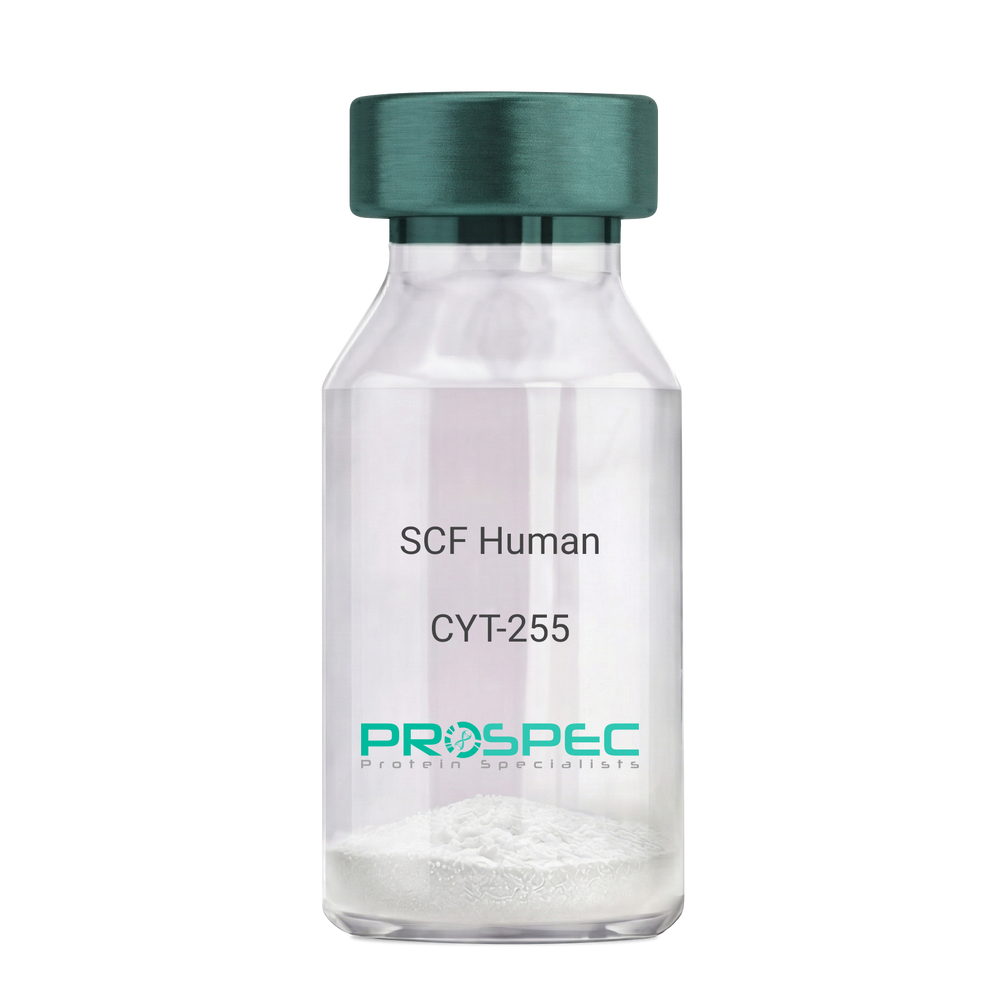
    SCF Human

    Description:

    Stem Cell Factor Human Recombinant

    Kit ligand Precursor, C-kit ligand, SCF, Mast cell growth factor, MGF, SF, KL-1, Kitl, DKFZp686F2250.

    Product # :

    CYT-255

    Price :

    Quantity :

    Shipping Method :

    Room Temp Icon

    Shipped at Room temp

    Add To Cart

    More Info

    • description
    • source
    • formulation
    • purity
    • biological activity
    • More Info

    Description

    Stem Cell Factor Human Recombinant produced in E.Coli is a single, non-glycosylated polypeptide chain containing 165 amino acids and having a molecular mass of 18409 Dalton. The SCF is purified by proprietary chromatographic techniques.

    Source

    Escherichia Coli.

    Formulation

    Lyophilized from a concentrated (1mg/ml) solution in water containing 0.02% NaHCO3.

    Purity

    Greater than 98.0% as determined by:
    (a) Analysis by SEC-HPLC.
    (b) Analysis by SDS-PAGE.

    Biological Activity

    The ED50 as determined by the dose-dependant stimulation of Human TF-1 cells is < 2 ng/ml, corresponding to a Specific Activity of 500,000 IU/mg.

    More Info

    • Introduction

      Stem cell factor / KIT ligand (SCF) is a cytokine which binds CD117(c-Kit). SCF is also known as "steel factor" or "c-kit ligand". SCF exists in two forms, cell surface bound SCF and soluble (or free) SCF. Soluble SCF is produced by the cleavage of surface bound SCF by metalloproteases. SCF is a growth factor important for the survival, proliferation, and differentiation of hematopoietic stem cells and other hematopoietic progenitor cells. One of its roles is to change the BFU-E (burst-forming unit-erythroid) cells, which are the earliest erythrocyte precursors in the erythrocytic series, into the CFU-E (colony-forming unit-erythroid).

    • Synonyms

      Kit ligand Precursor, C-kit ligand, SCF, Mast cell growth factor, MGF, SF, KL-1, Kitl, DKFZp686F2250.

    • Physical Appearance

      Sterile Filtered White lyophilized (freeze-dried) powder.

    • Stability

      Lyophilized KIT ligand although stable at room temperature for 3 weeks, should be stored desiccated below -18°C. Upon reconstitution SCF should be stored at 4°C between 2-7 days and for future use below -18°C.For long term storage it is recommended to add a carrier protein (0.1% HSA or BSA).Please prevent freeze-thaw cycles.

    • Solubility

      It is recommended to reconstitute the lyophilized Stem Cell Factor in sterile 18MΩ-cm H2O not less than 100µg/ml, which can then be further diluted to other aqueous solutions.

    • Amino Acid Sequence

      The sequence of the first five N-terminal amino acids was determined and was found to be Met-Glu-Gly-Ile-Cys.

    • Protein content

      Protein quantitation was carried out by two independent methods1. UV spectroscopy at 280 nm using the absorbency value of 0.52 as the extinction coefficient for a 0.1% (1mg/ml) solution. This value is calculated by the PC GENE computer analysis program of protein sequences (IntelliGenetics). 2. Analysis by RP-HPLC, using a standard solution of Stem Cell Factor as a Reference Standard.

    ProSpec's products are furnished for LABORATORY RESEARCH USE ONLY. The product may not be used as drugs, agricultural or pesticidal products, food additives or household chemicals.

    Scf Human
  • View Data Sheet

    Name :

    NQO2 Human

    Description:

    NAD(P)H Dehydrogenase Quinone 2 Human Recombinant

    DHQV, DIA6, QR2, EC 1.10.99.2, NMOR2, NQO2, NRH:quinone oxidoreductase 2, NRH dehydrogenase [quinone] 2, Ribosyldihydronicotinamide dehydrogenase [quinone].

    Product # :

    ENZ-515

    Price :

    Quantity :

    Shipping Method :

    Ice Icon

    Shipped with Ice Packs

    Add To Cart

    More Info

    • description
    • source
    • formulation
    • purity
    • More Info

    Description

    NQO2 Human Recombinant produced in E.Coli is a single, non-glycosylated, polypeptide chain containing 251amino acids (1-231 a.a.) and having a molecular mass of 28.1 kDa. NQO2 protein is fused to a 20 amino acid His-Tag at N-terminus and purified by standard chromatography.

    Source

    Escherichia Coli.

    Formulation

    NQO2 Human solution (1mg/ml) containing 20mM Tris-HCl pH-8, 1mM DTT & 10% glycerol.

    Purity

    Greater than 95% as determined by SDS-PAGE.

    More Info

    • Introduction

      NQO2 is a flavoprotein that catalyzes the 2-electron reduction of diverse quinones, redox dyes, and the vitamin K menadione. NQO2 mainly uses dihydronicotinamide riboside (NRH) as the electron donor. NQO2 catalyzes the metabolic detoxification of quinones and their derivatives to hydroquinones. This detoxification process protects cells against quinone-induced oxidative stress, cytotoxicity and mutagenicity.

    • Synonyms

      DHQV, DIA6, QR2, EC 1.10.99.2, NMOR2, NQO2, NRH:quinone oxidoreductase 2, NRH dehydrogenase [quinone] 2, Ribosyldihydronicotinamide dehydrogenase [quinone].

    • Physical Appearance

      Sterile filtered colorless solution.

    • Stability

      Store at 4°C if entire vial will be used within 2-4 weeks. Store, frozen at -20°C for longer periods of time. For long term storage it is recommended to add a carrier protein (0.1% HSA or BSA).Avoid multiple freeze-thaw cycles.

    • Amino Acid Sequence

      MGSSHHHHHH SSGLVPRGSH MAGKKVLIVY AHQEPKSFNG SLKNVAVDEL SRQGCTVTVS DLYAMNFEPR ATDKDITGTL SNPEVFNYGV ETHEAYKQRS LASDITDEQK KVREADLVIF QFPLYWFSVP AILKGWMDRV LCQGFAFDIP GFYDSGLLQG KLALLSVTTG GTAEMYTKTG VNGDSRYFLW PLQHGTLHFC GFKVLAPQIS FAPEIASEEE RKGMVAAWSQ RLQTIWKEEP IPCTAHWHFG Q.

    ProSpec's products are furnished for LABORATORY RESEARCH USE ONLY. The product may not be used as drugs, agricultural or pesticidal products, food additives or household chemicals.

    Nqo2 Human
  • View Data Sheet

    Name :

    KRAS 2B Human

    Description:

    Kirsten Rat Sarcoma Viral Oncogene, Isoform 2B Human Recombinant

    C-K-RAS, K-RAS2A, K-RAS2B, K-RAS4A, K-RAS4B, KI-RAS, KRAS1, NS3, RASK2, c-Ki-ras, GTPase KRas, Kirsten Rat Sarcoma Viral Oncogene, KRAS.

    Product # :

    PRO-854

    Price :

    Quantity :

    Shipping Method :

    Ice Icon

    Shipped with Ice Packs

    Add To Cart

    More Info

    • description
    • source
    • formulation
    • purity
    • More Info

    Description

    KRAS 2B Recombinant human produced in E.Coli is a single, non-glycosylated polypeptide chain containing 205 amino acids (1-185 a.a.) and having a molecular mass of 23.2 kDa. The Human KRAS 2B is fused to a 20 amino acid His-Tag at N-terminus and purified by proprietary chromatographic techniques.

    Source

    Escherichia Coli.

    Formulation

    KRAS 2B Human solution containing 20mM Tris-HCl pH-8, 0.1M NaCl, 1mM DTT & 10% glycerol.

    Purity

    Greater than 90.0% as determined by SDS-PAGE.

    More Info

    • Introduction

      KRAS is part of the small GTPase superfamily. A single amino acid substitution is accountable for an activating mutation. KRAS participates in various malignancies, including lung adenocarcinoma, mucinous adenoma, ductal carcinoma of the pancreas and colorectal carcinoma.

    • Synonyms

      C-K-RAS, K-RAS2A, K-RAS2B, K-RAS4A, K-RAS4B, KI-RAS, KRAS1, NS3, RASK2, c-Ki-ras, GTPase KRas, Kirsten Rat Sarcoma Viral Oncogene, KRAS.

    • Physical Appearance

      Sterile filtered colorless solution.

    • Stability

      Store at 4°C if entire vial will be used within 2-4 weeks. Store, frozen at -20°C for longer periods of time. For long term storage it is recommended to add a carrier protein (0.1% HSA or BSA).Avoid multiple freeze-thaw cycles.

    • Amino Acid Sequence

      MGSSHHHHHH SSGLVPRGSH MTEYKLVVVG AGGVGKSALT IQLIQNHFVD EYDPTIEDSY RKQVVIDGET CLLDILDTAG HEEYSAMRDQ YMRTGEGFLC VFAINNTKSF EDIHHYREQI KRVKDSEDVP MVLVGNKCDL PSRTVDTKQA QDLARSYGIP FIETSAKTRQ GVDDAFYTLV REIRKHKEKM SKDGKKKKKK SKTKC.

    ProSpec's products are furnished for LABORATORY RESEARCH USE ONLY. The product may not be used as drugs, agricultural or pesticidal products, food additives or household chemicals.

    Kras Human
  • View Data Sheet

    Name :

    MED4 Human

    Description:

    Mediator Complex Subunit 4 Human Recombinant

    Mediator of RNA polymerase II transcription subunit 4, Mediator complex subunit 4, Vitamin D3 receptor-interacting protein complex 36 kDa component, Activator-recruited cofactor 36 kDa component, TRAP/SMCC/PC2 subunit p36 subunit, DRIP36, ARC36, MED4, VDRIP, TRAP36, HSPC126, FLJ10956, RP11-90M2.2.

    Product # :

    PRO-785

    Price :

    Quantity :

    Shipping Method :

    Ice Icon

    Shipped with Ice Packs

    Add To Cart

    More Info

    • description
    • source
    • formulation
    • purity
    • More Info

    Description

    MED4 produced in E.Coli is a single, non-glycosylated polypeptide chain containing 278 amino acids (1-270 a.a.) and having a molecular mass of 30.7kDa. MED4 is fused to 8 amino acids His Tag at C-terminus and purified by proprietary chromatographic techniques.

    Source

    Escherichia Coli.

    Formulation

    The MED4 protein solution (0.5mg/ml) contains 20mM Tris-HCl buffer (pH8.0), 20% glycerol, 1mM DTT and 100mM NaCl.

    Purity

    Greater than 80.0% as determined by SDS-PAGE.

    More Info

    • Introduction

      Mediator complex subunit 4 (MED4) is a component of the Mediator complex, a coactivator involved in the regulated transcription of nearly all RNA polymerase II-dependent genes. MED4 is a component of the vitamin D receptor-interacting protein (DRIP) complex which functions as a nuclear receptor coactivator. The DRIP complex is able to activate nuclear receptors in a ligand-dependent manner. MED4 functions as a link to convey information from gene-specific regulatory proteins to the basal RNA polymerase II transcription apparatus. MED4 is recruited to promoters by direct interactions with regulatory proteins and serves as a scaffold for the assembly of a functional preinitiation complex with RNA polymerase II and the general transcription factors.

    • Synonyms

      Mediator of RNA polymerase II transcription subunit 4, Mediator complex subunit 4, Vitamin D3 receptor-interacting protein complex 36 kDa component, Activator-recruited cofactor 36 kDa component, TRAP/SMCC/PC2 subunit p36 subunit, DRIP36, ARC36, MED4, VDRIP, TRAP36, HSPC126, FLJ10956, RP11-90M2.2.

    • Physical Appearance

      Sterile filtered colorless solution.

    • Stability

      Store at 4°C if entire vial will be used within 2-4 weeks. Store, frozen at -20°C for longer periods of time. For long term storage it is recommended to add a carrier protein (0.1% HSA or BSA). Avoid multiple freeze-thaw cycles.

    • Amino Acid Sequence

      MAASSSGEKE KERLGGGLGV AGGNSTRERL LSALEDLEVL SRELIEMLAI SRNQKLLQAG EENQVLELLI HRDGEFQELM KLALNQGKIH HEMQVLEKEV EKRDGDIQQL QKQLKEAEQI LATAVYQAKE KLKSIEKARK GAISSEEIIK YAHRISASNA VCAPLTWVPG DPRRPYPTDL EMRSGLLGQM NNPSTNGVNG HLPGDALAAG RLPDVLAPQY PWQSNDMSMN MLPPNHSSDF LLEPPGHNKE DEDDVEIMST DSSSSSSESD LEHHHHHH.

    ProSpec's products are furnished for LABORATORY RESEARCH USE ONLY. The product may not be used as drugs, agricultural or pesticidal products, food additives or household chemicals.

    Med4 Human
  • View Data Sheet

    Name :

    CST3 Protein, His

    Description:

    Cystatin-C Human Recombinant, His Tag

    Cystatin-C, Cystatin-3, Neuroendocrine basic polypeptide, Gamma-trace, Post-gamma-globulin, CST3, MGC117328.

    Product # :

    PRO-656

    Price :

    Quantity :

    Shipping Method :

    Room Temp Icon

    Shipped at Room temp

    Add To Cart

    More Info

    • description
    • source
    • formulation
    • purity
    • More Info

    Description

    Cystatin-C Human Recombinant produced in E.Coli is a single, non-glycosylated, Polypeptide chain containing 129 amino acids and having a molecular mass of 14.5 kDa. The protein contains an extra His tag at N-terminus. The Cystatin-C amino acid sequence is identical to UniProtKB/Swiss-Prot entry Q6FGW9 amino acids 28–146.The Cystatin-C is purified by proprietary chromatographic techniques.

    Source

    Escherichia Coli.

    Formulation

    Filtered (0.4µm) and lyophilized from 0.5mg/ml in 20mM Tris buffer and 50mM NaCl pH-7.5.

    Purity

    Greater than 95% as determined by SDS PAGE.

    More Info

    • Introduction

      Cystatins are a superfamily of cysteine proteinase inhibitors found in both plants and animals. They comprise a group of proteinase inhibitors, widely distributed in tissues and body fluids, and form tight complexes with cysteine proteases such as cathepsin B, H, L and S. Cystatin C, a secreted molecule of this family, is of interest from biochemical, medicine and evolutionary points of view. Cystatin C, with molecular weight of 13260 Da, is composed of 120 amino acids, lacks carbohydrate and has two disulfide bridges located near the carboxyl terminus. Cystatin C is increased in patients with malignant diseases, and is related to the insufficiency of renal function and appears to be a better marker than creatinine. On the other hand, low levels of cystatin C involve cause the breakdown of the elastic laminae and, subsequently, the atherosclerosis and abdominal aortic aneurysm.

    • Synonyms

      Cystatin-C, Cystatin-3, Neuroendocrine basic polypeptide, Gamma-trace, Post-gamma-globulin, CST3, MGC117328.

    • Physical Appearance

      Filtered White lyophilized (freeze-dried) powder.

    • Stability

      Store lyophilized protein at –20°C. Aliquot reconstituted protein to avoid repeated freezing/thawing cycles and store at –80°C for long term storage. Reconstituted protein can be stored at 4°C for a limited period of time; it does not show any change after two weeks at 4°C.

    • Solubility

      Add deionized water to prepare a working stock solution of approximately 0.5mg/ml and let the lyophilized pellet dissolve completely. Product is not sterile! Please filter the product by an appropriate sterile filter before using it in the cell culture.

    ProSpec's products are furnished for LABORATORY RESEARCH USE ONLY. The product may not be used as drugs, agricultural or pesticidal products, food additives or household chemicals.

    Cystatin C Human Recombinant
  • View Data Sheet

    Name :

    AKR1A1 Human

    Description:

    Aldo-Keto Reductase Family 1 Member A1 Human Recombinant

    Alcohol dehydrogenase, ALR, ARM, DD3, ALDR1, MGC1380, MGC12529, AKR1A1, Alcohol dehydrogenase [NADP+], Aldehyde reductase, Aldo-keto reductase family 1 member A1.

    Product # :

    ENZ-464

    Price :

    Quantity :

    Shipping Method :

    Ice Icon

    Shipped with Ice Packs

    Add To Cart

    More Info

    • description
    • source
    • formulation
    • purity
    • More Info

    Description

    AKR1A1 Human Recombinant produced in E.Coli is a single, non-glycosylated, polypeptide chain containing 325 amino acids (1-325 a.a.) and having a molecular mass of 36.5 kDa. AKR1A1 is purified by proprietary chromatographic techniques.

    Source

    Escherichia Coli.

    Formulation

    AKR1A1 solution containing 20mM Tris pH-8, 50mM NaCl and 10% glycerol.

    Purity

    Greater than 90% as determined by SDS-PAGE.

    More Info

    • Introduction

      AKR1A1 is part of the aldo/keto reductase superfamily, it catalyzes the NADPH-dependent reduction from a range of aromatic and aliphatic aldehydes to their related alcohols. AKR1A1 corresponds (65% identity) to aldose reductase, an enzyme that takes part in the pathogenesis of some diabetic and galactosemic complications. AKR1A1 is involved in the activation of procarcinogens, such as polycyclic aromatic hydrocarbon trans-dihydrodiols, and in the metabolism of various xenobiotics and drugs.

    • Synonyms

      Alcohol dehydrogenase, ALR, ARM, DD3, ALDR1, MGC1380, MGC12529, AKR1A1, Alcohol dehydrogenase [NADP+], Aldehyde reductase, Aldo-keto reductase family 1 member A1.

    • Physical Appearance

      Sterile filtered colorless solution.

    • Stability

      AKR1A1 Human Recombinant although stable at 4°C for 1 week, should be stored below -18°C. Please prevent freeze thaw cycles.

    • Amino Acid Sequence

      MAASCVLLHT GQKMPLIGLG TWKSEPGQVK AAVKYALSVG YRHIDCAAIY GNEPEIGEAL KEDVGPGKAV PREELFVTSK LWNTKHHPED VEPALRKTLA DLQLEYLDLY LMHWPYAFER GDNPFPKNAD GTICYDSTHY KETWKALEAL VAKGLVQALG LSNFNSRQID DILSVASVRP AVLQVECHPY LAQNELIAHC QARGLEVTAY SPLGSSDRAW RDPDEPVLLE EPVVLALAEKYGRSPAQILL RWQVQRKVIC IPKSITPSRI LQNIKVFDFT FSPEEMKQLN ALNKNWRYIV PMLTVDGKRV PRDAGHPLYP FNDPY

    ProSpec's products are furnished for LABORATORY RESEARCH USE ONLY. The product may not be used as drugs, agricultural or pesticidal products, food additives or household chemicals.

    Akr1A1 Human
  • View Data Sheet

    Name :

    Placental Lactogen Bovine

    Description:

    Placental Lactogen Bovine Recombinant

    Chorionic Somatomammotropin Hormone 1, CSH1, CSB, CS-1, hCS-B, BPL, BPLP-I.

    Product # :

    CYT-511

    Price :

    Quantity :

    Shipping Method :

    Room Temp Icon

    Shipped at Room temp

    Add To Cart

    More Info

    • description
    • source
    • formulation
    • purity
    • biological activity
    • More Info

    Description

    Placental Lactogen Bovine Recombinant, is a single polypeptide chain containing 199 amino acids and an additional Ala at the N-terminus having a molecular mass of 23 kDa. Placental Lactogen Recombinant is purified by proprietary chromatographic techniques.

    Source

    Escherichia Coli.

    Formulation

    The protein was lyophilized from a concentrated (1mg/ml) solution with 0.02-0.03% NaHCO3.

    Purity

    Greater than 99.0% as determined by:
    (a) Analysis by SEC-HPLC.
    (b) Analysis by SDS-PAGE.

    Biological Activity

    Placental Lactogen Bovine is biologically active as evidenced by inducing proliferation of Nb2 cells.

    More Info

    • Introduction

      Placental Lactogen is a polypeptide hormone that is produced by the Syncytiotrophoblasts of the Placenta, also known as chorionic somatomammotropin. It has both Growth Hormone and Prolactin activities on growth, lactation, and luteal steroid production. In women, placental lactogen secretion begins soon after implantation and increases to 1 g or more a day in late pregnancy. Placental lactogen is also an insulin antagonist.
      Placental Lactogen Bovine is also capable of activating human and other heterologous GH receptors but not ruminat GH receptors.

    • Synonyms

      Chorionic Somatomammotropin Hormone 1, CSH1, CSB, CS-1, hCS-B, BPL, BPLP-I.

    • Physical Appearance

      Sterile Filtered White lyophilized (freeze-dried) powder.

    • Stability

      Lyophilized Placental Lactogen Bovine Recombinant although stable at room temperature for 3 weeks, should be stored desiccated below -18°C. Upon reconstitution Placental Lactogen should be stored at 4°C between 2-7 days and for future use below -18°C. For long term storage it is recommended to add a carrier protein (0.1% HSA or BSA).Please prevent freeze-thaw cycles.

    • Solubility

      It is recommended to reconstitute the lyophilized Placental Lactogen in sterile 18MΩ-cm H2O not less than 100µg/ml, which can then be further diluted to other aqueous solutions.

    • Amino Acid Sequence

      The sequence of the first six N-terminal amino acids was determined and was found to be Ala-Glu-Asp-Tyr-Ala-Pro.

    • Protein content

      UV spectroscopy at 280 nm using the absorbency value of 0.86 as the extinction coefficient for a 0.1% (1mg/ml) solution at pH 8. This value is calculated by the DNAman computer analysis program of protein sequences.

    ProSpec's products are furnished for LABORATORY RESEARCH USE ONLY. The product may not be used as drugs, agricultural or pesticidal products, food additives or household chemicals.

    Placental Lactogen Bovine
  • View Data Sheet

    Name :

    Adiponectin (108-244) Human

    Description:

    Adiponectin (108-244 a.a.) Human Recombinant

    Acrp30, AdipoQ, GBP-28, APM-1, ACDC.

    Product # :

    CYT-073

    Price :

    Quantity :

    Shipping Method :

    Ice Icon

    Shipped with Ice Packs

    Add To Cart

    More Info

    • description
    • source
    • formulation
    • purity
    • More Info
    • sds-page

    Description

    Acrp30 Human Recombinant produced in E.Coli is a single, non-glycosylated polypeptide chain containing 158 amino acids (108-244 a.a.) and having a molecular mass of 18.1kDa.Acrp30 is fused to a 21 amino acid His-tag at N-terminus & purified by proprietary chromatographic techniques.

    Source

    Escherichia Coli.

    Formulation

    Acrp30 protein solution (1mg/ml) contains 20mM Tris-HCl buffer (pH 8.0), 10% glycerol and 0.4M Urea.

    Purity

    Greater than 80.0% as determined by SDS-PAGE.

    sds-page

    Adiponectin-sds-page - Product image 1

    More Info

    • Introduction

      Adiponectin is an adipocyte specific secreted protein that circulates in the plasma. It is induced during adipocyte differentiation and its secretion is stimulated by insulin. Mouse adiponectin shares about 83% amino acid identity with that human. Adiponectin plays a role in various physiological processes such as energy homeostasis and obesity. Adiponectin is reduced in obese humans, and decreased level is associated with insulin resistance and hyperinsulinemia.

    • Synonyms

      Acrp30, AdipoQ, GBP-28, APM-1, ACDC.

    • Stability

      Store at 4°C if entire vial will be used within 2-4 weeks. Store, frozen at -20°C for longer periods of time. For long term storage it is recommended to add a carrier protein (0.1% HSA or BSA).Avoid multiple freeze-thaw cycles.

    • Amino Acid Sequence

      MGSSHHHHHH SSGLVPRGSH MAYVYRSAFS VGLETYVTIP NMPIRFTKIF YNQQNHYDGS TGKFHCNIPG LYYFAYHITV YMKDVKVSLF KKDKAMLFTY DQYQENNVDQ ASGSVLLHLE VGDQVWLQVY GEGERNGLYA DNDNDSTFTG FLLYHDTN.

    • Background

      What is the molecular weight / Mw of ADIPONECTIN Protein?
      ADIPONECTIN Protein has a total Mw of 18.1kDa.

      What is the source or expression system of ADIPONECTIN Protein?
      Escherichia Coli.

      What is the Purity of ADIPONECTIN Protein?
      ADIPONECTIN Protein is >80% pure as determined by SDS-PAGE.

      What is the Biological Activity of ADIPONECTIN Protein?
      The biological functionality of ADIPONECTIN Protein will be determined in the future.

      What is the amino acid sequence of ADIPONECTIN Protein? MGSSHHHHHH SSGLVPRGSH MAYVYRSAFS VGLETYVTIP NMPIRFTKIF YNQQNHYDGS TGKFHCNIPG LYYFAYHITV YMKDVKVSLF KKDKAMLFTY DQYQENNVDQ ASGSVLLHLE VGDQVWLQVY GEGERNGLYA DNDNDSTFTG FLLYHDTN..

      What applications can ADIPONECTIN Protein be used in?
      ADIPONECTIN Protein can probably be used in western blot, ELISA and Lateral Flow.

      What is the endotoxin level for ADIPONECTIN Protein?
      The endotoxin level is minimal, ADIPONECTIN Protein was purified using conventional chromatography techniques

    ProSpec's products are furnished for LABORATORY RESEARCH USE ONLY. The product may not be used as drugs, agricultural or pesticidal products, food additives or household chemicals.

    Acrp30 108 244 Human
  • View Data Sheet

    Name :

    IL 13 Rat

    Description:

    Interleukin-13 Rat Recombinant

    NC300, ALRH, BHR1, P600, IL-13.

    Product # :

    CYT-391

    Price :

    Quantity :

    Shipping Method :

    Room Temp Icon

    Shipped at Room temp

    Add To Cart

    More Info

    • description
    • source
    • formulation
    • purity
    • biological activity
    • More Info

    Description

    Interleukin-13 Rat Recombinant produced in E.Coli is a single, non-glycosylated polypeptide chain containing 113 amino acids and having a molecular mass of 12.7 kDa.The IL-13 is purified by proprietary chromatographic techniques.

    Source

    Escherichia Coli.

    Formulation

    The protein (1mg/ml) was lyophilized with no additives.

    Purity

    Greater than 95% as determined by SDS-PAGE.

    Biological Activity

    ED50 range = 2-6 ng/mL as determined by the dose dependent proliferation of human TF-1 cells. Optimal concentration for individual application should be determined by a dose response assay.

    More Info

    • Introduction

      IL13 is an immunoregulatory cytokine produced primarily by activated Th2 cells. IL-13 is involved in several stages of B-cell maturation and differentiation. It up-regulates CD23 and MHC class II expression, and promotes IgE isotype switching of B cells. This cytokine down-regulates macrophage activity, thereby inhibits the production of pro-inflammatory cytokines and chemokines. This cytokine is found to be critical to the pathogenesis of allergen-induced asthma but operates through mechanisms independent of IgE and eosinophils. This gene, IL3, IL5, IL4, and CSF2 form a cytokine gene cluster on chromosome 5q, with this gene particularly close to IL4.

    • Synonyms

      NC300, ALRH, BHR1, P600, IL-13.

    • Physical Appearance

      Sterile Filtered White lyophilized (freeze-dried) powder.

    • Stability

      Lyophilized Interleukin-13 although stable at room temperature for 3 weeks, should be stored desiccated below -18°C. Upon reconstitution IL13 should be stored at 4°C between 2-7 days and for future use below -18°C.For long term storage it is recommended to add a carrier protein (0.1% HSA or BSA).Please prevent freeze-thaw cycles.

    • Solubility

      It is recommended to reconstitute the lyophilized Interleukin 13 in sterile 18MΩ-cm H2O not less than 100µg/ml, which can then be further diluted to other aqueous solutions.

    • Protein content

      Protein quantitation was carried out by two independent methods:1. UV spectroscopy at 280 nm using the absorbency value of 0.69 as the extinction coefficient for a 0.1% (1mg/ml) solution. This value is calculated by the PC GENE computer analysis program of protein sequences (IntelliGenetics). 2. Analysis by RP-HPLC, using a calibrated solution of IL-13 as a Reference Standard.

    ProSpec's products are furnished for LABORATORY RESEARCH USE ONLY. The product may not be used as drugs, agricultural or pesticidal products, food additives or household chemicals.

    Il 13 Rat
  • View Data Sheet

    Name :

    IL-4 Canine

    Description:

    Interleukin-4 Canine Recombinant

    BCGF, BCDF, B cell stimulating factor, BSF-1, Lymphocyte stimulatory factor 1, IL-4, MGC79402, Binetrakin, Pitrakinra.

    Product # :

    CYT-1097

    Price :

    Quantity :

    Shipping Method :

    Room Temp Icon

    Shipped at Room temp

    Add To Cart

    More Info

    • description
    • source
    • formulation
    • purity
    • biological activity
    • More Info

    Description

    Interleukin-4 Canine Recombinant produced in E. coli is a non-glycosylated monomer chain containing 109 amino acids and having a molecular mass of 12.9kDa. IL-4 is purified by proprietary chromatographic techniques.

    Source

    Escherichia Coli.

    Formulation

    The protein was lyophilized from a sterile (0.2µm) filtered solution containing 0.1% Trifluoroacetic Acid (TFA).

    Purity

    Greater than 95.0% as determined by SDS-PAGE.

    Biological Activity

    The ED50, as determined by TF-1 cell proliferation is <25ng/ml corresponding to a specific activity which is ≥ 4.0 x 10^4 units/mg.

    More Info

    • Introduction

      IL4 is a pleiotropic cytokine produced by activated T cells. IL4 is a ligand for interleukin 4 receptor. The interleukin 4 receptor also binds to IL13, which contributes to various overlapping roles of this cytokine and IL13. STAT6, a signal transducer and activator of transcription plays a main role in mediating the immune regulatory signal of this cytokine. IL4, IL3, IL5, IL13, and CSF2 form a cytokine gene cluster on chromosome 5q, with this gene particularly close to IL13. IL4, IL13 and IL5 are regulated co-ordinately by several long-range regulatory elements in an over 120 kilobase range on the chromosome.

    • Synonyms

      BCGF, BCDF, B cell stimulating factor, BSF-1, Lymphocyte stimulatory factor 1, IL-4, MGC79402, Binetrakin, Pitrakinra.

    • Physical Appearance

      Sterile Filtered White lyophilized (freeze-dried) powder.

    • Stability

      Lyophilized IL-4 although stable at room temperature for 3 weeks, should be stored desiccated below -18°C. Upon reconstitution IL-4 should be stored at 4°C between 2-7 days and for future use below -18°C. Please prevent freeze-thaw cycles.

    • Solubility

      It is recommended to reconstitute the lyophilized IL-4 in sterile 18MΩ-cm H2O not less than 100µg/ml, which can then be further diluted to other aqueous solutions.

    • Amino Acid Sequence

      MHNFNITIKE IIKMLNILTA RNDSCMELTV KDVFTAPKNT SDKEIFCRAA TVLRQIYTHN CSNRYLRGLY RNLSSMANKT CSMNEIKKST LKDFLERLKV IMQKKYYRH.

    ProSpec's products are furnished for LABORATORY RESEARCH USE ONLY. The product may not be used as drugs, agricultural or pesticidal products, food additives or household chemicals.

    Il4 Canine
  • View Data Sheet

    Name :

    CTSE Human

    Description:

    Cathepsin-E Human Recombinant

    Cathepsin E, EC 3.4.23.34, CATE, Erythrocyte Membrane Aspartic Proteinase, Slow-Moving Proteinase, EC 3.4.23.

    Product # :

    ENZ-776

    Price :

    Quantity :

    Shipping Method :

    Ice Icon

    Shipped with Ice Packs

    Add To Cart

    More Info

    • description
    • source
    • formulation
    • purity
    • More Info

    Description

    CTSE Human Recombinant produced in E.Coli is a single, non-glycosylated polypeptide chain containing 330 amino acids (57-363 a.a) and having a molecular mass of 35.4kDa.CTSE is fused to a 23 amino acid His-tag at N-terminus & purified by proprietary chromatographic techniques.

    Source

    Escherichia Coli.

    Formulation

    CTSE protein solution (1mg/ml) containing 20mM Tris-HCl buffer (pH 8.0), 0.4M urea and 10% glycerol.

    Purity

    Greater than 85% as determined by SDS-PAGE.

    More Info

    • Introduction

      Cathepsin-E also known as CTSE is a gastric aspartyl protease which functions as a disulfide-linked homodimer. CTSE belongs to the peptidase C1 family; furthermore it has specificity similar to pepsin A and cathepsin D. CTSE is an intracellular proteinase which does not seem to be involved in the digestion of dietary protein and is found in the uppermost concentration in the surface of epithelial mucus-producing cells of the stomach. CTSE is the first aspartic proteinaseexpressed in the fetal stomach and is discovered in more than half of gastric cancers. For that reason CTSE is anoncofetal antigen. In addition, transcript variants utilizing alternative polyadenylation signals and two transcript variantsencoding different isoforms exist for this gene.

    • Synonyms

      Cathepsin E, EC 3.4.23.34, CATE, Erythrocyte Membrane Aspartic Proteinase, Slow-Moving Proteinase, EC 3.4.23.

    • Physical Appearance

      Sterile Filtered clear solution.

    • Stability

      Store at 4°C if entire vial will be used within 2-4 weeks. Store, frozen at -20°C for longer periods of time.For long term storage it is recommended to add a carrier protein (0.1% HSA or BSA).Please avoid freeze thaw cycles.

    • Amino Acid Sequence

      MGSSHHHHHH SSGLVPRGSH MGSTESCSMD QSAKEPLINY LDMEYFGTIS IGSPPQNFTV IFDTGSSNLW VPSVYCTSPA CKTHSRFQPS QSSTYSQPGQ SFSIQYGTGS LSGIIGADQV SVEGLTVVGQ QFGESVTEPG QTFVDAEFDG ILGLGYPSLA VGGVTPVFDN MMAQNLVDLP MFSVYMSSNP EGGAGSELIF GGYDHSHFSG SLNWVPVTKQ AYWQIALDNM LWSVPTLTSC RMSPSPLTES PIPSAQLPTP YWTSWMECSS AAVAFKDLTS TLQLGPSGSW GMSSFDSFTQ SLTVGITVWD WPQQSPKEGP CVCACLSDRP

    ProSpec's products are furnished for LABORATORY RESEARCH USE ONLY. The product may not be used as drugs, agricultural or pesticidal products, food additives or household chemicals.

    Ctse Human
  • View Data Sheet

    Name :

    HDGF2 Human

    Description:

    Hepatoma-Derived Growth Factor-2 Human Recombinant

    Hepatoma-derived growth factor-related protein 3, HRP-3, Hepatoma-derived growth factor 2, HDGF-2, HDGFRP3, HDGF2, CGI-142.

    Product # :

    CYT-132

    Price :

    Quantity :

    Shipping Method :

    Ice Icon

    Shipped with Ice Packs

    Add To Cart

    More Info

    • description
    • source
    • formulation
    • purity
    • More Info
    • SDS-PAGE

    Description

    HDGF2 Human Recombinant produced in E.Coli is a single, non-glycosylated polypeptide chain containing 227 amino acids (1-203 a.a.) and having a molecular mass of 25.1kDa (Molecular weight on SDS-PAGE will appear higher). HDGF2 is fused to a 24 amino acid His-tag at N-terminus & purified by proprietary chromatographic techniques.

    Source

    Escherichia Coli.

    Formulation

    HDGF2 protein solution (0.5mg/ml) containing 20mM Tris-HCl buffer (pH 8.0), 1mM DTT, 10% glycerol and 0.1M NaCl.

    Purity

    Greater than 90% as determined by SDS-PAGE.

    SDS-PAGE

    HDGF2 Human - Product image 1

    More Info

    • Introduction

      Hepatoma-derived growth factor, related protein 3 (HDGFRP3/HDGF2) is the original member of a family of polypeptides labeled HDGF related proteins (HRPs). The HDGF2 protein augments DNA synthesis and may play a part in cell proliferation. HDGF2 is expressed primarily in the testis and the brain, to an intermediate extent in the heart, and to a slight extent in the ovaries, kidneys, spleen, and liver in humans.

    • Synonyms

      Hepatoma-derived growth factor-related protein 3, HRP-3, Hepatoma-derived growth factor 2, HDGF-2, HDGFRP3, HDGF2, CGI-142.

    • Physical Appearance

      Sterile Filtered clear solution.

    • Stability

      Store at 4°C if entire vial will be used within 2-4 weeks. Store, frozen at -20°C for longer periods of time. For long term storage it is recommended to add a carrier protein (0.1% HSA or BSA).Avoid multiple freeze-thaw cycles.

    • Amino Acid Sequence

      MGSSHHHHHH SSGLVPRGSH MGSHMARPRP REYKAGDLVF AKMKGYPHWP ARIDELPEGA VKPPANKYPI FFFGTHETAF LGPKDLFPYK EYKDKFGKSN KRKGFNEGLW EIENNPGVKF TGYQAIQQQS SSETEGEGGN TADASSEEEG DRVEEDGKGK RKNEKAGSKR KKSYTSKKSS
      KQSRKSPGDE DDKDCKEEEN KSSSEGGDAG NDTRNTTSDL QKTSEGT.

    • Background

      What is the molecular weight/Mw of HDGF2 HUMAN Protein?
      HDGF2 HUMAN Protein has a total Mw of 25.1kDa.

      What is the source or expression system of HDGF2 HUMAN Protein?
      Escherichia Coli.

      What is the Purity of HDGF2 HUMAN Protein?
      HDGF2 HUMAN Protein is >90% pure as determined by SDS-PAGE.

      What is the Biological Activity of HDGF2 HUMAN Protein?
      The biological functionality of HDGF2 HUMAN Protein will be determined in the future.

      What is the amino acid sequence of HDGF2 HUMAN Protein?
      MGSSHHHHHH SSGLVPRGSH MGSHMARPRP REYKAGDLVF AKMKGYPHWP ARIDELPEGA VKPPANKYPI FFFGTHETAF LGPKDLFPYK EYKDKFGKSN KRKGFNEGLW EIENNPGVKF TGYQAIQQQS SSETEGEGGN TADASSEEEG DRVEEDGKGK RKNEKAGSKR KKSYTSKKSS
      KQSRKSPGDE DDKDCKEEEN KSSSEGGDAG NDTRNTTSDL QKTSEGT.

      What applications can HDGF2 HUMAN Protein be used in?
      HDGF2 HUMAN Protein can probably be used in western blot, ELISA and Lateral Flow.

      What is the endotoxin level for HDGF2 HUMAN Protein?
      The endotoxin level is minimal, HDGF2 HUMAN Protein was purified using conventional chromatography techniques.

    ProSpec's products are furnished for LABORATORY RESEARCH USE ONLY. The product may not be used as drugs, agricultural or pesticidal products, food additives or household chemicals.

    Hdgf2 Human
  • View Data Sheet

    Name :

    IL-4 Porcine

    Description:

    Interleukin-4 Porcine Recombinant

    BCGF, BCDF, B cell stimulating factor, BSF-1, Lymphocyte stimulatory factor 1, IL-4, MGC79402, Binetrakin, Pitrakinra.

    Product # :

    CYT-1098

    Price :

    Quantity :

    Shipping Method :

    Room Temp Icon

    Shipped at Room temp

    Add To Cart

    More Info

    • description
    • source
    • formulation
    • purity
    • biological activity
    • More Info

    Description

    Interleukin-4 Porcine Recombinant produced in E. coli is a non-glycosylated monomer chain containing 110 amino acids and having a molecular mass of 12.7kDa. IL-4 is purified by proprietary chromatographic techniques.

    Source

    Escherichia Coli.

    Formulation

    The protein was lyophilized from a sterile (0.2µm) filtered solution containing 10 mM sodium phosphate, pH 7.5.

    Purity

    Greater than 95.0% as determined by SDS-PAGE.

    Biological Activity

    The ED50, as determined by TF-1 cell proliferation is 0.504ng/ml corresponding to a specific activity which is 2.0 x 10^6 units/mg.

    More Info

    • Introduction

      IL4 is a pleiotropic cytokine produced by activated T cells. IL4 is a ligand for interleukin 4 receptor. The interleukin 4 receptor also binds to IL13, which contributes to various overlapping roles of this cytokine and IL13. STAT6, a signal transducer and activator of transcription plays a main role in mediating the immune regulatory signal of this cytokine. IL4, IL3, IL5, IL13, and CSF2 form a cytokine gene cluster on chromosome 5q, with this gene particularly close to IL13. IL4, IL13 and IL5 are regulated co-ordinately by several long-range regulatory elements in an over 120 kilobase range on the chromosome.

    • Synonyms

      BCGF, BCDF, B cell stimulating factor, BSF-1, Lymphocyte stimulatory factor 1, IL-4, MGC79402, Binetrakin, Pitrakinra.

    • Physical Appearance

      Sterile Filtered White lyophilized (freeze-dried) powder.

    • Stability

      Lyophilized IL-4 although stable at room temperature for 3 weeks, should be stored desiccated below -18°C. Upon reconstitution IL-4 should be stored at 4°C between 2-7 days and for future use below -18°C. Please prevent freeze-thaw cycles.

    • Solubility

      It is recommended to reconstitute the lyophilized IL-4 in sterile 18MΩ-cm H2O not less than 100µg/ml, which can then be further diluted to other aqueous solutions.

    • Amino Acid Sequence

      MHKCDITLQE IIKTLNILTA RKNSCMELPV TDVFAAPENT TEKETFCRAS TVLRHIYRHH TCMKSLLSGL DRNLSSMANM TCSVHEAKKS TLKDFLERLK TIMKEKYSKC.

    ProSpec's products are furnished for LABORATORY RESEARCH USE ONLY. The product may not be used as drugs, agricultural or pesticidal products, food additives or household chemicals.

    Il4 Porcine
  • View Data Sheet

    Name :

    IFNG Feline

    Description:

    Interferon-gamma Feline Recombinant

    Interferon gamma, IFN-gamma, IFNG.

    Product # :

    CYT-998

    Price :

    Quantity :

    Shipping Method :

    Ice Icon

    Shipped with Ice Packs

    Add To Cart

    More Info

    • description
    • source
    • formulation
    • purity
    • More Info
    • SDS-PAGE

    Description

    IFNG Feline Recombinant produced in E.Coli is a single, non-glycosylated polypeptide chain containing 167 amino acids (24-167 a.a) and having a molecular mass of 19.3kDa.IFNG is fused to a 23 amino acid His-tag at N-terminus & purified by proprietary chromatographic techniques.

    Source

    Escherichia Coli.

    Formulation

    IFNG protein solution (1mg/ml) containing PBS buffer (pH 7.4) and 10% glycerol.

    Purity

    Greater than 95.0% as determined by SDS-PAGE.

    SDS-PAGE

    IFNG Feline - Product image 1

    More Info

    • Introduction

      IFN-gamma produced by lymphocytes activated by specific antigens or mitogens.
      IFN-gamma, in addition to having antiviral activity, has important immunoregulatory functions, it is a potent activator of macrophages, and has antiproliferative effects on transformed cells and it can potentiate the antiviral and antitumor effects of the type I interferons.

    • Synonyms

      Interferon gamma, IFN-gamma, IFNG.

    • Physical Appearance

      Sterile Filtered colorless solution.

    • Stability

      Store at 4°C if entire vial will be used within 2-4 weeks. Store, frozen at -20°C for longer periods of time. For long term storage it is recommended to add a carrier protein (0.1% HSA or BSA).Avoid multiple freeze-thaw cycles.

    • Amino Acid Sequence

      MGSSHHHHHH SSGLVPRGSH MGSQAMFFKE IEELKGYFNA SNPDVADGGS LFVDILKNWK EESDKTIIQS QIVSFYLKMF ENLKDDDQRI QRSMDTIKED MLDKLLNTSS SKRDDFLKLI QIPVNDLQVQ RKAINELFKV MNDLSPRSNL RKRKRSQNLF RGRRASK.

    • Background

      What is the molecular weight/Mw of IFNG FELINE Protein?
      IFNG FELINE Protein has a total Mw of 19.3kDa.

      What is the source or expression system of IFNG FELINE Protein?
      Escherichia Coli.

      What is the Purity of IFNG FELINE Protein?
      IFNG FELINE Protein is >95% pure as determined by SDS-PAGE.

      What is the Biological Activity of IFNG FELINE Protein?
      The biological functionality of IFNG FELINE Protein will be determined in the future.

      What is the amino acid sequence of IFNG FELINE Protein?
      MGSSHHHHHH SSGLVPRGSH MGSQAMFFKE IEELKGYFNA SNPDVADGGS LFVDILKNWK EESDKTIIQS QIVSFYLKMF ENLKDDDQRI QRSMDTIKED MLDKLLNTSS SKRDDFLKLI QIPVNDLQVQ RKAINELFKV MNDLSPRSNL RKRKRSQNLF RGRRASK.

      What applications can IFNG FELINE Protein be used in?
      IFNG FELINE Protein can probably be used in western blot, ELISA and Lateral Flow.

      What is the endotoxin level for IFNG FELINE Protein?
      The endotoxin level is minimal, IFNG FELINE Protein was purified using conventional chromatography techniques.


    ProSpec's products are furnished for LABORATORY RESEARCH USE ONLY. The product may not be used as drugs, agricultural or pesticidal products, food additives or household chemicals.

    Ifng Feline
  • View Data Sheet

    Name :

    NAGK Antibody

    Description:

    N-Acetylglucosamine Kinase, Mouse Anti Human

    N-acetyl-D-glucosamine kinase, N-acetylglucosamine kinase, GlcNAc kinase, NAGK.

    Product # :

    ANT-092

    Price :

    Quantity :

    Shipping Method :

    Ice Icon

    Shipped with Ice Packs

    Add To Cart

    More Info

    • formulation
    • More Info

    Formulation

    1mg/ml containing PBS, pH-7.4, 0.2% Sodium Azide and 10% glycerol.

    More Info

    • Introduction

      N-Acetylglucosamine Kinase (NAGK) is a part of the eukaryotic-type N-acetylglucosamine kinase family. NAGK transforms endogenous N-acetylglucosamine (GlcNAc), a main component of complex carbohydrates, from lysosomal degradation or nutritional sources into GlcNAc 6-phosphate. NAGK is a significant salvage enzyme of amino sugar metabolism in mammals which has ManNAc kinase activity.

    • Synonyms

      N-acetyl-D-glucosamine kinase, N-acetylglucosamine kinase, GlcNAc kinase, NAGK.

    • Immunogen

      Anti-human NAGK mAb, is derived from hybridization of mouse F0 myeloma cells with spleen cells from BALB/c mice immunized with a recombinant human NAGK amino acids 1-344 purified from E. coli.

    • Ig Subclass

      Mouse IgG1 heavy chain and ? light chain.

    • Clone

      P4D12AT.

    • Applications

      NAGK antibody has been tested by ELISA, Western blot analysis to assure specificity and reactivity. Since application varies, however, each investigation should be titrated by the reagent to obtain optimal results. Recommended dilution range for Western blot analysis is 1:500 ~ 1:5000.

    • Type

      Mouse Anti Human Monoclonal.

    • Storage Procedures

      For periods up to 1 month store at 4°C, for longer periods of time, store at -20°C. Prevent freeze thaw cycles.

    ProSpec's products are furnished for LABORATORY RESEARCH USE ONLY. The product may not be used as drugs, agricultural or pesticidal products, food additives or household chemicals.

    Nagk Antibody
  • View Data Sheet

    Name :

    KRT23 Antibody

    Description:

    Cytokeratin 23, Mouse Anti Human

    Keratin, type I cytoskeletal 23, Cytokeratin-23, CK-23, Keratin-23, K23, KRT23, CK23, HAIK1.

    Product # :

    ANT-081

    Price :

    Quantity :

    Shipping Method :

    Ice Icon

    Shipped with Ice Packs

    Add To Cart

    More Info

    • formulation
    • More Info

    Formulation

    1mg/ml containing PBS, pH-7.4, & 0.1% Sodium Azide.

    More Info

    • Introduction

      Cytokeratin 23 (KRT23) is a 422 amino acid intermediate filament protein. The human KRT23 gene is found on chromosome 17q21.2. Type I cytokeratins consist of acidic proteins which are organized in pairs of heterotypic keratin chains. The cytokeratin proteins have an essential role in differentiation, plus tissue specialization and function, and epithelial cells structure maintenance. Cytokeratins are portrayed to be differentiation markers in a number of epithelial cancers.

    • Synonyms

      Keratin, type I cytoskeletal 23, Cytokeratin-23, CK-23, Keratin-23, K23, KRT23, CK23, HAIK1.

    • Immunogen

      Anti-human KRT23 mAb, is derived from hybridization of mouse FO myeloma cells with spleen cells from BALB/c mice immunized with recombinant human KRT23 amino acids 271-422 purified from E. coli.

    • Ig Subclass

      Mouse IgG1 heavy chain and k light chain.

    • Clone

      PAT2F6AT.

    • Applications

      KRT23 antibody has been tested by ELISA, Western blot analysis to assure specificity and reactivity. Since application varies, however, each investigation should be titrated by the reagent to obtain optimal results. Recommended dilution range for Western blot analysis is 1:500 ~ 1:3000.

    • Type

      Mouse Anti Human Monoclonal.

    • Storage Procedures

      For periods up to 1 month store at 4°C, for longer periods of time, store at -20°C. Prevent freeze thaw cycles.

    • Purification Method

      KRT23 antibody was purified from mouse ascitic fluids by protein-G affinity chromatography.

    ProSpec's products are furnished for LABORATORY RESEARCH USE ONLY. The product may not be used as drugs, agricultural or pesticidal products, food additives or household chemicals.

    Krt23 Antibody
  • View Data Sheet

    Name :

    Ornithine Aminotransferase Human

    Description:

    Ornithine Aminotransferase Human Recombinant

    DKFZp781A11155, HOGA, OATASE, Ornithine aminotransferase mitochondrial, Ornithine--oxo-acid aminotransferase, OAT, OKT, GACR.

    Product # :

    ENZ-472

    Price :

    Quantity :

    Shipping Method :

    Ice Icon

    Shipped with Ice Packs

    Add To Cart

    More Info

    • description
    • source
    • formulation
    • purity
    • More Info

    Description

    Ornithine Aminotransferase Human Recombinant produced in E.Coli is a single, non-glycosylated polypeptide chain containing 408 amino acids (33-439 a.a.) and having a molecular wieght of 45.2kDa.The Ornithine Aminotransferase is purified by proprietary chromatographic techniques.

    Source

    Escherichia Coli.

    Formulation

    The Ornithine Aminotransferase protein solution contains 20mM Tris, pH-8, and 10% glycerol.

    Purity

    Greater than 90.0% as determined by SDS-PAGE.

    More Info

    • Introduction

      Ornithine Aminotransferase is a mitochondrial enzyme which is an important factor that converts arginine and ornithine into the major excitatory and inhibitory neurotransmitters glutamate and GABA. Ornithine Aminotransferase mutations result in a deficiency that cause the autosomal recessive eye disease Gyrate Atrophy.

    • Synonyms

      DKFZp781A11155, HOGA, OATASE, Ornithine aminotransferase mitochondrial, Ornithine--oxo-acid aminotransferase, OAT, OKT, GACR.

    • Physical Appearance

      Sterile filtered colorless solution.

    • Stability

      Store at 4°C if entire vial will be used within 2-4 weeks. Store, frozen at -20°C for longer periods of time. For long term storage it is recommended to add a carrier protein (0.1% HSA or BSA). Avoid multiple freeze-thaw cycles.

    • Amino Acid Sequence

      MTVQGPPTSD DIFEREYKYG AHNYHPLPVA LERGKGIYLW DVEGRKYFDF LSSYSAVNQG HCHPKIVNAL KSQVDKLTLT SRAFYNNVLG EYEEYITKLF NYHKVLPMNT GVEAGETACK LARKWGYTVK GIQKYKAKIV AAGNFWGRT LSAISSSTDP TSYDGFGPFM PGFDIIPYND LPALERALQD PNVAAFMVEP IQGEAGVVVP DPGYLMGVRE LCTRHQVLFI ADEIQTGLAR TGRWLAVDYE NVRPDIVLLG KALSGGLYPV SAVLCDDDIM LTIKPGEHGS TYGGNPLGCR VAIAALEVLE EENLAENADK LGIILRNELM KLPSDVVTAV RGKGLLNAIV IKETKDWDAW KVCLRLRDNG LLAKPTHGDI IRFAPPLVIK EDELRESIEI INKTILSF.

    ProSpec's products are furnished for LABORATORY RESEARCH USE ONLY. The product may not be used as drugs, agricultural or pesticidal products, food additives or household chemicals.

    Ornithine Aminotransferase Human
  • 1
  • …
  • 35
  • 36
  • 37
  • 38
  • 39
  • …
  • 42
Your browser does not support the video tag.

Products

  • Cytokines
  • Growth Factors
  • Chemokines
  • CD Antigens
  • Neurotrophins
  • Hormones
  • Enzymes
  • Viral Antigens
  • Recombinant Proteins
  • Natural Proteins
  • Monoclonal Antibodies
  • Polyclonal Antibodies
  • Thermal Packaging

About

  • Company
  • Founder
  • Contribution
  • Contact Us
  • My Account

Ordering

  • Ordering Method
  • Ordering - Credit Card
  • Ordering PO
  • Shipping Fees
  • FAQ's

Legal

  • Terms & Conditions
  • Privacy
  • Site Map
  • info@prospecbio.com
  • Facebook
  • Instagram
  • Linkedin Profile

© 2026 ProSpec-Tany TechnoGene Ltd. All Rights Reserved.

  • Choosing a selection results in a full page refresh.
  • Opens in a new window.