Skip to content

High-quality research proteins.

  • 1-800-805-6531

  • Mon - Sat 8.00-18.00, Sun - Closed

  • info@prospecbio.com

  • PO Box 6591 East Brunswick NJ 08816

  • Products
    • Cytokines
    • Growth factors
    • Chemokines
    • Cd antigens
    • Neurotrophins
    • Hormones
    • Enzymes
    • Viral antigens
    • Recombinant proteins
    • Natural proteins
    • Monoclonal antibodies
    • Polyclonal antibodies
    • Thermal Packaging
  • About
    • Company
    • Founder
    • Contribution
  • Customers
    • Eastern Asia
    • Eastern Europe
    • North America
    • South America
    • South East Asia
    • Southern Asia
    • Western Europe
  • Ordering
    • Ordering Method
    • Ordering - Credit Card
    • Ordering - PO
    • Shipping Fees
    • FAQs
  • Services
    • DNA Cloning
    • Protein Expression
    • Monoclonal Antibody
    • Fermentation
    • Technology License
  • Contact us
Log in

Country/region

  • USD $ | Albania
  • USD $ | Andorra
  • USD $ | Argentina
  • USD $ | Armenia
  • USD $ | Australia
  • USD $ | Austria
  • USD $ | Azerbaijan
  • USD $ | Belarus
  • USD $ | Belgium
  • USD $ | Bolivia
  • USD $ | Brazil
  • USD $ | Bulgaria
  • USD $ | Cambodia
  • USD $ | Canada
  • USD $ | Chile
  • USD $ | China
  • USD $ | Colombia
  • USD $ | Costa Rica
  • USD $ | Croatia
  • USD $ | Cyprus
  • USD $ | Czechia
  • USD $ | Denmark
  • USD $ | Estonia
  • USD $ | Finland
  • USD $ | France
  • USD $ | Georgia
  • USD $ | Germany
  • USD $ | Greece
  • USD $ | Hong Kong SAR
  • USD $ | Hungary
  • USD $ | Iceland
  • USD $ | India
  • USD $ | Ireland
  • USD $ | Israel
  • USD $ | Italy
  • USD $ | Japan
  • USD $ | Kazakhstan
  • USD $ | Latvia
  • USD $ | Liechtenstein
  • USD $ | Lithuania
  • USD $ | Madagascar
  • USD $ | Malta
  • USD $ | Mexico
  • USD $ | Moldova
  • USD $ | Monaco
  • USD $ | Netherlands
  • USD $ | New Zealand
  • USD $ | North Macedonia
  • USD $ | Norway
  • USD $ | Panama
  • USD $ | Paraguay
  • USD $ | Peru
  • USD $ | Philippines
  • USD $ | Poland
  • USD $ | Portugal
  • USD $ | Romania
  • USD $ | Singapore
  • USD $ | Slovakia
  • USD $ | Slovenia
  • USD $ | South Africa
  • USD $ | South Korea
  • USD $ | Spain
  • USD $ | Sri Lanka
  • USD $ | Sweden
  • USD $ | Switzerland
  • USD $ | Taiwan
  • USD $ | Thailand
  • USD $ | Türkiye
  • USD $ | Ukraine
  • USD $ | United Kingdom
  • USD $ | United States
  • USD $ | Uruguay
  • USD $ | Vatican City
  • USD $ | Venezuela
  • USD $ | Vietnam
  • Facebook
  • Instagram
logoProSpec - Recombinant Protein Manufacturer for academic and R&D industry
Become a distributor
Account Log in
Wishlist
Cart Cart(0)
  • Products
    +
    • Cytokines
    • Growth factors
    • Chemokines
    • Cd antigens
    • Neurotrophins
    • Hormones
    • Enzymes
    • Viral antigens
    • Recombinant proteins
    • Natural proteins
    • Monoclonal antibodies
    • Polyclonal antibodies
    • Thermal Packaging
  • About
    +
    • Company
    • Founder
    • Contribution
  • Customers
    +
    • Eastern Asia
    • Eastern Europe
    • North America
    • South America
    • South East Asia
    • Southern Asia
    • Western Europe
  • Ordering
    +
    • Ordering Method
    • Ordering - Credit Card
    • Ordering - PO
    • Shipping Fees
    • FAQs
  • Services
    +
    • DNA Cloning
    • Protein Expression
    • Monoclonal Antibody
    • Fermentation
    • Technology License
  • Contact us

Item added to your cart

View cart
View All
  • Cytokines
  • Growth factors
  • Chemokines
  • Cd antigens
  • Neurotrophins
  • Hormones
  • Enzymes
  • Viral antigens
  • Recombinant proteins
  • Natural proteins
  • Monoclonal antibodies
  • Polyclonal antibodies
  • Thermal Packaging
  • Tumor Necrosis Factor

    Tumor Necrosis Factor

    View All
  • 4-1BB

    4-1BB

    View All
  • Adiponectin

    Adiponectin

    View All
  • AIF1

    AIF1

    View All
  • Other Cytokines

    Other Cytokines

    View All
  • AITRL

    AITRL

    View All
  • Angiopoietin

    Angiopoietin

    View All
  • Apolipoprotein

    Apolipoprotein

    View All
  • B-Cell Activating Factor

    B-Cell Activating Factor

    View All
  • Beta Defensin

    Beta Defensin

    View All
  • Bone Morphogenetic Protein

    Bone Morphogenetic Protein

    View All
  • B type Natriuretic Peptide

    B type Natriuretic Peptide

    View All
  • BST

    BST

    View All
  • Betacellulin

    Betacellulin

    View All
  • Cardiotrophin

    Cardiotrophin

    View All
  • Activin

    Activin

    View All
  • Fibroblast Growth Factor

    Fibroblast Growth Factor

    View All
  • Other Growth Factors

    Other Growth Factors

    View All
  • CSF

    CSF

    View All
  • CTGF

    CTGF

    View All
  • IGFBP

    IGFBP

    View All
  • VEGF Protein

    VEGF Protein

    View All
  • EGF

    EGF

    View All
  • Epigen

    Epigen

    View All
  • Erythropoietin

    Erythropoietin

    View All
  • Insulin-Like Growth Factor

    Insulin-Like Growth Factor

    View All
  • Growth Hormone

    Growth Hormone

    View All
  • HDGF

    HDGF

    View All
  • Hepatocyte Growth Factor

    Hepatocyte Growth Factor

    View All
  • Insulin

    Insulin

    View All
  • BCA-1/ BLC (CXCL13)

    BCA-1/ BLC (CXCL13)

    View All
  • BRAK (CXCL14)

    BRAK (CXCL14)

    View All
  • C-10 (CCL6)

    C-10 (CCL6)

    View All
  • Other Chemokines

    Other Chemokines

    View All
  • MEC (CCL28)

    MEC (CCL28)

    View All
  • LD78-beta (CCL3L1)

    LD78-beta (CCL3L1)

    View All
  • CTACK (CCL27)

    CTACK (CCL27)

    View All
  • CXCL16

    CXCL16

    View All
  • CXCL17

    CXCL17

    View All
  • Platelet Factor-4 (CXCL4)

    Platelet Factor-4 (CXCL4)

    View All
  • ENA-78 (CXCL5)

    ENA-78 (CXCL5)

    View All
  • Eotaxin (CCL11,24,26)

    Eotaxin (CCL11,24,26)

    View All
  • Exodus-2 (CCL21)

    Exodus-2 (CCL21)

    View All
  • Fractalkine (CX3CL1)

    Fractalkine (CX3CL1)

    View All
  • CXCL6

    CXCL6

    View All
  • Other CD Antigens

    Other CD Antigens

    View All
  • CD14

    CD14

    View All
  • CD164

    CD164

    View All
  • CD1

    CD1

    View All
  • CD2

    CD2

    View All
  • CD200

    CD200

    View All
  • CD207

    CD207

    View All
  • CD226

    CD226

    View All
  • CD23

    CD23

    View All
  • CD244

    CD244

    View All
  • CD247

    CD247

    View All
  • CD27

    CD27

    View All
  • CD274

    CD274

    View All
  • CD300

    CD300

    View All
  • CD33

    CD33

    View All
  • Other Neurotrophins

    Other Neurotrophins

    View All
  • Beta-NGF

    Beta-NGF

    View All
  • BDNF

    BDNF

    View All
  • CDNF

    CDNF

    View All
  • CNTF

    CNTF

    View All
  • GDNF

    GDNF

    View All
  • Glia Maturation Factor

    Glia Maturation Factor

    View All
  • MANF

    MANF

    View All
  • Midkine

    Midkine

    View All
  • Neuroglobin

    Neuroglobin

    View All
  • Neurotrophic factors

    Neurotrophic factors

    View All
  • Neuregulin

    Neuregulin

    View All
  • Neuropilin

    Neuropilin

    View All
  • Pigment Epithelium-Derived Factor

    Pigment Epithelium-Derived Factor

    View All
  • Pleiotrophin

    Pleiotrophin

    View All
  • Peptide Hormones

    Peptide Hormones

    View All
  • Other Hormones

    Other Hormones

    View All
  • HCG

    HCG

    View All
  • Endothelin

    Endothelin

    View All
  • Exendin

    Exendin

    View All
  • FSH

    FSH

    View All
  • Glucagon

    Glucagon

    View All
  • GHRP

    GHRP

    View All
  • GLP

    GLP

    View All
  • Thyrostimulin

    Thyrostimulin

    View All
  • Inhibin A

    Inhibin A

    View All
  • LHRH

    LHRH

    View All
  • Melanotan

    Melanotan

    View All
  • Procalcitonin

    Procalcitonin

    View All
  • PTH

    PTH

    View All
  • Peroxiredoxin

    Peroxiredoxin

    View All
  • Peptidase

    Peptidase

    View All
  • Synthetase

    Synthetase

    View All
  • Transferase

    Transferase

    View All
  • Hydrolase

    Hydrolase

    View All
  • Dehydrogenase

    Dehydrogenase

    View All
  • ACE2

    ACE2

    View All
  • Esterase

    Esterase

    View All
  • Protein Kinases

    Protein Kinases

    View All
  • Other Enzymes

    Other Enzymes

    View All
  • Phosphatase

    Phosphatase

    View All
  • Deaminase

    Deaminase

    View All
  • Oxygenase

    Oxygenase

    View All
  • Adenylate Kinase

    Adenylate Kinase

    View All
  • Lyase

    Lyase

    View All
  • Chagas

    Chagas

    View All
  • SARS

    SARS

    View All
  • Influenza

    Influenza

    View All
  • ASFV

    ASFV

    View All
  • Astrovirus

    Astrovirus

    View All
  • Borrelia

    Borrelia

    View All
  • Helicobacter Pylori

    Helicobacter Pylori

    View All
  • Chikungunya

    Chikungunya

    View All
  • Chlamydia

    Chlamydia

    View All
  • Cytomegalo

    Cytomegalo

    View All
  • Dengue

    Dengue

    View All
  • EBV

    EBV

    View All
  • Ebola

    Ebola

    View All
  • Feline Leukemia Virus

    Feline Leukemia Virus

    View All
  • Hepatitis A

    Hepatitis A

    View All
  • Other

    Other

    View All
  • Actin

    Actin

    View All
  • ADAM

    ADAM

    View All
  • Complement Component

    Complement Component

    View All
  • Ag85

    Ag85

    View All
  • Eukaryotic Translation Initiation Factor

    Eukaryotic Translation Initiation Factor

    View All
  • Anterior Gradient Protein

    Anterior Gradient Protein

    View All
  • Heat Shock Protein

    Heat Shock Protein

    View All
  • Alpha-2-HS-Glycoprotein

    Alpha-2-HS-Glycoprotein

    View All
  • Hemoglobin

    Hemoglobin

    View All
  • Allergy

    Allergy

    View All
  • Anaplasma

    Anaplasma

    View All
  • Angiogenin

    Angiogenin

    View All
  • Ankyrin Repeat Domain

    Ankyrin Repeat Domain

    View All
  • Annexin

    Annexin

    View All
  • Other Natural Proteins

    Other Natural Proteins

    View All
  • Aprotinin

    Aprotinin

    View All
  • Transferrin

    Transferrin

    View All
  • Avidin

    Avidin

    View All
  • Anti Coagulation Factors

    Anti Coagulation Factors

    View All
  • Natural Albumin

    Natural Albumin

    View All
  • Natural Coagulation Factors

    Natural Coagulation Factors

    View All
  • Fibronectin

    Fibronectin

    View All
  • Thrombin

    Thrombin

    View All
  • Anti Human Enzyme

    Anti Human Enzyme

    View All
  • Other Monoclonal Antibodies

    Other Monoclonal Antibodies

    View All
  • Anti Human Cytokine

    Anti Human Cytokine

    View All
  • Anti Human Heat Shock Protein

    Anti Human Heat Shock Protein

    View All
  • Anti Mouse Lymphocyte

    Anti Mouse Lymphocyte

    View All
  • Anti Human Chemokine

    Anti Human Chemokine

    View All
  • Anti Human Lymphocyte

    Anti Human Lymphocyte

    View All
  • Anti Viral Monoclonal

    Anti Viral Monoclonal

    View All
  • Anti Mouse Cytokine

    Anti Mouse Cytokine

    View All
  • Anti-GST Monoclonal

    Anti-GST Monoclonal

    View All
  • Other Polyclonal Antibodies

    Other Polyclonal Antibodies

    View All
  • Anti Viral

    Anti Viral

    View All
  • Anti-GST Monoclonal

    Anti-GST Monoclonal

    View All
Back

Search results

1000 results found for “LIN Protein”

Name

Description

Product #

Price

Quantity

Shipping Method

  • View Data Sheet

    Name :

    MUC1 Human

    Description:

    Mucin-1 (CA15-3) Human

    Product # :

    PRO-2747

    Price :

    Quantity :

    Shipping Method :

    Ice Icon

    Shipped with Ice Packs

    Add To Cart

    More Info

    • description
    • source
    • formulation
    • purity
    • More Info

    Description

    The Human Mucin-1 (CA15-3) is having a molecular mass of approximately 400kDa, and was purified from human carcinoma cell line.

    Source

    Human carcinoma cell line.

    Formulation

    MUC1 is supplied in a 0.05M sodium phosphate buffer, pH 7.5, 0.09% NaN3 and 0.15M NaCl.

    Purity

    Greater than 60%.

    More Info

    • Introduction

      Human Mucin-1 (CA15-3), aka MUC1, is a glycoprotein with extensive O-linked glycosylation of its extracellular domain. This protein has alpha and beta subunits that form a heterodimeric complex. The N-terminal alpha subunit roles in cell-adhesion and the C-terminal beta subunit is involved in cell signaling. Mucins line the apical surface of epithelial cells in the stomach, lungs, intestines, eyes and other tissues. Mucins protect the body from infection by pathogen binding to oligosaccharides in the extracellular domain, preventing the pathogen from reaching the cell surface. Overexpression of CA15-3 is often associated with colon, breast, ovarian, lung and pancreatic cancers.

    • Physical Appearance

      Clear to opalescent colorless frozen solution.

    • Stability

      Human MUC1 although stable at 4°C for 1 week, should be stored at -20°C.

    • Human Virus Test

      Tissue sample tested and found negative for HIV-1 & 2 antibodies, HBsAg, and Hepatitis-C antibodies, Syphilis and HIV/HBV/HCV NAT.

    ProSpec's products are furnished for LABORATORY RESEARCH USE ONLY. The product may not be used as drugs, agricultural or pesticidal products, food additives or household chemicals.

    Ca15 3 Muc1 Human
  • View Data Sheet

    Name :

    ARC Human

    Description:

    Activity-Regulated Cytoskeleton-Associated Protein Human Recombinant

    Arg3.1, KIAA0278, Activity-regulated cytoskeleton-associated protein, Activity-regulated gene 3.1 protein homolog, ARC.

    Product # :

    PRO-1403

    Price :

    Quantity :

    Shipping Method :

    Ice Icon

    Shipped with Ice Packs

    Add To Cart

    More Info

    • description
    • source
    • formulation
    • purity
    • More Info

    Description

    ARC Human Recombinant produced in E.Coli is a single, non-glycosylated polypeptide chain containing 416 amino acids (1-396 a.a.) and having a molecular mass of 47.4kDa. ARC is fused to a 20 amino acid His-tag at N-terminus & purified by proprietary chromatographic techniques.

    Source

    E.coli.

    Formulation

    ARC protein solution (0.5mg/ml) contains 20mM Tris-HCl buffer (pH 8.0), 0.15M NaCl, 10% glycerol and 1mM DTT.

    Purity

    Greater than 90% as determined by SDS-PAGE.

    More Info

    • Introduction

      Activity-regulated cytoskeleton-associated protein (ARC) takes part in the regulation of cell morphology and cytoskeletal organization and is required for consolidation of synaptic plasticity as well as formation of long-term memory. ARC regulates endocytosis of AMPA receptors in response to synaptic activity and is also required for homeostatic synaptic scaling of AMPA receptors. ARC is required in the stress fiber dynamics and cell migration.

    • Synonyms

      Arg3.1, KIAA0278, Activity-regulated cytoskeleton-associated protein, Activity-regulated gene 3.1 protein homolog, ARC.

    • Physical Appearance

      Sterile Filtered colorless solution.

    • Stability

      Store at 4°C if entire vial will be used within 2-4 weeks. Store, frozen at -20°C for longer periods of time. For long term storage it is recommended to add a carrier protein (0.1% HSA or BSA).Avoid multiple freeze-thaw cycles.

    • Amino Acid Sequence

      MGSSHHHHHH SSGLVPRGSH MELDHRTSGG LHAYPGPRGG QVAKPNVILQ IGKCRAEMLE HVRRTHRHLL AEVSKQVERE LKGLHRSVGK LESNLDGYVP TSDSQRWKKS IKACLCRCQE TIANLERWVK REMHVWREVF YRLERWADRL ESTGGKYPVG SESARHTVSV GVGGPESYCH EADGYDYTVS PYAITPPPAA GELPGQEPAE AQQYQPWVPG EDGQPSPGVD TQIFEDPREF LSHLEEYLRQ VGGSEEYWLS QIQNHMNGPA KKWWEFKQGS VKNWVEFKKE FLQYSEGTLS REAIQRELDL PQKQGEPLDQ FLWRKRDLYQ TLYVDADEEE IIQYVVGTLQ PKLKRFLRHP LPKTLEQLIQ RGMEVQDDLE QAAEPAGPHL PVEDEAETLT PAPNSESVAS DRTQPE.

    ProSpec's products are furnished for LABORATORY RESEARCH USE ONLY. The product may not be used as drugs, agricultural or pesticidal products, food additives or household chemicals.

    Arc Human
  • View Data Sheet

    Name :

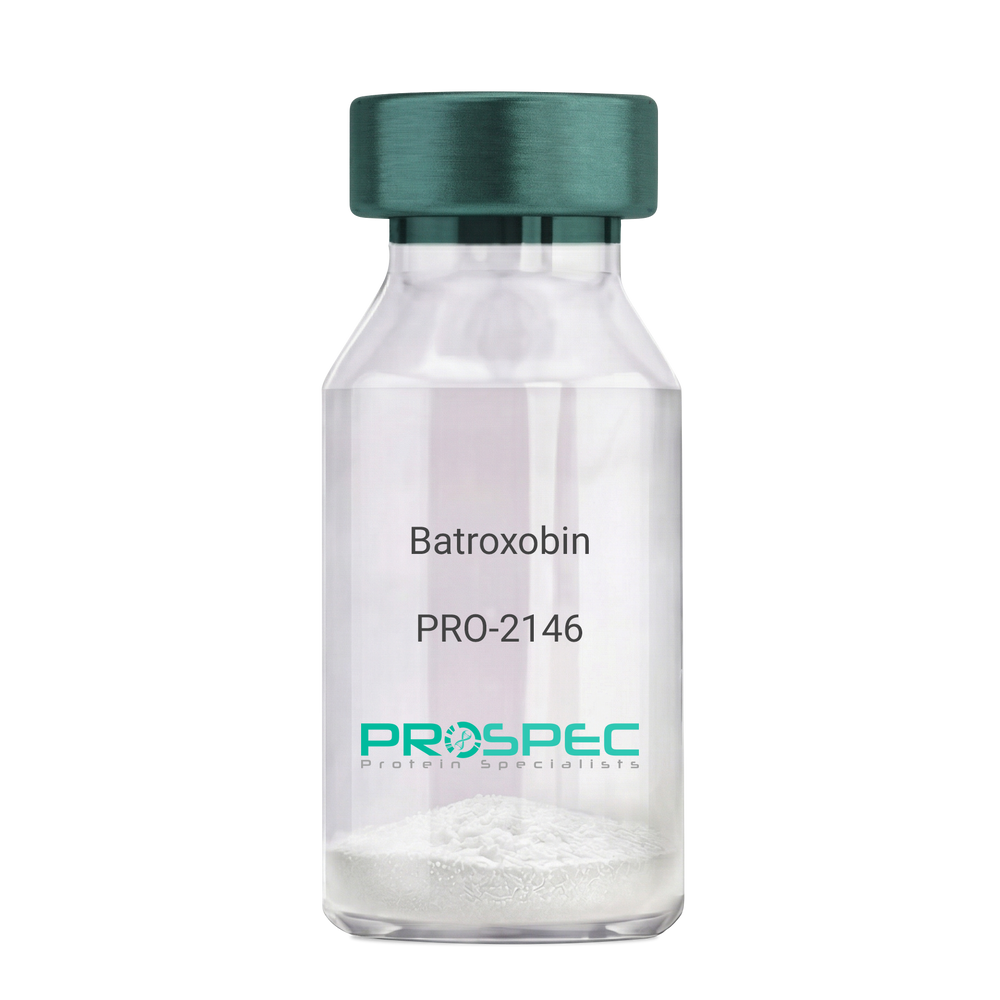
    Batroxobin

    Description:

    Batroxobin

    Thrombin-like enzyme batroxobin, EC 3.4.21.74, BX, Bothrops atrox serine proteinase, Venombin-A, Batroxobin.

    Product # :

    PRO-2146

    Price :

    Quantity :

    Shipping Method :

    Room Temp Icon

    Shipped at Room temp

    Add To Cart

    More Info

    • description
    • formulation
    • More Info

    Description

    Batroxobin, isolated from Bothrops atrox snake venom, has an Mw of approximately 43kDa.

    Formulation

    The Batroxobin protein was lyophilized from a concentrated (1mg/ml) solution with no additives.

    More Info

    • Introduction

      Batroxobin is a serin protease that reduces fibronogen levels and is originally extracted from snake venom of Bothrops Atrox. Batroxobin is used in defibrinogenation and thrombolysis and also has an effect on c-fos gene and growth factor.
      Batroxobin can efficiently restrain proliferation of VSMCs, by blocking the release and uptake of Ca2+, thus influencing [Ca2+]i.
      Batroxobin converts fibrinogen to fibrin through the restricted release of fibrinopeptide-A from fibrinogen to promote blood to clot. Unlike thrombin, it is not affected by heparin and hirudin.

    • Synonyms

      Thrombin-like enzyme batroxobin, EC 3.4.21.74, BX, Bothrops atrox serine proteinase, Venombin-A, Batroxobin.

    • Physical Appearance

      Sterile Filtered white lyophilized powder.

    • Stability

      Store the lyophilized Batroxobin between 2-8°C. Do not freeze!

    • Solubility

      It is recommended to reconstitute the lyophilized Batroxobin in sterile 18MΩ-cm H2O not less than 100µg/ml or more than 10mg/ml solutions.

    • Unit Definition

      100BU [Batroxobin Units]=1mg.

    ProSpec's products are furnished for LABORATORY RESEARCH USE ONLY. The product may not be used as drugs, agricultural or pesticidal products, food additives or household chemicals.

    Batroxobin Native
  • View Data Sheet

    Name :

    Leptin N82K Human, PEG

    Description:

    Leptin N82K Human Recombinant, Pegylated

    OB Protein, Obesity Protein, OBS, Obesity factor.

    Product # :

    CYT-1107

    Price :

    Quantity :

    Shipping Method :

    Room Temp Icon

    Shipped at Room temp

    Add To Cart

    More Info

    • description
    • source
    • formulation
    • purity
    • biological activity
    • More Info

    Description

    Pegylated Leptin N82K Human Recombinant produced in E.Coli is a single non-glycosilated polypeptide chain containing 146 amino acids, an additional Ala at N-terminus and one molecule of PEG 20 kDa at its N-terminus acids and having a molecular weight of 35.6kDa. However due to enlarged hydrodymanic volume it runs on the SDS-PAGE as 48 kDa protein and in gel-filtration on Superdex 200 as over 200 kDa protein. Pegylated Leptin N82K Human Recombinant was purified by proprietary chromatographic techniques.

    Source

    Escherichia Coli.

    Formulation

    Lyophilized from a concentrated (0.65mg/ml) solution with 0.003mM NaHCO3 Having 35-40% protein.

    Purity

    Greater than 99.0% as determined by:
    (a) Gel filtration analysis.
    (b) Analysis by SDS-PAGE.

    Biological Activity

    Pegylated Leptin Human is capable of stimulatng proliferation of BAF/3 cells stably transfected with the long form of human leptin receptor. Pegylated Leptin in vitro activity is 5-7 fold lower than the non-pegylated recombinant human leptin but in vivo Pegylated Leptin has profound weight reducing effect (as compared to the non-pegylated recombinant human leptin), resulting mainly from reduced food intake.

    More Info

    • Introduction

      Leptin takes an important part in the regulation of energy balance and body weight control.After entering the circulation, Leptin binds LEPRwhich results in the activation of several major signalling pathways. In the hypothalamus Leptin acts as an appetite-regulating factor that induces a decrease in food intake and an increase in energy consumption and also regulates bone mass and secretion of hypothalamo-pituitary-adrenal hormones. In the periphery, increases basal metabolism, regulates pancreatic beta-cell function and insulin secretion and affects innate and adaptive immunity.

    • Synonyms

      OB Protein, Obesity Protein, OBS, Obesity factor.

    • Physical Appearance

      Sterile Filtered White lyophilized (freeze-dried) powder.

    • Stability

      Lyophilized Pegylated Leptin although stable at room temperature for 3 weeks, should be stored desiccated below -18°C. Upon reconstitution Pegylated Leptin N82K should be stored at 4°C between 2-7 days and for future use below -18°C. For long term storage it is recommended to add a carrier protein (0.1% HSA or BSA). Please prevent freeze-thaw cycles.

    • Solubility

      It is recommended to reconstitute the lyophilized Pegylated Leptin in sterile water or 0.4% NaHCO3 adjusted to pH 8-9, not less than 100µg/ml, which can then be further diluted to other aqueous solutions.

    ProSpec's products are furnished for LABORATORY RESEARCH USE ONLY. The product may not be used as drugs, agricultural or pesticidal products, food additives or household chemicals.

    Leptin Mutant Protein
  • View Data Sheet

    Name :

    ORM1 Human

    Description:

    Orosomucoid 1 Human

    Orosomucoid 1, ORM, AGP1, OMD 1, AGP-A, alpha-1-acid glycoprotein 1, ORM1.

    Product # :

    PRO-1570

    Price :

    Quantity :

    Shipping Method :

    Room Temp Icon

    Shipped at Room temp

    Add To Cart

    More Info

    • description
    • source
    • formulation
    • purity
    • More Info

    Description

    The Human Orosomucoid 1 produced from Human pooled serum has a molecular mass of 21.56kDa (calculated without glycosylation) containing 183 amino acid residues.

    Source

    Human pooled serum.

    Formulation

    ORM1 protein filtered (0.4µm) and lyophilized in 0.5 mg/ml in 20mM TRIS and 50mM NaCl, pH 7.5.

    Purity

    Greater than 95.0% as determined by SDS-PAGE.

    More Info

    • Introduction

      The acute phase plasma protein ORM1 synthesized by the liver mediates the interaction between blood cells and endothelial cells. In addition, together with haptoglobin and C reactive protein, ORM1 regulates the extravasation of the cells through infection and inflammation. Expression of ORM1 is induced by acute-phase stimulatory mediators such as bacterial lipopolysaccharides.

    • Synonyms

      Orosomucoid 1, ORM, AGP1, OMD 1, AGP-A, alpha-1-acid glycoprotein 1, ORM1.

    • Physical Appearance

      Filtered White lyophilized (freeze-dried) powder.

    • Stability

      Store lyophilized protein at -20°C. Aliquot the product after reconstitution to avoid repeated freezing/thawing cycles. Reconstituted protein can be stored at 4°C for a limited period of time; it does not show any change after two weeks at 4°C.

    • Solubility

      It is recommended to add deionized water to prepare a working stock solution of approximately 0.5 mg/ml and let the lyophilized pellet dissolve completely. Product is not sterile! Please filter the product by an appropriate sterile filter before using it in the cell culture.

    • Amino Acid Sequence

      QIPLCANLVP VPITNATLDQ ITGKWFYIAS AFRNEEYNKS VQEIQATFFY FTPNKTEDTI FLREYQTRQD QCIYNTTYLN VQRENGTISR YVGGQEHFAH LLILRDTKTY MLAFDVNDEK NWGLSVYADK PETTKEQLGE FYEALDCLRI PKSDVVYTDW KKDKCEPLEK QHEKERKQEE GES.

    • Human Virus Test

      Blood samples from each donor have been tested and found negative for HBsAg, anti-HCV, HIV Ag/Ab, and syphilis.

    ProSpec's products are furnished for LABORATORY RESEARCH USE ONLY. The product may not be used as drugs, agricultural or pesticidal products, food additives or household chemicals.

    Human Orm1
  • View Data Sheet

    Name :

    ULBP1 Human

    Description:

    UL16 Binding Protein 1 Human Recombinant

    UL16 Binding Protein 1, Retinoic Acid Early Transcript 1I, alcan-beta, NKG2D Ligand 1, NKG2DL1, RAET1I, N2DL-1.

    Product # :

    CYT-166

    Price :

    Quantity :

    Shipping Method :

    Ice Icon

    Shipped with Ice Packs

    Add To Cart

    More Info

    • description
    • source
    • formulation
    • purity
    • More Info

    Description

    ULBP1 Human Recombinant produced in E.coli is a single, non-glycosylated polypeptide chain containing 216 amino acids (26-216) and having a molecular mass of 25.0 kDa. ULBP1 is fused to a 25 amino acid His-tag at N-terminus AND purified by using conventional chromatography techniques.

    Source

    Escherichia Coli.

    Formulation

    The ULBP1 solution (0.5mg/ml) contains 20mM Tris-HCl buffer (pH 8.0), 1mM DTT, 150mM NaCl and 30% glycerol.

    Purity

    Greater than 90.0% as determined by SDS-PAGE.

    More Info

    • Introduction

      ULBP1 together with at least ULBP2 and ULBP3, is ligand for the NKG2D receptor. ULBPs stimulate various signaling pathways in primary NK cells, which result in cytokines and chemokines production. In CMV infected cells, ULBP1 cooperates with soluble CMV glycoprotein UL16 to inhibit the interaction with the NKG2D receptor providing a mechanism by which CMV infected cells escape the immune system. Additionally, UL16 retains ULBP1 to the ER and cis-Golgi apparatus to prevent it from reaching cell surface.

    • Synonyms

      UL16 Binding Protein 1, Retinoic Acid Early Transcript 1I, alcan-beta, NKG2D Ligand 1, NKG2DL1, RAET1I, N2DL-1.

    • Physical Appearance

      Sterile Filtered colorless solution.

    • Stability

      Store at 4°C if entire vial will be used within 2-4 weeks. Store, frozen at -20°C for longer periods of time. For long term storage it is recommended to add a carrier protein (0.1% HSA or BSA).Avoid multiple freeze-thaw cycles.

    • Amino Acid Sequence

      MGSSHHHHHH SSGLVPRGSH MGSHMGWVDT HCLCYDFIIT PKSRPEPQWC EVQGLVDERP FLHYDCVNHK AKAFASLGKK VNVTKTWEEQ TETLRDVVDF LKGQLLDIQV ENLIPIEPLT LQARMSCEHE AHGHGRGSWQ FLFNGQKFLL FDSNNRKWTA LHPGAKKMTE KWEKNRDVTM FFQKISLGDC KMWLEEFLMY WEQMLDPTKP PSLAPG

    ProSpec's products are furnished for LABORATORY RESEARCH USE ONLY. The product may not be used as drugs, agricultural or pesticidal products, food additives or household chemicals.

    Ulbp1 Human
  • View Data Sheet

    Name :

    HSF1 Human

    Description:

    Heat Shock Transcription Factor-1 Human Recombinant

    HSF-1, HSF1, HSTF-1, HSTF1, Heat shock factor protein 1, Heat shock transcription factor 1.

    Product # :

    HSP-017

    Price :

    Quantity :

    Shipping Method :

    Ice Icon

    Shipped with Ice Packs

    Add To Cart

    More Info

    • description
    • source
    • formulation
    • purity
    • More Info

    Description

    Recombinant Human HSF1 produced in E.Coli is a single, non-glycosylated polypeptide chain containing a total of 549 amino acids (1-529) and having a molecular mass of 59.4kDa.The HSF1 protein is fused to a 20 aa His-Tag at N-terminus.

    Source

    Escherichia Coli.

    Formulation

    The HSF1 protein (1mg/ml) contains 20mM Tris pH-8, 50mM NaCl and 1mM DTT.

    Purity

    Greater than 75.0% as determined by SDS-PAGE.

    More Info

    • Introduction

      The transcription of heat-shock genes is rapidly induced after temperature stress in response to environmental changes, and it is also involved in oogenesis, spermatogenesis, and placental development. Hsp90, is a major repressor of HSF1 gene. HSF1 is known for its participation in heat shock response. HSF1 protein regulates the transcription of hundreds of targets, such as genes involved in protein folding, detoxification, energy generation, carbohydrate metabolism, and cell wall organization.
      HSF1 binds to MTA1 in vitro & in breast carcinoma. Suppression of estrogen-dependent transcription may contribute to role of HSF1 in cancer.
      Human cancer lines of diverse origins express higher dependence on HSF1 function to maintain proliferation and survival than their non-transformed counterparts.
      HSF1 induces anticoagulation and relaxation factors in vascular endothelial cells and could therefore be used to treat cardiovascular disease. HSF1 is directly involved in the regulation of HO1 having an anti-oxidative role.
      NF-kappaB and HSF1 are systemically activated in human acute pancreatitis.
      HSF1 activation protects against severity of pancreatitis.
      HSF is a vital transcription factor which plays a role in up-regulation of VDUP1 expression through stresses such as elevated density and serum deprivation cultures.

    • Synonyms

      HSF-1, HSF1, HSTF-1, HSTF1, Heat shock factor protein 1, Heat shock transcription factor 1.

    • Physical Appearance

      Sterile filtered colorless solution.

    • Stability

      Store at 4°C if entire vial will be used within 2-4 weeks. Store, frozen at -20°C for longer periods of time. For long term storage it is recommended to add a carrier protein (0.1% HSA or BSA).Avoid multiple freeze-thaw cycles.

    • Amino Acid Sequence

      MGSSHHHHHH SSGLVPRGSH MDLPVGPGAA GPSNVPAFLT KLWTLVSDPD TDALICWSPS GNSFHVFDQG QFAKEVLPKY FKHNNMASFV RQLNMYGFRK VVHIEQGGLV KPERDDTEFQ HPCFLRGQEQ LLENIKRKVT SVSTLKSEDI KIRQDSVTKL LTDVQLMKGK QECMDSKLLA MKHENEALWR EVASLRQKHA QQQKVVNKLI QFLISLVQSN RILGVKRKIP LMLNDSGSAH SMPKYSRQFS LEHVHGSGPY SAPSPAYSSS SLYAPDAVAS SGPIISDITE LAPASPMASP GGSIDERPLS SSPLVRVKEE PPSPPQSPRV EEASPGRPSS VDTLLSPTAL IDSILRESEP APASVTALTD ARGHTDTEGR PPSPPPTSTP EKCLSVACLD KNELSDHLDA MDSNLDNLQT MLSSHGFSVD TSALLDLFSP SVTVPDMSLP DLDSSLASIQ ELLSPQEPPR PPEAENSSPD SGKQLVHYTA QPLFLLDPGS VDTGSNDLPV LFELGEGSYF SEGDGFAEDP TISLLTGSEP PKAKDPTVS.

    ProSpec's products are furnished for LABORATORY RESEARCH USE ONLY. The product may not be used as drugs, agricultural or pesticidal products, food additives or household chemicals.

    Hsf1 Human
  • View Data Sheet

    Name :

    FIMC E.Coli

    Description:

    Chaperone Protein fimC E.Coli Recombinant

    Chaperone protein fimC, fimC, b4316, JW4279.

    Product # :

    PRO-120

    Price :

    Quantity :

    Shipping Method :

    Ice Icon

    Shipped with Ice Packs

    Add To Cart

    More Info

    • description
    • source
    • formulation
    • purity
    • More Info

    Description

    FIMC E.Coli Recombinant fused with a 21 amino acid His tag at N-terminus produced in E.Coli is a single, non-glycosylated, polypeptide chain containing 226 amino acids (37-241 a.a.) and having a molecular mass of 25kDa. The FIMC is purified by proprietary chromatographic techniques.

    Source

    Escherichia Coli.

    Formulation

    The FIMC solution (1 mg/ml) contains 20mM Tris-HCl buffer (pH 8.0), 10% glycerol and 1mM DTT.

    Purity

    Greater than 95.0% as determined by SDS-PAGE.

    More Info

    • Introduction

      The 23kDa two-domain periplasmic chaperone FIMC from E.coli is vital for the assembly of type-1 pili, which are filamentous, very oligomeric protein complexes anchored to the outer bacterial membrane that mediate adhesion of pathogenic E. coli strains to host cell surfaces and persist in macrophages.

    • Synonyms

      Chaperone protein fimC, fimC, b4316, JW4279.

    • Physical Appearance

      Sterile Filtered colorless solution.

    • Stability

      Store at 4°C if entire vial will be used within 2-4 weeks. Store, frozen at -20°C for longer periods of time. For long term storage it is recommended to add a carrier protein (0.1% HSA or BSA).Avoid multiple freeze-thaw cycles.

    • Amino Acid Sequence

      MGSSHHHHHH SSGLVPRGSH MGVALGATRV IYPAGQKQEQ LAVTNNDENS TYLIQSWVEN ADGVKDGRFI VTPPLFAMKG KKENTLRILD ATNNQLPQDR ESLFWMNVKA IPSMDKSKLT ENTLQLAIIS RIKLYYRPAK LALPPDQAAE KLRFRRSANS LTLINPTPYY LTVTELNAGT RVLENALVPP MGESTVKLPS DAGSNITYRT INDYGALTPK MTGVME.

    ProSpec's products are furnished for LABORATORY RESEARCH USE ONLY. The product may not be used as drugs, agricultural or pesticidal products, food additives or household chemicals.

    Fimc Ecoli
  • View Data Sheet

    Name :

    RPL7A Human

    Description:

    Ribosomal Protein L7A Human Recombinant

    60S ribosomal protein L7a, L7A, SURF3, TRUP, PLA-X polypeptide, Surfeit locus protein 3, SURF-3.

    Product # :

    PRO-2128

    Price :

    Quantity :

    Shipping Method :

    Ice Icon

    Shipped with Ice Packs

    Add To Cart

    More Info

    • description
    • source
    • formulation
    • purity
    • More Info

    Description

    RPL7A Human Recombinant produced in E.Coli is a single, non-glycosylated polypeptide chain containing 289 amino acids (1-266 a.a) and having a molecular mass of 32.4kDa.RPL7A is fused to a 23 amino acid His-tag at N-terminus & purified by proprietary chromatographic techniques.

    Source

    Escherichia Coli.

    Formulation

    RPL7Aprotein solution (1mg/ml) containing 20mM Tris-HCl buffer (pH 8.0) and 10% glycerol.

    Purity

    Greater than 85.0% as determined by SDS-PAGE.

    More Info

    • Introduction

      Ribosomal Protein L7A (RPL7A) is a ribosomal protein which is a component of the 60S subunit. RPL7A protein is a member of the L7AE family of ribosomal proteins. RPL7A interacts with a subclass of nuclear hormone receptors, including thyroid hormone receptor, and hinder their ability to transactivate by inhibiting their binding to their DNA response elements.

    • Synonyms

      60S ribosomal protein L7a, L7A, SURF3, TRUP, PLA-X polypeptide, Surfeit locus protein 3, SURF-3.

    • Physical Appearance

      Sterile Filtered clear solution.

    • Stability

      Store at 4°C if entire vial will be used within 2-4 weeks. Store, frozen at -20°C for longer periods of time. For long term storage it is recommended to add a carrier protein (0.1% HSA or BSA).Avoid multiple freeze-thaw cycles.

    • Amino Acid Sequence

      MGSSHHHHHH SSGLVPRGSH MGSMPKGKKA KGKKVAPAPA VVKKQEAKKV VNPLFEKRPK NFGIGQDIQP KRDLTRFVKW PRYIRLQRQR AILYKRLKVP PAINQFTQAL DRQTATQLLK LAHKYRPETK QEKKQRLLAR AEKKAAGKGD VPTKRPPVLR AGVNTVTTLV ENKKAQLVVI AHDVDPIELV VFLPALCRKM GVPYCIIKGK ARLGRLVHRK TCTTVAFTQV NSEDKGALAK LVEAIRTNYN DRYDEIRRHW GGNVLGPKSV ARIAKLEKAK AKELATKLG.

    ProSpec's products are furnished for LABORATORY RESEARCH USE ONLY. The product may not be used as drugs, agricultural or pesticidal products, food additives or household chemicals.

    Rpl7A Human
  • View Data Sheet

    Name :

    KIR2DL1 Human

    Description:

    Killer Cell Immunoglobulin-Like Receptor, 2 Domains Long Cytoplasmic Tail 1 Human Recombinant

    Killer cell immunoglobulin-like receptor 2DL1, MHC class I NK cell receptor, Natural killer-associated transcript 1, NKAT-1, p58 natural killer cell receptor clones CL-42/47.11, p58 NK receptor, p58.1 MHC class-I-specific NK receptor, CD158 antigen-like family member A, CD158a antigen, KIR2DL1, CD158A, NKAT1, NKAT, p58.1, KIR221, KIR-K64.

    Product # :

    PRO-428

    Price :

    Quantity :

    Shipping Method :

    Ice Icon

    Shipped with Ice Packs

    Add To Cart

    More Info

    • description
    • source
    • formulation
    • purity
    • More Info

    Description

    KIR2DL1 Recombinant produced in E.Coli is a single, non-glycosylated polypeptide chain containing amino acids 1-202 and having a molecular mass of 22.2 kDa.The KIR2DL1 is purified by proprietary chromatographic techniques.

    Source

    Escherichia Coli.

    Formulation

    The protein (1mg/ml) contains 25mM Tris- HCl (pH-7.5).

    Purity

    Greater than 95.0% as determined by(a) Analysis by RP-HPLC.
    (b) Analysis by SDS-PAGE.

    More Info

    • Introduction

      Killer-cell immunoglobulin-like receptors (KIRs), are a family of cell surface glycoproteins found on Natural Killer (NK) Cells, which are important cells of the immune system. They control the killing function of these cells by interacting with MHC class I molecules, which are expressed on all cell types. This interaction allows them to identify virally infected cells or tumor cells that have a distinctive low level of Class I MHC on their surface. The majority of KIRs are inhibitory, which means that their recognition of MHC suppresses the cytotoxic activity of their NK cell. Only a limited number of KIRs have the capacity to activate cells.
      The KIR genes are found in a cluster on chromosome 19q13.4 within the 1 Mb leukocyte receptor complex (LRC). KIR molecules are extremely polymorphic, meaning their gene sequences differ significantly between individuals, so that different individuals have different arrays/repertoires of KIR genes.
      The KIR proteins are categorized by the number of extracellular immunoglobulin domains (2D or 3D) and by whether they have a long (L) or short (S) cytoplasmic domain. KIR proteins with the long cytoplasmic domain transduce inhibitory signals upon ligand binding via an immune tyrosine-based inhibitory motif (ITIM). Whereas KIR proteins with the short cytoplasmic domain lack the ITIM motif and instead associate with the TYRO protein tyrosine kinase binding protein to transduce activating signals.
      KIR2DL1 is an inhibitory Killer Cell Ig-like Receptor (KIR, previously called p58 KIR, p58.1, cl-42, NKAT1, or KIR-K6), which recognizes class I MHC molecules (HLA-Cw2, -Cw4, -Cw5, and Cw6). The extracellular domain of KIR2DL1 was over expressed as insoluble protein aggregates (inclusion bodies).

    • Synonyms

      Killer cell immunoglobulin-like receptor 2DL1, MHC class I NK cell receptor, Natural killer-associated transcript 1, NKAT-1, p58 natural killer cell receptor clones CL-42/47.11, p58 NK receptor, p58.1 MHC class-I-specific NK receptor, CD158 antigen-like family member A, CD158a antigen, KIR2DL1, CD158A, NKAT1, NKAT, p58.1, KIR221, KIR-K64.

    • Physical Appearance

      Sterile filtered colorless solution.

    • Stability

      Store at 4°C if entire vial will be used within 2-4 weeks. Store, frozen at -20°C for longer periods of time. For long term storage it is recommended to add a carrier protein (0.1% HSA or BSA).Avoid multiple freeze-thaw cycles.

    • Amino Acid Sequence

      MEGVHRKPSL LAHPGRLVKS EETVILQCWS DVMFEHFLLH REGMFNDTLR LIGEHHDGVS KANFSISRMT QDLAGTYRCY GSVTHSPYQV SAPSDPLDIV IIGLYEKPSL SAQLGPTVLA GENVTLSCSS RSSYDMYHLS REGEAHERRL PAGPKVNGTF QADFPLGPAT HGGTYRCFGS FHDSPYEWSK SSDPLLVSVT GN.

    ProSpec's products are furnished for LABORATORY RESEARCH USE ONLY. The product may not be used as drugs, agricultural or pesticidal products, food additives or household chemicals.

    Kir2Dl1 Human
  • View Data Sheet

    Name :

    Colloidal Gold

    Description:

    Colloidal Gold 40nM 2OD

    Product # :

    PRO-2830

    Price :

    Quantity :

    Shipping Method :

    Ice Icon

    Shipped with Ice Packs

    Add To Cart

    More Info

    • description
    • formulation
    • More Info

    Description

    Gold nanoparticles have one-of-a-kind properties turn them to ideal for detecting even the smallest amounts of biological molecules. These particles can be loaded with drugs or other therapeutic agents and then targeted to specific cells/tissues. Further to their diagnostic applications, gold nanoparticles may also take part in drug delivery and cancer therapy. Colloidal Gold is purified by proprietary chromatographic techniques.

    Formulation

    Colloidal Gold solution (6.7mg/ml) contains 50mM sodium citrate.

    More Info

    • Physical Appearance

      Sterile Filtered red solution.

    • Stability

      Colloidal Gold should be stored at 4°C, DO NOT FREEZE.

    • Background

      Colloidal gold is liquid form colloid nanoparticles of gold in a water. The colloidal gold color is dependent of the particle size, below 100 nm gives a is deep purple red color due to the spherical nanoparticles. Colloid gold is crucial for research due to its unique properties such as electronic charge, Mw and optical properties. Colloid gold is used in biomedical devices, electron microscopy and nanotechnology.

    ProSpec's products are furnished for LABORATORY RESEARCH USE ONLY. The product may not be used as drugs, agricultural or pesticidal products, food additives or household chemicals.

    Colloidal Gold
  • View Data Sheet

    Name :

    NME4 Human, Active

    Description:

    Non-Metastatic Cells 4 Human Recombinant, BioActive

    Nucleoside diphosphate kinase mitochondrial, Nucleoside diphosphate kinase, mitochondrial, NDK, NDPKD, nm23-H4, NM23D.

    Product # :

    PRO-2642

    Price :

    Quantity :

    Shipping Method :

    Ice Icon

    Shipped with Ice Packs

    Add To Cart

    More Info

    • description
    • source
    • formulation
    • purity
    • biological activity
    • More Info

    Description

    NME4 Human Recombinant produced in E.Coli is a single, non-glycosylated polypeptide chain containing 176 amino acids (33-187a.a.) and having a molecular mass of 19.6kDa.NME4 is fused to a 21 amino acid His tag at N-Terminus and purified by proprietary chromatographic techniques.

    Source

    E.coli.

    Formulation

    The NME4 solution (0.5mg/ml) contains 40% glycerol, 20mM Tris-HCl buffer (pH 8.0) and 0.2M NaCl.

    Purity

    Greater than 90.0% as determined by SDS-PAGE.

    Biological Activity

    Specific activity is > 120unit/mg, and is defined as the amount of enzyme that convert 1.0 umole each of ATP and TDP to ADP and TTP per minute at pH 7.5 at 25C in a couple system with PK/LDH.

    More Info

    • Introduction

      Non-Metastatic Cells 4 or NME4, is a nucleoside diphosphate kinase located in the mitochondria, and is part of the NDK family of proteins. NME4 ais a very common enzyme that enhances transfer of gamma-phosphates, through a phosphohistidine as a intermediate, between dioxynucleoside tri- and diphosphates. NME4 is originated from the nm23 gene. NME4 has a crucial part in the creation of nucleoside triphosphates that are not ATP.

    • Synonyms

      Nucleoside diphosphate kinase mitochondrial, Nucleoside diphosphate kinase, mitochondrial, NDK, NDPKD, nm23-H4, NM23D.

    • Physical Appearance

      Sterile Filtered colorless solution.

    • Stability

      Store at 4°C if entire vial will be used within 2-4 weeks. Store, frozen at -20°C for longer periods of time. For long term storage it is recommended to add a carrier protein (0.1% HSA or BSA).Avoid multiple freeze-thaw cycles.

    • Amino Acid Sequence

      MGSSHHHHHH SSGLVPRGSH MPSWTRERTL VAVKPDGVQR RLVGDVIQRF ERRGFTLVGM KMLQAPESVL AEHYQDLRRK PFYPALIRYM SSGPVVAMVW EGYNVVRASR AMIGHTDSAE AAPGTIRGDF SVHISRNVIH ASDSVEGAQR EIQLWFQSSE LVSWADGGQH SSIHPA

    ProSpec's products are furnished for LABORATORY RESEARCH USE ONLY. The product may not be used as drugs, agricultural or pesticidal products, food additives or household chemicals.

    Nme4 Protein
  • View Data Sheet

    Name :

    BLOC1S2 Human

    Description:

    Biogenesis of Lysosomal Organelles Complex-1, Subunit 2 Human Recombinant

    Biogenesis of lysosomal organelles complex-1 subunit 2, BLOS2, BLOC-1 subunit 2, Centrosome-associated protein, centrosome protein oncogene, centrosomal 10 kDa protein, RP11-316M21.4, CEAP, FLJ30135, MGC10120.

    Product # :

    PRO-1094

    Price :

    Quantity :

    Shipping Method :

    Ice Icon

    Shipped with Ice Packs

    Add To Cart

    More Info

    • description
    • source
    • formulation
    • purity
    • More Info

    Description

    BLOC1S2 Human Recombinant produced in E. coli is a single polypeptide chain containing 166 amino acids (1-142) and having a molecular mass of 18.5kDa.BLOC1S2 is fused to a 24 amino acid His-tag at N-terminus & purified by proprietary chromatographic techniques.

    Source

    E.coli.

    Formulation

    The BLOC1S2 solution (1mg/1ml) contains 20mM Tris-HCl buffer (pH 8.0), 50mM NaCl, 1mM DTT and 10% glycerol.

    Purity

    Greater than 85% as determined by SDS-PAGE.

    More Info

    • Introduction

      BLOC1S2 is a member of the BLOC1S2 family. Biogenesis of lysosome-related organelles complex 1 or BLOC-1 is a universally expressed multisubunit protein complex which is essential for regular biogenesis of specialized organelles of the endosomal-lysosomal system, like melanosomes and platelet dense granules. BLOC1S2 takes part in cell proliferation.

    • Synonyms

      Biogenesis of lysosomal organelles complex-1 subunit 2, BLOS2, BLOC-1 subunit 2, Centrosome-associated protein, centrosome protein oncogene, centrosomal 10 kDa protein, RP11-316M21.4, CEAP, FLJ30135, MGC10120.

    • Physical Appearance

      Sterile Filtered colorless solution.

    • Stability

      Store at 4°C if entire vial will be used within 2-4 weeks. Store, frozen at -20°C for longer periods of time. For long term storage it is recommended to add a carrier protein (0.1% HSA or BSA).Avoid multiple freeze-thaw cycles.

    • Amino Acid Sequence

      MGSSHHHHHH SSGLVPRGSH MGSHMAAAAE GVLATRSDEP ARDDAAVETA EEAKEPAEAD ITELCRDMFS KMATYLTGEL TATSEDYKLL ENMNKLTSLK YLEMKDIAIN ISRNLKDLNQ KYAGLQPYLD QINVIEEQVA ALEQAAYKLD AYSKKLEAKY KKLEKR

    ProSpec's products are furnished for LABORATORY RESEARCH USE ONLY. The product may not be used as drugs, agricultural or pesticidal products, food additives or household chemicals.

    Bloc1S2 Human
  • View Data Sheet

    Name :

    PHB Human

    Description:

    Prohibitin Human Recombinant

    PHB1, Prohibitin.

    Product # :

    PRO-1381

    Price :

    Quantity :

    Shipping Method :

    Ice Icon

    Shipped with Ice Packs

    Add To Cart

    More Info

    • description
    • source
    • formulation
    • purity
    • More Info

    Description

    PHB Human Recombinant produced in E.Coli is a single, non-glycosylated polypeptide chain containing 292 amino acids (1-272a.a) and having a molecular mass of 31.9kDa. PHB is fused to a 20 amino acid His-tag at N-terminus & purified by proprietary chromatographic techniques.

    Source

    E.coli.

    Formulation

    PHB protein solution (1mg/ml) containing 20mM Tris-HCl buffer (pH8.0), 10% glycerol and 0.1M NaCl.

    Purity

    Greater than 85% as determined by SDS-PAGE.

    More Info

    • Introduction

      Prohibitin (PHB) is an evolutionarily conserved gene that is ubiquitously expressed and which Mutations have been linked to sporadic breast cancer. PHB is thought to be a negative regulator of cell proliferation and may be a tumor suppressor. Prohibitin is expressed as two transcripts with changeable lengths of 3' untranslated region. The longer transcript is present at higher levels in proliferating tissues and cells, proposing that this longer 3' untranslated region functions as a trans-acting regulatory RNA.

    • Synonyms

      PHB1, Prohibitin.

    • Physical Appearance

      Sterile Filtered colorless solution.

    • Stability

      Store at 4°C if entire vial will be used within 2-4 weeks. Store, frozen at -20°C for longer periods of time. For long term storage it is recommended to add a carrier protein (0.1% HSA or BSA).Avoid multiple freeze-thaw cycles.

    • Amino Acid Sequence

      MGSSHHHHHH SSGLVPRGSH MAAKVFESIG KFGLALAVAG GVVNSALYNV DAGHRAVIFD RFRGVQDIVV GEGTHFLIPW VQKPIIFDCR SRPRNVPVIT GSKDLQNVNI TLRILFRPVA SQLPRIFTSI GEDYDERVLP SITTEILKSV VARFDAGELI TQRELVSRQV SDDLTERAAT FGLILDDVSL THLTFGKEFT EAVEAKQVAQ QEAERARFVV EKAEQQKKAA IISAEGDSKA AELIANSLAT AGDGLIELRK LEAAEDIAYQ LSRSRNITYL PAGQSVLLQL PQ.

    ProSpec's products are furnished for LABORATORY RESEARCH USE ONLY. The product may not be used as drugs, agricultural or pesticidal products, food additives or household chemicals.

    Phb Human
  • View Data Sheet

    Name :

    LMX1B Human

    Description:

    LIM Homeobox Transcription Factor 1, Beta Human Recombinant

    LIM homeobox transcription factor 1, beta, LMX1.2, NPS1, LIM/homeobox protein 1.2, LIM/homeobox protein LMX1B, LMX1B.

    Product # :

    PRO-1999

    Price :

    Quantity :

    Shipping Method :

    Ice Icon

    Shipped with Ice Packs

    Add To Cart

    More Info

    • description
    • source
    • formulation
    • purity
    • More Info

    Description

    LMX1B Human Recombinant produced in E.Coli is a single, non-glycosylated polypeptide chain containing 418 amino acids (1-395a.a) and having a molecular mass of 46.5kDa. LMX1B is fused to a 23 amino acid His-tag at N-terminus & purified by proprietary chromatographic techniques.

    Source

    Escherichia Coli.

    Formulation

    LMX1B protein solution (1mg/ml) containing 20mM Tris-HCl buffer (pH 8.0), 10% glycerol and 0.4M Urea.

    Purity

    Greater than 80.0% as determined by SDS-PAGE.

    More Info

    • Introduction

      LIM Homeobox Transcription Factor 1, Beta (LMX1B) is a part of LIM-homeodomain family of proteins which consists of 2 N-terminal zinc-binding LIM domains, 1 homeodomain, and a C-terminal glutamine-rich domain. LMX1B plays a role as a transcription factor and is necessary for the specification of dorsal limb fate at the zeugopodal and autopodal levels. Mutations in LMX1B are associated with nailpatella syndrome.

    • Synonyms

      LIM homeobox transcription factor 1, beta, LMX1.2, NPS1, LIM/homeobox protein 1.2, LIM/homeobox protein LMX1B, LMX1B.

    • Physical Appearance

      Sterile Filtered colorless solution.

    • Stability

      Store at 4°C if entire vial will be used within 2-4 weeks. Store, frozen at -20°C for longer periods of time. For long term storage it is recommended to add a carrier protein (0.1% HSA or BSA).Avoid multiple freeze-thaw cycles.

    • Amino Acid Sequence

      MGSSHHHHHH SSGLVPRGSH MGSMDIATGP ESLERCFPRG QTDCAKMLDG IKMEEHALRP GPATLGVLLG SDCPHPAVCE GCQRPISDRF LMRVNESSWH EECLQCAACQ QALTTSCYFR DRKLYCKQDY QQLFAAKCSG CMEKIAPTEF VMRALECVYH LGCFCCCVCE RQLRKGDEFV LKEGQLLCKG DYEKEKDLLS SVSPDESDSV KSEDEDGDMK PAKGQGSQSK GSGDDGKDPR RPKRPRTILT TQQRRAFKAS FEVSSKPCRK VRETLAAETG LSVRVVQVWF QNQRAKMKKL ARRHQQQQEQ QNSQRLGQEV LSSRMEGMMA SYTPLAPPQQ QIVAMEQSPY GSSDPFQQGL TPPQMPGNDS IFHDIDSDTS LTSLSDCFLG SSDVGSLQAR VGNPIDRLYS MQSSYFAS.

    ProSpec's products are furnished for LABORATORY RESEARCH USE ONLY. The product may not be used as drugs, agricultural or pesticidal products, food additives or household chemicals.

    Lmx1B Human
  • View Data Sheet

    Name :

    PAIP2 Human

    Description:

    Polyadenylate-Binding Protein-Interacting protein 2 Human Recombinant

    Poly(A) Binding Protein Interacting Protein 2, PABP- interacting protein 2, HSPC218, PAIP-2, PAIP2A, Polyadenylate-binding protein-interacting protein 2, PAIP2, MGC72018.

    Product # :

    PRO-748

    Price :

    Quantity :

    Shipping Method :

    Ice Icon

    Shipped with Ice Packs

    Add To Cart

    More Info

    • description
    • source
    • formulation
    • purity
    • More Info

    Description

    Recombinant Human PAIP2 produced in E.Coli is a single,non-glycosylated polypeptide chain containing 147 amino acids (1-127 a.a.) and having a molecular mass of 17.1 kDa.PAIP2 human recombinant is fused to 20 amino acid His Tag at N-terminus and purified by convential chromatogrpahy techniques.

    Source

    Escherichia Coli.

    Formulation

    The PAIP2 protein solution contains 20mM Tris-HCl, pH-8, 1mM DTT & 10% Glycerol.

    Purity

    Greater than 90.0% as determined by SDS-PAGE.

    More Info

    • Introduction

      PAIP2 has a role as a repressor in the regulation of translation initiation of poly(A)-containing mRNAs. PAIP2 inhibitory activity on translation is mediated through its action on PABPC1. PAIP2 displaces the interaction of PABPC1 with poly(A) RNA and competes with PAIP1 for binding to PABPC1. PAIP2 association with PABPC1 results in disruption of the cytoplasmic poly(A) RNP structure organization.

    • Synonyms

      Poly(A) Binding Protein Interacting Protein 2, PABP- interacting protein 2, HSPC218, PAIP-2, PAIP2A, Polyadenylate-binding protein-interacting protein 2, PAIP2, MGC72018.

    • Physical Appearance

      Sterile filtered colorless solution.

    • Stability

      Store at 4°C if entire vial will be used within 2-4 weeks. Store, frozen at -20°C for longer periods of time. For long term storage it is recommended to add a carrier protein (0.1% HSA or BSA). Avoid multiple freeze-thaw cycles.

    • Amino Acid Sequence

      MGSSHHHHHH SSGLVPRGSH MKDPSRSSTS PSIINEDVII NGHSHEDDNP FAEYMWMENE EEFNRQIEEE LWEEEFIERC FQEMLEEEEE HEWFIPARDL PQTMDQIQDQ FNDLVISDGS SLEDLVVKSN LNPNAKEFVP GVKYGNI.

    ProSpec's products are furnished for LABORATORY RESEARCH USE ONLY. The product may not be used as drugs, agricultural or pesticidal products, food additives or household chemicals.

    Paip2 Human
  • View Data Sheet

    Name :

    S100A10 Human

    Description:

    S100 Calcium Binding Protein A10 Human Recombinant

    Protein S100-A10, S100 calcium-binding protein A10, Calpactin-1 light chain, Calpactin I light chain, p10 protein, p11, Cellular ligand of annexin II, S100A10, ANX2LG, CAL1L, CLP11, 42C, p10, GP11, ANX2L, Ca[1], MGC111133.

    Product # :

    PRO-384

    Price :

    Quantity :

    Shipping Method :

    Ice Icon

    Shipped with Ice Packs

    Add To Cart

    More Info

    • description
    • source
    • formulation
    • purity
    • More Info

    Description

    S100A10 Human Recombinant also called Calpactin light chain is expressed in E. coli having a molecular weight of 15.3kDa fused to an amino terminal hexahistidine tag.

    Source

    Escherichia Coli.

    Formulation

    S100-A10 is supplied in 1xPBS and 50% Glycerol.

    Purity

    Greater than 95% as determined by SDS-PAGE.
    2 bands on Western blot at 15.3 and 30.6 kDa, respectively representing monomeric and dimeric form.

    More Info

    • Introduction

      S100A10 is a member of the S100 family of proteins contains two EF-hand calcium-binding motifs and is thought to be involved in the regulation of a number of cellular processes including cell cycle progression and differentiation. S100 proteins are localized either in the cytoplasm or the nucleus of a wide range of cells. There are at least 13 members in the S100 gene family, which are located as a cluster on chromosome 1q21. S100A10 may function in exocytosis and endocytosis.

    • Synonyms

      Protein S100-A10, S100 calcium-binding protein A10, Calpactin-1 light chain, Calpactin I light chain, p10 protein, p11, Cellular ligand of annexin II, S100A10, ANX2LG, CAL1L, CLP11, 42C, p10, GP11, ANX2L, Ca[1], MGC111133.

    • Stability

      Store at 4°C if entire vial will be used within 1-2 weeks. Store, frozen at -20°C for longer periods of time. Avoid multiple freeze-thaw cycles.

    • Applications

      S100A10 can be used directly as a positive control in Western blotting, ELISA, immunoprecipitation and other immunological experiments.
      The biological activity of this product has not yet been tested.

    ProSpec's products are furnished for LABORATORY RESEARCH USE ONLY. The product may not be used as drugs, agricultural or pesticidal products, food additives or household chemicals.

    S100A10 Human
  • View Data Sheet

    Name :

    Ferritin Human

    Description:

    Human Liver Ferritin

    Product # :

    PRO-564

    Price :

    Quantity :

    Shipping Method :

    Ice Icon

    Shipped with Ice Packs

    Add To Cart

    More Info

    • description
    • source
    • formulation
    • purity
    • More Info

    Description

    Ferritin is a glycoprotein produced in Human Liver having a molecular mass of 440- 450kDa and pI of 5.5, which stores iron atoms in the ferric state. It is predominantly intracellular, where it forms an exchangeable pool of iron acting as an iron store. Ferritin level in serum is directly proportional to body iron stores and serum levels are an excellent indicator in monitoring iron status in anemia. It can be used as a marker for inflammation and also used for monitoring and prediction of future events in coronary artery disease.

    Source

    Human Liver.

    Formulation

    The protein solution is in 0.05M TRIS buffer pH 7.5 containing 1.0M NaCl and 0.09% NaN3.

    Purity

    Greater than 96.0%.

    More Info

    • Introduction

      Ferritin is the main intracellular iron storage protein in prokaryotes and eukaryotes. Ferritin’s major functions are the storage of iron in a soluble and nontoxic state and its release in a controlled fashion. An iron-containing protein complex is found mostly in the intestinal mucosa, spleen, and liver. Ferritin is composed of 24 subunits of the heavy and light chains. Variation in ferritin subunit composition may influence the rates of iron uptake and release in different tissues. Defects in the light chain ferritin gene are linked to a number of neurodegenerative diseases and hyperferritinemia-cataract syndrome. The genes that encode the light and heavy chains are on located different chromosomes. The light chain genes are in chromosome region 19q13.3-q13.4 whilst those for the heavy chain are in chromosome region 11q12-q13. Ferritin is shaped like a hollow sphere, inside which the iron is stored in the Fe(III) oxidation state. The iron is integrated in the mineral ferrihydrite, [FeO(OH)]8[FeO(H2PO4)], which is attached to the inner wall of the sphere. To release iron once the body needs it, the iron must be altered from the Fe(III) to the Fe(II) oxidation state. Subsequently, the iron leaves through channels in the spherical structure. Therefore, the structure of ferritin is tremendously important for the protein's ability to store and release iron in a controlled mode.
      The amount of ferritin in the blood (serum ferritin level) is directly related to the amount of iron stored in the body. The body has a "buffer" against iron deficiency (if the blood has too little iron, ferritin can release more) and, to a lesser extent, iron overload (if the blood and tissues of the body have too much iron, ferritin can help store the excess iron).

    • Physical Appearance

      Sterile Filtered brownish solution.

    • Stability

      Human Ferritin should be stored at 2-8°C.

    • Human Virus Test

      Tissue sample tested and found negative for HIV-1 & 2 antibodies, Hepatatis B surface antigen, Syphilis RPR and Hepatatis C antibodies.

    ProSpec's products are furnished for LABORATORY RESEARCH USE ONLY. The product may not be used as drugs, agricultural or pesticidal products, food additives or household chemicals.

    Ferritin Human
  • View Data Sheet

    Name :

    BMP 2 Human, Monomer

    Description:

    Bone Morphogenetic Protein-2 Human Recombinant, Monomer

    BMP-2, BMP2A, Bone morphogenetic protein 2, BMP-2A, BMP2.

    Product # :

    CYT-627

    Price :

    Quantity :

    Shipping Method :

    Ice Icon

    Shipped with Ice Packs

    Add To Cart

    More Info

    • description
    • source
    • formulation
    • purity
    • More Info

    Description

    Bone Morphogenetic Protein-2 Human Recombinant produced in E.Coli is a monomeric, non-glycosylated, Polypeptide chain containing 115 amino acids (283-396) and having a molecular mass of 13009 Dalton. The BMP-2 is purified by proprietary chromatographic techniques.

    Source

    Escherichia Coli.

    Formulation

    BMP-2 solution contains 10mM NaAc pH=3.5 and 10% glycerol.

    Purity

    Greater than 95.0% as determined by SDS-PAGE.

    More Info

    • Introduction

      BMP2 belongs to the transforming growth factor-beta (TGFB) superfamily. Bone morphogenic protein induces bone formation. BMP2 is a candidate gene for the autosomal dominant disease of fibrodysplasia (myositis) ossificans progressiva.

    • Synonyms

      BMP-2, BMP2A, Bone morphogenetic protein 2, BMP-2A, BMP2.

    • Physical Appearance

      Sterile Filtered colorless solution.

    • Stability

      Store at 4°C if entire vial will be used within 2-4 weeks. Store, frozen at -20°C for longer periods of time. Please avoid freeze thaw cycles.

    • Amino Acid Sequence

      MQAKHKQRKR LKSSCKRHPL YVDFSDVGWN DWIVAPPGYH AFYCHGECPF PLADHLNSTN HAIVQTLVNS VNSKIPKACC VPTELSAISMLYLDENEKVV LKNYQDMVVE GCGCR.

    • Background

      What is the molecular weight/Mw of BMP2 Protein?
      BMP2 Protein has a total Mw of 13kDa.

      What is the source or expression system of BMP2 Protein?
      Escherichia Coli.

      What is the Purity of BMP2 Protein?
      BMP2 Protein is >95% pure as determined by SDS-PAGE.

      What is the Biological Activity of BMP2 Protein?
      The biological functionality of BMP2 Protein will be determined in the future.

      What is the amino acid sequence of BMP2 Protein?
      MQAKHKQRKR LKSSCKRHPL YVDFSDVGWN DWIVAPPGYH AFYCHGECPF PLADHLNSTN HAIVQTLVNS VNSKIPKACC VPTELSAISMLYLDENEKVV LKNYQDMVVE GCGCR.

      What applications can BMP2 Protein be used in?
      BMP2 Protein can probably be used in western blot, ELISA and Lateral Flow.

      What is the endotoxin level for BMP2 Protein?
      The endotoxin level is minimal, BMP2 Protein was purified using conventional chromatography techniques.

    ProSpec's products are furnished for LABORATORY RESEARCH USE ONLY. The product may not be used as drugs, agricultural or pesticidal products, food additives or household chemicals.

    Bmp 2 Human Monomer
  • View Data Sheet

    Name :

    CCL24 Rat

    Description:

    Eotaxin-2 Rat Recombinant (CCL24)

    C-C motif chemokine 24, Small-inducible cytokine A24, Myeloid progenitor inhibitory factor 2, CK-beta-6, Eosinophil chemotactic protein 2, Eotaxin-2, CCL24, Ckb-6, MPIF2, MPIF-2, SCYA24, Eotaxin2, CCL-24.

    Product # :

    CHM-282

    Price :

    Quantity :

    Shipping Method :

    Room Temp Icon

    Shipped at Room temp

    Add To Cart

    More Info

    • description
    • source
    • formulation
    • purity
    • biological activity
    • More Info

    Description

    CCL24 Rat Recombinant produced in E.Coli is a single, non-glycosylated polypeptide chain containing 93 amino acids and having a molecular mass of 10.2kDa. The CCL24 is purified by proprietary chromatographic techniques.

    Source

    Escherichia Coli.

    Formulation

    Lyophilized from a 0.2µm filtered concentrated solution in 1×PBS, pH 7.4.

    Purity

    Greater than 97.0% as determined by:
    (a) Analysis by RP-HPLC.
    (b) Analysis by SDS-PAGE.

    Biological Activity

    Determined by its ability to chemoattract murine lymphocytes using a concentration range of 10-100ng/ml corresponding to a Specific Activity of 10,000-100,000IU/mg.

    More Info

    • Introduction

      Eotaxin-2, also called MPIF2 & Ckb6, is a novel CC chemokine produced by activated monocytes and T lymphocytes. Eotaxin-2 selectively chemoattracts cells expressing CCR3 including eosinophils, basophils, Th2 T cells, mast cells, and certain subsets of dendritic cells. Furthermore, Eotaxin-2 inhibits the proliferation of multipotential hematopoietic progenitor cells. The mature protein, which includes C-terminal truncation, contains 78 amino acids (92 amino acids for the mouse homolog, without C-terminal truncation).
      CCL24 functions as a chemotactic chemokine for resting t-lymphocytes, and eosinophils. CCL24 has lower chemotactic activity for neutrophils but none for monocytes and activated lymphocytes. CCL24 is a strong suppressor of colony formation by a multipotential hematopoietic progenitor cell line and binds to CCR3.

    • Synonyms

      C-C motif chemokine 24, Small-inducible cytokine A24, Myeloid progenitor inhibitory factor 2, CK-beta-6, Eosinophil chemotactic protein 2, Eotaxin-2, CCL24, Ckb-6, MPIF2, MPIF-2, SCYA24, Eotaxin2, CCL-24.

    • Physical Appearance

      Sterile Filtered White lyophilized (freeze-dried) powder.

    • Stability

      Lyophilized Eotaxin-2 although stable at room temperature for 3 weeks, should be stored desiccated below -18°C. Upon reconstitution CCL24 should be stored at 4°C between 2-7 days and for future use below -18°C. For long term storage it is recommended to add a carrier protein (0.1% HSA or BSA).Please prevent freeze-thaw cycles.

    • Solubility

      It is recommended to reconstitute the lyophilized CCL24 Rat Recombinant in sterile 18M-cm H2O not less than 100µg/ml, which can then be further diluted to other aqueous solutions.

    • Amino Acid Sequence

      VTIPSSCCVT FISKKIPVNR VISYQLANGS ICPKAGVIFI TKKGHKICTD PKLPWVQKHI KNLDAKRNQP SEGAKALGPK FVIQKLRGNS TKV.

    • Background

      What is the molecular weight/Mw of CCL24 RAT Protein?
      CCL24 RAT Protein has a total Mw of 10.2kDa.

      What is the source or expression system of CCL24 RAT Protein?
      Escherichia Coli.

      What is the Purity of CCL24 RAT Protein?
      CCL24 RAT Protein is >97% pure as determined by SDS-PAGE.

      What is the Biological Activity of CCL24 RAT Protein?
      Determined by its ability to chemoattract murine lymphocytes using a concentration range of 10-100ng/ml corresponding to a Specific Activity of 10,000-100,000IU/mg.

      What is the amino acid sequence of CCL24 RAT Protein?
      VTIPSSCCVT FISKKIPVNR VISYQLANGS ICPKAGVIFI TKKGHKICTD PKLPWVQKHI KNLDAKRNQP SEGAKALGPK FVIQKLRGNS TKV.

      What applications can CCL24 RAT Protein be used in?
      CCL24 RAT Protein can probably be used in western blot, ELISA and Lateral Flow.

      What is the endotoxin level for CCL24 RAT Protein?
      The endotoxin level is minimal, CCL24 RAT Protein was purified using conventional chromatography techniques.


    ProSpec's products are furnished for LABORATORY RESEARCH USE ONLY. The product may not be used as drugs, agricultural or pesticidal products, food additives or household chemicals.

    Eotaxin 2 Rat
  • View Data Sheet

    Name :

    Streptavidin-NC

    Description:

    Streptavidin-NC Recombinant

    Product # :

    PRO-338

    Price :

    Quantity :

    Shipping Method :

    Ice Icon

    Shipped with Ice Packs

    Add To Cart

    More Info

    • description
    • source
    • formulation
    • purity
    • More Info

    Description

    Recombinant Streptavidin-NC produced in E.Coli is a single, non-glycosylated, polypeptide chain having a molecular mass of 24kDa. Streptavidin-NC is engineered to bind to nitrocellulose.

    Source

    Escherichia Coli.

    Formulation

    The sterile solution contains 10mM K2HPO4-KH2PO4, pH 7.3.

    Purity

    Greater than 93.0% as determined by SDS-PAGE.

    More Info

    • Introduction

      Streptavidin is a tetrameric protein secreted by Streptomyces avidinii which binds firmly to biotin. Streptavidin is wilyde used in molecular biology through its unique high affinity for the vitamin biotin. The dissociation constant (Kd) of the biotin-streptavidin complex is about ~10-15 mol/L. The strong affinity recognition of biotin and biotinylated molecules has made streptavidin one of the most important components in diagnostics and laboratory kits. The streptavidin/biotin system has one of the biggest free energies of association of yet observed for noncovalent binding of a protein and small ligand in aqueous solution (K_assoc = 10**14). The complexes are also extremely stable over a wide range of temperature and pH.

    • Physical Appearance

      Sterile Liquid formulation.

    • Stability

      Streptavidin-NC although stable at 4°C for 3 weeks, should be stored below -18°C. Please prevent freeze thaw cycles.

    ProSpec's products are furnished for LABORATORY RESEARCH USE ONLY. The product may not be used as drugs, agricultural or pesticidal products, food additives or household chemicals.

    Streptavidin Nc
  • View Data Sheet

    Name :

    LGALS7 Mouse

    Description:

    Galectin-7 Mouse Recombinant

    Galectin-7, Gal-7, HKL-14, PI7, p53-induced gene 1 protein, LGALS7, PIG1, LGALS7B, GAL7, LGALS7A.

    Product # :

    CYT-184

    Price :

    Quantity :

    Shipping Method :

    Ice Icon

    Shipped with Ice Packs

    Add To Cart

    More Info

    • description
    • source
    • formulation
    • purity
    • More Info
    • SDS-PAGE

    Description

    LGALS7 mouse Recombinant produced E. coli is a single polypeptide chain containing 159 amino acids (1-136) and having a molecular mass of 17.6kDa.LGALS7 is fused to a 23 amino acid His-tag at N-terminus & purified by proprietary chromatographic techniques.

    Source

    Escherichia Coli.

    Formulation

    The LGALS7 solution (1mg/ml) contains 20mM Tris-HCl buffer (pH 8.0), 0.1M NaCl, 20% glycerol and 2mM DTT.

    Purity

    Greater than 95.0% as determined by SDS-PAGE.

    SDS-PAGE

    LGALS7 Mouse-SDS-PAGE - Product image 1

    More Info

    • Introduction

      Galectins are a family of animal lectins with an affinity for beta-galactosides. This family has at least 14 identified members. Galectins share similarities in the CRD (the carbohydrate recognition domain). Galectins are synthesized as cytosolic proteins. Though localized principally in the cytoplasm and lacking a classical signal peptide, galectins can also be stimulated to secretion by non-classical pathways or alternatively targeted to the nucleus. Galectins are involved in modulating cell-cell and cell-matrix interactions. Human Galectin-7 belongs to the prototypical Galectins containing a single CRD, which is initially identified in human epidermis as a monomer. The Galectin-7 expression is induced by tumor suppressor protein p53 and associated with apoptosis. Galectin-7 is a pro-apoptotic protein which functions intracellularlly upstream of JNK activation and mitochondrial cytochrome c release. The correlation of Galectin-7 with the UV-induced apoptosis of keratinocytes presents a critical mechanism in the maintenance of epidermal homeostasis. Human Galectin-7 is localized in both nucleus and cytoplasm.

    • Synonyms

      Galectin-7, Gal-7, HKL-14, PI7, p53-induced gene 1 protein, LGALS7, PIG1, LGALS7B, GAL7, LGALS7A.

    • Physical Appearance

      Sterile Filtered colorless solution.

    • Stability

      Store at 4°C if entire vial will be used within 2-4 weeks. Store, frozen at -20°C for longer periods of time. For long term storage it is recommended to add a carrier protein (0.1% HSA or BSA).Avoid multiple freeze-thaw cycles.

    • Amino Acid Sequence

      MGSSHHHHHH SSGLVPRGSH MGSMSATQHK TSLPQGVRVG TVMRIRGMVP DQAGRFHVNL LCGEEQGADA ALHFNPRLDT SEVVFNTKEQ GKWGREERGT GIPFERGQPF EVLLIATEEG FKAVVGDDEY LHFHHRMPPA RVRLVEVGGD VQLHSVKIF.

    • Background

      What is the molecular weight/Mw of LGALS7 MOUSE Protein?
      LGALS7 MOUSE Protein has a total Mw of 17.6kDa.

      What is the source or expression system of LGALS7 MOUSE Protein?
      Escherichia Coli.

      What is the Purity of LGALS7 MOUSE Protein?
      LGALS7 MOUSE Protein is >95% pure as determined by SDS-PAGE.

      What is the Biological Activity of LGALS7 MOUSE Protein?
      The biological functionality of LGALS7 MOUSE Protein will be determined in the future.

      What is the amino acid sequence of LGALS7 MOUSE Protein?
      MGSSHHHHHH SSGLVPRGSH MGSMSATQHK TSLPQGVRVG TVMRIRGMVP DQAGRFHVNL LCGEEQGADA ALHFNPRLDT SEVVFNTKEQ GKWGREERGT GIPFERGQPF EVLLIATEEG FKAVVGDDEY LHFHHRMPPA RVRLVEVGGD VQLHSVKIF.

      What applications can LGALS7 MOUSE Protein be used in?
      LGALS7 MOUSE Protein can probably be used in western blot, ELISA and Lateral Flow.

      What is the endotoxin level for LGALS7 MOUSE Protein?
      The endotoxin level is minimal, LGALS7 MOUSE Protein was purified using conventional chromatography techniques.


    ProSpec's products are furnished for LABORATORY RESEARCH USE ONLY. The product may not be used as drugs, agricultural or pesticidal products, food additives or household chemicals.

    Lgals7 Mouse
  • View Data Sheet

    Name :

    C17ORF103 Human

    Description:

    Chromosome 17 Open Reading Frame 103 Human Recombinant

    Chromosome 17 Open Reading Frame 103, Transcript Expressed During Hematopoiesis 2, Gene Trap Locus F3b, Gtlf3b, Protein GTLF3B.

    Product # :

    PRO-1619

    Price :

    Quantity :

    Shipping Method :

    Ice Icon

    Shipped with Ice Packs

    Add To Cart

    More Info

    • description
    • source
    • formulation
    • purity
    • More Info

    Description

    C17ORF103 Human Recombinant produced in E.coli is a single, non-glycosylated polypeptide chain containing 136 amino acids (1-113) and having a molecular mass of 15.4kDa.C17ORF103 is fused to a 23 amino acid His-tag at N-terminus & purified by proprietary chromatographic techniques.

    Source

    Escherichia Coli.

    Formulation

    The C17ORF103 solution contains 20mM Tris-HCl buffer (pH 8.0), 0.1M NaCl, 1mM DTT and 20% glycerol.

    Purity

    Greater than 95% as determined by SDS-PAGE.

    More Info

    • Introduction

      C17orf103 is a member of the GTLF3B family and is encoded by a gene which is located in human chromosome 17p11.2. BRCA1 and p53 are 2 main tumor suppressor genes which are linked to chromosome 17. Tumor suppressor p53 is necessary for maintenance of cellular genetic integrity by moderating cell fate through DNA repair versus cell death. C17orf103 is also related to neurofibromatosis, a disorder characterized by neural and epidermal lesions, and dysregulated Schwann cell growth.

    • Synonyms

      Chromosome 17 Open Reading Frame 103, Transcript Expressed During Hematopoiesis 2, Gene Trap Locus F3b, Gtlf3b, Protein GTLF3B.

    • Physical Appearance

      Sterile filtered colorless solution.

    • Stability

      Store at 4°C if entire vial will be used within 2-4 weeks. Store, frozen at -20°C for longer periods of time. For long term storage it is recommended to add a carrier protein (0.1% HSA or BSA).Avoid multiple freeze-thaw cycles.

    • Amino Acid Sequence

      MGSSHHHHHH SSGLVPRGSH MGSMAHSAAA VPLGALEQGC PIRVEHDRRR RQFTVRLNGC HDRAVLLYEY VGKRIVDLQH TEVPDAYRGR GIAKHLAKAA LDFVVEEDLK AHLTCWYIQK YVKENPLPQY LERLQP

    ProSpec's products are furnished for LABORATORY RESEARCH USE ONLY. The product may not be used as drugs, agricultural or pesticidal products, food additives or household chemicals.

    C17Orf103 Human
  • View Data Sheet

    Name :

    TCEAL7 Human

    Description:

    Transcription Elongation Factor A (SII)-Like 7 Human Recombinant

    Transcription elongation factor A (SII)-like 7, TCEA-like protein 7, transcription elongation factor A protein-like 7, MGC23947, MPMGp800C04260Q003.

    Product # :

    PRO-1147

    Price :

    Quantity :

    Shipping Method :

    Ice Icon

    Shipped with Ice Packs

    Add To Cart

    More Info

    • description
    • source
    • formulation
    • purity
    • More Info

    Description

    TCEAL7 Human Recombinant produced in E. coli is a single polypeptide chain containing 124 amino acids (1-100) and having a molecular mass of 14.8 kDa.TCEAL7 is fused to a 24 amino acid His-tag at N-terminus & purified by proprietary chromatographic techniques.

    Source

    E.coli.

    Formulation

    The TCEAL7 solution (0.5mg/1ml) contains 20mM Tris-HCl buffer (pH 8.0), 200mM NaCl, 2mM DTT and 50% glycerol.

    Purity

    Greater than 80% as determined by SDS-PAGE.

    More Info

    • Introduction

      Transcription Elongation Factor A (SII)-Like 7 (TCEAL7) has a role in the negative regulation of NF-kappa-B signaling at the basal level by controlling transcriptional activity of NF-kappa-B on its target gene promoters. TCEAL7 links with cyclin D1 promoter containing Myc E-box sequence and transcriptionally inhibits cyclin D1 expression. TCEAL7 regulates telomerase reverse transcriptase expression and telomerase activity in both alternative lengthening of telomeres (ALT) and telomerase-positive cell lines. TCEAL7 is highly expressed in normal and fetal brain tissues, and weakly expressed in the uterus and ovary. TCEAL7 is down-regulated in epithelial ovarian, cervical, prostate, breast, brain and lung cancer cell lines and in the brain and ovarian tumors.

    • Synonyms

      Transcription elongation factor A (SII)-like 7, TCEA-like protein 7, transcription elongation factor A protein-like 7, MGC23947, MPMGp800C04260Q003.

    • Physical Appearance

      Sterile Filtered colorless solution.

    • Stability

      Store at 4°C if entire vial will be used within 2-4 weeks. Store, frozen at -20°C for longer periods of time. For long term storage it is recommended to add a carrier protein (0.1% HSA or BSA).Avoid multiple freeze-thaw cycles.

    • Amino Acid Sequence

      MGSSHHHHHH SSGLVPRGSH MGSHMQKPCK ENEGKPKCSV PKREEKRPYG EFERQQTEGN FRQRLLQSLE EFKEDIDYRH FKDEEMTREG DEMERCLEEI RGLRKKFRAL HSNHRHSRDR PYPI

    ProSpec's products are furnished for LABORATORY RESEARCH USE ONLY. The product may not be used as drugs, agricultural or pesticidal products, food additives or household chemicals.

    Tceal7 Human
  • 1
  • …
  • 35
  • 36
  • 37
  • 38
  • 39
  • …
  • 42
Your browser does not support the video tag.

Products

  • Cytokines
  • Growth Factors
  • Chemokines
  • CD Antigens
  • Neurotrophins
  • Hormones
  • Enzymes
  • Viral Antigens
  • Recombinant Proteins
  • Natural Proteins
  • Monoclonal Antibodies
  • Polyclonal Antibodies
  • Thermal Packaging

About

  • Company
  • Founder
  • Contribution
  • Contact Us
  • My Account

Ordering

  • Ordering Method
  • Ordering - Credit Card
  • Ordering PO
  • Shipping Fees
  • FAQ's

Legal

  • Terms & Conditions
  • Privacy
  • Site Map
  • info@prospecbio.com
  • Facebook
  • Instagram
  • Linkedin Profile

© 2026 ProSpec-Tany TechnoGene Ltd. All Rights Reserved.

  • Choosing a selection results in a full page refresh.
  • Opens in a new window.