Skip to content

High-quality research proteins.

  • 1-800-805-6531

  • Mon - Sat 8.00-18.00, Sun - Closed

  • info@prospecbio.com

  • PO Box 6591 East Brunswick NJ 08816

  • Products
    • Cytokines
    • Growth factors
    • Chemokines
    • Cd antigens
    • Neurotrophins
    • Hormones
    • Enzymes
    • Viral antigens
    • Recombinant proteins
    • Natural proteins
    • Monoclonal antibodies
    • Polyclonal antibodies
    • Thermal Packaging
  • About
    • Company
    • Founder
    • Contribution
  • Customers
    • Eastern Asia
    • Eastern Europe
    • North America
    • South America
    • South East Asia
    • Southern Asia
    • Western Europe
  • Ordering
    • Ordering Method
    • Ordering - Credit Card
    • Ordering - PO
    • Shipping Fees
    • FAQs
  • Services
    • DNA Cloning
    • Protein Expression
    • Monoclonal Antibody
    • Fermentation
    • Technology License
  • Contact us
Log in

Country/region

  • USD $ | Albania
  • USD $ | Andorra
  • USD $ | Argentina
  • USD $ | Armenia
  • USD $ | Australia
  • USD $ | Austria
  • USD $ | Azerbaijan
  • USD $ | Belarus
  • USD $ | Belgium
  • USD $ | Bolivia
  • USD $ | Brazil
  • USD $ | Bulgaria
  • USD $ | Cambodia
  • USD $ | Canada
  • USD $ | Chile
  • USD $ | China
  • USD $ | Colombia
  • USD $ | Costa Rica
  • USD $ | Croatia
  • USD $ | Cyprus
  • USD $ | Czechia
  • USD $ | Denmark
  • USD $ | Estonia
  • USD $ | Finland
  • USD $ | France
  • USD $ | Georgia
  • USD $ | Germany
  • USD $ | Greece
  • USD $ | Hong Kong SAR
  • USD $ | Hungary
  • USD $ | Iceland
  • USD $ | India
  • USD $ | Ireland
  • USD $ | Israel
  • USD $ | Italy
  • USD $ | Japan
  • USD $ | Kazakhstan
  • USD $ | Latvia
  • USD $ | Liechtenstein
  • USD $ | Lithuania
  • USD $ | Madagascar
  • USD $ | Malta
  • USD $ | Mexico
  • USD $ | Moldova
  • USD $ | Monaco
  • USD $ | Netherlands
  • USD $ | New Zealand
  • USD $ | North Macedonia
  • USD $ | Norway
  • USD $ | Panama
  • USD $ | Paraguay
  • USD $ | Peru
  • USD $ | Philippines
  • USD $ | Poland
  • USD $ | Portugal
  • USD $ | Romania
  • USD $ | Singapore
  • USD $ | Slovakia
  • USD $ | Slovenia
  • USD $ | South Africa
  • USD $ | South Korea
  • USD $ | Spain
  • USD $ | Sri Lanka
  • USD $ | Sweden
  • USD $ | Switzerland
  • USD $ | Taiwan
  • USD $ | Thailand
  • USD $ | Türkiye
  • USD $ | Ukraine
  • USD $ | United Kingdom
  • USD $ | United States
  • USD $ | Uruguay
  • USD $ | Vatican City
  • USD $ | Venezuela
  • USD $ | Vietnam
  • Facebook
  • Instagram
logoProSpec - Recombinant Protein Manufacturer for academic and R&D industry
Become a distributor
Account Log in
Wishlist
Cart Cart(0)
  • Products
    +
    • Cytokines
    • Growth factors
    • Chemokines
    • Cd antigens
    • Neurotrophins
    • Hormones
    • Enzymes
    • Viral antigens
    • Recombinant proteins
    • Natural proteins
    • Monoclonal antibodies
    • Polyclonal antibodies
    • Thermal Packaging
  • About
    +
    • Company
    • Founder
    • Contribution
  • Customers
    +
    • Eastern Asia
    • Eastern Europe
    • North America
    • South America
    • South East Asia
    • Southern Asia
    • Western Europe
  • Ordering
    +
    • Ordering Method
    • Ordering - Credit Card
    • Ordering - PO
    • Shipping Fees
    • FAQs
  • Services
    +
    • DNA Cloning
    • Protein Expression
    • Monoclonal Antibody
    • Fermentation
    • Technology License
  • Contact us

Item added to your cart

View cart
View All
  • Cytokines
  • Growth factors
  • Chemokines
  • Cd antigens
  • Neurotrophins
  • Hormones
  • Enzymes
  • Viral antigens
  • Recombinant proteins
  • Natural proteins
  • Monoclonal antibodies
  • Polyclonal antibodies
  • Thermal Packaging
  • Tumor Necrosis Factor

    Tumor Necrosis Factor

    View All
  • 4-1BB

    4-1BB

    View All
  • Adiponectin

    Adiponectin

    View All
  • AIF1

    AIF1

    View All
  • Other Cytokines

    Other Cytokines

    View All
  • AITRL

    AITRL

    View All
  • Angiopoietin

    Angiopoietin

    View All
  • Apolipoprotein

    Apolipoprotein

    View All
  • B-Cell Activating Factor

    B-Cell Activating Factor

    View All
  • Beta Defensin

    Beta Defensin

    View All
  • Bone Morphogenetic Protein

    Bone Morphogenetic Protein

    View All
  • B type Natriuretic Peptide

    B type Natriuretic Peptide

    View All
  • BST

    BST

    View All
  • Betacellulin

    Betacellulin

    View All
  • Cardiotrophin

    Cardiotrophin

    View All
  • Activin

    Activin

    View All
  • Fibroblast Growth Factor

    Fibroblast Growth Factor

    View All
  • Other Growth Factors

    Other Growth Factors

    View All
  • CSF

    CSF

    View All
  • CTGF

    CTGF

    View All
  • IGFBP

    IGFBP

    View All
  • VEGF Protein

    VEGF Protein

    View All
  • EGF

    EGF

    View All
  • Epigen

    Epigen

    View All
  • Erythropoietin

    Erythropoietin

    View All
  • Insulin-Like Growth Factor

    Insulin-Like Growth Factor

    View All
  • Growth Hormone

    Growth Hormone

    View All
  • HDGF

    HDGF

    View All
  • Hepatocyte Growth Factor

    Hepatocyte Growth Factor

    View All
  • Insulin

    Insulin

    View All
  • BCA-1/ BLC (CXCL13)

    BCA-1/ BLC (CXCL13)

    View All
  • BRAK (CXCL14)

    BRAK (CXCL14)

    View All
  • C-10 (CCL6)

    C-10 (CCL6)

    View All
  • Other Chemokines

    Other Chemokines

    View All
  • MEC (CCL28)

    MEC (CCL28)

    View All
  • LD78-beta (CCL3L1)

    LD78-beta (CCL3L1)

    View All
  • CTACK (CCL27)

    CTACK (CCL27)

    View All
  • CXCL16

    CXCL16

    View All
  • CXCL17

    CXCL17

    View All
  • Platelet Factor-4 (CXCL4)

    Platelet Factor-4 (CXCL4)

    View All
  • ENA-78 (CXCL5)

    ENA-78 (CXCL5)

    View All
  • Eotaxin (CCL11,24,26)

    Eotaxin (CCL11,24,26)

    View All
  • Exodus-2 (CCL21)

    Exodus-2 (CCL21)

    View All
  • Fractalkine (CX3CL1)

    Fractalkine (CX3CL1)

    View All
  • CXCL6

    CXCL6

    View All
  • Other CD Antigens

    Other CD Antigens

    View All
  • CD14

    CD14

    View All
  • CD164

    CD164

    View All
  • CD1

    CD1

    View All
  • CD2

    CD2

    View All
  • CD200

    CD200

    View All
  • CD207

    CD207

    View All
  • CD226

    CD226

    View All
  • CD23

    CD23

    View All
  • CD244

    CD244

    View All
  • CD247

    CD247

    View All
  • CD27

    CD27

    View All
  • CD274

    CD274

    View All
  • CD300

    CD300

    View All
  • CD33

    CD33

    View All
  • Other Neurotrophins

    Other Neurotrophins

    View All
  • Beta-NGF

    Beta-NGF

    View All
  • BDNF

    BDNF

    View All
  • CDNF

    CDNF

    View All
  • CNTF

    CNTF

    View All
  • GDNF

    GDNF

    View All
  • Glia Maturation Factor

    Glia Maturation Factor

    View All
  • MANF

    MANF

    View All
  • Midkine

    Midkine

    View All
  • Neuroglobin

    Neuroglobin

    View All
  • Neurotrophic factors

    Neurotrophic factors

    View All
  • Neuregulin

    Neuregulin

    View All
  • Neuropilin

    Neuropilin

    View All
  • Pigment Epithelium-Derived Factor

    Pigment Epithelium-Derived Factor

    View All
  • Pleiotrophin

    Pleiotrophin

    View All
  • Peptide Hormones

    Peptide Hormones

    View All
  • Other Hormones

    Other Hormones

    View All
  • HCG

    HCG

    View All
  • Endothelin

    Endothelin

    View All
  • Exendin

    Exendin

    View All
  • FSH

    FSH

    View All
  • Glucagon

    Glucagon

    View All
  • GHRP

    GHRP

    View All
  • GLP

    GLP

    View All
  • Thyrostimulin

    Thyrostimulin

    View All
  • Inhibin A

    Inhibin A

    View All
  • LHRH

    LHRH

    View All
  • Melanotan

    Melanotan

    View All
  • Procalcitonin

    Procalcitonin

    View All
  • PTH

    PTH

    View All
  • Peroxiredoxin

    Peroxiredoxin

    View All
  • Peptidase

    Peptidase

    View All
  • Synthetase

    Synthetase

    View All
  • Transferase

    Transferase

    View All
  • Hydrolase

    Hydrolase

    View All
  • Dehydrogenase

    Dehydrogenase

    View All
  • ACE2

    ACE2

    View All
  • Esterase

    Esterase

    View All
  • Protein Kinases

    Protein Kinases

    View All
  • Other Enzymes

    Other Enzymes

    View All
  • Phosphatase

    Phosphatase

    View All
  • Deaminase

    Deaminase

    View All
  • Oxygenase

    Oxygenase

    View All
  • Adenylate Kinase

    Adenylate Kinase

    View All
  • Lyase

    Lyase

    View All
  • Chagas

    Chagas

    View All
  • SARS

    SARS

    View All
  • Influenza

    Influenza

    View All
  • ASFV

    ASFV

    View All
  • Astrovirus

    Astrovirus

    View All
  • Borrelia

    Borrelia

    View All
  • Helicobacter Pylori

    Helicobacter Pylori

    View All
  • Chikungunya

    Chikungunya

    View All
  • Chlamydia

    Chlamydia

    View All
  • Cytomegalo

    Cytomegalo

    View All
  • Dengue

    Dengue

    View All
  • EBV

    EBV

    View All
  • Ebola

    Ebola

    View All
  • Feline Leukemia Virus

    Feline Leukemia Virus

    View All
  • Hepatitis A

    Hepatitis A

    View All
  • Other

    Other

    View All
  • Actin

    Actin

    View All
  • ADAM

    ADAM

    View All
  • Complement Component

    Complement Component

    View All
  • Ag85

    Ag85

    View All
  • Eukaryotic Translation Initiation Factor

    Eukaryotic Translation Initiation Factor

    View All
  • Anterior Gradient Protein

    Anterior Gradient Protein

    View All
  • Heat Shock Protein

    Heat Shock Protein

    View All
  • Alpha-2-HS-Glycoprotein

    Alpha-2-HS-Glycoprotein

    View All
  • Hemoglobin

    Hemoglobin

    View All
  • Allergy

    Allergy

    View All
  • Anaplasma

    Anaplasma

    View All
  • Angiogenin

    Angiogenin

    View All
  • Ankyrin Repeat Domain

    Ankyrin Repeat Domain

    View All
  • Annexin

    Annexin

    View All
  • Other Natural Proteins

    Other Natural Proteins

    View All
  • Aprotinin

    Aprotinin

    View All
  • Transferrin

    Transferrin

    View All
  • Avidin

    Avidin

    View All
  • Anti Coagulation Factors

    Anti Coagulation Factors

    View All
  • Natural Albumin

    Natural Albumin

    View All
  • Natural Coagulation Factors

    Natural Coagulation Factors

    View All
  • Fibronectin

    Fibronectin

    View All
  • Thrombin

    Thrombin

    View All
  • Anti Human Enzyme

    Anti Human Enzyme

    View All
  • Other Monoclonal Antibodies

    Other Monoclonal Antibodies

    View All
  • Anti Human Cytokine

    Anti Human Cytokine

    View All
  • Anti Human Heat Shock Protein

    Anti Human Heat Shock Protein

    View All
  • Anti Mouse Lymphocyte

    Anti Mouse Lymphocyte

    View All
  • Anti Human Chemokine

    Anti Human Chemokine

    View All
  • Anti Human Lymphocyte

    Anti Human Lymphocyte

    View All
  • Anti Viral Monoclonal

    Anti Viral Monoclonal

    View All
  • Anti Mouse Cytokine

    Anti Mouse Cytokine

    View All
  • Anti-GST Monoclonal

    Anti-GST Monoclonal

    View All
  • Other Polyclonal Antibodies

    Other Polyclonal Antibodies

    View All
  • Anti Viral

    Anti Viral

    View All
  • Anti-GST Monoclonal

    Anti-GST Monoclonal

    View All
Back

Search results

1000 results found for “Ferritin”

Name

Description

Product #

Price

Quantity

Shipping Method

  • View Data Sheet

    Name :

    FAM49B Human

    Description:

    Family with Sequence Similarity 49, Member B Human Recombinant

    BM-009, L1, Protein FAM49B, FAM49B.

    Product # :

    PRO-1411

    Price :

    Quantity :

    Shipping Method :

    Ice Icon

    Shipped with Ice Packs

    Add To Cart

    More Info

    • description
    • source
    • formulation
    • purity
    • More Info

    Description

    FAM49B Human Recombinant produced in E.Coli is a single, non-glycosylated polypeptide chain containing 347amino acids (1-324 a.a) and having a molecular mass of 39.1kDa. FAM49B is fused to a 23 amino acid His-tag at N-terminus & purified by proprietary chromatographic techniques.

    Source

    E.coli.

    Formulation

    FAM49B protein solution (1mg/ml) containing 20mM Tris-HCl buffer (pH8.0), 10% glycerol, 0.1M NaCl and 1mM DTT.

    Purity

    Greater than 90% as determined by SDS-PAGE.

    More Info

    • Introduction

      Family with Sequence Similarity 49, Member B (FAM49B) is a member of the FAM49 family. In the latest genome-wide transcriptional analysis, a gene signature was identified for multiple sclerosis (MS), which reverted back to normal during pregnancy. The reversion was mostly evident for seven genes: SOCS2, TNFAIP3, NR4A2, CXCR4, POLR2J, FAM49B, and STAG3L1, most of which are negative regulators of inflammation.

    • Synonyms

      BM-009, L1, Protein FAM49B, FAM49B.

    • Physical Appearance

      Sterile Filtered colorless solution.

    • Stability

      Store at 4°C if entire vial will be used within 2-4 weeks. Store, frozen at -20°C for longer periods of time. For long term storage it is recommended to add a carrier protein (0.1% HSA or BSA).Avoid multiple freeze-thaw cycles.

    • Amino Acid Sequence

      MGSSHHHHHH SSGLVPRGSH MGSMGNLLKV LTCTDLEQGP NFFLDFENAQ PTESEKEIYN QVNVVLKDAE GILEDLQSYR GAGHEIREAI QHPADEKLQE KAWGAVVPLV GKLKKFYEFS QRLEAALRGL LGALTSTPYS PTQHLEREQA LAKQFAEILH FTLRFDELKM TNPAIQNDFS YYRRTLSRMR INNVPAEGEN EVNNELANRM SLFYAEATPM LKTLSDATTK FVSENKNLPI ENTTDCLSTM ASVCRVMLET PEYRSRFTNE ETVSFCLRVM VGVIILYDHV HPVGAFAKTS KIDMKGCIKV LKDQPPNSVE GLLNALRYTT KHLNDETTSK QIKSMLQ.

    ProSpec's products are furnished for LABORATORY RESEARCH USE ONLY. The product may not be used as drugs, agricultural or pesticidal products, food additives or household chemicals.

    Fam49B Human
  • View Data Sheet

    Name :

    CACYBP Human

    Description:

    Calcyclin Binding Protein Human Recombinant

    S100A6BP, S100A6 Binding Protein, GIG5, PNAS-107, RP1-102G20.6, SIP, CACYBP, hCacyBP, Siah-interacting protein, MGC87971.

    Product # :

    PRO-831

    Price :

    Quantity :

    Shipping Method :

    Ice Icon

    Shipped with Ice Packs

    Add To Cart

    More Info

    • description
    • source
    • formulation
    • purity
    • More Info

    Description

    CACYBP Human Recombinant produced in E.Coli is a single, non-glycosylated, polypeptide chain containing 205 amino acids (1-185a.a.) and having a molecular mass of 23.4 kDa. CACYBP protein is fused to a 20 amino acid His tag at N-terminus and is purified by standard chromatography.

    Source

    Escherichia Coli.

    Formulation

    CACYBP Human solution containing 20mM Tris HCL pH-8, 1mM DTT, 0.1M NaCl & 10% glycerol.

    Purity

    Greater than 85% as determined by SDS-PAGE.

    More Info

    • Introduction

      CACYBP (calcyclin binding protein) participates in calcium-dependent ubiquitination and subsequent proteosomal degradation of target proteins. CACYBP acts as a molecular bridge in ubiquitin E3 complexes. CACYBP is involved in the ubiquitin-mediated degradation of beta-catenin.

    • Synonyms

      S100A6BP, S100A6 Binding Protein, GIG5, PNAS-107, RP1-102G20.6, SIP, CACYBP, hCacyBP, Siah-interacting protein, MGC87971.

    • Physical Appearance

      Sterile filtered colorless solution.

    • Stability

      Store at 4°C if entire vial will be used within 2-4 weeks. Store, frozen at -20°C for longer periods of time. For long term storage it is recommended to add a carrier protein (0.1% HSA or BSA).Avoid multiple freeze-thaw cycles.

    • Amino Acid Sequence

      MGSSHHHHHH SSGLVPRGSH MQQKSQKKAE LLDNEKPAAV VAPITTGYTV KISNYGWDQS DKFVKIYITL TGVHQVPTEN VQVHFTERSF DLLVKNLNGK SYSMIVNNLL KPISVEGSSK KVKTDTVLIL CRKKVENTRW DYLTQVEKEC KEKEKPSYDT ETDPSEGLMN VLKKIYEDGD DDMKRTINKA WVESREKQAK GDTEF.

    ProSpec's products are furnished for LABORATORY RESEARCH USE ONLY. The product may not be used as drugs, agricultural or pesticidal products, food additives or household chemicals.

    Cacybp Human
  • View Data Sheet

    Name :

    FKBP14 Human

    Description:

    FK506 Binding Protein 14 Human Recombinant

    FKBP22, FKBP-14, FK506 Binding Protein 14, FKBP14, EC=5.2.1.8, PPlase FKBP14, Peptidyl-prolyl cis-trans isomerase FKBP14, FLJ20731.

    Product # :

    ENZ-530

    Price :

    Quantity :

    Shipping Method :

    Ice Icon

    Shipped with Ice Packs

    Add To Cart

    More Info

    • description
    • source
    • formulation
    • purity
    • biological activity
    • More Info

    Description

    FKBP14 Recombinant E.coli produced in E.Coli is a single, non-glycosylated polypeptide chain containing 213 amino acids (20-211 a.a.) and having a molecular mass of 24.2 kDa. The FKBP14 is fused to 21 amino acid His-Tag at N-terminus and purified by proprietary chromatographic techniques.

    Source

    Escherichia Coli.

    Formulation

    FKBP14 Human (1mg/ml) solution containing 1x PBS pH-7.4, & 10% glycerol.

    Purity

    Greater than 90.0% as determined by SDS-PAGE.

    Biological Activity

    Specific activity is > 240 nmoles/min/mg, and is defined as the amount of enzyme that cleaves 1umole of suc-AAFP-pNA per minute at 25°C in Tris-HCl pH8.0 using chymotrypsin.

    More Info

    • Introduction

      FKBP14 enzyme accelerates the folding of proteins during protein synthesis. FKBP14 contains 2 EF-hand domains and one PPIase FKBP-type domain. Truncation of the amino-terminus of FKBP14 significantly decreases peptidyl prolyl cis-trans isomerase activity, therefore implicating that the PPIase FKBP-type domain must be located at the N-terminus.

    • Synonyms

      FKBP22, FKBP-14, FK506 Binding Protein 14, FKBP14, EC=5.2.1.8, PPlase FKBP14, Peptidyl-prolyl cis-trans isomerase FKBP14, FLJ20731.

    • Physical Appearance

      Sterile filtered colorless solution.

    • Stability

      Store at 4°C if entire vial will be used within 2-4 weeks. Store, frozen at -20°C for longer periods of time. For long term storage it is recommended to add a carrier protein (0.1% HSA or BSA).Avoid multiple freeze-thaw cycles.

    • Amino Acid Sequence

      MGSSHHHHHH SSGLVPRGSH MALIPEPEVK IEVLQKPFIC HRKTKGGDLM LVHYEGYLEK DGSLFHSTHK HNNGQPIWFT LGILEALKGW DQGLKGMCVG EKRKLIIPPA LGYGKEGKGK IPPESTLIFN IDLLEIRNGP RSHESFQEMD LNDDWKLSKD EVKAYLKKEF EKHGAVVNES HHDALVEDIF DKEDEDKDGF ISAREFTYKH DEL.

    ProSpec's products are furnished for LABORATORY RESEARCH USE ONLY. The product may not be used as drugs, agricultural or pesticidal products, food additives or household chemicals.

    Fkbp14 Human
  • View Data Sheet

    Name :

    FKBP1B Human

    Description:

    FK506 Binding Protein 1B Human Recombinant

    Peptidyl-prolyl cis-trans isomerase FKBP1B, PPIase FKBP1B, 12.6 kDa FK506-binding protein, 12.6 kDa FKBP, FKBP-12.6, FK506-binding protein 1B, FKBP-1B, Immunophilin FKBP12.6, Rotamase, h-FKBP-12, FKBP1B, FKBP12.6, FKBP1L, FKBP9, OTK4.

    Product # :

    ENZ-194

    Price :

    Quantity :

    Shipping Method :

    Ice Icon

    Shipped with Ice Packs

    Add To Cart

    More Info

    • description
    • source
    • formulation
    • purity
    • biological activity
    • More Info

    Description

    FKBP1B Human Recombinant produced in E.coli is a single, non-glycosylated polypeptide chain containing 130 amino acids (1-108) and having a molecular mass of 14.2kDa.FKBP1B is fused to a 22 amino acid His-tag at N-terminus & purified by proprietary chromatographic techniques.

    Source

    Escherichia Coli.

    Formulation

    The FKBP1B solution (0.25mg/ml) contains 20mM Tris-HCl buffer (pH8.0), 20% glycerol and 1mM DTT.

    Purity

    Greater than 90.0% as determined by SDS-PAGE analysis.

    Biological Activity

    Specific activity is > 300 nmoles/min/mg, and is defined as the amount of enzyme that cleaves 1umole of suc-AAFP-pNA per minute at 25C in Tris-Hcl pH8.0 using chymotrypsin.

    More Info

    • Introduction

      Peptidyl-prolyl cis-trans isomerase FKBP1B (FKBP1B) belongs to the immunophilin protein family which has a role in immunoregulation and basic cellular processes involving protein folding and trafficking. FKBP1B is a cis-trans prolyl isomerase which binds the immunosuppressants FK506 and rapamycin. FKBP1B is extremely similar to the FK506-binding protein 1A. The physiological role of FKBP1B is thought to be in excitation-contraction coupling in cardiac muscle.

    • Synonyms

      Peptidyl-prolyl cis-trans isomerase FKBP1B, PPIase FKBP1B, 12.6 kDa FK506-binding protein, 12.6 kDa FKBP, FKBP-12.6, FK506-binding protein 1B, FKBP-1B, Immunophilin FKBP12.6, Rotamase, h-FKBP-12, FKBP1B, FKBP12.6, FKBP1L, FKBP9, OTK4.

    • Physical Appearance

      Sterile Filtered colorless solution.

    • Stability

      Store at 4°C if entire vial will be used within 2-4 weeks.Store, frozen at -20°C for longer periods of time. For long term storage it is recommended to add a carrier protein (0.1% HSA or BSA).Avoid multiple freeze-thaw cycles.

    • Amino Acid Sequence

      MGSSHHHHHH SSGLVPRGSH RSMGVEIETI SPGDGRTFPK KGQTCVVHYT GMLQNGKKFD SSRDRNKPFK FRIGKQEVIK GFEEGAAQMS LGQRAKLTCT PDVAYGATGH PGVIPPNATL IFDVELLNLE.

    ProSpec's products are furnished for LABORATORY RESEARCH USE ONLY. The product may not be used as drugs, agricultural or pesticidal products, food additives or household chemicals.

    Fkbp1B Human
  • View Data Sheet

    Name :

    FLT1 D3 Human, His

    Description:

    Vascular Endothelial Growth Factor Receptor-1 D3 Human Recombinant, His Tag

    FLT-1, FLT1, Tyrosine-protein kinase receptor FLT, Flt-1, Tyrosine-protein kinase FRT, Fms-like tyrosine kinase 1, VEGFR-1.

    Product # :

    PKA-338

    Price :

    Quantity :

    Shipping Method :

    Ice Icon

    Shipped with Ice Packs

    Add To Cart

    More Info

    • description
    • source
    • formulation
    • purity
    • More Info

    Description

    FLT1 D1-3 Human Recombinant produced in baculovirus is monomeric, glycosylated, polypeptide containing 298 amino acids fragment (31-328) and having a molecular mass of 38.16kDa. The receptor protein contains only the first 3 extracellular domains, which contain all the information necessary for binding of VEGF.The FLT1 is purified by proprietary chromatographic techniques.

    Source

    Insect Cells.

    Formulation

    FLT1 His (0.96mg/ml) is supplied in 25mM Na-Acetate pH 4.8 and 50% glycerol.

    Purity

    Greater than 95.0% as determined by:
    (a) Analysis by RP-HPLC.
    (b) Analysis by SDS-PAGE.

    More Info

    • Introduction

      Endothelial cells express three different vascular endothelial growth factor (VEGF) receptors, belonging to the family of receptor tyrosine kinases (RTKs). They are named VEGFR-1 (Flt-1), VEGFR-2 (KDR/Flk-1), VEGFR-3 (Flt-4). Their expression is almost exclusively restricted to endothelial cells, but VEGFR-1 can also be found on monocytes, dendritic cells and on trophoblast cells. The flt-1 gene was first described in 1990. The receptor contains seven immunoglobulin-like extracellular domains, a single transmembrane region and an intracellular splited tyrosine kinase domain. Compared to VEGFR-2 the Flt-1 receptor has a higher affinity for VEGF but a weaker signaling activity. VEGFR-1 thus leads not to proliferation of endothelial cells, but mediates signals for differentiation. Interestingly a naturally occuring soluble variant of VEGFR-1 (sVEGFR-1) was found in HUVE supernatants in 1996, which is generated by alternative splicing of the flt-1 mRNA. The biological functions of sVEGFR-1 still are not clear, but it seems to be an endogenous regulator of angiogenesis, binding VEGF with the same affinity as the full-length receptor.

    • Synonyms

      FLT-1, FLT1, Tyrosine-protein kinase receptor FLT, Flt-1, Tyrosine-protein kinase FRT, Fms-like tyrosine kinase 1, VEGFR-1.

    • Physical Appearance

      Sterile Filtered clear solution.

    • Stability

      Store at 4°C if entire vial will be used within 2-4 weeks. Store, frozen at -20°C for longer periods of time. Please avoid freeze thaw cycles.

    ProSpec's products are furnished for LABORATORY RESEARCH USE ONLY. The product may not be used as drugs, agricultural or pesticidal products, food additives or household chemicals.

    Flt1 D3 Human His
  • View Data Sheet

    Name :

    Flt3 Ligand Porcine

    Description:

    Flt3 Ligand Porcine Recombinant

    Fms-related tyrosine kinase 3 ligand, FLK2, STK1, CD135, Stem Cell Tyrosine Kinase 1, FLT3LG, Flt3.

    Product # :

    CYT-1041

    Price :

    Quantity :

    Shipping Method :

    Room Temp Icon

    Shipped at Room temp

    Add To Cart

    More Info

    • description
    • source
    • formulation
    • purity
    • More Info

    Description

    Flt3-Ligand Porcine Recombinant produced in E.Coli is a non-glycosylated, polypeptide chain containing 155 amino acids and having a molecular mass of approximately 17.3kDa. Flt3-Ligand is purified by proprietary chromatographic techniques.

    Source

    Escherichia Coli.

    Formulation

    The protein is lyophilized with 10mM Sodium Phosphate pH-7.5.

    Purity

    Greater than 95.0% as determined by SDS-PAGE.

    More Info

    • Introduction

      FLT3 ligand is a receptor for the fl cytokine has a tyrosine-protein kinase activity & a growth factor that regulates proliferation of early hematopoietic cells. Flt3-Ligand synergizes with other CSFs and interleukins to induce growth and differentiation.

    • Synonyms

      Fms-related tyrosine kinase 3 ligand, FLK2, STK1, CD135, Stem Cell Tyrosine Kinase 1, FLT3LG, Flt3.

    • Physical Appearance

      Sterile Filtered White lyophilized (freeze-dried) powder.

    • Stability

      Lyophilized Porcine Flt3-Ligand although stable at room temperature for 3 weeks, should be stored desiccated below -18°C. Upon reconstitution Flt3-Ligand should be stored at 4°C between 2-7 days and for future use below -18°C. For long term storage it is recommended to add a carrier protein (0.1% HSA or BSA). Please prevent freeze-thaw cycles.

    • Solubility

      It is recommended to reconstitute the lyophilized Flt3-L in sterile 18MΩ-cm H2O not less than 100µg/ml, which can then be further diluted to other aqueous solutions.

    • Amino Acid Sequence

      MSPDCSFPHS PISSTFANTI RQLSDYLLQD YPVTVASNLQ DDELCGAFWR LVLAQRWMGQ LKTVAGSQMQ KLLEAVNTEI VFVTSCALQP LPSCLRFVQA NISHLLQDTS QQLVALKPWI TRRNFSRCLE LQCQPDPSTL LPPRSPGALE ATSLP.

    • Background

      What is the molecular weight/Mw of FLT3 LIGAND PORCINE Protein?
      FLT3 LIGAND PORCINE Protein has a total Mw of 17.3kDa.

      What is the source or expression system of FLT3 LIGAND PORCINE Protein?
      Escherichia Coli.

      What is the Purity of FLT3 LIGAND PORCINE Protein?
      FLT3 LIGAND PORCINE Protein is >95% pure as determined by SDS-PAGE.

      What is the Biological Activity of FLT3 LIGAND PORCINE Protein?
      The biological functionality of FLT3 LIGAND PORCINE Protein will be determined in the future.

      What is the amino acid sequence of FLT3 LIGAND PORCINE Protein?
      MSPDCSFPHS PISSTFANTI RQLSDYLLQD YPVTVASNLQ DDELCGAFWR LVLAQRWMGQ LKTVAGSQMQ KLLEAVNTEI VFVTSCALQP LPSCLRFVQA NISHLLQDTS QQLVALKPWI TRRNFSRCLE LQCQPDPSTL LPPRSPGALE ATSLP.

      What applications can FLT3 LIGAND PORCINE Protein be used in?
      FLT3 LIGAND PORCINE Protein can probably be used in western blot, ELISA and Lateral Flow.

      What is the endotoxin level for FLT3 LIGAND PORCINE Protein?
      The endotoxin level is minimal, FLT3 LIGAND PORCINE Protein was purified using conventional chromatography techniques.

    ProSpec's products are furnished for LABORATORY RESEARCH USE ONLY. The product may not be used as drugs, agricultural or pesticidal products, food additives or household chemicals.

    Flt3 Ligand Porcine
  • View Data Sheet

    Name :

    CX3CL1 Rat

    Description:

    Fractalkine Rat Recombinant (CX3CL1)

    Fractalkine, CX3CL1, Neurotactin, CX3C membrane-anchored chemokine, Small inducible cytokine D1, NTN, NTT, CXC3, CXC3C, SCYD1, ABCD-3, C3Xkine.

    Product # :

    CHM-005

    Price :

    Quantity :

    Shipping Method :

    Room Temp Icon

    Shipped at Room temp

    Add To Cart

    More Info

    • description
    • source
    • formulation
    • purity
    • biological activity
    • More Info

    Description

    Fractalkine Rat Recombinant produced in E.Coli is a single, non-glycosylated, polypeptide chain containing 76 amino acids and having a molecular mass of 8.7kDa.The Fractalkine is purified by proprietary chromatographic techniques.

    Source

    Escherichia Coli.

    Formulation

    Lyophilized from a 0.2µm filtered concentrated solution in PBS, pH 7.4.

    Purity

    Greater than 97.0% as determined by SDS-PAGE.

    Biological Activity

    Determined by its ability to chemoattract human monocytes using a concentration range of 5.0-10.0 ng/ml, corresponding to a specific activity of 100,000-200,000units/mg.

    More Info

    • Introduction

      Fractalkine soluble form is chemotactic for t-cells and monocytes, but not for neutrophils. Fractalkine membrane-bound form promotes adhesion of those leukocytes to endothelial cells. Fractalkine regulates leukocyte adhesion and migration processes at the endothelium and binds to CX3CR1. Natural Human Fractalkine is produced as a long protein (373-amino acid) with an extended mucin-like stalk and a chemokine domain on top. The mucin-like stalk permits it to bind to the cell surface. Fractalkine gene is located on human chromosome 16 along with some CC chemokines known as CCL17 and CCL22.

    • Synonyms

      Fractalkine, CX3CL1, Neurotactin, CX3C membrane-anchored chemokine, Small inducible cytokine D1, NTN, NTT, CXC3, CXC3C, SCYD1, ABCD-3, C3Xkine.

    • Physical Appearance

      Sterile Filtered White lyophilized (freeze-dried) powder.

    • Stability

      Lyophilized FractalkineRat although stable at room temperature for 3 weeks, should be stored desiccated below -18°C. Upon reconstitution Fractalkine should be stored at 4°C between 2-7 days and for future use below -18°C.Please prevent freeze-thaw cycles.

    • Solubility

      It is recommended to reconstitute the lyophilized Fractalkine in sterile 18MΩ-cm H2O not less than 100µg/ml, which can then be further diluted to other aqueous solutions.

    • Amino Acid Sequence

      QHLGMTKCNI TCHKMTSPIP VTLLIHYQLN QESCGKRAII LETRQHRHFC ADPKEKWVQD AMKHLDHQTA ALTRNG

    • Background

      What is the molecular weight/Mw of CX3CL1 RAT Protein?
      CX3CL1 RAT Protein has a total Mw of 8.7kDa.

      What is the source or expression system of CX3CL1 RAT Protein?
      Escherichia Coli.

      What is the Purity of CX3CL1 RAT Protein?
      CX3CL1 RAT Protein is >97% pure as determined by SDS-PAGE.

      What is the Biological Activity of CX3CL1 RAT Protein?
      Determined by its ability to chemoattract human monocytes using a concentration range of 5.0-10.0 ng/ml, corresponding to a specific activity of 100,000-200,000units/mg.

      What is the amino acid sequence of CX3CL1 RAT Protein?
      QHLGMTKCNI TCHKMTSPIP VTLLIHYQLN QESCGKRAII LETRQHRHFC ADPKEKWVQD AMKHLDHQTA ALTRNG

      What applications can CX3CL1 RAT Protein be used in?
      CX3CL1 RAT Protein can probably be used in western blot, ELISA and Lateral Flow.

      What is the endotoxin level for CX3CL1 RAT Protein?
      The endotoxin level is minimal, CX3CL1 RAT Protein was purified using conventional chromatography techniques.


    ProSpec's products are furnished for LABORATORY RESEARCH USE ONLY. The product may not be used as drugs, agricultural or pesticidal products, food additives or household chemicals.

    Fractalkine Rat
  • View Data Sheet

    Name :

    POFUT1 Human

    Description:

    Protein O-Fucosyltransferase 1 Human Recombinant

    FUT12, O-Fuc-T, O-FucT-1, O-FUT, GDP-fucose protein O-fucosyltransferase 1, Peptide-O-fucosyltraferase 1,KIAA0180.

    Product # :

    ENZ-679

    Price :

    Quantity :

    Shipping Method :

    Ice Icon

    Shipped with Ice Packs

    Add To Cart

    More Info

    • description
    • source
    • formulation
    • purity
    • More Info

    Description

    POFUT1 Human Recombinant produced in E. coli is a single polypeptide chain containing 385 amino acids (27-388) and having a molecular mass of 43.7 kDa. POFUT1 is fused to a 23 amino acid His-tag at N-terminus & purified by proprietary chromatographic techniques.

    Source

    Escherichia Coli.

    Formulation

    The POFUT1 solution (1mg/1ml) contains 20mM Tris-HCl buffer (pH 8.0), 2M Urea and 10% glycerol.

    Purity

    Greater than 85.0% as determined by SDS-PAGE.

    More Info

    • Introduction

      GDP-fucose protein O-fucosyltransferase 1 (POUFUT1), belongs to the glycosyltransferase O-Fuc family. POUFUT1 encodes a member of the glycosyltransferase O-Fuc family and Expressed mainly in pancreas, kidney, lung, heart, brain, liver, placenta and skeletal muscle.POUFUT1 adds O-fucose through an O-glycosidic linkage to Preserve serine or threonine residues in the epidermal growth factor-like repeats of a number of cell surface and emitted proteins. POUFUT1 is involved in ligand-induced receptor signaling. Alternative splicing of this gene results in 2 transcript variants encoding different isoforms.POFUT1 participates in Notch signaling, as Notch ligands can use as POFUT1 substrates.

    • Synonyms

      FUT12, O-Fuc-T, O-FucT-1, O-FUT, GDP-fucose protein O-fucosyltransferase 1, Peptide-O-fucosyltraferase 1,KIAA0180.

    • Physical Appearance

      Sterile Filtered colorless solution.

    • Stability

      Store at 4°C if entire vial will be used within 2-4 weeks. Store, frozen at -20°C for longer periods of time. For long term storage it is recommended to add a carrier protein (0.1% HSA or BSA).Avoid multiple freeze-thaw cycles.

    • Amino Acid Sequence

      MGSSHHHHHH SSGLVPRGSH MGSGSWDPAG YLLYCPCMGR FGNQADHFLG SLAFAKLLNR TLAVPPWIEY QHHKPPFTNL HVSYQKYFKL EPLQAYHRVI SLEDFMEKLA PTHWPPEKRV AYCFEVAAQR SPDKKTCPMK EGNPFGPFWD QFHVSFNKSE LFTGISFSAS YREQWSQRFS PKEHPVLALP GAPAQFPVLE EHRPLQKYMV WSDEMVKTGE AQIHAHLVRP YVGIHLRIGS DWKNACAMLK DGTAGSHFMA SPQCVGYSRS TAAPLTMTMC LPDLKEIQRA VKLWVRSLDA QSVYVATDSE SYVPELQQLF KGKVKVVSLK PEVAQVDLYI LGQADHFIGN CVSSFTAFVK RERDLQGRPS SFFGMDRPPK LRDEF.

    ProSpec's products are furnished for LABORATORY RESEARCH USE ONLY. The product may not be used as drugs, agricultural or pesticidal products, food additives or household chemicals.

    Pofut1 Human
  • View Data Sheet

    Name :

    LAG-1 Human, His

    Description:

    LAG-1 (CCL4L1) Human Recombinant, His Tag

    C-C motif chemokine 4-like, Lymphocyte activation gene 1 protein, LAG-1, Macrophage inflammatory protein 1-beta, MIP-1-beta, Monocyte adherence-induced protein 5-alpha, Small-inducible cytokine A4-like, CCL4L1, CCL4L, LAG1, SCYA4L1, CCL4L2, SCYA4L2, AT744.2.

    Product # :

    CHM-272

    Price :

    Quantity :

    Shipping Method :

    Ice Icon

    Shipped with Ice Packs

    Add To Cart

    More Info

    • description
    • source
    • formulation
    • purity
    • More Info

    Description

    LAG-1 Human Recombinant produced in E.Coli is a single, non-glycosylated polypeptide chain containing 94 amino acids (24-92 a.a.) and having a molecular mass of 10.5kDa (Molecular weight on SDS-PAGE will appear higher).LAG-1 is fused to a 25 amino acid His-tag at N-terminus & purified by proprietary chromatographic techniques.

    Source

    Escherichia Coli.

    Formulation

    LAG-1 protein solution (0.5mg/ml) containing 10mM sodium citrate (pH 3.5) and 10% glycerol.

    Purity

    Greater than 90.0% as determined by SDS-PAGE.

    More Info

    • Introduction

      CCL4L1 (C-C motif chemokine 4-like) is a member of to intercrine beta (chemokine CC) family. The CCL4L1 protein is similar to CCL4 which inhibits HIV replication in peripheral blood monocytes which express CCR5.

    • Synonyms

      C-C motif chemokine 4-like, Lymphocyte activation gene 1 protein, LAG-1, Macrophage inflammatory protein 1-beta, MIP-1-beta, Monocyte adherence-induced protein 5-alpha, Small-inducible cytokine A4-like, CCL4L1, CCL4L, LAG1, SCYA4L1, CCL4L2, SCYA4L2, AT744.2.

    • Physical Appearance

      Sterile Filtered colorless solution.

    • Stability

      Store at 4°C if entire vial will be used within 2-4 weeks. Store, frozen at -20°C for longer periods of time. For long term storage it is recommended to add a carrier protein (0.1% HSA or BSA).Avoid multiple freeze-thaw cycles.

    • Amino Acid Sequence

      MGSSHHHHHH SSGLVPRGSH MGSHMAPMGS DPPTACCFSY TARKLPRNFV VDYYETSSLC SQPAVVFQTK RGKQVCADPS ESWVQEYVYD LELN.

    ProSpec's products are furnished for LABORATORY RESEARCH USE ONLY. The product may not be used as drugs, agricultural or pesticidal products, food additives or household chemicals.

    Lag 1 Human His
  • View Data Sheet

    Name :

    PRDX3 Human

    Description:

    Peroxiredoxin-3 Human Recombinant

    AOP1, MER5, AOP-1, SP-22, PRO1748, MGC24293, MGC104387, PRDX3, Thioredoxin-dependent peroxide reductase mitochondrial, Peroxiredoxin-3, PRX III, Antioxidant protein 1, Protein MER5 homolog, HBC189.

    Product # :

    ENZ-419

    Price :

    Quantity :

    Shipping Method :

    Ice Icon

    Shipped with Ice Packs

    Add To Cart

    More Info

    • description
    • source
    • formulation
    • purity
    • biological activity
    • More Info

    Description

    PRDX3 Human Recombinant produced in E.Coli is a single, non-glycosylated, polypeptide chain containing 195 amino acids (63-256 a.a.) and having a molecular mass of 21.5 kDa.The PRDX3 is purified by proprietary chromatographic techniques.

    Source

    Escherichia Coli.

    Formulation

    The PRDX3 solution contains 20mM Tris-HCl pH-8, & 10% glycerol.

    Purity

    Greater than 95.0% as determined by SDS-PAGE.

    Biological Activity

    The specific activity was found to be approximately 82-83 pmole/min/µg.
    The enzymatic activity was confirmed by measuring the remaining peroxide after incubation of PRDX3 and peroxide for 20 min at room temperature. Specific activity is defined as the amount of hydroperoxide that 1ug of enzyme can reduce at 25°C for 1 minute.

    More Info

    • Introduction

      PRDX3 is part of the peroxiredoxin family of antioxidant enzymes, that reduces hydrogen peroxide and alkyl hydroperoxides. PRDX3 is particularly located in the mitochondria and involved in the regulation of cellular redox status by serving as a primary line of defense against H2O2 produced during respiration. PRDX3 is a significant regulator of the abundance of mitochondrial H(2)O(2), which itself promotes apoptosis in cooperation with other mediators of apoptotic signaling. PRDX3 mitochondrial protein is significantly decreased in Alzheimer Disease and Down Syndrome.

    • Synonyms

      AOP1, MER5, AOP-1, SP-22, PRO1748, MGC24293, MGC104387, PRDX3, Thioredoxin-dependent peroxide reductase mitochondrial, Peroxiredoxin-3, PRX III, Antioxidant protein 1, Protein MER5 homolog, HBC189.

    • Physical Appearance

      Sterile Filtered colorless solution.

    • Stability

      Store at 4°C if entire vial will be used within 2-4 weeks. Store, frozen at -20°C for longer periods of time. For long term storage it is recommended to add a carrier protein (0.1% HSA or BSA).Avoid multiple freeze-thaw cycles.

    • Amino Acid Sequence

      MPAVTQHAPY FKGTAVVNGE FKDLSLDDFK GKYLVLFFYP LDFTFVCPTE IVAFSDKANE FHDVNCEVVA VSVDSHFSHL AWINTPRKNG GLGHMNIALL SDLTKQISRD YGVLLEGSGL ALRGLFIIDP NGVIKHLSVN DLPVGRSVEE TLRLVKAFQY VETHGEVCPA NWTPDSPTIK PSPAASKEYF QKVNQ.

    ProSpec's products are furnished for LABORATORY RESEARCH USE ONLY. The product may not be used as drugs, agricultural or pesticidal products, food additives or household chemicals.

    Prdx3 Human
  • View Data Sheet

    Name :

    CFLAR Human

    Description:

    CASP8 and FADD-Like Apoptosis Regulator Human Recombinant

    CASP8 and FADD-like apoptosis regulator, CASH, CLARP, Casper, I-FLICE, Inhibitor of FLICE, MRIT, c-FLIP, FLAME, FLAME-1, FADD-like antiapoptotic molecule 1, Caspase homolog, Caspase-eight-related protein, Caspase-like apoptosis regulatory protein, Cellular FLICE-like inhibitory protein, CASP8AP1, MACH-related inducer of toxicity, usurpin beta, CASPER.

    Product # :

    PRO-920

    Price :

    Quantity :

    Shipping Method :

    Ice Icon

    Shipped with Ice Packs

    Add To Cart

    More Info

    • description
    • source
    • formulation
    • purity
    • More Info

    Description

    CFLAR Human Recombinant produced in E.coli is a single, non-glycosylated polypeptide chain containing 480 amino acids (1-480) and having a molecular mass of 55.3 kDa.The CFLAR is purified by proprietary chromatographic techniques.

    Source

    E.coli.

    Formulation

    The CFLAR solution (1mg/ml) contains 20mM Tris-HCl buffer (pH 8.0) and 10% glycerol.

    Purity

    Greater than 85% as determined by SDS-PAGE.

    More Info

    • Introduction

      The precise role of CFLAR is not yet revealed but it seems it is vital in apoptosis regulation downstream of all identified death receptors.

    • Synonyms

      CASP8 and FADD-like apoptosis regulator, CASH, CLARP, Casper, I-FLICE, Inhibitor of FLICE, MRIT, c-FLIP, FLAME, FLAME-1, FADD-like antiapoptotic molecule 1, Caspase homolog, Caspase-eight-related protein, Caspase-like apoptosis regulatory protein, Cellular FLICE-like inhibitory protein, CASP8AP1, MACH-related inducer of toxicity, usurpin beta, CASPER.

    • Physical Appearance

      Sterile Filtered colorless solution.

    • Stability

      Store at 4°C if entire vial will be used within 2-4 weeks. Store, frozen at -20°C for longer periods of time. For long term storage it is recommended to add a carrier protein (0.1% HSA or BSA).Avoid multiple freeze-thaw cycles.

    • Amino Acid Sequence

      MSAEVIHQVE EALDTDEKEM LLFLCRDVAI DVVPPNVRDL LDILRERGKL SVGDLAELLY RVRRFDLLKR ILKMDRKAVE THLLRNPHLV SDYRVLMAEI GEDLDKSDVS SLIFLMKDYM GRGKISKEKS FLDLVVELEK LNLVAPDQLD LLEKCLKNIH RIDLKTKIQK YKQSVQGAGT SYRNVLQAAI QKSLKDPSNN FRLHNGRSKE QRLKEQLGAQ QEPVKKSIQE SEAFLPQSIP EERYKMKSKP LGICLIIDCI GNETELLRDT FTSLGYEVQK FLHLSMHGIS QILGQFACMP EHRDYDSFVC VLVSRGGSQS VYGVDQTHSG LPLHHIRRMF MGDSCPYLAG KPKMFFIQNY VVSEGQLENS SLLEVDGPAM KNVEFKAQKR GLCTVHREAD FFWSLCTADM SLLEQSHSSP SLYLQCLSQK LRQERKRPLL DLHIELNGYM YDWNSRVSAK EKYYVWLQHT LRKKLILSYT.

    ProSpec's products are furnished for LABORATORY RESEARCH USE ONLY. The product may not be used as drugs, agricultural or pesticidal products, food additives or household chemicals.

    Cflar Human
  • View Data Sheet

    Name :

    UROS Human

    Description:

    Uroporphyrinogen III Synthase Human Recombinant

    Uroporphyrinogen-III synthase, UROIIIS, UROS, Hydroxymethylbilane hydrolyase [cyclizing], Uroporphyrinogen-III cosynthase.

    Product # :

    ENZ-140

    Price :

    Quantity :

    Shipping Method :

    Ice Icon

    Shipped with Ice Packs

    Add To Cart

    More Info

    • description
    • source
    • formulation
    • purity
    • More Info

    Description

    UROS produced in E.Coli is a single, non-glycosylated polypeptide chain containing 285 amino acids (1-265 a.a.) and having a molecular mass of 30.7kDa.UROS is fused to a 20 amino acid His-tag at N-terminus & purified by proprietary chromatographic techniques.

    Source

    Escherichia Coli.

    Formulation

    UROS protein solution (1mg/ml) containing 20mM Tris-HCl buffer (pH8.0), 10% glycerol and 0.1M NaCl.

    Purity

    Greater than 95.0% as determined by SDS-PAGE.

    More Info

    • Introduction

      Uroporphyrinogen III synthase (UROS) is an enzyme involved in the 4th step of porphyrin metabolism and in the conversion of hydroxymethyl bilane into uroporphyrinogen III. Defects in the UROS protein can cause molecular lesions which lead to the autosomal recessive Gunther disease, otherwise known as congenital erythropoietic porphyria (CEP).

    • Synonyms

      Uroporphyrinogen-III synthase, UROIIIS, UROS, Hydroxymethylbilane hydrolyase [cyclizing], Uroporphyrinogen-III cosynthase.

    • Physical Appearance

      Sterile filtered colorless solution.

    • Stability

      UROS Human Recombinant although stable at 4°C for 1 week, should be stored below -18°C. Please prevent freeze thaw cycles.

    • Amino Acid Sequence

      MGSSHHHHHH SSGLVPRGSH MKVLLLKDAK EDDCGQDPYI RELGLYGLEA TLIPVLSFEF LSLPSFSEKL SHPEDYGGLI FTSPRAVEAA ELCLEQNNKT EVWERSLKEK WNAKSVYVVG NATASLVSKI GLDTEGETCG NAEKLAEYIC SRESSALPLL FPCGNLKREI LPKALKDKGI AMESITVYQT VAHPGIQGNL NSYYSQQGVP ASITFFSPSG LTYSLKHIQE LSGDNIDQIK FAAIGPTTAR ALAAQGLPVS CTAESPTPQA LATGIRKALQ PHGCC.

    ProSpec's products are furnished for LABORATORY RESEARCH USE ONLY. The product may not be used as drugs, agricultural or pesticidal products, food additives or household chemicals.

    Uros Human
  • View Data Sheet

    Name :

    Vaspin Human

    Description:

    Vaspin Recombinant Human

    Serpin A12 precursor, Visceral adipose-specific serpin, Visceral adipose tissue- derived serine protease inhibitor, Vaspin, OL-64, SERPINA12, Serine (or cysteine) proteinase inhibitor, clade A, antitrypsin, alpha-1 antiproteinase.

    Product # :

    CYT-1132

    Price :

    Quantity :

    Shipping Method :

    Room Temp Icon

    Shipped at Room temp

    Add To Cart

    More Info

    • description
    • source
    • formulation
    • purity
    • More Info

    Description

    Vaspin Human Recombinant produced in E.Coli is a single, non- glycosylated polypeptide chain containing 394 amino acids and having a molecular mass of 45.1kDa. Vaspin is purified by proprietary chromatographic techniques.

    Source

    Escherichia Coli.

    Formulation

    Lyophilized from a 0.2μm filtered concentrated solution in 20mM Tris-HCl, pH 8.0, 150mM NaCl and 0.02 % Tween-20.

    Purity

    Greater than 98.0% as determined by:
    (a) Analysis by RP-HPLC.
    (b) Analysis by SDS-PAGE.

    More Info

    • Introduction

      Vaspin (visceral adipose-specific SERPIN) is a newly identified adipokine, which is a member of serine protease inhibitor family. Vaspin is also a unique insulin sensitizing adipocytokine in obesity. A recent publication indicates that induction of human vaspin mRNA expression in adipose tissue is regulated in a fat depot-specific manner and could be associated with parameters of obesity, insulin resistance, and glucose metabolism.

    • Synonyms

      Serpin A12 precursor, Visceral adipose-specific serpin, Visceral adipose tissue- derived serine protease inhibitor, Vaspin, OL-64, SERPINA12, Serine (or cysteine) proteinase inhibitor, clade A, antitrypsin, alpha-1 antiproteinase.

    • Physical Appearance

      Sterile Filtered White lyophilized (freeze-dried) powder.

    • Stability

      Lyophilized Vaspin although stable at room temperature for 3 weeks, should be stored desiccated below -18°C. Upon reconstitution Vaspin should be stored at 4°C between 2-7 days and for future use below -18°C.Please prevent freeze-thaw cycles.

    • Solubility

      It is recommended to reconstitute the lyophilized Vaspin in sterile 18MΩ-cm H2O not less than 100µg/ml, which can then be further diluted to other aqueous solutions.

    • Amino Acid Sequence

      LKPSFSPRNY KALSEVQGWK QRMAAKELAR QNMDLGFKLL KKLAFYNPGR NIFLSPLSIS TAFSMLCLGA QDSTLDEIKQ GFNFRKMPEK DLHEGFHYII HELTQKTQDL KLSIGNTLFI DQRLQPQRKF LEDAKNFYSA ETILTNFQNL EMAQKQINDF ISQKTHGKIN NLIENIDPGT VMLLANYIFF RARWKHEFDP NVTKEEDFFL EKNSSVKVPM MFRSGIYQVG YDDKLSCTIL EIPYQKNITA IFILPDEGKL KHLEKGLQVD TFSRWKTLLS RRVVDVSVPR LHMTGTFDLK KTLSYIGVSK IFEEHGDLTK IAPHRSLKVG EAVHKAELKM DERGTEGAAG TGAQTLPMET PLVVKIDKPY LLLIYSEKIP SVLFLGKIVN PIGK.

    ProSpec's products are furnished for LABORATORY RESEARCH USE ONLY. The product may not be used as drugs, agricultural or pesticidal products, food additives or household chemicals.

    Vaspin Protein
  • View Data Sheet

    Name :

    GTSF1 Human

    Description:

    Gametocyte Specific Factor 1 Human Recombinant

    Gametocyte Specific Factor 1, FAM112B, Family with Sequence Similarity 112 Member B, Gametocyte-Specific Factor 1, Protein FAM112B, GTSF1.

    Product # :

    PRO-561

    Price :

    Quantity :

    Shipping Method :

    Ice Icon

    Shipped with Ice Packs

    Add To Cart

    More Info

    • description
    • source
    • formulation
    • purity
    • More Info

    Description

    GTSF1 Human Recombinant produced in E.coli is a single, non-glycosylated polypeptide chain containing 190 amino acids (1-167) and having a molecular mass of 21.7 kDa.GTSF1 is fused to a 23 amino acid His-tag at N-terminus & purified by proprietary chromatographic techniques.

    Source

    Escherichia Coli.

    Formulation

    The GTSF1 solution (0.5mg/ml) contains 20mM Tris-HCl buffer (pH 8.0), 0.15M NaCl and 20% glycerol and 1mM DTT.

    Purity

    Greater than 90.0% as determined by SDS-PAGE.

    More Info

    • Introduction

      Gametocyte Specific Factor 1 (GTSF1) is a member of the UPF0224 (FAM112) family and contains 1 CHHC-type zinc finger. A key paralog of the GTSF1 gene is GTSF1L.

    • Synonyms

      Gametocyte Specific Factor 1, FAM112B, Family with Sequence Similarity 112 Member B, Gametocyte-Specific Factor 1, Protein FAM112B, GTSF1.

    • Physical Appearance

      Sterile Filtered clear solution.

    • Stability

      Store at 4°C if entire vial will be used within 2-4 weeks. Store, frozen at -20°C for longer periods of time. For long term storage it is recommended to add a carrier protein (0.1% HSA or BSA).Avoid multiple freeze-thaw cycles.

    • Amino Acid Sequence

      MGSSHHHHHH SSGLVPRGSH MGSMEETYTD SLDPEKLLQC PYDKNHQIRA CRFPYHLIKC RKNHPDVASK LATCPFNARH QVPRAEISHH ISSCDDRSCI EQDVVNQTRS LRQETLAEST WQCPPCDEDW DKDLWEQTST PFVWGTTHYS DNNSPASNIV TEHKNNLASG MRVPKSLPYV LPWKNNGNAQ.

    ProSpec's products are furnished for LABORATORY RESEARCH USE ONLY. The product may not be used as drugs, agricultural or pesticidal products, food additives or household chemicals.

    Gtsf1 Human
  • View Data Sheet

    Name :

    RLN3 Human

    Description:

    Relaxin-3 Human Recombinant

    Relaxin 3, Prorelaxin H3, RXN3, Insl7, ZINS4, H3, Relaxin 3 (H3), Relaxin-3, RLN3.

    Product # :

    PRO-2176

    Price :

    Quantity :

    Shipping Method :

    Room Temp Icon

    Shipped at Room temp

    Add To Cart

    More Info

    • description
    • source
    • formulation
    • purity
    • biological activity
    • More Info

    Description

    Relaxin-3 Human Recombinant produced in E.Coli is a disulfide-linked heterodimeric, non-glycosylated, polypeptide chain containing 24 amino acids for A chain and 27 amino acids for B chain and having a molecular mass of 2.5kDa for A chain and 3kDa for B chain.The Relaxin-3 is purified by proprietary chromatographic techniques.

    Source

    Escherichia Coli.

    Formulation

    Lyophilized from a 0.2µm filtered solution in Acetonitrile and TFA.

    Purity

    Greater than 95.0% as determined by SDS-PAGE.

    Biological Activity

    The ED50, as measured by cAMP accumulation in human THP-1 cells, is less than 17.5ng/ml.

    More Info

    • Introduction

      Relaxin-3 (RLN3) belongs to the relaxin family. Relaxins are endocrine and autocrine/paracrine hormones. Relaxin, which is produced by the ovary, targets the mammalian reproductive system to ripen the cervix, elongate the pubic symphysis and inhibit uterine contraction. Unlike human Relaxins 1 and 2, Relaxin 3 does not seem to have a role in reproduction; however it is involved in stress response in the brain stem. RLN3 is the only known ligand for the G-protein-coupled receptor GPCR135, titled RXFP3. In addition, RLN3 binds the LGR7 (RXFP1) receptor, however with lower affinity than Relaxin-2. Even though binding of RLN3 to LGR7 increases intracellular cAMP, binding to GPCR135 suppresses cAMP accumulation, indicating coupling to Gi, Go, or Gz by this receptor.

    • Synonyms

      Relaxin 3, Prorelaxin H3, RXN3, Insl7, ZINS4, H3, Relaxin 3 (H3), Relaxin-3, RLN3.

    • Physical Appearance

      Sterile Filtered White lyophilized (freeze-dried) powder.

    • Stability

      Lyophilized RLN3 although stable at room temperature for 3 weeks, should be stored desiccated below -18°C. Upon reconstitution Relaxin-3 should be stored at 4°C between 2-7 days and for future use below -18°C.For long term storage it is recommended to add a carrier protein (0.1% HSA or BSA).Please prevent freeze-thaw cycles.

    • Solubility

      It is recommended to reconstitute the lyophilized RLN3 in sterile 18M-cm H2O not less than 100µg/ml, which can then be further diluted to other aqueous solutions.

    • Amino Acid Sequence

      A chain: DVLAGLSSSC CKWGCSKSEI SSLC.
      B chain: RAAPYGVRLCG REFIRAVIFT CGGSRW.

    ProSpec's products are furnished for LABORATORY RESEARCH USE ONLY. The product may not be used as drugs, agricultural or pesticidal products, food additives or household chemicals.

    Rln3 Human
  • View Data Sheet

    Name :

    RNF4 Human

    Description:

    Ring Finger Protein 4 Human Recombinant

    E3 ubiquitin-protein ligase RNF4, RING finger protein 4, Small nuclear ring finger protein, Protein SNURF, RNF4, SNURF, RES4-26, SLX5.

    Product # :

    PRO-1255

    Price :

    Quantity :

    Shipping Method :

    Ice Icon

    Shipped with Ice Packs

    Add To Cart

    More Info

    • description
    • source
    • formulation
    • purity
    • More Info

    Description

    RNF4 Human Recombinant produced in E.Coli is a single, non-glycosylated polypeptide chain containing 213 amino acids (1-190 a.a) and having a molecular mass of 23.7kDa.RNF4 is fused to a 23 amino acid His-tag at N-terminus & purified by proprietary chromatographic techniques.

    Source

    Escherichia Coli.

    Formulation

    RNF4 protein solution (0.5mg/ml) containing 20mM Tris-HCl buffer (pH 8.5), 0.2M NaCl, 30% glycerol and 1mM DTT.

    Purity

    Greater than 90.0% as determined by SDS-PAGE.

    More Info

    • Introduction

      E3 ubiquitin ligase RNF4 (RNF4) contains a RING finger motif and functions as a transcription regulator. RNF4 interacts with, and inhibits the activity of, TRPS1, a transcription suppressor of GATA-mediated transcription. Transcription repressor ZNF278/PATZ also interacts with the RNF4 protein thus reducing the enhancement of androgen receptor-dependent transcription mediated by RNF4. RNF4 is broadly expressed at low levels in many tissues and highly expressed in the testis.

    • Synonyms

      E3 ubiquitin-protein ligase RNF4, RING finger protein 4, Small nuclear ring finger protein, Protein SNURF, RNF4, SNURF, RES4-26, SLX5.

    • Physical Appearance

      Sterile Filtered colorless solution.

    • Stability

      Store at 4°C if entire vial will be used within 2-4 weeks. Store, frozen at -20°C for longer periods of time. For long term storage it is recommended to add a carrier protein (0.1% HSA or BSA).Avoid multiple freeze-thaw cycles.

    • Amino Acid Sequence

      MGSSHHHHHH SSGLVPRGSH MGSMSTRKRR GGAINSRQAQ KRTREATSTP EISLEAEPIE LVETAGDEIV DLTCESLEPV VVDLTHNDSV VIVDERRRPR RNARRLPQDH ADSCVVSSDD EELSRDRDVY VTTHTPRNAR DEGATGLRPS GTVSCPICMD GYSEIVQNGR LIVSTECGHV FCSQCLRDSL KNANTCPTCR KKINHKRYHP IYI.

    ProSpec's products are furnished for LABORATORY RESEARCH USE ONLY. The product may not be used as drugs, agricultural or pesticidal products, food additives or household chemicals.

    Rnf4 Human
  • View Data Sheet

    Name :

    HCV Core Genotype-1b Biotin

    Description:

    Hepatitis C Virus Core, Biotin Recombinant

    Product # :

    HCV-242

    Price :

    Quantity :

    Shipping Method :

    Ice Icon

    Shipped with Ice Packs

    Add To Cart

    More Info

    • description
    • formulation
    • purity
    • More Info

    Description

    The E.coli derived recombinant Biotin Labeled protein contains the HCV core nucleocapsid immunodominant regions, amino acids 2-119, having an MW of 22kDa. The protein is fused to a beta-galactosidase (114 kDa) at the N-terminus.

    Formulation

    20mM Tris-HCl pH 8 and 8M urea.

    Purity

    Protein is >95% pure as determined by SDS-PAGE.

    More Info

    • Introduction

      HCV is a small 50nm, enveloped, single-stranded, positive sense RNAvirus in the family Flaviviridae.
      HCV has a high rate of replication with approximately one trillion particles produced each day in an infected individual. Due to lack of proofreading by the HCV RNA polymerase, the HCV has an exceptionally high mutation rate, a factor that may help it elude the host's immune response. Hepatitis C virus is classified into six genotypes(1-6) with several subtypes within each genotype. The preponderance and distribution of HCV genotypes varies globally. Genotype is clinically important in determining potential response to interferon-based therapy and the required duration of such therapy. Genotypes 1 and 4 are less responsive to interferon-based treatment than are the other genotypes (2, 3, 5 and 6).

    • Stability

      HCV Core although stable at 4°C for 1 week, should be stored below -18°C. Please prevent freeze thaw cycles.

    • Applications

      Antigen in ELISA and Western blots, excellent antigen for detection of HCV with minimal specificity problems.

    • Specificity

      Immunoreactive with sera of HCV-infected individuals.

    • Purification Method

      HCV Core protein was purified by proprietary chromatographic technique.

    ProSpec's products are furnished for LABORATORY RESEARCH USE ONLY. The product may not be used as drugs, agricultural or pesticidal products, food additives or household chemicals.

    Hcv Core Biotin
  • View Data Sheet

    Name :

    Bet v 1.0101, Sf9

    Description:

    Major pollen allergen Bet v 1-A Recombinant, Sf9

    Major pollen allergen Bet v 1-A, Allergen Bet v I-A, Bet v 1-A, BETVIA, BETVI.

    Product # :

    PRO-2282

    Price :

    Quantity :

    Shipping Method :

    Ice Icon

    Shipped with Ice Packs

    Add To Cart

    More Info

    • description
    • source
    • formulation
    • purity
    • More Info

    Description

    Recombinant Major pollen allergen Bet v 1-A produced in SF9 is a glycosylated, polypeptide chain having a calculated molecular mass of 18,942 Dalton. Bet v 1.0101 is expressed with a 10xHis tag at N-terminus and purified by proprietary chromatographic techniques.

    Source

    Sf9 insect cells.

    Formulation

    Bet v 1.0101 protein solution is supplied in 20mM HEPES buffer pH-8.0, 200mM NaCl and 20% glycerol.

    Purity

    Greater than 95.0% as determined by SDS-PAGE.

    More Info

    • Introduction

      Major pollen allergen Bet v 1-A (Bet v 1.0101) causes an allergic reaction in humans. Bet v 1.0101 is a cause of type I allergic reactions in Europe, North America and the former Soviet Union states, observed in early spring.

    • Synonyms

      Major pollen allergen Bet v 1-A, Allergen Bet v I-A, Bet v 1-A, BETVIA, BETVI.

    • Physical Appearance

      Sterile Filtered clear solution.

    • Stability

      Store at 4°C if entire vial will be used within 2-4 weeks. Store, frozen at -20°C for longer periods of time. Avoid multiple freeze-thaw cycles.

    • Immunological Functions

      1. Binds IgE type human antibodies. 2. Immunodot test with positive/negative sera panels.

    ProSpec's products are furnished for LABORATORY RESEARCH USE ONLY. The product may not be used as drugs, agricultural or pesticidal products, food additives or household chemicals.

    Bet V 10101
  • View Data Sheet

    Name :

    GDF15 D Human

    Description:

    Growth and Differentiation Factor 15 D-Variant Human Recombinant

    GDF-15, MIC1, MIC-1, NAG-1, PDF, PLAB, PTGFB, Growth/differentiation factor 15, Placental bone morphogenetic protein, Placental TGF-beta, Macrophage inhibitory cytokine 1, Prostate differentiation factor, NSAID-activated gene 1 protein, NSAID-regulated gene 1 protein, NRG-1, GDF15.

    Product # :

    CYT-314

    Price :

    Quantity :

    Shipping Method :

    Room Temp Icon

    Shipped at Room temp

    Add To Cart

    More Info

    • description
    • source
    • formulation
    • purity
    • More Info

    Description

    GDF15 D-variant (His substitutes Asp at position 7) Human Recombinant produced in E.Coli is a homodimeric, non-glycosylated, Polypeptide chain containing 2x113 amino acids and having a molecular mass of 24.5kDa. The GDF15 D-variant is purified by proprietary chromatographic techniques.

    Source

    Escherichia Coli.

    Formulation

    GDF15 D-variant is lyophilized without additives.

    Purity

    Greater than 95.0% as determined by
    (a) Analysis by RP-HPLC.
    (b) Analysis by SDS-PAGE.

    More Info

    • Introduction

      GDF15 is part of the TGF-Beta superfamily that is involved in regulating inflammatory and apoptotic pathways in injured tissues and throughout disease processes. GDF15 is most abundant in the liver. Its expression in liver can be considerably up-regulated in during injury of organs such as liver, kidney, heart and lung. GDF-15 promotes proliferation or growth arrest and differentiation due to differences in cellular differentiation. GDF15 prevents apoptosis in cerebellar granule neurons by activating Akt and inhibiting endogenously active ERK. GDF15 is a novel autocrine/endocrine factor that antagonizes the hypertrophic response and loss of ventricular performance.

    • Synonyms

      GDF-15, MIC1, MIC-1, NAG-1, PDF, PLAB, PTGFB, Growth/differentiation factor 15, Placental bone morphogenetic protein, Placental TGF-beta, Macrophage inhibitory cytokine 1, Prostate differentiation factor, NSAID-activated gene 1 protein, NSAID-regulated gene 1 protein, NRG-1, GDF15.

    • Physical Appearance

      Sterile Filtered White lyophilized (freeze-dried) powder.

    • Stability

      Lyophilized GDF15 D-variant although stable at room temperature for 3 weeks, should be stored desiccated below -18°C. Upon reconstitution GDF15 should be stored at 4°C between 2-7 days and for future use below -18°C.For long term storage it is recommended to add a carrier protein (0.1% HSA or BSA).Please prevent freeze-thaw cycles.

    • Solubility

      It is recommended to reconstitute the lyophilized GDF15 D-variant in sterile 5mM AcOH (acetic Acid) at a concentration of 100µg/ml, which can then be further diluted to other aqueous solutions.

    • Amino Acid Sequence

      MARNGDDCPL GPGRCCRLHT VRASLEDLGW ADWVLSPREV QVTMCIGACP SQFRAANMHA QIKTSLHRLK PDTVPAPCCV PASYNPMVLI QKTDTGVSLQ TYDDLLAKDC HCI.

    • Background

      What is the molecular weight/Mw of GDF15 D HUMAN Protein?
      GDF15 D HUMAN Protein has a total Mw of 24.5kDa.

      What is the source or expression system of GDF15 D HUMAN Protein?
      Escherichia Coli.

      What is the Purity of GDF15 D HUMAN Protein?
      GDF15 D HUMAN Protein is >95% pure as determined by SDS-PAGE.

      What is the Biological Activity of GDF15 D HUMAN Protein?
      The biological functionality of GDF15 D HUMAN Protein will be determined in the future.

      What is the amino acid sequence of GDF15 D HUMAN Protein?
      MARNGDDCPL GPGRCCRLHT VRASLEDLGW ADWVLSPREV QVTMCIGACP SQFRAANMHA QIKTSLHRLK PDTVPAPCCV PASYNPMVLI QKTDTGVSLQ TYDDLLAKDC HCI.

      What applications can GDF15 D HUMAN Protein be used in?
      GDF15 D HUMAN Protein can probably be used in western blot, ELISA and Lateral Flow.

      What is the endotoxin level for GDF15 D HUMAN Protein?
      The endotoxin level is minimal, GDF15 D HUMAN Protein was purified using conventional chromatography techniques.


    ProSpec's products are furnished for LABORATORY RESEARCH USE ONLY. The product may not be used as drugs, agricultural or pesticidal products, food additives or household chemicals.

    Gdf15 D Human
  • View Data Sheet

    Name :

    FLAG-HRP Antibody

    Description:

    FLAG Peptide, Mouse Antibody Peroxidase Conjugated

    Product # :

    ANT-221

    Price :

    Quantity :

    Shipping Method :

    Room Temp Icon

    Shipped at Room temp

    Add To Cart

    More Info

    • description
    • formulation
    • More Info

    Description

    Monoclonal antibodies are produced by immunizing mouse with synthetic peptide (DYKDDDDK), coupled to KLH.

    Formulation

    1×PBS & 50% glycerol.

    More Info

    • Introduction

      A fusion tag called FLAG consists of eight amino acids (AspTyrLysAspAspAspAspLys) including an enterokinase-cleavage site. FLAG is specifically designed for immunoaffinity chromatography. It allows elution under non-denaturing conditions. Several antibodies against this peptide have been developed. One antibody denoted as M1 binds the peptide in the presence of bivalent metal cations preferably Ca(+). Elution is effected by chelating agents. Another strategy is competitive elution with excess of free Flag Peptide.
      The FLAG peptide purifies and detects recombinant fusion proteins. FLAG peptide is useful in Western blotting, immunocytochemistry, immunoprecipitation, flow cytometry, protein purification, and in the study of protein-protein interactions, cell ultrastructure, and protein localization. Flag peptide is a hydrophilic tag which significantly improves the detection and purification of recombinant fusion proteins.

    • Ig Subclass

      Mouse IgG2b.

    • Clone

      PFLAGHRPSHG.

    • Applications

      Western Blot.

    • Titer

      Western Blotting: 1:4000.

    • Type

      Mouse Antibody Monoclonal.

    ProSpec's products are furnished for LABORATORY RESEARCH USE ONLY. The product may not be used as drugs, agricultural or pesticidal products, food additives or household chemicals.

    Flag Hrp Antibody
  • View Data Sheet

    Name :

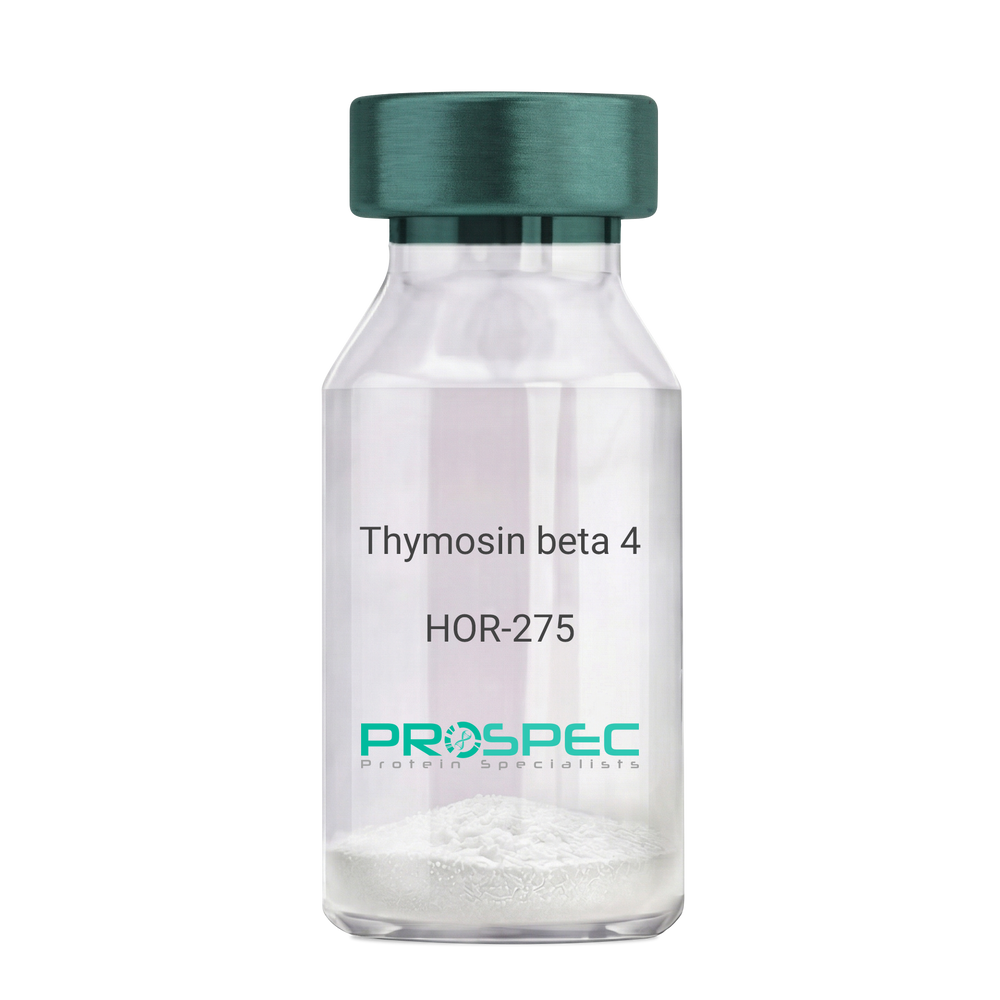
    Thymosin beta 4

    Description:

    Thymosin β4

    Thymosin beta-4. TB500, TB-500

    Product # :

    HOR-275

    Price :

    Quantity :

    Shipping Method :

    Room Temp Icon

    Shipped at Room temp

    Add To Cart

    More Info

    • description
    • formulation
    • purity
    • More Info

    Description

    Thymosin b4 is a 43 amino acid peptide which is regarded as the main intracellular G-actin sequestering peptide. It has a molecular weight of 4963.55 Da, and its molecular formula is: C212H350N56O78S1. Extracellular Thymosin b4 may contribute to physiological processes such as angiogenesis, wound healing, and regulation of inflammation.

    Formulation

    The protein (1mg/ml) was lyophilized with no additives.

    Purity

    Greater than 98.0% as determined by RP-HPLC.

    More Info

    • Introduction

      Thymosin is a hormone secreted from the thymus. Its primary function is to stimulate the production of T cells, which are an important part of the immune system. Thymosin also assists in the development of B cells to plasma cells to produce antibodies. The predominant form of thymosin, thymosin b4, is a member of a highly conserved family of actin monomer-sequestering proteins. b-thymosins are the primary regulators of unpolymerized actin, and are essential for maintaining the small cytoplasmic pool of free G-actin monomers required for rapid filament elongation and allowing for the flux of monomers between the thymosin-bound pool and F-actin.

    • Synonyms

      Thymosin beta-4. TB500, TB-500

    • Physical Appearance

      Sterile Filtered White lyophilized (freeze-dried) powder.

    • Stability

      Lyophilized Thymosin b4 although stable at room temperature for 3 weeks, should be stored desiccated below -18°C. Upon reconstitution T beta 4 should be stored at 4°C between 2-7 days and for future use below -18°C.For long term storage it is recommended to add a carrier protein (0.1% HSA or BSA).Please prevent freeze-thaw cycles.

    • Solubility

      It is recommended to reconstitute the lyophilized Thymosin beta-4 in sterile 18MΩ-cm H2O not less than 100 µg/ml, which can then be further diluted to other aqueous solutions.

    • Amino Acid Sequence

      Thymosin b4 has an a.a. sequence of Ac-Ser-Asp-Lys-Pro-Asp-Met-Ala-Glu-Ile-Glu-Lys-Phe-Asp-Lys-Ser-Lys-Leu-Lys-Lys-Thr-Glu-Thr-Gln-Glu-Lys-Asn-Pro-Leu-Pro-Ser-Lys-Glu-Thr-Ile-Glu-Gln-Glu-Lys-Gln-Ala-Gly-Glu-Ser-OH.

    ProSpec's products are furnished for LABORATORY RESEARCH USE ONLY. The product may not be used as drugs, agricultural or pesticidal products, food additives or household chemicals.

    Thymosin Beta 4
  • View Data Sheet

    Name :

    Leptin Receptor Chicken

    Description:

    Leptin Receptor Chicken Recombinant

    OB Protein, Obesity Protein, OBS, Obesity factor, Leptin Receptor.

    Product # :

    CYT-509

    Price :

    Quantity :

    Shipping Method :

    Ice Icon

    Shipped with Ice Packs

    Add To Cart

    More Info

    • description
    • source
    • formulation
    • purity
    • More Info

    Description

    Leptin Binding Domain Chicken Recombinant also called Leptin Receptor produced in E.Coli is a single, non-glycosylated, polypeptide chain containing 208 amino acids and having a molecular mass of 24.5 kDa. Chicken Leptin Receptor consists of the cytokine binding domain of leptin receptor amino acids 420-626 of chicken leptin receptor.The Leptin Binding Domain is purified by proprietary chromatographic techniques.

    Source

    Escherichia Coli.

    Formulation

    The protein was filter sterilized and stored at 4°C (0.2 to 0.5 mg/ml) solution of Tris-HCl buffer, pH 9.0 with 150mM NaCl.

    Purity

    Greater than 99.0% as determined by:
    (a) Analysis by SEC-HPLC.
    (b) Analysis by SDS-PAGE.

    More Info

    • Introduction

      Leptin Receptor is a part of the gp130 family of cytokine receptors that stimulate gene transcription by activating cytosolic STAT proteins. Leptin Receptor plays a role in the regulation of fat metabolism and in novel hematopoietic pathway that is obligatory for normal lymphopoiesis. Leptin Receptorparticipates in the regulation of counter-regulatory response to hypoglycemia by inhibiting neurons of the parabrachial nucleus.Leptin Receptoraffectsspecifically on T lymphocyte responses.

    • Synonyms

      OB Protein, Obesity Protein, OBS, Obesity factor, Leptin Receptor.

    • Physical Appearance

      Sterile Filtered colorless solution at a concentration of 0.4 mg/ml.

    • Stability

      Sterile solutions at 0.5mg/ml or less are stable at 4°C for several months.

    • Amino Acid Sequence

      The sequence of the first six N-terminal amino acids was determined and was found to be Ala-Ile-Asp-Val-Asn-Ile Biological ActivityBiological Activity is evidenced by high affinity binding of mammalian leptins at 1:1 molar ratio.

    • Protein content

      Protein quantitation was carried out by two independent methods1. UV spectroscopy at 280 nm using the absorbency value of 2.45 as the extinction coefficient for a 0.1% (1mg/ml) solution. This value is calculated by the PC GENE computer analysis program of protein sequences (IntelliGenetics). 2. Analysis by RP-HPLC, using a calibrated solution of Leptin Binding Domain as a Reference Standard.

    ProSpec's products are furnished for LABORATORY RESEARCH USE ONLY. The product may not be used as drugs, agricultural or pesticidal products, food additives or household chemicals.

    Leptin Receptor Chicken
  • View Data Sheet

    Name :

    Activin-A Mouse

    Description:

    Activin-A Mouse Recombinant

    Inhba, Inhibin beta A, FSH releasing protein.

    Product # :

    CYT-146

    Price :

    Quantity :

    Shipping Method :

    Room Temp Icon

    Shipped at Room temp

    Add To Cart

    More Info

    • description
    • source
    • formulation
    • purity
    • biological activity
    • More Info

    Description

    Active form Activin-A Murine Recombinant produced in e.coli is a homodimeric, non-glycosylated, polypeptide chain containing 2 x 117 amino acids and having a molecular weight of 26.2kDa.The Active form Activin-A is purified by standard chromatographic techniques.

    Source

    E.Coli.

    Formulation

    Mouse Activin-A lyophilized from a concentrated 1mg/ml protein solution containing 0.1% TFA.

    Purity

    Greater than 95% as obsereved by SDS-PAGE.

    Biological Activity

    Biological activity is assessed by the ability to induce cytoxicity of MPC-11 cells and was found to be 8.8ng/ml corresponding to a specific activity of 1.1 x 10⁵ units/mg.

    More Info

    • Introduction

      Activins are homodimers or heterodimers of the different β subunit isoforms, part of the TGFβ family. Mature Activin A has two 116 amino acids residues βA subunits (βA-βA). Activin displays an extensive variety of biological activities, including mesoderm induction, neural cell differentiation, bone remodelling, haematopoiesis, and reproductive physiology. Activins takes part in the production and regulation of hormones such as FSH, LH, GnRH and ACTH. Cells that are identified to express Activin A include fibroblasts, endothelial cells, hepatocytes, vascular smooth muscle cells, macrophages, keratinocytes, osteoclasts, bone marrow monocytes, prostatic epithelium, neurons, chondrocytes, osteoblasts, Leydig cells, Sertoli cells, and ovarian granulosa cells.

    • Synonyms

      Inhba, Inhibin beta A, FSH releasing protein.

    • Physical Appearance

      Lyophilized freeze dried powder.

    • Stability

      Lyophilized Activin-A although stable at room temperature for 3 weeks, should be stored desiccated below -18°C. Upon reconstitution Activin-A should be stored at 4°C between 2-7 days and for future use below -18°C.For long term storage it is recommended to add a carrier protein (0.1% HSA or BSA).Please prevent freeze-thaw cycles.

    • Solubility

      Murine INHBA protein should be reconstituted in distilled pyrogen free water to a concentration of 100ug /ml which can then be further diluted to other aqueous solutions.

    • Amino Acid Sequence

      MGLECDGKVN ICCKKQFFVS FKDIGWNDWI IAPSGYHANY CEGECPSHIA GTSGSSLSFH STVINHYRMR GHSPFANLKS CCVPTKLRPM SMLYYDDGQN IIKKDIQNMI VEECGCS.

    • Background

      What is the molecular weight / Mw of Activin A Protein?
      Activin A Protein has a total Mw of 26.2 kDa.

      What is the source or expression system of Activin A Protein?
      Ecoli

      What is the Purity of Activin A Protein?
      Activin A Protein is >95% pure as determined by SDS-PAGE.

      What is the Biological Activity of Activin A Protein?
      Biological activity is assessed by the ability to induce cytoxicity of MPC-11 cells and was found to be 8.8ng/ml corresponding to a specific activity of 110,000 units/mg.

      What is the endotoxin level for Activin A Protein?
      The endotoxin level is minimal, ACTIVIN A Protein was purified using conventional chromatography techniques.

      What is the amino acid sequence of ACTIVIN A Protein?
      MGLECDGKVN ICCKKQFFVS FKDIGWNDWI IAPSGYHANY CEGECPSHIA GTSGSSLSFH STVINHYRMR GHSPFANLKS CCVPTKLRPM SMLYYDDGQN IIKKDIQNMI VEECGCS.

      What applications can ACTIVIN A Protein be used in?
      ACTIVIN A Protein can probably be used in western blot, ELISA and Lateral Flow.

    ProSpec's products are furnished for LABORATORY RESEARCH USE ONLY. The product may not be used as drugs, agricultural or pesticidal products, food additives or household chemicals.

    Inhba Mouse
  • View Data Sheet

    Name :

    MMP-2 Human, HEK

    Description:

    Matrix Metalloproteinase-2 Human Recombinant, HEK

    72 kDa type IV collagenase, 72 kDa gelatinase, Gelatinase A, Matrix metalloproteinase-2, MMP-2, TBE-1, MMP2, CLG4A, CLG4, MONA, MMP-II.

    Product # :

    ENZ-100

    Price :

    Quantity :

    Shipping Method :

    Ice Icon

    Shipped with Ice Packs

    Add To Cart

    More Info

    • description
    • source
    • formulation
    • purity
    • biological activity
    • More Info
    • sds-page

    Description

    MMP-2 Human Recombinant produced in HEK293 cells is a proform of the Human MMP-2 (Ala30-Cys660) and fused with a ployhistide tag at the C-terminus, having an Mw of 71kDa. MMP-2 is purified by proprietary chromatographic techniques.

    Source

    HEK293 cells.

    Formulation

    The MMP-2 is supplied as a 0.2µm filtered solution in 20mM Tris-HCl, 150mM NaCl and 0.05% Brij 35, pH 7.4.

    Purity

    Greater than 95% as determined by SDS-PAGE.

    Biological Activity

    The activity was measured by its ability to cleave fluorogenic peptide substrate, Mca-PLGL-Dpa-AR-NH2 (RND,Catalog # ES001)., The specific activity is > 1,000 pmoles/min/µg.
    Recombinant Human MMP-2 protein pro form needs to be activated with p-aminophenylmercuric acetate (APMA).
    Activation Protocol:
    1. Dilute MMP2 to 100µg/ml in the Assay Buffer: 50mM Tris, 10mM CaCl2, 150mM NaCl, 0.05% (w/v) and Brij 35, pH 7.5.
    2. Activate MMP2 by adding APMA to a final concentration of 1mM. (Sigma, Catalog # A9563) and 100mM stock in DMSO.
    3. Incubate at 37°C for 1 hour.

    sds-page

    mmp-2 human hek sds-page - Product image 1

    More Info

    • Introduction

      Matrix metalloproteinase-2 (MMP-2) is a type IV collagenase, which is involved in endometrial menstrual breakdown, regulation of vascularization and the inflammatory response. MMP-2 contains a number of distinct domains: a prodomain that is cleaved upon activation; a catalytic domain containing the zinc binding site; a fibronectin like domain believed to have a role in substrate targeting; and a carboxyl terminal (hemopexin like) domain containing 2 N-linked glycosylation. The MMP-2 can degrade an extensive array of substrates including type IV, V, VII and X collagens as well as gelatin type I. In addition, MMP-2 interacts with THBS2, TIMP2, Thrombospondin 1, CCL7 and TIMP4. MMP-2 autocatalytic cleavage in the C-terminal generates the anti-angiogenic peptide, PEX. This process seems to be made possible by binding integrinv/beta3. Defects in the MMP-2 are the cause of Torg-Winchester syndrome (TWS), aka multicentric osteolysis nodulosis and arthropathy (MONA).

    • Synonyms

      72 kDa type IV collagenase, 72 kDa gelatinase, Gelatinase A, Matrix metalloproteinase-2, MMP-2, TBE-1, MMP2, CLG4A, CLG4, MONA, MMP-II.

    • Physical Appearance

      The MMP-2 is supplied as a sterile Filtered colorless solution.

    • Stability

      Store MMP-2 at 4°C if entire vial will be used within 2-4 weeks. Store frozen at -20°C for longer periods of time.Avoid multiple freeze-thaw cycles.

    ProSpec's products are furnished for LABORATORY RESEARCH USE ONLY. The product may not be used as drugs, agricultural or pesticidal products, food additives or household chemicals.

    Mmp 2 Human
  • 1
  • …
  • 35
  • 36
  • 37
  • 38
  • 39
  • …
  • 42
Your browser does not support the video tag.

Products

  • Cytokines
  • Growth Factors
  • Chemokines
  • CD Antigens
  • Neurotrophins
  • Hormones
  • Enzymes
  • Viral Antigens
  • Recombinant Proteins
  • Natural Proteins
  • Monoclonal Antibodies
  • Polyclonal Antibodies
  • Thermal Packaging

About

  • Company
  • Founder
  • Contribution
  • Contact Us
  • My Account

Ordering

  • Ordering Method
  • Ordering - Credit Card
  • Ordering PO
  • Shipping Fees
  • FAQ's

Legal

  • Terms & Conditions
  • Privacy
  • Site Map
  • info@prospecbio.com
  • Facebook
  • Instagram
  • Linkedin Profile

© 2026 ProSpec-Tany TechnoGene Ltd. All Rights Reserved.

  • Choosing a selection results in a full page refresh.
  • Opens in a new window.