Search results
1000 results found for “Chromatin Modifying Protein”
Name
Description
Product #
Price
Quantity
Shipping Method
- View Data Sheet
Name :
MAP2K2 HumanDescription:
Mitogen-Activated Protein Kinase Kinase 2 Human Recombinant
Dual specificity mitogen-activated protein kinase kinase 2, MAP kinase kinase 2, MAPKK 2, ERK activator kinase 2, MAPK/ERK kinase 2, MEK 2, MAP2K2,MEK2, MKK2, PRKMK2, MAPKK2.
Product # :
PKA-029Price :
Quantity :
Shipping Method :
Shipped with Ice Packs
More Info
- description
- source
- formulation
- purity
- More Info
Description
MAP2K2 Human Recombinant produced in E.Coli is a single, non-glycosylated polypeptide chain containing 424 amino acids (1-400 a.a.) and having a molecular mass of 46.9kDa.MAP2K2 is fused to a 24 amino acid His-tag at N-terminus & purified by proprietary chromatographic techniques.
Source
Escherichia Coli.
Formulation
MAP2K2 protein solution (0.25mg/ml) containing 20mM Tris-HCl buffer (pH 8.0), 0.1M NaCl and 10% glycerol.
Purity
Greater than 90.0% as determined by SDS-PAGE.
More Info
-
Introduction
Mitogen-Activated Protein Kinase Kinase 2 (MAP2K2) is a dual specificity protein kinase, which is a member of the STE grouping of kinases and the MAP kinase kinase family. MAP2K2 is activated by a wide range of growth factors and cytokines and also by membrane depolarization and calcium influx. The MAP2K2 kinase is known for its vital role in mitogen growth factor signal transduction. MAP2K2 phosphorylates and consequently activates MAPK1/ERK2 and MAPK2/ERK3. The activation of the MAP2K2 kinase itself is dependent on the Ser/Thr phosphorylation by MAP kinase kinase kinases. The inhibition or degradation of the MAP2K2 kinase is also found to be involved in the pathogenesis of Yersinia and anthrax. MAP2K2 gene mutations cause cardiofaciocutaneous syndrome (CFC syndrome).
-
Synonyms
Dual specificity mitogen-activated protein kinase kinase 2, MAP kinase kinase 2, MAPKK 2, ERK activator kinase 2, MAPK/ERK kinase 2, MEK 2, MAP2K2,MEK2, MKK2, PRKMK2, MAPKK2.
-
Physical Appearance
Sterile filtered colorless solution.
-
Stability
Store at 4°C if entire vial will be used within 2-4 weeks. Store, frozen at -20°C for longer periods of time. For long term storage it is recommended to add a carrier protein (0.1% HSA or BSA).Avoid multiple freeze-thaw cycles.
-
Amino Acid Sequence
MGSSHHHHHH SSGLVPRGSH MGSHMLARRK PVLPALTINP TIAEGPSPTS EGASEANLVD LQKKLEELEL DEQQKKRLEA FLTQKAKVGE LKDDDFERIS ELGAGNGGVV TKVQHRPSGL IMARKLIHLE IKPAIRNQII RELQVLHECN SPYIVGFYGA FYSDGEISIC MEHMDGGSLD
QVLKEAKRIP EEILGKVSIA VLRGLAYLRE KHQIMHRDVK PSNILVNSRG EIKLCDFGVS GQLIDSMANS FVGTRSYMAP ERLQGTHYSV QSDIWSMGLS LVELAVGRYP IPPPDAKELE AIFGRPVVDG EEGEPHSISP RPRPPGRPVS GHGMDSRPAM AIFELLDYIV NEPPPKLPNG
VFTPDFQEFV NKCLIKNPAE RADLKMLTNH TFIKRSEVEE VDFAGWLCKT LRLNQPGTPT RTAV.
ProSpec's products are furnished for LABORATORY RESEARCH USE ONLY. The product may not be used as drugs, agricultural or pesticidal products, food additives or household chemicals.
- View Data Sheet
Name :
LBP MouseDescription:
Lipopolysaccaride Mouse Recombinant
Lipopolysaccharide-binding protein, LBP, Ly88.
Product # :
PRO-539Price :
Quantity :
Shipping Method :
Shipped at Room temp
More Info
- description
- source
- formulation
- biological activity
- More Info
Description
LBP is produced from mouse LBP transfected CHO-cells in serum free medium. For transfection we have cloned complete mouse LBP cDNA into expression vector pPOL-DHFR. Before transfection the complete mouse LBP cDNA was amplified by PCR and cloned into expression vector p-POL-DHFR. RmLBP was produced by his-tag by means of metal affinity purification with Talon and controlled by SDS page. Showing a 58kDa band on SDS-PAGE. Attention: His-tag at the c-terminal end of the LBP has no protease site and is not to split off.
Source
Chinese Hamster Ovarian Cells (CHO).
Formulation
Recombinant Mouse LBP was lyophilized from a protein solution (1 mg/ml) containing phosphate-buffered saline, pH 7.2.
Biological Activity
Up to 2µg/ml LBP mediates binding of FITC-LPS (0.5µg/ml) to CD14+CHO transfectants (2 x 10⁶/ml).
More Info
-
Introduction
Lipopolysaccharides (LPS) are a type of glycolipids on the outer cell wall of Gram-negative bacteria. Lipopolysaccharide binding protein (aka LBP) is a plasma protein which facilitates the diffusion of bacterial LPS (endotoxin). LBP is involved in the acute-phase immunologic response to gram-negative bacterial infections. In cooperation with bactericidal permeability-increasing protein (BPI), LBP binds LPS and interacts with the CD14 receptor, most likely playing a role in regulating LPS-dependent monocyte responses. LBP belongs to a family of structurally and functionally related proteins, including BPI, plasma cholesteryl ester transfer protein (CETP), and phospholipid transfer protein (PLTP). The LBP gene is found on chromosome 20, directly downstream of the BPI gene. LBP catalyzes the transfer of LPS monomers from LPS aggregates to HDL particles, to phospholipid bilayers, and to a binding site on soluble CD14 (sCD14). sCD14 is capable of speeding up the transfer by receiving an LPS monomer from an LPS aggregate, and then yielding it to an HDL particle, therefore acting as a soluble "shuttle" for an insoluble lipid.
-
Synonyms
Lipopolysaccharide-binding protein, LBP, Ly88.
-
Physical Appearance
Sterile Filtered White lyophilized (freeze-dried) powder.
-
Stability
Lyophilized LBP Mouse Recombinant although stable at room temperature for 3 weeks, should be stored desiccated below -18°C. Upon reconstitution LBP should be stored at 4°C between 2-7 days and for future use below -18°C.Please prevent freeze-thaw cycles.
-
Solubility
It is recommended to reconstitute the lyophilized LBP in sterile 18MΩ-cm H2O not less than 100µg/ml, which can then be further diluted to other aqueous solutions.
ProSpec's products are furnished for LABORATORY RESEARCH USE ONLY. The product may not be used as drugs, agricultural or pesticidal products, food additives or household chemicals.
- View Data Sheet
Name :
FilaminDescription:
Filamin
Product # :
PRO-521Price :
Quantity :
Shipping Method :
Shipped at Room temp
More Info
- description
- source
- formulation
- purity
- More Info
Description
Ultra Pure Filamin having a Molecular mass of 250 kDa.
Source
Chicken Gizzard.
Formulation
The protein was lyophilized from a 1mg/ml solution containing 20mM Tris / acetate buffer pH 7.6, 0.1mM EDTA, 2mM DTT, 9M urea and 20mM NaCl.
Purity
Greater than 90.0% as determined by SDS-PAGE.
More Info
-
Introduction
Filamin is a large (270kd) dimeric actin crosslinking protein from a variety of sources, which helps to stabilize the 3D cortical actin network. The fundamental structure of filamin is well conserved and consists of an actin binding domain at the N-terminus followed by a C-terminal rod domain consisting of numerous repeat segments ranging from 4 in C. elegans to 24 in mammalian cells. Each repeat in the rod domain consists of roughly 100 residues and forms an immunoglobulin like fold. Such immunoglobulin folds have been found in a variety of proteins and are responsible for protein-protein interactions. Filamin Human actin-binding protein (ABP), aka filamin, crosslinks actin filaments into orthogonal networks in cortical cytoplasm and participates in the anchoring of membrane proteins for the actin cytoskeleton. Mammalian filamin interacts directly with at least 30 proteins such as transmembrane receptors, second messenger-associated proteins, protein kinases, phosphatases and cytoskeletal proteins and these interactions have been shown to require one or more of the repeat elements in the rod domain.
-
Physical Appearance
Sterile Filtered White lyophilized (freeze-dried) powder.
-
Stability
Lyophilized Filamin although stable at room temperature for 3 weeks, should be stored desiccated below -18°C. Upon reconstitution Filamin should be stored at 4°C between 2-7 days and for future use below -18°C.For long term storage it is recommended to add a carrier protein (0.1% HSA or BSA).Please prevent freeze-thaw cycles.
-
Solubility
It is recommended to reconstitute the lyophilized Filamin protein at a concentration of 0.5mg/ml in water.
ProSpec's products are furnished for LABORATORY RESEARCH USE ONLY. The product may not be used as drugs, agricultural or pesticidal products, food additives or household chemicals.
- View Data Sheet
Name :
DCUN1D2 HumanDescription:
DCN1 Defective in Cullin Neddylation 1 Domain Containing 2 Human Recombinant
DCN1-like protein 2, DCUN1 domain-containing protein 2, Defective in cullin neddylation protein 1-like protein 2, DCUN1D2, C13orf17, DCUN1L2.
Product # :
PRO-899Price :
Quantity :
Shipping Method :
Shipped with Ice Packs
More Info
- description
- source
- formulation
- purity
- More Info
Description
DCUN1D2 Human Recombinant produced in E.Coli is a single, non-glycosylated polypeptide chain containing 279 amino acids (1-259 a.a.) and having a molecular mass of 32.3kDa.DCUN1D2 is fused to a 20 amino acid His-tag at N-terminus & purified by proprietary chromatographic techniques.
Source
Escherichia Coli.
Formulation
DCUN1D2 protein solution (1mg/ml) containing 20mM Tris-HCl buffer (pH 8.0), 1mM DTT, 30% glycerol and 0.1M NaCl.
Purity
Greater than 95.0% as determined by SDS-PAGE.
More Info
-
Introduction
DCN1-like protein 2 (DCUN1D2) which contains one DCUN1 domain and 1 UBA-like domain, may have a role in the neddylation of cullins which regulate SCF-type ubiquitin ligase complexes. The gene encoding Dcun1D2 is located on human chromosome 13. Chromosome 13 contains major tumor suppressor genes, including BRCA2 and RB1, which are linked with breast cancer susceptibility and retinoblastoma, respectively.
-
Synonyms
DCN1-like protein 2, DCUN1 domain-containing protein 2, Defective in cullin neddylation protein 1-like protein 2, DCUN1D2, C13orf17, DCUN1L2.
-
Physical Appearance
Sterile Filtered clear solution.
-
Stability
Store at 4°C if entire vial will be used within 2-4 weeks. Store, frozen at -20°C for longer periods of time. For long term storage it is recommended to add a carrier protein (0.1% HSA or BSA).Avoid multiple freeze-thaw cycles.
-
Amino Acid Sequence
MGSSHHHHHH SSGLVPRGSH MHKLKSSQKD KVRQFMACTQ AGERTAIYCL TQNEWRLDEA TDSFFQNPDS LHRESMRNAV DKKKLERLYG RYKDPQDENK IGVDGIQQFC DDLSLDPASI SVLVIAWKFR AATQCEFSRK EFLDGMTELG CDSMEKLKAL LPRLEQELKD TAKFKDFYQF
TFTFAKNPGQ KGLDLEMAVA YWKLVLSGRF KFLDLWNTFL MEHHKRSIPR DTWNLLLDFG NMIADDMSNY DEEGAWPVLI DDFVEYARPV VTGGKRSLF.
ProSpec's products are furnished for LABORATORY RESEARCH USE ONLY. The product may not be used as drugs, agricultural or pesticidal products, food additives or household chemicals.
- View Data Sheet
Name :
MAPK1 Human, HisDescription:
Recombinant Human Mitogen-Activated Protein Kinase 1, His Tag
Mitogen-activated protein kinase 1, EC 2.7.11.24, Extracellular signal-regulated kinase 2, ERK-2, Mitogen-activated protein kinase 2, MAP kinase 2, MAPK 2, p42-MAPK, ERT1, ERK, p38, p40, p41, ERK2, MAPK2, PRKM1, PRKM2, P42MAPK, p41mapk.
Product # :
PKA-360Price :
Quantity :
Shipping Method :
Shipped with Ice Packs
More Info
- description
- source
- formulation
- purity
- More Info
Description
MAPK1 Human Recombinant produced in E.Coli is a single, non-glycosylated, polypeptide chain containing 380 amino acids (1-360 a.a.) and having a molecular mass of 43.5 kDa. MAPK1 is fused to a 20 amino acids His-tag at N-terminus & purified by proprietary chromatographic techniques.
Source
Escherichia Coli.
Formulation
The MAPK1 solution contains 20 mM Tris-HCl buffer (pH 8.0), 1mM DTT and 10% glycerol.
Purity
Greater than 95.0% as determined by SDS-PAGE.
More Info
-
Introduction
Mitogen-activated protein kinase 1 (MAPK1) is also known as "extracellular signal-regulated kinase 2" (ERK2). Two similar (85% sequence identity) protein kinases were originally called ERK1 and ERK2. They were found during a search for protein kinases that are rapidly phosphorylated after activation of cell surface tyrosine kinases such as the epidermal growth factor receptor. Phosphorylation of ERKs leads to the activation of their kinase activity.The molecular events linking cell surface receptors to activation of ERKs are complex. It was found that Ras GTP-binding proteins are involved in the activation of ERKs. Another protein kinase, Raf-1, was shown to phosphorylate a "MAPK kinase", thus qualifying as a "MAPK kinase kinase". The MAPK kinase was named "MAPK/ERK kinase" (MEK). Receptor-linked tyrosine kinases, Ras, Raf, MEK and MAPK could be fitted into a signaling cascade linking an extracellular signal to MAPK activation Transgenic gene knockout mice lacking MAPK1 have major defe
-
Synonyms
Mitogen-activated protein kinase 1, EC 2.7.11.24, Extracellular signal-regulated kinase 2, ERK-2, Mitogen-activated protein kinase 2, MAP kinase 2, MAPK 2, p42-MAPK, ERT1, ERK, p38, p40, p41, ERK2, MAPK2, PRKM1, PRKM2, P42MAPK, p41mapk.
-
Physical Appearance
Sterile Filtered colorless solution.
-
Stability
Store at 4°C if entire vial will be used within 2-4 weeks. Store, frozen at -20°C for longer periods of time. For long term storage it is recommended to add a carrier protein (0.1% HSA or BSA).Avoid multiple freeze-thaw cycles.
-
Amino Acid Sequence
MGSSHHHHHH SSGLVPRGSH MAAAAAAGAG PEMVRGQVFD VGPRYTNLSY IGEGAYGMVC SAYDNVNKVR VAIKKISPFE HQTYCQRTLR EIKILLRFRH ENIIGINDII RAPTIEQMKD VYIVQDLMET DLYKLLKTQH LSNDHICYFL YQILRGLKYI HSANVLHRDL KPSNLLLNTT CDLKICDFGL ARVADPDHDH TGFLTEYVAT RWYRAPEIML NSKGYTKSID IWSVGCILAE MLSNRPIFPG KHYLDQLNHI LGILGSPSQE MGSSHHHHHH SSGLVPRGSH MAAAAAAGAG PEMVRGQVFD VGPRYTNLSY IGEGAYGMVC SAYDNVNKVR VAIKKISPFE HQTYCQRTLR EIKILLRFRH ENIIGINDII RAPTIEQMKD VYIVQDLMET DLYKLLKTQH LSNDHICYFL YQILRGLKYI HSANVLHRDL KPSNLLLNTT CDLKICDFGL ARVADPDHDH TGFLTEYVAT RWYRAPEIML NSKGYTKSID IWSVGCILAE MLSNRPIFPG KHYLDQLNHI LGILGSPSQE DLNCIINLKA RNYLLSLPHK NKVPWNRLFP NADSKALDLL DKMLTFNPHK RIEVEQALAH PYLEQYYDPS DEPIAEAPFK FDMELDDLPK EKLKELIFEE TARFQPGYRS.
ProSpec's products are furnished for LABORATORY RESEARCH USE ONLY. The product may not be used as drugs, agricultural or pesticidal products, food additives or household chemicals.
- View Data Sheet
Name :
Colloidal GoldDescription:
Colloidal Gold 40nM 2OD
Product # :
PRO-2830Price :
Quantity :
Shipping Method :
Shipped with Ice Packs
More Info
- description
- formulation
- More Info
Description
Gold nanoparticles have one-of-a-kind properties turn them to ideal for detecting even the smallest amounts of biological molecules. These particles can be loaded with drugs or other therapeutic agents and then targeted to specific cells/tissues. Further to their diagnostic applications, gold nanoparticles may also take part in drug delivery and cancer therapy. Colloidal Gold is purified by proprietary chromatographic techniques.
Formulation
Colloidal Gold solution (6.7mg/ml) contains 50mM sodium citrate.
More Info
-
Physical Appearance
Sterile Filtered red solution.
-
Stability
Colloidal Gold should be stored at 4°C, DO NOT FREEZE.
-
Background
Colloidal gold is liquid form colloid nanoparticles of gold in a water. The colloidal gold color is dependent of the particle size, below 100 nm gives a is deep purple red color due to the spherical nanoparticles. Colloid gold is crucial for research due to its unique properties such as electronic charge, Mw and optical properties. Colloid gold is used in biomedical devices, electron microscopy and nanotechnology.
ProSpec's products are furnished for LABORATORY RESEARCH USE ONLY. The product may not be used as drugs, agricultural or pesticidal products, food additives or household chemicals.
- View Data Sheet
Name :
Eotaxin HumanDescription:
Eotaxin Human Recombinant (CCL11)
Small inducible cytokine A11, CCL11, Eosinophil chemotactic protein, chemokine (C-C motif) ligand 11, SCYA11, MGC22554.
Product # :
CHM-256Price :
Quantity :
Shipping Method :
Shipped at Room temp
More Info
- description
- source
- formulation
- purity
- biological activity
- More Info
Description
Eotaxin Human Recombinant produced in E.Coli is a single, non-glycosylated polypeptide chain containing 74 amino acids and having a molecular mass of 8345.9 Dalton. The CCL11 is purified by proprietary chromatographic techniques.
Source
Escherichia Coli.
Formulation
Lyophilized from a 0.2µm filtered concentrated (1.0mg/ml) solution in 20mM PB, pH 7.4, 150mM NaCl.
Purity
Greater than 97.0% as determined by:
(a) Analysis by RP-HPLC.
(b) Analysis by SDS-PAGE.Biological Activity
The activity is determined by the chemoattract of human PBE (peripheral blood eosinophils) at a concentration between 0.1-10 ng/ml corresponding to a Specific Activity of 100,000-10,000,000IU/mg.More Info
-
Introduction
Chemokine (C-C motif) ligand 11 (CCL11) is a small cytokine belonging to the CC chemokine family that is also known as eotaxin. CCL11 selectively recruits eosinophils by inducing their chemotaxis, and therefore, is implicated in allergic responses. The effects of CCL11 are mediated by its binding to a G-protein-linked receptor known as a chemokine receptor. Chemokine receptors for which CCL11 is a ligand include CCR2, CCR3 and CCR5. The gene for human CCL11 (scya11) is encoded on three exons and is located on chromosome 17.
-
Synonyms
Small inducible cytokine A11, CCL11, Eosinophil chemotactic protein, chemokine (C-C motif) ligand 11, SCYA11, MGC22554.
-
Physical Appearance
Sterile Filtered White lyophilized (freeze-dried) powder.
-
Stability
Lyophilized Eotaxin although stable at room temperature for 3 weeks, should be stored desiccated below -18°C. Upon reconstitution CCL11 should be stored at 4°C between 2-7 days and for future use below -18°C.For long term storage it is recommended to add a carrier protein (0.1% HSA or BSA).Please prevent freeze-thaw cycles.
-
Solubility
It is recommended to reconstitute the lyophilized Eotaxin Human Recombinant in sterile 18MΩ-cm H2O not less than 100µg/ml, which can then be further diluted to other aqueous solutions.
-
Amino Acid Sequence
GPASVPTTCC FNLANRKIPL QRLESYRRIT SGKCPQKAVI FKTKLAKDICADPKKKWVQD
SMKYLDQKSP TPKP.
-
Background
What is the molecular weight/Mw of EOTAXIN HUMAN Protein?
EOTAXIN HUMAN Protein has a total Mw of 8.3459kDa.
What is the source or expression system of EOTAXIN HUMAN Protein?
Escherichia Coli.
What is the Purity of EOTAXIN HUMAN Protein?
EOTAXIN HUMAN Protein is >97% pure as determined by SDS-PAGE.
What is the Biological Activity of EOTAXIN HUMAN Protein?
The activity is determined by the chemoattract of human PBE (peripheral blood eosinophils) at a concentration between 0.1-10 ng/ml corresponding to a Specific Activity of 100,000-10,000,000IU/mg.
What is the amino acid sequence of EOTAXIN HUMAN Protein?
GPASVPTTCC FNLANRKIPL QRLESYRRIT SGKCPQKAVI FKTKLAKDICADPKKKWVQD
SMKYLDQKSP TPKP.
What applications can EOTAXIN HUMAN Protein be used in?
EOTAXIN HUMAN Protein can probably be used in western blot, ELISA and Lateral Flow.
What is the endotoxin level for EOTAXIN HUMAN Protein?
The endotoxin level is minimal, EOTAXIN HUMAN Protein was purified using conventional chromatography techniques.
ProSpec's products are furnished for LABORATORY RESEARCH USE ONLY. The product may not be used as drugs, agricultural or pesticidal products, food additives or household chemicals.
- View Data Sheet
Name :
TP53AIP1 HumanDescription:
Tumor Protein P53 Regulated Apoptosis Inducing Protein 1 Human Recombinant
800x600 p53-regulated apoptosis-inducing protein 1, Tumor Protein P53 Regulated Apoptosis Inducing Protein 1, TP53AIP1, p53AIP1, P53-regulated apoptosis-inducing protein 1 isoform a, TPIP1, P53AIP1. Normal 0 false false false EN-US X-NONE HE MicrosoftInternetExplorer4 /* Style Definitions */ table.MsoNormalTable {mso-style-name:"Table Normal"; mso-tstyle-rowband-size:0; mso-tstyle-colband-size:0; mso-style-noshow:yes; mso-style-priority:99; mso-style-parent:""; mso-padding-alt:0cm 5.4pt 0cm 5.4pt; mso-para-margin:0cm; mso-para-margin-bottom:.0001pt; mso-pagination:widow-orphan; font-size:10.0pt; font-family:"Calibri","sans-serif";}
Product # :
PRO-1664Price :
Quantity :
Shipping Method :
Shipped with Ice Packs
More Info
- description
- source
- formulation
- purity
- More Info
Description
TP53AIP1 Human Recombinant produced in E.coli is a single, non-glycosylated polypeptide chain containing 144 amino acids (1-124) and having a molecular mass of 15kDa.TP53AIP1 is fused to a 20 amino acid His-tag at N-terminus & purified by proprietary chromatographic techniques.
Source
Escherichia Coli.
Formulation
The TP53AIP1 solution (1mg/ml) contains 20mM Tris-HCl buffer (pH 8.0), 10% glycerol and 0.4M Urea.
Purity
Greater than 85.0% as determined by SDS-PAGE.
More Info
-
Introduction
Tumor Protein P53 Regulated Apoptosis Inducing Protein 1 (TP53AIP1) is expressed mainly in the thymus, and is localized to the mitochondrion. p53 induces TP53AIP1 production which then mediates p53- dependent apoptosis. Alternatively spliced transcript variants encoding diverse isoforms are known for TP53AIP1.
-
Synonyms
p53-regulated apoptosis-inducing protein 1, Tumor Protein P53 Regulated Apoptosis Inducing Protein 1, TP53AIP1, p53AIP1, P53-regulated apoptosis-inducing protein 1 isoform a, TPIP1, P53AIP1.
-
Physical Appearance
Sterile Filtered colorless solution.
-
Stability
Store at 4°C if entire vial will be used within 2-4 weeks. Store, frozen at -20°C for longer periods of time. For long term storage it is recommended to add a carrier protein (0.1% HSA or BSA).Avoid multiple freeze-thaw cycles.
-
Amino Acid Sequence
MGSSHHHHHH SSGLVPRGSH MGSSSEASFR SAQASCSGAR RQGLGRGDQN LSVMPPNGRA QTHTPGWVSD PLVLGAQVHG GCRGIEALSV SSGSWSSATV WILTGLGLGL SRPFLPGATV LRDRPLGSAF ELSYDQKKAP LRLQ.
ProSpec's products are furnished for LABORATORY RESEARCH USE ONLY. The product may not be used as drugs, agricultural or pesticidal products, food additives or household chemicals.
- View Data Sheet
Name :
APRIL HumanDescription:
APRIL Human Recombinant
Tumor necrosis factor ligand superfamily member 13, A proliferation-inducing ligand, APRIL, TNF- and APOL-related leukocyte expressed ligand 2, TALL-2, TNF-related death ligand 1, TRDL-1, CD256, TNFSF13, TALL2, ZTNF2, UNQ383/PRO715.
Product # :
CYT-815Price :
Quantity :
Shipping Method :
Shipped with Ice Packs
More Info
- description
- source
- formulation
- purity
- More Info
- sds-page
Description
APRIL Human Recombinant produced in E.coli is a single, non-glycosylated polypeptide chain containing 159 amino acids (105-247) and having a molecular mass of 17.6kDa.APRIL is fused to a 16 amino acid T7-tag at N-terminus and purified by proprietary chromatographic techniques.
Source
Escherichia Coli.
Formulation
APRIL protein solution (1mg/ml) containing 20mM Tris-HCl buffer (pH 8.0), 0.4M UREA and 10% glycerol.
Purity
Greater than 85.0% as determined by SDS-PAGE.
sds-page
More Info
-
Introduction
APRIL which is a part of the TNF ligand superfamily (TNFSF13) is a type II transmembrane protein. Normally, APRIL expression is low in tissues, but is elevated in numerous types of tumors and transformed cell lines.
-
Synonyms
Tumor necrosis factor ligand superfamily member 13, A proliferation-inducing ligand, APRIL, TNF- and APOL-related leukocyte expressed ligand 2, TALL-2, TNF-related death ligand 1, TRDL-1, CD256, TNFSF13, TALL2, ZTNF2, UNQ383/PRO715.
-
Physical Appearance
Sterile filtered colorless solution.
-
Stability
Store at 4°C if entire vial will be used within 2-4 weeks. Store, frozen at -20°C for longer periods of time. For long term storage it is recommended to add a carrier protein (0.1% HSA or BSA).Avoid multiple freeze-thaw cycles.
-
Amino Acid Sequence
MASMTGGQQM GRGSHMAVLT QKQKKQHSVL HLVPINATSK DDSDVTEVMW QPALRRGRGL QAQGYGVRIQ DAGVYLLYSQ VLFQDVTFTM GQVVSREGQG RQETLFRCIR SMPSHPDRAY NSCYSAGVFH LHQGDILSVI IPRARAKLNL SPHGTFLGL.
-
Background
APRIL Human Recombinant: Expanding the Horizons of Immunotherapy
Abstract:
APRIL (A Proliferation-Inducing Ligand) is a promising molecule within the tumor necrosis factor (TNF) superfamily that plays a pivotal role in immune regulation. This research paper provides an overview of APRIL human recombinant, exploring its potential applications in immunotherapy. Understanding the mechanisms and therapeutic implications of APRIL holds promise in the field of immune-related disorders. This article presents a concise analysis of APRIL, highlighting its potential as a therapeutic target.Introduction:
Immunotherapy has revolutionized the treatment of various diseases by harnessing the power of the immune system. APRIL, a member of the TNF superfamily, has emerged as a potential candidate for immunotherapeutic interventions. This paper provides an overview of APRIL, shedding light on its structure, function, and potential applications in immunotherapy.APRIL Structure and Function:
APRIL is a transmembrane protein that can be proteolytically cleaved, leading to the generation of soluble forms. It interacts with its receptors, such as BCMA and TACI, to regulate immune responses. APRIL influences B-cell activation, proliferation, and antibody production, making it a compelling target for immunotherapeutic strategies.Immunotherapeutic Applications of APRIL Human Recombinant:
APRIL human recombinant holds great potential in immunotherapy. By modulating APRIL activity, it may be possible to enhance immune responses against cancer cells or dampen immune dysregulation in autoimmune disorders. Additionally, APRIL-based therapeutics could be developed to target specific immune cell populations or enhance the efficacy of existing immunotherapies.Challenges and Future Directions:
Although APRIL shows promise, there are challenges to overcome. Further research is needed to elucidate the precise mechanisms of APRIL-mediated immune regulation and identify optimal therapeutic approaches. Additionally, safety considerations and potential side effects must be thoroughly evaluated.Conclusion:
APRIL human recombinant represents a valuable tool for advancing immunotherapy. Understanding the structure, function, and therapeutic potential of APRIL opens up new avenues for treating immune-related disorders. Continued research and development in this field have the potential to revolutionize the landscape of immunotherapy, improving patient outcomes and expanding the possibilities for personalized medicine.What is the molecular weight/Mw of APRIL Protein?
APRIL Protein has a total Mw of 17.6kDa.
What is the source or expression system of APRIL Protein?
Escherichia Coli.
What is the Purity of APRIL Protein?
APRIL Protein is >85% pure as determined by SDS-PAGE.
What is the Biological Activity of APRIL Protein?
The biological functionality of APRIL Protein will be determined in the future.
What is the amino acid sequence of APRIL Protein?
MASMTGGQQM GRGSHMAVLT QKQKKQHSVL HLVPINATSK DDSDVTEVMW QPALRRGRGL QAQGYGVRIQ DAGVYLLYSQ VLFQDVTFTM GQVVSREGQG RQETLFRCIR SMPSHPDRAY NSCYSAGVFH LHQGDILSVI IPRARAKLNL SPHGTFLGL.
What applications can APRIL Protein be used in?
APRIL Protein can probably be used in western blot, ELISA and Lateral Flow.
What is the endotoxin level for APRIL Protein?
The endotoxin level is minimal, APRIL Protein was purified using conventional chromatography techniques.
ProSpec's products are furnished for LABORATORY RESEARCH USE ONLY. The product may not be used as drugs, agricultural or pesticidal products, food additives or household chemicals.
- View Data Sheet
Name :
BASP1 HumanDescription:
Brain Abundant Membrane Attached Signal Protein 1 Human Recombinant
CAP-23, CAP23, NAP-22, NAP22, Brain acid soluble protein 1, BASP1, BASP1 Human, 22 kDa neuronal tissue-enriched acidic protein, Neuronal axonal membrane protein NAP-22.
Product # :
PRO-1355Price :
Quantity :
Shipping Method :
Shipped with Ice Packs
More Info
- description
- source
- formulation
- purity
- More Info
Description
BASP1 Human Recombinant produced in E.coli is a single, non-glycosylated polypeptide chain containing 250 amino acids (1-227) and having a molecular mass of 25 kDa (Molecular size on SDS-PAGE will appear higher). BASP1 is fused to a 23 amino acid His-tag at N-terminus & purified by proprietary chromatographic techniques.
Source
Escherichia Coli.
Formulation
The BASP1 solution (0.25mg/ml) contains 20mM Tris-HCl buffer (pH 8.0), 0.2M NaCl and 20% glycerol.
Purity
Greater than 95.0% as determined by SDS-PAGE.
More Info
-
Introduction
Brain Abundant Membrane Attached Signal Protein 1 (BASP1) is a membrane bound protein with numerous transient phosphorylation positions and PEST motifs. Preservation of proteins with PEST sequences amongst diverse species supports their functional significance. PEST sequences take place in proteins with high turnover rates. Immunological attributes of this protein are species specific. BASP1 undergoes N-terminal myristoylation.
-
Synonyms
CAP-23, CAP23, NAP-22, NAP22, Brain acid soluble protein 1, BASP1, BASP1 Human, 22 kDa neuronal tissue-enriched acidic protein, Neuronal axonal membrane protein NAP-22.
-
Physical Appearance
Sterile Filtered colorless solution.
-
Stability
Store at 4°C if entire vial will be used within 2-4 weeks. Store, frozen at -20°C for longer periods of time. For long term storage it is recommended to add a carrier protein (0.1% HSA or BSA).Avoid multiple freeze-thaw cycles.
-
Amino Acid Sequence
MGSSHHHHHH SSGLVPRGSH MGSMGGKLSK KKKGYNVNDE KAKEKDKKAE GAATEEEGTP KESEPQAAAE PAEAKEGKEK PDQDAEGKAE EKEGEKDAAA AKEEAPKAEP EKTEGAAEAK AEPPKAPEQE QAAPGPAAGG EAPKAAEAAA APAESAAPAA GEEPSKEEGE PKKTEAPAAP AAQETKSDGA PASDSKPGSS EAAPSSKETP AATEAPSSTP KAQGPAASAE EPKPVEAPAA NSDQTVTVKE.
ProSpec's products are furnished for LABORATORY RESEARCH USE ONLY. The product may not be used as drugs, agricultural or pesticidal products, food additives or household chemicals.
- View Data Sheet
Name :
MAPK9 HumanDescription:
Mitogen-Activated Protein Kinase 9 Human Recombinant
Mitogen-activated protein kinase 9, MAP kinase 9, MAPK 9, JNK-55, Stress-activated protein kinase 1a, SAPK1a, Stress-activated protein kinase JNK2, c-Jun N-terminal kinase 2, MAPK9, JNK2, PRKM9, SAPK, p54a, JNK2A, JNK2B, JNK2BETA, p54aSAPK, JNK2ALPHA.
Product # :
PKA-039Price :
Quantity :
Shipping Method :
Shipped with Ice Packs
More Info
- description
- source
- formulation
- purity
- More Info
Description
MAPK9 Human Recombinant produced in E.Coli is a single, non-glycosylated polypeptide chain containing 406 amino acids (1-382 a.a) and having a molecular mass of 46.6kDa.MAPK9 is fused to a 24 amino acid His-tag at N-terminus & purified by proprietary chromatographic techniques.
Source
Escherichia Coli.
Formulation
MAPK9 protein solution (1mg/ml) containing 20mM Tris-HCl buffer (pH 8.0), 0.1M NaCl, 10% glycerol and 1mM DTT.
Purity
Greater than 95.0% as determined by SDS-PAGE.
More Info
-
Introduction
Mitogen-activated protein kinase 9 (MAPK9) belongs to the MAP kinase family. MAP kinases function as an integration point for numerous biochemical signals, and are involved in a broad variety of cellular processes such as proliferation, differentiation, transcription regulation and development. MAPK9 targets specific transcription factors, and consequently mediates immediate-early gene expression in response to diverse cell stimuli. As an active dimer, MAPK9 can translocate to the nucleus and control transcription through its effects on c-Jun, ATF-2, and other transcription factors. MAPK9 blocks the ubiquitination of tumor suppressor p53, and so it increases the stability of p53 in nonstressed cells.
-
Synonyms
Mitogen-activated protein kinase 9, MAP kinase 9, MAPK 9, JNK-55, Stress-activated protein kinase 1a, SAPK1a, Stress-activated protein kinase JNK2, c-Jun N-terminal kinase 2, MAPK9, JNK2, PRKM9, SAPK, p54a, JNK2A, JNK2B, JNK2BETA, p54aSAPK, JNK2ALPHA.
-
Physical Appearance
Sterile filtered colorless solution.
-
Stability
Store at 4°C if entire vial will be used within 2-4 weeks. Store, frozen at -20°C for longer periods of time. For long term storage it is recommended to add a carrier protein (0.1% HSA or BSA).Avoid multiple freeze-thaw cycles.
-
Amino Acid Sequence
MGSSHHHHHH SSGLVPRGSH MGSHMSDSKC DSQFYSVQVA DSTFTVLKRY QQLKPIGSGA QGIVCAAFDT VLGINVAVKK LSRPFQNQTH AKRAYRELVL LKCVNHKNII SLLNVFTPQK TLEEFQDVYL VMELMDANLC QVIHMELDHE RMSYLLYQML CGIKHLHSAG IIHRDLKPSN IVVKSDCTLK ILDFGLARTA CTNFMMTPYV VTRYYRAPEV ILGMGYKENV DIWSVGCIMG ELVKGCVIFQ GTDHIDQWNK VIEQLGTPSA EFMKKLQPTV RNYVENRPKY PGIKFEELFP DWIFPSESER DKIKTSQARD LLSKMLVIDP DKRISVDEAL RHPYITVWYD PAEAEAPPPQ IYDAQLEERE HAIEEWKELI YKEVMDWEER SKNGVVKDQP SAQMQQ.
ProSpec's products are furnished for LABORATORY RESEARCH USE ONLY. The product may not be used as drugs, agricultural or pesticidal products, food additives or household chemicals.
- View Data Sheet
Name :
CHCHD3 HumanDescription:
Coiled-Coil-Helix-Coiled-Coil-Helix Domain Containing 3 Human Recombinant
Regulatory Subunit 22, MINOS3, PPP1R22, Mitochondrial Inner Membrane Organizing System 3, Protein Phosphatase 1, Coiled-Coil-Helix-Coiled-Coil-Helix Domain-Containing Protein 3 Mitochondrial, Protein Phosphatase 1, Regulatory Subunit 22.
Product # :
PRO-815Price :
Quantity :
Shipping Method :
Shipped with Ice Packs
More Info
- description
- source
- formulation
- purity
- More Info
Description
CHCHD3 Human Recombinant produced in E.Coli is a single, non-glycosylated polypeptide chain containing 250 amino acids (1-227 a.a) and having a molecular mass of 28.5kDa.CHCHD3 is fused to a 23 amino acid His-tag at N-terminus & purified by proprietary chromatographic techniques.
Source
Escherichia Coli.
Formulation
CHCHD3 protein solution (0.25mg/ml) containing 20mM Tris-HCl buffer (pH 8.0), 0.2M NaCl, 50% glycerol and 2mM DTT.
Purity
Greater than 80.0% as determined by SDS-PAGE.
More Info
-
Introduction
Coiled-coil-helix-coiled-coil-helix domain containing 3 (CHCHD3), is a protein-coding gene. CHCHD3 is essential for maintenance of mitochondrial crista integrity and mitochondrial function. . In addition, CHCHD3 may perform as a scaffolding protein that stabilizes protein complexes involved in crista architecture and protein import. CHCHD3 may also act as a transcription factor which binds to the BAG1 promoter and represses BAG1 transcription. Lung cancer has been associated with CHCHD3.
-
Synonyms
Regulatory Subunit 22, MINOS3, PPP1R22, Mitochondrial Inner Membrane Organizing System 3, Protein Phosphatase 1, Coiled-Coil-Helix-Coiled-Coil-Helix Domain-Containing Protein 3 Mitochondrial, Protein Phosphatase 1, Regulatory Subunit 22.
-
Physical Appearance
Sterile Filtered clear solution.
-
Stability
Store at 4°C if entire vial will be used within 2-4 weeks. Store, frozen at -20°C for longer periods of time. For long term storage it is recommended to add a carrier protein (0.1% HSA or BSA).Avoid multiple freeze-thaw cycles.
-
Amino Acid Sequence
MGSSHHHHHH SSGLVPRGSH MGSMGGTTST RRVTFEADEN ENITVVKGIR LSENVIDRMK ESSPSGSKSQ RYSGAYGASV SDEELKRRVA EELALEQAKK ESEDQKRLKQ AKELDRERAA ANEQLTRAIL RERICSEEER AKAKHLARQL EEKDRVLKKQ DAFYKEQLAR LEERSSEFYR VTTEQYQKAA EEVEAKFKRY ESHPVCADLQ AKILQCYREN THQTLKCSAL ATQYMHCVNH AKQSMLEKGG
ProSpec's products are furnished for LABORATORY RESEARCH USE ONLY. The product may not be used as drugs, agricultural or pesticidal products, food additives or household chemicals.
- View Data Sheet
Name :
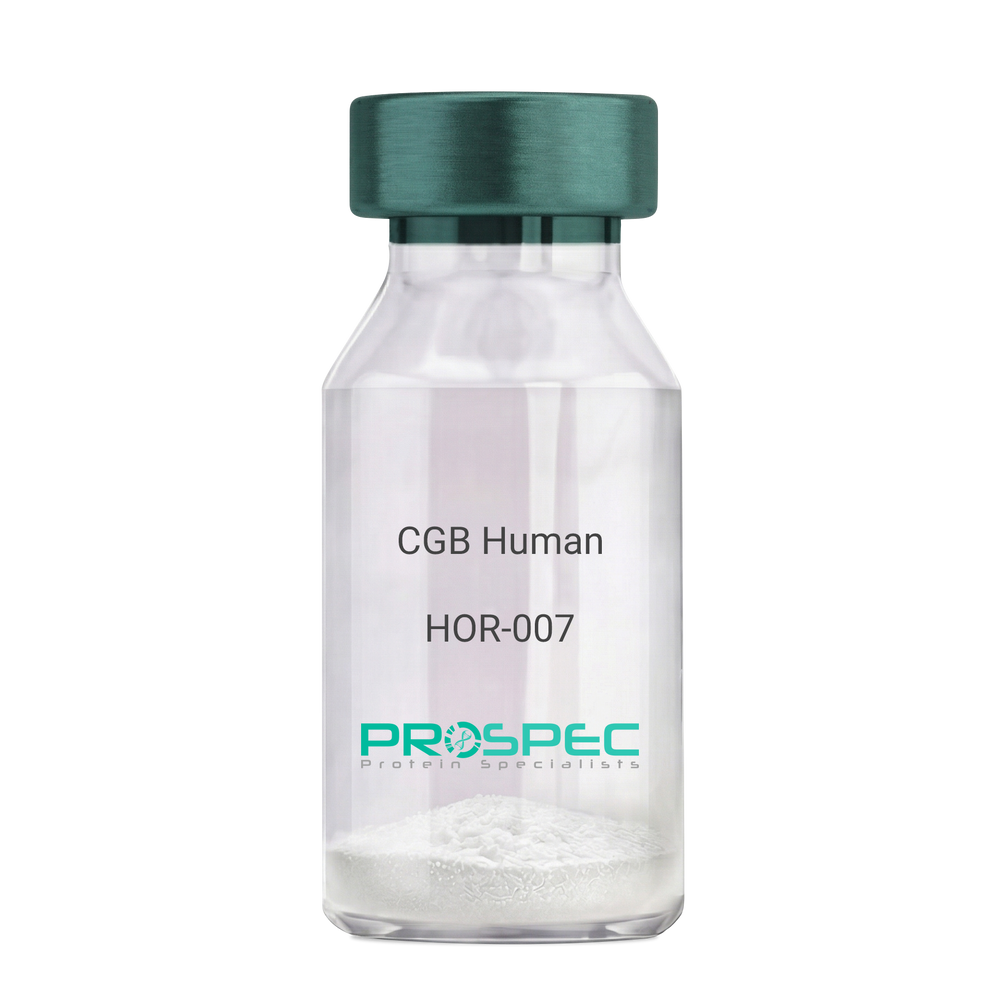
CGB HumanDescription:
CGB Human Recombinant
CGB3, CGB5, CGB7, CGB8, hCGB, CG-beta, CGB.
Product # :
HOR-007Price :
Quantity :
Shipping Method :
Shipped with Ice Packs
More Info
- description
- source
- formulation
- purity
- More Info
Description
CGB Human Recombinant produced in E.Coli is a single, non-glycosylated polypeptide chain containing 168 amino acids (21-165 a.a.) and having a molecular mass of 17.9kDa. CGB is fused to a 23 amino acid His-tag at N-terminus & purified by proprietary chromatographic techniques.
Source
Escherichia Coli.
Formulation
CGB protein solution (0.5mg/ml) containing 20mM Tris-HCl buffer (pH 8.0), 0.4M Urea and 10% glycerol.
Purity
Greater than 85.0% as determined by SDS-PAGE.
More Info
-
Introduction
Glycoprotein hormones are heterodimers consisting of a common alpha subunit and a unique beta subunit which confers biological specificity. CGB is a member of the glycoprotein hormone beta chain family and is the beta 3 subunit of (CG). CG is produced by the trophoblastic cells of the placenta and stimulates the ovaries. The beta subunit of CG is encoded by 6 genes which are arranged in tandem and inverted pairs on chromosome 19q13.3 and contiguous with the luteinizing hormone beta subunit gene.
-
Synonyms
CGB3, CGB5, CGB7, CGB8, hCGB, CG-beta, CGB.
-
Physical Appearance
Sterile filtered colorless solution.
-
Stability
Store at 4°C if entire vial will be used within 2-4 weeks. Store, frozen at -20°C for longer periods of time. For long term storage it is recommended to add a carrier protein (0.1% HSA or BSA).Avoid multiple freeze-thaw cycles.
-
Amino Acid Sequence
MGSSHHHHHH SSGLVPRGSH MGSSKEPLRP RCRPINATLA VEKEGCPVCI TVNTTICAGY CPTMTRVLQG VLPALPQVVC NYRDVRFESI RLPGCPRGVN PVVSYAVALS CQCALCRRST TDCGGPKDHP LTCDDPRFQD SSSSKAPPPS LPSPSRLPGP SDTPILPQ.
ProSpec's products are furnished for LABORATORY RESEARCH USE ONLY. The product may not be used as drugs, agricultural or pesticidal products, food additives or household chemicals.
- View Data Sheet
Name :
FHIT HumanDescription:
Fragile Histidine Triad Human Recombinant
EC 3.6.1.29, Dinucleosidetriphosphatase, Bis (5''-adenosyl)-triphosphatase , AP3Aase, AP3A hydrolase, Diadenosine 5'',5''''''-P1,P3-triphosphate hydrolase, FRA3B.
Product # :
PRO-828Price :
Quantity :
Shipping Method :
Shipped with Ice Packs
More Info
- description
- source
- formulation
- purity
- More Info
Description
FHIT Human Recombinant produced in E.Coli is a single, non-glycosylated, polypeptide chain containing 155 amino acids (1-147 a.a.) and having a molecular mass of 17.9 kDa. FHIT protein is fused to an 8 amino acid His tag at C-terminus and is purified by standard chromatography.
Source
Escherichia Coli.
Formulation
FHIT Human solution containing 20mM Tris-HCl pH-8 & 10% glycerol.
Purity
Greater than 95% as determined by SDS-PAGE.
More Info
-
Introduction
FHIT enzyme cleaves adenosine 5'' PPP 5'' A to yield AMP and ADP. FHIT gene includees the regular fragile site FRA3B on chromosome 3. Alterations and deletions of the FHIT gene are highly linked to the genesis and establishment of human tumors of the lung, cervix, breast, colon, stomach and pancreas. In normal cells, FHIT functions as a tumor suppressor and physically relates with ubiquitin conjugating enzyme 9.
-
Synonyms
EC 3.6.1.29, Dinucleosidetriphosphatase, Bis (5''-adenosyl)-triphosphatase , AP3Aase, AP3A hydrolase, Diadenosine 5'',5''''''-P1,P3-triphosphate hydrolase, FRA3B.
-
Physical Appearance
Sterile filtered colorless solution.
-
Stability
Store at 4°C if entire vial will be used within 2-4 weeks. Store, frozen at -20°C for longer periods of time. For long term storage it is recommended to add a carrier protein (0.1% HSA or BSA).Avoid multiple freeze-thaw cycles.
-
Amino Acid Sequence
MSFRFGQHLI KPSVVFLKTE LSFALVNRKP VVPGHVLVCP LRPVERFHDL RPDEVADLFQ TTQRVGTVVE KHFHGTSLTF SMQDGPEAGQ TVKHVHVHVL PRKAGDFHRN DSIYEELQKH DKEDFPASWR SEEEMAAEAA ALRVYFQLEH HHHHH.
ProSpec's products are furnished for LABORATORY RESEARCH USE ONLY. The product may not be used as drugs, agricultural or pesticidal products, food additives or household chemicals.
- View Data Sheet
Name :
MIP 3 HumanDescription:
Macrophage Inflammatory Protein-3 Human Recombinant (CCL23)
C-C motif chemokine 23, Small-inducible cytokine A23, Macrophage inflammatory protein 3, Myeloid progenitor inhibitory factor 1, CK-beta-8, MIP-3, MPIF-1, CKB-8, CCL23, MIP3, MPIF1, SCYA23, CKb8, Ckb-8-1.
Product # :
CHM-358Price :
Quantity :
Shipping Method :
Shipped at Room temp
More Info
- description
- source
- formulation
- purity
- biological activity
- More Info
Description
MIP-3 Human Recombinant produced in E.Coli is a single, non-glycosylated, polypeptide chain containing 99 amino acids and having a molecular mass of 11.3kDa. The MIP-3 is purified by proprietary chromatographic techniques.
Source
Escherichia Coli.
Formulation
Filtered (0.2µm) and lyophilized from a concentrated (1mg/ml) solution in 20mM PB, pH 7.4, 150mM NaCl.
Purity
Greater than 97.0% as determined by:
(a) Analysis by RP-HPLC.
(b) Analysis by SDS-PAGE.Biological Activity
Determined by its ability to chemoattract human T cell population using a concentration range of 10-50ng/ml corresponding to a Specific Activity of 20,000-100,000IU/mg.More Info
-
Introduction
CCL23 (MIP-3) is a ligand for the CCR1chemokine receptor. CCL23 is one of several cytokine genes clustered on the q-arm of chromosome 17, in a locus containing several other CC chemokines. MIP-3 chemoattracts monocytes, resting T-lymphocytes and neutrophils, but not activated lymphocytes. Furthermore, it was shown that MIP-3 inhibits colony formation of bone marrow myeloid immature progenitors. MIP-3 is mainly expressed in lung and liver tissue, but can be also found in bone marrow and placenta, as well as in some cell lines of myeloid origin.
Alternative splicing of the CCL23 gene produces 2 mRNAs which encode a short (CK?8) and a long (CK?81) isoform of the MIP-3. CK?8 cDNA encodes a 120 amino acid residue precursor protein with a putative 21 a.a. residue signal peptide which is cleaved to generate a 99 a.a. residue mature CK?8 (a.a. 22-120). Further N-terminal processing of the 99 a.a. residue variant can produce a 75 a.a. residue CK?8 (a.a. 46-120) which is considerably more active than the 99 a.a. residue variant.
MIP-3 may be involved in the malignant progression of certain human cancer cells which overexpress ErbB2 through the transactivation of ErbB2 tyrosine kinase. MIP-3 may also be involved in angiogenesis via upregulation of matrix metalloproteinase MMP-2 expression. -
Synonyms
C-C motif chemokine 23, Small-inducible cytokine A23, Macrophage inflammatory protein 3, Myeloid progenitor inhibitory factor 1, CK-beta-8, MIP-3, MPIF-1, CKB-8, CCL23, MIP3, MPIF1, SCYA23, CKb8, Ckb-8-1.
-
Physical Appearance
Sterile Filtered White lyophilized (freeze-dried) powder.
-
Stability
Lyophilized MIP-3 although stable at room temperature for 3 weeks, should be stored desiccated below -18°C. Upon reconstitution CCL23 should be stored at 4°C between 2-7 days and for future use below -18°C.For long term storage it is recommended to add a carrier protein (0.1% HSA or BSA).Please prevent freeze-thaw cycles.
-
Solubility
It is recommended to reconstitute the lyophilized MIP-3 in sterile 18MΩ-cm H2O not less than 100µg/ml, which can then be further diluted to other aqueous solutions.
-
Amino Acid Sequence
RVTKDAETEF MMSKLPLENP VLLDRFHATS ADCCISYTPR SIPCSLLESYFETNSECSKP GVIFLTKKGR RFCANPSDKQ VQVCMRMLKL DTRIKTRKN.
-
Background
What is the molecular weight/Mw of MIP 3 HUMAN Protein?
MIP 3 HUMAN Protein has a total Mw of 11.3kDa.
What is the source or expression system of MIP 3 HUMAN Protein?
Escherichia Coli.
What is the Purity of MIP 3 HUMAN Protein?
MIP 3 HUMAN Protein is >97% pure as determined by SDS-PAGE.
What is the Biological Activity of MIP 3 HUMAN Protein?
Determined by its ability to chemoattract human T cell population using a concentration range of 10-50ng/ml corresponding to a Specific Activity of 20,000-100,000IU/mg.
What is the amino acid sequence of MIP 3 HUMAN Protein?
RVTKDAETEF MMSKLPLENP VLLDRFHATS ADCCISYTPR SIPCSLLESYFETNSECSKP GVIFLTKKGR RFCANPSDKQ VQVCMRMLKL DTRIKTRKN.
What applications can MIP 3 HUMAN Protein be used in?
MIP 3 HUMAN Protein can probably be used in western blot, ELISA and Lateral Flow.
What is the endotoxin level for MIP 3 HUMAN Protein?
The endotoxin level is minimal, MIP 3 HUMAN Protein was purified using conventional chromatography techniques.
ProSpec's products are furnished for LABORATORY RESEARCH USE ONLY. The product may not be used as drugs, agricultural or pesticidal products, food additives or household chemicals.
- View Data Sheet
Name :
CXCL1 Mouse, HisDescription:
GRO/KC (CXCL1) Mouse Recombinant, His Tag
Growth-regulated alpha protein, CXCL1, Platelet-derived growth factor-inducible protein KC, Secretory protein N51, KC, Fsp, N51, gro, Gro1, Mgsa, Scyb1, chemokine (C-X-C motif) ligand 1.
Product # :
CHM-002Price :
Quantity :
Shipping Method :
Shipped with Ice Packs
More Info
- description
- source
- formulation
- purity
- More Info
- SDS-PAGE
Description
GRO1/KC Mouse Recombinant produced in E.Coli is a single, non-glycosylated polypeptide chain containing 97 amino acids (25-96 a.a.) and having a molecular mass of 10.5kDa.GRO1 is fused to a 25 amino acid His-tag at N-terminus & purified by proprietary chromatographic techniques.
Source
Escherichia Coli.
Formulation
GRO1 protein solution (0.5mg/ml) containing 20mM Tris-HCl buffer (pH 8.0), 10% glycerol and 0.1M NaCl.
Purity
Greater than 90.0% as determined by SDS-PAGE.
SDS-PAGE
More Info
-
Introduction
Chemokine (C-X-C motif) ligand 1 (CXCL1) is a small cytokine belonging to the CXC chemokine family that was previously called GRO1 oncogene, Neutrophil-activating protein 3 (NAP-3) and melanoma growth stimulating activity, alpha (MSGA-a). It is secreted by human melanoma cells, has mitogenic properties and is implicated in melanoma pathogenesis. CXCL1 is expressed by macrophages, neutrophils and epithelial cells, and has neutrophil chemoattractant activity. CXCL1 plays a role in spinal cord development by inhibiting the migration of oligodendrocyte precursors and is involved in the processes of angiogenesis, inflammation, wound healing, and tumorigenesis. This chemokine elicits its effects by signaling through the chemokine receptor CXCR2. The gene for CXCL1 is located on human chromosome 4 amongst genes for other CXC chemokines.
-
Synonyms
Growth-regulated alpha protein, CXCL1, Platelet-derived growth factor-inducible protein KC, Secretory protein N51, KC, Fsp, N51, gro, Gro1, Mgsa, Scyb1, chemokine (C-X-C motif) ligand 1.
-
Physical Appearance
Sterile Filtered colorless solution.
-
Stability
Store at 4°C if entire vial will be used within 2-4 weeks. Store, frozen at -20°C for longer periods of time. For long term storage it is recommended to add a carrier protein (0.1% HSA or BSA).Avoid multiple freeze-thaw cycles.
-
Amino Acid Sequence
MGSSHHHHHH SSGLVPRGSH MGSHMAPIAN ELRCQCLQTM AGIHLKNIQS LKVLPSGPHC TQTEVIATLK NGREACLDPE APLVQKIVQK MLKGVPK.
-
Background
What is the molecular weight/Mw of CXCL1 MOUSE, HIS Protein?
CXCL1 MOUSE, HIS Protein has a total Mw of 10.5kDa.
What is the source or expression system of CXCL1 MOUSE, HIS Protein?
Escherichia Coli.
What is the Purity of CXCL1 MOUSE, HIS Protein?
CXCL1 MOUSE, HIS Protein is >90% pure as determined by SDS-PAGE.
What is the Biological Activity of CXCL1 MOUSE, HIS Protein?
The biological functionality of CXCL1 MOUSE, HIS Protein will be determined in the future.
What is the amino acid sequence of CXCL1 MOUSE, HIS Protein?
MGSSHHHHHH SSGLVPRGSH MGSHMAPIAN ELRCQCLQTM AGIHLKNIQS LKVLPSGPHC TQTEVIATLK NGREACLDPE APLVQKIVQK MLKGVPK.
What applications can CXCL1 MOUSE, HIS Protein be used in?
CXCL1 MOUSE, HIS Protein can probably be used in western blot, ELISA and Lateral Flow.
What is the endotoxin level for CXCL1 MOUSE, HIS Protein?
The endotoxin level is minimal, CXCL1 MOUSE, HIS Protein was purified using conventional chromatography techniques.
ProSpec's products are furnished for LABORATORY RESEARCH USE ONLY. The product may not be used as drugs, agricultural or pesticidal products, food additives or household chemicals.
- View Data Sheet
Name :
LHRH ProteinDescription:
Luteinizing Hormone Releasing Hormone Human Recombinant
LHRH, GRH, GNRH, LNRH.
Product # :
HOR-268Price :
Quantity :
Shipping Method :
Shipped with Ice Packs
More Info
- description
- source
- formulation
- purity
- More Info
Description
LHRH Human Recombinant produced in E.Coli is a single, non-glycosylated polypeptide chain containing 92 amino acids (24-92 a.a.) and having a molecular mass of 10.3kDa.LHRH is fused to a 23 amino acid His-tag at N-terminus & purified by proprietary chromatographic techniques.
Source
Escherichia Coli.
Formulation
LHRH protein solution (0.5mg/ml) containing 20mM Tris-HCl buffer (pH 8.0), 0.15M NaCl, 20% glycerol and 1mM DTT.
Purity
Greater than 90.0% as determined by SDS-PAGE.
More Info
-
Introduction
GNRH1 also known as Luteinising-hormone releasing hormone (LHRH), is a peptide hormone responsible for the release of FSH and LH from the anterior pituitary. GNRH1 is synthesized and released by the hypothalamus.
At the pituitary, GNRH1 stimulates the synthesis and secretion of the follicle-stimulating hormone (FSH) and luteinizing hormone (LH). These processes are controlled by the size and frequency of GNRH1 pulses, as well as by feedback from androgens and estrogens. Low requency GNRH1 pulses lead to FSH release, whereas high frequency GNRH1 pulses stimulate LH release.
There are differences in GNRH1 secretion between males and females. In males, GNRH1 is secreted in pulses at a constant frequency, but in females the frequency of the pulses varies during the menstrual cycle and there is a large surge of GNRH1 just before ovulation.
GNRH1 secretion is pulsatile in all vertebrates, and is necessary for correct reproductive function. Thus, a single hormone, GNRH1, controls a complex process of follicular growth, ovulation, and corpus luteum maintenance in the female, and spermatogenesis in the male. -
Synonyms
LHRH, GRH, GNRH, LNRH.
-
Physical Appearance
Sterile filtered colorless solution.
-
Stability
Store at 4°C if entire vial will be used within 2-4 weeks. Store, frozen at -20°C for longer periods of time. For long term storage it is recommended to add a carrier protein (0.1% HSA or BSA).Avoid multiple freeze-thaw cycles.
-
Amino Acid Sequence
MGSSHHHHHH SSGLVPRGSH MGSQHWSYGL RPGGKRDAEN LIDSFQEIVK EVGQLAETQR FECTTHQPRS PLRDLKGALE SLIEEETGQK KI.
ProSpec's products are furnished for LABORATORY RESEARCH USE ONLY. The product may not be used as drugs, agricultural or pesticidal products, food additives or household chemicals.
- View Data Sheet
Name :
HOMER2 HumanDescription:
Homer Homolog-2 Human Recombinant
Homer homolog 2 (Drosophila), homer neuronal immediate early gene 2, homer homolog 3, HOMER-2 (2A/2B), Vesl-2, ACPD, Cupidin, CPD.
Product # :
PRO-1072Price :
Quantity :
Shipping Method :
Shipped with Ice Packs
More Info
- description
- source
- formulation
- purity
- More Info
Description
HOMER2 Human Recombinant produced in E. coli is a single polypeptide chain containing 368 amino acids (1-343) and having a molecular mass of 42.1kDa.HOMER2 is fused to a 25 amino acid His-tag at N-terminus & purified by proprietary chromatographic techniques.
Source
E.coli.
Formulation
The HOMER2 solution (0.5mg/1ml) contains 20mM Tris-HCl buffer (pH 8.0), 0.1M NaCl, 1mM DTT and 10% glycerol.
Purity
Greater than 85% as determined by SDS-PAGE.
More Info
-
Introduction
HOMER2 belongs to the homer family of dendritic proteins which are immediate early gene products who bind to group 1 metabotropic glutamate receptors (mGluRs), proteins associated to triggering intracellular calcium release. Additionally, HOMER2 conect mGluRs to the inositol triphosphate receptors (IP3R).
-
Synonyms
Homer homolog 2 (Drosophila), homer neuronal immediate early gene 2, homer homolog 3, HOMER-2 (2A/2B), Vesl-2, ACPD, Cupidin, CPD.
-
Physical Appearance
Sterile Filtered colorless solution.
-
Stability
Store at 4°C if entire vial will be used within 2-4 weeks. Store, frozen at -20°C for longer periods of time. For long term storage it is recommended to add a carrier protein (0.1% HSA or BSA).Avoid multiple freeze-thaw cycles.
-
Amino Acid Sequence
MGSSHHHHHH SSGLVPRGSH MGSHMMGEQP IFTTRAHVFQ IDPNTKKNWM PASKQAVTVS YFYDVTRNSY RIISVDGAKV IINSTITPNM TFTKTSQKFG QWADSRANTV FGLGFSSEQQ LTKFAEKFQE VKEAAKIAKD KTQEKIETSS NHSQASSVNG TDDEKASHAG PANTHLKSEN DKLKIALTQS AANVKKWEIE LQTLRESNAR LTTALQESAA SVEQWKRQFS ICRDENDRLR NKIDELEEQC SEINREKEKN TQLKRRIEEL EAELREKETE LKDLRKQSEI IPQLMSECEY VSEKLEAAER DNQNLEDKVR SLKTDIEESK YRQRHLKVEL KSFLEVLDGK IDDLHDFRRG LSKLGTDN
ProSpec's products are furnished for LABORATORY RESEARCH USE ONLY. The product may not be used as drugs, agricultural or pesticidal products, food additives or household chemicals.
- View Data Sheet
Name :
CEBPB AntibodyDescription:
CCAAT/enhancer-binding protein beta, Mouse Anti Human
CCAAT/enhancer-binding protein beta, C/EBP beta, Liver activator protein, Nuclear factor NF-IL6, Transcription factor 5, TCF-5, CEBPB, LAP, TCF5, CRP2, IL6DBP, MGC32080.
Product # :
ANT-406Price :
Quantity :
Shipping Method :
Shipped with Ice Packs
More Info
- formulation
- More Info
Formulation
1mg/ml containing PBS, pH-7.4, & 0.1% Sodium Azide.
More Info
-
Introduction
CEBPB is an intronless gene and its protein is a bZIP transcription factor which can bind as a homodimer to certain DNA regulatory regions. CEBPB can also form heterodimers with the related proteins CEBP-alpha, CEBP-delta, and CEBP-gamma. CEBPB is important in the regulation of genes involved in immune and inflammatory responses and has been shown to bind to the IL-1 response element in the IL-6 gene, as well as to regulatory regions of several acute-phase and cytokine genes. In addition, CEBPB can bind the promoter and upstream element and stimulate the expression of the collagen type I gene.
-
Synonyms
CCAAT/enhancer-binding protein beta, C/EBP beta, Liver activator protein, Nuclear factor NF-IL6, Transcription factor 5, TCF-5, CEBPB, LAP, TCF5, CRP2, IL6DBP, MGC32080.
-
Immunogen
Anti-human CEBPB mAb, is derived from hybridization of mouse SP2/O myeloma cells with spleen cells from BALB/c mice immunized with recombinant human CEBPB amino acids 1-271 purified from E. coli.
-
Ig Subclass
Mouse IgG1 heavy chain and κ light chain.
-
Clone
P47A1AT.
-
Applications
CEBPB antibody has been tested by ELISA and Western blot analysis to assure specificity and reactivity. Since application varies, however, each investigation should be titrated by the reagent to obtain optimal results. Recommended dilution range for Western blot analysis is 1:500 ~ 2,000. Recommended starting dilution is 1:1,000.
-
Type
Mouse Anti Human Monoclonal.
-
Storage Procedures
For periods up to 1 month store at 4°C, for longer periods of time, store at -20°C. Prevent freeze thaw cycles.
-
Purification Method
CEBPB antibody was purified from mouse ascitic fluids by protein-G affinity chromatography.
ProSpec's products are furnished for LABORATORY RESEARCH USE ONLY. The product may not be used as drugs, agricultural or pesticidal products, food additives or household chemicals.
- View Data Sheet
Name :
RALA HumanDescription:
V-ral Simian Leukemia Viral Oncogene Homolog A Human Recombinant
Ras-related protein Ral-A, RALA, RAL, MGC48949.
Product # :
PRO-043Price :
Quantity :
Shipping Method :
Shipped with Ice Packs
More Info
- description
- source
- formulation
- purity
- More Info
Description
RALA Human Recombinant fused with a 24 amino acid His tag at N-terminus produced in E.Coli is a single, non-glycosylated, polypeptide chain containing 227 amino acids (1-203 a.a.) and having a molecular mass of 25.8kDa. The RALA is purified by proprietary chromatographic techniques.
Source
Escherichia Coli.
Formulation
The RALA solution (0.5 mg/ml) contains 20mM Tris-HCl buffer (pH8.0), 10% glycerol, 2mM DTT, 100mM NaCl and 0.1mM PMSF.
Purity
Greater than 90.0% as determined by SDS-PAGE.
More Info
-
Introduction
Ras-related protein Ral-A (RALA) is a member of the small GTPase superfamily, Ras family of proteins. RALA mediates a distinct downstream signaling pathway from Ras which facilitates cellular transformation. Furthermore, RALA is thought to be involved in various signaling cascades, including regulation of the cytoskeleton, vesicle trafficking, and endocytosis.
-
Synonyms
Ras-related protein Ral-A, RALA, RAL, MGC48949.
-
Physical Appearance
Sterile Filtered colorless solution.
-
Stability
Store at 4°C if entire vial will be used within 2-4 weeks.Store, frozen at -20°C for longer periods of time. For long term storage it is recommended to add a carrier protein (0.1% HSA or BSA).Avoid multiple freeze-thaw cycles.
-
Amino Acid Sequence
MGSSHHHHHH SSGLVPRGSH MGSHMAANKP KGQNSLALHK VIMVGSGGVG KSALTLQFMY DEFVEDYEPT KADSYRKKVV LDGEEVQIDI LDTAGQEDYA AIRDNYFRSG EGFLCVFSIT EMESFAATAD FREQILRVKE DENVPFLLVG NKSDLEDKRQ VSVEEAKNRA EQWNVNYVET SAKTRANVDK VFFDLMREIR ARKMEDSKEK NGKKKRKSLA KRIRERC.
ProSpec's products are furnished for LABORATORY RESEARCH USE ONLY. The product may not be used as drugs, agricultural or pesticidal products, food additives or household chemicals.
- View Data Sheet
Name :
ARL4A HumanDescription:
ADP-Ribosylation Factor-Like 4A Human Recombinant
ADP-ribosylation factor-like protein 4A, ARL4A.
Product # :
PRO-895Price :
Quantity :
Shipping Method :
Shipped with Ice Packs
More Info
- description
- source
- formulation
- purity
- More Info
Description
ARL4A Human Recombinant produced in E.coli is a single, non-glycosylated polypeptide chain containing 220 amino acids (1-200) and having a molecular mass of 24.7 kDa.The ARL4A is fused to a 20 amino acid His-Tag at N-terminus and purified by proprietary chromatographic techniques.
Source
E.coli.
Formulation
The ARL4A solution (0.25mg/ml) contains 20mM Tris-HCl buffer (pH 8.0), 1mM DTT, 0.1M NaCl and 20% glycerol.
Purity
Greater than 90% as determined by SDS-PAGE.
More Info
-
Introduction
ARL4A is related Specifically to ARL6 and ARL7 and belongs to the ARF-like protein (ARL) subfamily of small GTPases. However, unlike ARFs, ARL4 does not activate the cholera toxin ADP-ribosyltranferase. ARL4A takes part in neurogenesis during embryonic development and somitogenesis in the early stages of adult spermatogenesis.
-
Synonyms
ADP-ribosylation factor-like protein 4A, ARL4A.
-
Physical Appearance
Sterile Filtered colorless solution.
-
Stability
Store at 4°C if entire vial will be used within 2-4 weeks. Store, frozen at -20°C for longer periods of time. For long term storage it is recommended to add a carrier protein (0.1% HSA or BSA).Avoid multiple freeze-thaw cycles.
-
Amino Acid Sequence
MGSSHHHHHH SSGLVPRGSH MGNGLSDQTS ILSNLPSFQS FHIVILGLDC AGKTTVLYRL QFNEFVNTVP TKGFNTEKIK VTLGNSKTVT FHFWDVGGQE KLRPLWKSYT RCTDGIVFVV DSVDVERMEE AKTELHKITR ISENQGVPVL IVANKQDLRN SLSLSEIEKL LAMGELSSST PWHLQPTCAI IGDGLKEGLE KLHDMIIKRR KMLRQQKKKR
ProSpec's products are furnished for LABORATORY RESEARCH USE ONLY. The product may not be used as drugs, agricultural or pesticidal products, food additives or household chemicals.
- View Data Sheet
Name :
HEPACAM2 HumanDescription:
HEPACAM2 Human Recombinant
HEPACAM family member 2 isoform 1, MIKI, HEPACAM family member 2, Mitotic kinetics regulator, HEPACAM2, UNQ305/PRO346.
Product # :
PRO-1672Price :
Quantity :
Shipping Method :
Shipped with Ice Packs
More Info
- description
- source
- formulation
- purity
- More Info
Description
HEPACAM2 Human Recombinant produced in E.coli is a single, non-glycosylated polypeptide chain containing 343 amino acids (32-351) and having a molecular mass of 37.9 kDa.HEPACAM2 is fused to a 23 amino acid His-tag at N-terminus & purified by proprietary chromatographic techniques.
Source
Escherichia Coli.
Formulation
The HEPACAM2 solution (1mg/ml) contains 20mM Tris-HCl buffer (pH 8.0), 0.4M Urea and 10% glycerol.
Purity
Greater than 85.0% as determined by SDS-PAGE.
More Info
-
Introduction
HEPACAM2 is necessary during prometaphase for centrosome maturation. Following poly-ADP-ribosylation (PARsylation) by TNKS, HEPACAM2 translocates from the Golgi apparatus to mitotic centrosomes and takes a significant part in the formation of robust microtubules for quick movement of chromosomes.
-
Synonyms
HEPACAM family member 2 isoform 1, MIKI, HEPACAM family member 2, Mitotic kinetics regulator, HEPACAM2, UNQ305/PRO346.
-
Physical Appearance
Sterile Filtered colorless solution.
-
Stability
Store at 4°C if entire vial will be used within 2-4 weeks. Store, frozen at -20°C for longer periods of time. For long term storage it is recommended to add a carrier protein (0.1% HSA or BSA).Avoid multiple freeze-thaw cycles.
-
Amino Acid Sequence
MGSSHHHHHH SSGLVPRGSH MGSLKVTVPS HTVHGVRGQA LYLPVHYGFH TPASDIQIIW LFERPHTMPK YLLGSVNKSV VPDLEYQHKF TMMPPNASLL INPLQFPDEG NYIVKVNIQG NGTLSASQKI QVTVDDPVTK PVVQIHPPSG AVEYVGNMTL TCHVEGGTRL AYQWLKNGRP VHTSSTYSFS PQNNTLHIAP VTKEDIGNYS CLVRNPVSEM ESDIIMPIIY YGPYGLQVNS DKGLKVGEVF TVDLGEAILF DCSADSHPPN TYSWIRRTDN TTYIIKHGPR LEVASEKVAQ KTMDYVCCAY NNITGRQDET HFTVIITSVG LEKLAQKGKS LSP.
ProSpec's products are furnished for LABORATORY RESEARCH USE ONLY. The product may not be used as drugs, agricultural or pesticidal products, food additives or household chemicals.
- View Data Sheet
Name :
HLA-C HumanDescription:
Major Histocompatibility Complex Class I C Human Recombinant
Major Histocompatibility Complex Class I- C, D6S204, HLA-JY3, PSORS1, HLC-C, HLA Class I Histocompatibility Antigen C Alpha Chain, Human Leukocyte Antigen-C Alpha Chain, Major Histocompatibility Antigen HLA-C, MHC Class I Antigen Heavy Chain HLA-C.
Product # :
PRO-1562Price :
Quantity :
Shipping Method :
Shipped with Ice Packs
More Info
- description
- source
- formulation
- purity
- More Info
Description
HLA-C Human Recombinant produced in E.coli is a single, non-glycosylated polypeptide chain containing 307 amino acids (25-308) and having a molecular mass of 34.9kDa.HLA-C is fused to a 23 amino acid His-tag at N-terminus & purified by proprietary chromatographic techniques.
Source
Escherichia Coli.
Formulation
The HLA-C solution (0.5mg/ml) contains 20mM Tris-HCl buffer (pH 8.0), 0.15M NaCl, 1mM DTT and 20% glycerol.
Purity
Greater than 90% as determined by SDS-PAGE.
More Info
-
Introduction
Major Histocompatibility Complex Class I C (HLA-C) belongs to the HLA class I heavy chain paralogues. The HLA-C (class I molecule) is a heterodimer comprised of a heavy chain and a light chain (beta-2 microglobulin). The heavy chain is anchored in the membrane. Class I molecules have a key role in the immune system by presenting peptides derived from endoplasmic reticulum lumen. Class I molecules are expressed in virtually all cells.
-
Synonyms
Major Histocompatibility Complex Class I- C, D6S204, HLA-JY3, PSORS1, HLC-C, HLA Class I Histocompatibility Antigen C Alpha Chain, Human Leukocyte Antigen-C Alpha Chain, Major Histocompatibility Antigen HLA-C, MHC Class I Antigen Heavy Chain HLA-C.
-
Physical Appearance
Sterile Filtered clear solution.
-
Stability
Store at 4°C if entire vial will be used within 2-4 weeks. Store, frozen at -20°C for longer periods of time. For long term storage it is recommended to add a carrier protein (0.1% HSA or BSA).Avoid multiple freeze-thaw cycles.
-
Amino Acid Sequence
MGSSHHHHHH SSGLVPRGSH MGSCSHSMRY FDTAVSRPGR GEPRFISVGY VDDTQFVRFD SDAASPRGEP RAPWVEQEGP EYWDRETQKY KRQAQADRVS LRNLRGYYNQ SEDGSHTLQR MSGCDLGPDG RLLRGYDQSA YDGKDYIALN EDLRSWTAAD TAAQITQRKL EAARAAEQLR AYLEGTCVEW LRRYLENGKE TLQRAEPPKT HVTHHPLSDH EATLRCWALG FYPAEITLTW QRDGEDQTQD TELVETRPAG DGTFQKWAAV VVPSGQEQRY TCHMQHEGLQ EPLTLSWEPS SQPTIPI
ProSpec's products are furnished for LABORATORY RESEARCH USE ONLY. The product may not be used as drugs, agricultural or pesticidal products, food additives or household chemicals.
- View Data Sheet
Name :
NME1 Human, ActiveDescription:
Non-Metastatic Cells 1 Human Recombinant, BioActive
Non-metastatic cells 1, Nucleoside diphosphate kinase A, NDP kinase A, AWD, GAAD, NB, NBS, NDPK-A, NM23, NM23-H1.
Product # :
PRO-2639Price :
Quantity :
Shipping Method :
Shipped with Ice Packs
More Info
- description
- source
- formulation
- purity
- biological activity
- More Info
Description
NME1 Human Recombinant produced in E.Coli is a single, non-glycosylated polypeptide chain containing 152 amino acids (1-152 a.a.) and having a molecular mass of 17.1kDa.
Source
E.coli.
Formulation
The NME1 solution (1mg/ml) contains 10% glycerol, 20mM Tris-HCl buffer (pH 7.5) and 1mM DTT.
Purity
Greater than 90.0% as determined by SDS-PAGE.
Biological Activity
Specific activity is > 1,200unit/mg, and is defined as the amount of enzyme that convert 1.0 umole each of ATP and TDP to ADP and TTP per minute at pH 7.5 at 25C in a couple system with PK/LDH.
More Info
-
Introduction
Non-metastatic cells 1 or NME1 is a protein, found at first as a suppressor gene for candidate metastasis. The protein can be found in various types of tumor, potential of metastatic may increase or decrease as the protein’s levels changes. When the protein’s concentration is low, an aggressive carcinoma (colon, breast, gastric and melanoma) appears. High levels of NME1 have been linked to advanced thyroid cancer.
-
Synonyms
Non-metastatic cells 1, Nucleoside diphosphate kinase A, NDP kinase A, AWD, GAAD, NB, NBS, NDPK-A, NM23, NM23-H1.
-
Physical Appearance
Sterile Filtered colorless solution.
-
Stability
Store at 4°C if entire vial will be used within 2-4 weeks. Store, frozen at -20°C for longer periods of time. For long term storage it is recommended to add a carrier protein (0.1% HSA or BSA).Avoid multiple freeze-thaw cycles.
-
Amino Acid Sequence
MANCERTFIA IKPDGVQRGL VGEIIKRFEQ KGFRLVGLKF MQASEDLLKE HYVDLKDRPF FAGLVKYMHS GPVVAMVWEG LNVVKTGRVM LGETNPADSK PGTIRGDFCI QVGRNIIHGS DSVESAEKEI GLWFHPEELV DYTSCAQNWI YE
ProSpec's products are furnished for LABORATORY RESEARCH USE ONLY. The product may not be used as drugs, agricultural or pesticidal products, food additives or household chemicals.