Skip to content

High-quality research proteins.

  • 1-800-805-6531

  • Mon - Sat 8.00-18.00, Sun - Closed

  • info@prospecbio.com

  • PO Box 6591 East Brunswick NJ 08816

  • Products
    • Cytokines
    • Growth factors
    • Chemokines
    • Cd antigens
    • Neurotrophins
    • Hormones
    • Enzymes
    • Viral antigens
    • Recombinant proteins
    • Natural proteins
    • Monoclonal antibodies
    • Polyclonal antibodies
    • Thermal Packaging
  • About
    • Company
    • Founder
    • Contribution
  • Customers
    • Eastern Asia
    • Eastern Europe
    • North America
    • South America
    • South East Asia
    • Southern Asia
    • Western Europe
  • Ordering
    • Ordering Method
    • Ordering - Credit Card
    • Ordering - PO
    • Shipping Fees
    • FAQs
  • Services
    • DNA Cloning
    • Protein Expression
    • Monoclonal Antibody
    • Fermentation
    • Technology License
  • Contact us
Log in

Country/region

  • USD $ | Albania
  • USD $ | Andorra
  • USD $ | Argentina
  • USD $ | Armenia
  • USD $ | Australia
  • USD $ | Austria
  • USD $ | Azerbaijan
  • USD $ | Belarus
  • USD $ | Belgium
  • USD $ | Bolivia
  • USD $ | Brazil
  • USD $ | Bulgaria
  • USD $ | Cambodia
  • USD $ | Canada
  • USD $ | Chile
  • USD $ | China
  • USD $ | Colombia
  • USD $ | Costa Rica
  • USD $ | Croatia
  • USD $ | Cyprus
  • USD $ | Czechia
  • USD $ | Denmark
  • USD $ | Estonia
  • USD $ | Finland
  • USD $ | France
  • USD $ | Georgia
  • USD $ | Germany
  • USD $ | Greece
  • USD $ | Hong Kong SAR
  • USD $ | Hungary
  • USD $ | Iceland
  • USD $ | India
  • USD $ | Ireland
  • USD $ | Israel
  • USD $ | Italy
  • USD $ | Japan
  • USD $ | Kazakhstan
  • USD $ | Latvia
  • USD $ | Liechtenstein
  • USD $ | Lithuania
  • USD $ | Madagascar
  • USD $ | Malta
  • USD $ | Mexico
  • USD $ | Moldova
  • USD $ | Monaco
  • USD $ | Netherlands
  • USD $ | New Zealand
  • USD $ | North Macedonia
  • USD $ | Norway
  • USD $ | Panama
  • USD $ | Paraguay
  • USD $ | Peru
  • USD $ | Philippines
  • USD $ | Poland
  • USD $ | Portugal
  • USD $ | Romania
  • USD $ | Singapore
  • USD $ | Slovakia
  • USD $ | Slovenia
  • USD $ | South Africa
  • USD $ | South Korea
  • USD $ | Spain
  • USD $ | Sri Lanka
  • USD $ | Sweden
  • USD $ | Switzerland
  • USD $ | Taiwan
  • USD $ | Thailand
  • USD $ | Türkiye
  • USD $ | Ukraine
  • USD $ | United Kingdom
  • USD $ | United States
  • USD $ | Uruguay
  • USD $ | Vatican City
  • USD $ | Venezuela
  • USD $ | Vietnam
  • Facebook
  • Instagram
logoProSpec - Recombinant Protein Manufacturer for academic and R&D industry
Become a distributor
Account Log in
Wishlist
Cart Cart(0)
  • Products
    +
    • Cytokines
    • Growth factors
    • Chemokines
    • Cd antigens
    • Neurotrophins
    • Hormones
    • Enzymes
    • Viral antigens
    • Recombinant proteins
    • Natural proteins
    • Monoclonal antibodies
    • Polyclonal antibodies
    • Thermal Packaging
  • About
    +
    • Company
    • Founder
    • Contribution
  • Customers
    +
    • Eastern Asia
    • Eastern Europe
    • North America
    • South America
    • South East Asia
    • Southern Asia
    • Western Europe
  • Ordering
    +
    • Ordering Method
    • Ordering - Credit Card
    • Ordering - PO
    • Shipping Fees
    • FAQs
  • Services
    +
    • DNA Cloning
    • Protein Expression
    • Monoclonal Antibody
    • Fermentation
    • Technology License
  • Contact us

Item added to your cart

View cart
View All
  • Cytokines
  • Growth factors
  • Chemokines
  • Cd antigens
  • Neurotrophins
  • Hormones
  • Enzymes
  • Viral antigens
  • Recombinant proteins
  • Natural proteins
  • Monoclonal antibodies
  • Polyclonal antibodies
  • Thermal Packaging
  • Tumor Necrosis Factor

    Tumor Necrosis Factor

    View All
  • 4-1BB

    4-1BB

    View All
  • Adiponectin

    Adiponectin

    View All
  • AIF1

    AIF1

    View All
  • Other Cytokines

    Other Cytokines

    View All
  • AITRL

    AITRL

    View All
  • Angiopoietin

    Angiopoietin

    View All
  • Apolipoprotein

    Apolipoprotein

    View All
  • B-Cell Activating Factor

    B-Cell Activating Factor

    View All
  • Beta Defensin

    Beta Defensin

    View All
  • Bone Morphogenetic Protein

    Bone Morphogenetic Protein

    View All
  • B type Natriuretic Peptide

    B type Natriuretic Peptide

    View All
  • BST

    BST

    View All
  • Betacellulin

    Betacellulin

    View All
  • Cardiotrophin

    Cardiotrophin

    View All
  • Activin

    Activin

    View All
  • Fibroblast Growth Factor

    Fibroblast Growth Factor

    View All
  • Other Growth Factors

    Other Growth Factors

    View All
  • CSF

    CSF

    View All
  • CTGF

    CTGF

    View All
  • IGFBP

    IGFBP

    View All
  • VEGF Protein

    VEGF Protein

    View All
  • EGF

    EGF

    View All
  • Epigen

    Epigen

    View All
  • Erythropoietin

    Erythropoietin

    View All
  • Insulin-Like Growth Factor

    Insulin-Like Growth Factor

    View All
  • Growth Hormone

    Growth Hormone

    View All
  • HDGF

    HDGF

    View All
  • Hepatocyte Growth Factor

    Hepatocyte Growth Factor

    View All
  • Insulin

    Insulin

    View All
  • BCA-1/ BLC (CXCL13)

    BCA-1/ BLC (CXCL13)

    View All
  • BRAK (CXCL14)

    BRAK (CXCL14)

    View All
  • C-10 (CCL6)

    C-10 (CCL6)

    View All
  • Other Chemokines

    Other Chemokines

    View All
  • MEC (CCL28)

    MEC (CCL28)

    View All
  • LD78-beta (CCL3L1)

    LD78-beta (CCL3L1)

    View All
  • CTACK (CCL27)

    CTACK (CCL27)

    View All
  • CXCL16

    CXCL16

    View All
  • CXCL17

    CXCL17

    View All
  • Platelet Factor-4 (CXCL4)

    Platelet Factor-4 (CXCL4)

    View All
  • ENA-78 (CXCL5)

    ENA-78 (CXCL5)

    View All
  • Eotaxin (CCL11,24,26)

    Eotaxin (CCL11,24,26)

    View All
  • Exodus-2 (CCL21)

    Exodus-2 (CCL21)

    View All
  • Fractalkine (CX3CL1)

    Fractalkine (CX3CL1)

    View All
  • CXCL6

    CXCL6

    View All
  • Other CD Antigens

    Other CD Antigens

    View All
  • CD14

    CD14

    View All
  • CD164

    CD164

    View All
  • CD1

    CD1

    View All
  • CD2

    CD2

    View All
  • CD200

    CD200

    View All
  • CD207

    CD207

    View All
  • CD226

    CD226

    View All
  • CD23

    CD23

    View All
  • CD244

    CD244

    View All
  • CD247

    CD247

    View All
  • CD27

    CD27

    View All
  • CD274

    CD274

    View All
  • CD300

    CD300

    View All
  • CD33

    CD33

    View All
  • Other Neurotrophins

    Other Neurotrophins

    View All
  • Beta-NGF

    Beta-NGF

    View All
  • BDNF

    BDNF

    View All
  • CDNF

    CDNF

    View All
  • CNTF

    CNTF

    View All
  • GDNF

    GDNF

    View All
  • Glia Maturation Factor

    Glia Maturation Factor

    View All
  • MANF

    MANF

    View All
  • Midkine

    Midkine

    View All
  • Neuroglobin

    Neuroglobin

    View All
  • Neurotrophic factors

    Neurotrophic factors

    View All
  • Neuregulin

    Neuregulin

    View All
  • Neuropilin

    Neuropilin

    View All
  • Pigment Epithelium-Derived Factor

    Pigment Epithelium-Derived Factor

    View All
  • Pleiotrophin

    Pleiotrophin

    View All
  • Peptide Hormones

    Peptide Hormones

    View All
  • Other Hormones

    Other Hormones

    View All
  • HCG

    HCG

    View All
  • Endothelin

    Endothelin

    View All
  • Exendin

    Exendin

    View All
  • FSH

    FSH

    View All
  • Glucagon

    Glucagon

    View All
  • GHRP

    GHRP

    View All
  • GLP

    GLP

    View All
  • Thyrostimulin

    Thyrostimulin

    View All
  • Inhibin A

    Inhibin A

    View All
  • LHRH

    LHRH

    View All
  • Melanotan

    Melanotan

    View All
  • Procalcitonin

    Procalcitonin

    View All
  • PTH

    PTH

    View All
  • Peroxiredoxin

    Peroxiredoxin

    View All
  • Peptidase

    Peptidase

    View All
  • Synthetase

    Synthetase

    View All
  • Transferase

    Transferase

    View All
  • Hydrolase

    Hydrolase

    View All
  • Dehydrogenase

    Dehydrogenase

    View All
  • ACE2

    ACE2

    View All
  • Esterase

    Esterase

    View All
  • Protein Kinases

    Protein Kinases

    View All
  • Other Enzymes

    Other Enzymes

    View All
  • Phosphatase

    Phosphatase

    View All
  • Deaminase

    Deaminase

    View All
  • Oxygenase

    Oxygenase

    View All
  • Adenylate Kinase

    Adenylate Kinase

    View All
  • Lyase

    Lyase

    View All
  • Chagas

    Chagas

    View All
  • SARS

    SARS

    View All
  • Influenza

    Influenza

    View All
  • ASFV

    ASFV

    View All
  • Astrovirus

    Astrovirus

    View All
  • Borrelia

    Borrelia

    View All
  • Helicobacter Pylori

    Helicobacter Pylori

    View All
  • Chikungunya

    Chikungunya

    View All
  • Chlamydia

    Chlamydia

    View All
  • Cytomegalo

    Cytomegalo

    View All
  • Dengue

    Dengue

    View All
  • EBV

    EBV

    View All
  • Ebola

    Ebola

    View All
  • Feline Leukemia Virus

    Feline Leukemia Virus

    View All
  • Hepatitis A

    Hepatitis A

    View All
  • Other

    Other

    View All
  • Actin

    Actin

    View All
  • ADAM

    ADAM

    View All
  • Complement Component

    Complement Component

    View All
  • Ag85

    Ag85

    View All
  • Eukaryotic Translation Initiation Factor

    Eukaryotic Translation Initiation Factor

    View All
  • Anterior Gradient Protein

    Anterior Gradient Protein

    View All
  • Heat Shock Protein

    Heat Shock Protein

    View All
  • Alpha-2-HS-Glycoprotein

    Alpha-2-HS-Glycoprotein

    View All
  • Hemoglobin

    Hemoglobin

    View All
  • Allergy

    Allergy

    View All
  • Anaplasma

    Anaplasma

    View All
  • Angiogenin

    Angiogenin

    View All
  • Ankyrin Repeat Domain

    Ankyrin Repeat Domain

    View All
  • Annexin

    Annexin

    View All
  • Other Natural Proteins

    Other Natural Proteins

    View All
  • Aprotinin

    Aprotinin

    View All
  • Transferrin

    Transferrin

    View All
  • Avidin

    Avidin

    View All
  • Anti Coagulation Factors

    Anti Coagulation Factors

    View All
  • Natural Albumin

    Natural Albumin

    View All
  • Natural Coagulation Factors

    Natural Coagulation Factors

    View All
  • Fibronectin

    Fibronectin

    View All
  • Thrombin

    Thrombin

    View All
  • Anti Human Enzyme

    Anti Human Enzyme

    View All
  • Other Monoclonal Antibodies

    Other Monoclonal Antibodies

    View All
  • Anti Human Cytokine

    Anti Human Cytokine

    View All
  • Anti Human Heat Shock Protein

    Anti Human Heat Shock Protein

    View All
  • Anti Mouse Lymphocyte

    Anti Mouse Lymphocyte

    View All
  • Anti Human Chemokine

    Anti Human Chemokine

    View All
  • Anti Human Lymphocyte

    Anti Human Lymphocyte

    View All
  • Anti Viral Monoclonal

    Anti Viral Monoclonal

    View All
  • Anti Mouse Cytokine

    Anti Mouse Cytokine

    View All
  • Anti-GST Monoclonal

    Anti-GST Monoclonal

    View All
  • Other Polyclonal Antibodies

    Other Polyclonal Antibodies

    View All
  • Anti Viral

    Anti Viral

    View All
  • Anti-GST Monoclonal

    Anti-GST Monoclonal

    View All
Back

Search results

857 results found for “candida albicans”

Name

Description

Product #

Price

Quantity

Shipping Method

  • View Data Sheet

    Name :

    IL17B Human, Sf9

    Description:

    Interleukin-17B Human Recombinant, Sf9

    Interleukin-17B, IL-17B, Cytokine Zcyto7, Interleukin-20, Neuronal interleukin-17-related factor, IL20, NIRF, ZCYTO7. 

    Product # :

    CYT-1004

    Price :

    Quantity :

    Shipping Method :

    Ice Icon

    Shipped with Ice Packs

    Add To Cart

    More Info

    • description
    • source
    • formulation
    • purity
    • More Info
    • Citations

    Description

    IL17B Human Recombinant produced in Sf9 Baculovirus cells is a single, glycosylated polypeptide chain containing 169 amino acids (21-180a.a.) and having a molecular mass of 19.2kDa (Molecular size on SDS-PAGE will appear at approximately 18-28kDa). IL17B is expressed with a 6 amino acid His-tag at C-Terminus and purified by proprietary chromatographic techniques.

    Source

    Sf9, Baculovirus cells.

    Formulation

    IL17B protein solution (0.25mg/ml) contains Phosphate buffered saline (pH7.4) and 10% glycerol.

    Purity

    Greater than 90.0% as determined by SDS-PAGE.

    Citations

    More Info

    • Introduction

      IL-17 family members are glycoproteins secreted as dimers which induce local cytokine production and recruit granulocytes to sites of inflammation. The IL-17 family is comprised of at least six pro-inflammatory cytokines that share a conserved cysteine-knot structure but diverge at the N-terminus. IL-17 is induced by IL-15 and IL-23, mostly in activated CD4+ T cells distinct from Th1 or Th2 cells. IL-17B binds the IL-17B receptor, but not the IL-17 receptor; it is most homologous with IL-17D, which is expressed by resting CD4+ T cells and CD19+ B cells. IL17B Diseases associated with IL17B include spondyloarthropathy, and neuronitis, and among its related super-pathways are Mucin expression in CF via IL-6, IL-17 signaling pathways and STAT3 Pathway.

    • Synonyms

      Interleukin-17B, IL-17B, Cytokine Zcyto7, Interleukin-20, Neuronal interleukin-17-related factor, IL20, NIRF, ZCYTO7.

    • Physical Appearance

      Sterile filtered colorless solution.

    • Stability

      Store at 4°C if entire vial will be used within 2-4 weeks. Store, frozen at -20°C for longer periods of time. For long term storage it is recommended to add a carrier protein (0.1% HSA or BSA).Avoid multiple freeze-thaw cycles.

    • Amino Acid Sequence

      ADPQPRSPKS KRKGQGRPGP LAPGPHQVPL DLVSRMKPYA RMEEYERNIE EMVAQLRNSS ELAQRKCEVN LQLWMSNKRS LSPWGYSINH DPSRIPVDLP EARCLCLGCV NPFTMQEDRS MVSVPVFSQV PVRRRLCPPP PRTGPCRQRA VMETIAVGCT CIFHHHHHH.

    ProSpec's products are furnished for LABORATORY RESEARCH USE ONLY. The product may not be used as drugs, agricultural or pesticidal products, food additives or household chemicals.

    Il17B Human Sf9
  • View Data Sheet

    Name :

    SNCA E46K, Human

    Description:

    Alpha-Synuclein E46K Human Recombinant

    SNCA, NACP, PARK1, alpha-Synuclein, Non-A beta component of AD amyloid, Non-A4 component of amyloid precursor, Alpha synuclein, Alpha-synuclein isoform NACP140, alphaSYN, MGC105443, MGC110988, MGC127560, MGC64356, Non A beta component of AD amyloid, Non A4 component of amyloid precursor, Non-A-beta component of alzheimers disease amyloid, precursor of PARK 1, PARK 4, PARK4, Parkinson disease familial 1, PD 1, PD1, Synuclein alpha.

    Product # :

    PRO-2626

    Price :

    Quantity :

    Shipping Method :

    Ice Icon

    Shipped with Ice Packs

    Add To Cart

    More Info

    • description
    • source
    • formulation
    • purity
    • More Info
    • Citations

    Description

    SNCA E46K Human Recombinant produced in E.Coli is a single, non-glycosylated polypeptide chain containing 140 amino acids (1-140a.a.) and having a molecular mass of 14.4kDa.SNCA is purified by proprietary chromatographic techniques.

    Source

    E.coli.

    Formulation

    SNCA protein solution (1mg/ml) containing 20 mM Tris-HCl buffer (pH 7.5) and 0.1 M NaCl.

    Purity

    Greater than 95.0% as determined by SDS-PAGE.

    Citations

    More Info

    • Introduction

      SNCA or Alpha-synuclein is a protein with undisclosed function that mainly concentrated in the brain tissue, mainly in the tips of the neurons in the presynaptic terminals. Almost 1% of the proteins in the brain tissues are synucleins. The protein is located mainly in the hippocampus, thalamus, cerebellum & neocortex. Smaller amounts of the SNCA protein can be found in the neuroglial cells. The MITF protein regulates the SNCA expression in melanocytic cells.

    • Synonyms

      SNCA, NACP, PARK1, alpha-Synuclein, Non-A beta component of AD amyloid, Non-A4 component of amyloid precursor, Alpha synuclein, Alpha-synuclein isoform NACP140, alphaSYN, MGC105443, MGC110988, MGC127560, MGC64356, Non A beta component of AD amyloid, Non A4 component of amyloid precursor, Non-A-beta component of alzheimers disease amyloid, precursor of PARK 1, PARK 4, PARK4, Parkinson disease familial 1, PD 1, PD1, Synuclein alpha.

    • Physical Appearance

      Sterile Filtered colorless solution.

    • Stability

      Store at 4°C if entire vial will be used within 2-4 weeks. Store, frozen at -20°C for longer periods of time. For long term storage it is recommended to add a carrier protein (0.1% HSA or BSA).Avoid multiple freeze-thaw cycles.

    • Amino Acid Sequence

      MDVFMKGLSK AKEGVVAAAE KTKQGVAEAA GKTKEGVLYV GSKTKKGVVH GVATVAEKTK EQVTNVGGAV VTGVTAVAQK TVEGAGSIAA ATGFVKKDQL GKNEEGAPQE GILEDMPVDP DNEAYEMPSE EGYQDYEPEA

    ProSpec's products are furnished for LABORATORY RESEARCH USE ONLY. The product may not be used as drugs, agricultural or pesticidal products, food additives or household chemicals.

    Synuclein Alpha
  • View Data Sheet

    Name :

    CD44 Human

    Description:

    CD44 Human Recombinant

    CD44 Molecule (Indian Blood Group), Hematopoietic Cell E- And L-Selectin Ligand, GP90 Lymphocyte Homing/Adhesion Receptor, Chondroitin Sulfate Proteoglycan 8, Extracellular Matrix Receptor III, Heparan Sulfate Proteoglycan, Phagocytic Glycoprotein 1, Hyaluronate Receptor, Hermes Antigen, ECMR-III, HUTCH-I, Epican, CDW44, MDU2, MDU3, MIC4, LHR, CD44 Antigen (Homing Function And Indian Blood Group System),Homing Function And Indian Blood Group System, Cell Surface Glycoprotein CD44, Phagocytic Glycoprotein I, Soluble CD44, CSPG8, HCELL, PGP-1, PGP-I, MC56, Pgp1, IN, CD44 .

    Product # :

    PRO-2540

    Price :

    Quantity :

    Shipping Method :

    Ice Icon

    Shipped with Ice Packs

    Add To Cart

    More Info

    • description
    • source
    • formulation
    • purity
    • More Info
    • Citations

    Description

    CD44 produced in Sf9 Baculovirus cells is a single, glycosylated polypeptide chain (21-220 a.a.) and fused to a 239 aa hIgG-His-tag at C-terminus containing a total of 439 amino acids and having a molecular mass of 49kDa.CD44 shows multiple bands between 57-70kDa on SDS-PAGE, reducing conditions and purified by proprietary chromatographic techniques.

    Source

    Sf9, Baculovirus cells.

    Formulation

    CD44 protein solution (0.25mg/ml) contains 10% glycerol & Phosphate buffered saline (pH7.4).

    Purity

    Greater than 95.0% as determined by SDS-PAGE.

    Citations

    More Info

    • Introduction

      CD44 is a cell-surface glycoprotein that plays a role in cell-cell interactions, cell adhesion and migration. CD44 is a receptor for hyaluronic acid and also interacts with other ligands, such as osteopontin, collagens, and matrix metalloproteinases. CD44 participates in a wide variety of cellular functions such as lymphocyte activation, recirculation and homing, hematopoiesis, and tumor metastasis.

    • Synonyms

      CD44 Molecule (Indian Blood Group), Hematopoietic Cell E- And L-Selectin Ligand, GP90 Lymphocyte Homing/Adhesion Receptor, Chondroitin Sulfate Proteoglycan 8, Extracellular Matrix Receptor III, Heparan Sulfate Proteoglycan, Phagocytic Glycoprotein 1, Hyaluronate Receptor, Hermes Antigen, ECMR-III, HUTCH-I, Epican, CDW44, MDU2, MDU3, MIC4, LHR, CD44 Antigen (Homing Function And Indian Blood Group System),Homing Function And Indian Blood Group System, Cell Surface Glycoprotein CD44, Phagocytic Glycoprotein I, Soluble CD44, CSPG8, HCELL, PGP-1, PGP-I, MC56, Pgp1, IN, CD44 .

    • Physical Appearance

      Sterile filtered colorless solution.

    • Stability

      Store at 4°C if entire vial will be used within 2-4 weeks. Store, frozen at -20°C for longer periods of time. For long term storage it is recommended to add a carrier protein (0.1% HSA or BSA).Avoid multiple freeze-thaw cycles.

    • Amino Acid Sequence

      QIDLNITCRF AGVFHVEKNG RYSISRTEAA DLCKAFNSTL PTMAQMEKAL SIGFETCRYG FIEGHVVIPR IHPNSICAAN NTGVYILTSN TSQYDTYCFN ASAPPEEDCT SVTDLPNAFD GPITITIVNR DGTRYVQKGE YRTNPEDIYP SNPTDDDVSS GSSSERSSTS GGYIFYTFST VHPIPDEDSP WITDSTDRIP LEPKSCDKTH TCPPCPAPEL LGGPSVFLFP PKPKDTLMIS RTPEVTCVVV DVSHEDPEVK FNWYVDGVEV HNAKTKPREE QYNSTYRVVS VLTVLHQDWL NGKEYKCKVS NKALPAPIEK TISKAKGQPR EPQVYTLPPS RDELTKNQVS LTCLVKGFYP SDIAVEWESN GQPENNYKTT PPVLDSDGSF FLYSKLTVDK SRWQQGNVFS CSVMHEALHN HYTQKSLSLS PGKHHHHHH

    ProSpec's products are furnished for LABORATORY RESEARCH USE ONLY. The product may not be used as drugs, agricultural or pesticidal products, food additives or household chemicals.

    Cd44 Human
  • View Data Sheet

    Name :

    RNH1 Antibody

    Description:

    Ribonuclease inhibitor, Mouse Anti Human

    Ribonuclease inhibitor, Ribonuclease/angiogenin inhibitor 1, Placental ribonuclease inhibitor, Placental RNase inhibitor, RAI, RNH, MGC4569, MGC18200, MGC54054, RNH1, PRI.

    Product # :

    ANT-445

    Price :

    Quantity :

    Shipping Method :

    Ice Icon

    Shipped with Ice Packs

    Add To Cart

    More Info

    • formulation
    • More Info
    • Citations

    Formulation

    1mg/ml containing PBS, pH-7.4, 0.02% Sodium Azide & 10% glycerol.

    Citations

    More Info

    • Introduction

      RNH1 belongs to the proteinaceous cytoplasmic RNase inhibitors family which occur in many tissues and binds to both intracellular and extracellular RNases. In addition to control of intracellular RNases, the inhibitor may have a part in the regulation of angiogenin. The 50kDa RNH1 binds to ribonucleases and holds them in a latent form. Since neutral and alkaline ribonucleases possibly play a critical role in the turnover of RNA in eukaryotic cells, RNH1 may be vital for control of mRNA turnover; the interaction of eukaryotic cells with ribonuclease may be reversible in vivo.

    • Synonyms

      Ribonuclease inhibitor, Ribonuclease/angiogenin inhibitor 1, Placental ribonuclease inhibitor, Placental RNase inhibitor, RAI, RNH, MGC4569, MGC18200, MGC54054, RNH1, PRI.

    • Immunogen

      Anti-human RNH1 mAb, is derived from hybridization of mouse F0 myeloma cells with spleen cells from BALB/c mice immunized with recombinant human RNH1 amino acids 7-461 purified from E. coli.

    • Ig Subclass

      Mouse IgG2a heavy chain and κ light chain.

    • Clone

      PAT1H23AT.

    • Applications

      RNH1 antibody has been tested by ELISA and Western blot analysis to assure specificity and reactivity. Since application varies, however, each investigation should be titrated by the reagent to obtain optimal results.

    • Type

      Mouse Anti Human Monoclonal.

    • Storage Procedures

      For periods up to 1 month store at 4°C, for longer periods of time, store at -20°C. Prevent freeze thaw cycles.

    • Purification Method

      RNH1 antibody was purified from mouse ascitic fluids by protein-G affinity chromatography.

    ProSpec's products are furnished for LABORATORY RESEARCH USE ONLY. The product may not be used as drugs, agricultural or pesticidal products, food additives or household chemicals.

    Rnh1 Antibody
  • View Data Sheet

    Name :

    PPIL3 Human

    Description:

    Cyclophilin-J Human Recombinant

    Peptidyl-prolyl cis-trans isomerase-like 3, PPIase, Cyclophilin J, CyPJ, Cyclophilin-like protein PPIL3, Rotamase PPIL3, PPIL3.

    Product # :

    ENZ-174

    Price :

    Quantity :

    Shipping Method :

    Ice Icon

    Shipped with Ice Packs

    Add To Cart

    More Info

    • description
    • source
    • formulation
    • purity
    • biological activity
    • More Info
    • Citations

    Description

    PPIL3 Human Recombinant produced in E.Coli is a single, non-glycosylated polypeptide chain containing 181 amino acids (1-161 a.a.) and having a molecular mass of 20.3kDa.PPIL3 is fused to a 20 amino acid His-tag at N-terminus & purified by proprietary chromatographic techniques.

    Source

    Escherichia Coli.

    Formulation

    PPIL3 protein solution (1mg/ml) containing 20mM Tris-HCl buffer (pH8.0), 20% glycerol, 0.1M NaCl and 1mM DTT.

    Purity

    Greater than 90.0% as determined by SDS-PAGE.

    Biological Activity

    Specific activity is > 280 nmoles/min/mg, and is defined as the amount of enzyme that cleaves 1umole of suc-AAFP-pNA per minute at 25C in Tris-Hcl pH8.0 using chymotrypsin.

    Citations

    More Info

    • Introduction

      Peptidyl-prolyl cis-trans isomerase-like 3 (PPIL3) belongs to the cyclophilin family which catalyzes the cis-trans isomerization of peptidylprolyl imide bonds in oligopeptides. PPIL3 acts either as catalyst or as molecular chaperone in protein-folding events.

    • Synonyms

      Peptidyl-prolyl cis-trans isomerase-like 3, PPIase, Cyclophilin J, CyPJ, Cyclophilin-like protein PPIL3, Rotamase PPIL3, PPIL3.

    • Physical Appearance

      Sterile Filtered colorless solution.

    • Stability

      Store at 4°C if entire vial will be used within 2-4 weeks.Store, frozen at -20°C for longer periods of time. For long term storage it is recommended to add a carrier protein (0.1% HSA or BSA).Avoid multiple freeze-thaw cycles.

    • Amino Acid Sequence

      MGSSHHHHHH SSGLVPRGSH MSVTLHTDVG DIKIEVFCER TPKTCENFLA LCASNYYNGC IFHRNIKGFM VQTGDPTGTG RGGNSIWGKK FEDEYSEYLK HNVRGVVSMA NNGPNTNGSQ FFITYGKQPH LDMKYTVFGK VIDGLETLDE LEKLPVNEKT YRPLNDVHIK DITIHANPFA Q.

    ProSpec's products are furnished for LABORATORY RESEARCH USE ONLY. The product may not be used as drugs, agricultural or pesticidal products, food additives or household chemicals.

    Ppil3 Human
  • View Data Sheet

    Name :

    IL12B Antibody

    Description:

    Interleukin-12 subunit beta, Mouse Anti Human

    Interleukin-12 subunit beta, IL-12 subunit p40, Cytotoxic lymphocyte maturation factor 40 kDa subunit, NK cell stimulatory factor chain 2, IL-12B, CLMF p40, NKSF2, IL12B, CLMF, CLMF2, IL-12B.

    Product # :

    ANT-435

    Price :

    Quantity :

    Shipping Method :

    Ice Icon

    Shipped with Ice Packs

    Add To Cart

    More Info

    • formulation
    • More Info
    • Citations

    Formulation

    1mg/ml containing PBS, pH-7.4, & 0.1% Sodium Azide.

    Citations

    More Info

    • Introduction

      IL12B is a subunit of interleukin 12 which is a cytokine that acts on T and natural killer cells, and has a broad array of biological activities. Interleukin 12 is a disulfide-linked heterodimer composed of the 40kDa cytokine receptor like subunit encoded by the IL12B gene, and a 35kDa subunit encoded by IL12A. The IL12B cytokine is expressed by activated macrophages which serve as an important inducer of Th1 cells development. The IL12B cytokine has been found to be important for sustaining a sufficient number of memory/effector Th1 cells to mediate long-term protection to an intracellular pathogen. Overexpression of the IL12B gene was observed in the central nervous system of patients with multiple sclerosis (MS), suggesting a role of the IL12B cytokine in the pathogenesis of the disease. The promoter polymorphism of the IL12B gene has been reported to be linked to the severity of atopic and non-atopic asthma in children.

    • Synonyms

      Interleukin-12 subunit beta, IL-12 subunit p40, Cytotoxic lymphocyte maturation factor 40 kDa subunit, NK cell stimulatory factor chain 2, IL-12B, CLMF p40, NKSF2, IL12B, CLMF, CLMF2, IL-12B.

    • Physical Appearance

      Sterile Filtered clear solution.

    • Immunogen

      Anti-human IL12B mAb, is derived from hybridization of mouse F0 myeloma cells with spleen cells from BALB/c mice immunized with recombinant human IL12B amino acids 23-328 purified from E. coli.

    • Ig Subclass

      Mouse IgG1 heavy chain and κ light chain.

    • Clone

      PAT1D6AT.

    • Applications

      IL12B antibody has been tested by ELISA and Western blot analysis to assure specificity and reactivity. Since application varies, however, each investigation should be titrated by the reagent to obtain optimal results. Recommended dilution range for Western blot analysis is 1:1000 ~ 2000. Recommended starting dilution is 1:1000.

    • Type

      Mouse Anti Human Monoclonal.

    • Storage Procedures

      For periods up to 1 month store at 4°C, for longer periods of time, store at -20°C. Prevent freeze thaw cycles.

    • Purification Method

      IL12B antibody was purified from mouse ascitic fluids by protein-G affinity chromatography.

    ProSpec's products are furnished for LABORATORY RESEARCH USE ONLY. The product may not be used as drugs, agricultural or pesticidal products, food additives or household chemicals.

    Il12B Antibody
  • View Data Sheet

    Name :

    SNCA 1-95, Human

    Description:

    Alpha-Synuclein 1-95 Human Recombinant

    SNCA, NACP, PARK1, alpha-Synuclein, Non-A beta component of AD amyloid, Non-A4 component of amyloid precursor, Alpha synuclein, Alpha-synuclein isoform NACP140, alphaSYN, MGC105443, MGC110988, MGC127560, MGC64356, Non A beta component of AD amyloid, Non A4 component of amyloid precursor, Non-A-beta component of alzheimers disease amyloid, precursor of PARK 1, PARK 4, PARK4, Parkinson disease familial 1, PD 1, PD1, Synuclein alpha.

    Product # :

    PRO-2625

    Price :

    Quantity :

    Shipping Method :

    Ice Icon

    Shipped with Ice Packs

    Add To Cart

    More Info

    • description
    • source
    • formulation
    • purity
    • More Info
    • Citations

    Description

    SNCA Human Recombinant produced in E.Coli is a single, non-glycosylated polypeptide chain containing 95 amino acids (1-95 a.a.) and having a molecular mass of 9.3kDa.SNCA is purified by proprietary chromatographic techniques.

    Source

    E.coli.

    Formulation

    SNCA protein solution (1mg/ml) containing 20 mM Tris-HCl buffer (pH 7.5) and 0.1 M NaCl.

    Purity

    Greater than 95.0% as determined by SDS-PAGE.

    Citations

    More Info

    • Introduction

      Alpha-synuclein or SNCA is a synuclein protein. SNCA mainly found in the brain, small concentration of the protein can also be located in other tissues such as heart and muscle. When looking in the brain tissue, SNCA is located in the end of the neuron, in an area called presynaptic terminal. In the presynaptic terminal SNCA has interaction with phospholipids & other proteins. Neurotransmitters are released from the synaptic vesicles in the Presynaptic terminals and act as messengers. Once released, the neurotransmitters send signals across the neurons that are crucial for the brain’s operation.

    • Synonyms

      SNCA, NACP, PARK1, alpha-Synuclein, Non-A beta component of AD amyloid, Non-A4 component of amyloid precursor, Alpha synuclein, Alpha-synuclein isoform NACP140, alphaSYN, MGC105443, MGC110988, MGC127560, MGC64356, Non A beta component of AD amyloid, Non A4 component of amyloid precursor, Non-A-beta component of alzheimers disease amyloid, precursor of PARK 1, PARK 4, PARK4, Parkinson disease familial 1, PD 1, PD1, Synuclein alpha.

    • Physical Appearance

      Sterile Filtered colorless solution.

    • Stability

      Store at 4°C if entire vial will be used within 2-4 weeks. Store, frozen at -20°C for longer periods of time. For long term storage it is recommended to add a carrier protein (0.1% HSA or BSA).Avoid multiple freeze-thaw cycles.

    • Amino Acid Sequence

      MDVFMKGLSK AKEGVVAAAE KTKQGVAEAA GKTKEGVLYV GSKTKEGVVH GVATVAEKTK EQVTNVGGAV VTGVTAVAQK TVEGAGSIAA ATGFV

    ProSpec's products are furnished for LABORATORY RESEARCH USE ONLY. The product may not be used as drugs, agricultural or pesticidal products, food additives or household chemicals.

    Alpha Synuclein
  • View Data Sheet

    Name :

    SNCA A53T Human

    Description:

    Alpha Synuclein A53T Human Recombinant

    Alpha-synuclein, Non-A beta component of AD amyloid, Non-A4 component of amyloid precursor, NACP, PD1, PARK1, PARK4, MGC110988, a-Synuclein, SNCA.

    Product # :

    PRO-159

    Price :

    Quantity :

    Shipping Method :

    Ice Icon

    Shipped with Ice Packs

    Add To Cart

    More Info

    • description
    • source
    • formulation
    • purity
    • More Info
    • Citations

    Description

    A-Synuclein A53T Human Recombinant which is a Parkinson’s disease-related point mutant, produced in E.Coli is a single, non-glycosylated polypeptide chain of 140 amino acids having a molecular mass of 14.4kDa (molecular size on SDS-PAGE will appear higher). The Recombinant Human a-Synuclein A53T is purified by proprietary chromatographic techniques.

    Source

    Escherichia Coli.

    Formulation

    The protein (1mg/ml) contains 20mM Tris-HCl buffer (pH 7.5) and 0.1M NaCl.

    Purity

    Greater than 95.0% as determined by SDS-PAGE.

    Citations

    More Info

    • Introduction

      a-Synuclein (amino acids 1-140), an acidic neuronal protein of 140 amino acids, is extremely heat-resistant and is natively unfolded with an extended structure primarily composed of random coils. a-synuclein has been suggested to be implicated in the pathogenesis of Parkinson’s disease and related neurodegenerative disorders, and more recently, to be an important regulatory component of vesicular transport in neuronal cells. Moreover, recent studies have shown that a-synuclein has chaperone activity and that this activity is lost upon removing its C-terminal acidic tail (amino acids 96-140).

    • Synonyms

      Alpha-synuclein, Non-A beta component of AD amyloid, Non-A4 component of amyloid precursor, NACP, PD1, PARK1, PARK4, MGC110988, a-Synuclein, SNCA.

    • Physical Appearance

      Sterile filtered colorless solution.

    • Stability

      Store at 4°C if entire vial will be used within 2-4 weeks. Store, frozen at -20°C for longer periods of time. For long term storage it is recommended to add a carrier protein (0.1% HSA or BSA). Avoid multiple freeze-thaw cycles.

    • Amino Acid Sequence

      MDVFMKGLSK AKEGVVAAAE KTKQGVAEAA GKTKEGVLYV GSKTKEGVVH GVTTVAEKTK EQVTNVGGAV VTGVTAVAQK TVEGAGSIAA ATGFVKKDQL GKNEEGAPQE GILEDMPVDP DNEAYEMPSE EGYQDYEPEA.

    ProSpec's products are furnished for LABORATORY RESEARCH USE ONLY. The product may not be used as drugs, agricultural or pesticidal products, food additives or household chemicals.

    Snca A53T Human
  • View Data Sheet

    Name :

    BMP8B Antibody

    Description:

    Bone Morphogenetic protein-8b, Mouse Anti Human

    Bone morphogenetic protein 8B, BMP-8, BMP-8B, Osteogenic protein 2, OP-2, BMP8B, BMP8, Bone Morphogenetic protein-8b, OP2.

    Product # :

    ANT-558

    Price :

    Quantity :

    Shipping Method :

    Ice Icon

    Shipped with Ice Packs

    Add To Cart

    More Info

    • formulation
    • More Info
    • Citations

    Formulation

    1mg/ml containing PBS, pH-7.4, 10% Glycerol and 0.02% Sodium Azide.

    Citations

    More Info

    • Introduction

      Bone Morphogenetic protein-8b (BMP8B) belongs to a family of secreted signaling molecules which can induce ectopic bone growth. BMP8B is known for having a possible bone inductive activity as it is related to BMP5 and BMP7. BMP8B is the osteoinductive factor accountable for epithelial osteogenesis.

    • Synonyms

      Bone morphogenetic protein 8B, BMP-8, BMP-8B, Osteogenic protein 2, OP-2, BMP8B, BMP8, Bone Morphogenetic protein-8b, OP2.

    • Physical Appearance

      Sterile filtered colorless solution.

    • Immunogen

      Anti-human BMP8B mAb, is derived from hybridization of mouse F0 myeloma cells with spleen cells from BALB/c mice immunized with a recombinant human BMP8B protein 264-402 amino acids purified from E. coli.

    • Ig Subclass

      Mouse IgG2a heavy chain and k light chain.

    • Clone

      PAT13E6AT.

    • Applications

      BMP8B antibody has been tested by ELISA, Western blot analysis to assure specificity and reactivity. Since application varies, however, each investigation should be titrated by the reagent to obtain optimal results. Recommended starting dilution is 1:1000.

    • Type

      Mouse Anti Human Monoclonal.

    • Storage Procedures

      For periods up to 1 month store at 4°C, for longer periods of time, store at -20°C. Prevent freeze thaw cycles.

    • Purification Method

      BMP8B antibody was purified from mouse ascitic fluids by protein-A affinity chromatography.

    ProSpec's products are furnished for LABORATORY RESEARCH USE ONLY. The product may not be used as drugs, agricultural or pesticidal products, food additives or household chemicals.

    Bmp8B Antibody
  • View Data Sheet

    Name :

    UBQLN2 Human

    Description:

    Ubiquilin 2 Human Recombinant

    UBQLN2, Ubiquilin 2, CHAP1, PLIC2, Protein Linking IAP With Cytoskeleton 2, Ubiquitin-Like Product Chap1/Dsk2, ALS15, N4BP4, NEDD4 Binding Protein 4, Nedd4 Binding Protein 4, DSK2 Homolog, Ubiquilin-2, HRIHFB2157, HPLIC-2, PLIC-2, DSK2.

    Product # :

    PRO-2228

    Price :

    Quantity :

    Shipping Method :

    Ice Icon

    Shipped with Ice Packs

    Add To Cart

    More Info

    • description
    • source
    • formulation
    • purity
    • More Info
    • Citations

    Description

    UBQLN2 Human Recombinant produced in E.Coli is a single, non-glycosylated polypeptide chain containing 647 amino acids (1-624 a.a) and having a molecular mass of 68.1kDa. UBQLN2 is fused to a 23 amino acid His-tag at N-terminus & purified by proprietary chromatographic techniques.

    Source

    Escherichia Coli.

    Formulation

    UBQLN2 protein solution (0.25mg/ml) containing Phosphate Buffered Saline (pH7.4), 20% glycerol and 1mM DTT.

    Purity

    Greater than 90.0% as determined by SDS-PAGE.

    Citations

    More Info

    • Introduction

      Ubiquilin-2, also known as UBQLN2 contains an N-terminal ubiquitin-like domain and a C-terminal ubiquitin-associated domain. UBQLN2 is physically linked with proteasomes as well as ubiquitin ligases, and therefore is considered to functionally connect the ubiquitination machinery to the proteasome in order to affect in vivo protein degradation. Furthermore, UBQLN2 binds the ATPase domain of the Hsp70-like Stch protein. Among the diseases which are associated with UBQLN2: Amyotrophic lateral sclerosis 15, with or without frontotemporal dementia as well as Amyotrophic lateral sclerosis type 15.

    • Synonyms

      UBQLN2, Ubiquilin 2, CHAP1, PLIC2, Protein Linking IAP With Cytoskeleton 2, Ubiquitin-Like Product Chap1/Dsk2, ALS15, N4BP4, NEDD4 Binding Protein 4, Nedd4 Binding Protein 4, DSK2 Homolog, Ubiquilin-2, HRIHFB2157, HPLIC-2, PLIC-2, DSK2.

    • Physical Appearance

      Sterile Filtered colorless solution.

    • Stability

      Store at 4°C if entire vial will be used within 2-4 weeks. Store, frozen at -20°C for longer periods of time. For long term storage it is recommended to add a carrier protein (0.1% HSA or BSA).Avoid multiple freeze-thaw cycles.

    • Amino Acid Sequence

      MGSSHHHHHH SSGLVPRGSH MGSMAENGES SGPPRPSRGP AAAQGSAAAP AEPKIIKVTV KTPKEKEEFA VPENSSVQQF KEAISKRFKS QTDQLVLIFA GKILKDQDTL IQHGIHDGLT VHLVIKSQNR PQGQSTQPSN AAGTNTTSAS TPRSNSTPIS TNSNPFGLGS LGGLAGLSSL GLSSTNFSEL QSQMQQQLMA SPEMMIQIME NPFVQSMLSN PDLMRQLIMA NPQMQQLIQR NPEISHLLNN PDIMRQTLEI ARNPAMMQEM MRNQDLALSN LESIPGGYNA LRRMYTDIQE PMLNAAQEQF GGNPFASVGS SSSSGEGTQP SRTENRDPLP NPWAPPPATQ SSATTSTTTS TGSGSGNSSS NATGNTVAAA NYVASIFSTP GMQSLLQQIT ENPQLIQNML SAPYMRSMMQ SLSQNPDLAA QMMLNSPLFT ANPQLQEQMR PQLPAFLQQM QNPDTLSAMS NPRAMQALMQ IQQGLQTLAT EAPGLIPSFT PGVGVGVLGT AIGPVGPVTP IGPIGPIVPF TPIGPIGPIG PTGPAAPPGS TGSGGPTGPT VSSAAPSETT SPTSESGPNQ QFIQQMVQAL AGANAPQLPN PEVRFQQQLE QLNAMGFLNR EANLQALIAT GGDINAAIER LLGSQPS.

    ProSpec's products are furnished for LABORATORY RESEARCH USE ONLY. The product may not be used as drugs, agricultural or pesticidal products, food additives or household chemicals.

    Ubqln2 Human
  • View Data Sheet

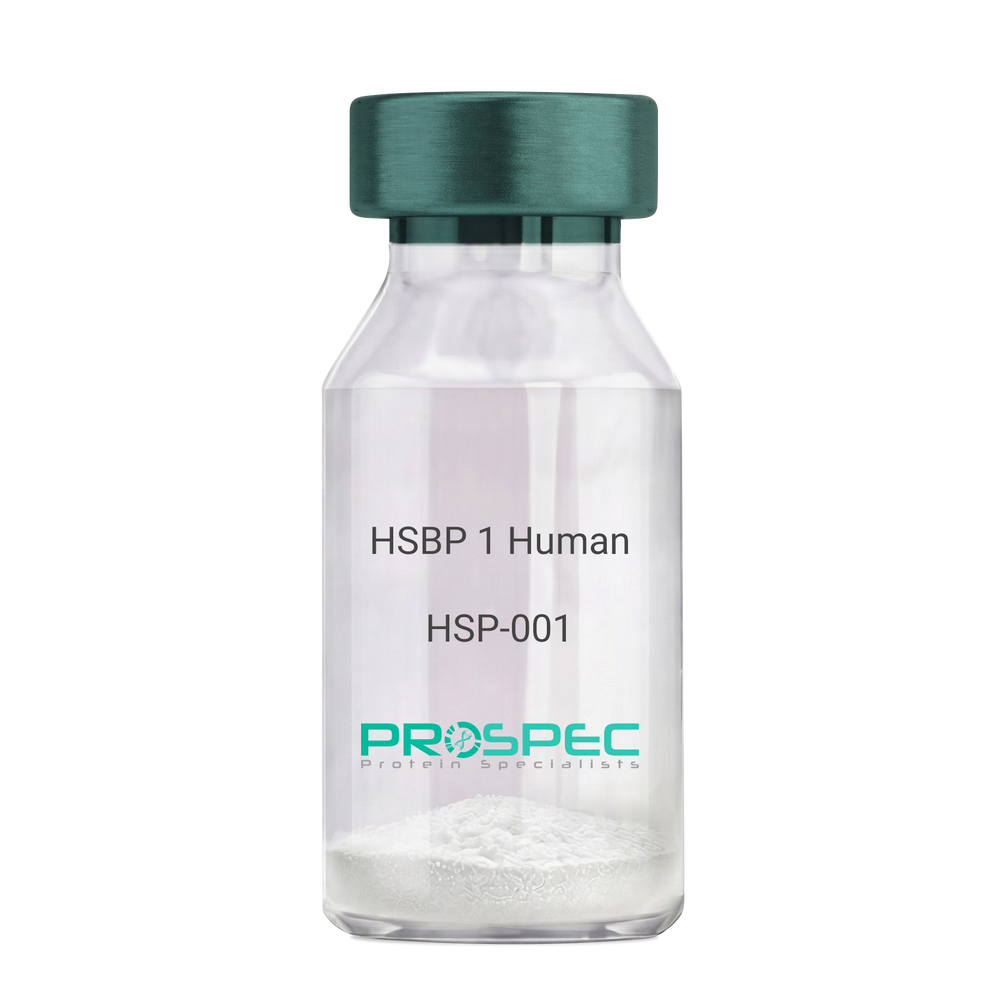
    Name :

    HSBP 1 Human

    Description:

    Heat Shock Factor Binding Protein - 1 Human Recombinant

    NPC-A-13, HSBP1, Heat shock factor-binding protein 1, Nasopharyngeal carcinoma-associated antigen 13, HSF1BP, DKFZp686D1664, DKFZp686O24200.

    Product # :

    HSP-001

    Price :

    Quantity :

    Shipping Method :

    Ice Icon

    Shipped with Ice Packs

    Add To Cart

    More Info

    • description
    • source
    • formulation
    • purity
    • More Info
    • Citations

    Description

    Recombinant Human HSBP1 produced in E.Coli is a single,non-glycosylated polypeptide chain containing 76 amino acids and having a molecular mass of 8.5 kDa.

    Source

    Escherichia Coli.

    Formulation

    The HSBP1 protein (1mg/ml) solution contains 20mM Tris-HCl buffer pH-7.5, 50mM NaCl, 1mM EDTA and 20% Glycerol.

    Purity

    Greater than 95.0% as determined by SDS-PAGE.

    Citations

    More Info

    • Introduction

      The heat-shock response is elicited by exposure of cells to thermal and chemical stress and through the activation of HSFs (heat shock factors) results in the elevated expression of heat-shock induced genes. Heat shock factor binding protein-1 (HSBP1), is a 76-amino-acid protein that binds to heat shock factor 1(HSF1), which is a transcription factor involved in the HS response. During HS response, HSF1 undergoes conformational transition from an inert non-DNA-binding monomer to active functional trimers. HSBP1 is nuclear-localized and interacts with the active trimeric state of HSF1 to negatively regulate HSF1 DNA-binding activity. Overexpression of HSBP1 in mammalian cells represses the transactivation activity of HSF1. When overexpressed in C.elegans HSBP1 has severe effects on survival of the animals after thermal and chemical stress consistent with a role of HSBP1 as a negative regulator of heat shock response.

    • Synonyms

      NPC-A-13, HSBP1, Heat shock factor-binding protein 1, Nasopharyngeal carcinoma-associated antigen 13, HSF1BP, DKFZp686D1664, DKFZp686O24200.

    • Physical Appearance

      Sterile filtered colorless solution.

    • Stability

      Store at 4°C if entire vial will be used within 2-4 weeks. Store, frozen at -20°C for longer periods of time. For long term storage it is recommended to add a carrier protein (0.1% HSA or BSA).Avoid multiple freeze-thaw cycles.

    • Amino Acid Sequence

      MAETDPKTVQ DLTSVVQTLL QQMQDKFQTM SDQIIGRIDD MSSRIDDLEK NIADLMTQAG VEELESENKI PATQKS.

    ProSpec's products are furnished for LABORATORY RESEARCH USE ONLY. The product may not be used as drugs, agricultural or pesticidal products, food additives or household chemicals.

    Hsbp 1 Human
  • View Data Sheet

    Name :

    Insulin Human (20-110)

    Description:

    Insulin (20-110 a.a) Human Recombinant

    Product # :

    CYT-1237

    Price :

    Quantity :

    Shipping Method :

    Room Temp Icon

    Shipped at Room temp

    Add To Cart

    More Info

    • description
    • source
    • formulation
    • purity
    • More Info
    • Citations

    Description

    The Insulin Human is created as a recombinant protein with a 4kda N-terminal fusion of His Tag. The Insulin His-Tagged Fusion Protein, produced in E. coli, is a 13kDa protein containing 91 amino acid residues of the Insulin Human, 20-110 amino acids.

    Source

    Escherichia Coli.

    Formulation

    Each mg was lyophilized with 1xPBS, 0.4% SDS and 4mM DTT.

    Purity

    Greater than 90% as determined by SDS-PAGE.

    Citations

    More Info

    • Physical Appearance

      Filtered White lyophilized (freeze-dried) powder.

    • Stability

      Store lyophilized Insulin at -20°C. Aliquot the product after reconstitution to avoid repeated freezing/thawing cycles. Reconstituted protein can be stored at 4°C for a limited period of time; it does not show any change after two weeks at 4°C.

    • Solubility

      It is recommended to add deionized water to prepare a working stock solution of approximately 0.5mg/ml and let the lyophilized pellet dissolve completely. Product is not sterile! Please filter the product by an appropriate sterile filter before using it on cell culture.

    • Amino Acid Sequence

      MALWMRLLPL LALLALWGPD PAAAFVNQHL CGSHLVEALY LVCGERGFFY TPKTRREAED LQVGQVELGG GPGAGSLQPL ALEGSLQKRG IVEQCCTSIC SLYQLENYCN

    • Background

      Insulin participates in the metabolism of carbohydrates, proteins and fats by regulating glucose homeostasis in the body. Insulin decreases blood glucose concentration. Insulin hormone facilitates the uptake of glucose into cells, mainly in muscle and fat tissues, and stimulates the liver to store glucose as glycogen. Insulin also inhibits the production of gluconeogenesis and promotes the synthesis of proteins and lipids. Insulin increases cell permeability to monosaccharides, fatty acids and amino acids. Insulin accelerates glycolysis, the pentose phosphate cycle and glycogen synthesis in liver.

    ProSpec's products are furnished for LABORATORY RESEARCH USE ONLY. The product may not be used as drugs, agricultural or pesticidal products, food additives or household chemicals.

    Insulin Recombinant
  • View Data Sheet

    Name :

    PEDF PAT13D9AT Antibody

    Description:

    Mouse Anti Human Pigment Epithelium-Derived Factor Clone PAT13D9AT

    Pigment epithelium-derived factor,PEDF, Serpin-F1, SerpinF1, EPC-1, EPC1, PIG35.

    Product # :

    ANT-714

    Price :

    Quantity :

    Shipping Method :

    Ice Icon

    Shipped with Ice Packs

    Add To Cart

    More Info

    • formulation
    • More Info
    • Citations

    Formulation

    1mg/ml containing PBS, pH-7.4, 10% Glycerol and 0.02% Sodium Azide.

    Citations

    More Info

    • Introduction

      PEDF is a noninhibitory serpin with neurotrophic, anti-angiogenic, and anti-tumorigenic properties. PEDF is a 50,000 dalton glycoprotein created and secreted in many tissues all the way through the body. A key component of the anti-angiogenic action of PEDF is the induction of apoptosis in proliferating endothelial cells. Additionally, PEDF is capable to inhibit the activity of angiogenic factors such as VEGF and FGF-2. The neuro-protective effects of PEDF are achieved through suppression of neuronal apoptosis induced by peroxide, glutamate, or other neurotoxins. The recognition of a lipase-linked cell membrane receptor for PEDF (PEDF-R) that binds to PEDF with high affinity should facilitate further elucidation of the underlying mechanisms of this pluripotent serpin. To date, PEDF-R is the only signaling receptor known to be used by a serpin family member. The unique range of PEDF activities associate it as a potential therapeutic agent for the treatment of vasculature related neurodegenerative diseases such as age-related macular degeneration (AMD) and proliferative diabetic retinopathy (PDR). PEDF in addition has the potential to be functional in the treatment of various angiogenesis-related diseases including a number of cancers.

    • Synonyms

      Pigment epithelium-derived factor,PEDF, Serpin-F1, SerpinF1, EPC-1, EPC1, PIG35.

    • Physical Appearance

      Sterile filtered colorless solution.

    • Immunogen

      Anti-human PEDF mAb, is derived from hybridization of mouse F0 myeloma cells with spleen cells from BALB/c mice immunized with a recombinant human PEDF protein 20-418 amino acids purified from E. coli.

    • Ig Subclass

      Mouse IgG1 heavy chain and κ light chain.

    • Clone

      PAT13D9AT.

    • Applications

      PEDF antibody has been tested by ELISA, Western blot analysis and ICC/IF to assure specificity and reactivity. Since application varies, however, each investigation should be titrated by the reagent to obtain optimal results.

    • Type

      Mouse Anti Human Monoclonal.

    • Storage Procedures

      For periods up to 1 month store at 4°C, for longer periods of time, store at -20°C. Prevent freeze thaw cycles.

    • Purification Method

      PEDF antibody was purified by protein-A affinity chromatography.

    ProSpec's products are furnished for LABORATORY RESEARCH USE ONLY. The product may not be used as drugs, agricultural or pesticidal products, food additives or household chemicals.

    Pedf Pat13D9At Antibody
  • View Data Sheet

    Name :

    BCL2 Antibody

    Description:

    B-Cell Leukemia/Lymphoma 2, Mouse Anti Human

    Apoptosis regulator Bcl-2, BCL2, B-cell CLL/lymphoma 2, Bcl-2.

    Product # :

    ANT-022

    Price :

    Quantity :

    Shipping Method :

    Ice Icon

    Shipped with Ice Packs

    Add To Cart

    More Info

    • formulation
    • More Info
    • Citations

    Formulation

    1mg/ml containing PBS, pH-7.4, & 0.1% Sodium Azide.

    Citations

    More Info

    • Introduction

      BCL2 gene encodes an integral outer mitochondrial membrane protein that blocks the apoptotic death of some cells such as lymphocytes. Constitutive expression of BCL2, such as in the case of translocation of BCL2 to Ig heavy chain locus, is thought to be the cause of follicular lymphoma. Two transcript variants, produced by alternate splicing, differ in their C-terminal ends.

    • Synonyms

      Apoptosis regulator Bcl-2, BCL2, B-cell CLL/lymphoma 2, Bcl-2.

    • Immunogen

      Anti-human BCL2 mAb, is derived from hybridization of mouse FO myeloma cells with spleen cells from BALB/c mice immunized with recombinant human BCL2 amino acids 1-211 purified from E. coli.

    • Ig Subclass

      Mouse IgG2b heavy chain and k light chain.

    • Clone

      PAT1B5AT.

    • Applications

      BCL2 antibody has been tested by ELISA, Western blot, and Immunofluorescence analyses to assure specificity and reactivity. Since applications vary, however, each investigation should be titrated by a reagent to obtain optimal results. Recommended dilution range for Western blot analysis and Immunofluorescence is 1:250 ~ 500.
      Recommended starting dilution is 1:500.

    • Type

      Mouse Anti Human Monoclonal.

    • Storage Procedures

      For periods up to 1 month store at 4°C, for longer periods of time, store at -20°C. Prevent freeze thaw cycles.

    • Purification Method

      BCL2 antibody was purified from mouse ascitic fluids by protein-G affinity chromatography.

    ProSpec's products are furnished for LABORATORY RESEARCH USE ONLY. The product may not be used as drugs, agricultural or pesticidal products, food additives or household chemicals.

    Bcl2 Antibody
  • View Data Sheet

    Name :

    KLF4 Antibody

    Description:

    Krueppel-like factor 4, Mouse Anti Human

    Krueppel-like factor 4, Epithelial zinc finger protein EZF, Gut-enriched krueppel-like factor, KLF4, EZF, GKLF.

    Product # :

    ANT-434

    Price :

    Quantity :

    Shipping Method :

    Ice Icon

    Shipped with Ice Packs

    Add To Cart

    More Info

    • formulation
    • More Info
    • Citations

    Formulation

    1mg/ml containing PBS, pH-7.4, & 0.1% Sodium Azide.

    Citations

    More Info

    • Introduction

      KLF4 (aka the gut-enriched Kruppel-like factor-GKLF), is a zinc finger-containing transcription factor which is a member of the Kruppel-like family of transcription factors. KLF4 plays key roles during the proliferation and differentiation of epithelial cells. Particularly, it is found mainly in the gut and has been shown to be expressed during growth arrest. KLF4 is also involved in cell cycle control since expression of KLF4 inhibits DNA synthesis by blocking the G1/S phase of the cell cycle.

    • Synonyms

      Krueppel-like factor 4, Epithelial zinc finger protein EZF, Gut-enriched krueppel-like factor, KLF4, EZF, GKLF.

    • Physical Appearance

      Sterile Filtered clear solution.

    • Immunogen

      Anti-human KLF4 mAb is derived from hybridization of mouse F0 myeloma cells with spleen cells from BALB/c mice immunized with recombinant human KLF4 amino acids 1-170 purified from E. coli.

    • Ig Subclass

      Mouse IgG1 heavy chain and κ light chain.

    • Clone

      PAT4E6AT.

    • Applications

      KLF4 antibody has been tested by ELISA and Western blot analysis to assure specificity and reactivity. Since application varies, however, each investigation should be titrated by the reagent to obtain optimal results. Recommended dilution range for Western blot analysis is 1:1000 ~ 2000. Recommended starting dilution is 1:1000.

    • Type

      Mouse Anti Human Monoclonal.

    • Storage Procedures

      For periods up to 1 month store at 4°C, for longer periods of time, store at -20°C. Prevent freeze thaw cycles.

    • Purification Method

      KLF4 antibody was purified from mouse ascitic fluids by protein-G affinity chromatography.

    ProSpec's products are furnished for LABORATORY RESEARCH USE ONLY. The product may not be used as drugs, agricultural or pesticidal products, food additives or household chemicals.

    Klf4 Antibody
  • View Data Sheet

    Name :

    tPA Human

    Description:

    Tissue Plasminogen Activator Human Recombinant

    Tissue-type plasminogen activator, EC 3.4.21.68, tPA, t-PA, t-plasminogen activator, TPA, T-PA, DKFZp686I03148.

    Product # :

    ENZ-263

    Price :

    Quantity :

    Shipping Method :

    Room Temp Icon

    Shipped at Room temp

    Add To Cart

    More Info

    • description
    • source
    • formulation
    • purity
    • More Info
    • Citations

    Description

    Tissue Plasminogen Activator Human Recombinant produced in CHO cells is a single, glycosylated polypeptide chain containing 527 amino acids and having a molecular mass of 59008.71 Dalton. tPA is a serine protease enzyme that converts plasminogen to plasmin. The tPA is purified by proprietary chromatographic techniques.

    Source

    Chinese Hamster Ovary Cells (CHO)

    Formulation

    Each mg of t-PA contains 1.7 gr L-arginine, 0.5 gr phosphoric acid and 4 mg tween 80.

    Purity

    Greater than 98.0% as determined by:
    (a) Analysis by RP-HPLC.
    (b) Analysis by SDS-PAGE.

    Citations

    More Info

    • Introduction

      Tissue plasminogen activator (abbreviated PLAT or tPA) is a secreted serine proteasewhich converts the proenzymeplasminogento plasmin, a fibrinolyticenzyme. Plasminogen is synthesized as a single chain which is cleaved by PLAT into the two chain disulfide linked plasmin.
      This enzyme plays a role in cell migrationand tissue remodeling. Increased enzymatic activity causes hyperfibrinolysis, which manifests as excessive bleeding; decreased activity leads to hypofibrinolysiswhich can result in thrombosisor embolism.

    • Synonyms

      Tissue-type plasminogen activator, EC 3.4.21.68, tPA, t-PA, t-plasminogen activator, TPA, T-PA, DKFZp686I03148.

    • Physical Appearance

      Sterile Filtered White lyophilized (freeze-dried) powder.

    • Stability

      Lyophilized t-PA although stable at room temperature for 3 weeks, should be stored desiccated below -18°C. Upon reconstitution tPA should be stored at 4°C between 2-7 days and for future use below -18°C.For long term storage it is recommended to add a carrier protein (0.1% HSA or BSA).Please prevent freeze-thaw cycles.

    • Solubility

      It is recommended to reconstitute the lyophilized t-PA in sterile 18MΩ-cm H2O not less than 100 µg/ml, which can then be further diluted to other aqueous solutions.

    • Enzymatic Activity

      580,000 IU/mg.

    ProSpec's products are furnished for LABORATORY RESEARCH USE ONLY. The product may not be used as drugs, agricultural or pesticidal products, food additives or household chemicals.

    T Pa Human
  • View Data Sheet

    Name :

    PARK7 Antibody

    Description:

    Parkinson Disease Protein 7, Mouse Anti Human

    Protein DJ-1, Oncogene DJ1, Parkinson disease protein 7, PARK7, DJ1, DJ-1, FLJ27376.

    Product # :

    ANT-317

    Price :

    Quantity :

    Shipping Method :

    Ice Icon

    Shipped with Ice Packs

    Add To Cart

    More Info

    • formulation
    • More Info
    • Citations

    Formulation

    1mg/ml containing PBS, pH-7.4, 0.02% Sodium Azide and 10% Glycerol.

    Citations

    More Info

    • Introduction

      The PARK7 is a ubiquitously expressed protein involved in various cellular processes including spermatogenesis and fertilization, cancer, RNA-binding, androgen-receptor signaling and oxidative stress. Mutations in the PARK7 are the cause of autosomal recessive early-onset Parkinson’s disease 7 (Park7).

    • Synonyms

      Protein DJ-1, Oncogene DJ1, Parkinson disease protein 7, PARK7, DJ1, DJ-1, FLJ27376.

    • Immunogen

      Anti-human PARK7 mAb is derived from hybridization of mouse SP2/O myeloma cells with spleen cells from BALB/c mice immunized with recombinant human PARK7 amino acids 1-189 purified from E. coli.

    • Ig Subclass

      Mouse IgG1 heavy chain and κ light chain.

    • Clone

      P1B11AT.

    • Applications

      PARK7 antibody has been tested by ELISA and Western blot analysis to assure specificity and reactivity. Since application varies, however, each investigation should be titrated by the reagent to obtain optimal results. Recommended dilution range for Western blot analysis is 1:500 ~ 2,000. Recommended starting dilution is 1:1,000.

    • Type

      Mouse Anti Human Monoclonal.

    • Storage Procedures

      For periods up to 1 month store at 4°C, for longer periods of time, store at -20°C. Prevent freeze thaw cycles.

    • Purification Method

      PARK7 antibody was purified from mouse ascitic fluids by protein-G affinity chromatography.

    ProSpec's products are furnished for LABORATORY RESEARCH USE ONLY. The product may not be used as drugs, agricultural or pesticidal products, food additives or household chemicals.

    Park7 Antibody
  • 1
  • …
  • 34
  • 35
  • 36
Your browser does not support the video tag.

Products

  • Cytokines
  • Growth Factors
  • Chemokines
  • CD Antigens
  • Neurotrophins
  • Hormones
  • Enzymes
  • Viral Antigens
  • Recombinant Proteins
  • Natural Proteins
  • Monoclonal Antibodies
  • Polyclonal Antibodies
  • Thermal Packaging

About

  • Company
  • Founder
  • Contribution
  • Contact Us
  • My Account

Ordering

  • Ordering Method
  • Ordering - Credit Card
  • Ordering PO
  • Shipping Fees
  • FAQ's

Legal

  • Terms & Conditions
  • Privacy
  • Site Map
  • info@prospecbio.com
  • Facebook
  • Instagram
  • Linkedin Profile

© 2026 ProSpec-Tany TechnoGene Ltd. All Rights Reserved.

  • Choosing a selection results in a full page refresh.
  • Opens in a new window.