Skip to content

High-quality research proteins.

  • 1-800-805-6531

  • Mon - Sat 8.00-18.00, Sun - Closed

  • info@prospecbio.com

  • PO Box 6591 East Brunswick NJ 08816

  • Products
    • Cytokines
    • Growth factors
    • Chemokines
    • Cd antigens
    • Neurotrophins
    • Hormones
    • Enzymes
    • Viral antigens
    • Recombinant proteins
    • Natural proteins
    • Monoclonal antibodies
    • Polyclonal antibodies
    • Thermal Packaging
  • About
    • Company
    • Founder
    • Contribution
  • Customers
    • Eastern Asia
    • Eastern Europe
    • North America
    • South America
    • South East Asia
    • Southern Asia
    • Western Europe
  • Ordering
    • Ordering Method
    • Ordering - Credit Card
    • Ordering - PO
    • Shipping Fees
    • FAQs
  • Services
    • DNA Cloning
    • Protein Expression
    • Monoclonal Antibody
    • Fermentation
    • Technology License
  • Contact us
Log in

Country/region

  • USD $ | Albania
  • USD $ | Andorra
  • USD $ | Argentina
  • USD $ | Armenia
  • USD $ | Australia
  • USD $ | Austria
  • USD $ | Azerbaijan
  • USD $ | Belarus
  • USD $ | Belgium
  • USD $ | Bolivia
  • USD $ | Brazil
  • USD $ | Bulgaria
  • USD $ | Cambodia
  • USD $ | Canada
  • USD $ | Chile
  • USD $ | China
  • USD $ | Colombia
  • USD $ | Costa Rica
  • USD $ | Croatia
  • USD $ | Cyprus
  • USD $ | Czechia
  • USD $ | Denmark
  • USD $ | Estonia
  • USD $ | Finland
  • USD $ | France
  • USD $ | Georgia
  • USD $ | Germany
  • USD $ | Greece
  • USD $ | Hong Kong SAR
  • USD $ | Hungary
  • USD $ | Iceland
  • USD $ | India
  • USD $ | Ireland
  • USD $ | Israel
  • USD $ | Italy
  • USD $ | Japan
  • USD $ | Kazakhstan
  • USD $ | Latvia
  • USD $ | Liechtenstein
  • USD $ | Lithuania
  • USD $ | Madagascar
  • USD $ | Malta
  • USD $ | Mexico
  • USD $ | Moldova
  • USD $ | Monaco
  • USD $ | Netherlands
  • USD $ | New Zealand
  • USD $ | North Macedonia
  • USD $ | Norway
  • USD $ | Panama
  • USD $ | Paraguay
  • USD $ | Peru
  • USD $ | Philippines
  • USD $ | Poland
  • USD $ | Portugal
  • USD $ | Romania
  • USD $ | Singapore
  • USD $ | Slovakia
  • USD $ | Slovenia
  • USD $ | South Africa
  • USD $ | South Korea
  • USD $ | Spain
  • USD $ | Sri Lanka
  • USD $ | Sweden
  • USD $ | Switzerland
  • USD $ | Taiwan
  • USD $ | Thailand
  • USD $ | Türkiye
  • USD $ | Ukraine
  • USD $ | United Kingdom
  • USD $ | United States
  • USD $ | Uruguay
  • USD $ | Vatican City
  • USD $ | Venezuela
  • USD $ | Vietnam
  • Facebook
  • Instagram
logoProSpec - Recombinant Protein Manufacturer for academic and R&D industry
Become a distributor
Account Log in
Wishlist
Cart Cart(0)
  • Products
    +
    • Cytokines
    • Growth factors
    • Chemokines
    • Cd antigens
    • Neurotrophins
    • Hormones
    • Enzymes
    • Viral antigens
    • Recombinant proteins
    • Natural proteins
    • Monoclonal antibodies
    • Polyclonal antibodies
    • Thermal Packaging
  • About
    +
    • Company
    • Founder
    • Contribution
  • Customers
    +
    • Eastern Asia
    • Eastern Europe
    • North America
    • South America
    • South East Asia
    • Southern Asia
    • Western Europe
  • Ordering
    +
    • Ordering Method
    • Ordering - Credit Card
    • Ordering - PO
    • Shipping Fees
    • FAQs
  • Services
    +
    • DNA Cloning
    • Protein Expression
    • Monoclonal Antibody
    • Fermentation
    • Technology License
  • Contact us

Item added to your cart

View cart
View All
  • Cytokines
  • Growth factors
  • Chemokines
  • Cd antigens
  • Neurotrophins
  • Hormones
  • Enzymes
  • Viral antigens
  • Recombinant proteins
  • Natural proteins
  • Monoclonal antibodies
  • Polyclonal antibodies
  • Thermal Packaging
  • Tumor Necrosis Factor

    Tumor Necrosis Factor

    View All
  • 4-1BB

    4-1BB

    View All
  • Adiponectin

    Adiponectin

    View All
  • AIF1

    AIF1

    View All
  • Other Cytokines

    Other Cytokines

    View All
  • AITRL

    AITRL

    View All
  • Angiopoietin

    Angiopoietin

    View All
  • Apolipoprotein

    Apolipoprotein

    View All
  • B-Cell Activating Factor

    B-Cell Activating Factor

    View All
  • Beta Defensin

    Beta Defensin

    View All
  • Bone Morphogenetic Protein

    Bone Morphogenetic Protein

    View All
  • B type Natriuretic Peptide

    B type Natriuretic Peptide

    View All
  • BST

    BST

    View All
  • Betacellulin

    Betacellulin

    View All
  • Cardiotrophin

    Cardiotrophin

    View All
  • Activin

    Activin

    View All
  • Fibroblast Growth Factor

    Fibroblast Growth Factor

    View All
  • Other Growth Factors

    Other Growth Factors

    View All
  • CSF

    CSF

    View All
  • CTGF

    CTGF

    View All
  • IGFBP

    IGFBP

    View All
  • VEGF Protein

    VEGF Protein

    View All
  • EGF

    EGF

    View All
  • Epigen

    Epigen

    View All
  • Erythropoietin

    Erythropoietin

    View All
  • Insulin-Like Growth Factor

    Insulin-Like Growth Factor

    View All
  • Growth Hormone

    Growth Hormone

    View All
  • HDGF

    HDGF

    View All
  • Hepatocyte Growth Factor

    Hepatocyte Growth Factor

    View All
  • Insulin

    Insulin

    View All
  • BCA-1/ BLC (CXCL13)

    BCA-1/ BLC (CXCL13)

    View All
  • BRAK (CXCL14)

    BRAK (CXCL14)

    View All
  • C-10 (CCL6)

    C-10 (CCL6)

    View All
  • Other Chemokines

    Other Chemokines

    View All
  • MEC (CCL28)

    MEC (CCL28)

    View All
  • LD78-beta (CCL3L1)

    LD78-beta (CCL3L1)

    View All
  • CTACK (CCL27)

    CTACK (CCL27)

    View All
  • CXCL16

    CXCL16

    View All
  • CXCL17

    CXCL17

    View All
  • Platelet Factor-4 (CXCL4)

    Platelet Factor-4 (CXCL4)

    View All
  • ENA-78 (CXCL5)

    ENA-78 (CXCL5)

    View All
  • Eotaxin (CCL11,24,26)

    Eotaxin (CCL11,24,26)

    View All
  • Exodus-2 (CCL21)

    Exodus-2 (CCL21)

    View All
  • Fractalkine (CX3CL1)

    Fractalkine (CX3CL1)

    View All
  • CXCL6

    CXCL6

    View All
  • Other CD Antigens

    Other CD Antigens

    View All
  • CD14

    CD14

    View All
  • CD164

    CD164

    View All
  • CD1

    CD1

    View All
  • CD2

    CD2

    View All
  • CD200

    CD200

    View All
  • CD207

    CD207

    View All
  • CD226

    CD226

    View All
  • CD23

    CD23

    View All
  • CD244

    CD244

    View All
  • CD247

    CD247

    View All
  • CD27

    CD27

    View All
  • CD274

    CD274

    View All
  • CD300

    CD300

    View All
  • CD33

    CD33

    View All
  • Other Neurotrophins

    Other Neurotrophins

    View All
  • Beta-NGF

    Beta-NGF

    View All
  • BDNF

    BDNF

    View All
  • CDNF

    CDNF

    View All
  • CNTF

    CNTF

    View All
  • GDNF

    GDNF

    View All
  • Glia Maturation Factor

    Glia Maturation Factor

    View All
  • MANF

    MANF

    View All
  • Midkine

    Midkine

    View All
  • Neuroglobin

    Neuroglobin

    View All
  • Neurotrophic factors

    Neurotrophic factors

    View All
  • Neuregulin

    Neuregulin

    View All
  • Neuropilin

    Neuropilin

    View All
  • Pigment Epithelium-Derived Factor

    Pigment Epithelium-Derived Factor

    View All
  • Pleiotrophin

    Pleiotrophin

    View All
  • Peptide Hormones

    Peptide Hormones

    View All
  • Other Hormones

    Other Hormones

    View All
  • HCG

    HCG

    View All
  • Endothelin

    Endothelin

    View All
  • Exendin

    Exendin

    View All
  • FSH

    FSH

    View All
  • Glucagon

    Glucagon

    View All
  • GHRP

    GHRP

    View All
  • GLP

    GLP

    View All
  • Thyrostimulin

    Thyrostimulin

    View All
  • Inhibin A

    Inhibin A

    View All
  • LHRH

    LHRH

    View All
  • Melanotan

    Melanotan

    View All
  • Procalcitonin

    Procalcitonin

    View All
  • PTH

    PTH

    View All
  • Peroxiredoxin

    Peroxiredoxin

    View All
  • Peptidase

    Peptidase

    View All
  • Synthetase

    Synthetase

    View All
  • Transferase

    Transferase

    View All
  • Hydrolase

    Hydrolase

    View All
  • Dehydrogenase

    Dehydrogenase

    View All
  • ACE2

    ACE2

    View All
  • Esterase

    Esterase

    View All
  • Protein Kinases

    Protein Kinases

    View All
  • Other Enzymes

    Other Enzymes

    View All
  • Phosphatase

    Phosphatase

    View All
  • Deaminase

    Deaminase

    View All
  • Oxygenase

    Oxygenase

    View All
  • Adenylate Kinase

    Adenylate Kinase

    View All
  • Lyase

    Lyase

    View All
  • Chagas

    Chagas

    View All
  • SARS

    SARS

    View All
  • Influenza

    Influenza

    View All
  • ASFV

    ASFV

    View All
  • Astrovirus

    Astrovirus

    View All
  • Borrelia

    Borrelia

    View All
  • Helicobacter Pylori

    Helicobacter Pylori

    View All
  • Chikungunya

    Chikungunya

    View All
  • Chlamydia

    Chlamydia

    View All
  • Cytomegalo

    Cytomegalo

    View All
  • Dengue

    Dengue

    View All
  • EBV

    EBV

    View All
  • Ebola

    Ebola

    View All
  • Feline Leukemia Virus

    Feline Leukemia Virus

    View All
  • Hepatitis A

    Hepatitis A

    View All
  • Other

    Other

    View All
  • Actin

    Actin

    View All
  • ADAM

    ADAM

    View All
  • Complement Component

    Complement Component

    View All
  • Ag85

    Ag85

    View All
  • Eukaryotic Translation Initiation Factor

    Eukaryotic Translation Initiation Factor

    View All
  • Anterior Gradient Protein

    Anterior Gradient Protein

    View All
  • Heat Shock Protein

    Heat Shock Protein

    View All
  • Alpha-2-HS-Glycoprotein

    Alpha-2-HS-Glycoprotein

    View All
  • Hemoglobin

    Hemoglobin

    View All
  • Allergy

    Allergy

    View All
  • Anaplasma

    Anaplasma

    View All
  • Angiogenin

    Angiogenin

    View All
  • Ankyrin Repeat Domain

    Ankyrin Repeat Domain

    View All
  • Annexin

    Annexin

    View All
  • Other Natural Proteins

    Other Natural Proteins

    View All
  • Aprotinin

    Aprotinin

    View All
  • Transferrin

    Transferrin

    View All
  • Avidin

    Avidin

    View All
  • Anti Coagulation Factors

    Anti Coagulation Factors

    View All
  • Natural Albumin

    Natural Albumin

    View All
  • Natural Coagulation Factors

    Natural Coagulation Factors

    View All
  • Fibronectin

    Fibronectin

    View All
  • Thrombin

    Thrombin

    View All
  • Anti Human Enzyme

    Anti Human Enzyme

    View All
  • Other Monoclonal Antibodies

    Other Monoclonal Antibodies

    View All
  • Anti Human Cytokine

    Anti Human Cytokine

    View All
  • Anti Human Heat Shock Protein

    Anti Human Heat Shock Protein

    View All
  • Anti Mouse Lymphocyte

    Anti Mouse Lymphocyte

    View All
  • Anti Human Chemokine

    Anti Human Chemokine

    View All
  • Anti Human Lymphocyte

    Anti Human Lymphocyte

    View All
  • Anti Viral Monoclonal

    Anti Viral Monoclonal

    View All
  • Anti Mouse Cytokine

    Anti Mouse Cytokine

    View All
  • Anti-GST Monoclonal

    Anti-GST Monoclonal

    View All
  • Other Polyclonal Antibodies

    Other Polyclonal Antibodies

    View All
  • Anti Viral

    Anti Viral

    View All
  • Anti-GST Monoclonal

    Anti-GST Monoclonal

    View All
Back

Search results

1000 results found for “alkaline phosphatase”

Name

Description

Product #

Price

Quantity

Shipping Method

  • View Data Sheet

    Name :

    CAT Human

    Description:

    Catalase Human Recombinant

    Catalase, CAT.

    Product # :

    ENZ-629

    Price :

    Quantity :

    Shipping Method :

    Ice Icon

    Shipped with Ice Packs

    Add To Cart

    More Info

    • description
    • source
    • formulation
    • purity
    • biological activity
    • More Info
    • Citations

    Description

    CAT Human Recombinant produced in E.coli is a single, non-glycosylated polypeptide chain containing 547 amino acids (1-527) and having a molecular mass of 61.9kDa.CAT is fused to a 20 amino acid His-tag at N-terminus & purified by proprietary chromatographic techniques.

    Source

    Escherichia Coli.

    Formulation

    The CAT solution (1mg/ml) contains 20mM Tris-HCl buffer (pH 8.0), 0.15M NaCl and 10% glycerol.

    Purity

    Greater than 90.0% as determined by SDS-PAGE.

    Biological Activity

    Specific activity is >30,000 unit/mg.

    Citations

    More Info

    • Introduction

      Catalase (CAT) is a key antioxidant enzyme in the body’s defense against oxidative stress. Furthermore, Catalase is a heme enzyme which is present in the peroxisome of virtually all aerobic cells. Catalase converts the reactive oxygen species hydrogen peroxide to water and oxygen and thus diminishes the toxic effects of hydrogen peroxide. Catalase stimulates growth of cells including T-cells, B-cells, myeloid leukemia cells, melanoma cells, mastocytoma cells and normal and transformed fibroblast cells. Catalase gene polymorphisms are linked with decreases in catalase activity nevertheless, to date, acatalasemia is the only disease known to be caused by the CAT gene.

    • Synonyms

      Catalase, CAT.

    • Physical Appearance

      Sterile filtered yellowish solution.

    • Stability

      Store at 4°C if entire vial will be used within 2-4 weeks. Store, frozen at -20°C for longer periods of time. For long term storage it is recommended to add a carrier protein (0.1% HSA or BSA).Avoid multiple freeze-thaw cycles.

    • Amino Acid Sequence

      MGSSHHHHHH SSGLVPRGSH MADSRDPASD QMQHWKEQRA AQKADVLTTG AGNPVGDKLN VITVGPRGPL LVQDVVFTDE MAHFDRERIP ERVVHAKGAG AFGYFEVTHD ITKYSKAKVF EHIGKKTPIA VRFSTVAGES GSADTVRDPR GFAVKFYTED GNWDLVGNNT PIFFIRDPIL FPSFIHSQKR NPQTHLKDPD MVWDFWSLRP ESLHQVSFLF SDRGIPDGHR HMNGYGSHTF KLVNANGEAV YCKFHYKTDQ GIKNLSVEDA ARLSQEDPDY GIRDLFNAIA TGKYPSWTFY IQVMTFNQAE TFPFNPFDLT KVWPHKDYPL IPVGKLVLNR NPVNYFAEVE QIAFDPSNMP PGIEASPDKM LQGRLFAYPD THRHRLGPNY LHIPVNCPYR ARVANYQRDG PMCMQDNQGG APNYYPNSFG APEQQPSALE HSIQYSGEVR RFNTANDDNV TQVRAFYVNV LNEEQRKRLC ENIAGHLKDA QIFIQKKAVK NFTEVHPDYG SHIQALLDKY NAEKPKNAIH TFVQSGSHLA AREKANL.

    • Unit Definition

      One unit will decompose 1.0 umole of H2O2 per minute at pH 8.0 at 25°C.

    ProSpec's products are furnished for LABORATORY RESEARCH USE ONLY. The product may not be used as drugs, agricultural or pesticidal products, food additives or household chemicals.

    Cat Human
  • View Data Sheet

    Name :

    PLA2G10 Human

    Description:

    Secreted Phospholipase A2-X Human Recombinant

    Group 10 secretory phospholipase A2, EC 3.1.1.4, Group X secretory phospholipase A2, Phosphatidylcholine 2-acylhydrolase GX, GX sPLA2, sPLA2-X, SPLA2, GXPLA2, MGC119918, MGC119919, MGC133367, PLA2G10.

    Product # :

    ENZ-329

    Price :

    Quantity :

    Shipping Method :

    Room Temp Icon

    Shipped at Room temp

    Add To Cart

    More Info

    • description
    • source
    • formulation
    • purity
    • More Info
    • Citations

    Description

    Secreted Phospholipase A2-X Human Recombinant is manufactured with N-terminal fusion HisTag. PLA2G10 His-Tagged Fusion Protein, is 15.5 kDa containing 123 amino acid residues of the human secreted phospholipase A2-X and 16 additional amino acid residues - HisTag (underlined).

    Source

    Escherichia Coli.

    Formulation

    PLA2G10 filtered (0.4 µm) and lyophilized from 0.5mg/ml solution in 20mM Tris and 50mM NaCl, pH 7.5.

    Purity

    Greater than 95% as determined by SDS PAGE.

    Citations

    More Info

    • Introduction

      Phospholipase A2 (PLA2) catalyzes the hydrolysis of the sn-2 position of membrane glycerophospholipids to liberate arachidonic acid (AA), a precursor of eicosanoids including prostaglandins and leukotrienes. The same reaction also produces lysophosholipids, which represent another class of lipid mediators.
      The secretory PLA2 (sPLA2) family, in which 10 isozymes have been identified, consists of low molecular weight, Ca2+-requiring secretory enzymes that have been implicated in a number of biological processes, such as modification of eicosanoid generation, inflammation, and host defense.
      This enzyme has been proposed to hydrolyze phosphatidylcholine (PC) in lipoproteins to liberate lyso-PC and free fatty acids in the arterial wall, thereby facilitating the accumulation of bioactive lipids and modified lipoproteins in atherosclerotic foci.
      In mice, sPLA2 expression significantly influences HDL particle size and composition and demonstrate that an induction of sPLA2 is required for the decrease in plasma HDL cholesterol in response to inflammatory stimuli. Instillation of bacteria into the bronchi was associated with surfactant degradation and a decrease in large:small ratio of surfactant aggregates in rats.

    • Synonyms

      Group 10 secretory phospholipase A2, EC 3.1.1.4, Group X secretory phospholipase A2, Phosphatidylcholine 2-acylhydrolase GX, GX sPLA2, sPLA2-X, SPLA2, GXPLA2, MGC119918, MGC119919, MGC133367, PLA2G10.

    • Physical Appearance

      Sterile Filtered lyophilized (freeze-dried) powder.

    • Stability

      Store lyophilized protein at -20°C. Aliquot the product after reconstitution to avoid repeated freezing/thawing cycles. Reconstituted protein can be stored at 4°C for a limited period of time; it does not show any change after two weeks at 4°C.

    • Solubility

      It is recommended to add deionized water to prepare a working stock solution of approximately 0.5mg/ml and let the lyophilized pellet dissolve completely.

    • Amino Acid Sequence

      MRGSHHHHHH GMASHMGILE LAGTVGCVGP RTPIAYMKYG CFCGLGGHGQ PRDAIDWCCH GHDCCYTRAE EAGCSPKTER YSWQCVNQSV LCGPAENKCQ ELLCKCDQEI ANCLAQTEYN LKYLFYPQFL CEPDSPKCD

    ProSpec's products are furnished for LABORATORY RESEARCH USE ONLY. The product may not be used as drugs, agricultural or pesticidal products, food additives or household chemicals.

    Pla2G10 Human
  • View Data Sheet

    Name :

    KLK15 Human

    Description:

    Kallikrein-15 Human Recombinant

    Kallikrein-related peptidase 15, ACO, HSRNASPH, Kallikrein-15, ACO protease, KLK15.

    Product # :

    ENZ-772

    Price :

    Quantity :

    Shipping Method :

    Ice Icon

    Shipped with Ice Packs

    Add To Cart

    More Info

    • description
    • source
    • formulation
    • purity
    • More Info
    • Citations

    Description

    KLK15 Human Recombinant produced in E.coli is a single, non-glycosylated polypeptide chain containing 258 amino acids (22-256a.a) and having a molecular mass of 28.2kDa. KLK15 is fused to a 23 amino acid His-tag at N-terminus & purified by proprietary chromatographic techniques.

    Source

    Escherichia Coli.

    Formulation

    The KLK15 solution (1mg/ml) contains 20mM Tris-HCl buffer (pH 8.0), 10% glycerol and 0.4M Urea.

    Purity

    Greater than 90% as determined by SDS-PAGE.

    Citations

    More Info

    • Introduction

      Kallikrein-15 (KLK15) is one of the 15 kallikrein subfamily members located in a cluster on chromosome 19. KLK15 contains numerous polyadenylation sites and alternative splicing results in multiple transcript variants encoding different isoforms. KLK15 is over expressed in prostate cancer and therefore uses as a diagnostic or prognostic marker for prostate cancer.

    • Synonyms

      Kallikrein-related peptidase 15, ACO, HSRNASPH, Kallikrein-15, ACO protease, KLK15.

    • Physical Appearance

      Sterile Filtered colorless solution.

    • Stability

      Store at 4°C if entire vial will be used within 2-4 weeks. Store, frozen at -20°C for longer periods of time. For long term storage it is recommended to add a carrier protein (0.1% HSA or BSA). Avoid multiple freeze-thaw cycles.

    • Amino Acid Sequence

      MGSSHHHHHH SSGLVPRGSH MGSLLEGDEC APHSQPWQVA LYERGRFNCG ASLISPHWVL SAAHCQSRFM RVRLGEHNLR KRDGPEQLRT TSRVIPHPRY EARSHRNDIM LLRLVQPARL NPQVRPAVLP TRCPHPGEAC VVSGWGLVSH NEPGTAGSPR SQVSLPDTLH CANISIISDT SCDKSYPGRL TNTMVCAGAE GRGAESCEGD SGGPLVCGGI LQGIVSWGDV PCDNTTKPGV YTKVCHYLEW IRETMKRN.

    ProSpec's products are furnished for LABORATORY RESEARCH USE ONLY. The product may not be used as drugs, agricultural or pesticidal products, food additives or household chemicals.

    Klk15 Human
  • View Data Sheet

    Name :

    KLK7 Human

    Description:

    Kallikrein-7 Human Recombinant

    kallikrein-related peptidase 7, SCCE, hSCCE, EC 3.4.21.117, hK7, Kallikrein-7, PRSS6, KLK7.

    Product # :

    ENZ-510

    Price :

    Quantity :

    Shipping Method :

    Ice Icon

    Shipped with Ice Packs

    Add To Cart

    More Info

    • description
    • source
    • formulation
    • purity
    • More Info
    • Citations

    Description

    KLK7 Human Recombinant produced in E.coli is a single, non-glycosylated polypeptide chain containing 249 amino acids (30-253) and having a molecular mass of 27.1 kDa.The KLK7 is fused to a 25 amino acid His-Tag at N-terminus and purified by proprietary chromatographic techniques.

    Source

    Escherichia Coli.

    Formulation

    KLK7 protein 1mg/ml is supplied in 20mM Tris-HCl, pH-8, 2M Urea and 10% Glycerol.

    Purity

    Greater than 90.0% as determined by Analysis by SDS-PAGE.

    Citations

    More Info

    • Introduction

      KLK7 catalyzes the degradation of intercellular cohesive structures in the cornified layer of the skin in the continuous shedding of cells from the skin surface. Specific for amino acid residues with aromatic side chains in the P1 position. KLK7 is involved in the activation of precursors to inflammatory cytokines.

    • Synonyms

      kallikrein-related peptidase 7, SCCE, hSCCE, EC 3.4.21.117, hK7, Kallikrein-7, PRSS6, KLK7.

    • Physical Appearance

      Sterile Filtered clear solution.

    • Stability

      Store at 4°C if entire vial will be used within 2-4 weeks. Store, frozen at -20°C for longer periods of time. For long term storage it is recommended to add a carrier protein (0.1% HSA or BSA).Avoid multiple freeze-thaw cycles.

    • Amino Acid Sequence

      MGSSHHHHHH SSGLVPRGSH MGSHMIIDGA PCARGSHPWQ VALLSGNQLH CGGVLVNERW VLTAAHCKMN EYTVHLGSDT LGDRRAQRIK ASKSFRHPGY STQTHVNDLM LVKLNSQARL SSMVKKVRLP SRCEPPGTTC TVSGWGTTTS PDVTFPSDLM CVDVKLISPQ DCTKVYKDLL ENSMLCAGIP DSKKNACNGD SGGPLVCRGT LQGLVSWGTF PCGQPNDPGV YTQVCKFTKW INDTMKKHR.

    ProSpec's products are furnished for LABORATORY RESEARCH USE ONLY. The product may not be used as drugs, agricultural or pesticidal products, food additives or household chemicals.

    Klk7 Human
  • View Data Sheet

    Name :

    POLB Human

    Description:

    Polymerase (DNA directed), Beta Human Recombinant

    DNA polymerase beta, DNA directed DNA polymerase beta, DNA pol beta, DNA polymerase beta, DNA polymerase beta subunit, MGC125976, Pol B, Pol beta, PolB, Polymerase (DNA directed) beta.

    Product # :

    ENZ-168

    Price :

    Quantity :

    Shipping Method :

    Ice Icon

    Shipped with Ice Packs

    Add To Cart

    More Info

    • description
    • source
    • formulation
    • purity
    • More Info
    • Citations

    Description

    POLB Human Recombinant produced in E.Coli is a single, non-glycosylated polypeptide chain containing 355 amino acids (1-335 a.a) and having a molecular mass of 40.3kDa.POLB is fused to a 20 amino acid His-tag at N-terminus & purified by proprietary chromatographic techniques.

    Source

    Escherichia Coli.

    Formulation

    POLB protein solution (0.5mg/ml) containing 20mM Tris-HCl buffer (pH 8.0), 1mM DTT, 30% glycerol and 0.1M NaCl.

    Purity

    Greater than 95.0% as determined by SDS-PAGE.

    Citations

    More Info

    • Introduction

      DNA polymerase beta (POLB) is a member of the DNA polymerase type-X family. In eukaryotic cells, POLB performs base excision repair necessary for DNA maintenance, replication, recombination, and drug resistance. POLB has 2 separate domains; the larger is the polymerase domain itself, whereas a small basic N-terminal domain contains an AP lyase activity which excises the abasic sugar-phosphate residue at the strand break. POLB fills single nucleotide gaps in DNA produced by the base excision repair pathway of mammalian cells. POLB overexpression, as seen in some human tumors, could convene an increase in spontaneous mutagenesis.

    • Synonyms

      DNA polymerase beta, DNA directed DNA polymerase beta, DNA pol beta, DNA polymerase beta, DNA polymerase beta subunit, MGC125976, Pol B, Pol beta, PolB, Polymerase (DNA directed) beta.

    • Physical Appearance

      Sterile filtered colorless solution.

    • Stability

      Store at 4°C if entire vial will be used within 2-4 weeks. Store, frozen at -20°C for longer periods of time. For long term storage it is recommended to add a carrier protein (0.1% HSA or BSA).Avoid multiple freeze-thaw cycles.

    • Amino Acid Sequence

      MGSSHHHHHH SSGLVPRGSH MSKRKAPQET LNGGITDMLT ELANFEKNVS QAIHKYNAYR KAASVIAKYP HKIKSGAEAK KLPGVGTKIA EKIDEFLATG KLRKLEKIRQ DDTSSSINFL TRVSGIGPSA ARKFVDEGIK TLEDLRKNED KLNHHQRIGL KYFGDFEKRI PREEMLQMQD
      IVLNEVKKVD SEYIATVCGS FRRGAESSGD MDVLLTHPSF TSESTKQPKL LHQVVEQLQK VHFITDTLSK GETKFMGVCQ LPSKNDEKEY PHRRIDIRLI PKDQYYCGVL YFTGSDIFNK NMRAHALEKG FTINEYTIRP LGVTGVAGEP LPVDSEKDIF DYIQWKYREP KDRSE.

    ProSpec's products are furnished for LABORATORY RESEARCH USE ONLY. The product may not be used as drugs, agricultural or pesticidal products, food additives or household chemicals.

    Polb Human
  • View Data Sheet

    Name :

    GCAT Human

    Description:

    Glycine C-Acetyltransferase Human Recombinant

    2-amino-3-ketobutyrate coenzyme A ligase mitochondrial, AKB ligase, EC 2.3.1.29, Aminoacetone synthase, Glycine acetyltransferase, GCAT, KBL.

    Product # :

    ENZ-705

    Price :

    Quantity :

    Shipping Method :

    Ice Icon

    Shipped with Ice Packs

    Add To Cart

    More Info

    • description
    • source
    • formulation
    • purity
    • More Info
    • Citations

    Description

    GCAT Human Recombinant produced in E.Coli is a single, non-glycosylated polypeptide chain containing 419 amino acids (22-419 a.a) and having a molecular mass of 45kDa.GCAT is fused to a 21 amino acid His-tag at N-terminus & purified by proprietary chromatographic techniques.

    Source

    Escherichia Coli.

    Formulation

    GCAT protein solution (1mg/ml) containing 20mM Tris-HCl buffer (pH 8.0), 0.4M urea and 10% glycerol.

    Purity

    Greater than 85.0% as determined by SDS-PAGE.

    Citations

    More Info

    • Introduction

      L-threonine to glycine degradation consists of a two-step biochemical pathway which involvs the enzymes L-threonine dehydrogenase and 2-amino-3-ketobutyrate coenzyme A ligase. L-Threonine is initially converted into 2-amino-3-ketobutyrate by L-threonine dehydrogenase. Glycine C-Acetyltransferase (GCAT) is the 2nd enzyme in this pathway, which subsequently catalyzes the reaction between 2-amino-3-ketobutyrate and coenzyme A to form glycine and acetyl-CoA. The GCAT enzyme is regard as a class II pyridoxal-phosphate-dependent aminotransferase. GCAT is strongly expressed in the heart, brain, liver and pancreas. GCAT is also found in lung.

    • Synonyms

      2-amino-3-ketobutyrate coenzyme A ligase mitochondrial, AKB ligase, EC 2.3.1.29, Aminoacetone synthase, Glycine acetyltransferase, GCAT, KBL.

    • Physical Appearance

      Sterile Filtered clear solution.

    • Stability

      Store at 4°C if entire vial will be used within 2-4 weeks. Store, frozen at -20°C for longer periods of time. For long term storage it is recommended to add a carrier protein (0.1% HSA or BSA).Avoid multiple freeze-thaw cycles.

    • Amino Acid Sequence

      MGSSHHHHHH SSGLVPRGSH MSALAQLRGI LEGELEGIRG AGTWKSERVI TSRQGPHIRV DGVSGGILNF CANNYLGLSS HPEVIQAGLQ ALEEFGAGLS SVRFICGTQS IHKNLEAKIA RFHQREDAIL YPSCYDANAG LFEALLTPED AVLSDELNHA SIIDGIRLCK AHKYRYRHLD MADLEAKLQE AQKHRLRLVA TDGAFSMDGD IAPLQEICCL ASRYGALVFM DECHATGFLG PTGRGTDELL GVMDQVTIIN STLGKALGGA SGGYTTGPGP LVSLLRQRAR PYLFSNSLPP AVVGCASKAL DLLMGSNTIV QSMAAKTQRF RSKMEAAGFT ISGASHPICP VMLGDARLAS RMADDMLKRG IFVIGFSYPV VPKGKARIRV QISAVHSEED IDRCVEAFVE VGRLHGALP.

    ProSpec's products are furnished for LABORATORY RESEARCH USE ONLY. The product may not be used as drugs, agricultural or pesticidal products, food additives or household chemicals.

    Gcat Human
  • View Data Sheet

    Name :

    GDA Human, His

    Description:

    Guanine Deaminase Human Recombinant, His Tag

    CYPIN, GUANASE, NEDASIN, Guanine aminase, Guanine aminohydrolase, GAH, p51-nedasin.

    Product # :

    ENZ-682

    Price :

    Quantity :

    Shipping Method :

    Ice Icon

    Shipped with Ice Packs

    Add To Cart

    More Info

    • description
    • source
    • formulation
    • purity
    • More Info
    • Citations

    Description

    GDA Human Recombinant produced in E. coli is a single polypeptide chain containing 477 amino acids (1-454) and having a molecular mass of 53kDa. GDA is fused to a 23 amino acid His-tag at N-terminus & purified by proprietary chromatographic techniques.

    Source

    Escherichia Coli.

    Formulation

    The GDA solution (1mg/1ml) contains 20mM Tris-HCl buffer (pH 8.0), 0.15M NaCl,10% glycerol and 1mM DTT.

    Purity

    Greater than 90.0% as determined by SDS-PAGE.

    Citations

    More Info

    • Introduction

      GDA is a member of the ATZ/TRZ family and is in charge for the hydrolytic deamination of guanine. GDA takes part in microtubule assembly. Multiple transcript variants encoding different isoforms have been found for GDA.

    • Synonyms

      CYPIN, GUANASE, NEDASIN, Guanine aminase, Guanine aminohydrolase, GAH, p51-nedasin.

    • Physical Appearance

      Sterile Filtered colorless solution.

    • Stability

      Store at 4°C if entire vial will be used within 2-4 weeks.Store, frozen at -20°C for longer periods of time. For long term storage it is recommended to add a carrier protein (0.1% HSA or BSA).Avoid multiple freeze-thaw cycles.

    • Amino Acid Sequence

      MGSSHHHHHH SSGLVPRGSH MGSMCAAQMP PLAHIFRGTF VHSTWTCPME VLRDHLLGVS DSGKIVFLEE ASQQEKLAKE WCFKPCEIRE LSHHEFFMPG LVDTHIHASQ YSFAGSSIDL PLLEWLTKYT FPAEHRFQNI DFAEEVYTRV VRRTLKNGTT TACYFATIHT DSSLLLADIT DKFGQRAFVG KVCMDLNDTF PEYKETTEES IKETERFVSE MLQKNYSRVK PIVTPRFSLS CSETLMGELG NIAKTRDLHI QSHISENRDE VEAVKNLYPS YKNYTSVYDK NNLLTNKTVM AHGCYLSAEE LNVFHERGAS IAHCPNSNLS LSSGFLNVLE VLKHEVKIGL GTDVAGGYSY SMLDAIRRAV MVSNILLINK VNEKSLTLKE VFRLATLGGS QALGLDGEIG NFEVGKEFDA ILINPKASDS PIDLFYGDFF GDISEAVIQK FLYLGDDRNI EEVYVGGKQV VPFSSSV.

    ProSpec's products are furnished for LABORATORY RESEARCH USE ONLY. The product may not be used as drugs, agricultural or pesticidal products, food additives or household chemicals.

    Gda Human
  • View Data Sheet

    Name :

    LCAT Human

    Description:

    Lecithin-Cholesterol Acyltransferase Human Recombinant

    Phosphatidylcholine-sterol acyltransferase, Lecithin-cholesterol acyltransferase, Phospholipid-cholesterol acyltransferase, LCAT.

    Product # :

    ENZ-380

    Price :

    Quantity :

    Shipping Method :

    Ice Icon

    Shipped with Ice Packs

    Add To Cart

    More Info

    • description
    • source
    • formulation
    • purity
    • More Info
    • Citations

    Description

    LCAT Human Recombinant produced in E.Coli is a single, non-glycosylated, polypeptide chain containing 441 amino acids (25-440) which includes a 25 amino acid His Tag fused at N-terminus and having a total molecular mass of 49.8 kDa. LCAT Human Recombinant is purified by proprietary chromatographic techniques.

    Source

    Escherichia Coli.

    Formulation

    LCAT protein solution (0.5mg/ml) containing 20mM Tris-HCl buffer (pH 8.0), 0.4M Urea and 10% glycerol.

    Purity

    Greater than 85.0% as determined by SDS-PAGE.

    Citations

    More Info
    • Introduction

      LCAT is an extracellular cholesterol esterifying enzyme, lecithin-cholesterol acyltransferase. The esterification of cholesterol is required for cholesterol transport. LCAT is a essential enzyme in the extracellular metabolism of plasma lipoproteins.

    • Synonyms

      Phosphatidylcholine-sterol acyltransferase, Lecithin-cholesterol acyltransferase, Phospholipid-cholesterol acyltransferase, LCAT.

    • Physical Appearance

      Sterile filtered colorless solution.

    • Stability

      Store at 4°C if entire vial will be used within 2-4 weeks. Store, frozen at -20°C for longer periods of time. For long term storage it is recommended to add a carrier protein (0.1% HSA or BSA).Avoid multiple freeze-thaw cycles.

    • Amino Acid Sequence

      MGSSHHHHHH SSGLVPRGSH MGSHMFWLLN VLFPPHTTPK AELSNHTRPV ILVPGCLGNQ LEAKLDKPDV VNWMCYRKTE DFFTIWLDLN MFLPLGVDCW IDNTRVVYNR SSGLVSNAPG VQIRVPGFGK TYSVEYLDSS KLAGYLHTLV QNLVNNGYVR DETVRAAPYD WRLEPGQQEE YYRKLAGLVE EMHAAYGKPV FLIGHSLGCL HLLYFLLRQP QAWKDRFIDG FISLGAPWGG SIKPMLVLAS GDNQGIPIMS SIKLKEEQRI TTTSPWMFPS RMAWPEDHVF ISTPSFNYTG RDFQRFFADL HFEEGWYMWL QSRDLLAGLP APGVEVYCLY GVGLPTPRTY IYDHGFPYTD PVGVLYEDGD DTVATRSTEL CGLWQGRQPQ PVHLLPLHGI QHLNMVFSNL TLEHINAILL GAYRQGPPAS PTASPEPPPP E.

    ProSpec's products are furnished for LABORATORY RESEARCH USE ONLY. The product may not be used as drugs, agricultural or pesticidal products, food additives or household chemicals.

    Lcat Human
  • View Data Sheet

    Name :

    CDA Human

    Description:

    Cytidine Deaminase Human Recombinant

    Cytidine deaminase, Cytidine aminohydrolase, CDA, CDD.

    Product # :

    ENZ-007

    Price :

    Quantity :

    Shipping Method :

    Ice Icon

    Shipped with Ice Packs

    Add To Cart

    More Info

    • description
    • source
    • formulation
    • purity
    • biological activity
    • More Info
    • Citations

    Description

    CDA Human Recombinant fused with a 20 amino acid His tag at N-terminus produced in E.Coli is a single, non-glycosylated, polypeptide chain containing 166 amino acids (1-146 a.a.) and having a molecular mass of 18.3kDa. The CDA is purified by proprietary chromatographic techniques.

    Source

    Escherichia Coli.

    Formulation

    The CDA solution (0.5mg/ml) contains 20mM Tris-HCl Buffer (pH 8.0), 1mM DTT, 2mM EDTA, 100mM NaCl and 40% Glycerol.

    Purity

    Greater than 90.0% as determined by SDS-PAGE.

    Biological Activity

    Specific activity is > 10,000pmol/min/ug, and is defined as the amount of required to deaminate 1.0pmole of cytidine per min at pH 7.5 at 25C.

    Citations

    More Info

    • Introduction

      Cytidine deaminase (CDA) is an enzyme that scavenges exogenous and endogenous cytidine and 2'-deoxycytidine for UMP synthesis. CDA is one of several deaminases responsible for maintaining the cellular pyrimidine pool. CDA also catalyzes the deamination of chemotherapeutic cytosine nucleoside analogs such as Ara-C and 5-azacytidine, which results in the loss of their cytotoxic and antitumor function. CDA can form homotetramers and is generally expressed in granulocytes. Mutations in the CDA gene are linked to decreased sensitivity to the cytosine nucleoside analogue cytosine arabinoside used in the treatment of certain childhood leukemias.

    • Synonyms

      Cytidine deaminase, Cytidine aminohydrolase, CDA, CDD.

    • Physical Appearance

      Sterile Filtered colorless solution.

    • Stability

      Store at 4°C if entire vial will be used within 2-4 weeks.Store, frozen at -20°C for longer periods of time. For long term storage it is recommended to add a carrier protein (0.1% HSA or BSA).Avoid multiple freeze-thaw cycles.

    • Amino Acid Sequence

      MGSSHHHHHH SSGLVPRGSH MAQKRPACTL KPECVQQLLV CSQEAKQSAY CPYSHFPVGA ALLTQEGRIF KGCNIENACY PLGICAERTA IQKAVSEGYK DFRAIAIASD MQDDFISPCG ACRQVMREFG TNWPVYMTKP DGTYIVMTVQ ELLPSSFGPE DLQKTQ.

    ProSpec's products are furnished for LABORATORY RESEARCH USE ONLY. The product may not be used as drugs, agricultural or pesticidal products, food additives or household chemicals.

    Cda Human
  • View Data Sheet

    Name :

    PRKAA1 Human

    Description:

    Protein Kinase, AMP-Activated, Alpha 1 Human Recombinant

    5'-AMP-activated protein kinase catalytic subunit alpha-1, Protein Kinase, AMP-Activated, Alpha 1, PRKAA1, AMPK subunit alpha-1, Acetyl-CoA carboxylase kinase, ACACA kinase, Hydroxymethylglutaryl-CoA reductase kinase, HMGCR kinase, Tau-protein kinase PRKAA1, AMPK1, 5-AMP-activated protein kinase catalytic subunit alpha-1 isoform 1, AMPK, AMPKa11.

    Product # :

    PKA-074

    Price :

    Quantity :

    Shipping Method :

    Ice Icon

    Shipped with Ice Packs

    Add To Cart

    More Info

    • description
    • source
    • formulation
    • purity
    • More Info
    • Citations

    Description

    PRKAA1 Human Recombinant produced in E.Coli is a single, non-glycosylated polypeptide chain containing 302 amino acids (1-279a.a) and having a molecular mass of 34.3kDa.PRKAA1 is fused to a 23 amino acid His-tag at N-terminus & purified by proprietary chromatographic techniques.

    Source

    E.coli.

    Formulation

    PRKAA1 solution (1mg/ml) contains 20mM Tris-HCl buffer (pH 8.0) and 10% glycerol.

    Purity

    Greater than 85% as determined by SDS-PAGE.

    Citations

    More Info

    • Introduction

      Protein Kinase, AMP-Activated, Alpha 1 (PRKAA1) is a protein coding gene which is the catalytic subunit of AMPK. AMPK is an energy sensor protein kinase which regulates cellular energy metabolism. AMPK adjusts the activity of various important metabolic enzymes by direct phosphorylation. Among its other features, AMPK protects cells from stresses that cause ATP depletion by switching off ATP-consuming biosynthetic pathways.

    • Synonyms

      5'-AMP-activated protein kinase catalytic subunit alpha-1, Protein Kinase, AMP-Activated, Alpha 1, PRKAA1, AMPK subunit alpha-1, Acetyl-CoA carboxylase kinase, ACACA kinase, Hydroxymethylglutaryl-CoA reductase kinase, HMGCR kinase, Tau-protein kinase PRKAA1, AMPK1, 5-AMP-activated protein kinase catalytic subunit alpha-1 isoform 1, AMPK, AMPKa11.

    • Physical Appearance

      Sterile Filtered colorless solution.

    • Stability

      Store at 4°C if entire vial will be used within 2-4 weeks. Store, frozen at -20°C for longer periods of time. For long term storage it is recommended to add a carrier protein (0.1% HSA or BSA).Avoid multiple freeze-thaw cycles.

    • Amino Acid Sequence

      MGSSHHHHHH SSGLVPRGSH MGSMRRLSSW RKMATAEKQK HDGRVKIGHY ILGDTLGVGT FGKVKVGKHE LTGHKVAVKI LNRQKIRSLD VVGKIRREIQ NLKLFRHPHI IKLYQVISTP SDIFMVMEYV SGGELFDYIC KNGRLDEKES RRLFQQILSG VDYCHRHMVV HRDLKPENVL LDAHMNAKIA DFGLSNMMSD GEFLRTSCGS PNYAAPEVIS GRLYAGPEVD IWSSGVILYA LLCGTLPFDD DHVPTLFKKI CDGIFYTPQY LNPSVISLLK HMLQVDPMKR ATIKDIREHE WF.

    ProSpec's products are furnished for LABORATORY RESEARCH USE ONLY. The product may not be used as drugs, agricultural or pesticidal products, food additives or household chemicals.

    Prkaa1 Human
  • View Data Sheet

    Name :

    PRKACB Human

    Description:

    Protein Kinase CAMP-Dependent Catalytic Beta Human Recombinant

    Protein Kinase CAMP-Dependent Catalytic Beta, PKA C-Beta, EC 2.7.11.11, PKACB, CAMP-Dependent Protein Kinase Catalytic Beta Subunit Isoform 4ab, CAMP-Dependent Protein Kinase Catalytic Subunit Beta, Protein Kinase A Catalytic Subunit Beta, EC 2.7.11, PRKACB.

    Product # :

    PKA-366

    Price :

    Quantity :

    Shipping Method :

    Ice Icon

    Shipped with Ice Packs

    Add To Cart

    More Info

    • description
    • source
    • formulation
    • purity
    • More Info
    • Citations

    Description

    PRKACB Human Recombinant produced in E.coli is a single, non-glycosylated polypeptide chain containing 421 amino acids (1-398) and having a molecular mass of 48.6kDa. PRKACB is fused to a 23 amino acid His-tag at N-terminus & purified by proprietary chromatographic techniques.

    Source

    Escherichia Coli.

    Formulation

    The PRKACB solution (1mg/ml) contains 20mM Tris-HCl buffer (pH 8.0), 0.4M Urea and 10% glycerol.

    Purity

    Greater than 80.0% as determined by SDS-PAGE.

    Citations

    More Info

    • Introduction

      Protein Kinase CAMP-Dependent Catalytic Beta (PRKACB) belongs to the Ser/Thr protein kinase family and is a catalytic subunit of cAMP-dependent protein kinase. cAMP is a signaling molecule imperative for various cellular functions. cAMP activates the cAMP-dependent protein kinase, which transduces the signal by way of phosphorylation of different target proteins. The inactive kinase holoenzyme is a tetramer composed of 2 regulatory and 2 catalytic subunits. cAMP triggers the dissociation of the inactive holoenzyme into a dimer of regulatory subunits bound to 4 cAMP and 2 free monomeric catalytic subunits. PRKACB mediates cAMP-dependent signaling initiated by receptor binding to GPCRs. PKA activation regulates various cellular processes such as cell proliferation, the cell cycle, differentiation and regulation of microtubule dynamics, chromatin condensation and decondensation, nuclear envelope disassembly and reassembly, in addition to regulation of intracellular transport mechanisms and ion flux. PRKACB regulates the abundance of compartmentalized pools of its regulatory subunits via phosphorylation of PJA2 which binds and ubiquitinates these subunits, leading to their consequent proteolysis.

    • Synonyms

      Protein Kinase CAMP-Dependent Catalytic Beta, PKA C-Beta, EC 2.7.11.11, PKACB, CAMP-Dependent Protein Kinase Catalytic Beta Subunit Isoform 4ab, CAMP-Dependent Protein Kinase Catalytic Subunit Beta, Protein Kinase A Catalytic Subunit Beta, EC 2.7.11, PRKACB.

    • Physical Appearance

      Sterile Filtered colorless solution.

    • Stability

      Store at 4°C if entire vial will be used within 2-4 weeks. Store, frozen at -20°C for longer periods of time. For long term storage it is recommended to add a carrier protein (0.1% HSA or BSA).Avoid multiple freeze-thaw cycles.

    • Amino Acid Sequence

      MGSSHHHHHH SSGLVPRGSH MGSMAAYREP PCNQYTGTTT ALQKLEGFAS RLFHRHSKGT AHDQKTALEN DSLHFSEHTA LWDRSMKEFL AKAKEDFLKK WENPTQNNAG LEDFERKKTL GTGSFGRVML VKHKATEQYY AMKILDKQKV VKLKQIEHTL NEKRILQAVN FPFLVRLEYA FKDNSNLYMV MEYVPGGEMF SHLRRIGRFS EPHARFYAAQ IVLTFEYLHS LDLIYRDLKP ENLLIDHQGY IQVTDFGFAK RVKGRTWTLC GTPEYLAPEI ILSKGYNKAV DWWALGVLIY EMAAGYPPFF ADQPIQIYEK IVSGKVRFPS HFSSDLKDLL RNLLQVDLTK RFGNLKNGVS DIKTHKWFAT TDWIAIYQRK VEAPFIPKFR GSGDTSNFDD YEEEDIRVSI TEKCAKEFGE F.

    ProSpec's products are furnished for LABORATORY RESEARCH USE ONLY. The product may not be used as drugs, agricultural or pesticidal products, food additives or household chemicals.

    Prkacb Human
  • View Data Sheet

    Name :

    PRMT1 Human

    Description:

    Protein Arginine Methyltransferase 1 Human Recombinant

    ANM1, HCP1, HRMT1L2, IR1B4, INF receptor 1-bound protein 4, EC 2.1.1, Protein arginine N-methyltransferase 1, PRMT1, HMT2.

    Product # :

    ENZ-364

    Price :

    Quantity :

    Shipping Method :

    Ice Icon

    Shipped with Ice Packs

    Add To Cart

    More Info

    • description
    • source
    • formulation
    • purity
    • More Info
    • Citations

    Description

    PRMT1 Human Recombinant (a.a. 1-353) fused with His-MBP tag at N-terminus produced in E.Coli is a single, non-glycosylated, polypeptide chain containing 750 amino acids and having a molecular mass of 84 kDa.The PRMT1 is purified by proprietary chromatographic techniques.

    Source

    Escherichia Coli.

    Formulation

    The PRMT1 solution contains 40mM Tris-HCl pH 8.0, 100mM NaCl, 4mM MgCl2, 2mM DTT & 40% glycerol.

    Purity

    Greater than 90.0% as determined by SDS-PAGE.

    Citations

    More Info

    • Introduction

      PRMT1 Methylates (mono & asymmetric dimethylation) the guanidino nitrogens of arginyl residues present in a glycine and arginine-rich domain (may methylate HNRNPA1 and histones). Methylates SUPT5H.
      The PRMT1 protein functions as a histone methyltransferase specific for H4.
      PRMT1 is an essential factor in oncogenesis and is a potential novel therapeutic target in cancer.
      PRMT1-mediated methylation serves as a positive modulator of IR/IRS-1/PI3K pathway and glucose uptake in skeletal muscle cells.
      CAF1 is a new regulator of PRMT1-dependent arginine methylation.
      PRMT1 arginine-methylates MRE11 therefore it regulates the activity of MRE11-RAD50-NBS1 complex during the intra-S-phase DNA damage checkpoint response.
      PRMT1 plays a post-translationally part in regulating the transcriptional activity.
      PRMT1 is found predominantly in the cytoplasma though a fraction of PRMT1 is located in the nucleus.

    • Synonyms

      ANM1, HCP1, HRMT1L2, IR1B4, INF receptor 1-bound protein 4, EC 2.1.1, Protein arginine N-methyltransferase 1, PRMT1, HMT2.

    • Physical Appearance

      Sterile Filtered colorless solution.

    • Stability

      Store at 4°C if entire vial will be used within 2-4 weeks. Store, frozen at -20°C for longer periods of time. For long term storage it is recommended to add a carrier protein (0.1% HSA or BSA).Avoid multiple freeze-thaw cycles.

    • Amino Acid Sequence

      MHHHHHHMKI EEGKLVIWIN GDKGYNGLAE VGKKFEKDTG IKVTVEHPDK LEEKFPQVAA TGDGPDIIFW AHDRFGGYAQ SGLLAEITPD KAFQDKLYPF TWDAVRYNGK LIAYPIAVEA LSLIYNKDLL PNPPKTWEEI PALDKELKAK GKSALMFNLQ EPYFTWPLIA ADGGYAFKYE NGKYDIKDVG VDNAGAKAGL TFLVDLIKNK HMNADTDYSI AEAAFNKGET AMTINGPWAW SNIDTSKVNY GVTVLPTFKG QPSKPFVGVL SAGINAASPN KELAKEFLEN YLLTDEGLEA VNKDKPLGAV ALKSYEEELA KDPRIAATME NAQKGEIMPN IPQMSAFWYA VRTAVINAAS GRQTVDEALK DAQTNSSSNN NNNNNNNNLG IEGRGSHMAA AEAANCIMEV SCGQAESSEKPNAEDMTSKD YYFDSYAHFG IHEEMLKDEV RTLTYRNSMF HNRHLFKDKV VLDVGSGTGI LCMFAAKAGA RKVIGIECSS ISDYAVKIVK ANKLDHVVTI IKGKVEEVEL PVEKVDIIIS EWMGYCLFYE SMLNTVLYAR DKWLAPDGLI FPDRATLYVT AIEDRQYKDY KIHWWENVYG FDMSCIKDVA IKEPLVDVVD PKQLVTNACL IKEVDIYTVK VEDLTFTSPF CLQVKRNDYV HALVAYFNIE FTRCHKRTGF STSPESPYTH WKQTVFYMED YLTVKTGEEI FGTIGMRPNA KNNRDLDFTI DLDFKGQLCE LSCSTDYRMR.

    • Unit Definition

      One unit will transfer 1pmol of methyl group to synthetic peptide of histone H4 for 10 minutes at 37°C.

    • Specific Activity

      10,000 Units/ml.

    ProSpec's products are furnished for LABORATORY RESEARCH USE ONLY. The product may not be used as drugs, agricultural or pesticidal products, food additives or household chemicals.

    Prmt1 Human
  • View Data Sheet

    Name :

    PRMT3 Human

    Description:

    Protein Arginine Methyltransferase 3 Human Recombinant

    Protein Arginine Methyltransferase 3, Heterogeneous Nuclear Ribonucleoprotein, Methyltransferase-Like Protein 3, HRMT1L3, HMT1 HnRNP Methyltransferase-Like 3 (S. Cerevisiae), Protein Arginine N-Methyltransferase 3, HMT1 HnRNP Methyltransferase-Like 3, EC 2.1.1.- ,EC 2.1.1, PRMT3.

    Product # :

    ENZ-848

    Price :

    Quantity :

    Shipping Method :

    Ice Icon

    Shipped with Ice Packs

    Add To Cart

    More Info

    • description
    • source
    • formulation
    • purity
    • More Info
    • Citations

    Description

    PRMT3 Human Recombinant produced in E.Coli is a single, non-glycosylated polypeptide chain containing 554 amino acids (1-531 a.a) and having a molecular mass of 62.3kDa.PRMT3 is fused to a 23 amino acid His-tag at N-terminus & purified by proprietary chromatographic techniques.

    Source

    Escherichia Coli.

    Formulation

    PRMT3 protein solution (0.5mg/ml) containing Phosphate buffered saline (pH7.4) and 20% glycerol, 1mM DTT.

    Purity

    Greater than 90.0% as determined by SDS-PAGE.

    Citations

    More Info

    • Introduction

      PRMT3, also known as protein arginine N-methyltransferase 3, is a member of the protein arginine methyltransferase family. PRMT3 catalyzes the methylation of guanidino nitrogens of arginyl residues of proteins. PRMT3 operates on 40S ribosomal protein S2 ,rpS2, which is the major in-vivo substrate, additionally PRMT3 is also involved in the proper maturation of the 80S ribosome.

    • Synonyms

      Protein Arginine Methyltransferase 3, Heterogeneous Nuclear Ribonucleoprotein, Methyltransferase-Like Protein 3, HRMT1L3, HMT1 HnRNP Methyltransferase-Like 3 (S. Cerevisiae), Protein Arginine N-Methyltransferase 3, HMT1 HnRNP Methyltransferase-Like 3, EC 2.1.1.- ,EC 2.1.1, PRMT3.

    • Physical Appearance

      Sterile Filtered colorless solution.

    • Stability

      Store at 4°C if entire vial will be used within 2-4 weeks. Store, frozen at -20°C for longer periods of time. For long term storage it is recommended to add a carrier protein (0.1% HSA or BSA).Avoid multiple freeze-thaw cycles.

    • Amino Acid Sequence

      MGSSHHHHHH SSGLVPRGSH MGSMCSLASG ATGGRGAVEN EEDLPELSDS GDEAAWEDED DADLPHGKQQ TPCLFCNRLF TSAEETFSHC KSEHQFNIDS MVHKHGLEFY GYIKLINFIR LKNPTVEYMN SIYNPVPWEK EEYLKPVLED DLLLQFDVED LYEPVSVPFS YPNGLSENTS VVEKLKHMEA RALSAEAALA RAREDLQKMK QFAQDFVMHT DVRTCSSSTS VIADLQEDED GVYFSSYGHY GIHEEMLKDK IRTESYRDFI YQNPHIFKDK VVLDVGCGTG ILSMFAAKAG AKKVLGVDQS EILYQAMDII RLNKLEDTIT LIKGKIEEVH LPVEKVDVII SEWMGYFLLF ESMLDSVLYA KNKYLAKGGS VYPDICTISL VAVSDVNKHA DRIAFWDDVY GFKMSCMKKA VIPEAVVEVL DPKTLISEPC GIKHIDCHTT SISDLEFSSD FTLKITRTSM CTAIAGYFDI YFEKNCHNRV VFSTGPQSTK THWKQTVFLL EKPFSVKAGE ALKGKVTVHK NKKDPRSLTV TLTLNNSTQT YGLQ

    ProSpec's products are furnished for LABORATORY RESEARCH USE ONLY. The product may not be used as drugs, agricultural or pesticidal products, food additives or household chemicals.

    Prmt3 Human
  • View Data Sheet

    Name :

    TSTD3 Human

    Description:

    Thiosulfate Sulfurtransferase Like Domain Containing 3 Human Recombinant

    Thiosulfate Sulfurtransferase (Rhodanese)-Like Domain Containing 3, Rhodanese Domain-Containing Protein 3, Thiosulfate Sulfurtransferase/Rhodanese-Like Domain-Containing Protein 3.

    Product # :

    ENZ-723

    Price :

    Quantity :

    Shipping Method :

    Ice Icon

    Shipped with Ice Packs

    Add To Cart

    More Info

    • description
    • source
    • formulation
    • purity
    • More Info
    • Citations

    Description

    TSTD3 Human Recombinant produced in E.Coli is a single, non-glycosylated polypeptide chain containing 120 amino acids (1-97 a.a) and having a molecular mass of 13.7kDa.TSTD3 is fused to a 23 amino acid His-tag at N-terminus & purified by proprietary chromatographic techniques.

    Source

    Escherichia Coli.

    Formulation

    TSTD3 protein solution (1mg/ml) containing 20mM Tris-HCl buffer (pH 8.0), 0.15M NaCl, 10% glycerol and 1mM DTT.

    Purity

    Greater than 90.0% as determined by SDS-PAGE.

    Citations

    More Info

    • Introduction

      Thiosulfate Sulfurtransferase Like Domain Containing 3, also known as TSTD3 contains 1 rhodanese domain which is characterized by an active site cysteine residue that has the ability to bind sulfane sulfur and catalyse sulfur transfer.

    • Synonyms

      Thiosulfate Sulfurtransferase (Rhodanese)-Like Domain Containing 3, Rhodanese Domain-Containing Protein 3, Thiosulfate Sulfurtransferase/Rhodanese-Like Domain-Containing Protein 3.

    • Physical Appearance

      Sterile Filtered clear solution.

    • Stability

      Store at 4°C if entire vial will be used within 2-4 weeks. Store, frozen at -20°C for longer periods of time. For long term storage it is recommended to add a carrier protein (0.1% HSA or BSA).Avoid multiple freeze-thaw cycles.

    • Amino Acid Sequence

      MGSSHHHHHH SSGLVPRGSH MGSMKIEKCG WSEGLTSIKG NCHNFYTAIS KDVTYKELKN LLNSKNIMLI DVREIWEILE YQKIPESINV PLDEVGEALQ MNPRDFKEKY NEVKPSKSDS

    ProSpec's products are furnished for LABORATORY RESEARCH USE ONLY. The product may not be used as drugs, agricultural or pesticidal products, food additives or household chemicals.

    Tstd3 Human
  • View Data Sheet

    Name :

    TYMS Human

    Description:

    Thymidylate Synthetase Human Recombinant

    TMS, EC 2.1.1.45, HST422, Thymidylate synthase, TSase, TS, TYMS, MGC88736.

    Product # :

    ENZ-470

    Price :

    Quantity :

    Shipping Method :

    Ice Icon

    Shipped with Ice Packs

    Add To Cart

    More Info

    • description
    • source
    • formulation
    • purity
    • More Info
    • Citations

    Description

    Thymidylate synthase Human Recombinant produced in E.Coli is a single, non-glycosylated, polypeptide chain containing 333 amino acids (1-313 a.a.) and having a molecular mass of 37.8 kDa. The Thymidylate synthase fused to a 20 amino acid His-Tag at N-Terminus and purified by proprietary chromatographic techniques.

    Source

    Escherichia Coli.

    Formulation

    The Thymidylate synthase solution (1mg/ml) contains 20mM Tris-HCl buffer (pH 8.0), 1mM DTT and 10% glycerol.

    Purity

    Greater than 95.0% as determined by SDS-PAGE.

    Citations

    More Info

    • Introduction

      Thymidylate synthase catalyzes the methylation of deoxyuridylate to deoxythymidylate using 5,10-methylenetetrahydrofolate as a cofactor which maintains the dTMP (thymidine-5-prime monophosphate) pool vital for DNA replication and repair. Thymidylate synthase plays an important role as a cancer chemotherapeutic agent. Thymidylate synthase is the primary site of action for 5-fluoro-2-prime-deoxyuridine and several folate analogs.

    • Synonyms

      TMS, EC 2.1.1.45, HST422, Thymidylate synthase, TSase, TS, TYMS, MGC88736.

    • Physical Appearance

      Sterile Filtered colorless solution.

    • Stability

      Store at 4°C if entire vial will be used within 2-4 weeks. Store, frozen at -20°C for longer periods of time. For long term storage it is recommended to add a carrier protein (0.1% HSA or BSA).Avoid multiple freeze-thaw cycles.

    • Amino Acid Sequence

      MGSSHHHHHH SSGLVPRGSH MPVAGSELPR RPLPPAAQER DAEPRPPHGE LQYLGQIQHI LRCGVRKDDR TGTGTLSVFG MQARYSLRDE FPLLTTKRVF WKGVLEELLW FIKGSTNAKE LSSKGVKIWD ANGSRDFLDS LGFSTREEGD LGPVYGFQWR HFGAEYRDME SDYSGQGVDQ LQRVIDTIKT NPDDRRIIMC AWNPRDLPLM ALPPCHALCQ FYVVNSELSC QLYQRSGDMG LGVPFNIASY ALLTYMIAHI TGLKPGDFIH TLGDAHIYLN HIEPLKIQLQ REPRPFPKLR ILRKVEKIDD FKAEDFQIEG YNPHPTIKME MAV.

    ProSpec's products are furnished for LABORATORY RESEARCH USE ONLY. The product may not be used as drugs, agricultural or pesticidal products, food additives or household chemicals.

    Tyms Human
  • View Data Sheet

    Name :

    UBE2A Human

    Description:

    Ubiquitin Conjugating Enzyme E2A Human Recombinant

    HHR6A, HR6A, RAD6A, UBC2, UBE2A, EC=6.3.2.19, Ubiquitin-conjugating enzyme E2 A, Ubiquitin-protein ligase A, Ubiquitin carrier protein A, RAD6 homolog A.

    Product # :

    ENZ-514

    Price :

    Quantity :

    Shipping Method :

    Ice Icon

    Shipped with Ice Packs

    Add To Cart

    More Info

    • description
    • source
    • formulation
    • purity
    • More Info
    • Citations

    Description

    UBE2A Human Recombinant produced in E.Coli is a single, non-glycosylated, polypeptide chain containing 172 amino acids (1-152 a.a.) and having a molecular mass of 19.4 kDa. UBE2A protein is fused to a 20 amino acid His tag at N-terminus and is purified by standard chromatography.

    Source

    Escherichia Coli.

    Formulation

    UBE2A Human solution containing 20mM Tris HCl pH-8, 1mM DTT, 1mM EDTA and 20% glycerol.

    Purity

    Greater than 95% as determined by SDS-PAGE.

    Citations

    More Info

    • Introduction

      The alteration of proteins with ubiquitin is a vital cellular mechanism for targeting atypical or short-lived proteins for degradation. Ubiquitination involves noT less than three classes of enzymes: ubiquitin-activating enzymes, or E1s, ubiquitin-conjugating enzymes, or E2s, and ubiquitin-protein ligases, or E3s. UBE2A is part of the E2 ubiquitin-conjugating enzyme family. UBE2A is necessary for post-replicative DNA damage repair. UBE2A catalyzes the covalent attachment of ubiquitin to other proteins. UBE2A is necessary for postreplication repair of UV-damaged DNA.

    • Synonyms

      HHR6A, HR6A, RAD6A, UBC2, UBE2A, EC=6.3.2.19, Ubiquitin-conjugating enzyme E2 A, Ubiquitin-protein ligase A, Ubiquitin carrier protein A, RAD6 homolog A.

    • Physical Appearance

      Sterile filtered colorless solution.

    • Stability

      Store at 4°C if entire vial will be used within 2-4 weeks. Store, frozen at -20°C for longer periods of time. For long term storage it is recommended to add a carrier protein (0.1% HSA or BSA).Avoid multiple freeze-thaw cycles.

    • Amino Acid Sequence

      MGSSHHHHHH SSGLVPRGSH MSTPARRRLM RDFKRLQEDP PAGVSGAPSE NNIMVWNAVI FGPEGTPFED GTFKLTIEFT EEYPNKPPTV RFVSKMFHPN VYADGSICLD ILQNRWSPTY DVSSILTSIQ SLLDEPNPNS PANSQAAQLY QENKREYEKR VSAIVEQSWR DC.

    ProSpec's products are furnished for LABORATORY RESEARCH USE ONLY. The product may not be used as drugs, agricultural or pesticidal products, food additives or household chemicals.

    Ube2A Human
  • View Data Sheet

    Name :

    UBE2C Human

    Description:

    Ubiquitin Conjugating enzyme E2C Human Recombinant

    Ubiquitin-conjugating enzyme E2 C, EC 6.3.2.19, Ubiquitin-protein ligase C, Ubiquitin carrier protein C, Ubc10, UBCH10, dJ447F3.2.

    Product # :

    ENZ-346

    Price :

    Quantity :

    Shipping Method :

    Ice Icon

    Shipped with Ice Packs

    Add To Cart

    More Info

    • description
    • source
    • formulation
    • purity
    • More Info
    • Citations

    Description

    UBE2C Human Recombinant produced in E.coli is a single, non-glycosylated polypeptide chain containing 202 amino acids (1-179) and having a molecular mass of 22.1 kDa.The UBE2C is fused to a 23 amino acid His-Tag at N-terminus and purified by proprietary chromatographic techniques.

    Source

    Escherichia Coli.

    Formulation

    UBE2C protein 1mg/ml is supplied in 20mM Tris-HCL, pH-8, 0.15M NaCl, 1mM DTT and 10% Glycerol.

    Purity

    Greater than 90.0% as determined by Analysis by SDS-PAGE.

    Citations

    More Info

    • Introduction

      UbcH10 is an essential mediator of mitotic destruction events and cell cycle progression. It catalyzes the destruction of cyclins A and B in conjunction with the anaphase-promoting complex, and therefore, plays an important role in the control of the cell exit from mitosis This activity is essential at then end of mitosis for the inactivation of their partner kinase Cdc2 and exit from mitosis into G1 of the next cell cycle. In addition, UbcH10 bears homology to yeast PAS2, a gene that is essential for biogenesis of peroxisomes. UbcH10 is useful for in vitro ubiquitinylation reactions.

    • Synonyms

      Ubiquitin-conjugating enzyme E2 C, EC 6.3.2.19, Ubiquitin-protein ligase C, Ubiquitin carrier protein C, Ubc10, UBCH10, dJ447F3.2.

    • Physical Appearance

      Sterile Filtered clear solution.

    • Stability

      Store at 4°C if entire vial will be used within 2-4 weeks. Store, frozen at -20°C for longer periods of time. For long term storage it is recommended to add a carrier protein (0.1% HSA or BSA).Avoid multiple freeze-thaw cycles.

    • Amino Acid Sequence

      MGSSHHHHHH SSGLVPRGSH MGSMASQNRD PAATSVAAAR KGAEPSGGAA RGPVGKRLQQ ELMTLMMSGD KGISAFPESD NLFKWVGTIH GAAGTVYEDL RYKLSLEFPS GYPYNAPTVK FLTPCYHPNV DTQGNICLDI LKEKWSALYD VRTILLSIQS LLGEPNIDSP LNTHAAELWK NPTAFKKYLQ ETYSKQVTSQ EP

    ProSpec's products are furnished for LABORATORY RESEARCH USE ONLY. The product may not be used as drugs, agricultural or pesticidal products, food additives or household chemicals.

    Ube2C Human
  • View Data Sheet

    Name :

    GNMT Human

    Description:

    Glycine N-methyltransferase Human Recombinant

    Glycine N-methyltransferase, GNMT.

    Product # :

    ENZ-386

    Price :

    Quantity :

    Shipping Method :

    Ice Icon

    Shipped with Ice Packs

    Add To Cart

    More Info

    • description
    • source
    • formulation
    • purity
    • More Info
    • Citations

    Description

    GNMT Human Recombinant fused with 20 amino acid His-Tag tag at N-terminus produced in E.Coli is a single, non-glycosylated, polypeptide chain containing a total of 315 amino acids (1-295 a.a.) and having a molecular mass of 34.9 kDa.The GNMT is purified by proprietary chromatographic techniques.

    Source

    Escherichia Coli.

    Formulation

    The GNMT solution contains 20mM Tris pH 8.0 & 20% glycerol.

    Purity

    Greater than 95.0% as determined by SDS-PAGE.

    Citations

    More Info

    • Introduction

      GNMT is an enzyme that catalyzes the conversion of S-adenosyl-L-methionine with glycine to S-adenosyl-L-homocysteine. GNMT is located in the cytoplasm and acts as a homotetramer. Defects in the GNMT gene causes of GNMT deficiency (hypermethioninemia). GNMT affects DNA methylation by regulating the ratio of S-adenosylmethionine to S-adenosylhomocystine and is involved in the detoxification pathway in liver cells. GNMT expression is diminished in human hepatocellular carcinoma (HCC). GNMT catalyzes the methylation of glycine by using s- adenosylmethionine (adomet) to form n-methylglycine with the concomitant production of s-adenosylhomocysteine (adohcy). GNMT plays an essential role in the regulation of tissue concentration of adomet and of metabolism of methionine.

    • Synonyms

      Glycine N-methyltransferase, GNMT.

    • Physical Appearance

      Sterile Filtered colorless solution.

    • Stability

      Store at 4°C if entire vial will be used within 2-4 weeks. Store, frozen at -20°C for longer periods of time. For long term storage it is recommended to add a carrier protein (0.1% HSA or BSA).Avoid multiple freeze-thaw cycles.

    • Amino Acid Sequence

      MGSSHHHHHH SSGLVPRGSH MVDSVYRTRS LGVAAEGLPD QYADGEAARV WQLYIGDTRS RTAEYKAWLL GLLRQHGCQR VLDVACGTGV DSIMLVEEGF SVTSVDASDK MLKYALKERW NRRHEPAFDK WVIEEANWMT LDKDVPQSAE GGFDAVICLG NSFAHLPDCK GDQSEHRLAL KNIASMVRAG GLLVIDHRNY DHILSTGCAP PGKNIYYKSD LTKDVTTSVL IVNNKAHMVT LDYTVQVPGA GQDGSPGLSK FRLSYYPHCL ASFTELLQAA FGGKCQHSVL GDFKPYKPGQ TYIPCYFIHV LKRTD.

    ProSpec's products are furnished for LABORATORY RESEARCH USE ONLY. The product may not be used as drugs, agricultural or pesticidal products, food additives or household chemicals.

    Gnmt Human
  • View Data Sheet

    Name :

    UBE2I Human His

    Description:

    Ubiquitin-Conjugating Enzyme E2I Human Recombinant, His Tag

    SUMO-conjugating enzyme UBC9, EC 6.3.2.-, SUMO-protein ligase, Ubiquitin-conjugating enzyme E2 I, Ubiquitin-protein ligase I, Ubiquitin carrier protein I, Ubiquitin carrier protein 9, p18, UBC9, C358B7.1.

    Product # :

    ENZ-274

    Price :

    Quantity :

    Shipping Method :

    Room Temp Icon

    Shipped at Room temp

    Add To Cart

    More Info

    • description
    • source
    • formulation
    • purity
    • More Info
    • Citations

    Description

    Ubiquitin-Conjugating Enzyme E2I Human Recombinant produced in E.coli is a 19.5 kDa protein containing 171 amino acids.The UBE2I protein contains 6xHis tag and is purified by proprietary chromatographic techniques.

    Source

    Escherichia Coli.

    Formulation

    Lyophilized from a 0.2μm filtered concentrated (1mg/ml) solution in 1X PBS and 1mM DTT, pH 7.5.

    Purity

    Greater than 95.0% as determined by(a) Analysis by RP-HPLC.
    (b) Analysis by SDS-PAGE.

    Citations

    More Info

    • Introduction

      Human Ubquitin Conjugating Enzyme 9 (Ubc9) is a member of the E2 family and is specific for the conjugation of SUMO to a variety of target proteins. SUMO conjugation to target proteins is mediated by a different, but analogous, pathway to ubiquitinylation. This E2 is unusual in that it interacts directly with protein substrates that are modified by sumolyation, and may play a role in substrate recognition. Ubc9 can mediate the conjugation of SUMO-1 to a variety of proteins including RanGAP1, I?B?, and PML without the requirement of an E3 ligase.

    • Synonyms

      SUMO-conjugating enzyme UBC9, EC 6.3.2.-, SUMO-protein ligase, Ubiquitin-conjugating enzyme E2 I, Ubiquitin-protein ligase I, Ubiquitin carrier protein I, Ubiquitin carrier protein 9, p18, UBC9, C358B7.1.

    • Physical Appearance

      Sterile Filtered white lyophilized powder.

    • Stability

      Lyophilized UBE2I although stable at room temperature for 3 weeks, should be stored desiccated below -18°C. Upon reconstitution UBE2I should be stored at 4°C between 2-7 days and for future use below -18°C.For long term storage it is recommended to add a carrier protein (0.1% HSA or BSA).Please prevent freeze-thaw cycles.

    • Solubility

      It is recommended to reconstitute the lyophilized UBE2I in sterile water not less than 100µg/ml, which can then be further diluted to other aqueous solutions.

    • Amino Acid Sequence

      MHHHHHHAMGTLNMSGIALSRLAQERKAWRKDHPFGFVAVPTKNPDGT
      MNLMNWECAIPGKKGTPWEGGLFKLRMLFKDDYPSSPPKCKFEPPLFH
      PNVYPSGTVCLSILEEDKDWRPAITIKQILLGIQELLNEPNIQDPAQAEAYTI
      YCQNRVEYEKRVRAQAKKFAPS.

    ProSpec's products are furnished for LABORATORY RESEARCH USE ONLY. The product may not be used as drugs, agricultural or pesticidal products, food additives or household chemicals.

    Ube2I Human His
  • View Data Sheet

    Name :

    PSMA1 Human

    Description:

    Proteasome Subunit Alpha Type 1 Human Recombinant

    Proteasome (prosome macropain) subunit alpha type 1, PROS30, HC2, NU, Macropain subunit C2, Multicatalytic endopeptidase complex subunit C2, Proteasome component C2, Proteasome nu chain, 30 kDa prosomal protein, protein P30-33K, PROS-30, PSC2, EC 3.4.25.1.

    Product # :

    ENZ-178

    Price :

    Quantity :

    Shipping Method :

    Ice Icon

    Shipped with Ice Packs

    Add To Cart

    More Info

    • description
    • source
    • formulation
    • purity
    • More Info
    • Citations

    Description

    PSMA1 Human Recombinant produced in E.coli is a single, non-glycosylated polypeptide chain containing 286 amino acids (1-263) and having a molecular mass of 32.0 kDa.PSMA1 is fused to a 23 amino acid His-tag at N-terminus & purified by proprietary chromatographic techniques.

    Source

    E.coli.

    Formulation

    The PSMA1 solution (1mg/ml) contains 20mM Tris-HCl buffer (pH 8.0), 0.15M NaCl, 2mM DTT and 10% glycerol.

    Purity

    Greater than 95% as determined by SDS-PAGE.

    Citations

    More Info

    • Introduction

      PSMA1 is a prosomal protein who takes part in a nonlysosomal ATP/ubiquitin-dependent proteolytic pathway. PSMA1 is a multicatalytic proteinase complex that is characterized by its capacity to cleave peptides with Arg, Phe, Tyr, Leu, and Glu next to the leaving group at neutral or slightly basic pH. PSMA1 is vastly expressed in prostate epithelium.

    • Synonyms

      Proteasome (prosome macropain) subunit alpha type 1, PROS30, HC2, NU, Macropain subunit C2, Multicatalytic endopeptidase complex subunit C2, Proteasome component C2, Proteasome nu chain, 30 kDa prosomal protein, protein P30-33K, PROS-30, PSC2, EC 3.4.25.1.

    • Physical Appearance

      Sterile Filtered colorless solution.

    • Stability

      Store at 4°C if entire vial will be used within 2-4 weeks. Store, frozen at -20°C for longer periods of time. For long term storage it is recommended to add a carrier protein (0.1% HSA or BSA).Avoid multiple freeze-thaw cycles.

    • Amino Acid Sequence

      MGSSHHHHHH SSGLVPRGSH MGSMFRNQYD NDVTVWSPQG RIHQIEYAME AVKQGSATVG LKSKTHAVLV ALKRAQSELA AHQKKILHVD NHIGISIAGL TADARLLCNF MRQECLDSRF VFDRPLPVSR LVSLIGSKTQ IPTQRYGRRP YGVGLLIAGY DDMGPHIFQT CPSANYFDCR AMSIGARSQS ARTYLERHMS EFMECNLNEL VKHGLRALRE TLPAEQDLTT KNVSIGIVGK DLEFTIYDDD DVSPFLEGLE ERPQRKAQPA QPADEPAEKA DEPMEH

    ProSpec's products are furnished for LABORATORY RESEARCH USE ONLY. The product may not be used as drugs, agricultural or pesticidal products, food additives or household chemicals.

    Psma1 Human
  • View Data Sheet

    Name :

    PSMB3 Human

    Description:

    Proteasome Subunit Beta Type 3 Human Recombinant

    Proteasome (prosome, macropain) subunit beta type 3, Proteasome chain 13, HC10-II, Proteasome component C10-II, Proteasome theta chain, EC 3.4.25.1, MGC4147.

    Product # :

    ENZ-200

    Price :

    Quantity :

    Shipping Method :

    Ice Icon

    Shipped with Ice Packs

    Add To Cart

    More Info

    • description
    • source
    • formulation
    • purity
    • More Info
    • Citations

    Description

    PSMB3 Human Recombinant produced in E.Coli is a single, non-glycosylated polypeptide chain containing 225 amino acids (1-205 a.a.) and having a molecular mass of 25.1kDa.PSMB3 is fused to a 20 amino acid His-tag at N-terminus & purified by proprietary chromatographic techniques.

    Source

    Escherichia Coli.

    Formulation

    PSMB3 protein solution (0.25mg/ml) containing 20mM Tris-HCl buffer (pH8.0), 200mM NaCl, 1mM DTT and 50% glycerol.

    Purity

    Greater than 90.0% as determined by SDS-PAGE.

    Citations

    More Info

    • Introduction

      The proteasome is a multicatalytic proteinase complex with an extremely organized ring-shaped 20S core structure. The core structure consists of 4 rings of 28 non-identical subunits; 2 rings consist of 7 alpha subunits and 2 rings consist of 7 beta subunits. Proteasomes are spread all over the eukaryotic cells in large quantities and cleave peptides in an ATP/ubiquitin-dependent procedure in a non-lysosomal pathway. A vital role of a modified proteasome, the immunoproteasome, is the handling of class I MHC peptides.

    • Synonyms

      Proteasome (prosome, macropain) subunit beta type 3, Proteasome chain 13, HC10-II, Proteasome component C10-II, Proteasome theta chain, EC 3.4.25.1, MGC4147.

    • Physical Appearance

      Sterile Filtered colorless solution.

    • Stability

      Store at 4°C if entire vial will be used within 2-4 weeks. Store, frozen at -20°C for longer periods of time. For long term storage it is recommended to add a carrier protein (0.1% HSA or BSA).Avoid multiple freeze-thaw cycles.

    • Amino Acid Sequence

      MGSSHHHHHH SSGLVPRGSH MSIMSYNGGA VMAMKGKNCV AIAADRRFGI QAQMVTTDFQ KIFPMGDRLY IGLAGLATDV QTVAQRLKFR LNLYELKEGR QIKPYTLMSM VANLLYEKRF GPYYTEPVIA GLDPKTFKPF ICSLDLIGCP MVTDDFVVSG TCAEQMYGMC ESLWEPNMDP DHLFETISQA MLNAVDRDAV SGMGVIVHII EKDKITTRTL KARMD

    ProSpec's products are furnished for LABORATORY RESEARCH USE ONLY. The product may not be used as drugs, agricultural or pesticidal products, food additives or household chemicals.

    Psmb3 Human
  • View Data Sheet

    Name :

    CKBB Human, Active

    Description:

    Creatine Kinase Brain Human Recombinant, Active

    Creatine kinase B-type, EC 2.7.3.2, Creatine kinase B chain, B-CK, CKB, CKBB, CKBBI.

    Product # :

    CKI-268

    Price :

    Quantity :

    Shipping Method :

    Ice Icon

    Shipped with Ice Packs

    Add To Cart

    More Info

    • description
    • source
    • formulation
    • purity
    • biological activity
    • More Info
    • Citations

    Description

    CKBB Human Recombinant produced in Pichia Pastoris is a dimeric glycosylated full length polypeptide chain comprised of 2 identical B subunits and having an identical amino acid sequence compared to the native enzyme, purified under non-denaturing conditions and having a Mw of 47kDa The CKBB is purified by proprietary chromatographic techniques.

    Source

    Pichia Pastoris.

    Formulation

    CKBB Human contains 10Mm Bis-Tris-HCl pH-6.0, 50% glycerol, 0.5mM EDTA and 0.5mM DTT.

    Purity

    Greater than 95.0% as determined by(a) Analysis by RP-HPLC.
    (b) Analysis by SDS-PAGE.

    Biological Activity

    The biological activity of CKBB was measured by the enzymatic activity of Creatine phosphokinase procedure No.45-UV, 1IU-1 µmole creatine phosphate was 854 IU/mg at 37 degrees celsius corresponding to a Specific Activity of 1,171ng/ml.

    Citations

    More Info

    • Introduction

      Creatine Kinase BB is a cytoplasmic enzyme involved in energy homeostasis. The encoded protein reversibly catalyzes the transfer of phosphate between ATP and various phosphogens such as creatine phosphate. It acts as a homodimer in brain as well as in other tissues, and as a heterodimer with a similar muscle isozyme in heart. The encoded protein is a member of the ATP:guanido phosphotransferase protein family. A pseudogene of this gene has been characterized.

    • Synonyms

      Creatine kinase B-type, EC 2.7.3.2, Creatine kinase B chain, B-CK, CKB, CKBB, CKBBI.

    • Physical Appearance

      Sterile Filtered colourless liquid formulation.

    • Stability

      CKBB should be stored below -18°C. Please prevent freeze-thaw cycles.

    ProSpec's products are furnished for LABORATORY RESEARCH USE ONLY. The product may not be used as drugs, agricultural or pesticidal products, food additives or household chemicals.

    Ckbb Human
  • View Data Sheet

    Name :

    GSS Human

    Description:

    Glutathione Synthetase Human Recombinant

    Glutathione synthetase, GSH synthetase, GSH-S, Glutathione synthase, GSHS, MGC14098, GSS.

    Product # :

    ENZ-021

    Price :

    Quantity :

    Shipping Method :

    Ice Icon

    Shipped with Ice Packs

    Add To Cart

    More Info

    • description
    • source
    • formulation
    • purity
    • More Info
    • Citations

    Description

    GSS Human Recombinant fused with a 20 amino acid His tag at N-terminus produced in E.Coli is a single, non-glycosylated, polypeptide chain containing 494 amino acids (1-474 a.a.) and having a molecular mass of 54.5kDa. The GSS is purified by proprietary chromatographic techniques.

    Source

    Escherichia Coli.

    Formulation

    The GSS solution (1mg/ml) contains 20mM Tris-HCl buffer (pH 8.0), 1mM DTT and 10% glycerol.

    Purity

    Greater than 95.0% as determined by SDS-PAGE.

    Citations

    More Info

    • Introduction

      Glutathione synthetase (GSS) is the second enzyme in the glutathione biosynthesis pathway. GSS catalyses the condensation of gamma-glutamylcysteine and glycine to form glutathione. Defects in the GSS are the cause of glutathione synthetase deficiency aka GSS deficiency or 5-oxoprolinuria or pyroglutamic aciduria, which is a severe form characterized by an increased rate of hemolysis and defective function of the central nervous system.

    • Synonyms

      Glutathione synthetase, GSH synthetase, GSH-S, Glutathione synthase, GSHS, MGC14098, GSS.

    • Physical Appearance

      Sterile Filtered colorless solution.

    • Stability

      Store at 4°C if entire vial will be used within 2-4 weeks. Store, frozen at -20°C for longer periods of time. For long term storage it is recommended to add a carrier protein (0.1% HSA or BSA).Avoid multiple freeze-thaw cycles.

    • Amino Acid Sequence

      MGSSHHHHQH SSGLVPRGSH MATNWGSLLQ DKQQLEELAR QAVDRALAEG VLLRTSQEPT SSEVVSYAPF TLFPSLVPSA LLEQAYAVQM DFNLLVDAVS QNAAFLEQTL SSTIKQDDFT ARLFDIHKQV LKEGIAQTVF LGLNRSDYMF QRSADGSPAL KQIEINTISA SFGGLASRTP AVHRHVLSVL SKTKEAGKIL SNNPSKGLAL GIAKAWELYG SPNALVLLIA QEKERNIFDQRAIENELLAR NIHVIRRTFE DISEKGSLDQ DRRLFVDGQE IAVVYFRDGY MPRQYSLQNW EARLLLERSH AAKCPDIATQ LAGTKKVQQE LSRPGMLEML LPGQPEAVAR LRATFAGLYS LDVGEEGDQA IAEALAAPSR FVLKPQREGG GNNLYGEEMV QALKQLKDSE ERASYILMEK IEPEPFENCL LRPGSPARVV QCISELGIFG VYVRQEKTLV MNKHVGHLLR TKAIEHADGG VAAGVAVLDN PYPV.

    ProSpec's products are furnished for LABORATORY RESEARCH USE ONLY. The product may not be used as drugs, agricultural or pesticidal products, food additives or household chemicals.

    Gss Human
  • View Data Sheet

    Name :

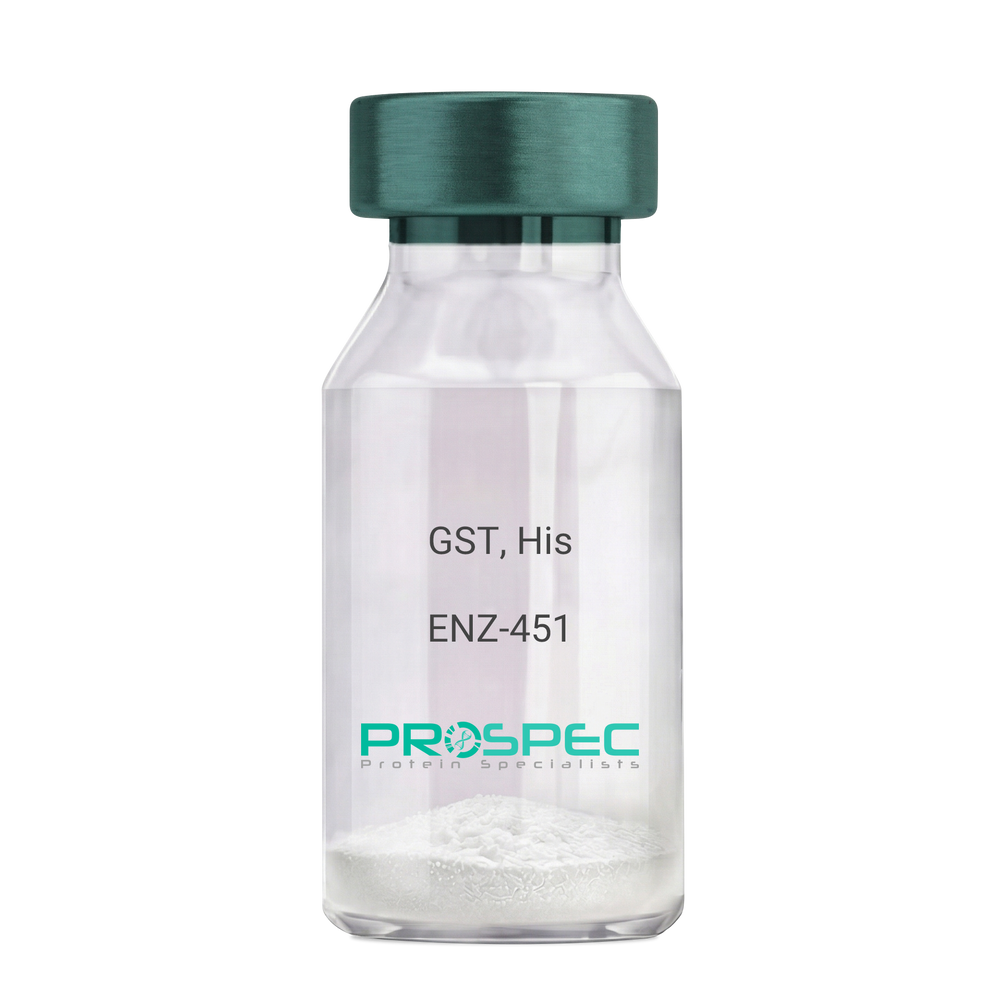
    GST, His

    Description:

    Glutathione S-Transferase Recombinant, His Tag

    Glutathione S-Transferase, GST, Glutathione S-transferase class-mu 28 kDa isozyme, GST 28, EC 2.5.1.18, Sj28GST, Sj28 antigen.

    Product # :

    ENZ-451

    Price :

    Quantity :

    Shipping Method :

    Ice Icon

    Shipped with Ice Packs

    Add To Cart

    More Info

    • description
    • source
    • formulation
    • purity
    • biological activity
    • More Info
    • Citations

    Description

    Recombinant Schistosoma japonicum GST full length protein contains a total of 244 amino acids (1-218 a.a.) expressed in E.coli, having a molecular mass of 28.3kDa. The GST protein is fused to a 20 amino acids His-Tag at N-terminus. The GST protein is purified by proprietary chromatographic techniques.

    Source

    Escherichia Coli.

    Formulation

    GST is supplied in PBS pH 7.4 & 10% glycerol.

    Purity

    Greater than 90% as determined by SDS-PAGE.

    Biological Activity

    >10 units/mg, & is defined as the amount of enzyme that conjugate 1.0 u mole of 1-chloro-2,4-dinitrobenzene (CDNB) with reduced glutathione per minute at pH-6.5 at 25C.

    Citations

    More Info

    • Introduction

      Antioxidant enzyme Glutathione S- Transferase (GST) is thought to do the primary cellular defense mechanism against reactive oxygen species. GST reduces lipid hydroperoxides through its Se-independent glutathione peroxidase activity. The enzyme also detoxifies lipid peroxidation end products such as 4-hydroxynonenal (4-HNE).
      The soluble GST is a 26 kDa protein which occurs as a dimer in all aerobic organisms. Each monomer has two domains, one that binds GSH and is an /-structure similar to thioredoxin and the other, all helical, that binds the hydrophobic substrate. The GST -fusion protein expression system is a widely used recombinant protein expression system that allows a peptide or a regulatory protein domain to be expressed as a fusion to the C-terminus of Schistosoma japonicum GST. Fusion proteins also possess GST -enzymatic activity and can undergo dimerization similar to in vivo. The fusion protein can be purified via GST -affinity column chromatography. In most cases, the desired peptides or domains are removed from GST by applying a specific protease that recognizes and cleaves the linker between the protein domain and GST. The technique has been widely used to generate different kinds of proteins for crystallization, molecular immunology studies, the production of vaccines and studies involving protein-protein and protein-DNA interactions.

    • Synonyms

      Glutathione S-Transferase, GST, Glutathione S-transferase class-mu 28 kDa isozyme, GST 28, EC 2.5.1.18, Sj28GST, Sj28 antigen.

    • Physical Appearance

      Sterile Filtered clear solution.

    • Stability

      Store at 4°C if entire vial will be used within 2-4 weeks. Store, frozen at -20°C for longer periods of time. For long term storage it is recommended to add a carrier protein (0.1% HSA or BSA).Avoid multiple freeze-thaw cycles.

    • Amino Acid Sequence

      MGSSHHHHHH SSGLVPRGSH MSPILGYWKI KGLVQPTRLL LEYLEEKYEE HLYERDEGDK WRNKKFELGL EFPNLPYYID GDVKLTQSMAIIRYIADKHN MLGGCPKERA EISMLEGAVL DIRYGVSRIA YSKDFETLKV DFLSKLPEML KMFEDRLCHK TYLNGDHVTH PDFMLYDALDVVLYMDPMCL DAFPKLVCFK KRIEAIPQID KYLKSSKYIA WPLQGWQATF GGGDHPPKSD LVPR.

    ProSpec's products are furnished for LABORATORY RESEARCH USE ONLY. The product may not be used as drugs, agricultural or pesticidal products, food additives or household chemicals.

    Glutathione S Transferase His
  • 1
  • …
  • 34
  • 35
  • 36
  • 37
  • 38
  • …
  • 42
Your browser does not support the video tag.

Products

  • Cytokines
  • Growth Factors
  • Chemokines
  • CD Antigens
  • Neurotrophins
  • Hormones
  • Enzymes
  • Viral Antigens
  • Recombinant Proteins
  • Natural Proteins
  • Monoclonal Antibodies
  • Polyclonal Antibodies
  • Thermal Packaging

About

  • Company
  • Founder
  • Contribution
  • Contact Us
  • My Account

Ordering

  • Ordering Method
  • Ordering - Credit Card
  • Ordering PO
  • Shipping Fees
  • FAQ's

Legal

  • Terms & Conditions
  • Privacy
  • Site Map
  • info@prospecbio.com
  • Facebook
  • Instagram
  • Linkedin Profile

© 2026 ProSpec-Tany TechnoGene Ltd. All Rights Reserved.

  • Choosing a selection results in a full page refresh.
  • Opens in a new window.