Skip to content

High-quality research proteins.

  • 1-800-805-6531

  • Mon - Sat 8.00-18.00, Sun - Closed

  • info@prospecbio.com

  • PO Box 6591 East Brunswick NJ 08816

  • Products
    • Cytokines
    • Growth factors
    • Chemokines
    • Cd antigens
    • Neurotrophins
    • Hormones
    • Enzymes
    • Viral antigens
    • Recombinant proteins
    • Natural proteins
    • Monoclonal antibodies
    • Polyclonal antibodies
    • Thermal Packaging
  • About
    • Company
    • Founder
    • Contribution
  • Customers
    • Eastern Asia
    • Eastern Europe
    • North America
    • South America
    • South East Asia
    • Southern Asia
    • Western Europe
  • Ordering
    • Ordering Method
    • Ordering - Credit Card
    • Ordering - PO
    • Shipping Fees
    • FAQs
  • Services
    • DNA Cloning
    • Protein Expression
    • Monoclonal Antibody
    • Fermentation
    • Technology License
  • Contact us
Log in

Country/region

  • USD $ | Albania
  • USD $ | Andorra
  • USD $ | Argentina
  • USD $ | Armenia
  • USD $ | Australia
  • USD $ | Austria
  • USD $ | Azerbaijan
  • USD $ | Belarus
  • USD $ | Belgium
  • USD $ | Bolivia
  • USD $ | Brazil
  • USD $ | Bulgaria
  • USD $ | Cambodia
  • USD $ | Canada
  • USD $ | Chile
  • USD $ | China
  • USD $ | Colombia
  • USD $ | Costa Rica
  • USD $ | Croatia
  • USD $ | Cyprus
  • USD $ | Czechia
  • USD $ | Denmark
  • USD $ | Estonia
  • USD $ | Finland
  • USD $ | France
  • USD $ | Georgia
  • USD $ | Germany
  • USD $ | Greece
  • USD $ | Hong Kong SAR
  • USD $ | Hungary
  • USD $ | Iceland
  • USD $ | India
  • USD $ | Ireland
  • USD $ | Israel
  • USD $ | Italy
  • USD $ | Japan
  • USD $ | Kazakhstan
  • USD $ | Latvia
  • USD $ | Liechtenstein
  • USD $ | Lithuania
  • USD $ | Madagascar
  • USD $ | Malta
  • USD $ | Mexico
  • USD $ | Moldova
  • USD $ | Monaco
  • USD $ | Netherlands
  • USD $ | New Zealand
  • USD $ | North Macedonia
  • USD $ | Norway
  • USD $ | Panama
  • USD $ | Paraguay
  • USD $ | Peru
  • USD $ | Philippines
  • USD $ | Poland
  • USD $ | Portugal
  • USD $ | Romania
  • USD $ | Singapore
  • USD $ | Slovakia
  • USD $ | Slovenia
  • USD $ | South Africa
  • USD $ | South Korea
  • USD $ | Spain
  • USD $ | Sri Lanka
  • USD $ | Sweden
  • USD $ | Switzerland
  • USD $ | Taiwan
  • USD $ | Thailand
  • USD $ | Türkiye
  • USD $ | Ukraine
  • USD $ | United Kingdom
  • USD $ | United States
  • USD $ | Uruguay
  • USD $ | Vatican City
  • USD $ | Venezuela
  • USD $ | Vietnam
  • Facebook
  • Instagram
logoProSpec - Recombinant Protein Manufacturer for academic and R&D industry
Become a distributor
Account Log in
Wishlist
Cart Cart(0)
  • Products
    +
    • Cytokines
    • Growth factors
    • Chemokines
    • Cd antigens
    • Neurotrophins
    • Hormones
    • Enzymes
    • Viral antigens
    • Recombinant proteins
    • Natural proteins
    • Monoclonal antibodies
    • Polyclonal antibodies
    • Thermal Packaging
  • About
    +
    • Company
    • Founder
    • Contribution
  • Customers
    +
    • Eastern Asia
    • Eastern Europe
    • North America
    • South America
    • South East Asia
    • Southern Asia
    • Western Europe
  • Ordering
    +
    • Ordering Method
    • Ordering - Credit Card
    • Ordering - PO
    • Shipping Fees
    • FAQs
  • Services
    +
    • DNA Cloning
    • Protein Expression
    • Monoclonal Antibody
    • Fermentation
    • Technology License
  • Contact us

Item added to your cart

View cart
View All
  • Cytokines
  • Growth factors
  • Chemokines
  • Cd antigens
  • Neurotrophins
  • Hormones
  • Enzymes
  • Viral antigens
  • Recombinant proteins
  • Natural proteins
  • Monoclonal antibodies
  • Polyclonal antibodies
  • Thermal Packaging
  • Tumor Necrosis Factor

    Tumor Necrosis Factor

    View All
  • 4-1BB

    4-1BB

    View All
  • Adiponectin

    Adiponectin

    View All
  • AIF1

    AIF1

    View All
  • Other Cytokines

    Other Cytokines

    View All
  • AITRL

    AITRL

    View All
  • Angiopoietin

    Angiopoietin

    View All
  • Apolipoprotein

    Apolipoprotein

    View All
  • B-Cell Activating Factor

    B-Cell Activating Factor

    View All
  • Beta Defensin

    Beta Defensin

    View All
  • Bone Morphogenetic Protein

    Bone Morphogenetic Protein

    View All
  • B type Natriuretic Peptide

    B type Natriuretic Peptide

    View All
  • BST

    BST

    View All
  • Betacellulin

    Betacellulin

    View All
  • Cardiotrophin

    Cardiotrophin

    View All
  • Activin

    Activin

    View All
  • Fibroblast Growth Factor

    Fibroblast Growth Factor

    View All
  • Other Growth Factors

    Other Growth Factors

    View All
  • CSF

    CSF

    View All
  • CTGF

    CTGF

    View All
  • IGFBP

    IGFBP

    View All
  • VEGF Protein

    VEGF Protein

    View All
  • EGF

    EGF

    View All
  • Epigen

    Epigen

    View All
  • Erythropoietin

    Erythropoietin

    View All
  • Insulin-Like Growth Factor

    Insulin-Like Growth Factor

    View All
  • Growth Hormone

    Growth Hormone

    View All
  • HDGF

    HDGF

    View All
  • Hepatocyte Growth Factor

    Hepatocyte Growth Factor

    View All
  • Insulin

    Insulin

    View All
  • BCA-1/ BLC (CXCL13)

    BCA-1/ BLC (CXCL13)

    View All
  • BRAK (CXCL14)

    BRAK (CXCL14)

    View All
  • C-10 (CCL6)

    C-10 (CCL6)

    View All
  • Other Chemokines

    Other Chemokines

    View All
  • MEC (CCL28)

    MEC (CCL28)

    View All
  • LD78-beta (CCL3L1)

    LD78-beta (CCL3L1)

    View All
  • CTACK (CCL27)

    CTACK (CCL27)

    View All
  • CXCL16

    CXCL16

    View All
  • CXCL17

    CXCL17

    View All
  • Platelet Factor-4 (CXCL4)

    Platelet Factor-4 (CXCL4)

    View All
  • ENA-78 (CXCL5)

    ENA-78 (CXCL5)

    View All
  • Eotaxin (CCL11,24,26)

    Eotaxin (CCL11,24,26)

    View All
  • Exodus-2 (CCL21)

    Exodus-2 (CCL21)

    View All
  • Fractalkine (CX3CL1)

    Fractalkine (CX3CL1)

    View All
  • CXCL6

    CXCL6

    View All
  • Other CD Antigens

    Other CD Antigens

    View All
  • CD14

    CD14

    View All
  • CD164

    CD164

    View All
  • CD1

    CD1

    View All
  • CD2

    CD2

    View All
  • CD200

    CD200

    View All
  • CD207

    CD207

    View All
  • CD226

    CD226

    View All
  • CD23

    CD23

    View All
  • CD244

    CD244

    View All
  • CD247

    CD247

    View All
  • CD27

    CD27

    View All
  • CD274

    CD274

    View All
  • CD300

    CD300

    View All
  • CD33

    CD33

    View All
  • Other Neurotrophins

    Other Neurotrophins

    View All
  • Beta-NGF

    Beta-NGF

    View All
  • BDNF

    BDNF

    View All
  • CDNF

    CDNF

    View All
  • CNTF

    CNTF

    View All
  • GDNF

    GDNF

    View All
  • Glia Maturation Factor

    Glia Maturation Factor

    View All
  • MANF

    MANF

    View All
  • Midkine

    Midkine

    View All
  • Neuroglobin

    Neuroglobin

    View All
  • Neurotrophic factors

    Neurotrophic factors

    View All
  • Neuregulin

    Neuregulin

    View All
  • Neuropilin

    Neuropilin

    View All
  • Pigment Epithelium-Derived Factor

    Pigment Epithelium-Derived Factor

    View All
  • Pleiotrophin

    Pleiotrophin

    View All
  • Peptide Hormones

    Peptide Hormones

    View All
  • Other Hormones

    Other Hormones

    View All
  • HCG

    HCG

    View All
  • Endothelin

    Endothelin

    View All
  • Exendin

    Exendin

    View All
  • FSH

    FSH

    View All
  • Glucagon

    Glucagon

    View All
  • GHRP

    GHRP

    View All
  • GLP

    GLP

    View All
  • Thyrostimulin

    Thyrostimulin

    View All
  • Inhibin A

    Inhibin A

    View All
  • LHRH

    LHRH

    View All
  • Melanotan

    Melanotan

    View All
  • Procalcitonin

    Procalcitonin

    View All
  • PTH

    PTH

    View All
  • Peroxiredoxin

    Peroxiredoxin

    View All
  • Peptidase

    Peptidase

    View All
  • Synthetase

    Synthetase

    View All
  • Transferase

    Transferase

    View All
  • Hydrolase

    Hydrolase

    View All
  • Dehydrogenase

    Dehydrogenase

    View All
  • ACE2

    ACE2

    View All
  • Esterase

    Esterase

    View All
  • Protein Kinases

    Protein Kinases

    View All
  • Other Enzymes

    Other Enzymes

    View All
  • Phosphatase

    Phosphatase

    View All
  • Deaminase

    Deaminase

    View All
  • Oxygenase

    Oxygenase

    View All
  • Adenylate Kinase

    Adenylate Kinase

    View All
  • Lyase

    Lyase

    View All
  • Chagas

    Chagas

    View All
  • SARS

    SARS

    View All
  • Influenza

    Influenza

    View All
  • ASFV

    ASFV

    View All
  • Astrovirus

    Astrovirus

    View All
  • Borrelia

    Borrelia

    View All
  • Helicobacter Pylori

    Helicobacter Pylori

    View All
  • Chikungunya

    Chikungunya

    View All
  • Chlamydia

    Chlamydia

    View All
  • Cytomegalo

    Cytomegalo

    View All
  • Dengue

    Dengue

    View All
  • EBV

    EBV

    View All
  • Ebola

    Ebola

    View All
  • Feline Leukemia Virus

    Feline Leukemia Virus

    View All
  • Hepatitis A

    Hepatitis A

    View All
  • Other

    Other

    View All
  • Actin

    Actin

    View All
  • ADAM

    ADAM

    View All
  • Complement Component

    Complement Component

    View All
  • Ag85

    Ag85

    View All
  • Eukaryotic Translation Initiation Factor

    Eukaryotic Translation Initiation Factor

    View All
  • Anterior Gradient Protein

    Anterior Gradient Protein

    View All
  • Heat Shock Protein

    Heat Shock Protein

    View All
  • Alpha-2-HS-Glycoprotein

    Alpha-2-HS-Glycoprotein

    View All
  • Hemoglobin

    Hemoglobin

    View All
  • Allergy

    Allergy

    View All
  • Anaplasma

    Anaplasma

    View All
  • Angiogenin

    Angiogenin

    View All
  • Ankyrin Repeat Domain

    Ankyrin Repeat Domain

    View All
  • Annexin

    Annexin

    View All
  • Other Natural Proteins

    Other Natural Proteins

    View All
  • Aprotinin

    Aprotinin

    View All
  • Transferrin

    Transferrin

    View All
  • Avidin

    Avidin

    View All
  • Anti Coagulation Factors

    Anti Coagulation Factors

    View All
  • Natural Albumin

    Natural Albumin

    View All
  • Natural Coagulation Factors

    Natural Coagulation Factors

    View All
  • Fibronectin

    Fibronectin

    View All
  • Thrombin

    Thrombin

    View All
  • Anti Human Enzyme

    Anti Human Enzyme

    View All
  • Other Monoclonal Antibodies

    Other Monoclonal Antibodies

    View All
  • Anti Human Cytokine

    Anti Human Cytokine

    View All
  • Anti Human Heat Shock Protein

    Anti Human Heat Shock Protein

    View All
  • Anti Mouse Lymphocyte

    Anti Mouse Lymphocyte

    View All
  • Anti Human Chemokine

    Anti Human Chemokine

    View All
  • Anti Human Lymphocyte

    Anti Human Lymphocyte

    View All
  • Anti Viral Monoclonal

    Anti Viral Monoclonal

    View All
  • Anti Mouse Cytokine

    Anti Mouse Cytokine

    View All
  • Anti-GST Monoclonal

    Anti-GST Monoclonal

    View All
  • Other Polyclonal Antibodies

    Other Polyclonal Antibodies

    View All
  • Anti Viral

    Anti Viral

    View All
  • Anti-GST Monoclonal

    Anti-GST Monoclonal

    View All
Back

Search results

1000 results found for “Interleukin 8 (CXCL8)”

Name

Description

Product #

Price

Quantity

Shipping Method

  • View Data Sheet

    Name :

    CMV Pp28

    Description:

    Cytomegalo Virus Pp28 (UL99) Recombinant

    Product # :

    CMV-212

    Price :

    Quantity :

    Shipping Method :

    Ice Icon

    Shipped with Ice Packs

    Add To Cart

    More Info

    • description
    • source
    • formulation
    • purity
    • More Info
    • Citations

    Description

    The E.Coli derived recombinant protein contains the CMV Pp28 (UL99) immunodominant regions, 130-160 amino acids.

    Source

    Escherichia Coli.

    Formulation

    50mM Tris-Hcl pH 7.2, 1mM EDTA and 50% glycerol.

    Purity

    CMV Pp28 protein is >95% pure as determined by 10% PAGE (coomassie staining).

    Citations

    More Info

    • Introduction

      The human cytomegalovirus UL99-encoded pp28 is a myristylated phosphoprotein that is a constituent of the virion. The pp28 protein is positioned within the tegument of the virus particle, a protein structure that resides between the capsid and envelope. In the infected cell, pp28 is found in a cytoplasmic compartment derived from the Golgi apparatus, where the virus buds into vesicles to acquire its final membrane.

    • Stability

      CMV Pp28 protein although stable at 4°C for 1 week, should be stored below -18°C. Please prevent freeze thaw cycles.

    • Applications

      CMV Pp28 antigen is suitable for ELISA and Western blots, excellent antigen for detection of CMV with minimal specificity problems.

    • Specificity

      Immunoreactive with sera of CMV-infected individuals.

    • Purification Method

      Purified by GS-4B Sepharose-Affinity Purification.

    ProSpec's products are furnished for LABORATORY RESEARCH USE ONLY. The product may not be used as drugs, agricultural or pesticidal products, food additives or household chemicals.

    Cmv Pp28
  • View Data Sheet

    Name :

    Cor a 8.0101

    Description:

    Non-specific Lipid-Transfer Protein Cor a 8 Recombinant

    nsLTP Cor a 8, LTP Cor a 8.

    Product # :

    ALR-020

    Price :

    Quantity :

    Shipping Method :

    Ice Icon

    Shipped with Ice Packs

    Add To Cart

    More Info

    • description
    • source
    • formulation
    • purity
    • More Info
    • Citations

    Description

    Recombinant Non-specific Lipid-Transfer Protein Cor a 8 produced in SF9 is a glycosylated, polypeptide chain having a calculated molecular mass of 11kDa.Cor a 8.0101 is expressed with a 10xHis tag and purified by proprietary chromatographic techniques.

    Source

    Sf9 insect cells.

    Formulation

    Cor a 8.0101 is supplied in 20mM HEPES buffer pH-8.0, 200mM NaCl and 20% glycerol.

    Purity

    Greater than 80.0% as determined by SDS-PAGE.

    Citations

    More Info

    • Introduction

      Nonspecific lipid transfer proteins (nsLTPs) are expressed throughout the plant tissues. They have a typical cysteine pattern forming disulfide bonds and are important allergens in fruits and tree nuts. Sensitization to nsLTP Cor a 8.0101 is more frequent among patients with hazelnut allergy in the Mediterranean area than the northern parts of Europe.

    • Synonyms

      nsLTP Cor a 8, LTP Cor a 8.

    • Physical Appearance

      Sterile Filtered colorless solution.

    • Stability

      Store at 4°C if entire vial will be used within 2-4 weeks.Store, frozen at -20°C for longer periods of time.Avoid multiple freeze-thaw cycles.

    • Immunological Functions

      1. Binds IgE-type human antibodies.2. Immunodot test with positive/negative samples

    • Applications

      Tested by LAL (Limulus Amoebocyte Lysate) chromogenic endotoxin assay.

    ProSpec's products are furnished for LABORATORY RESEARCH USE ONLY. The product may not be used as drugs, agricultural or pesticidal products, food additives or household chemicals.

    Cor A 80101
  • View Data Sheet

    Name :

    GM-CSF Mouse

    Description:

    Granulocyte Macrophage-Colony Stimulating Factor Mouse Recombinant

    CSF-2, MGI-1GM, GM-CSF, Pluripoietin-alpha, CSF2, GMCSF

    Product # :

    CYT-222

    Price :

    Quantity :

    Shipping Method :

    Room Temp Icon

    Shipped at Room temp

    Add To Cart

    More Info

    • description
    • source
    • formulation
    • purity
    • biological activity
    • More Info
    • Citations

    Description

    Granulocyte Macrophage Colony Stimulating Factor Mouse Recombinant produced in E.Coli is a single, non-glycosylated, polypeptide chain containing 125 amino acids and having a molecular mass of 14285.35 Dalton.GM-CSF Mouse is purified by proprietary chromatographic techniques.

    Source

    Escherichia Coli.

    Formulation

    GM-CSF Mouse was lyophilized with no additives.

    Purity

    Greater than 98.0% as determined by(a) Analysis by RP-HPLC.
    (b) Analysis by SDS-PAGE.

    Biological Activity

    The ED50 as determined by the dose-dependant stimulation of the proliferation of murine FDC-P1 cell line is < 0.2 ng/ml, corresponding to a Specific Activity of 5,000,000 IU/mg.

    Citations

    More Info

    • Introduction

      GMCSF is a cytokine that controls the production, differentiation, and function of granulocytes and macrophages. The active form of the protein is found extracellularly as a homodimer. This gene has been localized to a cluster of related genes at chromosome region 5q31, which is known to be associated with interstitial deletions in the 5q- syndrome and acute myelogenous leukemia. Other genes in the cluster include those encoding interleukins 4, 5, and 13.
      GM-CSF stimulates the growth and differentiation of hematopoietic precursor cells from various lineages, including granulocytes, macrophages, eosinophils and erythrocytes.

    • Synonyms

      CSF-2, MGI-1GM, GM-CSF, Pluripoietin-alpha, CSF2, GMCSF

    • Physical Appearance

      Sterile Filtered White lyophilized (freeze-dried) powder.

    • Stability

      Lyophilized Granulocyte Macrophage Colony Stimulating Factor although stable at room temperature for 3 weeks, should be stored desiccated below -18°C. Upon reconstitution GM-CSF should be stored at 4°C between 2-7 days and for future use below -18°C.For long term storage it is recommended to add a carrier protein (0.1% HSA or BSA).Please prevent freeze-thaw cycles.

    • Solubility

      It is recommended to reconstitute the lyophilized Granulocyte Macrophage Colony Stimulating Factor in sterile 20mM AcOH (acetic Acid) not less than 100µg/ml, which can then be further diluted to other aqueous solutions.

    • Amino Acid Sequence

      The sequence of the first five N-terminal amino acids was determined and was found to be Met-Ala-Pro-Thr-Arg.

    • Background

      What is the molecular weight/Mw of GM-CSF MOUSE Protein?
      GM-CSF MOUSE Protein has a total Mw of 14.28kDa.

      What is the source or expression system of GM-CSF MOUSE Protein?
      Escherichia Coli.

      What is the Purity of GM-CSF MOUSE Protein?
      GM-CSF MOUSE Protein is >98% pure as determined by SDS-PAGE.

      What is the Biological Activity of GM-CSF MOUSE Protein?
      The ED50 as determined by the dose-dependant stimulation of the proliferation of murine FDC-P1 cell line is < 0.2 ng/ml, corresponding to a Specific Activity of 5,000,000 IU/mg.

      What is the amino acid sequence of GM-CSF MOUSE Protein?
      The sequence of the first five N-terminal amino acids was determined and was found to be Met-Ala-Pro-Thr-Arg.

      What applications can GM-CSF MOUSE Protein be used in?
      GM-CSF MOUSE Protein can probably be used in western blot, ELISA and Lateral Flow.

      What is the endotoxin level for GM-CSF MOUSE Protein?
      The endotoxin level is minimal, GM-CSF MOUSE Protein was purified using conventional chromatography techniques.


    • Protein content

      GM-CSF quantitation was carried out by two independent methods1. UV spectroscopy at 280 nm using the absorbency value of 0.765 as the extinction coefficient for a 0.1% (1mg/ml) solution. This value is calculated by the PC GENE computer analysis program of protein sequences (IntelliGenetics). 2. Analysis by RP-HPLC, using a calibrated solution of GM-CSF as a Reference Standard.

    ProSpec's products are furnished for LABORATORY RESEARCH USE ONLY. The product may not be used as drugs, agricultural or pesticidal products, food additives or household chemicals.

    Gm Csf Mouse
  • View Data Sheet

    Name :

    RELM b Human

    Description:

    RELM-Beta Human Recombinant

    Resistin-like beta, RELM beta, Cysteine-rich secreted protein FIZZ2, Colon and small intestine-specific cysteine-rich protein, Cysteine-rich secreted protein A12-alpha-like 1, Colon carcinoma-related gene protein, RELM-b, XCP2, HXCP2.

    Product # :

    CYT-780

    Price :

    Quantity :

    Shipping Method :

    Room Temp Icon

    Shipped at Room temp

    Add To Cart

    More Info

    • description
    • source
    • formulation
    • purity
    • More Info
    • Citations

    Description

    RELM-b Human Recombinant produced in E.Coli is a disulfide-linked homodimer, non-glycosylated, polypeptide chain containing 2 x 89 amino acids and having a total molecular mass of 19kDa. RELM-b is purified by proprietary chromatographic techniques.

    Source

    Escherichia Coli.

    Formulation

    RELM-b was lyophilized from a solution containing 0.1% Trifluoroacetic Acid (TFA).

    Purity

    Greater than 90.0% as determined by SDS-PAGE.

    Citations

    More Info

    • Introduction

      RELM-beta (Resistin-Like Molecule-beta) is a member of a recently identified family of secreted proteins containing a conserved cystein-rich C-terminus. The RELM family consists of resistin (also called FIZZ3), RELM-alfa (FIZZ1), RELM-beta (FIZZ2) and RELM-gamma. Only resisistin and RELM-beta were found in humans whereas all four RELM family members were identified in rodents.
      RELM-beta appears to be produced as a homodimer exclusively by intestinal goblet cells and can be found in high quantities in stool. Remarkably, stool of germ-free mice displaying sterile intestinal tract does not contain RELM-beta until bacterial colonization takes place after pathogen-free mice entered natural environment. Some, but not all, colon carcinoma cell lines secrete RELM-beta into the cell culture supernatant.
      The physiological function of RELM-beta is not known. High doses of recombinant RELM-beta showed hyperglycemic effects including lowered glucose disposal and increased hepatic glucose production in mice.

    • Synonyms

      Resistin-like beta, RELM beta, Cysteine-rich secreted protein FIZZ2, Colon and small intestine-specific cysteine-rich protein, Cysteine-rich secreted protein A12-alpha-like 1, Colon carcinoma-related gene protein, RELM-b, XCP2, HXCP2.

    • Physical Appearance

      Sterile Filtered White lyophilized (freeze-dried) powder.

    • Stability

      Lyophilized RELM-b although stable at room temperature for 3 weeks, should be stored desiccated below -18°C. Upon reconstitution RELM-b Human Recombinant should be stored at 4°C between 2-7 days and for future use below -18°C.For long term storage it is recommended to add a carrier protein (0.1% HSA or BSA).Please prevent freeze-thaw cycles.

    • Solubility

      It is recommended to reconstitute the lyophilized RELM-b in sterile 0.1% TFA not less than 100µg/ml, which can then be further diluted to other aqueous solutions.

    • Amino Acid Sequence

      MQCSLDSVMD KKIKDVLNSL EYSPSPISKK LSCASVKSQG RPSSCPAGMA VTGCACGYGC GSWDVQLETT CHCQCSVVDW TTARCCHLT.

    ProSpec's products are furnished for LABORATORY RESEARCH USE ONLY. The product may not be used as drugs, agricultural or pesticidal products, food additives or household chemicals.

    Relm B Human
  • View Data Sheet

    Name :

    IFN A WB Antibody

    Description:

    Interferon-alpha Western Blot, Mouse Anti-Human

    Product # :

    ANT-208

    Price :

    Quantity :

    Shipping Method :

    Room Temp Icon

    Shipped at Room temp

    Add To Cart

    More Info

    • formulation
    • More Info
    • Citations

    Formulation

    1mg/ml in PBS (after reconstitution).

    Citations

    More Info

    • Introduction

      IFN-alpha is produced by macrophages, IFN-alpha has antiviral activities and stimulates the production of two enzymes: a protein kinase and an oligoadenylate synthetase.

    • Solubility

      Reconstitute with sterile H20. Mix gently, wash the sides of the vial and wait 30-60 seconds before use.

    • Immunogen

      r.Human IFN-a.

    • Ig Subclass

      Mouse IgG1.

    • Clone

      NYRhIFN-A(WB).

    • Applications

      Direct ELISA, Western Blot, Immuneprecipitation Immunohistochemistry. This is a NON-neutralizing antibody.

    • Note

      The antibody was can be used for Capture ELISA together with clone ProSpec’s Mouse Anti Human IFN-A Neutralizing antibody.

    • Titer

      By direct ELISA, 1:10,000 dilution will yield 0.5 O.D using alkaline phosphatase conjugated rabbit anti-mouse Ig (Jackson Laboratories).

    • Shipping Conditions

      Antibody is shipped lyophilized at ambient temperature.

    • Type

      Mouse Anti Human Monoclonal.

    • Storage Procedures

      In lyophilized form, for long periods, store at 4oC in a dry environment. After reconstitution, if not intended for use within a month, aliquot and store at -20oC.

    • Purification Method

      Ion exchange.

    ProSpec's products are furnished for LABORATORY RESEARCH USE ONLY. The product may not be used as drugs, agricultural or pesticidal products, food additives or household chemicals.

    Interferon Alpha Wb Antibody
  • View Data Sheet

    Name :

    SHH Mouse

    Description:

    Sonic Hedgehog Mouse Recombinant

    SHH, HHG-1, HHG1, Sonic hedgehog protein.

    Product # :

    CYT-597

    Price :

    Quantity :

    Shipping Method :

    Room Temp Icon

    Shipped at Room temp

    Add To Cart

    More Info

    • description
    • source
    • formulation
    • purity
    • biological activity
    • More Info
    • Citations

    Description

    Sonic Hedgehog Recombinant Mouse produced in E.Coli is a single, non-glycosylated polypeptide chain containing 176 amino acids and having a molecular mass of 19.8 kDa. The Mouse Sonic Hedgehog is 99% homologous to the human gene.Cysteine at position 25 has been substituted with Ile.The Sonic HedgeHog is purified by proprietary chromatographic techniques.

    Source

    Escherichia Coli.

    Formulation

    Lyophilized from a concentrated (1mg/ml) solution in water containing 10mM Na2PO4 pH-7.5.

    Purity

    Greater than 97.0% as determined by SDS-PAGE.

    Biological Activity

    Determined by the dose-dependent induction of alkaline phosphatase production by C3H/10T1/2 (CCL-226) fibroblasts and is typically 0.48-0.72 µg/ml.

    Citations

    More Info

    • Introduction

      Recombinant Mouse Sonic Hedgehog is part of a small group of secreted proteins that are vital for development in both vertebrates and invertebrates. 3 mammalian hedgehog genes (sonic, desert, Indian) share about 60% homology. The Mouse Sonic Hedgehog is 99% homologous to the human gene. Sonic HedgeHog is a protein that is vital in guding the early embryo. It has been associated as the major inductive signal in patterning of the ventral neural tube, the anterior-posterior limb axis, and the ventral somites. Sonic HedgeHog binds to the patched receptor, which functions in association with smoothened, to activate the transcription of target genes. In the absence of sonic HedgeHog, patched receptor represses the constitutive signaling activity of smoothened. Sonic HedgeHog also regulates another factor, the gli oncogene. Sonic HedgeHog intercellular signal is essential for a various patterning events during development: signal produced by the notochord that induces ventral cell fate in the neural tube and somites, and the polarizing signal for patterning of the anterior-posterior axis of the developing limb bud. Sonic HedgeHog exhibits both floor plate- and motor neuron-inducing activity. Mutations in a long-range Sonic HedgeHog enhancer located in an intron of the limb region 1 gene result in preaxial polydactyly.

    • Synonyms

      SHH, HHG-1, HHG1, Sonic hedgehog protein.

    • Physical Appearance

      Sterile Filtered White lyophilized (freeze-dried) powder.

    • Stability

      Lyophilized Mouse Sonic HedgeHog although stable at room temperature for 3 weeks, should be stored desiccated below -18°C. Upon reconstitution Sonic HedgeHog should be stored at 4°C between 2-7 days and for future use below -18°C.Please prevent freeze-thaw cycles.

    • Solubility

      It is recommended to reconstitute the lyophilized Sonic Hedgehog in sterile 18MΩ-cm H2O not less than 100µg/ml, which can then be further diluted to other aqueous solutions.

    • Amino Acid Sequence

      MIIGPGRGFG KRRHPKKLTP LAYKQFIPNV AEKTLGASGR YEGKITRNSE RFKELTPNYN PDIIFKDEEN TGADRLMTQR CKDKLNALAI SVMNQWPGVK LRVTEGWDED GHHSEESLHY EGRAVDITTS DRDRSKYGML ARLAVEAGFD WVYYESKAHI HCSVKAENSV AAKSGG.

    ProSpec's products are furnished for LABORATORY RESEARCH USE ONLY. The product may not be used as drugs, agricultural or pesticidal products, food additives or household chemicals.

    Sonic Hedgehog Mouse
  • View Data Sheet

    Name :

    RELM b Human, His

    Description:

    RELM-Beta Human Recombinant, His Tag

    Resistin-like beta, RELM beta, Cysteine-rich secreted protein FIZZ2, Colon and small intestine-specific cysteine-rich protein, Cysteine-rich secreted protein A12-alpha-like 1, Colon carcinoma-related gene protein, RELM-b, XCP2, HXCP2.

    Product # :

    CYT-454

    Price :

    Quantity :

    Shipping Method :

    Room Temp Icon

    Shipped at Room temp

    Add To Cart

    More Info

    • description
    • source
    • formulation
    • purity
    • More Info
    • Citations

    Description

    RELM-beta Human Recombinant is a His-Tagged Fusion Protein which is 11 kDa protein containing 90 amino acid residues of the RELM-beta human and 12 additional amino acid residues - HisTag (underlined).

    Source

    Escherichia Coli.

    Formulation

    Filtered and lyophilized from 0.5 mg/ml in 0.05M Acetate buffer pH-4.

    Purity

    Greater than 95% as determined by SDS-PAGE.

    Citations

    More Info

    • Introduction

      RELM-beta (Resistin-Like Molecule-beta) is a member of a recently identified family of secreted proteins containing a conserved cystein-rich C-terminus. The RELM family consists of resistin (also called FIZZ3), RELM-alfa (FIZZ1), RELM-beta (FIZZ2) and RELM-gamma. Only resisistin and RELM-beta were found in humans whereas all four RELM family members were identified in rodents.
      RELM-beta appears to be produced as a homodimer exclusively by intestinal goblet cells and can be found in high quantities in stool. Remarkably, stool of germ-free mice displaying sterile intestinal tract does not contain RELM-beta until bacterial colonization takes place after pathogen-free mice entered natural environment. Some, but not all, colon carcinoma cell lines secrete RELM-beta into the cell culture supernatant.
      The physiological function of RELM-beta is not known. High doses of recombinant RELM-beta showed hyperglycemic effects including lowered glucose disposal and increased hepatic glucose production in mice.

    • Synonyms

      Resistin-like beta, RELM beta, Cysteine-rich secreted protein FIZZ2, Colon and small intestine-specific cysteine-rich protein, Cysteine-rich secreted protein A12-alpha-like 1, Colon carcinoma-related gene protein, RELM-b, XCP2, HXCP2.

    • Physical Appearance

      Filtered White lyophilized (freeze-dried) powder.

    • Stability

      Store lyophilized protein at -20°C. Aliquot the product after reconstitution to avoid repeated freezing/thawing cycles. Reconstituted protein can be stored at 4°C for a limited period of time; it does not show any change after two weeks at 4°C.

    • Solubility

      Add 0.1M Acetate buffer pH-4 and let the lyophilized pellet dissolve completely. For conversion into higher pH value, we recommend intensive dilution by relevant buffer to a concentration of 10μg/ml. In higher concentrations the solubility of this antigen is limited.

    • Amino Acid Sequence

      MGSTQCSLDS VMDKKIKDVL NSLEYSPSPI SKKLSCASVK SQGRPSSCPA GMAVTGCACG YGCGSWDVQLETTCHCQCSV VDWTTARCCH LTKLRSHHHH HH.

    ProSpec's products are furnished for LABORATORY RESEARCH USE ONLY. The product may not be used as drugs, agricultural or pesticidal products, food additives or household chemicals.

    Relm Beta Human
  • View Data Sheet

    Name :

    IFN b Antibody

    Description:

    Interferon-beta, Mouse Anti-Human

    Leukocyte interferon, B cell interferon, Type I interferon, IFNB1, IFB, IFF, IFNB, IFN-b 1a MGC96956.

    Product # :

    ANT-185

    Price :

    Quantity :

    Shipping Method :

    Room Temp Icon

    Shipped at Room temp

    Add To Cart

    More Info

    • formulation
    • More Info
    • Citations

    Formulation

    1mg/ml in PBS (after reconstitution).

    Citations

    More Info

    • Introduction

      Interferon-beta has antiviral, antibacterial and anticancer activities.

    • Synonyms

      Leukocyte interferon, B cell interferon, Type I interferon, IFNB1, IFB, IFF, IFNB, IFN-b 1a MGC96956.

    • Solubility

      Reconstitute with sterile H20. Mix gently, wash the sides of the vial and wait 30-60 seconds before use.

    • Immunogen

      r.Human IFN-b.

    • Ig Subclass

      Mouse IgG.

    • Clone

      NYRhIFN-b.

    • Titer

      By direct ELISA, 1:10,000 dilution will yield 0.5 O.D using alkaline phosphatase conjugated rabbit anti-mouse Ig (Jackson Laboratories).

    • Shipping Conditions

      Antibody is shipped lyophilized at ambient temperature.

    • Type

      Mouse Anti Human Monoclonal.

    • Storage Procedures

      In lyophilized form, for long periods, store at 4oC in a dry environment. After reconstitution, if not intended for use within a month, aliquot and store at -20oC.

    • Purification Method

      Protein-A.

    ProSpec's products are furnished for LABORATORY RESEARCH USE ONLY. The product may not be used as drugs, agricultural or pesticidal products, food additives or household chemicals.

    Interferon Beta Antibody
  • View Data Sheet

    Name :

    LIF Human, Yeast

    Description:

    LIF Human Recombinant, Yeast

    CDF, HILDA, D-FACTOR, Differentiation- stimulating factor, Melanoma-derived LPL inhibitor, MLPLI, Emfilermin, Leukemia inhibitory factor, LIF, DIA.

    Product # :

    CYT-191

    Price :

    Quantity :

    Shipping Method :

    Room Temp Icon

    Shipped at Room temp

    Add To Cart

    More Info

    • description
    • source
    • formulation
    • purity
    • biological activity
    • More Info
    • Citations

    Description

    LIF Human Recombinant produced in yeast is a single, glycosylated polypeptide chain containing 180 amino acids and having a molecular mass of 58.5 kDa. The LIF is purified by proprietary chromatographic techniques.

    Source

    Pichia pastoris.

    Formulation

    The protein was lyophilized from a 0.2 µm filtered PBS.

    Purity

    Greater than 98.0% as determined by:
    (a) Analysis by RP-HPLC.
    (b) Analysis by SDS-PAGE.

    Biological Activity

    The biological activity of recombinant human LIF was measured by the ability to induce differentiation of murine M1 myeloid leukemic cells. The minimal detectable concentration of human LIF in this assay is <0.05 ng/mL. The specific activity is > 1 x 10⁸ units/mg.

    Citations

    More Info

    • Introduction

      Leukemia Inhibitory Factor also called LIF is a lymphoid factor that promotes long-term maintenance of embryonic stem cells by suppressing spontaneous differentiation. Leukemia Inhibitory Factor has several functions such as cholinergic neuron differentiation, control of stem cell pluripotency, bone & fat metabolism, mitogenesis of factor dependent cell lines & promotion of megakaryocyte production in vivo. Human and mouse LIF exhibit a 78% identity in its amino acid sequence.

    • Synonyms

      CDF, HILDA, D-FACTOR, Differentiation- stimulating factor, Melanoma-derived LPL inhibitor, MLPLI, Emfilermin, Leukemia inhibitory factor, LIF, DIA.

    • Physical Appearance

      Sterile Filtered White lyophilized (freeze-dried) powder.

    • Stability

      Lyophilized LIF although stable at room temperature for 3 weeks, should be stored desiccated below -18°C. Upon reconstitution LIF should be stored at 4°C between 2-7 days and for future use below -18°C. Please prevent freeze-thaw cycles.

    • Solubility

      It is recommended to reconstitute the lyophilized LIF in sterile 18M-cm H2O not less than 100µg/ml, which can then be further diluted to other aqueous solutions.

    • Amino Acid Sequence

      S P L P I T P V N A T C A I R H P C H N N L M N Q I R S Q L A Q L N G S A N A L F I L Y Y T A Q G E P F P N N L D K L C G P N V T D F P P F H A N G T E K A K L V E L Y R I V V Y L G T S L G N I T R D Q K I L N P S A L S L H S K L N A T A D I L R G L L S N V L C R L C S K Y H V G H V D V T Y G P D T S G K D V F Q K K K L G C Q L L G K Y K Q I I A V L A Q A F.

    ProSpec's products are furnished for LABORATORY RESEARCH USE ONLY. The product may not be used as drugs, agricultural or pesticidal products, food additives or household chemicals.

    Lif Human Yeast
  • View Data Sheet

    Name :

    MIF Human His C

    Description:

    Macrophage Migration Inhibitory Factor Human Recombinant, His Tag C-Terminus

    Phenylpyruvate tautomerase, Glycosylation-inhibiting factor, GIF, MMIF, MIF.

    Product # :

    CYT-521

    Price :

    Quantity :

    Shipping Method :

    Room Temp Icon

    Shipped at Room temp

    Add To Cart

    More Info

    • description
    • source
    • formulation
    • purity
    • biological activity
    • More Info
    • Citations

    Description

    MIF human Recombinant, fused to His-tag at C-terminus, was cloned into an E. coli expression vector and was purified to apparent homogeneity by using conventional column chromatography techniques.Macrophage Inducing Factor Human Recombinant is a single, non-glycosylated, polypeptide chaincontaining 123 amino acidsand having a molecular mass of 13.5 kDa.

    Source

    Escherichia Coli.

    Formulation

    Human MIF was lyophilized from a 1mg/ml solution containing PBS pH-7.4.

    Purity

    Greater than 95.0% as determined by:
    (a) Analysis by RP-HPLC.
    (b) Analysis by SDS-PAGE.

    Biological Activity

    Measured by its ability to bind rhCD74 in a functional ELISA.

    Citations

    More Info

    • Introduction

      The cytokine Macrophage migration inhibitory factor (MIF) has been identified to be secreted by the pituitary gland and the monocyte/macrophage and to play an important role in endotoxic shock. MIF has the unique property of being released from macrophages and T cells in response to physiological concentrations of glucocorticoids. The secretion of MIF is tightly regulated and decreases at high, anti-inflammatory steroid concentration.

    • Synonyms

      Phenylpyruvate tautomerase, Glycosylation-inhibiting factor, GIF, MMIF, MIF.

    • Physical Appearance

      Sterile Filtered lyophilized powder.

    • Stability

      Lyophilized MIF although stable at room temperature for 3 weeks, should be stored desiccated below -18°C. Upon reconstitution MIF should be stored at 4°C between 2-7 days and for future use below -18°C.For long term storage it is recommended to add a carrier protein (0.1% HSA or BSA).Please prevent freeze-thaw cycles.

    • Solubility

      It is recommended to reconstitute the lyophilized MIF in sterile 18MΩ-cm H2O not less than 100µg/ml, which can then be further diluted to other aqueous solutions.

    • Amino Acid Sequence

      MPMFIVNTNVPRASVPDGFLSELTQQLAQATGKPPQYIAVHVVPDQLMAFGGSSEPC
      ALCSLHSIGKIGGAQNRSYSKLLCGLLAERLRISPDRVYINYYDMNAANVGWNNSTF
      ALEHHHHHH.

    ProSpec's products are furnished for LABORATORY RESEARCH USE ONLY. The product may not be used as drugs, agricultural or pesticidal products, food additives or household chemicals.

    Mif Human His C
  • View Data Sheet

    Name :

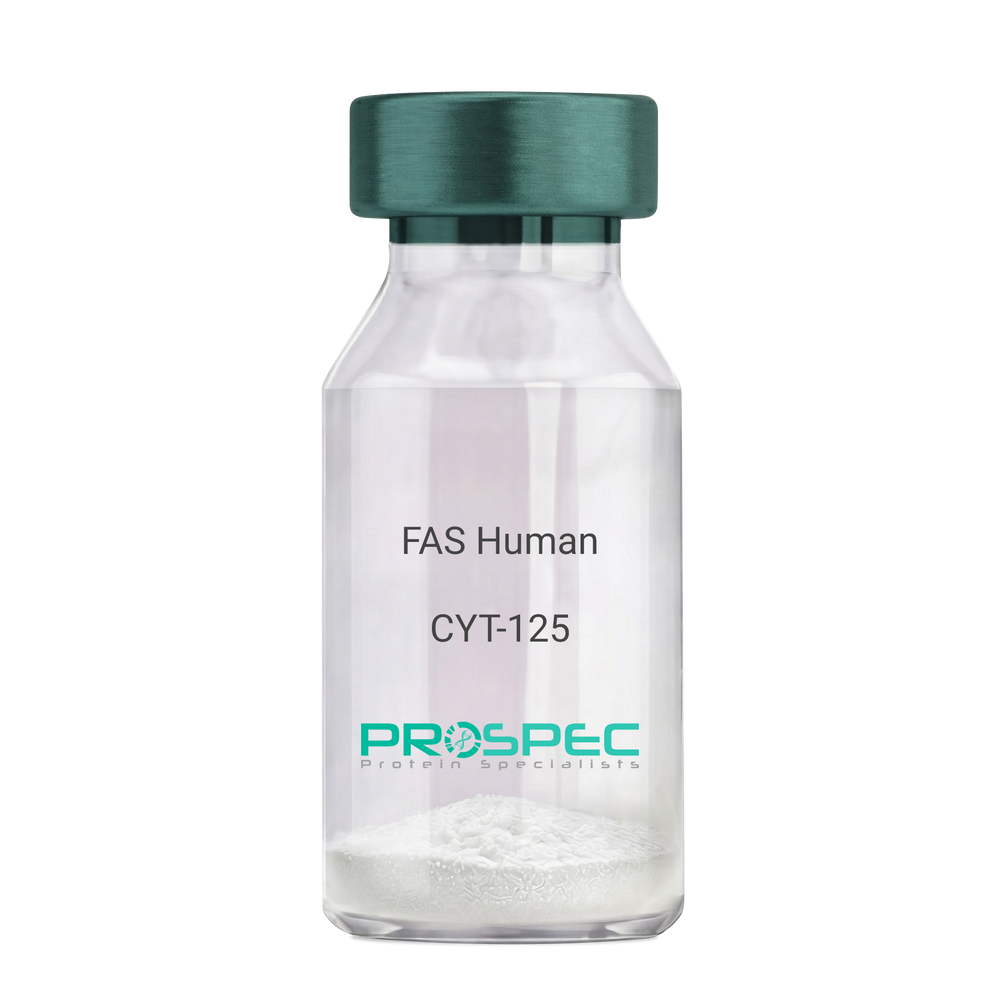
    FAS Human

    Description:

    sFas Receptor Human Recombinant

    Tumor necrosis factor receptor superfamily member 6, Apo-1 antigen, Apoptosis-mediating surface antigen FAS, FASLG receptor, CD95, FAS, APT1, FAS1, APO-1, FASTM, ALPS1A, TNFRSF6.

    Product # :

    CYT-125

    Price :

    Quantity :

    Shipping Method :

    Room Temp Icon

    Shipped at Room temp

    Add To Cart

    More Info

    • description
    • source
    • formulation
    • purity
    • biological activity
    • More Info
    • Citations

    Description

    sFas Receptor Human Recombinant produced in E.coli is a single, non-glycosylated polypeptide chain containing 157 amino acids and having a molecular mass of 17.6kDa.The FAS is purified by proprietary chromatographic techniques.

    Source

    Escherichia Coli.

    Formulation

    FAS protein was lyophilized from a 0.2µm filtered concentrated solution in 1×PBS, pH 7.4.

    Purity

    Greater than 95.0% as determined by:
    (a) Analysis by RP-HPLC.
    (b) Analysis by SDS-PAGE.

    Biological Activity

    The ED50 was determined by its ability to inhibit the cytotoxicity of Jurkat cells is between 10-15 µg/ml in the presence of 2ng/ml of hFasL.

    Citations

    More Info

    • Introduction

      Fas and Fas Ligand (FasL) are members of the TNF superfamily and are type I and type II transmembrane proteins, respectively. Binding of FasL to Fas initiates apoptosis in Fas-bearing cells. The apoptosis mechanism involves the recruitment of pro-caspase 8 through an adaptor molecule named FADD followed by processing of the pro-enzyme to active forms. These active caspases subsequently cleave a variety of cellular substrates leading to the eventual cell death. sFasR is able to inhibit FasL-induced apoptosis by acting as a decoy receptor whicht serves as a sink for FasL. The full length Fas Receptor is a 319 a.a type I transmembrane protein, which contains a 157 a.a extracellular domain, a 17 a.a transmembrane domain, and 145 a.a cytoplasmic domain. The mature human Fas ECD shares 55%, 58%, a.a sequence identity with the mouse, rat, Fas, respectively.

    • Synonyms

      Tumor necrosis factor receptor superfamily member 6, Apo-1 antigen, Apoptosis-mediating surface antigen FAS, FASLG receptor, CD95, FAS, APT1, FAS1, APO-1, FASTM, ALPS1A, TNFRSF6.

    • Physical Appearance

      Sterile Filtered White lyophilized (freeze-dried) powder.

    • Stability

      Lyophilized FAS although stable at room temperature for 3 weeks, should be stored desiccated below -18°C. Upon reconstitution FAS should be stored at 4°C between 2-7 days and for future use below -18°C. For long term storage it is recommended to add a carrier protein (0.1% HSA or BSA). Please prevent freeze-thaw cycles.

    • Solubility

      It is recommended to reconstitute the lyophilized FAS in sterile 18M-cm H2O not less than 100µg/ml, which can then be further diluted to other aqueous solutions.

    • Amino Acid Sequence

      MRLSSKSVNA QVTDINSKGL ELRKTVTTVE TQNLEGLHHD GQFCHKPCPP GERKARDCTV NGDEPDCVPC QEGKEYTDKA HFSSKCRRCR LCDEGHGLEV EINCTRTQNT KCRCKPNFFC NSTVCEHCDP CTKCEHGIIK ECTLTSNTKC KEEGSRS.

    • Background

      What is the molecular weight/Mw of FAS Protein?
      FAS Protein has a total Mw of 17.6kDa.

      What is the source or expression system of FAS Protein?
      Escherichia Coli.

      What is the Purity of FAS Protein?
      FAS Protein is >95% pure as determined by SDS-PAGE.

      What is the Biological Activity of FAS Protein?
      The ED50 was determined by its ability to inhibit the cytotoxicity of Jurkat cells is between 10-15 µg/ml in the presence of 2ng/ml of hFasL.

      What is the amino acid sequence of FAS Protein?
      MRLSSKSVNA QVTDINSKGL ELRKTVTTVE TQNLEGLHHD GQFCHKPCPP GERKARDCTV NGDEPDCVPC QEGKEYTDKA HFSSKCRRCR LCDEGHGLEV EINCTRTQNT KCRCKPNFFC NSTVCEHCDP CTKCEHGIIK ECTLTSNTKC KEEGSRS.

      What applications can FAS Protein be used in?
      FAS Protein can probably be used in western blot, ELISA and Lateral Flow.

      What is the endotoxin level for FAS Protein?
      The endotoxin level is minimal, FAS Protein was purified using conventional chromatography techniques..

    ProSpec's products are furnished for LABORATORY RESEARCH USE ONLY. The product may not be used as drugs, agricultural or pesticidal products, food additives or household chemicals.

    Fas Human
  • View Data Sheet

    Name :

    Betacellulin Human

    Description:

    Betacellulin Human Recombinant

    Product # :

    CYT-330

    Price :

    Quantity :

    Shipping Method :

    Room Temp Icon

    Shipped at Room temp

    Add To Cart

    More Info

    • description
    • source
    • formulation
    • purity
    • biological activity
    • More Info
    • Citations

    Description

    Betacellulin Human Recombinant produced in E.Coli is a single, non-glycosylated, polypeptide chain containing 80 amino acids and having a molecular mass of 9 kDa. Betacellulin Human Recombinant is purified by proprietary chromatographic techniques.

    Source

    Escherichia Coli.

    Formulation

    The Betacellulin Human Recombinant was lyophilized from a 0.2µm filtered concentrated solution in PBS, pH 7.4.

    Purity

    Greater than 98.0% as determined by(a) Analysis by RP-HPLC.
    (b) Analysis by SDS-PAGE.

    Biological Activity

    The ED50, calculated by the dose-dependant proliferation of murine BALB\C 3T3 cells (measured by 3H-thymidine uptake) is < 0.05 ng/ml. corresponding to a Specific Activity of >20,000,000IU/mg.

    Citations

    More Info

    • Introduction

      Btc is a potent mitogen for retinal pigment epithelial cells and vascular smooth muscle cells. The effects of betacellulin are probably mediated by the egf receptor and other related receptors.

    • Physical Appearance

      Sterile Filtered White lyophilized (freeze-dried) powder.

    • Stability

      Lyophilized Betacellulin Human Recombinant although stable at room temperature for 3 weeks, should be stored desiccated below -18°C. Upon reconstitution BTC Human should be stored at 4°C between 2-7 days and for future use below -18°C.For long term storage it is recommended to add a carrier protein (0.1% HSA or BSA).Please prevent freeze-thaw cycles.

    • Solubility

      It is recommended to reconstitute the lyophilized BTC Human in sterile 18MΩ-cm H2O not less than 100µg/ml, which can then be further diluted to other aqueous solutions.

    • Amino Acid Sequence

      DGNSTRSPET NGLLCGDPEE NCAATTTQSK RKGHFSRCPK QYKHYCIKGR CRFVVAEQTP SCVCDEGYIG ARCERVDLFY

    • Background

      Betacellulin Human Recombinant: Illuminating Pathways in Regenerative Medicine

      Introduction

      In the ever-evolving landscape of regenerative medicine, a promising new chapter unfolds with the arrival of Betacellulin Human Recombinant (BTC). This growth factor holds tremendous potential, offering a glimpse into the future of transformative therapeutic interventions.

      BTC: The Architect of Cellular Revitalization

      BTC, a member of the EGF family, has long been recognized for its pivotal role in cellular proliferation and differentiation. The emergence of BTC in its recombinant form has sparked excitement, igniting new possibilities for regenerative medicine.

      Crafting the Alchemist: Pioneering Methodologies

      Through the adept utilization of biotechnological techniques, we successfully synthesized BTC human recombinant. Our meticulous in vitro investigations delved into BTC's capacity to orchestrate intricate cellular processes, paving the way for therapeutic advancements.

      Unveiling the Biological Tapestry

      Buoyed by encouraging in vitro findings, we embarked on in vivo studies utilizing animal models. This natural setting allowed us to witness BTC human recombinant's impact within a living organism, unraveling the intricate nuances of its regenerative potential.

      A Flourish of Results

      The journey from laboratory to living system yielded promising results. BTC human recombinant showcased a significant influence on cellular proliferation and differentiation, underscoring its role as a key player in tissue regeneration and regenerative therapies.

      Charting a Transformative Future

      As the story of BTC human recombinant unfolds, it beckons further exploration through extensive human-centric clinical trials. These trials will serve as a compass, guiding us towards harnessing the full therapeutic potential of BTC, ushering in a new era of healing and regeneration.

      What is the molecular weight/Mw of BTC Protein?
      BTC Protein has a total Mw of 9kDa.

      What is the source or expression system of BTC Protein?
      Escherichia Coli.

      What is the Purity of BTC Protein?
      BTC Protein is >98% pure as determined by SDS-PAGE.

      What is the Biological Activity of BTC Protein?
      The ED50, calculated by the dose-dependant proliferation of murine BALB\C 3T3 cells (measured by 3H-thymidine uptake) is < 0.05 ng/ml. corresponding to a Specific Activity of >20,000,000IU/mg.

      What is the amino acid sequence of BTC Protein?
      DGNSTRSPET NGLLCGDPEE NCAATTTQSK RKGHFSRCPK QYKHYCIKGR CRFVVAEQTP SCVCDEGYIG ARCERVDLFY

      What applications can BTC Protein be used in?
      BTC Protein can probably be used in western blot, ELISA and Lateral Flow.

      What is the endotoxin level for BTC Protein?
      The endotoxin level is minimal, BTC Protein was purified using conventional chromatography techniques.

    ProSpec's products are furnished for LABORATORY RESEARCH USE ONLY. The product may not be used as drugs, agricultural or pesticidal products, food additives or household chemicals.

    Betacellulin Human
  • View Data Sheet

    Name :

    GM-CSF Porcine

    Description:

    Granulocyte Macrophage-Colony Stimulating Factor Porcine Recombinant

    CSF-2, MGI-1GM, GM-CSF, Pluripoietin-alpha, Molgramostin, Sargramostim.

    Product # :

    CYT-1095

    Price :

    Quantity :

    Shipping Method :

    Room Temp Icon

    Shipped at Room temp

    Add To Cart

    More Info

    • description
    • source
    • formulation
    • purity
    • biological activity
    • More Info
    • Citations

    Description

    Granulocyte Macrophage-Colony Stimulating Factor Porcine Recombinant produced in E. coli is a non-glycosylated monomer chain containing 128 amino acids and having a molecular mass of 14.5kDa. GMCSF is purified by proprietary chromatographic techniques.

    Source

    Escherichia Coli.

    Formulation

    The protein was lyophilized from a sterile (0.2µm) filtered solution containing 10mM sodium phosphate, pH 7.5.

    Purity

    Greater than 95.0% as determined by SDS-PAGE.

    Biological Activity

    The ED50, as determined by TF-1 cell proliferation is 4.52ng/ml corresponding to a specific activity which is 2.2 x 10^5 units/mg.

    Citations

    More Info

    • Introduction

      GMCSF is a cytokine that controls the production, differentiation, and function of granulocytes and macrophages. The active form of GMCSF is found extracellularly as a homodimer. GMCSF has been localized to a cluster of related genes at chromosome region 5q31, which is known to be associated with interstitial deletions in the 5q- syndrome and acute myelogenous leukemia. Other genes in the cluster include those encoding interleukins 4, 5, and 13.
      GM-CSF stimulates the growth and differentiation of hematopoietic precursor cells from various lineages, including granulocytes, macrophages, eosinophils and erythrocytes.

    • Synonyms

      CSF-2, MGI-1GM, GM-CSF, Pluripoietin-alpha, Molgramostin, Sargramostim.

    • Physical Appearance

      Sterile Filtered White lyophilized (freeze-dried) powder.

    • Stability

      Lyophilized GMCSF although stable at room temperature for 3 weeks, should be stored desiccated below -18°C. Upon reconstitution GMCSF should be stored at 4°C between 2-7 days and for future use below -18°C. Please prevent freeze-thaw cycles.

    • Solubility

      It is recommended to reconstitute the lyophilized GMCSF in sterile 18MΩ-cm H2O not less than 100µg/ml, which can then be further diluted to other aqueous solutions.

    • Amino Acid Sequence

      MAPTRPPSPV TRPWQHVDAI KEALSLLNNS NDTAAVMNET VDVVCEMFDP QEPTCVQTRL NLYKQGLRGS LTRLKSPLTL LAKHYEQHCP LTEETSCETQ SITFKSFKDS LNKFLFTIPF DCWGPVKK.

    • Background

      What is the molecular weight/Mw of GM-CSF PORCINE Protein?
      GM-CSF PORCINE Protein has a total Mw of 14.5kDa.

      What is the source or expression system of GM-CSF PORCINE Protein?
      Escherichia Coli.

      What is the Purity of GM-CSF PORCINE Protein?
      GM-CSF PORCINE Protein is >95% pure as determined by SDS-PAGE.

      What is the Biological Activity of GM-CSF PORCINE Protein?
      The ED50, as determined by TF-1 cell proliferation is 4.52ng/ml corresponding to a specific activity which is 2.2 x 10^5 units/mg.

      What is the amino acid sequence of GM-CSF PORCINE Protein?
      MAPTRPPSPV TRPWQHVDAI KEALSLLNNS NDTAAVMNET VDVVCEMFDP QEPTCVQTRL NLYKQGLRGS LTRLKSPLTL LAKHYEQHCP LTEETSCETQ SITFKSFKDS LNKFLFTIPF DCWGPVKK.

      What applications can GM-CSF PORCINE Protein be used in?
      GM-CSF PORCINE Protein can probably be used in western blot, ELISA and Lateral Flow.

      What is the endotoxin level for GM-CSF PORCINE Protein?
      The endotoxin level is minimal, GM-CSF PORCINE Protein was purified using conventional chromatography techniques.


    ProSpec's products are furnished for LABORATORY RESEARCH USE ONLY. The product may not be used as drugs, agricultural or pesticidal products, food additives or household chemicals.

    Gmcsf Porcine
  • View Data Sheet

    Name :

    TNFSF7 Human, sf9

    Description:

    CD70 Human Recombinant, sf9

    CD70 Molecule, Tumor Necrosis Factor (Ligand) Superfamily, Member 7, Tumor Necrosis Factor Ligand Superfamily Member 7 , CD27 Ligand, CD27LG, TNFSF7, CD27-L, CD27L, Tumor Necrosis Factor Ligand 8A, Surface Antigen CD70, Ki-24 Antigen, CD70 Antigen, TNLG8A.

    Product # :

    CYT-953

    Price :

    Quantity :

    Shipping Method :

    Ice Icon

    Shipped with Ice Packs

    Add To Cart

    More Info

    • description
    • source
    • formulation
    • purity
    • More Info
    • Citations

    Description

    TNFSF7 produced in Sf9 Baculovirus cells is a single, glycosylated polypeptide chain containing 164 amino acids (39-193 a.a.) and having a molecular mass of 18.2kDa. TNFSF7 is expressed with a 6 amino acid His tag at C-Terminus and purified by proprietary chromatographic techniques.

    Source

    Sf9, Baculovirus cells.

    Formulation

    TNFSF7 protein solution (0.25mg/ml) contains Phosphate Buffered Saline (pH 7.4) and 10% glycerol.

    Purity

    Greater than 90.0% as determined by SDS-PAGE.

    Citations

    More Info

    • Introduction

      CD70 also known as TNFSF7 is a cytokine which binds to CD27. TNFSF7 takes part in T-cell activation as well as induces the proliferation of costimulated T-cells. Moreover, TNFSF7 enhances the generation of cytolytic T-cells. Among the diseases which are associated with TNFSF7: Include acute myocarditis & Myocarditis.

    • Synonyms

      CD70 Molecule, Tumor Necrosis Factor (Ligand) Superfamily, Member 7, Tumor Necrosis Factor Ligand Superfamily Member 7 , CD27 Ligand, CD27LG, TNFSF7, CD27-L, CD27L, Tumor Necrosis Factor Ligand 8A, Surface Antigen CD70, Ki-24 Antigen, CD70 Antigen, TNLG8A.

    • Physical Appearance

      Sterile Filtered colorless solution.

    • Stability

      Store at 4°C if entire vial will be used within 2-4 weeks. Store, frozen at -20°C for longer periods of time. For long term storage it is recommended to add a carrier protein (0.1% HSA or BSA). Avoid multiple freeze-thaw cycles.

    • Amino Acid Sequence

      ADPQRFAQAQ QQLPLESLGW DVAELQLNHT GPQQDPRLYW QGGPALGRSF LHGPELDKGQ LRIHRDGIYM VHIQVTLAIC SSTTASRHHP TTLAVGICSP ASRSISLLRL SFHQGCTIAS QRLTPLARGD TLCTNLTGTL LPSRNTDETF FGVQWVRPHH HHHH.

    ProSpec's products are furnished for LABORATORY RESEARCH USE ONLY. The product may not be used as drugs, agricultural or pesticidal products, food additives or household chemicals.

    Tnfsf7 Human Sf9
  • View Data Sheet

    Name :

    SDF2 Human, sf9

    Description:

    Stromal Cell-Derived Factor 2, Sf9 Human Recombinant

    Stromal Cell Derived Factor 2, Stromal Cell-Derived Factor 2, SDF-2 

    Product # :

    CHM-034

    Price :

    Quantity :

    Shipping Method :

    Ice Icon

    Shipped with Ice Packs

    Add To Cart

    More Info

    • description
    • source
    • formulation
    • purity
    • More Info
    • Citations

    Description

    SDF2 produced in Sf9 Baculovirus cells is a single, glycosylated polypeptide chain containing 202 amino acids (19-211a.a.) and having a molecular mass of 22.3kDa. (Molecular size on SDS-PAGE will appear at approximately 18-28kDa). SDF2 is expressed with an 9 amino acid His tag at C-Terminus and purified by proprietary chromatographic techniques.

    Source

    Sf9, Baculovirus cells.

    Formulation

    SDF2 protein solution (0.25mg/ml) contains 50mM Tris-HCl (pH 8.0), 10% glycerol, 0.1M NaCl 0.1mM PMSF and 0.5mM EDTA.

    Purity

    Greater than 95.0% as determined by SDS-PAGE.

    Citations

    More Info

    • Introduction

      Stromal Cell-Derived Factor 2 (SDF2) is a secretory protein which is partly similar to the hydrophilic segments of yeast mannosyltransferases. SDF2 protein’s expression is ubiquitous and the gene is rather conserved among mammals. SDF2 is a protein-coding gene whose alternative splicing results in coding and non-coding variants.

    • Synonyms

      Stromal Cell Derived Factor 2, Stromal Cell-Derived Factor 2, SDF-2

    • Physical Appearance

      Sterile Filtered colorless solution.

    • Stability

      Store at 4°C if entire vial will be used within 2-4 weeks. Store, frozen at -20°C for longer periods of time. For long term storage it is recommended to add a carrier protein (0.1% HSA or BSA). Avoid multiple freeze-thaw cycles.

    • Amino Acid Sequence

      ADPSSLGVVT CGSVVKLLNT RHNVRLHSHD VRYGSGSGQQ SVTGVTSVDD SNSYWRIRGK SATVCERGTP IKCGQPIRLT HVNTGRNLHS HHFTSPLSGN QEVSAFGEEG EGDYLDDWTV LCNGPYWVRD GEVRFKHSST EVLLSVTGEQ YGRPISGQKE VHGMAQPSQN NYWKAMEGIF MKPSELLKAE AHHAELHHHH HH

    • Background

      What is the molecular weight/Mw of SDF2 HUMAN, SF9 Protein?
      SDF2 HUMAN, SF9 Protein has a total Mw of 22.3kDa.

      What is the source or expression system of SDF2 HUMAN, SF9 Protein?
      Sf9, Baculovirus cells.

      What is the Purity of SDF2 HUMAN, SF9 Protein?
      SDF2 HUMAN, SF9 Protein is > 95% pure as determined by SDS-PAGE.

      What is the Biological Activity of SDF2 HUMAN, SF9 Protein?
      The biological functionality of SDF2 HUMAN, SF9 Protein will be determined in the future.

      What is the amino acid sequence of SDF2 HUMAN, SF9 Protein?
      ADPSSLGVVT CGSVVKLLNT RHNVRLHSHD VRYGSGSGQQ SVTGVTSVDD SNSYWRIRGK SATVCERGTP IKCGQPIRLT HVNTGRNLHS HHFTSPLSGN QEVSAFGEEG EGDYLDDWTV LCNGPYWVRD GEVRFKHSST EVLLSVTGEQ YGRPISGQKE VHGMAQPSQN NYWKAMEGIF MKPSELLKAE AHHAELHHHH HH

      What applications can SDF2 HUMAN, SF9 Protein be used in?
      SDF2 HUMAN, SF9 Protein can probably be used in western blot, ELISA and Lateral Flow.

      What is the endotoxin level for SDF2 HUMAN, SF9 Protein?
      The endotoxin level is minimal, SDF2 HUMAN, SF9 Protein was purified using conventional chromatography techniques.

      Who supplies SDF2 HUMAN, SF9 that is in stock and available to order?
      ProSpec has the protein in stock and available for immediate delivery.

      Where can I order bulk mg quantities of SDF2 HUMAN, SF9?
      ProSpec supplies bulk mg quantities at affordable prices that meets research and academic budgets.

    ProSpec's products are furnished for LABORATORY RESEARCH USE ONLY. The product may not be used as drugs, agricultural or pesticidal products, food additives or household chemicals.

    Sdf 2 Human
  • View Data Sheet

    Name :

    SSSCA1 Human

    Description:

    Sjogren Syndrome/Scleroderma Autoantigen 1 Human Recombinant

    Sjogren Syndrome/Scleroderma Autoantigen 1, Sjogren'S Syndrome/Scleroderma Autoantigen 1, Autoantigen P27, Centromeric Autoantigen (27kD), p27, Sjoegren Syndrome/Scleroderma Autoantigen 1.

    Product # :

    PRO-1743

    Price :

    Quantity :

    Shipping Method :

    Ice Icon

    Shipped with Ice Packs

    Add To Cart

    More Info

    • description
    • source
    • formulation
    • purity
    • More Info
    • Citations

    Description

    SSSCA1 Human Recombinant produced in E.Coli is a single, non-glycosylated polypeptide chain containing 222 amino acids (1-199aa) and having a molecular mass of 23.9kDa. SSSCA1 is fused to a 23 amino acid His-tag at N-terminus & purified by proprietary chromatographic techniques.

    Source

    Escherichia Coli.

    Formulation

    SSSCA1 protein solution (0.5mg/ml) containing 20mM Tris-HCl buffer (pH 8.0), 0.4M urea and 10% glycerol.

    Purity

    Greater than 90.0% as determined by SDS-PAGE.

    Citations

    More Info

    • Introduction

      Sjogren syndrome/scleroderma autoantigen 1, SSSCA1 is involved in mitosis. SSSCA1 is a centromere-associated protein which can induce anti-centromere antibodies. In addition SSSCA1 is recognized by a subset of anti-centromere antibodies from patients with sclerodermaand Sjogren's syndrome.

    • Synonyms

      Sjogren Syndrome/Scleroderma Autoantigen 1, Sjogren'S Syndrome/Scleroderma Autoantigen 1, Autoantigen P27, Centromeric Autoantigen (27kD), p27, Sjoegren Syndrome/Scleroderma Autoantigen 1.

    • Physical Appearance

      Sterile Filtered clear solution.

    • Stability

      Store at 4°C if entire vial will be used within 2-4 weeks. Store, frozen at -20°C for longer periods of time.For long term storage it is recommended to add a carrier protein (0.1% HSA or BSA).Please avoid freeze thaw cycles.

    • Amino Acid Sequence

      MGSSHHHHHH SSGLVPRGSH MGSMALNGAE VDDFSWEPPT EAETKVLQAR RERQDRISRL MGDYLLRGYR MLGETCADCG TILLQDKQRK IYCVACQELD SDVDKDNPAL NAQAALSQAR EHQLASASEL PLGSRPAPQP PVPRPEHCEG AAAGLKAAQG PPAPAVPPNT DVMACTQTAL LQKLTWASAE LGSSTSLETS IQLCGLIRAC AEALRSLQQL QH

    ProSpec's products are furnished for LABORATORY RESEARCH USE ONLY. The product may not be used as drugs, agricultural or pesticidal products, food additives or household chemicals.

    Sssca1 Human
  • View Data Sheet

    Name :

    Recombinant TNF-a Antibody

    Description:

    Recombinant Anti Human Tumor Necrosis Factor-Alpha

    Product # :

    ANT-599

    Price :

    Quantity :

    Shipping Method :

    Ice Icon

    Shipped with Ice Packs

    Add To Cart

    More Info

    • description
    • source
    • formulation
    • purity
    • biological activity
    • More Info
    • Citations

    Description

    Recombinant TNF-a Antibody is a recombinant human IgG1 monoclonal antibody specific for human tumor necrosis factor (TNF). Recombinant TNF-a Antibody is produced by recombinant DNA technology in a Chinese Hamster Ovary mammalian cell expression system in a serum-free medium and has a molecular weight of approximately 148 kDa.

    Source

    CHO.

    Formulation

    The Recombinant TNF-a Antibody 53mg/ml solution contains 6.16 mg/ml of sodium chloride, 0.86 mg/ml of monobasic sodium phosphate dihydrate, 1.53 mg/ml of dibasic sodium phosphate dihydrate, 0.3 mg/ml of sodium citrate, 1.30 mg/ml of citric acidmonohydrate, 12 mg/ml of mannitol, 1mg/ml of polysorbate 80, pH-5.

    Purity

    Greater than 98.0% as determined by:
    (a) Analysis by SEC-HPLC.
    (b) Analysis by SDS-PAGE.

    Biological Activity

    The EC50 as determined by L929 cell proliferation assay for neutralization reaction between TNF-a Antibody and TNFA, Perform a comparison of a dilution series of the Sample solution with a dilution series of the Standard solution, measured potency was found to be 1.2 X 10⁴EU/mg.

    Citations

    More Info

    • Introduction

      Tumor necrosis factor is a cytokine involved in systemic inflammation and is a member of a group of cytokines that all stimulate the acute phase reaction. TNF is mainly secreted by macrophages.
      TNF causes apoptotic cell death, cellular proliferation, differentiation, inflammation, tumorigenesisand viral replication, TNF is also involved in lipid metabolism, and coagulation. TNF's primary role is in the regulation of immune cells.
      Dysregulation and, in particular, overproduction of TNF have been implicated in a variety of human diseases- autoimmune diseases, insulin resistance, and cancer.

    • Physical Appearance

      Clear and colorless solution.

    • Stability

      Recombinant TNF-a Antibody should be stored between 2-8°C and should be protected from light. DO NOT FREEZE. DO NOT SHAKE.

    • Amino Acid Sequence

      LIGHT CHAIN
      DIQMTQSPSSLSASVGDRVTITCRASQGIRNYLAWYQQKPGKAPKLLIYAASTLQSGVPSRFSGSGSGTDF
      TLTISSLQPEDVATYYCQRYNRAPYTFGQGTKVEIKRTVAAPSVFIFPPSDEQLKSGTASVVCLLNNFYPR
      EAKVQWKVDNALQSGNSQESVTEQDSKDSTYSLSSTLTLSKADYEKHKVYACEVTHQGLSSPVTKSFNRGEC

      HEAVY CHAIN
      EVQLVESGGGLVQPGRSLRLSCAASGFTFDDYAMHWVRQAPGKGLEWVSAITWNSGHIDYADSVEGRFTISR
      DNAKNSLYLQMNSLRAEDTAVYYCAKVSYLSTASSLDYWGQGTLVTVSSASTKGPSVFPLAPSSKSTSGGTA
      ALGCLVKDYFPEPVTVSWNSGALTSGVHTFPAVLQSSGLYSLSSVVTVPSSSLGTQTYICNVNHKPSNTKVD
      KKVEPKSCDKTHTCPPCPAPELLGGPSVFLFPPKPKDTLMISRTPEVTCVVVDVSHEDPEVKFNWYVDGVEV
      HNAKTKPREEQYNSTYRVVSVLTVLHQDWLNGKEYKCKVSNKALPAPIEKTISKAKGQPREPQVYTLPPSRD
      ELTKNQVSLTCLVKGFYPSDIAVEWESNGQPENNYKTTPPVLDSDGSFFLYSKLTVDKSRWQQGNVFSCSVM
      HEALHNHYTQKSLSLSPGK.

    ProSpec's products are furnished for LABORATORY RESEARCH USE ONLY. The product may not be used as drugs, agricultural or pesticidal products, food additives or household chemicals.

    Recombinant Tnf A Antibody
  • View Data Sheet

    Name :

    CD58 Antibody, Biotin

    Description:

    CD58, Mouse Anti-Human, Biotin

    CD58, LFA-3, Ag3, Surface glycoprotein LFA-3.

    Product # :

    ANT-278

    Price :

    Quantity :

    Shipping Method :

    Room Temp Icon

    Shipped at Room temp

    Add To Cart

    More Info

    • More Info
    • Citations

    Citations

    More Info

    • Introduction

      CD58 is part of the immunoglobulin superfamily. CD58 is a ligand of the T lymphocyte CD2 protein, and is invloved in adhesion and activation of T lymphocytes. CD58 is localized to the plasma membrane.

    • Synonyms

      CD58, LFA-3, Ag3, Surface glycoprotein LFA-3.

    • Solubility

      Reconstitute with of H20. Mix gently, wash the sides of the vial and wait 30-60 seconds before use.

    • Immunogen

      Human Erythrocytes.

    • Ig Subclass

      Mouse IgG1.

    • Clone

      hCD58.

    • Applications

      Staining antibody. For staining, use 10µl/1,000,000 cells.

    • Available Conjugates

      This antibody is also available unconjugated to and conjugated to FITC. For staining with biotin or FITC-conjugated antibody use 5-10µl/1,000,000 cells.

    • Type

      Mouse Anti Human Monoclonal.

    • Storage Procedures

      Lyophilized: store at 4°C. After reconstitution, if not intended for use within a month, aliquot and store at -20°C.

    • Purification Method

      Ion-Exchange Column Protein concentration1mg/ml in PBS (after reconstitution).

    ProSpec's products are furnished for LABORATORY RESEARCH USE ONLY. The product may not be used as drugs, agricultural or pesticidal products, food additives or household chemicals.

    Cd58 Antibody Biotin
  • View Data Sheet

    Name :

    MCM7 PAT1G8AT Antibody

    Description:

    Minichromosome Maintenance Complex Component 7, Clone PAT1G8AT, Mouse Anti Human

    Minichromosome Maintenance Complex Component 7, MCM7 Minichromosome Maintenance Deficient 7 (S. Cerevisiae), Minichromosome Maintenance Deficient (S. Cerevisiae) 7, DNA Replication Licensing Factor MCM7, Homolog of S. Cerevisiae Cdc47, CDC47 Homolog, P1CDC47, PNAS146, P85MCM, MCM2, CDC47, P1.1-MCM3, EC 3.6.4.12.

    Product # :

    ANT-719

    Price :

    Quantity :

    Shipping Method :

    Ice Icon

    Shipped with Ice Packs

    Add To Cart

    More Info

    • formulation
    • More Info
    • Citations

    Formulation

    1mg/ml containing PBS, pH-7.4, & 0.1% Sodium Azide.

    Citations

    More Info

    • Introduction

      MCM7 is a highly conserved mini-chromosome maintenance protein (MCM) vital for eukaryotic genome replication initiation. The MCM proteins form a hexameric protein complex which is a key component of the pre-replication complex (pre_RC) which takes part in replication forks formation and in DNA replication related proteins recruitment. The MCM complex is comprised of MCM2, 4, 6 and 7 proteins and possesses DNA helicase activity, such as DNA unwinding.

    • Synonyms

      Minichromosome Maintenance Complex Component 7, MCM7 Minichromosome Maintenance Deficient 7 (S. Cerevisiae), Minichromosome Maintenance Deficient (S. Cerevisiae) 7, DNA Replication Licensing Factor MCM7, Homolog of S. Cerevisiae Cdc47, CDC47 Homolog, P1CDC47, PNAS146, P85MCM, MCM2, CDC47, P1.1-MCM3, EC 3.6.4.12.

    • Immunogen

      Anti-human MCM7 mAb, is derived from hybridization of mouse F0 myeloma cells with spleen cells from BALB/c mice immunized with a recombinant human MCM7 protein 1-414 amino acids purified from E. coli.

    • Ig Subclass

      Mouse IgG2b heavy chain and k light chain.

    • Clone

      PAT1G8AT.

    • Applications

      MCM7 antibody has been tested by ELISA and Western blot analysis to assure specificity and reactivity. Since application varies, however, each investigation should be titrated by the reagent to obtain optimal results.

    • Type

      Mouse Anti Human Monoclonal.

    • Storage Procedures

      For periods up to 1 month store at 4°C, for longer periods of time, store at -20°C. Prevent freeze thaw cycles.

    • Purification Method

      MCM7 antibody was purified from mouse ascitic fluids by protein-G affinity chromatography.

    ProSpec's products are furnished for LABORATORY RESEARCH USE ONLY. The product may not be used as drugs, agricultural or pesticidal products, food additives or household chemicals.

    Anti Mcm7
  • View Data Sheet

    Name :

    ACAD8 Human

    Description:

    Acyl-Coenzyme A Dehydrogenase 8 Human Recombinant

    Acyl-CoA dehydrogenase family member 8 mitochondrial, ACAD-8, Isobutyryl-CoA dehydrogenase, Activator-recruited cofactor 42 kDa component, ARC42, FLJ22590.

    Product # :

    ENZ-294

    Price :

    Quantity :

    Shipping Method :

    Ice Icon

    Shipped with Ice Packs

    Add To Cart

    More Info

    • description
    • source
    • formulation
    • purity
    • More Info
    • Citations

    Description

    ACAD8 Human Recombinant produced in E.coli is a single, non-glycosylated polypeptide chain containing 416 amino acids (23-415) and having a molecular mass of 45.1kDa.ACAD8 is fused to a 23 amino acid His-tag at N-terminus & purified by proprietary chromatographic techniques.

    Source

    Escherichia Coli.

    Formulation

    The ACAD8 solution contains 20mM Tris-HCl buffer (pH 8.0), 0.15M NaCl, 1mM DTT and 30% glycerol.

    Purity

    Greater than 95% as determined by SDS-PAGE.

    Citations

    More Info

    • Introduction

      Acyl CoA dehydrogenase is the enzymeused to catalyzethe first step of ?-oxidationin Fatty acid metabolism.
      Acyl-coenzyme A (CoA) dehydrogenases (ACADs) are a family of mitochondrial enzymes that catalyze the first dehydrogenation step in the bets-oxidation of fatty acyl-CoA derivatives. Several human ACADs exist and all ACADs catalyze the same initial dehydrogenation of the substrate at the beta-carbon atom and require electron transfer flavoprotein as an alectron acceptor. The predicted 415-amino acid ACAD8 protein contains many of the residues conserved in most other ACADs, including an active site glutamic acid residue and residues important for tetramer formation.

    • Synonyms

      Acyl-CoA dehydrogenase family member 8 mitochondrial, ACAD-8, Isobutyryl-CoA dehydrogenase, Activator-recruited cofactor 42 kDa component, ARC42, FLJ22590.

    • Physical Appearance

      Sterile Filtered clear solution.

    • Stability

      Store at 4°C if entire vial will be used within 2-4 weeks. Store, frozen at -20°C for longer periods of time. For long term storage it is recommended to add a carrier protein (0.1% HSA or BSA).Avoid multiple freeze-thaw cycles.

    • Amino Acid Sequence

      MGSSHHHHHH SSGLVPRGSH MGSLVQTGHR SLTSCIDPSM GLNEEQKEFQ KVAFDFAARE MAPNMAEWDQ KELFPVDVMR KAAQLGFGGV YIQTDVGGSG LSRLDTSVIF EALATGCTST TAYISIHNMC AWMIDSFGNE EQRHKFCPPL CTMEKFASYC LTEPGSGSDA ASLLTSAKKQ GDHYILNGSK AFISGAGESD IYVVMCRTGG PGPKGISCIV VEKGTPGLSF GKKEKKVGWN SQPTRAVIFE DCAVPVANRI GSEGQGFLIA VRGLNGGRIN IASCSLGAAH ASVILTRDHL NVRKQFGEPL ASNQYLQFTL ADMATRLVAA RLMVRNAAVA LQEERKDAVA LCSMAKLFAT DECFAICNQA LQMHGGYGYL KDYAVQQYVR DSRVHQILEG SNEVMRILIS RSLLQE.

    ProSpec's products are furnished for LABORATORY RESEARCH USE ONLY. The product may not be used as drugs, agricultural or pesticidal products, food additives or household chemicals.

    Acad8 Human
  • View Data Sheet

    Name :

    WISP2 Human

    Description:

    WNT1 Inducible Signaling Pathway Protein 2 Human Recombinant

    WNT1 Inducible Signaling Pathway Protein 2, Connective Tissue Growth Factor-Related Protein 58, Connective Tissue Growth Factor-Like Protein, CCN Family Member 5, CTGF-L, CT58, CCN5, WISP-2, CTGFL, WISP2.

    Product # :

    CYT-970

    Price :

    Quantity :

    Shipping Method :

    Room Temp Icon

    Shipped at Room temp

    Add To Cart

    More Info

    • description
    • source
    • formulation
    • purity
    • More Info
    • Citations

    Description

    WISP2 Human Recombinant produced in E.coli is a single, non-glycosylated polypeptide chain containing a total of 228 amino acids and having a molecular mass of 24.4kDa.

    Source

    Escherichia Coli.

    Formulation

    Lyophilized from a sterile (0.2µm) filtered aqueous solution containing 0.1% Trifluoroacetic Acid (TFA).

    Purity

    Greater than 95.0% as determined by SDS-PAGE.

    Citations

    More Info

    • Introduction

      WNT1-inducible-signaling pathway protein 2 (WISP2) belongs to the WNT1 inducible signaling pathway (WISP) protein subfamily, which belongs to the connective tissue growth factor (CTGF) family. The CTGF family members are characterized by 4 conserved cysteine-rich domains: insulin-like growth factor-binding domain, von Willebrand factor type C module, thrombospondin domain and C-terminal cystine knot-like (CT) domain. WISP2 protein lacks the CT domain which is implicated in dimerization binding. WISP2 is possibly involved in bone remodeling. WISP2 is expressed in primary osteoblasts and fibroblasts. WISP2 stimulates osteoblast adhesion and inhibits osteocalcin production. WISP2 expression in colon tumors is reduced while the other 2 WISP members are overexpressed in colon tumors. WISP2 may play an imperative role in modulating bone turnover.

    • Synonyms

      WNT1 Inducible Signaling Pathway Protein 2, Connective Tissue Growth Factor-Related Protein 58, Connective Tissue Growth Factor-Like Protein, CCN Family Member 5, CTGF-L, CT58, CCN5, WISP-2, CTGFL, WISP2.

    • Physical Appearance

      Sterile Filtered White lyophilized (freeze-dried) powder.

    • Stability

      Lyophilized WISP2 although stable at room temperature for 3 weeks, should be stored desiccated below -18°C. Upon reconstitution WISP-2 should be stored at 4°C between 2-7 days and for future use below -18°C.For long term storage it is recommended to add a carrier protein (0.1% HSA or BSA).Please prevent freeze-thaw cycles.

    • Solubility

      It is recommended to reconstitute the lyophilized WISP-2 in sterile 10mM acetic acidnot less than 100µg/ml, which can then be further diluted to other aqueous solutions.

    • Amino Acid Sequence

      MQLCPTPCTC PWPPPRCPLG VPLVLDGCGC CRVCARRLGE PCDQLHVCDA SQGLVCQPGA GPGGRGALCL LAEDDSSCEV NGRLYREGET FQPHCSIRCR CEDGGFTCVP LCSEDVRLPS WDCPHPRRVE VLGKCCPEWV CGQGGGLGTQ PLPAQGPQFS GLVSSLPPGV PCPEWSTAWG PCSTTCGLGM ATRVSNQNRF CRLETQRRLC LSRPCPPSRG RSPQNSAF.

    ProSpec's products are furnished for LABORATORY RESEARCH USE ONLY. The product may not be used as drugs, agricultural or pesticidal products, food additives or household chemicals.

    Wisp2 Human
  • View Data Sheet

    Name :

    NPPC Human

    Description:

    Natriuretic Peptide C Human Recombinant

    Natriuretic Peptide Precursor C, C-Type Natriuretic Peptide, CNP2, CNP.

    Product # :

    CYT-760

    Price :

    Quantity :

    Shipping Method :

    Ice Icon

    Shipped with Ice Packs

    Add To Cart

    More Info

    • description
    • source
    • formulation
    • purity
    • More Info
    • Citations

    Description

    NPPC Human Recombinant produced in E.coli is a single, non-glycosylated polypeptide chain containing 126 amino acids (24-126) and having a molecular mass of 13.2kDa.NPPC is fused to a 23 amino acid His-tag at N-terminus & purified by proprietary chromatographic techniques.

    Source

    Escherichia Coli.

    Formulation

    The NPPC solution (0.25mg/ml) contains 20mM Tris-HCl buffer (pH 8.0), 0.15M NaCl and 10% glycerol.

    Purity

    Greater than 85% as determined by SDS-PAGE.

    Citations

    More Info

    • Introduction

      NPPC is proteolytically managed to create a secreted hormone of the natriuretic peptide family. NPPC is vasoactive and natriuretic and controls the evolution and differentiation of cartilaginous growth plate chondrocytes.

    • Synonyms

      Natriuretic Peptide Precursor C, C-Type Natriuretic Peptide, CNP2, CNP.

    • Physical Appearance

      Sterile Filtered clear solution.

    • Stability

      Store at 4°C if entire vial will be used within 2-4 weeks. Store, frozen at -20°C for longer periods of time. For long term storage it is recommended to add a carrier protein (0.1% HSA or BSA).Avoid multiple freeze-thaw cycles.

    • Amino Acid Sequence

      MGSSHHHHHH SSGLVPRGSH MGSKPGAPPK VPRTPPAEEL AEPQAAGGGQ KKGDKAPGGG GANLKGDRSR LLRDLRVDTK SRAAWARLLQ EHPNARKYKG ANKKGLSKGC FGLKLDRIGS MSGLGC

    ProSpec's products are furnished for LABORATORY RESEARCH USE ONLY. The product may not be used as drugs, agricultural or pesticidal products, food additives or household chemicals.

    Nppc Human
  • View Data Sheet

    Name :

    TNFA Rat, His Active

    Description:

    Tumor Necrosis Factor-alpha Rat Recombinant, His Tag Active

    Tumor Necrosis Factor-alpha, TNF a His,  Cachectin, TNF-alpha, Tumor necrosis factor ligand superfamily member 2, TNF-a, N-terminal fragment, NTF, Intracellular domain 1, Intracellular domain 2, ICD2, C-domain 1, C-domain 2, Tumor necrosis factor, soluble form, Tnfa, Tnfsf2, RATTNF, Tnfa.

    Product # :

    CYT-1057

    Price :

    Quantity :

    Shipping Method :

    Ice Icon

    Shipped with Ice Packs

    Add To Cart

    More Info

    • description
    • source
    • formulation
    • purity
    • biological activity
    • More Info
    • Citations

    Description

    TNFA Rat Recombinant produced in E.Coli is a single, non-glycosylated polypeptide chain containing 181 amino acids (80-235 a.a) and having a molecular mass of 19.9kDa.TNFA Rat is expressed with an 25 amino acid His tag at C-Terminus and purified by proprietary chromatographic techniques.

    Source

    Escherichia Coli.

    Formulation

    TNFA Rat protein solution (1mg/ml) contains Phosphate Buffered Saline (pH 7.4), 10% glycerol and 1mM DTT.

    Purity

    Greater than 90.0% as determined by SDS-PAGE.

    Biological Activity

    Measured in a cytotoxicity assay using L929 mouse fibrosarcoma cells in the presence of the metabolic inhibitor actinomycin D.
    The ED50 for this effect is ≤ to 0.2 ng/ml.

    Citations

    More Info

    • Introduction

      Tumor necrosis factor is a cytokine involved in systemic inflammation and is a member of a group of cytokines that all stimulate the acute phase reaction. TNF is mainly secreted by macrophages.
      TNF causes apoptotic cell death, cellular proliferation, differentiation, inflammation, tumorigenesis and viral replication, TNF is also involved in lipid metabolism, and coagulation. TNF's primary role is in the regulation of immune cells.
      Dysregulation and, in particular, overproduction of TNF have been implicated in a variety of human diseases- autoimmune diseases, insulin resistance, and cancer.

    • Synonyms

      Tumor Necrosis Factor-alpha, TNF a His, Cachectin, TNF-alpha, Tumor necrosis factor ligand superfamily member 2, TNF-a, N-terminal fragment, NTF, Intracellular domain 1, Intracellular domain 2, ICD2, C-domain 1, C-domain 2, Tumor necrosis factor, soluble form, Tnfa, Tnfsf2, RATTNF, Tnfa.

    • Physical Appearance

      Sterile Filtered colorless liquid.

    • Stability

      Store at 4°C if entire vial will be used within 2-4 weeks. Store, frozen at -20°C for longer periods of time. For long term storage it is recommended to add a carrier protein (0.1% HSA or BSA).Avoid multiple freeze-thaw cycles.

    • Amino Acid Sequence

      MGSSHHHHHH SSGLVPRGSH MGSHMLRSSS QNSSDKPVAH VVANHQAEEQ LEWLSQRANA LLANGMDLKD NQLVVPADGL YLIYSQVLFK GQGCPDYVLL THTVSRFAIS YQEKVSLLSA IKSPCPKDTP EGAELKPWYE PMYLGGVFQL EKGDLLSAEV NLPKYLDITE SGQVYFGVIA L.

    • Background

      Tumor Necrosis Factor-alpha Rat Recombinant, His Tag Active: An In-Depth Analysis

      Abstract:


      Tumor Necrosis Factor-alpha (TNF-α) is a cytokine that plays a significant role in various physiological and pathological processes. This human research paper provides an in-depth analysis of TNF-α Rat Recombinant with a His Tag, focusing on its structure, signaling pathways, and diverse functions. Additionally, the paper explores the potential applications of TNF-α Rat Recombinant in human research.

      Introduction:


      TNF-α is a key mediator of inflammation and immune responses in humans. This research paper aims to provide a comprehensive analysis of TNF-α Rat Recombinant with a His Tag, highlighting its significance in human physiology and its potential applications in human research.

      Structure and Function of TNF-α:


      TNF-α is a homotrimeric protein that binds to two distinct receptors, TNFR1 and TNFR2, initiating downstream signaling cascades. It regulates immune cell activation, cytokine production, and cellular responses, influencing diverse biological processes.

      Signaling Pathways:


      Upon binding to its receptors, TNF-α activates various signaling pathways, including the NF-κB pathway, MAPK pathway, and cell death pathways. These pathways regulate gene expression and mediate cellular responses, impacting inflammation, apoptosis, and tissue homeostasis.

      Functions of TNF-α:


      TNF-α plays a crucial role in immune responses, inflammation, and tissue homeostasis. It regulates the activation and migration of immune cells, promotes cytokine production, and modulates cell survival and death. Dysregulation of TNF-α is implicated in the pathogenesis of various human diseases, making it an attractive target for research and therapeutic interventions.

      Applications in Human Research:


      TNF-α Rat Recombinant with a His Tag has diverse applications in human research. It can be used to investigate TNF-α signaling pathways, study its effects on immune cell functions, and explore its role in disease pathogenesis. Additionally, this recombinant protein can be utilized for in vitro and in vivo studies aimed at developing novel therapeutic strategies.

      Future Directions:


      Further research is necessary to unravel the intricate mechanisms of TNF-α signaling and its contributions to human diseases. Continued investigations will enable the development of targeted therapies and personalized medicine approaches. Future studies should also focus on optimizing the use of TNF-α Rat Recombinant in preclinical and clinical research settings.

    ProSpec's products are furnished for LABORATORY RESEARCH USE ONLY. The product may not be used as drugs, agricultural or pesticidal products, food additives or household chemicals.

    Tnfa Rat 2
  • View Data Sheet

    Name :

    TNFRSF4 Human

    Description:

    TNF Receptor Superfamily Member 4 Human Recombinant

    TNFRSF4, TNF Receptor Superfamily Member 4, TAX Transcriptionally-Activated Glycoprotein 1 Receptor, OX40L Receptor, ACT35 Antigen, CD134 Antigen, TXGP1L, Tax-Transcriptionally Activated Glycoprotein 1 Receptor, Tumor Necrosis Factor Receptor Superfamily, Member 4, Tumor Necrosis Factor Receptor Superfamily Member 4 , Lymphoid Activation Antigene ACT35,  OX40 Cell Surface Antigen, OX40 Homologue , ATC35 Antigen, OX40 Antigen , ACT35, CD134, IMD16, OX40.    

    Product # :

    CYT-1039

    Price :

    Quantity :

    Shipping Method :

    Ice Icon

    Shipped with Ice Packs

    Add To Cart

    More Info

    • description
    • source
    • formulation
    • purity
    • biological activity
    • More Info
    • Citations

    Description

    TNFRSF4 produced in Sf9 Baculovirus cells is a single, glycosylated polypeptide chain containing 425 amino acids (29-214a.a.) and having a molecular mass of 46.9Da. (Molecular size on SDS-PAGE will appear at approximately 40-57kDa). TNFRSF4 is expressed with a 239 amino acid higG-His tag at C-Terminus and purified by proprietary chromatographic techniques.

    Source

    Sf9, Baculovirus cells.

    Formulation

    TNFRSF4 protein solution (0.5mg/ml) contains Phosphate Buffered Saline (pH 7.4) and 10% glycerol.

    Purity

    Greater than 90.0% as determined by SDS-PAGE.

    Biological Activity

    Measured by its binding ability in a functional ELISA with mouse OX40 Ligand/TNFSF4 The ED50 range ≤ 0.15 ug/ml.

    Citations

    More Info

    • Introduction

      TNFRSF4, also known as TNF Receptor Superfamily Member 4, is a T cell co-stimulatory molecule which belongs to the TNF receptor superfamily. TNFRSF4 coordinates with other co-stimulatory substances such as CD28, CD40, CD30, CD27 and 4-1BB to control the activation of the immune response. TNFRSF4 takes a vital part in antigen-specific T cell expansion as well as survival. TNFRSF4 is up-regulated on CD4+ and CD8+ T cells upon engagement of the TCR by antigen presenting cells along with co-stimulation by CD40-CD40 Ligand and CD28-B7. In addition, TNFRSF4 regulates cytokine production from T cells, antigen presenting cells, natural killer cells and natural killer cells. TNFRSF4 regulates cytokine receptor signaling.

    • Synonyms

      TNFRSF4, TNF Receptor Superfamily Member 4, TAX Transcriptionally-Activated Glycoprotein 1 Receptor, OX40L Receptor, ACT35 Antigen, CD134 Antigen, TXGP1L, Tax-Transcriptionally Activated Glycoprotein 1 Receptor, Tumor Necrosis Factor Receptor Superfamily, Member 4, Tumor Necrosis Factor Receptor Superfamily Member 4 , Lymphoid Activation Antigene ACT35, OX40 Cell Surface Antigen, OX40 Homologue , ATC35 Antigen, OX40 Antigen , ACT35, CD134, IMD16, OX40.

    • Physical Appearance

      Sterile Filtered colorless solution.

    • Stability

      Store at 4°C if entire vial will be used within 2-4 weeks. Store, frozen at -20°C for longer periods of time. For long term storage it is recommended to add a carrier protein (0.1% HSA or BSA). Avoid multiple freeze-thaw cycles.

    • Amino Acid Sequence

      LHCVGDTYPS NDRCCHECRP GNGMVSRCSR SQNTVCRPCG PGFYNDVVSS KPCKPCTWCN LRSGSERKQL CTATQDTVCR CRAGTQPLDS YKPGVDCAPC PPGHFSPGDN QACKPWTNCT LAGKHTLQPA SNSSDAICED RDPPATQPQE TQGPPARPIT VQPTEAWPRT SQGPSTRPVE VPGGRALEPK SCDKTHTCPP CPAPELLGGP SVFLFPPKPK DTLMISRTPE VTCVVVDVSH EDPEVKFNWY VDGVEVHNAK TKPREEQYNS TYRVVSVLTV LHQDWLNGKE YKCKVSNKAL PAPIEKTISK AKGQPREPQV YTLPPSRDEL TKNQVSLTCL VKGFYPSDIA VEWESNGQPE NNYKTTPPVL DSDGSFFLYS KLTVDKSRWQ QGNVFSCSVM HEALHNHYTQ KSLSLSPGKH HHHHH

    ProSpec's products are furnished for LABORATORY RESEARCH USE ONLY. The product may not be used as drugs, agricultural or pesticidal products, food additives or household chemicals.

    Tnfrsf4 Human
  • 1
  • …
  • 34
  • 35
  • 36
  • 37
  • 38
  • …
  • 42
Your browser does not support the video tag.

Products

  • Cytokines
  • Growth Factors
  • Chemokines
  • CD Antigens
  • Neurotrophins
  • Hormones
  • Enzymes
  • Viral Antigens
  • Recombinant Proteins
  • Natural Proteins
  • Monoclonal Antibodies
  • Polyclonal Antibodies
  • Thermal Packaging

About

  • Company
  • Founder
  • Contribution
  • Contact Us
  • My Account

Ordering

  • Ordering Method
  • Ordering - Credit Card
  • Ordering PO
  • Shipping Fees
  • FAQ's

Legal

  • Terms & Conditions
  • Privacy
  • Site Map
  • info@prospecbio.com
  • Facebook
  • Instagram
  • Linkedin Profile

© 2026 ProSpec-Tany TechnoGene Ltd. All Rights Reserved.

  • Choosing a selection results in a full page refresh.
  • Opens in a new window.