Skip to content

High-quality research proteins.

  • 1-800-805-6531

  • Mon - Sat 8.00-18.00, Sun - Closed

  • info@prospecbio.com

  • PO Box 6591 East Brunswick NJ 08816

  • Products
    • Cytokines
    • Growth factors
    • Chemokines
    • Cd antigens
    • Neurotrophins
    • Hormones
    • Enzymes
    • Viral antigens
    • Recombinant proteins
    • Natural proteins
    • Monoclonal antibodies
    • Polyclonal antibodies
    • Thermal Packaging
  • About
    • Company
    • Founder
    • Contribution
  • Customers
    • Eastern Asia
    • Eastern Europe
    • North America
    • South America
    • South East Asia
    • Southern Asia
    • Western Europe
  • Ordering
    • Ordering Method
    • Ordering - Credit Card
    • Ordering - PO
    • Shipping Fees
    • FAQs
  • Services
    • DNA Cloning
    • Protein Expression
    • Monoclonal Antibody
    • Fermentation
    • Technology License
  • Contact us
Log in

Country/region

  • USD $ | Albania
  • USD $ | Andorra
  • USD $ | Argentina
  • USD $ | Armenia
  • USD $ | Australia
  • USD $ | Austria
  • USD $ | Azerbaijan
  • USD $ | Belarus
  • USD $ | Belgium
  • USD $ | Bolivia
  • USD $ | Brazil
  • USD $ | Bulgaria
  • USD $ | Cambodia
  • USD $ | Canada
  • USD $ | Chile
  • USD $ | China
  • USD $ | Colombia
  • USD $ | Costa Rica
  • USD $ | Croatia
  • USD $ | Cyprus
  • USD $ | Czechia
  • USD $ | Denmark
  • USD $ | Estonia
  • USD $ | Finland
  • USD $ | France
  • USD $ | Georgia
  • USD $ | Germany
  • USD $ | Greece
  • USD $ | Hong Kong SAR
  • USD $ | Hungary
  • USD $ | Iceland
  • USD $ | India
  • USD $ | Ireland
  • USD $ | Israel
  • USD $ | Italy
  • USD $ | Japan
  • USD $ | Kazakhstan
  • USD $ | Latvia
  • USD $ | Liechtenstein
  • USD $ | Lithuania
  • USD $ | Madagascar
  • USD $ | Malta
  • USD $ | Mexico
  • USD $ | Moldova
  • USD $ | Monaco
  • USD $ | Netherlands
  • USD $ | New Zealand
  • USD $ | North Macedonia
  • USD $ | Norway
  • USD $ | Panama
  • USD $ | Paraguay
  • USD $ | Peru
  • USD $ | Philippines
  • USD $ | Poland
  • USD $ | Portugal
  • USD $ | Romania
  • USD $ | Singapore
  • USD $ | Slovakia
  • USD $ | Slovenia
  • USD $ | South Africa
  • USD $ | South Korea
  • USD $ | Spain
  • USD $ | Sri Lanka
  • USD $ | Sweden
  • USD $ | Switzerland
  • USD $ | Taiwan
  • USD $ | Thailand
  • USD $ | Türkiye
  • USD $ | Ukraine
  • USD $ | United Kingdom
  • USD $ | United States
  • USD $ | Uruguay
  • USD $ | Vatican City
  • USD $ | Venezuela
  • USD $ | Vietnam
  • Facebook
  • Instagram
logoProSpec - Recombinant Protein Manufacturer for academic and R&D industry
Become a distributor
Account Log in
Wishlist
Cart Cart(0)
  • Products
    +
    • Cytokines
    • Growth factors
    • Chemokines
    • Cd antigens
    • Neurotrophins
    • Hormones
    • Enzymes
    • Viral antigens
    • Recombinant proteins
    • Natural proteins
    • Monoclonal antibodies
    • Polyclonal antibodies
    • Thermal Packaging
  • About
    +
    • Company
    • Founder
    • Contribution
  • Customers
    +
    • Eastern Asia
    • Eastern Europe
    • North America
    • South America
    • South East Asia
    • Southern Asia
    • Western Europe
  • Ordering
    +
    • Ordering Method
    • Ordering - Credit Card
    • Ordering - PO
    • Shipping Fees
    • FAQs
  • Services
    +
    • DNA Cloning
    • Protein Expression
    • Monoclonal Antibody
    • Fermentation
    • Technology License
  • Contact us

Item added to your cart

View cart
View All
  • Cytokines
  • Growth factors
  • Chemokines
  • Cd antigens
  • Neurotrophins
  • Hormones
  • Enzymes
  • Viral antigens
  • Recombinant proteins
  • Natural proteins
  • Monoclonal antibodies
  • Polyclonal antibodies
  • Thermal Packaging
  • Tumor Necrosis Factor

    Tumor Necrosis Factor

    View All
  • 4-1BB

    4-1BB

    View All
  • Adiponectin

    Adiponectin

    View All
  • AIF1

    AIF1

    View All
  • Other Cytokines

    Other Cytokines

    View All
  • AITRL

    AITRL

    View All
  • Angiopoietin

    Angiopoietin

    View All
  • Apolipoprotein

    Apolipoprotein

    View All
  • B-Cell Activating Factor

    B-Cell Activating Factor

    View All
  • Beta Defensin

    Beta Defensin

    View All
  • Bone Morphogenetic Protein

    Bone Morphogenetic Protein

    View All
  • B type Natriuretic Peptide

    B type Natriuretic Peptide

    View All
  • BST

    BST

    View All
  • Betacellulin

    Betacellulin

    View All
  • Cardiotrophin

    Cardiotrophin

    View All
  • Activin

    Activin

    View All
  • Fibroblast Growth Factor

    Fibroblast Growth Factor

    View All
  • Other Growth Factors

    Other Growth Factors

    View All
  • CSF

    CSF

    View All
  • CTGF

    CTGF

    View All
  • IGFBP

    IGFBP

    View All
  • VEGF Protein

    VEGF Protein

    View All
  • EGF

    EGF

    View All
  • Epigen

    Epigen

    View All
  • Erythropoietin

    Erythropoietin

    View All
  • Insulin-Like Growth Factor

    Insulin-Like Growth Factor

    View All
  • Growth Hormone

    Growth Hormone

    View All
  • HDGF

    HDGF

    View All
  • Hepatocyte Growth Factor

    Hepatocyte Growth Factor

    View All
  • Insulin

    Insulin

    View All
  • BCA-1/ BLC (CXCL13)

    BCA-1/ BLC (CXCL13)

    View All
  • BRAK (CXCL14)

    BRAK (CXCL14)

    View All
  • C-10 (CCL6)

    C-10 (CCL6)

    View All
  • Other Chemokines

    Other Chemokines

    View All
  • MEC (CCL28)

    MEC (CCL28)

    View All
  • LD78-beta (CCL3L1)

    LD78-beta (CCL3L1)

    View All
  • CTACK (CCL27)

    CTACK (CCL27)

    View All
  • CXCL16

    CXCL16

    View All
  • CXCL17

    CXCL17

    View All
  • Platelet Factor-4 (CXCL4)

    Platelet Factor-4 (CXCL4)

    View All
  • ENA-78 (CXCL5)

    ENA-78 (CXCL5)

    View All
  • Eotaxin (CCL11,24,26)

    Eotaxin (CCL11,24,26)

    View All
  • Exodus-2 (CCL21)

    Exodus-2 (CCL21)

    View All
  • Fractalkine (CX3CL1)

    Fractalkine (CX3CL1)

    View All
  • CXCL6

    CXCL6

    View All
  • Other CD Antigens

    Other CD Antigens

    View All
  • CD14

    CD14

    View All
  • CD164

    CD164

    View All
  • CD1

    CD1

    View All
  • CD2

    CD2

    View All
  • CD200

    CD200

    View All
  • CD207

    CD207

    View All
  • CD226

    CD226

    View All
  • CD23

    CD23

    View All
  • CD244

    CD244

    View All
  • CD247

    CD247

    View All
  • CD27

    CD27

    View All
  • CD274

    CD274

    View All
  • CD300

    CD300

    View All
  • CD33

    CD33

    View All
  • Other Neurotrophins

    Other Neurotrophins

    View All
  • Beta-NGF

    Beta-NGF

    View All
  • BDNF

    BDNF

    View All
  • CDNF

    CDNF

    View All
  • CNTF

    CNTF

    View All
  • GDNF

    GDNF

    View All
  • Glia Maturation Factor

    Glia Maturation Factor

    View All
  • MANF

    MANF

    View All
  • Midkine

    Midkine

    View All
  • Neuroglobin

    Neuroglobin

    View All
  • Neurotrophic factors

    Neurotrophic factors

    View All
  • Neuregulin

    Neuregulin

    View All
  • Neuropilin

    Neuropilin

    View All
  • Pigment Epithelium-Derived Factor

    Pigment Epithelium-Derived Factor

    View All
  • Pleiotrophin

    Pleiotrophin

    View All
  • Peptide Hormones

    Peptide Hormones

    View All
  • Other Hormones

    Other Hormones

    View All
  • HCG

    HCG

    View All
  • Endothelin

    Endothelin

    View All
  • Exendin

    Exendin

    View All
  • FSH

    FSH

    View All
  • Glucagon

    Glucagon

    View All
  • GHRP

    GHRP

    View All
  • GLP

    GLP

    View All
  • Thyrostimulin

    Thyrostimulin

    View All
  • Inhibin A

    Inhibin A

    View All
  • LHRH

    LHRH

    View All
  • Melanotan

    Melanotan

    View All
  • Procalcitonin

    Procalcitonin

    View All
  • PTH

    PTH

    View All
  • Peroxiredoxin

    Peroxiredoxin

    View All
  • Peptidase

    Peptidase

    View All
  • Synthetase

    Synthetase

    View All
  • Transferase

    Transferase

    View All
  • Hydrolase

    Hydrolase

    View All
  • Dehydrogenase

    Dehydrogenase

    View All
  • ACE2

    ACE2

    View All
  • Esterase

    Esterase

    View All
  • Protein Kinases

    Protein Kinases

    View All
  • Other Enzymes

    Other Enzymes

    View All
  • Phosphatase

    Phosphatase

    View All
  • Deaminase

    Deaminase

    View All
  • Oxygenase

    Oxygenase

    View All
  • Adenylate Kinase

    Adenylate Kinase

    View All
  • Lyase

    Lyase

    View All
  • Chagas

    Chagas

    View All
  • SARS

    SARS

    View All
  • Influenza

    Influenza

    View All
  • ASFV

    ASFV

    View All
  • Astrovirus

    Astrovirus

    View All
  • Borrelia

    Borrelia

    View All
  • Helicobacter Pylori

    Helicobacter Pylori

    View All
  • Chikungunya

    Chikungunya

    View All
  • Chlamydia

    Chlamydia

    View All
  • Cytomegalo

    Cytomegalo

    View All
  • Dengue

    Dengue

    View All
  • EBV

    EBV

    View All
  • Ebola

    Ebola

    View All
  • Feline Leukemia Virus

    Feline Leukemia Virus

    View All
  • Hepatitis A

    Hepatitis A

    View All
  • Other

    Other

    View All
  • Actin

    Actin

    View All
  • ADAM

    ADAM

    View All
  • Complement Component

    Complement Component

    View All
  • Ag85

    Ag85

    View All
  • Eukaryotic Translation Initiation Factor

    Eukaryotic Translation Initiation Factor

    View All
  • Anterior Gradient Protein

    Anterior Gradient Protein

    View All
  • Heat Shock Protein

    Heat Shock Protein

    View All
  • Alpha-2-HS-Glycoprotein

    Alpha-2-HS-Glycoprotein

    View All
  • Hemoglobin

    Hemoglobin

    View All
  • Allergy

    Allergy

    View All
  • Anaplasma

    Anaplasma

    View All
  • Angiogenin

    Angiogenin

    View All
  • Ankyrin Repeat Domain

    Ankyrin Repeat Domain

    View All
  • Annexin

    Annexin

    View All
  • Other Natural Proteins

    Other Natural Proteins

    View All
  • Aprotinin

    Aprotinin

    View All
  • Transferrin

    Transferrin

    View All
  • Avidin

    Avidin

    View All
  • Anti Coagulation Factors

    Anti Coagulation Factors

    View All
  • Natural Albumin

    Natural Albumin

    View All
  • Natural Coagulation Factors

    Natural Coagulation Factors

    View All
  • Fibronectin

    Fibronectin

    View All
  • Thrombin

    Thrombin

    View All
  • Anti Human Enzyme

    Anti Human Enzyme

    View All
  • Other Monoclonal Antibodies

    Other Monoclonal Antibodies

    View All
  • Anti Human Cytokine

    Anti Human Cytokine

    View All
  • Anti Human Heat Shock Protein

    Anti Human Heat Shock Protein

    View All
  • Anti Mouse Lymphocyte

    Anti Mouse Lymphocyte

    View All
  • Anti Human Chemokine

    Anti Human Chemokine

    View All
  • Anti Human Lymphocyte

    Anti Human Lymphocyte

    View All
  • Anti Viral Monoclonal

    Anti Viral Monoclonal

    View All
  • Anti Mouse Cytokine

    Anti Mouse Cytokine

    View All
  • Anti-GST Monoclonal

    Anti-GST Monoclonal

    View All
  • Other Polyclonal Antibodies

    Other Polyclonal Antibodies

    View All
  • Anti Viral

    Anti Viral

    View All
  • Anti-GST Monoclonal

    Anti-GST Monoclonal

    View All
Back

Search results

1000 results found for “HCG”

Name

Description

Product #

Price

Quantity

Shipping Method

  • View Data Sheet

    Name :

    TAGLN3 Human

    Description:

    Transgelin-3 Human Recombinant

    Transgelin 3, NP22, NP25, Neuronal protein 22, Neuronal protein NP25.

    Product # :

    PRO-946

    Price :

    Quantity :

    Shipping Method :

    Ice Icon

    Shipped with Ice Packs

    Add To Cart

    More Info

    • description
    • source
    • formulation
    • purity
    • More Info
    • Citations

    Description

    TAGLN3 Human Recombinant produced in E.coli is a single, non-glycosylated polypeptide chain containing 219 amino acids (1-199) and having a molecular mass of 24.6 kDa.The TAGLN3 is fused to a 20 amino acid His-Tag at N-terminus and purified by proprietary chromatographic techniques.

    Source

    E.coli.

    Formulation

    The TAGLN3 solution (0.5mg/ml) contains 20mM Tris-HCl buffer (pH 8.0), 1mM DTT and 20% glycerol.

    Purity

    Greater than 90% as determined by SDS-PAGE.

    Citations

    More Info

    • Introduction

      TAGLN3 holds a putative Actin-binding domain, two potential phosphorylation sites, two EF-hand motifs and a calponin-homology (CH) domain. TAGLN3 is homologic to transgelin and calponin, two cytoskeleton-interacting proteins. TAGLN3 is a member of the calponin family, and is co-localized with Actin and tubulin, which indicates that TAGLN3 has a part in neuronal plasticity or as a signaling protein. As a result of a wide-ranging expression pattern, TAGLN3 is able to take different roles in the developing and adult brain.

    • Synonyms

      Transgelin 3, NP22, NP25, Neuronal protein 22, Neuronal protein NP25.

    • Physical Appearance

      Sterile Filtered colorless solution.

    • Stability

      Store at 4°C if entire vial will be used within 2-4 weeks. Store, frozen at -20°C for longer periods of time. For long term storage it is recommended to add a carrier protein (0.1% HSA or BSA).Avoid multiple freeze-thaw cycles.

    • Amino Acid Sequence

      MGSSHHHHHH SSGLVPRGSH MANRGPSYGL SREVQEKIEQ KYDADLENKL VDWIILQCAE DIEHPPPGRA HFQKWLMDGT VLCKLINSLY PPGQEPIPKI SESKMAFKQM EQISQFLKAA ETYGVRTTDI FQTVDLWEGK DMAAVQRTLM ALGSVAVTKD DGCYRGEPSW FHRKAQQNRR GFSEEQLRQG QNVIGLQMGS NKGASQAGMT GYGMPRQIM

    ProSpec's products are furnished for LABORATORY RESEARCH USE ONLY. The product may not be used as drugs, agricultural or pesticidal products, food additives or household chemicals.

    Tagln3 Human
  • View Data Sheet

    Name :

    PINX1 Human

    Description:

    PIN2-Interacting Protein 1 Human Recombinant

    PINX1, LPTL, LPTS, MGC8850, FLJ20565, Pin2-interacting protein X1, TRF1-interacting protein 1, Liver-related putative tumor suppressor, Protein 67-11-3.

    Product # :

    PRO-693

    Price :

    Quantity :

    Shipping Method :

    Ice Icon

    Shipped with Ice Packs

    Add To Cart

    More Info

    • description
    • source
    • formulation
    • purity
    • More Info
    • Citations

    Description

    Recombinant Human PINX1 produced in E.Coli is a single, non-glycosylated polypeptide chain containing 348 amino acids (1-328 a.a) and having a molecular mass of 39.1 kDa. PINX1 is fused to 20 amino acid His Tag at N-terminus and purified by proprietary chromatographic techniques.

    Source

    Escherichia Coli.

    Formulation

    The PINX1 protein contains 20mM Tris-HCl buffer pH-8, 1mM DTT and 10% glycerol.

    Purity

    Greater than 95.0% as determined by analysis by SDS-PAGE.

    Citations

    More Info

    • Introduction

      PINX1 is a common expressed protein that localizes to nucleoli and telomere speckles. PINX1 contains a Telomerase Inhibiting Domain that is caable of binding MCRS1, TERT and TERF1. PINX1 has been shown to be a potent telomerase inhibitor and putative tumor suppressor. PINX1 is recruited to chromosome periphery by Nucleolin, their complex is necessary for faithful chromosome congression. PINX1 regulates the nucleolar accumulation and telomeric association of TRF1. PINX1 is involved in gastric cancer development. PINX1 expression is a sign of gastric cancer development. Constitutive expression of PINX1 attributes to telomere maintenance by telomerase and tumorigenicity in cancer cells.

    • Synonyms

      PINX1, LPTL, LPTS, MGC8850, FLJ20565, Pin2-interacting protein X1, TRF1-interacting protein 1, Liver-related putative tumor suppressor, Protein 67-11-3.

    • Physical Appearance

      Sterile filtered colorless solution.

    • Stability

      Store at 4°C if entire vial will be used within 2-4 weeks. Store, frozen at -20°C for longer periods of time. For long term storage it is recommended to add a carrier protein (0.1% HSA or BSA). Avoid multiple freeze-thaw cycles.

    • Amino Acid Sequence

      MGSSHHHHHH SSGLVPRGSH MSMLAERRRK QKWAVDPQNT AWSNDDSKFG QRMLEKMGWS KGKGLGAQEH GATDHIKVQV KNNHLGLGAT INNEDNWIAH QDDFNQLLAE LNTCHGQETT DSSDKKEKKS FSLEEKSKIS KNRVHYMKFT KGKDLSSRSK TDLDCIFGKR QSKKTPEGDA SPSTPEENET TTTSAFTIQE YFAKRMAALK NKPQVPVPGS DISETQVERK RGKKINKEAT GKDVESYLQP KAKRHTEGKP ERAEAQERVA KKKSAPAEEQ LRGPCWDQSS KASAQDAGDH VQPPEGRDFT LKPKKRRGKK KLQKPVEIAE DATLEETLVK KKKKKDSK.

    ProSpec's products are furnished for LABORATORY RESEARCH USE ONLY. The product may not be used as drugs, agricultural or pesticidal products, food additives or household chemicals.

    Pinx1 Human
  • View Data Sheet

    Name :

    GALE Human

    Description:

    UDP-Galactose-4-Epimerase Human Recombinant

    UDP-glucose 4-epimerase, EC=5.1.3.2, Galactowaldenase, UDP-galactose 4 epimerase, GALE, SDR1E1, FLJ95174, FLJ97302.

    Product # :

    ENZ-537

    Price :

    Quantity :

    Shipping Method :

    Ice Icon

    Shipped with Ice Packs

    Add To Cart

    More Info

    • description
    • source
    • formulation
    • purity
    • More Info
    • Citations

    Description

    GALE Recombinant Human produced in E.Coli is a single, non-glycosylated polypeptide chain containing 368 amino acids (1-348 a.a.) and having a molecular mass of 40.4 kDa. The GALE is fused to a 20 amino acids His-Tag at N-terminus and purified by proprietary chromatographic techniques.

    Source

    Escherichia Coli.

    Formulation

    GALE Human solution containing 20mM Tris pH-8, 5mM DTT, 0.1M NaCl, 1mM EDTA & 10% glycerol.

    Purity

    Greater than 95.0% as determined by SDS-PAGE.

    Citations

    More Info

    • Introduction

      GALE is an enzyme that participates as the third enzyme in the Leloir pathway of galactose metabolism. GALE is a homodimeric epimerase localized in bacterial, plant, and mammalian cells. GALE inhances the reverse chemical reaction, the conversion of UDP-glucose to UDP-galactose. UDP-galactose builds galactose-containing proteins and fats, which have a crucial part in chemical signaling, building cellular structures, transporting molecules, and producing energy.

    • Synonyms

      UDP-glucose 4-epimerase, EC=5.1.3.2, Galactowaldenase, UDP-galactose 4 epimerase, GALE, SDR1E1, FLJ95174, FLJ97302.

    • Physical Appearance

      Sterile filtered colorless solution.

    • Stability

      Store at 4°C if entire vial will be used within 2-4 weeks. Store, frozen at -20°C for longer periods of time. For long term storage it is recommended to add a carrier protein (0.1% HSA or BSA).Avoid multiple freeze-thaw cycles.

    • Amino Acid Sequence

      MGSSHHHHHH SSGLVPRGSH MAEKVLVTGG AGYIGSHTVL ELLEAGYLPV VIDNFHNAFR GGGSLPESLR RVQELTGRSV EFEEMDILDQ GALQRLFKKY SFMAVIHFAG LKAVGESVQK PLDYYRVNLT GTIQLLEIMK AHGVKNLVFS SSATVYGNPQ YLPLDEAHPT GGCTNPYGKS KFFIEEMIRD LCQADKTWNA VLLRYFNPTG AHASGCIGED PQGIPNNLMP YVSQVAIGRR EALNVFGNDY DTEDGTGVRD YIHVVDLAKG HIAALRKLKE QCGCRIYNLG TGTGYSVLQM VQAMEKASGK KIPYKVVARR EGDVAACYAN PSLAQEELGW TAALGLDRMC EDLWRWQKQN PSGFGTQA.

    ProSpec's products are furnished for LABORATORY RESEARCH USE ONLY. The product may not be used as drugs, agricultural or pesticidal products, food additives or household chemicals.

    Gale Human
  • View Data Sheet

    Name :

    CEBP Gamma Human

    Description:

    CCAAT/enhancer binding protein C/EBP Gamma Recombinant Human

    CCAAT/enhancer-binding protein gamma, C/EBP gamma, CEBPG, GPE1BP, IG/EBP-1.

    Product # :

    PRO-434

    Price :

    Quantity :

    Shipping Method :

    Ice Icon

    Shipped with Ice Packs

    Add To Cart

    More Info

    • description
    • source
    • formulation
    • purity
    • More Info
    • Citations

    Description

    CEBP-g Recombinant Human His-Tag fusion protein produced in E.Coli is a single, non-glycosylated polypeptide chain containing amino acids 146 (aa 39-147) and having a molecular mass of 16.5 kDa. The DNA binding domain of CEBP-g was purified by proprietary chromatographic techniques.

    Source

    Escherichia Coli.

    Formulation

    The protein contains 20mM Tris-HCl pH7.5, 0.1M NaCl and 5mM b-Mercaptoethanol.

    Purity

    Greater than 95.0% as determined by SDS-PAGE.

    Citations

    More Info

    • Introduction

      CCAAT/enhancer binding protein(C/EBP) g is a family of transcription factors all contain a highly conserved, basic-leucine zipper domain at the C-terminus that is involved in dimerization and DNA binding. C/EBP family of transcription factors regulates viral and cellular CCAAT/enhancer element-mediated transcription. C/EBP family consist of several related proteins, C/EBP a,b,g,d, that form homodimers and/or form heterodimers with each other. C/EBP proteins contain the bZIP region, which is characterized by two motifs in the C-terminal half of the protein; a basic region involved in DNA binding and a leucine zipper motif involved in dimerization. C/EBP g may cooperate with Fos to bind PRE- enhancer elements.

    • Synonyms

      CCAAT/enhancer-binding protein gamma, C/EBP gamma, CEBPG, GPE1BP, IG/EBP-1.

    • Physical Appearance

      Sterile filtered colorless solution.

    • Stability

      Store at 4°C if entire vial will be used within 2-4 weeks. Store, frozen at -20°C for longer periods of time. For long term storage it is recommended to add a carrier protein (0.1% HSA or BSA). Avoid multiple freeze-thaw cycles.

    • Amino Acid Sequence

      MRGSHHHHHH GMASMTGGQQ MGRDLYDDDD KDRWGSMPGG GGKAVAPSKQ SKKSSPMDRN SDEYRQRRER NNMAVKKSRL KSKQKAQDTL QRVNQLKEEN ERLEAKIKLL TKELSVLKDL FLEHAHNLAD NVQSISTENT TADGDN.

    ProSpec's products are furnished for LABORATORY RESEARCH USE ONLY. The product may not be used as drugs, agricultural or pesticidal products, food additives or household chemicals.

    Cebpg Human
  • View Data Sheet

    Name :

    TXNL1 Human

    Description:

    Thioredoxin-Like 1 Human Recombinant

    Thioredoxin-like protein 1, TRP32, Txl, 32 kDa thioredoxin-related protein, TXNL, Thioredoxin-like 32kDa, TXL-1.

    Product # :

    PRO-084

    Price :

    Quantity :

    Shipping Method :

    Ice Icon

    Shipped with Ice Packs

    Add To Cart

    More Info

    • description
    • source
    • formulation
    • purity
    • More Info
    • Citations

    Description

    TXNL1 produced in E.Coli is a single, non-glycosylated polypeptide chain containing 309 amino acids (1-289.a.a) and having a molecular mass of 34.4kDa. TXNL1 is fused to a 20 amino acid His-tag at N-terminus & purified by proprietary chromatographic techniques.

    Source

    Escherichia Coli.

    Formulation

    The TXNL1 protein solution (0.5mg/1ml) is formulated in 20 mM Tris-HCl buffer (pH8.0), 0.2M NaCl, 5mM DTT and 20% glycerol.

    Purity

    Greater than 95% as determined by SDS-PAGE.

    Citations

    More Info

    • Introduction

      TXNL1 is a cytoplasmic protein which takes part in endocytotic signaling pathways and acts as a redox sensor. TXNL1 is universally expressed in the body and its goal is to couple oxidative stress to endocytosis, thereby regulating the GDI. Moreover, overexpression of TXNL1 inhibits cell proliferation by predisposing the cell to G0/G1 arrest, signifying that TXNL1 also functions as a transcriptional repressor.

    • Synonyms

      Thioredoxin-like protein 1, TRP32, Txl, 32 kDa thioredoxin-related protein, TXNL, Thioredoxin-like 32kDa, TXL-1.

    • Physical Appearance

      Sterile Filtered clear solution.

    • Stability

      Store at 4°C if entire vial will be used within 2-4 weeks. Store, frozen at -20°C for longer periods of time.Please avoid freeze thaw cycles.

    • Amino Acid Sequence

      MGSSHHHHHH SSGLVPRGSH MVGVKPVGSD PDFQPELSGA GSRLAVVKFT MRGCGPCLRI APAFSSMSNK YPQAVFLEVD VHQCQGTAAT NNISATPTFL FFRNKVRIDQ YQGADAVGLE EKIKQHLEND PGSNEDTDIP KGYMDLMPFI NKAGCECLNE SDEHGFDNCL RKDTTFLESD CDEQLLITVA FNQPVKLYSM KFQGPDNGQG PKYVKIFINL PRSMDFEEAE RSEPTQALEL TEDDIKEDGI VPLRYVKFQN VNSVTIFVQS NQGEEETTRI SYFTFIGTPV QATNMNDFKR VVGKKGESH

    ProSpec's products are furnished for LABORATORY RESEARCH USE ONLY. The product may not be used as drugs, agricultural or pesticidal products, food additives or household chemicals.

    Txnl1 Human
  • View Data Sheet

    Name :

    CREG1 Human

    Description:

    Cellular Repressor of E1A-Stimulated Genes 1 Human Recombinant

    Cellular repressor of E1A-stimulated genes 1, protein CREG1, CREG.

    Product # :

    PRO-1196

    Price :

    Quantity :

    Shipping Method :

    Ice Icon

    Shipped with Ice Packs

    Add To Cart

    More Info

    • description
    • source
    • formulation
    • purity
    • More Info
    • Citations

    Description

    CREG1 Human Recombinant produced in E. coli is a single polypeptide chain containing 213 amino acids (32-220) and having a molecular mass of 23.6 kDa.CREG1 is fused to a 24 amino acid His-tag at N-terminus & purified by proprietary chromatographic techniques.

    Source

    E.coli.

    Formulation

    The CREG1 solution (1mg/1ml) contains 20mM Tris-HCl buffer (pH 8.0), 0.15M NaCl and 10% glycerol.

    Purity

    Greater than 95% as determined by SDS-PAGE.

    Citations

    More Info

    • Introduction

      Cellular Repressor of E1A-Stimulated Genes 1 (CREG1) both activates and inhibits gene expression to stimulate cellular proliferation and hinder differentiation. CREG1 antagonizes transcriptional activation and cellular transformation by E1A. CREG1 shares partial sequence similarity with E1A and binds both the general transcription factor TBP and the tumor suppressor pRb in vitro. CREG1 contributes to the transcriptional control of cell growth and differentiation.

    • Synonyms

      Cellular repressor of E1A-stimulated genes 1, protein CREG1, CREG.

    • Physical Appearance

      Sterile Filtered colorless solution.

    • Stability

      Store at 4°C if entire vial will be used within 2-4 weeks. Store, frozen at -20°C for longer periods of time. For long term storage it is recommended to add a carrier protein (0.1% HSA or BSA).Avoid multiple freeze-thaw cycles.

    • Amino Acid Sequence

      MGSSHHHHHH SSGLVPRGSH MGSMRGGRDH GDWDEASRLP PLPPREDAAR VARFVTHVSD WGALATISTL EAVRGRPFAD VLSLSDGPPG AGSGVPYFYL SPLQLSVSNL QENPYATLTM TLAQTNFCKK HGFDPQSPLC VHIMLSGTVT KVNETEMDIA KHSLFIRHPE MKTWPSSHNW FFAKLNITNI WVLDYFGGPK IVTPEEYYNV TVQ

    ProSpec's products are furnished for LABORATORY RESEARCH USE ONLY. The product may not be used as drugs, agricultural or pesticidal products, food additives or household chemicals.

    Creg1 Human
  • View Data Sheet

    Name :

    CD40 Human, HEK

    Description:

    CD40 Human Recombinant, HEK

    CD40 Molecule, TNF Receptor Superfamily Member 5, TNFRSF5, Tumor Necrosis Factor Receptor Superfamily, Member 5, Bp50, B-Cell Surface Antigen CD40, CD40L Receptor, CDW40, B Cell Surface Antigen CD40, B Cell-Associated Molecule, CD40 Antigen (TNF Receptor Superfamily Member 5), CD40 Type II Isoform, Nerve Growth Factor Receptor-Related B-Lymphocyte Activation Molecule, p50, Tumor Necrosis Factor Receptor Superfamily Member 5, CDw40, CD40 Antigen

    Product # :

    PRO-2719

    Price :

    Quantity :

    Shipping Method :

    Ice Icon

    Shipped with Ice Packs

    Add To Cart

    More Info

    • description
    • source
    • formulation
    • purity
    • More Info
    • Citations

    Description

    CD40 Human Recombinant produced in HEK cells is a single, glycosylated, polypeptide chain containing 412 amino acids (21-193 a.a.) and having a molecular mass of 46.1kDa.CD40 is expressed with a 239 amino acid hIgG-His-Tag at C-Terminus and purified by proprietary chromatographic techniques.

    Source

    HEK 293.

    Formulation

    CD40 protein solution (1mg/ml) contains 10% glycerol and Phosphate-Buffered Saline (pH 7.4).

    Purity

    Greater than 95.0% as determined by SDS-PAGE.

    Citations

    More Info

    • Introduction

      CD40 belongs to the TNF-receptor super family. CD40 has been found to be vital in mediating a wide range of immune and inflammatory responses including T cell-dependent immunoglobulin class switching, memory B cell development, and germinal center formation. AT-hook transcription factor AKNA is accounted to coordinately regulate the expression of CD40 and its ligand, which is significant for homotypic cell interactions. Adaptor protein TNFR2 interacts with CD40 and functions as a mediator of the signal transduction. The interaction of CD40 and its ligand is found to be essential for amyloid-beta-induced microglial activation, and therefore is considered to be an early event in Alzheimer disease pathogenesis.

    • Synonyms

      CD40 Molecule, TNF Receptor Superfamily Member 5, TNFRSF5, Tumor Necrosis Factor Receptor Superfamily, Member 5, Bp50, B-Cell Surface Antigen CD40, CD40L Receptor, CDW40, B Cell Surface Antigen CD40, B Cell-Associated Molecule, CD40 Antigen (TNF Receptor Superfamily Member 5), CD40 Type II Isoform, Nerve Growth Factor Receptor-Related B-Lymphocyte Activation Molecule, p50, Tumor Necrosis Factor Receptor Superfamily Member 5, CDw40, CD40 Antigen

    • Physical Appearance

      Sterile filtered colorless solution.

    • Stability

      Store at 4°C if entire vial will be used within 2-4 weeks.Store, frozen at -20°C for longer periods of time.For long term storage it is recommended to add a carrier protein (0.1% HSA or BSA).Avoid multiple freeze-thaw cycles.

    • Amino Acid Sequence

      EPPTACREKQ YLINSQCCSL CQPGQKLVSD CTEFTETECL PCGESEFLDT WNRETHCHQH KYCDPNLGLR VQQKGTSETD TICTCEEGWH CTSEACESCV LHRSCSPGFG VKQIATGVSD TICEPCPVGF FSNVSSAFEK CHPWTSCETK DLVVQQAGTN KTDVVCGPQD RLRLEPKSCD KTHTCPPCPA PELLGGPSVF LFPPKPKDTL MISRTPEVTC VVVDVSHEDP EVKFNWYVDG VEVHNAKTKP REEQYNSTYR VVSVLTVLHQ DWLNGKEYKC KVSNKALPAP IEKTISKAKG QPREPQVYTL PPSRDELTKN QVSLTCLVKG FYPSDIAVEW ESNGQPENNY KTTPPVLDSD GSFFLYSKLT VDKSRWQQGN VFSCSVMHEA LHNHYTQKSL SLSPGKHHHH HH

    ProSpec's products are furnished for LABORATORY RESEARCH USE ONLY. The product may not be used as drugs, agricultural or pesticidal products, food additives or household chemicals.

    Cd40 Protein
  • View Data Sheet

    Name :

    CXCL8 Human, GST

    Description:

    Interleukin-8 (1-72) (CXCL8) Human Recombinant, GST Tag

    Interleukin-8, IL-8, C-X-C motif chemokine 8, IL8, CXCL8

    Product # :

    CHM-047

    Price :

    Quantity :

    Shipping Method :

    Ice Icon

    Shipped with Ice Packs

    Add To Cart

    More Info

    • description
    • source
    • formulation
    • purity
    • More Info
    • Citations

    Description

    Recombinant Human Interleukin-8 produced in E. coli containing 72 amino acids.Recombinant Human Interleukin-8 is fused to GST tag at its N-terminus and purified by proprietary chromatographic technique.

    Source

    Escherichia Coli.

    Formulation

    IL8 GST solution contains 25mM Tris-Base/ 25mM K2CO3.

    Purity

    Protein is >95% pure as determined by 10% PAGE (coomassie staining).

    Citations

    More Info

    • Introduction

      Interleukin-8 (IL-8) is a chemokine produced by macrophages and other cell types such as epithelial cells. It is also synthesized by endothelial cells, which store IL-8 in their storage vesicles, the Weibel-Palade bodies. When first encountering an antigen, the primary cells to encounter it are the macrophages who phagocytose the particle. Upon processing, they release chemokines to signal other immune cells to come in to the site of inflammation. IL-8 is one such chemokine. It serves as a chemical signal that attracts neutrophils at the site of inflammation, and therefore is also known as Neutrophil Chemotactic Factor.

    • Synonyms

      Interleukin-8, IL-8, C-X-C motif chemokine 8, IL8, CXCL8

    • Physical Appearance

      Sterile Filtered clear solution.

    • Stability

      Store at 4°C if entire vial will be used within 2-4 weeks.Store, frozen at -20°C for longer periods of time.For long term storage it is recommended to add a carrier protein (0.1% HSA or BSA).Avoid multiple freeze-thaw cycles.

    • Applications

      Immunoassay.

    • Background

      What is the source or expression system of CXCL8 HUMAN, GST Protein?
      Escherichia Coli.

      What is the Purity of CXCL8 HUMAN, GST Protein?
      CXCL8 HUMAN, GST Protein is >95% pure as determined by SDS-PAGE.

      What is the Biological Activity of CXCL8 HUMAN, GST Protein?
      The biological functionality of CXCL8 HUMAN, GST Protein will be determined in the future.

      What is the amino acid sequence of CXCL8 HUMAN, GST Protein?
      CXCL8 HUMAN, GST Protein is composed from 72 amino acids.

      What applications can CXCL8 HUMAN, GST Protein be used in?
      CXCL8 HUMAN, GST Protein can probably be used in western blot, ELISA and Lateral Flow.

      What is the endotoxin level for CXCL8 HUMAN, GST Protein?
      The endotoxin level is minimal, CXCL8 HUMAN, GST Protein was purified using conventional chromatography techniques.

      Who supplies recombinant CXCL8 HUMAN, GST that is in stock and available to order?
      ProSpec has the protein in stock and available for immediate delivery.

      Where can I order bulk mg quantities of CXCL8 HUMAN, GST?
      ProSpec supplies bulk mg quantities at affordable prices that meets research and academic budgets.

    ProSpec's products are furnished for LABORATORY RESEARCH USE ONLY. The product may not be used as drugs, agricultural or pesticidal products, food additives or household chemicals.

    Il 8 Human
  • View Data Sheet

    Name :

    Ornipressin

    Description:

    Ornipressin

    Product # :

    HOR-036

    Price :

    Quantity :

    Shipping Method :

    Room Temp Icon

    Shipped at Room temp

    Add To Cart

    More Info

    • description
    • formulation
    • purity
    • More Info
    • Citations

    Description

    Ornipressin Synthetic is a single, non-glycosylated polypeptide chain containing 9 amino acids, having a molecular mass of 1042.19 Dalton and a Molecular formula of C45H63N13O12 S2.

    Formulation

    The protein was lyophilized with no additives.

    Purity

    Greater than 97.0% as determined by analysis by RP-HPLC.

    Citations

    More Info

    • Physical Appearance

      Sterile Filtered White lyophilized (freeze-dried) powder.

    • Stability

      Lyophilized Ornipressin although stable at room temperature for 3 weeks, should be stored desiccated below -18°C. Upon reconstitution Ornipressin should be stored at 4°C between 2-7 days and for future use below -18°C. For long term storage it is recommended to add a carrier protein (0.1% HSA or BSA). Please prevent freeze-thaw cycles.

    • Solubility

      It is recommended to reconstitute the lyophilized Ornipressin in sterile 18MΩ-cm H2O not less than 100 µg/ml, which can then be further diluted to other aqueous solutions.

    • Amino Acid Sequence

      H-Cys-Tyr-Phe-Gln-Asn-Cys-Pro-Orn-Gly-NH2.

    • Background

      Ornipressin, a naturally occurring non-mammalian vasopressin analogue, has been recognized for its role in vasoconstriction and antidiuresis, making it an invaluable agent in certain clinical settings (Holmes et al., 2003). This paper aims to comprehensively review ornipressin's biochemical properties, its clinical applications, and potential future directions for therapeutic use.

      Ornipressin is characterized by its strong vasopressin V1 receptor agonist activity, resulting in intense vasoconstriction. It also exhibits antidiuretic properties through the activation of V2 receptors in the renal collecting ducts, albeit to a lesser extent compared to vasopressin (Evans & Davidson, 1964).

      Clinical applications of ornipressin are mainly driven by its potent vasoconstrictor activity. It has shown promise in managing esophageal variceal bleeding, where its vasoconstrictive properties help achieve hemostasis (Bosch et al., 2004).

      Furthermore, it has been used as a rescue therapy in vasodilatory shock, where traditional vasoconstrictors may have limited effect (Morelli et al., 2005).
      As our understanding of ornipressin continues to expand, future research is directed toward fine-tuning its application in various clinical scenarios and exploring potential new therapeutic roles. Current research is investigating the possible neuroprotective role of ornipressin in conditions such as cerebral ischemia (Uchida et al., 2010).

      Ornipressin, with its robust vasoconstrictor and antidiuretic properties, plays a crucial role in managing certain clinical situations. As we continue to explore this intriguing compound, its therapeutic potential appears to be far-reaching, warranting continued research in this field

    ProSpec's products are furnished for LABORATORY RESEARCH USE ONLY. The product may not be used as drugs, agricultural or pesticidal products, food additives or household chemicals.

    Ornipressin
  • View Data Sheet

    Name :

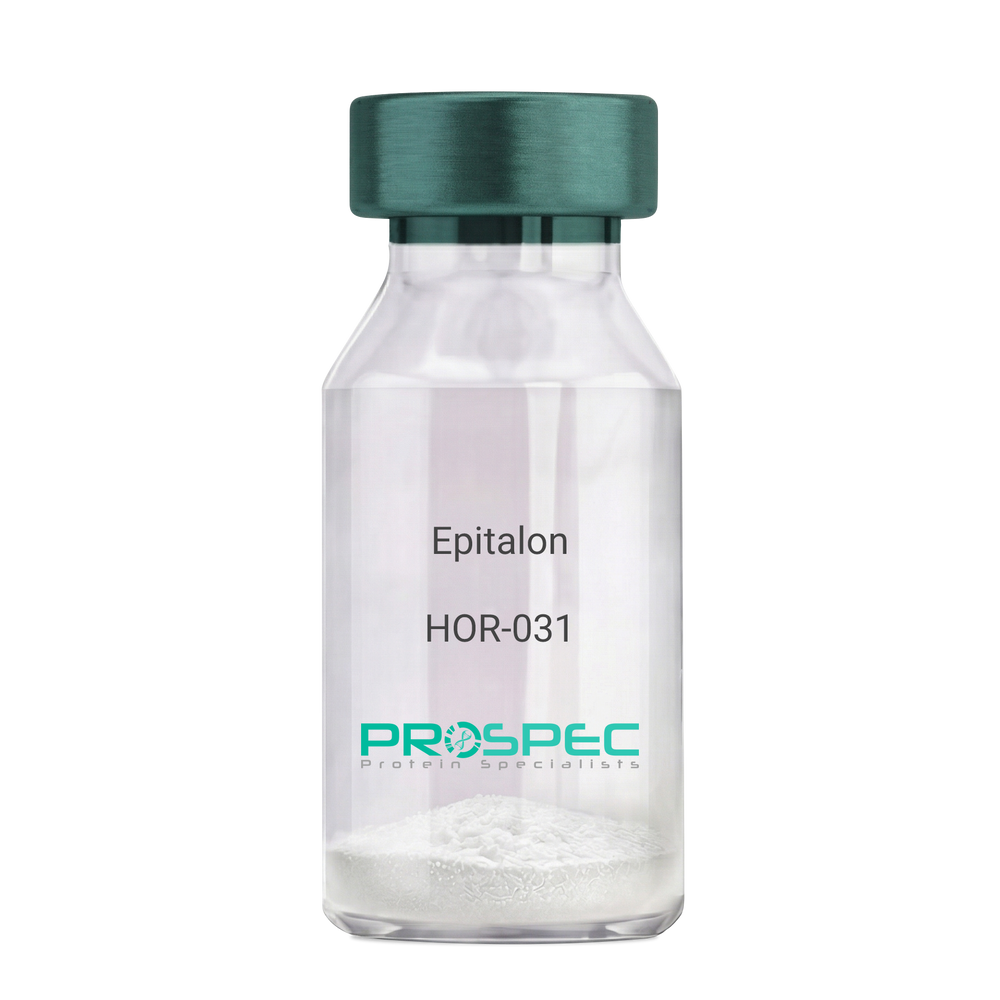
    Epitalon

    Description:

    Epitalon

    Product # :

    HOR-031

    Price :

    Quantity :

    Shipping Method :

    Room Temp Icon

    Shipped at Room temp

    Add To Cart

    More Info

    • description
    • formulation
    • purity
    • More Info
    • Citations

    Description

    Epithalon Synthetic is a single, non-glycosylated polypeptide chain containing 4 amino acids, having a molecular mass of 390.35 Dalton and a Molecular formula of C14H22N4O9.

    Formulation

    The protein was lyophilized with no additives.

    Purity

    Greater than 97.0% as determined by analysis by RP-HPLC.

    Citations

    More Info

    • Physical Appearance

      Sterile Filtered White lyophilized (freeze-dried) powder.

    • Stability

      Lyophilized Epithalon although stable at room temperature for 3 weeks, should be stored desiccated below -18°C. Upon reconstitution Epithalon should be stored at 4°C between 2-7 days and for future use below -18°C.For long term storage it is recommended to add a carrier protein (0.1% HSA or BSA). Please prevent freeze-thaw cycles.

    • Solubility

      It is recommended to reconstitute the lyophilized Epithalon in sterile 18MΩ-cm H2O not less than 100 µg/ml, which can then be further diluted to other aqueous solutions.

    • Amino Acid Sequence

      H-Ala-Glu-Asp-Gly-OH .

    • Background

      Epitalon, also known as Epithalon, is a synthetic tetrapeptide that has been a focal point in the field of aging and longevity research. This peptide, consisting of four amino acids, is derived from the pineal gland and has been associated with a variety of biological effects, most notably its potential role in extending the lifespan of cells.

      Epitalon's primary function is its interaction with telomeres, the protective caps at the ends of chromosomes that shorten as cells divide. By stimulating the production of telomerase, an enzyme that can repair and lengthen telomeres, Epitalon may slow down the aging process at a cellular level.

      Numerous studies have explored the potential of Epitalon in extending the lifespan of organisms. For instance, Khavinson and colleagues (2003) found that Epitalon increased the lifespan of fruit flies, while Anisimov et al. (2003) reported similar results in mice. These findings suggest that Epitalon could potentially have similar effects in humans.

      Epitalon has also been studied for its role in regulating circadian rhythms. Korkushko et al. (2011) found that Epitalon could restore disrupted circadian rhythms in elderly people, suggesting potential applications in sleep disorders and other conditions related to circadian rhythm disruption.

      Beyond its potential role in aging and longevity, Epitalon has been explored for its potential therapeutic applications. Anisimov et al. (2011) found that Epitalon could reduce the incidence of spontaneous tumors in mice, suggesting potential applications in cancer prevention.

      While research on Epitalon is promising, it is important to note that most studies have been conducted in animals or in vitro. More research is needed to fully understand the potential effects and applications of Epitalon in humans. However, the existing body of research suggests that Epitalon could be a promising tool in the fight against aging and age-related diseases.

    ProSpec's products are furnished for LABORATORY RESEARCH USE ONLY. The product may not be used as drugs, agricultural or pesticidal products, food additives or household chemicals.

    Epitalon
  • View Data Sheet

    Name :

    SNCG Antibody

    Description:

    Gamma-Synuclein, Polyclonal Rabbit Anti-Human Antibody

    Gamma-synuclein, Persyn, Breast cancer-specific gene 1 protein, Synoretin, SR, SNCG, BCSG1, PERSYN, PRSN, g-Synuclein.

    Product # :

    ANT-455

    Price :

    Quantity :

    Shipping Method :

    Ice Icon

    Shipped with Ice Packs

    Add To Cart

    More Info

    • formulation
    • More Info
    • Citations

    Formulation

    1mg/ml containing PBS, pH-7.4, & 0.1% Sodium Azide.

    Citations

    More Info

    • Introduction

      γ-synuclein (Originally known as a breast cancer specific gene product, BCSG1) is an acidic neuronal protein of 127 amino acids. Gamma-Synuclein is a member of the Synuclein protein family, which is believed to be involved in the pathogenesis of neurodegenerative diseases. High levels of Gamma-Synuclein have been found in advanced breast carcinomas suggesting a correlation between overexpression of SNCG and breast tumor development. Synuclein-Gamma is found mostly in the peripheral nervous system (in primary sensory neurons, sympathetic neurons, and motor neurons) and retina. SNCG is also identified in the brain, ovarian tumors, and in the olfactory epithelium. SNCG expression in breast tumors is a marker for tumor progression. A modification in the expression of gamma-synuclein has been detected in the retina of Alzheimer''s patients.

    • Synonyms

      Gamma-synuclein, Persyn, Breast cancer-specific gene 1 protein, Synoretin, SR, SNCG, BCSG1, PERSYN, PRSN, g-Synuclein.

    • Physical Appearance

      Sterile filtered colorless solution.

    • Immunogen

      Recombinant human γ-Synuclein amino acids 1-127 purified from E. coli.

    • Applications

      γ-Synuclein antibody has been tested by ELISA and Western blot analysis to assure specificity and reactivity. Since application varies, however, each investigation should be titrated by the reagent to obtain optimal results. Recommended dilution range for Western blot analysis is 1:500 ~ 2,000. Recommended starting dilution is 1:1,000.

    • Type

      Polyclonal Rabbit Antibody.

    • Storage Procedures

      For periods up to 1 month store at 4°C, for longer periods of time, store at -20°C. Prevent freeze thaw cycles.

    ProSpec's products are furnished for LABORATORY RESEARCH USE ONLY. The product may not be used as drugs, agricultural or pesticidal products, food additives or household chemicals.

    Sncg Antibody
  • View Data Sheet

    Name :

    BGN Human, Sf9

    Description:

    Biglycan Human Recombinant, Sf9

    BGN, DSPG1, MRLS, PG-S1, PGI, SEMDX, SLRR1A, Biglycan, Bone/cartilage proteoglycan I, Biglycan Proteoglycan, MRLS.

    Product # :

    PRO-2536

    Price :

    Quantity :

    Shipping Method :

    Ice Icon

    Shipped with Ice Packs

    Add To Cart

    More Info

    • description
    • source
    • formulation
    • purity
    • biological activity
    • More Info
    • Citations

    Description

    BGN produced in Sf9 Insect cells is a single, glycosylated polypeptide chain containing 340 amino acids (38-368 a.a.) and having a molecular mass of 38.3kDa (Molecular size on SDS-PAGE will appear at approximately 40-57kDa). BGN is expressed with a 9 amino acid His tag at C-Terminus and purified by proprietary chromatographic techniques.

    Source

    Sf9, Insect cells.

    Formulation

    The BGN solution (0.5mg/ml) contains Phosphate Buffered Saline (pH 7.4) and 10% glycerol.

    Purity

    Greater than 90.0% as determined by SDS-PAGE.

    Biological Activity

    The ED50 for this effect is ≤ 20 ug/ml. The specific activity is measured by inhibiting the cell growth using 3T3‑ L1 mouse embryonic  fibroblast  adipose-like cells.

    Citations

    More Info

    • Introduction

      Biglycan (BGN) is a small cellular or pericellular matrix proteoglycan which takes part in assembly of collagen fibrils and muscle regeneration. BGN is closely correlated in structure to two other small proteoglycans, decorin and fibromodulin. BGN interacts with several proteins involved in muscular dystrophy, including alpha-dystroglycan, alpha- and gamma-sarcoglycan and collagen VI. BGN is also critical for the assembly of the dystrophin-associated protein complex.

    • Synonyms

      BGN, DSPG1, MRLS, PG-S1, PGI, SEMDX, SLRR1A, Biglycan, Bone/cartilage proteoglycan I, Biglycan Proteoglycan, MRLS.

    • Physical Appearance

      Sterile filtered colorless solution.

    • Stability

      Store at 4°C if entire vial will be used within 2-4 weeks. Store, frozen at -20°C for longer periods of time. For long term storage it is recommended to add a carrier protein (0.1% HSA or BSA).Avoid multiple freeze-thaw cycles.

    • Amino Acid Sequence

      ADPDEEASGA DTSGVLDPDS VTPTYSAMCP FGCHCHLRVV QCSDLGLKSV PKEISPDTTL LDLQNNDISE LRKDDFKGLQ HLYALVLVNN KISKIHEKAF SPLRKLQKLY ISKNHLVEIP PNLPSSLVEL RIHDNRIRKV PKGVFSGLRN MNCIEMGGNP LENSGFEPGA FDGLKLNYLR ISEAKLTGIP KDLPETLNEL HLDHNKIQAI ELEDLLRYSK LYRLGLGHNQ IRMIENGSLS FLPTLRELHL DNNKLARVPS GLPDLKLLQV VYLHSNNITK VGVNDFCPMG FGVKRAYYNG ISLFNNPVPY WEVQPATFRC VTDRLAIQFG NYKKHHHHHH.

    ProSpec's products are furnished for LABORATORY RESEARCH USE ONLY. The product may not be used as drugs, agricultural or pesticidal products, food additives or household chemicals.

    Biglycan Human
  • View Data Sheet

    Name :

    FCGR2B Human

    Description:

    CD32 Human Recombinant

    CD32, CD32B, FCG2, FCGR2, IGFR2, Low affinity immunoglobulin gamma Fc region receptor II-b, CDw32, Fc-gamma-RIIb, FcRII-b.

    Product # :

    PRO-1295

    Price :

    Quantity :

    Shipping Method :

    Ice Icon

    Shipped with Ice Packs

    Add To Cart

    More Info

    • description
    • source
    • formulation
    • purity
    • More Info
    • Citations

    Description

    FCGR2B Human Recombinant produced in E.Coli is a single, non-glycosylated polypeptide chain containing 197 amino acids (46-217a.a.) and having a molecular mass of 22.0kDa. FCGR2Bis fused to a 25 amino acid His-tag at N-terminus & purified by proprietary chromatographic techniques.

    Source

    Escherichia Coli.

    Formulation

    FCGR2B protein solution (0.5mg/ml) contains 20mM Tris-HCl buffer (pH 8.0), 0.15M NaCl, 30% glycerol and 1mM DTT.

    Purity

    Greater than 95.0% as determined by SDS-PAGE.

    Citations

    More Info

    • Introduction

      FCGR2B is a low affinity receptor for the Fc region of immunoglobulin gamma complexes. FCGR2B participates in the phagocytosis of immune complexes and in the regulation of antibody production by B-cells. FCGR2B Expressed in monocyte, neutrophils, macrophages, basophils, eosinophils, Langerhans cells, B-cells, platelets cells and placenta (endothelial cells). Variants in FCGR2B may increase susceptibilty to systemic lupus erythematosus (SLE).

    • Synonyms

      CD32, CD32B, FCG2, FCGR2, IGFR2, Low affinity immunoglobulin gamma Fc region receptor II-b, CDw32, Fc-gamma-RIIb, FcRII-b.

    • Physical Appearance

      Sterile Filtered clear solution.

    • Stability

      Store at 4°C if entire vial will be used within 2-4 weeks. Store, frozen at -20°C for longer periods of time. For long term storage it is recommended to add a carrier protein (0.1% HSA or BSA).Avoid multiple freeze-thaw cycles.

    • Amino Acid Sequence

      MGSSHHHHHH SSGLVPRGSH MGSHMAPPKA VLKLEPQWIN VLQEDSVTLT CRGTHSPESD SIQWFHNGNL IPTHTQPSYR FKANNNDSGE YTCQTGQTSL SDPVHLTVLS EWLVLQTPHL EFQEGETIVL RCHSWKDKPL VKVTFFQNGK SKKFSRSDPN FSIPQANHSH SGDYHCTGNI GYTLYSSKPV TITVQAP.

    ProSpec's products are furnished for LABORATORY RESEARCH USE ONLY. The product may not be used as drugs, agricultural or pesticidal products, food additives or household chemicals.

    Fcgr2B Human
  • View Data Sheet

    Name :

    ITGB4 Human

    Description:

    Integrin Beta 4 Human Recombinant

    Integrin beta-4, GP150, CD104, ITGB4, Integrin Subunit Beta 4, CD104 Antigen, Integrin, Beta 4, Integrin Beta-4.

    Product # :

    PRO-2528

    Price :

    Quantity :

    Shipping Method :

    Ice Icon

    Shipped with Ice Packs

    Add To Cart

    More Info

    • description
    • source
    • formulation
    • purity
    • More Info
    • Citations

    Description

    ITGB4 produced in Sf9 Baculovirus cells is a single, glycosylated polypeptide chain containing 691 amino acids (28-710a.a.) and having a molecular mass of 77.5kDa. (Molecular size on SDS-PAGE will appear at approximately 70-100kDa). ITGB4 is expressed with an 8 amino acid His tag at C-Terminus and purified by proprietary chromatographic techniques.

    Source

    Sf9, Baculovirus cells.

    Formulation

    ITGB4 protein solution (0.5mg/ml) contains Phosphate Buffered Saline (pH 7.4) & 10% glycerol.

    Purity

    Greater than 90.0% as determined by SDS-PAGE.

    Citations

    More Info

    • Introduction

      ITGB4 (integrin beta-4 isoform 1) belongs to the Integrin beta family. ITGB4 forms noncovalent heterodimers with Integrin alpha 6 and takes part in the formation of epithelial hemidesmosomes. ITGB4 has a vital structural role in the hemidesmosome of epithelial cells and is needed for the regulation of keratinocyte motility & polarity. ITGB4 leans towards the association with alpha 6 subunit and is expected to take a key role in the biology of invasive carcinoma.

    • Synonyms

      Integrin beta-4, GP150, CD104, ITGB4, Integrin Subunit Beta 4, CD104 Antigen, Integrin, Beta 4, Integrin Beta-4.

    • Physical Appearance

      Sterile Filtered colorless solution.

    • Stability

      Store at 4°C if entire vial will be used within 2-4 weeks. Store, frozen at -20°C for longer periods of time. For long term storage it is recommended to add a carrier protein (0.1% HSA or BSA). Avoid multiple freeze-thaw cycles.

    • Amino Acid Sequence

      NRCKKAPVKS CTECVRVDKD CAYCTDEMFR DRRCNTQAEL LAAGCQRESI VVMESSFQIT EETQIDTTLR RSQMSPQGLR VRLRPGEERH FELEVFEPLE SPVDLYILMD FSNSMSDDLD NLKKMGQNLA RVLSQLTSDY TIGFGKFVDK VSVPQTDMRP EKLKEPWPNS DPPFSFKNVI SLTEDVDEFR NKLQGERISG NLDAPEGGFD AILQTAVCTR DIGWRPDSTH LLVFSTESAF HYEADGANVL AGIMSRNDER CHLDTTGTYT QYRTQDYPSV PTLVRLLAKH NIIPIFAVTN YSYSYYEKLH TYFPVSSLGV LQEDSSNIVE LLEEAFNRIR SNLDIRALDS PRGLRTEVTS KMFQKTRTGS FHIRRGEVGI YQVQLRALEH VDGTHVCQLP EDQKGNIHLK PSFSDGLKMD AGIICDVCTC ELQKEVRSAR CSFNGDFVCG QCVCSEGWSG QTCNCSTGSL SDIQPCLREG EDKPCSGRGE CQCGHCVCYG EGRYEGQFCE YDNFQCPRTS GFLCNDRGRC SMGQCVCEPG WTGPSCDCPL SNATCIDSNG GICNGRGHCE CGRCHCHQQS LYTDTICEIN YSAIHPGLCE DLRSCVQCQA WGTGEKKGRT CEECNFKVKM VDELKRAEEV VVRCSFRDED DDCTYSYTME GDGAPGPNST VLVHKKKDCP PGSLEHHHHH H

    ProSpec's products are furnished for LABORATORY RESEARCH USE ONLY. The product may not be used as drugs, agricultural or pesticidal products, food additives or household chemicals.

    Itgb4 Human
  • View Data Sheet

    Name :

    CHCHD3 Human

    Description:

    Coiled-Coil-Helix-Coiled-Coil-Helix Domain Containing 3 Human Recombinant

    Regulatory Subunit 22, MINOS3, PPP1R22, Mitochondrial Inner Membrane Organizing System 3, Protein Phosphatase 1, Coiled-Coil-Helix-Coiled-Coil-Helix Domain-Containing Protein 3 Mitochondrial, Protein Phosphatase 1, Regulatory Subunit 22.

    Product # :

    PRO-815

    Price :

    Quantity :

    Shipping Method :

    Ice Icon

    Shipped with Ice Packs

    Add To Cart

    More Info

    • description
    • source
    • formulation
    • purity
    • More Info
    • Citations

    Description

    CHCHD3 Human Recombinant produced in E.Coli is a single, non-glycosylated polypeptide chain containing 250 amino acids (1-227 a.a) and having a molecular mass of 28.5kDa.CHCHD3 is fused to a 23 amino acid His-tag at N-terminus & purified by proprietary chromatographic techniques.

    Source

    Escherichia Coli.

    Formulation

    CHCHD3 protein solution (0.25mg/ml) containing 20mM Tris-HCl buffer (pH 8.0), 0.2M NaCl, 50% glycerol and 2mM DTT.

    Purity

    Greater than 80.0% as determined by SDS-PAGE.

    Citations

    More Info

    • Introduction

      Coiled-coil-helix-coiled-coil-helix domain containing 3 (CHCHD3), is a protein-coding gene. CHCHD3 is essential for maintenance of mitochondrial crista integrity and mitochondrial function. . In addition, CHCHD3 may perform as a scaffolding protein that stabilizes protein complexes involved in crista architecture and protein import. CHCHD3 may also act as a transcription factor which binds to the BAG1 promoter and represses BAG1 transcription. Lung cancer has been associated with CHCHD3.

    • Synonyms

      Regulatory Subunit 22, MINOS3, PPP1R22, Mitochondrial Inner Membrane Organizing System 3, Protein Phosphatase 1, Coiled-Coil-Helix-Coiled-Coil-Helix Domain-Containing Protein 3 Mitochondrial, Protein Phosphatase 1, Regulatory Subunit 22.

    • Physical Appearance

      Sterile Filtered clear solution.

    • Stability

      Store at 4°C if entire vial will be used within 2-4 weeks. Store, frozen at -20°C for longer periods of time. For long term storage it is recommended to add a carrier protein (0.1% HSA or BSA).Avoid multiple freeze-thaw cycles.

    • Amino Acid Sequence

      MGSSHHHHHH SSGLVPRGSH MGSMGGTTST RRVTFEADEN ENITVVKGIR LSENVIDRMK ESSPSGSKSQ RYSGAYGASV SDEELKRRVA EELALEQAKK ESEDQKRLKQ AKELDRERAA ANEQLTRAIL RERICSEEER AKAKHLARQL EEKDRVLKKQ DAFYKEQLAR LEERSSEFYR VTTEQYQKAA EEVEAKFKRY ESHPVCADLQ AKILQCYREN THQTLKCSAL ATQYMHCVNH AKQSMLEKGG

    ProSpec's products are furnished for LABORATORY RESEARCH USE ONLY. The product may not be used as drugs, agricultural or pesticidal products, food additives or household chemicals.

    Chchd3 Human
  • View Data Sheet

    Name :

    CCL13 Human, His

    Description:

    Monocyte Chemotactic Protein-4 Human Recombinant (CCL13), His-Tag

    CKb10, MCP-4, NCC-1, NCC1, SCYA1, SCYL1, CK-beta-10, Small-inducible cytokine A13.

    Product # :

    CHM-275

    Price :

    Quantity :

    Shipping Method :

    Ice Icon

    Shipped with Ice Packs

    Add To Cart

    More Info

    • description
    • source
    • formulation
    • purity
    • More Info
    • Citations

    Description

    MCP4 Human Recombinant produced in E.Coli is a non-glycosylated, Polypeptide chain containing 96 amino acids (24-98) and having a molecular mass of 10.8 kDa. The MCP-4 is fused to 21 amino acids His-Tag at N-terminus and purified by proprietary chromatographic techniques.

    Source

    Escherichia Coli.

    Formulation

    The His Tag 0.25mg/ml MCP4 protein solution contains PBS pH-7.4, 1mM DTT, 0.1M NaCl and 10% glycerol.

    Purity

    Greater than 90.0% as determined by SDS-PAGE.

    Citations

    More Info

    • Introduction

      CCL13 chemokine is part of the CC chemokine family (TARC). CCL13 protein induces chemotaxis in monocytes, eosinophils, T lymphocytes, and basophils by binding cell surface G-protein linked chemokine receptors such as CCR2, CCR3 and CCR5. CCL13 is induced by the inflammatory cytokines IL1 & TNFA.

    • Synonyms

      CKb10, MCP-4, NCC-1, NCC1, SCYA1, SCYL1, CK-beta-10, Small-inducible cytokine A13.

    • Physical Appearance

      Sterile Filtered colorless clear solution.

    • Stability

      Store at 4°C if entire vial will be used within 2-4 weeks. Store, frozen at -20°C for longer periods of time. Please avoid freeze thaw cycles.

    • Amino Acid Sequence

      MGSSHHHHHH SSGLVPRGSH MQPDALNVPS TCCFTFSSKK ISLQRLKSYV ITTSRCPQKA VIFRTKLGKE ICADPKEKWV QNYMKHLGRK
      .AHTLKT

    • Background

      What is the molecular weight/Mw of CCL13 HUMAN, HIS Protein?
      CCL13 HUMAN, HIS Protein has a total Mw of 10.8kDa.

      What is the source or expression system of CCL13 HUMAN, HIS Protein?
      Escherichia Coli.

      What is the Purity of CCL13 HUMAN, HIS Protein?
      CCL13 HUMAN, HIS Protein is > 90% pure as determined by SDS-PAGE.

      What is the Biological Activity of CCL13 HUMAN, HIS Protein?
      The biological functionality of CCL13 HUMAN, HIS Protein will be determined in the future.

      What is the amino acid sequence of CCL13 HUMAN, HIS Protein?
      MGSSHHHHHH SSGLVPRGSH MQPDALNVPS TCCFTFSSKK ISLQRLKSYV ITTSRCPQKA VIFRTKLGKE ICADPKEKWV QNYMKHLGRK
      .AHTLKT

      What applications can CCL13 HUMAN, HIS Protein be used in?
      CCL13 HUMAN, HIS Protein can probably be used in western blot, ELISA and Lateral Flow.

      What is the endotoxin level for CCL13 HUMAN, HIS Protein?
      The endotoxin level is minimal, CCL13 HUMAN, HIS Protein was purified using conventional chromatography techniques.

    ProSpec's products are furnished for LABORATORY RESEARCH USE ONLY. The product may not be used as drugs, agricultural or pesticidal products, food additives or household chemicals.

    Mcp4 Human His
  • View Data Sheet

    Name :

    HBZ Mouse

    Description:

    Hemoglobin-Zeta Mouse Recombinant

    Hemoglobin subunit zeta, Hba-x, Hbz1, AI450015, Alpha-like embryonic globin chain x, Zeta-globin.

    Product # :

    PRO-2517

    Price :

    Quantity :

    Shipping Method :

    Ice Icon

    Shipped with Ice Packs

    Add To Cart

    More Info

    • description
    • source
    • formulation
    • purity
    • More Info
    • Citations

    Description

    HBZ Mouse Recombinant produced in E.Coli is a single, non-glycosylated polypeptide chain containing 162 amino acids (1-142 a.a) and having a molecular mass of 18.3kDa.HBZ is fused to a 20 amino acid His-tag at N-terminus & purified by proprietary chromatographic techniques.

    Source

    Escherichia Coli.

    Formulation

    HBZ protein solution (0.25mg/ml) containing 20mM MES(pH6.0), 0.1M NaCl and 10% glycerol.

    Purity

    Greater than 90.0% as determined by SDS-PAGE.

    Citations

    More Info

    • Introduction

      Hemoglobin Subunit Zeta (Hbz) or Hba-x is a alpha-like hemoglobin and part of the globin family. The protein is expressed and produced in the the yolk sac in early stages of embryonic development. Hemoglobin subunit zeta has 2 pseudogenes and 5 functional genes.

    • Synonyms

      Hemoglobin subunit zeta, Hba-x, Hbz1, AI450015, Alpha-like embryonic globin chain x, Zeta-globin.

    • Physical Appearance

      Sterile Filtered clear colorless solution.

    • Stability

      Store at 4°C if entire vial will be used within 2-4 weeks. Store, frozen at -20°C for longer periods of time. For long term storage it is recommended to add a carrier protein (0.1% HSA or BSA).Avoid multiple freeze-thaw cycles.

    • Amino Acid Sequence

      MGSSHHHHHH SSGLVPRGSH MSLMKNERAI IMSMWEKMAA QAEPIGTETL ERLFCSYPQT KTYFPHFDLH HGSQQLRAHG FKIMTAVGDA VKSIDNLSSA LTKLSELHAY ILRVDPVNFK LLSHCLLVTM AARFPADFTP EVHEAWDKFM SILSSILTEK YR.

    ProSpec's products are furnished for LABORATORY RESEARCH USE ONLY. The product may not be used as drugs, agricultural or pesticidal products, food additives or household chemicals.

    Hemoglobin Zeta Mouse
  • View Data Sheet

    Name :

    TGFB1 Human Recombinant

    Description:

    Transforming Growth Factor-Beta 1 Human Recombinant

    Transforming growth factor beta-1, TGF-beta-1, CED, DPD1, TGFB, TGF-b 1, LAP, TGFB1.

    Product # :

    CYT-716

    Price :

    Quantity :

    Shipping Method :

    Room Temp Icon

    Shipped at Room temp

    Add To Cart

    More Info

    • description
    • source
    • formulation
    • purity
    • biological activity
    • More Info
    • Citations

    Description

    TGFB1 Human Recombinant produced in CHO cells is a glycosylated homodimeric polypeptide chain containing 2 x 112 amino acids and having a total molecular mass of 25.6kDa. The TGFB1 is purified by proprietary chromatographic techniques.

    Source

    CHO cells.

    Formulation

    Lyophilized from a sterile filtered solution containing 0.1 % trifluoroacetic acid (TFA) And trehalose (1:20 protein to Trehalose ratio).

    Purity

    Greater than 95.0% as determined by SDS-PAGE.

    Biological Activity

    The ED50 as determined by the dose-dependent inhibition of IL-4-induced proliferation of HT-2 cells is 0.142ng/ml, corresponding to a specific activity of 7.4x10⁶units/mg.

    Citations

    More Info

    • Introduction

      Transforming growth factor betas (TGFBetas) mediate many cell-cell interactions that occur during embryonic development. Three TGFBetas have been identified in mammals. TGFBeta1, TGFBeta2 and TGFBeta3 are each synthesized as precursor proteins that are very similar in that each is cleaved to yield a 112 amino acid polypeptide that remains associated with the latent portion of the molecule.

    • Synonyms

      Transforming growth factor beta-1, TGF-beta-1, CED, DPD1, TGFB, TGF-b 1, LAP, TGFB1.

    • Physical Appearance

      Sterile Filtered White lyophilized (freeze-dried) powder.

    • Stability

      Lyophilized TGFB1 although stable at room temperature for 3 weeks, should be stored desiccated below -18°C. Upon reconstitution TGFB1 Human should be stored at 4°C between 2-7 days and for future use below -18°C. For long term storage it is recommended to add a carrier protein (0.1% HSA or BSA). Please prevent freeze-thaw cycles.

    • Solubility

      It is recommended to reconstitute the lyophilized TGFB1 in sterile 10mM HCl at a concentration of 0.1 mg/ml, which can then be further diluted to other aqueous solutions.

    • Amino Acid Sequence

      ALDTNYCFSS TEKNCCVRQL YIDFRKDLGW KWIHEPKGYH ANFCLGPCPY IWSLDTQYSK VLALYNQHNP GASAAPCCVP QALEPLPIVY YVGRKPKVEQ LSNMIVRSCK CS.

    • Background

      Title: Transforming Growth Factor-Beta 1 Human Recombinant: A Promising Tool for Biomedical Research

      Abstract:


      Transforming Growth Factor-Beta 1 (TGF-β1) is a crucial cytokine involved in diverse cellular processes. This research paper provides an in-depth analysis of human recombinant TGF-β1, focusing on its production, purification, and applications in biomedical research. The paper discusses the significance of TGF-β1 in tissue engineering, regenerative medicine, and immunology. Furthermore, it elucidates the potential therapeutic implications of recombinant TGF-β1 in various diseases and highlights ongoing research in the field. The information presented in this paper aims to enhance the understanding of TGF-β1 and its utility as a research tool in biomedical sciences.

      Introduction:


      Transforming Growth Factor-Beta 1 (TGF-β1) is a multifunctional cytokine that regulates cellular processes such as cell growth, differentiation, and immune modulation. Human recombinant TGF-β1 is synthesized using genetic engineering techniques, enabling the production of large quantities of biologically active protein for research purposes.

      Production and Purification:


      Recombinant TGF-β1 is typically produced in expression systems such as bacteria, yeast, or mammalian cells. The protein is then purified using various chromatographic techniques to obtain a highly pure and active form. Quality control measures ensure the biological activity and integrity of the recombinant protein.

      Biomedical Applications:


      Human recombinant TGF-β1 has found broad applications in biomedical research. In tissue engineering and regenerative medicine, it plays a critical role in promoting cell proliferation, extracellular matrix production, and tissue repair. TGF-β1 is also involved in immune modulation, influencing immune cell differentiation and function. Recombinant TGF-β1 is a valuable tool for studying these processes and developing therapeutic interventions.

      Therapeutic Implications:


      The dysregulation of TGF-β1 signaling is associated with various diseases, including fibrosis, cancer, and autoimmune disorders. Recombinant TGF-β1 offers potential therapeutic applications through its ability to modulate cellular responses. Ongoing research aims to develop targeted therapies that specifically regulate TGF-β1 signaling for the treatment of these conditions.

      Conclusion:


      Human recombinant TGF-β1 holds immense potential as a research tool in biomedical sciences. Its production, purification, and applications in tissue engineering, regenerative medicine, and immunology contribute to advancing our understanding of cellular processes and disease mechanisms. With ongoing research, recombinant TGF-β1 may pave the way for novel therapeutic strategies in various medical fields.

    ProSpec's products are furnished for LABORATORY RESEARCH USE ONLY. The product may not be used as drugs, agricultural or pesticidal products, food additives or household chemicals.

    Tgfb1 Human
  • View Data Sheet

    Name :

    HIF1A Human, His

    Description:

    Hypoxia-Inducible Factor-1 Alpha Human Recombinant, His Tag

    Hypoxia-inducible factor 1 alpha, HIF-1 alpha, HIF1 alpha, ARNT-interacting protein, Member of PAS protein 1, Basic-helix-loop-helix-PAS protein MOP1, HIF1A, MOP1, HIF1, PASD8, HIF-1A.

    Product # :

    PRO-415

    Price :

    Quantity :

    Shipping Method :

    Ice Icon

    Shipped with Ice Packs

    Add To Cart

    More Info

    • description
    • source
    • formulation
    • purity
    • More Info
    • Citations

    Description

    HIF1A Recombinant Human produced in E.Coli is a single, non-glycosylated polypeptide chain containing 231 amino acids (576-785 a.a.) and having a molecular mass of 25.1 kDa. The HIF1A is fused to a 21 amino acid His-Tag at N-terminus and purified by proprietary chromatographic techniques.

    Source

    Escherichia Coli.

    Formulation

    HIF1A Human solution containing 20mM Tris-HCl pH-8, 1mM DTT, 0.2M NaCl & 10% glycerol.

    Purity

    Greater than 85.0% as determined by SDS-PAGE.

    Citations

    More Info

    • Introduction

      HIF1A has a role as a master transcriptional monitor of the adaptive response to hypoxia. Under hypoxic conditions HIF1A activates the transcription of over 40 genes, including, erythropoietin, glucose transporters, glycolytic enzymes, vascular endothelial growth factor, and genes whose protein products increase oxygen release or facilitate metabolic adaptation to hypoxia. HIF1A functions as an essential role in embryonic vascularization, tumor angiogenesis and pathophysiology of ischemic disease.

    • Synonyms

      Hypoxia-inducible factor 1 alpha, HIF-1 alpha, HIF1 alpha, ARNT-interacting protein, Member of PAS protein 1, Basic-helix-loop-helix-PAS protein MOP1, HIF1A, MOP1, HIF1, PASD8, HIF-1A.

    • Physical Appearance

      Sterile filtered colorless solution.

    • Stability

      Store at 4°C if entire vial will be used within 2-4 weeks. Store, frozen at -20°C for longer periods of time. For long term storage it is recommended to add a carrier protein (0.1% HSA or BSA).Avoid multiple freeze-thaw cycles.

    • Amino Acid Sequence

      MGSSHHHHHH SSGLVPRGSH MSFDQLSPLE SSSASPESAS PQSTVTVFQQ TQIQEPTANA TTTTATTDEL KTVTKDRMED IKILIASPSP THIHKETTSA TSSPYRDTQS RTASPNRAGK GVIEQTEKSH PRSPNVLSVA LSQRTTVPEE ELNPKILALQ NAQRKRKMEH DGSLFQAVGI GTLLQQPDDH AATTSLSWKR VKGCKSSEQN GMEQKTIILI PSDLACRLLG Q.

    ProSpec's products are furnished for LABORATORY RESEARCH USE ONLY. The product may not be used as drugs, agricultural or pesticidal products, food additives or household chemicals.

    Hif1A Human His
  • View Data Sheet

    Name :

    IFNGR1 Human

    Description:

    IFN Gamma Receptor 1 Human Recombinant

    IFNGR1, CD119, IFNGR, IMD27A, IMD27B, CDw119.

    Product # :

    CYT-1074

    Price :

    Quantity :

    Shipping Method :

    Ice Icon

    Shipped with Ice Packs

    Add To Cart

    More Info

    • description
    • source
    • formulation
    • purity
    • More Info
    • Citations

    Description

    IFNGR1 Human Recombinant produced in Sf9 Baculovirus cells is a single, glycosylated polypeptide chain containing 234 amino acids (18-245a.a.) and having a molecular mass of 26.6kDa (Migrates at 28-40kDa on SDS-PAGE under reducing conditions).IFNGR1 is expressed with a 6 amino acid His tag at C-Terminus and purified by proprietary chromatographic techniques.

    Source

    Sf9, Baculovirus cells.

    Formulation

    IFNGR1 protein solution (1mg/ml) contains Phosphate Buffered Saline (pH 7.4) and 10% glycerol.

    Purity

    Greater than 90.0% as determined by SDS-PAGE.

    Citations

    More Info

    • Introduction

      IFNGR1 is a part of the hematopoietic cytokine receptor superfamily. IFNGR1 forms a site that is recognized by the extracellular domain of IFNGR2 by inducing the rapid dimerization of chains. IFNGR1 Plays an important role in the IFN-gamma pathway that is essential for the cellular response to infectious agents. IFNGR1 is expressed in a membrane-bound form in various cells, and is over-expressed in tumor cells.

    • Synonyms

      IFNGR1, CD119, IFNGR, IMD27A, IMD27B, CDw119.

    • Physical Appearance

      Sterile filtered colorless solution.

    • Stability

      Store at 4°C if entire vial will be used within 2-4 weeks. Store, frozen at -20°C for longer periods of time. For long term storage it is recommended to add a carrier protein (0.1% HSA or BSA).Avoid multiple freeze-thaw cycles.

    • Amino Acid Sequence

      EMGTADLGPS SVPTPTNVTI ESYNMNPIVY WEYQIMPQVP VFTVEVKNYG VKNSEWIDAC INISHHYCNI SDHVGDPSNS LWVRVKARVG QKESAYAKSE EFAVCRDGKI GPPKLDIRKE EKQIMIDIFH PSVFVNGDEQ EVDYDPETTC YIRVYNVYVR MNGSEIQYKI LTQKEDDCDE IQCQLAIPVS SLNSQYCVSA EGVLHVWGVT TEKSKEVCIT IFNSSIKGHH HHHH.

    • Background

      What is the molecular weight/Mw of IFNGR1 HUMAN Protein?
      IFNGR1 HUMAN Protein has a total Mw of 16.8kDa.

      What is the source or expression system of IFNGR1 HUMAN Protein?
      Escherichia Coli.

      What is the Purity of IFNGR1 HUMAN Protein?
      IFNGR1 HUMAN Protein is >97% pure as determined by SDS-PAGE.

      What is the Biological Activity of IFNGR1 HUMAN Protein?
      The ED50 as determined by an anti-viral assay using human HeLa cells infected with encephalomyocarditis (EMC) virus is < 20.0 ng/ml, corresponding to a specific activity of > 5.0 × 10⁴ IU/mg.

      What is the amino acid sequence of IFNGR1 HUMAN Protein?
      QDPYVKEAEN LKKYFNAGDP DVADNGTLFL DILRNWKEES DRKIMQSQIV SFYFKLFKNF KDDQRIQKSV ETIKEDINVK FFNSNKKKRD DFEKLTNYSV TDSNVQRKAV HELIQVMAEL SPAAKIGKRK RSQMFRGRRA SQ.

      What applications can IFNGR1 HUMAN Protein be used in?
      IFNGR1 HUMAN Protein can probably be used in western blot, ELISA and Lateral Flow.

      What is the endotoxin level for IFNGR1 HUMAN Protein?
      The endotoxin level is minimal, IFNGR1 HUMAN Protein was purified using conventional chromatography techniques.


    ProSpec's products are furnished for LABORATORY RESEARCH USE ONLY. The product may not be used as drugs, agricultural or pesticidal products, food additives or household chemicals.

    Ifngr1 Human
  • View Data Sheet

    Name :

    P4HB Human, Active

    Description:

    Prolyl 4-Hydroxylase Beta Human Recombinant, Active

    P4Hbeta, PDI, PDIA1, PHD, PO4DB, PO4HB, ERBA2L.

    Product # :

    ENZ-991

    Price :

    Quantity :

    Shipping Method :

    Ice Icon

    Shipped with Ice Packs

    Add To Cart

    More Info

    • description
    • source
    • formulation
    • purity
    • biological activity
    • More Info
    • Citations

    Description

    P4HB Human Recombinant produced in E.Coli is a single, non-glycosylated polypeptide chain containing 521 amino acids (18-508 a.a.) and having a molecular mass of 57.5kDa. The P4HB is fused to a 21 amino acid His Tag and purified by conventional chromatography.

    Source

    Escherichia Coli.

    Formulation

    The P4HB 1mg/ml protein solution contains 20mM Tris-HCl pH-8, and 10% glycerol.

    Purity

    Greater than 90.0% as determined by SDS-PAGE.

    Biological Activity

    Specific activity > 100 A650/cm/min/mg. Enzymatic activity was confirmed by measuring the aggregation of insulin in the presence of DTT.

    Citations

    More Info

    • Introduction

      P4HB is a multifunctional and highly abundant enzyme that is part of the protein disulfide isomerase family. When present as a tetramer consisting of two alpha and two beta subunits, P4HB has a role in hydroxylation of prolyl residues in preprocollagen. P4HB is a disulfide isomerase containing two thioredoxin domains that catalyze the formation, breakage and rearrangement of disulfide bonds.

    • Synonyms

      P4Hbeta, PDI, PDIA1, PHD, PO4DB, PO4HB, ERBA2L.

    • Physical Appearance

      Sterile Filtered colorless solution.

    • Stability

      Store at 4°C if entire vial will be used within 2-4 weeks. Store, frozen at -20°C for longer periods of time. For long term storage it is recommended to add a carrier protein (0.1% HSA or BSA).Avoid multiple freeze-thaw cycles.

    • Amino Acid Sequence

      MGSSHHHHHH SSGLVPRGSH MDAPEEEDHV LVLRKSNFAE ALAAHKYLLV EFYAPWCGHC KALAPEYAKA AGKLKAEGSE IRLAKVDATE ESDLAQQYGV RGYPTIKFFR NGDTASPKEY TAGREADDIV NWLKKRTGPA ATTLPDGAAA ESLVESSEVA VIGFFKDVES DSAKQFLQAA EAIDDIPFGI TSNSDVFSKY QLDKDGVVLF KKFDEGRNNF EGEVTKENLL DFIKHNQLPL VIEFTEQTAP KIFGGEIKTH ILLFLPKSVS DYDGKLSNFK TAAESFKGKI LFIFIDSDHT DNQRILEFFG LKKEECPAVR LITLEEEMTK YKPESEELTA ERITEFCHRF LEGKIKPHLM SQELPEDWDK QPVKVLVGKN FEDVAFDEKK NVFVEFYAPW CGHCKQLAPI WDKLGETYKD HENIVIAKMD STANEVEAVK VHSFPTLKFF PASADRTVID YNGERTLDGF KKFLESGGQD GAGDDDDLED LEEAEEPDME EDDDQKAVKD EL.

    ProSpec's products are furnished for LABORATORY RESEARCH USE ONLY. The product may not be used as drugs, agricultural or pesticidal products, food additives or household chemicals.

    P4Hb Human Active
  • View Data Sheet

    Name :

    Procalcitonin Rhesus

    Description:

    Procalcitonin Rhesus Recombinant

    Calcitonin.

    Product # :

    HOR-016

    Price :

    Quantity :

    Shipping Method :

    Room Temp Icon

    Shipped at Room temp

    Add To Cart

    More Info

    • description
    • source
    • formulation
    • purity
    • More Info
    • Citations

    Description

    Procalcitonin Rhesus Recombinant produced in E.Coli is a single, non-glycosylated, polypeptide chain (Ala26-Asn140) containing 125 amino acids including a 10 aa His tag at N-terminus. The total calculated molecular mass is 14kDa.

    Source

    Escherichia Coli.

    Formulation

    Procalcitonin was filtered (0.4µm) and lyophilized from 0.5mg/ml solution in 20mM Tris buffer and 50mM NaCl, pH 7.5.

    Purity

    Greater than 95.0% as determined by SDS-PAGE.

    Citations

    More Info

    • Introduction

      Procalcitonin is a peptide hormone mainly produced by the C cells of the thyroid and certain endocrine cells of the lung. Under normal expression conditions, procalcitonin is immediately cleaved into three specific fragments, an N terminal residue, calcitonin and katacalcin. Levels of unprocessed procalcitonin rise significantly after bacterial infection, trauma or shock.

    • Synonyms

      Calcitonin.

    • Physical Appearance

      Filtered White lyophilized (freeze-dried) powder.

    • Stability

      Store lyophilized protein at -20°C. Aliquot the product after reconstitution to avoid repeated freezing/thawing cycles. Reconstituted protein can be stored at 4°C for a limited period of time; it does not show any change after two weeks at 4°C.

    • Solubility

      It is recommended to add deionized water to prepare a working stock solution of approximately 0.5 mg/ml and let the lyophilized pellet dissolve completely. Procalcitonin is not sterile! Please filter the product by an appropriate sterile filter before using it in the cell culture.

    • Amino Acid Sequence

      MKHHHHHHASAPFRSALESS PDPATLSEEE ARLLLAALVQ DYVQMKASEL EQEQETEGSS LDSPRSKRCG NLSTCMLGTY TQDFNKFHTF PQTAIGVGAP GKKRDMSSDL ERNRRRYVSM PQDAN.

    ProSpec's products are furnished for LABORATORY RESEARCH USE ONLY. The product may not be used as drugs, agricultural or pesticidal products, food additives or household chemicals.

    Procalcitonin Rhesus
  • View Data Sheet

    Name :

    HAVCR1 Human

    Description:

    Hepatitis A Virus Cellular Receptor 1 Human Recombinant

    Hepatitis A Virus Cellular Receptor 1, T-Cell Immunoglobulin Mucin Family Member 1, T-Cell Immunoglobulin Mucin Receptor 1, T-Cell Membrane Protein 1, Kidney Injury Molecule 1, HAVCR-1, TIMD-1, HAVCR, KIM-1, TIM-1, TIMD1, TIM1, KIM1, TIM, T-Cell Immunoglobulin And Mucin Domain-Containing Protein 1, T Cell Immunoglobin Domain And Mucin Domain Protein 1, HAVCR1.

    Product # :

    HAV-222

    Price :

    Quantity :

    Shipping Method :

    Ice Icon

    Shipped with Ice Packs

    Add To Cart

    More Info

    • description
    • source
    • formulation
    • purity
    • More Info
    • Citations

    Description

    HAVCR1 Human Recombinant produced in E. coli is a single polypeptide chain containing 298 amino acids (21-295aa) and having a molecular mass of 31.9kDa.HAVCR1 is fused to a 23 amino acid His-tag at N-terminus & purified by proprietary chromatographic techniques.

    Source

    Escherichia Coli.

    Formulation

    The HAVCR1 solution (1mg/ml) contains 20mM Tris-HCl (pH 8.0) and 10% glycerol.

    Purity

    Greater than 85% as determined by SDS-PAGE.

    Citations

    More Info

    • Introduction

      Hepatitis A virus cellular receptor 1 (HAVCR1) is a membrane receptor for both human hepatitis A virus (HHAV) and TIMD4. HAVCR1 is a type I trans-membrane structural glycoprotein located in the renal proximal tubule epithelial cells. HAVCR1 protein may be involved in the control of asthma and allergic diseases. The reference genome represents an allele which retains a MTTVP amino acid segment that presents defense against atopy in HHAV seropositive individuals.

    • Synonyms

      Hepatitis A Virus Cellular Receptor 1, T-Cell Immunoglobulin Mucin Family Member 1, T-Cell Immunoglobulin Mucin Receptor 1, T-Cell Membrane Protein 1, Kidney Injury Molecule 1, HAVCR-1, TIMD-1, HAVCR, KIM-1, TIM-1, TIMD1, TIM1, KIM1, TIM, T-Cell Immunoglobulin And Mucin Domain-Containing Protein 1, T Cell Immunoglobin Domain And Mucin Domain Protein 1, HAVCR1.

    • Physical Appearance

      Sterile filtered colorless solution.

    • Stability

      Store at 4°C if entire vial will be used within 2-4 weeks. Store, frozen at -20°C for longer periods of time. For long term storage it is recommended to add a carrier protein (0.1% HSA or BSA).Avoid multiple freeze-thaw cycles.

    • Amino Acid Sequence

      MGSSHHHHHH SSGLVPRGSH MGSSVKVGGE AGPSVTLPCH YSGAVTSMCW NRGSCSLFTC QNGIVWTNGT HVTYRKDTRY KLLGDLSRRD VSLTIENTAV SDSGVYCCRV EHRGWFNDMK ITVSLEIVPP KVTTTPIVTT VPTVTTVRTS TTVPTTTTVP MTTVPTTTVP TTMSIPTTTT VLTTMTVSTT TSVPTTTSIP TTTSVPVTTT VSTFVPPMPL PRQNHEPVAT SPSSPQPAET HPTTLQGAIR REPTSSPLYS YTTDGNDTVT ESSDGLWNNN QTQLFLEHSL LTANTTKG

    ProSpec's products are furnished for LABORATORY RESEARCH USE ONLY. The product may not be used as drugs, agricultural or pesticidal products, food additives or household chemicals.

    Havcr1 Human
  • View Data Sheet

    Name :

    RNH1 Antibody

    Description:

    Ribonuclease inhibitor, Mouse Anti Human

    Ribonuclease inhibitor, Ribonuclease/angiogenin inhibitor 1, Placental ribonuclease inhibitor, Placental RNase inhibitor, RAI, RNH, MGC4569, MGC18200, MGC54054, RNH1, PRI.

    Product # :

    ANT-445

    Price :

    Quantity :

    Shipping Method :

    Ice Icon

    Shipped with Ice Packs

    Add To Cart

    More Info

    • formulation
    • More Info
    • Citations

    Formulation

    1mg/ml containing PBS, pH-7.4, 0.02% Sodium Azide & 10% glycerol.

    Citations

    More Info

    • Introduction

      RNH1 belongs to the proteinaceous cytoplasmic RNase inhibitors family which occur in many tissues and binds to both intracellular and extracellular RNases. In addition to control of intracellular RNases, the inhibitor may have a part in the regulation of angiogenin. The 50kDa RNH1 binds to ribonucleases and holds them in a latent form. Since neutral and alkaline ribonucleases possibly play a critical role in the turnover of RNA in eukaryotic cells, RNH1 may be vital for control of mRNA turnover; the interaction of eukaryotic cells with ribonuclease may be reversible in vivo.

    • Synonyms

      Ribonuclease inhibitor, Ribonuclease/angiogenin inhibitor 1, Placental ribonuclease inhibitor, Placental RNase inhibitor, RAI, RNH, MGC4569, MGC18200, MGC54054, RNH1, PRI.

    • Immunogen

      Anti-human RNH1 mAb, is derived from hybridization of mouse F0 myeloma cells with spleen cells from BALB/c mice immunized with recombinant human RNH1 amino acids 7-461 purified from E. coli.

    • Ig Subclass

      Mouse IgG2a heavy chain and κ light chain.

    • Clone

      PAT1H23AT.

    • Applications

      RNH1 antibody has been tested by ELISA and Western blot analysis to assure specificity and reactivity. Since application varies, however, each investigation should be titrated by the reagent to obtain optimal results.

    • Type

      Mouse Anti Human Monoclonal.

    • Storage Procedures

      For periods up to 1 month store at 4°C, for longer periods of time, store at -20°C. Prevent freeze thaw cycles.

    • Purification Method

      RNH1 antibody was purified from mouse ascitic fluids by protein-G affinity chromatography.

    ProSpec's products are furnished for LABORATORY RESEARCH USE ONLY. The product may not be used as drugs, agricultural or pesticidal products, food additives or household chemicals.

    Rnh1 Antibody
  • 1
  • …
  • 34
  • 35
  • 36
  • 37
  • 38
  • …
  • 42
Your browser does not support the video tag.

Products

  • Cytokines
  • Growth Factors
  • Chemokines
  • CD Antigens
  • Neurotrophins
  • Hormones
  • Enzymes
  • Viral Antigens
  • Recombinant Proteins
  • Natural Proteins
  • Monoclonal Antibodies
  • Polyclonal Antibodies
  • Thermal Packaging

About

  • Company
  • Founder
  • Contribution
  • Contact Us
  • My Account

Ordering

  • Ordering Method
  • Ordering - Credit Card
  • Ordering PO
  • Shipping Fees
  • FAQ's

Legal

  • Terms & Conditions
  • Privacy
  • Site Map
  • info@prospecbio.com
  • Facebook
  • Instagram
  • Linkedin Profile

© 2026 ProSpec-Tany TechnoGene Ltd. All Rights Reserved.

  • Choosing a selection results in a full page refresh.
  • Opens in a new window.