Skip to content

High-quality research proteins.

  • 1-800-805-6531

  • Mon - Sat 8.00-18.00, Sun - Closed

  • info@prospecbio.com

  • PO Box 6591 East Brunswick NJ 08816

  • Products
    • Cytokines
    • Growth factors
    • Chemokines
    • Cd antigens
    • Neurotrophins
    • Hormones
    • Enzymes
    • Viral antigens
    • Recombinant proteins
    • Natural proteins
    • Monoclonal antibodies
    • Polyclonal antibodies
    • Thermal Packaging
  • About
    • Company
    • Founder
    • Contribution
  • Customers
    • Eastern Asia
    • Eastern Europe
    • North America
    • South America
    • South East Asia
    • Southern Asia
    • Western Europe
  • Ordering
    • Ordering Method
    • Ordering - Credit Card
    • Ordering - PO
    • Shipping Fees
    • FAQs
  • Services
    • DNA Cloning
    • Protein Expression
    • Monoclonal Antibody
    • Fermentation
    • Technology License
  • Contact us
Log in

Country/region

  • USD $ | Albania
  • USD $ | Andorra
  • USD $ | Argentina
  • USD $ | Armenia
  • USD $ | Australia
  • USD $ | Austria
  • USD $ | Azerbaijan
  • USD $ | Belarus
  • USD $ | Belgium
  • USD $ | Bolivia
  • USD $ | Brazil
  • USD $ | Bulgaria
  • USD $ | Cambodia
  • USD $ | Canada
  • USD $ | Chile
  • USD $ | China
  • USD $ | Colombia
  • USD $ | Costa Rica
  • USD $ | Croatia
  • USD $ | Cyprus
  • USD $ | Czechia
  • USD $ | Denmark
  • USD $ | Estonia
  • USD $ | Finland
  • USD $ | France
  • USD $ | Georgia
  • USD $ | Germany
  • USD $ | Greece
  • USD $ | Hong Kong SAR
  • USD $ | Hungary
  • USD $ | Iceland
  • USD $ | India
  • USD $ | Ireland
  • USD $ | Israel
  • USD $ | Italy
  • USD $ | Japan
  • USD $ | Kazakhstan
  • USD $ | Latvia
  • USD $ | Liechtenstein
  • USD $ | Lithuania
  • USD $ | Madagascar
  • USD $ | Malta
  • USD $ | Mexico
  • USD $ | Moldova
  • USD $ | Monaco
  • USD $ | Netherlands
  • USD $ | New Zealand
  • USD $ | North Macedonia
  • USD $ | Norway
  • USD $ | Panama
  • USD $ | Paraguay
  • USD $ | Peru
  • USD $ | Philippines
  • USD $ | Poland
  • USD $ | Portugal
  • USD $ | Romania
  • USD $ | Singapore
  • USD $ | Slovakia
  • USD $ | Slovenia
  • USD $ | South Africa
  • USD $ | South Korea
  • USD $ | Spain
  • USD $ | Sri Lanka
  • USD $ | Sweden
  • USD $ | Switzerland
  • USD $ | Taiwan
  • USD $ | Thailand
  • USD $ | Türkiye
  • USD $ | Ukraine
  • USD $ | United Kingdom
  • USD $ | United States
  • USD $ | Uruguay
  • USD $ | Vatican City
  • USD $ | Venezuela
  • USD $ | Vietnam
  • Facebook
  • Instagram
logoProSpec - Recombinant Protein Manufacturer for academic and R&D industry
Become a distributor
Account Log in
Wishlist
Cart Cart(0)
  • Products
    +
    • Cytokines
    • Growth factors
    • Chemokines
    • Cd antigens
    • Neurotrophins
    • Hormones
    • Enzymes
    • Viral antigens
    • Recombinant proteins
    • Natural proteins
    • Monoclonal antibodies
    • Polyclonal antibodies
    • Thermal Packaging
  • About
    +
    • Company
    • Founder
    • Contribution
  • Customers
    +
    • Eastern Asia
    • Eastern Europe
    • North America
    • South America
    • South East Asia
    • Southern Asia
    • Western Europe
  • Ordering
    +
    • Ordering Method
    • Ordering - Credit Card
    • Ordering - PO
    • Shipping Fees
    • FAQs
  • Services
    +
    • DNA Cloning
    • Protein Expression
    • Monoclonal Antibody
    • Fermentation
    • Technology License
  • Contact us

Item added to your cart

View cart
View All
  • Cytokines
  • Growth factors
  • Chemokines
  • Cd antigens
  • Neurotrophins
  • Hormones
  • Enzymes
  • Viral antigens
  • Recombinant proteins
  • Natural proteins
  • Monoclonal antibodies
  • Polyclonal antibodies
  • Thermal Packaging
  • Tumor Necrosis Factor

    Tumor Necrosis Factor

    View All
  • 4-1BB

    4-1BB

    View All
  • Adiponectin

    Adiponectin

    View All
  • AIF1

    AIF1

    View All
  • Other Cytokines

    Other Cytokines

    View All
  • AITRL

    AITRL

    View All
  • Angiopoietin

    Angiopoietin

    View All
  • Apolipoprotein

    Apolipoprotein

    View All
  • B-Cell Activating Factor

    B-Cell Activating Factor

    View All
  • Beta Defensin

    Beta Defensin

    View All
  • Bone Morphogenetic Protein

    Bone Morphogenetic Protein

    View All
  • B type Natriuretic Peptide

    B type Natriuretic Peptide

    View All
  • BST

    BST

    View All
  • Betacellulin

    Betacellulin

    View All
  • Cardiotrophin

    Cardiotrophin

    View All
  • Activin

    Activin

    View All
  • Fibroblast Growth Factor

    Fibroblast Growth Factor

    View All
  • Other Growth Factors

    Other Growth Factors

    View All
  • CSF

    CSF

    View All
  • CTGF

    CTGF

    View All
  • IGFBP

    IGFBP

    View All
  • VEGF Protein

    VEGF Protein

    View All
  • EGF

    EGF

    View All
  • Epigen

    Epigen

    View All
  • Erythropoietin

    Erythropoietin

    View All
  • Insulin-Like Growth Factor

    Insulin-Like Growth Factor

    View All
  • Growth Hormone

    Growth Hormone

    View All
  • HDGF

    HDGF

    View All
  • Hepatocyte Growth Factor

    Hepatocyte Growth Factor

    View All
  • Insulin

    Insulin

    View All
  • BCA-1/ BLC (CXCL13)

    BCA-1/ BLC (CXCL13)

    View All
  • BRAK (CXCL14)

    BRAK (CXCL14)

    View All
  • C-10 (CCL6)

    C-10 (CCL6)

    View All
  • Other Chemokines

    Other Chemokines

    View All
  • MEC (CCL28)

    MEC (CCL28)

    View All
  • LD78-beta (CCL3L1)

    LD78-beta (CCL3L1)

    View All
  • CTACK (CCL27)

    CTACK (CCL27)

    View All
  • CXCL16

    CXCL16

    View All
  • CXCL17

    CXCL17

    View All
  • Platelet Factor-4 (CXCL4)

    Platelet Factor-4 (CXCL4)

    View All
  • ENA-78 (CXCL5)

    ENA-78 (CXCL5)

    View All
  • Eotaxin (CCL11,24,26)

    Eotaxin (CCL11,24,26)

    View All
  • Exodus-2 (CCL21)

    Exodus-2 (CCL21)

    View All
  • Fractalkine (CX3CL1)

    Fractalkine (CX3CL1)

    View All
  • CXCL6

    CXCL6

    View All
  • Other CD Antigens

    Other CD Antigens

    View All
  • CD14

    CD14

    View All
  • CD164

    CD164

    View All
  • CD1

    CD1

    View All
  • CD2

    CD2

    View All
  • CD200

    CD200

    View All
  • CD207

    CD207

    View All
  • CD226

    CD226

    View All
  • CD23

    CD23

    View All
  • CD244

    CD244

    View All
  • CD247

    CD247

    View All
  • CD27

    CD27

    View All
  • CD274

    CD274

    View All
  • CD300

    CD300

    View All
  • CD33

    CD33

    View All
  • Other Neurotrophins

    Other Neurotrophins

    View All
  • Beta-NGF

    Beta-NGF

    View All
  • BDNF

    BDNF

    View All
  • CDNF

    CDNF

    View All
  • CNTF

    CNTF

    View All
  • GDNF

    GDNF

    View All
  • Glia Maturation Factor

    Glia Maturation Factor

    View All
  • MANF

    MANF

    View All
  • Midkine

    Midkine

    View All
  • Neuroglobin

    Neuroglobin

    View All
  • Neurotrophic factors

    Neurotrophic factors

    View All
  • Neuregulin

    Neuregulin

    View All
  • Neuropilin

    Neuropilin

    View All
  • Pigment Epithelium-Derived Factor

    Pigment Epithelium-Derived Factor

    View All
  • Pleiotrophin

    Pleiotrophin

    View All
  • Peptide Hormones

    Peptide Hormones

    View All
  • Other Hormones

    Other Hormones

    View All
  • HCG

    HCG

    View All
  • Endothelin

    Endothelin

    View All
  • Exendin

    Exendin

    View All
  • FSH

    FSH

    View All
  • Glucagon

    Glucagon

    View All
  • GHRP

    GHRP

    View All
  • GLP

    GLP

    View All
  • Thyrostimulin

    Thyrostimulin

    View All
  • Inhibin A

    Inhibin A

    View All
  • LHRH

    LHRH

    View All
  • Melanotan

    Melanotan

    View All
  • Procalcitonin

    Procalcitonin

    View All
  • PTH

    PTH

    View All
  • Peroxiredoxin

    Peroxiredoxin

    View All
  • Peptidase

    Peptidase

    View All
  • Synthetase

    Synthetase

    View All
  • Transferase

    Transferase

    View All
  • Hydrolase

    Hydrolase

    View All
  • Dehydrogenase

    Dehydrogenase

    View All
  • ACE2

    ACE2

    View All
  • Esterase

    Esterase

    View All
  • Protein Kinases

    Protein Kinases

    View All
  • Other Enzymes

    Other Enzymes

    View All
  • Phosphatase

    Phosphatase

    View All
  • Deaminase

    Deaminase

    View All
  • Oxygenase

    Oxygenase

    View All
  • Adenylate Kinase

    Adenylate Kinase

    View All
  • Lyase

    Lyase

    View All
  • Chagas

    Chagas

    View All
  • SARS

    SARS

    View All
  • Influenza

    Influenza

    View All
  • ASFV

    ASFV

    View All
  • Astrovirus

    Astrovirus

    View All
  • Borrelia

    Borrelia

    View All
  • Helicobacter Pylori

    Helicobacter Pylori

    View All
  • Chikungunya

    Chikungunya

    View All
  • Chlamydia

    Chlamydia

    View All
  • Cytomegalo

    Cytomegalo

    View All
  • Dengue

    Dengue

    View All
  • EBV

    EBV

    View All
  • Ebola

    Ebola

    View All
  • Feline Leukemia Virus

    Feline Leukemia Virus

    View All
  • Hepatitis A

    Hepatitis A

    View All
  • Other

    Other

    View All
  • Actin

    Actin

    View All
  • ADAM

    ADAM

    View All
  • Complement Component

    Complement Component

    View All
  • Ag85

    Ag85

    View All
  • Eukaryotic Translation Initiation Factor

    Eukaryotic Translation Initiation Factor

    View All
  • Anterior Gradient Protein

    Anterior Gradient Protein

    View All
  • Heat Shock Protein

    Heat Shock Protein

    View All
  • Alpha-2-HS-Glycoprotein

    Alpha-2-HS-Glycoprotein

    View All
  • Hemoglobin

    Hemoglobin

    View All
  • Allergy

    Allergy

    View All
  • Anaplasma

    Anaplasma

    View All
  • Angiogenin

    Angiogenin

    View All
  • Ankyrin Repeat Domain

    Ankyrin Repeat Domain

    View All
  • Annexin

    Annexin

    View All
  • Other Natural Proteins

    Other Natural Proteins

    View All
  • Aprotinin

    Aprotinin

    View All
  • Transferrin

    Transferrin

    View All
  • Avidin

    Avidin

    View All
  • Anti Coagulation Factors

    Anti Coagulation Factors

    View All
  • Natural Albumin

    Natural Albumin

    View All
  • Natural Coagulation Factors

    Natural Coagulation Factors

    View All
  • Fibronectin

    Fibronectin

    View All
  • Thrombin

    Thrombin

    View All
  • Anti Human Enzyme

    Anti Human Enzyme

    View All
  • Other Monoclonal Antibodies

    Other Monoclonal Antibodies

    View All
  • Anti Human Cytokine

    Anti Human Cytokine

    View All
  • Anti Human Heat Shock Protein

    Anti Human Heat Shock Protein

    View All
  • Anti Mouse Lymphocyte

    Anti Mouse Lymphocyte

    View All
  • Anti Human Chemokine

    Anti Human Chemokine

    View All
  • Anti Human Lymphocyte

    Anti Human Lymphocyte

    View All
  • Anti Viral Monoclonal

    Anti Viral Monoclonal

    View All
  • Anti Mouse Cytokine

    Anti Mouse Cytokine

    View All
  • Anti-GST Monoclonal

    Anti-GST Monoclonal

    View All
  • Other Polyclonal Antibodies

    Other Polyclonal Antibodies

    View All
  • Anti Viral

    Anti Viral

    View All
  • Anti-GST Monoclonal

    Anti-GST Monoclonal

    View All
Back

Search results

1000 results found for “Gastrokine”

Name

Description

Product #

Price

Quantity

Shipping Method

  • View Data Sheet

    Name :

    CXCL3 Mouse, His

    Description:

    GRO-Gamma Mouse Recombinant (CXCL3), His Tag

    C-X-C motif chemokine 3, Dendritic cell inflammatory protein 1, Cxcl3, Dcip1, Gm1960, GRO-g.

    Product # :

    CHM-283

    Price :

    Quantity :

    Shipping Method :

    Ice Icon

    Shipped with Ice Packs

    Add To Cart

    More Info

    • description
    • source
    • formulation
    • purity
    • More Info

    Description

    GRO-g Mouse Recombinant produced in E.Coli is a single, non-glycosylated polypeptide chain containing 98 amino acids (28-100 a.a.) and having a molecular mass of 10.6kDa.CXCL3 is fused to a 25 amino acid His-tag at N-terminus & purified by proprietary chromatographic techniques.

    Source

    Escherichia Coli.

    Formulation

    GRO-gamma protein solution (0.25mg/ml) containing 20mM Tris-HCl buffer (pH8.0), 50% glycerol, 0.15M NaCl and 5mM DTT.

    Purity

    Greater than 90.0% as determined by SDS-PAGE.

    More Info

    • Introduction

      Chemokine (C-X-C motif) ligand 3 (CXCL3) is a small cytokine belonging to the CXC chemokine family that is also known as GRO3 oncogene (GRO3), GRO protein gamma (GROg) and macrophage inflammatory protein-2-beta (MIP2b). CXCL3 controls migration and adhesion of monocytes and mediates it effects on its target cell by interacting with a cell surface chemokine receptor called CXCR2. The gene for CXCL3 is located on chromosome 4 in a cluster of other CXC chemokines.

    • Synonyms

      C-X-C motif chemokine 3, Dendritic cell inflammatory protein 1, Cxcl3, Dcip1, Gm1960, GRO-g.

    • Physical Appearance

      Sterile Filtered colorless solution.

    • Stability

      Store at 4°C if entire vial will be used within 2-4 weeks.Store, frozen at -20°C for longer periods of time. For long term storage it is recommended to add a carrier protein (0.1% HSA or BSA).Avoid multiple freeze-thaw cycles.

    • Amino Acid Sequence

      MGSSHHHHHH SSGLVPRGSH MGSHMAVVAS ELRCQCLNTL PRVDFETIQS LTVTPPGPHC TQTEVIATLK DGQEVCLNPQ GPRLQIIIKK ILKSGKSS.

    • Background

      What is the molecular weight/Mw of CXCL3 MOUSE, HIS Protein?
      CXCL3 MOUSE, HIS Protein has a total Mw of 10.6kDa.

      What is the source or expression system of CXCL3 MOUSE, HIS Protein?
      Escherichia Coli.

      What is the Purity of CXCL3 MOUSE, HIS Protein?
      CXCL3 MOUSE, HIS Protein is >90% pure as determined by SDS-PAGE.

      What is the Biological Activity of CXCL3 MOUSE, HIS Protein?
      The biological functionality of CXCL3 MOUSE, HIS Protein will be determined in the future.

      What is the amino acid sequence of CXCL3 MOUSE, HIS Protein?
      MGSSHHHHHH SSGLVPRGSH MGSHMAVVAS ELRCQCLNTL PRVDFETIQS LTVTPPGPHC TQTEVIATLK DGQEVCLNPQ GPRLQIIIKK ILKSGKSS.

      What applications can CXCL3 MOUSE, HIS Protein be used in?
      CXCL3 MOUSE, HIS Protein can probably be used in western blot, ELISA and Lateral Flow.

      What is the endotoxin level for CXCL3 MOUSE, HIS Protein?
      The endotoxin level is minimal, CXCL3 MOUSE, HIS Protein was purified using conventional chromatography techniques.


    ProSpec's products are furnished for LABORATORY RESEARCH USE ONLY. The product may not be used as drugs, agricultural or pesticidal products, food additives or household chemicals.

    Gro G Mouse His
  • View Data Sheet

    Name :

    CXCL1 Mouse, His

    Description:

    GRO/KC (CXCL1) Mouse Recombinant, His Tag

    Growth-regulated alpha protein, CXCL1, Platelet-derived growth factor-inducible protein KC, Secretory protein N51, KC, Fsp, N51, gro, Gro1, Mgsa, Scyb1, chemokine (C-X-C motif) ligand 1.

    Product # :

    CHM-002

    Price :

    Quantity :

    Shipping Method :

    Ice Icon

    Shipped with Ice Packs

    Add To Cart

    More Info

    • description
    • source
    • formulation
    • purity
    • More Info
    • SDS-PAGE

    Description

    GRO1/KC Mouse Recombinant produced in E.Coli is a single, non-glycosylated polypeptide chain containing 97 amino acids (25-96 a.a.) and having a molecular mass of 10.5kDa.GRO1 is fused to a 25 amino acid His-tag at N-terminus & purified by proprietary chromatographic techniques.

    Source

    Escherichia Coli.

    Formulation

    GRO1 protein solution (0.5mg/ml) containing 20mM Tris-HCl buffer (pH 8.0), 10% glycerol and 0.1M NaCl.

    Purity

    Greater than 90.0% as determined by SDS-PAGE.

    SDS-PAGE

    CXCL1 Mouse, His-SDS-PAGE - Product image 1

    More Info

    • Introduction

      Chemokine (C-X-C motif) ligand 1 (CXCL1) is a small cytokine belonging to the CXC chemokine family that was previously called GRO1 oncogene, Neutrophil-activating protein 3 (NAP-3) and melanoma growth stimulating activity, alpha (MSGA-a). It is secreted by human melanoma cells, has mitogenic properties and is implicated in melanoma pathogenesis. CXCL1 is expressed by macrophages, neutrophils and epithelial cells, and has neutrophil chemoattractant activity. CXCL1 plays a role in spinal cord development by inhibiting the migration of oligodendrocyte precursors and is involved in the processes of angiogenesis, inflammation, wound healing, and tumorigenesis. This chemokine elicits its effects by signaling through the chemokine receptor CXCR2. The gene for CXCL1 is located on human chromosome 4 amongst genes for other CXC chemokines.

    • Synonyms

      Growth-regulated alpha protein, CXCL1, Platelet-derived growth factor-inducible protein KC, Secretory protein N51, KC, Fsp, N51, gro, Gro1, Mgsa, Scyb1, chemokine (C-X-C motif) ligand 1.

    • Physical Appearance

      Sterile Filtered colorless solution.

    • Stability

      Store at 4°C if entire vial will be used within 2-4 weeks. Store, frozen at -20°C for longer periods of time. For long term storage it is recommended to add a carrier protein (0.1% HSA or BSA).Avoid multiple freeze-thaw cycles.

    • Amino Acid Sequence

      MGSSHHHHHH SSGLVPRGSH MGSHMAPIAN ELRCQCLQTM AGIHLKNIQS LKVLPSGPHC TQTEVIATLK NGREACLDPE APLVQKIVQK MLKGVPK.

    • Background

      What is the molecular weight/Mw of CXCL1 MOUSE, HIS Protein?
      CXCL1 MOUSE, HIS Protein has a total Mw of 10.5kDa.

      What is the source or expression system of CXCL1 MOUSE, HIS Protein?
      Escherichia Coli.

      What is the Purity of CXCL1 MOUSE, HIS Protein?
      CXCL1 MOUSE, HIS Protein is >90% pure as determined by SDS-PAGE.

      What is the Biological Activity of CXCL1 MOUSE, HIS Protein?
      The biological functionality of CXCL1 MOUSE, HIS Protein will be determined in the future.

      What is the amino acid sequence of CXCL1 MOUSE, HIS Protein?
      MGSSHHHHHH SSGLVPRGSH MGSHMAPIAN ELRCQCLQTM AGIHLKNIQS LKVLPSGPHC TQTEVIATLK NGREACLDPE APLVQKIVQK MLKGVPK.

      What applications can CXCL1 MOUSE, HIS Protein be used in?
      CXCL1 MOUSE, HIS Protein can probably be used in western blot, ELISA and Lateral Flow.

      What is the endotoxin level for CXCL1 MOUSE, HIS Protein?
      The endotoxin level is minimal, CXCL1 MOUSE, HIS Protein was purified using conventional chromatography techniques.


    ProSpec's products are furnished for LABORATORY RESEARCH USE ONLY. The product may not be used as drugs, agricultural or pesticidal products, food additives or household chemicals.

    Gro A Mouse His
  • View Data Sheet

    Name :

    VAMP7 Human

    Description:

    Vesicle-Associated Membrane Protein 7 Human Recombinant

    Vesicle-associated membrane protein 7, Tetanus-insensitive VAMP, tetanus neurotoxin-insensitive VAMP, Synaptobrevin-like protein 1, TI-VAMP, VAMP-7, TIVAMP, SYBL1.

    Product # :

    PRO-1194

    Price :

    Quantity :

    Shipping Method :

    Ice Icon

    Shipped with Ice Packs

    Add To Cart

    More Info

    • description
    • source
    • formulation
    • purity
    • More Info

    Description

    VAMP7 Human Recombinant produced in E. coli is a single polypeptide chain containing 211 amino acids (1-188) and having a molecular mass of 23.0 kDa.VAMP7 is fused to a 23 amino acid His-tag at N-terminus & purified by proprietary chromatographic techniques.

    Source

    E.coli.

    Formulation

    The VAMP7 solution (0.5mg/1ml) contains 20mM Tris-HCl buffer (pH 8.0), 0.15M NaCl and 20% glycerol.

    Purity

    Greater than 90% as determined by SDS-PAGE.

    More Info

    • Introduction

      Vesicle-Associated Membrane Protein 7 (VAMP7) is a member of the synaptobrevin family. VAMP7 is a transmembrane protein, which is a member of the soluble N-ethylmaleimide-sensitive factor attachment protein receptor (SNARE) family. VAMP7 is involved in the targeting and/or fusion of transport vesicles to their target membrane during transport of proteins from the early endosome to the lysosome. VAMP7 localizes to late endosomes and lysosomes and is involved in the fusion of transport vesicles to their target membranes. VAMP7 is essential for heterotypic fusion of late endosomes with lysosomes and homotypic lysosomal fusion. It is also necessary for calcium regulated lysosomal exocytosis. In addition, VAMP7 is involved in the export of chylomicrons from the endoplasmic reticulum to the cis Golgi. Furthermore, VAMP7 is needed for exocytosis of mediators during eosinophil and neutrophil degranulation, and target cell killing by natural killer cells.

    • Synonyms

      Vesicle-associated membrane protein 7, Tetanus-insensitive VAMP, tetanus neurotoxin-insensitive VAMP, Synaptobrevin-like protein 1, TI-VAMP, VAMP-7, TIVAMP, SYBL1.

    • Physical Appearance

      Sterile Filtered colorless solution.

    • Stability

      Store at 4°C if entire vial will be used within 2-4 weeks. Store, frozen at -20°C for longer periods of time. For long term storage it is recommended to add a carrier protein (0.1% HSA or BSA).Avoid multiple freeze-thaw cycles.

    • Amino Acid Sequence

      MGSSHHHHHH SSGLVPRGSH MGSMAILFAV VARGTTILAK HAWCGGNFLE VTEQILAKIP SENNKLTYSH GNYLFHYICQ DRIVYLCITD DDFERSRAFN FLNEIKKRFQ TTYGSRAQTA LPYAMNSEFS SVLAAQLKHH SENKGLDKVM ETQAQVDELK GIMVRNIDLV AQRGERLELL IDKTENLVDS SVTFKTTSRN LARAMCMKNL K

    ProSpec's products are furnished for LABORATORY RESEARCH USE ONLY. The product may not be used as drugs, agricultural or pesticidal products, food additives or household chemicals.

    Vamp7 Human
  • View Data Sheet

    Name :

    MAPK12 Human

    Description:

    Mitogen-Activated Protein Kinase 12 Human Recombinant

    Mitogen-activated protein kinase 12, SAPK3, ERK6, PRKM12, Extracellular signal-regulated kinase 6, Mitogen-activated protein kinase p38 gamma, Stress-activated protein kinase 3, MAP kinase 12, MAP kinase p38 gamma, MAPK 12, ERK3, p38gamma, EC 2.7.11.24, EC 2.7.11.

    Product # :

    PKA-015

    Price :

    Quantity :

    Shipping Method :

    Ice Icon

    Shipped with Ice Packs

    Add To Cart

    More Info

    • description
    • source
    • formulation
    • purity
    • More Info

    Description

    MAPK12 Human Recombinant produced in E.Coli is a single, non-glycosylated polypeptide chain containing 387 amino acids (1-367 a.a.) and having a molecular mass of 44.1kDa.MAPK12 is fused to a 20 amino acid His-tag at N-terminus & purified by proprietary chromatographic techniques.

    Source

    Escherichia Coli.

    Formulation

    MAPK12 protein solution (0.5mg/ml) containing 20mM Tris-HCl buffer (pH8.0), 100mM NaCl, 1mM DTT and 10% glycerol.

    Purity

    Greater than 95.0% as determined by SDS-PAGE analysis.

    More Info

    • Introduction

      MAPK12 is a member of the MAP kinase family. MAPK12 acts as a signal transducer during differentiation of myoblasts to myotubes. p38 proteins utilizes magnesium as a cofactor to catalyze the ATP-dependent phosphorylation of target proteins and is produced in several regions all over the body with common expression patterns in heart.

    • Synonyms

      Mitogen-activated protein kinase 12, SAPK3, ERK6, PRKM12, Extracellular signal-regulated kinase 6, Mitogen-activated protein kinase p38 gamma, Stress-activated protein kinase 3, MAP kinase 12, MAP kinase p38 gamma, MAPK 12, ERK3, p38gamma, EC 2.7.11.24, EC 2.7.11.

    • Physical Appearance

      Sterile Filtered colorless solution.

    • Stability

      Store at 4°C if entire vial will be used within 2-4 weeks.Store, frozen at -20°C for longer periods of time. For long term storage it is recommended to add a carrier protein (0.1% HSA or BSA).Avoid multiple freeze-thaw cycles.

    • Amino Acid Sequence

      MGSSHHHHHH SSGLVPRGSH MSSPPPARSG FYRQEVTKTA WEVRAVYRDL QPVGSGAYGA VCSAVDGRTG AKVAIKKLYR PFQSELFAKR AYRELRLLKH MRHENVIGLL DVFTPDETLD DFTDFYLVMP FMGTDLGKLM KHEKLGEDRI QFLVYQMLKG LRYIHAAGII HRDLKPGNLA VNEDCELKIL DFGLARQADS EMTGYVVTRW YRAPEVILNW MRYTQTVDIW SVGCIMAEMI TGKTLFKGSD HLDQLKEIMK VTGTPPAEFV QRLQSDEAKN YMKGLPELEK KDFASILTNA SPLAVNLLEK MLVLDAEQRV TAGEALAHPY FESLHDTEDE PQVQKYDDSF DDVDRTLDEW KRVTYKEVLS FKPPRQLGAR VSKETPL.

    ProSpec's products are furnished for LABORATORY RESEARCH USE ONLY. The product may not be used as drugs, agricultural or pesticidal products, food additives or household chemicals.

    Mapk12 Human
  • View Data Sheet

    Name :

    Visfatin Mouse

    Description:

    Visfatin Mouse Recombinant

    PBEF, Pre-B cell colony-enhancing factor, Nicotinamide phosphoribosyltransferase NAmPRTase, Nampt, MGC117256, DKFZP666B131, 1110035O14Rik.

    Product # :

    CYT-447

    Price :

    Quantity :

    Shipping Method :

    Ice Icon

    Shipped with Ice Packs

    Add To Cart

    More Info

    • description
    • source
    • formulation
    • purity
    • More Info

    Description

    Visfatin Mouse Recombinant produced in E.Coli is a single, non-glycosylated, polypeptide chain (aa 1-491) containing a 20 aa His tag and having 511 amino acids. The total molecular mass is 57kDa. The Visfatin is purified by proprietary chromatographic techniques.

    Source

    Escherichia Coli.

    Formulation

    The protein solution contains 1x PBS pH-7.4.

    Purity

    Greater than 90.0% as determined by SDS-PAGE.

    More Info

    • Introduction

      Excess adiposity is the most important risk in the development of insulin resistance and type 2 diabetes mellitus (T2DM). Adipose tissue produces several proteins (adipocytokines) such as leptin, adiponectin, resistin, tumor necrosis factor-?, and IL-6, that modulate insulin sensitivity and appear to play an important role in the pathogenesis of insulin resistance, diabetes, dyslipidemia, inflammation, and atherosclerosis. However, the mechanisms by which fat tissue induces insulin resistance and the role of adipocytokines in the pathogenesis of T2DM have not been well established. Visfatin, also known as pre-B cell colony-enhancing factor (PBEF), is a cytokine that is highly expressed in visceral fat and was originally isolated as a secreted factor that synergizes with IL-7 and stem cell factors to promote the growth of B cell precursors. Visfatin homologs have been identified in carp, invertebrate mollusks, and bacteria, as well as in vertebrates, including humans and the mouse. It has been postulated to play a role in innate immunity.
      Visfatin exerts insulin-mimetic effects that are dose-dependent and quantitatively similar to those of insulin in stimulating muscle and adipocyte glucose transport, and in inhibiting hepatocyte glucose production. Intravenous injection of recombinant visfatin in mice decreased plasma glucose in a dose-dependent fashion. In keeping with its insulin-mimetic effects, visfatin was as effective as insulin in reducing hyperglycemia in insulin-deficient diabetic mice. Visfatin was also found to be bound to and activate insulin receptor, causing receptor phosphorylation and the activation of downstream signaling molecules. However, visfatin and insulin did not compete for binding to the insulin receptor, indicating that the two proteins were recognized by different regions of the receptor. Thus, visfatin might play a role in glucose homeostasis and dysregulation in biosynthesis or signal transduction, and might contribute to the pathogenesis of diabetes.

    • Synonyms

      PBEF, Pre-B cell colony-enhancing factor, Nicotinamide phosphoribosyltransferase NAmPRTase, Nampt, MGC117256, DKFZP666B131, 1110035O14Rik.

    • Physical Appearance

      Sterile Filtered colorless 1mg/ml solution.

    • Stability

      Store at 4°C if entire vial will be used within 2-4 weeks. Store, frozen at -20°C for longer periods of time.For long term storage it is recommended to add a carrier protein (0.1% HSA or BSA).Please avoid freeze thaw cycles.

    • Amino Acid Sequence

      MGSSHHHHHH SSGLVPRGSH MNAAAEAEFN ILLATDSYKV THYKQYPPNT SKVYSYFECREKKTENSKVR KVKYEETVFY GLQYILNKYL KGKVVTKEKI QEAKEVYREH FQDDVFNERGWNYILEKYDG HLPIEVKAVP EGSVIPRGNV LFTVENTDPE CYWLTNWIET ILVQSWYPITVATNSREQKK ILAKYLLETS GNLDGLEYKL HDFGYRGVSS QETAGIGASA HLVNFKGTDT VAGIALIKKY YGTKDPVPGY SVPAAEHSTI TAWGKDHEKD AFEHIVTQFS SVPVSVVSDS YDIYNACEKI WGEDLRHLIV SRSTEAPLII RPDSGNPLDT VLKVLDILGK KFPVTENSKG YKLLPPYLRV IQGDGVDINT LQEIVEGMKQ KKWSIENVSF GSGGALLQKL TRDLLNCSFK CSYVVTNGLG VNVFKDPVAD PNKRSKKGRL SLHRTPAGNF VTLEEGKGDL EEYGHDLLHTVFKNGKVTKS YSFDEVRKNA QLNIEQDVAP H.

    ProSpec's products are furnished for LABORATORY RESEARCH USE ONLY. The product may not be used as drugs, agricultural or pesticidal products, food additives or household chemicals.

    Visfatin Mouse
  • View Data Sheet

    Name :

    IL21 Human, Sf9

    Description:

    Interleukin-21, Sf9 Human Recombinant

    Interleukin-21 isoform 1, CVID11, IL-21, Za11.

    Product # :

    CYT-1072

    Price :

    Quantity :

    Shipping Method :

    Ice Icon

    Shipped with Ice Packs

    Add To Cart

    More Info

    • description
    • source
    • formulation
    • purity
    • More Info

    Description

    IL21 produced in Sf9 Baculovirus cells is a single, glycosylated polypeptide chain containing 145 amino acids (30-162a.a.) and having a molecular mass of 16.9kDa. (Molecular size on SDS-PAGE will appear at approximately 18-28kDa).IL21 is expressed with a 12 amino acid His tag at C-Terminus and purified by proprietary chromatographic techniques.

    Source

    Sf9, Baculovirus cells.

    Formulation

    IL21 protein solution (0.25mg/ml) contains phosphate buffered saline (pH7.4) and 20% glycerol.

    Purity

    Greater than 85.0% as determined by SDS-PAGE.

    More Info

    • Introduction

      Interleukin-21 isoform 1 or IL21, categorized as a T helper cytokine. IL21 is part of the regulation of immune responses, haematopoiesis and cell-mediated responses. IL21 has a key role in haematopoiesis and immune responses regulation, therefore can affect lymphocyte development. Activation of T cells leads to production of the IL21. The protein has a crucial role in the viral infections persistence.

    • Synonyms

      Interleukin-21 isoform 1, CVID11, IL-21, Za11.

    • Physical Appearance

      Sterile filtered colorless solution.

    • Stability

      Store at 4°C if entire vial will be used within 2-4 weeks. Store, frozen at -20°C for longer periods of time. For long term storage it is recommended to add a carrier protein (0.1% HSA or BSA). Avoid multiple freeze-thaw cycles.

    • Amino Acid Sequence

      ADPEFMQGQD RHMIRMRQLI DIVDQLKNYV NDLVPEFLPA PEDVETNCEW SAFSCFQKAQ LKSANTGNNE RIINVSIKKL KRKPPSTNAG
      RRQKHRLTCP SCDSYEKKPP KEFLERFKSL LQKMIHQHLS SRTHGSEDSH HHHHH.

    ProSpec's products are furnished for LABORATORY RESEARCH USE ONLY. The product may not be used as drugs, agricultural or pesticidal products, food additives or household chemicals.

    Il21 Human
  • View Data Sheet

    Name :

    IL22 Human, Sf9

    Description:

    Interleukin-22 Human Recombinant, Sf9

    IL-TIF, TIFa, IL-10-related T-cell-derived-inducible factor, IL-22, ILTIF, IL-D110, zcyto18, MGC79382, MGC79384, TIFIL-23.

    Product # :

    CYT-1092

    Price :

    Quantity :

    Shipping Method :

    Ice Icon

    Shipped with Ice Packs

    Add To Cart

    More Info

    • description
    • source
    • formulation
    • purity
    • biological activity
    • More Info

    Description

    IL22 produced in Sf9 Baculovirus cells is a single, glycosylated polypeptide chain (34-179 a.a.) fused to a 6 aa His Tag at C-terminus containing a total of 155 amino acids and having a molecular mass of 17.8kDa. IL22 is purified by proprietary chromatographic techniques.

    Source

    Sf9, Baculovirus cells.

    Formulation

    IL22 protein solution (1mg/ml) contains Phosphate Buffered Saline (pH 7.4) & 10% glycerol.

    Purity

    Greater than 90.0% as determined by SDS-PAGE.

    Biological Activity

    The ED50 as determined by its ability to induce IL-10 secretion using COLO 205 human colorectal adenocarcinoma cell is ≤ 1.2 ng/ml.

    More Info

    • Introduction

      Interleukin-22 (IL-22), also known as IL-10-related T cell-derived inducible factor (IL-TIF) was initially identified as a gene induced by IL-9 in mouse T cells and mast cells. Mouse IL-22 cDNA encodes a 179 amino acid residue protein with a putative 33 amino acids signal peptide that is cleaved to generate a 147 aa mature protein that shares approximately 79% and 22% aa sequence identity with human IL-22 and IL-10, respectively. IL-22 has been shown to activate STAT-1 and STAT-3 in several hepatoma cell lines and upregulate the production of acute phase proteins. IL-22 is produced by normal mouse T cells upon Con A activation. Mouse IL-22 expression is also induced in various organs upon lipopolysaccharide injection, suggesting that IL-22 may be involved in inflammatory responses. The functional IL-22 receptor complex consists of two receptor subunits, IL-22R (previously an orphan receptor named CRF2-9) and IL-10R? (previously known as CRF2-4), belonging to the class II cytokine receptor family.

    • Synonyms

      IL-TIF, TIFa, IL-10-related T-cell-derived-inducible factor, IL-22, ILTIF, IL-D110, zcyto18, MGC79382, MGC79384, TIFIL-23.

    • Physical Appearance

      Sterile filtered colorless solution.

    • Stability

      Store at 4°C if entire vial will be used within 2-4 weeks. Store, frozen at -20°C for longer periods of time. For long term storage it is recommended to add a carrier protein (0.1% HSA or BSA). Avoid multiple freeze-thaw cycles.

    • Amino Acid Sequence

      ADPAPISSHC RLDKSNFQQP YITNRTFMLA KEASLADNNT DVRLIGEKLF HGVSMSERCY LMKQVLNFTL EEVLFPQSDR FQPYMQEVVP FLARLSNRLS TCHIEGDDLH IQRNVQKLKD TVKKLGESGE IKAIGELDLL FMSLRNACIH HHHHH.

    ProSpec's products are furnished for LABORATORY RESEARCH USE ONLY. The product may not be used as drugs, agricultural or pesticidal products, food additives or household chemicals.

    Interleukin 22 Human
  • View Data Sheet

    Name :

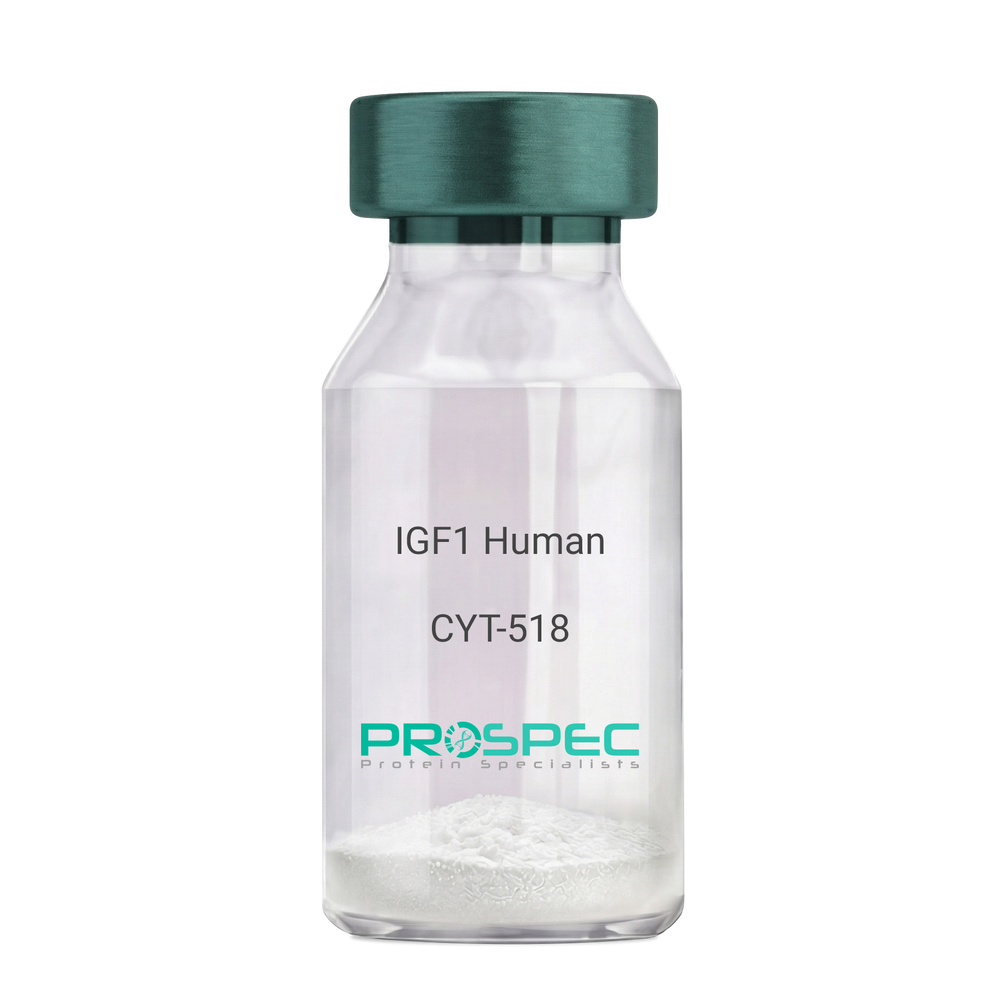
    IGF1 Human Des1-3

    Description:

    Insulin-Like Growth Factor 1 Des (1-3) Human Recombinant

    Somatomedin C, IGF-I, IGFI, IGF1, IGF-IA, Mechano growth factor, MGF, Des(1-3), Des1-3, Des 1-3, Des (1-3), IGF-1 (4-70).

    Product # :

    CYT-518

    Price :

    Quantity :

    Shipping Method :

    Room Temp Icon

    Shipped at Room temp

    Add To Cart

    More Info

    • description
    • source
    • formulation
    • purity
    • biological activity
    • More Info

    Description

    IGF-I Des(1-3) Human Recombinant produced in E.Coli is a single, non-glycosylated, polypeptide chain containing 67 amino acids (aa 4-70) and having a molecular mass of 7368.5 Dalton. IGF-1 Des1-3 is purified by proprietary chromatographic techniques.

    Source

    Escherichia Coli.

    Formulation

    The protein (1mg/ml) was lyophilized was lyophilized from a 0.2µm filtered concentrated solution in 20mM PBS, pH 7.0.

    Purity

    Greater than 97% as determined by:
    (a) Analysis by RP-HPLC.
    (b) Analysis by SDS-PAGE.

    Biological Activity

    The ED50 as determined by a cell proliferation assay using FDC-P1 cells is less than 2.0 ng/ml, corresponding to a specific activity of > 5×10⁵ units/mg.

    More Info

    • Introduction

      The somatomedins, or insulin-like growth factors (IGFs), comprise a family of peptides that play important roles in mammalian growth and development. IGF1 mediates many of the growth-promoting effects of growth hormone (GH; MIM 139250). Early studies showed that growth hormone did not directly stimulate the incorporation of sulfate into cartilage, but rather acted through a serum factor, termed 'sulfation factor,' which later became known as 'somatomedin' (Daughaday et al., 1972). Three main somatomedins have been characterized: somatomedin C (IGF1), somatomedin A (IGF2; MIM 147470), and somatomedin B (MIM 193190) (Rotwein, 1986; Rosenfeld, 2003).

    • Synonyms

      Somatomedin C, IGF-I, IGFI, IGF1, IGF-IA, Mechano growth factor, MGF, Des(1-3), Des1-3, Des 1-3, Des (1-3), IGF-1 (4-70).

    • Physical Appearance

      Sterile Filtered White lyophilized (freeze-dried) powder.

    • Stability

      Lyophilized IGF-I des(1-3) although stable at room temperature for 3 weeks, should be stored desiccated below -18°C. Upon reconstitution IGF1 des-1-3 should be stored at 4°C between 2-7 days and for future use below -18°C.For long term storage it is recommended to add a carrier protein (0.1% HSA or BSA).Please prevent freeze-thaw cycles.

    • Solubility

      It is recommended to reconstitute the IGF-I des(1-3) in sterile 18M-cm H2O not less than 100µg/ml, which can then be further diluted to other aqueous solutions.

    • Amino Acid Sequence

      TLCGAELVDA LQFVCGDRGF YFNKPTGYGS SSRRAPQTGI VDECCFRSCD LRRLEMYCAP LKPAKSA.

    • Background

      What is the molecular weight/Mw of IGF1 HUMAN DES1-3 Protein?
      IGF1 HUMAN DES1-3 Protein has a total Mw of 7.3kDa.

      What is the source or expression system of IGF1 HUMAN DES1-3 Protein?
      Escherichia Coli.

      What is the Purity of IGF1 HUMAN DES1-3 Protein?
      IGF1 HUMAN DES1-3 Protein is >97% pure as determined by SDS-PAGE.

      What is the Biological Activity of IGF1 HUMAN DES1-3 Protein?
      The ED50 as determined by a cell proliferation assay using FDC-P1 cells is less than 2.0 ng/ml, corresponding to a specific activity of > 5×10⁵ units/mg.

      What is the amino acid sequence of IGF1 HUMAN DES1-3 Protein?
      TLCGAELVDA LQFVCGDRGF YFNKPTGYGS SSRRAPQTGI VDECCFRSCD LRRLEMYCAP LKPAKSA.

      What applications can IGF1 HUMAN DES1-3 Protein be used in?
      IGF1 HUMAN DES1-3 Protein can probably be used in western blot, ELISA and Lateral Flow.

      What is the endotoxin level for IGF1 HUMAN DES1-3 Protein?
      The endotoxin level is minimal, IGF1 HUMAN DES1-3 Protein was purified using conventional chromatography techniques.


    ProSpec's products are furnished for LABORATORY RESEARCH USE ONLY. The product may not be used as drugs, agricultural or pesticidal products, food additives or household chemicals.

    Igf I Des1 3 Human
  • View Data Sheet

    Name :

    Bartonella SucB

    Description:

    Bartonella Henselae SucB Recombinant

    Product # :

    PRO-2570

    Price :

    Quantity :

    Shipping Method :

    Ice Icon

    Shipped with Ice Packs

    Add To Cart

    More Info

    • description
    • source
    • formulation
    • purity
    • More Info

    Description

    Recombinant Bartonella Henselae SucB produced in E.Coli is a single, non-glycosylated polypeptide chain having a molecular mass of 48kDa. Bartonella SucB is expressed with a -10x His tag at N-terminus and purified by proprietary chromatographic techniques.

    Source

    Escherichia Coli.

    Formulation

    Bartonella SucB is supplied at a 20mM HEPES buffer pH-8.0, 200mM NaCl and 20% Glycerol.

    Purity

    Greater than 95% as determined by SDS-PAGE.

    More Info

    • Introduction

      Numerous forms of Bartonellosis are caused by Bartonella henselae as well as Cat Scratch Disease & Bacillary Angiomatosis. It has been found that up to 95% of patients with Cat Scratch Disease show antibodies against Bartonella henselae antigens. Highly immunoreactive proteins which are produced by the Bartonella henselae are the most important antigens used for the diagnosis of Cat Scratch Disease. The immunogenic protein dihydrolipoamide-succinyltransferase also named SucB is an enzyme of the alpha-ketoglutarate dehydrogenase complex, which catalyzes the transport of a succinyl group from the S-succinyldihydrolipoyl moiety to coenzyme A.

    • Physical Appearance

      Sterile Filtered solution.

    • Stability

      Store at 4°C if entire vial will be used within 2-4 weeks. Store, frozen at -20°C for longer periods of time. Avoid multiple freeze-thaw cycles.

    ProSpec's products are furnished for LABORATORY RESEARCH USE ONLY. The product may not be used as drugs, agricultural or pesticidal products, food additives or household chemicals.

    Bartonella Henselae Sucb
  • View Data Sheet

    Name :

    ANKRD1 Human

    Description:

    Ankyrin Repeat Domain 1 Human Recombinant

    Ankyrin Repeat Domain 1 (Cardiac Muscle), Cardiac Ankyrin Repeat Protein, Cytokine-Inducible Gene C-193 Protein, Ankyrin Repeat Domain-Containing Protein 1, Cytokine-Inducible Nuclear Protein, Liver Ankyrin Repeat Domain 1, BA320F15.2, CARP, ALRP, CVARP, MCARP, HA1A2, C193.

    Product # :

    PRO-1219

    Price :

    Quantity :

    Shipping Method :

    Ice Icon

    Shipped with Ice Packs

    Add To Cart

    More Info

    • description
    • source
    • formulation
    • purity
    • More Info

    Description

    ANKRD1 Human Recombinant produced in E. coli is a single polypeptide chain containing 342 amino acids (1-319) and having a molecular mass of 38.6 kDa.ANKRD1 is fused to a 23 amino acid His-tag at N-terminus & purified by proprietary chromatographic techniques.

    Source

    E.coli.

    Formulation

    The ANKRD1 solution contains 20mM Tris-HCl buffer (pH 8.5), 0.2M NaCl, 5mM DTT and 50% glycerol.

    Purity

    Greater than 85% as determined by SDS-PAGE.

    More Info

    • Introduction

      ANKRD1 takes part in endothelial cell activation and performs as a nuclear transcription factor which negatively controls the expression of cardiac genes.

    • Synonyms

      Ankyrin Repeat Domain 1 (Cardiac Muscle), Cardiac Ankyrin Repeat Protein, Cytokine-Inducible Gene C-193 Protein, Ankyrin Repeat Domain-Containing Protein 1, Cytokine-Inducible Nuclear Protein, Liver Ankyrin Repeat Domain 1, BA320F15.2, CARP, ALRP, CVARP, MCARP, HA1A2, C193.

    • Physical Appearance

      Sterile Filtered colorless solution.

    • Stability

      Store at 4°C if entire vial will be used within 2-4 weeks. Store, frozen at -20°C for longer periods of time. For long term storage it is recommended to add a carrier protein (0.1% HSA or BSA).Avoid multiple freeze-thaw cycles.

    • Amino Acid Sequence

      MGSSHHHHHH SSGLVPRGSH MGS MMVLKVE ELVTGKKNGN GEAGEFLPED FRDGEYEAAV TLEKQEDLKT LLAHPVTLGE QQWKSEKQRE AELKKKKLEQ RSKLENLEDL EIIIQLKKRK KYRKTKVPVV KEPEPEIITE PVDVPTFLKA ALENKLPVVE KFLSDKNNPD VCDEYKRTAL HRACLEGHLA IVEKLMEAGA QIEFRDMLES TAIHWASRGG NLDVLKLLLN KGAKISARDK LLSTALHVAV RTGHYECAEH LIACEADLNA KDREGDTPLH DAVRLNRYKM IRLLIMYGAD LNIKNCAGKT PMDLVLHWQN GTKAIFDSLR ENSYKTSRIA TF

    ProSpec's products are furnished for LABORATORY RESEARCH USE ONLY. The product may not be used as drugs, agricultural or pesticidal products, food additives or household chemicals.

    Ankrd1 Human
  • View Data Sheet

    Name :

    CDKN2AIPNL Human

    Description:

    CDKN2A Interacting Protein N-Terminal Like Human Recombinant

    CDKN2AIP N-terminal-like protein, CDKN2A-interacting protein N-terminal-like protein, CDKN2AIPNL.

    Product # :

    PRO-1865

    Price :

    Quantity :

    Shipping Method :

    Ice Icon

    Shipped with Ice Packs

    Add To Cart

    More Info

    • description
    • source
    • formulation
    • purity
    • More Info

    Description

    CDKN2AIPNL Human Recombinant produced in E. coli is. a single polypeptide chain containing 139 amino acids (1-116) and having a molecular mass of 15.6kDa. CDKN2AIPNL is fused to a 23 amino acid His-tag at N-terminus & purified by proprietary chromatographic techniques.

    Source

    Escherichia Coli.

    Formulation

    The CDKN2AIPNL solution (0.25mg/ml) contains 20mM Tris-HCl buffer (pH 8.0), 0.15M NaCl, 20% glycerol and 1mM DTT.

    Purity

    Greater than 85% as determined by SDS-PAGE.

    More Info

    • Introduction

      CDKN2A Interacting Protein N-Terminal Like (CDKN2AIPNL) is a part of the CARF family.

    • Synonyms

      CDKN2AIP N-terminal-like protein, CDKN2A-interacting protein N-terminal-like protein, CDKN2AIPNL.

    • Physical Appearance

      Sterile Filtered clear solution.

    • Stability

      Store at 4°C if entire vial will be used within 2-4 weeks. Store frozen at -20°C for longer periods of time. For long term storage it is recommended to add a carrier protein (0.1% HSA or BSA).Avoid multiple freeze-thaw cycles.

    • Amino Acid Sequence

      MGSSHHHHHH SSGLVPRGSH MGSMVGGEAA AAVEELVSGV RQAADFAEQF RSYSESEKQW KARMEFILRH LPDYRDPPDG SGRLDQLLSL SMVWANHLFL GCSYNKDLLD KVMEMADGIE VEDLPQFTTR SELMKKHQS.

    ProSpec's products are furnished for LABORATORY RESEARCH USE ONLY. The product may not be used as drugs, agricultural or pesticidal products, food additives or household chemicals.

    Cdkn2Aipnl Human
  • View Data Sheet

    Name :

    GZMH Human, sf9

    Description:

    Granzyme-H Human Recombinant, sf9

    Granzyme H, Granzyme H (Cathepsin G-Like 2, Protein H-CCPX), Cytotoxic T-Lymphocyte Proteinase, Cathepsin G-Like 2, CTSGL2, CCP-X, CSP-C, Cytotoxic T-Lymphocyte-Associated Serine Esterase 1, Cathepsin G-Like 2, Protein H-CCPX, Cytotoxin Serine Protease-C, Cytotoxic Serine Protease C, Protein H-CCPX, EC 3.4.21.79, EC 3.4.21, EC 3.4.21, CTLA1, CGL-2 , CGL2.

    Product # :

    ENZ-961

    Price :

    Quantity :

    Shipping Method :

    Ice Icon

    Shipped with Ice Packs

    Add To Cart

    More Info

    • description
    • source
    • formulation
    • purity
    • More Info

    Description

    GZMH produced in Sf9 Baculovirus cells is a single, glycosylated polypeptide chain containing 234 amino acids (19-246 a.a.) and having a molecular mass of 26.2kDa (Molecular size on SDS-PAGE will appear at approximately 28-40kDa). GZMH is expressed with a 6 amino acid His tag at C-Terminus and purified by proprietary chromatographic techniques.

    Source

    Sf9, Baculovirus cells.

    Formulation

    GZMH protein solution (0.25mg/ml) contains Phosphate Buffered Saline (pH 7.4) and 10% glycerol.

    Purity

    Greater than 90.0% as determined by SDS-PAGE.

    More Info

    • Introduction

      Granzyme H also known as GZMH belongs to the peptidase S1 family. GZMH is an essential part for HBV eradication. The HBx protein, which is required for the replication of HBV, is cleaved at Met(79) by GZMH. Furthermore, GZMH inhibitor can abolish GZNH- as well as lymphokine-activated killer cell-mediated HBx degradation and HBV clearance. A HBx-deficient HBV is resistant to GzmH- in addition to lymphokine-activated killer cell-mediated viral clearance.

    • Synonyms

      Granzyme H, Granzyme H (Cathepsin G-Like 2, Protein H-CCPX), Cytotoxic T-Lymphocyte Proteinase, Cathepsin G-Like 2, CTSGL2, CCP-X, CSP-C, Cytotoxic T-Lymphocyte-Associated Serine Esterase 1, Cathepsin G-Like 2, Protein H-CCPX, Cytotoxin Serine Protease-C, Cytotoxic Serine Protease C, Protein H-CCPX, EC 3.4.21.79, EC 3.4.21, EC 3.4.21, CTLA1, CGL-2 , CGL2.

    • Physical Appearance

      Sterile Filtered colorless solution.

    • Stability

      Store at 4°C if entire vial will be used within 2-4 weeks. Store, frozen at -20°C for longer periods of time. For long term storage it is recommended to add a carrier protein (0.1% HSA or BSA). Avoid multiple freeze-thaw cycles.

    • Amino Acid Sequence

      EEIIGGHEAK PHSRPYMAFV QFLQEKSRKR CGGILVRKDF VLTAAHCQGS SINVTLGAHN IKEQERTQQF IPVKRPIPHP AYNPKNFSND IMLLQLERKA KWTTAVRPLR LPSSKAQVKP GQLCSVAGWG YVSMSTLATT LQEVLLTVQK DCQCERLFHG NYSRATEICV GDPKKTQTGF KGDSGGPLVC KDVAQGILSY GNKKGTPPGV YIKVSHFLPW IKRTMKRLHH HHHH.

    ProSpec's products are furnished for LABORATORY RESEARCH USE ONLY. The product may not be used as drugs, agricultural or pesticidal products, food additives or household chemicals.

    Gzmh Human Sf9
  • View Data Sheet

    Name :

    IL-10 Human, Sf9

    Description:

    Interleukin 10 Human Recombinant, Sf9, Active

    Interleukin-10, IL-10, Cytokine synthesis inhibitory factor, CSIF, IL10, GVHDS, IL10A, TGIF, T-Cell Growth Inhibitory Factor.

    Product # :

    CYT-1147

    Price :

    Quantity :

    Shipping Method :

    Ice Icon

    Shipped with Ice Packs

    Add To Cart

    More Info

    • description
    • source
    • formulation
    • purity
    • biological activity
    • More Info

    Description

    IL-10 Human produced in Sf9 Baculovirus cells is a single, glycosylated polypeptide chain containing 166 amino acids (19-178 aa) and having a molecular mass of 19.4kDa. IL-10 is fused to a 6 amino acid His tag at C-terminus and purified by proprietary chromatographic techniques.

    Source

    Sf9, Baculovirus cells.

    Formulation

    The IL-10 solution (0.5mg/ml) contains 10% Glycerol and Phosphate-Buffered Saline (pH 7.4).

    Purity

    Greater than 95.0% as determined by SDS-PAGE.

    Biological Activity

    Measured in a cell proliferation assay using MC/9 mouse mast cells. The ED50 range < 5 ng/ml.

    More Info

    • Introduction

      Interleukin 10 or IL-10 or human cytokine synthesis inhibitory factor, is a cytokine (anti-inflammatory). IL10 gene is coding for il-10 In humans. Interleukin 10 has a receptor complex that is built from a couple of IL-10 receptor-1 and a couple of IL-10 receptor-2 proteins. therfore, the whole receptor unit consists of four IL-10 receptor molecules. IL-10 binds the receptor and causes STAT3 signalling through the phosphorylation of the cytoplasmic ends of IL-10 receptor 1 and IL-10 receptor 2 through JAK1 and Tyk2.

    • Synonyms

      Interleukin-10, IL-10, Cytokine synthesis inhibitory factor, CSIF, IL10, GVHDS, IL10A, TGIF, T-Cell Growth Inhibitory Factor.

    • Physical Appearance

      Sterile Filtered colorless solution.

    • Stability

      Store at 4°C if entire vial will be used within 2-4 weeks. Store, frozen at -20°C for longer periods of time. For long term storage it is recommended to add a carrier protein (0.1% HSA or BSA).Avoid multiple freeze-thaw cycles.

    • Amino Acid Sequence

      SPGQGTQSEN SCTHFPGNLP NMLRDLRDAF SRVKTFFQMK DQLDNLLLKE SLLEDFKGYL GCQALSEMIQ FYLEEVMPQA ENQDPDIKAH VNSLGENLKT LRLRLRRCHR FLPCENKSKA VEQVKNAFNK LQEKGIYKAM SEFDIFINYI EAYMTMKIRN HHHHHH.

    ProSpec's products are furnished for LABORATORY RESEARCH USE ONLY. The product may not be used as drugs, agricultural or pesticidal products, food additives or household chemicals.

    Il10 Protein
  • View Data Sheet

    Name :

    FGF 2 Human

    Description:

    Fibroblast Growth Factor-Basic Human Recombinant

    Prostatropin, FGF-basic, fgf2, Basic FGF, HBGF-2, FGF-2, FGF-b.

    Product # :

    CYT-218

    Price :

    Quantity :

    Shipping Method :

    Room Temp Icon

    Shipped at Room temp

    Add To Cart

    More Info

    • description
    • source
    • formulation
    • purity
    • biological activity
    • More Info

    Description

    Fibroblast Growth Factor-2 Human Recombinant (FGF-2) produced in E.Coli is a single, non-glycosylated, polypeptide chain containing 154 amino acids and having a molecular mass of 17.2kDa.The FGF-b is purified by proprietary chromatographic techniques.

    Source

    Escherichia Coli.

    Formulation

    The protein was lyophilized from a concentrated (1mg/ml) solution in 20mM Tris-HCl, pH7.4 and 1M NaCl.

    Purity

    Greater than 98.0% as determined by Analysis by SDS-PAGE.

    Biological Activity

    The ED50, calculated by the dose-dependant proliferation of murine balb/c 3T3 cells is <0.1ng/ml, corresponding to a specific activity of graeter than 1.0x10⁷ Units/mg.

    More Info

    • Introduction

      Basic fibroblast growth factor is a member of the fibroblast growth factor (FGF) family. FGF family members possess broad mitogenic and cell survival activities, and are involved in a variety of biological processes, including embryonic development, cell growth, morphogenesis, tissue repair, tumor growth and invasion. This protein functions as a modifier of endothelial cell migration and proliferation, as well as an angiogenic factor. It acts as a mitogen for a variety of mesoderm- and neuroectoderm-derived cells in vitro, thus is thought to be involved in organogenesis. Three alternatively spliced variants encoding different isoforms have been described. The HPR -binding growth factors are angiogenic agents in vivo and are potent mitogens for a variety of cell types in vitro. There are differences in the tissue distribution and concentration of these 2 growth factors.

    • Synonyms

      Prostatropin, FGF-basic, fgf2, Basic FGF, HBGF-2, FGF-2, FGF-b.

    • Physical Appearance

      Sterile Filtered White lyophilized (freeze-dried) powder.

    • Stability

      Lyophilized Fibroblast Growth Factor-2 although stable at room temperature for 3 weeks, should be stored desiccated below -18°C. Upon reconstitution FGF-b should be stored at 4°C between 2-7 days and for future use below -18°C.For long term storage it is recommended to add a carrier protein (0.1% HSA or BSA).Please prevent freeze-thaw cycles.

    • Solubility

      It is recommended to reconstitute the lyophilized Fibroblast Growth Factor Basic in sterile 18MΩ-cm H2O not less than 100µg/ml, which can then be further diluted to other aqueous solutions.

    • Amino Acid Sequence

      AAGSITTLPA LPEDGGSGAF PPGHFKDPKR LYCKNGGFFL RIHPDGRVDG VREKSDPHIK LQLQAEERGV VSIKGVCANR YLAMKEDGRL LASKCVTDEC FFFERLESNN YNTYRSRKYT SWYVALKRTG QYKLGSKTGP GQKAILFLPM SAKS.

    • Background

      FGF 2 HUMAN: Insights into Fibroblast Growth Factor-2

      Basic Fibroblast Growth Factor or FGF 2 HUMAN is a protein with crucial roles in cell growth, tissue repair, and embryonic development. This is part of the larger fibroblast growth factor family and is vital for various biological processes, including the modulation of cell survival activities.

      Production and Properties

      Produced in E. coli, FGF 2 is a non-glycosylated polypeptide chain possessing 154 amino acids with a molecular weight of about 17.2 kDa. It is purified through advanced chromatographic techniques, ensuring high purity and activity for laboratory use.

      Physical Characteristics and Preparation

      The physical form of FGF 2 HUMAN is a sterile, white lyophilized powder. For experimental use, it is reconstituted with sterile water to at least 100µg/ml. This reconstitution is crucial for maintaining the integrity and effectiveness of the protein in various research applications.

      Storage and Handling

      To maintain stability, lyophilized FGF 2 should be stored at -18°C and used within three weeks if kept at room temperature. Once reconstituted, it should be kept at 4°C and used within 2-7 days or stored at -18°C for longer-term storage.

      Proper handling and avoiding repeated freeze-thaw cycles are essential to preserve the protein's functionality.

      Purity and Biological Activity

      FGF 2 is characterized by a purity greater than 98%, verified by SDS-PAGE analysis. Its biological activity is primarily defined by its efficacy in promoting the proliferation of specific cell lines, with an effective dose (ED50) typically below 0.1 ng/ml.

      Research Applications and Impact

      In the research context, FGF 2 is used extensively to study its effects on cell migration, proliferation, and angiogenesis. Moreover, its role in disease models, particularly in cancer and tissue repair studies, makes it a valuable resource for developing new therapeutic approaches.

      Usage Guidelines

      FGF 2 HUMAN is strictly for laboratory research use and is not suitable for drug development, food production, or cosmetic applications. Researchers are advised to comply with safety and handling guidelines to ensure that experiments are conducted under optimal conditions.

      The Broad Impact on Development and Disease

      FGF-2 is known for its multifunctional role across numerous biological processes such as tissue repair, embryonic development, angiogenesis, and even tumorigenesis.

      This growth factor, existing in various synonymous forms such as Basic FGF, FGF-b, and HBGF-2, is essential in cellular processes that underpin both health and disease.

      Furthermore, FGF-2's ability to bind to cellular receptors triggers a cascade of signaling pathways, including PI3K/Akt, MAPK/ERK, and PLCγ, which in turn influence cell growth, migration, and survival.

      These pathways are pivotal in mediating the factor's diverse effects on cell behavior, contributing to its critical roles in wound healing, angiogenesis, and tissue remodeling.

      What is the molecular weight/Mw of FGF 2 Protein?
      FGF 2 Protein has a total Mw of 17.2kDa.

      What is the source or expression system of FGF 2 Protein?
      Escherichia Coli.

      What is the Purity of FGF 2 Protein?
      FGF 2 Protein is >98% pure as determined by SDS-PAGE.

      What is the Biological Activity of FGF 2 Protein?
      The ED50, calculated by the dose-dependant proliferation of murine balb/c 3T3 cells is <0.1ng/ml, corresponding to a specific activity of graeter than 1.0x10⁷ Units/mg.

      What is the amino acid sequence of FGF 2 Protein?
      AAGSITTLPA LPEDGGSGAF PPGHFKDPKR LYCKNGGFFL RIHPDGRVDG VREKSDPHIK LQLQAEERGV VSIKGVCANR YLAMKEDGRL LASKCVTDEC FFFERLESNN YNTYRSRKYT SWYVALKRTG QYKLGSKTGP GQKAILFLPM SAKS.

      What applications can FGF 2 Protein be used in?
      FGF 2 Protein can probably be used in western blot, ELISA and Lateral Flow.

      What is the endotoxin level for FGF 2 Protein?
      The endotoxin level is minimal, FGF 2 Protein was purified using conventional chromatography techniques.

    ProSpec's products are furnished for LABORATORY RESEARCH USE ONLY. The product may not be used as drugs, agricultural or pesticidal products, food additives or household chemicals.

    Fgf 2 Human
  • View Data Sheet

    Name :

    Glucagon Human

    Description:

    Glucagon Human Recombinant

    GLP1, GLP2, GRPP.

    Product # :

    HOR-237

    Price :

    Quantity :

    Shipping Method :

    Room Temp Icon

    Shipped at Room temp

    Add To Cart

    More Info

    • description
    • source
    • formulation
    • purity
    • biological activity
    • More Info

    Description

    Glucagon Human Recombinant produced in E.Coli is a single, non-glycosylated, polypeptide chain containing 29 amino acids and having a molecular mass of 3483 Dalton. The Glucagon is purified by proprietary chromatographic techniques.

    Source

    Escherichia Coli.

    Formulation

    Each mg of recombinant Glucagon was formulated with 100mg of lactose.

    Purity

    Greater than 98.0% as determined by:
    (a) Analysis by RP-HPLC.
    (b) Analysis by SDS-PAGE.

    Biological Activity

    The activity is determind by comparing, under certain conditions, the hyperglycemic effect it produces with that produced by the international standard or by reference preparation calibrated in IU and is found to be 1 IU/mg.

    More Info

    • Introduction

      Glucagon is an important hormone involved in carbohydrate metabolism. The hormone is synthesized and secreted from alpha cells (a-cells) of the islets of Langerhans, which are located in the endocrine portion of the pancreas. Glucagon is released when the glucose level in the blood is low (hypoglycemia), causing the liver to convert stored glycogen into glucose and release it into the bloodstream. The action of glucagon is thus opposite to that of insulin, which instructs the body's cells to take in glucose from the blood in times of satiation.
      Glucagon is beneficial for the culture of some cell types. It has been used in some biochemical regulation studies of glycogenolysis in hepatocytes. It has been also been found to induce DNA replication in primary cultures of adult rat hepatocytes when used in combinations with EGF and Insulin. Glucagon increases the blood glucose concentration by promoting rapid breakdown of liver glycogen, and also acts to relax smooth muscle such as the gastrointestinal tract.

    • Synonyms

      GLP1, GLP2, GRPP.

    • Physical Appearance

      Sterile Filtered White lyophilized (freeze-dried) powder.

    • Stability

      Lyophilized Glucagon although stable at room temperature for 3 weeks, should be stored at 40C.For long term storage it is recommended to add a carrier protein (0.1% HSA or BSA).

    • Solubility

      It is recommended to reconstitute the lyophilized Glucagon sterile 18MΩ-cm H2O not less than 100 µg/ml, which can then be further diluted to other aqueous solutions.

    • Amino Acid Sequence

      The sequence of the first five N-terminal amino acids was determined and was found to be His-Ser-Gln-Gly-Thr.

    • Background

      What is the molecular weight/Mw of GLUCAGON HUMAN Protein?
      GLUCAGON HUMAN Protein has a total Mw of 3.48kDa.

      What is the source or expression system of GLUCAGON HUMAN Protein?
      Escherichia Coli.

      What is the Purity of GLUCAGON HUMAN Protein?
      GLUCAGON HUMAN Protein is >98% pure as determined by SDS-PAGE.

      What is the Biological Activity of GLUCAGON HUMAN Protein?
      The activity is determind by comparing, under certain conditions, the hyperglycemic effect it produces with that produced by the international standard or by reference preparation calibrated in IU and is found to be 1 IU/mg.

      What is the amino acid sequence of GLUCAGON HUMAN Protein?
      The sequence of the first five N-terminal amino acids was determined and was found to be His-Ser-Gln-Gly-Thr.

      What applications can GLUCAGON HUMAN Protein be used in?
      GLUCAGON HUMAN Protein can probably be used in western blot, ELISA and Lateral Flow.

      What is the endotoxin level for GLUCAGON HUMAN Protein?
      The endotoxin level is minimal, GLUCAGON HUMAN Protein was purified using conventional chromatography techniques.

    ProSpec's products are furnished for LABORATORY RESEARCH USE ONLY. The product may not be used as drugs, agricultural or pesticidal products, food additives or household chemicals.

    Glucagon Human Recombinant
  • View Data Sheet

    Name :

    GH Human 20kDa

    Description:

    Growth Hormone Pituitary 20kDa Human Recombinant

    GH1, GH, GHN, GH-N, hGH-N,Pituitary growth hormone, Growth hormone 1, Somatotropin.

    Product # :

    CYT-259

    Price :

    Quantity :

    Shipping Method :

    Ice Icon

    Shipped with Ice Packs

    Add To Cart

    More Info

    • description
    • source
    • formulation
    • purity
    • More Info

    Description

    Growth Hormone 20KDa Pituitary Human Recombinant produced in E.Coli is a single, non-glycosylated, polypeptide chain containing 177 amino acids ( 27-202 a.a. ) and having a molecular mass of 20322 Dalton. HGH-20kDa is purified by proprietary chromatographic techniques.

    Source

    Escherichia Coli.

    Formulation

    HGH-20K solution contains PBS pH-7,4, and 10% glycerol.

    Purity

    Greater than 95% as determined by SDS-PAGE.

    More Info

    • Introduction

      GH is a member of the somatotropin/prolactin family of hormones which play an important role in growth control. The gene, along with four other related genes, is located at the growth hormone locus on chromosome 17 where they are interspersed in the same transcriptional orientation; an arrangement which is thought to have evolved by a series of gene duplications. The five genes share a remarkably high degree of sequence identity. Alternative splicing generates additional isoforms of each of the five growth hormones, leading to further diversity and potential for specialization. This particular family member is expressed in the pituitary but not in placental tissue as is the case for the other four genes in the growth hormone locus. Mutations in or deletions of the gene lead to growth hormone deficiency and short stature.

    • Synonyms

      GH1, GH, GHN, GH-N, hGH-N,Pituitary growth hormone, Growth hormone 1, Somatotropin.

    • Physical Appearance

      Sterile Filtered clear colorless solution.

    • Stability

      Store at 4°C if entire vial will be used within 2-4 weeks. Store, frozen at -20°C for longer periods of time.For long term storage it is recommended to add a carrier protein (0.1% HSA or BSA).Avoid multiple freeze-thaw cycles.

    • Amino Acid Sequence

      MFPTIPLSRL FDNAMLRAHR LHQLAFDTYQ EFNPQTSLCF SESIPTPSNR EETQQKSNLE LLRISLLLIQ SWLEPVQFLR SVFANSLVYG ASDSNVYDLL KDLEEGIQTL MGRLEDGSPR TGQIFKQTYS KFDTNSHNDD ALLKNYGLLY CFRKDMDKVE TFLRIVQCRS VEGSCGF

    ProSpec's products are furnished for LABORATORY RESEARCH USE ONLY. The product may not be used as drugs, agricultural or pesticidal products, food additives or household chemicals.

    Pituitary Gh 20K Human
  • View Data Sheet

    Name :

    Leptin Chicken

    Description:

    Leptin Chicken Recombinant

    OB Protein, Obesity Protein, OBS, Obesity factor.

    Product # :

    CYT-505

    Price :

    Quantity :

    Shipping Method :

    Room Temp Icon

    Shipped at Room temp

    Add To Cart

    More Info

    • description
    • source
    • formulation
    • purity
    • biological activity
    • More Info

    Description

    Leptin Chicken Recombinant produced in E.Coli is a single, non-glycosylated, polypeptide chain containing 145 amino acids and having a molecular mass of 16 kDa.The Leptin is purified by proprietary chromatographic techniques.

    Source

    Escherichia Coli.

    Formulation

    The protein was lyophilized from a concentrated (1mg/ml) solution with 0.0045mM NaHCO3.

    Purity

    Greater than 95.0% as determined by:
    (a) Analysis by SEC-HPLC.
    (b) Analysis by SDS-PAGE.

    Biological Activity

    Biological active as evidenced by inducing proliferation of BAF/3 cells stably transfected with the long form of human leptin receptor. Its activity is however 5-10 fold lower as compared to mammalian leptins.

    More Info

    • Introduction

      A 16-kDa peptide hormone secreted from white adipocytes and implicated in the regulation of food intake and energy balance. Leptin provides the key afferent signal from fat cells in the feedback system that controls body fat stores.

    • Synonyms

      OB Protein, Obesity Protein, OBS, Obesity factor.

    • Physical Appearance

      Sterile Filtered White lyophilized (freeze-dried) powder.

    • Stability

      Lyophilized Leptin although stable at room temperature for 3 weeks, should be stored desiccated below -18°C. Upon reconstitution Leptin should be stored at 4°C between 2-7 days and for future use below -18°C.For long term storage it is recommended to add a carrier protein (0.1% HSA or BSA).Please prevent freeze-thaw cycles.

    • Solubility

      It is recommended to reconstitute the lyophilized Leptin in sterile 18MΩ-cm H2O not less than 100µg/ml, which can then be further diluted to other aqueous solutions.

    • Amino Acid Sequence

      The sequence of the first five N-terminal amino acids was determined and was found to be Ala-Val-Pro-Cys-Gln.

      Recombinant Chicken leptin was produced according to the a.a. sequence published by the groups of Taouis & McMutry, see Raver et al. Protein Expr Purif. 1998 Dec; 14(3):403-8.

    • Protein content

      Protein quantitation was carried out by two independent methods1. UV spectroscopy at 280 nm using the absorbency value of 0.19 as the extinction coefficient for a 0.1% (1mg/ml) solution. This value is calculated by the PC GENE computer analysis program of protein sequences (IntelliGenetics). 2. Analysis by RP-HPLC,using calibrated solution of Leptin Chicken as a Reference Standard.

    ProSpec's products are furnished for LABORATORY RESEARCH USE ONLY. The product may not be used as drugs, agricultural or pesticidal products, food additives or household chemicals.

    Leptin Chicken
  • View Data Sheet

    Name :

    Leptin Protein

    Description:

    Leptin Human Recombinant

    OB Protein, Obesity Protein, OBS, Obesity factor.

    Product # :

    CYT-228

    Price :

    Quantity :

    Shipping Method :

    Room Temp Icon

    Shipped at Room temp

    Add To Cart

    More Info

    • description
    • source
    • formulation
    • purity
    • biological activity
    • More Info

    Description

    Leptin Human Recombinant produced in E.Coli is a single, non-glycosylated, polypeptide chain containing 146 amino acids and having a molecular mass of 16 kDa.The Leptin is purified by proprietary chromatographic techniques.

    Source

    Escherichia Coli.

    Formulation

    The protein was lyophilized from a concentrated (1mg/ml) solution with 0.0045mM NaHCO3.

    Purity

    Greater than 95.0% as determined by:
    (a) Analysis by Gel filtration.
    (b) Analysis by SDS-PAGE.

    Biological Activity

    Biological Activity is evidenced by inducing proliferation of BAF/3 cells stably transfected with the long form of human leptin receptor.

    More Info

    • Introduction

      A 16-kDa peptide hormone secreted from white adipocytes and implicated in the regulation of food intake and energy balance. Leptin provides the key afferent signal from fat cells in the feedback system that controls body fat stores.

    • Synonyms

      OB Protein, Obesity Protein, OBS, Obesity factor.

    • Physical Appearance

      Sterile Filtered White lyophilized (freeze-dried) powder.

    • Stability

      Lyophilized Leptin although stable at room temperature for 3 weeks, should be stored desiccated below -18°C. Upon reconstitution Leptin should be stored at 4°C between 2-7 days and for future use below -18°C. For long term storage it is recommended to add a carrier protein (0.1% HSA or BSA). Please prevent freeze-thaw cycles.

    • Solubility

      It is recommended to reconstitute the lyophilized Leptin in sterile water or 0.4% NaHCO3 pH-8-9, not less than 100µg/ml, which can then be further diluted to other aqueous solutions.

    • Amino Acid Sequence

      The sequence of the first five N-terminal amino acids was determined and was found to be Ala-Val-Pro-Ile-Gln.

    • Protein content

      Protein quantitation was carried out by UV spectroscopy at 280 nm using the absorbency value of 0.87 as the extinction coefficient for a 0.1% (1mg/ml) solution. This value is calculated by the PC GENE computer analysis program of protein sequences (IntelliGenetics).

    ProSpec's products are furnished for LABORATORY RESEARCH USE ONLY. The product may not be used as drugs, agricultural or pesticidal products, food additives or household chemicals.

    Leptin Human
  • View Data Sheet

    Name :

    CKMT1A Antibody

    Description:

    Creatine Kinase, Mitochondrial 1A, Mouse Anti Human

    Creatine kinase mitochondrial 1A, creatine kinase mitochondrial 1 (ubiquitous), creatine kinase U-type mitochondrial, Acidic-type mitochondrial creatine kinase, Ubiquitous mitochondrial creatine kinase, CKMT1, U-MtCK, mia-CK, EC 2.7.3, EC 2.7.3.2.

    Product # :

    ANT-519

    Price :

    Quantity :

    Shipping Method :

    Ice Icon

    Shipped with Ice Packs

    Add To Cart

    More Info

    • formulation
    • More Info

    Formulation

    1mg/ml containing PBS, pH-7.4, 10% Glycerol and 0.02% Sodium Azide.

    More Info

    • Introduction

      CKMT1A is in charge of the transfer of high energy phosphate from mitochondria to the cytosolic carrier, creatine. CKMT1A is a member of the creatine kinase isoenzyme family and exists as two isoenzymes, sarcomeric MtCK and ubiquitous MtCK, encoded by separate genes. Mitochondrial creatine kinase arises in two different oligomeric forms: dimers and octamers, unlike the exclusively dimeric cytosolic creatine kinase isoenzymes. Numerous malignant cancers with poor prognosis have displayed overexpression of ubiquitous mitochondrial creatine kinase which is linked to high energy turnover and inability to remove cancer cells through apoptosis.

    • Synonyms

      Creatine kinase mitochondrial 1A, creatine kinase mitochondrial 1 (ubiquitous), creatine kinase U-type mitochondrial, Acidic-type mitochondrial creatine kinase, Ubiquitous mitochondrial creatine kinase, CKMT1, U-MtCK, mia-CK, EC 2.7.3, EC 2.7.3.2.

    • Physical Appearance

      Sterile filtered colorless solution.

    • Immunogen

      Anti-human CKMT1A mAb, clone PAT17A2AT, is derived from hybridization of mouse F0 myeloma cells with spleen cells from BALB/c mice immunized with a recombinant human CKMT1A protein 40-417 amino acids purified from E. coli.

    • Ig Subclass

      Mouse IgG2b heavy chain and k light chain.

    • Clone

      PAT17A2AT.

    • Applications

      The antibody has been tested by ELISA, Western blot analysis to assure specificity and reactivity. Since application varies, however, each investigation should be titrated by the reagent to obtain optimal results. Recommended starting dilution is 1:1000.

    • Type

      Mouse Anti Human Monoclonal.

    • Storage Procedures

      For periods up to 1 month store at 4°C, for longer periods of time, store at -20°C. Prevent freeze thaw cycles.

    • Purification Method

      CKMT1A antibody was purified from mouse ascitic fluids by protein-A affinity chromatography.

    ProSpec's products are furnished for LABORATORY RESEARCH USE ONLY. The product may not be used as drugs, agricultural or pesticidal products, food additives or household chemicals.

    Ckmt1A Antibody
  • View Data Sheet

    Name :

    BGN Mouse

    Description:

    Biglycan Mouse Recombinant

    BGN, DSPG1, MRLS, PG-S1, PGI, SEMDX, SLRR1A, Biglycan, Bone/cartilage proteoglycan I, Biglycan Proteoglycan, MRLS.

    Product # :

    PRO-2537

    Price :

    Quantity :

    Shipping Method :

    Ice Icon

    Shipped with Ice Packs

    Add To Cart

    More Info

    • description
    • source
    • formulation
    • purity
    • More Info

    Description

    BGN produced in Sf9 Insect cells is a single, glycosylated polypeptide chain containing 574 amino acids (38-369 a.a.) and having a molecular mass of 64.6kDa (Molecular size on SDS-PAGE will appear at approximately 50-70kDa). BGN is expressed with a 242 hIgG-His-tag at C-Terminus and purified by proprietary chromatographic techniques.

    Source

    Sf9, Insect cells.

    Formulation

    The BGN solution (0.5mg/ml) contains Phosphate Buffered Saline (pH 7.4) and 10% glycerol.

    Purity

    Greater than 90.0% as determined by SDS-PAGE.

    More Info

    • Introduction

      Biglycan (BGN) is a small cellular or pericellular matrix proteoglycan which takes part in assembly of collagen fibrils and muscle regeneration. BGN is closely correlated in structure to two other small proteoglycans, decorin and fibromodulin. BGN interacts with several proteins involved in muscular dystrophy, including alpha-dystroglycan, alpha- and gamma-sarcoglycan and collagen VI. BGN is also critical for the assembly of the dystrophin-associated protein complex.

    • Synonyms

      BGN, DSPG1, MRLS, PG-S1, PGI, SEMDX, SLRR1A, Biglycan, Bone/cartilage proteoglycan I, Biglycan Proteoglycan, MRLS.

    • Physical Appearance

      Sterile filtered colorless solution.

    • Stability

      Store at 4°C if entire vial will be used within 2-4 weeks. Store, frozen at -20°C for longer periods of time. For long term storage it is recommended to add a carrier protein (0.1% HSA or BSA).Avoid multiple freeze-thaw cycles.

    • Amino Acid Sequence

      ADPDEEASGS DTTSGVPDLD SVTPTFSAMC PFGCHCHLRV VQCSDLGLKT VPKEISPDTT LLDLQNNDIS ELRKDDFKGL QHLYALVLVN NKISKIHEKA FSPLRKLQKL YISKNHLVEI PPNLPSSLVE LRIHDNRIRK VPKGVFSGLR NMNCIEMGGN PLENSGFEPG AFDGLKLNYL
      RISEAKLTGI PKDLPETLNE LHLDHNKIQA IELEDLLRYS KLYRLGLGHN QIRMIENGSL SFLPTLRELH LDNNKLSRVP AGLPDLKLLQ VVYLHSNNIT KVGINDFCPM GFGVKRAYYN GISLFNNPVP YWEVQPATFR CVTDRLAIQF GNYKKLEPKS CDKTHTCPPC PAPELLGGPS
      VFLFPPKPKD TLMISRTPEV TCVVVDVSHE DPEVKFNWYV DGVEVHNAKT KPREEQYNST YRVVSVLTVL HQDWLNGKEY KCKVSNKALP APIEKTISKA KGQPREPQVY TLPPSRDELT KNQVSLTCLV KGFYPSDIAV EWESNGQPEN NYKTTPPVLD SDGSFFLYSK LTVDKSRWQQ GNVFSCSVMH EALHNHYTQK SLSLSPGKHH HHHH.

    ProSpec's products are furnished for LABORATORY RESEARCH USE ONLY. The product may not be used as drugs, agricultural or pesticidal products, food additives or household chemicals.

    Biglycan Mouse
  • View Data Sheet

    Name :

    Insulin Human (20-110)

    Description:

    Insulin (20-110 a.a) Human Recombinant

    Product # :

    CYT-1237

    Price :

    Quantity :

    Shipping Method :

    Room Temp Icon

    Shipped at Room temp

    Add To Cart

    More Info

    • description
    • source
    • formulation
    • purity
    • More Info

    Description

    The Insulin Human is created as a recombinant protein with a 4kda N-terminal fusion of His Tag. The Insulin His-Tagged Fusion Protein, produced in E. coli, is a 13kDa protein containing 91 amino acid residues of the Insulin Human, 20-110 amino acids.

    Source

    Escherichia Coli.

    Formulation

    Each mg was lyophilized with 1xPBS, 0.4% SDS and 4mM DTT.

    Purity

    Greater than 90% as determined by SDS-PAGE.

    More Info

    • Physical Appearance

      Filtered White lyophilized (freeze-dried) powder.

    • Stability

      Store lyophilized Insulin at -20°C. Aliquot the product after reconstitution to avoid repeated freezing/thawing cycles. Reconstituted protein can be stored at 4°C for a limited period of time; it does not show any change after two weeks at 4°C.

    • Solubility

      It is recommended to add deionized water to prepare a working stock solution of approximately 0.5mg/ml and let the lyophilized pellet dissolve completely. Product is not sterile! Please filter the product by an appropriate sterile filter before using it on cell culture.

    • Amino Acid Sequence

      MALWMRLLPL LALLALWGPD PAAAFVNQHL CGSHLVEALY LVCGERGFFY TPKTRREAED LQVGQVELGG GPGAGSLQPL ALEGSLQKRG IVEQCCTSIC SLYQLENYCN

    • Background

      Insulin participates in the metabolism of carbohydrates, proteins and fats by regulating glucose homeostasis in the body. Insulin decreases blood glucose concentration. Insulin hormone facilitates the uptake of glucose into cells, mainly in muscle and fat tissues, and stimulates the liver to store glucose as glycogen. Insulin also inhibits the production of gluconeogenesis and promotes the synthesis of proteins and lipids. Insulin increases cell permeability to monosaccharides, fatty acids and amino acids. Insulin accelerates glycolysis, the pentose phosphate cycle and glycogen synthesis in liver.

    ProSpec's products are furnished for LABORATORY RESEARCH USE ONLY. The product may not be used as drugs, agricultural or pesticidal products, food additives or household chemicals.

    Insulin Recombinant
  • View Data Sheet

    Name :

    Angiotensin

    Description:

    Angiotensin

    Angiotensinogen, Serpin A8, ANHU, SERPINA8.

    Product # :

    ENZ-283

    Price :

    Quantity :

    Shipping Method :

    Room Temp Icon

    Shipped at Room temp

    Add To Cart

    More Info

    • description
    • source
    • purity
    • More Info

    Description

    Angiotensin contains a total of 8 amino acids having a molecular weight of 1031.2 Dalton and a molecular formula of C49H70N14O11.

    Source

    Synthetic.

    Purity

    Greater than 98.0% as determined by RP-HPLC.

    More Info

    • Introduction

      Angiotensin is an oligopeptide in the blood that causes vasoconstriction, increased blood pressure, and release of aldosterone from the adrenal cortex. It is a powerful dipsogen. It is derived from the precursor molecule angiotensinogen, a serum globulin produced in the liver. It plays an important role in the renin-angiotensin system.
      The protein encoded by this gene, pre-angiotensinogen or angiotensinogen precursor, is expressed in the liver and is cleaved by the enzyme renin in response to lowered blood pressure. The resulting product, angiotensin I is then cleaved by angiotensin converting enzyme (ACE) to generate the physiologically active enzyme angiotensin II. The protein is involved in maintaining blood pressure and in the pathogenesis of essential hypertension and preeclampsia.

    • Synonyms

      Angiotensinogen, Serpin A8, ANHU, SERPINA8.

    • Physical Appearance

      Sterile Filtered white lyophilized powder.

    • Stability

      Lyophilized Angiotensin although stable at room temperature for 3 weeks, should be stored desiccated below -18°C. Upon reconstitution Serpin A8 should be stored at 4°C between 2-7 days and for future use below -18°C.Please prevent freeze-thaw cycles.

    • Solubility

      It is recommended to reconstitute the lyophilized Angiotensin in sterile 18MΩ-cm H2O not less than 100 µg/ml or more than 10 mg/ml solutions.

    • Amino Acid Sequence

      Asn-Arg-Val-Tyr-Val-His-Pro-Phe-OH.

    ProSpec's products are furnished for LABORATORY RESEARCH USE ONLY. The product may not be used as drugs, agricultural or pesticidal products, food additives or household chemicals.

    Angiotensin
  • View Data Sheet

    Name :

    Cardiac Actin Bovine

    Description:

    Cardiac Actin Bovine

    Actin alpha cardiac muscle 1, Alpha-cardiac actin, ACTC1, ACTC.

    Product # :

    PRO-519

    Price :

    Quantity :

    Shipping Method :

    Room Temp Icon

    Shipped at Room temp

    Add To Cart

    More Info

    • description
    • source
    • formulation
    • purity
    • More Info

    Description

    Ultra pure Cardiac Actin having a Molecular mass of 43,000 dalton.

    Source

    Bovine Heart.

    Formulation

    The protein was lyophilized from a 1mg/ml solution containing 10mM Tris-acetate buffer pH 8.0, 0.2mM CaCl2, 0.2mM ATP, 1mM DTT and 0.5% SDS.

    Purity

    Greater than 98.0% as determined by:
    (a) Analysis by RP-HPLC.
    (b) Analysis by SDS-PAGE.

    More Info

    • Introduction

      Alpha-cardiac actin belongs to the actin family which is comprised of three main groups of actin isoforms, alpha, beta, and gamma. The alpha actins are found in muscle tissues and are a major constituent of the contractile apparatus. Defects in the cardiac actin have been associated with idiopathic dilated cardiomyopathy (IDC) and familial hypertrophic cardiomyopathy (FHC).

    • Synonyms

      Actin alpha cardiac muscle 1, Alpha-cardiac actin, ACTC1, ACTC.

    • Physical Appearance

      Sterile Filtered White lyophilized (freeze-dried) powder.

    • Stability

      Lyophilized Cardiac-Actin although stable at room temperature for 3 weeks, should be stored desiccated below -18°C. Upon reconstitution Cardiac Actin should be stored at 4°C between 2-7 days and for future use below -18°C.For long term storage it is recommended to add a carrier protein (0.1% HSA or BSA).Please prevent freeze-thaw cycles.

    • Solubility

      It is recommended to reconstitute the lyophilized Cardiac Actin in sterile 18MΩ-cm H2O not less than 100µg/ml, which can then be further diluted to other aqueous solutions.

    • Applications

      Protein standard in 1D and 2D SDS gelelectrophoresis
      Immunoassays
      Immunization.

    ProSpec's products are furnished for LABORATORY RESEARCH USE ONLY. The product may not be used as drugs, agricultural or pesticidal products, food additives or household chemicals.

    Cardiac Actin
  • View Data Sheet

    Name :

    STRADA Human

    Description:

    STE20-Related Kinase Adaptor Alpha Human Recombinant

    LYK5, NY-BR-96, PMSE, Stlk, STRAD, STE20-related kinase adapter protein alpha, STRAD alpha, STE20-related adapter protein, Serologically defined breast cancer antigen NY-BR-96, STRADA.

    Product # :

    PRO-1992

    Price :

    Quantity :

    Shipping Method :

    Ice Icon

    Shipped with Ice Packs

    Add To Cart

    More Info

    • description
    • source
    • formulation
    • purity
    • More Info

    Description

    STRADA Human Recombinant produced in E.Coli is a single, non-glycosylated polypeptide chain containing 337 amino acids (1-314a.a) and having a molecular mass of 37kDa. STRADA is fused to a 23 amino acid His-tag at N-terminus & purified by proprietary chromatographic techniques.

    Source

    Escherichia Coli.

    Formulation

    STRADA protein solution (1mg/ml) containing 20mM Tris-HCl buffer (pH 8.0), 0.4M Urea and 10% glycerol.

    Purity

    Greater than 85.0% as determined by SDS-PAGE.

    More Info

    • Introduction

      STE20-Related Kinase Adaptor Alpha (STRADA) is a part of the STE- 20 like kinase family which stimulates MAPK pathways by activating MAPKKK. STRADA is an upstream activator of LKB1 and also leads the sub-cellular localization of LKB1 by fixing it in the cytoplasm. The interaction between STRADA-LKB1 leads to phosphorylation of STRADA and enhanced autophosphorylation of LKB1.

    • Synonyms

      LYK5, NY-BR-96, PMSE, Stlk, STRAD, STE20-related kinase adapter protein alpha, STRAD alpha, STE20-related adapter protein, Serologically defined breast cancer antigen NY-BR-96, STRADA.

    • Physical Appearance

      Sterile Filtered colorless solution.

    • Stability

      Store at 4°C if entire vial will be used within 2-4 weeks. Store, frozen at -20°C for longer periods of time. For long term storage it is recommended to add a carrier protein (0.1% HSA or BSA).Avoid multiple freeze-thaw cycles.

    • Amino Acid Sequence

      MGSSHHHHHH SSGLVPRGSH MGSMSFLVSK PERIRTNDAS SESIASFSKQ EVMSSFLPEG GCYELLTVIG KGFEDLMTVN LARYKPTGEY VTVRRINLEA CSNEMVTFLQ GELHVSKLFN HPNIVPYRAT FIADNELWVV TSFMAYGSAK DLICTHFMDG MNELAIAYIL QGVLKALDYI HHMGYVHRSV KASHILISVD GKVYLSGLRS NLSMISHGQR QRVVHDFPKY SVKVLPWLSP EVLQQNLQGY DAKSDIYSVG ITACELANGH VPFKDMPATQ MLLEKLNGTV PCLLDTSTIP AEELTMSPSR SVANSGLSDS LTTSTPRPSN GPVPAPS.

    ProSpec's products are furnished for LABORATORY RESEARCH USE ONLY. The product may not be used as drugs, agricultural or pesticidal products, food additives or household chemicals.

    Strada Human
  • 1
  • …
  • 34
  • 35
  • 36
  • 37
  • 38
  • …
  • 42
Your browser does not support the video tag.

Products

  • Cytokines
  • Growth Factors
  • Chemokines
  • CD Antigens
  • Neurotrophins
  • Hormones
  • Enzymes
  • Viral Antigens
  • Recombinant Proteins
  • Natural Proteins
  • Monoclonal Antibodies
  • Polyclonal Antibodies
  • Thermal Packaging

About

  • Company
  • Founder
  • Contribution
  • Contact Us
  • My Account

Ordering

  • Ordering Method
  • Ordering - Credit Card
  • Ordering PO
  • Shipping Fees
  • FAQ's

Legal

  • Terms & Conditions
  • Privacy
  • Site Map
  • info@prospecbio.com
  • Facebook
  • Instagram
  • Linkedin Profile

© 2026 ProSpec-Tany TechnoGene Ltd. All Rights Reserved.

  • Choosing a selection results in a full page refresh.
  • Opens in a new window.