Search results
1000 results found for “hepatocyte growth factor”
Name
Description
Product #
Price
Quantity
Shipping Method
- View Data Sheet
Name :
MIA Human, HisDescription:
Melanoma Inhibitory Activity Protein Human Recombinant, His Tag
Melanoma-derived growth regulatory protein precursor, Cartilage-derived retinoic acid-sensitive protein, CD-RAP, MIA.
Product # :
CYT-810Price :
Quantity :
Shipping Method :
Shipped with Ice Packs
More Info
- description
- source
- formulation
- purity
- More Info
- Citations
Description
MIA Human Recombinant produced in E.coli is a single, non-glycosylated polypeptide chain containing 128 amino acids (25-131) and having a molecular mass of 14.4 kDa.MIA is fused to a 21 amino acid His-tag at N-terminus.
Source
Escherichia Coli.
Formulation
The MIA solution (0.25mg/ml) contains 20mM Tris-HCl buffer (pH 8.0), 0.4M Urea and 10% glycerol.
Purity
Greater than 90% as determined by SDS-PAGE.
Citations
More Info
-
Introduction
The Melanoma Inhibitory protein (MIA) was identified as an inhibitor of in vitro growth of malignant melanoma cells. The protein contains a SH3 domain. MIA acts as a potent tumor cell growth inhibitor for malignant melanoma cells and some other neuroectodermal tumors, including gliomas, in an autocrine fashion. In a study of human melanoma cell lines with different metastatic capacity MIA mRNA expression appeared to be inversely correlated with pigmentation. MIA has been shown to represent a very sensitive and specific serum marker for systemic malignant melanoma that might be useful for staging of primary melanomas, detection of progression from localized to metastatic disease during follow-up, and monitoring therapy of advanced melanomas.
-
Synonyms
Melanoma-derived growth regulatory protein precursor, Cartilage-derived retinoic acid-sensitive protein, CD-RAP, MIA.
-
Physical Appearance
Sterile Filtered clear solution.
-
Stability
Store at 4°C if entire vial will be used within 2-4 weeks. Store, frozen at -20°C for longer periods of time. For long term storage it is recommended to add a carrier protein (0.1% HSA or BSA).Avoid multiple freeze-thaw cycles.
-
Amino Acid Sequence
MGSSHHHHHH SSGLVPRGSH MGPMPKLADR KLCADQECSH PISMAVALQD YMAPDCRFLT IHRGQVVYVF SKLKGRGRLF WGGSVQGDYY GDLAARLGYF PSSIVREDQT LKPGKVDVKT DKWDFYCQ
ProSpec's products are furnished for LABORATORY RESEARCH USE ONLY. The product may not be used as drugs, agricultural or pesticidal products, food additives or household chemicals.
- View Data Sheet
Name :
Placental Lactogen OvineDescription:
Placental Lactogen Ovine Recombinant
Chorionic Somatomammotropin Hormone 1, CSH1, CS-1, hCS, PL.
Product # :
CYT-512Price :
Quantity :
Shipping Method :
Shipped at Room temp
More Info
- description
- source
- formulation
- purity
- biological activity
- More Info
- Citations
Description
Placental Lactogen Ovine Recombinant, is a single polypeptide chain containing 199 amino acids and an additional Ala at the N-terminus having a molecular mass of 23 kDa. Placental Lactogen Recombinant is purified by proprietary chromatographic techniques.
Source
Escherichia Coli.
Formulation
The protein was lyophilized from a concentrated (1mg/ml) solution with 0.02-0.03% NaHCO3.
Purity
Greater than 97.0% as determined by:
(a) Analysis gel filtration.
(b) Analysis by SDS-PAGE.Biological Activity
Placental Lactogen Ovine is biologically active as evidenced by inducing proliferation of Nb2 cells.Citations
More Info
-
Introduction
Placental Lactogen is a polypeptide hormone that is produced by the Syncytiotrophoblasts of the Placenta, also known as chorionic somatomammotropin. It has both Growth Hormone and Prolactin activities on growth, lactation, and luteal steroid production. In women, placental lactogen secretion begins soon after implantation and increases to 1 g or more a day in late pregnancy. Placental lactogen is also an insulin antagonist.
Placental Lactogen Ovine is also capable of activating human and other heterologous GH receptors but not ruminat GH receptors. -
Synonyms
Chorionic Somatomammotropin Hormone 1, CSH1, CS-1, hCS, PL.
-
Physical Appearance
Sterile Filtered White lyophilized (freeze-dried) powder.
-
Stability
Lyophilized Placental Lactogen Ovine Recombinant although stable at room temperature for 3 weeks, should be stored desiccated below -18°C. Upon reconstitution Placental Lactogen should be stored at 4°C between 2-7 days and for future use below -18°C.For long term storage it is recommended to add a carrier protein (0.1% HSA or BSA).Please prevent freeze-thaw cycles.
-
Solubility
It is recommended to reconstitute the lyophilized Placental Lactogen in sterile 18MΩ-cm H2O not less than 100µg/ml, which can then be further diluted to other aqueous solutions.
-
Amino Acid Sequence
The sequence of the first five N-terminal amino acids was determined and was found to be Ala-Gln-His-Pro-Pro.
-
Protein content
UV spectroscopy at 280 nm using the absorbency value of 0.85 as the extinction coefficient for a 0.1% (1mg/ml) solution. This value is calculated by the PC GENE computer analysis program of protein sequences (IntelliGenetics).
ProSpec's products are furnished for LABORATORY RESEARCH USE ONLY. The product may not be used as drugs, agricultural or pesticidal products, food additives or household chemicals.
- View Data Sheet
Name :
HSF2BP HumanDescription:
Heat Shock Transcription Factor 2 Binding Protein Human Recombinant
Heat Shock Transcription Factor 2 Binding Protein, Heat Shock Factor 2 Binding Protein, HSF2BP.
Product # :
HSP-062Price :
Quantity :
Shipping Method :
Shipped with Ice Packs
More Info
- description
- source
- formulation
- purity
- More Info
- Citations
Description
HSF2BP Human Recombinant produced in E.Coli is a single, non-glycosylated polypeptide chain containing 357 amino acids (1-334 a.a) and having a molecular mass of 40kDa.HSF2BP is fused to a 23 amino acid His-tag at N-terminus & purified by proprietary chromatographic techniques.
Source
Escherichia Coli.
Formulation
HSF2BP protein solution (0.5mg/ml) containing 20mM Tris-HCl buffer (pH 8.0), 0.2M NaCl, 30% glycerol and 2mM DTT.
Purity
Greater than 85.0% as determined by SDS-PAGE.
Citations
More Info
-
Introduction
HSF2BP, also known as HSF2 binding protein links with HSF2. This interaction takes place between the trimerization domain of HSF2 and the amino terminal hydrophilic region of HSF2BP which contains two leucine zipper motifs. Therefore, HSF2BP is involved in modulating HSF2 activation.
-
Synonyms
Heat Shock Transcription Factor 2 Binding Protein, Heat Shock Factor 2 Binding Protein, HSF2BP.
-
Physical Appearance
Sterile Filtered colorless solution.
-
Stability
Store at 4°C if entire vial will be used within 2-4 weeks. Store, frozen at -20°C for longer periods of time. For long term storage it is recommended to add a carrier protein (0.1% HSA or BSA).Avoid multiple freeze-thaw cycles.
-
Amino Acid Sequence
MGSSHHHHHH SSGLVPRGSH MGSMGEAGAA EEACRHMGTK EEFVKVRKKD LERLTTEVMQ IRDFLPRILN GEVLESFQKL KIVEKNLERK EQELEQLKMD CEHFKARLET VQADNIREKK EKLALRQQLN EAKQQLLQQA EYCTEMGAAA CTLLWGVSSS EEVVKAILGG DKALKFFSIT GQTMESFVKS LDGDVQELDS DESQFVFALA GIVTNVAAIA CGREFLVNSS RVLLDTILQL LGDLKPGQCT KLKVLMLMSL YNVSINLKGL KYISESPGFI PLLWWLLSDP DAEVCLHVLR LVQSVVLEPE VFSKSASEFR SSLPLQRILA MSKSRNPRLQ TAAQELLEDL RTLEHNV.
ProSpec's products are furnished for LABORATORY RESEARCH USE ONLY. The product may not be used as drugs, agricultural or pesticidal products, food additives or household chemicals.
- View Data Sheet
Name :
ARHGEF39 HumanDescription:
Rho Guanine Nucleotide Exchange Factor 39 Human Recombinant
Rho guanine nucleotide exchange factor 39, ARHGEF39, C9orf100, RP11-331F9.7.
Product # :
PRO-2101Price :
Quantity :
Shipping Method :
Shipped with Ice Packs
More Info
- description
- source
- formulation
- purity
- More Info
- Citations
Description
ARHGEF39 Human Recombinant produced in E.Coli is a single, non-glycosylated polypeptide chain containing 358 amino acids (1-335 a.a) and having a molecular mass of 40.7kDa.ARHGEF39 is fused to a 23 amino acid His-tag at N-terminus & purified by proprietary chromatographic techniques.
Source
Escherichia Coli.
Formulation
ARHGEF39 protein solution (1mg/ml) containing 20mM Tris-HCl buffer (pH 8.0) and 10% glycerol.
Purity
Greater than 85.0% as determined by SDS-PAGE.
Citations
More Info
-
Introduction
Rho Guanine Nucleotide Exchange Factor 39, also known as ARHGEF39, is a protein coding gene which owns one DH (DBL-homology) domain and one PH domain. ARHGEF39 encourages cell proliferation.
-
Synonyms
Rho guanine nucleotide exchange factor 39, ARHGEF39, C9orf100, RP11-331F9.7.
-
Physical Appearance
Sterile Filtered clear solution.
-
Stability
Store at 4°C if entire vial will be used within 2-4 weeks. Store, frozen at -20°C for longer periods of time. For long term storage it is recommended to add a carrier protein (0.1% HSA or BSA).Avoid multiple freeze-thaw cycles.
-
Amino Acid Sequence
MGSSHHHHHH SSGLVPRGSH MGSMELSCPG SRCPVQEQRA RWERKRACTA RELLETERRY QEQLGLVATY FLGILKAKGT LRPPERQALF GSWELIYGAS QELLPYLEGG CWGQGLEGFC RHLELYNQFA ANSERSQTTL QEQLKKNKGF RRFVRLQEGR PEFGGLQLQD LLPLPLQRLQ QYENLVVALA ENTGPNSPDH QQLTRAARLI SETAQRVHTI GQKQKNDQHL RRVQALLSGR QAKGLTSGRW FLRQGWLLVV PPHGEPRPRM FFLFTDVLLM AKPRPPLHLL RSGTFACKAL YPMAQCHLSR VFGHSGGPCG GLLSLSFPHE KLLLMSTDQE ELSRWYHSLT WAISSQKN.
ProSpec's products are furnished for LABORATORY RESEARCH USE ONLY. The product may not be used as drugs, agricultural or pesticidal products, food additives or household chemicals.
- View Data Sheet
Name :
TGFB2 AntibodyDescription:
Transforming Growth Factor-beta 2 Polyclonal Rabbit Anti Human Antibody
Transforming growth factor, beta 2, cetermin, Glioblastoma-derived T-cell suppressor factor, polyergin, G-TSF, TGF-beta2, TGF-beta-2, transforming growth factor beta-2, BSC-1 cell growth inhibitor, TGFB-2.
Product # :
ANT-035Price :
Quantity :
Shipping Method :
Shipped with Ice Packs
More Info
- formulation
- purity
- More Info
- Citations
Formulation
Lyophilized from a sterile filtered (0.2µm) solution containing phosphate buffered saline.
Purity
Greater than 98%.
Citations
More Info
-
Introduction
TGFB2 is a 27.08 kDa protein having two identical 118 amino acid peptide chains linked by a single disulfide bond. TGFB2 is part of a family of five related cytokines that have an extensive variation of normal and neoplastic cells, indicating the importance of these homo-dimmer proteins as multi-functional regulators of cellular activity. The three mammalian isoforms of TGF-b (TGFb1, TGFb2 and TGFb3) signal through the same receptor and stimulate similar biological responses. They are involved in physiological processes as embryogenesis, tissue remodelling and wound healing.
-
Synonyms
Transforming growth factor, beta 2, cetermin, Glioblastoma-derived T-cell suppressor factor, polyergin, G-TSF, TGF-beta2, TGF-beta-2, transforming growth factor beta-2, BSC-1 cell growth inhibitor, TGFB-2.
-
Physical Appearance
Sterile Filtered White lyophilized (freeze-dried) powder.
-
Stability
Store at -20°C. For long term storage freezes in working aliquots at -20°C. Repeated freezing and thawing is not recommended.
-
Solubility
Add distilled water at 1:2 ratio and let the lyophilized pellet dissolve completely.
-
Immunogen
IgG Anti Human TGFb-2 is developed in rabbit using recombinant Human TGFb-2 produced in plants.
-
Applications
Western Blot: to detect human TGFb2 by WB analysis this antibody can be used in a dilution of 1/1,000.
-
Antigen Amino Acid Sequence
ALDAAYCFRNVQDNCCLRPLYIDFKRDLGWKWIHEPKGYNANFCAGACPYLWSSDTQHSRVLSLYNTINPEASASPCCVSQDLEPLTILYYIGKTPKIEQLSNMIVKSCKCS
-
Type
Polyclonal Rabbit Antibody.
-
Purification Method
Purified IgG prepared by affinity chromatography on protein G.
ProSpec's products are furnished for LABORATORY RESEARCH USE ONLY. The product may not be used as drugs, agricultural or pesticidal products, food additives or household chemicals.
- View Data Sheet
Name :
COA4 HumanDescription:
Cytochrome C Oxidase Assembly Factor 4 Human Recombinant
CHCHD8, CMC3, E2IG2, Cytochrome c oxidase assembly factor 4 homolog, mitochondrial, Coiled-coil-helix-coiled-coil-helix domain-containing protein 8, E2-induced gene 2 protein, COA4.
Product # :
PRO-1988Price :
Quantity :
Shipping Method :
Shipped with Ice Packs
More Info
- description
- source
- formulation
- purity
- More Info
- Citations
Description
COA4 Human Recombinant produced in E.Coli is a single, non-glycosylated polypeptide chain containing 110 amino acids (1-87 a.a) and having a molecular mass of 12.5kDa. COA4 is fused to a 23 amino acid His-tag at N-terminus & purified by proprietary chromatographic techniques.
Source
Escherichia Coli.
Formulation
COA4 protein solution (0.25mg/ml) containing 20mM Tris-HCl buffer (pH 8.0), 0.15M NaCl, 10% glycerol and 1mM DTT.
Purity
Greater than 90.0% as determined by SDS-PAGE.
Citations
More Info
-
Introduction
Cytochrome c oxidase assembly factor 4 (COA4) is the last enzyme of the mitochondrial respiratory chain which needs a great number of accessory factors. COA4 is vital for oxidative phosphorylation and comprises multiple complexes including cytochrome c oxidase, assembled in macromolecular supercomplexes. COX4 is a protein-coding gene which defect in it causes an acute human encephalomyopathies.
-
Synonyms
CHCHD8, CMC3, E2IG2, Cytochrome c oxidase assembly factor 4 homolog, mitochondrial, Coiled-coil-helix-coiled-coil-helix domain-containing protein 8, E2-induced gene 2 protein, COA4.
-
Physical Appearance
Sterile Filtered colorless solution.
-
Stability
Store at 4°C if entire vial will be used within 2-4 weeks. Store, frozen at -20°C for longer periods of time. For long term storage it is recommended to add a carrier protein (0.1% HSA or BSA).Avoid multiple freeze-thaw cycles.
-
Amino Acid Sequence
MGSSHHHHHH SSGLVPRGSH MGSMSTSVPQ GHTWTQRVKK DDEEEDPLDQ LISRSGCAAS HFAVQECMAQ HQDWRQCQPQ VQAFKDCMSE QQARRQEELQ RRQEQAGAHH.
ProSpec's products are furnished for LABORATORY RESEARCH USE ONLY. The product may not be used as drugs, agricultural or pesticidal products, food additives or household chemicals.
- View Data Sheet
Name :
GPHB5Description:
Thyrostimulin Beta Human Recombinant
Glycoprotein hormone beta-5, ZLUT1, GPHB5, GPB5.
Product # :
HOR-257Price :
Quantity :
Shipping Method :
Shipped at Room temp
More Info
- description
- source
- formulation
- purity
- More Info
- Citations
Description
GPHB5 Human Recombinant produced in E.Coli is a single, non-glycosylated, polypeptide chain containing 120 amino acids and having a total molecular mass of 13.34 kDa. The Thyrostimulin contains His tag which consists of 14 additional amino acids.The amino acid sequence of the recombinant human Thyrostimulin beta subunit is 100% homologous to the amino acid sequence of the human Thyrostimulin beta subunit without signal sequence. (N-terminal 24AA).Thyrostimulin is purified by proprietary chromatographic techniques.
Source
Escherichia Coli.
Formulation
The GPHB5 filtered (0.4µm) and lyophilized from 0.5mg/ml in 0.05M Acetate buffer pH 4.
Purity
Greater than 95.0% as determined by:
(a) Analysis by RP-HPLC.
(b) Analysis by SDS-PAGE.Citations
More Info
-
Introduction
Human thyrostimulin ranks among the glycoprotein hormone family. These hormones consist of two subunits, the common alpha- and specific beta-subunits, which associate noncovalently to form a heterodimer. The alpha-subunit combines with four distinct beta-subunits giving rise to four biologically active hormones in human: FSH, LH, TSH, and CG. FSH, LH, and TSH, mainly expressed in the anterior pituitary, are essential for coordinated endocrine regulation in the hypothalamus- pituitary axis and show to activate specific G protein–coupled receptors in the thyroid (TSH receptor) and gonads (LH and FSH receptors), respectively.
The heterodimeric glycoprotein hormones have only been identified in vertebrates and are highly conserved in organisms from primitive rayfin fish (Chondrostei) to human in both primary sequences and functional characteristics.
Corticotroph-derived glycoprotein hormone (CGH), also referred to as thyrostimulin, is a noncovalent heterodimer of glycoprotein hormone alpha 2 (GPHA2) and glycoprotein hormone beta 5 (GPHB5).
Recombinant A2/B5 heterodimeric glycoproteins activates human TSH receptors, but not LH and FSH receptors, and shows high affinity to TSH receptors in a radioligand receptor assay. The heterodimer also stimulates cAMP production and thymidine incorporation by cultured thyroid cells and increases serum thyroxine levels in TSH-suppressed rats in vivo. This new heterodimeric glycoprotein hormone was named as thyrostimulin based on its thyroid-stimulating activity. The expression of thyrostimulin in the anterior pituitary known to express TSH receptors suggested a paracrine mechanism. -
Synonyms
Glycoprotein hormone beta-5, ZLUT1, GPHB5, GPB5.
-
Physical Appearance
Filtered White lyophilized (freeze-dried) powder.
-
Stability
Lyophilized Thyrostimulin although stable at room temperature for 3 weeks, should be stored desiccated below -18°C. Upon reconstitution GPHB5 should be stored at 4°C between 2-7 days and for future use below -18°C. For long term storage it is recommended to add a carrier protein (0.1% HSA or BSA).Please prevent freeze-thaw cycles.
-
Solubility
It is recommended to add 0.1M Acetate buffer pH4 to prepare a working stock solution of ~ 0.5 mg/ml and let the lyophilized pellet dissolve completely. For conversion into higher pH value, we recommend intensive dilution by relevant buffer to a concentration of 10μg/ml. In higher concentrations the solubility of this protein is limited. Product is not sterile! Please filter the product by an appropriate sterile filter before using it in the cell culture.
-
Amino Acid Sequence
MRGSHHHHHH GMASASSGNL RTFVGCAVRE FTFLAKKPGC RGLRITTDAC WGRCETWEKP ILEPPYIEAH HRVCTYNETK QVTVKLPNCA PGVDPFYTYP VAIRCDCGAC STATTECETI.
-
Background
What is the molecular weight/Mw of GPHB5 Protein?
GPHB5 Protein has a total Mw of 13.34kDa.
What is the source or expression system of GPHB5 Protein?
Escherichia Coli.
What is the Purity of GPHB5 Protein?
GPHB5 Protein is >95% pure as determined by SDS-PAGE.
What is the Biological Activity of GPHB5 Protein?
The biological functionality of GPHB5 Protein will be determined in the future.
What is the amino acid sequence of GPHB5 Protein?
MRGSHHHHHH GMASASSGNL RTFVGCAVRE FTFLAKKPGC RGLRITTDAC WGRCETWEKP ILEPPYIEAH HRVCTYNETK QVTVKLPNCA PGVDPFYTYP VAIRCDCGAC STATTECETI.
What applications can GPHB5 Protein be used in?
GPHB5 Protein can probably be used in western blot, ELISA and Lateral Flow.
What is the endotoxin level for GPHB5 Protein?
The endotoxin level is minimal, GPHB5 Protein was purified using conventional chromatography techniques.
Who supplies recombinant GPHB5 that is in stock and available to order?
ProSpec has the protein in stock and available for immediate delivery.
Where can I order bulk mg quantities of GPHB5?
ProSpec supplies bulk mg quantities at affordable prices that meets research and academic budgets.
ProSpec's products are furnished for LABORATORY RESEARCH USE ONLY. The product may not be used as drugs, agricultural or pesticidal products, food additives or household chemicals.
- View Data Sheet
Name :
ATF4 HumanDescription:
Activating Transcription Factor-4 Human Recombinant
Cyclic AMP-dependent transcription factor ATF-4, cAMP-dependent transcription factor, ATF-4, Activating transcription factor 4, Cyclic AMP-responsive element-binding protein 2, CREB-2, cAMP-responsive element-binding protein 2, DNA-binding protein, TAXREB67, Tax-responsive enhancer element-binding protein 67, TaxREB67, ATF4, CREB2, TXREB.
Product # :
PKA-006Price :
Quantity :
Shipping Method :
Shipped with Ice Packs
More Info
- description
- source
- formulation
- purity
- More Info
- Citations
Description
ATF4 Human Recombinant produced in E.Coli is a single, non-glycosylated polypeptide chain containing 510 amino acids (1-351 a.a.) and having a molecular mass of 56.6kDa.ATF4 is fused to a 159 amino acid His-Calmodulin-tag at N-terminus & purified by proprietary chromatographic techniques.
Source
Escherichia Coli.
Formulation
ATF4 protein solution (0.5mg/ml) containing 20mM Tris-HCl buffer (pH 8.0), 1mM DTT and 10% glycerol.
Purity
Greater than 90.0% as determined by SDS-PAGE.
Citations
More Info
-
Introduction
Activating transcription factor 4 (ATF4) is a member of a family of DNA-binding proteins which includes the AP-1 family of transcription factors, cAMP-response element binding proteins and CREB-like proteins. The ATF4 gene encodes a transcription factor which was initially identified as a widely expressed mammalian DNA binding protein that could bind a tax-responsive enhancer element in the LTR of HTLV-1.
-
Synonyms
Cyclic AMP-dependent transcription factor ATF-4, cAMP-dependent transcription factor, ATF-4, Activating transcription factor 4, Cyclic AMP-responsive element-binding protein 2, CREB-2, cAMP-responsive element-binding protein 2, DNA-binding protein, TAXREB67, Tax-responsive enhancer element-binding protein 67, TaxREB67, ATF4, CREB2, TXREB.
-
Physical Appearance
ATF4 is supplied as a sterile filtered clear solution.
-
Stability
Store at 4°C if entire vial will be used within 2-4 weeks. Store, frozen at -20°C for longer periods of time. For long term storage it is recommended to add a carrier protein (0.1% HSA or BSA).Avoid multiple freeze-thaw cycles.
-
Amino Acid Sequence
MHHHHHHMAD QLTEEQIAEF KEAFSLFDKD GDGTITTKEL GTVMRSLGQN PTEAELQDMI NEVDADGNGT IDFPEFLTMM ARKMKDTDSE EEIREAFRVF DKDGNGYISA AELRHVMTNL GEKLTDEEVD EMIREADIDG DGQVNYEEFV QMMTAKGSHM TEMSFLSSEV LVGDLMSPFD
QSGLGAEESL GLLDDYLEVA KHFKPHGFSS DKAKAGSSEW LAVDGLVSPS NNSKEDAFSG TDWMLEKMDL KEFDLDALLG IDDLETMPDD LLTTLDDTCD LFAPLVQETN KQPPQTVNPI GHLPESLTKP DQVAPFTFLQ PLPLSPGVLS STPDHSFSLE LGSEVDITEG DRKPDYTAYV
AMIPQCIKEE DTPSDNDSGI CMSPESYLGS PQHSPSTRGS PNRSLPSPGV LCGSARPKPY DPPGEKMVAA KVKGEKLDKK LKKMEQNKTA ATRYRQKKRA EQEALTGECK ELEKKNEALK ERADSLAKEI QYLKDLIEEV RKARGKKRVP.
ProSpec's products are furnished for LABORATORY RESEARCH USE ONLY. The product may not be used as drugs, agricultural or pesticidal products, food additives or household chemicals.
- View Data Sheet
Name :
C12ORF5 Human, HisDescription:
Chromosome 12 Open Reading Frame 5 Human Recombinant, His Tag
Probable fructose-2,6-bisphosphatase TIGAR, TP53-induced glycolysis and apoptosis regulator, TIGAR, C12orf5.
Product # :
PRO-051Price :
Quantity :
Shipping Method :
Shipped with Ice Packs
More Info
- description
- source
- formulation
- purity
- More Info
- Citations
Description
C12ORF5 Human Recombinant fused with a 24 amino acid His tag at N-terminus produced in E.Coli is a single, non-glycosylated, polypeptide chain containing 294 amino acids (1-270 a.a.) and having a molecular mass of 32.6kDa. The C12ORF5 is purified by proprietary chromatographic techniques.
Source
Escherichia Coli.
Formulation
The C12ORF5 solution (0.5 mg/ml) contains 20mM Tris-HCl buffer (pH8.0), 0.2M NaCl, 2mM DTT and 10% glycerol.
Purity
Greater than 90.0% as determined by SDS-PAGE.
Citations
More Info
-
Introduction
TP53-induced glycolysis and apoptosis regulator (TIGAR or C12ORF5), is a 270 amino acid protein induced by the p53 tumor suppressor pathway that functions to protect against oxidative stress. C12ORF5 specifically functions to block glycolysis, leading the pathway to the pentose phosphate shunt and decreasing the intracellular concentration of reactive oxygen species. Therefore, it is thought that C12ORF5 may act to modulate the apoptotic response to p53, thus allowing cells to survive mild or transient stresses.
-
Synonyms
Probable fructose-2,6-bisphosphatase TIGAR, TP53-induced glycolysis and apoptosis regulator, TIGAR, C12orf5.
-
Physical Appearance
Sterile Filtered colorless solution.
-
Stability
Store at 4°C if entire vial will be used within 2-4 weeks. Store, frozen at -20°C for longer periods of time. For long term storage it is recommended to add a carrier protein (0.1% HSA or BSA).Avoid multiple freeze-thaw cycles.
-
Amino Acid Sequence
MGSSHHHHHH SSGLVPRGSH MGSHMARFAL TVVRHGETRF NKEKIIQGQG VDEPLSETGF KQAAAAGIFL NNVKFTHAFS SDLMRTKQTM HGILERSKFC KDMTVKYDSR LRERKYGVVE GKALSELRAM AKAAREECPV FTPPGGETLD QVKMRGIDFF EFLCQLILKE ADQKEQFSQG SPSNCLETSL AEIFPLGKNH SSKVNSDSGI PGLAASVLVV SHGAYMRSLF DYFLTDLKCS LPATLSRSEL MSVTPNTGMS LFIINFEEGR EVKPTVQCIC MNLQDHLNGL TETR.
ProSpec's products are furnished for LABORATORY RESEARCH USE ONLY. The product may not be used as drugs, agricultural or pesticidal products, food additives or household chemicals.
- View Data Sheet
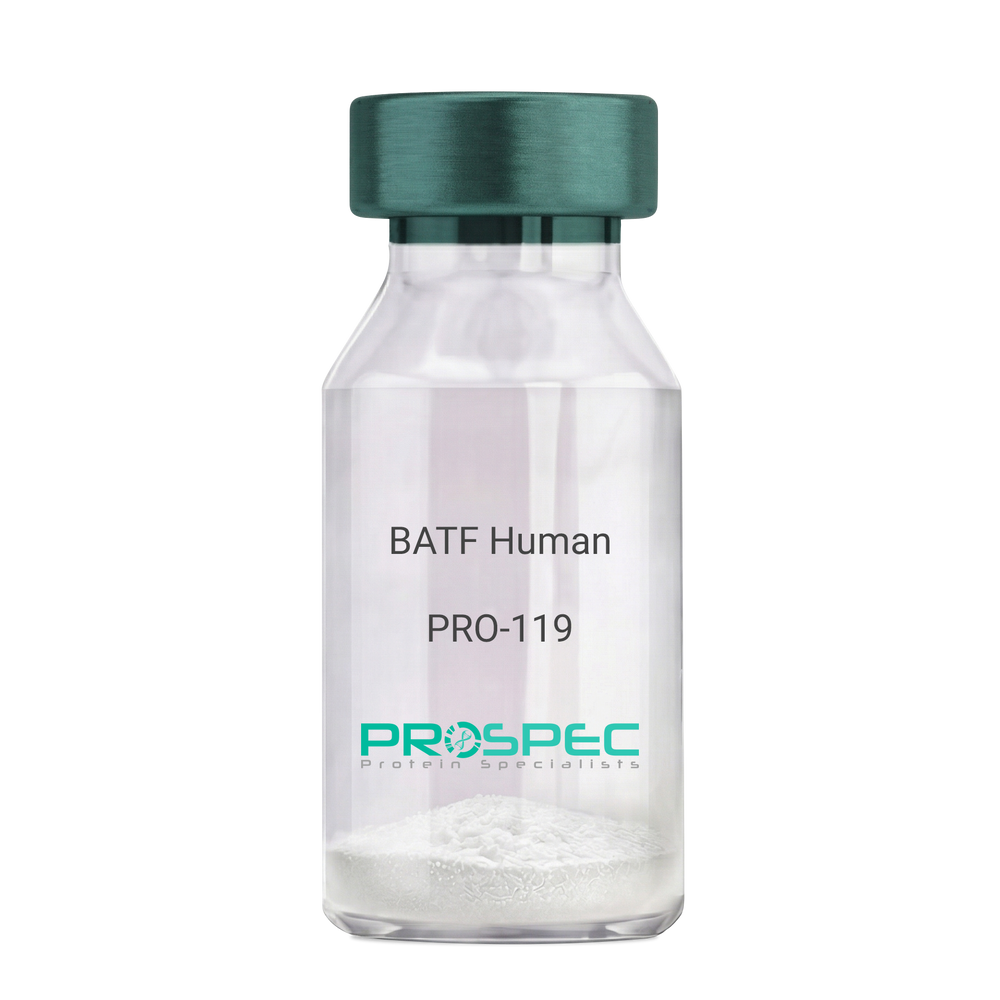
Name :
BATF HumanDescription:
Basic Leucine Zipper Transcription Factor Human Recombinant
Basic leucine zipper transcriptional factor ATF-like, B-cell-activating transcription factor, B-ATF, SF-HT-activated gene 2 protein, SFA-2, BATF, SFA2, BATF1.
Product # :
PRO-119Price :
Quantity :
Shipping Method :
Shipped with Ice Packs
More Info
- description
- source
- formulation
- purity
- More Info
- Citations
Description
BATF Human Recombinant fused with a 20 amino acid His tag at N-terminus produced in E.Coli is a single, non-glycosylated, polypeptide chain containing 145 amino acids (1-125 a.a.) and having a molecular mass of 16.2kDa. The BATF is purified by proprietary chromatographic techniques.
Source
Escherichia Coli.
Formulation
The BATF solution (1 mg/ml) contains 20mM Tris-HCl buffer (pH8.0), 0.2M NaCl and 40% glycerol.
Purity
BATF purity was found to be greater than 90.0% as determined by SDS-PAGE.
Citations
More Info
-
Introduction
BATF is a nuclear basic leucine zipper protein which is a member of the AP-1/ATF superfamily of transcription factors. BATF is intensely expressed in mature T and B lymphocytes, and is up-regulated after transformation by human T-cell leukemia virus type I. BATF acts as a tissue-specific modulator of the AP-1 transcription complex in human cells. Furthermore, BATF connects with IFP35 which is a leucine zipper protein that translocates to the nucleus following IFN treatment.
-
Synonyms
Basic leucine zipper transcriptional factor ATF-like, B-cell-activating transcription factor, B-ATF, SF-HT-activated gene 2 protein, SFA-2, BATF, SFA2, BATF1.
-
Physical Appearance
BATF is supplied as a sterile filtered colorless solution.
-
Stability
Store at 4°C if entire vial will be used within 2-4 weeks. Store, frozen at -20°C for longer periods of time. For long term storage it is recommended to add a carrier protein (0.1% HSA or BSA).Avoid multiple freeze-thaw cycles.
-
Amino Acid Sequence
MGSSHHHHHH SSGLVPRGSH MPHSSDSSDS SFSRSPPPGK QDSSDDVRRV QRREKNRIAA QKSRQRQTQK ADTLHLESED LEKQNAALRK EIKQLTEELK YFTSVLNSHE PLCSVLAAST PSPPEVVYSA HAFHQPHVSS PRFQP.
ProSpec's products are furnished for LABORATORY RESEARCH USE ONLY. The product may not be used as drugs, agricultural or pesticidal products, food additives or household chemicals.
- View Data Sheet
Name :
GSTP1 MouseDescription:
Glutathione S-Transferase pi 1 Mouse Recombinant
Glutathione S-transferase P 1, Gst P1, GST YF-YF, GST class-pi, GST-piB, Preadipocyte growth factor.
Product # :
ENZ-909Price :
Quantity :
Shipping Method :
Shipped with Ice Packs
More Info
- description
- source
- formulation
- purity
- biological activity
- More Info
- Citations
Description
GSTP1 Mouse Recombinant produced in E.Coli is a single, non-glycosylated polypeptide chain containing 233 amino acids (1-210 a.a) and having a molecular mass of 26kDa. GSTP1 is fused to a 23 amino acid His-tag at N-terminus & purified by proprietary chromatographic techniques.
Source
Escherichia Coli.
Formulation
GSTP1 protein solution (1mg/ml) containing Phosphate Buffered Saline (pH 7.4) and 10% glycerol.
Purity
Greater than 90.0% as determined by SDS-PAGE.
Biological Activity
Specific activity is > 40 units/mg, and is defined as the amount of enzyme that conjugate 1.0 umole of 1-chloro-2,4-dinitrobenzene (CDNB) with reduced glutathione per minute at pH 6.5 at 25C.Citations
More Info
-
Introduction
GSTP1 is a polymorphic gene encoding active, functionally different GSTP1 variant proteins that are believed to function in xenobiotic metabolism and have a part in susceptibility to cancer, and other diseases. GSTP1 is a glutathione S-transferase belonging to the pi class. GST family enzymes play a significant role in detoxification by catalyzing the conjugation of many hydrophobic and electrophilic compounds with reduced glutathione. Based upon the biochemical, immunologic and structural properties of the soluble GSTs they are grouped into 4 main classes: alpha, mu, pi, and theta. The GSTP1 enzyme acts by catalyzing the reaction of glutathione with an acceptor molecule to form a Sulfur-substituted glutathione. The reactions employing glutathione contribute the transformation of a broad range of electrophiles, including reactive products of lipid, protein, carcinogens, therapeutic drugs, environmental toxins, and products of oxidative stress.
The GSTP1 inactivation through CpG hypermethylation is frequent in pituitary adenomas and may be a factor in aggressive pituitary tumor behavior. GSTP1 is may be a transcriptional target of the p53 tumor suppressor gene. Single-nucleotide polymorphism in GSTP1 is linked to modified protein binding, which influence GSTP1's contribution to carcinogen and drug metabolism, and possibly disease pathogenesis and/or drug response. GST-pi might have central roles in proliferation of androgen-independent human prostate cancer cells. -
Synonyms
Glutathione S-transferase P 1, Gst P1, GST YF-YF, GST class-pi, GST-piB, Preadipocyte growth factor.
-
Physical Appearance
Sterile Filtered colorless solution.
-
Stability
Store at 4°C if entire vial will be used within 2-4 weeks. Store, frozen at -20°C for longer periods of time. For long term storage it is recommended to add a carrier protein (0.1% HSA or BSA).Avoid multiple freeze-thaw cycles.
-
Amino Acid Sequence
MGSSHHHHHH SSGLVPRGSH MGSMPPYTIV YFPVRGRCEA MRMLLADQGQ SWKEEVVTID TWMQGLLKPT CLYGQLPKFE DGDLTLYQSN AILRHLGRSL GLYGKNQREA AQMDMVNDGV EDLRGKYVTL IYTNYENGKN DYVKALPGHL KPFETLLSQN QGGKAFIVGD QISFADYNLL DLLLIHQVLA PGCLDNFPLL SAYVARLSAR PKIKAFLSSP EHVNRPINGN GKQ.
ProSpec's products are furnished for LABORATORY RESEARCH USE ONLY. The product may not be used as drugs, agricultural or pesticidal products, food additives or household chemicals.
- View Data Sheet
Name :
HPSE ActiveDescription:
Recombinant Human Heparanase-1 Active
Product # :
ENZ-1032Price :
Quantity :
Shipping Method :
Shipped with Ice Packs
More Info
- description
- formulation
- purity
- biological activity
- More Info
- Citations
Description
Heparanase Active Enzyme is produced in CHO cells.The protein is purified by several orthogonal chromatography steps.
Formulation
Heparanase Active Enzyme is supplied in20mM Acetate buffer and 750mM NaCl pH 5.4.
Purity
Greater than 95.0% as determined by:
(a) Analysis by RP-HPLC.
(b) Analysis by SDS-PAGE.Biological Activity
The specific activity of Heparanase Active Enzyme in-house standard is about 0.7 Units (1 unit = 1 μmole of reducing ends of heparan sulfate substrate formed per minute per mg Heparanase Active Enzyme at 37°C). The enzymatic activity of each Heparanase Active Enzyme batch is comparable to the standard as determined by activity assay in which immobilized heparan, released due to heparanase activity, is quantified colorimetrically. Recommended reaction buffer: 20 mM Citrate Phosphate buffer, pH 5.4; 50mM NaCl; 1mM CaCl2.
Citations
More Info
-
Introduction
Heparanase is an endo β-D-glucuronidase, which degrades heparan sulfate side chains of heparan sulfate proteoglycans (HSPGs) in the extracellular matrix. Heparanase plays an important role in ECM degradation, facilitating the migration and extravasation of tumor cells and inflammatory leukocytes (1,2,3). Upon degradation, heparanase releases growth factors and cytokines that stimulate cell proliferation and chemotaxis (4,5). Heparanase is a heterodimer comprised of a 50 kDa subunit harboring the active site and a 8 kDa subunit. It is produced as a latent 65 kDa precursor and proteolytically processed to its active form (1,6). Heparanase is highly expressed in myeloid leukocytes (i.e. neutrophils) in platelets and in human placenta. Human heparanase was found to be upregulated in various types of primary tumors, correlating in some cases with increased tumor invasiveness and vascularity and with poor prospective survival (7,8).
-
Data Sheet
To view the FULL VERSION data sheet click Heparanase-1 Active Enzyme
-
Specificity
Heparanase Active Enzyme is identified by Western blot analysis with polyclonalrabbit anti-HPA1 antibodies as 2 subunits of 8-kDa and 50-kDa.
-
Shipping Conditions
Heparanase Active Enzyme is shipped frozen on dry ice unless stated otherwise by the customer. Shipping fees to N. America and W. Europe is $400 Shipping fees to Asia, Australia and E. Europe is $500
-
Storage Procedures
Store at –80ºC, avoid repeated freeze-thaw cycles.
ProSpec's products are furnished for LABORATORY RESEARCH USE ONLY. The product may not be used as drugs, agricultural or pesticidal products, food additives or household chemicals.
- View Data Sheet
Name :
KLF7 (80-230) HumanDescription:
Kruppel-Like Factor 7 (80-230) Human Recombinant
UKLF, Krueppel-like factor 7, Ubiquitous krueppel-like factor, KLF7.
Product # :
PRO-2824Price :
Quantity :
Shipping Method :
Shipped at Room temp
More Info
- description
- source
- formulation
- purity
- More Info
- Citations
Description
The KLF7 Human is created as a recombinant protein with a 4kda N-terminal fusion of His Tag. The KLF7 His-Tagged Fusion Protein, produced in E. coli, is a 22kDa protein containing 126 amino acid residues of the KLF7 Human, 80-230 amino acids.
Source
Escherichia Coli.
Formulation
Each mg was lyophilized with 1xPBS, 0.4% SDS and 4mM DTT.
Purity
Greater than 90% as determined by SDS-PAGE.
Citations
More Info
-
Synonyms
UKLF, Krueppel-like factor 7, Ubiquitous krueppel-like factor, KLF7.
-
Physical Appearance
Filtered White lyophilized (freeze-dried) powder.
-
Stability
Store lyophilized KLF7 at -20°C. Aliquot the product after reconstitution to avoid repeated freezing/thawing cycles. Reconstituted protein can be stored at 4°C for a limited period of time; it does not show any change after two weeks at 4°C.
-
Solubility
It is recommended to add deionized water to prepare a working stock solution of approximately 0.5mg/ml and let the lyophilized pellet dissolve completely. Product is not sterile! Please filter the product by an appropriate sterile filter before using it on cell culture.
-
Background
Kruppel-Like Factor 7 (KLF7) which is a part of the KLF family, plays an important roles in many biological processes, including cellular proliferation, differentiation and apoptosis.
KLF7 functions as a transcription factor, binding to specific DNA sequences to regulate gene expression.
KLF7 takes part in the regulation of metabolic pathways, including glucose homeostasis. KLF7 modulates insulin sensitivity and plays a role in adipocyte differentiation.
KLF7 contributes to the progression of type 2 diabetes by inhibiting hormone expression and secretion in pancreatic beta-cells and also by deregulating adipocytokine secretion in adipocytes.
KLF7 is critical in the development and maturation of neurons. KLF7 promotes the differentiation of neural progenitor cells and influences axon growth and synaptic plasticity.
ProSpec's products are furnished for LABORATORY RESEARCH USE ONLY. The product may not be used as drugs, agricultural or pesticidal products, food additives or household chemicals.
- View Data Sheet
Name :
METRN MouseDescription:
Meteorin Mouse Recombinant
Meteorin, Hypoxia/reoxygenation regulatory factor, Metrn, 1810034B16Rik, Hyrac.
Product # :
PRO-2241Price :
Quantity :
Shipping Method :
Shipped with Ice Packs
More Info
- description
- source
- formulation
- purity
- More Info
- Citations
Description
METRN produced in Sf9 Baculovirus cells is a single, glycosylated polypeptide chain containing 276 amino acids (22-291 a.a.) and having a molecular mass of 30.2kDa (Migrates at 28-40kDa on SDS-PAGE under reducing conditions). METRN is expressed with a 6 amino acid His tag at C-Terminus and purified by proprietary chromatographic techniques.
Source
Sf9, Baculovirus cells.
Formulation
METRN protein solution (0.25mg/ml) contains Phosphate Buffered Saline (pH 7.4) and 10% glycerol.
Purity
Greater than 90.0% as determined by SDS-PAGE.
Citations
More Info
-
Introduction
Meteorin (METRN) is involved in both glial cell differentiation and axonal network formation during neurogenesis. METRN promotes astrocyte differentiation and transforms cerebellar astrocytes into radial glia. Moreover, the METRN protein stimulates axonal extension in small and intermediate neurons of sensory ganglia by activating nearby satellite glia.
-
Synonyms
Meteorin, Hypoxia/reoxygenation regulatory factor, Metrn, 1810034B16Rik, Hyrac.
-
Physical Appearance
Sterile Filtered colorless solution.
-
Stability
Store at 4°C if entire vial will be used within 2-4 weeks. Store, frozen at -20°C for longer periods of time. For long term storage it is recommended to add a carrier protein (0.1% HSA or BSA). Avoid multiple freeze-thaw cycles.
-
Amino Acid Sequence
GYSEDRCSWR GSGLTQEPGS VGQLTLDCTE GAIEWLYPAG ALRLTLGGPD PGTRPSIVCL RPERPFAGAQ VFAERMTGNL ELLLAEGPDL AGGRCMRWGP RERRALFLQA TPHRDISRRV AAFRFELHED QRAEMSPQAQ GLGVDGACRP CSDAELLLAA CTSDFVIHGT IHGVAHDTEL QESVITVVVA RVIRQTLPLF KEGSSEGQGR ASIRTLLRCG VRPGPGSFLF MGWSRFGEAW LGCAPRFQEF SRVYSAALTT HLNPCEMALD HHHHHH.
ProSpec's products are furnished for LABORATORY RESEARCH USE ONLY. The product may not be used as drugs, agricultural or pesticidal products, food additives or household chemicals.
- View Data Sheet
Name :
sRANKL MouseDescription:
RANK Ligand Soluble Mouse Recombinant
Soluble Receptor Activator of NFkB Ligand, TNFSF11, TRANCE, TNF-related activation-induced cytokine, OPGL, ODF, Osteoclast differentiation factor, Tumor necrosis factor ligand superfamily member 11, Receptor activator of nuclear factor kappa B ligand, RANKL, Osteoprotegerin ligand, CD254 antigen, sRANKL, sOdf.
Product # :
CYT-320Price :
Quantity :
Shipping Method :
Shipped at Room temp
More Info
- description
- source
- formulation
- purity
- biological activity
- More Info
- Citations
Description
sRANKL Mouse Recombinant produced in E.coli is single, non-glycosylated, polypeptide chain containing 174 amino acids ( 143-316 a.a.) and having a total molecular mass of 19.9kDa. CD254 is purified by proprietary chromatographic techniques.
Source
Escherichia Coli.
Formulation
The protein (1mg/ml) was lyophilized with 10mM Na2PO4, pH 7.5 & 50mM NaCl.
Purity
Greater than 95.0% as determined by SDS-PAGE.
Biological Activity
Measured by its ability to induce osteoclast formation on murine RAW264.7 cells using a concentration of 50ng/ml shown in “Corning® Osteo Assay Surface 24 Well Plates with Transwell® Permeable Supports- A Useful Tool for Co-Culture Studies” by Rebecca M. Wood and Mark Rothenber, corresponding to a specific activity of 20,000Units/mg.
Citations
More Info
-
Introduction
RANKL binds to tnfrsf11b/opg and to tnfrsf11a/rank. Osteoclast differentiation and activation factor. augments the ability of dendritic cells to stimulate naive t-cell proliferation. May be an important regulator of interactions between t-cells and dendritic cells and may play a role in the regulation of the t-cell-dependent immune response. sRANKL may also play an important role in enhanced bone-resorption in humoral hypercalcemia of malignancy.
-
Synonyms
Soluble Receptor Activator of NFkB Ligand, TNFSF11, TRANCE, TNF-related activation-induced cytokine, OPGL, ODF, Osteoclast differentiation factor, Tumor necrosis factor ligand superfamily member 11, Receptor activator of nuclear factor kappa B ligand, RANKL, Osteoprotegerin ligand, CD254 antigen, sRANKL, sOdf.
-
Physical Appearance
Sterile Filtered White lyophilized (freeze-dried) powder.
-
Stability
Lyophilized TNFSF11 although stable at room temperature for 3 weeks, should be stored desiccated below -18°C. Upon reconstitution sRANKL should be stored at 4°C between 2-7 days and for future use below -18°C. For long term storage it is recommended to add a carrier protein (0.1% HSA or BSA). Please prevent freeze-thaw cycles.
-
Solubility
It is recommended to reconstitute the lyophilized sRANKL in sterile 18MΩ-cm H2O not less than 100µg/ml, which can then be further diluted to other aqueous solutions.
-
Amino Acid Sequence
PAMMEGSWLD VAQRGKPEAQ PFAHLTINAA SIPSGSHKVT LSSWYHDRGW AKISNMTLSN GKLRVNQDGF YYLYANICFR HHETSGSVPT DYLQLMVYVV KTSIKIPSSH NLMKGGSTKN WSGNSEFHFY SINVGGFFKL RAGEEISIQV SNPSLLDPDQ DATYFGAFKV QDID.
ProSpec's products are furnished for LABORATORY RESEARCH USE ONLY. The product may not be used as drugs, agricultural or pesticidal products, food additives or household chemicals.
- View Data Sheet
Name :
LGALS7 MouseDescription:
Galectin-7 Mouse Recombinant
Galectin-7, Gal-7, HKL-14, PI7, p53-induced gene 1 protein, LGALS7, PIG1, LGALS7B, GAL7, LGALS7A.
Product # :
CYT-184Price :
Quantity :
Shipping Method :
Shipped with Ice Packs
More Info
- description
- source
- formulation
- purity
- More Info
- SDS-PAGE
- Citations
Description
LGALS7 mouse Recombinant produced E. coli is a single polypeptide chain containing 159 amino acids (1-136) and having a molecular mass of 17.6kDa.LGALS7 is fused to a 23 amino acid His-tag at N-terminus & purified by proprietary chromatographic techniques.
Source
Escherichia Coli.
Formulation
The LGALS7 solution (1mg/ml) contains 20mM Tris-HCl buffer (pH 8.0), 0.1M NaCl, 20% glycerol and 2mM DTT.
Purity
Greater than 95.0% as determined by SDS-PAGE.
SDS-PAGE
Citations
More Info
-
Introduction
Galectins are a family of animal lectins with an affinity for beta-galactosides. This family has at least 14 identified members. Galectins share similarities in the CRD (the carbohydrate recognition domain). Galectins are synthesized as cytosolic proteins. Though localized principally in the cytoplasm and lacking a classical signal peptide, galectins can also be stimulated to secretion by non-classical pathways or alternatively targeted to the nucleus. Galectins are involved in modulating cell-cell and cell-matrix interactions. Human Galectin-7 belongs to the prototypical Galectins containing a single CRD, which is initially identified in human epidermis as a monomer. The Galectin-7 expression is induced by tumor suppressor protein p53 and associated with apoptosis. Galectin-7 is a pro-apoptotic protein which functions intracellularlly upstream of JNK activation and mitochondrial cytochrome c release. The correlation of Galectin-7 with the UV-induced apoptosis of keratinocytes presents a critical mechanism in the maintenance of epidermal homeostasis. Human Galectin-7 is localized in both nucleus and cytoplasm.
-
Synonyms
Galectin-7, Gal-7, HKL-14, PI7, p53-induced gene 1 protein, LGALS7, PIG1, LGALS7B, GAL7, LGALS7A.
-
Physical Appearance
Sterile Filtered colorless solution.
-
Stability
Store at 4°C if entire vial will be used within 2-4 weeks. Store, frozen at -20°C for longer periods of time. For long term storage it is recommended to add a carrier protein (0.1% HSA or BSA).Avoid multiple freeze-thaw cycles.
-
Amino Acid Sequence
MGSSHHHHHH SSGLVPRGSH MGSMSATQHK TSLPQGVRVG TVMRIRGMVP DQAGRFHVNL LCGEEQGADA ALHFNPRLDT SEVVFNTKEQ GKWGREERGT GIPFERGQPF EVLLIATEEG FKAVVGDDEY LHFHHRMPPA RVRLVEVGGD VQLHSVKIF.
-
Background
What is the molecular weight/Mw of LGALS7 MOUSE Protein?
LGALS7 MOUSE Protein has a total Mw of 17.6kDa.
What is the source or expression system of LGALS7 MOUSE Protein?
Escherichia Coli.
What is the Purity of LGALS7 MOUSE Protein?
LGALS7 MOUSE Protein is >95% pure as determined by SDS-PAGE.
What is the Biological Activity of LGALS7 MOUSE Protein?
The biological functionality of LGALS7 MOUSE Protein will be determined in the future.
What is the amino acid sequence of LGALS7 MOUSE Protein?
MGSSHHHHHH SSGLVPRGSH MGSMSATQHK TSLPQGVRVG TVMRIRGMVP DQAGRFHVNL LCGEEQGADA ALHFNPRLDT SEVVFNTKEQ GKWGREERGT GIPFERGQPF EVLLIATEEG FKAVVGDDEY LHFHHRMPPA RVRLVEVGGD VQLHSVKIF.
What applications can LGALS7 MOUSE Protein be used in?
LGALS7 MOUSE Protein can probably be used in western blot, ELISA and Lateral Flow.
What is the endotoxin level for LGALS7 MOUSE Protein?
The endotoxin level is minimal, LGALS7 MOUSE Protein was purified using conventional chromatography techniques.
ProSpec's products are furnished for LABORATORY RESEARCH USE ONLY. The product may not be used as drugs, agricultural or pesticidal products, food additives or household chemicals.
- View Data Sheet
Name :
HK2 HumanDescription:
Hexokinase-2 Human Recombinant
Hexokinase-2, EC 2.7.1.1, HK2, Hexokinase type II, HK II, Muscle form hexokinase, HXK2, DKFZp686M1669.
Product # :
PKA-227Price :
Quantity :
Shipping Method :
Shipped with Ice Packs
More Info
- description
- source
- formulation
- purity
- biological activity
- More Info
- Citations
Description
HK2 Human Recombinant produced in E.Coli is a single, non-glycosylated, polypeptide chain (aa 1-917) fused to a 20 His tag at the N-terminal encoding the sequence of 937 amino acids in total and having a molecular mass of 104.1 kDa.HXK2 is purified by proprietary chromatographic techniques.
Source
Escherichia Coli.
Formulation
The protein (1mg/ml) contains 20mM Tris-HCl pH8.0 and 10% glycerol.
Purity
Greater than 85.0% as determined by SDS-PAGE.
Biological Activity
Specific activity is 3-4 units/ml obtained by measuring the increase of NADPH in absorbance at 340 nm resulting from the reduction of NADP. In the coupled mode, one unit will produce 1.0 umole of NADPH per minute as glucose is phosphorylated by ATP at pH 7.4 at 30C.Citations
More Info
-
Introduction
Hexokinases phosphorylate glucose to produce glucose-6-phosphate, thus committing glucose to the glycolytic pathway. Hexokinase 2 is the predominant form found in skeletal muscle. It localizes to the outer membrane of mitochondria. Expression of this gene is insulin-responsive, and studies in rat suggest that it is involved in the increased rate of glycolysis seen in rapidly growing cancer cells.
-
Synonyms
Hexokinase-2, EC 2.7.1.1, HK2, Hexokinase type II, HK II, Muscle form hexokinase, HXK2, DKFZp686M1669.
-
Physical Appearance
Sterile filtered colorless solution.
-
Stability
Store at 4°C if entire vial will be used within 2-4 weeks.Store, frozen at -20°C for longer periods of time. For long term storage it is recommended to add a carrier protein (0.1% HSA or BSA). Please avoid freeze-thaw cycles.
-
Amino Acid Sequence
MGSSHHHHHH SSGLVPRGSH MIASHLLAYF FTELNHDQVQ KVDQYLYHMR LSDETLLEIS KRFRKEMEKG LGATTHPTAA VKMLPTFVRS TPDGTEHGEF LALDLGGTNF RVLWVKVTDN GLQKVEMENQ IYAIPEDIMR GSGTQLFDHI AECLANFMDK LQIKDKKLPL GFTFSFPCHQTKLDESFLVS WTKGFKSSGV EGRDVVALIR KAIQRRGDFD IDIVAVVNDT VGTMMTCGYD DHNCEIGLIV GTGSNACYME EMRHIDMVEG DEGRMCINME WGAFGDDGSL NDIRTEFDQE IDMGSLNPGK QLFEKMISGM YMGELVRLIL VKMAKEELLF GGKLSPELLN TGRFETKDISDIEGEKDGIR KAREVLMRLG LDPTQEDCVA THRICQIVST RSASLCAATL AAVLQRIKENKGEERLRSTI GVDGSVYKKH PHFAKRLHKT VRRLVPGCDV RFLRSEDGSG KGAAMVTAVAYRLADQHRAR QKTLEHLQLS HDQLLEVKRR MKVEMERGLS KETHASAPVK MLPTYVCATPDGTEKGDFLA LDLGGTNFRV LLVRVRNGKW GGVEMHNKIY AIPQEVMHGT GDELFDHIVQ CIADFLEYMG MKGVSLPLGF TFSFPCQQNS LDESILLKWT KGFKASGCEG EDVVTLLKEA IHRREEFDLD VVAVVNDTVG TMMTCGFEDP HCEVGLIVGT GSNACYMEEM RNVELVEGEE GRMCVNMEWG AFGDNGCLDD FRTEFDVAVD ELSLNPGKQR FEKMISGMYL GEIVRNILID FTKRGLLFRG RISERLKTRG IFETKFLSQI ESDCLALLQV RAILQHLGLE STCDDSIIVK EVCTVVARRA AQLCGAGMAA VVDRIRENRG LDALKVTVGV DGTLYKLHPH FAKVMHETVK DLAPKCDVSF LQSEDGSGKG AALITAVACR IREAGQR.
ProSpec's products are furnished for LABORATORY RESEARCH USE ONLY. The product may not be used as drugs, agricultural or pesticidal products, food additives or household chemicals.
- View Data Sheet
Name :
CHGA Human, HisDescription:
Chromogranin-A Human Recombinant, His Tag
CGA, CHGA, Vasostatin-2, Pituitary secretory protein I, SP-I.
Product # :
PRO-699Price :
Quantity :
Shipping Method :
Shipped with Ice Packs
More Info
- description
- source
- formulation
- purity
- More Info
- Citations
Description
Recombinant Human CHGA produced in E.Coli is a single, non-glycosylated polypeptide chain containing 460 amino acids (19-457 a.a) and having a molecular mass of 51.2kDa (Molecular weight on SDS-PAGE will appear higher). Chromgranin-A is fused to 21 amino acid His Tag at N-terminus and purified by proprietary chromatographic techniques.
Source
Escherichia Coli.
Formulation
The CHGA protein (0.5mg/ml) contains 20mM Tris-HCl buffer pH-7.5, 2mM EDTA, 0.1mM PMSF and 10% glycerol.
Purity
Greater than 80.0% as determined by Analysis by SDS-PAGE.
Citations
More Info
-
Introduction
Chromgranin-A is part of the neuroendocrine secretory protein family. CHGA is located in secretory vesicles of neurons and endocrine cells. Chromgranin-A is a precursor to three biologically active peptides; vasostatin, pancreastatin, and parastatin. These peptides act as autocrine or paracrine negative modulators of the neuroendocrine system. Other peptides, including chromostatin, beta-granin, WE-14 and GE-25, are also derived from the full-length protein. Chromgranin-A has numerous biological activities on some tissues and organs and exerts a large spectrum of homeostatic actions, including antifungal and antimicrobial effect, modulation of cell adhesion, and inhibition of parathyroid hormone secretion.
-
Synonyms
CGA, CHGA, Vasostatin-2, Pituitary secretory protein I, SP-I.
-
Physical Appearance
Sterile filtered colorless solution.
-
Stability
Store at 4°C if entire vial will be used within 2-4 weeks. Store, frozen at -20°C for longer periods of time. For long term storage it is recommended to add a carrier protein (0.1% HSA or BSA). Avoid multiple freeze-thaw cycles.
-
Amino Acid Sequence
MGSSHHHHHH SSGLVPRGSH MLPVNSPMNK GDTEVMKCIV EVISDTLSKP SPMPVSQECF ETLRGDERIL SILRHQNLLK ELQDLALQGA KERAHQQKKH SGFEDELSEV LENQSSQAEL KEAVEEPSSK DVMEKREDSK EAEKSGEATD GARPQALPEP MQESKAEGNN QAPGEEEEEE EEATNTHPPA SLPSQKYPGP QAEGDSEGLS QGLVDREKGL SAEPGWQAKR EEEEEEEEEA EAGEEAVPEE EGPTVVLNPH PSLGYKEIRK GESRSEALAV DGAGKPGAEE AQDPEGKGEQ EHSQQKEEEE EMAVVPQGLF RGGKSGELEQ EEERLSKEWE DSKRWSKMDQ LAKELTAEKR LEGQEEEEDN RDSSMKLSFR ARAYGFRGPG PQLRRGWRPS SREDSLEAGL PLQVRGYPEE KKEEEGSANR RPEDQELESL SAIEAELEKV AHQLQALRRG.
ProSpec's products are furnished for LABORATORY RESEARCH USE ONLY. The product may not be used as drugs, agricultural or pesticidal products, food additives or household chemicals.
- View Data Sheet
Name :
Myostatin HumanDescription:
Myostatin Human Recombinant
GDF-8, MSTN, Growth Differentiation Factor 8, MSTN Muscle Hypertrophy.
Product # :
CYT-418Price :
Quantity :
Shipping Method :
Shipped at Room temp
More Info
- description
- source
- formulation
- purity
- biological activity
- More Info
- Citations
Description
Myostatin Human Recombinant produced in E.Coli is a homodimer, non-glycosylated polypeptide chain containing 2 x 10⁹ amino acids and having a total molecular mass of 24814 Dalton. The GDF-8 is purified by proprietary chromatographic techniques.
Source
Escherichia Coli.
Formulation
Lyophilized from a concentrated (1mg/ml) solution containing no additives.
Purity
Greater than 95.0% as determined by:
(a) Analysis by RP-HPLC.
(b) Analysis by SDS-PAGE.Biological Activity
The ED50 as determined by the inhibition of the proliferation of MPC-11 cells is < 20ng/ml, corresponding to a Specific Activity of 50,000units/mg.Citations
More Info
-
Introduction
GDF8 is a member of the bone morphogenetic protein (BMP) family and the TGF-beta superfamily. This group of proteins is characterized by a polybasic proteolytic processing site which is cleaved to produce a mature protein containing seven conserved cysteine residues. The members of this family are regulators of cell growth and differentiation in both embryonic and adult tissues. This gene is thought to encode a secreted protein which negatively regulates skeletal muscle growth.
-
Synonyms
GDF-8, MSTN, Growth Differentiation Factor 8, MSTN Muscle Hypertrophy.
-
Physical Appearance
Sterile Filtered White lyophilized (freeze-dried) powder.
-
Stability
Lyophilized Myostatin although stable at room temperature for 3 weeks, should be stored desiccated below -18°C. Upon reconstitution Myostatin should be stored at 4°C between 2-7 days and for future use below -18°C.For long term storage it is recommended to add a carrier protein (0.1% HSA or BSA).Please prevent freeze-thaw cycles.
-
Solubility
It is recommended to reconstitute the lyophilized Myostatin in sterile 20mM HCl at 0.1 mg/ml, which can then be further diluted to other aqueous solutions.
-
Amino Acid Sequence
The sequence of the first five N-terminal amino acids was determined and was found to be Asp-Phe-Gly-Leu-Asp.
-
Protein content
Protein quantitation was carried out by two independent methods:1. UV spectroscopy at 280 nm using the absorbency value of 1.55 as the extinction coefficient for a 0.1% (1mg/ml) solution. This value is calculated by the PC GENE computer analysis program of protein sequences (IntelliGenetics). 2. Analysis by RP-HPLC, using a standard solution of Myostatin as a Reference Standard.
ProSpec's products are furnished for LABORATORY RESEARCH USE ONLY. The product may not be used as drugs, agricultural or pesticidal products, food additives or household chemicals.
- View Data Sheet
Name :
BMPR1A Human, CHODescription:
Bone Morphogenetic Protein Receptor-1A Human Recombinant, CHO
BMPR-1A, BMP-R1A, BMPR1A, BMR1A, CD292, CD-292, Serine/threonine-protein kinase receptor R5, SKR5, ALK-3, ACVRLK3, EC 2.7.11.30, CD292 antigen.
Product # :
CYT-1094Price :
Quantity :
Shipping Method :
Shipped at Room temp
More Info
- description
- source
- formulation
- purity
- biological activity
- More Info
- Citations
Description
Bone Morphogenetic Protein Receptor-1A Human Recombinant produced in CHO cells is a glycosylated homodimer chain containing 2x362 amino acids and having a total molecular mass of 80.8kDa. BMPR1A is purified by proprietary chromatographic techniques.
Source
CHO cells.
Formulation
The protein was lyophilized from a sterile (0.2µm) filtered solution containing PBS.
Purity
Greater than 95.0% as determined by SDS-PAGE.
Biological Activity
The ED50, as calculated by the Inhibition of human BMP-4-induced alkaline phosphatase production caused by ATDC5 cells is 120ng/ml corresponding to a specific activity of 8.3x10^3 units/mg.
Citations
More Info
-
Introduction
The bone morphogenetic protein (BMP) receptors are a family of transmembrane serine/threonine kinases that include the type I receptors BMPR1A and BMPR1B and the type II receptor BMPR2. These receptors are also closely related to the receptors, ACVR1 and ACVR2. The ligands of these receptors are members of the TGF-beta superfamily. TGF-betas transduce their signals through the formation of heteromeric complexes with 2 different types of serine (threonine) kinase receptors: type I receptors of about 50-55 kD and type II receptors of about 70-80 kD. Type II receptors bind ligands in the absence of type I receptors, but they require their respective type I receptors for signaling, whereas type I receptors require their respective type II receptors for ligand binding.
-
Synonyms
BMPR-1A, BMP-R1A, BMPR1A, BMR1A, CD292, CD-292, Serine/threonine-protein kinase receptor R5, SKR5, ALK-3, ACVRLK3, EC 2.7.11.30, CD292 antigen.
-
Physical Appearance
Sterile Filtered White lyophilized (freeze-dried) powder.
-
Stability
Lyophilized BMPR1A although stable at room temperature for 3 weeks, should be stored desiccated below -18°C. Upon reconstitution BMPR1A should be stored at 4°C between 2-7 days and for future use below -18°C. Please prevent freeze-thaw cycles.
-
Solubility
It is recommended to reconstitute the lyophilized BMPR1A in sterile 18MΩ-cm H2O not less than 100µg/ml, which can then be further diluted to other aqueous solutions.
-
Amino Acid Sequence
QNLDSMLHGT GMKSDSDQKK SENGVTLAPE DTLPFLKCYC SGHCPDDAIN NTCITNGHCF AIIEEDDQGE TTLASGCMKY EGSDFQCKDS PKAQLRRTIE CCRTNLCNQY LQPTLPPVVI GPFFDGSIRI EGRMDDKTHT CPPCPAPELL GGPSVFLFPP KPKDTLMISR TPEVTCVVVD VSHEDPEVKF NWYVDGVEVH NAKTKPREEQ YNSTYRVVSV LTVLHQDWLN GKEYKCKVSN KALPAPIEKT ISKAKGQPRE PQVYTLPPSR DELTKNQVSL TCLVKGFYPS DIAVEWESNG QPENNYKTTP PVLDSDGSFF LYSKLTVDKS RWQQGNVFSC SVMHEALHNH YTQKSLSLSP GK.
-
Background
Research Paper on Bone Morphogenetic Protein Receptor-1A Human Recombinant, CHO, Monomer, HEK
Abstract:
Welcome to the captivating world of Bone Morphogenetic Protein Receptor-1A Human Recombinant, CHO, Monomer (BMPR-1A HR) in Human Embryonic Kidney Cells (HEK). This research paper explores the vital role of BMPR-1A HR in cellular responses. As a key receptor in the transforming growth factor-beta (TGF-β) superfamily, BMPR-1A HR plays a significant part in guiding cellular differentiation and tissue development. Join us as we unravel the molecular mechanisms behind BMPR-1A HR signaling in HEK cells and delve into its interactions with key cytokines, including Tumor Necrosis Factor-alpha (TNF-α) and Tumor Necrosis Factor-alpha Superfamily Member 2 (TNFα SF2 or TNFSF2).
Introduction:
Welcome to the intriguing world of BMPR-1A HR! In this section, we introduce the remarkable BMPR-1A HR and its crucial role in shaping cellular responses. Together, let's explore how this receptor influences cellular behavior and contributes to tissue growth, fostering our understanding of its importance in biological processes.
BMPR-1A HR Signaling in HEK Cells:
Be amazed by the intricate dance of BMPR-1A HR signaling within HEK cells! Uncover the complex process of ligand-receptor binding, initiating both the canonical SMAD-dependent and non-canonical SMAD-independent pathways. This harmonious interplay regulates a wide range of cellular processes, including gene transcription, cell proliferation, and differentiation, forming the foundation of cellular communication.
Influential Role in Cellular Responses:
Marvel at the influential role of BMPR-1A HR as a critical mediator of cellular responses within HEK cells. Witness its ability to modulate cellular differentiation, driving the expression of key differentiation markers such as DIF. Our exploration will highlight the multifaceted nature of BMPR-1A HR, impacting diverse cellular pathways, including those involving TNF-α and TNFSF2, shaping a dynamic and interconnected cellular network.
Interplay with Key Cytokines:
Discover the intriguing interactions between BMPR-1A HR and key cytokines like TNF-α and TNFSF2. Explore how BMPR-1A HR influences their expression and activity, hinting at potential cross-talk between BMPR-1A HR and inflammatory pathways. This delicate balance fosters a harmonious cellular environment, where multiple players contribute to overall cellular responses.
Therapeutic Implications and Tissue Development:
Witness the potential therapeutic implications of BMPR-1A HR in tissue development. Together, we explore the exciting possibilities of utilizing BMPR-1A HR in regenerative medicine, offering hope for enhanced tissue development and repair. As we venture forth, we also address challenges, such as optimal dosage, innovative delivery methods, and safety considerations, ensuring a responsible and effective approach.
Conclusion:
As we conclude our exploration of BMPR-1A HR in HEK cells, we stand in awe of its role in mediating cellular responses and tissue development. Equipped with this knowledge, we look forward to a promising future, where BMPR-1A HR from CHO cells opens doors to innovative applications in regenerative medicine, contributing to improved human health and well-being.
What is the molecular weight/Mw of BMPR1A Protein?
BMPR1A Protein has a total Mw of 80.8kDa.
What is the source or expression system of BMPR1A Protein?
CHO cells.
What is the Purity of BMPR1A Protein?
BMPR1A Protein is >95% pure as determined by SDS-PAGE.
What is the Biological Activity of BMPR1A Protein?
The ED50, as calculated by the Inhibition of human BMP-4-induced alkaline phosphatase production caused by ATDC5 cells is 120ng/ml corresponding to a specific activity of 8.3x10^3 units/mg.
What is the amino acid sequence of BMPR1A Protein?
QNLDSMLHGT GMKSDSDQKK SENGVTLAPE DTLPFLKCYC SGHCPDDAIN NTCITNGHCF AIIEEDDQGE TTLASGCMKY EGSDFQCKDS PKAQLRRTIE CCRTNLCNQY LQPTLPPVVI GPFFDGSIRI EGRMDDKTHT CPPCPAPELL GGPSVFLFPP KPKDTLMISR TPEVTCVVVD VSHEDPEVKF NWYVDGVEVH NAKTKPREEQ YNSTYRVVSV LTVLHQDWLN GKEYKCKVSN KALPAPIEKT ISKAKGQPRE PQVYTLPPSR DELTKNQVSL TCLVKGFYPS DIAVEWESNG QPENNYKTTP PVLDSDGSFF LYSKLTVDKS RWQQGNVFSC SVMHEALHNH YTQKSLSLSP GK.
What applications can BMPR1A Protein be used in?
BMPR1A Protein can probably be used in western blot, ELISA and Lateral Flow.
What is the endotoxin level for BMPR1A Protein?
The endotoxin level is minimal, BMPR1A Protein was purified using conventional chromatography techniques.
ProSpec's products are furnished for LABORATORY RESEARCH USE ONLY. The product may not be used as drugs, agricultural or pesticidal products, food additives or household chemicals.
- View Data Sheet
Name :
EIF3I HumanDescription:
Eukaryotic Translation Initiation Factor 3I Human Recombinant
Eukaryotic Translation Initiation Factor 3, Subunit I, EIF3S2, Eukaryotic Translation Initiation Factor 3, Subunit 2 Beta, 36kDa, Eukaryotic Translation Initiation Factor 3 Subunit 2, TRIP-1, eIF-3-beta, EIF3 P36, TGF-Beta Receptor-Interacting Protein 1, PRO2242, eIF3-beta, eIF3-p36, Eukaryotic Translation Initiation Factor 3 Subunit I, Eukaryotic Translation Initiation Factor 3, Subunit 2 (Beta, 36kD), Predicted Protein Of HQ2242, TGFbeta Receptor-Interacting Protein 1, eIF3i.
Product # :
PRO-1740Price :
Quantity :
Shipping Method :
Shipped with Ice Packs
More Info
- description
- source
- formulation
- purity
- More Info
- Citations
Description
EIF3I Human Recombinant produced in E.Coli is a single, non-glycosylated polypeptide chain containing 348 amino acids (1-325aa) and having a molecular mass of 38.9kDa.EIF3I is fused to a 23 amino acid His-tag at N-terminus & purified by proprietary chromatographic techniques.
Source
Escherichia Coli.
Formulation
APOBEC4 protein solution (1mg/ml) containing 20mM Tris-HCl buffer (pH 8.0), 0.4M UREA and 10% glycerol.
Purity
Greater than 90% as determined by SDS-PAGE.
Citations
More Info
-
Introduction
Eukaryotic translation initiation factor 3, subunit I (EIF3I) is part of the eukaryotic translation initiation factor 3 (eIF-3) complex, which is essential for numerous steps in the initiation of protein synthesis. The eIF-3 complex links with the 40S ribosome and facilitates the recruitment of eIF-1, eIF-1A, eIF-2: GTP: methionyl-tRNAi and eIF-5 to form the 43S pre-initiation complex (43S PIC). The eIF-3 complex stimulates mRNA recruitment to the 43S PIC and scanning of the mRNA for AUG recognition. The eIF-3 complex is also essential for disassembly and recycling of post-termination ribosomal complexes and subsequently prevents premature joining of the 40S and 60S ribosomal subunits prior to initiation. Among the diseases associated with EIF3I are clonorchiasis, and tonsillitis.
-
Synonyms
Eukaryotic Translation Initiation Factor 3, Subunit I, EIF3S2, Eukaryotic Translation Initiation Factor 3, Subunit 2 Beta, 36kDa, Eukaryotic Translation Initiation Factor 3 Subunit 2, TRIP-1, eIF-3-beta, EIF3 P36, TGF-Beta Receptor-Interacting Protein 1, PRO2242, eIF3-beta, eIF3-p36, Eukaryotic Translation Initiation Factor 3 Subunit I, Eukaryotic Translation Initiation Factor 3, Subunit 2 (Beta, 36kD), Predicted Protein Of HQ2242, TGFbeta Receptor-Interacting Protein 1, eIF3i.
-
Physical Appearance
Sterile Filtered clear solution.
-
Stability
Store at 4°C if entire vial will be used within 2-4 weeks. Store, frozen at -20°C for longer periods of time.For long term storage it is recommended to add a carrier protein (0.1% HSA or BSA).Please avoid freeze thaw cycles.
-
Amino Acid Sequence
MGSSHHHHHH SSGLVPRGSH MGSMKPILLQ GHERSITQIK YNREGDLLFT VAKDPIVNVW YSVNGERLGT YMGHTGAVWC VDADWDTKHV LTGSADNSCR LWDCETGKQL ALLKTNSAVR TCGFDFGGNI IMFSTDKQMG YQCFVSFFDL RDPSQIDNNE PYMKIPCNDS KITSAVWGPL GECIIAGHES GELNQYSAKS GEVLVNVKEH SRQINDIQLS RDMTMFVTAS KDNTAKLFDS TTLEHQKTFR TERPVNSAAL SPNYDHVVLG GGQEAMDVTT TSTRIGKFEA RFFHLAFEEE FGRVKGHFGP INSVAFHPDG KSYSSGGEDG YVRIHYFDPQ YFEFEFEA
ProSpec's products are furnished for LABORATORY RESEARCH USE ONLY. The product may not be used as drugs, agricultural or pesticidal products, food additives or household chemicals.
- View Data Sheet
Name :
Leptin Mouse, PEGDescription:
Pegylated Mouse Leptin Recombinant
OB Protein, Obesity Protein, OBS, Obesity factor.
Product # :
CYT-591Price :
Quantity :
Shipping Method :
Shipped at Room temp
More Info
- description
- source
- formulation
- purity
- biological activity
- More Info
- Citations
Description
Leptin Mono-Pegylated Mouse Recombinant produced in E.Coli is a single, non-glycosylated, polypeptide chain containing 146 amino acids and an additional Ala at N-terminus. Pegylated Mouse Leptin contains PEG 20 kDa at its N-terminus and having a molecular mass of 35.6 kDa as determined by mass spectrometry. Since its enlarged hydrodymanic volume Pegylated Leptin runs on SDS-PAGE as A 48 kDa protein and in gel-filtration on Superdex 200 as over 100 kDa protein. Pegylated Mouse Leptin half-life in circulation after SC injection was over 20 hours. Mouse Leptin was purified by proprietary chromatographic techniques according to Salomon et al (2006) Protein Expression and Purification 47, 128–136 and then pegylated.
Source
Escherichia Coli.
Formulation
The mouse Leptin was lyophilized from a concentrated (0.65mg/ml) solution containing 0.003mM NaHCO3.
Purity
Greater than 99.0% as determined by:
(a) Analysis by Gel-Filtration.
(b) Analysis by SDS-PAGE.Biological Activity
Pegylated mouse Leptin is capable of stimulatng proliferation of BAF/3 cells stably transfected with the long form of human leptin receptor. Pegylated mouse Leptin in vitro activity is only slightly lower than the non-pegylated antagonist but in vivo it has profound weight reducing effect (as compared to the non-pegylated leptin), resulting mainly from reduced food intake.Citations
More Info
-
Introduction
A 16-kDa peptide hormone secreted from white adipocytes and implicated in the regulation of food intake and energy balance. Leptin provides the key afferent signal from fat cells in the feedback system that controls body fat stores.
-
Synonyms
OB Protein, Obesity Protein, OBS, Obesity factor.
-
Physical Appearance
Sterile Filtered White lyophilized (freeze-dried) powder.
-
Stability
Lyophilized Leptin although stable at room temperature for 3 weeks, should be stored desiccated below -18°C. Upon reconstitution Leptin should be stored at 4°C between 2-7 days and for future use below -18°C.For long term storage it is recommended to add a carrier protein (0.1% HSA or BSA).Please prevent freeze-thaw cycles.
-
Solubility
It is recommended to reconstitute the lyophilized Leptin in sterile 0.4% NaHCO3 adjusted to pH-8.5 not less than 100µg/ml, which can then be further diluted to other aqueous solutions.
ProSpec's products are furnished for LABORATORY RESEARCH USE ONLY. The product may not be used as drugs, agricultural or pesticidal products, food additives or household chemicals.
- View Data Sheet
Name :
IL3 Human, Sf9Description:
Interleukin-3 Human Recombinant, Sf9
MCGF (Mast cell growth factor), Multi-CSF, HCGF, P-cell stimulation factor, IL-3, MGC79398, MGC79399.
Product # :
CYT-417Price :
Quantity :
Shipping Method :
Shipped at Room temp
More Info
- description
- source
- formulation
- purity
- biological activity
- More Info
- Citations
Description
Interleukin-3 Human Recombinant produced in insect cells is a single, glycosylated polypeptide chain containing 133 amino acids and having a molecular mass of 15000 Dalton. The IL-3 CSF is fused to a C-terminal His-tag (6x His) and purified by proprietary chromatographic techniques.
Source
Insect Cells.
Formulation
Lyophilized from a concentrated (1mg/ml) solution in water containing 0.5X PBS pH-7.4.
Purity
Greater than 95.0% as determined by(a) Analysis by RP-HPLC.
(b) Analysis by SDS-PAGE.Biological Activity
The ED50 as determined by the dose-dependant stimulation of TF-1 cells is < 0.1 ng/ml, corresponding to a Specific Activity of 10,000,000IU/mg.Citations
More Info
-
Introduction
IL3 is a potent growth promoting cytokine. This cytokine is capable of supporting the proliferation of a broad range of hematopoietic cell types. It is involved in a variety of cell activities such as cell growth, differentiation and apoptosis. This cytokine has been shown to also possess neurotrophic activity, and it may be associated with neurologic disorders.
-
Synonyms
MCGF (Mast cell growth factor), Multi-CSF, HCGF, P-cell stimulation factor, IL-3, MGC79398, MGC79399.
-
Physical Appearance
Sterile Filtered White lyophilized (freeze-dried) powder.
-
Stability
Lyophilized Interleukin-3 although stable at room temperature for 3 weeks, should be stored desiccated below -18°C. Upon reconstitution IL3 should be stored at 4°C between 2-7 days and for future use below -18°C.For long term storage it is recommended to add a carrier protein (0.1% HSA or BSA).Please prevent freeze-thaw cycles.
-
Solubility
It is recommended to reconstitute the lyophilized Interleukin-3 in sterile 18MΩ-cm H2O not less than 100µg/ml, which can then be further diluted to other aqueous solutions.
-
Amino Acid Sequence
The sequence of the first five N-terminal amino acids was determined and was found to be Ala-Pro-Ala-Pro-Thr.
-
Background
What is the molecular weight/Mw of IL3 HUMAN, SF9 Protein?
IL3 HUMAN, SF9 Protein has a total Mw of 15kDa.
What is the source or expression system of IL3 HUMAN, SF9 Protein?
Insect Cells.
What is the Purity of IL3 HUMAN, SF9 Protein?
IL3 HUMAN, SF9 Protein is >95% pure as determined by SDS-PAGE.
What is the Biological Activity of IL3 HUMAN, SF9 Protein?
The ED50 as determined by the dose-dependant stimulation of TF-1 cells is < 0.1 ng/ml, corresponding to a Specific Activity of 10,000,000IU/mg.
What is the amino acid sequence of IL3 HUMAN, SF9 Protein?
The sequence of the first five N-terminal amino acids was determined and was found to be Ala-Pro-Ala-Pro-Thr.
What applications can IL3 HUMAN, SF9 Protein be used in?
IL3 HUMAN, SF9 Protein can probably be used in western blot, ELISA and Lateral Flow.
What is the endotoxin level for IL3 HUMAN, SF9 Protein?
The endotoxin level is minimal, IL3 HUMAN, SF9 Protein was purified using conventional chromatography techniques.
Who supplies recombinant IL3 HUMAN, SF9 that is in stock and available to order?
ProSpec has the protein in stock and available for immediate delivery.
Where can I order bulk mg quantities of IL3 HUMAN, SF9?
ProSpec supplies bulk mg quantities at affordable prices that meets research and academic budgets.
ProSpec's products are furnished for LABORATORY RESEARCH USE ONLY. The product may not be used as drugs, agricultural or pesticidal products, food additives or household chemicals.
- View Data Sheet
Name :
GSTP1 AntibodyDescription:
Glutathione S-Transferase pi 1, Mouse Anti Human
Glutathione S-transferase P 1, Gst P1, GST YF-YF, GST class-pi, GST-piB, Preadipocyte growth factor.
Product # :
ANT-729Price :
Quantity :
Shipping Method :
Shipped with Ice Packs
More Info
- formulation
- More Info
- Citations
Formulation
1mg/ml containing PBS, pH-7.4, 10% Glycerol and 0.02% Sodium Azide.
Citations
More Info
-
Introduction
GSTP1 is a polymorphic gene encoding active, functionally different GSTP1 variant proteins that are believed to function in xenobiotic metabolism and have a part in susceptibility to cancer, and other diseases. GSTP1 is a glutathione S-transferase belonging to the pi class. GST family enzymes play a significant role in detoxification by catalyzing the conjugation of many hydrophobic and electrophilic compounds with reduced glutathione. Based upon the biochemical, immunologic and structural properties of the soluble GSTs they are grouped into 4 main classes: alpha, mu, pi, and theta. The GSTP1 enzyme acts by catalyzing the reaction of glutathione with an acceptor molecule to form a Sulfur-substituted glutathione. The reactions employing glutathione contribute the transformation of a broad range of electrophiles, including reactive products of lipid, protein, carcinogens, therapeutic drugs, environmental toxins, and products of oxidative stress.
The GSTP1 inactivation through CpG hypermethylation is frequent in pituitary adenomas and may be a factor in aggressive pituitary tumor behavior. GSTP1 is may be a transcriptional target of the p53 tumor suppressor gene. Single-nucleotide polymorphism in GSTP1 is linked to modified protein binding, which influence GSTP1's contribution to carcinogen and drug metabolism, and possibly disease pathogenesis and/or drug response. GST-pi might have central roles in proliferation of androgen-independent human prostate cancer cells. -
Synonyms
Glutathione S-transferase P 1, Gst P1, GST YF-YF, GST class-pi, GST-piB, Preadipocyte growth factor.
-
Physical Appearance
Sterile filtered colorless solution.
-
Immunogen
Anti-human GSTP1 mAb, is derived from hybridization of mouse F0 myeloma cells with spleen cells from BALB/c mice immunized with recombinant human GSTP1 amino acids 1-210 purified from E. coli.
-
Ig Subclass
Mouse IgG1 heavy chain and κ light chain.
-
Clone
PAT12C10AT
-
Applications
GSTP1 antibody has been tested by ELISA, Western blot analysis, ICC/IF and Flow cytometry to assure specificity and reactivity. Since application varies, however, each investigation should be titrated by the reagent to obtain optimal results.
-
Type
Mouse Anti Human Monoclonal.
-
Storage Procedures
For periods up to 1 month store at 4°C, for longer periods of time, store at -20°C. Prevent freeze thaw cycles.
-
Purification Method
GSTP1 antibody was purified from mouse ascitic fluids by protein-A affinity chromatography.
ProSpec's products are furnished for LABORATORY RESEARCH USE ONLY. The product may not be used as drugs, agricultural or pesticidal products, food additives or household chemicals.