Search results
1000 results found for “Other Growth Factors”
Name
Description
Product #
Price
Quantity
Shipping Method
- View Data Sheet
Name :
IL 2 Human, HisDescription:
Interleukin-2 Human Recombinant, His Tag
T-cell growth factor (TCGF), Interleukin-2, Lymphokine, IL-2, IL2.
Product # :
CYT-666Price :
Quantity :
Shipping Method :
Shipped with Ice Packs
More Info
- description
- source
- formulation
- purity
- More Info
Description
Interleukin-2 Human Recombinant produced in E.Coli is a single, non-glycosylated, Polypeptide chain containing 133 amino acids fragment (21-153) having a molecular weight of 20kDa and fused with a 4.5kDa amino-terminal hexahistidine tag. The IL-2 His is purified by proprietary chromatographic techniques.
Source
Escherichia Coli.
Formulation
Interleukin-2 His-Tag protein is supplied in 20mM Tris-HCl pH-8 and 50% glycerol.
Purity
Greater than 90.0% as determined by SDS-PAGE.
More Info
-
Introduction
IL2 is a secreted cytokine that is important for the proliferation of T and B lymphocytes. The receptor of this cytokine is a heterotrimeric protein complex whose gamma chain is also shared by interleukin 4 (IL4) and interleukin 7 (IL7). The expression of this gene in mature thymocytes is monoallelic, which represents an unusual regulatory mode for controlling the precise expression of a single gene. The targeted disruption of a similar gene in mice leads to ulcerative colitis-like disease, which suggests an essential role of this gene in the immune response to antigenic stimuli.
-
Synonyms
T-cell growth factor (TCGF), Interleukin-2, Lymphokine, IL-2, IL2.
-
Physical Appearance
Sterile Filtered clear solution.
-
Stability
Store at 4°C if entire vial will be used within 2-4 weeks. Store, frozen at -20°C for longer periods of time. Please avoid freeze thaw cycles.
ProSpec's products are furnished for LABORATORY RESEARCH USE ONLY. The product may not be used as drugs, agricultural or pesticidal products, food additives or household chemicals.
- View Data Sheet
Name :
ARHGEF39 HumanDescription:
Rho Guanine Nucleotide Exchange Factor 39 Human Recombinant
Rho guanine nucleotide exchange factor 39, ARHGEF39, C9orf100, RP11-331F9.7.
Product # :
PRO-2101Price :
Quantity :
Shipping Method :
Shipped with Ice Packs
More Info
- description
- source
- formulation
- purity
- More Info
Description
ARHGEF39 Human Recombinant produced in E.Coli is a single, non-glycosylated polypeptide chain containing 358 amino acids (1-335 a.a) and having a molecular mass of 40.7kDa.ARHGEF39 is fused to a 23 amino acid His-tag at N-terminus & purified by proprietary chromatographic techniques.
Source
Escherichia Coli.
Formulation
ARHGEF39 protein solution (1mg/ml) containing 20mM Tris-HCl buffer (pH 8.0) and 10% glycerol.
Purity
Greater than 85.0% as determined by SDS-PAGE.
More Info
-
Introduction
Rho Guanine Nucleotide Exchange Factor 39, also known as ARHGEF39, is a protein coding gene which owns one DH (DBL-homology) domain and one PH domain. ARHGEF39 encourages cell proliferation.
-
Synonyms
Rho guanine nucleotide exchange factor 39, ARHGEF39, C9orf100, RP11-331F9.7.
-
Physical Appearance
Sterile Filtered clear solution.
-
Stability
Store at 4°C if entire vial will be used within 2-4 weeks. Store, frozen at -20°C for longer periods of time. For long term storage it is recommended to add a carrier protein (0.1% HSA or BSA).Avoid multiple freeze-thaw cycles.
-
Amino Acid Sequence
MGSSHHHHHH SSGLVPRGSH MGSMELSCPG SRCPVQEQRA RWERKRACTA RELLETERRY QEQLGLVATY FLGILKAKGT LRPPERQALF GSWELIYGAS QELLPYLEGG CWGQGLEGFC RHLELYNQFA ANSERSQTTL QEQLKKNKGF RRFVRLQEGR PEFGGLQLQD LLPLPLQRLQ QYENLVVALA ENTGPNSPDH QQLTRAARLI SETAQRVHTI GQKQKNDQHL RRVQALLSGR QAKGLTSGRW FLRQGWLLVV PPHGEPRPRM FFLFTDVLLM AKPRPPLHLL RSGTFACKAL YPMAQCHLSR VFGHSGGPCG GLLSLSFPHE KLLLMSTDQE ELSRWYHSLT WAISSQKN.
ProSpec's products are furnished for LABORATORY RESEARCH USE ONLY. The product may not be used as drugs, agricultural or pesticidal products, food additives or household chemicals.
- View Data Sheet
Name :
GCHFR HumanDescription:
GTP Cyclohydrolase I Feedback Regulator Human Recombinant
GFRP, HsT16933, P35,GTP cyclohydrolase 1 feedback regulatory protein, GTP cyclohydrolase I feedback regulatory protein, p35, GCHFR
Product # :
PRO-2006Price :
Quantity :
Shipping Method :
Shipped with Ice Packs
More Info
- description
- source
- formulation
- purity
- More Info
Description
GCHFR Human Recombinant produced in E.Coli is a single, non-glycosylated polypeptide chain containing 107 amino acids (1-84a.a) and having a molecular mass of 12.1kDa. GCHFR is fused to a 23 amino acid His-tag at N-terminus & purified by proprietary chromatographic techniques.
Source
Escherichia Coli.
Formulation
GCHFR protein solution (1mg/ml) containing 20mM Tris-HCl buffer (pH 8.0), 0.15M NaCl, 40% glycerol and 1mM DTT.
Purity
Greater than 95.0% as determined by SDS-PAGE.
More Info
-
Introduction
GTP Cyclohydrolase I Feedback Regulator, also known as GCHFR, is a Protein coding gene which includes a homodimer. GCHFR binds and mediates tetrahydrobiopterin inhibition of GTP cyclohydrolase I. GCHFR also regulates phenylalanine metabolism in the liver and in the production of biogenic amine neurotransmitters and nitric oxide.
-
Synonyms
GFRP, HsT16933, P35,GTP cyclohydrolase 1 feedback regulatory protein, GTP cyclohydrolase I feedback regulatory protein, p35, GCHFR
-
Physical Appearance
Sterile Filtered colorless solution.
-
Stability
Store at 4°C if entire vial will be used within 2-4 weeks. Store, frozen at -20°C for longer periods of time. For long term storage it is recommended to add a carrier protein (0.1% HSA or BSA).Avoid multiple freeze-thaw cycles.
-
Amino Acid Sequence
MGSSHHHHHH SSGLVPRGSH MGSMPYLLIS TQIRMEVGPT MVGDEQSDPE LMQHLGASKR RALGNNFYEY YVDDPPRIVL DKLERRGFRV LSMTGVGQTL VWCLHKE.
ProSpec's products are furnished for LABORATORY RESEARCH USE ONLY. The product may not be used as drugs, agricultural or pesticidal products, food additives or household chemicals.
- View Data Sheet
Name :
TNFR MouseDescription:
Tumor Necrosis Factor Receptor Mouse Recombinant
Tumor necrosis factor receptor superfamily member 1A, Tumor necrosis factor receptor 1, TNF-R1, Tumor necrosis factor receptor type I, TNF-RI, TNFR-I, p55, p60, CD120a, Tnfrsf1a, Tnfr-1, Tnfr1, FPF, TNF-R, TNFAR, TNFRI, p55-R, TNFR60, Tnfr-2, TNF-R-I, TNF-R55, TNFRp55, TNF-alphaR1, TNFalpha-R1.
Product # :
CYT-774Price :
Quantity :
Shipping Method :
Shipped at Room temp
More Info
- description
- source
- formulation
- purity
- biological activity
- More Info
Description
TNFR Mouse Recombinant produced in E.coli is a single, non-glycosylated polypeptide chain containing 191 amino acids and having a molecular mass of 21.1kDa.The TNFR is purified by proprietary chromatographic techniques.
Source
Escherichia Coli.
Formulation
TNFR protein was lyophilized from a 0.2µm filtered concentrated solution in PBS, pH 7.4.
Purity
Greater than 97.0% as determined by SDS-PAGE.
Biological Activity
The ED50 as determined by its ability to inhibit the TNF-α mediated cytotoxicity in the L-929 cells is less than 1.0 µg/ml, corresponding to a specific activity of > 1000 IU/mg in the presence of 0.1 ng/mL of rMuTNF-a.More Info
-
Introduction
TNFR1 belongs to the TNF-receptor superfamily. TNFR1 is a receptor for TNFSF2/TNF-alpha and homotrimeric TNFSF1/lymphotoxin-alpha.
There are 2 types of soluble TNF receptors: sTNFR-I and sTNFR-II, which act to neutralize the biological activities of TNF alpha and TNF beta. The levels of these soluble receptors seem to increase as a result of shedding of the extracellular domains of the membrane bound receptors. TNF-a, TNFR1 and TNFR2 have roles in cellular differentiation. TNFR1 and TNFR2 function in cell type-specific renal injury.
TNFR1 is capable of signaling both cell survival and apoptosis. TNFR1-induced apoptosis requires 2 sequential signaling complexes. TNFR1 is capable of activating NF-kappaB, mediate apoptosis, and function as a regulator of inflammation. Oxidative stress promotes TNFR1 and TNFR2 self-interaction, ligand-independent and enhanced ligand-dependent TNF signaling. TNFR1 contributes to the induction of non-cytocidal TNF effects including anti-viral state and activation of the acid sphingomyelinase. Human TNFR1 has a major region which controls cell surface expression. High levels of soluble TNF receptors are found in the amniotic fluid of pregnant women.
Germline mutations of the extracellular domains of TNFR1 are linked to the autosomal dominant periodic fever syndrome. The impaired receptor clearance is believed to be a mechanism of the disease. Familial hibernian fever (FHF) is caused by defects in TNFRSF1A gene. -
Synonyms
Tumor necrosis factor receptor superfamily member 1A, Tumor necrosis factor receptor 1, TNF-R1, Tumor necrosis factor receptor type I, TNF-RI, TNFR-I, p55, p60, CD120a, Tnfrsf1a, Tnfr-1, Tnfr1, FPF, TNF-R, TNFAR, TNFRI, p55-R, TNFR60, Tnfr-2, TNF-R-I, TNF-R55, TNFRp55, TNF-alphaR1, TNFalpha-R1.
-
Physical Appearance
Sterile Filtered White lyophilized (freeze-dried) powder.
-
Stability
Lyophilized TNFR although stable at room temperature for 3 weeks, should be stored desiccated below -18C. Upon reconstitution TNFR should be stored at 4C between 2-7 days and for future use below -18C. For long term storage it is recommended to add a carrier protein (0.1% HSA or BSA). Please prevent freeze-thaw cycles.
-
Solubility
It is recommended to reconstitute the lyophilized TNFR in sterile 18M-cm H2O not less than 100µg/ml, which can then be further diluted to other aqueous solutions.
-
Amino Acid Sequence
IHPSGVTGLV PSLGDREKRD SLCPQGKYVH SKNNSICCTK CHKGTYLVSD CPSPGRDTVC RECEKGTFTA SQNYLRQCLS CKTCRKEMSQ VEISPCQADK DTVCGCKENQ FQRYLSETHF QCVDCSPCFN GTVTIPCKET QNTVCNCHAG FFLRESECVP CSHCKKNEEC MKLCLPPPLA NVTNPQDSGT A.
ProSpec's products are furnished for LABORATORY RESEARCH USE ONLY. The product may not be used as drugs, agricultural or pesticidal products, food additives or household chemicals.
- View Data Sheet
Name :
PF 4 ProteinDescription:
Platelet Factor-4 Human (CXCL4)
CXCL4, PF-4, PF4, Iroplact, Oncostatin-A, SCYB4, MGC138298.
Product # :
CHM-234Price :
Quantity :
Shipping Method :
Shipped at Room temp
More Info
- description
- source
- formulation
- purity
- More Info
Description
Human PF-4 a 7.8 kDa protein consisting of 70 amino acid residues.
Source
Human Platelets.
Formulation
The CXCL4 protein was lyophilized in PBS buffer pH-7.4.
Purity
Greater than 95.0% as determined by:
(a) Analysis by RP-HPLC.
(b) Analysis by SDS-PAGE.More Info
-
Introduction
Platelet factor-4 is a 70-amino acid protein that is released from the alpha-granules of activated platelets and binds with high affinity to heparin. Its major physiologic role appears to be neutralization of heparin-like molecules on the endothelial surface of blood vessels, thereby inhibiting local antithrombin III activity and promoting coagulation. As a strong chemoattractant for neutrophils and fibroblasts, PF4 probably has a role in inflammation and wound repair. Oncostatin-A is a member of the CXC chemokine family. Human PF4 is used for the proof of heparin-induced thrombocytopenia. Furthermore it is used as an inhibitor in the angiogenesis during tumor therapy.
-
Synonyms
CXCL4, PF-4, PF4, Iroplact, Oncostatin-A, SCYB4, MGC138298.
-
Physical Appearance
Sterile Filtered white lyophilized powder.
-
Stability
Human CXCL4 although stable at 25°C 1 week, should be stored desiccated below -18°C. Please prevent freeze-thaw cycles.
-
Solubility
It is recommended to reconstitute the lyophilized CXCL4 in sterile 18MΩ-cm H2O not less than 100µg/ml, which can then be further diluted to other aqueous solutions.
-
Amino Acid Sequence
The sequence of the first four N-terminal amino acids was determined and was found to be Glu-Ala-Glu-Glu.
ProSpec's products are furnished for LABORATORY RESEARCH USE ONLY. The product may not be used as drugs, agricultural or pesticidal products, food additives or household chemicals.
- View Data Sheet
Name :
Insulin Human (20-110)Description:
Insulin (20-110 a.a) Human Recombinant
Product # :
CYT-1237Price :
Quantity :
Shipping Method :
Shipped at Room temp
More Info
- description
- source
- formulation
- purity
- More Info
Description
The Insulin Human is created as a recombinant protein with a 4kda N-terminal fusion of His Tag. The Insulin His-Tagged Fusion Protein, produced in E. coli, is a 13kDa protein containing 91 amino acid residues of the Insulin Human, 20-110 amino acids.
Source
Escherichia Coli.
Formulation
Each mg was lyophilized with 1xPBS, 0.4% SDS and 4mM DTT.
Purity
Greater than 90% as determined by SDS-PAGE.
More Info
-
Physical Appearance
Filtered White lyophilized (freeze-dried) powder.
-
Stability
Store lyophilized Insulin at -20°C. Aliquot the product after reconstitution to avoid repeated freezing/thawing cycles. Reconstituted protein can be stored at 4°C for a limited period of time; it does not show any change after two weeks at 4°C.
-
Solubility
It is recommended to add deionized water to prepare a working stock solution of approximately 0.5mg/ml and let the lyophilized pellet dissolve completely. Product is not sterile! Please filter the product by an appropriate sterile filter before using it on cell culture.
-
Amino Acid Sequence
MALWMRLLPL LALLALWGPD PAAAFVNQHL CGSHLVEALY LVCGERGFFY TPKTRREAED LQVGQVELGG GPGAGSLQPL ALEGSLQKRG IVEQCCTSIC SLYQLENYCN
-
Background
Insulin participates in the metabolism of carbohydrates, proteins and fats by regulating glucose homeostasis in the body. Insulin decreases blood glucose concentration. Insulin hormone facilitates the uptake of glucose into cells, mainly in muscle and fat tissues, and stimulates the liver to store glucose as glycogen. Insulin also inhibits the production of gluconeogenesis and promotes the synthesis of proteins and lipids. Insulin increases cell permeability to monosaccharides, fatty acids and amino acids. Insulin accelerates glycolysis, the pentose phosphate cycle and glycogen synthesis in liver.
ProSpec's products are furnished for LABORATORY RESEARCH USE ONLY. The product may not be used as drugs, agricultural or pesticidal products, food additives or household chemicals.
- View Data Sheet
Name :
NHEJ1 HumanDescription:
Nonhomologous End-Joining Factor 1 Human Recombinant
Nonhomologous end-joining factor 1, Protein cernunnos, XRCC4-like factor, Cernunnos, XLF, FLJ12610.
Product # :
PRO-1193Price :
Quantity :
Shipping Method :
Shipped with Ice Packs
More Info
- description
- source
- formulation
- purity
- More Info
Description
NHEJ1 Human Recombinant produced in E. coli is a single polypeptide chain containing 247 amino acids (1-224) and having a molecular mass of 27.8 kDa.NHEJ1 is fused to a 23 amino acid His-tag at N-terminus & purified by proprietary chromatographic techniques.
Source
E.coli.
Formulation
The NHEJ1 solution (0.5mg/1ml) contains 20mM Tris-HCl buffer (pH 8.0), 0.1M NaCl, 1mM DTT and 20% glycerol.
Purity
Greater than 90% as determined by SDS-PAGE.
More Info
-
Introduction
Non-homologous end-joining factor 1 (NHEJ1) is a member of the XLF family. NHEJ1 is a DNA repair factor vital for the nonhomologous end-joining pathway, which preferentially mediates repair of double-stranded breaks. NHEJ1 gene mutations cause different kinds of severe combined immunodeficiency disorders. NHEJ1 was initially detected as the protein mutated in five patients with growth retardation, microcephaly, and immunodeficiency. In addition, patients with NHEJ1 mutations have immunodeficiency caused by a defect in V(D)J recombination, which employs NHEJ to promote immune system diversity.
-
Synonyms
Nonhomologous end-joining factor 1, Protein cernunnos, XRCC4-like factor, Cernunnos, XLF, FLJ12610.
-
Physical Appearance
Sterile Filtered colorless solution.
-
Stability
Store at 4°C if entire vial will be used within 2-4 weeks. Store, frozen at -20°C for longer periods of time. For long term storage it is recommended to add a carrier protein (0.1% HSA or BSA).Avoid multiple freeze-thaw cycles.
-
Amino Acid Sequence
MGSSHHHHHH SSGLVPRGSH MGS MEELEQG LLMQPWAWLQ LAENSLLAKV FITKQGYALL VSDLQQVWHE QVDTSVVSQR AKELNKRLTA PPAAFLCHLD NLLRPLLKDA AHPSEATFSC DCVADALILR VRSELSGLPF YWNFHCMLAS PSLVSQHLIR PLMGMSLALQ CQVRELATLL HMKDLEIQDY QESGATLIRD RLKTEPFEEN SFLEQFMIEK LPEACSIGDG KPFVMNLQDL YMAVTTQ
ProSpec's products are furnished for LABORATORY RESEARCH USE ONLY. The product may not be used as drugs, agricultural or pesticidal products, food additives or household chemicals.
- View Data Sheet
Name :
EIF5A HumanDescription:
Eukaryotic Translation Initiation Factor 5A Human Recombinant
EIF-5A, EIF5A1, eIF5AI, MGC99547, MGC104255, EIF5A, Eukaryotic translation initiation factor 5A-1, eIF-5A-1, eIF-5A1, Eukaryotic initiation factor 5A isoform 1, eIF-4D, Rev-binding factor.
Product # :
PRO-674Price :
Quantity :
Shipping Method :
Shipped with Ice Packs
More Info
- description
- source
- formulation
- purity
- More Info
Description
EIF5A produced in E.Coli is a single, non-glycosylated polypeptide chain containing 154 amino acids and having a molecular mass of 16.8 kDa. EIF5A is purified by proprietary chromatographic techniques.
Source
Escherichia Coli.
Formulation
The EIF5A protein solution (1mg/ml) contains 50mM Tris-HCl, pH-7.5 and 10% Glycerol.
Purity
Greater than 95.0% as determined by SDS-PAGE.
More Info
-
Introduction
EIF5A is the single protein identified to contain remarkable amino acid formed by the action of deoxyhypusine synthase and deoxyhypusine hydroxylase using spermidine as the substrate. EIF5A takes part in the first step of peptide bond formation in translation, nevertheless further experiments implicates it as a universally conserved translation elongation factor. Modulation of EIF5A is connected to proliferation and cancer. Expression of EIF-5A is upregulated in the PBMCs of HIV-1 patients. EIF5A coordinates significant cellular processes like cell viability and senescence during its effects on the stability of certain mRNAs. Heat stress-induced loss of EIF-5A in a human pancreatic cancer cell line. EIF5A stability takes part in determining the fate of the particular cell type after severe heat stress.
-
Synonyms
EIF-5A, EIF5A1, eIF5AI, MGC99547, MGC104255, EIF5A, Eukaryotic translation initiation factor 5A-1, eIF-5A-1, eIF-5A1, Eukaryotic initiation factor 5A isoform 1, eIF-4D, Rev-binding factor.
-
Physical Appearance
Sterile filtered colorless solution.
-
Stability
Store at 4°C if entire vial will be used within 2-4 weeks. Store, frozen at -20°C for longer periods of time. For long term storage it is recommended to add a carrier protein (0.1% HSA or BSA). Avoid multiple freeze-thaw cycles.
-
Amino Acid Sequence
MADDLDFETG DAGASATFPM QCSALRKNGF VVLKGRPCKI VEMSTSKTGK HGHAKVHLVG IDIFTGKKYE DICPSTHNMD VPNIKRNDFQ LIGIQDGYLS LLQDSGEVRE DLRLPEGDLG KEIEQKYDCG EEILITVLSA MTEEAAVAIK AMAK.
ProSpec's products are furnished for LABORATORY RESEARCH USE ONLY. The product may not be used as drugs, agricultural or pesticidal products, food additives or household chemicals.
- View Data Sheet
Name :
GHRP2Description:
Growth Hormone Releasing Peptide-2
GHRP-2, GHRP.
Product # :
HOR-271Price :
Quantity :
Shipping Method :
Shipped at Room temp
More Info
- description
- formulation
- purity
- More Info
Description
Growth Hormone Releasing Peptide-2 Synthetic is a single, non-glycosylated polypeptide chain containing 6 amino acids, having a molecular mass of 817.9 Dalton and a Molecular formula of C45H55N9O6.
Formulation
The GHRP-2 hormone was lyophilized with no additives.
Purity
Greater than 99.0% as determined by analysis by RP-HPLC.
More Info
-
Introduction
GH-releasing peptides (GHRPs) are synthetic peptides that like GHRH act directly on pituitary somatotrophs to stimulate GH release. GHRP-2, an investigational drug, is one of the most potent members of the GHRP family. It has been shown to be effective in adults via the oral and intranasal as well as the iv route of administration.
-
Synonyms
GHRP-2, GHRP.
-
Physical Appearance
Sterile Filtered White lyophilized (freeze-dried) powder.
-
Stability
Lyophilized Growth Hormone Releasing Peptide-2 although stable at room temperature for 3 weeks, should be stored desiccated below -18°C. Upon reconstitution GHRP-2 should be stored at 4°C between 2-7 days and for future use below -18°C.For long term storage it is recommended to add a carrier protein (0.1% HSA or BSA).Please prevent freeze-thaw cycles.
-
Solubility
It is recommended to reconstitute the lyophilized GHRP-2 in sterile 18MΩ-cm H2O not less than 100 µg/ml, which can then be further diluted to other aqueous solutions.
-
Amino Acid Sequence
H-D-Ala-D-2-Nal-Ala-Trp-D-Phe-Lys-NH2.
ProSpec's products are furnished for LABORATORY RESEARCH USE ONLY. The product may not be used as drugs, agricultural or pesticidal products, food additives or household chemicals.
- View Data Sheet
Name :
TNFRSF8 igG-His HumanDescription:
CD30 Ligand Receptor, IgG-His Tag Human Recombinant
Tumor Necrosis Factor Receptor Superfamily Member 8, Tumor Necrosis Factor Receptor Superfamily, Member 8, Lymphocyte Activation Antigen CD30, CD30L Receptor, Ki-1 Antigen, D1S166E, CD30, Cytokine Receptor CD30, CD30 Antigen, Ki-1.
Product # :
CYT-983Price :
Quantity :
Shipping Method :
Shipped with Ice Packs
More Info
- description
- source
- formulation
- purity
- More Info
Description
TNFRSF8 produced in Sf9 Baculovirus cells is a single, glycosylated polypeptide chain containing 613 amino acids (19-379 a.a.) and having a molecular mass of 66.7kDa (Molecular size on SDS-PAGE will appear at approximately 25-100kDa). TNFRSF8 is expressed with a 252 amino acid hIgG-His-tag at C-Terminus and purified by proprietary chromatographic techniques.
Source
Sf9, Baculovirus cells.
Formulation
TNFRSF8 protein solution (0.5mg/ml) contains Phosphate Buffered Saline (pH 7.4) and 10% glycerol.
Purity
Greater than 85.0% as determined by SDS-PAGE.
More Info
-
Introduction
Tumor necrosis factor receptor superfamily member 8 (TNFRSF8) is a receptor for TNFSF8/CD30L. TNFRSF8 has a role in the regulation of cellular growth and transformation of activated lymphoblasts. In addition, the TNFRSF8 protein regulates gene expression via activation of NF-kappa-B. TNFRSF8 being a regulator of apoptosis, induces cell death or proliferation, depending on the cell type.
-
Synonyms
Tumor Necrosis Factor Receptor Superfamily Member 8, Tumor Necrosis Factor Receptor Superfamily, Member 8, Lymphocyte Activation Antigen CD30, CD30L Receptor, Ki-1 Antigen, D1S166E, CD30, Cytokine Receptor CD30, CD30 Antigen, Ki-1.
-
Physical Appearance
Sterile Filtered colorless solution.
-
Stability
Store at 4°C if entire vial will be used within 2-4 weeks. Store, frozen at -20°C for longer periods of time. For long term storage it is recommended to add a carrier protein (0.1% HSA or BSA). Avoid multiple freeze-thaw cycles.
-
Amino Acid Sequence
ADPFPQDRPF EDTCHGNPSH YYDKAVRRCC YRCPMGLFPT QQCPQRPTDC RKQCEPDYYL DEADRCTACV TCSRDDLVEK TPCAWNSSRV CECRPGMFCS TSAVNSCARC FFHSVCPAGM IVKFPGTAQK NTVCEPASPG VSPACASPEN CKEPSSGTIP QAKPTPVSPA TSSASTMPVR GGTRLAQEAA SKLTRAPDSP SSVGRPSSDP GLSPTQPCPE GSGDCRKQCE PDYYLDEAGR CTACVSCSRD DLVEKTPCAW NSSRTCECRP GMICATSATN SCARCVPYPI CAAETVTKPQ DMAEKDTTFE APPLGTQPDC NPTPENGEAP ASTSPTQSLL VDSQASKTLP IPTSAPVALS STGKAAAFES RACSLEPKSC DKTHTCPPCP APELLGGPSV FLFPPKPKDT LMISRTPEVT CVVVDVSHED PEVKFNWYVD GVEVHNAKTK PREEQYNSTY RVVSVLTVLH QDWLNGKEYK CKVSNKALPA PIEKTISKAK GQPREPQVYT LPPSRDELTK NQVSLTCLVK GFYPSDIAVE WESNGQPENN YKTTPPVLDS DGSFFLYSKL TVDKSRWQQG NVFSCSVMHE ALHNHYTQKS LSLSPGKHHH HHH.
ProSpec's products are furnished for LABORATORY RESEARCH USE ONLY. The product may not be used as drugs, agricultural or pesticidal products, food additives or household chemicals.
- View Data Sheet
Name :
GFRA3 Human, Sf9Description:
GDNF Family Receptor Alpha 3 Human Recombinant, Sf9
GDNF Family Receptor Alpha3, GDNFR-alpha-3, GFR-alpha-3, GDNF Receptor Alpha-3, GDNFR3, GDNF Family Receptor Alpha-3, Glial Cell Line-Derived Neurotrophic Factor Receptor Alpha-3, GPI-Linked Receptor, GFRA3.
Product # :
CYT-1013Price :
Quantity :
Shipping Method :
Shipped with Ice Packs
More Info
- description
- source
- formulation
- purity
- More Info
Description
GFRA3 Human Recombinant produced in Sf9 Baculovirus cells is a single, glycosylated polypeptide chain containing 585 amino acids (32-374) and having a molecular mass of 65.5kDa (Molecular size on SDS-PAGE will appear at approximately 70-100kDa). GFRA3 is fused to a 239 amino acid hIgG-His-Tag at C-terminus and purified by proprietary chromatographic techniques.
Source
Sf9, Baculovirus cells.
Formulation
GFRA3 protein solution (0.25mg/ml) containing Phosphate Buffered Saline (pH 7.4) and 10% glycerol.
Purity
Greater than 85.0% as determined by SDS-PAGE.
More Info
-
Introduction
GDNF Family Receptor Alpha 3 (GFRA3) belongs to the GDNF receptor family. GFRA3 creates a signaling receptor complex with RET tyrosine kinase receptor and binds the ligand, artemin (ARTN).
-
Synonyms
GDNF Family Receptor Alpha3, GDNFR-alpha-3, GFR-alpha-3, GDNF Receptor Alpha-3, GDNFR3, GDNF Family Receptor Alpha-3, Glial Cell Line-Derived Neurotrophic Factor Receptor Alpha-3, GPI-Linked Receptor, GFRA3.
-
Physical Appearance
Sterile Filtered clear solution.
-
Stability
Store at 4°C if entire vial will be used within 2-4 weeks. Store, frozen at -20°C for longer periods of time. For long term storage it is recommended to add a carrier protein (0.1% HSA or BSA).Avoid multiple freeze-thaw cycles.
-
Amino Acid Sequence
ADPDPLPTES RLMNSCLQAR RKCQADPTCS AAYHHLDSCT SSISTPLPSE EPSVPADCLE AAQQLRNSSL IGCMCHRRMK NQVACLDIYW TVHRARSLGN YELDVSPYED TVTSKPWKMN LSKLNMLKPD SDLCLKFAML CTLNDKCDRL RKAYGEACSG PHCQRHVCLR QLLTFFEKAA EPHAQGLLLC PCAPNDRGCG ERRRNTIAPN CALPPVAPNC LELRRLCFSD PLCRSRLVDF QTHCHPMDIL GTCATEQSRC LRAYLGLIGT AMTPNFVSNV NTSVALSCTC RGSGNLQEEC EMLEGFFSHN PCLTEAIAAK MRFHSQLFSQ DWPHPTFAVM AHQNENLEPK SCDKTHTCPP CPAPELLGGP SVFLFPPKPK DTLMISRTPE VTCVVVDVSH EDPEVKFNWY VDGVEVHNAK TKPREEQYNS TYRVVSVLTV LHQDWLNGKE YKCKVSNKAL PAPIEKTISK AKGQPREPQV YTLPPSRDEL TKNQVSLTCL VKGFYPSDIA VEWESNGQPE NNYKTTPPVL DSDGSFFLYS KLTVDKSRWQ QGNVFSCSVM HEALHNHYTQ KSLSLSPGKH HHHHH.
-
Background
What is the molecular weight/Mw of GFRA3 HUMAN, SF9 Protein?
GFRA3 HUMAN, SF9 Protein has a total Mw of 65.5kDa.
What is the source or expression system of GFRA3 HUMAN, SF9 Protein?
Sf9, Baculovirus cells.
What is the Purity of GFRA3 HUMAN, SF9 Protein?
GFRA3 HUMAN, SF9 Protein is >85% pure as determined by SDS-PAGE.
What is the Biological Activity of GFRA3 HUMAN, SF9 Protein?
The biological functionality of GFRA3 HUMAN, SF9 Protein will be determined in the future.
What is the amino acid sequence of GFRA3 HUMAN, SF9 Protein?
ADPDPLPTES RLMNSCLQAR RKCQADPTCS AAYHHLDSCT SSISTPLPSE EPSVPADCLE AAQQLRNSSL IGCMCHRRMK NQVACLDIYW TVHRARSLGN YELDVSPYED TVTSKPWKMN LSKLNMLKPD SDLCLKFAML CTLNDKCDRL RKAYGEACSG PHCQRHVCLR QLLTFFEKAA EPHAQGLLLC PCAPNDRGCG ERRRNTIAPN CALPPVAPNC LELRRLCFSD PLCRSRLVDF QTHCHPMDIL GTCATEQSRC LRAYLGLIGT AMTPNFVSNV NTSVALSCTC RGSGNLQEEC EMLEGFFSHN PCLTEAIAAK MRFHSQLFSQ DWPHPTFAVM AHQNENLEPK SCDKTHTCPP CPAPELLGGP SVFLFPPKPK DTLMISRTPE VTCVVVDVSH EDPEVKFNWY VDGVEVHNAK TKPREEQYNS TYRVVSVLTV LHQDWLNGKE YKCKVSNKAL PAPIEKTISK AKGQPREPQV YTLPPSRDEL TKNQVSLTCL VKGFYPSDIA VEWESNGQPE NNYKTTPPVL DSDGSFFLYS KLTVDKSRWQ QGNVFSCSVM HEALHNHYTQ KSLSLSPGKH HHHHH.
What applications can GFRA3 HUMAN, SF9 Protein be used in?
GFRA3 HUMAN, SF9 Protein can probably be used in western blot, ELISA and Lateral Flow.
What is the endotoxin level for GFRA3 HUMAN, SF9 Protein?
The endotoxin level is minimal, GFRA3 HUMAN, SF9 Protein was purified using conventional chromatography techniques.
ProSpec's products are furnished for LABORATORY RESEARCH USE ONLY. The product may not be used as drugs, agricultural or pesticidal products, food additives or household chemicals.
- View Data Sheet
Name :
TNFRSF14 HumanDescription:
HVEM-Fc Human Recombinant
Tumor Necrosis Factor Receptor Superfamily Member 14, HVEM, TR2, Herpes Virus Entry Mediator A, Tumor Necrosis Factor Receptor-Like 2, Herpesvirus Entry Mediator, HVEA, ATAR, CD270, LIGHTR, CD40-Like Protein, Tumor Necrosis Factor Receptor-Like Gene2.
Product # :
CYT-821Price :
Quantity :
Shipping Method :
Shipped at Room temp
More Info
- description
- source
- formulation
- purity
- biological activity
- More Info
Description
TNFRSF14 Human Recombinant produced in Pichia Pastoris is a single, glycosylated, polypeptide chain containing 396 amino acids and having a molecular mass of 58.0kDa. However, TNFRSF14 migrates with an apparent molecular mass of 70 kDa in SDS-PAGE under reducing conditions.
Source
Pichia Pastoris.
Formulation
TNFRSF14 protein was lyophilized from a 0.2 µm filtered concentrated solution in PBS, pH7.4, with 3 % Trehalose.
Purity
Greater than 95.0% as determined by: (a) Analysis by RP-HPLC.(b) Analysis by SDS-PAGE.
Biological Activity
Fully biologically active when compared to standard. The biologically active as determined by its ability to inhibit TNF-beta -mediated cytotoxicity using murine L929 cells.More Info
-
Introduction
TNFRSF14, a member of the TNF receptor superfamily, is a type I transmembrane protein. TNFRSF14 is expressed in peripheral blood T cells, B cells, monocytes and in various tissues enriched in lymphoid cells. TNFRSF14 operates as a co-stimulatory factor for the activation of lymphoid cells and as a deterrent to infection by herpesvirus. Additionally, TNFRSF14 encourages the proliferation of T cells, and triggers apoptosis of various tumor cells.
-
Synonyms
Tumor Necrosis Factor Receptor Superfamily Member 14, HVEM, TR2, Herpes Virus Entry Mediator A, Tumor Necrosis Factor Receptor-Like 2, Herpesvirus Entry Mediator, HVEA, ATAR, CD270, LIGHTR, CD40-Like Protein, Tumor Necrosis Factor Receptor-Like Gene2.
-
Physical Appearance
Sterile Filtered White lyophilized (freeze-dried) powder.
-
Stability
Lyophilized TNFRSF14 although stable at room temperature for 3 weeks, should be stored desiccated below -18°C. Upon reconstitution TNFRSF14 should be stored at 4°C between 2-7 days and for future use below -18°C. For long term storage it is recommended to add a carrier protein (0.1% HSA or BSA). Please prevent freeze-thaw cycles.
-
Solubility
It is recommended to reconstitute the lyophilized TNFRSF14 in sterile 18MΩ-cm H2O not less than 100µg/ml, which can then be further diluted to other aqueous solutions.
-
Amino Acid Sequence
LPSCKEDEYP VGSECCPKCS PGYRVKEACG ELTGTVCEPC PPGTYIAHLN GLSKCLQCQM CDPAMGLRAS RNCSRTENAV CGCSPGHFCI VQDGDHCAAC RAYATSSPGQ RVQKGGTESQ DTLCQNCPPG TFSPNGTLEE CQHQTKCSWL VTKAGAGTSS SHWVEPKSSD KTHTCPPCPA PEFEGAPSVF LFPPKPKDTL MISRTPEVTC VVVDVSHEDP EVKFNWYVDG VEVHNAKTKP REEQYNSTYR VVSVLTVLHQ DWLNGKEYKC KVSNKALPTP IEKTISKAKG QPREPQVYTL PPSRDELTKN QVSLTCLVKG FYPSDIAVEW ESNGQPENNY KTTPPVLDSD GSFFLYSKLT VDKSRWQQGN VFSCSVMHEA LHNHYTQKSL SLSPGK
ProSpec's products are furnished for LABORATORY RESEARCH USE ONLY. The product may not be used as drugs, agricultural or pesticidal products, food additives or household chemicals.
- View Data Sheet
Name :
NCF4 HumanDescription:
Neutrophil Cytosolic Factor 4 Human Recombinant
Neutrophil cytosol factor 4, NCF-4, Neutrophil NADPH oxidase factor 4, SH3 and PX domain-containing protein 4, p40-phox, p40phox, NCF4, SH3PXD4, NCF, SH3PXD4.
Product # :
PRO-1258Price :
Quantity :
Shipping Method :
Shipped with Ice Packs
More Info
- description
- source
- formulation
- purity
- More Info
Description
NCF4 Human Recombinant produced in E.Coli is a single, non-glycosylated polypeptide chain containing 359 amino acids (1-339 a.a) and having a molecular mass of 41.1kDa.NCF4 is fused to a 20 amino acid His-tag at N-terminus & purified by proprietary chromatographic techniques.
Source
Escherichia Coli.
Formulation
NCF4 protein solution (1mg/ml) containing 20mM Tris-HCl buffer (pH 8.0), 0.1M NaCl, 10% glycerol and 1mM DTT.
Purity
Greater than 90.0% as determined by SDS-PAGE.
More Info
-
Introduction
Neutrophil Cytosolic Factor 4 (NCF4) is a cytosolic regulatory factor of the superoxide-producing phagocyte NADPH-oxidase, which is a multicomponent enzyme system imperative for host defense. The NCF4 protein is preferentially expressed in cells of myeloid lineage. NCF4 interacts mainly with neutrophil cytosolic factor 2 (NCF2/p67-phox) to create a complex with neutrophil cytosolic factor (NCF1/p47-phox), which further interacts with the small G protein RAC1 and translocates to the membrane upon cell stimulation. This complex subsequently activates flavocytochrome b, the membrane-integratedcatalytic core of the enzyme system. The PX domain of the NCF4 protein can bind phospholipid products of the PI(3) kinase, suggesting its part in PI(3) kinase-mediated signaling events. The phosphorylation of the NCF4 protein negatively regulates the enzyme activity.
-
Synonyms
Neutrophil cytosol factor 4, NCF-4, Neutrophil NADPH oxidase factor 4, SH3 and PX domain-containing protein 4, p40-phox, p40phox, NCF4, SH3PXD4, NCF, SH3PXD4.
-
Physical Appearance
Sterile Filtered colorless solution.
-
Stability
Store at 4°C if entire vial will be used within 2-4 weeks. Store, frozen at -20°C for longer periods of time. For long term storage it is recommended to add a carrier protein (0.1% HSA or BSA).Avoid multiple freeze-thaw cycles.
-
Amino Acid Sequence
MGSSHHHHHH SSGLVPRGSH MAVAQQLRAE SDFEQLPDDV AISANIADIE EKRGFTSHFV FVIEVKTKGG SKYLIYRRYR QFHALQSKLE ERFGPDSKSS ALACTLPTLP AKVYVGVKQE IAEMRIPALN AYMKSLLSLP VWVLMDEDVR IFFYQSPYDS EQVPQALRRL RPRTRKVKSV SPQGNSVDRM AAPRAEALFD FTGNSKLELN FKAGDVIFLL SRINKDWLEG TVRGATGIFP LSFVKILKDF PEEDDPTNWL RCYYYEDTIS TIKDIAVEED LSSTPLLKDL LELTRREFQR EDIALNYRDA EGDLVRLLSD EDVALMVRQA RGLPSQKRLF PWKLHITQKD NYRVYNTMP.
ProSpec's products are furnished for LABORATORY RESEARCH USE ONLY. The product may not be used as drugs, agricultural or pesticidal products, food additives or household chemicals.
- View Data Sheet
Name :
PMF1-BGLAP HumanDescription:
PMF1-BGLAP Human Recombinant
PMF1-BGLAP Readthrough, PMF1-BGLAP Protein, Polyamine-Modulated Factor 1, PMF1.
Product # :
PRO-1760Price :
Quantity :
Shipping Method :
Shipped with Ice Packs
More Info
- description
- source
- formulation
- purity
- More Info
Description
PMF1-BGLAP Human Recombinant produced in E.Coli is a single, non-glycosylated polypeptide chain containing 234 amino acids (1-211aa) and having a molecular mass of 26.2kDa.PMF1-BGLAP is fused to a 23 amino acid His-tag at N-terminus & purified by proprietary chromatographic techniques.
Source
Escherichia Coli.
Formulation
PMF1-BGLAP protein solution (1mg/ml) containing 20mM Tris-HCl buffer (pH 8.0), 0.4M Urea and 10% glycerol.
Purity
Greater than 85.0% as determined by SDS-PAGE.
More Info
-
Introduction
PMF1-BGLAP is a locus which represents naturally occurring read-through transcription between the neighboring polyamine-modulated factor 1 (PMF1) and bone gamma-carboxyglutamate Gla protein (BGLAP) genes on chromosome 1. There are multiple transcript variants encoding isoforms as a results of alternative splicing which share sequence identity with the upstream gene product, but they have a different C-termini because of frameshifts as opposed to the downstream gene coding sequence.
-
Synonyms
PMF1-BGLAP Readthrough, PMF1-BGLAP Protein, Polyamine-Modulated Factor 1, PMF1.
-
Physical Appearance
Sterile Filtered clear solution.
-
Stability
Store at 4°C if entire vial will be used within 2-4 weeks. Store, frozen at -20°C for longer periods of time. For long term storage it is recommended to add a carrier protein (0.1% HSA or BSA).Avoid multiple freeze-thaw cycles.
-
Amino Acid Sequence
MGSSHHHHHH SSGLVPRGSH MGSMAEASSA NLGSGCEEKR HEGSSSESVP PGTTISRVKL LDTMVDTFLQ KLVAAGSYQR FTDCYKCFYQ LQPAMTQQIY DKFIAQLQTS IREEISDIKE EGNLEAVLNA LDKIVEEGKV RKEPAWRPSG IPEKDLHSVM APYFLQQRDT LRRHVQKQEA ENQQLADAVL AGRRQVEELQ LQVQAQQQAW QVRSPAVQSP AKVQPLCPSR RAAR
ProSpec's products are furnished for LABORATORY RESEARCH USE ONLY. The product may not be used as drugs, agricultural or pesticidal products, food additives or household chemicals.
- View Data Sheet
Name :
NFATC2 HumanDescription:
Nuclear Factor Of Activated T Cells 2 Human Recombinant
Nuclear Factor Of Activated T Cells 2, Nuclear Factor Of Activated T-Cells, Cytoplasmic, Calcineurin-Dependent 2, Nuclear Factor Of Activated T-Cells 2, NFAT Pre-Existing Subunit, NF-ATc2, NFAT1, NFATP, Nuclear Factor Of Activated T-Cells, Preexisting Component , Nuclear Factor Of Activated T-Cells, Cytoplasmic 2, NFAT Transcription Complex, Preexisting Component, Preexisting Nuclear Factor Of Activated T-Cells 2, T Cell Transcription Factor NFAT1, T-Cell Transcription Factor NFAT1, NF-ATp, NFATc2.
Product # :
PRO-2535Price :
Quantity :
Shipping Method :
Shipped with Ice Packs
More Info
- description
- source
- formulation
- purity
- More Info
Description
NFATC2 produced in Sf9 Baculovirus cells is a single, glycosylated polypeptide chain containing 290 amino acids (396-678a.a.) and having a molecular mass of 33.1kDa. (Molecular size on SDS-PAGE will appear at approximately 28-40kDa). NFATC2 is expressed with a 7 amino acid His tag at C-Terminus and purified by proprietary chromatographic techniques.
Source
Sf9, Baculovirus cells.
Formulation
NFATC2 protein solution (0.25mg/ml) contains Phosphate Buffered Saline (pH 7.4) 40% glycerol and 1mM DTT.
Purity
Greater than 90.0% as determined by SDS-PAGE.
More Info
-
Introduction
NFATC2, also known as nuclear factor of activated T-cells 2, belongs to the nuclear factor of activated T cells family. NFATC2 takes a significant part in the course of T helper cell differentiation, activation, and effector function. Even though KO of an individual NFAT isoform in T cells directs to rather minor effects, T cells lacking for NFATC1 and 2 totally fail to produce T helper cell effector cytokines, for instance the interleukins IL-4 and IL-2. Moreover, NFATC2 is highly phosphorylated and kept in the cytoplasm. Next T cell receptor stimulation, dephosphorylation via calcium-activated calcineurin induces a conformational modification of NFATC2 which reveals a few nuclear localization sequences.
-
Synonyms
Nuclear Factor Of Activated T Cells 2, Nuclear Factor Of Activated T-Cells, Cytoplasmic, Calcineurin-Dependent 2, Nuclear Factor Of Activated T-Cells 2, NFAT Pre-Existing Subunit, NF-ATc2, NFAT1, NFATP, Nuclear Factor Of Activated T-Cells, Preexisting Component , Nuclear Factor Of Activated T-Cells, Cytoplasmic 2, NFAT Transcription Complex, Preexisting Component, Preexisting Nuclear Factor Of Activated T-Cells 2, T Cell Transcription Factor NFAT1, T-Cell Transcription Factor NFAT1, NF-ATp, NFATc2.
-
Physical Appearance
Sterile Filtered colorless solution.
-
Stability
Store at 4°C if entire vial will be used within 2-4 weeks. Store, frozen at -20°C for longer periods of time. For long term storage it is recommended to add a carrier protein (0.1% HSA or BSA). Avoid multiple freeze-thaw cycles.
-
Amino Acid Sequence
MPLEWPLSSQ SGSYELRIEV QPKPHHRAHY ETEGSRGAVK APTGGHPVVQ LHGYMENKPL GLQIFIGTAD ERILKPHAFY QVHRITGKTV TTTSYEKIVG NTKVLEIPLE PKNNMRATID CAGILKLRNA DIELRKGETD IGRKNTRVRL VFRVHIPESS GRIVSLQTAS NPIECSQRSA HELPMVERQD TDSCLVYGGQ QMILTGQNFT SESKVVFTEK TTDGQQIWEM EATVDKDKSQ PNMLFVEIPE YRNKHIRTPV KVNFYVINGK RKRSQPQHFT YHPVHHHHHH
ProSpec's products are furnished for LABORATORY RESEARCH USE ONLY. The product may not be used as drugs, agricultural or pesticidal products, food additives or household chemicals.
- View Data Sheet
Name :
AITRL Human, HisDescription:
AITRL Human Recombinant, His Tag
Osteostat, TNFSF18, Activation-induced TNFR member Ligand, GITRL,TL6, AITRL, Glucocorticoid-induced TNF-related ligand, hGITRL, Tumor necrosis factor ligand superfamily member 18, MGC138237.
Product # :
CYT-317Price :
Quantity :
Shipping Method :
Shipped with Ice Packs
More Info
- description
- source
- formulation
- purity
- More Info
Description
AITRL Recombinant Human produced in E.Coli is a single, non-glycosylated polypeptide chain (aa 50-177) containing a total of 137 amino acids and having a molecular mass of 15.6kDa. The AITRL protein is fused to a 9 aa His Tag at C-terminus and purified by proprietary chromatographic techniques.
Source
Escherichia Coli.
Formulation
AITRL protein solution (1mg/ml) contains 20mM Tris-HCl buffer (pH8.0) & 10% glycerol.
Purity
Greater than 85.0% as determined bySDS-PAGE.
More Info
-
Introduction
Osteostat is the cytokine that binds to TNFRSF18/AITR/GITR and is important for interactions between activated T-lymphocytes and endothelial cells and may modulate T-lymphocyte survival in peripheral tissues. Osteostat is expressed at high levels in the small intestine, ovary, testis, kidney and endothelial cells after stimulation by lipopolysaccharides.
Osteostat protein is detectable in human microvascular EC and is highly up-regulated by IFN-alpha and IFN-beta. Osteostat inhibit differentiation of osteoclasts from monocytic precursor cells. Osteostat suppresses the early stage of osteoclastogenesis via inhibition of macrophage colony-stimulating factorinduced receptor activator of NF-kappaB (RANK) expression in the osteoclast precursor cells. Osteostat does not inhibit lipopolysaccharide-induced RANK expression in monocytes and dendritic cells, or activation-induced RANK expression in T cells. Osteostat is a novel regulator of osteoclast generation and substantiate the major role played by the endothelium in bone physiology. -
Synonyms
Osteostat, TNFSF18, Activation-induced TNFR member Ligand, GITRL,TL6, AITRL, Glucocorticoid-induced TNF-related ligand, hGITRL, Tumor necrosis factor ligand superfamily member 18, MGC138237.
-
Physical Appearance
Sterile filtered colorless solution.
-
Stability
Store at 4°C if entire vial will be used within 2-4 weeks. Store, frozen at -20°C for longer periods of time. For long term storage it is recommended to add a carrier protein (0.1% HSA or BSA).Avoid multiple freeze-thaw cycles.
-
Amino Acid Sequence
MQLETAKEPC MAKFGPLPSK WQMASSEPPC VNKVSDWKLE ILQNGLYLIY GQVAPNANYN DVAPFEVRLY KNKDMIQTLT NKSKIQNVGG TYELHVGDTI DLIFNSEHQV LKNNTYWGII LIANPQEISL EHHHHHH.
-
Background
What is the molecular weight/Mw of ADIPONECTIN Protein?
ADIPONECTIN Protein has a total Mw of 15.6kDa.
What is the source or expression system of ADIPONECTIN Protein?
Escherichia Coli.
What is the Purity of ADIPONECTIN Protein?
ADIPONECTIN Protein is >85% pure as determined by SDS-PAGE.
What is the Biological Activity of ADIPONECTIN Protein?
The biological functionality of ADIPONECTIN Protein will be determined in the future.
What is the amino acid sequence of ADIPONECTIN Protein?
MQLETAKEPC MAKFGPLPSK WQMASSEPPC VNKVSDWKLE ILQNGLYLIY GQVAPNANYN DVAPFEVRLY KNKDMIQTLT NKSKIQNVGG TYELHVGDTI DLIFNSEHQV LKNNTYWGII LIANPQEISL EHHHHHH
What applications can ADIPONECTIN Protein be used in?
ADIPONECTIN Protein can probably be used in western blot, ELISA and Lateral Flow.
What is the endotoxin level for ADIPONECTIN Protein?
The endotoxin level is minimal, ADIPONECTIN Protein was purified using conventional chromatography techniques.
ProSpec's products are furnished for LABORATORY RESEARCH USE ONLY. The product may not be used as drugs, agricultural or pesticidal products, food additives or household chemicals.
- View Data Sheet
Name :
GHRP1Description:
Growth Hormone Releasing Peptide-1
GHRP-1, GHRP1.
Product # :
HOR-021Price :
Quantity :
Shipping Method :
Shipped at Room temp
More Info
- description
- formulation
- purity
- More Info
Description
Growth Hormone Releasing Peptide-1 Synthetic is a single, non-glycosylated polypeptide chain containing 5 amino acids, having a molecular mass of 955.11 Dalton and a Molecular formula of C51H62N12O7.
Formulation
The protein was lyophilized with no additives.
Purity
Greater than 97.0% as determined by analysis by RP-HPLC.
More Info
-
Introduction
GH-releasing peptides (GHRPs) are synthetic peptides that like GHRH effect on pituitary somatotrophs to stimulate GH release. The GHRP1 is one of several synthetic met-enkephalin analogs that owns unnatural D-amino acids. They were developed for their growth hormone (GH) releasing activity and called GH secretatogues. They lack opioid activity but are potent stimulators of GH release. These secretatogues are distinct from the growth hormone releasing hormone (GHRH or GHRF) as they share no sequence relation and derive their function through action at a completely different receptor, the ghrelin receptor.
-
Synonyms
GHRP-1, GHRP1.
-
Physical Appearance
Sterile Filtered White lyophilized (freeze-dried) powder.
-
Stability
Lyophilized Growth Hormone Releasing Peptide-1 although stable at room temperature for 3 weeks, should be stored desiccated below -18°C. Upon reconstitution GHRP1 should be stored at 4°C between 2-7 days and for future use below -18°C. For long term storage it is recommended to add a carrier protein (0.1% HSA or BSA). Please prevent freeze-thaw cycles.
-
Solubility
It is recommended to reconstitute the lyophilized GHRP1 in sterile 18MΩ-cm H2O not less than 100 µg/ml, which can then be further diluted to other aqueous solutions.
-
Amino Acid Sequence
Ala-His-(D-β-Nal)-Ala-Trp-(D-Phe)-Lys-NH2.
ProSpec's products are furnished for LABORATORY RESEARCH USE ONLY. The product may not be used as drugs, agricultural or pesticidal products, food additives or household chemicals.
- View Data Sheet
Name :
ARL11 HumanDescription:
ADP-Ribosylation Factor-Like 11 Human Recombinant
ADP-ribosylation factor-like protein 11, ADP-ribosylation factor-like tumor suppressor protein 1, ARL11, ARLTS1.
Product # :
PRO-884Price :
Quantity :
Shipping Method :
Shipped with Ice Packs
More Info
- description
- source
- formulation
- purity
- More Info
Description
ARL11 Human Recombinant produced in E.Coli is a single, non-glycosylated polypeptide chain containing 216 amino acids (1-196 a.a.) and having a molecular mass of 23.6kDa.ARL11 is fused to a 20 amino acid His-tag at N-terminus & purified by proprietary chromatographic techniques.
Source
Escherichia Coli.
Formulation
ARL11 protein solution (0.5mg/ml) containing 20mM Tris-HCl buffer (pH 8.0), 5mM DTT,30% glycerol, 100mM NaCl and 1mM EDTA.
Purity
Greater than 90.0% as determined by SDS-PAGE.
More Info
-
Introduction
ARL11 (ADP-ribosylation factor-like protein 11) belongs to the ARF family of the Ras superfamily of small GTPases which are known to be involved in multiple regulatory pathways altered in human carcinogenesis. ARFs are highly conserved guanine nucleotide binding proteins which enhance the ADP-ribosyltransferase activity of choleratoxin. ARFs are important in eukaryotic vesicular trafficking pathways and they have a vital role in the activation of phospholipase D (PC-PLD). ARL11 is assumed to act as a tumor suppressor which may have a role in the regulation of apoptosis.
-
Synonyms
ADP-ribosylation factor-like protein 11, ADP-ribosylation factor-like tumor suppressor protein 1, ARL11, ARLTS1.
-
Physical Appearance
Sterile Filtered colorless solution.
-
Stability
Store at 4°C if entire vial will be used within 2-4 weeks.Store, frozen at -20°C for longer periods of time. For long term storage it is recommended to add a carrier protein (0.1% HSA or BSA).Avoid multiple freeze-thaw cycles.
-
Amino Acid Sequence
MGSSHHHHHH SSGLVPRGSH MGSVNSRGHK AEAQVVMMGL DSAGKTTLLY KLKGHQLVET LPTVGFNVEP LKAPGHVSLT LWDVGGQAPL RASWKDYLEG TDILVYVLDS TDEARLPESA AELTEVLNDP NMAGVPFLVL ANKQEAPDAL PLLKIRNRLS LERFQDHCWE LRGCSALTGE GLPEALQSLW SLLKSRSCMC LQARAHGAER GDSKRS.
ProSpec's products are furnished for LABORATORY RESEARCH USE ONLY. The product may not be used as drugs, agricultural or pesticidal products, food additives or household chemicals.
- View Data Sheet
Name :
MIF AntibodyDescription:
Macrophage Migration Inhibitory Factor, Mouse Anti Human
Phenylpyruvate tautomerase, Glycosylation- inhibiting factor, GIF, MMIF, MIF.
Product # :
ANT-311Price :
Quantity :
Shipping Method :
Shipped with Ice Packs
More Info
- formulation
- More Info
Formulation
1mg/ml containing PBS, pH-7.4, 0.02% Sodium Azide and 10% Glycerol.
More Info
-
Introduction
The cytokine Macrophage migration inhibitory factor (MIF) has been identified to be secreted by the pituitary gland and the monocyte/macrophage and to play an important role in endotoxic shock. MIF has the unique property of being released from macrophages and T cells in response to physiological concentrations of glucocorticoids. The secretion of MIF is tightly regulated and decreases at high, anti-inflammatory steroid concentration.
-
Synonyms
Phenylpyruvate tautomerase, Glycosylation- inhibiting factor, GIF, MMIF, MIF.
-
Immunogen
Anti-human MIF mAb, is derived from hybridization of mouse SP2/0 myeloma cells with spleen cells from BALB/c mice immunized with Recombinant human MIF amino acids 1-114 purified from E. coli.
-
Ig Subclass
Mouse IgG1 heavy chain and κ light chain.
-
Clone
P4E4AT.
-
Applications
MIF antibody has been tested by ELISA and Western blot analysis to assure specificity and reactivity. Since application varies, however, each investigation should be titrated by the reagent to obtain optimal results.
-
Type
Mouse Anti Human Monoclonal.
-
Storage Procedures
For periods up to 1 month store at 4°C, for longer periods of time, store at -20°C. Prevent freeze thaw cycles.
-
Purification Method
MIF antibody was purified from mouse ascitic fluids by protein-G affinity chromatography.
ProSpec's products are furnished for LABORATORY RESEARCH USE ONLY. The product may not be used as drugs, agricultural or pesticidal products, food additives or household chemicals.
- View Data Sheet
Name :
WHSC2 HumanDescription:
Wolf-Hirschhorn Syndrome Candidate 2 Human Recombinant
Negative elongation factor A, NELF-A, Wolf-Hirschhorn syndrome candidate 2 protein, WHSC2, NELFA, FLJ10442, FLJ25112, P/OKcl.15.
Product # :
PRO-062Price :
Quantity :
Shipping Method :
Shipped with Ice Packs
More Info
- description
- source
- formulation
- purity
- More Info
Description
WHSC2 Human Recombinant fused with a 20 amino acid His tag at N-terminus produced in E.Coli is a single, non-glycosylated, polypeptide chain containing 559 amino acids (1-539 a.a.) and having a molecular mass of 60.6kDa. The WHSC2 is purified by proprietary chromatographic techniques.
Source
Escherichia Coli.
Formulation
The WHSC2 solution (0.25 mg/ml) 20mM Tris-HCl buffer (pH8.0), 0.2M NaCl, 5mM DTT, 1mM EDTA and 20% glycerol.
Purity
Greater than 85.0% as determined by SDS-PAGE.
More Info
-
Introduction
WHSC2 (NELF-A) is a protein factor required for DRB-sensitive transcription. WHSC2 is one of the 5 components of the multisubunit NELF complex which cooperates with DSIF to repress RNA polymerase II elongation. The Wolf-Hirschhorn syndrome is a multiple malformation syndrome characterized by mental and developmental defects resulting from a hemizygous deletion of the distal short arm of chromosome 4 (4p16.3).
-
Synonyms
Negative elongation factor A, NELF-A, Wolf-Hirschhorn syndrome candidate 2 protein, WHSC2, NELFA, FLJ10442, FLJ25112, P/OKcl.15.
-
Physical Appearance
Sterile Filtered colorless solution.
-
Stability
Store at 4°C if entire vial will be used within 2-4 weeks. Store, frozen at -20°C for longer periods of time. For long term storage it is recommended to add a carrier protein (0.1% HSA or BSA).Avoid multiple freeze-thaw cycles.
-
Amino Acid Sequence
MGSSHHHHHH SSGLVPRGSH MPGQRRALSP KMASMRESDT GLWLHNKLGA TDELWAPPSI ASLLTAAVID NIRLCFHGLS SAVKLKLLLG TLHLPRRTVD EMKGALMEII QLASLDSDPW VLMVADILKS FPDTGSLNLE LEEQNPNVQD ILGELREKVG ECEASAMLPL ECQYLNKNAL TTLAGPLTPP VKHFQLKRKP KSATLRAELL QKSTETAQQL KRSAGVPFHA KGRGLLRKMD TTTPLKGIPK QAPFRSPTAP SVFSPTGNRT PIPPSRTLLR KERGVKLLDI SELDMVGAGR EAKRRRKTLD AEVVEKPAKE ETVVENATPD YAAGLVSTQK LGSLNNEPAL PSTSYLPSTP SVVPASSYIP SSETPPAPSS REASRPPEEP SAPSPTLPAQ FKQRAPMYNS GLSPATPTPA APTSPLTPTT PPAVAPTTQT PPVAMVAPQT QAPAQQQPKK NLSLTREQMF AAQEMFKTAN KVTRPEKALI LGFMAGSREN PCQEQGDVIQ IKLSEHTEDL PKADGQGSTT MLVDTVFEMN YATGQWTRFK KYKPMTNVS.
ProSpec's products are furnished for LABORATORY RESEARCH USE ONLY. The product may not be used as drugs, agricultural or pesticidal products, food additives or household chemicals.
- View Data Sheet
Name :
GHRH HumanDescription:
Growth Hormone Releasing Hormone Human
Somatoliberin, Growth hormone-releasing factor, GRF, Growth hormone-releasing hormone, GHRH, Somatocrinin, Somatorelin, Sermorelin, GHRF, MGC119781.
Product # :
HOR-235Price :
Quantity :
Shipping Method :
Shipped at Room temp
More Info
- description
- formulation
- purity
- biological activity
- More Info
Description
Growth Hormone Releasing Hormone Human Synthetic is a single, non-glycosylated, polypeptide chain containing 29 amino acids and having a molecular mass of 3358.9 Dalton.Corresponds to the amino-terminal segment of the naturally occurring human growth hormone-releasing hormone consisting of 44 amino acid residues.The GHRH is purified by proprietary chromatographic techniques.
Formulation
The GHRH peptide (1mg/ml) was lyophilized after extensive dialyses against 1.7 mg sodium phosphate buffer (0.1 mg sodium phosphate monobasic & 1.6 mg sodium phosphate dibasic).
Purity
Greater than 98.0% as determined by:
(a) Analysis by RP-HPLC.
(b) Analysis by SDS-PAGE.Biological Activity
GHRH increases plasma growth hormone concentrations by directly stimulating the anterior pituitary gland to release natural human growth hormone.More Info
-
Introduction
Growth-hormone-releasing hormone (GHRH), also known as growth-hormone-releasing factor (GRF or GHRF) or somatocrinin, is a 44-amino acidpeptide hormoneproduced in the arcuate nucleusof the hypothalamus.
GHRH is released from neurosecretory nerve terminals of these arcuate neurons, and is carried by the hypothalamo-hypophysial portal circulation to the anterior pituitary glandwhere it stimulates growth hormone(GH) secretion. GHRH also stimulates the production of GH. GHRH is released in a pulsatile manner, stimulating similar pulsatile release of GH. In addition, GHRH also promotes slow-wave sleepdirectly. -
Synonyms
Somatoliberin, Growth hormone-releasing factor, GRF, Growth hormone-releasing hormone, GHRH, Somatocrinin, Somatorelin, Sermorelin, GHRF, MGC119781.
-
Physical Appearance
Sterile Filtered White lyophilized (freeze-dried) powder.
-
Stability
Lyophilized Growth Hormone Releasing Hormone although stable at room temperature for 3 weeks, should be stored desiccated below -18°C. Upon reconstitution GHRF should be stored at 4°C between 2-7 days and for future use below -18°C.For long term storage it is recommended to add a carrier protein (0.1% HSA or BSA).Please prevent freeze-thaw cycles.
-
Solubility
It is recommended to reconstitute the lyophilized GHRH in sterile 18MΩ-cm H2O not less than 100 µg/ml, which can then be further diluted to other aqueous solutions. The GHRH is also soluble in 1% Acetic acid at a concentration of >1mg/ml to give a clear, colorless solution.
-
Amino Acid Sequence
The free base of sermorelin has the empirical formula C149H246N 44O42S.
Tyr-Ala-Asp-Ala-Ile-Phe-Thr-Asn-Ser-Tyr-Arg-Lys-Val-Leu-Gly-Gln-Leu-Ser-Ala-Arg-Lys-Leu-Leu-Gln-Asp-Ile-Met-Ser-Arg-NH2. -
Background
What is the molecular weight/Mw of GHRH Protein?
GHRH Protein has a total Mw of 3.35kDa.
What is the Purity of GHRH Protein?
GHRH Protein is >98% pure as determined by SDS-PAGE.
What is the Biological Activity of GHRH Protein?
GHRH increases plasma growth hormone concentrations by directly stimulating the anterior pituitary gland to release natural human growth hormone.
What is the amino acid sequence of GHRH Protein?
The free base of sermorelin has the empirical formula C149H246N 44O42S.
Tyr-Ala-Asp-Ala-Ile-Phe-Thr-Asn-Ser-Tyr-Arg-Lys-Val-Leu-Gly-Gln-Leu-Ser-Ala-Arg-Lys-Leu-Leu-Gln-Asp-Ile-Met-Ser-Arg-NH2.
What applications can GHRH Protein be used in?
GHRH Protein can probably be used in western blot, ELISA and Lateral Flow.
What is the endotoxin level for GHRH Protein?
The endotoxin level is minimal, GHRH Protein was purified using conventional chromatography techniques.
ProSpec's products are furnished for LABORATORY RESEARCH USE ONLY. The product may not be used as drugs, agricultural or pesticidal products, food additives or household chemicals.
- View Data Sheet
Name :
RANGRF HumanDescription:
RAN Guanine Nucleotide Release Factor Human Recombinant
Ran guanine nucleotide release factor, RanGNRF, Ran-binding protein MOG1, RANGRF, MOG1, HSPC165, HSPC236, MDS5.
Product # :
PRO-1149Price :
Quantity :
Shipping Method :
Shipped with Ice Packs
More Info
- description
- source
- formulation
- purity
- More Info
Description
RANGRF Human Recombinant produced in E.Coli is a single, non-glycosylated polypeptide chain containing 210 amino acids (1-186 a.a) and having a molecular mass of 23kDa.RANGRF is fused to a 24 amino acid His-tag at N-terminus & purified by proprietary chromatographic techniques.
Source
Escherichia Coli.
Formulation
RANGRF protein solution (1mg/ml) containing 20mM Tris-HCl buffer (pH8.0), 10% glycerol, 0.15M NaCl and 1mM DTT.
Purity
Greater than 90% as determined by SDS-PAGE.
More Info
-
Introduction
RANGRF is a protein which acts as a guanine nucleotide release factor in mouse and regulates the expression and function of the Nav1.5 cardiac sodium channel in human. RANGRF also controls the intracellular trafficking of RAN. In cardiac cells, the RANGRF appears to regulate the cell surface localization of SCN5A.
-
Synonyms
Ran guanine nucleotide release factor, RanGNRF, Ran-binding protein MOG1, RANGRF, MOG1, HSPC165, HSPC236, MDS5.
-
Physical Appearance
Sterile filtered colorless solution.
-
Stability
Store at 4°C if entire vial will be used within 2-4 weeks. Store, frozen at -20°C for longer periods of time. For long term storage it is recommended to add a carrier protein (0.1% HSA or BSA).Avoid multiple freeze-thaw cycles.
-
Amino Acid Sequence
MGSSHHHHHH SSGLVPRGSH MGSHMEPTRD CPLFGGAFSA ILPMGAIDVS DLRPVPDNQE VFCHPVTDQS LIVELLELQA HVRGEAAARY HFEDVGGVQG ARAVHVESVQ PLSLENLALR GRCQEAWVLS GKQQIAKENQ QVAKDVTLHQ ALLRLPQYQT DLLLTFNQPP PDNRSSLGPE NLSPAPWSLG DFEQLVTSLT LHDPNIFGPQ.
ProSpec's products are furnished for LABORATORY RESEARCH USE ONLY. The product may not be used as drugs, agricultural or pesticidal products, food additives or household chemicals.
- View Data Sheet
Name :
AIF1 HumanDescription:
Allograft Inflammatory Factor 1 Human Recombinant
AIF-1, Allograft inflammatory factor 1, Em:AF129756.17, G1, IBA1, Ionized calcium-binding adapter molecule 1, IRT-1, Protein G1, AIF1.
Product # :
CYT-697Price :
Quantity :
Shipping Method :
Shipped with Ice Packs
More Info
- description
- source
- formulation
- purity
- More Info
- sds-page
Description
AIF1 produced in E.Coli is a single, non-glycosylated polypeptide chain containing 167 amino acids (1-147a.a.) and having a molecular mass of 18.9kDa. AIF1 is fused to a 20 amino acid His-tag at N-terminus & purified by proprietary chromatographic techniques.
Source
E. Coli.
Formulation
The AIF1 protein solution (0.5mg/1ml) is formulated in 20mM Tris-HCl buffer (pH8.0)
2mM DTT, 200mM NaCl and 20% glycerol.Purity
Greater than 95% as determined by SDS PAGE.
sds-page
More Info
-
Introduction
Human AIF1 protein shares 98% homology/identity with that of rat. AIF1 is expressed in macrophages and neutrophils. The expression of AIF1 transcripts is upregulated by IFN-g in rat macrophages. AIF1 is expressed selectively in human macrophage-like cell lines, and in a subset of CD68(+) macrophages in the interstitial and perivascular spaces of human heart allografts. In quiescent cultured human vascular smooth muscle cells synthesis of AIF1 is induced by IFN-g, IL1b, and conditioned medium of T-cells. Overexpression of AIF1 in human VSMCs results in enhanced growth of these cells. AIF1 is expressed during apoptosis rat mammary gland and ventral prostate tissues. Allograft Inflammatory Factor 1 is expressed by several tumor-associated activated macrophages and microglial cells in rat and human gliomas. There is an evident relationship of AIF1-expressing activated macrophages and microglial cells with tumor malignancy in humans.
-
Synonyms
AIF-1, Allograft inflammatory factor 1, Em:AF129756.17, G1, IBA1, Ionized calcium-binding adapter molecule 1, IRT-1, Protein G1, AIF1.
-
Stability
Store AIF1 at 4°C if entire vial will be used within 2-4 weeks. Store, frozen at -20°C for longer periods of time.For long term storage it is recommended to add a carrier protein (0.1% HSA or BSA).Avoid multiple freeze-thaw cycles.
-
Amino Acid Sequence
MGSSHHHHHH SSGLVPRGSH MSQTRDLQGG KAFGLLKAQQ EERLDEINKQ FLDDPKYSSD EDLPSKLEGF KEKYMEFDLN GNGDIDIMSL KRMLEKLGVP KTHLELKKLI GEVSSGSGET FSYPDFLRMM LGKRSAILKM ILMYEEKARE KEKPTGPPAK KAISELP.
-
Background
Allograft Inflammatory Factor 1 Human Recombinant: Uncovering its Role in Immune Responses and Therapeutic Prospects
1. Abstract
This paper explores the Allograft Inflammatory Factor 1 Human Recombinant (AIF-1), a cytoplasmic, IFN-gamma-inducible calcium-binding protein involved in inflammation and immunity. We review the structure, biological roles, and involvement of AIF-1 in disease pathology. The therapeutic potential of AIF-1 in immune-related disorders is also explored.
2. Introduction
AIF-1, also known as IBA1, plays an important role in immune responses. It is associated with various immune cells, particularly macrophages, and has been implicated in numerous inflammatory and immune-related diseases. Understanding the function of AIF-1 could aid the development of novel therapeutic strategies.
3. Structure and Signaling of AIF-1
AIF-1 is a small 17 kDa protein with an EF-hand calcium-binding motif. Although the precise mechanism by which AIF-1 exerts its functions is not entirely clear, it is known to regulate the activation, migration, and proliferation of macrophages, key cells involved in immune responses.
4. Biological Functions of AIF-1
AIF-1 has been shown to play key roles in macrophage activation and function, which are central to inflammation and immunity. It is also implicated in cell survival, proliferation, and differentiation.
5. AIF-1 in Disease Pathology
AIF-1 has been associated with a range of inflammatory and immune-related diseases, including rheumatoid arthritis, atherosclerosis, and multiple sclerosis. It is also implicated in several cancers, further underscoring its broad physiological and pathological relevance.
6. Therapeutic Potential of AIF-1
Given its pivotal role in immune responses, AIF-1 presents an intriguing target for therapeutic interventions in immune-related diseases. Modulating the activity of AIF-1 could potentially alleviate pathological inflammation and autoimmunity.
7. Conclusion and Future Perspectives
Our knowledge of AIF-1 and its functions has significantly improved in recent years, but much remains to be discovered. Further research into AIF-1's exact molecular mechanisms and roles in disease will undoubtedly contribute to the development of novel therapeutic strategies.
What is the molecular weight/Mw of AIF1 Protein?
AIF1 Protein has a total Mw of 18.9kDa.
What is the source or expression system of AIF1 Protein?
Escherichia Coli.
What is the Purity of AIF1 Protein?
AIF1 Protein is >95% pure as determined by SDS-PAGE.
What is the Biological Activity of AIF1 Protein?
The biological functionality of AIF1 Protein will be determined in the future.
What is the amino acid sequence of AIF1 Protein?
MGSSHHHHHH SSGLVPRGSH MSQTRDLQGG KAFGLLKAQQ EERLDEINKQ FLDDPKYSSD EDLPSKLEGF KEKYMEFDLN GNGDIDIMSL KRMLEKLGVP KTHLELKKLI GEVSSGSGET FSYPDFLRMM LGKRSAILKM ILMYEEKARE KEKPTGPPAK KAISELP.
What applications can AIF1 Protein be used in?
AIF1 Protein can probably be used in western blot, ELISA and Lateral Flow.
What is the endotoxin level for AIF1 Protein?
The endotoxin level is minimal, AIF1 Protein was purified using conventional chromatography techniques.
ProSpec's products are furnished for LABORATORY RESEARCH USE ONLY. The product may not be used as drugs, agricultural or pesticidal products, food additives or household chemicals.
- View Data Sheet
Name :
CXCL1 HumanDescription:
GRO-Alpha Human Recombinant (CXCL1)
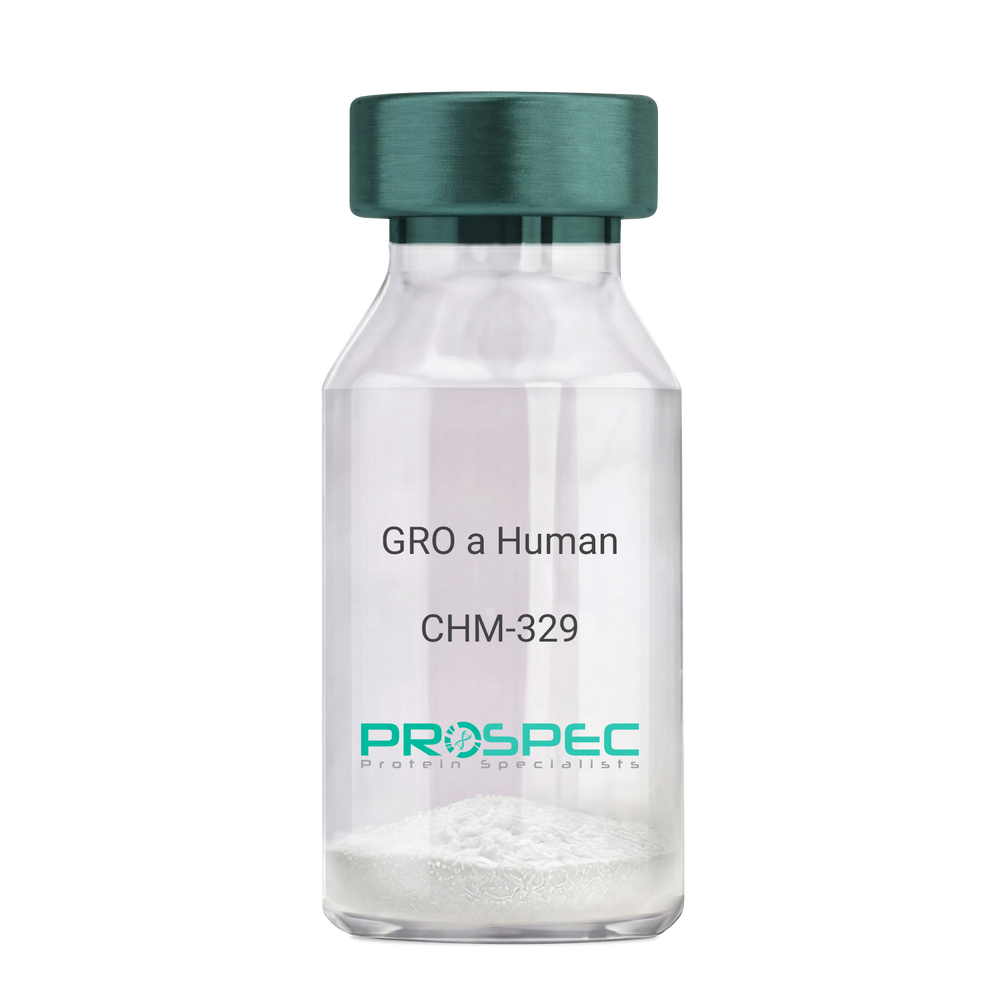
Growth-regulated protein alpha, CXCL1, Melanoma growth stimulatory activity, MGSA, Neutrophil-activating protein 3, NAP-3, GRO-alpha (1-73), chemokine (C-X-C motif) ligand 1, GRO1, GROa, SCYB1, MGSA-a, MGSA alpha.
Product # :
CHM-329Price :
Quantity :
Shipping Method :
Shipped at Room temp
More Info
- description
- source
- formulation
- purity
- biological activity
- More Info
Description
GRO Alpha Human Recombinant produced in E.Coli is a single,non-glycosylated, polypeptide chain containing 73 amino acids and having a molecular mass of 7811 Dalton. The GRO-alpha is purified by proprietary chromatographic techniques.
Source
Escherichia Coli.
Formulation
Lyophilized from a 0.2µm filtered concentrated (1mg/ml) solution in 20mM PB, pH 7.4, 50mM NaCl.
Purity
Greater than 97.0% as determined by:
(a) Analysis by RP-HPLC.
(b) Analysis by SDS-PAGE.Biological Activity
Determined by its ability to chemoattract human peripheral blood neutrophils using a concentration range of 10.0-100.0 ng/ml.
More Info
-
Introduction
Chemokine (C-X-C motif) ligand 1 (CXCL1) is a small cytokine belonging to the CXC chemokine family that was previously called GRO1 oncogene, Neutrophil-activating protein 3 (NAP-3) and melanoma growth stimulating activity, alpha (MSGA-a). It is secreted by human melanoma cells, has mitogenic properties and is implicated in melanoma pathogenesis. CXCL1 is expressed by macrophages, neutrophilsand epithelial cells, and has neutrophil chemoattractant activity. CXCL1 plays a role in spinal cord development by inhibiting the migration of oligodendrocyte precursors and is involved in the processes of angiogenesis, inflammation, wound healing, and tumorigenesis. This chemokine elicits its effects by signaling through the chemokine receptor CXCR2. The gene for CXCL1 is located on human chromosome 4 amongst genes for other CXC chemokines.
-
Synonyms
Growth-regulated protein alpha, CXCL1, Melanoma growth stimulatory activity, MGSA, Neutrophil-activating protein 3, NAP-3, GRO-alpha (1-73), chemokine (C-X-C motif) ligand 1, GRO1, GROa, SCYB1, MGSA-a, MGSA alpha.
-
Physical Appearance
Sterile Filtered White lyophilized (freeze-dried) powder.
-
Stability
Lyophilized GRO-alpha although stable at room temperature for 3 weeks, should be stored desiccated below -18°C. Upon reconstitution CXCL1 should be stored at 4°C between 2-7 days and for future use below -18°C. For long term storage it is recommended to add a carrier protein (0.1% HSA or BSA).Please prevent freeze-thaw cycles.
-
Solubility
It is recommended to reconstitute the lyophilized CXCL1 in sterile 18MΩ-cm H2O not less than 100µg/ml, which can then be further diluted to other aqueous solutions.
-
Amino Acid Sequence
The sequence of the first five N-terminal amino acids was determined and was found to be Ala-Ser-Val-Ala-Thr.
-
Background
What is the molecular weight/Mw of CXCL1 HUMAN Protein?
CXCL1 HUMAN Protein has a total Mw of 7.81kDa.
What is the source or expression system of CXCL1 HUMAN Protein?
Escherichia Coli.
What is the Purity of CXCL1 HUMAN Protein?
CXCL1 HUMAN Protein is >97% pure as determined by SDS-PAGE.
What is the Biological Activity of CXCL1 HUMAN Protein?
Determined by its ability to chemoattract human peripheral blood neutrophils using a concentration range of 10.0-100.0 ng/ml.
What is the amino acid sequence of CXCL1 HUMAN Protein?
The sequence of the first five N-terminal amino acids was determined and was found to be Ala-Ser-Val-Ala-Thr.
What applications can CXCL1 HUMAN Protein be used in?
CXCL1 HUMAN Protein can probably be used in western blot, ELISA and Lateral Flow.
What is the endotoxin level for CXCL1 HUMAN Protein?
The endotoxin level is minimal, CXCL1 HUMAN Protein was purified using conventional chromatography techniques.
ProSpec's products are furnished for LABORATORY RESEARCH USE ONLY. The product may not be used as drugs, agricultural or pesticidal products, food additives or household chemicals.