Skip to content

High-quality research proteins.

  • 1-800-805-6531

  • Mon - Sat 8.00-18.00, Sun - Closed

  • info@prospecbio.com

  • PO Box 6591 East Brunswick NJ 08816

  • Products
    • Cytokines
    • Growth factors
    • Chemokines
    • Cd antigens
    • Neurotrophins
    • Hormones
    • Enzymes
    • Viral antigens
    • Recombinant proteins
    • Natural proteins
    • Monoclonal antibodies
    • Polyclonal antibodies
    • Thermal Packaging
  • About
    • Company
    • Founder
    • Contribution
  • Customers
    • Eastern Asia
    • Eastern Europe
    • North America
    • South America
    • South East Asia
    • Southern Asia
    • Western Europe
  • Ordering
    • Ordering Method
    • Ordering - Credit Card
    • Ordering - PO
    • Shipping Fees
    • FAQs
  • Services
    • DNA Cloning
    • Protein Expression
    • Monoclonal Antibody
    • Fermentation
    • Technology License
  • Contact us
Log in

Country/region

  • USD $ | Albania
  • USD $ | Andorra
  • USD $ | Argentina
  • USD $ | Armenia
  • USD $ | Australia
  • USD $ | Austria
  • USD $ | Azerbaijan
  • USD $ | Belarus
  • USD $ | Belgium
  • USD $ | Bolivia
  • USD $ | Brazil
  • USD $ | Bulgaria
  • USD $ | Cambodia
  • USD $ | Canada
  • USD $ | Chile
  • USD $ | China
  • USD $ | Colombia
  • USD $ | Costa Rica
  • USD $ | Croatia
  • USD $ | Cyprus
  • USD $ | Czechia
  • USD $ | Denmark
  • USD $ | Estonia
  • USD $ | Finland
  • USD $ | France
  • USD $ | Georgia
  • USD $ | Germany
  • USD $ | Greece
  • USD $ | Hong Kong SAR
  • USD $ | Hungary
  • USD $ | Iceland
  • USD $ | India
  • USD $ | Ireland
  • USD $ | Israel
  • USD $ | Italy
  • USD $ | Japan
  • USD $ | Kazakhstan
  • USD $ | Latvia
  • USD $ | Liechtenstein
  • USD $ | Lithuania
  • USD $ | Madagascar
  • USD $ | Malta
  • USD $ | Mexico
  • USD $ | Moldova
  • USD $ | Monaco
  • USD $ | Netherlands
  • USD $ | New Zealand
  • USD $ | North Macedonia
  • USD $ | Norway
  • USD $ | Panama
  • USD $ | Paraguay
  • USD $ | Peru
  • USD $ | Philippines
  • USD $ | Poland
  • USD $ | Portugal
  • USD $ | Romania
  • USD $ | Singapore
  • USD $ | Slovakia
  • USD $ | Slovenia
  • USD $ | South Africa
  • USD $ | South Korea
  • USD $ | Spain
  • USD $ | Sri Lanka
  • USD $ | Sweden
  • USD $ | Switzerland
  • USD $ | Taiwan
  • USD $ | Thailand
  • USD $ | Türkiye
  • USD $ | Ukraine
  • USD $ | United Kingdom
  • USD $ | United States
  • USD $ | Uruguay
  • USD $ | Vatican City
  • USD $ | Venezuela
  • USD $ | Vietnam
  • Facebook
  • Instagram
logoProSpec - Recombinant Protein Manufacturer for academic and R&D industry
Become a distributor
Account Log in
Wishlist
Cart Cart(0)
  • Products
    +
    • Cytokines
    • Growth factors
    • Chemokines
    • Cd antigens
    • Neurotrophins
    • Hormones
    • Enzymes
    • Viral antigens
    • Recombinant proteins
    • Natural proteins
    • Monoclonal antibodies
    • Polyclonal antibodies
    • Thermal Packaging
  • About
    +
    • Company
    • Founder
    • Contribution
  • Customers
    +
    • Eastern Asia
    • Eastern Europe
    • North America
    • South America
    • South East Asia
    • Southern Asia
    • Western Europe
  • Ordering
    +
    • Ordering Method
    • Ordering - Credit Card
    • Ordering - PO
    • Shipping Fees
    • FAQs
  • Services
    +
    • DNA Cloning
    • Protein Expression
    • Monoclonal Antibody
    • Fermentation
    • Technology License
  • Contact us

Item added to your cart

View cart
View All
  • Cytokines
  • Growth factors
  • Chemokines
  • Cd antigens
  • Neurotrophins
  • Hormones
  • Enzymes
  • Viral antigens
  • Recombinant proteins
  • Natural proteins
  • Monoclonal antibodies
  • Polyclonal antibodies
  • Thermal Packaging
  • Tumor Necrosis Factor

    Tumor Necrosis Factor

    View All
  • 4-1BB

    4-1BB

    View All
  • Adiponectin

    Adiponectin

    View All
  • AIF1

    AIF1

    View All
  • Other Cytokines

    Other Cytokines

    View All
  • AITRL

    AITRL

    View All
  • Angiopoietin

    Angiopoietin

    View All
  • Apolipoprotein

    Apolipoprotein

    View All
  • B-Cell Activating Factor

    B-Cell Activating Factor

    View All
  • Beta Defensin

    Beta Defensin

    View All
  • Bone Morphogenetic Protein

    Bone Morphogenetic Protein

    View All
  • B type Natriuretic Peptide

    B type Natriuretic Peptide

    View All
  • BST

    BST

    View All
  • Betacellulin

    Betacellulin

    View All
  • Cardiotrophin

    Cardiotrophin

    View All
  • Activin

    Activin

    View All
  • Fibroblast Growth Factor

    Fibroblast Growth Factor

    View All
  • Other Growth Factors

    Other Growth Factors

    View All
  • CSF

    CSF

    View All
  • CTGF

    CTGF

    View All
  • IGFBP

    IGFBP

    View All
  • VEGF Protein

    VEGF Protein

    View All
  • EGF

    EGF

    View All
  • Epigen

    Epigen

    View All
  • Erythropoietin

    Erythropoietin

    View All
  • Insulin-Like Growth Factor

    Insulin-Like Growth Factor

    View All
  • Growth Hormone

    Growth Hormone

    View All
  • HDGF

    HDGF

    View All
  • Hepatocyte Growth Factor

    Hepatocyte Growth Factor

    View All
  • Insulin

    Insulin

    View All
  • BCA-1/ BLC (CXCL13)

    BCA-1/ BLC (CXCL13)

    View All
  • BRAK (CXCL14)

    BRAK (CXCL14)

    View All
  • C-10 (CCL6)

    C-10 (CCL6)

    View All
  • Other Chemokines

    Other Chemokines

    View All
  • MEC (CCL28)

    MEC (CCL28)

    View All
  • LD78-beta (CCL3L1)

    LD78-beta (CCL3L1)

    View All
  • CTACK (CCL27)

    CTACK (CCL27)

    View All
  • CXCL16

    CXCL16

    View All
  • CXCL17

    CXCL17

    View All
  • Platelet Factor-4 (CXCL4)

    Platelet Factor-4 (CXCL4)

    View All
  • ENA-78 (CXCL5)

    ENA-78 (CXCL5)

    View All
  • Eotaxin (CCL11,24,26)

    Eotaxin (CCL11,24,26)

    View All
  • Exodus-2 (CCL21)

    Exodus-2 (CCL21)

    View All
  • Fractalkine (CX3CL1)

    Fractalkine (CX3CL1)

    View All
  • CXCL6

    CXCL6

    View All
  • Other CD Antigens

    Other CD Antigens

    View All
  • CD14

    CD14

    View All
  • CD164

    CD164

    View All
  • CD1

    CD1

    View All
  • CD2

    CD2

    View All
  • CD200

    CD200

    View All
  • CD207

    CD207

    View All
  • CD226

    CD226

    View All
  • CD23

    CD23

    View All
  • CD244

    CD244

    View All
  • CD247

    CD247

    View All
  • CD27

    CD27

    View All
  • CD274

    CD274

    View All
  • CD300

    CD300

    View All
  • CD33

    CD33

    View All
  • Other Neurotrophins

    Other Neurotrophins

    View All
  • Beta-NGF

    Beta-NGF

    View All
  • BDNF

    BDNF

    View All
  • CDNF

    CDNF

    View All
  • CNTF

    CNTF

    View All
  • GDNF

    GDNF

    View All
  • Glia Maturation Factor

    Glia Maturation Factor

    View All
  • MANF

    MANF

    View All
  • Midkine

    Midkine

    View All
  • Neuroglobin

    Neuroglobin

    View All
  • Neurotrophic factors

    Neurotrophic factors

    View All
  • Neuregulin

    Neuregulin

    View All
  • Neuropilin

    Neuropilin

    View All
  • Pigment Epithelium-Derived Factor

    Pigment Epithelium-Derived Factor

    View All
  • Pleiotrophin

    Pleiotrophin

    View All
  • Peptide Hormones

    Peptide Hormones

    View All
  • Other Hormones

    Other Hormones

    View All
  • HCG

    HCG

    View All
  • Endothelin

    Endothelin

    View All
  • Exendin

    Exendin

    View All
  • FSH

    FSH

    View All
  • Glucagon

    Glucagon

    View All
  • GHRP

    GHRP

    View All
  • GLP

    GLP

    View All
  • Thyrostimulin

    Thyrostimulin

    View All
  • Inhibin A

    Inhibin A

    View All
  • LHRH

    LHRH

    View All
  • Melanotan

    Melanotan

    View All
  • Procalcitonin

    Procalcitonin

    View All
  • PTH

    PTH

    View All
  • Peroxiredoxin

    Peroxiredoxin

    View All
  • Peptidase

    Peptidase

    View All
  • Synthetase

    Synthetase

    View All
  • Transferase

    Transferase

    View All
  • Hydrolase

    Hydrolase

    View All
  • Dehydrogenase

    Dehydrogenase

    View All
  • ACE2

    ACE2

    View All
  • Esterase

    Esterase

    View All
  • Protein Kinases

    Protein Kinases

    View All
  • Other Enzymes

    Other Enzymes

    View All
  • Phosphatase

    Phosphatase

    View All
  • Deaminase

    Deaminase

    View All
  • Oxygenase

    Oxygenase

    View All
  • Adenylate Kinase

    Adenylate Kinase

    View All
  • Lyase

    Lyase

    View All
  • Chagas

    Chagas

    View All
  • SARS

    SARS

    View All
  • Influenza

    Influenza

    View All
  • ASFV

    ASFV

    View All
  • Astrovirus

    Astrovirus

    View All
  • Borrelia

    Borrelia

    View All
  • Helicobacter Pylori

    Helicobacter Pylori

    View All
  • Chikungunya

    Chikungunya

    View All
  • Chlamydia

    Chlamydia

    View All
  • Cytomegalo

    Cytomegalo

    View All
  • Dengue

    Dengue

    View All
  • EBV

    EBV

    View All
  • Ebola

    Ebola

    View All
  • Feline Leukemia Virus

    Feline Leukemia Virus

    View All
  • Hepatitis A

    Hepatitis A

    View All
  • Other

    Other

    View All
  • Actin

    Actin

    View All
  • ADAM

    ADAM

    View All
  • Complement Component

    Complement Component

    View All
  • Ag85

    Ag85

    View All
  • Eukaryotic Translation Initiation Factor

    Eukaryotic Translation Initiation Factor

    View All
  • Anterior Gradient Protein

    Anterior Gradient Protein

    View All
  • Heat Shock Protein

    Heat Shock Protein

    View All
  • Alpha-2-HS-Glycoprotein

    Alpha-2-HS-Glycoprotein

    View All
  • Hemoglobin

    Hemoglobin

    View All
  • Allergy

    Allergy

    View All
  • Anaplasma

    Anaplasma

    View All
  • Angiogenin

    Angiogenin

    View All
  • Ankyrin Repeat Domain

    Ankyrin Repeat Domain

    View All
  • Annexin

    Annexin

    View All
  • Other Natural Proteins

    Other Natural Proteins

    View All
  • Aprotinin

    Aprotinin

    View All
  • Transferrin

    Transferrin

    View All
  • Avidin

    Avidin

    View All
  • Anti Coagulation Factors

    Anti Coagulation Factors

    View All
  • Natural Albumin

    Natural Albumin

    View All
  • Natural Coagulation Factors

    Natural Coagulation Factors

    View All
  • Fibronectin

    Fibronectin

    View All
  • Thrombin

    Thrombin

    View All
  • Anti Human Enzyme

    Anti Human Enzyme

    View All
  • Other Monoclonal Antibodies

    Other Monoclonal Antibodies

    View All
  • Anti Human Cytokine

    Anti Human Cytokine

    View All
  • Anti Human Heat Shock Protein

    Anti Human Heat Shock Protein

    View All
  • Anti Mouse Lymphocyte

    Anti Mouse Lymphocyte

    View All
  • Anti Human Chemokine

    Anti Human Chemokine

    View All
  • Anti Human Lymphocyte

    Anti Human Lymphocyte

    View All
  • Anti Viral Monoclonal

    Anti Viral Monoclonal

    View All
  • Anti Mouse Cytokine

    Anti Mouse Cytokine

    View All
  • Anti-GST Monoclonal

    Anti-GST Monoclonal

    View All
  • Other Polyclonal Antibodies

    Other Polyclonal Antibodies

    View All
  • Anti Viral

    Anti Viral

    View All
  • Anti-GST Monoclonal

    Anti-GST Monoclonal

    View All
Back

Search results

1000 results found for “Fibronectin”

Name

Description

Product #

Price

Quantity

Shipping Method

  • View Data Sheet

    Name :

    CHGB Human

    Description:

    Chromogranin B Human Recombinant

    SCG1, Secretogranin 1, secretogranin B, CHGB, Sgl, CgB.

    Product # :

    PRO-824

    Price :

    Quantity :

    Shipping Method :

    Ice Icon

    Shipped with Ice Packs

    Add To Cart

    More Info

    • description
    • source
    • formulation
    • purity
    • More Info

    Description

    CHGB Human Recombinant produced in E.Coli is a single, non-glycosylated, polypeptide chain containing 677 amino acids (21-677 a.a.) and having a molecular mass of 78.4kDa. CHGB protein is fused to a 20 amino acid His-Tag at N-terminus and purified by standard chromatography.

    Source

    Escherichia Coli.

    Formulation

    The CHGB protein 0.25mg/ml solution containing 20mM Tris-HCl pH-8, 0.15M NaCl & 10% glycerol.

    Purity

    Greater than 80% as determined by SDS-PAGE.

    More Info

    • Introduction

      CHGB is a neuroendocrine secretory granule protein, that is the precursor for other biologically active peptides. CHGB is part of the chromogranin/secretogranin protein family and is expressed in the adrenal medulla, and in pheochromocytoma.

    • Synonyms

      SCG1, Secretogranin 1, secretogranin B, CHGB, Sgl, CgB.

    • Physical Appearance

      Sterile filtered colorless solution.

    • Stability

      Store at 4°C if entire vial will be used within 2-4 weeks. Store, frozen at -20°C for longer periods of time. For long term storage it is recommended to add a carrier protein (0.1% HSA or BSA).Avoid multiple freeze-thaw cycles.

    • Amino Acid Sequence

      MGSSHHHHHH SSGLVPRGSH MPVDNRNHNE GMVTRCIIEV LSNALSKSSA PPITPECRQV LKTSRKDVKD KETTENENTK FEVRLLRDPA DASEAHESSS RGEAGAPGEE DIQGPTKADT EKWAEGGGHS RERADEPQWS LYPSDSQVSE EVKTRHSEKS QREDEEEEEG ENYQKGERGE DSSEEKHLEE PGETQNAFLN ERKQASAIKK EELVARSETH AAGHSQEKTH SREKSSQESG EEAGSQENHP QESKGQPRSQ EESEEGEEDA TSEVDKRRTR PRHHHGRSRP DRSSQGGSLP SEEKGHPQEE SEESNVSMAS LGEKRDHHST HYRASEEEPE YGEEIKGYPG VQAPEDLEWE RYRGRGSEEY RAPRPQSEES WDEEDKRNYP SLELDKMAHG YGEESEEERG LEPGKGRHHR GRGGEPRAYF MSDTREEKRF LGEGHHRVQE NQMDKARRHP QGAWKELDRN YLNYGEEGAP GKWQQQGDLQ DTKENREEAR FQDKQYSSHH TAEKRKRLGE LFNPYYDPLQ WKSSHFERRD NMNDNFLEGE EENELTLNEK NFFPEYNYDW WEKKPFSEDV NWGYEKRNLA RVPKLDLKRQ YDRVAQLDQL LHYRKKSAEF PDFYDSEEPV STHQEAENEK DRADQTVLTE DEKKELENLA AMDLELQKIA EKFSQRG.

    ProSpec's products are furnished for LABORATORY RESEARCH USE ONLY. The product may not be used as drugs, agricultural or pesticidal products, food additives or household chemicals.

    Chgb Human
  • View Data Sheet

    Name :

    GRPEL1 Human

    Description:

    GrpE-Like 1 Human Recombinant

    HMGE, GrpE-like protein cochaperone, GREPEL1, FLJ25609.

    Product # :

    PRO-263

    Price :

    Quantity :

    Shipping Method :

    Ice Icon

    Shipped with Ice Packs

    Add To Cart

    More Info

    • description
    • source
    • formulation
    • purity
    • More Info

    Description

    GRPEL1 produced in E.Coli is a single, non-glycosylated polypeptide chain containing 211 amino acids (28-217a.a.) and having a molecular mass of 23.6kDa.GRPEL1 is fused to a 21 amino acid His-tag at N-terminus & purified by proprietary chromatographic techniques.

    Source

    Escherichia Coli.

    Formulation

    The GRPEL1 protein solution (1mg/1ml) is formulated in 20mM Tris-HCl buffer (pH8.0), 0.2M NaCl, 1mM DTT and 10% glycerol.

    Purity

    Greater than 90% as determined by SDS-PAGE.

    More Info

    • Introduction

      GRPEL1 is a vital component of the PAM complex, a complex necessary for the translocation of transit peptide-containing proteins from the inner membrane into the mitochondrial matrix in an ATP-dependent manner. GRPEL1 protein controls the nucleotide-dependent binding of mitochondrial HSP70 to substrate proteins.

    • Synonyms

      HMGE, GrpE-like protein cochaperone, GREPEL1, FLJ25609.

    • Physical Appearance

      Sterile Filtered clear solution.

    • Stability

      Store at 4°C if entire vial will be used within 2-4 weeks. Store, frozen at -20°C for longer periods of time.For long term storage it is recommended to add a carrier protein (0.1% HSA or BSA).Please avoid freeze thaw cycles.

    • Amino Acid Sequence

      MGSSHHHHHH SSGLVPRGSH MCTATKQKNS GQNLEEDMGQ SEQKADPPAT EKTLLEEKVK LEEQLKETVE KYKRALADTE NLRQRSQKLV EEAKLYGIQA FCKDLLEVAD VLEKATQCVP KEEIKDDNPH LKNLYEGLVM TEVQIQKVFT KHGLLKLNPV GAKFDPYEHE ALFHTPVEGK EPGTVALVSK VGYKLHGRTL RPALVGVVKE A

    ProSpec's products are furnished for LABORATORY RESEARCH USE ONLY. The product may not be used as drugs, agricultural or pesticidal products, food additives or household chemicals.

    Grpel1 Human
  • View Data Sheet

    Name :

    CNPY1 Human

    Description:

    Canopy FGF Signaling Regulator 1 Human Recombinant

    Protein canopy homolog 1, CNPY1.

    Product # :

    PRO-1872

    Price :

    Quantity :

    Shipping Method :

    Ice Icon

    Shipped with Ice Packs

    Add To Cart

    More Info

    • description
    • source
    • formulation
    • purity
    • More Info

    Description

    CNPY1 Human Recombinant produced in E.Coli is a single, non-glycosylated polypeptide chain containing 115 amino acids (1-92 a.a) and having a molecular mass of 13.3kDa. CNPY1 is fused to a 23 amino acid His-tag at N-terminus & purified by proprietary chromatographic techniques.

    Source

    Escherichia Coli.

    Formulation

    CNPY1 protein solution (0.5mg/ml) containing 20mM Tris-HCl buffer (pH 8.0), 0.15M NaCl, 10% glycerol and 1mM DTT.

    Purity

    Greater than 90.0% as determined by SDS-PAGE.

    More Info

    • Introduction

      Canopy FGF Signaling Regulator 1, also known as CNPY1, is expressed in the midbrain-hindbrain (MHB) boundary in zebrafish. CNPY1, which binds FGFR1, also takes part in FGF signaling.

    • Synonyms

      Protein canopy homolog 1, CNPY1.

    • Physical Appearance

      Sterile Filtered colorless solution.

    • Stability

      Store at 4°C if entire vial will be used within 2-4 weeks. Store, frozen at -20°C for longer periods of time. For long term storage it is recommended to add a carrier protein (0.1% HSA or BSA).Avoid multiple freeze-thaw cycles.

    • Amino Acid Sequence

      MGSSHHHHHH SSGLVPRGSH MGSMNDYKLE EDPVTKERTF KRFAPRKGDK IYQEFKKLYF YSDAYRPLKF ACETIIEEYE DEISSLIAQE THYLADKLCS EKSDLCETSA NHTEL.

    ProSpec's products are furnished for LABORATORY RESEARCH USE ONLY. The product may not be used as drugs, agricultural or pesticidal products, food additives or household chemicals.

    Cnpy1 Human
  • View Data Sheet

    Name :

    S100A1 Mouse

    Description:

    S100 Calcium Binding Protein A1 Mouse Recombinant

    Protein S100-A1, S-100 protein alpha chain, S-100 protein subunit alpha, S100 calcium-binding protein A1, S100a1, S100, S100a, AI266795.

    Product # :

    PRO-237

    Price :

    Quantity :

    Shipping Method :

    Ice Icon

    Shipped with Ice Packs

    Add To Cart

    More Info

    • description
    • source
    • formulation
    • purity
    • More Info

    Description

    S100A1 produced in E.Coli is a single, non-glycosylated polypeptide chain containing 114 amino acids (1-94 a.a) and having a molecular mass of 12.6kDa (molecular weight on SDS-PAGE will appear higher).S100A1 is fused to a 20 amino acid His-tag at N-terminus & purified by proprietary chromatographic techniques.

    Source

    Escherichia Coli.

    Formulation

    S100A1 protein solution (1mg/ml) containing 20mM Tris-HCl buffer (pH 8.0), 1mM DTT, 30% glycerol and 0.1M NaCl.

    Purity

    Greater than 90.0% as determined by SDS-PAGE.

    More Info

    • Introduction

      S100A1 is a member of the S100 family of calcium binding proteins with EF-hand type Ca+2 binding motive. S100A1 (Calcium Binding Protein A1) is involved in the activation of sarcoplasmatic calcium release and the regulation of intermediate filament polymerization. S100A1 may function in stimulation of Ca2+-induced Ca2+ release, inhibition of microtubule assembly, and inhibition of protein kinase C-mediated phosphorylation. Reduced expression of S100A1 has been implicated in cardiomyopathies.
      S100 proteins are localized either in the cytoplasm or the nucleus of a wide range of cells. There are at least 13 members in the S100 gene family, which are located as a cluster on chromosome 1q21.

    • Synonyms

      Protein S100-A1, S-100 protein alpha chain, S-100 protein subunit alpha, S100 calcium-binding protein A1, S100a1, S100, S100a, AI266795.

    • Physical Appearance

      Sterile Filtered clear solution.

    • Stability

      Store at 4°C if entire vial will be used within 2-4 weeks. Store, frozen at -20°C for longer periods of time. For long term storage it is recommended to add a carrier protein (0.1% HSA or BSA).Avoid multiple freeze-thaw cycles.

    • Amino Acid Sequence

      MGSSHHHHHH SSGLVPRGSH MGSELESAME TLINVFHAHS GKEGDKYKLS KKELKDLLQT ELSGFLDVQK DADAVDKVMK ELDENGDGEV DFKEYVVLVA ALTVACNNFF WETS.

    ProSpec's products are furnished for LABORATORY RESEARCH USE ONLY. The product may not be used as drugs, agricultural or pesticidal products, food additives or household chemicals.

    S100A1 Mouse
  • View Data Sheet

    Name :

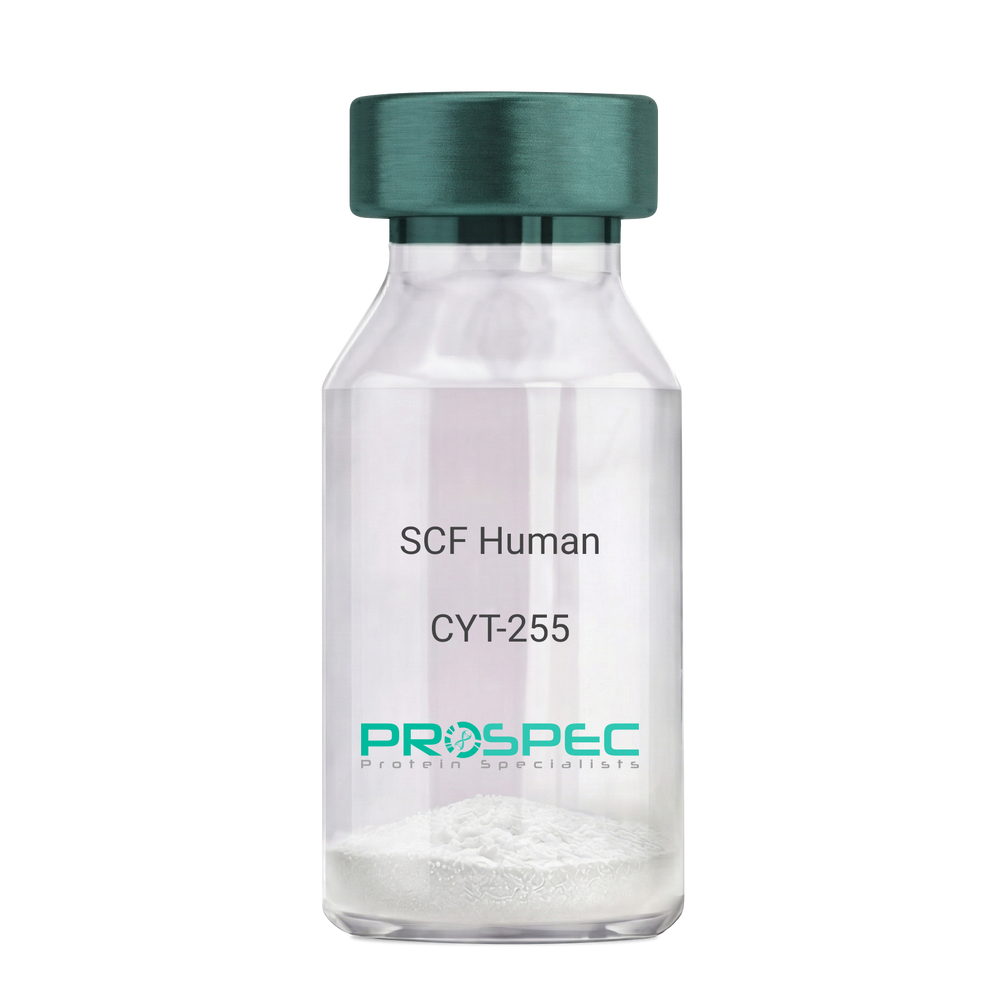
    SCF Human

    Description:

    Stem Cell Factor Human Recombinant

    Kit ligand Precursor, C-kit ligand, SCF, Mast cell growth factor, MGF, SF, KL-1, Kitl, DKFZp686F2250.

    Product # :

    CYT-255

    Price :

    Quantity :

    Shipping Method :

    Room Temp Icon

    Shipped at Room temp

    Add To Cart

    More Info

    • description
    • source
    • formulation
    • purity
    • biological activity
    • More Info

    Description

    Stem Cell Factor Human Recombinant produced in E.Coli is a single, non-glycosylated polypeptide chain containing 165 amino acids and having a molecular mass of 18409 Dalton. The SCF is purified by proprietary chromatographic techniques.

    Source

    Escherichia Coli.

    Formulation

    Lyophilized from a concentrated (1mg/ml) solution in water containing 0.02% NaHCO3.

    Purity

    Greater than 98.0% as determined by:
    (a) Analysis by SEC-HPLC.
    (b) Analysis by SDS-PAGE.

    Biological Activity

    The ED50 as determined by the dose-dependant stimulation of Human TF-1 cells is < 2 ng/ml, corresponding to a Specific Activity of 500,000 IU/mg.

    More Info

    • Introduction

      Stem cell factor / KIT ligand (SCF) is a cytokine which binds CD117(c-Kit). SCF is also known as "steel factor" or "c-kit ligand". SCF exists in two forms, cell surface bound SCF and soluble (or free) SCF. Soluble SCF is produced by the cleavage of surface bound SCF by metalloproteases. SCF is a growth factor important for the survival, proliferation, and differentiation of hematopoietic stem cells and other hematopoietic progenitor cells. One of its roles is to change the BFU-E (burst-forming unit-erythroid) cells, which are the earliest erythrocyte precursors in the erythrocytic series, into the CFU-E (colony-forming unit-erythroid).

    • Synonyms

      Kit ligand Precursor, C-kit ligand, SCF, Mast cell growth factor, MGF, SF, KL-1, Kitl, DKFZp686F2250.

    • Physical Appearance

      Sterile Filtered White lyophilized (freeze-dried) powder.

    • Stability

      Lyophilized KIT ligand although stable at room temperature for 3 weeks, should be stored desiccated below -18°C. Upon reconstitution SCF should be stored at 4°C between 2-7 days and for future use below -18°C.For long term storage it is recommended to add a carrier protein (0.1% HSA or BSA).Please prevent freeze-thaw cycles.

    • Solubility

      It is recommended to reconstitute the lyophilized Stem Cell Factor in sterile 18MΩ-cm H2O not less than 100µg/ml, which can then be further diluted to other aqueous solutions.

    • Amino Acid Sequence

      The sequence of the first five N-terminal amino acids was determined and was found to be Met-Glu-Gly-Ile-Cys.

    • Protein content

      Protein quantitation was carried out by two independent methods1. UV spectroscopy at 280 nm using the absorbency value of 0.52 as the extinction coefficient for a 0.1% (1mg/ml) solution. This value is calculated by the PC GENE computer analysis program of protein sequences (IntelliGenetics). 2. Analysis by RP-HPLC, using a standard solution of Stem Cell Factor as a Reference Standard.

    ProSpec's products are furnished for LABORATORY RESEARCH USE ONLY. The product may not be used as drugs, agricultural or pesticidal products, food additives or household chemicals.

    Scf Human
  • View Data Sheet

    Name :

    DBNDD1 Human

    Description:

    Dysbindin (Dystrobrevin Binding Protein 1) Domain Containing 1 Human Recombinant

    Dysbindin domain-containing protein 1, DBNDD1.

    Product # :

    PRO-1162

    Price :

    Quantity :

    Shipping Method :

    Ice Icon

    Shipped with Ice Packs

    Add To Cart

    More Info

    • description
    • source
    • formulation
    • purity
    • More Info

    Description

    DBNDD1 Human Recombinant produced in E.Coli is a single, non-glycosylated polypeptide chain containing 182 amino acids (1-158 a.a) and having a molecular mass of 19.6kDa (Molecular weight on SDS-PAGE will appear higher).DBNDD1 is fused to a 24 amino acid His-tag at N-terminus & purified by proprietary chromatographic techniques.

    Source

    Escherichia Coli.

    Formulation

    DBNDD1 protein solution (0.5mg/ml) containing 20mM Tris-HCl buffer (pH8.0), 10% glycerol, 0.1M NaCl and 1mM DTT.

    Purity

    Greater than 90% as determined by SDS-PAGE.

    More Info

    • Introduction

      Dysbindin domain-containing protein 1 (DBNDD1) is a member of the dysbindin family.

    • Synonyms

      Dysbindin domain-containing protein 1, DBNDD1.

    • Physical Appearance

      Sterile filtered colorless solution.

    • Stability

      Store at 4°C if entire vial will be used within 2-4 weeks. Store, frozen at -20°C for longer periods of time. For long term storage it is recommended to add a carrier protein (0.1% HSA or BSA).Avoid multiple freeze-thaw cycles.

    • Amino Acid Sequence

      MGSSHHHHHH SSGLVPRGSH MGSHMEPPEG AGTGEIVKEA EVPQAALGVP AQGTGDNGHT PVEEEVGGIP VPAPGLLQVT ERRQPLSSVS SLEVHFDLLD LTELTDMSDQ ELAEVFADSD DENLNTESPA GLHPLPRAGY LRSPSWTRTR AEQSHEKQPL GDPERQATVL DTFLTVERPQ ED.

    ProSpec's products are furnished for LABORATORY RESEARCH USE ONLY. The product may not be used as drugs, agricultural or pesticidal products, food additives or household chemicals.

    Dbndd1 Human
  • View Data Sheet

    Name :

    ANXA11 Human

    Description:

    Annexin A11 Human Recombinant

    Annexin A11, 56 kDa autoantigen, Annexin XI, Annexin-11, Calcyclin-associated annexin 50, CAP-50, ANXA11, ANX11, CAP50.

    Product # :

    PRO-278

    Price :

    Quantity :

    Shipping Method :

    Ice Icon

    Shipped with Ice Packs

    Add To Cart

    More Info

    • description
    • source
    • formulation
    • purity
    • More Info

    Description

    ANXA11 Human Recombinant produced in E.coli is a single, non-glycosylated polypeptide chain containing 525 amino acids (1-505) and having a molecular mass of 56.6 kDa. The ANXA11 is fused to a 20 amino acid His-Tag at N-terminus and purified by proprietary chromatographic techniques.

    Source

    Escherichia Coli.

    Formulation

    The ANXA11 solution (0.25mg/ml) contains 20mM MES buffer (Ph 5.0), 20% glycerol, 2mM DTT and 100mM NaCl.

    Purity

    Greater than 95.0% as determined by SDS-PAGE.

    More Info

    • Introduction

      Annexin A11 (ANXA11) belongs to the annexin family, which is a group of calcium-dependent phospholipid-binding proteins. Annexins have distinctive N-terminal domains and conserved C-terminal domains, which contain the calcium-dependent phospholipid-binding sites. Annexin A11 binds specifically to calcyclin in a calcium-dependent manner. Moreover, ANXA11 is required for midbody formation and completion of the terminal phase of cytokinesis. The ANXA11 protein is a 56kDa antigen recognized by sera from patients with various autoimmune diseases.

    • Synonyms

      Annexin A11, 56 kDa autoantigen, Annexin XI, Annexin-11, Calcyclin-associated annexin 50, CAP-50, ANXA11, ANX11, CAP50.

    • Physical Appearance

      Sterile Filtered colorless solution.

    • Stability

      Store at 4°C if entire vial will be used within 2-4 weeks. Store, frozen at -20°C for longer periods of time. For long term storage it is recommended to add a carrier protein (0.1% HSA or BSA).Avoid multiple freeze-thaw cycles.

    • Amino Acid Sequence

      MGSSHHHHHH SSGLVPRGSH MSYPGYPPPP GGYPPAAPGG GPWGGAAYPP PPSMPPIGLD NVATYAGQFN QDYLSGMAAN MSGTFGGANM PNLYPGAPGA GYPPVPPGGF GQPPSAQQPV PPYGMYPPPG NPPSRMPSY PPYPGAPVPG QPMPPPGQQP PGAYPGQPPV TYPGQPPVPL PGQQQPVPSY PGYPGSGTVT PAVPPTQFGS RGTITDAPGF DPLRDAEVLR KAMKGFGTDE QAIIDCLGSR SNKQRQQILL SFKTAYGKDL IKDLKSELSG NFEKTILALM KTPVLFDIYE IKEAIKGVGT DEACLIEILA SRSNEHIREL NRAYKAEFKK TLEEAIRSDT GHFQRLLIS LSQGNRDEST NVDMSLAQRD AQELYAAGEN RLGTDESKFN AVLCSRSRAH LVAVFNEYQR MTGRDIEKSI CREMSGDLEE GMLAVVKCLK NTPAFFAERL NKAMRGAGTK DRTLIRIMVS RSETDLLDIR SEYKRMYGKS LYHDISGDTS GDYRKILLKI CGGND.

    ProSpec's products are furnished for LABORATORY RESEARCH USE ONLY. The product may not be used as drugs, agricultural or pesticidal products, food additives or household chemicals.

    Anxa11 Human
  • View Data Sheet

    Name :

    SGCB Human

    Description:

    Sarcoglycan Beta Human Recombinant

    Beta-sarcoglycan, Beta-SG, 43 kDa dystrophin-associated glycoprotein, 43DAG, A3b, LGMD2E, Sarcoglycan, Beta (43kDa Dystrophin-Associated Glycoprotein), Limb Girdle Muscular Dystrophy 2E (Non-Linked Families), SGC.

    Product # :

    PRO-2211

    Price :

    Quantity :

    Shipping Method :

    Ice Icon

    Shipped with Ice Packs

    Add To Cart

    More Info

    • description
    • source
    • formulation
    • purity
    • More Info

    Description

    SGCB Human Recombinant produced in E.Coli is a single, non-glycosylated polypeptide chain containing 255 amino acids (87-318 a.a) and having a molecular mass of 27.8kDa.SGCB is fused to a 23 amino acid His-tag at N-terminus & purified by proprietary chromatographic techniques.

    Source

    Escherichia Coli.

    Formulation

    SGCB protein solution (0.5mg/ml) containing 20mM Tris-HCl buffer(pH8.0) and 10% glycerol.

    Purity

    Greater than 90.0% as determined by SDS-PAGE.

    More Info

    • Introduction

      Sarcoglycan Beta, also known as SGCB, is a part of the sarcoglycan family. SGCB belongs to the sarcoglycan complex which is a subcomplex of the dystrophin-glycoprotein complex that connects between the F-actin cytoskeleton and the extracellular matrix.

    • Synonyms

      Beta-sarcoglycan, Beta-SG, 43 kDa dystrophin-associated glycoprotein, 43DAG, A3b, LGMD2E, Sarcoglycan, Beta (43kDa Dystrophin-Associated Glycoprotein), Limb Girdle Muscular Dystrophy 2E (Non-Linked Families), SGC.

    • Physical Appearance

      Sterile Filtered colorless solution.

    • Stability

      Store at 4°C if entire vial will be used within 2-4 weeks. Store, frozen at -20°C for longer periods of time. For long term storage it is recommended to add a carrier protein (0.1% HSA or BSA). Avoid multiple freeze-thaw cycles.

    • Amino Acid Sequence

      MGSSHHHHHH SSGLVPRGSH MGSWAVIRIG PNGCDSMEFH ESGLLRFKQV SDMGVIHPLY KSTVGGRRNE NLVITGNNQP IVFQQGTTKL SVENNKTSIT SDIGMQFFDP RTQNILFSTD YETHEFHLPS GVKSLNVQKA STERITSNAT SDLNIKVDGR AIVRGNEGVF IMGKTIEFHM GGNMELKAEN SIILNGSVMV STTRLPSSSS GDQLGSGDWV RYKLCMCADG TLFKVQVTSQ NMGCQISDNP CGNTH.

    ProSpec's products are furnished for LABORATORY RESEARCH USE ONLY. The product may not be used as drugs, agricultural or pesticidal products, food additives or household chemicals.

    Sgcb Human
  • View Data Sheet

    Name :

    FHL2 Human

    Description:

    Four And A Half LIM Domains 2 Human Recombinant

    AAG11, DRAL, FHL-2, SLIM-3, SLIM3, Four and a half LIM domains protein 2, LIM domain protein DRAL, Skeletal muscle LIM-protein 3, FHL2, RNA Binding Motif Protein 18, RNA-Binding Motif Protein 18, RBM18.

    Product # :

    PRO-2110

    Price :

    Quantity :

    Shipping Method :

    Ice Icon

    Shipped with Ice Packs

    Add To Cart

    More Info

    • description
    • source
    • formulation
    • purity
    • More Info

    Description

    FHL2 Human Recombinant produced in E.Coli is a single, non-glycosylated polypeptide chain containing 302 amino acids (1-279 a.a) and having a molecular mass of 34.6kDa. FHL2 is fused to a 23 amino acid His-tag at N-terminus & purified by proprietary chromatographic techniques.

    Source

    Escherichia Coli.

    Formulation

    FHL2 protein solution (0.5mg/ml) containing 20mM Tris-HCl buffer (pH 8.0) and 10% glycerol.

    Purity

    Greater than 90.0% as determined by SDS-PAGE.

    More Info

    • Introduction

      Four And A Half LIM Domains 2 (FHL2) belongs to the four-and-a-half-LIM-only protein family. Family members are comprised of 2 highly conserved, tandemly arranged, zinc finger domains with 4 highly conserved cysteines binding a zinc atom in each zinc finger. The FHL2 protein is assumed to play a part in the assembly of extracellular membranes. Furthermore, FHL2 is down-regulated during transformation of normal myoblasts to rhabdomyosarcoma cells and the FHL2 functions as a link between presenilin-2 and an intracellular signaling pathway.

    • Synonyms

      AAG11, DRAL, FHL-2, SLIM-3, SLIM3, Four and a half LIM domains protein 2, LIM domain protein DRAL, Skeletal muscle LIM-protein 3, FHL2, RNA Binding Motif Protein 18, RNA-Binding Motif Protein 18, RBM18.

    • Physical Appearance

      Sterile Filtered clear solution.

    • Stability

      Store at 4°C if entire vial will be used within 2-4 weeks. Store, frozen at -20°C for longer periods of time. For long term storage it is recommended to add a carrier protein (0.1% HSA or BSA).Avoid multiple freeze-thaw cycles.

    • Amino Acid Sequence

      MGSSHHHHHH SSGLVPRGSH MGSMTERFDC HHCNESLFGK KYILREESPY CVVCFETLFA NTCEECGKPI GCDCKDLSYK DRHWHEACFH CSQCRNSLVD KPFAAKEDQL LCTDCYSNEY SSKCQECKKT IMPGTRKMEY KGSSWHETCF ICHRCQQPIG TKSFIPKDNQ NFCVPCYEKQ HAMQCVQCKK PITTGGVTYR EQPWHKECFV CTACRKQLSG QRFTARDDFA YCLNCFCDLY AKKCAGCTNP ISGLGGTKYI SFEERQWHND CFNCKKCSLS LVGRGFLTER DDILCPDCGK DI.

    ProSpec's products are furnished for LABORATORY RESEARCH USE ONLY. The product may not be used as drugs, agricultural or pesticidal products, food additives or household chemicals.

    Fhl2 Human
  • View Data Sheet

    Name :

    FIS1 Human

    Description:

    Fission-1 Human Recombinant

    TTC11, Tetratricopeptide repeat domain 11, Fission 1 (mitochondrial outer membrane) homolog (S. cerevisiae).

    Product # :

    PRO-829

    Price :

    Quantity :

    Shipping Method :

    Ice Icon

    Shipped with Ice Packs

    Add To Cart

    More Info

    • description
    • source
    • formulation
    • purity
    • More Info

    Description

    FIS1 Human Recombinant produced in E.Coli is a single, non-glycosylated, polypeptide chain containing 142 amino acids (1-122 a.a.) and having a molecular mass of 16.3 kDa. FIS1 protein is fused to a 20 amino acid His tag at N-terminus and is purified by standard chromatography.

    Source

    Escherichia Coli.

    Formulation

    FIS1 protein solution (1mg/ml) containing 20mM Tris-HCl pH-8 and 10% glycerol.

    Purity

    Greater than 95% as determined by SDS-PAGE.

    More Info

    • Introduction

      FIS1 is part of the mitochondrial complex that promotes mitochondrial fission. FIS1 induces cytochrome C discharge from the mitochondrion to the cytosol, eventually leading to apoptosis. FIS1 participates in peroxisomal growth and division. The C terminus is required for mitochondrial localisation, while the N teminus is necessary for mitochondrial fission.

    • Synonyms

      TTC11, Tetratricopeptide repeat domain 11, Fission 1 (mitochondrial outer membrane) homolog (S. cerevisiae).

    • Physical Appearance

      Sterile filtered colorless solution.

    • Stability

      Store at 4°C if entire vial will be used within 2-4 weeks. Store, frozen at -20°C for longer periods of time. For long term storage it is recommended to add a carrier protein (0.1% HSA or BSA).Avoid multiple freeze-thaw cycles.

    • Amino Acid Sequence

      MGSSHHHHHH SSGLVPRGSH MEAVLNELVS VEDLLKFEKK FQSEKAAGSV SKSTQFEYAW CLVRSKYNDD IRKGIVLLEE LLPKGSKEEQ RDYVFYLAVG NYRLKEYEKA LKYVRGLLQT EPQNNQAKEL ERLIDKAMKK DG.

    ProSpec's products are furnished for LABORATORY RESEARCH USE ONLY. The product may not be used as drugs, agricultural or pesticidal products, food additives or household chemicals.

    Fis1 Human
  • View Data Sheet

    Name :

    CCL28 Mouse

    Description:

    Mucosae-Associated Epithelial Chemokine Mouse Recombinant (CCL28)

    MEC, CCK1, SCYA28, MGC71902, CCL28, C-C motif chemokine 28, Small-inducible cytokine A28, Mucosae-associated epithelial chemokine, Protein CCK1.

    Product # :

    CHM-369

    Price :

    Quantity :

    Shipping Method :

    Room Temp Icon

    Shipped at Room temp

    Add To Cart

    More Info

    • description
    • source
    • formulation
    • purity
    • biological activity
    • More Info

    Description

    CCL28 Mouse Recombinant produced in E.Coli is a single, non-glycosylated, polypeptide chain containing 111 amino acids and having a molecular mass of 12.6 kDa. The CCL28 is purified by proprietary chromatographic techniques.

    Source

    Escherichia Coli.

    Formulation

    Lyophilized from a concentrated (1mg/ml) solution in water containing 20mM Phosphate buffer pH-7.4 and 150mM NaCl.

    Purity

    Greater than 97.0% as determined by:
    (a) Analysis by RP-HPLC.
    (b) Analysis by SDS-PAGE.

    Biological Activity

    Determined by its ability to chemoattract mouse lymphocytes using a concentration range of 1-10ng/ml corresponding to a Specific Activity of 100,000-1,000,000IU/mg.

    More Info

    • Introduction

      CCL28 is part of the subfamily of small cytokine CC genes. CCL28 shows chemotactic activity for resting CD4 or CD8 T cells and eosinophils. CCL28 binds to chemokine receptors CCR3 and CCR10. CCL28 is involved in the physiology of extracutaneous epithelial tissues, including diverse mucosal organs. CCL28 mediates mucosal immunity in HIV exposure and infection. CCL28 is involved in the pathogenesis of inflammatory skin diseases.
      Human CCL28 cDNA encodes a 127 amino acid residue precursor protein with a putative 22 amino acid residue signal peptide that is cleaved to produce the 105 amino acid residue mature protein. Human and mouse CCL28 are highly conserved, sharing 83% amino acid identity in their mature regions. CCL28 shares the most homology with CCL27/CTACK. Human and mouse CCL28 RNA expression was found to be highest in normal and pathologic colon with the protein being expressed by epithelial cells. Human CCL28 RNA was also present in normal and asthmatic lung tissues.

    • Synonyms

      MEC, CCK1, SCYA28, MGC71902, CCL28, C-C motif chemokine 28, Small-inducible cytokine A28, Mucosae-associated epithelial chemokine, Protein CCK1.

    • Physical Appearance

      Sterile Filtered White lyophilized (freeze-dried) powder.

    • Stability

      Lyophilized CCL28 although stable at room temperature for 3 weeks, should be stored desiccated below -18°C. Upon reconstitution CCL28 should be stored at 4°C between 2-7 days and for future use below -18°C.For long term storage it is recommended to add a carrier protein (0.1% HSA or BSA).Please prevent freeze-thaw cycles.

    • Solubility

      It is recommended to reconstitute the lyophilized CCL28 in sterile 18MΩ-cm H2O not less than 100µg/ml, which can then be further diluted to other aqueous solutions.

    • Amino Acid Sequence

      SEAILPMASS CCTEVSHHVS GRLLERVSSC SIQRADGDCD LAAVILHVKR RRICISPHNR TLKQWMRASE VKKNGRENVC SGKKQPSRKD RKGHTTRKHR TRGTHRHEAS R.

    • Background

      What is the molecular weight/Mw of CCL28 MOUSE Protein?
      CCL28 MOUSE Protein has a total Mw of 12.6kDa.

      What is the source or expression system of CCL28 MOUSE Protein?
      Escherichia Coli.

      What is the Purity of CCL28 MOUSE Protein?
      CCL28 MOUSE Protein is > 97% pure as determined by SDS-PAGE.

      What is the Biological Activity of CCL28 MOUSE Protein?
      Determined by its ability to chemoattract mouse lymphocytes using a concentration range of 1-10ng/ml corresponding to a Specific Activity of 100,000-1,000,000IU/mg.

      What is the amino acid sequence of CCL28 MOUSE Protein?
      SEAILPMASS CCTEVSHHVS GRLLERVSSC SIQRADGDCD LAAVILHVKR RRICISPHNR TLKQWMRASE VKKNGRENVC SGKKQPSRKD RKGHTTRKHR TRGTHRHEAS R.

      What applications can CCL28 MOUSE Protein be used in?
      CCL28 MOUSE Protein can probably be used in western blot, ELISA and Lateral Flow.

      What is the endotoxin level for CCL28 MOUSE Protein?
      The endotoxin level is minimal, CCL28 MOUSE Protein was purified using conventional chromatography techniques.

    ProSpec's products are furnished for LABORATORY RESEARCH USE ONLY. The product may not be used as drugs, agricultural or pesticidal products, food additives or household chemicals.

    Ccl28 Mouse
  • View Data Sheet

    Name :

    FUCA2 Human

    Description:

    Fucosidase Alpha-L- 2 Plasma Human Recombinant

    Fucosidase, alpha-L- 2, plasma, dJ20N2.5, RP1-20N2.5, Plasma alpha-L-fucosidase, Alpha-L-fucoside fucohydrolase 2, Alpha-L-fucosidase 2, PSEC0151, UNQ227/PRO260.

    Product # :

    ENZ-840

    Price :

    Quantity :

    Shipping Method :

    Ice Icon

    Shipped with Ice Packs

    Add To Cart

    More Info

    • description
    • source
    • formulation
    • purity
    • More Info

    Description

    FUCA2 Human Recombinant produced in E.Coli is a single, non-glycosylated polypeptide chain containing 462 amino acids (29-467 a.a) and having a molecular mass of 53.3kDa.FUCA2 is fused to a 23 amino acid His-tag at N-terminus & purified by proprietary chromatographic techniques.

    Source

    Escherichia Coli.

    Formulation

    FUCA2 protein solution (1mg/ml) containing 20mM phosphate (pH8.0) and 10% glycerol.

    Purity

    Greater than 85.0% as determined by SDS-PAGE.

    More Info

    • Introduction

      Fucosidase Alpha-L- 2 Plasma (FUCA2) is a plasma alpha-L-fucosidase, which represents 10-20% of the total cellular fucosidase activity. FUCA2 protein belongs to the glycosyl hydrolase 29 family, and catalyzes the hydrolysis of the alpha-1,6-linked fucose fused to the reducing-end N-acetylglucosamine of the carbohydrate moieties of glycoproteins. FUCA2 is crucial for Helicobacter pylori adhesion to human gastric cancer cells.

    • Synonyms

      Fucosidase, alpha-L- 2, plasma, dJ20N2.5, RP1-20N2.5, Plasma alpha-L-fucosidase, Alpha-L-fucoside fucohydrolase 2, Alpha-L-fucosidase 2, PSEC0151, UNQ227/PRO260.

    • Physical Appearance

      Sterile Filtered colorless solution.

    • Stability

      Store at 4°C if entire vial will be used within 2-4 weeks. Store, frozen at -20°C for longer periods of time. For long term storage it is recommended to add a carrier protein (0.1% HSA or BSA).Avoid multiple freeze-thaw cycles.

    • Amino Acid Sequence

      MGSSHHHHHH SSGLVPRGSH MGSHSATRFD PTWESLDARQ LPAWFDQAKF GIFIHWGVFS VPSFGSEWFW WYWQKEKIPK YVEFMKDNYP PSFKYEDFGP LFTAKFFNAN QWADIFQASG AKYIVLTSKH HEGFTLWGSE YSWNWNAIDE GPKRDIVKEL EVAIRNRTDL RFGLYYSLFE WFHPLFLEDE SSSFHKRQFP VSKTLPELYE LVNNYQPEVL WSDGDGGAPD QYWNSTGFLA WLYNESPVRG TVVTNDRWGA GSICKHGGFY TCSDRYNPGH LLPHKWENCM TIDKLSWGYR REAGISDYLT IEELVKQLVE TVSCGGNLLM NIGPTLDGTI SVVFEERLRQ MGSWLKVNGE AIYETHTWRS QNDTVTPDVW YTSKPKEKLV YAIFLKWPTS GQLFLGHPKA ILGATEVKLL GHGQPLNWIS LEQNGIMVEL PQLTIHQMPC KWGWALALTN VI.

    ProSpec's products are furnished for LABORATORY RESEARCH USE ONLY. The product may not be used as drugs, agricultural or pesticidal products, food additives or household chemicals.

    Fuca2 Human
  • View Data Sheet

    Name :

    GFP

    Description:

    Glial Filament Protein

    Glial Filament Protein, GFP.

    Product # :

    PRO-522

    Price :

    Quantity :

    Shipping Method :

    Room Temp Icon

    Shipped at Room temp

    Add To Cart

    More Info

    • description
    • source
    • formulation
    • purity
    • More Info

    Description

    Ultra Pure Glial Filament Protein having a Molecular mass of 52 kDa.

    Source

    Bovine Spinal Cord.

    Formulation

    The protein was lyophilized from a 1mg/ml solution containing 10mM sodium phosphate buffer pH 7.5, 6M urea, 2mM DTT, 1mM EDTA and 10mM methylammonium chloride.

    Purity

    Greater than 98.0% as determined by SDS-PAGE.

    More Info

    • Introduction

      GFP is an intermediate filament. GFP and vimentin are linked to the same filament network; they are localized in the same filaments.
      mRNAs encoding the glial intermediate filament protein are spatially dispersed in the glial cell cytoplasm close to the location of the glial filaments.

    • Synonyms

      Glial Filament Protein, GFP.

    • Physical Appearance

      Sterile Filtered White lyophilized (freeze-dried) powder.

    • Stability

      Lyophilized GFP although stable at room temperature for 3 weeks, should be stored desiccated below -18°C. Upon reconstitution GFP should be stored at 4°C between 2-7 days and for future use below -18°C.For long term storage it is recommended to add a carrier protein (0.1% HSA or BSA).Please prevent freeze-thaw cycles.

    • Solubility

      It is recommended to reconstitute the lyophilized GFP in sterile 18MΩ-cm H2O not less than 100µg/ml, which can then be further diluted to other aqueous solutions.

    ProSpec's products are furnished for LABORATORY RESEARCH USE ONLY. The product may not be used as drugs, agricultural or pesticidal products, food additives or household chemicals.

    Glial Filament Protein
  • View Data Sheet

    Name :

    FCGR2A Human

    Description:

    CD32a Human Recombinant

    CD32, CD32A, CDw32, FcGR, IGFR2, MGC23887, MGC30032, Low affinity immunoglobulin gamma Fc region receptor II-a, IgG Fc receptor II-a, Fc-gamma-RIIa, FcRII-a, FCG2, FCGR2A1.

    Product # :

    PRO-029

    Price :

    Quantity :

    Shipping Method :

    Ice Icon

    Shipped with Ice Packs

    Add To Cart

    More Info

    • description
    • source
    • formulation
    • purity
    • More Info

    Description

    FCGR2A Human Recombinant produced in E.Coli is a single, non-glycosylated polypeptide chain containing 208 amino acids (34-216 a.a) and having a molecular mass of 23.0kDa. FCGR2A is fused to a 25 amino acid His-tag at N-terminus & purified by proprietary chromatographic techniques.

    Source

    E.coli.

    Formulation

    FCGR2A protein solution (0.25mg/ml) containing 20mM Tris-HCl buffer (pH 8.0), 0.1M NaCl, 50% glycerol and 1mM DTT.

    Purity

    Greater than 90% as determined by SDS-PAGE.

    More Info

    • Introduction

      CD32a, also known as FCGR2A, belongs to a family of immunoglobulin Fc receptor genes located on the surface of various immune response cells. FCGR2A which is a cell surface receptor found on phagocytic cells like macrophages and neutrophils, takes part in the process of phagocytosis and clearing of immune complexes. FCGR2A initiates cellular responses against pathogens and soluble antigens by binding to IgG. FCGR2A, which is a low affinity receptor, binds to the Fc region of immunoglobulins gamma.

    • Synonyms

      CD32, CD32A, CDw32, FcGR, IGFR2, MGC23887, MGC30032, Low affinity immunoglobulin gamma Fc region receptor II-a, IgG Fc receptor II-a, Fc-gamma-RIIa, FcRII-a, FCG2, FCGR2A1.

    • Physical Appearance

      Sterile Filtered colorless solution.

    • Stability

      Store at 4°C if entire vial will be used within 2-4 weeks. Store, frozen at -20°C for longer periods of time. For long term storage it is recommended to add a carrier protein (0.1% HSA or BSA).Avoid multiple freeze-thaw cycles.

    • Amino Acid Sequence

      MGSSHHHHHH SSGLVPRGSH MGSHMQAAPP KAVLKLEPPW INVLQEDSVT LTCQGARSPE SDSIQWFHNG NLIPTHTQPS YRFKANNNDS GEYTCQTGQT SLSDPVHLTV LSEWLVLQTP HLEFQEGETI MLRCHSWKDK PLVKVTFFQN GKSQKFSRLD PTFSIPQANH SHSGDYHCTG NIGYTLFSSK PVTITVQVPS MGSSSPMG.

    ProSpec's products are furnished for LABORATORY RESEARCH USE ONLY. The product may not be used as drugs, agricultural or pesticidal products, food additives or household chemicals.

    Fcgr2A Human
  • View Data Sheet

    Name :

    LYVE1 Human 25-235 a.a.

    Description:

    Lymphatic Vessel Endothelial Hyaluronic Acid Receptor 1 (25-235 a.a) Human Recombinant

    HAR, XLKD1, LYVE-1, CRSBP-1, LYVE1, Lymphatic vessel endothelial hyaluronic acid receptor 1 precursor, Cell surface retention sequence-binding protein 1, Hyaluronic acid receptor, Extracellular link domain-containing protein.

    Product # :

    PKA-349

    Price :

    Quantity :

    Shipping Method :

    Ice Icon

    Shipped with Ice Packs

    Add To Cart

    More Info

    • description
    • source
    • formulation
    • purity
    • More Info

    Description

    LYVE1 Human Recombinant produced in insect cells is a single, glycosylated polypeptide chain containing 229 amino acids and having a molecular mass of 24.8 kDa. As a result of glycosylation, the LYVE1 migrates on SDS-PAGE at approximately 50 kDa. LYVE1 is expressed with 15 amino acids His tag at C-Terminus and purified by proprietary chromatographic techniques.

    Source

    High Five insect cells.

    Formulation

    The LYVE1 protein solution contains 20mM Tris buffer pH-7.5 and 10% Glycerol.

    Purity

    Greater than 90.0% as determined by:(a) Analysis by RP-HPLC.(b) Analysis by SDS-PAGE.

    More Info

    • Introduction

      LYVE1 is a selective marker of the lymphatic endothelium & a surface endocytic receptor for both soluble and immobilized hyaluronan, LYVE1 is an extracellular glycosaminoglycan that plays a role in cell adhesion and migration. LYVE1 functions in lympathic hyaluronan transport and is involved in tumor metastasis. Recombinant human LYVE1 was expressed in and purified by conventional chromatography techniques. The normal adult human choroid is endowed with a significant number of LYVE-1 positive macrophages. LYVE-1 is expressed in a reticulum cell neoplasm in an axillary lymph node. This reticulum cell sarcoma is a lymphatic sinus lining cell sarcoma which might represent another subtype of reticulum cell sarcomas.
      LYVE-1 immunohistochemistry is a functional method for detecting lymphatics invaded by cancer cells, and detailed examination of the submucosa around the tumor is important for predicting LN metastasis.

    • Synonyms

      HAR, XLKD1, LYVE-1, CRSBP-1, LYVE1, Lymphatic vessel endothelial hyaluronic acid receptor 1 precursor, Cell surface retention sequence-binding protein 1, Hyaluronic acid receptor, Extracellular link domain-containing protein.

    • Physical Appearance

      Sterile Filtered colorless solution.

    • Stability

      Store at 4°C if entire vial will be used within 2-4 weeks. Store, frozen at -20°C for longer periods of time. For long term storage it is recommended to add a carrier protein (0.1% HSA or BSA).Avoid multiple freeze-thaw cycles.

    • Amino Acid Sequence

      DPLRAEELS IQVSCRIMGI TLVSKKANQQ LNFTEAKEAC RLLGLSLAGK DQVETALKAS FETCSYGWVG DGFVVISRIS PNPKCGKNGV GVLIRKVPVS RQFAAYCYNS SDTWTNSCIP EIITTKDPIF NTQTATQTTE FIVSDSTYSV ASPYSTIPAP TTTPPAPAST SIPRRKKLIC VTEVFMETST MSTETEPFVE NKAAFKNEAA GFGGSGRLVP RGSHHHHHH.

    ProSpec's products are furnished for LABORATORY RESEARCH USE ONLY. The product may not be used as drugs, agricultural or pesticidal products, food additives or household chemicals.

    Lyve1 Human 25 235 Aa
  • View Data Sheet

    Name :

    CXCL14 Human, His

    Description:

    BRAK Human Recombinant (CXCL14), His-Tag

    C-X-C motif chemokine 14, Small-inducible cytokine B14, Chemokine BRAK, Bolekine, NJAC, KS1, Kec, BMAC, MIP-2g, SCYB14, CXCL14, BRAK, MGC10687.

    Product # :

    CHM-239

    Price :

    Quantity :

    Shipping Method :

    Room Temp Icon

    Shipped at Room temp

    Add To Cart

    More Info

    • description
    • source
    • formulation
    • purity
    • More Info

    Description

    CXCL14 Human Recombinant produced in E.Coli is a single, non-glycosylated, polypeptide chain containing 88 amino acids and having a molecular mass of 10.66 kDa. The Human BRAK contains a 10 a.a. fusion His tag at N-Terminus. The BRAK is purified by proprietary chromatographic techniques.

    Source

    Escherichia Coli.

    Formulation

    CXCL14 filtered (0.4µm) and lyophilized from a concentrated (0.5mg/ml) solution containing 20mM Tris buffer & 20mM NaCl pH-7.5.

    Purity

    Greater than 95.0% as determined by:
    (a) Analysis by RP-HPLC.
    (b) Analysis by SDS-PAGE.

    More Info

    • Introduction

      CXCL14 is involved in immunoregulatory and inflammatory processes. BRAK protein is structurally related to the CXC (Cys-X-Cys) subfamily of cytokines. CXCL14 displays chemotactic activity for monocytes but not for lymphocytes, dendritic cells, neutrophils or macrophages. CXCL14 is involved in the homeostasis of monocyte-derived macrophages.

    • Synonyms

      C-X-C motif chemokine 14, Small-inducible cytokine B14, Chemokine BRAK, Bolekine, NJAC, KS1, Kec, BMAC, MIP-2g, SCYB14, CXCL14, BRAK, MGC10687.

    • Physical Appearance

      Filtered White lyophilized (freeze-dried) powder.

    • Stability

      Lyophilized BRAK although stable at room temperature for 3 weeks, should be stored desiccated below -18°C. Upon reconstitution BRAK should be stored at 4°C between 2-7 days and for future use below -18°C.For long term storage it is recommended to add a carrier protein (0.1% HSA or BSA).Please prevent freeze-thaw cycles.

    • Solubility

      It is recommended to reconstitute the lyophilized CXCL14 in sterile 18MΩ-cm H2O not less than 100µg/ml, which can then be further diluted to other aqueous solutions. Product is not sterile! Please filter the product by an appropriate sterile filter before using it in the cell culture.

    • Amino Acid Sequence

      MKHHHHHHAS SKCKCSRKGP KIRYSDVKKL EMKPKYPHCE EKMVIITTKS VSRYRGQEHC LHPKLQSTKR FIKWYNAWNE KRRVYEE.

    • Background

      What is the molecular weight/Mw of CXCL14 HUMAN, HIS Protein?
      CXCL14 HUMAN, HIS Protein has a total Mw of 10.66kDa.

      What is the source or expression system of CXCL14 HUMAN, HIS Protein?
      Escherichia Coli.

      What is the Purity of CXCL14 HUMAN, HIS Protein?
      CXCL14 HUMAN, HIS Protein is >95% pure as determined by SDS-PAGE.

      What is the Biological Activity of CXCL14 HUMAN, HIS Protein?
      The biological functionality of CXCL14 HUMAN, HIS Protein will be determined in the future.

      What is the amino acid sequence of CXCL14 HUMAN, HIS Protein?
      MKHHHHHHAS SKCKCSRKGP KIRYSDVKKL EMKPKYPHCE EKMVIITTKS VSRYRGQEHC LHPKLQSTKR FIKWYNAWNE KRRVYEE.

      What applications can CXCL14 HUMAN, HIS Protein be used in?
      CXCL14 HUMAN, HIS Protein can probably be used in western blot, ELISA and Lateral Flow.

      What is the endotoxin level for CXCL14 HUMAN, HIS Protein?
      The endotoxin level is minimal, CXCL14 HUMAN, HIS Protein was purified using conventional chromatography techniques.


    ProSpec's products are furnished for LABORATORY RESEARCH USE ONLY. The product may not be used as drugs, agricultural or pesticidal products, food additives or household chemicals.

    Cxcl14 Human His
  • View Data Sheet

    Name :

    SIGLEC10 Human

    Description:

    Sialic Acid Binding Ig Like Lectin 10 Human Recombinant

    SIGLEC10, PRO940, SLG2, SIGLEC-10, Sialic acid-binding Ig-like lectin 10 isoform 3, Siglec-like protein 2.

    Product # :

    PRO-2610

    Price :

    Quantity :

    Shipping Method :

    Ice Icon

    Shipped with Ice Packs

    Add To Cart

    More Info

    • description
    • source
    • formulation
    • purity
    • More Info

    Description

    SIGLEC10 Human produced in Sf9 Insect cells is a single, glycosylated polypeptide chain containing 678 amino acids (17-455 a.a.) and having a molecular mass of 75.6kDa. SIGLEC10 is expressed with a 239 hIgG-His-tag at C-Terminus and purified by proprietary chromatographic techniques.

    Source

    Sf9, Baculovirus cells.

    Formulation

    The SIGLEC10 solution (0.25mg/ml) contains Phosphate Buffered Saline (pH 7.4) and 10% glycerol.

    Purity

    Greater than 85.0% as determined by SDS-PAGE.

    More Info

    • Introduction

      Sialic Acid Binding Ig Like Lectin 10(SIGLEC10) is a part of the immunoglobulin superfamily that is expressed on eosinophils, B cells, monocytes and neutrophils. SIGLEC10 is an adhesion molecule that mediates sialic-acid dependent binding to cells.SIGLEC10 is a ligand for CD52, the target of the therapeutic monoclonal antibody Alemtuzumab. Also, it binds to Vascular adhesion protein 1 (VAP-1) and to the co-stimulatory molecule CD24.This binding is modulated by cis interactions of SIGLEC10 with sialated molecules on the same cell.

    • Synonyms

      SIGLEC10, PRO940, SLG2, SIGLEC-10, Sialic acid-binding Ig-like lectin 10 isoform 3, Siglec-like protein 2.

    • Physical Appearance

      Sterile Filtered colorless solution.

    • Stability

      Store at 4°C if entire vial will be used within 2-4 weeks. Store, frozen at -20°C for longer periods of time. For long term storage it is recommended to add a carrier protein (0.1% HSA or BSA).Avoid multiple freeze-thaw cycles.

    • Amino Acid Sequence

      MDGRFWIRVQ ESVMVPEGLC ISVPCSFSYP RQDWTGSTPA YGYWFKAVTE TTKGAPVATN
      HQSREVEMST RGRFQLTGDP AKGNCSLVIR DAQMQDESQY FFRVERGSYV RYNFMNDGFF
      LKVTALTQKP DVYIPETLEP GQPVTVICVF NWAFEECPPP SFSWTGAALS SQGTKPTTSH
      FSVLSFTPRP QDHNTDLTCH VDFSRKGVSA QRTVRLRVAY APRDLVISIS RDNTPALEPQ
      PQGNVPYLEA QKGQFLRLLC AADSQPPATL SWVLQNRVLS SSHPWGPRPL GLELPGVKAG
      DSGRYTCRAE NRLGSQQRAL DLSVQYPPEN LRVMVSQANR TVLENLGNGT SLPVLEGQSL
      CLVCVTHSSP PARLSWTQRG QVLSPSQPSD PGVLELPRVQ VEHEGEFTCH ARHPLGSQHV
      SLSLSVHYKK GLISTAFSNL EPKSCDKTHT CPPCPAPELL GGPSVFLFPP KPKDTLMISR
      TPEVTCVVVD VSHEDPEVKF NWYVDGVEVH NAKTKPREEQ YNSTYRVVSV LTVLHQDWLN
      GKEYKCKVSN KALPAPIEKT ISKAKGQPRE PQVYTLPPSR DELTKNQVSL TCLVKGFYPS
      DIAVEWESNG QPENNYKTTP PVLDSDGSFF LYSKLTVDKS RWQQGNVFSC SVMHEALHNH YTQKSLSLSP GKHHHHHH.

    ProSpec's products are furnished for LABORATORY RESEARCH USE ONLY. The product may not be used as drugs, agricultural or pesticidal products, food additives or household chemicals.

    Siglec10 Human
  • View Data Sheet

    Name :

    REG3A Antibody

    Description:

    Regenerating Islet-Derived 3 Alpha, Polyclonal Rabbit Anti-Human Antibody

    Regenerating islet-derived protein 3 alpha, Reg III-alpha, Pancreatitis-associated protein 1, REG3A, HIP, PAP, PAP1, REG3, INGAP, PAP-H, PBCGF, REG-III.

    Product # :

    ANT-218

    Price :

    Quantity :

    Shipping Method :

    Room Temp Icon

    Shipped at Room temp

    Add To Cart

    More Info

    • description
    • formulation
    • More Info

    Description

    The Antibody was raised in rabbits by immunization with the recombinant human REG3A. The amino acid sequence of the recombinant human REG3A is 100% homologus to the amino acid sequence of the human REG3A sequence. The immunization antigen is the 18.4 kDa protein containing 149 amino acid residues- His Tag.

    Formulation

    Sterile filtered and lyophilized from 1 mg/ml in 0.05M Phosphate buffer, 0.1M NaCl, pH-7.2.

    More Info

    • Introduction

      Pancreatitis-associated protein (PAP) is a secretory protein not normally expressed in healthy pancreas but highly induced during acute pancreatitis. While PAP has been shown to be anti-bacterial and antiapoptotic in vitro, its definitive biological function in vivo is not clear. Using antisepse oligonucleotides, inhibition of PAP expression significantly worsened pancreatitis in a rat model. During pancreatitis, PAP released by the pancreas could mediate lung inflammation through induction of hepatic TNF- alpha expression and subsequent increase in circulating TNF-alpha.
      PAP is activated in primary liver cancers. In normal liver, the protein is undetectable in normal mature hepatocytes and found only in some ductular cells, representing potential hepatic progenitor cells. PAP can be considered hepatic cytokine that combines mitogenic and anti-apoptotic functions regarding hepatocytes, and consequently acts as a growth factor in vivo to enhance liver regeneration. In pancreatic cancor, PAP was overexpressed in 79% (30 of 38) of pancreatic ductal adenocarcinoma, 19% (7 of 36) of chronic pancreatitis, and 29% (2 of 7) of mucinous cystadenoma. PAP was found in malignant ductular structures in pancreatic carcinomas as well as in benign proliferating ductules and acinar cells in chronic pancreatitis. Elevation of PAP in patients with pancreatic cancer is not merely explainable by concomitant pancreatitis, but seems to be due to increased PAP production by the cancer cells and is also correlated to tumour load as expressed by the UICC stages.
      Epithelial expression of PAP was induced under intestinal mucosal inflammation initiated by exposure to commensal bacteria or DSS as well as inflamed IBD colon. Increased serum level of PAP diagnosed ileal location in active Crohn disease with a sensitivity of 60%, a specificity of 94%, a positive predictive value of 84% and a negative predictive value of 81%. Elevated serum PAP (> 50 ng/mL) is significantly associated with disease activity and ileal location of Crohn disease.

    • Synonyms

      Regenerating islet-derived protein 3 alpha, Reg III-alpha, Pancreatitis-associated protein 1, REG3A, HIP, PAP, PAP1, REG3, INGAP, PAP-H, PBCGF, REG-III.

    • Physical Appearance

      Sterile Filtered White lyophilized (freeze-dried) powder.

    • Stability

      Store lyophilized antibody at -20°C. Aliquot the product after reconstitution to avoid repeated freezing/ thawing cycles and store frozen at -80°C. Reconstituted antibody can be stored at 4°C for a limited period of time; it does not show any change after two weeks at 4°C.

    • Solubility

      Add 0.1 ml of deionized water and let the lyophilized pellet dissolve completely. Slight turbidity may occur after reconstitution, which does not affect activity of the antibody. In this case clarify the solution by centrifugation.

    • Immunogen

      MRGSHHHHHH GMASHMEEPQ RELPSARIRC PKGSKAYGSH CYALFLSPKS WTDADLACQK RPSGNLVSVL SGAEGSFVSS LVKSIGNSYS YVWIGLHDPT QGTEPNGEGW EWSSSDVMNY FAWERNPSTI SSPGHCASLS RSTAFLRWKD YNCNVRLPYV CKFTD.

    • Species Reactivity

      Human.

    • Titer

      Defined by indirect ELISA, it is: >1: 100,000 for antibody concentration 1 mg/ml, 25 ng of antigen are coated per well, and is then defined at a point of maximal decrease of the titration curve.

    • Type

      Polyclonal Rabbit Antibody.

    • Purification Method

      Immunoaffinity chromatography on a column with immobilized recombinant human REG3A.

    ProSpec's products are furnished for LABORATORY RESEARCH USE ONLY. The product may not be used as drugs, agricultural or pesticidal products, food additives or household chemicals.

    Pap 1 Antibody
  • View Data Sheet

    Name :

    KRT8 Human, GST

    Description:

    Cytokeratin 8 Human Recombinant, GST Tag

    Keratin type II cytoskeletal 8, Cytokeratin-8, CK-8, Keratin-8, K8, KRT8, CYK8, KO, CK8, K2C8, CARD2.

    Product # :

    PRO-298

    Price :

    Quantity :

    Shipping Method :

    Ice Icon

    Shipped with Ice Packs

    Add To Cart

    More Info

    • description
    • source
    • formulation
    • More Info

    Description

    Cytokeratin 8 Human Recombinant full length protein expressed in E.coli, shows a 78 kDa SDS-PAGE.The Cytokeratin 8 is fused to GST-Tag and purified by proprietary chromatographic techniques.

    Source

    Escherichia Coli.

    Formulation

    Cytokeratin-8 in 50mM Tris-HCl pH-7.5, 10mM L-glutathione (reduced).

    More Info

    • Introduction

      Cytokeratin 8 belongs to the type B (basic) subfamily of high molecular weight keratins and exists in combination with keratin 18. Cytokeratin 8 is primarily found in the non-squamous epithelia and is present in majority of adenocarcinomas and ductal carcinomas. It is absent in squamous cell carcinomas. Hepatocellular carcinomas are defined by the use of antibodies that recognize only cytokeratin polypeptides 8 and 18.

    • Synonyms

      Keratin type II cytoskeletal 8, Cytokeratin-8, CK-8, Keratin-8, K8, KRT8, CYK8, KO, CK8, K2C8, CARD2.

    • Physical Appearance

      Sterile Filtered clear solution.

    • Stability

      Store vial at -20°C to -80°C. When stored at the recommended temperature, this protein is stable for 12 months.Please prevent freeze-thaw cycles.

    ProSpec's products are furnished for LABORATORY RESEARCH USE ONLY. The product may not be used as drugs, agricultural or pesticidal products, food additives or household chemicals.

    Krt8 Human Gst
  • View Data Sheet

    Name :

    Eotaxin 2 Antibody

    Description:

    Eotaxin-2, Mouse Anti Human

    C-C motif chemokine 24, Small-inducible cytokine A24, Myeloid progenitor inhibitory factor 2, CK-beta-6, Eosinophil chemotactic protein 2, Eotaxin-2, CCL24, Ckb-6, MPIF2, MPIF-2, SCYA24, Eotaxin2, CCL-24.

    Product # :

    ANT-127

    Price :

    Quantity :

    Shipping Method :

    Room Temp Icon

    Shipped at Room temp

    Add To Cart

    More Info

    • formulation
    • More Info

    Formulation

    1mg/ml in PBS (after reconstitution).

    More Info

    • Introduction

      Eotaxin-2, also called MPIF2 & Ck?6, is a novel CC chemokine produced by activated monocytes and T lymphocytes. Eotaxin-2 selectively chemoattracts cells expressing CCR3 including eosinophils, basophils, Th2 T cells, mast cells, and certain subsets of dendritic cells. Furthermore, Eotaxin-2 inhibits the proliferation of multipotential hematopoietic progenitor cells. The mature protein, which includes C-terminal truncation, contains 78 amino acids (92 amino acids for the mouse homolog, without C-terminal truncation).
      CCL24 functions as a chemotactic chemokine for resting t-lymphocytes, and eosinophils. CCL24 has lower chemotactic activity for neutrophils but none for monocytes and activated lymphocytes. CCL24 is a strong suppressor of colony formation by a multipotential hematopoietic progenitor cell line and binds to CCR3.

    • Synonyms

      C-C motif chemokine 24, Small-inducible cytokine A24, Myeloid progenitor inhibitory factor 2, CK-beta-6, Eosinophil chemotactic protein 2, Eotaxin-2, CCL24, Ckb-6, MPIF2, MPIF-2, SCYA24, Eotaxin2, CCL-24.

    • Solubility

      Reconstitute with sterile H20. Mix gently, wash the sides of the vial and wait 30-60 seconds before use.

    • Immunogen

      r.Human Eotaxin-2.

    • Ig Subclass

      Mouse IgG.

    • Clone

      NYRhEOT2.

    • Applications

      Direct ELISA, Western Blot, Immuneprecipitation.

    • Titer

      By direct ELISA, 1:10,000 dilution will yield 0.4 O.D using alkaline phosphatase conjugated rabbit anti-mouse Ig (Jackson Laboratories).

    • Shipping Conditions

      Antibody is shipped lyophilized at ambient temperature.

    • Type

      Mouse Anti Human Monoclonal.

    • Storage Procedures

      In lyophilized form, for long periods, store at 4oC in a dry environment. After reconstitution, if not intended for use within a month, aliquot and store at -20oC.

    • Purification Method

      Ion exchange.

    ProSpec's products are furnished for LABORATORY RESEARCH USE ONLY. The product may not be used as drugs, agricultural or pesticidal products, food additives or household chemicals.

    Eotaxin 2 Antibody
  • View Data Sheet

    Name :

    EGFR Antibody (PAT2H8AT)

    Description:

    Epidermal Growth Factor Receptor Clone PAT2H8AT, Mouse Anti Human

    ERBB, ERBB1, Epidermal growth factor receptor, HER1, PIG61, epidermal growth factor receptor, Urogastrone, Proto-oncogene c-ErbB-1, Oncogene ERBB, Cell proliferation inducing protein 61, Cell growth inhibiting protein 40, Avian erythroblastic leukemia viral (verbb) oncogene homolog.

    Product # :

    ANT-751

    Price :

    Quantity :

    Shipping Method :

    Ice Icon

    Shipped with Ice Packs

    Add To Cart

    More Info

    • formulation
    • More Info

    Formulation

    1mg/ml containing PBS, pH-7.4, 10% Glycerol and 0.02% Sodium Azide.

    More Info

    • Introduction

      Epidermal growth factor receptor or EGFR or Erb-1 is a membranal protein that acts as a receptor for the extracellular EGF proteins family. This protein is a part of a family of receptors called ErbB family which are all tyrosine kinases receptors. Mutations in the gene of this receptors can cause cancer.

    • Synonyms

      ERBB, ERBB1, Epidermal growth factor receptor, HER1, PIG61, epidermal growth factor receptor, Urogastrone, Proto-oncogene c-ErbB-1, Oncogene ERBB, Cell proliferation inducing protein 61, Cell growth inhibiting protein 40, Avian erythroblastic leukemia viral (verbb) oncogene homolog.

    • Physical Appearance

      Sterile filtered colorless solution.

    • Immunogen

      Anti-human EGFR mAb, is derived from hybridization of mouse F0 myeloma cells with spleen cells from BALB/c mice immunized with recombinant human EGFR amino acids 424-605 purified from E. coli.

    • Ig Subclass

      Mouse IgG2b heavy chain and κ light chain.

    • Clone

      PAT2H8AT.

    • Applications

      EGFR antibody has been tested by ELISA, Western blot analysis and ICC/IF to assure specificity and reactivity. Since application varies, however, each investigation should be titrated by the reagent to obtain optimal results.

    • Type

      Mouse Anti Human Monoclonal.

    • Storage Procedures

      For periods up to 1 month store at 4°C, for longer periods of time, store at -20°C. Prevent freeze thaw cycles.

    • Purification Method

      EGFR antibody was purified from mouse ascitic fluids by protein-G affinity chromatography.

    ProSpec's products are furnished for LABORATORY RESEARCH USE ONLY. The product may not be used as drugs, agricultural or pesticidal products, food additives or household chemicals.

    Anti Egfr
  • View Data Sheet

    Name :

    OAT Antibody

    Description:

    Ornithine aminotransferase, Mouse Anti Human

    Ornithine aminotransferase mitochondrial, Ornithine delta-aminotransferase, Ornithine-oxo-acid aminotransferase, OAT, OKT, GACR, HOGA, OATASE, DKFZp781A11155.

    Product # :

    ANT-013

    Price :

    Quantity :

    Shipping Method :

    Ice Icon

    Shipped with Ice Packs

    Add To Cart

    More Info

    • formulation
    • More Info

    Formulation

    1mg/ml containing PBS, pH-7.4, & 0.1% Sodium Azide.

    More Info

    • Introduction

      Ornithine aminotransferase is a key enzyme in the pathway that converts arginine and ornithine into the major excitatory and inhibitory neurotransmitters glutamate and GABA. Ornithine aminotransferase (OAT) is a 49kDa nucleus-encoded protein imported into mitochondria to give the mature 48kDa OAT polypeptide. It is found in humans, animals, insects, plants and microorganisms. The OAT has a sex-differential expression in the mouse kidney. OAT plays central physiological roles in amino acid metabolism. OAT shows a large structural and mechanistic similarity to other enzymes from the subgroup III of aminotransferases that transfer an amino group from a carbon atom which doesn’t carry a carboxyl function. OAT is vital for nitrogen recycling from arginine but not for the stress-induced proline accumulation. OAT enzyme deficiency causes the autosomal recessive eye disease Gyrate Atrophy.

    • Synonyms

      Ornithine aminotransferase mitochondrial, Ornithine delta-aminotransferase, Ornithine-oxo-acid aminotransferase, OAT, OKT, GACR, HOGA, OATASE, DKFZp781A11155.

    • Immunogen

      Anti-human OAT mAb, is derived from hybridization of mouse F0 myeloma cells with spleen cells from BALB/c mice immunized with recombinant human OAT amino acids 33-439 purified from E. coli.

    • Ig Subclass

      Mouse IgG1 heavy chain and κ light chain.

    • Applications

      OAT antibody has been tested by by ELISA, Western blot and Immunofluorescence analysis to assure specificity and reactivity. Since application varies, however, each investigation should be titrated by the reagent to obtain optimal results. Recommended dilution range for Western blot analysis and Immunofluorescence is 1:250 ~ 500.
      Recommended starting dilution is 1:250.

    • Type

      PAT23A2AT.

    • Storage Procedures

      For periods up to 1 month store at 4°C, for longer periods of time, store at -20°C. Prevent freeze thaw cycles.

    • Purification Method

      OAT antibody was purified from mouse ascitic fluids by protein-G affinity chromatography.

    ProSpec's products are furnished for LABORATORY RESEARCH USE ONLY. The product may not be used as drugs, agricultural or pesticidal products, food additives or household chemicals.

    Oat Antibody
  • View Data Sheet

    Name :

    STK16 Antibody

    Description:

    Serine/Threonine Kinase 16, Mouse Anti Human

    Serine/threonine-protein kinase 16, Myristoylated and palmitoylated serine/threonine-protein kinase, MPSK, Protein kinase PKL12, TGF-beta-stimulated factor 1, TSF-1, Tyrosine-protein kinase STK16, hPSK, STK16, MPSK1, PKL12, TSF1, KRCT.

    Product # :

    ANT-521

    Price :

    Quantity :

    Shipping Method :

    Ice Icon

    Shipped with Ice Packs

    Add To Cart

    More Info

    • formulation
    • More Info

    Formulation

    1mg/ml containing PBS, pH-7.4, 10% Glycerol and 0.02% Sodium Azide.

    More Info

    • Introduction

      Serine/threonine-protein kinase 16 (STK16) is a membrane-associated protein kinase which phosphorylates on serine and threonine residues. STK16 is involved in secretory vesicle trafficking or intracellular signaling. Furthermore, the STK16 protein may have a role in regulating stromal-epithelial interactions which occur during ductal morphogenesis in the mammary gland. STK16 can autophosphorylate on Tyr residue; it is however unclear whether STK16 has tyrosine-protein kinase toward other proteins. STK16 may also be involved in TGF-beta signaling.

    • Synonyms

      Serine/threonine-protein kinase 16, Myristoylated and palmitoylated serine/threonine-protein kinase, MPSK, Protein kinase PKL12, TGF-beta-stimulated factor 1, TSF-1, Tyrosine-protein kinase STK16, hPSK, STK16, MPSK1, PKL12, TSF1, KRCT.

    • Physical Appearance

      Sterile filtered colorless solution.

    • Immunogen

      Anti-human STK16 mAb, clone PAT4A1AT, is derived from hybridization of mouse F0 myeloma cells with spleen cells from BALB/c mice immunized with a recombinant human STK16 protein 1-305 amino acids purified from E. coli.

    • Ig Subclass

      Mouse IgG1 heavy chain and k light chain.

    • Clone

      PAT4A1AT.

    • Applications

      The antibody has been tested by ELISA, Western blot analysis to assure specificity and reactivity. Since application varies, however, each investigation should be titrated by the reagent to obtain optimal results. Recommended starting dilution is 1:1000.

    • Type

      Mouse Anti Human Monoclonal.

    • Storage Procedures

      For periods up to 1 month store at 4°C, for longer periods of time, store at -20°C. Prevent freeze thaw cycles.

    • Purification Method

      STK16 antibody was purified from mouse ascitic fluids by protein-A affinity chromatography.

    ProSpec's products are furnished for LABORATORY RESEARCH USE ONLY. The product may not be used as drugs, agricultural or pesticidal products, food additives or household chemicals.

    Stk16 Antibody
  • View Data Sheet

    Name :

    NCL Human

    Description:

    Nucleolin Human Recombinant

    Nucleolin, Protein C23, NCL, C23.

    Product # :

    PRO-1508

    Price :

    Quantity :

    Shipping Method :

    Ice Icon

    Shipped with Ice Packs

    Add To Cart

    More Info

    • description
    • source
    • formulation
    • purity
    • More Info

    Description

    Nucleolin Human Recombinant produced in SF9 is a glycosylated, polypeptide chain containing the C-terminal section of the human nucleolin and missing the N-terminal histone-binding part of nucleolin, having a calculated molecular mass of 55,162 Dalton. NCL is expressed with a -6x His tag at N-terminus and purified by proprietary chromatographic techniques.

    Source

    Sf9 Insect Cells.

    Formulation

    NCL is supplied in 20mM HEPES pH-7.3, 600mM NaCl, 0.3mM Tris(2-carboxyethyl)phosphine (TCEP) and 25% glycerol.

    Purity

    Greater than 80.0% as determined by SDS-PAGE.

    More Info

    • Introduction

      Nucleolin (NCL) which is a eukaryotic nucleolar phosphoprotein, involved in the synthesis and maturation of ribosomes. Nucleolin is the key nucleolar protein of growing eukaryotic cells. NCL is found linked with intranucleolar chromatin and pre-ribosomal particles. NCL induces chromatin decondensation by binding to histone H1. Nucleolin is assumed to have a role in pre-rRNA transcription and ribosome compilation. Nucleolin may also have a role in the process of transcriptional elongation. Nucleolin is located primarily in the dense fibrillar regions of the nucleolus. The Human NCL gene consists of 14 exons with 13 introns and spans approximately 11kb.

    • Synonyms

      Nucleolin, Protein C23, NCL, C23.

    • Physical Appearance

      Sterile Filtered clear solution.

    • Stability

      Store at 4°C if entire vial will be used within 2-4 weeks. Store, frozen at -20°C for longer periods of time. Avoid multiple freeze-thaw cycles.

    ProSpec's products are furnished for LABORATORY RESEARCH USE ONLY. The product may not be used as drugs, agricultural or pesticidal products, food additives or household chemicals.

    Ncl Human
  • 1
  • …
  • 33
  • 34
  • 35
  • 36
  • 37
  • …
  • 42
Your browser does not support the video tag.

Products

  • Cytokines
  • Growth Factors
  • Chemokines
  • CD Antigens
  • Neurotrophins
  • Hormones
  • Enzymes
  • Viral Antigens
  • Recombinant Proteins
  • Natural Proteins
  • Monoclonal Antibodies
  • Polyclonal Antibodies
  • Thermal Packaging

About

  • Company
  • Founder
  • Contribution
  • Contact Us
  • My Account

Ordering

  • Ordering Method
  • Ordering - Credit Card
  • Ordering PO
  • Shipping Fees
  • FAQ's

Legal

  • Terms & Conditions
  • Privacy
  • Site Map
  • info@prospecbio.com
  • Facebook
  • Instagram
  • Linkedin Profile

© 2026 ProSpec-Tany TechnoGene Ltd. All Rights Reserved.

  • Choosing a selection results in a full page refresh.
  • Opens in a new window.