Search results
1000 results found for “tsh”
Name
Description
Product #
Price
Quantity
Shipping Method
- View Data Sheet
Name :
AASDHPPT HumanDescription:
Aminoadipate-Semialdehyde Dehydrogenase-Phosphopantetheinyl Transferase Human Recombinant
L-aminoadipate-semialdehyde dehydrogenase-phosphopantetheinyl transferase, 4'-phosphopantetheinyl transferase, Alpha-aminoadipic semialdehyde dehydrogenase-phosphopantetheinyl transferase, AASD-PPT, LYS5 ortholog, AASDHPPT, LYS2, LYS5, CGI-80, DKFZp566E2346.
Product # :
ENZ-008Price :
Quantity :
Shipping Method :
Shipped with Ice Packs
More Info
- description
- source
- formulation
- purity
- More Info
- Citations
Description
AASDHPPT Human Recombinant fused with a 21 amino acid His tag at N-terminus produced in E.Coli is a single, non-glycosylated, polypeptide chain containing 316 amino acids (14-309 a.a.) and having a molecular mass of 36.4kDa. The AASDHPPT is purified by proprietary chromatographic techniques.
Source
Escherichia Coli.
Formulation
The AASDHPPT solution (1mg/ml) contains 20mM Tris-HCl Buffer (pH 8.0), 1mM DTT and 10% Glycerol.
Purity
Greater than 95.0% as determined by SDS-PAGE.
Citations
More Info
-
Introduction
AASDHPPT is a member of the P-Pant transferase superfamily. AASDHPPT catalyzes the post-translational modification of target proteins by phosphopantetheine and can transfer the 4'-phosphopantetheine moiety from coenzyme A to a serine residue of a broad range of acceptors, such as the acyl carrier domain of FASN (in vitro). AASDHPPT is similar to Saccharomyces cerevisiae LYS5, which is required for the activation of the alpha-aminoadipate dehydrogenase in the biosynthetic pathway of lysine. AASDHPPT is found in the heart, skeletal muscle, placenta, testis, brain, pancreas, liver and kidney. It’s been suggested that defects in the human AASDHPPT gene result in pipecolic acidemia.
-
Synonyms
L-aminoadipate-semialdehyde dehydrogenase-phosphopantetheinyl transferase, 4'-phosphopantetheinyl transferase, Alpha-aminoadipic semialdehyde dehydrogenase-phosphopantetheinyl transferase, AASD-PPT, LYS5 ortholog, AASDHPPT, LYS2, LYS5, CGI-80, DKFZp566E2346.
-
Physical Appearance
Sterile Filtered colorless solution.
-
Stability
Store at 4°C if entire vial will be used within 2-4 weeks. Store, frozen at -20°C for longer periods of time. For long term storage it is recommended to add a carrier protein (0.1% HSA or BSA).Avoid multiple freeze-thaw cycles.
-
Amino Acid Sequence
MGSSHHHHHH SSGLVPRGSH MEGVRWAFSC GTWLPSRAEW LLAVRSIQPE EKERIGQFVF ARDAKAAMAG RLMIRKLVAE KLNIPWNHIR LQRTAKGKPV LAKDSSNPYP NFNFNISHQG DYAVLAAEPE LQVGIDIMKT SFPGRGSIPE FFHIMKRKFT NKEWETIRSF KDEWTQLDMF YRNWALKESF IKAIGVGLGF ELQRLEFDLS PLNLDIGQVY KETRLFLDGE EEKEWAFEES KIDEHHFVAV ALRKPDGSRH QDVPSQDDSK PTQRQFTILN FNDLMSSAVP MTPEDPSFWD CFCFTEEIPI RNGTKS.
ProSpec's products are furnished for LABORATORY RESEARCH USE ONLY. The product may not be used as drugs, agricultural or pesticidal products, food additives or household chemicals.
- View Data Sheet
Name :
ABHD12B HumanDescription:
Abhydrolase Domain Containing 12B Human Recombinant
BEM46L3, c14_5314, Abhydrolase domain-containing protein 12B, ABHD12B, C14orf29.
Product # :
PRO-1998Price :
Quantity :
Shipping Method :
Shipped with Ice Packs
More Info
- description
- source
- formulation
- purity
- More Info
- Citations
Description
ABHD12B Human Recombinant produced in E.Coli is a single, non-glycosylated polypeptide chain containing 278 amino acids (1-255a.a) and having a molecular mass of 31.0kDa. ABHD12B is fused to a 23 amino acid His-tag at N-terminus & purified by proprietary chromatographic techniques.
Source
Escherichia Coli.
Formulation
ABHD12B protein solution (1mg/ml) containing 20mM Tris-HCl buffer (pH 8.0), 0.4M Urea and 10% glycerol.
Purity
Greater than 90.0% as determined by SDS-PAGE.
Citations
More Info
-
Introduction
Abhydrolase Domain Containing 12B, also known as ABHD12B is a part of the serine esterase family. ABHD12B is a protein coding gene.
-
Synonyms
BEM46L3, c14_5314, Abhydrolase domain-containing protein 12B, ABHD12B, C14orf29.
-
Physical Appearance
Sterile Filtered colorless solution.
-
Stability
Store at 4°C if entire vial will be used within 2-4 weeks. Store, frozen at -20°C for longer periods of time. For long term storage it is recommended to add a carrier protein (0.1% HSA or BSA).Avoid multiple freeze-thaw cycles.
-
Amino Acid Sequence
MGSSHHHHHH SSGLVPRGSH MGSMLGIWHT VPSCRGEDAK GKDCCWYEAA LRDGNPIIVY LHGSAEHRAA SHRLKLVKVL SDGGFHVLSV DYRGFGDSTG KPTEEGLTTD AICVYEWTKA RSGITPVCLW GHSLGTGVAT NAAKVLEEKG CPVDAIVLEA PFTNMWVASI NYPLLKIYRN IPGFLRTLMD ALRKDKIIFP NDENVKFLSS PLLILHGEDD RTVPLEYGKK LYEIARNAYR NKERVKMVIF PPGFQHNLLC KSPTLLITVR DFLSKQWS.
ProSpec's products are furnished for LABORATORY RESEARCH USE ONLY. The product may not be used as drugs, agricultural or pesticidal products, food additives or household chemicals.
- View Data Sheet
Name :
CRYAB Human, HisDescription:
Crystallin Alpha B Human Recombinant, His Tag
CRYA2, CTPP2, HSPB5, Crystallin Alpha B, CRYAB.
Product # :
HSP-088Price :
Quantity :
Shipping Method :
Shipped with Ice Packs
More Info
- description
- source
- formulation
- purity
- More Info
- Citations
Description
CRYAB Human Recombinant produced in E.coli is a single, non-glycosylated polypeptide chain containing 183 amino acids (1-175) and having a molecular mass of 21.2kDa. CRYAB is fused to an 8 a.a his-Tag at C-terminus and is purified by proprietary chromatographic techniques.
Source
Escherichia Coli.
Formulation
The CRYAB solution (1mg/ml) contains 10% glycerol & Phosphate-Buffered Saline (pH 7.4).
Purity
Greater than 90% as determined by SDS-PAGE.
Citations
More Info
-
Synonyms
CRYA2, CTPP2, HSPB5, Crystallin Alpha B, CRYAB.
-
Physical Appearance
Sterile filtered colorless solution.
-
Stability
Store at 4°C if entire vial will be used within 2-4 weeks. Store, frozen at -20°C for longer periods of time. For long term storage it is recommended to add a carrier protein (0.1% HSA or BSA). Avoid multiple freeze-thaw cycles.
-
Amino Acid Sequence
MDIAIHHPWI RRPFFPFHSP SRLFDQFFGE HLLESDLFPT STSLSPFYLR PPSFLRAPSW FDTGLSEMRL EKDRFSVNLD VKHFSPEELK VKVLGDVIEV HGKHEERQDE HGFISREFHR KYRIPADVDP LTITSSLSSD GVLTVNGPRK QVSGPERTIP ITREEKPAVT AAPKKLEHHH HHH.
-
Background
Alpha-B crystallin (CRYAB), a small heat shock protein, stands as a multifaceted molecular chaperone integral to cellular homeostasis and stress response. In its human recombinant form, CRYAB becomes a focal point in biomedical research, offering a controlled platform to explore its structural intricacies, cellular functions, and potential therapeutic applications. This research embarks on a comprehensive journey to unveil the diverse roles of CRYAB Human Recombinant, shedding light on its structural attributes, cellular interactions, and its implications in health and disease. By delving into the properties of CRYAB, scientists aim to deepen our understanding of cellular proteostasis and explore novel avenues in the treatment of protein misfolding disorders.
Structural Insights into CRYAB Human Recombinant:
CRYAB, forming oligomeric complexes, possesses a dynamic structural configuration crucial for its chaperone function. The human recombinant form, designed for controlled study, provides a unique window into the three-dimensional intricacies of CRYAB. Understanding its structure is fundamental for deciphering how CRYAB engages with client proteins, preventing their aggregation and maintaining cellular proteostasis.
Cellular Functions in Proteostasis:
As a molecular chaperone, CRYAB plays a pivotal role in preserving cellular proteostasis by preventing the aggregation of misfolded proteins. Beyond its chaperone function, CRYAB is implicated in diverse cellular processes, including modulation of apoptosis, regulation of cytoskeletal dynamics, and participation in cell signaling pathways. Elucidating the multifaceted functions of CRYAB Human Recombinant provides insights into its roles in health and disease.
Implications in Neurodegenerative Disorders:
CRYAB has garnered attention in the context of neurodegenerative disorders, where protein misfolding and aggregation are central pathological features. Studies involving CRYAB Human Recombinant have revealed its neuroprotective properties, suggesting its potential as a therapeutic target for conditions like Alzheimer's and Parkinson's diseases. Understanding the mechanisms by which CRYAB mitigates protein aggregation in neuronal cells holds promise for developing targeted interventions.
CRYAB in Cardiovascular Health:
The chaperone function of CRYAB extends to the cardiovascular system, where it safeguards against protein aggregation in cardiomyocytes. CRYAB Human Recombinant studies have illuminated its protective role in cardiac tissues, positioning it as a potential therapeutic avenue for heart diseases characterized by protein misfolding.
Challenges and Future Directions:
While the potential of CRYAB Human Recombinant in therapeutics is evident, challenges persist. Fine-tuning its applications, understanding its interactions with diverse client proteins, and exploring the intricacies of its roles in different cellular contexts are critical for translational success. Additionally, deciphering the specific mechanisms by which CRYAB contributes to the alleviation of protein misfolding disorders remains an active area of investigation.
CRYAB Human Recombinant emerges as a linchpin in the cellular orchestra, orchestrating a symphony of functions vital for proteostasis. Its structural insights, diverse cellular functions, and therapeutic implications position it at the forefront of biomedical research. As researchers continue to unravel the molecular nuances of CRYAB, they not only deepen our understanding of cellular proteostasis but also pave the way for innovative treatments in neurodegenerative and cardiovascular disorders, shaping the future of precision medicine and protein folding therapeutics.
ProSpec's products are furnished for LABORATORY RESEARCH USE ONLY. The product may not be used as drugs, agricultural or pesticidal products, food additives or household chemicals.
- View Data Sheet
Name :
S100b Mouse, HisDescription:
S100 Calcium Binding Protein B Mouse Recombinant, His Tag
Protein S100-B, S-100 protein beta chain, S-100 protein subunit beta, S100 calcium-binding protein B, Bpb, AI850290, MGC74317, S100b.
Product # :
PRO-853Price :
Quantity :
Shipping Method :
Shipped with Ice Packs
More Info
- description
- source
- formulation
- purity
- More Info
- Citations
Description
S100B Mouse Recombinant produced in E.Coli is a single, non-glycosylated polypeptide chain containing 92 amino acids (1-112 a.a.) and having a molecular mass of 12.8 kDa. The Mouse S100B is fused to a 20 amino acid His-Tag at N-terminus and purified by proprietary chromatographic techniques.
Source
Escherichia Coli.
Formulation
S100B Mouse solution containing 20mM Tris-HCl pH-8, 1mM DTT & 10% glycerol.
Purity
Greater than 85.0% as determined by SDS-PAGE.
Citations
More Info
-
Introduction
S100B faintly binds calcium but binds zinc extremely strongly-distinct binding sites with different affinities exist for both ions on each monomer. Physiological concentrations of potassium ion antagonize the binding of both divalent cations, especially affecting high-affinity calcium-binding sites. S100B binds to and initiates the activation of STK38 by releasing autoinhibitory intramolecular interactions within the kinase. Interaction with AGER after myocardial infarction participates in myocyte apoptosis by activating ERK1/2 and p53/TP53 signaling.
-
Synonyms
Protein S100-B, S-100 protein beta chain, S-100 protein subunit beta, S100 calcium-binding protein B, Bpb, AI850290, MGC74317, S100b.
-
Physical Appearance
Sterile filtered colorless solution.
-
Stability
Store at 4°C if entire vial will be used within 2-4 weeks. Store, frozen at -20°C for longer periods of time. For long term storage it is recommended to add a carrier protein (0.1% HSA or BSA).Avoid multiple freeze-thaw cycles.
-
Amino Acid Sequence
MGSSHHHHHH SSGLVPRGSH MSELEKAMVA LIDVFHQYSG REGDKHKLKK SELKELINNE LSHFLEEIKE QEVVDKVMET LDEDGDGECD FQEFMAFVAM VTTACHEFFE HE.
ProSpec's products are furnished for LABORATORY RESEARCH USE ONLY. The product may not be used as drugs, agricultural or pesticidal products, food additives or household chemicals.
- View Data Sheet
Name :
HDHD1 HumanDescription:
Haloacid Dehalogenase-Like Hydrolase Domain Containing 1 Human Recombinant
Pseudouridine-5'-monophosphatase, 5'-PsiMPase, Haloacid dehalogenase-like hydrolase domain-containing protein 1, Haloacid dehalogenase-like hydrolase domain-containing protein 1A, Protein GS1, HDHD1, DXF68S1E, FAM16AX, GS1, HDHD1A.
Product # :
ENZ-028Price :
Quantity :
Shipping Method :
Shipped with Ice Packs
More Info
- description
- source
- formulation
- purity
- More Info
- Citations
Description
HDHD1 Human Recombinant fused with a 20 amino acid His tag at N-terminus produced in E.Coli is a single, non-glycosylated, polypeptide chain containing 248 amino acids (1-228 a.a.) and having a molecular mass of 27.4kDa. The HDHD1 is purified by proprietary chromatographic techniques.
Source
Escherichia Coli.
Formulation
The HDHD1 solution (1mg/ml) contains 20mM Tris-HCl buffer (pH8.0), 20% glycerol,
0.1M NaCl and 1mM DTT.Purity
Greater than 95.0% as determined by SDS-PAGE.
Citations
More Info
-
Introduction
Haloacid dehalogenase-like hydrolase domain-containing protein 1A (HDHD1A) is a member of the adiponutrin family. HDHD1A is interesting because it is an X-linked gene that escapes X-inactivation. HDHD1A is particularly important in the perception of human X chromosome structural organization as well as the mechanism of X-inactivation.
-
Synonyms
Pseudouridine-5'-monophosphatase, 5'-PsiMPase, Haloacid dehalogenase-like hydrolase domain-containing protein 1, Haloacid dehalogenase-like hydrolase domain-containing protein 1A, Protein GS1, HDHD1, DXF68S1E, FAM16AX, GS1, HDHD1A.
-
Physical Appearance
Sterile Filtered colorless solution.
-
Stability
Store at 4°C if entire vial will be used within 2-4 weeks. Store, frozen at -20°C for longer periods of time. For long term storage it is recommended to add a carrier protein (0.1% HSA or BSA).Avoid multiple freeze-thaw cycles.
-
Amino Acid Sequence
MGSSHHHHHH SSGLVPRGSH MAAPPQPVTH LIFDMDGLLL DTERLYSVVF QEICNRYDKK YSWDVKSLVM GKKALEAAQI IIDVLQLPMS KEELVEESQT KLKEVFPTAA LMPGAEKLII HLRKHGIPFA LATSSGSASF DMKTSRHKEF FSLFSHIVLG DDPEVQHGKP DPDIFLACAK RFSPPPAMEK CLVFEDAPNG VEAALAAGMQ VVMVPDGNLS RDLTTKATLV LNSLQDFQPE LFGLPSYE.
ProSpec's products are furnished for LABORATORY RESEARCH USE ONLY. The product may not be used as drugs, agricultural or pesticidal products, food additives or household chemicals.
- View Data Sheet
Name :
SULT2B1 HumanDescription:
Sulfotransferase Family, Cytosolic, 2B, Member 1 Human Recombinant
SULT2B1, HSST2, EC 2.8.2.2, Sulfotransferase 2B1, Hydroxysteroid sulfotransferase 2, ST2B1, Sulfotransferase family cytosolic 2B member 1.
Product # :
ENZ-512Price :
Quantity :
Shipping Method :
Shipped with Ice Packs
More Info
- description
- source
- formulation
- purity
- More Info
- Citations
Description
SULT2B1 Human Recombinant produced in E.Coli is a single, non-glycosylated, polypeptide chain containing 365 amino acids (1-365 a.a.) and having a molecular mass of 41.3 kDa. SULT2B1 protein is purified by standard chromatography.
Source
Escherichia Coli.
Formulation
SULT2B1 Human solution containing 20mM Tris-HCl pH-7.5, & 10% glycerol.
Purity
Greater than 85% as determined by SDS-PAGE.
Citations
More Info
-
Introduction
SULT2B1 catalyzes the sulfate conjugation of numerous hormones, neurotransmitters, drugs and xenobiotic compounds. Sulfonation enhances the water solubility of molecules, and therefore their renal excretion, however it can also result in bioactivation to form active metabolites. SULT2B1b is localized in the cytosol and nuclei of human cells. SULT2B1b is selective for the sulfation of 3beta-hydroxysteroids such as dehydroepiandrosterone and pregnenolone, and participates in cholesterol sulfation in human skin.
-
Synonyms
SULT2B1, HSST2, EC 2.8.2.2, Sulfotransferase 2B1, Hydroxysteroid sulfotransferase 2, ST2B1, Sulfotransferase family cytosolic 2B member 1.
-
Physical Appearance
Sterile filtered colorless solution.
-
Stability
Store at 4°C if entire vial will be used within 2-4 weeks. Store, frozen at -20°C for longer periods of time. For long term storage it is recommended to add a carrier protein (0.1% HSA or BSA). Avoid multiple freeze-thaw cycles.
-
Amino Acid Sequence
MDGPAEPQIP GLWDTYEDDI SEISQKLPGE YFRYKGVPFP VGLYSLESIS LAENTQDVRD DDIFIITYPK SGTTWMIEII CLILKEGDPS WIRSVPIWER APWCETIVGA FSLPDQYSPR LMSSHLPIQI FTKAFFSSKA KVIYMGRNPR DVVVSLYHYS KIAGQLKDPG TPDQFLRDFL KGEVQFGSWF DHIKGWLRMK GKDNFLFITY EELQQDLQGS VERICGFLGR PLGKEALGSV VAHSTFSAMK ANTMSNYTLL PPSLLDHRRG AFLRKGVCGD WKNHFTVAQS EAFDRAYRKQ MRGMPTFPWD EDPEEDGSPD PEPSPEPEPK PSLEPNTSLE REPRPNSSPS PSPGQASETP HPRPS.
ProSpec's products are furnished for LABORATORY RESEARCH USE ONLY. The product may not be used as drugs, agricultural or pesticidal products, food additives or household chemicals.
- View Data Sheet
Name :
PPCS HumanDescription:
Phosphopantothenoylcysteine Synthetase Human Recombinant
Phosphopantothenate--cysteine ligase, Phosphopantothenoylcysteine synthetase, PPC synthetase, PPCS, COAB, RP11-163G10.1.
Product # :
ENZ-139Price :
Quantity :
Shipping Method :
Shipped with Ice Packs
More Info
- description
- source
- formulation
- purity
- More Info
- Citations
Description
PPCS produced in E.Coli is a single, non-glycosylated polypeptide chain containing 331 amino acids (1-311 a.a.) and having a molecular mass of 36.1kDa.PPCS is fused to a 20 amino acid His-tag at N-terminus & purified by proprietary chromatographic techniques.
Source
Escherichia Coli.
Formulation
PPCS protein solution (1mg/ml) containing 20mM Tris-HCl buffer (pH8.0) and 10% glycerol.
Purity
Greater than 95.0% as determined by SDS-PAGE.
Citations
More Info
-
Introduction
Phosphopantothenate-cysteine ligase (PPCS) catalyzes the first step in the biosynthesis of coenzyme A (CoA) from pantothenic acid (vitamin B5), which is a vital universal pathway in prokaryotes and eukaryotes. PPCS, being one of the last enzymes in this pathway, converts phosphopantothenate to phosphopantothenoylcysteine.
-
Synonyms
Phosphopantothenate--cysteine ligase, Phosphopantothenoylcysteine synthetase, PPC synthetase, PPCS, COAB, RP11-163G10.1.
-
Physical Appearance
Sterile Filtered colorless solution.
-
Stability
PPCS Human Recombinant although stable at 4°C for 1 week, should be stored below -18°C. Please prevent freeze thaw cycles.
-
Amino Acid Sequence
MGSSHHHHHH SSGLVPRGSH MAEMDPVAEF PQPPGAARWA EVMARFAARL GAQGRRVVLV TSGGTKVPLE ARPVRFLDNF SSGRRGATSA EAFLAAGYGV LFLYRARSAF PYAHRFPPQT WLSALRPSGP ALSGLLSLEA EENALPGFAE ALRSYQEAAA AGTFLAVEFT TLADYLHLLQ AAAQALNPLG PSAMFYLAAA VSDFYVPVSE MPEHKIQSSG GPLQITMKMV PKLLSPLVKD WAPKAFIISF KLETDPAIVI NRARKALEIY QHQVVVANIL ESRQSFVFIV TKDSETKLLL SEEEIEKGVE IEEKIVDNLQ SRHTAFIGDR N.
ProSpec's products are furnished for LABORATORY RESEARCH USE ONLY. The product may not be used as drugs, agricultural or pesticidal products, food additives or household chemicals.
- View Data Sheet
Name :
RND1 HumanDescription:
Rho Family GTPase 1 Human Recombinant
Rho family GTPase 1, GTP-binding protein, ras homolog gene family, member S, ARHS, RHOS, rho-related GTP-binding protein Rho6, RHO6, Rnd1, FLJ42294.
Product # :
PRO-893Price :
Quantity :
Shipping Method :
Shipped with Ice Packs
More Info
- description
- source
- formulation
- purity
- More Info
- Citations
Description
RND1 Human Recombinant produced in E.coli is a single, non-glycosylated polypeptide chain containing 220 amino acids (1-200) and having a molecular mass of 24.5 kDa.The RND1 is fused to a 20 amino acid His-Tag at N-terminus and purified by proprietary chromatographic techniques.
Source
E.coli.
Formulation
The RND1 solution (0.5mg/ml) contains 20mM Tris-HCl buffer (pH 8.0), 1mM DTT, 0.1M NaCl and 30% glycerol.
Purity
Greater than 95% as determined by SDS-PAGE.
Citations
More Info
-
Introduction
RND1 is a Rho-related GTPases that form a separate branch of the Rho family, since they are different in charge, size, and biochemical properties. RND1 is found in the activated GTP-bound form and performs as a negative regulator of actin assembly and of cell adhesion. RND1 assists in regulation of the organization of the actin cytoskeleton as a reaction to extracellular growth factors.
-
Synonyms
Rho family GTPase 1, GTP-binding protein, ras homolog gene family, member S, ARHS, RHOS, rho-related GTP-binding protein Rho6, RHO6, Rnd1, FLJ42294.
-
Physical Appearance
Sterile Filtered colorless solution.
-
Stability
Store at 4°C if entire vial will be used within 2-4 weeks. Store, frozen at -20°C for longer periods of time. For long term storage it is recommended to add a carrier protein (0.1% HSA or BSA).Avoid multiple freeze-thaw cycles.
-
Amino Acid Sequence
MGSSHHHHHH SSGLVPRGSH MKERRAPQPV VARCKLVLVG DVQCGKTAML QVLAKDCYPE TYVPTVFENY TACLETEEQR VELSLWDTSG SPYYDNVRPL CYSDSDAVLL CFDISRPETV DSALKKWRTE ILDYCPSTRV LLIGCKTDLR TDLSTLMELS HQKQAPISYE QGCAIAKQLG AEIYLEGSAF TSEKSIHSIF RTASMLCLNK PSPLPQKSPV
ProSpec's products are furnished for LABORATORY RESEARCH USE ONLY. The product may not be used as drugs, agricultural or pesticidal products, food additives or household chemicals.
- View Data Sheet
Name :
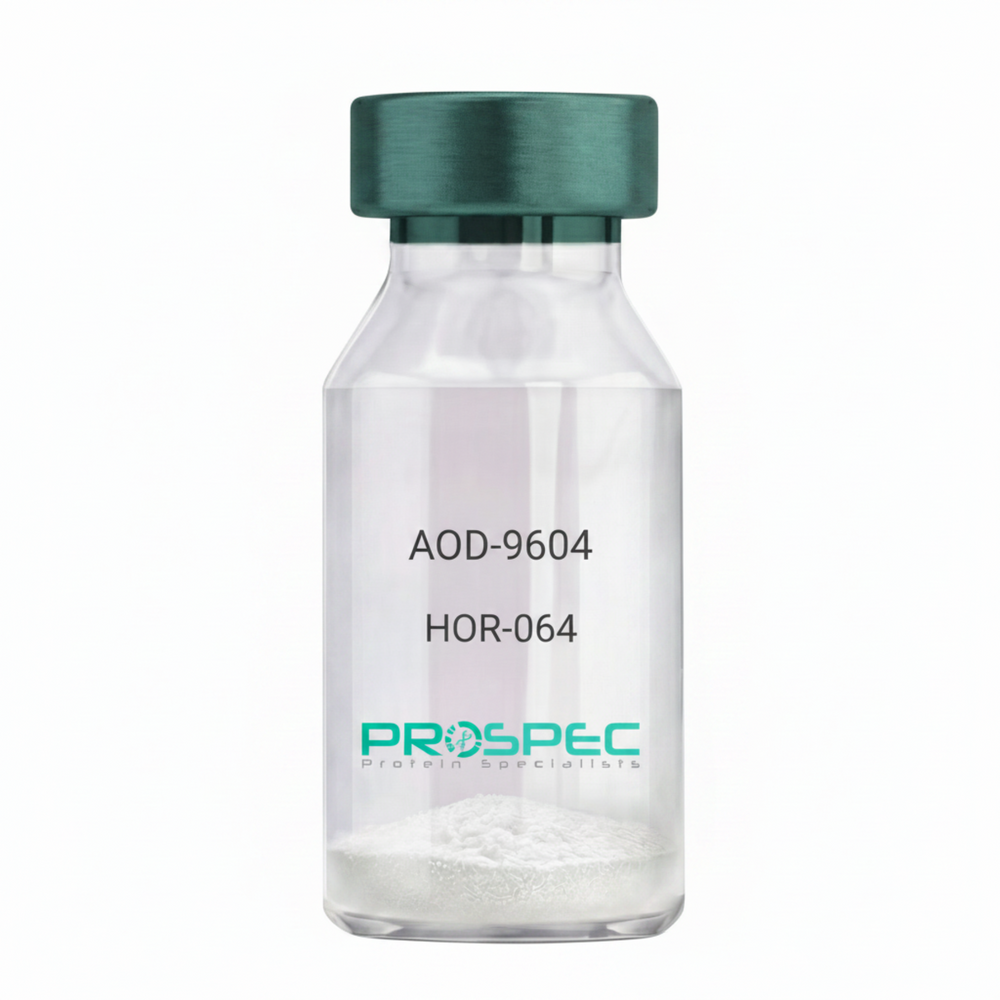
AOD-9604Description:
AOD-9604
Product # :
HOR-064Price :
Quantity :
Shipping Method :
Shipped at Room temp
More Info
- description
- formulation
- purity
- More Info
- Citations
Description
AOD-9604 is a synthetic single, non-glycosylated polypeptide chain containing 16 amino acids, having a molecular mass of 1815 Dalton and a Molecular formula of C78H123N23O23 S2.
Formulation
The protein was lyophilized with no additives.
Purity
Greater than 97.0% as determined by analysis by RP-HPLC.
Citations
More Info
-
Physical Appearance
Sterile Filtered White lyophilized (freeze-dried) powder.
-
Stability
Lyophilized AOD-9604 although stable at room temperature for 3 weeks, should be stored desiccated below -18°C. Upon reconstitution AOD-9604 should be stored at 4°C between 2-7 days and for future use below -18°C.
For long term storage it is recommended to add a carrier protein (0.1% HSA or BSA).
Please prevent freeze-thaw cycles.
-
Solubility
It is recommended to reconstitute the lyophilized AOD-9604 in sterile 18MΩ-cm H2O not less than 100 µg/ml, which can then be further diluted to other aqueous solutions.
-
Amino Acid Sequence
H-Tyr-Leu-Arg-Ile-Val-Gln-Cys-Arg-SerVal-Glu-Gly-Ser-Cys-Gly-Phe-OH (Disulfide bond).
-
Background
AOD-9604 is a synthetic analog of the C-terminal fragment (177–191) AOD-9604 stimulates lipolysis (fat breakdown) without the unwanted growth-promoting or insulin-antagonizing effects of full-length hGH. AOD-9604 is a potent lipolytic tool in animal models and researchers focus on its regenerative properties in joint health and its ability to modulate beta3 adrenergic receptors without the systemic risks of growth hormone.
ProSpec's products are furnished for LABORATORY RESEARCH USE ONLY. The product may not be used as drugs, agricultural or pesticidal products, food additives or household chemicals.
- View Data Sheet
Name :
HSF1 AntibodyDescription:
Heat Shock Transcription Factor-1, Mouse Anti Human
HSF-1, HSF1, HSTF-1, HSTF1, Heat shock factor protein 1, Heat shock transcription factor 1.
Product # :
ANT-328Price :
Quantity :
Shipping Method :
Shipped with Ice Packs
More Info
- formulation
- More Info
- Citations
Formulation
1mg/ml containing PBS, pH-7.4, 0.02% Sodium Azide and 10% Glycerol.
Citations
More Info
-
Introduction
The transcription of heat-shock genes is rapidly induced after temperature stress in response to environmental changes, and it is also involved in oogenesis, spermatogenesis, and placental development. Hsp90, is a major repressor of HSF1 gene. HSF1 is known for its participation in heat shock response. HSF1 protein regulates the transcription of hundreds of targets, such as genes involved in protein folding, detoxification, energy generation, carbohydrate metabolism, and cell wall organization. HSF1 binds to MTA1 in vitro & in breast carcinoma. Suppression of estrogen-dependent transcription may contribute to role of HSF1 in cancer. Human cancer lines of diverse origins express higher dependence on HSF1 function to maintain proliferation and survival than their non-transformed counterparts. HSF1 induces anticoagulation and relaxation factors in vascular endothelial cells and could therefore be used to treat cardiovascular disease. HSF1 is directly involved in the regulation of HO1 havi
-
Synonyms
HSF-1, HSF1, HSTF-1, HSTF1, Heat shock factor protein 1, Heat shock transcription factor 1.
-
Immunogen
Anti-human HSF1 mAb, is derived from hybridization of mouse FO myeloma cells with spleen cells from BALB/c mice immunized with recombinant human HSF1 amino acids 1-529 purified from E. coli.
-
Ig Subclass
Mouse IgG1 heavy chain and κ light chain.
-
Clone
PJ7F9AT.
-
Applications
HSF1 antibody has been tested by ELISA and Western blot analysis to assure specificity and reactivity. Since application varies, however, each investigation should be titrated by the reagent to obtain optimal results. Recommended dilution range for Western blot analysis is 1:1,000~ 2,000. Recommended starting dilution is 1:1,000.
-
Type
Mouse Anti Human Monoclonal.
-
Storage Procedures
For periods up to 1 month store at 4°C, for longer periods of time, store at -20°C. Prevent freeze thaw cycles.
-
Purification Method
HSF1 antibody was purified from mouse ascitic fluids by protein-G affinity chromatography.
ProSpec's products are furnished for LABORATORY RESEARCH USE ONLY. The product may not be used as drugs, agricultural or pesticidal products, food additives or household chemicals.
- View Data Sheet
Name :
TNFRSF10C AntibodyDescription:
TRAIL Receptor-3, Mouse Anti Human
Tumor Necrosis Factor Receptor Superfamily, Member 10c, Decoy Without An , Intracellular Domain, TRAILR3, DCR1, TRID, TNF-Related Apoptosis-Inducing Ligand Receptor, Antagonist Decoy Receptor For TRAIL/Apo-2L, Decoy TRAIL Receptor Without Death Domain, Lymphocyte Inhibitor Of TRAIL, Decoy Receptor,TRAIL-R, LIT,Tumor Necrosis Factor Receptor Superfamily Member 10C, TRAIL Receptor Without an Intracellular Domain, Cytotoxic TRAIL Receptor, TRAIL Receptor, CD263 Antigen, DCR1-TNFR, CD263.
Product # :
ANT-741Price :
Quantity :
Shipping Method :
Shipped with Ice Packs
More Info
- formulation
- More Info
- Citations
Formulation
1mg/ml containing PBS, pH-7.4, 10% Glycerol and 0.02% Sodium Azide.
Citations
More Info
-
Introduction
TRAIL Receptor-3, also known as TNFRSF10C belongs to theTNF-receptor super family. TNFRSF10C contains an extracellular TRAIL-binding domain as well as a transmembranedomain, however no cytoplasmic death domain. Furthermore, TNFRSF10C is not capable of inducing apoptosis, and is considered toact as an antagonistic receptor which protects cells from TRAIL-induced apoptosis.
-
Synonyms
Tumor Necrosis Factor Receptor Superfamily, Member 10c, Decoy Without An , Intracellular Domain, TRAILR3, DCR1, TRID, TNF-Related Apoptosis-Inducing Ligand Receptor, Antagonist Decoy Receptor For TRAIL/Apo-2L, Decoy TRAIL Receptor Without Death Domain, Lymphocyte Inhibitor Of TRAIL, Decoy Receptor,TRAIL-R, LIT,Tumor Necrosis Factor Receptor Superfamily Member 10C, TRAIL Receptor Without an Intracellular Domain, Cytotoxic TRAIL Receptor, TRAIL Receptor, CD263 Antigen, DCR1-TNFR, CD263.
-
Physical Appearance
Sterile filtered colorless solution.
-
Immunogen
Anti-human TNFRSF10C mAb, is derived from hybridization of mouse SP2/0 myeloma cells with spleen cells from BALB/c mice immunized with Recombinant human TNFRSF10C amino acids 26-236 purified from E. coli.
-
Ig Subclass
Mouse IgG1 heavy chain and κ light chain.
-
Clone
PAT1E12AT.
-
Applications
The antibody has been tested by ELISA, Western blot analysis, Flow cytometry and ICC/IF to assure specificity and reactivity. Since application varies, however, each investigation should be titrated by the reagent to obtain optimal results.
-
Type
Mouse Anti Human Monoclonal.
-
Storage Procedures
For periods up to 1 month store at 4°C, for longer periods of time, store at -20°C. Prevent freeze thaw cycles.
-
Purification Method
TNFRSF10C antibody was purified from mouse ascitic fluids by protein-A affinity chromatography.
ProSpec's products are furnished for LABORATORY RESEARCH USE ONLY. The product may not be used as drugs, agricultural or pesticidal products, food additives or household chemicals.
- View Data Sheet
Name :
HLA-F HumanDescription:
Major Histocompatibility Complex Class I F Human Recombinant
CDA12, HLA-5.4, HLA-CDA12, HLAF, HLA class I histocompatibility antigen, alpha chain F, HLA F antigen, Leukocyte antigen F, MHC class I antigen F, HLA-F.
Product # :
PRO-2001Price :
Quantity :
Shipping Method :
Shipped with Ice Packs
More Info
- description
- source
- formulation
- purity
- More Info
- Citations
Description
HLA-F Human Recombinant produced in E.Coli is a single, non-glycosylated polypeptide chain containing 307 amino acids (22-305a.a) and having a molecular mass of 35.1kDa. HLA-F is fused to a 23 amino acid His-tag at N-terminus & purified by proprietary chromatographic techniques.
Source
Escherichia Coli.
Formulation
HLA-F protein solution (0.25mg/ml) containing 20mM Tris-HCl buffer (pH 8.0), 0.15M NaCl 20% glycerol and 1mM DTT.
Purity
Greater than 90.0% as determined by SDS-PAGE.
Citations
More Info
-
Introduction
Major Histocompatibility Complex Class I F (HLA-F) belongs to the MHC family which takes part in the presentation of antigens to the T cell receptor. HLA-F is a member of the class I molecules which are expressed in virtually all cells. There are 2 classes of HLA antigens. Class I molecules takes an important part in the immune system by presenting peptides derived from the endoplasmic reticulum.
-
Synonyms
CDA12, HLA-5.4, HLA-CDA12, HLAF, HLA class I histocompatibility antigen, alpha chain F, HLA F antigen, Leukocyte antigen F, MHC class I antigen F, HLA-F.
-
Physical Appearance
Sterile Filtered colorless solution.
-
Stability
Store at 4°C if entire vial will be used within 2-4 weeks. Store, frozen at -20°C for longer periods of time. For long term storage it is recommended to add a carrier protein (0.1% HSA or BSA).Avoid multiple freeze-thaw cycles.
-
Amino Acid Sequence
MGSSHHHHHH SSGLVPRGSH MGSGSHSLRY FSTAVSRPGR GEPRYIAVEY VDDTQFLRFD SDAAIPRMEP REPWVEQEGP QYWEWTTGYA KANAQTDRVA LRNLLRRYNQ SEAGSHTLQG MNGCDMGPDG RLLRGYHQHA YDGKDYISLN EDLRSWTAAD TVAQITQRFY EAEEYAEEFR TYLEGECLEL LRRYLENGKE TLQRADPPKA HVAHHPISDH EATLRCWALG FYPAEITLTW QRDGEEQTQD TELVETRPAG DGTFQKWAAV VVPPGEEQRY TCHVQHEGLP QPLILRWEQS PQPTIPI.
ProSpec's products are furnished for LABORATORY RESEARCH USE ONLY. The product may not be used as drugs, agricultural or pesticidal products, food additives or household chemicals.
- View Data Sheet
Name :
NEUROG3 HumanDescription:
Neurogenin 3 Human Recombinant
Neurogenin 3, Class A Basic Helix-Loop-Helix Protein 7, Protein Atonal Homolog 5, BHLHA7, Math4B, NGN3, Atoh5.
Product # :
CYT-811Price :
Quantity :
Shipping Method :
Shipped with Ice Packs
More Info
- description
- source
- formulation
- purity
- More Info
- Citations
Description
NEUROG3 Human Recombinant produced in E.coli is a single, non-glycosylated polypeptide chain containing 234 amino acids (1-214) and having a molecular mass of 25.1 kDa. NEUROG3 is fused to a 20 amino acid His-tag at N-terminus.
Source
Escherichia Coli.
Formulation
The NEUROG3 solution (0.25mg/ml) contains 20mM Tris-HCl buffer (pH 8.0), 0.4M Urea and 10% glycerol.
Purity
Greater than 85% as determined by SDS-PAGE.
Citations
More Info
-
Introduction
NEUROG3 is a common helix-loop-helix (bHLH) transcription factor which takes part in neurogenesis. NEUROG3 functions as a heterodimer with another bHLH protein. Mutations in this gene can result in congenital malabsorptive diarrhea 4 (DIAR4).
-
Synonyms
Neurogenin 3, Class A Basic Helix-Loop-Helix Protein 7, Protein Atonal Homolog 5, BHLHA7, Math4B, NGN3, Atoh5.
-
Physical Appearance
Sterile Filtered clear solution.
-
Stability
Store at 4°C if entire vial will be used within 2-4 weeks. Store, frozen at -20°C for longer periods of time. For long term storage it is recommended to add a carrier protein (0.1% HSA or BSA).Avoid multiple freeze-thaw cycles.
-
Amino Acid Sequence
MGSSHHHHHH SSGLVPRGSH MTPQPSGAPT VQVTRETERS FPRASEDEVT CPTSAPPSPT RTRGNCAEAE EGGCRGAPRK LRARRGGRSR PKSELALSKQ RRSRRKKAND RERNRMHNLN SALDALRGVL PTFPDDAKLT KIETLRFAHN YIWALTQTLR IADHSLYALE PPAPHCGELG SPGGSPGDWG SLYSPVSQAG SLSPAASLEE RPGLLGATSS ACLSPGSLAF SDFL
ProSpec's products are furnished for LABORATORY RESEARCH USE ONLY. The product may not be used as drugs, agricultural or pesticidal products, food additives or household chemicals.
- View Data Sheet
Name :
SSSCA1 HumanDescription:
Sjogren Syndrome/Scleroderma Autoantigen 1 Human Recombinant
Sjogren Syndrome/Scleroderma Autoantigen 1, Sjogren'S Syndrome/Scleroderma Autoantigen 1, Autoantigen P27, Centromeric Autoantigen (27kD), p27, Sjoegren Syndrome/Scleroderma Autoantigen 1.
Product # :
PRO-1743Price :
Quantity :
Shipping Method :
Shipped with Ice Packs
More Info
- description
- source
- formulation
- purity
- More Info
- Citations
Description
SSSCA1 Human Recombinant produced in E.Coli is a single, non-glycosylated polypeptide chain containing 222 amino acids (1-199aa) and having a molecular mass of 23.9kDa. SSSCA1 is fused to a 23 amino acid His-tag at N-terminus & purified by proprietary chromatographic techniques.
Source
Escherichia Coli.
Formulation
SSSCA1 protein solution (0.5mg/ml) containing 20mM Tris-HCl buffer (pH 8.0), 0.4M urea and 10% glycerol.
Purity
Greater than 90.0% as determined by SDS-PAGE.
Citations
More Info
-
Introduction
Sjogren syndrome/scleroderma autoantigen 1, SSSCA1 is involved in mitosis. SSSCA1 is a centromere-associated protein which can induce anti-centromere antibodies. In addition SSSCA1 is recognized by a subset of anti-centromere antibodies from patients with sclerodermaand Sjogren's syndrome.
-
Synonyms
Sjogren Syndrome/Scleroderma Autoantigen 1, Sjogren'S Syndrome/Scleroderma Autoantigen 1, Autoantigen P27, Centromeric Autoantigen (27kD), p27, Sjoegren Syndrome/Scleroderma Autoantigen 1.
-
Physical Appearance
Sterile Filtered clear solution.
-
Stability
Store at 4°C if entire vial will be used within 2-4 weeks. Store, frozen at -20°C for longer periods of time.For long term storage it is recommended to add a carrier protein (0.1% HSA or BSA).Please avoid freeze thaw cycles.
-
Amino Acid Sequence
MGSSHHHHHH SSGLVPRGSH MGSMALNGAE VDDFSWEPPT EAETKVLQAR RERQDRISRL MGDYLLRGYR MLGETCADCG TILLQDKQRK IYCVACQELD SDVDKDNPAL NAQAALSQAR EHQLASASEL PLGSRPAPQP PVPRPEHCEG AAAGLKAAQG PPAPAVPPNT DVMACTQTAL LQKLTWASAE LGSSTSLETS IQLCGLIRAC AEALRSLQQL QH
ProSpec's products are furnished for LABORATORY RESEARCH USE ONLY. The product may not be used as drugs, agricultural or pesticidal products, food additives or household chemicals.
- View Data Sheet
Name :
CDH5 MouseDescription:
Cadherin 5 Mouse Recombinant
Cadherin-5, Vascular endothelial cadherin, VE-cadherin, CD144, Cdh5.
Product # :
PRO-2244Price :
Quantity :
Shipping Method :
Shipped with Ice Packs
More Info
- description
- source
- formulation
- purity
- More Info
- Citations
Description
CDH5 produced in Sf9 Insect cells is a single, glycosylated polypeptide chain containing 583 amino acids (25-599a.a.) and having a molecular mass of 66.2kDa. (Molecular size on SDS-PAGE will appear at approximately 70-100kDa).CDH5 is expressed with an 8 amino acid His tag at C-Terminus and purified by proprietary chromatographic techniques.
Source
Sf9, Insect cells.
Formulation
CDH5 protein solution (0.5mg/ml) contains phosphate buffered saline (pH7.4) and 10% glycerol.
Purity
Greater than 90.0% as determined by SDS-PAGE.
Citations
More Info
-
Introduction
Cadherin-5, also known as CDH5 is a classical cadherin which belongs to the cadherin superfamily. The CDH5is located in a six-cadherin cluster in a region on the long arm of chromosome 16 which is involved in loss ofheterozygosity events in breast as well as prostate cancer. CDH5 is a calcium-dependent cell-celladhesion glycoprotein composed of five extracellular cadherin repeats, a transmembrane region and a highlyconserved cytoplasmic tail. Furthermore, CDH5 functions as a classic cadherin by passing on to cells the ability to adhere in ahomophilic manner, CDH5 plays a significant role in endothelial cell biology through control of the cohesion as well as organization of the intercellular junctions.
-
Synonyms
Cadherin-5, Vascular endothelial cadherin, VE-cadherin, CD144, Cdh5.
-
Physical Appearance
Sterile filtered colorless solution.
-
Stability
Store at 4°C if entire vial will be used within 2-4 weeks.Store, frozen at -20°C for longer periods of time. For long term storage it is recommended to add a carrier protein (0.1% HSA or BSA).Avoid multiple freeze-thaw cycles.
-
Amino Acid Sequence
GPNFPQIDTP NMLPAHHRQK RDWIWNQMHI DEEKNESLPH YVGKIKSNVN RQNAKYVLQG EFAGKIFGVD ANTGNVLAYE RLDREKVSEY FLTALIVDKN TNKNLEQPSS FTVKVHDIND NWPVFSHQVF NASVPEMSAI GTSVIRVTAV DADDPTVAGH ATVLYQIVKG NEYFSIDNSG LIFTKIKNLD REKQAEYKIV VETQDALGLR GESGTATVMI RLEDINDNFP VFTQSTYTFS VPEDIRVGKP LGFLTVVDPD EPQNRMTKYS IMQGEYRDTF TIETDPKRNE GIIKPTKSLD YEVIQQYTFY IEATDPTIRY EYLSSTSGKN KAMVTINVLD VDEPPVFQRH FYHFKLPENQ KKPLIGTVVA KDPDKAQRSI GYSIRKTSDR GQFFRITKQG NIYNEKELDR ETYAWYNLTV EANELDSRGN PVGKESIVQV YIEVLDENDN PPEFAQPYEP KVCENAAQGK LVVQISATDK DVVPVNPKFK FALKNEDSNF TLINNHDNTA NITVKYGQFN REHAKFHYLP VLISDNGVPS LTGTSTLTVG VCKCNEQGEF TFCEEMAAQA GVSIQLEHHH HHH.
ProSpec's products are furnished for LABORATORY RESEARCH USE ONLY. The product may not be used as drugs, agricultural or pesticidal products, food additives or household chemicals.
- View Data Sheet
Name :
QTRT1 HumanDescription:
Queuine TRNA-Ribosyltransferase 1 Human Recombinant
Queuine TRNA-Ribosyltransferase 1, TRNA-Guanine Transglycosylase, TGT, Guanine Insertion Enzyme, EC 2.4.2.29, TGUT, Queuine TRNA-Ribosyltransferase, TGT, Catalytic Subunit, TGT, 43-KD Subunit, FP3235, Queuine tRNA-ribosyltransferase.
Product # :
ENZ-877Price :
Quantity :
Shipping Method :
Shipped with Ice Packs
More Info
- description
- source
- formulation
- purity
- More Info
- Citations
Description
QTRT1 Human Recombinant produced in E.Coli is a single, non-glycosylated polypeptide chain containing 428 amino acids (1-403 a.a) and having a molecular mass of 46.7kDa. QTRT1 is fused to a 25 amino acid His-tag at N-terminus & purified by proprietary chromatographic techniques.
Source
Escherichia Coli.
Formulation
QTRT1 protein solution (0.25mg/ml) containing Phosphate buffered saline (pH7.4), 30% glycerol and 1mM DTT.
Purity
Greater than 80.0% as determined by SDS-PAGE.
Citations
More Info
-
Introduction
Queuine TRNA-Ribosyltransferase 1 also known as QTRT1 is a member of the queuine tRNA-ribosyltransferase family. QTRT1 interacts with QTRTD1 to form an active queuine tRNA-ribosyltransferase. Furthermore, QTRT1 exchanges queuine for the guanine at the wobble position of tRNAs with GUN anticodons (tRNA-Asp, -Asn, -His and -Tyr), in this manner forming the hypermodified nucleoside queuosine (Q) (7-(((4,5-cis-dihydroxy-2-cyclopenten-1-yl)amino)methyl)-7-deazaguanosine).
-
Synonyms
Queuine TRNA-Ribosyltransferase 1, TRNA-Guanine Transglycosylase, TGT, Guanine Insertion Enzyme, EC 2.4.2.29, TGUT, Queuine TRNA-Ribosyltransferase, TGT, Catalytic Subunit, TGT, 43-KD Subunit, FP3235, Queuine tRNA-ribosyltransferase.
-
Physical Appearance
Sterile Filtered clear solution.
-
Stability
Store at 4°C if entire vial will be used within 2-4 weeks. Store, frozen at -20°C for longer periods of time. For long term storage it is recommended to add a carrier protein (0.1% HSA or BSA).Avoid multiple freeze-thaw cycles.
-
Amino Acid Sequence
MGSSHHHHHH SSGLVPRGSH MGSEFMAGAA TQASLESAPR IMRLVAECSR SRARAGELWL PHGTVATPVF MPVGTQATMK GITTEQLDAL GCRICLGNTY HLGLRPGPEL IQKANGLHGF MNWPHNLLTD SGGFQMVSLV SLSEVTEEGV RFRSPYDGNE TLLSPEKSVQ IQNALGSDII MQLDDVVSST VTGPRVEEAM YRSIRWLDRC IAAHQRPDKQ NLFAIIQGGL DADLRATCLE EMTKRDVPGF AIGGLSGGES KSQFWRMVAL STSRLPKDKP RYLMGVGYAT DLVVCVALGC DMFDCVFPTR TARFGSALVP TGNLQLRKKV FEKDFGPIDP ECTCPTCQKH SRAFLHALLH SDNTAALHHL TVHNIAYQLQ LMSAVRTSIV EKRFPDFVRD FMGAMYGDPT LCPTWATDAL ASVGITLG.
ProSpec's products are furnished for LABORATORY RESEARCH USE ONLY. The product may not be used as drugs, agricultural or pesticidal products, food additives or household chemicals.
- View Data Sheet
Name :
Protein-L, HisDescription:
Protein L Recombinant, His Tag
Product # :
PRO-1930Price :
Quantity :
Shipping Method :
Shipped at Room temp
More Info
- description
- source
- formulation
- purity
- More Info
- Citations
Description
Recombinant Protein-L produced in E.Coli is a single non-glycosylated polypeptide chain fused with a 6×His tag at N-terminus. Protein-L is comprised of 5 IgG-binding regions of protein L (B1-B2-B3-B4-B5) containing 372 amino acids in total and having a molecular mass of 41.5kDa, however, it migrates with an apparent molecular mass of 46kDa on SDS-PAGE. Cell wall binding region, cell membrane binding region and albumin binding region have been eliminated from the recombinant Protein-L to guarantee the maximum specific IgG binding.
Source
Escherichia Coli.
Formulation
Protein-L was lyophilized without any additives.
Purity
Greater than 97.0% as determined by:
(a) Analysis by SEC-HPLC.
(b) Analysis by SDS-PAGE.Citations
More Info
-
Introduction
The Recombinant Protein L is comprised of 5 kappa-binding domains. Protein L has the exceptional ability to bind through kappa light chain interactions without hindering with the antibody’s antigen-binding site. This gives Protein L the capacity to bind a broader range of Ig classes and subclasses than other antibody-binding proteins. The recombinant Protein L is perfect for purification of polyclonal or monoclonal IgG antibodies. Protein L binds to IgG from humans, mice, rats and pigs.
-
Physical Appearance
Sterile Filtered White lyophilized (freeze-dried) powder.
-
Stability
Lyophilized Protein-L although stable at room temperature for 3 weeks, should be stored desiccated below -18°C. Upon reconstitution Protein-L should be stored at 4°C between 2-7 days and for future use below -18°C. For long term storage it is recommended to add a carrier protein (0.1% HSA or BSA). Please prevent freeze-thaw cycles.
-
Solubility
It is recommended to reconstitute the lyophilized Protein-L in sterile 18M-cm H2O not less than 0.1mg/ml, which can then be further diluted to other aqueous solutions.
-
Amino Acid Sequence
MHHHHHHKEE TPETPETDSE EEVTIKANLI FANGSTQTAE FKGTFEKATS EAYAYADTLK KDNGEYTVDV ADKGYTLNIK FAGKEKTPEE PKEEVTIKAN LIYADGKTQT AEFKGTFEEA TAEAYRYADA LKKDNGEYTV DVADKGYTLN IKFAGKEKTP EEPKEEVTIK ANLIYADGKT QTAEFKGTFE EATAEAYRYA DLLAKENGKY TVDVADKGYT LNIKFAGKEK TPEEPKEEVT IKANLIYADG KTQTAEFKGT FAEATAEAYR YADLLAKENG KYTADLEDGG YTINIRFAGK KVDEKPEEKE QVTIKENIYF EDGTVQTATF KGTFAEATAE AYRYADLLSK EHGKYTADLE DGGYTINIRF AG.
ProSpec's products are furnished for LABORATORY RESEARCH USE ONLY. The product may not be used as drugs, agricultural or pesticidal products, food additives or household chemicals.
- View Data Sheet
Name :
OrnipressinDescription:
Ornipressin
Product # :
HOR-036Price :
Quantity :
Shipping Method :
Shipped at Room temp
More Info
- description
- formulation
- purity
- More Info
- Citations
Description
Ornipressin Synthetic is a single, non-glycosylated polypeptide chain containing 9 amino acids, having a molecular mass of 1042.19 Dalton and a Molecular formula of C45H63N13O12 S2.
Formulation
The protein was lyophilized with no additives.
Purity
Greater than 97.0% as determined by analysis by RP-HPLC.
Citations
More Info
-
Physical Appearance
Sterile Filtered White lyophilized (freeze-dried) powder.
-
Stability
Lyophilized Ornipressin although stable at room temperature for 3 weeks, should be stored desiccated below -18°C. Upon reconstitution Ornipressin should be stored at 4°C between 2-7 days and for future use below -18°C. For long term storage it is recommended to add a carrier protein (0.1% HSA or BSA). Please prevent freeze-thaw cycles.
-
Solubility
It is recommended to reconstitute the lyophilized Ornipressin in sterile 18MΩ-cm H2O not less than 100 µg/ml, which can then be further diluted to other aqueous solutions.
-
Amino Acid Sequence
H-Cys-Tyr-Phe-Gln-Asn-Cys-Pro-Orn-Gly-NH2.
-
Background
Ornipressin, a naturally occurring non-mammalian vasopressin analogue, has been recognized for its role in vasoconstriction and antidiuresis, making it an invaluable agent in certain clinical settings (Holmes et al., 2003). This paper aims to comprehensively review ornipressin's biochemical properties, its clinical applications, and potential future directions for therapeutic use.
Ornipressin is characterized by its strong vasopressin V1 receptor agonist activity, resulting in intense vasoconstriction. It also exhibits antidiuretic properties through the activation of V2 receptors in the renal collecting ducts, albeit to a lesser extent compared to vasopressin (Evans & Davidson, 1964).
Clinical applications of ornipressin are mainly driven by its potent vasoconstrictor activity. It has shown promise in managing esophageal variceal bleeding, where its vasoconstrictive properties help achieve hemostasis (Bosch et al., 2004).
Furthermore, it has been used as a rescue therapy in vasodilatory shock, where traditional vasoconstrictors may have limited effect (Morelli et al., 2005).
As our understanding of ornipressin continues to expand, future research is directed toward fine-tuning its application in various clinical scenarios and exploring potential new therapeutic roles. Current research is investigating the possible neuroprotective role of ornipressin in conditions such as cerebral ischemia (Uchida et al., 2010).Ornipressin, with its robust vasoconstrictor and antidiuretic properties, plays a crucial role in managing certain clinical situations. As we continue to explore this intriguing compound, its therapeutic potential appears to be far-reaching, warranting continued research in this field
ProSpec's products are furnished for LABORATORY RESEARCH USE ONLY. The product may not be used as drugs, agricultural or pesticidal products, food additives or household chemicals.
- View Data Sheet
Name :
CagrilintideDescription:
Cagrilintide
Product # :
HOR-059Price :
Quantity :
Shipping Method :
Shipped at Room temp
More Info
- description
- formulation
- purity
- More Info
- Citations
Description
Cagrilintide is a synthetic single, non-glycosylated polypeptide chain containing 37 amino acids, having a molecular mass of 4409 Dalton and a Molecular formula of C194H312N54O59.
Formulation
The protein was lyophilized with no additives.
Purity
Greater than 97.0% as determined by analysis by RP-HPLC.
Citations
More Info
-
Physical Appearance
Sterile Filtered White lyophilized (freeze-dried) powder.
-
Stability
Lyophilized Cagrilintide although stable at room temperature for 3 weeks, should be stored desiccated below -18°C. Upon reconstitution Cagrilintide should be stored at 4°C between 2-7 days and for future use below -18°C.
For long term storage it is recommended to add a carrier protein (0.1% HSA or BSA).
Please prevent freeze-thaw cycles.
-
Solubility
It is recommended to reconstitute the lyophilized Cagrilintide in sterile 18MΩ-cm H2O not less than 100 µg/ml, which can then be further diluted to other aqueous solutions.
-
Amino Acid Sequence
(Eicosanedioic acid-γ-Glu)-Lys-CysAsn-Thr-Ala-Thr-Cys-Ala-Thr-Gln-Arg-Leu-Ala-Glu-Phe-Leu-Arg-HisSer-Ser-Asn-Asn-Phe-Gly-Pro-Ile-Leu-Pro-Pro-Thr-Asn-Val-Gly-SerAsn-Thr-Pro-NH2 (Disulfide bridge:Cys3-Cys8).
-
Background
Cagrilintide plays a role as a pioneering long-acting amylin analogue and integrates into the fixed-dose combination CagriSema (Cagrilintide + Semaglutide). Unlike GLP-1 agonists, Cagrilintide mimics amylin, a hormone co-secreted with insulin takes part in regulating satiety and slows gastric emptying through brainstem pathways.
ProSpec's products are furnished for LABORATORY RESEARCH USE ONLY. The product may not be used as drugs, agricultural or pesticidal products, food additives or household chemicals.
- View Data Sheet
Name :
FGFR4 Human, HisDescription:
Fibroblast Growth Factor Receptor-4 Human Recombinant, His Tag
Fibroblast Growth Factor Receptor 4, EC 2.7.10.1, JTK2, TKF, Tyrosine Kinase Related To Fibroblast Growth Factor Receptor, Hydroxyaryl-Protein Kinase, Protein-Tyrosine Kinase, Tyrosylprotein Kinase, CD334 Antigen, EC 2.7.10, FGFR-4, CD334, FGFR4.
Product # :
PKA-090Price :
Quantity :
Shipping Method :
Shipped with Ice Packs
More Info
- description
- source
- formulation
- purity
- More Info
- Citations
Description
Fibroblast Growth Factor Receptor-4 Human Recombinant produced in Sf9 Baculovirus cells is a single, glycosylated polypeptide chain containing 356 amino acids (22-369a.a.) and having a molecular mass of 39.5kDa (Molecular size on SDS-PAGE will appear at approximately 40-57kDa).FGFR4 is fused with an 8 amino acids His tag at C-Terminus and purified by proprietary chromatographic techniques.
Source
Sf9, Baculovirus cells.
Formulation
FGFR4 protein solution (0.25mg/ml) contains Phosphate Buffered Saline (pH7.4) and 10% glycerol.
Purity
Greater than 90.0% as determined by SDS-PAGE.
Citations
More Info
-
Introduction
Fibroblast growth factors (FGFs) comprise a family of at least eighteen structurally related proteins that are involved in a multitude of physiological and pathological cellular processes, including cell growth, differentiation, angiogenesis, wound healing and tumorgenesis. The biological activities of the FGFs are mediated by a family of type I transmembrane tyrosine kinases which undergo dimerization and autophosphorylation after ligand binding. Four distinct genes encoding closely related FGF receptors, FGF R1 - 4, are known. All four genes for FGF Rs encode proteins with an N-terminal signal peptide, three immunoglobulin (Ig)-like domains, an acid-box region containing a run of acidic residues between the IgI and IgII domains, a transmembrane domain and the split tyrosine-kinase domain. Multiple forms of FGF R1 - 3 are generated by alternative splicing of the mRNAs. A frequent splicing event involving FGF R1 and 2 results in receptors containing all three Ig domains, referred to as the a isoform, or only IgII and IgIII, referred to as the b isoform. Only the a isoform has been identified for FGF R3 and FGF R4. Additional splicing events for FGF R1 - 3, involving the C-terminal half of the IgIII domain encoded by two mutually exclusive alternative exons, generate FGF receptors with alternative IgIII domains (IIIb and IIIc). A IIIa isoform which is a secreted FGF binding protein containing only the N-terminal half of the IgIII domain plus some intron sequences has also been reported for FGF R1. Mutations in FGF R1 - 3 have been found in patients with birth defects involving craniosynostosis. The complex patterns of expression of these receptors as well as the specificity of their interactions with the various FGF ligand family members are under investigation.
-
Synonyms
Fibroblast Growth Factor Receptor 4, EC 2.7.10.1, JTK2, TKF, Tyrosine Kinase Related To Fibroblast Growth Factor Receptor, Hydroxyaryl-Protein Kinase, Protein-Tyrosine Kinase, Tyrosylprotein Kinase, CD334 Antigen, EC 2.7.10, FGFR-4, CD334, FGFR4.
-
Physical Appearance
Sterile Filtered colorless solution.
-
Stability
Store at 4°C if entire vial will be used within 2-4 weeks. Store, frozen at -20°C for longer periods of time. For long term storage it is recommended to add a carrier protein (0.1% HSA or BSA). Avoid multiple freeze-thaw cycles.
-
Amino Acid Sequence
LEASEEVELE PCLAPSLEQQ EQELTVALGQ PVRLCCGRAE RGGHWYKEGS RLAPAGRVRG WRGRLEIASF LPEDAGRYLC LARGSMIVLQ NLTLITGDSL TSSNDDEDPK SHRDPSNRHS YPQQAPYWTH PQRMEKKLHA VPAGNTVKFR CPAAGNPTPT IRWLKDGQAF HGENRIGGIR LRHQHWSLVM ESVVPSDRGT YTCLVENAVG SIRYNYLLDV LERSPHRPIL QAGLPANTTA VVGSDVELLC KVYSDAQPHI QWLKHIVING SSFGADGFPY VQVLKTADIN SSEVEVLYLR NVSAEDAGEY TCLAGNSIGL SYQSAWLTVL PEEDPTWTAA APEARYTDLE HHHHHH.
ProSpec's products are furnished for LABORATORY RESEARCH USE ONLY. The product may not be used as drugs, agricultural or pesticidal products, food additives or household chemicals.
- View Data Sheet
Name :
VTI1B HumanDescription:
Vesicle Transport Through Interaction with t-SNAREs Homolog 1B Human Recombinant
Vesicle transport through interaction with t-SNAREs homolog 1B, Vesicle transport v-SNARE protein Vti1-like 1, Vti1-rp1, VTI1B, VTI1, VTI1L, VTI1L1, VTI2, v-SNARE, VTI1-LIKE.
Product # :
PRO-1115Price :
Quantity :
Shipping Method :
Shipped with Ice Packs
More Info
- description
- source
- formulation
- purity
- More Info
- Citations
Description
VTI1B Human Recombinant produced in E.Coli is a single, non-glycosylated polypeptide chain containing 231 amino acids (1-208 a.a) and having a molecular mass of 26.3kDa (Molecular weight on SDS-PAGE will appear higher).VTI1B is fused to a 23 amino acid His-tag at N-terminus & purified by proprietary chromatographic techniques.
Source
Escherichia Coli.
Formulation
VTI1B protein solution (0.25mg/ml) containing 20mM Tris-HCl buffer (pH8.0), 30% glycerol, 0.15M NaCl and 1mM DTT.
Purity
Greater than 85.0% as determined by SDS-PAGE.
Citations
More Info
-
Introduction
VTI1B (v-SNARE) mediates vesicle transport pathways via interactions with t-SNAREs on the target membrane. These interactions are meant to facilitate aspects of the specificity of vesicle trafficking and to stimulate fusion of the lipid bilayers. VTI1B may be involved in increased secretion of cytokines connected with cellular senescence.
-
Synonyms
Vesicle transport through interaction with t-SNAREs homolog 1B, Vesicle transport v-SNARE protein Vti1-like 1, Vti1-rp1, VTI1B, VTI1, VTI1L, VTI1L1, VTI2, v-SNARE, VTI1-LIKE.
-
Physical Appearance
Sterile Filtered colorless solution.
-
Stability
Store at 4°C if entire vial will be used within 2-4 weeks. Store, frozen at -20°C for longer periods of time. For long term storage it is recommended to add a carrier protein (0.1% HSA or BSA).Avoid multiple freeze-thaw cycles.
-
Amino Acid Sequence
MGSSHHHHHH SSGLVPRGSH MGSMASSAAS SEHFEKLHEI FRGLHEDLQG VPERLLGTAG TEEKKKLIRD FDEKQQEANE TLAEMEEELR YAPLSFRNPM MSKLRNYRKD LAKLHREVRS TPLTATPGGR GDMKYGIYAV ENEHMNRLQS QRAMLLQGTE SLNRATQSIE RSHRIATETD QIGSEIIEEL GEQRDQLERT KSRLVNTSEN LSKSRKILRS MSRKVTTNKL L.
ProSpec's products are furnished for LABORATORY RESEARCH USE ONLY. The product may not be used as drugs, agricultural or pesticidal products, food additives or household chemicals.
- View Data Sheet
Name :
TGFB3 AntibodyDescription:
Transforming Growth Factor-beta 3 Polyclonal Rabbit Anti Human Antibody
Transforming Growth Factor-beta3, TGFB3, ARVD, FLJ16571, TGF-beta3.
Product # :
ANT-040Price :
Quantity :
Shipping Method :
Shipped with Ice Packs
More Info
- formulation
- More Info
- Citations
Formulation
lyophilized from 1mg/ml solution in 0.2µm sterile filtered solution in phosphate buffered saline.
Citations
More Info
-
Introduction
Transforming growth factor betas (TGF Betas) mediate many cell-cell interactions that occur during embryonic development. Three TGF Betas have been identified in mammals. TGF Beta 1, TGF Beta 2 and TGF Beta 3 are each synthesized as precursor proteins that are very similar in that each is cleaved to yield a 112 amino acid polypeptide that remains associated with the latent portion of the molecule.
-
Synonyms
Transforming Growth Factor-beta3, TGFB3, ARVD, FLJ16571, TGF-beta3.
-
Stability
Store at 4°C. For long term storage freezes in working aliquots at -20°C. Repeated freezing and thawing is not recommended.
-
Solubility
Reconstitute with H20. Mix gently, wash the sides of the vial and wait 30-60 seconds before use.
-
Immunogen
IgG Anti Human TGFb-3 is developed in rabbit using recombinant Human TGFb-3 produced in plants.
-
Applications
To detect Human TGFb-3 by WB analysis this IgG can be used in a dilution of 1/500-1/1000.
-
Antigen Amino Acid Sequence
ALDTNYCFRNLEENCCVRPLYIDFRQDLGWKWVHEPKGYYANFCSGPCPYLRSADTTHSTVLGLYNTLNPEASASPCCVPQDLEPLTILYYVGRTPKVEQLSNMVVKSCKCS
-
Type
Polyclonal Rabbit Antibody.
-
Purification Method
Purified IgG prepared by affinity chromatography on protein G.
ProSpec's products are furnished for LABORATORY RESEARCH USE ONLY. The product may not be used as drugs, agricultural or pesticidal products, food additives or household chemicals.
- View Data Sheet
Name :
KRT8 Human, GSTDescription:
Cytokeratin 8 Human Recombinant, GST Tag
Keratin type II cytoskeletal 8, Cytokeratin-8, CK-8, Keratin-8, K8, KRT8, CYK8, KO, CK8, K2C8, CARD2.
Product # :
PRO-298Price :
Quantity :
Shipping Method :
Shipped with Ice Packs
More Info
- description
- source
- formulation
- More Info
- Citations
Description
Cytokeratin 8 Human Recombinant full length protein expressed in E.coli, shows a 78 kDa SDS-PAGE.The Cytokeratin 8 is fused to GST-Tag and purified by proprietary chromatographic techniques.
Source
Escherichia Coli.
Formulation
Cytokeratin-8 in 50mM Tris-HCl pH-7.5, 10mM L-glutathione (reduced).
Citations
More Info
-
Introduction
Cytokeratin 8 belongs to the type B (basic) subfamily of high molecular weight keratins and exists in combination with keratin 18. Cytokeratin 8 is primarily found in the non-squamous epithelia and is present in majority of adenocarcinomas and ductal carcinomas. It is absent in squamous cell carcinomas. Hepatocellular carcinomas are defined by the use of antibodies that recognize only cytokeratin polypeptides 8 and 18.
-
Synonyms
Keratin type II cytoskeletal 8, Cytokeratin-8, CK-8, Keratin-8, K8, KRT8, CYK8, KO, CK8, K2C8, CARD2.
-
Physical Appearance
Sterile Filtered clear solution.
-
Stability
Store vial at -20°C to -80°C. When stored at the recommended temperature, this protein is stable for 12 months.Please prevent freeze-thaw cycles.
ProSpec's products are furnished for LABORATORY RESEARCH USE ONLY. The product may not be used as drugs, agricultural or pesticidal products, food additives or household chemicals.
- View Data Sheet
Name :
TNFAIP8 HumanDescription:
Tumor Necrosis Factor, Alpha-Induced Protein 8 Human Recombinant
GG2-1; MDC-3.13, SCC-S2, SCCS2, Tumor necrosis factor alpha-induced protein 8, TNF alpha-induced protein 8, Head and neck tumor and metastasis-related protein, NF-kappa-B-inducible DED-containing protein, NDED, TNF-induced protein GG2-1, TNFAIP8.
Product # :
CYT-759Price :
Quantity :
Shipping Method :
Shipped with Ice Packs
More Info
- description
- source
- formulation
- purity
- More Info
- Citations
Description
TNFAIP8 Human Recombinant produced in E.Coli is a single, non-glycosylated polypeptide chain containing 221 amino acids (1-198a.a.) and having a molecular mass of 25kDa. TNFAIP8 is fused to a 23 amino acid His-tag at N-terminus & purified by proprietary chromatographic techniques.
Source
Escherichia Coli.
Formulation
TNFAIP8 protein solution (0.25mg/ml) contains 20mM Tris-HCl buffer (pH 8.0), 0.15M NaCl, 10% glycerol and 1mM DTT.
Purity
Greater than 90% as determined by SDS-PAGE.
Citations
More Info
-
Introduction
TNFAIP8 which is a part of the TNFAIP8 family acts as a negative mediator of apoptosis and takes part in tumor progression. TNFAIP8 suppresses the TNF-mediated apoptosis by inhibiting caspase-8 activity but not the processing of procaspase-8, resulting in inhibition of BID cleavage and activation of caspase-3.
-
Synonyms
GG2-1; MDC-3.13, SCC-S2, SCCS2, Tumor necrosis factor alpha-induced protein 8, TNF alpha-induced protein 8, Head and neck tumor and metastasis-related protein, NF-kappa-B-inducible DED-containing protein, NDED, TNF-induced protein GG2-1, TNFAIP8.
-
Physical Appearance
Sterile filtered colorless solution.
-
Stability
Store at 4°C if entire vial will be used within 2-4 weeks. Store, frozen at -20°C for longer periods of time. For long term storage it is recommended to add a carrier protein (0.1% HSA or BSA).Avoid multiple freeze-thaw cycles.
-
Amino Acid Sequence
MGSSHHHHHH SSGLVPRGSH MGSMHSEAEE SKEVATDVFN SKNLAVQAQK KILGKMVSKS IATTLIDDTS SEVLDELYRV TREYTQNKKE AEKIIKNLIK TVIKLAILYR NNQFNQDELA LMEKFKKKVH QLAMTVVSFH QVDYTFDRNV LSRLLNECRE MLHQIIQRHL TAKSHGRVNN VFDHFSDCEF LAALYNPFGN FKPHLQKLCD GINKMLDEEN I.
ProSpec's products are furnished for LABORATORY RESEARCH USE ONLY. The product may not be used as drugs, agricultural or pesticidal products, food additives or household chemicals.