Skip to content

High-quality research proteins.

  • 1-800-805-6531

  • Mon - Sat 8.00-18.00, Sun - Closed

  • info@prospecbio.com

  • PO Box 6591 East Brunswick NJ 08816

  • Products
    • Cytokines
    • Growth factors
    • Chemokines
    • Cd antigens
    • Neurotrophins
    • Hormones
    • Enzymes
    • Viral antigens
    • Recombinant proteins
    • Natural proteins
    • Monoclonal antibodies
    • Polyclonal antibodies
    • Thermal Packaging
  • About
    • Company
    • Founder
    • Contribution
  • Customers
    • Eastern Asia
    • Eastern Europe
    • North America
    • South America
    • South East Asia
    • Southern Asia
    • Western Europe
  • Ordering
    • Ordering Method
    • Ordering - Credit Card
    • Ordering - PO
    • Shipping Fees
    • FAQs
  • Services
    • DNA Cloning
    • Protein Expression
    • Monoclonal Antibody
    • Fermentation
    • Technology License
  • Contact us
Log in

Country/region

  • USD $ | Albania
  • USD $ | Andorra
  • USD $ | Argentina
  • USD $ | Armenia
  • USD $ | Australia
  • USD $ | Austria
  • USD $ | Azerbaijan
  • USD $ | Belarus
  • USD $ | Belgium
  • USD $ | Bolivia
  • USD $ | Brazil
  • USD $ | Bulgaria
  • USD $ | Cambodia
  • USD $ | Canada
  • USD $ | Chile
  • USD $ | China
  • USD $ | Colombia
  • USD $ | Costa Rica
  • USD $ | Croatia
  • USD $ | Cyprus
  • USD $ | Czechia
  • USD $ | Denmark
  • USD $ | Estonia
  • USD $ | Finland
  • USD $ | France
  • USD $ | Georgia
  • USD $ | Germany
  • USD $ | Greece
  • USD $ | Hong Kong SAR
  • USD $ | Hungary
  • USD $ | Iceland
  • USD $ | India
  • USD $ | Ireland
  • USD $ | Israel
  • USD $ | Italy
  • USD $ | Japan
  • USD $ | Kazakhstan
  • USD $ | Latvia
  • USD $ | Liechtenstein
  • USD $ | Lithuania
  • USD $ | Madagascar
  • USD $ | Malta
  • USD $ | Mexico
  • USD $ | Moldova
  • USD $ | Monaco
  • USD $ | Netherlands
  • USD $ | New Zealand
  • USD $ | North Macedonia
  • USD $ | Norway
  • USD $ | Panama
  • USD $ | Paraguay
  • USD $ | Peru
  • USD $ | Philippines
  • USD $ | Poland
  • USD $ | Portugal
  • USD $ | Romania
  • USD $ | Singapore
  • USD $ | Slovakia
  • USD $ | Slovenia
  • USD $ | South Africa
  • USD $ | South Korea
  • USD $ | Spain
  • USD $ | Sri Lanka
  • USD $ | Sweden
  • USD $ | Switzerland
  • USD $ | Taiwan
  • USD $ | Thailand
  • USD $ | Türkiye
  • USD $ | Ukraine
  • USD $ | United Kingdom
  • USD $ | United States
  • USD $ | Uruguay
  • USD $ | Vatican City
  • USD $ | Venezuela
  • USD $ | Vietnam
  • Facebook
  • Instagram
logoProSpec - Recombinant Protein Manufacturer for academic and R&D industry
Become a distributor
Account Log in
Wishlist
Cart Cart(0)
  • Products
    +
    • Cytokines
    • Growth factors
    • Chemokines
    • Cd antigens
    • Neurotrophins
    • Hormones
    • Enzymes
    • Viral antigens
    • Recombinant proteins
    • Natural proteins
    • Monoclonal antibodies
    • Polyclonal antibodies
    • Thermal Packaging
  • About
    +
    • Company
    • Founder
    • Contribution
  • Customers
    +
    • Eastern Asia
    • Eastern Europe
    • North America
    • South America
    • South East Asia
    • Southern Asia
    • Western Europe
  • Ordering
    +
    • Ordering Method
    • Ordering - Credit Card
    • Ordering - PO
    • Shipping Fees
    • FAQs
  • Services
    +
    • DNA Cloning
    • Protein Expression
    • Monoclonal Antibody
    • Fermentation
    • Technology License
  • Contact us

Item added to your cart

View cart
View All
  • Cytokines
  • Growth factors
  • Chemokines
  • Cd antigens
  • Neurotrophins
  • Hormones
  • Enzymes
  • Viral antigens
  • Recombinant proteins
  • Natural proteins
  • Monoclonal antibodies
  • Polyclonal antibodies
  • Thermal Packaging
  • Tumor Necrosis Factor

    Tumor Necrosis Factor

    View All
  • 4-1BB

    4-1BB

    View All
  • Adiponectin

    Adiponectin

    View All
  • AIF1

    AIF1

    View All
  • Other Cytokines

    Other Cytokines

    View All
  • AITRL

    AITRL

    View All
  • Angiopoietin

    Angiopoietin

    View All
  • Apolipoprotein

    Apolipoprotein

    View All
  • B-Cell Activating Factor

    B-Cell Activating Factor

    View All
  • Beta Defensin

    Beta Defensin

    View All
  • Bone Morphogenetic Protein

    Bone Morphogenetic Protein

    View All
  • B type Natriuretic Peptide

    B type Natriuretic Peptide

    View All
  • BST

    BST

    View All
  • Betacellulin

    Betacellulin

    View All
  • Cardiotrophin

    Cardiotrophin

    View All
  • Activin

    Activin

    View All
  • Fibroblast Growth Factor

    Fibroblast Growth Factor

    View All
  • Other Growth Factors

    Other Growth Factors

    View All
  • CSF

    CSF

    View All
  • CTGF

    CTGF

    View All
  • IGFBP

    IGFBP

    View All
  • VEGF Protein

    VEGF Protein

    View All
  • EGF

    EGF

    View All
  • Epigen

    Epigen

    View All
  • Erythropoietin

    Erythropoietin

    View All
  • Insulin-Like Growth Factor

    Insulin-Like Growth Factor

    View All
  • Growth Hormone

    Growth Hormone

    View All
  • HDGF

    HDGF

    View All
  • Hepatocyte Growth Factor

    Hepatocyte Growth Factor

    View All
  • Insulin

    Insulin

    View All
  • BCA-1/ BLC (CXCL13)

    BCA-1/ BLC (CXCL13)

    View All
  • BRAK (CXCL14)

    BRAK (CXCL14)

    View All
  • C-10 (CCL6)

    C-10 (CCL6)

    View All
  • Other Chemokines

    Other Chemokines

    View All
  • MEC (CCL28)

    MEC (CCL28)

    View All
  • LD78-beta (CCL3L1)

    LD78-beta (CCL3L1)

    View All
  • CTACK (CCL27)

    CTACK (CCL27)

    View All
  • CXCL16

    CXCL16

    View All
  • CXCL17

    CXCL17

    View All
  • Platelet Factor-4 (CXCL4)

    Platelet Factor-4 (CXCL4)

    View All
  • ENA-78 (CXCL5)

    ENA-78 (CXCL5)

    View All
  • Eotaxin (CCL11,24,26)

    Eotaxin (CCL11,24,26)

    View All
  • Exodus-2 (CCL21)

    Exodus-2 (CCL21)

    View All
  • Fractalkine (CX3CL1)

    Fractalkine (CX3CL1)

    View All
  • CXCL6

    CXCL6

    View All
  • Other CD Antigens

    Other CD Antigens

    View All
  • CD14

    CD14

    View All
  • CD164

    CD164

    View All
  • CD1

    CD1

    View All
  • CD2

    CD2

    View All
  • CD200

    CD200

    View All
  • CD207

    CD207

    View All
  • CD226

    CD226

    View All
  • CD23

    CD23

    View All
  • CD244

    CD244

    View All
  • CD247

    CD247

    View All
  • CD27

    CD27

    View All
  • CD274

    CD274

    View All
  • CD300

    CD300

    View All
  • CD33

    CD33

    View All
  • Other Neurotrophins

    Other Neurotrophins

    View All
  • Beta-NGF

    Beta-NGF

    View All
  • BDNF

    BDNF

    View All
  • CDNF

    CDNF

    View All
  • CNTF

    CNTF

    View All
  • GDNF

    GDNF

    View All
  • Glia Maturation Factor

    Glia Maturation Factor

    View All
  • MANF

    MANF

    View All
  • Midkine

    Midkine

    View All
  • Neuroglobin

    Neuroglobin

    View All
  • Neurotrophic factors

    Neurotrophic factors

    View All
  • Neuregulin

    Neuregulin

    View All
  • Neuropilin

    Neuropilin

    View All
  • Pigment Epithelium-Derived Factor

    Pigment Epithelium-Derived Factor

    View All
  • Pleiotrophin

    Pleiotrophin

    View All
  • Peptide Hormones

    Peptide Hormones

    View All
  • Other Hormones

    Other Hormones

    View All
  • HCG

    HCG

    View All
  • Endothelin

    Endothelin

    View All
  • Exendin

    Exendin

    View All
  • FSH

    FSH

    View All
  • Glucagon

    Glucagon

    View All
  • GHRP

    GHRP

    View All
  • GLP

    GLP

    View All
  • Thyrostimulin

    Thyrostimulin

    View All
  • Inhibin A

    Inhibin A

    View All
  • LHRH

    LHRH

    View All
  • Melanotan

    Melanotan

    View All
  • Procalcitonin

    Procalcitonin

    View All
  • PTH

    PTH

    View All
  • Peroxiredoxin

    Peroxiredoxin

    View All
  • Peptidase

    Peptidase

    View All
  • Synthetase

    Synthetase

    View All
  • Transferase

    Transferase

    View All
  • Hydrolase

    Hydrolase

    View All
  • Dehydrogenase

    Dehydrogenase

    View All
  • ACE2

    ACE2

    View All
  • Esterase

    Esterase

    View All
  • Protein Kinases

    Protein Kinases

    View All
  • Other Enzymes

    Other Enzymes

    View All
  • Phosphatase

    Phosphatase

    View All
  • Deaminase

    Deaminase

    View All
  • Oxygenase

    Oxygenase

    View All
  • Adenylate Kinase

    Adenylate Kinase

    View All
  • Lyase

    Lyase

    View All
  • Chagas

    Chagas

    View All
  • SARS

    SARS

    View All
  • Influenza

    Influenza

    View All
  • ASFV

    ASFV

    View All
  • Astrovirus

    Astrovirus

    View All
  • Borrelia

    Borrelia

    View All
  • Helicobacter Pylori

    Helicobacter Pylori

    View All
  • Chikungunya

    Chikungunya

    View All
  • Chlamydia

    Chlamydia

    View All
  • Cytomegalo

    Cytomegalo

    View All
  • Dengue

    Dengue

    View All
  • EBV

    EBV

    View All
  • Ebola

    Ebola

    View All
  • Feline Leukemia Virus

    Feline Leukemia Virus

    View All
  • Hepatitis A

    Hepatitis A

    View All
  • Other

    Other

    View All
  • Actin

    Actin

    View All
  • ADAM

    ADAM

    View All
  • Complement Component

    Complement Component

    View All
  • Ag85

    Ag85

    View All
  • Eukaryotic Translation Initiation Factor

    Eukaryotic Translation Initiation Factor

    View All
  • Anterior Gradient Protein

    Anterior Gradient Protein

    View All
  • Heat Shock Protein

    Heat Shock Protein

    View All
  • Alpha-2-HS-Glycoprotein

    Alpha-2-HS-Glycoprotein

    View All
  • Hemoglobin

    Hemoglobin

    View All
  • Allergy

    Allergy

    View All
  • Anaplasma

    Anaplasma

    View All
  • Angiogenin

    Angiogenin

    View All
  • Ankyrin Repeat Domain

    Ankyrin Repeat Domain

    View All
  • Annexin

    Annexin

    View All
  • Other Natural Proteins

    Other Natural Proteins

    View All
  • Aprotinin

    Aprotinin

    View All
  • Transferrin

    Transferrin

    View All
  • Avidin

    Avidin

    View All
  • Anti Coagulation Factors

    Anti Coagulation Factors

    View All
  • Natural Albumin

    Natural Albumin

    View All
  • Natural Coagulation Factors

    Natural Coagulation Factors

    View All
  • Fibronectin

    Fibronectin

    View All
  • Thrombin

    Thrombin

    View All
  • Anti Human Enzyme

    Anti Human Enzyme

    View All
  • Other Monoclonal Antibodies

    Other Monoclonal Antibodies

    View All
  • Anti Human Cytokine

    Anti Human Cytokine

    View All
  • Anti Human Heat Shock Protein

    Anti Human Heat Shock Protein

    View All
  • Anti Mouse Lymphocyte

    Anti Mouse Lymphocyte

    View All
  • Anti Human Chemokine

    Anti Human Chemokine

    View All
  • Anti Human Lymphocyte

    Anti Human Lymphocyte

    View All
  • Anti Viral Monoclonal

    Anti Viral Monoclonal

    View All
  • Anti Mouse Cytokine

    Anti Mouse Cytokine

    View All
  • Anti-GST Monoclonal

    Anti-GST Monoclonal

    View All
  • Other Polyclonal Antibodies

    Other Polyclonal Antibodies

    View All
  • Anti Viral

    Anti Viral

    View All
  • Anti-GST Monoclonal

    Anti-GST Monoclonal

    View All
Back

Search results

1000 results found for “isomerase”

Name

Description

Product #

Price

Quantity

Shipping Method

  • View Data Sheet

    Name :

    AK1 Human

    Description:

    Adenylate Kinase 1 Human Recombinant

    Adenylate kinase isoenzyme 1, AK 1, ATP-AMP transphosphorylase 1, Myokinase, AK1.

    Product # :

    PKA-316

    Price :

    Quantity :

    Shipping Method :

    Ice Icon

    Shipped with Ice Packs

    Add To Cart

    More Info

    • description
    • source
    • formulation
    • purity
    • biological activity
    • More Info

    Description

    AK1 Human Recombinant fused with a 20 amino acid His tag at N-terminus produced in E.Coli is a single, non-glycosylated, polypeptide chain containing 214 amino acids (1-194 a.a.) and having a molecular mass of 23.7kDa. The AK1 is purified by proprietary chromatographic techniques.

    Source

    Escherichia Coli.

    Formulation

    The AK1 protein solution (1mg/ml) contains 20mM Tris-HCl pH-7.5 and 10% glycerol.

    Purity

    Greater than 95.0% as determined by SDS-PAGE.

    Biological Activity

    Specific activity: > 600 units/mg. One unit will convert 2.0 umoles of ADP to ATP + AMP per minute at pH 7.5 at 25°C.

    More Info

    • Introduction

      AK1 is a small ubiquitous enzyme which is essential for maintenance and cell growth. It is involved in the regulation of adenine nucleotide composition within a cell by catalyzing the reversible transfer of the terminal phosphate group between ATP and AMP. The AK1 protein is found in the cytosol of skeletal muscle, brain and erythrocytes. Defects in the AK1 gene are the cause of a form of hemolytic anemia.

    • Synonyms

      Adenylate kinase isoenzyme 1, AK 1, ATP-AMP transphosphorylase 1, Myokinase, AK1.

    • Physical Appearance

      Sterile Filtered colorless solution.

    • Stability

      Store at 4°C if entire vial will be used within 2-4 weeks.Store, frozen at -20°C for longer periods of time. For long term storage it is recommended to add a carrier protein (0.1% HSA or BSA).Avoid multiple freeze-thaw cycles.

    • Amino Acid Sequence

      MGSSHHHHHH SSGLVPRGSH MEEKLKKTKI IFVVGGPGSG KGTQCEKIVQ KYGYTHLSTG DLLRSEVSSG SARGKKLSEI MEKGQLVPLE TVLDMLRDAM VAKVNTSKGF LIDGYPREVQ QGEEFERRIG QPTLLLYVDA GPETMTQRLL KRGETSGRVD DNEETIKKRL ETYYKATEPV IAFYEKRGIV RKVNAEGSVD SVFSQVCTHL DALK.

    ProSpec's products are furnished for LABORATORY RESEARCH USE ONLY. The product may not be used as drugs, agricultural or pesticidal products, food additives or household chemicals.

    Ak1 Human
  • View Data Sheet

    Name :

    HTRA2 Human

    Description:

    HTRA2 Human Recombinant

    Serine protease HTRA2 mitochondrial, EC 3.4.21.108, High temperature requirement protein A2, HtrA2, Omi stress-regulated endoprotease, Serine proteinase OMI, Serine protease 25, OMI, PARK13, PRSS25.

    Product # :

    ENZ-332

    Price :

    Quantity :

    Shipping Method :

    Ice Icon

    Shipped with Ice Packs

    Add To Cart

    More Info

    • description
    • source
    • formulation
    • purity
    • More Info

    Description

    HtrA2 Human Recombinant amino acids 134-458 His-Tag fusion protein produced in E.Coli is a single, non-glycosylated polypeptide chain having a molecular mass of 36kDa.The HtrA2 is purified by proprietary chromatographic techniques.

    Source

    Escherichia Coli.

    Formulation

    The protein (0.5 mg/ml) contains 20mM Tris-HCl buffer (pH 8.0), 50mM NaCl, 1mM DTT, and 20% Glycerol.

    Purity

    Greater than 95.0% as determined by SDS-PAGE.

    More Info

    • Introduction

      HtrA2 also called Omi is a mammalian serine protease at high temperatures and has a chaperone activity at low temperature. The full-length HtrA2 is synthesized as a precursor protein and then targeted to the mitochondria where it is matured by the removal of N-terminal 133 residues. Mature HtrA2 consists of a putative transmembrane domain; an inhibitor of apoptosis protein (IAP)-binding motif; a single C-terminal PDZ domain that mediates protein-protein interactions. Recently, HtrA2 has known to contribute both to caspase-dependent and caspase-independent cell death.

    • Synonyms

      Serine protease HTRA2 mitochondrial, EC 3.4.21.108, High temperature requirement protein A2, HtrA2, Omi stress-regulated endoprotease, Serine proteinase OMI, Serine protease 25, OMI, PARK13, PRSS25.

    • Physical Appearance

      Sterile filtered colorless solution.

    • Stability

      Store at 4°C if entire vial will be used within 2-4 weeks. Store, frozen at -20°C for longer periods of time. For long term storage it is recommended to add a carrier protein (0.1% HSA or BSA).Avoid multiple freeze-thaw cycles.

    • Amino Acid Sequence

      MAVPSPPPAS PPSQYNFIAD VVEKTAPAVV YIEILDRHPF LGREVPISNG SGFVVAADGL IVTNAHVVAD RRRVRVRLLS GDTYEAVVTA VDPVADIATL RIQTKEPLPT LPLGRSADVR QGEFVVAMGS PFALQNTITS GIVSSAQRPA RDLGLPQTNV EYIQTDAAID FGNAGGPLVN LDGEVIGVNT MKVTAGISFA IPSDRLREFL HRGEKKNSSS GISGSQRRYI GVMMLTLSPS ILAELQLREP SFPDVQHGVL IHKVILGSPA HRAGLRPGDV ILAIGEQMVQ NAEDVYEAVR TQSQLAVQIR RGRETLTLYV TPEVTEGSHH HHHH.

    ProSpec's products are furnished for LABORATORY RESEARCH USE ONLY. The product may not be used as drugs, agricultural or pesticidal products, food additives or household chemicals.

    Htra2 Human
  • View Data Sheet

    Name :

    UBE2T Human

    Description:

    Ubiquitin-Conjugating Enzyme E2T Human Recombinant

    EC 6.3.2.19, HSPC150, PIG50, Ubiquitin-conjugating enzyme E2 T, Ubiquitin-protein ligase T, Ubiquitin carrier protein T, Cell proliferation-inducing gene 50 protein, UBE2T.

    Product # :

    ENZ-506

    Price :

    Quantity :

    Shipping Method :

    Ice Icon

    Shipped with Ice Packs

    Add To Cart

    More Info

    • description
    • source
    • formulation
    • purity
    • More Info

    Description

    UBE2T Human Recombinant produced in E.Coli is a single, non-glycosylated, polypeptide chain containing 205 amino acids (1-197 a.a.) and having a molecular mass of 23.6 kDa. The UBE2T is fused to an 8 amino acid His Tag at C-Terminus and purified by proprietary chromatographic techniques.

    Source

    Escherichia Coli.

    Formulation

    The UBE2T solution contains 20mM Tris-HCl pH-8, 1mM DTT, and 10% glycerol.

    Purity

    Greater than 95% as determined by SDS-PAGE.

    More Info

    • Introduction

      UBE2T is part of the E2 ubiquitin-conjugating enzyme family that participates in the protein degradation pathway. UBE2T catalyzes the ATP-dependent attachment of ubiquitin to target proteins, thus tagging them for subsequent destruction by the proteasome. UBE2T is an important factor of the Faconi anemia pathway of DNA damage repair and, upon self-inactivation, may negatively regulate the Faconi pathway.

    • Synonyms

      EC 6.3.2.19, HSPC150, PIG50, Ubiquitin-conjugating enzyme E2 T, Ubiquitin-protein ligase T, Ubiquitin carrier protein T, Cell proliferation-inducing gene 50 protein, UBE2T.

    • Physical Appearance

      Sterile Filtered clear colorless solution.

    • Stability

      Store at 4°C if entire vial will be used within 2-4 weeks. Store, frozen at -20°C for longer periods of time. For long term storage it is recommended to add a carrier protein (0.1% HSA or BSA).Avoid multiple freeze-thaw cycles.

    • Amino Acid Sequence

      MQRASRLKRE LHMLATEPPP GITCWQDKDQ MDDLRAQILG GANTPYEKGV FKLEVIIPER YPFEPPQIRF LTPIYHPNID SAGRICLDVL KLPPKGAWRP SLNIATVLTS IQLLMSEPNP DDPLMADISS EFKYNKPAFL KNARQWTEKH ARQKQKADEE EMLDNLPEAG DSRVHNSTQK RKASQLVGIE KKFHPDVLEH HHHHH.

    ProSpec's products are furnished for LABORATORY RESEARCH USE ONLY. The product may not be used as drugs, agricultural or pesticidal products, food additives or household chemicals.

    Ube2T Human
  • View Data Sheet

    Name :

    GSTK1 Human

    Description:

    Glutathione S-Transferase Kappa 1 Human Recombinant

    GST13, GST13-13, GSTK1-1, GST class-kappa, EC 2.5.1.18, Glutathione S-transferase kappa 1, Glutathione S-transferase subunit 13, hGSTK1, GSTK1.

    Product # :

    ENZ-476

    Price :

    Quantity :

    Shipping Method :

    Ice Icon

    Shipped with Ice Packs

    Add To Cart

    More Info

    • description
    • source
    • formulation
    • purity
    • More Info

    Description

    GSTK1 Human Recombinant produced in E.Coli is a single, non-glycosylated, polypeptide chain containing 226 amino acids (1-226 a.a.) and having a molecular mass of 25.5 kDa. GSTK1 is purified by proprietary chromatographic techniques.

    Source

    Escherichia Coli.

    Formulation

    GSTK1 solution containing 20mM Tris pH-8, 1mM DTT and 10% glycerol.

    Purity

    Greater than 90% as determined by SDS-PAGE.

    More Info

    • Introduction

      GSTK1 is involved in cellular detoxification. GSTK1 is localized to the peroxisome and catalyzes the conjugation of the thiol group of glutathione (GSH) to the electrophilic groups of a broad range of hydrophobic substrates, leading to an easier removal of the latter from the cells.

    • Synonyms

      GST13, GST13-13, GSTK1-1, GST class-kappa, EC 2.5.1.18, Glutathione S-transferase kappa 1, Glutathione S-transferase subunit 13, hGSTK1, GSTK1.

    • Physical Appearance

      Sterile filtered colorless solution.

    • Stability

      Store at 4°C if entire vial will be used within 2-4 weeks. Store, frozen at -20°C for longer periods of time. For long term storage it is recommended to add a carrier protein (0.1% HSA or BSA).Avoid multiple freeze-thaw cycles.

    • Amino Acid Sequence

      MGPLPRTVEL FYDVLSPYSW LGFEILCRYQ NIWNINLQLR PSLITGIMKD SGNKPPGLLP RKGLYMANDL KLLRHHLQIP IHFPKDFLSV MLEKGSLSAM RFLTAVNLEH PEMLEKASRE LWMRVWSRNE DITEPQSILA AAEKAGMSAE QAQGLLEKIA TPKVKNQLKE TTEAACRYGA FGLPITVAHV DGQTHMLFGS DRMELLAHLL GEKWMGPIPP AVNARL.

    ProSpec's products are furnished for LABORATORY RESEARCH USE ONLY. The product may not be used as drugs, agricultural or pesticidal products, food additives or household chemicals.

    Gstk1 Human
  • View Data Sheet

    Name :

    CCBL1 Human

    Description:

    Cysteine Conjugate-Beta Lyase Cytoplasmic Human Recombinant

    Cysteine Conjugate-Beta Lyase, Cytoplasmic, Glutamine Transaminase K, Cysteine Conjugate-Beta Lyase; Cytoplasmic (Glutamine Transaminase K, Kyneurenine Aminotransferase), Kynurenine--Oxoglutarate Transaminase I, Glutamine--Phenylpyruvate Transaminase, Cysteine-S-Conjugate Beta-Lyase, Kynurenine Aminotransferase I, Kyneurenine Aminotransferase, KATI, GTK, Glutamine-Phenylpyruvate Aminotransferase, Kynurenine--Oxoglutarate Transaminase 1, Beta-Lysase, Kidney, EC 4.4.1.13, EC 2.6.1.64, EC 2.6.1.7, KAT1, Kynurenine--oxoglutarate transaminase 1.

    Product # :

    ENZ-878

    Price :

    Quantity :

    Shipping Method :

    Ice Icon

    Shipped with Ice Packs

    Add To Cart

    More Info

    • description
    • source
    • formulation
    • purity
    • More Info

    Description

    CCBL1 Human Recombinant produced in E.Coli is a single, non-glycosylated polypeptide chain containing 445 amino acids (1-422 a.a) and having a molecular mass of 50.3kDa. CCBL1 is fused to a 23 amino acid His-tag at N-terminus & purified by proprietary chromatographic techniques.

    Source

    Escherichia Coli.

    Formulation

    CCBL1 protein solution (1mg/ml) containing Phosphate buffered saline (pH7.4), 10% glycerol and 1mM DTT.

    Purity

    Greater than 90.0% as determined by SDS-PAGE.

    More Info

    • Introduction

      Cysteine Conjugate-Beta Lyase Cytoplasmic also known as CCBL1 is a member of the class-I pyridoxal-phosphate-dependent aminotransferase family. CCBL1 catalyzes the irreversible transamination of the L-tryptophan metabolite L-kynurenine to form kynurenic acid (KA) it also metabolizes the cysteine conjugates of certain halogenated alkenes and alkanes to form reactive metabolites. Furthermore, CCBL1 catalyzes the beta-elimination of S-conjugates and Se-conjugates of L-(seleno) cysteine, resulting in the cleavage of the C-S or C-Se bond.

    • Synonyms

      Cysteine Conjugate-Beta Lyase, Cytoplasmic, Glutamine Transaminase K, Cysteine Conjugate-Beta Lyase; Cytoplasmic (Glutamine Transaminase K, Kyneurenine Aminotransferase), Kynurenine--Oxoglutarate Transaminase I, Glutamine--Phenylpyruvate Transaminase, Cysteine-S-Conjugate Beta-Lyase, Kynurenine Aminotransferase I, Kyneurenine Aminotransferase, KATI, GTK, Glutamine-Phenylpyruvate Aminotransferase, Kynurenine--Oxoglutarate Transaminase 1, Beta-Lysase, Kidney, EC 4.4.1.13, EC 2.6.1.64, EC 2.6.1.7, KAT1, Kynurenine--oxoglutarate transaminase 1.

    • Physical Appearance

      Sterile Filtered colorless solution.

    • Stability

      Store at 4°C if entire vial will be used within 2-4 weeks. Store, frozen at -20°C for longer periods of time. For long term storage it is recommended to add a carrier protein (0.1% HSA or BSA).Avoid multiple freeze-thaw cycles.

    • Amino Acid Sequence

      MGSSHHHHHH SSGLVPRGSH MGSMAKQLQA RRLDGIDYNP WVEFVKLASE HDVVNLGQGF PDFPPPDFAV EAFQHAVSGD FMLNQYTKTF GYPPLTKILA SFFGELLGQE IDPLRNVLVT VGGYGALFTA FQALVDEGDE VIIIEPFFDC YEPMTMMAGG RPVFVSLKPG PIQNGELGSS SNWQLDPMEL AGKFTSRTKA LVLNTPNNPL GKVFSREELE LVASLCQQHD VVCITDEVYQ WMVYDGHQHI SIASLPGMWE RTLTIGSAGK TFSATGWKVG WVLGPDHIMK HLRTVHQNSV FHCPTQSQAA VAESFEREQL LFRQPSSYFV QFPQAMQRCR DHMIRSLQSV GLKPIIPQGS YFLITDISDF KRKMPDLPGA VDEPYDRRFV KWMIKNKGLV AIPVSIFYSV PHQKHFDHYI RFCFVKDEAT LQAMDEKLRK WKVEL.

    ProSpec's products are furnished for LABORATORY RESEARCH USE ONLY. The product may not be used as drugs, agricultural or pesticidal products, food additives or household chemicals.

    Ccbl1 Human
  • View Data Sheet

    Name :

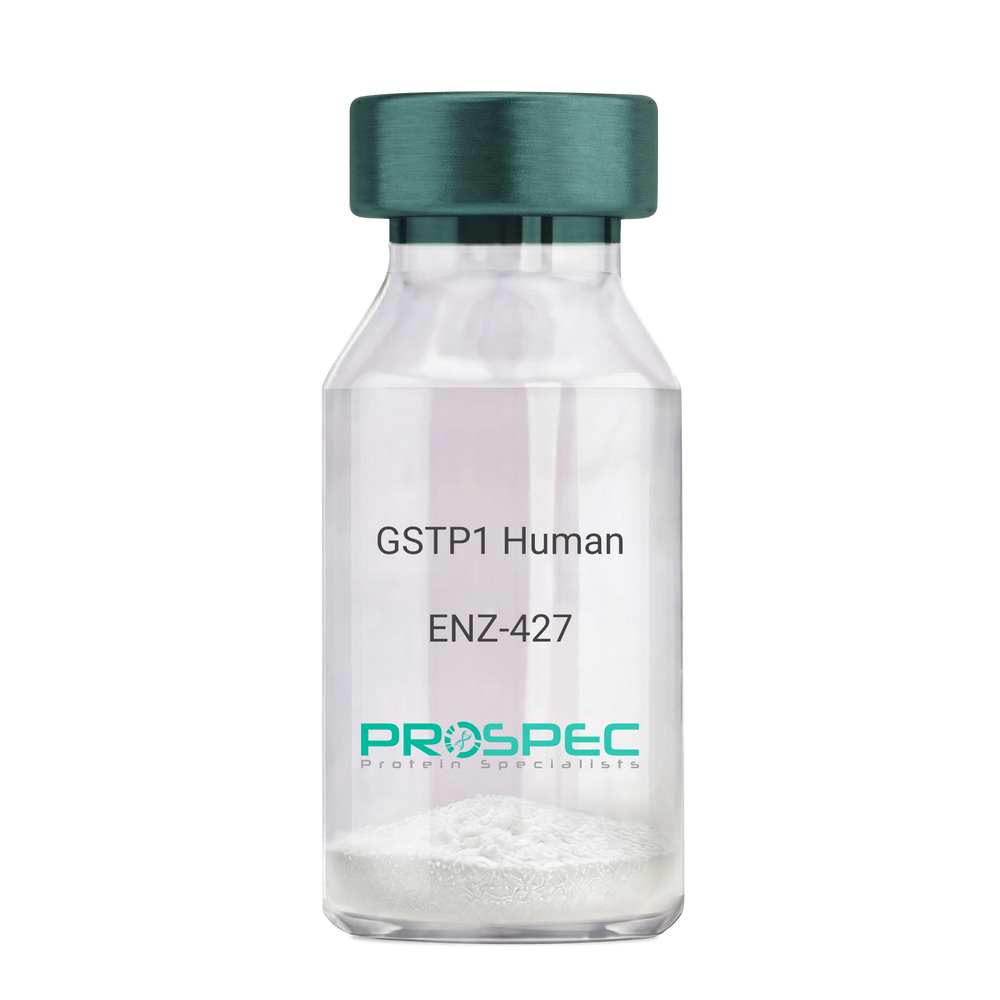
    GSTP1 Human

    Description:

    Glutathione S-Transferase pi 1 Human Recombinant

    Glutathione S-transferase P, GST class-pi, GSTP1-1, GSTP1, FAEES3, GST3, PI, DFN7.

    Product # :

    ENZ-427

    Price :

    Quantity :

    Shipping Method :

    Ice Icon

    Shipped with Ice Packs

    Add To Cart

    More Info

    • description
    • source
    • formulation
    • purity
    • biological activity
    • More Info

    Description

    GSTP1 Human Recombinant fused with 36 amino acid His tag at N-terminus produced in E.Coli is a single, non-glycosylated, polypeptide chain containing 246 amino acids (1-210 a.a.) And having a molecular mass of 27.4kDa. The GSTP1 is purified by proprietary chromatographic techniques.

    Source

    Escherichia Coli.

    Formulation

    The GSTP1 solution (0.5mg/ml) contains 20mM Tris-HCl buffer (pH7.0), 30% glycerol, 1mM EDTA and 0.1mM PMSF.

    Purity

    Greater than 95.0% as determined by SDS-PAGE.

    Biological Activity

    Specific activity is > 80 units/mg, and is defined as the amount of enzyme that conjugate 1.0 u mole of 1-chloro-2,4-dinitrobenzene (CDNB) with reduced glutathione per minute at pH 6.5 at 25°C.

    More Info

    • Introduction

      GSTP1 is a polymorphic gene encoding active, functionally different GSTP1 variant proteins that are believed to function in xenobiotic metabolism and have a part in susceptibility to cancer, and other diseases. GSTP1 is a glutathione S-transferase belonging to the pi class. GST family enzymes play a significant role in detoxification by catalyzing the conjugation of many hydrophobic and electrophilic compounds with reduced glutathione. Based upon the biochemical, immunologic and structural properties of the soluble GSTs they are grouped into 4 main classes: alpha, mu, pi, and theta. The GSTP1 enzyme acts by catalyzing the reaction of glutathione with an acceptor molecule to form a Sulfur-substituted glutathione. The reactions employing glutathione contribute the transformation of a broad range of electrophiles, including reactive products of lipid, protein, carcinogens, therapeutic drugs, environmental toxins, and products of oxidative stress.
      The GSTP1 inactivation through CpG hypermethylation is frequent in pituitary adenomas and may be a factor in aggressive pituitary tumor behavior. GSTP1 is may be a transcriptional target of the p53 tumor suppressor gene. Single-nucleotide polymorphism in GSTP1 is linked to modified protein binding, which influence GSTP1's contribution to carcinogen and drug metabolism, and possibly disease pathogenesis and/or drug response. GST-pi might have central roles in proliferation of androgen-independent human prostate cancer cells.

    • Synonyms

      Glutathione S-transferase P, GST class-pi, GSTP1-1, GSTP1, FAEES3, GST3, PI, DFN7.

    • Physical Appearance

      Sterile Filtered colorless solution.

    • Stability

      Store at 4°C if entire vial will be used within 2-4 weeks. Store, frozen at -20°C for longer periods of time. For long term storage it is recommended to add a carrier protein (0.1% HSA or BSA). Avoid multiple freeze-thaw cycles.

    • Amino Acid Sequence

      MRGSHHHHHH GMASMTGGQQ MGRDLYDDDD KDRWGSMPPY TVVYFPVRGR CAALRMLLAD QGQSWKEEVV TVETWQEGSL KASCLYGQLP KFQDGDLTLY QSNTILRHLG RTLGLYGKDQ QEAALVDMVN DGVEDLRCKY ISLIYTNYEA GKDDYVKALP GQLKPFETLL SQNQGGKTFI VGDQISFADY NLLDLLLIHE VLAPGCLDAF PLLSAYVGRL SARPKLKAFL ASPEYVNLPI NGNGKQ.

    ProSpec's products are furnished for LABORATORY RESEARCH USE ONLY. The product may not be used as drugs, agricultural or pesticidal products, food additives or household chemicals.

    Gstp1 Human
  • View Data Sheet

    Name :

    HMGCS1 Human

    Description:

    3-Hydroxy-3-Methylglutaryl-CoA Synthase 1 Human Recombinant

    3-Hydroxy-3-Methylglutaryl-CoA Synthase 1 (Soluble), 3-Hydroxy-3-Methylglutaryl-Coenzyme A Synthase 1 (Soluble), 3-Hydroxy-3-Methylglutaryl Coenzyme A (HMG-CoA) Synthase, EC 2.3.3.10, HMGCS, Hydroxymethylglutaryl-CoA Synthase, Cytoplasmic, 3-Hydroxy-3-Methylglutaryl Coenzyme A Synthase, HMG-CoA Synthase.

    Product # :

    ENZ-870

    Price :

    Quantity :

    Shipping Method :

    Ice Icon

    Shipped with Ice Packs

    Add To Cart

    More Info

    • description
    • source
    • formulation
    • purity
    • More Info

    Description

    HMGCS1 Human Recombinant produced in E.Coli is a single, non-glycosylated polypeptide chain containing 543 amino acids (1-520 a.a) and having a molecular mass of 59.7kDa.HMGCS1 is fused to a 23 amino acid His-tag at N-terminus & purified by proprietary chromatographic techniques.

    Source

    Escherichia Coli.

    Formulation

    HMGCS1 protein solution (0.5mg/ml) containing Phosphate buffered saline (pH7.4), 10% glycerol and 1mM DTT.

    Purity

    Greater than 80.0% as determined by SDS-PAGE.

    More Info

    • Introduction

      3-Hydroxy-3-Methylglutaryl-CoA Synthase 1, also known as HMGCS1 is a member of the Belongs to the HMG-CoA synthase family. HMGCS1 condenses acetyl-CoA with acetoacetyl-CoA to form HMG-CoA, which is the substrate for HMG-CoA reductase.

    • Synonyms

      3-Hydroxy-3-Methylglutaryl-CoA Synthase 1 (Soluble), 3-Hydroxy-3-Methylglutaryl-Coenzyme A Synthase 1 (Soluble), 3-Hydroxy-3-Methylglutaryl Coenzyme A (HMG-CoA) Synthase, EC 2.3.3.10, HMGCS, Hydroxymethylglutaryl-CoA Synthase, Cytoplasmic, 3-Hydroxy-3-Methylglutaryl Coenzyme A Synthase, HMG-CoA Synthase.

    • Physical Appearance

      Sterile Filtered clear solution.

    • Stability

      Store at 4°C if entire vial will be used within 2-4 weeks. Store, frozen at -20°C for longer periods of time. For long term storage it is recommended to add a carrier protein (0.1% HSA or BSA).Avoid multiple freeze-thaw cycles.

    • Amino Acid Sequence

      MGSSHHHHHH SSGLVPRGSH MGSMPGSLPL NAEACWPKDV GIVALEIYFP SQYVDQAELE KYDGVDAGKY TIGLGQAKMG FCTDREDINS LCMTVVQNLM ERNNLSYDCI GRLEVGTETI IDKSKSVKTN LMQLFEESGN TDIEGIDTTN ACYGGTAAVF NAVNWIESSS WDGRYALVVA GDIAVYATGN ARPTGGVGAV ALLIGPNAPL IFERGLRGTH MQHAYDFYKP DMLSEYPIVD GKLSIQCYLS ALDRCYSVYC KKIHAQWQKE GNDKDFTLND FGFMIFHSPY CKLVQKSLAR MLLNDFLNDQ NRDKNSIYSG LEAFGDVKLE DTYFDRDVEK AFMKASSELF SQKTKASLLV SNQNGNMYTS SVYGSLASVL AQYSPQQLAG KRIGVFSYGS GLAATLYSLK VTQDATPGSA LDKITASLCD LKSRLDSRTG VAPDVFAENM KLREDTHHLV NYIPQGSIDS LFEGTWYLVR VDEKHRRTYA RRPTPNDDTL DEGVGLVHSN IATEHIPSPA KKVPRLPATA AEPEAAVISN GEH

    ProSpec's products are furnished for LABORATORY RESEARCH USE ONLY. The product may not be used as drugs, agricultural or pesticidal products, food additives or household chemicals.

    Hmgcs1 Human
  • View Data Sheet

    Name :

    Cor a 14.0101

    Description:

    2S albumin Recombinant

    Product # :

    ALR-022

    Price :

    Quantity :

    Shipping Method :

    Ice Icon

    Shipped with Ice Packs

    Add To Cart

    More Info

    • description
    • source
    • formulation
    • purity
    • More Info

    Description

    Recombinant 2S albumin produced in SF9 is a glycosylated, polypeptide chain having a calculated molecular mass of 14kDa.Cor a 14.0101 is expressed with a 6xHis tag and purified by proprietary chromatographic techniques.

    Source

    Sf9 insect cells.

    Formulation

    Cor a 14.0101 is supplied in 20mM HEPES buffer pH-8.0, 200mM NaCl and 20% glycerol.

    Purity

    Greater than 80.0% as determined by SDS-PAGE.

    More Info

    • Introduction

      Seed storage proteins have been identified as major allergens in several other tree nuts and peanut. 2S albumin Cor a 14.0101 is a seed storage protein in hazelnut. Sensitization to Cor a 14.0101 may cause a severe allergic reaction, mainly in children.

    • Physical Appearance

      Sterile Filtered colorless solution.

    • Stability

      Store at 4°C if entire vial will be used within 2-4 weeks.Store, frozen at -20°C for longer periods of time.Avoid multiple freeze-thaw cycles.

    • Immunological Functions

      1. Binds IgE-type human antibodies.2. Immunodot test with positive/negative samples

    • Applications

      Tested by LAL (Limulus Amoebocyte Lysate) chromogenic endotoxin assay.

    ProSpec's products are furnished for LABORATORY RESEARCH USE ONLY. The product may not be used as drugs, agricultural or pesticidal products, food additives or household chemicals.

    Cor A 140101
  • View Data Sheet

    Name :

    UBE2L3 Human

    Description:

    Ubiquitin-Conjugating Enzyme E2L 3 Human Recombinant

    Ubiquitin-conjugating enzyme E2 L3, EC 6.3.2.19, Ubiquitin-protein ligase L3,Ubiquitin carrier protein L3, UbcH7, E2-F1, L-UBC, UbcM4.

    Product # :

    ENZ-342

    Price :

    Quantity :

    Shipping Method :

    Ice Icon

    Shipped with Ice Packs

    Add To Cart

    More Info

    • description
    • source
    • formulation
    • purity
    • More Info

    Description

    Ubiquitin-Conjugating Enzyme E2L 3 Human Recombinant produced in E.Coli is a single, non-glycosylated polypeptide chain containing 154 amino acids & having a molecular mass of 17.9 kDa.

    Source

    Escherichia Coli.

    Formulation

    The protein contains 50mM HEPES (pH-7.5) 150mM NaCl, 1mM DTT, and 10% glycerol.

    Purity

    Greater than 95.0% as determined by SDS-PAGE.

    More Info

    • Introduction

      Human Ubquitin-conjugating enzyme 7 (UbcH7) is a ubiquitin-conjugating enzyme (E2) mediating c-fos degradation, transcription factor NF-B maturation, and human papilloma virus-mediated p53 and Myc protein degradation, in vitro. The ubiquitin-conjugating enzymes (E2s) are essential components of the post-translational protein ubiquitination pathway, mediating the transfer of activated ubiquitin to substrate proteins. The human UBE2L1-UBE2L4 gene could potentially encode different isoforms of the UbcH7. UBE2L3 gene, located at chromosome 22q11.2, is the only identical family member with introns and encodes a polypeptide sequence identical to that of UbcH7.

    • Synonyms

      Ubiquitin-conjugating enzyme E2 L3, EC 6.3.2.19, Ubiquitin-protein ligase L3,Ubiquitin carrier protein L3, UbcH7, E2-F1, L-UBC, UbcM4.

    • Physical Appearance

      Sterile filtered colorless solution.

    • Stability

      Store at 4°C if entire vial will be used within 2-4 weeks. Store, frozen at -20°C for longer periods of time. For long term storage it is recommended to add a carrier protein (0.1% HSA or BSA).Avoid multiple freeze-thaw cycles.

    • Amino Acid Sequence

      MAASRRLMKE LEEIRKCGMK NFRNIQVDEA NLLTWQGLIV PDNPPYDKGA FRIEINFPAE YPFKPPKITF KTKIYHPNID EKGQVCLPVI SAENWKPATK TDQVIQSLIA LVNDPQPEHP LRADLAEEYS KDRKKFCKNA EEFTKKYGEK RPVD.

    ProSpec's products are furnished for LABORATORY RESEARCH USE ONLY. The product may not be used as drugs, agricultural or pesticidal products, food additives or household chemicals.

    Ube2L3 Human
  • View Data Sheet

    Name :

    GSTP1 Mouse

    Description:

    Glutathione S-Transferase pi 1 Mouse Recombinant

    Glutathione S-transferase P 1, Gst P1, GST YF-YF, GST class-pi, GST-piB, Preadipocyte growth factor.

    Product # :

    ENZ-909

    Price :

    Quantity :

    Shipping Method :

    Ice Icon

    Shipped with Ice Packs

    Add To Cart

    More Info

    • description
    • source
    • formulation
    • purity
    • biological activity
    • More Info

    Description

    GSTP1 Mouse Recombinant produced in E.Coli is a single, non-glycosylated polypeptide chain containing 233 amino acids (1-210 a.a) and having a molecular mass of 26kDa. GSTP1 is fused to a 23 amino acid His-tag at N-terminus & purified by proprietary chromatographic techniques.

    Source

    Escherichia Coli.

    Formulation

    GSTP1 protein solution (1mg/ml) containing Phosphate Buffered Saline (pH 7.4) and 10% glycerol.

    Purity

    Greater than 90.0% as determined by SDS-PAGE.

    Biological Activity

    Specific activity is > 40 units/mg, and is defined as the amount of enzyme that conjugate 1.0 umole of 1-chloro-2,4-dinitrobenzene (CDNB) with reduced glutathione per minute at pH 6.5 at 25C.

    More Info

    • Introduction

      GSTP1 is a polymorphic gene encoding active, functionally different GSTP1 variant proteins that are believed to function in xenobiotic metabolism and have a part in susceptibility to cancer, and other diseases. GSTP1 is a glutathione S-transferase belonging to the pi class. GST family enzymes play a significant role in detoxification by catalyzing the conjugation of many hydrophobic and electrophilic compounds with reduced glutathione. Based upon the biochemical, immunologic and structural properties of the soluble GSTs they are grouped into 4 main classes: alpha, mu, pi, and theta. The GSTP1 enzyme acts by catalyzing the reaction of glutathione with an acceptor molecule to form a Sulfur-substituted glutathione. The reactions employing glutathione contribute the transformation of a broad range of electrophiles, including reactive products of lipid, protein, carcinogens, therapeutic drugs, environmental toxins, and products of oxidative stress.
      The GSTP1 inactivation through CpG hypermethylation is frequent in pituitary adenomas and may be a factor in aggressive pituitary tumor behavior. GSTP1 is may be a transcriptional target of the p53 tumor suppressor gene. Single-nucleotide polymorphism in GSTP1 is linked to modified protein binding, which influence GSTP1's contribution to carcinogen and drug metabolism, and possibly disease pathogenesis and/or drug response. GST-pi might have central roles in proliferation of androgen-independent human prostate cancer cells.

    • Synonyms

      Glutathione S-transferase P 1, Gst P1, GST YF-YF, GST class-pi, GST-piB, Preadipocyte growth factor.

    • Physical Appearance

      Sterile Filtered colorless solution.

    • Stability

      Store at 4°C if entire vial will be used within 2-4 weeks. Store, frozen at -20°C for longer periods of time. For long term storage it is recommended to add a carrier protein (0.1% HSA or BSA).Avoid multiple freeze-thaw cycles.

    • Amino Acid Sequence

      MGSSHHHHHH SSGLVPRGSH MGSMPPYTIV YFPVRGRCEA MRMLLADQGQ SWKEEVVTID TWMQGLLKPT CLYGQLPKFE DGDLTLYQSN AILRHLGRSL GLYGKNQREA AQMDMVNDGV EDLRGKYVTL IYTNYENGKN DYVKALPGHL KPFETLLSQN QGGKAFIVGD QISFADYNLL DLLLIHQVLA PGCLDNFPLL SAYVARLSAR PKIKAFLSSP EHVNRPINGN GKQ.

    ProSpec's products are furnished for LABORATORY RESEARCH USE ONLY. The product may not be used as drugs, agricultural or pesticidal products, food additives or household chemicals.

    Gstp1 Mouse
  • View Data Sheet

    Name :

    YARS2 Human

    Description:

    Tyrosyl-tRNA Synthetase 2 Human Recombinant

    Tyrosine--tRNA ligase mitochondrial, Tyrosyl-tRNA synthetase, TyrRS, YARS2, CGI-04, TYRRS, MLASA2, MT-TYRRS.

    Product # :

    ENZ-614

    Price :

    Quantity :

    Shipping Method :

    Ice Icon

    Shipped with Ice Packs

    Add To Cart

    More Info

    • description
    • source
    • formulation
    • purity
    • More Info

    Description

    YARS2 Human Recombinant produced in E.Coli is a single, non-glycosylated polypeptide chain containing 482 amino acids (17-477 a.a.) and having a molecular mass of 53.7kDa.YARS2 is fused to a 21 amino acid His-tag at N-terminus & purified by proprietary chromatographic techniques.

    Source

    Escherichia Coli.

    Formulation

    YARS2 protein solution (0.25mg/ml) containing 20mM Tris-HCl buffer (pH8.0), 20% glycerol, 0.1M NaCl, 1mM DTT.

    Purity

    Greater than 85.0% as determined by SDS-PAGE.

    More Info

    • Introduction

      Tyrosyl-tRNA synthetase (YARS2) is a mitochondrial protein which catalyzes the attachment of tyrosine to tRNA(Tyr) in a two-step reaction: tyrosine is first activated by ATP to form Tyr-AMP and afterward transferred to the acceptor end of tRNA(Tyr). YARS2 gene mutations are linked with myopathy with lactic acidosis and sideroblastic anemia type 2 (MLASA2).

    • Synonyms

      Tyrosine--tRNA ligase mitochondrial, Tyrosyl-tRNA synthetase, TyrRS, YARS2, CGI-04, TYRRS, MLASA2, MT-TYRRS.

    • Physical Appearance

      Sterile Filtered colorless solution.

    • Stability

      Store at 4°C if entire vial will be used within 2-4 weeks. Store, frozen at -20°C for longer periods of time. For long term storage it is recommended to add a carrier protein (0.1% HSA or BSA).Avoid multiple freeze-thaw cycles.

    • Amino Acid Sequence

      MGSSHHHHHH SSGLVPRGSH MTLNLSVLLP LGLRKAHSGA QGLLAAQKAR GLFKDFFPET GTKIELPELF DRGTASFPQT IYCGFDPTAD SLHVGHLLAL LGLFHLQRAG HNVIALVGGA TARLGDPSGR TKEREALETE RVRANARALR LGLEALAANH QQLFTDGRSW GSFTVLDNSA WYQKQHLVDF LAAVGGHFRM GTLLSRQSVQ LRLKSPEGMS LAEFFYQVLQ AYDFYYLFQR YGCRVQLGGS DQLGNIMSGY EFINKLTGED VFGITVPLIT STTGAKLGKS AGNAVWLNRD KTSPFELYQF FVRQPDDSVE RYLKLFTFLP LPEIDHIMQL HVKEPERRGP QKRLAAEVTK LVHGREGLDS AKRCTQALYH SSIDALEVMS DQELKELFKE APFSEFFLDP GTSVLDTCRK ANAIPDGPRG YRMITEGGVS INHQQVTNPE SVLIVGQHIL KNGLSLLKIG KRNFYIIKWL QL.

    ProSpec's products are furnished for LABORATORY RESEARCH USE ONLY. The product may not be used as drugs, agricultural or pesticidal products, food additives or household chemicals.

    Yars2 Human
  • View Data Sheet

    Name :

    PPP3R2 Human

    Description:

    Protein Phosphatase 3 Regulatory subunit, Beta Isozyme Human Recombinant

    Calcineurin subunit B type 2, Calcineurin B-like protein, CBLP, Calcineurin BII, CNBII, PPP3R1-like, Protein phosphatase 2B regulatory subunit 2, Protein phosphatase 3 regulatory subunit B beta isoform, PPP3R2, PPP3RL.

    Product # :

    ENZ-103

    Price :

    Quantity :

    Shipping Method :

    Ice Icon

    Shipped with Ice Packs

    Add To Cart

    More Info

    • description
    • source
    • formulation
    • purity
    • More Info

    Description

    PPP3R2 Human Recombinant fused with a 20 a.a. His tag at N-terminus produced in E.Coli is a single, non-glycosylated, polypeptide chain (a.a. 1-173) containing 193 amino acids and having a molecular mass of 22kDa.The PPP3R2 is purified by proprietary chromatographic techniques.

    Source

    Escherichia Coli.

    Formulation

    The PPP3R2 solution (0.5mg/ml) contains 20mM Tris-HCl buffer(pH 8.0), 10% glycerol and 1mM DTT.

    Purity

    Greater than 95.0% as determined by SDS-PAGE.

    More Info

    • Introduction

      PPP3R2 is a calcium-dependent, calmodulin stimulated serine/threonine protein phosphatase. In eukaryotes, the phosphorylation and dephosphorylation of proteins on serine and threonine residues is a crucial means of regulating a wide range of cellular functions including division, homeostasis and apoptosis. Ordinarily the protein phosphatase (PP) holoenzyme is a trimeric complex composed of a regulatory subunit, a variable subunit and a catalytic subunit.

    • Synonyms

      Calcineurin subunit B type 2, Calcineurin B-like protein, CBLP, Calcineurin BII, CNBII, PPP3R1-like, Protein phosphatase 2B regulatory subunit 2, Protein phosphatase 3 regulatory subunit B beta isoform, PPP3R2, PPP3RL.

    • Physical Appearance

      Sterile Filtered colorless solution.

    • Stability

      Store at 4°C if entire vial will be used within 2-4 weeks. Store, frozen at -20°C for longer periods of time. For long term storage it is recommended to add a carrier protein (0.1% HSA or BSA).Avoid multiple freeze-thaw cycles.

    • Amino Acid Sequence

      MGSSHHHHHH SSGLVPRGSH MSTMGNEASY PAEMCSHFDN DEIKRLGRRF KKLDLDKSGS LSVEEFMSLP ELRHNPLVRR VIDVFDTDGD GEVDFKEFIL GTSQFSVKGD EEQKLRFAFS IYDMDKDGYI SNGELFQVLK MMVGNNLTDW QLQQLVDKTI IILDKDGDGK ISFEEFSAVV RDLEIHKKLV LIV.

    ProSpec's products are furnished for LABORATORY RESEARCH USE ONLY. The product may not be used as drugs, agricultural or pesticidal products, food additives or household chemicals.

    Ppp3R2 Human
  • View Data Sheet

    Name :

    NDUFA2 Human

    Description:

    NADH Dehydrogenase 1 Alpha Subcomplex 2 Human Recombinant

    NADH dehydrogenase [ubiquinone] 1 alpha subcomplex subunit 2, Complex I-B8, CI-B8, NADH-ubiquinone oxidoreductase B8 subunit, NDUFA2, CD14, CIB8.

    Product # :

    ENZ-660

    Price :

    Quantity :

    Shipping Method :

    Ice Icon

    Shipped with Ice Packs

    Add To Cart

    More Info

    • description
    • source
    • formulation
    • purity
    • More Info

    Description

    NDUFA2 Human Recombinant produced in E.coli is a single, non-glycosylated polypeptide chain containing 122 amino acids (1-99) and having a molecular mass of 13.3kDa.NDUFA2 is fused to a 23 amino acid His-tag at N-terminus & purified by proprietary chromatographic techniques.

    Source

    Escherichia Coli.

    Formulation

    The NDUFA2 solution (1mg/ml) contains 20mM Tris-HCl buffer (pH 8.0), 0.15M NaCl, 10% glycerol and 1mM DTT.

    Purity

    Greater than 95.0% as determined by SDS-PAGE.

    More Info

    • Introduction

      NADH dehydrogenase [ubiquinone] 1 alpha subcomplex subunit 5 (NDUFA5) is a member of the complex I NDUFA5 subunit family. The human NDUFA5 gene codes for the B13 subunit of complex I of the respiratory chain that transfers electrons from NADH to ubiquinone. The NDUFA5 protein localizes to the inner mitochondrial membrane as part of the seven component-containing, water soluble 'iron-sulfur protein' (IP) fraction of complex I, even though its exact role is undetermined.

    • Synonyms

      NADH dehydrogenase [ubiquinone] 1 alpha subcomplex subunit 2, Complex I-B8, CI-B8, NADH-ubiquinone oxidoreductase B8 subunit, NDUFA2, CD14, CIB8.

    • Physical Appearance

      Sterile Filtered colorless solution.

    • Stability

      Store at 4°C if entire vial will be used within 2-4 weeks.Store, frozen at -20°C for longer periods of time. For long term storage it is recommended to add a carrier protein (0.1% HSA or BSA).Avoid multiple freeze-thaw cycles.

    • Amino Acid Sequence

      MGSSHHHHHH SSGLVPRGSH MGSMAAAAAS RGVGAKLGLR EIRIHLCQRS PGSQGVRDFI EKRYVELKKA NPDLPILIRE CSDVQPKLWA RYAFGQETNV PLNNFSADQV TRALENVLSG KA.

    ProSpec's products are furnished for LABORATORY RESEARCH USE ONLY. The product may not be used as drugs, agricultural or pesticidal products, food additives or household chemicals.

    Ndufa2 Human
  • View Data Sheet

    Name :

    TARS Human, Sf9

    Description:

    Threonyl-tRNA Synthetase Human Recombinant, Sf9

    Threonyl-tRNA synthetase cytoplasmic, EC 6.1.1.3, Threonine-tRNA ligase, ThrRS, MGC9344, PL-7, TARS.

    Product # :

    ENZ-304

    Price :

    Quantity :

    Shipping Method :

    Ice Icon

    Shipped with Ice Packs

    Add To Cart

    More Info

    • description
    • source
    • formulation
    • purity
    • More Info

    Description

    PL-7 Human Recombinant produced in SF9 is a glycosylated, polypeptide chain having a molecular mass of 85kDa.PL-7 is expressed with a -6xHis tag and purified by proprietary chromatographic techniques.

    Source

    Sf9 insect cells.

    Formulation

    PL-7 is supplied in 20mM HEPES buffer pH-8, 200mM NaCl, and 20% glycerol.

    Purity

    Greater than 90% as determined by SDS-PAGE.

    More Info

    • Introduction

      Threonyl-tRNA Synthetase is a member of the aminoacyl-tRNA synthetase family, key enzymes of protein biosynthesis which charge tRNA molecules with the respective amino acids. This 83 kDa protein is an autoantigen recognized by PL-7 antibodies which occur in a subset of patients with polymyositis and dermatomyositis. Preliminary data suggest that PL-7 antibodies (similar to Jo-1 antibodies) indicate an increased risk for lung involvement, but this needs to be confirmed for a larger number of cases.

    • Synonyms

      Threonyl-tRNA synthetase cytoplasmic, EC 6.1.1.3, Threonine-tRNA ligase, ThrRS, MGC9344, PL-7, TARS.

    • Physical Appearance

      Sterile Filtered clear solution.

    • Stability

      Store at 4°C if entire vial will be used within 2-4 weeks. Store, frozen at -20°C for longer periods of time. Avoid multiple freeze-thaw cycles.

    • Immunological Functions

      1. Binds IgG-type human auto-antibodies.2. Standard ELISA test (checker-board analysis of positive/negative sera panels immuno-dot test).

    • coating concentration

      0.3-0.8 µg/ml (depending on the type of ELISA plate and coating buffer). Suitable for labeling of functional groups.

    ProSpec's products are furnished for LABORATORY RESEARCH USE ONLY. The product may not be used as drugs, agricultural or pesticidal products, food additives or household chemicals.

    Threonyl Trna Synthetase Human
  • View Data Sheet

    Name :

    GCK Human

    Description:

    Glucokinase/Hexokinase-4 Human Recombinant

    Glucokinase, EC 2.7.1.2, Hexokinase-4, Hexokinase type IV, HK IV, HK4, Hexokinase-D, GCK, GK, GLK, HHF3, HKIV, HXKP, MODY2.

    Product # :

    PKA-236

    Price :

    Quantity :

    Shipping Method :

    Ice Icon

    Shipped with Ice Packs

    Add To Cart

    More Info

    • description
    • source
    • formulation
    • purity
    • More Info

    Description

    Glucokinase Human Recombinant produced in E.Coli is a single, non-glycosylated, polypeptide chain (aa 1-465) fused to a 20aa His tag at the N-terminal encoding the sequence of 485 amino acids and having a molecular mass of 54.3 kDa.HK4 is purified by proprietary chromatographic techniques.

    Source

    Escherichia Coli.

    Formulation

    The protein (1mg/ml) contains 20mM Tris-HCl pH-8.0 and 10% glycerol.

    Purity

    Greater than 95.0% as determined by SDS-PAGE.

    More Info

    • Introduction

      Hexokinases phosphorylate glucose to produce glucose-6-phosphate, thus committing glucose to the glycolytic pathway. Alternative splicing of Glucokinase results in three tissue-specific forms of glucokinase, one found in pancreatic islet beta cells and two found in liver. The protein localizes to the outer membrane of mitochondria. In contrast to other forms of hexokinase, HK4 is not inhibited by its product glucose-6-phosphate but remains active while glucose is abundant. Mutations in this gene have been associated with non-insulin dependent diabetes mellitus (NIDDM), maturity onset diabetes of the young, type 2 (MODY2) and persistent hyperinsulinemic hypoglycemia of infancy (PHHI).

    • Synonyms

      Glucokinase, EC 2.7.1.2, Hexokinase-4, Hexokinase type IV, HK IV, HK4, Hexokinase-D, GCK, GK, GLK, HHF3, HKIV, HXKP, MODY2.

    • Physical Appearance

      Sterile filtered colorless solution.

    • Stability

      Store at 4°C if entire vial will be used within 2-4 weeks.Store, frozen at -20°C for longer periods of time. For long term storage it is recommended to add a carrier protein (0.1% HSA or BSA). Please avoid freeze-thaw cycles.

    • Amino Acid Sequence

      MGSSHHHHHH SSGLVPRGSH MLDDRARMEA AKKEKVEQIL AEFQLQEEDL KKVMRRMQKE MDRGLRLETH EEASVKMLPT YVRSTPEGSE VGDFLSLDLG GTNFRVMLVK VGEGEEGQWS VKTKHQMYSI PEDAMTGTAE MLFDYISECI SDFLDKHQMK HKKLPLGFTF SFPVRHEDID KGILLNWTKG FKASGAEGNN VVGLLRDAIK RRGDFEMDVV AMVNDTVATM ISCYYEDHQC EVGMIVGTGC NACYMEEMQN VELVEGDEGR MCVNTEWGAF GDSGELDEFL LEYDRLVDES SANPGQQLYE KLIGGKYMGE LVRLVLLRLV DENLLFHGEA SEQLRTRGAF ETRFVSQVES DTGDRKQIYN ILSTLGLRPS TTDCDIVRRA CESVSTRAAH MCSAGLAGVI NRMRESRSED VMRITVGVDG SVYKLHPSFK ERFHASVRRL TPSCEITFIE SEEGSGRGAA LVSAVACKKA CMLGQ.

    ProSpec's products are furnished for LABORATORY RESEARCH USE ONLY. The product may not be used as drugs, agricultural or pesticidal products, food additives or household chemicals.

    Glucokinase Human
  • View Data Sheet

    Name :

    GPBB Human

    Description:

    Glycogen Phosphorylase Human Recombinant

    Glycogen phosphorylase brain form, EC 2.4.1.1, GPBB, MGC9213, PYGB.

    Product # :

    ENZ-282

    Price :

    Quantity :

    Shipping Method :

    Ice Icon

    Shipped with Ice Packs

    Add To Cart

    More Info

    • description
    • source
    • formulation
    • purity
    • More Info

    Description

    Glycogen Phosphorylase Human Recombinant produced in E.Coli is a single, non-glycosylated, polypeptide chain. The Human GPBB mature chain: 2 - 843 aa; that is a total of 842 aa having a molecular mass of 96695.96 Dalton. The theoretical pI is 6.40.The GPBB is purified by proprietary chromatographic techniques.

    Source

    Escherichia Coli.

    Formulation

    Each mg of protein contains 50% glycerol.

    Purity

    Greater than 85.0% as determined by:
    (a) Analysis by RP-HPLC.
    (b) Analysis by SDS-PAGE.

    More Info

    • Introduction

      Glycogen phosphorylase is one of the phosphorylaseenzymes(EC2.4.1.1). It breaks up glycogeninto glucosesubunits. Glycogenis left with one less glucosemolecule, and the free glucosemolecule is in the form of glucose-1-phosphate. In order to be used for metabolism, it must be converted to glucose-6-phosphateby the enzyme phosphoglucomutase.
      Glycogen phosphorylase can only act on linearchainsof glycogen(a 1-4 glycosidic linkage). Its work will immediately come to a halt four residues away from a 1-6 branch(which are exceedingly common in glycogen). In these situations, a debranching enzymeis necessary, which will straighten out the chain in that area. Additionally, an alpha 1-6 glucosidaseenzymeis required to break the remaining 1-6 residue that remains in the new linear chain. After all this is done, glycogen phosphorylase can continue.
      An insulinstimulated enzyme known as phosphoprotein phosphatase(PP-1) inactivates glycogen phosphorylase to prevent glycogen break up.
      GPBB - a sensitive marker for the AMI diagnosis within 4 hours after the onset of chest pain. It has also been shown that GPBB is increased in a considerable proportion of AMI patients within 2-3 hours from chest pain onset. GPBB is increased early in patients with unstable angina. GPBB can also be a sensitive marker for the detection of peri-operative myocardial ischaemia and infarction in patients undergoing coronary artery bypass grafting.

    • Synonyms

      Glycogen phosphorylase brain form, EC 2.4.1.1, GPBB, MGC9213, PYGB.

    • Physical Appearance

      Sterile Filtered colourless liquid formualtion.

    • Stability

      GPBB although stable at 10°C for 7 days, should be stored below -18°C. Please prevent freeze-thaw cycles.

    • Applications

      Immunoassays and western blot.

    ProSpec's products are furnished for LABORATORY RESEARCH USE ONLY. The product may not be used as drugs, agricultural or pesticidal products, food additives or household chemicals.

    Glycogen Phosphorylase Human
  • View Data Sheet

    Name :

    MDH2 Human

    Description:

    Malate Dehydrogenase 2 Human Recombinant

    M-MDH, MDH, MOR1.

    Product # :

    ENZ-247

    Price :

    Quantity :

    Shipping Method :

    Ice Icon

    Shipped with Ice Packs

    Add To Cart

    More Info

    • description
    • source
    • formulation
    • purity
    • biological activity
    • More Info

    Description

    MDH2 Human Recombinant produced in E.Coli is a single, non-glycosylated polypeptide chain containing 335 amino acids (25-338 a.a.) and having a molecular mass of 35.2 kDa. The MDH2 is fused to a 21 amino acid His tag at N-terminus and purified by conventional chromatography.

    Source

    Escherichia Coli.

    Formulation

    The MDH2 1mg/ml protein solution contains 20mM Tris-HCl pH-7.5 and 10% glycerol.

    Purity

    Greater than 95.0% as determined by SDS-PAGE.

    Biological Activity

    Specific activity is > 30 units/mg, and is defined as the amount of enzyme that cleaves 1umole of oxalacetate and beta-NADH to L-malate and beta-NAD per minute at pH7.5 at 25°C.

    More Info

    • Introduction

      MDH2 catalyzes the reversible oxidation of malate to oxaloacetate, utilizing the NAD/NADH cofactor system in the citric acid cycle. MDH2 is localized to the mitochondria and takes part in the malate-aspartate shuttle that functions in the metabolic coordination between cytosol and mitochondria. MDH2 is highy expressed in the adrenal system, small intestine, heart and pancreas.

    • Synonyms

      M-MDH, MDH, MOR1.

    • Physical Appearance

      Sterile Filtered colorless solution.

    • Stability

      Store at 4°C if entire vial will be used within 2-4 weeks. Store, frozen at -20°C for longer periods of time. For long term storage it is recommended to add a carrier protein (0.1% HSA or BSA). Please prevent freeze-thaw cycles.

    • Amino Acid Sequence

      MGSSHHHHHH SSGLVPRGSH MAKVAVLGAS GGIGQPLSLL LKNSPLVSRL TLYDIAHTPG VAADLSHIET KAAVKGYLGP EQLPDCLKGC DVVVIPAGVP RKPGMTRDDL FNTNATIVAT LTAACAQHCP EAMICVIANP VNSTIPITAE VFKKHGVYNP NKIFGVTTLD IVRANTFVAE LKGLDPARVN VPVIGGHAGK TIIPLISQCT PKVDFPQDQL TALTGRIQEA GTEVVKAKAG AGSATLSMAY AGARFVFSLV DAMNGKEGVV ECSFVKSQET ECTYFSTPLL LGKKGIEKNL GIGKVSSFEE KMISDAIPEL KASIKKGEDF VKTLK.

    ProSpec's products are furnished for LABORATORY RESEARCH USE ONLY. The product may not be used as drugs, agricultural or pesticidal products, food additives or household chemicals.

    Mdh2 Human
  • View Data Sheet

    Name :

    ARSA Human, SF9

    Description:

    Arylsulfatase A Human Recombinant, Sf9

    Arylsulfatase A, Cerebroside-Sulfatase, ASA, Metachromatic Leucodystrophy, MLD, EC 3.1.6.8.

    Product # :

    ENZ-1087

    Price :

    Quantity :

    Shipping Method :

    Ice Icon

    Shipped with Ice Packs

    Add To Cart

    More Info

    • description
    • source
    • formulation
    • purity
    • biological activity
    • More Info

    Description

    ARSA produced in Sf9 Baculovirus cells is a single, glycosylated polypeptide chain containing 498 amino acids (21-509a.a.) and having a molecular mass of 53.0kDa. (Molecular size on SDS-PAGE will appear at approximately 50-70kDa). ARSA is expressed with a 9 amino acid His tag at C-Terminus and purified by proprietary chromatographic techniques.

    Source

    Sf9, Baculovirus cells.

    Formulation

    ARSA protein solution (0.25mg/ml) contains Phosphate Buffered Saline (pH 7.4) and 10% glycerol.

    Purity

    Greater than 95.0% as determined by SDS-PAGE.

    Biological Activity

    Specific activity is > 2,500 pmol/min/ug, and defined as the amount of enzyme that hydrolyze 4-Nitrocatechol at pH 5.0 at 37C.

    More Info

    • Introduction

      The enzyme Arylsulfatase A, also known as cerebroside-sulfatase, is responsible to break down sulfatides. The main molecule that Arylsulfatase A breaks down is cerebroside 3-sulfate into cerebroside and sulfate. The enzyme is encoded by the ARSA gene in humans. Phosphate can form a covalent bond with the Arylsulfatase A’s active site 3-oxoalanine, thus, inhibits the protein.

    • Synonyms

      Arylsulfatase A, Cerebroside-Sulfatase, ASA, Metachromatic Leucodystrophy, MLD, EC 3.1.6.8.

    • Physical Appearance

      Sterile Filtered clear solution.

    • Stability

      Store at 4°C if entire vial will be used within 2-4 weeks. Store, frozen at -20°C for longer periods of time. For long term storage it is recommended to add a carrier protein (0.1% HSA or BSA).Avoid multiple freeze-thaw cycles.

    • Amino Acid Sequence

      ADPRPPNIVL IFADDLGYGD LGCYGHPSST TPNLDQLAAG GLRFTDFYVP VSLCTPSRAA LLTGRLPVRM GMYPGVLVPS SRGGLPLEEVTVAEVLAARG YLTGMAGKWH LGVGPEGAFL PPHQGFHRFL GIPYSHDQGP CQNLTCFPPA TPCDGGCDQG LVPIPLLANL SVEAQPPWLP GLEARYMAFA HDLMADAQRQ DRPFFLYYAS HHTHYPQFSG QSFAERSGRG PFGDSLMELD AAVGTLMTAI GDLGLLEETL VIFTADNGPETMRMSRGGCS GLLRCGKGTT YEGGVREPAL AFWPGHIAPG VTHELASSLD LLPTLAALAG APLPNVTLDG FDLSPLLLGT GKSPRQSLFF YPSYPDEVRG VFAVRTGKYK AHFFTQGSAH SDTTADPACH ASSSLTAHEP PLLYDLSKDP GENYNLLGGV AGATPEVLQA LKQLQLLKAQLDAAVTFGPS QVARGEDPAL QICCHPGCTP RPACCHCPDP HAHHHHHH.

    ProSpec's products are furnished for LABORATORY RESEARCH USE ONLY. The product may not be used as drugs, agricultural or pesticidal products, food additives or household chemicals.

    Arylsulfatase A
  • View Data Sheet

    Name :

    AKR1C3 Human, His

    Description:

    Aldo-Keto Reductase Family 1 Member C3 Human Recombinant, His Tag

    DD3, DDX, HAKRB, HAKRe, HA1753, HSD17B5, hluPGFS, KIAA0119, AKR1C3, Aldo-keto reductase family 1 member C3, 3-alpha-HSD type 2, 17-beta-HSD 5, PGFS, DD-3.

    Product # :

    ENZ-406

    Price :

    Quantity :

    Shipping Method :

    Ice Icon

    Shipped with Ice Packs

    Add To Cart

    More Info

    • description
    • source
    • formulation
    • purity
    • biological activity
    • More Info

    Description

    AKR1C3 Human Recombinant fused to 20 amino acid His Tag at N-terminal produced in E.Coli is a single, non-glycosylated, polypeptide chain containing 343 amino acids (1-323 a.a.) and having a molecular mass of 39 kDa. The AKR1C3 is fused to a 20 amino acid His tag purified by proprietary chromatographic techniques.

    Source

    Escherichia Coli.

    Formulation

    The AKR1C3 solution contains 20mM Tris-HCl pH-8 and 10% glycerol.

    Purity

    Greater than 95.0% as determined by SDS-PAGE.

    Biological Activity

    Specific activity: approximately < 0.1 units/mg.
    Enzymatic activity was confirmed by measuring the amount of enzyme catalyzing the oxidation of 1 micromole NADPH per minute at 25C. Specific activity was expressed as units/mg protein.

    More Info

    • Introduction

      AKR1C3 is part of the aldo/keto reductase superfamily, which has at least 40 identified proteins. AKR1C3 catalyzes the conversion of aldehydes and ketones to their corresponding alcohols by utilizing NADH and/or NADPH as cofactors. AKR1C3 displays overlapping but distinct substrate specificity. AKR1C3 catalyzes the reduction of prostaglandin (PG) D2, PGH2 and phenanthrenequinone (PQ), and the oxidation of 9alpha,11beta-PGF2 to PGD2. AKR1C3 is involved in the pathogenesis of allergic diseases such as asthma. AKR1C3 controls cell growth and/or differentiation. AKR1C3 takes part in adrenal testosterone production. AKR1C3 expression is affected by metabolic disease, and its levels are considerably reduced in response to diet-induced weight loss and correlate with leptin levels.

    • Synonyms

      DD3, DDX, HAKRB, HAKRe, HA1753, HSD17B5, hluPGFS, KIAA0119, AKR1C3, Aldo-keto reductase family 1 member C3, 3-alpha-HSD type 2, 17-beta-HSD 5, PGFS, DD-3.

    • Physical Appearance

      Sterile Filtered clear colorless solution.

    • Stability

      Store at 4°C if entire vial will be used within 2-4 weeks. Store, frozen at -20°C for longer periods of time. For long term storage it is recommended to add a carrier protein (0.1% HSA or BSA).Avoid multiple freeze-thaw cycles.

    • Amino Acid Sequence

      MGSSHHHHHH SSGLVPRGSH MDSKHQCVKL NDGHFMPVLG FGTYAPPEVP RSKALEVTKL AIEAGFRHID SAHLYNNEEQ VGLAIRSKIA DGSVKREDIF YTSKLWSTFH RPELVRPALE NSLKKAQLDY VDLYLIHSPM SLKPGEELSP TDENGKVIFD IVDLCTTWEA MEKCKDAGLA KSIGVSNFNR RQLEMILNKPGLKYKPVCNQ VECHPYFNRS KLLDFCKSKD IVLVAYSALG SQRDKRWVDP NSPVLLEDPV LCALAKKHKR TPALIALRYQ LQRGVVVLAK SYNEQRIRQN VQVFEFQLTA EDMKAIDGLD RNLHYFNSDS FASHPNYPYS DEY.

    ProSpec's products are furnished for LABORATORY RESEARCH USE ONLY. The product may not be used as drugs, agricultural or pesticidal products, food additives or household chemicals.

    Akr1C3 Human
  • View Data Sheet

    Name :

    GSTA1 Mouse

    Description:

    Glutathione S-Transferase Alpha 1 Mouse Recombinant

    Glutathione S-transferase A1, GST class-alpha member 1, Glutathione S-transferase Ya , Glutathione S-transferase Ya1.

    Product # :

    ENZ-873

    Price :

    Quantity :

    Shipping Method :

    Ice Icon

    Shipped with Ice Packs

    Add To Cart

    More Info

    • description
    • source
    • formulation
    • purity
    • biological activity
    • More Info

    Description

    GSTA1 Mouse Recombinant produced in E.Coli is a single, non-glycosylated polypeptide chain containing 246 amino acids (1-223 a.a) and having a molecular mass of 28kDa.GSTA1 is fused to a 23 amino acid His-tag at N-terminus & purified by proprietary chromatographic techniques.

    Source

    Escherichia Coli.

    Formulation

    GSTA1 protein solution (1mg/ml) containing Phosphate buffered saline (pH7.4), 10% glycerol and 1mM DTT.

    Purity

    Greater than 95.0% as determined by SDS-PAGE.

    Biological Activity

    The specific activity is defined as the amount of enzyme that conjugate 1.0 pmole of 1-chloro-2,4-dinitrobenzene (CDNB) with reduced glutathione per minute at pH 6.5 at 25C and is > 4,000 pmol/min/ug.

    More Info

    • Introduction

      Membrane-bound & Cytosolic forms of GST are encoded by 2 separate supergene families. These enzymes function in the detoxification of electrophilic compounds, including carcinogens, therapeutic drugs, environmental toxins and products of oxidative stress, by conjugation with glutathione. There are 8 different classes of soluble cytoplasmic mammalian GST: alpha, kappa, mu, omega, pi, sigma, theta and zeta. The GSTA1 is found in a cluster mapped to chromosome 6, and is highly expressed in the liver. GSTA1 protects the cells from reactive oxygen species.

    • Synonyms

      Glutathione S-transferase A1, GST class-alpha member 1, Glutathione S-transferase Ya , Glutathione S-transferase Ya1.

    • Physical Appearance

      Sterile Filtered colorless solution.

    • Stability

      Store at 4°C if entire vial will be used within 2-4 weeks. Store, frozen at -20°C for longer periods of time. For long term storage it is recommended to add a carrier protein (0.1% HSA or BSA).Avoid multiple freeze-thaw cycles.

    • Amino Acid Sequence

      MGSSHHHHHH SSGLVPRGSH MGSMAGKPVL HYFNARGRME CIRWLLAAAG VEFEEKFIQS PEDLEKLKKD GNLMFDQVPM VEIDGMKLAQ TRAILNYIAT KYDLYGKDMK ERALIDMYSE GILDLTEMIG QLVLCPPDQR EAKTALAKDR TKNRYLPAFE KVLKSHGQDY LVGNRLTRVD IHLLEVLLYV EEFDASLLTP FPLLKAFKSR ISSLPNVKKF LQPGSQRKPP MDAKQIQEAR KAFKIQ.

    ProSpec's products are furnished for LABORATORY RESEARCH USE ONLY. The product may not be used as drugs, agricultural or pesticidal products, food additives or household chemicals.

    Gsta1 Mouse
  • View Data Sheet

    Name :

    GSTM2 Human

    Description:

    Glutathione S-Transferase MU 2 Human Recombinant

    Glutathione S-transferase Mu 2, GST class-mu 2, GSTM2-2, GSTM2, GST4, GSTM, GTHMUS, MGC117303.

    Product # :

    ENZ-003

    Price :

    Quantity :

    Shipping Method :

    Ice Icon

    Shipped with Ice Packs

    Add To Cart

    More Info

    • description
    • source
    • formulation
    • purity
    • biological activity
    • More Info

    Description

    GSTM2 Human Recombinant fused with a 20 amino acid His tag at N-terminus produced in E.Coli is a single, non-glycosylated, polypeptide chain containing 238 amino acids (1-218 a.a.) and having a molecular mass of 27.9kDa. The GSTM2 is purified by proprietary chromatographic techniques.

    Source

    Escherichia Coli.

    Formulation

    The GSTM2 solution (0.5mg/ml) contains 20mM Tris-HCl buffer (pH8.0), 10% glycerol,
    0.1M NaCl and 1mM DTT.

    Purity

    Greater than 95.0% as determined by SDS-PAGE.

    Biological Activity

    Specific activity is < 25 units/mg, and is defined as the amount of enzyme that conjugate 1.0 µmole of 1-chloro-2,4-dinitrobenzene (CDNB) with reduced glutathione per minute at pH 6.5 at 25°C.

    More Info

    • Introduction

      Glutathione S-transferase Mu 2 (GSTM2) belongs to the glutathione s-transferase (GST) family of proteins. GSTM2 is a glutathione S-transferase that belongs to the mu class. There are 8 families of GST proteins, specifically: alpha, kappa, mu, omega, pi, sigma, theta and zeta, each of which is composed of proteins that have various functions throughout the cell. The mu class of enzymes functions in the detoxification of electrophilic compounds, including carcinogens, therapeutic drugs, environmental toxins and products of oxidative stress, by conjugation with glutathione. The genes encoding the mu class of enzymes are structured in a gene cluster on chromosome 1p13.3 and are proven to be highly polymorphic. These genetic variants can change an individual''s susceptibility to carcinogens and toxins as well as have an effect on the toxicity and efficacy of several drugs.

    • Synonyms

      Glutathione S-transferase Mu 2, GST class-mu 2, GSTM2-2, GSTM2, GST4, GSTM, GTHMUS, MGC117303.

    • Physical Appearance

      Sterile Filtered colorless solution.

    • Stability

      Store at 4°C if entire vial will be used within 2-4 weeks. Store, frozen at -20°C for longer periods of time. For long term storage it is recommended to add a carrier protein (0.1% HSA or BSA).Avoid multiple freeze-thaw cycles.

    • Amino Acid Sequence

      MGSSHHHHHH SSGLVPRGSH MPMTLGYWNI RGLAHSIRLL LEYTDSSYEE KKYTMGDAPD YDRSQWLNEK FKLGLDFPNL PYLIDGTHKI TQSNAILRYI ARKHNLCGES EKEQIREDIL ENQFMDSRMQ LAKLCYDPDF EKLKPEYLQA LPEMLKLYSQ FLGKQPWFLG DKITFVDFIA YDVLERNQVF EPSCLDAFPN LKDFISRFEG LEKISAYMKS SRFLPRPVFT KMAVWGNK.

    ProSpec's products are furnished for LABORATORY RESEARCH USE ONLY. The product may not be used as drugs, agricultural or pesticidal products, food additives or household chemicals.

    Gstm2 Human
  • View Data Sheet

    Name :

    GSTM5 Human

    Description:

    Glutathione S-Transferase MU 5 Human Recombinant

    Glutathione S-transferase mu 5, GSTM5-5, GST class-mu 5, GTM5, glutathione S-alkyltransferase M5, S-(hydroxyalkyl) glutathione lyase M5, EC 2.5.1.18.

    Product # :

    ENZ-623

    Price :

    Quantity :

    Shipping Method :

    Ice Icon

    Shipped with Ice Packs

    Add To Cart

    More Info

    • description
    • source
    • formulation
    • purity
    • More Info

    Description

    GSTM5 Human Recombinant produced in E. coli is a single polypeptide chain containing 242 amino acids (1-218) and having a molecular mass of 28.2 kDa.GSTM5 is fused to a 24 amino acid His-tag at N-terminus & purified by proprietary chromatographic techniques.

    Source

    E.coli.

    Formulation

    The GSTM5 solution (1mg/ml) contains 20mM Tris-HCl buffer (pH 8.0), 0.1M NaCl, 1mM DTT and 10% glycerol.

    Purity

    Greater than 95% as determined by SDS-PAGE.

    More Info

    • Introduction

      Glutathione S-transferase mu 5 (GSTM5) belongs to the glutathione s-transferase (GST) family of proteins. There are 8 families of GST proteins, specifically alpha, kappa, mu, omega, pi, sigma, theta and zeta, each of which is comprised of proteins which have various functions throughout the cell. GSTM5 belongs to the mu class of enzymes which function in the detoxification of electrophilic compounds, including carcinogens, therapeutic drugs, environmental toxins and products of oxidative stress, by conjugation with glutathione. GSTM5 has an imperative role in detoxification. GSTM5 conjugates reduced glutathione to a large number of exogenous and endogenous hydrophobic electrophiles.

    • Synonyms

      Glutathione S-transferase mu 5, GSTM5-5, GST class-mu 5, GTM5, glutathione S-alkyltransferase M5, S-(hydroxyalkyl) glutathione lyase M5, EC 2.5.1.18.

    • Physical Appearance

      Sterile Filtered colorless solution.

    • Stability

      Store at 4°C if entire vial will be used within 2-4 weeks. Store, frozen at -20°C for longer periods of time. For long term storage it is recommended to add a carrier protein (0.1% HSA or BSA).Avoid multiple freeze-thaw cycles.

    • Amino Acid Sequence

      MGSSHHHHHH SSGLVPRGSH MGSHMPMTLG YWDIRGLAHA IRLLLEYTDS SYVEKKYTLG DAPDYDRSQW LNEKFKLGLD FPNLPYLIDG AHKITQSNAI LRYIARKHNL CGETEEEKIR VDILENQVMD NHMELVRLCY DPDFEKLKPK YLEELPEKLK LYSEFLGKRP WFAGDKITFV DFLAYDVLDM KRIFEPKCLD AFLNLKDFIS RFEGLKKISA YMKSSQFLRG LLFGKSATWN SK

    ProSpec's products are furnished for LABORATORY RESEARCH USE ONLY. The product may not be used as drugs, agricultural or pesticidal products, food additives or household chemicals.

    Gstm5 Human
  • View Data Sheet

    Name :

    ACADS Human

    Description:

    Acyl-Coenzyme A Dehydrogenase C-2 to C-3 Human Recombinant

    ACAD3, SCAD, EC 1.3.99.2, Short-chain specific acyl-CoA dehydrogenase, mitochondrial, Butyryl-CoA dehydrogenase, ACADS.

    Product # :

    ENZ-467

    Price :

    Quantity :

    Shipping Method :

    Ice Icon

    Shipped with Ice Packs

    Add To Cart

    More Info

    • description
    • source
    • formulation
    • purity
    • More Info

    Description

    ACADS Human Recombinant produced in E.Coli is a single, non-glycosylated polypeptide chain containing 409 amino acids (25-412 a.a.) and having a molecular mass of 44 kDa. The ACADS protein is fused to a 20 amino acid His Tag at N-terminus and purified by standard chromatogrpahy techniques.

    Source

    Escherichia Coli.

    Formulation

    The protein contains 20mM Tris buffer pH-8, 1mM DTT, 20% glycerol and 100mM NaCl.

    Purity

    Greater than 95.0% as determined by SDS-PAGE.

    More Info

    • Introduction

      ACADS is a tetrameric mitochondrial flavoprotein, which is part of the acyl-CoA dehydrogenase family. ACADS catalyzes the first step of the mitochondrial fatty acid beta-oxidation pathway. Mutations in ACADS have been associated with Short Chain Acyl-CoA Dehydrogenase Deficiency.

    • Synonyms

      ACAD3, SCAD, EC 1.3.99.2, Short-chain specific acyl-CoA dehydrogenase, mitochondrial, Butyryl-CoA dehydrogenase, ACADS.

    • Physical Appearance

      Sterile filtered colorless solution.

    • Stability

      Store at 4°C if entire vial will be used within 2-4 weeks. Store, frozen at -20°C for longer periods of time. For long term storage it is recommended to add a carrier protein (0.1% HSA or BSA). Avoid multiple freeze-thaw cycles.

    • Amino Acid Sequence

      MGSSHHHHHH SSGLVPRGSH MLHTIYQSVE LPETHQMLLQ TCRDFAEKEL FPIAAQVDKE HLFPAAQVKK MGGLGLLAMD VPEELGGAGL DYLAYAIAME EISRGCASTG VIMSVNNSLY LGPILKFGSK EQKQAWVTPF TSGDKIGCFA LSEPGNGSDA GAASTTARAE GDSWVLNGTK AWITNAWEAS AAVVFASTDR ALQNKSISAF LVPMPTPGLT LGKKEDKLGI RGSSTANLIF EDCRIPKDSI LGEPGMGFKI AMQTLDMGRI GIASQALGIA QTALDCAVNY AENRMAFGAP LTKLQVIQFK LADMALALES ARLLTWRAAM LKDNKKPFIK EAAMAKLAAS EAATAISHQA IQILGGMGYV TEMPAERHYR DARITEIYEG TSEIQRLVIA GHLLRSYRS.

    ProSpec's products are furnished for LABORATORY RESEARCH USE ONLY. The product may not be used as drugs, agricultural or pesticidal products, food additives or household chemicals.

    Acads Human
  • View Data Sheet

    Name :

    CTSA Mouse

    Description:

    Cathepsin-A Mouse Recombinant

    Lysosomal protective protein (EC:3.4.16.5), Carboxypeptidase C, Carboxypeptidase, Cathepsin A, Protective protein cathepsin A, PPCA, Protective protein for beta-galactosidase.

    Product # :

    ENZ-945

    Price :

    Quantity :

    Shipping Method :

    Ice Icon

    Shipped with Ice Packs

    Add To Cart

    More Info

    • description
    • source
    • formulation
    • purity
    • More Info

    Description

    CTSA produced in Sf9 Insect cells is a single, glycosylated polypeptide chain containing 459 amino acids (24-474 a.a.) and having a molecular mass of 52.4kDa (Molecular size on SDS-PAGE will appear at approximately 50-70kDa).CTSA is expressed with an 8 amino acid His tag at C-Terminus and purified by proprietary chromatographic techniques.

    Source

    Sf9 Insect cells.

    Formulation

    CTSA protein solution (0.5mg/ml) contains phosphate buffered saline (pH7.4) and 10% glycerol.

    Purity

    Greater than 90.0% as determined by SDS-PAGE.

    More Info

    • Introduction

      Cathepsin-A (CTSA) is a protective protein which is crucial for both the activity of beta-galactosidase and neuraminidase, CTSA associates with these enzymes and exerts a protective function required for their stability and activity. The CTSA protein is also a carboxypeptidase and can deamidate tachykinins. CTSA is a component of the lysosomal multienzyme complex along with beta-galactosidase and sialidase Neu1. CTSA is a multicatalytic enzyme with deamidase and esterase in addition to carboxypeptidase activities.

    • Synonyms

      Lysosomal protective protein (EC:3.4.16.5), Carboxypeptidase C, Carboxypeptidase, Cathepsin A, Protective protein cathepsin A, PPCA, Protective protein for beta-galactosidase.

    • Physical Appearance

      Sterile filtered colorless solution.

    • Stability

      Store at 4°C if entire vial will be used within 2-4 weeks. Store, frozen at -20°C for longer periods of time. For long term storage it is recommended to add a carrier protein (0.1% HSA or BSA).Avoid multiple freeze-thaw cycles.

    • Amino Acid Sequence

      APDQDEIDCL PGLAKQPSFR QYSGYLRASD SKHFHYWFVE SQNDPKNSPV VLWLNGGPGC SSLDGLLTEH GPFLIQPDGV TLEYNPYAWN LIANVLYIES PAGVGFSYSD DKMYVTNDTE VAENNYEALK DFFRLFPEYK DNKLFLTGES YAGIYIPTLA VLVMQDPSMN LQGLAVGNGL ASYEQNDNSL VYFAYYHGLL GNRLWTSLQT HCCAQNKCNF YDNKDPECVN NLLEVSRIVG KSGLNIYNLY APCAGGVPGR HRYEDTLVVQ DFGNIFTRLP LKRRFPEALM RSGDKVRLDP PCTNTTAPSN YLNNPYVRKA LHIPESLPRW DMCNFLVNLQ YRRLYQSMNS QYLKLLSSQK YQILLYNGDV DMACNFMGDE WFVDSLNQKM EVQRRPWLVD YGESGEQVAG FVKECSHITF LTIKGAGHMV PTDKPRAAFT MFSRFLNKEP YVEHHHHHH.

    ProSpec's products are furnished for LABORATORY RESEARCH USE ONLY. The product may not be used as drugs, agricultural or pesticidal products, food additives or household chemicals.

    Ctsa Mouse
  • 1
  • …
  • 32
  • 33
  • 34
  • 35
  • 36
  • …
  • 42
Your browser does not support the video tag.

Products

  • Cytokines
  • Growth Factors
  • Chemokines
  • CD Antigens
  • Neurotrophins
  • Hormones
  • Enzymes
  • Viral Antigens
  • Recombinant Proteins
  • Natural Proteins
  • Monoclonal Antibodies
  • Polyclonal Antibodies
  • Thermal Packaging

About

  • Company
  • Founder
  • Contribution
  • Contact Us
  • My Account

Ordering

  • Ordering Method
  • Ordering - Credit Card
  • Ordering PO
  • Shipping Fees
  • FAQ's

Legal

  • Terms & Conditions
  • Privacy
  • Site Map
  • info@prospecbio.com
  • Facebook
  • Instagram
  • Linkedin Profile

© 2026 ProSpec-Tany TechnoGene Ltd. All Rights Reserved.

  • Choosing a selection results in a full page refresh.
  • Opens in a new window.