Skip to content

High-quality research proteins.

  • 1-800-805-6531

  • Mon - Sat 8.00-18.00, Sun - Closed

  • info@prospecbio.com

  • PO Box 6591 East Brunswick NJ 08816

  • Products
    • Cytokines
    • Growth factors
    • Chemokines
    • Cd antigens
    • Neurotrophins
    • Hormones
    • Enzymes
    • Viral antigens
    • Recombinant proteins
    • Natural proteins
    • Monoclonal antibodies
    • Polyclonal antibodies
    • Thermal Packaging
  • About
    • Company
    • Founder
    • Contribution
  • Customers
    • Eastern Asia
    • Eastern Europe
    • North America
    • South America
    • South East Asia
    • Southern Asia
    • Western Europe
  • Ordering
    • Ordering Method
    • Ordering - Credit Card
    • Ordering - PO
    • Shipping Fees
    • FAQs
  • Services
    • DNA Cloning
    • Protein Expression
    • Monoclonal Antibody
    • Fermentation
    • Technology License
  • Contact us
Log in

Country/region

  • USD $ | Albania
  • USD $ | Andorra
  • USD $ | Argentina
  • USD $ | Armenia
  • USD $ | Australia
  • USD $ | Austria
  • USD $ | Azerbaijan
  • USD $ | Belarus
  • USD $ | Belgium
  • USD $ | Bolivia
  • USD $ | Brazil
  • USD $ | Bulgaria
  • USD $ | Cambodia
  • USD $ | Canada
  • USD $ | Chile
  • USD $ | China
  • USD $ | Colombia
  • USD $ | Costa Rica
  • USD $ | Croatia
  • USD $ | Cyprus
  • USD $ | Czechia
  • USD $ | Denmark
  • USD $ | Estonia
  • USD $ | Finland
  • USD $ | France
  • USD $ | Georgia
  • USD $ | Germany
  • USD $ | Greece
  • USD $ | Hong Kong SAR
  • USD $ | Hungary
  • USD $ | Iceland
  • USD $ | India
  • USD $ | Ireland
  • USD $ | Israel
  • USD $ | Italy
  • USD $ | Japan
  • USD $ | Kazakhstan
  • USD $ | Latvia
  • USD $ | Liechtenstein
  • USD $ | Lithuania
  • USD $ | Madagascar
  • USD $ | Malta
  • USD $ | Mexico
  • USD $ | Moldova
  • USD $ | Monaco
  • USD $ | Netherlands
  • USD $ | New Zealand
  • USD $ | North Macedonia
  • USD $ | Norway
  • USD $ | Panama
  • USD $ | Paraguay
  • USD $ | Peru
  • USD $ | Philippines
  • USD $ | Poland
  • USD $ | Portugal
  • USD $ | Romania
  • USD $ | Singapore
  • USD $ | Slovakia
  • USD $ | Slovenia
  • USD $ | South Africa
  • USD $ | South Korea
  • USD $ | Spain
  • USD $ | Sri Lanka
  • USD $ | Sweden
  • USD $ | Switzerland
  • USD $ | Taiwan
  • USD $ | Thailand
  • USD $ | Türkiye
  • USD $ | Ukraine
  • USD $ | United Kingdom
  • USD $ | United States
  • USD $ | Uruguay
  • USD $ | Vatican City
  • USD $ | Venezuela
  • USD $ | Vietnam
  • Facebook
  • Instagram
logoProSpec - Recombinant Protein Manufacturer for academic and R&D industry
Become a distributor
Account Log in
Wishlist
Cart Cart(0)
  • Products
    +
    • Cytokines
    • Growth factors
    • Chemokines
    • Cd antigens
    • Neurotrophins
    • Hormones
    • Enzymes
    • Viral antigens
    • Recombinant proteins
    • Natural proteins
    • Monoclonal antibodies
    • Polyclonal antibodies
    • Thermal Packaging
  • About
    +
    • Company
    • Founder
    • Contribution
  • Customers
    +
    • Eastern Asia
    • Eastern Europe
    • North America
    • South America
    • South East Asia
    • Southern Asia
    • Western Europe
  • Ordering
    +
    • Ordering Method
    • Ordering - Credit Card
    • Ordering - PO
    • Shipping Fees
    • FAQs
  • Services
    +
    • DNA Cloning
    • Protein Expression
    • Monoclonal Antibody
    • Fermentation
    • Technology License
  • Contact us

Item added to your cart

View cart
View All
  • Cytokines
  • Growth factors
  • Chemokines
  • Cd antigens
  • Neurotrophins
  • Hormones
  • Enzymes
  • Viral antigens
  • Recombinant proteins
  • Natural proteins
  • Monoclonal antibodies
  • Polyclonal antibodies
  • Thermal Packaging
  • Tumor Necrosis Factor

    Tumor Necrosis Factor

    View All
  • 4-1BB

    4-1BB

    View All
  • Adiponectin

    Adiponectin

    View All
  • AIF1

    AIF1

    View All
  • Other Cytokines

    Other Cytokines

    View All
  • AITRL

    AITRL

    View All
  • Angiopoietin

    Angiopoietin

    View All
  • Apolipoprotein

    Apolipoprotein

    View All
  • B-Cell Activating Factor

    B-Cell Activating Factor

    View All
  • Beta Defensin

    Beta Defensin

    View All
  • Bone Morphogenetic Protein

    Bone Morphogenetic Protein

    View All
  • B type Natriuretic Peptide

    B type Natriuretic Peptide

    View All
  • BST

    BST

    View All
  • Betacellulin

    Betacellulin

    View All
  • Cardiotrophin

    Cardiotrophin

    View All
  • Activin

    Activin

    View All
  • Fibroblast Growth Factor

    Fibroblast Growth Factor

    View All
  • Other Growth Factors

    Other Growth Factors

    View All
  • CSF

    CSF

    View All
  • CTGF

    CTGF

    View All
  • IGFBP

    IGFBP

    View All
  • VEGF Protein

    VEGF Protein

    View All
  • EGF

    EGF

    View All
  • Epigen

    Epigen

    View All
  • Erythropoietin

    Erythropoietin

    View All
  • Insulin-Like Growth Factor

    Insulin-Like Growth Factor

    View All
  • Growth Hormone

    Growth Hormone

    View All
  • HDGF

    HDGF

    View All
  • Hepatocyte Growth Factor

    Hepatocyte Growth Factor

    View All
  • Insulin

    Insulin

    View All
  • BCA-1/ BLC (CXCL13)

    BCA-1/ BLC (CXCL13)

    View All
  • BRAK (CXCL14)

    BRAK (CXCL14)

    View All
  • C-10 (CCL6)

    C-10 (CCL6)

    View All
  • Other Chemokines

    Other Chemokines

    View All
  • MEC (CCL28)

    MEC (CCL28)

    View All
  • LD78-beta (CCL3L1)

    LD78-beta (CCL3L1)

    View All
  • CTACK (CCL27)

    CTACK (CCL27)

    View All
  • CXCL16

    CXCL16

    View All
  • CXCL17

    CXCL17

    View All
  • Platelet Factor-4 (CXCL4)

    Platelet Factor-4 (CXCL4)

    View All
  • ENA-78 (CXCL5)

    ENA-78 (CXCL5)

    View All
  • Eotaxin (CCL11,24,26)

    Eotaxin (CCL11,24,26)

    View All
  • Exodus-2 (CCL21)

    Exodus-2 (CCL21)

    View All
  • Fractalkine (CX3CL1)

    Fractalkine (CX3CL1)

    View All
  • CXCL6

    CXCL6

    View All
  • Other CD Antigens

    Other CD Antigens

    View All
  • CD14

    CD14

    View All
  • CD164

    CD164

    View All
  • CD1

    CD1

    View All
  • CD2

    CD2

    View All
  • CD200

    CD200

    View All
  • CD207

    CD207

    View All
  • CD226

    CD226

    View All
  • CD23

    CD23

    View All
  • CD244

    CD244

    View All
  • CD247

    CD247

    View All
  • CD27

    CD27

    View All
  • CD274

    CD274

    View All
  • CD300

    CD300

    View All
  • CD33

    CD33

    View All
  • Other Neurotrophins

    Other Neurotrophins

    View All
  • Beta-NGF

    Beta-NGF

    View All
  • BDNF

    BDNF

    View All
  • CDNF

    CDNF

    View All
  • CNTF

    CNTF

    View All
  • GDNF

    GDNF

    View All
  • Glia Maturation Factor

    Glia Maturation Factor

    View All
  • MANF

    MANF

    View All
  • Midkine

    Midkine

    View All
  • Neuroglobin

    Neuroglobin

    View All
  • Neurotrophic factors

    Neurotrophic factors

    View All
  • Neuregulin

    Neuregulin

    View All
  • Neuropilin

    Neuropilin

    View All
  • Pigment Epithelium-Derived Factor

    Pigment Epithelium-Derived Factor

    View All
  • Pleiotrophin

    Pleiotrophin

    View All
  • Peptide Hormones

    Peptide Hormones

    View All
  • Other Hormones

    Other Hormones

    View All
  • HCG

    HCG

    View All
  • Endothelin

    Endothelin

    View All
  • Exendin

    Exendin

    View All
  • FSH

    FSH

    View All
  • Glucagon

    Glucagon

    View All
  • GHRP

    GHRP

    View All
  • GLP

    GLP

    View All
  • Thyrostimulin

    Thyrostimulin

    View All
  • Inhibin A

    Inhibin A

    View All
  • LHRH

    LHRH

    View All
  • Melanotan

    Melanotan

    View All
  • Procalcitonin

    Procalcitonin

    View All
  • PTH

    PTH

    View All
  • Peroxiredoxin

    Peroxiredoxin

    View All
  • Peptidase

    Peptidase

    View All
  • Synthetase

    Synthetase

    View All
  • Transferase

    Transferase

    View All
  • Hydrolase

    Hydrolase

    View All
  • Dehydrogenase

    Dehydrogenase

    View All
  • ACE2

    ACE2

    View All
  • Esterase

    Esterase

    View All
  • Protein Kinases

    Protein Kinases

    View All
  • Other Enzymes

    Other Enzymes

    View All
  • Phosphatase

    Phosphatase

    View All
  • Deaminase

    Deaminase

    View All
  • Oxygenase

    Oxygenase

    View All
  • Adenylate Kinase

    Adenylate Kinase

    View All
  • Lyase

    Lyase

    View All
  • Chagas

    Chagas

    View All
  • SARS

    SARS

    View All
  • Influenza

    Influenza

    View All
  • ASFV

    ASFV

    View All
  • Astrovirus

    Astrovirus

    View All
  • Borrelia

    Borrelia

    View All
  • Helicobacter Pylori

    Helicobacter Pylori

    View All
  • Chikungunya

    Chikungunya

    View All
  • Chlamydia

    Chlamydia

    View All
  • Cytomegalo

    Cytomegalo

    View All
  • Dengue

    Dengue

    View All
  • EBV

    EBV

    View All
  • Ebola

    Ebola

    View All
  • Feline Leukemia Virus

    Feline Leukemia Virus

    View All
  • Hepatitis A

    Hepatitis A

    View All
  • Other

    Other

    View All
  • Actin

    Actin

    View All
  • ADAM

    ADAM

    View All
  • Complement Component

    Complement Component

    View All
  • Ag85

    Ag85

    View All
  • Eukaryotic Translation Initiation Factor

    Eukaryotic Translation Initiation Factor

    View All
  • Anterior Gradient Protein

    Anterior Gradient Protein

    View All
  • Heat Shock Protein

    Heat Shock Protein

    View All
  • Alpha-2-HS-Glycoprotein

    Alpha-2-HS-Glycoprotein

    View All
  • Hemoglobin

    Hemoglobin

    View All
  • Allergy

    Allergy

    View All
  • Anaplasma

    Anaplasma

    View All
  • Angiogenin

    Angiogenin

    View All
  • Ankyrin Repeat Domain

    Ankyrin Repeat Domain

    View All
  • Annexin

    Annexin

    View All
  • Other Natural Proteins

    Other Natural Proteins

    View All
  • Aprotinin

    Aprotinin

    View All
  • Transferrin

    Transferrin

    View All
  • Avidin

    Avidin

    View All
  • Anti Coagulation Factors

    Anti Coagulation Factors

    View All
  • Natural Albumin

    Natural Albumin

    View All
  • Natural Coagulation Factors

    Natural Coagulation Factors

    View All
  • Fibronectin

    Fibronectin

    View All
  • Thrombin

    Thrombin

    View All
  • Anti Human Enzyme

    Anti Human Enzyme

    View All
  • Other Monoclonal Antibodies

    Other Monoclonal Antibodies

    View All
  • Anti Human Cytokine

    Anti Human Cytokine

    View All
  • Anti Human Heat Shock Protein

    Anti Human Heat Shock Protein

    View All
  • Anti Mouse Lymphocyte

    Anti Mouse Lymphocyte

    View All
  • Anti Human Chemokine

    Anti Human Chemokine

    View All
  • Anti Human Lymphocyte

    Anti Human Lymphocyte

    View All
  • Anti Viral Monoclonal

    Anti Viral Monoclonal

    View All
  • Anti Mouse Cytokine

    Anti Mouse Cytokine

    View All
  • Anti-GST Monoclonal

    Anti-GST Monoclonal

    View All
  • Other Polyclonal Antibodies

    Other Polyclonal Antibodies

    View All
  • Anti Viral

    Anti Viral

    View All
  • Anti-GST Monoclonal

    Anti-GST Monoclonal

    View All
Back

Search results

1000 results found for “htlv”

Name

Description

Product #

Price

Quantity

Shipping Method

  • View Data Sheet

    Name :

    DHFR Mouse

    Description:

    Dihydrofolate Reductase Mouse Recombinant

    Dihydrofolate reductase, DHFR, DHFRP1, AA607882, AI662710, AW555094, 8430436I03Rik.

    Product # :

    ENZ-069

    Price :

    Quantity :

    Shipping Method :

    Ice Icon

    Shipped with Ice Packs

    Add To Cart

    More Info

    • description
    • source
    • formulation
    • purity
    • biological activity
    • More Info
    • Citations

    Description

    DHFR Mouse Recombinant fused with a 20 amino acid His tag at N-terminus produced in E.Coli is a single, non-glycosylated, polypeptide chain containing 207 amino acids (1-187 a.a.) and having a molecular mass of 23.8kDa. The DHFR is purified by proprietary chromatographic techniques.

    Source

    Escherichia Coli.

    Formulation

    The DHFR solution (1 mg/ml) contains 20mM Tris-HCl buffer(pH 8.0), 10% glycerol, 2mM DTT and 0.1M NaCl.

    Purity

    Greater than 95.0% as determined by SDS-PAGE.

    Biological Activity

    Specific activity is > 0.2 units/mg, in which one unit will convert 1.0 umole of 7,8 –dihydrofloate and beta-NADPH to 5,6,7,8-tetrahydrofloate and beta-NADP per min at pH 6.5 at 25C.

    Citations

    More Info

    • Introduction

      Dihydrofolate reductase (DHFR) is an enzyme that reduces dihydrofolic acid to tetrahydrofolic acid, with NADPH as electron donor that can be converted to the kinds of tetrahydrofolate cofactors applied in 1-carbon transfer chemistry. DHFR converts dihydrofolate into tetrahydrofolate, which is a methyl group shuttle required for the de novo synthesis of purines, thymidylic acid, and specific amino acids. Even though the functional DHFR gene is mapped to chromosome 5, numerous intronless processed pseudogenes or dihydrofolate reductase-like genes are identified on separate chromosomes. DHFR deficiency is associated with megaloblastic anemia. DHFR knockdown plays a role in the anticancer activity of 2-hydroxyoleic acid. DHFR gene insertion/deletion polymorphism is linked to variation in serum and red blood cell folate concentrations in women.

    • Synonyms

      Dihydrofolate reductase, DHFR, DHFRP1, AA607882, AI662710, AW555094, 8430436I03Rik.

    • Physical Appearance

      Sterile Filtered colorless solution.

    • Stability

      Store at 4°C if entire vial will be used within 2-4 weeks. Store, frozen at -20°C for longer periods of time. For long term storage it is recommended to add a carrier protein (0.1% HSA or BSA).Avoid multiple freeze-thaw cycles.

    • Amino Acid Sequence

      MGSSHHHHHH SSGLVPRGSH MVRPLNCIVA VSQNMGIGKN GDLPWPPLRN EFKYFQRMTT TSSVEGKQNL VIMGRKTWFS IPEKNRPLKD RINIVLSREL KEPPRGAHFL AKSLDDALRL IEQPELASKV DMVWIVGGSS VYQEAMNQPG HLRLFVTRIM QEFESDTFFP EIDLGKYKLL PEYPGVLSEV QEEKGIKYKF EVYEKKD.

    ProSpec's products are furnished for LABORATORY RESEARCH USE ONLY. The product may not be used as drugs, agricultural or pesticidal products, food additives or household chemicals.

    Dhfr Mouse
  • View Data Sheet

    Name :

    HSP27 Human, His

    Description:

    Heat Shock Protein 27 Human Recombinant, His Tag

    HSPB1, CMT2F, HMN2B, HSP27, HSP28, HSP25, Heat shock protein beta-1, Heat shock 27 kDa protein, Stress-responsive protein 27, SRP27, HS.76067, DKFZp586P1322.

    Product # :

    HSP-029

    Price :

    Quantity :

    Shipping Method :

    Ice Icon

    Shipped with Ice Packs

    Add To Cart

    More Info

    • description
    • source
    • formulation
    • purity
    • More Info
    • Citations

    Description

    Recombinant Human HSP-27 produced in E.Coli is a single, non-glycosylated polypeptide chain containing 225 amino acids (1-205 a.a.) and having a molecular mass of 24.9kDa. Hsp27 is fused to a 20 amino acid his tag at N-terminus and purified by conventional chromatography.

    Source

    Escherichia Coli.

    Formulation

    The HSP27 protein solution contains 20mM Tris-Hcl buffer, 1mM DTT and 10% glycerol.

    Purity

    Greater than 95.0% as determined by SDS-PAGE.

    Citations

    More Info

    • Introduction

      HSP27 (also known as the Estrogen-Regulated 24K protein, and hsp 28) is a member of the mammalian small heat shock protein family. Hsp27 is expressed constitutively in many tissues and its expression is increased to high levels after various types of stress including elevated temperatures, toxic metals, drugs and oxidants. Also, Hsp27 is phosphorylated in vivo on three phosphorylation sites (Ser15, Ser78 and Ser82) by protein kinases including MAPKAP kinase 2 and the stress-activated protein kinase SAPK2 (p38).

    • Synonyms

      HSPB1, CMT2F, HMN2B, HSP27, HSP28, HSP25, Heat shock protein beta-1, Heat shock 27 kDa protein, Stress-responsive protein 27, SRP27, HS.76067, DKFZp586P1322.

    • Physical Appearance

      Sterile Filtered colorless solution.

    • Stability

      Store at 4°C if entire vial will be used within 2-4 weeks. Store, frozen at -20°C for longer periods of time. For long term storage it is recommended to add a carrier protein (0.1% HSA or BSA).Avoid multiple freeze-thaw cycles.

    • Amino Acid Sequence

      MGSSHHHHHH SSGLVPRGSH MTERRVPFSL LRGPSWDPFR DWYPHSRLFD QAFGLPRLPE EWSQWLGGSS WPGYVRPLPP AAIESPAVAA PAYSRALSRQ LSSGVSEIRH TADRWRVSLD VNHFAPDELT VKTKDGVVEI TGKHEERQDE HGYISRCFTR KYTLPPGVDP TQVSSSLSPE GTLTVEAPMP KLATQSNEIT IPVTFESRAQ LGGPEAAKSD ETAAK.

    ProSpec's products are furnished for LABORATORY RESEARCH USE ONLY. The product may not be used as drugs, agricultural or pesticidal products, food additives or household chemicals.

    Hsp27 Human His
  • View Data Sheet

    Name :

    HSPB3 Human

    Description:

    Heat Shock 27kDa Protein 3 Human Recombinant

    Heat shock 27kDa protein 3, HSPL27, Protein 3, HSP 17, DHMN2C, HMN2C, heat shock protein beta-3, HspB3.

    Product # :

    HSP-049

    Price :

    Quantity :

    Shipping Method :

    Ice Icon

    Shipped with Ice Packs

    Add To Cart

    More Info

    • description
    • source
    • formulation
    • purity
    • More Info
    • Citations

    Description

    HSPB3 Human Recombinant produced in E.coli is a single, non-glycosylated polypeptide chain containing 170 amino acids (1-150) and having a molecular mass of 19.1 kDa.The HSPB3 is fused to a 20 amino acid His-Tag at N-terminus and purified by proprietary chromatographic techniques.

    Source

    E.coli.

    Formulation

    The HSPB3 solution (1mg/ml) contains 20mM Tris-HCl buffer (pH 8.0), 1M Urea and 5% glycerol.

    Purity

    Greater than 85% as determined by SDS-PAGE.

    Citations

    More Info

    • Introduction

      HSPB3 is a muscle-specific small heat shock protein which is expressed specially in heart and skeletal muscle. Mammalian small heat shock proteins (sHSP) are highly expressed proteins with varied roles, including the assembly and impounding of multi-protein complexes, transportation of nascent polypeptide chains thru cellular membranes and regulation of protein folding. HSPB3 perform as an ATP-dependent chaperone protein which takes part in the refolding of denatured proteins and inhibition of actin polymerization.

    • Synonyms

      Heat shock 27kDa protein 3, HSPL27, Protein 3, HSP 17, DHMN2C, HMN2C, heat shock protein beta-3, HspB3.

    • Physical Appearance

      Sterile Filtered colorless solution.

    • Stability

      Store at 4°C if entire vial will be used within 2-4 weeks. Store, frozen at -20°C for longer periods of time. For long term storage it is recommended to add a carrier protein (0.1% HSA or BSA).Avoid multiple freeze-thaw cycles.

    • Amino Acid Sequence

      MGSSHHHHHH SSGLVPRGSH MAKIILRHLI EIPVRYQEEF EARGLEDCRL DHALYALPGP TIVDLRKTRA AQSPPVDSAA ETPPREGKSH FQILLDVVQF LPEDIIIQTF EGWLLIKAQH GTRMDEHGFI SRSFTRQYKL PDGVEIKDLS AVLCHDGILV VEVKDPVGTK

    ProSpec's products are furnished for LABORATORY RESEARCH USE ONLY. The product may not be used as drugs, agricultural or pesticidal products, food additives or household chemicals.

    Hspb3 Human
  • View Data Sheet

    Name :

    ATOH1 Human

    Description:

    Atonal Homolog 1 Human Recombinant

    Atonal homolog 1 (Drosophila), Helix-loop-helix protein hATH-1, Class A basic helix-loop-helix protein 14, bHLHa14, HATH1, Math1.

    Product # :

    PRO-1073

    Price :

    Quantity :

    Shipping Method :

    Ice Icon

    Shipped with Ice Packs

    Add To Cart

    More Info

    • description
    • source
    • formulation
    • purity
    • More Info
    • Citations

    Description

    ATOH1 Human Recombinant produced in E. coli is a single polypeptide chain containing 198 amino acids (158-354) and having a molecular mass of 21.3kDa.ATOH1 is purified by proprietary chromatographic techniques.

    Source

    E.coli.

    Formulation

    The ATOH1 solution (1mg/1ml) contains 20mM Tris-HCl buffer (pH 8.0), 0.4M Urea and 10% glycerol.

    Purity

    Greater than 85% as determined by SDS-PAGE.

    Citations

    More Info

    • Introduction

      ATOH1 activates E box-dependent transcription in collaboration with TCF3/E47, but the activity is entirely provoked by the negative regulator of neurogenesis HES1. ATOH1 takes part in the differentiation of divisions of neural cells by activating E box-dependent transcription.

    • Synonyms

      Atonal homolog 1 (Drosophila), Helix-loop-helix protein hATH-1, Class A basic helix-loop-helix protein 14, bHLHa14, HATH1, Math1.

    • Physical Appearance

      Sterile Filtered colorless solution.

    • Stability

      Store at 4°C if entire vial will be used within 2-4 weeks. Store, frozen at -20°C for longer periods of time. For long term storage it is recommended to add a carrier protein (0.1% HSA or BSA).Avoid multiple freeze-thaw cycles.

    • Amino Acid Sequence

      MKQRRLAANA RERRRMHGLN HAFDQLRNVI PSFNNDKKLS KYETLQMAQI YINALSELLQ TPSGGEQPPP PPASCKSDHH HLRTAASYEG GAGNATAAGA QQASGGSQRP TPPGSCRTRF SAPASAGGYS VQLDALHFST FEDSALTAMM AQKNLSPSLP GSILQPVQEE NSKTSPRSHR SDGEFSPHSH YSDSDEAS

    ProSpec's products are furnished for LABORATORY RESEARCH USE ONLY. The product may not be used as drugs, agricultural or pesticidal products, food additives or household chemicals.

    Atoh1 Human
  • View Data Sheet

    Name :

    AUH Human

    Description:

    AU RNA Binding Protein/Enoyl-CoA Hydratase Human Recombinant

    Methylglutaconyl-CoA hydratase, mitochondrial, AU-specific RNA-binding enoyl-CoA hydratase, AU-binding protein/enoyl-CoA hydratase, AUH.

    Product # :

    ENZ-046

    Price :

    Quantity :

    Shipping Method :

    Ice Icon

    Shipped with Ice Packs

    Add To Cart

    More Info

    • description
    • source
    • formulation
    • purity
    • More Info
    • Citations

    Description

    AUH Human Recombinant fused with a 21 amino acid His tag at N-terminus produced in E.Coli is a single, non-glycosylated, polypeptide chain containing 293 amino acids (68-339 a.a.) and having a molecular mass of 31.4kDa. The AUH is purified by proprietary chromatographic techniques.

    Source

    Escherichia Coli.

    Formulation

    The AUH solution (1 mg/ml) contains 20mM Tris-HCl buffer (pH8.0), 20% glycerol, 0.1M NaCl and 1mM DTT.

    Purity

    Greater than 95.0% as determined by SDS-PAGE.

    Citations

    More Info

    • Introduction

      Mitochondrial methylglutaconyl-CoA hydratase (AUH) is involved in the amino acid degradation pathway by catalyzing the conversion of 3-methylglutaconyl-CoA to 3-hydroxy-3-methylglutaryl-CoA and water. AUH Human is expressed as a single mRNA species of 1.8 kb, and translated as a 40kDa precursor protein which is consequently processed to a 32kDa mature form. AUH has a very low enoyl-CoA hydratase activity. The AUH protein binds to the AU-rich element (ARE), which is a common element found in the 3' UTR of rapidly decaying mRNA such as c-fos, c-myc and granulocyte/ macrophage colony stimulating factor. AU-rich elements are involved in directing RNA to rapid degradation and deadenylation. In addition, AUH is homologous to enol-CoA hydratase, which is an enzyme involved in fatty acid degradation, and has been shown to have intrinsic hydratase enzymatic activity. AUH is therefore a bifunctional chimera between RNA binding and metabolic enzyme activity.

    • Synonyms

      Methylglutaconyl-CoA hydratase, mitochondrial, AU-specific RNA-binding enoyl-CoA hydratase, AU-binding protein/enoyl-CoA hydratase, AUH.

    • Physical Appearance

      Sterile Filtered colorless solution.

    • Stability

      Store at 4°C if entire vial will be used within 2-4 weeks. Store, frozen at -20°C for longer periods of time. For long term storage it is recommended to add a carrier protein (0.1% HSA or BSA).Avoid multiple freeze-thaw cycles.

    • Amino Acid Sequence

      MGSSHHHHHH SSGLVPRGSH MSSEMKTEDE LRVRHLEEEN RGIVVLGINR AYGKNSLSKN LIKMLSKAVD ALKSDKKVRT IIIRSEVPGI FCAGADLKER AKMSSSEVGP FVSKIRAVIN DIANLPVPTI AAIDGLALGG GLELALACDI RVAASSAKMG LVETKLAIIP GGGGTQRLPR AIGMSLAKEL IFSARVLDGK EAKAVGLISH VLEQNQEGDA AYRKALDLAR EFLPQGPVAM RVAKLAINQG MEVDLVTGLA IEEACYAQTI PTKDRLEGLL AFKEKRPPRY KGE.

    ProSpec's products are furnished for LABORATORY RESEARCH USE ONLY. The product may not be used as drugs, agricultural or pesticidal products, food additives or household chemicals.

    Auh Human
  • View Data Sheet

    Name :

    NSL1 Human

    Description:

    NSL1 Human Recombinant

    NSL1 MIS12 Kinetochore Complex Component, NSL1 MIND Kinetochore Complex Component Homolog (S. Cerevisiae), Kinetochore-Associated ProteinNSL1 Homolog, Chromosome 1 Open Reading Frame 48, C1orf48, MIS14.

    Product # :

    PRO-1557

    Price :

    Quantity :

    Shipping Method :

    Ice Icon

    Shipped with Ice Packs

    Add To Cart

    More Info

    • description
    • source
    • formulation
    • purity
    • More Info
    • Citations

    Description

    NSL1 Human Recombinant produced in E.coli is a single, non-glycosylated polypeptide chain containing 304 amino acids (1-281) and having a molecular mass of 34.6kDa.NSL1 is fused to a 23 amino acid His-tag at N-terminus & purified by proprietary chromatographic techniques.

    Source

    Escherichia Coli.

    Formulation

    The NSL1 solution (1mg/ml) contains 20mM Tris-HCl buffer (pH 8.0), 0.4M Urea and 10% glycerol.

    Purity

    Greater than 85% as determined by SDS-PAGE.

    Citations

    More Info

    • Introduction

      NSL1 holds two coiled-coil domains.NSL1 proteins, localized to kinetochores - chromosome associated structures which attach to microtubules and mediate chromosome movements throughout cell division. NSL1 is a fragment of a conserved protein complex that hold two chromodomain-containing proteins and a component of the outer plate of the kinetochore. NSL1 connect centromeric heterochromatin with the outer kinetochore structure. Several transcript variants are known to encod different isoforms for this gene.

    • Synonyms

      NSL1 MIS12 Kinetochore Complex Component, NSL1 MIND Kinetochore Complex Component Homolog (S. Cerevisiae), Kinetochore-Associated ProteinNSL1 Homolog, Chromosome 1 Open Reading Frame 48, C1orf48, MIS14.

    • Physical Appearance

      Sterile Filtered clear solution.

    • Stability

      Store at 4°C if entire vial will be used within 2-4 weeks. Store, frozen at -20°C for longer periods of time. For long term storage it is recommended to add a carrier protein (0.1% HSA or BSA).Avoid multiple freeze-thaw cycles.

    • Amino Acid Sequence

      MGSSHHHHHH SSGLVPRGSH MGSMAGSPEL VVLDPPWDKE LAAGTESQAL VSATPREDFR VRCTSKRAVT EMLQLCGRFV QKLGDALPEE IREPALRDAQ WTFESAVQEN ISINGQAWQE ASDNCFMDSD IKVLEDQFDE IIVDIATKRK QYPRKILECV IKTIKAKQEI LKQYHPVVHP LDLKYDPDPA PHMENLKCRG ETVAKEISEA MKSLPALIEQ GEGFSQVLRM QPVIHLQRIH QEVFSSCHRK PDAKPENFIT QIETTPTETA SRKTSDMVLK RKQTKDCPQR KWYPLRPKKI NLDT

    ProSpec's products are furnished for LABORATORY RESEARCH USE ONLY. The product may not be used as drugs, agricultural or pesticidal products, food additives or household chemicals.

    Nsl1 Human
  • View Data Sheet

    Name :

    PARVA Human

    Description:

    Parvin Alpha Human Recombinant

    Alpha-parvin, Actopaxin, CH-ILKBP, Calponin-like integrin-linked kinase-binding protein, Matrix-remodeling-associated protein 2, PARVA, MXRA2.

    Product # :

    PRO-1257

    Price :

    Quantity :

    Shipping Method :

    Ice Icon

    Shipped with Ice Packs

    Add To Cart

    More Info

    • description
    • source
    • formulation
    • purity
    • More Info
    • Citations

    Description

    PARVA Human Recombinant produced in E.Coli is a single, non-glycosylated polypeptide chain containing 395 amino acids (1-372 a.a) and having a molecular mass of 44.6kDa.PARVA is fused to a 23 amino acid His-tag at N-terminus & purified by proprietary chromatographic techniques.

    Source

    Escherichia Coli.

    Formulation

    PARVA protein solution (0.5mg/ml) containing 20mM Tris-HCl buffer (pH 8.0), 0.15M NaCl, 10% glycerol and 1mM DTT.

    Purity

    Greater than 85.0% as determined by SDS-PAGE.

    Citations

    More Info

    • Introduction

      Alpha-parvin (PARVA) belongs to the parvin family of actin-binding proteins. PARVA has a role in the regulation of cell adhesion, cytoskeleton organization, motility and survival as well as in ciliogenesis. Parvins are related with focal contacts and contain calponin homology domains which connect to actin filaments. PARVA is extensively expressed, with the highest levels in heart, skeletal muscle, kidney and liver.

    • Synonyms

      Alpha-parvin, Actopaxin, CH-ILKBP, Calponin-like integrin-linked kinase-binding protein, Matrix-remodeling-associated protein 2, PARVA, MXRA2.

    • Physical Appearance

      Sterile Filtered colorless solution.

    • Stability

      Store at 4°C if entire vial will be used within 2-4 weeks. Store, frozen at -20°C for longer periods of time. For long term storage it is recommended to add a carrier protein (0.1% HSA or BSA).Avoid multiple freeze-thaw cycles.

    • Amino Acid Sequence

      MGSSHHHHHH SSGLVPRGSH MGSMATSPQK SPSVPKSPTP KSPPSRKKDD SFLGKLGGTL ARRKKAKEVS ELQEEGMNAI NLPLSPIPFE LDPEDTMLEE NEVRTMVDPN SRSDPKLQEL MKVLIDWIND VLVGERIIVK DLAEDLYDGQ VLQKLFEKLE SEKLNVAEVT QSEIAQKQKL QTVLEKINET LKLPPRSIKW NVDSVHAKSL VAILHLLVAL SQYFRAPIRL PDHVSIQVVV VQKREGILQS RQIQEEITGN TEALSGRHER DAFDTLFDHA PDKLNVVKKT LITFVNKHLN KLNLEVTELE TQFADGVYLV LLMGLLEGYF VPLHSFFLTP DSFEQKVLNV SFAFELMQDG GLEKPKPRPE DIVNCDLKST LRVLYNLFTK YRNVE.

    ProSpec's products are furnished for LABORATORY RESEARCH USE ONLY. The product may not be used as drugs, agricultural or pesticidal products, food additives or household chemicals.

    Parva Human
  • View Data Sheet

    Name :

    CAPSL Human

    Description:

    Calcyphosine-Like Human Recombinant

    Calcyphosine-like protein, CAPSL, MGC26610.

    Product # :

    PRO-185

    Price :

    Quantity :

    Shipping Method :

    Ice Icon

    Shipped with Ice Packs

    Add To Cart

    More Info

    • description
    • source
    • formulation
    • purity
    • More Info
    • Citations

    Description

    CAPSL Human Recombinant produced in E.coli is a single, non-glycosylated polypeptide chain containing 228 amino acids (1-208) and having a molecular mass of 26.3 kDa.The CAPSL is fused to a 20 amino acid His-Tag at N-terminus and purified by proprietary chromatographic techniques.

    Source

    Escherichia Coli.

    Formulation

    CAPSL protein at 1mg/ml in 20mM Tris-HCL, pH-8, 0.2M NaCl, 5mM DTT and 20% Glycerol.

    Purity

    Greater than 90.0% as determined by SDS-PAGE.

    Citations

    More Info

    • Introduction

      CAPSL is a calcium-binding protein holding two conserved calcium-binding motifs (EF-hands) which are found in a superfamily of calcium sensors and calcium signal modulators. In addition, the CAPSL gene is in the same linkage disequilibrium (LD) block as the IL7R gene and there is well known association between the CAPSL-IL7R locus and type 1 diabetes.

    • Synonyms

      Calcyphosine-like protein, CAPSL, MGC26610.

    • Physical Appearance

      CAPSL is supplied as a sterile filtered clear solution.

    • Stability

      Store at 4°C if entire vial will be used within 2-4 weeks. Store, frozen at -20°C for longer periods of time. For long term storage it is recommended to add a carrier protein (0.1% HSA or BSA).Avoid multiple freeze-thaw cycles.

    • Amino Acid Sequence

      MGSSHHHHHH SSGLVPRGSH MAGTARHDRE MAIQAKKKLT TATDPIERLR LQCLARGSAG IKGLGRVFRI MDDDNNRTLD FKEFMKGLND YAVVMEKEEV EELFQRFDKD GNGTIDFNEF LLTLRPPMSR ARKEVIMQAF RKLDKTGDGV ITIEDLREVY NAKHHPKYQN GEWSEEQVFR KFLDNFDSPY DKDGLVTPEE FMNYYAGVSA SIDTDVYFII MMRTAWKL

    ProSpec's products are furnished for LABORATORY RESEARCH USE ONLY. The product may not be used as drugs, agricultural or pesticidal products, food additives or household chemicals.

    Capsl Human
  • View Data Sheet

    Name :

    FLT1 D7 Mouse

    Description:

    Vascular Endothelial Growth Factor Receptor-1 D1-7 Mouse Recombinant

    FLT-1, FLT1, Tyrosine-protein kinase receptor FLT, Flt-1, Tyrosine-protein kinase FRT, Fms-like tyrosine kinase 1, VEGFR-1.

    Product # :

    PKA-312

    Price :

    Quantity :

    Shipping Method :

    Room Temp Icon

    Shipped at Room temp

    Add To Cart

    More Info

    • description
    • source
    • formulation
    • purity
    • biological activity
    • More Info
    • Citations

    Description

    Soluble FLT1 Mouse Recombinant fused with the Fc part of human IgG1 produced in baculovirus is disulfide-linked homodimeric , polypeptide containing 965 amino acids. The monomers have a molecular mass of 130 kDa. The soluble receptor protein contains all 7 extracellular domains (Tyr23-Asn757), which contain all the information necessary for high affinity ligand binding.

    Source

    Insect Cells.

    Formulation

    FLT1 D1-7 was lyophilized from a concentrated (1 mg/ml) sterile solution containing PBS Buffer.

    Purity

    Greater than 95.0% as determined by SDS-PAGE.

    Biological Activity

    The activity of sVEGFR-1/Fc was determined by its ability to inhibit the VEGF-dependent proliferation of human umbilical vein endothelial cells.

    Citations

    More Info

    • Introduction

      Endothelial cells express three different vascular endothelial growth factor (VEGF) receptors, belonging to the family of receptor tyrosine kinases (RTKs). They are named VEGFR-1 (Flt-1), VEGFR-2 (KDR/Flk-1), and VEGFR-3 (Flt-4). Their expression is almost exclusively restricted to endothelial cells, but VEGFR-1 can also be found on monocytes. All VEGF-receptors have seven immunoglobulin-like extracellular domains, a single transmembrane region and an intracellular split tyrosine kinase domain. VEGFR-2 has a lower affinity for VEGF than the Flt-1 receptor, but a higher signalling activity. Mitogenic activity in endothelial cells is mainly mediated by VEGFR-2 leading to their proliferation. Differential splicing of the flt-1 gene leads to the formation of a secreted, soluble variant of VEGFR-1 (sVEGFR-1). No naturally occurring, secreted forms of VEGFR-2 have so far been reported. The binding of VEGF165 to VEGFR-2 is dependent on heparin.

    • Synonyms

      FLT-1, FLT1, Tyrosine-protein kinase receptor FLT, Flt-1, Tyrosine-protein kinase FRT, Fms-like tyrosine kinase 1, VEGFR-1.

    • Physical Appearance

      Sterile Filtered White lyophilized (freeze-dried) powder.

    • Stability

      Lyophilized FLT-1 although stable at room temperature for 3 weeks, should be stored desiccated below -18C. Upon reconstitution FLT1 should be stored at 4C between 2-7 days and for future use below -18C. For long term storage it is recommended to add a carrier protein (0.1% HSA or BSA). Please prevent freeze-thaw cycles.

    • Solubility

      It is recommended to reconstitute the lyophilized FLT1 Fc/Chimera in PBS not less than 50µg/ml, which can then be further diluted to other aqueous solutions.

    • Amino Acid Sequence

      YGSGSKLKVP ELSLKGTQHV MQAGQTLFLK CRGEAAHSWS LPTTVSQEDK RLSITPPSAC GRDNRQFCST LTLDTAQANH TGLYTCRYLP TSTSKKKKAE SSIYIFVSDA GSPFIEMHTD IPKLVHMTEG RQLIIPCRVT SPNVTVTLKK FPFDTLTPDG QRITWDSRRG FIIANATYKE IGLLNCEATV NGHLYQTNYL THRQTNTILD VQIRPPSPVR LLHGQTLVLN CTATTELNTR VQMSWNYPGK ATKRASIRQR IDRSHSHNNV FHSVLKINNV ESRDKGLYTC RVKSGSSFQS FNTSVHVYEK GFISVKHRKQ PVQETTAGRR SYRLSMKVKA FPSPEIVWLK DGSPATLKSA RYLVHGYSLI IKDVTTEDAG DYTILLGIKQ SRLFKNLTAT LIVNVKPQIY EKSVSSLPSP PLYPLGSRQV LTCTVYGIPR PTITWLWHPC HHNHSKERYD FCTENEESFI LDPSSNLGNR IESISQRMTV IEGTNKTVST LVVADSQTPG IYSCRAFNKI GTVERNIKFY VTDVPNGFHV SLEKMPAEGE DLKLSCVVNK FLYRDITWIL LRTVNNRTMH HSISKQKMAT TQDYSITLNL VIKNVSLEDS GTYACRARNI YTGEDILRKT EVLVRDSEAP HLLQNLSDYE VSISGSTTLD CQARGVPAPQ ITWFKNNHKI QQEPGIILGP GNSTLFIERV TEEDEGVYRC RATNQKGAVE SAAYLTVQGT SDKSNAASDK THTCPPCPAP ELLGGPSVFL FPPKPKDTLM ISRTPEVTCV VVDVSHEDPE VKFNWYVDGV EVHNAKTKPR EEQYNSTYRV VSVLTVLHQD WLNGKEYKCK VSNKALPAPI EKTISKAKGQ PREPQVYTLP PSREEMTKNQ VSLTCLVKGF YPSDIAVEWE SNGQPENNYK TTPPMLDSDG SFFLYSKLTV DKSRWQQGNV FSCSVMHEAL HNHYTQKSLS LSPGK

    ProSpec's products are furnished for LABORATORY RESEARCH USE ONLY. The product may not be used as drugs, agricultural or pesticidal products, food additives or household chemicals.

    Flt1 D7 Mouse
  • View Data Sheet

    Name :

    KIR2DL1 Human

    Description:

    Killer Cell Immunoglobulin-Like Receptor, 2 Domains Long Cytoplasmic Tail 1 Human Recombinant

    Killer cell immunoglobulin-like receptor 2DL1, MHC class I NK cell receptor, Natural killer-associated transcript 1, NKAT-1, p58 natural killer cell receptor clones CL-42/47.11, p58 NK receptor, p58.1 MHC class-I-specific NK receptor, CD158 antigen-like family member A, CD158a antigen, KIR2DL1, CD158A, NKAT1, NKAT, p58.1, KIR221, KIR-K64.

    Product # :

    PRO-428

    Price :

    Quantity :

    Shipping Method :

    Ice Icon

    Shipped with Ice Packs

    Add To Cart

    More Info

    • description
    • source
    • formulation
    • purity
    • More Info
    • Citations

    Description

    KIR2DL1 Recombinant produced in E.Coli is a single, non-glycosylated polypeptide chain containing amino acids 1-202 and having a molecular mass of 22.2 kDa.The KIR2DL1 is purified by proprietary chromatographic techniques.

    Source

    Escherichia Coli.

    Formulation

    The protein (1mg/ml) contains 25mM Tris- HCl (pH-7.5).

    Purity

    Greater than 95.0% as determined by(a) Analysis by RP-HPLC.
    (b) Analysis by SDS-PAGE.

    Citations

    More Info

    • Introduction

      Killer-cell immunoglobulin-like receptors (KIRs), are a family of cell surface glycoproteins found on Natural Killer (NK) Cells, which are important cells of the immune system. They control the killing function of these cells by interacting with MHC class I molecules, which are expressed on all cell types. This interaction allows them to identify virally infected cells or tumor cells that have a distinctive low level of Class I MHC on their surface. The majority of KIRs are inhibitory, which means that their recognition of MHC suppresses the cytotoxic activity of their NK cell. Only a limited number of KIRs have the capacity to activate cells.
      The KIR genes are found in a cluster on chromosome 19q13.4 within the 1 Mb leukocyte receptor complex (LRC). KIR molecules are extremely polymorphic, meaning their gene sequences differ significantly between individuals, so that different individuals have different arrays/repertoires of KIR genes.
      The KIR proteins are categorized by the number of extracellular immunoglobulin domains (2D or 3D) and by whether they have a long (L) or short (S) cytoplasmic domain. KIR proteins with the long cytoplasmic domain transduce inhibitory signals upon ligand binding via an immune tyrosine-based inhibitory motif (ITIM). Whereas KIR proteins with the short cytoplasmic domain lack the ITIM motif and instead associate with the TYRO protein tyrosine kinase binding protein to transduce activating signals.
      KIR2DL1 is an inhibitory Killer Cell Ig-like Receptor (KIR, previously called p58 KIR, p58.1, cl-42, NKAT1, or KIR-K6), which recognizes class I MHC molecules (HLA-Cw2, -Cw4, -Cw5, and Cw6). The extracellular domain of KIR2DL1 was over expressed as insoluble protein aggregates (inclusion bodies).

    • Synonyms

      Killer cell immunoglobulin-like receptor 2DL1, MHC class I NK cell receptor, Natural killer-associated transcript 1, NKAT-1, p58 natural killer cell receptor clones CL-42/47.11, p58 NK receptor, p58.1 MHC class-I-specific NK receptor, CD158 antigen-like family member A, CD158a antigen, KIR2DL1, CD158A, NKAT1, NKAT, p58.1, KIR221, KIR-K64.

    • Physical Appearance

      Sterile filtered colorless solution.

    • Stability

      Store at 4°C if entire vial will be used within 2-4 weeks. Store, frozen at -20°C for longer periods of time. For long term storage it is recommended to add a carrier protein (0.1% HSA or BSA).Avoid multiple freeze-thaw cycles.

    • Amino Acid Sequence

      MEGVHRKPSL LAHPGRLVKS EETVILQCWS DVMFEHFLLH REGMFNDTLR LIGEHHDGVS KANFSISRMT QDLAGTYRCY GSVTHSPYQV SAPSDPLDIV IIGLYEKPSL SAQLGPTVLA GENVTLSCSS RSSYDMYHLS REGEAHERRL PAGPKVNGTF QADFPLGPAT HGGTYRCFGS FHDSPYEWSK SSDPLLVSVT GN.

    ProSpec's products are furnished for LABORATORY RESEARCH USE ONLY. The product may not be used as drugs, agricultural or pesticidal products, food additives or household chemicals.

    Kir2Dl1 Human
  • View Data Sheet

    Name :

    Leptin tA Human, PEG

    Description:

    Leptin Antagonist Triple Mutant Human Recombinant, Pegylated

    Product # :

    CYT-702

    Price :

    Quantity :

    Shipping Method :

    Room Temp Icon

    Shipped at Room temp

    Add To Cart

    More Info

    • description
    • source
    • formulation
    • purity
    • biological activity
    • More Info
    • Citations

    Description

    Pegylated Leptin Antagonist Triple Mutant Human Recombinant is a single non-glycosilated polypeptide chain containing 146 amino and additional Ala at N-terminus acids and having a molecular weight of 35.6kDa, Leptin was mutated, resulting in L39A/D40A/F41A. However due to enlarged hydrodymanic volume it runs on the SDS-PAGE as 48 kDa protein and in gel-filtration on Superdex 200 as over 200 kDa protein. Leptin Antagonist Triple Mutant Human Recombinant is Mono-Pegylated with 20kDa PEG and was purified by proprietary chromatographic techniques.

    Source

    Escherichia coli.

    Formulation

    The protein was lyophilized from a concentrated (0.65mg/ml) solution with 0.003mM NaHCO3.

    Purity

    Greater than 98.0% as determined by:
    (a) Gel filtration analysis.
    (b) Analysis by SDS-PAGE.

    Biological Activity

    Capable of inhibiting leptin-induced proliferation of BAF/3 cells stably transfected with the long form of human leptin receptor. Its in vitro activity is 6-8 fold lower than the non-pegylated antagonist but in vivo it has profound weight gain effect (as compared to the non-pegylated antagonist), resulting mainly from increased food intake. Its in vivo activity compared to that of PEG-MLA is 9-27 fold higher.

    Citations

    More Info

    • Physical Appearance

      White lyophilized (freeze-dried) powder.

    • Stability

      Lyophilized PEG-SHLA although stable at room temperature for several weeks, should be stored desiccated below - 20C. Upon reconstitution at > 0.1 mg/ml and up to 2 mg/ml of PEG-SHLA and filter sterilization mLEP mutant can be stored at 4C or even room temperature for several weeks making it suitable for long term infusion studies using osmotic pumps. At lower concentration addition of a carrier protein (0.1% HSA or BSA) is suggested. Please prevent freeze-thaw cycles.

    • Solubility

      It is recommended to reconstitute the lyophilized Leptin Antagonist Triple Mutant pegylated Human Recombinant in sterile 0.4% NaHCO3 adjusted to pH 8-9, not less than 100µg/ml, which can then be further diluted to other aqueous solutions.

    • Protein content

      Protein quantitation was carried out by UV spectroscopy at 280 nm using the absorbency value of 0.88 as the extinction coefficient for a 0.1% (1mg/ml) solution at pH 8.0. This value is calculated by the PC GENE computer analysis program of protein sequences (IntelliGenetics).

    ProSpec's products are furnished for LABORATORY RESEARCH USE ONLY. The product may not be used as drugs, agricultural or pesticidal products, food additives or household chemicals.

    Leptin Ta Human Pegylated
  • View Data Sheet

    Name :

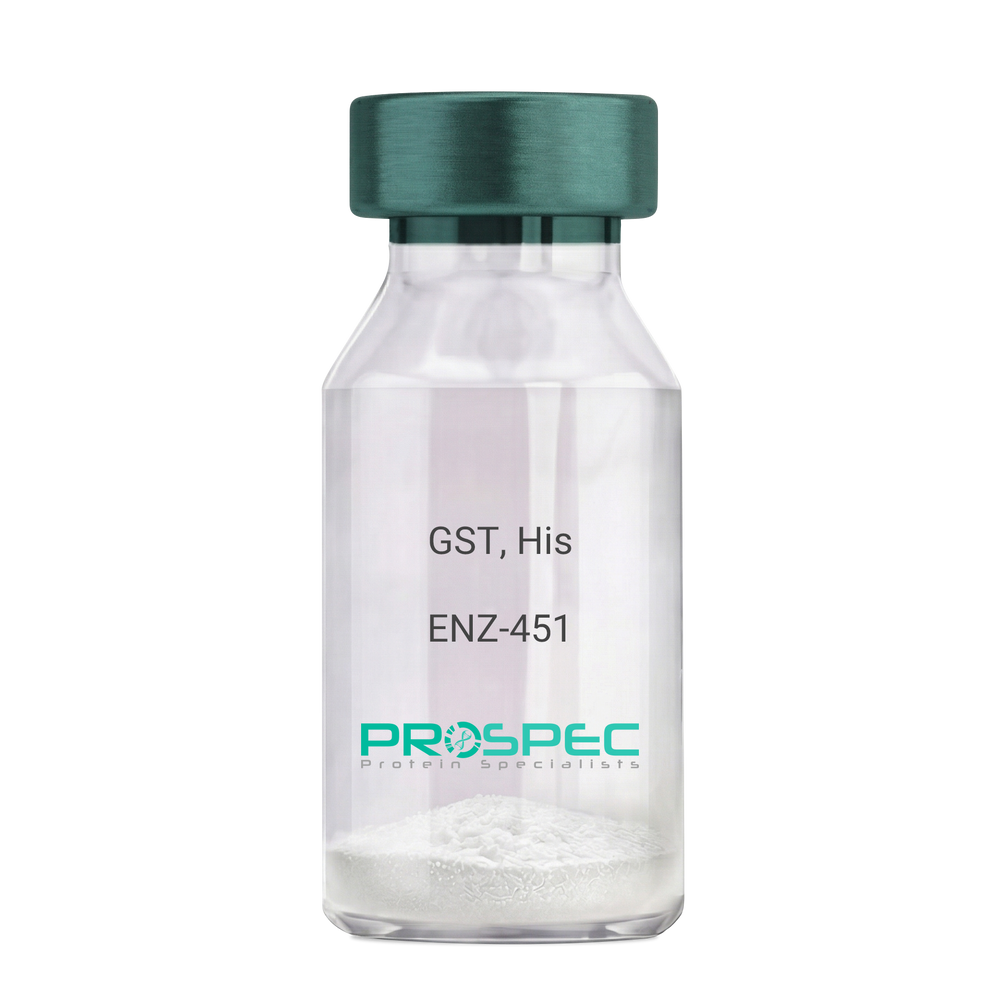
    GST, His

    Description:

    Glutathione S-Transferase Recombinant, His Tag

    Glutathione S-Transferase, GST, Glutathione S-transferase class-mu 28 kDa isozyme, GST 28, EC 2.5.1.18, Sj28GST, Sj28 antigen.

    Product # :

    ENZ-451

    Price :

    Quantity :

    Shipping Method :

    Ice Icon

    Shipped with Ice Packs

    Add To Cart

    More Info

    • description
    • source
    • formulation
    • purity
    • biological activity
    • More Info
    • Citations

    Description

    Recombinant Schistosoma japonicum GST full length protein contains a total of 244 amino acids (1-218 a.a.) expressed in E.coli, having a molecular mass of 28.3kDa. The GST protein is fused to a 20 amino acids His-Tag at N-terminus. The GST protein is purified by proprietary chromatographic techniques.

    Source

    Escherichia Coli.

    Formulation

    GST is supplied in PBS pH 7.4 & 10% glycerol.

    Purity

    Greater than 90% as determined by SDS-PAGE.

    Biological Activity

    >10 units/mg, & is defined as the amount of enzyme that conjugate 1.0 u mole of 1-chloro-2,4-dinitrobenzene (CDNB) with reduced glutathione per minute at pH-6.5 at 25C.

    Citations

    More Info

    • Introduction

      Antioxidant enzyme Glutathione S- Transferase (GST) is thought to do the primary cellular defense mechanism against reactive oxygen species. GST reduces lipid hydroperoxides through its Se-independent glutathione peroxidase activity. The enzyme also detoxifies lipid peroxidation end products such as 4-hydroxynonenal (4-HNE).
      The soluble GST is a 26 kDa protein which occurs as a dimer in all aerobic organisms. Each monomer has two domains, one that binds GSH and is an /-structure similar to thioredoxin and the other, all helical, that binds the hydrophobic substrate. The GST -fusion protein expression system is a widely used recombinant protein expression system that allows a peptide or a regulatory protein domain to be expressed as a fusion to the C-terminus of Schistosoma japonicum GST. Fusion proteins also possess GST -enzymatic activity and can undergo dimerization similar to in vivo. The fusion protein can be purified via GST -affinity column chromatography. In most cases, the desired peptides or domains are removed from GST by applying a specific protease that recognizes and cleaves the linker between the protein domain and GST. The technique has been widely used to generate different kinds of proteins for crystallization, molecular immunology studies, the production of vaccines and studies involving protein-protein and protein-DNA interactions.

    • Synonyms

      Glutathione S-Transferase, GST, Glutathione S-transferase class-mu 28 kDa isozyme, GST 28, EC 2.5.1.18, Sj28GST, Sj28 antigen.

    • Physical Appearance

      Sterile Filtered clear solution.

    • Stability

      Store at 4°C if entire vial will be used within 2-4 weeks. Store, frozen at -20°C for longer periods of time. For long term storage it is recommended to add a carrier protein (0.1% HSA or BSA).Avoid multiple freeze-thaw cycles.

    • Amino Acid Sequence

      MGSSHHHHHH SSGLVPRGSH MSPILGYWKI KGLVQPTRLL LEYLEEKYEE HLYERDEGDK WRNKKFELGL EFPNLPYYID GDVKLTQSMAIIRYIADKHN MLGGCPKERA EISMLEGAVL DIRYGVSRIA YSKDFETLKV DFLSKLPEML KMFEDRLCHK TYLNGDHVTH PDFMLYDALDVVLYMDPMCL DAFPKLVCFK KRIEAIPQID KYLKSSKYIA WPLQGWQATF GGGDHPPKSD LVPR.

    ProSpec's products are furnished for LABORATORY RESEARCH USE ONLY. The product may not be used as drugs, agricultural or pesticidal products, food additives or household chemicals.

    Glutathione S Transferase His
  • View Data Sheet

    Name :

    GTF2B Human

    Description:

    General Transcription Factor IIB Human Recombinant

    TF2B, TFIIB, GTF2B, Transcription initiation factor IIB, General transcription factor TFIIB, S300-II.

    Product # :

    PRO-762

    Price :

    Quantity :

    Shipping Method :

    Ice Icon

    Shipped with Ice Packs

    Add To Cart

    More Info

    • description
    • source
    • formulation
    • purity
    • More Info
    • Citations

    Description

    GTF2B Human Recombinant produced in E.Coli is a single, non-glycosylated, polypeptide chain containing 336 amino acids (1-316 a.a.) and having a molecular mass of 36.9 kDa. The GTF2B is fused to a 20 amino acid His Tag at N-terminus and purified by proprietary chromatographic techniques.

    Source

    Escherichia Coli.

    Formulation

    The GTF2B solution contains 20mM Tris-HCl buffer (pH 8.0), 0.1M NaCl and 20% glycerol.

    Purity

    Greater than 90.0% as determined by SDS-PAGE.

    Citations

    More Info

    • Introduction

      GTF2B is one of the ubiquitous factors needed for transcription initiation by RNA polymerase II preinitiation factor. GTF2B localizes to the nucleus where it forms a complex (the DAB complex) with transcription factors IID and IIA. GTF2 plays a role as a bridge between IID, which initially recognizes the promoter sequence, and RNA polymerase II. GTF2B is involved in the selection of the transcription start site.

    • Synonyms

      TF2B, TFIIB, GTF2B, Transcription initiation factor IIB, General transcription factor TFIIB, S300-II.

    • Physical Appearance

      Sterile Filtered colorless solution.

    • Stability

      Store at 4°C if entire vial will be used within 2-4 weeks. Store, frozen at -20°C for longer periods of time. For long term storage it is recommended to add a carrier protein (0.1% HSA or BSA).Avoid multiple freeze-thaw cycles.

    • Amino Acid Sequence

      MGSSHHHHHH SSGLVPRGSH MASTSRLDAL PRVTCPNHPD AILVEDYRAG DMICPECGLV VGDRVIDVGS EWRTFSNDKA TKDPSRVGDS QNPLLSDGDL STMIGKGTGA ASFDEFGNSK YQNRRTMSSS DRAMMNAFKE ITTMADRINL PRNIVDRTNN LFKQVYEQKS LKGRANDAIA SACLYIACRQ EGVPRTFKEI CAVSRISKKE IGRCFKLILK ALETSVDLIT TGDFMSRFCS NLCLPKQVQM AATHIARKAV ELDLVPGRSP ISVAAAAIYM ASQASAEKRT QKEIGDIAGV ADVTIRQSYR LIYPRAPDLF PTDFKFDTPV DKLPQL.

    ProSpec's products are furnished for LABORATORY RESEARCH USE ONLY. The product may not be used as drugs, agricultural or pesticidal products, food additives or household chemicals.

    Gtf2B Human
  • View Data Sheet

    Name :

    PVALB Human

    Description:

    Parvalbumin Human Recombinant

    Parvalbumin alpha, PVALB, D22S749, MGC116759.

    Product # :

    PRO-004

    Price :

    Quantity :

    Shipping Method :

    Ice Icon

    Shipped with Ice Packs

    Add To Cart

    More Info

    • description
    • source
    • formulation
    • purity
    • More Info
    • Citations

    Description

    PVALB Human Recombinant fused with a 24 amino acid His tag at N-terminus produced in E.Coli is a single, non-glycosylated, polypeptide chain containing 134 amino acids (1-110 a.a.) and having a molecular mass of 14.6kDa. The PVALB is purified by proprietary chromatographic techniques.

    Source

    Escherichia Coli.

    Formulation

    The PVALB solution (1 mg/ml) contains 20mM Tris-HCl buffer (pH 8.0), 1mM DTT, 10% glycerol and 50mM NaCl.

    Purity

    Greater than 95.0% as determined by SDS-PAGE.

    Citations

    More Info

    • Introduction

      Parvalbumin alpha (PVALB) is a member of a larger group of EF hand proteins. PVALB is a high affinity calcium ion-binding protein which is structurally and functionally similar to calmodulin and troponin C. Parvalbumin is expressed in a specific population of GABAergic interneurones which are believed to have a role in maintaining the balance between excitation and inhibition in the cortex as well as the hippocampus.

    • Synonyms

      Parvalbumin alpha, PVALB, D22S749, MGC116759.

    • Physical Appearance

      Sterile Filtered colorless solution.

    • Stability

      Store at 4°C if entire vial will be used within 2-4 weeks.Store, frozen at -20°C for longer periods of time. For long term storage it is recommended to add a carrier protein (0.1% HSA or BSA).Avoid multiple freeze-thaw cycles.

    • Amino Acid Sequence

      MGSSHHHHHH SSGLVPRGSH MGSHMSMTDL LNAEDIKKAV GAFSATDSFD HKKFFQMVGLKKKSADDVKK VFHMLDKDKS GFIEEDELGF ILKGFSPDAR DLSAKETKML MAAGDKDGDG KIGVDEFSTL VAES.

    ProSpec's products are furnished for LABORATORY RESEARCH USE ONLY. The product may not be used as drugs, agricultural or pesticidal products, food additives or household chemicals.

    Pvalb Human
  • View Data Sheet

    Name :

    VSNL1 Human

    Description:

    Visinin-Like Protein-1 Human Recombinant

    VISL1, VISL-1, VIS1, VIS-1, VILIP, HLP3, Hippocalcin-like protein 3, VSNL1, VILIP-1, VILIP1, HLP-3, HPCAL3, HUVISL1, Visinin-like protein 1.

    Product # :

    PRO-723

    Price :

    Quantity :

    Shipping Method :

    Ice Icon

    Shipped with Ice Packs

    Add To Cart

    More Info

    • description
    • source
    • formulation
    • purity
    • More Info
    • Citations

    Description

    VSNL1 Human Recombinant produced in E.Coli is a single, non-glycosylated, polypeptide chain containing 191 amino acids (1-191 a.a.) and having a molecular mass of 22.1kDa.The VSNL1 is purified by proprietary chromatographic techniques.

    Source

    Escherichia Coli.

    Formulation

    The VSNL1 protein solution contains 20mM Tris-HCl buffer (pH8.0), 1mM DTT and 10% glycerol.

    Purity

    Greater than 95.0% as determined by SDS-PAGE.

    Citations

    More Info

    • Introduction

      VSNL1 is a member of the visinin/recoverin subfamily of neuronal calcium sensor proteins. VILIP1 is strongly expressed in granule cells of the cerebellum where it associates with membranes in a calcium-dependent manner and modulates intracellular signaling pathways of the central nervous system by directly or indirectly regulating the activity of adenylyl cyclase. Changes in cellular expression of VSNL1 were found in hipppocampi of schizophrenics, since more interneurons showed immunoreactivity.
      VILIP1 is expressed in pancreatic beta-cells. VILIP-1 interacts with cell membrane and actin-based cytoskeleton. VSNL1 modulates cAMP-accumulation in C6 glioma cells. HLP3 modulates cGMP-accumulation in transfected neural cells and cerebellar granule neurons.

    • Synonyms

      VISL1, VISL-1, VIS1, VIS-1, VILIP, HLP3, Hippocalcin-like protein 3, VSNL1, VILIP-1, VILIP1, HLP-3, HPCAL3, HUVISL1, Visinin-like protein 1.

    • Physical Appearance

      Sterile Filtered colorless solution.

    • Stability

      Store at 4°C if entire vial will be used within 2-4 weeks. Store, frozen at -20°C for longer periods of time. For long term storage it is recommended to add a carrier protein (0.1% HSA or BSA).Please prevent freeze-thaw cycles.

    • Amino Acid Sequence

      MGKQNSKLAP EVMEDLVKST EFNEHELKQW YKGFLKDCPS GRLNLEEFQQ LYVKFFPYGD ASKFAQHAFR TFDKNGDGTI DFREFICALS ITSRGSFEQK LNWAFNMYDL DGDGKITRVE MLEIIEAIYK MVGTVIMMKM NEDGLTPEQR VDKIFSKMDK NKDDQITLDE FKEAAKSDPS IVLLLQCDIQ K.

    ProSpec's products are furnished for LABORATORY RESEARCH USE ONLY. The product may not be used as drugs, agricultural or pesticidal products, food additives or household chemicals.

    Vsnl1 Human
  • View Data Sheet

    Name :

    YWHAE Human

    Description:

    Tyr-3/Trp- 5 Monooxygenase Activation Protein Epsilon Human Recombinant

    YWHAE, MDS, MDCR, KCIP-1, 14-3-3E, 14-3-3 Epsilon, FLJ45465, Tyr-3/Trp- 5 Monooxygenase Activation Protein Epsilon.

    Product # :

    PKA-253

    Price :

    Quantity :

    Shipping Method :

    Ice Icon

    Shipped with Ice Packs

    Add To Cart

    More Info

    • description
    • source
    • formulation
    • purity
    • More Info
    • Citations

    Description

    YWHAE Human Recombinant produced in E.Coli is a single, non-glycosylated, polypeptide chain containing 255 amino acids (1-255) and having a molecular mass of 29 kDa. YWHAE is purified by proprietary chromatographic techniques.

    Source

    Escherichia Coli.

    Formulation

    YWHAE solution containing 20mM Tris 7.5.

    Purity

    Greater than 95.0% as determined by SDS-PAGE.

    Citations

    More Info

    • Introduction

      The 14-3-3 family of proteins plays a key regulatory role in signal transduction, checkpoint control, apoptotic and nutrient-sensing pathways. 14-3-3 proteins are highly conserved and ubiquitously expressed. There are at least seven isoforms, β, γ, ε, σ, ζ, τ and η that have been identified in mammals. The 14-3-3 epsilon, a subtype of the 14-3-3 family of proteins, was thought to be brain and neuron-specific. It has been shown to interact with CDC25 phosphatases, RAF1 and IRS1 proteins, suggesting its role in diverse biochemical activities related to signal transduction, such as cell division and regulation of sensitivity. It has also been implicated in the pathogenesis of small cell lung cancer.

    • Synonyms

      YWHAE, MDS, MDCR, KCIP-1, 14-3-3E, 14-3-3 Epsilon, FLJ45465, Tyr-3/Trp- 5 Monooxygenase Activation Protein Epsilon.

    • Physical Appearance

      Sterile filtered colorless solution.

    • Stability

      YWHAE Human Recombinant although stable at 4°C for 1 week, should be stored below -18°C. Please prevent freeze thaw cycles.

    • Amino Acid Sequence

      MDDREDLVYQ AKLAEQAERY DEMVESMKKV AGMDVELTVE ERNLLSVAYK NVIGARRASWRIISSIEQKE ENKGGEDKLK MIREYRQMVE TELKLICCDI LDVLDKHLIP AANTGESKVFYYKMKGDYHR YLAEFATGND RKEAAENSLV AYKAASDIAM TELPPTHPIR LGLALNFSVFYYEILNSPDR ACRLAKAAFD DAIAELDTLS EESYKDSTLI MQLLRDNLTL WTSDMQGDGE EQNKEALQDV EDENQ.

    ProSpec's products are furnished for LABORATORY RESEARCH USE ONLY. The product may not be used as drugs, agricultural or pesticidal products, food additives or household chemicals.

    Ywhae Human
  • View Data Sheet

    Name :

    YWHAH Human

    Description:

    Tyr-3/Trp-5 Monooxygenase Activation Protein ETA Human Recombinant

    14-3-3 ETA, YWHAH, YWHA1, Protein AS1, Tyr-3/Trp-5 Monooxygenase Activation Protein ETA.

    Product # :

    PKA-087

    Price :

    Quantity :

    Shipping Method :

    Ice Icon

    Shipped with Ice Packs

    Add To Cart

    More Info

    • description
    • source
    • formulation
    • purity
    • More Info
    • Citations

    Description

    YWHAH Human Recombinant produced in E.Coli is a single, non-glycosylated, polypeptide chain containing 246 amino acids and having a molecular mass of 28.2kDa. The YWHAH is purified by proprietary chromatographic techniques.

    Source

    Escherichia Coli.

    Formulation

    The YWHAH protein solution (1mg/ml) containing Phosphate Buffered Saline (pH7.4) 10% glycerol.

    Purity

    Greater than 90.0% as determined by SDS-PAGE.

    Citations

    More Info

    • Introduction

      YWHAH belongs to the 14-3-3 family of proteins which mediate signal transduction by binding to phosphoserine-containing proteins. 14-3-3 ETA is found in plants and mammals, and there is 99% identity to the mouse, rat and bovine orthologs. YWHAH gene contains a 7 base pair repeat sequence in its 5' UTR, and changes in the number of this repeat has been associated with early-onset schizophrenia.
      14-3-3 eta is specific to the site of joint inflammation.
      14-3-3 proteins are colocalized with Lewy bodies in Parkinson disease, though there is no specific staining for the 14-3-3 eta subunit.
      There are 3 different isoforms types of 14-3-3: Beta, Gamma and ETA that are DAL-1/Protein 4.1B-binding proteins.

    • Synonyms

      14-3-3 ETA, YWHAH, YWHA1, Protein AS1, Tyr-3/Trp-5 Monooxygenase Activation Protein ETA.

    • Physical Appearance

      Sterile filtered colorless solution.

    • Stability

      Store at 4°C if entire vial will be used within 2-4 weeks. Store, frozen at -20°C for longer periods of time. For long term storage it is recommended to add a carrier protein (0.1% HSA or BSA).Avoid multiple freeze-thaw cycles.

    • Amino Acid Sequence

      MGDREQLLQR ARLAEQAERY DDMASAMKAV TELNEPLSNE DRNLLSVAYK NVVGARRSSW RVISSIEQKT MADGNEKKLE KVKAYREKIE KELETVCNDV LSLLDKFLIK NCNDFQYESK VFYLKMKGDY YRYLAEVASG EKKNSVVEAS EAAYKEAFEI SKEQMQPTHP IRLGLALNFS VFYYEIQNAP EQACLLAKQA FDDAIAELDT LNEDSYKDST LIMQLLRDNL TLWTSDQQDE EAGEGN.

    ProSpec's products are furnished for LABORATORY RESEARCH USE ONLY. The product may not be used as drugs, agricultural or pesticidal products, food additives or household chemicals.

    Human Ywhah
  • View Data Sheet

    Name :

    ZNHIT3 Human

    Description:

    Zinc Finger HIT-Type Containing 3 Human Recombinant

    Zinc finger HIT domain-containing protein 3, HNF-4a coactivator, Thyroid hormone receptor interactor 3, Thyroid receptor-interacting protein 3, TR-interacting protein 3, TRIP-3, ZNHIT3, TRIP3, Zinc finger, HIT-type containing 3.

    Product # :

    PRO-1699

    Price :

    Quantity :

    Shipping Method :

    Ice Icon

    Shipped with Ice Packs

    Add To Cart

    More Info

    • description
    • source
    • formulation
    • purity
    • More Info
    • Citations

    Description

    ZNHIT3 Human Recombinant produced in E.coli is a single, non-glycosylated polypeptide chain containing 178 amino acids (1-155) and having a molecular mass of 20 kDa.ZNHIT3 is fused to a 23 amino acid His-tag at N-terminus & purified by proprietary chromatographic techniques.

    Source

    Escherichia Coli.

    Formulation

    The ZNHIT3 solution (1mg/ml) contains 20mM Tris-HCl buffer (pH 8.0), 10% glycerol and 0.4M Urea.

    Purity

    Greater than 85.0% as determined by SDS-PAGE.

    Citations

    More Info

    • Introduction

      Zinc Finger HIT-Type Containing 3 (ZNHIT3) which contains one HIT-type zinc finger, requires the presence of thyroid hormone for its interaction. Thyroid receptor interacting proteins particularly interact with the ligand binding domain of the thyroid receptor (TR).

    • Synonyms

      Zinc finger HIT domain-containing protein 3, HNF-4a coactivator, Thyroid hormone receptor interactor 3, Thyroid receptor-interacting protein 3, TR-interacting protein 3, TRIP-3, ZNHIT3, TRIP3, Zinc finger, HIT-type containing 3.

    • Physical Appearance

      Sterile Filtered colorless solution.

    • Stability

      Store at 4°C if entire vial will be used within 2-4 weeks. Store, frozen at -20°C for longer periods of time. For long term storage it is recommended to add a carrier protein (0.1% HSA or BSA).Avoid multiple freeze-thaw cycles.

    • Amino Acid Sequence

      MGSSHHHHHH SSGLVPRGSH MGSMASLKCS TVVCVICLEK PKYRCPACRV PYCSVVCFRK HKEQCNPETR PVEKKIRSAL PTKTVKPVEN KDDDDSIADF LNSDEEEDRV SLQNLKNLGE SATLRSLLLN PHLRQLMVNL DQGEDKAKLM RAYMQEPLFV EFADCCLGIV EPSQNEES.

    ProSpec's products are furnished for LABORATORY RESEARCH USE ONLY. The product may not be used as drugs, agricultural or pesticidal products, food additives or household chemicals.

    Tesamorelin
  • View Data Sheet

    Name :

    RNMTL1 Human

    Description:

    RNA Methyltransferase Like 1 Human Recombinant

    RNA Methyltransferase Like 1, 16S RRNA (Guanosine(1370)-2-O)-Methyltransferase, 16S RRNA [Gm1370] 2-O-Methyltransferase, RNA Methyltransferase-Like Protein 1, HC90, MRM3, RRNA Methyltransferase 3, Mitochondrial, Putative RNA Methyltransferase, EC 2.1.1.-, EC 2.1.1, RMTL1, RNMTL1.

    Product # :

    ENZ-895

    Price :

    Quantity :

    Shipping Method :

    Ice Icon

    Shipped with Ice Packs

    Add To Cart

    More Info

    • description
    • source
    • formulation
    • purity
    • More Info
    • Citations

    Description

    RNMTL1 Human Recombinant produced in E.Coli is a single, non-glycosylated polypeptide chain containing 443 amino acids (1-420 a.a) and having a molecular mass of 49.4kDa.RNMTL1 is fused to a 23 amino acid His-tag at N-terminus & purified by proprietary chromatographic techniques.

    Source

    Escherichia Coli.

    Formulation

    RNMTL1 protein solution (1mg/ml) containing 20mM Tris-HCl (pH 8.0) and 10% glycerol.

    Purity

    Greater than 85.0% as determined by SDS-PAGE.

    Citations

    More Info

    • Introduction

      RNA methyltransferase-like protein 1, also known as RNMTL1 is a member of the RNA methyltransferase TrmH family. RNMTL1 is probable RNA methyltransferase and expressed at an equal level in normal liver and hepatocarcinoma.

    • Synonyms

      RNA Methyltransferase Like 1, 16S RRNA (Guanosine(1370)-2-O)-Methyltransferase, 16S RRNA [Gm1370] 2-O-Methyltransferase, RNA Methyltransferase-Like Protein 1, HC90, MRM3, RRNA Methyltransferase 3, Mitochondrial, Putative RNA Methyltransferase, EC 2.1.1.-, EC 2.1.1, RMTL1, RNMTL1.

    • Physical Appearance

      Sterile Filtered colorless solution.

    • Stability

      Store at 4°C if entire vial will be used within 2-4 weeks. Store, frozen at -20°C for longer periods of time. For long term storage it is recommended to add a carrier protein (0.1% HSA or BSA).Avoid multiple freeze-thaw cycles.

    • Amino Acid Sequence

      MGSSHHHHHH SSGLVPRGSH MGSMAALVRP ARFVVRPLLQ VVQAWDLDAR RWVRALRRSP VKVVFPSGEV VEQKRAPGKQ PRKAPSEASA QEQREKQPLE ESASRAPSTW EESGLRYDKA YPGDRRLSSV MTIVKSRPFR EKQGKILLEG RRLISDALKA GAVPKMFFFS RLEYLKELPV DKLKGVSLIK VKFEDIKDWS DLVTPQGIMG IFAKPDHVKM TYPKTQLQHS LPLLLICDNL RDPGNLGTIL RSAAGAGCSK VLLTKGCVDA WEPKVLRAGM GAHFRMPIIN NLEWETVPNY LPPDTRVYVA DNCGLYAQAE MSNKASDHGW VCDQRVMKFH KYEEEEDVET GASQDWLPHV EVQSYDSDWT EAPAAVVIGG ETYGVSLESL QLAESTGGKR LLIPVVPGVD SLNSAMAASI LLFEGKRQLR GRAEDLSRDR SYH

    ProSpec's products are furnished for LABORATORY RESEARCH USE ONLY. The product may not be used as drugs, agricultural or pesticidal products, food additives or household chemicals.

    Rnmtl1 Human
  • View Data Sheet

    Name :

    ROBLD3 Human

    Description:

    Roadblock Domain Containing 3 Human Recombinant

    Ragulator complex protein LAMTOR2, Endosomal adaptor protein p14, Late endosomal/lysosomal Mp1-interacting protein, Late endosomal/lysosomal adaptor and MAPK and MTOR activator 2, Mitogen-activated protein-binding protein-interacting protein, Roadblock domain-containing protein 3, LAMTOR2, MAPBPIP, ROBLD3, p14, ENDAP, HSPC003, MAPKSP1AP, Ragulator2, RP11-336K24.9.

    Product # :

    PRO-050

    Price :

    Quantity :

    Shipping Method :

    Ice Icon

    Shipped with Ice Packs

    Add To Cart

    More Info

    • description
    • source
    • formulation
    • purity
    • More Info
    • Citations

    Description

    ROBLD3 Human Recombinant fused with a 24 amino acid His tag at N-terminus produced in E.Coli is a single, non-glycosylated, polypeptide chain containing 149 amino acids (1-125 a.a.) and having a molecular mass of 16kDa. The ROBLD3 is purified by proprietary chromatographic techniques.

    Source

    Escherichia Coli.

    Formulation

    The ROBLD3 solution (1 mg/ml) contains 20mM Tris-HCl buffer (pH8.0), 0.2M Nacl, 2mM DTT and 10% glycerol.

    Purity

    Greater than 95.0% as determined by SDS-PAGE.

    Citations

    More Info

    • Introduction

      ROBLD3 is a member of the GAMAD family. ROBLD3 is an adapter protein which enhances the efficiency of the MAP kinase cascade and facilitates the activation of MAPK2. ROBLD3 compels the recruitment of MP1 to late endosomes where they form a very stable heterodimeric complex required for ERK activation on endosomes. In humans, a mutation in the ROBLD3 gene has been associated with a primary immunodeficiency syndrome, and suggests a role for the ROBLD3 protein in endosomal biogenesis.

    • Synonyms

      Ragulator complex protein LAMTOR2, Endosomal adaptor protein p14, Late endosomal/lysosomal Mp1-interacting protein, Late endosomal/lysosomal adaptor and MAPK and MTOR activator 2, Mitogen-activated protein-binding protein-interacting protein, Roadblock domain-containing protein 3, LAMTOR2, MAPBPIP, ROBLD3, p14, ENDAP, HSPC003, MAPKSP1AP, Ragulator2, RP11-336K24.9.

    • Physical Appearance

      Sterile Filtered colorless solution.

    • Stability

      Store at 4°C if entire vial will be used within 2-4 weeks. Store, frozen at -20°C for longer periods of time. For long term storage it is recommended to add a carrier protein (0.1% HSA or BSA). Avoid multiple freeze-thaw cycles.

    • Amino Acid Sequence

      MGSSHHHHHH SSGLVPRGSH MGSHMLRPKA LTQVLSQANT GGVQSTLLLN NEGSLLAYSG YGDTDARVTA AIASNIWAAY DRNGNQAFNE DNLKFILMDC MEGRVAITRV ANLLLCMYAK ETVGFGMLKA KAQALVQYLE EPLTQVAAS.

    ProSpec's products are furnished for LABORATORY RESEARCH USE ONLY. The product may not be used as drugs, agricultural or pesticidal products, food additives or household chemicals.

    Robld3 Human
  • View Data Sheet

    Name :

    ADSL Antibody

    Description:

    Adenylosuccinate Lyase, Mouse Anti Human

    Adenylosuccinate lyase, ASL, Adenylosuccinase, ASase, ADSL, AMPS.

    Product # :

    ANT-623

    Price :

    Quantity :

    Shipping Method :

    Ice Icon

    Shipped with Ice Packs

    Add To Cart

    More Info

    • formulation
    • More Info
    • Citations

    Formulation

    1mg/ml containing PBS, pH-7.4, 10% Glycerol and 0.02% Sodium Azide.

    Citations

    More Info

    • Introduction

      Adenylosuccinate lyase (ADSL) is an enzyme which converts adenylosuccinate to AMP and fumarate as part of the purine nucleotide cycle. ADSL is involved in both de novo synthesis of purines and formation of adenosine monophosphate from inosine monophosphate. ADSL catalyzes 2 reactions in AMP biosynthesis: the removal of a fumarate from succinylaminoimidazole carboxamide (SAICA) ribotide to yield aminoimidazole carboxamide ribotide (AICA) and removal of fumarate from adenylosuccinate to yield AMP. Defects in the ADSL are the cause of adenylosuccinase deficiency (ADSL deficiency). ADSL deficiency is an autosomal recessive disorder distinguished by the accumulation in the body fluids of succinylaminoimidazole-carboxamide riboside (SAICA-riboside) and succinyladenosine (S-Ado). Adenylosuccinase deficiency results in succinylpurinemic autism, psychomotor retardation, and in some cases, growth retardation associated with muscle wasting and epilepsy.

    • Synonyms

      Adenylosuccinate lyase, ASL, Adenylosuccinase, ASase, ADSL, AMPS.

    • Physical Appearance

      Sterile filtered colorless solution.

    • Immunogen

      Anti-human ADSL mAb, is derived from hybridization of mouse F0 myeloma cells with spleen cells from BALB/c mice immunized with a recombinant human ADSL protein 1-484 amino acids purified from E. coli.

    • Ig Subclass

      Mouse IgG1 heavy chain and k light chain.

    • Clone

      PAT16C10AT.

    • Applications

      The antibody has been tested by ELISA, Western blot analysis, Flow cytometry and ICC/IF to assure specificity and reactivity. Since application varies, however, each investigation should be titrated by the reagent to obtain optimal results.

    • Type

      Mouse Anti Human Monoclonal.

    • Storage Procedures

      For periods up to 1 month store at 4°C, for longer periods of time, store at -20°C. Prevent freeze thaw cycles.

    • Purification Method

      ADSL antibody was purified from mouse ascitic fluids by protein-A affinity chromatography.

    ProSpec's products are furnished for LABORATORY RESEARCH USE ONLY. The product may not be used as drugs, agricultural or pesticidal products, food additives or household chemicals.

    Adsl Antibody
  • View Data Sheet

    Name :

    RALA Antibody

    Description:

    V-ral Simian Leukemia Viral Oncogene Homolog A, Mouse Anti Human

    Ras-related protein Ral-A, RALA, RAL, MGC48949.

    Product # :

    ANT-467

    Price :

    Quantity :

    Shipping Method :

    Ice Icon

    Shipped with Ice Packs

    Add To Cart

    More Info

    • formulation
    • More Info
    • Citations

    Formulation

    1mg/ml containing PBS, pH-7.4, 10% Glycerol and 0.02% Sodium Azide.

    Citations

    More Info

    • Introduction

      Ras-related protein Ral-A (RALA) is a member of the small GTPase superfamily, Ras family of proteins. RALA mediates a distinct downstream signaling pathway from Ras which facilitates cellular transformation. Furthermore, RALA is thought to be involved in various signaling cascades, including regulation of the cytoskeleton, vesicle trafficking, and endocytosis.

    • Synonyms

      Ras-related protein Ral-A, RALA, RAL, MGC48949.

    • Physical Appearance

      Sterile filtered colorless solution.

    • Immunogen

      Anti-human RALA mAb, clone PAT41D5A, is derived from hybridization of mouse F0 myeloma cells with spleen cells from BALB/c mice immunized with a recombinant human RALA protein 1-203 amino acids purified from E. coli..

    • Ig Subclass

      Mouse IgG2b heavy chain and Kappa light chain.

    • Clone

      PAT41D5A.

    • Applications

      The antibody has been tested by ELISA, Western blot analysis to assure specificity and reactivity. Since application varies, however, each investigation should be titrated by the reagent to obtain optimal results. Recommended dilution range for Western blot analysis is 1:500 ~ 1:2000. Recommended starting dilution is 1:1000.

    • Type

      Mouse Anti Human Monoclonal.

    • Storage Procedures

      For periods up to 1 month store at 4°C, for longer periods of time, store at -20°C. Prevent freeze thaw cycles.

    ProSpec's products are furnished for LABORATORY RESEARCH USE ONLY. The product may not be used as drugs, agricultural or pesticidal products, food additives or household chemicals.

    Rala Antibody
  • View Data Sheet

    Name :

    LH Paired Antibody

    Description:

    Anti Human Leutenizing Hormone Paired Antibody Mouse

    Product # :

    ANT-787

    Price :

    Quantity :

    Shipping Method :

    Ice Icon

    Shipped with Ice Packs

    Add To Cart

    More Info

    • description
    • formulation
    • More Info
    • Citations

    Description

    Paired LH monoclonal antibodies are composed of anti-LH α and β subunits, the anti-LH α is used for the coating and antibody to β subunit is used for colloid gold conjugation. Please note that when ordering for example: 100µg paired antibody, you receive 50µg from each antibody (100µg in total).

    Formulation

    * LH α (Coating) antibody in 50mM NaCl, 10mM PBS, 0.1% NaN3, PH 8 (11.26mg/ml).
    * LH β (Labeling) antibody in 50mM NaCl, 10mM PBS, 0.1% NaN3, PH 8 (18.39mg/ml).

    Citations

    More Info

    • Physical Appearance

      2 vials of sterile Filtered clear colorless solution.

    • Stability

      For periods up to 1month LHPaired Antibody should be stored at 4°C, for longer periods of time, store at -20°C. Prevent freeze thaw cycles.

    • Applications

      Lateral flow immunoassay.

    • Background

      Luteinizing hormone (LH) is produced by the pituitary gland and takes an important part in the reproductive system. LH is necessary for sexual development and fertility in both males and females. In females, LH triggers ovulation and the production of progesterone. In males, LH stimulates testosterone production by the Leydig cells in the testes. LH testing can diagnose conditions related to excessive or insufficient LH production, such as infertility or pituitary gland disorders. LH takes an important part in the reproductive system, influencing sex hormone production, ovulation and in general reproductive function in both males and females.

    • Type

      Mouse antibody Monoclonal.

    • Purification Method

      Purified by Ion Exchange (IEX) Chromatography.

    ProSpec's products are furnished for LABORATORY RESEARCH USE ONLY. The product may not be used as drugs, agricultural or pesticidal products, food additives or household chemicals.

    Lh Antibody
  • View Data Sheet

    Name :

    SCGB1A1 Human, His

    Description:

    Uteroglobin Human Recombinant, His Tag

    Uteroglobin, Clara cell phospholipid-binding protein, CCPBP, Clara cells 10 kDa secretory protein, CC10, Secretoglobin family 1A member 1, Urinary protein 1, UP-1, UP1, Urine protein 1, SCGB1A1, CCSP, UGB, CC16.

    Product # :

    CYT-752

    Price :

    Quantity :

    Shipping Method :

    Room Temp Icon

    Shipped at Room temp

    Add To Cart

    More Info

    • description
    • source
    • formulation
    • purity
    • More Info
    • Citations

    Description

    Uteroglobin Human Recombinant produced in E.Coli is a single, non-glycosylated, polypeptide chain containing 80 amino acids and including a 10 a.a N-terminal His tag. The total molecular mass is 9.2kDa (calculated).

    Source

    Escherichia Coli.

    Formulation

    Filtered (0.4 µm) and lyophilized from 0.5 mg/ml in 0.05M phosphate buffer and 0.075M NaCl, pH 7.4.

    Purity

    Greater than 90.0% as determined by SDS-PAGE.

    Citations

    More Info

    • Introduction

      Uteroglobin (SCGB1A1) which belongs to the Secretoglobin (SCGBs) superfamily, is a multifunctional protein that exerts anti-inflammatory and anti-tumorigenic effects by binding small hydrophobic molecules such as phospholipids and prostaglandins. Uteroglobin is involved in numerous functions including anti-inflammation, inhibition of phospholipase A2 and the sequestering of hydrophobic ligands. SCGB1A1 is expressed by Clara cells, the non-ciliated, non-mucous secretory cells predominant in lung bronchioles, and by other epithelia which communicate with the external environment. On top of sequestering pro-inflammatory mediators and carcinogens, Uteroglobin is implicated in the inhibition of cell migration and invasion, platelet aggregation, and T cell differentiation. SCGB1A1 gene defects are associated with a susceptibility to asthma.

    • Synonyms

      Uteroglobin, Clara cell phospholipid-binding protein, CCPBP, Clara cells 10 kDa secretory protein, CC10, Secretoglobin family 1A member 1, Urinary protein 1, UP-1, UP1, Urine protein 1, SCGB1A1, CCSP, UGB, CC16.

    • Physical Appearance

      Filtered White lyophilized (freeze-dried) powder.

    • Stability

      Store lyophilized protein at -20°C. Aliquot the product after reconstitution to avoid repeated freezing/thawing cycles. Reconstituted protein can be stored at 4°C for a limited period of time; it does not show any change after two weeks at 4°C.

    • Solubility

      It is recommended to add deionized water to prepare a working stock solution of approximately 0.5mg/ml and let the lyophilized pellet dissolve completely. SCGB1A1 is not sterile! Please filter the product by an appropriate sterile filter before using it in the cell culture.

    • Amino Acid Sequence

      MKHHHHHHASEICPSFQRVI ETLLMDTPSS YEAAMELFSP DQDMREAGAQ LKKLVDTLPQ KPRESIIKLM EKIAQSSLCN.

    ProSpec's products are furnished for LABORATORY RESEARCH USE ONLY. The product may not be used as drugs, agricultural or pesticidal products, food additives or household chemicals.

    Scgb1A1 Human His
  • 1
  • …
  • 32
  • 33
  • 34
  • 35
  • 36
  • …
  • 42
Your browser does not support the video tag.

Products

  • Cytokines
  • Growth Factors
  • Chemokines
  • CD Antigens
  • Neurotrophins
  • Hormones
  • Enzymes
  • Viral Antigens
  • Recombinant Proteins
  • Natural Proteins
  • Monoclonal Antibodies
  • Polyclonal Antibodies
  • Thermal Packaging

About

  • Company
  • Founder
  • Contribution
  • Contact Us
  • My Account

Ordering

  • Ordering Method
  • Ordering - Credit Card
  • Ordering PO
  • Shipping Fees
  • FAQ's

Legal

  • Terms & Conditions
  • Privacy
  • Site Map
  • info@prospecbio.com
  • Facebook
  • Instagram
  • Linkedin Profile

© 2026 ProSpec-Tany TechnoGene Ltd. All Rights Reserved.

  • Choosing a selection results in a full page refresh.
  • Opens in a new window.