Skip to content

High-quality research proteins.

  • 1-800-805-6531

  • Mon - Sat 8.00-18.00, Sun - Closed

  • info@prospecbio.com

  • PO Box 6591 East Brunswick NJ 08816

  • Products
    • Cytokines
    • Growth factors
    • Chemokines
    • Cd antigens
    • Neurotrophins
    • Hormones
    • Enzymes
    • Viral antigens
    • Recombinant proteins
    • Natural proteins
    • Monoclonal antibodies
    • Polyclonal antibodies
    • Thermal Packaging
  • About
    • Company
    • Founder
    • Contribution
  • Customers
    • Eastern Asia
    • Eastern Europe
    • North America
    • South America
    • South East Asia
    • Southern Asia
    • Western Europe
  • Ordering
    • Ordering Method
    • Ordering - Credit Card
    • Ordering - PO
    • Shipping Fees
    • FAQs
  • Services
    • DNA Cloning
    • Protein Expression
    • Monoclonal Antibody
    • Fermentation
    • Technology License
  • Contact us
Log in

Country/region

  • USD $ | Albania
  • USD $ | Andorra
  • USD $ | Argentina
  • USD $ | Armenia
  • USD $ | Australia
  • USD $ | Austria
  • USD $ | Azerbaijan
  • USD $ | Belarus
  • USD $ | Belgium
  • USD $ | Bolivia
  • USD $ | Brazil
  • USD $ | Bulgaria
  • USD $ | Cambodia
  • USD $ | Canada
  • USD $ | Chile
  • USD $ | China
  • USD $ | Colombia
  • USD $ | Costa Rica
  • USD $ | Croatia
  • USD $ | Cyprus
  • USD $ | Czechia
  • USD $ | Denmark
  • USD $ | Estonia
  • USD $ | Finland
  • USD $ | France
  • USD $ | Georgia
  • USD $ | Germany
  • USD $ | Greece
  • USD $ | Hong Kong SAR
  • USD $ | Hungary
  • USD $ | Iceland
  • USD $ | India
  • USD $ | Ireland
  • USD $ | Israel
  • USD $ | Italy
  • USD $ | Japan
  • USD $ | Kazakhstan
  • USD $ | Latvia
  • USD $ | Liechtenstein
  • USD $ | Lithuania
  • USD $ | Madagascar
  • USD $ | Malta
  • USD $ | Mexico
  • USD $ | Moldova
  • USD $ | Monaco
  • USD $ | Netherlands
  • USD $ | New Zealand
  • USD $ | North Macedonia
  • USD $ | Norway
  • USD $ | Panama
  • USD $ | Paraguay
  • USD $ | Peru
  • USD $ | Philippines
  • USD $ | Poland
  • USD $ | Portugal
  • USD $ | Romania
  • USD $ | Singapore
  • USD $ | Slovakia
  • USD $ | Slovenia
  • USD $ | South Africa
  • USD $ | South Korea
  • USD $ | Spain
  • USD $ | Sri Lanka
  • USD $ | Sweden
  • USD $ | Switzerland
  • USD $ | Taiwan
  • USD $ | Thailand
  • USD $ | Türkiye
  • USD $ | Ukraine
  • USD $ | United Kingdom
  • USD $ | United States
  • USD $ | Uruguay
  • USD $ | Vatican City
  • USD $ | Venezuela
  • USD $ | Vietnam
  • Facebook
  • Instagram
logoProSpec - Recombinant Protein Manufacturer for academic and R&D industry
Become a distributor
Account Log in
Wishlist
Cart Cart(0)
  • Products
    +
    • Cytokines
    • Growth factors
    • Chemokines
    • Cd antigens
    • Neurotrophins
    • Hormones
    • Enzymes
    • Viral antigens
    • Recombinant proteins
    • Natural proteins
    • Monoclonal antibodies
    • Polyclonal antibodies
    • Thermal Packaging
  • About
    +
    • Company
    • Founder
    • Contribution
  • Customers
    +
    • Eastern Asia
    • Eastern Europe
    • North America
    • South America
    • South East Asia
    • Southern Asia
    • Western Europe
  • Ordering
    +
    • Ordering Method
    • Ordering - Credit Card
    • Ordering - PO
    • Shipping Fees
    • FAQs
  • Services
    +
    • DNA Cloning
    • Protein Expression
    • Monoclonal Antibody
    • Fermentation
    • Technology License
  • Contact us

Item added to your cart

View cart
View All
  • Cytokines
  • Growth factors
  • Chemokines
  • Cd antigens
  • Neurotrophins
  • Hormones
  • Enzymes
  • Viral antigens
  • Recombinant proteins
  • Natural proteins
  • Monoclonal antibodies
  • Polyclonal antibodies
  • Thermal Packaging
  • Tumor Necrosis Factor

    Tumor Necrosis Factor

    View All
  • 4-1BB

    4-1BB

    View All
  • Adiponectin

    Adiponectin

    View All
  • AIF1

    AIF1

    View All
  • Other Cytokines

    Other Cytokines

    View All
  • AITRL

    AITRL

    View All
  • Angiopoietin

    Angiopoietin

    View All
  • Apolipoprotein

    Apolipoprotein

    View All
  • B-Cell Activating Factor

    B-Cell Activating Factor

    View All
  • Beta Defensin

    Beta Defensin

    View All
  • Bone Morphogenetic Protein

    Bone Morphogenetic Protein

    View All
  • B type Natriuretic Peptide

    B type Natriuretic Peptide

    View All
  • BST

    BST

    View All
  • Betacellulin

    Betacellulin

    View All
  • Cardiotrophin

    Cardiotrophin

    View All
  • Activin

    Activin

    View All
  • Fibroblast Growth Factor

    Fibroblast Growth Factor

    View All
  • Other Growth Factors

    Other Growth Factors

    View All
  • CSF

    CSF

    View All
  • CTGF

    CTGF

    View All
  • IGFBP

    IGFBP

    View All
  • VEGF Protein

    VEGF Protein

    View All
  • EGF

    EGF

    View All
  • Epigen

    Epigen

    View All
  • Erythropoietin

    Erythropoietin

    View All
  • Insulin-Like Growth Factor

    Insulin-Like Growth Factor

    View All
  • Growth Hormone

    Growth Hormone

    View All
  • HDGF

    HDGF

    View All
  • Hepatocyte Growth Factor

    Hepatocyte Growth Factor

    View All
  • Insulin

    Insulin

    View All
  • BCA-1/ BLC (CXCL13)

    BCA-1/ BLC (CXCL13)

    View All
  • BRAK (CXCL14)

    BRAK (CXCL14)

    View All
  • C-10 (CCL6)

    C-10 (CCL6)

    View All
  • Other Chemokines

    Other Chemokines

    View All
  • MEC (CCL28)

    MEC (CCL28)

    View All
  • LD78-beta (CCL3L1)

    LD78-beta (CCL3L1)

    View All
  • CTACK (CCL27)

    CTACK (CCL27)

    View All
  • CXCL16

    CXCL16

    View All
  • CXCL17

    CXCL17

    View All
  • Platelet Factor-4 (CXCL4)

    Platelet Factor-4 (CXCL4)

    View All
  • ENA-78 (CXCL5)

    ENA-78 (CXCL5)

    View All
  • Eotaxin (CCL11,24,26)

    Eotaxin (CCL11,24,26)

    View All
  • Exodus-2 (CCL21)

    Exodus-2 (CCL21)

    View All
  • Fractalkine (CX3CL1)

    Fractalkine (CX3CL1)

    View All
  • CXCL6

    CXCL6

    View All
  • Other CD Antigens

    Other CD Antigens

    View All
  • CD14

    CD14

    View All
  • CD164

    CD164

    View All
  • CD1

    CD1

    View All
  • CD2

    CD2

    View All
  • CD200

    CD200

    View All
  • CD207

    CD207

    View All
  • CD226

    CD226

    View All
  • CD23

    CD23

    View All
  • CD244

    CD244

    View All
  • CD247

    CD247

    View All
  • CD27

    CD27

    View All
  • CD274

    CD274

    View All
  • CD300

    CD300

    View All
  • CD33

    CD33

    View All
  • Other Neurotrophins

    Other Neurotrophins

    View All
  • Beta-NGF

    Beta-NGF

    View All
  • BDNF

    BDNF

    View All
  • CDNF

    CDNF

    View All
  • CNTF

    CNTF

    View All
  • GDNF

    GDNF

    View All
  • Glia Maturation Factor

    Glia Maturation Factor

    View All
  • MANF

    MANF

    View All
  • Midkine

    Midkine

    View All
  • Neuroglobin

    Neuroglobin

    View All
  • Neurotrophic factors

    Neurotrophic factors

    View All
  • Neuregulin

    Neuregulin

    View All
  • Neuropilin

    Neuropilin

    View All
  • Pigment Epithelium-Derived Factor

    Pigment Epithelium-Derived Factor

    View All
  • Pleiotrophin

    Pleiotrophin

    View All
  • Peptide Hormones

    Peptide Hormones

    View All
  • Other Hormones

    Other Hormones

    View All
  • HCG

    HCG

    View All
  • Endothelin

    Endothelin

    View All
  • Exendin

    Exendin

    View All
  • FSH

    FSH

    View All
  • Glucagon

    Glucagon

    View All
  • GHRP

    GHRP

    View All
  • GLP

    GLP

    View All
  • Thyrostimulin

    Thyrostimulin

    View All
  • Inhibin A

    Inhibin A

    View All
  • LHRH

    LHRH

    View All
  • Melanotan

    Melanotan

    View All
  • Procalcitonin

    Procalcitonin

    View All
  • PTH

    PTH

    View All
  • Peroxiredoxin

    Peroxiredoxin

    View All
  • Peptidase

    Peptidase

    View All
  • Synthetase

    Synthetase

    View All
  • Transferase

    Transferase

    View All
  • Hydrolase

    Hydrolase

    View All
  • Dehydrogenase

    Dehydrogenase

    View All
  • ACE2

    ACE2

    View All
  • Esterase

    Esterase

    View All
  • Protein Kinases

    Protein Kinases

    View All
  • Other Enzymes

    Other Enzymes

    View All
  • Phosphatase

    Phosphatase

    View All
  • Deaminase

    Deaminase

    View All
  • Oxygenase

    Oxygenase

    View All
  • Adenylate Kinase

    Adenylate Kinase

    View All
  • Lyase

    Lyase

    View All
  • Chagas

    Chagas

    View All
  • SARS

    SARS

    View All
  • Influenza

    Influenza

    View All
  • ASFV

    ASFV

    View All
  • Astrovirus

    Astrovirus

    View All
  • Borrelia

    Borrelia

    View All
  • Helicobacter Pylori

    Helicobacter Pylori

    View All
  • Chikungunya

    Chikungunya

    View All
  • Chlamydia

    Chlamydia

    View All
  • Cytomegalo

    Cytomegalo

    View All
  • Dengue

    Dengue

    View All
  • EBV

    EBV

    View All
  • Ebola

    Ebola

    View All
  • Feline Leukemia Virus

    Feline Leukemia Virus

    View All
  • Hepatitis A

    Hepatitis A

    View All
  • Other

    Other

    View All
  • Actin

    Actin

    View All
  • ADAM

    ADAM

    View All
  • Complement Component

    Complement Component

    View All
  • Ag85

    Ag85

    View All
  • Eukaryotic Translation Initiation Factor

    Eukaryotic Translation Initiation Factor

    View All
  • Anterior Gradient Protein

    Anterior Gradient Protein

    View All
  • Heat Shock Protein

    Heat Shock Protein

    View All
  • Alpha-2-HS-Glycoprotein

    Alpha-2-HS-Glycoprotein

    View All
  • Hemoglobin

    Hemoglobin

    View All
  • Allergy

    Allergy

    View All
  • Anaplasma

    Anaplasma

    View All
  • Angiogenin

    Angiogenin

    View All
  • Ankyrin Repeat Domain

    Ankyrin Repeat Domain

    View All
  • Annexin

    Annexin

    View All
  • Other Natural Proteins

    Other Natural Proteins

    View All
  • Aprotinin

    Aprotinin

    View All
  • Transferrin

    Transferrin

    View All
  • Avidin

    Avidin

    View All
  • Anti Coagulation Factors

    Anti Coagulation Factors

    View All
  • Natural Albumin

    Natural Albumin

    View All
  • Natural Coagulation Factors

    Natural Coagulation Factors

    View All
  • Fibronectin

    Fibronectin

    View All
  • Thrombin

    Thrombin

    View All
  • Anti Human Enzyme

    Anti Human Enzyme

    View All
  • Other Monoclonal Antibodies

    Other Monoclonal Antibodies

    View All
  • Anti Human Cytokine

    Anti Human Cytokine

    View All
  • Anti Human Heat Shock Protein

    Anti Human Heat Shock Protein

    View All
  • Anti Mouse Lymphocyte

    Anti Mouse Lymphocyte

    View All
  • Anti Human Chemokine

    Anti Human Chemokine

    View All
  • Anti Human Lymphocyte

    Anti Human Lymphocyte

    View All
  • Anti Viral Monoclonal

    Anti Viral Monoclonal

    View All
  • Anti Mouse Cytokine

    Anti Mouse Cytokine

    View All
  • Anti-GST Monoclonal

    Anti-GST Monoclonal

    View All
  • Other Polyclonal Antibodies

    Other Polyclonal Antibodies

    View All
  • Anti Viral

    Anti Viral

    View All
  • Anti-GST Monoclonal

    Anti-GST Monoclonal

    View All
Back

Search results

937 results found for “calumenin”

Name

Description

Product #

Price

Quantity

Shipping Method

  • View Data Sheet

    Name :

    JMJD7 Human

    Description:

    Jumonji Domain Containing 7 Human Recombinant

    Jumonji Domain Containing 7, Jumonji Domain-Containing Protein 7, JmjC Domain-Containing Protein 7.

    Product # :

    PRO-1762

    Price :

    Quantity :

    Shipping Method :

    Ice Icon

    Shipped with Ice Packs

    Add To Cart

    More Info

    • description
    • source
    • formulation
    • purity
    • More Info

    Description

    JMJD7 Human Recombinant produced in E.Coli is a single, non-glycosylated polypeptide chain containing 339 amino acids (1-316 a.a) and having a molecular mass of 38.3kDa.JMJD7 is fused to a 23 amino acid His-tag at N-terminus & purified by proprietary chromatographic techniques.

    Source

    Escherichia Coli.

    Formulation

    JMJD7 protein solution (1mg/ml) containing 20mM Tris-HCl buffer (pH8.0), 10% glycerol and 0.1M NaCl.

    Purity

    Greater than 90.0% as determined by SDS-PAGE.

    More Info

    • Introduction

      JmjC domain-containing protein 7 (JMJD7) is a member of the JMJD family. JMJD7 encodes highly conserved proteins with a JmjC domain, which are part of the cupin metalloenzyme superfamily. JMJD7 was first thought to be an alternatively spliced isoform of PLA2G4B. It is derived from JMJD7 which is located upstream of PLA2G4B. Most tissues also express read-through transcripts from JMJD7 into the downstream PLA2G4B gene, some of which may encode fusion proteins combining the N-terminus of JMJD7 with PLA2G4B protein.

    • Synonyms

      Jumonji Domain Containing 7, Jumonji Domain-Containing Protein 7, JmjC Domain-Containing Protein 7.

    • Physical Appearance

      Sterile Filtered clear solution.

    • Stability

      Store at 4°C if entire vial will be used within 2-4 weeks. Store, frozen at -20°C for longer periods of time.For long term storage it is recommended to add a carrier protein (0.1% HSA or BSA).Please avoid freeze thaw cycles.

    • Amino Acid Sequence

      MGSSHHHHHH SSGLVPRGSH MGSMAEAALE AVRSELREFP AAARELCVPL AVPYLDKPPT PLHFYRDWVC PNRPCIIRNA LQHWPALQKW SLPYFRATVG STEVSVAVTP DGYADAVRGD RFMMPAERRL PLSFVLDVLE GRAQHPGVLY VQKQCSNLPS ELPQLLPDLE SHVPWASEAL GKMPDAVNFW LGEAAAVTSL HKDHYENLYC VVSGEKHFLF HPPSDRPFIP YELYTPATYQ LTEEGTFKVV DEEAMEKVPW IPLDPLAPDL ARYPSYSQAQ ALRCTVRAGE MLYLPALWFH HVQQSQGCIA VNFWYDMEYD LKYSYFQLLD SLTKASGLD

    ProSpec's products are furnished for LABORATORY RESEARCH USE ONLY. The product may not be used as drugs, agricultural or pesticidal products, food additives or household chemicals.

    Jmjd7 Human
  • View Data Sheet

    Name :

    CXCL4 Variant 1 Human

    Description:

    Platelet Factor-4 Variant 1 Human Recombinant

    CXCL4, PF-4, PF4, Iroplact, Oncostatin-A, SCYB4, MGC138298.

    Product # :

    CHM-243

    Price :

    Quantity :

    Shipping Method :

    Room Temp Icon

    Shipped at Room temp

    Add To Cart

    More Info

    • description
    • source
    • formulation
    • purity
    • More Info

    Description

    CXCL4 Variant-1 Human Recombinant produced in E.Coli is a single, non-glycosylated polypeptide chain containing 77 amino acids and having a molecular mass of 8.7 kDa. The CXCL4 Variant-1 is fused to 6xHis tag at N-Terminus and purified by standard chromatography techniques.

    Source

    Escherichia Coli.

    Formulation

    The protein was lyophilized without additives.

    Purity

    Greater than 95.0% as determined by SDS-PAGE.

    More Info

    • Introduction

      Platelet factor-4 is a 70-amino acid protein that is released from the alpha-granules of activated platelets . Its major physiologic role appears to be neutralization of molecules on the endothelial surface of blood vessels, thereby inhibiting local antithrombin III activity and promoting coagulation. As a strong chemoattractant for neutrophils and fibroblasts, PF4 probably has a role in inflammation and wound repair. Oncostatin-A is a member of the CXC chemocinfamily. Human PF4 is used for the proof of induced thrombocytopenia. Furthermore it is used as an inhibitor in the angiogenesis during tumor therapy.

    • Synonyms

      CXCL4, PF-4, PF4, Iroplact, Oncostatin-A, SCYB4, MGC138298.

    • Physical Appearance

      Sterile Filtered white lyophilized powder.

    • Stability

      Human CXCL4 although stable at 25°C 1 week, should be stored desiccated below -18°C. Please prevent freeze-thaw cycles.

    • Solubility

      It is recommended to reconstitute the lyophilized CXCL4 in sterile 18MΩ-cm H2O not less than 100µg/ml, which can then be further diluted to other aqueous solutions.

    • Amino Acid Sequence

      MHHHHHHEAE EDGDLQCLCV KTTSQVRPRH ITSLEVIKAG PHCPTAQLIA TLKNGRKICL DLQALLYKKI IKEHLES.

    ProSpec's products are furnished for LABORATORY RESEARCH USE ONLY. The product may not be used as drugs, agricultural or pesticidal products, food additives or household chemicals.

    Cxcl4 Variant 1
  • View Data Sheet

    Name :

    GM-CSF Poricne, His

    Description:

    Granulocyte Macrophage-Colony Stimulating Factor Porcine Recombinant, His Tag

    CSF-2, MGI-1GM, GM-CSF, Pluripoietin-alpha, Molgramostin, Sargramostim

    Product # :

    CYT-1160

    Price :

    Quantity :

    Shipping Method :

    Ice Icon

    Shipped with Ice Packs

    Add To Cart

    More Info

    • description
    • source
    • formulation
    • purity
    • biological activity
    • More Info

    Description

    GMCSF Poricne Recombinant produced in E.Coli is a single, non-glycosylated polypeptide chain containing 148 amino acids (18-144a.a.) and having a molecular mass of 16.6kDa.GMCSF is fused to a 21 amino acid His tag at N-Terminus and purified by proprietary chromatographic techniques.

    Source

    Escherichia Coli.

    Formulation

    GMCSF protein solution (0.5mg/ml) containing Phosphate-Buffered Saline (pH7.4).

    Purity

    Greater than 95.0% as determined by SDS-PAGE.

    Biological Activity

    The ED50 range is ≤ 40 ng/ml, and is measured in a cell proliferation assay using TF-1 human erythroleukemic cells.

    More Info

    • Introduction

      The hematopoietic growth factor GM-CSF or granulocyte macrophage colony-stimulating factor, stimulates the development of neutrophils & macrophages, enhance proliferation and development of early erythroid megakaryocytic & eosinophilic progenitor cells. GM-CSF is secreted from the fibroblasts, monocytes, T-lymphocytes & endothelial cells. This protein blocks the migration of neutrophils & induces the biological activity of mature end-cells.

    • Synonyms

      CSF-2, MGI-1GM, GM-CSF, Pluripoietin-alpha, Molgramostin, Sargramostim

    • Physical Appearance

      Sterile Filtered colorless solution.

    • Stability

      Store at 4°C if entire vial will be used within 2-4 weeks. Store, frozen at -20°C for longer periods of time. For long term storage it is recommended to add a carrier protein (0.1% HSA or BSA).Avoid multiple freeze-thaw cycles.

    • Amino Acid Sequence

      MGSSHHHHHH SSGLVPRGSH MAPTRPPSPV TRPWQHVDAI KEALSLLNNS NDTAAVMNET VDVVCEMFDP QEPTCVQTRL NLYKQGLRGS LTRLKSPLTL LAKHYEQHCP LTEETSCETQ SITFKSFKDS LNKFLFTIPF DCWGPVKK

    • Background

      What is the molecular weight/Mw of GM-CSF PORCINE, HIS Protein?
      GM-CSF PORCINE, HIS Protein has a total Mw of 16.6kDa.

      What is the source or expression system of GM-CSF PORCINE, HIS Protein?
      Escherichia Coli.

      What is the Purity of GM-CSF PORCINE, HIS Protein?
      GM-CSF PORCINE, HIS Protein is >95% pure as determined by SDS-PAGE.

      What is the Biological Activity of GM-CSF PORCINE, HIS Protein?
      The ED50 range is ≤ 40 ng/ml, and is measured in a cell proliferation assay using TF-1 human erythroleukemic cells.

      What is the amino acid sequence of GM-CSF PORCINE, HIS Protein?
      MGSSHHHHHH SSGLVPRGSH MAPTRPPSPV TRPWQHVDAI KEALSLLNNS NDTAAVMNET VDVVCEMFDP QEPTCVQTRL NLYKQGLRGS LTRLKSPLTL LAKHYEQHCP LTEETSCETQ SITFKSFKDS LNKFLFTIPF DCWGPVKK

      What applications can GM-CSF PORCINE, HIS Protein be used in?
      GM-CSF PORCINE, HIS Protein can probably be used in western blot, ELISA and Lateral Flow.

      What is the endotoxin level for GM-CSF PORCINE, HIS Protein?
      The endotoxin level is minimal, GM-CSF PORCINE, HIS Protein was purified using conventional chromatography techniques.


    ProSpec's products are furnished for LABORATORY RESEARCH USE ONLY. The product may not be used as drugs, agricultural or pesticidal products, food additives or household chemicals.

    Porcine Gm Csf
  • View Data Sheet

    Name :

    Elcatonin

    Description:

    Elcatonin

    Product # :

    HOR-302

    Price :

    Quantity :

    Shipping Method :

    Room Temp Icon

    Shipped at Room temp

    Add To Cart

    More Info

    • description
    • formulation
    • purity
    • biological activity
    • More Info

    Description

    Elcatonin Synthetic is a single, non-glycosylated polypeptide chain containing 31 amino acids, having a molecular mass of 3363.2 Dalton and a Molecular formula of C148H244N42O47.

    Formulation

    The protein was lyophilized with no additives.

    Purity

    Greater than 93.3% as determined by:
    (a) Analysis by RP-HPLC.
    (b) Analysis by SDS-PAGE.

    Biological Activity

    Biological Activity (based on net peptide) was found to be 6695.2 IU/mg.

    More Info

    • Introduction

      Elcatonin is a Calcitonin derivative which is transformed from eel´s calcitonin by changing the S-S bond into the stable C-N bond. It inhibits the absorption and autolysis of bones, thus leads to blood calcium descending. In addition, it inhibits the bone salts dissolving and transferring and promotes the excretion of calcium and phosphorus in urine. Meanwhile, it inhibits renal tubules reabsorbing calcium, phosphorus and sodium and keeps blood calcium at normal level. It is mainly used for remitting or eliminating the pain caused by Osteoporosis.

    • Physical Appearance

      Sterile Filtered White lyophilized (freeze-dried) powder.

    • Stability

      Lyophilized Elcatonin although stable at room temperature for 3 weeks, should be stored desiccated below -18°C. Upon reconstitution Elcatonin should be stored at 4°C between 2-7 days and for future use below -18°C. For long term storage it is recommended to add a carrier protein (0.1% HSA or BSA).Please prevent freeze-thaw cycles.

    • Solubility

      It is recommended to reconstitute the lyophilized Elcatonin in sterile 18MΩ-cm H2O not less than 100 µg/ml, which can then be further diluted to other aqueous solutions.

    • Amino Acid Sequence

      Ser-Asn-Leu-Ser-Thr-Asu-Val-Leu-Gly-Lys-Leu-Ser-Gln-Glu-Leu-His-Lys-Leu-Gln-Thr-Tyr-Pro-Arg-Thr-Asn-Val-Gly-Ala-Gly-Thr-Pro-NH2.

    ProSpec's products are furnished for LABORATORY RESEARCH USE ONLY. The product may not be used as drugs, agricultural or pesticidal products, food additives or household chemicals.

    Elcatonin
  • View Data Sheet

    Name :

    SCF Canine

    Description:

    Stem Cell Factor Canine Recombinant

    Kit ligand Precursor, C-kit ligand, SCF, Mast cell growth factor, MGF, SF, KL-1, Kitl, DKFZp686F2250.

    Product # :

    CYT-194

    Price :

    Quantity :

    Shipping Method :

    Room Temp Icon

    Shipped at Room temp

    Add To Cart

    More Info

    • description
    • source
    • formulation
    • purity
    • biological activity
    • More Info

    Description

    Stem Cell Factor Canine Recombinant produced in E.Coli is a single, non-glycosylated polypeptide chain containing 165 amino acids and having a molecular mass of 18.4kDa Dalton. The SCF is purified by proprietary chromatographic techniques.

    Source

    Escherichia Coli.

    Formulation

    Lyophilized from a 0.2µm filtered concentrated solution in PBS, pH 7.4.

    Purity

    Greater than 97.0% as determined by HPLC and SDS-PAGE.

    Biological Activity

    Fully biologically active when compared to standard. The ED50 as calculated by the dose-dependent stimulation of the proliferation of human TF-1 cells is less than 2.0ng/ml, corresponding to a specific activity of 5,000,000IU/mg.

    More Info

    • Introduction

      Stem cell factor / KIT ligand (SCF) is a cytokine which binds CD117(c-Kit). SCF is also known as "steel factor" or "c-kit ligand". SCF exists in two forms, cell surface bound SCF and soluble (or free) SCF. Soluble SCF is produced by the cleavage of surface bound SCF by metalloproteases. SCF is a growth factor important for the survival, proliferation, and differentiation of hematopoietic stem cells and other hematopoietic progenitor cells. One of its roles is to change the BFU-E (burst-forming unit-erythroid) cells, which are the earliest erythrocyte precursors in the erythrocytic series, into the CFU-E (colony-forming unit-erythroid).

    • Synonyms

      Kit ligand Precursor, C-kit ligand, SCF, Mast cell growth factor, MGF, SF, KL-1, Kitl, DKFZp686F2250.

    • Physical Appearance

      Sterile Filtered White lyophilized (freeze-dried) powder.

    • Stability

      Lyophilized SCF although stable at room temperature for 3 weeks, should be stored desiccated below -18°C. Upon reconstitution SCF should be stored at 4°C between 2-7 days and for future use below -18°C.For long term storage it is recommended to add a carrier protein (0.1% HSA or BSA).Please prevent freeze-thaw cycles.

    • Solubility

      It is recommended to reconstitute the lyophilized Stem Cell Factor in sterile 18MΩ-cm H2O not less than 100µg/ml, which can then be further diluted to other aqueous solutions.

    • Amino Acid Sequence

      KGICGKRVTD DVKDVTKLVA NLPKDYKIAL KYVPGMDVLP SHCWISVMVE QLSVSLTDLL DKFSNISEGL SNYSIIDKLV KIVDDLVECT EGYSFENVKK APKSPELRLF TPEEFFRIFN RSIDAFKDLE TVASKSSECV VSSTLSPDKD SRVSVTKPFM LPPVA

    ProSpec's products are furnished for LABORATORY RESEARCH USE ONLY. The product may not be used as drugs, agricultural or pesticidal products, food additives or household chemicals.

    Scf K9
  • View Data Sheet

    Name :

    SPP1 Human

    Description:

    Osteopontin Human Recombinant

    Secreted Phosphoprotein-1, OPN, BNSP, BSPI, ETA-1, MGC110940, SPP-1, Osteopontin, Bone sialoprotein 1, Urinary stone protein, Nephropontin, Uropontin, SPP1.

    Product # :

    CYT-635

    Price :

    Quantity :

    Shipping Method :

    Ice Icon

    Shipped with Ice Packs

    Add To Cart

    More Info

    • description
    • source
    • formulation
    • purity
    • More Info

    Description

    Secreted Phosphoprotein-1 Human Recombinant produced in E.Coli is single, a non-glycosylated, Polypeptide chain containing 321 amino acids fragment (17-314) and having a total molecular mass of 36.2 kDa(molecular weight on SDS-PAGE will shift up). The SPP1 protein is fused to a 20 amino acid His-Tag at N-terminus and purified by proprietary chromatographic techniques.

    Source

    Escherichia Coli.

    Formulation

    Osteopontin is supplied in 20mM Tris-HCl buffer pH-7.5, 1mM DTT, 2mM EDTA and 10% glycerol.

    Purity

    Greater than 90.0% as determined by SDS-PAGE.

    More Info

    • Introduction

      Osteopontin is a glycoprotein that was first identified in osteoblasts and is involved in bone remodeling, immune functions in fibroblasts, macrophages, and lymphocytes during inflammation and wound healing. SPP1 binds tightly to hydroxyapatite. SPP1 forms an integral part of the mineralized matrix. SPP1 is vital to cell-matrix interaction.
      Secreted Phosphoprotein-1 protects against cardiac ischemia-reperfusion injury via late preconditioning. Expression of both Ostepontin and CD44 in hepatocellular carcinoma is linked with advanced tumor stage and contributes to prognosis information. SPP1 is the most over-expressed gene in intrahepatic cholangiocarcinoma. Secreted Phosphoprotein-1 overexpression is related with interstitial lung diseases.

    • Synonyms

      Secreted Phosphoprotein-1, OPN, BNSP, BSPI, ETA-1, MGC110940, SPP-1, Osteopontin, Bone sialoprotein 1, Urinary stone protein, Nephropontin, Uropontin, SPP1.

    • Physical Appearance

      Sterile Filtered clear colorless solution.

    • Stability

      Store at 4°C if entire vial will be used within 2-4 weeks. Store, frozen at -20°C for longer periods of time. For long term storage it is recommended to add a carrier protein (0.1% HSA or BSA).Avoid multiple freeze-thaw cycles.

    • Amino Acid Sequence

      MGSSHHHHHH SSGLVPRGSH RSMIPVKQAD SGSSEEKQLY NKYPDAVATW LNPDPSQKQN LLAPQNAVSS EETNDFKQET LPSKSNESHD HMDDMDDEDD DDHVDSQDSI DSNDSDDVDD TDDSHQSDES HHSDESDELV TDFPTDLPAT EVFTPVVPTV DTYDGRGDSV VYGLRSKSKK FRRPDIQYPD ATDEDITSHM ESEELNGAYK AIPVAQDLNA PSDWDSRGKD SYETSQLDDQ SAETHSHKQS RLYKRKANDE SNEHSDVIDS QELSKVSREF HSHEFHSHED MLVVDPKSKE EDKHLKFRIS HELDSASSEV N.

    ProSpec's products are furnished for LABORATORY RESEARCH USE ONLY. The product may not be used as drugs, agricultural or pesticidal products, food additives or household chemicals.

    Spp1 Human
  • View Data Sheet

    Name :

    UMOD Canine

    Description:

    Uromodulin Canine

    Tamm-Horsfall urinary glycoprotein, THP, FJHN, HNFJ, THGP, MCKD2, ADMCKD2, UMOD, Uromodulin.

    Product # :

    ENZ-334

    Price :

    Quantity :

    Shipping Method :

    Room Temp Icon

    Shipped at Room temp

    Add To Cart

    More Info

    • description
    • source
    • formulation
    • More Info

    Description

    UMOD is an 85-kDa glycoprotein which is produced in the thick ascending limb of Henle´s loop and early distal convoluted tubules of the nephron.

    Source

    Canine Urine.

    Formulation

    The UMOD protein was lyophilized from 0.4µm filtered solution at a concentration of 0.1mg/ml containing deionized water.

    More Info

    • Introduction

      Uromodulin is the most abundant protein in normal urine. Its secretion in urine follows proteolytic cleavage of the ectodomain of its glycosyl phosphatidylinosital-anchored counterpart that is situated on the luminal cell surface of the loop of Henle. Uromodulin plays a role as a constitutive inhibitor of calcium crystallization in renal fluids. Secretion of uromodulin in urine provides protection against urinary tract infections caused by uropathogenic bacteria. Defects in Uromodulin expression are associated with the autosomal dominant renal disorders medullary cystic kidney disease-2 (MCKD2) and familial juvenile hyperuricemic nephropathy (FJHN). These disorders are characterized by juvenile onset of hyperuricemia, gout, and progressive renal failure. While several transcript variants may exist for this gene, the full-length natures of only two have been described to date. UMOD is involved in regulating the circulating activity of cytokines as it binds to il-1, il-2 and tnf with high affinity.

    • Synonyms

      Tamm-Horsfall urinary glycoprotein, THP, FJHN, HNFJ, THGP, MCKD2, ADMCKD2, UMOD, Uromodulin.

    • Physical Appearance

      Filtered White lyophilized (freeze-dried) powder.

    • Stability

      Lyophilized UMOD although stable at room temperature for 3 weeks, should be stored desiccated below -18°C. Upon reconstitution UMOD should be stored at 4°C between 2-7 days and for future use below -18°C.For long term storage it is recommended to add a carrier protein (0.1% HSA or BSA).Please prevent freeze-thaw cycles.

    • Solubility

      Add deionized water to prepare a working stock solution of approximately 0.5mg/mL and let the lyophilized pellet dissolve completely. Product is not sterile! Please filter the product by an appropriate sterile filter before using it in the cell culture.

    • Amino Acid Sequence

      RSCSECHSNA TCMEDGMVTT CSCLVGFTGS GFECVDLDEC AIPGAHNCSE GSSCMNTLGS YLCTCPDGFR LTPGLGCIDV DECSEPGLSR CHALATCINN KGNYSCVCPA GYRGDGQHCE CSPGSCGPGL DCVPVGDALV CADPCQEHRI LDEYWRSTEY GAGYTCDVGL NGWYRFTGPG GVRLAETCVP VLHCNTAAPM WLNGTHPTRD QGIVNRTACA HWRGHCCLWD ASIQVKACAG GYYVYNLTET PECYLAYCTD PTSVLGTCEE CSVEEDCKSH DGMWSCQCKQ DFNVTDLFLL DRLECRPNDI KVSLSKCQLK SLGFEKVFMY LRDSQCSGFN ERGDRDWVSV VTPARDGPCG TVMVRNETHA TYSNTLYLAD EIVIRDRNIK INFECSYPLD MKVSLETSLQ PIVSSLNISV GGTGMFTVRM ALFQTPDYTQ PYQGSSVTLT TEAFLYVGTM LDGGDLSRFA LLMTNCYATP SSNATDPLKY FIIQDRCPRT TDSTIQVVEN GESPQGRFSV QMFRFAGNYD LVYLHCEVYL CDIINEKCKP TCSGTRFRSG GIIDQSRVLN LGPITRKNVQ AVVSRAASS.

    ProSpec's products are furnished for LABORATORY RESEARCH USE ONLY. The product may not be used as drugs, agricultural or pesticidal products, food additives or household chemicals.

    Umod Canine
  • View Data Sheet

    Name :

    BGN Mouse

    Description:

    Biglycan Mouse Recombinant

    BGN, DSPG1, MRLS, PG-S1, PGI, SEMDX, SLRR1A, Biglycan, Bone/cartilage proteoglycan I, Biglycan Proteoglycan, MRLS.

    Product # :

    PRO-2537

    Price :

    Quantity :

    Shipping Method :

    Ice Icon

    Shipped with Ice Packs

    Add To Cart

    More Info

    • description
    • source
    • formulation
    • purity
    • More Info

    Description

    BGN produced in Sf9 Insect cells is a single, glycosylated polypeptide chain containing 574 amino acids (38-369 a.a.) and having a molecular mass of 64.6kDa (Molecular size on SDS-PAGE will appear at approximately 50-70kDa). BGN is expressed with a 242 hIgG-His-tag at C-Terminus and purified by proprietary chromatographic techniques.

    Source

    Sf9, Insect cells.

    Formulation

    The BGN solution (0.5mg/ml) contains Phosphate Buffered Saline (pH 7.4) and 10% glycerol.

    Purity

    Greater than 90.0% as determined by SDS-PAGE.

    More Info

    • Introduction

      Biglycan (BGN) is a small cellular or pericellular matrix proteoglycan which takes part in assembly of collagen fibrils and muscle regeneration. BGN is closely correlated in structure to two other small proteoglycans, decorin and fibromodulin. BGN interacts with several proteins involved in muscular dystrophy, including alpha-dystroglycan, alpha- and gamma-sarcoglycan and collagen VI. BGN is also critical for the assembly of the dystrophin-associated protein complex.

    • Synonyms

      BGN, DSPG1, MRLS, PG-S1, PGI, SEMDX, SLRR1A, Biglycan, Bone/cartilage proteoglycan I, Biglycan Proteoglycan, MRLS.

    • Physical Appearance

      Sterile filtered colorless solution.

    • Stability

      Store at 4°C if entire vial will be used within 2-4 weeks. Store, frozen at -20°C for longer periods of time. For long term storage it is recommended to add a carrier protein (0.1% HSA or BSA).Avoid multiple freeze-thaw cycles.

    • Amino Acid Sequence

      ADPDEEASGS DTTSGVPDLD SVTPTFSAMC PFGCHCHLRV VQCSDLGLKT VPKEISPDTT LLDLQNNDIS ELRKDDFKGL QHLYALVLVN NKISKIHEKA FSPLRKLQKL YISKNHLVEI PPNLPSSLVE LRIHDNRIRK VPKGVFSGLR NMNCIEMGGN PLENSGFEPG AFDGLKLNYL
      RISEAKLTGI PKDLPETLNE LHLDHNKIQA IELEDLLRYS KLYRLGLGHN QIRMIENGSL SFLPTLRELH LDNNKLSRVP AGLPDLKLLQ VVYLHSNNIT KVGINDFCPM GFGVKRAYYN GISLFNNPVP YWEVQPATFR CVTDRLAIQF GNYKKLEPKS CDKTHTCPPC PAPELLGGPS
      VFLFPPKPKD TLMISRTPEV TCVVVDVSHE DPEVKFNWYV DGVEVHNAKT KPREEQYNST YRVVSVLTVL HQDWLNGKEY KCKVSNKALP APIEKTISKA KGQPREPQVY TLPPSRDELT KNQVSLTCLV KGFYPSDIAV EWESNGQPEN NYKTTPPVLD SDGSFFLYSK LTVDKSRWQQ GNVFSCSVMH EALHNHYTQK SLSLSPGKHH HHHH.

    ProSpec's products are furnished for LABORATORY RESEARCH USE ONLY. The product may not be used as drugs, agricultural or pesticidal products, food additives or household chemicals.

    Biglycan Mouse
  • View Data Sheet

    Name :

    CLEC7A Human

    Description:

    C-Type Lectin Domain Family 7, Member A Human Recombinant

    BGR, Dendritic Cell-Associated C-Type Lectin-1, Dendritic Cell-Associated C-Type Lectin 1, C-Type Lectin Domain Family 7, Member A, Lectin-Like Receptor 1, CD369 Antigen, CANDF4, SCARE2, CD369, C-Type Lectin Domain Containing 7A, C-Type Lectin Domain Family 7 Member A, C-Type (Calcium Dependent, Carbohydrate-Recognition Domain) Lectin, Superfamily Member 12, C-Type Lectin Superfamily Member 12, DC-Associated C-Type Lectin 1, Beta-Glucan Receptor, Dectin-1, CLECSF12, DECTIN1.

    Product # :

    PRO-2634

    Price :

    Quantity :

    Shipping Method :

    Ice Icon

    Shipped with Ice Packs

    Add To Cart

    More Info

    • description
    • source
    • formulation
    • purity
    • More Info

    Description

    CLEC7A Human Recombinant produced in Sf9 Baculovirus cells is a single, glycosylated polypeptide chain containing 183 amino acids (71-244 a.a) and having a molecular mass of 21kDa. CLEC7A is fused to a 9 amino acid His-tag at C-terminus & purified by proprietary chromatographic techniques.

    Source

    Sf9, Baculovirus cells.

    Formulation

    The CLEC7A solution (0.5mg/1ml) contains phosphate buffered saline (pH7.4) and 10% glycerol.

    Purity

    Greater than 95.0% as determined by SDS-PAGE.

    More Info

    • Introduction

      C-type lectin domain family 7 member A 1 or CLEC7A is a protein, that in the innate immune system, acts against fungal pathogens. CLEC7A can be found in the immune system response cells such as monocytes, macrophages & neutrophils, or in dendritic and T cells. The protein is enhanced by macrophages by using GM-CSF, IL-4, or IL-13, or diminishes by dexamethasone, IL-10 and LPS.

    • Synonyms

      BGR, Dendritic Cell-Associated C-Type Lectin-1, Dendritic Cell-Associated C-Type Lectin 1, C-Type Lectin Domain Family 7, Member A, Lectin-Like Receptor 1, CD369 Antigen, CANDF4, SCARE2, CD369, C-Type Lectin Domain Containing 7A, C-Type Lectin Domain Family 7 Member A, C-Type (Calcium Dependent, Carbohydrate-Recognition Domain) Lectin, Superfamily Member 12, C-Type Lectin Superfamily Member 12, DC-Associated C-Type Lectin 1, Beta-Glucan Receptor, Dectin-1, CLECSF12, DECTIN1.

    • Physical Appearance

      Sterile Filtered clear solution.

    • Stability

      Store at 4°C if entire vial will be used within 2-4 weeks. Store, frozen at -20°C for longer periods of time. For long term storage it is recommended to add a carrier protein (0.1% HSA or BSA).Avoid multiple freeze-thaw cycles.

    • Amino Acid Sequence

      ADPRHNSGRN PEEKDNFLSR NKENHKPTES SLDEKVAPSK ASQTTGGFSQ SCLPNWIMHG KSCYLFSFSG NSWYGSKRHC SQLGAHLLKI DNSKEFEFIE SQTSSHRINA FWIGLSRNQS EGPWFWEDGS AFFPNSFQVR NTVPQESLLH NCVWIHGSEV YNQICNTSSY SICEKELHHH HHH.

    ProSpec's products are furnished for LABORATORY RESEARCH USE ONLY. The product may not be used as drugs, agricultural or pesticidal products, food additives or household chemicals.

    Clec7A Human
  • View Data Sheet

    Name :

    Hemopexin Human, Sf9

    Description:

    Hemopexin Human Recombinant, Sf9

    Hemopexin, Beta-1B-Glycoprotein, HX, Beta-1B-glycoprotein.

    Product # :

    PRO-2544

    Price :

    Quantity :

    Shipping Method :

    Ice Icon

    Shipped with Ice Packs

    Add To Cart

    More Info

    • description
    • source
    • formulation
    • purity
    • More Info

    Description

    Hemopexin produced in Sf9 Baculovirus cells is a single, glycosylated polypeptide chain containing 448 amino acids (24-462a.a.) and having a molecular mass of 50.4kDa. (Molecular size on SDS-PAGE will appear at approximately 50-70kDa).Hemopexin is expressed with a 9 amino acid His tag at C-Terminus and purified by proprietary chromatographic techniques.

    Source

    Sf9, Baculovirus cells.

    Formulation

    Hemopexin protein solution (0.5mg/ml) contains 10% glycerol & Phosphate Buffered Saline (pH 7.4).

    Purity

    Greater than 90.0% as determined by SDS-PAGE.

    More Info

    • Introduction

      Hemopexin (or haemopexin) is a plasma protein that binds heme with the highest affinity of any known protein. Hemopexin is generally expressed in liver, and belongs to acute phase reactants, the synthesis of which is induced after inflammation. Heme is potentially very toxic because of its ability to intercalate into lipid membrane and to generate hydroxyl radicals. Hemopexin’s function of scavenging the heme released or lost by the turnover of heme proteins such as hemoglobin defends the body from the oxidative damage that free heme can cause. Additionally, hemopexin discharges its bound ligand for internalisation upon interacting with a specific receptor located on the surface of liver cells. This hemopexin function is in order to preserve the body's iron. Hemopexin’s levels in the serum are an indication of how much heme is present in the blood. Low Hemopexin levels show that there is a lot of it in the serum. For that reason, low hemopexin levels indicate that there has been consid

    • Synonyms

      Hemopexin, Beta-1B-Glycoprotein, HX, Beta-1B-glycoprotein.

    • Physical Appearance

      Sterile filtered colorless solution.

    • Stability

      Store at 4°C if entire vial will be used within 2-4 weeks.Store, frozen at -20°C for longer periods of time. For long term storage it is recommended to add a carrier protein (0.1% HSA or BSA). Avoid multiple freeze-thaw cycles.

    • Amino Acid Sequence

      ADPTPLPPTS AHGNVAEGET KPDPDVTERC SDGWSFDATT LDDNGTMLFF KGEFVWKSHK WDRELISERW KNFPSPVDAA FRQGHNSVFL IKGDKVWVYP PEKKEKGYPK LLQDEFPGIP SPLDAAVECH RGECQAEGVL FFQGDREWFW DLATGTMKER SWPAVGNCSS ALRWLGRYYC FQGNQFLRFD PVRGEVPPRY PRDVRDYFMP CPGRGHGHRN GTGHGNSTHH GPEYMRCSPH LVLSALTSDN HGATYAFSGT HYWRLDTSRD GWHSWPIAHQ WPQGPSAVDA AFSWEEKLYL VQGTQVYVFL TKGGYTLVSG YPKRLEKEVG TPHGIILDSV DAAFICPGSS RLHIMAGRRL WWLDLKSGAQ ATWTELPWPH EKVDGALCME KSLGPNSCSA NGPGLYLIHG PNLYCYSDVE KLNAAKALPQ PQNVTSLLGC THHHHHHH.

    ProSpec's products are furnished for LABORATORY RESEARCH USE ONLY. The product may not be used as drugs, agricultural or pesticidal products, food additives or household chemicals.

    Hemopexin Protein
  • View Data Sheet

    Name :

    IL 7 Human, His

    Description:

    Interleukin-7 Human Recombinant, His Tag

    Lymphopoietin 1 (LP-1), pre-B cell factor, IL-7.

    Product # :

    CYT-485

    Price :

    Quantity :

    Shipping Method :

    Ice Icon

    Shipped with Ice Packs

    Add To Cart

    More Info

    • description
    • source
    • formulation
    • purity
    • More Info

    Description

    IL-7 Human Recombinant produced in E.Coli is single, a non-glycosylated, Polypeptide chain containing 152 amino acids fragment (26-177) and having a total molecular mass of 21.97 kDa with an amino-terminal hexahistidine tag. The IL-7 His-Tag protein is purified by proprietary chromatographic techniques.

    Source

    Escherichia Coli.

    Formulation

    Interleukin -7 His is supplied in 1x PBS and 50% glycerol.

    Purity

    Greater than 95.0% as determined by SDS-PAGE.

    More Info

    • Introduction

      Interleukin-7 is a potent lymphoid cell growth factor produced primarily by stromal cells.
      IL-7 has been shown to support the proliferation and differentiation of pre B- and early T cells as well as displaying a biological effect on cells of NK and myeloid lineages.

    • Synonyms

      Lymphopoietin 1 (LP-1), pre-B cell factor, IL-7.

    • Physical Appearance

      Sterile Filtered clear solution.

    • Stability

      Store at 4°C if entire vial will be used within 2-4 weeks. Store, frozen at -20°C for longer periods of time. Please avoid freeze thaw cycles.

    ProSpec's products are furnished for LABORATORY RESEARCH USE ONLY. The product may not be used as drugs, agricultural or pesticidal products, food additives or household chemicals.

    Il 7 Human His
  • View Data Sheet

    Name :

    C1QTNF6 Human

    Description:

    Complement C1q Tumor Necrosis Factor-Related Protein 6 Human Recombinant

    CTRP6, C1QTNF6, ZACRP6, Complement C1q tumor necrosis factor-related protein 6.

    Product # :

    PRO-655

    Price :

    Quantity :

    Shipping Method :

    Ice Icon

    Shipped with Ice Packs

    Add To Cart

    More Info

    • description
    • source
    • formulation
    • purity
    • More Info

    Description

    C1QTNF6 Human Recombinant produced in E.Coli is a single, non-glycosylated, Polypeptide chain containing 242 amino acids and having a molecular mass of 27 kDa. The protein contains an extra His tag at N-terminus. The C1QTNF6 amino acid sequence is identical to UniProtKB/Swiss-Prot entry Q9BXI9 amino acids 29–259.The C1QTNF6 is purified by proprietary chromatographic techniques.

    Source

    Escherichia Coli.

    Formulation

    0.23mg/ml in 30mM Acetate Buffer pH-4.

    Purity

    Greater than 95% as determined by SDS PAGE.

    More Info

    • Introduction

      C1QTNF6 is a collagen type-IV specific for basement membranes. C1QTNF6 is vital for embryonic development.

    • Synonyms

      CTRP6, C1QTNF6, ZACRP6, Complement C1q tumor necrosis factor-related protein 6.

    • Physical Appearance

      Sterile Filtered clear solution.

    • Stability

      Store at 4°C if entire vial will be used within 2-4 weeks. Store, frozen at -20°C for longer periods of time. Avoid multiple freeze-thaw cycles.

    • Amino Acid Sequence

      MKHHHHHHAS TFDRAVASGC QRCCDSEDPL DPAHVSSASS SGRPHALPEI RPYINITILK GDKGDPGPMG LPGYMGREGP QGEPGPQGSK GDKGEMGSPG APCQKRFFAF SVGRKTALHS GEDFQTLLFE RVFVNLDGCF DMATGQFAAP LRGIYFFSLN VHSWNYKETY VHIMHNQKEA VILYAQPSER SIMQSQSVML DLAYGDRVWV RLFKRQRENA IYSNDFDTYI TFSGHLIKAEDD.

    ProSpec's products are furnished for LABORATORY RESEARCH USE ONLY. The product may not be used as drugs, agricultural or pesticidal products, food additives or household chemicals.

    C1Qtnf6 Human
  • View Data Sheet

    Name :

    CEA Human

    Description:

    Carcinoembryonic Antigen Human Recombinant

    CEACAM5, Meconium Antigen 100, Carcinoembryonic Antigen, CD66e Antigen, CD66e, Carcinoembryonic Antigen, CEA, oncofetal antigen.

    Product # :

    PRO-287

    Price :

    Quantity :

    Shipping Method :

    Ice Icon

    Shipped with Ice Packs

    Add To Cart

    More Info

    • description
    • source
    • formulation
    • purity
    • More Info

    Description

    CEA Human Recombinant is glycosylated with N-linked sugars and produced using baculovirus vectors in insect cells. CEA is a well-known tumor marker corresponding to the full length human CEA which is approximately 120,000 Dalton.

    Source

    Baculovirus Insect Cells.

    Formulation

    The sterile protein solution contains 10mM NaH2PO4, pH 7 and 150mM NaCl.

    Purity

    Greater than 90.0% as determined by SDS-PAGE.

    More Info

    • Introduction

      Carcinoembryonic antigen (CEA) is a glycoprotein present in fetal digestive-tract tissues; it’s involved in cell adhesion. The production of CEA stops before birth. CEA is called tumor marker since its elevated levels are found in the serum from individuals with colorectal, gastric, pancreatic, lung and breast carcinomas and in heavy smokers.
      There are also benign conditions that elevate CEA levels such as smoking, infection, inflammatory bowel disease, pancreatitis, cirrhosis of the liver, and some benign tumors (in the equivalent organs which have cancers with elevated CEA). Typically, higher levels of CEA are found in men, smokers, and older individuals.
      The presence of CEA assists in screening, in evaluating recurrent or disseminated disease, and in determining the success of surgical removal of malignant tumors.
      CEA levels can be used as indicators of treatment success. The normal values range from 0.0 to 2.5 ng/ml of serum (from blood), in non-smokers, a greater amount than that may be suggestive of cancer. Levels above 20 ng/ml before treatment are associated with cancer which has already metastasized. Benign conditions do not usually cause a CEA increase over 10 ng/ml.
      The high levels of CEA should return to normal after successful therapy, however if during follow up there’s an elevation in CEA levels it indicates a recurrence of tumor.
      Carcinoembryonic antigen family belongs to the immunoglobulin superfamily; it consists of 29 genes, 18 of which are normally expressed.

    • Synonyms

      CEACAM5, Meconium Antigen 100, Carcinoembryonic Antigen, CD66e Antigen, CD66e, Carcinoembryonic Antigen, CEA, oncofetal antigen.

    • Physical Appearance

      Sterile Filtered colourless solution.

    • Stability

      CEA should be stored at 2-8°C.Avoid freezing.

    ProSpec's products are furnished for LABORATORY RESEARCH USE ONLY. The product may not be used as drugs, agricultural or pesticidal products, food additives or household chemicals.

    Carcinoembryonic Antigen
  • View Data Sheet

    Name :

    GROEL (27-573) Human

    Description:

    GroEL (HSP60) (27-573 a.a.) Human Recombinant

    CPN60, GROEL, HLD4, HSP-60, HSP60, HSP65, HuCHA60, SPG13, Chaperonin 60, 60 kDa chaperonin, P60 lymphocyte protein, 60 kDa heat shock protein, mitochondrial.

    Product # :

    HSP-055

    Price :

    Quantity :

    Shipping Method :

    Ice Icon

    Shipped with Ice Packs

    Add To Cart

    More Info

    • description
    • source
    • formulation
    • purity
    • More Info

    Description

    GROEL Human Recombinant produced in E.Coli is a single, non-glycosylated polypeptide chain containing 572 amino acids (27-573 a.a.) and having a molecular mass of 60kDa.GROEL is fused to a 25 amino acid His-tag at N-terminus & purified by proprietary chromatographic techniques.

    Source

    Escherichia Coli.

    Formulation

    GROEL protein solution (0.5mg/ml) contains 20mM Tris-HCl buffer, (pH 8.0) 0.1M NaCl and 10% glycerol.

    Purity

    Greater than 90.0% as determined by SDS-PAGE.

    More Info

    • Introduction

      GroEL, HSP60 is a chaperonin located in the mitochondria which is responsible for the transportation & refolding of proteins from the cytoplasm directly into the mitochondrial matrix. GroEL is regulated by the HSP10 cochaperonin, which is a single heptameric protein ring having a molecular mass of 10 kDa which form a unique complex with HSP60. HSP10, GroES coordinates the ATPase activity of the HSP60 subunits in order to allow the release of bound polypeptide in a manner that is productive for its correct folding.

    • Synonyms

      CPN60, GROEL, HLD4, HSP-60, HSP60, HSP65, HuCHA60, SPG13, Chaperonin 60, 60 kDa chaperonin, P60 lymphocyte protein, 60 kDa heat shock protein, mitochondrial.

    • Physical Appearance

      Sterile filtered colorless solution.

    • Stability

      Store at 4°C if entire vial will be used within 2-4 weeks.Store, frozen at -20°C for longer periods of time. For long term storage it is recommended to add a carrier protein (0.1% HSA or BSA). Avoid multiple freeze-thaw cycles.

    • Amino Acid Sequence

      MGSSHHHHHH SSGLVPRGSH MGSHMAKDVK FGADARALML QGVDLLADAV AVTMGPKGRT VIIEQSWGSP KVTKDGVTVA KSIDLKDKYK NIGAKLVQDV ANNTNEEAGD GTTTATVLAR SIAKEGFEKI SKGANPVEIR RGVMLAVDAV IAELKKQSKP VTTPEEIAQV ATISANGDKE IGNIISDAMK KVGRKGVITV KDGKTLNDEL EIIEGMKFDR GYISPYFINT SKGQKCEFQD AYVLLSEKKI SSIQSIVPAL EIANAHRKPL VIIAEDVDGE ALSTLVLNRL KVGLQVVAVK APGFGDNRKN QLKDMAIATG GAVFGEEGLT LNLEDVQPHD LGKVGEVIVT KDDAMLLKGK GDKAQIEKRI QEIIEQLDVT TSEYEKEKLN ERLAKLSDGV AVLKVGGTSD VEVNEKKDRV TDALNATRAA VEEGIVLGGG CALLRCIPAL DSLTPANEDQ KIGIEIIKRT LKIPAMTIAK NAGVEGSLIV EKIMQSSSEV GYDAMAGDFV NMVEKGIIDP TKVVRTALLD AAGVASLLTT AEVVVTEIPK EEKDPGMGAM GGMGGGMGGG MF.

    ProSpec's products are furnished for LABORATORY RESEARCH USE ONLY. The product may not be used as drugs, agricultural or pesticidal products, food additives or household chemicals.

    Groel 27 573 Human
  • View Data Sheet

    Name :

    M CSF Human, Baculovirus

    Description:

    Macrophage Colony Stimulating Factor Human Recombinant, Baculovirus

    CSF-1, Lanimostim, MCSF, MGC31930, M-CSF, Macrophage colony-stimulating factor 1, CSF1.

    Product # :

    CYT-637

    Price :

    Quantity :

    Shipping Method :

    Room Temp Icon

    Shipped at Room temp

    Add To Cart

    More Info

    • description
    • source
    • formulation
    • purity
    • biological activity
    • More Info

    Description

    Macrophage Colony Stimulating Factor Human Recombinant produced in Baculovirus is a disulfide linked homodimer, glycosylated, polypeptide chain containing 2 x 149 amino acids and having a total molecular mass of 42 kDa.MCSF is purified by proprietary chromatographic techniques.

    Source

    Baculovirus infected Silkworm.

    Formulation

    The lyophilized protein (1mg/ml) was lyophilized with 20mM phosphate buffer, 1% HSA and 3% manntiol.

    Purity

    Greater than 95.0% as determined by(a) Analysis by RP-HPLC.
    (b) Analysis by SDS-PAGE.

    Biological Activity

    The ED50, calculated by the dose-dependant stimulation of the proliferation of murine M-NFS-60 indicator cells was found < 3ng/ml, corresponding to a specific activity of less than 333,333.33units/mg.

    More Info

    • Introduction

      Granulocyte/Macrophage Colony-Stimulating Factors are cytokines that act in hematopoiesis by controlling the production, differentiation, and function of 2 related white cell populations of the blood, the granulocytes and the monocytes-macrophages. CSF-1 induces cells of the monocyte/macrophage lineage. It plays a role in immunological defenses, bone metabolism, lipoproteins clearance, fertility and pregnancy.

    • Synonyms

      CSF-1, Lanimostim, MCSF, MGC31930, M-CSF, Macrophage colony-stimulating factor 1, CSF1.

    • Physical Appearance

      Sterile Filtered White lyophilized (freeze-dried) powder.

    • Stability

      Lyophilized Macrophage Colony Stimulating Factor although stable at room temperature for 3 weeks, should be stored desiccated below -18°C. Upon reconstitution MCSF should be stored at 4°C between 2-7 days and for future use below -18°C.Please prevent freeze-thaw cycles.

    • Solubility

      It is recommended to reconstitute the lyophilized M-CSF in sterile 18MΩ-cm H2O not less than 100µg/ml, which can then be further diluted to other aqueous solutions.

    • Amino Acid Sequence

      EEVSEYCSHM IGSGHLQSLQ RLIDSQMETS CQITFEFVDQ EQLKDPVCYL KKAFLLVQDI MEDTMRFRDN TPNAIAIVQL QELSLRLKSC FTKDYEEHDK ACVRTFYETP LQLLEKVKNV FNETKNLLDK DWNIFSKNCN NSFAECSSQ.

    ProSpec's products are furnished for LABORATORY RESEARCH USE ONLY. The product may not be used as drugs, agricultural or pesticidal products, food additives or household chemicals.

    Mcsf Human Baculovirus
  • View Data Sheet

    Name :

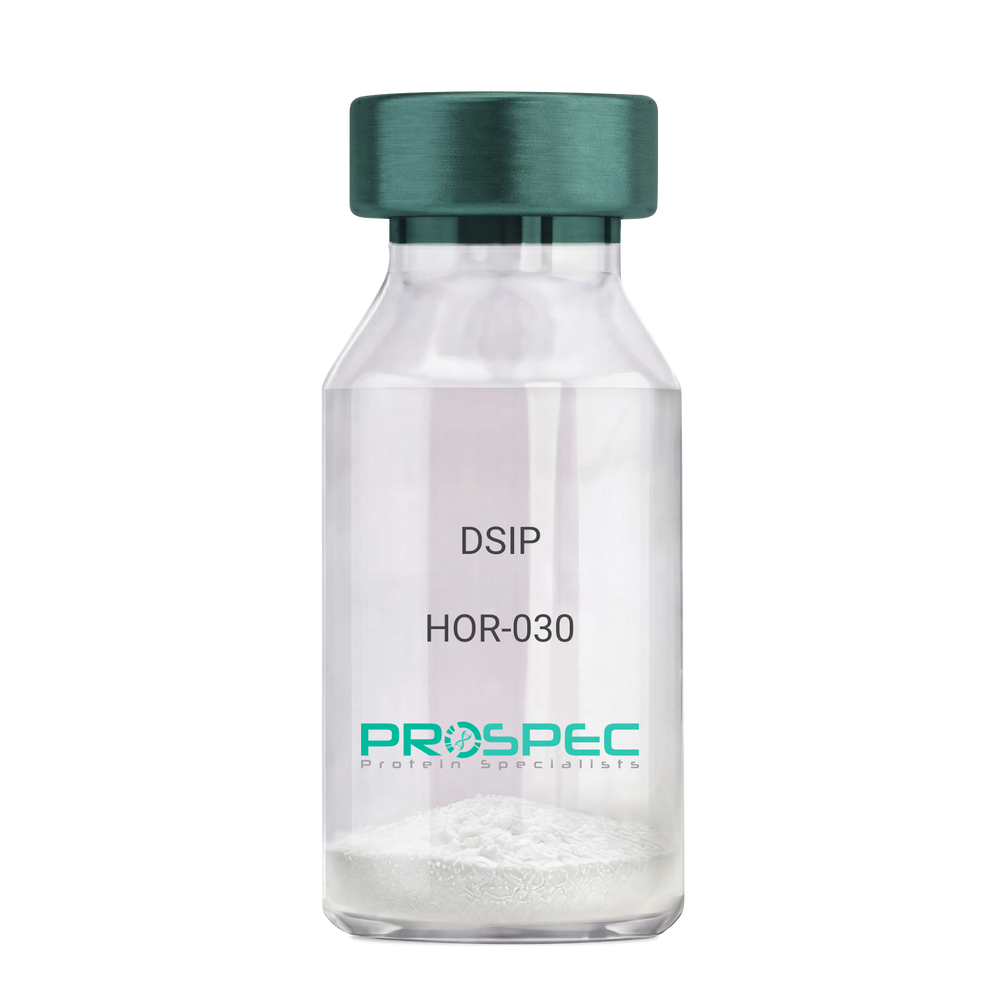
    DSIP

    Description:

    Delta Sleep Inducing Peptide

    Product # :

    HOR-030

    Price :

    Quantity :

    Shipping Method :

    Room Temp Icon

    Shipped at Room temp

    Add To Cart

    More Info

    • description
    • formulation
    • purity
    • More Info

    Description

    DSIP Synthetic is a single, non-glycosylated polypeptide chain containing 15 amino acids, having a molecular mass of 1419.55 Dalton and a Molecular formula of C62H98N16O22.

    Formulation

    The protein was lyophilized with no additives.

    Purity

    Greater than 97.0% as determined by analysis by RP-HPLC.

    More Info

    • Physical Appearance

      Sterile Filtered White lyophilized (freeze-dried) powder.

    • Stability

      Lyophilized DSIP although stable at room temperature for 3 weeks, should be stored desiccated below -18°C. Upon reconstitution DSIP should be stored at 4°C between 2-7 days and for future use below -18°C. For long term storage it is recommended to add a carrier protein (0.1% HSA or BSA). Please prevent freeze-thaw cycles.

    • Solubility

      It is recommended to reconstitute the lyophilized DSIP in sterile 18MΩ-cm H2O not less than 100 µg/ml, which can then be further diluted to other aqueous solutions.

    • Amino Acid Sequence

      H-Gly-Glu-Pro-Pro-Pro-Gly-Lys-Pro-Ala-Asp-Asp-Ala-Gly-Leu-Val-OH

    • Background

      Delta Sleep-Inducing Peptide (DSIP), also known as Sleep-Promoting Peptide, is a neuropeptide that has been the subject of extensive research due to its potential role in sleep regulation, stress response, and neuroprotection. This nonapeptide, first isolated from the cerebral venous blood of rabbits during sleep, has been shown to induce slow-wave sleep, modulate pain perception, and exhibit potential antioxidant and immunomodulatory properties.

      DSIP's primary function is its interaction with the sleep regulatory system. By modulating the release of certain neurotransmitters, DSIP can influence sleep patterns, particularly promoting slow-wave sleep, the most restorative stage of sleep. Studies by Kovalzon et al. (2011) have demonstrated that DSIP can enhance sleep quality in rats, suggesting potential applications in sleep disorders and the promotion of healthy sleep patterns.

      In addition to its sleep-inducing effects, DSIP has been shown to possess neuroprotective properties. Research by Zolotarev et al. (2014) found that DSIP could protect neurons from oxidative stress, suggesting potential applications in the treatment of neurodegenerative diseases such as Alzheimer's and Parkinson's disease.

      Given its sleep-inducing and neuroprotective effects, DSIP has been proposed as a potential therapeutic agent for a variety of conditions, including sleep disorders, chronic pain, and neurodegenerative diseases. For instance, a study by Spong et al. (2016) found that DSIP could improve sleep quality in patients with chronic insomnia, indicating its potential as a therapeutic agent in the treatment of sleep disorders.

      While research on DSIP is promising, it is important to note that most studies have been conducted in animals or in vitro. More research is needed to fully understand the potential effects and applications of DSIP in humans. However, the existing body of research suggests that DSIP could be a promising tool in the treatment of sleep disorders, chronic pain, and neurodegenerative diseases.

    ProSpec's products are furnished for LABORATORY RESEARCH USE ONLY. The product may not be used as drugs, agricultural or pesticidal products, food additives or household chemicals.

    Dsip
  • View Data Sheet

    Name :

    C-JUN Human

    Description:

    Jun Proto-Oncogene Human Recombinant

    Transcription factor AP-1, Activator protein 1, AP1, Proto-oncogene c-jun, V-jun avian sarcoma virus 17 oncogene homolog, p39, c-Jun.

    Product # :

    PKA-323

    Price :

    Quantity :

    Shipping Method :

    Room Temp Icon

    Shipped at Room temp

    Add To Cart

    More Info

    • description
    • source
    • formulation
    • purity
    • biological activity
    • More Info

    Description

    C-JUN amino acids 1-81 produced in E.coli, is a non-glycosylated, polypeptide chain having a molecular mass of 52 kDa.C-JUN is a maltose binding protein (MBP) fusion protein with an amino-terminal polyhistidine tag and purified by proprietary chromatographic techniques.

    Source

    Escherichia Coli.

    Formulation

    C-JUN is supplied as lyophilized powder containing no additives.

    Purity

    Greater than 95% as determined by SDS-PAGE.

    Biological Activity

    C-Jun is phosphorylatable in vitro, using either recombinant active JNK1 or JNK2, or with JNK immunoprecipitated from stimulated cells. This phosphorylation can be monitored by Western blot analysis using an antibody directed to c-Jun [pS73], in conjunction with chemiluminescence detection methods. Optimization of the cell stimulation protocol, cell lysis procedure, and reaction conditions may be required for each specific application.

    More Info

    • Introduction

      C-JUN is a gene which, in combination with c-Fos, forms the AP-1early response transcription factor. C-JUN is activated by the JNKpathway. C-JUN is the putative transforming gene of avian sarcoma virus 17. C-JUN is a protein which is highly similar to the viral protein, and which interacts directly with specific target DNA sequences to regulate gene expression. The C-JUN gene is intronless and is mapped to 1p32-p31, a chromosomal region involved in both translocations and deletions in human malignancies.

    • Synonyms

      Transcription factor AP-1, Activator protein 1, AP1, Proto-oncogene c-jun, V-jun avian sarcoma virus 17 oncogene homolog, p39, c-Jun.

    • Physical Appearance

      Sterile Filtered White lyophilized (freeze-dried) powder.

    • Stability

      Store at 4°C if entire vial will be used within 1-2 weeks. Store, frozen at -20°C for longer periods of time. Avoid multiple freeze-thaw cycles.

    • Solubility

      It is recommended to centrifuge the vial prior to opening in order to bring the contents to the bottom. The reconstitution of the lyophilized c-Jun is recommended in 40mM Tris, pH 7.5, to a concentration of 0.2-1.0 mg/ml.

    • Note

      Kinase activity may vary depending on the substrate and reaction conditions.

    ProSpec's products are furnished for LABORATORY RESEARCH USE ONLY. The product may not be used as drugs, agricultural or pesticidal products, food additives or household chemicals.

    C Jun Human
  • View Data Sheet

    Name :

    MIA2 Human

    Description:

    Melanoma Inhibitory Activity 2 Human Recombinant

    MIA-2, MIA2, Melanoma Inhibitory Activity 2, FLJ22404.

    Product # :

    CYT-638

    Price :

    Quantity :

    Shipping Method :

    Room Temp Icon

    Shipped at Room temp

    Add To Cart

    More Info

    • description
    • source
    • formulation
    • purity
    • More Info

    Description

    MIA2 Human Recombinant produced in E.Coli is a single, non-glycosylated, polypeptide chain consisting of 101 amino having a total molecular mass of 11.5 kDa.The MIA2 is purified by proprietary chromatographic techniques.

    Source

    Escherichia Coli.

    Formulation

    The MIA2 protein was lyophilized from a concentrated (1mg/ml) solution containing 20mM Phosphate buffer pH=7.4 and 150mM NaCl.

    Purity

    Greater than 97.0% as determined by(a) Analysis by RP-HPLC.
    (b) Analysis by SDS-PAGE.

    More Info

    • Introduction

      MIA2 performs as a tumour suppressor in hepatocellular carcinoma. MIA2is a novel acute phase protein which its expression is found in the liver and reacts to liver damage in chronic liver diseases and is considerably higher in severe fibrosis patients . MIA2 is induced by IL6, TGF-B & and conditioned medium from activated hepatic stellate cells. MIA2 is is mainly expressed in hepatocytes.

    • Synonyms

      MIA-2, MIA2, Melanoma Inhibitory Activity 2, FLJ22404.

    • Physical Appearance

      Sterile Filtered White lyophilized (freeze-dried) powder.

    • Stability

      Lyophilized MIA2 although stable at room temperature for 3 weeks, should be stored desiccated below -18°C. Upon reconstitution MIA2 should be stored at 4°C between 2-7 days and for future use below -18°C.Please prevent freeze-thaw cycles.

    • Solubility

      It is recommended to reconstitute the lyophilized MIA2 in sterile 18MΩ-cm H2O not less than 100µg/ml, which can then be further diluted to other aqueous solutions.

    • Amino Acid Sequence

      MLESTKLLAD LKKCGDLECE ALINRVSAMR DYRGPDCRYL NFTKGEEISV YVKLAGERED LWAGSKGKEF GYFPRDAVQI EEVFISEEIQ MSTKESDFLC L.

    ProSpec's products are furnished for LABORATORY RESEARCH USE ONLY. The product may not be used as drugs, agricultural or pesticidal products, food additives or household chemicals.

    Mia2 Human
  • View Data Sheet

    Name :

    MIP 1b Human

    Description:

    Macrophage Inflammatory Protein-1 Beta Human Recombinant (CCL4)

    Small inducible cytokine A4, CCL4, Macrophage inflammatory protein 1-beta, MIP-1- beta, MIP-1-beta(1-69), T-cell activation protein 2, ACT-2, PAT 744, H400, SIS-gamma, Lymphocyte activation gene 1 protein, LAG-1, HC21, G-26 T-lymphocyte-secreted protein, chemokine (C-C motif) ligand 4, ACT2, G-26, LAG1, MIP1B, SCYA4, AT744.1, MGC104418, MGC126025, MGC126026.

    Product # :

    CHM-276

    Price :

    Quantity :

    Shipping Method :

    Room Temp Icon

    Shipped at Room temp

    Add To Cart

    More Info

    • description
    • source
    • formulation
    • purity
    • biological activity
    • More Info

    Description

    Macrophage Inflammatory Protein-1 beta Human Recombinant produced in E.Coli is a single, non-glycosylated, polypeptide chain containing 69 amino acids and having a molecular mass of 7620 Dalton. The CCL4 is purified by proprietary chromatographic techniques.

    Source

    Escherichia Coli.

    Formulation

    Lyophilized from a concentrated (1mg/ml) solution in water containing no additives.

    Purity

    Greater than 99.0% as determined by:
    (a) Analysis by RP-HPLC.
    (b) Analysis by SDS-PAGE.

    Biological Activity

    The Activity is calculated by the ability to chemoattract Human blood monocytes using a concentration of 5-20ng/ml corresponding to a Specific Activity of 50,000-200,000IU/mg.

    More Info

    • Introduction

      Macrophage Inflammatory Proteins belong to the family of chemotactic cytokines known as chemokines. In humans, there are two major forms, MIP-1a and MIP-1b that are now also named CCL3 and CCL4. Both factors are produced by macrophages after they are stimulated with bacterial endotoxins. MIP-1a and MIP-1b activate human granulocytes (neutrophils, eosinophils and basophils) which can lead to acute neutrophilic inflammation. MIP-1a and MIP-1b induce synthesis and release of other pro-inflammatory cytokines such as interleukin-1 (IL-1), IL-6 and TNF-alpha from fibroblasts and macrophages. CCL3 and CCL4 genes are both located on human chromosome 17.

    • Synonyms

      Small inducible cytokine A4, CCL4, Macrophage inflammatory protein 1-beta, MIP-1- beta, MIP-1-beta(1-69), T-cell activation protein 2, ACT-2, PAT 744, H400, SIS-gamma, Lymphocyte activation gene 1 protein, LAG-1, HC21, G-26 T-lymphocyte-secreted protein, chemokine (C-C motif) ligand 4, ACT2, G-26, LAG1, MIP1B, SCYA4, AT744.1, MGC104418, MGC126025, MGC126026.

    • Physical Appearance

      Sterile Filtered White lyophilized (freeze-dried) powder.

    • Stability

      Lyophilized MIP-1b although stable at room temperature for 3 weeks, should be stored desiccated below -18°C. Upon reconstitution CCL4 should be stored at 4°C between 2-7 days and for future use below -18°C. For long term storage it is recommended to add a carrier protein (0.1% HSA or BSA).Please prevent freeze-thaw cycles.

    • Solubility

      It is recommended to reconstitute the lyophilized Macrophage Inflammatory Protein-1b in sterile 18MΩ-cm H2O not less than 100µg/ml, which can then be further diluted to other aqueous solutions.

    • Amino Acid Sequence

      The sequence of the first five N-terminal amino acids was determined and was found to be, Ala-Pro-Met-Gly-Ser.

    • Background

      What is the molecular weight/Mw of MIP 1B HUMAN Protein?
      MIP 1B HUMAN Protein has a total Mw of 7.62kDa.

      What is the source or expression system of MIP 1B HUMAN Protein?
      Escherichia Coli.

      What is the Purity of MIP 1B HUMAN Protein?
      MIP 1B HUMAN Protein is >99% pure as determined by SDS-PAGE.

      What is the Biological Activity of MIP 1B HUMAN Protein?
      The Activity is calculated by the ability to chemoattract Human blood monocytes using a concentration of 5-20ng/ml corresponding to a Specific Activity of 50,000-200,000IU/mg.

      What is the amino acid sequence of MIP 1B HUMAN Protein?
      The sequence of the first five N-terminal amino acids was determined and was found to be, Ala-Pro-Met-Gly-Ser.

      What applications can MIP 1B HUMAN Protein be used in?
      MIP 1B HUMAN Protein can probably be used in western blot, ELISA and Lateral Flow.

      What is the endotoxin level for MIP 1B HUMAN Protein?
      The endotoxin level is minimal, MIP 1B HUMAN Protein was purified using conventional chromatography techniques.


    ProSpec's products are furnished for LABORATORY RESEARCH USE ONLY. The product may not be used as drugs, agricultural or pesticidal products, food additives or household chemicals.

    Mip 1B Human
  • View Data Sheet

    Name :

    SMAC/DIABLO Human

    Description:

    SMAC/DIABLO Human Recombinant

    Diablo homolog mitochondrial, Second mitochondria-derived activator of caspase, Smac protein, Direct IAP-binding protein with low pI, DIABLO, SMAC, SMAC3, DIABLO-S, FLJ10537, FLJ25049.

    Product # :

    PRO-614

    Price :

    Quantity :

    Shipping Method :

    Ice Icon

    Shipped with Ice Packs

    Add To Cart

    More Info

    • description
    • source
    • formulation
    • purity
    • More Info

    Description

    Smac/Diablo Human Recombinant fused to N-terminal T7-Tag produced in E.Coli is a single, non-glycosylated polypeptide chain containing 199 amino acids and having a molecular mass of 22 kDa.

    Source

    Escherichia Coli.

    Formulation

    The Smac/Diablo solution contains 20mM Tris pH-7.5.

    Purity

    Greater than 95.0% as determined by:
    (a) Analysis by RP-HPLC.
    (b) Analysis by SDS-PAGE.

    More Info

    • Introduction

      Smac/Diablo is a proapoptotic protein that increases caspase activation in the cytochrome c/Apaf-1/caspase-9 pathway by its binding to the inhibitor of apoptosis proteins (IAPs) and removing their inhibitory activity. Smac/Diablo is a mitochondrial protein which enters the cytosol when cells go through apoptosis, and it moderates the caspase inhibition of IAPs.
      Smac/DIABLO expression is associated with the result of renal cell carcinoma.
      Dimeric form of Smac/DIABLO implies that once expressed in the cell the protein has a little probability of dissociation and, thus, loss of function.
      Survivin, Smac/DIABLO, & PKC-? play an important part in the inhibition of apoptosis by FGF-2 in human small cell lung cancer cells. Mitochondrial survivin associates with Smac/DIABLO, delaying its release. Decreased expression of Smac protein takes part in ovarian carcinogenesis and chemotherapeutic resistance. Smac/DIABLO plays a role in tumor cells during the pathway of apoptosis induction. SMAC protein is regulated by XIAP and degraded by proteasome. SMAC protein takes part inleukemic cell apoptosis.
      Smac is released during stress-induced apoptosis in multiple myeloma cells.

    • Synonyms

      Diablo homolog mitochondrial, Second mitochondria-derived activator of caspase, Smac protein, Direct IAP-binding protein with low pI, DIABLO, SMAC, SMAC3, DIABLO-S, FLJ10537, FLJ25049.

    • Physical Appearance

      Sterile Filtered colorless solution.

    • Stability

      Store at 4°C if entire vial will be used within 2-4 weeks. Store, frozen at -20°C for longer periods of time. For long term storage it is recommended to add a carrier protein (0.1% HSA or BSA).Avoid multiple freeze-thaw cycles.

    • Amino Acid Sequence

      MASMTGGQQM GRGSMAVPIA QKSEPHSLSS EALMRRAVSL VTDSTSTFLS QTTYALIEAI TEYTKAVYTL TSLYRQYTSL LGKMNSEEED EVWQVIIGAR AEMTSKHQEY LKLETTWMTA VGLSEMAAEA AYQTGADQAS ITARNHIQLV KLQVEEVHQL SRKAETKLAE AQIEELRQKT QEEGEERAES EQEAYLRED.

    ProSpec's products are furnished for LABORATORY RESEARCH USE ONLY. The product may not be used as drugs, agricultural or pesticidal products, food additives or household chemicals.

    Smac Diablo Human
  • View Data Sheet

    Name :

    BCL2 Human, His

    Description:

    B-Cell Lymphoma Protein 2 Alpha Human Recombinant, His Tag

    Apoptosis regulator Bcl-2, BCL2, B-cell CLL/lymphoma 2, Bcl-2.

    Product # :

    PRO-683

    Price :

    Quantity :

    Shipping Method :

    Ice Icon

    Shipped with Ice Packs

    Add To Cart

    More Info

    • description
    • source
    • formulation
    • purity
    • More Info

    Description

    BCL2 Human Recombinant produced in E.Coli is a single, non-glycosylated polypeptide chain containing amino acids 1-211 and having a molecular mass of 25.4 kDa. The BCL2 is fused to a 20 a.a. His-Tag at N-terminus and purified by proprietary chromatographic techniques.

    Source

    Escherichia Coli.

    Formulation

    The BCL2 protein solution contains 20mM Tris-HCl, pH-8, 2mM DTT and 20% glycerol.

    Purity

    Greater than 90.0% as determined by SDS-PAGE.

    More Info

    • Introduction

      BCL2 gene encodes an integral outer mitochondrial membrane protein that blocks the apoptotic death of some cells such as lymphocytes. Constitutive expression of BCL2, such as in the case of translocation of BCL2 to Ig heavy chain locus, is thought to be the cause of follicular lymphoma. Two transcript variants, produced by alternate splicing, differ in their C-terminal ends.

    • Synonyms

      Apoptosis regulator Bcl-2, BCL2, B-cell CLL/lymphoma 2, Bcl-2.

    • Physical Appearance

      Sterile filtered colorless solution.

    • Stability

      Store at 4°C if entire vial will be used within 2-4 weeks. Store, frozen at -20°C for longer periods of time. For long term storage it is recommended to add a carrier protein (0.1% HSA or BSA).Avoid multiple freeze-thaw cycles.

    • Amino Acid Sequence

      MGSSHHHHHH SSGLVPRGSH MAHAGRTGYD NREIVMKYIH YKLSQRGYEW DAGDVGAAPP GAAPAPGIFS SQPGHTPHPA ASRDPVARTS PLQTPAAPGA AAGPALSPVP PVVHLTLRQA GDDFSRRYRR DFAEMSSQLH LTPFTARGRF ATVVEELFRD GVNWGRIVAF FEFGGVMCVE SVNREMSPLV DNIALWMTEY LNRHLHTWIQ DNGGWDAFVE LYGPSMRPLF D.

    ProSpec's products are furnished for LABORATORY RESEARCH USE ONLY. The product may not be used as drugs, agricultural or pesticidal products, food additives or household chemicals.

    Bcl2 Human His
  • View Data Sheet

    Name :

    IL 33 Rat, His

    Description:

    Interleukin-33 Rat Recombinant, His Tag

    Interleukin-33, IL-33.

    Product # :

    CYT-906

    Price :

    Quantity :

    Shipping Method :

    Ice Icon

    Shipped with Ice Packs

    Add To Cart

    More Info

    • description
    • source
    • formulation
    • purity
    • More Info

    Description

    IL 33 Rat Recombinant produced in E.Coli is a single, non-glycosylated polypeptide chain containing 179 amino acids (109-264 a.a) and having a molecular mass of 19.8kDa. IL 33 is fused to a 23 amino acid His-tag at N-terminus & purified by proprietary chromatographic techniques.

    Source

    Escherichia Coli.

    Formulation

    IL 33 protein solution (0.5mg/ml) containing Phosphate Buffered Saline (pH7.4) and 10% glycerol.

    Purity

    Greater than 90.0% as determined by SDS-PAGE.

    More Info

    • Introduction

      nterleukin 33 (IL-33) is a 32kDa proinflammatory cytokine that may also regulate gene transcription in producer cells. IL-33 is structurally related to IL-1, which induces helper T cells to produce type 2 cytokines and acts through the receptor IL1RL-1 (IL1 receptor-like-1), which is known also as ST2. Binding of IL-33 to this receptor activates NF-kappa-B and MAP kinases and induces in vitro Th2 cells to produce cytokines. In vivo, IL-33 induces expression of IL-4, IL-5, IL-13 and leads to severe pathological changes in mucosal organs and in vitro, it can be divided to N-terminal fragment of 12kDa and C-terminal fragment of 18kDa by cleavage of caspase-1.

    • Synonyms

      Interleukin-33, IL-33.

    • Physical Appearance

      Sterile Filtered colorless solution.

    • Stability

      Store at 4°C if entire vial will be used within 2-4 weeks. Store, frozen at -20°C for longer periods of time. For long term storage it is recommended to add a carrier protein (0.1% HSA or BSA). Avoid multiple freeze-thaw cycles.

    • Amino Acid Sequence

      MGSSHHHHHH SSGLVPRGSH MGSSIQGTSL LTESCALSTY NDQSVSFVLE NGCYVINVED CGKNQEKDKV LLRYYESSFP AQSGDGVDGK KLMVNMSPIK DTDIWLNAND KDYSVELQKG DVSPPDQAFF VLHKKSSDFV SFECKNLPGT YIGVKDNQLA LVEENDESCN NIMFKLSKM.

    ProSpec's products are furnished for LABORATORY RESEARCH USE ONLY. The product may not be used as drugs, agricultural or pesticidal products, food additives or household chemicals.

    Il 33 Rat His
  • View Data Sheet

    Name :

    KRAS 2A Human

    Description:

    Kirsten Rat Sarcoma Viral Oncogene, Isoform 2A Human Recombinant

    GTPase KRas, K-Ras 2, Ki-Ras, c-K-ras, c-Ki-ras, KRAS, KRAS2, RASK2, C-K-RAS, CFC2, K-RAS2A, K-RAS2B, K-RAS4A, K-RAS4B, KI-RAS, KRAS1, NS, NS3, Kirsten rat sarcoma viral oncogene homolog.

    Product # :

    PRO-1446

    Price :

    Quantity :

    Shipping Method :

    Ice Icon

    Shipped with Ice Packs

    Add To Cart

    More Info

    • description
    • source
    • formulation
    • purity
    • More Info

    Description

    KRAS 2A Human Recombinant produced in E.Coli is a single, non-glycosylated polypeptide chain containing 210 amino acids (1-186 a.a) and having a molecular mass of 23.8kDa.KRAS 2A is fused to a 24 amino acid His-tag at N-terminus & purified by proprietary chromatographic techniques.

    Source

    Escherichia Coli.

    Formulation

    KRAS 2A protein solution (0.5mg/ml) containing 20mM Tris-HCl buffer (pH8.0), 20% glycerol, 0.1M NaCl and 1mM DTT.

    Purity

    Greater than 90.0% as determined by SDS-PAGE.

    More Info

    • Introduction

      Kirsten Rat Sarcoma Viral Oncogene, Isoform 2A (KRAS-2A) belongs to the small GTPase superfamily. The KRAS-2A protein is involved in a variety of malignancies, including lung adenocarcinoma, mucinous adenoma, ductal carcinoma of the pancreas and colorectal carcinoma. Ras family members impact cell growth and differentiation events in a subcellular membrane compartmentalization-based signaling system under normal conditions. Oncogenic Ras can deregulate processes which control both cell proliferation and apoptosis.

    • Synonyms

      GTPase KRas, K-Ras 2, Ki-Ras, c-K-ras, c-Ki-ras, KRAS, KRAS2, RASK2, C-K-RAS, CFC2, K-RAS2A, K-RAS2B, K-RAS4A, K-RAS4B, KI-RAS, KRAS1, NS, NS3, Kirsten rat sarcoma viral oncogene homolog.

    • Physical Appearance

      Sterile Filtered colorless solution.

    • Stability

      Store at 4°C if entire vial will be used within 2-4 weeks. Store, frozen at -20°C for longer periods of time. For long term storage it is recommended to add a carrier protein (0.1% HSA or BSA).Avoid multiple freeze-thaw cycles.

    • Amino Acid Sequence

      MGSSHHHHHH SSGLVPRGSH MGSHMTEYKL VVVGAGGVGK SALTIQLIQN HFVDEYDPTI EDSYRKQVVI DGETCLLDIL DTAGQEEYSA MRDQYMRTGE GFLCVFAINN TKSFEDIHHY REQIKRVKDS EDVPMVLVGN KCDLPSRTVD TKQAQDLARS YGIPFIETSA KTRQRVEDAF YTLVREIRQY RLKKISKEEK TPGCVKIKKC.

    ProSpec's products are furnished for LABORATORY RESEARCH USE ONLY. The product may not be used as drugs, agricultural or pesticidal products, food additives or household chemicals.

    Kras 2A Human
  • View Data Sheet

    Name :

    PPIH Human

    Description:

    Cyclophilin-H Human Recombinant

    Oeptidylprolyl Isomerase H, PPIH, CYPH, CYP20, SnuCyp-20, Peptidyl-prolyl cis-trans isomerase H, PPIase H, Rotamase H, U-snRNP-associated cyclophilin SnuCyp-20, USA-CYP, Small nuclear ribonucleoprotein particle-specific cyclophilin H, peptidylprolyl isomerase H, CYP-20, MGC5016, Cyclophilin-H.

    Product # :

    ENZ-379

    Price :

    Quantity :

    Shipping Method :

    Ice Icon

    Shipped with Ice Packs

    Add To Cart

    More Info

    • description
    • source
    • formulation
    • purity
    • biological activity
    • More Info

    Description

    PPIH Human Recombinant produced in E.Coli is a single, non-glycosylated, polypeptide chain containing 177 amino acids (1-177) and having a molecular mass of 19.2 kDa. PPIH is purified by proprietary chromatographic techniques.

    Source

    Escherichia Coli.

    Formulation

    1 mg/ml solution containing 1x PBS pH-7.4 10% glycerol.

    Purity

    Greater than 95.0% as determined by:
    (a) Analysis by RP-HPLC.
    (b) Analysis by SDS-PAGE.

    Biological Activity

    Specific activity is > 220 nmoles/min/mg, and is defined as the amount of enzyme that cleaves 1umole of suc-AAFP-pNA per minute at 25C in Tris-Hcl pH8.0 using chymotrypsin.

    More Info

    • Introduction

      PPIH is a part of the peptidyl-prolyl cis-trans isomerase (PPIase) family. PPIases catalyze the cis-trans isomerization of proline imidic peptide bonds in oligopeptides and increase protein folding. PPIH enzyme is a precise factor of the complex that comprises pre-mRNA processing factors PRPF3, PRPF4, and PRPF18, as well as U4/U5/U6 tri-snRNP. PPIH possess PPIase activity and acts as a protein chaperone that mediates the interactions between different proteins inside the spliceosome.

    • Synonyms

      Oeptidylprolyl Isomerase H, PPIH, CYPH, CYP20, SnuCyp-20, Peptidyl-prolyl cis-trans isomerase H, PPIase H, Rotamase H, U-snRNP-associated cyclophilin SnuCyp-20, USA-CYP, Small nuclear ribonucleoprotein particle-specific cyclophilin H, peptidylprolyl isomerase H, CYP-20, MGC5016, Cyclophilin-H.

    • Physical Appearance

      Sterile filtered colorless solution.

    • Stability

      Store at 4°C if entire vial will be used within 2-4 weeks. Store, frozen at -20°C for longer periods of time. For long term storage it is recommended to add a carrier protein (0.1% HSA or BSA).Please prevent freeze thaw cycles.

    • Amino Acid Sequence

      MAVANSSPVN PVVFFDVSIG GQEVGRMKIE LFADVVPKTA ENFRQFCTGEFRKDGVPIGY KGSTFHRVIK DFMIQGGDFV NGDGTGVASI YRGPFADENF KLRHSAPGLL SMANSGPSTN GCQFFITCSK CDWLDGKHVV FGKIIDGLLV MRKIENVPTG PNNKPKLPVV ISQCGEM.

    ProSpec's products are furnished for LABORATORY RESEARCH USE ONLY. The product may not be used as drugs, agricultural or pesticidal products, food additives or household chemicals.

    Ppih Human
  • 1
  • …
  • 32
  • 33
  • 34
  • 35
  • 36
  • …
  • 40
Your browser does not support the video tag.

Products

  • Cytokines
  • Growth Factors
  • Chemokines
  • CD Antigens
  • Neurotrophins
  • Hormones
  • Enzymes
  • Viral Antigens
  • Recombinant Proteins
  • Natural Proteins
  • Monoclonal Antibodies
  • Polyclonal Antibodies
  • Thermal Packaging

About

  • Company
  • Founder
  • Contribution
  • Contact Us
  • My Account

Ordering

  • Ordering Method
  • Ordering - Credit Card
  • Ordering PO
  • Shipping Fees
  • FAQ's

Legal

  • Terms & Conditions
  • Privacy
  • Site Map
  • info@prospecbio.com
  • Facebook
  • Instagram
  • Linkedin Profile

© 2026 ProSpec-Tany TechnoGene Ltd. All Rights Reserved.

  • Choosing a selection results in a full page refresh.
  • Opens in a new window.