Skip to content

High-quality research proteins.

  • 1-800-805-6531

  • Mon - Sat 8.00-18.00, Sun - Closed

  • info@prospecbio.com

  • PO Box 6591 East Brunswick NJ 08816

  • Products
    • Cytokines
    • Growth factors
    • Chemokines
    • Cd antigens
    • Neurotrophins
    • Hormones
    • Enzymes
    • Viral antigens
    • Recombinant proteins
    • Natural proteins
    • Monoclonal antibodies
    • Polyclonal antibodies
    • Thermal Packaging
  • About
    • Company
    • Founder
    • Contribution
  • Customers
    • Eastern Asia
    • Eastern Europe
    • North America
    • South America
    • South East Asia
    • Southern Asia
    • Western Europe
  • Ordering
    • Ordering Method
    • Ordering - Credit Card
    • Ordering - PO
    • Shipping Fees
    • FAQs
  • Services
    • DNA Cloning
    • Protein Expression
    • Monoclonal Antibody
    • Fermentation
    • Technology License
  • Contact us
Log in

Country/region

  • USD $ | Albania
  • USD $ | Andorra
  • USD $ | Argentina
  • USD $ | Armenia
  • USD $ | Australia
  • USD $ | Austria
  • USD $ | Azerbaijan
  • USD $ | Belarus
  • USD $ | Belgium
  • USD $ | Bolivia
  • USD $ | Brazil
  • USD $ | Bulgaria
  • USD $ | Cambodia
  • USD $ | Canada
  • USD $ | Chile
  • USD $ | China
  • USD $ | Colombia
  • USD $ | Costa Rica
  • USD $ | Croatia
  • USD $ | Cyprus
  • USD $ | Czechia
  • USD $ | Denmark
  • USD $ | Estonia
  • USD $ | Finland
  • USD $ | France
  • USD $ | Georgia
  • USD $ | Germany
  • USD $ | Greece
  • USD $ | Hong Kong SAR
  • USD $ | Hungary
  • USD $ | Iceland
  • USD $ | India
  • USD $ | Ireland
  • USD $ | Israel
  • USD $ | Italy
  • USD $ | Japan
  • USD $ | Kazakhstan
  • USD $ | Latvia
  • USD $ | Liechtenstein
  • USD $ | Lithuania
  • USD $ | Madagascar
  • USD $ | Malta
  • USD $ | Mexico
  • USD $ | Moldova
  • USD $ | Monaco
  • USD $ | Netherlands
  • USD $ | New Zealand
  • USD $ | North Macedonia
  • USD $ | Norway
  • USD $ | Panama
  • USD $ | Paraguay
  • USD $ | Peru
  • USD $ | Philippines
  • USD $ | Poland
  • USD $ | Portugal
  • USD $ | Romania
  • USD $ | Singapore
  • USD $ | Slovakia
  • USD $ | Slovenia
  • USD $ | South Africa
  • USD $ | South Korea
  • USD $ | Spain
  • USD $ | Sri Lanka
  • USD $ | Sweden
  • USD $ | Switzerland
  • USD $ | Taiwan
  • USD $ | Thailand
  • USD $ | Türkiye
  • USD $ | Ukraine
  • USD $ | United Kingdom
  • USD $ | United States
  • USD $ | Uruguay
  • USD $ | Vatican City
  • USD $ | Venezuela
  • USD $ | Vietnam
  • Facebook
  • Instagram
logoProSpec - Recombinant Protein Manufacturer for academic and R&D industry
Become a distributor
Account Log in
Wishlist
Cart Cart(0)
  • Products
    +
    • Cytokines
    • Growth factors
    • Chemokines
    • Cd antigens
    • Neurotrophins
    • Hormones
    • Enzymes
    • Viral antigens
    • Recombinant proteins
    • Natural proteins
    • Monoclonal antibodies
    • Polyclonal antibodies
    • Thermal Packaging
  • About
    +
    • Company
    • Founder
    • Contribution
  • Customers
    +
    • Eastern Asia
    • Eastern Europe
    • North America
    • South America
    • South East Asia
    • Southern Asia
    • Western Europe
  • Ordering
    +
    • Ordering Method
    • Ordering - Credit Card
    • Ordering - PO
    • Shipping Fees
    • FAQs
  • Services
    +
    • DNA Cloning
    • Protein Expression
    • Monoclonal Antibody
    • Fermentation
    • Technology License
  • Contact us

Item added to your cart

View cart
View All
  • Cytokines
  • Growth factors
  • Chemokines
  • Cd antigens
  • Neurotrophins
  • Hormones
  • Enzymes
  • Viral antigens
  • Recombinant proteins
  • Natural proteins
  • Monoclonal antibodies
  • Polyclonal antibodies
  • Thermal Packaging
  • Tumor Necrosis Factor

    Tumor Necrosis Factor

    View All
  • 4-1BB

    4-1BB

    View All
  • Adiponectin

    Adiponectin

    View All
  • AIF1

    AIF1

    View All
  • Other Cytokines

    Other Cytokines

    View All
  • AITRL

    AITRL

    View All
  • Angiopoietin

    Angiopoietin

    View All
  • Apolipoprotein

    Apolipoprotein

    View All
  • B-Cell Activating Factor

    B-Cell Activating Factor

    View All
  • Beta Defensin

    Beta Defensin

    View All
  • Bone Morphogenetic Protein

    Bone Morphogenetic Protein

    View All
  • B type Natriuretic Peptide

    B type Natriuretic Peptide

    View All
  • BST

    BST

    View All
  • Betacellulin

    Betacellulin

    View All
  • Cardiotrophin

    Cardiotrophin

    View All
  • Activin

    Activin

    View All
  • Fibroblast Growth Factor

    Fibroblast Growth Factor

    View All
  • Other Growth Factors

    Other Growth Factors

    View All
  • CSF

    CSF

    View All
  • CTGF

    CTGF

    View All
  • IGFBP

    IGFBP

    View All
  • VEGF Protein

    VEGF Protein

    View All
  • EGF

    EGF

    View All
  • Epigen

    Epigen

    View All
  • Erythropoietin

    Erythropoietin

    View All
  • Insulin-Like Growth Factor

    Insulin-Like Growth Factor

    View All
  • Growth Hormone

    Growth Hormone

    View All
  • HDGF

    HDGF

    View All
  • Hepatocyte Growth Factor

    Hepatocyte Growth Factor

    View All
  • Insulin

    Insulin

    View All
  • BCA-1/ BLC (CXCL13)

    BCA-1/ BLC (CXCL13)

    View All
  • BRAK (CXCL14)

    BRAK (CXCL14)

    View All
  • C-10 (CCL6)

    C-10 (CCL6)

    View All
  • Other Chemokines

    Other Chemokines

    View All
  • MEC (CCL28)

    MEC (CCL28)

    View All
  • LD78-beta (CCL3L1)

    LD78-beta (CCL3L1)

    View All
  • CTACK (CCL27)

    CTACK (CCL27)

    View All
  • CXCL16

    CXCL16

    View All
  • CXCL17

    CXCL17

    View All
  • Platelet Factor-4 (CXCL4)

    Platelet Factor-4 (CXCL4)

    View All
  • ENA-78 (CXCL5)

    ENA-78 (CXCL5)

    View All
  • Eotaxin (CCL11,24,26)

    Eotaxin (CCL11,24,26)

    View All
  • Exodus-2 (CCL21)

    Exodus-2 (CCL21)

    View All
  • Fractalkine (CX3CL1)

    Fractalkine (CX3CL1)

    View All
  • CXCL6

    CXCL6

    View All
  • Other CD Antigens

    Other CD Antigens

    View All
  • CD14

    CD14

    View All
  • CD164

    CD164

    View All
  • CD1

    CD1

    View All
  • CD2

    CD2

    View All
  • CD200

    CD200

    View All
  • CD207

    CD207

    View All
  • CD226

    CD226

    View All
  • CD23

    CD23

    View All
  • CD244

    CD244

    View All
  • CD247

    CD247

    View All
  • CD27

    CD27

    View All
  • CD274

    CD274

    View All
  • CD300

    CD300

    View All
  • CD33

    CD33

    View All
  • Other Neurotrophins

    Other Neurotrophins

    View All
  • Beta-NGF

    Beta-NGF

    View All
  • BDNF

    BDNF

    View All
  • CDNF

    CDNF

    View All
  • CNTF

    CNTF

    View All
  • GDNF

    GDNF

    View All
  • Glia Maturation Factor

    Glia Maturation Factor

    View All
  • MANF

    MANF

    View All
  • Midkine

    Midkine

    View All
  • Neuroglobin

    Neuroglobin

    View All
  • Neurotrophic factors

    Neurotrophic factors

    View All
  • Neuregulin

    Neuregulin

    View All
  • Neuropilin

    Neuropilin

    View All
  • Pigment Epithelium-Derived Factor

    Pigment Epithelium-Derived Factor

    View All
  • Pleiotrophin

    Pleiotrophin

    View All
  • Peptide Hormones

    Peptide Hormones

    View All
  • Other Hormones

    Other Hormones

    View All
  • HCG

    HCG

    View All
  • Endothelin

    Endothelin

    View All
  • Exendin

    Exendin

    View All
  • FSH

    FSH

    View All
  • Glucagon

    Glucagon

    View All
  • GHRP

    GHRP

    View All
  • GLP

    GLP

    View All
  • Thyrostimulin

    Thyrostimulin

    View All
  • Inhibin A

    Inhibin A

    View All
  • LHRH

    LHRH

    View All
  • Melanotan

    Melanotan

    View All
  • Procalcitonin

    Procalcitonin

    View All
  • PTH

    PTH

    View All
  • Peroxiredoxin

    Peroxiredoxin

    View All
  • Peptidase

    Peptidase

    View All
  • Synthetase

    Synthetase

    View All
  • Transferase

    Transferase

    View All
  • Hydrolase

    Hydrolase

    View All
  • Dehydrogenase

    Dehydrogenase

    View All
  • ACE2

    ACE2

    View All
  • Esterase

    Esterase

    View All
  • Protein Kinases

    Protein Kinases

    View All
  • Other Enzymes

    Other Enzymes

    View All
  • Phosphatase

    Phosphatase

    View All
  • Deaminase

    Deaminase

    View All
  • Oxygenase

    Oxygenase

    View All
  • Adenylate Kinase

    Adenylate Kinase

    View All
  • Lyase

    Lyase

    View All
  • Chagas

    Chagas

    View All
  • SARS

    SARS

    View All
  • Influenza

    Influenza

    View All
  • ASFV

    ASFV

    View All
  • Astrovirus

    Astrovirus

    View All
  • Borrelia

    Borrelia

    View All
  • Helicobacter Pylori

    Helicobacter Pylori

    View All
  • Chikungunya

    Chikungunya

    View All
  • Chlamydia

    Chlamydia

    View All
  • Cytomegalo

    Cytomegalo

    View All
  • Dengue

    Dengue

    View All
  • EBV

    EBV

    View All
  • Ebola

    Ebola

    View All
  • Feline Leukemia Virus

    Feline Leukemia Virus

    View All
  • Hepatitis A

    Hepatitis A

    View All
  • Other

    Other

    View All
  • Actin

    Actin

    View All
  • ADAM

    ADAM

    View All
  • Complement Component

    Complement Component

    View All
  • Ag85

    Ag85

    View All
  • Eukaryotic Translation Initiation Factor

    Eukaryotic Translation Initiation Factor

    View All
  • Anterior Gradient Protein

    Anterior Gradient Protein

    View All
  • Heat Shock Protein

    Heat Shock Protein

    View All
  • Alpha-2-HS-Glycoprotein

    Alpha-2-HS-Glycoprotein

    View All
  • Hemoglobin

    Hemoglobin

    View All
  • Allergy

    Allergy

    View All
  • Anaplasma

    Anaplasma

    View All
  • Angiogenin

    Angiogenin

    View All
  • Ankyrin Repeat Domain

    Ankyrin Repeat Domain

    View All
  • Annexin

    Annexin

    View All
  • Other Natural Proteins

    Other Natural Proteins

    View All
  • Aprotinin

    Aprotinin

    View All
  • Transferrin

    Transferrin

    View All
  • Avidin

    Avidin

    View All
  • Anti Coagulation Factors

    Anti Coagulation Factors

    View All
  • Natural Albumin

    Natural Albumin

    View All
  • Natural Coagulation Factors

    Natural Coagulation Factors

    View All
  • Fibronectin

    Fibronectin

    View All
  • Thrombin

    Thrombin

    View All
  • Anti Human Enzyme

    Anti Human Enzyme

    View All
  • Other Monoclonal Antibodies

    Other Monoclonal Antibodies

    View All
  • Anti Human Cytokine

    Anti Human Cytokine

    View All
  • Anti Human Heat Shock Protein

    Anti Human Heat Shock Protein

    View All
  • Anti Mouse Lymphocyte

    Anti Mouse Lymphocyte

    View All
  • Anti Human Chemokine

    Anti Human Chemokine

    View All
  • Anti Human Lymphocyte

    Anti Human Lymphocyte

    View All
  • Anti Viral Monoclonal

    Anti Viral Monoclonal

    View All
  • Anti Mouse Cytokine

    Anti Mouse Cytokine

    View All
  • Anti-GST Monoclonal

    Anti-GST Monoclonal

    View All
  • Other Polyclonal Antibodies

    Other Polyclonal Antibodies

    View All
  • Anti Viral

    Anti Viral

    View All
  • Anti-GST Monoclonal

    Anti-GST Monoclonal

    View All
Back

Search results

1000 results found for “Syndecan”

Name

Description

Product #

Price

Quantity

Shipping Method

  • View Data Sheet

    Name :

    MYL1 Human

    Description:

    Myosin Light Chain 1 Human Recombinant

    Myosin light chain 1 skeletal muscle isoform, MLC1F, A1 catalytic, Alkali myosin light chain 1, MYL1, MLC3F.

    Product # :

    PRO-365

    Price :

    Quantity :

    Shipping Method :

    Ice Icon

    Shipped with Ice Packs

    Add To Cart

    More Info

    • description
    • source
    • formulation
    • purity
    • More Info

    Description

    Recombinant Human Ventricular Myosin Light Chain-1 (MYL1) protein has a molecular mass of 25 kDa and is fused to 7 amino acids at N-terminus. The MYL1 protein was affinity purified using anti MYL1 monoclonal antibody 39-15 column.

    Source

    Escherichia Coli.

    Formulation

    Human MYL1 in 10mM Tris -HCI, 1mM EDTA PH 7.5.

    Purity

    Greater than 90.0% as determined by SDS-PAGE.

    More Info

    • Introduction

      Myosin is a hexameric ATPase cellular motor protein, which is composed of 2 heavy chains, 2 non-phosphorylatable alkali light chains, and 2 phosphorylatable regulatory light chains.
      MYL1 gene encodes a myosin alkali light chain expressed in fast skeletal muscle. Two transcript variants have been identified for the MYL1 gene. In humans MYL1 is localized to chromosome 2q32.1-qter. The Myl1 locus encodes two alkali myosin light chains- Mlc1f and Mlc3f, from two promoters that are differentially regulated throughout development. The Mlc1f promoter is active in embryonic, fetal and adult fast skeletal muscle while the Mlc3f promoter is upregulated during fetal development and stays on in adult fast skeletal muscle.

    • Synonyms

      Myosin light chain 1 skeletal muscle isoform, MLC1F, A1 catalytic, Alkali myosin light chain 1, MYL1, MLC3F.

    • Physical Appearance

      Sterile Filtered clear solution.

    • Stability

      Store vial at -20°C to -80°C. When stored at the recommended temperature, this protein is stable for 12 months.Please prevent freeze-thaw cycles.

    ProSpec's products are furnished for LABORATORY RESEARCH USE ONLY. The product may not be used as drugs, agricultural or pesticidal products, food additives or household chemicals.

    Myl1 Human
  • View Data Sheet

    Name :

    MYL5 Human

    Description:

    Myosin Light Chain 5 Human Recombinant

    Myosin light chain 5, Myosin regulatory light chain 5, Superfast myosin regulatory light chain 2, MYLC2, MyLC-2, MYL5.

    Product # :

    PRO-916

    Price :

    Quantity :

    Shipping Method :

    Ice Icon

    Shipped with Ice Packs

    Add To Cart

    More Info

    • description
    • source
    • formulation
    • purity
    • More Info

    Description

    MYL5 Human Recombinant produced in E.Coli is a single, non-glycosylated polypeptide chain containing 156 amino acids (1-132 a.a.) and having a molecular mass of 17.4kDa.MYL5 is fused to a 24 amino acid His-tag at N-terminus & purified by proprietary chromatographic techniques.

    Source

    Escherichia Coli.

    Formulation

    MYL5 protein solution (0.5mg/ml) containing 20mM Tris-HCl buffer (pH 8.0) containing 1mM DTT, 30% glycerol and 0.1M NaCl.

    Purity

    Greater than 90.0% as determined by SDS-PAGE.

    More Info

    • Introduction

      Myosin regulatory light chain 5 (MYL5) is a hexameric ATPase cellular motor protein. Myosin is comprised of 2 heavy chains, 2 nonphosphorylatable alkali light chains, and 2 phosphorylatable regulatory light chains. MYL5 is a regulatory light chain and is expressed in the fetal muscle and in the adult retina, cerebellum, and basal ganglia. The reconstitution of myosin with MYL5 or alkali light chain increases filament velocity to intermediate rates, and the re-addition of both classes of light chains fully reinstates the original sliding pace.

    • Synonyms

      Myosin light chain 5, Myosin regulatory light chain 5, Superfast myosin regulatory light chain 2, MYLC2, MyLC-2, MYL5.

    • Physical Appearance

      Sterile Filtered colorless solution.

    • Stability

      Store at 4°C if entire vial will be used within 2-4 weeks. Store, frozen at -20°C for longer periods of time. For long term storage it is recommended to add a carrier protein (0.1% HSA or BSA).Avoid multiple freeze-thaw cycles.

    • Amino Acid Sequence

      MGSSHHHHHH SSGLVPRGSH MGSHMDQNRD GFIDKEDLKD TYASLGKTNV KDDELDAMLK EASGPINFTM FLNLFGEKLS GTDAEETILN AFKMLDPDGK GKINKEYIKR LLMSQADKMT AEEVDQMFQF ASIDVAGNLD YKALSYVITH GEEKEE.

    ProSpec's products are furnished for LABORATORY RESEARCH USE ONLY. The product may not be used as drugs, agricultural or pesticidal products, food additives or household chemicals.

    Myl5 Human
  • View Data Sheet

    Name :

    SERPINB3 Human

    Description:

    Serpin Peptidase Inhibitor, Clade B Member 3 Human Recombinant

    Serpin B3, Squamous cell carcinoma antigen 1, Protein T4-A, SCCA-1, Serpin Peptidase Inhibitor, Clade B (Ovalbumin), Member 3, SCCA1, Serine (Or Cysteine) Proteinase Inhibitor, Clade B (Ovalbumin), Member 3, Squamous Cell Carcinoma Antigen 1, Protein T4-A, SCCA-1, Serpin B3, HsT1196, SCCA-PD, T4-A , SCCA, SCC.

    Product # :

    PRO-2198

    Price :

    Quantity :

    Shipping Method :

    Ice Icon

    Shipped with Ice Packs

    Add To Cart

    More Info

    • description
    • source
    • formulation
    • purity
    • More Info

    Description

    SERPINB3 Human Recombinant produced in E.Coli is a single, non-glycosylated polypeptide chain containing 413 amino acids (1-390 a.a) and having a molecular mass of 47kDa. SERPINB3 is fused to a 23 amino acid His-tag at N-terminus & purified by proprietary chromatographic techniques.

    Source

    Escherichia Coli.

    Formulation

    SERPINB3 protein solution (0.5mg/ml) containing Phosphate buffered saline (pH7.4), 10% glycerol and 1mM DTT.

    Purity

    Greater than 90.0% as determined by SDS-PAGE.

    More Info

    • Introduction

      Serpin Peptidase Inhibitor, Clade B Member 3, also known as SERPINB3 is a papain-like cysteine protease inhibitor which modulates the host immune response versus tumor cells. SERPINB3 is a protein coding gene which acts as an inhibitor of UV-induced apoptosis by suppressing the activity of c-Jun NH(2)-terminal kinase (JNK1).

    • Synonyms

      Serpin B3, Squamous cell carcinoma antigen 1, Protein T4-A, SCCA-1, Serpin Peptidase Inhibitor, Clade B (Ovalbumin), Member 3, SCCA1, Serine (Or Cysteine) Proteinase Inhibitor, Clade B (Ovalbumin), Member 3, Squamous Cell Carcinoma Antigen 1, Protein T4-A, SCCA-1, Serpin B3, HsT1196, SCCA-PD, T4-A , SCCA, SCC.

    • Physical Appearance

      Sterile Filtered colorless solution.

    • Stability

      Store at 4°C if entire vial will be used within 2-4 weeks. Store, frozen at -20°C for longer periods of time. For long term storage it is recommended to add a carrier protein (0.1% HSA or BSA). Avoid multiple freeze-thaw cycles.

    • Amino Acid Sequence

      MGSSHHHHHH SSGLVPRGSH MGSMNSLSEA NTKFMFDLFQ QFRKSKENNI FYSPISITSA LGMVLLGAKD NTAQQIKKVL HFDQVTENTT GKAATYHVDR SGNVHHQFQK LLTEFNKSTD AYELKIANKL FGEKTYLFLQ EYLDAIKKFY QTSVESVDFA NAPEESRKKI NSWVESQTNE KIKNLIPEGN IGSNTTLVLV NAIYFKGQWE KKFNKEDTKE EKFWPNKNTY KSIQMMRQYT SFHFASLEDV QAKVLEIPYK GKDLSMIVLL PNEIDGLQKL EEKLTAEKLM EWTSLQNMRE TRVDLHLPRF KVEESYDLKD TLRTMGMVDI FNGDADLSGM TGSRGLVLSG VLHKAFVEVT EEGAEAAAAT AVVGFGSSPT STNEEFHCNH PFLFFIRQNK TNSILFYGRF SSP.

    ProSpec's products are furnished for LABORATORY RESEARCH USE ONLY. The product may not be used as drugs, agricultural or pesticidal products, food additives or household chemicals.

    Serpinb3 Human
  • View Data Sheet

    Name :

    DNAL4 Human

    Description:

    Dynein Axonemal Light Chain 4 Human Recombinant

    Dynein light chain 4 axonemal, DNAL4, PIG27.

    Product # :

    PRO-227

    Price :

    Quantity :

    Shipping Method :

    Ice Icon

    Shipped with Ice Packs

    Add To Cart

    More Info

    • description
    • source
    • formulation
    • purity
    • More Info

    Description

    DNAL4 Human Recombinant produced in E.Coli is a single, non-glycosylated polypeptide chain containing 125 amino acids (1-105 a.a) and having a molecular mass of 14.1kDa.DNAL4 is fused to a 20 amino acid His-tag at N-terminus & purified by proprietary chromatographic techniques.

    Source

    Escherichia Coli.

    Formulation

    DNAL4 protein solution (1mg/ml) containing 20mM Tris-HCl buffer (pH8.0), 20% glycerol, 0.1M NaCl and 1mM DTT.

    Purity

    Greater than 95% as determined by SDS-PAGE.

    More Info

    • Introduction

      DNAL4 is a member of the dynein light chain family. DNAL4 is a component of the dynein motor complex in cells that converts the chemical energy contained in ATP into the mechanical energy of movement. Dynein transports various cellular cargos by moving the length of cytoskeletal microtubules towards the minus-end of the microtubule, which is typically oriented towards the cell center.

    • Synonyms

      Dynein light chain 4 axonemal, DNAL4, PIG27.

    • Physical Appearance

      Sterile Filtered clear solution.

    • Stability

      Store at 4°C if entire vial will be used within 2-4 weeks. Store, frozen at -20°C for longer periods of time. For long term storage it is recommended to add a carrier protein (0.1% HSA or BSA).Avoid multiple freeze-thaw cycles.

    • Amino Acid Sequence

      MGSSHHHHHH SSGLVPRGSH MGETEGKKDE ADYKRLQTFP LVRHSDMPEE MRVETMELCV TACEKFSNNN ESAAKMIKET MDKKFGSSWH VVIGEGFGFE ITHEVKNLLY LYFGGTLAVC VWKCS.

    ProSpec's products are furnished for LABORATORY RESEARCH USE ONLY. The product may not be used as drugs, agricultural or pesticidal products, food additives or household chemicals.

    Dnal4 Human
  • View Data Sheet

    Name :

    NSL1 Human

    Description:

    NSL1 Human Recombinant

    NSL1 MIS12 Kinetochore Complex Component, NSL1 MIND Kinetochore Complex Component Homolog (S. Cerevisiae), Kinetochore-Associated ProteinNSL1 Homolog, Chromosome 1 Open Reading Frame 48, C1orf48, MIS14.

    Product # :

    PRO-1557

    Price :

    Quantity :

    Shipping Method :

    Ice Icon

    Shipped with Ice Packs

    Add To Cart

    More Info

    • description
    • source
    • formulation
    • purity
    • More Info

    Description

    NSL1 Human Recombinant produced in E.coli is a single, non-glycosylated polypeptide chain containing 304 amino acids (1-281) and having a molecular mass of 34.6kDa.NSL1 is fused to a 23 amino acid His-tag at N-terminus & purified by proprietary chromatographic techniques.

    Source

    Escherichia Coli.

    Formulation

    The NSL1 solution (1mg/ml) contains 20mM Tris-HCl buffer (pH 8.0), 0.4M Urea and 10% glycerol.

    Purity

    Greater than 85% as determined by SDS-PAGE.

    More Info

    • Introduction

      NSL1 holds two coiled-coil domains.NSL1 proteins, localized to kinetochores - chromosome associated structures which attach to microtubules and mediate chromosome movements throughout cell division. NSL1 is a fragment of a conserved protein complex that hold two chromodomain-containing proteins and a component of the outer plate of the kinetochore. NSL1 connect centromeric heterochromatin with the outer kinetochore structure. Several transcript variants are known to encod different isoforms for this gene.

    • Synonyms

      NSL1 MIS12 Kinetochore Complex Component, NSL1 MIND Kinetochore Complex Component Homolog (S. Cerevisiae), Kinetochore-Associated ProteinNSL1 Homolog, Chromosome 1 Open Reading Frame 48, C1orf48, MIS14.

    • Physical Appearance

      Sterile Filtered clear solution.

    • Stability

      Store at 4°C if entire vial will be used within 2-4 weeks. Store, frozen at -20°C for longer periods of time. For long term storage it is recommended to add a carrier protein (0.1% HSA or BSA).Avoid multiple freeze-thaw cycles.

    • Amino Acid Sequence

      MGSSHHHHHH SSGLVPRGSH MGSMAGSPEL VVLDPPWDKE LAAGTESQAL VSATPREDFR VRCTSKRAVT EMLQLCGRFV QKLGDALPEE IREPALRDAQ WTFESAVQEN ISINGQAWQE ASDNCFMDSD IKVLEDQFDE IIVDIATKRK QYPRKILECV IKTIKAKQEI LKQYHPVVHP LDLKYDPDPA PHMENLKCRG ETVAKEISEA MKSLPALIEQ GEGFSQVLRM QPVIHLQRIH QEVFSSCHRK PDAKPENFIT QIETTPTETA SRKTSDMVLK RKQTKDCPQR KWYPLRPKKI NLDT

    ProSpec's products are furnished for LABORATORY RESEARCH USE ONLY. The product may not be used as drugs, agricultural or pesticidal products, food additives or household chemicals.

    Nsl1 Human
  • View Data Sheet

    Name :

    CXCL13 Human

    Description:

    BCA-1/BLC Human Recombinant (CXCL13)

    C-X-C motif chemokine 13, Small-inducible cytokine B13, B lymphocyte chemoattractant, CXC chemokine BLC, CXCL13, BCA1, BCA-1, CXCL-13, B cell Attracting Chemokine-1, BLC, ANGIE, BLR1L, SCYB13, ANGIE2.

    Product # :

    CHM-348

    Price :

    Quantity :

    Shipping Method :

    Room Temp Icon

    Shipped at Room temp

    Add To Cart

    More Info

    • description
    • source
    • formulation
    • purity
    • biological activity
    • More Info

    Description

    CXCL13 Human Recombinant produced in E.Coli is a single,non-glycosylated, polypeptide chain containing 87 amino acids and having a molecular mass of 10.3 kDa. The BCA-1 is purified by proprietary chromatographic techniques.

    Source

    Escherichia Coli.

    Formulation

    The BCA-1 protein was lyophilized from a concentrated (0.5mg/ml) solution containing 20mM PBS & 150mM NaCl pH-7.4.

    Purity

    Greater than 97.0% as determined by:
    (a) Analysis by RP-HPLC.
    (b) Analysis by SDS-PAGE.

    Biological Activity

    Determined by its ability to chemoattract human B cells using a concentration range of 1-10ng/ml corresponding to a Specific Activity of 100,000-1,000,000IU/mg.

    More Info

    • Introduction

      BCA-1 is a CXC chemokine that is highly expressed in thesecondary lymphoid organs, such as follicles of the spleen, lymph nodes, and Peyer's patches. CXCL13 promotes the migration of B lymphocytes (compared to T cells and macrophages), by stimulating calcium influx into, and chemotaxis of, cells expressing Burkitt's lymphoma receptor 1 (BLR1). BCA1 therefore function in the homing of B lymphocytes to follicles. Human BCA-1 shares a 64% amino acid sequence similarity with the mouse protein and 23 - 34% amino acid sequence identity with other known CXC chemokines. Recombinant or chemically synthesized BCA1 is a potent chemoattractant for B lymphocytes but not T lymphocytes, monocytes or neutrophils. BLR1, a G protein-coupled receptor originally isolated from Burkitt’s lymphoma cells, has now been shown to be the specific receptor for BCA1. Among cells of the hematopoietic lineages, the expression of BLR-1, now designated CXCR-5, is restricted to B lymphocytes and a subpopulation of T helper memory cells.

    • Synonyms

      C-X-C motif chemokine 13, Small-inducible cytokine B13, B lymphocyte chemoattractant, CXC chemokine BLC, CXCL13, BCA1, BCA-1, CXCL-13, B cell Attracting Chemokine-1, BLC, ANGIE, BLR1L, SCYB13, ANGIE2.

    • Physical Appearance

      Sterile Filtered White lyophilized (freeze-dried) powder.

    • Stability

      Lyophilized BCA1 although stable at room temperature for 3 weeks, should be stored desiccated below -18°C. Upon reconstitution BCA1 should be stored at 4°C between 2-7 days and for future use below -18°C.For long term storage it is recommended to add a carrier protein (0.1% HSA or BSA).Please prevent freeze-thaw cycles.

    • Solubility

      It is recommended to reconstitute the lyophilized CXCL13 in sterile 18MΩ-cm H2O not less than 100µg/ml, which can then be further diluted to other aqueous solutions.

    • Amino Acid Sequence

      VLEVYYTSLRCRCVQESSVFIPRRFIDRIQILPRGNG CPRKEIIVWKKNKSIVCVDPQAEWIQRMMEVLRKR SSSTLPVPVFKRKIP.

    • Background

      What is the molecular weight/Mw of CXCL13 HUMAN Protein?
      CXCL13 HUMAN Protein has a total Mw of 10.3kDa.

      What is the source or expression system of CXCL13 HUMAN Protein?
      Escherichia Coli.

      What is the Purity of CXCL13 HUMAN Protein?
      CXCL13 HUMAN Protein is >97% pure as determined by SDS-PAGE.

      What is the Biological Activity of CXCL13 HUMAN Protein?
      Determined by its ability to chemoattract human B cells using a concentration range of 1-10ng/ml corresponding to a Specific Activity of 100,000-1,000,000IU/mg.

      What is the amino acid sequence of CXCL13 HUMAN Protein?
      VLEVYYTSLRCRCVQESSVFIPRRFIDRIQILPRGNG CPRKEIIVWKKNKSIVCVDPQAEWIQRMMEVLRKR SSSTLPVPVFKRKIP.

      What applications can CXCL13 HUMAN Protein be used in?
      CXCL13 HUMAN Protein can probably be used in western blot, ELISA and Lateral Flow.

      What is the endotoxin level for CXCL13 HUMAN Protein?
      The endotoxin level is minimal, CXCL13 HUMAN Protein was purified using conventional chromatography techniques.


    ProSpec's products are furnished for LABORATORY RESEARCH USE ONLY. The product may not be used as drugs, agricultural or pesticidal products, food additives or household chemicals.

    Cxcl13 Human
  • View Data Sheet

    Name :

    BIRC7 Human

    Description:

    Baculoviral IAP Repeat-Containing 7 Human Recombinant

    Baculoviral IAP repeat-containing protein 7, KIAP, MLIAP, RNF50, ML-IAP, LIVIN, Kidney inhibitor of apoptosis protein, Melanoma inhibitor of apoptosis protein, RING finger protein 50, BIRC7.

    Product # :

    PRO-612

    Price :

    Quantity :

    Shipping Method :

    Ice Icon

    Shipped with Ice Packs

    Add To Cart

    More Info

    • description
    • source
    • formulation
    • purity
    • More Info

    Description

    BIRC7 Human Recombinant produced in E.Coli is a single, non-glycosylated polypeptide chain containing 318 amino acids (1-298 a.a.) and having a molecular mass of 34kDa. BIRC7 is fused to a 20 amino acid His-tag at N-terminus & purified by proprietary chromatographic techniques.

    Source

    Escherichia Coli.

    Formulation

    BIRC7 protein solution (1mg/ml) containing 20mM Tris pH-8, 1mM DTT, 0.1M NaCl, 2mM EDTA and 20% glycerol.

    Purity

    Greater than 90.0% as determined by SDS-PAGE.

    More Info

    • Introduction

      BIRC7 is a part of the inhibitor of apoptosis protein (IAP) family and contains a single copy of a baculovirus IAP repeat (BIR) as well as a RING-type zinc finger domain. The BIR domain is necessary for inhibitory activity & cooperates with caspases, while the RING finger domain sometimes increases anti-apoptotic activity but doesn’t inhibit apoptosis by itself. 2 transcript variants encoding diverse isoforms have been found for this gene. The 2 isoforms have dissimilar antiapoptotic characteristics, with isoform a protecting cells from apoptosis induced by staurosporine and isoform b defending cells from apoptosis. BIRC7 has direct contact with several caspases together with caspase-3, caspase-7, & caspase –9. BIRC7 inhibits the activation of caspase-9 induced by Apaf-1, cytochrome c, and dATP.

    • Synonyms

      Baculoviral IAP repeat-containing protein 7, KIAP, MLIAP, RNF50, ML-IAP, LIVIN, Kidney inhibitor of apoptosis protein, Melanoma inhibitor of apoptosis protein, RING finger protein 50, BIRC7.

    • Physical Appearance

      Sterile Filtered colorless solution.

    • Stability

      Store at 4°C if entire vial will be used within 2-4 weeks. Store, frozen at -20°C for longer periods of time. For long term storage it is recommended to add a carrier protein (0.1% HSA or BSA).Avoid multiple freeze-thaw cycles.

    • Amino Acid Sequence

      MGSSHHHHHH SSGLVPRGSH MGPKDSAKCL HRGPQPSHWA AGDGPTQERC GPRSLGSPVL GLDTCRAWDH VDGQILGQLR PLTEEEEEEG AGATLSRGPA FPGMGSEELRLASFYDWPLT AEVPPELLAA AGFFHTGHQD KVRCFFCYGG LQSWKRGDDP WTEHAKWFPS CQFLLRSKGR DFVHSVQETH SQLLGSWDPW EEPEDAAPVA PSVPASGYPE LPTPRREVQS ESAQEPGGVS PAEAQRAWWV LEPPGARDVE AQLRRLQEER TCKVCLDRAV SIVFVPCGHL VCAECAPGLQ LCPICRAPVR SRVRTFLS.

    ProSpec's products are furnished for LABORATORY RESEARCH USE ONLY. The product may not be used as drugs, agricultural or pesticidal products, food additives or household chemicals.

    Birc7 Human
  • View Data Sheet

    Name :

    KDSR Human

    Description:

    3-Ketodihydrosphingosine Reductase Human Recombinant

    3-ketodihydrosphingosine reductase, KDS reductase, 3-dehydrosphinganine reductase, Follicular variant translocation protein 1, FVT-1, KDSR, FVT1, DHSR, SDR35C1, FLJ36555, FLJ92680.

    Product # :

    ENZ-092

    Price :

    Quantity :

    Shipping Method :

    Ice Icon

    Shipped with Ice Packs

    Add To Cart

    More Info

    • description
    • source
    • formulation
    • purity
    • More Info

    Description

    KDSR Human Recombinant fused with a 21 amino acid His tag at N-terminus produced in E.Coli is a single, non-glycosylated, polypeptide chain containing 266 amino acids (26-270 a.a.) and having a molecular mass of 29kDa. The KDSR is purified by proprietary chromatographic techniques.

    Source

    Escherichia Coli.

    Formulation

    The KDSR solution (0.5 mg/ml) contains 20mM Tris-HCl buffer (pH 8.0), 1mM DTT, 10% glycerol, 0.1M NaCl and 0.1mM PMSF.

    Purity

    KDSR purity was found to be greater than 90.0% as determined by SDS-PAGE.

    More Info

    • Introduction

      3-ketodihydrosphingosine reductase (KDSR) is a 332 amino acid multi-pass membrane protein which localizes to the ER and is a member of the short-chain dehydrogenases/reductases (SDR) family. KDSR is a secreted protein that is weakly expressed in hematopoietic tissue. Furthermore, KDSR catalyzes the reduction of 3-ketodihydrosphingosine (KDS) to dihydrosphingosine (DHS). The putative active site residues of KDSR are found on the cytosolic side of the endoplasmic reticulum membrane. Chromosomal rearrangement in the KDSR gene is a cause of follicular lymphoma, aka type II chronic lymphatic leukemia.

    • Synonyms

      3-ketodihydrosphingosine reductase, KDS reductase, 3-dehydrosphinganine reductase, Follicular variant translocation protein 1, FVT-1, KDSR, FVT1, DHSR, SDR35C1, FLJ36555, FLJ92680.

    • Physical Appearance

      The KDSR is supplied as a sterile filtered colorless solution.

    • Stability

      Store at 4°C if entire vial will be used within 2-4 weeks. Store, frozen at -20°C for longer periods of time. For long term storage it is recommended to add a carrier protein (0.1% HSA or BSA).Avoid multiple freeze-thaw cycles.

    • Amino Acid Sequence

      MGSSHHHHHH SSGLVPRGSH MKPLALPGAH VVVTGGSSGI GKCIAIECYK QGAFITLVAR NEDKLLQAKK EIEMHSINDK QVVLCISVDV SQDYNQVENV IKQAQEKLGP VDMLVNCAGM AVSGKFEDLE VSTFERLMSI NYLGSVYPSR AVITTMKERR VGRIVFVSSQ AGQLGLFGFT AYSASKFAIR GLAEALQMEV KPYNVYITVA YPPDTDTPGF AEENRTKPLE TRLISETTSV CKPEQVAKQI VKDAIQGNFN SSLGSD.

    ProSpec's products are furnished for LABORATORY RESEARCH USE ONLY. The product may not be used as drugs, agricultural or pesticidal products, food additives or household chemicals.

    Kdsr Human
  • View Data Sheet

    Name :

    PLEKHF2 Human

    Description:

    Pleckstrin Homology Domain Containing Family F Member 2 Human Recombinant

    EAPF, PHAFIN2, ZFYVE18, Pleckstrin homology domain-containing family F member 2, PH domain-containing family F member 2, Endoplasmic reticulum-associated apoptosis-involved protein containing PH and FYVE domains, PH and FYVE domain-containing protein 2, Zinc finger FYVE domain-containing protein 18, PLEKHF2.

    Product # :

    PRO-1874

    Price :

    Quantity :

    Shipping Method :

    Ice Icon

    Shipped with Ice Packs

    Add To Cart

    More Info

    • description
    • source
    • formulation
    • purity
    • More Info

    Description

    PLEKHF2 Human Recombinant produced in E.Coli is a single, non-glycosylated polypeptide chain containing 272 amino acids (1-249 a.a) and having a molecular mass of 30.2kDa. PLEKHF2 is fused to a 23 amino acid His-tag at N-terminus & purified by proprietary chromatographic techniques.

    Source

    Escherichia Coli.

    Formulation

    PLEKHF2 protein solution (0.25mg/ml) containing 20mM Tris-HCl buffer (pH 8.0), 0.15M NaCl, 10% glycerol and 1mM DTT.

    Purity

    Greater than 95.0% as determined by SDS-PAGE.

    More Info

    • Introduction

      Pleckstrin Homology Domain Containing Family F Member 2, also known as PLEKHF2, contains 1 FYVE-type zinc finger and 1 PH domain. PLEKHF2 takes part in early endosome fusion upstream of RAB5, regulates receptor trafficking and fluid-phase transport. PLEKHF2 increases cellular sensitivity to TNF-induced apoptosis.

    • Synonyms

      EAPF, PHAFIN2, ZFYVE18, Pleckstrin homology domain-containing family F member 2, PH domain-containing family F member 2, Endoplasmic reticulum-associated apoptosis-involved protein containing PH and FYVE domains, PH and FYVE domain-containing protein 2, Zinc finger FYVE domain-containing protein 18, PLEKHF2.

    • Physical Appearance

      Sterile Filtered colorless solution.

    • Stability

      Store at 4°C if entire vial will be used within 2-4 weeks. Store, frozen at -20°C for longer periods of time. For long term storage it is recommended to add a carrier protein (0.1% HSA or BSA).Avoid multiple freeze-thaw cycles.

    • Amino Acid Sequence

      MGSSHHHHHH SSGLVPRGSH MGSMVDRLAN SEANTRRISI VENCFGAAGQ PLTIPGRVLI GEGVLTKLCR KKPKARQFFL FNDILVYGNI VIQKKKYNKQ HIIPLENVTI DSIKDEGDLR NGWLIKTPTK SFAVYAATAT EKSEWMNHIN KCVTDLLSKS GKTPSNEHAA VWVPDSEATV CMRCQKAKFT PVNRRHHCRK CGFVVCGPCS EKRFLLPSQS SKPVRICDFC YDLLSAGDMA TCQPARSDSY SQSLKSPLND MSDDDDDDDS SD.

    ProSpec's products are furnished for LABORATORY RESEARCH USE ONLY. The product may not be used as drugs, agricultural or pesticidal products, food additives or household chemicals.

    Plekhf2 Human
  • View Data Sheet

    Name :

    TNFRSF10C Human

    Description:

    TRAIL Receptor-3 Human Recombinant

    Tumor Necrosis Factor Receptor Superfamily, Member 10c, Decoy Without An , Intracellular Domain, TRAILR3, DCR1, TRID, TNF-Related Apoptosis-Inducing Ligand Receptor, Antagonist Decoy Receptor For TRAIL/Apo-2L, Decoy TRAIL Receptor Without Death Domain, Lymphocyte Inhibitor Of TRAIL, Decoy Receptor,TRAIL-R, LIT,Tumor Necrosis Factor Receptor Superfamily Member 10C, TRAIL Receptor Without an Intracellular Domain, Cytotoxic TRAIL Receptor, TRAIL Receptor, CD263 Antigen, DCR1-TNFR, CD263.

    Product # :

    CYT-889

    Price :

    Quantity :

    Shipping Method :

    Ice Icon

    Shipped with Ice Packs

    Add To Cart

    More Info

    • description
    • source
    • formulation
    • purity
    • More Info

    Description

    TNFRSF10C Human Recombinant produced in E. coli is a single, non-glycosylated polypeptide chain containing 234 amino acids (26-236 a.a) and having a molecular mass of 24.6 kDa.TNFRSF10C is fused to a 23 amino acid His-tag at N-terminus & purified by proprietary chromatographic techniques.

    Source

    Escherichia Coli.

    Formulation

    TNFRSF10C protein solution (1mg/ml) containing Phosphate buffered saline (pH7.4) and 10% glycerol.

    Purity

    Greater than 90.0% as determined by SDS-PAGE.

    More Info

    • Introduction

      TRAIL Receptor-3, also known as TNFRSF10C belongs to theTNF-receptor super family. TNFRSF10C contains an extracellular TRAIL-binding domain as well as a transmembranedomain, however no cytoplasmic death domain. Furthermore, TNFRSF10C is not capable of inducing apoptosis, and is considered toact as an antagonistic receptor which protects cells from TRAIL-induced apoptosis.

    • Synonyms

      Tumor Necrosis Factor Receptor Superfamily, Member 10c, Decoy Without An , Intracellular Domain, TRAILR3, DCR1, TRID, TNF-Related Apoptosis-Inducing Ligand Receptor, Antagonist Decoy Receptor For TRAIL/Apo-2L, Decoy TRAIL Receptor Without Death Domain, Lymphocyte Inhibitor Of TRAIL, Decoy Receptor,TRAIL-R, LIT,Tumor Necrosis Factor Receptor Superfamily Member 10C, TRAIL Receptor Without an Intracellular Domain, Cytotoxic TRAIL Receptor, TRAIL Receptor, CD263 Antigen, DCR1-TNFR, CD263.

    • Physical Appearance

      Sterile Filtered clear solution.

    • Stability

      Store at 4°C if entire vial will be used within 2-4 weeks. Store, frozen at -20°C for longer periods of time.For long term storage it is recommended to add a carrier protein (0.1% HSA or BSA).Please avoid freeze thaw cycles.

    • Amino Acid Sequence

      MGSSHHHHHH SSGLVPRGSH MGSATTARQE EVPQQTVAPQ QQRHSFKGEE CPAGSHRSEH TGACNPCTEG VDYTNASNNE PSCFPCTVCK SDQKHKSSCT MTRDTVCQCK EGTFRNENSP EMCRKCSRCP SGEVQVSNCT SWDDIQCVEE FGANATVETP AAEETMNTSP GTPAPAAEET MNTSPGTPAP AAEETMTTSP GTPAPAAEET MTTSPGTPAP AAEETMTTSP GTPA.

    ProSpec's products are furnished for LABORATORY RESEARCH USE ONLY. The product may not be used as drugs, agricultural or pesticidal products, food additives or household chemicals.

    Tnfrsf10C Human
  • View Data Sheet

    Name :

    KRT14 Human, His

    Description:

    Cytokeratin 14 Human Recombinant, His Tag

    Keratin, type I cytoskeletal 14, Cytokeratin-14, CK-14, Keratin-14, K14, KRT14, NFJ, CK14, EBS3, EBS4.

    Product # :

    PRO-941

    Price :

    Quantity :

    Shipping Method :

    Ice Icon

    Shipped with Ice Packs

    Add To Cart

    More Info

    • description
    • source
    • formulation
    • purity
    • More Info

    Description

    KRT14 Human Recombinant produced in E.Coli is a single, non-glycosylated polypeptide chain containing 492 amino acids (1-472 a.a.) and having a molecular mass of 53.8kDa.KRT14 is fused to a 20 amino acid His-tag at N-terminus & purified by proprietary chromatographic techniques.

    Source

    Escherichia Coli.

    Formulation

    KRT14 protein solution (1mg/ml) containing 20mM Tris-HCl buffer (pH8.0), 10% glycerol and 0.4M Urea.

    Purity

    Greater than 90.0% as determined by SDS-PAGE.

    More Info

    • Introduction

      Cytokeratin 14 is a member of the keratin family, the most diverse group of intermediate filaments. Cytokeratin 14 is a type I keratin, is usually found as a heterotetramer with two keratin 5 molecules, a type II keratin. Together they form the cytoskeleton of epithelial cells. Mutations in the genes for these keratins are associated with epidermolysis bullosa simplex. At least one pseudogene has been identified at 17p12-p11.

    • Synonyms

      Keratin, type I cytoskeletal 14, Cytokeratin-14, CK-14, Keratin-14, K14, KRT14, NFJ, CK14, EBS3, EBS4.

    • Physical Appearance

      Sterile Filtered colorless solution.

    • Stability

      Store at 4°C if entire vial will be used within 2-4 weeks. Store, frozen at -20°C for longer periods of time.For long term storage it is recommended to add a carrier protein (0.1% HSA or BSA).Avoid multiple freeze-thaw cycles.

    • Amino Acid Sequence

      MGSSHHHHHH SSGLVPRGSH MTTCSRQFTS SSSMKGSCGI GGGIGGGSSR ISSVLAGGSC RAPSTYGGGL SVSSSRFSSG GAYGLGGGYG GGFSSSSSSF GSGFGGGYGG GLGTGLGGGF GGGFAGGDGL LVGSEKVTMQ NLNDRLASYL DKVRALEEAN ADLEVKIRDW YQRQRPAEIK
      DYSPYFKTIE DLRNKILTAT VDNANVLLQI DNARLAADDF RTKYETELNL RMSVEADING LRRVLDELTL ARADLEMQIE SLKEELAYLK KNHEEEMNAL RGQVGGDVNV EMDAAPGVDL SRILNEMRDQ YEKMAEKNRK DAEEWFFTKT EELNREVATN SELVQSGKSE ISELRRTMQN
      LEIELQSQLS MKASLENSLE ETKGRYCMQL AQIQEMIGSV EEQLAQLRCE MEQQNQEYKI LLDVKTRLEQ EIATYRRLLE GEDAHLSSSQ FSSGSQSSRD VTSSSRQIRT KVMDVHDGKV VSTHEQVLRT KN.

    ProSpec's products are furnished for LABORATORY RESEARCH USE ONLY. The product may not be used as drugs, agricultural or pesticidal products, food additives or household chemicals.

    Krt14 Human His
  • View Data Sheet

    Name :

    GDA Human, His

    Description:

    Guanine Deaminase Human Recombinant, His Tag

    CYPIN, GUANASE, NEDASIN, Guanine aminase, Guanine aminohydrolase, GAH, p51-nedasin.

    Product # :

    ENZ-682

    Price :

    Quantity :

    Shipping Method :

    Ice Icon

    Shipped with Ice Packs

    Add To Cart

    More Info

    • description
    • source
    • formulation
    • purity
    • More Info

    Description

    GDA Human Recombinant produced in E. coli is a single polypeptide chain containing 477 amino acids (1-454) and having a molecular mass of 53kDa. GDA is fused to a 23 amino acid His-tag at N-terminus & purified by proprietary chromatographic techniques.

    Source

    Escherichia Coli.

    Formulation

    The GDA solution (1mg/1ml) contains 20mM Tris-HCl buffer (pH 8.0), 0.15M NaCl,10% glycerol and 1mM DTT.

    Purity

    Greater than 90.0% as determined by SDS-PAGE.

    More Info

    • Introduction

      GDA is a member of the ATZ/TRZ family and is in charge for the hydrolytic deamination of guanine. GDA takes part in microtubule assembly. Multiple transcript variants encoding different isoforms have been found for GDA.

    • Synonyms

      CYPIN, GUANASE, NEDASIN, Guanine aminase, Guanine aminohydrolase, GAH, p51-nedasin.

    • Physical Appearance

      Sterile Filtered colorless solution.

    • Stability

      Store at 4°C if entire vial will be used within 2-4 weeks.Store, frozen at -20°C for longer periods of time. For long term storage it is recommended to add a carrier protein (0.1% HSA or BSA).Avoid multiple freeze-thaw cycles.

    • Amino Acid Sequence

      MGSSHHHHHH SSGLVPRGSH MGSMCAAQMP PLAHIFRGTF VHSTWTCPME VLRDHLLGVS DSGKIVFLEE ASQQEKLAKE WCFKPCEIRE LSHHEFFMPG LVDTHIHASQ YSFAGSSIDL PLLEWLTKYT FPAEHRFQNI DFAEEVYTRV VRRTLKNGTT TACYFATIHT DSSLLLADIT DKFGQRAFVG KVCMDLNDTF PEYKETTEES IKETERFVSE MLQKNYSRVK PIVTPRFSLS CSETLMGELG NIAKTRDLHI QSHISENRDE VEAVKNLYPS YKNYTSVYDK NNLLTNKTVM AHGCYLSAEE LNVFHERGAS IAHCPNSNLS LSSGFLNVLE VLKHEVKIGL GTDVAGGYSY SMLDAIRRAV MVSNILLINK VNEKSLTLKE VFRLATLGGS QALGLDGEIG NFEVGKEFDA ILINPKASDS PIDLFYGDFF GDISEAVIQK FLYLGDDRNI EEVYVGGKQV VPFSSSV.

    ProSpec's products are furnished for LABORATORY RESEARCH USE ONLY. The product may not be used as drugs, agricultural or pesticidal products, food additives or household chemicals.

    Gda Human
  • View Data Sheet

    Name :

    KRT20 Human, His

    Description:

    Cytokeratin 20 Human Recombinant, His Tag

    Keratin, type I cytoskeletal 20, CD20, CK-20, CK20, K20, KRT21, Keratin, Cytokeratin-20, Keratin-20, Protein IT, KRT20.

    Product # :

    PRO-1358

    Price :

    Quantity :

    Shipping Method :

    Ice Icon

    Shipped with Ice Packs

    Add To Cart

    More Info

    • description
    • source
    • formulation
    • purity
    • More Info

    Description

    KRT20 Human Recombinant produced in E.Coli is a single, non-glycosylated polypeptide chain containing 447 amino acids (1-424 a.a) and having a molecular mass of 50.9kDa. KRT20 is fused to a 23 amino acid His-tag at N-terminus & purified by proprietary chromatographic techniques.

    Source

    Escherichia Coli.

    Formulation

    KRT20 protein solution (0.5mg/ml) containing 20mM Tris-HCl buffer (pH8.0), 0.4M Urea and 10% glycerol.

    Purity

    Greater than 85.0% as determined by SDS-PAGE.

    More Info

    • Introduction

      Recombinant Human Cytokeratin 20 His Tag (KRT20) belongs to the keratin family. The keratins are intermediate filament proteins responsible for the structural integrity of epithelial cells and are subdivided into cytokeratins and hair keratins. The type I cytokeratins is comprised of acidic proteins that are organized in pairs of heterotypic keratin chains. KRT20 is a main cellular protein of mature enterocytes and goblet cells and is specifically expressed in the gastric and intestinal mucosa.

    • Synonyms

      Keratin, type I cytoskeletal 20, CD20, CK-20, CK20, K20, KRT21, Keratin, Cytokeratin-20, Keratin-20, Protein IT, KRT20.

    • Physical Appearance

      Sterile Filtered colorless solution.

    • Stability

      Store at 4°C if entire vial will be used within 2-4 weeks. Store, frozen at -20°C for longer periods of time. For long term storage it is recommended to add a carrier protein (0.1% HSA or BSA).Avoid multiple freeze-thaw cycles.

    • Amino Acid Sequence

      MGSSHHHHHH SSGLVPRGSH MGSMDFSRRS FHRSLSSSLQ APVVSTVGMQ RLGTTPSVYG GAGGRGIRIS NSRHTVNYGS DLTGGGDLFV GNEKMAMQNL NDRLASYLEK VRTLEQSNSK LEVQIKQWYE TNAPRAGRDY SAYYRQIEEL RSQIKDAQLQ NARCVLQIDN AKLAAEDFRL KYETERGIRL TVEADLQGLN KVFDDLTLHK TDLEIQIEEL NKDLALLKKE HQEEVDGLHK HLGNTVNVEV DAAPGLNLGV IMNEMRQKYE VMAQKNLQEA KEQFERQTAV LQQQVTVNTE ELKGTEVQLT ELRRTSQSLE IELQSHLSMK ESLEHTLEET KARYSSQLAN LQSLLSSLEA QLMQIRSNME RQNNEYHILL DIKTRLEQEI ATYRRLLEGE DVKTTEYQLS TLEERDIKKT RKIKTVVQEV VDGKVVSSEV KEVEENI.

    ProSpec's products are furnished for LABORATORY RESEARCH USE ONLY. The product may not be used as drugs, agricultural or pesticidal products, food additives or household chemicals.

    Krt20 Human His
  • View Data Sheet

    Name :

    CDK5RAP3 Human

    Description:

    CDK5 Regulatory Subunit Associated Protein 3 Human Recombinant

    CDK5 Regulatory Subunit Associated Protein 3, LXXLL/Leucine-Zipper-Containing ARF-Binding Protein, LXXLL/Leucine-Zipper-Containing ARFbinding Protein, Ischemic Heart CDK5 Activator-Binding Protein C53, IC53, LZAP, CDK5 Regulatory Subunit Associated Protein IC53-2, CDK5 Regulatory Subunit-Associated Protein 3, CDK5 Activator-Binding Protein C53, Protein HSF-27, OK/SW-Cl.114, HSF-27, MST016, PP1553, C53, CDK5RAP3.

    Product # :

    PRO-2190

    Price :

    Quantity :

    Shipping Method :

    Ice Icon

    Shipped with Ice Packs

    Add To Cart

    More Info

    • description
    • source
    • formulation
    • purity
    • More Info

    Description

    CDK5RAP3 Human Recombinant produced in E.Coli is a single, non-glycosylated polypeptide chain containing 526 amino acids (1-506 a.a) and having a molecular mass of 59kDa.CDK5RAP3 is fused to a 20 amino acid His-tag at N-terminus & purified by proprietary chromatographic techniques.

    Source

    Escherichia Coli.

    Formulation

    CDK5RAP3 protein solution (0.5mg/ml) containing Phosphate buffered saline (pH7.4), 20% glycerol and 1mM DTT.

    Purity

    Greater than 90.0% as determined by SDS-PAGE.

    More Info

    • Introduction

      CDK5 Regulatory Subunit Associated Protein 3 (CDK5RAP3) is a potential regulator of CDK5 activity via its interaction with CDK5R. Neuronal CDC2-like kinase, which is involved in the regulation of neuronal differentiation, is comprised of a catalytic subunit, CDK5, nad an activating subunit, p25NCK5A. CDK5RAP3 binds to p25NCK5A and hence may be involved in neuronal differentiation.

    • Synonyms

      CDK5 Regulatory Subunit Associated Protein 3, LXXLL/Leucine-Zipper-Containing ARF-Binding Protein, LXXLL/Leucine-Zipper-Containing ARFbinding Protein, Ischemic Heart CDK5 Activator-Binding Protein C53, IC53, LZAP, CDK5 Regulatory Subunit Associated Protein IC53-2, CDK5 Regulatory Subunit-Associated Protein 3, CDK5 Activator-Binding Protein C53, Protein HSF-27, OK/SW-Cl.114, HSF-27, MST016, PP1553, C53, CDK5RAP3.

    • Physical Appearance

      Sterile Filtered colorless solution.

    • Stability

      Store at 4°C if entire vial will be used within 2-4 weeks. Store, frozen at -20°C for longer periods of time. For long term storage it is recommended to add a carrier protein (0.1% HSA or BSA).Avoid multiple freeze-thaw cycles.

    • Amino Acid Sequence

      MGSSHHHHHH SSGLVPRGSH MEDHQHVPID IQTSKLLDWL VDRRHCSLKW QSLVLTIREK INAAIQDMPE SEEIAQLLSG SYIHYFHCLR ILDLLKGTEA STKNIFGRYS SQRMKDWQEI IALYEKDNTY LVELSSLLVR NVNYEIPSLK KQIAKCQQLQ QEYSRKEEEC QAGAAEMREQ FYHSCKQYGI TGENVRGELL ALVKDLPSQL AEIGAAAQQS LGEAIDVYQA SVGFVCESPT EQVLPMLRFV QKRGNSTVYE WRTGTEPSVV ERPHLEELPE QVAEDAIDWG DFGVEAVSEG TDSGISAEAA GIDWGIFPES DSKDPGGDGI DWGDDAVALQ ITVLEAGTQA PEGVARGPDA LTLLEYTETR NQFLDELMEL EIFLAQRAVE LSEEADVLSV SQFQLAPAIL QGQTKEKMVT MVSVLEDLIG KLTSLQLQHL FMILASPRYV DRVTEFLQQK LKQSQLLALK KELMVQKQQE ALEEQAALEP KLDLLLEKTK ELQKLIEADI SKRYSGRPVN LMGTSL.

    ProSpec's products are furnished for LABORATORY RESEARCH USE ONLY. The product may not be used as drugs, agricultural or pesticidal products, food additives or household chemicals.

    Cdk5Rap3 Human
  • View Data Sheet

    Name :

    LY6G6F Human

    Description:

    Lymphocyte Antigen 6 Complex Locus G6F Human Recombinant

    Lymphocyte Antigen 6 Complex Locus G6F, Lymphocyte Antigen 6 Complex Locus G6D, Chromosome 6 Open Reading Frame 21, C6orf21, LY6G6D, NG32, G6F.

    Product # :

    PRO-1782

    Price :

    Quantity :

    Shipping Method :

    Ice Icon

    Shipped with Ice Packs

    Add To Cart

    More Info

    • description
    • source
    • formulation
    • purity
    • More Info

    Description

    LY6G6F Human Recombinant produced in E.coli is a single, non-glycosylated polypeptide chain containing 242 amino acids (17-235) and having a molecular mass of 26.2kDa.LY6G6F is fused to a 23 amino acid His-tag at N-terminus & purified by proprietary chromatographic techniques.

    Source

    Escherichia Coli.

    Formulation

    The LY6G6F solution contains 20mM Tris-HCl buffer (pH 8.0), 0.4M Urea and 10% glycerol.

    Purity

    Greater than 90% as determined by SDS-PAGE.

    More Info

    • Introduction

      The human Lymphocyte Antigen 6 Complex Locus G6F (LY6G6F) protein is a type I transmembrane protein belonging to the immunoglobin (Ig) superfamily, which contains cell-surface proteins involved in the immune system and cellular recognition. The LY6G6F protein has a role in the downstream signal transduction pathways involving GRB2 and GRB7.

    • Synonyms

      Lymphocyte Antigen 6 Complex Locus G6F, Lymphocyte Antigen 6 Complex Locus G6D, Chromosome 6 Open Reading Frame 21, C6orf21, LY6G6D, NG32, G6F.

    • Physical Appearance

      Sterile filtered colorless solution.

    • Stability

      Store at 4°C if entire vial will be used within 2-4 weeks. Store, frozen at -20°C for longer periods of time. For long term storage it is recommended to add a carrier protein (0.1% HSA or BSA).Avoid multiple freeze-thaw cycles.

    • Amino Acid Sequence

      MGSSHHHHHH SSGLVPRGSH MGSADNMQAI YVALGEAVEL PCPSPPTLHG DEHLSWFCSP AAGSFTTLVA QVQVGRPAPD PGKPGRESRL RLLGNYSLWL EGSKEEDAGR YWCAVLGQHH NYQNWRVYDV LVLKGSQLSA RAADGSPCNV LLCSVVPSRR MDSVTWQEGK GPVRGRVQSF WGSEAALLLV CPGEGLSEPR SRRPRIIRCL MTHNKGVSFS LAASIDASPA LCAPSTGWDM PW

    ProSpec's products are furnished for LABORATORY RESEARCH USE ONLY. The product may not be used as drugs, agricultural or pesticidal products, food additives or household chemicals.

    Ly6G6F Human
  • View Data Sheet

    Name :

    RALA Human

    Description:

    V-ral Simian Leukemia Viral Oncogene Homolog A Human Recombinant

    Ras-related protein Ral-A, RALA, RAL, MGC48949.

    Product # :

    PRO-043

    Price :

    Quantity :

    Shipping Method :

    Ice Icon

    Shipped with Ice Packs

    Add To Cart

    More Info

    • description
    • source
    • formulation
    • purity
    • More Info

    Description

    RALA Human Recombinant fused with a 24 amino acid His tag at N-terminus produced in E.Coli is a single, non-glycosylated, polypeptide chain containing 227 amino acids (1-203 a.a.) and having a molecular mass of 25.8kDa. The RALA is purified by proprietary chromatographic techniques.

    Source

    Escherichia Coli.

    Formulation

    The RALA solution (0.5 mg/ml) contains 20mM Tris-HCl buffer (pH8.0), 10% glycerol, 2mM DTT, 100mM NaCl and 0.1mM PMSF.

    Purity

    Greater than 90.0% as determined by SDS-PAGE.

    More Info

    • Introduction

      Ras-related protein Ral-A (RALA) is a member of the small GTPase superfamily, Ras family of proteins. RALA mediates a distinct downstream signaling pathway from Ras which facilitates cellular transformation. Furthermore, RALA is thought to be involved in various signaling cascades, including regulation of the cytoskeleton, vesicle trafficking, and endocytosis.

    • Synonyms

      Ras-related protein Ral-A, RALA, RAL, MGC48949.

    • Physical Appearance

      Sterile Filtered colorless solution.

    • Stability

      Store at 4°C if entire vial will be used within 2-4 weeks.Store, frozen at -20°C for longer periods of time. For long term storage it is recommended to add a carrier protein (0.1% HSA or BSA).Avoid multiple freeze-thaw cycles.

    • Amino Acid Sequence

      MGSSHHHHHH SSGLVPRGSH MGSHMAANKP KGQNSLALHK VIMVGSGGVG KSALTLQFMY DEFVEDYEPT KADSYRKKVV LDGEEVQIDI LDTAGQEDYA AIRDNYFRSG EGFLCVFSIT EMESFAATAD FREQILRVKE DENVPFLLVG NKSDLEDKRQ VSVEEAKNRA EQWNVNYVET SAKTRANVDK VFFDLMREIR ARKMEDSKEK NGKKKRKSLA KRIRERC.

    ProSpec's products are furnished for LABORATORY RESEARCH USE ONLY. The product may not be used as drugs, agricultural or pesticidal products, food additives or household chemicals.

    Rala Human
  • View Data Sheet

    Name :

    MESDC2 Mouse

    Description:

    Mesoderm Development Candidate 2 Mouse Recombinant

    LDLR chaperone MESD, Mesoderm development candidate 2, Mesoderm development protein, Mesdc2, Mesd.

    Product # :

    PRO-2260

    Price :

    Quantity :

    Shipping Method :

    Ice Icon

    Shipped with Ice Packs

    Add To Cart

    More Info

    • description
    • source
    • formulation
    • purity
    • More Info

    Description

    MESDC2 Mouse Recombinant produced in E.Coli is a single, non-glycosylated polypeptide chain containing 218 amino acids (30-224 a.a) and having a molecular mass of 24.4kDa. MESDC2 is fused to a 23 amino acid His-tag at N-terminus & purified by proprietary chromatographic techniques.

    Source

    Escherichia Coli.

    Formulation

    MESDC2 protein solution (1mg/ml) containing Phosphate Buffered Saline (pH 7.4) and 10% glycerol.

    Purity

    Greater than 90.0% as determined by SDS-PAGE.

    More Info

    • Introduction

      Mesoderm development candidate 2 (MESDC2) is required for formation of the primitive streak and mesoderm during embryogenesis. MESDC2 binds to the Wnt co-receptors LRP5 and LRP6 in the endoplasmic reticulum and is required for their proper folding and cell surface expression.

    • Synonyms

      LDLR chaperone MESD, Mesoderm development candidate 2, Mesoderm development protein, Mesdc2, Mesd.

    • Physical Appearance

      Sterile Filtered colorless solution.

    • Stability

      Store at 4°C if entire vial will be used within 2-4 weeks. Store, frozen at -20°C for longer periods of time. For long term storage it is recommended to add a carrier protein (0.1% HSA or BSA).Avoid multiple freeze-thaw cycles.

    • Amino Acid Sequence

      MGSSHHHHHH SSGLVPRGSH MGSADTPGEA TPPPRKKKDI RDYNDADMAR LLEQWEKDDD IEEGDLPEHK RPSAPIDFSK LDPGKPESIL KMTKKGKTLM MFVTVSGNPT EKETEEITSL WQGSLFNANY DVQRFIVGSD RAIFMLRDGS YAWEIKDFLV SQDRCAEVTL EGQMYPGKGG GSKEKNKTKP EKAKKKEGDP KPRASKEDNR AGSRREDL.

    ProSpec's products are furnished for LABORATORY RESEARCH USE ONLY. The product may not be used as drugs, agricultural or pesticidal products, food additives or household chemicals.

    Mesdc2 Mouse
  • View Data Sheet

    Name :

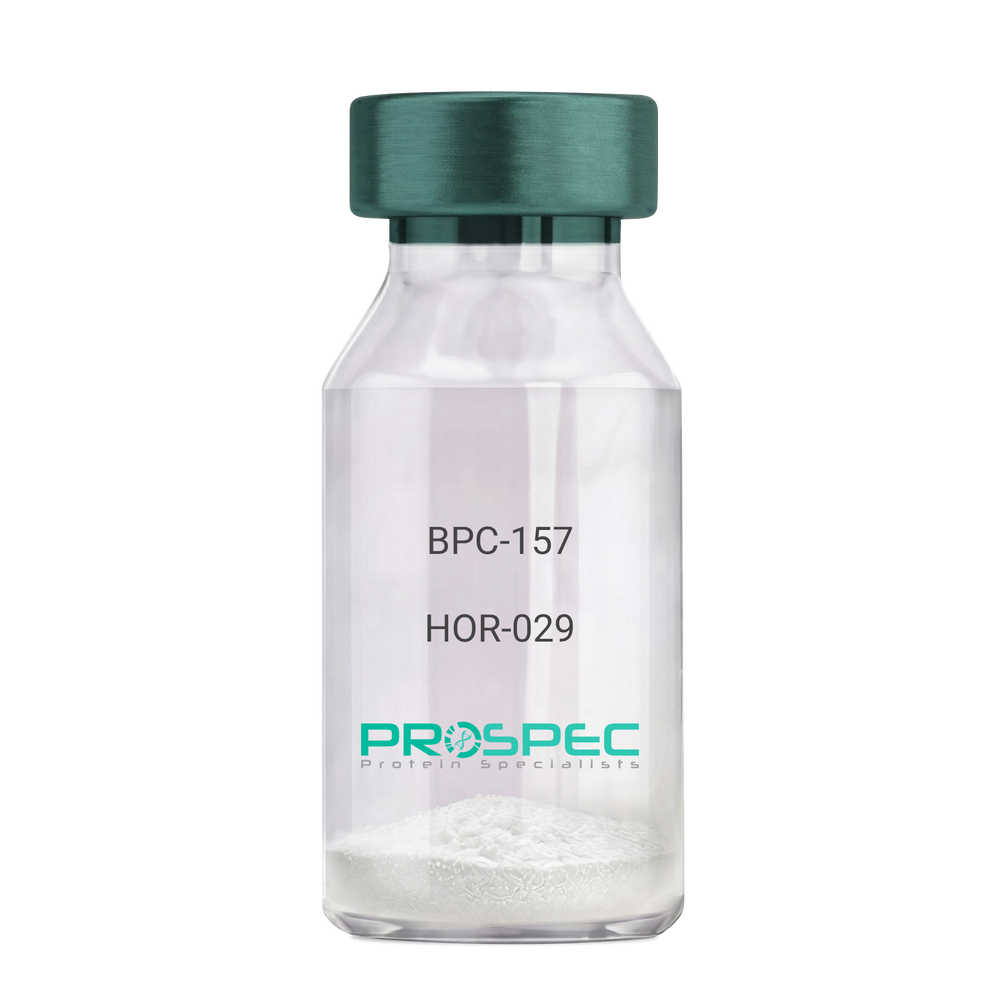
    BPC-157

    Description:

    BPC-157 Pentadecapeptide

    Product # :

    HOR-029

    Price :

    Quantity :

    Shipping Method :

    Room Temp Icon

    Shipped at Room temp

    Add To Cart

    More Info

    • description
    • formulation
    • purity
    • More Info

    Description

    BPC-157 Synthetic is a single, non-glycosylated polypeptide chain containing 15 amino acids, having a molecular mass of 1419.55 Dalton and a Molecular formula of C62H98N16O22.

    Formulation

    The protein was lyophilized with no additives.

    Purity

    Greater than 97.0% as determined by analysis by RP-HPLC.

    More Info

    • Physical Appearance

      Sterile Filtered White lyophilized (freeze-dried) powder.

    • Stability

      Lyophilized BPC-157 although stable at room temperature for 3 weeks, should be stored desiccated below -18°C. Upon reconstitution bpc-157 should be stored at 4°C between 2-7 days and for future use below -18°C. For long term storage it is recommended to add a carrier protein (0.1% HSA or BSA). Please prevent freeze-thaw cycles.

    • Solubility

      It is recommended to reconstitute the lyophilized BPC-157 in sterile 18MΩ-cm H2O not less than 100 µg/ml, which can then be further diluted to other aqueous solutions.

    • Amino Acid Sequence

      H-Gly-Glu-Pro-Pro-Pro-Gly-Lys-Pro-Ala-Asp-Asp-Ala-Gly-Leu-Val-OH

    • Background

      BPC-157, short for Body Protection Compound-157, is a synthetic peptide that has garnered significant attention in the field of regenerative medicine and sports science. This peptide, derived from a portion of the human gastric juice protein known as BPC, exhibits remarkable healing and tissue regeneration properties. BPC-157 has shown promise in various preclinical and clinical studies, demonstrating its potential for the treatment of a wide range of injuries and disorders.

      The research on BPC-157 encompasses investigations into its mechanisms of action, efficacy, safety, and potential therapeutic applications. Studies have elucidated the peptide's ability to enhance angiogenesis, promote collagen synthesis, modulate inflammatory responses, and protect against oxidative stress. These properties make BPC-157 an intriguing candidate for accelerating tissue healing, reducing inflammation, and improving overall recovery outcomes.

      Preclinical studies have revealed the beneficial effects of BPC-157 in several injury models. For instance, BPC-157 has demonstrated its potential in accelerating tendon and ligament healing, mitigating muscle damage, and promoting bone regeneration. These findings suggest that BPC-157 could be a valuable therapeutic tool in orthopedic medicine and sports-related injuries.

      Furthermore, BPC-157 has exhibited promising effects on gastrointestinal health. Studies have highlighted its ability to protect and heal the gut lining, reduce ulcer formation, and alleviate symptoms associated with inflammatory bowel disease. These observations open up avenues for BPC-157 as a potential treatment for gastrointestinal disorders.

      In addition to its regenerative properties, BPC-157 has shown potential in neurological and psychiatric conditions. Research has indicated its neuroprotective effects, with implications for the treatment of traumatic brain injury, stroke, and neurodegenerative disorders. Preliminary studies also suggest BPC-157's potential as an antidepressant and anxiolytic agent.

      Despite the promising findings, further research is needed to fully understand the mechanisms underlying BPC-157's actions and to assess its long-term safety and efficacy. Clinical trials are underway to explore its potential therapeutic applications in humans, including its use in tendon and ligament repair, inflammatory bowel disease, and neurodegenerative disorders.

      This comprehensive review aims to summarize the current state of research on BPC-157, providing an overview of its mechanisms of action and therapeutic potential. By examining relevant studies and findings, we aim to shed light on the diverse applications of BPC-157 and its implications for regenerative medicine, sports science, and various disease

    ProSpec's products are furnished for LABORATORY RESEARCH USE ONLY. The product may not be used as drugs, agricultural or pesticidal products, food additives or household chemicals.

    Bpc 157
  • View Data Sheet

    Name :

    ACADL Human

    Description:

    Acyl-CoA Dehydrogenase, Long Chain, Human Recombinant

    Acyl-CoA dehydrogenase long chain, Acyl-Coenzyme A dehydrogenase long chain, LCAD, ong-chain specific acyl-CoA dehydrogenase mitochondrial, ACAD4, EC 1.3.99.13.

    Product # :

    ENZ-190

    Price :

    Quantity :

    Shipping Method :

    Ice Icon

    Shipped with Ice Packs

    Add To Cart

    More Info

    • description
    • source
    • formulation
    • purity
    • More Info

    Description

    ACADL Human Recombinant produced in E.coli is a single, non-glycosylated polypeptide chain containing 421 amino acids (31-430) and having a molecular mass of 46.7 kDa.ACADL is fused to a 21 amino acid His-tag at N-terminus & purified by proprietary chromatographic techniques.

    Source

    E.coli.

    Formulation

    The ACADL solution (1mg/ml) contains 20mM Tris-HCl buffer (pH 8.0), 0.15M NaCl, 1mM DTT and 10% glycerol.

    Purity

    Greater than 85% as determined by SDS-PAGE.

    More Info

    • Introduction

      ACADL is a homotetramer belonging to the acyl-CoA dehydrogenase family. ACADL takes part in the catabolism of fatty acids and amino acids and is a key source of energy for the heart and skeletal muscle. Mutation in the ACADL gene results in non-ketotic hypoglycemia and hypotonia (muscle weakness).

    • Synonyms

      Acyl-CoA dehydrogenase long chain, Acyl-Coenzyme A dehydrogenase long chain, LCAD, ong-chain specific acyl-CoA dehydrogenase mitochondrial, ACAD4, EC 1.3.99.13.

    • Physical Appearance

      Sterile Filtered colorless solution.

    • Stability

      Store at 4°C if entire vial will be used within 2-4 weeks. Store, frozen at -20°C for longer periods of time. For long term storage it is recommended to add a carrier protein (0.1% HSA or BSA).Avoid multiple freeze-thaw cycles.

    • Amino Acid Sequence

      MGSSHHHHHH SSGLVPRGSH MGGEERLETP SAKKLTDIGI RRIFSPEHDI FRKSVRKFFQ EEVIPHHSEW EKAGEVSREV WEKAGKQGLL GVNIAEHLGG IGGDLYSAAI VWEEQAYSNC SGPGFSIHSG IVMSYITNHG SEEQIKHFIP QMTAGKCIGA IAMTEPGAGS DLQGIKTNAK KDGSDWILNG SKVFISNGSL SDVVIVVAVT NHEAPSPAHG ISLFLVENGM KGFIKGRKLH KMGLKAQDTA ELFFEDIRLP ASALLGEENK GFYYIMKELP QERLLIADVA ISASEFMFEE TRNYVKQRKA FGKTVAHLQT VQHKLAELKT HICVTRAFVD NCLQLHEAKR LDSATACMAK YWASELQNSV AYDCVQLHGG WGYMWEYPIA KAYVDARVQP IYGGTNEIMK ELIAREIVFD K

    ProSpec's products are furnished for LABORATORY RESEARCH USE ONLY. The product may not be used as drugs, agricultural or pesticidal products, food additives or household chemicals.

    Acadl Human
  • View Data Sheet

    Name :

    CTHRC1 Human, HEK

    Description:

    Collagen Triple Helix Repeat Containing 1 Human Recombinant, HEK

    Collagen Triple Helix Repeat Containing 1, Protein NMTC1, CTHRC1.

    Product # :

    PRO-2028

    Price :

    Quantity :

    Shipping Method :

    Room Temp Icon

    Shipped at Room temp

    Add To Cart

    More Info

    • description
    • source
    • formulation
    • purity
    • More Info

    Description

    CTHRC1 Human Recombinant produced in HEK cells is a single, glycosylated, polypeptide chain (Ser31-Lys243) containing a total of 219 amino acids, having a calculated molecular mass of 23.9kDa and fused to a 6 aa His tag at C-Terminus.

    Source

    HEK 293.

    Formulation

    CTHRC1 was filtered (0.4µm) and lyophilized in phosphate buffered saline pH 7.5.

    Purity

    Greater than 95.0% as determined by SDS-PAGE.

    More Info

    • Introduction

      Collagen triple helix repeat-containing protein 1 (CTHRC1) functions as a negative regulator of collagen matrix deposition. CTHRC1 is a secreted 28kDa protein which is glycosylated and highly conserved from lower chordates to mammals. CTHRC1 is highly connected with calcified tissues and cartilaginous matrix, but not with endothelial cells. CTHRC1 is detected qualitatively in plasma of healthy human subjects. CTHRC1 plasma levels are also significantly elevated during pregnancy, in diabetes, in inflammatory and infectious conditions, in subjects with acute myeloid leukemia but not in subjects with solid cancers. The hormonal functions of CTHRC1 include regulation of lipid storage and cellular glycogen levels with potentially far-reaching implications for cell metabolism and physiology. CTHRC1 gene deletion leads to fatty liver (steatosis) formation in mice while others exhibited inactivation of the CTHRC1 gene also results in low bone mass.

    • Synonyms

      Collagen Triple Helix Repeat Containing 1, Protein NMTC1, CTHRC1.

    • Physical Appearance

      Filtered White lyophilized (freeze-dried) powder.

    • Stability

      Store lyophilized protein at -20°C. Aliquot the product after reconstitution to avoid repeated freezing/thawing cycles. Reconstituted protein can be stored at 4°C for a limited period of time; it does not show any change after two weeks at 4°C.

    • Solubility

      It is recommended to add deionized water to prepare a working stock solution of approximately 0.5 mg/ml and let the lyophilized pellet dissolve completely. CTHRC1 is not sterile! Please filter the product by an appropriate sterile filter before using it in the cell culture.

    • Amino Acid Sequence

      SEIPKGKQKA QLRQREVVDL YNGMCLQGPA GVPGRDGSPG ANGIPGTPGI PGRDGFKGEK GECLRESFEE SWTPNYKQCS WSSLNYGIDL GKIAECTFTK MRSNSALRVL FSGSLRLKCR NACCQRWYFT FNGAECSGPL PIEAIIYLDQ GSPEMNSTIN IHRTSSVEGL CEGIGAGLVD VAIWVGTCSD YPKGDASTGW NSVSRIIIEE LPK HHHHHH.

    ProSpec's products are furnished for LABORATORY RESEARCH USE ONLY. The product may not be used as drugs, agricultural or pesticidal products, food additives or household chemicals.

    Cthrc1 Human Hek
  • View Data Sheet

    Name :

    MYL9 Human

    Description:

    Myosin Light Chain 9 Human Recombinant

    Myosin regulatory light polypeptide 9, 20 kDa myosin light chain, LC20, MLC-2C, Myosin RLC, Myosin regulatory light chain 2, smooth muscle isoform, Myosin regulatory light chain 9, Myosin regulatory light chain MRLC1, MYL9, MLC2, MRLC1, MYRL2, MGC3505.

    Product # :

    PRO-107

    Price :

    Quantity :

    Shipping Method :

    Ice Icon

    Shipped with Ice Packs

    Add To Cart

    More Info

    • description
    • source
    • formulation
    • purity
    • More Info

    Description

    MYL9 Human Recombinant fused with a20 amino acid His tag at N-terminus produced in E.Coli is a single, non-glycosylated, polypeptide chain containing192 amino acids (1-172 a.a.) and having a molecular mass of 21.9kDa. The MYL9 is purified by proprietary chromatographic techniques.

    Source

    Escherichia Coli.

    Formulation

    The MYL9 solution (0.5 mg/ml) contains 20mM Tris-HCl buffer (pH8.0), 0.1M NaCl, 1mM DTT and 10% glycerol.

    Purity

    Greater than 90.0% as determined by SDS-PAGE.

    More Info

    • Introduction

      MYL9 is one of the numerous regulatory myosin light chains. Myosin which is a structural component of the muscle consists of 2 heavy chains and 4 light chains. MYL9 is a myosin light chain regulates muscle contraction by modulating the ATPase activity of myosin heads. MYL9 binds calcium and is activated by myosin light chain kinase. Regulatory myosin light chains regulate contraction in smooth muscle and non-muscle cells via phosphorylation by MLCK (myosin light chain kinase). Phosphorylation of regulatory myosin light chains is catalyzed by MLCK in the presence of calcium and calmodulin and it increases the actin-activated myosin ATPase activity, thus regulates the contractile activity.

    • Synonyms

      Myosin regulatory light polypeptide 9, 20 kDa myosin light chain, LC20, MLC-2C, Myosin RLC, Myosin regulatory light chain 2, smooth muscle isoform, Myosin regulatory light chain 9, Myosin regulatory light chain MRLC1, MYL9, MLC2, MRLC1, MYRL2, MGC3505.

    • Physical Appearance

      Sterile Filtered colorless solution.

    • Stability

      Store at 4°C if entire vial will be used within 2-4 weeks. Store, frozen at -20°C for longer periods of time. For long term storage it is recommended to add a carrier protein (0.1% HSA or BSA).Please prevent freeze-thaw cycles.

    • Amino Acid Sequence

      MGSSHHHHHH SSGLVPRGSH MSSKRAKAKT TKKRPQRATS NVFAMFDQSQ IQEFKEAFNM IDQNRDGFID KEDLHDMLAS LGKNPTDEYL EGMMSEAPGP INFTMFLTMF GEKLNGTDPE DVIRNAFACF DEEASGFIHE DHLRELLTTM GDRFTDEEVD EMYREAPIDK KGNFNYVEFT RILKHGAKDK DD.

    ProSpec's products are furnished for LABORATORY RESEARCH USE ONLY. The product may not be used as drugs, agricultural or pesticidal products, food additives or household chemicals.

    Myl9 Human
  • View Data Sheet

    Name :

    NDUFA2 Human

    Description:

    NADH Dehydrogenase 1 Alpha Subcomplex 2 Human Recombinant

    NADH dehydrogenase [ubiquinone] 1 alpha subcomplex subunit 2, Complex I-B8, CI-B8, NADH-ubiquinone oxidoreductase B8 subunit, NDUFA2, CD14, CIB8.

    Product # :

    ENZ-660

    Price :

    Quantity :

    Shipping Method :

    Ice Icon

    Shipped with Ice Packs

    Add To Cart

    More Info

    • description
    • source
    • formulation
    • purity
    • More Info

    Description

    NDUFA2 Human Recombinant produced in E.coli is a single, non-glycosylated polypeptide chain containing 122 amino acids (1-99) and having a molecular mass of 13.3kDa.NDUFA2 is fused to a 23 amino acid His-tag at N-terminus & purified by proprietary chromatographic techniques.

    Source

    Escherichia Coli.

    Formulation

    The NDUFA2 solution (1mg/ml) contains 20mM Tris-HCl buffer (pH 8.0), 0.15M NaCl, 10% glycerol and 1mM DTT.

    Purity

    Greater than 95.0% as determined by SDS-PAGE.

    More Info

    • Introduction

      NADH dehydrogenase [ubiquinone] 1 alpha subcomplex subunit 5 (NDUFA5) is a member of the complex I NDUFA5 subunit family. The human NDUFA5 gene codes for the B13 subunit of complex I of the respiratory chain that transfers electrons from NADH to ubiquinone. The NDUFA5 protein localizes to the inner mitochondrial membrane as part of the seven component-containing, water soluble 'iron-sulfur protein' (IP) fraction of complex I, even though its exact role is undetermined.

    • Synonyms

      NADH dehydrogenase [ubiquinone] 1 alpha subcomplex subunit 2, Complex I-B8, CI-B8, NADH-ubiquinone oxidoreductase B8 subunit, NDUFA2, CD14, CIB8.

    • Physical Appearance

      Sterile Filtered colorless solution.

    • Stability

      Store at 4°C if entire vial will be used within 2-4 weeks.Store, frozen at -20°C for longer periods of time. For long term storage it is recommended to add a carrier protein (0.1% HSA or BSA).Avoid multiple freeze-thaw cycles.

    • Amino Acid Sequence

      MGSSHHHHHH SSGLVPRGSH MGSMAAAAAS RGVGAKLGLR EIRIHLCQRS PGSQGVRDFI EKRYVELKKA NPDLPILIRE CSDVQPKLWA RYAFGQETNV PLNNFSADQV TRALENVLSG KA.

    ProSpec's products are furnished for LABORATORY RESEARCH USE ONLY. The product may not be used as drugs, agricultural or pesticidal products, food additives or household chemicals.

    Ndufa2 Human
  • View Data Sheet

    Name :

    SLC3A2 Human

    Description:

    Solute Carrier Family 3 Member 2 Human Recombinant

    Solute Carrier Family 3 Member 2, Lymphocyte Activation Antigen 4F2 Large Subunit, Solute Carrier Family 3 (Activators Of Dibasic And Neutral Amino Acid Transport), Member 2, Antigen Identified By Monoclonal Antibodies 4F2, TRA1.10, TROP4, And T43, Solute Carrier Family 3 (Amino Acid Transporter Heavy Chain), Member 2, 4F2 Cell-Surface Antigen Heavy Chain, Monoclonal Antibody 44D7, CD98 Heavy Chain, 4F2HC, MDU1, Antigen Defined By Monoclonal Antibody 4F2, Heavy Chain, Antigen Defined By Monoclonal Antibody 4F2, 4F2 Heavy Chain Antigen, 4F2 Heavy Chain, CD98 Antigen, Heavy Chain, CD98HC, 4T2HC, NACAE, CD98, 4F2, 4F2 cell-surface antigen heavy chain.

    Product # :

    PRO-2489

    Price :

    Quantity :

    Shipping Method :

    Ice Icon

    Shipped with Ice Packs

    Add To Cart

    More Info

    • description
    • source
    • formulation
    • purity
    • More Info

    Description

    SLC3A2 produced in Sf9 Baculovirus cells is a single, glycosylated polypeptide chain containing 434 amino acids (206-630a.a.) and having a molecular mass of 47.9kDa. (Molecular size on SDS-PAGE will appear at approximately 40-57kDa).SLC3A2 is expressed with a 6 amino acid His tag at C-Terminus and purified by proprietary chromatographic techniques.

    Source

    Sf9, Baculovirus cells.

    Formulation

    SLC3A2 protein solution (0.5mg/ml) contains Phosphate Buffered Saline (pH 7.4) and 10% glycerol.

    Purity

    Greater than 95.0% as determined by SDS-PAGE.

    More Info

    • Introduction

      SLC3A2, also known as Solute Carrier Family 3 Member 2, is a single-pass type II membrane protein which is part of the SLC3A transporter family. SLC3A2 is expressed ubiquitously in all tissues tested with the highest levels detected in kidney, placenta and testis and lowest level in thymus. SLC3A2 is essential for the function of light chain amino-acid transporters and also takes part in sodium-independent, high-affinity transport of large neutral amino acids such as phenylalanine, tyrosine, leucine, arginine and tryptophan. SLC3A2 participates in guiding and targeting of LAT1 and LAT2 to the plasma membrane.

    • Synonyms

      Solute Carrier Family 3 Member 2, Lymphocyte Activation Antigen 4F2 Large Subunit, Solute Carrier Family 3 (Activators Of Dibasic And Neutral Amino Acid Transport), Member 2, Antigen Identified By Monoclonal Antibodies 4F2, TRA1.10, TROP4, And T43, Solute Carrier Family 3 (Amino Acid Transporter Heavy Chain), Member 2, 4F2 Cell-Surface Antigen Heavy Chain, Monoclonal Antibody 44D7, CD98 Heavy Chain, 4F2HC, MDU1, Antigen Defined By Monoclonal Antibody 4F2, Heavy Chain, Antigen Defined By Monoclonal Antibody 4F2, 4F2 Heavy Chain Antigen, 4F2 Heavy Chain, CD98 Antigen, Heavy Chain, CD98HC, 4T2HC, NACAE, CD98, 4F2, 4F2 cell-surface antigen heavy chain.

    • Physical Appearance

      Sterile filtered colorless solution.

    • Stability

      Store at 4°C if entire vial will be used within 2-4 weeks. Store, frozen at -20°C for longer periods of time. For long term storage it is recommended to add a carrier protein (0.1% HSA or BSA).Avoid multiple freeze-thaw cycles.

    • Amino Acid Sequence

      ADPRAPRCRE LPAQKWWHTG ALYRIGDLQA FQGHGAGNLA GLKGRLDYLS SLKVKGLVLG PIHKNQKDDV AQTDLLQIDP NFGSKEDFDS LLQSAKKKSI RVILDLTPNY RGENSWFSTQ VDTVATKVKD ALEFWLQAGV DGFQVRDIEN LKDASSFLAE WQNITKGFSE DRLLIAGTNS SDLQQILSLL ESNKDLLLTS SYLSDSGSTG EHTKSLVTQY LNATGNRWCS WSLSQARLLT SFLPAQLLRL YQLMLFTLPG TPVFSYGDEI GLDAAALPGQ PMEAPVMLWD ESSFPDIPGA VSANMTVKGQ SEDPGSLLSL FRRLSDQRSK ERSLLHGDFH AFSAGPGLFS YIRHWDQNER FLVVLNFGDV GLSAGLQASD LPASASLPAK ADLLLSTQPG REEGSPLELE RLKLEPHEGL LLRFPYAAHH HHHH.

    ProSpec's products are furnished for LABORATORY RESEARCH USE ONLY. The product may not be used as drugs, agricultural or pesticidal products, food additives or household chemicals.

    Slc3A2 Human
  • View Data Sheet

    Name :

    ASNS Mouse

    Description:

    Asparagine Synthetase Mouse Recombinant

    Glutamine-dependent asparagine synthetase, Asns, Asparagine synthetase. 

    Product # :

    ENZ-1100

    Price :

    Quantity :

    Shipping Method :

    Ice Icon

    Shipped with Ice Packs

    Add To Cart

    More Info

    • description
    • source
    • formulation
    • purity
    • More Info

    Description

    ASNS produced in Sf9 Insect cells is a single, glycosylated polypeptide chain containing 567 amino acids (1-561a.a.) and having a molecular mass of 65.1 kDa.ASNS is expressed with a 6 amino acid His tag at C-Terminus and purified by proprietary chromatographic techniques.

    Source

    Sf9, Insect cells.

    Formulation

    ASNS protein solution ( 0.25mg/ml ) contains PBS (pH 7.4) and 40% glycerol.

    Purity

    Greater than 95.0% as determined by SDS-PAGE.

    More Info

    • Introduction

      Asparagine synthetase (ASNS) is a cytoplasmic enzyme that turns aspartate toasparagine and functions mostly in mammalian organs. ASNS is responsible for cell growthand its mRNA content is associated with changes in the cell cycle. ASNS may also play a role as a biomarker for ovarian cancer.

    • Synonyms

      Glutamine-dependent asparagine synthetase, Asns, Asparagine synthetase.

    • Physical Appearance

      Sterile Filtered colorless solution.

    • Stability

      Store at 4°C if entire vial will be used within 2-4 weeks. Store, frozen at -20°C for longer periods of time. For long term storage it is recommended to add a carrier protein (0.1% HSA or BSA). Avoid multiple freeze-thaw cycles.

    • Amino Acid Sequence

      MCGIWALFGS DDCLSVQCLS AMKIAHRGPD AFRFENVNGY TNCCFGFHRL AVVDPLFGMQ PIRVRKYPYL WLCYNGEIYN HKALQQRFEF EYQTNVDGEI ILHLYDKGGI EKTICMLDGV FAFILLDTAN KKVFLGRDTY GVRPLFKAMT EDGFLAVCSE AKGLVSLKHS TTPFLKVEPF LPGHYEVLDL KPNGKVASVE MVKYHHCTDE PLHAIYDSVE KLFPGFDLET VKNNLRILFD NAIKKRLMTD RRIGCLLSGG LDSSLVAASL LKQLKEAQVQ YPLQTFAIGM EDSPDLLAAR KVANYIGSEH HEVLFNSEEG IQALDEVIFS LETYDITTVR ASVGMYLISK YIRKNTDSVV IFSGEGSDEL TQGYIYFHKA PSPEKAEEES ERLLKELYLF DVLRADRTTA AHGLELRVPF LDHRFSSYYL SLPPDMRIPK NGIEKHLLRE TFEDCNLLPK EILWRPKEAF SDGITSVKNS WFKILQDYVE HQVDDEMMSA SQKFPFNTP KTKEGYFYRQ IFERHYPGRA DWLTHYWMPK WINATDPSAR TLTHYKS AAK AHHHHHH.

    ProSpec's products are furnished for LABORATORY RESEARCH USE ONLY. The product may not be used as drugs, agricultural or pesticidal products, food additives or household chemicals.

    Asns Mouse
  • 1
  • …
  • 32
  • 33
  • 34
  • 35
  • 36
  • …
  • 42
Your browser does not support the video tag.

Products

  • Cytokines
  • Growth Factors
  • Chemokines
  • CD Antigens
  • Neurotrophins
  • Hormones
  • Enzymes
  • Viral Antigens
  • Recombinant Proteins
  • Natural Proteins
  • Monoclonal Antibodies
  • Polyclonal Antibodies
  • Thermal Packaging

About

  • Company
  • Founder
  • Contribution
  • Contact Us
  • My Account

Ordering

  • Ordering Method
  • Ordering - Credit Card
  • Ordering PO
  • Shipping Fees
  • FAQ's

Legal

  • Terms & Conditions
  • Privacy
  • Site Map
  • info@prospecbio.com
  • Facebook
  • Instagram
  • Linkedin Profile

© 2026 ProSpec-Tany TechnoGene Ltd. All Rights Reserved.

  • Choosing a selection results in a full page refresh.
  • Opens in a new window.