Search results
1000 results found for “MMP”
Name
Description
Product #
Price
Quantity
Shipping Method
- View Data Sheet
Name :
USE1 HumanDescription:
Unconventional SNARE In The ER 1 Human Recombinant
Vesicle transport protein USE1, Putative MAPK-activating protein PM26, USE1-like protein, p31, USE1L, MDS032, Q-SNARE, SLT1, SNARE-Like Tail-Anchored Protein 1 Homolog, Protein P31.
Product # :
PRO-1464Price :
Quantity :
Shipping Method :
Shipped with Ice Packs
More Info
- description
- source
- formulation
- purity
- More Info
Description
USE1 Human Recombinant produced in E.Coli is a single, non-glycosylated polypeptide chain containing 254 amino acids (1-231 a.a) and having a molecular mass of 28.3kDa.USE1 is fused to a 23 amino acid His-tag at N-terminus & purified by proprietary chromatographic techniques.
Source
Escherichia Coli.
Formulation
USE1 protein solution (0.25mg/ml) containing 20mM Tris-HCl buffer (pH8.0), 10% glycerol, 0.1M NaCl and 1mM DTT.
Purity
Greater than 80.0% as determined by SDS-PAGE.
More Info
-
Introduction
USE1 Belongs to the USE1 family, this protein is a vesicle transport protein. USE1 is a component of a SNAREcomplex consisting of STX18, USE1L, BNIP1/SEC20L and SEC22B. In addition USE1 interacts directly with STX18. SNARE maybe involved in targeting and fusion of Golgi-derived retrograde transport vesicles with the ER. Diseases associated with USE1 comprise dysentery and hemolytic-uremic syndrome. Among its related super-pathways are Nicotine Pathway (Dopaminergic Neuron) and Pharmacodynamics. GO annotations related to this gene include protein binding.
-
Synonyms
Vesicle transport protein USE1, Putative MAPK-activating protein PM26, USE1-like protein, p31, USE1L, MDS032, Q-SNARE, SLT1, SNARE-Like Tail-Anchored Protein 1 Homolog, Protein P31.
-
Physical Appearance
Sterile Filtered clear solution.
-
Stability
Store at 4°C if entire vial will be used within 2-4 weeks. Store, frozen at -20°C for longer periods of time. For long term storage it is recommended to add a carrier protein (0.1% HSA or BSA).Avoid multiple freeze-thaw cycles.
-
Amino Acid Sequence
MGSSHHHHHH SSGLVPRGSH MGSMAASRLE LNLVRLLSRC EAMAAEKRDP DEWRLEKYVG ALEDMLQALK VHASKPASEV INEYSWKVDF LKGMLQAEKL TSSSEKALAN QFLAPGRVPT TARERVPATK TVHLQSRARY TSEMRSELLG TDSAEPEMDV RKRTGVAGSQ PVSEKQSAAE LDLVLQRHQN LQEKLAEEML GLARSLKTNT LAAQSVIKKD NQTLSHSLKM ADQNLEKLKT ESERLEQHTQ KSVN
ProSpec's products are furnished for LABORATORY RESEARCH USE ONLY. The product may not be used as drugs, agricultural or pesticidal products, food additives or household chemicals.
- View Data Sheet
Name :
NNMT AntibodyDescription:
Nicotinamide N-Methyltransferase, Mouse Anti Human
Nicotineamide N-methyltransferase.
Product # :
ANT-615Price :
Quantity :
Shipping Method :
Shipped with Ice Packs
More Info
- formulation
- More Info
Formulation
1mg/ml containing PBS, pH-7.4, 10% Glycerol and 0.02% Sodium Azide.
More Info
-
Introduction
NNMT is part of the family of transferases, especially those transferring one-carbon group methyltransferases. NNMT is mostly expressed in the liver, and a lower expression is seen in the kidney, lung, skeletal muscle, placenta and heart. NNMT catalyzes the N-methylation of nicotinamide and other pyridines to form pyridinium ions. This activity is significant for biotransformation of many drugs and xenobiotic compounds. NNMT is accountable for the enzymatic activity which uses S-adenosyl methionine as the methyl donor. NNMT expression is related with tumor stage and DFS time in hepatocellular carcinoma cases. NNMT is a good candidate as a tumor marker of various kinds of cancers. NNMT serum levels have significance in the premature detection and in the management of patients with colorectal cancer.
-
Synonyms
Nicotineamide N-methyltransferase.
-
Physical Appearance
Sterile filtered colorless solution.
-
Immunogen
Anti-human NNMT mAb, is derived from hybridization of mouse F0 myeloma cells with spleen cells from BALB/c mice immunized with a recombinant human NNMT protein 1-264 amino acids purified from E. coli.
-
Ig Subclass
Mouse IgG2a heavy chain and k light chain.
-
Clone
PAT11G11AT.
-
Applications
The antibody has been tested by ELISA, Western blot analysis, Flow cytometry and ICC/IF to assure specificity and reactivity. Since application varies, however, each investigation should be titrated by the reagent to obtain optimal results.
-
Type
Mouse Anti Human Monoclonal.
-
Storage Procedures
For periods up to 1 month store at 4°C, for longer periods of time, store at -20°C. Prevent freeze thaw cycles.
-
Purification Method
NNMT antibody was purified from mouse ascitic fluids by protein-A affinity chromatography.
ProSpec's products are furnished for LABORATORY RESEARCH USE ONLY. The product may not be used as drugs, agricultural or pesticidal products, food additives or household chemicals.
- View Data Sheet
Name :
TOLLIP AntibodyDescription:
Toll-interacting protein, Mouse Anti Human
TOLLIP, Toll-interacting protein, FLJ33531, IL-1RAcPIP.
Product # :
ANT-430Price :
Quantity :
Shipping Method :
Shipped with Ice Packs
More Info
- formulation
- More Info
Formulation
1mg/ml containing PBS, pH-7.4, & 0.1% Sodium Azide.
More Info
-
Introduction
TOLLIP is a ubiquitin-binding protein that interacts with several Toll-like receptor (TLR) signaling cascade components. TOLLIP regulates inflammatory signaling and is involved in interleukin-1 receptor trafficking and in the turnover of IL1R-associated kinase.
-
Synonyms
TOLLIP, Toll-interacting protein, FLJ33531, IL-1RAcPIP.
-
Immunogen
Anti-human TOLLIP mAb, is derived from hybridization of mouse F0 myeloma cells with spleen cells from BALB/c mice immunized with recombinant human TOLLIP amino acids 61-274 purified from E. coli.
-
Ig Subclass
Mouse IgG2a heavy chain and κ light chain.
-
Clone
Pk1B17AT.
-
Applications
TOLLIP antibody has been tested by ELISA and Western blot analysis to assure specificity and reactivity. Since application varies, however, each investigation should be titrated by the reagent to obtain optimal results. Recommended dilution range for Western blot analysis is 1:500 ~ 1,000. Recommended starting dilution is 1:500.
-
Type
Mouse Anti Human Monoclonal.
-
Storage Procedures
For periods up to 1 month store at 4°C, for longer periods of time, store at -20°C. Prevent freeze thaw cycles.
-
Purification Method
TOLLIP antibody was purified from mouse ascitic fluids by protein-G affinity chromatography.
ProSpec's products are furnished for LABORATORY RESEARCH USE ONLY. The product may not be used as drugs, agricultural or pesticidal products, food additives or household chemicals.
- View Data Sheet
Name :
GMNN AntibodyDescription:
Geminin, Mouse Anti Human
GMNN, Geminin, DNA Replication Inhibitor, Gem, RP3-369A17.3.
Product # :
ANT-319Price :
Quantity :
Shipping Method :
Shipped with Ice Packs
More Info
- formulation
- More Info
Formulation
1mg/ml containing PBS, pH-7.4, & 0.1% Sodium Azide.
More Info
-
Introduction
Geminin is a 25 kDa nuclear protein, which inhibits DNA replication and is degraded during the mitotic phase of the cell cycle. Geminin controls replication by binding to the licensing factor Cdt1, and is involved in neural differentiation. In addition, Geminin directly interacts with Six3 and Hox homeodomain proteins during embryogenesis and inhibits their functions. Geminin can also promote DNA replication. Geminin has 2 roles in 2 different stages of the cell cycle: Geminin is a negative regulator of DNA replication during the “S phase” of the cell cycle. Inhibition of Geminin during the “S phase” (by RNAi) results in an additional round of replication of portions of the genome. During the “M phase” of the cell cycle (mitosis) Geminin stabilizes the replication factor Cdt1 promoting DNA replication during the next cell cycle. Moreover, inhibition of Geminin during mitosis (by RNAi) causes destabilization of Cdt1 protein and impairment of DNA replication during the next cell cycle. G
-
Synonyms
GMNN, Geminin, DNA Replication Inhibitor, Gem, RP3-369A17.3.
-
Immunogen
Anti-human Geminin mAb is derived from hybridization of mouse SP2/0 myeloma cells with spleen cells from BALB/c mice immunized with recombinant human Geminin amino acids 1-209 purified from E. coli.
-
Ig Subclass
Mouse IgG1 heavy chain and κ light chain.
-
Clone
P2H7AT.
-
Applications
Geminin antibody has been tested by ELISA and Western blot analysis to assure specificity and reactivity. Since application varies, however, each investigation should be titrated by the reagent to obtain optimal results. Recommended dilution range for Western blot analysis is 1:500 ~ 1,000. Recommended starting dilution is 1:500.
-
Type
Mouse Anti Human Monoclonal.
-
Storage Procedures
For periods up to 1 month store at 4°C, for longer periods of time, store at -20°C. Prevent freeze thaw cycles.
-
Purification Method
Geminin antibody was purified from mouse ascitic fluids by protein-G affinity chromatography.
ProSpec's products are furnished for LABORATORY RESEARCH USE ONLY. The product may not be used as drugs, agricultural or pesticidal products, food additives or household chemicals.
- View Data Sheet
Name :
PDPN AntibodyDescription:
Podoplanin, Mouse Anti Human
Podoplanin, Glycoprotein 36, PA2.26 antigen, T1A, GP36, GP40, Gp38, OTS8, T1A2, HT1A-1, PA2.26, T1-alpha, PDPN.
Product # :
ANT-343Price :
Quantity :
Shipping Method :
Shipped with Ice Packs
More Info
- formulation
- More Info
Formulation
1mg/ml containing PBS, pH-7.4, & 0.1% Sodium Azide.
More Info
-
Introduction
Podoplanin is a small mucin-like type-1 transmembrane protein, typically expressed in various specialized cell types throughout the body. Podoplanin is a type-I integral membrane glycoprotein with diverse distribution in human tissues. PDPN physiological function is related to its mucin-type character. The homologous protein in other species has been described as a differentiation antigen and influenza-virus receptor.
PDPN is expressed in lymphatic progenitor cells and afterwards during mouse development in lymphatic endothelial cells. Podoplanin is a specific marker for lymph vessel endothelial cells. Over-expression of podoplanin significantly elevates endothelial cell adhesion, migration, and tube formation. Inhibition of Podoplanin expression decreases cell adhesion in human dermal lymphatic endothelial cells. Podoplanin is used as a specific marker for lymphatic endothelium in histopathology.
Podoplanin expression is increased in nearly all human colon, rectum, and small intestine tumors. AGGRUS may serve as a diagnostic marker that distinguishes seminomas, the majority of which over express the protein, from embryonal carcinoma in testicular germ cell tumors. -
Synonyms
Podoplanin, Glycoprotein 36, PA2.26 antigen, T1A, GP36, GP40, Gp38, OTS8, T1A2, HT1A-1, PA2.26, T1-alpha, PDPN.
-
Physical Appearance
Sterile filtered colorless solution.
-
Immunogen
Anti-human PDPN mAb is derived from hybridization of mouse FO myeloma cells with spleen cells from BALB/c mice immunized with recombinant human PDPN amino acids 1-206 purified from E. coli.
-
Ig Subclass
Mouse IgG2b heavy chain and κ light chain.
-
Clone
P5E2AT.
-
Applications
PDPN antibody has been tested by ELISA and Western blot analysis to assure specificity and reactivity. Since application varies, however, each investigation should be titrated by the reagent to obtain optimal results. Recommended dilution range for Western blot analysis is 1:500 ~ 1,000. Recommended starting dilution is 1:500.
-
Type
Mouse Anti Human Monoclonal.
-
Storage Procedures
For periods up to 1 month store at 4°C, for longer periods of time, store at -20°C. Prevent freeze thaw cycles.
-
Purification Method
PDPN antibody was purified from mouse ascitic fluids by protein-G affinity chromatography.
ProSpec's products are furnished for LABORATORY RESEARCH USE ONLY. The product may not be used as drugs, agricultural or pesticidal products, food additives or household chemicals.
- View Data Sheet
Name :
PDPN P56F7AT AntibodyDescription:
Podoplanin clone P56F7AT, Mouse Anti Human
Podoplanin, Glycoprotein 36, PA2.26 antigen, T1A, GP36, GP40, Gp38, OTS8, T1A2, HT1A-1, PA2.26, T1-alpha, PDPN.
Product # :
ANT-641Price :
Quantity :
Shipping Method :
Shipped with Ice Packs
More Info
- formulation
- More Info
Formulation
1mg/ml containing PBS, pH-7.4, 10% Glycerol and 0.02% Sodium Azide.
More Info
-
Introduction
Podoplanin is a small mucin-like type-1 transmembrane protein, typically expressed in various specialized cell types throughout the body. Podoplanin is a type-I integral membrane glycoprotein with diverse distribution in human tissues. PDPN physiological function is related to its mucin-type character. The homologous protein in other species has been described as a differentiation antigen and influenza-virus receptor.
PDPN is expressed in lymphatic progenitor cells and afterwards during mouse development in lymphatic endothelial cells. Podoplanin is a specific marker for lymph vessel endothelial cells. Over-expression of podoplanin significantly elevates endothelial cell adhesion, migration, and tube formation. Inhibition of Podoplanin expression decreases cell adhesion in human dermal lymphatic endothelial cells. Podoplanin is used as a specific marker for lymphatic endothelium in histopathology.
Podoplanin expression is increased in nearly all human colon, rectum, and small intestine tumors. AGGRUS may serve as a diagnostic marker that distinguishes seminomas, the majority of which over express the protein, from embryonal carcinoma in testicular germ cell tumors. -
Synonyms
Podoplanin, Glycoprotein 36, PA2.26 antigen, T1A, GP36, GP40, Gp38, OTS8, T1A2, HT1A-1, PA2.26, T1-alpha, PDPN.
-
Physical Appearance
Sterile filtered colorless solution.
-
Immunogen
Anti-human PDPN mAb, is derived from hybridization of mouse F0 myeloma cells with spleen cells from BALB/c mice immunized with recombinant human PDPN amino acids 99-207 purified from E. coli.
-
Ig Subclass
Mouse IgG1 heavy chain and k light chain.
-
Clone
P56F7AT.
-
Applications
PDPN antibody has been tested by ELISA, Western blot analysis, Flow cytometry and ICC/IF to assure specificity and reactivity. Since application varies, however, each investigation should be titrated by the reagent to obtain optimal results.
-
Type
Mouse Anti Human Monoclonal.
-
Storage Procedures
For periods up to 1 month store at 4°C, for longer periods of time, store at -20°C. Prevent freeze thaw cycles.
-
Purification Method
PDPN antibody was purified from mouse ascitic fluids by protein-A affinity chromatography.
ProSpec's products are furnished for LABORATORY RESEARCH USE ONLY. The product may not be used as drugs, agricultural or pesticidal products, food additives or household chemicals.
- View Data Sheet
Name :
Vimentin PAT5H8AT AntibodyDescription:
Vimentin PAT5H8AT, Mouse Anti Human
Vimentin, Vim, FLJ36605.
Product # :
ANT-682Price :
Quantity :
Shipping Method :
Shipped with Ice Packs
More Info
- formulation
- More Info
Formulation
1mg/ml containing PBS, pH-7.4, 10% Glycerol and 0.02% Sodium Azide.
More Info
-
Introduction
Vimentin expression in human malignant glioma cells depends on cellular density, algorithms of drug delivery and chemo/radio treatment. Vimentin and detyrosinated microtubules provide structural support for the extensive microtentacles observed in detached tumor cells and a mechanism to promote successful metastatic spread. Primary colorectal carcinomas display aberrant expression of vimentin, and have activated Notch and TGFbeta signaling pathways. Vimentin is a strong arterial substrate for transglutaminases. Transglutaminase-mediated vimentin dimerization results in a novel unifying pathway by which vasodilatory and remodeling responses may be regulated. Ablation of vimentin expression inhibits migration and invasion of colon and breast cancer cell lines. Vimentin is the main intermediate filament protein in mesenchymal cells and is therefore of value in the differential diagnosis of undifferentiated neoplasms.
-
Synonyms
Vimentin, Vim, FLJ36605.
-
Physical Appearance
Sterile filtered colorless solution.
-
Immunogen
Anti-human Vimentin mAb, is derived from hybridization of mouse F0 myeloma cells with spleen cells from BALB/c mice immunized with a recombinant human Vimentin protein 1-466 amino acids purified from E. coli.
-
Ig Subclass
Mouse IgG1 heavy chain and k light chain.
-
Clone
PAT5H8AT.
-
Applications
Vimentin antibody has been tested by ELISA, Western blot analysis, Flow cytometry and ICC/IF to assure specificity and reactivity. Since application varies, however, each investigation should be titrated by the reagent to obtain optimal results.
-
Type
Mouse Anti Human Monoclonal.
-
Storage Procedures
For periods up to 1 month store at 4°C, for longer periods of time, store at -20°C. Prevent freeze thaw cycles.
-
Purification Method
Vimentin antibody was purified from mouse ascitic fluids by protein-A affinity chromatography.
ProSpec's products are furnished for LABORATORY RESEARCH USE ONLY. The product may not be used as drugs, agricultural or pesticidal products, food additives or household chemicals.
- View Data Sheet
Name :
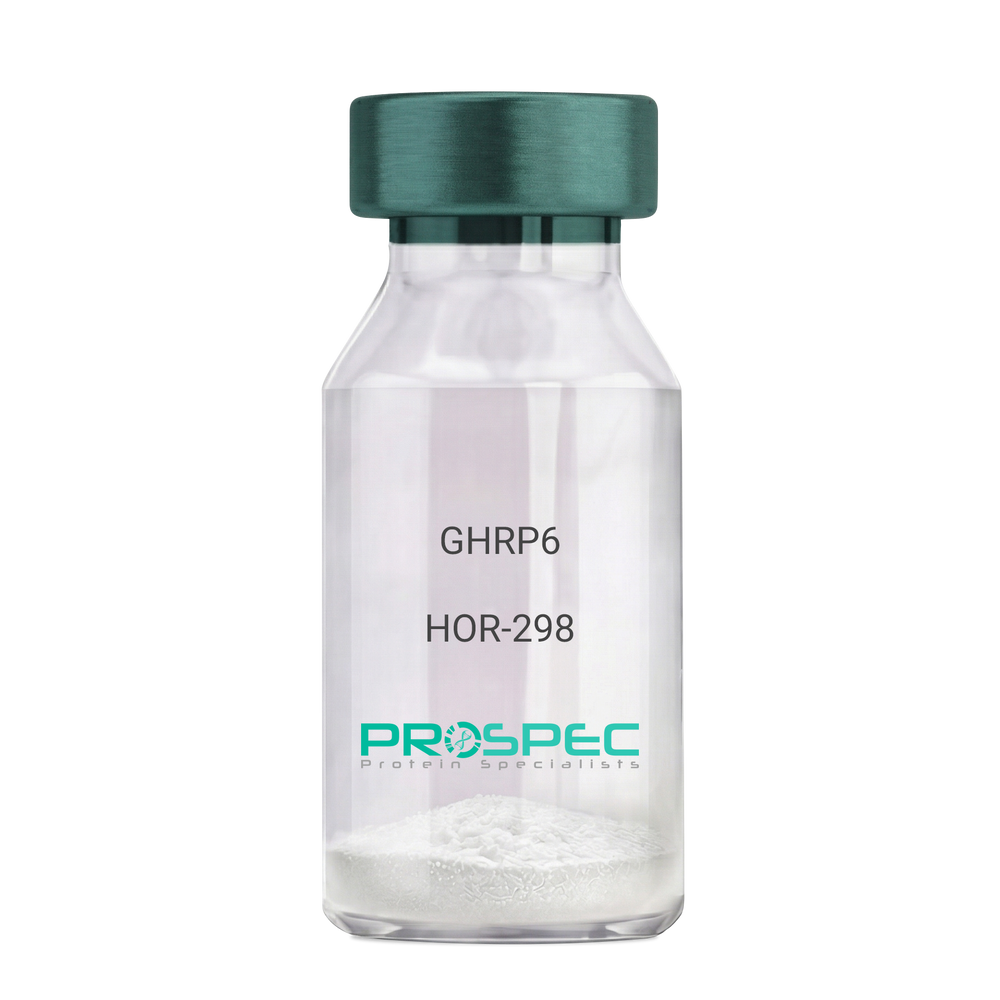
GHRP6Description:
Growth Hormone Releasing Peptide-6
GHRP-6, GHRP6
Product # :
HOR-298Price :
Quantity :
Shipping Method :
Shipped at Room temp
More Info
- description
- formulation
- purity
- More Info
Description
Growth Hormone Releasing Peptide-6 Synthetic is a single, non-glycosylated polypeptide chain containing 6 amino acids, having a molecular mass of 873 Dalton and a Molecular formula of C46H56N12O6.
Formulation
The GHRP-6 peptide was lyophilized with no additives.
Purity
Greater than 98.0% as determined by analysis by RP-HPLC.
More Info
-
Introduction
GH-releasing peptides (GHRPs) are synthetic peptides that like GHRH act directly on pituitary somatotrophs to stimulate GH release. Growth hormone (GH) release is stimulated by a variety of synthetic secretagogues, of which growth hormone-releasing hexapeptide (GHRP-6) has been most thoroughly studied; it is thought to have actions at both pituitary and hypothalamic site.
-
Synonyms
GHRP-6, GHRP6
-
Physical Appearance
Sterile Filtered White lyophilized (freeze-dried) powder.
-
Stability
Lyophilized Growth Hormone Releasing Peptide-6 although stable at room temperature for 3 weeks, should be stored desiccated below -18°C. Upon reconstitution GHRP-6 should be stored at 4°C between 2-7 days and for future use below -18°C. For long term storage it is recommended to add a carrier protein (0.1% HSA or BSA).Please prevent freeze-thaw cycles.
-
Solubility
It is recommended to reconstitute the lyophilized GHRP-6 in sterile 18MΩ-cm H2O not less than 100 µg/ml, which can then be further diluted to other aqueous solutions.
-
Amino Acid Sequence
His-D-Trp-Ala-Trp-D-Phe-Lys-NH2.
ProSpec's products are furnished for LABORATORY RESEARCH USE ONLY. The product may not be used as drugs, agricultural or pesticidal products, food additives or household chemicals.
- View Data Sheet
Name :
SERPINA3 HumanDescription:
Alpha-1 AntiChymotrypsin Human
Alpha-1-antichymotrypsin, ACT, Cell growth-inhibiting gene 24/25 protein, SERPINA3, AACT, A1ACT, GIG24, GIG25, MGC88254.
Product # :
PRO-378Price :
Quantity :
Shipping Method :
Shipped at Room temp
More Info
- description
- source
- formulation
- purity
- More Info
Description
Human Alpha-1 AntiChymotrypsin produced from normal human serum having a molecular mass of 68kDa.
Source
Human Serum.
Formulation
Lyophilized from 0.02M Tris-buffer,pH-7.5 and 0.15M Nacl.
Purity
Greater than 90.0%.
More Info
-
Introduction
Alpha 1 ACT is an early-stage acute-phase plasma protein and a serpin that preferentially inactivates chymotrypsin, cathepsin G, and chymase. Alpha-1- ACT, a serine protease inhibitor, is tightly associated with amyloid plaques in Alzheimer's disease (AD) and in normal aged human and monkey brain.
Regulation of the serine proteases and serine protease inhibitors plays an important role in neuromuscular differentiation. Prostate specific antigen (PSA), a chymotrypsin-like serine protease, is predominantly complexed to Alpha-1-ACT. -
Synonyms
Alpha-1-antichymotrypsin, ACT, Cell growth-inhibiting gene 24/25 protein, SERPINA3, AACT, A1ACT, GIG24, GIG25, MGC88254.
-
Physical Appearance
Sterile Filtered White lyophilized (freeze-dried) powder.
-
Stability
Human SERPINA3 although stable at room temperature for 3 weeks, should be stored between 2-8°C. Do not freeze.
-
Solubility
It is recommended to reconstitute the lyophilized human A1ACT in sterile 18MΩ-cm H2O at 1mg/ml, which can then be further diluted to other aqueous solutions.
-
Human Virus Test
Starting material tested and found negative for HIV I & II antibodies, Hepatitis B surface antigen, and Hepatitis C antibodies.
ProSpec's products are furnished for LABORATORY RESEARCH USE ONLY. The product may not be used as drugs, agricultural or pesticidal products, food additives or household chemicals.
- View Data Sheet
Name :
PNPLA2 AntibodyDescription:
Patatin-like phospholipase domain-containing protein 2, Mouse Anti Human
Patatin-like phospholipase domain-containing protein 2, Adipose triglyceride lipase, Desnutrin Transport-secretion protein 2, TTS2.2, Calcium-independent phospholipase A2, IPLA2-zeta Pigment epithelium-derived factor, TTS2, PNPLA2, ATGL, PEDF-R, FP17548, TTS-2.2, DKFZp667M109, 1110001C14Rik.
Product # :
ANT-684Price :
Quantity :
Shipping Method :
Shipped with Ice Packs
More Info
- formulation
- More Info
Formulation
1mg/ml containing PBS, pH-7.4, 10% Glycerol and 0.02% Sodium Azide.
More Info
-
Introduction
PNPLA2 is an enzyme which catalyzes the first step in the hydrolysis of triglycerides in adipose tissue. Mutations in the PNPLA2 gene are linked to neutral lipid storage disease with myopathy.
-
Synonyms
Patatin-like phospholipase domain-containing protein 2, Adipose triglyceride lipase, Desnutrin Transport-secretion protein 2, TTS2.2, Calcium-independent phospholipase A2, IPLA2-zeta Pigment epithelium-derived factor, TTS2, PNPLA2, ATGL, PEDF-R, FP17548, TTS-2.2, DKFZp667M109, 1110001C14Rik.
-
Physical Appearance
Sterile filtered colorless solution.
-
Immunogen
Anti-human PNPLA2 mAb, is derived from hybridization of mouse F0 myeloma cells with spleen cells from BALB/c mice immunized with a recombinant human PNPLA2 protein 30-504 amino acids purified from E. coli.
-
Ig Subclass
Mouse IgG2b heavy chain and k light chain.
-
Clone
PAT18E6AT.
-
Applications
PNPLA2 antibody has been tested by ELISA, Western blot analysis, Flow cytometry and ICC/IF to assure specificity and reactivity. Since application varies, however, each investigation should be titrated by the reagent to obtain optimal results.
-
Type
Mouse Anti Human Monoclonal.
-
Storage Procedures
For periods up to 1 month store at 4°C, for longer periods of time, store at -20°C. Prevent freeze thaw cycles.
-
Purification Method
PNPLA2 antibody was purified from mouse ascitic fluids by protein-A affinity chromatography.
ProSpec's products are furnished for LABORATORY RESEARCH USE ONLY. The product may not be used as drugs, agricultural or pesticidal products, food additives or household chemicals.
- View Data Sheet
Name :
GPI AntibodyDescription:
Glucose-6-Phosphate Isomerase, Mouse Anti Human
Glucose-6-phosphate isomerase, Phosphoglucose isomerase, Phosphohexose isomerase, Autocrine motility factor, Neuroleukin, Sperm antigen 36, GPI, PGI, PHI, AMF, NLK, SA-36, GNPI.
Product # :
ANT-613Price :
Quantity :
Shipping Method :
Shipped with Ice Packs
More Info
- formulation
- More Info
Formulation
1mg/ml containing PBS, pH-7.4, 10% Glycerol and 0.02% Sodium Azide.
More Info
-
Introduction
Glucose-6-phosphate isomerase (GPI) is a part of the GPI family whose members encode multifunctional phosphoglucose isomerase proteins involved in energy pathways. GPI is a dimeric enzyme which catalyzes the reversible isomerization of glucose-6-phosphate and fructose-6-phosphate. Mammalian GPI also functions as a tumor-secreted cytokine and an angiogenic factor (AMF) which stimulates endothelial cell motility. In addition, GPI is a neurotrophic factor (Neuroleukin) for spinal and sensory neurons. GPI performs in different capacities inside and outside the cell. In the cytoplasm, GPI is involved in glycolysis and gluconeogenesis, while outside the cell it acts as a neurotrophic factor for spinal and sensory neurons.
Defects in the GPI gene cause the nonspherocytic hemolytic anemia and a severe enzyme deficiency can be linked to hydrops fetalis, immediate neonatal death and neurological impairment.
-
Synonyms
Glucose-6-phosphate isomerase, Phosphoglucose isomerase, Phosphohexose isomerase, Autocrine motility factor, Neuroleukin, Sperm antigen 36, GPI, PGI, PHI, AMF, NLK, SA-36, GNPI.
-
Physical Appearance
Sterile filtered colorless solution.
-
Immunogen
Anti-human GPI mAb, clone PAT22G2AT, is derived from hybridization of mouse F0 myeloma cells with spleen cells from BALB/c mice immunized with a recombinant human GPI protein 1-558 amino acids purified from E. coli.
-
Ig Subclass
Mouse IgG2a heavy chain and k light chain.
-
Clone
PAT22G2AT.
-
Applications
The antibody has been tested by ELISA, Western blot analysis, Flow cytometry and ICC/IF to assure specificity and reactivity. Since application varies, however, each investigation should be titrated by the reagent to obtain optimal results.
-
Type
Mouse Anti Human Monoclonal.
-
Storage Procedures
For periods up to 1 month store at 4°C, for longer periods of time, store at -20°C. Prevent freeze thaw cycles.
-
Purification Method
GPI antibody was purified from mouse ascitic fluids by protein-A affinity chromatography.
ProSpec's products are furnished for LABORATORY RESEARCH USE ONLY. The product may not be used as drugs, agricultural or pesticidal products, food additives or household chemicals.
- View Data Sheet
Name :
PSMD10 AntibodyDescription:
Gankyrin, Mouse Anti Human
26S proteasome non-ATPase regulatory subunit 10, 26S proteasome regulatory subunit p28, Gankyrin, PSMD10, p28, dJ889N15.2.
Product # :
ANT-609Price :
Quantity :
Shipping Method :
Shipped with Ice Packs
More Info
- formulation
- More Info
Formulation
1mg/ml containing PBS, pH-7.4, 10% Glycerol and 0.02% Sodium Azide.
More Info
-
Introduction
Gankyrin (proteasome 26S subunit) is a multicatalytic proteinase oncoprotein commonly overexpressed in most hepatocellular carcinomas. Proteasomes are found throughout eukaryotic cells at a high concentrations and cleave peptides in an ATP/ubiquitin-dependent process in a non-lysosomal pathway. Gankyrin interacts with S6 ATPase of the 19S regulatory particle of the 26S proteasome. Gankyrin is involved in theregulation of the phosphorylation of the retinoblastoma protein by CDK4, and to enhance the ubiquitinylation of p53 by MDM2. Gankyrin consists of 7 ankyrin repeats and is structurally similar to I kappa Bs. Gankyrin acts as a regulatory subunit of the 26s proteasome which is involved in the atp-dependent degradation of ubiquitinated proteins. Gankyrin is involved in progression of esophageal squamous cell carcinoma. gankyrin plays an oncogenic role especially in early stages of human epatocarcinogenesis. Gankyrin binds to NF-kappaB and suppresses its activity at the transcription level by modulating acetylation through SIRT1. Structural comparison between Gankyrin & p16(INK4A) identified numerous residues of gankyrin that are potentially important for CDK4 binding.
-
Synonyms
26S proteasome non-ATPase regulatory subunit 10, 26S proteasome regulatory subunit p28, Gankyrin, PSMD10, p28, dJ889N15.2.
-
Physical Appearance
Sterile filtered colorless solution.
-
Immunogen
Anti-human PSMD10 mAb, is derived from hybridization of mouse F0 myeloma cells with spleen cells from BALB/c mice immunized with a recombinant human PSMD10 protein 1-226 amino acids purified from E.coli.
-
Ig Subclass
Mouse IgG1 heavy chain and k light chain.
-
Clone
PAT1F4AT.
-
Applications
PSMD10 antibody has been tested by ELISA, Western blot analysis, Flow cytometry and ICC/IF to assure specificity and reactivity. Since application varies, however, each investigation should be titrated by the reagent to obtain optimal results.
-
Type
Mouse Anti Human Monoclonal.
-
Storage Procedures
For periods up to 1 month store at 4°C, for longer periods of time, store at -20°C. Prevent freeze thaw cycles.
-
Purification Method
PSMD10 antibody was purified from mouse ascitic fluids by protein-A affinity chromatography.
ProSpec's products are furnished for LABORATORY RESEARCH USE ONLY. The product may not be used as drugs, agricultural or pesticidal products, food additives or household chemicals.
- View Data Sheet
Name :
CHODL HumanDescription:
Chondrolectin Human Recombinant
Chondrolectin, Transmembrane Protein MT75, C21orf68, Chromosome 21 Open Reading Frame 68, PRED12, MT75, CHODL.
Product # :
PRO-1964Price :
Quantity :
Shipping Method :
Shipped with Ice Packs
More Info
- description
- source
- formulation
- purity
- More Info
Description
CHODL Human Recombinant produced in E.coli is a single, non-glycosylated polypeptide chain containing 220 amino acids (22-216) and having a molecular mass of 24.6 kDa.CHODL is fused to a 25 amino acid His-tag at N-terminus & purified by proprietary chromatographic techniques.
Source
Escherichia Coli.
Formulation
The CHODL solution (1mg/ml) contains 20mM Tris-HCl buffer (pH 8.0), 0.15M NaCl, 10% glycerol and 1mM DTT.
Purity
Greater than 90.0% as determined by SDS-PAGE.
More Info
-
Introduction
Chondrolectin (CHODL) is a type I membrane protein with a carbohydrate recognition domain characteristic of C-type lectins in its extracellular portion. In other proteins, this domain is involved in endocytosis of glycoproteins and exogenous sugar-bearing pathogens. The CHODL protein localizes mainly to the perinuclear region.
-
Synonyms
Chondrolectin, Transmembrane Protein MT75, C21orf68, Chromosome 21 Open Reading Frame 68, PRED12, MT75, CHODL.
-
Physical Appearance
Sterile Filtered colorless solution.
-
Stability
Store at 4°C if entire vial will be used within 2-4 weeks. Store, frozen at -20°C for longer periods of time. For long term storage it is recommended to add a carrier protein (0.1% HSA or BSA).Avoid multiple freeze-thaw cycles.
-
Amino Acid Sequence
MGSSHHHHHH SSGLVPRGSH MGSFCRRVVS GQKVCFADFK HPCYKMAYFH ELSSRVSFQE ARLACESEGG VLLSLENEAE QKLIESMLQN LTKPGTGISD GDFWIGLWRN GDGQTSGACP DLYQWSDGSN SQYRNWYTDE PSCGSEKCVV MYHQPTANPG LGGPYLYQWN DDRCNMKHNY ICKYEPEINP TAPVEKPYLT NQPGDTHQNV VVTEAGIIPN.
ProSpec's products are furnished for LABORATORY RESEARCH USE ONLY. The product may not be used as drugs, agricultural or pesticidal products, food additives or household chemicals.
- View Data Sheet
Name :
EPO, Clone PAT1C12ATDescription:
Erythropoietin clone PAT1C12AT, Mouse Anti Human
EPO-a, EPO-alpha, Epoetin, EP, MGC138142.
Product # :
ANT-744Price :
Quantity :
Shipping Method :
Shipped with Ice Packs
More Info
- formulation
- More Info
Formulation
1mg/ml containing PBS, pH-7.4, 10% Glycerol and 0.02% Sodium Azide.
More Info
-
Introduction
EPO is a member of the EPO/TPO family and encodes a secreted, glycosylated cytokine composed of 4 alpha helical bundles. EPO is found in the plasma and regulates red cell production by promoting erythroid differentiation and initiating hemoglobin synthesis. EPO also has neuroprotective activity against a variety of potential brain injuries and antiapoptotic functions in several tissue types.
-
Synonyms
EPO-a, EPO-alpha, Epoetin, EP, MGC138142.
-
Physical Appearance
Sterile filtered colorless solution.
-
Stability
For periods up to 1 month store at 4°C, for longer periods of time, store at -20°C. Prevent freeze thaw cycles
-
Ig Subclass
Mouse IgG1 heavy chain and k light chain.
-
Clone
PAT1C12AT.
-
Type
Mouse Anti Human Monoclonal.
-
Purification Method
EPO antibody was purified from mouse ascitic fluids by protein-A affinity chromatography.
ProSpec's products are furnished for LABORATORY RESEARCH USE ONLY. The product may not be used as drugs, agricultural or pesticidal products, food additives or household chemicals.
- View Data Sheet
Name :
PPIC AntibodyDescription:
Peptidylprolyl Isomerase C, Mouse Anti Human
Peptidyl-prolyl cis-trans isomerase C, PPIase C, Cyclophilin C, Rotamase C, PPIC, CYPC.
Product # :
ANT-069Price :
Quantity :
Shipping Method :
Shipped with Ice Packs
More Info
- formulation
- More Info
Formulation
1mg/ml containing PBS, pH-7.4, & 0.1% Sodium Azide.
More Info
-
Introduction
Peptidylprolyl Isomerase C (PPIC) belongs to the peptidyl-prolyl cis-trans isomerase (PPIase) family. PPIases catalyze the cis-trans isomerization of proline imidic peptide bonds in oligopeptides and hasten the folding of proteins. Like other PPIases, PPIC binds immunosuppressant cyclosporin A.
-
Synonyms
Peptidyl-prolyl cis-trans isomerase C, PPIase C, Cyclophilin C, Rotamase C, PPIC, CYPC.
-
Immunogen
Anti-human PPIC mAb, is derived from hybridization of mouse FO myeloma cells with spleen cells from BALB/c mice immunized with recombinant human PPIC amino acids 39-197 purified from E. coli.
-
Ig Subclass
Mouse IgG2b heavy chain and k light chain.
-
Clone
PAT3C6AT.
-
Applications
PPIC antibody has been tested by ELISA, Western blot analysis to assure specificity and reactivity. Since application varies, however, each investigation should be titrated by the reagent to obtain optimal results. Recommended dilution range for Western blot analysis is 1:1000.
-
Type
Mouse Anti Human Monoclonal.
-
Storage Procedures
For periods up to 1 month store at 4°C, for longer periods of time, store at -20°C. Prevent freeze thaw cycles.
-
Purification Method
PPIC antibody was purified from mouse ascitic fluids by protein-G affinity chromatography.
ProSpec's products are furnished for LABORATORY RESEARCH USE ONLY. The product may not be used as drugs, agricultural or pesticidal products, food additives or household chemicals.
- View Data Sheet
Name :
SMNDC1 HumanDescription:
Survival Motor Neuron Domain Containing 1 Human Recombinant
SMNR, SMN-related protein, SPF30, Survival Motor Neuron Domain Containing 1, 30kDa Splicing Factor SMNrp, Splicing Factor 30, Survival of Motor Neuron-related.
Product # :
PRO-035Price :
Quantity :
Shipping Method :
Shipped with Ice Packs
More Info
- description
- source
- formulation
- purity
- More Info
Description
SMNDC1 produced in E.Coli is a single, non-glycosylated polypeptide chain containing 258 amino acids (1-238a.a.) and having a molecular mass of 28.9kDa.SMNDC1 is fused to a 20 amino acid His-tag at N-terminus & purified by proprietary chromatographic techniques.
Source
Escherichia Coli.
Formulation
The SMNDC1 protein solution (0.5mg/1ml) is formulated in 20mM Tris-HCl buffer (pH8.0) 1mM DTT, 100mM NaCl and 10% glycerol.
Purity
Greater than 90% as determined by SDS-PAGE.
More Info
-
Introduction
SMNDC1 is a vital splicing factor obligatory for spliceosome assembly which is a part of the SMN family. SMNDC1 has one Tudor domain with significant similarity to Survival Motor Neuron (SMN) and is expressed in heart, pancreas and skeletal muscle, localizing to Cajal bodies and nuclear speckles. Mutations in SMNDC1 are cause of autosomal recessive proximal spinal muscular atrophy.
-
Synonyms
SMNR, SMN-related protein, SPF30, Survival Motor Neuron Domain Containing 1, 30kDa Splicing Factor SMNrp, Splicing Factor 30, Survival of Motor Neuron-related.
-
Physical Appearance
Sterile Filtered clear solution.
-
Stability
Store at 4°C if entire vial will be used within 2-4 weeks. Store, frozen at -20°C for longer periods of time.Please avoid freeze thaw cycles.
-
Amino Acid Sequence
MGSSHHHHHH SSGLVPRGSH MSEDLAKQLA SYKAQLQQVE AALSGNGENE DLLKLKKDLQ EVIELTKDLL STQPSETLAS SDSFASTQPT HSWKVGDKCM AVWSEDGQCY EAEIEEIDEE NGTAAITFAG YGNAEVTPLL NLKPVEEGRK AKEDSGNKPM SKKEMIAQQR EYKKKKALKK AQRIKELEQE REDQKVKWQQ FNNRAYSKNK KGQVKRSIFA SPESVTGKVG VGTCGIADKP MTQYQDTSKY NVRHLMPQ
ProSpec's products are furnished for LABORATORY RESEARCH USE ONLY. The product may not be used as drugs, agricultural or pesticidal products, food additives or household chemicals.
- View Data Sheet
Name :
TK2 HumanDescription:
Thymidine Kinase 2 Human Recombinant
Thymidine kinase 2 mitochondrial, Mt-TK, TK2, MTTK, MTDPS2.
Product # :
PKA-041Price :
Quantity :
Shipping Method :
Shipped with Ice Packs
More Info
- description
- source
- formulation
- purity
- More Info
Description
TK2 Human Recombinant produced in E.Coli is a single, non-glycosylated polypeptide chain containing 257 amino acids (34-265 a.a) and having a molecular mass of 30.2kDa.TK2 is fused to a 25 amino acid His-tag at N-terminus & purified by proprietary chromatographic techniques.
Source
E.coli.
Formulation
TK2 protein solution (0.5mg/ml) containing 20mM Tris-HCl buffer, pH8.0, 30% glycerol, 2mM DTT and 200mM NaCl.
Purity
Greater than 85% as determined by SDS-PAGE.
More Info
-
Introduction
Thymidine kinase 2 mitochondrial (TK2) is a member of the DCK/DGK family. TK2 is an enzyme, a phosphotransferase (a kinase): 2'-deoxythymidine kinase, ATP-thymidine 5'-phosphotransferase. Thymidine kinase is found in most living cells. Thymidine kinase is present in 2 forms in mammalian cells, TK1 and TK2. Thymidine kinases have a central function in the synthesis of DNA and thus in cell division, since they are part of the exceptional reaction chain to introduce deoxythymidine into the DNA. TK2 is a deoxyribonucleoside kinase which specifically phosphorylates thymidine, deoxycytidine, and deoxyuridine. TK2 localizes to the mitochondria and is essential for mitochondrial DNA synthesis. TK2 gene defects are a cause of mitochondrial DNA depletion syndrome type 2 (MTDPS2).
-
Synonyms
Thymidine kinase 2 mitochondrial, Mt-TK, TK2, MTTK, MTDPS2.
-
Physical Appearance
Sterile Filtered colorless solution.
-
Stability
Store at 4°C if entire vial will be used within 2-4 weeks. Store, frozen at -20°C for longer periods of time. For long term storage it is recommended to add a carrier protein (0.1% HSA or BSA).Avoid multiple freeze-thaw cycles.
-
Amino Acid Sequence
MGSSHHHHHH SSGLVPRGSH MGSHMVQRRA WPPDKEQEKE KKSVICVEGN IASGKTTCLE FFSNATDVEV LTEPVSKWRN VRGHNPLGLM YHDASRWGLT LQTYVQLTML DRHTRPQVSS VRLMERSIHS ARYIFVENLY RSGKMPEVDY VVLSEWFDWI LRNMDVSVDL IVYLRTNPET CYQRLKKRCR EEEKVIPLEY LEAIHHLHEE WLIKGSLFPM AAPVLVIEAD HHMERMLELF EQNRDRILTP ENRKHCP.
ProSpec's products are furnished for LABORATORY RESEARCH USE ONLY. The product may not be used as drugs, agricultural or pesticidal products, food additives or household chemicals.
- View Data Sheet
Name :
KEL MouseDescription:
Kell Metallo-Endopeptidase Mouse Recombinant
kell blood group antigen, kell blood group glycoprotein, Kell blood group, Kell blood group glycoprotein homolog, KEL, Kell, CD238 antigen, CD238, ECE3, Kell blood group-metalloendopeptidase, Kell blood group-metalloendopeptidase.
Product # :
ENZ-1158Price :
Quantity :
Shipping Method :
Shipped with Ice Packs
More Info
- description
- source
- formulation
- purity
- More Info
Description
KEL Mouse produced in Sf9 Baculovirus cells is a single, glycosylated polypeptide chain containing 674 amino acids (49-713 aa) and having a molecular mass of 76.3kDa.KEL is fused to a 9 amino acid His tag at C-terminus and purified by proprietary chromatographic techniques.
Source
Sf9, Baculovirus cells.
Formulation
The KEL solution (0.25mg/ml) contains 10% Glycerol and Phosphate-Buffered Saline (pH 7.4).
Purity
Greater than 90.0% as determined by SDS-PAGE.
More Info
-
Introduction
Kell blood group glycoprotein homolog or KEL, is an enzyme, part of the zinc endopeptidase of the neprilysin (NEP) group of proteins. KEL has a crucial part in the production of the potent bioactive ET-3, which also includes enzymes that are endothelin convertingenzymes (PEX, XCE, DINE &various NEP-like proteins). KEL uses a single disulfide bond to XK, a gated membranal transporter. The Kell antigen system that includes two proteins, is very crucial among blood group systems.
-
Synonyms
kell blood group antigen, kell blood group glycoprotein, Kell blood group, Kell blood group glycoprotein homolog, KEL, Kell, CD238 antigen, CD238, ECE3, Kell blood group-metalloendopeptidase, Kell blood group-metalloendopeptidase.
-
Physical Appearance
Sterile Filtered colorless solution.
-
Stability
Store at 4°C if entire vial will be used within 2-4 weeks. Store, frozen at -20°C for longer periods of time. For long term storage it is recommended to add a carrier protein (0.1% HSA or BSA).Avoid multiple freeze-thaw cycles.
-
Amino Acid Sequence
ADPIFRNCGP CPCETPVCME LLDHYLASGN RSVAPCTDFF SFACEKANGT SDSFQALTEE NKSRLWRLLE APGSWHLGSG EEKAFQFYNS CMDTDAIEAS GSGPLIQIIE ELGGWNITGN WTSLDFNQNL RLLMSQYGHF PFFRAYLRPH PAPPHTPIIQ IDQPEFDILL QQEQEQKVYA QILREYVTYL NRLGTLLGSN PQEAQQHASW SIVFTSRLFQ FLRPQQQQQA QDKLFHVVTI DELQEMAPAI DWLSCLQAIF TPMSLNSSQT LVVHDLDYLR NMSQLVEEGL LNHRESIQSY MILGLVDTLS PALDTKFQEA RRELIQELRK LKERPPLPAY PRWMKCVEQT GAFFEPTLAA LFVREAFGPS IQSAAMELFA EIKDAVIIRL KKLSWISEET QKEALNKLAQ LQVEMGAPKR AVKPDIATQE YNDIQLGPSF LQSFLSCVRS LRARNVQSFL QPFPYHRWQK SPWEVNAYYS ISDHMVVFPA GLLQPPFFHP GYPRAVNFGA AGSIMAHELL HIFYQLLLPG GCPACDTHVL QEALLCLERH YAAFPLPSIS SFNGSHTLLE NAADIGGVAI AFQAYSKRIV EHTGELTLPN LDLSPYQLFF RSYAQVMCRG LSSQDPQDPH SPPSLRVHGP LSNTPDFAKH FHCPRGTLLN PSARCKLWHH HHHH.
ProSpec's products are furnished for LABORATORY RESEARCH USE ONLY. The product may not be used as drugs, agricultural or pesticidal products, food additives or household chemicals.
- View Data Sheet
Name :
LPL Human, HEKDescription:
Lipoprotein Lipase Human Recombinant, HEK
Lipoprotein lipase, LPL, LIPD, HDLCQ11.
Product # :
ENZ-087Price :
Quantity :
Shipping Method :
Shipped at Room temp
More Info
- description
- source
- formulation
- More Info
Description
The Recombinant Human LPL produced in HEK293 cell line has a molecular mass of 51.8kDa containing 461 amino acid residues of the human LPL (Ala28-Gly475, variant Asn > Ser318) and fused to a 13 a.a. Flag-tag at N-terminus.
Source
HEK293 (Human Embryonic Kidney cell line).
Formulation
LPL was filtered (0.4 µm) and lyophilized from 0.5mg/ml in 20mM Tris buffer and 50mM NaCl, pH 7.5.
More Info
-
Introduction
LPL is a lipoprotein lipase, which is expressed in the heart, muscle, and adipose tissue. LPL acts as a homodimer, and has the dual functions of triglyceride hydrolase and ligand/bridging factor for receptor-mediated lipoprotein uptake. Type I hyperlipoproteinemia is a result of severe mutations which cause LPL deficiency, whereas less extreme mutations in LPL are linked to many disorders of lipoprotein metabolism. Lipoprotein lipase (LPL) is a fundamental enzyme in plasma triglyceride hydrolysis and is secreted by macrophages in the subendothelial space. LPL also promotes the development of atherosclerosis through facilitation of monocyte adhesion to endothelial cells, stimulation of tumor necrosis factor alpha (TNF) secretion and induction of vascular smooth muscle cell proliferation.
-
Synonyms
Lipoprotein lipase, LPL, LIPD, HDLCQ11.
-
Physical Appearance
Filtered white lyophilized powder.
-
Stability
Store lyophilized protein at -20°C. Aliquot the product after reconstitution to avoid repeated freezing/thawing cycles. Reconstituted protein can be stored at 4°C for a limited period of time; it does not show any change after two weeks at 4°C.
-
Solubility
It is recommended to add deionized water to prepare a working stock solution of approximately 0.5 mg/ml and let the lyophilized pellet dissolve completely. Product is not sterile! Please filter the product by an appropriate sterile filter before using it in the cell culture.
-
Amino Acid Sequence
HVDYKDDDDK PAGADQRRDF IDIESKFALR TPEDTAEDTC HLIPGVAESV ATCHFNHSSK TFMVIHGWTV TGMYESWVPK ADQRRDF IDIESKFALR TPEDTAEDTC HLIPGVAESV ATCHFNHSSK TFMVIHGWTV TGMYESWVPK LVAALYKREP DSNVIVVDWL SRAQEHYPVS AGYTKLVGQD VARFINWMEE EFNYPLDNVH LLGYSLGAHA AGIAGSLTNK KVNRITGLDP AGPNFEYAEA PSRLSPDDAD FVDVLHTFTR GSPGRSIGIQ KPVGHVDIYP NGGTFQPGCN IGEAIRVIAE RGLGDVDQLV KCSHERSIHL FIDSLLNEEN PSKAYRCSSK EAFEKGLCLS CRKNRCNNLG YEISKVRAKR SSKMYLKTRS QMPYKVFHYQ VKIHFSGTES ETHTNQAFEI SLYGTVAESE NIPFTLPEVS TNKTYSFLIY TEVDIGELLM LKLKWKSDSY FSWSDWWSSP GFAIQKIRVK AGETQKKVIF CSREKVSHLQ KGKAPAVFVK CHDKSLNKKS G.
ProSpec's products are furnished for LABORATORY RESEARCH USE ONLY. The product may not be used as drugs, agricultural or pesticidal products, food additives or household chemicals.
- View Data Sheet
Name :
DPH3P1 HumanDescription:
Diphthamide Biosynthesis 3 Pseudogene 1 Human Recombinant
Diphthamide Biosynthesis 3 Pseudogene 1, C20orf143, DPH3B, ZCSL1, CSL-Type Zinc Finger-Containing Protein 1, Chromosome 20 Open Reading Frame 143, DPH3, KTI11 Homolog (S. Cerevisiae) Pseudogene, DPH3B, KTI11 Homolog B (S. Cerevisiae), Zinc Finger, CSL-Type Containing 1, DPH3 Homolog B (KTI11, S. Cerevisiae), Putative DPH3 Homolog B, Zinc Finger, CSL Domain Containing 1.
Product # :
PRO-1914Price :
Quantity :
Shipping Method :
Shipped with Ice Packs
More Info
- description
- source
- formulation
- purity
- More Info
Description
DPH3P1 Human Recombinant produced in E.Coli is a single, non-glycosylated polypeptide chain containing 101 amino acids (1-78 a.a) and having a molecular mass of 11.1kDa.DPH3P1 is fused to a 23 amino acid His-tag at N-terminus & purified by proprietary chromatographic techniques.
Source
Escherichia Coli.
Formulation
DPH3P1 protein solution (0.5mg/ml) containing 20mM Tris-HCl buffer (pH8.0) and 10% glycerol.
Purity
Greater than 90.0% as determined by SDS-PAGE.
More Info
-
Introduction
Diphthamide Biosynthesis 3 Pseudogene 1 also known as DPH3P1 may stand for a processed pseudogene of DPH3 since it lacks the exon/intron structurefound in the functional gene. Yet, DPH3P1 does contain an intact open reading frame, though its translation has not been established.
-
Synonyms
Diphthamide Biosynthesis 3 Pseudogene 1, C20orf143, DPH3B, ZCSL1, CSL-Type Zinc Finger-Containing Protein 1, Chromosome 20 Open Reading Frame 143, DPH3, KTI11 Homolog (S. Cerevisiae) Pseudogene, DPH3B, KTI11 Homolog B (S. Cerevisiae), Zinc Finger, CSL-Type Containing 1, DPH3 Homolog B (KTI11, S. Cerevisiae), Putative DPH3 Homolog B, Zinc Finger, CSL Domain Containing 1.
-
Physical Appearance
Sterile Filtered clear solution.
-
Stability
Store at 4°C if entire vial will be used within 2-4 weeks. Store, frozen at -20°C for longer periods of time.For long term storage it is recommended to add a carrier protein (0.1% HSA or BSA).Please avoid freeze thaw cycles.
-
Amino Acid Sequence
MGSSHHHHHH SSGLVPRGSH MGSMAVFHDE VEIEDFQYDE DSETYFCPCP CGDNFSITKE ELENGEGVAM CPGCSLIIKV IYDKDQFACG ETVPVPSVNK E
ProSpec's products are furnished for LABORATORY RESEARCH USE ONLY. The product may not be used as drugs, agricultural or pesticidal products, food additives or household chemicals.
- View Data Sheet
Name :
KISS1 HumanDescription:
KISS-1 Metastasis-Suppressor Human Recombinant
Kisspeptin-1, KISS-1, METASTIN, Metastasis-suppressor KiSS-1, KISS1, MGC39258.
Product # :
PRO-419Price :
Quantity :
Shipping Method :
Shipped with Ice Packs
More Info
- description
- source
- formulation
- purity
- More Info
Description
KISS1 Human Recombinant produced in E.Coli is a single, non-glycosylated polypeptide chain containing 120 amino acids (20-138) and having a molecular mass of 12.6 Dalton. The KISS1 is purified by proprietary chromatographic techniques.
Source
Escherichia Coli.
Formulation
The protein solution (1mg/ml) contains 20mM Tris-HCl pH-8, 1mM DTT & 10% glycerol.
Purity
Greater than 90.0% as determined by SDS-PAGE.
More Info
-
Introduction
KISS1 is a metastasis suppressor protein that suppresses metastases of melanomas and breast carcinomas without affecting tumorigenicity.KISS1 functions to inhibit chemotaxis and invasion, attenuating metastasis in malignant melanomas. KISS1 is involved in the regulation of cell-matrix adhesion. KISS1 plays a role in cytoskeletal reorganization. A polymorphism in the terminal exon of KISS1 mRNA results in two protein isoforms. Expression of KiSS1 is localized to specific regions of the hypothalamus in numerous species and is regulated by gonadal steroids and across the estrous cycle..KISS1 generates a c-terminally amidated peptide, metastin which functions as the endogenous ligand of the g-protein coupled receptor gpr54. Activation of the receptor inhibits cell proliferation and cell migration, key characteristics of tumor metastasis.
-
Synonyms
Kisspeptin-1, KISS-1, METASTIN, Metastasis-suppressor KiSS-1, KISS1, MGC39258.
-
Physical Appearance
Sterile Filtered colorless solution.
-
Stability
Store at 4°C if entire vial will be used within 2-4 weeks. Store, frozen at -20°C for longer periods of time. For long term storage it is recommended to add a carrier protein (0.1% HSA or BSA).Please prevent freeze-thaw cycles.
-
Amino Acid Sequence
MEPLEKVASV GNSRPTGQQL ESLGLLAPGE QSLPCTERKP AATARLSRRG TSLSPPPESS GSPQQPGLSA PHSRQIPAPQ GAVLVQREKD LPNYNWNSFG LRFGKREAAP GNHGRSAGRG.
ProSpec's products are furnished for LABORATORY RESEARCH USE ONLY. The product may not be used as drugs, agricultural or pesticidal products, food additives or household chemicals.
- View Data Sheet
Name :
UTP23 HumanDescription:
UTP23, Small Subunit Processome Component Human Recombinant
UTP23 Small Subunit (SSU) Processome Component, Homolog (Yeast), Chromosome 8 Open Reading Frame 53, RRNA-Processing Protein UTP23 Homolog, MGC14595, C8orf53.
Product # :
PRO-1235Price :
Quantity :
Shipping Method :
Shipped with Ice Packs
More Info
- description
- source
- formulation
- purity
- More Info
Description
UTP23 Human Recombinant produced in E. coli is a single polypeptide chain containing 272 amino acids (1-249) and having a molecular mass of 30.8 kDa.UTP23 is fused to a 23 amino acid His-tag at N-terminus & purified by proprietary chromatographic techniques.
Source
E.coli.
Formulation
The UTP23 solution contains 20mM Tris-HCl buffer (pH 8.0), 0.2M NaCl, 1mM DTT and 20% glycerol.
Purity
Greater than 90% as determined by SDS-PAGE.
More Info
-
Introduction
rRNA-processing protein UTP23 homolog (UTP23) is a small subunit (SSU) processome component. The SSU processome is a complex involved in ribosome biogenesis and essential for pre-18S rRNA maturation. UTP23 is vital for the first 3 cleavage steps in 18S rRNA maturation. Furthermore, single-point mutations in the conserved putative active site of Utp24 but not Utp23 annul its function in ribosome biogenesis.
-
Synonyms
UTP23 Small Subunit (SSU) Processome Component, Homolog (Yeast), Chromosome 8 Open Reading Frame 53, RRNA-Processing Protein UTP23 Homolog, MGC14595, C8orf53.
-
Physical Appearance
Sterile Filtered colorless solution.
-
Stability
Store at 4°C if entire vial will be used within 2-4 weeks. Store, frozen at -20°C for longer periods of time. For long term storage it is recommended to add a carrier protein (0.1% HSA or BSA).Avoid multiple freeze-thaw cycles.
-
Amino Acid Sequence
MGSSHHHHHH SSGLVPRGSH MGSMKITRQK HAKKHLGFFR NNFGVREPYQ ILLDGTFCQA ALRGRIQLRE QLPRYLMGET QLCTTRCVLK ELETLGKDLY GAKLIAQKCQ VRNCPHFKNA VSGSECLLSM VEEGNPHHYF VATQDQNLSV KVKKKPGVPL MFIIQNTMVL DKPSPKTIAF VKAVESGQLV SVHEKESIKH LKEEQGLVKN TEQSRRKKRK KISGPNPLSC LKKKKKAPDT QSSASEKKRK RKRIRNRSNP KVLSEKQNAE GE
ProSpec's products are furnished for LABORATORY RESEARCH USE ONLY. The product may not be used as drugs, agricultural or pesticidal products, food additives or household chemicals.
- View Data Sheet
Name :
MCSF Mouse, Sf9Description:
Macrophage Colony Stimulating Factor Mouse Recombinant, Sf9
M-Csf, Macrophage colony-stimulating factor 1, CSF-1, MCSF, Csf1, C87615, MCSF, op, Processedmacrophage colony-stimulating factor 1.
Product # :
CYT-1141Price :
Quantity :
Shipping Method :
Shipped with Ice Packs
More Info
- description
- source
- formulation
- purity
- biological activity
- More Info
Description
MCSF Mouse produced in Sf9 Baculovirus cells is a single, glycosylated polypeptide chain containing 164 amino acids (33-187 aa) and having a molecular mass of 19.1 kDa.MCSF is fused to a 6 amino acid His tag at C-terminus and purified by proprietary chromatographic techniques.
Source
Sf9, Baculovirus cells.
Formulation
The MCSF solution (1mg/ml) contains 10% Glycerol and Phosphate-Buffered Saline (pH 7.4).
Purity
Greater than 90.0% as determined by SDS-PAGE.
Biological Activity
Determined by cell proliferation assay using M-NFS-60 mouse myelogenous leukemia lymphoblast cells. ED50 range for this effect is ≤ 4ng/ml.
More Info
-
Introduction
Macrophage Colony Stimulating Factor (M CSF) or colony stimulating factor 1, is a cytokine, that promoted differentiation in hematopoietic stem cells to macrophages. Another role of M CSF is to bind to its receptor (colony stimulating factor 1 receptor) and to take part in placenta growth and development.
-
Synonyms
M-Csf, Macrophage colony-stimulating factor 1, CSF-1, MCSF, Csf1, C87615, MCSF, op, Processedmacrophage colony-stimulating factor 1.
-
Physical Appearance
Sterile Filtered colorless solution.
-
Stability
Store at 4°C if entire vial will be used within 2-4 weeks. Store, frozen at -20°C for longer periods of time. For long term storage it is recommended to add a carrier protein (0.1% HSA or BSA).Avoid multiple freeze-thaw cycles.
-
Amino Acid Sequence
ADPKEVSEHC SHMIGNGHLK VLQQLIDSQM ETSCQIAFEF VDQEQLDDPV CYLKKAFFLV
QDIIDETMRF KDNTPNANAT ERLQELSNNL NSCFTKDYEE QNKACVRTFH ETPLQLLEKI
KNFFNETKNL LEKDWNIFTK NCNNSFAKCS SRDVVTKPHH HHHH
ProSpec's products are furnished for LABORATORY RESEARCH USE ONLY. The product may not be used as drugs, agricultural or pesticidal products, food additives or household chemicals.
- View Data Sheet
Name :
MRRF AntibodyDescription:
Mitochondrial Ribosome Recycling Factor, Mouse Anti Human
MRFF, MTRRF, RRF, Ribosome-recycling factor, mitochondrial, Ribosome-releasing factor, mitochondrial.
Product # :
ANT-098Price :
Quantity :
Shipping Method :
Shipped with Ice Packs
More Info
- formulation
- More Info
Formulation
1mg/ml containing PBS, pH-7.4, 10% Glycerol and 0.01% Sodium Azide.
More Info
-
Introduction
Mitochondrial Ribosome Recycling Factor (MRRF) is a member of the RRF family. MRRF attaches to the large ribosomal subunit in the cleft which has a peptidyl transferase center. MRRF controls the release of ribosome from messenger RNA at the termination of protein biosynthesis. Also, it may intensify the efficacy of translation by recycling ribosome from one round of translation to another.
-
Synonyms
MRFF, MTRRF, RRF, Ribosome-recycling factor, mitochondrial, Ribosome-releasing factor, mitochondrial.
-
Physical Appearance
Sterile Filtered colorless solution.
-
Immunogen
Anti-human MRRF mAb, clone PAT7D10A, is derived from hybridization of mouse F0 myeloma cells with spleen cells from BALB/c mice immunized with a recombinant human MRRF protein 56-262 amino acids purified from E. coli.
-
Ig Subclass
Mouse IgG1 heavy chain and Kappa light chain.
-
Clone
PAT7D10A.
-
Applications
The antibody has been tested by ELISA and Western blot analysis to assure specificity and reactivity. Since application varies, however, each investigation should be titrated by the reagent to obtain optimal results. Recommended starting dilution is 1:1000.
-
Type
Mouse Anti Human Monoclonal.
-
Storage Procedures
For periods up to 1 month store at 4°C, for longer periods of time, store at -20°C. Prevent freeze thaw cycles.
-
Purification Method
MRRF antibody was purified from mouse ascitic fluids by protein-G affinity chromatography.
ProSpec's products are furnished for LABORATORY RESEARCH USE ONLY. The product may not be used as drugs, agricultural or pesticidal products, food additives or household chemicals.