Skip to content

High-quality research proteins.

  • 1-800-805-6531

  • Mon - Sat 8.00-18.00, Sun - Closed

  • info@prospecbio.com

  • PO Box 6591 East Brunswick NJ 08816

  • Products
    • Cytokines
    • Growth factors
    • Chemokines
    • Cd antigens
    • Neurotrophins
    • Hormones
    • Enzymes
    • Viral antigens
    • Recombinant proteins
    • Natural proteins
    • Monoclonal antibodies
    • Polyclonal antibodies
    • Thermal Packaging
  • About
    • Company
    • Founder
    • Contribution
  • Customers
    • Eastern Asia
    • Eastern Europe
    • North America
    • South America
    • South East Asia
    • Southern Asia
    • Western Europe
  • Ordering
    • Ordering Method
    • Ordering - Credit Card
    • Ordering - PO
    • Shipping Fees
    • FAQs
  • Services
    • DNA Cloning
    • Protein Expression
    • Monoclonal Antibody
    • Fermentation
    • Technology License
  • Contact us
Log in

Country/region

  • USD $ | Albania
  • USD $ | Andorra
  • USD $ | Argentina
  • USD $ | Armenia
  • USD $ | Australia
  • USD $ | Austria
  • USD $ | Azerbaijan
  • USD $ | Belarus
  • USD $ | Belgium
  • USD $ | Bolivia
  • USD $ | Brazil
  • USD $ | Bulgaria
  • USD $ | Cambodia
  • USD $ | Canada
  • USD $ | Chile
  • USD $ | China
  • USD $ | Colombia
  • USD $ | Costa Rica
  • USD $ | Croatia
  • USD $ | Cyprus
  • USD $ | Czechia
  • USD $ | Denmark
  • USD $ | Estonia
  • USD $ | Finland
  • USD $ | France
  • USD $ | Georgia
  • USD $ | Germany
  • USD $ | Greece
  • USD $ | Hong Kong SAR
  • USD $ | Hungary
  • USD $ | Iceland
  • USD $ | India
  • USD $ | Ireland
  • USD $ | Israel
  • USD $ | Italy
  • USD $ | Japan
  • USD $ | Kazakhstan
  • USD $ | Latvia
  • USD $ | Liechtenstein
  • USD $ | Lithuania
  • USD $ | Madagascar
  • USD $ | Malta
  • USD $ | Mexico
  • USD $ | Moldova
  • USD $ | Monaco
  • USD $ | Netherlands
  • USD $ | New Zealand
  • USD $ | North Macedonia
  • USD $ | Norway
  • USD $ | Panama
  • USD $ | Paraguay
  • USD $ | Peru
  • USD $ | Philippines
  • USD $ | Poland
  • USD $ | Portugal
  • USD $ | Romania
  • USD $ | Singapore
  • USD $ | Slovakia
  • USD $ | Slovenia
  • USD $ | South Africa
  • USD $ | South Korea
  • USD $ | Spain
  • USD $ | Sri Lanka
  • USD $ | Sweden
  • USD $ | Switzerland
  • USD $ | Taiwan
  • USD $ | Thailand
  • USD $ | Türkiye
  • USD $ | Ukraine
  • USD $ | United Kingdom
  • USD $ | United States
  • USD $ | Uruguay
  • USD $ | Vatican City
  • USD $ | Venezuela
  • USD $ | Vietnam
  • Facebook
  • Instagram
logoProSpec - Recombinant Protein Manufacturer for academic and R&D industry
Become a distributor
Account Log in
Wishlist
Cart Cart(0)
  • Products
    +
    • Cytokines
    • Growth factors
    • Chemokines
    • Cd antigens
    • Neurotrophins
    • Hormones
    • Enzymes
    • Viral antigens
    • Recombinant proteins
    • Natural proteins
    • Monoclonal antibodies
    • Polyclonal antibodies
    • Thermal Packaging
  • About
    +
    • Company
    • Founder
    • Contribution
  • Customers
    +
    • Eastern Asia
    • Eastern Europe
    • North America
    • South America
    • South East Asia
    • Southern Asia
    • Western Europe
  • Ordering
    +
    • Ordering Method
    • Ordering - Credit Card
    • Ordering - PO
    • Shipping Fees
    • FAQs
  • Services
    +
    • DNA Cloning
    • Protein Expression
    • Monoclonal Antibody
    • Fermentation
    • Technology License
  • Contact us

Item added to your cart

View cart
View All
  • Cytokines
  • Growth factors
  • Chemokines
  • Cd antigens
  • Neurotrophins
  • Hormones
  • Enzymes
  • Viral antigens
  • Recombinant proteins
  • Natural proteins
  • Monoclonal antibodies
  • Polyclonal antibodies
  • Thermal Packaging
  • Tumor Necrosis Factor

    Tumor Necrosis Factor

    View All
  • 4-1BB

    4-1BB

    View All
  • Adiponectin

    Adiponectin

    View All
  • AIF1

    AIF1

    View All
  • Other Cytokines

    Other Cytokines

    View All
  • AITRL

    AITRL

    View All
  • Angiopoietin

    Angiopoietin

    View All
  • Apolipoprotein

    Apolipoprotein

    View All
  • B-Cell Activating Factor

    B-Cell Activating Factor

    View All
  • Beta Defensin

    Beta Defensin

    View All
  • Bone Morphogenetic Protein

    Bone Morphogenetic Protein

    View All
  • B type Natriuretic Peptide

    B type Natriuretic Peptide

    View All
  • BST

    BST

    View All
  • Betacellulin

    Betacellulin

    View All
  • Cardiotrophin

    Cardiotrophin

    View All
  • Activin

    Activin

    View All
  • Fibroblast Growth Factor

    Fibroblast Growth Factor

    View All
  • Other Growth Factors

    Other Growth Factors

    View All
  • CSF

    CSF

    View All
  • CTGF

    CTGF

    View All
  • IGFBP

    IGFBP

    View All
  • VEGF Protein

    VEGF Protein

    View All
  • EGF

    EGF

    View All
  • Epigen

    Epigen

    View All
  • Erythropoietin

    Erythropoietin

    View All
  • Insulin-Like Growth Factor

    Insulin-Like Growth Factor

    View All
  • Growth Hormone

    Growth Hormone

    View All
  • HDGF

    HDGF

    View All
  • Hepatocyte Growth Factor

    Hepatocyte Growth Factor

    View All
  • Insulin

    Insulin

    View All
  • BCA-1/ BLC (CXCL13)

    BCA-1/ BLC (CXCL13)

    View All
  • BRAK (CXCL14)

    BRAK (CXCL14)

    View All
  • C-10 (CCL6)

    C-10 (CCL6)

    View All
  • Other Chemokines

    Other Chemokines

    View All
  • MEC (CCL28)

    MEC (CCL28)

    View All
  • LD78-beta (CCL3L1)

    LD78-beta (CCL3L1)

    View All
  • CTACK (CCL27)

    CTACK (CCL27)

    View All
  • CXCL16

    CXCL16

    View All
  • CXCL17

    CXCL17

    View All
  • Platelet Factor-4 (CXCL4)

    Platelet Factor-4 (CXCL4)

    View All
  • ENA-78 (CXCL5)

    ENA-78 (CXCL5)

    View All
  • Eotaxin (CCL11,24,26)

    Eotaxin (CCL11,24,26)

    View All
  • Exodus-2 (CCL21)

    Exodus-2 (CCL21)

    View All
  • Fractalkine (CX3CL1)

    Fractalkine (CX3CL1)

    View All
  • CXCL6

    CXCL6

    View All
  • Other CD Antigens

    Other CD Antigens

    View All
  • CD14

    CD14

    View All
  • CD164

    CD164

    View All
  • CD1

    CD1

    View All
  • CD2

    CD2

    View All
  • CD200

    CD200

    View All
  • CD207

    CD207

    View All
  • CD226

    CD226

    View All
  • CD23

    CD23

    View All
  • CD244

    CD244

    View All
  • CD247

    CD247

    View All
  • CD27

    CD27

    View All
  • CD274

    CD274

    View All
  • CD300

    CD300

    View All
  • CD33

    CD33

    View All
  • Other Neurotrophins

    Other Neurotrophins

    View All
  • Beta-NGF

    Beta-NGF

    View All
  • BDNF

    BDNF

    View All
  • CDNF

    CDNF

    View All
  • CNTF

    CNTF

    View All
  • GDNF

    GDNF

    View All
  • Glia Maturation Factor

    Glia Maturation Factor

    View All
  • MANF

    MANF

    View All
  • Midkine

    Midkine

    View All
  • Neuroglobin

    Neuroglobin

    View All
  • Neurotrophic factors

    Neurotrophic factors

    View All
  • Neuregulin

    Neuregulin

    View All
  • Neuropilin

    Neuropilin

    View All
  • Pigment Epithelium-Derived Factor

    Pigment Epithelium-Derived Factor

    View All
  • Pleiotrophin

    Pleiotrophin

    View All
  • Peptide Hormones

    Peptide Hormones

    View All
  • Other Hormones

    Other Hormones

    View All
  • HCG

    HCG

    View All
  • Endothelin

    Endothelin

    View All
  • Exendin

    Exendin

    View All
  • FSH

    FSH

    View All
  • Glucagon

    Glucagon

    View All
  • GHRP

    GHRP

    View All
  • GLP

    GLP

    View All
  • Thyrostimulin

    Thyrostimulin

    View All
  • Inhibin A

    Inhibin A

    View All
  • LHRH

    LHRH

    View All
  • Melanotan

    Melanotan

    View All
  • Procalcitonin

    Procalcitonin

    View All
  • PTH

    PTH

    View All
  • Peroxiredoxin

    Peroxiredoxin

    View All
  • Peptidase

    Peptidase

    View All
  • Synthetase

    Synthetase

    View All
  • Transferase

    Transferase

    View All
  • Hydrolase

    Hydrolase

    View All
  • Dehydrogenase

    Dehydrogenase

    View All
  • ACE2

    ACE2

    View All
  • Esterase

    Esterase

    View All
  • Protein Kinases

    Protein Kinases

    View All
  • Other Enzymes

    Other Enzymes

    View All
  • Phosphatase

    Phosphatase

    View All
  • Deaminase

    Deaminase

    View All
  • Oxygenase

    Oxygenase

    View All
  • Adenylate Kinase

    Adenylate Kinase

    View All
  • Lyase

    Lyase

    View All
  • Chagas

    Chagas

    View All
  • SARS

    SARS

    View All
  • Influenza

    Influenza

    View All
  • ASFV

    ASFV

    View All
  • Astrovirus

    Astrovirus

    View All
  • Borrelia

    Borrelia

    View All
  • Helicobacter Pylori

    Helicobacter Pylori

    View All
  • Chikungunya

    Chikungunya

    View All
  • Chlamydia

    Chlamydia

    View All
  • Cytomegalo

    Cytomegalo

    View All
  • Dengue

    Dengue

    View All
  • EBV

    EBV

    View All
  • Ebola

    Ebola

    View All
  • Feline Leukemia Virus

    Feline Leukemia Virus

    View All
  • Hepatitis A

    Hepatitis A

    View All
  • Other

    Other

    View All
  • Actin

    Actin

    View All
  • ADAM

    ADAM

    View All
  • Complement Component

    Complement Component

    View All
  • Ag85

    Ag85

    View All
  • Eukaryotic Translation Initiation Factor

    Eukaryotic Translation Initiation Factor

    View All
  • Anterior Gradient Protein

    Anterior Gradient Protein

    View All
  • Heat Shock Protein

    Heat Shock Protein

    View All
  • Alpha-2-HS-Glycoprotein

    Alpha-2-HS-Glycoprotein

    View All
  • Hemoglobin

    Hemoglobin

    View All
  • Allergy

    Allergy

    View All
  • Anaplasma

    Anaplasma

    View All
  • Angiogenin

    Angiogenin

    View All
  • Ankyrin Repeat Domain

    Ankyrin Repeat Domain

    View All
  • Annexin

    Annexin

    View All
  • Other Natural Proteins

    Other Natural Proteins

    View All
  • Aprotinin

    Aprotinin

    View All
  • Transferrin

    Transferrin

    View All
  • Avidin

    Avidin

    View All
  • Anti Coagulation Factors

    Anti Coagulation Factors

    View All
  • Natural Albumin

    Natural Albumin

    View All
  • Natural Coagulation Factors

    Natural Coagulation Factors

    View All
  • Fibronectin

    Fibronectin

    View All
  • Thrombin

    Thrombin

    View All
  • Anti Human Enzyme

    Anti Human Enzyme

    View All
  • Other Monoclonal Antibodies

    Other Monoclonal Antibodies

    View All
  • Anti Human Cytokine

    Anti Human Cytokine

    View All
  • Anti Human Heat Shock Protein

    Anti Human Heat Shock Protein

    View All
  • Anti Mouse Lymphocyte

    Anti Mouse Lymphocyte

    View All
  • Anti Human Chemokine

    Anti Human Chemokine

    View All
  • Anti Human Lymphocyte

    Anti Human Lymphocyte

    View All
  • Anti Viral Monoclonal

    Anti Viral Monoclonal

    View All
  • Anti Mouse Cytokine

    Anti Mouse Cytokine

    View All
  • Anti-GST Monoclonal

    Anti-GST Monoclonal

    View All
  • Other Polyclonal Antibodies

    Other Polyclonal Antibodies

    View All
  • Anti Viral

    Anti Viral

    View All
  • Anti-GST Monoclonal

    Anti-GST Monoclonal

    View All
Back

Search results

1000 results found for “Exendin”

Name

Description

Product #

Price

Quantity

Shipping Method

  • View Data Sheet

    Name :

    FURIN Human

    Description:

    Furin Human Recombinant

    Furin (Paired Basic Amino Acid Cleaving Enzyme), PCSK3, PACE, FUR, Paired Basic Amino Acid Residue-Cleaving Enzyme, EC 3.4.21.75, Paired Basic Amino Acid Cleaving Enzyme (Furin, Membrane Associated Receptor Protein), Proprotein Convertase Subtilisin/Kexin Type 3, Furin, Membrane Associated Receptor Protein, Dibasic Processing Enzyme, Dibasic-Processing Enzyme, FES Upstream Region, EC 3.4.21, Furin, SPC1, Dibasic-processing enzyme, Paired basic amino acid residue-cleaving enzyme.

    Product # :

    PRO-2199

    Price :

    Quantity :

    Shipping Method :

    Ice Icon

    Shipped with Ice Packs

    Add To Cart

    More Info

    • description
    • source
    • formulation
    • purity
    • More Info
    • Citations

    Description

    FURIN Human Recombinant produced in E.Coli is a single, non-glycosylated polypeptide chain containing 645 amino acids (108-715 a.a) and having a molecular mass of 69.8kDa. FURIN is fused to a 37 amino acid His-tag at N-terminus & purified by proprietary chromatographic techniques.

    Source

    Escherichia Coli.

    Formulation

    FURIN protein solution (1mg/ml) containing 20mM Tris-HCl (pH8.0) and 10% glycerol.

    Purity

    Greater than 85.0% as determined by SDS-PAGE.

    Citations

    More Info

    • Introduction

      Furin is a member of the peptidase S8 family. Furin signifies the ubiquitous endoprotease activity within constitutive secretory pathwaysas well as capable of cleavage at the RX (K/R) R consensus motif.Furin is considered to be one of the proteases responsible for the activation of HIV envelope glycoproteins gp160 as well as gp140 and might take part in tumor progression. Among the diseases associated with FURIN are dementia, familial british and plague.

    • Synonyms

      Furin (Paired Basic Amino Acid Cleaving Enzyme), PCSK3, PACE, FUR, Paired Basic Amino Acid Residue-Cleaving Enzyme, EC 3.4.21.75, Paired Basic Amino Acid Cleaving Enzyme (Furin, Membrane Associated Receptor Protein), Proprotein Convertase Subtilisin/Kexin Type 3, Furin, Membrane Associated Receptor Protein, Dibasic Processing Enzyme, Dibasic-Processing Enzyme, FES Upstream Region, EC 3.4.21, Furin, SPC1, Dibasic-processing enzyme, Paired basic amino acid residue-cleaving enzyme.

    • Physical Appearance

      Sterile Filtered clear solution.

    • Stability

      Store at 4°C if entire vial will be used within 2-4 weeks. Store, frozen at -20°C for longer periods of time. For long term storage it is recommended to add a carrier protein (0.1% HSA or BSA).Avoid multiple freeze-thaw cycles.

    • Amino Acid Sequence

      MRGSHHHHHH GMASMTGGQQ MGRDLYDDDD KDRWGSMDVY QEPTDPKFPQ QWYLSGVTQR DLNVKAAWAQ GYTGHGIVVS ILDDGIEKNH PDLAGNYDPG ASFDVNDQDP DPQPRYTQMN DNRHGTRCAG EVAAVANNGV CGVGVAYNAR IGGVRMLDGE VTDAVEARSL GLNPNHIHIY SASWGPEDDG KTVDGPARLA EEAFFRGVSQ GRGGLGSIFV WASGNGGREH DSCNCDGYTN SIYTLSISSA TQFGNVPWYS EACSSTLATT YSSGNQNEKQ IVTTDLRQKC TESHTGTSAS APLAAGIIAL TLEANKNLTW RDMQHLVVQT SKPAHLNAND WATNGVGRKV SHSYGYGLLD AGAMVALAQN WTTVAPQRKC IIDILTEPKD IGKRLEVRKT VTACLGEPNH ITRLEHAQAR LTLSYNRRGD LAIHLVSPMG TRSTLLAARP HDYSADGFND WAFMTTHSWD EDPSGEWVLE IENTSEANNY GTLTKFTLVL YGTAPEGLPV PPESSGCKTL TSSQACVVCE EGFSLHQKSC VQHCPPGFAP QVLDTHYSTE NDVETIRASV CAPCHASCAT CQGPALTDCL SCPSHASLDP VEQTCSRQSQ SSRESPPQQQ PPRLPPEVEA GQRLRAGLLP SHLPE.

    ProSpec's products are furnished for LABORATORY RESEARCH USE ONLY. The product may not be used as drugs, agricultural or pesticidal products, food additives or household chemicals.

    Furin Human
  • View Data Sheet

    Name :

    GADD45G Human

    Description:

    Growth Arrest and DNA-Damage-Inducible Gamma Human Recombinant

    DDIT2, GADD45gamma, GADD45G, Growth arrest and DNA-damage-inducible protein GADD45 gamma, Cytokine-responsive protein CR6, DNA-damage-inducible transcript 2, DDIT-2, CR6, GRP17.

    Product # :

    PRO-570

    Price :

    Quantity :

    Shipping Method :

    Ice Icon

    Shipped with Ice Packs

    Add To Cart

    More Info

    • description
    • source
    • formulation
    • purity
    • More Info
    • Citations

    Description

    GADD45G Human Recombinant produced in E.Coli is a single, non-glycosylated polypeptide chain containing 159 amino acids and having a molecular mass of 17.1 kDa.

    Source

    Escherichia Coli.

    Formulation

    The GADD45G protein solution (1mg/ml) contains 20mM Tris-HCl pH-7.

    Purity

    Greater than 95.0% as determined by SDS-PAGE.

    Citations

    More Info

    • Introduction

      GADD45G is part of the nuclear proteins to interact with various proteins whose transcript levels are raised after stressful growth arrest conditions and treatment with DNA-damaging agents. GADD45G reacts to environmental stresses by mediating activation of the p38/JNK pathway which is mediated through their protein binding and activating MTK1/MEKK4 kinase, which is an upstream activator of both p38 and JNK MAPKs. GADD45G acts as a new-age tumor suppressor however is being frequently inactivated epigenetically in multiple tumors. GADD45G mRNA expression is down-regulated in hepatocellular carcinoma. GADD45G causes cell cycle arrest at G2/M transition when transfected into Hep-G2 cells. GADD45 Gamma induction by androgens involves new protein synthesis. Overexpression of GADD45 Gamma inhibits cell growth and causes morphological modifications in prostate cell lines thus GADD45 gamma takes part in differentiation induction by androgens.

    • Synonyms

      DDIT2, GADD45gamma, GADD45G, Growth arrest and DNA-damage-inducible protein GADD45 gamma, Cytokine-responsive protein CR6, DNA-damage-inducible transcript 2, DDIT-2, CR6, GRP17.

    • Physical Appearance

      Sterile Filtered colorless solution.

    • Stability

      Store at 4°C if entire vial will be used within 2-4 weeks. Store, frozen at -20°C for longer periods of time. For long term storage it is recommended to add a carrier protein (0.1% HSA or BSA).Avoid multiple freeze-thaw cycles.

    • Amino Acid Sequence

      MTLEEVRGQD TVPESTARMQ GAGKALHELL LSAQRQGCLT AGVYESAKVL NVDPDNVTFC VLAAGEEDEG DIALQIHFTL IQAFCCENDIDIVRVGDVQR LAAIVGAGEE AGAPGDLHCI LISNPNEDAW KDPALEKLSL FCEESRSVND WVPSITLPE.

    ProSpec's products are furnished for LABORATORY RESEARCH USE ONLY. The product may not be used as drugs, agricultural or pesticidal products, food additives or household chemicals.

    Gadd45G Human
  • View Data Sheet

    Name :

    GLDA E.coli

    Description:

    Glycerol dehydrogenase E.coli Recombinant

    ECK3937, JW5556, Glycerol dehydrogenase, GDH, GLDH, b3945.

    Product # :

    ENZ-827

    Price :

    Quantity :

    Shipping Method :

    Ice Icon

    Shipped with Ice Packs

    Add To Cart

    More Info

    • description
    • source
    • formulation
    • purity
    • More Info
    • Citations

    Description

    GLDA E.coli Recombinant produced in E.Coli is a single, non-glycosylated polypeptide chain containing 390 amino acids (1-367 a.a) and having a molecular mass of 41.1kDa.GLDA is fused to a 23 amino acid His-tag at N-terminus & purified by proprietary chromatographic techniques.

    Source

    Escherichia Coli.

    Formulation

    GLDA protein solution (1mg/ml) containing Phosphate buffered saline (pH7.4) and 10% glycerol.

    Purity

    Greater than 95.0% as determined by SDS-PAGE.

    Citations

    More Info

    • Introduction

      Glycerol dehydrogenase (GldA) catalyzes the NAD-dependent oxidation of glycerol to dihydroxyacetone (glycerone). The GldA protein allows microorganisms to use glycerol as a source of carbon under anaerobic conditions. Furthermore, in E.coli GldA has an imperative role by regulating the intracellular level of dihydroxyacetone by catalyzing the reverse reaction, i.e. the conversion of dihydroxyacetone into glycerol. GldA possesses an extensive substrate specificity, due to its ability to oxidize 1,2-propanediol and to reduce glycolaldehyde, methylglyoxal and hydroxyacetone into ethylene glycol, lactaldehyde and 1,2-propanediol, respectively.

    • Synonyms

      ECK3937, JW5556, Glycerol dehydrogenase, GDH, GLDH, b3945.

    • Physical Appearance

      Sterile Filtered colorless solution.

    • Stability

      Store at 4°C if entire vial will be used within 2-4 weeks. Store, frozen at -20°C for longer periods of time. For long term storage it is recommended to add a carrier protein (0.1% HSA or BSA).Avoid multiple freeze-thaw cycles.

    • Amino Acid Sequence

      MGSSHHHHHH SSGLVPRGSH MGSMDRIIQS PGKYIQGADV INRLGEYLKP LAERWLVVGD KFVLGFAQST VEKSFKDAGL VVEIAPFGGE CSQNEIDRLR GIAETAQCGA ILGIGGGKTL DTAKALAHFM GVPVAIAPTI ASTDAPCSAL SVIYTDEGEF DRYLLLPNNP NMVIVDTKIV AGAPARLLAA GIGDALATWF EARACSRSGA TTMAGGKCTQ AALALAELCY NTLLEEGEKA MLAAEQHVVT PALERVIEAN TYLSGVGFES GGLAAAHAVH NGLTAIPDAH HYYHGEKVAF GTLTQLVLEN APVEEIETVA ALSHAVGLPI TLAQLDIKED VPAKMRIVAE AACAEGETIH NMPGGATPDQ VYAALLVADQ YGQRFLQEWE.

    ProSpec's products are furnished for LABORATORY RESEARCH USE ONLY. The product may not be used as drugs, agricultural or pesticidal products, food additives or household chemicals.

    Glda Ecoli
  • View Data Sheet

    Name :

    PRSS7 Human

    Description:

    Protease Serine 7 Human Recombinant

    PRSS7,ENTK,Protease, Serine, 7 (Enterokinase), Transmembrane Protease, Serine 15, Serine Protease 7, Enteropeptidase, EC 3.4.21.9, Transmembrane Protease Serine 15,Enterokinase Catalytic Subunit, Proenterokinase, Enterokinase, EC 3.4.21.

    Product # :

    ENZ-850

    Price :

    Quantity :

    Shipping Method :

    Ice Icon

    Shipped with Ice Packs

    Add To Cart

    More Info

    • description
    • source
    • formulation
    • purity
    • More Info
    • Citations

    Description

    PRSS7 Human Recombinant produced in E.Coli is a single, non-glycosylated, polypeptide chain containing 237 amino acids (785-1019 a.a.) and having a molecular mass of 26.4kDa. The PRSS7 is purified by proprietary chromatographic techniques.

    Source

    Escherichia Coli.

    Formulation

    The PRSS7 protein solution (1mg/ml) contains 20mM Tris-HCl buffer (pH8.0) and 10% glycerol.

    Purity

    Greater than 85% as determined by SDS-PAGE.

    Citations

    More Info

    • Introduction

      Protease Serine 7, also known as PRSS7, is in charge of initiating the activation of pancreatic proteolytic proenzymes such as trypsin, chymotrypsin and carboxypeptidase A. PRSS7 catalyzes the conversion of trypsinogen to trypsin which in turn activates other proenzymes including chymotrypsinogen, procarboxypeptidases, as well as proelastases.

    • Synonyms

      PRSS7,ENTK,Protease, Serine, 7 (Enterokinase), Transmembrane Protease, Serine 15, Serine Protease 7, Enteropeptidase, EC 3.4.21.9, Transmembrane Protease Serine 15,Enterokinase Catalytic Subunit, Proenterokinase, Enterokinase, EC 3.4.21.

    • Physical Appearance

      Sterile filtered colorless solution.

    • Stability

      Store at 4°C if entire vial will be used within 2-4 weeks. Store, frozen at -20°C for longer periods of time. For long term storage it is recommended to add a carrier protein (0.1% HSA or BSA). Avoid multiple freeze-thaw cycles.

    • Amino Acid Sequence

      MAIVGGSNAK EGAWPWVVGL YYGGRLLCGA SLVSSDWLVS AAHCVYGRNL EPSKWTAILG LHMKSNLTSP QTVPRLIDEI VINPHYNRRR KDNDIAMMHL EFKVNYTDYI QPICLPEENQ VFPPGRNCSI AGWGTVVYQG TTANILQEAD VPLLSNERCQ QQMPEYNITE NMICAGYEEG GIDSCQGDSG GPLMCQENNR WFLAGVTSFG YKCALPNRPG VYARVSRFTE WIQSFLH

    ProSpec's products are furnished for LABORATORY RESEARCH USE ONLY. The product may not be used as drugs, agricultural or pesticidal products, food additives or household chemicals.

    Prss7 Human
  • View Data Sheet

    Name :

    UCK1 Human

    Description:

    Uridine-Cytidine Kinase 1 Human Recombinant

    Uridine-cytidine kinase 1, UCK 1, Cytidine monophosphokinase 1, UCK1 Uridine monophosphokinase 1, URK1, FLJ12255, RP11-334J6.5, Uridine-cytidine kinase 1 isoform a.

    Product # :

    PKA-317

    Price :

    Quantity :

    Shipping Method :

    Ice Icon

    Shipped with Ice Packs

    Add To Cart

    More Info

    • description
    • source
    • formulation
    • purity
    • More Info
    • Citations

    Description

    UCK1 Human Recombinant produced in E.Coli is a single, non-glycosylated polypeptide chain containing 152 amino acids (143-273a.a) and having a molecular mass of 17.5kDa.UCK1 is fused to a 21 amino acid His-tag at N-terminus & purified by proprietary chromatographic techniques.

    Source

    Escherichia Coli.

    Formulation

    UCK1 solution (1mg/ml) contains 20mM Tris-HCl buffer (pH8.0), 10% glycerol and 0.4M Urea.

    Purity

    Greater than 80.0% as determined by SDS-PAGE.

    Citations

    More Info

    • Introduction

      UCK1 is a uridine-cytidine kinase which catalyzes the phosphorylation of uridine and cytidine to uridine monophosphate and cytidine monophosphate. UCK1 does not phosphorylate deoxyribonucleosides or purine ribonucleosides. UCK1 is also phosphorylates uridine and cytidine analogs and uses ATP and GTP as a phosphate donor.

    • Synonyms

      Uridine-cytidine kinase 1, UCK 1, Cytidine monophosphokinase 1, UCK1 Uridine monophosphokinase 1, URK1, FLJ12255, RP11-334J6.5, Uridine-cytidine kinase 1 isoform a.

    • Physical Appearance

      Sterile Filtered colorless solution.

    • Stability

      Store at 4°C if entire vial will be used within 2-4 weeks. Store, frozen at -20°C for longer periods of time. For long term storage it is recommended to add a carrier protein (0.1% HSA or BSA).Avoid multiple freeze-thaw cycles.

    • Amino Acid Sequence

      MGSSHHHHHH SSGLVPRGSH MFYSQEIRDM FHLRLFVDTD SDVRLSRRVL RDVRRGRDLE QILTQYTTFV KPAFEEFCLP TKKYADVIIP RGVDNMVAIN LIVQHIQDIL NGDICKWHRG GSNGRSYKRT FSEPGDHPGM LTSGKRSHLE SS.

    ProSpec's products are furnished for LABORATORY RESEARCH USE ONLY. The product may not be used as drugs, agricultural or pesticidal products, food additives or household chemicals.

    Uck1 Human
  • View Data Sheet

    Name :

    VBP1 Human

    Description:

    Von Hippel-Lindau Binding Protein 1 Human Recombinant

    Prefoldin subunit 3, HIBBJ46, Von Hippel-Lindau-binding protein 1, VBP-1, VHL-binding protein 1, VBP1, PFDN3, PFD3.

    Product # :

    PRO-1325

    Price :

    Quantity :

    Shipping Method :

    Ice Icon

    Shipped with Ice Packs

    Add To Cart

    More Info

    • description
    • source
    • formulation
    • purity
    • More Info
    • Citations

    Description

    VBP1 Human Recombinant produced in E.Coli is a single, non-glycosylated polypeptide chain containing 220 amino acids (1-197 a.a) and having a molecular mass of 25kDa.VBP1 is fused to a 23 amino acid His-tag at N-terminus & purified by proprietary chromatographic techniques.

    Source

    Escherichia Coli.

    Formulation

    VBP1 protein solution (0.5mg/ml) containing 20mM Tris-HCl buffer (pH 8.0), 0.2M NaCl, 50% glycerol and 2mM DTT.

    Purity

    Greater than 90.0% as determined by SDS-PAGE.

    Citations

    More Info

    • Introduction

      Prefoldin subunit 3 (VBP1) is a member of the prefoldin subunit alpha family. VBP1 interacts with the Von Hippel-Lindau protein in order to create an intracellular complex. Since VBP1 serves as a chaperone protein, it is assumed to have a role in the transport of the Von Hippel-Lindau protein from the perinuclear granules to the nucleus or cytoplasm. VBP1 binds specifically to cytosolic chaperonin (c-CPN) and transfers target proteins to it. VBP1 also binds to nascent polypeptide chain and stimulates folding in an environment in which there are numerous competing pathways for nonnative proteins.

    • Synonyms

      Prefoldin subunit 3, HIBBJ46, Von Hippel-Lindau-binding protein 1, VBP-1, VHL-binding protein 1, VBP1, PFDN3, PFD3.

    • Physical Appearance

      Sterile Filtered colorless solution.

    • Stability

      Store at 4°C if entire vial will be used within 2-4 weeks. Store, frozen at -20°C for longer periods of time. For long term storage it is recommended to add a carrier protein (0.1% HSA or BSA).Avoid multiple freeze-thaw cycles.

    • Amino Acid Sequence

      MGSSHHHHHH SSGLVPRGSH MGSMAAVKDS CGKGEMATGN GRRLHLGIPE AVFVEDVDSF MKQPGNETAD TVLKKLDEQY QKYKFMELNL AQKKRRLKGQ IPEIKQTLEI LKYMQKKKES TNSMETRFLL ADNLYCKASV PPTDKVCLWL GANVMLEYDI DEAQALLEKN LSTATKNLDS LEEDLDFLRD QFTTTEVNMA RVYNWDVKRR NKDDSTKNKA.

    ProSpec's products are furnished for LABORATORY RESEARCH USE ONLY. The product may not be used as drugs, agricultural or pesticidal products, food additives or household chemicals.

    Vbp1 Human
  • View Data Sheet

    Name :

    XAF1 Human

    Description:

    XIAP Associated Factor 1 Human Recombinant

    XIAP Associated Factor 1, BIRC4-Binding Protein, BIRC4BP, XIAPAF1, XIAP-Associated Factor 1, BIRC4 Binding Protein, HSXIAPAF1, XAF1.

    Product # :

    PRO-1963

    Price :

    Quantity :

    Shipping Method :

    Ice Icon

    Shipped with Ice Packs

    Add To Cart

    More Info

    • description
    • source
    • formulation
    • purity
    • More Info
    • Citations

    Description

    XAF1 Human Recombinant produced in E.coli is a single, non-glycosylated polypeptide chain containing 161 amino acids (1-125) and having a molecular mass of 18.6 kDa.XAF1 is fused to a 36 amino acid His-tag at N-terminus & purified by proprietary chromatographic techniques.

    Source

    Escherichia Coli.

    Formulation

    The XAF1 solution (1mg/ml) contains 20mM Tris-HCl buffer (pH 8.0), 30% glycerol, 0.15M NaCl and 1mM DTT.

    Purity

    Greater than 90.0% as determined by SDS-PAGE.

    Citations

    More Info

    • Introduction

      XIAP Associated Factor 1 (XAF1) is a protein which binds to and counteracts the inhibitory effect of a member of the IAP (inhibitor of apoptosis) protein family. IAP proteins bind to and inhibit caspases which are activated in the course of apoptosis. The ratio of IAPs and proteins which interfere with their activity, such as the XAF1 protein, influence the progress of the apoptosis signaling pathway. Additionally, XAF1 inhibits anti-caspase activity of BIRC4. XAF1 induces cleavage and inactivation of BIRC4 independent of caspase activation. Furthermore, XAF1 mediates TNF-alpha-induced apoptosis and is involved in apoptosis in trophoblast cells.

    • Synonyms

      XIAP Associated Factor 1, BIRC4-Binding Protein, BIRC4BP, XIAPAF1, XIAP-Associated Factor 1, BIRC4 Binding Protein, HSXIAPAF1, XAF1.

    • Physical Appearance

      Sterile Filtered colorless solution.

    • Stability

      Store at 4°C if entire vial will be used within 2-4 weeks. Store, frozen at -20°C for longer periods of time. For long term storage it is recommended to add a carrier protein (0.1% HSA or BSA).Avoid multiple freeze-thaw cycles.

    • Amino Acid Sequence

      MRGSHHHHHH GMASMTGGQQ MGRDLYDDDD KDRWGSMEGD FSVCRNCKRH VVSANFTLHE AYCLRFLVLC PECEEPVPKE TMEEHCKLEH QQVGCTMCQQ SMQKSSLEFH KANECQERPV ECKFCKLDMQ LSKLELHESY CGSRTELCQG CGQFIMHRML A.

    ProSpec's products are furnished for LABORATORY RESEARCH USE ONLY. The product may not be used as drugs, agricultural or pesticidal products, food additives or household chemicals.

    Xaf1 Human
  • View Data Sheet

    Name :

    REG4 Human

    Description:

    Regenerating Islet-Derived 4 Human Recombinant

    Regenerating islet-derived protein 4, Reg IV, REG-like protein, Gastrointestinal secretory protein, REG4, GISP, RELP.

    Product # :

    PRO-424

    Price :

    Quantity :

    Shipping Method :

    Room Temp Icon

    Shipped at Room temp

    Add To Cart

    More Info

    • description
    • source
    • formulation
    • purity
    • More Info
    • Citations

    Description

    The Recombinant Human REG-4 is manufactured with N-terminal fusion of His Tag. The Recombinant Human REG-IV His-Tagged Fusion Protein is 17.4 kDa protein containing 136 amino acid residues of the Human REG 4 and 12 additional amino acid residues – His Tag (underlined).

    Source

    Escherichia Coli.

    Formulation

    Filtered (0.4µm) and lyophilized from 0.5 mg/ml in 20mM Tris, pH 8.0.

    Purity

    Greater than 95% as determined by SDS-PAGE.

    Citations

    More Info

    • Introduction

      REG protein was shown to be stimulated during the regeneration of pancreatic islets. Since then, many Reg-related proteins have been identified in humans and other animals. In human, the four REG family genes, i.e., REG 1 alpha, REG 1 beta, REG-related sequence (RS) and HIP/PAP, have so far been isolated. These Reg-related proteins are classified into four subfamilies according to their amino-acid sequences, but they share a similar structure and physiological function. Reg protein is a growth factor for pancreatic beta cells and also suggests that the administration of Reg protein could be used as another therapeutic approach for diabetes mellitus. Human REG cDNA which encodes a 166-amino acid protein with a 22-amino acid signal peptide. The amino acid sequence of human REG protein has 68% homology to that of rat Reg protein.
      Reg I was found to be expressed mainly in pancreatic beta and acinoductular cells as well as gastric fundic enterochromaffin-like (ECL) cells. Reg I production in ECL cells is stimulated by gastrin, as well as by the proinflammatory cytokine, cytokine-induced neutrophil chemoattractant (CINC)-2Beta. In patients with chronic hypergastrinemia, Reg production is stimulated, with the increased proliferation of gastric mucosal cells. Patients with Helicobacter pylori infection also showed increased Reg production in the gastric mucosa, partly via increased plasma gastrin concentration and partly via increased proinflammatory cytokine production. The serum concentration of the reg-protein was significantly higher in patients with various pancreatic diseases than in normal controls, and was also significantly higher in patients with acute pancreatitis or chronic relapsing pancreatitis than in patients with chronic pancreatitis. Furthermore, the serum PSP/reg-protein concentration was also significantly increased in liver cirrhosis, choledocholithiasis, and various cancers of the digestive system.

    • Synonyms

      Regenerating islet-derived protein 4, Reg IV, REG-like protein, Gastrointestinal secretory protein, REG4, GISP, RELP.

    • Physical Appearance

      Filtered White lyophilized (freeze-dried) powder.

    • Stability

      Store lyophilized protein at -20°C. Aliquot the product after reconstitution to avoid repeated freezing/thawing cycles. Reconstituted protein can be stored at 4°C for a limited period of time; it does not show any change after two weeks at 4°C.

    • Solubility

      Add deionized water to a working concentration approximately 0.5 mg/ml and let the lyophilized pellet dissolve completely. Product is not sterile! Please filter the product by appropriate sterile filter before using it in the cell culture.

    • Amino Acid Sequence

      MKHHHHHHAS HMDIIMRPSC APGWFYHKSN CYGYFRKLRN WSDAELECQS YGNGAHLASI LSLKEASTIA EYISGYQRSQ PIWIGLHDPQ KRQQWQWIDG AMYLYRSWSG KSMGGNKHCA EMSSNNNFLT WSSNECNKRQ HFLCKYRP.

    ProSpec's products are furnished for LABORATORY RESEARCH USE ONLY. The product may not be used as drugs, agricultural or pesticidal products, food additives or household chemicals.

    Reg4 Human
  • View Data Sheet

    Name :

    RELM a Mouse

    Description:

    RELM-alpha Mouse Recombinant

    Resistin-like alpha, RELMalpha, Cysteine-rich secreted protein FIZZ1, Parasite-induced macrophage novel gene 1 protein, Cysteine-rich secreted protein A12-gamma, RELM-a.

    Product # :

    CYT-309

    Price :

    Quantity :

    Shipping Method :

    Room Temp Icon

    Shipped at Room temp

    Add To Cart

    More Info

    • description
    • source
    • formulation
    • purity
    • More Info
    • Citations

    Description

    Mouse RELM-alpha Recombinant produced in E.Coli is a monomeric, non-glycosylated, polypeptide chain containing 88 amino acids and having a molecular mass of 10 kDa. The Mouse RELM-alpha is purified by proprietary chromatographic techniques.

    Source

    Escherichia Coli.

    Formulation

    Sterile filtered and lyophilized from 0.5mg/ml in 10mM sodium phosphate buffer, pH 7.5.

    Purity

    Greater than 98% as determined by SDS-PAGE & RP-HPLC.

    Citations

    More Info

    • Introduction

      Bronchoalveolar lavage fluid from mice with experimentally induced allergic pulmonary inflammation contains a novel 9.4 kDa cysteine-rich secreted protein, RELM-alpha (FIZZ1, found in inflammatory zone). RELM-alpha is a secreted protein that has a restricted tissue distribution with highest levels in adipose tissue stroma. Murine RELM-alpha (FIZZ1) is the founding member of a new gene family including two other murine genes expressed, respectively, in intestinal crypt epithelium (RELM-beta) and white adipose tissue (Resistin), and two related human genes.
      RELMalpha inhibits the differentiation of 3T3-L1 preadipocytes into adipocytes but has no effect on proliferation of 3T3-L1 preadipocytes. RELMalpha is able to form heterooligomers with resistin but not RELMbeta. Since RELMalpha is expressed by adipose tissue and it is a secreted factor, our findings suggest that RELMalpha may be involved in the control of the adipogenesis as well as in the process of muscle differentiation.
      In the lung, RELM-alpha is induced by hypoxia and was renamed as hypoxia-induced mitogenic factor (HIMF). HIMF strongly activated Akt phosphorylation. The phosphatidylinositol 3-kinase (PI3K) inhibitor LY294002 (10 micromol/L) inhibited HIMF-activated Akt phosphorylation. It also inhibited HIMF stimulated RPSM proliferation. Thus, the PI3K/Akt pathway, at least in part, mediates the proliferative effect of HIMF. Further studies showed that HIMF had angiogenic and vasoconstrictive properties. HIMF increased pulmonary arterial pressure and vascular resistance. Further studies suggest that HIMF regulates apoptosis and may participate in lung alveolarization and maturation.

    • Synonyms

      Resistin-like alpha, RELMalpha, Cysteine-rich secreted protein FIZZ1, Parasite-induced macrophage novel gene 1 protein, Cysteine-rich secreted protein A12-gamma, RELM-a.

    • Physical Appearance

      Sterile Filtered White lyophilized (freeze-dried) powder.

    • Stability

      Store lyophilized protein at -20°C. Aliquot the product after reconstitution to avoid repeated freezing/thawing cycles. Reconstituted protein can be stored at 4°C for a limited period of time; it does not show any change after two weeks at 4°C.

    • Solubility

      At 0.1mg/ml of deionized sterile water.

    • Amino Acid Sequence

      MDETIEIIVE NKVKELLANP ANYPSTVTKT LSCTSVKTMN RWASCPAGMT ATGCACGFAC GSWEIQSGDT CNCLCLLVDW TTARCCQLS.

    ProSpec's products are furnished for LABORATORY RESEARCH USE ONLY. The product may not be used as drugs, agricultural or pesticidal products, food additives or household chemicals.

    Relm Alpha Mouse
  • View Data Sheet

    Name :

    REN Human

    Description:

    Renin Human Recombinant

    Renin, Angiotensinogenase, EC 3.4.23.15, HNFJ2, Angiotensin-Forming Enzyme, Renin Precursor Renal, EC 3.4.23.

    Product # :

    PRO-1529

    Price :

    Quantity :

    Shipping Method :

    Ice Icon

    Shipped with Ice Packs

    Add To Cart

    More Info

    • description
    • source
    • formulation
    • purity
    • More Info
    • Citations

    Description

    REN Human Recombinant produced in E. coli is a single polypeptide chain containing 365 amino acids (67-406) and having a molecular mass of 39.9kDa. REN is fused to a 25 amino acid His-tag at N-terminus & purified by proprietary chromatographic techniques.

    Source

    Escherichia Coli.

    Formulation

    The REN solution (1mg/ml) contains 20mM Tris-HCl buffer (pH 8.0), 0.4M urea and 10% glycerol.

    Purity

    Greater than 80% as determined by SDS-PAGE.

    Citations

    More Info

    • Introduction

      Renin is a highly specific endopeptidase which generates angiotensin I from angiotensinogen in the plasma. angiotensin I is an important regulator of blood pressure and electrolyte balance. Renin initiates a cascade of reactions that produce an elevation of blood pressure and increased sodium retention by the kidney.

    • Synonyms

      Renin, Angiotensinogenase, EC 3.4.23.15, HNFJ2, Angiotensin-Forming Enzyme, Renin Precursor Renal, EC 3.4.23.

    • Physical Appearance

      Sterile Filtered clear solution.

    • Stability

      Store at 4°C if entire vial will be used within 2-4 weeks. Store, frozen at -20°C for longer periods of time. For long term storage it is recommended to add a carrier protein (0.1% HSA or BSA).Avoid multiple freeze-thaw cycles.

    • Amino Acid Sequence

      MGSSHHHHHH SSGLVPRGSH MGSHMLTLGN TTSSVILTNY MDTQYYGEIG IGTPPQTFKV VFDTGSSNVW VPSSKCSRLY TACVYHKLFD ASDSSSYKHN GTELTLRYST GTVSGFLSQD IITVGGITVT QMFGEVTEMP ALPFMLAEFD GVVGMGFIEQ AIGRVTPIFD NIISQGVLKE DVFSFYYNRD SENSQSLGGQ IVLGGSDPQH YEGNFHYINL IKTGVWQIQM KGVSVGSSTL LCEDGCLALV DTGASYISGS TSSIEKLMEA LGAKKRLFDY VVKCNEGPTL PDISFHLGGK EYTLTSADYV FQESYSSKKL CTLAIHAMDI PPPTGPTWAL GATFIRKFYT EFDRRNNRIG FALAR.

    ProSpec's products are furnished for LABORATORY RESEARCH USE ONLY. The product may not be used as drugs, agricultural or pesticidal products, food additives or household chemicals.

    Ren Human
  • View Data Sheet

    Name :

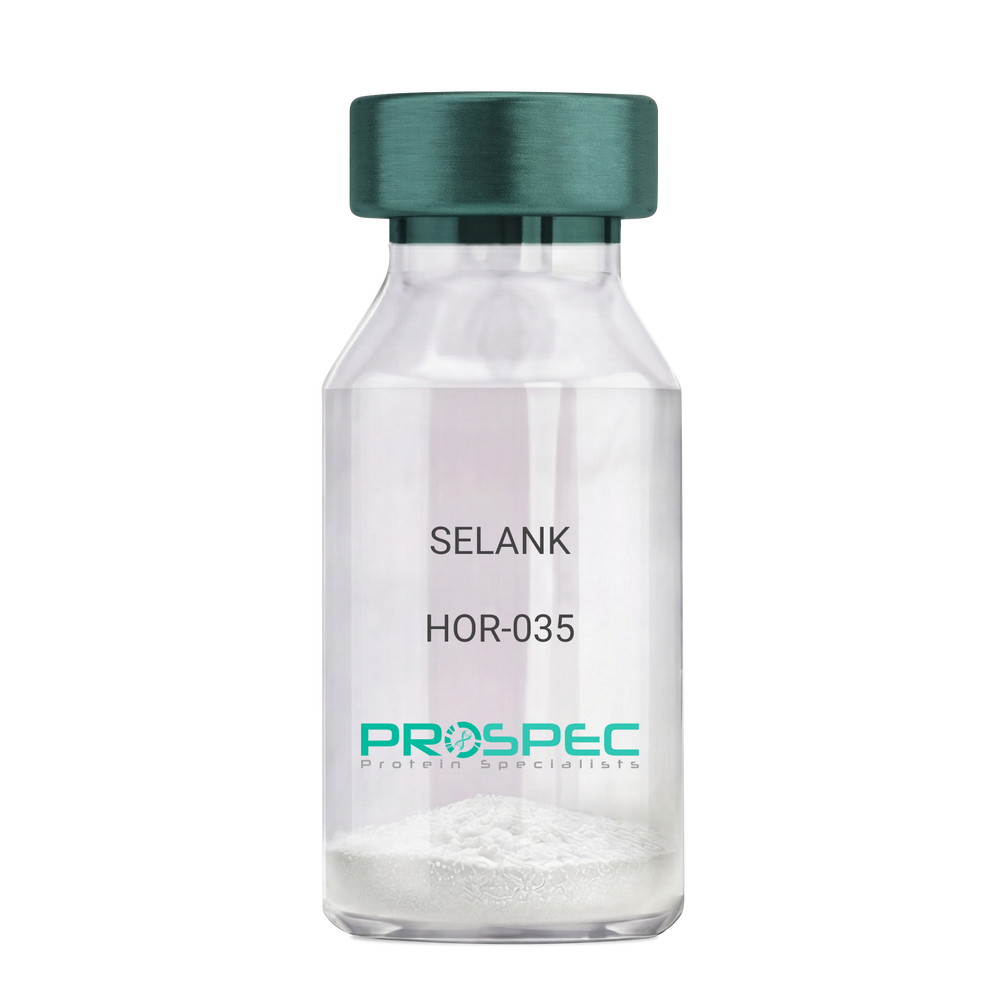
    SELANK

    Description:

    SELANK

    Product # :

    HOR-035

    Price :

    Quantity :

    Shipping Method :

    Room Temp Icon

    Shipped at Room temp

    Add To Cart

    More Info

    • description
    • formulation
    • purity
    • More Info
    • Citations

    Description

    SELANK Synthetic is a single, non-glycosylated polypeptide chain containing 7 amino acids, having a molecular mass of 751.89 Dalton and a Molecular formula of C33H57N11O9.

    Formulation

    The protein was lyophilized with no additives.

    Purity

    Greater than 97.0% as determined by analysis by RP-HPLC.

    Citations

    More Info

    • Physical Appearance

      Sterile Filtered White lyophilized (freeze-dried) powder.

    • Stability

      Lyophilized SELANK although stable at room temperature for 3 weeks, should be stored desiccated below -18°C. Upon reconstitution SELANK should be stored at 4°C between 2-7 days and for future use below -18°C. For long term storage it is recommended to add a carrier protein (0.1% HSA or BSA). Please prevent freeze-thaw cycles.

    • Solubility

      It is recommended to reconstitute the lyophilized SELANK in sterile 18MΩ-cm H2O not less than 100 µg/ml, which can then be further diluted to other aqueous solutions.

    • Amino Acid Sequence

      H-Thr-Lys-Pro-Arg-Pro-Gly-Pro-OH.

    • Background

      Selank, also known as TP-7, is a synthetic peptide that has garnered significant attention in the scientific community due to its potential anxiolytic, neuroprotective, and nootropic effects. This heptapeptide, derived from the naturally occurring human tetrapeptide Tuftsin, has been shown to possess a wide range of biological activities, including enhancing memory, reducing anxiety, and potentially mitigating the effects of neurodegenerative diseases.

      Selank's primary mechanism of action involves its interaction with the GABAergic system, the body's main inhibitory neurotransmitter system. By modulating the activity of GABA receptors, Selank can exert a calming effect on the brain, reducing anxiety and enhancing cognitive function. Studies by Semenova et al. (2014) have demonstrated that Selank can enhance memory and learning in rats, suggesting potential applications in cognitive enhancement and the treatment of cognitive disorders.

      In addition to its anxiolytic and nootropic effects, Selank has been shown to possess neuroprotective properties. Research by Ershov et al. (2016) found that Selank could protect neurons from oxidative stress, suggesting potential applications in the treatment of neurodegenerative diseases such as Alzheimer's and Parkinson's disease.

      Given its anxiolytic, nootropic, and neuroprotective effects, Selank has been proposed as a potential therapeutic agent for a variety of conditions, including anxiety disorders, cognitive disorders, and neurodegenerative diseases. For instance, a study by Medvedev et al. (2017) found that Selank could improve symptoms in patients with generalized anxiety disorder, indicating its potential as a therapeutic agent in the treatment of anxiety disorders.

      While research on Selank is promising, it is important to note that most studies have been conducted in animals or in vitro. More research is needed to fully understand the potential effects and applications of Selank in humans. However, the existing body of research suggests that Selank could be a promising tool in the treatment of anxiety disorders, cognitive disorders, and neurodegenerative diseases.

    ProSpec's products are furnished for LABORATORY RESEARCH USE ONLY. The product may not be used as drugs, agricultural or pesticidal products, food additives or household chemicals.

    Selank
  • View Data Sheet

    Name :

    CST7 Human

    Description:

    Cystatin 7 Human Recombinant

    Cystatin-F, Cystatin-7, Cystatin-like metastasis-associated protein, CMAP, Leukocystatin, Cystatin 7, CST7, CMAP.

    Product # :

    PRO-2222

    Price :

    Quantity :

    Shipping Method :

    Ice Icon

    Shipped with Ice Packs

    Add To Cart

    More Info

    • description
    • source
    • formulation
    • purity
    • More Info
    • Citations

    Description

    CST7 Human Recombinant produced in E. coli is a single polypeptide chain containing 132 amino acids (20-145) and having a molecular mass of 15.3kDa.CST7 is fused to a 7 amino acid His-tag at C-terminus & purified by proprietary chromatographic techniques.

    Source

    Escherichia Coli.

    Formulation

    The CST7 solution (0.5mg/1ml) contains phosphate buffered saline (pH7.4).

    Purity

    Greater than 95.0% as determined by SDS-PAGE.

    Citations

    More Info

    • Introduction

      Cystatin 7 (CST7) is a glycosylated cysteine protease inhibitor with a putative role in immune regulation through inhibition of a unique target in the hematopoietic system. Cystatin-7 is comprised of multiple cystatin-like sequences. The superfamily is comprised of 3 inhibitory families: the type 1 cystatins (stefins), type 2 cystatins and the kininogens. Some members are active cysteine protease inhibitors, while others have lost or possibly never had this inhibitory activity. Type 2 cystatin proteins are a class of cysteine proteinase inhibitors found in various human fluids and secretions. CST7 protein expression has been observed in numerous human cancer cell lines established from malignant tumors.

    • Synonyms

      Cystatin-F, Cystatin-7, Cystatin-like metastasis-associated protein, CMAP, Leukocystatin, Cystatin 7, CST7, CMAP.

    • Physical Appearance

      Sterile Filtered clear solution.

    • Stability

      Store at 4°C if entire vial will be used within 2-4 weeks. Store, frozen at -20°C for longer periods of time. For long term storage it is recommended to add a carrier protein (0.1% HSA or BSA).Avoid multiple freeze-thaw cycles.

    • Amino Acid Sequence

      GPSPDTCSQD LNSRVKPGFP KTIKTNDPGV LQAARYSVEK FNNCTNDMFL FKESRITRAL VQIVKGLKYM LEVEIGRTTC KKNQHLRLDD CDFQTNHTLK QTLSCYSEVW VVPWLQHFEV PVLRCHHHHH HH.

    ProSpec's products are furnished for LABORATORY RESEARCH USE ONLY. The product may not be used as drugs, agricultural or pesticidal products, food additives or household chemicals.

    Cst7 Human
  • View Data Sheet

    Name :

    Cyclophilin C Human

    Description:

    Cyclophilin-C Human Recombinant

    Peptidylprolyl Isomerase C (Cyclophilin C), Cyclophilin C, Rotamase C, EC 5.2.1.8, PPIase C, CYPC, Peptidyl-Prolyl Cis-Trans Isomerase C, Parvulin, PPIC.

    Product # :

    ENZ-809

    Price :

    Quantity :

    Shipping Method :

    Room Temp Icon

    Shipped at Room temp

    Add To Cart

    More Info

    • description
    • source
    • formulation
    • purity
    • More Info
    • Citations

    Description

    Cyclophilin-C Human Recombinant produced in E.Coli is a single, non-glycosylated, polypeptide chain (Phe29-Trp212) containing 194 amino acids including a 10 aa His tag at N-terminus. The total calculated molecular mass is 21.3kDa.

    Source

    Escherichia Coli.

    Formulation

    Cyclophilin-C was filtered (0.4 µm) and lyophilized in 20mM Tris buffer and 50mM NaCl, pH 7.5.

    Purity

    Greater than 95.0% as determined by SDS-PAGE.

    Citations

    More Info

    • Introduction

      Cyclophilin-C belongs to the peptidyl-prolyl cis-trans isomerase (PPIase)) family. PPIases catalyze the cis-trans isomerization of proline imidic peptide bonds in oligopeptides and accelerate the folding of proteins. Like other PPIases, the Cyclophilin-C protein can bind immunosuppressant cyclosporin A.

    • Synonyms

      Peptidylprolyl Isomerase C (Cyclophilin C), Cyclophilin C, Rotamase C, EC 5.2.1.8, PPIase C, CYPC, Peptidyl-Prolyl Cis-Trans Isomerase C, Parvulin, PPIC.

    • Physical Appearance

      Filtered White lyophilized (freeze-dried) powder.

    • Stability

      Store lyophilized protein at -20°C. Aliquot the product after reconstitution to avoid repeated freezing/thawing cycles. Reconstituted protein can be stored at 4°C for a limited period of time; it does not show any change after two weeks at 4°C.

    • Solubility

      It is recommended to add deionized water to prepare a working stock solution of approximately 0.5mg/ml and let the lyophilized pellet dissolve completely. Cyclophilin-C is not sterile! Please filter the product by an appropriate sterile filter before using it in the cell culture.

    • Amino Acid Sequence

      MKHHHHHHASFRKRGPSVTA KVFFDVRIGD KDVGRIVIGL FGKVVPKTVE NFVALATGEK GYGYKGSKFH RVIKDFMIQG GDITTGDGTG GVSIYGETFP DENFKLKHYG IGWVSMANAG PDTNGSQFFI TLTKPTWLDG KHVVFGKVID GMTVVHSIEL QATDGHDRPL TNCSIINSGK IDVKTPFVVE IADW.

    ProSpec's products are furnished for LABORATORY RESEARCH USE ONLY. The product may not be used as drugs, agricultural or pesticidal products, food additives or household chemicals.

    Cyclophilin C Human
  • View Data Sheet

    Name :

    CXCL12 Human beta, His

    Description:

    Stromal Cell-Derived Factor-1 beta Human Recombinant (CXCL12), His Tag

    SDF-1, CXCL12, Pre-B cell growth-stimulating factor, PBSF, hIRH, chemokine (C-X-C motif) ligand 12, SDF1, SDF1B, TPAR1, SCYB12, SDF-1b, TLSF-b, 12-O-tetradecanoylphorbol 13-acetate repressed protein 1, Thymic lymphoma cell-stimulating factor, TLSF.

    Product # :

    CHM-249

    Price :

    Quantity :

    Shipping Method :

    Ice Icon

    Shipped with Ice Packs

    Add To Cart

    More Info

    • description
    • source
    • formulation
    • purity
    • More Info
    • Citations

    Description

    SDF-1 beta Human Recombinant produced in E.Coli is a non-glycosylated, Polypeptide chain containing 93 amino acids (22-93 a.a.) and having a molecular mass of 10.8 KDa. The SDF-1b is fused to 20 amino acid His-Tag at N-terminus and purified by proprietary chromatographic techniques.

    Source

    Escherichia Coli.

    Formulation

    The SDF-1 beta His Tag protein contains 20mM Tris-HCl buffer pH-8 and 10% glycerol.

    Purity

    Greater than 90% as determined by Analysis by SDS-PAGE.

    Citations

    More Info

    • Introduction

      SDF-1 (stromal cell-derived factor-1) is small cytokine belonging to the chemokine family that is officially designated Chemokine (C-X-C motif) ligand 12 (CXCL12). It is produced in two forms, SDF-1?/CXCL12a and SDF-1?/CXCL12b, by alternate splicing of the same gene. Chemokines are characterized by the presence of four conserved cysteines, which form two disulfide bonds. The CXCL12 proteins belong to the group of CXC chemokines, whose initial pair of cysteines are separated by one intervening amino acid. CXCL12 is strongly chemotactic for lymphocytes and has been implicated as an important cell co-ordinator during development. During embryogenesis it directs the migration of hematopoietic cells from foetal liver to bone marrow. Mice which were knocked-out for CXCL12 gene were lethal before the birth or within just 1 hour of life. As another role, CXCL12a alters also the electrophysiology of neurons. CXCL12 was shown to be expressend in many tissues in mice (including brain, thymus, heart, lung, liver, kidney, spleen and bone marrow).
      The receptor for this chemokine is CXCR4, which was previously called fusin. This CXCL12-CXCR4 interaction used to be considered exclusive (unlike for other chemokines and their receptors), but recently it was suggested that CXCL12 is also bound by CXCR7 receptor. The gene for CXCL12 is located on human chromosome 10. In human and mouse both CXCL12 and CXCR4 show high identity of sequence: 99% and 90%, respectively.

    • Synonyms

      SDF-1, CXCL12, Pre-B cell growth-stimulating factor, PBSF, hIRH, chemokine (C-X-C motif) ligand 12, SDF1, SDF1B, TPAR1, SCYB12, SDF-1b, TLSF-b, 12-O-tetradecanoylphorbol 13-acetate repressed protein 1, Thymic lymphoma cell-stimulating factor, TLSF.

    • Physical Appearance

      Sterile filtered colorless solution.

    • Stability

      Store at 4°C if entire vial will be used within 2-4 weeks. Store, frozen at -20°C for longer periods of time. For long term storage it is recommended to add a carrier protein (0.1% HSA or BSA). Avoid multiple freeze-thaw cycles.

    • Amino Acid Sequence

      MGSSHHHHHH SSGLVPRGSH MKPVSLSYRC PCRFFESHVA RANVKHLKIL NTPNCALQIV ARLKNNNRQV CIDPKLKWIQ EYLEKALNKR FKM.

    • Background

      What is the molecular weight/Mw of CXCL12 HUMAN BETA, HIS Protein?
      CXCL12 HUMAN BETA, HIS Protein has a total Mw of 10.8kDa.

      What is the source or expression system of CXCL12 HUMAN BETA, HIS Protein?
      Escherichia Coli.

      What is the Purity of CXCL12 HUMAN BETA, HIS Protein?
      CXCL12 HUMAN BETA, HIS Protein is > 90% pure as determined by SDS-PAGE.

      What is the Biological Activity of CXCL12 HUMAN BETA, HIS Protein?
      The biological functionality of CXCL12 HUMAN BETA, HIS Protein will be determined in the future.

      What is the amino acid sequence of CXCL12 HUMAN BETA, HIS Protein?
      MGSSHHHHHH SSGLVPRGSH MKPVSLSYRC PCRFFESHVA RANVKHLKIL NTPNCALQIV ARLKNNNRQV CIDPKLKWIQ EYLEKALNKR FKM.

      What applications can CXCL12 HUMAN BETA, HIS Protein be used in?
      CXCL12 HUMAN BETA, HIS Protein can probably be used in western blot, ELISA and Lateral Flow.

      What is the endotoxin level for CXCL12 HUMAN BETA, HIS Protein?
      The endotoxin level is minimal, CXCL12 HUMAN BETA, HIS Protein was purified using conventional chromatography techniques.

      Who supplies recombinant CXCL12 HUMAN BETA, HIS that is in stock and available to order?
      ProSpec has the protein in stock and available for immediate delivery.

      Where can I order bulk mg quantities of CXCL12 HUMAN BETA, HIS?
      ProSpec supplies bulk mg quantities at affordable prices that meets research and academic budgets.

    ProSpec's products are furnished for LABORATORY RESEARCH USE ONLY. The product may not be used as drugs, agricultural or pesticidal products, food additives or household chemicals.

    Sdf 1B Human His
  • View Data Sheet

    Name :

    AMBP

    Description:

    Alpha-1 Microglobulin Human Recombinant

    Alpha-1-microglobulin/bikunin precursor, HCP, ITIL, ITI, EDC1, HI30, IATIL, ITILC, UTI, A1M, bikunin, complex-forming glycoprotein heterogeneous in charge, growth-inhibiting protein 19, inter-alpha-trypsin inhibitor light chain, protein AMBP, protein HC, trypstatin, uristatin, uronic-acid-rich protein.

    Product # :

    PRO-957

    Price :

    Quantity :

    Shipping Method :

    Ice Icon

    Shipped with Ice Packs

    Add To Cart

    More Info

    • description
    • source
    • formulation
    • purity
    • More Info
    • Citations

    Description

    AMBP Human Recombinant produced in E.coli is a single, non-glycosylated polypeptide chain containing 205 amino acids (20-203) and having a molecular mass of 23.1 kDa.AMBP is fused to a 21 amino acid His-tag at N-terminus & purified by proprietary chromatographic techniques.

    Source

    E.coli.

    Formulation

    The AMBP solution (0.5mg/ml) contains 20mM Tris-HCl buffer (pH 8.0), 1mM DTT, 0.1M NaCl and 10% glycerol.

    Purity

    Greater than 90% as determined by SDS-PAGE.

    Citations

    More Info

    • Introduction

      Alpha 1-microglobulin (A1M) is a lipocalin superfamily member (kernal lipocalins). A1M is a low molecular weight protein component of plasma. A1M is distributed in plasma and extravascular compartments of all organs. Alpha-1 Microglobulin is found in mammals, birds, amphibians and fish. The primary sites of A1M synthesis are the liver and the kidney. Around the opening of the lipocalin pocket three lysyl residues are situated; those residues carry yellow-brown modification derived from the binding and degradation of heme and kynurenin (a tryptophan metabolite). A1-Microglobulin’s reductase and dehydrogenase have broad biological substrate specificity properties due to its’ free cysteine side-chain which is located in a flexible loop. Alpha-1-microglobulin is glycosylated by three separate carbohydrate chains: two complex carbohydrates which are N-linked to asparagines at residues 17 and 96, and the other simple carbohydrate which is O-linked to threonine at position 5. The carbohydrates comprise 22% of the total molecular mass of the protein. The glycosylation varies between species.
      A1M exists in two forms- a free form and complexed to other macromolecules: in humans- complexed to immunoglobulin A (IgA), in rat- complexed to alpha-1-inhibitor-3. Free A1M is exceptionally heterogeneous in charge (therefore also known as protein HC), and is found tightly linked to a chromophore. The free Alpha-1-microglobulin is a monomeric protein composed of one 188 residue polypeptide and contains three cysteines, two of which (residues 75 and 173) form a conserved intra-molecular disulphide link. The chromophoric group is covalently bound to the free cysteine residue at position 34. A1M binds retinol as a major ligand, but this is probably distinct from its covalent chromophore.
      Half of all human plasma A1M (approximately 0.03mg/ml) forms a 1:1 complex with about 5% of plasma immunoglobulin A. The resulting macromolecular complexes’ molecular weight is 200000, and a plasma concentration of 0.3mg/ml. The complex can exhibit both antibody activity and affect many of the biological actions of free Alpha-1-microglobulin.
      Alpha-1-microglobulin was first discovered in pathological human urine.
      It was suggested that A1M might be involved in tissue defense against reactive oxygen species, oxidation by heme and kynurenin. Evidence also suggests that A1M functions in the regulation of the immune system. Other functions include inhibition of stimulation of cultured lymphocytes by protein antigens; induction of cell division of lymphocytes, a mitogenic effect that can either be enhanced or inhibited by the action of other plasma components; inhibition of neutrophil granulocyte migration in vitro; and inhibition of chemotaxis.

    • Synonyms

      Alpha-1-microglobulin/bikunin precursor, HCP, ITIL, ITI, EDC1, HI30, IATIL, ITILC, UTI, A1M, bikunin, complex-forming glycoprotein heterogeneous in charge, growth-inhibiting protein 19, inter-alpha-trypsin inhibitor light chain, protein AMBP, protein HC, trypstatin, uristatin,
      uronic-acid-rich protein.

    • Physical Appearance

      Sterile Filtered colorless solution.

    • Stability

      Store at 4°C if entire vial will be used within 2-4 weeks. Store, frozen at -20°C for longer periods of time. For long term storage it is recommended to add a carrier protein (0.1% HSA or BSA).Avoid multiple freeze-thaw cycles.

    • Amino Acid Sequence

      MGSSHHHHHH SSGLVPRGSH MGPVPTPPDN IQVQENFNIS RIYGKWYNLA IGSTCPWLKK IMDRMTVSTL VLGEGATEAE ISMTSTRWRK GVCEETSGAY EKTDTDGKFL YHKSKWNITM ESYVVHTNYD EYAIFLTKKF SRHHGPTITA KLYGRAPQLR ETLLQDFRVV AQGVGIPEDS IFTMADRGEC VPGEQEPEPI LIPRV.

    ProSpec's products are furnished for LABORATORY RESEARCH USE ONLY. The product may not be used as drugs, agricultural or pesticidal products, food additives or household chemicals.

    Ambp Human
  • View Data Sheet

    Name :

    Myostatin Propeptide Human

    Description:

    Myostatin Propeptide Human Recombinant

    GDF-8, MSTN, Growth Differentiation Factor 8, MSTN Muscle Hypertrophy.

    Product # :

    CYT-448

    Price :

    Quantity :

    Shipping Method :

    Room Temp Icon

    Shipped at Room temp

    Add To Cart

    More Info

    • description
    • source
    • formulation
    • purity
    • biological activity
    • More Info
    • Citations

    Description

    Recombinant Human Myostatin Propeptide is a 27.8kDa protein containing 244 amino acid residues of the human Myostatin Propeptide.

    Source

    Escherichia Coli.

    Formulation

    Lyophilized with no additives.

    Purity

    Greater than 95.0% as determined by SDS-PAGE.

    Biological Activity

    The protein has full biological activity when compared to a standard. The activity is determined by its ability to inhibit 50ng/ml of Myostatin on MPC-11 cells and is typically 0.13-0.2 μg/ml.

    Citations

    More Info

    • Introduction

      Myostatin (GDF-8), a member of the TGFbeta superfamily, is a potent and specific negative regulator of skeletal muscle mass. In serum, myostatin circulates as part of a latent complex containing myostatin propeptide and/or follistatin-related gene. The myostatin propeptide is known to bind and inhibit myostatin in vitro. This interaction is relevant in vivo, with a majority (>70%) of myostatin in serum bound to its propeptide. The myostatin propeptide is negative regulator of myostatin in vivo.

    • Synonyms

      GDF-8, MSTN, Growth Differentiation Factor 8, MSTN Muscle Hypertrophy.

    • Physical Appearance

      Sterile Filtered white lyophilized (freeze-dried) powder.

    • Stability

      Store lyophilized protein at -20°C. Aliquot the product after reconstitution to avoid repeated freezing/thawing cycles. Reconstituted protein can be stored at 4°C for a limited period of time.

    • Solubility

      It is recommended to reconstitute the lyophilized Myostatin Propeptide in sterile 20mM HCl at 0.1mg/ml, which can then be further diluted to other aqueous solutions.

    • Amino Acid Sequence

      MNENSEQKE NVEKEGLCNA CTWRQNTKSS RIEAIKIQIL SKLRLETAPN ISKDVIRQLL PKAPPLRELI DQYDVQRDDS SDGSLEDDDY HATTETIITM PTESDFLMQV DGKPKCCFFK FSSKIQYNKV VKAQLWIYLR PVETPTTVFV QILRLIKPMK DGTRYTGIRS LKLDMNPGTG IWQSIDVKTV LQNWLKQPES NLGIEIKALD ENGHDLAVTF PGPGEDGLNP FLEVKVTDTP KRSRR.

    ProSpec's products are furnished for LABORATORY RESEARCH USE ONLY. The product may not be used as drugs, agricultural or pesticidal products, food additives or household chemicals.

    Myostatin Propeptide Human
  • View Data Sheet

    Name :

    NKIRAS2 Human

    Description:

    NFKB Inhibitor Interacting Ras-Like 2 Human Recombinant

    NF-kappa-B inhibitor-interacting Ras-like protein 2, I-kappa-B-interacting Ras-like protein 2, Kappa B-Ras protein 2, KappaB-Ras2, NKIRAS2, KBRAS2.

    Product # :

    PRO-1091

    Price :

    Quantity :

    Shipping Method :

    Ice Icon

    Shipped with Ice Packs

    Add To Cart

    More Info

    • description
    • source
    • formulation
    • purity
    • More Info
    • Citations

    Description

    NKIRAS2 Human Recombinant produced in E.Coli is a single, non-glycosylated polypeptide chain containing 215 amino acids (1-191 a.a) and having a molecular mass of 24kDa.NKIRAS2 is fused to a 24 amino acid His-tag at N-terminus & purified by proprietary chromatographic techniques.

    Source

    Escherichia Coli.

    Formulation

    NKIRAS2 protein solution (1mg/ml) containing 20mM Tris-HCl buffer (pH 8.0), 1mM DTT, 10% glycerol and 0.1M NaCl.

    Purity

    Greater than 90.0% as determined by SDS-PAGE.

    Citations

    More Info

    • Introduction

      NFKB inhibitor interacting Ras-like 2 (NKIRAS2) is an inhibitor of the transcription factor NF-kappaB. NKIRAS2 is similar to the Ras-like small GTPases which associate with IkappaB. The Ras-like proteins- NKIRAS1 and NKIRAS2, interact with the PEST domains of I?B? and I?B? and reduce their rate of degradation. NKIRAS2 is an atypical Ras-like protein which functions as a potent regulator of NF-kappa-B activity by preventing the degradation of NF-kappa-B inhibitor beta (NFKBIB) by most signals, explaining why NFKBIB is more impervious to degradation.

    • Synonyms

      NF-kappa-B inhibitor-interacting Ras-like protein 2, I-kappa-B-interacting Ras-like protein 2, Kappa B-Ras protein 2, KappaB-Ras2, NKIRAS2, KBRAS2.

    • Physical Appearance

      Sterile Filtered colorless solution.

    • Stability

      Store at 4°C if entire vial will be used within 2-4 weeks. Store, frozen at -20°C for longer periods of time. For long term storage it is recommended to add a carrier protein (0.1% HSA or BSA).Avoid multiple freeze-thaw cycles.

    • Amino Acid Sequence

      MGSSHHHHHH SSGLVPRGSH MGSHMGKSCK VVVCGQASVG KTSILEQLLY GNHVVGSEMI ETQEDIYVGS IETDRGVREQ VRFYDTRGLR DGAELPRHCF SCTDGYVLVY STDSRESFQR VELLKKEIDK SKDKKEVTIV VLGNKCDLQE QRRVDPDVAQ HWAKSEKVKL WEVSVADRRS
      LLEPFVYLAS KMTQPQSKSA FPLSRKNKGS GSLDG.

    ProSpec's products are furnished for LABORATORY RESEARCH USE ONLY. The product may not be used as drugs, agricultural or pesticidal products, food additives or household chemicals.

    Nkiras2 Human
  • View Data Sheet

    Name :

    Bax Mouse

    Description:

    Bax Mouse Recombinant

    Apoptosis regulator BAX membrane isoform alpha, Bax, Bcl2-associated X protein.

    Product # :

    PRO-412

    Price :

    Quantity :

    Shipping Method :

    Ice Icon

    Shipped with Ice Packs

    Add To Cart

    More Info

    • description
    • source
    • formulation
    • purity
    • More Info
    • Citations

    Description

    Bax Mouse Recombinant amino acid 38-171 produced in E.Coli is a single, non-glycosylated polypeptide chain. The Mouse Bax is purified by proprietary chromatographic techniques.

    Source

    Escherichia Coli.

    Formulation

    The protein contains 10mM Tris-HCL pH-8, 1mM EDTA and 250mM NaCl.

    Purity

    Greater than 95.0% as determined by(a) Analysis by RP-HPLC.
    (b) Analysis by SDS-PAGE.

    Citations

    More Info

    • Introduction

      Bcl-2–associated X protein (Bax) belongs to the Bcl-2 protein family. Bax is a pro-apoptotic Bcl-2 protein containing BH1, BH2 and BH3 domains. Bax accelerates programmed cell death by binding to, and antagonizing the apoptosis repressor bcl2 or its adenovirus homolog e1b 19k protein. Bax induces the release of cytochrome c, activation of casp3, and thereby apoptosis. Bax is expressed in a wide variety of tissues, with highest levels in the testis and ovary. Tumor suppressor protein p53 upregulates the expression of BAX. Bax has been shown to be involved in p53-mediated apoptosis.

    • Synonyms

      Apoptosis regulator BAX membrane isoform alpha, Bax, Bcl2-associated X protein.

    • Physical Appearance

      Sterile Filtered colorless solution.

    • Stability

      Store at 4°C if entire vial will be used within 2-4 weeks. Store, frozen at -20°C for longer periods of time. Avoid multiple freeze-thaw cycles.

    ProSpec's products are furnished for LABORATORY RESEARCH USE ONLY. The product may not be used as drugs, agricultural or pesticidal products, food additives or household chemicals.

    Bax Mouse
  • View Data Sheet

    Name :

    OSM Rat

    Description:

    Oncostatin-M Rat Recombinant

    Oncostatin-M, OSM, OncoM.

    Product # :

    CYT-169

    Price :

    Quantity :

    Shipping Method :

    Room Temp Icon

    Shipped at Room temp

    Add To Cart

    More Info

    • description
    • source
    • formulation
    • purity
    • biological activity
    • More Info
    • Citations

    Description

    OSM Rat Recombinant produced in E.coli is a single, non-glycosylated polypeptide chain containing 214 amino acids and having a molecular mass of 24.3kDa.The OSM is purified by proprietary chromatographic techniques.

    Source

    Escherichia Coli.

    Formulation

    OSM protein was lyophilized from a 0.2µm filtered concentrated solution in 1xPBS, pH 7.4.

    Purity

    Greater than 95.0% as determined by:
    (a) Analysis by RP-HPLC.
    (b) Analysis by SDS-PAGE.

    Biological Activity

    The ED50 as determined by the dose-dependent stimulation of the proliferation of rat C6 cells is < 5.0 µg/ml, corresponding to a specific activity of > 200 units/mg.

    Citations

    More Info

    • Introduction

      Oncostatin M is a member of a cytokine family that includes leukemia-inhibitory factor, granulocyte colony-stimulating factor, and interleukin 6. This gene encodes a growth regulator which inhibits the proliferation of a number of tumor cell lines. It regulates cytokine production, including IL-6, G-CSF and GM-CSF from endothelial cells.

    • Synonyms

      Oncostatin-M, OSM, OncoM.

    • Physical Appearance

      Sterile Filtered White lyophilized (freeze-dried) powder.

    • Stability

      Lyophilized Oncostatin M although stable at room temperature for 3 weeks, should be stored desiccated below -18°C. Upon reconstitution Oncostatin should be stored at 4°C between 2-7 days and for future use below -18°C.For long term storage it is recommended to add a carrier protein (0.1% HSA or BSA).Please prevent freeze-thaw cycles.

    • Solubility

      It is recommended to reconstitute the lyophilized Oncostatin M in sterile 18MΩ-cm H2O not less than 100µg/ml, which can then be further diluted to other aqueous solutions.

    • Amino Acid Sequence

      KRGCSSSSPK LLSQLKSQAN ITGNTASLLE PYILHQNLNT LTLRAACTEH PVAFPSEDML RQLSKPDFLS TVHATLGRVW HQLGAFRQQF PKIQDFPELE RARQNIQGIR NNVYCMARLL HPPLEIPEPT QADSGTSRPT TTAPGIFQIK IDSCRFLWGY HRFMGSVGRV FEEWGDGSRR SR RHSPLWAW LKGDHRIRPS RSSQSAMLRS LVPR.

    ProSpec's products are furnished for LABORATORY RESEARCH USE ONLY. The product may not be used as drugs, agricultural or pesticidal products, food additives or household chemicals.

    Osm Rat
  • View Data Sheet

    Name :

    Epoetin Human, Sf9

    Description:

    Erythropoietin-alpha Human Recombinant, Sf9

    Erythropoietin, Epoetin, MVCD2, EP, Erythropoietin-Alpha, EPO-a, EPO-alpha.

    Product # :

    CYT-934

    Price :

    Quantity :

    Shipping Method :

    Ice Icon

    Shipped with Ice Packs

    Add To Cart

    More Info

    • description
    • source
    • formulation
    • purity
    • biological activity
    • More Info
    • sds-page
    • Citations

    Description

    Erythropoietin-alpha Human Recombinant produced in Sf9 Insect cells is a single, glycosylated polypeptide chain containing 174 amino acids (28-193a.a.) and having a molecular mass of 19.5kDa (Molecular size on SDS-PAGE will appear at approximately 28-40kDa).EPO-a is expressed with an 8 amino acid His tag at C-Terminus and purified by proprietary chromatographic techniques.

    Source

    Sf9, Insect cells.

    Formulation

    EPO a protein solution (0.5mg/ml) contains phosphate buffered saline (pH7.4) and 10% glycerol.

    Purity

    Greater than 95.0% as determined by SDS-PAGE.

    Biological Activity

    Measured in a cell proliferation assay using TF-1 human erythroleukemic cells. The ED50 for this effect is ≤ 0.5 ng/ml.

    sds-page

    Epoetin-sds-page - Product image 1

    Citations

    More Info

    • Introduction

      This gene is a member of the EPO/TPO family and encodes a secreted, glycosylated cytokine composed of four alpha helical bundles. The protein is found in the plasma and regulates red cell production by promoting erythroid differentiation and initiating hemoglobin synthesis. This protein also has neuroprotective activity against a variety of potential brain injuries and antiapoptotic functions in several tissue types.

    • Synonyms

      Erythropoietin, Epoetin, MVCD2, EP, Erythropoietin-Alpha, EPO-a, EPO-alpha.

    • Physical Appearance

      Sterile filtered colorless solution.

    • Stability

      Store at 4°C if entire vial will be used within 2-4 weeks.Store, frozen at -20°C for longer periods of time. For long term storage it is recommended to add a carrier protein (0.1% HSA or BSA).Avoid multiple freeze-thaw cycles.

    • Amino Acid Sequence

      APPRLICDSR VLERYLLEAK EAENITTGCA EHCSLNENIT VPDTKVNFYA WKRMEVGQQA VEVWQGLALL SEAVLRGQAL LVNSSQPWEP LQLHVDKAVS GLRSLTTLLR ALRAQKEAIS PPDAASAAPL RTITADTFRK LFRVYSNFLR GKLKLYTGEA CRTGDRLEHH HHHH.

    • Background

      What is the molecular weight/Mw of EPOETIN Protein?
      EPOETIN Protein has a total Mw of 19.5kDa.

      What is the source or expression system of EPOETIN Protein?
      Sf9, Insect cells.

      What is the Purity of EPOETIN Protein?
      EPOETIN Protein is >95% pure as determined by SDS-PAGE.

      What is the Biological Activity of EPOETIN Protein?
      Measured in a cell proliferation assay using TF-1 human erythroleukemic cells. The ED50 for this effect is ≤ 0.5 ng/ml.

      What is the amino acid sequence of EPOETIN Protein?
      APPRLICDSR VLERYLLEAK EAENITTGCA EHCSLNENIT VPDTKVNFYA WKRMEVGQQA VEVWQGLALL SEAVLRGQAL LVNSSQPWEP LQLHVDKAVS GLRSLTTLLR ALRAQKEAIS PPDAASAAPL RTITADTFRK LFRVYSNFLR GKLKLYTGEA CRTGDRLEHH HHHH.

      What applications can EPOETIN Protein be used in?
      EPOETIN Protein can probably be used in western blot, ELISA and Lateral Flow.

      What is the endotoxin level for EPOETIN Protein?
      The endotoxin level is minimal, EPOETIN Protein was purified using conventional chromatography techniques.

    ProSpec's products are furnished for LABORATORY RESEARCH USE ONLY. The product may not be used as drugs, agricultural or pesticidal products, food additives or household chemicals.

    Epo A Human Sf9
  • View Data Sheet

    Name :

    CXCL4 V1 Human

    Description:

    Platelet Factor 4 Variant 1 Human Recombinant

    PF4V1, Platelet Factor 4 Variant 1, CXCL4L1, CXCL4V1, PF4alt, PF4var1, SCYB4V1, PF4-ALT, PF4A, C-X-C Motif Chemokine 4, Platelet Factor 4 Variant, Platelet Factor 4, Variant 1 (PF4-Like) , C-X-C Motif Chemokine 4 Variant.

    Product # :

    CHM-027

    Price :

    Quantity :

    Shipping Method :

    Ice Icon

    Shipped with Ice Packs

    Add To Cart

    More Info

    • description
    • source
    • formulation
    • purity
    • More Info
    • Citations

    Description

    PF4V1 Human Recombinant produced in E.Coli is a single, non-glycosylated polypeptide chain containing 97 amino acids (31-104 a.a.) and having a molecular mass of 10.6kDa.PF4V1 is fused to a 23 amino acid His-tag at N-terminus & purified by proprietary chromatographic techniques.

    Source

    Escherichia Coli.

    Formulation

    PF4V1 protein solution (0.25mg/ml) contains 20mM Tris-HCl buffer (pH 8.0), 0.2M NaCl, 50% glycerol and 1mM DTT.

    Purity

    Greater than 85.0% as determined by SDS-PAGE.

    Citations

    More Info

    • Introduction

      Platelet Factor 4 Variant 1 (PF4V1) is a member of the intercrine alpha (chemokine CxC) family. PF4V1 is an inhibitor of angiogenesis and inhibitor of endothelial cell chemotaxis (in vitro).

    • Synonyms

      PF4V1, Platelet Factor 4 Variant 1, CXCL4L1, CXCL4V1, PF4alt, PF4var1, SCYB4V1, PF4-ALT, PF4A, C-X-C Motif Chemokine 4, Platelet Factor 4 Variant, Platelet Factor 4, Variant 1 (PF4-Like) , C-X-C Motif Chemokine 4 Variant.

    • Physical Appearance

      Sterile Filtered colorless clear solution.

    • Stability

      Store at 4°C if entire vial will be used within 2-4 weeks. Store, frozen at -20°C for longer periods of time. For long term storage it is recommended to add a carrier protein (0.1% HSA or BSA).Please avoid freeze thaw cycles.

    • Amino Acid Sequence

      MGSSHHHHHH SSGLVPRGSH MGSFARAEAE EDGDLQCLCV KTTSQVRPRH ITSLEVIKAG PHCPTAQLIA TLKNGRKICL DLQALLYKKI IKEHLES.

    • Background

      What is the molecular weight/Mw of CXCL4 V1 HUMAN Protein?
      CXCL4 V1 HUMAN Protein has a total Mw of 10.6kDa.

      What is the source or expression system of CXCL4 V1 HUMAN Protein?
      Escherichia Coli.

      What is the Purity of CXCL4 V1 HUMAN Protein?
      CXCL4 V1 HUMAN Protein is >85% pure as determined by SDS-PAGE.

      What is the Biological Activity of CXCL4 V1 HUMAN Protein?
      The biological functionality of CXCL4 V1 HUMAN Protein will be determined in the future.

      What is the amino acid sequence of CXCL4 V1 HUMAN Protein?
      MGSSHHHHHH SSGLVPRGSH MGSFARAEAE EDGDLQCLCV KTTSQVRPRH ITSLEVIKAG PHCPTAQLIA TLKNGRKICL DLQALLYKKI IKEHLES.

      What applications can CXCL4 V1 HUMAN Protein be used in?
      CXCL4 V1 HUMAN Protein can probably be used in western blot, ELISA and Lateral Flow.

      What is the endotoxin level for CXCL4 V1 HUMAN Protein?
      The endotoxin level is minimal, CXCL4 V1 HUMAN Protein was purified using conventional chromatography techniques.

      Who supplies recombinant CXCL4 V1 HUMAN that is in stock and available to order?
      ProSpec has the protein in stock and available for immediate delivery.

      Where can I order bulk mg quantities of CXCL4 V1 HUMAN?
      ProSpec supplies bulk mg quantities at affordable prices that meets research and academic budgets.

    ProSpec's products are furnished for LABORATORY RESEARCH USE ONLY. The product may not be used as drugs, agricultural or pesticidal products, food additives or household chemicals.

    Pf4V1 Human
  • View Data Sheet

    Name :

    PPARG Human

    Description:

    Peroxisome Proliferator Activated Receptor Gamma Human Recombinant

    Peroxisome proliferator-activated receptor gamma, PPAR-gamma, PPARG, NR1C3, PPARG1, PPARG2.

    Product # :

    PKA-228

    Price :

    Quantity :

    Shipping Method :

    Ice Icon

    Shipped with Ice Packs

    Add To Cart

    More Info

    • description
    • source
    • formulation
    • purity
    • More Info
    • Citations

    Description

    Peroxisome Proliferator Activated Receptor Gamma Human Recombinant is expressed in E.coli having a molecular weight of 59.2 kDa and fused to an amino terminal hexahistidine tag.

    Source

    Escherichia Coli.

    Formulation

    The protein solution contains 20mM Tris-HCl and 50% glycerol.

    Purity

    Greater than 90.0% as determined by SDS-PAGE.

    Citations

    More Info

    • Introduction

      The peroxisome proliferator activated receptors (PPARs) are ligandactivated transcription factors within the nuclear receptor superfamily, which play important roles in adipogenesis, glucose homeostasis andinflammation. Three different isotypes can be distinguished; alpha, beta and gamma. PPARg, is mainly expressed in adipose tissue and to lesser extent in colon, the immune system and the retina. Whereas PPARg operates in the catabolism of fatty acids in the liver, PPARg influences the storage of fatty acids in the adipose tissue and plays a role in adipocyte differentiation. PPARg binds to DNA as a heterodimer with retinoid X receptor (RXR), activating expression of target genes after binding ligand.

    • Synonyms

      Peroxisome proliferator-activated receptor gamma, PPAR-gamma, PPARG, NR1C3, PPARG1, PPARG2.

    • Physical Appearance

      Sterile Filtered clear solution.

    • Stability

      Store at 4°C if entire vial will be used within 2-4 weeks.Store, frozen at -20°C for longer periods of time.Avoid multiple freeze-thaw cycles.

    ProSpec's products are furnished for LABORATORY RESEARCH USE ONLY. The product may not be used as drugs, agricultural or pesticidal products, food additives or household chemicals.

    Pparg Human
  • View Data Sheet

    Name :

    Guanylin Human

    Description:

    Guanylin Human Recombinant

    Guanylin, GUCA2A, Gap-IGUCA2, STARA, GUANYLIN.

    Product # :

    HOR-281

    Price :

    Quantity :

    Shipping Method :

    Room Temp Icon

    Shipped at Room temp

    Add To Cart

    More Info

    • description
    • source
    • formulation
    • purity
    • More Info
    • Citations

    Description

    Proguanylin Human Recombinant produced in E. coli is a single, non-glycosylated polypeptide chain (a.a 22-115) containing 104 amino acids including a 10 a.a N-terminal His tag. The total molecular mass is 11.5kDa (calculated).

    Source

    Escherichia Coli.

    Formulation

    Proguanylin filtered (0.4 µm) and lyophilized in 0.5mg/ml in deionized H20.

    Purity

    Greater than 90.0% as determined by SDS-PAGE.

    Citations

    More Info

    • Introduction

      Heat-stable enterotoxins (STa) are small, cysteine-rich peptides secreted by Escherichia coli that are able to induce diarrhea through the stimulation of an intestine-specific receptor-guanylyl cyclase known as STaR. Binding of STa to STaR induces a dramatic increase in the cGMP content of the cell; the increase, in turn, inhibits salt absorption and stimulates chloride secretion. This imbalance of ions is accompanied by a massive accumulation of water in the gut that gives rise to the diarrhea and dehydration characteristic of enterotoxin activity. The identification of a receptor for STa on intestinal brush border membranes suggested the existence of an endogenous activator, described guanylin, a 15-amino acid peptide purified from rat small intestine, as a potential ligand for the STaR. This peptide shares sequence similarity with STa; see also uroguanylin. The molecular cloning of the human and mouse cDNAs encoding guanylin was reported. The sequences demonstrated that guanylin is present at the C-terminal end of a larger precursor protein. Expression in mammalian cells indicated that the 94- amino acid proguanylin is inactive. The biologically active guanylin can be released by either chemical or enzymatic treatment of proguanylin. By Northern blot analysis and in situ hybridization, showed that expression of guanylin mRNA is restricted to cells of the intestinal epithelium, specifically the Paneth cells at the base of the small intestinal crypts. These results demonstrate that guanylin is an endogenous activator of STaR isolated a cDNA encoding an apparent precursor of guanylin from a human intestinal cDNA library. The mRNA was expressed at high levels in human ileum and colon. In the mouse, interspecific backcross analysis used to map the Guca2 gene to the distal half of mouse chromosome 4 in a region of homology with human chromosome 1p. By fluorescence in situ hybridization mapped the GUCA2 gene to human 1p35-p34 Guanylin is thought to modulate intestinal water/electrolyte transport in a paracrine mode reported the nucleotide sequence of the gene, the characteristics of its circulating molecular form, and its localization in enterochromaffin cells of the gut. The gene, approximately 2.6 kb in size, consists of 3 exons interrupted by 2 introns. The hormonal form of guanylin is a 94-amino acid peptide with a molecular mass of 10.3 kDa. Guanylin is synthesized by gut enterochromaffin cells as a prohormone of 115 amino acids and is processed to the molecular form of 94 amino acids circulating in the blood.

    • Synonyms

      Guanylin Precursor, Guanylate cyclase activator 2A, Guanylate cyclase-activating protein 1, Gap-IGUCA2, STARA, GUANYLIN.

    • Physical Appearance

      Sterile Filtered White lyophilized (freeze-dried) powder.

    • Stability

      Store lyophilized protein at -20°C. Aliquot the product after reconstitution to avoid repeated freezing/thawing cycles. Reconstituted protein can be stored at 4°C for a limited period of time; it does not show any change after one week at 4°C.

    • Solubility

      It is recommended to add deionized water to prepare a working stock solution of approximately 0.5mg/ml and let the lyophilized pellet dissolve completely. Proguanylin is not sterile! Please filter the product by an appropriate sterile filter before using it in the cell culture.

    • Amino Acid Sequence

      MKHHHHHHAS VTVQDGNFSF SLESVKKLKD LQEPQEPRVG KLRNFAPIPG EPVVPILCSN PNFPEELKPL CKEPNAQEIL QRLEEIAEDP GTCEICAYAA CTGC.

    ProSpec's products are furnished for LABORATORY RESEARCH USE ONLY. The product may not be used as drugs, agricultural or pesticidal products, food additives or household chemicals.

    Proguanylin Human
  • View Data Sheet

    Name :

    UMOD Porcine

    Description:

    Uromodulin Porcine

    Tamm-Horsfall urinary glycoprotein, THP, FJHN, HNFJ, THGP, MCKD2, ADMCKD2, UMOD, Uromodulin.

    Product # :

    ENZ-733

    Price :

    Quantity :

    Shipping Method :

    Room Temp Icon

    Shipped at Room temp

    Add To Cart

    More Info

    • description
    • source
    • formulation
    • More Info
    • Citations

    Description

    Porcine Uromodulin is a 97kDa glycoprotein which is produced in the thick ascending limb of Henle´s loop and early distal convoluted tubules of the nephron.

    Source

    Porcine Urine.

    Formulation

    The UMOD protein was lyophilized from 0.4µm filtered solution at a concentration of 0.5mg/ml containing deionized water.

    Citations

    More Info

    • Introduction

      Uromodulin is the most abundant protein in normal urine. Its secretion in urine follows proteolytic cleavage of the ectodomain of its glycosyl phosphatidylinosital-anchored counterpart that is situated on the luminal cell surface of the loop of Henle. Uromodulin plays a role as a constitutive inhibitor of calcium crystallization in renal fluids. Secretion of uromodulin in urine provides protection against urinary tract infections caused by uropathogenic bacteria. Defects in Uromodulin expression are associated with the autosomal dominant renal disorders medullary cystic kidney disease-2 (MCKD2) and familial juvenile hyperuricemic nephropathy (FJHN). These disorders are characterized by juvenile onset of hyperuricemia, gout, and progressive renal failure. While several transcript variants may exist for this gene, the full-length natures of only two have been described to date. UMOD is involved in regulating the circulating activity of cytokines as it binds to il-1, il-2 and tnf with high affinity.

    • Synonyms

      Tamm-Horsfall urinary glycoprotein, THP, FJHN, HNFJ, THGP, MCKD2, ADMCKD2, UMOD, Uromodulin.

    • Physical Appearance

      Filtered White lyophilized (freeze-dried) powder.

    • Stability

      Store lyophilized protein at -20°C. Aliquot the product after reconstitution to avoid repeated freezing/thawing cycles. Reconstituted protein can be stored at 4°C for a limited period of time; it does not show any change after two weeks at 4°C.

    • Solubility

      Add deionized water to prepare a working stock solution of approximately 0.5mg/mL and let the lyophilized pellet dissolve completely. Product is not sterile! Please filter the product by an appropriate sterile filter before using it in the cell culture.

    ProSpec's products are furnished for LABORATORY RESEARCH USE ONLY. The product may not be used as drugs, agricultural or pesticidal products, food additives or household chemicals.

    Umod Porcine
  • 1
  • …
  • 32
  • 33
  • 34
  • 35
  • 36
  • …
  • 42
Your browser does not support the video tag.

Products

  • Cytokines
  • Growth Factors
  • Chemokines
  • CD Antigens
  • Neurotrophins
  • Hormones
  • Enzymes
  • Viral Antigens
  • Recombinant Proteins
  • Natural Proteins
  • Monoclonal Antibodies
  • Polyclonal Antibodies
  • Thermal Packaging

About

  • Company
  • Founder
  • Contribution
  • Contact Us
  • My Account

Ordering

  • Ordering Method
  • Ordering - Credit Card
  • Ordering PO
  • Shipping Fees
  • FAQ's

Legal

  • Terms & Conditions
  • Privacy
  • Site Map
  • info@prospecbio.com
  • Facebook
  • Instagram
  • Linkedin Profile

© 2026 ProSpec-Tany TechnoGene Ltd. All Rights Reserved.

  • Choosing a selection results in a full page refresh.
  • Opens in a new window.