Skip to content

High-quality research proteins.

  • 1-800-805-6531

  • Mon - Sat 8.00-18.00, Sun - Closed

  • info@prospecbio.com

  • PO Box 6591 East Brunswick NJ 08816

  • Products
    • Cytokines
    • Growth factors
    • Chemokines
    • Cd antigens
    • Neurotrophins
    • Hormones
    • Enzymes
    • Viral antigens
    • Recombinant proteins
    • Natural proteins
    • Monoclonal antibodies
    • Polyclonal antibodies
    • Thermal Packaging
  • About
    • Company
    • Founder
    • Contribution
  • Customers
    • Eastern Asia
    • Eastern Europe
    • North America
    • South America
    • South East Asia
    • Southern Asia
    • Western Europe
  • Ordering
    • Ordering Method
    • Ordering - Credit Card
    • Ordering - PO
    • Shipping Fees
    • FAQs
  • Services
    • DNA Cloning
    • Protein Expression
    • Monoclonal Antibody
    • Fermentation
    • Technology License
  • Contact us
Log in

Country/region

  • USD $ | Albania
  • USD $ | Andorra
  • USD $ | Argentina
  • USD $ | Armenia
  • USD $ | Australia
  • USD $ | Austria
  • USD $ | Azerbaijan
  • USD $ | Belarus
  • USD $ | Belgium
  • USD $ | Bolivia
  • USD $ | Brazil
  • USD $ | Bulgaria
  • USD $ | Cambodia
  • USD $ | Canada
  • USD $ | Chile
  • USD $ | China
  • USD $ | Colombia
  • USD $ | Costa Rica
  • USD $ | Croatia
  • USD $ | Cyprus
  • USD $ | Czechia
  • USD $ | Denmark
  • USD $ | Estonia
  • USD $ | Finland
  • USD $ | France
  • USD $ | Georgia
  • USD $ | Germany
  • USD $ | Greece
  • USD $ | Hong Kong SAR
  • USD $ | Hungary
  • USD $ | Iceland
  • USD $ | India
  • USD $ | Ireland
  • USD $ | Israel
  • USD $ | Italy
  • USD $ | Japan
  • USD $ | Kazakhstan
  • USD $ | Latvia
  • USD $ | Liechtenstein
  • USD $ | Lithuania
  • USD $ | Madagascar
  • USD $ | Malta
  • USD $ | Mexico
  • USD $ | Moldova
  • USD $ | Monaco
  • USD $ | Netherlands
  • USD $ | New Zealand
  • USD $ | North Macedonia
  • USD $ | Norway
  • USD $ | Panama
  • USD $ | Paraguay
  • USD $ | Peru
  • USD $ | Philippines
  • USD $ | Poland
  • USD $ | Portugal
  • USD $ | Romania
  • USD $ | Singapore
  • USD $ | Slovakia
  • USD $ | Slovenia
  • USD $ | South Africa
  • USD $ | South Korea
  • USD $ | Spain
  • USD $ | Sri Lanka
  • USD $ | Sweden
  • USD $ | Switzerland
  • USD $ | Taiwan
  • USD $ | Thailand
  • USD $ | Türkiye
  • USD $ | Ukraine
  • USD $ | United Kingdom
  • USD $ | United States
  • USD $ | Uruguay
  • USD $ | Vatican City
  • USD $ | Venezuela
  • USD $ | Vietnam
  • Facebook
  • Instagram
logoProSpec - Recombinant Protein Manufacturer for academic and R&D industry
Become a distributor
Account Log in
Wishlist
Cart Cart(0)
  • Products
    +
    • Cytokines
    • Growth factors
    • Chemokines
    • Cd antigens
    • Neurotrophins
    • Hormones
    • Enzymes
    • Viral antigens
    • Recombinant proteins
    • Natural proteins
    • Monoclonal antibodies
    • Polyclonal antibodies
    • Thermal Packaging
  • About
    +
    • Company
    • Founder
    • Contribution
  • Customers
    +
    • Eastern Asia
    • Eastern Europe
    • North America
    • South America
    • South East Asia
    • Southern Asia
    • Western Europe
  • Ordering
    +
    • Ordering Method
    • Ordering - Credit Card
    • Ordering - PO
    • Shipping Fees
    • FAQs
  • Services
    +
    • DNA Cloning
    • Protein Expression
    • Monoclonal Antibody
    • Fermentation
    • Technology License
  • Contact us

Item added to your cart

View cart
View All
  • Cytokines
  • Growth factors
  • Chemokines
  • Cd antigens
  • Neurotrophins
  • Hormones
  • Enzymes
  • Viral antigens
  • Recombinant proteins
  • Natural proteins
  • Monoclonal antibodies
  • Polyclonal antibodies
  • Thermal Packaging
  • Tumor Necrosis Factor

    Tumor Necrosis Factor

    View All
  • 4-1BB

    4-1BB

    View All
  • Adiponectin

    Adiponectin

    View All
  • AIF1

    AIF1

    View All
  • Other Cytokines

    Other Cytokines

    View All
  • AITRL

    AITRL

    View All
  • Angiopoietin

    Angiopoietin

    View All
  • Apolipoprotein

    Apolipoprotein

    View All
  • B-Cell Activating Factor

    B-Cell Activating Factor

    View All
  • Beta Defensin

    Beta Defensin

    View All
  • Bone Morphogenetic Protein

    Bone Morphogenetic Protein

    View All
  • B type Natriuretic Peptide

    B type Natriuretic Peptide

    View All
  • BST

    BST

    View All
  • Betacellulin

    Betacellulin

    View All
  • Cardiotrophin

    Cardiotrophin

    View All
  • Activin

    Activin

    View All
  • Fibroblast Growth Factor

    Fibroblast Growth Factor

    View All
  • Other Growth Factors

    Other Growth Factors

    View All
  • CSF

    CSF

    View All
  • CTGF

    CTGF

    View All
  • IGFBP

    IGFBP

    View All
  • VEGF Protein

    VEGF Protein

    View All
  • EGF

    EGF

    View All
  • Epigen

    Epigen

    View All
  • Erythropoietin

    Erythropoietin

    View All
  • Insulin-Like Growth Factor

    Insulin-Like Growth Factor

    View All
  • Growth Hormone

    Growth Hormone

    View All
  • HDGF

    HDGF

    View All
  • Hepatocyte Growth Factor

    Hepatocyte Growth Factor

    View All
  • Insulin

    Insulin

    View All
  • BCA-1/ BLC (CXCL13)

    BCA-1/ BLC (CXCL13)

    View All
  • BRAK (CXCL14)

    BRAK (CXCL14)

    View All
  • C-10 (CCL6)

    C-10 (CCL6)

    View All
  • Other Chemokines

    Other Chemokines

    View All
  • MEC (CCL28)

    MEC (CCL28)

    View All
  • LD78-beta (CCL3L1)

    LD78-beta (CCL3L1)

    View All
  • CTACK (CCL27)

    CTACK (CCL27)

    View All
  • CXCL16

    CXCL16

    View All
  • CXCL17

    CXCL17

    View All
  • Platelet Factor-4 (CXCL4)

    Platelet Factor-4 (CXCL4)

    View All
  • ENA-78 (CXCL5)

    ENA-78 (CXCL5)

    View All
  • Eotaxin (CCL11,24,26)

    Eotaxin (CCL11,24,26)

    View All
  • Exodus-2 (CCL21)

    Exodus-2 (CCL21)

    View All
  • Fractalkine (CX3CL1)

    Fractalkine (CX3CL1)

    View All
  • CXCL6

    CXCL6

    View All
  • Other CD Antigens

    Other CD Antigens

    View All
  • CD14

    CD14

    View All
  • CD164

    CD164

    View All
  • CD1

    CD1

    View All
  • CD2

    CD2

    View All
  • CD200

    CD200

    View All
  • CD207

    CD207

    View All
  • CD226

    CD226

    View All
  • CD23

    CD23

    View All
  • CD244

    CD244

    View All
  • CD247

    CD247

    View All
  • CD27

    CD27

    View All
  • CD274

    CD274

    View All
  • CD300

    CD300

    View All
  • CD33

    CD33

    View All
  • Other Neurotrophins

    Other Neurotrophins

    View All
  • Beta-NGF

    Beta-NGF

    View All
  • BDNF

    BDNF

    View All
  • CDNF

    CDNF

    View All
  • CNTF

    CNTF

    View All
  • GDNF

    GDNF

    View All
  • Glia Maturation Factor

    Glia Maturation Factor

    View All
  • MANF

    MANF

    View All
  • Midkine

    Midkine

    View All
  • Neuroglobin

    Neuroglobin

    View All
  • Neurotrophic factors

    Neurotrophic factors

    View All
  • Neuregulin

    Neuregulin

    View All
  • Neuropilin

    Neuropilin

    View All
  • Pigment Epithelium-Derived Factor

    Pigment Epithelium-Derived Factor

    View All
  • Pleiotrophin

    Pleiotrophin

    View All
  • Peptide Hormones

    Peptide Hormones

    View All
  • Other Hormones

    Other Hormones

    View All
  • HCG

    HCG

    View All
  • Endothelin

    Endothelin

    View All
  • Exendin

    Exendin

    View All
  • FSH

    FSH

    View All
  • Glucagon

    Glucagon

    View All
  • GHRP

    GHRP

    View All
  • GLP

    GLP

    View All
  • Thyrostimulin

    Thyrostimulin

    View All
  • Inhibin A

    Inhibin A

    View All
  • LHRH

    LHRH

    View All
  • Melanotan

    Melanotan

    View All
  • Procalcitonin

    Procalcitonin

    View All
  • PTH

    PTH

    View All
  • Peroxiredoxin

    Peroxiredoxin

    View All
  • Peptidase

    Peptidase

    View All
  • Synthetase

    Synthetase

    View All
  • Transferase

    Transferase

    View All
  • Hydrolase

    Hydrolase

    View All
  • Dehydrogenase

    Dehydrogenase

    View All
  • ACE2

    ACE2

    View All
  • Esterase

    Esterase

    View All
  • Protein Kinases

    Protein Kinases

    View All
  • Other Enzymes

    Other Enzymes

    View All
  • Phosphatase

    Phosphatase

    View All
  • Deaminase

    Deaminase

    View All
  • Oxygenase

    Oxygenase

    View All
  • Adenylate Kinase

    Adenylate Kinase

    View All
  • Lyase

    Lyase

    View All
  • Chagas

    Chagas

    View All
  • SARS

    SARS

    View All
  • Influenza

    Influenza

    View All
  • ASFV

    ASFV

    View All
  • Astrovirus

    Astrovirus

    View All
  • Borrelia

    Borrelia

    View All
  • Helicobacter Pylori

    Helicobacter Pylori

    View All
  • Chikungunya

    Chikungunya

    View All
  • Chlamydia

    Chlamydia

    View All
  • Cytomegalo

    Cytomegalo

    View All
  • Dengue

    Dengue

    View All
  • EBV

    EBV

    View All
  • Ebola

    Ebola

    View All
  • Feline Leukemia Virus

    Feline Leukemia Virus

    View All
  • Hepatitis A

    Hepatitis A

    View All
  • Other

    Other

    View All
  • Actin

    Actin

    View All
  • ADAM

    ADAM

    View All
  • Complement Component

    Complement Component

    View All
  • Ag85

    Ag85

    View All
  • Eukaryotic Translation Initiation Factor

    Eukaryotic Translation Initiation Factor

    View All
  • Anterior Gradient Protein

    Anterior Gradient Protein

    View All
  • Heat Shock Protein

    Heat Shock Protein

    View All
  • Alpha-2-HS-Glycoprotein

    Alpha-2-HS-Glycoprotein

    View All
  • Hemoglobin

    Hemoglobin

    View All
  • Allergy

    Allergy

    View All
  • Anaplasma

    Anaplasma

    View All
  • Angiogenin

    Angiogenin

    View All
  • Ankyrin Repeat Domain

    Ankyrin Repeat Domain

    View All
  • Annexin

    Annexin

    View All
  • Other Natural Proteins

    Other Natural Proteins

    View All
  • Aprotinin

    Aprotinin

    View All
  • Transferrin

    Transferrin

    View All
  • Avidin

    Avidin

    View All
  • Anti Coagulation Factors

    Anti Coagulation Factors

    View All
  • Natural Albumin

    Natural Albumin

    View All
  • Natural Coagulation Factors

    Natural Coagulation Factors

    View All
  • Fibronectin

    Fibronectin

    View All
  • Thrombin

    Thrombin

    View All
  • Anti Human Enzyme

    Anti Human Enzyme

    View All
  • Other Monoclonal Antibodies

    Other Monoclonal Antibodies

    View All
  • Anti Human Cytokine

    Anti Human Cytokine

    View All
  • Anti Human Heat Shock Protein

    Anti Human Heat Shock Protein

    View All
  • Anti Mouse Lymphocyte

    Anti Mouse Lymphocyte

    View All
  • Anti Human Chemokine

    Anti Human Chemokine

    View All
  • Anti Human Lymphocyte

    Anti Human Lymphocyte

    View All
  • Anti Viral Monoclonal

    Anti Viral Monoclonal

    View All
  • Anti Mouse Cytokine

    Anti Mouse Cytokine

    View All
  • Anti-GST Monoclonal

    Anti-GST Monoclonal

    View All
  • Other Polyclonal Antibodies

    Other Polyclonal Antibodies

    View All
  • Anti Viral

    Anti Viral

    View All
  • Anti-GST Monoclonal

    Anti-GST Monoclonal

    View All
Back

Search results

1000 results found for “sclerostin”

Name

Description

Product #

Price

Quantity

Shipping Method

  • View Data Sheet

    Name :

    CKBB Human

    Description:

    Creatine Kinase Brain Human Recombinant

    Creatine kinase B-type, B-CK, BCK, CKBB, HEL-211, HEL-S-29, CKB, EC 2.7.3.2, Creatine kinase B chain, CKB, CKBB, CKBBI.

    Product # :

    PKA-089

    Price :

    Quantity :

    Shipping Method :

    Ice Icon

    Shipped with Ice Packs

    Add To Cart

    More Info

    • description
    • source
    • formulation
    • purity
    • More Info

    Description

    CKBB Human Recombinant produced in E.Coli is a single, non-glycosylated polypeptide chain containing 381 amino acids (1-381a.a) and having a molecular mass of 42.6kDa. CKB is purified by proprietary chromatographic techniques.

    Source

    E.coli.

    Formulation

    CKBB solution (1mg/ml) contains 20mM Tris-Hcl Buffer (pH 8.0), 10% glycerol and 1mM DTT.

    Purity

    CKBB purity was found to be greater than 90% as determined by SDS-PAGE.

    More Info

    • Introduction

      Creatine Kinase BB is a cytoplasmic enzyme involved in energy homeostasis. The encoded protein reversibly catalyzes the transfer of phosphate between ATP and various phosphogens such as creatine phosphate. It acts as a homodimer in brain as well as in other tissues, and as a heterodimer with a similar muscle isozyme in heart. The encoded protein is a member of the ATP:guanido phosphotransferase protein family. A pseudogene of this gene has been characterized.

    • Synonyms

      Creatine kinase B-type, B-CK, BCK, CKBB, HEL-211, HEL-S-29, CKB, EC 2.7.3.2, Creatine kinase B chain, CKB, CKBB, CKBBI.

    • Physical Appearance

      Sterile Filtered colorless solution.

    • Stability

      Store at 4°C if entire CKBB vial will be used within 2-4 weeks. Store, frozen at -20°C for longer periods of time. For long term storage it is recommended to add a carrier protein (0.1% HSA or BSA).Avoid multiple freeze-thaw cycles.

    • Amino Acid Sequence

      MPFSNSHNAL KLRFPAEDEF PDLSAHNNHM AKVLTPELYA ELRAKSTPSG FTLDDVIQTG VDNPGHPYIM TVGCVAGDEE SYEVFKDLFD PIIEDRHGGY KPSDEHKTDL NPDNLQGGDD LDPNYVLSSR VRTGRSIRGF CLPPHCSRGE RRAIEKLAVE ALSSLDGDLA GRYYALKSMT EAEQQQLIDD HFLFDKPVSP LLLASGMARD WPDARGIWHN DNKTFLVWVN EEDHLRVISM QKGGNMKEVF TRFCTGLTQI ETLFKSKDYE FMWNPHLGYI LTCPSNLGTG LRAGVHIKLP NLGKHEKFSE VLKRLRLQKR GTGGVDTAAV GGVFDVSNAD RLGFSEVELV QMVVDGVKLL IEMEQRLEQG QAIDDLMPAQ K.

    ProSpec's products are furnished for LABORATORY RESEARCH USE ONLY. The product may not be used as drugs, agricultural or pesticidal products, food additives or household chemicals.

    Human Ckb
  • View Data Sheet

    Name :

    CCL19 Human, T7

    Description:

    Macrophage Inflammatory protein-3 (CCL19) Human Recombinant, T7 Tag

    Small inducible cytokine A19, CCL19, Macrophage inflammatory protein 3 beta, MIP-3- beta, EBI1-ligand chemokine, ELC, Beta chemokine exodus-3, CK beta-11, chemokine (C-C motif) ligand 19, CKb11, MIP3B, MIP-3b, SCYA19, MGC34433, Epstein-Barr virus-induced molecule 1 ligand chemokine, EBI1-ligand chemokine.

    Product # :

    CHM-374

    Price :

    Quantity :

    Shipping Method :

    Ice Icon

    Shipped with Ice Packs

    Add To Cart

    More Info

    • description
    • source
    • formulation
    • purity
    • More Info

    Description

    MIP3b Human Recombinant produced in E.Coli is a single, non-glycosylated polypeptide chain containing 93 amino acids (22-98 a.a.) and having a molecular mass of 10.4kDa.MIP3b is fused to a 16 amino acid T7-tag at N-terminus & purified by proprietary chromatographic techniques.

    Source

    Escherichia Coli.

    Formulation

    MIP3b protein solution (0.5mg/ml) containing Phosphate Buffered Saline pH7.4 and 10% glycerol.

    Purity

    Greater than 95.0% as determined by SDS-PAGE.

    More Info

    • Introduction

      Chemokine (C-C motif) ligand 19 (CCL19) is a small cytokine belonging to the CC chemokine family that is also known as EBI1 ligand chemokine (ELC) and macrophage inflammatory protein-3-beta (MIP-3-beta). CCL19 is expressed abundantly in thymus and lymph nodes, with moderate levels in trachea and colon and low levels in stomach, small intestine, lung, kidney and spleen. The gene for CCL19 is located on human chromosome 9. This chemokine elicits its effects on its target cells by binding to the chemokine receptor chemokine receptor CCR7. It attracts certain cells of the immune system, including dendritic cells and antigen-engaged B cells.

    • Synonyms

      Small inducible cytokine A19, CCL19, Macrophage inflammatory protein 3 beta, MIP-3- beta, EBI1-ligand chemokine, ELC, Beta chemokine exodus-3, CK beta-11, chemokine (C-C motif) ligand 19, CKb11, MIP3B, MIP-3b, SCYA19, MGC34433, Epstein-Barr virus-induced molecule 1 ligand chemokine, EBI1-ligand chemokine.

    • Physical Appearance

      Sterile Filtered clear solution.

    • Stability

      Store at 4°C if entire vial will be used within 2-4 weeks. Store, frozen at -20°C for longer periods of time. For long term storage it is recommended to add a carrier protein (0.1% HSA or BSA).Avoid multiple freeze-thaw cycles.

    • Amino Acid Sequence

      MASMTGGQQM GRGSHMGTND AEDCCLSVTQ KPIPGYIVRN FHYLLIKDGC RVPAVVFTTL RGRQLCAPPD QPWVERIIQR LQRTSAKMKR RSS.

    • Background

      What is the molecular weight/Mw of CCL19 HUMAN, T7 Protein?
      CCL19 HUMAN, T7 Protein has a total Mw of 10.4kDa.

      What is the source or expression system of CCL19 HUMAN, T7 Protein?
      Escherichia Coli.

      What is the Purity of CCL19 HUMAN, T7 Protein?
      CCL19 HUMAN, T7 Protein is > 95% pure as determined by SDS-PAGE.

      What is the Biological Activity of CCL19 HUMAN, T7 Protein?
      The biological functionality of CCL19 HUMAN, T7 Protein will be determined in the future.

      What is the amino acid sequence of CCL19 HUMAN, T7 Protein?
      MASMTGGQQM GRGSHMGTND AEDCCLSVTQ KPIPGYIVRN FHYLLIKDGC RVPAVVFTTL RGRQLCAPPD QPWVERIIQR LQRTSAKMKR RSS.

      What applications can CCL19 HUMAN, T7 Protein be used in?
      CCL19 HUMAN, T7 Protein can probably be used in western blot, ELISA and Lateral Flow.

      What is the endotoxin level for CCL19 HUMAN, T7 Protein?
      The endotoxin level is minimal, CCL19 HUMAN, T7 Protein was purified using conventional chromatography techniques.


    ProSpec's products are furnished for LABORATORY RESEARCH USE ONLY. The product may not be used as drugs, agricultural or pesticidal products, food additives or household chemicals.

    Mip3B Human T7
  • View Data Sheet

    Name :

    CCL15 Human

    Description:

    Macrophage Inflammatory Protein-5 Human Recombinant (CCL15)

    Small inducible cytokine A15 precursor, CCL15, Macrophage inflammatory protein 5, MIP-5, MIP5, Chemokine CC-2, HCC-2, NCC-3, MIP- 1 delta, Leukotactin-1, LKN-1, Mrp-2b, C-C motif chemokine 15.

    Product # :

    CHM-230

    Price :

    Quantity :

    Shipping Method :

    Room Temp Icon

    Shipped at Room temp

    Add To Cart

    More Info

    • description
    • source
    • formulation
    • purity
    • biological activity
    • More Info

    Description

    Macrophage Inflammatory Protein-5 Human Recombinant produced in E.Coli is a single, non-glycosylated, polypeptide chain containing 92 amino acids and having a molecular mass of 10.1 kDa. The MIP5 is purified by proprietary chromatographic techniques.

    Source

    Escherichia Coli.

    Formulation

    MIP5 was lyophilized from a concentrated (1mg/ml) solution containing 20mM PBS pH-7.4 and 100mM NaCl.

    Purity

    Greater than 97.0% as determined by:
    (a) Analysis by RP-HPLC.
    (b) Analysis by SDS-PAGE.

    Biological Activity

    Determined by its ability to chemoattract human T-lymphocytes using a concentration range of 1-10 ng/ml corresponding to a Specific Activity of 100,000-1,000,000IU/mg.

    More Info

    • Introduction

      CCL15, a new human CC chemokine, was isolated from a human fetal spleen cDNA library. CCL15 cDNA encodes a predicted 113 amino acid (aa) protein containing a putative signal peptide of 21 amino acids that is cleaved to generate a 92 aa residue mature protein. Within the CC family members, human CCL15 shares 45%, 44%, 35%, and 30% aa homology with mouse C10, human MPIF-1, human HCC-1, and mouse MIP-1?, respectively. The gene for MIP-5 is found on chromosome 17 where the genes for most of the human CC chemokines are located. Human CCL15 is expressed in T and B lymphocytes, NK cells, monocytes and monocyte-derived dendritic cells. Human MIP-5 is chemotactic for T cells and monocytes and has been shown to induce calcium flux in human CCR-1-transfected cells.

    • Synonyms

      Small inducible cytokine A15 precursor, CCL15, Macrophage inflammatory protein 5, MIP-5, MIP5, Chemokine CC-2, HCC-2, NCC-3, MIP- 1 delta, Leukotactin-1, LKN-1, Mrp-2b, C-C motif chemokine 15.

    • Physical Appearance

      Sterile Filtered White lyophilized (freeze-dried) powder.

    • Stability

      Lyophilized MIP-5 although stable at room temperature for 3 weeks, should be stored desiccated below -18°C. Upon reconstitution CCL15 should be stored at 4°C between 2-7 days and for future use below -18°C.For long term storage it is recommended to add a carrier protein (0.1% HSA or BSA).Please prevent freeze-thaw cycles.

    • Solubility

      It is recommended to reconstitute the lyophilized MIP5 in sterile 18MΩ-cm H2O not less than 100µg/ml, which can then be further diluted to other aqueous solutions.

    • Amino Acid Sequence

      QFINDAETELMMSKLPLENPVVLNSFHFAADCCTSYISQSIPCSLMKSYFETSSECSKP GVIFLTKKGRQVCAKPSGPGVQDCMKKLKPYSI.

    • Background

      What is the molecular weight/Mw of CCL15 HUMAN Protein?
      CCL15 HUMAN Protein has a total Mw of 10.1kDa.

      What is the source or expression system of CCL15 HUMAN Protein?
      Escherichia Coli.

      What is the Purity of CCL15 HUMAN Protein?
      CCL15 HUMAN Protein is > 97% pure as determined by SDS-PAGE.

      What is the Biological Activity of CCL15 HUMAN Protein?
      Determined by its ability to chemoattract human T-lymphocytes using a concentration range of 1-10 ng/ml corresponding to a Specific Activity of 100,000-1,000,000IU/mg.

      What is the amino acid sequence of CCL15 HUMAN Protein?
      QFINDAETELMMSKLPLENPVVLNSFHFAADCCTSYISQSIPCSLMKSYFETSSECSKP GVIFLTKKGRQVCAKPSGPGVQDCMKKLKPYSI.

      What applications can CCL15 HUMAN Protein be used in?
      CCL15 HUMAN Protein can probably be used in western blot, ELISA and Lateral Flow.

      What is the endotoxin level for CCL15 HUMAN Protein?
      The endotoxin level is minimal, CCL15 HUMAN Protein was purified using conventional chromatography techniques.


    ProSpec's products are furnished for LABORATORY RESEARCH USE ONLY. The product may not be used as drugs, agricultural or pesticidal products, food additives or household chemicals.

    Mip 5 Human
  • View Data Sheet

    Name :

    VEGF Rat (120a.a.), Yeast

    Description:

    Vascular Endothelial Growth Factor (120a.a.) Rat Recombinant, Yeast

    Vascular endothelial growth factor A, VEGF-A, Vascular permeability factor, VPF, VEGF, MGC70609.

    Product # :

    CYT-1127

    Price :

    Quantity :

    Shipping Method :

    Room Temp Icon

    Shipped at Room temp

    Add To Cart

    More Info

    • description
    • source
    • formulation
    • purity
    • biological activity
    • More Info

    Description

    Vascular Endothelial Growth Factor(120a.a.) Rat Recombinant produced in yeast is a disulfide-linked homodimer consisting of 2x121 amino acid polypeptide chains, having a molecular mass of approximately 18.5kDa each.VEGF is purified by proprietary chromatographic techniques.

    Source

    Saccharomyces cerevisiae

    Formulation

    Lyophilized from a 0.2μm filtered concentrated solution in PBS, pH 7.4.

    Purity

    Greater than 90.0% as determined by:
    (a) Analysis by RP-HPLC.
    (b) Analysis by SDS-PAGE.

    Biological Activity

    The ED50  was measured in a cell proliferation assay using HUVEC human umbilical vein endothelial cells and was found to be 2‑10 ng/ml.

    More Info

    • Introduction

      Vascular endothelial growth factor is an important signaling protein involved in both angiogenesis and vasculogenesis.VEGF activity has been mostly studied on cells of the vascular endothelium, although it does have effects on a number of other cell types (e.g. stimulation monocyte/macrophage migration, neurons, cancer cells, kidney epithelial cells ).VEGF mediates increased vascular permeability, induces angiogenesis, vasculogenesis and endothelial cell growth, promotes cell migration, and inhibits apoptosis. In vitro, VEGF has been shown to stimulate endothelial cell mitogenesis and cell migration. VEGF is also a vasodilator and increases microvascular permeability and was originally referred to as vascular permeability factor.
      Elevated levels of VEGF is linked to POEMS syndrome, also known as Crow-Fukase syndrome. Mutations in VEGF have been associated with proliferative and nonproliferative diabetic retinopathy.

    • Synonyms

      Vascular endothelial growth factor A, VEGF-A, Vascular permeability factor, VPF, VEGF, MGC70609.

    • Physical Appearance

      Sterile Filtered White lyophilized (freeze-dried) powder.

    • Stability

      Lyophilized VEGF although stable at room temperature for 3 weeks, should be stored desiccated below -18°C. Upon reconstitution Vascular Endothelial Growth Factor should be stored at 4°C between 2-7 days and for future use below -18°C.Please prevent freeze-thaw cycles.

    • Solubility

      It is recommended to reconstitute the lyophilized Vascular Endothelial Growth Factor in sterile 18MΩ-cm H2O not less than 100µg/ml, which can then be further diluted to other aqueous solutions.

    • Amino Acid Sequence

      MAPTTEGEQK AHEVVKFMDV YQRSYCRPIE TLVDIFQEYP DEIEYIFKPS CVPLMRCAGC CNDEALECVP TSESNVTMQI MRIKPHQSQH IGEMSFLQHS RCECRPKKDR TKPEKCDKPR R.

    ProSpec's products are furnished for LABORATORY RESEARCH USE ONLY. The product may not be used as drugs, agricultural or pesticidal products, food additives or household chemicals.

    Vegf Rat Protein
  • View Data Sheet

    Name :

    CXCL6 Bovine

    Description:

    Granulocyte Chemotactic Protein 2 (CXCL6) Bovine Recombinant

    C-X-C motif chemokine 6, Chemokine alpha 3, CKA-3, Granulocyte chemotactic protein 2, GCP-2, Small-inducible cytokine B6.

    Product # :

    CHM-040

    Price :

    Quantity :

    Shipping Method :

    Room Temp Icon

    Shipped at Room temp

    Add To Cart

    More Info

    • description
    • source
    • formulation
    • purity
    • biological activity
    • More Info

    Description

    Granulocyte Chemotactic Protein 2 (CXCL6) Bovine Recombinant produced in E.Coli is a non-glycosylated polypeptide chain containing 76 amino acids and having a molecular mass of approximately 8.0kDa.GCP2 is purified by proprietary chromatographic techniques.

    Source

    Escherichia Coli.

    Formulation

    Lyophilized from a 0.2μm filtered concentrated solution in 20 mM PB and 500mM NaCl, pH 7.0.

    Purity

    Greater than 97.0% as determined by:
    (a) Analysis by RP-HPLC.
    (b) Analysis by SDS-PAGE.

    Biological Activity

    The biological activity determined by a chemotaxis bioassay using human neutrophils is 10-50 ng/ml.

    More Info

    • Introduction

      Granulocyte Chemotactic Protein 2 (CXCL6), also known as GCP-2, is a Chemotactic for neutrophil granulocytes. GCP-2 signals through binding and activation of its receptors (CXCR1 and CXCR2). GCP-2 has strong antibacterial activity against Gram-positive and Gram-negative bacteria in addition to its chemotactic and angiogenic property.

    • Synonyms

      C-X-C motif chemokine 6, Chemokine alpha 3, CKA-3, Granulocyte chemotactic protein 2, GCP-2, Small-inducible cytokine B6.

    • Physical Appearance

      Sterile Filtered White lyophilized (freeze-dried) powder.

    • Stability

      Lyophilized GCP2 although stable at room temperature for 3 weeks, should be stored desiccated below -18°C. Upon reconstitution Granulocyte Chemotactic Protein 2 (CXCL6) should be stored at 4°C between 2-7 days and for future use below -18°C.Please prevent freeze-thaw cycles.

    • Solubility

      It is recommended to reconstitute the lyophilized Granulocyte Chemotactic Protein 2 (CXCL6) in sterile 18MΩ-cm H2O not less than 100µg/ml, which can then be further diluted to other aqueous solutions.

    • Amino Acid Sequence

      GPVAAVVREL RCVCLTTTPG IHPKTVSDLQ VIAAGPQCSK VEVIATLKNG REVCLDPEAP LIKKIVQKIL DSGKNN.

    • Background

      What is the molecular weight/Mw of CXCL6 BOVINE Protein?
      CXCL6 BOVINE Protein has a total Mw of 8.0kDa.

      What is the source or expression system of CXCL6 BOVINE Protein?
      Escherichia Coli.

      What is the Purity of CXCL6 BOVINE Protein?
      CXCL6 BOVINE Protein is >97% pure as determined by SDS-PAGE.

      What is the Biological Activity of CXCL6 BOVINE Protein?
      The biological activity determined by a chemotaxis bioassay using human neutrophils is 10-50 ng/ml.

      What is the amino acid sequence of CXCL6 BOVINE Protein?
      GPVAAVVREL RCVCLTTTPG IHPKTVSDLQ VIAAGPQCSK VEVIATLKNG REVCLDPEAP LIKKIVQKIL DSGKNN.

      What applications can CXCL6 BOVINE Protein be used in?
      CXCL6 BOVINE Protein can probably be used in western blot, ELISA and Lateral Flow.

      What is the endotoxin level for CXCL6 BOVINE Protein?
      The endotoxin level is minimal, CXCL6 BOVINE Protein was purified using conventional chromatography techniques.


    ProSpec's products are furnished for LABORATORY RESEARCH USE ONLY. The product may not be used as drugs, agricultural or pesticidal products, food additives or household chemicals.

    Gcp2 Bovine
  • View Data Sheet

    Name :

    GDF15 Mouse

    Description:

    Growth and Differentiation factor 15 Mouse Recombinant

    Growth/differentiation factor 15, GDF-15.

    Product # :

    CYT-857

    Price :

    Quantity :

    Shipping Method :

    Ice Icon

    Shipped with Ice Packs

    Add To Cart

    More Info

    • description
    • source
    • formulation
    • purity
    • More Info
    • sds-page

    Description

    GDF15 Mouse Recombinant produced in E.Coli is a single, non-glycosylated polypeptide chain containing 138 amino acids (189-303 a.a) and having a molecular mass of 14.9kDa. GDF15 is fused to a 23 amino acid His-tag at N-terminus & purified by proprietary chromatographic techniques.

    Source

    Escherichia Coli.

    Formulation

    GDF15 protein solution (1.0mg/ml) containing 20mM Phosphate buffer (pH 8.0) and 10% glycerol.

    Purity

    Greater than 90.0% as determined by SDS-PAGE.

    sds-page

    GDF15 Mouse - Product image 1

    More Info

    • Introduction

      GDF15 is part of the TGF-Beta superfamily which is involved in regulating inflammatory and apoptotic pathways in injured tissues and throughout disease processes. GDF15 is most abundant in the liver. Its expression in liver can be considerably up-regulated in during injury of organs such as liver, kidney, heart and lung. GDF-15 promotes proliferation or growth arrest and differentiation due to differences in cellular differentiation. GDF15 prevents apoptosis in cerebellar granule neurons by activating Akt and inhibiting endogenously active ERK. GDF15 is a novel autocrine/endocrine factor that antagonizes the hypertrophic response and loss of ventricular performance.

    • Synonyms

      Growth/differentiation factor 15, GDF-15.

    • Physical Appearance

      Sterile Filtered colorless solution.

    • Stability

      Store at 4°C if entire vial will be used within 2-4 weeks. Store, frozen at -20°C for longer periods of time. For long term storage it is recommended to add a carrier protein (0.1% HSA or BSA).Avoid multiple freeze-thaw cycles.

    • Amino Acid Sequence

      MGSSHHHHHH SSGLVPRGSH MGSSAHAHPR DSCPLGPGRC CHLETVQATL EDLGWSDWVL SPRQLQLSMC VGECPHLYRS ANTHAQIKAR LHGLQPDKVP APCCVPSSYT PVVLMHRTDS GVSLQTYDDL VARGCHCA.

    • Background

      What is the molecular weight/Mw of GDF15 MOUSE Protein?
      GDF15 MOUSE Protein has a total Mw of 14.9kDa.

      What is the source or expression system of GDF15 MOUSE Protein?
      Escherichia Coli.

      What is the Purity of GDF15 MOUSE Protein?
      GDF15 MOUSE Protein is >90% pure as determined by SDS-PAGE.

      What is the Biological Activity of GDF15 MOUSE Protein?
      The biological functionality of GDF15 MOUSE Protein will be determined in the future.

      What is the amino acid sequence of GDF15 MOUSE Protein?
      MGSSHHHHHH SSGLVPRGSH MGSSAHAHPR DSCPLGPGRC CHLETVQATL EDLGWSDWVL SPRQLQLSMC VGECPHLYRS ANTHAQIKAR LHGLQPDKVP APCCVPSSYT PVVLMHRTDS GVSLQTYDDL VARGCHCA.

      What applications can GDF15 MOUSE Protein be used in?
      GDF15 MOUSE Protein can probably be used in western blot, ELISA and Lateral Flow.

      What is the endotoxin level for GDF15 MOUSE Protein?
      The endotoxin level is minimal, GDF15 MOUSE Protein was purified using conventional chromatography techniques.

    ProSpec's products are furnished for LABORATORY RESEARCH USE ONLY. The product may not be used as drugs, agricultural or pesticidal products, food additives or household chemicals.

    Gdf15 Mouse
  • View Data Sheet

    Name :

    KRT8 Human, GST

    Description:

    Cytokeratin 8 Human Recombinant, GST Tag

    Keratin type II cytoskeletal 8, Cytokeratin-8, CK-8, Keratin-8, K8, KRT8, CYK8, KO, CK8, K2C8, CARD2.

    Product # :

    PRO-298

    Price :

    Quantity :

    Shipping Method :

    Ice Icon

    Shipped with Ice Packs

    Add To Cart

    More Info

    • description
    • source
    • formulation
    • More Info

    Description

    Cytokeratin 8 Human Recombinant full length protein expressed in E.coli, shows a 78 kDa SDS-PAGE.The Cytokeratin 8 is fused to GST-Tag and purified by proprietary chromatographic techniques.

    Source

    Escherichia Coli.

    Formulation

    Cytokeratin-8 in 50mM Tris-HCl pH-7.5, 10mM L-glutathione (reduced).

    More Info

    • Introduction

      Cytokeratin 8 belongs to the type B (basic) subfamily of high molecular weight keratins and exists in combination with keratin 18. Cytokeratin 8 is primarily found in the non-squamous epithelia and is present in majority of adenocarcinomas and ductal carcinomas. It is absent in squamous cell carcinomas. Hepatocellular carcinomas are defined by the use of antibodies that recognize only cytokeratin polypeptides 8 and 18.

    • Synonyms

      Keratin type II cytoskeletal 8, Cytokeratin-8, CK-8, Keratin-8, K8, KRT8, CYK8, KO, CK8, K2C8, CARD2.

    • Physical Appearance

      Sterile Filtered clear solution.

    • Stability

      Store vial at -20°C to -80°C. When stored at the recommended temperature, this protein is stable for 12 months.Please prevent freeze-thaw cycles.

    ProSpec's products are furnished for LABORATORY RESEARCH USE ONLY. The product may not be used as drugs, agricultural or pesticidal products, food additives or household chemicals.

    Krt8 Human Gst
  • View Data Sheet

    Name :

    SNX3 Human

    Description:

    Sorting Nexin 3 Human Recombinant

    Sorting nexin-3, Protein SDP3, SNX3, SDP3, Grd19, MCOPS8.

    Product # :

    PRO-246

    Price :

    Quantity :

    Shipping Method :

    Ice Icon

    Shipped with Ice Packs

    Add To Cart

    More Info

    • description
    • source
    • formulation
    • purity
    • More Info

    Description

    SNX3 produced in E.Coli is a single, non-glycosylated polypeptide chain containing 182 amino acids (1-162 a.a) and having a molecular mass of 20.9kDa.SNX3 is fused to a 20 amino acid His-tag at N-terminus & purified by proprietary chromatographic techniques.

    Source

    Escherichia Coli.

    Formulation

    SNX3 protein solution (1mg/ml) containing 20mM Tris-HCl buffer (pH 8.0), 1mM DTT, 20% glycerol and 0.1M NaCl.

    Purity

    Greater than 95.0% as determined by SDS-PAGE.

    More Info

    • Introduction

      Sorting nexin 3 (SNX3) belongs to the large family of hydrophilic proteins, which interact with various receptor types and are involved in intracellular trafficking. SNX3 interacts with phosphatidylinositol-3-phosphate, and is involved in protein trafficking. SNX3 comprises a distinct subgroup of nexins, which share less sequence similarity outside of the PX domain and have significantly different binding affinities for the tyrosine kinase receptors.

    • Synonyms

      Sorting nexin-3, Protein SDP3, SNX3, SDP3, Grd19, MCOPS8.

    • Physical Appearance

      Sterile Filtered colorless solution.

    • Stability

      SNX3 Human Recombinant although stable at 4°C for 1 week, should be stored below -18°C. Please prevent freeze thaw cycles.

    • Amino Acid Sequence

      MGSSHHHHHH SSGLVPRGSH MAETVADTRR LITKPQNLND AYGPPSNFLE IDVSNPQTVG VGRGRFTTYE IRVKTNLPIF KLKESTVRRR YSDFEWLRSE LERESKVVVP PLPGKAFLRQ LPFRGDDGIF DDNFIEERKQ GLEQFINKVA GHPLAQNERC LHMFLQDEII DKSYTPSKIR
      HA.

    ProSpec's products are furnished for LABORATORY RESEARCH USE ONLY. The product may not be used as drugs, agricultural or pesticidal products, food additives or household chemicals.

    Snx3 Human
  • View Data Sheet

    Name :

    SRI Human

    Description:

    Sorcin Human Recombinant

    Sorcin, 22 kDa protein, CP-22, CP22, V19, SRI, SCN, FLJ26259.

    Product # :

    PRO-166

    Price :

    Quantity :

    Shipping Method :

    Ice Icon

    Shipped with Ice Packs

    Add To Cart

    More Info

    • description
    • source
    • formulation
    • purity
    • More Info

    Description

    SRI Human Recombinant fused with a 23 amino acid His tag at N-terminus produced in E.Coli is a single, non-glycosylated, polypeptide chain containing 221 amino acids (1-198 a.a.) and having a molecular mass of 24.1kDa. The SRI is purified by proprietary chromatographic techniques.

    Source

    Escherichia Coli.

    Formulation

    The SRI solution (0.5 mg/ml) contains 20mM Tris-HCl buffer (pH8.0), 40% glycerol, 0.2M NaCl, 1mM DTT and 0.1mM PMSF.

    Purity

    Greater than 90.0% as determined by SDS-PAGE.

    More Info

    • Introduction

      Sorcin (SRI) which is a 22kDa calcium-binding protein was originally identified in multidrug-resistant cells. Sorcin, which modulates excitation-contraction coupling in the heart, contributes to calcium homeostasis in the heart sarcoplasmic reticulum.

    • Synonyms

      Sorcin, 22 kDa protein, CP-22, CP22, V19, SRI, SCN, FLJ26259.

    • Physical Appearance

      Sterile Filtered colorless solution.

    • Stability

      Store at 4°C if entire vial will be used within 2-4 weeks. Store, frozen at -20°C for longer periods of time. For long term storage it is recommended to add a carrier protein (0.1% HSA or BSA). Avoid multiple freeze-thaw cycles.

    • Amino Acid Sequence

      MGSSHHHHHH SSGLVPRGSH MGSMAYPGHP GAGGGYYPGG YGGAPGGPAF PGQTQDPLYG YFAAVAGQDG QIDADELQRC LTQSGIAGGY KPFNLETCRL MVSMLDRDMS GTMGFNEFKE LWAVLNGWRQ HFISFDTDRS GTVDPQELQK ALTTMGFRLS PQAVNSIAKR YSTNGKITFD DYIACCVKLR ALTDSFRRRD TAQQGVVNFP YDDFIQCVMS V.

    ProSpec's products are furnished for LABORATORY RESEARCH USE ONLY. The product may not be used as drugs, agricultural or pesticidal products, food additives or household chemicals.

    Sri Human
  • View Data Sheet

    Name :

    ST3GAL5 Human

    Description:

    ST3 Beta-Galactoside Alpha-2,3-Sialyltransferase 5 Human Recombinant

    ST3 Beta-Galactoside Alpha-2,3-Sialyltransferase 5, SIAT9, Sialyltransferase 9 (CMP-NeuAc:Lactosylceramide Alpha-2,3-Sialyltransferase; GM3 Synthase), Ganglioside GM3 Synthase, ST3GalV, CMP-NeuAc:Lactosylceramide Alpha-2,3-Sialyltransferase, ST3Gal V, EC 2.4.99.9, SATI, SIATGM3S, Alpha 2,3-Sialyltransferase V, Lactosylceramide Alpha-2,3-Sialyltransferase, Sialyltransferase 9, ST3GALV, GM3 Synthase.

    Product # :

    ENZ-755

    Price :

    Quantity :

    Shipping Method :

    Ice Icon

    Shipped with Ice Packs

    Add To Cart

    More Info

    • description
    • source
    • formulation
    • purity
    • More Info

    Description

    ST3GAL5 Human Recombinant produced in E.Coli is a single, non-glycosylated polypeptide chain containing 359 amino acids (83-418a.a) and having a molecular mass of 41kDa. ST3GAL5 is fused to a 23 amino acid His-tag at N-terminus & purified by proprietary chromatographic techniques.

    Source

    Escherichia Coli.

    Formulation

    ST3GAL5 protein solution (1mg/ml) containing In 20mM Tris-HCl buffer (pH 8.0), 10% glycerol and 0.4M Urea.

    Purity

    Greater than 85.0% as determined by SDS-PAGE.

    More Info

    • Introduction

      ST3 Beta-Galactoside Alpha-2,3-Sialyltransferase 5, also know as ST3GAL5 belongs to the glycosyltransferase family 29 and localized to the Golgi apparatus. ST3GAL5 is known to play a part in the induction of cell differentiation, modulation of cell proliferation, maintenance of fibroblast morphology, signal transduction, and integrin-mediated cell adhesion. ST3GAL5 is a type II membrane protein which catalyzes the formation of GM3 with lactosylceramide as the substrate. Mutation in this ST3GAL5 has been connected with Amish infantile epilepsy syndrome. Transcript variants encoding various isoforms have been found for this gene.

    • Synonyms

      ST3 Beta-Galactoside Alpha-2,3-Sialyltransferase 5, SIAT9, Sialyltransferase 9 (CMP-NeuAc:Lactosylceramide Alpha-2,3-Sialyltransferase; GM3 Synthase), Ganglioside GM3 Synthase, ST3GalV, CMP-NeuAc:Lactosylceramide Alpha-2,3-Sialyltransferase, ST3Gal V, EC 2.4.99.9, SATI, SIATGM3S, Alpha 2,3-Sialyltransferase V, Lactosylceramide Alpha-2,3-Sialyltransferase, Sialyltransferase 9, ST3GALV, GM3 Synthase.

    • Physical Appearance

      Sterile Filtered clear solution.

    • Stability

      Store at 4°C if entire vial will be used within 2-4 weeks. Store, frozen at -20°C for longer periods of time.For long term storage it is recommended to add a carrier protein (0.1% HSA or BSA).Please avoid freeze thaw cycles.

    • Amino Acid Sequence

      MGSSHHHHHH SSGLVPRGSH MGSLKLNYTT EECDMKKMHY VDPDHVKRAQ KYAQQVLQKE CRPKFAKTSM ALLFEHRYSV DLLPFVQKAP KDSEAESKYD PPFGFRKFSS KVQTLLELLP EHDLPEHLKA KTCRRCVVIG SGGILHGLEL GHTLNQFDVV IRLNSAPVEG YSEHVGNKTT IRMTYPEGAP LSDLEYYSND LFVAVLFKSV DFNWLQAMVK KETLPFWVRL FFWKQVAEKI PLQPKHFRIL NPVIIKETAF DILQYSEPQS RFWGRDKNVP TIGVIAVVLA THLCDEVSLA GFGYDLNQPR TPLHYFDSQC MAAMNFQTMH NVTTETKFLL KLVKEGVVKD LSGGIDREF

    ProSpec's products are furnished for LABORATORY RESEARCH USE ONLY. The product may not be used as drugs, agricultural or pesticidal products, food additives or household chemicals.

    St3Gal5 Human
  • View Data Sheet

    Name :

    CCL26 Human

    Description:

    Eotaxin-3 Human Recombinant (CCL26)

    C-C motif chemokine 26, Small-inducible cytokine A26, Eotaxin-3, Macrophage inflammatory protein 4-alpha, MIP-4-alpha, Thymic stroma chemokine-1, TSC-1, CC chemokine IMAC, CCL26, SCYA26, IMAC, MIP-4a, MGC126714, MIP-4alpha.

    Product # :

    CHM-362

    Price :

    Quantity :

    Shipping Method :

    Room Temp Icon

    Shipped at Room temp

    Add To Cart

    More Info

    • description
    • source
    • formulation
    • purity
    • biological activity
    • More Info
    • SDS-PAGE

    Description

    Eotaxin-3 Human Recombinant produced in E.Coli is a single, non-glycosylated, polypeptide chain containing 71 amino acids and having a molecular mass of 8.4kDa. The Eotaxin-3 is purified by proprietary chromatographic techniques.

    Source

    Escherichia Coli.

    Formulation

    Lyophilized from a 0.2μm filtered concentrated solution in PBS, pH 7.4.

    Purity

    Greater than 97.0% as determined by:(a) Analysis by RP-HPLC.(b) Analysis by SDS-PAGE.

    Biological Activity

    Determined by its ability to chemoattract BaF3 mouse pro-B cells transfected with mouse CCR3. The ED50 for this effect is typically 0.1-1.0 μg/ml.

    SDS-PAGE

    CCL26 Human-SDS-PAGE - Product image 1

    More Info

    • Introduction

      Eotaxin-3 (CCL26) is a small cytokine that belongs to the CC chemokine family also known as TARC (thymus and activation regulated chemokine). CCL26 is major eotaxin produced and released by alveolar epithelial cells which is involved in autoregulation of CCR3 receptors and other eotaxins. Eotaxin-3 is involved in immunoregulatory and inflammatory processes. Eotaxin-3 specifically binds and stimulates chemotaxis in T cells and elicits its effects by interacting with the chemokine receptor CCR4. CCL26 exhibits chemotactic activity for normal peripheral blood eosinophils and basophils. Eotaxin-3 may play a part in the eosinophil accumulation in atopic diseases. Eotaxin-3 is overexpressed in eosinophilic esophagitis, and the expression level correlates with disease severity. Eotaxin-3 is expressed constitutively in thymus, but only briefly in phytohemagglutinin-stimulated peripheral blood mononuclear cells. CCL26 is one of two Cys-Cys (CC) cytokine genes clustered on the q arm of chromosome 7.

    • Synonyms

      C-C motif chemokine 26, Small-inducible cytokine A26, Eotaxin-3, Macrophage inflammatory protein 4-alpha, MIP-4-alpha, Thymic stroma chemokine-1, TSC-1, CC chemokine IMAC, CCL26, SCYA26, IMAC, MIP-4a, MGC126714, MIP-4alpha.

    • Physical Appearance

      Sterile Filtered White lyophilized (freeze-dried) powder.

    • Stability

      Lyophilized Eotaxin-3 although stable at room temperature for 3 weeks, should be stored desiccated below -18°C. Upon reconstitution CCL26 should be stored at 4°C between 2-7 days and for future use below -18°C.For long term storage it is recommended to add a carrier protein (0.1% HSA or BSA).Please prevent freeze-thaw cycles.

    • Solubility

      It is recommended to reconstitute the lyophilized Eotaxin-3 in sterile 18MΩ-cm H2O not less than 100µg/ml, which can then be further diluted to other aqueous solutions.

    • Amino Acid Sequence

      TRGSDISKTC CFQYSHKPLP WTWVRSYEFT SNSCSQRAVI FTTKRGKKVC THPRKKWVQK YISLLKTPKQ L.

    • Background

      What is the molecular weight/Mw of CCL26 HUMAN Protein?
      CCL26 HUMAN Protein has a total Mw of 8.4kDa.

      What is the source or expression system of CCL26 HUMAN Protein?
      Escherichia Coli.

      What is the Purity of CCL26 HUMAN Protein?
      CCL26 HUMAN Protein is >97% pure as determined by SDS-PAGE.

      What is the Biological Activity of CCL26 HUMAN Protein?
      Determined by its ability to chemoattract BaF3 mouse pro-B cells transfected with mouse CCR3. The ED50 for this effect is typically 0.1-1.0 μg/ml.

      What is the amino acid sequence of CCL26 HUMAN Protein?
      TRGSDISKTC CFQYSHKPLP WTWVRSYEFT SNSCSQRAVI FTTKRGKKVC THPRKKWVQK YISLLKTPKQ L.

      What applications can CCL26 HUMAN Protein be used in?
      CCL26 HUMAN Protein can probably be used in western blot, ELISA and Lateral Flow.

      What is the endotoxin level for CCL26 HUMAN Protein?
      The endotoxin level is minimal, CCL26 HUMAN Protein was purified using conventional chromatography techniques.


    ProSpec's products are furnished for LABORATORY RESEARCH USE ONLY. The product may not be used as drugs, agricultural or pesticidal products, food additives or household chemicals.

    Eotaxin 3 Human
  • View Data Sheet

    Name :

    STC 2 Human, His

    Description:

    Stanniocalcin-2 Human Recombinant, His Tag

    Stanniocalcin-2, STC, STC2, STCRP, STC-2, Stanniocalcin-related protein, STC-related protein.

    Product # :

    HOR-008

    Price :

    Quantity :

    Shipping Method :

    Ice Icon

    Shipped with Ice Packs

    Add To Cart

    More Info

    • description
    • source
    • formulation
    • purity
    • More Info

    Description

    STC 2 Human Recombinant produced in E.Coli is a single, non-glycosylated polypeptide chain containing 301 amino acids (25-302 a.a.) and having a molecular mass of 33kDa. STC 2 is fused to a 23 amino acid His-tag at N-terminus & purified by proprietary chromatographic techniques.

    Source

    Escherichia Coli.

    Formulation

    STC 2 protein solution (0.25mg/ml) containing 20mM Tris-HCl buffer (pH 8.0), 0.25M NaCl, 30% glycerol and 1mM DTT.

    Purity

    Greater than 90% as determined by SDS-PAGE.

    More Info

    • Introduction

      STC2 is a homodimeric glycoprotein that is expressed in a wide variety of tissues and may have autocrine or paracrine functions. The encoded protein has 10 of its 15 cysteine residues conserved among stanniocalcin family members and is phosphorylated by casein kinase 2 exclusively on its serine residues. Its C-terminus contains a cluster of histidine residues which may interact with metal ions. The protein may play a role in the regulation of renal and intestinal calcium and phosphate transport, cell metabolism, or cellular calcium/phosphate homeostasis. Constitutive over expression of human stanniocalcin 2 in mice resulted in pre- and postnatal growth restriction, reduced bone and skeletal muscle growth, and organomegaly. Expression of this gene is induced by estrogen and altered in some breast cancers.

    • Synonyms

      Stanniocalcin-2, STC, STC2, STCRP, STC-2, Stanniocalcin-related protein, STC-related protein.

    • Physical Appearance

      Sterile filtered colorless solution.

    • Stability

      Store at 4°C if entire vial will be used within 2-4 weeks. Store, frozen at -20°C for longer periods of time. For long term storage it is recommended to add a carrier protein (0.1% HSA or BSA).Avoid multiple freeze-thaw cycles.

    • Amino Acid Sequence

      MGSSHHHHHH SSGLVPRGSH MGSTDATNPP EGPQDRSSQQ KGRLSLQNTA EIQHCLVNAG DVGCGVFECF ENNSCEIRGL HGICMTFLHN AGKFDAQGKS FIKDALKCKA HALRHRFGCI SRKCPAIREM VSQLQRECYL KHDLCAAAQE NTRVIVEMIH FKDLLLHEPY VDLVNLLLTC GEEVKEAITH SVQVQCEQNW GSLCSILSFC TSAIQKPPTA PPERQPQVDR TKLSRAHHGE AGHHLPEPSS RETGRGAKGE RGSKSHPNAH ARGRVGGLGA QGPSGSSEWE DEQSEYSDIR R.

    ProSpec's products are furnished for LABORATORY RESEARCH USE ONLY. The product may not be used as drugs, agricultural or pesticidal products, food additives or household chemicals.

    Stc 2 Human His
  • View Data Sheet

    Name :

    SULT1E1 Human

    Description:

    Estrogen Sulfotransferase Human Recombinant

    EST, STE, EST-1, MGC34459, SULT1E1, Estrogen sulfotransferase, Sulfotransferase estrogen-preferring.

    Product # :

    ENZ-409

    Price :

    Quantity :

    Shipping Method :

    Ice Icon

    Shipped with Ice Packs

    Add To Cart

    More Info

    • description
    • source
    • formulation
    • purity
    • More Info

    Description

    Recombinant Human SULT1E1 produced in E.Coli is a single, non-glycosylated polypeptide chain containing 302 amino acids (1-294 a.a.) and having a molecular mass of 36.1 kDa. SULT1E1 is fused to 6 amino acid His Tag at C-terminus and purified by conventional chromatography techniques.

    Source

    Escherichia Coli.

    Formulation

    The SULT1E1 protein solution contains 20mM Tris-HCl, pH-8 and 20% Glycerol.

    Purity

    Greater than 95.0% as determined by SDS-PAGE.

    More Info

    • Introduction

      SULT1E1 catalyzes the sulfate conjugation of many hormones, neurotransmitters, drugs, and xenobiotic compounds. These cytosolic enzymes are different in their tissue distributions and substrate specificities. Decreased SULT1E1 expression is linked with estrogen-dependent endometrial carcinomas. Altered cellular proliferation was detected in cells stably expressing SULT1E1.

    • Synonyms

      EST, STE, EST-1, MGC34459, SULT1E1, Estrogen sulfotransferase, Sulfotransferase estrogen-preferring.

    • Physical Appearance

      Sterile filtered colorless solution.

    • Stability

      Store at 4°C if entire vial will be used within 2-4 weeks. Store, frozen at -20°C for longer periods of time. For long term storage it is recommended to add a carrier protein (0.1% HSA or BSA).Avoid multiple freeze-thaw cycles.

    • Amino Acid Sequence

      MNSELDYYEK FEEVHGILMY KDFVKYWDNV EAFQARPDDL VIATYPKSGT TWVSEIVYMI YKEGDVEKCK EDVIFNRIPF LECRKENLMN GVKQLDEMNS PRIVKTHLPP ELLPASFWEK DCKIIYLCRN AKDVAVSFYY FFLMVAGHPN PGSLPEFVEK FMQGQVPYGS WYKHVKSWWE KGKSPRVLFL FYEDLKEDIR KEVIKLIHFL ERKPSEELVD RIIHHTSFQE MKNNPSTNYT TLPDEIMNQK LSPFMRKGIT GDWKNHFTVA LNEKFDKHYE QQMKESTLKF RTEILEHHHH HH.

    ProSpec's products are furnished for LABORATORY RESEARCH USE ONLY. The product may not be used as drugs, agricultural or pesticidal products, food additives or household chemicals.

    Sult1E1 Human
  • View Data Sheet

    Name :

    TK1 Human

    Description:

    Thymidine Kinase 1 Human Recombinant

    Thymidine kinase 1 soluble, thymidine kinase cytosolic, TK2, EC 2.7.1.21.

    Product # :

    PKA-036

    Price :

    Quantity :

    Shipping Method :

    Ice Icon

    Shipped with Ice Packs

    Add To Cart

    More Info

    • description
    • source
    • formulation
    • purity
    • More Info

    Description

    TK1 Human Recombinant produced in E. coli is a single polypeptide chain containing 258 amino acids (1-234) and having a molecular mass of 28.0 kDa.TK1 is fused to a 24 amino acid His-tag at N-terminus & purified by proprietary chromatographic techniques.

    Source

    E.coli.

    Formulation

    The TK1 solution (1mg/1ml) contains 20mM Tris-HCl buffer (pH 8.0), 100mM NaCl, 1mM DTT and 20% glycerol.

    Purity

    Greater than 90% as determined by SDS-PAGE.

    More Info

    • Introduction

      Thymidine Kinase 1 (TK1) is a phosphotransferase (a kinase): 2'-deoxythymidine kinase, ATP-thymidine 5'-phosphotransferase. TK1 is present in 2 forms in mammalian cells, TK1 and TK2. Thymidine kinases hold a main function in the synthesis of DNA and thus in cell division, as they are part of the distinctive reaction chain to introduce deoxythymidine (present in the body fluids as a result of degradation of DNA from food and from dead cells) into the DNA. Thymidine kinase is necessary for the action of many antiviral drugs. Thymidine kinase is used to select hybridoma cell lines in production of monoclonal antibodies.

    • Synonyms

      Thymidine kinase 1 soluble, thymidine kinase cytosolic, TK2, EC 2.7.1.21.

    • Physical Appearance

      Sterile Filtered colorless solution.

    • Stability

      Store at 4°C if entire vial will be used within 2-4 weeks. Store, frozen at -20°C for longer periods of time. For long term storage it is recommended to add a carrier protein (0.1% HSA or BSA).Avoid multiple freeze-thaw cycles.

    • Amino Acid Sequence

      MGSSHHHHHH SSGLVPRGSH MGSHMSCINL PTVLPGSPSK TRGQIQVILG PMFSGKSTEL MRRVRRFQIA QYKCLVIKYA KDTRYSSSFC THDRNTMEAL PACLLRDVAQ EALGVAVIGI DEGQFFPDIV EFCEAMANAG KTVIVAALDG TFQRKPFGAI LNLVPLAESV VKLTAVCMEC FREAAYTKRL GTEKEVEVIG GADKYHSVCR LCYFKKASGQ PAGPDNKENC PVPGKPGEAV AARKLFAPQQ ILQCSPAN.

    ProSpec's products are furnished for LABORATORY RESEARCH USE ONLY. The product may not be used as drugs, agricultural or pesticidal products, food additives or household chemicals.

    Tk1 Human
  • View Data Sheet

    Name :

    CEACAM21 Human

    Description:

    Carcinoembryonic Antigen-Related Cell Adhesion Molecule 21 Human Recombinant

    Carcinoembryonic Antigen-Related Cell Adhesion Molecule 21, CEACAM3, R29124_1.

    Product # :

    PRO-1637

    Price :

    Quantity :

    Shipping Method :

    Ice Icon

    Shipped with Ice Packs

    Add To Cart

    More Info

    • description
    • source
    • formulation
    • purity
    • More Info

    Description

    CEACAM21 Human Recombinant produced in E.coli is a single, non-glycosylated polypeptide chain containing 229 amino acids (35-240) and having a molecular mass of 25.0kDa.CEACAM21 is fused to a 23 amino acid His-tag at N-terminus & purified by proprietary chromatographic techniques.

    Source

    Escherichia Coli.

    Formulation

    The CEACAM21 solution contains 20mM Tris-HCl buffer (pH 8.0), 0.4M Urea and 10% glycerol.

    Purity

    Greater than 90% as determined by SDS-PAGE.

    More Info

    • Introduction

      Carcinoembryonic Antigen-Related Cell Adhesion Molecule 21 (CEACAM21) belongs to the family of carcinoembryonic antigen-related cell adhesion molecules (CEACAMs), which are used by a number of bacterial pathogens to bind and invade host cells. The transmembrane protein guides phagocytosis of several bacterial species which is dependent on the small GTPase Rac. CEACAM21 is assumed to have a central role in controlling human-specific pathogens by the innate immune system.

    • Synonyms

      Carcinoembryonic Antigen-Related Cell Adhesion Molecule 21, CEACAM3, R29124_1.

    • Physical Appearance

      Sterile filtered colorless solution.

    • Stability

      Store at 4°C if entire vial will be used within 2-4 weeks. Store, frozen at -20°C for longer periods of time. For long term storage it is recommended to add a carrier protein (0.1% HSA or BSA).Avoid multiple freeze-thaw cycles.

    • Amino Acid Sequence

      MGSSHHHHHH SSGLVPRGSH MGSWLFIASA PFEVAEGENV HLSVVYLPEN LYSYGWYKGK TVEPNQLIAA YVIDTHVRTP GPAYSGRETI SPSGDLHFQN VTLEDTGYYN LQVTYRNSQI EQASHHLRVY ESVAQPSIQA SSTTVTEKGS VVLTCHTNNT GTSFQWIFNN QRLQVTKRMK LSWFNHVLTI DPIRQEDAGE YQCEVSNPVS SNRSDPLKLT VKSDDNTLG.

    ProSpec's products are furnished for LABORATORY RESEARCH USE ONLY. The product may not be used as drugs, agricultural or pesticidal products, food additives or household chemicals.

    Ceacam21 Human
  • View Data Sheet

    Name :

    RCAN1 Human

    Description:

    Regulator of Calcineurin 1 Human Recombinant

    Calcipressin-1, Regulator of calcineurin 1, Down syndrome critical region protein 1, Myocyte-enriched calcineurin-interacting protein 1, MCIP1, Adapt78, RCAN1, ADAPT78, CSP1, DSC1, DSCR1, RCN1.

    Product # :

    PRO-319

    Price :

    Quantity :

    Shipping Method :

    Ice Icon

    Shipped with Ice Packs

    Add To Cart

    More Info

    • description
    • source
    • formulation
    • purity
    • More Info

    Description

    RCAN1 Isoform-b Human Recombinant produced in E.Coli is a single, non-glycosylated polypeptide chain containing 117 amino acids and having a molecular mass of 13 kDa.

    Source

    Escherichia Coli.

    Formulation

    The protein solution (1mg/ml) contains 20mM Tris-HCl pH-7.5, 100mM NaCl and 1mM DTT.

    Purity

    Greater than 90.0% as determined by SDS-PAGE.

    More Info

    • Introduction

      RCAN1 encoded by a gene located in the human chromosome 21, interacts with calcineurin A and inhibits calcineurin-dependent signaling pathways, possibly affecting central nervous system development. RCAN1 is located in the minimal candidate region for the Down syndrome phenotype, and is over expressed in the brain of Down syndrome fetuses. Chronic over expression of this gene may lead to neurofibrillary tangles such as those associated with Alzheimer disease. Three transcript variants encoding three different isoforms have been found for this gene.
      DSCR1 Inhibits calcineurin-dependent transcriptional responses by binding to the catalytic domain of calcineurin A, possibly affecting central nervous system development.

    • Synonyms

      Calcipressin-1, Regulator of calcineurin 1, Down syndrome critical region protein 1, Myocyte-enriched calcineurin-interacting protein 1, MCIP1, Adapt78, RCAN1, ADAPT78, CSP1, DSC1, DSCR1, RCN1.

    • Physical Appearance

      Sterile Filtered colorless solution.

    • Stability

      Store at 4°C if entire vial will be used within 2-4 weeks. Store, frozen at -20°C for longer periods of time. For long term storage it is recommended to add a carrier protein (0.1% HSA or BSA).Avoid multiple freeze-thaw cycles.

    • Amino Acid Sequence

      MKLYFAQTLH IGSSHLAPPN PDKQFLISPP ASPPVGWKQV EDATPVINYD LLYAISKLGPGEKYELHAAT DTTPSVVVHV CESDQEKEEE EEMERMRRPK PKIIQTRRPE YTPIHLS.

    ProSpec's products are furnished for LABORATORY RESEARCH USE ONLY. The product may not be used as drugs, agricultural or pesticidal products, food additives or household chemicals.

    Rcan1 Human
  • View Data Sheet

    Name :

    Leptin Mouse

    Description:

    Leptin Mouse Recombinant

    OB Protein, Obesity Protein, OBS, Obesity factor.

    Product # :

    CYT-351

    Price :

    Quantity :

    Shipping Method :

    Room Temp Icon

    Shipped at Room temp

    Add To Cart

    More Info

    • description
    • source
    • formulation
    • purity
    • biological activity
    • More Info

    Description

    Leptin Mouse Recombinant produced in E.Coli is a single, non-glycosylated, polypeptide chain containing 147 amino acids and having a molecular mass of 16 kDa. The Leptin is purified by proprietary chromatographic techniques.

    Source

    Escherichia Coli.

    Formulation

    The mouse Leptin was lyophilized from a concentrated (1mg/ml) solution containing 0.0045mM NaHCO3.

    Purity

    Greater than 95.0% as determined by:
    (a) Analysis by gel filtration analysis.
    (b) Analysis by SDS-PAGE.

    Biological Activity

    Biological activity of Mouse Leptin is performed by including proliferation of BAF/3 cells stably transfected with the long form of human leptin receptor.

    More Info

    • Introduction

      A 16-kDa peptide hormone secreted from white adipocytes and implicated in the regulation of food intake and energy balance. Leptin provides the key afferent signal from fat cells in the feedback system that controls body fat stores.

    • Synonyms

      OB Protein, Obesity Protein, OBS, Obesity factor.

    • Physical Appearance

      Sterile Filtered White lyophilized (freeze-dried) powder.

    • Stability

      Lyophilized Leptin although stable at room temperature for 3 weeks, should be stored desiccated below -18°C. Upon reconstitution Leptin should be stored at 4°C between 2-7 days and for future use below -18°C.For long term storage it is recommended to add a carrier protein (0.1% HSA or BSA).Please prevent freeze-thaw cycles.

    • Solubility

      It is recommended to reconstitute the lyophilized Leptin in sterile 18MΩ-cm H2O not less than 100µg/ml, which can then be further diluted to other aqueous solutions.

    • Amino Acid Sequence

      AVPIQKVQDD TKTLIKTIVT RINDISHTQS VSAKQRVTGL DFIPGLHPIL SLSKMDQTLA VYQQVLTSLP SQNVLQIAND LENLRDLLHL LAFSKSCSLP QTSGLQKPES LDGVLEASLY STEVVALSRL QGSLQDILQQ LDVSPEC.

    • Protein content

      Protein quantitation was carried out by UV spectroscopy at 280 nm using the absorbency value of 0.20 as the extinction coefficient for a 0.1% (1mg/ml) solution at pH-8.0. This value is calculated by the PC GENE computer analysis program of protein sequences (IntelliGenetics).

    ProSpec's products are furnished for LABORATORY RESEARCH USE ONLY. The product may not be used as drugs, agricultural or pesticidal products, food additives or household chemicals.

    Leptin Mouse
  • View Data Sheet

    Name :

    Leptin Rat

    Description:

    Leptin Rat Recombinant

    OB Protein, Obesity Protein, OBS, Obesity factor.

    Product # :

    CYT-227

    Price :

    Quantity :

    Shipping Method :

    Room Temp Icon

    Shipped at Room temp

    Add To Cart

    More Info

    • description
    • source
    • formulation
    • purity
    • biological activity
    • More Info

    Description

    Leptin Rat Recombinant produced in E.Coli is a single, non-glycosylated, polypeptide chain containing 147 amino acids and having a molecular mass of 16 kDa.The Leptin is purified by proprietary chromatographic techniques.

    Source

    Escherichia Coli.

    Formulation

    The protein was lyophilized from a concentrated (1mg/ml) solution with 0.0045mM NaHCO3.

    Purity

    Greater than 95.0% as determined by:
    (a) Analysis by SEC-HPLC.
    (b) Analysis by SDS-PAGE.

    Biological Activity

    Biological activity of Leptin Rat is evidenced by inducing proliferation of BAF/3 cells stably transfected with the long form of human leptin receptor.

    More Info

    • Introduction

      A 16-kDa peptide hormone secreted from white adipocytes and implicated in the regulation of food intake and energy balance. Leptin provides the key afferent signal from fat cells in the feedback system that controls body fat stores.

    • Synonyms

      OB Protein, Obesity Protein, OBS, Obesity factor.

    • Physical Appearance

      Sterile Filtered White lyophilized (freeze-dried) powder.

    • Stability

      Lyophilized Leptin although stable at room temperature for 3 weeks, should be stored desiccated below -18°C. Upon reconstitution Leptin should be stored at 4°C between 2-7 days and for future use below -18°C.For long term storage it is recommended to add a carrier protein (0.1% HSA or BSA).Please prevent freeze-thaw cycles.

    • Solubility

      It is recommended to reconstitute the lyophilized Leptin in sterile 18MΩ-cm H2O not less than 100µg/ml, which can then be further diluted to other aqueous solutions.

    • Amino Acid Sequence

      The sequence of the first five N-terminal amino acids was determined and was found to be Ala-Val-Pro-Ile-His.

    • Protein content

      Protein quantitation was carried out by two independent methods:1. UV spectroscopy at 280 nm using the absorbency value of 0.201 as the extinction coefficient for a 0.1% (1mg/ml) solution. This value is calculated by the PC GENE computer analysis program of protein sequences (IntelliGenetics).2. Analysis by RP-HPLC, using a calibrated solution of Leptin rat as a Reference Standard.

    ProSpec's products are furnished for LABORATORY RESEARCH USE ONLY. The product may not be used as drugs, agricultural or pesticidal products, food additives or household chemicals.

    Leptin Rat
  • View Data Sheet

    Name :

    ICOSLG Human

    Description:

    Inducible T-Cell Costimulator Ligand Human Recombinant

    Inducible T-Cell Costimulator Ligand, B7-Related Protein 1, B7 Homolog 2, B7-Like Protein Gl50, B7 Homologue 2, B7RP-1, ICOSL, B7-H2, B7RP1, B7H2, Transmembrane Protein B7-H2 ICOS Ligand, Inducible T-Cell Co-Stimulator Ligand, CD275 Antigen, ICOS Ligand, KIAA0653, ICOS-L, CD275, LICOS, GL50, ICOS ligand, B7 homolog 2, B7-H2, B7-like protein Gl50, B7-related protein 1, B7RP-1.

    Product # :

    PRO-2431

    Price :

    Quantity :

    Shipping Method :

    Ice Icon

    Shipped with Ice Packs

    Add To Cart

    More Info

    • description
    • source
    • formulation
    • purity
    • More Info

    Description

    ICOSLG produced in Sf9 Baculovirus cells is a single, glycosylated polypeptide chain containing 480 amino acids (19-256a.a.) and having a molecular mass of 53.7kDa (Molecular size on SDS-PAGE will appear at approximately 50-70kDa).ICOSLG is expressed with a 239 amino acid hIgG-His-tag at C-Terminus and purified by proprietary chromatographic techniques.

    Source

    Sf9, Baculovirus cells.

    Formulation

    ICOSLG protein solution (1mg/ml) contains Phosphate Buffered Saline (pH 7.4) and 10% glycerol.

    Purity

    Greater than 90.0% as determined by SDS-PAGE.

    More Info

    • Introduction

      Inducible T-Cell Costimulator Ligand also known as ICOSLG, is part of the B7 family of co-stimulatory molecules related to B7-1 and B7-2. ICOSLG is a transmembrane glycoprotein with extracellular IgV and IgC domains, in addition it binds to ICOS on activated T cells. The dependent signaling of ICOSLG takes part in a proliferative response.

    • Synonyms

      Inducible T-Cell Costimulator Ligand, B7-Related Protein 1, B7 Homolog 2, B7-Like Protein Gl50, B7 Homologue 2, B7RP-1, ICOSL, B7-H2, B7RP1, B7H2, Transmembrane Protein B7-H2 ICOS Ligand, Inducible T-Cell Co-Stimulator Ligand, CD275 Antigen, ICOS Ligand, KIAA0653, ICOS-L, CD275, LICOS, GL50, ICOS ligand, B7 homolog 2, B7-H2, B7-like protein Gl50, B7-related protein 1, B7RP-1.

    • Physical Appearance

      Sterile Filtered colorless solution.

    • Stability

      Store at 4°C if entire vial will be used within 2-4 weeks. Store, frozen at -20°C for longer periods of time. For long term storage it is recommended to add a carrier protein (0.1% HSA or BSA).Avoid multiple freeze-thaw cycles.

    • Amino Acid Sequence

      ADPDTQEKEV RAMVGSDVEL SCACPEGSRF DLNDVYVYWQ TSESKTVVTY HIPQNSSLEN VDSRYRNRAL MSPAGMLRGD FSLRLFNVTP QDEQKFHCLV LSQSLGFQEV LSVEVTLHVA ANFSVPVVSA PHSPSQDELT FTCTSINGYP RPNVYWINKT DNSLLDQALQ NDTVFLNMRG LYDVVSVLRI ARTPSVNIGC CIENVLLQQN LTVGSQTGND IGERDKITEN PVSTGEKNAA TLEPKSCDKT HTCPPCPAPE LLGGPSVFLF PPKPKDTLMI SRTPEVTCVV VDVSHEDPEV KFNWYVDGVE VHNAKTKPRE EQYNSTYRVV SVLTVLHQDW LNGKEYKCKV SNKALPAPIE KTISKAKGQP REPQVYTLPP SRDELTKNQV SLTCLVKGFY PSDIAVEWES NGQPENNYKT TPPVLDSDGS FFLYSKLTVD KSRWQQGNVF SCSVMHEALH NHYTQKSLSL SPGKHHHHHH.

    ProSpec's products are furnished for LABORATORY RESEARCH USE ONLY. The product may not be used as drugs, agricultural or pesticidal products, food additives or household chemicals.

    Icoslg Human
  • View Data Sheet

    Name :

    CRMP1 Mouse

    Description:

    Collapsin Response Mediator Protein-1 Mouse Recombinant

    Dihydropyrimidinase-related protein 1, DRP-1, Collapsin response mediator protein 1, CRMP-1, Unc-33-like phosphoprotein 3, ULIP-3.

    Product # :

    PRO-2521

    Price :

    Quantity :

    Shipping Method :

    Ice Icon

    Shipped with Ice Packs

    Add To Cart

    More Info

    • description
    • source
    • formulation
    • purity
    • More Info

    Description

    CRMP1 Mouse Recombinant produced in E.Coli is a single, non-glycosylated polypeptide chain containing 597 amino acids (1-572 a.a) and having a molecular mass of 64.8kDa.CRMP1 is fused to a 25 amino acid His-tag at N-terminus & purified by proprietary chromatographic techniques.

    Source

    Escherichia Coli.

    Formulation

    CRMP1 protein solution (0.25mg/ml) contains 40% glycerol, 20mM Tris-HCl (pH 8.5), 0.2M NaCl & 0.1mM PMSF.

    Purity

    Greater than 95.0% as determined by SDS-PAGE.

    More Info

    • Introduction

      Collapsin response mediator proteins (CRMPs) are cytosolic phosphoproteins involved in neuronal differentiation as well as axonal guidance. CRMP2 was previously shown to mediate the repulsive effect of Sema3A on axons and to participate in axonal specification. The X-ray crystal structure of murine CRMP1 was determined at 2.1 resolution and demonstrates that CRMP1 is a bilobed ‘lung-shaped’ protein forming a tetrameric assembly.

    • Synonyms

      Dihydropyrimidinase-related protein 1, DRP-1, Collapsin response mediator protein 1, CRMP-1, Unc-33-like phosphoprotein 3, ULIP-3.

    • Physical Appearance

      Sterile Filtered clear solution.

    • Stability

      Store at 4°C if entire vial will be used within 2-4 weeks. Store, frozen at -20°C for longer periods of time. For long term storage it is recommended to add a carrier protein (0.1% HSA or BSA).Avoid multiple freeze-thaw cycles.

    • Amino Acid Sequence

      MGSSHHHHHH SSGLVPRGSH MGSEFMSHQG KKSIPHITSD RLLIRGGRII NDDQSFYADV YLEDGLIKQI GENLIVPGGV KTIEANGRMV IPGGIDVNTY LQKPSQGMTS ADDFFQGTKA ALAGGTTMII DHVVPEPGSS LLTSFEKWHE AADTKSCCDY SLHVDITSWY DGVREELEVL VQDKGVNSFQ VYMAYKDLYQ MSDSQLYEAF TFLKGLGAVI LVHAENGDLI AQEQKRILEM GITGPEGHAL SRPEELEAEA VFRAIAIAGR INCPVYITKV MSKSAADIIA LARKKGPLVF GEPIAASLGT DGTHYWSKNW AKAAAFVTSP PLSPDPTTPD YLTSLLACGD LQVTGSGHCP YSTAQKAVGK DNFTLIPEGV NGIEERMTVV WDKAVATGKM DENQFVAVTS TNAAKIFNLY PRKGRIAVGS DADVVIWDPD KMKTITAKSH KSTVEYNIFE GMECHGSPLV VISQGKIVFE DGNISVSKGM GRFIPRKPFP EHLYQRVRIR SKVFGLHSVS RGMYDGPVYE VPATPKHAAP APSAKSSPSK HQPPPIRNLH QSNFSLSGAQ IDDNNPRRTG HRIVAPPGGR SNITSLG.

    ProSpec's products are furnished for LABORATORY RESEARCH USE ONLY. The product may not be used as drugs, agricultural or pesticidal products, food additives or household chemicals.

    CRMP1 Mouse
  • View Data Sheet

    Name :

    CAMP Human

    Description:

    Cathelicidin Antimicrobial Peptide Human Recombinant

    CAP-18, CAP18, CRAMP, FALL-39, FALL39, HSD26, LL37, 18 kDa cationic antimicrobial protein, FALL-39 peptide antibiotic, Cathelicidin antimicrobial peptide.

    Product # :

    PRO-1405

    Price :

    Quantity :

    Shipping Method :

    Ice Icon

    Shipped with Ice Packs

    Add To Cart

    More Info

    • description
    • source
    • formulation
    • purity
    • More Info

    Description

    CAMP Human Recombinant produced in E.Coli is a single, non-glycosylated polypeptide chain containing 163 amino acids (34-173 a.a.) and having a molecular mass of 18.4kDa.CAMP is fused to a 23 amino acid His-tag at N-terminus.

    Source

    Escherichia Coli.

    Formulation

    CAMP protein solution (0.5mg/ml) contains 20mM Tris-HCl buffer (pH 8.0), 0.4M UREA and 10% glycerol.

    Purity

    Greater than 85.0% as determined by SDS-PAGE.

    More Info

    • Introduction

      CAMP belongs to the antimicrobial peptide family, contains highly conserved N-terminal signal peptide, a cathelin domain and a structurally variable cationic antimicrobial peptide that produced by extracellular proteolysis from the C-terminus. CAMP has numerous functions besides the antimicrobial activity such as: cell chemotaxis, immune mediator induction and inflammatory response regulation.

    • Synonyms

      CAP-18, CAP18, CRAMP, FALL-39, FALL39, HSD26, LL37, 18 kDa cationic antimicrobial protein, FALL-39 peptide antibiotic, Cathelicidin antimicrobial peptide.

    • Physical Appearance

      Sterile Filtered clear solution.

    • Stability

      Store at 4°C if entire vial will be used within 2-4 weeks. Store, frozen at -20°C for longer periods of time. For long term storage it is recommended to add a carrier protein (0.1% HSA or BSA).Avoid multiple freeze-thaw cycles.

    • Amino Acid Sequence

      MGSSHHHHHH SSGLVPRGSH MGSQVLSYKE AVLRAIDGIN QRSSDANLYR LLDLDPRPTM DGDPDTPKPV SFTVKETVCP RTTQQSPEDC DFKKDGLVKR CMGTVTLNQA RGSFDISCDK DNKRFALLGD FFRKSKEKIG KEFKRIVQRI KDFLRNLVPR TES.

    ProSpec's products are furnished for LABORATORY RESEARCH USE ONLY. The product may not be used as drugs, agricultural or pesticidal products, food additives or household chemicals.

    Camp Human
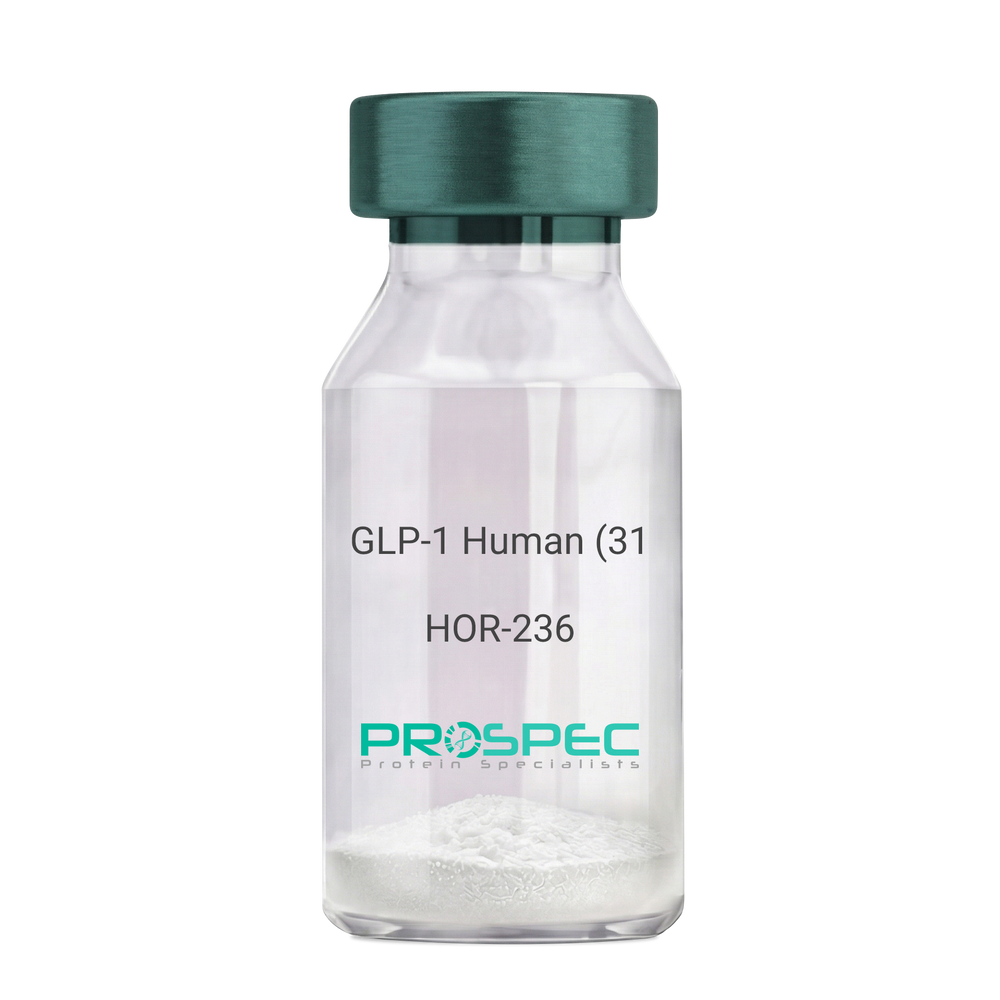
  • View Data Sheet

    Name :

    GLP-1 Human (31 a.a.)

    Description:

    Glucagon Like Peptide-1 (31 a.a.) Human Recombinant

    GLP1, GLP2, GRPP.

    Product # :

    HOR-236

    Price :

    Quantity :

    Shipping Method :

    Room Temp Icon

    Shipped at Room temp

    Add To Cart

    More Info

    • description
    • source
    • formulation
    • purity
    • More Info

    Description

    Glucagon Like Peptide-1 Human Recombinant produced in E.Coli is a single, non-glycosylated, polypeptide chain containing 31 amino acids and having a molecular mass of 3.3 kDa. The GLP-1 is purified by proprietary chromatographic techniques.

    Source

    Escherichia Coli.

    Formulation

    The Recombinant GLP-1 concentrated solution (1mg/ml) was lyophilized after extensive dialyses against 0.1mg sodium phosphate monobasic & 1.6mg sodium phosphate dibasic.

    Purity

    Greater than 98.0% as determined by:
    (a) Analysis by RP-HPLC.
    (b) Analysis by SDS-PAGE.

    More Info

    • Introduction

      Glucagon-like peptide-1 (GLP-1) is derived from the transcription product of the proglucagon gene. The major source of GLP-1 in the body is the intestinal L cell that secretes GLP-1 as a guthormone. The biologically active forms of GLP-1 are: GLP-1-(7-37) and GLP-1-(7-36)NH2.
      GLP-1 secretion by L cells is dependent on the presence of nutrients in the lumen of the small intestine. The secretagogues (agents that causes or stimulates secretion) of this hormone include major nutrients like carbohydrate, proteinand lipid. Once in the circulation, GLP-1 has a half life of less than 2 minutes, due to rapid degradation by the enzyme dipeptidyl peptidase-4.
      GLP-1 possesses several physiological properties that make it a subject of intensive investigation as a potential treatment of diabetes mellitus. The known physiological functions of GLP-1 include: Increases insulin secretion from the pancreas in a glucose-dependent manner, decreases glucagon secretion from the pancreas, increases beta cells mass and insulin gene expression, inhibits acid secretion and gastric emptying in the stomach, decreases food intake by increasing satiety.

    • Synonyms

      GLP1, GLP2, GRPP.

    • Physical Appearance

      Sterile Filtered White lyophilized (freeze-dried) powder.

    • Stability

      Lyophilized Glucagon Like Peptide-1 although stable at room temperature for 3 weeks, should be stored desiccated below -18°C. Upon reconstitution GLP-1 should be stored at 4°C between 2-7 days and for future use below -18°C. For long term storage it is recommended to add a carrier protein (0.1% HSA or BSA).Please prevent freeze-thaw cycles.

    • Solubility

      It is recommended to reconstitute the lyophilized Glucagon Like Peptide-1 in sterile 18MΩ-cm H2O not less than 100µg/ml, which can then be further diluted to other aqueous solutions.

    • Amino Acid Sequence

      HAEGTFTSDV SSYLEGQAAK EFIAWLVKGR G.

    ProSpec's products are furnished for LABORATORY RESEARCH USE ONLY. The product may not be used as drugs, agricultural or pesticidal products, food additives or household chemicals.

    Glucagon Like Peptide 1 Human
  • View Data Sheet

    Name :

    GLRX1 Yeast

    Description:

    Glutaredoxin 1 Yeast Recombinant

    Thioltransferase, GRX, GLRX1, GRX1, GRX-1, GLRX-1, Glutathione-dependent oxidoreductase 1, Glutaredoxin 1.

    Product # :

    ENZ-361

    Price :

    Quantity :

    Shipping Method :

    Ice Icon

    Shipped with Ice Packs

    Add To Cart

    More Info

    • description
    • source
    • formulation
    • purity
    • More Info

    Description

    Glutaredoxin Saccharamyces cerevisiae Recombinant containing 6x His tag at C-Terminus produced in E.Coli is a single, non-glycosylated, Polypeptide chain having a molecular mass of 16 kDa.

    Source

    Escherichia Coli.

    Formulation

    Glutaredoxin solution contains PBS, pH-7.5 & 0.01% Na Azide.

    Purity

    Greater than 95% as determined by SDS-PAGE.

    More Info

    • Introduction

      GLRX1 has a glutathione-disulfide oxidoreductase activity in the presence of nadph and glutathione reductase. reduces low molecular weight disulfides and proteins. Glutaredoxin is a glutathione (GSH)-dependent hydrogen donor for ribonucleotide reductase and also catalyzes glutathione-disulfide oxidoreduction reactions in the presence of NADPH and glutathione reductase. GLRX1 is multifunctional enzyme with glutathione-dependent oxidoreductase, glutathione peroxidase and glutathione S-transferase (GST) activity. The disulfide bond functions as an electron carrier in the glutathione-dependent synthesis of deoxyribonucleotides by the enzyme ribonucleotide reductase. In addition, it is also involved in reducing cytosolic protein- and non-protein-disulfides in a coupled system with glutathione reductase. Required for resistance to reactive oxygen species (ROS) by directly reducing hydroperoxides and for the detoxification of ROS-mediated damage.

    • Synonyms

      Thioltransferase, GRX, GLRX1, GRX1, GRX-1, GLRX-1, Glutathione-dependent oxidoreductase 1, Glutaredoxin 1.

    • Physical Appearance

      Sterile Filtered clear colorless solution.

    • Stability

      1 week at 2-10°C. For long term store at -20 to -80°C.

    ProSpec's products are furnished for LABORATORY RESEARCH USE ONLY. The product may not be used as drugs, agricultural or pesticidal products, food additives or household chemicals.

    Glrx1
  • View Data Sheet

    Name :

    XAGE1A Human

    Description:

    X Antigen Family, Member 1A Human Recombinant

    X antigen family member 1, XAGE-1, Cancer/testis antigen 12.1, CT12.1, G antigen family D member 2, XAGE1A, GAGED2, XAGE1, CTP9, CT12.1C.

    Product # :

    PRO-1256

    Price :

    Quantity :

    Shipping Method :

    Ice Icon

    Shipped with Ice Packs

    Add To Cart

    More Info

    • description
    • source
    • formulation
    • purity
    • More Info

    Description

    XAGE1A Human Recombinant produced in E.Coli is a single, non-glycosylated polypeptide chain containing 104 amino acids (1-81 a.a) and having a molecular mass of 11.5kDa.XAGE1A is fused to a 23 amino acid His-tag at N-terminus & purified by proprietary chromatographic techniques.

    Source

    Escherichia Coli.

    Formulation

    XAGE1A protein solution (0.25mg/ml) containing 20mM Tris-HCl buffer (pH 8.0), 0.2M NaCl, 20% glycerol and 2mM DTT.

    Purity

    Greater than 85.0% as determined by SDS-PAGE.

    More Info

    • Introduction

      G antigen family D member 2 (XAGE1A) belongs to the XAGE subfamily, which is a member of the GAGE family. The GAGE genes are expressed various tumors and in a number of fetal and reproductive tissues. XAGE1A contains a nuclear localization signal and shares a sequence similarity with other GAGE/PAGE proteins. XAGE1A is strongly expressed in Ewing's sarcoma, alveolar rhabdomyosarcoma and normal testis. Due to the expression pattern and the sequence similarity, the XAGE1A protein is also a member of a family of CT (cancer-testis) antigens.

    • Synonyms

      X antigen family member 1, XAGE-1, Cancer/testis antigen 12.1, CT12.1, G antigen family D member 2, XAGE1A, GAGED2, XAGE1, CTP9, CT12.1C.

    • Physical Appearance

      Sterile Filtered colorless solution.

    • Stability

      Store at 4°C if entire vial will be used within 2-4 weeks. Store, frozen at -20°C for longer periods of time. For long term storage it is recommended to add a carrier protein (0.1% HSA or BSA).Avoid multiple freeze-thaw cycles.

    • Amino Acid Sequence

      MGSSHHHHHH SSGLVPRGSH MGSMESPKKK NQQLKVGILH LGSRQKKIRI QLRSQCATWK VICKSCISQT PGINLDLGSG VKVKIIPKEE HCKMPEAGEE QPQV.

    ProSpec's products are furnished for LABORATORY RESEARCH USE ONLY. The product may not be used as drugs, agricultural or pesticidal products, food additives or household chemicals.

    Xage1A Human
  • 1
  • …
  • 31
  • 32
  • 33
  • 34
  • 35
  • …
  • 42
Your browser does not support the video tag.

Products

  • Cytokines
  • Growth Factors
  • Chemokines
  • CD Antigens
  • Neurotrophins
  • Hormones
  • Enzymes
  • Viral Antigens
  • Recombinant Proteins
  • Natural Proteins
  • Monoclonal Antibodies
  • Polyclonal Antibodies
  • Thermal Packaging

About

  • Company
  • Founder
  • Contribution
  • Contact Us
  • My Account

Ordering

  • Ordering Method
  • Ordering - Credit Card
  • Ordering PO
  • Shipping Fees
  • FAQ's

Legal

  • Terms & Conditions
  • Privacy
  • Site Map
  • info@prospecbio.com
  • Facebook
  • Instagram
  • Linkedin Profile

© 2026 ProSpec-Tany TechnoGene Ltd. All Rights Reserved.

  • Choosing a selection results in a full page refresh.
  • Opens in a new window.