Search results
1000 results found for “protein kinases”
Name
Description
Product #
Price
Quantity
Shipping Method
- View Data Sheet
Name :
CALM BovineDescription:
Calmodulin Bovine
Calmodulin, CaM, CALM.
Product # :
PRO-2800Price :
Quantity :
Shipping Method :
Shipped at Room temp
More Info
- source
- formulation
- purity
- More Info
Source
Bovine brain tissue.
Formulation
CALM was lyophilized with 2mM EDTA.
Purity
Greater than 95.0%.
More Info
-
Synonyms
Calmodulin, CaM, CALM.
-
Physical Appearance
Sterile Filtered White lyophilized (freeze-dried) powder.
-
Stability
Lyophilized CALM although stable at room temperature for 3 weeks, should be stored desiccated below -18°C. Upon reconstitution Calmodulin should be stored at 4°C between 2-7 days and for future use below -18°C. For long term storage it is recommended to add a carrier protein (0.1% HSA or BSA). Please prevent freeze-thaw cycles.
-
Solubility
It is recommended to reconstitute the lyophilized CALM in sterile 18MΩ-cm H2O not less than 100µg/ml, which can then be further diluted to other aqueous solutions.
-
Applications
Biochemical and immunochemical investigations.
-
Background
Role in Muscle Contraction and Relaxation:
In muscle cells, calmodulin plays a pivotal role in the regulation of contraction and relaxation. It interacts with myosin light-chain kinase during muscle contraction, initiating the process of cross-bridge cycling. Conversely, during muscle relaxation, calmodulin activates the enzyme myosin light-chain phosphatase, leading to the dephosphorylation of myosin and muscle relaxation. This delicate balance is crucial for proper muscle function.
Neuronal Signalling and Synaptic Plasticity:
In neurons, calmodulin is essential for neurotransmitter release and synaptic plasticity. It modulates the activity of proteins involved in vesicle fusion and neurotransmitter release. Additionally, calmodulin-dependent protein kinases (CaMKs) are critical for synaptic plasticity, learning, and memory. The intricate interplay between calmodulin and neuronal proteins underpins the fundamental processes of learning and cognition.
Implications in Disease and Therapeutics:
Dysregulation of calmodulin has been implicated in various diseases, including cardiac arrhythmias and neurodegenerative disorders. Mutations in calmodulin genes can lead to aberrant calcium signalling and cellular dysfunction. Consequently, understanding these molecular mechanisms offers potential therapeutic targets. Researchers are exploring calmodulin inhibitors and modulators for conditions like cardiac arrhythmias, aiming to restore normal cellular function.
Conclusion:
Calmodulin, with its remarkable structural versatility and central role in cellular signalling, epitomizes the complexity of biological regulation. Its influence spans from the fundamental processes of muscle contraction to the intricacies of neuronal signalling. Unravelling the mysteries of calmodulin not only deepens our understanding of basic biological phenomena but also holds the promise of innovative therapeutic interventions. This research illuminates calmodulin's significance, emphasizing its position as a master regulator in the orchestra of cellular life.
ProSpec's products are furnished for LABORATORY RESEARCH USE ONLY. The product may not be used as drugs, agricultural or pesticidal products, food additives or household chemicals.
- View Data Sheet
Name :
BRMS1 HumanDescription:
Breast Cancer Metastasis Suppressor 1 Human Recombinant
Breast Cancer Metastasis Suppressor 1.
Product # :
PRO-1828Price :
Quantity :
Shipping Method :
Shipped with Ice Packs
More Info
- description
- source
- formulation
- purity
- More Info
Description
BRMS1 Human Recombinant produced in E.coli is a single, non-glycosylated polypeptide chain containing 261 amino acids (1-246) and having a molecular mass of 29.9 kDa. BRMS1 is fused to a 15 amino acid T7-tag at N-terminus.
Source
Escherichia Coli.
Formulation
The BRMS1 solution (0.25mg/ml) contains 20mM Tris-HCl buffer (pH 8.0), 0.4M Urea and 10% glycerol.
Purity
Greater than 80% as determined by SDS-PAGE.
More Info
-
Introduction
BRMS1 protein, a member of the mSin3a family of HDAC (histone deacetylase complexes), is mainly restricted to the nucleus. BRMS1 holds two coiled-coil motifs and a few imperfect leucine zipper motifs. BRMS1 reduces the metastatic potential, but not the tumorogenicity, of melanoma cell lines and human breast cancer. Alternative splicing creates two transcript variants encoding different isoforms.
-
Synonyms
Breast Cancer Metastasis Suppressor 1.
-
Physical Appearance
Sterile Filtered clear solution.
-
Stability
Store at 4°C if entire vial will be used within 2-4 weeks. Store, frozen at -20°C for longer periods of time. For long term storage it is recommended to add a carrier protein (0.1% HSA or BSA).Avoid multiple freeze-thaw cycles.
-
Amino Acid Sequence
MASMTGGQQM GRGSHMPVQP PSKDTEEMEA EGDSAAEMNG EEEESEEERS GSQTESEEES SEMDDEDYER RRSECVSEML DLEKQFSELK EKLFRERLSQ LRLRLEEVGA ERAPEYTEPL GGLQRSLKIR IQVAGIYKGF CLDVIRNKYE CELQGAKQHL ESEKLLLYDT LQGELQERIQ RLEEDRQSLD LSSEWWDDKL HARGSSRSWD SLPPSKRKKA PLVSGPYIVY MLQEIDILED WTAIKKARAA VSPQKRKSDG P
ProSpec's products are furnished for LABORATORY RESEARCH USE ONLY. The product may not be used as drugs, agricultural or pesticidal products, food additives or household chemicals.
- View Data Sheet
Name :
Leptin ProteinDescription:
Leptin Human Recombinant
OB Protein, Obesity Protein, OBS, Obesity factor.
Product # :
CYT-228Price :
Quantity :
Shipping Method :
Shipped at Room temp
More Info
- description
- source
- formulation
- purity
- biological activity
- More Info
Description
Leptin Human Recombinant produced in E.Coli is a single, non-glycosylated, polypeptide chain containing 146 amino acids and having a molecular mass of 16 kDa.The Leptin is purified by proprietary chromatographic techniques.
Source
Escherichia Coli.
Formulation
The protein was lyophilized from a concentrated (1mg/ml) solution with 0.0045mM NaHCO3.
Purity
Greater than 95.0% as determined by:
(a) Analysis by Gel filtration.
(b) Analysis by SDS-PAGE.Biological Activity
Biological Activity is evidenced by inducing proliferation of BAF/3 cells stably transfected with the long form of human leptin receptor.More Info
-
Introduction
A 16-kDa peptide hormone secreted from white adipocytes and implicated in the regulation of food intake and energy balance. Leptin provides the key afferent signal from fat cells in the feedback system that controls body fat stores.
-
Synonyms
OB Protein, Obesity Protein, OBS, Obesity factor.
-
Physical Appearance
Sterile Filtered White lyophilized (freeze-dried) powder.
-
Stability
Lyophilized Leptin although stable at room temperature for 3 weeks, should be stored desiccated below -18°C. Upon reconstitution Leptin should be stored at 4°C between 2-7 days and for future use below -18°C. For long term storage it is recommended to add a carrier protein (0.1% HSA or BSA). Please prevent freeze-thaw cycles.
-
Solubility
It is recommended to reconstitute the lyophilized Leptin in sterile water or 0.4% NaHCO3 pH-8-9, not less than 100µg/ml, which can then be further diluted to other aqueous solutions.
-
Amino Acid Sequence
The sequence of the first five N-terminal amino acids was determined and was found to be Ala-Val-Pro-Ile-Gln.
-
Protein content
Protein quantitation was carried out by UV spectroscopy at 280 nm using the absorbency value of 0.87 as the extinction coefficient for a 0.1% (1mg/ml) solution. This value is calculated by the PC GENE computer analysis program of protein sequences (IntelliGenetics).
ProSpec's products are furnished for LABORATORY RESEARCH USE ONLY. The product may not be used as drugs, agricultural or pesticidal products, food additives or household chemicals.
- View Data Sheet
Name :
LDOC1L HumanDescription:
Leucine Zipper, Down-Regulated in Cancer 1-Like Human Recombinant
Protein LDOC1L, Leucine zipper protein down-regulated in cancer cells-like, Mammalian retrotransposon-derived protein 6, LDOC1L, MAR6, MART6, dJ1033E15.2.
Product # :
PRO-1153Price :
Quantity :
Shipping Method :
Shipped with Ice Packs
More Info
- description
- source
- formulation
- purity
- More Info
Description
LDOC1L Human Recombinant produced in E.Coli is a single, non-glycosylated polypeptide chain containing 263 amino acids (1-239 a.a) and having a molecular mass of 28.7kDa.LDOC1L is fused to a 24 amino acid His-tag at N-terminus & purified by proprietary chromatographic techniques.
Source
Escherichia Coli.
Formulation
LDOC1L protein solution (0.5mg/ml) containing 20mM Tris-HCl buffer (pH 8.0), 0.1M NaCl, 40% glycerol, 2mM DTT, 0.1mM PMSF and 1mM EDTA.
Purity
Greater than 90% as determined by SDS-PAGE.
More Info
-
Introduction
Leucine zipper down-regulated in cancer 1-like (LDOC1L) is a member of the LDOC1 family. LDOC1L is a nuclear protein containing a leucine zipper-like motif and a proline-rich region that shares noticeable similarity with an SH3-binding domain. LDOC1L localizes to the nucleus and is downregulated in certain cancer cell lines. LDOC1L is believed to regulate the transcriptional response mediated by the nuclear factor kB (NFkB).
-
Synonyms
Protein LDOC1L, Leucine zipper protein down-regulated in cancer cells-like, Mammalian retrotransposon-derived protein 6, LDOC1L, MAR6, MART6, dJ1033E15.2.
-
Physical Appearance
Sterile filtered colorless solution.
-
Stability
Store at 4°C if entire vial will be used within 2-4 weeks. Store, frozen at -20°C for longer periods of time. For long term storage it is recommended to add a carrier protein (0.1% HSA or BSA).Avoid multiple freeze-thaw cycles.
-
Amino Acid Sequence
MGSSHHHHHH SSGLVPRGSH MGSHMVQPQT SKAESPALAA SPNAQMDDVI DTLTSLRLTN SALRREASTL RAEKANLTNM LESVMAELTL LRTRARIPGA LQITPPISSI TSNGTRPMTT PPTSLPEPFS GDPGRLAGFL MQMDRFMIFQ ASRFPGEAER VAFLVSRLTG EAEKWAIPHM QPDSPLRNNY QGFLAELRRT YKSPLRHARR AQIRKTSASN RAVRERQMLC RQLASAGTGP CPVHPASNGT SPAPALPARA RNL.
ProSpec's products are furnished for LABORATORY RESEARCH USE ONLY. The product may not be used as drugs, agricultural or pesticidal products, food additives or household chemicals.
- View Data Sheet
Name :
TREM1 HumanDescription:
Triggering Receptor Expressed on Myeloid Cells 1 Human Recombinant
Triggering receptor expressed on myeloid cells 1, Triggering receptor expressed on monocytes 1, TREM-1, TREM1.
Product # :
PRO-457Price :
Quantity :
Shipping Method :
Shipped with Ice Packs
More Info
- description
- source
- formulation
- purity
- More Info
Description
TREM1 Human Recombinant produced in E.Coli is a single, non-glycosylated polypeptide chain containing 209 amino acids (21-205 a.a.) and having a molecular mass of 23.3kDa.TREM1 is fused to a 24 amino acid His-tag at N-terminus & purified by proprietary chromatographic techniques.
Source
Escherichia Coli.
Formulation
TREM1 protein solution (0.5mg/ml) containing 20mM Tris-HCl buffer (pH 8.0), 0.15M NaCl, 30% glycerol and 1mM DTT.
Purity
Greater than 85.0% as determined by SDS-PAGE.
More Info
-
Introduction
TREM1 is a transmembrane receptor protein that is involved in monocytic activation and in the inflammatory response. TREM1 is expressed on the surface of neutrophils, mature monocytes and macrophages. TREM1 stimulates neutrophil and monocyte-mediated inflammatory responses. TREM1 also triggers the release of pro-inflammatory chemokines and cytokines, as well as increased surface expression of cell activation markers. Furthermore, TREM1 is an amplifier of inflammatory responses that are triggered by bacterial and fungal infections and is a fundamental mediator of septic shock. The expression of the soluble form of TREM1 increases during sepsis and can consequently be used as a biological marker for septic shock. TREM1 is strongly expressed in acute inflammatory lesions caused by bacteria and fungi. Increased TREM1 expression on monocytes is related to both infectious and noninfectious inflammatory processes.
TREM1 is vastly expressed in adult liver, lung and spleen than in corresponding fetal tissue. TREM1 is also expressed in the lymph node, placenta, spinal cord and heart tissues. TREM1 expression is more elevated in peripheral blood leukocytes than in the bone marrow and in normal cells than malignant cells. TREM1 is expressed at low levels in the early development of the hematopoietic system and in the promonocytic stage and at high levels in mature monocytes. -
Synonyms
Triggering receptor expressed on myeloid cells 1, Triggering receptor expressed on monocytes 1, TREM-1, TREM1.
-
Physical Appearance
Sterile Filtered clear solution.
-
Stability
Store at 4°C if entire vial will be used within 2-4 weeks. Store, frozen at -20°C for longer periods of time. For long term storage it is recommended to add a carrier protein (0.1% HSA or BSA).Please avoid freeze thaw cycles.
-
Amino Acid Sequence
MGSSHHHHHH SSGLVPRGSH MGSMATKLTE EKYELKEGQT LDVKCDYTLE KFASSQKAWQ IIRDGEMPKT LACTERPSKN SHPVQVGRII LEDYHDHGLL RVRMVNLQVE DSGLYQCVIY QPPKEPHMLF DRIRLVVTKG FSGTPGSNEN STQNVYKIPP TTTKALCPLY TSPRTVTQAP PKSTADVSTP DSEINLTNVT DIIRVPVFN.
ProSpec's products are furnished for LABORATORY RESEARCH USE ONLY. The product may not be used as drugs, agricultural or pesticidal products, food additives or household chemicals.
- View Data Sheet
Name :
PSPH HumanDescription:
Phosphoserine Phosphatase Human Recombinant
Phosphoserine phosphatase, EC 3.1.3.3, PSP, O-phosphoserine phosphohydrolase, PSPase, L-3-phosphoserine phosphatase, PSPH.
Product # :
PKA-224Price :
Quantity :
Shipping Method :
Shipped with Ice Packs
More Info
- description
- source
- formulation
- purity
- More Info
Description
Phosphoserine Phosphatase Human Recombinant produced in E.Coli is a single, non-glycosylated polypeptide chain containing 225 amino acids and having a molecular mass of 25 kDa. PSP was overexpressed in E. coli and purified by conventional chromatography.
Source
Escherichia Coli.
Formulation
The protein contains 20mM Hepes pH 7.5, 1mM DTT &100mM KCl2.
Purity
Greater than 95.0% as determined by:
(a) Analysis by RP-HPLC.
(b) Analysis by SDS-PAGE.More Info
-
Introduction
Human Phosphoserine phosphatase (hPSP) is an important enzyme in the phosphorylated pathway of serine biosynthesis, which contributes a major portion of the endogenous L-serine. Similar to known L-3-phosphoserine phosphatases, it catalyzed the Mg2+-dependent hydrolysis of L-phosphoserine and an exchange reaction between L-serine and L-phosphoserine. Recently, its complex structures reveal that the open-closed environmental change of the active site, generated -helical bundle domain, is important to substrate by local rearrangement of the recognition and hydrolysis.
-
Synonyms
Phosphoserine phosphatase, EC 3.1.3.3, PSP, O-phosphoserine phosphohydrolase, PSPase, L-3-phosphoserine phosphatase, PSPH.
-
Physical Appearance
Sterile filtered colorless solution.
-
Stability
Store at 4°C if entire vial will be used within 2-4 weeks. Store, frozen at -20°C for longer periods of time. For long term storage it is recommended to add a carrier protein (0.1% HSA or BSA). Avoid multiple freeze-thaw cycles.
-
Amino Acid Sequence
MVSHSELRKL FYSADAVCFD VDSTVIREEG IDELAKICGV EDAVSEMTRR AMGGAVPFKA ALTERLALIQ PSREQVQRLI AEQPPHLTPG IRELVSRLQE RNVQVFLISG GFRSIVEHVA SKLNIPATNV FANRLKFYFN GEYAGFDETQ PTAESGGKGK VIKLLKEKFH FKKIIMIGDG ATDMEACPPA DAFIGFGGNV IRQQVKDNAK WYITDFVELL GELEE.
ProSpec's products are furnished for LABORATORY RESEARCH USE ONLY. The product may not be used as drugs, agricultural or pesticidal products, food additives or household chemicals.
- View Data Sheet
Name :
SLAMF1 HumanDescription:
SLAMF1 Human Recombinant
Signaling lymphocytic activation molecule, CDw150, IPO-3, CD150, SLAMF1, SLAM.
Product # :
PRO-1342Price :
Quantity :
Shipping Method :
Shipped with Ice Packs
More Info
- description
- source
- formulation
- purity
- More Info
Description
SLAMF1 Human Recombinant produced in E.Coli is a single, non-glycosylated polypeptide chain containing 240 amino acids (21-237 a.a) and having a molecular mass of 26.7kDa.SLAMF1 is fused to a 23 amino acid His-tag at N-terminus & purified by proprietary chromatographic techniques.
Source
Escherichia Coli.
Formulation
SLAMF1 protein solution (0.5mg/ml) containing 20mM Tris-HCl buffer (pH 8.0), 0.4M UREA and 10% glycerol.
Purity
Greater than 85.0% as determined by SDS-PAGE.
More Info
-
Introduction
SLAMF1 is a member of the immunoglobulin gene superfamily and is involved in T-cell stimulation. The SLAMF1 protein is constitutively expressed on peripheral blood memory T cells, T-cell clones, immature thymocytes, and a fraction of B cells, and is swiftly induced on naive T cells after activation. There are probably 2 modes of SLAM signaling: one in which the inhibitor SH2D1A serves as a negative regulator and another in which protein-tyrosine phosphatase 2C (PTPN11)-dependent signal transduction functions.
-
Synonyms
Signaling lymphocytic activation molecule, CDw150, IPO-3, CD150, SLAMF1, SLAM.
-
Physical Appearance
Sterile Filtered colorless solution.
-
Stability
Store at 4°C if entire vial will be used within 2-4 weeks. Store, frozen at -20°C for longer periods of time. For long term storage it is recommended to add a carrier protein (0.1% HSA or BSA).Avoid multiple freeze-thaw cycles.
-
Amino Acid Sequence
MGSSHHHHHH SSGLVPRGSH MGSASYGTGG RMMNCPKILR QLGSKVLLPL TYERINKSMN KSIHIVVTMA KSLENSVENK IVSLDPSEAG PPRYLGDRYK FYLENLTLGI RESRKEDEGW YLMTLEKNVS VQRFCLQLRL YEQVSTPEIK VLNKTQENGT CTLILGCTVE KGDHVAYSWS EKAGTHPLNP ANSSHLLSLT LGPQHADNIY ICTVSNPISN NSQTFSPWPG CRTDPSETKP.
ProSpec's products are furnished for LABORATORY RESEARCH USE ONLY. The product may not be used as drugs, agricultural or pesticidal products, food additives or household chemicals.
- View Data Sheet
Name :
KLK1 Human, HisDescription:
Kallikrein-1 Human Recombinant, His Tag
KLK1, KLK-1, HK1, HK-1, KLKR, KLK6, Tissue Kallikrein, hKLK1, EC 3.4.21.35, Kidney/pancreas/salivary gland kallikrein, Kallikrein-1.
Product # :
ENZ-690Price :
Quantity :
Shipping Method :
Shipped with Ice Packs
More Info
- description
- source
- formulation
- purity
- More Info
Description
Kallikrein-1 Human Recombinant produced in E.coli is a single, non-glycosylated polypeptide chain containing 259 amino acids (25-262) and having a molecular mass of 28.7kDa.KLK1 is fused to a 21 amino acid His-tag at N-terminus & purified by proprietary chromatographic techniques.
Source
Escherichia Coli.
Formulation
The KLK1 solution (0.25mg/ml) contains 20mM Tris-HCl buffer (pH 8.0), 0.15M NaCl, 10% glycerol and 1mM DTT.
Purity
Greater than 90.0% as determined by SDS-PAGE.
More Info
-
Introduction
Kallikreins are serine protease enzymes having various physiological functions.
Kallikreins are implicated in carcinogenesis and have potenital as novel cancer disease biomarkers. KLK1 is one of the fifteen kallikrein subfamily members located in a cluster on chromosome 19. KLK1 is functionally conserved in its ability to release the vasoactive peptide, Lys-bradykinin, from low molecular weight kininogen.
Human Kallikrein-1, also called as Kallidinogenase, Kininogenase or Kininogenin, is an active protein enzyme present in saliva, pancreatic juices, and urine that catalyzes the proteolysis of bradykininogen to bradykinin.
Kallikrein-1, which derived from human or porcine, have been used as drugs for a long time, they are mainly used in the treatment f light to medium hypertension and occlusion of cerebral and surrounding blood vessels.
KLK1 demonstrates both trypsin- and chymotrypsin-like selectivities with Tyr/Arg preferred at site P1, Ser/Arg strongly preferred at P1', and Phe/Leu at P2.
rs5517 in the KLK1 gene is considerably connected with hypertension in a Chinese Han population. KLK1 is expressed de novo in endothelial cells and mediates relaxation of human umbilical veins. The K allele of KLK1 promoter and TT genotype of TGF-beta1 are a genetic KLK1 -130 GN and -128 G-C, and the defenselessness factor contributing to progressive renal descent in Taiwanese primary vesicoureteric reflux children.
Induction of KLK1 in carotid arteriosclerosis doesn’t lead to kallikrein-kinins pathway activation. Transgenic rats expressing KLK1 have impaired renal response to acute volume expansion Endothelial cells synthesize and release active form of KLK1on the surface which is important function in maintenance of circulation homeostasis.
KLK1 participates in epidermal desquamation through cleavage of desmoglein 1 and regulation by lympho-epithelial Kazal-type-related inhibitor (LEKTI). -
Synonyms
KLK1, KLK-1, HK1, HK-1, KLKR, KLK6, Tissue Kallikrein, hKLK1, EC 3.4.21.35, Kidney/pancreas/salivary gland kallikrein, Kallikrein-1.
-
Physical Appearance
Sterile Filtered clear solution.
-
Stability
Store at 4°C if entire vial will be used within 2-4 weeks. Store, frozen at -20°C for longer periods of time. For long term storage it is recommended to add a carrier protein (0.1% HSA or BSA).Avoid multiple freeze-thaw cycles.
-
Amino Acid Sequence
MGSSHHHHHH SSGLVPRGSH MIVGGWECEQ HSQPWQAALY HFSTFQCGGI LVHRQWVLTA AHCISDNYQL WLGRHNLFDD ENTAQFVHVS ESFPHPGFNM SLLENHTRQA DEDYSHDLML LRLTEPADTI TDAVKVVELP TQEPEVGSTC LASGWGSIEP ENFSFPDDLQ CVDLKILPND ECKKVHVQKV TDFMLCVGHL EGGKDTCVGD SGGPLMCDGV LQGVTSWGYV PCGTPNKPSV AVRVLSYVKW IEDTIAENS.
ProSpec's products are furnished for LABORATORY RESEARCH USE ONLY. The product may not be used as drugs, agricultural or pesticidal products, food additives or household chemicals.
- View Data Sheet
Name :
KRT8 Human (421-484)Description:
Cytokeratin 8 (421-484 a.a) Human Recombinant
Keratin type II cytoskeletal 8, Cytokeratin-8, CK-8, Keratin-8, K8, KRT8, CYK8, KO, CK8, K2C8, CARD2.
Product # :
PRO-2839Price :
Quantity :
Shipping Method :
Shipped at Room temp
More Info
- description
- source
- formulation
- purity
- More Info
Description
The KRT8 Human is created as a recombinant protein with a 4kda N-terminal fusion of His Tag. The KRT8 His-Tagged Fusion Protein, produced in E. coli, is a 10kDa protein containing 64 amino acid residues of the KRT8 Human, 421-484 amino acids.
Source
Escherichia Coli.
Formulation
Each mg was lyophilized with 1xPBS, 0.4% SDS and 4mM DTT.
Purity
Greater than 90% as determined by SDS-PAGE.
More Info
-
Synonyms
Keratin type II cytoskeletal 8, Cytokeratin-8, CK-8, Keratin-8, K8, KRT8, CYK8, KO, CK8, K2C8, CARD2.
-
Physical Appearance
Filtered White lyophilized (freeze-dried) powder.
-
Stability
Store lyophilized KRT8 at -20°C. Aliquot the product after reconstitution to avoid repeated freezing/thawing cycles. Reconstituted protein can be stored at 4°C for a limited period of time; it does not show any change after two weeks at 4°C.
-
Solubility
It is recommended to add deionized water to prepare a working stock solution of approximately 0.5mg/ml and let the lyophilized pellet dissolve completely. Product is not sterile! Please filter the product by an appropriate sterile filter before using it on cell culture.
-
Amino Acid Sequence
GGLSSAYGGL TSPGLSYSLG SSFGSGAGSS SFSRTSSSRA VVVKKIETRD GKLVSESSDV LPK
-
Background
Cytokeratin 8, also known as KRT8, is a part of the type II keratin family clustered on the long arm of chromosome 12 which plays an important role in the structural integrity of epithelial cells. KRT8 pairs with keratin 18 (a type I keratin) to form heterodimers, which assemble into intermediate filaments. KRT8 takes part in retaining cellular structural integrity and also participates in signal transduction and cellular differentiation.
ProSpec's products are furnished for LABORATORY RESEARCH USE ONLY. The product may not be used as drugs, agricultural or pesticidal products, food additives or household chemicals.
- View Data Sheet
Name :
KLK3, HisDescription:
Kallikrein-3 Human Recombinant, His Tag
Prostate-specific antigen, PSA, Gamma-seminoprotein, Seminin, Kallikrein-3, P-30 antigen, Semenogelase, KLK3, APS, hK3, KLK2A1.
Product # :
ENZ-620Price :
Quantity :
Shipping Method :
Shipped with Ice Packs
More Info
- description
- source
- formulation
- purity
- More Info
Description
KLK3 Human Recombinant produced in E.coli is a single, non-glycosylated polypeptide chain containing 262 amino acids (25-261) and having a molecular mass of 28.8kDa.The KLK3 is fused to a 25 amino acid His-Tag at N-terminus and purified by proprietary chromatographic techniques.
Source
Escherichia Coli.
Formulation
KLK3 protein solution (1mg/ml) is supplied in 20mM Tris-HCl buffer (pH8.0) and 0.4M Urea.
Purity
Greater than 85.0% as determined by SDS-PAGE.
More Info
-
Introduction
Kallikrein-3 (KLK3) belongs to the kallikrein-related peptidase family. Kallikreins are a subgroup of serine proteases having various physiological functions. Numerous kallikreins are involved in carcinogenesis and some may be prospective cancer and other disease biomarkers. Kallikrein-3 is 1 of the 15 kallikrein subfamily members located in a cluster on chromosome 19 and is a protease present in seminal plasma. KLK3 hydrolyzes semenogelin-1 consequently leading to the liquefaction of the seminal coagulum. KLK3 is assumed to act normally in the liquefaction of seminal coagulum, probably by hydrolysis of the high molecular mass seminal vesicle protein. Serum level of the KLK3 protein, called PSA in the clinical setting, is beneficial in the diagnosis and monitoring of prostatic carcinoma.
-
Synonyms
Prostate-specific antigen, PSA, Gamma-seminoprotein, Seminin, Kallikrein-3, P-30 antigen, Semenogelase, KLK3, APS, hK3, KLK2A1.
-
Physical Appearance
Sterile Filtered clear solution.
-
Stability
Store at 4°C if entire vial will be used within 2-4 weeks. Store, frozen at -20°C for longer periods of time. For long term storage it is recommended to add a carrier protein (0.1% HSA or BSA).Avoid multiple freeze-thaw cycles.
-
Amino Acid Sequence
MGSSHHHHHH SSGLVPRGSH MGSHMIVGGW ECEKHSQPWQ VLVASRGRAV CGGVLVHPQW VLTAAHCIRN KSVILLGRHS LFHPEDTGQV FQVSHSFPHP LYDMSLLKNR FLRPGDDSSH DLMLLRLSEP AELTDAVKVM DLPTQEPALG TTCYASGWGS IEPEEFLTPK KLQCVDLHVI SNDVCAQVHP QKVTKFMLCA GRWTGGKSTC SGDSGGPLVC NGVLQGITSW GSEPCALPER PSLYTKVVHY RKWIKDTIVA NP.
ProSpec's products are furnished for LABORATORY RESEARCH USE ONLY. The product may not be used as drugs, agricultural or pesticidal products, food additives or household chemicals.
- View Data Sheet
Name :
PSMF1 HumanDescription:
Proteasome Inhibitor Subunit 1 Human Recombinant
Proteasome inhibitor PI31 subunit, hPI31, PSMF1, PI31.
Product # :
ENZ-224Price :
Quantity :
Shipping Method :
Shipped with Ice Packs
More Info
- description
- source
- formulation
- purity
- More Info
Description
PSMF1 Human Recombinant produced in E.coli is a single, non-glycosylated polypeptide chain containing 291 amino acids (1-271) and having a molecular mass of 31.9kDa.PSMF1 is fused to a 20 amino acid His-tag at N-terminus & purified by proprietary chromatographic techniques.
Source
Escherichia Coli.
Formulation
The PSMF1 solution (0.5mg/ml) contains 20mM Tris-HCl buffer (pH8.0), 20% glycerol, 1mM DTT and 0.1mM PMSF.
Purity
Greater than 85.0% as determined by SDS-PAGE.
More Info
-
Introduction
PSMF1 is a protein which hinders the activation of the proteasome by the 11S and 19S regulators. The 26S proteasome is a multicatalytic proteinase complex with an extremely ordered structure composed of 2 complexes, a 20S core and a 19S regulator. The 20S core is comprised of 4 rings of 28 non-identical subunits; 2 rings are composed of 7 alpha subunits and 2 rings are composed of 7 beta subunits.
-
Synonyms
Proteasome inhibitor PI31 subunit, hPI31, PSMF1, PI31.
-
Physical Appearance
Sterile Filtered colorless solution.
-
Stability
Store at 4°C if entire vial will be used within 2-4 weeks. Store, frozen at -20°C for longer periods of time. For long term storage it is recommended to add a carrier protein (0.1% HSA or BSA).Avoid multiple freeze-thaw cycles.
-
Amino Acid Sequence
MGSSHHHHHH SSGLVPRGSH MAGLEVLFAS AAPAITCRQD ALVCFLHWEV VTHGYCGLGV GDQPGPNDKK SELLPAGWNN NKDLYVLRYE YKDGSRKLLV KAITVESSMI LNVLEYGSQQ VADLTLNLDD YIDAEHLGDF HRTYKNSEEL RSRIVSGIIT PIHEQWEKAN VSSPHREFPP ATAREVDPLR IPPHHPHTSR QPPWCDPLGP FVVGGEDLDP FGPRRGGMIV DPLRSGFPRA LIDPSSGLPN RLPPGAVPPG ARFDPFGPIG TSPPGPNPDH LPPPGYDDMY L.
ProSpec's products are furnished for LABORATORY RESEARCH USE ONLY. The product may not be used as drugs, agricultural or pesticidal products, food additives or household chemicals.
- View Data Sheet
Name :
EFNA5 HumanDescription:
Ephrin A5 Human Recombinant
EFNA5, AF1, EFL5, EPLG7, GLC1M, LERK7, RAGS, Ephrin-A5, AL-1, EPH-related receptor tyrosine kinase ligand 7.
Product # :
PRO-2327Price :
Quantity :
Shipping Method :
Shipped with Ice Packs
More Info
- description
- source
- formulation
- purity
- More Info
Description
EFNA5 produced in Sf9 Baculovirus cells is a single, glycosylated polypeptide chain containing 422 amino acids (21-203 a.a.) and having a molecular mass of 48.1kDa. EFNA5 is expressed with a 239 amino acid hIgG-His-tag at C-Terminus and purified by proprietary chromatographic techniques.
Source
Sf9, Baculovirus cells.
Formulation
EFNA5 protein solution (0.5mg/ml) contains Phosphate Buffered Saline (pH 7.4) and 10% glycerol.
Purity
Greater than 95.0% as determined by SDS-PAGE.
More Info
-
Introduction
Ephrin A5 (EFNA5) is a part of the ephrin ligand family which binds the members of ephrin receptor subfamily of tyrosine kinases and stimulates contact-dependent bidirectional signaling into neighboring cells. EFNA5 is mainly expressed in human adult brain, heart, spleen, and ovary and human fetal brain, lung, and kidney.
-
Synonyms
EFNA5, AF1, EFL5, EPLG7, GLC1M, LERK7, RAGS, Ephrin-A5, AL-1, EPH-related receptor tyrosine kinase ligand 7.
-
Physical Appearance
Sterile Filtered colorless solution.
-
Stability
Store at 4°C if entire vial will be used within 2-4 weeks. Store, frozen at -20°C for longer periods of time. For long term storage it is recommended to add a carrier protein (0.1% HSA or BSA). Avoid multiple freeze-thaw cycles.
-
Amino Acid Sequence
QDPGSKAVAD RYAVYWNSSN PRFQRGDYHI DVCINDYLDV FCPHYEDSVP EDKTERYVLY MVNFDGYSAC DHTSKGFKRW ECNRPHSPNG PLKFSEKFQL FTPFSLGFEF RPGREYFYIS SAIPDNGRRS CLKLKVFVRP TNSCMKTIGV HDRVFDVNDK VENSLEPADD TVHESAEPSR GENLEPKSCD KTHTCPPCPA PELLGGPSVF LFPPKPKDTL MISRTPEVTC VVVDVSHEDP EVKFNWYVDG VEVHNAKTKP REEQYNSTYR VVSVLTVLHQ DWLNGKEYKC KVSNKALPAP IEKTISKAKG QPREPQVYTL PPSRDELTKN QVSLTCLVKG FYPSDIAVEW ESNGQPENNY KTTPPVLDSD GSFFLYSKLT VDKSRWQQGN VFSCSVMHEA LHNHYTQKSL SLSPGKHHHH HH.
ProSpec's products are furnished for LABORATORY RESEARCH USE ONLY. The product may not be used as drugs, agricultural or pesticidal products, food additives or household chemicals.
- View Data Sheet
Name :
VEGF RatDescription:
Vascular Endothelial Growth Factor Rat Recombinant
Vascular endothelial growth factor A, VEGF-A, Vascular permeability factor, VPF, VEGF, MGC70609.
Product # :
CYT-392Price :
Quantity :
Shipping Method :
Shipped at Room temp
More Info
- description
- source
- formulation
- purity
- biological activity
- More Info
Description
Vascular Endothelial Growth Factor Rat Recombinant produced in E.Coli is a double, non-glycosylated, polypeptide chain containing 165 amino acids and having a molecular mass of 38,750 Dalton. The VEGF is purified by proprietary chromatographic techniques.
Source
Escherichia Coli.
Formulation
The protein was lyophilized from 10mM NaP, pH 7.5.
Purity
Greater than 97.0% as determined by:
(a) Analysis by RP-HPLC.
(b) Analysis by SDS-PAGE.Biological Activity
Determined by the dose-dependent stimulation of the proliferation of human umbilical vein endothelial cells (HUVEC) using a concentration range of 4.0-8.0 ng/ml.More Info
-
Introduction
Vascular endothelial growth factor is an important signaling protein involved in both vasculogenesis and angiogenesis. As its name implies, VEGF activity has been mostly studied on cells of the vascular endothelium, although it does have effects on a number of other cell types (e.g. stimulation monocyte/ macrophagemigration, neurons, cancer cells, kidney epithelial cells ).VEGF mediates increased vascular permeability, induces angiogenesis, vasculogenesis and endothelial cell growth, promotes cell migration, and inhibits apoptosis. In vitro, VEGF has been shown to stimulate endothelial cell mitogenesisand cell migration. VEGF is also a vasodilator and increases microvascular permeability and was originally referred to as vascular permeability factor.
Elevated levels of this protein are linked to POEMS syndrome, also known as Crow-Fukase syndrome. Mutations in this gene have been associated with proliferative and nonproliferative diabetic retinopathy. -
Synonyms
Vascular endothelial growth factor A, VEGF-A, Vascular permeability factor, VPF, VEGF, MGC70609.
-
Physical Appearance
Sterile Filtered White lyophilized (freeze-dried) powder.
-
Stability
Lyophilized Vascular Endothelial Growth Factor although stable at room temperature for 3 weeks, should be stored desiccated below -18°C. Upon reconstitution VEGF should be stored at 4°C between 2-7 days and for future use below -18°C.For long term storage it is recommended to add a carrier protein (0.1% HSA or BSA).Please prevent freeze-thaw cycles.
-
Solubility
It is recommended to reconstitute the lyophilized Vascular Endothelial Growth Factor in sterile 18MΩ-cm H2O not less than 100µg/ml, which can then be further diluted to other aqueous solutions.
-
Amino Acid Sequence
MAPTTEGEQK AHEVVKFMDV YQRSYCRPIE TLVDIFQEYP DEIEYIFKPS CVPLMRCAGC CNDEALECVP TSESNVTMQI MRIKPHQSQH IGEMSFLQHS RCECRPKKDR TKPEKHCEPC SERRKHLFVQ DPQTCKCSCK NTDSRCKARQ LELNERTCRC DKPRR.
ProSpec's products are furnished for LABORATORY RESEARCH USE ONLY. The product may not be used as drugs, agricultural or pesticidal products, food additives or household chemicals.
- View Data Sheet
Name :
PPP2R1A HumanDescription:
Protein Phosphatase 2, Regulatory Subunit A Alpha Human Recombinant
PPP2R1A, Protein Phosphatase 2, Regulatory Subunit A, Alpha, Protein Phosphatase 2 (Formerly 2A), Regulatory Subunit A (PR 65), Alpha Isoform, PP2A Subunit A Isoform PR65-Alpha, PP2A Subunit A Isoform R1-Alpha, Serine/Threonine Protein Phosphatase 2A, 65 KDa Regulatory Subunit A, Alpha Isoform, Serine/Threonine-Protein Phosphatase 2A, 65 KDa Regulatory Subunit A Alpha Isoform, Protein Phosphatase 2 (Formerly 2A), Regulatory Subunit A, Alpha Isoform, Medium Tumor Antigen-Associated 61 KDA Protein, Medium Tumor Antigen-Associated 61 KDa Protein, 65kDa Regulatory Subunit A, Protein Phosphatase 2A, Protein Phosphatase 2, Regulatory Subunit A, Alpha Isoform, PP2A-Aalpha, PP2AAALPHA, PR65A.
Product # :
ENZ-917Price :
Quantity :
Shipping Method :
Shipped with Ice Packs
More Info
- description
- source
- formulation
- purity
- More Info
Description
PPP2R1A Human Recombinant produced in E.Coli is a single, non-glycosylated polypeptide chain containing 612 amino acids (1-589 a.a) and having a molecular mass of 67.7kDa.PPP2R1A is fused to a 23 amino acid His-tag at N-terminus & purified by proprietary chromatographic techniques.
Source
Escherichia Coli.
Formulation
PPP2R1A protein solution (1mg/ml) containing Phosphate Buffered Saline (pH7.4) and 10% glycerol.
Purity
Greater than 90.0% as determined by SDS-PAGE.
More Info
-
Introduction
Protein Phosphatase 2, Regulatory Subunit A Alpha, also known as PPP2R1A is part of the PPP family of phosphatases, which regulates a diversity of vital cellular processes. PPP2R1A subunit, PR65, functions as a scaffolding molecule which coordinates the assembly of the catalytic subunit and a variable regulatory B subunit. PPP2R1A is essential for proper chromosome segregation as well as for centromeric localization of SGOL1 in mitosis. Furthermore, PPP2R1A phosphorylation is an in vivo mechanism which regulates the PP2A signaling complex as well as increasing the PP2A activity in heart failure.
-
Synonyms
PPP2R1A, Protein Phosphatase 2, Regulatory Subunit A, Alpha, Protein Phosphatase 2 (Formerly 2A), Regulatory Subunit A (PR 65), Alpha Isoform, PP2A Subunit A Isoform PR65-Alpha, PP2A Subunit A Isoform R1-Alpha, Serine/Threonine Protein Phosphatase 2A, 65 KDa Regulatory Subunit A, Alpha Isoform, Serine/Threonine-Protein Phosphatase 2A, 65 KDa Regulatory Subunit A Alpha Isoform, Protein Phosphatase 2 (Formerly 2A), Regulatory Subunit A, Alpha Isoform, Medium Tumor Antigen-Associated 61 KDA Protein, Medium Tumor Antigen-Associated 61 KDa Protein, 65kDa Regulatory Subunit A, Protein Phosphatase 2A, Protein Phosphatase 2, Regulatory Subunit A, Alpha Isoform, PP2A-Aalpha, PP2AAALPHA, PR65A.
-
Physical Appearance
Sterile filtered colorless solution.
-
Stability
Store at 4°C if entire vial will be used within 2-4 weeks. Store, frozen at -20°C for longer periods of time. For long term storage it is recommended to add a carrier protein (0.1% HSA or BSA).Avoid multiple freeze-thaw cycles.
-
Amino Acid Sequence
MGSSHHHHHH SSGLVPRGSH MGSMAAADGD DSLYPIAVLI DELRNEDVQL RLNSIKKLST IALALGVERT RSELLPFLTD TIYDEDEVLL ALAEQLGTFT TLVGGPEYVH CLLPPLESLA TVEETVVRDK AVESLRAISH EHSPSDLEAH FVPLVKRLAG GDWFTSRTSA CGLFSVCYPR VSSAVKAELR QYFRNLCSDD TPMVRRAAAS KLGEFAKVLE LDNVKSEIIP MFSNLASDEQ DSVRLLAVEA CVNIAQLLPQ EDLEALVMPT LRQAAEDKSW RVRYMVADKF TELQKAVGPE ITKTDLVPAF QNLMKDCEAE VRAAASHKVK EFCENLSADC RENVIMSQIL PCIKELVSDANQHVKSALAS VIMGLSPILG KDNTIEHLLP LFLAQLKDEC PEVRLNIISN LDCVNEVIGI RQLSQSLLPA IVELAEDAKW RVRLAIIEYM PLLAGQLGVE FFDEKLNSLC MAWLVDHVYA IREAATSNLK KLVEKFGKEW AHATIIPKVL AMSGDPNYLH RMTTLFCINV LSEVCGQDIT TKHMLPTVLR MAGDPVANVR FNVAKSLQKI GPILDNSTLQ SEVKPILEKL TQDQDVDVKY FAQEALTVLS LA.
ProSpec's products are furnished for LABORATORY RESEARCH USE ONLY. The product may not be used as drugs, agricultural or pesticidal products, food additives or household chemicals.
- View Data Sheet
Name :
PLSCR3 HumanDescription:
Phospholipid Scramblase 3 Human Recombinant
Phospholipid scramblase 3, PL scramblase 3, Ca(2+)-dependent phospholipid scramblase 3.
Product # :
PRO-1733Price :
Quantity :
Shipping Method :
Shipped with Ice Packs
More Info
- description
- source
- formulation
- purity
- More Info
Description
PLSCR3 Human Recombinant produced in E.Coli is a single, non-glycosylated polypeptide chain containing 288 amino acids (1-265 a.a) and having a molecular mass of 30.9kDa.PLSCR3 is fused to a 23 amino acid His-tag at N-terminus & purified by proprietary chromatographic techniques.
Source
Escherichia Coli.
Formulation
PLSCR3 protein solution (1mg/ml) containing 20mM Tris-HCl buffer (pH 8.0), 10% glycerol and 0.4M urea.
Purity
Greater than 90% as determined by SDS-PAGE.
More Info
-
Introduction
Phospholipid Scramblase 3, (PLSCR3) may mediate accelerated ATP-independent bidirectional transbilayer migration of phospholipids upon binding calcium ions which results in a loss of phospholipid asymmetry in the plasma membrane. PLSCR3 may play a key role in the initiation of fibrin clot formation, in the activation of mast cells and in the recognition of apoptotic and injured cells by the reticuloendothelial system. In addition, PLSCR3 seems to play a role in apoptosis, through translocation of cardiolipin from the inner to the outer mitochondrial membrane which promotes BID recruitment and enhances tBid-induced mitochondrial damages. Among the diseases associated with PLSCR3 are brain ischemia, and ischemia.
-
Synonyms
Phospholipid scramblase 3, PL scramblase 3, Ca(2+)-dependent phospholipid scramblase 3.
-
Physical Appearance
Sterile Filtered clear solution.
-
Stability
Store at 4°C if entire vial will be used within 2-4 weeks. Store, frozen at -20°C for longer periods of time.For long term storage it is recommended to add a carrier protein (0.1% HSA or BSA).Please avoid freeze thaw cycles.
-
Amino Acid Sequence
MGSSHHHHHH SSGLVPRGSH MGSMAGYLPP KGYAPSPPPP YPVTPGYPEP ALHPGPGQAP VPAQVPAPAP GFALFPSPGP VALGSAAPFL PLPGVPSGLE FLVQIDQILI HQKAERVETF LGWETCNRYE LRSGAGQPLG QAAEESNCCA RLCCGARRPL RVRLADPGDR EVLRLLRPLH CGCSCCPCGL QEMEVQAPPG TTIGHVLQTW HPFLPKFSIQ DADRQTVLRV VGPCWTCGCG TDTNFEVKTR DESRSVGRIS KQWGGLVREA LTDADDFGLQ FPLDLDVR
ProSpec's products are furnished for LABORATORY RESEARCH USE ONLY. The product may not be used as drugs, agricultural or pesticidal products, food additives or household chemicals.
- View Data Sheet
Name :
Protein Cys-A/GDescription:
Protein Cys-A/G Recombinant
Product # :
PRO-1929Price :
Quantity :
Shipping Method :
Shipped at Room temp
More Info
- description
- source
- formulation
- purity
- More Info
Description
Protein-A/G Recombinant produced in E.Coli is a single non-glycosylated polypeptide chain fused with a Cys at N-terminus. Protein-A/G is comprised of 5 IgG-binding regions of protein A (E-D-A-B-C) and 2 of protein G (C1-C3) containing 430 amino acids in total and having a molecular mass of 47.8kDa. Cell wall binding region, cell membrane binding region and albumin binding region have been eliminated from the recombinant Protein A/G to guarantee the maximum specific IgG binding.
Source
Escherichia Coli.
Formulation
Protein-A/G was lyophilized without any additives.
Purity
Greater than 96.0% as determined by:
(a) Analysis by RP-HPLC.
(b) Analysis by SDS-PAGE.More Info
-
Introduction
The recombinant Protein A/G is a genetically engineered protein comprised of 7 IgG-binding domains EDABC-C1C3, corresponding to the Protein A and G domains which are included in the recombinant sequence. The Protein A part is from Staphylococcus aureus segments E, D, A, B and C. The Protein G part is from Streptococcus segments C1 and C3. The recombinant Protein A/G has a broader binding capacity than either Protein A or Protein G alone. The recombinant Protein A/G is ideal for purification of monoclonal or polyclonal IgG antibodies. Protein A/G binds to various human, mouse and rat IgG subclasses such as the human IgG1, IgG2, IgG3, IgG4; mouse IgG2a, IgG2b, IgG3 and rat IgG2a, IgG2c. In addition, Protein A/G binds to total IgG from cow, goat, sheep, horse, rabbit, guinea pig, pig, dog and cat.
-
Physical Appearance
Sterile Filtered White lyophilized (freeze-dried) powder.
-
Stability
Lyophilized Protein-A/G although stable at room temperature for 3 weeks, should be stored desiccated below -18°C. Upon reconstitution Protein-A/G should be stored at 4°C between 2-7 days and for future use below -18°C. For long term storage it is recommended to add a carrier protein (0.1% HSA or BSA). Please prevent freeze-thaw cycles.
-
Solubility
It is recommended to reconstitute the lyophilized Protein-A/G in sterile 18M-cm H2O not less than 0.1mg/ml, which can then be further diluted to other aqueous solutions.
-
Amino Acid Sequence
CNAAQHDEAQ QNAFYQVLNM PNLNADQRNG FIQSLKDDPS QSANVLGEAQ KLNDSQAPKA DAQQNNFNKD QQSAFYEILN MPNLNEAQRN GFIQSLKDDP SQSTNVLGEA KKLNESQAPK ADNNFNKEQQ NAFYEILNMP NLNEEQRNGF IQSLKDDPSQ SANLLSEAKK LNESQAPKAD NKFNKEQQNA FYEILHLPNL NEEQRNGFIQ SLKDDPSQSA NLLAEAKKLN DAQAPKADNK FNKEQQNAFY EILHLPNLTE EQRNGFIQSL KDDPSVSKEI LAEAKKLNDA QAPKEEDSLE GSGSGTYKLI LNGKTLKGET TTEAVDAATA EKVFKQYAND NGVDGEWTYD DATKTFTVTE KPEVIDASEL TPAVTTYKLV INGKTLKGET TTKAVDAETA EKAFKQYAND NGVDGVWTYD DATKTFTVTE.
ProSpec's products are furnished for LABORATORY RESEARCH USE ONLY. The product may not be used as drugs, agricultural or pesticidal products, food additives or household chemicals.
- View Data Sheet
Name :
KCTD5 HumanDescription:
Potassium Channel Tetramerisation Domain Containing 5 Human Recombinant
BTB/POZ domain-containing protein KCTD5, KCTD5.
Product # :
PRO-1276Price :
Quantity :
Shipping Method :
Shipped with Ice Packs
More Info
- description
- source
- formulation
- purity
- More Info
Description
KCTD5 Human Recombinant produced in E. coli is a single polypeptide chain containing 257 amino acids (1-234) and having a molecular mass of 28.5 kDa. KCTD5 is fused to a 23 amino acid His-tag at N-terminus & purified by proprietary chromatographic techniques.
Source
E.coli.
Formulation
The KCTD5 solution (0.25mg/ml) contains 20mM Tris-HCl buffer (pH 8.0), 0.2M NaCl, 40% glycerol and 1mM DTT.
Purity
Greater than 90% as determined by SDS-PAGE.
More Info
-
Introduction
BTB/POZ domain-containing protein KCTD5 (KCTD5), is a 234 amino acid protein which localizes mainly in the cytoplasm however translocates to the nucleus on interaction with REP proteins. The expression of KCTD5 is up regulated post-transcriptionally in peripheral blood lymphocytes stimulated via the T-cell receptor. KCTD5 interacts particularly with cullin3, attaches ubiquitinated proteins, and created oligomers through its BTB domain.
-
Synonyms
BTB/POZ domain-containing protein KCTD5, KCTD5.
-
Physical Appearance
Sterile Filtered colorless solution.
-
Stability
Store at 4°C if entire vial will be used within 2-4 weeks. Store, frozen at -20°C for longer periods of time. For long term storage it is recommended to add a carrier protein (0.1% HSA or BSA).Avoid multiple freeze-thaw cycles.
-
Amino Acid Sequence
MGSSHHHHHH SSGLVPRGSH MGSMAENHCE LLSPARGGIG AGLGGGLCRR CSAGLGALAQ RPGSVSKWVR LNVGGTYFLT TRQTLCRDPK SFLYRLCQAD PDLDSDKDET GAYLIDRDPT YFGPVLNYLR HGKLVINKDL AEEGVLEEAE FYNITSLIKL VKDKIRERDS KTSQVPVKHV YRVLQCQEEE LTQMVSTMSD GWKFEQLVSI GSSYNYGNED QAEFLCVVSK ELHNTPYGTA SEPSEKAKIL QERGSRM
ProSpec's products are furnished for LABORATORY RESEARCH USE ONLY. The product may not be used as drugs, agricultural or pesticidal products, food additives or household chemicals.
- View Data Sheet
Name :
GTSF1 HumanDescription:
Gametocyte Specific Factor 1 Human Recombinant
Gametocyte Specific Factor 1, FAM112B, Family with Sequence Similarity 112 Member B, Gametocyte-Specific Factor 1, Protein FAM112B, GTSF1.
Product # :
PRO-561Price :
Quantity :
Shipping Method :
Shipped with Ice Packs
More Info
- description
- source
- formulation
- purity
- More Info
Description
GTSF1 Human Recombinant produced in E.coli is a single, non-glycosylated polypeptide chain containing 190 amino acids (1-167) and having a molecular mass of 21.7 kDa.GTSF1 is fused to a 23 amino acid His-tag at N-terminus & purified by proprietary chromatographic techniques.
Source
Escherichia Coli.
Formulation
The GTSF1 solution (0.5mg/ml) contains 20mM Tris-HCl buffer (pH 8.0), 0.15M NaCl and 20% glycerol and 1mM DTT.
Purity
Greater than 90.0% as determined by SDS-PAGE.
More Info
-
Introduction
Gametocyte Specific Factor 1 (GTSF1) is a member of the UPF0224 (FAM112) family and contains 1 CHHC-type zinc finger. A key paralog of the GTSF1 gene is GTSF1L.
-
Synonyms
Gametocyte Specific Factor 1, FAM112B, Family with Sequence Similarity 112 Member B, Gametocyte-Specific Factor 1, Protein FAM112B, GTSF1.
-
Physical Appearance
Sterile Filtered clear solution.
-
Stability
Store at 4°C if entire vial will be used within 2-4 weeks. Store, frozen at -20°C for longer periods of time. For long term storage it is recommended to add a carrier protein (0.1% HSA or BSA).Avoid multiple freeze-thaw cycles.
-
Amino Acid Sequence
MGSSHHHHHH SSGLVPRGSH MGSMEETYTD SLDPEKLLQC PYDKNHQIRA CRFPYHLIKC RKNHPDVASK LATCPFNARH QVPRAEISHH ISSCDDRSCI EQDVVNQTRS LRQETLAEST WQCPPCDEDW DKDLWEQTST PFVWGTTHYS DNNSPASNIV TEHKNNLASG MRVPKSLPYV LPWKNNGNAQ.
ProSpec's products are furnished for LABORATORY RESEARCH USE ONLY. The product may not be used as drugs, agricultural or pesticidal products, food additives or household chemicals.
- View Data Sheet
Name :
PDIA3 MouseDescription:
Protein Disulfide Isomerase A3 Mouse Recombinant
ERp57, ERp60, ERp61, GRP57, GRP58, HsT17083, P58, PI-PLC, ER60, Protein disulfide-isomerase A3, Disulfide isomerase ER-60, Endoplasmic reticulum resident protein 60, ER protein 60, 58 kDa microsomal protein, Endoplasmic reticulum resident protein 57, ER protein 57, 58 kDa glucose-regulated protein, PDIA3.
Product # :
ENZ-1051Price :
Quantity :
Shipping Method :
Shipped with Ice Packs
More Info
- description
- source
- formulation
- purity
- biological activity
- More Info
Description
PDIA3 Mouse Recombinant produced in E.Coli is a single, non-glycosylated polypeptide chain containing 505 amino acids (25-505 a.a) and having a molecular mass of 56.8kDa. PDIA3 is fused to a 23 amino acid His-tag at N-terminus & purified by proprietary chromatographic techniques.
Source
Escherichia Coli.
Formulation
PDIA3 protein solution (1mg/ml) containing 20 mM Tris-HCl buffer (pH8.0), 1mM DTT, 0.1M NaCl and 10% glycerol .
Purity
Greater than 95.0% as determined by SDS-PAGE.
Biological Activity
Specific activity is >15 A650/cm/min/mg,obtained by measuring the increase of insulin precipitation in absorbance at 650nm resulting from the reduction of insulin.
More Info
-
Introduction
PDIA3 is an enzyme that belongs to the endoplasmic reticulum and interacts with lectin chaperones calreticulin and calnexin to modulate folding of newly synthesized glycoproteins. PDIA3 has protein disulfide isomerase activity. Complexes of lectins and PDIA3 mediate protein folding by promoting formation of disulfide bonds in their glycoprotein substrates. PDIA3 is expressed in the lumbar spinal cord from rats submitted to peripheral lesion during neonatal period. PDIA3 interacts with thiazide-sensitive sodium-chloride cotransporter in the kidney and is induced by glucose deprivation. PDIA3 is part of the major histocompatibility complex (MHC) class I peptide-loading complex (TAP1), which is important for formation of the final antigen conformation and export from the endoplasmic reticulum to the cell surface.
-
Synonyms
ERp57, ERp60, ERp61, GRP57, GRP58, HsT17083, P58, PI-PLC, ER60, Protein disulfide-isomerase A3, Disulfide isomerase ER-60, Endoplasmic reticulum resident protein 60, ER protein 60, 58 kDa microsomal protein, Endoplasmic reticulum resident protein 57, ER protein 57, 58 kDa glucose-regulated protein, PDIA3.
-
Physical Appearance
Sterile filtered colourless solution.
-
Stability
Store at 4°C if entire vial will be used within 2-4 weeks.Store, frozen at -20°C for longer periods of time. For long term storage it is recommended to add a carrier protein (0.1% HSA or BSA).Avoid multiple freeze-thaw cycles.
-
Amino Acid Sequence
MGSSHHHHHH SSGLVPRGSH MGSMSDVLEL TDENFESRVS DTGSAGLMLV EFFAPWCGHC KRLAPEYEAA ATRLKGIVPL AKVDCTANTN TCNKYGVSGY PTLKIFRDGE EAGAYDGPRT ADGIVSHLKK QAGPASVPLR TEEEFKKFIS DKDASVVGFF RDLFSDGHSE FLKAASNLRD NYRFAHTNIE SLVKEYDDNG EGITIFRPLH LANKFEDKTV AYTEKKMTSG KIKKFIQDSI FGLCPHMTED NKDLIQGKDL LTAYYDVDYE KNAKGSNYWR NRVMMVAKKF LDAGHKLNFA VASRKTFSHE LSDFGLESTT GEVPVVAIRT AKGEKFVMQE EFSRDGKALE QFLQEYFDGN LKRYLKSEPI PESNEGPVKV VVAENFDDIV NEEDKDVLIE FYAPWCGHCK NLEPKYKELG EKLSKDPNIV IAKMDATAND VPSPYEVKGF PTIYFSPANK KLTPKKYEGG RELNDFISYL QREATNPPII QEEKPKKKKK AQEDL.
ProSpec's products are furnished for LABORATORY RESEARCH USE ONLY. The product may not be used as drugs, agricultural or pesticidal products, food additives or household chemicals.
- View Data Sheet
Name :
PELI2 HumanDescription:
Pellino E3 Ubiquitin Protein Ligase Family Member 2 Human Recombinant
Pellino E3 Ubiquitin Protein Ligase Family Member 2, Pellino-2, E3 Ubiquitin-Protein Ligase Pellino Homolog 2, Pellino (Drosophila) Homolog 2, Pellino Homolog 2 (Drosophila), Protein Pellino Homolog 2, Pellino Homolog 2, EC 6.3.2, PELI2.
Product # :
PRO-2066Price :
Quantity :
Shipping Method :
Shipped with Ice Packs
More Info
- description
- source
- formulation
- purity
- More Info
Description
PELI2 Human Recombinant produced in E.Coli is a single, non-glycosylated polypeptide chain containing 443 amino acids (1-420 a.a) and having a molecular mass of 48.8kDa. PELI2 is fused to a 23 amino acid His-tag at N-terminus & purified by proprietary chromatographic techniques.
Source
Escherichia Coli.
Formulation
PELI2 protein solution (0.5mg/ml) containing 20mM Tris-HCl buffer (pH 8.0), 0.15M NaCl, 20% glycerol and 1mM DTT.
Purity
Greater than 80.0% as determined by SDS-PAGE.
More Info
-
Introduction
Pellino E3 Ubiquitin Protein Ligase Family Member 2, also known as PELI2 is an E3 ubiquitin ligase which catalyzes the covalent attachment of ubiquitin moieties onto substrate proteins. PELI2 is implicated in the TLR and IL-1 signaling pathways through interaction with the complex which contain IRAK kinases and TRAF6. PELI2 also mediates IL1B-induced IRAK1 'Lys-63'-linked polyubiquitination and possibly 'Lys-48'-linked ubiquitination. PELI2 is significant for LPS- and IL1B-induced MAP3K7-dependent, however not for MAP3K3-dependent, NF-kappa-B activation. Moreover, PELI2 can activate the MAP (mitogen activated protein) kinase pathway directing to activation of ELK1.
-
Synonyms
Pellino E3 Ubiquitin Protein Ligase Family Member 2, Pellino-2, E3 Ubiquitin-Protein Ligase Pellino Homolog 2, Pellino (Drosophila) Homolog 2, Pellino Homolog 2 (Drosophila), Protein Pellino Homolog 2, Pellino Homolog 2, EC 6.3.2, PELI2.
-
Physical Appearance
Sterile Filtered colorless solution.
-
Stability
Store at 4°C if entire vial will be used within 2-4 weeks. Store, frozen at -20°C for longer periods of time. For long term storage it is recommended to add a carrier protein (0.1% HSA or BSA).Avoid multiple freeze-thaw cycles.
-
Amino Acid Sequence
MGSSHHHHHH SSGLVPRGSH MGSMFSPGQE EHCAPNKEPV KYGELVVLGY NGALPNGDRG RRKSRFALYK RPKANGVKPS TVHVISTPQA SKAISCKGQH SISYTLSRNQ TVVVEYTHDK DTDMFQVGRS TESPIDFVVT DTISGSQNTD EAQITQSTIS RFACRIVCDR NEPYTARIFA AGFDSSKNIF LGEKAAKWKN PDGHMDGLTT NGVLVMHPRG GFTEESQPGV WREISVCGDV YTLRETRSAQ QRGKLVESET NVLQDGSLID LCGATLLWRT ADGLFHTPTQ KHIEALRQEI NAARPQCPVG LNTLAFPSIN RKEVVEEKQP WAYLSCGHVH GYHNWGHRSD TEANERECPM CRTVGPYVPL WLGCEAGFYV DAGPPTHAFT PCGHVCSEKS AKYWSQIPLP HGTHAFHAAC PFCATQLVGE QNCIKLIFQG PID.
ProSpec's products are furnished for LABORATORY RESEARCH USE ONLY. The product may not be used as drugs, agricultural or pesticidal products, food additives or household chemicals.
- View Data Sheet
Name :
MMP 13 HumanDescription:
Matrix Metalloproteinase-13 Human Recombinant
CLG3, MANDP1, Matrix metalloproteinase-13, MMP-13, MMP13.
Product # :
ENZ-317Price :
Quantity :
Shipping Method :
Shipped with Ice Packs
More Info
- description
- source
- formulation
- purity
- More Info
Description
MMP-13 produced in E.Coli is a single, non-glycosylated polypeptide chain containing 391 amino acids (104-471 a.a.) and having a molecular mass of 44.7 kDa. MMP-13 is fused to a 23 amino acid His Tag at N-Terminus and purified by proprietary chromatographic techniques.
Source
Escherichia Coli.
Formulation
The MMP-13 solution (0.5mg/ml) contains 20mM Tris-HCl buffer (pH 8.0), 10% glycerol, 0.15M NaCl and 1mM DTT.
Purity
Greater than 85% as determined by SDS-PAGE.
More Info
-
Introduction
Matrix Metalloproteinase-13 (MMP-13) is an enzyme that is a member of the MMP extracellular protease family. Extracellular protease enzymes, by virtue of their broad substrate specificities1, play a role in both normal and disease states of tissue proliferation. Among the targets of MMP-13 are collagen, gelatin, entactin, pro-TNF-a, and chemokine SDF-11-4.
MMP-13 is found in its latent form as a 52-56 kDa glycosylated proenzyme. Upon cleavage the 22-46 kDa5 MMP-1 becomes active in extracellular matrix remodeling.
Because of the prominent role that MMP-1 plays in cell migration and metastasis, it is an important target for inhibition screening. -
Synonyms
CLG3, MANDP1, Matrix metalloproteinase-13, MMP-13, MMP13.
-
Physical Appearance
Sterile Filtered clear solution.
-
Stability
Store at 4°C if entire vial will be used within 2-4 weeks. Store, frozen at -20°C for longer periods of time. For long term storage it is recommended to add a carrier protein (0.1% HSA or BSA).Avoid multiple freeze-thaw cycles.
-
Amino Acid Sequence
MGSSHHHHHH SSGLVPRGSH MGSYNVFPRT LKWSKMNLTY RIVNYTPDMT HSEVEKAFKK AFKVWSDVTP LNFTRLHDGI ADIMISFGIK EHGDFYPFDG PSGLLAHAFP PGPNYGGDAH FDDDETWTSS SKGYNLFLVA AHEFGHSLGL DHSKDPGALM FPIYTYTGKS HFMLPDDDVQ GIQSLYGPGD EDPNPKHPKT PDKCDPSLSL DAITSLRGET MIFKDRFFWR LHPQQVDAEL FLTKSFWPEL PNRIDAAYEH PSHDLIFIFR GRKFWALNGY DILEGYPKKI SELGLPKEVK KISAAVHFED TGKTLLFSGN QVWRYDDTNH IMDKDYPRLI EEDFPGIGDK VDAVYEKNGY IYFFNGPIQF EYSIWSNRIV RVMPANSILW C.
ProSpec's products are furnished for LABORATORY RESEARCH USE ONLY. The product may not be used as drugs, agricultural or pesticidal products, food additives or household chemicals.
- View Data Sheet
Name :
RAB10 HumanDescription:
RAB10, Member RAS Oncogene Family Human Recombinant
Ras-related GTP-binding protein RAB10, Ras-related protein Rab-10, RAB10, Rab10, member RAS oncogene family.
Product # :
PRO-1361Price :
Quantity :
Shipping Method :
Shipped with Ice Packs
More Info
- description
- source
- formulation
- purity
- More Info
Description
RAB10 Human Recombinant produced in E.coli is a single, non-glycosylated polypeptide chain containing 220 amino acids (1-200) and having a molecular mass of 24.7 kDa. RAB10 is fused to a 20 amino acid His-tag at N-terminus & purified by proprietary chromatographic techniques.
Source
E.coli.
Formulation
The RAB10 solution (0.5mg/1ml) contains 20mM Tris-HCl buffer (pH 8.0), 10% glycerol 0.4M Urea.
Purity
Greater than 90% as determined by SDS-PAGE.
More Info
-
Introduction
RAB10, Member RAS Oncogene Family (RAB10) belongs to the Ras superfamily of small GTP-binding proteins. RAB10 is a key regulator of endocytic recycling, particularly in the basolateral recycling pathways of polarized epithelial cells. It is required for the recruitment of CNT-1 to endosomal membranes in the intestinal epithelium.
-
Synonyms
Ras-related GTP-binding protein RAB10, Ras-related protein Rab-10, RAB10, Rab10, member RAS oncogene family.
-
Physical Appearance
Sterile Filtered colorless solution.
-
Stability
Store at 4°C if entire vial will be used within 2-4 weeks. Store, frozen at -20°C for longer periods of time. For long term storage it is recommended to add a carrier protein (0.1% HSA or BSA).Avoid multiple freeze-thaw cycles.
-
Amino Acid Sequence
MGSSHHHHHH SSGLVPRGSH MAKKTYDLLF KLLLIGDSGV GKTCVLFRFS DDAFNTTFIS TIGIDFKIKT VELQGKKIKL QIWDTAGQER FHTITTSYYR GAMGIMLVYD ITNGKSFENI SKWLRNIDEH ANEDVERMLL GNKCDMDDKR VVPKGKGEQI AREHGIRFFE TSAKANINIE KAFLTLAEDI LRKTPVKEPN SENVDISSGG GVTGWKSKCC.
ProSpec's products are furnished for LABORATORY RESEARCH USE ONLY. The product may not be used as drugs, agricultural or pesticidal products, food additives or household chemicals.
- View Data Sheet
Name :
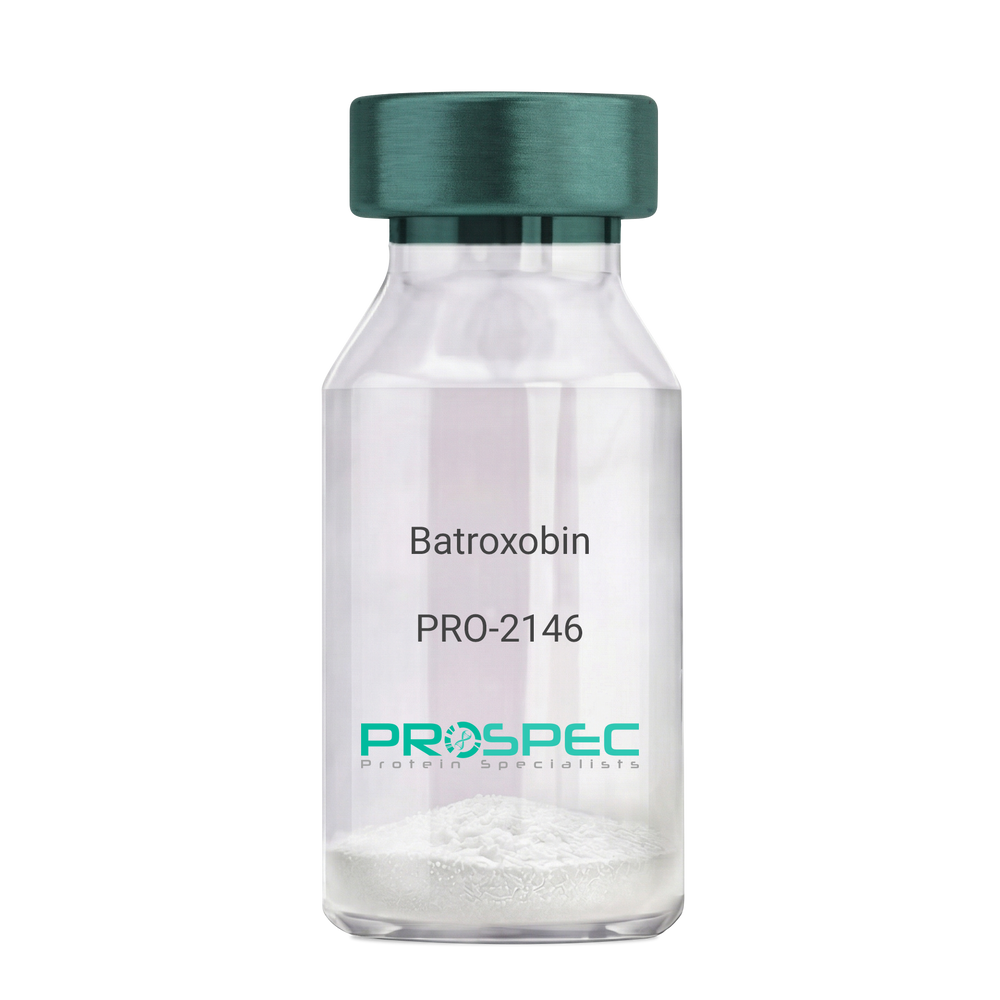
BatroxobinDescription:
Batroxobin
Thrombin-like enzyme batroxobin, EC 3.4.21.74, BX, Bothrops atrox serine proteinase, Venombin-A, Batroxobin.
Product # :
PRO-2146Price :
Quantity :
Shipping Method :
Shipped at Room temp
More Info
- description
- formulation
- More Info
Description
Batroxobin, isolated from Bothrops atrox snake venom, has an Mw of approximately 43kDa.
Formulation
The Batroxobin protein was lyophilized from a concentrated (1mg/ml) solution with no additives.
More Info
-
Introduction
Batroxobin is a serin protease that reduces fibronogen levels and is originally extracted from snake venom of Bothrops Atrox. Batroxobin is used in defibrinogenation and thrombolysis and also has an effect on c-fos gene and growth factor.
Batroxobin can efficiently restrain proliferation of VSMCs, by blocking the release and uptake of Ca2+, thus influencing [Ca2+]i.
Batroxobin converts fibrinogen to fibrin through the restricted release of fibrinopeptide-A from fibrinogen to promote blood to clot. Unlike thrombin, it is not affected by heparin and hirudin. -
Synonyms
Thrombin-like enzyme batroxobin, EC 3.4.21.74, BX, Bothrops atrox serine proteinase, Venombin-A, Batroxobin.
-
Physical Appearance
Sterile Filtered white lyophilized powder.
-
Stability
Store the lyophilized Batroxobin between 2-8°C. Do not freeze!
-
Solubility
It is recommended to reconstitute the lyophilized Batroxobin in sterile 18MΩ-cm H2O not less than 100µg/ml or more than 10mg/ml solutions.
-
Unit Definition
100BU [Batroxobin Units]=1mg.
ProSpec's products are furnished for LABORATORY RESEARCH USE ONLY. The product may not be used as drugs, agricultural or pesticidal products, food additives or household chemicals.
- View Data Sheet
Name :
PSMB1 HumanDescription:
Proteasome Subunit Beta Type 1 Human Recombinant
HC5, PSC5, PMSB1, FLJ25321, KIAA1838, PSMB1, Proteasome subunit beta type-1, Proteasome component C5, Macropain subunit C5, Multicatalytic endopeptidase complex subunit C5, Proteasome gamma chain.
Product # :
ENZ-405Price :
Quantity :
Shipping Method :
Shipped with Ice Packs
More Info
- description
- source
- formulation
- purity
- More Info
Description
PSMB1 Human Recombinant fused to a 37 amino acid His Tag at N-terminal produced in E.Coli is a single, non-glycosylated, polypeptide chain containing 250 amino acids (30-241) and having a molecular mass of 27.7 kDa. The PSMB1 is purified by proprietary chromatographic techniques.
Source
Escherichia Coli.
Formulation
The PSMB1 solution contains 20mM Tris-HCl pH-8, 1mM DTT and 10% glycerol.
Purity
Greater than 95.0% as determined by SDS-PAGE.
More Info
-
Introduction
PSMB1 is part of the proteasome B-type family, also identified as the T1B family, that is a 20S core beta subunit. PSMB1 is tightly linked to the TBP (TATA-binding protein) gene in human and in mouse, and is transcribed in the opposite orientation in both species.The main function of PSMB1 is its degradation activity of unnecessary or damaged proteins by proteolysis. PSMB1 is a multicatalytic proteinase complex which is characterized by its ability to cleave peptides with arg, phe, tyr, leu, and glu adjacent to the leaving group at neutral or slightly basic ph. the proteasome has an atp-dependent proteolytic activity.
-
Synonyms
HC5, PSC5, PMSB1, FLJ25321, KIAA1838, PSMB1, Proteasome subunit beta type-1, Proteasome component C5, Macropain subunit C5, Multicatalytic endopeptidase complex subunit C5, Proteasome gamma chain.
-
Physical Appearance
Sterile Filtered clear colorless solution.
-
Stability
Store at 4°C if entire vial will be used within 2-4 weeks. Store, frozen at -20°C for longer periods of time. For long term storage it is recommended to add a carrier protein (0.1% HSA or BSA).Avoid multiple freeze-thaw cycles.
-
Amino Acid Sequence
MRGSHHHHHH GMASMTGGQQ MGRDLYDDDD KDRWGSHMFS PYVFNGGTIL AIAGEDFAIV ASDTRLSEGF SIHTRDSPKC YKLTDKTVIG CSGFHGDCLT LTKIIEARLK MYKHSNNKAM TTGAIAAMLS TILYSRRFFP YYVYNIIGGL DEEGKGAVYS FDPVGSYQRD SFKAGGSASA MLQPLLDNQV GFKNMQNVEH VPLSLDRAMR LVKDVFISAA ERDVYTGDAL RICIVTKEGI REETVSLRKD.
ProSpec's products are furnished for LABORATORY RESEARCH USE ONLY. The product may not be used as drugs, agricultural or pesticidal products, food additives or household chemicals.