Skip to content

High-quality research proteins.

  • 1-800-805-6531

  • Mon - Sat 8.00-18.00, Sun - Closed

  • info@prospecbio.com

  • PO Box 6591 East Brunswick NJ 08816

  • Products
    • Cytokines
    • Growth factors
    • Chemokines
    • Cd antigens
    • Neurotrophins
    • Hormones
    • Enzymes
    • Viral antigens
    • Recombinant proteins
    • Natural proteins
    • Monoclonal antibodies
    • Polyclonal antibodies
    • Thermal Packaging
  • About
    • Company
    • Founder
    • Contribution
  • Customers
    • Eastern Asia
    • Eastern Europe
    • North America
    • South America
    • South East Asia
    • Southern Asia
    • Western Europe
  • Ordering
    • Ordering Method
    • Ordering - Credit Card
    • Ordering - PO
    • Shipping Fees
    • FAQs
  • Services
    • DNA Cloning
    • Protein Expression
    • Monoclonal Antibody
    • Fermentation
    • Technology License
  • Contact us
Log in

Country/region

  • USD $ | Albania
  • USD $ | Andorra
  • USD $ | Argentina
  • USD $ | Armenia
  • USD $ | Australia
  • USD $ | Austria
  • USD $ | Azerbaijan
  • USD $ | Belarus
  • USD $ | Belgium
  • USD $ | Bolivia
  • USD $ | Brazil
  • USD $ | Bulgaria
  • USD $ | Cambodia
  • USD $ | Canada
  • USD $ | Chile
  • USD $ | China
  • USD $ | Colombia
  • USD $ | Costa Rica
  • USD $ | Croatia
  • USD $ | Cyprus
  • USD $ | Czechia
  • USD $ | Denmark
  • USD $ | Estonia
  • USD $ | Finland
  • USD $ | France
  • USD $ | Georgia
  • USD $ | Germany
  • USD $ | Greece
  • USD $ | Hong Kong SAR
  • USD $ | Hungary
  • USD $ | Iceland
  • USD $ | India
  • USD $ | Ireland
  • USD $ | Israel
  • USD $ | Italy
  • USD $ | Japan
  • USD $ | Kazakhstan
  • USD $ | Latvia
  • USD $ | Liechtenstein
  • USD $ | Lithuania
  • USD $ | Madagascar
  • USD $ | Malta
  • USD $ | Mexico
  • USD $ | Moldova
  • USD $ | Monaco
  • USD $ | Netherlands
  • USD $ | New Zealand
  • USD $ | North Macedonia
  • USD $ | Norway
  • USD $ | Panama
  • USD $ | Paraguay
  • USD $ | Peru
  • USD $ | Philippines
  • USD $ | Poland
  • USD $ | Portugal
  • USD $ | Romania
  • USD $ | Singapore
  • USD $ | Slovakia
  • USD $ | Slovenia
  • USD $ | South Africa
  • USD $ | South Korea
  • USD $ | Spain
  • USD $ | Sri Lanka
  • USD $ | Sweden
  • USD $ | Switzerland
  • USD $ | Taiwan
  • USD $ | Thailand
  • USD $ | Türkiye
  • USD $ | Ukraine
  • USD $ | United Kingdom
  • USD $ | United States
  • USD $ | Uruguay
  • USD $ | Vatican City
  • USD $ | Venezuela
  • USD $ | Vietnam
  • Facebook
  • Instagram
logoProSpec - Recombinant Protein Manufacturer for academic and R&D industry
Become a distributor
Account Log in
Wishlist
Cart Cart(0)
  • Products
    +
    • Cytokines
    • Growth factors
    • Chemokines
    • Cd antigens
    • Neurotrophins
    • Hormones
    • Enzymes
    • Viral antigens
    • Recombinant proteins
    • Natural proteins
    • Monoclonal antibodies
    • Polyclonal antibodies
    • Thermal Packaging
  • About
    +
    • Company
    • Founder
    • Contribution
  • Customers
    +
    • Eastern Asia
    • Eastern Europe
    • North America
    • South America
    • South East Asia
    • Southern Asia
    • Western Europe
  • Ordering
    +
    • Ordering Method
    • Ordering - Credit Card
    • Ordering - PO
    • Shipping Fees
    • FAQs
  • Services
    +
    • DNA Cloning
    • Protein Expression
    • Monoclonal Antibody
    • Fermentation
    • Technology License
  • Contact us

Item added to your cart

View cart
View All
  • Cytokines
  • Growth factors
  • Chemokines
  • Cd antigens
  • Neurotrophins
  • Hormones
  • Enzymes
  • Viral antigens
  • Recombinant proteins
  • Natural proteins
  • Monoclonal antibodies
  • Polyclonal antibodies
  • Thermal Packaging
  • Tumor Necrosis Factor

    Tumor Necrosis Factor

    View All
  • 4-1BB

    4-1BB

    View All
  • Adiponectin

    Adiponectin

    View All
  • AIF1

    AIF1

    View All
  • Other Cytokines

    Other Cytokines

    View All
  • AITRL

    AITRL

    View All
  • Angiopoietin

    Angiopoietin

    View All
  • Apolipoprotein

    Apolipoprotein

    View All
  • B-Cell Activating Factor

    B-Cell Activating Factor

    View All
  • Beta Defensin

    Beta Defensin

    View All
  • Bone Morphogenetic Protein

    Bone Morphogenetic Protein

    View All
  • B type Natriuretic Peptide

    B type Natriuretic Peptide

    View All
  • BST

    BST

    View All
  • Betacellulin

    Betacellulin

    View All
  • Cardiotrophin

    Cardiotrophin

    View All
  • Activin

    Activin

    View All
  • Fibroblast Growth Factor

    Fibroblast Growth Factor

    View All
  • Other Growth Factors

    Other Growth Factors

    View All
  • CSF

    CSF

    View All
  • CTGF

    CTGF

    View All
  • IGFBP

    IGFBP

    View All
  • VEGF Protein

    VEGF Protein

    View All
  • EGF

    EGF

    View All
  • Epigen

    Epigen

    View All
  • Erythropoietin

    Erythropoietin

    View All
  • Insulin-Like Growth Factor

    Insulin-Like Growth Factor

    View All
  • Growth Hormone

    Growth Hormone

    View All
  • HDGF

    HDGF

    View All
  • Hepatocyte Growth Factor

    Hepatocyte Growth Factor

    View All
  • Insulin

    Insulin

    View All
  • BCA-1/ BLC (CXCL13)

    BCA-1/ BLC (CXCL13)

    View All
  • BRAK (CXCL14)

    BRAK (CXCL14)

    View All
  • C-10 (CCL6)

    C-10 (CCL6)

    View All
  • Other Chemokines

    Other Chemokines

    View All
  • MEC (CCL28)

    MEC (CCL28)

    View All
  • LD78-beta (CCL3L1)

    LD78-beta (CCL3L1)

    View All
  • CTACK (CCL27)

    CTACK (CCL27)

    View All
  • CXCL16

    CXCL16

    View All
  • CXCL17

    CXCL17

    View All
  • Platelet Factor-4 (CXCL4)

    Platelet Factor-4 (CXCL4)

    View All
  • ENA-78 (CXCL5)

    ENA-78 (CXCL5)

    View All
  • Eotaxin (CCL11,24,26)

    Eotaxin (CCL11,24,26)

    View All
  • Exodus-2 (CCL21)

    Exodus-2 (CCL21)

    View All
  • Fractalkine (CX3CL1)

    Fractalkine (CX3CL1)

    View All
  • CXCL6

    CXCL6

    View All
  • Other CD Antigens

    Other CD Antigens

    View All
  • CD14

    CD14

    View All
  • CD164

    CD164

    View All
  • CD1

    CD1

    View All
  • CD2

    CD2

    View All
  • CD200

    CD200

    View All
  • CD207

    CD207

    View All
  • CD226

    CD226

    View All
  • CD23

    CD23

    View All
  • CD244

    CD244

    View All
  • CD247

    CD247

    View All
  • CD27

    CD27

    View All
  • CD274

    CD274

    View All
  • CD300

    CD300

    View All
  • CD33

    CD33

    View All
  • Other Neurotrophins

    Other Neurotrophins

    View All
  • Beta-NGF

    Beta-NGF

    View All
  • BDNF

    BDNF

    View All
  • CDNF

    CDNF

    View All
  • CNTF

    CNTF

    View All
  • GDNF

    GDNF

    View All
  • Glia Maturation Factor

    Glia Maturation Factor

    View All
  • MANF

    MANF

    View All
  • Midkine

    Midkine

    View All
  • Neuroglobin

    Neuroglobin

    View All
  • Neurotrophic factors

    Neurotrophic factors

    View All
  • Neuregulin

    Neuregulin

    View All
  • Neuropilin

    Neuropilin

    View All
  • Pigment Epithelium-Derived Factor

    Pigment Epithelium-Derived Factor

    View All
  • Pleiotrophin

    Pleiotrophin

    View All
  • Peptide Hormones

    Peptide Hormones

    View All
  • Other Hormones

    Other Hormones

    View All
  • HCG

    HCG

    View All
  • Endothelin

    Endothelin

    View All
  • Exendin

    Exendin

    View All
  • FSH

    FSH

    View All
  • Glucagon

    Glucagon

    View All
  • GHRP

    GHRP

    View All
  • GLP

    GLP

    View All
  • Thyrostimulin

    Thyrostimulin

    View All
  • Inhibin A

    Inhibin A

    View All
  • LHRH

    LHRH

    View All
  • Melanotan

    Melanotan

    View All
  • Procalcitonin

    Procalcitonin

    View All
  • PTH

    PTH

    View All
  • Peroxiredoxin

    Peroxiredoxin

    View All
  • Peptidase

    Peptidase

    View All
  • Synthetase

    Synthetase

    View All
  • Transferase

    Transferase

    View All
  • Hydrolase

    Hydrolase

    View All
  • Dehydrogenase

    Dehydrogenase

    View All
  • ACE2

    ACE2

    View All
  • Esterase

    Esterase

    View All
  • Protein Kinases

    Protein Kinases

    View All
  • Other Enzymes

    Other Enzymes

    View All
  • Phosphatase

    Phosphatase

    View All
  • Deaminase

    Deaminase

    View All
  • Oxygenase

    Oxygenase

    View All
  • Adenylate Kinase

    Adenylate Kinase

    View All
  • Lyase

    Lyase

    View All
  • Chagas

    Chagas

    View All
  • SARS

    SARS

    View All
  • Influenza

    Influenza

    View All
  • ASFV

    ASFV

    View All
  • Astrovirus

    Astrovirus

    View All
  • Borrelia

    Borrelia

    View All
  • Helicobacter Pylori

    Helicobacter Pylori

    View All
  • Chikungunya

    Chikungunya

    View All
  • Chlamydia

    Chlamydia

    View All
  • Cytomegalo

    Cytomegalo

    View All
  • Dengue

    Dengue

    View All
  • EBV

    EBV

    View All
  • Ebola

    Ebola

    View All
  • Feline Leukemia Virus

    Feline Leukemia Virus

    View All
  • Hepatitis A

    Hepatitis A

    View All
  • Other

    Other

    View All
  • Actin

    Actin

    View All
  • ADAM

    ADAM

    View All
  • Complement Component

    Complement Component

    View All
  • Ag85

    Ag85

    View All
  • Eukaryotic Translation Initiation Factor

    Eukaryotic Translation Initiation Factor

    View All
  • Anterior Gradient Protein

    Anterior Gradient Protein

    View All
  • Heat Shock Protein

    Heat Shock Protein

    View All
  • Alpha-2-HS-Glycoprotein

    Alpha-2-HS-Glycoprotein

    View All
  • Hemoglobin

    Hemoglobin

    View All
  • Allergy

    Allergy

    View All
  • Anaplasma

    Anaplasma

    View All
  • Angiogenin

    Angiogenin

    View All
  • Ankyrin Repeat Domain

    Ankyrin Repeat Domain

    View All
  • Annexin

    Annexin

    View All
  • Other Natural Proteins

    Other Natural Proteins

    View All
  • Aprotinin

    Aprotinin

    View All
  • Transferrin

    Transferrin

    View All
  • Avidin

    Avidin

    View All
  • Anti Coagulation Factors

    Anti Coagulation Factors

    View All
  • Natural Albumin

    Natural Albumin

    View All
  • Natural Coagulation Factors

    Natural Coagulation Factors

    View All
  • Fibronectin

    Fibronectin

    View All
  • Thrombin

    Thrombin

    View All
  • Anti Human Enzyme

    Anti Human Enzyme

    View All
  • Other Monoclonal Antibodies

    Other Monoclonal Antibodies

    View All
  • Anti Human Cytokine

    Anti Human Cytokine

    View All
  • Anti Human Heat Shock Protein

    Anti Human Heat Shock Protein

    View All
  • Anti Mouse Lymphocyte

    Anti Mouse Lymphocyte

    View All
  • Anti Human Chemokine

    Anti Human Chemokine

    View All
  • Anti Human Lymphocyte

    Anti Human Lymphocyte

    View All
  • Anti Viral Monoclonal

    Anti Viral Monoclonal

    View All
  • Anti Mouse Cytokine

    Anti Mouse Cytokine

    View All
  • Anti-GST Monoclonal

    Anti-GST Monoclonal

    View All
  • Other Polyclonal Antibodies

    Other Polyclonal Antibodies

    View All
  • Anti Viral

    Anti Viral

    View All
  • Anti-GST Monoclonal

    Anti-GST Monoclonal

    View All
Back

Search results

1000 results found for “hepatitis a”

Name

Description

Product #

Price

Quantity

Shipping Method

  • View Data Sheet

    Name :

    AK5 Human

    Description:

    Adenylate Kinase 5 Human Recombinant

    Adenylate kinase isoenzyme 5, AK 5, ATP-AMP transphosphorylase 5, AK5, AK6.

    Product # :

    PKA-011

    Price :

    Quantity :

    Shipping Method :

    Ice Icon

    Shipped with Ice Packs

    Add To Cart

    More Info

    • description
    • source
    • formulation
    • purity
    • More Info

    Description

    AK5 Human Recombinant produced in E.Coli is a single, non-glycosylated polypeptide chain containing 586 amino acids (1-562 a.a.) and having a molecular mass of 65.9kDa.AK5 is fused to a 24 amino acid His-tag at N-terminus & purified by proprietary chromatographic techniques.

    Source

    Escherichia Coli.

    Formulation

    AK5 protein solution (0.25mg/ml) containing 20mM Tris-HCl buffer (pH8.0), 20% glycerol and 1mM DTT.

    Purity

    Greater than 85% as determined by SDS-PAGE.

    More Info

    • Introduction

      Adenylate kinase isoenzyme 5 (AK5) belongs to the adenylate kinase family, which is involved in regulating the adenine nucleotide composition within a cell by catalyzing the reversible transfer of phosphate groups among adenine nucleotides. AK5 is related to the UMP/CMP kinase of several species. AK5 is located in the cytosol and expressed exclusively in the brain.

    • Synonyms

      Adenylate kinase isoenzyme 5, AK 5, ATP-AMP transphosphorylase 5, AK5, AK6.

    • Physical Appearance

      Sterile filtered colorless solution.

    • Stability

      Store at 4°C if entire vial will be used within 2-4 weeks. Store, frozen at -20°C for longer periods of time. For long term storage it is recommended to add a carrier protein (0.1% HSA or BSA).Avoid multiple freeze-thaw cycles.

    • Amino Acid Sequence

      MGSSHHHHHH SSGLVPRGSH MGSHMNTNDA KEYMARREIP QLFESLLNGL MCSKPEDPVE YLESCLQKVK ELGGCDKVKW DTFVSQEKKT LPPLNGGQSR RSFLRNVMPG NSNFPYRRYD RLPPIHQFSI ESDTDLSETA ELIEEYEVFD PTRPRPKIIL VIGGPGSGKG TQSLKIAERY GFQYISVGEL LRKKIHSTSS NRKWSLIAKI ITTGELAPQE TTITEIKQKL MQIPDEEGIV IDGFPRDVAQ ALSFEDQICT PDLVVFLACA NQRLKERLLK RAEQQGRPDD NVKATQRRLM NFKQNAAPLV KYFQEKGLIM TFDADRDEDE VFYDISMAVD NKLFPNKEAA AGSSDLDPSM ILDTGEIIDT GSDYEDQGDD QLNVFGEDTM GGFMEDLRKC KIIFIIGGPG SGKGTQCEKL VEKYGFTHLS TGELLREELA SESERSKLIR DIMERGDLVP SGIVLELLKE AMVASLGDTR GFLIDGYPRE VKQGEEFGRR IGDPQLVICM DCSADTMTNR LLQRSRSSLP VDDTTKTIAK RLEAYYRASI PVIAYYETKT QLHKINAEGT PEDVFLQLCT AIDSIF.

    ProSpec's products are furnished for LABORATORY RESEARCH USE ONLY. The product may not be used as drugs, agricultural or pesticidal products, food additives or household chemicals.

    Ak5 Human
  • View Data Sheet

    Name :

    OSM Human, 195 a.a

    Description:

    Oncostatin-M Human Recombinant (195 a.a.)

    OSM, MGC20461, Oncostatin M.

    Product # :

    CYT-735

    Price :

    Quantity :

    Shipping Method :

    Room Temp Icon

    Shipped at Room temp

    Add To Cart

    More Info

    • description
    • source
    • formulation
    • purity
    • biological activity
    • More Info

    Description

    Oncostatin-M Human Recombinant produced in E.Coli is a single, non-glycosylated polypeptide chain containing 195 amino acids and having a molecular mass of 22kDa. The OSM is purified by proprietary chromatographic techniques.

    Source

    Escherichia Coli.

    Formulation

    Lyophilized from a concentrated (1mg/ml) solution containing 1xPBS pH-7.4.

    Purity

    Greater than 97.0% as determined by:
    (a) Analysis by RP-HPLC.
    (b) Analysis by SDS-PAGE.

    Biological Activity

    The ED50 as determined by the dose-dependent stimulation of the proliferation of human TF-1 cells is < 0.2ng/ml, corresponding to a specific activity of > 5.0x10⁶ units/mg.

    More Info

    • Introduction

      Oncostatin M is a member of a cytokine family that includes leukemia-inhibitory factor, granulocyte colony-stimulating factor, and interleukin 6. This gene encodes a growth regulator which inhibits the proliferation of a number of tumor cell lines. It regulates cytokine production, including IL-6, G-CSF and GM-CSF from endothelial cells.

    • Synonyms

      OSM, MGC20461, Oncostatin M.

    • Physical Appearance

      Sterile Filtered White lyophilized (freeze-dried) powder.

    • Stability

      Lyophilized Oncostatin M although stable at room temperature for 3 weeks, should be stored desiccated below -18°C. Upon reconstitution Oncostatin should be stored at 4°C between 2-7 days and for future use below -18°C.For long term storage it is recommended to add a carrier protein (0.1% HSA or BSA).Please prevent freeze-thaw cycles.

    • Solubility

      It is recommended to reconstitute the lyophilized Oncostatin M in sterile 18MΩ-cm H2O not less than 100µg/ml, which can then be further diluted to other aqueous solutions.

    • Amino Acid Sequence

      AAIGSCSKEY RVLLGQLQKQ TDLMQDTSRL LDPYIRIQGL DVPKLREHCR ERPGAFPSEE TLRGLGRRGF LQTLNATLGC VLHRLADLEQ RLPKAQDLER SGLNIEDLEK LQMARPNILG LRNNIYCMAQ LLDNSDTAEP TKAGRGASQP PTPTPASDAF QRKLEGCRFL HGYHRFMHSV GRVFSKWGES PNRSR.

    ProSpec's products are furnished for LABORATORY RESEARCH USE ONLY. The product may not be used as drugs, agricultural or pesticidal products, food additives or household chemicals.

    Oncostatin M Human 195 Aa
  • View Data Sheet

    Name :

    TADA3 Human

    Description:

    Transcriptional Adaptor 3 Human Recombinant

    Transcriptional adapter 3, ADA3 homolog, hADA3, STAF54, Transcriptional adapter 3-like, ADA3-like protein, TADA3, ADA3, TADA3L, Transcriptional adapter 3 isoform a, NGG1.

    Product # :

    PRO-1689

    Price :

    Quantity :

    Shipping Method :

    Ice Icon

    Shipped with Ice Packs

    Add To Cart

    More Info

    • description
    • source
    • formulation
    • purity
    • More Info

    Description

    TADA3 Human Recombinant produced in E.coli is a single, non-glycosylated polypeptide chain containing 455 amino acids (1-432) and having a molecular mass of 51.3 kDa.TADA3 is fused to a 23 amino acid His-tag at N-terminus & purified by proprietary chromatographic techniques.

    Source

    Escherichia Coli.

    Formulation

    The TADA3 solution (0.5mg/ml) contains 20mM Tris-HCl buffer (pH 8.0), 0.2M NaCl, 50% glycerol and 2mM DTT.

    Purity

    Greater than 80.0% as determined by SDS-PAGE.

    More Info

    • Introduction

      Transcriptional adapter 3 (TATD3) is a subunit of 2 histone acetyltransferase complexes, which functions as a component of the PCAF complex. TATD3 is a transcriptional activator adaptor that is also associates with the tumor suppressor protein p53 and is essential for full activity of p53 and p53-mediated apoptosis.

    • Synonyms

      Transcriptional adapter 3, ADA3 homolog, hADA3, STAF54, Transcriptional adapter 3-like, ADA3-like protein, TADA3, ADA3, TADA3L, Transcriptional adapter 3 isoform a, NGG1.

    • Physical Appearance

      Sterile Filtered colorless solution.

    • Stability

      Store at 4°C if entire vial will be used within 2-4 weeks. Store, frozen at -20°C for longer periods of time. For long term storage it is recommended to add a carrier protein (0.1% HSA or BSA).Avoid multiple freeze-thaw cycles.

    • Amino Acid Sequence

      MGSSHHHHHH SSGLVPRGSH MGSMSELKDC PLQFHDFKSV DHLKVCPRYT AVLARSEDDG IGIEELDTLQ LELETLLSSA SRRLRVLEAE TQILTDWQDK KGDRRFLKLG RDHELGAPPK HGKPKKQKLE GKAGHGPGPG PGRPKSKNLQ PKIQEYEFTD DPIDVPRIPK NDAPNRFWAS VEPYCADITS EEVRTLEELL KPPEDEAEHY KIPPLGKHYS QRWAQEDLLE EQKDGARAAA VADKKKGLMG PLTELDTKDV DALLKKSEAQ HEQPEDGCPF GALTQRLLQA LVEENIISPM EDSPIPDMSG KESGADGAST SPRNQNKPFS VPHTKSLESR IKEELIAQGL LESEDRPAED SEDEVLAELR KRQAELKALS AHNRTKKHDL LRLAKEEVSR QELRQRVRMA DNEVMDAFRK IMAARQKKRT PTKKEKDQAW KTLKERESIL KLLDG.

    ProSpec's products are furnished for LABORATORY RESEARCH USE ONLY. The product may not be used as drugs, agricultural or pesticidal products, food additives or household chemicals.

    Tada3 Human
  • View Data Sheet

    Name :

    PGAM1 Human, Active

    Description:

    Phosphoglycerate Mutase 1 Human Recombinant, Active

    Phosphoglycerate mutase isozyme B, PGAM-B, PGAMA.

    Product # :

    ENZ-979

    Price :

    Quantity :

    Shipping Method :

    Ice Icon

    Shipped with Ice Packs

    Add To Cart

    More Info

    • description
    • source
    • formulation
    • purity
    • biological activity
    • More Info

    Description

    PGAM1 Human Recombinant produced in E.Coli is a single, non-glycosylated, polypeptide chain containing 274 amino acids (1-254 a.a.) and having a molecular mass of 30.9 kDa. The PGAM1 is fused to a 20 amino acid His Tag at N-Terminus and purified by proprietary chromatographic techniques.

    Source

    Escherichia Coli.

    Formulation

    The PGAM1 1mg/ml protein solution contains 20mM Tris-HCl pH-8, 1mM DTT, and 10% glycerol.

    Purity

    Greater than 90% as determined by SDS-PAGE.

    Biological Activity

    Specific activity is >300 units/mg, in which One unit will convert 1.0 umole of 3-phosphoglycerate to 2-phosphoglcerate per minute at pH 7.6 at 37C.

    More Info

    • Introduction

      PGAM1 is part of the phosphoglycerate mutase family. PGAM1 is an essential component of glucose and 2,3-BPGA (2,3-bisphosphoglycerate) metabolism and catalyzes the reversible reaction of 3-phosphoglycerate (3-PGA) to 2-phosphoglycerate (2-PGA) in the glycolytic pathway. PGAM1 is a dimeric enzyme containing, in different tissues, different proportions of a slow-migrating muscle (MM) isozyme, a fast-migrating brain (BB) isozyme, and a hybrid form (MB). PGAM1 mutations lead to muscle phosphoglycerate mutase deficiency, a.k.a. glycogen storage disease X.

    • Synonyms

      Phosphoglycerate mutase isozyme B, PGAM-B, PGAMA.

    • Physical Appearance

      Sterile Filtered clear colorless solution.

    • Stability

      Store at 4°C if entire vial will be used within 2-4 weeks. Store, frozen at -20°C for longer periods of time. For long term storage it is recommended to add a carrier protein (0.1% HSA or BSA).Avoid multiple freeze-thaw cycles.

    • Amino Acid Sequence

      MGSSHHHHHH SSGLVPRGSH MAAYKLVLIR HGESAWNLEN RFSGWYDADL SPAGHEEAKR GGQALRDAGY EFDICFTSVQ KRAIRTLWTV LDAIDQMWLP VVRTWRLNER HYGGLTGLNK AETAAKHGEA QVKIWRRSYD VPPPPMEPDH PFYSNISKDR RYADLTEDQL PSCESLKDTI ARALPFWNEE IVPQIKEGKR VLIAAHGNSL RGIVKHLEGL SEEAIMELNL PTGIPIVYEL DKNLKPIKPM QFLGDEETVR KAMEAVAAQG KAKK.

    ProSpec's products are furnished for LABORATORY RESEARCH USE ONLY. The product may not be used as drugs, agricultural or pesticidal products, food additives or household chemicals.

    Pgam1 Human Active
  • View Data Sheet

    Name :

    GLO1 Human, Active

    Description:

    Glyoxalase-I Human Recombinant, Active

    GLYI, GLOD1, GLO1, Glyoxalase-1, Lactoylglutathione lyase, Methylglyoxalase, Aldoketomutase, Ketone-aldehyde mutase, Glyoxalase I, S-D-lactoylglutathione methylglyoxal lyase, Glx I.

    Product # :

    ENZ-999

    Price :

    Quantity :

    Shipping Method :

    Ice Icon

    Shipped with Ice Packs

    Add To Cart

    More Info

    • description
    • source
    • formulation
    • purity
    • biological activity
    • More Info

    Description

    Glyoxalase-I Human Recombinant produced in E.Coli is a single, non-glycosylated, polypeptide chain containing 184 amino acids and having a molecular mass of 20.7 kDa. Glyoxalase-1 is purified by proprietary chromatographic techniques.

    Source

    Escherichia Coli.

    Formulation

    Glyoxalase-1 solution containing 20mM Tris-HCl pH-8, 1mM DTT and 10% glycerol.

    Purity

    Greater than 90.0% as determined by SDS-PAGE.

    Biological Activity

    Specific activity: > 400 units/mg. One unit will form 1.0umol of S-lactoylgutathione from methylglyoxal and reduced glutathione per minute at pH6.5 at 25C

    More Info

    • Introduction

      GLO1 is involved in the catalysis and formation of S-lactoyl-glutathione from methylglyoxal condensation and reduced glutatione. GLO1 is linked to HLA and is localized to 6p21.3-p21.1, between HLA and the centromere. GLO1 enzyme is ubundantly expressed and present in numerous tumor cell lines, in which its concentration is often upregulated ubiquitisly. GLO1 is a major susceptible gene for autism in an ethnic Chinese population from Taiwan. GLO1 might be involved in the pathophysiology of mood disorders. GLO1 plays a role in the pathophysiology of mood disorders. Overexpression of GLO1 is associated with kidney tumor.

    • Synonyms

      GLYI, GLOD1, GLO1, Glyoxalase-1, Lactoylglutathione lyase, Methylglyoxalase, Aldoketomutase, Ketone-aldehyde mutase, Glyoxalase I, S-D-lactoylglutathione methylglyoxal lyase, Glx I.

    • Physical Appearance

      Sterile filtered colorless solution.

    • Stability

      Store at 4°C if entire vial will be used within 2-4 weeks. Store, frozen at -20°C for longer periods of time. For long term storage it is recommended to add a carrier protein (0.1% HSA or BSA).Avoid multiple freeze-thaw cycles.

    • Amino Acid Sequence

      MAEPQPPSGG LTDEAALSCC SDADPSTKDF LLQQTMLRVK DPKKSLDFYT RVLGMTLIQK CDFPIMKFSL YFLAYEDKND IPKEKDEKIAWALSRKATLE LTHNWGTEDD ETQSYHNGNS DPRGFGHIGI AVPDVYSACK RFEELGVKFV KKPDDGKMKG LAFIQDPDGY WIEILNPNKM ATLM.

    ProSpec's products are furnished for LABORATORY RESEARCH USE ONLY. The product may not be used as drugs, agricultural or pesticidal products, food additives or household chemicals.

    Glo1 Human Active
  • View Data Sheet

    Name :

    MHC Class I, H-2K Antibody, Biotin

    Description:

    MHC Class I, (H-2K) Mouse Antibody, Biotin

    Product # :

    ANT-266

    Price :

    Quantity :

    Shipping Method :

    Room Temp Icon

    Shipped at Room temp

    Add To Cart

    More Info

    • formulation
    • More Info

    Formulation

    1mg/ml in PBS (after reconstitution).

    More Info

    • Introduction

      MHC Class I is a membrane spanning molecule consisting of 2 proteins. MHC Class I is just about 350 amino acids in length, with roughly 75 amino acids at the carboxylic end comprising the transmembrane and cytoplasmic portions. The remaining 270 amino acids, are divided into three globular domains labeled Alpha-1, Alpha-2 and Alpha-3 prime, with Alpha-1 being closest to the amino terminus and Alpha-3 closest to the membrane. The second portion of the molecule is a small globular protein called Beta-2 Microglobulin. It links primarily with the Alpha-3 prime domain and is essential for MHC stability.
      The MHC ability to show a vast range of antigenic peptides for T cell recognition needs a compromise between broad specificity and high affinity. Both MHC class I and MHC class II show an exceptional structure while the peptide main chain is tightly bound and peptide side chains show less restrictive interactions. It is primarily the peptide side-chain contacts and conformational variability that ensures that the peptide-MHC complex presents an antigenically unique surface to T cell receptors.

    • Solubility

      Reconstitute with of H20. Mix gently, wash the sides of the vial and wait 30-60 seconds before use.

    • Immunogen

      Purified mouse LN cells (C57Bl/6 anti-BALB/c).

    • Ig Subclass

      Mouse IgG2b.

    • Clone

      NYRmH-2K.

    • Applications

      Cytotoxic and staining antibody. For staining, use 10ml/1,000,000 cells. Titer for cytotoxicity should be determined by the investigator.

    • Specificity

      Recognizes most mouse H-2K haplotypes (k,p,q,r,s). Does NOT react with H-2kd.

    • Available Conjugates

      This antibody is also available as unconjugated antibody and conjugated to FITC.

    • Type

      Mouse Antibody Monoclonal.

    • Storage Procedures

      Lyophilized: store at 4°C. After reconstitution, if not intended for use within a month, aliquot and store at -20°C.

    • Purification Method

      Ion exchange column.

    ProSpec's products are furnished for LABORATORY RESEARCH USE ONLY. The product may not be used as drugs, agricultural or pesticidal products, food additives or household chemicals.

    Mhc Class I H 2K Antibody Biotin
  • View Data Sheet

    Name :

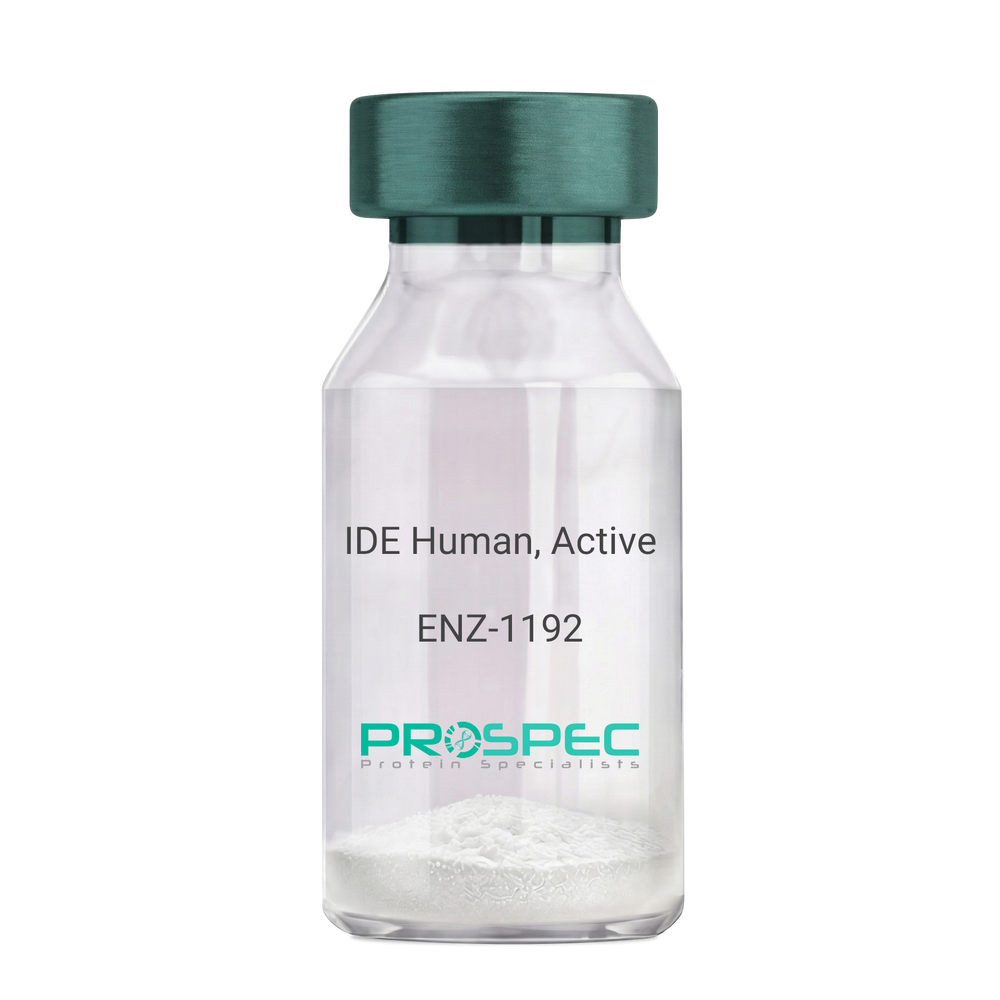
    IDE Human, Active

    Description:

    Insulin-Degrading Enzyme Human Recombinant

    Insulin-Degrading Enzyme, Abeta-Degrading Protease, Insulysin, EC 3.4.24.56, Insulinase, Insulin Protease, INSULYSIN, EC 3.4.24, IDE, insulin-degrading enzyme isoform 1. 

    Product # :

    ENZ-1192

    Price :

    Quantity :

    Shipping Method :

    Ice Icon

    Shipped with Ice Packs

    Add To Cart

    More Info

    • description
    • source
    • formulation
    • purity
    • biological activity
    • More Info

    Description

    IDE Human, Active Human Recombinant produced in E.Coli is a single, non-glycosylated, polypeptide chain (42-1019 a.a) containing a total of 984 amino acids, having a molecular mass of 114 kDa. IDE is fused to a 6 amino acid His-tag at C-terminus and is purified by proprietary chromatographic techniques.

    Source

    Escherichia Coli.

    Formulation

    The IDE solution (0.5mg/ml) contains 10% Glycerol, 100mM NaCl, 0.05% Brij35 and 20mM Tris-HCl buffer (pH 7.5).

    Purity

    Greater than 90.0% as determined by SDS-PAGE.

    Biological Activity

    Specific activity is greater than 3,000 pmol/min/ug in which 1 unit will convert 1.0 pmole of Mca-RPPGFSAFK(Dnp)-OH to MCA-Pro-Leu-OH per minute at pH 7.5 at 25°C.

    More Info

    • Synonyms

      Insulin-Degrading Enzyme, Abeta-Degrading Protease, Insulysin, EC 3.4.24.56, Insulinase, Insulin Protease, INSULYSIN, EC 3.4.24, IDE, insulin-degrading enzyme isoform 1.

    • Physical Appearance

      Filtered colorless solution.

    • Stability

      Store at 4°C if entire vial will be used within 2-4 weeks. Store, frozen at -20°C for longer periods of time. For long term storage it is recommended to add a carrier protein (0.1% HSA or BSA). Avoid multiple freeze-thaw cycles.

    • Amino Acid Sequence

      MNNPAIKRIG NHITKSPEDK REYRGLELAN GIKVLLISDP TTDKSSAALD VHIGSLSDPP NIAGLSHFCE HMLFLGTKKY PKENEYSQFL SEHAGSSNAF TSGEHTNYYF DVSHEHLEGA LDRFAQFFLC PLFDESCKDR EVNAVDSEHE KNVMNDAWRL FQLEKATGNP KHPFSKFGTG NKYTLETRPN QEGIDVRQEL LKFHSAYYSS NLMAVCVLGR ESLDDLTNLV VKLFSEVENK NVPLPEFPEH PFQEEHLKQL YKIVPIKDIR NLYVTFPIPD LQKYYKSNPG HYLGHLIGHE GPGSLLSELK SKGWVNTLVG GQKEGARGFM FFIINVDLTE EGLLHVEDII LHMFQYIQKL RAEGPQEWVF QECKDLNAVA FRFKDKERPR GYTSKIAGIL HYYPLEEVLT AEYLLEEFRP DLIEMVLDKL RPENVRVAIV SKSFEGKTDR TEEWYGTQYK QEAIPDEVIK KWQNADLNGK FKLPTKNEFI PTNFEILPLE KEATPYPALI KDTAMSKLWF KQDDKFFLPK ACLNFEFFSP FAYVDPLHCN MAYLYLELLK DSLNEYAYAA ELAGLSYDLQ NTIYGMYLSV KGYNDKQPIL LKKIIEKMAT FEIDEKRFEI IKEAYMRSLN NFRAEQPHQH AMYYLRLLMT EVAWTKDELK EALDDVTLPR LKAFIPQLLS RLHIEALLHG NITKQAALGI MQMVEDTLIE HAHTKPLLPS
      QLVRYREVQL PDRGWFVYQQ RNEVHNNCGI EIYYQTDMQS TSENMFLELF CQIISEPCFN TLRTKEQLGY IVFSGPRRAN GIQGLRFIIQ SEKPPHYLES RVEAFLITME KSIEDMTEEA FQKHIQALAI RRLDKPKKLS AECAKYWGEI ISQQYNFDRD NTEVAYLKTL TKEDIIKFYK EMLAVDAPRR HKVSVHVLAR EMDSCPVVGE FPCQNDINLS QAPALPQPEV IQNMTEFKRG LPLFPLVKPH INFMAAKLHH HHHH.

    • Background

      Insulin-degrading enzyme (IDE) is a crucial protease that plays a significant role in maintaining glucose homeostasis by degrading insulin and other bioactive peptides. Dysregulation of IDE has been implicated in various metabolic disorders, particularly type 2 diabetes mellitus. IDE is also associated with the clearance of amyloid-beta peptides in the brain, making it relevant to Alzheimer's disease pathology. Studying the recombinant form of IDE is fundamental to understanding its functional mechanisms and exploring potential avenues for therapeutic interventions.

      The primary goal of this research is to express and purify recombinant IDE using diverse expression systems. Recombinant DNA techniques will be employed to construct expression vectors containing the IDE gene, followed by expression in bacterial, yeast, or mammalian cell-based systems. The recombinant IDE will be purified using affinity chromatography or other appropriate methods, facilitating subsequent biochemical and biophysical characterization.

      The second objective is to investigate the substrate specificity and catalytic activity of the purified IDE. In vitro enzymatic assays will be conducted to analyse the ability of the recombinant IDE to degrade insulin and other potential substrates. The effects of various factors, such as pH, temperature, and potential modulators, on IDE activity will be evaluated. Additionally, the interactions between IDE and its substrates will be explored using binding assays.

      The third objective is to elucidate the three-dimensional structure of the IDE recombinant using techniques like X-ray crystallography or nuclear magnetic resonance (NMR) spectroscopy. Structural insights into the active site and binding pockets of IDE will provide valuable information for understanding its substrate recognition and catalytic mechanisms. This knowledge could be instrumental in designing targeted therapeutic compounds.

      By characterizing the IDE recombinant, this research aims to contribute to our understanding of its role in insulin metabolism, glucose regulation, and potential therapeutic applications. The findings from this study may have implications for the development of novel treatments for diabetes and other related disorders.

    ProSpec's products are furnished for LABORATORY RESEARCH USE ONLY. The product may not be used as drugs, agricultural or pesticidal products, food additives or household chemicals.

    Ide Human Active
  • View Data Sheet

    Name :

    SAA Canine

    Description:

    Serum Amyloid A (APO-SAA) Canine Recombinant

    Product # :

    CYT-1220

    Price :

    Quantity :

    Shipping Method :

    Room Temp Icon

    Shipped at Room temp

    Add To Cart

    More Info

    • description
    • source
    • formulation
    • purity
    • More Info

    Description

    SAA Canine produced in E.coli is a single, non-glycosylated polypeptide chain (1-111 a.a) containing 121 a.a and having a molecular mass of 13,766 Dalton. SAA s fused with a 10 amino acids affinity tag at N-Terminus and purified by proprietary chromatographic techniques.

    Source

    Escherichia Coli.

    Formulation

    SAA was lyophilized from 0.01M HCl (pH 2.0).

    Purity

    Greater than 95.0% as determined by SDS-PAGE.

    More Info

    • Physical Appearance

      Sterile Filtered White lyophilized (freeze-dried) powder.

    • Stability

      Lyophilized SAA although stable at room temperature for 3 weeks, should be stored desiccated below -18°C. Upon reconstitution Serum Amyloid A (APO-SAA) should be stored at 4°C between 2-7 days and for future use below -18°C. For long term storage it is recommended to add a carrier protein (0.1% HSA or BSA). Please prevent freeze-thaw cycles.

    • Solubility

      It is recommended to reconstitute the lyophilized SAA in 0.01M HCl (pH 2.0) not less than 100µg/ml, which can then be further diluted to other aqueous solutions.

    • Background

      Serum Amyloid A (SAA), an acute-phase protein initially identified for its role in amyloidosis, has emerged as a versatile biomolecule with diverse functions in health and disease. As a major player in the acute-phase response, SAA is crucial for regulating inflammation, tissue repair, and lipid metabolism. The study of SAA Recombinant Protein has not only deepened our understanding of inflammatory processes but has also opened new avenues in diagnostics, therapeutics, and research. This research delves into the multifaceted world of SAA, exploring its molecular intricacies, physiological roles, and its implications in various biological contexts.

      SAA, a family of apolipoproteins, exhibits remarkable structural diversity. Upon stimulation, hepatic cells secrete SAA into circulation, where it undergoes conformational changes and associates with high-density lipoproteins (HDL). This transformation is essential for its roles in cholesterol transport, immune modulation, and tissue regeneration, making SAA a key mediator in both normal physiology and pathological conditions.

    ProSpec's products are furnished for LABORATORY RESEARCH USE ONLY. The product may not be used as drugs, agricultural or pesticidal products, food additives or household chemicals.

    Saa Canine
  • View Data Sheet

    Name :

    Epoetin Human, HEK

    Description:

    Erythropoietin-alpha Human Recombinant, HEK

    Erythropoietin-Alpha, EPO-a, EPO-alpha, Epoetin, EP, MGC138142.

    Product # :

    CYT-083

    Price :

    Quantity :

    Shipping Method :

    Room Temp Icon

    Shipped at Room temp

    Add To Cart

    More Info

    • description
    • source
    • formulation
    • purity
    • biological activity
    • More Info

    Description

    EPO-a Human Recombinant produced in HEK cells is a glycosylated monomer, having a total molecular weight of 36kDa.The EPO-alpha is purified by proprietary chromatographic techniques.

    Source

    HEK.

    Formulation

    The EPO-alpha was lyophilized from 1mg/ml in 1xPBS.

    Purity

    Greater than 95% as obsereved by SDS-PAGE.

    Biological Activity

    The specific activity was determined by the dose-dependent stimulation of the proliferation of human TF-1 cells (human erythroleukemic indicator cell line) and is typically 0.5-2.5ng/ml, corresponding to a specific activity of 400,000-2,000,000 units/mg.

    More Info

    • Introduction

      This gene is a member of the EPO/TPO family and encodes a secreted, glycosylated cytokine composed of four alpha helical bundles. The protein is found in the plasma and regulates red cell production by promoting erythroid differentiation and initiating hemoglobin synthesis. This protein also has neuroprotective activity against a variety of potential brain injuries and antiapoptotic functions in several tissue types.

    • Synonyms

      Erythropoietin-Alpha, EPO-a, EPO-alpha, Epoetin, EP, MGC138142.

    • Physical Appearance

      Sterile Filtered White lyophilized (freeze-dried) powder.

    • Stability

      Lyophilized EPO-alpha although stable at room temperature for 3 weeks, should be stored desiccated below -18°C. Upon reconstitution EPO-alpha should be stored at 4°C between 2-7 days and for future use below -18°C.For long term storage it is recommended to add a carrier protein (0.1% HSA or BSA).Please prevent freeze-thaw cycles.

    • Solubility

      It is recommended to reconstitute the lyophilized EPO-alpha in sterile water not less than 100µg/ml, which can then be further diluted to other aqueous solutions.

    • Background

      What is the molecular weight/Mw of EPOETIN Protein?
      EPOETIN Protein has a total Mw of 36kDa.

      What is the source or expression system of EPOETIN Protein?
      HEK.

      What is the Purity of EPOETIN Protein?
      EPOETIN Protein is >95% pure as determined by SDS-PAGE.

      What is the Biological Activity of EPOETIN Protein?
      The specific activity was determined by the dose-dependent stimulation of the proliferation of human TF-1 cells (human erythroleukemic indicator cell line) and is typically 0.5-2.5ng/ml, corresponding to a specific activity of 400,000-2,000,000 units/mg.

      What applications can EPOETIN Protein be used in?
      EPOETIN Protein can probably be used in western blot, ELISA and Lateral Flow.

      What is the endotoxin level for EPOETIN Protein?
      The endotoxin level is minimal, EPOETIN Protein was purified using conventional chromatography techniques.

    ProSpec's products are furnished for LABORATORY RESEARCH USE ONLY. The product may not be used as drugs, agricultural or pesticidal products, food additives or household chemicals.

    Epo A Human Hek
  • View Data Sheet

    Name :

    EEF1A1 Human

    Description:

    Eukaryotic Translation Elongation Factor 1 Alpha 1 Human Recombinant

    Eukaryotic Translation Elongation Factor 1 Alpha 1, EF1A, EEF1A, LENG7, Leukocyte Receptor Cluster (LRC) Member 7, Elongation Factor Tu, Eukaryotic Elongation Factor 1 A-1, Leukocyte Receptor Cluster Member 7, EF-1-alpha-1, EF-Tu, eEF1A-1, CCS-3, CCS3, EE1A1, EEF-1, GRAF-1EF, HNGC:16303, PTI1, Cervical Cancer Suppressor 3, CTCL Tumor Antigen, EF1a-Like Protein, Elongation Factor 1 Alpha Subunit, Elongation Factor 1-Alpha 1, Eukaryotic Translation Elongation Factor 1 Alpha 1-Like 14, Glucocorticoid Receptor AF-1 Specific Elongation Factor, Prostate Tumor-Inducing Protein 1, Translation Elongation Factor 1 Alpha 1-Like 14.

    Product # :

    PRO-1910

    Price :

    Quantity :

    Shipping Method :

    Ice Icon

    Shipped with Ice Packs

    Add To Cart

    More Info

    • description
    • source
    • formulation
    • purity
    • More Info

    Description

    EEF1A1 Human Recombinant produced in E.Coli is a single, non-glycosylated polypeptide chain containing 462 amino acids (1-462 a.a) and having a molecular mass of 50kDa.

    Source

    Escherichia Coli.

    Formulation

    EEF1A1 protein solution (1mg/ml) containing 20mM Tris-HCl buffer (pH 8.0), 0.4M Urea and 10% glycerol.

    Purity

    Greater than 90.0% as determined by SDS-PAGE.

    More Info

    • Introduction

      EEF1A1 is an isoform of the alpha subunit of the elongation factor-1 complex, which is responsible forthe enzymatic release of aminoacyl tRNAs to the ribosome. EEF1A1 is expressed in brain, placenta, lung, liver, kidney, and pancreas, and the other isoform (alpha 2) is expressed in brain, heart and skeletal muscle. EEF1A1 is recognized as an autoantigen in 66% of patients with Felty syndrome. EEF1A1 has multiple copies on numerous chromosomes, part of them, if not all, symbolize different pseudogenes. Among the diseases associated with EEF1A1 are tinea nigra and andcervical cancer.

    • Synonyms

      Eukaryotic Translation Elongation Factor 1 Alpha 1, EF1A, EEF1A, LENG7, Leukocyte Receptor Cluster (LRC) Member 7, Elongation Factor Tu, Eukaryotic Elongation Factor 1 A-1, Leukocyte Receptor Cluster Member 7, EF-1-alpha-1, EF-Tu, eEF1A-1, CCS-3, CCS3, EE1A1, EEF-1, GRAF-1EF, HNGC:16303, PTI1, Cervical Cancer Suppressor 3, CTCL Tumor Antigen, EF1a-Like Protein, Elongation Factor 1 Alpha Subunit, Elongation Factor 1-Alpha 1, Eukaryotic Translation Elongation Factor 1 Alpha 1-Like 14, Glucocorticoid Receptor AF-1 Specific Elongation Factor, Prostate Tumor-Inducing Protein 1, Translation Elongation Factor 1 Alpha 1-Like 14.

    • Physical Appearance

      Sterile Filtered clear solution.

    • Stability

      Store at 4°C if entire vial will be used within 2-4 weeks. Store, frozen at -20°C for longer periods of time.For long term storage it is recommended to add a carrier protein (0.1% HSA or BSA).Please avoid freeze thaw cycles.

    • Amino Acid Sequence

      MGKEKTHINI VVIGHVDSGK STTTGHLIYK CGGIDKRTIE KFEKEAAEMG KGSFKYAWVL DKLKAERERG ITIDISLWKF ETSKYYVTII DAPGHRDFIK NMITGTSQAD CAVLIVAAGV GEFEAGISKN GQTREHALLA YTLGVKQLIV GVNKMDSTEP PYSQKRYEEI VKEVSTYIKK IGYNPDTVAF VPISGWNGDN MLEPSANMPW FKGWKVTRKD GNASGTTLLE ALDCILPPTR PTDKPLRLPL QDVYKIGGIG TVPVGRVETG VLKPGMVVTF APVNVTTEVK SVEMHHEALS EALPGDNVGF NVKNVSVKDV RRGNVAGDSK NDPPMEAAGF TAQVIILNHP GQISAGYAPV LDCHTAHIAC KFAELKEKID RRSGKKLEDG PKFLKSGDAA IVDMVPGKPM CVESFSDYPP LGRFAVRDMR QTVAVGVIKA VDKKAAGAGK ITKSAQKAQK AK

    ProSpec's products are furnished for LABORATORY RESEARCH USE ONLY. The product may not be used as drugs, agricultural or pesticidal products, food additives or household chemicals.

    Eef1A1 Human
  • View Data Sheet

    Name :

    EIF1AX Human

    Description:

    Eukaryotic Translation Initiation Factor 1 X-linked Human Recombinant

    eukaryotic translation initiation factor 1A, X-linked, eIF-4C, EIF1A, EIF4C, eIF-1A, EIF1AP1.

    Product # :

    PRO-253

    Price :

    Quantity :

    Shipping Method :

    Ice Icon

    Shipped with Ice Packs

    Add To Cart

    More Info

    • description
    • source
    • formulation
    • purity
    • More Info

    Description

    EIF1AX Human Recombinant produced in E.Coli is a single, non-glycosylated polypeptide chain containing 150 amino acids (1-144a.a.) and having a molecular wieght of 18.6kDa. EIF1AX is fused to 20a.a. His-Tag at N-terminus and purified by proprietary chromatographic techniques.

    Source

    Escherichia Coli.

    Formulation

    The EIF1AX protein solution (1mg/1ml) contains 20mM Tris-HCl buffer (pH8.0) containing 5mM DTT, 200mM NaCl and 40% glycerol.

    Purity

    Greater than 90.0% as determined by SDS-PAGE.

    More Info

    • Introduction

      EIF1AX is an important eukaryotic translation initiation factor. EIF1AX is essential for the binding of the 43S complex (a 40S subunit, eIF2/GTP/Met-tRNAi and eIF3) to the 5'' end of capped RNA. EIF1AP1 is needed for maximal rate of protein biosynthesis. EIF1AX increases ribosome dissociation into subunits and stabilizes the binding of the initiator Met-tRNA (I) to 40 S ribosomal subunits.

    • Synonyms

      eukaryotic translation initiation factor 1A, X-linked, eIF-4C, EIF1A, EIF4C, eIF-1A, EIF1AP1.

    • Physical Appearance

      Sterile filtered colorless solution.

    • Stability

      Store at 4°C if entire vial will be used within 2-4 weeks. Store, frozen at -20°C for longer periods of time. For long term storage it is recommended to add a carrier protein (0.1% HSA or BSA). Avoid multiple freeze-thaw cycles.

    • Amino Acid Sequence

      MGSSHHHHHH SSGLVPRGSH MPKNKGKGGK NRRRGKNENE SEKRELVFKE DGQEYAQVIK MLGNGRLEAM CFDGVKRLCH IRGKLRKKVW INTSDIILVG LRDYQDNKAD VILKYNADEA RSLKAYGELP EHAKINETDT FGPGDDDEIQ FDDIGDDDED IDDI

    ProSpec's products are furnished for LABORATORY RESEARCH USE ONLY. The product may not be used as drugs, agricultural or pesticidal products, food additives or household chemicals.

    Eif1Ax Human
  • View Data Sheet

    Name :

    ENO1 Human

    Description:

    Enolase-1 Human Recombinant

    NNE, PPH, MPB1, MBP-1, ENO1L1, ENO1, Alpha-Enolase, Enolase-Alpha, 2-phospho-D-glycerate hydro-lyase, Non-neural enolase, Enolase 1, MPB-1, Phosphopyruvate hydratase, C-myc promoter-binding protein, Plasminogen-binding protein, MBPB1.

    Product # :

    ENZ-452

    Price :

    Quantity :

    Shipping Method :

    Ice Icon

    Shipped with Ice Packs

    Add To Cart

    More Info

    • description
    • source
    • formulation
    • purity
    • biological activity
    • More Info

    Description

    The ENO1 Human Recombinant protein is a single, non-glycosilated polypeptide chain produced in E. coli, having a molecular weight of 47.1kDa and containing 434 amino acids (1-434 a.a.).

    Source

    Escherichia Coli.

    Formulation

    The ENO1 protein solution (1mg/ml) is formulated in 20mM Tris-HCl pH-7.5 1mM MgSO4 and 10% glycerol.

    Purity

    Greater than 90% as determined by SDS-PAGE.

    Biological Activity

    Specific activity is > 20,000pmol/min/ug, and was obtained by measuring the decrease of NAD in absorbance at 340nm resulting from NADH at pH 6.5 at 37°C.

    More Info

    • Introduction

      ENO1 is a homodimeric soluble protein that encodes a smaller monomeric structural lens protein, tau-crystallin. ENO1 is a glycolytic enzyme expressed in mainly all tissues. ENO1 isoenzyme full length protein is found in the cytoplasm. The shorter protein is formed from another translation start that is restricted to the nucleus, and binds to a component in the c-myc promoter. ENO1 is involved in anaerobic metabolism under hypoxic conditions and plays a role as a cell surface plasminogen receptor during tissue invasion. Irregular expression of Enolase-1 is linked with tumor progression in several cases of breast and lung cancer. Enolase-1 is as an auto antigen associated with Hashimoto's encephalopathy and severe asthma. ENO1 is the target protein of serum anti-endothelial antibody in Behcet's disease.

    • Synonyms

      NNE, PPH, MPB1, MBP-1, ENO1L1, ENO1, Alpha-Enolase, Enolase-Alpha, 2-phospho-D-glycerate hydro-lyase, Non-neural enolase, Enolase 1, MPB-1, Phosphopyruvate hydratase, C-myc promoter-binding protein, Plasminogen-binding protein, MBPB1.

    • Physical Appearance

      Sterile Filtered clear solution.

    • Stability

      Store at 4°C if entire vial will be used within 2-4 weeks.Store, frozen at -20°C for longer periods of time. For long term storage it is recommended to add a carrier protein (0.1% HSA or BSA). Avoid multiple freeze-thaw cycles.

    • Amino Acid Sequence

      MSILKIHARE IFDSRGNPTV EVDLFTSKGL FRAAVPSGAS TGIYEALELR DNDKTRYMGK GVSKAVEHIN KTIAPALVSK KLNVTEQEKI DKLMIEMDGT ENKSKFGANA ILGVSLAVCK AGAVEKGVPL YRHIADLAGN SEVILPVPAF NVINGGSHAG NKLAMQEFMI LPVGAANFRE AMRIGAEVYH NLKNVIKEKY GKDATNVGDE GGFAPNILEN KEGLELLKTA IGKAGYTDKV VIGMDVAASE FFRSGKYDLD FKSPDDPSRY ISPDQLADLY KSFIKDYPVV SIEDPFDQDD WGAWQKFTAS AGIQVVGDDL TVTNPKRIAK AVNEKSCNCL LLKVNQIGSV TESLQACKLA QANGWGVMVS HRSGETEDTF IADLVVGLCT GQIKTGAPCR SERLAKYNQL LRIEEELGSK AKFAGRNFRN PLAK.

    ProSpec's products are furnished for LABORATORY RESEARCH USE ONLY. The product may not be used as drugs, agricultural or pesticidal products, food additives or household chemicals.

    Eno1 Human
  • View Data Sheet

    Name :

    TBCA Human

    Description:

    Tubulin Folding Cofactor A Human Recombinant

    Tubulin-specific chaperone A, Tubulin-folding cofactor A, CFA, TCP1-chaperonin cofactor A, TBCA.

    Product # :

    PRO-705

    Price :

    Quantity :

    Shipping Method :

    Ice Icon

    Shipped with Ice Packs

    Add To Cart

    More Info

    • description
    • source
    • formulation
    • purity
    • More Info

    Description

    TBCA Human Recombinant produced in E.Coli is a single, non-glycosylated, polypeptide chain containing 108 amino acids (1-108 a.a.) and having a molecular mass of 12.8 kDa.The TBCA is purified by proprietary chromatographic techniques.

    Source

    Escherichia Coli.

    Formulation

    The TBCA solution contains 20mM Tris-HCl buffer pH 7.5, 1mM DTT and 10% glycerol.

    Purity

    Greater than 95.0% as determined by SDS-PAGE.

    More Info

    • Introduction

      TBCA is a tubulin-folding protein which is involved in the early step of the tubulin folding pathway. TBCA is one of four proteins (cofactors A, D, E, and C) implicated in the pathway directing to properly folded beta-tubulin from folding intermediates. Cofactors A and D are thought to be a factor in capturing and stabilizing beta-tubulin in a quasi-native confirmation. TBCA is crucial for cell viability, if reduced it causes a decrease in the amount of soluble tubulin, alterations in microtubules and G1 cell cycle arrest. Cofactor E attaches to the cofactor D-tubulin complex, afterward, interaction with cofactor C triggers the release of tubulin polypeptides that are committed to the native state.

    • Synonyms

      Tubulin-specific chaperone A, Tubulin-folding cofactor A, CFA, TCP1-chaperonin cofactor A, TBCA.

    • Physical Appearance

      Sterile Filtered colorless solution.

    • Stability

      Store at 4°C if entire vial will be used within 2-4 weeks. Store, frozen at -20°C for longer periods of time. For long term storage it is recommended to add a carrier protein (0.1% HSA or BSA).Avoid multiple freeze-thaw cycles.

    • Amino Acid Sequence

      MADPRVRQIK IKTGVVKRLV KEKVMYEKEA KQQEEKIEKM RAEDGENYDI KKQAEILQES RMMIPDCQRR LEAAYLDLQR ILENEKDLEE AEEYKEARLV LDSVKLEA.

    ProSpec's products are furnished for LABORATORY RESEARCH USE ONLY. The product may not be used as drugs, agricultural or pesticidal products, food additives or household chemicals.

    Tbca Human
  • View Data Sheet

    Name :

    PDPN Human

    Description:

    Podoplanin Human Recombinant

    Podoplanin, Glycoprotein 36, PA2.26 antigen, T1A, GP36, GP40, Gp38, OTS8, T1A2, HT1A-1, PA2.26, T1-alpha, PDPN.

    Product # :

    PRO-626

    Price :

    Quantity :

    Shipping Method :

    Ice Icon

    Shipped with Ice Packs

    Add To Cart

    More Info

    • description
    • source
    • formulation
    • purity
    • More Info

    Description

    PDPN Human Recombinant produced in E.Coli is a single, non-glycosylated polypeptide chain containing 130 amino acids (99-207 a.a) and having a molecular mass of 13.4kDa. PDPN is fused to a 21 amino acid His-tag at N-terminus & purified by proprietary chromatographic techniques.

    Source

    Escherichia Coli.

    Formulation

    The protein solution contains 20mM Tris-HCl pH7.5 & 0.1M NaCl.

    Purity

    Greater than 95.0% as determined by SDS-PAGE.

    More Info

    • Introduction

      Podoplanin is a small mucin-like type-1 transmembrane protein, typically expressed in various specialized cell types throughout the body. Podoplanin is a type-I integral membrane glycoprotein with diverse distribution in human tissues. PDPN physiological function is related to its mucin-type character. The homologous protein in other species has been described as a differentiation antigen and influenza-virus receptor.
      PDPN is expressed in lymphatic progenitor cells and afterwards during mouse development in lymphatic endothelial cells. Podoplanin is a specific marker for lymph vessel endothelial cells. Over-expression of podoplanin significantly elevates endothelial cell adhesion, migration, and tube formation. Inhibition of Podoplanin expression decreases cell adhesion in human dermal lymphatic endothelial cells. Podoplanin is used as a specific marker for lymphatic endothelium in histopathology.
      Podoplanin expression is increased in nearly all human colon, rectum, and small intestine tumors. AGGRUS may serve as a diagnostic marker that distinguishes seminomas, the majority of which over express the protein, from embryonal carcinoma in testicular germ cell tumors.

    • Synonyms

      Podoplanin, Glycoprotein 36, PA2.26 antigen, T1A, GP36, GP40, Gp38, OTS8, T1A2, HT1A-1, PA2.26, T1-alpha, PDPN.

    • Physical Appearance

      Sterile Filtered colorless solution.

    • Stability

      Store at 4°C if entire vial will be used within 2-4 weeks. Store, frozen at -20°C for longer periods of time. For long term storage it is recommended to add a carrier protein (0.1% HSA or BSA).Avoid multiple freeze-thaw cycles.

    • Amino Acid Sequence

      MGSSHHHHHH SSGLVPRGSH MASTGQPEDD TETTGLEGGV AMPGAEDDVV TPGTSEDRYK SGLTTLVATS VNSVTGIRIE DLPTSESTVH AQEQSPSATA SNVATSHSTE KVDGDTQTTV EKDGLSTVTL.

    ProSpec's products are furnished for LABORATORY RESEARCH USE ONLY. The product may not be used as drugs, agricultural or pesticidal products, food additives or household chemicals.

    Pdpn Human
  • View Data Sheet

    Name :

    PGAM1 Mouse

    Description:

    Phosphoglycerate Mutase 1 Mouse Recombinant

    Phosphoglycerate mutase 1, BPG-dependent PGAM 1, Phosphoglycerate mutase isozyme B, PGAM-B, Pgam1, Pgam-1, 2310050F24Rik.

    Product # :

    ENZ-627

    Price :

    Quantity :

    Shipping Method :

    Ice Icon

    Shipped with Ice Packs

    Add To Cart

    More Info

    • description
    • source
    • formulation
    • purity
    • More Info

    Description

    PGAM1 Mouse Recombinant produced in E.coli is a single, non-glycosylated polypeptide chain containing 278 amino acids (1-254) and having a molecular mass of 31.4kDa.PGAM1 is fused to a 24 amino acid His-tag at N-terminus & purified by proprietary chromatographic techniques.

    Source

    Escherichia Coli.

    Formulation

    The PGAM1 solution (1mg/ml) contains 20mM Tris-HCl buffer (pH8.0), 20% glycerol, 0.1M NaCl and 1mM DTT.

    Purity

    Greater than 95% as determined by SDS-PAGE.

    More Info

    • Introduction

      PGAM1 is part of the phosphoglycerate mutase family. PGAM1 is an essential component of glucose and 2,3-BPGA (2,3-bisphosphoglycerate) metabolism and catalyzes the reversible reaction of 3-phosphoglycerate (3-PGA) to 2-phosphoglycerate (2-PGA) in the glycolytic pathway. PGAM1 is a dimeric enzyme containing, in different tissues, different proportions of a slow-migrating muscle (MM) isozyme, a fast-migrating brain (BB) isozyme, and a hybrid form (MB). PGAM1 mutations lead to muscle phosphoglycerate mutase deficiency, a.k.a. glycogen storage disease X.

    • Synonyms

      Phosphoglycerate mutase 1, BPG-dependent PGAM 1, Phosphoglycerate mutase isozyme B, PGAM-B, Pgam1, Pgam-1, 2310050F24Rik.

    • Physical Appearance

      Sterile Filtered clear colorless solution.

    • Stability

      Store at 4°C if entire vial will be used within 2-4 weeks. Store, frozen at -20°C for longer periods of time. For long term storage it is recommended to add a carrier protein (0.1% HSA or BSA).Avoid multiple freeze-thaw cycles.

    • Amino Acid Sequence

      MGSSHHHHHH SSGLVPRGSH MGSHMAAYKL VLIRHGESAW NLENRFSGWY DADLSPAGHE EAKRGGQALR DAGYEFDICF TSVQKRAIRT LWTVLDAIDQ MWLPVVRTWR LNERHYGGLT GLNKAETAAK HGEAQVKIWR RSYDVPPPPM EPDHPFYSNI SKDRRYADLT EDQLPSCESL KDTIARALPF WNEEIVPQIK EGKRVLIAAH GNSLRGIVKH LEGLSEEAIM ELNLPTGIPI VYELDKNLKP IKPMQFLGDE ETVRKAMEAV AAQGKVKK.

    ProSpec's products are furnished for LABORATORY RESEARCH USE ONLY. The product may not be used as drugs, agricultural or pesticidal products, food additives or household chemicals.

    Pgam1 Mouse
  • View Data Sheet

    Name :

    PRMT1 Human

    Description:

    Protein Arginine Methyltransferase 1 Human Recombinant

    ANM1, HCP1, HRMT1L2, IR1B4, INF receptor 1-bound protein 4, EC 2.1.1, Protein arginine N-methyltransferase 1, PRMT1, HMT2.

    Product # :

    ENZ-364

    Price :

    Quantity :

    Shipping Method :

    Ice Icon

    Shipped with Ice Packs

    Add To Cart

    More Info

    • description
    • source
    • formulation
    • purity
    • More Info

    Description

    PRMT1 Human Recombinant (a.a. 1-353) fused with His-MBP tag at N-terminus produced in E.Coli is a single, non-glycosylated, polypeptide chain containing 750 amino acids and having a molecular mass of 84 kDa.The PRMT1 is purified by proprietary chromatographic techniques.

    Source

    Escherichia Coli.

    Formulation

    The PRMT1 solution contains 40mM Tris-HCl pH 8.0, 100mM NaCl, 4mM MgCl2, 2mM DTT & 40% glycerol.

    Purity

    Greater than 90.0% as determined by SDS-PAGE.

    More Info

    • Introduction

      PRMT1 Methylates (mono & asymmetric dimethylation) the guanidino nitrogens of arginyl residues present in a glycine and arginine-rich domain (may methylate HNRNPA1 and histones). Methylates SUPT5H.
      The PRMT1 protein functions as a histone methyltransferase specific for H4.
      PRMT1 is an essential factor in oncogenesis and is a potential novel therapeutic target in cancer.
      PRMT1-mediated methylation serves as a positive modulator of IR/IRS-1/PI3K pathway and glucose uptake in skeletal muscle cells.
      CAF1 is a new regulator of PRMT1-dependent arginine methylation.
      PRMT1 arginine-methylates MRE11 therefore it regulates the activity of MRE11-RAD50-NBS1 complex during the intra-S-phase DNA damage checkpoint response.
      PRMT1 plays a post-translationally part in regulating the transcriptional activity.
      PRMT1 is found predominantly in the cytoplasma though a fraction of PRMT1 is located in the nucleus.

    • Synonyms

      ANM1, HCP1, HRMT1L2, IR1B4, INF receptor 1-bound protein 4, EC 2.1.1, Protein arginine N-methyltransferase 1, PRMT1, HMT2.

    • Physical Appearance

      Sterile Filtered colorless solution.

    • Stability

      Store at 4°C if entire vial will be used within 2-4 weeks. Store, frozen at -20°C for longer periods of time. For long term storage it is recommended to add a carrier protein (0.1% HSA or BSA).Avoid multiple freeze-thaw cycles.

    • Amino Acid Sequence

      MHHHHHHMKI EEGKLVIWIN GDKGYNGLAE VGKKFEKDTG IKVTVEHPDK LEEKFPQVAA TGDGPDIIFW AHDRFGGYAQ SGLLAEITPD KAFQDKLYPF TWDAVRYNGK LIAYPIAVEA LSLIYNKDLL PNPPKTWEEI PALDKELKAK GKSALMFNLQ EPYFTWPLIA ADGGYAFKYE NGKYDIKDVG VDNAGAKAGL TFLVDLIKNK HMNADTDYSI AEAAFNKGET AMTINGPWAW SNIDTSKVNY GVTVLPTFKG QPSKPFVGVL SAGINAASPN KELAKEFLEN YLLTDEGLEA VNKDKPLGAV ALKSYEEELA KDPRIAATME NAQKGEIMPN IPQMSAFWYA VRTAVINAAS GRQTVDEALK DAQTNSSSNN NNNNNNNNLG IEGRGSHMAA AEAANCIMEV SCGQAESSEKPNAEDMTSKD YYFDSYAHFG IHEEMLKDEV RTLTYRNSMF HNRHLFKDKV VLDVGSGTGI LCMFAAKAGA RKVIGIECSS ISDYAVKIVK ANKLDHVVTI IKGKVEEVEL PVEKVDIIIS EWMGYCLFYE SMLNTVLYAR DKWLAPDGLI FPDRATLYVT AIEDRQYKDY KIHWWENVYG FDMSCIKDVA IKEPLVDVVD PKQLVTNACL IKEVDIYTVK VEDLTFTSPF CLQVKRNDYV HALVAYFNIE FTRCHKRTGF STSPESPYTH WKQTVFYMED YLTVKTGEEI FGTIGMRPNA KNNRDLDFTI DLDFKGQLCE LSCSTDYRMR.

    • Unit Definition

      One unit will transfer 1pmol of methyl group to synthetic peptide of histone H4 for 10 minutes at 37°C.

    • Specific Activity

      10,000 Units/ml.

    ProSpec's products are furnished for LABORATORY RESEARCH USE ONLY. The product may not be used as drugs, agricultural or pesticidal products, food additives or household chemicals.

    Prmt1 Human
  • View Data Sheet

    Name :

    GNPDA1 Human

    Description:

    Glucosamine-6-Phosphate Deaminase 1 Human Recombinant

    GNP1, GNPDA, GNPI, GPI, HLN, Oscillin.

    Product # :

    ENZ-554

    Price :

    Quantity :

    Shipping Method :

    Ice Icon

    Shipped with Ice Packs

    Add To Cart

    More Info

    • description
    • source
    • formulation
    • purity
    • More Info

    Description

    GNPDA1 Recombinant Human produced in E.Coli is a single, non-glycosylated, polypeptide chain containing 309 amino acids (1-289) and having a molecular mass of 34.8 kDa.GNPDA1 is fused to a 20 amino macid His-Tag at N-terminus and purified by proprietary chromatographic techniques.

    Source

    Escherichia Coli.

    Formulation

    1 mg/ml solution containing 20mM Tris Hcl buffer pH-8, 1mM DTT, 50mM NaCl and 20% glycerol.

    Purity

    Greater than 90.0% as determined by SDS-PAGE.

    More Info

    • Introduction

      GNPDA1, catalyzes the conversion of glucosamine-6-phosphate to fructose-6-phosphate, a reaction that under physiological conditions proceeds to the formation of fructose-6-phosphate. GNPDA1 is widely expressed with highest expression in testes, ovary and heart. GNPDA1 triggers calcium oscillations in mammalian eggs. These oscillations are as the necessary trigger for egg activation and early development of the embryo.

    • Synonyms

      GNP1, GNPDA, GNPI, GPI, HLN, Oscillin.

    • Physical Appearance

      Sterile filtered colorless solution.

    • Stability

      GNPDA1 Human Recombinant although stable at 4°C for 1 week, should be stored below -18°C.Please prevent freeze-thaw cycles.

    • Amino Acid Sequence

      MGSSHHHHHH SSGLVPRGSH MKLIILEHYS QASEWAAKYI RNRIIQFNPG PEKYFTLGLP TGSTPLGCYK KLIEYYKNGD LSFKYVKTFN MDEYVGLPRD HPESYHSFMW NNFFKHIDIH PENTHILDGN AVDLQAECDA FEEKIKAAGG IELFVGGIGP DGHIAFNEPG SSLVSRTRVK TLAMDTILAN ARFFDGELTK VPTMALTVGV GTVMDAREVM ILITGAHKAF ALYKAIEEGV NHMWTVSAFQ QHPRTVFVCD EDATLELKVK TVKYFKGLML VHNKLVDPLY SIKEKETEKS QSSKKPYSD.

    ProSpec's products are furnished for LABORATORY RESEARCH USE ONLY. The product may not be used as drugs, agricultural or pesticidal products, food additives or household chemicals.

    Gnpda1 Human
  • View Data Sheet

    Name :

    GSTT1 Human

    Description:

    Glutathione S-Transferase Theta-1 Human Recombinant

    Glutathione S-transferase theta-1, GST class-theta-1, Glutathione transferase T1-1, GSTT1.

    Product # :

    ENZ-429

    Price :

    Quantity :

    Shipping Method :

    Ice Icon

    Shipped with Ice Packs

    Add To Cart

    More Info

    • description
    • source
    • formulation
    • purity
    • More Info

    Description

    GSTT1 Human Recombinant fused with 37 amino acid His tag at N-terminus produced in E.Coli is a single, non-glycosylated, polypeptide chain containing 277 amino acids (1-240 a.a.) and having a molecular mass of 31.5kDa.The GSTT1 is purified by proprietary chromatographic techniques.

    Source

    Escherichia Coli.

    Formulation

    The GSTT1 solution contains 20mM Tris-HCl buffer (pH 8.0) and 10% glycerol.

    Purity

    Greater than 95.0% as determined by SDS-PAGE.

    More Info

    • Introduction

      GSTT1 belongs to a superfamily of proteins which catalyze the conjugation of reduced glutathione to a variety of electrophilic and hydrophobic compounds. GSTT1 is one of the GSTs’ four main classes: alpha, mu, pi and theta (which includes GSTT1 and GSTT2). GSTT1 is involved in activation and detoxification reactions and catalyzes the conjugation of industrial chemicals, such as epoxybutane, ethylene oxides, halomethane with glutathione. GSTT1 is found in erythrocytes, at low levels in the liver as well as in Clara and ciliated cells at the alveolar/bronchiolar junction in the lung.
      The GSTT1 gene is deficient in 38% of the population. The GSTTI enzyme deficiency might influence the individual risk for development of acquired aplastic anemia and acute myeloid leukemia. The presence or absence of the GSTT1 gene is concurrent with GSST1+ (the conjugator) and GSTT1- (the non-conjugator) phenotypes correspondingly. The GSTT1+ phenotype is able to catalyze the glutathione conjugation of dichloromethane. GSTT1-null genotypes are seen as having a higher risk of developing leukoplakia. Germline genetic polymorphism in GSTT1 is linked to breast cancer.

    • Synonyms

      Glutathione S-transferase theta-1, GST class-theta-1, Glutathione transferase T1-1, GSTT1.

    • Physical Appearance

      Sterile Filtered colorless solution.

    • Stability

      Store at 4°C if entire vial will be used within 2-4 weeks. Store, frozen at -20°C for longer periods of time. For long term storage it is recommended to add a carrier protein (0.1% HSA or BSA).Avoid multiple freeze-thaw cycles.

    • Amino Acid Sequence

      MRGSHHHHHH GMASMTGGQQ MGRDLYDDDD KDRWGSHMGL ELYLDLLSQP CRAVYIFAKK NDIPFELRIV DLIKGQHLSD ACAQVNPLKK VPALKDGDFT LTESVAILLY LTRKYKVPDY WYPQDLQARA RVDEYLAWQH TTLRRSCLRA LWHKVMFPVF LGEPVSPQTL AATLAELDVT LQLLEDKFLQ NKAFLTGPHI SLADLVAITE LMHPVGAGCQ VFEGRPKLAT WRQRVEAAVG EDLFQEAHEV ILKAKDFPPA DPTIKQKLMP WVLAMIR.

    ProSpec's products are furnished for LABORATORY RESEARCH USE ONLY. The product may not be used as drugs, agricultural or pesticidal products, food additives or household chemicals.

    Gstt1 Human
  • View Data Sheet

    Name :

    T.pallidum p15

    Description:

    Treponema pallidum p15 Recombinant

    Product # :

    TRP-246

    Price :

    Quantity :

    Shipping Method :

    Ice Icon

    Shipped with Ice Packs

    Add To Cart

    More Info

    • description
    • source
    • formulation
    • purity
    • More Info

    Description

    The E.Coli derived recombinant protein contains the Trp. Pallidum p15 immunodominant regions. The protein contains beta-galactosidase (114 kDa) fused at the N-terminus.

    Source

    Escherichia Coli.

    Formulation

    20mM Tris-HCl pH-8, 10mM B-ME and 8M urea.

    Purity

    Treponema Pallidum protein is >95% pure as determined by 10% PAGE (coomassie staining).

    More Info

    • Introduction

      Treponema pallidum is a gram-negative spirochaete bacterium and is considered to be metabolically crippled. There are at least four known subspecies: T. pallidum pallidum, T. pallidum pertenue, T. pallidum carateum and T. pallidum endemicum. The helical structure of T. pallidum pallidum allows it to move in a corkscrew motion through viscous mediums such as mucus. Treponema pallidum sub sp. pallidum has one of the smallest bacterial genomes at 1.14 million base pairs (Mb) and has limited metabolic capabilities, reflecting its adaptation through genome reduction to the rich environment of mammalian tissue.

    • Stability

      Protein should be stored at 4°C.Refrigerate Upon arrival. DO NOT FREEZE.

    • Applications

      Treponema Pallidum protein is suitable for ELISA and Western blots, excellent antigen for detection of Trp. Pallidum with minimal specificity problems.

    • Specificity

      Immunoreactive with sera of Trp. Pallidum infected individuals.

    • Purification Method

      Treponema Pallidum protein was purified by proprietary chromatographic technique.

    ProSpec's products are furnished for LABORATORY RESEARCH USE ONLY. The product may not be used as drugs, agricultural or pesticidal products, food additives or household chemicals.

    Tpallidum P15
  • View Data Sheet

    Name :

    T.pallidum p47 (Partial)

    Description:

    Treponema pallidum p47 (Partial) Recombinant

    Product # :

    TRP-249

    Price :

    Quantity :

    Shipping Method :

    Ice Icon

    Shipped with Ice Packs

    Add To Cart

    More Info

    • description
    • source
    • formulation
    • purity
    • More Info

    Description

    The E.Coli derived recombinant protein is fused at the C- terminus with a 6xHis Tag and contains the T.Pallidum p47 immunodominant regions.

    Source

    Escherichia Coli.

    Formulation

    70mM Tris-HCl pH8.0, 50mM NaCl, 50% Glycerol and 1.5M urea.

    Purity

    Treponema Pallidum protein is >95% pure as determined by 10% PAGE (coomassie staining).

    More Info

    • Introduction

      Treponema pallidum is a gram-negative spirochaete bacterium and is considered to be metabolically crippled. There are at least four known subspecies: T. pallidum pallidum, T. pallidum pertenue, T. pallidum carateum and T. pallidum endemicum. The helical structure of T. pallidum pallidum allows it to move in a corkscrew motion through viscous mediums such as mucus. Treponema pallidum subsp. pallidum has one of the smallest bacterial genomes at 1.14 million base pairs (Mb) and has limited metabolic capabilities, reflecting its adaptation through genome reduction to the rich environment of mammalian tissue.

    • Stability

      Treponema Pallidum although stable at 4°C for 1 week, should be stored below -18°C. Please prevent freeze thaw cycles.

    • Applications

      Treponema Pallidum protein is suitable for ELISA and Western blots, excellent antigen for detection of T.Pallidum with minimal specificity problems.

    • Specificity

      Immunoreactive with sera of T.Pallidum infected individuals.

    • Purification Method

      Treponema Pallidum protein was purified by proprietary chromatographic technique.

    ProSpec's products are furnished for LABORATORY RESEARCH USE ONLY. The product may not be used as drugs, agricultural or pesticidal products, food additives or household chemicals.

    Tpallidum P47 Partial
  • View Data Sheet

    Name :

    TBEV Core

    Description:

    Tick-Borne Encephalitis Virus Core Protein Recombinant

    Product # :

    TBE-285

    Price :

    Quantity :

    Shipping Method :

    Ice Icon

    Shipped with Ice Packs

    Add To Cart

    More Info

    • description
    • source
    • formulation
    • purity
    • More Info

    Description

    The E.coli derived recombinant protein contains the Tick-borne Encephalitis Virus core protein epitopes.

    Source

    Escherichia Coli.

    Formulation

    20mM MES pH 6.5, 8M urea, 200mM NaCl & 0.05% Tween-20.

    Purity

    Encephalitis protein is >95% pure as determined by 10% PAGE (coomassie staining).

    More Info

    • Introduction

      TBE is caused by tick-borne encephalitis virus (TBEV), a member of the family Flaviviridae.
      A closely related virus in Far Eastern Eurasia, Russian spring-summer encephalitis virus (RSSEV).
      The family Flaviviridae includes other tick-borne viruses are closely related to TBEV and RSSEV, such as Omsk hemorrhagic fever virus & Kyasanur Forest virus.
      Louping ill virus is also a member of this family.

    • Stability

      Encephalitis protein although stable at 4°C for 1 week, should be stored below -18°C. Please prevent freeze thaw cycles.

    • Applications

      Encephalitis antigen is suitable for ELISA and Western blots, excellent antigen for detection of Tick-borne encephalitis virus with minimal specificity problems.

    • Specificity

      Immunoreactive with sera of encephalitis virus infected individuals.

    • Purification Method

      Encephalitis protein was purified by proprietary chromatographic technique.

    ProSpec's products are furnished for LABORATORY RESEARCH USE ONLY. The product may not be used as drugs, agricultural or pesticidal products, food additives or household chemicals.

    Tbev Core
  • View Data Sheet

    Name :

    JEV

    Description:

    Japanese Encephalitis Virus ENV Recombinant

    Product # :

    TBE-290

    Price :

    Quantity :

    Shipping Method :

    Ice Icon

    Shipped with Ice Packs

    Add To Cart

    More Info

    • description
    • source
    • formulation
    • purity
    • More Info

    Description

    The E.coli derived recombinant protein contains full length Japanese Encephalitis virus ENV antigen having an Mw of 50kDa. The protein is fused to a 6 histidines tag. GenBank: AHK05344.1

    Source

    Escherichia Coli.

    Formulation

    20mM Tris-MES pH 6.5, 8M urea, 200mM NaCl and 0.05% Tween-20.

    Purity

    Encephalitis protein is >90% pure as determined by SDS-PAGE (coomassie staining).

    More Info

    • Introduction

      Japanese encephalitis previously known as Japanese B encephalitis is a virus from the family Flaviviridae. it is closely related to the West Nile virus and St. Louis encephalitis virus. Positive sense single stranded RNA genome is packaged in the capsid, formed by the capsid protein. The outer envelope is formed by envelope (E) protein and is the protective antigen. It aids in entry of the virus to the inside of the cell. The genome also encodes several nonstructural proteins also (NS1,NS2a,NS2b,NS3,N4a,NS4b,NS5). NS1 is produced as secretory form also. NS3 is a putative helicase, and NS5 is the viral polymerase. It has been noted that the Japanese encephalitis virus (JEV) infects the lumen of the endoplasmic reticulum (ER) and rapidly accumulates substantial amounts of viral proteins for the JEV. Japanese Encephalitis is diagnosed by detection of antibodies in serum and CSF (cerebrospinal fluid) by IgM capture ELISA.

    • Stability

      Encephalitis protein although stable at 4°C for 1 week, should be stored below -18°C. Please prevent freeze thaw cycles.

    • Specificity

      Immunoreactive with sera from JEV-infected individuals.

    • Purification Method

      Encephalitis protein was Purified by proprietary chromatographic technique.

    ProSpec's products are furnished for LABORATORY RESEARCH USE ONLY. The product may not be used as drugs, agricultural or pesticidal products, food additives or household chemicals.

    Jev
  • View Data Sheet

    Name :

    METTL1 Human

    Description:

    Methyltransferase Like 1 Human Recombinant

    Methyltransferase-Like 1, TRM8, tRNA(m7G46)-methyltransferase, tRNA (guanine-N(7)-)-methyltransferase , C12orf1, YDL201w, D1075-like gene product, FLJ95748, EC 2.1.1.33.

    Product # :

    ENZ-054

    Price :

    Quantity :

    Shipping Method :

    Ice Icon

    Shipped with Ice Packs

    Add To Cart

    More Info

    • description
    • source
    • formulation
    • purity
    • More Info

    Description

    Recombinant Human METTL1 produced in E.Coli is a single, non-glycosylated polypeptide chain containing 296 amino acids (1-276a.a.) and having a molecular mass of 33.6kDa.METTL1 is fused to a 20 amino acid His-tag at N-terminus & purified by proprietary chromatographic techniques.

    Source

    Escherichia Coli.

    Formulation

    The METTL1 protein solution (0.5mg/1ml) is formulated in 20mM Tris-HCl buffer (pH8.0)
    1mM DTT, 50mM NaCl and 10% glycerol.

    Purity

    Greater than 90% as determined by SDS-PAGE.

    More Info

    • Introduction

      METTL1 is recognized as tRNA (guanine-N(7)-)-methyltransferase that is a part of the methyltransferase superfamily. METTL1 displays high sequence similarity to yeast ORF YDL201w and can be inactivated by phosphorylation. METTL1 protein has a conserved S-adenosylmethionine-binding motif and ccatalyzes the formation of N(7)-methylguanine at position 46 (m7G46) in tRNA.

    • Synonyms

      Methyltransferase-Like 1, TRM8, tRNA(m7G46)-methyltransferase, tRNA (guanine-N(7)-)-methyltransferase , C12orf1, YDL201w, D1075-like gene product, FLJ95748, EC 2.1.1.33.

    • Physical Appearance

      Sterile Filtered clear solution.

    • Stability

      Store at 4°C if entire vial will be used within 2-4 weeks.Store, frozen at -20°C for longer periods of time. For long term storage it is recommended to add a carrier protein (0.1% HSA or BSA).Avoid multiple freeze-thaw cycles.

    • Amino Acid Sequence

      MGSSHHHHHH SSGLVPRGSH MAAETRNVAG AEAPPPQKRY YRQRAHSNPM ADHTLRYPVK PEEMDWSELY PEFFAPLTQN QSHDDPKDKK EKRAQAQVEF ADIGCGYGGL LVELSPLFPD TLILGLEIRV KVSDYVQDRI RALRAAPAGG FQNIACLRSN AMKHLPNFFY KGQLTKMFFL FPDPHFKRTK HKWRIISPTL LAEYAYVLRV GGLVYTITDV LELHDWMCTH FEEHPLFERV PLEDLSEDPV VGHLGTSTEE GKKVLRNGGK NFPAIFRRIQ DPVLQAVTSQ TSLPGH

    ProSpec's products are furnished for LABORATORY RESEARCH USE ONLY. The product may not be used as drugs, agricultural or pesticidal products, food additives or household chemicals.

    Mettl1 Human
  • View Data Sheet

    Name :

    HPGD Human

    Description:

    Hydroxyprostaglandin Dehydrogenase 15-(NAD) Human Recombinant

    GDH1, SDR36C1, 15-PGDH, PGDH, Prostaglandin dehydrogenase 1, hydroxyprostaglandin dehydrogenase 15-(NAD)

    Product # :

    ENZ-564

    Price :

    Quantity :

    Shipping Method :

    Ice Icon

    Shipped with Ice Packs

    Add To Cart

    More Info

    • description
    • source
    • formulation
    • purity
    • More Info

    Description

    HPGD Recombinant E.coli produced in E.Coli is a single, non-glycosylated polypeptide chain containing 286 amino acids (1-266a.a.) and having a molecular mass of 31.1 kDa. HPGD is fused to a 20 amino acids His-Tag at N-terminus and purified by proprietary chromatographic techniques.

    Source

    Escherichia Coli.

    Formulation

    The HPGD protein solution (0.5mg/1ml) is formulated in 20mM Tris-HCl buffer (pH8.0) 0.1M NaCl,1mM DTT and 20% glycerol.

    Purity

    Greater than 95% as determined by SDS-PAGE.

    More Info

    • Introduction

      HPGD is the essential enzyme of prostaglandin degradation. 15-PGDH protein strongly decreases the biologic activity of these molecules by catalyzing the oxidation of the 15-hydroxyl group of prostaglandins to a keto group. GDH1 is involved in numerous physiologic and cellular processes, for instance inflammation.

    • Synonyms

      GDH1, SDR36C1, 15-PGDH, PGDH, Prostaglandin dehydrogenase 1, hydroxyprostaglandin dehydrogenase 15-(NAD)

    • Physical Appearance

      Sterile filtered colorless solution.

    • Stability

      Store at 4°C if entire vial will be used within 2-4 weeks. Store, frozen at -20°C for longer periods of time.For long term storage it is recommended to add a carrier protein (0.1% HSA or BSA).Please avoid freeze thaw cycles.

    • Amino Acid Sequence

      MGSSHHHHHH SSGLVPRGSH MHVNGKVALV TGAAQGIGRA FAEALLLKGA KVALVDWNLE AGVQCKAALD EQFEPQKTLF IQCDVADQQQ LRDTFRKVVD HFGRLDILVN NAGVNNEKNW EKTLQINLVS VISGTYLGLD YMSKQNGGEG GIIINMSSLA GLMPVAQQPV YCASKHGIVG FTRSAALAAN LMNSGVRLNA ICPGFVNTAI LESIEKEENM GQYIEYKDHI KDMIKYYGIL DPPLIANGLI TLIEDDALNG AIMKITTSKG IHFQDYDTTP FQAKTQ.

    ProSpec's products are furnished for LABORATORY RESEARCH USE ONLY. The product may not be used as drugs, agricultural or pesticidal products, food additives or household chemicals.

    Hpgd Human
  • 1
  • …
  • 31
  • 32
  • 33
  • 34
  • 35
  • …
  • 42
Your browser does not support the video tag.

Products

  • Cytokines
  • Growth Factors
  • Chemokines
  • CD Antigens
  • Neurotrophins
  • Hormones
  • Enzymes
  • Viral Antigens
  • Recombinant Proteins
  • Natural Proteins
  • Monoclonal Antibodies
  • Polyclonal Antibodies
  • Thermal Packaging

About

  • Company
  • Founder
  • Contribution
  • Contact Us
  • My Account

Ordering

  • Ordering Method
  • Ordering - Credit Card
  • Ordering PO
  • Shipping Fees
  • FAQ's

Legal

  • Terms & Conditions
  • Privacy
  • Site Map
  • info@prospecbio.com
  • Facebook
  • Instagram
  • Linkedin Profile

© 2026 ProSpec-Tany TechnoGene Ltd. All Rights Reserved.

  • Choosing a selection results in a full page refresh.
  • Opens in a new window.