Search results
1000 results found for “Periostin”
Name
Description
Product #
Price
Quantity
Shipping Method
- View Data Sheet
Name :
RBP Human, NativeDescription:
Retinol Binding Protein Native Human
Product # :
CYT-1203Price :
Quantity :
Shipping Method :
Shipped at Room temp
More Info
- description
- source
- formulation
- purity
- More Info
Description
Human Retinol Binding Protein Native produced in urine from the patients with renal tubular proteinuria having a molecular mass of approximately 21kD.
Source
Urine from the patients with renal tubular proteinuria.
Formulation
The protein was lyophilized (0.2 µm filtered) from 20mM NH4HCO3.
Purity
Greater than 96.0%.
More Info
-
Introduction
Human Retinol Binding Protein, also known as RBP, is responsible for transporting and binding vitamin A. Human RBP has a binding site for 1 molecule of retinol and circulates in the plasma together with prealbumin as a protein complex. The prealbumin binding prevents greater glomerular losses of the human RBP. Only the retinol-free form of the RBP, which has no affinity for prealbumin, undergoes glomerular filtration unhindered as a result of its low Mw. Human RBP is re-absorbed by the tubular cells and catabolized there.
-
Physical Appearance
Sterile Filtered White lyophilized (freeze-dried) powder.
-
Stability
RBP Human although stable at room temperature for 3 weeks, should be stored between 2-8°C.
-
Solubility
It is recommended to reconstitute the lyophilized RBP Human in phosphate buffer containing 0.15M NaCl.
-
Human Virus Test
Starting material donor has been tested and certified negative for antibodies to HIV-1, HIV-2, HCV, HBSAG and Syphilis.
ProSpec's products are furnished for LABORATORY RESEARCH USE ONLY. The product may not be used as drugs, agricultural or pesticidal products, food additives or household chemicals.
- View Data Sheet
Name :
TesamorelinDescription:
Tesamorelin
Product # :
HOR-062Price :
Quantity :
Shipping Method :
Shipped at Room temp
More Info
- description
- formulation
- purity
- More Info
Description
Tesamorelin is a synthetic single, non-glycosylated polypeptide chain containing 44 amino acids, having a molecular mass of 5135.78 Dalton and a Molecular formula of C221H366N72O67S.
Formulation
The protein was lyophilized with no additives.
Purity
Greater than 97.0% as determined by analysis by RP-HPLC.
More Info
-
Physical Appearance
Sterile Filtered White lyophilized (freeze-dried) powder.
-
Stability
Lyophilized Tesamorelin although stable at room temperature for 3 weeks, should be stored desiccated below -18°C. Upon reconstitution Tesamorelin should be stored at 4°C between 2-7 days and for future use below -18°C.
For long term storage it is recommended to add a carrier protein (0.1% HSA or BSA).
Please prevent freeze-thaw cycles.
-
Solubility
It is recommended to reconstitute the lyophilized Tesamorelin in sterile 18MΩ-cm H2O not less than 100 µg/ml, which can then be further diluted to other aqueous solutions.
-
Amino Acid Sequence
trans-3-hexenoyl-Tyr-Ala-Asp-Ala-IlePhe-Thr-Asn-Ser-Tyr-Arg-Lys-Val-Leu-Gly-Gln-Leu-Ser-Ala-Arg-LysLeu-Leu-Gln-Asp-Ile-Met-Ser-Arg-Gln-Gln-Gly-Glu-Ser-Asn-Gln-GluArg-Gly-Ala-Arg-Ala-Arg-Leu-NH2.
-
Background
Tesamorelin is a growth hormone-releasing hormone (GHRH) analogue. Tesamorelin stimulates the pituitary gland to produce endogenous growth hormone, which targets visceral adipose tissue. Tesamorelin has evolved from a HIV treatment into an effective metabolic and regenerative therapy.
ProSpec's products are furnished for LABORATORY RESEARCH USE ONLY. The product may not be used as drugs, agricultural or pesticidal products, food additives or household chemicals.
- View Data Sheet
Name :
Y.Enterocolitica (O:8) YopMDescription:
Yersinia Enterocolitica (O:8) YopM Recombinant
Product # :
PRO-2272Price :
Quantity :
Shipping Method :
Shipped with Ice Packs
More Info
- description
- source
- formulation
- purity
- More Info
Description
Recombinant Yersinia Enterocolitica (O:8) YopM produced in E.coli is a non-glycosylated, polypeptide chain having a calculated molecular mass of 60,898 Dalton. Y.Enterocolitica (O:8) YopM is expressed with a 10xHis tag at N-terminus and purified by proprietary chromatographic techniques.
Source
Escherichia Coli.
Formulation
Y.Enterocolitica(O:8) YopM is supplied in 20mM HEPES buffer pH-7.6, 250mM NaCl and 20% glycerol.
Purity
Greater than 80.0% as determined by SDS-PAGE.
More Info
-
Introduction
Yersinia enterocolitica is a Gram-negative bacillus-shaped bacterium, which is a member of the Enterobacteriaceae family. Y.Enterocolitica is motile at temperatures between 22-29°C, however becomes non-motile at normal human body temperature. Y. Enterocolitica infection causes the yersiniosis disease, which is an animal-borne disease occurring in humans, as well as in a various groups of animals such as cattle, deer, pigs, and birds. Yersinia enterocolitica is a heterogeneous group of strains, which are conventionally classified by bio-typing into six bio-groups on the basis of phenotypic characteristics, and by serotyping into more than 57 “O” serogroups, on the basis of their O (lipopolysaccharide or LPS) surface antigen. Five of the six biogroups (1B and 2–5) are considered as pathogens. Nevertheless, only a few of these serogroups have been linked with disease in either humans or animals. Strains which belong to serogroups O:3 (biogroup 4), O:5,27 (biogroups 2 and 3), O:8 (biogroup 1B), and O:9 (biogroup 2) are most frequently isolated worldwide from human samples. Still, the main Y. enterocolitica serogroup in many European countries is serogroup O:3 followed by O:9, whereas the serogroup O:8 is mostly detected in the United States.
-
Physical Appearance
Sterile Filtered clear solution.
-
Stability
Store at 4°C if entire vial will be used within 2-4 weeks. Store, frozen at -20°C for longer periods of time. Avoid multiple freeze-thaw cycles.
-
Immunological Functions
1. Binds IgG- and IgM- and IgA-type human antibodies.2. Immunodot test with positive/negative sera panels.
ProSpec's products are furnished for LABORATORY RESEARCH USE ONLY. The product may not be used as drugs, agricultural or pesticidal products, food additives or household chemicals.
- View Data Sheet
Name :
OCT HumanDescription:
Octreotide Human
Product # :
HOR-265Price :
Quantity :
Shipping Method :
Shipped at Room temp
More Info
- description
- formulation
- purity
- More Info
Description
Octreotide Human Synthetic is a single, non-glycosylated, polypeptide chain containing 8 amino acids, having a molecular mass of 1019.26 Dalton and a molecular formula of C49H66N10O10S2.Octreotide is purified by proprietary chromatographic techniques.
Formulation
The Octreotide was lyophilized from a concentrated (1mg/ml) solution with no additives.
Purity
Greater than 98.0% as determined by RP-HPLC.
More Info
-
Introduction
Octreotide acetate is a longer acting synthetic octapeptide analog of naturally occurring somatostatin. It inhibits the secretion of gastro-entero-pancreatic peptide hormones and the release of growth hormone.
-
Physical Appearance
Sterile Filtered White lyophilized (freeze-dried) powder.
-
Stability
Lyophilized Octreotide although stable at room temperature for 3 weeks, should be stored desiccated below -18°C. Upon reconstitution Octreotide should be stored at 4°C between 2-7 days and for future use below -18°C.For long term storage it is recommended to add a carrier protein (0.1% HSA or BSA).Please prevent freeze-thaw cycles.
-
Solubility
It is recommended to reconstitute the lyophilized Octreotide in sterile 18MΩ-cm H2O not less than 100 µg/ml, which can then be further diluted to other aqueous solutions.
-
Amino Acid Sequence
H-D-Phe-Cys-Phe-D-Trp-Lys-Thr-Cys-L-threoninol.
ProSpec's products are furnished for LABORATORY RESEARCH USE ONLY. The product may not be used as drugs, agricultural or pesticidal products, food additives or household chemicals.
- View Data Sheet
Name :
CTGF (182-250 a.a.) HumanDescription:
Connective Tissue Growth Factor Human Recombinant (182-250 a.a.)
CCN2, NOV2, HCS24, IGFBP8, MGC102839, CTGF, Connective Tissue Growth Factor.
Product # :
CYT-526Price :
Quantity :
Shipping Method :
Shipped at Room temp
More Info
- description
- source
- formulation
- purity
- More Info
Description
The Connective Tissue Growth Factor amino acids 182-250, produced in E.Coli, is a fusion protein with His Tag (4 kDa), having a total molecular mass of 15 kDa.
Source
Escherichia Coli.
Formulation
Lyophilized without any additives.
Purity
Greater than 90.0% as determined by SDS-PAGE.
More Info
-
Introduction
Connective Tissue Growth Factor belongs to the CCN family of proteins. The CCN family presently consists of six members in human also known as: Cyr61 (Cystein rich 61), CTGF (Connective Tissue Growth Factor), Nov (Nephroblastoma Overexpressed gene), WISP-1, 2 and 3 (Wnt-1 Induced Secreted Proteins). The CCN genes encode secreted proteins associated with the Extracellular Matrix (ECM) and cell membrane. CCN proteins are matricellular proteins which are involved in the regulation of various cellular functions including: proliferation, differentiation, survival, adhesion and migration. They are expressed in derivatives of the three embryonic sheets and are implicated in the development of kidney, nervous system, muscle, bone marrow, cartilage and bone. During adulthood, they are implicated in wound healing, bone fracture repair, and pathologies such as: fibrosis, vascular ailments and tumorigenesis.
Full length secreted CCN proteins can show an antiproliferative activity, whereas truncated isoforms are likely to stimulate proliferation and behave as oncogenes. The full length protein consists of four modulesModule I shares partial identity with the N-terminal part of the Insulin-like Growth Factor Binding Proteins (IGFBPs).
Module II includes a stretch of 70amino acid residues – which shares sequence identity with the Von Willebrand Factor Type C repeat (VWC).
Module III contains sequences sharing identity with the Thrombospondin type 1 repeat (TSP1) (WSXCSXXCG), which is thought to be implicated in the binding of sulfated glycoconjugates and to be important for cell adhesion. Module IV, also designated CT, is encoded by exon5. It is the leasts conserved one of the four domains at the level of nucleotide sequence, but it appears to be critical for several of the biological functions attributed to the CCN proteins. Module IV resembles the CT domain of several extracellular protein including, Von Willebrand's factor and mucins. Sequence similarities to heparin-binding motifs are also found within this domain. Proteolysis of the secreted full-length CCN proteins that has been reported in the case of CCN2 and CCN3 might result in the production of CCN-derived peptides with high affinity for ligands that full-length CNN proteins bind only poorly. Amino-truncated CCN2 isoforms were biologically active whereas no specific biological activity has been attributed to the truncated CCN3. Although the molecular processes underlying the production of these secreted isoforms is presently unknown, it is important to note that proteolysis occur at the same amino acid residues in both CCN2 and CCN3. An elevated expression of CCN2 has also been detected by Northern blotting in human invasive mammary ductal carcinomas, dermatofibromas, pyogenic granuloma, endothelial cells of angiolipomas and angioleiomyomas, and in pancreatic tumors. A study performed with chondrosarcomas representative of various histological grades established that CCN2 expression was closely correlated with increasing levels of malignancy. In agreement with CCN2 playing a role in brain tumor angiogenesis, immunocytochemistry studies indicated that both glioblastoma tumor cells and proliferating endothelial cells stained positive for CCN2. In astrocytomas, CCN2 expression was particularly elevated in high grade tumors, with a marked effect of CCN2 on cell proliferation. Downregulation of CCN2 expression in these cells was associated with a growth arrest at the G1/S transition while over-expression of CCN2 induced a two-fold increase of the number of cells in the G1 phase. Gene profiling analysis allowed to identify a set of about 50 genes whose expression might account for the proliferative activity of CCN2 in these cells.
CCN2 was seen in a higher proportion of mononuclear cells of patients with acute lymphoblastic leukemia. -
Synonyms
CCN2, NOV2, HCS24, IGFBP8, MGC102839, CTGF, Connective Tissue Growth Factor.
-
Physical Appearance
Sterile Filtered white lyophilized powder.
-
Stability
Lyophilized CTGF although stable at room temperature for 3 weeks, should be stored desiccated below -18°C. Upon reconstitution CTGF should be stored at 4°C between 2-7 days and for future use below -18°C.For long-term storage it is recommended to add a carrier protein (0.1% HSA or BSA).Please prevent freeze-thaw cycles.
-
Solubility
It is recommended to reconstitute the lyophilized CTGF in sterile 18MΩ-cm H2O not less than 100 µg/ml, which can then be further diluted to other aqueous solutions.
-
Background
What is the molecular weight/Mw of CTGF Protein?
CTGF Protein has a total Mw of 15kDa.
What is the source or expression system of CTGF Protein?
Escherichia Coli.
What is the Purity of CTGF Protein?
CTGF Protein is >90% pure as determined by SDS-PAGE.
What is the Biological Activity of CTGF Protein?
The biological functionality of CTGF Protein will be determined in the future.
What is the amino acid sequence of CTGF Protein?
CTGF Protein is composed from 180-250 amino acids.
What applications can CTGF Protein be used in?
CTGF Protein can probably be used in western blot, ELISA and Lateral Flow.
What is the endotoxin level for CTGF Protein?
The endotoxin level is minimal, CTGF Protein was purified using conventional chromatography techniques.
ProSpec's products are furnished for LABORATORY RESEARCH USE ONLY. The product may not be used as drugs, agricultural or pesticidal products, food additives or household chemicals.
- View Data Sheet
Name :
Leptin MouseDescription:
Leptin Mouse Recombinant
OB Protein, Obesity Protein, OBS, Obesity factor.
Product # :
CYT-351Price :
Quantity :
Shipping Method :
Shipped at Room temp
More Info
- description
- source
- formulation
- purity
- biological activity
- More Info
Description
Leptin Mouse Recombinant produced in E.Coli is a single, non-glycosylated, polypeptide chain containing 147 amino acids and having a molecular mass of 16 kDa. The Leptin is purified by proprietary chromatographic techniques.
Source
Escherichia Coli.
Formulation
The mouse Leptin was lyophilized from a concentrated (1mg/ml) solution containing 0.0045mM NaHCO3.
Purity
Greater than 95.0% as determined by:
(a) Analysis by gel filtration analysis.
(b) Analysis by SDS-PAGE.Biological Activity
Biological activity of Mouse Leptin is performed by including proliferation of BAF/3 cells stably transfected with the long form of human leptin receptor.
More Info
-
Introduction
A 16-kDa peptide hormone secreted from white adipocytes and implicated in the regulation of food intake and energy balance. Leptin provides the key afferent signal from fat cells in the feedback system that controls body fat stores.
-
Synonyms
OB Protein, Obesity Protein, OBS, Obesity factor.
-
Physical Appearance
Sterile Filtered White lyophilized (freeze-dried) powder.
-
Stability
Lyophilized Leptin although stable at room temperature for 3 weeks, should be stored desiccated below -18°C. Upon reconstitution Leptin should be stored at 4°C between 2-7 days and for future use below -18°C.For long term storage it is recommended to add a carrier protein (0.1% HSA or BSA).Please prevent freeze-thaw cycles.
-
Solubility
It is recommended to reconstitute the lyophilized Leptin in sterile 18MΩ-cm H2O not less than 100µg/ml, which can then be further diluted to other aqueous solutions.
-
Amino Acid Sequence
AVPIQKVQDD TKTLIKTIVT RINDISHTQS VSAKQRVTGL DFIPGLHPIL SLSKMDQTLA VYQQVLTSLP SQNVLQIAND LENLRDLLHL LAFSKSCSLP QTSGLQKPES LDGVLEASLY STEVVALSRL QGSLQDILQQ LDVSPEC.
-
Protein content
Protein quantitation was carried out by UV spectroscopy at 280 nm using the absorbency value of 0.20 as the extinction coefficient for a 0.1% (1mg/ml) solution at pH-8.0. This value is calculated by the PC GENE computer analysis program of protein sequences (IntelliGenetics).
ProSpec's products are furnished for LABORATORY RESEARCH USE ONLY. The product may not be used as drugs, agricultural or pesticidal products, food additives or household chemicals.
- View Data Sheet
Name :
p85a BovineDescription:
Phosphoinositide 3-kinase a, regulatory subunit Bovine Recombinant
Phosphatidylinositol 3-kinase regulatory subunit alpha, PI3-kinase p85 subunit alpha, PtdIns-3-kinase p85-alpha, PI3K, P85a.
Product # :
PKA-328Price :
Quantity :
Shipping Method :
Shipped with Ice Packs
More Info
- description
- source
- formulation
- purity
- More Info
Description
Phosphoinositide 3-kinase subunit p85a Bovine Recombinant has a molecular weight of 83.5 kDa.
Source
Leishmania tarentolae.
Formulation
Supplied as a 1 mg/ml solution in 25mM HEPES, pH 8.0, 25mM NaCl, 2.5mM MgCl2 and 50% glycerol.
Purity
Greater than 90.0% as determined by SDS-PAGE.
More Info
-
Introduction
P85a functions as the regulatory subunit of the class IA PI3-kinase isoforms a, b, and d.
It contains two SH2 domains that bind to tyrosine-phosphorylated growth factor receptors or substrate adaptor proteins.
It also contains a BH (breakpoint cluster region homology) domain that shows GAP activity towards the small GTPases Rab4, Rab5, Cdc42, Rac1 and to a lesser extend towards Rab6 and Rab11.
It was shown that PI3Ka catalytic subunit mediated phosphorylation of the p85a adapter reduces the lipid kinase activity of the heterodimer and this gives hints for PI3K-dependent signaling events not requiring production of 3’-phosphorylated phosphoinositides.
PI3Ka protein kinase activity has been implicated in IRS-1 serine phosphorylation in insulin-treated adipocytes and in STAT3 and IRS-1 phosphorylation upon activation of the type 1 IFN receptor by IFN-a. -
Synonyms
Phosphatidylinositol 3-kinase regulatory subunit alpha, PI3-kinase p85 subunit alpha, PtdIns-3-kinase p85-alpha, PI3K, P85a.
-
Physical Appearance
Sterile filtered liquid formualtion.
-
Stability
Store at 4°C if entire vial will be used within 2-4 weeks. Store, frozen at -20°C for longer periods of time. For long term storage it is recommended to add a carrier protein (0.1% HSA or BSA).Avoid multiple freeze-thaw cycles.
ProSpec's products are furnished for LABORATORY RESEARCH USE ONLY. The product may not be used as drugs, agricultural or pesticidal products, food additives or household chemicals.
- View Data Sheet
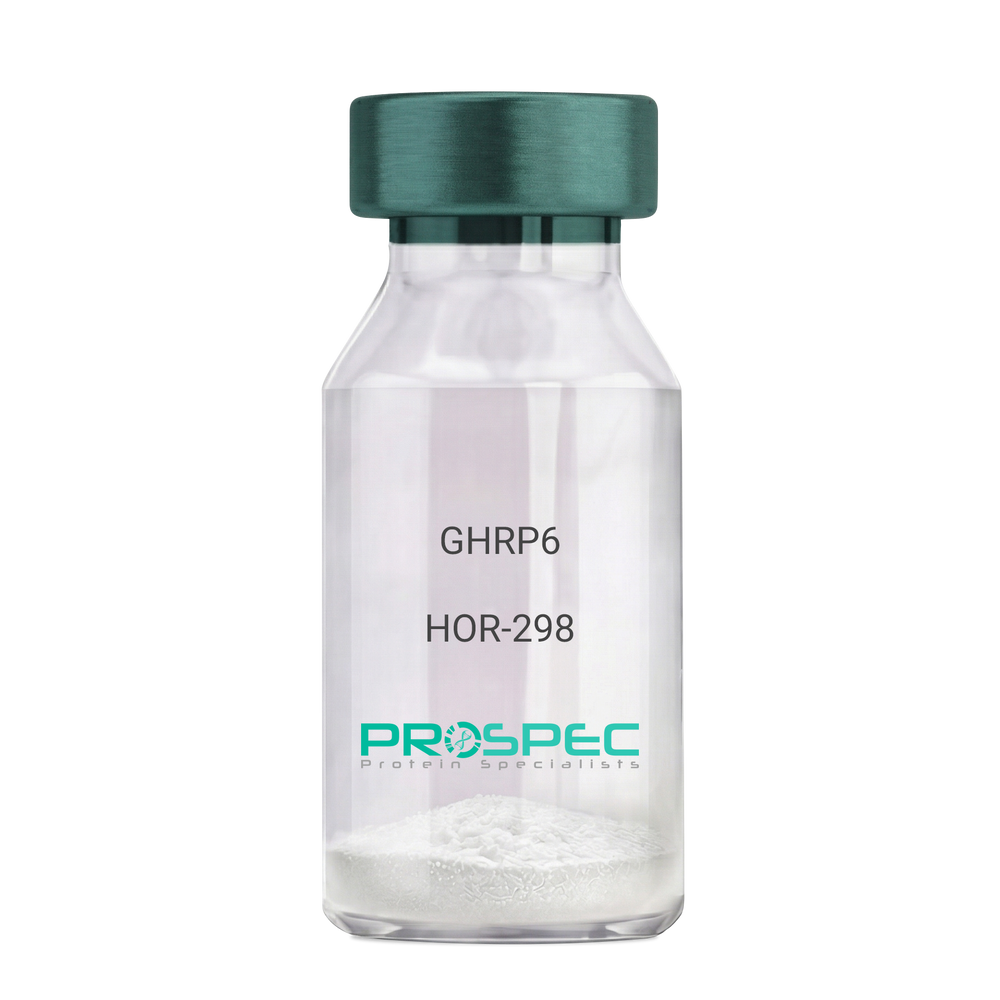
Name :
GHRP6Description:
Growth Hormone Releasing Peptide-6
GHRP-6, GHRP6
Product # :
HOR-298Price :
Quantity :
Shipping Method :
Shipped at Room temp
More Info
- description
- formulation
- purity
- More Info
Description
Growth Hormone Releasing Peptide-6 Synthetic is a single, non-glycosylated polypeptide chain containing 6 amino acids, having a molecular mass of 873 Dalton and a Molecular formula of C46H56N12O6.
Formulation
The GHRP-6 peptide was lyophilized with no additives.
Purity
Greater than 98.0% as determined by analysis by RP-HPLC.
More Info
-
Introduction
GH-releasing peptides (GHRPs) are synthetic peptides that like GHRH act directly on pituitary somatotrophs to stimulate GH release. Growth hormone (GH) release is stimulated by a variety of synthetic secretagogues, of which growth hormone-releasing hexapeptide (GHRP-6) has been most thoroughly studied; it is thought to have actions at both pituitary and hypothalamic site.
-
Synonyms
GHRP-6, GHRP6
-
Physical Appearance
Sterile Filtered White lyophilized (freeze-dried) powder.
-
Stability
Lyophilized Growth Hormone Releasing Peptide-6 although stable at room temperature for 3 weeks, should be stored desiccated below -18°C. Upon reconstitution GHRP-6 should be stored at 4°C between 2-7 days and for future use below -18°C. For long term storage it is recommended to add a carrier protein (0.1% HSA or BSA).Please prevent freeze-thaw cycles.
-
Solubility
It is recommended to reconstitute the lyophilized GHRP-6 in sterile 18MΩ-cm H2O not less than 100 µg/ml, which can then be further diluted to other aqueous solutions.
-
Amino Acid Sequence
His-D-Trp-Ala-Trp-D-Phe-Lys-NH2.
ProSpec's products are furnished for LABORATORY RESEARCH USE ONLY. The product may not be used as drugs, agricultural or pesticidal products, food additives or household chemicals.
- View Data Sheet
Name :
Adiponectin Human, HisDescription:
Adiponectin Human Recombinant, His tag
Acrp30, AdipoQ, GBP-28, APM-1, ACDC.
Product # :
CYT-433Price :
Quantity :
Shipping Method :
Shipped at Room temp
More Info
- description
- source
- formulation
- purity
- More Info
Description
The Acrp30 Human is created as a recombinant protein with N-terminal fusion of His Tag. The Adiponectin His-Tagged Fusion Protein, produced in E. coli, is 26.4 kDa protein containing 230 amino acid residues of the Acrp30 Human and 12 additional amino acid residues - HisTag (underlined).
Source
Escherichia Coli.
Formulation
Acrp30 Human was filtered (0.4µm) and lyophilized from 0.5 mg/ml in 0.02M Tris buffer pH7.5, 0.15M NaCl.
Purity
Acrp30 Human purity is greater than 95% as determined by SDS-PAGE.
More Info
-
Introduction
Adiponectin, also referred to as Acrp30, AdipoQ and GBP-28, is a recently discovered 244 amino acid protein, the product of the apM1 gene, which is physiologically active and specifically and highly expressed in adipose cells (Adipokine). The protein belongs to the soluble defense collagen super family; it has a collagen-like domain structurally homologous with collagen VIII and X and complement factor C1q-like globular domain. APM-1 forms homotrimers, which are the building blocks for higher order complexes found circulating in serum.
-
Synonyms
Acrp30, AdipoQ, GBP-28, APM-1, ACDC.
-
Physical Appearance
Filtered White lyophilized (freeze-dried) powder.
-
Stability
Store lyophilized Acrp30 Human at -20°C. Aliquot the product after reconstitution to avoid repeated freezing/thawing cycles. Reconstituted Acrp30 Human can be stored at 4°C for a limited period of time; it does not show any change after two weeks at 4°C.
-
Solubility
It is recommended to add deionized water to prepare a working stock solution of approximately 0.5mg/ml and let the lyophilized pellet dissolve completely. Product is not sterile! Please filter the product by an appropriate sterile filter before using it on cell culture.
-
Amino Acid Sequence
MRGSHHHHHHGSGHDQETTT QGPGVLLPLP KGACTGWMAG IPGHPGHNGA PGRDGRDGTP GEKGEKGDPG LIGPKGDIGE TGVPGAEGPR GFPGIQGRKG EPGEGAYVYR SAFSVGLETY VTIPNMPIRF TKIFYNQQNH YDGSTGKFHC NIPGLYYFAY HITVYMKDVK VSLFKKDKAM LFTYDQYQEN NVDQASGSVL LHLEVGDQVW LQVYGEGERN GLYADNDNDS TFTGFLLYHD TN.
-
Background
What is the molecular weight / Mw of ADIPONECTIN Protein?
ADIPONECTIN Protein has a total Mw of 26.4kDa.
What is the source or expression system of ADIPONECTIN Protein?
Escherichia Coli.
What is the Purity of ADIPONECTIN Protein?
ADIPONECTIN Protein is >95% pure as determined by SDS-PAGE.
What is the Biological Activity of ADIPONECTIN Protein?
The biological functionality of ADIPONECTIN Protein will be determined in the future.
What is the amino acid sequence of ADIPONECTIN Protein?
MRGSHHHHHHGSGHDQETTT QGPGVLLPLP KGACTGWMAG IPGHPGHNGA PGRDGRDGTP GEKGEKGDPG LIGPKGDIGE TGVPGAEGPR GFPGIQGRKG EPGEGAYVYR SAFSVGLETY VTIPNMPIRF TKIFYNQQNH YDGSTGKFHC NIPGLYYFAY HITVYMKDVK VSLFKKDKAM LFTYDQYQEN NVDQASGSVL LHLEVGDQVW LQVYGEGERN GLYADNDNDS TFTGFLLYHD TN.
What applications can ADIPONECTIN Protein be used in?
ADIPONECTIN Protein can probably be used in western blot, ELISA and Lateral Flow.
What is the endotoxin level for ADIPONECTIN Protein?
The endotoxin level is minimal, ADIPONECTIN Protein was purified using conventional chromatography techniques
ProSpec's products are furnished for LABORATORY RESEARCH USE ONLY. The product may not be used as drugs, agricultural or pesticidal products, food additives or household chemicals.
- View Data Sheet
Name :
STC 2 HumanDescription:
Stanniocalcin-2 Human Recombinant
Stanniocalcin-2, STC, STC2, STCRP, STC-2, Stanniocalcin-related protein, STC-related protein.
Product # :
HOR-296Price :
Quantity :
Shipping Method :
Shipped at Room temp
More Info
- description
- source
- formulation
- purity
- More Info
Description
Stanniocalcin-2 Human Recombinant produced in HEK 293 cell line is a single, glycosylated, polypeptide chain containing 289 amino acids and having a total molecular mass of 31.9kDa (calculated). The Stanniocalcin contains four extra residues which were used as a spacer and 8 residues form the C-Terminal Flag- tag.Stanniocalcin is purified by proprietary chromatographic techniques.The amino acid sequence of the recombinant human Stanniocalcin-2 is 100% homologous to the amino acid sequence AA 25-302 of the human mature Human Stanniocalcin-2.
Source
HEK 293 cell line (Human embryonic kidney).
Formulation
Filtered (0.4µm) and lyophilized in 0.5mg/ml in 20mM Tris buffer, 20mM NaCl, pH 7.5.
Purity
Greater than 90.0% as determined by SDS-PAGE.
More Info
-
Introduction
STC2 is a homodimeric glycoprotein that is expressed in a wide variety of tissues and may have autocrine or paracrine functions. The encoded protein has 10 of its 15 cysteine residues conserved among stanniocalcin family members and is phosphorylated by casein kinase 2 exclusively on its serine residues. Its C-terminus contains a cluster of histidine residues which may interact with metal ions. The protein may play a role in the regulation of renal and intestinal calcium and phosphate transport, cell metabolism, or cellular calcium/phosphate homeostasis. Constitutive over expression of human stanniocalcin 2 in mice resulted in pre- and postnatal growth restriction, reduced bone and skeletal muscle growth, and organomegaly. Expression of this gene is induced by estrogen and altered in some breast cancers.
-
Synonyms
Stanniocalcin-2, STC, STC2, STCRP, STC-2, Stanniocalcin-related protein, STC-related protein.
-
Physical Appearance
White lyophilized (freeze-dried) powder.
-
Stability
Lyophilized STC-2 although stable at room temperature for 3 weeks, should be stored desiccated below -18°C. Upon reconstitution Stanniocalcin should be stored at 4°C between 2-7 days and for future use below -18°C.For long term storage it is recommended to add a carrier protein (0.1% HSA or BSA).Please prevent freeze-thaw cycles.
-
Solubility
Add deionized water to a working concentration approximately 0.5 mg/ml and let the lyophilized pellet dissolve completely. Product is not sterile! Please filter the product by appropriate sterile filter before using it in the cell culture.
-
Amino Acid Sequence
TDATNPPEGP QDRSSQQKGR LSLQNTAEIQ HCLVNAGDVG CGVFECFENN SCEIRGLHGI CMTFLHNAGKFDAQGKSFIK DALKCKAHAL RHRFGCISRK CPAIREMVSQ LQRECYLKHD LCAAAQENTR VIVEMIHFKDLLLHEPYVDL VNLLLTCGEE VKEAITHSVQ VQCEQNWGSL CSILSFCTSA IQKPPTAPPE RQPQVDRTKLSRAHHGEAGH HLPEPSSRET GRGAKGERGS KSHPNAHARG RVGGLGAQGP SGSSEWEDEQ SEYSDIRRAAADYKDDDDK.
ProSpec's products are furnished for LABORATORY RESEARCH USE ONLY. The product may not be used as drugs, agricultural or pesticidal products, food additives or household chemicals.
- View Data Sheet
Name :
MMP14 HumanDescription:
Matrix Metalloproteinase-14 Recombinant Human
Matrix Metallopeptidase 14, Matrix Metallopeptidase 14 (Membrane-Inserted), Membrane-Type-1 Matrix Metalloproteinase, Membrane Type 1 Metalloprotease, EC 3.4.24.80, MT-MMP 1, MT1-MMP, MMP-14, MMP-X1, MT1MMP, MTMMP1, Matrix Metalloproteinase 14 (Membrane-Inserted), Membrane-Type Matrix Metalloproteinase 1, Matrix Metalloproteinase-14, EC 3.4.24, MT-MMP, WNCHRS, Matrix metalloproteinase-14, Membrane-type matrix metalloproteinase 1.
Product # :
ENZ-1101Price :
Quantity :
Shipping Method :
Shipped with Ice Packs
More Info
- description
- source
- formulation
- purity
- More Info
Description
Matrix Metalloproteinase-14 Human Recombinant produced in E.Coli is a single, non- glycosylated polypeptide chain containing 264 amino acids and having a molecular mass of 29.6kDa. MMP14 is purified by proprietary chromatographic techniques.
Source
Escherichia Coli.
Formulation
MMP14 is supplied as a 0.2 μm filtered solution conteining 20mM Tris-HCl, pH 7.4, 30 % glycerol, 300mM NaCl, 3mM CaCl2 and 10μM ZnCl2.
Purity
Greater than 95.0% as determined by:
(a) Analysis by RP-HPLC.
(b) Analysis by SDS-PAGE.More Info
-
Introduction
Matrix metalloproteinase-14 (MMP14), is a membrane-anchored zinc-binding endopeptidase which is expressed at the leading edge of different invasive carcinomas and also promotes tumor cell invasion through degradation of the extracellular matrix. MMP14 takes a vital part in extracellular matrix, ECM, remodeling by having the capability to degrade type I collagen, activate pro-MMP-2 and process cell adhesion molecules for instance CD44 and integrin alpha V. MMP14 is a key enzyme in many physiological as well as pathological processes for example angiogenesis & tumor invasion.
-
Synonyms
Matrix Metallopeptidase 14, Matrix Metallopeptidase 14 (Membrane-Inserted), Membrane-Type-1 Matrix Metalloproteinase, Membrane Type 1 Metalloprotease, EC 3.4.24.80, MT-MMP 1, MT1-MMP, MMP-14, MMP-X1, MT1MMP, MTMMP1, Matrix Metalloproteinase 14 (Membrane-Inserted), Membrane-Type Matrix Metalloproteinase 1, Matrix Metalloproteinase-14, EC 3.4.24, MT-MMP, WNCHRS, Matrix metalloproteinase-14, Membrane-type matrix metalloproteinase 1.
-
Physical Appearance
Sterile filtered colorless solution.
-
Stability
Store at 4°C if entire vial will be used within 2-4 weeks.Store, frozen at -20°C for longer periods of time.For long term storage it is recommended to add a carrier protein (0.1% HSA or BSA).Avoid multiple freeze-thaw cycles.
-
Amino Acid Sequence
ALASLGSAQS SSFSPEAWLQ QYGYLPPGDL RTHTQRSPQS LSAAIAAMQK FYGLQVTGKA DADTMKAMRR PRCGVPDKFG AEIKANVRRK RYAIQGLKWQ HNEITFCIQN YTPKVGEYAT YEAIRKAFRV WESATPLRFR EVPYAYIREG HEKQADIMIF FAEGFHGDST PFDGEGGFLA HAYFPGPNIG GDTHFDSAEP WTVRNEDLNG NDIFLVAVHE LGHALGLEHS SDPSAIMAPF YQWMDTENFV LPDDDRRGIQ QLYG.
ProSpec's products are furnished for LABORATORY RESEARCH USE ONLY. The product may not be used as drugs, agricultural or pesticidal products, food additives or household chemicals.
- View Data Sheet
Name :
Histone BovineDescription:
Bovine Histone
Product # :
PRO-2558Price :
Quantity :
Shipping Method :
Shipped with Ice Packs
More Info
- description
- source
- formulation
- purity
- More Info
Description
Histone Bovine is purified from bovine tissues by proprietary protein-chemical techniques.
Source
Bovine tissues.
Formulation
Histone Bovine is supplied in 20mM HEPES buffer pH-7.6, 250mM NaCl and 20% glycerol.
Purity
Greater than 80.0% as determined by SDS-PAGE.
More Info
-
Introduction
Histone is vastly alkaline protein exists in eukaryotic cell nuclei which set and direct the DNA into structural units named nucleosomes. 5 key families of histones are: H1/H5, H2A, H2B, H3, including H4. The core histones are H2A, H2B, H3 and H4, whereas histones H1/H5 are identified as the linker histones. Moreover the dynamics of chromatin structure depend on posttranslational modification of histones in addition to the appearance of different histone variants. Histone H3 as well as H4 are modified covalently at several residues. The histone code is constitute by these and the H2A/H2B modifications.
-
Physical Appearance
Sterile Filtered clear solution.
-
Stability
Store at 4°C if entire vial will be used within 2-4 weeks. Store, frozen at -20°C for longer periods of time. Avoid multiple freeze-thaw cycles.
-
Immunological Functions
1. Binds IgG type human auto antibodies.2. Checkerboard/immunodot analysis of positive/negative samples.
-
coating concentration
0.2-0.5 μg/ml (depending on the type of ELISA plate and coating buffer). Suitable for labeling of functional groups.
ProSpec's products are furnished for LABORATORY RESEARCH USE ONLY. The product may not be used as drugs, agricultural or pesticidal products, food additives or household chemicals.
- View Data Sheet
Name :
BD 1 HumanDescription:
Beta Defensin-1 Human Recombinant
Beta-defensin 1, BD-1, Defensin beta 1, hBD-1, HBD1, HBP1, DEFB1, HBD-1, HBP-1, DEFB101, DEFB-1, MGC51822.
Product # :
CYT-564Price :
Quantity :
Shipping Method :
Shipped at Room temp
More Info
- description
- source
- formulation
- purity
- biological activity
- More Info
Description
Beta Defensin-1 Human Recombinant produced in E.Coli is a single, non-glycosylated polypeptide chain containing 47 amino acids and having a molecular mass of 5 kDa.The BD-1 is purified by proprietary chromatographic techniques.
Source
Escherichia Coli.
Formulation
The Human BD-1 was lyophilized from a concentrated (1mg/ml) solution containing 20mM PBS pH-7.4 and 130mM sodium chloride.
Purity
Greater than 98.0% as determined by(a) Analysis by RP-HPLC.
(b) Analysis by SDS-PAGE.Biological Activity
Determined by its ability to chemoattract CD34+ dendritic cells using a concentration range of 100-1000ng/ml corresponding to a specific activity of 1,000-10,000IU/mg.More Info
-
Synonyms
Beta-defensin 1, BD-1, Defensin beta 1, hBD-1, HBD1, HBP1, DEFB1, HBD-1, HBP-1, DEFB101, DEFB-1, MGC51822.
-
Physical Appearance
Sterile Filtered White lyophilized (freeze-dried) powder.
-
Stability
Lyophilized Beta Defensin-1 Recombinant although stable at room temperature for 3 weeks, should be stored desiccated below -18°C. Upon reconstitution BD-1 should be stored at 4°C between 2-7 days and for future use below -18°C.Please prevent freeze-thaw cycles.
-
Solubility
It is recommended to reconstitute the lyophilized Beta Defensin-1 in sterile 18MΩ-cm H2O not less than 100µg/ml, which can then be further diluted to other aqueous solutions.
-
Amino Acid Sequence
GNFLTGLGHR SDHYNCVSSG GQCLYSACPI FTKIQGTCYR GKAKCCK.
-
Background
Beta Defensin-1 Human Recombinant: Unveiling its Potential in Innate Immunity and Therapeutic Applications
Abstract:
Beta Defensin-1 (BD-1), a member of the defensin family, plays a crucial role in innate immunity and host defense. This research paper provides an overview of BD-1 human recombinant, exploring its molecular characteristics, antimicrobial properties, and therapeutic applications. Understanding the multifaceted role of BD-1 offers new avenues for developing innovative immunotherapies. This article offers a concise analysis of BD-1, highlighting its impact on innate immunity and its therapeutic potential.Introduction:
Innate immunity serves as the first line of defense against invading pathogens. BD-1, a key peptide within the defensin family, exhibits broad-spectrum antimicrobial activity and plays a pivotal role in host defense mechanisms. This paper provides an overview of BD-1, shedding light on its structure, function, and therapeutic potential.BD-1 Structure and Function:
BD-1 is a cationic peptide with a conserved cysteine motif that confers its antimicrobial properties. It acts by disrupting the integrity of microbial cell membranes, leading to microbial death. Additionally, BD-1 exhibits immunomodulatory effects by stimulating immune cell recruitment and cytokine production.Antimicrobial Properties and Therapeutic Applications:
BD-1 demonstrates antimicrobial activity against a wide range of pathogens, including bacteria, fungi, and viruses. Its ability to combat multidrug-resistant strains makes it an attractive candidate for the development of novel antimicrobial therapies. Furthermore, BD-1's immunomodulatory effects contribute to its potential in treating inflammatory and infectious diseases.Therapeutic Potential of BD-1 Human Recombinant:
BD-1 human recombinant holds significant promise in the field of immunotherapy. Strategies aimed at enhancing BD-1 expression or delivering exogenous BD-1 may help boost innate immune responses in patients with compromised immune systems or chronic infections. Furthermore, BD-1-based therapeutics could be developed to combat antibiotic-resistant infections and prevent biofilm formation.Challenges and Future Directions:
While BD-1 shows immense therapeutic potential, challenges must be addressed. Further research is necessary to optimize the delivery methods of BD-1 and evaluate its long-term safety and efficacy. Additionally, understanding the interplay between BD-1 and other immune factors will aid in developing combinatorial approaches for enhanced therapeutic outcomes.Conclusion:
BD-1 human recombinant represents a promising avenue for developing novel immunotherapies and combating antimicrobial resistance. Understanding the molecular mechanisms and functional implications of BD-1 in innate immunity opens new horizons for innovative treatments. Continued research in this field has the potential to revolutionize the field of immunotherapy and improve patient outcomes.What is the molecular weight/Mw of BD1 Protein?
BD1 Protein has a total Mw of 5kDa.
What is the source or expression system of BD1 Protein?
Escherichia Coli.
What is the Purity of BD1 Protein?
BD1 Protein is >98% pure as determined by SDS-PAGE.
What is the Biological Activity of BD1 Protein?
Determined by its ability to chemoattract CD34+ dendritic cells using a concentration range of 100-1000ng/ml corresponding to a specific activity of 1,000-10,000IU/mg.
What is the amino acid sequence of BD1 Protein?
GNFLTGLGHR SDHYNCVSSG GQCLYSACPI FTKIQGTCYR GKAKCCK.
What applications can BD1 Protein be used in?
BD1 Protein can probably be used in western blot, ELISA and Lateral Flow.
What is the endotoxin level for BD1 Protein?
The endotoxin level is minimal, BD1 Protein was purified using conventional chromatography techniques.
ProSpec's products are furnished for LABORATORY RESEARCH USE ONLY. The product may not be used as drugs, agricultural or pesticidal products, food additives or household chemicals.
- View Data Sheet
Name :
FGF2 Human, ThermostableDescription:
Fibroblast Growth Factor-basic Human Recombinant, Thermostable
HBGH-2, HBGF-2, FGF-2, FGF-b, HBGH2, HBGF2, FGF2, FGFb, FGF2 Thermostable, FGF-2 Thermostable.
Product # :
CYT-943Price :
Quantity :
Shipping Method :
Shipped at Room temp
More Info
- description
- source
- formulation
- purity
- biological activity
- More Info
Description
FGF2 Thermostable is a stabilized form of FGF2 growth factor which enables a novel method to produce FGF2-dependent cell cultures more efficiently, having less media changes. FGF2 Thermostable can maintain its biological activity even after five days at 37°C. The increase in the stability of FGF2 in cell-culture enables a more homogenous, undifferentiated stem cell culture, while saving scientists crucial time and money, as frequent supplementation of FGF-basic and the everyday medium change is not necessary. Thermostable FGF-2 is a hyperstable protein. The Thermal stability of the protein is increased by 15°C compared to the wild-type FGF-2. Thermostable FGF-2 is more than 5-times prolonged half-life in human cell culture incubated at 37°C. The FGF-2 Thermostable protein is engineered with fully retained biological function and has no harmful stabilizing additives.Thermostable FGF2 Human Recombinant produced in E.Coli is a single, non-glycosylated, polypeptide chain containing 154 amino acids and having a total calculated molecular mass is 17.2kDa.
Source
Escherichia Coli.
Formulation
FGF Basic Thermostable was lyophilized from 20mM Tris-HCl, 150mM NaCl & 5% Trehalose, pH-7.6.
Purity
Purity is greater than 95% as determined by SDS-PAGE.
Biological Activity
The ED50 as calculated by the dose-dependent proliferation of murine balb/c 3T3 cells is less than 0.05ng/ml, corresponding to a specific activity of >20,000,000 units/mgMore Info
-
Synonyms
FGF2 Thermostable, FGF-basic Thermostable.
-
Physical Appearance
Filtered White lyophilized (freeze-dried) powder.
-
Stability
Lyophilized Thermostable FGF2 although stable at room temperature for 3 weeks, should be stored desiccated below -18°C. Upon reconstitution FGF2 Thermostable should be stored at 4°C between 2-7 days and for future use below -18°C.For long term storage it is recommended to add a carrier protein (0.1% HSA or BSA).Please prevent freeze-thaw cycles.
-
Solubility
It is recommended to reconstitute the lyophilized FGF2 thermostable protein in sterile 18MΩ-cm H2O not less than 100µg/ml, which can then be further diluted to other aqueous solutions.
-
Amino Acid Sequence
AAGSITTLPA LPEDGGSGAF PPGHFKDPKL LYCKNGGFFL RIHPDGRVDG TRDKSDPFIK LQLQAEERGV VSIKGVCANR YLAMKEDGRL YAIKNVTDEC FFFERLEENN YNTYRSRKYP SWYVALKRTG QYKLGSKTGP GQKAILFLPM SAKS
-
Background
Why Choose FGF2 Thermostable?
FGF2 can lose much of its activity after 1-2 days at 37°C due to unfolding and degradation. Thermostable FGF2 is engineered with amino acid substitutions that increase structural stability without significantly altering receptor binding or biological function.What are the advantages of FGF2 Protein?
*Better maintenance of pluripotency markers
*Higher colony quality
*Faster expansion rates
*Reduced spontaneous differentiation
*Greater viability after passagingWhat is the source or expression system of FGF2 Protein?
Escherichia Coli.
What is the Purity of FGF2 Protein?
FGF2 Protein is >95% pure as determined by SDS-PAGE.
What is the molecular weight / Mw of FGF2 Protein?
FGF2 Protein having a total Mw of 17.2kDa.
What is the Biological Activity of FGF2 Protein?
The ED50 as calculated by the dose-dependent proliferation of murine balb/c 3T3 cells is less than 0.05ng/ml, corresponding to a specific activity of >20,000,000 units/mg.
What is the endotoxin level for FGF2 Protein?
The endotoxin level is minimal, FGF2 Protein was purified using conventional chromatography techniques.
What is the amino acid sequence of FGF2 Protein?
AAGSITTLPA LPEDGGSGAF PPGHFKDPKL LYCKNGGFFL RIHPDGRVDG TRDKSDPFIK LQLQAEERGV VSIKGVCANR YLAMKEDGRL YAIKNVTDEC FFFERLEENN YNTYRSRKYP SWYVALKRTG QYKLGSKTGP GQKAILFLPM SAKS
Is FGF2 Protein conjugated to a Tag?
FGF2 Protein is not conjugated to a tag.
What applications can FGF2 Protein be used in?
FGF2 Protein can probably be used in western blot, ELISA and Lateral Flow.
ProSpec's products are furnished for LABORATORY RESEARCH USE ONLY. The product may not be used as drugs, agricultural or pesticidal products, food additives or household chemicals.
- View Data Sheet
Name :
CRYGC HumanDescription:
Crystallin, Gamma C Human Recombinant
Crystallin, gamma C, Gamma-crystallin 2-1, Gamma-crystallin 3, CRYG3, CCL.
Product # :
PRO-1095Price :
Quantity :
Shipping Method :
Shipped with Ice Packs
More Info
- description
- source
- formulation
- purity
- More Info
Description
CRYGC Human Recombinant produced in E. coli is a single polypeptide chain containing 198 amino acids (1-174) and having a molecular mass of 23.5kDa.CRYGC is fused to a 24 amino acid His-tag at N-terminus & purified by proprietary chromatographic techniques.
Source
E.coli.
Formulation
The CRYGC solution (1mg/1ml) contains 20mM Tris-HCl buffer (pH 8.0), 200mM NaCl, 2mM DTT and 10% glycerol.
Purity
Greater than 95% as determined by SDS-PAGE.
More Info
-
Introduction
CRYGC is a member of the beta/gamma-crystallin family. Mammalian lens crystallins are distributed into alpha, beta, and gamma families; beta and gamma crystallins are also considered as a superfamily. Gamma-crystallins are a homogeneous group of extremely symmetrical, monomeric proteins usually missing connecting peptides and terminal extensions and are differentially regulated after early development. Three pseudogenes (gamma-E,F,G) and four gamma-crystallin genes (gamma-A,B,C,D) are structured in a genomic sector as a gene cluster. Gamma-crystallins are involved in cataract formation as a result of aging or mutations in specific genes. Mutations in CRYGC result in cataract Coppock-like (CCL) and cataract autosomal dominant (ADC).
-
Synonyms
Crystallin, gamma C, Gamma-crystallin 2-1, Gamma-crystallin 3, CRYG3, CCL.
-
Physical Appearance
Sterile Filtered colorless solution.
-
Stability
Store at 4°C if entire vial will be used within 2-4 weeks. Store, frozen at -20°C for longer periods of time. For long term storage it is recommended to add a carrier protein (0.1% HSA or BSA).Avoid multiple freeze-thaw cycles.
-
Amino Acid Sequence
MGSSHHHHHH SSGLVPRGSH MGSHMGKITF YEDRAFQGRS YETTTDCPNL QPYFSRCNSI RVESGCWMLY ERPNYQGQQY LLRRGEYPDY QQWMGLSDSI RSCCLIPQTV SHRLRLYERE DHKGLMMELS EDCPSIQDRF HLSEIRSLHV LEGCWVLYEL PNYRGRQYLL RPQEYRRCQD WGAMDAKAGS LRRVVDLY
ProSpec's products are furnished for LABORATORY RESEARCH USE ONLY. The product may not be used as drugs, agricultural or pesticidal products, food additives or household chemicals.
- View Data Sheet
Name :
SCF Human, HEKDescription:
Stem Cell Factor Human Recombinant, HEK
Kit ligand Precursor, C-kit ligand, SCF, Mast cell growth factor, MGF, SF, KL-1, Kitl, DKFZp686F2250.
Product # :
CYT-111Price :
Quantity :
Shipping Method :
Shipped at Room temp
More Info
- description
- source
- formulation
- purity
- biological activity
- More Info
Description
SCF Human Recombinant produced in HEK cells is a glycosylated monomer, having a molecular weight range of 35-45kDa due to glycosylation.The SCF is purified by proprietary chromatographic techniques.
Source
HEK.
Formulation
SCF was lyophilized from a 0.2µm filtered solution (1mg/ml) containing 1xPBS.
Purity
Greater than 95% as obsereved by SDS-PAGE.
Biological Activity
The specific activity was determined by the dose-dependent stimulation of the proliferation of human TF-1 cells (human erythroleukemic indicator cell line).
The EC50 is 15.25ng/ml.More Info
-
Introduction
Stem cell factor / KIT ligand (SCF) is a cytokine which binds CD117(c-Kit). SCF is also known as "steel factor" or "c-kit ligand". SCF exists in two forms, cell surface bound SCF and soluble (or free) SCF. Soluble SCF is produced by the cleavage of surface bound SCF by metalloproteases. SCF is a growth factor important for the survival, proliferation, and differentiation of hematopoietic stem cells and other hematopoietic progenitor cells. One of its roles is to change the BFU-E (burst-forming unit-erythroid) cells, which are the earliest erythrocyte precursors in the erythrocytic series, into the CFU-E (colony-forming unit-erythroid).
-
Synonyms
Kit ligand Precursor, C-kit ligand, SCF, Mast cell growth factor, MGF, SF, KL-1, Kitl, DKFZp686F2250.
-
Physical Appearance
Sterile Filtered White lyophilized (freeze-dried) powder.
-
Stability
Lyophilized SCF although stable at room temperature for 3 weeks, should be stored desiccated below -18°C. Upon reconstitution SCF should be stored at 4°C between 2-7 days and for future use below -18°C.For long term storage it is recommended to add a carrier protein (0.1% HSA or BSA).Please prevent freeze-thaw cycles.
-
Solubility
It is recommended to reconstitute the lyophilized SCF in sterile PBS containing 0.1% endotoxin-free recombinant HSA.
ProSpec's products are furnished for LABORATORY RESEARCH USE ONLY. The product may not be used as drugs, agricultural or pesticidal products, food additives or household chemicals.
- View Data Sheet
Name :
MYL9 MouseDescription:
Myosin Light Chain 9 Mouse Recombinant
Myosin regulatory light polypeptide 9, Myosin regulatory light chain 2, Myosin regulatory light chain 9, Myl9, Myrl2.
Product # :
PRO-2193Price :
Quantity :
Shipping Method :
Shipped with Ice Packs
More Info
- description
- source
- formulation
- purity
- More Info
Description
MYL9 Mouse Recombinant produced in E.Coli is a single, non-glycosylated polypeptide chain containing 196 amino acids (1-172 a.a) and having a molecular mass of 22.4kDa.MYL9 is fused to a 24 amino acid His-tag at N-terminus & purified by proprietary chromatographic techniques.
Source
Escherichia Coli.
Formulation
MYL9 protein solution (0.5mg/ml) containing Phosphate buffered saline (pH7.4), 10% glycerol and 1mM DTT.
Purity
Greater than 90.0% as determined by SDS-PAGE.
More Info
-
Introduction
MYL9 is one of the numerous regulatory myosin light chains. Myosin which is a structural component of the muscle consists of 2 heavy chains and 4 light chains. MYL9 is a myosin light chain regulates muscle contraction by modulating the ATPase activity of myosin heads. MYL9 binds calcium and is activated by myosin light chain kinase. Regulatory myosin light chains regulate contraction in smooth muscle and non-muscle cells via phosphorylation by MLCK (myosin light chain kinase). Phosphorylation of regulatory myosin light chains is catalyzed by MLCK in the presence of calcium and calmodulin and it increases the actin-activated myosin ATPase activity, thus regulates the contractile activity.
-
Synonyms
Myosin regulatory light polypeptide 9, Myosin regulatory light chain 2, Myosin regulatory light chain 9, Myl9, Myrl2.
-
Physical Appearance
Sterile Filtered clear solution.
-
Stability
Store at 4°C if entire vial will be used within 2-4 weeks. Store, frozen at -20°C for longer periods of time. For long term storage it is recommended to add a carrier protein (0.1% HSA or BSA).Avoid multiple freeze-thaw cycles.
-
Amino Acid Sequence
MGSSHHHHHH SSGLVPRGSH MGSHMSSKRA KAKTTKKRPQ RATSNVFAMF DQSQIQEFKE AFNMIDQNRD GFIDKEDLHD MLASLGKNPT DEYLEGMMNE APGPINFTMF LTMFGEKLNG TDPEDVIRNA FACFDEEASG FIHEDHLREL LTTMGDRFTD EEVDEMYREA PIDKKGNFNY VEFTRILKHG AKDKDD
ProSpec's products are furnished for LABORATORY RESEARCH USE ONLY. The product may not be used as drugs, agricultural or pesticidal products, food additives or household chemicals.
- View Data Sheet
Name :
SLAMF1 Human, Sf9Description:
SLAMF1 Human Recombinant, Sf9
Signaling lymphocytic activation molecule, CDw150, IPO-3, CD150, SLAMF1, SLAM.
Product # :
PRO-2393Price :
Quantity :
Shipping Method :
Shipped with Ice Packs
More Info
- description
- source
- formulation
- purity
- More Info
Description
SLAMF1 Human Recombinant produced in Sf9 Baculovirus cells is a single, glycosylated polypeptide chain containing 226 amino acids (21-237a.a.) and having a molecular mass of 25.3kDa (Molecular size on SDS-PAGE will appear at approximately 28-40kDa).SLAMF1 is expressed with a 6 amino acid His tag at C-Terminus and purified by proprietary chromatographic techniques.
Source
Sf9, Baculovirus cells.
Formulation
SLAMF1 protein solution (0.5mg/ml) contains Phosphate Buffered Saline (pH 7.4) and 10% glycerol.
Purity
Greater than 95.0% as determined by SDS-PAGE.
More Info
-
Introduction
SLAMF1 is a member of the immunoglobulin gene superfamily and is involved in T-cell stimulation. The SLAMF1 protein is constitutively expressed on peripheral blood memory T cells, T-cell clones, immature thymocytes, and a fraction of B cells, and is swiftly induced on naive T cells after activation. There are probably 2 modes of SLAM signaling: one in which the inhibitor SH2D1A serves as a negative regulator and another in which protein-tyrosine phosphatase 2C (PTPN11)-dependent signal transduction functions.
-
Synonyms
Signaling lymphocytic activation molecule, CDw150, IPO-3, CD150, SLAMF1, SLAM.
-
Physical Appearance
Sterile Filtered colorless solution.
-
Stability
Store at 4°C if entire vial will be used within 2-4 weeks. Store, frozen at -20°C for longer periods of time. For long term storage it is recommended to add a carrier protein (0.1% HSA or BSA).Avoid multiple freeze-thaw cycles.
-
Amino Acid Sequence
ADPASYGTGG RMMNCPKILR QLGSKVLLPL TYERINKSMN KSIHIVVTMA KSLENSVENK IVSLDPSEAG PPRYLGDRYK FYLENLTLGI RESRKEDEGW YLMTLEKNVS VQRFCLQLRL YEQVSTPEIK VLNKTQENGT CTLILGCTVE KGDHVAYSWS EKAGTHPLNP ANSSHLLSLT
LGPQHADNIY ICTVSNPISN NSQTFSPWPG CRTDPSETKP HHHHHH.
ProSpec's products are furnished for LABORATORY RESEARCH USE ONLY. The product may not be used as drugs, agricultural or pesticidal products, food additives or household chemicals.
- View Data Sheet
Name :
EFNA5 HumanDescription:
Ephrin A5 Human Recombinant
EFNA5, AF1, EFL5, EPLG7, GLC1M, LERK7, RAGS, Ephrin-A5, AL-1, EPH-related receptor tyrosine kinase ligand 7.
Product # :
PRO-2327Price :
Quantity :
Shipping Method :
Shipped with Ice Packs
More Info
- description
- source
- formulation
- purity
- More Info
Description
EFNA5 produced in Sf9 Baculovirus cells is a single, glycosylated polypeptide chain containing 422 amino acids (21-203 a.a.) and having a molecular mass of 48.1kDa. EFNA5 is expressed with a 239 amino acid hIgG-His-tag at C-Terminus and purified by proprietary chromatographic techniques.
Source
Sf9, Baculovirus cells.
Formulation
EFNA5 protein solution (0.5mg/ml) contains Phosphate Buffered Saline (pH 7.4) and 10% glycerol.
Purity
Greater than 95.0% as determined by SDS-PAGE.
More Info
-
Introduction
Ephrin A5 (EFNA5) is a part of the ephrin ligand family which binds the members of ephrin receptor subfamily of tyrosine kinases and stimulates contact-dependent bidirectional signaling into neighboring cells. EFNA5 is mainly expressed in human adult brain, heart, spleen, and ovary and human fetal brain, lung, and kidney.
-
Synonyms
EFNA5, AF1, EFL5, EPLG7, GLC1M, LERK7, RAGS, Ephrin-A5, AL-1, EPH-related receptor tyrosine kinase ligand 7.
-
Physical Appearance
Sterile Filtered colorless solution.
-
Stability
Store at 4°C if entire vial will be used within 2-4 weeks. Store, frozen at -20°C for longer periods of time. For long term storage it is recommended to add a carrier protein (0.1% HSA or BSA). Avoid multiple freeze-thaw cycles.
-
Amino Acid Sequence
QDPGSKAVAD RYAVYWNSSN PRFQRGDYHI DVCINDYLDV FCPHYEDSVP EDKTERYVLY MVNFDGYSAC DHTSKGFKRW ECNRPHSPNG PLKFSEKFQL FTPFSLGFEF RPGREYFYIS SAIPDNGRRS CLKLKVFVRP TNSCMKTIGV HDRVFDVNDK VENSLEPADD TVHESAEPSR GENLEPKSCD KTHTCPPCPA PELLGGPSVF LFPPKPKDTL MISRTPEVTC VVVDVSHEDP EVKFNWYVDG VEVHNAKTKP REEQYNSTYR VVSVLTVLHQ DWLNGKEYKC KVSNKALPAP IEKTISKAKG QPREPQVYTL PPSRDELTKN QVSLTCLVKG FYPSDIAVEW ESNGQPENNY KTTPPVLDSD GSFFLYSKLT VDKSRWQQGN VFSCSVMHEA LHNHYTQKSL SLSPGKHHHH HH.
ProSpec's products are furnished for LABORATORY RESEARCH USE ONLY. The product may not be used as drugs, agricultural or pesticidal products, food additives or household chemicals.
- View Data Sheet
Name :
NRGN HumanDescription:
Neurogranin Human Recombinant
hng, RC3, Neurogranin, Ng, NRGN.
Product # :
CYT-293Price :
Quantity :
Shipping Method :
Shipped with Ice Packs
More Info
- description
- source
- formulation
- purity
- More Info
Description
NRGN Human Recombinant produced in E.Coli is a single, non-glycosylated polypeptide chain containing 101 amino acids (1-78 a.a.) and having a molecular mass of 10.0kDa (molecular size on SDS-PAGE will appear higher). NRGN is fused to a 23 amino acid His-tag at N-terminus & purified by proprietary chromatographic techniques.
Source
Escherichia Coli.
Formulation
NRGN protein solution (0.5mg/ml) contains 20mM Tris-HCl buffer (pH7.0), 30% glycerol 0.1mM PMSF and 1mM EDTA.
Purity
Greater than 90% as determined by SDS-PAGE.
More Info
-
Introduction
Neurogranin (NRGN) is a calmodulin-binding protein which is expressed solely in the brain, mainly in dendritic spines. NRGN is also taking part in the protein kinase C signaling pathway by being a "third messenger" substrate of protein kinase C-mediated molecular cascades during synaptic development and remodeling. NRGN binds to calmodulin in the absence of calcium. NRGN protein’s phosphorylation by protein kinase C lowers its binding ability.
-
Synonyms
hng, RC3, Neurogranin, Ng, NRGN.
-
Physical Appearance
Sterile filtered colorless solution.
-
Stability
Store at 4°C if entire vial will be used within 2-4 weeks. Store, frozen at -20°C for longer periods of time. For long term storage it is recommended to add a carrier protein (0.1% HSA or BSA).Avoid multiple freeze-thaw cycles.
-
Amino Acid Sequence
MGSSHHHHHH SSGLVPRGSH MGSMDCCTEN ACSKPDDDIL DIPLDDPGAN AAAAKIQASF RGHMARKKIK SGERGRKGPG PGGPGGAGVA RGGAGGGPSG D.
ProSpec's products are furnished for LABORATORY RESEARCH USE ONLY. The product may not be used as drugs, agricultural or pesticidal products, food additives or household chemicals.
- View Data Sheet
Name :
SPARC MouseDescription:
Secreted Protein Acidic & Rich in Cysteine Mouse Recombinant
Osteonectin, ON, Basement-membrane protein 40, BM-40, SPARC, Secreted Protein acidic and Rich in Cysteine
Product # :
PRO-2658Price :
Quantity :
Shipping Method :
Shipped with Ice Packs
More Info
- description
- source
- formulation
- purity
- More Info
Description
SPARC Mouse Recombinant produced in Sf9 Baculovirus cells is a single, glycosylated polypeptide chain containing 291 amino acids (18-302a.a) and having a molecular mass of 33.3kDa.SPARC is fused to a 6 amino acid His-tag at C-terminus & purified by proprietary chromatographic techniques.
Source
Sf9, Baculovirus cells.
Formulation
The SPARC solution (0.25mg/ml) contains Phosphate-Buffered Saline (pH 7.4) and 10% glycerol.
Purity
Greater than 95.0% as determined by SDS-PAGE.
More Info
-
Introduction
Secreted Protein Acidic & Rich in Cysteine (SPARC) protein is coded by the SPARC gene in humans. SPARC is a glycoprotein located in bones that binds to calcium. SPARC is produced by fibroblasts, capillary endothelial cells, platelets and macrophages, mainly in areas of tissue morphogenesis and remodelling. Asides from calcium, SPARC can also bind to collagen.
-
Synonyms
Osteonectin, ON, Basement-membrane protein 40, BM-40, SPARC, Secreted Protein acidic and Rich in Cysteine
-
Physical Appearance
Sterile Filtered colorless solution.
-
Stability
Store at 4°C if entire vial will be used within 2-4 weeks. Store, frozen at -20°C for longer periods of time. For long term storage it is recommended to add a carrier protein (0.1% HSA or BSA).Avoid multiple freeze-thaw cycles.
-
Amino Acid Sequence
APQQTEVAEE IVEEETVVEE TGVPVGANPV QVEMGEFEDG AEETVEEVVA DNPCQNHHCK HGKVCELDES NTPMCVCQDP TSCPAPIGEF EKVCSNDNKT FDSSCHFFAT KCTLEGTKKG HKLHLDYIGP CKYIAPCLDS ELTEFPLRMR DWLKNVLVTL YERDEGNNLL TEKQKLRVKK IHENEKRLEA GDHPVELLAR DFEKNYNMYI FPVHWQFGQL DQHPIDGYLS HTELAPLRAP LIPMEHCTTR FFETCDLDND KYIALEEWAG CFGIKEQDIN KDLVIHHHHH H
ProSpec's products are furnished for LABORATORY RESEARCH USE ONLY. The product may not be used as drugs, agricultural or pesticidal products, food additives or household chemicals.
- View Data Sheet
Name :
Epigen HumanDescription:
Epigen Human Recombinant
EPG, Epigen, PRO9904, ALGV3072, FLJ75542, EPGN, Epithelial mitogen.
Product # :
CYT-601Price :
Quantity :
Shipping Method :
Shipped at Room temp
More Info
- description
- source
- formulation
- purity
- biological activity
- More Info
Description
Epigen Recombinant Human produced in E.Coli is a single, non-glycosylated, polypeptide chain containing 72 amino acids and having a molecular mass of 7.9 kDa. Epigen is purified by proprietary chromatographic techniques.
Source
Escherichia Coli.
Formulation
EPGN was lyophilized from 20mM PBS buffer pH-7.4 .
Purity
Greater than 98.0% as determined by:
(a) Analysis by RP-HPLC.
(b) Analysis by SDS-PAGE.Biological Activity
Determined by the dose-dependent stimulation of the proliferation of murine Balb/3T3 cells. The expected ED50 for this effect is less than 300 ng/ml, corresponding to a specific activity of > 3.3 ×10³ IU/mg.
More Info
-
Introduction
EPGN is an EGF-related polypeptide growth factor that signals through the ErbB receptor-1. EPGN is produced in numerous tissues, including the testis, liver, heart and in certain tumor cells. EPGN is mitogenic for fibroblasts and epithelial cells. Human EPGN is originally synthesized as a glycosylated 14.7 kDa transmembrane precursor protein, which is processed by proteolytic cleavage to produce a mature soluble sequence.
-
Synonyms
EPG, Epigen, PRO9904, ALGV3072, FLJ75542, EPGN, Epithelial mitogen.
-
Physical Appearance
Sterile Filtered White lyophilized (freeze-dried) powder.
-
Stability
Lyophilized Epigen although stable at room temperature for 3 weeks, should be stored desiccated below -18°C. Upon reconstitution EPGN should be stored at 4°C between 2-7 days and for future use below -18°C.For long term storage it is recommended to add a carrier protein (0.1% HSA or BSA).Please prevent freeze-thaw cycles.
-
Solubility
It is recommended to reconstitute the lyophilized Epigen in sterile 18MΩ-cm H2O not less than 100µg/ml, which can then be further diluted to other aqueous solutions.
-
Amino Acid Sequence
AVTVTPPITA QQADNIEGPI ALKFSHLCLE DHNSYCINGA CAFHHELEKA ICRCFTGYTG ERCEHLTLTS YA
-
Background
What is the molecular weight/Mw of EPIGEN Protein?
EPIGEN Protein has a total Mw of 7.9kDa.
What is the source or expression system of EPIGEN Protein?
Escherichia Coli.
What is the Purity of EPIGEN Protein?
EPIGEN Protein is >98% pure as determined by SDS-PAGE.
What is the Biological Activity of EPIGEN Protein?
Determined by the dose-dependent stimulation of the proliferation of murine Balb/3T3 cells. The expected ED50 for this effect is less than 300 ng/ml, corresponding to a specific activity of > 3.3 ×10³ IU/mg.
What is the amino acid sequence of EPIGEN Protein?
AVTVTPPITA QQADNIEGPI ALKFSHLCLE DHNSYCINGA CAFHHELEKA ICRCFTGYTG ERCEHLTLTS YA
What applications can EPIGEN Protein be used in?
EPIGEN Protein can probably be used in western blot, ELISA and Lateral Flow.
What is the endotoxin level for EPIGEN Protein?
The endotoxin level is minimal, EPIGEN Protein was purified using conventional chromatography techniques.
ProSpec's products are furnished for LABORATORY RESEARCH USE ONLY. The product may not be used as drugs, agricultural or pesticidal products, food additives or household chemicals.
- View Data Sheet
Name :
FAM19A5 HumanDescription:
Family With Sequence Similarity 19 Member-A5 Human Recombinant
Family With Sequence Similarity 19 (Chemokine (C-C Motif)-Like), Member A5, Chemokine-Like Protein TAFA-5, TAFA5, TAFA Protein 5, QLLK5208, UNQ5208, TAFA-5, FAM19A5.
Product # :
CHM-284Price :
Quantity :
Shipping Method :
Shipped with Ice Packs
More Info
- description
- source
- formulation
- purity
- More Info
Description
FAM19A5 Human Recombinant (isoform 2) produced in E.Coli is a single, non-glycosylated, polypeptide chain (Gln26-Ser125) containing 110 amino acids including a 10 aa His tag at N-terminus. The total calculated molecular mass is 12.2kDa.
Source
Escherichia Coli.
Formulation
FAM19A5 filtered (0.4µm) solution in 20mM Tris buffer, 50mM NaCl, pH 7.5 and 10% (w/v) glycerol.
Purity
Greater than 95.0% as determined by SDS-PAGE.
More Info
-
Introduction
Family With Sequence Similarity 19 Member-A5 (FAM19A5) belongs to the TAFA family which is comprised of 5 highly homologous genes encoding small secreted proteins. These proteins have conserved cysteine residues at fixed positions, and are remotely related to MIP-1alpha, which is a member of the CC-chemokine family. The TAFA proteins are primarily expressed in specific regions of the brain, and are assumed to serve as brain-specific chemokines or neurokines which act as regulators of immune and nervous cells.
-
Synonyms
Family With Sequence Similarity 19 (Chemokine (C-C Motif)-Like), Member A5, Chemokine-Like Protein TAFA-5, TAFA5, TAFA Protein 5, QLLK5208, UNQ5208, TAFA-5, FAM19A5.
-
Physical Appearance
Filtered colorless solution.
-
Stability
Store at 4°C if entire vial will be used within 2-4 weeks. Store, frozen at -20°C for longer periods of time. For long term storage it is recommended to add a carrier protein (0.1% HSA or BSA).Avoid multiple freeze-thaw cycles.
-
Amino Acid Sequence
MKHHHHHHASQFLKEGQLAA GTCEIVTLDR DSSQPRRTIA RQTARCACRK GQIAGTTRAR PACVDARIIK TKQWCDMLPC LEGEGCDLLI NRSGWTCTQP GGRIKTTTVS.
-
Background
What is the molecular weight/Mw of FAM19A5 HUMAN Protein?
FAM19A5 HUMAN Protein has a total Mw of 12.2kDa.
What is the source or expression system of FAM19A5 HUMAN Protein?
Escherichia Coli.
What is the Purity of FAM19A5 HUMAN Protein?
FAM19A5 HUMAN Protein is >95% pure as determined by SDS-PAGE.
What is the Biological Activity of FAM19A5 HUMAN Protein?
The biological functionality of FAM19A5 HUMAN Protein will be determined in the future.
What is the amino acid sequence of FAM19A5 HUMAN Protein?
MKHHHHHHASQFLKEGQLAA GTCEIVTLDR DSSQPRRTIA RQTARCACRK GQIAGTTRAR PACVDARIIK TKQWCDMLPC LEGEGCDLLI NRSGWTCTQP GGRIKTTTVS.
What applications can FAM19A5 HUMAN Protein be used in?
FAM19A5 HUMAN Protein can probably be used in western blot, ELISA and Lateral Flow.
What is the endotoxin level for FAM19A5 HUMAN Protein?
The endotoxin level is minimal, FAM19A5 HUMAN Protein was purified using conventional chromatography techniques.
ProSpec's products are furnished for LABORATORY RESEARCH USE ONLY. The product may not be used as drugs, agricultural or pesticidal products, food additives or household chemicals.
- View Data Sheet
Name :
CALML3 HumanDescription:
Calmodulin Like 3 Human Recombinant
Calmodulin-like protein 3, CaM-like protein, CLP, Calmodulin-related protein NB-1, CALML3.
Product # :
PRO-1323Price :
Quantity :
Shipping Method :
Shipped with Ice Packs
More Info
- description
- source
- formulation
- purity
- More Info
Description
CALML3 Human Recombinant produced in E.Coli is a single, non-glycosylated polypeptide chain containing 173 amino acids (1-149 a.a.) and having a molecular mass of 19kDa.CALML3 is fused to a 24 amino acid His-tag at N-terminus & purified by proprietary chromatographic techniques.
Source
Escherichia Coli.
Formulation
CALML3 protein solution (0.5mg/ml) containing 20mM Tris-HCl buffer (pH 8.0), 0.15M NaCl and 10% glycerol.
Purity
Greater than 90.0% as determined by SDS-PAGE.
More Info
-
Introduction
Calmodulin Like 3 (CALML3) is a member of the calmodulin family and contains 4 EF-hand domains. The CALML3 protein may be similar to that of genuine calmodulin and may in fact compete with calmodulin by binding, with different affinities, to cellular substrates. CALML3 protein is expressed in normal mammary, prostate, cervical, and epidermal tissues.
-
Synonyms
Calmodulin-like protein 3, CaM-like protein, CLP, Calmodulin-related protein NB-1, CALML3.
-
Physical Appearance
Sterile filtered colorless solution.
-
Stability
Store at 4°C if entire vial will be used within 2-4 weeks. Store, frozen at -20°C for longer periods of time. For long term storage it is recommended to add a carrier protein (0.1% HSA or BSA). Avoid multiple freeze-thaw cycles.
-
Amino Acid Sequence
MGSSHHHHHH SSGLVPRGSH MGSHMADQLT EEQVTEFKEA FSLFDKDGDG CITTRELGTV MRSLGQNPTE AELRDMMSEI DRDGNGTVDF PEFLGMMARK MKDTDNEEEI REAFRVFDKD GNGFVSAAEL RHVMTRLGEK LSDEEVDEMI RAADTDGDGQ VNYEEFVRVL VSK.
ProSpec's products are furnished for LABORATORY RESEARCH USE ONLY. The product may not be used as drugs, agricultural or pesticidal products, food additives or household chemicals.