Skip to content

High-quality research proteins.

  • 1-800-805-6531

  • Mon - Sat 8.00-18.00, Sun - Closed

  • info@prospecbio.com

  • PO Box 6591 East Brunswick NJ 08816

  • Products
    • Cytokines
    • Growth factors
    • Chemokines
    • Cd antigens
    • Neurotrophins
    • Hormones
    • Enzymes
    • Viral antigens
    • Recombinant proteins
    • Natural proteins
    • Monoclonal antibodies
    • Polyclonal antibodies
    • Thermal Packaging
  • About
    • Company
    • Founder
    • Contribution
  • Customers
    • Eastern Asia
    • Eastern Europe
    • North America
    • South America
    • South East Asia
    • Southern Asia
    • Western Europe
  • Ordering
    • Ordering Method
    • Ordering - Credit Card
    • Ordering - PO
    • Shipping Fees
    • FAQs
  • Services
    • DNA Cloning
    • Protein Expression
    • Monoclonal Antibody
    • Fermentation
    • Technology License
  • Contact us
Log in

Country/region

  • USD $ | Albania
  • USD $ | Andorra
  • USD $ | Argentina
  • USD $ | Armenia
  • USD $ | Australia
  • USD $ | Austria
  • USD $ | Azerbaijan
  • USD $ | Belarus
  • USD $ | Belgium
  • USD $ | Bolivia
  • USD $ | Brazil
  • USD $ | Bulgaria
  • USD $ | Cambodia
  • USD $ | Canada
  • USD $ | Chile
  • USD $ | China
  • USD $ | Colombia
  • USD $ | Costa Rica
  • USD $ | Croatia
  • USD $ | Cyprus
  • USD $ | Czechia
  • USD $ | Denmark
  • USD $ | Estonia
  • USD $ | Finland
  • USD $ | France
  • USD $ | Georgia
  • USD $ | Germany
  • USD $ | Greece
  • USD $ | Hong Kong SAR
  • USD $ | Hungary
  • USD $ | Iceland
  • USD $ | India
  • USD $ | Ireland
  • USD $ | Israel
  • USD $ | Italy
  • USD $ | Japan
  • USD $ | Kazakhstan
  • USD $ | Latvia
  • USD $ | Liechtenstein
  • USD $ | Lithuania
  • USD $ | Madagascar
  • USD $ | Malta
  • USD $ | Mexico
  • USD $ | Moldova
  • USD $ | Monaco
  • USD $ | Netherlands
  • USD $ | New Zealand
  • USD $ | North Macedonia
  • USD $ | Norway
  • USD $ | Panama
  • USD $ | Paraguay
  • USD $ | Peru
  • USD $ | Philippines
  • USD $ | Poland
  • USD $ | Portugal
  • USD $ | Romania
  • USD $ | Singapore
  • USD $ | Slovakia
  • USD $ | Slovenia
  • USD $ | South Africa
  • USD $ | South Korea
  • USD $ | Spain
  • USD $ | Sri Lanka
  • USD $ | Sweden
  • USD $ | Switzerland
  • USD $ | Taiwan
  • USD $ | Thailand
  • USD $ | Türkiye
  • USD $ | Ukraine
  • USD $ | United Kingdom
  • USD $ | United States
  • USD $ | Uruguay
  • USD $ | Vatican City
  • USD $ | Venezuela
  • USD $ | Vietnam
  • Facebook
  • Instagram
logoProSpec - Recombinant Protein Manufacturer for academic and R&D industry
Become a distributor
Account Log in
Wishlist
Cart Cart(0)
  • Products
    +
    • Cytokines
    • Growth factors
    • Chemokines
    • Cd antigens
    • Neurotrophins
    • Hormones
    • Enzymes
    • Viral antigens
    • Recombinant proteins
    • Natural proteins
    • Monoclonal antibodies
    • Polyclonal antibodies
    • Thermal Packaging
  • About
    +
    • Company
    • Founder
    • Contribution
  • Customers
    +
    • Eastern Asia
    • Eastern Europe
    • North America
    • South America
    • South East Asia
    • Southern Asia
    • Western Europe
  • Ordering
    +
    • Ordering Method
    • Ordering - Credit Card
    • Ordering - PO
    • Shipping Fees
    • FAQs
  • Services
    +
    • DNA Cloning
    • Protein Expression
    • Monoclonal Antibody
    • Fermentation
    • Technology License
  • Contact us

Item added to your cart

View cart
View All
  • Cytokines
  • Growth factors
  • Chemokines
  • Cd antigens
  • Neurotrophins
  • Hormones
  • Enzymes
  • Viral antigens
  • Recombinant proteins
  • Natural proteins
  • Monoclonal antibodies
  • Polyclonal antibodies
  • Thermal Packaging
  • Tumor Necrosis Factor

    Tumor Necrosis Factor

    View All
  • 4-1BB

    4-1BB

    View All
  • Adiponectin

    Adiponectin

    View All
  • AIF1

    AIF1

    View All
  • Other Cytokines

    Other Cytokines

    View All
  • AITRL

    AITRL

    View All
  • Angiopoietin

    Angiopoietin

    View All
  • Apolipoprotein

    Apolipoprotein

    View All
  • B-Cell Activating Factor

    B-Cell Activating Factor

    View All
  • Beta Defensin

    Beta Defensin

    View All
  • Bone Morphogenetic Protein

    Bone Morphogenetic Protein

    View All
  • B type Natriuretic Peptide

    B type Natriuretic Peptide

    View All
  • BST

    BST

    View All
  • Betacellulin

    Betacellulin

    View All
  • Cardiotrophin

    Cardiotrophin

    View All
  • Activin

    Activin

    View All
  • Fibroblast Growth Factor

    Fibroblast Growth Factor

    View All
  • Other Growth Factors

    Other Growth Factors

    View All
  • CSF

    CSF

    View All
  • CTGF

    CTGF

    View All
  • IGFBP

    IGFBP

    View All
  • VEGF Protein

    VEGF Protein

    View All
  • EGF

    EGF

    View All
  • Epigen

    Epigen

    View All
  • Erythropoietin

    Erythropoietin

    View All
  • Insulin-Like Growth Factor

    Insulin-Like Growth Factor

    View All
  • Growth Hormone

    Growth Hormone

    View All
  • HDGF

    HDGF

    View All
  • Hepatocyte Growth Factor

    Hepatocyte Growth Factor

    View All
  • Insulin

    Insulin

    View All
  • BCA-1/ BLC (CXCL13)

    BCA-1/ BLC (CXCL13)

    View All
  • BRAK (CXCL14)

    BRAK (CXCL14)

    View All
  • C-10 (CCL6)

    C-10 (CCL6)

    View All
  • Other Chemokines

    Other Chemokines

    View All
  • MEC (CCL28)

    MEC (CCL28)

    View All
  • LD78-beta (CCL3L1)

    LD78-beta (CCL3L1)

    View All
  • CTACK (CCL27)

    CTACK (CCL27)

    View All
  • CXCL16

    CXCL16

    View All
  • CXCL17

    CXCL17

    View All
  • Platelet Factor-4 (CXCL4)

    Platelet Factor-4 (CXCL4)

    View All
  • ENA-78 (CXCL5)

    ENA-78 (CXCL5)

    View All
  • Eotaxin (CCL11,24,26)

    Eotaxin (CCL11,24,26)

    View All
  • Exodus-2 (CCL21)

    Exodus-2 (CCL21)

    View All
  • Fractalkine (CX3CL1)

    Fractalkine (CX3CL1)

    View All
  • CXCL6

    CXCL6

    View All
  • Other CD Antigens

    Other CD Antigens

    View All
  • CD14

    CD14

    View All
  • CD164

    CD164

    View All
  • CD1

    CD1

    View All
  • CD2

    CD2

    View All
  • CD200

    CD200

    View All
  • CD207

    CD207

    View All
  • CD226

    CD226

    View All
  • CD23

    CD23

    View All
  • CD244

    CD244

    View All
  • CD247

    CD247

    View All
  • CD27

    CD27

    View All
  • CD274

    CD274

    View All
  • CD300

    CD300

    View All
  • CD33

    CD33

    View All
  • Other Neurotrophins

    Other Neurotrophins

    View All
  • Beta-NGF

    Beta-NGF

    View All
  • BDNF

    BDNF

    View All
  • CDNF

    CDNF

    View All
  • CNTF

    CNTF

    View All
  • GDNF

    GDNF

    View All
  • Glia Maturation Factor

    Glia Maturation Factor

    View All
  • MANF

    MANF

    View All
  • Midkine

    Midkine

    View All
  • Neuroglobin

    Neuroglobin

    View All
  • Neurotrophic factors

    Neurotrophic factors

    View All
  • Neuregulin

    Neuregulin

    View All
  • Neuropilin

    Neuropilin

    View All
  • Pigment Epithelium-Derived Factor

    Pigment Epithelium-Derived Factor

    View All
  • Pleiotrophin

    Pleiotrophin

    View All
  • Peptide Hormones

    Peptide Hormones

    View All
  • Other Hormones

    Other Hormones

    View All
  • HCG

    HCG

    View All
  • Endothelin

    Endothelin

    View All
  • Exendin

    Exendin

    View All
  • FSH

    FSH

    View All
  • Glucagon

    Glucagon

    View All
  • GHRP

    GHRP

    View All
  • GLP

    GLP

    View All
  • Thyrostimulin

    Thyrostimulin

    View All
  • Inhibin A

    Inhibin A

    View All
  • LHRH

    LHRH

    View All
  • Melanotan

    Melanotan

    View All
  • Procalcitonin

    Procalcitonin

    View All
  • PTH

    PTH

    View All
  • Peroxiredoxin

    Peroxiredoxin

    View All
  • Peptidase

    Peptidase

    View All
  • Synthetase

    Synthetase

    View All
  • Transferase

    Transferase

    View All
  • Hydrolase

    Hydrolase

    View All
  • Dehydrogenase

    Dehydrogenase

    View All
  • ACE2

    ACE2

    View All
  • Esterase

    Esterase

    View All
  • Protein Kinases

    Protein Kinases

    View All
  • Other Enzymes

    Other Enzymes

    View All
  • Phosphatase

    Phosphatase

    View All
  • Deaminase

    Deaminase

    View All
  • Oxygenase

    Oxygenase

    View All
  • Adenylate Kinase

    Adenylate Kinase

    View All
  • Lyase

    Lyase

    View All
  • Chagas

    Chagas

    View All
  • SARS

    SARS

    View All
  • Influenza

    Influenza

    View All
  • ASFV

    ASFV

    View All
  • Astrovirus

    Astrovirus

    View All
  • Borrelia

    Borrelia

    View All
  • Helicobacter Pylori

    Helicobacter Pylori

    View All
  • Chikungunya

    Chikungunya

    View All
  • Chlamydia

    Chlamydia

    View All
  • Cytomegalo

    Cytomegalo

    View All
  • Dengue

    Dengue

    View All
  • EBV

    EBV

    View All
  • Ebola

    Ebola

    View All
  • Feline Leukemia Virus

    Feline Leukemia Virus

    View All
  • Hepatitis A

    Hepatitis A

    View All
  • Other

    Other

    View All
  • Actin

    Actin

    View All
  • ADAM

    ADAM

    View All
  • Complement Component

    Complement Component

    View All
  • Ag85

    Ag85

    View All
  • Eukaryotic Translation Initiation Factor

    Eukaryotic Translation Initiation Factor

    View All
  • Anterior Gradient Protein

    Anterior Gradient Protein

    View All
  • Heat Shock Protein

    Heat Shock Protein

    View All
  • Alpha-2-HS-Glycoprotein

    Alpha-2-HS-Glycoprotein

    View All
  • Hemoglobin

    Hemoglobin

    View All
  • Allergy

    Allergy

    View All
  • Anaplasma

    Anaplasma

    View All
  • Angiogenin

    Angiogenin

    View All
  • Ankyrin Repeat Domain

    Ankyrin Repeat Domain

    View All
  • Annexin

    Annexin

    View All
  • Other Natural Proteins

    Other Natural Proteins

    View All
  • Aprotinin

    Aprotinin

    View All
  • Transferrin

    Transferrin

    View All
  • Avidin

    Avidin

    View All
  • Anti Coagulation Factors

    Anti Coagulation Factors

    View All
  • Natural Albumin

    Natural Albumin

    View All
  • Natural Coagulation Factors

    Natural Coagulation Factors

    View All
  • Fibronectin

    Fibronectin

    View All
  • Thrombin

    Thrombin

    View All
  • Anti Human Enzyme

    Anti Human Enzyme

    View All
  • Other Monoclonal Antibodies

    Other Monoclonal Antibodies

    View All
  • Anti Human Cytokine

    Anti Human Cytokine

    View All
  • Anti Human Heat Shock Protein

    Anti Human Heat Shock Protein

    View All
  • Anti Mouse Lymphocyte

    Anti Mouse Lymphocyte

    View All
  • Anti Human Chemokine

    Anti Human Chemokine

    View All
  • Anti Human Lymphocyte

    Anti Human Lymphocyte

    View All
  • Anti Viral Monoclonal

    Anti Viral Monoclonal

    View All
  • Anti Mouse Cytokine

    Anti Mouse Cytokine

    View All
  • Anti-GST Monoclonal

    Anti-GST Monoclonal

    View All
  • Other Polyclonal Antibodies

    Other Polyclonal Antibodies

    View All
  • Anti Viral

    Anti Viral

    View All
  • Anti-GST Monoclonal

    Anti-GST Monoclonal

    View All
Back

Search results

1000 results found for “Enterokinase”

Name

Description

Product #

Price

Quantity

Shipping Method

  • View Data Sheet

    Name :

    GSK3B Human, sf9

    Description:

    Glycogen synthase kinase-3 beta, sf9 Human Recombinant

    Glycogen synthase kinase-3 beta, GSK-3 beta, Serine/threonine-protein kinase GSK3B.

    Product # :

    PKA-084

    Price :

    Quantity :

    Shipping Method :

    Ice Icon

    Shipped with Ice Packs

    Add To Cart

    More Info

    • description
    • source
    • formulation
    • purity
    • More Info

    Description

    GSK3B produced in Sf9 Baculovirus cells is a single, glycosylated polypeptide chain containing 426 amino acids (1-420a.a.) and having a molecular mass of 47.5kDa. GSK3B is expressed with a 6 amino acid His tag at C-Terminus and purified by proprietary chromatographic techniques.

    Source

    Sf9, Baculovirus cells.

    Formulation

    GSK3B protein solution (0.25mg/ml) contains Phosphate Buffered Saline (pH7.4), 0.5mM PMSF and 30% glycerol.

    Purity

    Greater than 90.0% as determined by SDS-PAGE.

    More Info

    • Introduction

      GSK3B is a serine-threonine kinase that belongs to the glycogen synthase kinase subfamily. GSK3B is involved in energy metabolism, neuronal cell development, and body pattern formation. Polymorphisms in the GSK3B gene have been implicated in modifying risk of Parkinson disease, and studies in mice show that overexpression of the GSK3B gene may be significant to the pathogenesis of Alzheimer disease.

    • Synonyms

      Glycogen synthase kinase-3 beta, GSK-3 beta, Serine/threonine-protein kinase GSK3B.

    • Physical Appearance

      Sterile Filtered colorless solution.

    • Stability

      Store at 4°C if entire vial will be used within 2-4 weeks. Store, frozen at -20°C for longer periods of time. For long term storage it is recommended to add a carrier protein (0.1% HSA or BSA). Avoid multiple freeze-thaw cycles.

    • Amino Acid Sequence

      MSGRPRTTSF AESCKPVQQP SAFGSMKVSR DKDGSKVTTV VATPGQGPDR PQEVSYTDTK VIGNGSFGVV YQAKLCDSGE LVAIKKVLQD KRFKNRELQI MRKLDHCNIV RLRYFFYSSG EKKDEVYLNL VLDYVPETVY RVARHYSRAK QTLPVIYVKL YMYQLFRSLA YIHSFGICHR DIKPQNLLLD PDTAVLKLCD FGSAKQLVRG EPNVSYICSR YYRAPELIFG ATDYTSSIDV WSAGCVLAEL LLGQPIFPGD SGVDQLVEII KVLGTPTREQ IREMNPNYTE FKFPQIKAHP WTKVFRPRTP PEAIALCSRL LEYTPTARLT PLEACAHSFF DELRDPNVKL PNGRDTPALF NFTTQELSSN PPLATILIPP HARIQAAAST PTNATAASDA NTGDRGQTNN AASASASNST HHHHHH.

    ProSpec's products are furnished for LABORATORY RESEARCH USE ONLY. The product may not be used as drugs, agricultural or pesticidal products, food additives or household chemicals.

    Gsk3B Human Sf9
  • View Data Sheet

    Name :

    GLYATL2 Human

    Description:

    Glycine-N-Acyltransferase-Like 2 Human Recombinant

    BXMAS2-10, GATF-B, Glycine N-acyltransferase-like protein 2, Acyl-CoA:glycine N-acyltransferase-like protein 2, GLYATL2.

    Product # :

    ENZ-770

    Price :

    Quantity :

    Shipping Method :

    Ice Icon

    Shipped with Ice Packs

    Add To Cart

    More Info

    • description
    • source
    • formulation
    • purity
    • More Info

    Description

    GLYATL2 Human Recombinant produced in E.coli is a single, non-glycosylated polypeptide chain containing 317 amino acids (1-294a.a) and having a molecular mass of 36.7kDa. GLYATL2 is fused to a 23 amino acid His-tag at N-terminus & purified by proprietary chromatographic techniques.

    Source

    Escherichia Coli.

    Formulation

    The GLYATL2 solution (0.5mg/ml) contains 20mM Tris-HCl buffer (pH 8.0), 0.1M NaCl, 50% glycerol and 2mM DTT.

    Purity

    Greater than 85% as determined by SDS-PAGE.

    More Info

    • Introduction

      Glycine-N-Acyltransferase-Like 2 (GLYATL2) is a part of the glycine N-acyltransferase family expressed mainly in salivary gland and trachea. GLYATL2 is a mitochondrial acyltransferase that transfers the acyl group to the N-terminus of glycine. GLYATL2 conjugates numerous substrates, like arachidonoyl-CoA and saturated medium and longchain acyl-CoAs ranging from chain-length C8:0-CoA to C18:0-CoA, to form a variety of N-acylglycines. GLYATL2 also shows a preference for monounsaturated fatty acid oleoyl-CoA (C18:1-CoA) as an acyl donor.

    • Synonyms

      BXMAS2-10, GATF-B, Glycine N-acyltransferase-like protein 2, Acyl-CoA:glycine N-acyltransferase-like protein 2, GLYATL2.

    • Physical Appearance

      Sterile Filtered colorless solution.

    • Stability

      Store at 4°C if entire vial will be used within 2-4 weeks. Store, frozen at -20°C for longer periods of time. For long term storage it is recommended to add a carrier protein (0.1% HSA or BSA). Avoid multiple freeze-thaw cycles.

    • Amino Acid Sequence

      MGSSHHHHHH SSGLVPRGSH MGSMLVLHNS QKLQILYKSL EKSIPESIKV YGAIFNIKDK NPFNMEVLVD AWPDYQIVIT RPQKQEMKDD QDHYTNTYHI FTKAPDKLEE VLSYSNVISW EQTLQIQGCQ EGLDEAIRKV ATSKSVQVDY MKTILFIPEL PKKHKTSSND KMELFEVDDD NKEGNFSNMF LDASHAGLVN EHWAFGKNER SLKYIERCLQ DFLGFGVLGP EGQLVSWIVM EQSCELRMGY TVPKYRHQGN MLQIGYHLEK YLSQKEIPFY FHVADNNEKS LQALNNLGFK ICPCGWHQWK CTPKKYC.

    ProSpec's products are furnished for LABORATORY RESEARCH USE ONLY. The product may not be used as drugs, agricultural or pesticidal products, food additives or household chemicals.

    Glyatl2 Human
  • View Data Sheet

    Name :

    CA1 Human

    Description:

    Carbonic Anhydrase-1 Human Recombinant

    CA-1, CA1, CAI, CA-I, Carbonate dehydratase I, Carbonic anhydrase I, Carbonic anhydrase 1, Car1.

    Product # :

    ENZ-462

    Price :

    Quantity :

    Shipping Method :

    Ice Icon

    Shipped with Ice Packs

    Add To Cart

    More Info

    • description
    • source
    • formulation
    • purity
    • More Info

    Description

    Recombinant Human Carbonic anhydrase 1 produced in E.Coli is a single, non-glycosylated polypeptide chain containing 281 amino acids (1-261 a.a) and having a molecular mass of 31 kDa. Carbonic anhydrase 1 is fused to a 20 amino acids His-Tag at N-terminus and purified by conventional chromatography techniques.

    Source

    Escherichia Coli.

    Formulation

    The Carbonic Anhydrase-1 protein solution contains 20mM Tris-HCl, pH-8, 1mM DTT and 10% Glycerol.

    Purity

    Greater than 95.0% as determined by SDS-PAGE.

    More Info

    • Introduction

      Carbonic anhydrase 1 is a zinc metalloenzyme that catalyses reversible hydration of CO2 (CO2 + H2O ? HCO3- + H+). Carbonic anhydrase 1 is essential to many biological processes such as cellular respiration, calcification, acid-base balance, bone resorption, and the formation of aqueous humor, cerebrospinal fluid, salvia, and gastric acid. Carbonic anhydrase 1 is abundant in erythrocytes and an early marker for erythroid differentiation.

    • Synonyms

      CA-1, CA1, CAI, CA-I, Carbonate dehydratase I, Carbonic anhydrase I, Carbonic anhydrase 1, Car1.

    • Physical Appearance

      Sterile filtered colorless solution.

    • Stability

      Store at 4°C if entire vial will be used within 2-4 weeks. Store, frozen at -20°C for longer periods of time. For long term storage it is recommended to add a carrier protein (0.1% HSA or BSA). Avoid multiple freeze-thaw cycles.

    • Amino Acid Sequence

      MGSSHHHHHH SSGLVPRGSH MASPDWGYDD KNGPEQWSKL YPIANGNNQS PVDIKTSETK HDTSLKPISV SYNPATAKEI INVGHSFHVN FEDNDNRSVL KGGPFSDSYR LFQFHFHWGS TNEHGSEHTV DGVKYSAELH VAHWNSAKYS SLAEAASKAD GLAVIGVLMK VGEANPKLQK VLDALQAIKT KGKRAPFTNF DPSTLLPSSL DFWTYPGSLT HPPLYESVTW IICKESISVS SEQLAQFRSL LSNVEGDNAV PMQHNNRPTQ PLKGRTVRAS F.

    ProSpec's products are furnished for LABORATORY RESEARCH USE ONLY. The product may not be used as drugs, agricultural or pesticidal products, food additives or household chemicals.

    Carbonic Anhydrase 1 Human
  • View Data Sheet

    Name :

    FGF8 Human, HEK

    Description:

    Fibroblast Growth Factor-8 Human Recombinant, HEK

    FGF8B, FGF-8B, FGF8-B, KAL6, HBGF-8, HBGF8, AIGF, HBGF-8, MGC149376, fibroblast growth factor 8.

    Product # :

    CYT-087

    Price :

    Quantity :

    Shipping Method :

    Ice Icon

    Shipped with Ice Packs

    Add To Cart

    More Info

    • description
    • source
    • formulation
    • purity
    • biological activity
    • More Info

    Description

    FGF-8 Human Recombinant is a single, glycosylated, polypeptide chain (23-215 a.a) containing a total of 204 amino acids and having a molecular mass of 23.7 kDa. FGF-8 is fused to a 6 a.a his-Tag at C-terminus and is purified by proprietary chromatographic techniques.

    Source

    HEK.

    Formulation

    The FGF-8 solution (0.25mg/ml) contains 10% Glycerol and Phosphate-Buffered Saline (pH 7.4).

    Purity

    Greater than 90% as obsereved by SDS-PAGE.

    Biological Activity

    The ED50 is ≤5 µg/ml, measured  in a cell proliferation assay using Balb/3T3 mouse embryonic fibroblast cells in the presence of 10ug/ml of heparin.

    More Info

    • Introduction

      FGF8 is part of the fibroblast growth factor family. FGF family members have wide mitogenic and cell survival activities, and participate in a variety of biological processes, including embryonic development, cell growth, morphogenesis, tissue repair, tumor growth and invasion. FGF8 supports androgen and anchorage independent growth of mammary tumor cells. FGF8 over expression increases tumor growth and angiogensis. The adult expression of FGF-8 gene is restricted to testes and ovaries. FGF8 functions as an embryonic epithelial factor. FGF8 takes part in midbrain and limb development, organogenesis, embryo gastrulation and left-right axis determination.

    • Synonyms

      FGF8B, FGF-8B, FGF8-B, KAL6, HBGF-8, HBGF8, AIGF, HBGF-8, MGC149376, fibroblast growth factor 8.

    • Physical Appearance

      Sterile Filtered colorless solution.

    • Stability

      Store at 4°C if entire vial will be used within 2-4 weeks. Store, frozen at -20°C for longer periods of time. For long term storage it is recommended to add a carrier protein (0.1% HSA or BSA).Avoid multiple freeze-thaw cycles.

    • Amino Acid Sequence

      DGSHMQVTVQ SSPNFTQHVR EQSLVTDQLS RRLIRTYQLY SRTSGKHVQV LANKRINAMA EDGDPFAKLI VETDTFGSRV RVRGAETGLY ICMNKKGKLI AKSNGKGKDC VFTEIVLENN YTALQNAKYE GWYMAFTRKG RPRKGSKTRQ HQREVHFMKR LPRGHHTTEQ SLRFEFLNYP PFTRSLRGSQ RTWAPEPRHH HHHH.

    • Background

      What is the molecular weight/Mw of FGF8 Protein?
      FGF8 Protein has a total Mw of 23.7kDa.

      What is the source or expression system of FGF8 Protein?
      HEK.

      What is the Purity of FGF8 Protein?
      FGF8 Protein is >90% pure as determined by SDS-PAGE.

      What is the Biological Activity of FGF8 Protein?
      The ED50 is ≤5 µg/ml, measured in a cell proliferation assay using Balb/3T3 mouse embryonic fibroblast cells in the presence of 10ug/ml of heparin.

      What is the amino acid sequence of FGF8 Protein?
      DGSHMQVTVQ SSPNFTQHVR EQSLVTDQLS RRLIRTYQLY SRTSGKHVQV LANKRINAMA EDGDPFAKLI VETDTFGSRV RVRGAETGLY ICMNKKGKLI AKSNGKGKDC VFTEIVLENN YTALQNAKYE GWYMAFTRKG RPRKGSKTRQ HQREVHFMKR LPRGHHTTEQ SLRFEFLNYP PFTRSLRGSQ RTWAPEPRHH HHHH.

      What applications can FGF8 Protein be used in?
      FGF8 Protein can probably be used in western blot, ELISA and Lateral Flow.

      What is the endotoxin level for FGF8 Protein?
      The endotoxin level is minimal, FGF8 Protein was purified using conventional chromatography techniques.

    ProSpec's products are furnished for LABORATORY RESEARCH USE ONLY. The product may not be used as drugs, agricultural or pesticidal products, food additives or household chemicals.

    Fgf 8 Human Hek
  • View Data Sheet

    Name :

    CCL28 Human

    Description:

    Mucosae-Associated Epithelial Chemokine Human Recombinant (CCL28)

    MEC, CCK1, SCYA28, MGC71902, CCL28, C-C motif chemokine 28, Small-inducible cytokine A28, Mucosae-associated epithelial chemokine, Protein CCK1.

    Product # :

    CHM-353

    Price :

    Quantity :

    Shipping Method :

    Room Temp Icon

    Shipped at Room temp

    Add To Cart

    More Info

    • description
    • source
    • formulation
    • purity
    • biological activity
    • More Info

    Description

    CCL28 Human Recombinant produced in E.Coli is a single, non-glycosylated, polypeptide chain containing 108 amino acids and having a molecular mass of 12.3 kDa. The CCL28 is purified by proprietary chromatographic techniques.

    Source

    Escherichia Coli.

    Formulation

    Lyophilized from a concentrated (1mg/ml) solution in water containing 20mM PBS and 150mM NaCl.

    Purity

    Greater than 97.0% as determined by:
    (a) Analysis by RP-HPLC.
    (b) Analysis by SDS-PAGE.

    Biological Activity

    Determined by its ability to chemoattract human lymphocytes using a concentration range of 1-10ng/ml corresponding to a Specific Activity of 100,000-1,000,000IU/mg.

    More Info

    • Introduction

      CCL28 is part of the subfamily of small cytokine CC genes. CCL28 shows chemotactic activity for resting CD4 or CD8 T cells and eosinophils. CCL28 binds to chemokine receptors CCR3 and CCR10. CCL28 is involved in the physiology of extracutaneous epithelial tissues, including diverse mucosal organs. CCL28 mediates mucosal immunity in HIV exposure and infection. CCL28 is involved in the pathogenesis of inflammatory skin diseases.
      Human CCL28 cDNA encodes a 127 amino acid residue precursor protein with a putative 22 amino acid residue signal peptide that is cleaved to produce the 105 amino acid residue mature protein. Human and mouse CCL28 are highly conserved, sharing 83% amino acid identity in their mature regions. CCL28 shares the most homology with CCL27/CTACK. Human and mouse CCL28 RNA expression was found to be highest in normal and pathologic colon with the protein being expressed by epithelial cells. Human CCL28 RNA was also present in normal and asthmatic lung tissues.

    • Synonyms

      MEC, CCK1, SCYA28, MGC71902, CCL28, C-C motif chemokine 28, Small-inducible cytokine A28, Mucosae-associated epithelial chemokine, Protein CCK1.

    • Physical Appearance

      Sterile Filtered White lyophilized (freeze-dried) powder.

    • Stability

      Lyophilized CCL28 although stable at room temperature for 3 weeks, should be stored desiccated below -18°C. Upon reconstitution CCL28 should be stored at 4°C between 2-7 days and for future use below -18°C.For long term storage it is recommended to add a carrier protein (0.1% HSA or BSA).Please prevent freeze-thaw cycles.

    • Solubility

      It is recommended to reconstitute the lyophilized CCL28 in sterile 18MΩ-cm H2O not less than 100µg/ml, which can then be further diluted to other aqueous solutions.

    • Amino Acid Sequence

      SEAILPIASS CCTEVSHHIS RRLLERVNMC RIQRADGDCD LAAVILHVKR RRICVSPHNH TVKQWMKVQA AKKNGKGNVC HRKKHHGKRN SNRAHQGKHE TYGHKTPY.

    • Background

      What is the molecular weight/Mw of CCL28 HUMAN Protein?
      CCL28 HUMAN Protein has a total Mw of 12.3kDa.

      What is the source or expression system of CCL28 HUMAN Protein?
      Escherichia Coli.

      What is the Purity of CCL28 HUMAN Protein?
      CCL28 HUMAN Protein is > 97% pure as determined by SDS-PAGE.

      What is the Biological Activity of CCL28 HUMAN Protein?
      Determined by its ability to chemoattract human lymphocytes using a concentration range of 1-10ng/ml corresponding to a Specific Activity of 100,000-1,000,000IU/mg.

      What is the amino acid sequence of CCL28 HUMAN Protein?
      SEAILPIASS CCTEVSHHIS RRLLERVNMC RIQRADGDCD LAAVILHVKR RRICVSPHNH TVKQWMKVQA AKKNGKGNVC HRKKHHGKRN SNRAHQGKHE TYGHKTPY.

      What applications can CCL28 HUMAN Protein be used in?
      CCL28 HUMAN Protein can probably be used in western blot, ELISA and Lateral Flow.

      What is the endotoxin level for CCL28 HUMAN Protein?
      The endotoxin level is minimal, CCL28 HUMAN Protein was purified using conventional chromatography techniques.

    ProSpec's products are furnished for LABORATORY RESEARCH USE ONLY. The product may not be used as drugs, agricultural or pesticidal products, food additives or household chemicals.

    Ccl28 Human
  • View Data Sheet

    Name :

    HYAL1 Human

    Description:

    Hyaluronidase Human Recombinant

    Hyaluronidase-1, Hyal-1,Hyaluronoglucosaminidase-1, Lung carcinoma protein 1, LuCa-1, HYAL1, Hyaluronidase 1, Hyaluronoglucosaminidase 1, Hyaluronoglucosaminidase1, LUCA 1,MPS9, NAT6, Plasma hyaluronidase, Tumor suppressor LUCA 1.

    Product # :

    ENZ-1155

    Price :

    Quantity :

    Shipping Method :

    Ice Icon

    Shipped with Ice Packs

    Add To Cart

    More Info

    • description
    • source
    • formulation
    • purity
    • More Info

    Description

    HYAL1 Human Recombinant produced in HEK cells is a single, glycosylated, polypeptide chain (22-435 a.a) containing a total of 420 amino acids, having a molecular mass of 46.9 kDa. HYAL1 is fused to a 6 amino acid His-tag at C-terminus,and is purified by proprietary chromatographic techniques.

    Source

    HEK293 Cells.

    Formulation

    The HYAL1 solution (0.25mg/ml) contains 10% Glycerol and Phosphate-Buffered Saline (pH 7.4).

    Purity

    Greater than 90.0% as determined by SDS-PAGE.

    More Info

    • Introduction

      Hyaluronidase-1 or HYAL1 is a protein, part of the endolytic glycoside hydrolase proteins group. Human hyaluronidases proteins, are 5 endo­β­N­acetyl­hexosaminidases (including HYAL1, HYAL2, HYAL3). Hyaluronidase-1 causes degradation to hyaluronic acid in the extracellular matrix of somatic tissues. HYAL1 needs an acidic environment and is the most common hyaluronidase in the plasma. Mutations in this protein can lead to mucopolysaccharidosis type IX and hyaluronidase deficiency.

    • Synonyms

      Hyaluronidase-1, Hyal-1,Hyaluronoglucosaminidase-1, Lung carcinoma protein 1, LuCa-1, HYAL1, Hyaluronidase 1, Hyaluronoglucosaminidase 1, Hyaluronoglucosaminidase1, LUCA 1,MPS9, NAT6, Plasma hyaluronidase, Tumor suppressor LUCA 1.

    • Physical Appearance

      Sterile Filtered colorless solution.

    • Stability

      Store at 4°C if entire vial will be used within 2-4 weeks. Store, frozen at -20°C for longer periods of time. For long term storage it is recommended to add a carrier protein (0.1% HSA or BSA).Avoid multiple freeze-thaw cycles.

    • Amino Acid Sequence

      FRGPLLPNRP FTTVWNANTQ WCLERHGVDV DVSVFDVVAN PGQTFRGPDM TIFYSSQLGT YPYYTPTGEP VFGGLPQNAS LIAHLARTFQ DILAAIPAPD FSGLAVIDWE AWRPRWAFNW DTKDIYRQRS RALVQAQHPD WPAPQVEAVA QDQFQGAARA WMAGTLQLGR ALRPRGLWGF YGFPDCYNYD FLSPNYTGQC PSGIRAQNDQ LGWLWGQSRA LYPSIYMPAV LEGTGKSQMY VQHRVAEAFR VAVAAGDPNL PVLPYVQIFY DTTNHFLPLD ELEHSLGESA AQGAAGVVLW VSWENTRTKE SCQAIKEYMD TTLGPFILNV TSGALLCSQA LCSGHGRCVR RTSHPKALLL LNPASFSIQL TPGGGPLSLR GALSLEDQAQ MAVEFKCRCY PGWQAPWCER KSMWHHHHHH

    ProSpec's products are furnished for LABORATORY RESEARCH USE ONLY. The product may not be used as drugs, agricultural or pesticidal products, food additives or household chemicals.

    Hyaluronidase Enzyme
  • View Data Sheet

    Name :

    RNASE1 Human

    Description:

    Ribonuclease 1 Human Recombinant

    RNASE1, ribonuclease A family member 1, pancreatic, RAC1, RIB1, RNS1, ribonuclease pancreatic, HP-RNase, RIB-1, RNase UpI-1, RNase 1, Ribonuclease A, RNase A, Ribonuclease 1.

    Product # :

    ENZ-1168

    Price :

    Quantity :

    Shipping Method :

    Ice Icon

    Shipped with Ice Packs

    Add To Cart

    More Info

    • description
    • source
    • formulation
    • purity
    • biological activity
    • More Info

    Description

    RNASE1 Human Recombinant produced in HEK cells is a single, glycosylated, polypeptide chain (29-156 a.a) containing a total of 134 amino acids, having a molecular mass of 15.3kDa. RNASE1 is fused to a 6 amino acid His-tag at C-terminus,and is purified by proprietary chromatographic techniques.

    Source

    HEK293 Cells.

    Formulation

    The RNASE1 solution (1mg/ml) contains 10% Glycerol and Phosphate-Buffered Saline (pH 7.4).

    Purity

    Greater than 90.0% as determined by SDS-PAGE.

    Biological Activity

    Specific activity is >  3 X 10^6 unit/mg. Defined by the amount of enzyme that  hydrolyzes 1nmole of RNA per minute at 25˚C.

    More Info

    • Introduction

      Ribonuclease 1R (NASE1) is a small protein which is a part of pancreatic ribonuclease enzyme family. NASE1 has 4 disulfide bonds in its native state and cleaves speciallyafter pyrimidine nucleotides.Cleavage takes place in 2 steps: first, the 3’,5’-phosphodiester bond is cleaved to craete a 2’,3’-cyclic phosphodiester intermediate; than, the cyclic phosphodiester is hydrolyzed to a 3’-monophosphate. NASE1is activated the most with single stranded RNA.NASE1inhibited by alkylation of His12 and His119 and activated by potassium and sodium salts.NASE1hydrolyzes RNA from protein samples.

    • Synonyms

      RNASE1, ribonuclease A family member 1, pancreatic, RAC1, RIB1, RNS1, ribonuclease pancreatic, HP-RNase, RIB-1, RNase UpI-1, RNase 1, Ribonuclease A, RNase A, Ribonuclease 1.

    • Physical Appearance

      Sterile Filtered colorless solution.

    • Stability

      Store at 4°C if entire vial will be used within 2-4 weeks.Store, frozen at -20°C for longer periods of time.For long term storage it is recommended to add a carrier protein (0.1% HSA or BSA).Avoid multiple freeze-thaw cycles.

    • Amino Acid Sequence

      KESRAKKFQR QHMDSDSSPS SSSTYCNQMM RRRNMTQGRC KPVNTFVHEP LVDVQNVCFQ EKVTCKNGQG NCYKSNSSMH ITDCRLTNGS RYPNCAYRTS PKERHIIVAC EGSPYVPVHF DASVEDSTHH HHHH

    ProSpec's products are furnished for LABORATORY RESEARCH USE ONLY. The product may not be used as drugs, agricultural or pesticidal products, food additives or household chemicals.

    Rnase1 Human
  • View Data Sheet

    Name :

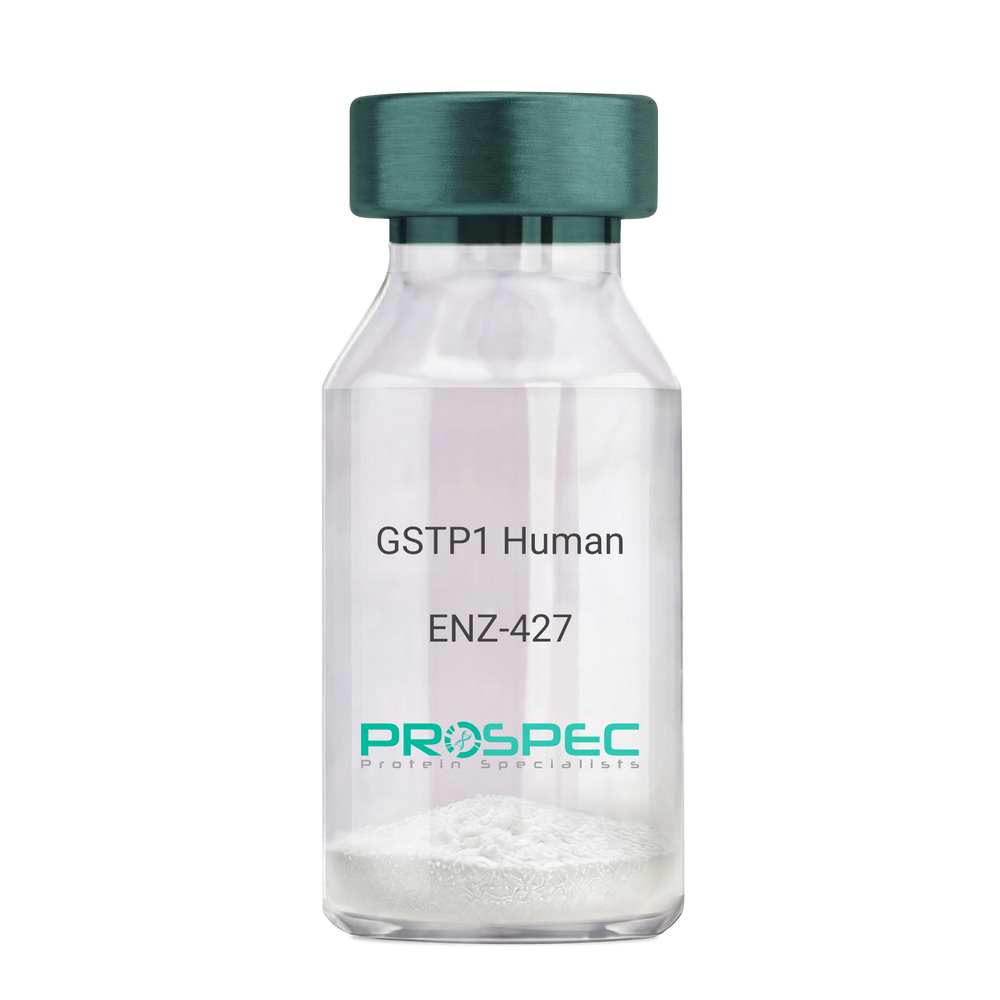
    GSTP1 Human

    Description:

    Glutathione S-Transferase pi 1 Human Recombinant

    Glutathione S-transferase P, GST class-pi, GSTP1-1, GSTP1, FAEES3, GST3, PI, DFN7.

    Product # :

    ENZ-427

    Price :

    Quantity :

    Shipping Method :

    Ice Icon

    Shipped with Ice Packs

    Add To Cart

    More Info

    • description
    • source
    • formulation
    • purity
    • biological activity
    • More Info

    Description

    GSTP1 Human Recombinant fused with 36 amino acid His tag at N-terminus produced in E.Coli is a single, non-glycosylated, polypeptide chain containing 246 amino acids (1-210 a.a.) And having a molecular mass of 27.4kDa. The GSTP1 is purified by proprietary chromatographic techniques.

    Source

    Escherichia Coli.

    Formulation

    The GSTP1 solution (0.5mg/ml) contains 20mM Tris-HCl buffer (pH7.0), 30% glycerol, 1mM EDTA and 0.1mM PMSF.

    Purity

    Greater than 95.0% as determined by SDS-PAGE.

    Biological Activity

    Specific activity is > 80 units/mg, and is defined as the amount of enzyme that conjugate 1.0 u mole of 1-chloro-2,4-dinitrobenzene (CDNB) with reduced glutathione per minute at pH 6.5 at 25°C.

    More Info

    • Introduction

      GSTP1 is a polymorphic gene encoding active, functionally different GSTP1 variant proteins that are believed to function in xenobiotic metabolism and have a part in susceptibility to cancer, and other diseases. GSTP1 is a glutathione S-transferase belonging to the pi class. GST family enzymes play a significant role in detoxification by catalyzing the conjugation of many hydrophobic and electrophilic compounds with reduced glutathione. Based upon the biochemical, immunologic and structural properties of the soluble GSTs they are grouped into 4 main classes: alpha, mu, pi, and theta. The GSTP1 enzyme acts by catalyzing the reaction of glutathione with an acceptor molecule to form a Sulfur-substituted glutathione. The reactions employing glutathione contribute the transformation of a broad range of electrophiles, including reactive products of lipid, protein, carcinogens, therapeutic drugs, environmental toxins, and products of oxidative stress.
      The GSTP1 inactivation through CpG hypermethylation is frequent in pituitary adenomas and may be a factor in aggressive pituitary tumor behavior. GSTP1 is may be a transcriptional target of the p53 tumor suppressor gene. Single-nucleotide polymorphism in GSTP1 is linked to modified protein binding, which influence GSTP1's contribution to carcinogen and drug metabolism, and possibly disease pathogenesis and/or drug response. GST-pi might have central roles in proliferation of androgen-independent human prostate cancer cells.

    • Synonyms

      Glutathione S-transferase P, GST class-pi, GSTP1-1, GSTP1, FAEES3, GST3, PI, DFN7.

    • Physical Appearance

      Sterile Filtered colorless solution.

    • Stability

      Store at 4°C if entire vial will be used within 2-4 weeks. Store, frozen at -20°C for longer periods of time. For long term storage it is recommended to add a carrier protein (0.1% HSA or BSA). Avoid multiple freeze-thaw cycles.

    • Amino Acid Sequence

      MRGSHHHHHH GMASMTGGQQ MGRDLYDDDD KDRWGSMPPY TVVYFPVRGR CAALRMLLAD QGQSWKEEVV TVETWQEGSL KASCLYGQLP KFQDGDLTLY QSNTILRHLG RTLGLYGKDQ QEAALVDMVN DGVEDLRCKY ISLIYTNYEA GKDDYVKALP GQLKPFETLL SQNQGGKTFI VGDQISFADY NLLDLLLIHE VLAPGCLDAF PLLSAYVGRL SARPKLKAFL ASPEYVNLPI NGNGKQ.

    ProSpec's products are furnished for LABORATORY RESEARCH USE ONLY. The product may not be used as drugs, agricultural or pesticidal products, food additives or household chemicals.

    Gstp1 Human
  • View Data Sheet

    Name :

    HK2 Antibody

    Description:

    Hexokinase-2, Mouse Anti Human

    Hexokinase-2, EC 2.7.1.1, HK2, Hexokinase type II, HK II, Muscle form hexokinase, HXK2, DKFZp686M1669.

    Product # :

    ANT-378

    Price :

    Quantity :

    Shipping Method :

    Ice Icon

    Shipped with Ice Packs

    Add To Cart

    More Info

    • formulation
    • More Info

    Formulation

    1mg/ml containing PBS, pH-7.4, & 0.1% Sodium Azide.

    More Info

    • Introduction

      Hexokinases phosphorylate glucose to produce glucose-6-phosphate, thus committing glucose to the glycolytic pathway. Hexokinase 2 is the predominant form found in skeletal muscle. It localizes to the outer membrane of mitochondria. Expression of this gene is insulin-responsive, and studies in rat suggest that it is involved in the increased rate of glycolysis seen in rapidly growing cancer cells.

    • Synonyms

      Hexokinase-2, EC 2.7.1.1, HK2, Hexokinase type II, HK II, Muscle form hexokinase, HXK2, DKFZp686M1669.

    • Immunogen

      Anti-human Hexokinase-2 mAb is derived from hybridization of mouse F0 myeloma cells with spleen cells from BALB/c mice immunized with recombinant human Hexokinase-2 amino acids 1-917 purified from E. coli.

    • Ig Subclass

      Mouse IgG1 heavy chain and κ light chain.

    • Clone

      P1A7AT.

    • Applications

      Hexokinase-2 antibody has been tested by ELISA and Western blot analysis to assure specificity and reactivity. Since application varies, however, each investigation should be titrated by the reagent to obtain optimal results. Recommended dilution range for Western blot analysis is 1:1,000 ~ 3,000. Recommended starting dilution is 1:2,000.

    • Type

      Mouse Anti Human Monoclonal.

    • Storage Procedures

      For periods up to 1 month store at 4°C, for longer periods of time, store at -20°C. Prevent freeze thaw cycles.

    • Purification Method

      Hexokinase-2 antibody was purified from mouse ascitic fluids by protein-G affinity chromatography.

    ProSpec's products are furnished for LABORATORY RESEARCH USE ONLY. The product may not be used as drugs, agricultural or pesticidal products, food additives or household chemicals.

    Hk2 Antibody
  • View Data Sheet

    Name :

    ACP5 Human, His

    Description:

    Acid Phosphatase-5 Human Recombinant, His Tag

    Acid Phosphatase 5, Tartrate Resistant, Tartrate-Resistant Acid ATPase, EC 3.1.3.2, TrATPase, SPENCDI, Tartrate-Resistant Acid Phosphatase Type 5, Tartrate-Resistant Acid Phosphatase, Type 5 Acid Phosphatase, TR-AP, TRAP, ACP5.

    Product # :

    ENZ-913

    Price :

    Quantity :

    Shipping Method :

    Ice Icon

    Shipped with Ice Packs

    Add To Cart

    More Info

    • description
    • source
    • formulation
    • purity
    • biological activity
    • More Info

    Description

    ACP5 Human Recombinant produced in Sf9 Baculovirus cells is a single, glycosylated polypeptide chain containing 310 amino acids (22-325 a.a) and having a molecular mass of 35.1kDa.ACP5 is fused to a 6 amino acid His-tag at C-terminus & purified by proprietary chromatographic techniques.

    Source

    Sf9, Baculovirus cells.

    Formulation

    ACP5 protein solution (0.5mg/ml) containing Phosphate Buffered Saline (pH 7.4) and 10% glycerol.

    Purity

    Greater than 95.0% as determined by SDS-PAGE.

    Biological Activity

    Specific activity is > 5,000 units/mg, and is defined as the amount of enzyme that hydrolyze 1.0 nmoles of p-nitrophenyl phosphate (pNPP) per minute at pH 5.0 at 37C.

    More Info

    • Introduction

      Acid Phosphatase-5, also known as ACP5 is a member of the Purple acid phosphatase family. ACP5 is implicated in osteopontin as well as bone sialoprotein dephosphorylation. ACP5 expression appears to increase in certain pathological states for instance Gaucher & Hodgkin diseases, the hairy cell, the B-cell, as well as the T-cell leukemias.

    • Synonyms

      Acid Phosphatase 5, Tartrate Resistant, Tartrate-Resistant Acid ATPase, EC 3.1.3.2, TrATPase, SPENCDI, Tartrate-Resistant Acid Phosphatase Type 5, Tartrate-Resistant Acid Phosphatase, Type 5 Acid Phosphatase, TR-AP, TRAP, ACP5.

    • Physical Appearance

      Sterile filtered colorless solution.

    • Stability

      Store at 4°C if entire vial will be used within 2-4 weeks. Store, frozen at -20°C for longer periods of time. For long term storage it is recommended to add a carrier protein (0.1% HSA or BSA).Avoid multiple freeze-thaw cycles.

    • Amino Acid Sequence

      ATPALRFVAV GDWGGVPNAP FHTAREMANA KEIARTVQIL GADFILSLGD NFYFTGVQDI NDKRFQETFE DVFSDRSLRK VPWYVLAGNH DHLGNVSAQI AYSKISKRWN FPSPFYRLHF KIPQTNVSVA IFMLDTVTLC GNSDDFLSQQ PERPRDVKLA RTQLSWLKKQ LAAAREDYVL VAGHYPVWSI AEHGPTHCLV KQLRPLLATY GVTAYLCGHD HNLQYLQDEN GVGYVLSGAG NFMDPSKRHQ RKVPNGYLRF HYGTEDSLGG FAYVEISSKE MTVTYIEASG KSLFKTRLPR RARPHHHHHH.

    ProSpec's products are furnished for LABORATORY RESEARCH USE ONLY. The product may not be used as drugs, agricultural or pesticidal products, food additives or household chemicals.

    Acp5 Human
  • View Data Sheet

    Name :

    THTPA Human

    Description:

    Thiamine Triphosphatase Human Recombinant

    MGC2652, THTP, THTPASE.

    Product # :

    ENZ-249

    Price :

    Quantity :

    Shipping Method :

    Ice Icon

    Shipped with Ice Packs

    Add To Cart

    More Info

    • description
    • source
    • formulation
    • purity
    • More Info

    Description

    Recombinant Human THTPA produced in E.Coli is a single, non-glycosylated polypeptide chain containing 250 amino acids (1-230 a.a.) and having a molecular mass of 27.7 kDa. THTPA is fused to a 20 amino acid His-Tag at N-Terminus and purified by conventional chromatography techniques.

    Source

    Escherichia Coli.

    Formulation

    The THTPA 1mg/ml protein solution contains 20mM Tris-HCL buffer, pH-8, 1mM DTT and 10% Glycerol.

    Purity

    Greater than 90.0% as determined by SDS-PAGE.

    More Info

    • Introduction

      THTPA enzyme is part of the THTPase family. THTPA is localized to the cytoplasm and expressed at small quantities in a variety of tissues, including testis, uterus, prostate, bladder, lung and kidney. THTPA is a hydrolase that catalyzes the H2O-dependent hydrolysis of thiamine triphosphate (THTP) to thiamine diphosphate (THDP), the main form of thiamine within the cell. THTPA occurs as a monomer and is activated at an optimal pH of 8.5.

    • Synonyms

      MGC2652, THTP, THTPASE.

    • Physical Appearance

      Sterile filtered colorless solution.

    • Stability

      Store THTPA at 4°C if entire vial will be used within 2-4 weeks. Store, frozen at -20°C for longer periods of time. For long term storage it is recommended to add a carrier protein (0.1% HSA or BSA).Avoid multiple freeze-thaw cycles.

    • Amino Acid Sequence

      MGSSHHHHHH SSGLVPRGSH MAQGLIEVER KFLPGPGTEE RLQELGGTLE YRVTFRDTYY DTPELSLMQA DHWLRRREDS GWELKCPGAA GVLGPHTEYK ELTAEPTIVA QLCKVLRADG LGAGDVAAVL GPLGLQEVAS FVTKRSAWKL VLLGADEEEP QLRVDLDTAD FGYAVGEVEA LVHEEAEVPT ALEKIHRLSS MLGVPAQETA PAKLIVYLQR FRPQDYQRLL EVNSSRERPQ ETEDPDHCLG.

    ProSpec's products are furnished for LABORATORY RESEARCH USE ONLY. The product may not be used as drugs, agricultural or pesticidal products, food additives or household chemicals.

    Thtpa Human
  • View Data Sheet

    Name :

    ENTPD6 Mouse

    Description:

    Ectonucleoside Triphosphate Diphosphohydrolase 6 Mouse Recombinant

    ectonucleoside triphosphate diphosphohydrolase 6 isoform1, 2700026H11Rik, Cd39l, Cd39l2, dJ738P15.3, NTPDa, NTPDase-6, Entpd6.

    Product # :

    PRO-2672

    Price :

    Quantity :

    Shipping Method :

    Ice Icon

    Shipped with Ice Packs

    Add To Cart

    More Info

    • description
    • source
    • formulation
    • purity
    • biological activity
    • More Info

    Description

    ENTPD6 Mouse Recombinant produced in HEK293 cells is a single, glycosylated polypeptide chain (33-455 a.a) containing 433 amino acids and having a molecular mass of 47.3 kDa.ENTPD6 is fused to a 6 amino acid His-tag at C-terminus & purified by proprietary chromatographic techniques.

    Source

    HEK293 cells.

    Formulation

    ENTPD6 protein (0.25mg/ml) contains 20% glycerol and Phosphate-Buffered Saline (pH 7.4).

    Purity

    Greater than 95.0% as determined by SDS-PAGE.

    Biological Activity

    Specific activity is > 80,000 pmol/min/ug, and is defined as the amount of enzyme that hydrolyze GDP per minute at pH 7.5 at 25C.

    More Info

    • Introduction

      Ectonucleoside Triphosphate Diphosphohydrolase 6 or ENTPD6 is an enzyme, akin to E-type nucleotidases. E-type nucleotidases, for instance CD39, are responsible for extracellular nucleotides catabolism. ENTPD6 has four apyrase-conserved areas like all to E-type nucleotidases. Rather spliced transcript agents that codes various isoforms were discovered for the DNA segment.

    • Synonyms

      ectonucleoside triphosphate diphosphohydrolase 6 isoform1, 2700026H11Rik, Cd39l, Cd39l2, dJ738P15.3, NTPDa, NTPDase-6, Entpd6.

    • Physical Appearance

      Sterile Filtered colorless solution.

    • Stability

      Store at 4°C if entire vial will be used within 2-4 weeks. Store, frozen at -20°C for longer periods of time. For long term storage it is recommended to add a carrier protein (0.1% HSA or BSA).Avoid multiple freeze-thaw cycles.

    • Amino Acid Sequence

      DGSMKWHRAS AAQAFFTIAG AASGARWTQQ AFSSPGSAAR GHEVFYGIMF DAGSTGTRIH VFQFARPPGE TPTLTHETFK ALKPGLSAYA DDVEKSAQGI QELLNVAKQH IPYDFWKATP LVLKATAGLR LLPGEKAQKL LQKVKEVFKA SPFLVGDDCV SIMNGTDEGV SAWITVNFLT GSLKTPGSSS VGMLDLGGGS TQITFLPRVE GTLQASPPGH LTALQMFNRT
      YKLYSYSYLG LGLMSARLAI LGGVEGKPAE NDKELVSPCL SPRFRGEWEH AEVTYRISGQ KAVGLYELCA SRVSEVLRNK VHRTEEAQHV DFYAFSYYYD LAASFGLIDA EKGGSLVVGD FEIAAKYVCR TLETQPPSSP FACMDLTYIS LLLHEFGFPG DKVLKLARKI DNVETSWALG AIFHYIDSLK RQKVPALHHH HHH

    ProSpec's products are furnished for LABORATORY RESEARCH USE ONLY. The product may not be used as drugs, agricultural or pesticidal products, food additives or household chemicals.

    Entpd6 Mouse
  • View Data Sheet

    Name :

    ESM1 Human, HEK

    Description:

    Endothelial Cell-Specific Molecule 1 Human Recombinant, HEK

    Endothelial cell-specific molecule 1, ESM-1, ESM1, endocan. 

    Product # :

    PRO-2476

    Price :

    Quantity :

    Shipping Method :

    Room Temp Icon

    Shipped at Room temp

    Add To Cart

    More Info

    • description
    • source
    • formulation
    • purity
    • More Info

    Description

    ESM1 Human Recombinant produced in HEK293 cells is a single, glycosylated polypeptide chain (a.a 20-184) containing 175 amino acids including a 10 a.a C-terminal His tag. The total molecular mass is 19.5kDa (calculated).

    Source

    HEK293 cells.

    Formulation

    ESM1 filtered (0.4 µm) and lyophilized from 0.5mg/ml in phosphate buffered saline.

    Purity

    Greater than 95.0% as determined by SDS-PAGE.

    More Info

    • Introduction

      Endothelial cell-specific molecule 1 (ESM1) is a proteoglycan secreted by endothelial cells (mostly in the human lung and kidney tissues) and its mRNA expression is regulated by inflammatory cytokines. ESM1 has potent implications in lung endothelial cell-leukocyte interactions. In addition, ESM1 expression is detected in various epithelia and in adipocytes. ESM1 is involved in angiogenesis and it also promotes angiogenic sprouting. ESM1 expression is upregulated by TNF alpha, IL1 beta, or lipopolysaccharide and downregulated by IFN gamma. Genetically engineered cells overexpressing ESM1 induce tumor formation, implying that ESM1 might be involved in the pathophysiology of tumor growth in vivo.

    • Synonyms

      Endothelial cell-specific molecule 1, ESM-1, ESM1, endocan.

    • Physical Appearance

      Filtered White lyophilized (freeze-dried) powder.

    • Stability

      Store lyophilized protein at -20°C. Aliquot the product after reconstitution to avoid repeated freezing/thawing cycles. Reconstituted protein can be stored at 4°C for a limited period of time; it does not show any change after two weeks at 4°C.

    • Solubility

      It is recommended to add deionized water to prepare a working stock solution of approximately 0.5mg/ml and let the lyophilized pellet dissolve completely. ESM1 is not sterile! Please filter the product by an appropriate sterile filter before using it in the cell culture.

    • Amino Acid Sequence

      WSNNYAVDCP QHCDSSECKS SPRCKRTVLD DCGCCRVCAA GRGETCYRTV SGMDGMKCGP GLRCQPSNGE DPFGEEFGIC KDCPYGTFGM DCRETCNCQS GICDRGTGKC LKFPFFQYSV TKSSNRFVSL TEHDMASGDG NIVREEVVKE NAAGSPVMRK WLNPR HHHHH HHHHH.

    ProSpec's products are furnished for LABORATORY RESEARCH USE ONLY. The product may not be used as drugs, agricultural or pesticidal products, food additives or household chemicals.

    Esm1 Protein
  • View Data Sheet

    Name :

    DUSP22 Human

    Description:

    Dual Specificity Phosphatase 22 Human Recombinant

    Dual specificity protein phosphatase 22, DUSP22, JNK-stimulatory phosphatase-1, JSP-1, Low molecular weight dual specificity phosphatase 2, LMW-DSP2, Mitogen-activated protein kinase phosphatase x, MAP kinase phosphatase x, MKP-x, LMWDSP2, MKPX, JKAP, JSP1, LMWDSP2, MKPX, VHX.

    Product # :

    ENZ-800

    Price :

    Quantity :

    Shipping Method :

    Ice Icon

    Shipped with Ice Packs

    Add To Cart

    More Info

    • description
    • source
    • formulation
    • purity
    • More Info

    Description

    DUSP22 Human Recombinant produced in E.Coli is a single, non-glycosylated polypeptide chain containing 207 amino acids (1-184 a.a.) and having a molecular mass of 23.3kDa.DUSP22 is fused to a 23 amino acid His-tag at N-terminus & purified by proprietary chromatographic techniques.

    Source

    Escherichia Coli.

    Formulation

    DUSP22 protein solution (0.5mg/ml) contains 20mM Tris-HCl buffer (pH 8.0), 0.4M Urea and 10% glycerol.

    Purity

    Greater than 85.0% as determined by SDS-PAGE.

    More Info

    • Introduction

      Dual Specificity Phosphatase 22, also known as DUSP22, is a part of the protein-tyrosine phosphatase family which holds 1 tyrosine-protein phosphatase domain. DUSP22 activates the Jnk signaling pathway and dephosphorylates and deactivates p38 and stress-activated protein kinase/c-Jun N-terminal kinase (SAPK/JNK). DUSP22 interacts with MAPK1 and MAPK8.

    • Synonyms

      Dual specificity protein phosphatase 22, DUSP22, JNK-stimulatory phosphatase-1, JSP-1, Low molecular weight dual specificity phosphatase 2, LMW-DSP2, Mitogen-activated protein kinase phosphatase x, MAP kinase phosphatase x, MKP-x, LMWDSP2, MKPX, JKAP, JSP1, LMWDSP2, MKPX, VHX.

    • Physical Appearance

      Sterile Filtered colorless solution.

    • Stability

      Store at 4°C if entire vial will be used within 2-4 weeks. Store, frozen at -20°C for longer periods of time. For long term storage it is recommended to add a carrier protein (0.1% HSA or BSA).Avoid multiple freeze-thaw cycles.

    • Amino Acid Sequence

      MGSSHHHHHH SSGLVPRGSH MGSMGNGMNK ILPGLYIGNF KDARDAEQLS KNKVTHILSV HDSARPMLEG VKYLCIPAAD SPSQNLTRHF KESIKFIHEC RLRGESCLVH CLAGVSRSVT LVIAYIMTVT DFGWEDALHT VRAGRSCANP NVGFQRQLQE FEKHEVHQYR QWLKEEYGES PLQDAEEAKN ILAAPGILKF WAFLRRL.

    ProSpec's products are furnished for LABORATORY RESEARCH USE ONLY. The product may not be used as drugs, agricultural or pesticidal products, food additives or household chemicals.

    Dusp22 Human
  • View Data Sheet

    Name :

    Aprotinin Protein

    Description:

    Aprotinin

    Pancreatic trypsin inhibitor, Basic protease inhibitor, BPI, BPTI, Aprotinin, AP.

    Product # :

    PRO-285

    Price :

    Quantity :

    Shipping Method :

    Room Temp Icon

    Shipped at Room temp

    Add To Cart

    More Info

    • description
    • source
    • formulation
    • More Info

    Description

    Aprotinin is a natural proteinase inhibitor polypeptide consisting of fifty-eight amino acids {C284H432N84O79S7} arranged in a single polypeptide chain, cross-linked by three disulfide bridges and having a molecular mass of 6512.

    Source

    Bovine Lung.

    Formulation

    The protein (1mg/ml) was lyophilized with no additives.

    More Info

    • Introduction

      Aprotinin inhibits the activity of several proteolytic enzymes such as chymotrypsin, kallikrein, plasmin and trypsin. Aprotinin is present in blood and in most tissues, with a high concentration in lung. Aprotinin inhibits pro-inflammatory cytokine release and maintains glycoprotein homeostasis. In platelets, aprotinin reduces glycoprotein loss (e.g., GpIb, GpIIb/IIIa), while in granulocytes it prevents the expression of pro-inflammatory adhesive glycoproteins (e.g., CD11b).

    • Synonyms

      Pancreatic trypsin inhibitor, Basic protease inhibitor, BPI, BPTI, Aprotinin, AP.

    • Physical Appearance

      Sterile Filtered White lyophilized (freeze-dried) powder.

    • Stability

      Lyophilized Aprotinin although stable at room temperature for 3 weeks, should be stored desiccated below -18°C. Upon reconstitution Aprotinin should be stored at 4°C between 2-7 days and for future use below -18°C.For long term storage it is recommended to add a carrier protein (0.1% HSA or BSA).Please prevent freeze-thaw cycles.

    • Solubility

      It is recommended to reconstitute the lyophilized Aprotinin in sterile 18MΩ-cm H2O not less than 100µg/ml, which can then be further diluted to other aqueous solutions.

    • Specific Activity

      5,940 KIU (Kallikrein Inactivator Units) per mg, 3.3 pH.Eur.U/mg.

    ProSpec's products are furnished for LABORATORY RESEARCH USE ONLY. The product may not be used as drugs, agricultural or pesticidal products, food additives or household chemicals.

    Bpti
  • View Data Sheet

    Name :

    ACE2 Rat

    Description:

    Angiotensin Converting Enzyme 2 Rat Recombinant

    ACE2, 2010305L05Rik, Angiotensin I Converting Enzyme, Angiotensin I Converting, Enzyme (Peptidyl-Dipeptidase A), Angiotensin-Converting Enzyme Homolog, Angiotensin-Converting Enzyme, ACE-Related Carboxypeptidase, Metalloprotease MPROT15, Peptidyl-Dipeptidase A, ACEH, EC 3.4.17.23, EC 3.4.17.

    Product # :

    ENZ-1124

    Price :

    Quantity :

    Shipping Method :

    Ice Icon

    Shipped with Ice Packs

    Add To Cart

    More Info

    • description
    • source
    • formulation
    • purity
    • biological activity
    • More Info

    Description

    ACE2 Rat produced in Sf9 Baculovirus cells is a single, glycosylated polypeptide chain containing 731 amino acids (18-740 aa) and having a molecular mass of 84.7kDa. ACE2 is fused to an 8 amino acid His-Tag at C-terminus and purified by proprietary chromatographic techniques.

    Source

    Sf9, Baculovirus cells.

    Formulation

    The ACE2 solution contains 10% Glycerol and Phosphate-Buffered Saline (pH 7.4).

    Purity

    Greater than 95.0% as determined by SDS-PAGE.

    Biological Activity

    Specific activity is > 150 pmol/min/ug, and is defined as the amount of enzyme that hydrolysis 1.0 pmole of McaYVADAPK(Dnp)-OH per minute at pH 7.5, at 25C.

    More Info

    • Introduction

      Angiotensin converting enzyme 2 or ACE-2 is an enzyme that is located in the cell membranes in different organs such as kidney, intestines, lungs, heart & arteries. ACE2 acts as an entry receptor of SARS coronaviruses & SARS-CoV-2.The coronavirus spike (S) glycoprotein is a class I viral fusion antigen bound to the external envelope of the virion that has a role in a crucial part in viral infection by identifying host cell receptors and starting fusion of the viral and cellular membranes. Couple of main domains in coronavirus S1 have been identified, the N-terminal domain and C-terminal domain. One or the other and/or both S1 domains acts as a receptor-binding domain. SARS-CoV + MERS-CoV equally use C-domain to attach their receptors.ACE2 is a type I transmembrane antigen with an extracellular N-terminal domain having the catalytic site and an intracellular C-terminal tail. ACE2 has a signal peptide, a transmembrane domain & a single metalloproteinase active site holds an HEXXH zinc-binding domain. ACE-2 takes part as a mono-carboxypeptidase which degrades Ang I to produce the nonapeptide Ang 1–9 and Ang II to create the heptapeptide Ang 1–7.

    • Synonyms

      ACE2, 2010305L05Rik, Angiotensin I Converting Enzyme, Angiotensin I Converting, Enzyme (Peptidyl-Dipeptidase A), Angiotensin-Converting Enzyme Homolog, Angiotensin-Converting Enzyme, ACE-Related Carboxypeptidase, Metalloprotease MPROT15, Peptidyl-Dipeptidase A, ACEH, EC 3.4.17.23, EC 3.4.17.

    • Physical Appearance

      Sterile Filtered colorless solution.

    • Stability

      Store at 4°C if entire vial will be used within 2-4 weeks. Store, frozen at -20°C for longer periods of time. For long term storage it is recommended to add a carrier protein (0.1% HSA or BSA).Avoid multiple freeze-thaw cycles.

    • Amino Acid Sequence

      QSLIEEKAES FLNKFNQEAE DLSYQSSLAS WNYNTNITEE NAQKMNEAAA KWSAFYEEQS KIAQNFSLQE IQNATIKRQL KALQQSGSSA LSPDKNKQLN TILNTMSTIY STGKVCNSMN PQECFLLEPG LDEIMATSTD YNRRLWAWEG WRAEVGKQLR PLYEEYVVLK NEMARANNYE DYGDYWRGDY EAEGVEGYNY NRNQLIEDVE NTFKEIKPLY EQLHAYVRTK LMEVYPSYIS PTGCLPAHLL GDMWGRFWTN LYPLTTPFLQ KPNIDVTDAM VNQSWDAERI FKEAEKFFVS VGLPQMTPGF WTNSMLTEPG DDRKVVCHPT AWDLGHGDFR IKMCTKVTMD NFLTAHHEMG HIQYDMAYAK QPFLLRNGAN EGFHEAVGEI MSLSAATPKH LKSIGLLPSN FQEDNETEIN FLLKQALTIV GTLPFTYMLE KWRWMVFQDK IPREQWTKKW WEMKREIVGV VEPLPHDETY CDPASLFHVS NDYSFIRYYT RTIYQFQFQE ALCQAAKHDG PLHKCDISNS TEAGQKLLNM LSLGNSGPWT LALENVVGSR NMDVKPLLNY FQPLFVWLKE QNRNSTVGWS TDWSPYADQS IKVRISLKSA LGKNAYEWTD NEMYLFRSSV AYAMREYFSR EKNQTVPFGE ADVWVSDLKP RVSFNFFVTS PKNVSDIIPR SEVEEAIRMS RGRINDIFGL NDNSLEFLGI YPTLKPPYEP PVTLEHHHHH H.

    ProSpec's products are furnished for LABORATORY RESEARCH USE ONLY. The product may not be used as drugs, agricultural or pesticidal products, food additives or household chemicals.

    Ace2 Rat
  • View Data Sheet

    Name :

    UBE2Z Human

    Description:

    Ubiquitin Conjugating Enzyme E2Z Human Recombinant

    HOYS7, USE1, Ubiquitin-conjugating enzyme E2 Z, E2 ubiquitin-conjugating enzyme Z, Uba6-specific E2 conjugating enzyme 1, Ubiquitin carrier protein Z, Ubiquitin-protein ligase Z, UBE2Z.

    Product # :

    ENZ-804

    Price :

    Quantity :

    Shipping Method :

    Ice Icon

    Shipped with Ice Packs

    Add To Cart

    More Info

    • description
    • source
    • formulation
    • purity
    • More Info

    Description

    UBE2Z Human Recombinant produced in E.coli is a single, non-glycosylated polypeptide chain containing 269 amino acids (1-246a.a) and having a molecular mass of 30.5kDa. UBE2Z is fused to a 23 amino acid His-tag at N-terminus & purified by proprietary chromatographic techniques.

    Source

    Escherichia Coli.

    Formulation

    The UBE2Z solution (0.25mg/ml) contains 20mM Tris-HCl buffer (pH 8.0), 0.15M NaCl, 20% glycerol and 1mM DTT.

    Purity

    Greater than 95% as determined by SDS-PAGE.

    More Info

    • Introduction

      Ubiquitin Conjugating Enzyme E2Z, also known as UBE2z, is a protein coding gene which is a part of the ubiquitin-conjugating enzyme family. UBE2z catalyzes the covalent attachment of ubiquitin to various proteins. UBE2z takes part in in apoptosis regulation and is also a specific substrate for UBA6, not charged with ubiquitin by UBE1.

    • Synonyms

      HOYS7, USE1, Ubiquitin-conjugating enzyme E2 Z, E2 ubiquitin-conjugating enzyme Z, Uba6-specific E2 conjugating enzyme 1, Ubiquitin carrier protein Z, Ubiquitin-protein ligase Z, UBE2Z.

    • Physical Appearance

      Sterile Filtered colorless solution.

    • Stability

      Store at 4°C if entire vial will be used within 2-4 weeks. Store, frozen at -20°C for longer periods of time. For long term storage it is recommended to add a carrier protein (0.1% HSA or BSA). Avoid multiple freeze-thaw cycles.

    • Amino Acid Sequence

      MGSSHHHHHH SSGLVPRGSH MGSMSIYKEP PPGMFVVPDT VDMTKIHALI TGPFDTPYEG GFFLFVFRCP PDYPIHPPRV KLMTTGNNTV RFNPNFYRNG KVCLSILGTW TGPAWSPAQS ISSVLISIQS LMTENPYHNE PGFEQERHPG DSKNYNECIR HETIRVAVCD MMEGKCPCPE PLRGVMEKSF LEYYDFYEVA CKDRLHLQGQ TMQDPFGEKR GHFDYQSLLM RLGLIRQKVL ERLHNENAEM DSDSSSSGTE TDLHGSLRV.

    ProSpec's products are furnished for LABORATORY RESEARCH USE ONLY. The product may not be used as drugs, agricultural or pesticidal products, food additives or household chemicals.

    Ube2Z Human
  • View Data Sheet

    Name :

    LCN2 Mouse

    Description:

    Neutrophil Gelatinase Associated Lipocalin/Lipocalin-2 Mouse Recombinant

    Neutrophil gelatinase-associated lipocalin, NGAL, Lipocalin-2, SV-40-induced 24P3 protein, Siderocalin LCN2, p25.

    Product # :

    ENZ-875

    Price :

    Quantity :

    Shipping Method :

    Ice Icon

    Shipped with Ice Packs

    Add To Cart

    More Info

    • description
    • source
    • formulation
    • purity
    • More Info

    Description

    LCN2 Mouse Recombinant produced in E.Coli is a single, non-glycosylated polypeptide chain containing 203 amino acids (21-200 a.a) and having a molecular mass of 23.3kDa. LCN2 is fused to a 23 amino acid His-tag at N-terminus & purified by proprietary chromatographic techniques.

    Source

    Escherichia Coli.

    Formulation

    LCN2 protein solution (0.5mg/ml) containing Phosphate buffered saline (pH7.4), 10% glycerol and 1mM DTT.

    Purity

    Greater than 85.0% as determined by SDS-PAGE.

    More Info

    • Introduction

      Lipocalin-2 also called Neutrophil Gelatinase Associated Lipocalin (NGAL) belongs to a family of lipocans which include 25 proteins (including a1-microglobulin and b-lactoglobulin), which are characterized by their ability to bind small lipophilic substances in their hydrophobic core.
      They thereby serve as transporters of substances like retinal, biliverdins & prostaglandins. There are indications that NGAL is involved in modulation of the inflammatory response and is found in the plasma of patients after stroke.

    • Synonyms

      Neutrophil gelatinase-associated lipocalin, NGAL, Lipocalin-2, SV-40-induced 24P3 protein, Siderocalin LCN2, p25.

    • Physical Appearance

      Sterile Filtered colorless solution.

    • Stability

      Store at 4°C if entire vial will be used within 2-4 weeks. Store, frozen at -20°C for longer periods of time. For long term storage it is recommended to add a carrier protein (0.1% HSA or BSA). Avoid multiple freeze-thaw cycles.

    • Amino Acid Sequence

      MGSSHHHHHH SSGLVPRGSH MGSQDSTQNL IPAPSLLTVP LQPDFRSDQF RGRWYVVGLA GNAVQKKTEG SFTMYSTIYE LQENNSYNVT SILVRDQDQG CRYWIRTFVP SSRAGQFTLG NMHRYPQVQS YNVQVATTDY NQFAMVFFRK TSENKQYFKI TLYGRTKELS PELKERFTRF AKSLGLKDDN IIFSVPTDQC IDN.

    ProSpec's products are furnished for LABORATORY RESEARCH USE ONLY. The product may not be used as drugs, agricultural or pesticidal products, food additives or household chemicals.

    Lcn2 Mouse
  • View Data Sheet

    Name :

    TSTA3 Human

    Description:

    Tissue Specific Transplantation Antigen P35B Human Recombinant

    FX, P35B, SDR4E1, GDP-L-fucose synthase, Protein FX .

    Product # :

    ENZ-259

    Price :

    Quantity :

    Shipping Method :

    Ice Icon

    Shipped with Ice Packs

    Add To Cart

    More Info

    • description
    • source
    • formulation
    • purity
    • More Info

    Description

    TSTA3 Recombinant Human produced in E.Coli is a single, non-glycosylated polypeptide chain containing 341 amino acids (1-321 a.a.) and having a molecular mass of 38 kDa. The TSTA3 is fused to 20 amino acid His-Tag at N-terminus and purified by proprietary chromatographic techniques.

    Source

    Escherichia Coli.

    Formulation

    0.5mg/ml solution containing 20mM Tris pH-8, 2mM DTT, 50mM NaCl & 10% glycerol.

    Purity

    Greater than 90.0% as determined by SDS-PAGE.

    More Info

    • Introduction

      TSTA3 is a NADP(H)-binding protein. TSTA3 catalyzes the two-step epimerase and the reductase reactions in GDP-D-mannose metabolism, converting GDP-4-keto-6-D-deoxymannose to GDP-L-fucose. GDP-L-fucose is the substrate of numerous fucosyltransferases that take part in the expression of several glycoconjugates, including blood group ABH antigens and developmental adhesion antigens.
      Mutations in TSTA3 result in leukocyte adhesion deficiency, type II.

    • Synonyms

      FX, P35B, SDR4E1, GDP-L-fucose synthase, Protein FX .

    • Physical Appearance

      Sterile filtered colorless solution.

    • Stability

      Store at 4°C if entire vial will be used within 2-4 weeks. Store, frozen at -20°C for longer periods of time. For long term storage it is recommended to add a carrier protein (0.1% HSA or BSA). Avoid multiple freeze-thaw cycles.

    • Amino Acid Sequence

      MGSSHHHHHH SSGLVPRGSH MGEPQGSMRI LVTGGSGLVG KAIQKVVADG AGLPGEDWVF VSSKDADLTD TAQTRALFEK VQPTHVIHLA AMVGGLFRNI KYNLDFWRKN VHMNDNVLHS AFEVGARKVV SCLSTCIFPD KTTYPIDETM IHNGPPHNSN FGYSYAKRMI DVQNRAYFQQ YGCTFTAVIP TNVFGPHDNF NIEDGHVLPG LIHKVHLAKS SGSALTVWGT GNPRRQFIYS LDLAQLFIWV LREYNEVEPI ILSVGEEDEV SIKEAAEAVV EAMDFHGEVT FDTTKSDGQF KKTASNSKLR TYLPDFRFTP FKQAVKETCA WFTDNYEQAR K.

    ProSpec's products are furnished for LABORATORY RESEARCH USE ONLY. The product may not be used as drugs, agricultural or pesticidal products, food additives or household chemicals.

    Tsta3 Human
  • View Data Sheet

    Name :

    UCHL3 Human

    Description:

    Ubiquitin Carboxyl-Terminal Esterase L3 Human Recombinant

    Ubiquitin Carboxyl-Terminal Esterase L3 (ubiquitin thiolesterase), UCH-L3, Ubiquitin Carboxyl-Terminal Hydrolase Isozyme L3, EC 3.4.19.12.

    Product # :

    ENZ-057

    Price :

    Quantity :

    Shipping Method :

    Ice Icon

    Shipped with Ice Packs

    Add To Cart

    More Info

    • description
    • source
    • formulation
    • purity
    • biological activity
    • More Info

    Description

    UCHL3 produced in E.Coli is a single, non-glycosylated polypeptide chain containing 250 amino acids (1-230a.a.) and having a molecular mass of 28.3kDa.UCHL3 is fused to a 20 amino acid His-tag at N-terminus & purified by proprietary chromatographic techniques.

    Source

    Escherichia Coli.

    Formulation

    The UCHL3 protein solution (1mg/1ml) is formulated in 20mM Tris-HCl buffer (pH8.0)
    1mM DTT and 10% glycerol.

    Purity

    Greater than 95% as determined by SDS-PAGE.

    Biological Activity

    Specific activity: >3,000 pmole/min/ug. Measured by the hydrolysis of Ubiquitin-AMC at pH 8.0, at 37C.

    More Info

    • Introduction

      Ubiquitin carboxyl-terminal hydrolase isozyme L3 belongs to a gene family whose products hydrolyze small C-terminal adducts of ubiquitin to produce the ubiquitin monomer. UCHL3 takes part in the regulation of neuronal development and spermatogenesis and is associated to neurodegenerative diseases. UCHL3 has a 54% homology to UCHL1.

    • Synonyms

      Ubiquitin Carboxyl-Terminal Esterase L3 (ubiquitin thiolesterase), UCH-L3, Ubiquitin Carboxyl-Terminal Hydrolase Isozyme L3, EC 3.4.19.12.

    • Physical Appearance

      Sterile Filtered clear solution.

    • Stability

      Store at 4°C if entire vial will be used within 2-4 weeks.Store, frozen at -20°C for longer periods of time. For long term storage it is recommended to add a carrier protein (0.1% HSA or BSA). Please avoid freeze thaw cycles.

    • Amino Acid Sequence

      MGSSHHHHHH SSGLVPRGSH MEGQRWLPLE ANPEVTNQFL KQLGLHPNWQ FVDVYGMDPE LLSMVPRPVC AVLLLFPITE KYEVFRTEEE EKIKSQGQDV TSSVYFMKQT ISNACGTIGL IHAIANNKDK MHFESGSTLK KFLEESVSMS PEERARYLEN YDAIRVTHET SAHEGQTEAP SIDEKVDLHF IALVHVDGHL YELDGRKPFP INHGETSDET LLEDAIEVCK KFMERDPDEL RFNAIALSAA

    ProSpec's products are furnished for LABORATORY RESEARCH USE ONLY. The product may not be used as drugs, agricultural or pesticidal products, food additives or household chemicals.

    Uchl3 Human
  • View Data Sheet

    Name :

    DNase Bovine

    Description:

    Deoxyribonuclease I Bovine

    EC 3.1.21.1, Deoxyribonuclease I, DNase I, DNL1, DRNI, FLJ38093, DNASE1, Deoxyribonuclease-1.

    Product # :

    ENZ-417

    Price :

    Quantity :

    Shipping Method :

    Room Temp Icon

    Shipped at Room temp

    Add To Cart

    More Info

    • source
    • More Info

    Source

    Extracted from Pancreas.

    More Info

    • Introduction

      Deoxyribonuclease I Bovine (bDNase), an enzyme which selectively cleaves DNA. Bovine Dnase is an endonuclease enzyme which splits phosphodiester linkages within polynucleotides, acting primarely on single stranded DNA (ssDNA), double stranded DNA (ddDNA) and chromatin. Dnase is activated by bivalent metals such as Mg+2 and Ca+2 .
      Dnase enzymes are common reagents used in biochemical methods requiring diestion of DNA and recovery of RNA, or where DNA is to be removed without affecting structural proteins or enzymes. Dnase enzymes are also used in tissue culture to digest DNA from damaged cells, resulting in reduced viscosity, and for removal of membrane-bound DNA fragments.

    • Synonyms

      EC 3.1.21.1, Deoxyribonuclease I, DNase I, DNL1, DRNI, FLJ38093, DNASE1, Deoxyribonuclease-1.

    • Physical Appearance

      Sterile lyophilized freezed dried powder.

    • Unit Definition

      One unit will produce a A260 of 0.001/min/mL reaction mixture using calf thymus DNA at pH 5.0 and 25°C.

    • Specific Activity

      316IU/1mg.

    ProSpec's products are furnished for LABORATORY RESEARCH USE ONLY. The product may not be used as drugs, agricultural or pesticidal products, food additives or household chemicals.

    Dnase Bovine
  • View Data Sheet

    Name :

    G3BP1 Human

    Description:

    GTPase Activating Protein (SH3 domain) Binding Protein 1 Human Recombinant

    Ras GTPase-activating protein-binding protein 1, G3BP-1, ATP-dependent DNA helicase VIII, hDH VIII, GAP SH3 domain-binding protein 1, G3BP1, G3BP, HDH-VIII, MGC111040.

    Product # :

    ENZ-048

    Price :

    Quantity :

    Shipping Method :

    Ice Icon

    Shipped with Ice Packs

    Add To Cart

    More Info

    • description
    • source
    • formulation
    • purity
    • More Info

    Description

    G3BP1 Human Recombinant fused with an 8 amino acid His tag at C-terminus produced in E.Coli is a single, non-glycosylated, polypeptide chain containing 474 amino acids (1-466 a.a.) and having a molecular mass of 53.2kDa.The G3BP1 is purified by proprietary chromatographic techniques.

    Source

    Escherichia Coli.

    Formulation

    The G3BP1 solution (0.5 mg/ml) contains 20mM Tris-HCl buffer (pH8.0), 10% glycerol, 2mM DTT and 100mM NaCl.

    Purity

    Greater than 85.0% as determined by SDS-PAGE.

    More Info

    • Introduction

      G3BP1 belongs to the heterogeneous nuclear RNA-binding proteins and is also an element of the Ras signal transduction pathway. G3BP1 is one of the DNA-unwinding enzymes that favors partially unwound 3'-tailed substrates and is also able to unwind partial RNA/DNA and RNA/RNA duplexes in an ATP-dependent fashion. G3BP1 binds specifically to the Ras-GTPase-activating protein by associating with its SH3 domain. In addition, G3BP1 cleaves exclusively between cytosine and adenine and cleaves MYC mRNA preferentially at the 3'-UTR.

    • Synonyms

      Ras GTPase-activating protein-binding protein 1, G3BP-1, ATP-dependent DNA helicase VIII, hDH VIII, GAP SH3 domain-binding protein 1, G3BP1, G3BP, HDH-VIII, MGC111040.

    • Physical Appearance

      Sterile Filtered colorless solution.

    • Stability

      Store at 4°C if entire vial will be used within 2-4 weeks. Store, frozen at -20°C for longer periods of time. For long term storage it is recommended to add a carrier protein (0.1% HSA or BSA).Avoid multiple freeze-thaw cycles.

    • Amino Acid Sequence

      MVMEKPSPLL VGREFVRQYY TLLNQAPDML HRFYGKNSSY VHGGLDSNGK PADAVYGQKE IHRKVMSQNF TNCHTKIRHV DAHATLNDGV VVQVMGLLSN NNQALRRFMQ TFVLAPEGSV ANKFYVHNDI FRYQDEVFGG FVTEPQEESE EEVEEPEERQ QTPEVVPDDS GTFYDQAVVS NDMEEHLEEP VAEPEPDPEP EPEQEPVSEI QEEKPEPVLE ETAPEDAQKS SSPAPADIAQ TVQEDLRTFS WASVTSKNLP PSGAVPVTGI PPHVVKVPAS QPRPESKPES QIPPQRPQRD QRVREQRINI PPQRGPRPIR EAGEQGDIEP RRMVRHPDSH QLFIGNLPHE VDKSELKDFF QSYGNVVELR INSGGKLPNF GFVVFDDSEP VQKVLSNRPI MFRGEVRLNV EEKKTRAARE GDRRDNRLRG PGGPRGGLGG GMRGPPRGGM VQKPGFGVGR GLAPRQVEHH HHHH.

    ProSpec's products are furnished for LABORATORY RESEARCH USE ONLY. The product may not be used as drugs, agricultural or pesticidal products, food additives or household chemicals.

    G3Bp1 Human
  • View Data Sheet

    Name :

    IVD Human

    Description:

    Isovaleryl Coenzyme A Dehydrogenase Human Recombinant

    FLJ12715, isovaleryl-CoA dehydrogenase mitochondrial, FLJ34849, EC 1.3.99.10, IVD, ACAD2.

    Product # :

    ENZ-490

    Price :

    Quantity :

    Shipping Method :

    Ice Icon

    Shipped with Ice Packs

    Add To Cart

    More Info

    • description
    • source
    • formulation
    • purity
    • More Info

    Description

    IVD Human Recombinant produced in E.Coli is a single, non-glycosylated polypeptide chain containing 415 amino acids (33-426 a.a.) and having a molecular mass of 45.3 kDa. The IVD is fused to a 20 amino acid his tag at N-terminus and purified by conventional chromatography.

    Source

    Escherichia Coli.

    Formulation

    The IVD protein solution (1mg/ml) contains 20mM Tris-HCl pH-8, 1mM DTT and 10% glycerol.

    Purity

    Greater than 90.0% as determined by SDS-PAGE.

    More Info

    • Introduction

      IVD is a mitochondrial matrix enzyme that is part of the cyl-CoA dehydrogenase family which catalyzes the third step in leucine catabolism. The genetic deficiency of IVD leads to a buildup of isovaleric acid, which is toxic to the central nervous system and results in isovaleric acidemia. IVD is a homotetrameric flavoenzyme which catalyzes the conversion of isovaleryl-CoA to 3-methylcrotonyl-CoA.

    • Synonyms

      FLJ12715, isovaleryl-CoA dehydrogenase mitochondrial, FLJ34849, EC 1.3.99.10, IVD, ACAD2.

    • Physical Appearance

      Sterile Filtered colorless solution.

    • Stability

      Store at 4°C if entire vial will be used within 2-4 weeks. Store, frozen at -20°C for longer periods of time. For long term storage it is recommended to add a carrier protein (0.1% HSA or BSA).Avoid multiple freeze-thaw cycles.

    • Amino Acid Sequence

      MGSSHHHHHH SSGLVPRGSH MHSLLPVDDA INGLSEEQRQ LRQTMAKFLQ EHLAPKAQEI DRSNEFKNLR EFWKQLGNLG VLGITAPVQY GGSGLGYLEH VLVMEEISRA SGAVGLSYGA HSNLCINQLV RNGNEAQKEK YLPKLISGEY IGALAMSEPN AGSDVVSMKL KAEKKGNHYI LNGNKFWITN GPDADVLIVY AKTDLAAVPA SRGITAFIVE KGMPGFSTSK KLDKLGMRGS NTCELIFEDC KIPAANILGH ENKGVYVLMS GLDLERLVLA GGPLGLMQAV LDHTIPYLHV REAFGQKIGH FQLMQGKMAD MYTRLMACRQ YVYNVAKACD EGHCTAKDCA GVILYSAECA TQVALDGIQC FGGNGYINDF PMGRFLRDAK LYEIGAGTSE VRRLVIGRAF NADFH.

    ProSpec's products are furnished for LABORATORY RESEARCH USE ONLY. The product may not be used as drugs, agricultural or pesticidal products, food additives or household chemicals.

    Ivd Human
  • View Data Sheet

    Name :

    MMP1 (24-207) Human

    Description:

    Matrix Metalloproteinase-1 (24-207 a.a) Human Recombinant, HEK

    nterstitial collagenase, Fibroblast collagenase, Matrix metalloproteinase-1, MMP-1, MMP1, CLG, CLGN.

    Product # :

    ENZ-1085

    Price :

    Quantity :

    Shipping Method :

    Room Temp Icon

    Shipped at Room temp

    Add To Cart

    More Info

    • description
    • source
    • formulation
    • purity
    • More Info

    Description

    MMP1 (24-207) Human Recombinant is a single, glycosylated polypeptide chain containing 190 amino acids and having a molecular mass of 21.2kDa. MMP1 (24-207) is fused to a 6 a.a C-terminal His tag.

    Source

    HEK293 Cells.

    Formulation

    MMP1 (24-207) filtered (0.4 µm) and lyophilized from 0.5mg/ml in PBS, pH7.5 and 5% (w/v) Threalose.

    Purity

    Greater than 95.0% as determined by SDS-PAGE.

    More Info

    • Introduction

      MMP-1 (interstitial collagenase) can break down a wide range of substrates including types I, II, III, VII, VIII, and X collagens as well as L-Selectin, pro-TNF, IGFBP-3, IGFBP-5, casein, gelatin, myelin basic protein, pro-MMP2 and pro-MMP9. A significant function of MMP-1 is the degradation of fibrillar collagens in extracellular matrix remodeling. MMP-1 is expressed in fibroblasts, keratinocytes, endothelial cells, monocytes and macrophages. MMP1 can be divided into a number of distinct domains: a prodomain which is cleaved on activation, a catalytic domain containing the zinc binding site and a short hinge region with a carboxyl terminal domain. MMP1 is part of a cluster of MMP genes which localize to chromosome 11q22.3.

    • Synonyms

      nterstitial collagenase, Fibroblast collagenase, Matrix metalloproteinase-1, MMP-1, MMP1, CLG, CLGN.

    • Physical Appearance

      Filtered White lyophilized (freeze-dried) powder.

    • Stability

      Store lyophilized protein at -20°C. Aliquot the product after reconstitution to avoid repeated freezing/thawing cycles. Reconstituted protein can be stored at 4°C for a limited period of time; it does not show any change after two weeks at 4°C.

    • Solubility

      It is recommended to add deionized water to prepare a working stock solution of approximately 0.5mg/ml and let the lyophilized pellet dissolve completely.

    • Amino Acid Sequence

      CTCVPPHPQT AFCNSDLVIR AKFVGTPEVN QTTLYQRYEI KMTKMYKGFQ ALGDAADIRF VYTPAMESVC GYFHRSHNRS EEFLIAGKLQ DGLLHITTCS FVAPWNSLSL AQRRGFTKTY TVGCEECTVF PCLSIPCKLQ SGTHCLWTDQ LLQGSEKGFQ SRHLACLPRE PGLCTWQSLR SQIAHHHHHH.

    ProSpec's products are furnished for LABORATORY RESEARCH USE ONLY. The product may not be used as drugs, agricultural or pesticidal products, food additives or household chemicals.

    Mmp1 Protein
  • 1
  • …
  • 31
  • 32
  • 33
  • 34
  • 35
  • …
  • 42
Your browser does not support the video tag.

Products

  • Cytokines
  • Growth Factors
  • Chemokines
  • CD Antigens
  • Neurotrophins
  • Hormones
  • Enzymes
  • Viral Antigens
  • Recombinant Proteins
  • Natural Proteins
  • Monoclonal Antibodies
  • Polyclonal Antibodies
  • Thermal Packaging

About

  • Company
  • Founder
  • Contribution
  • Contact Us
  • My Account

Ordering

  • Ordering Method
  • Ordering - Credit Card
  • Ordering PO
  • Shipping Fees
  • FAQ's

Legal

  • Terms & Conditions
  • Privacy
  • Site Map
  • info@prospecbio.com
  • Facebook
  • Instagram
  • Linkedin Profile

© 2026 ProSpec-Tany TechnoGene Ltd. All Rights Reserved.

  • Choosing a selection results in a full page refresh.
  • Opens in a new window.