Skip to content

High-quality research proteins.

  • 1-800-805-6531

  • Mon - Sat 8.00-18.00, Sun - Closed

  • info@prospecbio.com

  • PO Box 6591 East Brunswick NJ 08816

  • Products
    • Cytokines
    • Growth factors
    • Chemokines
    • Cd antigens
    • Neurotrophins
    • Hormones
    • Enzymes
    • Viral antigens
    • Recombinant proteins
    • Natural proteins
    • Monoclonal antibodies
    • Polyclonal antibodies
    • Thermal Packaging
  • About
    • Company
    • Founder
    • Contribution
  • Customers
    • Eastern Asia
    • Eastern Europe
    • North America
    • South America
    • South East Asia
    • Southern Asia
    • Western Europe
  • Ordering
    • Ordering Method
    • Ordering - Credit Card
    • Ordering - PO
    • Shipping Fees
    • FAQs
  • Services
    • DNA Cloning
    • Protein Expression
    • Monoclonal Antibody
    • Fermentation
    • Technology License
  • Contact us
Log in

Country/region

  • USD $ | Albania
  • USD $ | Andorra
  • USD $ | Argentina
  • USD $ | Armenia
  • USD $ | Australia
  • USD $ | Austria
  • USD $ | Azerbaijan
  • USD $ | Belarus
  • USD $ | Belgium
  • USD $ | Bolivia
  • USD $ | Brazil
  • USD $ | Bulgaria
  • USD $ | Cambodia
  • USD $ | Canada
  • USD $ | Chile
  • USD $ | China
  • USD $ | Colombia
  • USD $ | Costa Rica
  • USD $ | Croatia
  • USD $ | Cyprus
  • USD $ | Czechia
  • USD $ | Denmark
  • USD $ | Estonia
  • USD $ | Finland
  • USD $ | France
  • USD $ | Georgia
  • USD $ | Germany
  • USD $ | Greece
  • USD $ | Hong Kong SAR
  • USD $ | Hungary
  • USD $ | Iceland
  • USD $ | India
  • USD $ | Ireland
  • USD $ | Israel
  • USD $ | Italy
  • USD $ | Japan
  • USD $ | Kazakhstan
  • USD $ | Latvia
  • USD $ | Liechtenstein
  • USD $ | Lithuania
  • USD $ | Madagascar
  • USD $ | Malta
  • USD $ | Mexico
  • USD $ | Moldova
  • USD $ | Monaco
  • USD $ | Netherlands
  • USD $ | New Zealand
  • USD $ | North Macedonia
  • USD $ | Norway
  • USD $ | Panama
  • USD $ | Paraguay
  • USD $ | Peru
  • USD $ | Philippines
  • USD $ | Poland
  • USD $ | Portugal
  • USD $ | Romania
  • USD $ | Singapore
  • USD $ | Slovakia
  • USD $ | Slovenia
  • USD $ | South Africa
  • USD $ | South Korea
  • USD $ | Spain
  • USD $ | Sri Lanka
  • USD $ | Sweden
  • USD $ | Switzerland
  • USD $ | Taiwan
  • USD $ | Thailand
  • USD $ | Türkiye
  • USD $ | Ukraine
  • USD $ | United Kingdom
  • USD $ | United States
  • USD $ | Uruguay
  • USD $ | Vatican City
  • USD $ | Venezuela
  • USD $ | Vietnam
  • Facebook
  • Instagram
logoProSpec - Recombinant Protein Manufacturer for academic and R&D industry
Become a distributor
Account Log in
Wishlist
Cart Cart(0)
  • Products
    +
    • Cytokines
    • Growth factors
    • Chemokines
    • Cd antigens
    • Neurotrophins
    • Hormones
    • Enzymes
    • Viral antigens
    • Recombinant proteins
    • Natural proteins
    • Monoclonal antibodies
    • Polyclonal antibodies
    • Thermal Packaging
  • About
    +
    • Company
    • Founder
    • Contribution
  • Customers
    +
    • Eastern Asia
    • Eastern Europe
    • North America
    • South America
    • South East Asia
    • Southern Asia
    • Western Europe
  • Ordering
    +
    • Ordering Method
    • Ordering - Credit Card
    • Ordering - PO
    • Shipping Fees
    • FAQs
  • Services
    +
    • DNA Cloning
    • Protein Expression
    • Monoclonal Antibody
    • Fermentation
    • Technology License
  • Contact us

Item added to your cart

View cart
View All
  • Cytokines
  • Growth factors
  • Chemokines
  • Cd antigens
  • Neurotrophins
  • Hormones
  • Enzymes
  • Viral antigens
  • Recombinant proteins
  • Natural proteins
  • Monoclonal antibodies
  • Polyclonal antibodies
  • Thermal Packaging
  • Tumor Necrosis Factor

    Tumor Necrosis Factor

    View All
  • 4-1BB

    4-1BB

    View All
  • Adiponectin

    Adiponectin

    View All
  • AIF1

    AIF1

    View All
  • Other Cytokines

    Other Cytokines

    View All
  • AITRL

    AITRL

    View All
  • Angiopoietin

    Angiopoietin

    View All
  • Apolipoprotein

    Apolipoprotein

    View All
  • B-Cell Activating Factor

    B-Cell Activating Factor

    View All
  • Beta Defensin

    Beta Defensin

    View All
  • Bone Morphogenetic Protein

    Bone Morphogenetic Protein

    View All
  • B type Natriuretic Peptide

    B type Natriuretic Peptide

    View All
  • BST

    BST

    View All
  • Betacellulin

    Betacellulin

    View All
  • Cardiotrophin

    Cardiotrophin

    View All
  • Activin

    Activin

    View All
  • Fibroblast Growth Factor

    Fibroblast Growth Factor

    View All
  • Other Growth Factors

    Other Growth Factors

    View All
  • CSF

    CSF

    View All
  • CTGF

    CTGF

    View All
  • IGFBP

    IGFBP

    View All
  • VEGF Protein

    VEGF Protein

    View All
  • EGF

    EGF

    View All
  • Epigen

    Epigen

    View All
  • Erythropoietin

    Erythropoietin

    View All
  • Insulin-Like Growth Factor

    Insulin-Like Growth Factor

    View All
  • Growth Hormone

    Growth Hormone

    View All
  • HDGF

    HDGF

    View All
  • Hepatocyte Growth Factor

    Hepatocyte Growth Factor

    View All
  • Insulin

    Insulin

    View All
  • BCA-1/ BLC (CXCL13)

    BCA-1/ BLC (CXCL13)

    View All
  • BRAK (CXCL14)

    BRAK (CXCL14)

    View All
  • C-10 (CCL6)

    C-10 (CCL6)

    View All
  • Other Chemokines

    Other Chemokines

    View All
  • MEC (CCL28)

    MEC (CCL28)

    View All
  • LD78-beta (CCL3L1)

    LD78-beta (CCL3L1)

    View All
  • CTACK (CCL27)

    CTACK (CCL27)

    View All
  • CXCL16

    CXCL16

    View All
  • CXCL17

    CXCL17

    View All
  • Platelet Factor-4 (CXCL4)

    Platelet Factor-4 (CXCL4)

    View All
  • ENA-78 (CXCL5)

    ENA-78 (CXCL5)

    View All
  • Eotaxin (CCL11,24,26)

    Eotaxin (CCL11,24,26)

    View All
  • Exodus-2 (CCL21)

    Exodus-2 (CCL21)

    View All
  • Fractalkine (CX3CL1)

    Fractalkine (CX3CL1)

    View All
  • CXCL6

    CXCL6

    View All
  • Other CD Antigens

    Other CD Antigens

    View All
  • CD14

    CD14

    View All
  • CD164

    CD164

    View All
  • CD1

    CD1

    View All
  • CD2

    CD2

    View All
  • CD200

    CD200

    View All
  • CD207

    CD207

    View All
  • CD226

    CD226

    View All
  • CD23

    CD23

    View All
  • CD244

    CD244

    View All
  • CD247

    CD247

    View All
  • CD27

    CD27

    View All
  • CD274

    CD274

    View All
  • CD300

    CD300

    View All
  • CD33

    CD33

    View All
  • Other Neurotrophins

    Other Neurotrophins

    View All
  • Beta-NGF

    Beta-NGF

    View All
  • BDNF

    BDNF

    View All
  • CDNF

    CDNF

    View All
  • CNTF

    CNTF

    View All
  • GDNF

    GDNF

    View All
  • Glia Maturation Factor

    Glia Maturation Factor

    View All
  • MANF

    MANF

    View All
  • Midkine

    Midkine

    View All
  • Neuroglobin

    Neuroglobin

    View All
  • Neurotrophic factors

    Neurotrophic factors

    View All
  • Neuregulin

    Neuregulin

    View All
  • Neuropilin

    Neuropilin

    View All
  • Pigment Epithelium-Derived Factor

    Pigment Epithelium-Derived Factor

    View All
  • Pleiotrophin

    Pleiotrophin

    View All
  • Peptide Hormones

    Peptide Hormones

    View All
  • Other Hormones

    Other Hormones

    View All
  • HCG

    HCG

    View All
  • Endothelin

    Endothelin

    View All
  • Exendin

    Exendin

    View All
  • FSH

    FSH

    View All
  • Glucagon

    Glucagon

    View All
  • GHRP

    GHRP

    View All
  • GLP

    GLP

    View All
  • Thyrostimulin

    Thyrostimulin

    View All
  • Inhibin A

    Inhibin A

    View All
  • LHRH

    LHRH

    View All
  • Melanotan

    Melanotan

    View All
  • Procalcitonin

    Procalcitonin

    View All
  • PTH

    PTH

    View All
  • Peroxiredoxin

    Peroxiredoxin

    View All
  • Peptidase

    Peptidase

    View All
  • Synthetase

    Synthetase

    View All
  • Transferase

    Transferase

    View All
  • Hydrolase

    Hydrolase

    View All
  • Dehydrogenase

    Dehydrogenase

    View All
  • ACE2

    ACE2

    View All
  • Esterase

    Esterase

    View All
  • Protein Kinases

    Protein Kinases

    View All
  • Other Enzymes

    Other Enzymes

    View All
  • Phosphatase

    Phosphatase

    View All
  • Deaminase

    Deaminase

    View All
  • Oxygenase

    Oxygenase

    View All
  • Adenylate Kinase

    Adenylate Kinase

    View All
  • Lyase

    Lyase

    View All
  • Chagas

    Chagas

    View All
  • SARS

    SARS

    View All
  • Influenza

    Influenza

    View All
  • ASFV

    ASFV

    View All
  • Astrovirus

    Astrovirus

    View All
  • Borrelia

    Borrelia

    View All
  • Helicobacter Pylori

    Helicobacter Pylori

    View All
  • Chikungunya

    Chikungunya

    View All
  • Chlamydia

    Chlamydia

    View All
  • Cytomegalo

    Cytomegalo

    View All
  • Dengue

    Dengue

    View All
  • EBV

    EBV

    View All
  • Ebola

    Ebola

    View All
  • Feline Leukemia Virus

    Feline Leukemia Virus

    View All
  • Hepatitis A

    Hepatitis A

    View All
  • Other

    Other

    View All
  • Actin

    Actin

    View All
  • ADAM

    ADAM

    View All
  • Complement Component

    Complement Component

    View All
  • Ag85

    Ag85

    View All
  • Eukaryotic Translation Initiation Factor

    Eukaryotic Translation Initiation Factor

    View All
  • Anterior Gradient Protein

    Anterior Gradient Protein

    View All
  • Heat Shock Protein

    Heat Shock Protein

    View All
  • Alpha-2-HS-Glycoprotein

    Alpha-2-HS-Glycoprotein

    View All
  • Hemoglobin

    Hemoglobin

    View All
  • Allergy

    Allergy

    View All
  • Anaplasma

    Anaplasma

    View All
  • Angiogenin

    Angiogenin

    View All
  • Ankyrin Repeat Domain

    Ankyrin Repeat Domain

    View All
  • Annexin

    Annexin

    View All
  • Other Natural Proteins

    Other Natural Proteins

    View All
  • Aprotinin

    Aprotinin

    View All
  • Transferrin

    Transferrin

    View All
  • Avidin

    Avidin

    View All
  • Anti Coagulation Factors

    Anti Coagulation Factors

    View All
  • Natural Albumin

    Natural Albumin

    View All
  • Natural Coagulation Factors

    Natural Coagulation Factors

    View All
  • Fibronectin

    Fibronectin

    View All
  • Thrombin

    Thrombin

    View All
  • Anti Human Enzyme

    Anti Human Enzyme

    View All
  • Other Monoclonal Antibodies

    Other Monoclonal Antibodies

    View All
  • Anti Human Cytokine

    Anti Human Cytokine

    View All
  • Anti Human Heat Shock Protein

    Anti Human Heat Shock Protein

    View All
  • Anti Mouse Lymphocyte

    Anti Mouse Lymphocyte

    View All
  • Anti Human Chemokine

    Anti Human Chemokine

    View All
  • Anti Human Lymphocyte

    Anti Human Lymphocyte

    View All
  • Anti Viral Monoclonal

    Anti Viral Monoclonal

    View All
  • Anti Mouse Cytokine

    Anti Mouse Cytokine

    View All
  • Anti-GST Monoclonal

    Anti-GST Monoclonal

    View All
  • Other Polyclonal Antibodies

    Other Polyclonal Antibodies

    View All
  • Anti Viral

    Anti Viral

    View All
  • Anti-GST Monoclonal

    Anti-GST Monoclonal

    View All
Back

Search results

1000 results found for “Dehydrogenase”

Name

Description

Product #

Price

Quantity

Shipping Method

  • View Data Sheet

    Name :

    GCK Human

    Description:

    Glucokinase/Hexokinase-4 Human Recombinant

    Glucokinase, EC 2.7.1.2, Hexokinase-4, Hexokinase type IV, HK IV, HK4, Hexokinase-D, GCK, GK, GLK, HHF3, HKIV, HXKP, MODY2.

    Product # :

    PKA-236

    Price :

    Quantity :

    Shipping Method :

    Ice Icon

    Shipped with Ice Packs

    Add To Cart

    More Info

    • description
    • source
    • formulation
    • purity
    • More Info

    Description

    Glucokinase Human Recombinant produced in E.Coli is a single, non-glycosylated, polypeptide chain (aa 1-465) fused to a 20aa His tag at the N-terminal encoding the sequence of 485 amino acids and having a molecular mass of 54.3 kDa.HK4 is purified by proprietary chromatographic techniques.

    Source

    Escherichia Coli.

    Formulation

    The protein (1mg/ml) contains 20mM Tris-HCl pH-8.0 and 10% glycerol.

    Purity

    Greater than 95.0% as determined by SDS-PAGE.

    More Info

    • Introduction

      Hexokinases phosphorylate glucose to produce glucose-6-phosphate, thus committing glucose to the glycolytic pathway. Alternative splicing of Glucokinase results in three tissue-specific forms of glucokinase, one found in pancreatic islet beta cells and two found in liver. The protein localizes to the outer membrane of mitochondria. In contrast to other forms of hexokinase, HK4 is not inhibited by its product glucose-6-phosphate but remains active while glucose is abundant. Mutations in this gene have been associated with non-insulin dependent diabetes mellitus (NIDDM), maturity onset diabetes of the young, type 2 (MODY2) and persistent hyperinsulinemic hypoglycemia of infancy (PHHI).

    • Synonyms

      Glucokinase, EC 2.7.1.2, Hexokinase-4, Hexokinase type IV, HK IV, HK4, Hexokinase-D, GCK, GK, GLK, HHF3, HKIV, HXKP, MODY2.

    • Physical Appearance

      Sterile filtered colorless solution.

    • Stability

      Store at 4°C if entire vial will be used within 2-4 weeks.Store, frozen at -20°C for longer periods of time. For long term storage it is recommended to add a carrier protein (0.1% HSA or BSA). Please avoid freeze-thaw cycles.

    • Amino Acid Sequence

      MGSSHHHHHH SSGLVPRGSH MLDDRARMEA AKKEKVEQIL AEFQLQEEDL KKVMRRMQKE MDRGLRLETH EEASVKMLPT YVRSTPEGSE VGDFLSLDLG GTNFRVMLVK VGEGEEGQWS VKTKHQMYSI PEDAMTGTAE MLFDYISECI SDFLDKHQMK HKKLPLGFTF SFPVRHEDID KGILLNWTKG FKASGAEGNN VVGLLRDAIK RRGDFEMDVV AMVNDTVATM ISCYYEDHQC EVGMIVGTGC NACYMEEMQN VELVEGDEGR MCVNTEWGAF GDSGELDEFL LEYDRLVDES SANPGQQLYE KLIGGKYMGE LVRLVLLRLV DENLLFHGEA SEQLRTRGAF ETRFVSQVES DTGDRKQIYN ILSTLGLRPS TTDCDIVRRA CESVSTRAAH MCSAGLAGVI NRMRESRSED VMRITVGVDG SVYKLHPSFK ERFHASVRRL TPSCEITFIE SEEGSGRGAA LVSAVACKKA CMLGQ.

    ProSpec's products are furnished for LABORATORY RESEARCH USE ONLY. The product may not be used as drugs, agricultural or pesticidal products, food additives or household chemicals.

    Glucokinase Human
  • View Data Sheet

    Name :

    HEXA Human, Sf9

    Description:

    Hexosaminidase A Human Recombinant, SF9

    Hexosaminidase A (Alpha Polypeptide), N-Acetyl-Beta-Glucosaminidase Subunit Alpha, Beta-N-Acetylhexosaminidase Subunit Alpha, Hexosaminidase Subunit A, EC 3.2.1.52, TSD, Beta-Hexosaminidase Subunit Alpha, GM2 Gangliosidosis, Tay Sachs Disease, EC 3.2.1, Beta-hexosaminidase subunit alpha, Beta-N-acetylhexosaminidase subunit alpha, Hexosaminidase subunit A, N-acetyl-beta-glucosaminidase subunit alpha.

    Product # :

    ENZ-881

    Price :

    Quantity :

    Shipping Method :

    Ice Icon

    Shipped with Ice Packs

    Add To Cart

    More Info

    • description
    • source
    • formulation
    • purity
    • More Info

    Description

    HEXA produced in Sf9 Baculovirus cells is a single, glycosylated polypeptide chain containing 513 amino acids (23-529a.a.) and having a molecular mass of 59.2kDa. (Molecular size on SDS-PAGE will appear at approximately 50-70kDa). HEXA is expressed with a 6 amino acid His tag at C-Terminus and purified by proprietary chromatographic techniques.

    Source

    Sf9, Baculovirus cells.

    Formulation

    HEXA protein solution (0. 5mg/ml) contains phosphate buffered saline (pH7.4).

    Purity

    Greater than 90% as determined by SDS-PAGE.

    More Info

    • Introduction

      HEXA is the alpha subunit of the lysosomal enzyme beta-hexosaminidase which, combined with the cofactor GM2 activator protein, catalyzes the degradation of the ganglioside GM2, and other molecules having N-acetyl hexosamines terminus. The two subunits composing Beta-hexosaminidase, alpha and beta, belong to the glycosyl hydrolases family and are encoded by distinct genes. Alpha subunit gene mutations can cause Tay-Sachs disease (GM2-gangliosidosis type I).

    • Synonyms

      Hexosaminidase A (Alpha Polypeptide), N-Acetyl-Beta-Glucosaminidase Subunit Alpha, Beta-N-Acetylhexosaminidase Subunit Alpha, Hexosaminidase Subunit A, EC 3.2.1.52, TSD, Beta-Hexosaminidase Subunit Alpha, GM2 Gangliosidosis, Tay Sachs Disease, EC 3.2.1, Beta-hexosaminidase subunit alpha, Beta-N-acetylhexosaminidase subunit alpha, Hexosaminidase subunit A, N-acetyl-beta-glucosaminidase subunit alpha.

    • Physical Appearance

      Sterile Filtered colorless solution.

    • Stability

      Store at 4°C if entire vial will be used within 2-4 weeks. Store, frozen at -20°C for longer periods of time. For long term storage it is recommended to add a carrier protein (0.1% HSA or BSA).Avoid multiple freeze-thaw cycles.

    • Amino Acid Sequence

      LWPWPQNFQT SDQRYVLYPN NFQFQYDVSS AAQPGCSVLD EAFQRYRDLL FGSGSWPRPY LTGKRHTLEK NVLVVSVVTP GCNQLPTLES VENYTLTIND DQCLLLSETV WGALRGLETF SQLVWKSAEG TFFINKTEIE DFPRFPHRGL LLDTSRHYLP LSSILDTLDV MAYNKLNVFH WHLVDDPSFP YESFTFPELM RKGSYNPVTH IYTAQDVKEV IEYARLRGIR VLAEFDTPGH TLSWGPGIPG LLTPCYSGSE PSGTFGPVNP SLNNTYEFMS TFFLEVSSVF PDFYLHLGGD EVDFTCWKSN PEIQDFMRKK GFGEDFKQLE SFYIQTLLDI VSSYGKGYVV WQEVFDNKVK IQPDTIIQVW REDIPVNYMK ELELVTKAGF RALLSAPWYL NRISYGPDWK DFYIVEPLAF EGTPEQKALV IGGEACMWGE YVDNTNLVPR LWPRAGAVAE RLWSNKLTSD LTFAYERLSH FRCELLRRGV QAQPLNVGFC EQEFEQTHHH HHH.

    ProSpec's products are furnished for LABORATORY RESEARCH USE ONLY. The product may not be used as drugs, agricultural or pesticidal products, food additives or household chemicals.

    Hexa Human Sf9
  • View Data Sheet

    Name :

    NT5C2 Human

    Description:

    5'-Nucleotidase Cytosolic II Human Recombinant

    Cytosolic purine 5'-nucleotidase, Cytosolic 5'-nucleotidase II, NT5C2, NT5B, NT5CP, PNT5, GMP, cN-II.

    Product # :

    ENZ-173

    Price :

    Quantity :

    Shipping Method :

    Ice Icon

    Shipped with Ice Packs

    Add To Cart

    More Info

    • description
    • source
    • formulation
    • purity
    • More Info

    Description

    NT5C2 Human Recombinant produced in E.Coli is a single, non-glycosylated polypeptide chain containing 581 amino acids (1-561 a.a.) and having a molecular mass of 67.1kDa.NT5C2 is fused to a 20 amino acid His-tag at N-terminus & purified by proprietary chromatographic techniques.

    Source

    Escherichia Coli.

    Formulation

    NT5C2 protein solution (0.5mg/ml) containing 20mM Tris-HCl buffer (pH8.0), 30% glycerol, 0.1M NaCl, 1mM DTT and 0.1mM PMSF.

    Purity

    Greater than 90% as determined by SDS-PAGE.

    More Info

    • Introduction

      NT5C2 (NT5B/PNT5) has a vital role in the maintenance of purine/pyrimidine nucleotides. NT5C2 contains a phosphotransferase active site which catalyzes the dephosphorylation of 6-hydroxypurine nucleoside 5'-monophosphates. Furthermore, NT5C2 regulates the level of inosine monophosphate (IMP) and guanosine monophosphate (GMP) pools inside cells by way of hydrolysis.

    • Synonyms

      Cytosolic purine 5'-nucleotidase, Cytosolic 5'-nucleotidase II, NT5C2, NT5B, NT5CP, PNT5, GMP, cN-II.

    • Physical Appearance

      Sterile Filtered clear solution.

    • Stability

      Store at 4°C if entire vial will be used within 2-4 weeks. Store, frozen at -20°C for longer periods of time. For long term storage it is recommended to add a carrier protein (0.1% HSA or BSA).Avoid multiple freeze-thaw cycles.

    • Amino Acid Sequence

      MGSSHHHHHH SSGLVPRGSH MSTSWSDRLQ NAADMPANMD KHALKKYRRE AYHRVFVNRS LAMEKIKCFG FDMDYTLAVY KSPEYESLGF ELTVERLVSI GYPQELLSFA YDSTFPTRGL VFDTLYGNLL KVDAYGNLLV CAHGFNFIRG PETREQYPNK FIQRDDTERF YILNTLFNLP ETYLLACLVD FFTNCPRYTS CETGFKDGDL FMSYRSMFQD VRDAVDWVHY KGSLKEKTVE NLEKYVVKDG KLPLLLSRMK EVGKVFLATN SDYKYTDKIM TYLFDFPHGP KPGSSHRPWQ SYFDLILVDA RKPLFFGEGT VLRQVDTKTG KLKIGTYTGP LQHGIVYSGG SSDTICDLLG AKGKDILYIG DHIFGDILKS KKRQGWRTFL VIPELAQELH VWTDKSSLFE ELQSLDIFLA ELYKHLDSSS NERPDISSIQ RRIKKVTHDM DMCYGMMGSL FRSGSRQTLF ASQVMRYADL YAASFINLLY YPFSYLFRAA HVLMPHESTV EHTHVDINEM ESPLATRNRT SVDFKDTDYK RHQLTRSISE IKPPNLFPLA PQEITHCHDE DDDEEEEEEE E.

    ProSpec's products are furnished for LABORATORY RESEARCH USE ONLY. The product may not be used as drugs, agricultural or pesticidal products, food additives or household chemicals.

    Nt5C2 Human
  • View Data Sheet

    Name :

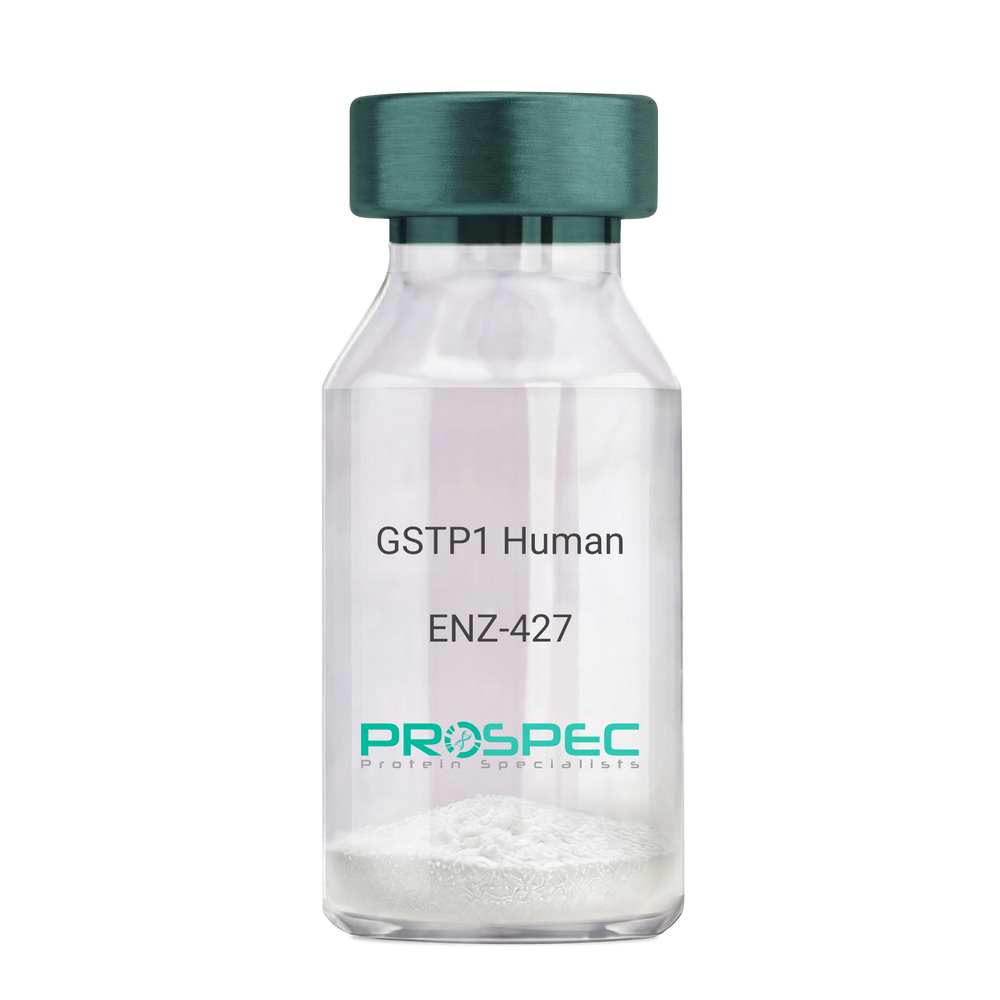
    GSTP1 Human

    Description:

    Glutathione S-Transferase pi 1 Human Recombinant

    Glutathione S-transferase P, GST class-pi, GSTP1-1, GSTP1, FAEES3, GST3, PI, DFN7.

    Product # :

    ENZ-427

    Price :

    Quantity :

    Shipping Method :

    Ice Icon

    Shipped with Ice Packs

    Add To Cart

    More Info

    • description
    • source
    • formulation
    • purity
    • biological activity
    • More Info

    Description

    GSTP1 Human Recombinant fused with 36 amino acid His tag at N-terminus produced in E.Coli is a single, non-glycosylated, polypeptide chain containing 246 amino acids (1-210 a.a.) And having a molecular mass of 27.4kDa. The GSTP1 is purified by proprietary chromatographic techniques.

    Source

    Escherichia Coli.

    Formulation

    The GSTP1 solution (0.5mg/ml) contains 20mM Tris-HCl buffer (pH7.0), 30% glycerol, 1mM EDTA and 0.1mM PMSF.

    Purity

    Greater than 95.0% as determined by SDS-PAGE.

    Biological Activity

    Specific activity is > 80 units/mg, and is defined as the amount of enzyme that conjugate 1.0 u mole of 1-chloro-2,4-dinitrobenzene (CDNB) with reduced glutathione per minute at pH 6.5 at 25°C.

    More Info

    • Introduction

      GSTP1 is a polymorphic gene encoding active, functionally different GSTP1 variant proteins that are believed to function in xenobiotic metabolism and have a part in susceptibility to cancer, and other diseases. GSTP1 is a glutathione S-transferase belonging to the pi class. GST family enzymes play a significant role in detoxification by catalyzing the conjugation of many hydrophobic and electrophilic compounds with reduced glutathione. Based upon the biochemical, immunologic and structural properties of the soluble GSTs they are grouped into 4 main classes: alpha, mu, pi, and theta. The GSTP1 enzyme acts by catalyzing the reaction of glutathione with an acceptor molecule to form a Sulfur-substituted glutathione. The reactions employing glutathione contribute the transformation of a broad range of electrophiles, including reactive products of lipid, protein, carcinogens, therapeutic drugs, environmental toxins, and products of oxidative stress.
      The GSTP1 inactivation through CpG hypermethylation is frequent in pituitary adenomas and may be a factor in aggressive pituitary tumor behavior. GSTP1 is may be a transcriptional target of the p53 tumor suppressor gene. Single-nucleotide polymorphism in GSTP1 is linked to modified protein binding, which influence GSTP1's contribution to carcinogen and drug metabolism, and possibly disease pathogenesis and/or drug response. GST-pi might have central roles in proliferation of androgen-independent human prostate cancer cells.

    • Synonyms

      Glutathione S-transferase P, GST class-pi, GSTP1-1, GSTP1, FAEES3, GST3, PI, DFN7.

    • Physical Appearance

      Sterile Filtered colorless solution.

    • Stability

      Store at 4°C if entire vial will be used within 2-4 weeks. Store, frozen at -20°C for longer periods of time. For long term storage it is recommended to add a carrier protein (0.1% HSA or BSA). Avoid multiple freeze-thaw cycles.

    • Amino Acid Sequence

      MRGSHHHHHH GMASMTGGQQ MGRDLYDDDD KDRWGSMPPY TVVYFPVRGR CAALRMLLAD QGQSWKEEVV TVETWQEGSL KASCLYGQLP KFQDGDLTLY QSNTILRHLG RTLGLYGKDQ QEAALVDMVN DGVEDLRCKY ISLIYTNYEA GKDDYVKALP GQLKPFETLL SQNQGGKTFI VGDQISFADY NLLDLLLIHE VLAPGCLDAF PLLSAYVGRL SARPKLKAFL ASPEYVNLPI NGNGKQ.

    ProSpec's products are furnished for LABORATORY RESEARCH USE ONLY. The product may not be used as drugs, agricultural or pesticidal products, food additives or household chemicals.

    Gstp1 Human
  • View Data Sheet

    Name :

    MUTM E.Coli

    Description:

    Formamidopyrimidine-DNA Glycosylase E.Coli Recombinant

    Formamidopyrimidine-DNA glycosylase, FPG.

    Product # :

    ENZ-589

    Price :

    Quantity :

    Shipping Method :

    Ice Icon

    Shipped with Ice Packs

    Add To Cart

    More Info

    • description
    • source
    • formulation
    • purity
    • More Info

    Description

    MUTM Recombinant produced in E. coli is a single polypeptide chain containing 289 amino acids (1-269) and having a molecular mass of 32.4kDa.MUTM is fused to a 20 amino acid His-tag at N-terminus & purified by proprietary chromatographic techniques.

    Source

    E.coli.

    Formulation

    The MUTM solution (0.5mg/ml) contains 20mM Tris-HCl buffer (pH 8.0), 100mM Nacl, 1mM DTT and 20% glycerol.

    Purity

    Greater than 90% as determined by SDS-PAGE.

    More Info

    • Introduction

      MUTM is a base excision repair enzyme that identifies and eliminates a large variety of oxidized purines from correspondingly impaired DNA. MUTM is nondismissable and essential to remove quickly its substrate lesions on the chromosome. MUTM, additionally, mends a large number of the lesions recognized by Endo III, signifying that MUTM takes a prominent part in the overall repair of both purine damage and pyrimidine damage in vivo.

    • Synonyms

      Formamidopyrimidine-DNA glycosylase, FPG.

    • Physical Appearance

      Sterile Filtered colorless solution.

    • Stability

      Store at 4°C if entire vial will be used within 2-4 weeks. Store, frozen at -20°C for longer periods of time. For long term storage it is recommended to add a carrier protein (0.1% HSA or BSA).Avoid multiple freeze-thaw cycles.

    • Amino Acid Sequence

      MGSSHHHHHH SSGLVPRGSH MPELPEVETS RRGIEPHLVG ATILHAVVRN GRLRWPVSEE IYRLSDQPVL SVQRRAKYLL LELPEGWIII HLGMSGSLRI LPEELPPEKH DHVDLVMSNG KVLRYTDPRR FGAWLWTKEL EGHNVLTHLG PEPLSDDFNG EYLHQKCAKK KTAIKPWLMD NKLVVGVGNI YASESLFAAG IHPDRLASSL SLAECELLAR VIKAVLLRSI EQGGTTLKDF LQSDGKPGYF AQELQVYGRK GEPCRVCGTP IVATKHAQRA TFYCRQCQK

    ProSpec's products are furnished for LABORATORY RESEARCH USE ONLY. The product may not be used as drugs, agricultural or pesticidal products, food additives or household chemicals.

    Mutm
  • View Data Sheet

    Name :

    ENO1 Mouse

    Description:

    Enolase-1 Mouse Recombinant

    0610008I15, AL022784, Eno-1, MBP-1, Alpha-enolase, 2-phospho-D-glycerate hydro-lyase, Enolase 1, Non-neural enolase, NNE, Eno1.

    Product # :

    ENZ-1063

    Price :

    Quantity :

    Shipping Method :

    Ice Icon

    Shipped with Ice Packs

    Add To Cart

    More Info

    • description
    • source
    • formulation
    • purity
    • biological activity
    • More Info

    Description

    ENO1 Mouse Recombinant produced in E.Coli is a single, non-glycosylated polypeptide chain containing 457 amino acids (1-434 a.a) and having a molecular mass of 24kDa.ENO1 is fused to a 23 amino acid His-tag at N-terminus & purified by proprietary chromatographic techniques.

    Source

    Escherichia Coli.

    Formulation

    ENO1 protein solution (1mg/ml) containing 20mM Tris-Hcl buffer (pH8.5), 40% glycerol and 0.1M NaCl.

    Purity

    Greater than 90.0% as determined by SDS-PAGE.

    Biological Activity

    Specific activity is greater than 6,000 pmol/min/ug, and is defined as the amount of enzyme that convert 1.0 pmole of 2-phosphoglycerate to phosphoenolpyruvate per minute at pH 6.5 at 37C in a couple system with PK and LDH.

    More Info

    • Introduction

      ENO1 is a homodimeric soluble protein that encodes a smaller monomeric structural lens protein, tau-crystallin. ENO1 is a glycolytic enzyme expressed in mainly all tissues. ENO1 isoenzyme full length protein is found in the cytoplasm. The shorter protein is formed from another translation start that is restricted to the nucleus, and binds to a component in the c-myc promoter. ENO1 is involved in anaerobic metabolism under hypoxic conditions and plays a role as a cell surface plasminogen receptor during tissue invasion. Irregular expression of Enolase-1 is linked with tumor progression in several cases of breast and lung cancer. Enolase-1 is as an auto antigen associated with Hashimoto's encephalopathy and severe asthma. ENO1 is the target protein of serum anti-endothelial antibody in Behcet's disease.

    • Synonyms

      0610008I15, AL022784, Eno-1, MBP-1, Alpha-enolase, 2-phospho-D-glycerate hydro-lyase, Enolase 1, Non-neural enolase, NNE, Eno1.

    • Physical Appearance

      Sterile filtered colorless solution.

    • Stability

      Store at 4°C if entire vial will be used within 2-4 weeks. Store, frozen at -20°C for longer periods of time. For long term storage it is recommended to add a carrier protein (0.1% HSA or BSA).Avoid multiple freeze-thaw cycles.

    • Amino Acid Sequence

      MGSSHHHHHH SSGLVPRGSH MGSMSILRIH AREIFDSRGN PTVEVDLYTA KGLFRAAVPS GASTGIYEAL ELRDNDKTRF MGKGVSQAVE HINKTIAPAL VSKKVNVVEQ EKIDKLMIEM DGTENKSKFG ANAILGVSLA VCKAGAVEKG VPLYRHIADL AGNPEVILPV PAFNVINGGS
      HAGNKLAMQE FMILPVGASS FREAMRIGAE VYHNLKNVIK EKYGKDATNV GDEGGFAPNI LENKEALELL KTAIAKAGYT DQVVIGMDVA ASEFYRSGKY DLDFKSPDDP SRYITPDQLA DLYKSFVQNY PVVSIEDPFD QDDWGAWQKF TASAGIQVVG DDLTVTNPKR IAKAASEKSC
      NCLLLKVNQI GSVTESLQAC KLAQSNGWGV MVSHRSGETE DTFIADLVVG LCTGQIKTGA PCRSERLAKY NQILRIEEEL GSKAKFAGRS FRNPLAK

    ProSpec's products are furnished for LABORATORY RESEARCH USE ONLY. The product may not be used as drugs, agricultural or pesticidal products, food additives or household chemicals.

    Eno1 Mouse
  • View Data Sheet

    Name :

    GLYAT Human

    Description:

    Glycine-N-Acyltransferase Human Recombinant

    Glycine-N-acyltransferase, ACGNAT, GAT, CAT, AAc, HRP-1(CLP), Acyl-CoA: glycine amino acid N-acyltransferase, EC 2.3.1.13.

    Product # :

    ENZ-148

    Price :

    Quantity :

    Shipping Method :

    Ice Icon

    Shipped with Ice Packs

    Add To Cart

    More Info

    • description
    • source
    • formulation
    • purity
    • More Info

    Description

    GLYAT Human Recombinant produced in E.coli is a single, non-glycosylated polypeptide chain containing 316 amino acids (1-296) and having a molecular mass of 36.0 kDa.The GLYAT is fused to a 20 amino acid His-Tag at N-terminus and purified by proprietary chromatographic techniques.

    Source

    Escherichia Coli.

    Formulation

    GLYAT protein (0.5mg/ml) is supplied in 20mM Tris-HCl, pH-8, 1mM DTT and 20% Glycerol.

    Purity

    Greater than 90.0% as determined by SDS-PAGE.

    More Info

    • Introduction

      GLYAT is a mitochondrial acyltransferase that conjugates glycine with acyl-CoA substrates in the mitochondria. GLYAT is vital to the detoxification of endogenous and xenobiotic acyl-CoA's.

    • Synonyms

      Glycine-N-acyltransferase, ACGNAT, GAT, CAT, AAc, HRP-1(CLP), Acyl-CoA: glycine amino acid N-acyltransferase, EC 2.3.1.13.

    • Physical Appearance

      GLYAT is supplied as a sterile filtered clear solution.

    • Stability

      Store at 4°C if entire vial will be used within 2-4 weeks. Store, frozen at -20°C for longer periods of time. For long term storage it is recommended to add a carrier protein (0.1% HSA or BSA).Avoid multiple freeze-thaw cycles.

    • Amino Acid Sequence

      MGSSHHHHHH SSGLVPRGSH MMLPLQGAQM LQMLEKSLRK SLPASLKVYG TVFHINHGNP FNLKAVVDKW PDFNTVVVCP QEQDMTDDLD HYTNTYQIYS KDPQNCQEFL GSPELINWKQ HLQIQSSQPS LNEAIQNLAA IKSFKVKQTQ RILYMAAETA KELTPFLLKS KILSPSGGKP KAINQEMFKL SSMDVTHAHL VNKFWHFGGN ERSQRFIERC IQTFPTCCLL GPEGTPVCWD LMDQTGEMRM AGTLPEYRLH GLVTYVIYSH AQKLGKLGFP VYSHVDYSNE AMQKMSYTLQ HVPIPRSWNQ WNCVPL.

    ProSpec's products are furnished for LABORATORY RESEARCH USE ONLY. The product may not be used as drugs, agricultural or pesticidal products, food additives or household chemicals.

    Glyat Human
  • View Data Sheet

    Name :

    PRDX1 Mouse

    Description:

    Peroxiredoxin-1 Mouse Recombinant

    Peroxiredoxin-1, Macrophage 23 kDa stress protein, Osteoblast-specific factor 3, OSF-3, Thioredoxin peroxidase 2, Thioredoxin-dependent peroxide reductase 2.

    Product # :

    ENZ-951

    Price :

    Quantity :

    Shipping Method :

    Ice Icon

    Shipped with Ice Packs

    Add To Cart

    More Info

    • description
    • source
    • formulation
    • purity
    • biological activity
    • More Info

    Description

    PRDX1 Mouse Recombinant produced in Sf9 Baculovirus cells is a single, glycosylated polypeptide chain containing 207 amino acids (1-199a.a.) and having a molecular mass of 23.2kDa (Molecular size on SDS-PAGE will appear at approximately 18-28kDa). PRDX1 is expressed with an 8 amino acid His tag at C-Terminus and purified by proprietary chromatographic techniques.

    Source

    Sf9, Baculovirus cells.

    Formulation

    PRDX1 protein solution (0.5mg/ml) containing Phosphate Buffered Saline (pH 7.4) and 10% glycerol.

    Purity

    Greater than 90.0% as determined by SDS-PAGE.

    Biological Activity

    Specific activity is >2,500 pmol/min/ug. Enzymatic activity is defined as the amount of hydroperoxide that 1ug of enzyme can reduce at 25°C for minute.

    More Info

    • Introduction

      PRDX1 is part of the peroxiredoxin family of antioxidant enzymes, which reduce hydrogen peroxide and alkyl hydroperoxides. PRDX1 is an important protector of red blood cells against reactive oxygen species and in tumor prevention.
      PRDX1 is antioxidant protective in cells, and contributes to the antiviral activity of CD8(+) T-cells. PRDX1 has a proliferative effect and is involved in cancer development or progression.
      Peroxiredoxin-1 is plays a role in redox regulation of the cell. Peroxiredoxin decreases peroxides with reducing equivalents provided through the thioredoxin system but not from glutaredoxin. Peroxiredoxin is involved in eliminating peroxides generated during metabolism. Peroxiredoxin participates in the signaling cascades of growth factors and TNF-alpha by regulating the intracellular concentrations of h(2)o(2).

    • Synonyms

      Peroxiredoxin-1, Macrophage 23 kDa stress protein, Osteoblast-specific factor 3, OSF-3, Thioredoxin peroxidase 2, Thioredoxin-dependent peroxide reductase 2.

    • Physical Appearance

      Sterile Filtered colorless solution.

    • Stability

      Store at 4°C if entire vial will be used within 2-4 weeks. Store, frozen at -20°C for longer periods of time. For long term storage it is recommended to add a carrier protein (0.1% HSA or BSA).Avoid multiple freeze-thaw cycles.

    • Amino Acid Sequence

      MSSGNAKIGY PAPNFKATAV MPDGQFKDIS LSEYKGKYVV FFFYPLDFTF VCPTEIIAFS DRADEFKKLN CQVIGASVDS HFCHLAWINT PKKQGGLGPM NIPLISDPKR TIAQDYGVLK ADEGISFRGL FIIDDKGILR QITINDLPVG RSVDEIIRLV QAFQFTDKHG EVCPAGWKPG SDTIKPDVNK SKEYFSKQKL EHHHHHH.

    ProSpec's products are furnished for LABORATORY RESEARCH USE ONLY. The product may not be used as drugs, agricultural or pesticidal products, food additives or household chemicals.

    Prdx1 Mouse
  • View Data Sheet

    Name :

    COQ9 Human

    Description:

    Coenzyme Q9 Human Recombinant

    Ubiquinone biosynthesis protein COQ9, mitochondrial, C16orf49, COQ10D5, C16orf49, HSPC326, PSEC0129.

    Product # :

    ENZ-898

    Price :

    Quantity :

    Shipping Method :

    Ice Icon

    Shipped with Ice Packs

    Add To Cart

    More Info

    • description
    • source
    • formulation
    • purity
    • More Info

    Description

    COQ9 Human Recombinant produced in E.Coli is a single, non-glycosylated polypeptide chain containing 297 amino acids (45-318 a.a) and having a molecular mass of 33.3kDa.COQ9 is fused to a 23 amino acid His-tag at N-terminus & purified by proprietary chromatographic techniques.

    Source

    Escherichia Coli.

    Formulation

    COQ9 protein solution (1mg/ml) in Phosphate buffered saline (pH7.4), 10% glycerol and 1mM DTT.

    Purity

    Greater than 90.0% as determined by SDS-PAGE.

    More Info

    • Introduction

      Ubiquinone biosynthesis protein COQ9 (COQ9) represents a mitochondrial ubiquinone biosynthesis gene. The COQ9 protein is likely required for biosynthesis of coenzyme Q10, since mutations at this locus have been linked with autosomal-recessive neonatal-onset primary coenzyme Q10 deficiency.

    • Synonyms

      Ubiquinone biosynthesis protein COQ9, mitochondrial, C16orf49, COQ10D5, C16orf49, HSPC326, PSEC0129.

    • Physical Appearance

      Sterile Filtered colorless solution.

    • Stability

      Store at 4°C if entire vial will be used within 2-4 weeks. Store, frozen at -20°C for longer periods of time. For long term storage it is recommended to add a carrier protein (0.1% HSA or BSA).Avoid multiple freeze-thaw cycles.

    • Amino Acid Sequence

      MGSSHHHHHH SSGLVPRGSH MGSRSSDEQK QQPPNSFSQQ HSETQGAEKP DPESSHSPPR YTDQGGEEEE DYESEEQLQH RILTAALEFV PAHGWTAEAI AEGAQSLGLS SAAASMFGKD GSELILHFVT QCNTRLTRVL EEEQKLVQLG QAEKRKTDQF LRDAVETRLR MLIPYIEHWP RALSILMLPH NIPSSLSLLT SMVDDMWHYA GDQSTDFNWY TRRAMLAAIY NTTELVMMQD SSPDFEDTWR FLENRVNDAM NMGHTAKQVK STGEALVQGL MGAAVTLKNL TGLNQRR.

    ProSpec's products are furnished for LABORATORY RESEARCH USE ONLY. The product may not be used as drugs, agricultural or pesticidal products, food additives or household chemicals.

    Coq9 Human
  • View Data Sheet

    Name :

    Aminopeptidase

    Description:

    Aminopeptidase Aeromonas Recombinant

    Bacterial leucyl aminopeptidase, EC 3.4.11.10.

    Product # :

    ENZ-275

    Price :

    Quantity :

    Shipping Method :

    Ice Icon

    Shipped with Ice Packs

    Add To Cart

    More Info

    • description
    • source
    • formulation
    • purity
    • biological activity
    • More Info

    Description

    The 29 kDa Aeromonas Aminopeptidase is produced by genetic engineering and can be used for physical & structural investigations, sequence and amino-terminal determinations. This exopeptidase recognizes a specific stop sign at –X- Pro and requires a free a-amino group in the L-configuration. It is therefore suitable for the removal of the redundant N-terminal methionine often added to engineered recombinant proteins.

    Source

    Aeromonas Proteolytica.

    Formulation

    Buffered solution containing 10mM Tris-HCl, 100mM NaCl and 5µM ZnSO4, pH 8.0.

    Purity

    Greater than 95.0% as determined by SEC-HPLC.

    Biological Activity

    Recombinant Aeromonas Aminopeptidase was found to have an activity of 108 Units/mg protein.

    More Info

    • Synonyms

      Bacterial leucyl aminopeptidase, EC 3.4.11.10.

    • Physical Appearance

      Sterile filtered liquid formulation.

    • Stability

      Two years when stored at -20°C, 2 weeks at 4°C.

    • Unit Definition

      One unit of aminopeptidase activity is defined as the amount of enzyme that releases 1 μmole p-nitroaniline at 25°C in 1 minute.

    ProSpec's products are furnished for LABORATORY RESEARCH USE ONLY. The product may not be used as drugs, agricultural or pesticidal products, food additives or household chemicals.

    Aminopeptidase
  • View Data Sheet

    Name :

    HNMT Human

    Description:

    Histamine N-Methyltransferase Human Recombinant

    HMT, HNMT-S1, HNMT-S2, HNMT, Histamine N-methyltransferase.

    Product # :

    ENZ-402

    Price :

    Quantity :

    Shipping Method :

    Ice Icon

    Shipped with Ice Packs

    Add To Cart

    More Info

    • description
    • source
    • formulation
    • purity
    • More Info

    Description

    HNMT Human Recombinant fused to 36 amino acid His Tag at N-terminal produced in E.Coli is a single, non-glycosylated, polypeptide chain containing 328 amino acids (1-292) and having a molecular mass of 37 kDa. The HNMT is purified by proprietary chromatographic techniques.

    Source

    Escherichia Coli.

    Formulation

    The HNMT solution contains 20mM Tris-HCl pH-8 and 10% glycerol.

    Purity

    Greater than 95.0% as determined by SDS-PAGE.

    More Info

    • Introduction

      HNMT is located in the cytosol and uses S-adenosyl-L-methionine as the methyl donor. In the mammal’s brain,N(tau)-methylation controls the neurotransmitter activity of histamine since diamine oxidase is not located in the central nervous system. A well known genetic polymorphism influences the activity levels of HNMT gene product in red blood cells. HNMT inactivates histamine by n-methylation. HNMT is involved in degrading histamine and in regulating the airway response to histamine. Histamine is involved in regulation and modulation of immune response through the stimulation of four distinct subtypes of receptors, H1, H2, H3, and H4, that present on the target cells. Histamine is inactivated by the histamine-metabolizing enzyme HNMT in bronchus, kidney, and the central nervous system.

    • Synonyms

      HMT, HNMT-S1, HNMT-S2, HNMT, Histamine N-methyltransferase.

    • Physical Appearance

      Sterile Filtered clear colorless solution.

    • Stability

      Store at 4°C if entire vial will be used within 2-4 weeks. Store, frozen at -20°C for longer periods of time. For long term storage it is recommended to add a carrier protein (0.1% HSA or BSA).Please avoid freeze-thaw cycles.

    • Amino Acid Sequence

      MRGSHHHHHH GMASMTGGQQ MGRDLYDDDD KDRWGSMASS MRSLFSDHGK YVESFRRFLN HSTEHQCMQE FMDKKLPGII GRIGDTKSEI KILSIGGGAG EIDLQILSKV QAQYPGVCIN NEVVEPSAEQ IAKYKELVAK TSNLENVKFA WHKETSSEYQ SRMLEKKELQ KWDFIHMIQM LYYVKDIPAT LKFFHSLLGT NAKMLIIVVS GSSGWDKLWK KYGSRFPQDD LCQYITSDDL TQMLDNLGLK YECYDLLSTM DISDCFIDGD ENGDLLWDFL TETCNFNATA PPDLRAELGK DLQEPEFSAK KEGKVLFNNT LSFIVIEA.

    ProSpec's products are furnished for LABORATORY RESEARCH USE ONLY. The product may not be used as drugs, agricultural or pesticidal products, food additives or household chemicals.

    Hnmt Human
  • View Data Sheet

    Name :

    NPL Human

    Description:

    N-acetylneuraminate Pyruvate Lyase Human Recombinant

    N-acetylneuraminate lyase, NALase, N-acetylneuraminate pyruvate-lyase, N-acetylneuraminic acid aldolase, Sialate lyase, Sialate-pyruvate lyase, Sialic acid aldolase, Sialic acid lyase, NPL, C1orf13, NAL, C112, NPL1.

    Product # :

    ENZ-125

    Price :

    Quantity :

    Shipping Method :

    Ice Icon

    Shipped with Ice Packs

    Add To Cart

    More Info

    • description
    • source
    • formulation
    • purity
    • More Info

    Description

    NPL produced in E.Coli is a single, non-glycosylated polypeptide chain containing 340 amino acids (1-320 a.a.) and having a molecular mass of 37.3kDa.NPL is fused to a 20 amino acid His-tag at N-terminus & purified by proprietary chromatographic techniques.

    Source

    Escherichia Coli.

    Formulation

    NPL protein solution (1mg/ml) containing 20mM Tris-HCl buffer (pH8.0), 20% glycerol, 0.1M NaCl and 1mM DTT.

    Purity

    Greater than 95.0% as determined by SDS-PAGE.

    More Info

    • Introduction

      N-acetylneuraminate lyase (NPL) is an enzyme which catalyzes the chemical reaction (N-acetylneuraminate ->N-acetyl-D-mannosamine + pyruvate). NPL is a member of a family of lyases, specifically the oxo-acid-lyases, which cleave carbon-carbon bonds. NPL participates in amino sugars metabolism.

    • Synonyms

      N-acetylneuraminate lyase, NALase, N-acetylneuraminate pyruvate-lyase, N-acetylneuraminic acid aldolase, Sialate lyase, Sialate-pyruvate lyase, Sialic acid aldolase, Sialic acid lyase, NPL, C1orf13, NAL, C112, NPL1.

    • Physical Appearance

      Sterile Filtered colorless solution.

    • Stability

      Store at 4°C if entire vial will be used within 2-4 weeks. Store, frozen at -20°C for longer periods of time. For long term storage it is recommended to add a carrier protein (0.1% HSA or BSA).Avoid multiple freeze-thaw cycles.

    • Amino Acid Sequence

      MGSSHHHHHH SSGLVPRGSH MAFPKKKLQG LVAATITPMT ENGEINFSVI GQYVDYLVKE QGVKNIFVNG TTGEGLSLSV SERRQVAEEW VTKGKDKLDQ VIIHVGALSL KESQELAQHA AEIGADGIAV IAPFFLKPWT KDILINFLKE VAAAAPALPF YYYHIPALTG VKIRAEELLD GILDKIPTFQ GLKFSDTDLL DFGQCVDQNR QQQFAFLFGV DEQLLSALVM GATGAVGSTY NYLGKKTNQM LEAFEQKDFS LALNYQFCIQ RFINFVVKLG FGVSQTKAIM TLVSGIPMGP PRLPLQKASR EFTDSAEAKL KSLDFLSFTD LKDGNLEAGS.

    ProSpec's products are furnished for LABORATORY RESEARCH USE ONLY. The product may not be used as drugs, agricultural or pesticidal products, food additives or household chemicals.

    Npl Human
  • View Data Sheet

    Name :

    MGAT2 Human

    Description:

    Mannoside Acetylglucosaminyltransferase 2 Human Recombinant

    Mannosyl (Alpha-1,6-)-Glycoprotein Beta-1,2-N-Acetylglucosaminyltransferase, GlcNAc-T II, Mannoside Acetylglucosaminyltransferase 2, GNT-II, Beta-1,2-N-Acetylglucosaminyltransferase II, N-Glycosyl-Oligosaccharide-Glycoprotein N-Acetylglucosaminyltransferase II, EC 2.4.1.143, CDG2A, CDGS2, GLCNACTI, NT2, Alpha-1,6-Mannosyl-Glycoprotein 2-Beta-N-Acetylglucosaminyltransferase, UDP-N-Acetylglucosamine:Alpha-6-D-Mannoside, Beta-1,2-N-Acetylglucosaminyltransferase II.

    Product # :

    ENZ-781

    Price :

    Quantity :

    Shipping Method :

    Ice Icon

    Shipped with Ice Packs

    Add To Cart

    More Info

    • description
    • source
    • formulation
    • purity
    • More Info

    Description

    MGAT2 Human Recombinant produced in E.Coli is a single, non-glycosylated polypeptide chain containing 439 amino acids (30-447a.a) and having a molecular mass of 50kDa. MGAT2 is fused to a 21 amino acid His-tag at N-terminus & purified by proprietary chromatographic techniques.

    Source

    Escherichia Coli.

    Formulation

    MGAT2 protein solution (1mg/ml) containing 20mM Tris-HCl buffer (pH 8.0), 10% glycerol and 0.4M urea.

    Purity

    Greater than 85.0% as determined by SDS-PAGE.

    More Info

    • Introduction

      Mannoside Acetylglucosaminyltransferase 2 (MGAT2) is a golgi enzyme catalyzing an vital step in the conversion of oligomannose to complex N-glycans. MGAT2 enzyme has the characteristic glycosyltransferase domains: a short N-terminal cytoplasmic domain, a hydrophobic non-cleavable signal-anchor domain, and a C-terminal catalytic domain. MGAT2 gene mutations may lead to carbohydrate-deficient glycoprotein syndrome, type II.

    • Synonyms

      Mannosyl (Alpha-1,6-)-Glycoprotein Beta-1,2-N-Acetylglucosaminyltransferase, GlcNAc-T II, Mannoside Acetylglucosaminyltransferase 2, GNT-II, Beta-1,2-N-Acetylglucosaminyltransferase II, N-Glycosyl-Oligosaccharide-Glycoprotein N-Acetylglucosaminyltransferase II, EC 2.4.1.143, CDG2A, CDGS2, GLCNACTI, NT2, Alpha-1,6-Mannosyl-Glycoprotein 2-Beta-N-Acetylglucosaminyltransferase, UDP-N-Acetylglucosamine:Alpha-6-D-Mannoside, Beta-1,2-N-Acetylglucosaminyltransferase II.

    • Physical Appearance

      Sterile Filtered clear solution.

    • Stability

      Store at 4°C if entire vial will be used within 2-4 weeks. Store, frozen at -20°C for longer periods of time.For long term storage it is recommended to add a carrier protein (0.1% HSA or BSA).Please avoid freeze thaw cycles.

    • Amino Acid Sequence

      MGSSHHHHHH SSGLVPRGSH MRQRKNEALA PPLLDAEPAR GAGGRGGDHP SVAVGIRRVS NVSAASLVPA VPQPEADNLT LRYRSLVYQL NFDQTLRNVD KAGTWAPREL VLVVQVHNRP EYLRLLLDSL RKAQGIDNVL VIFSHDFWST EINQLIAGVN FCPVLQVFFP FSIQLYPNEF PGSDPRDCPR DLPKNAALKL GCINAEYPDS FGHYREAKFS QTKHHWWWKL HFVWERVKIL RDYAGLILFL EEDHYLAPDF YHVFKKMWKL KQQECPECDV LSLGTYSASR SFYGMADKVD VKTWKSTEHN MGLALTRNAY QKLIECTDTF CTYDDYNWDW TLQYLTVSCL PKFWKVLVPQ IPRIFHAGDC GMHHKKTCRP STQSAQIESL LNNNKQYMFP ETLTISEKFT VVAISPPRKN GGWGDIRDHE LCKSYRRLQ.

    ProSpec's products are furnished for LABORATORY RESEARCH USE ONLY. The product may not be used as drugs, agricultural or pesticidal products, food additives or household chemicals.

    Mgat2 Human
  • View Data Sheet

    Name :

    GCLM Human

    Description:

    Glutamate-Cysteine Ligase, Modifier Subunit Human Recombinant

    Glutamate--cysteine ligase regulatory subunit, GCS light chain, Gamma-ECS regulatory subunit, Gamma-glutamylcysteine synthetase regulatory subunit, Glutamate--cysteine ligase modifier subunit, GCLM, GLCLR.

    Product # :

    ENZ-636

    Price :

    Quantity :

    Shipping Method :

    Ice Icon

    Shipped with Ice Packs

    Add To Cart

    More Info

    • description
    • source
    • formulation
    • purity
    • More Info

    Description

    GCLM Human Recombinant produced in E. coli is a single polypeptide chain containing 298 amino acids (1-274) and having a molecular mass of 33.3kDa.GCLM is fused to a 24 amino acid His-tag at N-terminus & purified by proprietary chromatographic techniques.

    Source

    Escherichia Coli.

    Formulation

    The GCLM solution (1mg/ml) contains 20mM Tris-HCl buffer (pH8.0), 10% glycerol and 0.15M NaCl.

    Purity

    Greater than 90.0% as determined by SDS-PAGE.

    More Info

    • Introduction

      Glutamate-cysteine ligase (GCLM) is the first rate limiting enzyme of glutathione synthesis. The GCLM enzyme is comprised of 2 subunits, a heavy catalytic subunit and a light regulatory subunit. GCLM deficiency is associated with some forms of hemolytic anemia.

    • Synonyms

      Glutamate--cysteine ligase regulatory subunit, GCS light chain, Gamma-ECS regulatory subunit, Gamma-glutamylcysteine synthetase regulatory subunit, Glutamate--cysteine ligase modifier subunit, GCLM, GLCLR.

    • Physical Appearance

      Sterile Filtered colorless solution.

    • Stability

      Store at 4°C if entire vial will be used within 2-4 weeks. Store, frozen at -20°C for longer periods of time. For long term storage it is recommended to add a carrier protein (0.1% HSA or BSA).Avoid multiple freeze-thaw cycles.

    • Amino Acid Sequence

      MGSSHHHHHH SSGLVPRGSH MGSHMGTDSR AAKALLARAR TLHLQTGNLL NWGRLRKKCP STHSEELHDC IQKTLNEWSS QINPDLVREF PDVLECTVSH AVEKINPDER EEMKVSAKLF IVESNSSSST RSAVDMACSV LGVAQLDSVI IASPPIEDGV NLSLEHLQPY WEELENLVQS KKIVAIGTSD LDKTQLEQLY QWAQVKPNSN QVNLASCCVM PPDLTAFAKQ FDIQLLTHND PKELLSEASF QEALQESIPD IQAHEWVPLW LLRYSVIVKS RGIIKSKGYI LQAKRRGS.

    ProSpec's products are furnished for LABORATORY RESEARCH USE ONLY. The product may not be used as drugs, agricultural or pesticidal products, food additives or household chemicals.

    Gclm Human
  • View Data Sheet

    Name :

    GLO1 Mouse

    Description:

    Glyoxalase-I Mouse Recombinant

    Lactoylglutathione lyase, Aldoketomutase, Glyoxalase I, Glx I, Ketone-aldehyde mutase, Methylglyoxalase, S-D-lactoylglutathione methylglyoxal lyase.

    Product # :

    ENZ-953

    Price :

    Quantity :

    Shipping Method :

    Ice Icon

    Shipped with Ice Packs

    Add To Cart

    More Info

    • description
    • source
    • formulation
    • purity
    • biological activity
    • More Info

    Description

    GLO1 Mouse Recombinant produced in Sf9 Baculovirus cells is a single, glycosylated polypeptide chain containing 192 amino acids (1-184a.a.) and having a molecular mass of 21.8kDa (Molecular size on SDS-PAGE will appear at approximately 28-40kDa). GLO1 is expressed with an 8 amino acid His tag at C-Terminus and purified by proprietary chromatographic techniques.

    Source

    Sf9, Baculovirus cells.

    Formulation

    GLO1 protein solution (0.5mg/ml) containing Phosphate Buffered Saline (pH 7.4) and 10% glycerol.

    Purity

    Greater than 95.0% as determined by SDS-PAGE.

    Biological Activity

    Specific activity is > 210 units/mg, and is defined as the amount of enzyme that will form 1.0 µmol of S-lactoylglutathione from methylglyoxal and reduced glutathione per minute at pH 6.5 at 25C.

    More Info

    • Introduction

      GLO1 is involved in the catalysis and formation of S-lactoyl-glutathione from methylglyoxal condensation and reduced glutatione. GLO1 is linked to HLA and is localized to 6p21.3-p21.1, between HLA and the centromere. GLO1 enzyme is ubundantly expressed and present in numerous tumor cell lines, in which its concentration is often upregulated ubiquitisly. GLO1 is a major susceptible gene for autism in an ethnic Chinese population from Taiwan. GLO1 might be involved in the pathophysiology of mood disorders. GLO1 plays a role in the pathophysiology of mood disorders. Overexpression of GLO1 is associated with kidney tumor.

    • Synonyms

      Lactoylglutathione lyase, Aldoketomutase, Glyoxalase I, Glx I, Ketone-aldehyde mutase, Methylglyoxalase, S-D-lactoylglutathione methylglyoxal lyase.

    • Physical Appearance

      Sterile Filtered colorless solution.

    • Stability

      Store at 4°C if entire vial will be used within 2-4 weeks. Store, frozen at -20°C for longer periods of time. For long term storage it is recommended to add a carrier protein (0.1% HSA or BSA).Avoid multiple freeze-thaw cycles.

    • Amino Acid Sequence

      MAEPQPASSG LTDETAFSCC SDPDPSTKDF LLQQTMLRIK DPKKSLDFYT RVLGLTLLQK LDFPAMKFSL YFLAYEDKND IPKDKSEKTA WTFSRKATLE LTHNWGTEDD ETQSYHNGNS DPRGFGHIGI AVPDVYSACK RFEELGVKFV KKPDDGKMKG LAFIQDPDGY WIEILNPNKI ATIILEHHHH HH.

    ProSpec's products are furnished for LABORATORY RESEARCH USE ONLY. The product may not be used as drugs, agricultural or pesticidal products, food additives or household chemicals.

    Glo1 Mouse
  • View Data Sheet

    Name :

    POLR2J3 Human

    Description:

    Polymerase II Polypeptide J3 Human Recombinant

    Polymerase (RNA) II (DNA Directed) Polypeptide J3, DNA-Directed RNA Polymerase II Subunit 11, DNA-Directed RNA Polymerase II Subunit RPB11-B2, DNA-Directed RNA Polymerase II Subunit J3, RNA Polymerase II Subunit B11-B2, POLR2J2, RPB11b2, RPB11b1.

    Product # :

    ENZ-654

    Price :

    Quantity :

    Shipping Method :

    Ice Icon

    Shipped with Ice Packs

    Add To Cart

    More Info

    • description
    • source
    • formulation
    • purity
    • More Info

    Description

    POLR2J3 Human Recombinant produced in E. coli is a single polypeptide chain containing 138 amino acids (1-115) and having a molecular mass of 15.5 kDa.POLR2J3 is fused to a 23 amino acid His-tag at N-terminus & purified by proprietary chromatographic techniques.

    Source

    E.coli.

    Formulation

    The POLR2J3 solution (0.5mg/1ml) contains 20mM Tris-HCl buffer (pH 8.0), 0.2M NaCl, 1mM DTT and 40% glycerol.

    Purity

    Greater than 95% as determined by SDS-PAGE.

    More Info

    • Introduction

      DNA-directed RNA polymerase II subunit RPB11-b2 (POLR2J3) is a member of the eukaryotic RPB11 RNA polymerase subunit family. POLR2J (DNA-directed RNA polymerase II subunit J) exists in 3 variants POLR2J1 (RPB11-a), POLR2J2 (RPB11-b1), and POLR2J3 (RPB11-b2). POLR2J3 is a DNA-dependent RNA polymerase which catalyzes the transcription of DNA into RNA using the four ribonucleoside triphosphates as substrates.

    • Synonyms

      Polymerase (RNA) II (DNA Directed) Polypeptide J3, DNA-Directed RNA Polymerase II Subunit 11, DNA-Directed RNA Polymerase II Subunit RPB11-B2, DNA-Directed RNA Polymerase II Subunit J3, RNA Polymerase II Subunit B11-B2, POLR2J2, RPB11b2, RPB11b1.

    • Physical Appearance

      Sterile Filtered colorless solution.

    • Stability

      Store at 4°C if entire vial will be used within 2-4 weeks. Store, frozen at -20°C for longer periods of time. For long term storage it is recommended to add a carrier protein (0.1% HSA or BSA).Avoid multiple freeze-thaw cycles.

    • Amino Acid Sequence

      MGSSHHHHHH SSGLVPRGSH MGSMNAPPAF ESFLLFEGEK ITINKDTKVP NACLFTINKE DHTLGNIIKS QLLKDPQVLF AGYKVPHPLE HKIIIRVQTT PDYSPQEAFT NAITDLISEL SLLEERFRTC LLPLRLLP

    ProSpec's products are furnished for LABORATORY RESEARCH USE ONLY. The product may not be used as drugs, agricultural or pesticidal products, food additives or household chemicals.

    Polr2J3 Human
  • View Data Sheet

    Name :

    Chymotrypsin Porcine

    Description:

    Alpha Chymotrypsin Porcine

    a-chymotrypsin, alpha chymotrypsin.

    Product # :

    ENZ-1195

    Price :

    Quantity :

    Shipping Method :

    Room Temp Icon

    Shipped at Room temp

    Add To Cart

    More Info

    • description
    • source
    • formulation
    • biological activity
    • More Info

    Description

    Chymotrypsin purified from porcine pancreas, CAS: 9004-07-3, EC: 3.4.21.1 having a molecular mass of ~25kDa.

    Source

    Porcine Pancreas.

    Formulation

    The protein (1mg/ml) was lyophilized with no additives.

    Biological Activity

    Greater than 1500 USP U/mg.

    More Info

    • Synonyms

      a-chymotrypsin, alpha chymotrypsin.

    • Physical Appearance

      Sterile Filtered White lyophilized (freeze-dried) powder.

    • Stability

      Lyophilized Chymotrypsin although stable at room temperature for 3 weeks, should be stored desiccated below -18°C. Upon reconstitution Chymotrypsin should be stored at 4°C between 2-7 days and for future use below -18°C. For long term storage it is recommended to add a carrier protein (0.1% HSA or BSA). Please prevent freeze-thaw cycles.

    • Solubility

      It is recommended to reconstitute the lyophilized Chymotrypsin in sterile 18MΩ-cm H2O not less than 100µg/ml, which can then be further diluted to other aqueous solutions.

    • Background

      Porcine chymotrypsin, derived from the pancreas of pigs, stands as a cornerstone in enzymology, serving as a paradigmatic model for understanding proteolytic mechanisms and substrate specificity. Renowned for its catalytic prowess and structural intricacies, porcine chymotrypsin has garnered significant attention from researchers across various scientific disciplines.

      The fascination with porcine chymotrypsin stems from its ability to cleave peptide bonds selectively after large hydrophobic amino acids, such as tryptophan, tyrosine, and phenylalanine.

    ProSpec's products are furnished for LABORATORY RESEARCH USE ONLY. The product may not be used as drugs, agricultural or pesticidal products, food additives or household chemicals.

    Chymotrypsin Porcine
  • View Data Sheet

    Name :

    GSTM1 Human

    Description:

    Glutathione S-Transferase M1 Human Recombinant

    GST1, GSTM1-1, GSTM1a-1a, GSTM1b-1b, GTH4, GTM1, H-B, MU, MU-1, GST HB subunit 4, GST class-mu 1.

    Product # :

    ENZ-780

    Price :

    Quantity :

    Shipping Method :

    Ice Icon

    Shipped with Ice Packs

    Add To Cart

    More Info

    • description
    • source
    • formulation
    • purity
    • More Info

    Description

    GSTM1 Human Recombinant produced in E.Coli is a single, non-glycosylated polypeptide chain containing 203 amino acids (1-181 a.a) and having a molecular mass of 23.6kDa.GSTM1 is fused to a 22 amino acid His-tag at N-terminus & purified by proprietary chromatographic techniques.

    Source

    Escherichia Coli.

    Formulation

    GSTM1 protein solution (0.25mg/ml) contains 20mM Tris-HCl buffer (pH 8.0), 0.4M Urea and 10% glycerol.

    Purity

    Greater than 85.0% as determined by SDS-PAGE.

    More Info

    • Introduction

      Cytosolic and membrane-bound types of GST are encoded by 2 different supergene families. There are 8 classes of the soluble cytoplasmic mammalian GST: alpha, kappa, mu, omega, pi, sigma, theta and zeta. The mu class of enzymes functions in the detoxification of electrophilic compounds, including carcinogens, therapeutic drugs, environmental toxins and products of oxidative stress, by conjugation with glutathione. The genes encoding the mu class of enzymes are arranged in a gene cluster on chromosome 1p13.3 and aare highly polymorphic. These genetic differences can change an individual's resistance to carcinogens and toxins as well as affect the toxicity and efficacy of certain drugs. Null mutations of this class mu gene have been linked with the rise in a number of cancers.

    • Synonyms

      GST1, GSTM1-1, GSTM1a-1a, GSTM1b-1b, GTH4, GTM1, H-B, MU, MU-1, GST HB subunit 4, GST class-mu 1.

    • Physical Appearance

      Sterile Filtered clear solution.

    • Stability

      Store at 4°C if entire vial will be used within 2-4 weeks. Store, frozen at -20°C for longer periods of time. For long term storage it is recommended to add a carrier protein (0.1% HSA or BSA).Avoid multiple freeze-thaw cycles.

    • Amino Acid Sequence

      MGSSHHHHHH SSGLVPRGSH RSMPMILGYW DIRGLAHAIR LLLEYTDSSY EEKKYTMGDA PDYDRSQWLN EKFKLGLDFP NLPYLIDGAH KITQSNAILC YIARKHNLCG ETEEEKIRVD ILENQTMDNH MQLGMICYNP EFEKLKPKYL EELPEKLKLY SEFLGKRPWF AGNKGLEKIS AYMKSSRFLP RPVFSKMAVW GNK.

    ProSpec's products are furnished for LABORATORY RESEARCH USE ONLY. The product may not be used as drugs, agricultural or pesticidal products, food additives or household chemicals.

    Gstm1 Human
  • View Data Sheet

    Name :

    ALPL Mouse

    Description:

    Alkaline Phosphatase Liver/Bone/Kidney Mouse Recombinant

    Alpl, Akp-2, Akp2, ALP, APTNAP, TNAP, TNSALP, HOPS, AP-TNAP, Alkaline phosphatase 2.

    Product # :

    ENZ-1008

    Price :

    Quantity :

    Shipping Method :

    Ice Icon

    Shipped with Ice Packs

    Add To Cart

    More Info

    • description
    • source
    • formulation
    • purity
    • biological activity
    • More Info

    Description

    ALPL produced in Sf9 Baculovirus cells is a single, glycosylated polypeptide chain containing 493 amino acids (19-503 a.a.) and having a molecular mass of 54.5kDa (Molecular size on SDS-PAGE will appear at approximately 50-70kDa). ALPL is expressed with an 8 amino acid His tag at C-Terminus and purified by proprietary chromatographic techniques.

    Source

    Sf9, Baculovirus cells.

    Formulation

    ALPL protein solution (0.5mg/ml) contains Phosphate Buffered Saline (pH 7.4) and 10% glycerol.

    Purity

    Greater than 95.0% as determined by SDS-PAGE.

    Biological Activity

    Specific activity is > 46,000 pmol/min/ug and is defined as the amount of enzyme that hydrolyze 1pmole of 4-Methylumbelliferyl phosphate to phosphate and 4-Methylumbelliferone per minute at pH 8.8 at 25C.

    More Info

    • Introduction

      Alkaline Phosphatase Liver/Bone/Kidney (Alpl) is a part of the alkaline phosphatases family which comprises 4 related alkaline phosphatases. Alpl is a membrane-bound glycosylated enzyme which is not expressed in any particular tissue. Alpl takes part in skeletal mineralization.

    • Synonyms

      Alpl, Akp-2, Akp2, ALP, APTNAP, TNAP, TNSALP, HOPS, AP-TNAP, Alkaline phosphatase 2.

    • Physical Appearance

      Sterile Filtered colorless solution.

    • Stability

      Store at 4°C if entire vial will be used within 2-4 weeks. Store, frozen at -20°C for longer periods of time. For long term storage it is recommended to add a carrier protein (0.1% HSA or BSA). Avoid multiple freeze-thaw cycles.

    • Amino Acid Sequence

      VPEKERDPSY WRQQAQETLK NALKLQKLNT NVAKNVIMFL GDGMGVSTVT AARILKGQLH HNTGEETRLE MDKFPFVALS KTYNTNAQVP DSAGTATAYL CGVKANEGTV GVSAATERTR CNTTQGNEVT SILRWAKDAG KSVGIVTTTR VNHATPSAAY AHSADRDWYS DNEMPPEALS QGCKDIAYQL MHNIKDIDVI MGGGRKYMYP KNRTDVEYEL DEKARGTRLD GLDLISIWKS FKPRHKHSHY VWNRTELLAL DPSRVDYLLG LFEPGDMQYE LNRNNLTDPS LSEMVEVALR ILTKNLKGFF LLVEGGRIDH GHHEGKAKQA LHEAVEMDQA IGKAGAMTSQ KDTLTVVTAD HSHVFTFGGY TPRGNSIFGL APMVSDTDKK PFTAILYGNG PGYKVVDGER ENVSMVDYAH NNYQAQSAVP LRHETHGGED VAVFAKGPMA HLLHGVHEQN YIPHVMAYAS CIGANLDHCA WAGSGLEHHH HHH.

    ProSpec's products are furnished for LABORATORY RESEARCH USE ONLY. The product may not be used as drugs, agricultural or pesticidal products, food additives or household chemicals.

    Alpl Mouse
  • View Data Sheet

    Name :

    NPEPPS Human

    Description:

    Aminopeptidase Puromycin Sensitive Human Recombinant

    PSA, MP100, AAP-S, Puromycin-sensitive aminopeptidase, Cytosol alanyl aminopeptidase, aminopeptidase puromycin sensitive.

    Product # :

    ENZ-1196

    Price :

    Quantity :

    Shipping Method :

    Ice Icon

    Shipped with Ice Packs

    Add To Cart

    More Info

    • description
    • source
    • formulation
    • purity
    • biological activity
    • More Info

    Description

    NPEPPS Human Recombinant produced in HEK293 Cells is a single, glycosylated polypeptide chain containing 925 amino acids (1-919 a.a.) and having a molecular mass of 104kDa. NPEPPS is fused to a 6 amino acid His-tag at C-terminus and is purified by proprietary chromatographic techniques.

    Source

    HEK293 Cells.

    Formulation

    NPEPPS protein solution (0.25mg/ml) containing 20% Glycerol and Phosphate-Buffered Saline (pH 7.4).

    Purity

    Greater than 85.0% as determined by SDS-PAGE.

    Biological Activity

    Specific activity is > 800 pmol/min/ug and is defined as the amount of enzyme that cleaves 1 pmole of H-Leu[1]AMC per minute at pH7.0 at 37°C.

    More Info

    • Synonyms

      PSA, MP100, AAP-S, Puromycin-sensitive aminopeptidase, Cytosol alanyl aminopeptidase, aminopeptidase puromycin sensitive.

    • Physical Appearance

      Sterile filtered colorless solution.

    • Stability

      Store at 4°C if entire vial will be used within 2-4 weeks. Store, frozen at -20°C for longer periods of time. For long term storage it is recommended to add a carrier protein (0.1% HSA or BSA). Avoid multiple freeze-thaw cycles.

    • Amino Acid Sequence

      MWLAAAAPSL ARRLLFLGPP PPPLLLLVFS RSSRRRLHSL GLAAMPEKRP FERLPADVSP INYSLCLKPD LLDFTFEGKL EAAAQVRQAT NQIVMNCADI DIITASYAPE GDEEIHATGF NYQNEDEKVT LSFPSTLQTG TGTLKIDFVG ELNDKMKGFY RSKYTTPSGE VRYAAVTQFE ATDARRAFPC WDEPAIKATF DISLVVPKDR VALSNMNVID RKPYPDDENL VEVKFARTPV MSTYLVAFVV GEYDFVETRS KDGVCVRVYT PVGKAEQGKF ALEVAAKTLP FYKDYFNVPY PLPKIDLIAI ADFAAGAMEN GLVTYRETA LLIDPKNSCS SSRQWVALVV GHELAHQWFG NLVTMEWWTH LWLNEGFASW IEYLCVDHCF PEYDIWTQFV SADYTRAQEL DALDNSHPIE VSVGHPSEVD EIFDAISYSK GASVIRMLHD YIGDKDFKKG MNMYLTKFQQ KNAATEDLWE SLENASGKPI AAVMNTWTKQ MGFPLIYVEA EQVEDDRLLR LSQKKFCAGG SYVGEDCPQW MVPITISTSE DPNQAKLKIL MDKPEMNVVL KNVKPDQWVK LNLGTVGFYR TQYSSAMLES LLPGIRDLSL PPVDRLGLQN DLFSLARAGI ISTVEVLKVM EAFVNEPNYT VWSDLSCNLG ILSTLLSHTD FYEEIQEFVK DVFSPIGERL GWDPKPGEGH LDALLRGLVL GKLGKAGHKA TLEEARRRFK DHVEGKQILS ADLRSPVYLT VLKHGDGTTL DIMLKLHKQA DMQEEKNRIE RVLGATLLPD LIQKVLTFAL SEEVRPQDTV SVIGGVAGGS KHGRKAAWKF IKDNWEELYN RYQGGFLISR LIKLSVEGFA VDKMAGEVKA FFESHPAPSA ERTIQQCCEN ILLNAAWLKR DAESIHQYLL QRKASPPTVH HHHHH.

    • Background

      NPEPPS is involved in the proteolytic degradation of misfolded or damaged proteins, contributing to the maintenance of protein homeostasis within the cell. It specifically removes N-terminal amino acids from peptides, thereby regulating their activity and facilitating their further degradation by other proteases.

      This enzyme is particularly important in the nervous system, where it degrades neuropeptides and helps regulate synaptic signaling and neuronal communication.

    ProSpec's products are furnished for LABORATORY RESEARCH USE ONLY. The product may not be used as drugs, agricultural or pesticidal products, food additives or household chemicals.

    Npepps Human
  • View Data Sheet

    Name :

    ENPP1 Human

    Description:

    Ectonucleotide Pyrophosphatase Human Recombinant

    Ectonucleotide pyrophosphatase/phosphodiesterase family member 1, E-NPP 1, Membrane component chromosome 6 surface marker 1, Phosphodiesterase I/nucleotide pyrophosphatase 1, Plasma-cell membrane glycoprotein PC-1, ENPP1, M6S1, NPPS, PC1, PDNP1, NPP1, PC-1, PCA1, ARHR2, COLED.

    Product # :

    ENZ-729

    Price :

    Quantity :

    Shipping Method :

    Room Temp Icon

    Shipped at Room temp

    Add To Cart

    More Info

    • description
    • source
    • formulation
    • purity
    • More Info

    Description

    ENPP1 Human Recombinant produced in HEK cells is a single, glycosylated, polypeptide chain (a.a 98-925) containing a total of 840 amino acids, having a molecular mass of 96.5kDa (calculated) though it migrates at approximately 110kDa on SDS PAGE, the ENPP1 is also composed of a 2 a.a N-terminal linker, a 4 a.a C-terminal linker and fused to a 6 a.a His tag at C-Terminus.The Human ENPP1 is purified by proprietary chromatographic techniques.

    Source

    HEK 293.

    Formulation

    Filtered (0.4µm) and lyophilized from 0.5mg/ml in 0.05M phosphate buffer and 0.075M NaCl, pH 7.4.

    Purity

    Greater than 90.0% as determined by SDS-PAGE.

    More Info

    • Introduction

      Ectonucleotide Pyrophosphatase (ENPP1) belongs to the ecto-nucleotide pyrophosphatase/phosphodiesterase (ENPP) family. ENPP1 is a type II transmembrane glycoprotein comprised of 2 identical disulfide-bonded subunits. The ENPP1 protein has broad specificity and cleaves various substrates, including phosphodiester bonds of nucleotides and nucleotide sugars and pyrophosphate bonds of nucleotides and nucleotide sugars. The ENPP1 protein can hydrolyze nucleoside 5' triphosphates to their corresponding monophosphates and it may also hydrolyze diadenosine polyphosphates. ENPP1 gene mutations are linked with 'idiopathic' infantile arterial calcification and ossification of the posterior longitudinal ligament of the spine (OPLL).

    • Synonyms

      Ectonucleotide pyrophosphatase/phosphodiesterase family member 1, E-NPP 1, Membrane component chromosome 6 surface marker 1, Phosphodiesterase I/nucleotide pyrophosphatase 1, Plasma-cell membrane glycoprotein PC-1, ENPP1, M6S1, NPPS, PC1, PDNP1, NPP1, PC-1, PCA1, ARHR2, COLED.

    • Physical Appearance

      Filtered lyophilized (freeze-dried) powder.

    • Stability

      Store lyophilized protein at -20°C. Aliquot the product after reconstitution to avoid repeated freezing/thawing cycles. Reconstituted protein can be stored at 4°C for a limited period of time.

    • Solubility

      It is recommended to add deionized water to a working concentration of 0.5mg/ml and let the lyophilized pellet dissolve completely. Product is not sterile! Please filter the product by an appropriate sterile filter before using it in the cell culture.

    • Amino Acid Sequence

      ASKPSCAKEV KSCKGRCFER TFGNCRCDAA CVELGNCCLD YQETCIEPEH IWTCNKFRCG EKRLTRSLCA CSDDCKDKGD CCINYSSVCQ GEKSWVEEPC ESINEPQCPA GFETPPTLLF SLDGFRAEYL HTWGGLLPVI SKLKKCGTYT KNMRPVYPTK TFPNHYSIVT GLYPESHGII DNKMYDPKMN ASFSLKSKEK FNPEWYKGEP IWVTAKYQGL KSGTFFWPGS DVEINGIFPD IYKMYNGSVP FEERILAVLQ WLQLPKDERP HFYTLYLEEP DSSGHSYGPV SSEVIKALQR VDGMVGMLMD GLKELNLHRC LNLILISDHG MEQGSCKKYI YLNKYLGDVK NIKVIYGPAA RLRPSDVPDK YYSFNYEGIA RNLSCREPNQ HFKPYLKHFL PKRLHFAKSD RIEPLTFYLD PQWQLALNPS ERKYCGSGFH GSDNVFSNMQ ALFVGYGPGF KHGIEADTFE NIEVYNLMCD LLNLTPAPNN GTHGSLNHLL KNPVYTPKHP KEVHPLVQCP FTRNPRDNLG CSCNPSILPI EDFQTQFNLT VAEEKIIKHE TLPYGRPRVL QKENTICLLS QHQFMSGYSQ DILMPLWTSY TVDRNDSFST EDFSNCLYQD FRIPLSPVHK CSFYKNNTKV SYGFLSPPQL NKNSSGIYSE ALLTTNIVPM YQSFQVIWRY FHDTLLRKYA EERNGVNVVS GPVFDFDYDG RCDSLENLRQ KRRVIRNQEI LIPTHFFIVL TSCKDTSQTP LHCENLDTLA FILPHRTDNS ESCVHGKHDS SWVEELLMLH RARITDVEHI TGLSFYQQRK EPVSDILKLK THLPTFSQED GPKLHHHHHH.

    ProSpec's products are furnished for LABORATORY RESEARCH USE ONLY. The product may not be used as drugs, agricultural or pesticidal products, food additives or household chemicals.

    Enpp1 Human
  • View Data Sheet

    Name :

    MPI Human

    Description:

    Mannose Phosphate Isomerase Human Recombinant

    Mannose-6-phosphate isomerase, PMI1, CDG1B, Phosphohexomutase, Phosphomannose isomerase, EC 5.3.1.8, FLJ39201.

    Product # :

    ENZ-169

    Price :

    Quantity :

    Shipping Method :

    Ice Icon

    Shipped with Ice Packs

    Add To Cart

    More Info

    • description
    • source
    • formulation
    • purity
    • More Info

    Description

    MPI Human Recombinant produced in E.coli is a single, non-glycosylated polypeptide chain containing 382 amino acids (1-362) and having a molecular mass of 41.9 kDa.The MPI is fused to a 20 amino acid His-Tag at N-terminus and purified by proprietary chromatographic techniques.

    Source

    E.coli.

    Formulation

    The MPI solution (0.5mg/ml) contains 20mM Tris-HCl buffer (pH 8.0), 0.4M Urea and 5% glycerol.

    Purity

    Greater than 90% as determined by SDS-PAGE.

    More Info

    • Introduction

      MPI is a member of the mannose-6-phosphate isomerase type 1 family. Although MPI is expressed in all tissues, it can be found more abundantly in heart, brain and skeletal muscle. Localized to the cytoplasm, MPI exploits zinc as a cofactor and catalyzes the interconversion of fructose-6-phosphate and mannose-6-phosphate. Mutations in the MPI gene are the cause of carbohydrate-deficient glycoprotein syndrome, type Ib.

    • Synonyms

      Mannose-6-phosphate isomerase, PMI1, CDG1B, Phosphohexomutase, Phosphomannose isomerase, EC 5.3.1.8, FLJ39201.

    • Physical Appearance

      Sterile Filtered colorless solution.

    • Stability

      Store at 4°C if entire vial will be used within 2-4 weeks. Store, frozen at -20°C for longer periods of time. For long term storage it is recommended to add a carrier protein (0.1% HSA or BSA).Avoid multiple freeze-thaw cycles.

    • Amino Acid Sequence

      MGSSHHHHHH SSGLVPRGSH MAAPRVFPLS CAVQQYAWGK MGSNSEVARL LASSDPLAQI AEDKPYAELW MGTHPRGDAK ILDNRISQKT LSQWIAENQD SLGSKVKDTF NGNLPFLFKV LSVETPLSIQ AHPNKELAEK LHLQAPQHYP DANHKPEMAI ALTPFQGLCG FRPVEEIVTF LKTAAGNNME DIFGELLLQL HQQYPGDIGC FAIYFLNLLT LKPGEAMFLE ANVPHAYLKG DCVECMACSD NTVRAGLTPK FIDVPTLCEM LSYTPSSSKD RLFLPTRSQE DPYLSIYDPP VPDFTIMKTE VPGSVTEYKV LALDSASILL MVQGTVIAST PTTQTPIPLQ RGGVLFIGAN ESVSLKLTEP KDLLIFRACC LL

    ProSpec's products are furnished for LABORATORY RESEARCH USE ONLY. The product may not be used as drugs, agricultural or pesticidal products, food additives or household chemicals.

    Mpi Human
  • View Data Sheet

    Name :

    ECHDC1 Human

    Description:

    Enoyl CoA Hydratase Domain Containing 1 Human Recombinant

    Ethylmalonyl-CoA decarboxylase, Enoyl-CoA hydratase domain-containing protein 1, Methylmalonyl-CoA decarboxylase, MMCD, ECHDC1, dJ351K20.2.

    Product # :

    ENZ-573

    Price :

    Quantity :

    Shipping Method :

    Ice Icon

    Shipped with Ice Packs

    Add To Cart

    More Info

    • description
    • source
    • formulation
    • purity
    • More Info

    Description

    SNAP25 Recombinant Human produced in E.Coli is a single, non-glycosylated polypeptide chain containing 226 amino acids (1-206 a.a.) and having a molecular mass of 25.4 kDa. SNAP25 is fused to a 20 amino acid His Tag at N-terminus and purified by conventional chromatography techniques.

    Source

    E.coli.

    Formulation

    The ECHDC1 solution (1mg/ml) contains 20mM Tris-HCl buffer (pH8.0), 10% glycerol, 1mM DTT and 0.1M NaCl.

    Purity

    Greater than 95% as determined by SDS-PAGE.

    More Info

    • Introduction

      Enoyl CoA hydratase domain containing 1 (ECHDC1) is a member of the enoyl-CoA hydratase/isomerase family. ECHDC1 is an enzyme which hydrates the double bond between the second and third carbons on acyl-CoA. The ECHDC1 enzyme is crucial to metabolizing fatty acids to supply both acetyl CoA and energy.

    • Synonyms

      Ethylmalonyl-CoA decarboxylase, Enoyl-CoA hydratase domain-containing protein 1, Methylmalonyl-CoA decarboxylase, MMCD, ECHDC1, dJ351K20.2.

    • Physical Appearance

      Sterile Filtered colorless solution.

    • Stability

      Store at 4°C if entire vial will be used within 2-4 weeks. Store, frozen at -20°C for longer periods of time. For long term storage it is recommended to add a carrier protein (0.1% HSA or BSA).Avoid multiple freeze-thaw cycles.

    • Amino Acid Sequence

      MGSSHHHHHH SSGLVPRGSH MALKQEMAKS LLKTASLSGR TKLLHQTGLS LYSTSHGFYE EEVKKTLQQF PGGSIDLQKE DNGIGILTLN NPSRMNAFSG VMMLQLLEKV IELENWTEGK GLIVRGAKNT FSSGSDLNAV KSLGTPEDGM AVCMFMQNTL TRFMRLPLIS VALVQGWALG
      GGAEFTTACD FRLMTPESKI RFVHKEMGII PSWGGTTRLV EIIGSRQALK VLSGALKLDS KNALNIGMVE EVLQSSDETK SLEEAQEWLK QFIQGPPEVI RALKKSVCSG RELYLEEALQ NERDLLGTVW GGPANLEAIA KKGKFNK.

    ProSpec's products are furnished for LABORATORY RESEARCH USE ONLY. The product may not be used as drugs, agricultural or pesticidal products, food additives or household chemicals.

    Echdc1 Human
  • View Data Sheet

    Name :

    Protease

    Description:

    Recombinant Protease

    Product # :

    ENZ-354

    Price :

    Quantity :

    Shipping Method :

    Ice Icon

    Shipped with Ice Packs

    Add To Cart

    More Info

    • description
    • source
    • More Info

    Description

    Protease Recombinant is a fusion protein of glutathione S-transferase (GST) and human rhinovirus (HRV) type 14 3C protease. The protease specifically recognizes a subset of sequences which include the core amino acid sequence Leu-Phe-Gln/Gly-Pro cleaving between the Gln and Gly residues. Substrate recognition and cleavage are likely to be dependent not only upon primary structural signals, but also upon the secondary and tertiary structures of the fusion protein as well.The Recombinant Protease is purified by proprietary chromatographic techniques.

    Source

    Escherichia Coli.

    More Info

    • Physical Appearance

      Sterile filtered colorless solution.

    • Stability

      Store at 4°C if entire vial will be used within 2-4 weeks. Store, frozen at -20°C for longer periods of time. Avoid multiple freeze-thaw cycles.

    • Cleavage Conditions

      For Cleavage of a Fusion Protein: During cleavage reactions, it is recommended that samples be removed at various time points and analyzed by SDS-PAGE to estimate the yield, purity, and extent of digestion. The amount of PreScission Protease, temperature and length of incubation required for complete digestion of a given GST fusion partner may vary depending on the fusion partner. Optimal conditions for each fusion should be determined in pilot experiments. Digestion may be improved by adding TritonTM X-100, TweenTM 20, NonidetTM, or NP40 to a concentration of 0.01%. Concentrations of these detergents up to 1% do not inhibit PreScission Protease.

    • Cleavage Buffer

      50mM Tris-HCl, pH-7.0 (at 25°C), 150mM NaCl, 1mM EDTA, 1mM dithiothreitol. Chill to 5°C prior to use.

    • Unit Definition

      One unit will cleave ?90% of 100 µg of a test GST-fusion protein in Cleavage Buffer (50mM Tris-HCl, 150 mM NaCl, 1 mM EDTA, 1 mM DTT, pH 7.0 at 25°C) at 5°C for 16 hours.

    ProSpec's products are furnished for LABORATORY RESEARCH USE ONLY. The product may not be used as drugs, agricultural or pesticidal products, food additives or household chemicals.

    Protease Enzyme
  • 1
  • …
  • 31
  • 32
  • 33
  • 34
  • 35
  • …
  • 42
Your browser does not support the video tag.

Products

  • Cytokines
  • Growth Factors
  • Chemokines
  • CD Antigens
  • Neurotrophins
  • Hormones
  • Enzymes
  • Viral Antigens
  • Recombinant Proteins
  • Natural Proteins
  • Monoclonal Antibodies
  • Polyclonal Antibodies
  • Thermal Packaging

About

  • Company
  • Founder
  • Contribution
  • Contact Us
  • My Account

Ordering

  • Ordering Method
  • Ordering - Credit Card
  • Ordering PO
  • Shipping Fees
  • FAQ's

Legal

  • Terms & Conditions
  • Privacy
  • Site Map
  • info@prospecbio.com
  • Facebook
  • Instagram
  • Linkedin Profile

© 2026 ProSpec-Tany TechnoGene Ltd. All Rights Reserved.

  • Choosing a selection results in a full page refresh.
  • Opens in a new window.