Search results
1000 results found for “ATPase”
Name
Description
Product #
Price
Quantity
Shipping Method
- View Data Sheet
Name :
CKMT1A AntibodyDescription:
Creatine Kinase, Mitochondrial 1A, Mouse Anti Human
Creatine kinase mitochondrial 1A, creatine kinase mitochondrial 1 (ubiquitous), creatine kinase U-type mitochondrial, Acidic-type mitochondrial creatine kinase, Ubiquitous mitochondrial creatine kinase, CKMT1, U-MtCK, mia-CK, EC 2.7.3, EC 2.7.3.2.
Product # :
ANT-519Price :
Quantity :
Shipping Method :
Shipped with Ice Packs
More Info
- formulation
- More Info
Formulation
1mg/ml containing PBS, pH-7.4, 10% Glycerol and 0.02% Sodium Azide.
More Info
-
Introduction
CKMT1A is in charge of the transfer of high energy phosphate from mitochondria to the cytosolic carrier, creatine. CKMT1A is a member of the creatine kinase isoenzyme family and exists as two isoenzymes, sarcomeric MtCK and ubiquitous MtCK, encoded by separate genes. Mitochondrial creatine kinase arises in two different oligomeric forms: dimers and octamers, unlike the exclusively dimeric cytosolic creatine kinase isoenzymes. Numerous malignant cancers with poor prognosis have displayed overexpression of ubiquitous mitochondrial creatine kinase which is linked to high energy turnover and inability to remove cancer cells through apoptosis.
-
Synonyms
Creatine kinase mitochondrial 1A, creatine kinase mitochondrial 1 (ubiquitous), creatine kinase U-type mitochondrial, Acidic-type mitochondrial creatine kinase, Ubiquitous mitochondrial creatine kinase, CKMT1, U-MtCK, mia-CK, EC 2.7.3, EC 2.7.3.2.
-
Physical Appearance
Sterile filtered colorless solution.
-
Immunogen
Anti-human CKMT1A mAb, clone PAT17A2AT, is derived from hybridization of mouse F0 myeloma cells with spleen cells from BALB/c mice immunized with a recombinant human CKMT1A protein 40-417 amino acids purified from E. coli.
-
Ig Subclass
Mouse IgG2b heavy chain and k light chain.
-
Clone
PAT17A2AT.
-
Applications
The antibody has been tested by ELISA, Western blot analysis to assure specificity and reactivity. Since application varies, however, each investigation should be titrated by the reagent to obtain optimal results. Recommended starting dilution is 1:1000.
-
Type
Mouse Anti Human Monoclonal.
-
Storage Procedures
For periods up to 1 month store at 4°C, for longer periods of time, store at -20°C. Prevent freeze thaw cycles.
-
Purification Method
CKMT1A antibody was purified from mouse ascitic fluids by protein-A affinity chromatography.
ProSpec's products are furnished for LABORATORY RESEARCH USE ONLY. The product may not be used as drugs, agricultural or pesticidal products, food additives or household chemicals.
- View Data Sheet
Name :
HS3ST1 HumanDescription:
Heparan Sulfate 3-O-Sulfotransferase 1 Human Recombinant
Heparan sulfate glucosamine 3-O-sulfotransferase 1, Heparan sulfate D-glucosaminyl 3-O-sulfotransferase 1, 3-OST-1, Heparan sulfate 3-O-sulfotransferase 1, h3-OST-1, HS3ST1, 3OST, 3OST1, HS3S1.
Product # :
ENZ-744Price :
Quantity :
Shipping Method :
Shipped with Ice Packs
More Info
- description
- source
- formulation
- purity
- More Info
Description
HS3ST1 Human Recombinant produced in E.Coli is a single, non-glycosylated polypeptide chain containing 310 amino acids (21-307 a.a) and having a molecular mass of 36.2kDa.HS3ST1 is fused to a 23 amino acid His-tag at N-terminus & purified by proprietary chromatographic techniques.
Source
Escherichia Coli.
Formulation
HS3ST1 protein solution (0.25mg/ml) containing 20mM Tris-HCl buffer (pH 8.0), 0.2M NaCl, 40% glycerol and 2mM DTT.
Purity
Greater than 90.0% as determined by SDS-PAGE.
More Info
-
Introduction
Heparan Sulfate 3-O-Sulfotransferase 1 (HS3ST1), is sulfotransferase which uses 3'-phospho-5'-adenylyl sulfate (PAPS) to catalyze the transfer of a sulfo group to position 3 of glucosamine residues in heparan. HS3ST1 catalyzes the rate limiting step in the biosynthesis of heparan sulfate (HSact). This modification is a vital part in the biosynthesis of anticoagulant heparan sulfate since it concludes the structure of the antithrombin pentasaccharide binding site.
-
Synonyms
Heparan sulfate glucosamine 3-O-sulfotransferase 1, Heparan sulfate D-glucosaminyl 3-O-sulfotransferase 1, 3-OST-1, Heparan sulfate 3-O-sulfotransferase 1,
h3-OST-1, HS3ST1, 3OST, 3OST1, HS3S1. -
Physical Appearance
Sterile Filtered colorless solution.
-
Stability
Store at 4°C if entire vial will be used within 2-4 weeks. Store, frozen at -20°C for longer periods of time. For long term storage it is recommended to add a carrier protein (0.1% HSA or BSA).Avoid multiple freeze-thaw cycles.
-
Amino Acid Sequence
MGSSHHHHHH SSGLVPRGSH MGSRPAELGQ QELLRKAGTL QDDVRDGVAP NGSAQQLPQT IIIGVRKGGT RALLEMLSLH PDVAAAENEV HFFDWEEHYS HGLGWYLSQM PFSWPHQLTV EKTPAYFTSP KVPERVYSMN PSIRLLLILR DPSERVLSDY TQVFYNHMQK HKPYPSIEEF LVRDGRLNVD YKALNRSLYH VHMQNWLRFF PLRHIHIVDG DRLIRDPFPE IQKVERFLKL SPQINASNFY FNKTKGFYCL RDSGRDRCLH ESKGRAHPQV DPKLLNKLHE YFHEPNKKFF ELVGRTFDWH.
ProSpec's products are furnished for LABORATORY RESEARCH USE ONLY. The product may not be used as drugs, agricultural or pesticidal products, food additives or household chemicals.
- View Data Sheet
Name :
NNMT Human, ActiveDescription:
Nicotinamide N-Methyltransferase Human Recombinant, Active
Nicotinamide N-methyltransferase, EC 2.1.1.1, NNMT.
Product # :
ENZ-1060Price :
Quantity :
Shipping Method :
Shipped with Ice Packs
More Info
- description
- source
- formulation
- purity
- biological activity
- More Info
Description
NNMT Human Recombinant produced in E.Coli is a single, non-glycosylated polypeptide chain containing 284 amino acids (1-264 a.a) and having a molecular mass of 37.7kDa.NNMT is fused to a 20 amino acid His-tag at N-terminus & purified by proprietary chromatographic techniques.
Source
Escherichia Coli.
Formulation
NNMT protein solution (1mg/ml) containing 20 mM Tris-HCl buffer (pH 8.0) and 20% glycerol.
Purity
Greater than 95.0% as determined by SDS-PAGE.
Biological Activity
Specific activity is > 100 nmol/min/mg, and is defined as the amount of enzyme that transfer 1.0 nmole of methyl group per minute at 37C.
More Info
-
Introduction
NNMT is part of the family of transferases, especially those transferring one-carbon group methyltransferases. NNMT is mostly expressed in the liver, and a lower expression is seen in the kidney, lung, skeletal muscle, placenta and heart. NNMT catalyzes the N-methylation of nicotinamide and other pyridines to form pyridinium ions. This activity is significant for biotransformation of many drugs and xenobiotic compounds. NNMT is accountable for the enzymatic activity which uses S-adenosyl methionine as the methyl donor. NNMT expression is related with tumor stage and DFS time in hepatocellular carcinoma cases. NNMT is a good candidate as a tumor marker of various kinds of cancers. NNMT serum levels have significance in the premature detection and in the management of patients with colorectal cancer.
-
Synonyms
Nicotinamide N-methyltransferase, EC 2.1.1.1, NNMT.
-
Physical Appearance
Sterile filtered colorless solution.
-
Stability
Store at 4°C if entire vial will be used within 2-4 weeks. Store, frozen at -20°C for longer periods of time. For long term storage it is recommended to add a carrier protein (0.1% HSA or BSA).Avoid multiple freeze-thaw cycles.
-
Amino Acid Sequence
MGSSHHHHHH SSGLVPRGSH MESGFTSKDT YLSHFNPRDY LEKYYKFGSR HSAESQILKH LLKNLFKIFC LDGVKGDLLI DIGSGPTIYQ LLSACESFKE IVVTDYSDQN LQELEKWLKK EPEAFDWSPV VTYVCDLEGN RVKGPEKEEK LRQAVKQVLK CDVTQSQPLG AVPLPPADCV LSTLCLDAAC PDLPTYCRAL RNLGSLLKPG GFLVIMDALK SSYYMIGEQK FSSLPLGREA VEAAVKEAGY TIEWFEVISQ SYSSTMANNE GLFSLVARKL SRPL.
ProSpec's products are furnished for LABORATORY RESEARCH USE ONLY. The product may not be used as drugs, agricultural or pesticidal products, food additives or household chemicals.
- View Data Sheet
Name :
ACAA1 AntibodyDescription:
Acetyl-COA Acyltransferase, Mouse Anti Human
ACAA, PTHIO, THIO.
Product # :
ANT-654Price :
Quantity :
Shipping Method :
Shipped with Ice Packs
More Info
- formulation
- More Info
Formulation
1mg/ml containing PBS, pH-7.4, 10% Glycerol and 0.02% Sodium Azide.
More Info
-
Introduction
ACAA1 is part of the thiolase family of enzymes and is takes part in lipid metabolism. ACAA1 enzyme is localized to the peroxisome and catalyzes the conversion of acyl-CoA and acetyl-CoA to 3-oxoacyl-CoA in the fatty acid oxidation pathway. ACAA1 shows high enzymatic activity in liver, kidney, intestine and white adipose tissue in rats. ACAA1 deficiency causes pseudo-Zellweger syndrome.
-
Synonyms
ACAA, PTHIO, THIO.
-
Physical Appearance
Sterile filtered colorless solution.
-
Immunogen
Anti-human ACAA1 mAb, is derived from hybridization of mouse F0 myeloma cells with spleen cells from BALB/c mice immunized with a recombinant human ACAA1 protein 27-424 amino acids purified from E. coli.
-
Ig Subclass
Mouse IgG2b heavy chain and k light chain.
-
Clone
PAT9E5AT.
-
Applications
The antibody has been tested by ELISA, Western blot analysis, Flow cytometry and ICC/IF to assure specificity and reactivity. Since application varies, however, each investigation should be titrated by the reagent to obtain optimal results.
-
Type
Mouse Anti Human Monoclonal.
-
Storage Procedures
For periods up to 1 month store at 4°C, for longer periods of time, store at -20°C. Prevent freeze thaw cycles.
-
Purification Method
ACAA1 antibody was purified from mouse ascitic fluids by protein-A affinity chromatography.
ProSpec's products are furnished for LABORATORY RESEARCH USE ONLY. The product may not be used as drugs, agricultural or pesticidal products, food additives or household chemicals.
- View Data Sheet
Name :
EPO, Clone PAT1C12ATDescription:
Erythropoietin clone PAT1C12AT, Mouse Anti Human
EPO-a, EPO-alpha, Epoetin, EP, MGC138142.
Product # :
ANT-744Price :
Quantity :
Shipping Method :
Shipped with Ice Packs
More Info
- formulation
- More Info
Formulation
1mg/ml containing PBS, pH-7.4, 10% Glycerol and 0.02% Sodium Azide.
More Info
-
Introduction
EPO is a member of the EPO/TPO family and encodes a secreted, glycosylated cytokine composed of 4 alpha helical bundles. EPO is found in the plasma and regulates red cell production by promoting erythroid differentiation and initiating hemoglobin synthesis. EPO also has neuroprotective activity against a variety of potential brain injuries and antiapoptotic functions in several tissue types.
-
Synonyms
EPO-a, EPO-alpha, Epoetin, EP, MGC138142.
-
Physical Appearance
Sterile filtered colorless solution.
-
Stability
For periods up to 1 month store at 4°C, for longer periods of time, store at -20°C. Prevent freeze thaw cycles
-
Ig Subclass
Mouse IgG1 heavy chain and k light chain.
-
Clone
PAT1C12AT.
-
Type
Mouse Anti Human Monoclonal.
-
Purification Method
EPO antibody was purified from mouse ascitic fluids by protein-A affinity chromatography.
ProSpec's products are furnished for LABORATORY RESEARCH USE ONLY. The product may not be used as drugs, agricultural or pesticidal products, food additives or household chemicals.
- View Data Sheet
Name :
SMUG1 HumanDescription:
Single-Strand-Selective Monofunctional Uracil-DNA Glycosylase 1 Human Recombinant
Single-strand selective monofunctional uracil DNA glycosylase, SMUG1, FDG, UNG3, HMUDG.
Product # :
ENZ-674Price :
Quantity :
Shipping Method :
Shipped with Ice Packs
More Info
- description
- source
- formulation
- purity
- More Info
Description
SMUG1 Human Recombinant produced in E.coli is a single, non-glycosylated polypeptide chain containing 293 amino acids (1-270) and having a molecular mass of 32.3kDa.SMUG1 is fused to a 23 amino acid His-tag at N-terminus & purified by proprietary chromatographic techniques.
Source
E.coli.
Formulation
The SMUG1 solution (0.5mg/ml) contains 20mM Tris-HCl buffer (pH 8.0), 0.2M NaCl, 30% glycerol and 1mM DTT.
Purity
Greater than 95% as determined by SDS-PAGE.
More Info
-
Introduction
Single-strand-selective monofunctional uracil-DNA glycosylase (SMUG1) is an enzyme responsible for recognizing base lesions in the genome and initiating base excision DNA repair. SMUG1 participates in base excision repair by removing uracil from single- and double-stranded DNA. SMUG1 serves as a monofunctional DNA glycosylase specific for uracil (U) residues in DNA and has inclination for single-stranded DNA substrates. SMUG1 activity is greater against mismatches (U/G) than against matches (U/A).
-
Synonyms
Single-strand selective monofunctional uracil DNA glycosylase, SMUG1, FDG, UNG3, HMUDG.
-
Physical Appearance
Sterile Filtered colorless solution.
-
Stability
Store at 4°C if entire vial will be used within 2-4 weeks. Store, frozen at -20°C for longer periods of time. For long term storage it is recommended to add a carrier protein (0.1% HSA or BSA).Avoid multiple freeze-thaw cycles.
-
Amino Acid Sequence
MGSSHHHHHH SSGLVPRGSH MGSMPQAFLL GSIHEPAGAL MEPQPCPGSL AESFLEEELR LNAELSQLQF SEPVGIIYNP VEYAWEPHRN YVTRYCQGPK EVLFLGMNPG PFGMAQTGVP FGEVSMVRDW LGIVGPVLTP PQEHPKRPVL GLECPQSEVS GARFWGFFRN LCGQPEVFFH HCFVHNLCPL LFLAPSGRNL TPAELPAKQR EQLLGICDAA LCRQVQLLGV RLVVGVGRLA EQRARRALAG LMPEVQVEGL LHPSPRNPQA NKGWEAVAKE RLNELGLLPL LLK.
ProSpec's products are furnished for LABORATORY RESEARCH USE ONLY. The product may not be used as drugs, agricultural or pesticidal products, food additives or household chemicals.
- View Data Sheet
Name :
BHMT HumanDescription:
Betaine Homocysteine S-Methyltransferase Human Recombinant
BHMT, Betaine Homocysteine S-Methyltransferase 1, BHMT1.
Product # :
ENZ-292Price :
Quantity :
Shipping Method :
Shipped with Ice Packs
More Info
- description
- source
- formulation
- purity
- More Info
Description
Betaine Homocysteine S-Methyltransferase Human Recombinant fused to His Tag at N-terminal produced in E.Coli is a single, non-glycosylated, polypeptide chain containing 443 amino acids (21-236) and having a molecular mass of 49.2 kDa. The BHMT is purified by proprietary chromatographic techniques.
Source
Escherichia Coli.
Formulation
The BHMT solution contains 20mM Tris-HCl pH-7.5 and 20% glycerol.
Purity
Greater than 95.0% as determined by SDS-PAGE.
More Info
-
Introduction
Betaine-homocysteine methyltransferase (BHMT) is a cytosolic enzyme that catalyzes the conversion of betaine and homocysteine to dimethylglycine and methionine, respectively. BHMT displays differential expression in a model of liver cirrhosis.
-
Synonyms
BHMT, Betaine Homocysteine S-Methyltransferase 1, BHMT1.
-
Physical Appearance
Sterile Filtered clear colorless solution 1 mg/ml.
-
Stability
Store at 4°C if entire vial will be used within 2-4 weeks. Store, frozen at -20°C for longer periods of time. For long term storage it is recommended to add a carrier protein (0.1% HSA or BSA).Please avoid freeze-thaw cycles.
-
Amino Acid Sequence
MRGSHHHHHH GMASMTGGQQ MGRDLYDDDD KDRWGSHMPP VGGKKAKKGI LERLNAGEIV IGDGGFVFAL EKRGYVKAGP WTPEAAVEHP EAVRQLHREF LRAGSNVMQT FTFYASEDKL ENRGNYVLEK ISGQEVNEAA CDIARQVADE GDALVAGGVS QTPSYLSCKS ETEVKKVFLQ QLEVFMKKNV DFLIAEYFEH VEEAVWAVET LIASGKPVAA TMCIGPEGDL HGVPPGECAV RLVKAGASII GVNCHFDPTI SLKTVKLMKE GLEAARLKAH LMSQPLAYHT PDCNKQGFIDLPEFPFGLEP RVATRWDIQK YAREAYNLGV RYIGGCCGFE PYHIRAIAEE LAPERGFLPPASEKHGSWGS GLDMHTKPWV RARARKEYWE NLRIASGRPY NPSMSKPDGW GVTKGTAELM QQKEATTEQQ LKELFEKQKF KSQ.
ProSpec's products are furnished for LABORATORY RESEARCH USE ONLY. The product may not be used as drugs, agricultural or pesticidal products, food additives or household chemicals.
- View Data Sheet
Name :
TATDN3 HumanDescription:
TatD DNase Domain Containing 3 Human Recombinant
TatD DNase domain containing 3, putative deoxyribonuclease TATDN3, EC 3.1.21.
Product # :
ENZ-611Price :
Quantity :
Shipping Method :
Shipped with Ice Packs
More Info
- description
- source
- formulation
- purity
- More Info
Description
SULT1B1 Human Recombinant produced in E. coli is a single polypeptide chain containing 320 amino acids (1-296) and having a molecular mass of 37.4kDa.SULT1B1 is fused to a 24 amino acid His-tag at N-terminus & purified by proprietary chromatographic techniques.
Source
E.coli.
Formulation
The TATDN3 solution (0.5mg/1ml) contains 20mM Tris-HCl buffer (pH 8.0), 1mM DTT, 200mM NaCl and 20% glycerol.
Purity
Greater than 90% as determined by SDS-PAGE.
More Info
-
Introduction
TATDN3 is a member of the great superfamily of metalloenzymes. TATDN3 binds 2 divalent metal cations per subunit.
-
Synonyms
TatD DNase domain containing 3, putative deoxyribonuclease TATDN3, EC 3.1.21.
-
Physical Appearance
Sterile Filtered colorless solution.
-
Stability
Store at 4°C if entire vial will be used within 2-4 weeks. Store, frozen at -20°C for longer periods of time. For long term storage it is recommended to add a carrier protein (0.1% HSA or BSA).Avoid multiple freeze-thaw cycles.
-
Amino Acid Sequence
MGSSHHHHHH SSGLVPRGSH MGSHMRAAGV GLVDCHCHLS APDFDRDLDD VLEKAKKANV VALVAVAEHS GEFEKIMQLS ERYNGFVLPC LGVHPVQGLP PEDQRSVTLK DLDVALPIIE NYKDRLLAIG EVGLDFSPRF AGTGEQKEEQ RQVLIRQIQL AKRLNLPVNV HSRSAGRPTI NLLQEQGAEK VLLHAFDGRP SVAMEGVRAG YFFSIPPSII RSGQKQKLVK QLPLTSICLE TDSPALGPEK QVRNEPWNIS ISAEYIAQVK GISVEEVIEV TTQNALKLFP KLRHLLQK
ProSpec's products are furnished for LABORATORY RESEARCH USE ONLY. The product may not be used as drugs, agricultural or pesticidal products, food additives or household chemicals.
- View Data Sheet
Name :
PPIL1 HumanDescription:
Peptidylprolyl Isomerase (Cyclophilin)-Like 1 Human Recombinant
Peptidyl-Prolyl Cis-Trans Isomerase-Like 1, PPIL-1, CYPL1, hCyPX, MGC678, PPIase, CGI-124, PPIL1.
Product # :
ENZ-388Price :
Quantity :
Shipping Method :
Shipped with Ice Packs
More Info
- description
- source
- formulation
- purity
- biological activity
- More Info
- sds-page
Description
PPIL1 Human Recombinant protein produced in E.Coli is a single, non-glycosylated, polypeptide chain containing 174 amino acids (1-166) and having a molecular mass of 19.3 kDa. PPIL1 is fused to 8 amino acid His Tag at C-terminus and is purified by proprietary chromatographic techniques.
Source
Escherichia Coli.
Formulation
PPIL1 solution containing 20 mM Tris-HCl buffer (pH 8.0) and 20% glycerol
Purity
Greater than 95.0% as determined by SDS-PAGE.
Biological Activity
Specific activity is > 300 nmoles/min/mg, and is defined as the amount of enzyme that cleaves 1umole of suc-AAFP-pNA per minute at 25C in Tris-Hcl pH8.0 using chymotrypsin.sds-page
More Info
-
Introduction
PPIL1 belongs to the cyclophilin family of peptidylprolyl isomerases (PPIases).
The cyclophilins are a well conserved, ubiquitous family, members of which take an significant part in protein folding, immunosuppression by cyclosporin A, and infection of HIV-1 virions. PPIL1 protein increases the folding of proteins and catalyze the cis-trans isomerization of proline imidic peptide bonds in oligopeptides. PPIL1 is involved in proliferation of cancer cells through modulation of phosphorylation of stathmin. PPIL1 is a novel molecular target for colon-cancer therapy. -
Synonyms
Peptidyl-Prolyl Cis-Trans Isomerase-Like 1, PPIL-1, CYPL1, hCyPX, MGC678, PPIase, CGI-124, PPIL1.
-
Physical Appearance
Sterile filtered colorless solution.
-
Stability
Store at 4°C if entire vial will be used within 2-4 weeks. Store, frozen at -20°C for longer periods of time. For long term storage it is recommended to add a carrier protein (0.1% HSA or BSA).Avoid multiple freeze-thaw cycles.
-
Amino Acid Sequence
MAAIPPDSWQ PPNVYLETSM GIIVLELYWK HAPKTCKNFA ELARRGYYNG TKFHRIIKDF MIQGGDPTGT GRGGASIYGK QFEDELHPDL KFTGAGILAM ANAGPDTNGS QFFVTLAPTQ WLDGKHTIFG RVCQGIGMVN RVGMVETNSQ DRPVDDVKII KAYPSGLEHH HHHH.
ProSpec's products are furnished for LABORATORY RESEARCH USE ONLY. The product may not be used as drugs, agricultural or pesticidal products, food additives or household chemicals.
- View Data Sheet
Name :
GPI HumanDescription:
Glucose-6-Phosphate Isomerase Human Recombinant
Glucose-6-phosphate isomerase, Phosphoglucose isomerase, Phosphohexose isomerase, Autocrine motility factor, Neuroleukin, Sperm antigen 36, GPI, PGI, PHI, AMF, NLK, SA-36, GNPI.
Product # :
ENZ-430Price :
Quantity :
Shipping Method :
Shipped with Ice Packs
More Info
- description
- source
- formulation
- purity
- More Info
Description
GPI Human Recombinant fused with a 20 amino acid His tag at N-terminus produced in E.Coli is a single, non-glycosylated, polypeptide chain containing 578 amino acids (1-558 a.a.) and having a molecular mass of 65.3kDa.The GPI is purified by proprietary chromatographic techniques.
Source
Escherichia Coli.
Formulation
The GPI solution (1mg/ml) contains 20mM Tris-HCl buffer (pH8.0), 1mM DTT and 10% glycerol.
Purity
Greater than 95.0% as determined by SDS-PAGE.
More Info
-
Introduction
Glucose-6-phosphate isomerase (GPI) is a part of the GPI family whose members encode multifunctional phosphoglucose isomerase proteins involved in energy pathways. GPI is a dimeric enzyme which catalyzes the reversible isomerization of glucose-6-phosphate and fructose-6-phosphate. Mammalian GPI also functions as a tumor-secreted cytokine and an angiogenic factor (AMF) which stimulates endothelial cell motility. In addition, GPI is a neurotrophic factor (Neuroleukin) for spinal and sensory neurons. GPI performs in different capacities inside and outside the cell. In the cytoplasm, GPI is involved in glycolysis and gluconeogenesis, while outside the cell it acts as a neurotrophic factor for spinal and sensory neurons.
Defects in the GPI gene cause the nonspherocytic hemolytic anemia and a severe enzyme deficiency can be linked to hydrops fetalis, immediate neonatal death and neurological impairment. -
Synonyms
Glucose-6-phosphate isomerase, Phosphoglucose isomerase, Phosphohexose isomerase, Autocrine motility factor, Neuroleukin, Sperm antigen 36, GPI, PGI, PHI, AMF, NLK, SA-36, GNPI.
-
Physical Appearance
Sterile Filtered colorless solution.
-
Stability
Store at 4°C if entire vial will be used within 2-4 weeks. Store, frozen at -20°C for longer periods of time. For long term storage it is recommended to add a carrier protein (0.1% HSA or BSA).Avoid multiple freeze-thaw cycles.
-
Amino Acid Sequence
MGSSHHHHHH SSGLVPRGSH MAALTRDPQF QKLQQWYREH RSELNLRRLF DANKDRFNHF SLTLNTNHGH ILVDYSKNLV TEDVMRMLVD LAKSRGVEAA RERMFNGEKI NYTEGRAVLH VALRNRSNTP ILVDGKDVMP EVNKVLDKMK SFCQRVRSGD WKGYTGKTIT DVINIGIGGS DLGPLMVTEA LKPYSSGGPR VWYVSNIDGT HIAKTLAQLN PESSLFIIAS KTFTTQETIT NAETAKEWFL QAAKDPSAVA KHFVALSTNT TKVKEFGIDP QNMFEFWDWV GGRYSLWSAI GLSIALHVGF DNFEQLLSGA HWMDQHFRTT PLEKNAPVLL ALLGIWYINC FGCETHAMLP YDQYLHRFAA YFQQGDMESN GKYITKSGTR VDHQTGPIVW GEPGTNGQHA FYQLIHQGTK MIPCDFLIPV QTQHPIRKGL HHKILLANFL AQTEALMRGK STEEARKELQ AAGKSPEDLE RLLPHKVFEG NRPTNSIVFT KLTPFMLGAL VAMYEHKIFV QGIIWDINSF DQWGVELGKQ LAKKIEPELD GSAQVTSHDA STNGLINFIK QQREARVQ.
ProSpec's products are furnished for LABORATORY RESEARCH USE ONLY. The product may not be used as drugs, agricultural or pesticidal products, food additives or household chemicals.
- View Data Sheet
Name :
GSTK1 HumanDescription:
Glutathione S-Transferase Kappa 1 Human Recombinant
GST13, GST13-13, GSTK1-1, GST class-kappa, EC 2.5.1.18, Glutathione S-transferase kappa 1, Glutathione S-transferase subunit 13, hGSTK1, GSTK1.
Product # :
ENZ-476Price :
Quantity :
Shipping Method :
Shipped with Ice Packs
More Info
- description
- source
- formulation
- purity
- More Info
Description
GSTK1 Human Recombinant produced in E.Coli is a single, non-glycosylated, polypeptide chain containing 226 amino acids (1-226 a.a.) and having a molecular mass of 25.5 kDa. GSTK1 is purified by proprietary chromatographic techniques.
Source
Escherichia Coli.
Formulation
GSTK1 solution containing 20mM Tris pH-8, 1mM DTT and 10% glycerol.
Purity
Greater than 90% as determined by SDS-PAGE.
More Info
-
Introduction
GSTK1 is involved in cellular detoxification. GSTK1 is localized to the peroxisome and catalyzes the conjugation of the thiol group of glutathione (GSH) to the electrophilic groups of a broad range of hydrophobic substrates, leading to an easier removal of the latter from the cells.
-
Synonyms
GST13, GST13-13, GSTK1-1, GST class-kappa, EC 2.5.1.18, Glutathione S-transferase kappa 1, Glutathione S-transferase subunit 13, hGSTK1, GSTK1.
-
Physical Appearance
Sterile filtered colorless solution.
-
Stability
Store at 4°C if entire vial will be used within 2-4 weeks. Store, frozen at -20°C for longer periods of time. For long term storage it is recommended to add a carrier protein (0.1% HSA or BSA).Avoid multiple freeze-thaw cycles.
-
Amino Acid Sequence
MGPLPRTVEL FYDVLSPYSW LGFEILCRYQ NIWNINLQLR PSLITGIMKD SGNKPPGLLP RKGLYMANDL KLLRHHLQIP IHFPKDFLSV MLEKGSLSAM RFLTAVNLEH PEMLEKASRE LWMRVWSRNE DITEPQSILA AAEKAGMSAE QAQGLLEKIA TPKVKNQLKE TTEAACRYGA FGLPITVAHV DGQTHMLFGS DRMELLAHLL GEKWMGPIPP AVNARL.
ProSpec's products are furnished for LABORATORY RESEARCH USE ONLY. The product may not be used as drugs, agricultural or pesticidal products, food additives or household chemicals.
- View Data Sheet
Name :
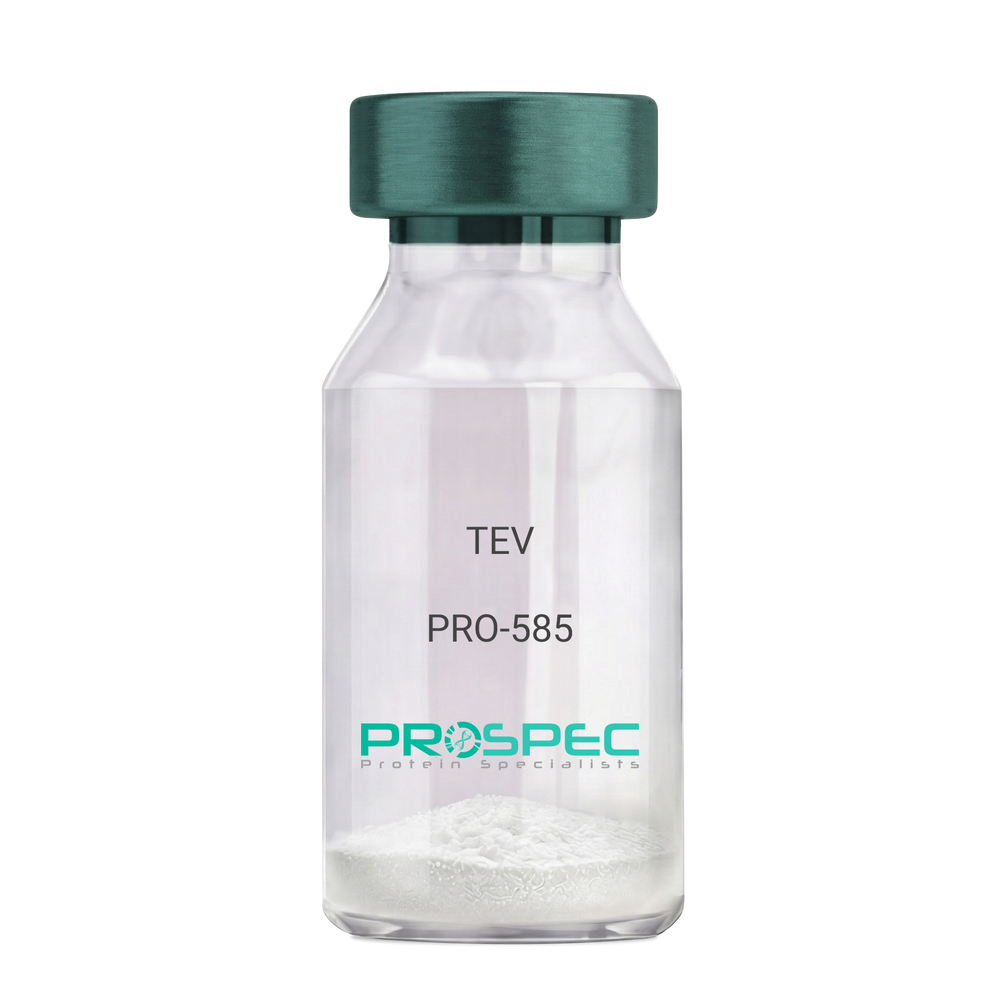
TEVDescription:
Tobacco Etch Virus Protease Recombinant
rTEV, TEV, P1 protease.
Product # :
PRO-585Price :
Quantity :
Shipping Method :
Shipped with Ice Packs
More Info
- description
- source
- formulation
- purity
- More Info
Description
Recombinant TEV Protease (rTEV) is a site-specific protease purified from E. coli. The protease can be used for the removal of affinity tags from fusion proteins. The seven-amino-acid recognition site for rTEV is Glu-Asn-Leu-Tyr-Phe-Gln-Gly with cleavage occurring between Gln and Gly. The optimal temperature for cleavage is 30°C; however, the enzyme can be used at temperatures as low as 4°C. The rTEV contains His tag.The rTEV is purified by proprietary chromatographic techniques.
Source
Escherichia Coli.
Formulation
The rTEV contains 25mM Tris, Ph 8.0, 75mM NaCl, 5mM EDTA, 10mM GSH, 50% Glycerol.
Purity
Greater than 90.0% as determined by analysis by SDS-PAGE.
More Info
-
Introduction
TEV protease is the common name for the 27 kDa catalytic domain of the Nuclear Inclusion a (NIa) protein encoded by the tobacco etch virus (TEV). Because its sequence specificity is far more stringent than that of factor Xa, thrombin, or enterokinase, TEV protease is a very useful reagent for cleaving fusion proteins. TEV protease recognizes a linear epitope of the general form E-Xaa-Xaa-Y -Xaa-Q-(G/S), with cleavage occurring between Q and G or Q and S. The most commonly used sequence is ENLYFQG.
-
Synonyms
rTEV, TEV, P1 protease.
-
Physical Appearance
Sterile liquid formulation.
-
Stability
rTEV although stable at 4°C for 1 week, should be stored below -18°C. Please prevent freeze thaw cycles.
-
Cleavage Conditions
A number of variables can be changed to optimize the cleavage of any specific protein. The amount of rTEV, the temperature of the incubation, and the time needed for cleavage may be examined. If the protein of interest is heat-labile, then 4°C incubations are recommended. Reactions at 4°C will require longer incubation times and/or more rTEV.
-
Unit Definition
One unit is defined as the amount of enzyme needed to cleave 3 ug of fusion protein in 1 hour to 85 % completion at 30°C in a buffer containing 50 mM Tris-HCl, pH 8.0, 0.5 mM EDTA, and 1 mM DTT.
ProSpec's products are furnished for LABORATORY RESEARCH USE ONLY. The product may not be used as drugs, agricultural or pesticidal products, food additives or household chemicals.
- View Data Sheet
Name :
Trypsin BovineDescription:
Trypsin Bovine Recombinant
Product # :
PRO-313Price :
Quantity :
Shipping Method :
Shipped at Room temp
More Info
- description
- source
- formulation
- purity
- biological activity
- More Info
Description
Recombinant Bovine Trypsin is free from any animal and human sources. Trypsin Bovine specifically cleaves peptide bonds after basic amino acids such as lysine and arginine.
Source
Corn.
Formulation
The protein was lyophilized without any additives.
Purity
Greater than 90% as determined by SDS-PAGE.
Biological Activity
4,313 Units/mg.
More Info
-
Introduction
Trypsin is a serine protease that hydrolyses proteins, it is found in the digestive system of numerous vertebrates. Trypsin is produced as the inactive proenzyme trypsinogen in the pancreas. Trypsin cleaves peptide chains at the carboxyl side of the amino acids lysine and arginine, except when either is followed by proline. Trypsin is secreted into the duodenum, where it acts to hydrolyses peptides into amino acids, which is necessary for the uptake of protein in the food even though peptides are smaller than proteins; they are still too big to be absorbed through the lining of the ileum. The optimal operating pH for Trypsins is about 8 and about 37°C temperature. In cystic fibrosis disease there is a deficiency in transport of trypsin and other digestive enzymes from the pancreas. Trypsin is widely used in various biotechnological processes since it’s available in high quantity in the pancreases, and can be purified rather easily.
-
Physical Appearance
Sterile Filtered lyophilized powder.
-
Stability
Store the Bovine Trypsin between 2-8°C, do not freeze.
-
Solubility
It is recommended to reconstitute the lyophilized Bovine Trypsin in sterile 18MΩ-cm H2O not less than 100µg/ml, which can then be further diluted to other aqueous solutions.
ProSpec's products are furnished for LABORATORY RESEARCH USE ONLY. The product may not be used as drugs, agricultural or pesticidal products, food additives or household chemicals.
- View Data Sheet
Name :
LDHB MouseDescription:
Lactate Dehydrogenase B Mouse Recombinant
L-lactate dehydrogenase B chain, LDH-B, LDH heart subunit, LDH-H, Ldh-2, Ldh2, Ldhb.
Product # :
ENZ-1052Price :
Quantity :
Shipping Method :
Shipped with Ice Packs
More Info
- description
- source
- formulation
- purity
- biological activity
- More Info
Description
LDHB Mouse Recombinant produced in E.Coli is a single, non-glycosylated polypeptide chain containing 357 amino acids (1-334 a.a) and having a molecular mass of 39kDa.LDHB is fused to a 23 amino acid His-tag at N-terminus & purified by proprietary chromatographic techniques.
Source
Escherichia Coli.
Formulation
LDHB protein solution (1mg/ml) containing 20mM Tris-HCl (pH8.0), 1mM DTT and 10% glycerol.
Purity
Greater than 95.0% as determined by SDS-PAGE.
Biological Activity
Specific activity is > 150 units/mg, in which one unit will 1.0 umole of pyruvate to L-lactate and beta-NAD per minute at pH 7.5.
More Info
-
Introduction
Lactate dehydrogenase (LDH) is an enzyme(EC1.1.1.27) present in a wide variety of organisms, including plants and animals.
A tetrameric enzyme that catalyses the interconversion of pyruvateand lactate with concomitant interconversion of NADH and NAD+. At high concentrations of pyruvate, the enzyme exhibits feedback inhibition and the rate of conversion of pyruvate to lactate is decreased. In vertebrates, genes for three different subunits (LDH-A, LDH-B and LDH-C) exist. -
Synonyms
L-lactate dehydrogenase B chain, LDH-B, LDH heart subunit, LDH-H, Ldh-2, Ldh2, Ldhb.
-
Physical Appearance
Sterile filtered colorless solution.
-
Stability
Store at 4°C if entire vial will be used within 2-4 weeks. Store, frozen at -20°C for longer periods of time. For long term storage, it is recommended to add a carrier protein (0.1% HSA or BSA).Avoid multiple freeze-thaw cycles.
-
Amino Acid Sequence
MGSSHHHHHH SSGLVPRGSH MGSMATLKEK LIASVADDEA AVPNNKITVV GVGQVGMACA ISILGKSLAD ELALVDVLED KLKGEMMDLQ HGSLFLQTPK IVADKDYSVT ANSKIVVVTA GVRQQEGESR LNLVQRNVNV FKFIIPQIVK YSPDCTIIVV SNPVDILTYV TWKLSGLPKH RVIGSGCNLD SARFRYLMAE KLGIHPSSCH GWILGEHGDS SVAVWSGVNV AGVSLQELNP EMGTDNDSEN WKEVHKMVVD SAYEVIKLKG YTNWAIGLSV ADLIESMLKN LSRIHPVSTM VKGMYGIENE VFLSLPCILN ARGLTSVINQ KLKDDEVAQL RKSADTLWDI QKDLKDL.
ProSpec's products are furnished for LABORATORY RESEARCH USE ONLY. The product may not be used as drugs, agricultural or pesticidal products, food additives or household chemicals.
- View Data Sheet
Name :
KAT2A AntibodyDescription:
Histone acetyltransferase KAT2A, Mouse Anti Human
Histone acetyltransferase KAT2A, General control of amino acid synthesis protein 5-like 2, Histone acetyltransferase GCN5, HsGCN5, Lysine acetyltransferase 2A, STAF97, KAT2A, GCN5, GCN5L2, HGCN5, PCAF-b, MGC102791.
Product # :
ANT-011Price :
Quantity :
Shipping Method :
Shipped with Ice Packs
More Info
- formulation
- More Info
Formulation
1mg/ml containing PBS, pH-7.4, & 0.1% Sodium Azide.
More Info
-
Introduction
KAT2A (GCN5L2 or GCN5) is a histone acetyltransferase (HAT), which functions mainly as a transcriptional activator. GCN5L2 may be one of the enzymes involved in acetylation in vivo. GCN5 is expressed primarily in the embryo and newborn and is crucial for normal embryonic development. Hence, KAT2A appears to be significant for differentiation of embryonic-derived preadipocytes. GCN5 also functions as a repressor of NF-kappa-B by promoting ubiquitination of the NF-kappa-B subunit RELA in a HAT-independent manner. Loss of GCN5L2 leads to a high occurrence of apoptosis in the KAT2A mutants, which begins before the onset of morphological abnormality.
-
Synonyms
Histone acetyltransferase KAT2A, General control of amino acid synthesis protein 5-like 2, Histone acetyltransferase GCN5, HsGCN5, Lysine acetyltransferase 2A, STAF97, KAT2A, GCN5, GCN5L2, HGCN5, PCAF-b, MGC102791.
-
Immunogen
Anti-human KAT2A mAb, is derived from hybridization of mouse F0 myeloma cells with spleen cells from BALB/c mice immunized with recombinant human KAT2A amino acids 411-837 purified from E. coli.
-
Ig Subclass
Mouse IgG2a heavy chain and κ light chain.
-
Clone
PAT3G13AT.
-
Applications
KAT2A antibody has been tested by ELISA, Western blot and Immunofluorescence analysis to assure specificity and reactivity. Since application varies, however, each investigation should be titrated by the reagent to obtain optimal results. Recommended dilution range for Western blot analysis and Immunofluorescence is 1:250 ~ 500.
Recommended starting dilution is 1:250. -
Type
Mouse Anti Human Monoclonal.
-
Storage Procedures
For periods up to 1 month store at 4°C, for longer periods of time, store at -20°C. Prevent freeze thaw cycles.
-
Purification Method
KAT2A antibody was purified from mouse ascitic fluids by protein-G affinity chromatography.
ProSpec's products are furnished for LABORATORY RESEARCH USE ONLY. The product may not be used as drugs, agricultural or pesticidal products, food additives or household chemicals.
- View Data Sheet
Name :
PPM1G AntibodyDescription:
Protein Phosphatase 1G, Mouse Anti Human
Protein Phosphatase 1G, PP2CG, PPP2CG, MGC1675, MGC2870, PP2C GAMMA, EC 3.1.3.16, Protein phosphatase 2C isoform gamma, PP2C-gamma, Protein phosphatase magnesium-dependent 1 gamma, Protein phosphatase 1C, PPM1G, PPM1C.
Product # :
ANT-383Price :
Quantity :
Shipping Method :
Shipped with Ice Packs
More Info
- formulation
- More Info
Formulation
1mg/ml containing PBS, pH-7.4, & 0.1% Sodium Azide.
More Info
-
Introduction
PPM1G is part of the PP2C family of Ser/Thr protein phosphatases which are known to be negative regulators of cell stress response pathways. PPM1G is accountable for the dephosphorylation of Pre-mRNA splicing factors, an important factor for the formation of functional spliceosome. PPM1G regulates cell cycle progression. PPM1G mediates histone dephosphorylation/exchange in response to DNA damage or checkpoint recovery in higher eukaryotes. The degradation of p21/WAF1 induced by PPM1G is mediated in a proteasome-dependent manner. Protein phosphatase 1G regulates assembly and function of the beta-catenin degradation complex.
-
Synonyms
Protein Phosphatase 1G, PP2CG, PPP2CG, MGC1675, MGC2870, PP2C GAMMA, EC 3.1.3.16, Protein phosphatase 2C isoform gamma, PP2C-gamma, Protein phosphatase magnesium-dependent 1 gamma, Protein phosphatase 1C, PPM1G, PPM1C.
-
Immunogen
Anti-human PPM1G mAb is derived from hybridization of mouse F0 myeloma cells with spleen cells from BALB/c mice immunized with recombinant human PPM1G amino acids 317-546 purified from E. coli.
-
Ig Subclass
Mouse IgG1 heavy chain and κ light chain.
-
Clone
Pk1G6AT.
-
Applications
PPM1G antibody has been tested by ELISA, Western blot and immunohistochemistry analysis to assure specificity and reactivity. Since application varies, however, each investigation should be titrated by the reagent to obtain optimal results. Recommended dilution range for Western blot is 1:1,000~1:2,000 and immunohistochemistry analysis is 1:50~100. Recommended starting dilution for Western blot is 1:1,000 and Immunohistochemistry is 1:50.
-
Type
Mouse Anti Human Monoclonal.
-
Storage Procedures
For periods up to 1 month store at 4°C, for longer periods of time, store at -20°C. Prevent freeze thaw cycles.
-
Purification Method
PPM1G antibody was purified from mouse ascitic fluids by protein-G affinity chromatography.
ProSpec's products are furnished for LABORATORY RESEARCH USE ONLY. The product may not be used as drugs, agricultural or pesticidal products, food additives or household chemicals.
- View Data Sheet
Name :
Carbonic Anhydrase II E.coliDescription:
Carbonic Anhydrase II E.coli Recombinant
Carbonic anhydrase 2, Carbonate dehydratase 2, can, cynT2, yadF, b0126, JW0122, Carbonic Anhydrase II.
Product # :
ENZ-373Price :
Quantity :
Shipping Method :
Shipped with Ice Packs
More Info
- description
- source
- formulation
- purity
- More Info
Description
Carbonic anhydrase II is an E.coli Recombinant protein produced in E.Coli containing 240 amino acids (1-220) and having a molecular mass of 27 kDa. Carbonic anhydrase is expressedwith an amino-terminal hexahistidine tag.The Carbonic anhydrase 2 is purified by proprietary chromatographic techniques.
Source
Escherichia Coli.
Formulation
The Carbonic Anhydrase 2 enzyme is supplied in 20mM Tris pH-8 and 1mM DTT.
Purity
Greater than 95.0% as determined by(a) Analysis by RP-HPLC.
(b) Analysis by SDS-PAGE.More Info
-
Introduction
The enzyme Carbonic anhydrase II having an accession number of NP_414668 is also called carbonate dehydratase which is part of the enzyme family that catalyses rapid inter-conversion of carbon dioxide & water to bicarbonate, carbonic acid and protons (CO2 + H2O ? HCO3? + H+), a reaction that occurs rather slowly in the absence of a catalyst. The majority of carbonic anhydrases enclose a zinc ion in their active site and therefore is classified as metalloenzymes.
The most important function of Carbonic anhydrase is known to preserve acid-base balance in blood and other tissues, and to help transport carbon dioxide of tissues. Carbonic anhydrases have been found in all kingdoms of life. Carbonic anhydrase has 3 different classes: alpha, beta and gamma which share very little sequence or structural similarity, thus far they all perform the same function and require a zinc ion at the active site. Mammalian carbonic anhydrase is monomeric and belongs to the alpha class. Plant carbonic anhydrase is dimeric and belongs to the beta class.
Methane-producing bacteria carbonic anhydrase is trimeric and grows in hot springs which forms the gamma class. -
Synonyms
Carbonic anhydrase 2, Carbonate dehydratase 2, can, cynT2, yadF, b0126, JW0122, Carbonic Anhydrase II.
-
Physical Appearance
Sterile Filtered colorless solution.
-
Stability
Store at 4°C if entire vial will be used within 2-4 weeks. Store, frozen at -20°C for longer periods of time. For long term storage it is recommended to add a carrier protein (0.1% HSA or BSA).Avoid multiple freeze-thaw cycles.
-
Amino Acid Sequence
MGSSHHHHHH SSGLVPRGSH MKDIDTLISN NALWSKMLVE EDPGFFEKLAQAQKPRFLWI GCSDSRVPAE RLTGLEPGEL FVHRNVANLV IHTDLNCLSV VQYAVDVLEV EHIIICGHYG CGGVQAAVEN PELGLINNWL HIRDIWFKH SSLLGEMPQE RRLDTLCELN VMEQVYNLGH STIMQSAWKR GQKVTIHGWA YGIHDGLLRD LDVTATNRET LEQRYRHGIS NLKLKHANHK.
ProSpec's products are furnished for LABORATORY RESEARCH USE ONLY. The product may not be used as drugs, agricultural or pesticidal products, food additives or household chemicals.
- View Data Sheet
Name :
NPPA HumanDescription:
Natriuretic Peptide A Human Recombinant
Natriuretic peptides A, CDD-ANF, Cardiodilatin, CDD, Cardiodilatin-related peptide, CDP, N-terminal proatrial natriuretic peptide, ANP, PND.
Product # :
CYT-1028Price :
Quantity :
Shipping Method :
Shipped at Room temp
More Info
- description
- source
- formulation
- purity
- More Info
Description
NPPA Human Recombinant produced in E.Coli is a single, non-glycosylated, polypeptide chain (a.a 26-123) containing 106 amino acids including an 8 a.a N-terminal His tag. The total molecular mass is 11.7kDa (calculated).
Source
Escherichia Coli.
Formulation
NPPA filtered (0.4 µm) and lyophilized from 0.5mg/ml in 20 mM Tris buffer, 50 mM NaCl and 5% w/v trehalosa, pH 7.5.
Purity
Greater than 95.0% as determined by SDS-PAGE.
More Info
-
Introduction
Natriuretic Peptide A (NPPA) is a part of the natriuretic peptide family and is involved in cardiovascular homeostasis through regulation of natriuresis, diuresis, and vasodilation. NPPA is synthesized as a great precursor which releases a peptide from the N-terminus with similarity to vasoactive peptide, cardiodilatin, and another peptide from the C-terminus with natriuretic-diuretic activity. In female pregnancy, NPPA is promoting trophoblast invasion and spiral artery remodeling in uterus.
-
Synonyms
Natriuretic peptides A, CDD-ANF, Cardiodilatin, CDD, Cardiodilatin-related peptide, CDP, N-terminal proatrial natriuretic peptide, ANP, PND.
-
Physical Appearance
Filtered White lyophilized (freeze-dried) powder.
-
Stability
Store lyophilized protein at -20°C. Aliquot the product after reconstitution to avoid repeated freezing/thawing cycles. Reconstituted protein can be stored at 4°C for a limited period of time; it does not show any change after two weeks at 4°C.
-
Solubility
It is recommended to add deionized water to prepare a working stock solution of approximately 0.5mg/ml and let the lyophilized pellet dissolve completely. NPPA is not sterile! Please filter the product by an appropriate sterile filter before using it in the cell culture.
-
Amino Acid Sequence
MKHHHHHHNP MYNAVSNADL MDFKNLLDHL EEKMPLEDEV VPPQVLSEPN EEAGAALSPL PEVPPWTGEV SPAQRDGGAL GRGPWDSSDR SALLKSKLRA LLTAPR.
ProSpec's products are furnished for LABORATORY RESEARCH USE ONLY. The product may not be used as drugs, agricultural or pesticidal products, food additives or household chemicals.
- View Data Sheet
Name :
SPR HumanDescription:
Sepiapterin Reductase Human Recombinant
SDR38C1, SPR, Dystonia, Sepiapterin reductase.
Product # :
ENZ-411Price :
Quantity :
Shipping Method :
Shipped with Ice Packs
More Info
- description
- source
- formulation
- purity
- More Info
Description
Sepiapterin Reductase produced in E.Coli is a single,non-glycosylated polypeptide chain containing 281 amino acids (1-261 a.a.) and having a molecular mass of 30.2 kDa.Sepiapterin Reductase is expressed with a 20 amino acid His tag at N-Terminus and purified by proprietary chromatographic techniques.
Source
Escherichia Coli.
Formulation
The SPR solution (1mg/ml) contains 20mM Tris-HCl buffer (pH 8.0) and 10% glycerol.
Purity
Greater than 95.0% as determined by SDS-PAGE.
More Info
-
Introduction
Sepiapterin Reductase is an aldo-keto reductase that catalyzes the NADPH-dependent reduction of pteridine derivatives and is essential in the biosynthesis of BH4. Mutations in Sepiapterin Reductase gene result in DOPA-responsive dystonia due to sepiaterin reductase deficiency defined by the presence of sustained involuntary muscle contractions, often leading to abnormal postures. Sepiapterin reductase is part of the short-chain dehydrogenase/reductase family which reduces exogenous carbonyl compounds as well as phenylpropanedione. Sepiapterin reductase is an important enzyme for the biosynthesis of tetrahydrobiopterin, an necessary cofactor for aromatic amino acid hydrolases together with tyrosine hydroxylase, the rate-limiting enzyme in DOPA synthesis.
-
Synonyms
SDR38C1, SPR, Dystonia, Sepiapterin reductase.
-
Physical Appearance
Sterile filtered colorless solution.
-
Stability
Store at 4°C if entire vial will be used within 2-4 weeks. Store, frozen at -20°C for longer periods of time. For long term storage it is recommended to add a carrier protein (0.1% HSA or BSA).Avoid multiple freeze-thaw cycles.
-
Amino Acid Sequence
MGSSHHHHHH SSGLVPRGSH MEGGLGRAVC LLTGASRGFG RTLAPLLASL LSPGSVLVLS ARNDEALRQL EAELGAERSG LRVVRVPADL GAEAGLQQLL GALRELPRPK GLQRLLLINN AGSLGDVSKG FVDLSDSTQV NNYWALNLTS MLCLTSSVLK AFPDSPGLNR TVVNISSLCA LQPFKGWALY CAGKAARDML FQVLALEEPN VRVLNYAPGP LDTDMQQLAR ETSVDPDMRK GLQELKAKGK LVDCKVSAQK LLSLLEKDEF KSGAHVDFYD K.
ProSpec's products are furnished for LABORATORY RESEARCH USE ONLY. The product may not be used as drugs, agricultural or pesticidal products, food additives or household chemicals.
- View Data Sheet
Name :
IMPDH1 HumanDescription:
IMP Dehydrogenase 1 Human Recombinant
EC 1.1.1.205, IMP (inosine monophosphate) dehydrogenase 1, LCA11, RP10, IMPDH 1, IMPD 1, IMPDH-I, SwSS2608, DKFZp781N0678.
Product # :
ENZ-525Price :
Quantity :
Shipping Method :
Shipped with Ice Packs
More Info
- description
- source
- formulation
- purity
- More Info
Description
IMPDH1 Recombinant Human produced in E.Coli is a single, non-glycosylated polypeptide chain containing 534 amino acids (1-514 a.a.) and having a molecular mass of 57.5 kDa. The IMPDH1 is fused to 20 amino acid His-Tag at N-terminus and purified by proprietary chromatographic techniques.
Source
Escherichia Coli.
Formulation
IMPDH1 Human solution containing 20mM Tris-HCl pH-8, 1mM DTT & 20% glycerol.
Purity
Greater than 95.0% as determined by SDS-PAGE.
More Info
-
Introduction
IMPDH1 is a rate limiting enzyme in the de novo synthesis of guanine nucleotides and consequently participates in the regulation of cell growth. IMPDH1 takes part in the development of malignancy and the growth progression of some tumors. IMPDH1 performs as a homotetramer to regulate cell growth. IMPDH1 catalyzes the synthesis of xanthine monophosphate (XMP) from inosine-5''-monophosphate (IMP). Defects in this gene are a cause of retinitis pigmentosa type 10 (RP10).
-
Synonyms
EC 1.1.1.205, IMP (inosine monophosphate) dehydrogenase 1, LCA11, RP10, IMPDH 1, IMPD 1, IMPDH-I, SwSS2608, DKFZp781N0678.
-
Physical Appearance
Sterile filtered colorless solution.
-
Stability
Store at 4°C if entire vial will be used within 2-4 weeks. Store, frozen at -20°C for longer periods of time. For long term storage it is recommended to add a carrier protein (0.1% HSA or BSA).Avoid multiple freeze-thaw cycles.
-
Amino Acid Sequence
MGSSHHHHHH SSGLVPRGSH MADYLISGGT GYVPEDGLTA QQLFASADGL TYNDFLILPG FIDFIADEVD LTSALTRKIT LKTPLISSPM DTVTEADMAI AMALMGGIGF IHHNCTPEFQ ANEVRKVKKF EQGFITDPVV LSPSHTVGDV LEAKMRHGFS GIPITETGTM GSKLVGIVTS RDIDFLAEKD HTTLLSEVMT PRIELVVAPA GVTLKEANEI LQRSKKGKLP IVNDCDELVA IIARTDLKKN RDYPLASKDS QKQLLCGAAV GTREDDKYRL DLLTQAGVDV IVLDSSQGNS VYQIAMVHYI KQKYPHLQVI GGNVVTAAQA KNLIDAGVDG LRVGMGCGSI CITQEVMACG RPQGTAVYKV AEYARRFGVP IIADGGIQTV GHVVKALALG ASTVMMGSLL AATTEAPGEY FFSDGVRLKK YRGMGSLDAM EKSSSSQKRY FSEGDKVKIA QGVSGSIQDK GSIQKFVPYL IAGIQHGCQD IGARSLSVLR SMMYSGELKF EKRTMSAQIE GGVHGLHSYE KRLY.
ProSpec's products are furnished for LABORATORY RESEARCH USE ONLY. The product may not be used as drugs, agricultural or pesticidal products, food additives or household chemicals.
- View Data Sheet
Name :
CKMB1 HumanDescription:
Creatine Kinase MB Isoenzyme Type-1 Human Recombinant
Creatine Kinase MB 1, CKMB1
Product # :
CKI-269Price :
Quantity :
Shipping Method :
Shipped with Ice Packs
More Info
- description
- source
- formulation
- purity
- biological activity
- More Info
Description
CKMB1 Human Recombinant produced in E.Coli is a non covalently linked heterodimer that consists of 381 a.a. and having a total Mw of ~85.6kDa. The CKMB1 is purified by proprietary chromatographic techniques.
Source
E.Coli
Formulation
CKMB1 was lyophilized a concentrated solution containing 20mM Tris, 150mM NaCl, pH-8.
Purity
Greater than 95.0% as determined by SDS-PAGE.
Biological Activity
CKMB1 activity was measured kinetically by the CK-NAC assay at 37°C which was found to be between 500-600 units/mg. 1U converts 1µmole of creatine phosphate to creatine/min at 37˚CMore Info
-
Introduction
The three isoenzymes (MM, MB, and BB) are found in muscle, cardiac and brain tissues. These recombinant proteins are ideal for calibrating diagnostic instruments and researching neuromuscular diseases. Creatine Kinases can be used for indications in many neuromuscular applications. These disorders include cardiac disease, mitochondrial disorders, inflammatory myopathies, myasthenia, polymyositis, McArdle's disease, NMJ disorders, muscular dystrophy, ALS, hypo and hyperthyroid disorders, central core disease, acid maltase deficiency, myoglobinuria, rhabdomyolysis, motor neuron diseases, rheumatic diseases, and other that create elevated or reduced levels of Creatine Kinases.
-
Synonyms
Creatine Kinase MB Isoenzyme Type-1, CK MB1
-
Physical Appearance
Sterile Filtered white lyophilized powder.
-
Stability
Lyophilized CKMB1 although stable at room temperature for 3 weeks, should be stored desiccated below -18°C. Upon reconstitution MCSF should be stored at 4°C between 2-7 days and for future use below -18°C.Please prevent freeze-thaw cycles.
-
Solubility
It is recommended to reconstitute the lyophilized CKMB1 in sterile 18MΩ-cm H2O at 0.1 mg/ml, which can then be further diluted to other aqueous solutions.
-
Amino Acid Sequence
CKM1
MPFGNTHNKF KLNYKPEEEY PDLSKHNNHM AKVLTLELYK KLRDKETPSG FTVDDVIQTG VDNPGHPFIM TVGCVAGDEE SYEVFKELFD PIISDRHGGY KPTDKHKTDL NHENLKGGDD LDPNYVLSSR VRTGRSIKGY TLPPHCSRGE RRAVEKLSVE ALNSLTGEFK GKYYPLKSMT EKEQQQLIDD HFLFDKPVSP LLLASGMARD WPDARGIWHN DNKSFLVWVN EEDHLRVISM EKGGNMKEVF RRFCVGLQKI EEIFKKAGHP FMWNQHLGYV LTCPSNLGTG LRGGVHVKLA HLSKHPKFEE ILTRLRLQKR GTGGVDTAAV GSVFDVSNAD RLGSSEVEQV QLVVDGVKLM VEMEKKLEKG QSIDDMIPAQCKB
MPFSNSHNAL KLRFPAEDEF PDLSAHNNHM AKVLTPELYA ELRAKSTPSG FTLDDVIQTG VDNPGHPYIM TVGCVAGDEE SYEVFKDLFD PIIEDRHGGY KPSDEHKTDL NPDNLQGGDD LDPNYVLSSR VRTGRSIRGF CLPPHCSRGE RRAIEKLAVE ALSSLDGDLA GRYYALKSMT EAEQQQLIDD HFLFDKPVSP LLLASGMARD WPDARGIWHN DNKTFLVWVN EEDHLRVISM QKGGNMKEVF TRFCTGLTQI ETLFKSKDYE FMWNPHLGYI LTCPSNLGTG LRAGVHIKLP NLGKHEKFSE VLKRLRLQKR GTGGVDTAAV GGVFDVSNAD RLGFSEVELV QMVVDGVKLL IEMEQRLEQG QAIDDLMPAQ K
-
Background
What is the molecular weight / Mw of CKMB1 Protein?
CKMB1 Protein is a non covalently heterodimer having a total Mw of 85.6
What is the source or expression system of CKMB1 Protein?
Escherichia Coli.
What is the Purity of CKMB1 Protein?
CKMB1 Protein is >95% pure as determined by SDS-PAGE.
What is the Biological Activity of CKMB1 Protein?
The activity was determined kinetically by the CK-NAC assay at 37°C which ranges between 500-600 U/mg.
What is the amino acid sequence of CKMB1 Protein?
CKM1
MPFGNTHNKF KLNYKPEEEY PDLSKHNNHM AKVLTLELYK KLRDKETPSG FTVDDVIQTG VDNPGHPFIM TVGCVAGDEE SYEVFKELFD PIISDRHGGY KPTDKHKTDL NHENLKGGDD LDPNYVLSSR VRTGRSIKGY TLPPHCSRGE RRAVEKLSVE ALNSLTGEFK GKYYPLKSMT EKEQQQLIDD HFLFDKPVSP LLLASGMARD WPDARGIWHN DNKSFLVWVN EEDHLRVISM EKGGNMKEVF RRFCVGLQKI EEIFKKAGHP FMWNQHLGYV LTCPSNLGTG LRGGVHVKLA HLSKHPKFEE ILTRLRLQKR GTGGVDTAAV GSVFDVSNAD RLGSSEVEQV QLVVDGVKLM VEMEKKLEKG QSIDDMIPAQ
CKB
MPFSNSHNAL KLRFPAEDEF PDLSAHNNHM AKVLTPELYA ELRAKSTPSG FTLDDVIQTG VDNPGHPYIM TVGCVAGDEE SYEVFKDLFD PIIEDRHGGY KPSDEHKTDL NPDNLQGGDD LDPNYVLSSR VRTGRSIRGF CLPPHCSRGE RRAIEKLAVE ALSSLDGDLA GRYYALKSMT EAEQQQLIDD HFLFDKPVSP LLLASGMARD WPDARGIWHN DNKTFLVWVN EEDHLRVISM QKGGNMKEVF TRFCTGLTQI ETLFKSKDYE FMWNPHLGYI LTCPSNLGTG LRAGVHIKLP NLGKHEKFSE VLKRLRLQKR GTGGVDTAAV GGVFDVSNAD RLGFSEVELV QMVVDGVKLL IEMEQRLEQG QAIDDLMPAQ K
What applications can CKMB1 Protein be used in?
CKMB1 Protein can probably be used in western blot, ELISA and Lateral Flow.
What is the endotoxin level for CKMB1 Protein?
The endotoxin level is minimal, CKMB1 Protein was purified using conventional chromatography techniques.
ProSpec's products are furnished for LABORATORY RESEARCH USE ONLY. The product may not be used as drugs, agricultural or pesticidal products, food additives or household chemicals.
- View Data Sheet
Name :
ACTA1 AntibodyDescription:
Actin, Mouse Anti Human
ACTA, Actin, actin, alpha 1, skeletal muscle, alpha skeletal muscle actin, alpha skeletal muscle, alpha-actin-1, ASMA, CFTD, CFTDM, MPFD, NEM1, NEM2, NEM3.
Product # :
ANT-749Price :
Quantity :
Shipping Method :
Shipped with Ice Packs
More Info
- formulation
- More Info
Formulation
1mg/ml containing PBS, pH-7.4, 10% Glycerol and 0.02% Sodium Azide.
More Info
-
Introduction
Actin is one of the most highly-conserved proteins, differing by no more than 20% in species as diverse as algae and humans .Actin or ACTA is aprotein localized in the I band of the myofibrils in the muscle, Acting together with myosin.Actin takes part in the contraction and relaxation of muscle. Actin exists as a monomer in low salt concentrations, but filaments form rapidly as salt concentration rises, with the consequent hydrolysis of ATP.Each actin protomer binds one molecule of ATP and has one high affinity site for either calcium or magnesium ions, as well as several low affinity sites. It occurs in globular (G-actin) and fibrous (F-actin) forms. Actin is found in all eukaryotic cells (except for nematode sperm). Its other activitiessuch as cell motility, cell division and cytokinesis, vesicle and organelle movement, cell signaling, and the establishment and maintenance of cell junctions and cell shape.
-
Synonyms
ACTA, Actin, actin, alpha 1, skeletal muscle, alpha skeletal muscle actin, alpha skeletal muscle, alpha-actin-1, ASMA, CFTD, CFTDM, MPFD, NEM1, NEM2, NEM3.
-
Physical Appearance
Sterile filtered colorless solution.
-
Immunogen
Anti-human ACTA1 mAb, is derived from hybridization of mouse F0 myeloma cells with spleen cells from BALB/c mice immunized with recombinant human ACTA1 amino acids 13-377 purified from E. coli.
-
Ig Subclass
Mouse IgG2a heavy chain and κ light chain.
-
Clone
PAT2F5AT.
-
Applications
ACTA1 antibody has been tested by ELISA, Western blot analysis and ICC/IF to assure specificity and reactivity. Since application varies, however, each investigation should be titrated by the reagent to obtain optimal results.
-
Type
Mouse Anti Human Monoclonal.
-
Storage Procedures
For periods up to 1 month store at 4°C, for longer periods of time, store at -20°C. Prevent freeze thaw cycles.
-
Purification Method
ACTA1 antibody was purified from mouse ascitic fluids by protein-A affinity chromatography.
ProSpec's products are furnished for LABORATORY RESEARCH USE ONLY. The product may not be used as drugs, agricultural or pesticidal products, food additives or household chemicals.
- View Data Sheet
Name :
GSTP1 AntibodyDescription:
Glutathione S-Transferase pi 1, Mouse Anti Human
Glutathione S-transferase P 1, Gst P1, GST YF-YF, GST class-pi, GST-piB, Preadipocyte growth factor.
Product # :
ANT-729Price :
Quantity :
Shipping Method :
Shipped with Ice Packs
More Info
- formulation
- More Info
Formulation
1mg/ml containing PBS, pH-7.4, 10% Glycerol and 0.02% Sodium Azide.
More Info
-
Introduction
GSTP1 is a polymorphic gene encoding active, functionally different GSTP1 variant proteins that are believed to function in xenobiotic metabolism and have a part in susceptibility to cancer, and other diseases. GSTP1 is a glutathione S-transferase belonging to the pi class. GST family enzymes play a significant role in detoxification by catalyzing the conjugation of many hydrophobic and electrophilic compounds with reduced glutathione. Based upon the biochemical, immunologic and structural properties of the soluble GSTs they are grouped into 4 main classes: alpha, mu, pi, and theta. The GSTP1 enzyme acts by catalyzing the reaction of glutathione with an acceptor molecule to form a Sulfur-substituted glutathione. The reactions employing glutathione contribute the transformation of a broad range of electrophiles, including reactive products of lipid, protein, carcinogens, therapeutic drugs, environmental toxins, and products of oxidative stress.
The GSTP1 inactivation through CpG hypermethylation is frequent in pituitary adenomas and may be a factor in aggressive pituitary tumor behavior. GSTP1 is may be a transcriptional target of the p53 tumor suppressor gene. Single-nucleotide polymorphism in GSTP1 is linked to modified protein binding, which influence GSTP1's contribution to carcinogen and drug metabolism, and possibly disease pathogenesis and/or drug response. GST-pi might have central roles in proliferation of androgen-independent human prostate cancer cells. -
Synonyms
Glutathione S-transferase P 1, Gst P1, GST YF-YF, GST class-pi, GST-piB, Preadipocyte growth factor.
-
Physical Appearance
Sterile filtered colorless solution.
-
Immunogen
Anti-human GSTP1 mAb, is derived from hybridization of mouse F0 myeloma cells with spleen cells from BALB/c mice immunized with recombinant human GSTP1 amino acids 1-210 purified from E. coli.
-
Ig Subclass
Mouse IgG1 heavy chain and κ light chain.
-
Clone
PAT12C10AT
-
Applications
GSTP1 antibody has been tested by ELISA, Western blot analysis, ICC/IF and Flow cytometry to assure specificity and reactivity. Since application varies, however, each investigation should be titrated by the reagent to obtain optimal results.
-
Type
Mouse Anti Human Monoclonal.
-
Storage Procedures
For periods up to 1 month store at 4°C, for longer periods of time, store at -20°C. Prevent freeze thaw cycles.
-
Purification Method
GSTP1 antibody was purified from mouse ascitic fluids by protein-A affinity chromatography.
ProSpec's products are furnished for LABORATORY RESEARCH USE ONLY. The product may not be used as drugs, agricultural or pesticidal products, food additives or household chemicals.
- View Data Sheet
Name :
CTSD HumanDescription:
Cathepsin-D Human Recombinant
Cathepsin D, EC 3.4.23.5, CTSD, CPSD, CLN10, MGC2311.
Product # :
ENZ-378Price :
Quantity :
Shipping Method :
Shipped with Ice Packs
More Info
- description
- source
- formulation
- purity
- More Info
Description
CTSD produced in HEK293 cells is a single, glycosylated polypeptide chain containing 398 amino acids (21-412 a.a.) and having a molecular mass of 43.4kDa. CTSD is expressed with a 6 amino acid His tag at C-Terminus and purified by proprietary chromatographic techniques.
Source
HEK293 Cells
Formulation
CTSD at 1mg/ml in 50mM MES, pH5.5, 100mM NaCl and 20% Glycerol.
Purity
Greater than 95% as determined by SDS-PAGE
More Info
-
Introduction
Cathepsin D is synthesized as a 54kDa precursor, which is proteolytically processed to an intermediate 48kDa single chain, which matures into more stable 34kDa and 14kDa two chain form. It is an estrogen-regulated lysosomal protease that has been suggested to facilitate cancer cell migration and invasion by digesting the basement membrane, extracellular matrix, and xonnective tissue. Because of its mitogenic and proteolytic activities, it has been implicated as a prognostic marker in many tumor types. Cathepsin D is expressed in epithelial cells as well as in macrophages.
-
Synonyms
Cathepsin D, EC 3.4.23.5, CTSD, CPSD, CLN10, MGC2311.
-
Physical Appearance
Sterile Filtered clear solution.
-
Stability
Store vial at -20°C to -80°C. When stored at the recommended temperature, this protein is stable for 12 months.Please prevent freeze-thaw cycles.
-
Amino Acid Sequence
LVRIPLHKFT SIRRTMSEVG GSVEDLIAKG PVSKYSQAVP AVTEGPIPEV LKNYMDAQYY GEIGIGTPPQ CFTVVFDTGS SNLWVPSIHC KLLDIACWIH HKYNSDKSST YVKNGTSFDI HYGSGSLSGY LSQDTVSVPC QSASSASALG GVKVERQVFG EATKQPGITF IAAKFDGILG MAYPRISVNN VLPVFDNLMQ QKLVDQNIFS FYLSRDPDAQ PGGELMLGGT DSKYYKGSLS YLNVTRKAYW QVHLDQVEVA SGLTLCKEGC EAIVDTGTSL MVGPVDEVRE LQKAIGAVPL IQGEYMIPCE KVSTLPAITL KLGGKGYKLS PEDYTLKVSQ AGKTLCLSGF MGMDIPPPSG PLWILGDVFI GRYYTVFDRD NNRVGFAEAA RLHHHHHH
-
Enzymatic Activity
> 20 pmol/min/ug, defined as the amount of enzyme which cleaves 1pmol of Mca-PLGLDpa-AR-NH2/min at pH-3.5 at 25C.
ProSpec's products are furnished for LABORATORY RESEARCH USE ONLY. The product may not be used as drugs, agricultural or pesticidal products, food additives or household chemicals.