Skip to content

High-quality research proteins.

  • 1-800-805-6531

  • Mon - Sat 8.00-18.00, Sun - Closed

  • info@prospecbio.com

  • PO Box 6591 East Brunswick NJ 08816

  • Products
    • Cytokines
    • Growth factors
    • Chemokines
    • Cd antigens
    • Neurotrophins
    • Hormones
    • Enzymes
    • Viral antigens
    • Recombinant proteins
    • Natural proteins
    • Monoclonal antibodies
    • Polyclonal antibodies
    • Thermal Packaging
  • About
    • Company
    • Founder
    • Contribution
  • Customers
    • Eastern Asia
    • Eastern Europe
    • North America
    • South America
    • South East Asia
    • Southern Asia
    • Western Europe
  • Ordering
    • Ordering Method
    • Ordering - Credit Card
    • Ordering - PO
    • Shipping Fees
    • FAQs
  • Services
    • DNA Cloning
    • Protein Expression
    • Monoclonal Antibody
    • Fermentation
    • Technology License
  • Contact us
Log in

Country/region

  • USD $ | Albania
  • USD $ | Andorra
  • USD $ | Argentina
  • USD $ | Armenia
  • USD $ | Australia
  • USD $ | Austria
  • USD $ | Azerbaijan
  • USD $ | Belarus
  • USD $ | Belgium
  • USD $ | Bolivia
  • USD $ | Brazil
  • USD $ | Bulgaria
  • USD $ | Cambodia
  • USD $ | Canada
  • USD $ | Chile
  • USD $ | China
  • USD $ | Colombia
  • USD $ | Costa Rica
  • USD $ | Croatia
  • USD $ | Cyprus
  • USD $ | Czechia
  • USD $ | Denmark
  • USD $ | Estonia
  • USD $ | Finland
  • USD $ | France
  • USD $ | Georgia
  • USD $ | Germany
  • USD $ | Greece
  • USD $ | Hong Kong SAR
  • USD $ | Hungary
  • USD $ | Iceland
  • USD $ | India
  • USD $ | Ireland
  • USD $ | Israel
  • USD $ | Italy
  • USD $ | Japan
  • USD $ | Kazakhstan
  • USD $ | Latvia
  • USD $ | Liechtenstein
  • USD $ | Lithuania
  • USD $ | Madagascar
  • USD $ | Malta
  • USD $ | Mexico
  • USD $ | Moldova
  • USD $ | Monaco
  • USD $ | Netherlands
  • USD $ | New Zealand
  • USD $ | North Macedonia
  • USD $ | Norway
  • USD $ | Panama
  • USD $ | Paraguay
  • USD $ | Peru
  • USD $ | Philippines
  • USD $ | Poland
  • USD $ | Portugal
  • USD $ | Romania
  • USD $ | Singapore
  • USD $ | Slovakia
  • USD $ | Slovenia
  • USD $ | South Africa
  • USD $ | South Korea
  • USD $ | Spain
  • USD $ | Sri Lanka
  • USD $ | Sweden
  • USD $ | Switzerland
  • USD $ | Taiwan
  • USD $ | Thailand
  • USD $ | Türkiye
  • USD $ | Ukraine
  • USD $ | United Kingdom
  • USD $ | United States
  • USD $ | Uruguay
  • USD $ | Vatican City
  • USD $ | Venezuela
  • USD $ | Vietnam
  • Facebook
  • Instagram
logoProSpec - Recombinant Protein Manufacturer for academic and R&D industry
Become a distributor
Account Log in
Wishlist
Cart Cart(0)
  • Products
    +
    • Cytokines
    • Growth factors
    • Chemokines
    • Cd antigens
    • Neurotrophins
    • Hormones
    • Enzymes
    • Viral antigens
    • Recombinant proteins
    • Natural proteins
    • Monoclonal antibodies
    • Polyclonal antibodies
    • Thermal Packaging
  • About
    +
    • Company
    • Founder
    • Contribution
  • Customers
    +
    • Eastern Asia
    • Eastern Europe
    • North America
    • South America
    • South East Asia
    • Southern Asia
    • Western Europe
  • Ordering
    +
    • Ordering Method
    • Ordering - Credit Card
    • Ordering - PO
    • Shipping Fees
    • FAQs
  • Services
    +
    • DNA Cloning
    • Protein Expression
    • Monoclonal Antibody
    • Fermentation
    • Technology License
  • Contact us

Item added to your cart

View cart
View All
  • Cytokines
  • Growth factors
  • Chemokines
  • Cd antigens
  • Neurotrophins
  • Hormones
  • Enzymes
  • Viral antigens
  • Recombinant proteins
  • Natural proteins
  • Monoclonal antibodies
  • Polyclonal antibodies
  • Thermal Packaging
  • Tumor Necrosis Factor

    Tumor Necrosis Factor

    View All
  • 4-1BB

    4-1BB

    View All
  • Adiponectin

    Adiponectin

    View All
  • AIF1

    AIF1

    View All
  • Other Cytokines

    Other Cytokines

    View All
  • AITRL

    AITRL

    View All
  • Angiopoietin

    Angiopoietin

    View All
  • Apolipoprotein

    Apolipoprotein

    View All
  • B-Cell Activating Factor

    B-Cell Activating Factor

    View All
  • Beta Defensin

    Beta Defensin

    View All
  • Bone Morphogenetic Protein

    Bone Morphogenetic Protein

    View All
  • B type Natriuretic Peptide

    B type Natriuretic Peptide

    View All
  • BST

    BST

    View All
  • Betacellulin

    Betacellulin

    View All
  • Cardiotrophin

    Cardiotrophin

    View All
  • Activin

    Activin

    View All
  • Fibroblast Growth Factor

    Fibroblast Growth Factor

    View All
  • Other Growth Factors

    Other Growth Factors

    View All
  • CSF

    CSF

    View All
  • CTGF

    CTGF

    View All
  • IGFBP

    IGFBP

    View All
  • VEGF Protein

    VEGF Protein

    View All
  • EGF

    EGF

    View All
  • Epigen

    Epigen

    View All
  • Erythropoietin

    Erythropoietin

    View All
  • Insulin-Like Growth Factor

    Insulin-Like Growth Factor

    View All
  • Growth Hormone

    Growth Hormone

    View All
  • HDGF

    HDGF

    View All
  • Hepatocyte Growth Factor

    Hepatocyte Growth Factor

    View All
  • Insulin

    Insulin

    View All
  • BCA-1/ BLC (CXCL13)

    BCA-1/ BLC (CXCL13)

    View All
  • BRAK (CXCL14)

    BRAK (CXCL14)

    View All
  • C-10 (CCL6)

    C-10 (CCL6)

    View All
  • Other Chemokines

    Other Chemokines

    View All
  • MEC (CCL28)

    MEC (CCL28)

    View All
  • LD78-beta (CCL3L1)

    LD78-beta (CCL3L1)

    View All
  • CTACK (CCL27)

    CTACK (CCL27)

    View All
  • CXCL16

    CXCL16

    View All
  • CXCL17

    CXCL17

    View All
  • Platelet Factor-4 (CXCL4)

    Platelet Factor-4 (CXCL4)

    View All
  • ENA-78 (CXCL5)

    ENA-78 (CXCL5)

    View All
  • Eotaxin (CCL11,24,26)

    Eotaxin (CCL11,24,26)

    View All
  • Exodus-2 (CCL21)

    Exodus-2 (CCL21)

    View All
  • Fractalkine (CX3CL1)

    Fractalkine (CX3CL1)

    View All
  • CXCL6

    CXCL6

    View All
  • Other CD Antigens

    Other CD Antigens

    View All
  • CD14

    CD14

    View All
  • CD164

    CD164

    View All
  • CD1

    CD1

    View All
  • CD2

    CD2

    View All
  • CD200

    CD200

    View All
  • CD207

    CD207

    View All
  • CD226

    CD226

    View All
  • CD23

    CD23

    View All
  • CD244

    CD244

    View All
  • CD247

    CD247

    View All
  • CD27

    CD27

    View All
  • CD274

    CD274

    View All
  • CD300

    CD300

    View All
  • CD33

    CD33

    View All
  • Other Neurotrophins

    Other Neurotrophins

    View All
  • Beta-NGF

    Beta-NGF

    View All
  • BDNF

    BDNF

    View All
  • CDNF

    CDNF

    View All
  • CNTF

    CNTF

    View All
  • GDNF

    GDNF

    View All
  • Glia Maturation Factor

    Glia Maturation Factor

    View All
  • MANF

    MANF

    View All
  • Midkine

    Midkine

    View All
  • Neuroglobin

    Neuroglobin

    View All
  • Neurotrophic factors

    Neurotrophic factors

    View All
  • Neuregulin

    Neuregulin

    View All
  • Neuropilin

    Neuropilin

    View All
  • Pigment Epithelium-Derived Factor

    Pigment Epithelium-Derived Factor

    View All
  • Pleiotrophin

    Pleiotrophin

    View All
  • Peptide Hormones

    Peptide Hormones

    View All
  • Other Hormones

    Other Hormones

    View All
  • HCG

    HCG

    View All
  • Endothelin

    Endothelin

    View All
  • Exendin

    Exendin

    View All
  • FSH

    FSH

    View All
  • Glucagon

    Glucagon

    View All
  • GHRP

    GHRP

    View All
  • GLP

    GLP

    View All
  • Thyrostimulin

    Thyrostimulin

    View All
  • Inhibin A

    Inhibin A

    View All
  • LHRH

    LHRH

    View All
  • Melanotan

    Melanotan

    View All
  • Procalcitonin

    Procalcitonin

    View All
  • PTH

    PTH

    View All
  • Peroxiredoxin

    Peroxiredoxin

    View All
  • Peptidase

    Peptidase

    View All
  • Synthetase

    Synthetase

    View All
  • Transferase

    Transferase

    View All
  • Hydrolase

    Hydrolase

    View All
  • Dehydrogenase

    Dehydrogenase

    View All
  • ACE2

    ACE2

    View All
  • Esterase

    Esterase

    View All
  • Protein Kinases

    Protein Kinases

    View All
  • Other Enzymes

    Other Enzymes

    View All
  • Phosphatase

    Phosphatase

    View All
  • Deaminase

    Deaminase

    View All
  • Oxygenase

    Oxygenase

    View All
  • Adenylate Kinase

    Adenylate Kinase

    View All
  • Lyase

    Lyase

    View All
  • Chagas

    Chagas

    View All
  • SARS

    SARS

    View All
  • Influenza

    Influenza

    View All
  • ASFV

    ASFV

    View All
  • Astrovirus

    Astrovirus

    View All
  • Borrelia

    Borrelia

    View All
  • Helicobacter Pylori

    Helicobacter Pylori

    View All
  • Chikungunya

    Chikungunya

    View All
  • Chlamydia

    Chlamydia

    View All
  • Cytomegalo

    Cytomegalo

    View All
  • Dengue

    Dengue

    View All
  • EBV

    EBV

    View All
  • Ebola

    Ebola

    View All
  • Feline Leukemia Virus

    Feline Leukemia Virus

    View All
  • Hepatitis A

    Hepatitis A

    View All
  • Other

    Other

    View All
  • Actin

    Actin

    View All
  • ADAM

    ADAM

    View All
  • Complement Component

    Complement Component

    View All
  • Ag85

    Ag85

    View All
  • Eukaryotic Translation Initiation Factor

    Eukaryotic Translation Initiation Factor

    View All
  • Anterior Gradient Protein

    Anterior Gradient Protein

    View All
  • Heat Shock Protein

    Heat Shock Protein

    View All
  • Alpha-2-HS-Glycoprotein

    Alpha-2-HS-Glycoprotein

    View All
  • Hemoglobin

    Hemoglobin

    View All
  • Allergy

    Allergy

    View All
  • Anaplasma

    Anaplasma

    View All
  • Angiogenin

    Angiogenin

    View All
  • Ankyrin Repeat Domain

    Ankyrin Repeat Domain

    View All
  • Annexin

    Annexin

    View All
  • Other Natural Proteins

    Other Natural Proteins

    View All
  • Aprotinin

    Aprotinin

    View All
  • Transferrin

    Transferrin

    View All
  • Avidin

    Avidin

    View All
  • Anti Coagulation Factors

    Anti Coagulation Factors

    View All
  • Natural Albumin

    Natural Albumin

    View All
  • Natural Coagulation Factors

    Natural Coagulation Factors

    View All
  • Fibronectin

    Fibronectin

    View All
  • Thrombin

    Thrombin

    View All
  • Anti Human Enzyme

    Anti Human Enzyme

    View All
  • Other Monoclonal Antibodies

    Other Monoclonal Antibodies

    View All
  • Anti Human Cytokine

    Anti Human Cytokine

    View All
  • Anti Human Heat Shock Protein

    Anti Human Heat Shock Protein

    View All
  • Anti Mouse Lymphocyte

    Anti Mouse Lymphocyte

    View All
  • Anti Human Chemokine

    Anti Human Chemokine

    View All
  • Anti Human Lymphocyte

    Anti Human Lymphocyte

    View All
  • Anti Viral Monoclonal

    Anti Viral Monoclonal

    View All
  • Anti Mouse Cytokine

    Anti Mouse Cytokine

    View All
  • Anti-GST Monoclonal

    Anti-GST Monoclonal

    View All
  • Other Polyclonal Antibodies

    Other Polyclonal Antibodies

    View All
  • Anti Viral

    Anti Viral

    View All
  • Anti-GST Monoclonal

    Anti-GST Monoclonal

    View All
Back

Search results

1000 results found for “pim oncogene”

Name

Description

Product #

Price

Quantity

Shipping Method

  • View Data Sheet

    Name :

    IGHG2A Mouse

    Description:

    Ig gamma-2A chain C region Mouse Recombinant

    Immunoglobulin heavy chain constant region gamma 2a, Immunoglobulin G, Ig gamma-2A chain C region, A allele, Ighg.

    Product # :

    PRO-2842

    Price :

    Quantity :

    Shipping Method :

    Ice Icon

    Shipped with Ice Packs

    Add To Cart

    More Info

    • description
    • source
    • formulation
    • purity
    • More Info

    Description

    IGHG2A Mouse Recombinant produced inSf9 Baculovirus cells is a single glycosylated polypeptide chain containing 242 amino acids (98-330 a.a.) and having a molecular mass of 27.5 kDa. IGHG2A Mouse is fused to a 6 amino acid His-tag at C-terminus & purified by proprietary chromatographic techniques.

    Source

    Sf9, Baculovirus cells.

    Formulation

    IGHG2A protein solution (1mg/ml) containing 20mM Tris-HCl buffer (pH 8.0) and 10% glycerol.

    Purity

    Greater than 90.0% as determined by SDS-PAGE.

    More Info

    • Synonyms

      Immunoglobulin heavy chain constant region gamma 2a, Immunoglobulin G, Ig gamma-2A chain C region, A allele, Ighg.

    • Physical Appearance

      Sterile filtered colorless solution.

    • Stability

      Store at 4°C if entire vial will be used within 2-4 weeks. Store, frozen at -20°C for longer periods of time. For long term storage it is recommended to add a carrier protein (0.1% HSA or BSA). Avoid multiple freeze-thaw cycles.

    • Amino Acid Sequence

      ADPEPRGPTI KPCPPCKCPA PNLLGGPSVF IFPPKIKDVL MISLSPIVTC VVVDVSEDDP DVQISWFVNN VEVHTAQTQT HREDYNSTLR VVSALPIQHQ DWMSGKEFKC KVNNKDLPAP IERTISKPKG SVRAPQVYVL PPPEEEMTKK QVTLTCMVTD FMPEDIYVEW TNNGKTELNY KNTEPVLDSD GSYFMYSKLR VEKKNWVERN SYSCSVVHEG LHNHHTTKSF SRTPGKHHHH HH.

    • Background

      The Ig gamma-2A chain C region is the constant region of the gamma-2A heavy chain in immunoglobulin molecules, particularly in mice. This region is responsible for various effector functions of IgG2a antibodies, such as antibody-dependent cellular cytotoxicity and phagocytosis and is encoded by the Ighg2a gene. The constant region of the gamma-2A chain takes part in various immune response such as regulation of the immune response, antibody-dependent cellular cytotoxicity and phagocytosis.

    ProSpec's products are furnished for LABORATORY RESEARCH USE ONLY. The product may not be used as drugs, agricultural or pesticidal products, food additives or household chemicals.

    Ighg2A Mouse
  • View Data Sheet

    Name :

    BIRC5 Human

    Description:

    Baculoviral IAP Repeat-Containing 5 Human Recombinant

    BIRC-5, Baculoviral IAP repeat-containing protein 5, API4, EPR-1, Apoptosis inhibitor survivin, Apoptosis inhibitor 4, BIRC5, IAP4, Survivin.

    Product # :

    PRO-613

    Price :

    Quantity :

    Shipping Method :

    Ice Icon

    Shipped with Ice Packs

    Add To Cart

    More Info

    • description
    • source
    • formulation
    • purity
    • More Info

    Description

    Survivin Human Recombinant fused to a 152 a.a. N-terminal CaM-Tag produced in E.Coli is a single, non-glycosylated polypeptide chain containing 294 amino acids (1-142 a.a.) and having a molecular mass of 33 kDa.

    Source

    Escherichia Coli.

    Formulation

    The BIRC5 solution contains 20mM Tris-HCl pH-7.5 & 0.1M NaCl.

    Purity

    Greater than 90.0% as determined by SDS-PAGE.

    More Info

    • Introduction

      Survivin is part of the of the inhibitor of apoptosis (IAP) family, which encodes negative regulatory proteins that prevent apoptotic cell death. Members of the IAP family include multiple baculovirus IAP repeat (BIR) domains, but Survivin has only a single BIR domain.
      Survivin is an inhibitor of caspase activation therefore leading to negative regulation of apoptosis. BIRC5 is expressed in Merkel cell carcinoma.
      BIRC5 polymorphism causes survivin expression, thus contributing to the genetic susceptibility to lung cancer. BIRC5 expression in large cell lung cancer is substantially higher than in normal tissue cells. Survivin mRNA is up-regulated in tumors. Apoptotic response of infected intestinal epithelial cells is suppressed by C. parvum via upregulation of BIRC5, favoring parasite infection. Up-regulation of of Survivin is associated with breast carcinomas.
      BIRC5 increases the activity of an oncolytic adenovirus in the presence of low-dose radiotherapy. ER- breast cancer cells become dependent on Notch-survivin signaling for their maintenance, in vivo. Survivin mRNA positive cases are related with bladder tumour recurrence elevated expression of survivin might play an important role of development in nasal polyps.

    • Synonyms

      BIRC-5, Baculoviral IAP repeat-containing protein 5, API4, EPR-1, Apoptosis inhibitor survivin, Apoptosis inhibitor 4, BIRC5, IAP4, Survivin.

    • Physical Appearance

      Sterile Filtered colorless solution.

    • Stability

      Store at 4°C if entire vial will be used within 2-4 weeks. Store, frozen at -20°C for longer periods of time. For long term storage it is recommended to add a carrier protein (0.1% HSA or BSA).Avoid multiple freeze-thaw cycles.

    • Amino Acid Sequence

      MADQLTEEQI AEFKEAFSLF DKDGDGTITT KELGTVMRSL GQNPTEAELQ DMINEVDADG NGTIDFPEFL TMMARKMKDT DSEEEIREAF RVFDKDGNGY ISAAELRHVM TNLGEKLTDE EVDEMIREAD IDGDGQVNYE EFVQMMTAKG SHMGAPTLPP AWQPFLKDHR ISTFKNWPFL EGCACTPERM AEAGFIHCPT ENEPDLAQCF FCFKELEGWE PDDDPIEEHK KHSSGCAFLS VKKQFEELTL GEFLKLDRER AKNKIAKETN NKKKEFEETA KKVRRAIEQL AAMD.

    ProSpec's products are furnished for LABORATORY RESEARCH USE ONLY. The product may not be used as drugs, agricultural or pesticidal products, food additives or household chemicals.

    Birc5 Human
  • View Data Sheet

    Name :

    BPIFA1 Human

    Description:

    BPI fold containing family A Member 1 Human Recombinant

    BPI fold-containing family A member 1, Lung-specific protein X, Nasopharyngeal carcinoma-related protein, Palate lung and nasal epithelium clone protein, Secretory protein in upper respiratory tracts, Tracheal epithelium-enriched protein, Von Ebner protein Hl, BPIFA1, LUNX, NASG, PLUNC, SPURT, SPLUNC1, bA49G10.5.

    Product # :

    PRO-404

    Price :

    Quantity :

    Shipping Method :

    Ice Icon

    Shipped with Ice Packs

    Add To Cart

    More Info

    • description
    • source
    • formulation
    • purity
    • More Info

    Description

    BPIFA1 Human Recombinant produced in E.Coli is a single, non-glycosylated polypeptide chain containing 260 amino acids (20-256 a.a) and having a molecular mass of 27.1kDa.BPIFA1 is fused to a 23 amino acid His-tag at N-terminus & purified by proprietary chromatographic techniques.

    Source

    Escherichia Coli.

    Formulation

    BPIFA1 protein solution (1mg/ml) containing 20mM Tris-HCl buffer (pH 8.0), 0.2M NaCl and 30% glycerol.

    Purity

    Greater than 90.0% as determined by SDS-PAGE.

    More Info

    • Introduction

      BPI fold containing family A Member 1 (BPIFA1) belongs to the short subfamily of PLUNC family proteins and have homology only to the Nterminal domains of BPI. BPIFA1 is a secreted protein which is expressed in the secretory ducts and submucosal glands of tracheobronchial tissues. BPIFA1 binds to LPS (lipopolysaccharide) in nasal lavage fluid (NLF) which alludes to its role in the inflammatory response of the upper airways after exposure to irritants. BPIFA1 may also serve as a potential molecular marker for detection of micrometastasis in non-small-cell lung cancer. Decreased levels of BPIFA1 are observed in the NLF of smokers and people who have been exposed to reactive epoxy chemicals, which indicats that long-term exposure to airway irritants damages the production of BPIFA1 in the upper respiratory tract.

    • Synonyms

      BPI fold-containing family A member 1, Lung-specific protein X, Nasopharyngeal carcinoma-related protein, Palate lung and nasal epithelium clone protein, Secretory protein in upper respiratory tracts, Tracheal epithelium-enriched protein, Von Ebner protein Hl, BPIFA1, LUNX, NASG, PLUNC, SPURT, SPLUNC1, bA49G10.5.

    • Physical Appearance

      Sterile Filtered colorless solution.

    • Stability

      Store at 4°C if entire vial will be used within 2-4 weeks. Store, frozen at -20°C for longer periods of time. For long term storage it is recommended to add a carrier protein (0.1% HSA or BSA).Avoid multiple freeze-thaw cycles.

    • Amino Acid Sequence

      MGSSHHHHHH SSGLVPRGSH MGSQFGGLPV PLDQTLPLNV NPALPLSPTG LAGSLTNALS NGLLSGGLLG ILENLPLLDI LKPGGGTSGG LLGGLLGKVT SVIPGLNNII DIKVTDPQLL ELGLVQSPDG HRLYVTIPLG IKLQVNTPLV GASLLRLAVK LDITAEILAV RDKQERIHLV LGDCTHSPGS LQISLLDGLG PLPIQGLLDS LTGILNKVLP ELVQGNVCPL VNEVLRGLDI TLVHDIVNML IHGLQFVIKV.

    ProSpec's products are furnished for LABORATORY RESEARCH USE ONLY. The product may not be used as drugs, agricultural or pesticidal products, food additives or household chemicals.

    Bpifa1 Human
  • View Data Sheet

    Name :

    PCNA Human

    Description:

    Proliferating Cell Nuclear Antigen Human Recombinant

    Proliferating cell nuclear antigen, PCNA, Cyclin, MGC8367.

    Product # :

    PRO-615

    Price :

    Quantity :

    Shipping Method :

    Ice Icon

    Shipped with Ice Packs

    Add To Cart

    More Info

    • description
    • source
    • formulation
    • purity
    • More Info

    Description

    PCNA Human Recombinant produced in E.Coli is a single, non-glycosylated polypeptide chain containing 261 amino acids (1-261 a.a) and having a molecular mass of 28.7kDa. PCNA is purified by proprietary chromatographic techniques.

    Source

    Escherichia Coli.

    Formulation

    The PCNA solution contains 20mM Tris pH-7.5 & 2mM EDTA & 20% glycerol.

    Purity

    Greater than 95% as determined by SDS-PAGE.

    More Info

    • Introduction

      PCNA is located in the nucleus and is a cofactor of DNA polymerase delta. PCNA acts as a homotrimer and helps elevate the processivity of leading strand synthesis during DNA replication. In reaction to DNA damage, PCNA is ubiquitinated and takes part in the RAD6-dependent DNA repair pathway. 2 transcript variants encoding the same protein have been found for PCNA gene. Pseudogenes of this PCNA gene have been described on chromosome 4 and on the X chromosome. PCNA is expressed during late G1- phase, S-phase of mitosis and persists until the end of the M-phase because of its long biological half-life. PCNA is induced by UV irradiation.

    • Synonyms

      Proliferating cell nuclear antigen, PCNA, Cyclin, MGC8367.

    • Physical Appearance

      Sterile Filtered colorless solution.

    • Stability

      Store at 4°C if entire vial will be used within 2-4 weeks. Store, frozen at -20°C for longer periods of time. For long term storage it is recommended to add a carrier protein (0.1% HSA or BSA).Avoid multiple freeze-thaw cycles.

    • Amino Acid Sequence

      MFEARLVQGS ILKKVLEALK DLINEACWDI SSSGVNLQSM DSSHVSLVQLTLRSEGFDTY RCDRNLAMGV NLTSMSKILK CAGNEDIITL RAEDNADTLA LVFEAPNQEK VSDYEMKLMD LDVEQLGIPE QEYSCVVKMP SGEFARICRD LSHIGDAVVI SCAKDGVKFS ASGELGNGNI KLSQTSNVDK EEEAVTIEMN EPVQLTFALR YLNFFTKATP LSSTVTLSMS ADVPLVVEYK IADMGHLKYY LAPKIEDEEG S.

    ProSpec's products are furnished for LABORATORY RESEARCH USE ONLY. The product may not be used as drugs, agricultural or pesticidal products, food additives or household chemicals.

    Pcna Human
  • View Data Sheet

    Name :

    TAC1 Human

    Description:

    Tachykinin-1 Human Recombinant

    Protachykinin-1, Protachykinin 1, 4930528L02Rik, NK-1, NK1, Nka, Nkna, Neurokinin 2, Neurokinin A, Neurokinin alpha, Neuromedin L, Neuropeptide K, Substance P, Tachykinin precursor 1.

    Product # :

    PRO-1338

    Price :

    Quantity :

    Shipping Method :

    Ice Icon

    Shipped with Ice Packs

    Add To Cart

    More Info

    • description
    • source
    • formulation
    • purity
    • More Info

    Description

    TAC1 Human Recombinant produced in E.Coli is a single, non-glycosylated polypeptide chain containing 135 amino acids (20-129 a.a) and having a molecular mass of 15.6kDa.TAC1 is fused to a 25 amino acid His-tag at N-terminus & purified by proprietary chromatographic techniques.

    Source

    Escherichia Coli.

    Formulation

    TAC1 protein solution (1mg/ml) containing 20mM Tris-HCl buffer (pH8.0), 10% glycerol and 2M Urea.

    Purity

    Greater than 95.0% as determined by SDS-PAGE.

    More Info

    • Introduction

      Tachykinin-1 (TAC1) belongs to the tachykinin peptide hormone family. TAC1 are a family of peptides which have similar biologic activities and share a common C-terminal sequence, phe-X-gly-leu-met-NH2, however they have distinct N-terminal sequences that convey receptor specificities. TAC1 is assumed to act as neurotransmitters which interact with nerve receptors and smooth muscle cells. TAC1 induces behavioral responses and serves as vasodilators and secretagogues.

    • Synonyms

      Protachykinin-1, Protachykinin 1, 4930528L02Rik, NK-1, NK1, Nka, Nkna, Neurokinin 2, Neurokinin A, Neurokinin alpha, Neuromedin L, Neuropeptide K, Substance P, Tachykinin precursor 1.

    • Physical Appearance

      Sterile Filtered colorless solution.

    • Stability

      Store at 4°C if entire vial will be used within 2-4 weeks. Store, frozen at -20°C for longer periods of time. For long term storage it is recommended to add a carrier protein (0.1% HSA or BSA).Avoid multiple freeze-thaw cycles.

    • Amino Acid Sequence

      MGSSHHHHHH SSGLVPRGSH MGSHMEEIGA NDDLNYWSDW YDSDQIKEEL PEPFEHLLQR IARRPKPQQF FGLMGKRDAD SSIEKQVALL KALYGHGQIS HKRHKTDSFV GLMGKRALNS VAYERSAMQN YERRR.

    ProSpec's products are furnished for LABORATORY RESEARCH USE ONLY. The product may not be used as drugs, agricultural or pesticidal products, food additives or household chemicals.

    Tac1 Human
  • View Data Sheet

    Name :

    FAM84B Human

    Description:

    Family with Sequence Similarity 84, Member B Human Recombinant

    FAM84B, Family with Sequence Similarity 84 Member B, BCMP101, Breast Cancer Membrane-Associated Protein 101, Neurological/Sensory 2, Breast Cancer Membrane Protein 101, NSE2, Protein FAM84B, Protein NSE2.

    Product # :

    PRO-1779

    Price :

    Quantity :

    Shipping Method :

    Ice Icon

    Shipped with Ice Packs

    Add To Cart

    More Info

    • description
    • source
    • formulation
    • purity
    • More Info

    Description

    FAM84B Human Recombinant produced in E.coli is a single, non-glycosylated polypeptide chain containing 333 amino acids (1-310) and having a molecular mass of 36.9kDa.FAM84B is fused to a 23 amino acid His-tag at N-terminus & purified by proprietary chromatographic techniques.

    Source

    Escherichia Coli.

    Formulation

    The FAM84B solution (0.5mg/ml) contains 20mM Tris-HCl buffer (pH8.0), 10% glycerol, 0.15M NaCl, 1mM DTT and 0.1mM PMSF.

    Purity

    Greater than 85% as determined by SDS-PAGE.

    More Info

    • Introduction

      Family with Sequence Similarity 84, Member B (FAM84B) coprecipitated with a downstream effector of RAS, CRAF. Binding of FAM83B with CRAF interrupted CRAF/14-3-3 interactions and increased CRAF membrane localization, causing elevated MAPK and mammalian target of rapamycin (mTOR) signaling. FAM84B is an oncogene and possibly represents a new target for therapeutic intervention.

    • Synonyms

      FAM84B, Family with Sequence Similarity 84 Member B, BCMP101, Breast Cancer Membrane-Associated Protein 101, Neurological/Sensory 2, Breast Cancer Membrane Protein 101, NSE2, Protein FAM84B, Protein NSE2.

    • Physical Appearance

      Sterile filtered colorless solution.

    • Stability

      Store at 4°C if entire vial will be used within 2-4 weeks. Store, frozen at -20°C for longer periods of time. For long term storage it is recommended to add a carrier protein (0.1% HSA or BSA).Avoid multiple freeze-thaw cycles.

    • Amino Acid Sequence

      MGSSHHHHHH SSGLVPRGSH MGSMGNQVEK LTHLSYKEVP TADPTGVDRD DGPRIGVSYI FSNDDEDVEP QPPPQGPDGG GLPDGGDGPP PPQPQPYDPR LHEVECSVFY RDECIYQKSF APGSAALSTY TPENLLNKCK PGDLVEFVSQ AQYPHWAVYV GNFQVVHLHR LEVINSFLTD ASQGRRGRVV NDLYRYKPLS SSAVVRNALA HVGAKERELS WRNSESFAAW CRYGKREFKI GGELRIGKQP YRLQIQLSAQ RSHTLEFQSL EDLIMEKRRN DQIGRAAVLQ ELATHLHPAE PEEGDSNVAR TTPPPGRPPA PSSEEEDGEA VAH.

    ProSpec's products are furnished for LABORATORY RESEARCH USE ONLY. The product may not be used as drugs, agricultural or pesticidal products, food additives or household chemicals.

    Fam84B Human
  • View Data Sheet

    Name :

    PFN1 Human

    Description:

    Profilin-1 Human Recombinant

    Profilin-1, Profilin I, PFN1.

    Product # :

    PRO-528

    Price :

    Quantity :

    Shipping Method :

    Ice Icon

    Shipped with Ice Packs

    Add To Cart

    More Info

    • description
    • source
    • formulation
    • purity
    • More Info

    Description

    PFN1 Human Recombinant produced in E.Coli is a single, non-glycosylated, polypeptide chain containing 140 amino acids (1-140 a.a.) and having a molecular mass of 15kDa.The PFN1 is purified by proprietary chromatographic techniques.

    Source

    Escherichia Coli.

    Formulation

    The PFN1 protein solution contains 20mM Tris-HCl buffer (pH8.0) and 10% glycerol.

    Purity

    Greater than 95.0% as determined by SDS-PAGE.

    More Info

    • Introduction

      Profilin1 (PFN1) is a ubiquitous actin monomer-binding protein which is a member of the profilin family. PFN1 significantly boosts skin wound healing in-vitro and in-vivo which may be mediated by purinergic receptors. PFN1 is also active in endothelial cell migration and vessel sprouting. PFN1 is thought to control actin polymerization in response to extracellular signals. PFN1 binds to actin and affects the formation of the cytoskeleton. In addition, PFN1 has an important role in the regulation of epithelial cell-cell adhesion. At high concentrations, profilin averts the polymerization of actin, while at low concentrations it enhances the polymerization. PFN1 gene deletion is linked to Miller-Dieker syndrome.

    • Synonyms

      Profilin-1, Profilin I, PFN1.

    • Physical Appearance

      Sterile Filtered colorless solution.

    • Stability

      Store at 4°C if entire vial will be used within 2-4 weeks. Store, frozen at -20°C for longer periods of time. For long term storage it is recommended to add a carrier protein (0.1% HSA or BSA).Avoid multiple freeze-thaw cycles.

    • Amino Acid Sequence

      MAGWNAYIDN LMADGTCQDA AIVGYKDSPS VWAAVPGKTF VNITPAEVGV LVGKDRSSFY VNGLTLGGQK CSVIRDSLLQ DGEFSMDLRT KSTGGAPTFN VTVTKTDKTL VLLMGKEGVH GGLINKKCYE MASHLRRSQY.

    ProSpec's products are furnished for LABORATORY RESEARCH USE ONLY. The product may not be used as drugs, agricultural or pesticidal products, food additives or household chemicals.

    Pfn1 Human
  • View Data Sheet

    Name :

    PHF11 Human

    Description:

    PHF11 Protein Human Recombinant

    PHD finger protein 11, BRCA1 C-terminus-associated protein, Renal carcinoma antigen NY-REN-34, PHF11, BCAP, APY, IGEL, IGER, IGHER, NYREN34, NY-REN-34, RP11-185C18.3.

    Product # :

    PRO-1268

    Price :

    Quantity :

    Shipping Method :

    Ice Icon

    Shipped with Ice Packs

    Add To Cart

    More Info

    • description
    • source
    • formulation
    • purity
    • More Info

    Description

    PHF11 Human Recombinant produced in E.Coli is a single, non-glycosylated polypeptide chain containing 351 amino acids (1-331 a.a.) and having a molecular mass of 39.7kDa.PHF11 is fused to a 20 amino acid His-tag at N-terminus & purified by proprietary chromatographic techniques.

    Source

    Escherichia Coli.

    Formulation

    PHF11 protein solution (1mg/ml) contains 20mM Tris-HCl buffer (pH 8.0), 0.4M urea and 10% glycerol.

    Purity

    Greater than 85.0% as determined by SDS-PAGE.

    More Info

    • Introduction

      PHD finger protein 11 (PHF11) is a regulator of TH1-type cytokine gene expression. The decline in PHF11 expression observed with an AD-associated genotype may promote the intense TH2 reactions which characterize numerous allergic individuals. PHF11 is linked with raised total serum IgE levels, asthma and acute atopic dermatitis (AD) in children. Even though PHF11 includes a plant homeodomain, a motif frequently found in transcriptional regulators, PHF11 function of has yet been examined.

    • Synonyms

      PHD finger protein 11, BRCA1 C-terminus-associated protein, Renal carcinoma antigen NY-REN-34, PHF11, BCAP, APY, IGEL, IGER, IGHER, NYREN34, NY-REN-34, RP11-185C18.3.

    • Physical Appearance

      Sterile Filtered clear solution.

    • Stability

      Store at 4°C if entire vial will be used within 2-4 weeks. Store, frozen at -20°C for longer periods of time. For long term storage it is recommended to add a carrier protein (0.1% HSA or BSA).Avoid multiple freeze-thaw cycles.

    • Amino Acid Sequence

      MGSSHHHHHH SSGLVPRGSH MAQASPPRPE RVLGASSPEA RPAQEALLLP TGVFQVAEKM EKRTCALCPK DVEYNVLYFA QSENIAAHEN CLLYSSGLVE CEDQDPLNPD RSFDVESVKK EIQRGRKLKC KFCHKRGATV GCDLKNCNKN YHFFCAKKDD AVPQSDGVRG IYKLLCQQHA QFPIIAQSAK FSGVKRKRGR KKPLSGNHVQ PPETMKCNTF IRQVKEEHGR HTDATVKVPF LKKCKEAGLL NYLLEEILDK VHSIPEKLMD ETTSESDYEE IGSALFDCRL FEDTFVNFQA AIEKKIHASQ QRWQQLKEEI ELLQDLKQTL CSFQENRDLM SSSTSISSLS Y.

    ProSpec's products are furnished for LABORATORY RESEARCH USE ONLY. The product may not be used as drugs, agricultural or pesticidal products, food additives or household chemicals.

    Phf11 Human
  • View Data Sheet

    Name :

    Flt3 Ligand Porcine

    Description:

    Flt3 Ligand Porcine Recombinant

    Fms-related tyrosine kinase 3 ligand, FLK2, STK1, CD135, Stem Cell Tyrosine Kinase 1, FLT3LG, Flt3.

    Product # :

    CYT-1041

    Price :

    Quantity :

    Shipping Method :

    Room Temp Icon

    Shipped at Room temp

    Add To Cart

    More Info

    • description
    • source
    • formulation
    • purity
    • More Info

    Description

    Flt3-Ligand Porcine Recombinant produced in E.Coli is a non-glycosylated, polypeptide chain containing 155 amino acids and having a molecular mass of approximately 17.3kDa. Flt3-Ligand is purified by proprietary chromatographic techniques.

    Source

    Escherichia Coli.

    Formulation

    The protein is lyophilized with 10mM Sodium Phosphate pH-7.5.

    Purity

    Greater than 95.0% as determined by SDS-PAGE.

    More Info

    • Introduction

      FLT3 ligand is a receptor for the fl cytokine has a tyrosine-protein kinase activity & a growth factor that regulates proliferation of early hematopoietic cells. Flt3-Ligand synergizes with other CSFs and interleukins to induce growth and differentiation.

    • Synonyms

      Fms-related tyrosine kinase 3 ligand, FLK2, STK1, CD135, Stem Cell Tyrosine Kinase 1, FLT3LG, Flt3.

    • Physical Appearance

      Sterile Filtered White lyophilized (freeze-dried) powder.

    • Stability

      Lyophilized Porcine Flt3-Ligand although stable at room temperature for 3 weeks, should be stored desiccated below -18°C. Upon reconstitution Flt3-Ligand should be stored at 4°C between 2-7 days and for future use below -18°C. For long term storage it is recommended to add a carrier protein (0.1% HSA or BSA). Please prevent freeze-thaw cycles.

    • Solubility

      It is recommended to reconstitute the lyophilized Flt3-L in sterile 18MΩ-cm H2O not less than 100µg/ml, which can then be further diluted to other aqueous solutions.

    • Amino Acid Sequence

      MSPDCSFPHS PISSTFANTI RQLSDYLLQD YPVTVASNLQ DDELCGAFWR LVLAQRWMGQ LKTVAGSQMQ KLLEAVNTEI VFVTSCALQP LPSCLRFVQA NISHLLQDTS QQLVALKPWI TRRNFSRCLE LQCQPDPSTL LPPRSPGALE ATSLP.

    • Background

      What is the molecular weight/Mw of FLT3 LIGAND PORCINE Protein?
      FLT3 LIGAND PORCINE Protein has a total Mw of 17.3kDa.

      What is the source or expression system of FLT3 LIGAND PORCINE Protein?
      Escherichia Coli.

      What is the Purity of FLT3 LIGAND PORCINE Protein?
      FLT3 LIGAND PORCINE Protein is >95% pure as determined by SDS-PAGE.

      What is the Biological Activity of FLT3 LIGAND PORCINE Protein?
      The biological functionality of FLT3 LIGAND PORCINE Protein will be determined in the future.

      What is the amino acid sequence of FLT3 LIGAND PORCINE Protein?
      MSPDCSFPHS PISSTFANTI RQLSDYLLQD YPVTVASNLQ DDELCGAFWR LVLAQRWMGQ LKTVAGSQMQ KLLEAVNTEI VFVTSCALQP LPSCLRFVQA NISHLLQDTS QQLVALKPWI TRRNFSRCLE LQCQPDPSTL LPPRSPGALE ATSLP.

      What applications can FLT3 LIGAND PORCINE Protein be used in?
      FLT3 LIGAND PORCINE Protein can probably be used in western blot, ELISA and Lateral Flow.

      What is the endotoxin level for FLT3 LIGAND PORCINE Protein?
      The endotoxin level is minimal, FLT3 LIGAND PORCINE Protein was purified using conventional chromatography techniques.

    ProSpec's products are furnished for LABORATORY RESEARCH USE ONLY. The product may not be used as drugs, agricultural or pesticidal products, food additives or household chemicals.

    Flt3 Ligand Porcine
  • View Data Sheet

    Name :

    KIR3DL1 Human

    Description:

    Killer Cell Immunoglobulin-Like Receptor, 3 Domains Long Cytoplasmic Tail 1 Human Recombinant

    Killer cell immunoglobulin-like receptor 3DL1, MHC class I NK cell receptor, Natural killer-associated transcript 3, NKAT-3, p70 natural killer cell receptor clones CL-2/CL-11, HLA-BW4-specific inhibitory NK cell receptor, CD158 antigen-like family member E, CD158e antigen, KIR3DL1, CD158E, NKAT3, NKB1, KIR, NKB1B, CD158E1, MGC119726, MGC119728, MGC126589, MGC126591.

    Product # :

    PRO-427

    Price :

    Quantity :

    Shipping Method :

    Ice Icon

    Shipped with Ice Packs

    Add To Cart

    More Info

    • description
    • source
    • formulation
    • purity
    • More Info

    Description

    Recombinant KIR3DL1 produced in E.Coli is a single, non-glycosylated polypeptide chain containing 132 amino acids and having a molecular mass of 15 kDa.The KIR3DL1 is purified by proprietary chromatographic techniques.

    Source

    Escherichia Coli.

    Formulation

    The protein (1mg/ml) contains 25mM Tris-HCl (pH7.5) and 100mM NaCl.

    Purity

    Greater than 95.0% as determined by(a) Analysis by RP-HPLC.
    (b) Analysis by SDS-PAGE.

    More Info

    • Introduction

      Killer-cell immunoglobulin-like receptors (KIRs), are a family of cell surface glycoproteins found on Natural Killer (NK) Cells, which are important cells of the immune system. They control the killing function of these cells by interacting with MHC class I molecules, which are expressed on all cell types. This interaction allows them to identify virally infected cells or tumor cells that have a distinctive low level of Class I MHC on their surface. The majority of KIRs are inhibitory, which means that their recognition of MHC suppresses the cytotoxic activity of their NK cell. Only a limited number of KIRs have the capacity to activate cells.
      The KIR genes are found in a cluster on chromosome 19q13.4 within the 1 Mb leukocyte receptor complex (LRC). KIR molecules are extremely polymorphic, meaning their gene sequences differ significantly between individuals, so that different individuals have different arrays/repertoires of KIR genes.
      The KIR proteins are categorized by the number of extracellular immunoglobulin domains (2D or 3D) and by whether they have a long (L) or short (S) cytoplasmic domain. KIR proteins with the long cytoplasmic domain transduce inhibitory signals upon ligand binding via an immune tyrosine-based inhibitory motif (ITIM). Whereas KIR proteins with the short cytoplasmic domain lack the ITIM motif and instead associate with the TYRO protein tyrosine kinase binding protein to transduce activating signals.
      The three Ig-domain from of inhibitory killer cell Ig-like receptor 1(KIR3DL1, NKB1, nkat3, p70KIR) is a NK cell receptor for polymorphic HLA-B determinant. KIR3DLl recognizes the Bw4 determinant defined by sequence motifs at positions 77-83 of the HLA-B heavy chain. The cytoplasmic tail of KIR, which contains two immunoreceptor tyrosine-based inhibition motifs (ITIMs), mediates inhibitory signal transduction that prevents killer cell-mediated cytotoxicity. A His-tag fusion protein of KIR3DL1 cytoplasmic tail (361-444aa) was overexpressed as insoluble protein aggregates (inclusion bodies).

    • Synonyms

      Killer cell immunoglobulin-like receptor 3DL1, MHC class I NK cell receptor, Natural killer-associated transcript 3, NKAT-3, p70 natural killer cell receptor clones CL-2/CL-11, HLA-BW4-specific inhibitory NK cell receptor, CD158 antigen-like family member E, CD158e antigen, KIR3DL1, CD158E, NKAT3, NKB1, KIR, NKB1B, CD158E1, MGC119726, MGC119728, MGC126589, MGC126591.

    • Physical Appearance

      Sterile filtered colorless solution.

    • Stability

      Store at 4°C if entire vial will be used within 2-4 weeks. Store, frozen at -20°C for longer periods of time. For long term storage it is recommended to add a carrier protein (0.1% HSA or BSA).Avoid multiple freeze-thaw cycles.

    • Amino Acid Sequence

      MRGSHHHHHH GMASMTGGQQ MGRDLYDDDD KDRWGSTSGT IDKLDIEFHLWCSNKKNAAV MDQEPAGNRT ANSEDSDEQD PEEVTYAQLD HCVFTQRKIT RPSQRPKTPP TDTILYTELP NAKPRSKVVS CP.

    ProSpec's products are furnished for LABORATORY RESEARCH USE ONLY. The product may not be used as drugs, agricultural or pesticidal products, food additives or household chemicals.

    Kir3Dl1 Human
  • View Data Sheet

    Name :

    TPPP3 Human

    Description:

    Tubulin Polymerization-Promoting Protein Family Member 3 Human Recombinant

    Tubulin Polymerization-Promoting Protein Family Member 3, Brain Specific Protein, p25gamma, TPPP/p20, p20.

    Product # :

    PRO-1615

    Price :

    Quantity :

    Shipping Method :

    Ice Icon

    Shipped with Ice Packs

    Add To Cart

    More Info

    • description
    • source
    • formulation
    • purity
    • More Info

    Description

    TPPP3 Human Recombinant produced in E.coli is a single, non-glycosylated polypeptide chain containing 199 amino acids (1-176) and having a molecular mass of 21.4kDa.TPPP3 is fused to a 23 amino acid His-tag at N-terminus & purified by proprietary chromatographic techniques.

    Source

    Escherichia Coli.

    Formulation

    The TPPP3 solution contains 20mM Tris-HCl buffer (pH 8.0), 0.15M NaCl, 1mM DTT and 10% glycerol.

    Purity

    Greater than 95% as determined by SDS-PAGE.

    More Info

    • Introduction

      TPPP3 is a member of the TPPP family and is found in the cytoplasm. TPPP3 binds tubulin, has microtubule bundling activity takes part in mitosis and cell proliferation.

    • Synonyms

      Tubulin Polymerization-Promoting Protein Family Member 3, Brain Specific Protein, p25gamma, TPPP/p20, p20.

    • Physical Appearance

      Sterile filtered colorless solution.

    • Stability

      Store at 4°C if entire vial will be used within 2-4 weeks. Store, frozen at -20°C for longer periods of time. For long term storage it is recommended to add a carrier protein (0.1% HSA or BSA).Avoid multiple freeze-thaw cycles.

    • Amino Acid Sequence

      MGSSHHHHHH SSGLVPRGSH MGSMAASTDM AGLEESFRKF AIHGDPKASG QEMNGKNWAK LCKDCKVADG KSVTGTDVDI VFSKVKGKSA RVINYEEFKK ALEELATKRF KGKSKEEAFD AICQLVAGKE PANVGVTKAK TGGAVDRLTD TSRYTGSHKE RFDESGKGKG IAGRQDILDD SGYVSAYKNA GTYDAKVKK

    ProSpec's products are furnished for LABORATORY RESEARCH USE ONLY. The product may not be used as drugs, agricultural or pesticidal products, food additives or household chemicals.

    Tppp3 Human
  • View Data Sheet

    Name :

    TPT1 Mouse

    Description:

    Tumor Protein Translationally-Controlled 1 Mouse Recombinant

    Translationally-controlled tumor protein, TCTP, 21 kDa polypeptide, p21, p23.

    Product # :

    PRO-2196

    Price :

    Quantity :

    Shipping Method :

    Ice Icon

    Shipped with Ice Packs

    Add To Cart

    More Info

    • description
    • source
    • formulation
    • purity
    • More Info

    Description

    TPT1 Mouse Recombinant produced in E.Coli is a single, non-glycosylated polypeptide chain containing 197 amino acids (1-172 a.a) and having a molecular mass of 22.1kDa.TPT1 is fused to a 25 amino acid His-tag at N-terminus & purified by proprietary chromatographic techniques.

    Source

    Escherichia Coli.

    Formulation

    TPT1 protein solution (1mg/ml) containing Phosphate Buffered Saline, 10% glycerol And 1mM DTT.

    Purity

    Greater than 90.0% as determined by SDS-PAGE.

    More Info

    • Introduction

      TPT1 takes part in calcium binding and microtubule stabilization. TPT1 is an immunoglobulin E dependent histamine-releasing factor produced by lymphocytes of atopic children and present in biologic fluids of allergic patients. TPT1 protein is similar to p23, a protein of Ehrlich ascites tumor cells, synthesized in the exponentially growing tumor. TPT1 is similar with IgE-dependent histamine releasing factor. TPT1 has a cell housekeeping function. TPT1 is involved in spermatogenesis and acts as a calcium binding protein of the human placenta that regulates calcium handling in trophoblast cells.

    • Synonyms

      Translationally-controlled tumor protein, TCTP, 21 kDa polypeptide, p21, p23.

    • Physical Appearance

      Sterile Filtered colorless solution.

    • Stability

      Store at 4°C if entire vial will be used within 2-4 weeks. Store, frozen at -20°C for longer periods of time.For long term storage it is recommended to add a carrier protein (0.1% HSA or BSA). Avoid multiple freeze-thaw cycles.

    • Amino Acid Sequence

      MGSSHHHHHH SSGLVPRGSH MGSHMMIIYR DLISHDELFS DIYKIREIAD GLCLEVEGKM VSRTEGAIDD SLIGGNASAE GPEGEGTEST VVTGVDIVMN HHLQETSFTK EAYKKYIKDY MKSLKGKLEE QKPERVKPFM TGAAEQIKHI LANFNNYQFF IGENMNPDGM VALLDYREDG VTPFMIFFKD GLEMEKC.

    ProSpec's products are furnished for LABORATORY RESEARCH USE ONLY. The product may not be used as drugs, agricultural or pesticidal products, food additives or household chemicals.

    Tpt1 Mouse
  • View Data Sheet

    Name :

    TRIAP1 Human

    Description:

    TP53 Regulated Inhibitor Of Apoptosis 1 Human Recombinant

    TP53 Regulated Inhibitor of Apoptosis 1, P53-Inducible Cell-Survival Factor, Mitochondrial Distribution And Morphology 35 Homolog, Protein 15E1.1, MDM35, WF-1, p53CSV, HSPC132.

    Product # :

    PRO-1771

    Price :

    Quantity :

    Shipping Method :

    Ice Icon

    Shipped with Ice Packs

    Add To Cart

    More Info

    • description
    • source
    • formulation
    • purity
    • More Info

    Description

    TRIAP1 Human Recombinant produced in E.Coli is a single, non-glycosylated polypeptide chain containing 99 amino acids (1-76 a.a) and having a molecular mass of 11.2kDa.TRIAP1 is fused to a 23 amino acid His-tag at N-terminus & purified by proprietary chromatographic techniques.

    Source

    Escherichia Coli.

    Formulation

    TRIAP1 protein solution (1mg/ml) containing 20mM Tris-HCl buffer (pH8.0), 0.1M NaCl, 1mM DTT and 20% glycerol.

    Purity

    Greater than 90.0% as determined by SDS-PAGE.

    More Info

    • Introduction

      TRIAP1 has a p53-binding site in its second exon. TRIAP1 expression is reduced by small interfering RNA enhanced apoptosis, while overexpression of TRIAP1 protects cells from apoptosis triggered by DNA damage. TRIAP1 is highly induced when cells have low levels of genotoxic stresses, but not when DNA damage is severe. TRIAP1 is able to control apoptotic pathways by interacting with Hsp70 which inhibits activity of apoptosis protease activating factor-1.

    • Synonyms

      TP53 Regulated Inhibitor of Apoptosis 1, P53-Inducible Cell-Survival Factor, Mitochondrial Distribution And Morphology 35 Homolog, Protein 15E1.1, MDM35, WF-1, p53CSV, HSPC132.

    • Physical Appearance

      Sterile Filtered clear solution.

    • Stability

      Store at 4°C if entire vial will be used within 2-4 weeks. Store, frozen at -20°C for longer periods of time.For long term storage it is recommended to add a carrier protein (0.1% HSA or BSA).Please avoid freeze thaw cycles.

    • Amino Acid Sequence

      MGSSHHHHHH SSGLVPRGSH MGSMNSVGEA CTDMKREYDQ CFNRWFAEKF LKGDSSGDPC TDLFKRYQQC VQKAIKEKEI PIEGLEFMGH GKEKPENSS

    ProSpec's products are furnished for LABORATORY RESEARCH USE ONLY. The product may not be used as drugs, agricultural or pesticidal products, food additives or household chemicals.

    Triap1 Human
  • View Data Sheet

    Name :

    Leptin Receptor Chicken

    Description:

    Leptin Receptor Chicken Recombinant

    OB Protein, Obesity Protein, OBS, Obesity factor, Leptin Receptor.

    Product # :

    CYT-509

    Price :

    Quantity :

    Shipping Method :

    Ice Icon

    Shipped with Ice Packs

    Add To Cart

    More Info

    • description
    • source
    • formulation
    • purity
    • More Info

    Description

    Leptin Binding Domain Chicken Recombinant also called Leptin Receptor produced in E.Coli is a single, non-glycosylated, polypeptide chain containing 208 amino acids and having a molecular mass of 24.5 kDa. Chicken Leptin Receptor consists of the cytokine binding domain of leptin receptor amino acids 420-626 of chicken leptin receptor.The Leptin Binding Domain is purified by proprietary chromatographic techniques.

    Source

    Escherichia Coli.

    Formulation

    The protein was filter sterilized and stored at 4°C (0.2 to 0.5 mg/ml) solution of Tris-HCl buffer, pH 9.0 with 150mM NaCl.

    Purity

    Greater than 99.0% as determined by:
    (a) Analysis by SEC-HPLC.
    (b) Analysis by SDS-PAGE.

    More Info

    • Introduction

      Leptin Receptor is a part of the gp130 family of cytokine receptors that stimulate gene transcription by activating cytosolic STAT proteins. Leptin Receptor plays a role in the regulation of fat metabolism and in novel hematopoietic pathway that is obligatory for normal lymphopoiesis. Leptin Receptorparticipates in the regulation of counter-regulatory response to hypoglycemia by inhibiting neurons of the parabrachial nucleus.Leptin Receptoraffectsspecifically on T lymphocyte responses.

    • Synonyms

      OB Protein, Obesity Protein, OBS, Obesity factor, Leptin Receptor.

    • Physical Appearance

      Sterile Filtered colorless solution at a concentration of 0.4 mg/ml.

    • Stability

      Sterile solutions at 0.5mg/ml or less are stable at 4°C for several months.

    • Amino Acid Sequence

      The sequence of the first six N-terminal amino acids was determined and was found to be Ala-Ile-Asp-Val-Asn-Ile Biological ActivityBiological Activity is evidenced by high affinity binding of mammalian leptins at 1:1 molar ratio.

    • Protein content

      Protein quantitation was carried out by two independent methods1. UV spectroscopy at 280 nm using the absorbency value of 2.45 as the extinction coefficient for a 0.1% (1mg/ml) solution. This value is calculated by the PC GENE computer analysis program of protein sequences (IntelliGenetics). 2. Analysis by RP-HPLC, using a calibrated solution of Leptin Binding Domain as a Reference Standard.

    ProSpec's products are furnished for LABORATORY RESEARCH USE ONLY. The product may not be used as drugs, agricultural or pesticidal products, food additives or household chemicals.

    Leptin Receptor Chicken
  • View Data Sheet

    Name :

    LRPAP1 Mouse

    Description:

    Low Density Lipoprotein Receptor Related Protein Associated Protein 1 Mouse Recombinant

    Low density lipoprotein-related protein-associated protein 1 (alpha-2-macroglobulin receptor-associated protein 1), A2MRAP, HBP44, RAP, A2RAP, Alpha-2-MRAP.

    Product # :

    PRO-2224

    Price :

    Quantity :

    Shipping Method :

    Ice Icon

    Shipped with Ice Packs

    Add To Cart

    More Info

    • description
    • source
    • formulation
    • purity
    • More Info

    Description

    LRPAP1 Mouse Recombinant produced in E.Coli is a single, non-glycosylated polypeptide chain containing 355 amino acids (29-360 a.a) and having a molecular mass of 41.4kDa. LRPAP1 is fused to a 23 amino acid His-tag at N-terminus & purified by proprietary chromatographic techniques.

    Source

    Escherichia Coli.

    Formulation

    LRPAP1 protein solution (1mg/ml) containing Phosphate buffered saline (pH7.4) and 10% glycerol.

    Purity

    Greater than 90.0% as determined by SDS-PAGE.

    More Info

    • Introduction

      LRPAP1 is a member of the alpha-2-MRAP family. LRPAP1 cooperates with LRP1/alpha-2-macroglobulin receptor and glycoprotein 330. LRPAP1, located on the cell surface, creates a complex with the alpha 2 macroglobulin receptor light and heavy chains and has part in the pathogenesis of membrane glomerular nephritis.

    • Synonyms

      Low density lipoprotein-related protein-associated protein 1 (alpha-2-macroglobulin receptor-associated protein 1), A2MRAP, HBP44, RAP, A2RAP, Alpha-2-MRAP.

    • Physical Appearance

      Sterile Filtered colorless solution.

    • Stability

      Store at 4°C if entire vial will be used within 2-4 weeks. Store, frozen at -20°C for longer periods of time. For long term storage it is recommended to add a carrier protein (0.1% HSA or BSA).Avoid multiple freeze-thaw cycles.

    • Amino Acid Sequence

      MGSSHHHHHH SSGLVPRGSH MGSQPIAGHG GKYSREKNEP EMAAKRESGE EFRMEKLNQL WEKAKRLHLS PVRLAELHSD LKIQERDELN WKKLKVEGLD KDGEKEAKLI HNLNVILARY GLDGRKDAQM VHSNALNEDT QDELGDPRLE KLWHKAKTSG KFSSEELDKL WREFLHYKEK IQEYNVLLDT LSRAEEGYEN LLSPSDMAHI KSDTLISKHS ELKDRLRSIN QGLDRLRKVS HQGYGSTTEF EEPRVIDLWD LAQSANFTEK ELESFREELK HFEAKIEKHN HYQKQLEISH QKLKHVESIG DPEHISRNKE KYVLLEEKTK ELGYKVKKHL QDLSSRVSRA RHNEL.

    ProSpec's products are furnished for LABORATORY RESEARCH USE ONLY. The product may not be used as drugs, agricultural or pesticidal products, food additives or household chemicals.

    Lrpap1 Mouse
  • View Data Sheet

    Name :

    PSMA2 Human

    Description:

    Proteasome Subunit Alpha Type 2 Human Recombinant

    Proteasome subunit alpha type-2, Macropain subunit C3, Multicatalytic endopeptidase complex subunit C3, Proteasome component C3, PSMA2, HC3, PSC3, MU, PSC2.

    Product # :

    ENZ-175

    Price :

    Quantity :

    Shipping Method :

    Ice Icon

    Shipped with Ice Packs

    Add To Cart

    More Info

    • description
    • source
    • formulation
    • purity
    • More Info

    Description

    PSMA2 Human Recombinant produced in E.Coli is a single, non-glycosylated polypeptide chain containing 254 amino acids (1-234 a.a.) and having a molecular mass of 28kDa.PSMA2 is fused to a 20 amino acid His-tag at N-terminus & purified by proprietary chromatographic techniques.

    Source

    Escherichia Coli.

    Formulation

    PSMA2 protein solution (1mg/ml) containing 20mM Tris-HCl buffer (pH8.0), 30% glycerol, 0.1M NaCl, 1mM DTT and 0.1mM PMSF.

    Purity

    Greater than 95.0% as determined by SDS-PAGE.

    More Info

    • Introduction

      Proteasome subunit alpha type-2 (PSMA2) is a multicatalytic proteinase complex which is characterized by its ability to cleave peptides with Arg, Phe, Tyr, Leu, and Glu adjacent to the leaving group at neutral or slightly basic pH. PSMA2 is a 20S core alpha subunit of proteasome belonging to the peptidase T1A family. PSMA2 functions as a docking domain for the regulatory particles and exterior gates blocking unregulated access to the inner cavity.

    • Synonyms

      Proteasome subunit alpha type-2, Macropain subunit C3, Multicatalytic endopeptidase complex subunit C3, Proteasome component C3, PSMA2, HC3, PSC3, MU, PSC2.

    • Physical Appearance

      Sterile Filtered colorless solution.

    • Stability

      Store at 4°C if entire vial will be used within 2-4 weeks. Store, frozen at -20°C for longer periods of time. For long term storage it is recommended to add a carrier protein (0.1% HSA or BSA).Avoid multiple freeze-thaw cycles.

    • Amino Acid Sequence

      MGSSHHHHHH SSGLVPRGSH MAERGYSFSL TTFSPSGKLV QIEYALAAVA GGAPSVGIKA ANGVVLATEK KQKSILYDER SVHKVEPITK HIGLVYSGMG PDYRVLVHRA RKLAQQYYLV YQEPIPTAQL VQRVASVMQE YTQSGGVRPF GVSLLICGWN EGRPYLFQSD PSGAYFAWKA TAMGKNYVNG KTFLEKRYNE DLELEDAIHT AILTLKESFE GQMTEDNIEV GICNEAGFRR LTPTEVKDYL AAIA.

    ProSpec's products are furnished for LABORATORY RESEARCH USE ONLY. The product may not be used as drugs, agricultural or pesticidal products, food additives or household chemicals.

    Psma2 Human
  • View Data Sheet

    Name :

    PSMA7 Human

    Description:

    Proteasome Subunit Alpha Type 7 Human Recombinant

    HSPC, RC6-1, XAPC7, MGC3755, PSMA-7, Proteasome subunit alpha type-7, Proteasome subunit RC6-1, Proteasome subunit XAPC7, PSMA7, C6.

    Product # :

    ENZ-403

    Price :

    Quantity :

    Shipping Method :

    Ice Icon

    Shipped with Ice Packs

    Add To Cart

    More Info

    • description
    • source
    • formulation
    • purity
    • More Info

    Description

    PSMA7 Human Recombinant fused to N-terminal His-Tag produced in E.Coli is a single, non-glycosylated polypeptide chain containing 268 amino acids (1-248) and having a molecular mass of 30kDa. PSMA7 is fused to a 20 amino acid His Tag at N-Terminus and purified by standard chromatography techniques.

    Source

    Escherichia Coli.

    Formulation

    The PSMA7 solution contains 20mM Tris-HCl pH-8, 0.1M NaCl, and 20% glycerol.

    Purity

    Greater than 90.0% as determined SDS-PAGE.

    More Info

    • Introduction

      The proteasome is a multicatalytic proteinase complex with a highly assembled ring-shaped 20S core structure which is composed of 4 rings of 28 non-identical subunits, 2 rings are composed of 7 alpha subunits and 2 rings are composed of 7 beta subunits. Proteasomes are found throughout eukaryotic cells at a high concentration and cleave peptides in an ATP/ubiquitin-dependent process in a non-lysosomal pathway. PSMA7 is part of the peptidase T1A family, that is a 20S core alpha subunit. PSMA7 interacts particularly with the hepatitis B virus X protein, a protein critical to viral replication. PSMA7 is involved in regulating hepatitis virus C internal ribosome entry site activity that is crucial for viral replication. PSMA7 is in charge for regulating the hypoxia-inducible factor-1alpha, a transcription factor important for cellular responses to oxygen tension. PSMA7 is characterized by its ability to cleave peptides with Arg, Phe, Tyr, Leu, and Glu adjacent to the leaving group at neutral or slightly basic pH. PSMA7 interacts specifically with two subdomains of HIF-1alpha and inhibited the transactivation function of HIF-1alpha under both normoxic and hypoxia-mimicking conditions.

    • Synonyms

      HSPC, RC6-1, XAPC7, MGC3755, PSMA-7, Proteasome subunit alpha type-7, Proteasome subunit RC6-1, Proteasome subunit XAPC7, PSMA7, C6.

    • Physical Appearance

      Sterile Filtered colorless solution.

    • Stability

      Store at 4°C if entire vial will be used within 2-4 weeks. Store, frozen at -20°C for longer periods of time. For long term storage it is recommended to add a carrier protein (0.1% HSA or BSA).Avoid multiple freeze-thaw cycles.

    • Amino Acid Sequence

      MGSSHHHHHH SSGLVPRGSH MSYDRAITVF SPDGHLFQVE YAQEAVKKGS TAVGVRGRDI VVLGVEKKSV AKLQDERTVR KICALDDNVC MAFAGLTADA RIVINRARVE CQSHRLTVED PVTVEYITRY IASLKQRYTQ SNGRRPFGIS ALIVGFDFDG TPRLYQTDPS GTYHAWKANA IGRGAKSVRE FLEKNYTDEA IETDDLTIKL VIKALLEVVQ SGGKNIELAV MRRDQSLKIL NPEEIEKYVA EIEKEKEENE KKKQKKAS.

    ProSpec's products are furnished for LABORATORY RESEARCH USE ONLY. The product may not be used as drugs, agricultural or pesticidal products, food additives or household chemicals.

    Psma7 Human
  • View Data Sheet

    Name :

    CXCL1 Human

    Description:

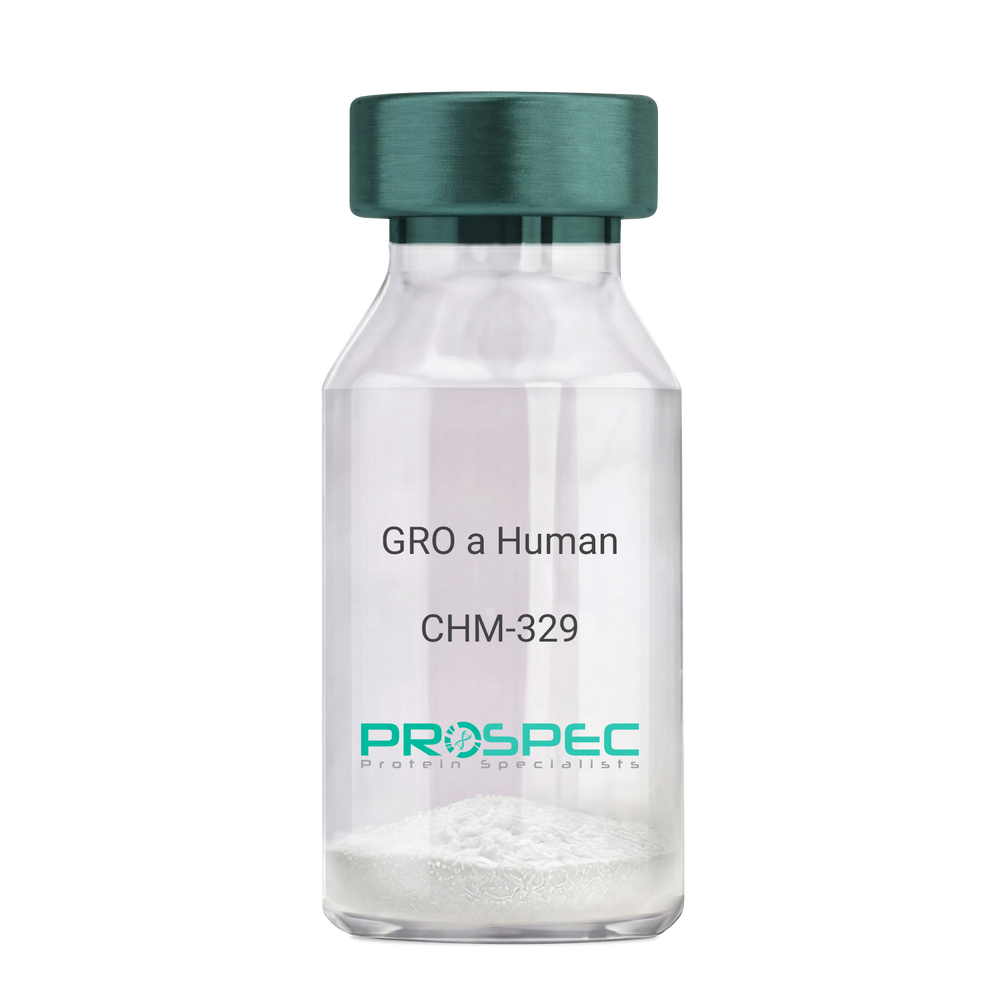
    GRO-Alpha Human Recombinant (CXCL1)

    Growth-regulated protein alpha, CXCL1, Melanoma growth stimulatory activity, MGSA, Neutrophil-activating protein 3, NAP-3, GRO-alpha (1-73), chemokine (C-X-C motif) ligand 1, GRO1, GROa, SCYB1, MGSA-a, MGSA alpha.

    Product # :

    CHM-329

    Price :

    Quantity :

    Shipping Method :

    Room Temp Icon

    Shipped at Room temp

    Add To Cart

    More Info

    • description
    • source
    • formulation
    • purity
    • biological activity
    • More Info

    Description

    GRO Alpha Human Recombinant produced in E.Coli is a single,non-glycosylated, polypeptide chain containing 73 amino acids and having a molecular mass of 7811 Dalton. The GRO-alpha is purified by proprietary chromatographic techniques.

    Source

    Escherichia Coli.

    Formulation

    Lyophilized from a 0.2µm filtered concentrated (1mg/ml) solution in 20mM PB, pH 7.4, 50mM NaCl.

    Purity

    Greater than 97.0% as determined by:
    (a) Analysis by RP-HPLC.
    (b) Analysis by SDS-PAGE.

    Biological Activity

    Determined by its ability to chemoattract human peripheral blood neutrophils using a concentration range of 10.0-100.0 ng/ml.

    More Info

    • Introduction

      Chemokine (C-X-C motif) ligand 1 (CXCL1) is a small cytokine belonging to the CXC chemokine family that was previously called GRO1 oncogene, Neutrophil-activating protein 3 (NAP-3) and melanoma growth stimulating activity, alpha (MSGA-a). It is secreted by human melanoma cells, has mitogenic properties and is implicated in melanoma pathogenesis. CXCL1 is expressed by macrophages, neutrophilsand epithelial cells, and has neutrophil chemoattractant activity. CXCL1 plays a role in spinal cord development by inhibiting the migration of oligodendrocyte precursors and is involved in the processes of angiogenesis, inflammation, wound healing, and tumorigenesis. This chemokine elicits its effects by signaling through the chemokine receptor CXCR2. The gene for CXCL1 is located on human chromosome 4 amongst genes for other CXC chemokines.

    • Synonyms

      Growth-regulated protein alpha, CXCL1, Melanoma growth stimulatory activity, MGSA, Neutrophil-activating protein 3, NAP-3, GRO-alpha (1-73), chemokine (C-X-C motif) ligand 1, GRO1, GROa, SCYB1, MGSA-a, MGSA alpha.

    • Physical Appearance

      Sterile Filtered White lyophilized (freeze-dried) powder.

    • Stability

      Lyophilized GRO-alpha although stable at room temperature for 3 weeks, should be stored desiccated below -18°C. Upon reconstitution CXCL1 should be stored at 4°C between 2-7 days and for future use below -18°C. For long term storage it is recommended to add a carrier protein (0.1% HSA or BSA).Please prevent freeze-thaw cycles.

    • Solubility

      It is recommended to reconstitute the lyophilized CXCL1 in sterile 18MΩ-cm H2O not less than 100µg/ml, which can then be further diluted to other aqueous solutions.

    • Amino Acid Sequence

      The sequence of the first five N-terminal amino acids was determined and was found to be Ala-Ser-Val-Ala-Thr.

    • Background

      What is the molecular weight/Mw of CXCL1 HUMAN Protein?
      CXCL1 HUMAN Protein has a total Mw of 7.81kDa.

      What is the source or expression system of CXCL1 HUMAN Protein?
      Escherichia Coli.

      What is the Purity of CXCL1 HUMAN Protein?
      CXCL1 HUMAN Protein is >97% pure as determined by SDS-PAGE.

      What is the Biological Activity of CXCL1 HUMAN Protein?
      Determined by its ability to chemoattract human peripheral blood neutrophils using a concentration range of 10.0-100.0 ng/ml.

      What is the amino acid sequence of CXCL1 HUMAN Protein?
      The sequence of the first five N-terminal amino acids was determined and was found to be Ala-Ser-Val-Ala-Thr.

      What applications can CXCL1 HUMAN Protein be used in?
      CXCL1 HUMAN Protein can probably be used in western blot, ELISA and Lateral Flow.

      What is the endotoxin level for CXCL1 HUMAN Protein?
      The endotoxin level is minimal, CXCL1 HUMAN Protein was purified using conventional chromatography techniques.


    ProSpec's products are furnished for LABORATORY RESEARCH USE ONLY. The product may not be used as drugs, agricultural or pesticidal products, food additives or household chemicals.

    Gro A Human
  • View Data Sheet

    Name :

    CXCL3 Human

    Description:

    GRO-Gamma Human Recombinant (CXCL3)

    Macrophage inflammatory protein 2-beta, MIP2-beta, CXCL3, Growth-regulated protein gamma, GRO-gamma, GRO-gamma(1-73), GRO3, GROg, MIP2B, SCYB3, MIP-2b, CINC-2b, MGSA gamma.

    Product # :

    CHM-310

    Price :

    Quantity :

    Shipping Method :

    Room Temp Icon

    Shipped at Room temp

    Add To Cart

    More Info

    • description
    • source
    • formulation
    • purity
    • biological activity
    • More Info

    Description

    GRO-Gamma Human Recombinant produced in E.Coli is a single, non-glycosylated, polypeptide chain containing 73 amino acids and having a molecular mass of 7902 Dalton. The CXCL3 is purified by proprietary chromatographic techniques.

    Source

    Escherichia Coli.

    Formulation

    The protein was lyophilized with no additives.

    Purity

    Greater than 98.0% as determined by:
    (a) Analysis by RP-HPLC.
    (b) Analysis by SDS-PAGE.

    Biological Activity

    The Biological activity is calculated by its ability to chemoattract CXCR2 transfected 293 cells using 10-100ng/ml corresponding to a Specific Activity of 10,000-100,000IU/mg.

    More Info

    • Introduction

      Chemokine (C-X-C motif) ligand 3 (CXCL3) is a small cytokine belonging to the CXC chemokine family that is also known as GRO3 oncogene (GRO3), GRO protein gamma (GROg) and macrophage inflammatory protein-2-beta (MIP2b). CXCL3 controls migration and adhesion of monocytes and mediates it effects on its target cell by interacting with a cell surface chemokine receptor called CXCR2. The gene for CXCL3 is located on chromosome 4 in a cluster of other CXC chemokines.

    • Synonyms

      Macrophage inflammatory protein 2-beta, MIP2-beta, CXCL3, Growth-regulated protein gamma, GRO-gamma, GRO-gamma(1-73), GRO3, GROg, MIP2B, SCYB3, MIP-2b, CINC-2b, MGSA gamma.

    • Physical Appearance

      Sterile Filtered White lyophilized (freeze-dried) powder.

    • Stability

      Lyophilized GRO-gamma although stable at room temperature for 3 weeks, should be stored desiccated below -18°C. Upon reconstitution CXCL3 should be stored at 4°C between 2-7 days and for future use below -18°C. For long term storage it is recommended to add a carrier protein (0.1% HSA or BSA).Please prevent freeze-thaw cycles.

    • Solubility

      It is recommended to reconstitute the lyophilized CXCL3 in sterile 18MΩ-cm H2O not less than 100µg/ml, which can then be further diluted to other aqueous solutions.

    • Amino Acid Sequence

      The sequence of the first five N-terminal amino acids was determined and was found to be Ala-Ser-Val-Val-Thr.

    • Background

      What is the molecular weight/Mw of CXCL3 HUMAN Protein?
      CXCL3 HUMAN Protein has a total Mw of 7.9kDa.

      What is the source or expression system of CXCL3 HUMAN Protein?
      Escherichia Coli.

      What is the Purity of CXCL3 HUMAN Protein?
      CXCL3 HUMAN Protein is >98% pure as determined by SDS-PAGE.

      What is the Biological Activity of CXCL3 HUMAN Protein?
      The Biological activity is calculated by its ability to chemoattract CXCR2 transfected 293 cells using 10-100ng/ml corresponding to a Specific Activity of 10,000-100,000IU/mg.

      What is the amino acid sequence of CXCL3 HUMAN Protein?
      The sequence of the first five N-terminal amino acids was determined and was found to be Ala-Ser-Val-Val-Thr.

      What applications can CXCL3 HUMAN Protein be used in?
      CXCL3 HUMAN Protein can probably be used in western blot, ELISA and Lateral Flow.

      What is the endotoxin level for CXCL3 HUMAN Protein?
      The endotoxin level is minimal, CXCL3 HUMAN Protein was purified using conventional chromatography techniques.


    ProSpec's products are furnished for LABORATORY RESEARCH USE ONLY. The product may not be used as drugs, agricultural or pesticidal products, food additives or household chemicals.

    Gro Gamma Human
  • View Data Sheet

    Name :

    GSTP2 Mouse

    Description:

    Glutathione S-Transferase pi 2 Mouse Recombinant

    Glutathione S-transferase P 2, Gst P2, GST YF-YF, GST class-pi, GST-piA.

    Product # :

    ENZ-943

    Price :

    Quantity :

    Shipping Method :

    Ice Icon

    Shipped with Ice Packs

    Add To Cart

    More Info

    • description
    • source
    • formulation
    • purity
    • More Info

    Description

    GSTP2 Mouse Recombinant produced in E.Coli is a single, non-glycosylated, polypeptide chain containing 210 amino acids (1-210 a.a.) and having a molecular mass of 23.5kDa. The GSTP2 is purified by proprietary chromatographic techniques.

    Source

    Escherichia Coli.

    Formulation

    The GSTP2 protein solution (0.5mg/ml) contains Phosphate Buffered Saline (pH 7.4) and 20% glycerol.

    Purity

    Greater than 95.0% as determined by SDS-PAGE.

    More Info

    • Introduction

      Gltathione S-transferase PI 2, also known as GSTP2 is multifunctional enzyme which is involved in the protection of cellular components against anti-cancer drugs or peroxidative stress. Furthermore, down regulation of GSTP2 induces an increase of oxidative damage in the pyramidal cells of the CA1&CA3 regions as well as in the granular layer of the dentate gyrus, which at the end leads to structural and functional damage.

    • Synonyms

      Glutathione S-transferase P 2, Gst P2, GST YF-YF, GST class-pi, GST-piA.

    • Physical Appearance

      Sterile Filtered clear solution.

    • Stability

      Store at 4°C if entire vial will be used within 2-4 weeks. Store, frozen at -20°C for longer periods of time. For long term storage it is recommended to add a carrier protein (0.1% HSA or BSA). Avoid multiple freeze-thaw cycles.

    • Amino Acid Sequence

      MPPYTIVYFP SPGRCEAMRM LLADQGQSWK EEVVTIDTWM QGLLKPTCLY GQLPKFEDGD LTLYQSNAIL RHLGRSLGLY GKNQREAAQV DMVNDGVEDL RGKYGTMIYR NYENGKNDYV KALPGHLKPF ETLLSQNQGG KAFIVGDQIS FADYNLLDLL LIHQVLAPGC LDNFPLLSAY VARLSARPKI KAFLSSPEHV NRPINGNGKQ.

    ProSpec's products are furnished for LABORATORY RESEARCH USE ONLY. The product may not be used as drugs, agricultural or pesticidal products, food additives or household chemicals.

    Mouse Gstp2
  • View Data Sheet

    Name :

    MAPK1 Human, His

    Description:

    Recombinant Human Mitogen-Activated Protein Kinase 1, His Tag

    Mitogen-activated protein kinase 1, EC 2.7.11.24, Extracellular signal-regulated kinase 2, ERK-2, Mitogen-activated protein kinase 2, MAP kinase 2, MAPK 2, p42-MAPK, ERT1, ERK, p38, p40, p41, ERK2, MAPK2, PRKM1, PRKM2, P42MAPK, p41mapk.

    Product # :

    PKA-360

    Price :

    Quantity :

    Shipping Method :

    Ice Icon

    Shipped with Ice Packs

    Add To Cart

    More Info

    • description
    • source
    • formulation
    • purity
    • More Info

    Description

    MAPK1 Human Recombinant produced in E.Coli is a single, non-glycosylated, polypeptide chain containing 380 amino acids (1-360 a.a.) and having a molecular mass of 43.5 kDa. MAPK1 is fused to a 20 amino acids His-tag at N-terminus & purified by proprietary chromatographic techniques.

    Source

    Escherichia Coli.

    Formulation

    The MAPK1 solution contains 20 mM Tris-HCl buffer (pH 8.0), 1mM DTT and 10% glycerol.

    Purity

    Greater than 95.0% as determined by SDS-PAGE.

    More Info

    • Introduction

      Mitogen-activated protein kinase 1 (MAPK1) is also known as "extracellular signal-regulated kinase 2" (ERK2). Two similar (85% sequence identity) protein kinases were originally called ERK1 and ERK2. They were found during a search for protein kinases that are rapidly phosphorylated after activation of cell surface tyrosine kinases such as the epidermal growth factor receptor. Phosphorylation of ERKs leads to the activation of their kinase activity.The molecular events linking cell surface receptors to activation of ERKs are complex. It was found that Ras GTP-binding proteins are involved in the activation of ERKs. Another protein kinase, Raf-1, was shown to phosphorylate a "MAPK kinase", thus qualifying as a "MAPK kinase kinase". The MAPK kinase was named "MAPK/ERK kinase" (MEK). Receptor-linked tyrosine kinases, Ras, Raf, MEK and MAPK could be fitted into a signaling cascade linking an extracellular signal to MAPK activation Transgenic gene knockout mice lacking MAPK1 have major defe

    • Synonyms

      Mitogen-activated protein kinase 1, EC 2.7.11.24, Extracellular signal-regulated kinase 2, ERK-2, Mitogen-activated protein kinase 2, MAP kinase 2, MAPK 2, p42-MAPK, ERT1, ERK, p38, p40, p41, ERK2, MAPK2, PRKM1, PRKM2, P42MAPK, p41mapk.

    • Physical Appearance

      Sterile Filtered colorless solution.

    • Stability

      Store at 4°C if entire vial will be used within 2-4 weeks. Store, frozen at -20°C for longer periods of time. For long term storage it is recommended to add a carrier protein (0.1% HSA or BSA).Avoid multiple freeze-thaw cycles.

    • Amino Acid Sequence

      MGSSHHHHHH SSGLVPRGSH MAAAAAAGAG PEMVRGQVFD VGPRYTNLSY IGEGAYGMVC SAYDNVNKVR VAIKKISPFE HQTYCQRTLR EIKILLRFRH ENIIGINDII RAPTIEQMKD VYIVQDLMET DLYKLLKTQH LSNDHICYFL YQILRGLKYI HSANVLHRDL KPSNLLLNTT CDLKICDFGL ARVADPDHDH TGFLTEYVAT RWYRAPEIML NSKGYTKSID IWSVGCILAE MLSNRPIFPG KHYLDQLNHI LGILGSPSQE MGSSHHHHHH SSGLVPRGSH MAAAAAAGAG PEMVRGQVFD VGPRYTNLSY IGEGAYGMVC SAYDNVNKVR VAIKKISPFE HQTYCQRTLR EIKILLRFRH ENIIGINDII RAPTIEQMKD VYIVQDLMET DLYKLLKTQH LSNDHICYFL YQILRGLKYI HSANVLHRDL KPSNLLLNTT CDLKICDFGL ARVADPDHDH TGFLTEYVAT RWYRAPEIML NSKGYTKSID IWSVGCILAE MLSNRPIFPG KHYLDQLNHI LGILGSPSQE DLNCIINLKA RNYLLSLPHK NKVPWNRLFP NADSKALDLL DKMLTFNPHK RIEVEQALAH PYLEQYYDPS DEPIAEAPFK FDMELDDLPK EKLKELIFEE TARFQPGYRS.

    ProSpec's products are furnished for LABORATORY RESEARCH USE ONLY. The product may not be used as drugs, agricultural or pesticidal products, food additives or household chemicals.

    Mapk1 Human His
  • View Data Sheet

    Name :

    ZNF514 Human

    Description:

    Zinc Finger Protein 514 Human Recombinant

    Zinc finger protein 514, ZNF514.

    Product # :

    PRO-1594

    Price :

    Quantity :

    Shipping Method :

    Ice Icon

    Shipped with Ice Packs

    Add To Cart

    More Info

    • description
    • source
    • formulation
    • purity
    • More Info

    Description

    ZNF514 Human Recombinant produced in E.Coli is a single, non-glycosylated polypeptide chain containing 423 amino acids (1-400 a.a) and having a molecular mass of 48.3kDa.ZNF514 is fused to a 23 amino acid His-tag at N-terminus & purified by proprietary chromatographic techniques.

    Source

    Escherichia Coli.

    Formulation

    ZNF514 protein solution (1mg/ml) containing 20mM Tris-HCl buffer (pH 8.0), 0.4M urea and 10% glycerol.

    Purity

    Greater than 85.0% as determined by SDS-PAGE.

    More Info

    • Introduction

      Zinc finger protein 514 (ZNF514) is a member of the krueppel C2H2-type zinc-finger proteinfamily. ZNF514 contains 7 C2H2-type zinc fingers and contains 1 KRAB domain. In addition, ZNF514 may be implicated intranscriptional regulation.

    • Synonyms

      Zinc finger protein 514, ZNF514.

    • Physical Appearance

      Sterile Filtered clear solution.

    • Stability

      Store at 4°C if entire vial will be used within 2-4 weeks. Store, frozen at -20°C for longer periods of time. For long term storage it is recommended to add a carrier protein (0.1% HSA or BSA).Avoid multiple freeze-thaw cycles.

    • Amino Acid Sequence

      MGSSHHHHHH SSGLVPRGSH MGSMTFEDVA VEFSQWEWGQ LNPAQKDLYR EVMLENFRNL AILGLLVSKP YVICQLEEGG EPFMVEREIS TGAHSDWKRR SKSKESMPSW GISKEELFQV VSVEKHIQDV LQFSKLKAAC GCDGQLEMQQ IKQERHLKQM STIHKSATTL SRDYKWNGFG RSLGLRSVLV NQHSILMGEG SYKCDTEFRQ TLGGNNSQRT HPEKKSCKCN ECGKSFHFQS ELRRHQRCHT GEKPYECSDC GRAFGHISSL IKHQRTHTGE KPYECSECGR AFSQSSSLVL HYRFHTGEKP YKCNECGRAF GHTSSLIKHQ RTHTGEKPYE CRECGRTFSQ SSSLIVHYRF HTGEKPYKCN KCGRAFSQSS SLTQHYRFHT GEKPYKCNEC GRAFAHTASL IKHQRSHAGK KTL

    ProSpec's products are furnished for LABORATORY RESEARCH USE ONLY. The product may not be used as drugs, agricultural or pesticidal products, food additives or household chemicals.

    Znf514 Human
  • View Data Sheet

    Name :

    HPV 18

    Description:

    Human Papillomavirus 18 Recombinant

    Papillomavirus, HPV, Papilloma Virus.

    Product # :

    HPV-002

    Price :

    Quantity :

    Shipping Method :

    Ice Icon

    Shipped with Ice Packs

    Add To Cart

    More Info

    • description
    • source
    • formulation
    • purity
    • More Info

    Description

    The Recombinant HPV-18 is a full length large capsid protein having an Mw of 55kDa expressed in E. coli and fused to a GST-Tag at n-terminal, having a total Mw of 78kDa, purified by standard chromatography.

    Source

    E.Coli

    Formulation

    Recombinant HPV-18 solution in PBS and 2M Urea.

    Purity

    Protein is >90% pure as determined by 10% PAGE (Coomassie staining).

    More Info

    • Introduction

      Human papillomavirus family consist of over 200 types. Over than 30 to 40 types of HPV are transferred via sexual contact and infect the anogenital region initiating genital warts. Persistent infection with "high-risk" HPV types results in skin warts and leads to precancerous lesions and invasive cancer. HPV infection is considered as a source for all incidents of cervical cancer. E2, E6, and E7 proteins of HPV-16 and 18 are considered the main viral oncoproteins that take part in cervical cancer. The type-specific antigen epitopes of E2, E6, and E7 proteins of HPV-16 are fused together and expressed in E. coli for diagnostic purpose.

    • Synonyms

      Papillomavirus, HPV, Papilloma Virus.

    • Physical Appearance

      Sterile filtered clear liquid formulation.

    • Amino Acid Sequence

      VDVYLPPPSVARVVNTDDYVTPTSIFYHAGSSRLLTVGNPYFRVPAGGG
      NKQDIPKVSAYQYRVFRVQLPDPNKFGLPDTSIYNPETQRLVWACAGVE
      IGRGQPLGVGLSGHPFYNKLDDTESSHAATSNVSEDVRDNVSVDYKQTQ
      LCILGCAPAIGEHWAKGTACKSRPLSQGDCPPLELKNTVLEDGDMVDTG
      YGAMDFSTLQDTKCEVPLDICQSICKYPDYLQMSADPYGDSMFFCLRRE
      QLFARHFWNRAGTMGDTVPQSLYIKGTGMPASPGSCVYSPSPSGSIVTS
      DSQLFNKPYWLHKAQGHNNGVCWHNQLFVTVVDTTPSTNLTICASTQSP
      VPGQYDATKFKQYSRHVEEYDLQFIFQLCTITLTADVMSYIHSMNSSIL
      EDWNFGVPPPPTTSLVDTYRFVQSVAITCQKDAAPAENKDPYDKLKFWN
      VDLKEKFSLDLDQYPLGRKFLVQAGLRRKPTIGPRKRSAPSATTSSKPA.

    ProSpec's products are furnished for LABORATORY RESEARCH USE ONLY. The product may not be used as drugs, agricultural or pesticidal products, food additives or household chemicals.

    Hpv 18
  • View Data Sheet

    Name :

    AIMP1 Human

    Description:

    Aminoacyl tRNA Synthetase Complex-Interacting Multifunctional Protein 1 Human Recombinant

    Aminoacyl tRNA synthase complex-interacting multifunctional protein 1, Multisynthase complex auxiliary component p43, AIMP1, EMAP2, SCYE1, p43, EMAPII.

    Product # :

    CYT-021

    Price :

    Quantity :

    Shipping Method :

    Ice Icon

    Shipped with Ice Packs

    Add To Cart

    More Info

    • description
    • source
    • formulation
    • purity
    • More Info
    • sds-page

    Description

    AIMP1 Human Recombinant fused with a 20 amino acid His tag at N-terminus produced in E.Coli is a single, non-glycosylated, polypeptide chain containing 356 amino acids (1-336 a.a.) and having a molecular mass of 39.2kDa (Molecular size on SDS-PAGE will appear higher). The AIMP1 is purified by proprietary chromatographic techniques.

    Source

    Escherichia Coli.

    Formulation

    The AIMP1 solution (0.25mg/ml) 20mM Tris-HCl buffer (pH8.0), 0.2M NaCl, 2mM DTT and 10% glycerol.

    Purity

    Greater than 85.0% as determined by SDS-PAGE.

    sds-page

    AIMP1 Human-sds-page - Product image 1

    More Info

    • Introduction

      AIMP1 (EMPA2 or p43) is a cytokine that is specifically induced by apoptosis, and it is involved in the control of angiogenesis, inflammation, and wound healing. The release of the AIMP1 cytokine renders the tumor-associated vasculature sensitive to tumor necrosis factor. Furthermore, AIMP1 is involved in the stimulation of inflammatory responses after proteolytic cleavage in tumor cells.

    • Synonyms

      Aminoacyl tRNA synthase complex-interacting multifunctional protein 1, Multisynthase complex auxiliary component p43, AIMP1, EMAP2, SCYE1, p43, EMAPII.

    • Physical Appearance

      Sterile Filtered colorless solution.

    • Stability

      Store at 4°C if entire vial will be used within 2-4 weeks. Store, frozen at -20°C for longer periods of time.For long term storage it is recommended to add a carrier protein (0.1% HSA or BSA).Please avoid freeze thaw cycles.

    • Amino Acid Sequence

      MGSSHHHHHH SSGLVPRGSH MLPAVAVSEP VVLRFMIFCR LLAKMANNDA VLKRLEQKGA EADQIIEYLK QQVSLLKEKA ILQATLREEK KLRVENAKLK KEIEELKQEL IQAEIQNGVK QIPFPSGTPL HANSMVSENV IQSTAVTTVS SGTKEQIKGG TGDEKKAKEK IEKKGEKKEK KQQSIAGSAD SKPIDVSRLD LRIGCIITAR KHPDADSLYV EEVDVGEIAP RTVVSGLVNH VPLEQMQNRM VILLCNLKPA KMRGVLSQAM VMCASSPEKI EILAPPNGSV PGDRITFDAF PGEPDKELNP KKKIWEQIQP DLHTNDECVA TYKGVPFEVK GKGVCRAQTM SNSGIK.

    • Background

      What is the molecular weight/Mw of AIMP1 HUMAN Protein?
      AIMP1 HUMAN Protein has a total Mw of 39.2kDa.

      What is the source or expression system of AIMP1 HUMAN Protein?
      Escherichia Coli.

      What is the Purity of AIMP1 HUMAN Protein?
      AIMP1 HUMAN Protein is >85% pure as determined by SDS-PAGE.

      What is the Biological Activity of AIMP1 HUMAN Protein?
      The biological functionality of AIMP1 HUMAN Protein will be determined in the future.

      What is the amino acid sequence of AIMP1 HUMAN Protein?
      MGSSHHHHHH SSGLVPRGSH MLPAVAVSEP VVLRFMIFCR LLAKMANNDA VLKRLEQKGA EADQIIEYLK QQVSLLKEKA ILQATLREEK KLRVENAKLK KEIEELKQEL IQAEIQNGVK QIPFPSGTPL HANSMVSENV IQSTAVTTVS SGTKEQIKGG TGDEKKAKEK IEKKGEKKEK KQQSIAGSAD SKPIDVSRLD LRIGCIITAR KHPDADSLYV EEVDVGEIAP RTVVSGLVNH VPLEQMQNRM VILLCNLKPA KMRGVLSQAM VMCASSPEKI EILAPPNGSV PGDRITFDAF PGEPDKELNP KKKIWEQIQP DLHTNDECVA TYKGVPFEVK GKGVCRAQTM SNSGIK.

      What applications can AIMP1 HUMAN Protein be used in?
      AIMP1 HUMAN Protein can probably be used in western blot, ELISA and Lateral Flow.

      What is the endotoxin level for AIMP1 HUMAN Protein?
      The endotoxin level is minimal, AIMP1 HUMAN Protein was purified using conventional chromatography techniques..

    ProSpec's products are furnished for LABORATORY RESEARCH USE ONLY. The product may not be used as drugs, agricultural or pesticidal products, food additives or household chemicals.

    Aimp1 Human
  • 1
  • …
  • 30
  • 31
  • 32
  • 33
  • 34
  • …
  • 42
Your browser does not support the video tag.

Products

  • Cytokines
  • Growth Factors
  • Chemokines
  • CD Antigens
  • Neurotrophins
  • Hormones
  • Enzymes
  • Viral Antigens
  • Recombinant Proteins
  • Natural Proteins
  • Monoclonal Antibodies
  • Polyclonal Antibodies
  • Thermal Packaging

About

  • Company
  • Founder
  • Contribution
  • Contact Us
  • My Account

Ordering

  • Ordering Method
  • Ordering - Credit Card
  • Ordering PO
  • Shipping Fees
  • FAQ's

Legal

  • Terms & Conditions
  • Privacy
  • Site Map
  • info@prospecbio.com
  • Facebook
  • Instagram
  • Linkedin Profile

© 2026 ProSpec-Tany TechnoGene Ltd. All Rights Reserved.

  • Choosing a selection results in a full page refresh.
  • Opens in a new window.