Search results
1000 results found for “phosphatase”
Name
Description
Product #
Price
Quantity
Shipping Method
- View Data Sheet
Name :
GPT Human, ActiveDescription:
Glutamic-Pyruvate Transaminase Human Recombinant, Active
Alanine aminotransferase 1, ALT1, EC 2.6.1.2, Glutamate pyruvate transaminase 1, GPT 1, Glutamic--alanine transaminase 1, Glutamic--pyruvic transaminase 1, GPT, AAT1, GPT1.
Product # :
ENZ-280Price :
Quantity :
Shipping Method :
Shipped with Ice Packs
More Info
- description
- source
- formulation
- purity
- biological activity
- More Info
- Citations
Description
Alanine Aminotransferase Human Recombinant produced in E.Coli is a homodimer, non-glycosylated, polypeptide chain containing 495a.a and having a molecular mass of 54,479 Dalton. The amino acid sequence is the same as that of native form of human liver ALT.The ALT is purified by proprietary chromatographic techniques.
Source
Escherichia Coli.
Formulation
The protein was dialyzed against 40mM sodium acetate buffer (pH 5.5), 1mM DTT,1mM EDTA, 5mM 2-oxoglutarate and 0.1mM pyridoxal-5'-phosphate.
Purity
Greater than 95.0% as determined by Analysis by SDS-PAGE.
Biological Activity
The specific activity was found to be 839 U/mg.
Citations
More Info
-
Introduction
Alanine transaminase or ALT is a transaminaseenzyme.
ALT is found in serumand in various bodily tissues, but is most commonly associated with the liver; It catalyzes the transfer of an aminogroup from alanineto a-ketoglutarate, the products of this reversible transaminationreaction being pyruvateand glutamatealanine+ a-ketoglutarate= pyruvate+ glutamate
It is commonly measured clinically as a part of a diagnostic liver function test, to determine liver health. It is also called serum glutamate pyruvate transaminase (SGPT) or alanine aminotransferase (ALAT). Diagnostically, it is almost always measured in units/litre (U/L). -
Synonyms
Alanine aminotransferase 1, ALT1, EC 2.6.1.2, Glutamate pyruvate transaminase 1, GPT 1, Glutamic--alanine transaminase 1, Glutamic--pyruvic transaminase 1, GPT, AAT1, GPT1.
-
Physical Appearance
Sterile liquid formulation.
-
Stability
AAT1 although stable at 10°C for 5 days, should be stored below -18°C.Please prevent freeze-thaw cycles.
ProSpec's products are furnished for LABORATORY RESEARCH USE ONLY. The product may not be used as drugs, agricultural or pesticidal products, food additives or household chemicals.
- View Data Sheet
Name :
HPRT PAT1D9AT AntibodyDescription:
Hypoxanthine-Guanine Phosphoribosyltransferase Clone PAT1D9AT, Mouse Anti Human
Hypoxanthine-Guanine Phosphoribosyltransferase , EC 2.4.2.8, HGPRT, HGPRTase, HPRT, HPRT1.
Product # :
ANT-727Price :
Quantity :
Shipping Method :
Shipped with Ice Packs
More Info
- formulation
- More Info
- Citations
Formulation
1mg/ml containing PBS, pH-7.4, 10% Glycerol and 0.02% Sodium Azide.
Citations
More Info
-
Introduction
HPRT1 has a main part in the generation of purine nucleotides through the purine salvage pathway. HPRT1 primarily functions to salvage purines from degraded DNA to renewed purine synthesis. Therefore, it performs as a catalyst in the reaction between guanine and phosphoribosyl pyrophosphate to form GMP.
-
Synonyms
Hypoxanthine-Guanine Phosphoribosyltransferase , EC 2.4.2.8, HGPRT, HGPRTase, HPRT, HPRT1.
-
Physical Appearance
Sterile filtered colorless solution.
-
Immunogen
Anti-human HPRT mAb, is derived from hybridization of mouse F0 myeloma cells with spleen cells from BALB/c mice immunized with recombinant human HPRT amino acids 1-218 purified from E. coli.
-
Ig Subclass
Mouse IgG2b heavy chain and κ light chain.
-
Clone
PAT1D9AT.
-
Applications
HPRT antibody has been tested by ELISA, Western blot analysis, ICC/IF and Flow cytometry to assure specificity and reactivity. Since application varies, however, each investigation should be titrated by the reagent to obtain optimal results.
-
Type
Mouse Anti Human Monoclonal.
-
Storage Procedures
For periods up to 1 month store at 4°C, for longer periods of time, store at -20°C. Prevent freeze thaw cycles.
-
Purification Method
HPRT antibody was purified from mouse ascitic fluids by protein-A affinity chromatography.
ProSpec's products are furnished for LABORATORY RESEARCH USE ONLY. The product may not be used as drugs, agricultural or pesticidal products, food additives or household chemicals.
- View Data Sheet
Name :
Welqut ProteaseDescription:
Welqut Protease Staphylococcus aureus Recombinant
Product # :
ENZ-1113Price :
Quantity :
Shipping Method :
Shipped with Ice Packs
More Info
- description
- source
- formulation
- purity
- More Info
- Citations
Description
Welqut Protease Recombinant is a single, non-glycosylated polypeptide chain containing 204 amino acids and having a molecular mass of 22kDa. The Welqut Protease is purified by proprietary chromatographic techniques.
Source
Escherichia Coli.
Formulation
Welqut Protease contains 10 mM Na2HPO4, 50% glycerol, 1.8 mM KH2PO4, pH 7.3, 140 mM NaCl and 2.7 mM KCl.
Purity
Greater than 97.0% as determined by SDS-PAGE.
Citations
More Info
-
Introduction
WELQut Protease is an extremely specific and recombinant serine protease from Staphylococcus aureus. The WELQut Protease identifies and accurately cleaves recombinant proteins that has a recognition sequence added to them, with the amino acid sequence Trp, Glu, Leu, Gln, X (any amino acid). WELQut Protease cut externally from the recognition sequence, therefor doesn’t leave extra amino acids bound to the target protein. The protease isn’t temperature sensitive (works in 4-30°C) or pH sensitive (pH 6.5-9.0), also, there is no need in any particular buffers.
-
Physical Appearance
Sterile Filtered colorless solution.
-
Stability
Store at 4°C if entire vial will be used within 2-4 weeks. Store, frozen at -20°C for longer periods of time. For long term storage it is recommended to add a carrier protein (0.1% HSA or BSA).Avoid multiple freeze-thaw cycles.
-
Unit Definition
Each unit is defined as the amount of enzyme required to cleave ≥99% of 100μg of a control protein in 16 h at 20°C. Enzyme activity is assayed in 100μl 100 mM Tris-HCl (pH 8.0).
ProSpec's products are furnished for LABORATORY RESEARCH USE ONLY. The product may not be used as drugs, agricultural or pesticidal products, food additives or household chemicals.
- View Data Sheet
Name :
ART4 HumanDescription:
ADP-Ribosyltransferase 4 Human Recombinant
ARTC4, DOK1, CD297 Antigen, Dombrock Blood Group, ADP-Ribosyltransferase 4, Ecto-ADP-Ribosyltransferase 4.
Product # :
ENZ-1072Price :
Quantity :
Shipping Method :
Shipped with Ice Packs
More Info
- description
- source
- formulation
- purity
- More Info
- Citations
Description
ART4 produced in Sf9 Insect cells is a single, glycosylated polypeptide chain containing 248 amino acids (47-285 a.a.) and having a molecular mass of 28.8kDa (Molecular size on SDS-PAGE will appear at approximately 28-40kDa). ART4 is expressed with a 9 amino acid His tag at C-Terminus and purified by proprietary chromatographic techniques.
Source
Sf9, Insect cells.
Formulation
ART4 protein solution (0.25mg/ml) contains Buffered Saline (pH 7.4) and 10% glycerol.
Purity
Greater than 85% as determined by SDS-PAGE.
Citations
More Info
-
Introduction
Ecto-ADP-Ribosyltransferase 4 or ART4 is typed as a glycosylphosphatidylinositol (GPI)-linked membrane protein which carries Dombrock blood group antigens. The development of this protein takes place at the highest levels in the fetal liver. the process of the ART4 development is regulated while the erythroid differentiation process occurs. ART4 is a is part of the Ribosyltransferase family.
-
Synonyms
ARTC4, DOK1, CD297 Antigen, Dombrock Blood Group, ADP-Ribosyltransferase 4, Ecto-ADP-Ribosyltransferase 4.
-
Physical Appearance
Sterile Filtered colorless solution.
-
Stability
Store at 4°C if entire vial will be used within 2-4 weeks. Store, frozen at -20°C for longer periods of time. For long term storage it is recommended to add a carrier protein (0.1% HSA or BSA). Avoid multiple freeze-thaw cycles.
-
Amino Acid Sequence
ADPSEVAIKI DFDFAPGSFD DQYQGCSKQV MEKLTQGDYF TKDIEAQKNY FRMWQKAHLA WLNQGKVLPQ NMTTTHAVAI LFYTLNSNVH SDFTRAMASV ARTPQQYERS FHFKYLHYYL TSAIQLLRKD SIMENGTLCY EVHYRTKDVH FNAYTGATIR FGQFLSTSLL KEEAQEFGNQ TLFTIFTCLG APVQYFSLKK EVLIPPYELF KVINMSYHPR GDWLQLRSTG NLSTYNCQLL KAHHHHHH.
ProSpec's products are furnished for LABORATORY RESEARCH USE ONLY. The product may not be used as drugs, agricultural or pesticidal products, food additives or household chemicals.
- View Data Sheet
Name :
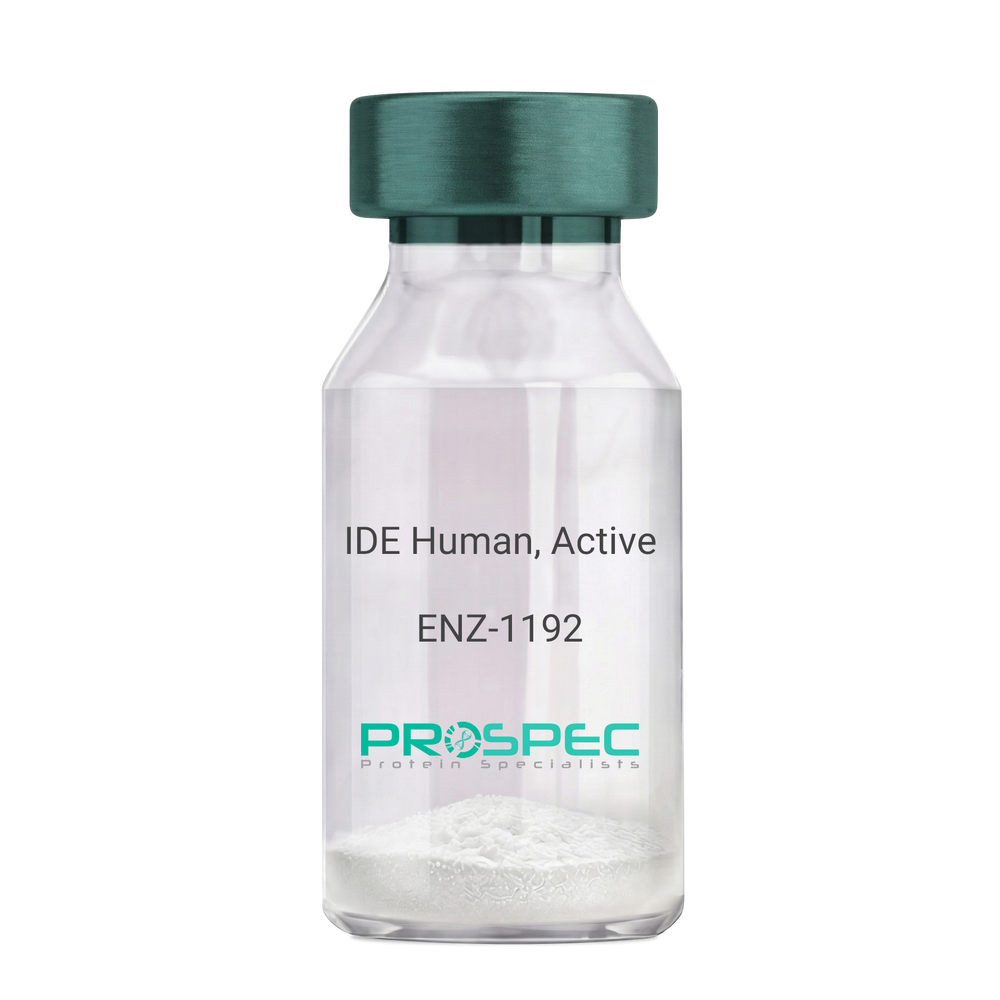
IDE Human, ActiveDescription:
Insulin-Degrading Enzyme Human Recombinant
Insulin-Degrading Enzyme, Abeta-Degrading Protease, Insulysin, EC 3.4.24.56, Insulinase, Insulin Protease, INSULYSIN, EC 3.4.24, IDE, insulin-degrading enzyme isoform 1.
Product # :
ENZ-1192Price :
Quantity :
Shipping Method :
Shipped with Ice Packs
More Info
- description
- source
- formulation
- purity
- biological activity
- More Info
- Citations
Description
IDE Human, Active Human Recombinant produced in E.Coli is a single, non-glycosylated, polypeptide chain (42-1019 a.a) containing a total of 984 amino acids, having a molecular mass of 114 kDa. IDE is fused to a 6 amino acid His-tag at C-terminus and is purified by proprietary chromatographic techniques.
Source
Escherichia Coli.
Formulation
The IDE solution (0.5mg/ml) contains 10% Glycerol, 100mM NaCl, 0.05% Brij35 and 20mM Tris-HCl buffer (pH 7.5).
Purity
Greater than 90.0% as determined by SDS-PAGE.
Biological Activity
Specific activity is greater than 3,000 pmol/min/ug in which 1 unit will convert 1.0 pmole of Mca-RPPGFSAFK(Dnp)-OH to MCA-Pro-Leu-OH per minute at pH 7.5 at 25°C.
Citations
More Info
-
Synonyms
Insulin-Degrading Enzyme, Abeta-Degrading Protease, Insulysin, EC 3.4.24.56, Insulinase, Insulin Protease, INSULYSIN, EC 3.4.24, IDE, insulin-degrading enzyme isoform 1.
-
Physical Appearance
Filtered colorless solution.
-
Stability
Store at 4°C if entire vial will be used within 2-4 weeks. Store, frozen at -20°C for longer periods of time. For long term storage it is recommended to add a carrier protein (0.1% HSA or BSA). Avoid multiple freeze-thaw cycles.
-
Amino Acid Sequence
MNNPAIKRIG NHITKSPEDK REYRGLELAN GIKVLLISDP TTDKSSAALD VHIGSLSDPP NIAGLSHFCE HMLFLGTKKY PKENEYSQFL SEHAGSSNAF TSGEHTNYYF DVSHEHLEGA LDRFAQFFLC PLFDESCKDR EVNAVDSEHE KNVMNDAWRL FQLEKATGNP KHPFSKFGTG NKYTLETRPN QEGIDVRQEL LKFHSAYYSS NLMAVCVLGR ESLDDLTNLV VKLFSEVENK NVPLPEFPEH PFQEEHLKQL YKIVPIKDIR NLYVTFPIPD LQKYYKSNPG HYLGHLIGHE GPGSLLSELK SKGWVNTLVG GQKEGARGFM FFIINVDLTE EGLLHVEDII LHMFQYIQKL RAEGPQEWVF QECKDLNAVA FRFKDKERPR GYTSKIAGIL HYYPLEEVLT AEYLLEEFRP DLIEMVLDKL RPENVRVAIV SKSFEGKTDR TEEWYGTQYK QEAIPDEVIK KWQNADLNGK FKLPTKNEFI PTNFEILPLE KEATPYPALI KDTAMSKLWF KQDDKFFLPK ACLNFEFFSP FAYVDPLHCN MAYLYLELLK DSLNEYAYAA ELAGLSYDLQ NTIYGMYLSV KGYNDKQPIL LKKIIEKMAT FEIDEKRFEI IKEAYMRSLN NFRAEQPHQH AMYYLRLLMT EVAWTKDELK EALDDVTLPR LKAFIPQLLS RLHIEALLHG NITKQAALGI MQMVEDTLIE HAHTKPLLPS
QLVRYREVQL PDRGWFVYQQ RNEVHNNCGI EIYYQTDMQS TSENMFLELF CQIISEPCFN TLRTKEQLGY IVFSGPRRAN GIQGLRFIIQ SEKPPHYLES RVEAFLITME KSIEDMTEEA FQKHIQALAI RRLDKPKKLS AECAKYWGEI ISQQYNFDRD NTEVAYLKTL TKEDIIKFYK EMLAVDAPRR HKVSVHVLAR EMDSCPVVGE FPCQNDINLS QAPALPQPEV IQNMTEFKRG LPLFPLVKPH INFMAAKLHH HHHH. -
Background
Insulin-degrading enzyme (IDE) is a crucial protease that plays a significant role in maintaining glucose homeostasis by degrading insulin and other bioactive peptides. Dysregulation of IDE has been implicated in various metabolic disorders, particularly type 2 diabetes mellitus. IDE is also associated with the clearance of amyloid-beta peptides in the brain, making it relevant to Alzheimer's disease pathology. Studying the recombinant form of IDE is fundamental to understanding its functional mechanisms and exploring potential avenues for therapeutic interventions.
The primary goal of this research is to express and purify recombinant IDE using diverse expression systems. Recombinant DNA techniques will be employed to construct expression vectors containing the IDE gene, followed by expression in bacterial, yeast, or mammalian cell-based systems. The recombinant IDE will be purified using affinity chromatography or other appropriate methods, facilitating subsequent biochemical and biophysical characterization.
The second objective is to investigate the substrate specificity and catalytic activity of the purified IDE. In vitro enzymatic assays will be conducted to analyse the ability of the recombinant IDE to degrade insulin and other potential substrates. The effects of various factors, such as pH, temperature, and potential modulators, on IDE activity will be evaluated. Additionally, the interactions between IDE and its substrates will be explored using binding assays.
The third objective is to elucidate the three-dimensional structure of the IDE recombinant using techniques like X-ray crystallography or nuclear magnetic resonance (NMR) spectroscopy. Structural insights into the active site and binding pockets of IDE will provide valuable information for understanding its substrate recognition and catalytic mechanisms. This knowledge could be instrumental in designing targeted therapeutic compounds.
By characterizing the IDE recombinant, this research aims to contribute to our understanding of its role in insulin metabolism, glucose regulation, and potential therapeutic applications. The findings from this study may have implications for the development of novel treatments for diabetes and other related disorders.
ProSpec's products are furnished for LABORATORY RESEARCH USE ONLY. The product may not be used as drugs, agricultural or pesticidal products, food additives or household chemicals.
- View Data Sheet
Name :
CASP3 Human, Sf9Description:
Caspase 3 Apoptosis-Related Cysteine Peptidase Human Recombinant, Sf9
CASP3, CPP32, CPP32B, SCA-1, CASP-3, Apopain, Cysteine protease CPP32, CPP-32, Protein Yama, SREBP cleavage activity 1.
Product # :
ENZ-1106Price :
Quantity :
Shipping Method :
Shipped with Ice Packs
More Info
- description
- source
- formulation
- purity
- biological activity
- More Info
- Citations
Description
CASP3 Human produced in Sf9 Baculovirus cells is a single, glycosylated polypeptide chain containing 256 amino acids (29-277 a.a.) and having a molecular mass of 29.4kDa (Migrates at 13.5-18kDa on SDS-PAGE under reducing conditions). CASP3 is expressed with a 6 amino acid His tag at C-Terminus and purified by proprietary chromatographic techniques.
Source
Sf9, Baculovirus cells.
Formulation
CASP3 protein solution (0.5mg/ml) containing 20mM HEPES buffer (pH 7.5), 0.1M NaCl, 1mM EDTA, 20% Glycerol and 1mM DTT.
Purity
Greater than 90.0% as determined by SDS-PAGE.
Biological Activity
Specific activity is greater than 5,000 pmol/min/ug. One unit will liberate 1 pmoles of Ac-DEVD-AFC to Ac-DEVD and AFC per minute at pH7.5 at 25C.
Citations
More Info
-
Introduction
Caspase 3 Apoptosis-Related Cysteine Peptidase (CASP3) belongs to the cysteine-aspartic acid protease (caspase) family. Sequential activation of caspases plays a key role in the execution-phase of cell apoptosis. Caspases exist as inactive proenzymes which undergo proteolytic processing at conserved aspartic residues to generate 2 subunits, large and small, that dimerize to create the active enzyme. CASP3 protein cleaves and activates caspases 6, 7 and 9, and the protein itself is processed by caspases 8, 9 and 10. CASP3 is the leading caspase involved in the cleavage of amyloid-beta 4A precursor protein, which is linked with neuronal death in Alzheimer's disease. In addition, CASP3 is involved in the cleavage of huntingtin. CASP3 also cleaves and activates sterol regulatory element binding proteins (SREBPs) between the basic helix-loop-helix leucine zipper domain and the membrane attachment domain. CASP3 initiates cell adhesion in sympathetic neurons through RET cleavage.
-
Synonyms
CASP3, CPP32, CPP32B, SCA-1, CASP-3, Apopain, Cysteine protease CPP32, CPP-32, Protein Yama, SREBP cleavage activity 1.
-
Physical Appearance
Sterile Filtered colorless solution.
-
Stability
Store at 4°C if entire vial will be used within 2-4 weeks. Store, frozen at -20°C for longer periods of time. For long term storage it is recommended to add a carrier protein (0.1% HSA or BSA).Avoid multiple freeze-thaw cycles.
-
Amino Acid Sequence
MSGISLDNSY KMDYPEMGLC IIINNKNFHK STGMTSRSGT DVDAANLRET FRNLKYEVRN
KNDLTREEIV ELMRDVSKED HSKRSSFVCV LLSHGEEGII FGTNGPVDLK KITNFFRGDR
CRSLTGKPKL FIIQACRGTE LDCGIETDSG VDDDMACHKI PVEADFLYAY STAPGYYSWR
NSKDGSWFIQ SLCAMLKQYA DKLEFMHILT RVNRKVATEF ESFSFDATFH AKKQIPCIVS MLTKELYFYH HHHHHH
ProSpec's products are furnished for LABORATORY RESEARCH USE ONLY. The product may not be used as drugs, agricultural or pesticidal products, food additives or household chemicals.
- View Data Sheet
Name :
CTSD MouseDescription:
Cathepsin-D Mouse Recombinant
Ctsd, CatD, CD, Cathepsin D.
Product # :
ENZ-1017Price :
Quantity :
Shipping Method :
Shipped with Ice Packs
More Info
- description
- source
- formulation
- purity
- biological activity
- More Info
- Citations
Description
CTSD produced in Sf9 Baculovirus cells is a single, glycosylated polypeptide chain containing 398 amino acids (21-410 a.a.) and having a molecular mass of 44.0kDa (Molecular size on SDS-PAGE will appear at approximately 40-57kDa). CTSD is expressed with an 8 amino acid His tag at C-Terminus and purified by proprietary chromatographic techniques.
Source
Sf9, Baculovirus cells.
Formulation
CTSD protein solution (0.25mg/ml) contains Phosphate Buffered Saline (pH 7.4) and 10% glycerol.
Purity
Greater than 90.0% as determined by SDS-PAGE.
Biological Activity
Specific activity is > 1,000 pmol/min/ug in which one unit will convert 1.0 pmole of Mca-PLGL-Dpa-AR-NH2 to MCA- Pro-Leu-OH per minute at pH 3.5 at 25C.Citations
More Info
-
Introduction
Cathepsin D is synthesized as a 54kDa precursor, which is proteolytically processed to an intermediate 48kDa single chain, which matures into more stable 34kDa and 14kDa two chain form. It is an estrogen-regulated lysosomal protease that has been suggested to facilitate cancer cell migration and invasion by digesting the basement membrane, extracellular matrix, and xonnective tissue. Because of its mitogenic and proteolytic activities, it has been implicated as a prognostic marker in many tumor types. Cathepsin D is expressed in epithelial cells as well as in macrophages.
-
Synonyms
Ctsd, CatD, CD, Cathepsin D.
-
Physical Appearance
Sterile Filtered colorless solution.
-
Stability
Store at 4°C if entire vial will be used within 2-4 weeks. Store, frozen at -20°C for longer periods of time. For long term storage it is recommended to add a carrier protein (0.1% HSA or BSA). Avoid multiple freeze-thaw cycles.
-
Amino Acid Sequence
IIRIPLRKFT SIRRTMTEVG GSVEDLILKG PITKYSMQSS PKTTEPVSEL LKNYLDAQYY GDIGIGTPPQ CFTVVFDTGS SNLWVPSIHC KILDIACWVH HKYNSDKSST YVKNGTSFDI HYGSGSLSGY LSQDTVSVPC KSDQSKARGI KVEKQIFGEA TKQPGIVFVA AKFDGILGMG YPHISVNNVL PVFDNLMQQK LVDKNIFSFY LNRDPEGQPG GELMLGGTDS KYYHGELSYL NVTRKAYWQV HMDQLEVGNE LTLCKGGCEA IVDTGTSLLV GPVEEVKELQ KAIGAVPLIQ GEYMIPCEKV SSLPTVYLKL GGKNYELHPD KYILKVSQGG KTICLSGFMG MDIPPPSGPL WILGDVFIGS YYTVFDRDNN RVGFANAVVL LEHHHHHH.
ProSpec's products are furnished for LABORATORY RESEARCH USE ONLY. The product may not be used as drugs, agricultural or pesticidal products, food additives or household chemicals.
- View Data Sheet
Name :
Pfu-sso7d DNA PolymeraseDescription:
Pfu-sso7d DNA Polymerase Recombinant
DNA polymerase, EC 2.7.7.7, Pfu polymerase, Pfu-DNA Polymerase.
Product # :
ENZ-1202Price :
Quantity :
Shipping Method :
Shipped with Ice Packs
More Info
- description
- source
- formulation
- purity
- More Info
- Citations
Description
Pfu-sso7d DNA Polymerase is derived from E. coli, having a molecular mass of 100 kDa. The Pfu-sso7d DNA Polymerase possesses the following activities: 5´→3´ DNA polymerase activity and 3´→5´ exonuclease activity. It generates blunt ends in the amplification products. The Pfu-ssod7 DNA Polymerase brings together a Pyrococcus furiosus DNA polymerase with a proc+essivity-enhancing domain Ssod7.
Source
Escherichia Coli.
Formulation
20mM Tris-HCl (pH 8.0), 50% glycerol, 0.1mM EDTA, 100mM KCl, 1mM DTT, 0.1% Tween20 and 0.1% NP-40.
Purity
Greater than 95 % as determined by SDS-PAGE analyses
Citations
More Info
-
Synonyms
DNA polymerase, EC 2.7.7.7, Pfu polymerase, Pfu-DNA Polymerase.
-
Physical Appearance
Sterile liquid formulation.
-
Stability
Store Pfu-sso7d DNA Polymerase at 4°C if entire vial will be used within 2-4 weeks. Store, frozen at -20°C for longer periods of time. For long term storage it is recommended to add a carrier protein (0.1% HSA or BSA). Avoid multiple freeze-thaw cycles.
-
Applications
It is applicable for amplification reaction of genomic DNA, cDNA, dU-containing DNA and crude samples as templates.
-
Background
The Pfu-sso7d DNA Polymerase preforms very well for all major PCR applications. The Pfu-sso7d DNA Polymerase generates long amplicons with accuracy and speed. The high fidelity makes the Pfu-sso7d DNA Polymerase a great choice for cloning. The error rate of Pfu-sso7d DNA Polymerase is approximately 50 fold lower than that of the Thermus aquaticus DNA polymerase. It generates blunt ends in the amplification products.
-
Unit Definition
1U of enzyme catalyzes the incorporation of 10nmol of dNTP into polynucleotide fraction in 30 minutes at 74°C.
ProSpec's products are furnished for LABORATORY RESEARCH USE ONLY. The product may not be used as drugs, agricultural or pesticidal products, food additives or household chemicals.
- View Data Sheet
Name :
IDH1Description:
Isocitrate Dehydrogenase-1 Yeast Recombinant
Isocitrate dehydrogenase [NADP] cytoplasmic, EC 1.1.1.42, Cytosolic NADP-isocitrate dehydrogenase, Oxalosuccinate decarboxylase, IDH, NADP(+)-specific ICDH, IDP, PICD.
Product # :
ENZ-289Price :
Quantity :
Shipping Method :
Shipped with Ice Packs
More Info
- description
- source
- formulation
- purity
- biological activity
- More Info
- Citations
Description
Recombinant Saccharomyces Cerevisiae ICDH (NADP) derived from yeast host cells by using over-expression system, is full length same as designated ICD1 from Saccharomyces Cerevisiae. The N-terminal amino acid Phenylalanine residue next to Met is substituted with Alanine for overexpression. The ICDH is purified by proprietary chromatographic techniques.
Source
Yeast cells.
Formulation
One ml of solution contains 0.075 mol/l KPO4, 50% Glycerol, pH 7.1.
Purity
Greater than 90% as determined by SDS-PAGE.
Biological Activity
The specific activity was found to be 115 U/mg.Citations
More Info
-
Introduction
Isocitrate Dehydrogenase is an enzyme of the oxidoreductase class that catalyzes the conversion of isocitrate and NAD+ to yield 2-ketoglutarate, carbon dioxide, and NADH. It occurs in cell mitochondria. The enzyme requires Mg2+, Mn2+; it is activated by ADP, citrate, and Ca2+, and inhibited by NADH, NADPH, and ATP. The reaction is the key rate-limiting step of the citric acid (tricarboxylic) cycle.
-
Synonyms
Isocitrate dehydrogenase [NADP] cytoplasmic, EC 1.1.1.42, Cytosolic NADP-isocitrate dehydrogenase, Oxalosuccinate decarboxylase, IDH, NADP(+)-specific ICDH, IDP, PICD.
-
Physical Appearance
Sterile Filtered clear solution.
-
Stability
Store at 4°C if entire vial will be used within 2-4 weeks. Store, frozen at -20°C for longer periods of time. For long term storage it is recommended to add a carrier protein (0.1% HSA or BSA).Avoid multiple freeze-thaw cycles.
-
Unit Definition
One unit is defined as 1 µmol of NAD+ production per minute under the assay conditions (25°C, pH 7.5).
ProSpec's products are furnished for LABORATORY RESEARCH USE ONLY. The product may not be used as drugs, agricultural or pesticidal products, food additives or household chemicals.
- View Data Sheet
Name :
AKR7A3 Human, HisDescription:
Aldo-Keto Reductase Family 7 Member A3 Human Recombinant, His Tag
AFAR2, Aflatoxin B1 aldehyde reductase member 3, AFB1 aldehyde reductase 2, AFB1-AR 2, AKR7A3.
Product # :
ENZ-484Price :
Quantity :
Shipping Method :
Shipped with Ice Packs
More Info
- description
- source
- formulation
- purity
- biological activity
- More Info
- Citations
Description
AKR7A3 Human Recombinant fused to a 39 amino acids His Tag at N-terminal produced in E.Coli is a single, non-glycosylated, polypeptide chain containing 370 amino acids (1-331 a.a.) and having a molecular mass of 41.6 kDa. The AKR7A3 is fused to a 39 amino acid His tag at n-terminal and purified by proprietary chromatographic techniques.
Source
Escherichia Coli.
Formulation
The AKR7A3 solution contains 20mM Tris-HCl pH-8, 0.1M NaCl and 10% glycerol.
Purity
Greater than 95.0% as determined by SDS-PAGE.
Biological Activity
Specific activity: approximately < 0.1 units/mg.
Enzymatic activity was confirmed by measuring the amount of enzyme catalyzing the oxidation of 1 micromole NADPH per minute at 25C. Specific activity was expressed as units/mg protein.Citations
More Info
-
Introduction
AKR7A3, takes part in the detoxification of aldehydes and ketones. AKR7A3 reduces the dialdehyde protein-binding form of aflatoxin B1 (AFB1) to the non-binding AFB1 dialcohol. AKR7A3 participates in protection of liver against the toxic and carcinogenic effects of AFB1, a potent hepatocarcinogen.
-
Synonyms
AFAR2, Aflatoxin B1 aldehyde reductase member 3, AFB1 aldehyde reductase 2, AFB1-AR 2, AKR7A3.
-
Physical Appearance
Sterile Filtered clear colorless solution.
-
Stability
Store at 4°C if entire vial will be used within 2-4 weeks. Store, frozen at -20°C for longer periods of time. For long term storage it is recommended to add a carrier protein (0.1% HSA or BSA).Avoid multiple freeze-thaw cycles.
-
Amino Acid Sequence
MRGSHHHHHH GMASMTGGQQ MGRDLYDDDD KDRWGSELEM SRQLSRARPA TVLGAMEMGR RMDAPTSAAV TRAFLERGHT EIDTAFVYSE GQSETILGGL GLRLGGSDCR VKIDTKAIPL FGNSLKPDSL RFQLETSLKR LQCPRVDLFY LHMPDHSTPV EETLRACHQL HQEGKFVELG LSNYAAWEVA EICTLCKSNG WILPTVYQGM YNAITRQVET ELFPCLRHFG LRFYAFNPLA GGLLTGKYKY EDKDGKQPVG RFFGNTWAEM YRNRYWKEHH FEGIALVEKA LQAAYGASAP SMTSATLRWM YHHSQLQGAH GDAVILGMSS LEQLEQNLAA AEEGPLEPAV VDAFNQAWHL VAHECPNYFR.
ProSpec's products are furnished for LABORATORY RESEARCH USE ONLY. The product may not be used as drugs, agricultural or pesticidal products, food additives or household chemicals.
- View Data Sheet
Name :
SMS HumanDescription:
Spermine Synthase Human Recombinant
Spermine synthase, SPMSY, Spermidine aminopropyltransferase, SMS, SRS, SpS, MRSR.
Product # :
ENZ-230Price :
Quantity :
Shipping Method :
Shipped with Ice Packs
More Info
- description
- source
- formulation
- purity
- More Info
- Citations
Description
SMS Human Recombinant produced in E.coli is a single, non-glycosylated polypeptide chain containing 390 amino acids (1-366) and having a molecular mass of 43.8kDa.SMS is fused to a 24 amino acid His-tag at N-terminus & purified by proprietary chromatographic techniques.
Source
Escherichia Coli.
Formulation
The SMS solution (1mg/ml) contains 20mM Tris-HCl buffer (pH 8.0), 1mM DTT, 10% glycerol and 100mM NaCl.
Purity
Greater than 90.0% as determined by SDS-PAGE.
Citations
More Info
-
Introduction
Spermine synthase (SMS) is amember of the spermidine/spermine synthase family. SMS is an enzyme which converts spermidine into spermine. The SMS enzyme is essential for normal viability, growth and fertility involved in polyamine metabolism. Defects in the SMS gene are the cause of Snyder-Robinson syndrome (SRS), also known as X-linked mental retardation Snyder-Robinson type. SRS is categorized by moderate intellectual deficit, hypotonia, an unsteady gait, osteoporosis, kyphoscoliosis and facial asymmetry, its transmission is X-linked recessive.
-
Synonyms
Spermine synthase, SPMSY, Spermidine aminopropyltransferase, SMS, SRS, SpS, MRSR.
-
Physical Appearance
Sterile filtered colorless solution.
-
Stability
Store at 4°C if entire vial will be used within 2-4 weeks. Store, frozen at -20°C for longer periods of time. For long term storage it is recommended to add a carrier protein (0.1% HSA or BSA).Avoid multiple freeze-thaw cycles.
-
Amino Acid Sequence
MGSSHHHHHH SSGLVPRGSH MGSHMAAARH STLDFMLGAK ADGETILKGL QSIFQEQGMA ESVHTWQDHG YLATYTNKNG SFANLRIYPH GLVLLDLQSY DGDAQGKEEI DSILNKVEER MKELSQDSTG RVKRLPPIVR GGAIDRYWPT ADGRLVEYDI DEVVYDEDSP YQNIKILHSK QFGNILILSG DVNLAESDLA YTRAIMGSGK EDYTGKDVLI LGGGDGGILC EIVKLKPKMV TMVEIDQMVI DGCKKYMRKT CGDVLDNLKG DCYQVLIEDC IPVLKRYAKE GREFDYVIND LTAVPISTSP EEDSTWEFLR LILDLSMKVL KQDGKYFTQG NCVNLTEALS LYEEQLGRLY CPVEFSKEIV CVPSYLELWV FYTVWKKAKP.
ProSpec's products are furnished for LABORATORY RESEARCH USE ONLY. The product may not be used as drugs, agricultural or pesticidal products, food additives or household chemicals.
- View Data Sheet
Name :
IDH3G HumanDescription:
Isocitrate Dehydrogenase 3 (NAD+) Gamma Human Recombinant
Isocitrate dehydrogenase [NAD] subunit gamma, mitochondrial, Isocitric dehydrogenase subunit gamma, NAD(+)-specific ICDH subunit gamma, IDH3G, H-IDHG.
Product # :
ENZ-205Price :
Quantity :
Shipping Method :
Shipped with Ice Packs
More Info
- description
- source
- formulation
- purity
- More Info
- Citations
Description
IDH3G Human Recombinant produced in E.coli is a single, non-glycosylated polypeptide chain containing 375 amino acids (40-393) and having a molecular mass of 41.1kDa.IDH3G is fused to a 21 amino acid His-tag at N-terminus & purified by proprietary chromatographic techniques.
Source
E.coli.
Formulation
The IDH3G solution (0.25mg/ml) contains 20mM Tris-HCl buffer (pH8.0), 50% glycerol, 0.2M NaCl, 5mM DTT and 2mM EDTA.
Purity
Greater than 85% as determined by SDS-PAGE.
Citations
More Info
-
Introduction
Isocitrate dehydrogenase [NAD] subunit gamma (IDH3G) mitochondrial is a member of the isocitrate and isopropylmalate dehydrogenases family. Isocitrate dehydrogenases catalyze the oxidative decarboxylation of isocitrate to 2-oxoglutarate. The IDH3G is a gamma subunit of one isozyme of isocitrate dehydrogenase which belongs to a distinct subclass, which utilizes NAD(+) as the electron acceptor, and is restricted to the mitochondrial matrix.
-
Synonyms
Isocitrate dehydrogenase [NAD] subunit gamma, mitochondrial, Isocitric dehydrogenase subunit gamma, NAD(+)-specific ICDH subunit gamma, IDH3G, H-IDHG.
-
Physical Appearance
Sterile Filtered colorless solution.
-
Stability
Store at 4°C if entire vial will be used within 2-4 weeks. Store, frozen at -20°C for longer periods of time. For long term storage it is recommended to add a carrier protein (0.1% HSA or BSA).Avoid multiple freeze-thaw cycles.
-
Amino Acid Sequence
MGSSHHHHHH SSGLVPRGSH MFSEQTIPPS AKYGGRHTVT MIPGDGIGPE LMLHVKSVFR HACVPVDFEE VHVSSNADEE DIRNAIMAIR RNRVALKGNI ETNHNLPPSH KSRNNILRTS LDLYANVIHC KSLPGVVTRH KDIDILIVRE NTEGEYSSLE HESVAGVVES LKIITKAKSL RIAEYAFKLA QESGRKKVTA VHKANIMKLG DGLFLQCCRE VAARYPQITF ENMIVDNTTM QLVSRPQQFD VMVMPNLYGN IVNNVCAGLV GGPGLVAGAN YGHVYAVFET ATRNTGKSIA NKNIANPTAT LLASCMMLDH LKLHSYATSI RKAVLASMDN ENMHTPDIGG QGTTSEAIQD VIRHIRVING RAVEA.
ProSpec's products are furnished for LABORATORY RESEARCH USE ONLY. The product may not be used as drugs, agricultural or pesticidal products, food additives or household chemicals.
- View Data Sheet
Name :
ELAC1 HumanDescription:
ElaC Ribonuclease Z 1 Human Recombinant
ElaC Ribonuclease Z 1, D29, ElaC Homolog Protein 1, TRNA 3 Endonuclease 1, TRNA Z (Short Form), Ribonuclease Z 1, Deleted In Ma29, EC 3.1.26.11, TRNase Z 1, RNaseZ(S), RNase Z 1, Zinc Phosphodiesterase ELAC Protein 1, TRNA 3 Processing Endoribonuclease, ElaC (E. Coli) Homolog 1, ElaC Homolog 1 (E. Coli), ElaC Homolog 1, TRNase ZS, ELAC1.
Product # :
ENZ-883Price :
Quantity :
Shipping Method :
Shipped with Ice Packs
More Info
- description
- source
- formulation
- purity
- More Info
- Citations
Description
ELAC1 Human Recombinant produced in E.Coli is a single, non-glycosylated polypeptide chain containing 386 amino acids (1-363 a.a) and having a molecular mass of 42.4 kDa.ELAC1 is fused to a 23 amino acid His-tag at N-terminus & purified by proprietary chromatographic techniques.
Source
Escherichia Coli.
Formulation
ELAC1 protein solution (0.5mg/ml) containing Phosphate buffered saline (pH7.4), 10% glycerol and 1mM DTT.
Purity
Greater than 80.0% as determined by SDS-PAGE.
Citations
More Info
-
Introduction
ElaC Ribonuclease Z 1, also known as ELAC1 is a member of the RNase Z family. Zinc phosphodiesterase, which shows some tRNA 3'-processing endonuclease activity. In addition, ELAC1 is implicated in tRNA maturation, by removing a 3'-trailer from precursor tRNA.
-
Synonyms
ElaC Ribonuclease Z 1, D29, ElaC Homolog Protein 1, TRNA 3 Endonuclease 1, TRNA Z (Short Form), Ribonuclease Z 1, Deleted In Ma29, EC 3.1.26.11, TRNase Z 1, RNaseZ(S), RNase Z 1, Zinc Phosphodiesterase ELAC Protein 1, TRNA 3 Processing Endoribonuclease, ElaC (E. Coli) Homolog 1, ElaC Homolog 1 (E. Coli), ElaC Homolog 1, TRNase ZS, ELAC1.
-
Physical Appearance
Sterile Filtered colorless solution.
-
Stability
Store at 4°C if entire vial will be used within 2-4 weeks. Store, frozen at -20°C for longer periods of time. For long term storage it is recommended to add a carrier protein (0.1% HSA or BSA).Avoid multiple freeze-thaw cycles.
-
Amino Acid Sequence
MGSSHHHHHH SSGLVPRGSH MGSMSMDVTF LGTGAAYPSP TRGASAVVLR CEGECWLFDC GEGTQTQLMK SQLKAGRITK IFITHLHGDH FFGLPGLLCT ISLQSGSMVS KQPIEIYGPV GLRDFIWRTM ELSHTELVFH YVVHELVPTA DQCPAEELKE FAHVNRADSP PKEEQGRTIL LDSEENSYLL FDDEQFVVKA FRLFHRIPSF GFSVVEKKRP GKLNAQKLKD LGVPPGPAYG KLKNGISVVL ENGVTISPQD VLKKPIVGRK ICILGDCSGV VGDGGVKLCF EADLLIHEAT LDDAQMDKAK EHGHSTPQMA ATFAKLCRAK RLVLTHFSQR YKPVALAREG ETDGIAELKK QAESVLDLQE VTLAEDFMVI SIPIKK
ProSpec's products are furnished for LABORATORY RESEARCH USE ONLY. The product may not be used as drugs, agricultural or pesticidal products, food additives or household chemicals.
- View Data Sheet
Name :
ST6GAL1 Human, sf9Description:
ST6 Beta-Galactosamide Alpha-2,6-Sialyltranferase 1, sf9 Human Recombinant
ST6 Beta-Galactoside Alpha-2,6-Sialyltransferase 1, ST6 Beta-Galactosamide Alpha-2,6-Sialyltranferase 1, ST6Gal I, CMP-N-Acetylneuraminate-Beta-Galactosamide-Alpha-2,6-Sialyltransferase 1,B-Cell Antigen CD75, Alpha 2,6-ST 1, EC 2.4.99.1, ST6GalI, SIAT1, CMP-N-Acetylneuraminate Beta-Galactosamide Alpha-2,6-Sialyltransferase, Sialyltransferase 1 (Beta-Galactoside Alpha-2,6-Sialyltransferase) , ST6 N-Acetylgalactosaminide Alpha-2,6-Sialyltransferase 1, Sialyltransferase 1, ST6N.
Product # :
ENZ-950Price :
Quantity :
Shipping Method :
Shipped with Ice Packs
More Info
- description
- source
- formulation
- purity
- More Info
- Citations
Description
ST6GAL1 produced in Sf9 Baculovirus cells is a single, glycosylated polypeptide chain containing 389 amino acids (27-406 a.a.) and having a molecular mass of 44.6kDa. ST6GAL1 is expressed with a 6 amino acid His tag at C-Terminus and purified by proprietary chromatographic techniques.
Source
Sf9, Baculovirus cells.
Formulation
ST6GAL1 protein solution (0.5mg/ml) contains Phosphate Buffered Saline (pH 7.4) and 10% glycerol.
Purity
Greater than 90.0% as determined by SDS-PAGE.
Citations
More Info
-
Introduction
ST6GAL1 also known as ST6 Beta-Galactosamide Alpha-2,6-Sialyltranferase 1, is part of the glycosyltransferase family 29. ST6GAL1 is a type II membrane protein which catalyzes the transfer of sialic acid from CMP-sialic acid to galactose-containing substrates. Furthermore, ST6GAL1 is normally found in the Golgi however it can be proteolytically processed to a soluble form, ST6GAL1 is also involved in the generation of the cell-surface carbohydrate determinants as well differentiation antigens HB-6, CD75, and CD76.
-
Synonyms
ST6 Beta-Galactoside Alpha-2,6-Sialyltransferase 1, ST6 Beta-Galactosamide Alpha-2,6-Sialyltranferase 1, ST6Gal I, CMP-N-Acetylneuraminate-Beta-Galactosamide-Alpha-2,6-Sialyltransferase 1,B-Cell Antigen CD75, Alpha 2,6-ST 1, EC 2.4.99.1, ST6GalI, SIAT1, CMP-N-Acetylneuraminate Beta-Galactosamide Alpha-2,6-Sialyltransferase, Sialyltransferase 1 (Beta-Galactoside Alpha-2,6-Sialyltransferase) , ST6 N-Acetylgalactosaminide Alpha-2,6-Sialyltransferase 1, Sialyltransferase 1, ST6N.
-
Physical Appearance
Sterile Filtered colorless solution.
-
Stability
Store at 4°C if entire vial will be used within 2-4 weeks. Store, frozen at -20°C for longer periods of time. For long term storage it is recommended to add a carrier protein (0.1% HSA or BSA). Avoid multiple freeze-thaw cycles.
-
Amino Acid Sequence
ADPKEKKKGS YYDSFKLQTK EFQVLKSLGK LAMGSDSQSV SSSSTQDPHR GRQTLGSLRG LAKAKPEASF QVWNKDSSSK NLIPRLQKIW KNYLSMNKYK VSYKGPGPGI KFSAEALRCH LRDHVNVSMV EVTDFPFNTS EWEGYLPKES IRTKAGPWGR CAVVSSAGSL KSSQLGREID DHDAVLRFNG APTANFQQDV GTKTTIRLMN SQLVTTEKRF LKDSLYNEGI LIVWDPSVYH SDIPKWYQNP DYNFFNNYKT YRKLHPNQPF YILKPQMPWE LWDILQEISP EEIQPNPPSS GMLGIIIMMT LCDQVDIYEF LPSKRKTDVC YYYQKFFDSA CTMGAYHPLL YEKNLVKHLN QGTDEDIYLL GKATLPGFRT IHCHHHHHH.
ProSpec's products are furnished for LABORATORY RESEARCH USE ONLY. The product may not be used as drugs, agricultural or pesticidal products, food additives or household chemicals.
- View Data Sheet
Name :
BHMT2 HumanDescription:
Betaine-Homocysteine Methyltransferase 2 Human Recombinant
BHMT2, Betaine--Homocysteine S-Methyltransferase 2, SMM-Hcy Methyltransferase, Betaine-Homocysteine Methyltransferase 2, S-Methylmethionine--Homocysteine S-Methyltransferase BHMT2, EC 2.1.1.10, EC 2.1.1.5.
Product # :
ENZ-798Price :
Quantity :
Shipping Method :
Shipped with Ice Packs
More Info
- description
- source
- formulation
- purity
- More Info
- Citations
Description
BHMT2 Human Recombinant produced in E.Coli is a single, non-glycosylated polypeptide chain containing 386 amino acids (1-363 a.a.) and having a molecular mass of 42.7kDa. BHMT2 is fused to a 23 amino acid His-tag at N-terminus.
Source
Escherichia Coli.
Formulation
BHMT2 protein solution (0.5mg/ml) contains 20mM Tris-HCl buffer (pH 8.0), 0.4M Urea and 10% glycerol.
Purity
Greater than 90.0% as determined by SDS-PAGE.
Citations
More Info
-
Introduction
Betaine-Homocysteine Methyltransferase 2 (BHMT2) is involved in the regulation of homocysteine metabolism. Homocysteine is a sulfur-containing amino acid which has a key role in methylation reactions. Transfer of the methyl group from betaine to homocysteine generates methionine, which donates the methyl group to methylate DNA, proteins, lipids, and other intracellular metabolites. BHMT2 is one of two methyl transferases which can catalyze the transfer of the methyl group from betaine to homocysteine. BHMT2 converts homocysteine to methionine using S-methylmethionine (SMM) as a methyl donor. Homocysteine metabolism anomalies are implicated in disorders varying from vascular disease to neural tube birth defects such as spina bifida.
-
Synonyms
BHMT2, Betaine--Homocysteine S-Methyltransferase 2, SMM-Hcy Methyltransferase, Betaine-Homocysteine Methyltransferase 2, S-Methylmethionine--Homocysteine S-Methyltransferase BHMT2, EC 2.1.1.10, EC 2.1.1.5.
-
Physical Appearance
Sterile Filtered colorless solution.
-
Stability
Store at 4°C if entire vial will be used within 2-4 weeks. Store, frozen at -20°C for longer periods of time. For long term storage it is recommended to add a carrier protein (0.1% HSA or BSA).Avoid multiple freeze-thaw cycles.
-
Amino Acid Sequence
MGSSHHHHHH SSGLVPRGSH MGSMAPAGRP GAKKGILERL ESGEVVIGDG SFLITLEKRG YVKAGLWTPE AVIEHPDAVR QLHMEFLRAG SNVMQTFTFS ASEDNMESKW EDVNAAACDL AREVAGKGDA LVAGGICQTS IYKYQKDEAR IKKLFRQQLE VFAWKNVDFL IAEYFEHVEE AVWAVEVLKE SDRPVAVTMC IGPEGDMHDI TPGECAVRLV KAGASIVGVN CRFGPDTSLK TMELMKEGLE WAGLKAHLMV QPLGFHAPDC GKEGFVDLPE YPFGLESRVA TRWDIQKYAR EAYNLGVRYI GGCCGFEPYH IRAIAEELAP ERGFLPPASE KHGSWGSGLD MHTKPWIRAR ARREYWENLL PASGRPFCPS LSKPDF.
ProSpec's products are furnished for LABORATORY RESEARCH USE ONLY. The product may not be used as drugs, agricultural or pesticidal products, food additives or household chemicals.
- View Data Sheet
Name :
STK17A HumanDescription:
Serine/Threonine Kinase 17A Human Recombinant
DRAK1, Serine/threonine-protein kinase 17A, DAP kinase-related apoptosis-inducing protein kinase 1, STK17A.
Product # :
PKA-314Price :
Quantity :
Shipping Method :
Shipped with Ice Packs
More Info
- description
- source
- formulation
- purity
- More Info
- Citations
Description
STK17A Human Recombinant produced in E.Coli is a single, non-glycosylated polypeptide chain containing 281 amino acids (64-321 a.a) and having a molecular mass of 31.9kDa.STK17A is fused to a 23 amino acid His-tag at N-terminus & purified by proprietary chromatographic techniques.
Source
Escherichia Coli.
Formulation
STK17A protein solution (0.5mg/ml) contains 20mM Tris-HCl buffer (pH 8.0), 10% glycerol and 0.4M Urea.
Purity
Greater than 80.0% as determined by SDS-PAGE.
Citations
More Info
-
Introduction
STK17A belongs to the DAP kinase-associated apoptosis-inducing protein kinase family and encodes an autophosphorylated nuclear protein with a protein kinase domain. STK17A acts as a positive regulator of apoptosis. STK17A is greatly expressed in the placenta with lower levels in the heart, lung, skeletal muscle, kidney and pancreas.
-
Synonyms
DRAK1, Serine/threonine-protein kinase 17A, DAP kinase-related apoptosis-inducing protein kinase 1, STK17A.
-
Physical Appearance
Sterile Filtered clear solution.
-
Stability
Store at 4°C if entire vial will be used within 2-4 weeks. Store, frozen at -20°C for longer periods of time. For long term storage it is recommended to add a carrier protein (0.1% HSA or BSA).Avoid multiple freeze-thaw cycles.
-
Amino Acid Sequence
MGSSHHHHHH SSGLVPRGSH MGSGRELGRG KFAVVRKCIK KDSGKEFAAK FMRKRRKGQD CRMEIIHEIA VLELAQDNPW VINLHEVYET ASEMILVLEY AAGGEIFDQC VADREEAFKE KDVQRLMRQI LEGVHFLHTR DVVHLDLKPQ NILLTSESPL GDIKIVDFGL SRILKNSEEL REIMGTPEYV APEILSYDPI SMATDMWSIG VLTYVMLTGI SPFLGNDKQE TFLNISQMNL SYSEEEFDVL SESAVDFIRT LLVKKPEDRA TAEECLKHPW L.
ProSpec's products are furnished for LABORATORY RESEARCH USE ONLY. The product may not be used as drugs, agricultural or pesticidal products, food additives or household chemicals.
- View Data Sheet
Name :
CA1 Human, ActiveDescription:
Carbonic Anhydrase-1 Human Recombinant, BioActive
CA1, CA-I, CAB.
Product # :
ENZ-1137Price :
Quantity :
Shipping Method :
Shipped with Ice Packs
More Info
- description
- source
- formulation
- purity
- biological activity
- More Info
- Citations
Description
CA1 Human Recombinant produced in E.Coli is a single, non-glycosylated polypeptide chain containing 281 amino acids (1-261) and having a molecular mass of 31.0 kDa. CA1 Humanis fused to a 20 amino acid His-Tag at N-terminus and purified by proprietary chromatographic techniques.
Source
Escherichia Coli.
Formulation
CA1 Human protein (1mg/ml) is formulated in 20mM Tris-HCl buffer (pH 8.0) containing 1mM DTT, 10% glycerol.
Purity
Greater than 95.0% as determined by SDS-PAGE.
Biological Activity
Specific activity is > 300pmol/min/ug, and is defined as the amount of enzyme that hydrolyze 1.0pmole of 4-nitrophenyl acetate to 4-nitrophenol per minute at pH 8.0 at 37C.
Citations
More Info
-
Introduction
CA, also known as carbonic anhydrase is an enzyme. Its main function revolves around the CO2 + H2O HCO3- + H+ (conversion of carbon dioxide to bicarbonate & protons). CA has a zinc ion in its active site. The main function of CA is to keep acid-base balance in the blood stream and various tissues. This enzyme also assists Carbonic Anhydrase I to move CO2 to and from tissues.
-
Synonyms
CA1, CA-I, CAB.
-
Physical Appearance
Sterile Filtered clear solution.
-
Stability
Store at 4°C if entire vial will be used within 2-4 weeks. Store, frozen at -20°C for longer periods of time. For long term storage it is recommended to add a carrier protein (0.1% HSA or BSA).Avoid multiple freeze-thaw cycles.
-
Amino Acid Sequence
MGSSHHHHHH SSGLVPRGSH MASPDWGYDD KNGPEQWSKL YPIANGNNQS PVDIKTSETK HDTSLKPISV SYNPATAKEI INVGHSFHVN FEDNDNRSVL KGGPFSDSYR LFQFHFHWGS TNEHGSEHTV DGVKYSAELH VAHWNSAKYS SLAEAASKAD GLAVIGVLMK VGEANPKLQK VLDALQAIKT KGKRAPFTNF DPSTLLPSSL DFWTYPGSLT HPPLYESVTW IICKESISVS SEQLAQFRSL LSNVEGDNAV PMQHNNRPTQ PLKGRTVRAS F.
ProSpec's products are furnished for LABORATORY RESEARCH USE ONLY. The product may not be used as drugs, agricultural or pesticidal products, food additives or household chemicals.
- View Data Sheet
Name :
GLUL Human, ActiveDescription:
Glutamine Synthetase Human Recombinant, Active
Glutamine synthetase, GLUL Active, GLUL, Glutamine Synthetase, Active, GLNS, GS, PIG43, PIG59, Glutamate decarboxylase (EC:4.1.1.15), Glutamate--ammonia ligase.
Product # :
ENZ-974Price :
Quantity :
Shipping Method :
Shipped with Ice Packs
More Info
- description
- source
- formulation
- purity
- biological activity
- More Info
- Citations
Description
GLUL Recombinant Human produced in E.Coli is a single, non-glycosylated polypeptide chain containing 373 amino acids (1-373) and having a molecular mass of 42kDa.
Source
Escherichia Coli.
Formulation
GLUL protein solution (1mg/ml) containing 20mM Tris-HCl buffer (pH8.0), 10% glycerol 1mM DTT and 0.1mM PMSF.
Purity
Greater than 85.0% as determined by SDS-PAGE.
Biological Activity
Specific activity is > 2.000 pmol/min/ug, and is defined as the amount of enzyme that convert L-glutamate to L-glutamine per miunte at pH 7.5 at 37C in coupled system with PK/LDH.Citations
More Info
-
Introduction
GLUL catalyzes the synthesis of glutamine from glutamate and ammonia. Glutamine is a major source of energy and that takes part in cell proliferation, inhibition of apoptosis, and cell signaling. GLUL is expressed during early fetal stages, and has a role in maintaining body pH by removing ammonia from circulation. Mutations in GLUL gene are related with congenital glutamine deficiency.
-
Synonyms
Glutamine synthetase, GLUL Active, GLUL, Glutamine Synthetase, Active, GLNS, GS, PIG43, PIG59, Glutamate decarboxylase (EC:4.1.1.15), Glutamate--ammonia ligase.
-
Physical Appearance
Sterile filtered colorless solution.
-
Stability
Store at 4°C if entire vial will be used within 2-4 weeks. Store, frozen at -20°C for longer periods of time. For long term storage it is recommended to add a carrier protein (0.1% HSA or BSA).Avoid multiple freeze-thaw cycles.
-
Amino Acid Sequence
MTTSASSHLN KGIKQVYMSL PQGEKVQAMY IWIDGTGEGL RCKTRTLDSE PKCVEELPEW NFDGSSTLQS EGSNSDMYLV PAAMFRDPFR KDPNKLVLCE VFKYNRRPAE TNLRHTCKRI MDMVSNQHPW FGMEQEYTLM GTDGHPFGWP SNGFPGPQGP YYCGVGADRA YGRDIVEAHY RACLYAGVKI AGTNAEVMPA QWEFQIGPCE GISMGDHLWV ARFILHRVCE DFGVIATFDP KPIPGNWNGA GCHTNFSTKA MREENGLKYI EEAIEKLSKR HQYHIRAYDP KGGLDNARRL TGFHETSNIN DFSAGVANRS ASIRIPRTVG QEKKGYFEDR RPSANCDPFS VTEALIRTCL LNETGDEPFQ YKN.
ProSpec's products are furnished for LABORATORY RESEARCH USE ONLY. The product may not be used as drugs, agricultural or pesticidal products, food additives or household chemicals.
- View Data Sheet
Name :
UBE2B HumanDescription:
Ubiquitin Conjugating Enzyme E2B Human Recombinant
Ubiquitin-conjugating enzyme E2 B, EC 6.3.2.19, Ubiquitin-protein ligase B, Ubiquitin carrier protein B, HR6B, hHR6B, E2-17 kDa UBC2, HHR6B, RAD6B, E2-17kDa, UBE2B.
Product # :
ENZ-340Price :
Quantity :
Shipping Method :
Shipped at Room temp
More Info
- description
- source
- formulation
- purity
- More Info
- Citations
Description
Ubiquitin Conjugating Enzyme E2B Human Recombinant produced in E.coli is a 19 kDa protein containing 166 amino acids.The UE2B protein contains 6xHis tag and is purified by proprietary chromatographic techniques.
Source
Escherichia Coli.
Formulation
Lyophilized from a 0.2μm filtered concentrated (1 mg/ml) solution in 1X PBS and 1mM DTT, pH 7.5.
Purity
Greater than 95.0% as determined by: (a) Analysis by RP-HPLC. (b) Analysis by SDS-PAGE.
Citations
More Info
-
Introduction
This E2 enzyme encodes for the human homolog of the yeast DNA repair gene RAD6, which is induced by DNA damaging agents. UBE2B can conjugate ubiquitin to histone H2A in an E3- independent manner in vitro, and is essential for the multi-ubiquitination and degradation of N-end rule substrates. Additionally, UBE2B may have a role in sepsis-induced muscle protein proteolysis and cancer-induced cachexia.
-
Synonyms
Ubiquitin-conjugating enzyme E2 B, EC 6.3.2.19, Ubiquitin-protein ligase B, Ubiquitin carrier protein B, HR6B, hHR6B, E2-17 kDa UBC2, HHR6B, RAD6B, E2-17kDa, UBE2B.
-
Physical Appearance
Sterile Filtered white lyophilized powder.
-
Stability
Lyophilized UBE2B although stable at room temperature for 3 weeks, should be stored desiccated below -18°C. Upon reconstitution UBE2B should be stored at 4°C between 2-7 days and for future use below -18°C.For long term storage it is recommended to add a carrier protein (0.1% HSA or BSA).Please prevent freeze-thaw cycles.
-
Solubility
It is recommended to reconstitute the lyophilized UBE2B in sterile water not less than 100µg/ml, which can then be further diluted to other aqueous solutions.
-
Amino Acid Sequence
MHHHHHHAMGQLRSMSTPARRRLMRDFKRLQEDPPVGVSGAPSENN
IMQWNAVIFGPEGTPFEDGTFKLVIEFSEEYPNKPPTVRFLSKMFHPNVY
ADGSICLDILQNRWSPTYDVSSILTSIQSLLDEPNPNSPANSQAAQLYQE
NKREYEKRVSAIVEQSWNDS.
ProSpec's products are furnished for LABORATORY RESEARCH USE ONLY. The product may not be used as drugs, agricultural or pesticidal products, food additives or household chemicals.
- View Data Sheet
Name :
LPL HumanDescription:
Lipoprotein Lipase Human Recombinant
Lipoprotein lipase, LPL, LIPD, HDLCQ11.
Product # :
ENZ-086Price :
Quantity :
Shipping Method :
Shipped at Room temp
More Info
- description
- source
- formulation
- More Info
- Citations
Description
The Recombinant Human LPL produced in E.coli has a molecular mass of 51.61kDa containing 458 amino acid residues of the human LPL and fused to a 10 a.a. His tag at N-terminus.
Source
Escherichia Coli.
Formulation
LPL was filtered (0.4 µm) and lyophilized from 0.5 mg/ml in 50mM Acetate buffer, pH=4.
Citations
More Info
-
Introduction
LPL is a lipoprotein lipase, which is expressed in the heart, muscle, and adipose tissue. LPL acts as a homodimer, and has the dual functions of triglyceride hydrolase and ligand/bridging factor for receptor-mediated lipoprotein uptake. Type I hyperlipoproteinemia is a result of severe mutations which cause LPL deficiency, whereas less extreme mutations in LPL are linked to many disorders of lipoprotein metabolism. Lipoprotein lipase (LPL) is a fundamental enzyme in plasma triglyceride hydrolysis and is secreted by macrophages in the subendothelial space. LPL also promotes the development of atherosclerosis through facilitation of monocyte adhesion to endothelial cells, stimulation of tumor necrosis factor alpha (TNF) secretion and induction of vascular smooth muscle cell proliferation.
-
Synonyms
Lipoprotein lipase, LPL, LIPD, HDLCQ11.
-
Stability
Store lyophilized protein at -20°C. Aliquot the product after reconstitution to avoid repeated freezing/thawing cycles. Reconstituted protein can be stored at 4°C for a limited period of time; it does not show any change after two weeks at 4°C.
-
Solubility
It is recommended to add 0.1M Acetate buffer pH4 to prepare a working stock solution of approximately 0.5 mg/ml and let the lyophilized pellet dissolve completely. For conversion into higher pH value, we recommend intensive dilution by relevant buffer to a concentration of 10µg/ml. In higher concentrations the solubility of this antigen is limited. Product is not sterile! Please filter the product by an appropriate sterile filter before using it in the cell culture.
-
Amino Acid Sequence
MKHHHHHHAS ADQRRDFIDI ESKFALRTPE DTAEDTCHLI PGVAESVATC HFNHSSKTFM VIHGWTVTGM YESWVPKLVA ADQRRDFIDI ESKFALRTPE DTAEDTCHLI PGVAESVATC HFNHSSKTFM VIHGWTVTGM YESWVPKLVA ALYKREPDSN VIVVDWLSRA QEHYPVSAGY TKLVGQDVAR FINWMEEEFN YPLDNVHLLG YSLGAHAAGI AGSLTNKKVN RITGLDPAGP NFEYAEAPSR LSPDDADFVD VLHTFTRGSP GRSIGIQKPV GHVDIYPNGG TFQPGCNIGE AIRVIAERGL GDVDQLVKCS HERSIHLFID SLLNEENPSK AYRCSSKEAF EKGLCLSCRK NRCNNLGYEI SKVRAKRSSK MYLKTRSQMP YKVFHYQVKI HFSGTESETH TNQAFEISLY GTVAESENIP FTLPEVSTNK TYSFLIYTEV DIGELLMLKL KWKSDSYFSW SDWWSSPGFA IQKIRVKAGE TQKKVIFCSR EKVSHLQKGK APAVFVKCHD KSLNKKSG.
ProSpec's products are furnished for LABORATORY RESEARCH USE ONLY. The product may not be used as drugs, agricultural or pesticidal products, food additives or household chemicals.
- View Data Sheet
Name :
UBE2Q2 HumanDescription:
Ubiquitin Conjugating Enzyme E2Q2 Human Recombinant
Ubiquitin-conjugating enzyme E2 Q2, UBE2Q2, E2 ubiquitin-conjugating enzyme Q2, Ubiquitin carrier protein Q2, Ubiquitin-protein ligase Q2, Ubiquitin Conjugating Enzyme E2Q2, Ubiquitin-conjugating enzyme E2 Q2 isoform1.
Product # :
ENZ-885Price :
Quantity :
Shipping Method :
Shipped with Ice Packs
More Info
- description
- source
- formulation
- purity
- More Info
- Citations
Description
UBE2Q2 Human Recombinant produced in E.Coli is a single, non-glycosylated polypeptide chain containing 398 amino acids (1-375a.a.) and having a molecular mass of 45.2kDa.UBE2Q2 is fused to a 23 amino acid His-tag at N-terminus & purified by proprietary chromatographic techniques.
Source
Escherichia Coli.
Formulation
UBE2Q2 protein solution (0.5mg/ml) containing Phosphate Buffer Saline (pH7.4), 30% glycerol and 1mM DTT.
Purity
Greater than 85.0% as determined by SDS-PAGE.
Citations
More Info
-
Introduction
Ubiquitin Conjugating Enzyme E2Q2 (UBE2Q2) is a protein coding gene which receives ubiquitin from the E1 complex and catalyzes its covalent attachment to various proteins. UBE2Q2 which is a part of the ubiquitin-conjugating enzyme family is detected in hypopharyngeal head and neck squamous cell carcinoma and in tumor masses.
-
Synonyms
Ubiquitin-conjugating enzyme E2 Q2, UBE2Q2, E2 ubiquitin-conjugating enzyme Q2, Ubiquitin carrier protein Q2, Ubiquitin-protein ligase Q2, Ubiquitin Conjugating Enzyme E2Q2, Ubiquitin-conjugating enzyme E2 Q2 isoform1.
-
Physical Appearance
Sterile Filtered clear solution.
-
Stability
Store at 4°C if entire vial will be used within 2-4 weeks. Store, frozen at -20°C for longer periods of time. For long term storage it is recommended to add a carrier protein (0.1% HSA or BSA).Avoid multiple freeze-thaw cycles.
-
Amino Acid Sequence
MGSSHHHHHH SSGLVPRGSH MGSMSVSGLK AELKFLASIF DKNHERFRIV SWKLDELHCQ FLVPQQGSPH SLPPPLTLHC NITESYPSSS PIWFVDSEDP NLTSVLERLE DTKNNNLLRQ QLKWLICELC SLYNLPKHLD VEMLDQPLPT GQNGTTEEVT SEEEEEEEEM AEDIEDLDHY EMKEEEPISG KKSEDEGIEK ENLAILEKIR KTQRQDHLNG AVSGSVQASD RLMKELRDIY RSQSYKTGIY SVELINDSLY DWHVKLQKVD PDSPLHSDLQ ILKEKEGIEY ILLNFSFKDN FPFDPPFVRV VLPVLSGGYV LGGGALCMEL LTKQGWSSAY SIESVIMQIN ATLVKGKARV QFGANKNQYN LARAQQSYNS IVQIHEKNGW YTPPKEDG.
ProSpec's products are furnished for LABORATORY RESEARCH USE ONLY. The product may not be used as drugs, agricultural or pesticidal products, food additives or household chemicals.
- View Data Sheet
Name :
M2 HumanDescription:
DLAT/DLST/BCOADC Recombinant Human
Product # :
ENZ-072Price :
Quantity :
Shipping Method :
Shipped with Ice Packs
More Info
- description
- source
- formulation
- purity
- More Info
- Citations
Description
Recombinant antigen for solid (ELISA) and fluid phase diagnostic assays. Mixture of E2/dihydrolipamide acyltransferase-subunits from 3 mitochondrial protein complexes: pyruvate dehydrogenase complex (PDC-E2) having a molecular mass of 60,630 Dalton (pI 5.8); 2-oxo-glutarate dehydrogenase complex (OGDC-E2) having a molecular mass of 42,301 Dalton (pI 6.3); branched chain 2-oxo-acid dehydrogenase complex (BCOADCE2) having a molecular mass of 47,321 Dalton (pI 6.5). Mixture contains equal mass of each protein component. cDNAs coding for the mature forms of the human PDC-E2, OGDC-E2 and BCOADC-E2 proteins individually fused to a hexa-histidine purification tag.
Source
Sf9 insect cells.
Formulation
M2 is supplied in 16mM HEPES buffer pH-8.0, 400mM NaCl, and 20% glycerol.
Purity
Greater than 75% as determined by SDS-PAGE.
Citations
More Info
-
Introduction
M2 autoantigen is a key mark of antimitochondrial autoantibodies (AMA), a typical serological feature in patients suffering from primary biliary cirrhosis (PBC) which is a serious autoimmune liver disease accompanied by damage to intrahepatic bile ducts. Molecular definition of the M2 antigen has displayed it as no less than 3 separate target proteins. The M2 role is like the so-called E2 subunits (or dihydrolipoamide transferases) of different mitochondrial dehydrogenase complexes:
*pyruvate dehydrogenase complex.
*branched chain 2-oxo-acid dehydrogenase complex.
*2-oxoglutarate dehydrogenase complex.
Biochemically, these complexes catalyze the oxidative decarboxylation of various alpha-keto-acid substrates and systematically engage with a prosthetic lipoamide group; they are situated in the mitochondrial matrix in association with the inner membrane. The most well-known reactivity of AMA positive PBC sera is against PDC-E2. Some patients have AMA which reacts with PDC-E2 alone (95%), but most patients also show reactivity against OGDC-E2 (39-88%) and/or BCOADC-E2 (53-55%). Actually, patients can be found with reactivity only against OGDC-E2 and/or BCOADC-E2 and no PDC-E2 autoantibodies. These patients will be overlooked in assays based on natural source-derived, predominantly PDC-E2-containing M2 antigen preparations. -
Stability
Store at 4°C if entire vial will be used within 2-4 weeks. Store, frozen at -20°C for longer periods of time. Avoid multiple freeze-thaw cycles.
-
Immunological Functions
1. Binds IgG-type human auto-antibodies. 2. Standard ELISA test (checkerboard analysis of positive/negative sera panels); immunodot test with positive/negative sera panels.
-
coating concentration
0.4-0.8 µg/ml (depending on the type of ELISA plate and coating buffer). Suitable for biotinylation and iodination.
-
Applications
Western blot with anti-M2-Antigen autoantibody-positive patient sera or monoclonal
anti-hexa-His-tag antibody.
ProSpec's products are furnished for LABORATORY RESEARCH USE ONLY. The product may not be used as drugs, agricultural or pesticidal products, food additives or household chemicals.
- View Data Sheet
Name :
GSTM1 HumanDescription:
Glutathione S-Transferase M1 Human Recombinant
GST1, GSTM1-1, GSTM1a-1a, GSTM1b-1b, GTH4, GTM1, H-B, MU, MU-1, GST HB subunit 4, GST class-mu 1.
Product # :
ENZ-780Price :
Quantity :
Shipping Method :
Shipped with Ice Packs
More Info
- description
- source
- formulation
- purity
- More Info
- Citations
Description
GSTM1 Human Recombinant produced in E.Coli is a single, non-glycosylated polypeptide chain containing 203 amino acids (1-181 a.a) and having a molecular mass of 23.6kDa.GSTM1 is fused to a 22 amino acid His-tag at N-terminus & purified by proprietary chromatographic techniques.
Source
Escherichia Coli.
Formulation
GSTM1 protein solution (0.25mg/ml) contains 20mM Tris-HCl buffer (pH 8.0), 0.4M Urea and 10% glycerol.
Purity
Greater than 85.0% as determined by SDS-PAGE.
Citations
More Info
-
Introduction
Cytosolic and membrane-bound types of GST are encoded by 2 different supergene families. There are 8 classes of the soluble cytoplasmic mammalian GST: alpha, kappa, mu, omega, pi, sigma, theta and zeta. The mu class of enzymes functions in the detoxification of electrophilic compounds, including carcinogens, therapeutic drugs, environmental toxins and products of oxidative stress, by conjugation with glutathione. The genes encoding the mu class of enzymes are arranged in a gene cluster on chromosome 1p13.3 and aare highly polymorphic. These genetic differences can change an individual's resistance to carcinogens and toxins as well as affect the toxicity and efficacy of certain drugs. Null mutations of this class mu gene have been linked with the rise in a number of cancers.
-
Synonyms
GST1, GSTM1-1, GSTM1a-1a, GSTM1b-1b, GTH4, GTM1, H-B, MU, MU-1, GST HB subunit 4, GST class-mu 1.
-
Physical Appearance
Sterile Filtered clear solution.
-
Stability
Store at 4°C if entire vial will be used within 2-4 weeks. Store, frozen at -20°C for longer periods of time. For long term storage it is recommended to add a carrier protein (0.1% HSA or BSA).Avoid multiple freeze-thaw cycles.
-
Amino Acid Sequence
MGSSHHHHHH SSGLVPRGSH RSMPMILGYW DIRGLAHAIR LLLEYTDSSY EEKKYTMGDA PDYDRSQWLN EKFKLGLDFP NLPYLIDGAH KITQSNAILC YIARKHNLCG ETEEEKIRVD ILENQTMDNH MQLGMICYNP EFEKLKPKYL EELPEKLKLY SEFLGKRPWF AGNKGLEKIS AYMKSSRFLP RPVFSKMAVW GNK.
ProSpec's products are furnished for LABORATORY RESEARCH USE ONLY. The product may not be used as drugs, agricultural or pesticidal products, food additives or household chemicals.
- View Data Sheet
Name :
NME2 Human, ActiveDescription:
Non-Metastatic Cells 2 Human Recombinant, active
Nucleoside diphosphate kinase B, NDPK-B, NDPKB, NM23-H2, NM23B.
Product # :
PRO-2640Price :
Quantity :
Shipping Method :
Shipped with Ice Packs
More Info
- description
- source
- formulation
- purity
- biological activity
- More Info
- Citations
Description
NME2 Human Recombinant produced in E.Coli is a single, non-glycosylated polypeptide chain containing 152 amino acids (1-152 a.a.) and having a molecular mass of 17.2kDa.
Source
E.coli.
Formulation
The NME2 solution (1mg/ml) contains 10% glycerol, 20mM Tris-HCl buffer (pH 8.0) and 1mM DTT.
Purity
Greater than 90.0% as determined by SDS-PAGE.
Biological Activity
Specific activity is > 1,800unit/mg, and is defined as the amount of enzyme that convert 1.0 umole each of ATP and TDP to ADP and TTP per minute at pH 7.5 at 25C in a couple system with PK/LDH.
Citations
More Info
-
Introduction
Non-Metastatic Cells 2 or NME2, is a protein, that acts as a nucleoside diphosphate kinase. This protein is of a heterodimeric structure and has 152 aa A & B polypeptide chains that builds the whole protein. Erythrocyte NDP kinase beta subunit has an identical structure to NME2. NDP kinases linked to nucleoside triphosphates synthesis and it appears as though NME2 takes part in regulating signal transduction.
-
Synonyms
Nucleoside diphosphate kinase B, NDPK-B, NDPKB, NM23-H2, NM23B.
-
Physical Appearance
Sterile Filtered colorless solution.
-
Stability
Store at 4°C if entire vial will be used within 2-4 weeks. Store, frozen at -20°C for longer periods of time. For long term storage it is recommended to add a carrier protein (0.1% HSA or BSA).Avoid multiple freeze-thaw cycles.
-
Amino Acid Sequence
MANLERTFIA IKPDGVQRGL VGEIIKRFEQ KGFRLVAMKF LRASEEHLKQ HYIDLKDRPF FPGLVKYMNS GPVVAMVWEG LNVVKTGRVM LGETNPADSK PGTIRGDFCI QVGRNIIHGS DSVKSAEKEI SLWFKPEELV DYKSCAHDWV YE
ProSpec's products are furnished for LABORATORY RESEARCH USE ONLY. The product may not be used as drugs, agricultural or pesticidal products, food additives or household chemicals.