Skip to content

High-quality research proteins.

  • 1-800-805-6531

  • Mon - Sat 8.00-18.00, Sun - Closed

  • info@prospecbio.com

  • PO Box 6591 East Brunswick NJ 08816

  • Products
    • Cytokines
    • Growth factors
    • Chemokines
    • Cd antigens
    • Neurotrophins
    • Hormones
    • Enzymes
    • Viral antigens
    • Recombinant proteins
    • Natural proteins
    • Monoclonal antibodies
    • Polyclonal antibodies
    • Thermal Packaging
  • About
    • Company
    • Founder
    • Contribution
  • Customers
    • Eastern Asia
    • Eastern Europe
    • North America
    • South America
    • South East Asia
    • Southern Asia
    • Western Europe
  • Ordering
    • Ordering Method
    • Ordering - Credit Card
    • Ordering - PO
    • Shipping Fees
    • FAQs
  • Services
    • DNA Cloning
    • Protein Expression
    • Monoclonal Antibody
    • Fermentation
    • Technology License
  • Contact us
Log in

Country/region

  • USD $ | Albania
  • USD $ | Andorra
  • USD $ | Argentina
  • USD $ | Armenia
  • USD $ | Australia
  • USD $ | Austria
  • USD $ | Azerbaijan
  • USD $ | Belarus
  • USD $ | Belgium
  • USD $ | Bolivia
  • USD $ | Brazil
  • USD $ | Bulgaria
  • USD $ | Cambodia
  • USD $ | Canada
  • USD $ | Chile
  • USD $ | China
  • USD $ | Colombia
  • USD $ | Costa Rica
  • USD $ | Croatia
  • USD $ | Cyprus
  • USD $ | Czechia
  • USD $ | Denmark
  • USD $ | Estonia
  • USD $ | Finland
  • USD $ | France
  • USD $ | Georgia
  • USD $ | Germany
  • USD $ | Greece
  • USD $ | Hong Kong SAR
  • USD $ | Hungary
  • USD $ | Iceland
  • USD $ | India
  • USD $ | Ireland
  • USD $ | Israel
  • USD $ | Italy
  • USD $ | Japan
  • USD $ | Kazakhstan
  • USD $ | Latvia
  • USD $ | Liechtenstein
  • USD $ | Lithuania
  • USD $ | Madagascar
  • USD $ | Malta
  • USD $ | Mexico
  • USD $ | Moldova
  • USD $ | Monaco
  • USD $ | Netherlands
  • USD $ | New Zealand
  • USD $ | North Macedonia
  • USD $ | Norway
  • USD $ | Panama
  • USD $ | Paraguay
  • USD $ | Peru
  • USD $ | Philippines
  • USD $ | Poland
  • USD $ | Portugal
  • USD $ | Romania
  • USD $ | Singapore
  • USD $ | Slovakia
  • USD $ | Slovenia
  • USD $ | South Africa
  • USD $ | South Korea
  • USD $ | Spain
  • USD $ | Sri Lanka
  • USD $ | Sweden
  • USD $ | Switzerland
  • USD $ | Taiwan
  • USD $ | Thailand
  • USD $ | Türkiye
  • USD $ | Ukraine
  • USD $ | United Kingdom
  • USD $ | United States
  • USD $ | Uruguay
  • USD $ | Vatican City
  • USD $ | Venezuela
  • USD $ | Vietnam
  • Facebook
  • Instagram
logoProSpec - Recombinant Protein Manufacturer for academic and R&D industry
Become a distributor
Account Log in
Wishlist
Cart Cart(0)
  • Products
    +
    • Cytokines
    • Growth factors
    • Chemokines
    • Cd antigens
    • Neurotrophins
    • Hormones
    • Enzymes
    • Viral antigens
    • Recombinant proteins
    • Natural proteins
    • Monoclonal antibodies
    • Polyclonal antibodies
    • Thermal Packaging
  • About
    +
    • Company
    • Founder
    • Contribution
  • Customers
    +
    • Eastern Asia
    • Eastern Europe
    • North America
    • South America
    • South East Asia
    • Southern Asia
    • Western Europe
  • Ordering
    +
    • Ordering Method
    • Ordering - Credit Card
    • Ordering - PO
    • Shipping Fees
    • FAQs
  • Services
    +
    • DNA Cloning
    • Protein Expression
    • Monoclonal Antibody
    • Fermentation
    • Technology License
  • Contact us

Item added to your cart

View cart
View All
  • Cytokines
  • Growth factors
  • Chemokines
  • Cd antigens
  • Neurotrophins
  • Hormones
  • Enzymes
  • Viral antigens
  • Recombinant proteins
  • Natural proteins
  • Monoclonal antibodies
  • Polyclonal antibodies
  • Thermal Packaging
  • Tumor Necrosis Factor

    Tumor Necrosis Factor

    View All
  • 4-1BB

    4-1BB

    View All
  • Adiponectin

    Adiponectin

    View All
  • AIF1

    AIF1

    View All
  • Other Cytokines

    Other Cytokines

    View All
  • AITRL

    AITRL

    View All
  • Angiopoietin

    Angiopoietin

    View All
  • Apolipoprotein

    Apolipoprotein

    View All
  • B-Cell Activating Factor

    B-Cell Activating Factor

    View All
  • Beta Defensin

    Beta Defensin

    View All
  • Bone Morphogenetic Protein

    Bone Morphogenetic Protein

    View All
  • B type Natriuretic Peptide

    B type Natriuretic Peptide

    View All
  • BST

    BST

    View All
  • Betacellulin

    Betacellulin

    View All
  • Cardiotrophin

    Cardiotrophin

    View All
  • Activin

    Activin

    View All
  • Fibroblast Growth Factor

    Fibroblast Growth Factor

    View All
  • Other Growth Factors

    Other Growth Factors

    View All
  • CSF

    CSF

    View All
  • CTGF

    CTGF

    View All
  • IGFBP

    IGFBP

    View All
  • VEGF Protein

    VEGF Protein

    View All
  • EGF

    EGF

    View All
  • Epigen

    Epigen

    View All
  • Erythropoietin

    Erythropoietin

    View All
  • Insulin-Like Growth Factor

    Insulin-Like Growth Factor

    View All
  • Growth Hormone

    Growth Hormone

    View All
  • HDGF

    HDGF

    View All
  • Hepatocyte Growth Factor

    Hepatocyte Growth Factor

    View All
  • Insulin

    Insulin

    View All
  • BCA-1/ BLC (CXCL13)

    BCA-1/ BLC (CXCL13)

    View All
  • BRAK (CXCL14)

    BRAK (CXCL14)

    View All
  • C-10 (CCL6)

    C-10 (CCL6)

    View All
  • Other Chemokines

    Other Chemokines

    View All
  • MEC (CCL28)

    MEC (CCL28)

    View All
  • LD78-beta (CCL3L1)

    LD78-beta (CCL3L1)

    View All
  • CTACK (CCL27)

    CTACK (CCL27)

    View All
  • CXCL16

    CXCL16

    View All
  • CXCL17

    CXCL17

    View All
  • Platelet Factor-4 (CXCL4)

    Platelet Factor-4 (CXCL4)

    View All
  • ENA-78 (CXCL5)

    ENA-78 (CXCL5)

    View All
  • Eotaxin (CCL11,24,26)

    Eotaxin (CCL11,24,26)

    View All
  • Exodus-2 (CCL21)

    Exodus-2 (CCL21)

    View All
  • Fractalkine (CX3CL1)

    Fractalkine (CX3CL1)

    View All
  • CXCL6

    CXCL6

    View All
  • Other CD Antigens

    Other CD Antigens

    View All
  • CD14

    CD14

    View All
  • CD164

    CD164

    View All
  • CD1

    CD1

    View All
  • CD2

    CD2

    View All
  • CD200

    CD200

    View All
  • CD207

    CD207

    View All
  • CD226

    CD226

    View All
  • CD23

    CD23

    View All
  • CD244

    CD244

    View All
  • CD247

    CD247

    View All
  • CD27

    CD27

    View All
  • CD274

    CD274

    View All
  • CD300

    CD300

    View All
  • CD33

    CD33

    View All
  • Other Neurotrophins

    Other Neurotrophins

    View All
  • Beta-NGF

    Beta-NGF

    View All
  • BDNF

    BDNF

    View All
  • CDNF

    CDNF

    View All
  • CNTF

    CNTF

    View All
  • GDNF

    GDNF

    View All
  • Glia Maturation Factor

    Glia Maturation Factor

    View All
  • MANF

    MANF

    View All
  • Midkine

    Midkine

    View All
  • Neuroglobin

    Neuroglobin

    View All
  • Neurotrophic factors

    Neurotrophic factors

    View All
  • Neuregulin

    Neuregulin

    View All
  • Neuropilin

    Neuropilin

    View All
  • Pigment Epithelium-Derived Factor

    Pigment Epithelium-Derived Factor

    View All
  • Pleiotrophin

    Pleiotrophin

    View All
  • Peptide Hormones

    Peptide Hormones

    View All
  • Other Hormones

    Other Hormones

    View All
  • HCG

    HCG

    View All
  • Endothelin

    Endothelin

    View All
  • Exendin

    Exendin

    View All
  • FSH

    FSH

    View All
  • Glucagon

    Glucagon

    View All
  • GHRP

    GHRP

    View All
  • GLP

    GLP

    View All
  • Thyrostimulin

    Thyrostimulin

    View All
  • Inhibin A

    Inhibin A

    View All
  • LHRH

    LHRH

    View All
  • Melanotan

    Melanotan

    View All
  • Procalcitonin

    Procalcitonin

    View All
  • PTH

    PTH

    View All
  • Peroxiredoxin

    Peroxiredoxin

    View All
  • Peptidase

    Peptidase

    View All
  • Synthetase

    Synthetase

    View All
  • Transferase

    Transferase

    View All
  • Hydrolase

    Hydrolase

    View All
  • Dehydrogenase

    Dehydrogenase

    View All
  • ACE2

    ACE2

    View All
  • Esterase

    Esterase

    View All
  • Protein Kinases

    Protein Kinases

    View All
  • Other Enzymes

    Other Enzymes

    View All
  • Phosphatase

    Phosphatase

    View All
  • Deaminase

    Deaminase

    View All
  • Oxygenase

    Oxygenase

    View All
  • Adenylate Kinase

    Adenylate Kinase

    View All
  • Lyase

    Lyase

    View All
  • Chagas

    Chagas

    View All
  • SARS

    SARS

    View All
  • Influenza

    Influenza

    View All
  • ASFV

    ASFV

    View All
  • Astrovirus

    Astrovirus

    View All
  • Borrelia

    Borrelia

    View All
  • Helicobacter Pylori

    Helicobacter Pylori

    View All
  • Chikungunya

    Chikungunya

    View All
  • Chlamydia

    Chlamydia

    View All
  • Cytomegalo

    Cytomegalo

    View All
  • Dengue

    Dengue

    View All
  • EBV

    EBV

    View All
  • Ebola

    Ebola

    View All
  • Feline Leukemia Virus

    Feline Leukemia Virus

    View All
  • Hepatitis A

    Hepatitis A

    View All
  • Other

    Other

    View All
  • Actin

    Actin

    View All
  • ADAM

    ADAM

    View All
  • Complement Component

    Complement Component

    View All
  • Ag85

    Ag85

    View All
  • Eukaryotic Translation Initiation Factor

    Eukaryotic Translation Initiation Factor

    View All
  • Anterior Gradient Protein

    Anterior Gradient Protein

    View All
  • Heat Shock Protein

    Heat Shock Protein

    View All
  • Alpha-2-HS-Glycoprotein

    Alpha-2-HS-Glycoprotein

    View All
  • Hemoglobin

    Hemoglobin

    View All
  • Allergy

    Allergy

    View All
  • Anaplasma

    Anaplasma

    View All
  • Angiogenin

    Angiogenin

    View All
  • Ankyrin Repeat Domain

    Ankyrin Repeat Domain

    View All
  • Annexin

    Annexin

    View All
  • Other Natural Proteins

    Other Natural Proteins

    View All
  • Aprotinin

    Aprotinin

    View All
  • Transferrin

    Transferrin

    View All
  • Avidin

    Avidin

    View All
  • Anti Coagulation Factors

    Anti Coagulation Factors

    View All
  • Natural Albumin

    Natural Albumin

    View All
  • Natural Coagulation Factors

    Natural Coagulation Factors

    View All
  • Fibronectin

    Fibronectin

    View All
  • Thrombin

    Thrombin

    View All
  • Anti Human Enzyme

    Anti Human Enzyme

    View All
  • Other Monoclonal Antibodies

    Other Monoclonal Antibodies

    View All
  • Anti Human Cytokine

    Anti Human Cytokine

    View All
  • Anti Human Heat Shock Protein

    Anti Human Heat Shock Protein

    View All
  • Anti Mouse Lymphocyte

    Anti Mouse Lymphocyte

    View All
  • Anti Human Chemokine

    Anti Human Chemokine

    View All
  • Anti Human Lymphocyte

    Anti Human Lymphocyte

    View All
  • Anti Viral Monoclonal

    Anti Viral Monoclonal

    View All
  • Anti Mouse Cytokine

    Anti Mouse Cytokine

    View All
  • Anti-GST Monoclonal

    Anti-GST Monoclonal

    View All
  • Other Polyclonal Antibodies

    Other Polyclonal Antibodies

    View All
  • Anti Viral

    Anti Viral

    View All
  • Anti-GST Monoclonal

    Anti-GST Monoclonal

    View All
Back

Search results

1000 results found for “natural enzymes”

Name

Description

Product #

Price

Quantity

Shipping Method

  • View Data Sheet

    Name :

    ALKBH2 Human

    Description:

    ALKB Alkylation Repair Homolog 2 Human Recombinant

    Alpha-ketoglutarate-dependent dioxygenase alkB homolog 2, Alkylated DNA repair protein alkB homolog 2, Oxy DC1, ALKBH2, ABH2, FLJ99103, MGC90512.

    Product # :

    ENZ-112

    Price :

    Quantity :

    Shipping Method :

    Ice Icon

    Shipped with Ice Packs

    Add To Cart

    More Info

    • description
    • source
    • formulation
    • purity
    • More Info

    Description

    ALKBH2 produced in E.Coli is a single, non-glycosylated polypeptide chain containing 281 amino acids (1-261 a.a.) and having a molecular mass of 31.4kDa.ALKBH2 is fused to a 20 amino acid His-tag at N-terminus & purified by proprietary chromatographic techniques.

    Source

    Escherichia Coli.

    Formulation

    ALKBH2 solution (0.5mg/ml) containing 20mM Tris-HCl buffer (pH 8.0), 1mM DTT and 30% glycerol.

    Purity

    Greater than 90.0% as determined by SDS-PAGE.

    More Info

    • Introduction

      ALKBH2 is a member of the ALKB family.ALKBH2 is expressed in the heart, colon, liver, testis, ovary, prostate and the small intestine. ALKBH2 uses iron as a cofactor and acts as a dioxygenase which catalyzes the repair of alkylated DNA and RNA containing 1-methyladenine and 3-meth-ylcytosine. ALKBH2 is functionally activated by ascorbate and requires oxygen and ?-ketoglutarate for enzymatic activity.

    • Synonyms

      Alpha-ketoglutarate-dependent dioxygenase alkB homolog 2, Alkylated DNA repair protein alkB homolog 2, Oxy DC1, ALKBH2, ABH2, FLJ99103, MGC90512.

    • Physical Appearance

      Sterile filtered colorless solution.

    • Stability

      Store at 4°C if entire vial will be used within 2-4 weeks. Store, frozen at -20°C for longer periods of time. For long term storage it is recommended to add a carrier protein (0.1% HSA or BSA).Avoid multiple freeze-thaw cycles.

    • Amino Acid Sequence

      MGSSHHHHHH SSGLVPRGSH MDRFLVKGAQ GGLLRKQEEQ EPTGEEPAVL GGDKESTRKR PRREAPGNGG HSAGPSWRHI RAEGLDCSYT VLFGKAEADE IFQELEKEVE YFTGALARVQ VFGKWHSVPR KQATYGDAGL TYTFSGLTLS PKPWIPVLER IRDHVSGVTG QTFNFVLINR YKDGCDHIGE HRDDERELAP GSPIASVSFG ACRDFVFRHK DSRGKSPSRR VAVVRLPLAH GSLLMMNHPT NTHWYHSLPV RKKVLAPRVN LTFRKILLTK K.

    ProSpec's products are furnished for LABORATORY RESEARCH USE ONLY. The product may not be used as drugs, agricultural or pesticidal products, food additives or household chemicals.

    Alkbh2 Human
  • View Data Sheet

    Name :

    GSTA1 Human

    Description:

    Glutathione S-Transferase Alpha-1 Human Recombinant

    GST2, GSTA1-1, GTH1, GSTA-1, GSTAI, GSTA-I, EC 2.5.1.18, Glutathione S-transferase A1, GST HA subunit 1, GST-epsilon, GST class-alpha member 1, GSTA1, MGC131939.

    Product # :

    ENZ-469

    Price :

    Quantity :

    Shipping Method :

    Ice Icon

    Shipped with Ice Packs

    Add To Cart

    More Info

    • description
    • source
    • formulation
    • purity
    • biological activity
    • More Info

    Description

    GSTA1 Human Recombinant produced in E.Coli is a single, non-glycosylated, polypeptide chain containing 222 amino acids (1-222 a.a.) and having a molecular mass of 25.6 kDa. The GSTA1 is purified by proprietary chromatographic techniques.

    Source

    Escherichia Coli.

    Formulation

    The GSTA1 solution (1mg/ml) contains 20mM Tris-HCl buffer (pH 8.0), 1mM DTT and 10% glycerol.

    Purity

    Greater than 90.0% as determined by SDS-PAGE.

    Biological Activity

    Specific activity is 35,000 pmol/min/ug, and is defined as the amount of enzyme that conjugate 1.0 u mole of 1-chloro-2,4-dinitrobenzene (CDNB) with reduced glutathione per minute at pH 6.5 at 25°C.

    More Info

    • Introduction

      Membrane-bound & Cytosolic forms of GST are encoded by 2 separate supergene families. These enzymes function in the detoxification of electrophilic compounds, including carcinogens, therapeutic drugs, environmental toxins and products of oxidative stress, by conjugation with glutathione. There are 8 different classes of soluble cytoplasmic mammalian GST: alpha, kappa, mu, omega, pi, sigma, theta and zeta. The GSTA1 is found in a cluster mapped to chromosome 6, and is highly expressed in the liver. GSTA1 protects the cells from reactive oxygen species.

    • Synonyms

      GST2, GSTA1-1, GTH1, GSTA-1, GSTAI, GSTA-I, EC 2.5.1.18, Glutathione S-transferase A1, GST HA subunit 1, GST-epsilon, GST class-alpha member 1, GSTA1, MGC131939.

    • Physical Appearance

      Sterile Filtered colorless solution.

    • Stability

      Store at 4°C if entire vial will be used within 2-4 weeks. Store, frozen at -20°C for longer periods of time. For long term storage it is recommended to add a carrier protein (0.1% HSA or BSA).Avoid multiple freeze-thaw cycles.

    • Amino Acid Sequence

      MAEKPKLHYF NARGRMESTR WLLAAAGVEF EEKFIKSAED LDKLRNDGYL MFQQVPMVEI DGMKLVQTRA ILNYIASKYN LYGKDIKERA LIDMYIEGIA DLGEMILLLP VCPPEEKDAK LALIKEKIKN RYFPAFEKVL KSHGQDYLVG NKLSRADIHL VELLYYVEEL DSSLISSFPL LKALKTRISN LPTVKKFLQP GSPRKPPMDE KSLEEARKIF RF.

    ProSpec's products are furnished for LABORATORY RESEARCH USE ONLY. The product may not be used as drugs, agricultural or pesticidal products, food additives or household chemicals.

    Gsta1 Human
  • View Data Sheet

    Name :

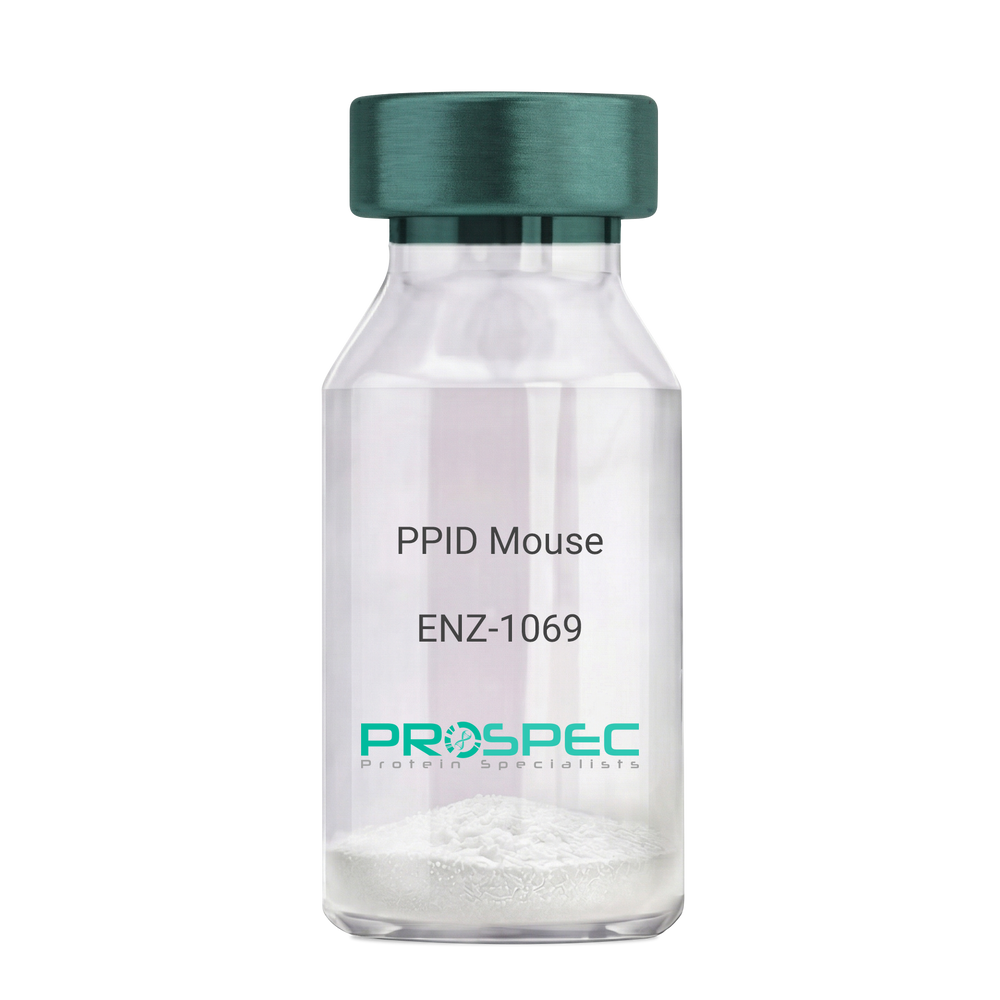
    PPID Mouse

    Description:

    Peptidylprolyl Isomerase D Mouse Recombinant

    Peptidyl-prolyl cis-trans isomerase D, PPIase D, 40 kDa peptidyl-prolyl cis-trans isomerase, Cyclophilin-40, CYP-40, Cyclophilin-related protein, CYP40, CYPD, PPID, Peptidylprolyl Isomerase D.

    Product # :

    ENZ-1069

    Price :

    Quantity :

    Shipping Method :

    Ice Icon

    Shipped with Ice Packs

    Add To Cart

    More Info

    • description
    • source
    • formulation
    • purity
    • biological activity
    • More Info

    Description

    PPID Mouse Recombinant produced in E.Coli is a single, non-glycosylated polypeptide chain containing 395 amino acids (1-370a.a.) and having a molecular mass of 43.4kDa. PPID is fused to a 25 amino acid His-tag at N-terminus & purified by proprietary chromatographic techniques.

    Source

    Escherichia Coli.

    Formulation

    PPID protein solution (1mg/ml) containing 20mM Tris-Hcl buffer (pH8.0), 10% glycerol and 1mM DTT.

    Purity

    Greater than 90.0% as determined by SDS-PAGE.

    Biological Activity

    Specific activity is > 700nmol/min/mg, and is defined as the amount of enzyme that cleaves 1umole of suc-AAFP-PNA per minute at 37°C in Tris–HCl pH 8.0 using chymotrypsin.

    More Info

    • Introduction

      Cyclophilin-D is a member of the peptidyl-prolyl cis-trans isomerase (PPIase) family. PPIases catalyze the cis-trans isomerization of proline imidic peptide bonds in oligopeptides and speeds up the protein folding. Cyclophilin-D possess PPIase activity and binds to the immunosuppressant cyclosporin-A. Cyclophilin-D is very well known that its overexpression suppresses the apoptosis in cancer cell. Cyclophilin-D suppresses apoptotic cell death by the use of mitochondrial hexokinase-2 dependent mechanism in cancer cells.

    • Synonyms

      Peptidyl-prolyl cis-trans isomerase D, PPIase D, 40 kDa peptidyl-prolyl cis-trans isomerase, Cyclophilin-40, CYP-40, Cyclophilin-related protein, CYP40, CYPD, PPID, Peptidylprolyl Isomerase D.

    • Physical Appearance

      Sterile Filtered colorless solution.

    • Stability

      Store at 4°C if entire vial will be used within 2-4 weeks. Store, frozen at -20°C for longer periods of time. For long term storage it is recommended to add a carrier protein (0.1% HSA or BSA). Please prevent freeze-thaw cycles.

    • Amino Acid Sequence

      MGSSHHHHHH SSGLVPRGSH MGSEFMSHAS PAAKPSNSKN PRVFFDVDIG GERVGRIVLE LFADIVPKTA ENFRALCTGE KGTGSTTGKP LHFKGCPFHR IIKKFMIQGG DFSNQNGTGG ESIYGEKFED ENFHYKHDRE GLLSMANAGP NTNGSQFFIT TVPTPHLDGK HVVFGQVIKG LGVARTLENV EVNGEKPAKL CVIAECGELK EGDDWGIFPK DGSGDSHPDF PEDADIDLKD VDKILLISED LKNIGNTFFK SQNWEMAIKK YAKVLRYVDS SKAVIEKADR SRLQPIALSC VLNIGACKLK MSNWQGAIDS CLEALEMDPS NTKALYRKAQ GWQGLKEYDQ ALADLKKAQE IAPGDKAIQA ELLKVKQMIK AQKDKEKAVY AKMFA.

    ProSpec's products are furnished for LABORATORY RESEARCH USE ONLY. The product may not be used as drugs, agricultural or pesticidal products, food additives or household chemicals.

    Ppid Mouse
  • View Data Sheet

    Name :

    ACADSB Human

    Description:

    Acyl-CoA Dehydrogenase, Short Chain Human Recombinant

    Short/branched chain specific acyl-CoA dehydrogenase mitochondrial, SBCAD, 2-methyl branched chain acyl-CoA dehydrogenase, 2-MEBCAD, 2-methylbutyryl-coenzyme A dehydrogenase, 2-methylbutyryl-CoA dehydrogenase, ACADSB, ACAD7, SBCAD, 2-MEBCAD.

    Product # :

    ENZ-643

    Price :

    Quantity :

    Shipping Method :

    Ice Icon

    Shipped with Ice Packs

    Add To Cart

    More Info

    • description
    • source
    • formulation
    • purity
    • More Info

    Description

    ACADSB Human Recombinant produced in E.coli is a single, non-glycosylated polypeptide chain containing 424 amino acids (34-432) and having a molecular mass of 46.4kDa.ACADSB is fused to a 25 amino acid His-tag at N-terminus & purified by proprietary chromatographic techniques.

    Source

    Escherichia Coli.

    Formulation

    The ACADSB solution (0.5mg/ml) contains 20mM Tris-HCl buffer (pH 8.0), 0.1M NaCl, 10% glycerol and 1mM DTT.

    Purity

    Greater than 90.0% as determined by SDS-PAGE.

    More Info

    • Introduction

      Short/branched chain specific acyl-CoA dehydrogenase (ACADSB) belongs to the acyl-CoA dehydrogenase family of enzymes which catalyze the dehydrogenation of acyl-CoA derivatives in the metabolism of fatty acids or branch chained amino acids. ACADSB catalyzes the degradation of L-isoleucine while having the highest affinity for (s)-2-methylbutyryl-CoA, isobutyryl-CoA and 2-methylhexanoyl-CoA as substrates. ACADSB may use valproyl-CoA as substrate. ACADSB gene defects cause the short/branched-chain acyl-CoA dehydrogenase deficiency (SBCADD), which is an autosomal recessive disorder characterized by an increase of 2-methylbutyrylglycine and 2-methylbutyrylcarnitine in blood and urine.

    • Synonyms

      Short/branched chain specific acyl-CoA dehydrogenase mitochondrial, SBCAD, 2-methyl branched chain acyl-CoA dehydrogenase, 2-MEBCAD, 2-methylbutyryl-coenzyme A dehydrogenase, 2-methylbutyryl-CoA dehydrogenase, ACADSB, ACAD7, SBCAD, 2-MEBCAD.

    • Physical Appearance

      Sterile Filtered clear solution.

    • Stability

      Store at 4°C if entire vial will be used within 2-4 weeks. Store, frozen at -20°C for longer periods of time. For long term storage it is recommended to add a carrier protein (0.1% HSA or BSA).Avoid multiple freeze-thaw cycles.

    • Amino Acid Sequence

      MGSSHHHHHH SSGLVPRGSH MGSHMKSSQS EALLNITNNG IHFAPLQTFT DEEMMIKSSV KKFAQEQIAP LVSTMDENSK MEKSVIQGLF QQGLMGIEVD PEYGGTGASF LSTVLVIEEL AKVDASVAVF CEIQNTLINT LIRKHGTEEQ KATYLPQLTT EKVGSFCLSE AGAGSDSFAL KTRADKEGDY YVLNGSKMWI SSAEHAGLFL VMANVDPTIG YKGITSFLVD RDTPGLHIGK PENKLGLRAS STCPLTFENV KVPEANILGQ IGHGYKYAIG SLNEGRIGIA AQMLGLAQGC FDYTIPYIKE RIQFGKRLFD FQGLQHQVAH VATQLEAARL LTYNAARLLE AGKPFIKEAS MAKYYASEIA GQTTSKCIEW MGGVGYTKDY PVEKYFRDAK IGTIYEGASN IQLNTIAKHI DAEY.

    ProSpec's products are furnished for LABORATORY RESEARCH USE ONLY. The product may not be used as drugs, agricultural or pesticidal products, food additives or household chemicals.

    Acadsb Human
  • View Data Sheet

    Name :

    Pfu DNA Polymerase

    Description:

    Pfu-DNA Polymerase Recombinant

    DNA polymerase, EC 2.7.7.7, Pfu polymerase, Pfu-DNA Polymerase.

    Product # :

    ENZ-265

    Price :

    Quantity :

    Shipping Method :

    Ice Icon

    Shipped with Ice Packs

    Add To Cart

    More Info

    • description
    • source
    • formulation
    • More Info

    Description

    Pfu DNA Polymerase is a thermo-stable enzyme having a Mw of about 90kDa. Pfu DNA Polymerase is derived from E. coli that and cloned from Pyrococcus furiosus strain Vc1 DSM3638. Pfu DNA Polymerase replicates DNA at 75°C, catalyzing the polymerization of nucleotides into duplex DNA in the 5´ to 3´ direction in the existence of magnesium. Pfu DNA Polymerase possesses 3´ to 5´ exonuclease (proofreading) activity. Base misinsertions that take place during polymerization are swiftly removed by the proofreading activity of the polymerase. Therefore, Pfu DNA Polymerase is suggested for use in PCR and primer extension reactions that require high-fidelity synthesis. Pfu DNA Polymerase-generated PCR fragments are blunt-ended.

    Source

    Escherichia Coli.

    Formulation

    50mM Tris-HCl, pH 8.2, 1mM DTT, 0.1mM EDTA, 0.05% CHAPS and 50% glycerol.

    More Info

    • Introduction

      Pfu DNA polymeraseenzyme is found in the hyperthermophilic archaeonPyrococcus furiosus, where it functions in vivoto replicate the organism's DNA. In vitro, Pfu is used to swiftly amplify DNAin the Polymerase Chain Reaction, where the enzyme serves the central function of copying a new strand of DNA during each extension step. Pfu DNA polymerase has superior thermostability and 'proofreading' properties compared to other thermostable polymerases. Unlike Taq DNA polymerase, Pfu DNA polymerase possesses 3' to 5' exonuclease proof reading activity, meaning that it works its way along the DNA from the 5' endto the 3' endand corrects nucleotidemisin corporation errors. Pfu DNA polymerase-generated PCRfragments will have fewer errors than Taq-generated PCR inserts. As a result, Pfu is more commonly used for molecular cloning of PCR fragments than the historically popular Taq. Pfu DNA polymerase is superior for techniques that require high-fidelity DNA synthesis, but can also be used in conjunction with Taq polymerase to obtain the fidelity of Pfu with the speed of Taq polymerase activity.

    • Synonyms

      DNA polymerase, EC 2.7.7.7, Pfu polymerase, Pfu-DNA Polymerase.

    • Physical Appearance

      Sterile liquid formulation.

    • Stability

      Pfu DNA Polymerase although stable at 10°C for 5 days, should be stored below -18°C.Please prevent freeze-thaw cycles.

    • Applications

      1. Ideal for high-fidelity amplification.
      2. 3'-5' exonuclease activity provides a low error rate.
      3. One of the most thermostable DNA polymerases known.
      4. Lack of extendase activity means no unwanted 3’ overhangs.
      5. Optimal for blunt-end PCR cloning.
      6. Optimum temperature near 75°C.
      7. 95% active after 1-hour incubation at 98°C.

    • PCR Protocol

      Add the following components to amplify 1kb DNA template: 0.2µl Pfu-DNA Polymerase.4µl 2.5mM dNTPs.5µl 10x buffer with MgSO4. 1µl Primers mix (10µM each).1µl Template.38µl ddH2O. Amplify using the following cycling parameters: Heat Soak: 1 cycle at 94°C/4 min.Denaturation: 30 cycles at 94°C/30 sec.Annealing: 30 cycles at 55°C /30 sec.Extension: 30 cycles at 72°C /90 sec. Final: 1 cycle at 72°C /5 min.

    • Unit Definition

      1U of enzyme catalyzes the incorporation of 10nmol of dNTP into acid-insoluble product in 30 minutes at 75°C.

    ProSpec's products are furnished for LABORATORY RESEARCH USE ONLY. The product may not be used as drugs, agricultural or pesticidal products, food additives or household chemicals.

    Pfu Dna Polymerase
  • View Data Sheet

    Name :

    MMP9 Human, HEK

    Description:

    Matrix Metalloproteinase-9 Human Recombinant, HEK

    Matrix metalloproteinase-9, MMP-9, 92 kDa gelatinase, Gelatinase B, GELB, MMP9, CLG4B.

    Product # :

    ENZ-1084

    Price :

    Quantity :

    Shipping Method :

    Room Temp Icon

    Shipped at Room temp

    Add To Cart

    More Info

    • description
    • source
    • formulation
    • purity
    • More Info

    Description

    MMP9 Human Recombinant is a single, glycosylated polypeptide chain containing 694 amino acids (20-707a.a) and having a molecular mass of 77.2kDa (calculated). MMP9 is fused to a 6 a.a His tag at C-terminal.

    Source

    HEK293 Cells.

    Formulation

    MMP9 filtered (0.4 µm) and lyophilized from 0.5mg/ml solution in PBS, pH7.5 and 5% (w/v) Threalose.

    Purity

    Greater than 95.0% as determined by SDS-PAGE.

    More Info

    • Introduction

      Matrix metalloproteinases are a family of zinc and calcium-dependent endopeptidases that break down extracellular matrix proteins. The MMP9 is secreted as a 92kDa zymogen. Cleavage of ProMMP-9 results in the active enzyme, having a molecular weight of approximately 82kDa. MMP9 is composed of the following domains: a gelatin-binding domain consisting of three fibronectin type II units, a catalytic domain containing the zinc-binding site, a proline-rich type V collagen-homologous domain and a hemopexin-like domain. MMP9 is produced by the several cell types: monocytes, macrophages, neutrophils, keratinocytes, fibroblasts, osteoclasts and endothelial cells. MMP9 is involved in inflammatory responses, tissue remodeling, wound healing, tumor growth and metastasis. MMP9 may also play an important part in local proteolysis of the extracellular matrix and in leukocyte migration, as well as in bone osteoclastic resorption. MMP9 cleaves type IV and type V collagens into large C-terminal three quarter fragments and shorter N-terminal one quarter fragments. MMP9 can also degrade fibronectin but not laminin or Pz-peptide.
      MMP9 defects may be a cause of susceptibility to intervertebral disc disease (IDD), also known as lumbar disk herniation (LDH).

    • Synonyms

      Matrix metalloproteinase-9, MMP-9, 92 kDa gelatinase, Gelatinase B, GELB, MMP9, CLG4B.

    • Physical Appearance

      Filtered White lyophilized (freeze-dried) powder.

    • Stability

      Store lyophilized protein at -20°C. Aliquot the product after reconstitution to avoid repeated freezing/thawing cycles. Reconstituted protein can be stored at 4°C for a limited period of time; it does not show any change after two weeks at 4°C.

    • Solubility

      It is recommended to add deionized water to prepare a working stock solution of approximately 0.5mg/ml and let the lyophilized pellet dissolve completely.

    • Amino Acid Sequence

      APRQRQSTLVLFPGDLRTNLTDRQLAEEYLYRYGYTRVAEMRGESKSLGPALLLLQKQLSLPET

      GELDSATLKAMRTPRCGVPDLGRFQTFEGDLKWHHHNITYWIQNYSEDLPRAVIDDAFARAF

      ALWSAVTPLTFTRVYSRDADIVIQFGVAEHGDGYPFDGKDGLLAHAFPPGPGIQGDAHFDDD

      ELWSLGKGVVVPTRFGNADGAACHFPFIFEGRSYSACTTDGRSDGLPWCSTTANYDTDDRFG

      FCPSERLYTRDGNADGKPCQFPFIFQGQSYSACTTDGRSDGYRWCATTANYDRDKLFGFCPTR

      ADSTVMGGNSAGELCVFPFTFLGKEYSTCTSEGRGDGRLWCATTSNFDSDKKWGFCPDQ

      GYSLFLVAAHEFGHALGLDHSSVPEALMYPMYRFTEGPPLHKDDVNGIRHLYGPRPEPEPRPPTTTT

      PQPTAPPTVCPTGPPTVHPSERPTAGPTGPPSAGPTGPPTAGPSTATTVPLSPVDDACNVNIFDAIAE

      IGNQLYLFKDGKYWRFSEGRGSRPQGPFLIADKWPALPRKLDSVFEERLSKKLFFFSGRQVWVYTGAS

      VLGPRRLDKLGLGADVAQVTGALRSGRGKMLLFSGRRLWRFDVKAQMVDPRSASEVDRMFPGVPLD

      THDVFQYREKAYFCQDRFYWRVSSRSELNQVDQVGYVTYDILQCPEDHHHHHH.

    ProSpec's products are furnished for LABORATORY RESEARCH USE ONLY. The product may not be used as drugs, agricultural or pesticidal products, food additives or household chemicals.

    Mmp9 Protein
  • View Data Sheet

    Name :

    MMLV RT

    Description:

    Moloney Murine Leukemia Virus Reverse Trancscriptase Recombinant

    Product # :

    ENZ-310

    Price :

    Quantity :

    Shipping Method :

    Ice Icon

    Shipped with Ice Packs

    Add To Cart

    More Info

    • description
    • source
    • formulation
    • More Info

    Description

    MMLV (Moloney Murine Leukemia Virus) Reverse Transcriptase is a DNA polymerase that synthesizes a complementary DNA strands from single-stranded RNA, DNA, or an RNA-DNA hybrid as a template. This recombinant enzyme was purified from E.coli, which carried a modified MMLV-RT gene. Compared to AMV Reverse Transcriptase, this enzyme has a much weaker 5' - 3' ribonuclease H activity, which allows the syntesis of longer cDNAs (>7kb).

    Source

    Recombinant E. coli strain.

    Formulation

    50mM Tris-HCl, 0.1M NaCl, 0.1% Triton X-100, 2mM DTT, 0.1mM EDTA and 50% glycerol.

    More Info

    • Physical Appearance

      Sterile Filtered clear solution (200 U/µl).

    • Stability

      Stable for 5 days at 10°C, for longer period of time store at -20°C. Please prevent freeze-thaw cycles.

    • Unit Definition

      One unit is defined as the amount of enzyme required to catalyze the incorporation of 1nmol of deoxyribonucleotide into acid-insoluble forms in 10 minutes at 37oC, using poly(A)-oligo(dT)12-18 as the template-primer. Standard cDNA Synthesis Conditions50mM Tris-HCl (pH8.3), 75mM KCl, 3mM MgCl2, 10mM DTT, 1.0mM each dATP, dGTP, dCTP, and dTTP, 0.2 mg radom hexamer,1-5mg RNA, 200units M-MLV RT. The reaction volume was 20ml and the incubation was 45 min at 42oC.

    ProSpec's products are furnished for LABORATORY RESEARCH USE ONLY. The product may not be used as drugs, agricultural or pesticidal products, food additives or household chemicals.

    M Mlv Reverse Transcriptase
  • View Data Sheet

    Name :

    UBA2 Human

    Description:

    Ubiquitin-Like Modifier Activating Enzyme 2 Human Recombinant

    SAE2, UBA-2, SAE-2, SUMO-1 Activating Enzyme Subunit 2.

    Product # :

    ENZ-959

    Price :

    Quantity :

    Shipping Method :

    Ice Icon

    Shipped with Ice Packs

    Add To Cart

    More Info

    • description
    • source
    • formulation
    • purity
    • More Info

    Description

    UBA2 Human Recombinant produced in in Sf9 Baculovirus cells is a single, glycosylated polypeptide chain containing 649 amino acids (1-640a.a) and having a molecular mass of 72.3kDa. UBA2 is fused to a 6 amino acid His-tag at C-Terminus and purified by proprietary chromatographic techniques.

    Source

    Sf9, Baculovirus cells.

    Formulation

    UBA2 protein solution (0.5mg/ml) containing Phosphate Buffered Saline (pH 7.4) and 10% glycerol.

    Purity

    Greater than 85.0% as determined by SDS-PAGE.

    More Info

    • Introduction

      SUMO-activating enzyme subunit 2 (UBA2) belongs to a family of small and related proteins which can be enzymatically attached to a target protein by a post-translational modification process termed sumoylation. UBA2 is conjugated to various molecules in the presence of the SAE1/UBA2 SUMO-activating(E1) enzyme and the UBE2I/Ubc9 SUMO-conjugating(E2) enzyme. UBA2 represents a vital mechanism to protect neurons during episodes of cerebral ischemia.

    • Synonyms

      SAE2, UBA-2, SAE-2, SUMO-1 Activating Enzyme Subunit 2.

    • Physical Appearance

      Sterile Filtered colorless solution.

    • Stability

      Store at 4°C if entire vial will be used within 2-4 weeks. Store, frozen at -20°C for longer periods of time. For long term storage it is recommended to add a carrier protein (0.1% HSA or BSA).Avoid multiple freeze-thaw cycles.

    • Amino Acid Sequence

      ADLMALSRGL PRELAEAVAG GRVLVVGAGG IGCELLKNLV LTGFSHIDLI DLDTIDVSNL NRQFLFQKKH VGRSKAQVAK ESVLQFYPKA NIVAYHDSIM NPDYNVEFFR QFILVMNALD NRAARNHVNR MCLAADVPLI ESGTAGYLGQ VTTIKKGVTE CYECHPKPTQ RTFPGCTIRN TPSEPIHCIV WAKYLFNQLF GEEDADQEVS PDRADPEAAW EPTEAEARAR ASNEDGDIKR ISTKEWAKST GYDPVKLFTK LFKDDIRYLL TMDKLWRKRK PPVPLDWAEV QSQGEETNAS DQQNEPQLGL KDQQVLDVKS YARLFSKSIE TLRVHLAEKG DGAELIWDKD DPSAMDFVTS AANLRMHIFS MNMKSRFDIK SMAGNIIPAI ATTNAVIAGL IVLEGLKILS GKIDQCRTIF LNKQPNPRKK LLVPCALDPP NPNCYVCASK PEVTVRLNVH KVTVLTLQDK IVKEKFAMVA PDVQIEDGKG TILISSEEGE TEANNHKKLS EFGIRNGSRL QADDFLQDYT LLINILHSED LGKDVEFEVV GDAPEKVGPK QAEDAAKSIT NGSDDGAQPS TSTAQEQDDV LIVDSDEEDS SNNADVSEEE RSRKRKLDEK ENLSAKRSRI EQKEELDDVI ALDHHHHHH

    ProSpec's products are furnished for LABORATORY RESEARCH USE ONLY. The product may not be used as drugs, agricultural or pesticidal products, food additives or household chemicals.

    Uba2 Human
  • View Data Sheet

    Name :

    OLA1 Human

    Description:

    Obg-Like ATPase 1 Human Recombinant

    Obg-like ATPase 1, DNA damage-regulated overexpressed in cancer 45, DOC45, GTP-binding protein 9, OLA1, GTPBP9, PRO2455, PTD004, GBP45, GTBP9.

    Product # :

    ENZ-637

    Price :

    Quantity :

    Shipping Method :

    Ice Icon

    Shipped with Ice Packs

    Add To Cart

    More Info

    • description
    • source
    • formulation
    • purity
    • More Info

    Description

    OLA1 Human Recombinant produced in E. coli is a single polypeptide chain containing 420 amino acids (1-396) and having a molecular mass of 47.3kDa.OLA1 is fused to a 24 amino acid His-tag at N-terminus & purified by proprietary chromatographic techniques.

    Source

    Escherichia Coli.

    Formulation

    The OLA1 solution (1mg/ml) contains 20mM Tris-HCl buffer (pH8.0), 10% glycerol and 0.1M NaCl.

    Purity

    Greater than 95% as determined by SDS-PAGE.

    More Info

    • Introduction

      Obg-like ATPase 1 (OLA1) acts as a negative regulator of the cellular antioxidant response independent of transcriptional processes. OLA1 curbs the antioxidant response via nontranscriptional mechanisms. OLA1 hydrolyzes ATP, and can also hydrolyze GTP with lower efficiency. OLA1 is clearly down-regulated by DNA damage-inducing agents. OLA1 is expressed in all tissues; however it is more abundant in the testis, liver, lung, and brain. OLA1 is overexpressed in a number of malignancies, including cancers of the colon, rectum, ovary, lung, stomach, and uterus.

    • Synonyms

      Obg-like ATPase 1, DNA damage-regulated overexpressed in cancer 45, DOC45, GTP-binding protein 9, OLA1, GTPBP9, PRO2455, PTD004, GBP45, GTBP9.

    • Physical Appearance

      Sterile Filtered clear solution.

    • Stability

      Store at 4°C if entire vial will be used within 2-4 weeks. Store, frozen at -20°C for longer periods of time.For long term storage it is recommended to add a carrier protein (0.1% HSA or BSA).Please avoid freeze thaw cycles.

    • Amino Acid Sequence

      MGSSHHHHHH SSGLVPRGSH MGSHMPPKKG GDGIKPPPII GRFGTSLKIG IVGLPNVGKS TFFNVLTNSQ ASAENFPFCT IDPNESRVPV PDERFDFLCQ YHKPASKIPA FLNVVDIAGL VKGAHNGQGL GNAFLSHISA CDGIFHLTRA FEDDDITHVE GSVDPIRDIE IIHEELQLKD EEMIGPIIDK LEKVAVRGGD KKLKPEYDIM CKVKSWVIDQ KKPVRFYHDW NDKEIEVLNK HLFLTSKPMV YLVNLSEKDY IRKKNKWLIK IKEWVDKYDP GALVIPFSGA LELKLQELSA EERQKYLEAN MTQSALPKII KAGFAALQLE YFFTAGPDEV RAWTIRKGTK APQAAGKIHT DFEKGFIMAE VMKYEDFKEE GSENAVKAAG KYRQQGRNYI VEDGDIIFFK FNTPQQPKKK.

    ProSpec's products are furnished for LABORATORY RESEARCH USE ONLY. The product may not be used as drugs, agricultural or pesticidal products, food additives or household chemicals.

    Ola1 Human
  • View Data Sheet

    Name :

    KEL Mouse

    Description:

    Kell Metallo-Endopeptidase Mouse Recombinant

    kell blood group antigen, kell blood group glycoprotein, Kell blood group, Kell blood group glycoprotein homolog, KEL, Kell, CD238 antigen, CD238, ECE3, Kell blood group-metalloendopeptidase, Kell blood group-metalloendopeptidase.

    Product # :

    ENZ-1158

    Price :

    Quantity :

    Shipping Method :

    Ice Icon

    Shipped with Ice Packs

    Add To Cart

    More Info

    • description
    • source
    • formulation
    • purity
    • More Info

    Description

    KEL Mouse produced in Sf9 Baculovirus cells is a single, glycosylated polypeptide chain containing 674 amino acids (49-713 aa) and having a molecular mass of 76.3kDa.KEL is fused to a 9 amino acid His tag at C-terminus and purified by proprietary chromatographic techniques.

    Source

    Sf9, Baculovirus cells.

    Formulation

    The KEL solution (0.25mg/ml) contains 10% Glycerol and Phosphate-Buffered Saline (pH 7.4).

    Purity

    Greater than 90.0% as determined by SDS-PAGE.

    More Info

    • Introduction

      Kell blood group glycoprotein homolog or KEL, is an enzyme, part of the zinc endopeptidase of the neprilysin (NEP) group of proteins. KEL has a crucial part in the production of the potent bioactive ET-3, which also includes enzymes that are endothelin convertingenzymes (PEX, XCE, DINE &various NEP-like proteins). KEL uses a single disulfide bond to XK, a gated membranal transporter. The Kell antigen system that includes two proteins, is very crucial among blood group systems.

    • Synonyms

      kell blood group antigen, kell blood group glycoprotein, Kell blood group, Kell blood group glycoprotein homolog, KEL, Kell, CD238 antigen, CD238, ECE3, Kell blood group-metalloendopeptidase, Kell blood group-metalloendopeptidase.

    • Physical Appearance

      Sterile Filtered colorless solution.

    • Stability

      Store at 4°C if entire vial will be used within 2-4 weeks. Store, frozen at -20°C for longer periods of time. For long term storage it is recommended to add a carrier protein (0.1% HSA or BSA).Avoid multiple freeze-thaw cycles.

    • Amino Acid Sequence

      ADPIFRNCGP CPCETPVCME LLDHYLASGN RSVAPCTDFF SFACEKANGT SDSFQALTEE NKSRLWRLLE APGSWHLGSG EEKAFQFYNS CMDTDAIEAS GSGPLIQIIE ELGGWNITGN WTSLDFNQNL RLLMSQYGHF PFFRAYLRPH PAPPHTPIIQ IDQPEFDILL QQEQEQKVYA QILREYVTYL NRLGTLLGSN PQEAQQHASW SIVFTSRLFQ FLRPQQQQQA QDKLFHVVTI DELQEMAPAI DWLSCLQAIF TPMSLNSSQT LVVHDLDYLR NMSQLVEEGL LNHRESIQSY MILGLVDTLS PALDTKFQEA RRELIQELRK LKERPPLPAY PRWMKCVEQT GAFFEPTLAA LFVREAFGPS IQSAAMELFA EIKDAVIIRL KKLSWISEET QKEALNKLAQ LQVEMGAPKR AVKPDIATQE YNDIQLGPSF LQSFLSCVRS LRARNVQSFL QPFPYHRWQK SPWEVNAYYS ISDHMVVFPA GLLQPPFFHP GYPRAVNFGA AGSIMAHELL HIFYQLLLPG GCPACDTHVL QEALLCLERH YAAFPLPSIS SFNGSHTLLE NAADIGGVAI AFQAYSKRIV EHTGELTLPN LDLSPYQLFF RSYAQVMCRG LSSQDPQDPH SPPSLRVHGP LSNTPDFAKH FHCPRGTLLN PSARCKLWHH HHHH.

    ProSpec's products are furnished for LABORATORY RESEARCH USE ONLY. The product may not be used as drugs, agricultural or pesticidal products, food additives or household chemicals.

    Cd238 Mouse
  • View Data Sheet

    Name :

    LTA4H Human

    Description:

    Leukotriene A4 Hydrolase Human Recombinant

    Leukotriene A-4 hydrolase isoform1, LTA-4 hydrolase, Leukotriene A(4) hydrolase, LTA4.

    Product # :

    ENZ-869

    Price :

    Quantity :

    Shipping Method :

    Ice Icon

    Shipped with Ice Packs

    Add To Cart

    More Info

    • description
    • source
    • formulation
    • purity
    • More Info

    Description

    LTA4H Human Recombinant produced in E.Coli is a single, non-glycosylated polypeptide chain containing 634 amino acids (1-611 a.a) and having a molecular mass of 71.7kDa.LTA4H is fused to a 23 amino acid His-tag at N-terminus & purified by proprietary chromatographic techniques.

    Source

    Escherichia Coli.

    Formulation

    LTA4H protein solution (0.25mg/ml) in Phosphate buffered saline (pH7.4), 20% glycerol and 1mM DTT.

    Purity

    Greater than 90.0% as determined by SDS-PAGE.

    More Info

    • Introduction

      Leukotriene A-4 hydrolase (LTA4H) is a bifunctional enzyme that converts leukotriene A4 to leukotriene B4 and functions as an aminopeptidase. The LTA4H enzyme is a member of the family of hydrolases, specifically those acting on ether bonds (ether hydrolases). LTA4H participates in arachidonic acid metabolism.

    • Synonyms

      Leukotriene A-4 hydrolase isoform1, LTA-4 hydrolase, Leukotriene A(4) hydrolase, LTA4.

    • Physical Appearance

      Sterile Filtered colorless solution.

    • Stability

      Store at 4°C if entire vial will be used within 2-4 weeks. Store, frozen at -20°C for longer periods of time. For long term storage it is recommended to add a carrier protein (0.1% HSA or BSA).Avoid multiple freeze-thaw cycles.

    • Amino Acid Sequence

      MGSSHHHHHH SSGLVPRGSH MGSMPEIVDT CSLASPASVC RTKHLHLRCS VDFTRRTLTG TAALTVQSQE DNLRSLVLDT KDLTIEKVVI NGQEVKYALG ERQSYKGSPM EISLPIALSK NQEIVIEISF ETSPKSSALQ WLTPEQTSGK EHPYLFSQCQ AIHCRAILPC QDTPSVKLTY TAEVSVPKEL VALMSAIRDG ETPDPEDPSR KIYKFIQKVP IPCYLIALVV GALESRQIGP RTLVWSEKEQ VEKSAYEFSE TESMLKIAED LGGPYVWGQY DLLVLPPSFP YGGMENPCLT FVTPTLLAGD KSLSNVIAHE ISHSWTGNLV TNKTWDHFWL NEGHTVYLER HICGRLFGEK FRHFNALGGW GELQNSVKTF GETHPFTKLV VDLTDIDPDV AYSSVPYEKG FALLFYLEQL LGGPEIFLGF LKAYVEKFSY KSITTDDWKD FLYSYFKDKV DVLNQVDWNA WLYSPGLPPI KPNYDMTLTN ACIALSQRWI TAKEDDLNSF NATDLKDLSS HQLNEFLAQT LQRAPLPLGH IKRMQEVYNF NAINNSEIRF RWLRLCIQSK WEDAIPLALK MATEQGRMKF TRPLFKDLAA FDKSHDQAVR TYQEHKASMH PVTAMLVGKD LKVD.

    ProSpec's products are furnished for LABORATORY RESEARCH USE ONLY. The product may not be used as drugs, agricultural or pesticidal products, food additives or household chemicals.

    Lta4H Human
  • View Data Sheet

    Name :

    ADK Human, Active

    Description:

    Adenosine Kinase Human Recombinant, Active

    Adenosine 5'-phosphotransferase, EC 2.7.1.20, AK, ADK, Adenosine Kinase, Adenosine 5-Phosphotransferase, Testicular Tissue Protein Li 14, EC 2.7.1.

    Product # :

    PKA-108

    Price :

    Quantity :

    Shipping Method :

    Ice Icon

    Shipped with Ice Packs

    Add To Cart

    More Info

    • description
    • source
    • formulation
    • purity
    • biological activity
    • More Info

    Description

    ADK produced in E.Coli is a single, non-glycosylated polypeptide chain containing 362 amino acids (22-362a.a.) and having a molecular mass of 40.5kDa.ADK is fused to a 21 amino acid His-tag at N-terminus & purified by proprietary chromatographic techniques.

    Source

    Escherichia Coli.

    Formulation

    The ADK protein solution (0.5mg/ml) contains 20% glycerol, 20mM Tris-HCl buffer (pH8.0), 1mM DTT, 1mM EDTA & 50mM NaCl.

    Purity

    Greater than 95.0% as determined by SDS-PAGE.

    Biological Activity

    Specific activity is > 30 pmol/min/ug and is defined as the amount of enzyme that convert 1.0 pmole of adenosine to AMP per minute at pH 7.5 at 37C in a couple system with PK and LDH.

    More Info

    • Introduction

      Adenosine Kinase is an abundant enzyme in mammalian tissues which catalyzes the transfer of the gamma-phosphate from ATP to adenosine, thus is as a regulator of concentrations of both extracellular adenosine and intracellular adenine nucleotides. Adenosine has extensive effects on the cardiovascular, nervous, respiratory, and immune systems and inhibitors of the enzyme take a crucial pharmacological part in growing intravascular adenosine concentrations and acting as anti-inflammatory agents.

    • Synonyms

      Adenosine 5'-phosphotransferase, EC 2.7.1.20, AK, ADK, Adenosine Kinase, Adenosine 5-Phosphotransferase, Testicular Tissue Protein Li 14, EC 2.7.1.

    • Physical Appearance

      Sterile Filtered clear solution.

    • Stability

      Store at 4°C if entire vial will be used within 2-4 weeks. Store, frozen at -20°C for longer periods of time. For long term storage it is recommended to add a carrier protein (0.1% HSA or BSA).Avoid multiple freeze-thaw cycles.

    • Amino Acid Sequence

      MGSSHHHHHH SSGLVPRGSH MRENILFGMG NPLLDISAVV DKDFLDKYSL KPNDQILAED KHKELFDELV KKFKVEYHAG GSTQNSIKVA QWMIQQPHKA ATFFGCIGID KFGEILKRKA AEAHVDAHYY EQNEQPTGTC AACITGDNRS LIANLAAANC YKKEKHLDLE KNWMLVEKAR
      VCYIAGFFLT VSPESVLKVA HHASENNRIF TLNLSAPFIS QFYKESLMKV MPYVDILFGN ETEAATFARE QGFETKDIKE IAKKTQALPK MNSKRQRIVI FTQGRDDTIM ATESEVTAFA VLDQDQKEII DTNGAGDAFV GGFLSQLVSD KPLTECIRAG HYAASIIIRR TGCTFPEKPD
      FH.

    ProSpec's products are furnished for LABORATORY RESEARCH USE ONLY. The product may not be used as drugs, agricultural or pesticidal products, food additives or household chemicals.

    Adenosine Kinase
  • View Data Sheet

    Name :

    ENTPD3 Human, sf9 Bioactive

    Description:

    Ectonucleoside Triphosphate Diphosphohydrolase 3 Human Recombinant, sf9 Bioactive

    Ectonucleoside Triphosphate Diphosphohydrolase 3, Ecto-ATP Diphosphohydrolase 3, CD39 Antigen-Like 3, Ecto-ATPDase 3, Ecto-Apyrase 3, Ecto-ATPase 3, EC 3.6.1.5, NTPDase 3, CD39L3, HB6, NTPDase-3, EC 3.6.1, Ectonucleoside triphosphate diphosphohydrolase 3, NTPDase 3, CD39 antigen-like 3, Ecto-ATP diphosphohydrolase 3, Ecto-ATPDase 3, Ecto-ATPase 3, Ecto-apyrase 3, HB6.

    Product # :

    ENZ-1020

    Price :

    Quantity :

    Shipping Method :

    Ice Icon

    Shipped with Ice Packs

    Add To Cart

    More Info

    • description
    • source
    • formulation
    • purity
    • biological activity
    • More Info

    Description

    ENTPD3 Human Recombinant produced in Sf9 Baculovirus cells is a single, glycosylated polypeptide chain containing 451 amino acids (44-485a.a.) and having a molecular mass of 50.7kDa (Molecular size on SDS-PAGE will appear at approximately 50-70kDa).ENTPD3 is expressed with a 6 amino acid His tag at C-Terminus and purified by proprietary chromatographic techniques.

    Source

    Sf9, Baculovirus cells.

    Formulation

    ENTPD3 protein solution (0.5mg/ml) contains Phosphate Buffered Saline (pH 7.4) and 10% glycerol.

    Purity

    Greater than 90.0% as determined by SDS-PAGE.

    Biological Activity

    Specific activity is > 250,000 pmol/min/ug, and is defined as the amount of enzyme that hydrolyze ATP per minute at pH 7.5 at 37C.

    More Info

    • Introduction

      Ectonucleoside Triphosphate Diphosphohydrolase 3, also known as ENTPD3, which owns a threefold preference for the hydrolysis of ATP over ADP is similar to E-type nucleotidases (NTPases). ENTPD3 is a protein coding gene which contains four apyrase-conserved areas which is characteristic of NTPases.

    • Synonyms

      Ectonucleoside Triphosphate Diphosphohydrolase 3, Ecto-ATP Diphosphohydrolase 3, CD39 Antigen-Like 3, Ecto-ATPDase 3, Ecto-Apyrase 3, Ecto-ATPase 3, EC 3.6.1.5, NTPDase 3, CD39L3, HB6, NTPDase-3, EC 3.6.1, Ectonucleoside triphosphate diphosphohydrolase 3, NTPDase 3, CD39 antigen-like 3, Ecto-ATP diphosphohydrolase 3, Ecto-ATPDase 3, Ecto-ATPase 3, Ecto-apyrase 3, HB6.

    • Physical Appearance

      Sterile Filtered colorless solution.

    • Stability

      Store at 4°C if entire vial will be used within 2-4 weeks.Store, frozen at -20°C for longer periods of time. For long term storage it is recommended to add a carrier protein (0.1% HSA or BSA).Avoid multiple freeze-thaw cycles.

    • Amino Acid Sequence

      ADLQIHKQEV LPPGLKYGIV LDAGSSRTTV YVYQWPAEKE NNTGVVSQTF KCSVKGSGIS SYGNNPQDVP RAFEECMQKV KGQVPSHLHG STPIHLGATA GMRLLRLQNE TAANEVLESI QSYFKSQPFD FRGAQIISGQ EEGVYGWITA NYLMGNFLEK NLWHMWVHPH GVETTGALDL GGASTQISFV AGEKMDLNTS DIMQVSLYGY VYTLYTHSFQ CYGRNEAEKK FLAMLLQNSP TKNHLTNPCY PRDYSISFTM GHVFDSLCTV DQRPESYNPN DVITFEGTGD PSLCKEKVAS IFDFKACHDQ ETCSFDGVYQ PKIKGPFVAF AGFYYTASAL NLSGSFSLDT FNSSTWNFCS QNWSQLPLLL PKFDEVYARS YCFSANYIYH LFVNGYKFTE ETWPQIHFEK EVGNSSIAWS LGYMLSLTNQ IPAESPLIRL PIEPPHHHHHH.

    ProSpec's products are furnished for LABORATORY RESEARCH USE ONLY. The product may not be used as drugs, agricultural or pesticidal products, food additives or household chemicals.

    Entpd3 Human Sf9 Bioactive
  • View Data Sheet

    Name :

    G6PD E.Coli

    Description:

    Glucose-6-Phosphate Dehydrogenase E.coli Recombinant

    G6PD, G6PD1, Glucose-6-phosphate 1-dehydrogenase.

    Product # :

    ENZ-399

    Price :

    Quantity :

    Shipping Method :

    Ice Icon

    Shipped with Ice Packs

    Add To Cart

    More Info

    • description
    • source
    • formulation
    • purity
    • biological activity
    • More Info

    Description

    G6PD E.Coli Recombinant produced in E.Coli is a single, non-glycosylated polypeptide chain containing 491 amino acids and having a molecular mass of 55.7kDa. The G6PD is purified by proprietary chromatographic techniques.

    Source

    Escherichia Coli.

    Formulation

    The G6PD protein contains 50mM MES 6.0, 0.1mM PMSF, 2mM EDTA, 0.5mM DTT and 10% glycerol.

    Purity

    Greater than 90.0% as determined by SDS-PAGE.

    Biological Activity

    Specific activity > 70 units/mg obtained by measuring  the increase of beta-NADPH in absorbance at 340 nm resulting from the reduction beta- NADP. One unit oxidizes 1.0 umole D-glucose-6-phosphate to 6-phospho-D-gluconate per min in the presence of beta-NADP at pH 7.4 at 25C.

    More Info

    • Introduction

      G6PD is the rate-limiting enzyme of the pentose phosphate pathway, a metabolic pathway that supplies reducing energy to cells by maintaining the level of NADPH. G6PD converts glucose-6-phosphate into 6-phosphoglucono-?-lactone and at the same time produces NADPH. The NADPH maintains the level of glutathione in these cells that helps protect the red blood cells against oxidative damage. G6PD deficiency causes acute hemolytic anemia, neonatal jaundice or acute hemolysis. G6PD is a cytosolic enzyme encoded by an X-linked gene whose main function is to produce NADPH, a crucial electron donor in the defense against oxidizing agents and in reductive biosynthetic reactions. G6PD produces pentose sugars for nucleic acid synthesis and is a main producer of NADPH reducing power.

    • Synonyms

      G6PD, G6PD1, Glucose-6-phosphate 1-dehydrogenase.

    • Physical Appearance

      Sterile filtered colorless solution.

    • Stability

      Store at 4°C if entire vial will be used within 2-4 weeks. Store, frozen at -20°C for longer periods of time. For long term storage it is recommended to add a carrier protein (0.1% HSA or BSA).Avoid multiple freeze-thaw cycles.

    • Amino Acid Sequence

      MAVTQTAQAC DLVIFGAKGD LARRKLLPSL YQLEKAGQLN PDTRIIGVGR ADWDKAAYTK VVREALETFM KETIDEGLWD TLSARLDFCN LDVNDTAAFS RLGAMLDQKN RITINYFAMP PSTFGAICKG LGEAKLNAKP ARVVMEKPLG TSLATSQEIN DQVGEYFEEC QVYRIDHYLG KETVLNLLAL RFANSLFVNN WDNRTIDHVE ITVAEEVGIE GRWGYFDKAG QMRDMIQNHL LQILCMIAMS PPSDLSADSI RDEKVKVLKS LRRIDRSNVR EKTVRGQYTA GFAQGKKVPG YLEEEGANKS SNTETFVAIR VDIDNWRWAG VPFYLRTGKR LPTKCSEVVV YFKTPELNLF KESWQDLPQN KLTIRLQPDE GVDIQVLNKV PGLDHKHNLQ ITKLDLSYSE TFNQTHLADA YERLLLETMR GIQALFVRRD EVEEAWKWVDSITEAWAMDN DAPKPYQAGT WGPVASVAMI TRDGRSWNEF E.

    ProSpec's products are furnished for LABORATORY RESEARCH USE ONLY. The product may not be used as drugs, agricultural or pesticidal products, food additives or household chemicals.

    G6Pd
  • View Data Sheet

    Name :

    QDPR Human

    Description:

    Quinoid Dihydropteridine Reductase Human Recombinant

    Dihydropteridine reductase, HDHPR, Quinoid dihydropteridine reductase, QDPR, DHPR, PKU2, SDR33C1.

    Product # :

    ENZ-163

    Price :

    Quantity :

    Shipping Method :

    Ice Icon

    Shipped with Ice Packs

    Add To Cart

    More Info

    • description
    • source
    • formulation
    • purity
    • More Info

    Description

    QDPR Human Recombinant produced in E.Coli is a single, non-glycosylated polypeptide chain containing 267 amino acids (1-244 a.a.) and having a molecular mass of 28.2kDa.QDPR is fused to a 23 amino acid His-tag at N-terminus & purified by proprietary chromatographic techniques.

    Source

    Escherichia Coli.

    Formulation

    QDPR protein solution (1mg/ml) containing 20mM Tris-HCl buffer (pH 8.0), 10% glycerol and 2mM DTT.

    Purity

    Greater than 90.0% as determined by SDS-PAGE.

    More Info

    • Introduction

      QDPR belongs to the short-chain dehydrogenases/reductase (SDR) family of enzymes. Operating as a homodimer, QDPR has an imperative role in the recycling of tetrahydrobiopterin (BH4), a vital cofactor for the hydroxylation of the aromatic amino acids (tryptophan, tyrosine and phenylalanine). More precisely, QDPR catalyzes the regeneration of BH4 from quinonoid dihydrobiopterin (qBH2), the product generated from the hydroxylation reactions. Mutations in the QDPR gene may lead to phenylketonuria II.

    • Synonyms

      Dihydropteridine reductase, HDHPR, Quinoid dihydropteridine reductase, QDPR, DHPR, PKU2, SDR33C1.

    • Physical Appearance

      Sterile Filtered colorless solution.

    • Stability

      Store at 4°C if entire vial will be used within 2-4 weeks.Store, frozen at -20°C for longer periods of time. For long term storage it is recommended to add a carrier protein (0.1% HSA or BSA).Avoid multiple freeze-thaw cycles.

    • Amino Acid Sequence

      MGSSHHHHHH SSGLVPRGSH MGSMAAAAAA GEARRVLVYG GRGALGSRCV QAFRARNWWV ASVDVVENEE ASASIIVKMT DSFTEQADQV TAEVGKLLGE EKVDAILCVA GGWAGGNAKS KSLFKNCDLM WKQSIWTSTI SSHLATKHLK EGGLLTLAGA KAALDGTPGM IGYGMAKGAV HQLCQSLAGK NSGMPPGAAA IAVLPVTLDT PMNRKSMPEA DFSSWTPLEF LVETFHDWIT GKNRPSSGSL IQVVTTEGRT ELTPAYF.

    ProSpec's products are furnished for LABORATORY RESEARCH USE ONLY. The product may not be used as drugs, agricultural or pesticidal products, food additives or household chemicals.

    Qdpr Human
  • View Data Sheet

    Name :

    CKMT2 Human

    Description:

    Creatine Kinase, Mitochondrial 2 Human Recombinant

    Creatine kinase mitochondrial 2 (sarcomeric), Basic-type mitochondrial creatine kinase, Sarcomeric mitochondrial creatine kinase, creatine kinase S-type, mitochondrial, SMTCK, Mib-CK, EC 2.7.3.2.

    Product # :

    CKI-276

    Price :

    Quantity :

    Shipping Method :

    Ice Icon

    Shipped with Ice Packs

    Add To Cart

    More Info

    • description
    • source
    • formulation
    • purity
    • More Info

    Description

    CKMT2 Human Recombinant produced in E. coli is a single polypeptide chain containing 405 amino acids (40-419) and having a molecular mass of 46.1 kDa.CKMT2 is fused to a 25 amino acid His-tag at N-terminus & purified by proprietary chromatographic techniques.

    Source

    E.coli.

    Formulation

    The CKMT2 solution (1mg/ml) contains 20mM Tris-HCl buffer (pH 8.0), 0.1M NaCl, 1mM DTT and 10% glycerol.

    Purity

    Greater than 90% as determined by SDS-PAGE.

    More Info

    • Introduction

      Creatine Kinase, Mitochondrial 2 (CKMT2) is a member of the ATP:guanido phosphotransferase family. CKMT2 is responsible for the transfer of high energy phosphate from mitochondria to the cytosolic carrier, creatine. CKMT2 reversibly catalyzes the transfer of phosphate between ATP and various phosphogens (e.g. creatine phosphate). Creatine kinase isoenzymes have a principal role in energy transduction in tissues with large, variable energy demands, such as skeletal muscle, heart, brain and spermatozoa. Mitochondrial creatine kinase occurs in 2 different oligomeric forms: dimers and octamers, contrary to the exclusively dimeric cytosolic creatine kinase isoenzymes. The CKMT2 gene contains sequences homologous to a number of motifs which are shared among some nuclear genes encoding mitochondrial proteins and therefore may be crucial for the coordinated activation of these genes during mitochondrial biogenesis.

    • Synonyms

      Creatine kinase mitochondrial 2 (sarcomeric), Basic-type mitochondrial creatine kinase, Sarcomeric mitochondrial creatine kinase, creatine kinase S-type, mitochondrial, SMTCK, Mib-CK, EC 2.7.3.2.

    • Physical Appearance

      Sterile Filtered colorless solution.

    • Stability

      Store at 4°C if entire vial will be used within 2-4 weeks. Store, frozen at -20°C for longer periods of time. For long term storage it is recommended to add a carrier protein (0.1% HSA or BSA).Avoid multiple freeze-thaw cycles.

    • Amino Acid Sequence

      MGSSHHHHHH SSGLVPRGSH MGSHMEVREQ PRLFPPSADY PDLRKHNNCM AECLTPAIYA KLRNKVTPNG YTLDQCIQTG VDNPGHPFIK TVGMVAGDEE SYEVFADLFD PVIKLRHNGY DPRVMKHTTD LDASKITQGQ FDEHYVLSSR VRTGRSIRGL SLPPACTRAE RREVENVAIT ALEGLKGDLA GRYYKLSEMT EQDQQRLIDD HFLFDKPVSP LLTCAGMARD WPDARGIWHN YDKTFLIWIN EEDHTRVISM EKGGNMKRVF ERFCRGLKEV ERLIQERGWE FMWNERLGYI LTCPSNLGTG LRAGVHVRIP KLSKDPRFSK ILENLRLQKR GTGGVDTAAV ADVYDISNID RIGRSEVELV QIVIDGVNYL VDCEKKLERG QDIKVPPPLP QFGKK

    ProSpec's products are furnished for LABORATORY RESEARCH USE ONLY. The product may not be used as drugs, agricultural or pesticidal products, food additives or household chemicals.

    Ckmt2 Human
  • View Data Sheet

    Name :

    KMT5A Human

    Description:

    Lysine Methyltransferase 5A Human Recombinant

    KMT5A, PR-Set7, SET07, SET8, SETD8, H4-K20-HMTase KMT5A.

    Product # :

    ENZ-1080

    Price :

    Quantity :

    Shipping Method :

    Ice Icon

    Shipped with Ice Packs

    Add To Cart

    More Info

    • description
    • source
    • formulation
    • purity
    • More Info

    Description

    KMT5A produced in Sf9 Baculovirus cells is a single, glycosylated polypeptide chain containing 165 amino acids (195-352 a.a.) and having a molecular mass of 18.9kDa (Migrates at 18-28 kDa on SDS-PAGE under reducing conditions).KMT5A is expressed with a 7 amino acid His tag at C-Terminus and purified by proprietary chromatographic techniques.

    Source

    Sf9, Baculovirus cells.

    Formulation

    KMT5A protein solution (0.25mg/ml) contains 20mM Tris-HCl buffer (pH8.0), 5mM DTT, 0.2M NaCl, 1mM EDTA and 50% glycerol.

    Purity

    Greater than 85.0% as determined by SDS-PAGE.

    More Info

    • Introduction

      Lysine Methyltransferase 5A (KMT5A) is an enzyme which catalyzes both histones and non-histone proteins. KMT5A contributes to the maintenance of proper higher-order structure of DNA during mitosis. KMT5A takes part in cell-cycle-dependent transcriptional silencing and mitotic regulation in metazoans. KMT5A plays a role as a barrier to prevent cellular senescence through chromatinmediated regulation of senescence-associated metabolic remodeling. KMT5A mediates monomethylation of p53/TP53 at 'Lys-382', which leads to repress p53/TP53-target genes. The loss of KMT5A simultaneously stimulate nucleolar function and retinoblastoma protein-mediated mitochondrial metabolism.

    • Synonyms

      KMT5A, PR-Set7, SET07, SET8, SETD8, H4-K20-HMTase KMT5A.

    • Physical Appearance

      Sterile Filtered colorless solution.

    • Stability

      Store at 4°C if entire vial will be used within 2-4 weeks. Store, frozen at -20°C for longer periods of time. For long term storage it is recommended to add a carrier protein (0.1% HSA or BSA). Avoid multiple freeze-thaw cycles.

    • Amino Acid Sequence

      MKAELQSEER KRIDELIESG KEEGMKIDLI DGKGRGVIAT KQFSRGDFVV EYHGDLIEIT DAKKREALYA QDPSTGCYMY YFQYLSKTYC VDATRETNRL GRLINHSKCG NCQTKLHDID GVPHLILIAS RDIAAGEELL YDYGDRSKAS IEAHPWLKHH HHHHH.

    ProSpec's products are furnished for LABORATORY RESEARCH USE ONLY. The product may not be used as drugs, agricultural or pesticidal products, food additives or household chemicals.

    Kmt5A Human
  • View Data Sheet

    Name :

    NMT1 Human

    Description:

    N-Myristoyltransferase 1 Human Recombinant

    N-Myristoyltransferase 1, NMT, Myristoyl-CoA:Protein N-Myristoyltransferase 1, Type I N-Myristoyltransferase, EC 2.3.1.97, Myristoyl-CoA:Protein,N- Myristoyltransferase, Glycylpeptide N-Tetradecanoyltransferase 1,Peptide N-Myristoyltransferase 1,Alternative, Short Form NMT-S, Short Form NMT-S,Long Form, NMT-L, Alternative, Long Form, NMT-L, NMT 1.

    Product # :

    ENZ-842

    Price :

    Quantity :

    Shipping Method :

    Ice Icon

    Shipped with Ice Packs

    Add To Cart

    More Info

    • description
    • source
    • formulation
    • purity
    • More Info

    Description

    NMT1 Human Recombinant produced in E.Coli is a single, non-glycosylated polypeptide chain containing 519 amino acids (1-496 a.a) and having a molecular mass of 59.2kDa.NMT1 is fused to a 23 amino acid His-tag at N-terminus & purified by proprietary chromatographic techniques.

    Source

    Escherichia Coli.

    Formulation

    NMT1 protein solution (1mg/ml) containing Phosphate buffered saline (pH7.4).

    Purity

    Greater than 85.0% as determined by SDS-PAGE.

    More Info

    • Introduction

      Myristate, a rare 14-carbon saturated fatty acid, is co-translationally attached by an amide linkage to the N-terminal glycine residue of cellular & viral proteins with various functions. N-Myristoyltransferase 1, also known as NMT1 catalyzes the transfer of myristate from CoA to proteins. NMT1 seems to be irreversible and is essential for full expression of the biologic activities of several N-myristoylated proteins, as well as the alpha subunit of the signal-transducing guanine nucleotide-binding protein, G protein.

    • Synonyms

      N-Myristoyltransferase 1, NMT, Myristoyl-CoA:Protein N-Myristoyltransferase 1, Type I N-Myristoyltransferase, EC 2.3.1.97, Myristoyl-CoA:Protein,N- Myristoyltransferase, Glycylpeptide N-Tetradecanoyltransferase 1,Peptide N-Myristoyltransferase 1,Alternative, Short Form NMT-S, Short Form NMT-S,Long Form, NMT-L, Alternative, Long Form, NMT-L, NMT 1.

    • Physical Appearance

      Sterile Filtered colorless solution.

    • Stability

      Store at 4°C if entire vial will be used within 2-4 weeks. Store, frozen at -20°C for longer periods of time. For long term storage it is recommended to add a carrier protein (0.1% HSA or BSA).Avoid multiple freeze-thaw cycles.

    • Amino Acid Sequence

      MGSSHHHHHH SSGLVPRGSH MGSMADESET AVKPPAPPLP QMMEGNGNGH EHCSDCENEE DNSYNRGGLS PANDTGAKKK KKKQKKKKEK GSETDSAQDQ PVKMNSLPAE RIQEIQKAIE LFSVGQGPAK TMEEASKRSY QFWDTQPVPK LGEVVNTHGP VEPDKDNIRQ EPYTLPQGFT WDALDLGDRG VLKELYTLLN ENYVEDDDNM FRFDYSPEFL LWALRPPGWL PQWHCGVRVV SSRKLVGFIS AIPANIHIYD TEKKMVEINF LCVHKKLRSK RVAPVLIREI TRRVHLEGIF QAVYTAGVVL PKPVGTCRYW HRSLNPRKLI EVKFSHLSRN MTMQRTMKLY RLPETPKTAG LRPMETKDIP VVHQLLTRYL KQFHLTPVMS QEEVEHWFYP QENIIDTFVV ENANGEVTDF LSFYTLPSTI MNHPTHKSLK AAYSFYNVHT QTPLLDLMSD ALVLAKMKGF DVFNALDLME NKTFLEKLKF GIGDGNLQYY LYNWKCPSMG AEKVGLVLQ.

    ProSpec's products are furnished for LABORATORY RESEARCH USE ONLY. The product may not be used as drugs, agricultural or pesticidal products, food additives or household chemicals.

    Nmt1 Human
  • View Data Sheet

    Name :

    REXO1 Human

    Description:

    RNA Exonuclease 1 Human Recombinant

    RNA exonuclease 1 homolog, Elongin-A-binding protein 1, EloA-BP1, Transcription elongation factor B polypeptide 3-binding protein 1, REXO1, ELOABP1, KIAA1138, TCEB3BP1.

    Product # :

    ENZ-767

    Price :

    Quantity :

    Shipping Method :

    Ice Icon

    Shipped with Ice Packs

    Add To Cart

    More Info

    • description
    • source
    • formulation
    • purity
    • More Info

    Description

    REXO1 Human Recombinant produced in E.coli is a single, non-glycosylated polypeptide chain containing 198 amino acids (1060-1221a.a) and having a molecular mass of 22.3kDa. REXO1 is fused to a 36 amino acid His-tag at N-terminus & purified by proprietary chromatographic techniques.

    Source

    Escherichia Coli.

    Formulation

    The REXO1 solution (0.25mg/ml) contains 20mM Tris-HCl buffer (pH 8.0), 0.15M NaCl, 10% glycerol and 1mM DTT.

    Purity

    Greater than 90% as determined by SDS-PAGE.

    More Info

    • Introduction

      REXO1 is an exonuclease domain-containing protein which binds to Elongin. The Elongin complex stimulates the rate of transcription elongation by RNA polymerase II by suppressing the transient pausing of the polymerase at many sites along the DNA template. REXO1 is composed of 1221 amino acids and its mRNA is ubiquitously expressed. REXO1 is a putative stem cell marker and is highly expressed in embryonic and adult stem cells.

    • Synonyms

      RNA exonuclease 1 homolog, Elongin-A-binding protein 1, EloA-BP1, Transcription elongation factor B polypeptide 3-binding protein 1, REXO1, ELOABP1, KIAA1138, TCEB3BP1.

    • Physical Appearance

      Sterile Filtered colorless solution.

    • Stability

      Store at 4°C if entire vial will be used within 2-4 weeks. Store, frozen at -20°C for longer periods of time. For long term storage it is recommended to add a carrier protein (0.1% HSA or BSA). Avoid multiple freeze-thaw cycles.

    • Amino Acid Sequence

      MRGSHHHHHH GMASMTGGQQ MGRDLYDDDD KDRWGSIYAL DCEMSYTTYG LELTRVTVVD TDVHVVYDTF VKPDNEIVDY NTRFSGVTEA DLADTSVTLR DVQAVLLSMF SADTILIGHS LESDLLALKV IHSTVVDTSV LFPHRLGLPY KRSLRNLMAD YLRQIIQDNV DGHSSSEDAG ACMHLVIWKV REDAKTKR.

    ProSpec's products are furnished for LABORATORY RESEARCH USE ONLY. The product may not be used as drugs, agricultural or pesticidal products, food additives or household chemicals.

    Rexo1 Human
  • View Data Sheet

    Name :

    MIOX Human

    Description:

    Myo-Inositol Oxygenase Human Recombinant

    Myo-Inositol Oxygenase, Kidney-Specific Protein 32, Aldehyde Reductase (Aldose Reductase) Like 6, Renal-Specific Oxidoreductase, Aldehyde Reductase-Like 6, MI Oxygenase, EC 1.13.99.1, ALDRL6, Inositol Oxygenase, KSP32, RSOR, MIOX.

    Product # :

    ENZ-812

    Price :

    Quantity :

    Shipping Method :

    Room Temp Icon

    Shipped at Room temp

    Add To Cart

    More Info

    • description
    • source
    • formulation
    • purity
    • More Info

    Description

    MIOX Human Recombinant produced in E.Coli is a single, non-glycosylated, polypeptide chain (Met1-Trp285) containing 295 amino acids including a 10 aa His tag at N-terminus. The total calculated molecular mass is 34.2kDa.

    Source

    Escherichia Coli.

    Formulation

    MIOX was filtered (0.4 µm) and lyophilized in 20mM Tris buffer, 50mM NaCl and 5% (w/v) trehalose, pH 7.5.

    Purity

    Greater than 95.0% as determined by SDS-PAGE.

    More Info

    • Introduction

      Inositol oxygenase is a non-heme di-iron enzyme which oxidizes myo-inositol to glucuronic acid. In addition, inositol oxygenase oxidizes the less abundant chiro isomer of inositol. MIOX enzyme is a component of the only known pathway for the catabolism of inositol in humans. MIOX is expressed mostly in the kidneys. Reduction of Inositol Oxygenase and accumulation of polyols, such as inositol and xylitol, have been implicated as contributing factors in complications linked with diabetes.

    • Synonyms

      Myo-Inositol Oxygenase, Kidney-Specific Protein 32, Aldehyde Reductase (Aldose Reductase) Like 6, Renal-Specific Oxidoreductase, Aldehyde Reductase-Like 6, MI Oxygenase, EC 1.13.99.1, ALDRL6, Inositol Oxygenase, KSP32, RSOR, MIOX.

    • Physical Appearance

      Filtered White lyophilized (freeze-dried) powder.

    • Stability

      Store lyophilized protein at -20°C. Aliquot the product after reconstitution to avoid repeated freezing/thawing cycles. Reconstituted protein can be stored at 4°C for a limited period of time; it does not show any change after two weeks at 4°C.

    • Solubility

      It is recommended to add deionized water to prepare a working stock solution of approximately 0.5mg/ml and let the lyophilized pellet dissolve completely. MIOX is not sterile! Please filter the product by an appropriate sterile filter before using it in the cell culture.

    • Amino Acid Sequence

      MKHHHHHHASMKVTVGPDPS LVYRPDVDPE VAKDKASFRN YTSGPLLDRV FTTYKLMHTH QTVDFVRSKH AQFGGFSYKK MTVMEAVDLL DGLVDESDPD VDFPNSFHAF QTAEGIRKAH PDKDWFHLVG LLHDLGKVLA LFGEPQWAVV GDTFPVGCRP QASVVFCDST FQDNPDLQDP RYSTELGMYQ PHCGLDRVLM SWGHDEYMYQ VMKFNKFSLP PEAFYMIRFH SFYPWHTGRD YQQLCSQQDL AMLPWVREFN KFDLYTKCPD LPDVDKLRPY YQGLIDKYCP GILSW.

    ProSpec's products are furnished for LABORATORY RESEARCH USE ONLY. The product may not be used as drugs, agricultural or pesticidal products, food additives or household chemicals.

    Miox Human
  • View Data Sheet

    Name :

    UGDH Mouse

    Description:

    UDP-Glucose Dehydrogenase Mouse Recombinant

    GDH, UDP-GlcDH, UDPGDH, UGD, EC=1.1.1.22, UDP-Glc dehydrogenase, UDP-glucose 6-dehydrogenase, UGDH.

    Product # :

    ENZ-1070

    Price :

    Quantity :

    Shipping Method :

    Ice Icon

    Shipped with Ice Packs

    Add To Cart

    More Info

    • description
    • source
    • formulation
    • purity
    • biological activity
    • More Info

    Description

    UGDH Mouse Recombinant produced in E.Coli is a single, non-glycosylated polypeptide chain containing 516 amino acids (1-493a.a.) and having a molecular mass of 57.2kDa. UGDH is fused to a 23 amino acid His-tag at N-terminus & purified by proprietary chromatographic techniques.

    Source

    Escherichia Coli.

    Formulation

    UGDH protein solution (0.5mg/ml) containing 20mM MES buffer (pH5.0), 20% glycerol 150mM NaCl and 1mM EDTA.

    Purity

    Greater than 90.0% as determined by SDS-PAGE.

    Biological Activity

    Specific activity is > 2,500 pmol/min/ug, and is defined as the amount of enzyme that converts 1.0 pmole of UDP-glucose to UDP-glucuronate per minute at pH 8.7 at 37°C.

    More Info

    • Introduction

      UGDH is part of the UDP-glucose/GDP-mannose dehydrogenase family and is a widely expressed enzyme localized in the liver. UGDH transfers UDP-glucose to UDP-glucuronate and thus takes part in the biosynthesis of glycosaminoglycans such as hyaluronan, chondroitin sulfate, and heparan sulfate. These glycosylated products are ordinary molecules of the extracellular matrix and participate in signal transduction, cell migration, and cancer growth and metastasis.

    • Synonyms

      GDH, UDP-GlcDH, UDPGDH, UGD, EC=1.1.1.22, UDP-Glc dehydrogenase, UDP-glucose 6-dehydrogenase, UGDH.

    • Physical Appearance

      Sterile Filtered colorless solution.

    • Stability

      Store at 4°C if entire vial will be used within 2-4 weeks. Store, frozen at -20°C for longer periods of time. For long term storage it is recommended to add a carrier protein (0.1% HSA or BSA). Please prevent freeze-thaw cycles.

    • Amino Acid Sequence

      MGSSHHHHHH SSGLVPRGSH MGSMVEIKKI CCIGAGYVGG PTCSVIAHMC PEIRVTVVDV NEARINAWNS PTLPIYEPGL KEVVESCRGK NLFFSTNIDD AIREADLVFI SVNTPTKTYG MGKGRAADLK YIEACARRIV QNSNGYKIVT EKSTVPVRAA ESIRRIFDAN TKPNLNLQVL SNPEFLAEGT AIKDLKNPDR VLIGGDETPE GQKAVRALCA VYEHWVPKEK ILTTNTWSSE LSKLAANAFL AQRISSINSI SALCEATGAD VEEVATAIGM DQRIGNKFLK ASVGFGGSCF QKDVLNLVYL CEALNLPEVA RYWQQVIDMN DYQRRRFASR IIDSLFNTVT DKKIAILGFA FKKDTGDTRE SSSIYISKYL MDEGAHLHIY DPKVPREQIV VDLSHPGVSA DDQVSRLVTI SKDPYEACDG AHALVICTEW DMFKELDYER IHKKMLKPAF IFDGRRVLDG LHSELQTIGF QIETIGKKVS SKRIPYTPGE IPKFSLQDPP NKKPKV.

    ProSpec's products are furnished for LABORATORY RESEARCH USE ONLY. The product may not be used as drugs, agricultural or pesticidal products, food additives or household chemicals.

    Ugdh Mouse
  • View Data Sheet

    Name :

    MMP 3 Human, GST

    Description:

    Matrix Metalloproteinase-3 Human Recombinant, GST Tag

    Stromelysin-1, EC 3.4.24.17, Matrix metalloproteinase-3, MMP-3, Transin-1, SL-1, STMY, STR1, STMY1, MGC126102, MGC126103, MGC126104.

    Product # :

    ENZ-455

    Price :

    Quantity :

    Shipping Method :

    Ice Icon

    Shipped with Ice Packs

    Add To Cart

    More Info

    • description
    • source
    • formulation
    • More Info

    Description

    MMP-3 Human Recombinant produced in E.Coli is a single, non-glycosylated, Polypeptide chain fused to a GST tag containing 228 amino acids (251-478) and having a total molecular mass of 51kDa. MMP-3 is purified by proprietary chromatographic techniques.

    Source

    Escherichia Coli.

    Formulation

    MMP-3 is supplied in 50mM Tris-Acetate, pH-7.5, 1mM EDTA and 20% Glycerol.

    More Info

    • Introduction

      MMP-3 enzyme is also known as Stromelysin-1or as Transin-1 which hydrolyzes natural collagen at physiological pH and temperature. It dissolves the intervertebral nucleus pulposus and annulus fibrosus of Herniated Lumbar Intervertebral Disk . MMP-3 hydrolyzes components of the extracellular matrix like proteoglycan, laminin, fibronectin, gelatin and collagen types III, IV and IX. It also activates pro-MMP-9 and pro-MMP-8 and superactivates plasmin activated MMP-1. MMP-3 is secreted as a latent proenzyme and is activated by a variety of proteinases, e.g. plasmin, trypsin, chymotrypsin, cathepsin G or human neutrophil elastase. MMP-3 was found to be capable of activating the precursor of IL1-beta.

    • Synonyms

      Stromelysin-1, EC 3.4.24.17, Matrix metalloproteinase-3, MMP-3, Transin-1, SL-1, STMY, STR1, STMY1, MGC126102, MGC126103, MGC126104.

    • Physical Appearance

      Sterile Filtered clear solution.

    • Stability

      Store at 4°C if entire vial will be used within 2-4 weeks. Store, frozen at -20°C for longer periods of time. Please avoid freeze thaw cycles.

    ProSpec's products are furnished for LABORATORY RESEARCH USE ONLY. The product may not be used as drugs, agricultural or pesticidal products, food additives or household chemicals.

    Mmp 3 Human Gst
  • View Data Sheet

    Name :

    ADH1C Human

    Description:

    Alcohol Dehydrogenase 1C Human Recombinant

    Alcohol dehydrogenase 1C (class I) gamma polypeptide, Alcohol dehydrogenase subunit gamma, alcohol dehydrogenase 3 (class I) gamma polypeptide, ADH gamma subunit, aldehyde reductase, ADH3, EC 1.1.1.1, EC 1.1.1.

    Product # :

    ENZ-622

    Price :

    Quantity :

    Shipping Method :

    Ice Icon

    Shipped with Ice Packs

    Add To Cart

    More Info

    • description
    • source
    • formulation
    • purity
    • More Info

    Description

    ADH1C Human Recombinant produced in E. coli is a single polypeptide chain containing 399 amino acids (1-375) and having a molecular mass of 42.4 kDa.ADH1C is fused to a 24 amino acid His-tag at N-terminus & purified by proprietary chromatographic techniques.

    Source

    E.coli.

    Formulation

    The ADH1C solution (0.5mg/ml) contains 20mM Tris-HCl buffer (pH 8.0), 0.2M NaCl, 2mM DTT and 10% glycerol.

    Purity

    Greater than 90% as determined by SDS-PAGE.

    More Info

    • Introduction

      ADH1C is a member of the zinc-containing alcohol dehydrogenase family which metabolizes a large assortment of substrates, such as ethanol, retinol, other aliphatic alcohols, hydroxysteroids, and lipid peroxidation products. ADH1 is a monomorphic and a key factor in fetal and infant livers, becoming less active in gestation and only weakly active during adulthood.

    • Synonyms

      Alcohol dehydrogenase 1C (class I) gamma polypeptide, Alcohol dehydrogenase subunit gamma, alcohol dehydrogenase 3 (class I) gamma polypeptide, ADH gamma subunit, aldehyde reductase, ADH3, EC 1.1.1.1, EC 1.1.1.

    • Physical Appearance

      Sterile Filtered colorless solution.

    • Stability

      Store at 4°C if entire vial will be used within 2-4 weeks. Store, frozen at -20°C for longer periods of time. For long term storage it is recommended to add a carrier protein (0.1% HSA or BSA).Avoid multiple freeze-thaw cycles.

    • Amino Acid Sequence

      MGSSHHHHHH SSGLVPRGSH MGSHMSTAGK VIKCKAAVLW ELKKPFSIEE VEVAPPKAHE VRIKMVAAGI CRSDEHVVSG NLVTPLPVIL GHEAAGIVES VGEGVTTVKP GDKVIPLFTP QCGKCRICKN PESNYCLKND LGNPRGTLQD GTRRFTCSGK PIHHFVGVST FSQYTVVDEN AVAKIDAASP LEKVCLIGCG FSTGYGSAVK VAKVTPGSTC AVFGLGGVGL SVVMGCKAAG AARIIAVDIN KDKFAKAKEL GATECINPQD YKKPIQEVLK EMTDGGVDFS FEVIGRLDTM MASLLCCHEA CGTSVIVGVP PDSQNLSINP MLLLTGRTWK GAIFGGFKSK ESVPKLVADF MAKKFSLDAL ITNILPFEKI NEGFDLLRSG KSIRTVLTF.

    ProSpec's products are furnished for LABORATORY RESEARCH USE ONLY. The product may not be used as drugs, agricultural or pesticidal products, food additives or household chemicals.

    Adh1C Human
  • View Data Sheet

    Name :

    GAPDH Human, Active

    Description:

    Glyceraldehyde-3-Phosphate Dehydrogenase Human Recombinant, Active

    G3PD, GAPD, MGC88685, GAPDH, Glyceraldehyde-3-Phosphate Dehydrogenase.

    Product # :

    ENZ-985

    Price :

    Quantity :

    Shipping Method :

    Ice Icon

    Shipped with Ice Packs

    Add To Cart

    More Info

    • description
    • source
    • formulation
    • purity
    • biological activity
    • More Info

    Description

    GAPDH Human Recombinant produced in E. coli is a single polypeptide chain containing 335 amino acids (1-335) and having a molecular mass of 36kDa. The GAPDH is purified by proprietary chromatographic techniques.

    Source

    Escherichia Coli.

    Formulation

    The GAPDH protein (1 mg/ml) contains 20mM Tris-HCl buffer pH-8, 1mM EDTA, 1mM DTT and 20% glycerol.

    Purity

    Greater than 95.0% as determined by SDS-PAGE.

    Biological Activity

    Specific activity is > 50 units/mg, and is defined as the amount of enzyme that convert 1.0 umole of glyceraldehyde-3-phosphate to 1,3-Bisphosphoglycerate per minute at pH 8.5 at 37C.

    More Info

    • Introduction

      GAPDH is a catalytic enzyme normally known to play a role in glycolysis. GAPDH exists as a tetramer composed of 36-kDa subunits and has a range of intracellular functions. GAPDH catalyzes the reversible reduction of 1,3-bisphosphoglycerate to glyceraldehyde 3-phosphophate in the presence of NADPH. Besides functioning as a glycolytic enzyme in cytoplasm, GAPDH has function in intracellular processes such as membrane fusion, microtubule bundling, phosphotransferase activity, nuclear RNA export, DNA replication and DNA repair. GAPDH catalyzes a vital energy-yielding step in carbohydrate metabolism, the reversible oxidative phosphorylation of glyceraldehyde-3-phosphate in the presence of inorganic phosphate and nicotinamide adenine dinucleotide (NAD). The enzyme exists as a tetramer of identical chains.

    • Synonyms

      G3PD, GAPD, MGC88685, GAPDH, Glyceraldehyde-3-Phosphate Dehydrogenase.

    • Physical Appearance

      Sterile filtered colorless solution.

    • Stability

      Store at 4°C if entire vial will be used within 2-4 weeks. Store, frozen at -20°C for longer periods of time. For long term storage it is recommended to add a carrier protein (0.1% HSA or BSA).Avoid multiple freeze-thaw cycles.

    • Amino Acid Sequence

      MGKVKVGVNG FGRIGRLVTR AAFNSGKVDI VAINDPFIDL NYMVYMFQYD STHGKFHGTV KAENGKLVIN GNPITIFQER DPSKIKWGDA GAEYVVESTG VFTTMEKAGA HLQGGAKRVI ISAPSADAPM FVMGVNHEKY DNSLKIISNA SCTTNCLAPL AKVIHDNFGI VEGLMTTVHA ITATQKTVDG PSGKLWRDGR GALQNIIPAS TGAAKAVGKV IPELNGKLTG MAFRVPTANV SVVDLTCRLE KPAKYDDIKK VVKQASEGPL KGILGYTEHQ VVSSDFNSDT HSSTFDAGAG IALNDHFVKL ISWYDNEFGY SNRVVDLMAH MASKE.

    ProSpec's products are furnished for LABORATORY RESEARCH USE ONLY. The product may not be used as drugs, agricultural or pesticidal products, food additives or household chemicals.

    Gapdh Human Active
  • 1
  • …
  • 30
  • 31
  • 32
  • 33
  • 34
  • …
  • 42
Your browser does not support the video tag.

Products

  • Cytokines
  • Growth Factors
  • Chemokines
  • CD Antigens
  • Neurotrophins
  • Hormones
  • Enzymes
  • Viral Antigens
  • Recombinant Proteins
  • Natural Proteins
  • Monoclonal Antibodies
  • Polyclonal Antibodies
  • Thermal Packaging

About

  • Company
  • Founder
  • Contribution
  • Contact Us
  • My Account

Ordering

  • Ordering Method
  • Ordering - Credit Card
  • Ordering PO
  • Shipping Fees
  • FAQ's

Legal

  • Terms & Conditions
  • Privacy
  • Site Map
  • info@prospecbio.com
  • Facebook
  • Instagram
  • Linkedin Profile

© 2026 ProSpec-Tany TechnoGene Ltd. All Rights Reserved.

  • Choosing a selection results in a full page refresh.
  • Opens in a new window.