Skip to content

High-quality research proteins.

  • 1-800-805-6531

  • Mon - Sat 8.00-18.00, Sun - Closed

  • info@prospecbio.com

  • PO Box 6591 East Brunswick NJ 08816

  • Products
    • Cytokines
    • Growth factors
    • Chemokines
    • Cd antigens
    • Neurotrophins
    • Hormones
    • Enzymes
    • Viral antigens
    • Recombinant proteins
    • Natural proteins
    • Monoclonal antibodies
    • Polyclonal antibodies
    • Thermal Packaging
  • About
    • Company
    • Founder
    • Contribution
  • Customers
    • Eastern Asia
    • Eastern Europe
    • North America
    • South America
    • South East Asia
    • Southern Asia
    • Western Europe
  • Ordering
    • Ordering Method
    • Ordering - Credit Card
    • Ordering - PO
    • Shipping Fees
    • FAQs
  • Services
    • DNA Cloning
    • Protein Expression
    • Monoclonal Antibody
    • Fermentation
    • Technology License
  • Contact us
Log in

Country/region

  • USD $ | Albania
  • USD $ | Andorra
  • USD $ | Argentina
  • USD $ | Armenia
  • USD $ | Australia
  • USD $ | Austria
  • USD $ | Azerbaijan
  • USD $ | Belarus
  • USD $ | Belgium
  • USD $ | Bolivia
  • USD $ | Brazil
  • USD $ | Bulgaria
  • USD $ | Cambodia
  • USD $ | Canada
  • USD $ | Chile
  • USD $ | China
  • USD $ | Colombia
  • USD $ | Costa Rica
  • USD $ | Croatia
  • USD $ | Cyprus
  • USD $ | Czechia
  • USD $ | Denmark
  • USD $ | Estonia
  • USD $ | Finland
  • USD $ | France
  • USD $ | Georgia
  • USD $ | Germany
  • USD $ | Greece
  • USD $ | Hong Kong SAR
  • USD $ | Hungary
  • USD $ | Iceland
  • USD $ | India
  • USD $ | Ireland
  • USD $ | Israel
  • USD $ | Italy
  • USD $ | Japan
  • USD $ | Kazakhstan
  • USD $ | Latvia
  • USD $ | Liechtenstein
  • USD $ | Lithuania
  • USD $ | Madagascar
  • USD $ | Malta
  • USD $ | Mexico
  • USD $ | Moldova
  • USD $ | Monaco
  • USD $ | Netherlands
  • USD $ | New Zealand
  • USD $ | North Macedonia
  • USD $ | Norway
  • USD $ | Panama
  • USD $ | Paraguay
  • USD $ | Peru
  • USD $ | Philippines
  • USD $ | Poland
  • USD $ | Portugal
  • USD $ | Romania
  • USD $ | Singapore
  • USD $ | Slovakia
  • USD $ | Slovenia
  • USD $ | South Africa
  • USD $ | South Korea
  • USD $ | Spain
  • USD $ | Sri Lanka
  • USD $ | Sweden
  • USD $ | Switzerland
  • USD $ | Taiwan
  • USD $ | Thailand
  • USD $ | Türkiye
  • USD $ | Ukraine
  • USD $ | United Kingdom
  • USD $ | United States
  • USD $ | Uruguay
  • USD $ | Vatican City
  • USD $ | Venezuela
  • USD $ | Vietnam
  • Facebook
  • Instagram
logoProSpec - Recombinant Protein Manufacturer for academic and R&D industry
Become a distributor
Account Log in
Wishlist
Cart Cart(0)
  • Products
    +
    • Cytokines
    • Growth factors
    • Chemokines
    • Cd antigens
    • Neurotrophins
    • Hormones
    • Enzymes
    • Viral antigens
    • Recombinant proteins
    • Natural proteins
    • Monoclonal antibodies
    • Polyclonal antibodies
    • Thermal Packaging
  • About
    +
    • Company
    • Founder
    • Contribution
  • Customers
    +
    • Eastern Asia
    • Eastern Europe
    • North America
    • South America
    • South East Asia
    • Southern Asia
    • Western Europe
  • Ordering
    +
    • Ordering Method
    • Ordering - Credit Card
    • Ordering - PO
    • Shipping Fees
    • FAQs
  • Services
    +
    • DNA Cloning
    • Protein Expression
    • Monoclonal Antibody
    • Fermentation
    • Technology License
  • Contact us

Item added to your cart

View cart
View All
  • Cytokines
  • Growth factors
  • Chemokines
  • Cd antigens
  • Neurotrophins
  • Hormones
  • Enzymes
  • Viral antigens
  • Recombinant proteins
  • Natural proteins
  • Monoclonal antibodies
  • Polyclonal antibodies
  • Thermal Packaging
  • Tumor Necrosis Factor

    Tumor Necrosis Factor

    View All
  • 4-1BB

    4-1BB

    View All
  • Adiponectin

    Adiponectin

    View All
  • AIF1

    AIF1

    View All
  • Other Cytokines

    Other Cytokines

    View All
  • AITRL

    AITRL

    View All
  • Angiopoietin

    Angiopoietin

    View All
  • Apolipoprotein

    Apolipoprotein

    View All
  • B-Cell Activating Factor

    B-Cell Activating Factor

    View All
  • Beta Defensin

    Beta Defensin

    View All
  • Bone Morphogenetic Protein

    Bone Morphogenetic Protein

    View All
  • B type Natriuretic Peptide

    B type Natriuretic Peptide

    View All
  • BST

    BST

    View All
  • Betacellulin

    Betacellulin

    View All
  • Cardiotrophin

    Cardiotrophin

    View All
  • Activin

    Activin

    View All
  • Fibroblast Growth Factor

    Fibroblast Growth Factor

    View All
  • Other Growth Factors

    Other Growth Factors

    View All
  • CSF

    CSF

    View All
  • CTGF

    CTGF

    View All
  • IGFBP

    IGFBP

    View All
  • VEGF Protein

    VEGF Protein

    View All
  • EGF

    EGF

    View All
  • Epigen

    Epigen

    View All
  • Erythropoietin

    Erythropoietin

    View All
  • Insulin-Like Growth Factor

    Insulin-Like Growth Factor

    View All
  • Growth Hormone

    Growth Hormone

    View All
  • HDGF

    HDGF

    View All
  • Hepatocyte Growth Factor

    Hepatocyte Growth Factor

    View All
  • Insulin

    Insulin

    View All
  • BCA-1/ BLC (CXCL13)

    BCA-1/ BLC (CXCL13)

    View All
  • BRAK (CXCL14)

    BRAK (CXCL14)

    View All
  • C-10 (CCL6)

    C-10 (CCL6)

    View All
  • Other Chemokines

    Other Chemokines

    View All
  • MEC (CCL28)

    MEC (CCL28)

    View All
  • LD78-beta (CCL3L1)

    LD78-beta (CCL3L1)

    View All
  • CTACK (CCL27)

    CTACK (CCL27)

    View All
  • CXCL16

    CXCL16

    View All
  • CXCL17

    CXCL17

    View All
  • Platelet Factor-4 (CXCL4)

    Platelet Factor-4 (CXCL4)

    View All
  • ENA-78 (CXCL5)

    ENA-78 (CXCL5)

    View All
  • Eotaxin (CCL11,24,26)

    Eotaxin (CCL11,24,26)

    View All
  • Exodus-2 (CCL21)

    Exodus-2 (CCL21)

    View All
  • Fractalkine (CX3CL1)

    Fractalkine (CX3CL1)

    View All
  • CXCL6

    CXCL6

    View All
  • Other CD Antigens

    Other CD Antigens

    View All
  • CD14

    CD14

    View All
  • CD164

    CD164

    View All
  • CD1

    CD1

    View All
  • CD2

    CD2

    View All
  • CD200

    CD200

    View All
  • CD207

    CD207

    View All
  • CD226

    CD226

    View All
  • CD23

    CD23

    View All
  • CD244

    CD244

    View All
  • CD247

    CD247

    View All
  • CD27

    CD27

    View All
  • CD274

    CD274

    View All
  • CD300

    CD300

    View All
  • CD33

    CD33

    View All
  • Other Neurotrophins

    Other Neurotrophins

    View All
  • Beta-NGF

    Beta-NGF

    View All
  • BDNF

    BDNF

    View All
  • CDNF

    CDNF

    View All
  • CNTF

    CNTF

    View All
  • GDNF

    GDNF

    View All
  • Glia Maturation Factor

    Glia Maturation Factor

    View All
  • MANF

    MANF

    View All
  • Midkine

    Midkine

    View All
  • Neuroglobin

    Neuroglobin

    View All
  • Neurotrophic factors

    Neurotrophic factors

    View All
  • Neuregulin

    Neuregulin

    View All
  • Neuropilin

    Neuropilin

    View All
  • Pigment Epithelium-Derived Factor

    Pigment Epithelium-Derived Factor

    View All
  • Pleiotrophin

    Pleiotrophin

    View All
  • Peptide Hormones

    Peptide Hormones

    View All
  • Other Hormones

    Other Hormones

    View All
  • HCG

    HCG

    View All
  • Endothelin

    Endothelin

    View All
  • Exendin

    Exendin

    View All
  • FSH

    FSH

    View All
  • Glucagon

    Glucagon

    View All
  • GHRP

    GHRP

    View All
  • GLP

    GLP

    View All
  • Thyrostimulin

    Thyrostimulin

    View All
  • Inhibin A

    Inhibin A

    View All
  • LHRH

    LHRH

    View All
  • Melanotan

    Melanotan

    View All
  • Procalcitonin

    Procalcitonin

    View All
  • PTH

    PTH

    View All
  • Peroxiredoxin

    Peroxiredoxin

    View All
  • Peptidase

    Peptidase

    View All
  • Synthetase

    Synthetase

    View All
  • Transferase

    Transferase

    View All
  • Hydrolase

    Hydrolase

    View All
  • Dehydrogenase

    Dehydrogenase

    View All
  • ACE2

    ACE2

    View All
  • Esterase

    Esterase

    View All
  • Protein Kinases

    Protein Kinases

    View All
  • Other Enzymes

    Other Enzymes

    View All
  • Phosphatase

    Phosphatase

    View All
  • Deaminase

    Deaminase

    View All
  • Oxygenase

    Oxygenase

    View All
  • Adenylate Kinase

    Adenylate Kinase

    View All
  • Lyase

    Lyase

    View All
  • Chagas

    Chagas

    View All
  • SARS

    SARS

    View All
  • Influenza

    Influenza

    View All
  • ASFV

    ASFV

    View All
  • Astrovirus

    Astrovirus

    View All
  • Borrelia

    Borrelia

    View All
  • Helicobacter Pylori

    Helicobacter Pylori

    View All
  • Chikungunya

    Chikungunya

    View All
  • Chlamydia

    Chlamydia

    View All
  • Cytomegalo

    Cytomegalo

    View All
  • Dengue

    Dengue

    View All
  • EBV

    EBV

    View All
  • Ebola

    Ebola

    View All
  • Feline Leukemia Virus

    Feline Leukemia Virus

    View All
  • Hepatitis A

    Hepatitis A

    View All
  • Other

    Other

    View All
  • Actin

    Actin

    View All
  • ADAM

    ADAM

    View All
  • Complement Component

    Complement Component

    View All
  • Ag85

    Ag85

    View All
  • Eukaryotic Translation Initiation Factor

    Eukaryotic Translation Initiation Factor

    View All
  • Anterior Gradient Protein

    Anterior Gradient Protein

    View All
  • Heat Shock Protein

    Heat Shock Protein

    View All
  • Alpha-2-HS-Glycoprotein

    Alpha-2-HS-Glycoprotein

    View All
  • Hemoglobin

    Hemoglobin

    View All
  • Allergy

    Allergy

    View All
  • Anaplasma

    Anaplasma

    View All
  • Angiogenin

    Angiogenin

    View All
  • Ankyrin Repeat Domain

    Ankyrin Repeat Domain

    View All
  • Annexin

    Annexin

    View All
  • Other Natural Proteins

    Other Natural Proteins

    View All
  • Aprotinin

    Aprotinin

    View All
  • Transferrin

    Transferrin

    View All
  • Avidin

    Avidin

    View All
  • Anti Coagulation Factors

    Anti Coagulation Factors

    View All
  • Natural Albumin

    Natural Albumin

    View All
  • Natural Coagulation Factors

    Natural Coagulation Factors

    View All
  • Fibronectin

    Fibronectin

    View All
  • Thrombin

    Thrombin

    View All
  • Anti Human Enzyme

    Anti Human Enzyme

    View All
  • Other Monoclonal Antibodies

    Other Monoclonal Antibodies

    View All
  • Anti Human Cytokine

    Anti Human Cytokine

    View All
  • Anti Human Heat Shock Protein

    Anti Human Heat Shock Protein

    View All
  • Anti Mouse Lymphocyte

    Anti Mouse Lymphocyte

    View All
  • Anti Human Chemokine

    Anti Human Chemokine

    View All
  • Anti Human Lymphocyte

    Anti Human Lymphocyte

    View All
  • Anti Viral Monoclonal

    Anti Viral Monoclonal

    View All
  • Anti Mouse Cytokine

    Anti Mouse Cytokine

    View All
  • Anti-GST Monoclonal

    Anti-GST Monoclonal

    View All
  • Other Polyclonal Antibodies

    Other Polyclonal Antibodies

    View All
  • Anti Viral

    Anti Viral

    View All
  • Anti-GST Monoclonal

    Anti-GST Monoclonal

    View All
Back

Search results

1000 results found for “cystatin”

Name

Description

Product #

Price

Quantity

Shipping Method

  • View Data Sheet

    Name :

    CCM2 Human

    Description:

    Cerebral Cavernous Malformation 2 Human Recombinant

    Cerebral Cavernous Malformation 2, C7orf22, malcavernin, Cerebral Cavernous Malformations 2 Protein, Chromosome 7 Open Reading Frame 22, OSM, MGC4067.

    Product # :

    PRO-1825

    Price :

    Quantity :

    Shipping Method :

    Ice Icon

    Shipped with Ice Packs

    Add To Cart

    More Info

    • description
    • source
    • formulation
    • purity
    • More Info

    Description

    CCM2 Human Recombinant produced in E.Coli is a single, non-glycosylated polypeptide chain containing 311 amino acids (66-353 a.a) and having a molecular mass of 34.3kDa.CCM2 is fused to a 23 amino acid His-tag at N-terminus & purified by proprietary chromatographic techniques.

    Source

    Escherichia Coli.

    Formulation

    CCM2 protein solution (0.5mg/ml) containing 20mM Tris-HCl buffer (pH8.0), 20% glycerol and 1mM DTT.

    Purity

    Greater than 90.0% as determined by SDS-PAGE.

    More Info

    • Introduction

      Cerebral Cavernous Malformation 2, also known as CCM2 is a piece of the CCM signaling pathway which is a vital regulator of heart and vessel formation as well as integrity. CCM2 performs through the stabilization of endothelial cell junctions. In addition, CCM2 functions as a scaffold protein for MAP2K3-MAP3K3 signaling. CCM2 plays a key role in the modulation of MAP3K3-dependent p38 activation induced by hyperosmotic shock. Mutations in CCM2 result in cerebral cavernous malformations. Multiple transcript variants encoding dissimilar isoforms have been discovered for CCM2.

    • Synonyms

      Cerebral Cavernous Malformation 2, C7orf22, malcavernin, Cerebral Cavernous Malformations 2 Protein, Chromosome 7 Open Reading Frame 22, OSM, MGC4067.

    • Physical Appearance

      Sterile Filtered clear solution.

    • Stability

      Store at 4°C if entire vial will be used within 2-4 weeks. Store, frozen at -20°C for longer periods of time.For long term storage it is recommended to add a carrier protein (0.1% HSA or BSA).Please avoid freeze thaw cycles.

    • Amino Acid Sequence

      MGSSHHHHHH SSGLVPRGSH MGSEVKYLGQ LTSIPGYLNP SSRTEILHFI DNAKRAHQLP GHLTQEHDAV LSLSAYNVKL AWRDGEDIIL RVPIHDIAAV SYVRDDAAHL VVLKTDDSST KVDIKETYEV EASTFCFPES VDVGGASPHS KTISESELSA SATELLQDYM LTLRTKLSSQ EIQQFAALLH EYRNGASIHE FCINLRQLYG DSRKFLLLGL RPFIPEKDSQ HFENFLETIG VKDGRGIITD SFGRHRRALS TTSSSTTNGN RATGSSDDRS APSEGDEWDR MISDISSDIE ALGCSMDQDS A

    ProSpec's products are furnished for LABORATORY RESEARCH USE ONLY. The product may not be used as drugs, agricultural or pesticidal products, food additives or household chemicals.

    Ccm2 Human
  • View Data Sheet

    Name :

    CEACAM3 Human

    Description:

    Carcinoembryonic Antigen-Related Cell Adhesion Molecule 3 Human Recombinant

    Carcinoembryonic Antigen-Related Cell Adhesion Molecule 3, Carcinoembryonic Antigen CGM1, CD66d Antigen , CD66D, CGM1, Carcinoembryonic Antigen Gene Family Member 1, Nonspecific Cross-Reacting Antigen, W264, W282, CEA, CEACAM3.

    Product # :

    PRO-2135

    Price :

    Quantity :

    Shipping Method :

    Ice Icon

    Shipped with Ice Packs

    Add To Cart

    More Info

    • description
    • source
    • formulation
    • purity
    • More Info

    Description

    CEACAM3 Human Recombinant produced in E.Coli is a single, non-glycosylated polypeptide chain containing 144 amino acids (35-155 a.a) and having a molecular mass of 15.5kDa.CEACAM3 is fused to a 23 amino acid His-tag at N-terminus & purified by proprietary chromatographic techniques.

    Source

    Escherichia Coli.

    Formulation

    CEACAM3 protein solution (0.25mg/ml) containing Phosphate buffered saline (pH7.4) and 20% glycerol.

    Purity

    Greater than 85.0% as determined by SDS-PAGE.

    More Info

    • Introduction

      Carcinoembryonic Antigen-Related Cell Adhesion Molecule 3, also known as CEACAM3, is a member of the immunoglobulin super family. The genes in this family encode cell adhesion proteins, which are expressed at higher levels in tumorous tissues rather than in normal tissues. CEACAM3 plays a significant part in the clearance of pathogens through the innate immune system. In addition, CEACAM3 is accountable for RAC1 stimulation in the course of pathogen phagocytosis.

    • Synonyms

      Carcinoembryonic Antigen-Related Cell Adhesion Molecule 3, Carcinoembryonic Antigen CGM1, CD66d Antigen , CD66D, CGM1, Carcinoembryonic Antigen Gene Family Member 1, Nonspecific Cross-Reacting Antigen, W264, W282, CEA, CEACAM3.

    • Physical Appearance

      Sterile Filtered clear solution.

    • Stability

      Store at 4°C if entire vial will be used within 2-4 weeks. Store, frozen at -20°C for longer periods of time. For long term storage it is recommended to add a carrier protein (0.1% HSA or BSA).Avoid multiple freeze-thaw cycles.

    • Amino Acid Sequence

      MGSSHHHHHH SSGLVPRGSH MGSKLTIESM PLSVAEGKEV LLLVHNLPQH LFGYSWYKGE RVDGNSLIVG YVIGTQQATP GAAYSGRETI YTNASLLIQN VTQNDIGFYT LQVIKSDLVN EEATGQFHVY QENAPGLPVG AVAG.

    ProSpec's products are furnished for LABORATORY RESEARCH USE ONLY. The product may not be used as drugs, agricultural or pesticidal products, food additives or household chemicals.

    Ceacam3 Human
  • View Data Sheet

    Name :

    TWF1 Human

    Description:

    Twinfilin-1 Human Recombinant

    Twinfilin-1, Protein A6, Protein tyrosine kinase 9, TWF1, PTK9.

    Product # :

    PRO-1003

    Price :

    Quantity :

    Shipping Method :

    Ice Icon

    Shipped with Ice Packs

    Add To Cart

    More Info

    • description
    • source
    • formulation
    • purity
    • More Info

    Description

    TWF1 Human Recombinant produced in E.Coli is a single, non-glycosylated polypeptide chain containing 277 amino acids (1-252 a.a.) and having a molecular mass of 31.5kDa. TWF1 is fused to a 25 amino acid His-tag at N-terminus & purified by proprietary chromatographic techniques.

    Source

    E.coli.

    Formulation

    TWF1 protein solution (0.25mg/ml) containing 20mM Tris-HCl buffer (pH8.0), 40% glycerol, 0.15M NaCl and 1mM DTT.

    Purity

    Greater than 80% as determined by SDS-PAGE.

    More Info

    • Introduction

      Twinfilin (TWF1) is a ubiquitous actin-monomer-binding protein which is composed of two ADF-homology domains. Twinfilin forms a 1:1 complex with ADP-actin-monomers, prevents nucleotide exchange on actin monomers and blocks assembly of the monomer into filaments. TWF1 is composed of 2 ADF/cofilin-like (ADF-H) domains joined by a short linker region and followed by a C-terminal tail of approximately 20 residues. The 2 ADF-H domains are approximately 20% homologous to ADF/cofilin and to each other. TWF1 protein may be an actin monomer-binding protein, and its localization to cortical G-actin-rich structures might be regulated by the small GTPase RAC1.

    • Synonyms

      Twinfilin-1, Protein A6, Protein tyrosine kinase 9, TWF1, PTK9.

    • Physical Appearance

      Sterile Filtered colorless solution.

    • Stability

      Store at 4°C if entire vial will be used within 2-4 weeks. Store, frozen at -20°C for longer periods of time. For long term storage it is recommended to add a carrier protein (0.1% HSA or BSA).Avoid multiple freeze-thaw cycles.

    • Amino Acid Sequence

      MGSSHHHHHH SSGLVPRGSH MGSHMMLYAA TRATLKKEFG GGHIKDEVFG TVKEDVSLHG YKKYLLSQSS PAPLTAAEEE LRQIKINEVQ TDVGVDTKHQ TLQGVAFPIS REAFQALEKL NNRQLNYVQL EIDIKNEIII LANTTNTELK DLPKRIPKDS ARYHFFLYKH SHEGDYLESI VFIYSMPGYT CSIRERMLYS SCKSRLLEIV ERQLQMDVIR KIEIDNGDEL TADFLYEEVH PKQHAHKQSF AKPKGPAGKR GIRRLIRGPA ETEATTD.

    ProSpec's products are furnished for LABORATORY RESEARCH USE ONLY. The product may not be used as drugs, agricultural or pesticidal products, food additives or household chemicals.

    Twf1 Human
  • View Data Sheet

    Name :

    LTF Human S.Plasma

    Description:

    Lactoferrin Human (Seminal Plasma)

    Lactotransferrin, Lactoferrin, Growth-inhibiting protein 12, Talalactoferrin, LTF, GIG12, LF, HLF2, Neutrophil Lactoferrin.

    Product # :

    PRO-1591

    Price :

    Quantity :

    Shipping Method :

    Room Temp Icon

    Shipped at Room temp

    Add To Cart

    More Info

    • description
    • source
    • formulation
    • purity
    • More Info

    Description

    The Human Lactoferrin produced from pooled Human seminal plasma has a molecular mass of 76.165kDa (calculated without glycosylation) containing 691 amino acid residues.

    Source

    Human seminal plasma.

    Formulation

    LTF protein filtered (0.4µm) and lyophilized in 0.5 mg/ml in 0.05M phosphate buffer and 0.075M NaCl, pH 7.4.

    Purity

    Purity greater than 90% as determined by SDS-PAGE.

    More Info

    • Introduction

      Lactoferrin is a glycoprotein that belongs to the transferrin family of iron binding proteins. It is found in human breast milk as well as most epithelial surface secretions including tears, nasogastric, saliva, and bronchial. Lactoferrin binds 2 molecules of iron with very high affinity. Lactoferrin inhibits bacterial growth by withholding iron, its N-terminal region is an antimicrobial peptide. Lactotransferrin acts synergistically with lysozyme to potentiate the activity of both proteins. The multifunctional protein lactoferrin has many physiological possible roles. It is often referred to as an innate defense protein and frequently serves as the first line of defense in protection against pathogens. It has been shown to have the ability to bind iron, it is a natural anti-bacterial, anti-fungal and anti-viral, it is an antioxidant and it also has immunomodulatory properties. It has many beneficial properties, which make it a good candidate for a number of product applications. Considerable research is currently going on to explain the various suggested biological functions of lactoferrin.

    • Synonyms

      Lactotransferrin, Lactoferrin, Growth-inhibiting protein 12, Talalactoferrin, LTF, GIG12, LF, HLF2, Neutrophil Lactoferrin.

    • Physical Appearance

      Filtered White lyophilized (freeze-dried) powder.

    • Stability

      Store lyophilized protein at -20°C. Aliquot the product after reconstitution to avoid repeated freezing/thawing cycles. Reconstituted protein can be stored at 4°C for a limited period of time; it does not show any change after two weeks at 4°C.

    • Solubility

      It is recommended to add deionized water to prepare a working stock solution of approximately 0.5 mg/ml and let the lyophilized pellet dissolve completely. Product is not sterile! Please filter the product by an appropriate sterile filter before using it in the cell culture.

    • Amino Acid Sequence

      GRRRSVQWCA VSQPEATKCF QWQRNMRKVR GPPVSCIKRD SPIQCIQAIA ENRADAVTLD GGFIYEAGLA PYKLRPVAAE VYGTERQPRT HYYAVAVVKK GGSFQLNELQ GLKSCHTGLR RTAGWNVPIG TLRPFLNWTG PPEPIEAAVA RFFSASCVPG ADKGQFPNLC RLCAGTGENK CAFSSQEPYF SYSGAFKCLR DGAGDVAFIR ESTVFEDLSD EAERDEYELL CPDNTRKPVD KFKDCHLARV PSHAVVARSV NGKEDAIWNL LRQAQEKFGK DKSPKFQLFG SPSGQKDLLF KDSAIGFSRV PPRIDSGLYL GSGYFTAIQN LRKSEEEVAA RRARVVWCAV GEQELRKCNQ WSGLSEGSVT CSSASTTEDC IALVLKGEAD AMSLDGGYVY TAGKCGLVPV LAENYKSQQS SDPDPNCVDR PVEGYLAVAV VRRSDTSLTW NSVKGKKSCH TAVDRTAGWN IPMGLLFNQT GSCKFDEYFS QSCAPGSDPR SNLCALCIGD EQGENKCVPN SNERYYGYTG AFRCLAENAG DVAFVKDVTV LQNTDGNNNE AWAKDLKLAD FALLCLDGKR KPVTEARSCH LAMAPNHAVV SRMDKVERLK QVLLHQQAKF GRNGSDCPDK FCLFQSETKN LLFNDNTECL ARLHGKTTYE KYLGPQYVAG ITNLKKCSTS PLLEACEFLR K.

    • Human Virus Test

      Samples from each donor have been tested and found negative for HBsAg, HIV-1+2, HCV, syphilis, aHBc, RRR.

    ProSpec's products are furnished for LABORATORY RESEARCH USE ONLY. The product may not be used as drugs, agricultural or pesticidal products, food additives or household chemicals.

    Ltf Human Seminal Plasma
  • View Data Sheet

    Name :

    PYCR1 Human

    Description:

    Pyrroline-5-Carboxylate Reductase 1 Human Recombinant

    P5C, PRO3, P5CR 1, Pyrroline-5-Carboxylate Reductase 1 mitochondrial, ARCL2B, PYCR, PIG45, PP222, Proliferation-Inducing Protein 45.

    Product # :

    ENZ-035

    Price :

    Quantity :

    Shipping Method :

    Ice Icon

    Shipped with Ice Packs

    Add To Cart

    More Info

    • description
    • source
    • formulation
    • purity
    • More Info

    Description

    PYCR1 produced in E.Coli is a single, non-glycosylated polypeptide chain containing 339 amino acids (1-319a.a.) and having a molecular mass of 35.5kDa.PYCR1 is fused to a 20 amino acid His-tag at N-terminus & purified by proprietary chromatographic techniques.

    Source

    Escherichia Coli.

    Formulation

    The PYCR1 protein solution (0.5mg/1ml) is formulated in 20 mM Tris-HCl Buffer (pH 8.5) and 10% Glycerol.

    Purity

    Greater than 90% as determined by SDS-PAGE.

    More Info

    • Introduction

      PYCR1 is a universal housekeeping enzyme which catalyzes the NAD(P)H-dependent conversion of pyrroline-5-carboxylate to proline. PYCR1 enzyme also takes a physiologic part in the generation of NADP(+) in certain cell types. PYCR1 forms a homopolymer and localizes to the mitochondrion. Mutations in PYCR1 are the source of cutis laxa autosomal recessive type 2B (ARCL2B).

    • Synonyms

      P5C, PRO3, P5CR 1, Pyrroline-5-Carboxylate Reductase 1 mitochondrial, ARCL2B, PYCR, PIG45, PP222, Proliferation-Inducing Protein 45.

    • Physical Appearance

      Sterile Filtered clear solution.

    • Stability

      Store at 4°C if entire vial will be used within 2-4 weeks. Store, frozen at -20°C for longer periods of time. For long term storage it is recommended to add a carrier protein (0.1% HSA or BSA).Avoid multiple freeze-thaw cycles.

    • Amino Acid Sequence

      MGSSHHHHHH SSGLVPRGSH MSVGFIGAGQ LAFALAKGFT AAGVLAAHKI MASSPDMDLA TVSALRKMGV KLTPHNKETV QHSDVLFLAV KPHIIPFILD EIGADIEDRH IVVSCAAGVT ISSIEKKLSA FRPAPRVIRC MTNTPVVVRE GATVYATGTH AQVEDGRLME QLLSSVGFCT EVEEDLIDAV TGLSGSGPAY AFTALDALAD GGVKMGLPRR LAVRLGAQAL LGAAKMLLHS EQHPGQLKDN VSSPGGATIH ALHVLESGGF RSLLINAVEA SCIRTRELQS MADQEQVSPA AIKKTILDKV KLDSPAGTAL SPSGHTKLLP RSLAPAGKD

    ProSpec's products are furnished for LABORATORY RESEARCH USE ONLY. The product may not be used as drugs, agricultural or pesticidal products, food additives or household chemicals.

    Pycr1 Human
  • View Data Sheet

    Name :

    CNPY1 Human

    Description:

    Canopy FGF Signaling Regulator 1 Human Recombinant

    Protein canopy homolog 1, CNPY1.

    Product # :

    PRO-1872

    Price :

    Quantity :

    Shipping Method :

    Ice Icon

    Shipped with Ice Packs

    Add To Cart

    More Info

    • description
    • source
    • formulation
    • purity
    • More Info

    Description

    CNPY1 Human Recombinant produced in E.Coli is a single, non-glycosylated polypeptide chain containing 115 amino acids (1-92 a.a) and having a molecular mass of 13.3kDa. CNPY1 is fused to a 23 amino acid His-tag at N-terminus & purified by proprietary chromatographic techniques.

    Source

    Escherichia Coli.

    Formulation

    CNPY1 protein solution (0.5mg/ml) containing 20mM Tris-HCl buffer (pH 8.0), 0.15M NaCl, 10% glycerol and 1mM DTT.

    Purity

    Greater than 90.0% as determined by SDS-PAGE.

    More Info

    • Introduction

      Canopy FGF Signaling Regulator 1, also known as CNPY1, is expressed in the midbrain-hindbrain (MHB) boundary in zebrafish. CNPY1, which binds FGFR1, also takes part in FGF signaling.

    • Synonyms

      Protein canopy homolog 1, CNPY1.

    • Physical Appearance

      Sterile Filtered colorless solution.

    • Stability

      Store at 4°C if entire vial will be used within 2-4 weeks. Store, frozen at -20°C for longer periods of time. For long term storage it is recommended to add a carrier protein (0.1% HSA or BSA).Avoid multiple freeze-thaw cycles.

    • Amino Acid Sequence

      MGSSHHHHHH SSGLVPRGSH MGSMNDYKLE EDPVTKERTF KRFAPRKGDK IYQEFKKLYF YSDAYRPLKF ACETIIEEYE DEISSLIAQE THYLADKLCS EKSDLCETSA NHTEL.

    ProSpec's products are furnished for LABORATORY RESEARCH USE ONLY. The product may not be used as drugs, agricultural or pesticidal products, food additives or household chemicals.

    Cnpy1 Human
  • View Data Sheet

    Name :

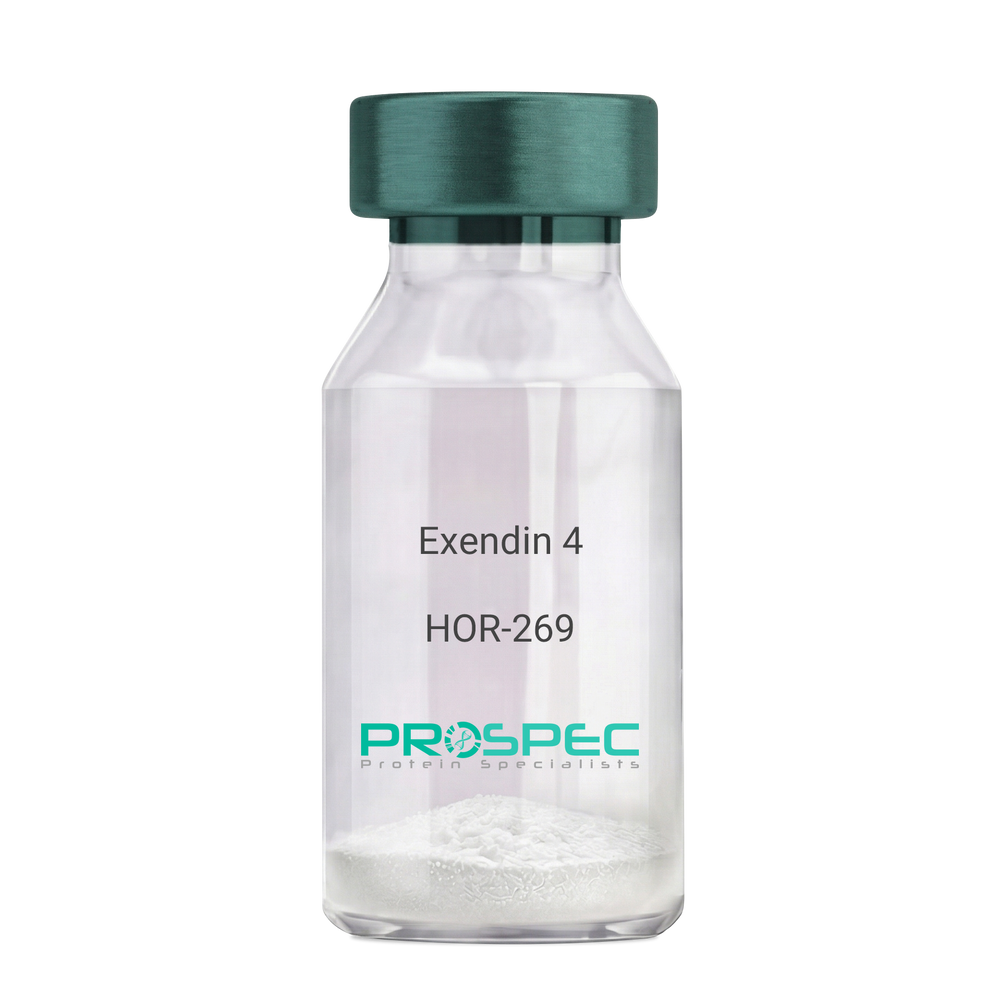
    Exendin 4

    Description:

    Exendin-4 Recombinant

    Product # :

    HOR-269

    Price :

    Quantity :

    Shipping Method :

    Room Temp Icon

    Shipped at Room temp

    Add To Cart

    More Info

    • description
    • source
    • formulation
    • purity
    • biological activity
    • More Info

    Description

    Exendin-4 Recombinant produced in E.Coli is a non-glycosylated polypeptide chain containing 39 amino acids and having a molecular mass of approximately 4.2kDa. Exendin-4 is purified by proprietary chromatographic techniques.

    Source

    Escherichia Coli.

    Formulation

    Lyophilized from a 0.2μm filtered concentrated solution in PBS, pH 7.4.

    Purity

    Greater than 96.0% as determined by:
    (a) Analysis by RP-HPLC.
    (b) Analysis by SDS-PAGE.

    Biological Activity

    1. Regulates Glucose levels rapidly
    2. Reduces Insulin resistance 
    3. Reduces Glucagon

    4. Stimulates beta cell growth production.

    More Info

    • Introduction

      Exedin-4 Recombinant is a like peptide-1 receptor agonist. The native hormone is produced in the gut of Gila monster Heloderma suspectrum (a type of reptile found in the desert) that stimulates production without causing threateningly low blood sugar, which can occur after using some anti-diabetes products. Recently, researchers used extracted saliva from gila monsters to create an unprecedented breakthrough in Diabetes Type 2 treatment. Unlike other products taken for type 2 diabetes, Exedin-4 has not been linked with weight gain and actually resulted in weight loss, according to the researchers. Exedin-4 enhances glucose-dependant secretion, suppresses inappropriately elevated secretion and slows gastric emptying in vivo. It also promotes B-cell proliferation and neogenesis in vitro and in animal models. Exedin-4 stimulates an increase in acinar cAMP, without stimulating the release of amylase.

    • Physical Appearance

      Sterile Filtered White lyophilized (freeze-dried) powder.

    • Stability

      Lyophilized Exendin Recombinant although stable at room temperature for 3 weeks, should be stored desiccated below -18°C. Upon reconstitution Exendin-4 should be stored at 4°C between 2-7 days and for future use below -18°C. For long term storage it is recommended to add a carrier protein (0.1% HSA or BSA).Please prevent freeze-thaw cycles.

    • Solubility

      It is recommended to reconstitute the lyophilized Exendin Recombinant in sterile 18MΩ-cm H2O not less than 100 µg/ml, which can then be further diluted to other aqueous solutions.

    • Amino Acid Sequence

      HGEGTFTSDL SKQMEEEAVR LFIEWLKNGG PSSGAPPPS.

    ProSpec's products are furnished for LABORATORY RESEARCH USE ONLY. The product may not be used as drugs, agricultural or pesticidal products, food additives or household chemicals.

    Exendin 4
  • View Data Sheet

    Name :

    CCL20 Human

    Description:

    Macrophage Inflammatory Protein-3 alpha Human Recombinant (CCL20)

    S Small inducible cytokine A20 precursor, CCL20, Macrophage inflammatory protein 3 alpha, MIP-3-alpha, Liver and activation- regulated chemokine, CC chemokine LARC, Beta chemokine exodus-1, CKb4, LARC, ST38, MIP3A, MIP-3a, SCYA20.

    Product # :

    CHM-351

    Price :

    Quantity :

    Shipping Method :

    Room Temp Icon

    Shipped at Room temp

    Add To Cart

    More Info

    • description
    • source
    • formulation
    • purity
    • biological activity
    • More Info

    Description

    MIP-3 Alpha Human Recombinant produced in E.Coli is a single, non-glycosylated, polypeptide chain containing 70 amino acids and having a molecular mass of 8 kDa. The MIP-3a is purified by proprietary chromatographic techniques.

    Source

    Escherichia Coli.

    Formulation

    Lyophilized from a 0.2µm filtered concentrated solution in 20mM PB, pH 7.4, 150mM NaCl.

    Purity

    Greater than 97.0% as determined by:
    (a) Analysis by RP-HPLC.
    (b) Analysis by SDS-PAGE.

    Biological Activity

    Determined by its ability to chemoattract human T lymphocytes using a concentration range of 10.0 -50.0 ng/ml, corresponding to a specific activity of 20,000-100,000units/mg.

    More Info

    • Introduction

      CCL-20 is a chemotactic factor that draws lymphocytes & neutrophils, rathar than monocytes. MIP-3 alpha inhibits proliferation of myeloid progenitors in colony formation assays. MIP3A plays a role in the formation and function of the mucosal lymphoid tissues by attracting lymphocytes and dendritic cells towards epithelial cells. C-terminal processed forms have been shown to be equally chemotactically active for leukocytes. CCL-20 holdes antibacterial activity e.coli atcc 25922 and s.aureus atcc 29213. CCL-20 gene transcription is activated by H. pylori, which activates NF-kappaB through intracellular signal pathway which involves IkappaB kinase and NF-kappaB-inducing kinase. MIP-3 alpha is invloved in chemokine-mediated lymphocyte trafficking during gastric inflammation in Helicobacter infection. CCL-20 expression is involved in the recruitment of CD45R0-positive T cell subsets into the intestinal lamina propria.
      MIP-3A is in charge of the advancement of pulpal inflammation through the recruitment of C-C motif Receptor 6-expressing lymphocytes Vaginal epithelial cells respond to factors present in semen by secreting MIP-3 alpha, which increases langerhans cells recruitment during HIV transmission.

    • Synonyms

      S Small inducible cytokine A20 precursor, CCL20, Macrophage inflammatory protein 3 alpha, MIP-3-alpha, Liver and activation- regulated chemokine, CC chemokine LARC, Beta chemokine exodus-1, CKb4, LARC, ST38, MIP3A, MIP-3a, SCYA20.

    • Physical Appearance

      Sterile Filtered White lyophilized (freeze-dried) powder.

    • Stability

      Lyophilized MIP-3a although stable at room temperature for 3 weeks, should be stored desiccated below -18°C. Upon reconstitution CCL20 should be stored at 4°C between 2-7 days and for future use below -18°C.For long term storage it is recommended to add a carrier protein (0.1% HSA or BSA).Please prevent freeze-thaw cycles.

    • Solubility

      It is recommended to reconstitute the lyophilized MIP-3 Alpha in sterile 18MΩ-cm H2O not less than 100µg/ml, which can then be further diluted to other aqueous solutions.

    • Amino Acid Sequence

      ASNFDCCLGY TDRILHPKFI VGFTRQLANE GCDINAIIFH TKKKLSVCAN PKQTWVKYIV RLLSKKVKNM.

    • Background

      What is the molecular weight/Mw of CCL20 HUMAN Protein?
      CCL20 HUMAN Protein has a total Mw of 8kDa.

      What is the source or expression system of CCL20 HUMAN Protein?
      Escherichia Coli.

      What is the Purity of CCL20 HUMAN Protein?
      CCL20 HUMAN Protein is >97% pure as determined by SDS-PAGE.

      What is the Biological Activity of CCL20 HUMAN Protein?
      Determined by its ability to chemoattract human T lymphocytes using a concentration range of 10.0 -50.0 ng/ml, corresponding to a specific activity of 20,000-100,000units/mg.

      What is the amino acid sequence of CCL20 HUMAN Protein?
      ASNFDCCLGY TDRILHPKFI VGFTRQLANE GCDINAIIFH TKKKLSVCAN PKQTWVKYIV RLLSKKVKNM.

      What applications can CCL20 HUMAN Protein be used in?
      CCL20 HUMAN Protein can probably be used in western blot, ELISA and Lateral Flow.

      What is the endotoxin level for CCL20 HUMAN Protein?
      The endotoxin level is minimal, CCL20 HUMAN Protein was purified using conventional chromatography techniques.


    ProSpec's products are furnished for LABORATORY RESEARCH USE ONLY. The product may not be used as drugs, agricultural or pesticidal products, food additives or household chemicals.

    Mip 3A Human
  • View Data Sheet

    Name :

    SERPINA1 Human

    Description:

    Alpha 1 Antitrypsin Human Recombinant

    Alpha-1-antitrypsin, Alpha-1 protease inhibitor, Alpha-1-antiproteinase, SERPINA1, A1AT, PI, A1A, AAT, PI1, MGC9222, PRO2275, MGC23330.

    Product # :

    PRO-529

    Price :

    Quantity :

    Shipping Method :

    Ice Icon

    Shipped with Ice Packs

    Add To Cart

    More Info

    • description
    • source
    • formulation
    • purity
    • More Info

    Description

    SERPINA1 Human Recombinant produced in E.Coli is a single, non-glycosylated polypeptide chain containing 395 amino acids (25-418) and having a molecular mass of 44.4 kDa. The SERPINA1 protein is purified by proprietary chromatographic techniques.

    Source

    Escherichia Coli.

    Formulation

    The protein solution contains 20mM Tris-HCl pH-7.5, 1mM DTT, 10% glycerol, and 2mM EDTA.

    Purity

    Greater than 90% as determined by SDS-PAGE.

    More Info

    • Introduction

      SERPINA1 is secreted and is a serine protease inhibitor which its targets include elastase, plasmin, collagenase, thrombin, leucocytic proteases, trypsin, chymotrypsin, and plasminogen activator. Defects in SERPINA1 gene can cause emphysema or liver disease. Antral SERPINA1 expression is particularly induced by H. pylori infection. lung and prostate cancers have shown a significant increase in SERPINA1 serum levels compared with healthy controls though breast cancers did not show a significant change. SERPINA1 is an endogenous inhibitor of serine proteases and inhibits the catalytic domain of human recombinant matriptase in vitro. Rise in SERPINA1 occurs as an acute phase response to tissue necrosis and inflammation. mutations in SERPINA1 and SLC11A1 genes change the balance between elastase produced by leukocytes during phagocytosis.

    • Synonyms

      Alpha-1-antitrypsin, Alpha-1 protease inhibitor, Alpha-1-antiproteinase, SERPINA1, A1AT, PI, A1A, AAT, PI1, MGC9222, PRO2275, MGC23330.

    • Physical Appearance

      Sterile Filtered colorless solution.

    • Stability

      Store at 4°C if entire vial will be used within 2-4 weeks. Store, frozen at -20°C for longer periods of time. For long term storage it is recommended to add a carrier protein (0.1% HSA or BSA).Avoid multiple freeze-thaw cycles.

    • Amino Acid Sequence

      MEDPQGDAAQ KTDTSHHDQD HPTFNKITPN LAEFAFSLYR QLAHQSNSTN IFFSPVSIAT AFAMLSLGTK ADTHDEILEG LNFNLTEIPE AQIHEGFQEL LRTLNQPDSQ LQLTTGNGLF LSEGLKLVDK FLEDVKKLYH SEAFTVNFGD TEEAKKQIND YVEKGTQGKI VDLVKELDRD TVFALVNYIF FKGKWERPFE VKDTEEEDFH VDQVTTVKVP MMKRLGMFNI QHCKKLSSWV LLMKYLGNAT AIFFLPDEGK LQHLENELTH DIITKFLENE DRRSASLHLP KLSITGTYDL KSVLGQLGIT KVFSNGADLS GVTEEAPLKL SKAVHKAVLT IDEKGTEAAG AMFLEAIPMS IPPEVKFNKP FVFLMIDQNT KSPLFMGKVV NPTQK.

    ProSpec's products are furnished for LABORATORY RESEARCH USE ONLY. The product may not be used as drugs, agricultural or pesticidal products, food additives or household chemicals.

    Serpina1 Human Recombinant
  • View Data Sheet

    Name :

    NCF4 Human

    Description:

    Neutrophil Cytosolic Factor 4 Human Recombinant

    Neutrophil cytosol factor 4, NCF-4, Neutrophil NADPH oxidase factor 4, SH3 and PX domain-containing protein 4, p40-phox, p40phox, NCF4, SH3PXD4, NCF, SH3PXD4.

    Product # :

    PRO-1258

    Price :

    Quantity :

    Shipping Method :

    Ice Icon

    Shipped with Ice Packs

    Add To Cart

    More Info

    • description
    • source
    • formulation
    • purity
    • More Info

    Description

    NCF4 Human Recombinant produced in E.Coli is a single, non-glycosylated polypeptide chain containing 359 amino acids (1-339 a.a) and having a molecular mass of 41.1kDa.NCF4 is fused to a 20 amino acid His-tag at N-terminus & purified by proprietary chromatographic techniques.

    Source

    Escherichia Coli.

    Formulation

    NCF4 protein solution (1mg/ml) containing 20mM Tris-HCl buffer (pH 8.0), 0.1M NaCl, 10% glycerol and 1mM DTT.

    Purity

    Greater than 90.0% as determined by SDS-PAGE.

    More Info

    • Introduction

      Neutrophil Cytosolic Factor 4 (NCF4) is a cytosolic regulatory factor of the superoxide-producing phagocyte NADPH-oxidase, which is a multicomponent enzyme system imperative for host defense. The NCF4 protein is preferentially expressed in cells of myeloid lineage. NCF4 interacts mainly with neutrophil cytosolic factor 2 (NCF2/p67-phox) to create a complex with neutrophil cytosolic factor (NCF1/p47-phox), which further interacts with the small G protein RAC1 and translocates to the membrane upon cell stimulation. This complex subsequently activates flavocytochrome b, the membrane-integratedcatalytic core of the enzyme system. The PX domain of the NCF4 protein can bind phospholipid products of the PI(3) kinase, suggesting its part in PI(3) kinase-mediated signaling events. The phosphorylation of the NCF4 protein negatively regulates the enzyme activity.

    • Synonyms

      Neutrophil cytosol factor 4, NCF-4, Neutrophil NADPH oxidase factor 4, SH3 and PX domain-containing protein 4, p40-phox, p40phox, NCF4, SH3PXD4, NCF, SH3PXD4.

    • Physical Appearance

      Sterile Filtered colorless solution.

    • Stability

      Store at 4°C if entire vial will be used within 2-4 weeks. Store, frozen at -20°C for longer periods of time. For long term storage it is recommended to add a carrier protein (0.1% HSA or BSA).Avoid multiple freeze-thaw cycles.

    • Amino Acid Sequence

      MGSSHHHHHH SSGLVPRGSH MAVAQQLRAE SDFEQLPDDV AISANIADIE EKRGFTSHFV FVIEVKTKGG SKYLIYRRYR QFHALQSKLE ERFGPDSKSS ALACTLPTLP AKVYVGVKQE IAEMRIPALN AYMKSLLSLP VWVLMDEDVR IFFYQSPYDS EQVPQALRRL RPRTRKVKSV SPQGNSVDRM AAPRAEALFD FTGNSKLELN FKAGDVIFLL SRINKDWLEG TVRGATGIFP LSFVKILKDF PEEDDPTNWL RCYYYEDTIS TIKDIAVEED LSSTPLLKDL LELTRREFQR EDIALNYRDA EGDLVRLLSD EDVALMVRQA RGLPSQKRLF PWKLHITQKD NYRVYNTMP.

    ProSpec's products are furnished for LABORATORY RESEARCH USE ONLY. The product may not be used as drugs, agricultural or pesticidal products, food additives or household chemicals.

    Ncf4 Human
  • View Data Sheet

    Name :

    SKP1 Alpha Human

    Description:

    S-phase Kinase-Associated Protein 1 Isoform A Human Recombinant

    SKP-1, EMC19, MGC34403, OCP-II, OCP2, p19A, SKP1A, TCEB1L, S-phase kinase-associated protein 1, Cyclin-A/CDK2-associated protein p19, p19skp1, RNA polymerase II elongation factor-like protein, Organ of Corti protein 2, OCP-2, Organ of Corti protein II, Transcription elongation factor B, SIII, SKP1.

    Product # :

    PKA-356

    Price :

    Quantity :

    Shipping Method :

    Ice Icon

    Shipped with Ice Packs

    Add To Cart

    More Info

    • description
    • source
    • formulation
    • purity
    • More Info

    Description

    Recombinant Human SKP1 produced in E.Coli is a single, non-glycosylated polypeptide chain containing 160 amino acids (1-160 a.a.) and having a molecular mass of 18kDa.SKP1 is purified by proprietary chromatographic techniques.

    Source

    Escherichia Coli.

    Formulation

    The SKP1 protein solution contains 20mM Tris-HCl, pH-8, 10% glycerol and 50mM NaCl.

    Purity

    Greater than 90.0% as determined by(a) Analysis by RP-HPLC.
    (b) Analysis by SDS-PAGE.

    More Info

    • Introduction

      SKP1 is a F-box enzyme which functions as a substrate recognition component of the SCF ubiquitin ligase complex which controls the ubiquitination of proteins involved in cell cycle progression, signal transduction and transcription. SKP1 binds to proteins containing an F-box motif, such as cyclin F, S-phase kinase-associated protein 2, and other regulatory proteins involved in ubiquitin dependent proteolysis. SKP1 takes part in the control of beta-catenin levels and the activity of beta-catenin dependent TCF transcription factors. SKP1 serves as an adapter that links the F-box protein to CUL1 in the SCF complex.

    • Synonyms

      SKP-1, EMC19, MGC34403, OCP-II, OCP2, p19A, SKP1A, TCEB1L, S-phase kinase-associated protein 1, Cyclin-A/CDK2-associated protein p19, p19skp1, RNA polymerase II elongation factor-like protein, Organ of Corti protein 2, OCP-2, Organ of Corti protein II, Transcription elongation factor B, SIII, SKP1.

    • Physical Appearance

      Sterile filtered colorless solution.

    • Stability

      Store at 4°C if entire vial will be used within 2-4 weeks. Store, frozen at -20°C for longer periods of time. For long term storage it is recommended to add a carrier protein (0.1% HSA or BSA).Avoid multiple freeze-thaw cycles.

    • Amino Acid Sequence

      MPSIKLQSSD GEIFEVDVEI AKQSVTIKTM LEDLGMDDEG DDDPVPLPNV NAAILKKVIQ WCTHHKDDPP PPEDDENKEK RTDDIPVWDQ EFLKVDQGTL FELILAANYL DIKGLLDVTC KTVANMIKGK TPEEIRKTFN IKNDFTEEEE AQVGSTQFCL.

    ProSpec's products are furnished for LABORATORY RESEARCH USE ONLY. The product may not be used as drugs, agricultural or pesticidal products, food additives or household chemicals.

    Skp1 Human
  • View Data Sheet

    Name :

    CXCL5 Mouse

    Description:

    Epithelial Neutrophil-Activating Protein 78 Mouse Recombinant (CXCL5)

    C-X-C motif chemokine 5, Small-inducible cytokine B5, Cytokine LIX, Cxcl5, Scyb5, LIX, GCP-2, Scyb6, ENA-78, AMCF-II.

    Product # :

    CHM-365

    Price :

    Quantity :

    Shipping Method :

    Room Temp Icon

    Shipped at Room temp

    Add To Cart

    More Info

    • description
    • source
    • formulation
    • purity
    • biological activity
    • More Info

    Description

    Epithelial Neutrophil-Activating Protein 78 Mouse Recombinant produced in E.Coli is a single, non-glycosylated, polypeptide chain containing 93 amino acids and having a molecular mass of 9.8kDa. The CXCL5 is purified by proprietary chromatographic techniques.

    Source

    Escherichia Coli.

    Formulation

    Lyophilized from a 0.2µm filtered concentrated (1.0mg/ml) solution in 20mM sodium phosphate buffer, pH 7.4 & 150mM NaCl.

    Purity

    Greater than 97.0% as determined by:
    (a) Analysis by RP-HPLC.
    (b) Analysis by SDS-PAGE.

    Biological Activity

    Determined by its ability to chemoattract human peripheral blood neutrophils using a concentration range of 10-100ng/ml corresponding to a Specific Activity of 10,000-100,000IU/mg.

    More Info

    • Introduction

      Chemokine (C-X-C motif) ligand 5 (CXCL5) is a small cytokine belonging to the CXC chemokine family that is also known as epithelial-derived neutrophil-activating peptide 78 (ENA-78). It is produced following stimulation of cells with the inflammatory cytokines interleukin-1 or tumor necrosis factor-alpha. Expression of CXCL5 has also been observed in eosinophils. This chemokine stimulates the chemotaxis of neutrophils possesses angiogenic properties. It elicits these effects by interacting with the cell surface chemokine receptor CXCR2. The gene for CXCL5 is encoded on four exons and is located on human chromosome 4 amongst several other CXC chemokine genes. CXCL5 has been implicated in connective tissue remodelling.

    • Synonyms

      C-X-C motif chemokine 5, Small-inducible cytokine B5, Cytokine LIX, Cxcl5, Scyb5, LIX, GCP-2, Scyb6, ENA-78, AMCF-II.

    • Physical Appearance

      Sterile Filtered White lyophilized (freeze-dried) powder.

    • Stability

      Lyophilized ENA-78 although stable at room temperature for 3 weeks, should be stored desiccated below -18°C. Upon reconstitution CXCL5 should be stored at 4°C between 2-7 days and for future use below -18°C.For long term storage it is recommended to add a carrier protein (0.1% HSA or BSA).Please prevent freeze-thaw cycles.

    • Solubility

      It is recommended to reconstitute the lyophilized ENA-78 in sterile 18MΩ-cm H2O not less than 100µg/ml, which can then be further diluted to other aqueous solutions.

    • Amino Acid Sequence

      APSSVIAATE LRCVCLTVTP KINPKLIANL EVIPAGPQCP TVEVIAKLKN QKEVCLDPEA PVIKKIIIQK ILGSDKKKAK RNALAVERTA SVQ.

    • Background

      What is the molecular weight/Mw of CXCL5 MOUSE Protein?
      CXCL5 MOUSE Protein has a total Mw of 9.8kDa.

      What is the source or expression system of CXCL5 MOUSE Protein?
      Escherichia Coli.

      What is the Purity of CXCL5 MOUSE Protein?
      CXCL5 MOUSE Protein is >97% pure as determined by SDS-PAGE.

      What is the Biological Activity of CXCL5 MOUSE Protein?
      Determined by its ability to chemoattract human peripheral blood neutrophils using a concentration range of 10-100ng/ml corresponding to a Specific Activity of 10,000-100,000IU/mg.

      What is the amino acid sequence of CXCL5 MOUSE Protein?
      APSSVIAATE LRCVCLTVTP KINPKLIANL EVIPAGPQCP TVEVIAKLKN QKEVCLDPEA PVIKKIIIQK ILGSDKKKAK RNALAVERTA SVQ.

      What applications can CXCL5 MOUSE Protein be used in?
      CXCL5 MOUSE Protein can probably be used in western blot, ELISA and Lateral Flow.

      What is the endotoxin level for CXCL5 MOUSE Protein?
      The endotoxin level is minimal, CXCL5 MOUSE Protein was purified using conventional chromatography techniques.


    ProSpec's products are furnished for LABORATORY RESEARCH USE ONLY. The product may not be used as drugs, agricultural or pesticidal products, food additives or household chemicals.

    Ena 78 Mouse
  • View Data Sheet

    Name :

    OTUB1 Human

    Description:

    Ubiquitin Aldehyde Binding 1 Human Recombinant

    Ubiquitin thioesterase OTUB1, Otubain-1, OTU domain-containing ubiquitin aldehyde-binding protein 1, Ubiquitin-specific-processing protease OTUB1, Deubiquitinating enzyme OTUB1, OTUB1, OTB1, OTU1, HSPC263, MGC4584, FLJ20113, FLJ40710, MGC111158.

    Product # :

    PRO-711

    Price :

    Quantity :

    Shipping Method :

    Ice Icon

    Shipped with Ice Packs

    Add To Cart

    More Info

    • description
    • source
    • formulation
    • purity
    • More Info

    Description

    OTUB1 Human Recombinant fused with a 20 amino acid His tag at N-terminus produced in E.Coli is a single, non-glycosylated, polypeptide chain containing 291 amino acids (1- 271 a.a.) and having a molecular mass of 33.4kDa.The OTUB1 is purified by proprietary chromatographic techniques.

    Source

    Escherichia Coli.

    Formulation

    The OTUB1 solution contains 20mM Tris buffer (pH 8.0) and 10% glycerol.

    Purity

    Greater than 95.0% as determined by SDS-PAGE.

    More Info

    • Introduction

      Otubain 1 (OTUB1) belongs to the ovarian tumor (OUT) superfamily of predicted cysteine proteases and inhibits cytokine gene transcription in the immune system through its interaction with a ubiquitin protease and E3 ubiquitin ligase. OTUB1 is a highly specific ubiquitin iso-peptidase, it cleaves ubiquitin from branched poly-ubiquitin chains but not from ubiquitinated substrates. OTUB1 is believed to work in specific ubiquitin-dependent pathways, possibly by providing an editing function of polyubiquitin chain growth. OTUB1 is a hydrolase that removes conjugated ubiquitin from proteins in vitro and may therefore have a significant regulatory role in the level of protein turnover by preventing degradation. Additionally, OTUB1 is a regulator of T-cell anergy, a phenomenon that occurs when T-cells are rendered impassive to antigen re-challenge and no longer respond to their cognate antigen. OTUB1 acts via its interaction with RNF128/GRAIL, which is an essential inductor of CD4 T-cell anergy.

    • Synonyms

      Ubiquitin thioesterase OTUB1, Otubain-1, OTU domain-containing ubiquitin aldehyde-binding protein 1, Ubiquitin-specific-processing protease OTUB1, Deubiquitinating enzyme OTUB1, OTUB1, OTB1, OTU1, HSPC263, MGC4584, FLJ20113, FLJ40710, MGC111158.

    • Physical Appearance

      Sterile Filtered colorless solution.

    • Stability

      Store at 4°C if entire vial will be used within 2-4 weeks. Store, frozen at -20°C for longer periods of time. For long term storage it is recommended to add a carrier protein (0.1% HSA or BSA).Avoid multiple freeze-thaw cycles.

    • Amino Acid Sequence

      MGSSHHHHHH SSGLVPRGSH MAAEEPQQQK QEPLGSDSEG VNCLAYDEAI MAQQDRIQQE IAVQNPLVSE RLELSVLYKE YAEDDNIYQQ KIKDLHKKYS YIRKTRPDGN CFYRAFGFSH LEALLDDSKE LQRFKAVSAK SKEDLVSQGF TEFTIEDFHN TFMDLIEQVE KQTSVADLLA SFNDQSTSDY LVVYLRLLTS GYLQRESKFF EHFIEGGRTV KEFCQQEVEP MCKESDHIHI IALAQALSVS IQVEYMDRGE GGTTNPHIFP EGSEPKVYLL YRPGHYDILY K.

    ProSpec's products are furnished for LABORATORY RESEARCH USE ONLY. The product may not be used as drugs, agricultural or pesticidal products, food additives or household chemicals.

    Otub1 Human
  • View Data Sheet

    Name :

    SULT2A1 Human

    Description:

    Sulfotransferase Family, Cytosolic, 2A, Member 1 Human Recombinant

    Sulfotransferase family cytosolic 2A dehydroepiandrosterone (DHEA)-preferring member 1, DHEA-ST, STD, HST, ST2, ST2A1, ST2A3, Alcohol/hydroxysteroid sulfotransferase, bile-salt sulfotranasferase 2A1, EC 2.8.2.14.

    Product # :

    ENZ-141

    Price :

    Quantity :

    Shipping Method :

    Ice Icon

    Shipped with Ice Packs

    Add To Cart

    More Info

    • description
    • source
    • formulation
    • purity
    • More Info

    Description

    SULT2A1 Human Recombinant produced in E.Coli is a single, non-glycosylated polypeptide chain containing 305 amino acids (1-285a.a) and having a molecular mass of 35.9kDa.SULT2A1 is fused to a 20 amino acid His-tag at N-terminus & purified by proprietary chromatographic techniques.

    Source

    Escherichia Coli.

    Formulation

    SULT2A1 protein solution (1mg/1ml) containing 20mM Tris-HCl buffer (pH8.0), 20% glycerol, 0.1M NaCl and 1mM DTT.

    Purity

    Greater than 95.0% as determined by SDS-PAGE.

    More Info

    • Introduction

      SULT2A1 is a member fo the sulfotransferase family. SULT2A1 is primarily expressed in liver and adrenal tissues, and to a lesser extent in kidney. SULT2A1 catalyzes the 3'-phosphoadenosine 5'-phosphosulfate-dependent sulfation of an extensive selection of steroids in human liver and adrenal tissues, and in addition is responsible for a larg number of the sulfation of bile acids in human liver.

    • Synonyms

      Sulfotransferase family cytosolic 2A dehydroepiandrosterone (DHEA)-preferring member 1, DHEA-ST, STD, HST, ST2, ST2A1, ST2A3, Alcohol/hydroxysteroid sulfotransferase, bile-salt sulfotranasferase 2A1, EC 2.8.2.14.

    • Physical Appearance

      Sterile Filtered clear solution.

    • Stability

      Store at 4°C if entire vial will be used within 2-4 weeks. Store, frozen at -20°C for longer periods of time. For long term storage it is recommended to add a carrier protein (0.1% HSA or BSA).Avoid multiple freeze-thaw cycles.

    • Amino Acid Sequence

      MGSSHHHHHH SSGLVPRGSH MSDDFLWFEG IAFPTMGFRS ETLRKVRDEF VIRDEDVIIL TYPKSGTNWL AEILCLMHSK GDAKWIQSVP IWERSPWVES EIGYTALSET ESPRLFSSHL PIQLFPKSFF SSKAKVIYLM RNPRDVLVSG YFFWKNMKFI KKPKSWEEYF EWFCQGTVLY GSWFDHIHGW MPMREEKNFL LLSYEELKQD TGRTIEKICQ FLGKTLEPEE LNLILKNSSF QSMKENKMSN YSLLSVDYVV DKAQLLRKGV SGDWKNHFTV AQAEDFDKLF QEKMADLPRE LFPWE

    ProSpec's products are furnished for LABORATORY RESEARCH USE ONLY. The product may not be used as drugs, agricultural or pesticidal products, food additives or household chemicals.

    Sult2A1 Human
  • View Data Sheet

    Name :

    PCBD1 Human

    Description:

    Pterin-4-Alpha-Carbinolamine Dehydratase Human Recombinant

    DCOH, PCBD, PCD, PHS.

    Product # :

    ENZ-552

    Price :

    Quantity :

    Shipping Method :

    Ice Icon

    Shipped with Ice Packs

    Add To Cart

    More Info

    • description
    • source
    • formulation
    • purity
    • More Info

    Description

    PCBD1 produced in E.Coli is a single, non-glycosylated polypeptide chain containing 124 amino acids (1-104 a.a.) and having a molecular mass of 14.1kDa.PCBD1 is fused to a 20 amino acid His-tag at N-terminus & purified by proprietary chromatographic techniques.

    Source

    Escherichia Coli.

    Formulation

    The PCBD1 protein solution (1mg/ml) contains 20mM Tris-HCl buffer (pH-8), 1mM DTT, and 10% glycerol.

    Purity

    Greater than 95.0% as determined by SDS-PAGE.

    More Info

    • Introduction

      PCBD1 enzyme takes part in phenylalanine hydroxylation. PCBD1 deficiency results in hyperphenylalaninemia. PCBD1 enzyme controls the homodimerization of HNF1. PCBD1 takes part in tetrahydrobiopterin biosynthesis. PCBD1 prevents the formation of 7-pterins and accelerate the formation of quinonoid-BH2. PCBD1 is a coactivator for HNF1A-dependent transcription.

    • Synonyms

      DCOH, PCBD, PCD, PHS.

    • Physical Appearance

      Sterile filtered colorless solution.

    • Stability

      Store at 4°C if entire vial will be used within 2-4 weeks. Store, frozen at -20°C for longer periods of time. For long term storage it is recommended to add a carrier protein (0.1% HSA or BSA).Avoid multiple freeze-thaw cycles.

    • Amino Acid Sequence

      MGSSHHHHHH SSGLVPRGSH MAGKAHRLSA EERDQLLPNL RAVGWNELEG RDAIFKQFHF KDFNRAFGFM TRVALQAEKL DHHPEWFNVY
      NKVHITLSTH ECAGLSERDI NLASFIEQVA VSMT.

    ProSpec's products are furnished for LABORATORY RESEARCH USE ONLY. The product may not be used as drugs, agricultural or pesticidal products, food additives or household chemicals.

    Pcbd1 Human
  • View Data Sheet

    Name :

    CARD17 Human

    Description:

    Caspase Recruitment Domain Family, Member 17 Human Recombinant

    CARD17, Caspase Recruitment Domain Family, Member 17, Caspase recruitment domain-containing protein 17, INCA, Caspase-1 inhibitor INCA, Inhibitory caspase recruitment domain protein.

    Product # :

    PRO-1688

    Price :

    Quantity :

    Shipping Method :

    Ice Icon

    Shipped with Ice Packs

    Add To Cart

    More Info

    • description
    • source
    • formulation
    • purity
    • More Info

    Description

    CARD17 Human Recombinant produced in E.coli is a single, non-glycosylated polypeptide chain containing 133 amino acids (1-110) and having a molecular mass of 14.3 kDa.CARD17 is fused to a 23 amino acid His-tag at N-terminus & purified by proprietary chromatographic techniques.

    Source

    Escherichia Coli.

    Formulation

    The CARD17 solution (1mg/ml) contains 20mM Tris-HCl buffer (pH 8.0), 0.15M NaCl, 20% glycerol and 1mM DTT.

    Purity

    Greater than 95.0% as determined by SDS-PAGE.

    More Info

    • Introduction

      Caspase Recruitment Domain Family, Member 17 (CARD17) is a regulator of procaspase-1/CASP1 activation involved in the regulation of the proteolytic maturation of pro-IL-1beta/IL1B and its release throughout inflammation. CARD17 inhibits the release of IL1B in reaction to LPS in monocytes. Though, unlike CASP1, CARD17 do not induce NF-kappa-B activation.

    • Synonyms

      CARD17, Caspase Recruitment Domain Family, Member 17, Caspase recruitment domain-containing protein 17, INCA, Caspase-1 inhibitor INCA, Inhibitory caspase recruitment domain protein.

    • Physical Appearance

      Sterile Filtered colorless solution.

    • Stability

      Store at 4°C if entire vial will be used within 2-4 weeks. Store, frozen at -20°C for longer periods of time. For long term storage it is recommended to add a carrier protein (0.1% HSA or BSA).Avoid multiple freeze-thaw cycles.

    • Amino Acid Sequence

      MGSSHHHHHH SSGLVPRGSH MGSMADKVLK EKRKQFIRSV GEGTINGLLG ELLETRVLSQ EEIEIVKCEN ATVMDKARAL LDSVIRKGAP ACQICITYIC EEDSHLAGTL GLSAGPTSGN HLTTQDSQIV LPS.

    ProSpec's products are furnished for LABORATORY RESEARCH USE ONLY. The product may not be used as drugs, agricultural or pesticidal products, food additives or household chemicals.

    Card17 Human
  • View Data Sheet

    Name :

    FKBP3 Human

    Description:

    FK506 Binding Protein 3 Human Recombinant

    EC 5.2.1.8, FKBP-3, FKBP25, FKBP-25, Peptidyl-prolyl cis-trans isomerase FKBP3, PPIase FKBP3, FK506-binding protein 3, Rotamase, Immunophilin FKBP25, 25 kDa FK506-binding protein, 25 kDa FKBP, Rapamycin-selective 25 kDa immunophilin, FKBP3, PPIase.

    Product # :

    ENZ-495

    Price :

    Quantity :

    Shipping Method :

    Ice Icon

    Shipped with Ice Packs

    Add To Cart

    More Info

    • description
    • source
    • formulation
    • purity
    • biological activity
    • More Info

    Description

    FKBP3 produced in E.Coli is a single, non-glycosylated polypeptide chain containing 224 amino acids (1-224 a.a.) and having a molecular mass of 25.1 kDa. FKBP3 is purified by proprietary chromatographic techniques.

    Source

    Escherichia Coli.

    Formulation

    The FKBP3 protein solution contains 20mM Tris-HCl, pH-8, 1mM DTT and 10% glycerol.

    Purity

    Greater than 90.0% as determined by SDS-PAGE.

    Biological Activity

    Specific activity is >900 nmoles/min/mg, and is defined as the amount of enzyme that cleaves 1umole of suc-AAFP-pNA per minute at 37C in Tris-Hcl pH8.0 using chymotrypsin.

    More Info

    • Introduction

      FKBP3 is part of a family of immunosuppressant receptors which inhibit T-cell proliferation by arresting two distinct cytoplasmic signal transmission pathways. FKBP3 accelerates the folding of proteins. FKBP3 is part of the immunophilin protein family, which participates in immunoregulation and fundamental cellular processes concerning protein folding and trafficking. FKBP3 is a cis-trans prolyl isomerase enzyme that binds the immunosuppressants FK506 and rapamycin, as well as histone deacetylases, the transcription factor YY1, casein kinase II, and nucleolin. It has a greater affinity for rapamycin than for FK506 and therefore is a significant protein for immunosuppression by rapamycin.

    • Synonyms

      EC 5.2.1.8, FKBP-3, FKBP25, FKBP-25, Peptidyl-prolyl cis-trans isomerase FKBP3, PPIase FKBP3, FK506-binding protein 3, Rotamase, Immunophilin FKBP25, 25 kDa FK506-binding protein, 25 kDa FKBP, Rapamycin-selective 25 kDa immunophilin, FKBP3, PPIase.

    • Physical Appearance

      Sterile filtered colorless solution.

    • Stability

      Store at 4°C if entire vial will be used within 2-4 weeks. Store, frozen at -20°C for longer periods of time. For long term storage it is recommended to add a carrier protein (0.1% HSA or BSA). Avoid multiple freeze-thaw cycles.

    • Amino Acid Sequence

      MAAAVPQRAW TVEQLRSEQL PKKDIIKFLQ EHGSDSFLAE HKLLGNIKNV AKTANKDHLV TAYNHLFETK RFKGTESISK VSEQVKNVKL NEDKPKETKS EETLDEGPPK YTKSVLKKGD KTNFPKKGDV VHCWYTGTLQ DGTVFDTNIQ TSAKKKKNAK PLSFKVGVGK VIRGWDEALL TMSKGEKARL EIEPEWAYGK KGQPDAKIPP NAKLTFEVEL VDID.

    ProSpec's products are furnished for LABORATORY RESEARCH USE ONLY. The product may not be used as drugs, agricultural or pesticidal products, food additives or household chemicals.

    Fkbp3 Human
  • View Data Sheet

    Name :

    TIMP2 Human, His

    Description:

    Tissue Inhibitor of Metalloprotease 2 Human Recombinant, His Tag

    TIMP metallopeptidase inhibitor 2, metalloproteinase inhibitor 2, Tissue inhibitor of metalloproteinases 2, TIMP-2, CSC-21K.

    Product # :

    ENZ-646

    Price :

    Quantity :

    Shipping Method :

    Ice Icon

    Shipped with Ice Packs

    Add To Cart

    More Info

    • description
    • source
    • formulation
    • purity
    • More Info

    Description

    TIMP2 Human Recombinant produced in E. coli is a single polypeptide chain containing 232 amino acids (27-220) and having a molecular mass of 26.1 kDa.TIMP2 is fused to a 38 amino acid His-tag at N-terminus & purified by proprietary chromatographic techniques.

    Source

    E.coli.

    Formulation

    The TIMP2 solution (0.5mg/1ml) contains 20mM Tris-HCl buffer (pH 8.0), 0.15M NaCl, 1mM DTT and 10% glycerol.

    Purity

    Greater than 85% as determined by SDS-PAGE.

    More Info

    • Introduction

      TIMP2 belongs to the TIMP gene family. The proteins encoded by this gene family are natural inhibitors of the matrix metalloproteinases, a group of peptidases that take part in degradation of the extracellular matrix. Besides having an inhibitory role against metalloproteinases, the encoded protein has a exclusive part among TIMP family members in its capability to directly suppress the proliferation of endothelial cells. Consequently, the encoded protein is crucial to the conservation of tissue homeostasis by suppressing the production of quiescent tissues as an answer to angiogenic factors, and by inhibiting protease activity in tissues undergoing renovation of the extracellular matrix.

    • Synonyms

      TIMP metallopeptidase inhibitor 2, metalloproteinase inhibitor 2, Tissue inhibitor of metalloproteinases 2, TIMP-2, CSC-21K.

    • Physical Appearance

      Sterile Filtered colorless solution.

    • Stability

      Store at 4°C if entire vial will be used within 2-4 weeks. Store, frozen at -20°C for longer periods of time. For long term storage it is recommended to add a carrier protein (0.1% HSA or BSA).Avoid multiple freeze-thaw cycles.

    • Amino Acid Sequence

      MRGSHHHHHH GMASMTGGQQ MGRDLYDDDD KDRWGSHM CS CSPVHPQQAF CNADVVIRAK AVSEKEVDSG NDIYGNPIKR IQYEIKQIKM FKGPEKDIEF IYTAPSSAVC GVSLDVGGKK EYLIAGKAEG DGKMHITLCD FIVPWDTLST TQKKSLNHRY QMGCECKITR CPMIPCYISS PDECLWMDWV TEKNINGHQA KFFACIKRSD GSCAWYRGAA PPKQEFLDIE DP

    ProSpec's products are furnished for LABORATORY RESEARCH USE ONLY. The product may not be used as drugs, agricultural or pesticidal products, food additives or household chemicals.

    Timp2 Human
  • View Data Sheet

    Name :

    CX3CL1 Rat

    Description:

    Fractalkine Rat Recombinant (CX3CL1)

    Fractalkine, CX3CL1, Neurotactin, CX3C membrane-anchored chemokine, Small inducible cytokine D1, NTN, NTT, CXC3, CXC3C, SCYD1, ABCD-3, C3Xkine.

    Product # :

    CHM-005

    Price :

    Quantity :

    Shipping Method :

    Room Temp Icon

    Shipped at Room temp

    Add To Cart

    More Info

    • description
    • source
    • formulation
    • purity
    • biological activity
    • More Info

    Description

    Fractalkine Rat Recombinant produced in E.Coli is a single, non-glycosylated, polypeptide chain containing 76 amino acids and having a molecular mass of 8.7kDa.The Fractalkine is purified by proprietary chromatographic techniques.

    Source

    Escherichia Coli.

    Formulation

    Lyophilized from a 0.2µm filtered concentrated solution in PBS, pH 7.4.

    Purity

    Greater than 97.0% as determined by SDS-PAGE.

    Biological Activity

    Determined by its ability to chemoattract human monocytes using a concentration range of 5.0-10.0 ng/ml, corresponding to a specific activity of 100,000-200,000units/mg.

    More Info

    • Introduction

      Fractalkine soluble form is chemotactic for t-cells and monocytes, but not for neutrophils. Fractalkine membrane-bound form promotes adhesion of those leukocytes to endothelial cells. Fractalkine regulates leukocyte adhesion and migration processes at the endothelium and binds to CX3CR1. Natural Human Fractalkine is produced as a long protein (373-amino acid) with an extended mucin-like stalk and a chemokine domain on top. The mucin-like stalk permits it to bind to the cell surface. Fractalkine gene is located on human chromosome 16 along with some CC chemokines known as CCL17 and CCL22.

    • Synonyms

      Fractalkine, CX3CL1, Neurotactin, CX3C membrane-anchored chemokine, Small inducible cytokine D1, NTN, NTT, CXC3, CXC3C, SCYD1, ABCD-3, C3Xkine.

    • Physical Appearance

      Sterile Filtered White lyophilized (freeze-dried) powder.

    • Stability

      Lyophilized FractalkineRat although stable at room temperature for 3 weeks, should be stored desiccated below -18°C. Upon reconstitution Fractalkine should be stored at 4°C between 2-7 days and for future use below -18°C.Please prevent freeze-thaw cycles.

    • Solubility

      It is recommended to reconstitute the lyophilized Fractalkine in sterile 18MΩ-cm H2O not less than 100µg/ml, which can then be further diluted to other aqueous solutions.

    • Amino Acid Sequence

      QHLGMTKCNI TCHKMTSPIP VTLLIHYQLN QESCGKRAII LETRQHRHFC ADPKEKWVQD AMKHLDHQTA ALTRNG

    • Background

      What is the molecular weight/Mw of CX3CL1 RAT Protein?
      CX3CL1 RAT Protein has a total Mw of 8.7kDa.

      What is the source or expression system of CX3CL1 RAT Protein?
      Escherichia Coli.

      What is the Purity of CX3CL1 RAT Protein?
      CX3CL1 RAT Protein is >97% pure as determined by SDS-PAGE.

      What is the Biological Activity of CX3CL1 RAT Protein?
      Determined by its ability to chemoattract human monocytes using a concentration range of 5.0-10.0 ng/ml, corresponding to a specific activity of 100,000-200,000units/mg.

      What is the amino acid sequence of CX3CL1 RAT Protein?
      QHLGMTKCNI TCHKMTSPIP VTLLIHYQLN QESCGKRAII LETRQHRHFC ADPKEKWVQD AMKHLDHQTA ALTRNG

      What applications can CX3CL1 RAT Protein be used in?
      CX3CL1 RAT Protein can probably be used in western blot, ELISA and Lateral Flow.

      What is the endotoxin level for CX3CL1 RAT Protein?
      The endotoxin level is minimal, CX3CL1 RAT Protein was purified using conventional chromatography techniques.


    ProSpec's products are furnished for LABORATORY RESEARCH USE ONLY. The product may not be used as drugs, agricultural or pesticidal products, food additives or household chemicals.

    Fractalkine Rat
  • View Data Sheet

    Name :

    TNAA E.Coli

    Description:

    Tryptophanase E.Coli Recombinant

    Tryptophanase/L-cysteine desulfhydrase, PLP-dependent, Tryptophanase, TNAA, L-tryptophan indole-lyase, TNase, tnaA, ind.

    Product # :

    ENZ-852

    Price :

    Quantity :

    Shipping Method :

    Ice Icon

    Shipped with Ice Packs

    Add To Cart

    More Info

    • description
    • source
    • formulation
    • purity
    • More Info

    Description

    TNAA Recombinant produced in E.coli is a single, non-glycosylated polypeptide chain containing 494 amino acids (1-471) and having a molecular mass of 55.2kDa.TNAA is fused to a 23 amino acid His-tag at N-terminus & purified by proprietary chromatographic techniques.

    Source

    E.coli.

    Formulation

    The TNAA solution (0.5mg/ml) contains Phosphate buffered saline (pH7.4), 10% glycerol and 1mM DTT.

    Purity

    Greater than 95% as determined by SDS-PAGE.

    More Info

    • Introduction

      Tryptophanase, also known as tnaA, catalyzes chemical reaction using 2 substrates which are L-tryptophan and H2O. tnaA protein's three products are indole, pyruvate, and NH3.

    • Synonyms

      Tryptophanase/L-cysteine desulfhydrase, PLP-dependent, Tryptophanase, TNAA, L-tryptophan indole-lyase, TNase, tnaA, ind.

    • Physical Appearance

      Sterile Filtered colorless solution.

    • Stability

      Store at 4°C if entire vial will be used within 2-4 weeks. Store, frozen at -20°C for longer periods of time. For long term storage it is recommended to add a carrier protein (0.1% HSA or BSA).Avoid multiple freeze-thaw cycles.

    • Amino Acid Sequence

      MGSSHHHHHH SSGLVPRGSH MGSMENFKHL PEPFRIRVIE PVKRTTRAYR EEAIIKSGMN PFLLDSEDVF IDLLTDSGTG AVTQSMQAAM MRGDEAYSGS RSYYALAESV KNIFGYQYTI PTHQGRGAEQ IYIPVLIKKR EQEKGLDRSK MVAFSNYFFD TTQGHSQING CTVRNVYIKE AFDTGVRYDF KGNFDLEGLE RGIEEVGPNN VPYIVATITS NSAGGQPVSL ANLKAMYSIA KKYDIPVVMD SARFAENAYF IKQREAEYKD WTIEQITRET YKYADMLAMS AKKDAMVPMG GLLCMKDDSF FDVYTECRTL CVVQEGFPTY GGLEGGAMER LAVGLYDGMN LDWLAYRIAQ VQYLVDGLEE IGVVCQQAGG HAAFVDAGKL LPHIPADQFP AQALACELYK VAGIRAVEIG SFLLGRDPKT GKQLPCPAEL LRLTIPRATY TQTHMDFIIE AFKHVKENAA NIKGLTFTYE PKVLRHFTAK LKEV.

    ProSpec's products are furnished for LABORATORY RESEARCH USE ONLY. The product may not be used as drugs, agricultural or pesticidal products, food additives or household chemicals.

    Tnaa Ecoli
  • View Data Sheet

    Name :

    GCSH Human

    Description:

    Glycine Cleavage System Protein H Human Recombinant

    Glycine cleavage system protein H (aminomethyl carrier), NKH, GCE, Lipoic acid-containing protein, Mitochondrial glycine cleavage system H-protein.

    Product # :

    PRO-973

    Price :

    Quantity :

    Shipping Method :

    Ice Icon

    Shipped with Ice Packs

    Add To Cart

    More Info

    • description
    • source
    • formulation
    • purity
    • More Info

    Description

    GCSH Human Recombinant produced in E.coli is a single, non-glycosylated polypeptide chain containing 149 amino acids (48-173) and having a molecular mass of 16.4 kDa.GCSH is fused to a 24 amino acid His-tag at N-terminus & purified by proprietary chromatographic techniques.

    Source

    E.coli.

    Formulation

    The GCSH solution (1mg/ml) contains 20mM Tris-HCl buffer (pH 8.0), 1mM DTT, 0.15M NaCl and 10% glycerol.

    Purity

    Greater than 95% as determined by SDS-PAGE.

    More Info

    • Introduction

      There are four mitochondrial proteins composing the enzyme system for cleavage of glycine (glycine cleavage system): P protein, H protein, T protein, and L protein. GCSH is the H protein. GCSH transfers the methylamine group of glycine from the P protein to the T protein. Mutations in this gene results in nonketotic hyperglycinemia (NKH).

    • Synonyms

      Glycine cleavage system protein H (aminomethyl carrier), NKH, GCE, Lipoic acid-containing protein, Mitochondrial glycine cleavage system H-protein.

    • Physical Appearance

      Sterile Filtered colorless solution.

    • Stability

      Store at 4°C if entire vial will be used within 2-4 weeks. Store, frozen at -20°C for longer periods of time. For long term storage it is recommended to add a carrier protein (0.1% HSA or BSA).Avoid multiple freeze-thaw cycles.

    • Amino Acid Sequence

      MGSSHHHHHH SSGLVPRGSH MGSMSVRKFT EKHEWVTTEN GIGTVGISNF AQEALGDVVY CSLPEVGTKL NKQDEFGALE SVKAASELYS PLSGEVTEIN EALAENPGLV NKSCYEDGWL IKMTLSNPSE LDELMSEEAY EKYIKSIEE

    ProSpec's products are furnished for LABORATORY RESEARCH USE ONLY. The product may not be used as drugs, agricultural or pesticidal products, food additives or household chemicals.

    Gcsh Human
  • View Data Sheet

    Name :

    CDK2AP2 Human

    Description:

    Cyclin-Dependent Kinase 2 Associated Protein 2 Human Recombinant

    Cyclin-dependent kinase 2-associated protein 2, CDK2-associated protein 2, DOC-1-related protein, DOC-1R, CDK2AP2, DOC1R, p14.

    Product # :

    PKA-048

    Price :

    Quantity :

    Shipping Method :

    Ice Icon

    Shipped with Ice Packs

    Add To Cart

    More Info

    • description
    • source
    • formulation
    • purity
    • More Info

    Description

    CDK2AP2 Human Recombinant produced in E.Coli is a single, non-glycosylated polypeptide chain containing 149 amino acids (1-126 a.a) and having a molecular mass of 15.5kDa.CDK2AP2 is fused to a 23 amino acid His-tag at N-terminus & purified by proprietary chromatographic techniques.

    Source

    Escherichia Coli.

    Formulation

    CDK2AP2 protein solution (1mg/ml) containing 20mM Tris-HCl buffer (pH 8.0), 0.2M NaCl, 50% glycerol and 2mM DTT.

    Purity

    Greater than 95.0% as determined by SDS-PAGE.

    More Info

    • Introduction

      Cyclin-Dependent Kinase 2 Associated Protein 2 (CDK2AP2) is a member of the CDK2AP family. CDK2-associated protein is assumed to negatively regulate CDK2 activity by sequestering monomeric CDK2, and targeting CDK2 for proteolysis. CDK2AP2 is implicated in the regulation of self-renewal of stem cells during early embryogenesis. CDK2AP2 is a regulator for self-renewal of mESCs (mouse embryonic stem cells) under permissive conditions, and cell survival during differentiation of the mESCs into terminally differentiated cell types.

    • Synonyms

      Cyclin-dependent kinase 2-associated protein 2, CDK2-associated protein 2, DOC-1-related protein, DOC-1R, CDK2AP2, DOC1R, p14.

    • Physical Appearance

      Sterile Filtered clear colorless solution.

    • Stability

      Store at 4°C if entire vial will be used within 2-4 weeks. Store, frozen at -20°C for longer periods of time. For long term storage it is recommended to add a carrier protein (0.1% HSA or BSA).Avoid multiple freeze-thaw cycles.

    • Amino Acid Sequence

      MGSSHHHHHH SSGLVPRGSH MGSMSYKPIA PAPSSTPGSS TPGPGTPVPT GSVPSPSGSV PGAGAPFRPL FNDFGPPSMG YVQAMKPPGA QGSQSTYTDL LSVIEEMGKE IRPTYAGSKS AMERLKRGII HARALVRECL AETERNART.

    ProSpec's products are furnished for LABORATORY RESEARCH USE ONLY. The product may not be used as drugs, agricultural or pesticidal products, food additives or household chemicals.

    Cdk2Ap2 Human
  • View Data Sheet

    Name :

    CEBP Gamma Human

    Description:

    CCAAT/enhancer binding protein C/EBP Gamma Recombinant Human

    CCAAT/enhancer-binding protein gamma, C/EBP gamma, CEBPG, GPE1BP, IG/EBP-1.

    Product # :

    PRO-434

    Price :

    Quantity :

    Shipping Method :

    Ice Icon

    Shipped with Ice Packs

    Add To Cart

    More Info

    • description
    • source
    • formulation
    • purity
    • More Info

    Description

    CEBP-g Recombinant Human His-Tag fusion protein produced in E.Coli is a single, non-glycosylated polypeptide chain containing amino acids 146 (aa 39-147) and having a molecular mass of 16.5 kDa. The DNA binding domain of CEBP-g was purified by proprietary chromatographic techniques.

    Source

    Escherichia Coli.

    Formulation

    The protein contains 20mM Tris-HCl pH7.5, 0.1M NaCl and 5mM b-Mercaptoethanol.

    Purity

    Greater than 95.0% as determined by SDS-PAGE.

    More Info

    • Introduction

      CCAAT/enhancer binding protein(C/EBP) g is a family of transcription factors all contain a highly conserved, basic-leucine zipper domain at the C-terminus that is involved in dimerization and DNA binding. C/EBP family of transcription factors regulates viral and cellular CCAAT/enhancer element-mediated transcription. C/EBP family consist of several related proteins, C/EBP a,b,g,d, that form homodimers and/or form heterodimers with each other. C/EBP proteins contain the bZIP region, which is characterized by two motifs in the C-terminal half of the protein; a basic region involved in DNA binding and a leucine zipper motif involved in dimerization. C/EBP g may cooperate with Fos to bind PRE- enhancer elements.

    • Synonyms

      CCAAT/enhancer-binding protein gamma, C/EBP gamma, CEBPG, GPE1BP, IG/EBP-1.

    • Physical Appearance

      Sterile filtered colorless solution.

    • Stability

      Store at 4°C if entire vial will be used within 2-4 weeks. Store, frozen at -20°C for longer periods of time. For long term storage it is recommended to add a carrier protein (0.1% HSA or BSA). Avoid multiple freeze-thaw cycles.

    • Amino Acid Sequence

      MRGSHHHHHH GMASMTGGQQ MGRDLYDDDD KDRWGSMPGG GGKAVAPSKQ SKKSSPMDRN SDEYRQRRER NNMAVKKSRL KSKQKAQDTL QRVNQLKEEN ERLEAKIKLL TKELSVLKDL FLEHAHNLAD NVQSISTENT TADGDN.

    ProSpec's products are furnished for LABORATORY RESEARCH USE ONLY. The product may not be used as drugs, agricultural or pesticidal products, food additives or household chemicals.

    Cebpg Human
  • View Data Sheet

    Name :

    TXN2 Yeast

    Description:

    Thioredoxin-2 Yeast Recombinant

    Thioredoxin-2, TRX2, TRX-2, TXN-2, TXN2.

    Product # :

    PRO-333

    Price :

    Quantity :

    Shipping Method :

    Room Temp Icon

    Shipped at Room temp

    Add To Cart

    More Info

    • description
    • source
    • formulation
    • purity
    • biological activity
    • More Info

    Description

    Thioredoxin-2 Yeast Recombinant produced in E.Coli is a single, non-glycosylated, polypeptide chain having a molecular mass of 12.6kDa.

    Source

    Escherichia Coli.

    Formulation

    Each mg of TRX2 protein contains 20mM phosphate buffer pH 7.4.

    Purity

    Greater than 95.0% as determined by SDS-PAGE.

    Biological Activity

    TXN2 activity is assayed by measuring the change in absorbance at 650 nm at 25°C 
    The specific activity was found to be 3 units/mg.

    More Info

    • Introduction

      Thioredoxins are small disulphide-containing redox proteins (within the conserved Cys-Gly-Pro-Cys active site) that have been found in all the kingdoms of living organisms. Thioredoxin contains a single disulfide active site and serves as a general protein disulphide oxidoreductase. Thioredoxins are involved in the first unique step in DNA synthesis. It interacts with a broad range of proteins by a redox mechanism based on reversible oxidation of two cysteine thiol groups to a disulphide, accompanied by the transfer of two electrons and two protons. The net result is the covalent interconversion of a disulphide and a dithiol. It has been suggested that thioredoxin may catalyze the formation of correct disulfides during protein folding because of its ability to act as an efficient oxidoreductant. Trx also provides control over a number of transcription factors affecting cell proliferation and death through a mechanism referred to as redox regulation.

    • Synonyms

      Thioredoxin-2, TRX2, TRX-2, TXN-2, TXN2.

    • Physical Appearance

      Sterile Lyophilized Powder.

    • Stability

      TXN2 although stable at 4°C for 3 weeks, should be stored desiccated below -18°C. Please prevent freeze thaw cycles.

    • Solubility

      It is recommended to reconstitute the lyophilized TXN2 in sterile 18MΩ-cm H2O.

    ProSpec's products are furnished for LABORATORY RESEARCH USE ONLY. The product may not be used as drugs, agricultural or pesticidal products, food additives or household chemicals.

    Trx1 Yeast
  • 1
  • …
  • 30
  • 31
  • 32
  • 33
  • 34
  • …
  • 42
Your browser does not support the video tag.

Products

  • Cytokines
  • Growth Factors
  • Chemokines
  • CD Antigens
  • Neurotrophins
  • Hormones
  • Enzymes
  • Viral Antigens
  • Recombinant Proteins
  • Natural Proteins
  • Monoclonal Antibodies
  • Polyclonal Antibodies
  • Thermal Packaging

About

  • Company
  • Founder
  • Contribution
  • Contact Us
  • My Account

Ordering

  • Ordering Method
  • Ordering - Credit Card
  • Ordering PO
  • Shipping Fees
  • FAQ's

Legal

  • Terms & Conditions
  • Privacy
  • Site Map
  • info@prospecbio.com
  • Facebook
  • Instagram
  • Linkedin Profile

© 2026 ProSpec-Tany TechnoGene Ltd. All Rights Reserved.

  • Choosing a selection results in a full page refresh.
  • Opens in a new window.