Skip to content

High-quality research proteins.

  • 1-800-805-6531

  • Mon - Sat 8.00-18.00, Sun - Closed

  • info@prospecbio.com

  • PO Box 6591 East Brunswick NJ 08816

  • Products
    • Cytokines
    • Growth factors
    • Chemokines
    • Cd antigens
    • Neurotrophins
    • Hormones
    • Enzymes
    • Viral antigens
    • Recombinant proteins
    • Natural proteins
    • Monoclonal antibodies
    • Polyclonal antibodies
    • Thermal Packaging
  • About
    • Company
    • Founder
    • Contribution
  • Customers
    • Eastern Asia
    • Eastern Europe
    • North America
    • South America
    • South East Asia
    • Southern Asia
    • Western Europe
  • Ordering
    • Ordering Method
    • Ordering - Credit Card
    • Ordering - PO
    • Shipping Fees
    • FAQs
  • Services
    • DNA Cloning
    • Protein Expression
    • Monoclonal Antibody
    • Fermentation
    • Technology License
  • Contact us
Log in

Country/region

  • USD $ | Albania
  • USD $ | Andorra
  • USD $ | Argentina
  • USD $ | Armenia
  • USD $ | Australia
  • USD $ | Austria
  • USD $ | Azerbaijan
  • USD $ | Belarus
  • USD $ | Belgium
  • USD $ | Bolivia
  • USD $ | Brazil
  • USD $ | Bulgaria
  • USD $ | Cambodia
  • USD $ | Canada
  • USD $ | Chile
  • USD $ | China
  • USD $ | Colombia
  • USD $ | Costa Rica
  • USD $ | Croatia
  • USD $ | Cyprus
  • USD $ | Czechia
  • USD $ | Denmark
  • USD $ | Estonia
  • USD $ | Finland
  • USD $ | France
  • USD $ | Georgia
  • USD $ | Germany
  • USD $ | Greece
  • USD $ | Hong Kong SAR
  • USD $ | Hungary
  • USD $ | Iceland
  • USD $ | India
  • USD $ | Ireland
  • USD $ | Israel
  • USD $ | Italy
  • USD $ | Japan
  • USD $ | Kazakhstan
  • USD $ | Latvia
  • USD $ | Liechtenstein
  • USD $ | Lithuania
  • USD $ | Madagascar
  • USD $ | Malta
  • USD $ | Mexico
  • USD $ | Moldova
  • USD $ | Monaco
  • USD $ | Netherlands
  • USD $ | New Zealand
  • USD $ | North Macedonia
  • USD $ | Norway
  • USD $ | Panama
  • USD $ | Paraguay
  • USD $ | Peru
  • USD $ | Philippines
  • USD $ | Poland
  • USD $ | Portugal
  • USD $ | Romania
  • USD $ | Singapore
  • USD $ | Slovakia
  • USD $ | Slovenia
  • USD $ | South Africa
  • USD $ | South Korea
  • USD $ | Spain
  • USD $ | Sri Lanka
  • USD $ | Sweden
  • USD $ | Switzerland
  • USD $ | Taiwan
  • USD $ | Thailand
  • USD $ | Türkiye
  • USD $ | Ukraine
  • USD $ | United Kingdom
  • USD $ | United States
  • USD $ | Uruguay
  • USD $ | Vatican City
  • USD $ | Venezuela
  • USD $ | Vietnam
  • Facebook
  • Instagram
logoProSpec - Recombinant Protein Manufacturer for academic and R&D industry
Become a distributor
Account Log in
Wishlist
Cart Cart(0)
  • Products
    +
    • Cytokines
    • Growth factors
    • Chemokines
    • Cd antigens
    • Neurotrophins
    • Hormones
    • Enzymes
    • Viral antigens
    • Recombinant proteins
    • Natural proteins
    • Monoclonal antibodies
    • Polyclonal antibodies
    • Thermal Packaging
  • About
    +
    • Company
    • Founder
    • Contribution
  • Customers
    +
    • Eastern Asia
    • Eastern Europe
    • North America
    • South America
    • South East Asia
    • Southern Asia
    • Western Europe
  • Ordering
    +
    • Ordering Method
    • Ordering - Credit Card
    • Ordering - PO
    • Shipping Fees
    • FAQs
  • Services
    +
    • DNA Cloning
    • Protein Expression
    • Monoclonal Antibody
    • Fermentation
    • Technology License
  • Contact us

Item added to your cart

View cart
View All
  • Cytokines
  • Growth factors
  • Chemokines
  • Cd antigens
  • Neurotrophins
  • Hormones
  • Enzymes
  • Viral antigens
  • Recombinant proteins
  • Natural proteins
  • Monoclonal antibodies
  • Polyclonal antibodies
  • Thermal Packaging
  • Tumor Necrosis Factor

    Tumor Necrosis Factor

    View All
  • 4-1BB

    4-1BB

    View All
  • Adiponectin

    Adiponectin

    View All
  • AIF1

    AIF1

    View All
  • Other Cytokines

    Other Cytokines

    View All
  • AITRL

    AITRL

    View All
  • Angiopoietin

    Angiopoietin

    View All
  • Apolipoprotein

    Apolipoprotein

    View All
  • B-Cell Activating Factor

    B-Cell Activating Factor

    View All
  • Beta Defensin

    Beta Defensin

    View All
  • Bone Morphogenetic Protein

    Bone Morphogenetic Protein

    View All
  • B type Natriuretic Peptide

    B type Natriuretic Peptide

    View All
  • BST

    BST

    View All
  • Betacellulin

    Betacellulin

    View All
  • Cardiotrophin

    Cardiotrophin

    View All
  • Activin

    Activin

    View All
  • Fibroblast Growth Factor

    Fibroblast Growth Factor

    View All
  • Other Growth Factors

    Other Growth Factors

    View All
  • CSF

    CSF

    View All
  • CTGF

    CTGF

    View All
  • IGFBP

    IGFBP

    View All
  • VEGF Protein

    VEGF Protein

    View All
  • EGF

    EGF

    View All
  • Epigen

    Epigen

    View All
  • Erythropoietin

    Erythropoietin

    View All
  • Insulin-Like Growth Factor

    Insulin-Like Growth Factor

    View All
  • Growth Hormone

    Growth Hormone

    View All
  • HDGF

    HDGF

    View All
  • Hepatocyte Growth Factor

    Hepatocyte Growth Factor

    View All
  • Insulin

    Insulin

    View All
  • BCA-1/ BLC (CXCL13)

    BCA-1/ BLC (CXCL13)

    View All
  • BRAK (CXCL14)

    BRAK (CXCL14)

    View All
  • C-10 (CCL6)

    C-10 (CCL6)

    View All
  • Other Chemokines

    Other Chemokines

    View All
  • MEC (CCL28)

    MEC (CCL28)

    View All
  • LD78-beta (CCL3L1)

    LD78-beta (CCL3L1)

    View All
  • CTACK (CCL27)

    CTACK (CCL27)

    View All
  • CXCL16

    CXCL16

    View All
  • CXCL17

    CXCL17

    View All
  • Platelet Factor-4 (CXCL4)

    Platelet Factor-4 (CXCL4)

    View All
  • ENA-78 (CXCL5)

    ENA-78 (CXCL5)

    View All
  • Eotaxin (CCL11,24,26)

    Eotaxin (CCL11,24,26)

    View All
  • Exodus-2 (CCL21)

    Exodus-2 (CCL21)

    View All
  • Fractalkine (CX3CL1)

    Fractalkine (CX3CL1)

    View All
  • CXCL6

    CXCL6

    View All
  • Other CD Antigens

    Other CD Antigens

    View All
  • CD14

    CD14

    View All
  • CD164

    CD164

    View All
  • CD1

    CD1

    View All
  • CD2

    CD2

    View All
  • CD200

    CD200

    View All
  • CD207

    CD207

    View All
  • CD226

    CD226

    View All
  • CD23

    CD23

    View All
  • CD244

    CD244

    View All
  • CD247

    CD247

    View All
  • CD27

    CD27

    View All
  • CD274

    CD274

    View All
  • CD300

    CD300

    View All
  • CD33

    CD33

    View All
  • Other Neurotrophins

    Other Neurotrophins

    View All
  • Beta-NGF

    Beta-NGF

    View All
  • BDNF

    BDNF

    View All
  • CDNF

    CDNF

    View All
  • CNTF

    CNTF

    View All
  • GDNF

    GDNF

    View All
  • Glia Maturation Factor

    Glia Maturation Factor

    View All
  • MANF

    MANF

    View All
  • Midkine

    Midkine

    View All
  • Neuroglobin

    Neuroglobin

    View All
  • Neurotrophic factors

    Neurotrophic factors

    View All
  • Neuregulin

    Neuregulin

    View All
  • Neuropilin

    Neuropilin

    View All
  • Pigment Epithelium-Derived Factor

    Pigment Epithelium-Derived Factor

    View All
  • Pleiotrophin

    Pleiotrophin

    View All
  • Peptide Hormones

    Peptide Hormones

    View All
  • Other Hormones

    Other Hormones

    View All
  • HCG

    HCG

    View All
  • Endothelin

    Endothelin

    View All
  • Exendin

    Exendin

    View All
  • FSH

    FSH

    View All
  • Glucagon

    Glucagon

    View All
  • GHRP

    GHRP

    View All
  • GLP

    GLP

    View All
  • Thyrostimulin

    Thyrostimulin

    View All
  • Inhibin A

    Inhibin A

    View All
  • LHRH

    LHRH

    View All
  • Melanotan

    Melanotan

    View All
  • Procalcitonin

    Procalcitonin

    View All
  • PTH

    PTH

    View All
  • Peroxiredoxin

    Peroxiredoxin

    View All
  • Peptidase

    Peptidase

    View All
  • Synthetase

    Synthetase

    View All
  • Transferase

    Transferase

    View All
  • Hydrolase

    Hydrolase

    View All
  • Dehydrogenase

    Dehydrogenase

    View All
  • ACE2

    ACE2

    View All
  • Esterase

    Esterase

    View All
  • Protein Kinases

    Protein Kinases

    View All
  • Other Enzymes

    Other Enzymes

    View All
  • Phosphatase

    Phosphatase

    View All
  • Deaminase

    Deaminase

    View All
  • Oxygenase

    Oxygenase

    View All
  • Adenylate Kinase

    Adenylate Kinase

    View All
  • Lyase

    Lyase

    View All
  • Chagas

    Chagas

    View All
  • SARS

    SARS

    View All
  • Influenza

    Influenza

    View All
  • ASFV

    ASFV

    View All
  • Astrovirus

    Astrovirus

    View All
  • Borrelia

    Borrelia

    View All
  • Helicobacter Pylori

    Helicobacter Pylori

    View All
  • Chikungunya

    Chikungunya

    View All
  • Chlamydia

    Chlamydia

    View All
  • Cytomegalo

    Cytomegalo

    View All
  • Dengue

    Dengue

    View All
  • EBV

    EBV

    View All
  • Ebola

    Ebola

    View All
  • Feline Leukemia Virus

    Feline Leukemia Virus

    View All
  • Hepatitis A

    Hepatitis A

    View All
  • Other

    Other

    View All
  • Actin

    Actin

    View All
  • ADAM

    ADAM

    View All
  • Complement Component

    Complement Component

    View All
  • Ag85

    Ag85

    View All
  • Eukaryotic Translation Initiation Factor

    Eukaryotic Translation Initiation Factor

    View All
  • Anterior Gradient Protein

    Anterior Gradient Protein

    View All
  • Heat Shock Protein

    Heat Shock Protein

    View All
  • Alpha-2-HS-Glycoprotein

    Alpha-2-HS-Glycoprotein

    View All
  • Hemoglobin

    Hemoglobin

    View All
  • Allergy

    Allergy

    View All
  • Anaplasma

    Anaplasma

    View All
  • Angiogenin

    Angiogenin

    View All
  • Ankyrin Repeat Domain

    Ankyrin Repeat Domain

    View All
  • Annexin

    Annexin

    View All
  • Other Natural Proteins

    Other Natural Proteins

    View All
  • Aprotinin

    Aprotinin

    View All
  • Transferrin

    Transferrin

    View All
  • Avidin

    Avidin

    View All
  • Anti Coagulation Factors

    Anti Coagulation Factors

    View All
  • Natural Albumin

    Natural Albumin

    View All
  • Natural Coagulation Factors

    Natural Coagulation Factors

    View All
  • Fibronectin

    Fibronectin

    View All
  • Thrombin

    Thrombin

    View All
  • Anti Human Enzyme

    Anti Human Enzyme

    View All
  • Other Monoclonal Antibodies

    Other Monoclonal Antibodies

    View All
  • Anti Human Cytokine

    Anti Human Cytokine

    View All
  • Anti Human Heat Shock Protein

    Anti Human Heat Shock Protein

    View All
  • Anti Mouse Lymphocyte

    Anti Mouse Lymphocyte

    View All
  • Anti Human Chemokine

    Anti Human Chemokine

    View All
  • Anti Human Lymphocyte

    Anti Human Lymphocyte

    View All
  • Anti Viral Monoclonal

    Anti Viral Monoclonal

    View All
  • Anti Mouse Cytokine

    Anti Mouse Cytokine

    View All
  • Anti-GST Monoclonal

    Anti-GST Monoclonal

    View All
  • Other Polyclonal Antibodies

    Other Polyclonal Antibodies

    View All
  • Anti Viral

    Anti Viral

    View All
  • Anti-GST Monoclonal

    Anti-GST Monoclonal

    View All
Back

Search results

990 results found for “charged multivesicular body protein”

Name

Description

Product #

Price

Quantity

Shipping Method

  • View Data Sheet

    Name :

    S.Typhi OMP 52kDa

    Description:

    Salmonella Typhi Outer Membrane Protein 52kDa Recombinant

    Product # :

    STY-003

    Price :

    Quantity :

    Shipping Method :

    Room Temp Icon

    Shipped at Room temp

    Add To Cart

    More Info

    • description
    • source
    • formulation
    • purity
    • More Info

    Description

    Recombinant S.Typhi OMP produced in E.coli is a non-glycosylated polypeptide chain having a molecular mass of 52 kDa and fused to a His tag at C-terminus.

    Source

    Escherichia Coli.

    Formulation

    Lyophilized from 1mg/ml in 20mM sodium carbonate pH-10.

    Purity

    Greater than 95.0% as determined by SDS-PAGE.

    More Info

    • Introduction

      Salmonella Typhi is a pathogen causing typhoid fever, affecting over 17 million people with approximately 600,000 deaths annually worldwide. If untreated, typhoid fever cases result in mortality rates ranging from 12-30%.

    • Physical Appearance

      Sterile Filtered White lyophilized (freeze-dried) powder.

    • Stability

      Store the lyophilized S.Typhi OMP between 2-8°C, do not freeze. Upon reconstitution S.Typhi OMP should be stored at 4°C between 2-7 days and for future use below -18°C. Please prevent freeze-thaw cycles.

    • Solubility

      It is recommended to reconstitute the lyophilized S.Typhi OMP in sterile 18M-cm H2O not less than 100µg/ml, which can then be further diluted to other aqueous solutions.

    ProSpec's products are furnished for LABORATORY RESEARCH USE ONLY. The product may not be used as drugs, agricultural or pesticidal products, food additives or household chemicals.

    Styphi Omp 52Kda
  • View Data Sheet

    Name :

    Protein Cys-A/G

    Description:

    Protein Cys-A/G Recombinant

    Product # :

    PRO-1929

    Price :

    Quantity :

    Shipping Method :

    Room Temp Icon

    Shipped at Room temp

    Add To Cart

    More Info

    • description
    • source
    • formulation
    • purity
    • More Info

    Description

    Protein-A/G Recombinant produced in E.Coli is a single non-glycosylated polypeptide chain fused with a Cys at N-terminus. Protein-A/G is comprised of 5 IgG-binding regions of protein A (E-D-A-B-C) and 2 of protein G (C1-C3) containing 430 amino acids in total and having a molecular mass of 47.8kDa. Cell wall binding region, cell membrane binding region and albumin binding region have been eliminated from the recombinant Protein A/G to guarantee the maximum specific IgG binding.

    Source

    Escherichia Coli.

    Formulation

    Protein-A/G was lyophilized without any additives.

    Purity

    Greater than 96.0% as determined by:
    (a) Analysis by RP-HPLC.
    (b) Analysis by SDS-PAGE.

    More Info

    • Introduction

      The recombinant Protein A/G is a genetically engineered protein comprised of 7 IgG-binding domains EDABC-C1C3, corresponding to the Protein A and G domains which are included in the recombinant sequence. The Protein A part is from Staphylococcus aureus segments E, D, A, B and C. The Protein G part is from Streptococcus segments C1 and C3. The recombinant Protein A/G has a broader binding capacity than either Protein A or Protein G alone. The recombinant Protein A/G is ideal for purification of monoclonal or polyclonal IgG antibodies. Protein A/G binds to various human, mouse and rat IgG subclasses such as the human IgG1, IgG2, IgG3, IgG4; mouse IgG2a, IgG2b, IgG3 and rat IgG2a, IgG2c. In addition, Protein A/G binds to total IgG from cow, goat, sheep, horse, rabbit, guinea pig, pig, dog and cat.

    • Physical Appearance

      Sterile Filtered White lyophilized (freeze-dried) powder.

    • Stability

      Lyophilized Protein-A/G although stable at room temperature for 3 weeks, should be stored desiccated below -18°C. Upon reconstitution Protein-A/G should be stored at 4°C between 2-7 days and for future use below -18°C. For long term storage it is recommended to add a carrier protein (0.1% HSA or BSA). Please prevent freeze-thaw cycles.

    • Solubility

      It is recommended to reconstitute the lyophilized Protein-A/G in sterile 18M-cm H2O not less than 0.1mg/ml, which can then be further diluted to other aqueous solutions.

    • Amino Acid Sequence

      CNAAQHDEAQ QNAFYQVLNM PNLNADQRNG FIQSLKDDPS QSANVLGEAQ KLNDSQAPKA DAQQNNFNKD QQSAFYEILN MPNLNEAQRN GFIQSLKDDP SQSTNVLGEA KKLNESQAPK ADNNFNKEQQ NAFYEILNMP NLNEEQRNGF IQSLKDDPSQ SANLLSEAKK LNESQAPKAD NKFNKEQQNA FYEILHLPNL NEEQRNGFIQ SLKDDPSQSA NLLAEAKKLN DAQAPKADNK FNKEQQNAFY EILHLPNLTE EQRNGFIQSL KDDPSVSKEI LAEAKKLNDA QAPKEEDSLE GSGSGTYKLI LNGKTLKGET TTEAVDAATA EKVFKQYAND NGVDGEWTYD DATKTFTVTE KPEVIDASEL TPAVTTYKLV INGKTLKGET TTKAVDAETA EKAFKQYAND NGVDGVWTYD DATKTFTVTE.

    ProSpec's products are furnished for LABORATORY RESEARCH USE ONLY. The product may not be used as drugs, agricultural or pesticidal products, food additives or household chemicals.

    Protein Cys A G
  • View Data Sheet

    Name :

    DNAJB11 Human

    Description:

    DnaJ (Hsp40) Homolog, Subfamily B, Member 11 Human Recombinant

    DnaJ homolog subfamily B member 11, APOBEC1-binding protein 2, ABBP-2, DnaJ protein homolog 9, ER-associated DNAJ, ER-associated Hsp40 co-chaperone, ER-associated dnaJ protein 3, ERdj3, ERj3p, HEDJ, Human DnaJ protein 9, hDj-9, PWP1-interacting protein 4, DNAJB11, EDJ, ERJ3, HDJ9, DJ9, Dj-9, ABBP2, UNQ537, PRO1080.

    Product # :

    HSP-042

    Price :

    Quantity :

    Shipping Method :

    Ice Icon

    Shipped with Ice Packs

    Add To Cart

    More Info

    • description
    • source
    • formulation
    • purity
    • More Info

    Description

    DNAJB11 produced in E.Coli is a single, non-glycosylated polypeptide chain containing 357 amino acids (23-358 a.a.) and having a molecular mass of 40.5kDa.DNAJB11 is fused to a 21 amino acid His-tag at N-terminus & purified by proprietary chromatographic techniques.

    Source

    Escherichia Coli.

    Formulation

    The DNAJB11 solution (0.5mg/ml) contains 20mM Tris-HCl buffer (pH 8.0), 10% glycerol, 2mM DTT and 0.1M NaCl.

    Purity

    Greater than 90.0% as determined by SDS-PAGE.

    More Info

    • Introduction

      DNAJB11 is a member of the evolutionarily conserved DNAJ/HSP40 family of proteins, which regulate molecular chaperone activity by stimulating ATPase activity. DNAJB11 serves as a co-chaperone for HSPA5 and binds directly to both unfolded proteins which are substrates for ERAD and nascent unfolded peptide chains, but dissociates from the HSPA5-unfolded protein complex before folding is completed.

    • Synonyms

      DnaJ homolog subfamily B member 11, APOBEC1-binding protein 2, ABBP-2, DnaJ protein homolog 9, ER-associated DNAJ, ER-associated Hsp40 co-chaperone, ER-associated dnaJ protein 3, ERdj3, ERj3p, HEDJ, Human DnaJ protein 9, hDj-9, PWP1-interacting protein 4, DNAJB11, EDJ, ERJ3, HDJ9, DJ9, Dj-9, ABBP2, UNQ537, PRO1080.

    • Physical Appearance

      Sterile Filtered colorless solution.

    • Stability

      Store at 4°C if entire vial will be used within 2-4 weeks. Store, frozen at -20°C for longer periods of time. For long term storage it is recommended to add a carrier protein (0.1% HSA or BSA).Avoid multiple freeze-thaw cycles.

    • Amino Acid Sequence

      MGSSHHHHHH SSGLVPRGSH MGRDFYKILG VPRSASIKDI KKAYRKLALQ LHPDRNPDDP QAQEKFQDLG AAYEVLSDSE KRKQYDTYGE EGLKDGHQSS HGDIFSHFFG DFGFMFGGTP RQQDRNIPRG SDIIVDLEVT LEEVYAGNFV EVVRNKPVAR QAPGKRKCNC RQEMRTTQLG PGRFQMTQEV VCDECPNVKL VNEERTLEVE IEPGVRDGME YPFIGEGEPH VDGEPGDLRF RIKVVKHPIF ERRGDDLYTN VTISLVESLV GFEMDITHLD GHKVHISRDK ITRPGAKLWK KGEGLPNFDN NNIKGSLIIT FDVDFPKEQL TEEAREGIKQ LLKQGSVQKV YNGLQGY.

    ProSpec's products are furnished for LABORATORY RESEARCH USE ONLY. The product may not be used as drugs, agricultural or pesticidal products, food additives or household chemicals.

    Dnajb11 Human
  • View Data Sheet

    Name :

    SNCA 1-95, Human

    Description:

    Alpha-Synuclein 1-95 Human Recombinant

    SNCA, NACP, PARK1, alpha-Synuclein, Non-A beta component of AD amyloid, Non-A4 component of amyloid precursor, Alpha synuclein, Alpha-synuclein isoform NACP140, alphaSYN, MGC105443, MGC110988, MGC127560, MGC64356, Non A beta component of AD amyloid, Non A4 component of amyloid precursor, Non-A-beta component of alzheimers disease amyloid, precursor of PARK 1, PARK 4, PARK4, Parkinson disease familial 1, PD 1, PD1, Synuclein alpha.

    Product # :

    PRO-2625

    Price :

    Quantity :

    Shipping Method :

    Ice Icon

    Shipped with Ice Packs

    Add To Cart

    More Info

    • description
    • source
    • formulation
    • purity
    • More Info

    Description

    SNCA Human Recombinant produced in E.Coli is a single, non-glycosylated polypeptide chain containing 95 amino acids (1-95 a.a.) and having a molecular mass of 9.3kDa.SNCA is purified by proprietary chromatographic techniques.

    Source

    E.coli.

    Formulation

    SNCA protein solution (1mg/ml) containing 20 mM Tris-HCl buffer (pH 7.5) and 0.1 M NaCl.

    Purity

    Greater than 95.0% as determined by SDS-PAGE.

    More Info

    • Introduction

      Alpha-synuclein or SNCA is a synuclein protein. SNCA mainly found in the brain, small concentration of the protein can also be located in other tissues such as heart and muscle. When looking in the brain tissue, SNCA is located in the end of the neuron, in an area called presynaptic terminal. In the presynaptic terminal SNCA has interaction with phospholipids & other proteins. Neurotransmitters are released from the synaptic vesicles in the Presynaptic terminals and act as messengers. Once released, the neurotransmitters send signals across the neurons that are crucial for the brain’s operation.

    • Synonyms

      SNCA, NACP, PARK1, alpha-Synuclein, Non-A beta component of AD amyloid, Non-A4 component of amyloid precursor, Alpha synuclein, Alpha-synuclein isoform NACP140, alphaSYN, MGC105443, MGC110988, MGC127560, MGC64356, Non A beta component of AD amyloid, Non A4 component of amyloid precursor, Non-A-beta component of alzheimers disease amyloid, precursor of PARK 1, PARK 4, PARK4, Parkinson disease familial 1, PD 1, PD1, Synuclein alpha.

    • Physical Appearance

      Sterile Filtered colorless solution.

    • Stability

      Store at 4°C if entire vial will be used within 2-4 weeks. Store, frozen at -20°C for longer periods of time. For long term storage it is recommended to add a carrier protein (0.1% HSA or BSA).Avoid multiple freeze-thaw cycles.

    • Amino Acid Sequence

      MDVFMKGLSK AKEGVVAAAE KTKQGVAEAA GKTKEGVLYV GSKTKEGVVH GVATVAEKTK EQVTNVGGAV VTGVTAVAQK TVEGAGSIAA ATGFV

    ProSpec's products are furnished for LABORATORY RESEARCH USE ONLY. The product may not be used as drugs, agricultural or pesticidal products, food additives or household chemicals.

    Alpha Synuclein
  • View Data Sheet

    Name :

    THYN1 Human

    Description:

    Thymocyte Nuclear Protein 1 Human Recombinant

    MY105, THY28, Thymocyte Protein Thy28, Cyte Nuclear Protein 1.

    Product # :

    PRO-270

    Price :

    Quantity :

    Shipping Method :

    Ice Icon

    Shipped with Ice Packs

    Add To Cart

    More Info

    • description
    • source
    • formulation
    • purity
    • More Info

    Description

    THYN1 produced in E.Coli is a single, non-glycosylated polypeptide chain containing 245 amino acids (1-225a.a.) and having a molecular mass of 27.8kDa.THYN1 is fused to a 20 amino acid His-tag at N-terminus & purified by proprietary chromatographic techniques.

    Source

    Escherichia Coli.

    Formulation

    The THYN1 protein solution (0.5mg/1ml) is formulated in 20mM Tris-HCl buffer (pH 8.0) 1mM DTT, 100mM NaCl and 20% glycerol.

    Purity

    Greater than 95% as determined by SDS-PAGE.

    More Info

    • Introduction

      THYN1, is greatly conserved among vertebrates and plant types. TYHN1 takes part in the induction of apoptosis. THYN1 in the thymocytes was primarily found in the nucleus, as shown in lymphoma cells, demonstrating that the THYN1 is localized in the nucleus, regardless of the cyclic or resting stage of the cell cycle.

    • Synonyms

      MY105, THY28, Thymocyte Protein Thy28, Cyte Nuclear Protein 1.

    • Physical Appearance

      Sterile Filtered clear solution.

    • Stability

      Store at 4°C if entire vial will be used within 2-4 weeks. Store, frozen at -20°C for longer periods of time.Please avoid freeze thaw cycles.

    • Amino Acid Sequence

      MGSSHHHHHH SSGLVPRGSH MSRPRKRLAG TSGSDKGLSG KRTKTENSGE ALAKVEDSNP QKTSATKNCL KNLSSHWLMK SEPESRLEKG VDVKFSIEDL KAQPKQTTCW DGVRNYQARN FLRAMKLGEE AFFYHSNCKE PGIAGLMKIV KEAYPDHTQF EKNNPHYDPS SKEDNPKWSM VDVQFVRMMK RFIPLAELKS YHQAHKATGG PLKNMVLFTR QRLSIQPLTQ EEFDFVLSLE EKEPS

    ProSpec's products are furnished for LABORATORY RESEARCH USE ONLY. The product may not be used as drugs, agricultural or pesticidal products, food additives or household chemicals.

    Thyn1 Human
  • View Data Sheet

    Name :

    EGFL6 Human

    Description:

    EGF Like Domain Multiple 6 Human Recombinant

    EGF Like Domain Multiple 6, MAM and EGF Domains-Containing Gene Protein, MAM and EGF Domain Containing, EGF-Like Protein 6, MAEG, EGF Repeat-Containing Protein 6, W80, EGFL6.

    Product # :

    CYT-974

    Price :

    Quantity :

    Shipping Method :

    Room Temp Icon

    Shipped at Room temp

    Add To Cart

    More Info

    • description
    • source
    • formulation
    • purity
    • biological activity
    • More Info

    Description

    EGF Like Domain Multiple 6 Human Recombinant produced in HEK cells is a polypeptide chain starting at amino acid Asn at position 22 to amino acid Arg at position 363, fused to an FC, 6 x His-tag at C-terminus, containing a total of 348 amino acids and having a predicted molecular mass of 40-55kDa. The EGFL6 is purified by proprietary chromatographic techniques.

    Source

    HEK (Human embryonic kidney cells).

    Formulation

    The EGFL6 protein was lyophilized from a 0.2µm filtered solution in 20mM MES and 500mM NaCl, pH 6.0 with 5% Trehalose.

    Purity

    Greater than 95.0% as determined by SDS-PAGE.

    Biological Activity

    EGFL6 activity is determined by its ability of the immobilized protein to support the adhesion of NIH-3T3 mouse embryonic fibroblast cells. The expected ED50 for this effect is 1-5 μg/ml.

    More Info

    • Introduction

      Epidermal Growth Factor­like Domain Multiple 6 (EGFL6) belongs to the EGF repeat superfamily of proteins, whose members are involved in the regulation of cell cycle, proliferation, and developmental processes. EGFL6 gene product contains a signal peptide, suggesting that EGFL6 is secreted; an EGF repeat region consisting of four complete EGF-like repeats and 1 partial EGF-like repeat, 3 of which have a calcium-binding consensus sequence; an arg-gly-asp integrin association motif; and a MAM domain, which is assumed to have an adhesive function. Within shared regions, human EGFL6 shares 75% and 78% amino acid sequence identity with the mouse and rat orthologs, respectively. EGFL6 is expressed in various fetal tissues during early development such as the lung, heart, liver, spleen, cochlea and the placenta, as well as meningioma tumors.

    • Synonyms

      EGF Like Domain Multiple 6, MAM and EGF Domains-Containing Gene Protein, MAM and EGF Domain Containing, EGF-Like Protein 6, MAEG, EGF Repeat-Containing Protein 6, W80, EGFL6.

    • Physical Appearance

      Sterile Filtered White lyophilized (freeze-dried) powder.

    • Stability

      Lyophilized EGFL6 although stable at room temperature for 3 weeks, should be stored desiccated below -18°C. Upon reconstitution EGFL6 should be stored at 4°C between 2-7 days and for future use below -18°C.For long term storage it is recommended to add a carrier protein (0.1% HSA or BSA).Please prevent freeze-thaw cycles.

    • Solubility

      It is recommended to reconstitute the lyophilized EGFL6 in sterile PBS at 500µg/ml, which can then be further diluted to other aqueous solutions.

    • Background

      Illuminating Epidermal Growth Factor Rat Recombinant: Deciphering Cellular Signaling and Therapeutic Potential

      Abstract:

      This research paper delves into the enigmatic realm of Epidermal Growth Factor Rat Recombinant (EGF-RR), unraveling its intricate molecular attributes, signaling cascades, and therapeutic prospects. By employing cutting-edge methodologies encompassing protein expression, receptor binding assays, and bioinformatics analyses, this study sheds light on the multifaceted interplay between EGF-RR and cellular responses, offering novel avenues for therapeutic interventions.

      Introduction:

      Epidermal Growth Factor (EGF) is pivotal in cellular regulation. This paper navigates the complexities of Epidermal Growth Factor Rat Recombinant (EGF-RR), focusing on its unique molecular properties and potential therapeutic applications.

      Protein Expression and Purification:

      The study embarks on precise gene optimization to enhance EGF-RR expression. Purification techniques like affinity chromatography yield purified EGF-RR, primed for subsequent analyses.

      Receptor Binding Assays and Ligand Interaction:

      Employing advanced receptor binding assays, the paper deciphers EGF-RR's engagement with its cognate receptor. Quantitative assessments uncover binding kinetics, shedding light on the intricacies of EGF-RR's molecular interaction.

      Cellular Signaling Pathways and Responses:

      In vitro cellular assays unveil the signaling cascades ignited by EGF-RR. Through quantitative phosphoproteomic profiling, the study unravels phosphorylation events triggered by EGF-RR, delineating its role in cellular proliferation, migration, and differentiation.

      Bioinformatics Insights and Structural Modeling:

      Bioinformatics tools facilitate molecular dynamics simulations, offering insights into EGF-RR's receptor interactions and downstream signaling pathways. Structural modeling captures EGF-RR's conformational changes during signaling cascades.

      Therapeutic Implications and Future Prospects:

      EGF-RR's intricate signaling dynamics open avenues for therapeutic exploration. Harnessing its potential in wound healing, tissue regeneration, and cancer modulation emerges as a promising avenue for precision medicine.

      Challenges and Future Directions:

      Challenges, including context-specific responses, beckon further investigation. Future research should delve into cross-talk between signaling pathways and EGF-RR's contributions to diverse disease contexts.

      Conclusion:

      A fusion of advanced methodologies and visionary insights unveils Epidermal Growth Factor Rat Recombinant as an intriguing subject. Its molecular intricacies and complex cellular interplay ignite prospects for therapeutic breakthroughs, ushering in a new era of precision medicine.

      What is the molecular weight/Mw of EGFL6 HUMAN Protein?
      EGFL6 HUMAN Protein has a total Mw of 40-55kDa.

      What is the source or expression system of EGFL6 HUMAN Protein?
      HEK (Human embryonic kidney cells).

      What is the Purity of EGFL6 HUMAN Protein?
      EGFL6 HUMAN Protein is >95% pure as determined by SDS-PAGE.

      What is the Biological Activity of EGFL6 HUMAN Protein?
      EGFL6 activity is determined by its ability of the immobilized protein to support the adhesion of NIH-3T3 mouse embryonic fibroblast cells. The expected ED50 for this effect is 1-5 μg/ml.

      What is the amino acid sequence of EGFL6 HUMAN Protein?
      EGFL6 HUMAN Protein is composed from 348 amino acids.

      What applications can EGFL6 HUMAN Protein be used in?
      EGFL6 HUMAN Protein can probably be used in western blot, ELISA and Lateral Flow.

      What is the endotoxin level for EGFL6 HUMAN Protein?
      The endotoxin level is minimal, EGFL6 HUMAN Protein was purified using conventional chromatography techniques.

    ProSpec's products are furnished for LABORATORY RESEARCH USE ONLY. The product may not be used as drugs, agricultural or pesticidal products, food additives or household chemicals.

    Egfl6 Human
  • View Data Sheet

    Name :

    TGFB2 Human

    Description:

    Transforming Growth Factor Beta 2 Human Recombinant

    Transforming growth factor, beta 2, cetermin, Glioblastoma-derived T-cell suppressor factor, polyergin, G-TSF, TGF-beta2, TGF-beta-2, transforming growth factor beta-2, BSC-1 cell growth inhibitor, TGFB-2.

    Product # :

    CYT-441

    Price :

    Quantity :

    Shipping Method :

    Room Temp Icon

    Shipped at Room temp

    Add To Cart

    More Info

    • description
    • source
    • formulation
    • purity
    • biological activity
    • More Info

    Description

    TGFB2 Human Recombinant produced in plants is a homodimeric polypeptide chain containing 2 x 118 amino acids and having a total molecular mass of 27.08kDa. The TGFB2 is fused to 6xHis Tag at N-terminus and purified by proprietary chromatographic techniques.

    Source

    Nicotiana benthamiana.

    Formulation

    Lyophilized from a concentrated (1mg/ml) solution containing 50mM Tris-HCl pH-7.4.

    Purity

    Greater than 97.0% as determined by SDS-PAGE.

    Biological Activity

    The biological activity of TGFB2 is measured in culture by its ability to inhibit the mink lung epithelial (Mv1Lu) cells proliferation. ED50 < 40ng/ml, corresponding to a specific activity of 25,000 units/mg.

    More Info

    • Introduction

      TGFB2 is a 27.08 kDa protein having two identical 118 amino acid peptide chains linked by a single disulfide bond. TGFB2 is part of a family of five related cytokines that have an extensive variation of normal and neoplastic cells, indicating the importance of these homo-dimmer proteins as multi-functional regulators of cellular activity. The three mammalian isoforms of TGF-β (TGFb1, TGFb2 and TGFb3) signal through the same receptor and stimulate similar biological responses. They are involved in physiological processes as embryogenesis, tissue remodelling and wound healing.

    • Synonyms

      Transforming growth factor, beta 2, cetermin, Glioblastoma-derived T-cell suppressor factor, polyergin, G-TSF, TGF-beta2, TGF-beta-2, transforming growth factor beta-2, BSC-1 cell growth inhibitor, TGFB-2.

    • Physical Appearance

      Sterile Filtered White lyophilized (freeze-dried) powder.

    • Stability

      Lyophilized TGFB2 although stable at room temperature for 3 weeks, should be stored desiccated below -18°C. Upon reconstitution TGFB2 Human should be stored at 4°C between 2-7 days and for future use below -18°C. For long term storage it is recommended to add a carrier protein (0.1% HSA or BSA). Please prevent freeze-thaw cycles.

    • Solubility

      It is recommended to reconstitute the lyophilized TGFB2 in sterile 18M-cm H2O not less than 1µg/40µl, which can then be further diluted to other aqueous solutions.

    • Amino Acid Sequence

      HHHHHHALDAAYCFRNVQDNCCLRPLYIDFKRDLGWKWIH
      EPKGYNANFCAGACPYLWSSDTQHSRVLSLYNTINPEASAS
      PCCVSQDLEPLTI LYYIGKTPKIEQLSNMIVKSCKCS.

    ProSpec's products are furnished for LABORATORY RESEARCH USE ONLY. The product may not be used as drugs, agricultural or pesticidal products, food additives or household chemicals.

    Tgfb2 Human
  • View Data Sheet

    Name :

    CCDC69 Human

    Description:

    Coiled-Coil Domain Containing 69 Human Recombinant

    Coiled-coil domain-containing protein 69, CCDC69.

    Product # :

    PRO-1880

    Price :

    Quantity :

    Shipping Method :

    Ice Icon

    Shipped with Ice Packs

    Add To Cart

    More Info

    • description
    • source
    • formulation
    • purity
    • More Info

    Description

    CCDC69 Human Recombinant produced in E.Coli is a single, non-glycosylated polypeptide chain containing 319 amino acids (1-296 a.a) and having a molecular mass of 37.2kDa. CCDC69 is fused to a 23 amino acid His-tag at N-terminus & purified by proprietary chromatographic techniques.

    Source

    Escherichia Coli.

    Formulation

    CCDC69 protein solution (0.25mg/ml) containing 20mM Tris-HCl buffer (pH 8.0), 0.15M NaCl, 10% glycerol and 1mM DTT.

    Purity

    Greater than 90.0% as determined by SDS-PAGE.

    More Info

    • Introduction

      Coiled-Coil Domain Containing 69, also known as CCDC69 is a protein-coding gene. A significant paralog of CCDC69 is MTUS1.

    • Synonyms

      Coiled-coil domain-containing protein 69, CCDC69.

    • Physical Appearance

      Sterile Filtered colorless solution.

    • Stability

      Store at 4°C if entire vial will be used within 2-4 weeks. Store, frozen at -20°C for longer periods of time. For long term storage it is recommended to add a carrier protein (0.1% HSA or BSA).Avoid multiple freeze-thaw cycles.

    • Amino Acid Sequence

      MGSSHHHHHH SSGLVPRGSH MGSMGCRHSR LSSCKPPKKK RQEPEPEQPP RPEPHELGPL NGDTAITVQL CASEEAERHQ KDITRILQQH EEEKKKWAQQ VEKERELELR DRLDEQQRVL EGKNEEALQV LRASYEQEKE ALTHSFREAS STQQETIDRL TSQLEAFQAK MKRVEESILS RNYKKHIQDY GSPSQFWEQE LESLHFVIEM KNERIHELDR RLILMETVKE KNLILEEKIT TLQQENEDLH VRSRNQVVLS RQLSEDLLLT REALEKEVQL RRQLQQEKEE LLYRVLGANA SPAFPLAPVT PTEVSFLAT.

    ProSpec's products are furnished for LABORATORY RESEARCH USE ONLY. The product may not be used as drugs, agricultural or pesticidal products, food additives or household chemicals.

    Ccdc69 Human
  • View Data Sheet

    Name :

    HBXIP Human

    Description:

    Hepatitis B Virus x Interacting Protein Human Recombinant

    Ragulator complex protein LAMTOR5, Hepatitis B virus X-interacting protein, HBV X-interacting protein, HBX-interacting protein, Late endosomal/lysosomal adaptor and MAPK and MTOR activator 5, LAMTOR5, HBXIP, XIP.

    Product # :

    HBV-235

    Price :

    Quantity :

    Shipping Method :

    Ice Icon

    Shipped with Ice Packs

    Add To Cart

    More Info

    • description
    • source
    • formulation
    • purity
    • More Info

    Description

    HBXIP Human Recombinant produced in E. coli is a single polypeptide chain containing 197 amino acids (aa 1-173) and having a molecular mass of 20.7kDa.HBXIP is fused to a 24 amino acid His-tag at N-terminus & purified by proprietary chromatographic techniques.

    Source

    Escherichia Coli.

    Formulation

    The HBXIP solution (1mg/ml) contains 20mM Tris-HCl buffer (pH 8.0), 0.1M NaCl, 10% glycerol and 1mM EDTA.

    Purity

    Greater than 90% as determined by SDS-PAGE.

    More Info

    • Introduction

      Hepatitis B virus x interacting protein (HBXIP) forms a complex with the C-terminus of hepatitis B virus X (HBX) protein. HBXIP negatively regulates HBX activity and changes the replicative life cycle of the virus. Furthermore, HBXIP is involved in bipolar spindle formation and regulates centrosome dynamics and cytokinesis in cells, possibly due to interaction with Dynein light chain. HBXIP is highly expressed in the skeletal and cardiac muscle, followed by pancreas, kidney, liver, brain, placenta and lung. HBXIP has elevated levels in both cancerous and non-cancerous liver tissue of patients with chronic HBV infection compared with hepatic tissue without HBV infection.

    • Synonyms

      Ragulator complex protein LAMTOR5, Hepatitis B virus X-interacting protein, HBV X-interacting protein, HBX-interacting protein, Late endosomal/lysosomal adaptor and MAPK and MTOR activator 5, LAMTOR5, HBXIP, XIP.

    • Physical Appearance

      Sterile filtered colorless solution.

    • Stability

      Store at 4°C if entire vial will be used within 2-4 weeks. Store, frozen at -20°C for longer periods of time. For long term storage it is recommended to add a carrier protein (0.1% HSA or BSA).Avoid multiple freeze-thaw cycles.

    • Amino Acid Sequence

      MGSSHHHHHH SSGLVPRGSH MGSHMEPGAG HLDGHRAGSP SLRQALCDGS AVMFSSKERG RCTVINFVPL EAPLRSTPRS RQVTEACGGE GRAVPLGSEP EWSVGGMEAT LEQHLEDTMK NPSIVGVLCT DSQGLNLGCR GTLSDEHAGV ISVLAQQAAK LTSDPTDIPV VCLESDNGNI MIQKHDGITV AVHKMAS.

    ProSpec's products are furnished for LABORATORY RESEARCH USE ONLY. The product may not be used as drugs, agricultural or pesticidal products, food additives or household chemicals.

    HBXIP Human
  • View Data Sheet

    Name :

    HSPA5 Human, Hi-5

    Description:

    Heat shock 70kDa protein 5 Human Recombinant, Hi-5

    78 kDa glucose-regulated protein, GRP-78, Endoplasmic reticulum lumenal Ca(2+)-binding protein grp78, Heat shock 70 kDa protein 5, Immunoglobulin heavy chain-binding protein, BiP, HSPA5, GRP78, MIF2, FLJ26106.

    Product # :

    HSP-037

    Price :

    Quantity :

    Shipping Method :

    Ice Icon

    Shipped with Ice Packs

    Add To Cart

    More Info

    • description
    • source
    • formulation
    • purity
    • More Info

    Description

    HSPA5 produced in Hi-5 cells is a single, glycosylated polypeptide chain containing 640 amino acids (20-650 a.a.) and having a molecular mass of 71kDa. HSPA5 is fused to an 8 amino acid His Tag at C-Terminus and purified by proprietary chromatographic techniques.

    Source

    Hi-5 Cells.

    Formulation

    The HSPA5 protein solution (1mg/ml) 20mM Tris-HCl buffer (pH8.0), 10% glycerol, 2mM DTT and 200mM NaCl.

    Purity

    Greater than 90.0% as determined by SDS-PAGE.

    More Info

    • Introduction

      Binding immunoglobulin protein (BiP or HSPA5) is a member of the family of ~70kDa heat shock proteins (HSP 70). HSPA5 is a stress response protein which is induced by agents or conditions that adversely affect endoplasmic reticulum (ER) function. HSPA5 is crucial for the proper glycosylation, folding as well as for the maintenance of cell homeostasis and the prevention of apoptosis.

    • Synonyms

      78 kDa glucose-regulated protein, GRP-78, Endoplasmic reticulum lumenal Ca(2+)-binding protein grp78, Heat shock 70 kDa protein 5, Immunoglobulin heavy chain-binding protein, BiP, HSPA5, GRP78, MIF2, FLJ26106.

    • Physical Appearance

      Sterile filtered colorless solution.

    • Stability

      Store at 4°C if entire vial will be used within 2-4 weeks. Store, frozen at -20°C for longer periods of time.For long term storage it is recommended to add a carrier protein (0.1% HSA or BSA).Avoid multiple freeze-thaw cycles.

    • Amino Acid Sequence

      MEEDKKEDVG TVVGIDLGTT YSCVGVFKNG RVEIIANDQG NRITPSYVAF TPEGERLIGD AAKNQLTSNP ENTVFDAKRL IGRTWNDPSV QQDIKFLPFK VVEKKTKPYI QVDIGGGQTK TFAPEEISAM VLTKMKETAE AYLGKKVTHA VVTVPAYFND AQRQATKDAG TIAGLNVMRI INEPTAAAIA YGLDKREGEK NILVFDLGGG TFDVSLLTID NGVFEVVATN GDTHLGGEDF DQRVMEHFIK LYKKKTGKDV RKDNRAVQKL RREVEKAKRA LSSQHQARIE IESFYEGEDF SETLTRAKFE ELNMDLFRST MKPVQKVLED SDLKKSDIDE IVLVGGSTRI PKIQQLVKEF FNGKEPSRGI NPDEAVAYGA AVQAGVLSGD QDTGDLVLLD VCPLTLGIET VGGVMTKLIP RNTVVPTKKS QIFSTASDNQ PTVTIKVYEG ERPLTKDNHL LGTFDLTGIP PAPRGVPQIE VTFEIDVNGI LRVTAEDKGT GNKNKITITN DQNRLTPEEI ERMVNDAEKF AEEDKKLKER IDTRNELESY AYSLKNQIGD KEKLGGKLSS EDKETMEKAV EEKIEWLESH QDADIEDFKA KKKELEEIVQ PIISKLYGSA GPPPTGEEDT AELEHHHHHH.

    ProSpec's products are furnished for LABORATORY RESEARCH USE ONLY. The product may not be used as drugs, agricultural or pesticidal products, food additives or household chemicals.

    Hspa5 Human Hi 5
  • View Data Sheet

    Name :

    Protein-A/G/L-Cys

    Description:

    Protein A/G/L-Cys Recombinant

    Product # :

    PRO-1934

    Price :

    Quantity :

    Shipping Method :

    Room Temp Icon

    Shipped at Room temp

    Add To Cart

    More Info

    • description
    • source
    • formulation
    • purity
    • More Info

    Description

    Recombinant Protein-A/G/L produced in E.Coli is a single non-glycosylated polypeptide chain fused with a Cys at C-terminus. Protein- A/G/L is comprised of 5 IgG-binding regions of Protein A (E-D-A-B-C), 2 of protein G (C1-C3) and 5 of Protein L (B1-B2-B3-B4-B5) containing 806 amino acids in total and having a molecular mass of 89.3kDa. Cell wall binding region, cell membrane binding region and albumin binding region have been eliminated from the recombinant Protein- A/G/L to guarantee the maximum specific IgG binding.

    Source

    Escherichia Coli.

    Formulation

    Protein- A/G/L was lyophilized without any additives.

    Purity

    Greater than 95.0% as determined by:
    (a) Analysis by SEC-HPLC.
    (b) Analysis by SDS-PAGE.

    More Info

    • Introduction

      The recombinant Protein A/G/L is a genetically engineered protein which combines the IgG binding profiles of all Protein A, Protein G and Protein L. Protein A/G/L is a gene fusion product. Recombinant fusion protein A/G/L is comprised of 5 Ig-binding regions of protein L (B1-B2-B3-B4-B5), 5 IgG binding domains from Protein A (E-D-A-B-C) and 2 Ig-binding region of protein G (C1-C3). The recombinant Protein A/G/L is ideal for purification of monoclonal or polyclonal IgG antibodies. Protein A/G/L binds to IgG from humans, mice, rats, cows, goats, sheep, rabbits, guinea pigs, pigs, dogs and cats.

    • Physical Appearance

      Sterile Filtered White lyophilized (freeze-dried) powder.

    • Stability

      Lyophilized Protein-A/G/L although stable at room temperature for 3 weeks, should be stored desiccated below -18°C. Upon reconstitution Protein-A/G/L should be stored at 4°C between 2-7 days and for future use below -18°C. For long term storage it is recommended to add a carrier protein (0.1% HSA or BSA). Please prevent freeze-thaw cycles.

    • Solubility

      It is recommended to reconstitute the lyophilized Protein-A/G/L in sterile 18M-cm H2O not less than 0.1mg/ml, which can then be further diluted to other aqueous solutions.

    • Amino Acid Sequence

      NAAQHDEAQQ NAFYQVLNMP NLNADQRNGF IQSLKDDPSQ SANVLGEAQK LNDSQAPKAD AQQNNFNKDQ QSAFYEILNM PNLNEAQRNG FIQSLKDDPS QSTNVLGEAK KLNESQAPKA DNNFNKEQQN AFYEILNMPN LNEEQRNGFI QSLKDDPSQS ANLLSEAKKL NESQAPKADN KFNKEQQNAF YEILHLPNLN EEQRNGFIQS LKDDPSQSAN LLAEAKKLND AQAPKADNKF NKEQQNAFYE ILHLPNLTEE QRNGFIQSLK DDPSVSKEIL AEAKKLNDAQ APKEEDSLEG SGSGTYKLIL NGKTLKGETT TEAVDAATAE KVFKQYANDN GVDGEWTYDD ATKTFTVTEK PEVIDASELT PAVTTYKLVI NGKTLKGETT TKAVDAETAE KAFKQYANDN GVDGVWTYDD ATKTFTVTEE PRARPGSGSG KEETPETPET DSEEEVTIKA NLIFANGSTQ TAEFKGTFEK ATSEAYAYAD TLKKDNGEYT VDVADKGYTL NIKFAGKEKT PEEPKEEVTI KANLIYADGK TQTAEFKGTF EEATAEAYRY ADALKKDNGE YTVDVADKGY TLNIKFAGKE KTPEEPKEEV TIKANLIYAD GKTQTAEFKG TFEEATAEAY RYADLLAKEN GKYTVDVADK GYTLNIKFAG KEKTPEEPKE EVTIKANLIY ADGKTQTAEF KGTFAEATAE AYRYADLLAK ENGKYTADLE DGGYTINIRF AGKKVDEKPE EKEQVTIKEN IYFEDGTVQT ATFKGTFAEA TAEAYRYADL LSKEHGKYTA DLEDGGYTIN IRFAGC.

    ProSpec's products are furnished for LABORATORY RESEARCH USE ONLY. The product may not be used as drugs, agricultural or pesticidal products, food additives or household chemicals.

    Protein A G L Cys
  • View Data Sheet

    Name :

    GHBP Ovine

    Description:

    Growth Hormone Binding Protein Ovine Recombinant

    GHR, GHBP, GH receptor, Somatotropin receptor.

    Product # :

    CYT-470

    Price :

    Quantity :

    Shipping Method :

    Room Temp Icon

    Shipped at Room temp

    Add To Cart

    More Info

    • description
    • source
    • formulation
    • purity
    • biological activity
    • More Info

    Description

    Growth Hormone Binding Protein Ovine Recombinant produced in E.Coli is a single, non-glycosylated, polypeptide chain containing 244 amino acids and having a molecular mass of 28 kDa. GHBP is purified by proprietary chromatographic techniques.

    Source

    Escherichia Coli.

    Formulation

    GHBP was lyophilized from a concentrated (1mg/ml) solution with 0.0045mM NaHCO3.

    Purity

    Greater than 98.0% as determined by:
    (a) Gel filtration analysis.
    (b) Analysis by SDS-PAGE.

    Biological Activity

    fully biologically active as evidenced by its ability of forming 2:1 complex with Human GH.

    More Info

    • Introduction

      GHBP is a transmembrane receptor for growth hormone. Binding of growth hormone to the receptor leads to receptor dimerization and the activation of an intra- and intercellular signal transduction pathway leading to growth. A common alternate allele of this gene, called GHRd3, lacks exon three and has been well-characterized. Mutations in this gene have been associated with Laron syndrome, also known as the growth hormone insensitivity syndrome (GHIS), a disorder characterized by short stature. Other splice variants, including one encoding a soluble form of the protein (GHRtr), have been observed but have not been thoroughly characterized.

    • Synonyms

      GHR, GHBP, GH receptor, Somatotropin receptor.

    • Physical Appearance

      Sterile Filtered White lyophilized (freeze-dried) powder.

    • Stability

      Lyophilized Growth Hormone Binding Protein although stable at room temperature for 3 weeks, should be stored desiccated below -18°C. Upon reconstitution GHBP should be stored at 4°C between 2-7 days and for future use below -18°C.For long term storage it is recommended to add a carrier protein (0.1% HSA or BSA).Please prevent freeze-thaw cycles.

    • Solubility

      It is recommended to reconstitute the lyophilized GHBP Ovine in DDW or sterile 0.4% NaHCO3 adjusted to pH 10, not less than 100µg/ml, which can then be further diluted to other aqueous solutions preferably in presence of carrier proteins such as BSA or HSA.

    • Amino Acid Sequence

      The sequence of the first five N-terminal amino acids was determined and was found to be Ala-Phe-Ser-Gly-Ser.

    ProSpec's products are furnished for LABORATORY RESEARCH USE ONLY. The product may not be used as drugs, agricultural or pesticidal products, food additives or household chemicals.

    Ghbp Ovine
  • View Data Sheet

    Name :

    IP 10 Rhesus macaque

    Description:

    IP-10 Rhesus macaque Recombinant (CXCL10)

    C-X-C motif chemokine 10, 10 kDa, Gamma-IP10, IP-10, Small-inducible cytokine B10, CXCL10, SCYB10.

    Product # :

    CHM-010

    Price :

    Quantity :

    Shipping Method :

    Room Temp Icon

    Shipped at Room temp

    Add To Cart

    More Info

    • description
    • source
    • formulation
    • purity
    • biological activity
    • More Info

    Description

    IP-10 Rhesus macaque Recombinant produced in E.Coli is a single, non-glycosylated, polypeptide chain containing 77 amino acids and having a molecular mass of 8.7kDa. The IP-10 is purified by proprietary chromatographic techniques.

    Source

    Escherichia Coli.

    Formulation

    Lyophilized from a 0.2µm filtered concentrated solution in 1×PBS, pH 7.4.

    Purity

    Greater than 97.0% as determined by:
    (a) Analysis by RP-HPLC.
    (b) Analysis by SDS-PAGE.

    Biological Activity

    Determined by its ability to chemoattract human peripheral blood T-Lymphocytes using a concentration range of 10.0-100.0 ng/ml.

    More Info

    • Introduction

      Chemokine (C-X-C motif) ligand 10 (CXCL10) is a small cytokine belonging to the CXC chemokine family that is also known as 10 kDa IP-10. CXCL10 is secreted by several cell types in response to IFN-?. These cell types include monocytes, endothelial cells and fibroblasts. CXCL10 has been attributed to several roles, such as chemoattraction for monocytes and T cells, promotion of T cell adhesion to endothelial cells, antitumor activity, and inhibition of bone marrow colony formation and angiogenesis. The gene for CXCL10 is located on human chromosome 4 in a cluster among several other CXC chemokines. This chemokine elicits its effects by binding to the cell surface chemokine receptor CXCR3. The three-dimensional crystal structure of this chemokine has been determined under 3 different conditions to a resolution of up to 1.92A.

    • Synonyms

      C-X-C motif chemokine 10, 10 kDa, Gamma-IP10, IP-10, Small-inducible cytokine B10, CXCL10, SCYB10.

    • Physical Appearance

      Sterile Filtered White lyophilized (freeze-dried) powder.

    • Stability

      Lyophilized IP-10 although stable at room temperature for 3 weeks, should be stored desiccated below -18°C. Upon reconstitution CXCL10 should be stored at 4°C between 2-7 days and for future use below -18°C. For long term storage it is recommended to add a carrier protein (0.1% HSA or BSA).Please prevent freeze-thaw cycles.

    • Solubility

      It is recommended to reconstitute the lyophilized IP-10 in sterile 18MΩ-cm H2O not less than 100µg/ml, which can then be further diluted to other aqueous solutions.

    • Amino Acid Sequence

      IPLSRTVRCT CISISNQPVN PRSLEKLEII PPSQFCPHVE IIATMKKKGE KRCLNPESKA IKNLLKAVSK ERSKRSP.

    ProSpec's products are furnished for LABORATORY RESEARCH USE ONLY. The product may not be used as drugs, agricultural or pesticidal products, food additives or household chemicals.

    Ip 10 Rhesus Macaque
  • View Data Sheet

    Name :

    MAGEA4 Human

    Description:

    Melanoma Antigen Family A, 4 Human Recombinant

    CT1.4, MAGE4, MAGE-4 antigen, MAGE-X2 antigen, MAGE-41 antigen, MAGE4B, MGC21336, Cancer/testis antigen 1.4, MAGEA4.

    Product # :

    PRO-843

    Price :

    Quantity :

    Shipping Method :

    Ice Icon

    Shipped with Ice Packs

    Add To Cart

    More Info

    • description
    • source
    • formulation
    • purity
    • More Info

    Description

    MAGEA4 Recombinant Human produced in E.Coli is a single, non-glycosylated polypeptide chain containing 337 amino acids (1-317 a.a.) and having a molecular mass of 37 kDa. The MAGEA4 is fused to a 20 amino acid His-Tag at N-terminus and purified by proprietary chromatographic techniques.

    Source

    Escherichia Coli.

    Formulation

    MAGEA4 Human solution containing 20mM Tris-HCl pH-8 & 20% glycerol.

    Purity

    Greater than 90.0% as determined by SDS-PAGE.

    More Info

    • Introduction

      MAGEA4 is part of the MAGEA family, which directs the expression of tumor antigens that are identified on a human melanoma by autologous cytolytic T lymphocytes (CTL). MAGEA4 participates in embryonal development and tumor transformation or aspects of tumor progression. MAGEA4 is expressed in many tumors of several types, such as melanoma, head and neck squamous cell carcinoma, lung carcinoma and breast carcinoma, but not in normal tissues except for testes and placenta.

    • Synonyms

      CT1.4, MAGE4, MAGE-4 antigen, MAGE-X2 antigen, MAGE-41 antigen, MAGE4B, MGC21336, Cancer/testis antigen 1.4, MAGEA4.

    • Physical Appearance

      Sterile filtered colorless solution.

    • Stability

      Store at 4°C if entire vial will be used within 2-4 weeks. Store, frozen at -20°C for longer periods of time. For long term storage it is recommended to add a carrier protein (0.1% HSA or BSA).Avoid multiple freeze-thaw cycles.

    • Amino Acid Sequence

      MGSSHHHHHH SSGLVPRGSH MSSEQKSQHC KPEEGVEAQE EALGLVGAQA PTTEEQEAAV SSSSPLVPGT LEEVPAAESA GPPQSPQGAS ALPTTISFTC WRQPNEGSSS QEEEGPSTSP DAESLFREAL SNKVDELAHF LLRKYRAKEL VTKAEMLERV IKNYKRCFPV IFGKASESLK MIFGIDVKEV DPTSNTYTLV TCLGLSYDGL LGNNQIFPKT GLLIIVLGTI AMEGDSASEE EIWEELGVMG VYDGREHTVY GEPRKLLTQD WVQENYLEYR QVPGSNPARY EFLWGPRALA ETSYVKVLEH VVRVNARVRI AYPSLREAAL LEEEEGV.

    ProSpec's products are furnished for LABORATORY RESEARCH USE ONLY. The product may not be used as drugs, agricultural or pesticidal products, food additives or household chemicals.

    Magea4 Human
  • View Data Sheet

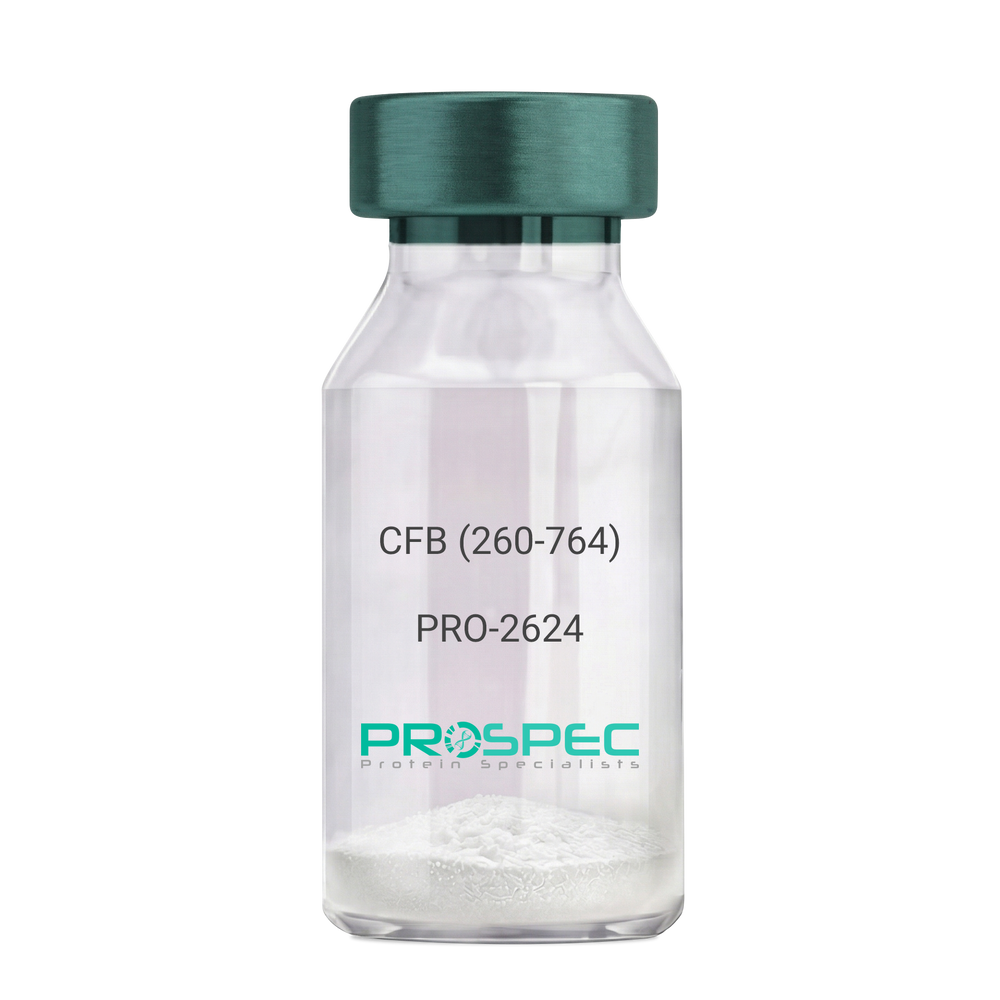
    Name :

    CFB (260-764) Human, Sf9

    Description:

    Complement Factor B (260-764 a.a.) Human Recombinant, Sf9

    CFB, C3/C5 convertase, Glycine-rich beta glycoprotein, GBG, PBF2, Properdin factor B, BF, BFD, AHUS4, ARMD14, CFAB, CFBD, FB, FBI12, GBG, H2-Bf.

    Product # :

    PRO-2624

    Price :

    Quantity :

    Shipping Method :

    Ice Icon

    Shipped with Ice Packs

    Add To Cart

    More Info

    • description
    • source
    • formulation
    • purity
    • More Info

    Description

    CFB Human Recombinant produced in Sf9 Baculovirus cells is a single, glycosylated polypeptide chain containing 514 amino acids (260-764 a.a) and having a molecular mass of 58.1kDa.CFB is fused to an 9 amino acid His-tag at C-terminus & purified by proprietary chromatographic techniques.

    Source

    Sf9, Baculovirus cells.

    Formulation

    CFB protein solution (0.5mg/ml) containing Phosphate Buffered Saline (pH 7.4) and 20% glycerol.

    Purity

    Greater than 90.0% as determined by SDS-PAGE.

    More Info

    • Introduction

      Factor B is a protein, build from a single chain that circulates in the blood. Complement factor D cleaves and activates factor B, thus creating a catalytic subunit Bb and noncatalytic chain Ba. Subunit Bb is a serine protease that can bind to C3b and forms alternative pathway C3 convertase. Subunit Ba acts as an inhibitor for proliferation of lymphocytes, when Bb is part of the lymphocytes’ proliferation. The gene that codes for this protein is located on chromosome six.

    • Synonyms

      CFB, C3/C5 convertase, Glycine-rich beta glycoprotein, GBG, PBF2, Properdin factor B, BF, BFD, AHUS4, ARMD14, CFAB, CFBD, FB, FBI12, GBG, H2-Bf.

    • Physical Appearance

      Sterile Filtered colorless solution.

    • Stability

      Store at 4°C if entire vial will be used within 2-4 weeks. Store, frozen at -20°C for longer periods of time. For long term storage it is recommended to add a carrier protein (0.1% HSA or BSA).Avoid multiple freeze-thaw cycles.

    • Amino Acid Sequence

      ADPKIVLDPS GSMNIYLVLD GSDSIGASNF TGAKKCLVNL IEKVASYGVK PRYGLVTYAT
      YPKIWVKVSE ADSSNADWVT KQLNEINYED HKLKSGTNTK KALQAVYSMM SWPDDVPPEG
      WNRTRHVIIL MTDGLHNMGG DPITVIDEIR DLLYIGKDRK NPREDYLDVY VFGVGPLVNQ
      VNINALASKK DNEQHVFKVK DMENLEDVFY QMIDESQSLS LCGMVWEHRK GTDYHKQPWQ
      AKISVIRPSK GHESCMGAVV SEYFVLTAAH CFTVDDKEHS IKVSVGGEKR DLEIEVVLFH
      PNYNINGKKE AGIPEFYDYD VALIKLKNKL KYGQTIRPIC LPCTEGTTRA LRLPPTTTCQ
      QQKEELLPAQ DIKALFVSEE EKKLTRKEVY IKNGDKKGSC ERDAQYAPGY DKVKDISEVV
      TPRFLCTGGV SPYADPNTCR GDSGGPLIVH KRSRFIQVGV ISWGVVDVCK NQKRQKQVPA HARDFHINLF QVLPWLKEKL QDEDLGFLHH HHHH

    ProSpec's products are furnished for LABORATORY RESEARCH USE ONLY. The product may not be used as drugs, agricultural or pesticidal products, food additives or household chemicals.

    Complement Factor B
  • View Data Sheet

    Name :

    4 1BBR Human

    Description:

    4-1BB Receptor Human Recombinant

    Tumor necrosis factor receptor superfamily member 9, 4-1BB ligand receptor T-cell, antigen 4-1BB homolog, T-cell antigen ILA, CD137 antigen, CDw137, ILA, 4-1BB, MGC2172, 4-1BBR, TNFRSF9.

    Product # :

    CYT-463

    Price :

    Quantity :

    Shipping Method :

    Room Temp Icon

    Shipped at Room temp

    Add To Cart

    More Info

    • description
    • source
    • formulation
    • purity
    • biological activity
    • More Info

    Description

    4-1BB Soluble Receptor Recombinant Human also called Tumor necrosis factor receptor superfamily member 9 produced in E.Coli is a single, non-glycosylated polypeptide chain containing 167 amino acids, having a molecular mass of 17718 Dalton and containing the cysteine rich TNFR-like extracellular domain of 4-1BB Receptor. The 4-1BB Receptor is purified by proprietary chromatographic techniques.

    Source

    Escherichia Coli.

    Formulation

    Lyophilized from a concentrated (1mg/ml) solution in water containing no additives.

    Purity

    Greater than 98.0% as determined by: (a) Analysis by RP-HPLC. (b) Analysis by SDS-PAGE.

    Biological Activity

    The activity was determined by the inhibition of 4-1BB ligand mediated stimulation of IL-8 production by human PBMC. Results: 90% inhibition using 1µg for both 4-1BB ligand and 4-1BB receptor.

    More Info

    • Introduction

      The protein encoded by this gene is a member of the TNF-receptor superfamily. This receptor contributes to the clonal expansion, survival, and development of T cells. It can also induce proliferation in peripheral monocytes, enhance T cell apoptosis induced by TCR/CD3 triggered activation, and regulate CD28 co-stimulation to promote Th1 cell responses. The expression of this receptor is induced by lymphocyte activation. TRAF adaptor proteins have been shown to bind to this receptor and transduce the signals leading to activation of NF-kappaB.

    • Synonyms

      Tumor necrosis factor receptor superfamily member 9, 4-1BB ligand receptor T-cell, antigen 4-1BB homolog, T-cell antigen ILA, CD137 antigen, CDw137, ILA, 4-1BB, MGC2172, 4-1BBR, TNFRSF9.

    • Physical Appearance

      Sterile Filtered White lyophilized (freeze-dried) powder.

    • Stability

      Lyophilized 4-1BB Receptor although stable at room temperature for 3 weeks, should be stored desiccated below -18°C. Upon reconstitution 4-1BBR should be stored at 4°C between 2-7 days and for future use below -18°C. For long term storage it is recommended to add a carrier protein (0.1% HSA or BSA). Please prevent freeze-thaw cycles.

    • Solubility

      It is recommended to reconstitute the lyophilized 4-1BB Receptor in sterile 18MΩ-cm H2O not less than 100µg/ml, which can then be further diluted to other aqueous solutions.

    • Amino Acid Sequence

      The sequence of the first five N-terminal amino acids was determined and was found to be Met-Glu-Arg-Thr-Arg.

    ProSpec's products are furnished for LABORATORY RESEARCH USE ONLY. The product may not be used as drugs, agricultural or pesticidal products, food additives or household chemicals.

    4 1BBR Human
  • View Data Sheet

    Name :

    GDF6 Human

    Description:

    Bone Morphogenetic protein-13 Human Recombinant

    Growth Differentiation Factor 6, Growth/Differentiation Factor 16, Bone Morphogenetic Protein 13, BMP-13, BMP13, GDF-6, Klippel-Feil Malformation, Segmentation Syndrome 1, Klip-Feil Malformation, Klippel-Feil Syndrome, MCOPCB6, SCDO4, CDMP2, LCA17, MCOP4, GDF16, KFS1, KFSL, SGM1, KFM, KFS, GDF6.

    Product # :

    CYT-938

    Price :

    Quantity :

    Shipping Method :

    Room Temp Icon

    Shipped at Room temp

    Add To Cart

    More Info

    • description
    • source
    • formulation
    • purity
    • biological activity
    • More Info

    Description

    BMP13 Human Recombinant produced in E.coli is a non-glycosylated disulfide linked homodimer containing 2 chains of 120 amino acids and having a molecular mass of 27.1kDa.The BMP-13 is purified by proprietary chromatographic techniques.

    Source

    Escherichia Coli.

    Formulation

    BMP-13 protein was lyophilized from a 0.2µm filtered concentrated solution in 30% Acetonitrile and 0.1% TFA.

    Purity

    Greater than 95.0% as determined by: (a) Analysis by HPLC. (b) Analysis by SDS-PAGE.

    Biological Activity

    The ED50 as determined by inducing alkaline phosphatase production of murine ATDC5 cells is less than 2.0µg/ml, corresponding to a specific activity of > 500IU/mg.

    More Info

    • Introduction

      Growth/differentiation factors (GDF1-GDF15) belong to the BMP family of TGF-beta superfamily proteins. These factors are produced as inactive preproproteins which are subsequently cleaved and assembled into active secreted homodimers. BMP13 is a growth factor which controls proliferation and cellular differentiation in the retina and bone formation. BMP13 has a central role in regulating apoptosis during retinal development. GDF proteins are vital during embryonic development, particularly in the skeletal, nervous, and muscular systems. BMP13 gene mutations result in colobomata, which are congenital abnormalities in ocular development, and in Klippel-Feil syndrome (KFS), which is a congenital disorder of spinal segmentation.

    • Synonyms

      Growth Differentiation Factor 6, Growth/Differentiation Factor 16, Bone Morphogenetic Protein 13, BMP-13, BMP13, GDF-6, Klippel-Feil Malformation, Segmentation Syndrome 1, Klip-Feil Malformation, Klippel-Feil Syndrome, MCOPCB6, SCDO4, CDMP2, LCA17, MCOP4, GDF16, KFS1, KFSL, SGM1, KFM, KFS, GDF6.

    • Physical Appearance

      Sterile Filtered White lyophilized (freeze-dried) powder.

    • Stability

      Lyophilized BMP13 although stable at room temperature for 3 weeks, should be stored desiccated below -18°C. Upon reconstitution BMP-13 should be stored at 4°C between 2-7 days and for future use below -18°C. For long term storage it is recommended to add a carrier protein (0.1% HSA or BSA). Please prevent freeze-thaw cycles.

    • Solubility

      It is recommended to reconstitute the lyophilized BMP13 in sterile 18M-cm H2O not less than 100µg/ml, which can then be further diluted to other aqueous solutions.

    • Amino Acid Sequence

      TAFASRHGKR HGKKSRLRCS KKPLHVNFKE LGWDDWIIAP LEYEAYHCEG VCDFPLRSHL EPTNHAIIQT LMNSMDPGST PPSCCVPTKL TPISILYIDA GNNVVYKQYE DMVVESCGCR.

    • Background

      Bone Morphogenetic Protein-13 Human Recombinant: Unraveling its Potential in Tissue Engineering and Regenerative Medicine

      Abstract:

      Bone Morphogenetic Protein-13 (BMP-13) human recombinant is a pivotal member of the bone morphogenetic protein family, known for its crucial role in tissue development, regeneration, and repair. This research paper aims to provide a comprehensive analysis of BMP-13, including its characteristics, signaling pathways, and potential therapeutic applications. Furthermore, innovative methodologies for the production and optimization of BMP-13 human recombinant are proposed, shedding light on its future implications in the field of tissue engineering and regenerative medicine.

      Introduction:

      Tissue engineering and regenerative medicine hold great promise in addressing tissue repair and regeneration challenges. BMP-13, a prominent member of the BMP family, plays a vital role in orchestrating cellular responses during tissue development and healing. This paper explores the distinctive features of BMP-13 and presents novel approaches for the production and optimization of BMP-13 human recombinant, aiming to unlock its therapeutic potential in various regenerative contexts.

      Characteristics and Signaling Pathways:

      BMP-13 is a secreted growth factor belonging to the transforming growth factor-beta (TGF-β) superfamily. It exerts its biological effects by binding to specific cell surface receptors, initiating intricate intracellular signaling cascades. BMP-13 signaling pathways, including Smad-dependent and Smad-independent pathways, regulate critical processes such as cell differentiation, proliferation, and extracellular matrix synthesis, influencing tissue development and repair.

      Production of BMP-13 Human Recombinant:

      Efficient production methodologies are crucial for harnessing the therapeutic potential of BMP-13 human recombinant. Various recombinant protein expression systems, such as mammalian cells or baculovirus-insect cell systems, have been utilized for the production of functional BMP-13. Optimization strategies, including codon optimization, signal peptide engineering, and protein folding enhancement, have been employed to improve the yield and bioactivity of BMP-13 recombinant protein.

      Potential Therapeutic Applications:

      BMP-13 human recombinant holds immense promise in the field of tissue engineering and regenerative medicine. Its involvement in cartilage formation, osteogenesis, and tissue repair makes it a potential candidate for the treatment of musculoskeletal disorders, joint injuries, and cartilage defects. Furthermore, the ability of BMP-13 to modulate cell behavior and tissue remodeling indicates its wider therapeutic applications in diverse regenerative processes.

      Conclusion:

      BMP-13 human recombinant emerges as a crucial regulator in tissue engineering and regenerative medicine, offering significant potential for tissue repair and regeneration. Optimizing production methodologies and further unraveling its signaling mechanisms will undoubtedly enhance its therapeutic applications. Given its involvement in cartilage and bone formation, as well as tissue repair, BMP-13 human recombinant represents a valuable tool for promoting tissue regeneration and addressing the unmet clinical needs in regenerative medicine.

      What is the molecular weight/Mw of GDF6 Protein?
      GDF6 Protein has a total Mw of 27.1kDa.

      What is the source or expression system of GDF6 Protein?
      Escherichia Coli.

      What is the Purity of GDF6 Protein?
      GDF6 Protein is >95% pure as determined by SDS-PAGE.

      What is the Biological Activity of GDF6 Protein?
      The ED50 as determined by inducing alkaline phosphatase production of murine ATDC5 cells is less than 2.0µg/ml, corresponding to a specific activity of > 500IU/mg.

      What is the amino acid sequence of GDF6 Protein?
      TAFASRHGKR HGKKSRLRCS KKPLHVNFKE LGWDDWIIAP LEYEAYHCEG VCDFPLRSHL EPTNHAIIQT LMNSMDPGST PPSCCVPTKL TPISILYIDA GNNVVYKQYE DMVVESCGCR.

      What applications can GDF6 Protein be used in?
      GDF6 Protein can probably be used in western blot, ELISA and Lateral Flow.

      What is the endotoxin level for GDF6 Protein?

      The endotoxin level is minimal, GDF6 Protein was purified using conventional chromatography techniques.

    ProSpec's products are furnished for LABORATORY RESEARCH USE ONLY. The product may not be used as drugs, agricultural or pesticidal products, food additives or household chemicals.

    Bmp13 Human
  • View Data Sheet

    Name :

    TUBB3 Human

    Description:

    Tubulin, Beta 3 Class III Human Recombinant

    Beta-4, CDCBM, CFEOM3A, TUBB4 , Tubulin beta-3 chain, Tubulin beta-4 chain, Tubulin beta-III, TUBB3.

    Product # :

    PRO-1388

    Price :

    Quantity :

    Shipping Method :

    Ice Icon

    Shipped with Ice Packs

    Add To Cart

    More Info

    • description
    • source
    • formulation
    • purity
    • More Info

    Description

    TUBB3 Human Recombinant produced in E.Coli is a single, non-glycosylated polypeptide chain containing 473 amino acids (1-450 a.a.) and having a molecular mass of 52.8kDa. TUBB3 is fused to a 23 amino acid His-tag at N-terminus & purified by proprietary chromatographic techniques.

    Source

    E.coli.

    Formulation

    TUBB3 protein solution (0.25mg/ml) contains 20mM Tris-HCl buffer (pH 8.0), 0.15M NaCl, 10% glycerol and 1mM DTT.

    Purity

    Greater than 90% as determined by SDS-PAGE.

    More Info

    • Introduction

      Tubulin, beta 3 class III (TUBB3), which is the major constituent of microtubules, is primarily Expressed in neurons and is involved in neurogenesis and in axon guidance and maintenance. TUBB3 binds two moles of GTP, one at an exchangeable site on the beta chain and one at a non-exchangeable site on the alpha-chain.

    • Synonyms

      Beta-4, CDCBM, CFEOM3A, TUBB4 , Tubulin beta-3 chain, Tubulin beta-4 chain, Tubulin beta-III, TUBB3.

    • Physical Appearance

      Sterile Filtered colorless solution.

    • Stability

      Store at 4°C if entire vial will be used within 2-4 weeks. Store, frozen at -20°C for longer periods of time. For long term storage it is recommended to add a carrier protein (0.1% HSA or BSA).Avoid multiple freeze-thaw cycles.

    • Amino Acid Sequence

      MGSSHHHHHH SSGLVPRGSH MGSMREIVHI QAGQCGNQIG AKFWEVISDE HGIDPSGNYV GDSDLQLERI SVYYNEASSH KYVPRAILVD LEPGTMDSVR SGAFGHLFRP DNFIFGQSGA GNNWAKGHYT EGAELVDSVL DVVRKECENC DCLQGFQLTH SLGGGTGSGM GTLLISKVRE EYPDRIMNTF SVVPSPKVSD TVVEPYNATL SIHQLVENTD ETYCIDNEAL YDICFRTLKL ATPTYGDLNH LVSATMSGVT TSLRFPGQLN ADLRKLAVNM VPFPRLHFFM PGFAPLTARG SQQYRALTVP ELTQQMFDAK NMMAACDPRH GRYLTVATVF RGRMSMKEVD EQMLAIQSKN SSYFVEWIPN NVKVAVCDIP PRGLKMSSTF IGNSTAIQEL FKRISEQFTA MFRRKAFLHW YTGEGMDEME FTEAESNMND LVSEYQQYQD ATAEEEGEMY EDDEEESEAQ GPK.

    ProSpec's products are furnished for LABORATORY RESEARCH USE ONLY. The product may not be used as drugs, agricultural or pesticidal products, food additives or household chemicals.

    Tubb3 Human
  • View Data Sheet

    Name :

    GPNMB Human, Sf9

    Description:

    Glycoprotein Nmb Human Recombinant, Sf9

    Transmembrane glycoprotein NMB, Transmembrane glycoprotein HGFIN, GPNMB, HGFIN, NMB, Glycoprotein (transmembrane) nmb.

    Product # :

    PRO-2394

    Price :

    Quantity :

    Shipping Method :

    Ice Icon

    Shipped with Ice Packs

    Add To Cart

    More Info

    • description
    • source
    • formulation
    • purity
    • More Info

    Description

    GPNMB Human Recombinant produced in Sf9 Baculovirus cells is a single, glycosylated polypeptide chain containing 462 amino acids (22-474a.a.) and having a molecular mass of 51.8kDa. GPNMB is expressed with a 6 amino acid His tag at C-Terminus and purified by proprietary chromatographic techniques.

    Source

    Sf9, Baculovirus cells.

    Formulation

    GPNMB protein solution (0.5mg/ml) contains Phosphate Buffered Saline (pH 7.4) and 10% glycerol.

    Purity

    Greater than 90.0% as determined by SDS-PAGE.

    More Info

    • Introduction

      Glycoprotein Nmb (GPNMB) is a member of the PMEL/NMB family. GPNMB is a type I transmembrane glycoprotein which exhibits homology to the pMEL17 precursor, a melanocyte-specific protein. GPNMB is expressed in the lowly metastatic human melanoma cell lines and xenografts but has no expression in the highly metastatic cell lines. GPNMB might be involved in growth delay and reduction of metastatic potential. GPNMB is up-regulated in a number of cancer cells, including in glioblastoma multiforme. GPNMB is expressed in many melanoma cells, as well as in tissue macrophages, including liver Kuppfer cells and lung alveolar macrophages, in podocytes and in some cells of the ciliary body of the eye (at protein level). GPNMB is hardly detectable in the healthy brain.

    • Synonyms

      Transmembrane glycoprotein NMB, Transmembrane glycoprotein HGFIN, GPNMB, HGFIN, NMB, Glycoprotein (transmembrane) nmb.

    • Physical Appearance

      Sterile Filtered colorless solution.

    • Stability

      Store at 4°C if entire vial will be used within 2-4 weeks. Store, frozen at -20°C for longer periods of time. For long term storage it is recommended to add a carrier protein (0.1% HSA or BSA).Avoid multiple freeze-thaw cycles.

    • Amino Acid Sequence

      ADPAKRFHDV LGNERPSAYM REHNQLNGWS SDENDWNEKL YPVWKRGDMR WKNSWKGGRV QAVLTSDSPA LVGSNITFAV NLIFPRCQKE DANGNIVYEK NCRNEAGLSA DPYVYNWTAW SEDSDGENGT GQSHHNVFPD GKPFPHHPGW RRWNFIYVFH TLGQYFQKLG RCSVRVSVNT ANVTLGPQLM EVTVYRRHGR AYVPIAQVKD VYVVTDQIPV FVTMFQKNDR NSSDETFLKD LPIMFDVLIH DPSHFLNYST INYKWSFGDN TGLFVSTNHT VNHTYVLNGT FSLNLTVKAA APGPCPPPPP PPRPSKPTPS LGPAGDNPLE LSRIPDENCQ INRYGHFQAT ITIVEGILEV NIIQMTDVLM PVPWPESSLI DFVVTCQGSI PTEVCTIISD PTCEITQNTV CSPVDVDEMC LLTVRRTFNG SGTYCVNLTL GDDTSLALTS TLISVPHHHH HH.

    ProSpec's products are furnished for LABORATORY RESEARCH USE ONLY. The product may not be used as drugs, agricultural or pesticidal products, food additives or household chemicals.

    Gpnmb Human Sf9
  • View Data Sheet

    Name :

    Nipah Nucleocapsid

    Description:

    Nipah Virus Nucleocapsid Recombinant


    Product # :

    NIV-001

    Price :

    Quantity :

    Shipping Method :

    Ice Icon

    Shipped with Ice Packs

    Add To Cart

    More Info

    • description
    • source
    • formulation
    • purity
    • More Info

    Description

    The E.Coli derived recombinant protein contains the Nipah Nucleocapsid protein (a.a. 1-250) and fused to a 6 His Tag at C-terminus, having a total Mw of 28.6kDa, pI 9.3.

    Source

    Escherichia Coli.

    Formulation

    1x PBS.

    Purity

    Protein is >90% pure as determined by SDS-PAGE.

    More Info

    • Physical Appearance

      Sterile filtered colorless solution.

    • Stability

      Nipah Nucleocapsid although stable at 4°C for 1 week, should be stored below -18°C.
      Please prevent freeze thaw cycles.

    • Background

      Nipah virus is a part of the Henipavirus genus in the Paramyxoviridae family. Nipah virus is well known for its lethally rate, which pass from human to human and lack of approved specific antiviral treatment or licensed vaccine.

      What is the source or expression system of Nipah Nucleocapsid?
      Escherichia Coli.

      What is the Purity of Nipah Nucleocapsid?
      Protein is >90% pure as determined by SDS-PAGE.

      What is the molecular weight of Nipah Nucleocapsid?
      Nipah Nucleocapsid having a total Mw of 28.6kDa.

      What is the Biological Activity of Nipah Nucleocapsid?
      The biological activity of Nipah protein wll be determined in the future.

      What is the endotoxin level for recombinant Nipah Nucleocapsid?

      The endotoxin level is minimal, recombinant Nipah virus was purified using conventional chromatography techniques.

      What is the amino acid sequence of Nipah protein?
      Nipah Nucleocapsid protein is composed from 1-250 amino acids.


    • Purification Method

      Purified by proprietary chromatographic technique.

    ProSpec's products are furnished for LABORATORY RESEARCH USE ONLY. The product may not be used as drugs, agricultural or pesticidal products, food additives or household chemicals.

    Nipah Nucleocapsid
  • View Data Sheet

    Name :

    TXNDC12 Human

    Description:

    Thioredoxin Domain Containing 12 Human Recombinant

    Thioredoxin domain containing 12 (endoplasmic reticulum), Endoplasmic reticulum resident protein 18, Endoplasmic reticulum resident protein 19, endoplasmic reticulum thioredoxin superfamily member 18 kDa, thioredoxin domain-containing protein 12, protein disulfide isomerase family A member 16, endoplasmic reticulum protein ERp19, anterior gradient homolog 1, Thioredoxin-like protein p19, ER protein 18, ERP18, ER protein 19, ERP19, ERP16, TLP19, AGR1, PDIA16, hAG-1, EC 1.8.4.2.

    Product # :

    PRO-1133

    Price :

    Quantity :

    Shipping Method :

    Ice Icon

    Shipped with Ice Packs

    Add To Cart

    More Info

    • description
    • source
    • formulation
    • purity
    • More Info

    Description

    TXNDC12 Human Recombinant produced in E. coli is a single polypeptide chain containing 184 amino acids (27-172) and having a molecular mass of 20.8 kDa.TXNDC12 is fused to a 38 amino acid His-tag at N-terminus & purified by proprietary chromatographic techniques.

    Source

    E.coli.

    Formulation

    The TXNDC12 solution (0.25mg/ml) contains 20mM Tris-HCl buffer (pH 8.0), 0.15M NaCl and 10% glycerol.

    Purity

    Greater than 90% as determined by SDS-PAGE.

    More Info

    • Introduction

      TXNDC12 is a member of the thioredoxin super family. This Family members have a thioredoxin fold with a consensus active-site sequence (CxxC) and take part in redox regulation, protection against oxidative stress, refolding of disulfide-containing proteins, and regulation of transcription factors.

    • Synonyms

      Thioredoxin domain containing 12 (endoplasmic reticulum), Endoplasmic reticulum resident protein 18, Endoplasmic reticulum resident protein 19, endoplasmic reticulum thioredoxin superfamily member 18 kDa, thioredoxin domain-containing protein 12, protein disulfide isomerase family A member 16, endoplasmic reticulum protein ERp19, anterior gradient homolog 1, Thioredoxin-like protein p19, ER protein 18, ERP18, ER protein 19, ERP19, ERP16, TLP19, AGR1, PDIA16, hAG-1, EC 1.8.4.2.

    • Physical Appearance

      Sterile Filtered colorless solution.

    • Stability

      Store at 4°C if entire vial will be used within 2-4 weeks. Store, frozen at -20°C for longer periods of time. For long term storage it is recommended to add a carrier protein (0.1% HSA or BSA).Avoid multiple freeze-thaw cycles.

    • Amino Acid Sequence

      MRGSHHHHHH GMASMTGGQQ MGRDLYDDDD KDRWGSHMHN GLGKGFGDHI HWRTLEDGKK EAAASGLPLM VIIHKSWCGA CKALKPKFAE STEISELSHN FVMVNLEDEE EPKDEDFSPD GGYIPRILFL DPSGKVHPEI INENGNPSYK YFYVSAEQVV QGMKEAQERL TGDAFRKKHL EDEL

    ProSpec's products are furnished for LABORATORY RESEARCH USE ONLY. The product may not be used as drugs, agricultural or pesticidal products, food additives or household chemicals.

    Txndc12 Human
  • View Data Sheet

    Name :

    NFKBID Human

    Description:

    NF-kappa-B Inhibitor Delta Human Recombinant

    NF-kappa-B inhibitor delta, I-kappa-B-delta, IkB-delta, IkappaBdelta, IkappaBNS, T-cell activation NFKB-like protein, TA-NFKBH, NFKBID, IKBNS.

    Product # :

    PRO-1684

    Price :

    Quantity :

    Shipping Method :

    Ice Icon

    Shipped with Ice Packs

    Add To Cart

    More Info

    • description
    • source
    • formulation
    • purity
    • More Info

    Description

    NFKBID Human Recombinant produced in E.coli is a single, non-glycosylated polypeptide chain containing 336 amino acids (1-313) and having a molecular mass of 35.9 kDa.NFKBID is fused to a 23 amino acid His-tag at N-terminus & purified by proprietary chromatographic techniques.

    Source

    Escherichia Coli.

    Formulation

    The NFKBID solution (0.5mg/ml) contains 20mM Tris-HCl buffer (pH 8.0), 0.15M NaCl, 10% glycerol and 1mM DTT.

    Purity

    Greater than 95.0% as determined by SDS-PAGE.

    More Info

    • Introduction

      NFKBID belongs to the IkB family of proteins which contains four groups (IkB-alpha, IkB-beta, IkB-gamma, IkB-epsilon). NFKBID takes part in regulating inflammatory responses and cytokine, IL-2 and IL-6 expression through NFkB activity. NFKBID has 3 known alternative spliced isoforms, and is associated with RelB, NF?B p50 and NFkB p65 in nucleus. NFKBID is involeved in thymocyte selection in response to TCR induction.

    • Synonyms

      NF-kappa-B inhibitor delta, I-kappa-B-delta, IkB-delta, IkappaBdelta, IkappaBNS, T-cell activation NFKB-like protein, TA-NFKBH, NFKBID, IKBNS.

    • Physical Appearance

      Sterile Filtered colorless solution.

    • Stability

      Store at 4°C if entire vial will be used within 2-4 weeks. Store, frozen at -20°C for longer periods of time. For long term storage it is recommended to add a carrier protein (0.1% HSA or BSA).Avoid multiple freeze-thaw cycles.

    • Amino Acid Sequence

      MGSSHHHHHH SSGLVPRGSH MGSMEAGPWR VSAPPSGPPQ FPAVVPGPSL EVARAHMLAL GPQQLLAQDE EGDTLLHLFA ARGLRWAAYA AAEVLQVYRR LDIREHKGKT PLLVAAAANQ PLIVEDLLNL GAEPNAADHQ GRSVLHVAAT YGLPGVLLAV LNSGVQVDLE ARDFEGLTPL HTAILALNVA MRPSDLCPRV LSTQARDRLD CVHMLLQMGA NHTSQEIKSN KTVLHLAVQA ANPTLVQLLL ELPRGDLRTF VNMKAHGNTA LHMAAALPPG PAQEAIVRHL LAAGADPTLR NLENEQPVHL LRPGPGPEGL RQLLKRSRVA PPGLSS.

    ProSpec's products are furnished for LABORATORY RESEARCH USE ONLY. The product may not be used as drugs, agricultural or pesticidal products, food additives or household chemicals.

    Nfkbid Human
  • View Data Sheet

    Name :

    CCL20 Human, His

    Description:

    Macrophage Inflammatory protein-3 alpha (CCL20) Human Recombinant, His Tag

    S Small inducible cytokine A20 precursor, CCL20, Macrophage inflammatory protein 3 alpha, MIP-3-alpha, Liver and activation- regulated chemokine, CC chemokine LARC, Beta chemokine exodus-1, CKb4, LARC, ST38, MIP3A, MIP-3a, SCYA20.

    Product # :

    CHM-252

    Price :

    Quantity :

    Shipping Method :

    Ice Icon

    Shipped with Ice Packs

    Add To Cart

    More Info

    • description
    • source
    • formulation
    • purity
    • More Info

    Description

    MIP 3a Human Recombinant fused with a 21 amino acid His tag at N-terminus produced in E.Coli is a single, non-glycosylated, polypeptide chain containing 91 amino acids (27-96 a.a.) and having a molecular mass of 10.3kDa. The MIP 3a is purified by proprietary chromatographic techniques.

    Source

    Escherichia Coli.

    Formulation

    The MIP 3a solution (0.25 mg/ml) contains Phosphate Buffered Saline pH7.4 and 10% glycerol.

    Purity

    Greater than 85.0% as determined by SDS-PAGE.

    More Info

    • Introduction

      CCL-20 is a chemotactic factor that draws lymphocytes & neutrophils, rathar than monocytes. MIP-3 alpha inhibits proliferation of myeloid progenitors in colony formation assays. MIP3A plays a role in the formation and function of the mucosal lymphoid tissues by attracting lymphocytes and dendritic cells towards epithelial cells. C-terminal processed forms have been shown to be equally chemotactically active for leukocytes. CCL-20 holdes antibacterial activity e.coli atcc 25922 and s.aureus atcc 29213. CCL-20 gene transcription is activated by H. pylori, which activates NF-kappaB through intracellular signal pathway which involves IkappaB kinase and NF-kappaB-inducing kinase. MIP-3 alpha is invloved in chemokine-mediated lymphocyte trafficking during gastric inflammation in Helicobacter infection. CCL-20 expression is involved in the recruitment of CD45R0-positive T cell subsets into the intestinal lamina propria. MIP-3A is in charge of the advancement of pulpal inflammation through the recruitment of C-C motif Receptor 6-expressing lymphocytes Vaginal epithelial cells respond to factors present in semen by secreting MIP-3 alpha, which increases langerhans cells recruitment during HIV transmission.

    • Synonyms

      S Small inducible cytokine A20 precursor, CCL20, Macrophage inflammatory protein 3 alpha, MIP-3-alpha, Liver and activation- regulated chemokine, CC chemokine LARC, Beta chemokine exodus-1, CKb4, LARC, ST38, MIP3A, MIP-3a, SCYA20.

    • Physical Appearance

      Sterile Filtered colorless solution.

    • Stability

      Store at 4°C if entire vial will be used within 2-4 weeks. Store, frozen at -20°C for longer periods of time.For long term storage it is recommended to add a carrier protein (0.1% HSA or BSA).Avoid multiple freeze-thaw cycles.

    • Amino Acid Sequence

      MGSSHHHHHH SSGLVPRGSH MASNFDCCLG YTDRILHPKF IVGFTRQLAN EGCDINAIIF HTKKKLSVCA NPKQTWVKYI VRLLSKKVKN M.

    • Background

      What is the molecular weight/Mw of CCL20 HUMAN, HIS Protein?
      CCL20 HUMAN, HIS Protein has a total Mw of 10.3kDa.

      What is the source or expression system of CCL20 HUMAN, HIS Protein?
      Escherichia Coli.

      What is the Purity of CCL20 HUMAN, HIS Protein?
      CCL20 HUMAN, HIS Protein is >85% pure as determined by SDS-PAGE.

      What is the Biological Activity of CCL20 HUMAN, HIS Protein?
      The biological functionality of CCL20 HUMAN, HIS Protein will be determined in the future.

      What is the amino acid sequence of CCL20 HUMAN, HIS Protein?
      MGSSHHHHHH SSGLVPRGSH MASNFDCCLG YTDRILHPKF IVGFTRQLAN EGCDINAIIF HTKKKLSVCA NPKQTWVKYI VRLLSKKVKN M.

      What applications can CCL20 HUMAN, HIS Protein be used in?
      CCL20 HUMAN, HIS Protein can probably be used in western blot, ELISA and Lateral Flow.

      What is the endotoxin level for CCL20 HUMAN, HIS Protein?
      The endotoxin level is minimal, CCL20 HUMAN, HIS Protein was purified using conventional chromatography techniques.


    ProSpec's products are furnished for LABORATORY RESEARCH USE ONLY. The product may not be used as drugs, agricultural or pesticidal products, food additives or household chemicals.

    Mip 3A Human His
  • View Data Sheet

    Name :

    T.Vaginalis P65

    Description:

    Trichomonas Vaginalis P65 Recombinant

    Product # :

    PRO-1920

    Price :

    Quantity :

    Shipping Method :

    Ice Icon

    Shipped with Ice Packs

    Add To Cart

    More Info

    • description
    • source
    • formulation
    • purity
    • More Info

    Description

    The Recombinant Trichomonas vaginalis p65, E.Coli derived migrates around 67kda on SDS-PAGE. The full length protein is purified by standard chromatography techniques.

    Source

    Escherichia Coli.

    Formulation

    T. Vaginalis p65protein solution in PBS and 25Mm K2CO3.

    Purity

    Protein is >90% pure as determined by 10% PAGE (coomassie staining).

    More Info

    • Introduction

      Trichomonas vaginalis, an anaerobic, flagellated protozoan parasite, is most dominant protozoan causing sexual transmitted disease. T. vaginalis induced vaginal tract infection occurs as multiple steps involving interactions between host macromolecules and protozoan virulent factor. Adhension protein P65 of T. vaginalis has a vital part in assisting the penetration into vaginal tract surface.

    • Physical Appearance

      Sterile Filtered clear solution.

    • Stability

      T. Vaginalis p65 Recombinant although stable at 4°C for 1 week, should be stored below -18°C. Please prevent freeze thaw cycles.

    ProSpec's products are furnished for LABORATORY RESEARCH USE ONLY. The product may not be used as drugs, agricultural or pesticidal products, food additives or household chemicals.

    Tvaginalis P65
  • 1
  • …
  • 30
  • 31
  • 32
  • 33
  • 34
  • …
  • 42
Your browser does not support the video tag.

Products

  • Cytokines
  • Growth Factors
  • Chemokines
  • CD Antigens
  • Neurotrophins
  • Hormones
  • Enzymes
  • Viral Antigens
  • Recombinant Proteins
  • Natural Proteins
  • Monoclonal Antibodies
  • Polyclonal Antibodies
  • Thermal Packaging

About

  • Company
  • Founder
  • Contribution
  • Contact Us
  • My Account

Ordering

  • Ordering Method
  • Ordering - Credit Card
  • Ordering PO
  • Shipping Fees
  • FAQ's

Legal

  • Terms & Conditions
  • Privacy
  • Site Map
  • info@prospecbio.com
  • Facebook
  • Instagram
  • Linkedin Profile

© 2026 ProSpec-Tany TechnoGene Ltd. All Rights Reserved.

  • Choosing a selection results in a full page refresh.
  • Opens in a new window.