Skip to content

High-quality research proteins.

  • 1-800-805-6531

  • Mon - Sat 8.00-18.00, Sun - Closed

  • info@prospecbio.com

  • PO Box 6591 East Brunswick NJ 08816

  • Products
    • Cytokines
    • Growth factors
    • Chemokines
    • Cd antigens
    • Neurotrophins
    • Hormones
    • Enzymes
    • Viral antigens
    • Recombinant proteins
    • Natural proteins
    • Monoclonal antibodies
    • Polyclonal antibodies
    • Thermal Packaging
  • About
    • Company
    • Founder
    • Contribution
  • Customers
    • Eastern Asia
    • Eastern Europe
    • North America
    • South America
    • South East Asia
    • Southern Asia
    • Western Europe
  • Ordering
    • Ordering Method
    • Ordering - Credit Card
    • Ordering - PO
    • Shipping Fees
    • FAQs
  • Services
    • DNA Cloning
    • Protein Expression
    • Monoclonal Antibody
    • Fermentation
    • Technology License
  • Contact us
Log in

Country/region

  • USD $ | Albania
  • USD $ | Andorra
  • USD $ | Argentina
  • USD $ | Armenia
  • USD $ | Australia
  • USD $ | Austria
  • USD $ | Azerbaijan
  • USD $ | Belarus
  • USD $ | Belgium
  • USD $ | Bolivia
  • USD $ | Brazil
  • USD $ | Bulgaria
  • USD $ | Cambodia
  • USD $ | Canada
  • USD $ | Chile
  • USD $ | China
  • USD $ | Colombia
  • USD $ | Costa Rica
  • USD $ | Croatia
  • USD $ | Cyprus
  • USD $ | Czechia
  • USD $ | Denmark
  • USD $ | Estonia
  • USD $ | Finland
  • USD $ | France
  • USD $ | Georgia
  • USD $ | Germany
  • USD $ | Greece
  • USD $ | Hong Kong SAR
  • USD $ | Hungary
  • USD $ | Iceland
  • USD $ | India
  • USD $ | Ireland
  • USD $ | Israel
  • USD $ | Italy
  • USD $ | Japan
  • USD $ | Kazakhstan
  • USD $ | Latvia
  • USD $ | Liechtenstein
  • USD $ | Lithuania
  • USD $ | Madagascar
  • USD $ | Malta
  • USD $ | Mexico
  • USD $ | Moldova
  • USD $ | Monaco
  • USD $ | Netherlands
  • USD $ | New Zealand
  • USD $ | North Macedonia
  • USD $ | Norway
  • USD $ | Panama
  • USD $ | Paraguay
  • USD $ | Peru
  • USD $ | Philippines
  • USD $ | Poland
  • USD $ | Portugal
  • USD $ | Romania
  • USD $ | Singapore
  • USD $ | Slovakia
  • USD $ | Slovenia
  • USD $ | South Africa
  • USD $ | South Korea
  • USD $ | Spain
  • USD $ | Sri Lanka
  • USD $ | Sweden
  • USD $ | Switzerland
  • USD $ | Taiwan
  • USD $ | Thailand
  • USD $ | Türkiye
  • USD $ | Ukraine
  • USD $ | United Kingdom
  • USD $ | United States
  • USD $ | Uruguay
  • USD $ | Vatican City
  • USD $ | Venezuela
  • USD $ | Vietnam
  • Facebook
  • Instagram
logoProSpec - Recombinant Protein Manufacturer for academic and R&D industry
Become a distributor
Account Log in
Wishlist
Cart Cart(0)
  • Products
    +
    • Cytokines
    • Growth factors
    • Chemokines
    • Cd antigens
    • Neurotrophins
    • Hormones
    • Enzymes
    • Viral antigens
    • Recombinant proteins
    • Natural proteins
    • Monoclonal antibodies
    • Polyclonal antibodies
    • Thermal Packaging
  • About
    +
    • Company
    • Founder
    • Contribution
  • Customers
    +
    • Eastern Asia
    • Eastern Europe
    • North America
    • South America
    • South East Asia
    • Southern Asia
    • Western Europe
  • Ordering
    +
    • Ordering Method
    • Ordering - Credit Card
    • Ordering - PO
    • Shipping Fees
    • FAQs
  • Services
    +
    • DNA Cloning
    • Protein Expression
    • Monoclonal Antibody
    • Fermentation
    • Technology License
  • Contact us

Item added to your cart

View cart
View All
  • Cytokines
  • Growth factors
  • Chemokines
  • Cd antigens
  • Neurotrophins
  • Hormones
  • Enzymes
  • Viral antigens
  • Recombinant proteins
  • Natural proteins
  • Monoclonal antibodies
  • Polyclonal antibodies
  • Thermal Packaging
  • Tumor Necrosis Factor

    Tumor Necrosis Factor

    View All
  • 4-1BB

    4-1BB

    View All
  • Adiponectin

    Adiponectin

    View All
  • AIF1

    AIF1

    View All
  • Other Cytokines

    Other Cytokines

    View All
  • AITRL

    AITRL

    View All
  • Angiopoietin

    Angiopoietin

    View All
  • Apolipoprotein

    Apolipoprotein

    View All
  • B-Cell Activating Factor

    B-Cell Activating Factor

    View All
  • Beta Defensin

    Beta Defensin

    View All
  • Bone Morphogenetic Protein

    Bone Morphogenetic Protein

    View All
  • B type Natriuretic Peptide

    B type Natriuretic Peptide

    View All
  • BST

    BST

    View All
  • Betacellulin

    Betacellulin

    View All
  • Cardiotrophin

    Cardiotrophin

    View All
  • Activin

    Activin

    View All
  • Fibroblast Growth Factor

    Fibroblast Growth Factor

    View All
  • Other Growth Factors

    Other Growth Factors

    View All
  • CSF

    CSF

    View All
  • CTGF

    CTGF

    View All
  • IGFBP

    IGFBP

    View All
  • VEGF Protein

    VEGF Protein

    View All
  • EGF

    EGF

    View All
  • Epigen

    Epigen

    View All
  • Erythropoietin

    Erythropoietin

    View All
  • Insulin-Like Growth Factor

    Insulin-Like Growth Factor

    View All
  • Growth Hormone

    Growth Hormone

    View All
  • HDGF

    HDGF

    View All
  • Hepatocyte Growth Factor

    Hepatocyte Growth Factor

    View All
  • Insulin

    Insulin

    View All
  • BCA-1/ BLC (CXCL13)

    BCA-1/ BLC (CXCL13)

    View All
  • BRAK (CXCL14)

    BRAK (CXCL14)

    View All
  • C-10 (CCL6)

    C-10 (CCL6)

    View All
  • Other Chemokines

    Other Chemokines

    View All
  • MEC (CCL28)

    MEC (CCL28)

    View All
  • LD78-beta (CCL3L1)

    LD78-beta (CCL3L1)

    View All
  • CTACK (CCL27)

    CTACK (CCL27)

    View All
  • CXCL16

    CXCL16

    View All
  • CXCL17

    CXCL17

    View All
  • Platelet Factor-4 (CXCL4)

    Platelet Factor-4 (CXCL4)

    View All
  • ENA-78 (CXCL5)

    ENA-78 (CXCL5)

    View All
  • Eotaxin (CCL11,24,26)

    Eotaxin (CCL11,24,26)

    View All
  • Exodus-2 (CCL21)

    Exodus-2 (CCL21)

    View All
  • Fractalkine (CX3CL1)

    Fractalkine (CX3CL1)

    View All
  • CXCL6

    CXCL6

    View All
  • Other CD Antigens

    Other CD Antigens

    View All
  • CD14

    CD14

    View All
  • CD164

    CD164

    View All
  • CD1

    CD1

    View All
  • CD2

    CD2

    View All
  • CD200

    CD200

    View All
  • CD207

    CD207

    View All
  • CD226

    CD226

    View All
  • CD23

    CD23

    View All
  • CD244

    CD244

    View All
  • CD247

    CD247

    View All
  • CD27

    CD27

    View All
  • CD274

    CD274

    View All
  • CD300

    CD300

    View All
  • CD33

    CD33

    View All
  • Other Neurotrophins

    Other Neurotrophins

    View All
  • Beta-NGF

    Beta-NGF

    View All
  • BDNF

    BDNF

    View All
  • CDNF

    CDNF

    View All
  • CNTF

    CNTF

    View All
  • GDNF

    GDNF

    View All
  • Glia Maturation Factor

    Glia Maturation Factor

    View All
  • MANF

    MANF

    View All
  • Midkine

    Midkine

    View All
  • Neuroglobin

    Neuroglobin

    View All
  • Neurotrophic factors

    Neurotrophic factors

    View All
  • Neuregulin

    Neuregulin

    View All
  • Neuropilin

    Neuropilin

    View All
  • Pigment Epithelium-Derived Factor

    Pigment Epithelium-Derived Factor

    View All
  • Pleiotrophin

    Pleiotrophin

    View All
  • Peptide Hormones

    Peptide Hormones

    View All
  • Other Hormones

    Other Hormones

    View All
  • HCG

    HCG

    View All
  • Endothelin

    Endothelin

    View All
  • Exendin

    Exendin

    View All
  • FSH

    FSH

    View All
  • Glucagon

    Glucagon

    View All
  • GHRP

    GHRP

    View All
  • GLP

    GLP

    View All
  • Thyrostimulin

    Thyrostimulin

    View All
  • Inhibin A

    Inhibin A

    View All
  • LHRH

    LHRH

    View All
  • Melanotan

    Melanotan

    View All
  • Procalcitonin

    Procalcitonin

    View All
  • PTH

    PTH

    View All
  • Peroxiredoxin

    Peroxiredoxin

    View All
  • Peptidase

    Peptidase

    View All
  • Synthetase

    Synthetase

    View All
  • Transferase

    Transferase

    View All
  • Hydrolase

    Hydrolase

    View All
  • Dehydrogenase

    Dehydrogenase

    View All
  • ACE2

    ACE2

    View All
  • Esterase

    Esterase

    View All
  • Protein Kinases

    Protein Kinases

    View All
  • Other Enzymes

    Other Enzymes

    View All
  • Phosphatase

    Phosphatase

    View All
  • Deaminase

    Deaminase

    View All
  • Oxygenase

    Oxygenase

    View All
  • Adenylate Kinase

    Adenylate Kinase

    View All
  • Lyase

    Lyase

    View All
  • Chagas

    Chagas

    View All
  • SARS

    SARS

    View All
  • Influenza

    Influenza

    View All
  • ASFV

    ASFV

    View All
  • Astrovirus

    Astrovirus

    View All
  • Borrelia

    Borrelia

    View All
  • Helicobacter Pylori

    Helicobacter Pylori

    View All
  • Chikungunya

    Chikungunya

    View All
  • Chlamydia

    Chlamydia

    View All
  • Cytomegalo

    Cytomegalo

    View All
  • Dengue

    Dengue

    View All
  • EBV

    EBV

    View All
  • Ebola

    Ebola

    View All
  • Feline Leukemia Virus

    Feline Leukemia Virus

    View All
  • Hepatitis A

    Hepatitis A

    View All
  • Other

    Other

    View All
  • Actin

    Actin

    View All
  • ADAM

    ADAM

    View All
  • Complement Component

    Complement Component

    View All
  • Ag85

    Ag85

    View All
  • Eukaryotic Translation Initiation Factor

    Eukaryotic Translation Initiation Factor

    View All
  • Anterior Gradient Protein

    Anterior Gradient Protein

    View All
  • Heat Shock Protein

    Heat Shock Protein

    View All
  • Alpha-2-HS-Glycoprotein

    Alpha-2-HS-Glycoprotein

    View All
  • Hemoglobin

    Hemoglobin

    View All
  • Allergy

    Allergy

    View All
  • Anaplasma

    Anaplasma

    View All
  • Angiogenin

    Angiogenin

    View All
  • Ankyrin Repeat Domain

    Ankyrin Repeat Domain

    View All
  • Annexin

    Annexin

    View All
  • Other Natural Proteins

    Other Natural Proteins

    View All
  • Aprotinin

    Aprotinin

    View All
  • Transferrin

    Transferrin

    View All
  • Avidin

    Avidin

    View All
  • Anti Coagulation Factors

    Anti Coagulation Factors

    View All
  • Natural Albumin

    Natural Albumin

    View All
  • Natural Coagulation Factors

    Natural Coagulation Factors

    View All
  • Fibronectin

    Fibronectin

    View All
  • Thrombin

    Thrombin

    View All
  • Anti Human Enzyme

    Anti Human Enzyme

    View All
  • Other Monoclonal Antibodies

    Other Monoclonal Antibodies

    View All
  • Anti Human Cytokine

    Anti Human Cytokine

    View All
  • Anti Human Heat Shock Protein

    Anti Human Heat Shock Protein

    View All
  • Anti Mouse Lymphocyte

    Anti Mouse Lymphocyte

    View All
  • Anti Human Chemokine

    Anti Human Chemokine

    View All
  • Anti Human Lymphocyte

    Anti Human Lymphocyte

    View All
  • Anti Viral Monoclonal

    Anti Viral Monoclonal

    View All
  • Anti Mouse Cytokine

    Anti Mouse Cytokine

    View All
  • Anti-GST Monoclonal

    Anti-GST Monoclonal

    View All
  • Other Polyclonal Antibodies

    Other Polyclonal Antibodies

    View All
  • Anti Viral

    Anti Viral

    View All
  • Anti-GST Monoclonal

    Anti-GST Monoclonal

    View All
Back

Search results

1000 results found for “Natural Enzymes”

Name

Description

Product #

Price

Quantity

Shipping Method

  • View Data Sheet

    Name :

    ALDOB Human

    Description:

    Aldolase B Fructose-Bisphosphate Human Recombinant

    Fructose-bisphosphate aldolase B, Liver-type aldolase, ALDOB, ALDB, Aldolase B fructose-bisphosphate, ALDO2, aldolase 2, Aldolase B fructose-bisphosphatase.

    Product # :

    ENZ-245

    Price :

    Quantity :

    Shipping Method :

    Ice Icon

    Shipped with Ice Packs

    Add To Cart

    More Info

    • description
    • source
    • formulation
    • purity
    • More Info

    Description

    ALDOB Human Recombinant produced in E.coli is a single, non-glycosylated polypeptide chain containing 388 amino acids (1-364) and having a molecular mass of 42kDa.ALDOB is fused to a 24 amino acid His-tag at N-terminus & purified by proprietary chromatographic techniques.

    Source

    Escherichia Coli.

    Formulation

    The ALDOB solution (1mg/ml) contains 20mM Tris-HCl buffer (pH 8.0), 1mM DTT, 10% glycerol and 0.1M NaCl.

    Purity

    Greater than 95.0% as determined by SDS-PAGE.

    More Info

    • Introduction

      ALDOB is a tetrameric glycolytic enzyme which catalyzes the reversible cleavage of fructose 1-phosphate into dihydroxyacetone phosphate and glyceraldehyde. Fructose-bisphosphate aldolase B (ALDOB) is one of 3 known aldolase isoenzymes, and is located in the kidney and the small adult intestine where it is linked with aldolases A or C. ALDOB is regulated by Insulin and glucagon and is implicated in hereditary fructose intolerance disease.

    • Synonyms

      Fructose-bisphosphate aldolase B, Liver-type aldolase, ALDOB, ALDB, Aldolase B fructose-bisphosphate, ALDO2, aldolase 2, Aldolase B fructose-bisphosphatase.

    • Physical Appearance

      Sterile Filtered clear colorless solution.

    • Stability

      Store at 4°C if entire vial will be used within 2-4 weeks. Store, frozen at -20°C for longer periods of time. For long term storage it is recommended to add a carrier protein (0.1% HSA or BSA).Avoid multiple freeze-thaw cycles.

    • Amino Acid Sequence

      MGSSHHHHHH SSGLVPRGSH MGSHMAHRFP ALTQEQKKEL SEIAQSIVAN GKGILAADES VGTMGNRLQR IKVENTEENR RQFREILFSV DSSINQSIGG VILFHETLYQ KDSQGKLFRN ILKEKGIVVG IKLDQGGAPL AGTNKETTIQ GLDGLSERCA QYKKDGVDFG KWRAVLRIAD
      QCPSSLAIQE NANALARYAS ICQQNGLVPI VEPEVIPDGD HDLEHCQYVT EKVLAAVYKA LNDHHVYLEG TLLKPNMVTA GHACTKKYTP EQVAMATVTA LHRTVPAAVP GICFLSGGMS EEDATLNLNA INLCPLPKPW KLSFSYGRAL QASALAAWGG KAANKEATQE AFMKRAMANC
      QAAKGQYVHT GSSGAASTQS LFTACYTY.

    ProSpec's products are furnished for LABORATORY RESEARCH USE ONLY. The product may not be used as drugs, agricultural or pesticidal products, food additives or household chemicals.

    Aldob Human
  • View Data Sheet

    Name :

    CKMM1 Human

    Description:

    Creatine Kinase Muscle Type-1 Human Recombinant

    Creatine kinase M-type, EC 2.7.3.2, Creatine kinase M chain, M-CK, CKM, CKMM, CKMMITI.

    Product # :

    CKI-271

    Price :

    Quantity :

    Shipping Method :

    Room Temp Icon

    Shipped at Room temp

    Add To Cart

    More Info

    • description
    • source
    • formulation
    • purity
    • biological activity
    • More Info

    Description

    CKMM Type-1 Human Recombinant produced in E.Coli is a noncovalently linked homodimer, consisting of 2 x 380 amino acid polypeptide chains, having a total Mw of 86kDa.

    Source

    E.Coli

    Formulation

    CKMT1 contains 20mM Tris, 150mM NaCl, 1mM TCEP, pH-8

    Purity

    Greater than 95.0% as determined by SDS-PAGE

    Biological Activity

    The enzymatic activity was measured by its ability to phosphorylate creatine at room temperature. The specific activity is > 1,900 pmol/min/μg..

    More Info

    • Introduction

      Creatine Kinase MM is a cytoplasmic enzyme involved in energy homeostasis and is an important serum marker for myocardial infarction. The encoded protein reversibly catalyzes the transfer of phosphate between ATP and various phosphogens such as creatine phosphate. It acts as a homodimer in striated muscle as well as in other tissues, and as a heterodimer with a similar brain isozyme in heart. The encoded protein is a member of the ATP:guanido phosphotransferase protein family.

    • Synonyms

      Creatine kinase M-type, EC 2.7.3.2, Creatine kinase M chain, M-CK, CKM, CKMM, CKMMITI.

    • Physical Appearance

      Sterile Filtered colourless liquid formulation.

    • Stability

      Lyophilized CKMM type-1 protein although stable at room temperature for 3 weeks, should be stored desiccated below -18°C. Upon reconstitution CKMM should be stored at 4°C between 2-7 days and for future use below -18°C.
      Please prevent freeze-thaw cycles.

    • Solubility

      It is recommended to reconstitute the lyophilized CKMM type-1 in sterile 18MΩ-cm H2O not less than 100µg/ml, which can then be further diluted to other aqueous solutions.

    • Amino Acid Sequence

      MPFGNTHNKF KLNYKPEEEY PDLSKHNNHM AKVLTLELYK KLRDKETPSG FTVDDVIQTG VDNPGHPFIM TVGCVAGDEE SYEVFKELFD PIISDRHGGY KPTDKHKTDL NHENLKGGDD LDPNYVLSSR VRTGRSIKGY TLPPHCSRGE RRAVEKLSVE ALNSLTGEFK GKYYPLKSMT EKEQQQLIDD HFLFDKPVSP LLLASGMARD WPDARGIWHN DNKSFLVWVN EEDHLRVISM EKGGNMKEVF RRFCVGLQKI EEIFKKAGHP FMWNQHLGYV LTCPSNLGTG LRGGVHVKLA HLSKHPKFEE ILTRLRLQKR GTGGVDTAAV GSVFDVSNAD RLGSSEVEQV QLVVDGVKLM VEMEKKLEKG QSIDDMIPAQ

    • Background

      What is the molecular weight / Mw of CKMM type-1 Protein?
      CKMM type-1 Protein is a non covalently homodimer having a total Mw of 86kda

      What is the source or expression system of CKMM type-1 Protein?
      Escherichia Coli.

      What is the Purity of CKMM type-1 Protein?
      CKMM Protein is >95% pure as determined by SDS-PAGE.

      What is the Biological Activity of CKMM type-1 Protein?
      The enzymatic activity was determined by its ability to phosphorylate creatine at room temperature. The specific activity is > 1,900 pmol/min/μg.

      What is the amino acid sequence of CKMM type-1 Protein?
      MPFGNTHNKF KLNYKPEEEY PDLSKHNNHM AKVLTLELYK KLRDKETPSG FTVDDVIQTG VDNPGHPFIM TVGCVAGDEE SYEVFKELFD PIISDRHGGY KPTDKHKTDL NHENLKGGDD LDPNYVLSSR VRTGRSIKGY TLPPHCSRGE RRAVEKLSVE ALNSLTGEFK GKYYPLKSMT EKEQQQLIDD HFLFDKPVSP LLLASGMARD WPDARGIWHN DNKSFLVWVN EEDHLRVISM EKGGNMKEVF RRFCVGLQKI EEIFKKAGHP FMWNQHLGYV LTCPSNLGTG LRGGVHVKLA HLSKHPKFEE ILTRLRLQKR GTGGVDTAAV GSVFDVSNAD RLGSSEVEQV QLVVDGVKLM VEMEKKLEKG QSIDDMIPAQ

      What applications can CKMM type-1 Protein be used in?
      CKMM Protein can probably be used in western blot, ELISA and Lateral Flow.

      What is the endotoxin level for CKMM type-1 Protein?
      The endotoxin level is minimal, CKMM type-1 Protein was purified using conventional chromatography techniques.

    ProSpec's products are furnished for LABORATORY RESEARCH USE ONLY. The product may not be used as drugs, agricultural or pesticidal products, food additives or household chemicals.

    Ckmmiti Human
  • View Data Sheet

    Name :

    ADH1A Human, sf9

    Description:

    Alcohol Dehydrogenase 1A, Human Recombinant, sf9

    ADH1A, Alcohol dehydrogenase 1A, Alcohol dehydrogenase 1A, Alcohol dehydrogenase subunit alpha, ADH1.

    Product # :

    ENZ-1009

    Price :

    Quantity :

    Shipping Method :

    Ice Icon

    Shipped with Ice Packs

    Add To Cart

    More Info

    • description
    • source
    • formulation
    • purity
    • More Info

    Description

    ADH1A Human Recombinant produced in Sf9 Baculovirus cells is a single, glycosylated polypeptide chain containing 381 amino acids (1-375) and having a molecular mass of 40.6kDa. ADH1A is fused to a 6 amino acid His-Tag at C-terminus and purified by proprietary chromatographic techniques.

    Source

    Sf9, Baculovirus cells.

    Formulation

    ADH1A protein solution (0.5mg/ml) containing Phosphate Buffered Saline (pH 7.4) and 10% glycerol.

    Purity

    Greater than 95.0% as determined by analysis by SDS-PAGE.

    More Info

    • Introduction

      Alcohol dehydrogenase 1A (ADH1A) is a member of the alcohol dehydrogenase family. ADH1A has a key role in ethanol metabolism. ADH1A along with coenzyme NAD catalyzes the reversible conversion of organic alcohols to ketones or aldehydes. The physiologic function of ADH1A in the liver is the elimination of ethanol formed by microorganisms in the intestinal tract. ADH1A is monomorphic and predominant in fetal and infant livers, growing to be less active in gestation and only weakly active during adulthood.

    • Synonyms

      ADH1A, Alcohol dehydrogenase 1A, Alcohol dehydrogenase 1A, Alcohol dehydrogenase subunit alpha, ADH1.

    • Physical Appearance

      Sterile Filtered clear solution.

    • Stability

      Store at 4°C if entire vial will be used within 2-4 weeks. Store, frozen at -20°C for longer periods of time. For long term storage it is recommended to add a carrier protein (0.1% HSA or BSA).Avoid multiple freeze-thaw cycles.

    • Amino Acid Sequence

      MSTAGKVIKC KAAVLWELKK PFSIEEVEVA PPKAHEVRIK MVAVGICGTD DHVVSGTMVT PLPVILGHEA AGIVESVGEG VTTVKPGDKV IPLAIPQCGK CRICKNPESN YCLKNDVSNP QGTLQDGTSR FTCRRKPIHH FLGISTFSQY TVVDENAVAK IDAASPLEKV CLIGCGFSTG YGSAVNVAKV TPGSTCAVFG LGGVGLSAIM GCKAAGAARI IAVDINKDKF AKAKELGATE CINPQDYKKP IQEVLKEMTD GGVDFSFEVI GRLDTMMASL LCCHEACGTS VIVGVPPDSQ NLSMNPMLLL TGRTWKGAIL GGFKSKECVP KLVADFMAKK FSLDALITHV LPFEKINEGF DLLHSGKSIR TILMFHHHHH H.

    ProSpec's products are furnished for LABORATORY RESEARCH USE ONLY. The product may not be used as drugs, agricultural or pesticidal products, food additives or household chemicals.

    Adh1A Human Sf9
  • View Data Sheet

    Name :

    RDH12 Human

    Description:

    Retinol Dehydrogenase 12 Human Recombinant

    Retinol dehydrogenase 12 (all-trans/9-cis/11-cis), LCA3, LCA13, SDR7C2, All-trans and 9-cis retinol dehydrogenase, short chain dehydrogenase/reductase family 7C, member 2, FLJ30273, EC 1.1.1.100.

    Product # :

    ENZ-233

    Price :

    Quantity :

    Shipping Method :

    Ice Icon

    Shipped with Ice Packs

    Add To Cart

    More Info

    • description
    • source
    • formulation
    • purity
    • More Info

    Description

    RDH12 Human Recombinant produced in E.coli is a single, non-glycosylated polypeptide chain containing 303 amino acids (39-316) and having a molecular mass of 33.5kDa.RDH12 is fused to a 25 amino acid His-tag at N-terminus & purified by proprietary chromatographic techniques.

    Source

    E.coli.

    Formulation

    The RDH12 solution (0.25mg/ml) contains 20mM Tris-HCl buffer (pH 8.0), 200mM NaCl, 2mM DTT and 40% glycerol.

    Purity

    Greater than 90% as determined by SDS-PAGE.

    More Info

    • Introduction

      RDH12 is a member of the short-chain Dehydrogenases / Reductases (SDR) family. RDH12 is found generally in brain, stomach, eye, skeletal muscle and kidney. RDH12 is a NADPH-dependent retinal reductase whose main activity is toward 9-cis and all-trans-retinol. In addition, RDH12 takes part in the metabolism of short-chain aldehydes but does not display steroid dehydrogenase activity.

    • Synonyms

      Retinol dehydrogenase 12 (all-trans/9-cis/11-cis), LCA3, LCA13, SDR7C2, All-trans and 9-cis retinol dehydrogenase, short chain dehydrogenase/reductase family 7C, member 2, FLJ30273, EC 1.1.1.100.

    • Physical Appearance

      Sterile Filtered colorless solution.

    • Stability

      Store at 4°C if entire vial will be used within 2-4 weeks. Store, frozen at -20°C for longer periods of time. For long term storage it is recommended to add a carrier protein (0.1% HSA or BSA).Avoid multiple freeze-thaw cycles.

    • Amino Acid Sequence

      MGSSHHHHHH SSGLVPRGSH MGSHMGKVVV ITGANTGIGK ETARELASRG ARVYIACRDV LKGESAASEI RVDTKNSQVL VRKLDLSDTK SIRAFAEGFL AEEKQLHILI NNAGVMMCPY SKTADGFETH LGVNHLGHFL LTYLLLERLK VSAPARVVNV SSVAHHIGKI PFHDLQSEKR YSRGFAYCHS KLANVLFTRE LAKRLQGTGV TTYAVHPGVV RSELVRHSSL LCLLWRLFSP FVKTAREGAQ TSLHCALAEG LEPLSGKYFS DCKRTWVSPR ARNNKTAERL WNVSCELLGI RWE

    ProSpec's products are furnished for LABORATORY RESEARCH USE ONLY. The product may not be used as drugs, agricultural or pesticidal products, food additives or household chemicals.

    Rdh12 Human
  • View Data Sheet

    Name :

    MPI Human

    Description:

    Mannose Phosphate Isomerase Human Recombinant

    Mannose-6-phosphate isomerase, PMI1, CDG1B, Phosphohexomutase, Phosphomannose isomerase, EC 5.3.1.8, FLJ39201.

    Product # :

    ENZ-169

    Price :

    Quantity :

    Shipping Method :

    Ice Icon

    Shipped with Ice Packs

    Add To Cart

    More Info

    • description
    • source
    • formulation
    • purity
    • More Info

    Description

    MPI Human Recombinant produced in E.coli is a single, non-glycosylated polypeptide chain containing 382 amino acids (1-362) and having a molecular mass of 41.9 kDa.The MPI is fused to a 20 amino acid His-Tag at N-terminus and purified by proprietary chromatographic techniques.

    Source

    E.coli.

    Formulation

    The MPI solution (0.5mg/ml) contains 20mM Tris-HCl buffer (pH 8.0), 0.4M Urea and 5% glycerol.

    Purity

    Greater than 90% as determined by SDS-PAGE.

    More Info

    • Introduction

      MPI is a member of the mannose-6-phosphate isomerase type 1 family. Although MPI is expressed in all tissues, it can be found more abundantly in heart, brain and skeletal muscle. Localized to the cytoplasm, MPI exploits zinc as a cofactor and catalyzes the interconversion of fructose-6-phosphate and mannose-6-phosphate. Mutations in the MPI gene are the cause of carbohydrate-deficient glycoprotein syndrome, type Ib.

    • Synonyms

      Mannose-6-phosphate isomerase, PMI1, CDG1B, Phosphohexomutase, Phosphomannose isomerase, EC 5.3.1.8, FLJ39201.

    • Physical Appearance

      Sterile Filtered colorless solution.

    • Stability

      Store at 4°C if entire vial will be used within 2-4 weeks. Store, frozen at -20°C for longer periods of time. For long term storage it is recommended to add a carrier protein (0.1% HSA or BSA).Avoid multiple freeze-thaw cycles.

    • Amino Acid Sequence

      MGSSHHHHHH SSGLVPRGSH MAAPRVFPLS CAVQQYAWGK MGSNSEVARL LASSDPLAQI AEDKPYAELW MGTHPRGDAK ILDNRISQKT LSQWIAENQD SLGSKVKDTF NGNLPFLFKV LSVETPLSIQ AHPNKELAEK LHLQAPQHYP DANHKPEMAI ALTPFQGLCG FRPVEEIVTF LKTAAGNNME DIFGELLLQL HQQYPGDIGC FAIYFLNLLT LKPGEAMFLE ANVPHAYLKG DCVECMACSD NTVRAGLTPK FIDVPTLCEM LSYTPSSSKD RLFLPTRSQE DPYLSIYDPP VPDFTIMKTE VPGSVTEYKV LALDSASILL MVQGTVIAST PTTQTPIPLQ RGGVLFIGAN ESVSLKLTEP KDLLIFRACC LL

    ProSpec's products are furnished for LABORATORY RESEARCH USE ONLY. The product may not be used as drugs, agricultural or pesticidal products, food additives or household chemicals.

    Mpi Human
  • View Data Sheet

    Name :

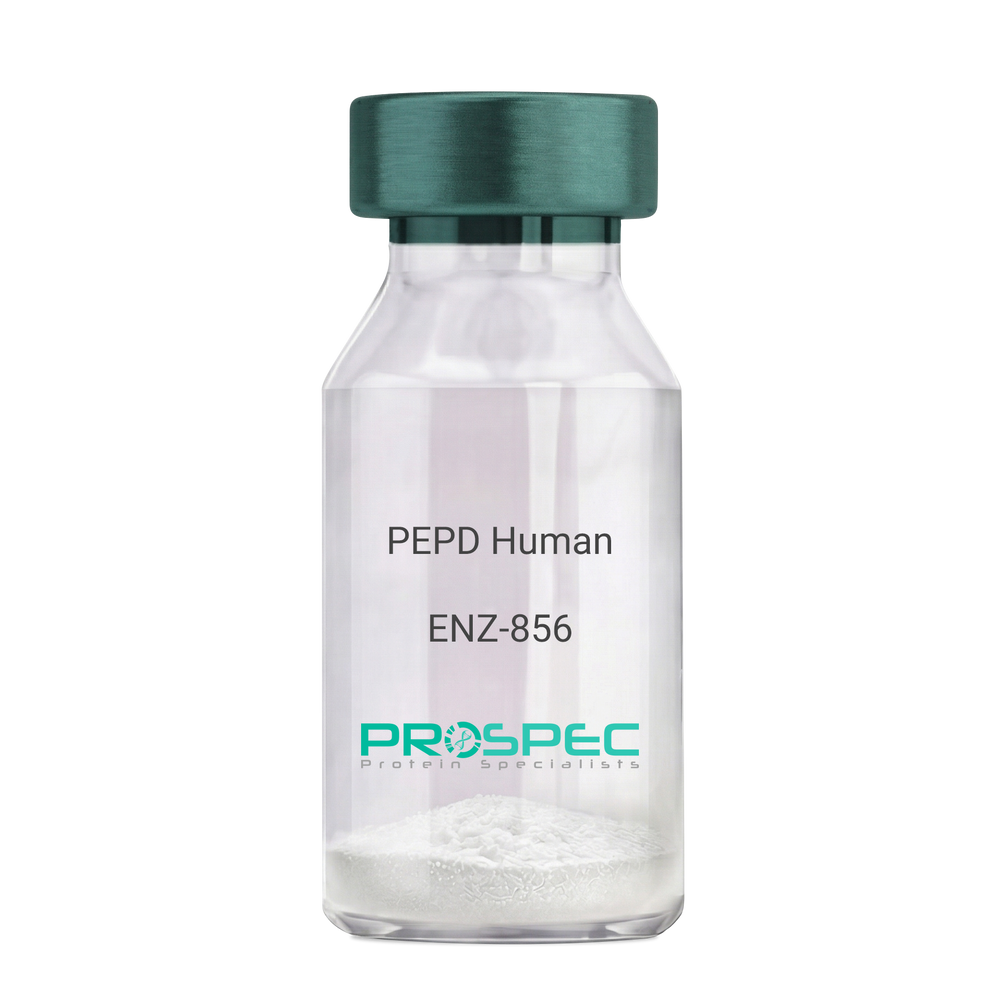
    PEPD Human

    Description:

    Peptidase D Human Recombinant

    Xaa-Pro dipeptidase, X-Pro dipeptidase, Imidodipeptidase, Peptidase D, Proline dipeptidase, Prolidase, PRD, PEPD, Xaa-Pro dipeptidase isoform 1, PROLIDASE.

    Product # :

    ENZ-856

    Price :

    Quantity :

    Shipping Method :

    Ice Icon

    Shipped with Ice Packs

    Add To Cart

    More Info

    • description
    • source
    • formulation
    • purity
    • More Info

    Description

    PEPD Human Recombinant produced in E.Coli is a single, non-glycosylated polypeptide chain containing 516 amino acids (1-493a.a.) and having a molecular mass of 56.9kDa.PEPD is fused to a 23 amino acid His-tag at N-terminus & purified by proprietary chromatographic techniques.

    Source

    E.coli.

    Formulation

    PEPD protein solution (0.5mg/ml) containing Phosphate buffered saline (pH7.4), 10% glycerol and 1mM DTT.

    Purity

    Greater than 90% as determined by SDS-PAGE.

    More Info

    • Introduction

      Peptidase D, also known as PEPD, Is a part of the peptidase family. PEPD is involved in collagen metabolism due to the high level of iminoacids in collagen. PEPD recycles proline, and sets the pace for the production of collagen. PEPD is also parts dipeptides with a prolyl or hydroxyprolyl residue in the C-terminal position.

    • Synonyms

      Xaa-Pro dipeptidase, X-Pro dipeptidase, Imidodipeptidase, Peptidase D, Proline dipeptidase, Prolidase, PRD, PEPD, Xaa-Pro dipeptidase isoform 1, PROLIDASE.

    • Physical Appearance

      Sterile Filtered colorless solution.

    • Stability

      Store at 4°C if entire vial will be used within 2-4 weeks. Store, frozen at -20°C for longer periods of time. For long term storage it is recommended to add a carrier protein (0.1% HSA or BSA).Avoid multiple freeze-thaw cycles.

    • Amino Acid Sequence

      MGSSHHHHHH SSGLVPRGSH MGSMAAATGP SFWLGNETLK VPLALFALNR QRLCERLRKN PAVQAGSIVV LQGGEETQRY CTDTGVLFRQ ESFFHWAFGV TEPGCYGVID VDTGKSTLFV PRLPASHATW MGKIHSKEHF KEKYAVDDVQ YVDEIASVLT SQKPSVLLTL RGVNTDSGSVCREASFDGIS KFEVNNTILH PEIVECRVFK TDMELEVLRY TNKISSEAHR EVMKAVKVGM KEYELESLFE HYCYSRGGMR HSSYTCICGS GENSAVLHYG HAGAPNDRTI QNGDMCLFDM GGEYYCFASD ITCSFPANGK FTADQKAVYE AVLRSSRAVM GAMKPGVWWP DMHRLADRIH LEELAHMGIL SGSVDAMVQA HLGAVFMPHG LGHFLGIDVH DVGGYPEGVE RIDEPGLRSL RTARHLQPGM VLTVEPGIYF IDHLLDEALA DPARASFLNR EVLQRFRGFG GVRIEEDVVV TDSGIELLTC VPRTVEEIEA CMAGCDKAFT PFSGPK.

    ProSpec's products are furnished for LABORATORY RESEARCH USE ONLY. The product may not be used as drugs, agricultural or pesticidal products, food additives or household chemicals.

    Pepd Human
  • View Data Sheet

    Name :

    MGLL Human

    Description:

    Monoglyceride Lipase Human Recombinant

    Monoglyceride lipase, MGL, HU-K5, Lysophospholipase homolog, Lysophospholipase-like, Monoacylglycerol lipase, MAGL, MGLL, HUK5.

    Product # :

    ENZ-019

    Price :

    Quantity :

    Shipping Method :

    Ice Icon

    Shipped with Ice Packs

    Add To Cart

    More Info

    • description
    • source
    • formulation
    • purity
    • More Info

    Description

    MGLL Human Recombinant fused with a 20 amino acid His tag at N-terminus produced in E.Coli is a single, non-glycosylated, polypeptide chain containing 333 amino acids (1-313 a.a.) and having a molecular mass of 36.4kDa. The MGLL is purified by proprietary chromatographic techniques.

    Source

    Escherichia Coli.

    Formulation

    The MGLL solution (0.5mg/ml) contains 20mM Tris-HCl Buffer (pH 8.0) and 10% Glycerol.

    Purity

    Greater than 85.0% as determined by SDS-PAGE.

    More Info

    • Introduction

      MGLL is a membrane-associated member of the serine hydrolase superfamily. MGLL is expressed in abundance in skeletal muscle and adipose tissue. MGLL functions jointly with hormone-sensitive lipase (LIPE) to hydrolyze intracellular triglyceride stores in adipocytes and other cells to fatty acids and glycerol. MGLL may also complement lipoprotein lipase (LPL) in completing hydrolysis of monoglycerides resulting from degradation of lipoprotein triglycerides.

    • Synonyms

      Monoglyceride lipase, MGL, HU-K5, Lysophospholipase homolog, Lysophospholipase-like, Monoacylglycerol lipase, MAGL, MGLL, HUK5.

    • Physical Appearance

      Sterile Filtered colorless solution.

    • Stability

      Store at 4°C if entire vial will be used within 2-4 weeks. Store, frozen at -20°C for longer periods of time. For long term storage it is recommended to add a carrier protein (0.1% HSA or BSA).Avoid multiple freeze-thaw cycles.

    • Amino Acid Sequence

      MGSSHHHHHH SSGLVPRGSH METGPEDPSS MPEESSPRRT PQSIPYQDLP HLVNADGQYL FCRYWKPTGT PKALIFVSHG AGEHSGRYEE LARMLMGLDL LVFAHDHVGH GQSEGERMVV SDFHVFVRDV LQHVDSMQKD YPGLPVFLLG HSMGGAIAIL TAAERPGHFA GMVLISPLVL ANPESATTFK VLAAKVLNLV LPNLSLGPID SSVLSRNKTE VDIYNSDPLI CRAGLKVCFG IQLLNAVSRV ERALPKLTVP FLLLQGSADR LCDSKGAYLL MELAKSQDKT LKIYEGAYHV LHKELPEVTN SVFHEINMWV SQRTATAGTA SPP.

    ProSpec's products are furnished for LABORATORY RESEARCH USE ONLY. The product may not be used as drugs, agricultural or pesticidal products, food additives or household chemicals.

    Mgll Human
  • View Data Sheet

    Name :

    GAD1 Human

    Description:

    Glutamate Decarboxylase 1 Human Recombinant

    Glutamate Decarboxylase 1 (Brain, 67kDa), GAD, Glutamate Decarboxylase 67 KDa Isoform, 67 KDa Glutamic Acid Decarboxylase, GAD-67, EC 4.1.1.15, CPSQ1, SCP, Glutamate Decarboxylase 1 (Brain, 67kD), Glutamate Decarboxylase 1, GAD67, EC 4.1.1, GAD1.

    Product # :

    ENZ-789

    Price :

    Quantity :

    Shipping Method :

    Ice Icon

    Shipped with Ice Packs

    Add To Cart

    More Info

    • description
    • source
    • formulation
    • purity
    • More Info

    Description

    GAD1 Human Recombinant produced in E.coli is a single, non-glycosylated polypeptide chain containing 247 amino acids (1-224) and having a molecular mass of 27.7kDa.GAD1 is fused to a 23 amino acid His-tag at N-terminus & purified by proprietary chromatographic techniques.

    Source

    E.coli.

    Formulation

    The GAD1 solution (0.5mg/ml) contains 20mM Tris-HCl buffer (pH8.0), 10% glycerol and 0.4M Urea.

    Purity

    Greater than 85% as determined by SDS-PAGE.

    More Info

    • Introduction

      Glutamate Decarboxylase 1 (GAD1) is one of several forms of glutamic acid decarboxylase. GAD1 is responsible for catalyzing the production of gamma-aminobutyric acid from L-glutamic acid. A pathogenic role for the GAD1 enzyme has been identified in the human pancreas since it has been detected as an autoantigen and an autoreactive T cell target type II diabetes. The GAD1 protein may also have a role in the stiff man syndrome. GAD1 enzyme deficiency leads to pyridoxine dependency with seizures. GAD1 also catalyzes the production of GABA.

    • Synonyms

      Glutamate Decarboxylase 1 (Brain, 67kDa), GAD, Glutamate Decarboxylase 67 KDa Isoform, 67 KDa Glutamic Acid Decarboxylase, GAD-67, EC 4.1.1.15, CPSQ1, SCP, Glutamate Decarboxylase 1 (Brain, 67kD), Glutamate Decarboxylase 1, GAD67, EC 4.1.1, GAD1.

    • Physical Appearance

      Sterile Filtered colorless solution.

    • Stability

      Store at 4°C if entire vial will be used within 2-4 weeks. Store, frozen at -20°C for longer periods of time. For long term storage it is recommended to add a carrier protein (0.1% HSA or BSA).Avoid multiple freeze-thaw cycles.

    • Amino Acid Sequence

      MGSSHHHHHH SSGLVPRGSH MGSMASSTPS SSATSSNAGA DPNTTNLRPT TYDTWCGVAH GCTRKLGLKI CGFLQRTNSL EEKSRLVSAF KERQSSKNLL SCENSDRDAR FRRTETDFSN LFARDLLPAK NGEEQTVQFL LEVVDILLNY VRKTFDRSTK VLDFHHPHQL LEGMEGFNLE LSDHPESLEQ ILVDCRDTLK YGVRTGHPRF FNQLSTGLDI IGLAGEWLTS TANTNMPSDM RECWLLR.

    ProSpec's products are furnished for LABORATORY RESEARCH USE ONLY. The product may not be used as drugs, agricultural or pesticidal products, food additives or household chemicals.

    Gad1 Human
  • View Data Sheet

    Name :

    LPCAT1 Human

    Description:

    Lysophosphatidylcholine Acyltransferase Human Recombinant

    AYTL2, lpcat, PFAAP3, Lysophosphatidylcholine acyltransferase 1, LPC acyltransferase 1, LPCAT-1, LysoPC acyltransferase 1, 1-acylglycerophosphocholine O-acyltransferase, 1-alkylglycerophosphocholine O-acetyltransferase, Acetyl-CoA:lyso-platelet-activating factor acetyltransferase, Acetyl-CoA:lyso-PAF acetyltransferase, Lyso-PAF acetyltransferase, LysoPAFAT, Acyltransferase-like 2, Phosphonoformate immuno-associated protein 3.

    Product # :

    ENZ-695

    Price :

    Quantity :

    Shipping Method :

    Ice Icon

    Shipped with Ice Packs

    Add To Cart

    More Info

    • description
    • source
    • formulation
    • purity
    • More Info

    Description

    LPCAT1 Human Recombinant produced in E.coli is a single, non-glycosylated polypeptide chain containing 479 amino acids (79-534a.a) and having a molecular mass of 53.4kDa. LPCAT1 is fused to a 23 amino acid His-tag at N-terminus & purified by proprietary chromatographic techniques.

    Source

    Escherichia Coli.

    Formulation

    The LPCAT1 solution (0.25mg/ml) contains 20mM Tris-HCl buffer (pH 8.0), 1M Urea and 10% glycerol.

    Purity

    Greater than 90.0% as determined by SDS-PAGE.

    More Info

    • Introduction

      Lysophosphatidylcholine acyltransferase 1 (LPCAT1) is a part of the 1-acyl-sn-glycerol-3-phosphate acyltransferase family. LPCAT1 is a key enzyme for remodeling phospholipids, including phosphatidylcholine. LPCAT1 possesses both acyltransferase and acetyltransferase activities and also mediates the conversion of 1-acyl-sn-glycero-3-phosphocholine (LPC) into phosphatidylcholine (PC). LPCAT1 presents a clear preference for saturated fatty acyl-CoAs, and 1-myristoyl or 1-palmitoyl LPC as acyl donors and acceptors, respectively. LPCAT1 synthesizes phosphatidylcholine in pulmonary surfactant and therefore playing an important role in respiratory physiology.

    • Synonyms

      AYTL2, lpcat, PFAAP3, Lysophosphatidylcholine acyltransferase 1, LPC acyltransferase 1, LPCAT-1, LysoPC acyltransferase 1, 1-acylglycerophosphocholine O-acyltransferase, 1-alkylglycerophosphocholine O-acetyltransferase, Acetyl-CoA:lyso-platelet-activating factor acetyltransferase, Acetyl-CoA:lyso-PAF acetyltransferase, Lyso-PAF acetyltransferase, LysoPAFAT, Acyltransferase-like 2, Phosphonoformate immuno-associated protein 3.

    • Physical Appearance

      Sterile Filtered colorless solution.

    • Stability

      Store at 4°C if entire vial will be used within 2-4 weeks. Store, frozen at -20°C for longer periods of time. For long term storage it is recommended to add a carrier protein (0.1% HSA or BSA).Avoid multiple freeze-thaw cycles.

    • Amino Acid Sequence

      MGSSHHHHHH SSGLVPRGSH MGSSAEKEPE QPPALWRKVV DFLLKAIMRT MWFAGGFHRV AVKGRQALPT EAAILTLAPH SSYFDAIPVT MTMSSIVMKA ESRDIPIWGT LIQYIRPVFV SRSDQDSRRK TVEEIKRRAQ SNGKWPQIMI FPEGTCTNRT CLITFKPGAF IPGAPVQPVV LRYPNKLDTI TWTWQGPGAL EILWLTLCQF HNQVEIEFLP VYSPSEEEKR NPALYASNVR RVMAEALGVS VTDYTFEDCQ LALAEGQLRL PADTCLLEFA RLVRGLGLKP EKLEKDLDRY SERARMKGGE KIGIAEFAAS LEVPVSDLLE DMFSLFDESG SGEVDLRECV VALSVVCRPA RTLDTIQLAF KMYGAQEDGS VGEGDLSCIL KTALGVAELT VTDLFRAIDQ EEKGKITFAD FHRFAEMYPA FAEEYLYPDQ THFESCAETS PAPIPNGFCA DFSPENSDAG RKPVRKKLD.

    ProSpec's products are furnished for LABORATORY RESEARCH USE ONLY. The product may not be used as drugs, agricultural or pesticidal products, food additives or household chemicals.

    Lpcat1 Human
  • View Data Sheet

    Name :

    REXO1 Human

    Description:

    RNA Exonuclease 1 Human Recombinant

    RNA exonuclease 1 homolog, Elongin-A-binding protein 1, EloA-BP1, Transcription elongation factor B polypeptide 3-binding protein 1, REXO1, ELOABP1, KIAA1138, TCEB3BP1.

    Product # :

    ENZ-767

    Price :

    Quantity :

    Shipping Method :

    Ice Icon

    Shipped with Ice Packs

    Add To Cart

    More Info

    • description
    • source
    • formulation
    • purity
    • More Info

    Description

    REXO1 Human Recombinant produced in E.coli is a single, non-glycosylated polypeptide chain containing 198 amino acids (1060-1221a.a) and having a molecular mass of 22.3kDa. REXO1 is fused to a 36 amino acid His-tag at N-terminus & purified by proprietary chromatographic techniques.

    Source

    Escherichia Coli.

    Formulation

    The REXO1 solution (0.25mg/ml) contains 20mM Tris-HCl buffer (pH 8.0), 0.15M NaCl, 10% glycerol and 1mM DTT.

    Purity

    Greater than 90% as determined by SDS-PAGE.

    More Info

    • Introduction

      REXO1 is an exonuclease domain-containing protein which binds to Elongin. The Elongin complex stimulates the rate of transcription elongation by RNA polymerase II by suppressing the transient pausing of the polymerase at many sites along the DNA template. REXO1 is composed of 1221 amino acids and its mRNA is ubiquitously expressed. REXO1 is a putative stem cell marker and is highly expressed in embryonic and adult stem cells.

    • Synonyms

      RNA exonuclease 1 homolog, Elongin-A-binding protein 1, EloA-BP1, Transcription elongation factor B polypeptide 3-binding protein 1, REXO1, ELOABP1, KIAA1138, TCEB3BP1.

    • Physical Appearance

      Sterile Filtered colorless solution.

    • Stability

      Store at 4°C if entire vial will be used within 2-4 weeks. Store, frozen at -20°C for longer periods of time. For long term storage it is recommended to add a carrier protein (0.1% HSA or BSA). Avoid multiple freeze-thaw cycles.

    • Amino Acid Sequence

      MRGSHHHHHH GMASMTGGQQ MGRDLYDDDD KDRWGSIYAL DCEMSYTTYG LELTRVTVVD TDVHVVYDTF VKPDNEIVDY NTRFSGVTEA DLADTSVTLR DVQAVLLSMF SADTILIGHS LESDLLALKV IHSTVVDTSV LFPHRLGLPY KRSLRNLMAD YLRQIIQDNV DGHSSSEDAG ACMHLVIWKV REDAKTKR.

    ProSpec's products are furnished for LABORATORY RESEARCH USE ONLY. The product may not be used as drugs, agricultural or pesticidal products, food additives or household chemicals.

    Rexo1 Human
  • View Data Sheet

    Name :

    ASPH Human

    Description:

    Aspartate Beta-Hydroxylase Human Recombinant

    AAH, BAH, CASQ2BP1, HAAH, JCTN, Junctin, EC 1.14.11.16, Aspartyl/asparaginyl beta-hydroxylase, Aspartate beta-hydroxylase, Peptide-aspartate beta-dioxygenase, ASP beta-hydroxylase, ASPH.

    Product # :

    ENZ-488

    Price :

    Quantity :

    Shipping Method :

    Ice Icon

    Shipped with Ice Packs

    Add To Cart

    More Info

    • description
    • source
    • formulation
    • purity
    • More Info

    Description

    ASPH Human Recombinant produced in E.Coli is a single, non-glycosylated polypeptide chain containing 217 amino acids (75-270 a.a.) and having a molecular mass of 24.5 kDa. The ASPH is fused to a 20 amino acid His Tag and purified by conventional chromatography.

    Source

    Escherichia Coli.

    Formulation

    The ASPH protein solution contains 20mM Tris-HCl pH-8, 1mM DTT and 10% glycerol.

    Purity

    Greater than 90.0% as determined by SDS-PAGE.

    More Info

    • Introduction

      ASPH hydroxylates an Asp or Asn residue in EGF domains. ASPH is involved in calcium homeostasis. ASPH is expressed from two promoters and goes through extensive alternative splicing. The encoded set of ASPH proteins share varying quantities of overlap near their N-termini although have considerable differences in their C-terminal domains resulting in distinct functional properties. The longest isoforms (a and f) include a C-terminal Aspartyl/Asparaginyl beta-hydroxylase domain that hydroxylates aspartic acid or asparagine residues in the EGF domain, including protein C, coagulation factors VII, IX, and X, and the complement factors C1R and C1S. Further isoforms diverge mainly in the C-terminal sequence and lack the hydroxylase domain, and some have been localized to the endoplasmic and sarcoplasmic reticulum.

    • Synonyms

      AAH, BAH, CASQ2BP1, HAAH, JCTN, Junctin, EC 1.14.11.16, Aspartyl/asparaginyl beta-hydroxylase, Aspartate beta-hydroxylase, Peptide-aspartate beta-dioxygenase, ASP beta-hydroxylase, ASPH.

    • Physical Appearance

      Sterile Filtered colorless solution.

    • Stability

      Store at 4°C if entire vial will be used within 2-4 weeks. Store, frozen at -20°C for longer periods of time. For long term storage it is recommended to add a carrier protein (0.1% HSA or BSA).Avoid multiple freeze-thaw cycles.

    • Amino Acid Sequence

      MGSSHHHHHH SSGLVPRGSH MFDLVDYEEV LGKLGIYDAD GDGDFDVDDA KVLLGLKERS TSEPAVPPEE AEPHTEPEEQ VPVEAEPQNI EDEAKEQIQS LLHEMVHAEH ETEHSYHVEE TVSQDCNQDM EEMMSEQENP DSSEPVVEDE RLHHDTDDVT YQVYEEQAVY EPLENEGIEI TEVTAPPEDN PVEDSQVIVE EVSIFPVEEQ QEVPPDT.

    ProSpec's products are furnished for LABORATORY RESEARCH USE ONLY. The product may not be used as drugs, agricultural or pesticidal products, food additives or household chemicals.

    Asph Human
  • View Data Sheet

    Name :

    UBE2G2 Human

    Description:

    Ubiquitin-Conjugating Enzyme E2G2 Human Recombinant

    Ubiquitin-conjugating enzyme E2 G2, E2 ubiquitin-conjugating enzyme G2, Ubiquitin carrier protein G2, Ubiquitin-protein ligase G2, UBE2G2, Ubiquitin-Conjugating Enzyme E2G2, Ubiquitin-conjugating enzyme E2 G2 isoform 1, UBC7.

    Product # :

    ENZ-884

    Price :

    Quantity :

    Shipping Method :

    Ice Icon

    Shipped with Ice Packs

    Add To Cart

    More Info

    • description
    • source
    • formulation
    • purity
    • More Info

    Description

    UBE2G2 Human Recombinant produced in E.Coli is a single, non-glycosylated polypeptide chain containing 188 amino acids (1-165a.a.) and having a molecular mass of 21kDa.UBE2G2 is fused to a 23 amino acid His-tag at N-terminus & purified by proprietary chromatographic techniques.

    Source

    Escherichia Coli.

    Formulation

    UBE2G2 protein solution (1mg/ml) containing Phosphate buffered saline (pH7.4), 10% glycerol and 1mM DTT.

    Purity

    Greater than 95.0% as determined by SDS-PAGE.

    More Info

    • Introduction

      Ubiquitin-Conjugating Enzyme E2G2 (UBE2G2) is a protein coding gene which is a part of the E2 ubiquitin-conjugating enzyme family. UBE2G2 accepts ubiquitin from the E1 complex and catalyzes its covalent attachment to various proteins. UBE2G2 is ubiquitously expressed mainly in adult muscle. UBE2G2 also takes part in endoplasmic reticulum-associated degradation (ERAD).

    • Synonyms

      Ubiquitin-conjugating enzyme E2 G2, E2 ubiquitin-conjugating enzyme G2, Ubiquitin carrier protein G2, Ubiquitin-protein ligase G2, UBE2G2, Ubiquitin-Conjugating Enzyme E2G2, Ubiquitin-conjugating enzyme E2 G2 isoform 1, UBC7.

    • Physical Appearance

      Sterile Filtered clear solution.

    • Stability

      Store at 4°C if entire vial will be used within 2-4 weeks. Store, frozen at -20°C for longer periods of time. For long term storage it is recommended to add a carrier protein (0.1% HSA or BSA).Avoid multiple freeze-thaw cycles.

    • Amino Acid Sequence

      MGSSHHHHHH SSGLVPRGSH MGSMAGTALK RLMAEYKQLT LNPPEGIVAG PMNEENFFEW EALIMGPEDT CFEFGVFPAI LSFPLDYPLS PPKMRFTCEM FHPNIYPDGR VCISILHAPG DDPMGYESSA ERWSPVQSVE KILLSVVSML AEPNDESGAN VDASKMWRDD REQFYKIAKQ IVQKSLGL.

    ProSpec's products are furnished for LABORATORY RESEARCH USE ONLY. The product may not be used as drugs, agricultural or pesticidal products, food additives or household chemicals.

    Ube2G2 Human
  • View Data Sheet

    Name :

    MMP2 Human

    Description:

    Matrix Metalloproteinase-2 Human Recombinant

    kDa gelatinase, Gelatinase A, Matrix metalloproteinase-2, MMP-2, TBE-1, MMP2, CLG4A, CLG4, MONA, MMP-II.

    Product # :

    ENZ-769

    Price :

    Quantity :

    Shipping Method :

    Ice Icon

    Shipped with Ice Packs

    Add To Cart

    More Info

    • description
    • source
    • formulation
    • purity
    • More Info

    Description

    MMP2 Human Recombinant produced in E.coli is a single, non-glycosylated polypeptide chain containing 576 amino acids (110-660a.a) and having a molecular mass of 64.7kDa. MMP2 is fused to a 25 amino acid His-tag at N-terminus & purified by proprietary chromatographic techniques.

    Source

    Escherichia Coli.

    Formulation

    The MMP2 solution (0.25mg/ml) contains 20mM Tris-HCl buffer (pH 8.0), 0.15M NaCl and 10% glycerol.

    Purity

    Greater than 95% as determined by SDS-PAGE.

    More Info

    • Introduction

      Matrix metalloproteinase-2 (MMP-2) is involved in endometrial menstrual breakdown, regulation of vascularization and the inflammatory response. MMP-2 contains a number of distinct domains: a prodomain that is cleaved upon activation; a catalytic domain containing the zinc binding site; a fibronectin like domain believed to have a role in substrate targeting; and a carboxyl terminal (hemopexin like) domain containing 2 N-linked glycosylation. The MMP-2 can degrade an extensive array of substrates including type IV, V, VII and X collagens as well as gelatin type I. In addition, MMP-2 interacts with THBS2, TIMP2, Thrombospondin 1, CCL7 and TIMP4. MMP-2 autocatalytic cleavage in the C-terminal generates the anti-angiogenic peptide, PEX. This process seems to be made possible by binding integrinv/beta3. Defects in the MMP-2 are the cause of Torg-Winchester syndrome (TWS), aka multicentric osteolysis nodulosis and arthropathy (MONA).

    • Synonyms

      kDa gelatinase, Gelatinase A, Matrix metalloproteinase-2, MMP-2, TBE-1, MMP2, CLG4A, CLG4, MONA, MMP-II.

    • Physical Appearance

      Sterile Filtered colorless solution.

    • Stability

      Store at 4°C if entire vial will be used within 2-4 weeks. Store, frozen at -20°C for longer periods of time. For long term storage it is recommended to add a carrier protein (0.1% HSA or BSA). Avoid multiple freeze-thaw cycles.

    • Amino Acid Sequence

      MGSSHHHHHH SSGLVPRGSH MGSEFYNFFP RKPKWDKNQI TYRIIGYTPD LDPETVDDAF ARAFQVWSDV TPLRFSRIHD GEADIMINFG RWEHGDGYPF DGKDGLLAHA FAPGTGVGGD SHFDDDELWT LGEGQVVRVK YGNADGEYCK FPFLFNGKEY NSCTDTGRSD GFLWCSTTYN FEKDGKYGFC PHEALFTMGG NAEGQPCKFP FRFQGTSYDS CTTEGRTDGY RWCGTTEDYD RDKKYGFCPE TAMSTVGGNS EGAPCVFPFT FLGNKYESCT SAGRSDGKMW CATTANYDDD RKWGFCPDQG YSLFLVAAHE FGHAMGLEHS QDPGALMAPI YTYTKNFRLS QDDIKGIQEL YGASPDIDLG TGPTPTLGPV TPEICKQDIV FDGIAQIRGE IFFFKDRFIW RTVTPRDKPM GPLLVATFWP ELPEKIDAVY EAPQEEKAVF FAGNEYWIYS ASTLERGYPK PLTSLGLPPD VQRVDAAFNW SKNKKTYIFA GDKFWRYNEV KKKMDPGFPK LIADAWNAIP DNLDAVVDLQ GGGHSYFFKG AYYLKLENQS LKSVKFGSIK SDWLGC.

    ProSpec's products are furnished for LABORATORY RESEARCH USE ONLY. The product may not be used as drugs, agricultural or pesticidal products, food additives or household chemicals.

    Mmp2 Human
  • View Data Sheet

    Name :

    UBE2C Human

    Description:

    Ubiquitin Conjugating enzyme E2C Human Recombinant

    Ubiquitin-conjugating enzyme E2 C, EC 6.3.2.19, Ubiquitin-protein ligase C, Ubiquitin carrier protein C, Ubc10, UBCH10, dJ447F3.2.

    Product # :

    ENZ-346

    Price :

    Quantity :

    Shipping Method :

    Ice Icon

    Shipped with Ice Packs

    Add To Cart

    More Info

    • description
    • source
    • formulation
    • purity
    • More Info

    Description

    UBE2C Human Recombinant produced in E.coli is a single, non-glycosylated polypeptide chain containing 202 amino acids (1-179) and having a molecular mass of 22.1 kDa.The UBE2C is fused to a 23 amino acid His-Tag at N-terminus and purified by proprietary chromatographic techniques.

    Source

    Escherichia Coli.

    Formulation

    UBE2C protein 1mg/ml is supplied in 20mM Tris-HCL, pH-8, 0.15M NaCl, 1mM DTT and 10% Glycerol.

    Purity

    Greater than 90.0% as determined by Analysis by SDS-PAGE.

    More Info

    • Introduction

      UbcH10 is an essential mediator of mitotic destruction events and cell cycle progression. It catalyzes the destruction of cyclins A and B in conjunction with the anaphase-promoting complex, and therefore, plays an important role in the control of the cell exit from mitosis This activity is essential at then end of mitosis for the inactivation of their partner kinase Cdc2 and exit from mitosis into G1 of the next cell cycle. In addition, UbcH10 bears homology to yeast PAS2, a gene that is essential for biogenesis of peroxisomes. UbcH10 is useful for in vitro ubiquitinylation reactions.

    • Synonyms

      Ubiquitin-conjugating enzyme E2 C, EC 6.3.2.19, Ubiquitin-protein ligase C, Ubiquitin carrier protein C, Ubc10, UBCH10, dJ447F3.2.

    • Physical Appearance

      Sterile Filtered clear solution.

    • Stability

      Store at 4°C if entire vial will be used within 2-4 weeks. Store, frozen at -20°C for longer periods of time. For long term storage it is recommended to add a carrier protein (0.1% HSA or BSA).Avoid multiple freeze-thaw cycles.

    • Amino Acid Sequence

      MGSSHHHHHH SSGLVPRGSH MGSMASQNRD PAATSVAAAR KGAEPSGGAA RGPVGKRLQQ ELMTLMMSGD KGISAFPESD NLFKWVGTIH GAAGTVYEDL RYKLSLEFPS GYPYNAPTVK FLTPCYHPNV DTQGNICLDI LKEKWSALYD VRTILLSIQS LLGEPNIDSP LNTHAAELWK NPTAFKKYLQ ETYSKQVTSQ EP

    ProSpec's products are furnished for LABORATORY RESEARCH USE ONLY. The product may not be used as drugs, agricultural or pesticidal products, food additives or household chemicals.

    Ube2C Human
  • View Data Sheet

    Name :

    NUDT1 Human

    Description:

    Nudix Type Motif 1 Human Recombinant

    7,8-dihydro-8-oxoguanine triphosphatase, 8-oxo-dGTPase, Nucleoside diphosphate-linked moiety X motif 1, Nudix motif 1, NUDT1, MTH1.

    Product # :

    ENZ-010

    Price :

    Quantity :

    Shipping Method :

    Ice Icon

    Shipped with Ice Packs

    Add To Cart

    More Info

    • description
    • source
    • formulation
    • purity
    • More Info

    Description

    NUDT1 Human Recombinant fused with a 20 amino acid His tag at N-terminus produced in E.Coli is a single, non-glycosylated, polypeptide chain containing 176 amino acids (1-156 a.a.) and having a molecular mass of 20.1kDa. The NUDT1 is purified by proprietary chromatographic techniques.

    Source

    Escherichia Coli.

    Formulation

    The NUDT1 solution (1mg/ml) contains 20mM Tris-HCl buffer (pH8.0), 10% glycerol, 2mM DTT and 100mM NaCl.

    Purity

    Greater than 95.0% as determined by SDS-PAGE.

    More Info

    • Introduction

      NUDT1 is an enzyme that hydrolyzes oxidized purine nucleoside triphosphates, such as 8-oxo-dGTP, 8-oxo-dATP, 2-hydroxy-dATP, and 2-hydroxy rATP, to monophosphates, thereby preventing misincorporation of 8-oxo-dGTP into DNA thus preventing A:T to C:G transversions. NUDT1 is found mostly in the cytoplasm, with some in the mitochondria, suggesting that it is involved in the sanitization of nucleotide pools both for nuclear and mitochondrial genomes. Moreover, NUDT1 is expressed at much higher levels in proliferating cells than in resting cells. Misincorporation of oxidized nucleoside triphosphates into DNA/RNA during replication and transcription can cause mutations which may result in carcinogenesis or neurodegeneration.

    • Synonyms

      7,8-dihydro-8-oxoguanine triphosphatase, 8-oxo-dGTPase, Nucleoside diphosphate-linked moiety X motif 1, Nudix motif 1, NUDT1, MTH1.

    • Physical Appearance

      Sterile Filtered colorless solution.

    • Stability

      Store at 4°C if entire vial will be used within 2-4 weeks. Store, frozen at -20°C for longer periods of time. For long term storage it is recommended to add a carrier protein (0.1% HSA or BSA).Avoid multiple freeze-thaw cycles.

    • Amino Acid Sequence

      MGSSHHHHHH SSGLVPRGSH MGASRLYTLV LVLQPQRVLL GMKKRGFGAG RWNGFGGKVQ EGETIEDGAR RELQEESGLT VDALHKVGQI VFEFVGEPEL MDVHVFCTDS IQGTPVESDE MRPCWFQLDQ IPFKDMWPDD SYWFPLLLQK KKFHGYFKFQ GQDTILDYTL REVDTV.

    ProSpec's products are furnished for LABORATORY RESEARCH USE ONLY. The product may not be used as drugs, agricultural or pesticidal products, food additives or household chemicals.

    Nudt1 Human
  • View Data Sheet

    Name :

    LDHB Human

    Description:

    Lactate Dehydrogenase B Human Recombinant

    Lactate Dehydrogenase B, Renal Carcinoma Antigen NY-REN-46, LDH Heart Subunit, EC 1.1.1.27, LDH-B, LDH-H, Epididymis Secretory Protein Li 281, Testicular Secretory Protein Li 25, Lactate Dehydrogenase H Chain, HEL-S-281, EC 1.1.1 , LDHBD, TRG-5.

    Product # :

    ENZ-967

    Price :

    Quantity :

    Shipping Method :

    Ice Icon

    Shipped with Ice Packs

    Add To Cart

    More Info

    • description
    • source
    • formulation
    • purity
    • biological activity
    • More Info

    Description

    LDHB Human Recombinant produced in E.coli is a single, non-glycosylated polypeptide chain containing 334 amino acids (1-334) and having a molecular mass of 36.6kDa.

    Source

    Escherichia Coli.

    Formulation

    The LDHB solution (1mg/ml) contains 20mM Tris-HCl (pH 8.0), 10% glycerol and 1mM DTT.

    Purity

    Greater than 90% as determined by SDS-PAGE.

    Biological Activity

    Specific activity is >300 units/mg, in which 1 unit will convert 1.0 umole of pyruvate to L-lactate and beta-NAD per min at pH 7.5 at 37°.

    More Info

    • Introduction

      LDHB is part of the lactate dehydrogenase family. LDHB is an oxidoreductase which catalyses the interconversion of pyruvate and lactate with concomitant interconversion of NADH and NAD+. LDHB catalyzes the oxidation of hydroxybutyrate, and frequently called Hydroxybutyrate Dehydrogenase (HBD). The LDH family consists of three members, LDH-A, LDH-B and LDH-C. LDHs function as powerful markers for germ cell tumors.

    • Synonyms

      Lactate Dehydrogenase B, Renal Carcinoma Antigen NY-REN-46, LDH Heart Subunit, EC 1.1.1.27, LDH-B, LDH-H, Epididymis Secretory Protein Li 281, Testicular Secretory Protein Li 25, Lactate Dehydrogenase H Chain, HEL-S-281, EC 1.1.1 , LDHBD, TRG-5.

    • Physical Appearance

      Sterile Filtered colorless solution.

    • Stability

      Store at 4°C if entire vial will be used within 2-4 weeks. Store, frozen at -20°C for longer periods of time. For long term storage it is recommended to add a carrier protein (0.1% HSA or BSA).Avoid multiple freeze-thaw cycles.

    • Amino Acid Sequence

      MATLKEKLIA PVAEEEATVP NNKITVVGVG QVGMACAISI LGKSLADELA LVDVLEDKLK GEMMDLQHGS LFLQTPKIVA DKDYSVTANS KIVVVTAGVR QQEGESRLNL VQRNVNVFKF IIPQIVKYSP DCIIIVVSNP VDILTYVTWK LSGLPKHRVI GSGCNLDSAR FRYLMAEKLG IHPSSCHGWI LGEHGDSSVA VWSGVNVAGV SLQELNPEMG TDNDSENWKE VHKMVVESAY EVIKLKGYTN WAIGLSVADL IESMLKNLSR IHPVSTMVKG MYGIENEVFL SLPCILNARG LTSVINQKLK DDEVAQLKKS ADTLWDIQKD LKDL.

    ProSpec's products are furnished for LABORATORY RESEARCH USE ONLY. The product may not be used as drugs, agricultural or pesticidal products, food additives or household chemicals.

    Human Ldhb
  • View Data Sheet

    Name :

    BAT1 Human

    Description:

    HLA-B Associated Transcript 1 Human Recombinant

    HLA-B associated transcript 1, UAP56, D6S81E, DDX39B, ATP-dependent RNA helicase p47, DEAD-box protein UAP56

    Product # :

    ENZ-563

    Price :

    Quantity :

    Shipping Method :

    Ice Icon

    Shipped with Ice Packs

    Add To Cart

    More Info

    • description
    • source
    • formulation
    • purity
    • More Info

    Description

    BAT1 Human Recombinant protein produced in E.Coli is a single, non-glycosylated, polypeptide chain containing 448 amino acids (1-428) and having a molecular mass of 51.1kDa. BAT1 is fused to 20 amino acid His Tag at N-terminus and is purified by proprietary chromatographic techniques.

    Source

    Escherichia Coli.

    Formulation

    BAT1 protein (0.5mg/ml) solution contains 20mM Tris-HCl buffer (pH8.0) 0.1M NaCl,1mM DTT and 20% glycerol.

    Purity

    Greater than 90.0% as determined by SDS-PAGE.

    More Info

    • Introduction

      BAT1 belongs to the DEAD box family of RNA-dependent ATPases that mediate ATP hydrolysis during pre-mRNA splicing. UAP56 protein is a vital splicing factor which is needed for connecting U2 small nuclear ribonucleoprotein with pre-mRNA, as well as takes a key part in mRNA export from the nucleus to the cytoplasm. Mutations in this protein may be connected to rheumatoid arthritis.

    • Synonyms

      HLA-B associated transcript 1, UAP56, D6S81E, DDX39B, ATP-dependent RNA helicase p47, DEAD-box protein UAP56

    • Physical Appearance

      Sterile filtered colorless solution.

    • Stability

      Store at 4°C if entire vial will be used within 2-4 weeks. Store, frozen at -20°C for longer periods of time. For long term storage it is recommended to add a carrier protein (0.1% HSA or BSA).Avoid multiple freeze-thaw cycles.

    • Amino Acid Sequence

      MGSSHHHHHH SSGLVPRGSH MAENDVDNEL LDYEDDEVET AAGGDGAEAP AKKDVKGSYV SIHSSGFRDF LLKPELLRAI VDCGFEHPSE VQHECIPQAI LGMDVLCQAK SGMGKTAVFV LATLQQLEPV TGQVSVLVMC HTRELAFQIS KEYERFSKYM PNVKVAVFFG GLSIKKDEEV LKKNCPHIVV GTPGRILALA RNKSLNLKHI KHFILDECDK MLEQLDMRRD VQEIFRMTPH EKQVMMFSAT LSKEIRPVCR KFMQDPMEIF VDDETKLTLH GLQQYYVKLK DNEKNRKLFD LLDVLEFNQV VIFVKSVQRC IALAQLLVEQ NFPAIAIHRG MPQEERLSRY QQFKDFQRRI LVATNLFGRG MDIERVNIAF NYDMPEDSDT YLHRVARAGR FGTKGLAITF VSDENDAKIL NDVQDRFEVN ISELPDEIDI SSYIEQTR

    ProSpec's products are furnished for LABORATORY RESEARCH USE ONLY. The product may not be used as drugs, agricultural or pesticidal products, food additives or household chemicals.

    Bat1 Human
  • View Data Sheet

    Name :

    ACSF2 Human

    Description:

    Acyl-CoA Synthetase Family Member 2 Human Recombinant

    Acyl-CoA Synthetase Family Member 2, PPARG Binding, Long Chain Fatty Acid Acyl Co-A Ligase Like, Acyl-CoA Synthetase Family Member 2, Mitochondrial, EC 6.2.1.26, EC 6.2.1.-, FLJ20920, EC 6.2.1, AVYV493, ACSMW, Acyl-CoA synthetase family member 2, mitochondrial.

    Product # :

    ENZ-919

    Price :

    Quantity :

    Shipping Method :

    Ice Icon

    Shipped with Ice Packs

    Add To Cart

    More Info

    • description
    • source
    • formulation
    • purity
    • More Info

    Description

    ACSF2 Human Recombinant produced in E.Coli is a single, non-glycosylated polypeptide chain containing 597 amino acids (42-615 a.a) and having a molecular mass of 66.1kDa. ACSF2 is fused to a 23 amino acid His-tag at N-terminus & purified by proprietary chromatographic techniques.

    Source

    E.coli.

    Formulation

    ACSF2 protein solution (0.5mg/ml) containing Phosphate Buffered Saline pH 7.4 and 10% glycerol.

    Purity

    Greater than 95% as determined by SDS-PAGE.

    More Info

    • Introduction

      Acyl-CoA synthetase family member 2, also known as ACSF2 is a member of the ATP-dependent AMP-binding enzyme family. Acyl-CoA synthetases are a family of enzymes which catalyze the thioesterification of fatty acids with coenzymeA to form activated intermediates, which play a basic part in lipid metabolism as well as homeostasis of lipid-related processes. ACSF2 is required for the complex of lipid synthesis, energy production via beta-oxidation, protein acylation and fatty-acid dependent transcriptional regulation. Moreover, ACSF2 is required for fatty acid import into cells by the process of vectorial acylation.

    • Synonyms

      Acyl-CoA Synthetase Family Member 2, PPARG Binding, Long Chain Fatty Acid Acyl Co-A Ligase Like, Acyl-CoA Synthetase Family Member 2, Mitochondrial, EC 6.2.1.26, EC 6.2.1.-, FLJ20920, EC 6.2.1, AVYV493, ACSMW, Acyl-CoA synthetase family member 2, mitochondrial.

    • Physical Appearance

      Sterile Filtered colorless solution.

    • Stability

      Store at 4°C if entire vial will be used within 2-4 weeks. Store, frozen at -20°C for longer periods of time. For long term storage it is recommended to add a carrier protein (0.1% HSA or BSA).Avoid multiple freeze-thaw cycles.

    • Amino Acid Sequence

      MGSSHHHHHH SSGLVPRGSH MGSLSSREVD RMVSTPIGGL SYVQGCTKKH LNSKTVGQCL ETTAQRVPER EALVVLHEDV RLTFAQLKEE VDKAASGLLS IGLCKGDRLG MWGPNSYAWV LMQLATAQAG IILVSVNPAY QAMELEYVLK KVGCKALVFP KQFKTQQYYN VLKQICPEVE NAQPGALKSQ RLPDLTTVIS VDAPLPGTLL LDEVVAAGST RQHLDQLQYN QQFLSCHDPI NIQFTSGTTG SPKGATLSHY NIVNNSNILG ERLKLHEKTP EQLRMILPNP LYHCLGSVAG TMMCLMYGAT LILASPIFNG KKALEAISRE RGTFLYGTPT MFVDILNQPD FSSYDISTMC GGVIAGSPAP PELIRAIINK INMKDLVVAY GTTENSPVTF AHFPEDTVEQ KAESVGRIMP HTEARIMNME AGTLAKLNTP GELCIRGYCV MLGYWGEPQK TEEAVDQDKW YWTGDVATMN EQGFCKIVGR SKDMIIRGGE NIYPAELEDF FHTHPKVQEV QVVGVKDDRM GEEICACIRL KDGEETTVEE IKAFCKGKIS HFKIPKYIVF VTNYPLTISG KIQKFKLREQ MERHLNL.

    ProSpec's products are furnished for LABORATORY RESEARCH USE ONLY. The product may not be used as drugs, agricultural or pesticidal products, food additives or household chemicals.

    Acsf2 Human
  • View Data Sheet

    Name :

    LDHA, E.Coli Active

    Description:

    Lactate Dehydrogenase A, BioActive E.Coli Recombinant

    LDH-A, GSD11, LDH1, LDHM, PIG19, EC 1.1.1.27, lactate dehydrogenase M, LDH-M, LDH-1, L-lactate dehydrogenase A chain, LDH muscle subunit, Renal carcinoma antigen NY-REN-59, Cell proliferation-inducing gene 19 protein, LDHA.

    Product # :

    ENZ-1144

    Price :

    Quantity :

    Shipping Method :

    Ice Icon

    Shipped with Ice Packs

    Add To Cart

    More Info

    • description
    • source
    • formulation
    • purity
    • biological activity
    • More Info

    Description

    LDHA E.Coli Recombinant produced in E.Coli is a single, non-glycosylated polypeptide chain containing 353 amino acids (1-329) and having a molecular mass of 39.1 kDa.LDHA E.Coli is fused to a 24 amino acid His-Tag at N-terminus and purified by proprietary chromatographic techniques.

    Source

    Escherichia Coli.

    Formulation

    LDHA E.Coli protein (1mg/ml) is formulated in 20mM Tris-HCl buffer (pH 8.0), containing 100mM NaCland 10% glycerol.

    Purity

    Greater than 95.0% as determined by SDS-PAGE.

    Biological Activity

    Specific activity is > 200unit/mg. 1 unit converts 1.0 umole of pyruvate to L-lactate and beta-NAD per minute at pH 7.5 at 37˚C

    More Info

    • Introduction

      D-lactate dehydrogenase or ldhA is an enzyme, part of the D-lactate dehydrogenase protein family. IDHA is a cytochrome that enhances the catalyzation of D-lactate dehydrogenase ldhA reaction. This enzyme has 2 substrates ((D) -lactate & ferricytochrome c), thus, it has 2 end products (pyruvate & ferrocytochrome c).

    • Synonyms

      LDH-A, GSD11, LDH1, LDHM, PIG19, EC 1.1.1.27, lactate dehydrogenase M, LDH-M, LDH-1, L-lactate dehydrogenase A chain, LDH muscle subunit, Renal carcinoma antigen NY-REN-59, Cell proliferation-inducing gene 19 protein, LDHA.

    • Physical Appearance

      Sterile Filtered colorless solution.

    • Stability

      Store at 4°C if entire vial will be used within 2-4 weeks. Store, frozen at -20°C for longer periods of time. For long term storage it is recommended to add a carrier protein (0.1% HSA or BSA).Avoid multiple freeze-thaw cycles.

    • Amino Acid Sequence

      MGSSHHHHHH SSGLVPRGSH MGSHMKLAVY STKQYDKKYL QQVNESFGFE LEFFDFLLTE KTAKTANGCE AVCIFVNDDG SRPVLEELKK HGVKYIALRC AGFNNVDLDA AKELGLKVVR VPAYDPEAVA EHAIGMMMTL NRRIHRAYQR TRDANFSLEG LTGFTMYGKT AGVIGTGKIG VAMLRILKGF GMRLLAFDPY PSAAALELGV EYVDLPTLFS ESDVISLHCP LTPENYHLLN EAAFEQMKNG VMIVNTSRGA LIDSQAAIEA LKNQKIGSLG MDVYENERDL FFEDKSNDVI QDDVFRRLSA CHNVLFTGHQ AFLTAEALTS ISQTTLQNLS NLEKGETCPN ELV

    ProSpec's products are furnished for LABORATORY RESEARCH USE ONLY. The product may not be used as drugs, agricultural or pesticidal products, food additives or household chemicals.

    Ldha Enzyme
  • View Data Sheet

    Name :

    AKR1B10 Human

    Description:

    Aldo-Keto Reductase Family 1 Member B10 Human Recombinant

    HIS, HSI, ARL1, ARL-1, ALDRLn, AKR1B11, AKR1B12, MGC14103, AKR1B10, Aldo-keto reductase family 1 member B10, Aldose reductase-like, Aldose reductase-related protein, ARP, hARP, Small intestine reductase, SI reductase.

    Product # :

    ENZ-416

    Price :

    Quantity :

    Shipping Method :

    Ice Icon

    Shipped with Ice Packs

    Add To Cart

    More Info

    • description
    • source
    • formulation
    • purity
    • More Info

    Description

    AKR1B10 Human Recombinant produced in E.Coli is a single, non-glycosylated, polypeptide chain containing 316 amino acids (1-316 a.a) and having a molecular mass of 36 kDa. The AKR1B10 is purified by proprietary chromatographic techniques.

    Source

    Escherichia Coli.

    Formulation

    The AKR1B10 solution contains 20mM Tris-HCl pH-8 and 10% glycerol.

    Purity

    Greater than 95.0% as determined by SDS-PAGE.

    More Info

    • Introduction

      AKR1B10 efficiently reduces aliphatic and aromatic aldehydes, and it is less active on hexoses. AKR1B10 is highly expressed in adrenal gland, small intestine, and colon, and may play an important role in liver carcinogenesis. AKR1B10 is a monomeric protein that competently catalyzes the reduction of aromatic and aliphatic aldehydes and ketones. AKR1B10 is widely expressed in numerous human tissues, small intestine, colon and adrenal gland. AKR1B10 is pathogenically involved in diabetic complications and is overexpressed in human tumors, such as liver, breast, and lung cancer, AKR1B10 is involved in the development and progression of cancer.

    • Synonyms

      HIS, HSI, ARL1, ARL-1, ALDRLn, AKR1B11, AKR1B12, MGC14103, AKR1B10, Aldo-keto reductase family 1 member B10, Aldose reductase-like, Aldose reductase-related protein, ARP, hARP, Small intestine reductase, SI reductase.

    • Physical Appearance

      Sterile Filtered clear colorless solution.

    • Stability

      Store at 4°C if entire vial will be used within 2-4 weeks. Store, frozen at -20°C for longer periods of time. For long term storage it is recommended to add a carrier protein (0.1% HSA or BSA).Avoid multiple freeze-thaw cycles.

    • Amino Acid Sequence

      MATFVELSTK AKMPIVGLGT WKSPLGKVKE AVKVAIDAGY RHIDCAYVYQ NEHEVGEAIQ EKIQEKAVKR EDLFIVSKLW PTFFERPLVRKAFEKTLKDL KLSYLDVYLI HWPQGFKSGD DLFPKDDKGN AIGGKATFLD AWEAMEELVD EGLVKALGVS NFSHFQIEKL LNKPGLKYKP VTNQVECHPY LTQEKLIQYC HSKGITVTAY SPLGSPDRPW AKPEDPSLLE DPKIKEIAAK HKKTAAQVLI RFHIQRNVIV IPKSVTPARIVENIQVFDFK LSDEEMATIL SFNRNWRACN VLQSSHLEDY PFDAEY.

    ProSpec's products are furnished for LABORATORY RESEARCH USE ONLY. The product may not be used as drugs, agricultural or pesticidal products, food additives or household chemicals.

    Akr1B10 Human
  • View Data Sheet

    Name :

    NUDT2 Human

    Description:

    Nudix Type Motif 2 Human Recombinant

    nudix (nucleoside diphosphate linked moiety X)-type motif 2, APAH1, Diadenosine 5',5'''-P1,P4-tetraphosphate asymmetrical hydrolase, Diadenosine tetraphosphatase, Nucleoside diphosphate-linked moiety X motif 2, Ap4Aase, EC 3.6.1.17, MGC10404, Ap4A hydrolase 1, bis(5'-nucleosyl)-tetraphosphatase (asymmetrical), diadenosine 5',5''-P1,P4-tetraphosphate pyrophosphohydrolase.

    Product # :

    ENZ-063

    Price :

    Quantity :

    Shipping Method :

    Ice Icon

    Shipped with Ice Packs

    Add To Cart

    More Info

    • description
    • source
    • formulation
    • purity
    • More Info

    Description

    NUDT2 produced in E.Coli is a single, non-glycosylated polypeptide chain containing 167 amino acids (1-147a.a.) and having a molecular mass of 19.0kDa.NUDT2 is fused to a 20 amino acid His-tag at N-terminus & purified by proprietary chromatographic techniques.

    Source

    Escherichia Coli.

    Formulation

    The NUDT2 protein solution (1mg/1ml) is formulated in 20mM Tris-HCl buffer (pH8.0) 1mM DTT, 0.1M NaCl and 10% glycerol.

    Purity

    Greater than 90% as determined by SDS-PAGE.

    More Info

    • Introduction

      NUDT2 belongs to the MutT family of nucleotide pyrophosphatases, a subset of the larger NUDIX hydrolase family. NUDT2 conserves homeostasis by using water to cleave the metabolite NUDT symmetrically back into its original ATP and AMP molecules. In addition, NUDT2 is active towards other adenosine and diadenosine polyphosphates with four or more phosphate groups, however, not towards diadenosine triphosphate. NUDT2 has a role in heat shock and metabolic stress by regulating intracellular dinucleoside polyphosphate concentrations.

    • Synonyms

      nudix (nucleoside diphosphate linked moiety X)-type motif 2, APAH1, Diadenosine 5',5'''-P1,P4-tetraphosphate asymmetrical hydrolase, Diadenosine tetraphosphatase, Nucleoside diphosphate-linked moiety X motif 2, Ap4Aase, EC 3.6.1.17, MGC10404, Ap4A hydrolase 1, bis(5'-nucleosyl)-tetraphosphatase (asymmetrical), diadenosine 5',5''-P1,P4-tetraphosphate pyrophosphohydrolase.

    • Physical Appearance

      Sterile Filtered clear solution.

    • Stability

      Store at 4°C if entire vial will be used within 2-4 weeks. Store, frozen at -20°C for longer periods of time.Please avoid freeze thaw cycles.

    • Amino Acid Sequence

      MGSSHHHHHH SSGLVPRGSH MALRACGLII FRRCLIPKVD NNAIEFLLLQ ASDGIHHWTP PKGHVEPGED DLETALRETQ EEAGIEAGQL TIIEGFKREL NYVARNKPKT VIYWLAEVKD YDVEIRLSHE HQAYRWLGLE EACQLAQFKE MKAALQEGHQ FLCSIEA

    ProSpec's products are furnished for LABORATORY RESEARCH USE ONLY. The product may not be used as drugs, agricultural or pesticidal products, food additives or household chemicals.

    Nudt2 Human
  • View Data Sheet

    Name :

    QTRTD1 Human

    Description:

    Queuine TRNA-Ribosyltransferase Domain Containing 1 Human Recombinant

     Queuine TRNA-Ribosyltransferase Domain Containing 1, EC 2.4.2.29, Queuine TRNA-Ribosyltransferase Domain-Containing Protein 1, QTRTD1.

    Product # :

    ENZ-833

    Price :

    Quantity :

    Shipping Method :

    Ice Icon

    Shipped with Ice Packs

    Add To Cart

    More Info

    • description
    • source
    • formulation
    • purity
    • More Info

    Description

    QTRTD1 Human Recombinant produced in E.Coli is a single, non-glycosylated polypeptide chain containing 438 amino acids (1-415 a.a) and having a molecular mass of 49.1kDa.QTRTD1 is fused to a 23 amino acid His-tag at N-terminus & purified by proprietary chromatographic techniques.

    Source

    Escherichia Coli.

    Formulation

    QTRTD1 protein solution (0.25mg/ml) containing Phosphate buffered saline (pH7.4) 30% glycerol, 2mM DTT, 1mM EDTA and 0.1mM PMSF.

    Purity

    Greater than 95.0% as determined by SDS-PAGE.

    More Info

    • Introduction

      Queuine TRNA-Ribosyltransferase Domain Containing 1, also known as QTRTD1 act together with QTRT1 to form an active queuine tRNA-ribosyltransferase. QTRTD1 exchanges queuine for the guanine at the wobble position of tRNAs along with GUN anticodons (tRNA-Asp,-Asn,-His and -Tyr), in that way forming the hypermodified nucleoside queuosine.

    • Synonyms

      Queuine TRNA-Ribosyltransferase Domain Containing 1, EC 2.4.2.29, Queuine TRNA-Ribosyltransferase Domain-Containing Protein 1, QTRTD1.

    • Physical Appearance

      Sterile Filtered colorless solution.

    • Stability

      Store at 4°C if entire vial will be used within 2-4 weeks. Store, frozen at -20°C for longer periods of time. For long term storage it is recommended to add a carrier protein (0.1% HSA or BSA).Avoid multiple freeze-thaw cycles.

    • Amino Acid Sequence

      MGSSHHHHHH SSGLVPRGSH MGSMKLSLTK VVNGCRLGKI KNLGKTGDHT MDIPGCLLYT KTGSAPHLTH HTLHNIHGVP AMAQLTLSSL AEHHEVLTEY KEGVGKFIGM PESLLYCSLH DPVSPCPAGY VTNKSVSVWS VAGRVEMTVS KFMAIQKALQ PDWFQCLSDG EVSCKEATSI KRVRKSVDRS LLFLDNCLRL QEESEVLQKS VIIGVIEGGD VMEERLRSAR ETAKRPVGGF LLDGFQGNPT TLEARLRLLS SVTAELPEDK PRLISGVSRP DEVLECIERG VDLFESFFPY QVTERGCALT FSFDYQPNPE ETLLQQNGTQ EEIKCMDQIK KIETTGCNQE ITSFEINLKE KKYQEDFNPL VRGCSCYCCK NHTRAYIHHL LVTNELLAGV LLMMHNFEHY FGFFHYIREA LKSDKLAQLK ELIHRQAS.

    ProSpec's products are furnished for LABORATORY RESEARCH USE ONLY. The product may not be used as drugs, agricultural or pesticidal products, food additives or household chemicals.

    Qtrtd1 Human
  • View Data Sheet

    Name :

    TSEN15 Human

    Description:

    tRNA Splicing Endonuclease 15 Human Recombinant

    tRNA-splicing endonuclease subunit Sen15, SEN15 homolog, HsSEN15, tRNA-intron endonuclease Sen15, TSEN15, C1orf19, SEN15.

    Product # :

    PRO-144

    Price :

    Quantity :

    Shipping Method :

    Ice Icon

    Shipped with Ice Packs

    Add To Cart

    More Info

    • description
    • source
    • formulation
    • purity
    • More Info

    Description

    TSEN15 Human Recombinant fused with a 20 amino acid His tag at N-terminus produced in E.Coli is a single, non-glycosylated, polypeptide chain containing 191 amino acids (1-171 a.a.) and having a molecular mass of 20.9kDa. The TSEN15 is purified by proprietary chromatographic techniques.

    Source

    Escherichia Coli.

    Formulation

    The TSEN15 solution (0.5mg/ml) contains 20mM Tris-HCl buffer (pH 8.0), 2mM DTT, 20% glycerol and 200mM NaCl.

    Purity

    Greater than 90.0% as determined by SDS-PAGE.

    More Info

    • Introduction

      tRNA-splicing endonuclease subunit Sen15 (TSEN15) is a member of the SEN15 family. tRNA splicing is an essential process required for cell growth and division. TSEN15 is a subunit of the tRNA splicing endonuclease. TSEN15 cleaves pre-tRNA at the 5' and 3' splice sites to release the intron.

    • Synonyms

      tRNA-splicing endonuclease subunit Sen15, SEN15 homolog, HsSEN15, tRNA-intron endonuclease Sen15, TSEN15, C1orf19, SEN15.

    • Physical Appearance

      Sterile Filtered colorless solution.

    • Stability

      Store at 4°C if entire vial will be used within 2-4 weeks. Store, frozen at -20°C for longer periods of time. For long term storage it is recommended to add a carrier protein (0.1% HSA or BSA).Avoid multiple freeze-thaw cycles.

    • Amino Acid Sequence

      MGSSHHHHHH SSGLVPRGSH MEERGDSEPT PGCSGLGPDG VRGFGDGGGA PSWAPEDAWM GTHPKYLEMM ELDIGDATHV YVAFLVYLDL MESKSWHEVN CVGLPELQLI CLVGTEIEGE GLQTVVPTPI TASLSHNRIR EILKASRKLQ GDPDLPMSFT LAIVESDSTI VYYKLTDGFM LPDPQNISLR R.

    ProSpec's products are furnished for LABORATORY RESEARCH USE ONLY. The product may not be used as drugs, agricultural or pesticidal products, food additives or household chemicals.

    Tsen15 Human
  • View Data Sheet

    Name :

    PLA2G2A Human

    Description:

    Secreted Phospholipase A2-IIA Human Recombinant

    MOM1, PLA2, PLA2B, PLA2L, PLA2S, PLAS1, sPLA2, Phospholipase A2 membrane associated, EC 3.1.1.4, Phosphatidylcholine 2-acylhydrolase, Group IIA phospholipase A2, GIIC sPLA2, Non-pancreatic secretory phospholipase A2, NPS-PLA2, sPLA2-IIA, PLA2G2A.

    Product # :

    ENZ-290

    Price :

    Quantity :

    Shipping Method :

    Room Temp Icon

    Shipped at Room temp

    Add To Cart

    More Info

    • description
    • source
    • formulation
    • purity
    • More Info

    Description

    Secreted Phospholipase A2-IIA Human Recombinant is manufactured with N-terminal fusion of HisTag. PLA2G2A His-Tagged Fusion Protein is 15.8 kDa containing 124 amino acid residues of the human secreted phospholipase A2-IIA and 16 additional amino acid residues – HisTag.

    Source

    Escherichia Coli.

    Formulation

    Lyophilized from 0.5 mg/ml in 0.05M Acetate buffer pH-4.

    Purity

    Greater than 95% as determined by SDS-PAGE.

    More Info

    • Introduction

      Phospholipase A2 (PLA2) catalyzes the hydrolysis of the sn-2 position of membrane glycerophospholipids to liberate arachidonic acid (AA), a precursor of eicosanoids including prostaglandins and leukotrienes. The same reaction also produces lysophosholipids, which represent another class of lipid mediators.
      The secretory PLA2 (sPLA2) family, in which 10 isozymes have been identified, consists of lowmolecular weight, Ca2+-requiring secretory enzymes that have been implicated in a number of biological processes, such as modification of eicosanoid generation, inflammation, and host defense.
      This enzyme has been proposed to hydrolyze phosphatidylcholine (PC) in lipoproteins to liberate lyso- PC and free fatty acids in the arterial wall, thereby facilitating the accumulation of bioactive lipids and modified lipoproteins in atherosclerotic foci.
      In mice, sPLA2 expression significantly influences HDL particle size and composition and demonstrate that an induction of sPLA2 is required for the decrease in plasma HDL cholesterol in response to inflammatory stimuli. Instillation of bacteria into the bronchi was associated with surfactant degradation and a decrease in large:small ratio of surfactant aggregates in rats.
      sPLA2-IIA can exert beneficial action in the context of infectious diseases since recent studies have shown that this enzyme exhibits potent bactericidal effects. Induction of the synthesis of sPLA2-IIA is generally initiated by endotoxin and a limited number of cytokines via paracrine and/or autocrine processes.

    • Synonyms

      MOM1, PLA2, PLA2B, PLA2L, PLA2S, PLAS1, sPLA2, Phospholipase A2 membrane associated, EC 3.1.1.4, Phosphatidylcholine 2-acylhydrolase, Group IIA phospholipase A2, GIIC sPLA2, Non-pancreatic secretory phospholipase A2, NPS-PLA2, sPLA2-IIA, PLA2G2A.

    • Physical Appearance

      Filtered lyophilized (freeze-dried) powder.

    • Stability

      Store lyophilized protein at -20°C. Aliquot the product after reconstitution to avoid repeated freezing/thawing cycles. Reconstituted protein can be stored at 4°C for a limited period of time; it does not show any change after two weeks at 4°C.

    • Solubility

      It is recommended to add 0.1M Acetate buffer pH-4 to prepare a working stock solution of approximately 0.5mg/ml and let the lyophilized pellet dissolve completely. For conversion into higher pH value, an intensive dilution by relevant buffer to a concentration of 10μg/ml is recomended. In higher concentrations the solubility of the PLA2G2A antigen is limited. Product is not sterile! Please filter the product by an appropriate sterile filter before using it in the cell culture.

    • Amino Acid Sequence

      MRGSHHHHHH GMASHMNLVN FHRMIKLTTG KEAALSYGFY GCHCGVGGRG SPKDATDRCC VTHDCCYKRL EKRGCGTKFL SYKFSNSGSR ITCAKQDSCR SQLCECDKAA ATCFARNKTT YNKKYQYYSN KHCRGSTPRC.

    ProSpec's products are furnished for LABORATORY RESEARCH USE ONLY. The product may not be used as drugs, agricultural or pesticidal products, food additives or household chemicals.

    Pla2G2A Human
  • 1
  • …
  • 30
  • 31
  • 32
  • 33
  • 34
  • …
  • 42
Your browser does not support the video tag.

Products

  • Cytokines
  • Growth Factors
  • Chemokines
  • CD Antigens
  • Neurotrophins
  • Hormones
  • Enzymes
  • Viral Antigens
  • Recombinant Proteins
  • Natural Proteins
  • Monoclonal Antibodies
  • Polyclonal Antibodies
  • Thermal Packaging

About

  • Company
  • Founder
  • Contribution
  • Contact Us
  • My Account

Ordering

  • Ordering Method
  • Ordering - Credit Card
  • Ordering PO
  • Shipping Fees
  • FAQ's

Legal

  • Terms & Conditions
  • Privacy
  • Site Map
  • info@prospecbio.com
  • Facebook
  • Instagram
  • Linkedin Profile

© 2026 ProSpec-Tany TechnoGene Ltd. All Rights Reserved.

  • Choosing a selection results in a full page refresh.
  • Opens in a new window.