Skip to content

High-quality research proteins.

  • 1-800-805-6531

  • Mon - Sat 8.00-18.00, Sun - Closed

  • info@prospecbio.com

  • PO Box 6591 East Brunswick NJ 08816

  • Products
    • Cytokines
    • Growth factors
    • Chemokines
    • Cd antigens
    • Neurotrophins
    • Hormones
    • Enzymes
    • Viral antigens
    • Recombinant proteins
    • Natural proteins
    • Monoclonal antibodies
    • Polyclonal antibodies
    • Thermal Packaging
  • About
    • Company
    • Founder
    • Contribution
  • Customers
    • Eastern Asia
    • Eastern Europe
    • North America
    • South America
    • South East Asia
    • Southern Asia
    • Western Europe
  • Ordering
    • Ordering Method
    • Ordering - Credit Card
    • Ordering - PO
    • Shipping Fees
    • FAQs
  • Services
    • DNA Cloning
    • Protein Expression
    • Monoclonal Antibody
    • Fermentation
    • Technology License
  • Contact us
Log in

Country/region

  • USD $ | Albania
  • USD $ | Andorra
  • USD $ | Argentina
  • USD $ | Armenia
  • USD $ | Australia
  • USD $ | Austria
  • USD $ | Azerbaijan
  • USD $ | Belarus
  • USD $ | Belgium
  • USD $ | Bolivia
  • USD $ | Brazil
  • USD $ | Bulgaria
  • USD $ | Cambodia
  • USD $ | Canada
  • USD $ | Chile
  • USD $ | China
  • USD $ | Colombia
  • USD $ | Costa Rica
  • USD $ | Croatia
  • USD $ | Cyprus
  • USD $ | Czechia
  • USD $ | Denmark
  • USD $ | Estonia
  • USD $ | Finland
  • USD $ | France
  • USD $ | Georgia
  • USD $ | Germany
  • USD $ | Greece
  • USD $ | Hong Kong SAR
  • USD $ | Hungary
  • USD $ | Iceland
  • USD $ | India
  • USD $ | Ireland
  • USD $ | Israel
  • USD $ | Italy
  • USD $ | Japan
  • USD $ | Kazakhstan
  • USD $ | Latvia
  • USD $ | Liechtenstein
  • USD $ | Lithuania
  • USD $ | Madagascar
  • USD $ | Malta
  • USD $ | Mexico
  • USD $ | Moldova
  • USD $ | Monaco
  • USD $ | Netherlands
  • USD $ | New Zealand
  • USD $ | North Macedonia
  • USD $ | Norway
  • USD $ | Panama
  • USD $ | Paraguay
  • USD $ | Peru
  • USD $ | Philippines
  • USD $ | Poland
  • USD $ | Portugal
  • USD $ | Romania
  • USD $ | Singapore
  • USD $ | Slovakia
  • USD $ | Slovenia
  • USD $ | South Africa
  • USD $ | South Korea
  • USD $ | Spain
  • USD $ | Sri Lanka
  • USD $ | Sweden
  • USD $ | Switzerland
  • USD $ | Taiwan
  • USD $ | Thailand
  • USD $ | Türkiye
  • USD $ | Ukraine
  • USD $ | United Kingdom
  • USD $ | United States
  • USD $ | Uruguay
  • USD $ | Vatican City
  • USD $ | Venezuela
  • USD $ | Vietnam
  • Facebook
  • Instagram
logoProSpec - Recombinant Protein Manufacturer for academic and R&D industry
Become a distributor
Account Log in
Wishlist
Cart Cart(0)
  • Products
    +
    • Cytokines
    • Growth factors
    • Chemokines
    • Cd antigens
    • Neurotrophins
    • Hormones
    • Enzymes
    • Viral antigens
    • Recombinant proteins
    • Natural proteins
    • Monoclonal antibodies
    • Polyclonal antibodies
    • Thermal Packaging
  • About
    +
    • Company
    • Founder
    • Contribution
  • Customers
    +
    • Eastern Asia
    • Eastern Europe
    • North America
    • South America
    • South East Asia
    • Southern Asia
    • Western Europe
  • Ordering
    +
    • Ordering Method
    • Ordering - Credit Card
    • Ordering - PO
    • Shipping Fees
    • FAQs
  • Services
    +
    • DNA Cloning
    • Protein Expression
    • Monoclonal Antibody
    • Fermentation
    • Technology License
  • Contact us

Item added to your cart

View cart
View All
  • Cytokines
  • Growth factors
  • Chemokines
  • Cd antigens
  • Neurotrophins
  • Hormones
  • Enzymes
  • Viral antigens
  • Recombinant proteins
  • Natural proteins
  • Monoclonal antibodies
  • Polyclonal antibodies
  • Thermal Packaging
  • Tumor Necrosis Factor

    Tumor Necrosis Factor

    View All
  • 4-1BB

    4-1BB

    View All
  • Adiponectin

    Adiponectin

    View All
  • AIF1

    AIF1

    View All
  • Other Cytokines

    Other Cytokines

    View All
  • AITRL

    AITRL

    View All
  • Angiopoietin

    Angiopoietin

    View All
  • Apolipoprotein

    Apolipoprotein

    View All
  • B-Cell Activating Factor

    B-Cell Activating Factor

    View All
  • Beta Defensin

    Beta Defensin

    View All
  • Bone Morphogenetic Protein

    Bone Morphogenetic Protein

    View All
  • B type Natriuretic Peptide

    B type Natriuretic Peptide

    View All
  • BST

    BST

    View All
  • Betacellulin

    Betacellulin

    View All
  • Cardiotrophin

    Cardiotrophin

    View All
  • Activin

    Activin

    View All
  • Fibroblast Growth Factor

    Fibroblast Growth Factor

    View All
  • Other Growth Factors

    Other Growth Factors

    View All
  • CSF

    CSF

    View All
  • CTGF

    CTGF

    View All
  • IGFBP

    IGFBP

    View All
  • VEGF Protein

    VEGF Protein

    View All
  • EGF

    EGF

    View All
  • Epigen

    Epigen

    View All
  • Erythropoietin

    Erythropoietin

    View All
  • Insulin-Like Growth Factor

    Insulin-Like Growth Factor

    View All
  • Growth Hormone

    Growth Hormone

    View All
  • HDGF

    HDGF

    View All
  • Hepatocyte Growth Factor

    Hepatocyte Growth Factor

    View All
  • Insulin

    Insulin

    View All
  • BCA-1/ BLC (CXCL13)

    BCA-1/ BLC (CXCL13)

    View All
  • BRAK (CXCL14)

    BRAK (CXCL14)

    View All
  • C-10 (CCL6)

    C-10 (CCL6)

    View All
  • Other Chemokines

    Other Chemokines

    View All
  • MEC (CCL28)

    MEC (CCL28)

    View All
  • LD78-beta (CCL3L1)

    LD78-beta (CCL3L1)

    View All
  • CTACK (CCL27)

    CTACK (CCL27)

    View All
  • CXCL16

    CXCL16

    View All
  • CXCL17

    CXCL17

    View All
  • Platelet Factor-4 (CXCL4)

    Platelet Factor-4 (CXCL4)

    View All
  • ENA-78 (CXCL5)

    ENA-78 (CXCL5)

    View All
  • Eotaxin (CCL11,24,26)

    Eotaxin (CCL11,24,26)

    View All
  • Exodus-2 (CCL21)

    Exodus-2 (CCL21)

    View All
  • Fractalkine (CX3CL1)

    Fractalkine (CX3CL1)

    View All
  • CXCL6

    CXCL6

    View All
  • Other CD Antigens

    Other CD Antigens

    View All
  • CD14

    CD14

    View All
  • CD164

    CD164

    View All
  • CD1

    CD1

    View All
  • CD2

    CD2

    View All
  • CD200

    CD200

    View All
  • CD207

    CD207

    View All
  • CD226

    CD226

    View All
  • CD23

    CD23

    View All
  • CD244

    CD244

    View All
  • CD247

    CD247

    View All
  • CD27

    CD27

    View All
  • CD274

    CD274

    View All
  • CD300

    CD300

    View All
  • CD33

    CD33

    View All
  • Other Neurotrophins

    Other Neurotrophins

    View All
  • Beta-NGF

    Beta-NGF

    View All
  • BDNF

    BDNF

    View All
  • CDNF

    CDNF

    View All
  • CNTF

    CNTF

    View All
  • GDNF

    GDNF

    View All
  • Glia Maturation Factor

    Glia Maturation Factor

    View All
  • MANF

    MANF

    View All
  • Midkine

    Midkine

    View All
  • Neuroglobin

    Neuroglobin

    View All
  • Neurotrophic factors

    Neurotrophic factors

    View All
  • Neuregulin

    Neuregulin

    View All
  • Neuropilin

    Neuropilin

    View All
  • Pigment Epithelium-Derived Factor

    Pigment Epithelium-Derived Factor

    View All
  • Pleiotrophin

    Pleiotrophin

    View All
  • Peptide Hormones

    Peptide Hormones

    View All
  • Other Hormones

    Other Hormones

    View All
  • HCG

    HCG

    View All
  • Endothelin

    Endothelin

    View All
  • Exendin

    Exendin

    View All
  • FSH

    FSH

    View All
  • Glucagon

    Glucagon

    View All
  • GHRP

    GHRP

    View All
  • GLP

    GLP

    View All
  • Thyrostimulin

    Thyrostimulin

    View All
  • Inhibin A

    Inhibin A

    View All
  • LHRH

    LHRH

    View All
  • Melanotan

    Melanotan

    View All
  • Procalcitonin

    Procalcitonin

    View All
  • PTH

    PTH

    View All
  • Peroxiredoxin

    Peroxiredoxin

    View All
  • Peptidase

    Peptidase

    View All
  • Synthetase

    Synthetase

    View All
  • Transferase

    Transferase

    View All
  • Hydrolase

    Hydrolase

    View All
  • Dehydrogenase

    Dehydrogenase

    View All
  • ACE2

    ACE2

    View All
  • Esterase

    Esterase

    View All
  • Protein Kinases

    Protein Kinases

    View All
  • Other Enzymes

    Other Enzymes

    View All
  • Phosphatase

    Phosphatase

    View All
  • Deaminase

    Deaminase

    View All
  • Oxygenase

    Oxygenase

    View All
  • Adenylate Kinase

    Adenylate Kinase

    View All
  • Lyase

    Lyase

    View All
  • Chagas

    Chagas

    View All
  • SARS

    SARS

    View All
  • Influenza

    Influenza

    View All
  • ASFV

    ASFV

    View All
  • Astrovirus

    Astrovirus

    View All
  • Borrelia

    Borrelia

    View All
  • Helicobacter Pylori

    Helicobacter Pylori

    View All
  • Chikungunya

    Chikungunya

    View All
  • Chlamydia

    Chlamydia

    View All
  • Cytomegalo

    Cytomegalo

    View All
  • Dengue

    Dengue

    View All
  • EBV

    EBV

    View All
  • Ebola

    Ebola

    View All
  • Feline Leukemia Virus

    Feline Leukemia Virus

    View All
  • Hepatitis A

    Hepatitis A

    View All
  • Other

    Other

    View All
  • Actin

    Actin

    View All
  • ADAM

    ADAM

    View All
  • Complement Component

    Complement Component

    View All
  • Ag85

    Ag85

    View All
  • Eukaryotic Translation Initiation Factor

    Eukaryotic Translation Initiation Factor

    View All
  • Anterior Gradient Protein

    Anterior Gradient Protein

    View All
  • Heat Shock Protein

    Heat Shock Protein

    View All
  • Alpha-2-HS-Glycoprotein

    Alpha-2-HS-Glycoprotein

    View All
  • Hemoglobin

    Hemoglobin

    View All
  • Allergy

    Allergy

    View All
  • Anaplasma

    Anaplasma

    View All
  • Angiogenin

    Angiogenin

    View All
  • Ankyrin Repeat Domain

    Ankyrin Repeat Domain

    View All
  • Annexin

    Annexin

    View All
  • Other Natural Proteins

    Other Natural Proteins

    View All
  • Aprotinin

    Aprotinin

    View All
  • Transferrin

    Transferrin

    View All
  • Avidin

    Avidin

    View All
  • Anti Coagulation Factors

    Anti Coagulation Factors

    View All
  • Natural Albumin

    Natural Albumin

    View All
  • Natural Coagulation Factors

    Natural Coagulation Factors

    View All
  • Fibronectin

    Fibronectin

    View All
  • Thrombin

    Thrombin

    View All
  • Anti Human Enzyme

    Anti Human Enzyme

    View All
  • Other Monoclonal Antibodies

    Other Monoclonal Antibodies

    View All
  • Anti Human Cytokine

    Anti Human Cytokine

    View All
  • Anti Human Heat Shock Protein

    Anti Human Heat Shock Protein

    View All
  • Anti Mouse Lymphocyte

    Anti Mouse Lymphocyte

    View All
  • Anti Human Chemokine

    Anti Human Chemokine

    View All
  • Anti Human Lymphocyte

    Anti Human Lymphocyte

    View All
  • Anti Viral Monoclonal

    Anti Viral Monoclonal

    View All
  • Anti Mouse Cytokine

    Anti Mouse Cytokine

    View All
  • Anti-GST Monoclonal

    Anti-GST Monoclonal

    View All
  • Other Polyclonal Antibodies

    Other Polyclonal Antibodies

    View All
  • Anti Viral

    Anti Viral

    View All
  • Anti-GST Monoclonal

    Anti-GST Monoclonal

    View All
Back

Search results

1000 results found for “Fibroblast Growth Factor”

Name

Description

Product #

Price

Quantity

Shipping Method

  • View Data Sheet

    Name :

    TCF4 Human, sf9

    Description:

    Transcription Factor 4 Human Recombinant, sf9

    Transcription Factor 4, Class B Basic Helix-Loop-Helix Protein 19, Immunoglobulin Transcription Factor 2, SL3-3 Enhancer Factor 2, BHLHb19, ITF-2, SEF-2, TCF-4, ITF2, SEF2, SEF2-1A, SEF2-1B, SEF2-1D, SEF2-1, FECD3, E2-2, PTHS.

    Product # :

    PRO-2354

    Price :

    Quantity :

    Shipping Method :

    Ice Icon

    Shipped with Ice Packs

    Add To Cart

    More Info

    • description
    • source
    • formulation
    • purity
    • More Info

    Description

    TCF4 produced in Sf9 Baculovirus cells is a single, glycosylated polypeptide chain containing 513 amino acids (1-507a.a.) and having a molecular mass of 54.9kDa (Molecular size on SDS-PAGE will appear at approximately 35-100kDa). TCF4 is expressed with a 6 amino acid His tag at C-Terminus and purified by proprietary chromatographic techniques.

    Source

    Sf9, Baculovirus cells.

    Formulation

    TCF4 protein solution (0.5mg/ml) contains Phosphate Buffered Saline (pH 7.4) and 10% glycerol.

    Purity

    Greater than 85.0% as determined by SDS-PAGE.

    More Info

    • Introduction

      Transcription Factor 4 (TCF4) acts as a transcription factor and takes part in the initiation of neuronal differentiation. TCF4 recognizes an Ephrussi-box ('E-box') binding site ('CANNTG') - a motif primary identified in immunoglobulin enhancers. TCF4 is mainly expressed in pre-B-cells, even though it is present in other tissues as well.

    • Synonyms

      Transcription Factor 4, Class B Basic Helix-Loop-Helix Protein 19, Immunoglobulin Transcription Factor 2, SL3-3 Enhancer Factor 2, BHLHb19, ITF-2, SEF-2, TCF-4, ITF2, SEF2, SEF2-1A, SEF2-1B, SEF2-1D, SEF2-1, FECD3, E2-2, PTHS.

    • Physical Appearance

      Sterile Filtered colorless solution.

    • Stability

      Store at 4°C if entire vial will be used within 2-4 weeks. Store, frozen at -20°C for longer periods of time. For long term storage it is recommended to add a carrier protein (0.1% HSA or BSA). Avoid multiple freeze-thaw cycles.

    • Amino Acid Sequence

      MKFKQCRCSD TGLCCLDHEG KAEVYAPSAS TADYNRDSPG YPSSKPATST FPSSFFMQDG HHSSDPWSSS SGMNQPGYAG MLGNSSHIPQ SSSYCSLHPH ERLSYPSHSS ADINSSLPPM STFHRSGTNH YSTSSCTPPA NGTDSIMANR GSGAAGSSQT GDALGKALAS IYSPDHTNNS FSSNPSTPVG SPPSLSAGTA VWSRNGGQAS SSPNYEGPLH SLQSRIEDRL ERLDDAIHVL RNHAVGPSTA MPGGHGDMHG IIGPSHNGAM GGLGSGYGTG LLSANRHSLM VGTHREDGVA LRGSHSLLPN QVPVPQLPVQ SATSPDLNPP QDPYRGMPPG LQGQSVSSGS SEIKSDDEGD ENLQDTKSSE DKKLDDDKKD IKSITSNNDD EDLTPEQKAE REKERRMANN ARERLRVRDI NEAFKELGRM VQLHLKSDKP QTKLLILHQA VAVILSLEQQ VRERNLNPKA ACLKRREEEK VSSEPPPLSL AGPHPGMGDA SNHMGQMHHH HHH.

    ProSpec's products are furnished for LABORATORY RESEARCH USE ONLY. The product may not be used as drugs, agricultural or pesticidal products, food additives or household chemicals.

    Tcf4 Human Sf9
  • View Data Sheet

    Name :

    NELL2 Antibody

    Description:

    NEL-Like 2, Monoclonal Mouse Anti Human Antibody

    NEL-like 2, NRP2, Nel-related protein 2, protein kinase C-binding protein NELL2, neural epidermal growth factor-like 2.

    Product # :

    ANT-030

    Price :

    Quantity :

    Shipping Method :

    Ice Icon

    Shipped with Ice Packs

    Add To Cart

    More Info

    • formulation
    • More Info

    Formulation

    1mg/ml containing Phosphate-Buffered Saline (pH 7.4) with 0.1% Sodium Azide.

    More Info

    • Introduction

      NELL2 is expressed in large quantities in neural tissues and has a significant role in the development of neural tissues. In addition, NELL protein has six epidermal growth factor (EGF)-like repeat domains which plays a part in calcium binding.

    • Synonyms

      NEL-like 2, NRP2, Nel-related protein 2, protein kinase C-binding protein NELL2, neural epidermal growth factor-like 2.

    • Immunogen

      Anti-human NELL2 mAb, is derived from hybridization of mouse F0 myeloma cells with spleen cells from BALB/c mice immunized with a recombinant human NELL2 protein.

    • Ig Subclass

      Mouse IgG2b heavy chain and Kappa light chain

    • Clone

      AT13E7.

    • Applications

      The antibody has been tested by ELISA and Western blot analysis to assure specificity and reactivity. Since application varies, however, each investigation should be titrated by the reagent to obtain optimal results. Recommended dilution range for Western blot analysis is 1:500.
      Recommended starting dilution is 1:500

    • Type

      Mouse Anti Human Monoclonal.

    • Storage Procedures

      For periods up to 1 month store at 4°C, for longer periods of time, store at -20°C. Prevent freeze thaw cycles.

    • Purification Method

      Recombinant human NELL2 antibody (30-258aa) is purified from E. coli.

    ProSpec's products are furnished for LABORATORY RESEARCH USE ONLY. The product may not be used as drugs, agricultural or pesticidal products, food additives or household chemicals.

    Nell2 Antibody
  • View Data Sheet

    Name :

    CXCL1 Mouse, His

    Description:

    GRO/KC (CXCL1) Mouse Recombinant, His Tag

    Growth-regulated alpha protein, CXCL1, Platelet-derived growth factor-inducible protein KC, Secretory protein N51, KC, Fsp, N51, gro, Gro1, Mgsa, Scyb1, chemokine (C-X-C motif) ligand 1.

    Product # :

    CHM-002

    Price :

    Quantity :

    Shipping Method :

    Ice Icon

    Shipped with Ice Packs

    Add To Cart

    More Info

    • description
    • source
    • formulation
    • purity
    • More Info
    • SDS-PAGE

    Description

    GRO1/KC Mouse Recombinant produced in E.Coli is a single, non-glycosylated polypeptide chain containing 97 amino acids (25-96 a.a.) and having a molecular mass of 10.5kDa.GRO1 is fused to a 25 amino acid His-tag at N-terminus & purified by proprietary chromatographic techniques.

    Source

    Escherichia Coli.

    Formulation

    GRO1 protein solution (0.5mg/ml) containing 20mM Tris-HCl buffer (pH 8.0), 10% glycerol and 0.1M NaCl.

    Purity

    Greater than 90.0% as determined by SDS-PAGE.

    SDS-PAGE

    CXCL1 Mouse, His-SDS-PAGE - Product image 1

    More Info

    • Introduction

      Chemokine (C-X-C motif) ligand 1 (CXCL1) is a small cytokine belonging to the CXC chemokine family that was previously called GRO1 oncogene, Neutrophil-activating protein 3 (NAP-3) and melanoma growth stimulating activity, alpha (MSGA-a). It is secreted by human melanoma cells, has mitogenic properties and is implicated in melanoma pathogenesis. CXCL1 is expressed by macrophages, neutrophils and epithelial cells, and has neutrophil chemoattractant activity. CXCL1 plays a role in spinal cord development by inhibiting the migration of oligodendrocyte precursors and is involved in the processes of angiogenesis, inflammation, wound healing, and tumorigenesis. This chemokine elicits its effects by signaling through the chemokine receptor CXCR2. The gene for CXCL1 is located on human chromosome 4 amongst genes for other CXC chemokines.

    • Synonyms

      Growth-regulated alpha protein, CXCL1, Platelet-derived growth factor-inducible protein KC, Secretory protein N51, KC, Fsp, N51, gro, Gro1, Mgsa, Scyb1, chemokine (C-X-C motif) ligand 1.

    • Physical Appearance

      Sterile Filtered colorless solution.

    • Stability

      Store at 4°C if entire vial will be used within 2-4 weeks. Store, frozen at -20°C for longer periods of time. For long term storage it is recommended to add a carrier protein (0.1% HSA or BSA).Avoid multiple freeze-thaw cycles.

    • Amino Acid Sequence

      MGSSHHHHHH SSGLVPRGSH MGSHMAPIAN ELRCQCLQTM AGIHLKNIQS LKVLPSGPHC TQTEVIATLK NGREACLDPE APLVQKIVQK MLKGVPK.

    • Background

      What is the molecular weight/Mw of CXCL1 MOUSE, HIS Protein?
      CXCL1 MOUSE, HIS Protein has a total Mw of 10.5kDa.

      What is the source or expression system of CXCL1 MOUSE, HIS Protein?
      Escherichia Coli.

      What is the Purity of CXCL1 MOUSE, HIS Protein?
      CXCL1 MOUSE, HIS Protein is >90% pure as determined by SDS-PAGE.

      What is the Biological Activity of CXCL1 MOUSE, HIS Protein?
      The biological functionality of CXCL1 MOUSE, HIS Protein will be determined in the future.

      What is the amino acid sequence of CXCL1 MOUSE, HIS Protein?
      MGSSHHHHHH SSGLVPRGSH MGSHMAPIAN ELRCQCLQTM AGIHLKNIQS LKVLPSGPHC TQTEVIATLK NGREACLDPE APLVQKIVQK MLKGVPK.

      What applications can CXCL1 MOUSE, HIS Protein be used in?
      CXCL1 MOUSE, HIS Protein can probably be used in western blot, ELISA and Lateral Flow.

      What is the endotoxin level for CXCL1 MOUSE, HIS Protein?
      The endotoxin level is minimal, CXCL1 MOUSE, HIS Protein was purified using conventional chromatography techniques.


    ProSpec's products are furnished for LABORATORY RESEARCH USE ONLY. The product may not be used as drugs, agricultural or pesticidal products, food additives or household chemicals.

    Gro A Mouse His
  • View Data Sheet

    Name :

    NTRK3 Mouse

    Description:

    Neurotrophic Receptor Tyrosine Kinase 3 Mouse Recombinant

    NT-3 growth factor receptor, GP145-TrkC, Trk-C, Neurotrophic tyrosine kinase receptor type 3, TrkC tyrosine kinase, Ntrk3, TrkC, AW125844, Ntrk3_tv3

    Product # :

    CYT-1163

    Price :

    Quantity :

    Shipping Method :

    Ice Icon

    Shipped with Ice Packs

    Add To Cart

    More Info

    • description
    • source
    • formulation
    • purity
    • More Info

    Description

    NTRK3 Mouse Recombinant produced in Baculovirus is a single glycosylated polypeptide chain containing 404 amino acids (32-429 aa) and having a molecular mass of 45.4kDa.NTRK3 is fused to a 6 amino acid His tag at C-terminus and purified by proprietary chromatographic techniques.

    Source

    Sf9, Baculovirus cells.

    Formulation

    NTRK3 protein (0.25mg/ml) contains 10% glycerol and Phosphate-Buffered Saline (pH 7.4).

    Purity

    Greater than 90.0% as determined by SDS-PAGE.

    More Info

    • Introduction

      Neurotrophic Receptor Tyrosine Kinase 3 (NTRK3)belongs to the receptor tyrosine kinases family and is a high affinity catalytic receptor of neurotrophin NT-3. NTRK3 mediates multiple effects of this neurotrophic factor, which includes neuronal differentiation and survival. NTRK3 inducesvarious pleiotorpic responses in malignant cells, including enhanced tumor cell invasiveness and chemotoxis.Increased NTRK3 expression was observed in neuroblastoma, medulloblastoma, and in neuroectodermal brain tumors.

    • Synonyms

      NT-3 growth factor receptor, GP145-TrkC, Trk-C, Neurotrophic tyrosine kinase receptor type 3, TrkC tyrosine kinase, Ntrk3, TrkC, AW125844, Ntrk3_tv3

    • Physical Appearance

      Sterile Filtered colorless solution.

    • Stability

      Store at 4°C if entire vial will be used within 2-4 weeks. Store, frozen at -20°C for longer periods of time. For long term storage it is recommended to add a carrier protein (0.1% HSA or BSA).Avoid multiple freeze-thaw cycles.

    • Amino Acid Sequence

      CPANCVCSKT EINCRRPDDG NLFPLLEGQD SGNSNGNASI NITDISRNIT SIHIENWRGL HTLNAVDMEL YTGLQKLTIK NSGLRNIQPR AFAKNPHLRY INLSSNRLTT LSWQLFQTLS LRELRLEQNF FNCSCDIRWM QLWQEQGEAR LDSQSLYCIS ADGSQLPLFR MNISQCDLPE ISVSHVNLTV REGDNAVITC NGSGSPLPDV DWIVTGLQSI NTHQTNLNWT NVHAINLTLV NVTSEDNGFT LTCIAENVVG MSNASVALTV YYPPRVVSLV EPEVRLEHCI EFVVRGNPTP TLHWLYNGQP LRESKIIHMD YYQEGEVSEG CLLFNKPTHY NNGNYTLIAK NALGTANQTI NGHFLKEPFP ESTDFFDFES DASPTPPITV THKPEEDTHH HHHH

    ProSpec's products are furnished for LABORATORY RESEARCH USE ONLY. The product may not be used as drugs, agricultural or pesticidal products, food additives or household chemicals.

    Ntrk3 Mouse
  • View Data Sheet

    Name :

    PEDF Human, His

    Description:

    Pigment Epithelium-Derived Factor Human Recombinant, His Tag

    Pigment epithelium-derived factor, PEDF, Serpin-F1, SerpinF1, EPC-1, EPC1, PIG35.

    Product # :

    CYT-552

    Price :

    Quantity :

    Shipping Method :

    Ice Icon

    Shipped with Ice Packs

    Add To Cart

    More Info

    • description
    • source
    • formulation
    • purity
    • More Info

    Description

    PEDF Human Recombinant produced in E.Coli containing a natural variant M72T is a single, non-glycosylated, polypeptide chain containing 420 amino acids (20-418 a.a.) and having a total molecular mass of 46.7 kDa. PEDF is fused to a 20 amino acid His Tag at N-terminus and purified by proprietary chromatographic techniques.

    Source

    Escherichia Coli.

    Formulation

    The PEDF solution contains 20mM Tris-HCl buffer(pH 8.0), 0.1M NaCl , and 20% glycerol.

    Purity

    Greater than 90% as determined by SDS-PAGE.

    More Info

    • Introduction

      PEDF is a neurotrophic protein that induces extensive neuronal differentiation in retinoblastoma cells. SerpinF1 is a potent inhibitor of angiogenesis. EPC1 doesn’t undergo the stressed to relaxed conformation transition characteristic as of the active serpins since it exhibits no serine protease inhibitory activity.
      Aqueous humour level of asymmetric dimethylarginine is correlated with PEDF in humans. ADMA and PEDF levels are increased in response to inflammation in uveitis.
      Lack of PEDF expression is a potent factor for the enhancement of tumor growth and angiogenesis in breast cancer.
      PEDF & VEGF genes contribute to the development of diabetic retinopathy.
      PEDF and VEGF structural changes in blood vessel wall play an important role in the pathophysiology of PD patients.
      PEDF-overexpressing tumors exhibited reduced intratumoral angiogenesis.
      SerpinF1 is a new promising approach for the treatment of osteosarcoma.
      Levels of the natural ocular anti-angiogenic factor SentrinF1 (PEDF) is associated with proliferative retinopathy.
      VEGF secreted by retinal pigment epithelial cells upregulates PEDF expression via VEGFR-1 in an autocrine manner.
      Sentrin-F1 concentration in the aqueous humor of diabetic patients predicts who will develop progression of retinopathy.
      PEDF blocks angiogenic effects of leptin through its anti-oxidative properties.

    • Synonyms

      Pigment epithelium-derived factor, PEDF, Serpin-F1, SerpinF1, EPC-1, EPC1, PIG35.

    • Physical Appearance

      Sterile Filtered colorless solution.

    • Stability

      Store at 4°C if entire vial will be used within 2-4 weeks. Store, frozen at -20°C for longer periods of time. For long term storage it is recommended to add a carrier protein (0.1% HSA or BSA). Please prevent freeze-thaw cycles.

    • Amino Acid Sequence

      MGSSHHHHHH SSGLVPRGSH MQNPASPPEE GSPDPDSTGA LVEEEDPFFK VPVNKLAAAV SNFGYDLYRV RSSMSPTTNV LLSPLSVATA LSALSLGAEQ RTESIIHRAL YYDLISSPDI HGTYKELLDT VTAPQKNLKS ASRIVFEKKL RIKSSFVAPL EKSYGTRPRV LTGNPRLDLQ EINNWVQAQM KGKLARSTKE IPDEISILLL GVAHFKGQWV TKFDSRKTSL EDFYLDEERT VRVPMMSDPK AVLRYGLDSD LSCKIAQLPL TGSMSIIFFL PLKVTQNLTL IEESLTSEFI HDIDRELKTV QAVLTVPKLK LSYEGEVTKS LQEMKLQSLF DSPDFSKITG KPIKLTQVEH RAGFEWNEDG AGTTPSPGLQ PAHLTFPLDY HLNQPFIFVL RDTDTGALLF IGKILDPRGP.

    ProSpec's products are furnished for LABORATORY RESEARCH USE ONLY. The product may not be used as drugs, agricultural or pesticidal products, food additives or household chemicals.

    Serpinf1 Human His
  • View Data Sheet

    Name :

    TNF a Antibody

    Description:

    Tumor Necrosis Factor-alpha, Mouse-Anti Human

    TNF-alpha, Tumor necrosis factor ligand superfamily member 2, TNF-a, Cachectin, DIF, TNFA, TNFSF2.

    Product # :

    ANT-124

    Price :

    Quantity :

    Shipping Method :

    Room Temp Icon

    Shipped at Room temp

    Add To Cart

    More Info

    • formulation
    • More Info

    Formulation

    1mg/ml in PBS (after reconstitution).

    More Info

    • Introduction

      Tumor necrosis factor is a cytokine involved in systemic inflammation and is a member of a group of cytokines that all stimulate the acute phase reaction. TNF is mainly secreted by macrophages.
      TNF causes apoptotic cell death, cellular proliferation, differentiation, inflammation, tumorigenesisand viral replication, TNF is also involved in lipid metabolism, and coagulation. TNF's primary role is in the regulation of immune cells.
      Dysregulation and, in particular, overproduction of TNF have been implicated in a variety of human diseases- autoimmune diseases, insulin resistance, and cancer.

    • Synonyms

      TNF-alpha, Tumor necrosis factor ligand superfamily member 2, TNF-a, Cachectin, DIF, TNFA, TNFSF2.

    • Solubility

      Reconstitute with sterile H20. Mix gently, wash the sides of the vial and wait 30-60 seconds before use.

    • Immunogen

      r.Human TNF-a.

    • Ig Subclass

      Mouse IgG1.

    • Clone

      NYRhTNFa-E2.

    • Applications

      Direct ELISA, Western Blot, Immuneprecipitation, Intracellular staining.

    • Note

      This antibody will bind very well to protein A in a buffer (PBS) containing high salt concentration (3M Nacl).

    • Titer

      In direct ELISA, using alkaline phosphatase goat anti-mouse Ig (Jackson Laboratories) 1:10,000 dilution will yield 0.7 O.D within 10 minutes.

    • Shipping Conditions

      Antibody is shipped lyophilized at ambient temperature.

    • Type

      Mouse Anti Human Monoclonal.

    • Storage Procedures

      In lyophilized form, for long periods, store at 4oC in a dry environment. After reconstitution, if not intended for use within a month, aliquot and store at -20oC.

    • Purification Method

      ion exchange.

    ProSpec's products are furnished for LABORATORY RESEARCH USE ONLY. The product may not be used as drugs, agricultural or pesticidal products, food additives or household chemicals.

    Tnf Alpha Antibody
  • View Data Sheet

    Name :

    GTF2A1 Human

    Description:

    General Transcription Factor IIA, 1 Human Recombinant

    General transcription factor IIA, 1, 19/37kDa, TF2A1, TFIIA, TFIIA-42, TFIIAL, Transcription initiation factor IIA subunit 1, Transcription initiation factor TFIIA 42 kDa subunit, GTF2A1.

    Product # :

    PRO-1808

    Price :

    Quantity :

    Shipping Method :

    Ice Icon

    Shipped with Ice Packs

    Add To Cart

    More Info

    • description
    • source
    • formulation
    • purity
    • More Info

    Description

    GTF2A1 Human Recombinant produced in E. coli is. a single polypeptide chain containing 297 amino acids (1-274) and having a molecular mass of 32.2kDa. GTF2A1 is fused to a 23 amino acid His-tag at N-terminus & purified by proprietary chromatographic techniques.

    Source

    Escherichia Coli.

    Formulation

    The GTF2A1 solution (0.5mg/ml) contains 20mM Tris-HCl(pH8.0), 20% glycerol, 0.15M NaCl and 1mM DTT.

    Purity

    Greater than 90% as determined by SDS-PAGE.

    More Info

    • Introduction

      General Transcription Factor IIA, 1 (GTF2A1) in a complex along with TBP mediates transcriptional activity. GTF2A1 is a part of the transcription machinery of RNA polymerase II and is also participates in transcriptional activation.

    • Synonyms

      General transcription factor IIA, 1, 19/37kDa, TF2A1, TFIIA, TFIIA-42, TFIIAL, Transcription initiation factor IIA subunit 1, Transcription initiation factor TFIIA 42 kDa subunit, GTF2A1.

    • Physical Appearance

      Sterile Filtered clear solution.

    • Stability

      Store at 4°C if entire vial will be used within 2-4 weeks. Store frozen at -20°C for longer periods of time. For long term storage it is recommended to add a carrier protein (0.1% HSA or BSA).Avoid multiple freeze-thaw cycles.

    • Amino Acid Sequence

      MGSSHHHHHH SSGLVPRGSH MGSMANSANT NTVPKLYRSV IEDVINDVRD IFLDDGVDEQ VLMELKTLWE NKLMQSRAVD GFHSEEQQLL LQVQQQHQPQ QQQHHHHHHH QQAQPQQTVP QQAQTQQVLI PASQQATAPQ VIVPDSKLIQ HMNASNMSAA ATAATLALPA GVTPVQQILT NSGQLLQVVR AANGAQYIFQ PQQSVVLQQQ VIPQMQPGGV QAPVIQQVLA PLPGGISPQT GVIIQPQQIL FTGNKTQVIP TTVAAPTPAQ AQITATGQQQ PQAQPAQTQA PLVLQVD.

    ProSpec's products are furnished for LABORATORY RESEARCH USE ONLY. The product may not be used as drugs, agricultural or pesticidal products, food additives or household chemicals.

    Gtf2A1 Human
  • View Data Sheet

    Name :

    MLF1 Human

    Description:

    Myeloid Leukemia Factor 1 Human Recombinant

    Myeloid leukemia factor 1, Myelodysplasia-myeloid leukemia factor 1, MLF1.

    Product # :

    PRO-100

    Price :

    Quantity :

    Shipping Method :

    Ice Icon

    Shipped with Ice Packs

    Add To Cart

    More Info

    • description
    • source
    • formulation
    • purity
    • More Info

    Description

    MLF1 Human Recombinant fused with a 20 amino acid His tag at N-terminus produced in E.Coli is a single, non-glycosylated, polypeptide chain containing 288 amino acids (1-268 a.a.) and having a molecular mass of 32.8kDa (Molecular weight on SDS-PAGE will appear higher). The MLF1 is purified by proprietary chromatographic techniques.

    Source

    Escherichia Coli.

    Formulation

    The MLF1 solution (0.5 mg/ml) contains 20mM Tris-HCl buffer (pH8.0), 40% glycerol, 5mM DTT and 200mM NaCl.

    Purity

    Greater than 85.0% as determined by SDS-PAGE.

    More Info

    • Introduction

      Myeloid leukemia factor 1 (MLF1) is a member of the MLF family, and is a widely expressed negative regulator of cell cycle progression functioning upstream of the tumor suppressor p53. MLF1 hinders the erythropoietin-induced erythroid terminal differentiation by averting cells from exiting the cell cycle through suppression of CDKN1B/p27Kip1 levels. MLF1 generally functions in multi-potent progenitor cells, and its dysregulation may be to some extent responsible for leukemogenesis. Translocations between the MLF1 gene and nucleophosmin are linked to myelodysplastic syndrome and acute myeloid leukemia.

    • Synonyms

      Myeloid leukemia factor 1, Myelodysplasia-myeloid leukemia factor 1, MLF1.

    • Physical Appearance

      Sterile Filtered colorless solution.

    • Stability

      Store at 4°C if entire vial will be used within 2-4 weeks. Store, frozen at -20°C for longer periods of time. For long term storage it is recommended to add a carrier protein (0.1% HSA or BSA).Avoid multiple freeze-thaw cycles.

    • Amino Acid Sequence

      MGSSHHHHHH SSGLVPRGSH MFRMLNSSFE DDPFFSESIL AHRENMRQMI RSFSEPFGRD LLSISDGRGR AHNRRGHNDG EDSLTHTDVS SFQTMDQMVS NMRNYMQKLE RNFGQLSVDP NGHSFCSSSV MTYSKIGDEP PKVFQASTQT RRAPGGIKET RKAMRDSDSG LEKMAIGHHI HDRAHVIKKS KNKKTGDEEV NQEFINMNES DAHAFDEEWQ SEVLKYKPGR HNLGNTRMRS VGHENPGSRE LKRREKPQQS PAIEHGRRSN VLGDKLHIKG SSVKSNKK.

    ProSpec's products are furnished for LABORATORY RESEARCH USE ONLY. The product may not be used as drugs, agricultural or pesticidal products, food additives or household chemicals.

    Mlf1 Human
  • View Data Sheet

    Name :

    IRF3 Human

    Description:

    IFN Regulatory Factor-3 Human Recombinant

    IRF-3, IRF3, IFN Regulatory Factor 3.

    Product # :

    CYT-292

    Price :

    Quantity :

    Shipping Method :

    Ice Icon

    Shipped with Ice Packs

    Add To Cart

    More Info

    • description
    • source
    • formulation
    • purity
    • More Info

    Description

    IRF-3 Human Recombinant produced in E.Coli is a single, non-glycosylated, polypeptide chain containing 111 amino acids (1-112) and having a molecular mass of 13 kDa.The IRF3 is purified by proprietary chromatographic techniques.

    Source

    Escherichia Coli.

    Formulation

    1mg/ml in phosphate-buffered saline (PBS), pH 7.4.

    Purity

    Greater than 95.0% as determined by(a) Analysis by RP-HPLC.
    (b) Analysis by SDS-PAGE.

    More Info

    • Introduction

      Members of the IFN regulatory factor (IRF) family regulate gene expression critical to immune response, hemopoiesis, and proliferation. IRF-3 is a member of the IRF family, and is distinct from other family members. Its transcriptional activity is regulated solely by posttranslational modifications. It plays a crucial role in activation of innate immunity and inflammation in response to viral infection. IRF-3 mediates IFN-stimulated response element (isre) promoter activation. Functions as a molecular switch for antiviral activity. Dsrna generated during the course of an viral infection leads to IRF3 phosphorylation on the c-terminal serine/threonine cluster. This induces a conformational change, leading to its dimerization, nuclear localization and association with creb binding protein (crebbp) to form dsrna-activated factor 1 (draf1), a complex which activates the transcription of genes under the control of isre. The complex binds to the ie and prdiii regions on the ifn-alpha and ifn-beta promoters respectively. IRF-3 does not have any transcription activation domains.

    • Synonyms

      IRF-3, IRF3, IFN Regulatory Factor 3.

    • Physical Appearance

      Sterile Filtered colorless solution.

    • Stability

      Liquid IRF3 although stable at 10°C for 1 week, should be stored below -18°C. For long term storage it is recommended to add a carrier protein (0.1% HSA or BSA).Please prevent freeze-thaw cycles.

    • Amino Acid Sequence

      MGTPKPRILP WLVSQLDLGQ LEGVAWVNKS RTRFRIPWKH GLRQDAQQED FGIFQAWAEA TGAYVPGRDK PDLPTWKRNF RSALNRKEGL RLAEDRSKDP HDPHKIYEFV NS.

    • Background

      What is the molecular weight/Mw of IRF3 HUMAN Protein?
      IRF3 HUMAN Protein has a total Mw of 13kDa.

      What is the source or expression system of IRF3 HUMAN Protein?
      Escherichia Coli.

      What is the Purity of IRF3 HUMAN Protein?
      IRF3 HUMAN Protein is >95% pure as determined by SDS-PAGE.

      What is the Biological Activity of IRF3 HUMAN Protein?
      The biological functionality of IRF3 HUMAN Protein will be determined in the future.

      What is the amino acid sequence of IRF3 HUMAN Protein?
      MGTPKPRILP WLVSQLDLGQ LEGVAWVNKS RTRFRIPWKH GLRQDAQQED FGIFQAWAEA TGAYVPGRDK PDLPTWKRNF RSALNRKEGL RLAEDRSKDP HDPHKIYEFV NS.

      What applications can IRF3 HUMAN Protein be used in?
      IRF3 HUMAN Protein can probably be used in western blot, ELISA and Lateral Flow.

      What is the endotoxin level for IRF3 HUMAN Protein?
      The endotoxin level is minimal, IRF3 HUMAN Protein was purified using conventional chromatography techniques.

    ProSpec's products are furnished for LABORATORY RESEARCH USE ONLY. The product may not be used as drugs, agricultural or pesticidal products, food additives or household chemicals.

    Irf 3 Human
  • View Data Sheet

    Name :

    GH Human, Plant

    Description:

    Growth Hormone Human Recombinant, Plant

    GH1, GH, GHN, GH-N, hGH-N,Pituitary growth hormone, Growth hormone 1, Somatotropin.

    Product # :

    CYT-053

    Price :

    Quantity :

    Shipping Method :

    Room Temp Icon

    Shipped at Room temp

    Add To Cart

    More Info

    • description
    • source
    • formulation
    • purity
    • biological activity
    • More Info

    Description

    GH human Recombinant produced in Nicotiana benthamiana plant is a single chain containing 205 amino acids (molecular formula C1025H1570N280O306S7) and 6-His-tag at the N-terminal having the total molecular mass of 22.9kDa.

    Source

    Nicotiana benthamiana plant

    Formulation

    Lyophilized from 1mg/ml solution in PBS 0.05M buffer at pH 7.5.

    Purity

    Greater than 97.0% as determined by Analysis by SDS-PAGE.

    Biological Activity

    The biological activity of human Growth Hormone is measured by cell proliferation using Nb2-11 cells. ED50 < 0.04-0.1 ng/mL.

    More Info

    • Introduction

      GH is a member of the somatotropin/prolactin family of hormones which play an important role in growth control. The gene, along with four other related genes, is located at the growth hormone locus on chromosome 17 where they are interspersed in the same transcriptional orientation; an arrangement which is thought to have evolved by a series of gene duplications. The five genes share a remarkably high degree of sequence identity. Alternative splicing generates additional isoforms of each of the five growth hormones, leading to further diversity and potential for specialization. This particular family member is expressed in the pituitary but not in placental tissue as is the case for the other four genes in the growth hormone locus. Mutations in or deletions of the gene lead to growth hormone deficiency and short stature.

    • Synonyms

      GH1, GH, GHN, GH-N, hGH-N,Pituitary growth hormone, Growth hormone 1, Somatotropin.

    • Physical Appearance

      Sterile Filtered White lyophilized (freeze-dried) powder.

    • Stability

      Lyophilized GH although stable at room temperature for 3 weeks, should be stored desiccated below -18°C. Upon reconstitution GH should be stored at 4°C between 2-7 days and for future use below -18°C. For long term storage it is recommended to add a carrier protein (0.1% HSA or BSA). Please prevent freeze-thaw cycles.

    • Solubility

      It is recommended to reconstitute the lyophilized GH in sterile 18M-cm H2O not less than 100µg/ml, which can then be further diluted to other aqueous solutions.

    • Amino Acid Sequence

      HHHHHHFPTI PLSRPFDNAM LRAHRLHQLA FDTYQEFEEA YIPKEQKYSF LQNPQTSLCF SESIPTPSNR EETQQKSNLE LLRISLLLIQ SWLEPVQFLR SVFANSLVYG ASDSNVYDLL KDLEEGIQTL MGRLEDGSPR TGQIFKQTYS KFDTNSHNDD ALLKNYGLLY CFRKDMDKVE TFLRIVQCRS VEGSCGFAG

    ProSpec's products are furnished for LABORATORY RESEARCH USE ONLY. The product may not be used as drugs, agricultural or pesticidal products, food additives or household chemicals.

    Gh Human Plant
  • View Data Sheet

    Name :

    GTF2B Human

    Description:

    General Transcription Factor IIB Human Recombinant

    TF2B, TFIIB, GTF2B, Transcription initiation factor IIB, General transcription factor TFIIB, S300-II.

    Product # :

    PRO-762

    Price :

    Quantity :

    Shipping Method :

    Ice Icon

    Shipped with Ice Packs

    Add To Cart

    More Info

    • description
    • source
    • formulation
    • purity
    • More Info

    Description

    GTF2B Human Recombinant produced in E.Coli is a single, non-glycosylated, polypeptide chain containing 336 amino acids (1-316 a.a.) and having a molecular mass of 36.9 kDa. The GTF2B is fused to a 20 amino acid His Tag at N-terminus and purified by proprietary chromatographic techniques.

    Source

    Escherichia Coli.

    Formulation

    The GTF2B solution contains 20mM Tris-HCl buffer (pH 8.0), 0.1M NaCl and 20% glycerol.

    Purity

    Greater than 90.0% as determined by SDS-PAGE.

    More Info

    • Introduction

      GTF2B is one of the ubiquitous factors needed for transcription initiation by RNA polymerase II preinitiation factor. GTF2B localizes to the nucleus where it forms a complex (the DAB complex) with transcription factors IID and IIA. GTF2 plays a role as a bridge between IID, which initially recognizes the promoter sequence, and RNA polymerase II. GTF2B is involved in the selection of the transcription start site.

    • Synonyms

      TF2B, TFIIB, GTF2B, Transcription initiation factor IIB, General transcription factor TFIIB, S300-II.

    • Physical Appearance

      Sterile Filtered colorless solution.

    • Stability

      Store at 4°C if entire vial will be used within 2-4 weeks. Store, frozen at -20°C for longer periods of time. For long term storage it is recommended to add a carrier protein (0.1% HSA or BSA).Avoid multiple freeze-thaw cycles.

    • Amino Acid Sequence

      MGSSHHHHHH SSGLVPRGSH MASTSRLDAL PRVTCPNHPD AILVEDYRAG DMICPECGLV VGDRVIDVGS EWRTFSNDKA TKDPSRVGDS QNPLLSDGDL STMIGKGTGA ASFDEFGNSK YQNRRTMSSS DRAMMNAFKE ITTMADRINL PRNIVDRTNN LFKQVYEQKS LKGRANDAIA SACLYIACRQ EGVPRTFKEI CAVSRISKKE IGRCFKLILK ALETSVDLIT TGDFMSRFCS NLCLPKQVQM AATHIARKAV ELDLVPGRSP ISVAAAAIYM ASQASAEKRT QKEIGDIAGV ADVTIRQSYR LIYPRAPDLF PTDFKFDTPV DKLPQL.

    ProSpec's products are furnished for LABORATORY RESEARCH USE ONLY. The product may not be used as drugs, agricultural or pesticidal products, food additives or household chemicals.

    Gtf2B Human
  • View Data Sheet

    Name :

    MRRF Human

    Description:

    Mitochondrial Ribosome Recycling Factor Human Recombinant

    MRFF, MTRRF, RRF, Ribosome-recycling factor, mitochondrial, Ribosome-releasing factor, mitochondrial.

    Product # :

    PRO-1299

    Price :

    Quantity :

    Shipping Method :

    Ice Icon

    Shipped with Ice Packs

    Add To Cart

    More Info

    • description
    • source
    • formulation
    • purity
    • More Info

    Description

    MRRF Human Recombinant produced in E.Coli is a single, non-glycosylated polypeptide chain containing 228 amino acids (56-262 a.a.) and having a molecular mass of 25.1kDa.MRRF is fused to a 21 amino acid His-tag at N-terminus & purified by proprietary chromatographic techniques.

    Source

    Escherichia Coli.

    Formulation

    MRRF protein solution (0.5mg/ml) containing 20mM Tris-HCl buffer, (pH 8.0), 0.2M NaCl, 30% glycerol and 2mM DTT.

    Purity

    Greater than 95.0% as determined by SDS-PAGE.

    More Info

    • Introduction

      Mitochondrial Ribosome Recycling Factor (MRRF) is a member of the RRF family. MRRF attaches to the large ribosomal subunit in the cleft which has a peptidyl transferase center. MRRF controls the release of ribosome from messenger RNA at the termination of protein biosynthesis. Also, it may intensify the efficacy of translation by recycling ribosome from one round of translation to another.

    • Synonyms

      MRFF, MTRRF, RRF, Ribosome-recycling factor, mitochondrial, Ribosome-releasing factor, mitochondrial.

    • Physical Appearance

      Sterile Filtered clear solution.

    • Stability

      Store at 4°C if entire vial will be used within 2-4 weeks. Store, frozen at -20°C for longer periods of time. For long term storage it is recommended to add a carrier protein (0.1% HSA or BSA).Avoid multiple freeze-thaw cycles.

    • Amino Acid Sequence

      MGSSHHHHHH SSGLVPRGSH MATKKAKAKG KGQSQTRVNI NAALVEDIIN LEEVNEEMKS VIEALKDNFN KTLNIRTSPG SLDKIAVVTA DGKLALNQIS QISMKSPQLI LVNMASFPEC TAAAIKAIRE SGMNLNPEVE GTLIRVPIPQ VTREHREMLV KLAKQNTNKA KDSLRKVRTN SMNKLKKSKD TVSEDTIRLI EKQISQMADD TVAELDRHLA VKTKELLG.

    ProSpec's products are furnished for LABORATORY RESEARCH USE ONLY. The product may not be used as drugs, agricultural or pesticidal products, food additives or household chemicals.

    Mrrf Human
  • View Data Sheet

    Name :

    Fibronectin Human

    Description:

    Fibronectin Human

    Product # :

    PRO-448

    Price :

    Quantity :

    Shipping Method :

    Room Temp Icon

    Shipped at Room temp

    Add To Cart

    More Info

    • description
    • source
    • formulation
    • purity
    • More Info

    Description

    Human Fibronectin produced purified from Human Plasma having a Molecular Weight of 440kDa.

    Source

    Human Plasma.

    Formulation

    The Fibronectin was lyophilized from a non sterile 2mg/ml buffer of 10mM sodium phosphate, pH 7.5 and 0.15M NaCl.

    Purity

    ≥ 95.0% as determined by SDS-PAGE.

    More Info

    • Introduction

      Plasma fibronectin level is elevated in severe coronary artery disease. Increased plasma fibronectin levels are related with venous thromboembolism (VTE) particularly in males, and extend the probable association between biomarkers and risk factors for arterial atherothrombosis and VTE. Fibronectin plays a role in several cellular processes, including tissue repair, embryogenesis, blood clotting, and cell migration/adhesion. Fibronectin consists in two main forms: 1) as an insoluble glycoprotein dimer that serves as a linker in the extracellular matrix and 2) as a soluble disulphide linked dimer found in the plasma. The plasma form is produced by hepatocytes, and the ECM form is synthesized by fibroblasts, chondrocytes, endothelial cells, macrophages, as well as certain epithelial cells. Fibronectin also takes part as a general cell adhesion molecule by anchoring cells to collagen or proteoglycan substrates. Fibronectin organizes cellular interaction with the ECM by binding to different components of the extracellular matrix and to membrane-bound Fibronectin receptors on cell surfaces.

    • Physical Appearance

      Filtered White lyophilized (freeze-dried) powder.

    • Stability

      Lyophilized Fibronectin although stable at room temperature for 3 weeks, should be stored desiccated below -18°C. Upon reconstitution Fibronectin should be stored at 4°C between 2-7 days and for future use below -18°C.

    • Solubility

      We suggest reconstituting the 1mg Fibronectin with a chaotropic agent such as urea at room temperature at a concentration of 0.2mg/ml using sterile water. Let stand 1-2 hours. The recommended concentration is 4M-5M urea.

      When using the protein as an attachment factor, wash the urea off after attaching the fibronectin to the growth surface (plate or dish).

    ProSpec's products are furnished for LABORATORY RESEARCH USE ONLY. The product may not be used as drugs, agricultural or pesticidal products, food additives or household chemicals.

    Fibronectin Human
  • View Data Sheet

    Name :

    PEX26 Human

    Description:

    Peroxisomal Biogenesis Factor 26 Human Recombinant

    PBD7A, PBD7B, PEX26M1T, Pex26pM1T, Peroxisome assembly protein 26, PEX26.

    Product # :

    PRO-1544

    Price :

    Quantity :

    Shipping Method :

    Ice Icon

    Shipped with Ice Packs

    Add To Cart

    More Info

    • description
    • source
    • formulation
    • purity
    • More Info

    Description

    PEX26 Human Recombinant produced in E. coli is a single polypeptide chain containing 269 amino acids (1-246) and having a molecular mass of 29.3kDa. PEX26 is fused to a 23 amino acid His-tag at N-terminus & purified by proprietary chromatographic techniques.

    Source

    Escherichia Coli.

    Formulation

    The PEX26 solution (0.5mg/ml) contains 20mM Tris-HCl buffer (pH 8.0), 0.15M NaCl, 20% glycerol and 1mM DTT.

    Purity

    Greater than 90% as determined by SDS-PAGE.

    More Info

    • Introduction

      Peroxisomal Biogenesis Factor 26 (PEX26) which is a part of the peroxin-26 gene family is probably required for protein import into peroxisomes. PEX26 attaches PEX1 and PEX6 to peroxisome membranes to form heteromeric AAA ATPase complexes needed for the import of proteins into peroxisomes. Deficiencies in this gene are the cause of peroxisome biogenesis disorder complementation group 8. PBD is a group of peroxisomal disorders evolving from a failure of protein import into the peroxisomal membrane or matrix.

    • Synonyms

      PBD7A, PBD7B, PEX26M1T, Pex26pM1T, Peroxisome assembly protein 26, PEX26.

    • Physical Appearance

      Sterile Filtered clear solution.

    • Stability

      Store at 4°C if entire vial will be used within 2-4 weeks. Store frozen at -20°C for longer periods of time. For long term storage it is recommended to add a carrier protein (0.1% HSA or BSA).Avoid multiple freeze-thaw cycles.

    • Amino Acid Sequence

      MGSSHHHHHH SSGLVPRGSH MGSMKSDSST SAAPLRGLGG PLRSSEPVRA VPARAPAVDL LEEAADLLVV HLDFRAALET CERAWQSLAN HAVAEEPAGT SLEVKCSLCV VGIQALAEMD RWQEVLSWVL QYYQVPEKLP PKVLELCILL YSKMQEPGAV LDVVGAWLQD PANQNLPEYG ALAEFHVQRV LLPLGCLSEA EELVVGSAAF GEERRLDVLQ AIHTARQQQK QEHSGSEEAQ KPNLEGSVSH KFLSLPMLVR QLWDSAVSH.

    ProSpec's products are furnished for LABORATORY RESEARCH USE ONLY. The product may not be used as drugs, agricultural or pesticidal products, food additives or household chemicals.

    Pex26 Human
  • View Data Sheet

    Name :

    EIF2S1 Human

    Description:

    Eukaryotic Translation Initiation Factor 2 Subunit 1 Alpha Human Recombinant

    Eukaryotic translation initiation factor 2 subunit 1, Eukaryotic translation initiation factor 2 subunit alpha, eIF-2-alpha, EIF-2alpha, EIF-2A, EIF2, EIF-2, EIF2A, EIF-2A.

    Product # :

    PRO-845

    Price :

    Quantity :

    Shipping Method :

    Ice Icon

    Shipped with Ice Packs

    Add To Cart

    More Info

    • description
    • source
    • formulation
    • purity
    • More Info

    Description

    EIF2S1 Recombinant Human produced in E.Coli is a single, non-glycosylated polypeptide chain containing 335 amino acids (1-315 a.a.) and having a molecular mass of 38.2 kDa. The EIF2S1 is fused to a 20 amino acid His-Tag at N-terminus and purified by proprietary chromatographic techniques.

    Source

    Escherichia Coli.

    Formulation

    0.5mg/ml solution containing 20mM Tris-HCl pH-8, 0.1M NaCl & 10% glycerol.

    Purity

    Greater than 85% as determined by SDS-PAGE.

    More Info

    • Introduction

      EIF2S1 participates in the premature steps of protein synthesis by forming a ternary complex with GTP and initiator tRNA which binds to a 40S ribosomal subunit, followed by mRNA binding to create a 43S pre-initiation complex. Junction of the 60S ribosomal subunit to form the 80S initiation complex is preceded by hydrolysis of the GTP bound to eIF-2 and release of an eIF-2-GDP binary complex. In order for eIF-2 to recycle and catalyze another round of initiation, the GDP bound to eIF-2 should exchange with GTP by way of a reaction catalyzed by eIF-2B.

    • Synonyms

      Eukaryotic translation initiation factor 2 subunit 1, Eukaryotic translation initiation factor 2 subunit alpha, eIF-2-alpha, EIF-2alpha, EIF-2A, EIF2, EIF-2, EIF2A, EIF-2A.

    • Physical Appearance

      Sterile filtered colorless solution.

    • Stability

      Store at 4°C if entire vial will be used within 2-4 weeks. Store, frozen at -20°C for longer periods of time. For long term storage it is recommended to add a carrier protein (0.1% HSA or BSA).Avoid multiple freeze-thaw cycles.

    • Amino Acid Sequence

      MGSSHHHHHH SSGLVPRGSH MPGLSCRFYQ HKFPEVEDVV MVNVRSIAEM GAYVSLLEYN NIEGMILLSE LSRRRIRSIN KLIRIGRNEC VVVIRVDKEK GYIDLSKRRV SPEEAIKCED KFTKSKTVYS ILRHVAEVLE YTKDEQLESL FQRTAWVFDD KYKRPGYGAY DAFKHAVSDP SILDSLDLNE DEREVLINNI NRRLTPQAVK IRADIEVACY GYEGIDAVKE ALRAGLNCST ENMPIKINLI APPRYVMTTT TLERTEGLSV LSQAMAVIKE KIEEKRGVFN VQMEPKVVTD TDETELARQM ERLERENAEV DGDDDAEEME AKAED

    ProSpec's products are furnished for LABORATORY RESEARCH USE ONLY. The product may not be used as drugs, agricultural or pesticidal products, food additives or household chemicals.

    Eif2S1 Human
  • View Data Sheet

    Name :

    PMF1-BGLAP Human

    Description:

    PMF1-BGLAP Human Recombinant

    PMF1-BGLAP Readthrough, PMF1-BGLAP Protein, Polyamine-Modulated Factor 1, PMF1.

    Product # :

    PRO-1760

    Price :

    Quantity :

    Shipping Method :

    Ice Icon

    Shipped with Ice Packs

    Add To Cart

    More Info

    • description
    • source
    • formulation
    • purity
    • More Info

    Description

    PMF1-BGLAP Human Recombinant produced in E.Coli is a single, non-glycosylated polypeptide chain containing 234 amino acids (1-211aa) and having a molecular mass of 26.2kDa.PMF1-BGLAP is fused to a 23 amino acid His-tag at N-terminus & purified by proprietary chromatographic techniques.

    Source

    Escherichia Coli.

    Formulation

    PMF1-BGLAP protein solution (1mg/ml) containing 20mM Tris-HCl buffer (pH 8.0), 0.4M Urea and 10% glycerol.

    Purity

    Greater than 85.0% as determined by SDS-PAGE.

    More Info

    • Introduction

      PMF1-BGLAP is a locus which represents naturally occurring read-through transcription between the neighboring polyamine-modulated factor 1 (PMF1) and bone gamma-carboxyglutamate Gla protein (BGLAP) genes on chromosome 1. There are multiple transcript variants encoding isoforms as a results of alternative splicing which share sequence identity with the upstream gene product, but they have a different C-termini because of frameshifts as opposed to the downstream gene coding sequence.

    • Synonyms

      PMF1-BGLAP Readthrough, PMF1-BGLAP Protein, Polyamine-Modulated Factor 1, PMF1.

    • Physical Appearance

      Sterile Filtered clear solution.

    • Stability

      Store at 4°C if entire vial will be used within 2-4 weeks. Store, frozen at -20°C for longer periods of time. For long term storage it is recommended to add a carrier protein (0.1% HSA or BSA).Avoid multiple freeze-thaw cycles.

    • Amino Acid Sequence

      MGSSHHHHHH SSGLVPRGSH MGSMAEASSA NLGSGCEEKR HEGSSSESVP PGTTISRVKL LDTMVDTFLQ KLVAAGSYQR FTDCYKCFYQ LQPAMTQQIY DKFIAQLQTS IREEISDIKE EGNLEAVLNA LDKIVEEGKV RKEPAWRPSG IPEKDLHSVM APYFLQQRDT LRRHVQKQEA ENQQLADAVL AGRRQVEELQ LQVQAQQQAW QVRSPAVQSP AKVQPLCPSR RAAR

    ProSpec's products are furnished for LABORATORY RESEARCH USE ONLY. The product may not be used as drugs, agricultural or pesticidal products, food additives or household chemicals.

    Pmf1 Bglap Human
  • View Data Sheet

    Name :

    FAHD1 Human

    Description:

    Fumarylacetoacetate Hydrolase Domain Containing 1 Human Recombinant

    Fumarylacetoacetate hydrolase domain-containing protein 1, YisK-like protein, FAHD1, C16orf36, YISKL, MGC74876, DKFZp566J2046.

    Product # :

    ENZ-067

    Price :

    Quantity :

    Shipping Method :

    Ice Icon

    Shipped with Ice Packs

    Add To Cart

    More Info

    • description
    • source
    • formulation
    • purity
    • More Info

    Description

    FAHD1 Human Recombinant fused with a 20 amino acid His tag at N-terminus produced in E.Coli is a single, non-glycosylated, polypeptide chain containing 244 amino acids (1-224 a.a.) and having a molecular mass of 27kDa. The FAHD1 is purified by proprietary chromatographic techniques.

    Source

    Escherichia Coli.

    Formulation

    The FAHD1 solution (1 mg/ml) contains 20mM Tris-HCl buffer (pH 8.0), 1mM DTT, 10% glycerol and 0.1M NaCl.

    Purity

    Greater than 95.0% as determined by SDS-PAGE.

    More Info

    • Introduction

      Fumarylacetoacetate hydrolase domain-containing protein 1 (FAHD1) is a member of the FAH family. FAHD1 is considered to have hydrolase activity and it uses Magnesium and Calcium as cofactors. It seems quite likely that the metal binding sites are involved in an enzymatic activity connected to the catabolism of aromatic amino acids.

    • Synonyms

      Fumarylacetoacetate hydrolase domain-containing protein 1, YisK-like protein, FAHD1, C16orf36, YISKL, MGC74876, DKFZp566J2046.

    • Physical Appearance

      Sterile Filtered colorless solution.

    • Stability

      Store at 4°C if entire vial will be used within 2-4 weeks. Store, frozen at -20°C for longer periods of time. For long term storage it is recommended to add a carrier protein (0.1% HSA or BSA).Avoid multiple freeze-thaw cycles.

    • Amino Acid Sequence

      MGSSHHHHHH SSGLVPRGSH MGIMAASRPL SRFWEWGKNI VCVGRNYADH VREMRSAVLS EPVLFLKPST AYAPEGSPIL MPAYTRNLHH ELELGVVMGK RCRAVPEAAA MDYVGGYALC LDMTARDVQD ECKKKGLPWT LAKSFTASCP VSAFVPKEKI PDPHKLKLWL KVNGELRQEG ETSSMIFSIP YIISYVSKII TLEEGDIILT GTPKGVGPVK ENDEIEAGIH GLVSMTFKVE KPEY.

    ProSpec's products are furnished for LABORATORY RESEARCH USE ONLY. The product may not be used as drugs, agricultural or pesticidal products, food additives or household chemicals.

    Fahd1 Human
  • View Data Sheet

    Name :

    F9 Human

    Description:

    Coagulation Factor IX Human

    Coagulation factor IX, EC 3.4.21.22, Christmas factor, Plasma thromboplastin component, PTC, F9, FIX, HEMB, MGC129641, MGC129642, GLA domain, Factor IX.

    Product # :

    PRO-353

    Price :

    Quantity :

    Shipping Method :

    Room Temp Icon

    Shipped at Room temp

    Add To Cart

    More Info

    • description
    • source
    • formulation
    • purity
    • biological activity
    • More Info

    Description

    Human Factor-IX produced from fresh frozen human plasma is a glycosylated polypeptide chain having a molecular mass of 56 kDa.

    Source

    Human Plasma.

    Formulation

    The Factor-IX was lyophilized from a sterile solution containing 20mM Tris-HCl pH-7.4, 0.1M NaCl and 1mM Benzamidine.

    Purity

    Greater than 95.0% as determined by SDS-PAGE.

    Biological Activity

    The activity per mg was tested and found to be 306.5 PEU/mg.

    More Info

    • Introduction

      Human Factor IX also called Christmas-Factor is a glycoprotein, which is synthesized in the liver and belongs to the serine proteases system and is part of the S1 peptidase family.
      Lack of Factor-IX causes Hemophilia-B meaning Christmas Disease. Factor-IX has a N-terminus region which contains 12xGla residues which asist the calcium dpendant binding of Factor-IX to the phospholipid surface. Factor-IX is activated by either factor XIa or the factor VIIa/tissue factor/phospholipid complex. Cleavage yields the intermediate IXa, which is subsequently converted to the fully active form IXab.
      Factor-IX binds initially to exosites on the factor XIa heavy chain, followed by interaction at the active site with subsequent bond cleavage. Coagulation factor IX is activated by interaction with the erythrocyte membrane, causing intrinsic coagulation. Chaperones & lectins act simultaniously to guarantee the proper folding of Factor-IX and the retention of mutant molecules. Human Factor IX, activated by either the Contact or Tissue Factor Pathway, is responsible for the activation of Factor X to Xa.

    • Synonyms

      Coagulation factor IX, EC 3.4.21.22, Christmas factor, Plasma thromboplastin component, PTC, F9, FIX, HEMB, MGC129641, MGC129642, GLA domain, Factor IX.

    • Physical Appearance

      Sterile Filtered White lyophilized (freeze-dried) powder.

    • Stability

      Lyophilized Factor-IX although stable at room temperature for 3 weeks, should be stored desiccated below -18°C. Upon reconstitution Factor-IX should be stored at 4°C between 2-7 days and for future use below -18°C.Please prevent freeze-thaw cycles.

    • Solubility

      It is recommended to reconstitute the lyophilized 100U Factor-IX in sterile 100µl of 18MΩ-cm H2O, which can then be further diluted to other aqueous solutions.

    • Human Virus Test

      Human plasma was tested and found negative for HIV-1, HIV-2, Hepatitis B Surface antigen and HCV. Donors are screened for CJD (Creutzfeldt-Jakob Disease).

    ProSpec's products are furnished for LABORATORY RESEARCH USE ONLY. The product may not be used as drugs, agricultural or pesticidal products, food additives or household chemicals.

    Factor Ix Human
  • View Data Sheet

    Name :

    REG4 Human

    Description:

    Regenerating Islet-Derived 4 Human Recombinant

    Regenerating islet-derived protein 4, Reg IV, REG-like protein, Gastrointestinal secretory protein, REG4, GISP, RELP.

    Product # :

    PRO-424

    Price :

    Quantity :

    Shipping Method :

    Room Temp Icon

    Shipped at Room temp

    Add To Cart

    More Info

    • description
    • source
    • formulation
    • purity
    • More Info

    Description

    The Recombinant Human REG-4 is manufactured with N-terminal fusion of His Tag. The Recombinant Human REG-IV His-Tagged Fusion Protein is 17.4 kDa protein containing 136 amino acid residues of the Human REG 4 and 12 additional amino acid residues – His Tag (underlined).

    Source

    Escherichia Coli.

    Formulation

    Filtered (0.4µm) and lyophilized from 0.5 mg/ml in 20mM Tris, pH 8.0.

    Purity

    Greater than 95% as determined by SDS-PAGE.

    More Info

    • Introduction

      REG protein was shown to be stimulated during the regeneration of pancreatic islets. Since then, many Reg-related proteins have been identified in humans and other animals. In human, the four REG family genes, i.e., REG 1 alpha, REG 1 beta, REG-related sequence (RS) and HIP/PAP, have so far been isolated. These Reg-related proteins are classified into four subfamilies according to their amino-acid sequences, but they share a similar structure and physiological function. Reg protein is a growth factor for pancreatic beta cells and also suggests that the administration of Reg protein could be used as another therapeutic approach for diabetes mellitus. Human REG cDNA which encodes a 166-amino acid protein with a 22-amino acid signal peptide. The amino acid sequence of human REG protein has 68% homology to that of rat Reg protein.
      Reg I was found to be expressed mainly in pancreatic beta and acinoductular cells as well as gastric fundic enterochromaffin-like (ECL) cells. Reg I production in ECL cells is stimulated by gastrin, as well as by the proinflammatory cytokine, cytokine-induced neutrophil chemoattractant (CINC)-2Beta. In patients with chronic hypergastrinemia, Reg production is stimulated, with the increased proliferation of gastric mucosal cells. Patients with Helicobacter pylori infection also showed increased Reg production in the gastric mucosa, partly via increased plasma gastrin concentration and partly via increased proinflammatory cytokine production. The serum concentration of the reg-protein was significantly higher in patients with various pancreatic diseases than in normal controls, and was also significantly higher in patients with acute pancreatitis or chronic relapsing pancreatitis than in patients with chronic pancreatitis. Furthermore, the serum PSP/reg-protein concentration was also significantly increased in liver cirrhosis, choledocholithiasis, and various cancers of the digestive system.

    • Synonyms

      Regenerating islet-derived protein 4, Reg IV, REG-like protein, Gastrointestinal secretory protein, REG4, GISP, RELP.

    • Physical Appearance

      Filtered White lyophilized (freeze-dried) powder.

    • Stability

      Store lyophilized protein at -20°C. Aliquot the product after reconstitution to avoid repeated freezing/thawing cycles. Reconstituted protein can be stored at 4°C for a limited period of time; it does not show any change after two weeks at 4°C.

    • Solubility

      Add deionized water to a working concentration approximately 0.5 mg/ml and let the lyophilized pellet dissolve completely. Product is not sterile! Please filter the product by appropriate sterile filter before using it in the cell culture.

    • Amino Acid Sequence

      MKHHHHHHAS HMDIIMRPSC APGWFYHKSN CYGYFRKLRN WSDAELECQS YGNGAHLASI LSLKEASTIA EYISGYQRSQ PIWIGLHDPQ KRQQWQWIDG AMYLYRSWSG KSMGGNKHCA EMSSNNNFLT WSSNECNKRQ HFLCKYRP.

    ProSpec's products are furnished for LABORATORY RESEARCH USE ONLY. The product may not be used as drugs, agricultural or pesticidal products, food additives or household chemicals.

    Reg4 Human
  • View Data Sheet

    Name :

    KLF12 Human

    Description:

    Kruppel-Like Factor 12 Human Recombinant

    AP-2rep, AP2REP, HSPC122, Krueppel-like factor 12, Transcriptional repressor AP-2rep.

    Product # :

    PRO-2090

    Price :

    Quantity :

    Shipping Method :

    Ice Icon

    Shipped with Ice Packs

    Add To Cart

    More Info

    • description
    • source
    • formulation
    • purity
    • More Info

    Description

    KLF12 Human Recombinant produced in E.Coli is a single, non-glycosylated polypeptide chain containing 425 amino acids (1-402 a.a) and having a molecular mass of 46.6kDa.KLF12 is fused to a 23 amino acid His-tag at N-terminus & purified by proprietary chromatographic techniques.

    Source

    Escherichia Coli.

    Formulation

    KLF12 protein solution (0.5mg/ml) contains 20mM Tris-HCl buffer, (pH8.0) ,10% glycerol and 0.4M Urea.

    Purity

    Greater than 85.0% as determined by SDS-PAGE.

    More Info

    • Introduction

      Krueppel-like factor 12 (KLF12) belongs to the Kruppel-like zinc finger protein family and can repress expression of the AP-2 alpha gene by binding to a particular site in the AP-2 alpha gene promoter. AP-2 alpha (Activator protein-2 alpha) is a developmentally-regulated transcription factor and vital regulator of gene expression during vertebrate development and carcinogenesis. KLF12 gene repression entails binding with a corepressor, CtBP1.

    • Synonyms

      AP-2rep, AP2REP, HSPC122, Krueppel-like factor 12, Transcriptional repressor AP-2rep.

    • Physical Appearance

      Sterile Filtered clear solution.

    • Stability

      Store at 4°C if entire vial will be used within 2-4 weeks. Store, frozen at -20°C for longer periods of time. For long term storage it is recommended to add a carrier protein (0.1% HSA or BSA).Avoid multiple freeze-thaw cycles.

    • Amino Acid Sequence

      MGSSHHHHHH SSGLVPRGSH MGSMNIHMKR KTIKNINTFE NRMLMLDGMP AVRVKTELLE SEQGSPNVHN YPDMEAVPLL LNNVKGEPPE DSLSVDHFQT QTEPVDLSIN KARTSPTAVS SSPVSMTASA SSPSSTSTSS SSSSRLASSP TVITSVSSAS SSSTVLTPGP LVASASGVGG QQFLHIIHPV PPSSPMNLQS NKLSHVHRIP VVVQSVPVVY TAVRSPGNVN NTIVVPLLED GRGHGKAQMD PRGLSPRQSK SDSDDDDLPN VTLDSVNETG STALSIARAV QEVHPSPVSR VRGNRMNNQK FPCSISPFSI ESTRRQRRSE SPDSRKRRIH RCDFEGCNKV YTKSSHLKAH RRTHTGEKPY KCTWEGCTWK FARSDELTRH YRKHTGVKPF KCADCDRSFS RSDHLALHRR RHMLV.

    ProSpec's products are furnished for LABORATORY RESEARCH USE ONLY. The product may not be used as drugs, agricultural or pesticidal products, food additives or household chemicals.

    Klf12 Human
  • View Data Sheet

    Name :

    TNFRSF8 igG-His Human

    Description:

    CD30 Ligand Receptor, IgG-His Tag Human Recombinant

    Tumor Necrosis Factor Receptor Superfamily Member 8, Tumor Necrosis Factor Receptor Superfamily, Member 8, Lymphocyte Activation Antigen CD30, CD30L Receptor, Ki-1 Antigen, D1S166E, CD30, Cytokine Receptor CD30, CD30 Antigen, Ki-1.

    Product # :

    CYT-983

    Price :

    Quantity :

    Shipping Method :

    Ice Icon

    Shipped with Ice Packs

    Add To Cart

    More Info

    • description
    • source
    • formulation
    • purity
    • More Info

    Description

    TNFRSF8 produced in Sf9 Baculovirus cells is a single, glycosylated polypeptide chain containing 613 amino acids (19-379 a.a.) and having a molecular mass of 66.7kDa (Molecular size on SDS-PAGE will appear at approximately 25-100kDa). TNFRSF8 is expressed with a 252 amino acid hIgG-His-tag at C-Terminus and purified by proprietary chromatographic techniques.

    Source

    Sf9, Baculovirus cells.

    Formulation

    TNFRSF8 protein solution (0.5mg/ml) contains Phosphate Buffered Saline (pH 7.4) and 10% glycerol.

    Purity

    Greater than 85.0% as determined by SDS-PAGE.

    More Info

    • Introduction

      Tumor necrosis factor receptor superfamily member 8 (TNFRSF8) is a receptor for TNFSF8/CD30L. TNFRSF8 has a role in the regulation of cellular growth and transformation of activated lymphoblasts. In addition, the TNFRSF8 protein regulates gene expression via activation of NF-kappa-B. TNFRSF8 being a regulator of apoptosis, induces cell death or proliferation, depending on the cell type.

    • Synonyms

      Tumor Necrosis Factor Receptor Superfamily Member 8, Tumor Necrosis Factor Receptor Superfamily, Member 8, Lymphocyte Activation Antigen CD30, CD30L Receptor, Ki-1 Antigen, D1S166E, CD30, Cytokine Receptor CD30, CD30 Antigen, Ki-1.

    • Physical Appearance

      Sterile Filtered colorless solution.

    • Stability

      Store at 4°C if entire vial will be used within 2-4 weeks. Store, frozen at -20°C for longer periods of time. For long term storage it is recommended to add a carrier protein (0.1% HSA or BSA). Avoid multiple freeze-thaw cycles.

    • Amino Acid Sequence

      ADPFPQDRPF EDTCHGNPSH YYDKAVRRCC YRCPMGLFPT QQCPQRPTDC RKQCEPDYYL DEADRCTACV TCSRDDLVEK TPCAWNSSRV CECRPGMFCS TSAVNSCARC FFHSVCPAGM IVKFPGTAQK NTVCEPASPG VSPACASPEN CKEPSSGTIP QAKPTPVSPA TSSASTMPVR GGTRLAQEAA SKLTRAPDSP SSVGRPSSDP GLSPTQPCPE GSGDCRKQCE PDYYLDEAGR CTACVSCSRD DLVEKTPCAW NSSRTCECRP GMICATSATN SCARCVPYPI CAAETVTKPQ DMAEKDTTFE APPLGTQPDC NPTPENGEAP ASTSPTQSLL VDSQASKTLP IPTSAPVALS STGKAAAFES RACSLEPKSC DKTHTCPPCP APELLGGPSV FLFPPKPKDT LMISRTPEVT CVVVDVSHED PEVKFNWYVD GVEVHNAKTK PREEQYNSTY RVVSVLTVLH QDWLNGKEYK CKVSNKALPA PIEKTISKAK GQPREPQVYT LPPSRDELTK NQVSLTCLVK GFYPSDIAVE WESNGQPENN YKTTPPVLDS DGSFFLYSKL TVDKSRWQQG NVFSCSVMHE ALHNHYTQKS LSLSPGKHHH HHH.

    ProSpec's products are furnished for LABORATORY RESEARCH USE ONLY. The product may not be used as drugs, agricultural or pesticidal products, food additives or household chemicals.

    Tnfrsf8 Igg His Human
  • View Data Sheet

    Name :

    CNTF Mouse

    Description:

    Ciliary-Neurotrophic Factor Mouse Recombinant

    HCNTF, CNTF, Ciliary Neurotrophic Factor.

    Product # :

    CYT-139

    Price :

    Quantity :

    Shipping Method :

    Room Temp Icon

    Shipped at Room temp

    Add To Cart

    More Info

    • description
    • source
    • formulation
    • purity
    • biological activity
    • More Info

    Description

    Ciliary Neurotrophic Factor Recombinant Mouse produced in E.Coli is a single, non-glycosylated polypeptide chain containing 198 amino acids and having a molecular mass of 22.6kDa. The CNTF is purified by proprietary chromatographic techniques.

    Source

    Escherichia Coli.

    Formulation

    Lyophilized from a 0.2µm filtered concentrated solution in PBS, pH 7.4.

    Purity

    Greater than 97.0% as determined by:
    (a) Analysis by RP-HPLC.
    (b) Analysis by SDS-PAGE.

    Biological Activity

    Fully biologically active when compared to standard. The ED50 as determined by the dose-dependant stimulation of TF-1 cells is less than 35ng/ml, corresponding to a Specific Activity of 3.0×10⁴ IU/mg.

    More Info

    • Introduction

      CNTF is a polypeptide hormone whose actions appear to be restricted to the nervous system where it promotes neurotransmitter synthesis and neurite outgrowth in certain neuronal populations. The protein is a potent survival factor for neurons and oligodendrocytes and may be relevant in reducing tissue destruction during inflammatory attacks. A mutation in this gene, which results in aberrant splicing, leads to ciliary neurotrophic factor deficiency, but this phenotype is not causally related to neurologic disease. In addition to the predominant monocistronic transcript originating from this locus, the gene is also co-transcribed with the upstream ZFP91 gene. Co-transcription from the two loci results in a transcript that contains a complete coding region for the zinc finger protein but lacks a complete coding region for ciliary neurotrophic factor.
      CNTF is a survival factor for various neuronal cell types. Seems to prevent the degeneration of motor axons after axotomy.

    • Synonyms

      HCNTF, CNTF, Ciliary Neurotrophic Factor.

    • Physical Appearance

      Sterile Filtered White lyophilized (freeze-dried) powder.

    • Stability

      Lyophilized Ciliary Neurotrophic Factor although stable at room temperature for 3 weeks, should be stored desiccated below -18°C. Upon reconstitution CNTF should be stored at 4°C between 2-7 days and for future use below -18°C.Please prevent freeze-thaw cycles.

    • Solubility

      It is recommended to reconstitute the lyophilized CNTF in sterile 18M-cm H2O not less than 100µg/ml, which can then be further diluted to other aqueous solutions.

    • Amino Acid Sequence

      MAFAEQSPLT LHRRDLCSRS IWLARKIRSD LTALMESYVK HQGLNKNISL DSVDGVPVAS TDRWSEMTEA ERLQENLQAY RTFQGMLTKL LEDQRVHFTP TEGDFHQAIH TLTLQVSAFA YQLEELMALL EQKVPEKEAD GMPVTIGDGG LFEKKLWGLK VLQELSQWTV RSIHDLRVIS SHHMGISAHE SHYGAKQM

    • Background

      What is the molecular weight/Mw of CNTF Protein?
      CNTF Protein has a total Mw of 22.6kDa.

      What is the source or expression system of CNTF Protein?
      Escherichia Coli.

      What is the Purity of CNTF Protein?
      CNTF Protein is >97% pure as determined by SDS-PAGE.

      What is the Biological Activity of CNTF Protein?
      Fully biologically active when compared to standard. The ED50 as determined by the dose-dependant stimulation of TF-1 cells is less than 35ng/ml, corresponding to a Specific Activity of 3.0×10⁴ IU/mg.

      What is the amino acid sequence of CNTF Protein?
      MAFAEQSPLT LHRRDLCSRS IWLARKIRSD LTALMESYVK HQGLNKNISL DSVDGVPVAS TDRWSEMTEA ERLQENLQAY RTFQGMLTKL LEDQRVHFTP TEGDFHQAIH TLTLQVSAFA YQLEELMALL EQKVPEKEAD GMPVTIGDGG LFEKKLWGLK VLQELSQWTV RSIHDLRVIS SHHMGISAHE SHYGAKQM

      What applications can CNTF Protein be used in?
      CNTF Protein can probably be used in western blot, ELISA and Lateral Flow.

      What is the endotoxin level for CNTF Protein?
      The endotoxin level is minimal, CNTF Protein was purified using conventional chromatography techniques.

    ProSpec's products are furnished for LABORATORY RESEARCH USE ONLY. The product may not be used as drugs, agricultural or pesticidal products, food additives or household chemicals.

    Cntf Mouse
  • View Data Sheet

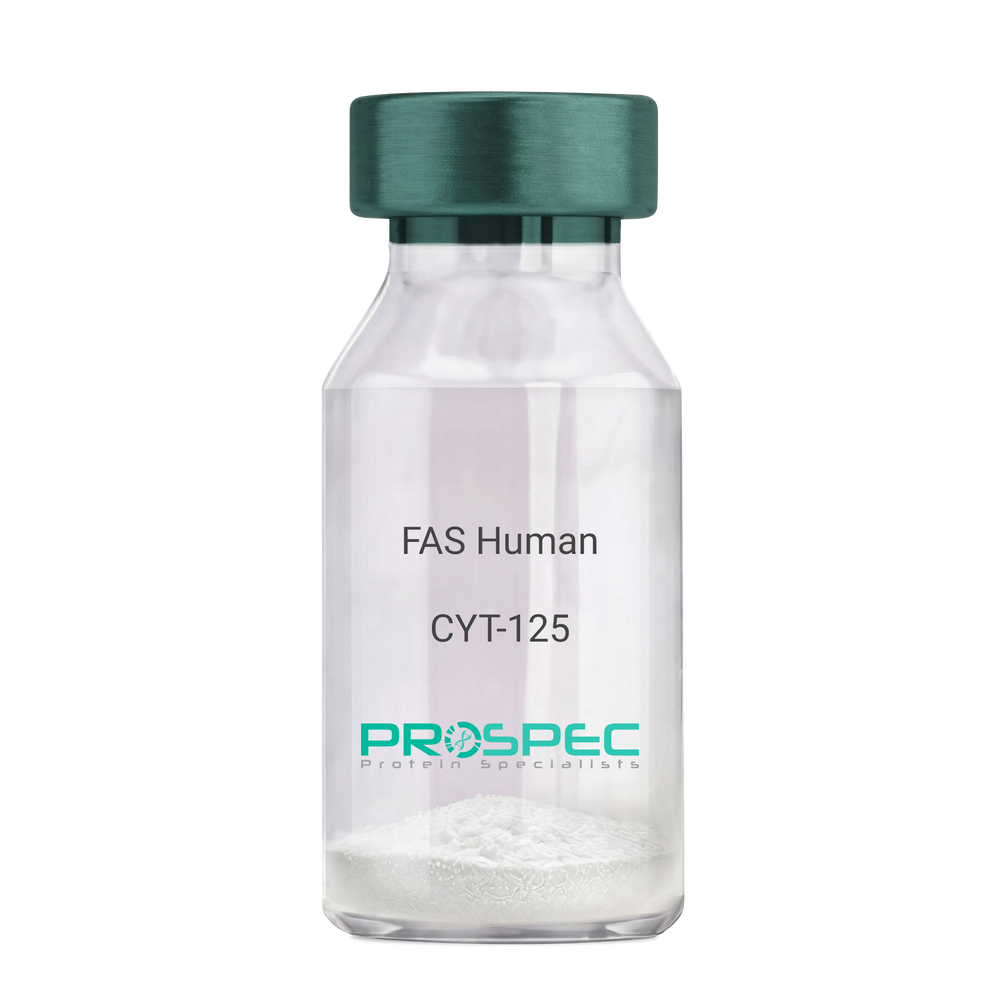
    Name :

    FAS Human

    Description:

    sFas Receptor Human Recombinant

    Tumor necrosis factor receptor superfamily member 6, Apo-1 antigen, Apoptosis-mediating surface antigen FAS, FASLG receptor, CD95, FAS, APT1, FAS1, APO-1, FASTM, ALPS1A, TNFRSF6.

    Product # :

    CYT-125

    Price :

    Quantity :

    Shipping Method :

    Room Temp Icon

    Shipped at Room temp

    Add To Cart

    More Info

    • description
    • source
    • formulation
    • purity
    • biological activity
    • More Info

    Description

    sFas Receptor Human Recombinant produced in E.coli is a single, non-glycosylated polypeptide chain containing 157 amino acids and having a molecular mass of 17.6kDa.The FAS is purified by proprietary chromatographic techniques.

    Source

    Escherichia Coli.

    Formulation

    FAS protein was lyophilized from a 0.2µm filtered concentrated solution in 1×PBS, pH 7.4.

    Purity

    Greater than 95.0% as determined by:
    (a) Analysis by RP-HPLC.
    (b) Analysis by SDS-PAGE.

    Biological Activity

    The ED50 was determined by its ability to inhibit the cytotoxicity of Jurkat cells is between 10-15 µg/ml in the presence of 2ng/ml of hFasL.

    More Info

    • Introduction

      Fas and Fas Ligand (FasL) are members of the TNF superfamily and are type I and type II transmembrane proteins, respectively. Binding of FasL to Fas initiates apoptosis in Fas-bearing cells. The apoptosis mechanism involves the recruitment of pro-caspase 8 through an adaptor molecule named FADD followed by processing of the pro-enzyme to active forms. These active caspases subsequently cleave a variety of cellular substrates leading to the eventual cell death. sFasR is able to inhibit FasL-induced apoptosis by acting as a decoy receptor whicht serves as a sink for FasL. The full length Fas Receptor is a 319 a.a type I transmembrane protein, which contains a 157 a.a extracellular domain, a 17 a.a transmembrane domain, and 145 a.a cytoplasmic domain. The mature human Fas ECD shares 55%, 58%, a.a sequence identity with the mouse, rat, Fas, respectively.

    • Synonyms

      Tumor necrosis factor receptor superfamily member 6, Apo-1 antigen, Apoptosis-mediating surface antigen FAS, FASLG receptor, CD95, FAS, APT1, FAS1, APO-1, FASTM, ALPS1A, TNFRSF6.

    • Physical Appearance

      Sterile Filtered White lyophilized (freeze-dried) powder.

    • Stability

      Lyophilized FAS although stable at room temperature for 3 weeks, should be stored desiccated below -18°C. Upon reconstitution FAS should be stored at 4°C between 2-7 days and for future use below -18°C. For long term storage it is recommended to add a carrier protein (0.1% HSA or BSA). Please prevent freeze-thaw cycles.

    • Solubility

      It is recommended to reconstitute the lyophilized FAS in sterile 18M-cm H2O not less than 100µg/ml, which can then be further diluted to other aqueous solutions.

    • Amino Acid Sequence

      MRLSSKSVNA QVTDINSKGL ELRKTVTTVE TQNLEGLHHD GQFCHKPCPP GERKARDCTV NGDEPDCVPC QEGKEYTDKA HFSSKCRRCR LCDEGHGLEV EINCTRTQNT KCRCKPNFFC NSTVCEHCDP CTKCEHGIIK ECTLTSNTKC KEEGSRS.

    • Background

      What is the molecular weight/Mw of FAS Protein?
      FAS Protein has a total Mw of 17.6kDa.

      What is the source or expression system of FAS Protein?
      Escherichia Coli.

      What is the Purity of FAS Protein?
      FAS Protein is >95% pure as determined by SDS-PAGE.

      What is the Biological Activity of FAS Protein?
      The ED50 was determined by its ability to inhibit the cytotoxicity of Jurkat cells is between 10-15 µg/ml in the presence of 2ng/ml of hFasL.

      What is the amino acid sequence of FAS Protein?
      MRLSSKSVNA QVTDINSKGL ELRKTVTTVE TQNLEGLHHD GQFCHKPCPP GERKARDCTV NGDEPDCVPC QEGKEYTDKA HFSSKCRRCR LCDEGHGLEV EINCTRTQNT KCRCKPNFFC NSTVCEHCDP CTKCEHGIIK ECTLTSNTKC KEEGSRS.

      What applications can FAS Protein be used in?
      FAS Protein can probably be used in western blot, ELISA and Lateral Flow.

      What is the endotoxin level for FAS Protein?
      The endotoxin level is minimal, FAS Protein was purified using conventional chromatography techniques..

    ProSpec's products are furnished for LABORATORY RESEARCH USE ONLY. The product may not be used as drugs, agricultural or pesticidal products, food additives or household chemicals.

    Fas Human
  • View Data Sheet

    Name :

    NENF Human

    Description:

    Neudesin Neurotrophic Factor Human Recombinant

    Neudesin, Cell immortalization-related protein 2, Neuron-derived neurotrophic factor, Secreted protein of unknown function, SPUF protein, NENF, CIR2, SPUF, SCIRP10.

    Product # :

    CYT-778

    Price :

    Quantity :

    Shipping Method :

    Room Temp Icon

    Shipped at Room temp

    Add To Cart

    More Info

    • description
    • source
    • formulation
    • purity
    • More Info

    Description

    NENF Human Recombinant produced in E.Coli is a single, non-glycosylated, polypeptide chain (aa 32-172) containing 151 amino acids including a 10 a.a N-terminal His tag and having a molecular mass of 16.9kDa.

    Source

    Escherichia Coli.

    Formulation

    NENF was filtered (0.4µm) and lyophilized from 0.5mg/ml in 0.05M phosphate buffer and 0.075M NaCl, pH 7.4.

    Purity

    Greater than 95.0% as determined by SDS-PAGE.

    More Info

    • Introduction

      Neudesin Neurotrophic Factor (NENF) is a member of the cytochrome b5 family, MAPR subfamily. NENF contains 1 cytochrome b5 heme-binding domain. NENF exhibits neurotrophic activity and activates phosphorylation of MAPK1/ERK2, MAPK3/ERK1 and AKT1/AKT in primary cultured neurons. NENF doesn’t have mitogenic activity in primary cultured astrocytes. NENF may play a part in neuronal differentiation and may have a transient influence on neural cell proliferation in neural precursor cells. NENF neurotrophic activity is increased by binding to heme. NENF is up-regulated in immortal cells and induced in estrogen receptor positive breast cancer expressing progesterone receptor.

    • Synonyms

      Neudesin, Cell immortalization-related protein 2, Neuron-derived neurotrophic factor, Secreted protein of unknown function, SPUF protein, NENF, CIR2, SPUF, SCIRP10.

    • Physical Appearance

      Filtered White lyophilized (freeze-dried) powder.

    • Stability

      Store lyophilized protein at -20°C. Aliquot the product after reconstitution to avoid repeated freezing/thawing cycles. Reconstituted protein can be stored at 4°C for a limited period of time; it does not show any change after two weeks at 4°C.

    • Solubility

      It is recommended to add deionized water to prepare a working stock solution of approximately 0.5 mg/ml and let the lyophilized pellet dissolve completely. NENF is not sterile! Please filter the product by an appropriate sterile filter before using it in the cell culture.

    • Amino Acid Sequence

      MKHHHHHHASGQTPRPAERG PPVRLFTEEE LARYGGEEED QPIYLAVKGV VFDVTSGKEF YGRGAPYNAL TGKDSTRGVA KMSLDPADLT HDTTGLTAKE LEALDEVFTK VYKAKYPIVG YTARRILNED GSPNLDFKPE DQPHFDIKDE F.

    ProSpec's products are furnished for LABORATORY RESEARCH USE ONLY. The product may not be used as drugs, agricultural or pesticidal products, food additives or household chemicals.

    Nenf Human
  • 1
  • …
  • 30
  • 31
  • 32
  • 33
  • 34
  • …
  • 42
Your browser does not support the video tag.

Products

  • Cytokines
  • Growth Factors
  • Chemokines
  • CD Antigens
  • Neurotrophins
  • Hormones
  • Enzymes
  • Viral Antigens
  • Recombinant Proteins
  • Natural Proteins
  • Monoclonal Antibodies
  • Polyclonal Antibodies
  • Thermal Packaging

About

  • Company
  • Founder
  • Contribution
  • Contact Us
  • My Account

Ordering

  • Ordering Method
  • Ordering - Credit Card
  • Ordering PO
  • Shipping Fees
  • FAQ's

Legal

  • Terms & Conditions
  • Privacy
  • Site Map
  • info@prospecbio.com
  • Facebook
  • Instagram
  • Linkedin Profile

© 2026 ProSpec-Tany TechnoGene Ltd. All Rights Reserved.

  • Choosing a selection results in a full page refresh.
  • Opens in a new window.