Skip to content

High-quality research proteins.

  • 1-800-805-6531

  • Mon - Sat 8.00-18.00, Sun - Closed

  • info@prospecbio.com

  • PO Box 6591 East Brunswick NJ 08816

  • Products
    • Cytokines
    • Growth factors
    • Chemokines
    • Cd antigens
    • Neurotrophins
    • Hormones
    • Enzymes
    • Viral antigens
    • Recombinant proteins
    • Natural proteins
    • Monoclonal antibodies
    • Polyclonal antibodies
    • Thermal Packaging
  • About
    • Company
    • Founder
    • Contribution
  • Customers
    • Eastern Asia
    • Eastern Europe
    • North America
    • South America
    • South East Asia
    • Southern Asia
    • Western Europe
  • Ordering
    • Ordering Method
    • Ordering - Credit Card
    • Ordering - PO
    • Shipping Fees
    • FAQs
  • Services
    • DNA Cloning
    • Protein Expression
    • Monoclonal Antibody
    • Fermentation
    • Technology License
  • Contact us
Log in

Country/region

  • USD $ | Albania
  • USD $ | Andorra
  • USD $ | Argentina
  • USD $ | Armenia
  • USD $ | Australia
  • USD $ | Austria
  • USD $ | Azerbaijan
  • USD $ | Belarus
  • USD $ | Belgium
  • USD $ | Bolivia
  • USD $ | Brazil
  • USD $ | Bulgaria
  • USD $ | Cambodia
  • USD $ | Canada
  • USD $ | Chile
  • USD $ | China
  • USD $ | Colombia
  • USD $ | Costa Rica
  • USD $ | Croatia
  • USD $ | Cyprus
  • USD $ | Czechia
  • USD $ | Denmark
  • USD $ | Estonia
  • USD $ | Finland
  • USD $ | France
  • USD $ | Georgia
  • USD $ | Germany
  • USD $ | Greece
  • USD $ | Hong Kong SAR
  • USD $ | Hungary
  • USD $ | Iceland
  • USD $ | India
  • USD $ | Ireland
  • USD $ | Israel
  • USD $ | Italy
  • USD $ | Japan
  • USD $ | Kazakhstan
  • USD $ | Latvia
  • USD $ | Liechtenstein
  • USD $ | Lithuania
  • USD $ | Madagascar
  • USD $ | Malta
  • USD $ | Mexico
  • USD $ | Moldova
  • USD $ | Monaco
  • USD $ | Netherlands
  • USD $ | New Zealand
  • USD $ | North Macedonia
  • USD $ | Norway
  • USD $ | Panama
  • USD $ | Paraguay
  • USD $ | Peru
  • USD $ | Philippines
  • USD $ | Poland
  • USD $ | Portugal
  • USD $ | Romania
  • USD $ | Singapore
  • USD $ | Slovakia
  • USD $ | Slovenia
  • USD $ | South Africa
  • USD $ | South Korea
  • USD $ | Spain
  • USD $ | Sri Lanka
  • USD $ | Sweden
  • USD $ | Switzerland
  • USD $ | Taiwan
  • USD $ | Thailand
  • USD $ | Türkiye
  • USD $ | Ukraine
  • USD $ | United Kingdom
  • USD $ | United States
  • USD $ | Uruguay
  • USD $ | Vatican City
  • USD $ | Venezuela
  • USD $ | Vietnam
  • Facebook
  • Instagram
logoProSpec - Recombinant Protein Manufacturer for academic and R&D industry
Become a distributor
Account Log in
Wishlist
Cart Cart(0)
  • Products
    +
    • Cytokines
    • Growth factors
    • Chemokines
    • Cd antigens
    • Neurotrophins
    • Hormones
    • Enzymes
    • Viral antigens
    • Recombinant proteins
    • Natural proteins
    • Monoclonal antibodies
    • Polyclonal antibodies
    • Thermal Packaging
  • About
    +
    • Company
    • Founder
    • Contribution
  • Customers
    +
    • Eastern Asia
    • Eastern Europe
    • North America
    • South America
    • South East Asia
    • Southern Asia
    • Western Europe
  • Ordering
    +
    • Ordering Method
    • Ordering - Credit Card
    • Ordering - PO
    • Shipping Fees
    • FAQs
  • Services
    +
    • DNA Cloning
    • Protein Expression
    • Monoclonal Antibody
    • Fermentation
    • Technology License
  • Contact us

Item added to your cart

View cart
View All
  • Cytokines
  • Growth factors
  • Chemokines
  • Cd antigens
  • Neurotrophins
  • Hormones
  • Enzymes
  • Viral antigens
  • Recombinant proteins
  • Natural proteins
  • Monoclonal antibodies
  • Polyclonal antibodies
  • Thermal Packaging
  • Tumor Necrosis Factor

    Tumor Necrosis Factor

    View All
  • 4-1BB

    4-1BB

    View All
  • Adiponectin

    Adiponectin

    View All
  • AIF1

    AIF1

    View All
  • Other Cytokines

    Other Cytokines

    View All
  • AITRL

    AITRL

    View All
  • Angiopoietin

    Angiopoietin

    View All
  • Apolipoprotein

    Apolipoprotein

    View All
  • B-Cell Activating Factor

    B-Cell Activating Factor

    View All
  • Beta Defensin

    Beta Defensin

    View All
  • Bone Morphogenetic Protein

    Bone Morphogenetic Protein

    View All
  • B type Natriuretic Peptide

    B type Natriuretic Peptide

    View All
  • BST

    BST

    View All
  • Betacellulin

    Betacellulin

    View All
  • Cardiotrophin

    Cardiotrophin

    View All
  • Activin

    Activin

    View All
  • Fibroblast Growth Factor

    Fibroblast Growth Factor

    View All
  • Other Growth Factors

    Other Growth Factors

    View All
  • CSF

    CSF

    View All
  • CTGF

    CTGF

    View All
  • IGFBP

    IGFBP

    View All
  • VEGF Protein

    VEGF Protein

    View All
  • EGF

    EGF

    View All
  • Epigen

    Epigen

    View All
  • Erythropoietin

    Erythropoietin

    View All
  • Insulin-Like Growth Factor

    Insulin-Like Growth Factor

    View All
  • Growth Hormone

    Growth Hormone

    View All
  • HDGF

    HDGF

    View All
  • Hepatocyte Growth Factor

    Hepatocyte Growth Factor

    View All
  • Insulin

    Insulin

    View All
  • BCA-1/ BLC (CXCL13)

    BCA-1/ BLC (CXCL13)

    View All
  • BRAK (CXCL14)

    BRAK (CXCL14)

    View All
  • C-10 (CCL6)

    C-10 (CCL6)

    View All
  • Other Chemokines

    Other Chemokines

    View All
  • MEC (CCL28)

    MEC (CCL28)

    View All
  • LD78-beta (CCL3L1)

    LD78-beta (CCL3L1)

    View All
  • CTACK (CCL27)

    CTACK (CCL27)

    View All
  • CXCL16

    CXCL16

    View All
  • CXCL17

    CXCL17

    View All
  • Platelet Factor-4 (CXCL4)

    Platelet Factor-4 (CXCL4)

    View All
  • ENA-78 (CXCL5)

    ENA-78 (CXCL5)

    View All
  • Eotaxin (CCL11,24,26)

    Eotaxin (CCL11,24,26)

    View All
  • Exodus-2 (CCL21)

    Exodus-2 (CCL21)

    View All
  • Fractalkine (CX3CL1)

    Fractalkine (CX3CL1)

    View All
  • CXCL6

    CXCL6

    View All
  • Other CD Antigens

    Other CD Antigens

    View All
  • CD14

    CD14

    View All
  • CD164

    CD164

    View All
  • CD1

    CD1

    View All
  • CD2

    CD2

    View All
  • CD200

    CD200

    View All
  • CD207

    CD207

    View All
  • CD226

    CD226

    View All
  • CD23

    CD23

    View All
  • CD244

    CD244

    View All
  • CD247

    CD247

    View All
  • CD27

    CD27

    View All
  • CD274

    CD274

    View All
  • CD300

    CD300

    View All
  • CD33

    CD33

    View All
  • Other Neurotrophins

    Other Neurotrophins

    View All
  • Beta-NGF

    Beta-NGF

    View All
  • BDNF

    BDNF

    View All
  • CDNF

    CDNF

    View All
  • CNTF

    CNTF

    View All
  • GDNF

    GDNF

    View All
  • Glia Maturation Factor

    Glia Maturation Factor

    View All
  • MANF

    MANF

    View All
  • Midkine

    Midkine

    View All
  • Neuroglobin

    Neuroglobin

    View All
  • Neurotrophic factors

    Neurotrophic factors

    View All
  • Neuregulin

    Neuregulin

    View All
  • Neuropilin

    Neuropilin

    View All
  • Pigment Epithelium-Derived Factor

    Pigment Epithelium-Derived Factor

    View All
  • Pleiotrophin

    Pleiotrophin

    View All
  • Peptide Hormones

    Peptide Hormones

    View All
  • Other Hormones

    Other Hormones

    View All
  • HCG

    HCG

    View All
  • Endothelin

    Endothelin

    View All
  • Exendin

    Exendin

    View All
  • FSH

    FSH

    View All
  • Glucagon

    Glucagon

    View All
  • GHRP

    GHRP

    View All
  • GLP

    GLP

    View All
  • Thyrostimulin

    Thyrostimulin

    View All
  • Inhibin A

    Inhibin A

    View All
  • LHRH

    LHRH

    View All
  • Melanotan

    Melanotan

    View All
  • Procalcitonin

    Procalcitonin

    View All
  • PTH

    PTH

    View All
  • Peroxiredoxin

    Peroxiredoxin

    View All
  • Peptidase

    Peptidase

    View All
  • Synthetase

    Synthetase

    View All
  • Transferase

    Transferase

    View All
  • Hydrolase

    Hydrolase

    View All
  • Dehydrogenase

    Dehydrogenase

    View All
  • ACE2

    ACE2

    View All
  • Esterase

    Esterase

    View All
  • Protein Kinases

    Protein Kinases

    View All
  • Other Enzymes

    Other Enzymes

    View All
  • Phosphatase

    Phosphatase

    View All
  • Deaminase

    Deaminase

    View All
  • Oxygenase

    Oxygenase

    View All
  • Adenylate Kinase

    Adenylate Kinase

    View All
  • Lyase

    Lyase

    View All
  • Chagas

    Chagas

    View All
  • SARS

    SARS

    View All
  • Influenza

    Influenza

    View All
  • ASFV

    ASFV

    View All
  • Astrovirus

    Astrovirus

    View All
  • Borrelia

    Borrelia

    View All
  • Helicobacter Pylori

    Helicobacter Pylori

    View All
  • Chikungunya

    Chikungunya

    View All
  • Chlamydia

    Chlamydia

    View All
  • Cytomegalo

    Cytomegalo

    View All
  • Dengue

    Dengue

    View All
  • EBV

    EBV

    View All
  • Ebola

    Ebola

    View All
  • Feline Leukemia Virus

    Feline Leukemia Virus

    View All
  • Hepatitis A

    Hepatitis A

    View All
  • Other

    Other

    View All
  • Actin

    Actin

    View All
  • ADAM

    ADAM

    View All
  • Complement Component

    Complement Component

    View All
  • Ag85

    Ag85

    View All
  • Eukaryotic Translation Initiation Factor

    Eukaryotic Translation Initiation Factor

    View All
  • Anterior Gradient Protein

    Anterior Gradient Protein

    View All
  • Heat Shock Protein

    Heat Shock Protein

    View All
  • Alpha-2-HS-Glycoprotein

    Alpha-2-HS-Glycoprotein

    View All
  • Hemoglobin

    Hemoglobin

    View All
  • Allergy

    Allergy

    View All
  • Anaplasma

    Anaplasma

    View All
  • Angiogenin

    Angiogenin

    View All
  • Ankyrin Repeat Domain

    Ankyrin Repeat Domain

    View All
  • Annexin

    Annexin

    View All
  • Other Natural Proteins

    Other Natural Proteins

    View All
  • Aprotinin

    Aprotinin

    View All
  • Transferrin

    Transferrin

    View All
  • Avidin

    Avidin

    View All
  • Anti Coagulation Factors

    Anti Coagulation Factors

    View All
  • Natural Albumin

    Natural Albumin

    View All
  • Natural Coagulation Factors

    Natural Coagulation Factors

    View All
  • Fibronectin

    Fibronectin

    View All
  • Thrombin

    Thrombin

    View All
  • Anti Human Enzyme

    Anti Human Enzyme

    View All
  • Other Monoclonal Antibodies

    Other Monoclonal Antibodies

    View All
  • Anti Human Cytokine

    Anti Human Cytokine

    View All
  • Anti Human Heat Shock Protein

    Anti Human Heat Shock Protein

    View All
  • Anti Mouse Lymphocyte

    Anti Mouse Lymphocyte

    View All
  • Anti Human Chemokine

    Anti Human Chemokine

    View All
  • Anti Human Lymphocyte

    Anti Human Lymphocyte

    View All
  • Anti Viral Monoclonal

    Anti Viral Monoclonal

    View All
  • Anti Mouse Cytokine

    Anti Mouse Cytokine

    View All
  • Anti-GST Monoclonal

    Anti-GST Monoclonal

    View All
  • Other Polyclonal Antibodies

    Other Polyclonal Antibodies

    View All
  • Anti Viral

    Anti Viral

    View All
  • Anti-GST Monoclonal

    Anti-GST Monoclonal

    View All
Back

Search results

1000 results found for “vegf protein”

Name

Description

Product #

Price

Quantity

Shipping Method

  • View Data Sheet

    Name :

    EMG1 Human

    Description:

    EMG1 Nucleolar Protein Human Recombinant

    EMG1 nucleolar protein homolog (S. cerevisiae), 18S rRNA Psi1248 methyltransferase, 18S rRNA (pseudouridine-N1-)-methyltransferase NEP1, Ribosome biogenesis protein NEP1, essential for mitotic growth 1, ribosomal RNA small subunit methyltransferase NEP1, Protein C2f, BWCNS, Grcc2f, NEP1, EC 2.1.1.-.

    Product # :

    PRO-1122

    Price :

    Quantity :

    Shipping Method :

    Ice Icon

    Shipped with Ice Packs

    Add To Cart

    More Info

    • description
    • source
    • formulation
    • purity
    • More Info

    Description

    EMG1 Human Recombinant produced in E. coli is a single polypeptide chain containing 267 amino acids (1-244) and having a molecular mass of 29.1kDa.EMG1 is fused to a 23 amino acid His-tag at N-terminus & purified by proprietary chromatographic techniques.

    Source

    E.coli.

    Formulation

    The EMG1 solution (1mg/ml) contains 20mM Tris-HCl buffer (pH 8.0), 100mM Nacl, 1mM DTT and 20% glycerol.

    Purity

    Greater than 95% as determined by SDS-PAGE.

    More Info

    • Introduction

      EMG1 is a 244 aa protein which has a role in ribosome biogenesis. EMG1 is a key protein in the small ribosomal subunit assembly, controls methylation during ribosome synthesis and takes part in pre-18S rRNA processing. EMG1 is localized to the nucleolus and a mutation in this gene is linked with Bowen-Conradi syndrome.

    • Synonyms

      EMG1 nucleolar protein homolog (S. cerevisiae), 18S rRNA Psi1248 methyltransferase, 18S rRNA (pseudouridine-N1-)-methyltransferase NEP1, Ribosome biogenesis protein NEP1, essential for mitotic growth 1, ribosomal RNA small subunit methyltransferase NEP1, Protein C2f, BWCNS, Grcc2f, NEP1, EC 2.1.1.-.

    • Physical Appearance

      Sterile Filtered colorless solution.

    • Stability

      Store at 4°C if entire vial will be used within 2-4 weeks. Store, frozen at -20°C for longer periods of time. For long term storage it is recommended to add a carrier protein (0.1% HSA or BSA).Avoid multiple freeze-thaw cycles.

    • Amino Acid Sequence

      MGSSHHHHHH SSGLVPRGSH MGSMAAPSDG FKPRERSGGE QAQDWDALPP KRPRLGAGNK IGGRRLIVVL EGASLETVKV GKTYELLNCD KHKSILLKNG RDPGEARPDI THQSLLMLMD SPLNRAGLLQ VYIHTQKNVL IEVNPQTRIP RTFDRFCGLM VQLLHKLSVR AADGPQKLLK VIKNPVSDHF PVGCMKVGTS FSIPVVSDVR ELVPSSDPIV FVVGAFAHGK VSVEYTEKMV SISNYPLSAA LTCAKLTTAF EEVWGVI

    ProSpec's products are furnished for LABORATORY RESEARCH USE ONLY. The product may not be used as drugs, agricultural or pesticidal products, food additives or household chemicals.

    Emg1 Human
  • View Data Sheet

    Name :

    SYF2 Human

    Description:

    SYF2 RNA splicing factor Human Recombinant

    Pre-mRNA-splicing factor SYF2, CCNDBP1-interactor, p29, SYF2, CBPIN, GCIPIP, NTC31, fSAP29.

    Product # :

    PRO-969

    Price :

    Quantity :

    Shipping Method :

    Ice Icon

    Shipped with Ice Packs

    Add To Cart

    More Info

    • description
    • source
    • formulation
    • purity
    • More Info

    Description

    SYF2 Human Recombinant produced in E.coli is a single, non-glycosylated polypeptide chain containing 173 amino acids (94-243) and having a molecular mass of 20.5kDa.SYF2 is fused to a 23 amino acid His-tag at N-terminus & purified by proprietary chromatographic techniques.

    Source

    Escherichia Coli.

    Formulation

    The SYF2 solution (0.25mg/ml) contains 20mM Tris-HCl buffer (pH8.0), 50% glycerol, 0.2M NaCl, 5mM DTT and 2mM EDTA.

    Purity

    Greater than 90.0% as determined by SDS-PAGE.

    More Info

    • Introduction

      Pre-mRNA-splicing factor SYF2 (SYF2) may be involved in pre-mRNA splicing. The SYF2 protein interacts with cyclin D-type binding-protein 1, which is believed to be a cell cycle regulator at the G1/S transition. SYF2 is amply expressed in the heart, skeletal muscle and kidney and is expressed at lower levels in other tissues.

    • Synonyms

      Pre-mRNA-splicing factor SYF2, CCNDBP1-interactor, p29, SYF2, CBPIN, GCIPIP, NTC31, fSAP29.

    • Physical Appearance

      Sterile Filtered colorless solution.

    • Stability

      Store at 4°C if entire vial will be used within 2-4 weeks. Store, frozen at -20°C for longer periods of time. For long term storage it is recommended to add a carrier protein (0.1% HSA or BSA).Avoid multiple freeze-thaw cycles.

    • Amino Acid Sequence

      MGSSHHHHHH SSGLVPRGSH MGSDYEKVKL LEISAEDAER WERKKKRKNP DLGFSDYAAA QLRQYHRLTK QIKPDMETYE RLREKHGEEF FPTSNSLLHG THVPSTEEID RMVIDLEKQI EKRDKYSRRR PYNDDADIDY INERNAKFNK KAERFYGKYT AEIKQNLERG TAV.

    ProSpec's products are furnished for LABORATORY RESEARCH USE ONLY. The product may not be used as drugs, agricultural or pesticidal products, food additives or household chemicals.

    Syf2 Human
  • View Data Sheet

    Name :

    DKK1 Human Sf9

    Description:

    Dickkopf-Related Protein 1 Human Recombinant, Sf9

    DKK-1, DKK1, HDKK1, HDKK-1, Dickkopf-1, Dickkopf-related protein 1, SK.

    Product # :

    PRO-673

    Price :

    Quantity :

    Shipping Method :

    Ice Icon

    Shipped with Ice Packs

    Add To Cart

    More Info

    • description
    • source
    • formulation
    • purity
    • More Info

    Description

    DKK1 produced in Sf9, Baculovirus cells is a single, glycosylated polypeptide chain containing 253 amino acids (32-266 a.a.) and having a molecular mass of 27.8 kDa (Molecular size on DSD-PAGE will appear at approximately 40kDa). DKK1 is expressed with a 15 amino acid His tag at C-Terminus and purified by proprietary chromatographic techniques.

    Source

    Sf9, Baculovirus cells.

    Formulation

    The DKK1 protein solution (0.25mg/ml) contains PBS (pH 7.4), 50% Glycerol, 2mM DTT, 2mM EDTA, & 0.1mM PMSF.

    Purity

    Greater than 85.0% as determined by SDS-PAGE.

    More Info

    • Introduction

      DKK1 is part of the dickkopf family. DKK1 is a secreted protein with 2 cysteine rich regions and takes part in embryonic development through its inhibition of the WNT signaling pathway. High levels of DKK1 in bone marrow plasma and peripheral blood is associated with the presence of osteolytic bone lesions in patients with multiple myeloma. Induction of DKK1 contributes to the pathological cascade triggered by beta-amyloid and is significantly involved in the development of tau phosphorylation.
      DKK1 reduces the differentiation of osteoblastic precursor cells. DKK1 is an important member in multiple myeloma bone disease. DKK1 expression is reduced in human colon tumors, implying that DKK-1 plays a role as a tumor suppressor gene in this neoplasia; the Wnt/beta-catenin pathway is downregulated by the induction of DKK1 expression, a mechanism that is missing in colon cancer.

    • Synonyms

      DKK-1, DKK1, HDKK1, HDKK-1, Dickkopf-1, Dickkopf-related protein 1, SK.

    • Physical Appearance

      Sterile filtered colorless solution.

    • Stability

      Store at 4°C if entire vial will be used within 2-4 weeks. Store, frozen at -20°C for longer periods of time. For long term storage it is recommended to add a carrier protein (0.1% HSA or BSA). Avoid multiple freeze-thaw cycles.

    • Amino Acid Sequence

      ADPTLNSVLN SNAIKNLPPP LGGAAGHPGS AVSAAPGILY PGGNKYQTID NYQPYPCAED EECGTDEYCA SPTRGGDAGV QICLACRKRR KRCMRHAMCC PGNYCKNGIC VSSDQNHFRG EIEETITESF GNDHSTLDGY SRRTTLSSKM YHTKGQEGSV CLRSSDCASG LCCARHFWSK ICKPVLKEGQ VCTKHRRKGS HGLEIFQRCY CGEGLSCRIQ KDHHQASNSS RLHTCQRHSG RLVPRGSHHH HHH.

    ProSpec's products are furnished for LABORATORY RESEARCH USE ONLY. The product may not be used as drugs, agricultural or pesticidal products, food additives or household chemicals.

    Dkk1 Human
  • View Data Sheet

    Name :

    EEF1D Human

    Description:

    Eukaryotic Translation Elongation Factor 1 Delta Human Recombinant

    Elongation factor 1-delta, EF-1-delta, Antigen NY-CO-4, EEF1D, EF1D, EF-1D, FP1047, FLJ20897.

    Product # :

    PRO-170

    Price :

    Quantity :

    Shipping Method :

    Ice Icon

    Shipped with Ice Packs

    Add To Cart

    More Info

    • description
    • source
    • formulation
    • purity
    • More Info

    Description

    EEF1D Human Recombinant fused with a 20 amino acid His tag at N-terminus produced in E.Coli is a single, non-glycosylated, polypeptide chain containing 301 amino acids (1-281 a.a.) and having a molecular mass of 33.2kDa (Molecular weight on SDS-PAGE will appear higher). The EEF1D is purified by proprietary chromatographic techniques.

    Source

    Escherichia Coli.

    Formulation

    The EEF1D solution (0.5 mg/ml) contains 20mM Tris-HCl buffer (pH 8.0), 1mM DTT and 10% glycerol.

    Purity

    Greater than 90.0% as determined by SDS-PAGE.

    More Info

    • Introduction

      Eukaryotic translation elongation factor 1 delta (EEF1D) is a subunit of the elongation factor-1 complex that is responsible for the enzymatic transport of aminoacyl tRNAs to the ribosome. EEF1D functions as guanine nucleotide exchange factor. EEF1D interacts with HIV-1 Tat, and consequently represses the translation of host-cell, but not HIV-1, mRNAs. EEF1D overexpression is linked to oesophageal carcinoma and may negatively influence the outcome of medulloblastomas.

    • Synonyms

      Elongation factor 1-delta, EF-1-delta, Antigen NY-CO-4, EEF1D, EF1D, EF-1D, FP1047, FLJ20897.

    • Physical Appearance

      Sterile Filtered colorless solution.

    • Stability

      Store at 4°C if entire vial will be used within 2-4 weeks. Store, frozen at -20°C for longer periods of time. For long term storage it is recommended to add a carrier protein (0.1% HSA or BSA).Avoid multiple freeze-thaw cycles.

    • Amino Acid Sequence

      MGSSHHHHHH SSGLVPRGSH MATNFLAHEK IWFDKFKYDD AERRFYEQMN GPVAGASRQE NGASVILRDI ARARENIQKS LAGSSGPGAS SGTSGDHGEL VVRIASLEVE NQSLRGVVQE LQQAISKLEA RLNVLEKSSP GHRATAPQTQ HVSPMRQVEP PAKKPATPAE DDEDDDIDLF GSDNEEEDKE AAQLREERLR QYAEKKAKKP ALVAKSSILL DVKPWDDETD MAQLEACVRS IQLDGLVWGA SKLVPVGYGI RKLQIQCVVE DDKVGTDLLE EEITKFEEHV QSVDIAAFNK I.

    ProSpec's products are furnished for LABORATORY RESEARCH USE ONLY. The product may not be used as drugs, agricultural or pesticidal products, food additives or household chemicals.

    Eef1D Human
  • View Data Sheet

    Name :

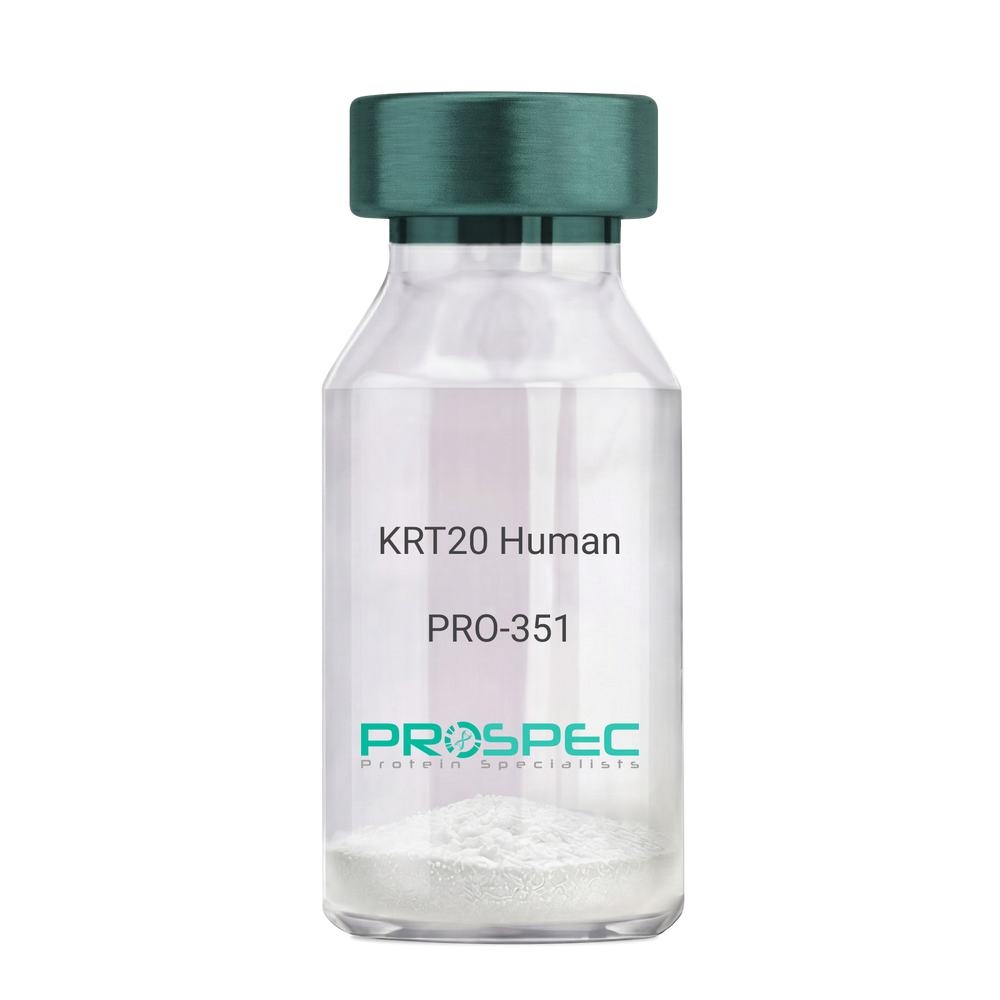
    KRT20 Human

    Description:

    Cytokeratin 20 Human Recombinant

    Keratin type I cytoskeletal 20, Cytokeratin-20, CK-20, Keratin-20, K20, Protein IT, KRT20, CD20, CK20, KRT21, MGC35423.

    Product # :

    PRO-351

    Price :

    Quantity :

    Shipping Method :

    Room Temp Icon

    Shipped at Room temp

    Add To Cart

    More Info

    • description
    • source
    • formulation
    • purity
    • More Info

    Description

    Cytokeratin 20 Human Recombinant produced in E.Coli is a single,non-glycosylated polypeptide chain having a molecular mass of 48,553 Dalton. The KRT20 is purified by proprietary chromatographic techniques.

    Source

    Escherichia Coli.

    Formulation

    The protein (1mg/1ml) was lyophilized after from a sterile solution containing 30mM Tris-HCL pH-8, 9.5M urea, 2mM DDT, 2mM EDTA and 10mM methylammonium chloride.

    Purity

    Greater than 95.0% as determined by SDS-PAGE.

    More Info

    • Introduction

      KRT20 is a member of the keratin family. The keratins are intermediate filament proteins responsible for the structural integrity of epithelial cells and are subdivided into cytokeratins and hair keratins. The type I cytokeratins consist of acidic proteins which are arranged in pairs of heterotypic keratin chains. This cytokeratin is a major cellular protein of mature enterocytes and goblet cells and is specifically expressed in the gastric and intestinal mucosa. The type I cytokeratin genes are clustered in a region of chromosome 17q12-q21.

    • Synonyms

      Keratin type I cytoskeletal 20, Cytokeratin-20, CK-20, Keratin-20, K20, Protein IT, KRT20, CD20, CK20, KRT21, MGC35423.

    • Physical Appearance

      Sterile Filtered White lyophilized (freeze-dried) powder.

    • Stability

      Lyophilized KRT20 although stable at room temperature for 3 weeks, should be stored desiccated below -18°C. Upon reconstitution KRT20 should be stored at 4°C between 2-7 days and for future use below -18°C.For long term storage it is recommended to add a carrier protein (0.1% HSA or BSA).Please prevent freeze-thaw cycles.

    • Solubility

      It is recommended to reconstitute the lyophilized KRT20 in sterile 18MΩ-cm H2O not less than 100µg/ml, which can then be further diluted to other aqueous solutions.

    • Reconstitution to filaments

      Performed by mixing equimolar amounts of cytokeratins of type I and type II at concentrations of approx. 0.5 mg/ml, both dissolved in 9.5 M urea buffer (see above). Protofilaments and filament complexes are obtained by dialyzing the resulting polypeptide solution stepwise to a concentration of 4 M urea and then to low salt condition (50 mM NaCI, 2 mM dithiothreitol, 10 mM Tris-HCI, pH 7.4). For immunization purposes, the solution can be further dialyzed against PBS (phosphate buffered saline, e.g. Dulbecco's PBS).

    ProSpec's products are furnished for LABORATORY RESEARCH USE ONLY. The product may not be used as drugs, agricultural or pesticidal products, food additives or household chemicals.

    Krt20 Human
  • View Data Sheet

    Name :

    FGFR1 Human, His

    Description:

    Fibroblast Growth Factor Receptor-1 Human Recombinant, His Tag

    FGFR-1, bFGF-R, C-FGR, CD331, fms-related tyrosine kinase 2, Pfeiffer syndrome, CEK, FLG, FLT2, KAL2, BFGFR, FGFBR, HBGFR, FGFR1/FGFR1OP2 FUSION GENE, FGFR1/ZNF198 FUSION GENE, FLG FGFR1/BCR FUSION GENE, FLG protein, FMS-LIKE GENE, N-sam tyrosine kinase, basic fibroblast growth factor receptor 1.

    Product # :

    PKA-100

    Price :

    Quantity :

    Shipping Method :

    Ice Icon

    Shipped with Ice Packs

    Add To Cart

    More Info

    • description
    • source
    • formulation
    • purity
    • More Info

    Description

    FGFR Human Recombinant produced in Sf9 Baculovirus cells is a single, glycosylated polypeptide chain containing 363 amino acids (22-376) and having a molecular mass of 40.4kDa. (Molecular size on SDS-PAGE will appear at approximately 40-57kDa). FGFR is fused to a 8 amino acid His-tag at C-terminus & purified by proprietary chromatographic techniques.

    Source

    Sf9, Baculovirus cells.

    Formulation

    The FGFR solution (0.5mg/1ml) contains phosphate buffered Saline (pH7.4), and 10% glycerol.

    Purity

    Greater than 95.0% as determined by SDS-PAGE.

    More Info

    • Introduction

      Fibroblast Growth Factors (FGFs) comprise a family of at least eighteen structurally realted proteins that are involved in a multitude of physiological and pathological cellular processes, including cell growth, differentation, angiogenesis, wound healing and tumorgenesis. The biological activities of the FGFs are mediated by a family if type I transmembrane tyrosine kinases which undergo dimerization and autophosphorylation after ligand binding. Four distinct genes encoding closely related FGF receptors, FGFR-1to -4 are known. Multiple forms of FGFR-1 to -3 are generated by alternative splicing of the mRNAs. A frequent splicing event involving FGFR-1 and -2 results in receptors containing all three Ig domains, referred to as the alpha isoform, or only IgII and IgIII, referred to as the ? isoform. Only the alpha isoform has been identified for FGFR-3 and FGFR-4. Additional splicing events for FGFR-1 to -3, involving the C-terminal half of the IgIII domain encoded by two mutually exclusive alternative exons, generate FGF receptors with alternative IgIII domains (IIIb and IIIc). A IIIa isoform which is a secreted FGF binding protein containing only the N-terminal half of the IgIII domain plus some intron sequences has also been reported for FGFR-1. Mutations in FGFR-1 to -3 have been found in patients with birth defects involving craniosynostosis.

    • Synonyms

      FGFR-1, bFGF-R, C-FGR, CD331, fms-related tyrosine kinase 2, Pfeiffer syndrome, CEK, FLG, FLT2, KAL2, BFGFR, FGFBR, HBGFR, FGFR1/FGFR1OP2 FUSION GENE, FGFR1/ZNF198 FUSION GENE, FLG FGFR1/BCR FUSION GENE, FLG protein, FMS-LIKE GENE, N-sam tyrosine kinase, basic fibroblast growth factor receptor 1.

    • Physical Appearance

      Sterile Filtered colorless solution.

    • Stability

      Store at 4°C if entire vial will be used within 2-4 weeks.Store, frozen at -20°C for longer periods of time. For long term storage it is recommended to add a carrier protein (0.1% HSA or BSA).Avoid multiple freeze-thaw cycles.

    • Amino Acid Sequence

      RPSPTLPEQA QPWGAPVEVE SFLVHPGDLL QLRCRLRDDV QSINWLRDGV QLAESNRTRI TGEEVEVQDS VPADSGLYAC VTSSPSGSDT TYFSVNVSDA LPSSEDDDDD DDSSSEEKET DNTKPNRMPV APYWTSPEKM EKKLHAVPAA KTVKFKCPSS GTPNPTLRWL KNGKEFKPDH RIGGYKVRYA TWSIIMDSVV PSDKGNYTCI VENEYGSINH TYQLDVVERS PHRPILQAGL PANKTVALGS NVEFMCKVYS DPQPHIQWLK HIEVNGSKIG PDNLPYVQIL KTAGVNTTDK EMEVLHLRNV SFEDAGEYTC LAGNSIGLSH HSAWLTVLEA LEERPAVMTS PLYLELEHHH HHH.

    ProSpec's products are furnished for LABORATORY RESEARCH USE ONLY. The product may not be used as drugs, agricultural or pesticidal products, food additives or household chemicals.

    Fgfr1 Human His
  • View Data Sheet

    Name :

    TGFBI Human

    Description:

    Transforming Growth Factor Beta Induced Human Recombinant

    Transforming growth factor-beta-induced protein ig-h3, Beta ig-h3, Kerato-epithelin, RGD-containing collagen-associated protein, RGD-CAP, TGFBI, BIGH3, CSD, CDB1, CDG2, CSD1, CSD2, CSD3, EBMD, LCD1, CDGG1.

    Product # :

    PRO-568

    Price :

    Quantity :

    Shipping Method :

    Ice Icon

    Shipped with Ice Packs

    Add To Cart

    More Info

    • description
    • source
    • formulation
    • purity
    • More Info

    Description

    TGFBI Human Recombinant produced in e.Coli is a single, non-glycosylated, polypeptide containing 135 amino acids (502-636) and having a molecular mass of 14.5 kDa. The TGFBI recombinant Human protein is purified by proprietary chromatographic techniques.

    Source

    Escherichia Coli.

    Formulation

    The TGFBI recombinant Human is formulated 20mM Tris-HCl pH-8.

    Purity

    Greater than 95.0% as determined by SDS-PAGE.

    More Info

    • Introduction

      Transforming Growth Factor Beta Induced protein also known as TGFBI is an extracellular matrix protein induced by transforming growth factor (TGF)-beta 1. TGFBI protein is involved in cell growth, cell differentiation, wound healing and cell adhesion. In addition, some missense mutations of TGFBI were identified in families affected with human autosomal dominant corneal dystrophies. TGFBI gene encodes for a 683 amino-acid protein containing an RGD motif and four internal repeated domains which have highly conserved sequences founded in several species (Fasciclin domain).

    • Synonyms

      Transforming growth factor-beta-induced protein ig-h3, Beta ig-h3, Kerato-epithelin, RGD-containing collagen-associated protein, RGD-CAP, TGFBI, BIGH3, CSD, CDB1, CDG2, CSD1, CSD2, CSD3, EBMD, LCD1, CDGG1.

    • Physical Appearance

      Sterile filtered liquid formulation.

    • Stability

      Store at 4°C if entire vial will be used within 2-4 weeks. Store, frozen at -20°C for longer periods of time. For long term storage it is recommended to add a carrier protein (0.1% HSA or BSA).Avoid multiple freeze-thaw cycles.

    • Amino Acid Sequence

      MGTVMDVLKG DNRFSMLVAA IQSAGLTETL NREGVYTVFA PTNEAFRALP PRERSRLLGD AKELANILKY HIGDEILVSG GIGALVRLKS LQGDKLEVSL KNNVVSVNKE PVAEPDIMAT NGVVHVITNV LQPPA.

    ProSpec's products are furnished for LABORATORY RESEARCH USE ONLY. The product may not be used as drugs, agricultural or pesticidal products, food additives or household chemicals.

    Tgfbi Human
  • View Data Sheet

    Name :

    Cor a 8.0101

    Description:

    Non-specific Lipid-Transfer Protein Cor a 8 Recombinant

    nsLTP Cor a 8, LTP Cor a 8.

    Product # :

    ALR-020

    Price :

    Quantity :

    Shipping Method :

    Ice Icon

    Shipped with Ice Packs

    Add To Cart

    More Info

    • description
    • source
    • formulation
    • purity
    • More Info

    Description

    Recombinant Non-specific Lipid-Transfer Protein Cor a 8 produced in SF9 is a glycosylated, polypeptide chain having a calculated molecular mass of 11kDa.Cor a 8.0101 is expressed with a 10xHis tag and purified by proprietary chromatographic techniques.

    Source

    Sf9 insect cells.

    Formulation

    Cor a 8.0101 is supplied in 20mM HEPES buffer pH-8.0, 200mM NaCl and 20% glycerol.

    Purity

    Greater than 80.0% as determined by SDS-PAGE.

    More Info

    • Introduction

      Nonspecific lipid transfer proteins (nsLTPs) are expressed throughout the plant tissues. They have a typical cysteine pattern forming disulfide bonds and are important allergens in fruits and tree nuts. Sensitization to nsLTP Cor a 8.0101 is more frequent among patients with hazelnut allergy in the Mediterranean area than the northern parts of Europe.

    • Synonyms

      nsLTP Cor a 8, LTP Cor a 8.

    • Physical Appearance

      Sterile Filtered colorless solution.

    • Stability

      Store at 4°C if entire vial will be used within 2-4 weeks.Store, frozen at -20°C for longer periods of time.Avoid multiple freeze-thaw cycles.

    • Immunological Functions

      1. Binds IgE-type human antibodies.2. Immunodot test with positive/negative samples

    • Applications

      Tested by LAL (Limulus Amoebocyte Lysate) chromogenic endotoxin assay.

    ProSpec's products are furnished for LABORATORY RESEARCH USE ONLY. The product may not be used as drugs, agricultural or pesticidal products, food additives or household chemicals.

    Cor A 80101
  • View Data Sheet

    Name :

    MX1 Bovine

    Description:

    Myxovirus Resistance 1 Bovine Recombinant

    Interferon-induced GTP-binding protein Mx1, Myxoma resistance protein 1, Myxovirus resistance protein 1, MX1, Interferon-Induced Protein P78, IFI-78K, IFI78, MxA.

    Product # :

    PRO-1662

    Price :

    Quantity :

    Shipping Method :

    Room Temp Icon

    Shipped at Room temp

    Add To Cart

    More Info

    • description
    • source
    • formulation
    • purity
    • More Info

    Description

    MX1 Bovine Recombinant fused with a 20 amino acid His tag at N-terminus produced in E.Coli is a single, non-glycosylated, polypeptide chain (1-648 a.a) containing a total of 668 amino acids and having a molecular mass of 77kDa. The MX1 is purified by proprietary chromatographic techniques.

    Source

    Escherichia Coli.

    Formulation

    The MX1 protein was lyophilized from a (1mg/ml) 0.2µm filtered solution containing 20mM Tris-HCl, pH7.9, 500mM NaCl, 0.5mM Imidazole, 0.1mM DTT and 6M urea.

    Purity

    Greater than 90.0% as determined by:
    (a) Analysis by RP-HPLC.
    (b) Analysis by SDS-PAGE.

    More Info

    • Introduction

      Myxoma Resistance Protein 1 (MX1) is a member of the dynamin family and contains 1 GED domain. MX1 is an Interferon-induced dynamin-like GTPase with antiviral activity against rabies virus (RABV), vesicular stomatitis virus (VSV) and murine pneumonia virus (MPV). MX1 is ubiquitously expressed. MX1 is induced by type I and type III interferons.

    • Synonyms

      Interferon-induced GTP-binding protein Mx1, Myxoma resistance protein 1, Myxovirus resistance protein 1, MX1, Interferon-Induced Protein P78, IFI-78K, IFI78, MxA.

    • Physical Appearance

      Sterile Filtered White lyophilized (freeze-dried) powder.

    • Stability

      Lyophilized MX1 although stable at room temperature for 3 weeks, should be stored desiccated below -18°C. Upon reconstitution MX1 should be stored at 4°C between 2-7 days and for future use below -18°C.For long term storage it is recommended to add a carrier protein (0.1% HSA or BSA).Please prevent freeze-thaw cycles.

    • Solubility

      It is recommended to reconstitute the lyophilized MX1 in sterile 18M-cm H2O not less than 100µg/ml, which can then be further diluted to other aqueous solutions.

    • Amino Acid Sequence

      MGSSHHHHHHSSGLVPRGSHMVHSDLGIEELDSPESSLNGSEDMESKSNLYSQYEEKVRPCID
      LIDSLRSLGVEQDLALPAIAVIGDQSSGKSSVLEALSGVALPRGSGIVTRCPLVLRLKKLGNE
      DEWKGKVSFLDKEIEIPDASQVEKEISEAQIAIAGEGTGISHELISLEVSSPHVPDLTLIDLP
      GITRVAVGNQPPDIEYQIKSLIRKYILRQETINLVVVPANVDIATTEALRMAQEVDPQGDRTI
      GILTKPDLVDKGTEDKVVDVVRNLVFHLKKGYMIVKCRGQQDIKHRMSLDKALQRERIFFEDH
      AHFRDLLEEGKATIPCLAERLTSELIMHICKTLPLLENQIKETHQRITEELQKYGKDIPEEES
      EKMFCLIEKIDTFNKEIISTIEGEEFVEQYDSRLFTKVRAEFSKWSAVVEKNFEKGYEAIRKE
      IKQFENRYRGRELPGFVNYKTFETIIKKQVRVLEEPAVDMLHTVTDIIRNTFTDVSGKHFNEF
      FNLHRTAKSKIEDIRLEQENEAEKSIRLHFQMEQLVYCQDQVYRRALQQVREKEAEEEKNKKS
      NHYFQSQVSEPSTDEIFQHLTAYQQEVSTRISGHIPLIIQFFVLRTYGEQLKKSMLQLLQDKD
      QYDWLLKERTDTRDKRKFLKERLERLTRARQRLAKFPG.

    ProSpec's products are furnished for LABORATORY RESEARCH USE ONLY. The product may not be used as drugs, agricultural or pesticidal products, food additives or household chemicals.

    Mx1 Bovine
  • View Data Sheet

    Name :

    MutS

    Description:

    Thermus Aquaticus DNA Mismatch Repair Protein MutS Recombinant

    MutS, Thermus Aquaticus DNA Mismatch Repair Protein, DNA mismatch repair protein MutS.

    Product # :

    PRO-2573

    Price :

    Quantity :

    Shipping Method :

    Ice Icon

    Shipped with Ice Packs

    Add To Cart

    More Info

    • description
    • source
    • formulation
    • purity
    • More Info

    Description

    DNA Mismatch Repair Protein MutS Thermus Aquaticus Recombinant produced in E.coli is a single, non-glycosylated polypeptide chain containing 819 amino acids and having a molecular mass of 91.7kDa. The Thermus Aquaticus is fused to a 6 amino acid His-Tag at C-terminus and purified by proprietary chromatographic techniques.

    Source

    Escherichia Coli.

    Formulation

    The MutS protein is supplied in 20mM Tris-HCl, pH-8, 250mM NaCl, 0.1mM EDTA, 1mM DTT and 50% Glycerol.

    Purity

    Greater than 95.0% as determined by SDS-PAGE.

    More Info

    • Introduction

      The MutS DNA Mismatch Protein Identifies heteroduplex DNAs comprising mis-paired or unpaired bases. The MutS DNA Mismatch Protein binds in vitro to heteroduplex DNAs comprising mis-paired or unpaired bases over a varied temperature range from 4-70 °C and obtains a thermostable ATPase activity. The MutS DNA Mismatch Protein is active at temperature between 0 to 75°C. Since The MutS DNA Mismatch Protein competently binds to 1-4 bases deletion (or insertion) and mismatch base pairs of GT, CT and AG, it is suitable for sensing these mutations. Mutations can be distinguished in polyacrylamide gels or on a solid phase such as Ni agarose or beads or magnetic Ni-NTA particles.

    • Synonyms

      MutS, Thermus Aquaticus DNA Mismatch Repair Protein, DNA mismatch repair protein MutS.

    • Physical Appearance

      Sterile filtered colorless solution.

    • Stability

      Store at 4°C if entire vial will be used within 2-4 weeks. Store, frozen at -20°C for longer periods of time. For long term storage it is recommended to add a carrier protein (0.1% HSA or BSA). Avoid multiple freeze-thaw cycles.

    • Amino Acid Sequence

      MEGMLKGEGPGPLPPLLQQYVELRDQYPDYLLLFQVGDFYECFGEDAERLARALG
      LVLTHKTSKDFTTPMAGIPLRAFEAYAERLLKMGFRLAVADQVEPAEEAEGLVRRE
      VTQLLTPGTLLQESLLPREANYLAAIATGDGWGLAFLDVSTGEFKGTVLKSKSALY
      DELFRHRPAEVLLAPELLENGAFLDEFRKRFPVMLSEAPFEPEGEGPLALRRARGA
      LLAYAQRTQGGALSLQPFRFYDPGAFMRLPEATLRALEVFEPLRGQDTLFSVLDETR
      TAPGRRLLQSWLRHPLLDRGPLEARLDRVEGFVREGALREGVRRLLYRLADLERLAT
      RLELGRASPKDLGALRRSLQILPELRALLGEEVGLPDLSPLKEELEAALVEDPPLKVS
      EGGLIREGYDPDLDALRAAHREGVAYFLELEERERERTGIPTLKVGYNAVFGYYLEVT
      RPYYERVPKEYRPVQTLKDRQRYTLPEMKEKEREVYRLEALIRRREEEVFLEVRERAK
      RQAEALREAARILAELDVYAALAEVAVRYGYVRPRFGDRLQIRAGRHPVVERRTEFVP
      NDLEMAHELVLITGPNMAGKSTFLRQTALIALLAQVGSFVPAEEAHLPLFDGIYTRIG
      ASDDLAGGKSTFMVEMEEVALILKEATENSLVLLDEVGRGTSSLDGVAIATAVAEALH
      ERRAYTLFATHYFELTALGLPRLKNLHVAAREEAGGLVFYHQVLPGPASKSYGVEVAAM
      AGLPKEVVARARALLQAMAARREGALDAVLERLLALDPDRLTPLEALRLLQELKALALGAPLDTMKGLEHHHHHH

    • Applications

      Recommended Applications:

      1. Remove mismatch DNA (error correction) from gene synthesis reaction

      2. Mutation detection and removal

      3. Rapid isothermal SNP detection

    • Reaction Conditions

      100mM KCl, 50mM Tris-HCl, pH-8.5, 10mM MgCl2, 0.1mM EDTA, 1mM DTT and 2% Glycerol.

    • Preparation protocol

      1. After first round PCR, purify PCR fragments using Qiagen QIAquick PCR purification kit with elution in dH2O.
      2. Dilute PCR product to 250 ng/µl in 10 mM Tris–HCl, pH 7.8, 50 mM NaCl and heat to 95 °C for 5 min followed by cooling at 0.1°C /s to 25 °C.
      3. Add reaction buffer (100mM KCl, 50 mM Tris-HCl, pH 8.5, 10 mM MgCl2, 0.1 mM EDTA, 1 mM DTT, 2% Glycerol) to annealed PCR product, adjust DNA concentration to 11.5 ng/µl, add 6×His-MutS dimers to 950 nM.
      4. Incubate the mixture at room temperature for 10 min, then add an equal volume of Ni-NTA beads pre-equilibrated with 1×binding buffer, and incubate for 30 min at room temperature. 5. Gently spin down beads and save supernatant for subsequent processing (second round PCR, cloning etc).

    ProSpec's products are furnished for LABORATORY RESEARCH USE ONLY. The product may not be used as drugs, agricultural or pesticidal products, food additives or household chemicals.

    Muts Dna Mismatch Repair Protein
  • View Data Sheet

    Name :

    ZWILCH Human

    Description:

    Zwilch Kinetochore Protein Human Recombinant

    hZwilch, KNTC1AP, Protein zwilch homolog, ZWILCH.

    Product # :

    PRO-1984

    Price :

    Quantity :

    Shipping Method :

    Ice Icon

    Shipped with Ice Packs

    Add To Cart

    More Info

    • description
    • source
    • formulation
    • purity
    • More Info

    Description

    ZWILCH Human Recombinant produced in E.Coli is a single, non-glycosylated polypeptide chain containing 614 amino acids (1-591 a.a) and having a molecular mass of 69.6kDa. ZWILCH is fused to a 23 amino acid His-tag at N-terminus & purified by proprietary chromatographic techniques.

    Source

    Escherichia Coli.

    Formulation

    ZWILCH protein solution (0.25mg/ml) containing 20mM Tris-HCl buffer (pH 8.0), 0.1M NaCl, 20% glycerol and 1mM DTT.

    Purity

    Greater than 85.0% as determined by SDS-PAGE.

    More Info

    • Introduction

      Zwilch Kinetochore Protein which is also known as ZWILCH is a part of the ZWILCH family. ZWILCH is a vital part of the mitotic checkpoint. ZWILCH prevents the cells from exiting mitosis prematurely. ZWILCH is also necessary for the assembly of the dyneindynactin and MAD1-MAD2 complexes onto kinetochores.

    • Synonyms

      hZwilch, KNTC1AP, Protein zwilch homolog, ZWILCH.

    • Physical Appearance

      Sterile Filtered colorless solution.

    • Stability

      Store at 4°C if entire vial will be used within 2-4 weeks. Store, frozen at -20°C for longer periods of time. For long term storage it is recommended to add a carrier protein (0.1% HSA or BSA).Avoid multiple freeze-thaw cycles.

    • Amino Acid Sequence

      MGSSHHHHHH SSGLVPRGSH MGSMWERLNC AAEDFYSRLL QKFNEEKKGI RKDPFLYEAD VQVQLISKGQ PNPLKNILNE NDIVFIVEKV PLEKEETSHI EELQSEETAI SDFSTGENVG PLALPVGKAR QLIGLYTMAH NPNMTHLKIN LPVTALPPLW VRCDSSDPEG TCWLGAELIT TNNSITGIVL YVVSCKADKN YSVNLENLKN LHKKRHHLST VTSKGFAQYE LFKSSALDDT ITASQTAIAL DISWSPVDEI LQIPPLSSTA TLNIKVESGE PRGPLNHLYR ELKFLLVLAD GLRTGVTEWL EPLEAKSAVE LVQEFLNDLN KLDGFGDSTK KDTEVETLKH DTAAVDRSVK RLFKVRSDLD FAEQLWCKMS SSVISYQDLV KCFTLIIQSL QRGDIQPWLH SGSNSLLSKL IHQSYHGTMD TVSLSGTIPV QMLLEIGLDK LKKDYISFFI GQELASLNHL EYFIAPSVDI QEQVYRVQKL HHILEILVSC MPFIKSQHEL LFSLTQICIK YYKQNPLDEQ HIFQLPVRPT AVKNLYQSEK PQKWRVEIYS GQKKIKTVWQ LSDSSPIDHL NFHKPDFSEL TLNGSLEERI FFTNMVTCSQ VHFK.

    ProSpec's products are furnished for LABORATORY RESEARCH USE ONLY. The product may not be used as drugs, agricultural or pesticidal products, food additives or household chemicals.

    AOD-9604
  • View Data Sheet

    Name :

    MORF4L2 Human

    Description:

    Mortality Factor 4 Like 2 Human Recombinant

    Mortality factor 4-like protein 2, MORF-related gene X protein, Protein MSL3-2, Transcription factor-like protein MRGX, MORF4L2, KIAA0026, MRGX, MORFL2.

    Product # :

    PRO-475

    Price :

    Quantity :

    Shipping Method :

    Ice Icon

    Shipped with Ice Packs

    Add To Cart

    More Info

    • description
    • source
    • formulation
    • purity
    • More Info

    Description

    MORF4L2 produced in E.Coli is a single, non-glycosylated polypeptide chain containing 308 amino acids (1-288 a.a.) and having a molecular mass of 34.4kDa (Molecular weight on SDS-PAGE will appear higher).MORF4L2 is fused to a 20 amino acid His-tag at N-terminus & purified by proprietary chromatographic techniques.

    Source

    Escherichia Coli.

    Formulation

    The MORF4L2 solution (0.5 mg/ml) contains 20mM Tris-HCl buffer (pH8.0), 20% glycerol and 1mM DTT.

    Purity

    Greater than 85.0% as determined by SDS-PAGE.

    More Info

    • Introduction

      MORF4L2 belongs to the mortality factor (MORF) family of transcriptional regulator which is involved in cell growth, regulation and senescence. MORF4L2 localizes to the nucleus, and it has a protein kinase C phosphorylation site as well as a tyrosine phosphorylation site. MORF4L2 interacts with the Rb tumor suppressor through its helix-loop-helix and leucine zipper regions. Furthermore, MORF4L2 has histone deacetylase activity and can either repress or promote the activity of the B-Myb promoter depending on the tissue.

    • Synonyms

      Mortality factor 4-like protein 2, MORF-related gene X protein, Protein MSL3-2, Transcription factor-like protein MRGX, MORF4L2, KIAA0026, MRGX, MORFL2.

    • Physical Appearance

      Sterile Filtered colorless solution.

    • Stability

      Store at 4°C if entire vial will be used within 2-4 weeks. Store, frozen at -20°C for longer periods of time. For long term storage it is recommended to add a carrier protein (0.1% HSA or BSA).Avoid multiple freeze-thaw cycles.

    • Amino Acid Sequence

      MGSSHHHHHH SSGLVPRGSH MSSRKQGSQP RGQQSAEEEN FKKPTRSNMQ RSKMRGASSG KKTAGPQQKN LEPALPGRWG GRSAENPPSG SVRKTRKNKQ KTPGNGDGGS TSEAPQPPRK KRARADPTVE SEEAFKNRME VKVKIPEELK PWLVEDWDLV TRQKQLFQLP AKKNVDAILE EYANCKKSQG NVDNKEYAVN EVVAGIKEYF NVMLGTQLLY KFERPQYAEI LLAHPDAPMS QVYGAPHLLR LFVRIGAMLA YTPLDEKSLA LLLGYLHDFL KYLAKNSASL FTASDYKVAS AEYHRKAL.

    ProSpec's products are furnished for LABORATORY RESEARCH USE ONLY. The product may not be used as drugs, agricultural or pesticidal products, food additives or household chemicals.

    Morf4L2 Human
  • View Data Sheet

    Name :

    OmpA S.Enteritidis

    Description:

    Salmonella Enteritidis Outer Membrane Protein-A Recombinant

    Outer Membrane Protein-A, OmpA.

    Product # :

    PRO-1918

    Price :

    Quantity :

    Shipping Method :

    Ice Icon

    Shipped with Ice Packs

    Add To Cart

    More Info

    • description
    • source
    • formulation
    • purity
    • More Info

    Description

    The Recombinant Salmonella Enteritidis Outer Membrane Protein A, E.Coli derived, 330 amino acids, contains the ompA immunodominant regions. The protein is fused to a His tag at C-terminal and purified by standard chromatography techniques.

    Source

    Escherichia Coli.

    Formulation

    PBS and 25MmM Arginine.

    Purity

    Protein is >95% pure as determined by 10% PAGE (coomassie staining).

    More Info

    • Introduction

      The OmpA protein is one of the main outer-membrane proteins of a large array of Gram-negative bacteria such as A.salmonicida, Shigella dysenteriae and E.coli.OmpA’s major physiological functions include maintenance of the structural integrity and morphology of the cells and porin activity, as well as a role in conjugation and bacteriophage binding.Achromogenic atypical Aeromonas salmonicida is the causative agent of goldfish ulcer disease.Virulence of this bacterium is associated with the production of a paracrystalline outer membrane A-layer protein.The species specific structural gene for the monomeric form of A-protein was cloned into a pET-3d plasmid in order to express and produce a recombinant form of the protein in E.coli BL21(DE3). The induced protein was isolated from inclusion bodies by a simple solubilization-renaturation procedure and purified by ion exchange chromatography on Q-Sepharose to over 95% pure monomeric protein.Recombinant A-protein was compared by biochemical, immunological and molecular methods with the A-protein isolated from atypical A.salmonicida bacterial cells by the glycine and the membrane extraction methods.

    • Synonyms

      Outer Membrane Protein-A, OmpA.

    • Physical Appearance

      Sterile Filtered clear solution.

    • Stability

      OmpA S.Enteritidis Recombinant although stable at 4°C for 1 week, should be stored below -18°C. Please prevent freeze thaw cycles.

    • Applications

      Immunoassay. Outer membrane protein A (ompA) of S. Enteritidis is a protein directly exposing to outsides of this organism, In hens, the production of antibodies against outer membrane protein A (ompA) during the infection has been demonstrated by inoculating both the complete bacterium and expressed protein produced from ompA DNA vaccine. Vaccination by ompA protein to hens is a poteintail tool to control S. enteritidis contaminated eggs into market, and prevent human foodborne disease from eggs.

    ProSpec's products are furnished for LABORATORY RESEARCH USE ONLY. The product may not be used as drugs, agricultural or pesticidal products, food additives or household chemicals.

    Ompa Senteritidis
  • View Data Sheet

    Name :

    ZNHIT1 Human

    Description:

    Zinc Finger HIT-Type Containing 1 Human Recombinant

    Zinc Finger HIT-Type Containing 1, ZNHIT1, ZNFN4A1, Zinc Finger Protein, Subfamily 4A (HIT Domain Containing) Member 1, Zinc Finger HIT Domain Containing 1, Putative Cyclin G1 Interacting Protein, Cyclin-G1-Binding Protein 1, Zinc Finger Protein Subfamily 4A Member 1, P18 Hamlet, CG1I, H_DJ0747G18.14, p18Hamlet, Zinc Finger HIT Domain-Containing Protein 1, Zinc Finger HIT Type 1, CGBP1.

    Product # :

    PRO-1448

    Price :

    Quantity :

    Shipping Method :

    Ice Icon

    Shipped with Ice Packs

    Add To Cart

    More Info

    • description
    • source
    • formulation
    • purity
    • More Info

    Description

    ZNHIT1 Human Recombinant produced in E.coli is a single, non-glycosylated polypeptide chain containing 177 amino acids (1-154) and having a molecular mass of 19.9kDa. ZNHIT1 is fused to a 23 amino acid His-tag at N-terminus.

    Source

    Escherichia Coli.

    Formulation

    The ZNHIT1 solution (1mg/ml) contains 20mM Tris-HCl buffer (pH 8.0), 10% glycerol and 0.4M Urea.

    Purity

    Greater than 95.0% as determined by SDS-PAGE.

    More Info

    • Introduction

      Zinc Finger HIT-Type Containing 1 (ZNHIT1) is a member of the ZNHIT1 family and contains 1 HIT-type zinc finger. The ZNHIT1 protein is induced by DNA damage and appears to have a role in p53-mediated apoptosis induction. ZNHIT1 interacts with MAPK11 and MAPK14 and is a component of the chromatin-remodeling SRCAP complex composed of at least SRCAP, DMAP1, RUVBL1, RUVBL2, ACTL6A, YEATS4, ACTR6 and ZNHIT1. ZNHIT1 binds to NR1D2 and discharges it of its inhibitory effect on the transcription of APOC3 without affecting its DNA-binding activity.

    • Synonyms

      Zinc Finger HIT-Type Containing 1, ZNHIT1, ZNFN4A1, Zinc Finger Protein, Subfamily 4A (HIT Domain Containing) Member 1, Zinc Finger HIT Domain Containing 1, Putative Cyclin G1 Interacting Protein, Cyclin-G1-Binding Protein 1, Zinc Finger Protein Subfamily 4A Member 1, P18 Hamlet, CG1I, H_DJ0747G18.14, p18Hamlet, Zinc Finger HIT Domain-Containing Protein 1, Zinc Finger HIT Type 1, CGBP1.

    • Physical Appearance

      Sterile Filtered colorless solution.

    • Stability

      Store at 4°C if entire vial will be used within 2-4 weeks. Store, frozen at -20°C for longer periods of time. For long term storage it is recommended to add a carrier protein (0.1% HSA or BSA).Avoid multiple freeze-thaw cycles.

    • Amino Acid Sequence

      MGSSHHHHHH SSGLVPRGSH MGSMVEKKTS VRSQDPGQRR VLDRAARQRR INRQLEALEN DNFQDDPHAG LPQLGKRLPQ FDDDADTGKK KKKTRGDHFK LRFRKNFQAL LEEQNLSVAE GPNYLTACAG PPSRPQRPFC AVCGFPSPYT CVSCGARYCT VRCLGTHQET RCLKWTV.

    ProSpec's products are furnished for LABORATORY RESEARCH USE ONLY. The product may not be used as drugs, agricultural or pesticidal products, food additives or household chemicals.

    Znhit1 Human
  • View Data Sheet

    Name :

    Tri a 14.0101

    Description:

    Non-Specific Lipid-Transfer Protein Tri a 14 Recombinant

    Non-specific lipid-transfer protein, ltp142.

    Product # :

    ALR-025

    Price :

    Quantity :

    Shipping Method :

    Ice Icon

    Shipped with Ice Packs

    Add To Cart

    More Info

    • description
    • source
    • formulation
    • purity
    • More Info

    Description

    Recombinant Non-Specific Lipid-Transfer Protein Tri a 14 produced in SF9 is a glycosylated, polypeptide chain having a calculated molecular mass of 13kDa. Tri a 14.0101 is expressed with a 6xHis tag and purified by proprietary chromatographic techniques.

    Source

    Sf9 insect cells.

    Formulation

    Tri a 14.0101 is supplied in 20mM HEPES buffer pH-8.0, 200mM NaCl and 20% glycerol.

    Purity

    Greater than 80.0% as determined by SDS-PAGE.

    More Info

    • Introduction

      Tri a 14.0101 is a non-specific lipid transfer protein and a major wheat allergen. Those who are sensitive to this allergen may have baker’s asthma, a frequent occupational allergic disease caused mainly by inhalation of cereal flour, especially wheat flour. Tri a 14.0101 consists of 4 helical fragments and irregular C-terminal regions which are highly stable to heat treatment and proteolytic attack.

    • Synonyms

      Non-specific lipid-transfer protein, ltp142.

    • Physical Appearance

      Sterile Filtered clear solution.

    • Stability

      Store at 4°C if entire vial will be used within 2-4 weeks. Store, frozen at -20°C for longer periods of time. Avoid multiple freeze-thaw cycles.

    • Immunological Functions

      1. Binds IgE-type human antibodies.2. Immunodot test with positive/negative samples.

    • Applications

      Tested by LAL (Limulus Amoebocyte Lysate) chromogenic endotoxin assay.

    ProSpec's products are furnished for LABORATORY RESEARCH USE ONLY. The product may not be used as drugs, agricultural or pesticidal products, food additives or household chemicals.

    Tri A 140101
  • View Data Sheet

    Name :

    MAPT Human 383a.a.

    Description:

    Microtubule-Associated Protein Tau 383 a.a. Human Recombinant

    Microtubule-associated protein tau, Neurofibrillary tangle protein, Paired helical filament-tau, PHF-tau, MAPT, MAPTL, MTBT1, TAU, MSTD, PPND, DDPAC, MTBT2, FTDP-17, FLJ31424, MGC138549.

    Product # :

    PRO-012

    Price :

    Quantity :

    Shipping Method :

    Ice Icon

    Shipped with Ice Packs

    Add To Cart

    More Info

    • description
    • source
    • formulation
    • purity
    • More Info

    Description

    MAPT Human Recombinant (Isoform 3) fused with a 20 amino acid His tag at N-terminus produced in E.Coli is a single, non-glycosylated, polypeptide chain containing 403 amino acids (1-383 a.a.) and having a molecular mass of 42.1kDa (Molecular size on SDS-PAGE will appear higher). The MAPT is purified by proprietary chromatographic techniques.

    Source

    Escherichia Coli.

    Formulation

    The MAPT solution (1 mg/ml) contains 20mM Tris-HCl buffer (pH8.0), 10% glycerol and 0.1M NaCl.

    Purity

    Greater than 90.0% as determined by SDS-PAGE.

    More Info

    • Introduction

      MAPT is a neuronal microtubule associated protein localized mostly on axons.
      MAPT promotes tubulin polymerisation and stabilizes microtubules, however it also serves to connect certain signalling pathways to the cytoskeleton. MAPT, in its hyperphosphorylated form, is the main part of paired helical filaments (PHF) and neurofibrillary lesions in Alzheimer''s disease (AD) brain.

    • Synonyms

      Microtubule-associated protein tau, Neurofibrillary tangle protein, Paired helical filament-tau, PHF-tau, MAPT, MAPTL, MTBT1, TAU, MSTD, PPND, DDPAC, MTBT2, FTDP-17, FLJ31424, MGC138549.

    • Physical Appearance

      Sterile Filtered colorless solution.

    • Stability

      Store at 4°C if entire vial will be used within 2-4 weeks. Store, frozen at -20°C for longer periods of time. For long term storage it is recommended to add a carrier protein (0.1% HSA or BSA).Please prevent freeze-thaw cycles.

    • Amino Acid Sequence

      MGSSHHHHHH SSGLVPRGSH MAEPRQEFEV MEDHAGTYGL GDRKDQGGYT MHQDQEGDTD AGLKAEEAGI GDTPSLEDEA AGHVTQARMV SKSKDGTGSD DKKAKGADGK TKIATPRGAA PPGQKGQANA TRIPAKTPPA PKTPPSSGEP PKSGDRSGYS SPGSPGTPGS RSRTPSLPTP PTREPKKVAV VRTPPKSPSS AKSRLQTAPV PMPDLKNVKS KIGSTENLKH QPGGGKVQII NKKLDLSNVQ SKCGSKDNIK HVPGGGSVQI VYKPVDLSKV TSKCGSLGNI HHKPGGGQVE VKSEKLDFKD RVQSKIGSLD NITHVPGGGN KKIETHKLTF RENAKAKTDH GAEIVYKSPV VSGDTSPRHL SNVSSTGSID MVDSPQLATL ADEVSASLAK QGL.

    ProSpec's products are furnished for LABORATORY RESEARCH USE ONLY. The product may not be used as drugs, agricultural or pesticidal products, food additives or household chemicals.

    Mapt Human 383Aa
  • View Data Sheet

    Name :

    PTX3 Human

    Description:

    Pentraxin-3 Human Recombinant

    TSG-14, TNFAIP5, PTX3, Pentraxin-related protein PTX3, Pentaxin-related protein PTX3, Tumor necrosis factor-inducible gene 14 protein, TSG14, pentraxin-related gene rapidly induced by IL-1 beta.

    Product # :

    PRO-694

    Price :

    Quantity :

    Shipping Method :

    Ice Icon

    Shipped with Ice Packs

    Add To Cart

    More Info

    • description
    • source
    • formulation
    • purity
    • More Info

    Description

    Recombinant Human PTX3 produced in E.Coli is a single, non-glycosylated polypeptide chain containing 401 amino acids (18-381 a.a) and having a molecular mass of 44.4 kDa. PTX3 is fused to a 37 amino acid His Tag at N-terminus and purified by proprietary chromatographic techniques.

    Source

    Escherichia Coli.

    Formulation

    The PTX3 protein contains 20mM Tris-HCl buffer pH-8, 1mM DTT and 10% glycerol.

    Purity

    Greater than 90% as determined by Analysis by SDS-PAGE.

    More Info

    • Introduction

      PTX3 is part of the pentraxin family sharing the C-terminal domain with short pentraxins and containing a unique N-terminal domain. PTX3 is produced and released at inflammatory sites by various cell types including monocytes/macrophages, endothelial cells, vascular smooth muscle cells, fibroblasts, and adipocytes. PTX3 is involved in the regulation of innate resistance to pathogens, inflammatory reactions, possibly clearance of self-components and female fertility. PTX3 is used as a marker for disease activity of psoriasis. High serum PTX3 levels are associated with the disease severity of systemic sclerosis. Elevated serum PTX3 is associated with pulmonary fungal infections.

    • Synonyms

      TSG-14, TNFAIP5, PTX3, Pentraxin-related protein PTX3, Pentaxin-related protein PTX3, Tumor necrosis factor-inducible gene 14 protein, TSG14, pentraxin-related gene rapidly induced by IL-1 beta.

    • Physical Appearance

      Sterile filtered colorless solution.

    • Stability

      Store at 4°C if entire vial will be used within 2-4 weeks. Store, frozen at -20°C for longer periods of time. For long term storage it is recommended to add a carrier protein (0.1% HSA or BSA). Avoid multiple freeze-thaw cycles.

    • Amino Acid Sequence

      MRGSHHHHHH GMASMTGGQQ MGRDLYDDDD KDRWGSMENS DDYDLMYVNL DNEIDNGLHP TEDPTPCDCG QEHSEWDKLF IMLENSQMRE RMLLQATDDV LRGELQRLRE ELGRLAESLA RPCAPGAPAE ARLTSALDEL LQATRDAGRR LARMEGAEAQ RPEEAGRALA AVLEELRQTR ADLHAVQGWA ARSWLPAGCE TAILFPMRSK KIFGSVHPVR PMRLESFSAC IWVKATDVLN KTILFSYGTK RNPYEIQLYL SYQSIVFVVG GEENKLVAEA MVSLGRWTHL CGTWNSEEGL TSLWVNGELA ATTVEMATGH IVPEGGILQI GQEKNGCCVG GGFDETLAFS GRLTGFNIWD SVLSNEEIRE TGGAESCHIR GNIVGWGVTE IQPHGGAQYV S.

    ProSpec's products are furnished for LABORATORY RESEARCH USE ONLY. The product may not be used as drugs, agricultural or pesticidal products, food additives or household chemicals.

    Ptx3 Human
  • View Data Sheet

    Name :

    IGF1 E3R Human

    Description:

    Insulin Like Growth Factor-1, Mutant E3R Human Recombinant

    Insulin-Like Growth Factor-1.

    Product # :

    CYT-1217

    Price :

    Quantity :

    Shipping Method :

    Room Temp Icon

    Shipped at Room temp

    Add To Cart

    More Info

    • description
    • source
    • formulation
    • purity
    • More Info

    Description

    IGF1 E3R Human Recombinant produced in E.Coli is a single, non-glycosylated polypeptide chain containing 77 amino acids (Gly49-Ala118) and having a molecular mass of 8.6kDa. IGF1 E3R Human is fused to a 6 a.a his tag at C-Terminus and is purified by proprietary chromatographic techniques.

    Source

    Escherichia Coli.

    Formulation

    The filtered (0.4µm) concentrated protein solution was lyophilized from 0.5mg/ml solution in 50 mM NaCl, 20 mM Tris and 5% (w/v) trehalose, pH 8.0.

    Purity

    Greater than 95% as determined by SDS-PAGE.

    More Info

    • Synonyms

      Insulin-Like Growth Factor-1.

    • Physical Appearance

      Sterile Filtered White lyophilized (freeze-dried) powder.

    • Stability

      Store lyophilized protein at -20°C. Aliquot the product after reconstitution to avoid repeated freezing/thawing cycles. Reconstituted protein can be stored at 4°C for a limited period of time.

    • Solubility

      It is recommended to add deionized water to prepare a working stock solution of approximately 0.5mg/ml and let the lyophilized pellet dissolve completely. IGF1 E3R is not sterile! Please filter the product by an appropriate sterile filter before using it in the cell culture.

    • Amino Acid Sequence

      MGPRTLCGAE LVDALQFVCG DRGFYFNKPT GYGSSSRRAP QTGIVDECCF RSCDLRRLEM YCAPLKPAKS AHHHHHH.

    • Background

      Insulin-like Growth Factor 1 (IGF-1) is a critical peptide hormone that plays a central role in regulating growth and development. Genetic mutations in the IGF-1 gene can result in altered IGF-1 variants, leading to various physiological consequences. Understanding these IGF-1 mutants is of paramount importance as they offer insights into growth disorders, metabolic regulation, and potential therapeutic avenues. This research delves into the world of IGF-1 mutants, shedding light on their diverse functions and implications for human health.

      The primary objective of this research is to elucidate the impact of IGF-1 mutations on growth regulation. In vitro and in vivo experiments will be conducted to investigate how these mutants interact with IGF-1 receptors, influence downstream signaling pathways, and modulate growth plate dynamics. Understanding these mechanisms is crucial for unraveling the complexities of growth disorders associated with IGF-1 mutations.

      The second objective is to assess the clinical relevance of IGF-1 mutants in growth-related conditions. Clinical studies involving individuals with growth hormone deficiencies or growth disorders linked to IGF-1 mutations will be conducted to evaluate the effects of these mutants on stature and overall health. These investigations may provide valuable insights into potential therapeutic strategies for individuals affected by growth-related disorders.

      The third objective is to explore the broader implications of IGF-1 mutants in metabolic regulation and age-related conditions. Research will investigate their roles in metabolic homeostasis, longevity, and susceptibility to age-related diseases. Understanding the multifaceted properties of IGF-1 mutants may open new avenues for therapeutic interventions in various health and aging-related conditions.

      By delving into the diverse functions of IGF-1 mutants, this research aims to expand our understanding of their physiological roles and clinical applications. The findings may contribute to the development of targeted interventions for growth disorders, metabolic conditions, and age-related diseases.

      What is the molecular weight/Mw of IGF1 E3R HUMAN Protein?
      IGF1 E3R HUMAN Protein has a total Mw of 8.6kDa.

      What is the source or expression system of IGF1 E3R HUMAN Protein?
      Escherichia Coli.

      What is the Purity of IGF1 E3R HUMAN Protein?
      IGF1 E3R HUMAN Protein is >95% pure as determined by SDS-PAGE.

      What is the Biological Activity of IGF1 E3R HUMAN Protein?
      The biological functionality of IGF1 E3R HUMAN Protein will be determined in the future.

      What is the amino acid sequence of IGF1 E3R HUMAN Protein?
      MGPRTLCGAE LVDALQFVCG DRGFYFNKPT GYGSSSRRAP QTGIVDECCF RSCDLRRLEM YCAPLKPAKS AHHHHHH.

      What applications can IGF1 E3R HUMAN Protein be used in?
      IGF1 E3R HUMAN Protein can probably be used in western blot, ELISA and Lateral Flow.

      What is the endotoxin level for IGF1 E3R HUMAN Protein?
      The endotoxin level is minimal, IGF1 E3R HUMAN Protein was purified using conventional chromatography techniques.


    ProSpec's products are furnished for LABORATORY RESEARCH USE ONLY. The product may not be used as drugs, agricultural or pesticidal products, food additives or household chemicals.

    Igf1 Mutant
  • View Data Sheet

    Name :

    FBXO2 Human

    Description:

    F-Box Protein 2 Human Recombinant

    F-box only protein 2, FBXO2, F-Box Protein 2, FBX2, FBG1, Fbs1, NFB42, OCP1.

    Product # :

    PRO-2017

    Price :

    Quantity :

    Shipping Method :

    Ice Icon

    Shipped with Ice Packs

    Add To Cart

    More Info

    • description
    • source
    • formulation
    • purity
    • More Info

    Description

    FBXO2 Human Recombinant produced in E.Coli is a single, non-glycosylated polypeptide chain containing 319 amino acids (1-296 a.a.) and having a molecular mass of 35.7kDa.FBXO2 is fused to a 23 amino acid His-tag at N-terminus & purified by proprietary chromatographic techniques.

    Source

    Escherichia Coli.

    Formulation

    FBXO2 protein solution (0.25mg/ml) containing 20mM Tris-HCl buffer (pH 8.0), 0.15M NaCl, 30% glycerol and 1mM DTT.

    Purity

    Greater than 80.0% as determined by SDS-PAGE.

    More Info

    • Introduction

      F-Box Protein 2 (FBXO2) is a part of the F-box protein family. The F-box proteins are one of the 4 subunits of the ubiquitin protein ligase complex called SCFs (SKP1-cullin-F-box), which takes part in phosphorylation-dependent ubiquitination. The F-box proteins are divided into 3 classes. FBXO2 belongs to the Fbxs class which contains either different protein-protein interaction modules or no recognizable motifs. FBXO2 is extremely similar to the rat neural F Box 42 kDa protein which is enriched in the nervous system and plays a role in maintaining neurons in a postmitotic state.

    • Synonyms

      F-box only protein 2, FBXO2, F-Box Protein 2, FBX2, FBG1, Fbs1, NFB42, OCP1.

    • Physical Appearance

      Sterile Filtered colorless solution.

    • Stability

      Store at 4°C if entire vial will be used within 2-4 weeks. Store, frozen at -20°C for longer periods of time. For long term storage it is recommended to add a carrier protein (0.1% HSA or BSA).Avoid multiple freeze-thaw cycles.

    • Amino Acid Sequence

      MGSSHHHHHH SSGLVPRGSH MGSMDGDGDP ESVGQPEEAS PEEQPEEASA EEERPEDQQE EEAAAAAAYL DELPEPLLLR VLAALPAAEL VQACRLVCLR WKELVDGAPL WLLKCQQEGL VPEGGVEEER DHWQQFYFLS KRRRNLLRNP CGEEDLEGWC DVEHGGDGWR VEELPGDSGV EFTHDESVKK YFASSFEWCR KAQVIDLQAE GYWEELLDTT QPAIVVKDWY SGRSDAGCLY ELTVKLLSEH ENVLAEFSSG QVAVPQDSDG GGWMEISHTF TDYGPGVRFV RFEHGGQDSV YWKGWFGARV TNSSVWVEP.

    ProSpec's products are furnished for LABORATORY RESEARCH USE ONLY. The product may not be used as drugs, agricultural or pesticidal products, food additives or household chemicals.

    Fbxo2 Human
  • View Data Sheet

    Name :

    C3 Rabbit

    Description:

    Complement C3 Rabbit

    Complement C3, C3 and PZP-like alpha-2-macroglobulin domain-containing protein 1, C3, CPAMD1.

    Product # :

    PRO-2733

    Price :

    Quantity :

    Shipping Method :

    Ice Icon

    Shipped with Ice Packs

    Add To Cart

    More Info

    • description
    • source
    • formulation
    • purity
    • More Info

    Description

    Rabbit Complement C3 produced in Rabbit plasma having a molecular mass of 185 kDa.

    Source

    Rabbit Plasma.

    Formulation

    C3 solution contains PBS, pH 7.2.

    Purity

    Greater than 93% as determined by SDS-PAGE.

    More Info

    • Introduction

      C3 is central to the activation of all 3 pathways of complement activation. Initiation of each pathway generates proteolytic enzyme complexes which binds the target surface. These enzymes cleave a peptide bond in C3 releasing the anaphylatoxin C3a and activating C3b. Most of the C3 activated during complement activation never attaches to the surface due to its thioester reaction with water forming fluid phase C3b which is rapidly inactivated by factors H and I forming iC3b. Surface-bound C3b is necessary in all 3 pathways for efficient activation of C5 and formation of C5b-9 complexes that lyse the target cell membrane.

    • Synonyms

      Complement C3, C3 and PZP-like alpha-2-macroglobulin domain-containing protein 1, C3, CPAMD1.

    • Physical Appearance

      Sterile filtered solution.

    • Stability

      C3 Rabbit is stable at 4°C if entire vial will be used within 2-4 weeks.Store, frozen below -20°C for longer periods of time.For long term storage it is recommended to add a carrier protein (0.1% HSA or BSA).Avoid multiple freeze-thaw cycles.

    ProSpec's products are furnished for LABORATORY RESEARCH USE ONLY. The product may not be used as drugs, agricultural or pesticidal products, food additives or household chemicals.

    C3 Rabbit
  • View Data Sheet

    Name :

    Ag85A

    Description:

    Mycobacterium Tuberculosis major secretory protein Antigen 85A Recombinant

    Ronectin-binding protein A, Mycolyl transferase 85A.

    Product # :

    PRO-1076

    Price :

    Quantity :

    Shipping Method :

    Ice Icon

    Shipped with Ice Packs

    Add To Cart

    More Info

    • description
    • source
    • formulation
    • purity
    • More Info

    Description

    Recombinant Mycobacterium tuberculosis Ag85A (43-338 a.a) produced in Hi-5 cells is a single, glycosylated polypeptide chain having a molecular mass of 32.8kDa (305 a.a in total).Antigen 85A is fused to a 6 amino acid His tag at C-terminus and purified by conventional chromatographic techniques.

    Source

    Baculovirus

    Formulation

    The Ag85A solution (0.5mg/1ml) contains 20mM Tris-HCl buffer (pH 8.0) and 10% glycerol.

    Purity

    Greater than 95% as determined by SDS-PAGE.

    More Info

    • Introduction

      Antigen 85A is a member of the antigen 85 complex (Antigen 85A, B, C). The enzymes of the antigen 85 complex have mycolyltransferase activity and catalyze the synthesis of the very rich glycolipid of the mycobacterial cell wall, the cord factor (trehalose 6,6'-dimycolate, TDM). The cord factor is vital for the integrity of the mycobacterial cell wall and pathogenesis of the bacillus. TDM is synthesized from two molecules of trehalose-6'-monomycolate (TMM) by Antigen 85A.

    • Synonyms

      Ronectin-binding protein A, Mycolyl transferase 85A.

    • Physical Appearance

      Sterile Filtered colorless solution.

    • Stability

      Store at 4°C if entire vial will be used within 2-4 weeks. Store, frozen at -20°C for longer periods of time. For long term storage it is recommended to add a carrier protein (0.1% HSA or BSA).Avoid multiple freeze-thaw cycles.

    • Amino Acid Sequence

      ADPAFSRPGL PVEYLQVPSP SMGRDIKVQF QSGGANSPAL YLLDGLRAQD DFSGWDINTP AFEWYDQSGL SVVMPVGGQS SFYSDWYQPA CGKAGCQTYK WETFLTSELP GWLQANRHVK PTGSAVVGLS MAASSALTLA IYHPQQFVYA GAMSGLLDPS QAMGPTLIGL AMGDAGGYKA SDMWGPKEDP AWQRNDPLLN VGKLIANNTR VWVYCGNGKP SDLGGNNLPA KFLEGFVRTS NIKFQDAYNA GGGHNGVFDF PDSGTHSWEY WGAQLNAMKP DLQRALGATP NTGPAPQGAH HHHHH.

    ProSpec's products are furnished for LABORATORY RESEARCH USE ONLY. The product may not be used as drugs, agricultural or pesticidal products, food additives or household chemicals.

    Ag85A
  • View Data Sheet

    Name :

    BMP 2 Human, HEK

    Description:

    Bone Morphogenetic protein-2 Human Recombinant, HEK

    BMP-2, BMP2A.

    Product # :

    CYT-080

    Price :

    Quantity :

    Shipping Method :

    Room Temp Icon

    Shipped at Room temp

    Add To Cart

    More Info

    • description
    • source
    • formulation
    • purity
    • biological activity
    • More Info

    Description

    BMP-2 Human Recombinant produced in HEK cells is a glycosylated disulfide-linked homodimer, having a molecular weight range of 28kDa due to glycosylation. The BMP2 is purified by proprietary chromatographic techniques.

    Source

    HEK.

    Formulation

    The BMP2 was lyophilized from 0.67mg/ml in 2xPBS + 6% ethanol.

    Purity

    Greater than 95.0% as determined by analysis by SDS-PAGE.

    Biological Activity

    The specific activity as determined by the dose dependent induction of alkaline phosphatase production in the ATDC-5 cell line (Mouse chondrogenic cell line) was found to be 6.53ng/ml.

    More Info

    • Introduction

      BMP2 belongs to the transforming growth factor-beta (TGFB) superfamily. Bone morphogenic protein induces bone formation. BMP2 is a candidate gene for the autosomal dominant disease of fibrodysplasia (myositis) ossificans progressiva.

    • Synonyms

      BMP-2, BMP2A.

    • Physical Appearance

      Sterile Filtered White lyophilized (freeze-dried) powder.

    • Stability

      Lyophilized BMP2 although stable at room temperature for 3 weeks, should be stored desiccated below -18°C. Upon reconstitution BMP-2 should be stored at 4°C between 2-7 days and for future use below -18°C.For long term storage it is recommended to add a carrier protein (0.1% HSA or BSA).Please prevent freeze-thaw cycles.

    • Solubility

      It is recommended to reconstitute the lyophilized BMP-2 in sterile 4mM HCl containing 0.1% endotoxin-free recombinant HSA.

    • Amino Acid Sequence

      QAKHKQRKRLKSSCKRHPLYVDFSDVGWNDWIVAPPGYHAFYCHGECPFPLADHLNST NHAIVQTLVNSVNSKIPKACCVPTELSAISMLYLDENEKVVLKNYQDMVVEGCGCR.

    • Background

      What is the molecular weight/Mw of BMP2 Protein?
      BMP2 Protein has a total Mw of 28kDa.

      What is the source or expression system of BMP2 Protein?
      Hek.

      What is the Purity of BMP2 Protein?
      BMP2 Protein is >95% pure as determined by SDS-PAGE.

      What is the Biological Activity of BMP2 Protein?
      The specific activity as determined by the dose dependent induction of alkaline phosphatase production in the ATDC-5 cell line (Mouse chondrogenic cell line) was found to be 6.53ng/ml.

      What is the amino acid sequence of BMP2 Protein?
      QAKHKQRKRLKSSCKRHPLYVDFSDVGWNDWIVAPPGYHAFYCHGECPFPLADHLNST NHAIVQTLVNSVNSKIPKACCVPTELSAISMLYLDENEKVVLKNYQDMVVEGCGCR.

      What applications can BMP2 Protein be used in?
      BMP2 Protein can probably be used in western blot, ELISA and Lateral Flow.

      What is the endotoxin level for BMP2 Protein?
      The endotoxin level is minimal, BMP2 Protein was purified using conventional chromatography techniques.

    ProSpec's products are furnished for LABORATORY RESEARCH USE ONLY. The product may not be used as drugs, agricultural or pesticidal products, food additives or household chemicals.

    Bmp 2 Human Hek
  • View Data Sheet

    Name :

    SFRP5 Human

    Description:

    Secreted Frizzled-Related Protein 5 Human Recombinant

    Secreted Frizzled-Related Protein 5, SARP3, Secreted Apoptosis Related Protein 3, Secreted Apoptosis-Related Protein 3, Frizzled-Related Protein 1b, FRP-1b, SARP-3, SFRP-5, FRP1B, SFRP5.

    Product # :

    PRO-2171

    Price :

    Quantity :

    Shipping Method :

    Ice Icon

    Shipped with Ice Packs

    Add To Cart

    More Info

    • description
    • source
    • formulation
    • purity
    • More Info

    Description

    SFRP5 Human Recombinant produced in E.Coli is a single, non-glycosylated polypeptide chain containing 311 amino acids (30-317 a.a) and having a molecular mass of 35kDa.SFRP5 is fused to a 23 amino acid His-tag at N-terminus & purified by proprietary chromatographic techniques.

    Source

    Escherichia Coli.

    Formulation

    SFRP5 protein solution (1mg/ml) containing 20mM Tris-HCl (pH 8.0) and 10% glycerol.

    Purity

    Greater than 85.0% as determined by SDS-PAGE.

    More Info

    • Introduction

      Secreted Frizzled-Related Protein 5, also known as SFRP5, belongs to the SFRP family which includes a cysteine-rich domain homologous to the putative Wnt-binding site of Frizzled proteins. SFRPs perform like soluble modulators of Wnt signaling. SFRP5 & SFRP1 are implicated in determining the polarity of photoreceptor cells in the retina. SFRP5 is highly expressed in the retinal pigment epithelium, as well as moderately expressed in the pancreas.

    • Synonyms

      Secreted Frizzled-Related Protein 5, SARP3, Secreted Apoptosis Related Protein 3, Secreted Apoptosis-Related Protein 3, Frizzled-Related Protein 1b, FRP-1b, SARP-3, SFRP-5, FRP1B, SFRP5.

    • Physical Appearance

      Sterile Filtered clear solution.

    • Stability

      Store at 4°C if entire vial will be used within 2-4 weeks. Store, frozen at -20°C for longer periods of time. For long term storage it is recommended to add a carrier protein (0.1% HSA or BSA).Avoid multiple freeze-thaw cycles.

    • Amino Acid Sequence

      MGSSHHHHHH SSGLVPRGSH MGSEEYDYYG WQAEPLHGRS YSKPPQCLDI PADLPLCHTV GYKRMRLPNL LEHESLAEVK QQASSWLPLL AKRCHSDTQV FLCSLFAPVC LDRPIYPCRS LCEAVRAGCA PLMEAYGFPW PEMLHCHKFP LDNDLCIAVQ FGHLPATAPP VTKICAQCEM EHSADGLMEQ MCSSDFVVKM RIKEIKIENG DRKLIGAQKK KKLLKPGPLK RKDTKRLVLH MKNGAGCPCP QLDSLAGSFL VMGRKVDGQL LLMAVYRWDK KNKEMKFAVK FMFSYPCSLY YPFFYGAAEP H.

    ProSpec's products are furnished for LABORATORY RESEARCH USE ONLY. The product may not be used as drugs, agricultural or pesticidal products, food additives or household chemicals.

    Sfrp5 Human
  • View Data Sheet

    Name :

    ADFP Human

    Description:

    Adipose Differentiation-Related Protein Human Recombinant

    Adipophilin, Adipose differentiation-related protein, ADRP, ADFP, MGC10598.

    Product # :

    PRO-405

    Price :

    Quantity :

    Shipping Method :

    Room Temp Icon

    Shipped at Room temp

    Add To Cart

    More Info

    • description
    • source
    • formulation
    • purity
    • More Info

    Description

    ADFP Human Recombinant produced in E.Coli is a signle, non-glycosylated, Polypeptide chain containing 444 amino acids and having a molecular mass of 49 kDa. The protein contains an extra 8 amino acid His tag at N-terminus. The ADFP amino acid sequence is identical to UniProtKB/Swiss-Prot entry Q99541 amino acids 4–437.The ADFP is purified by proprietary chromatographic techniques.

    Source

    Escherichia Coli.

    Formulation

    Human ADFP was lyophilized from 0.5mg/ml solution containing 20mM Tris pH-7.5, and 20mM NaCl.

    Purity

    Greater than 95% as determined by SDS PAGE.

    More Info

    • Introduction

      ADFP is related with the globule surface membrane material. ADFP is a major constituent of the globule surface. Rise in mRNA levels is one of the initial indications of adipocyte differentiation. Mycobacterium leprae regulates ADFP expression to facilitate the accumulation of lipids within infected macrophages for intracellular survival. ADFP is expressed in lipid droplets of vitamin A-storing hepatic stellate cells and additionally in lipid droplets of steatotic hepatocytes. ADFP expression has a role in clear cell renal carcinoma differentiation. ADFP is a component of the lipid droplets in THP-1 cells.

    • Synonyms

      Adipophilin, Adipose differentiation-related protein, ADRP, ADFP, MGC10598.

    • Stability

      Store lyophilized protein at -20°C. Aliquot the product after reconstitution to avoid repeated freezing/thawing cycles. Reconstituted protein can be stored at 4°C for a limited period of time; it does not show any change after two weeks at 4°C.

    • Solubility

      Add deionized water to prepare a working stock solution of approximately 0.5mg/mL and let the lyophilized pellet dissolve completely. Product is not sterile! Please filter the product by an appropriate sterile filter before using it in the cell culture.

    • Amino Acid Sequence

      MKHHHHHHAS VAVDPQPSVV TRVVNLPLVS STYDLMSSAY LSTKDQYPYL KSVCEMAENG VKTITSVAMT SALPIIQKLE PQIAVANTYA CKGLDRIEER LPILNQPSTQ IVANAKGAVT GAKDAVTTTV TGAKDSVAST ITGVMDKTKG AVTGSVEKTK SVVSGSINTV LGSRMMQLVS SGVENALTKS ELLVEQYLPL TEEELEKEAK KVEGFDLVQK PSYYVRLGSL STKLHSRAYQ QALSRVKEAK QKSQQTISQL HSTVHLIEFA RKNVYSANQK IQDAQDKLYL SWVEWKRSIG YDDTDESHCA EHIESRTLAI ARNLTQQLQT TCHTLLSNIQ GVPQNIQDQA KHMGVMAGDI YSVFRNAASF KEVSDSLLTS SKGQLQKMKE SLDDVMDYLV NNTPLNWLVG PFYPQLTESQ NAQDQGAEMD KSSQETQRSEHKTH.

    ProSpec's products are furnished for LABORATORY RESEARCH USE ONLY. The product may not be used as drugs, agricultural or pesticidal products, food additives or household chemicals.

    Adfp Human
  • 1
  • …
  • 29
  • 30
  • 31
  • 32
  • 33
  • …
  • 42
Your browser does not support the video tag.

Products

  • Cytokines
  • Growth Factors
  • Chemokines
  • CD Antigens
  • Neurotrophins
  • Hormones
  • Enzymes
  • Viral Antigens
  • Recombinant Proteins
  • Natural Proteins
  • Monoclonal Antibodies
  • Polyclonal Antibodies
  • Thermal Packaging

About

  • Company
  • Founder
  • Contribution
  • Contact Us
  • My Account

Ordering

  • Ordering Method
  • Ordering - Credit Card
  • Ordering PO
  • Shipping Fees
  • FAQ's

Legal

  • Terms & Conditions
  • Privacy
  • Site Map
  • info@prospecbio.com
  • Facebook
  • Instagram
  • Linkedin Profile

© 2026 ProSpec-Tany TechnoGene Ltd. All Rights Reserved.

  • Choosing a selection results in a full page refresh.
  • Opens in a new window.