Search results
1000 results found for “decarboxylase”
Name
Description
Product #
Price
Quantity
Shipping Method
- View Data Sheet
Name :
N6AMT1 HumanDescription:
N-6 Adenine-Specific DNA Methyltransferase 1 Human Recombinant
N-6 Adenine-Specific DNA Methyltransferase 1 (Putative), N(6)-Adenine-Specific DNA Methyltransferase 1, HemK Methyltransferase Family Member 2, M.HsaHemK2P, C21orf127, HEMK2, Chromosome 21 Open Reading Frame 127, N6-DNA-Methyltransferase, EC 2.1.1.- , PRED28, N6AMT, MTQ2, HemK methyltransferase family member 2.
Product # :
ENZ-834Price :
Quantity :
Shipping Method :
Shipped with Ice Packs
More Info
- description
- source
- formulation
- purity
- More Info
Description
N6AMT1 Human Recombinant produced in E.Coli is a single, non-glycosylated polypeptide chain containing 237 amino acids (1-214 a.a) and having a molecular mass of 25.3kDa. N6AMT1 is fused to a 23 amino acid His-tag at N-terminus & purified by proprietary chromatographic techniques.
Source
E.coli.
Formulation
N6AMT1 protein solution (0.25 mg/ml) containing Phosphate buffered saline (pH7.4), 20% glycerol and 1mM DTT.
Purity
Greater than 85% as determined by SDS-PAGE.
More Info
-
Introduction
N-6 Adenine-Specific DNA Methyltransferase 1, also known as N6AMT1 is part of the methyltransferase family. N6AMT1 is implicated in the methylation of release factor I during translation termination. In addition, N6AMT1 is involved in converting the arsenic metabolite monomethylarsonous acid to the less toxic dimethylarsonic acid.
-
Synonyms
N-6 Adenine-Specific DNA Methyltransferase 1 (Putative), N(6)-Adenine-Specific DNA Methyltransferase 1, HemK Methyltransferase Family Member 2, M.HsaHemK2P, C21orf127, HEMK2, Chromosome 21 Open Reading Frame 127, N6-DNA-Methyltransferase, EC 2.1.1.- , PRED28, N6AMT, MTQ2, HemK methyltransferase family member 2.
-
Physical Appearance
Sterile Filtered colorless solution.
-
Stability
Store at 4°C if entire vial will be used within 2-4 weeks. Store, frozen at -20°C for longer periods of time. For long term storage it is recommended to add a carrier protein (0.1% HSA or BSA).Avoid multiple freeze-thaw cycles.
-
Amino Acid Sequence
MGSSHHHHHH SSGLVPRGSH MGSMAGENFA TPFHGHVGRG AFSDVYEPAE DTFLLLNALE AAAAELAGVE ICLEVGSGSG VVSAFLASMI GPQALYMCTD INPEAAACTL ETARCNKVHI QPVITDLVKG LLPRLTEKVD LLVFNPPYVV TPPQEVGSHG IEAAWAGGRN GREVMDRFFP LVPDLLSPRG LFYLVTIKEN NPEEILKIMK TKGLQGTTAL SRQAGQETLS VLKFTKS.
ProSpec's products are furnished for LABORATORY RESEARCH USE ONLY. The product may not be used as drugs, agricultural or pesticidal products, food additives or household chemicals.
- View Data Sheet
Name :
AKR1D1 HumanDescription:
Aldo-Keto Reductase Family 1 Member D1 Human Recombinant
3-oxo-5-beta-steroid 4-dehydrogenase, Aldo-Keto Reductase Family 1, Member D1, SRD5B1, Delta(4)-3-Ketosteroid 5-Beta-Reductase, Delta 4-3-Ketosteroid-5-Beta-Reductase, Delta(4)-3-Oxosteroid 5-Beta-Reductase, CBAS2, Steroid-5-Beta-Reductase, Beta Polypeptide 1 (3-Oxo-5 Beta-Steroid Delta 4-Dehydrogenase Beta 1), Aldo-Keto Reductase Family 1, Member D1 (Delta 4-3-Ketosteroid-5-Beta-Reductase), Aldo-Keto Reductase Family 1 Member D1, 3-Oxo-5-Beta-Steroid 4-Dehydrogenase, EC 1.3.1.3, 3o5bred.
Product # :
ENZ-931Price :
Quantity :
Shipping Method :
Shipped with Ice Packs
More Info
- description
- source
- formulation
- purity
- More Info
Description
AKR1D1 Human Recombinant produced in E.Coli is a single, non-glycosylated, polypeptide chain containing 326 amino acids (1-326 a.a.) and having a molecular mass of 37.3kDa. The AKR1D1 is purified by proprietary chromatographic techniques.
Source
Escherichia Coli.
Formulation
The AKR1D1 protein solution (1mg/ml) contains 20mM Tris-HCl buffer (pH 8.5), 1mM DTT, 0.1M NaCl and 10% glycerol.
Purity
Greater than 95.0% as determined by SDS-PAGE.
More Info
-
Introduction
Aldo-keto reductase family 1 member D1 (AKR1D1) belongs to the AKR superfamily. The AKR family proteins are soluble NADPH oxidoreductases, which have vital roles in the metabolism of drugs, carcinogens and reactive aldehydes. AKR1D1 is also responsible for the catalysis of the 5-beta-reduction of bile acid intermediates and steroid hormones that carry a delta (4)-3-1 structure. AKR1D1 is highly expressed in the liver, colon and testis. Deficiency of the AKR1D1 enzyme may contribute to hepatic dysfunction.
-
Synonyms
3-oxo-5-beta-steroid 4-dehydrogenase, Aldo-Keto Reductase Family 1, Member D1, SRD5B1, Delta(4)-3-Ketosteroid 5-Beta-Reductase, Delta 4-3-Ketosteroid-5-Beta-Reductase, Delta(4)-3-Oxosteroid 5-Beta-Reductase, CBAS2, Steroid-5-Beta-Reductase, Beta Polypeptide 1 (3-Oxo-5 Beta-Steroid Delta 4-Dehydrogenase Beta 1), Aldo-Keto Reductase Family 1, Member D1 (Delta 4-3-Ketosteroid-5-Beta-Reductase), Aldo-Keto Reductase Family 1 Member D1, 3-Oxo-5-Beta-Steroid 4-Dehydrogenase, EC 1.3.1.3, 3o5bred.
-
Physical Appearance
Sterile filtered colorless solution.
-
Stability
Store at 4°C if entire vial will be used within 2-4 weeks. Store, frozen at -20°C for longer periods of time. For long term storage it is recommended to add a carrier protein (0.1% HSA or BSA).Avoid multiple freeze-thaw cycles.
-
Amino Acid Sequence
MDLSAASHRI PLSDGNSIPI IGLGTYSEPK STPKGACATS VKVAIDTGYR HIDGAYIYQN EHEVGEAIRE KIAEGKVRRE DIFYCGKLWA TNHVPEMVRP TLERTLRVLQ LDYVDLYIIE VPMAFKPGDE IYPRDENGKW LYHKSNLCAT WEAMEACKDA GLVKSLGVSN FNRRQLELIL NKPGLKHKPV SNQVECHPYF TQPKLLKFCQ QHDIVITAYS PLGTSRNPIW VNVSSPPLLK DALLNSLGKR YNKTAAQIVL RFNIQRGVVV IPKSFNLERI KENFQIFDFS LTEEEMKDIE ALNKNVRFVE LLMWRDHPEY PFHDEY.
ProSpec's products are furnished for LABORATORY RESEARCH USE ONLY. The product may not be used as drugs, agricultural or pesticidal products, food additives or household chemicals.
- View Data Sheet
Name :
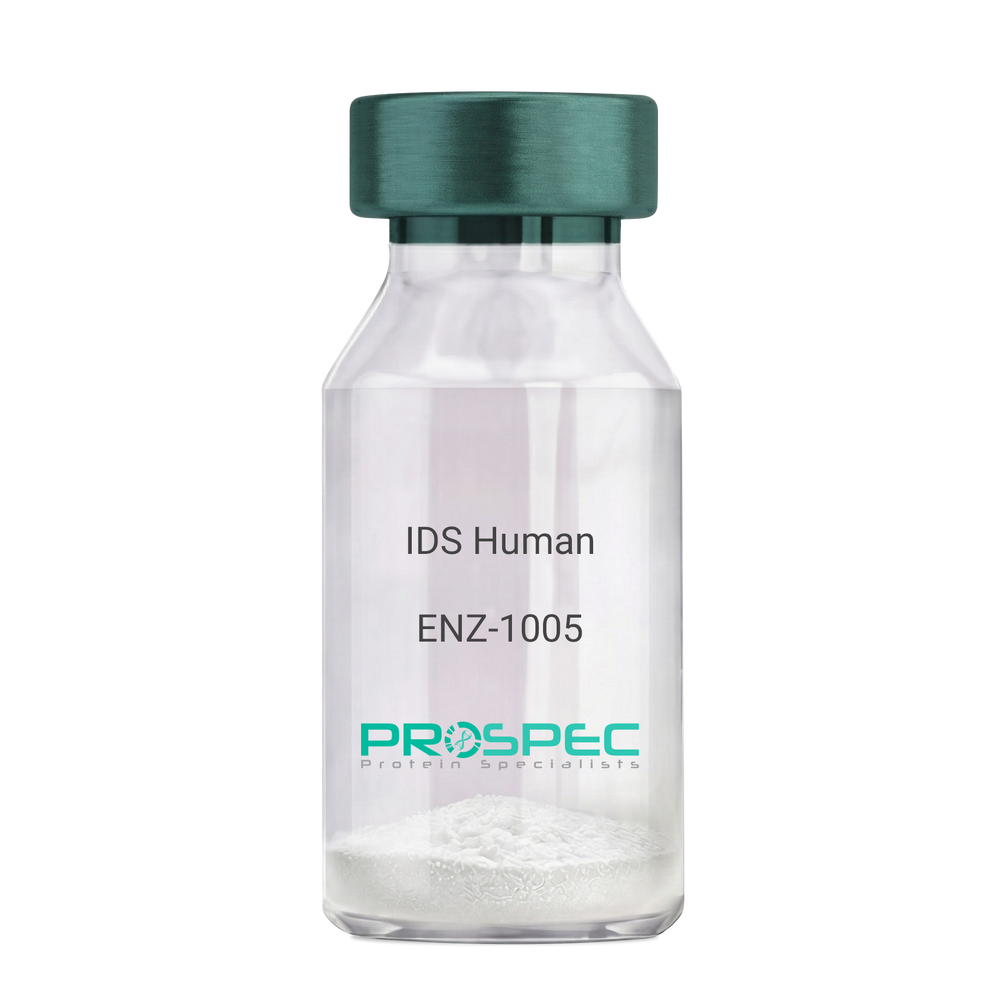
IDS HumanDescription:
Iduronate 2-Sulfatase Human Recombinant
Iduronate 2-Sulfatase, Alpha-L-Iduronate Sulfate Sulfatase, SIDS, Iduronate 2-Sulfatase 14 KDa Chain, Iduronate 2-Sulfatase 42 KDa Chain, Hunter Syndrome, EC 3.1.6.13, MPS2, Iduronate 2-sulfatase, Alpha-L-iduronate sulfate sulfatase.
Product # :
ENZ-1005Price :
Quantity :
Shipping Method :
Shipped with Ice Packs
More Info
- description
- source
- formulation
- purity
- More Info
Description
IDS Human Recombinant produced in Sf9 Baculovirus cells is a single, glycosylated polypeptide chain containing 533 amino acids (26-550a.a) and having a molecular mass of 60.3kDa. (Molecular size on SDS-PAGE will appear at approximately 35-70kDa). IDS is fused to an 8 amino acid His-tag at C-terminus & purified by proprietary chromatographic techniques.
Source
Sf9, Baculovirus cells.
Formulation
IDS protein solution (0.25mg/ml) containing Phosphate Buffered Saline (pH 7.4) and 10% glycerol.
Purity
Greater than 90% as determined by SDS-PAGE.
More Info
-
Introduction
Iduronate 2-Sulfatase also known as IDS, belongs to the highly-conserved sulfatase family of enzymes which catalyze the hydrolysis of O-sulfate and N-salfate esters from a variety of substrates. IDS is essential for the lysosomal degradation of the glycosaminoglycans (GAG) heparan sulfate as well as dermatan sulfate. Furthermore, IDS hydrolyzes the 2-sulfate group of the IDS units of the GAG.
-
Synonyms
Iduronate 2-Sulfatase, Alpha-L-Iduronate Sulfate Sulfatase, SIDS, Iduronate 2-Sulfatase 14 KDa Chain, Iduronate 2-Sulfatase 42 KDa Chain, Hunter Syndrome, EC 3.1.6.13, MPS2, Iduronate 2-sulfatase, Alpha-L-iduronate sulfate sulfatase.
-
Physical Appearance
Sterile Filtered clear solution.
-
Stability
Store at 4°C if entire vial will be used within 2-4 weeks. Store, frozen at -20°C for longer periods of time. For long term storage it is recommended to add a carrier protein (0.1% HSA or BSA).Avoid multiple freeze-thaw cycles.
-
Amino Acid Sequence
SETQANSTTD ALNVLLIIVD DLRPSLGCYG DKLVRSPNID QLASHSLLFQ NAFAQQAVCA PSRVSFLTGR RPDTTRLYDF NSYWRVHAGN FSTIPQYFKE NGYVTMSVGK VFHPGISSNH TDDSPYSWSF PPYHPSSEKY ENTKTCRGPD GELHANLLCP VDVLDVPEGT LPDKQSTEQA IQLLEKMKTS ASPFFLAVGY HKPHIPFRYP KEFQKLYPLE NITLAPDPEV PDGLPPVAYN PWMDIRQRED VQALNISVPY GPIPVDFQRK IRQSYFASVS YLDTQVGRLL SALDDLQLAN STIIAFTSDH GWALGEHGEW AKYSNFDVAT HVPLIFYVPG RTASLPEAGE KLFPYLDPFD SASQLMEPGR QSMDLVELVS LFPTLAGLAG LQVPPRCPVP SFHVELCREG KNLLKHFRFR DLEEDPYLPG NPRELIAYSQ YPRPSDIPQW NSDKPSLKDI KIMGYSIRTI DYRYTVWVGF NPDEFLANFS DIHAGELYFV DSDPLQDHNM YNDSQGGDLF QLLMPLEHHH HHH.
ProSpec's products are furnished for LABORATORY RESEARCH USE ONLY. The product may not be used as drugs, agricultural or pesticidal products, food additives or household chemicals.
- View Data Sheet
Name :
BHMT2 HumanDescription:
Betaine-Homocysteine Methyltransferase 2 Human Recombinant
BHMT2, Betaine--Homocysteine S-Methyltransferase 2, SMM-Hcy Methyltransferase, Betaine-Homocysteine Methyltransferase 2, S-Methylmethionine--Homocysteine S-Methyltransferase BHMT2, EC 2.1.1.10, EC 2.1.1.5.
Product # :
ENZ-798Price :
Quantity :
Shipping Method :
Shipped with Ice Packs
More Info
- description
- source
- formulation
- purity
- More Info
Description
BHMT2 Human Recombinant produced in E.Coli is a single, non-glycosylated polypeptide chain containing 386 amino acids (1-363 a.a.) and having a molecular mass of 42.7kDa. BHMT2 is fused to a 23 amino acid His-tag at N-terminus.
Source
Escherichia Coli.
Formulation
BHMT2 protein solution (0.5mg/ml) contains 20mM Tris-HCl buffer (pH 8.0), 0.4M Urea and 10% glycerol.
Purity
Greater than 90.0% as determined by SDS-PAGE.
More Info
-
Introduction
Betaine-Homocysteine Methyltransferase 2 (BHMT2) is involved in the regulation of homocysteine metabolism. Homocysteine is a sulfur-containing amino acid which has a key role in methylation reactions. Transfer of the methyl group from betaine to homocysteine generates methionine, which donates the methyl group to methylate DNA, proteins, lipids, and other intracellular metabolites. BHMT2 is one of two methyl transferases which can catalyze the transfer of the methyl group from betaine to homocysteine. BHMT2 converts homocysteine to methionine using S-methylmethionine (SMM) as a methyl donor. Homocysteine metabolism anomalies are implicated in disorders varying from vascular disease to neural tube birth defects such as spina bifida.
-
Synonyms
BHMT2, Betaine--Homocysteine S-Methyltransferase 2, SMM-Hcy Methyltransferase, Betaine-Homocysteine Methyltransferase 2, S-Methylmethionine--Homocysteine S-Methyltransferase BHMT2, EC 2.1.1.10, EC 2.1.1.5.
-
Physical Appearance
Sterile Filtered colorless solution.
-
Stability
Store at 4°C if entire vial will be used within 2-4 weeks. Store, frozen at -20°C for longer periods of time. For long term storage it is recommended to add a carrier protein (0.1% HSA or BSA).Avoid multiple freeze-thaw cycles.
-
Amino Acid Sequence
MGSSHHHHHH SSGLVPRGSH MGSMAPAGRP GAKKGILERL ESGEVVIGDG SFLITLEKRG YVKAGLWTPE AVIEHPDAVR QLHMEFLRAG SNVMQTFTFS ASEDNMESKW EDVNAAACDL AREVAGKGDA LVAGGICQTS IYKYQKDEAR IKKLFRQQLE VFAWKNVDFL IAEYFEHVEE AVWAVEVLKE SDRPVAVTMC IGPEGDMHDI TPGECAVRLV KAGASIVGVN CRFGPDTSLK TMELMKEGLE WAGLKAHLMV QPLGFHAPDC GKEGFVDLPE YPFGLESRVA TRWDIQKYAR EAYNLGVRYI GGCCGFEPYH IRAIAEELAP ERGFLPPASE KHGSWGSGLD MHTKPWIRAR ARREYWENLL PASGRPFCPS LSKPDF.
ProSpec's products are furnished for LABORATORY RESEARCH USE ONLY. The product may not be used as drugs, agricultural or pesticidal products, food additives or household chemicals.
- View Data Sheet
Name :
TOP1 BovineDescription:
DNA Topoisomerase-I Bovine
DNA topoisomerase 1, EC 5.99.1.2, DNA topoisomerase I, TOP1, Scl-70.
Product # :
ENZ-656Price :
Quantity :
Shipping Method :
Shipped with Ice Packs
More Info
- description
- source
- formulation
- purity
- More Info
Description
Bovine DNA Topoisomerase-I shows multiple bands between 76-109 KDa and is purified from bovine tissues by proprietary chromatographic techniques.
Source
Bovine tissues.
Formulation
TOP1 is supplied in 20mM HEPES buffer pH-7.5, 400mM NaCl and 20% glycerol.
Purity
Greater than 95% as determined by SDS-PAGE.
More Info
-
Introduction
TOP1 is an important nuclear enzyme that interconverts supercoiled DNA to the necessary topological conformations for standard DNA replication and transcription. TOP1 is the target antigen for TOP1 autoantibodies. TOP1 antibodies are a specific marker in scleroderma patients (specificity 98-100%) and are related with the existence of diffuse skin involvement and pulmonary fibrosis. In human tissues top1 enzyme is primarily synthesized as a protein with a molecular weight of 100-kDa. Most of this precursor is then proteolytically processed to a 70-kDa size, from which the TOP1 antigen has derived its name.
-
Synonyms
DNA topoisomerase 1, EC 5.99.1.2, DNA topoisomerase I, TOP1, Scl-70.
-
Stability
Store at 4°C if entire vial will be used within 2-4 weeks. Store, frozen at -20°C for longer periods of time. Avoid multiple freeze-thaw cycles.
-
Immunological Functions
1. Binds IgG-type human auto-antibodies. 2. Standard ELISA test (checkerboard analysis of positive/negative samples) and immunodot test with positive/negative samples.
-
coating concentration
0.5-0.8 µg/ml (depending on the type of ELISA plate and coating buffer). Suitable for labeling of functional groups.
-
Applications
Western blot with anti TOP1 autoantibody positive sample.
ProSpec's products are furnished for LABORATORY RESEARCH USE ONLY. The product may not be used as drugs, agricultural or pesticidal products, food additives or household chemicals.
- View Data Sheet
Name :
LIPG Human, HEKDescription:
Lipase Endothelial Human Recombinant, HEK
LIPG, Lipase Endothelial, EDL, EL, Endothelial Cell-Derived Lipase, EC 3.1.1.3, PRO719, Endothelial Lipase, Lipoprotein Lipase H, EC 3.1.1.
Product # :
ENZ-810Price :
Quantity :
Shipping Method :
Shipped at Room temp
More Info
- description
- source
- formulation
- purity
- More Info
Description
LIPG Human Recombinant produced in HEK cells is a single, glycosylated, polypeptide chain (Ser21-Pro500) containing a total of 490 amino acids, having a calculated molecular mass of 55.8kDa. LIPG is fused to a 2 aa N-terminal linker, a 2 aa C-terminal linker and a 6 aa His tag at C-Terminus.
Source
HEK 293.
Formulation
LIPG was filtered (0.4 µm) and lyophilized from a solution in phosphate buffered saline pH 7.5 (PBS), 1% (w/v) Sucrose and 4% (w/v) Mannitol.
Purity
Greater than 85.0% as determined by SDS-PAGE.
More Info
-
Introduction
Lipase Endothelial (LIPG) has extensive phospholipase activity and may be involved in lipoprotein metabolism and vascular biology. The LIPG protein is considered a member of the TG lipase family through its sequence and characteristic lid region which provides substrate specificity for enzymes of the TG lipase family. In addition, the LIPG has triglyceride lipase activities. LIPG hydrolyzes HDLs more efficiently than other lipoproteins. LIPG also binds heparin.
-
Synonyms
LIPG, Lipase Endothelial, EDL, EL, Endothelial Cell-Derived Lipase, EC 3.1.1.3, PRO719, Endothelial Lipase, Lipoprotein Lipase H, EC 3.1.1.
-
Physical Appearance
Filtered White lyophilized (freeze-dried) powder.
-
Stability
Store lyophilized protein at -20°C. Aliquot the product after reconstitution to avoid repeated freezing/thawing cycles. Reconstituted protein can be stored at 4°C for a limited period of time; it does not show any change after two weeks at 4°C.
-
Solubility
It is recommended to add deionized water to prepare a working stock solution of approximately 0.5 mg/ml and let the lyophilized pellet dissolve completely. LIPG is not sterile! Please filter the product by an appropriate sterile filter before using it in the cell culture.
-
Amino Acid Sequence
ASSPVPFGPE GRLEDKLHKP KATQTEVKPS VRFNLRTSKD PEHEGCYLSV GHSQPLEDCS FNMTAKTFFI IHGWTMSGIF ENWLHKLVSA LHTREKDANV VVVDWLPLAH QLYTDAVNNT RVVGHSIARM LDWLQEKDDF SLGNVHLIGY SLGAHVAGYA GNFVKGTVGR ITGLDPAGPM FEGADIHKRL SPDDADFVDV LHTYTRSFGL SIGIQMPVGH IDIYPNGGDF QPGCGLNDVL GSIAYGTITE VVKCEHERAV HLFVDSLVNQ DKPSFAFQCT DSNRFKKGIC LSCRKNRCNS IGYNAKKMRN KRNSKMYLKT RAGMPFRVYH YQMKIHVFSY KNMGEIEPTF YVTLYGTNAD SQTLPLEIVE RIEQNATNTF LVYTEEDLGD LLKIQLTWEG ASQSWYNLWK EFRSYLSQPR NPGRELNIRR IRVKSGETQR KLTFCTEDPE NTSISPGREL WFRKCRDGWR MKNETSPTVE LP KLHHHHHH.
ProSpec's products are furnished for LABORATORY RESEARCH USE ONLY. The product may not be used as drugs, agricultural or pesticidal products, food additives or household chemicals.
- View Data Sheet
Name :
DNase BovineDescription:
Deoxyribonuclease I Bovine
EC 3.1.21.1, Deoxyribonuclease I, DNase I, DNL1, DRNI, FLJ38093, DNASE1, Deoxyribonuclease-1.
Product # :
ENZ-417Price :
Quantity :
Shipping Method :
Shipped at Room temp
More Info
- source
- More Info
Source
Extracted from Pancreas.
More Info
-
Introduction
Deoxyribonuclease I Bovine (bDNase), an enzyme which selectively cleaves DNA. Bovine Dnase is an endonuclease enzyme which splits phosphodiester linkages within polynucleotides, acting primarely on single stranded DNA (ssDNA), double stranded DNA (ddDNA) and chromatin. Dnase is activated by bivalent metals such as Mg+2 and Ca+2 .
Dnase enzymes are common reagents used in biochemical methods requiring diestion of DNA and recovery of RNA, or where DNA is to be removed without affecting structural proteins or enzymes. Dnase enzymes are also used in tissue culture to digest DNA from damaged cells, resulting in reduced viscosity, and for removal of membrane-bound DNA fragments. -
Synonyms
EC 3.1.21.1, Deoxyribonuclease I, DNase I, DNL1, DRNI, FLJ38093, DNASE1, Deoxyribonuclease-1.
-
Physical Appearance
Sterile lyophilized freezed dried powder.
-
Unit Definition
One unit will produce a A260 of 0.001/min/mL reaction mixture using calf thymus DNA at pH 5.0 and 25°C.
-
Specific Activity
316IU/1mg.
ProSpec's products are furnished for LABORATORY RESEARCH USE ONLY. The product may not be used as drugs, agricultural or pesticidal products, food additives or household chemicals.
- View Data Sheet
Name :
AKR1C3 HumanDescription:
Aldo-Keto Reductase Family 1 Member C3 Human Recombinant
DD3, DDX, HAKRB, HAKRe, HA1753, HSD17B5, hluPGFS, KIAA0119, AKR1C3, Aldo-keto reductase family 1 member C3, 3-alpha-HSD type 2, 17-beta-HSD 5, PGFS, DD-3.
Product # :
ENZ-1131Price :
Quantity :
Shipping Method :
Shipped with Ice Packs
More Info
- description
- source
- formulation
- purity
- biological activity
- More Info
Description
AKR1C3 Human Recombinant produced in E.Coli is a single, non-glycosylated polypeptide chain containing 323 amino acids (1-323) and having a molecular mass of 36.8 kDa.AKR1C3 is purified by proprietary chromatographic techniques.
Source
Escherichia Coli.
Formulation
The AKR1C3 solution (1mg/ml) contains 10% Glycerol, 0.1M NaCl, 1mM DTT and 20mM Tris-HCl buffer (pH 8.5).
Purity
Greater than 90.0% as determined by SDS-PAGE.
Biological Activity
Specific activity is > 1,000pmol/min/ug. It is defined by the amount of enzyme that catalyzes oxidation of 1.0pmole 1-Acenaphthenol in the presence of NADP per minute at pH 8.8 at 25˚C.
More Info
-
Introduction
Aldo-keto reductase family 1 member C3 isoform 1 or AKR1C3 is an enzyme, part of the aldo-keto reductase family that promotes conversion of ketones & aldehydes to the alcohol forms while using cofactors such as NADPH & NADH. AKR1C3 promotes the reduction of PG molecule (prostaglandin), PQ (phenanthrenequinone) & PGH2. Another role is oxidation of 9 alpha, 11 beta-PGF2 to PGD2. AKR1C3 holds a crucial part in the pathogenesis of allergic diseases like asthma and can also take part in the regulation of cell growth and differentiation.
-
Synonyms
DD3, DDX, HAKRB, HAKRe, HA1753, HSD17B5, hluPGFS, KIAA0119, AKR1C3, Aldo-keto reductase family 1 member C3, 3-alpha-HSD type 2, 17-beta-HSD 5, PGFS, DD-3.
-
Physical Appearance
Sterile Filtered colorless solution.
-
Stability
Store at 4°C if entire vial will be used within 2-4 weeks. Store, frozen at -20°C for longer periods of time. For long term storage it is recommended to add a carrier protein (0.1% HSA or BSA).Avoid multiple freeze-thaw cycles.
-
Amino Acid Sequence
MDSKHQCVKL NDGHFMPVLG FGTYAPPEVP RSKALEVTKL AIEAGFRHID SAHLYNNEEQ VGLAIRSKIA DGSVKREDIF YTSKLWSTFH RPELVRPALE NSLKKAQLDY VDLYLIHSPM SLKPGEELSP TDENGKVIFD IVDLCTTWEA MEKCKDAGLA KSIGVSNFNR RQLEMILNKP GLKYKPVCNQ VECHPYFNRS KLLDFCKSKD IVLVAYSALG SQRDKRWVDP NSPVLLEDPV
LCALAKKHKR TPALIALRYQ LQRGVVVLAK SYNEQRIRQN VQVFEFQLTA EDMKAIDGLD RNLHYFNSDS FASHPNYPYS DEY
ProSpec's products are furnished for LABORATORY RESEARCH USE ONLY. The product may not be used as drugs, agricultural or pesticidal products, food additives or household chemicals.
- View Data Sheet
Name :
CKMT3 HumanDescription:
Creatine Kinase Muscle Type-3 Human Recombinant
Creatine kinase M-type, EC 2.7.3.2, Creatine kinase M chain, M-CK, CKM, CKMM, CKMMITIII.
Product # :
CKI-272Price :
Quantity :
Shipping Method :
Shipped with Ice Packs
More Info
- description
- source
- formulation
- purity
- biological activity
- More Info
Description
CKMT3 Human Recombinant produced in Pichia Pastoris is a glycosylated polypeptide chain having an identical amino acid sequence compared to the native enzyme, purified under non-denaturing conditions and reacts with polyclonal antibodies to MM Isoenzyme in ELISA.The CKMT3 is purified by proprietary chromatographic techniques.
Source
Pichia Pastoris.
Formulation
Each mg of protein contains 20mM Tris pH-8, 1mM EDTA and 1mM DTT.
Purity
Greater than 95.0% as determined by
(a) Analysis by RP-HPLC.
(b) Analysis by SDS-PAGE.Biological Activity
The biological activity measured by the enzymatic activity of Creatine phosphokinase procedure No.45-UV, 1IU-1 µmole creatine phosphate was 500 IU/mg at 37 degrees celsius corresponding to a Specific Activity of 2,000ng/ml.More Info
-
Introduction
The three isoenzymes (MM, MB, and BB) are found in muscle, cardiac and brain tissues. These recombinant proteins are ideal for calibrating diagnostic instruments and researching neuromuscular diseases. Creatine Kinases can be used for indications in many neuromuscular applications. These disorders include cardiac disease, mitochondrial disorders, inflammatory myopathies, myasthenia, polymyositis, McArdle's disease, NMJ disorders, muscular dystrophy, ALS, hypo and hyperthyroid disorders, central core disease, acid maltase deficiency, myoglobinuria, rhabdomyolysis, motor neuron diseases, rheumatic diseases, and other that create elevated or reduced levels of Creatine Kinases.
-
Synonyms
Creatine kinase M-type, EC 2.7.3.2, Creatine kinase M chain, M-CK, CKM, CKMM, CKMMITIII.
-
Physical Appearance
Sterile Filtered colorless liquid formulation.
-
Stability
CKMT3 although stable at 15°C for 7 days, should be stored below -18°C. Please prevent freeze-thaw cycles.
ProSpec's products are furnished for LABORATORY RESEARCH USE ONLY. The product may not be used as drugs, agricultural or pesticidal products, food additives or household chemicals.
- View Data Sheet
Name :
CASP3 Human, Sf9Description:
Caspase 3 Apoptosis-Related Cysteine Peptidase Human Recombinant, Sf9
CASP3, CPP32, CPP32B, SCA-1, CASP-3, Apopain, Cysteine protease CPP32, CPP-32, Protein Yama, SREBP cleavage activity 1.
Product # :
ENZ-1106Price :
Quantity :
Shipping Method :
Shipped with Ice Packs
More Info
- description
- source
- formulation
- purity
- biological activity
- More Info
Description
CASP3 Human produced in Sf9 Baculovirus cells is a single, glycosylated polypeptide chain containing 256 amino acids (29-277 a.a.) and having a molecular mass of 29.4kDa (Migrates at 13.5-18kDa on SDS-PAGE under reducing conditions). CASP3 is expressed with a 6 amino acid His tag at C-Terminus and purified by proprietary chromatographic techniques.
Source
Sf9, Baculovirus cells.
Formulation
CASP3 protein solution (0.5mg/ml) containing 20mM HEPES buffer (pH 7.5), 0.1M NaCl, 1mM EDTA, 20% Glycerol and 1mM DTT.
Purity
Greater than 90.0% as determined by SDS-PAGE.
Biological Activity
Specific activity is greater than 5,000 pmol/min/ug. One unit will liberate 1 pmoles of Ac-DEVD-AFC to Ac-DEVD and AFC per minute at pH7.5 at 25C.
More Info
-
Introduction
Caspase 3 Apoptosis-Related Cysteine Peptidase (CASP3) belongs to the cysteine-aspartic acid protease (caspase) family. Sequential activation of caspases plays a key role in the execution-phase of cell apoptosis. Caspases exist as inactive proenzymes which undergo proteolytic processing at conserved aspartic residues to generate 2 subunits, large and small, that dimerize to create the active enzyme. CASP3 protein cleaves and activates caspases 6, 7 and 9, and the protein itself is processed by caspases 8, 9 and 10. CASP3 is the leading caspase involved in the cleavage of amyloid-beta 4A precursor protein, which is linked with neuronal death in Alzheimer's disease. In addition, CASP3 is involved in the cleavage of huntingtin. CASP3 also cleaves and activates sterol regulatory element binding proteins (SREBPs) between the basic helix-loop-helix leucine zipper domain and the membrane attachment domain. CASP3 initiates cell adhesion in sympathetic neurons through RET cleavage.
-
Synonyms
CASP3, CPP32, CPP32B, SCA-1, CASP-3, Apopain, Cysteine protease CPP32, CPP-32, Protein Yama, SREBP cleavage activity 1.
-
Physical Appearance
Sterile Filtered colorless solution.
-
Stability
Store at 4°C if entire vial will be used within 2-4 weeks. Store, frozen at -20°C for longer periods of time. For long term storage it is recommended to add a carrier protein (0.1% HSA or BSA).Avoid multiple freeze-thaw cycles.
-
Amino Acid Sequence
MSGISLDNSY KMDYPEMGLC IIINNKNFHK STGMTSRSGT DVDAANLRET FRNLKYEVRN
KNDLTREEIV ELMRDVSKED HSKRSSFVCV LLSHGEEGII FGTNGPVDLK KITNFFRGDR
CRSLTGKPKL FIIQACRGTE LDCGIETDSG VDDDMACHKI PVEADFLYAY STAPGYYSWR
NSKDGSWFIQ SLCAMLKQYA DKLEFMHILT RVNRKVATEF ESFSFDATFH AKKQIPCIVS MLTKELYFYH HHHHHH
ProSpec's products are furnished for LABORATORY RESEARCH USE ONLY. The product may not be used as drugs, agricultural or pesticidal products, food additives or household chemicals.
- View Data Sheet
Name :
ASL HumanDescription:
Argininosuccinate Lyase Human Recombinant
Argininosuccinate lyase, ASAL, Arginosuccinase, ASL.
Product # :
ENZ-185Price :
Quantity :
Shipping Method :
Shipped with Ice Packs
More Info
- description
- source
- formulation
- purity
- More Info
Description
ASL Human Recombinant produced in E.coli is a single, non-glycosylated polypeptide chain containing 484 amino acids (1-464) and having a molecular mass of 53.8kDa.ASL is fused to a 20 amino acid His-tag at N-terminus & purified by proprietary chromatographic techniques.
Source
Escherichia Coli.
Formulation
The ASL solution (0.5mg/ml) contains 20mM Tris-HCl buffer (pH 8.0), 2mM DTT, 10% glycerol and 100mM NaCl.
Purity
Greater than 95.0% as determined by SDS-PAGE.
More Info
-
Introduction
Argininosuccinate lyase (ASL) is a member of the lyase 1 family. ASL is an enzyme which catalyzes the reversible breakdown of Argininosuccinate (ASA) yielding the amino acids arginine and fumarate. ASL which is located in the liver cytosol is the 4th enzyme of the urea cycle and involved in the biosynthesis of arginine in all species and the production of urea in ureotelic species. While Argininosuccinate synthetase (ASS) catalyzes the formation of argininosuccinate from citrulline and aspartate, ASL breaks down the newly formed argininosuccinate into L-arginine and fumarate. L-arginine continues within the urea cycle to form urea and orinthine, whereas fumarate can enter the citric acid cycle. ASL gene Mutations result in the autosomal recessive disorder argininosuccinic aciduria, or argininosuccinic acid lyase deficiency.
-
Synonyms
Argininosuccinate lyase, ASAL, Arginosuccinase, ASL.
-
Physical Appearance
Sterile Filtered colorless solution.
-
Stability
NPL Human Recombinant although stable at 4°C for 1 week, should be stored below -18°C. For long term storage it is recommended to add a carrier protein (0.1% HSA or BSA).Please prevent freeze thaw cycles.
-
Amino Acid Sequence
MGSSHHHHHH SSGLVPRGSH MASESGKLWG GRFVGAVDPI MEKFNASIAY DRHLWEVDVQ GSKAYSRGLE KAGLLTKAEM DQILHGLDKV AEEWAQGTFK LNSNDEDIHT ANERRLKELI GATAGKLHTG RSRNDQVVTD LRLWMRQTCS TLSGLLWELI RTMVDRAEAE RDVLFPGYTH LQRAQPIRWS HWILSHAVAL TRDSERLLEV RKRINVLPLG SGAIAGNPLG VDRELLRAEL NFGAITLNSM DATSERDFVA EFLFWASLCM THLSRMAEDL ILYCTKEFSF VQLSDAYSTG SSLMPQKKNP DSLELIRSKA GRVFGRCAGL LMTLKGLPST YNKDLQEDKE AVFEVSDTMS AVLQVATGVI STLQIHQENM GQALSPDMLA TDLAYYLVRK GMPFRQAHEA SGKAVFMAET KGVALNQLSL QELQTISPLF SGDVICVWDY GHSVEQYGAL GGTARSSVDW QIRQVRALLQ AQQA.
ProSpec's products are furnished for LABORATORY RESEARCH USE ONLY. The product may not be used as drugs, agricultural or pesticidal products, food additives or household chemicals.
- View Data Sheet
Name :
PGM1 HumanDescription:
Phosphoglucomutase 1 Human Recombinant
PGM1, Phosphoglucomutase 1, Glucose Phosphomutase 1, EC 5.4.2.2, PGM 1, CDG1T, GSD14, Phosphoglucomutase-1, EC 5.4.2.
Product # :
ENZ-916Price :
Quantity :
Shipping Method :
Shipped with Ice Packs
More Info
- description
- source
- formulation
- purity
- More Info
Description
PGM1 Human Recombinant produced in E.Coli is a single, non-glycosylated polypeptide chain containing 585 amino acids (1-562 a.a) and having a molecular mass of 63.8kDa.PGM1 is fused to a 23 amino acid His-tag at N-terminus & purified by proprietary chromatographic techniques.
Source
Escherichia Coli.
Formulation
PGM1 protein solution (1mg/ml) containing Phosphate Buffered Saline (pH 7.4) and 10% glycerol.
Purity
Greater than 95% as determined by SDS-PAGE.
More Info
-
Introduction
Phosphoglucomutase-1 also known as PGM1 is a member of the phosphohexose mutase family. There are more than a few PGM isozymes, which catalyze the transfer of phosphate between the 1&6positions of glucose. In nearly all cell types, PGM1 isozymes predominate, representing around 90% of total PGM activity. It has been found that defects in PGM1 are the cause of glycogen storage disease type 14.
-
Synonyms
PGM1, Phosphoglucomutase 1, Glucose Phosphomutase 1, EC 5.4.2.2, PGM 1, CDG1T, GSD14, Phosphoglucomutase-1, EC 5.4.2.
-
Physical Appearance
Sterile Filtered clear colorless solution.
-
Stability
Store at 4°C if entire vial will be used within 2-4 weeks. Store, frozen at -20°C for longer periods of time. For long term storage it is recommended to add a carrier protein (0.1% HSA or BSA).Avoid multiple freeze-thaw cycles.
-
Amino Acid Sequence
MGSSHHHHHH SSGLVPRGSH MGSMVKIVTV KTQAYQDQKP GTSGLRKRVK VFQSSANYAE NFIQSIISTV EPAQRQEATL VVGGDGRFYM KEAIQLIARI AAANGIGRLV IGQNGILSTP AVSCIIRKIK AIGGIILTAS HNPGGPNGDF GIKFNISNGG PAPEAITDKI FQISKTIEEY AVCPDLKVDL GVLGKQQFDL ENKFKPFTVE IVDSVEAYAT MLRSIFDFSA LKELLSGPNR LKIRIDAMHG VVGPYVKKIL CEELGAPANS AVNCVPLEDF GGHHPDPNLT YAADLVETMK SGEHDFGAAF DGDGDRNMIL GKHGFFVNPS DSVAVIAANI FSIPYFQQTG VRGFARSMPT SGALDRVASA TKIALYETPT GWKFFGNLMD ASKLSLCGEE SFGTGSDHIR EKDGLWAVLA WLSILATRKQ SVEDILKDHW QKYGRNFFTR YDYEEVEAEG ANKMMKDLEA LMFDRSFVGK QFSANDKVYT VEKADNFEYS DPVDGSISRN QGLRLIFTDG SRIVFRLSGT GSAGATIRLY IDSYEKDVAK INQDPQVMLA PLISIALKVS QLQERTGRTA PTVIT.
ProSpec's products are furnished for LABORATORY RESEARCH USE ONLY. The product may not be used as drugs, agricultural or pesticidal products, food additives or household chemicals.
- View Data Sheet
Name :
PRDX1 HumanDescription:
Peroxiredoxin-1 Human Recombinant
Peroxiredoxin-1, EC 1.11.1.15, Thioredoxin peroxidase 2, Thioredoxin-dependent peroxide reductase 2, Proliferation-associated gene protein, Natural killer cell-enhancing factor A, NKEF-A, PRDX1, TDPX2, PRDX-1, PAG, PAGA, PRX1, PAGB, PRXI, MSP23, NKEFA.
Product # :
ENZ-372Price :
Quantity :
Shipping Method :
Shipped with Ice Packs
More Info
- description
- source
- formulation
- purity
- biological activity
- More Info
Description
Peroxiredoxin Human Recombinant fused with a 20 amino acid His tag at N-terminus produced in E.Coli is a single, non-glycosylated, polypeptide chain (1-199) containing 219 amino acids and having a molecular mass of 24 kDa. The Peroxiredoxin is purified by proprietary chromatographic techniques.
Source
Escherichia Coli.
Formulation
The Peroxiredoxin solution (1mg/ml) contains 20mM Tris-HCl pH-7.5 & 20% glycerol.
Purity
Greater than 90.0% as determined by SDS-PAGE.
Biological Activity
Enzymatic activity is defined as the amount of hydroperoxide that 1ug of enzyme can reduce at 25C for minute. Specific activity is >2,000pmol/min/ug.
More Info
-
Introduction
PRDX1 is part of the peroxiredoxin family of antioxidant enzymes, which reduce hydrogen peroxide and alkyl hydroperoxides. PRDX1 is an important protector of red blood cells against reactive oxygen species and in tumor prevention.
PRDX1 is antioxidant protective in cells, and contributes to the antiviral activity of CD8(+) T-cells. PRDX1 has a proliferative effect and is involved in cancer development or progression.
Peroxiredoxin-1 is plays a role in redox regulation of the cell. Peroxiredoxin decreases peroxides with reducing equivalents provided through the thioredoxin system but not from glutaredoxin. Peroxiredoxin is involved in eliminating peroxides generated during metabolism. Peroxiredoxin participates in the signaling cascades of growth factors and TNF-alpha by regulating the intracellular concentrations of h(2)o(2). -
Synonyms
Peroxiredoxin-1, EC 1.11.1.15, Thioredoxin peroxidase 2, Thioredoxin-dependent peroxide reductase 2, Proliferation-associated gene protein, Natural killer cell-enhancing factor A, NKEF-A, PRDX1, TDPX2, PRDX-1, PAG, PAGA, PRX1, PAGB, PRXI, MSP23, NKEFA.
-
Physical Appearance
Sterile Filtered colorless solution.
-
Stability
Store at 4°C if entire vial will be used within 2-4 weeks. Store, frozen at -20°C for longer periods of time. For long term storage it is recommended to add a carrier protein (0.1% HSA or BSA).Avoid multiple freeze-thaw cycles.
-
Amino Acid Sequence
MGSSHHHHHH SSGLVPRGSH MSSGNAKIGH PAPNFKATAV MPDGQFKDIS LSDYKGKYVV FFFYPLDFTF VCPTEIIAFS DRAEEFKKLN CQVIGASVDS HFCHLAWVNT PKKQGGLGPM NIPLVSDPKR TIAQDYGVLK ADEGISFRGL FIIDDKGILR QITVNDLPVG RSVDETLRLV QAFQFTDKHG EVCPAGWKPG SDTIKPDVQK SKEYFSKQK.
ProSpec's products are furnished for LABORATORY RESEARCH USE ONLY. The product may not be used as drugs, agricultural or pesticidal products, food additives or household chemicals.
- View Data Sheet
Name :
UBE2G HumanDescription:
Ubiquitin-Conjugating Enzyme E2G Human Recombinant
E217K, UBC7, UBE2G, Ubiquitin-conjugating enzyme E2 G1, E2 ubiquitin-conjugating enzyme G1, E217K, UBC7, Ubiquitin carrier protein G1, Ubiquitin-protein ligase G1.
Product # :
ENZ-838Price :
Quantity :
Shipping Method :
Shipped with Ice Packs
More Info
- description
- source
- formulation
- purity
- More Info
Description
UBE2G Human Recombinant produced in E.Coli is a single, non-glycosylated polypeptide chain containing 193 amino acids (1-170 a.a) and having a molecular mass of 21.9kDa.UBE2G is fused to a 23 amino acid His-tag at N-terminus & purified by proprietary chromatographic techniques.
Source
Escherichia Coli.
Formulation
UBE2G protein solution (0.5mg/ml) containing Phosphate buffered saline, (pH7.4) 30% glycerol and 1mM DTT.
Purity
Greater than 95.0% as determined by SDS-PAGE.
More Info
-
Introduction
Protein modification with ubiquitin is an essential cellular mechanism for targeting abnormal or short-lived proteins for degradation. Ubiquitination involves at least 3 classes of enzymes: ubiquitin-activating enzymes (E1s) ubiquitin-conjugating enzymes (E2s) and ubiquitin-protein ligases (E3s). Ubiquitin-Conjugating Enzyme E2G (UBE2G1) belongs to the E2 ubiquitin-conjugating enzyme family and catalyzes the covalent attachment of ubiquitin to other proteins. UE2G1 protein is involved in degradation of muscle-specific proteins.
-
Synonyms
E217K, UBC7, UBE2G, Ubiquitin-conjugating enzyme E2 G1, E2 ubiquitin-conjugating enzyme G1, E217K, UBC7, Ubiquitin carrier protein G1, Ubiquitin-protein ligase G1.
-
Physical Appearance
Sterile Filtered colorless solution.
-
Stability
Store at 4°C if entire vial will be used within 2-4 weeks. Store, frozen at -20°C for longer periods of time. For long term storage it is recommended to add a carrier protein (0.1% HSA or BSA).Avoid multiple freeze-thaw cycles.
-
Amino Acid Sequence
MGSSHHHHHH SSGLVPRGSH MGSMTELQSA LLLRRQLAEL NKNPVEGFSA GLIDDNDLYR WEVLIIGPPD TLYEGGVFKA HLTFPKDYPL RPPKMKFITE IWHPNVDKNG DVCISILHEP GEDKYGYEKP EERWLPIHTV ETIMISVISM LADPNGDSPA NVDAAKEWRE DRNGEFKRKV ARCVRKSQET AFE.
ProSpec's products are furnished for LABORATORY RESEARCH USE ONLY. The product may not be used as drugs, agricultural or pesticidal products, food additives or household chemicals.
- View Data Sheet
Name :
ENTPD3 Human, sf9Description:
Ectonucleoside Triphosphate Diphosphohydrolase 3 Human Recombinant, sf9
Ectonucleoside Triphosphate Diphosphohydrolase 3, CD39L3, Ecto-ATP Diphosphohydrolase 3, CD39 Antigen-Like 3, Ecto-ATPDase 3, Ecto-Apyrase 3, Ecto-ATPase 3, EC 3.6.1.5, NTPDase 3, HB6, NTPDase-3.
Product # :
ENZ-958Price :
Quantity :
Shipping Method :
Shipped with Ice Packs
More Info
- description
- source
- formulation
- purity
- More Info
Description
ENTPD3 Human Recombinant produced in in Sf9 Baculovirus cells is a single, non-glycosylated polypeptide chain containing 451 amino acids (44-485a.a) and having a molecular mass of 50.7kDa (Migrates at 50-70kDa on SDS-PAGE under reducing conditions). ENTPD3 is fused to a 6 amino acids His-tag at C-Terminus and purified by proprietary chromatographic techniques.
Source
Sf9, Baculovirus cells.
Formulation
ENTPD3 protein solution (0.5mg/ml) containing Phosphate Buffered Saline (pH 7.4) and 10% glycerol.
Purity
Greater than 90.0% as determined by SDS-PAGE.
More Info
-
Introduction
Ectonucleoside Triphosphate Diphosphohydrolase 3, also known as ENTPD3, which owns a threefold preference for the hydrolysis of ATP over ADP is similar to E-type nucleotidases (NTPases). ENTPD3 is a protein coding gene which contains four apyrase-conserved areas which is characteristic of NTPases.
-
Synonyms
Ectonucleoside Triphosphate Diphosphohydrolase 3, CD39L3, Ecto-ATP Diphosphohydrolase 3, CD39 Antigen-Like 3, Ecto-ATPDase 3, Ecto-Apyrase 3, Ecto-ATPase 3, EC 3.6.1.5, NTPDase 3, HB6, NTPDase-3.
-
Physical Appearance
Sterile Filtered colorless solution.
-
Stability
Store at 4°C if entire vial will be used within 2-4 weeks. Store, frozen at -20°C for longer periods of time. For long term storage it is recommended to add a carrier protein (0.1% HSA or BSA).Avoid multiple freeze-thaw cycles.
-
Amino Acid Sequence
ADLQIHKQEV LPPGLKYGIV LDAGSSRTTV YVYQWPAEKE NNTGVVSQTF KCSVKGSGIS SYGNNPQDVP RAFEECMQKV KGQVPSHLHG STPIHLGATA GMRLLRLQNE TAANEVLESI QSYFKSQPFD FRGAQIISGQ EEGVYGWITA NYLMGNFLEK NLWHMWVHPH GVETTGALDL GGASTQISFV AGEKMDLNTS DIMQVSLYGY VYTLYTHSFQ CYGRNEAEKK FLAMLLQNSP TKNHLTNPCY PRDYSISFTM GHVFDSLCTV DQRPESYNPN DVITFEGTGD PSLCKEKVAS IFDFKACHDQ ETCSFDGVYQ PKIKGPFVAF AGFYYTASAL NLSGSFSLDT FNSSTWNFCS QNWSQLPLLL PKFDEVYARS YCFSANYIYH LFVNGYKFTE ETWPQIHFEK EVGNSSIAWS LGYMLSLTNQ IPAESPLIRL PIEPPHHHHHH.
ProSpec's products are furnished for LABORATORY RESEARCH USE ONLY. The product may not be used as drugs, agricultural or pesticidal products, food additives or household chemicals.
- View Data Sheet
Name :
PFKM HumanDescription:
Phosphofructokinase, Muscle Human Recombinant
EC 2.7.1.11, GSD7, PFK-1, PFK1, PFKA, PFKX, Phosphofructokinase-M, Phosphofructokinase 1, Phosphohexokinase, Phosphofructo-1-kinase isozyme A, MGC8699, PFKM.
Product # :
PKA-365Price :
Quantity :
Shipping Method :
Shipped with Ice Packs
More Info
- description
- source
- formulation
- purity
- More Info
Description
PFKM Human Recombinant produced in E.Coli is a single, non-glycosylated, polypeptide chain containing 800 amino acids (1-780 a.a.) and having a molecular mass of 87.3 kDa. PFKM protein is fused to a 20 amino acid His-Tag at N-terminus and purified by standard chromatography.
Source
Escherichia Coli.
Formulation
PFKM Human solution containing 20mM Trsi HCl pH-8, 5mM DTT, 0.2M NaCl and 20% glycerol.
Purity
Greater than 80% as determined by SDS-PAGE.
More Info
-
Introduction
PFKM is a regulatory glycolytic enzyme that converts fructose 6-phosphate and ATP into fructose 1,6-bisphosphate (through PFK-1), fructose 2,6-bisphosphate (through PFK-2) and ADP. Three phosphofructokinase isozymes exist in humans: muscle, liver and platelet. Mutations in PFKM gene have been related with glycogen storage disease type VII, also identified as Tarui disease.
-
Synonyms
EC 2.7.1.11, GSD7, PFK-1, PFK1, PFKA, PFKX, Phosphofructokinase-M, Phosphofructokinase 1, Phosphohexokinase, Phosphofructo-1-kinase isozyme A, MGC8699, PFKM.
-
Physical Appearance
Sterile filtered colorless solution.
-
Stability
Store at 4°C if entire vial will be used within 2-4 weeks. Store, frozen at -20°C for longer periods of time. For long term storage it is recommended to add a carrier protein (0.1% HSA or BSA). Please prevent freeze thaw cycles.
-
Amino Acid Sequence
MGSSHHHHHH SSGLVPRGSH MTHEEHHAAK TLGIGKAIAV LTSGGDAQGM NAAVRAVVRV GIFTGARVFF VHEGYQGLVD GGDHIKEATW ESVSMMLQLG GTVIGSARCK DFREREGRLR AAYNLVKRGI TNLCVIGGDG SLTGADTFRS EWSDLLSDLQ KAGKITDEEA TKSSYLNIVG LVGSIDNDFC GTDMTIGTDS ALHRIMEIVD AITTTAQSHQ RTFVLEVMGR HCGYLALVTS LSCGADWVFI PECPPDDDWE EHLCRRLSET RTRGSRLNII IVAEGAIDKN GKPITSEDIK NLVVKRLGYD TRVTVLGHVQ RGGTPSAFDR ILGSRMGVEA VMALLEGTPD TPACVVSLSG NQAVRLPLME CVQVTKDVTK AMDEKKFDEA LKLRGRSFMN NWEVYKLLAH VRPPVSKSGS HTVAVMNVGA PAAGMNAAVR STVRIGLIQG NRVLVVHDGF EGLAKGQIEE AGWSYVGGWT GQGGSKLGTK RTLPKKSFEQ ISANITKFNI QGLVIIGGFE AYTGGLELME GRKQFDELCI PFVVIPATVS NNVPGSDFSV GADTALNTIC TTCDRIKQSA AGTKRRVFII ETMGGYCGYL ATMAGLAAGA DAAYIFEEPF TIRDLQANVE HLVQKMKTTV KRGLVLRNEK CNENYTTDFI FNLYSEEGKG IFDSRKNVLG HMQQGGSPTP FDRNFATKMG AKAMNWMSGK IKESYRNGRI FANTPDSGCV LGMRKRALVF QPVAELKDQT DFEHRIPKEQ WWLKLRPILK ILAKYEIDLD TSDHAHLEHI TRKRSGEAAV.
ProSpec's products are furnished for LABORATORY RESEARCH USE ONLY. The product may not be used as drugs, agricultural or pesticidal products, food additives or household chemicals.
- View Data Sheet
Name :
Urokinase HumanDescription:
Urokinase Human
Urokinase, Abbokinase, Urokinase-type Plasminogen Activator,uPA, EC 3.4.21.73, UK.
Product # :
ENZ-264Price :
Quantity :
Shipping Method :
Shipped at Room temp
More Info
- description
- source
- formulation
- purity
- More Info
Description
Urokinase is a two-chain glycoprotein containing 411 amino acids with 12 disulfide bonds. Its molecular weight is 54,000 Dalton.
Source
Human urine.
Formulation
The Urokinase was lyophilized from a concentrated (1mg/ml) solution containing phosphate buffer.
Purity
Greater than 90.0%.
More Info
-
Introduction
Urokinase (UK) is a serine protease, which is one of biological plasminogen activators.
It is involved in a number of biological functions including fibrinolysis, embryogenesis, cell migration, tissue remodeling, ovulation, and wound healing.
It can be obtained from human urine or kidney cell culture. -
Synonyms
Urokinase, Abbokinase, Urokinase-type Plasminogen Activator,uPA, EC 3.4.21.73, UK.
-
Physical Appearance
Sterile Filtered White lyophilized (freeze-dried) powder.
-
Stability
Lyophilized Urokinase although stable at room temperature for 3 weeks, should be stored desiccated below -18°C. Upon reconstitution Urokinase should be stored at 4°C between 2-7 days and for future use below -18°C.Please prevent freeze-thaw cycles.
-
Solubility
It is recommended to reconstitute the lyophilized Urokinase in sterile 18MΩ-cm H2O not less than 100µg/ml, which can then be further diluted to other aqueous solutions.
-
Contaminants
Free of: Hepatitis B surface antigen, Hepatitis C antibody and HIV I and II.
-
Specific Activity
187,973IU/mg.
ProSpec's products are furnished for LABORATORY RESEARCH USE ONLY. The product may not be used as drugs, agricultural or pesticidal products, food additives or household chemicals.
- View Data Sheet
Name :
CKMT1A HumanDescription:
Creatine Kinase, Mitochondrial 1A Human Recombinant
Creatine kinase mitochondrial 1A, creatine kinase mitochondrial 1 (ubiquitous), creatine kinase U-type mitochondrial, Acidic-type mitochondrial creatine kinase, Ubiquitous mitochondrial creatine kinase, CKMT1, U-MtCK, mia-CK, EC 2.7.3, EC 2.7.3.2.
Product # :
CKI-275Price :
Quantity :
Shipping Method :
Shipped with Ice Packs
More Info
- description
- source
- formulation
- purity
- biological activity
- More Info
Description
CKMT1A Human Recombinant produced in E. coli is a single polypeptide chain containing 403 amino acids (40-417) and having a molecular mass of 45.0 kDa.CKMT1A is fused to a 25 amino acid His-tag at N-terminus & purified by proprietary chromatographic techniques.
Source
E.coli.
Formulation
The CKMT1A solution (1mg/ml) contains 20mM Tris-HCl buffer (pH 8.0), 0.15M NaCl and 10% glycerol.
Purity
Greater than 95% as determined by SDS-PAGE.
Biological Activity
Specific activity is greater than 50unit/mg and is defined as the amount of enzyme that convert 1.0 umole of phosphate from phosphocreatine to ADP per minute at pH 7.5 at 37C.
More Info
-
Introduction
CKMT1A is in charge of the transfer of high energy phosphate from mitochondria to the cytosolic carrier, creatine. CKMT1A is a member of the creatine kinase isoenzyme family and exists as two isoenzymes, sarcomeric MtCK and ubiquitous MtCK, encoded by separate genes. Mitochondrial creatine kinase arises in two different oligomeric forms: dimers and octamers, unlike the exclusively dimeric cytosolic creatine kinase isoenzymes. Numerous malignant cancers with poor prognosis have displayed overexpression of ubiquitous mitochondrial creatine kinase which is linked to high energy turnover and inability to remove cancer cells through apoptosis.
-
Synonyms
Creatine kinase mitochondrial 1A, creatine kinase mitochondrial 1 (ubiquitous), creatine kinase U-type mitochondrial, Acidic-type mitochondrial creatine kinase, Ubiquitous mitochondrial creatine kinase, CKMT1, U-MtCK, mia-CK, EC 2.7.3, EC 2.7.3.2.
-
Physical Appearance
Sterile Filtered colorless solution.
-
Stability
Store at 4°C if entire vial will be used within 2-4 weeks. Store, frozen at -20°C for longer periods of time. For long term storage it is recommended to add a carrier protein (0.1% HSA or BSA).Avoid multiple freeze-thaw cycles.
-
Amino Acid Sequence
MGSSHHHHHH SSGLVPRGSH MGSHMASERR RLYPPSAEYP DLRKHNNCMA SHLTPAVYAR LCDKTTPTGW TLDQCIQTGV DNPGHPFIKT VGMVAGDEET YEVFADLFDP VIQERHNGYD PRTMKHTTDL DASKIRSGYF DERYVLSSRV RTGRSIRGLS LPPACTRAER REVERVVVDA LSGLKGDLAG RYYRLSEMTE AEQQQLIDDH FLFDKPVSPL LTAAGMARDW PDARGIWHNN EKSFLIWVNE EDHTRVISME KGGNMKRVFE RFCRGLKEVE RLIQERGWEF MWNERLGYIL TCPSNLGTGL RAGVHIKLPL LSKDSRFPKI LENLRLQKRG TGGVDTAATG GVFDISNLDR LGKSEVELVQ LVIDGVNYLI DCERRLERGQ DIRIPTPVIH TKH
ProSpec's products are furnished for LABORATORY RESEARCH USE ONLY. The product may not be used as drugs, agricultural or pesticidal products, food additives or household chemicals.
- View Data Sheet
Name :
DARS HumanDescription:
Aspartyl-tRNA Synthetase Human Recombinant
Aspartyl-tRNA synthetase, Cell proliferation-inducing gene 40 protein, AspRS, aspartate tRNA ligase 1 cytoplasmic, EC 6.1.1.12.
Product # :
ENZ-591Price :
Quantity :
Shipping Method :
Shipped with Ice Packs
More Info
- description
- source
- formulation
- purity
- More Info
Description
DARS Recombinant produced in E. coli is a single polypeptide chain containing 521 amino acids (1-501) and having a molecular mass of 59.3kDa.DARS is fused to a 20 amino acid His-tag at N-terminus & purified by proprietary chromatographic techniques.
Source
E.coli.
Formulation
The DARS solution (1mg/ml) contains 20mM Tris-HCl buffer (pH 8.0), 150mM Nacl, 1mM DTT and 40% glycerol.
Purity
Greater than 85% as determined by SDS-PAGE.
More Info
-
Introduction
DARS uses a 2 step reaction to catalyze the specific attachment of an amino acid to its cognate tRNA: the amino acid (AA) is first activated by ATP to form AA-AMP and then transferred to the acceptor end of the tRNA.
-
Synonyms
Aspartyl-tRNA synthetase, Cell proliferation-inducing gene 40 protein, AspRS, aspartate tRNA ligase 1 cytoplasmic, EC 6.1.1.12.
-
Physical Appearance
Sterile Filtered colorless solution.
-
Stability
Store at 4°C if entire vial will be used within 2-4 weeks. Store, frozen at -20°C for longer periods of time. For long term storage it is recommended to add a carrier protein (0.1% HSA or BSA).Avoid multiple freeze-thaw cycles.
-
Amino Acid Sequence
MGSSHHHHHH SSGLVPRGSH MPSASASRKS QEKPREIMDA AEDYAKERYG ISSMIQSQEK PDRVLVRVRD LTIQKADEVV WVRARVHTSR AKGKQCFLVL RQQQFNVQAL VAVGDHASKQ MVKFAANINK ESIVDVEGVV RKVNQKIGSC TQQDVELHVQ KIYVISLAEP RLPLQLDDAV RPEAEGEEEG RATVNQDTRL DNRVIDLRTS TSQAVFRLQS GICHLFRETL INKGFVEIQT PKIISAASEG GANVFTVSYF KNNAYLAQSP QLYKQMCICA DFEKVFSIGP VFRAEDSNTH RHLTEFVGLD IEMAFNYHYH EVMEEIADTM VQIFKGLQER FQTEIQTVNK QFPCEPFKFL EPTLRLEYCE ALAMLREAGV EMGDEDDLST PNEKLLGHLV KEKYDTDFYI LDKYPLAVRP FYTMPDPRNP KQSNSYDMFM RGEEILSGAQ RIHDPQLLTE RALHHGIDLE KIKAYIDSFR FGAPPHAGGG IGLERVTMLF LGLHNVRQTS MFPRDPKRLT P.
ProSpec's products are furnished for LABORATORY RESEARCH USE ONLY. The product may not be used as drugs, agricultural or pesticidal products, food additives or household chemicals.
- View Data Sheet
Name :
BACE2 Mouse, HEKDescription:
Beta-Secretase 2 Mouse Recombinant, HEK
BAE2, CDA13, CEAP1, DRAP, ARP1, ASP1, ASP21, 1110059C24Rik, AEPLC, AI850424, ALP56, beta-site APPcleaving enzyme 2, beta-secretase 2, Aspartyl protease 1, Asp 1, Beta-site amyloid precursor protein cleaving enzyme 2, Memapsin-1, Membrane-associated aspartic protease 1, Theta-secretase.
Product # :
ENZ-1188Price :
Quantity :
Shipping Method :
Shipped with Ice Packs
More Info
- description
- source
- formulation
- purity
- biological activity
- More Info
Description
BACE2 Mouse Recombinant produced in HEK293 Cells is a single, glycosylated, polypeptide chain (20-462 a.a) containing a total of 449 amino acids, having a molecular mass of 48.6 kDa. BACE2 Mouse is fused to a 6 amino acid His-tag at C-terminus and is purified by proprietary chromatographic techniques.
Source
HEK293 Cells.
Formulation
BACE2 (0.25mg/ml) is filtered in 10% (w/v) glycerol and Phosphate-Buffered Saline pH 7.4.
Purity
Greater than 95.0% as determined by SDS-PAGE.
Biological Activity
Specific activity is > 20 pmol/min/ug in which one unit will convert 1.0pmole of Mca-SEVNLDAEFRK(Dnp)RR-NH2 to Mca- Pro-Leu-OH per minute at pH 3.5 at 25C.
More Info
-
Synonyms
BAE2, CDA13, CEAP1, DRAP, ARP1, ASP1, ASP21, 1110059C24Rik, AEPLC, AI850424, ALP56, beta-site APPcleaving enzyme 2, beta-secretase 2, Aspartyl protease 1, Asp 1, Beta-site amyloid precursor protein cleaving enzyme 2, Memapsin-1, Membrane-associated aspartic protease 1, Theta-secretase.
-
Physical Appearance
Filtered clear solution.
-
Stability
Store at 4°C if entire vial will be used within 2-4 weeks. Store, frozen at -20°C for longer periods of time. For long term storage it is recommended to add a carrier protein (0.1% HSA or BSA). Avoid multiple freeze-thaw cycles.
-
Amino Acid Sequence
AVPALAPAPF TLPLQVARAT NHRASAVPGL GTPELPRADG LALALEPVRA TANFLAMVDN LQGDSGRGYY LEMLIGTPPQ KVQILVDTGS SNFAVAGAPH SYIDTYFDSE SSSTYHSKGF DVTVKYTQGS WTGFVGEDLV TIPKGFNSSF LVNIATIFES ENFFLPGIKW NGILGLAYAA LAKPSSSLET FFDSLVAQAK IPDIFSMQMC GAGLPVAGSG TNGGSLVLGG IEPSLYKGDI
WYTPIKEEWY YQIEILKLEI GGQNLNLDCR EYNADKAIVD SGTTLLRLPQ KVFDAVVEAV ARTSLIPEFS DGFWTGAQLA CWTNSETPWA YFPKISIYLR DENASRSFRI TILPQLYIQP MMGAGFNYEC YRFGISSSTN ALVIGATVME GFYVVFDRAQ RRVGFAVSPC AEIEGTTVSE ISGPFSTEDI ASNCVPAQAL NEP HHHHHH.
-
Background
BACE2 protein, a member of the beta-secretase family, has gained attention as a key player in the pathogenesis of neurological disorders, particularly Alzheimer's disease. This research aims to explore the function and potential therapeutic implications of BACE2 protein in neurodegenerative conditions. Understanding the role of BACE2 protein can provide valuable insights into its significance as a therapeutic target for the development of novel treatment strategies.
Function of BACE2 Protein:
BACE2 is a transmembrane aspartic protease predominantly expressed in the central nervous system. It exhibits distinct cleavage activity on various protein substrates, including neuregulins, APP-like proteins, and TGF-β. Unlike its close homolog BACE1, BACE2 has been proposed to have non-amyloidogenic processing capabilities and has shown potential neuroprotective effects.
Implications of BACE2 Protein in Alzheimer's Disease:
Alzheimer's disease is characterized by the accumulation of amyloid-beta (Aβ) peptides in the brain, which are generated through the sequential cleavage of amyloid precursor protein (APP). BACE1 is primarily responsible for the cleavage of APP, leading to the production of toxic Aβ peptides. In contrast, BACE2 has been suggested to compete with BACE1, thereby reducing the levels of Aβ generation. This has led to speculation about the neuroprotective role of BACE2 and its potential as a therapeutic target for Alzheimer's disease.
BACE2 Protein and Neuronal Survival:
Emerging evidence suggests that BACE2 may play a role in promoting neuronal survival and function. Studies have shown that BACE2 deficiency leads to impaired synaptic plasticity, reduced dendritic branching, and altered neurotransmitter release. BACE2 has also been implicated in the regulation of axonal growth and guidance during development. These findings highlight the potential importance of BACE2 in maintaining neuronal integrity.
Association of BACE2 Protein with Other Neurological Disorders:
Apart from Alzheimer's disease, BACE2 has been implicated in other neurological conditions as well. Genetic studies have identified BACE2 gene variants associated with an increased risk of Parkinson's disease, suggesting its involvement in the pathogenesis of this disorder. Furthermore, BACE2 has been linked to the regulation of insulin signaling and glucose homeostasis, making it a potential target for diabetes-associated cognitive decline.
Therapeutic Implications of BACE2 Protein:
Given its potential neuroprotective effects and modulatory role in amyloid processing, BACE2 protein has emerged as a promising therapeutic target for neurodegenerative disorders. Strategies aimed at enhancing BACE2 activity or selectively activating BACE2-mediated non-amyloidogenic processing pathways hold promise for reducing amyloid pathology and preserving neuronal function. However, further research is needed to better understand the complex mechanisms underlying BACE2 function and to develop safe and effective therapeutic interventions.
Conclusion:
The investigation of BACE2 protein has provided valuable insights into its role in neurodegenerative diseases, particularly Alzheimer's disease. The potential neuroprotective effects and modulation of amyloid processing pathways by BACE2 make it an intriguing therapeutic target. Future studies should focus on unraveling the precise mechanisms by which BACE2 influences disease pathogenesis and developing strategies to harness its therapeutic potential. The exploration of BACE2 protein opens new avenues for the development of innovative treatment approaches for neurodegenerative disorders.
ProSpec's products are furnished for LABORATORY RESEARCH USE ONLY. The product may not be used as drugs, agricultural or pesticidal products, food additives or household chemicals.
- View Data Sheet
Name :
ADAT1 HumanDescription:
Adenosine Deaminase tRNA-Specific 1 Human Recombinant
tRNA-specific adenosine deaminase 1, hADAT1, tRNA-specific adenosine- 37 deaminase, ADAT1, ADAT-1.
Product # :
ENZ-307Price :
Quantity :
Shipping Method :
Shipped with Ice Packs
More Info
- description
- source
- formulation
- purity
- More Info
Description
Adenosine Deaminase tRNA-Specific 1 Human Recombinant produced in E.Coli is a non-glycosylated, polypeptide chain containing amino acids 1-502 and having a total molecular mass of 57.7 kda. ADAT-1 contains T7 tag at N-terminus. ADAT1 is purified by proprietary chromatographic techniques.
Source
Escherichia Coli.
Formulation
Adenosine Deaminase tRNA-Specific-1 at 0.1mg/ml, 10mM Tris, pH 8.0, 0.1% Triton X-100, 0.002% NaN3.
Purity
Greater than 95.0% as determined by SDS-PAGE.
More Info
-
Introduction
This gene is a member of the ADAR (adenosine deaminase acting on RNA) family. Using site-specific adenosine modification, proteins encoded by these genes participate in the pre-mRNA editing of nuclear transcripts. The protein encoded by this gene, tRNA-specific adenosine deaminase 1, is responsible for the deamination of adenosine 37 to inosine in eukaryotic tRNA.
-
Synonyms
tRNA-specific adenosine deaminase 1, hADAT1, tRNA-specific adenosine- 37 deaminase, ADAT1, ADAT-1.
-
Physical Appearance
Sterile Filtered clear solution.
-
Stability
Store at 4°C if entire vial will be used within 2-4 weeks. Store, frozen at -20°C for longer periods of time. For long term storage it is recommended to add a carrier protein (0.1% HSA or BSA).Avoid multiple freeze-thaw cycles.
ProSpec's products are furnished for LABORATORY RESEARCH USE ONLY. The product may not be used as drugs, agricultural or pesticidal products, food additives or household chemicals.
- View Data Sheet
Name :
PON2 HumanDescription:
Paraoxonase-2 Human Recombinant
Serum paraoxonase, arylesterase 2, EC 3.1.1.2, EC 3.1.8.1, PON 2, Serum aryldialkylphosphatase 2, A-esterase 2, Aromatic esterase 2.
Product # :
ENZ-300Price :
Quantity :
Shipping Method :
Shipped with Ice Packs
More Info
- description
- source
- formulation
- purity
- More Info
Description
Paraoxonase-2 Human Recombinant is expressed in E. coli having a molecular weight of 43.5 kDa and fused to an amino terminal hexahistidine tag.The PON2 purified by proprietary chromatographic techniques.
Source
Escherichia Coli.
Formulation
PON2 is supplied in PBS and 50% glycerol.
Purity
Greater than 95% as determined by SDS-PAGE.
Single band on Western Blot.More Info
-
Introduction
Paraoxonase 2 (PON2) is a member of a multigene family whose genes share 65% identity at the amino acid level, and is expressed in a variety of tissues, including the pancreas. PON2 overexpression has been shown to lower the intracellular oxidative state and reduce the cells ability to oxidize LDL. PON2 is therefore implicated in the modulation of oxidative stress.
-
Synonyms
Serum paraoxonase, arylesterase 2, EC 3.1.1.2, EC 3.1.8.1, PON 2, Serum aryldialkylphosphatase 2, A-esterase 2, Aromatic esterase 2.
-
Physical Appearance
Sterile Filtered clear solution.
-
Stability
Store at 4°C if entire vial will be used within 1-2 weeks. Store, frozen at -20°C for longer periods of time. Avoid multiple freeze-thaw cycles.
-
Amino Acid Sequence
MGRLVAVGLLGIALALLGERLLALRNRLKASREVESVDLPHCHLIKGIEAGSEDID ILPNGLAFFSVGLKFPGLHSFAPDKPGGILMMDLKEEKPRARELRISRGFDLASFNP HGISTFIDNDDTVYLFVVNHPEFKNTVEIFKFEEAENSLLHLKTVKHELLPSVNDIT AVGPAHFYATNDHYFSDPFLKYLETYLNLHWANVVYYSPNEVKVVAEGFDSAN GINISPDDKYIYVADILAHEIHVLEKHTNMNLTQLKVLELDTLVDNLSIDPSSGDIW VGCHPNGQKLFVYDPNNPPSSEVLRIQNILSEKPTVTTVYANNGSVLQGSSVASVY DGKLLIGTLYHRALYCELZ.
-
Applications
Arylesterase 2 can be used directly as a positive control in Western blotting, ELISA, immunoprecipitation and other immunological experiments.
The biological activity of this product has not yet been tested.
ProSpec's products are furnished for LABORATORY RESEARCH USE ONLY. The product may not be used as drugs, agricultural or pesticidal products, food additives or household chemicals.
- View Data Sheet
Name :
POLB HumanDescription:
Polymerase (DNA directed), Beta Human Recombinant
DNA polymerase beta, DNA directed DNA polymerase beta, DNA pol beta, DNA polymerase beta, DNA polymerase beta subunit, MGC125976, Pol B, Pol beta, PolB, Polymerase (DNA directed) beta.
Product # :
ENZ-168Price :
Quantity :
Shipping Method :
Shipped with Ice Packs
More Info
- description
- source
- formulation
- purity
- More Info
Description
POLB Human Recombinant produced in E.Coli is a single, non-glycosylated polypeptide chain containing 355 amino acids (1-335 a.a) and having a molecular mass of 40.3kDa.POLB is fused to a 20 amino acid His-tag at N-terminus & purified by proprietary chromatographic techniques.
Source
Escherichia Coli.
Formulation
POLB protein solution (0.5mg/ml) containing 20mM Tris-HCl buffer (pH 8.0), 1mM DTT, 30% glycerol and 0.1M NaCl.
Purity
Greater than 95.0% as determined by SDS-PAGE.
More Info
-
Introduction
DNA polymerase beta (POLB) is a member of the DNA polymerase type-X family. In eukaryotic cells, POLB performs base excision repair necessary for DNA maintenance, replication, recombination, and drug resistance. POLB has 2 separate domains; the larger is the polymerase domain itself, whereas a small basic N-terminal domain contains an AP lyase activity which excises the abasic sugar-phosphate residue at the strand break. POLB fills single nucleotide gaps in DNA produced by the base excision repair pathway of mammalian cells. POLB overexpression, as seen in some human tumors, could convene an increase in spontaneous mutagenesis.
-
Synonyms
DNA polymerase beta, DNA directed DNA polymerase beta, DNA pol beta, DNA polymerase beta, DNA polymerase beta subunit, MGC125976, Pol B, Pol beta, PolB, Polymerase (DNA directed) beta.
-
Physical Appearance
Sterile filtered colorless solution.
-
Stability
Store at 4°C if entire vial will be used within 2-4 weeks. Store, frozen at -20°C for longer periods of time. For long term storage it is recommended to add a carrier protein (0.1% HSA or BSA).Avoid multiple freeze-thaw cycles.
-
Amino Acid Sequence
MGSSHHHHHH SSGLVPRGSH MSKRKAPQET LNGGITDMLT ELANFEKNVS QAIHKYNAYR KAASVIAKYP HKIKSGAEAK KLPGVGTKIA EKIDEFLATG KLRKLEKIRQ DDTSSSINFL TRVSGIGPSA ARKFVDEGIK TLEDLRKNED KLNHHQRIGL KYFGDFEKRI PREEMLQMQD
IVLNEVKKVD SEYIATVCGS FRRGAESSGD MDVLLTHPSF TSESTKQPKL LHQVVEQLQK VHFITDTLSK GETKFMGVCQ LPSKNDEKEY PHRRIDIRLI PKDQYYCGVL YFTGSDIFNK NMRAHALEKG FTINEYTIRP LGVTGVAGEP LPVDSEKDIF DYIQWKYREP KDRSE.
ProSpec's products are furnished for LABORATORY RESEARCH USE ONLY. The product may not be used as drugs, agricultural or pesticidal products, food additives or household chemicals.
- View Data Sheet
Name :
ACPP MouseDescription:
Acid Phosphatase Prostate Mouse Recombinant
acid phosphatase, prostate, ACP3, ACP-3, ACPP, EC 3.1.3.2, PAP, Prostatic Acid Phosphatase, prostatic acid phosphatase, 5-nucleotidase, 5'-NT, Acid phosphatase 3, Ecto-5'-nucleotidase, Fluoride-resistant acid phosphatase, FRAP, Thiamine monophosphatase, TMPase, A030005E02Rik, Lap, PAP, Ppal.
Product # :
ENZ-1157Price :
Quantity :
Shipping Method :
Shipped with Ice Packs
More Info
- description
- source
- formulation
- purity
- biological activity
- More Info
Description
ACPP Mouse produced in Sf9 Baculovirus cells is a single, glycosylated polypeptide chain containing 356 amino acids (32-381 aa) and having a molecular mass of 41.3kDa.ACPP is fused to a 6 amino acid His tag at C-terminus and purified by proprietary chromatographic techniques.
Source
Sf9, Baculovirus cells.
Formulation
The ACPP solution (0.5mg/ml) contains 10% Glycerol and Phosphate-Buffered Saline (pH 7.4).
Purity
Greater than 95.0% as determined by SDS-PAGE.
Biological Activity
Specific activity is >80,000 unit/mg, and is defined as the amount of enzyme that hydrolyze 1.0nmole of pnitrophenyl phosphate (pNPP) per minute at pH 5.0 at 37C.
More Info
-
Introduction
Prostatic Acid Phosphatase or ACPP is part of a family of proteins called histidine acid phosphatase. ACPP enhances the hydrolyzation of many phosphate monoesters and proteins that are phosphorylated. In order to function best, ACPP needs a range of range of 4-6 pH, furthermore, L(+)-tartrate inhibits ACPP’s catalyzation. This enzyme can act as a lipid phosphatase as well and can inhibit lysophosphatidic acid in seminal plasma.
-
Synonyms
acid phosphatase, prostate, ACP3, ACP-3, ACPP, EC 3.1.3.2, PAP, Prostatic Acid Phosphatase, prostatic acid phosphatase, 5-nucleotidase, 5'-NT, Acid phosphatase 3, Ecto-5'-nucleotidase, Fluoride-resistant acid phosphatase, FRAP, Thiamine monophosphatase, TMPase, A030005E02Rik, Lap, PAP, Ppal.
-
Physical Appearance
Sterile Filtered colorless solution.
-
Stability
Store at 4°C if entire vial will be used within 2-4 weeks. Store, frozen at -20°C for longer periods of time. For long term storage it is recommended to add a carrier protein (0.1% HSA or BSA).Avoid multiple freeze-thaw cycles.
-
Amino Acid Sequence
KELKFVTLVF RHGDRGPIET FPTDPITESS WPQGFGQLTQ WGMEQHYELG SYIRKRYGRF LNDTYKHDQI YIRSTDVDRT LMSAMTNLAA LFPPEGISIW NPRLLWQPIP VHTVSLSEDR LLYLPFRDCP RFEELKSETL ESEEFLKRLH PYKSFLDTLS SLSGFDDQDL FGIWSKVYDP LFCESVHNFT LPSWATEDAM IKLKELSELS LLSLYGIHKQ KEKSRLQGGV LVNEILKNMK LATQPQKYKK LVMYSAHDTT VSGLQMALDV YNGVLPPYAS CHMMELYHDK GGHFVEMYYR NETQNEPYPL TLPGCTHSCP LEKFAELLDP VISQDWATEC MATSSHQGRN HHHHHH.
ProSpec's products are furnished for LABORATORY RESEARCH USE ONLY. The product may not be used as drugs, agricultural or pesticidal products, food additives or household chemicals.