Skip to content

High-quality research proteins.

  • 1-800-805-6531

  • Mon - Sat 8.00-18.00, Sun - Closed

  • info@prospecbio.com

  • PO Box 6591 East Brunswick NJ 08816

  • Products
    • Cytokines
    • Growth factors
    • Chemokines
    • Cd antigens
    • Neurotrophins
    • Hormones
    • Enzymes
    • Viral antigens
    • Recombinant proteins
    • Natural proteins
    • Monoclonal antibodies
    • Polyclonal antibodies
    • Thermal Packaging
  • About
    • Company
    • Founder
    • Contribution
  • Customers
    • Eastern Asia
    • Eastern Europe
    • North America
    • South America
    • South East Asia
    • Southern Asia
    • Western Europe
  • Ordering
    • Ordering Method
    • Ordering - Credit Card
    • Ordering - PO
    • Shipping Fees
    • FAQs
  • Services
    • DNA Cloning
    • Protein Expression
    • Monoclonal Antibody
    • Fermentation
    • Technology License
  • Contact us
Log in

Country/region

  • USD $ | Albania
  • USD $ | Andorra
  • USD $ | Argentina
  • USD $ | Armenia
  • USD $ | Australia
  • USD $ | Austria
  • USD $ | Azerbaijan
  • USD $ | Belarus
  • USD $ | Belgium
  • USD $ | Bolivia
  • USD $ | Brazil
  • USD $ | Bulgaria
  • USD $ | Cambodia
  • USD $ | Canada
  • USD $ | Chile
  • USD $ | China
  • USD $ | Colombia
  • USD $ | Costa Rica
  • USD $ | Croatia
  • USD $ | Cyprus
  • USD $ | Czechia
  • USD $ | Denmark
  • USD $ | Estonia
  • USD $ | Finland
  • USD $ | France
  • USD $ | Georgia
  • USD $ | Germany
  • USD $ | Greece
  • USD $ | Hong Kong SAR
  • USD $ | Hungary
  • USD $ | Iceland
  • USD $ | India
  • USD $ | Ireland
  • USD $ | Israel
  • USD $ | Italy
  • USD $ | Japan
  • USD $ | Kazakhstan
  • USD $ | Latvia
  • USD $ | Liechtenstein
  • USD $ | Lithuania
  • USD $ | Madagascar
  • USD $ | Malta
  • USD $ | Mexico
  • USD $ | Moldova
  • USD $ | Monaco
  • USD $ | Netherlands
  • USD $ | New Zealand
  • USD $ | North Macedonia
  • USD $ | Norway
  • USD $ | Panama
  • USD $ | Paraguay
  • USD $ | Peru
  • USD $ | Philippines
  • USD $ | Poland
  • USD $ | Portugal
  • USD $ | Romania
  • USD $ | Singapore
  • USD $ | Slovakia
  • USD $ | Slovenia
  • USD $ | South Africa
  • USD $ | South Korea
  • USD $ | Spain
  • USD $ | Sri Lanka
  • USD $ | Sweden
  • USD $ | Switzerland
  • USD $ | Taiwan
  • USD $ | Thailand
  • USD $ | Türkiye
  • USD $ | Ukraine
  • USD $ | United Kingdom
  • USD $ | United States
  • USD $ | Uruguay
  • USD $ | Vatican City
  • USD $ | Venezuela
  • USD $ | Vietnam
  • Facebook
  • Instagram
logoProSpec - Recombinant Protein Manufacturer for academic and R&D industry
Become a distributor
Account Log in
Wishlist
Cart Cart(0)
  • Products
    +
    • Cytokines
    • Growth factors
    • Chemokines
    • Cd antigens
    • Neurotrophins
    • Hormones
    • Enzymes
    • Viral antigens
    • Recombinant proteins
    • Natural proteins
    • Monoclonal antibodies
    • Polyclonal antibodies
    • Thermal Packaging
  • About
    +
    • Company
    • Founder
    • Contribution
  • Customers
    +
    • Eastern Asia
    • Eastern Europe
    • North America
    • South America
    • South East Asia
    • Southern Asia
    • Western Europe
  • Ordering
    +
    • Ordering Method
    • Ordering - Credit Card
    • Ordering - PO
    • Shipping Fees
    • FAQs
  • Services
    +
    • DNA Cloning
    • Protein Expression
    • Monoclonal Antibody
    • Fermentation
    • Technology License
  • Contact us

Item added to your cart

View cart
View All
  • Cytokines
  • Growth factors
  • Chemokines
  • Cd antigens
  • Neurotrophins
  • Hormones
  • Enzymes
  • Viral antigens
  • Recombinant proteins
  • Natural proteins
  • Monoclonal antibodies
  • Polyclonal antibodies
  • Thermal Packaging
  • Tumor Necrosis Factor

    Tumor Necrosis Factor

    View All
  • 4-1BB

    4-1BB

    View All
  • Adiponectin

    Adiponectin

    View All
  • AIF1

    AIF1

    View All
  • Other Cytokines

    Other Cytokines

    View All
  • AITRL

    AITRL

    View All
  • Angiopoietin

    Angiopoietin

    View All
  • Apolipoprotein

    Apolipoprotein

    View All
  • B-Cell Activating Factor

    B-Cell Activating Factor

    View All
  • Beta Defensin

    Beta Defensin

    View All
  • Bone Morphogenetic Protein

    Bone Morphogenetic Protein

    View All
  • B type Natriuretic Peptide

    B type Natriuretic Peptide

    View All
  • BST

    BST

    View All
  • Betacellulin

    Betacellulin

    View All
  • Cardiotrophin

    Cardiotrophin

    View All
  • Activin

    Activin

    View All
  • Fibroblast Growth Factor

    Fibroblast Growth Factor

    View All
  • Other Growth Factors

    Other Growth Factors

    View All
  • CSF

    CSF

    View All
  • CTGF

    CTGF

    View All
  • IGFBP

    IGFBP

    View All
  • VEGF Protein

    VEGF Protein

    View All
  • EGF

    EGF

    View All
  • Epigen

    Epigen

    View All
  • Erythropoietin

    Erythropoietin

    View All
  • Insulin-Like Growth Factor

    Insulin-Like Growth Factor

    View All
  • Growth Hormone

    Growth Hormone

    View All
  • HDGF

    HDGF

    View All
  • Hepatocyte Growth Factor

    Hepatocyte Growth Factor

    View All
  • Insulin

    Insulin

    View All
  • BCA-1/ BLC (CXCL13)

    BCA-1/ BLC (CXCL13)

    View All
  • BRAK (CXCL14)

    BRAK (CXCL14)

    View All
  • C-10 (CCL6)

    C-10 (CCL6)

    View All
  • Other Chemokines

    Other Chemokines

    View All
  • MEC (CCL28)

    MEC (CCL28)

    View All
  • LD78-beta (CCL3L1)

    LD78-beta (CCL3L1)

    View All
  • CTACK (CCL27)

    CTACK (CCL27)

    View All
  • CXCL16

    CXCL16

    View All
  • CXCL17

    CXCL17

    View All
  • Platelet Factor-4 (CXCL4)

    Platelet Factor-4 (CXCL4)

    View All
  • ENA-78 (CXCL5)

    ENA-78 (CXCL5)

    View All
  • Eotaxin (CCL11,24,26)

    Eotaxin (CCL11,24,26)

    View All
  • Exodus-2 (CCL21)

    Exodus-2 (CCL21)

    View All
  • Fractalkine (CX3CL1)

    Fractalkine (CX3CL1)

    View All
  • CXCL6

    CXCL6

    View All
  • Other CD Antigens

    Other CD Antigens

    View All
  • CD14

    CD14

    View All
  • CD164

    CD164

    View All
  • CD1

    CD1

    View All
  • CD2

    CD2

    View All
  • CD200

    CD200

    View All
  • CD207

    CD207

    View All
  • CD226

    CD226

    View All
  • CD23

    CD23

    View All
  • CD244

    CD244

    View All
  • CD247

    CD247

    View All
  • CD27

    CD27

    View All
  • CD274

    CD274

    View All
  • CD300

    CD300

    View All
  • CD33

    CD33

    View All
  • Other Neurotrophins

    Other Neurotrophins

    View All
  • Beta-NGF

    Beta-NGF

    View All
  • BDNF

    BDNF

    View All
  • CDNF

    CDNF

    View All
  • CNTF

    CNTF

    View All
  • GDNF

    GDNF

    View All
  • Glia Maturation Factor

    Glia Maturation Factor

    View All
  • MANF

    MANF

    View All
  • Midkine

    Midkine

    View All
  • Neuroglobin

    Neuroglobin

    View All
  • Neurotrophic factors

    Neurotrophic factors

    View All
  • Neuregulin

    Neuregulin

    View All
  • Neuropilin

    Neuropilin

    View All
  • Pigment Epithelium-Derived Factor

    Pigment Epithelium-Derived Factor

    View All
  • Pleiotrophin

    Pleiotrophin

    View All
  • Peptide Hormones

    Peptide Hormones

    View All
  • Other Hormones

    Other Hormones

    View All
  • HCG

    HCG

    View All
  • Endothelin

    Endothelin

    View All
  • Exendin

    Exendin

    View All
  • FSH

    FSH

    View All
  • Glucagon

    Glucagon

    View All
  • GHRP

    GHRP

    View All
  • GLP

    GLP

    View All
  • Thyrostimulin

    Thyrostimulin

    View All
  • Inhibin A

    Inhibin A

    View All
  • LHRH

    LHRH

    View All
  • Melanotan

    Melanotan

    View All
  • Procalcitonin

    Procalcitonin

    View All
  • PTH

    PTH

    View All
  • Peroxiredoxin

    Peroxiredoxin

    View All
  • Peptidase

    Peptidase

    View All
  • Synthetase

    Synthetase

    View All
  • Transferase

    Transferase

    View All
  • Hydrolase

    Hydrolase

    View All
  • Dehydrogenase

    Dehydrogenase

    View All
  • ACE2

    ACE2

    View All
  • Esterase

    Esterase

    View All
  • Protein Kinases

    Protein Kinases

    View All
  • Other Enzymes

    Other Enzymes

    View All
  • Phosphatase

    Phosphatase

    View All
  • Deaminase

    Deaminase

    View All
  • Oxygenase

    Oxygenase

    View All
  • Adenylate Kinase

    Adenylate Kinase

    View All
  • Lyase

    Lyase

    View All
  • Chagas

    Chagas

    View All
  • SARS

    SARS

    View All
  • Influenza

    Influenza

    View All
  • ASFV

    ASFV

    View All
  • Astrovirus

    Astrovirus

    View All
  • Borrelia

    Borrelia

    View All
  • Helicobacter Pylori

    Helicobacter Pylori

    View All
  • Chikungunya

    Chikungunya

    View All
  • Chlamydia

    Chlamydia

    View All
  • Cytomegalo

    Cytomegalo

    View All
  • Dengue

    Dengue

    View All
  • EBV

    EBV

    View All
  • Ebola

    Ebola

    View All
  • Feline Leukemia Virus

    Feline Leukemia Virus

    View All
  • Hepatitis A

    Hepatitis A

    View All
  • Other

    Other

    View All
  • Actin

    Actin

    View All
  • ADAM

    ADAM

    View All
  • Complement Component

    Complement Component

    View All
  • Ag85

    Ag85

    View All
  • Eukaryotic Translation Initiation Factor

    Eukaryotic Translation Initiation Factor

    View All
  • Anterior Gradient Protein

    Anterior Gradient Protein

    View All
  • Heat Shock Protein

    Heat Shock Protein

    View All
  • Alpha-2-HS-Glycoprotein

    Alpha-2-HS-Glycoprotein

    View All
  • Hemoglobin

    Hemoglobin

    View All
  • Allergy

    Allergy

    View All
  • Anaplasma

    Anaplasma

    View All
  • Angiogenin

    Angiogenin

    View All
  • Ankyrin Repeat Domain

    Ankyrin Repeat Domain

    View All
  • Annexin

    Annexin

    View All
  • Other Natural Proteins

    Other Natural Proteins

    View All
  • Aprotinin

    Aprotinin

    View All
  • Transferrin

    Transferrin

    View All
  • Avidin

    Avidin

    View All
  • Anti Coagulation Factors

    Anti Coagulation Factors

    View All
  • Natural Albumin

    Natural Albumin

    View All
  • Natural Coagulation Factors

    Natural Coagulation Factors

    View All
  • Fibronectin

    Fibronectin

    View All
  • Thrombin

    Thrombin

    View All
  • Anti Human Enzyme

    Anti Human Enzyme

    View All
  • Other Monoclonal Antibodies

    Other Monoclonal Antibodies

    View All
  • Anti Human Cytokine

    Anti Human Cytokine

    View All
  • Anti Human Heat Shock Protein

    Anti Human Heat Shock Protein

    View All
  • Anti Mouse Lymphocyte

    Anti Mouse Lymphocyte

    View All
  • Anti Human Chemokine

    Anti Human Chemokine

    View All
  • Anti Human Lymphocyte

    Anti Human Lymphocyte

    View All
  • Anti Viral Monoclonal

    Anti Viral Monoclonal

    View All
  • Anti Mouse Cytokine

    Anti Mouse Cytokine

    View All
  • Anti-GST Monoclonal

    Anti-GST Monoclonal

    View All
  • Other Polyclonal Antibodies

    Other Polyclonal Antibodies

    View All
  • Anti Viral

    Anti Viral

    View All
  • Anti-GST Monoclonal

    Anti-GST Monoclonal

    View All
Back

Search results

1000 results found for “Parvalbumin”

Name

Description

Product #

Price

Quantity

Shipping Method

  • View Data Sheet

    Name :

    DIRAS1 Human

    Description:

    DIRAS family, GTP-binding RAS-like 1 Human Recombinant

    GTP-binding protein Di-Ras1, Distinct subgroup of the Ras family member 1, Ras-related inhibitor of cell growth, Rig, Small GTP-binding tumor suppressor 1, DIRAS1, GBTS1, Di-Ras1, FLJ42681.

    Product # :

    PRO-256

    Price :

    Quantity :

    Shipping Method :

    Ice Icon

    Shipped with Ice Packs

    Add To Cart

    More Info

    • description
    • source
    • formulation
    • purity
    • More Info

    Description

    DIRAS1 Human Recombinant produced in E.Coli is a single, non-glycosylated, polypeptide chain containing 215 amino acids (1-195a.a.) and having a molecular mass of 24.1 kDa. DIRAS1 protein is fused to a 20 amino acid His tag at N-terminus and is purified by standard chromatography.

    Source

    Escherichia Coli.

    Formulation

    DIRAS1 Human solution (1mg/ml) containing 20mM Tris-HCl buffer(pH 8.0) containing 20% glycerol, 1mM DTT, 0.1M NaCl and 1mM EDTA.

    Purity

    Greater than 95% as determined by SDS-PAGE.

    More Info

    • Introduction

      DIRAS1 is a member of a distinct branch of the functionally diverse Ras superfamily of monomeric GTPases. DIRAS1 demonstrates low GTPase activity and exists mainly in the GTP-bound form. Ras proteins operate as binary molecular switches that control intracellular signaling networks. Ras-regulated signal pathways regulate such processes as actin cytoskeletal integrity, proliferation, differentiation, cell adhesion, apoptosis, and cell migration. Ras and ras-related proteins are frequently deregulated in cancers, leading to increased invasion and metastasis, and decreased apoptosis.

    • Synonyms

      GTP-binding protein Di-Ras1, Distinct subgroup of the Ras family member 1, Ras-related inhibitor of cell growth, Rig, Small GTP-binding tumor suppressor 1, DIRAS1, GBTS1, Di-Ras1, FLJ42681.

    • Physical Appearance

      Sterile filtered colorless solution.

    • Stability

      Store at 4°C if entire vial will be used within 2-4 weeks. Store, frozen at -20°C for longer periods of time. For long term storage it is recommended to add a carrier protein (0.1% HSA or BSA).Avoid multiple freeze-thaw cycles.

    • Amino Acid Sequence

      MGSSHHHHHH SSGLVPRGSH MPEQSNDYRV VVFGAGGVGK SSLVLRFVKG TFRDTYIPTI EDTYRQVISC DKSVCTLQIT DTTGSHQFPA MQRLSISKGH AFILVFSVTS KQSLEELGPI YKLIVQIKGS VEDIPVMLVG KCDETQREV DTREAQAVAQ EWKCAFMETS AKMNYNVKEL FQELLTLETR RNMSLNIDGK RSGKQKRTDR KGKC.

    ProSpec's products are furnished for LABORATORY RESEARCH USE ONLY. The product may not be used as drugs, agricultural or pesticidal products, food additives or household chemicals.

    Diras1 Human
  • View Data Sheet

    Name :

    Apo D Human

    Description:

    Apolipoprotein-D Human Recombinant

    Apolipoprotein D, Apo-D, ApoD.

    Product # :

    CYT-547

    Price :

    Quantity :

    Shipping Method :

    Room Temp Icon

    Shipped at Room temp

    Add To Cart

    More Info

    • description
    • source
    • formulation
    • purity
    • More Info

    Description

    Apolipoprotein-D Human Recombinant His Tag fusion protein at C-terminus (7 highlighted a.a.) produced in E.Coli is a single, non-glycosylated, Polypeptide chain containing 174 amino acids and having a molecular mass of 19.82kDa. The protein a.a sequence corresponds to the UniProtKB/Swiss-Prot entry P05090.The Following gene modifications were made:Trp99His, Cys116Ser, Ile118Ser, Leu120Ser amino acids exchanges were introduced at the surface of Apolipoprotein-D to enhance the protein’s solubility and another three Leu23Pro, Pro133Val, Asn134Ala amino acids exchanges which facilitate its genetic manipulation. The Apolipoprotein-D is purified by proprietary chromatographic techniques.

    Source

    Escherichia Coli.

    Formulation

    Filtered (0.4µm) and lyophilized from 1mg/ml in 4mM KH2PO4, 16mM Na2HPO4 and 115mM NaCl pH 7.5.

    Purity

    Greater than 90% as determined by SDS-PAGE.

    More Info

    • Introduction

      Apolipoprotein-D is mainly associated with high density lipoproteins in human plasma. Apolipoprotein-D is an atypical apolipoprotein and, based on its primary structure, Apolipoprotein-D is a member of the lipocalin family. Lipocalins adopt a beta-barrel tertiary structure and transport small hydrophobic ligands. Apolipoprotein-D binds cholesterol, progesterone, pregnenolone, bilirubin and arachidonic acid.
      Apolipoprotein-D is expressed in numerous tissues having high levels of expression in spleen, testes and brain. Apolipoprotein-D is present at high concentrations in the cyst fluid of women with gross cystic disease of the breast, a condition associated with increased risk of breast cancer. Apolipoprotein-D accumulates in regenerating peripheral nerves and in the cerebrospinal fluid of patients with neurodegenerative conditions, such as Alzheimer's disease. Apolipoprotein-D participates in maintenance and repair within the central and peripheral nervous systems. Apolipoprotein-D is a multi-ligand, multi-functional transporter and transports a ligand from 1 cell to another within an organ, scavenge a ligand within an organ for transport to the blood or could transport a ligand from the circulation to specific cells within a tissue.

    • Synonyms

      Apolipoprotein D, Apo-D, ApoD.

    • Physical Appearance

      Filtered White lyophilized (freeze-dried) powder.

    • Stability

      Store lyophilized protein at -20°C. Aliquot the product after reconstitution to avoid repeated freezing/thawing cycles. Reconstituted protein can be stored at 4°C for a limited period of time; it does not show any change after two weeks at 4°C.

    • Solubility

      It is recommended to add deionized H2O to a working volume of 0.5mg/ml and let the lyophilized pellet dissolve completely. Product is not sterile! Please filter this product by an appropriate sterile filter before using it in the cell culture.

    • Amino Acid Sequence

      FHLGKCPNPP VQENFDVNKY PGRWYEIEKI PTTFENGRCI QANYSLMENG KIKVLNQELR ADGTVNQIEG EATPVNLTEP AKLEVKFSWF MPSAPYHILA TDYENYALVY SCTSISQSFH VDFAWILARN VALPPETVDS LKNILTSNNI DVKKMTVTDQ VNCPKLSAHHHHHH.

    • Background

      Apolipoprotein-D Human Recombinant: Illuminating the Role of a Multifaceted Lipid-Binding Protein

      Abstract:


      Apolipoprotein-D (ApoD), a multifunctional lipid-binding protein, has emerged as a fascinating player in lipid metabolism and neuroprotection. This research paper aims to provide an insightful overview of ApoD human recombinant, exploring its physiological functions, production methods, and potential therapeutic applications. By unraveling the complexities of ApoD, we gain valuable insights into its role in lipid homeostasis and its potential as a therapeutic target for neurodegenerative diseases. This article presents a concise yet comprehensive analysis of ApoD, humanizing its significance in the context of human health.

      Introduction:


      Understanding the intricate mechanisms underlying lipid metabolism and neuroprotection is crucial for the development of novel therapeutic strategies. ApoD, a versatile protein expressed in various tissues, offers unique insights into these areas. This paper delves into the multifaceted nature of ApoD, shedding light on its significance in lipid homeostasis and neuronal health.

      Structure and Function of Apolipoprotein-D:


      ApoD exhibits a complex molecular structure, comprising distinct domains that facilitate its binding to lipids and other biomolecules. It engages in diverse functions, including lipid transport, antioxidant defense, and modulation of neuroinflammatory responses. The versatility of ApoD underscores its pivotal role in maintaining cellular and tissue integrity.

      Regulation of Apolipoprotein-D Expression:


      The expression of ApoD is subject to intricate regulatory mechanisms influenced by hormonal and environmental cues. Understanding the factors governing ApoD expression provides valuable insights into its physiological roles and potential therapeutic applications.

      Apolipoprotein-D and Neurodegenerative Diseases:


      Growing evidence implicates ApoD in neuroprotection, particularly in the context of neurodegenerative diseases. ApoD exhibits neuroprotective properties by modulating oxidative stress, lipid peroxidation, and inflammatory responses, making it an intriguing target for therapeutic interventions.

      Production of Apolipoprotein-D Human Recombinant:


      Advanced biotechnological approaches, including recombinant DNA technology and protein expression systems, enable the production of ApoD human recombinant. These methods facilitate large-scale production, purification, and characterization of ApoD, paving the way for potential therapeutic applications.

      Therapeutic Potential of Apolipoprotein-D Human Recombinant:


      Targeting ApoD holds promise for the development of therapeutics aimed at neurodegenerative diseases. Modulating ApoD expression or function may provide neuroprotection, enhance neuronal survival, and mitigate the progression of neurodegenerative disorders.

      Conclusion:


      Apolipoprotein-D human recombinant represents a captivating area of research, bridging the fields of lipid metabolism and neurodegeneration. Understanding the intricate interplay between ApoD, lipid homeostasis, and neuroprotection is crucial for unraveling its full therapeutic potential. Continued investigation into the functions and mechanisms of ApoD will likely lead to novel therapeutic strategies for neurodegenerative diseases.

      What is the molecular weight/Mw of APO D Protein?
      APO D Protein has a total Mw of 19.82kDa.

      What is the source or expression system of APO D Protein?
      Escherichia Coli.

      What is the Purity of APO D Protein?
      APO D Protein is >90% pure as determined by SDS-PAGE.

      What is the Biological Activity of APO D Protein?
      The biological functionality of APO D Protein will be determined in the future.

      What is the amino acid sequence of APO D Protein?
      FHLGKCPNPP VQENFDVNKY PGRWYEIEKI PTTFENGRCI QANYSLMENG KIKVLNQELR ADGTVNQIEG EATPVNLTEP AKLEVKFSWF MPSAPYHILA TDYENYALVY SCTSISQSFH VDFAWILARN VALPPETVDS LKNILTSNNI DVKKMTVTDQ VNCPKLSAHHHHHH.

      What applications can APO D Protein be used in?
      APO D Protein can probably be used in western blot, ELISA and Lateral Flow.

      What is the endotoxin level for APO D Protein?
      The endotoxin level is minimal, APO D Protein was purified using conventional chromatography techniques.

    ProSpec's products are furnished for LABORATORY RESEARCH USE ONLY. The product may not be used as drugs, agricultural or pesticidal products, food additives or household chemicals.

    Apo D Human
  • View Data Sheet

    Name :

    EFNA1 Human, Sf9

    Description:

    Ephrin A1 Human Recombinant, Sf9

    Ephrin A1, Immediate Early Response Protein B61, TNF Alpha-Induced Protein 4, Ephrin-A1, TNFAIP4, LERK-1, EPLG1, LERK1, Tumor Necrosis Factor, Alpha-Induced Protein 4, Eph-Related Receptor Tyrosine Kinase Ligand 1, EPH-Related Receptor Tyrosine Kinase Ligand 1, Tumor Necrosis Factor Alpha-Induced Protein 4, Ligand Of Eph-Related Kinase 1, ECKLG, EFL1, B61, EPH-related receptor tyrosine kinase ligand 1, LERK-1.

    Product # :

    PRO-2538

    Price :

    Quantity :

    Shipping Method :

    Ice Icon

    Shipped with Ice Packs

    Add To Cart

    More Info

    • description
    • source
    • formulation
    • purity
    • More Info

    Description

    EFNA1 produced in Sf9 Baculovirus cells is a single, glycosylated polypeptide chain containing 406 amino acids (19-182a.a.) and having a molecular mass of 46.6kDa. (Molecular size on SDS-PAGE will appear at approximately 40-57kDa).EFNA1 is expressed with a 242 amino acid hIgG-His-tag at C-Terminus and purified by proprietary chromatographic techniques.

    Source

    Sf9, Baculovirus cells.

    Formulation

    EFNA1 protein solution (0.5mg/ml) contains 10% glycerol & Phosphate Buffered Saline (pH 7.4).

    Purity

    Greater than 90% as determined by SDS-PAGE.

    More Info

    • Introduction

      EFNA1 belongs to the ephrin (EPH) family. The EPH subfamily is the biggest group of receptor protein kinases and they take part in vital nervous system function and development.

    • Synonyms

      Ephrin A1, Immediate Early Response Protein B61, TNF Alpha-Induced Protein 4, Ephrin-A1, TNFAIP4, LERK-1, EPLG1, LERK1, Tumor Necrosis Factor, Alpha-Induced Protein 4, Eph-Related Receptor Tyrosine Kinase Ligand 1, EPH-Related Receptor Tyrosine Kinase Ligand 1, Tumor Necrosis Factor Alpha-Induced Protein 4, Ligand Of Eph-Related Kinase 1, ECKLG, EFL1, B61, EPH-related receptor tyrosine kinase ligand 1, LERK-1.

    • Physical Appearance

      Sterile Filtered colorless solution.

    • Stability

      Store at 4°C if entire vial will be used within 2-4 weeks.Store, frozen at -20°C for longer periods of time. For long term storage it is recommended to add a carrier protein (0.1% HSA or BSA).Avoid multiple freeze-thaw cycles.

    • Amino Acid Sequence

      ADPDRHTVFW NSSNPKFRNE DYTIHVQLND YVDIICPHYE DHSVADAAME QYILYLVEHE EYQLCQPQSK DQVRWQCNRP SAKHGPEKLS EKFQRFTPFT LGKEFKEGHS YYYISKPIHQ HEDRCLRLKV TVSGKITHSP QAHVNPQEKR LAADDPEVRV LHSIGHSLEP KSCDKTHTCP PCPAPELLGG PSVFLFPPKP KDTLMISRTP EVTCVVVDVS HEDPEVKFNW YVDGVEVHNA KTKPREEQYN STYRVVSVLT VLHQDWLNGK EYKCKVSNKA LPAPIEKTIS KAKGQPREPQ VYTLPPSRDE LTKNQVSLTC LVKGFYPSDI AVEWESNGQP ENNYKTTPPV LDSDGSFFLY SKLTVDKSRW QQGNVFSCSV MHEALHNHYT QKSLSLSPGK HHHHHH

    ProSpec's products are furnished for LABORATORY RESEARCH USE ONLY. The product may not be used as drugs, agricultural or pesticidal products, food additives or household chemicals.

    Ephrin A1
  • View Data Sheet

    Name :

    BCAR1 Human

    Description:

    Breast Cancer Anti-Estrogen Resistance 1 Human Recombinant

    CAS, CAS1, CASS1, CRKAS, P130Cas, Breast cancer anti-estrogen resistance protein 1, CRK-associated substrate, Cas scaffolding protein family member 1, BCAR1.

    Product # :

    PRO-1858

    Price :

    Quantity :

    Shipping Method :

    Ice Icon

    Shipped with Ice Packs

    Add To Cart

    More Info

    • description
    • source
    • formulation
    • purity
    • More Info

    Description

    BCAR1 Human Recombinant produced in E. coli is. a single polypeptide chain containing 407 amino acids (465-848) and having a molecular mass of 43.9kDa. BCAR1 is fused to a 23 amino acid His-tag at N-terminus & purified by proprietary chromatographic techniques.

    Source

    Escherichia Coli.

    Formulation

    The BCAR1 solution (0.5mg/ml) contains 20mM Tris-HCl buffer (pH 8.0), 0.4M UREA and 10% glycerol.

    Purity

    Greater than 85% as determined by SDS-PAGE.

    More Info

    • Introduction

      Breast Cancer Anti-Estrogen Resistance 1 (BCAR1) is a Src family kinase substrate which takes part in a range of cellular events such as migration, survival, transformation, and invasion. BCAR1 plays a vital role for tyrosine kinase-based signaling related to cell adhesion.

    • Synonyms

      CAS, CAS1, CASS1, CRKAS, P130Cas, Breast cancer anti-estrogen resistance protein 1, CRK-associated substrate, Cas scaffolding protein family member 1, BCAR1.

    • Physical Appearance

      Sterile Filtered clear solution.

    • Stability

      Store at 4°C if entire vial will be used within 2-4 weeks. Store frozen at -20°C for longer periods of time. For long term storage it is recommended to add a carrier protein (0.1% HSA or BSA).Avoid multiple freeze-thaw cycles.

    • Amino Acid Sequence

      MGSSHHHHHH SSGLVPRGSH MGSRLQQGVS ATVAHLLDLA GSAGATGSWR SPSEPQEPLV QDLQAAVAAV QSAVHELLEF ARSAVGNAAH TSDRALHAKL SRQLQKMEDV HQTLVAHGQA LDAGRGGSGA TLEDLDRLVA CSRAVPEDAK QLASFLHGNA SLLFRRTKAT APGPEGGGTL HPNPTDKTSS IQSRPLPSPP KFTSQDSPDG QYENSEGGWM EDYDYVHLQG KEEFEKTQKE LLEKGSITRQ GKSQLELQQL KQFERLEQEV SRPIDHDLAN WTPAQPLAPG RTGGLGPSDR QLLLFYLEQC EANLTTLTNA VDAFFTAVAT NQPPKIFVAH SKFVILSAHK LVFIGDTLSR QAKAADVRSQ VTHYSNLLCD LLRGIVATTK AAALQYPSPS AAQDMVE.

    ProSpec's products are furnished for LABORATORY RESEARCH USE ONLY. The product may not be used as drugs, agricultural or pesticidal products, food additives or household chemicals.

    Bcar1 Human
  • View Data Sheet

    Name :

    SPSB1 Human

    Description:

    SPRY Domain-Containing SOCS Cox Protein 1 Human Recombinant

    SPRY domain-containing SOCS box protein 1, SSB-1, SPSB1, SSB1.

    Product # :

    PRO-223

    Price :

    Quantity :

    Shipping Method :

    Ice Icon

    Shipped with Ice Packs

    Add To Cart

    More Info

    • description
    • source
    • formulation
    • purity
    • More Info

    Description

    SPSB1 produced in E.Coli is a single, non-glycosylated polypeptide chain containing 231 amino acids (24-223 a.a.) and having a molecular mass of 26.1kDa.SPSB1 is fused to a 21 amino acid His-tag at N-terminus & purified by proprietary chromatographic techniques.

    Source

    Escherichia Coli.

    Formulation

    SPSB1 protein solution (1mg/ml) containing 20mM Tris-HCl buffer (pH 8.0), 1mM DTT, 30% glycerol and 0.1M NaCl.

    Purity

    Greater than 90.0% as determined by SDS-PAGE.

    More Info

    • Introduction

      SPRY domain-containing SOCS box protein 1 (SPSB1) belongs to the SOCS box protein subfamily. SPSB1 includes a central SPRY domain and a C-terminal SOCS box. Even though, some of the SOCS protein subfamilies function as adaptors for a large family of ubiquitin-protein isopeptide ligases to regulate certain signaling pathways, the function of the SSB subfamily remains to be determined. SPSB1 may have an imperative role in enhancing the HGF-induced Erk-Elk-1-SRE pathway. SPSB1 overexpression exhibited no effect on the basal level or epidermal growth factor-induced SRE-luciferase activity.

    • Synonyms

      SPRY domain-containing SOCS box protein 1, SSB-1, SPSB1, SSB1.

    • Physical Appearance

      Sterile Filtered colorless solution.

    • Stability

      Store at 4°C if entire vial will be used within 2-4 weeks.Store, frozen at -20°C for longer periods of time. For long term storage it is recommended to add a carrier protein (0.1% HSA or BSA).Avoid multiple freeze-thaw cycles.

    • Amino Acid Sequence

      MGSSHHHHHH SSGLVPRGSH MQELQGLDYC KPTRLDLLLD MPPVSYDVQL LHSWNNNDRS LNVFVKEDDK LIFHRHPVAQ STDAIRGKVG YTRGLHVWQI TWAMRQRGTH AVVGVATADA PLHSVGYTTL VGNNHESWGW DLGRNRLYHD GKNQPSKTYP AFLEPDETFI VPDSFLVALD
      MDDGTLSFIV DGQYMGVAFR GLKGKKLYPV VSAVWGHCEI RMRYLNGLDP E.

    ProSpec's products are furnished for LABORATORY RESEARCH USE ONLY. The product may not be used as drugs, agricultural or pesticidal products, food additives or household chemicals.

    Spsb1 Human
  • View Data Sheet

    Name :

    FHL3 Human

    Description:

    Four And A Half LIM Domains 3 Human Recombinant

    Four And A Half LIM Domains 3, SLIM2, Skeletal Muscle LIM-Protein 2, FHL-3, SLIM-2, Four And A Half LIM Domains Protein 3, LIM-Only Protein FHL3.

    Product # :

    PRO-1757

    Price :

    Quantity :

    Shipping Method :

    Ice Icon

    Shipped with Ice Packs

    Add To Cart

    More Info

    • description
    • source
    • formulation
    • purity
    • More Info

    Description

    FHL3 Human Recombinant produced in E.Coli is a single, non-glycosylated polypeptide chain containing 303 amino acids (1-280 a.a) and having a molecular mass of 33.6kDa. FHL3 is fused to a 23 amino acid His-tag at N-terminus & purified by proprietary chromatographic techniques.

    Source

    Escherichia Coli.

    Formulation

    FHL3 protein solution (1mg/ml) containing 20mM Tris-HCl buffer (pH 8.0), 0.15M NaCl, 10% glycerol and 1mM DTT.

    Purity

    Greater than 90.0% as determined by SDS-PAGE.

    More Info

    • Introduction

      Four and a half LIM domains 3 (FHL3) belongs to a family of proteins containing a four-and-a-half LIM domain, which is a highly conserved double zinc finger motif. FHL3 has been shown to interact with the cancer developmental regulators SMAD2, SMAD3, and SMAD4, the skeletal muscle myogenesis protein MyoD, and the high-affinity IgE beta chain regulator MZF-1. FHL3 is involved in tumor suppression, repression of MyoD expression, and repression of IgE receptor expression. Two transcript variants encoding different isoforms have been found for this gene.

    • Synonyms

      Four And A Half LIM Domains 3, SLIM2, Skeletal Muscle LIM-Protein 2, FHL-3, SLIM-2, Four And A Half LIM Domains Protein 3, LIM-Only Protein FHL3.

    • Physical Appearance

      Sterile Filtered clear solution.

    • Stability

      Store at 4°C if entire vial will be used within 2-4 weeks. Store, frozen at -20°C for longer periods of time.For long term storage it is recommended to add a carrier protein (0.1% HSA or BSA).Please avoid freeze thaw cycles.

    • Amino Acid Sequence

      MGSSHHHHHH SSGLVPRGSH MGSMSESFDC AKCNESLYGR KYIQTDSGPY CVPCYDNTFA NTCAECQQLI GHDSRELFYE DRHFHEGCFR CCRCQRSLAD EPFTCQDSEL LCNDCYCSAF SSQCSACGET VMPGSRKLEY GGQTWHEHCF LCSGCEQPLG SRSFVPDKGA HYCVPCYENK FAPRCARCSK TLTQGGVTYR DQPWHRECLV CTGCQTPLAG QQFTSRDEDP YCVACFGELF APKCSSCKRP IVGLGGGKYV SFEDRHWHHN CFSCARCSTS LVGQGFVPDG DQVLCQGCSQ AGP.

    ProSpec's products are furnished for LABORATORY RESEARCH USE ONLY. The product may not be used as drugs, agricultural or pesticidal products, food additives or household chemicals.

    Fhl3 Human
  • View Data Sheet

    Name :

    PICK1 Human

    Description:

    Protein Interacting With PRKCA 1 Human Recombinant

    Protein Interacting With PRKCA 1, PRKCABP, Protein Kinase C-Alpha-Binding Protein, Protein Interacting With C Kinase 1, Protein Kinase C, Alpha Binding Protein, Protein Interacting With PRKCA, PRKCA-Binding Protein, PICK, PRKCA-binding protein.

    Product # :

    PKA-072

    Price :

    Quantity :

    Shipping Method :

    Ice Icon

    Shipped with Ice Packs

    Add To Cart

    More Info

    • description
    • source
    • formulation
    • purity
    • More Info

    Description

    PICK1 Human Recombinant produced in E.Coli is a single, non-glycosylated polypeptide chain containing 438 amino acids (1-415 a.a) and having a molecular mass of 49.0kDa. PICK1 is fused to a 23 amino acid His-tag at N-terminus & purified by proprietary chromatographic techniques.

    Source

    Escherichia Coli.

    Formulation

    PICK1 protein solution (0.25mg/ml) containing Phosphate buffered saline (pH7.4), 30% glycerol and 1mM DTT.

    Purity

    Greater than 85.0% as determined by SDS-PAGE.

    More Info

    • Introduction

      Protein Interacting with PRKCA 1, also known as PICK1 includes a PDZ domain, through which it interacts with protein kinase C, alpha (PRKCA). PICK1 performs as an adaptor which binds to and arranges the subcellular localization of various membrane proteins. PICK1 interacts with multiple glutamate receptor subtypes, monoamine plasma membrane transporters, in addition to non-voltage gated sodium channels, and might target PRKCA to these membrane proteins and therefore regulates their distribution as well as function. PICK1 has also been found to perform as an anchoring protein which particularly targets PRKCA to mitochondria in a ligand-specific manner.

    • Synonyms

      Protein Interacting With PRKCA 1, PRKCABP, Protein Kinase C-Alpha-Binding Protein, Protein Interacting With C Kinase 1, Protein Kinase C, Alpha Binding Protein, Protein Interacting With PRKCA, PRKCA-Binding Protein, PICK, PRKCA-binding protein.

    • Physical Appearance

      Sterile Filtered colorless solution.

    • Stability

      Store at 4°C if entire vial will be used within 2-4 weeks. Store, frozen at -20°C for longer periods of time. For long term storage it is recommended to add a carrier protein (0.1% HSA or BSA).Avoid multiple freeze-thaw cycles.

    • Amino Acid Sequence

      MGSSHHHHHH SSGLVPRGSH MGSMFADLDY DIEEDKLGIP TVPGKVTLQK DAQNLIGISI GGGAQYCPCL YIVQVFDNTP AALDGTVAAG DEITGVNGRS IKGKTKVEVA KMIQEVKGEV TIHYNKLQAD PKQGMSLDIV LKKVKHRLVE NMSSGTADAL GLSRAILCND GLVKRLEELE RTAELYKGMT EHTKNLLRAF YELSQTHRAF GDVFSVIGVR EPQPAASEAF VKFADAHRSI EKFGIRLLKT IKPMLTDLNT YLNKAIPDTR LTIKKYLDVK FEYLSYCLKV KEMDDEEYSC IALGEPLYRV STGNYEYRLI LRCRQEARAR FSQMRKDVLE KMELLDQKHV QDIVFQLQRL VSTMSKYYND CYAVLRDADV FPIEVDLAHT TLAYGLNQEE FTDGEEEEEE EDTAAGEPSR DTRGAAGPLD KGGSWCDS.

    ProSpec's products are furnished for LABORATORY RESEARCH USE ONLY. The product may not be used as drugs, agricultural or pesticidal products, food additives or household chemicals.

    Pick1 Human
  • View Data Sheet

    Name :

    POR Human

    Description:

    P450 Oxidoreductase Human Recombinant

    P450 (Cytochrome) Oxidoreductase, EC 1.6.2.4, CYPOR, P450R, CPR, NADPH-Dependent Cytochrome P450 Reductase, NADPH--Cytochrome P450 Reductase, NADPH--cytochrome P450 reductase.

    Product # :

    ENZ-890

    Price :

    Quantity :

    Shipping Method :

    Ice Icon

    Shipped with Ice Packs

    Add To Cart

    More Info

    • description
    • source
    • formulation
    • purity
    • More Info

    Description

    POR produced in Sf9 Baculovirus cells is a single, glycosylated polypeptide chain containing 686 amino acids (1-680a.a.) and having a molecular mass of 77.9kDa. POR is expressed with a 6 amino acid His tag at C-Terminus and purified by proprietary chromatographic techniques.

    Source

    Sf9, Baculovirus cells.

    Formulation

    POR protein solution (0.25mg/ml) contains Phosphate buffer saline (pH 7.4) and 10% glycerol.

    Purity

    Greater than 95.0% as determined by SDS-PAGE.

    More Info

    • Introduction

      P450 Oxidoreductase, also known as POR is a flavoprotein which contributes electrons to all microsomal P450 enzymes. POR is localized to the endoplasmic reticulum, where it is also capable of transfering electrons to heme oxygenase as well as cytochrome b5. POR is structurally related to two separate flavoprotein families; first one is ferredoxin nucleotide reductase and the second flavodoxin.

    • Synonyms

      P450 (Cytochrome) Oxidoreductase, EC 1.6.2.4, CYPOR, P450R, CPR, NADPH-Dependent Cytochrome P450 Reductase, NADPH--Cytochrome P450 Reductase, NADPH--cytochrome P450 reductase.

    • Physical Appearance

      Sterile filtered colorless solution.

    • Stability

      Store at 4°C if entire vial will be used within 2-4 weeks. Store, frozen at -20°C for longer periods of time. For long term storage it is recommended to add a carrier protein (0.1% HSA or BSA).Avoid multiple freeze-thaw cycles.

    • Amino Acid Sequence

      MINMGDSHVD TSSTVSEAVA EEVSLFSMTD MILFSLIVGL LTYWFLFRKK KEEVPEFTKI QTLTSSVRES SFVEKMKKTG RNIIVFYGSQ TGTAEEFANR LSKDAHRYGM RGMSADPEEY DLADLSSLPE IDNALVVFCM ATYGEGDPTD NAQDFYDWLQ ETDVDLSGVK FAVFGLGNKT YEHFNAMGKY VDKRLEQLGA QRIFELGLGD DDGNLEEDFI TWREQFWLAV CEHFGVEATG EESSIRQYEL VVHTDIDAAK VYMGEMGRLK SYENQKPPFD AKNPFLAAVT TNRKLNQGTE RHLMHLELDI SDSKIRYESG DHVAVYPAND SALVNQLGKI LGADLDVVMS LNNLDEESNK KHPFPCPTSY RTALTYYLDI TNPPRTNVLY ELAQYASEPS EQELLRKMAS SSGEGKELYL SWVVEARRHI LAILQDCPSL RPPIDHLCEL LPRLQARYYS IASSSKVHPN SVHICAVVVE YETKAGRINK GVATNWLRAK EPVGENGGRA LVPMFVRKSQ FRLPFKATTP VIMVGPGTGV APFIGFIQER AWLRQQGKEV GETLLYYGCR RSDEDYLYRE ELAQFHRDGA LTQLNVAFSR EQSHKVYVQH LLKQDREHLW KLIEGGAHIY VCGDARNMAR DVQNTFYDIV AELGAMEHAQ AVDYIKKLMT KGRYSLDVWS HHHHHH.

    ProSpec's products are furnished for LABORATORY RESEARCH USE ONLY. The product may not be used as drugs, agricultural or pesticidal products, food additives or household chemicals.

    Por Human
  • View Data Sheet

    Name :

    PPIH Human, His

    Description:

    Cyclophilin-H Human Recombinant, His Tag

    Oeptidylprolyl Isomerase H, PPIH, CYPH, CYP20, SnuCyp-20, Peptidyl-prolyl cis-trans isomerase H, PPIase H, Rotamase H, U-snRNP-associated cyclophilin SnuCyp-20, USA-CYP, Small nuclear ribonucleoprotein particle-specific cyclophilin H, peptidylprolyl isomerase H, CYP-20, MGC5016, Cyclophilin-H.

    Product # :

    ENZ-730

    Price :

    Quantity :

    Shipping Method :

    Room Temp Icon

    Shipped at Room temp

    Add To Cart

    More Info

    • description
    • source
    • formulation
    • purity
    • More Info

    Description

    PPIH Human Recombinant produced in E.Coli is a single, non-glycosylated, polypeptide chain (a.a 2-177) containing 186 amino acids and including a 10 a.a N-terminal His tag. The total molecular mass is 20.3kDa (calculated).

    Source

    Escherichia Coli.

    Formulation

    Filtered (0.4 µm) and lyophilized from 0.5 mg/ml in phosphate buffered saline pH 7.4.

    Purity

    Greater than 95.0% as determined by SDS-PAGE.

    More Info

    • Introduction

      PPIH is a part of the peptidyl-prolyl cis-trans isomerase (PPIase) family. PPIases catalyze the cis-trans isomerization of proline imidic peptide bonds in oligopeptides and increase protein folding. PPIH enzyme is a precise factor of the complex that comprises pre-mRNA processing factors PRPF3, PRPF4, and PRPF18, as well as U4/U5/U6 tri-snRNP. PPIH possess PPIase activity and acts as a protein chaperone that mediates the interactions between different proteins inside the spliceosome.

    • Synonyms

      Oeptidylprolyl Isomerase H, PPIH, CYPH, CYP20, SnuCyp-20, Peptidyl-prolyl cis-trans isomerase H, PPIase H, Rotamase H, U-snRNP-associated cyclophilin SnuCyp-20, USA-CYP, Small nuclear ribonucleoprotein particle-specific cyclophilin H, peptidylprolyl isomerase H, CYP-20, MGC5016, Cyclophilin-H.

    • Physical Appearance

      Filtered White lyophilized (freeze-dried) powder.

    • Stability

      Store lyophilized protein at -20°C. Aliquot the product after reconstitution to avoid repeated freezing/thawing cycles. Reconstituted protein can be stored at 4°C for a limited period of time; it does not show any change after two weeks at 4°C.

    • Solubility

      It is recommended to add deionized water to prepare a working stock solution of approximately 0.5mg/ml and let the lyophilized pellet dissolve completely. PPIH is not sterile! Please filter the product by an appropriate sterile filter before using it in the cell culture.

    • Amino Acid Sequence

      MKHHHHHHASAVANSSPVNP VVFFDVSIGG QEVGRMKIEL FADVVPKTAE NFRQFCTGEF RKDGVPIGYK GSTFHRVIKD FMIQGGDFVN GDGTGVASIY RGPFADENFK LRHSAPGLLS MANSGPSTNG CQFFITCSKC DWLDGKHVVF GKIIDGLLVM RKIENVPTGP NNKPKLPVVI SQCGEM.

    ProSpec's products are furnished for LABORATORY RESEARCH USE ONLY. The product may not be used as drugs, agricultural or pesticidal products, food additives or household chemicals.

    Ppih Human His
  • View Data Sheet

    Name :

    CEACAM3 Human, Sf9

    Description:

    Carcinoembryonic Antigen-Related Cell Adhesion Molecule 3 Human Recombinant, Sf9

    Carcinoembryonic Antigen-Related Cell Adhesion Molecule 3, Carcinoembryonic Antigen CGM1, CD66d Antigen , CD66D, CGM1, Carcinoembryonic Antigen Gene Family Member 1, Nonspecific Cross-Reacting Antigen, W264, W282, CEA, CEACAM3.

    Product # :

    PRO-2443

    Price :

    Quantity :

    Shipping Method :

    Ice Icon

    Shipped with Ice Packs

    Add To Cart

    More Info

    • description
    • source
    • formulation
    • purity
    • More Info

    Description

    CEACAM3 Human Recombinant produced in Sf9 Baculovirus cells is a single, glycosylated polypeptide chain containing 130 amino acids (35-155a.a.) and having a molecular mass of 14.2kDa (Molecular size on SDS-PAGE will appear at approximately 13.5-18kDa).CEACAM3 is expressed with a 6 amino acids His tag at C-Terminus and purified by proprietary chromatographic techniques.

    Source

    Sf9, Baculovirus cells.

    Formulation

    CEACAM3 protein solution (1mg/ml) contains Phosphate Buffered Saline (pH 7.4) and 10% glycerol.

    Purity

    Greater than 95.0% as determined by SDS-PAGE.

    More Info

    • Introduction

      Carcinoembryonic Antigen-Related Cell Adhesion Molecule 3, also known as CEACAM3, is a member of the immunoglobulin super family. The genes in this family encode cell adhesion proteins, which are expressed at higher levels in tumorous tissues rather than in normal tissues. CEACAM3 plays a significant part in the clearance of pathogens through the innate immune system. In addition, CEACAM3 is accountable for RAC1 stimulation in the course of pathogen phagocytosis.

    • Synonyms

      Carcinoembryonic Antigen-Related Cell Adhesion Molecule 3, Carcinoembryonic Antigen CGM1, CD66d Antigen , CD66D, CGM1, Carcinoembryonic Antigen Gene Family Member 1, Nonspecific Cross-Reacting Antigen, W264, W282, CEA, CEACAM3.

    • Physical Appearance

      Sterile Filtered colorless solution.

    • Stability

      Store at 4°C if entire vial will be used within 2-4 weeks. Store, frozen at -20°C for longer periods of time. For long term storage it is recommended to add a carrier protein (0.1% HSA or BSA). Avoid multiple freeze-thaw cycles.

    • Amino Acid Sequence

      ADPKLTIESM PLSVAEGKEV LLLVHNLPQH LFGYSWYKGE RVDGNSLIVG YVIGTQQATP GAAYSGRETI YTNASLLIQN VTQNDIGFYT LQVIKSDLVN EEATGQFHVY QENAPGLPVG AVAGHHHHHH.

    ProSpec's products are furnished for LABORATORY RESEARCH USE ONLY. The product may not be used as drugs, agricultural or pesticidal products, food additives or household chemicals.

    Ceacam3 Protein
  • View Data Sheet

    Name :

    LILRB2 Human

    Description:

    Leukocyte Immunoglobulin Like Receptor B2 Human Recombinant

    Leukocyte Immunoglobulin-like Receptor, CD85D, CD85d, CD85 antigen-like family member D, CD85d antigen, ILT-4, ILT4, ILT4CD85d, Ig-like transcript 4, Immunoglobulin-like transcript 4, LILRB2, LIR2, LIR-2, LIR2CD85D, Leukocyte immunoglobulin-like receptor 2, MIR10, MIR-10, MIR10LILRA6, Monocyte/macrophage immunoglobulinlike receptor 10, leukocyte immunoglobulin-like receptor subfamily B member 2, leukocyte immunoglobulin-like receptor subfamily B member 2 soluble isoform 1.

    Product # :

    PRO-2729

    Price :

    Quantity :

    Shipping Method :

    Ice Icon

    Shipped with Ice Packs

    Add To Cart

    More Info

    • description
    • source
    • formulation
    • purity
    • More Info

    Description

    LILRB2 Human Recombinant produced in HEK293 Cells is a single, glycosylated polypeptide chain containing 444 amino acids (24-461 a.a) and having a molecular mass of 48.3kDa.LILRB2 is expressed with a 6 amino acid His tag at C-Terminus and purified by proprietary chromatographic techniques.

    Source

    HEK293 Cells.

    Formulation

    The LILRB2 solution (0. 5mg/ml) contains phosphate buffered saline (pH7.4) and 20% glycerol.

    Purity

    Greater than 95.0% as determined by SDS-PAGE.

    More Info

    • Introduction

      Leukocyte Immunoglobulin Like Receptor B2 (LILRB2) is a member of the leukocyte immunoglobulin-like receptor (LIR) family. LILRB2is expressed on immune cells where it binds to MHC class I molecules on antigen-presenting cells and transduces a negative signal that inhibits stimulation of an immune response.LILRB2controls inflammatory responses and cytotoxicity to help focus the immune response and limit autoreactivity.LILRB2competes with CD8 alpha for MHC I binding. LILRB2binds to classical MHC I proteins as well as the non-classical HLA-G1 and HLA-F molecules.

    • Synonyms

      Leukocyte Immunoglobulin-like Receptor, CD85D, CD85d, CD85 antigen-like family member D, CD85d antigen, ILT-4, ILT4, ILT4CD85d, Ig-like transcript 4, Immunoglobulin-like transcript 4, LILRB2, LIR2, LIR-2, LIR2CD85D, Leukocyte immunoglobulin-like receptor 2, MIR10, MIR-10, MIR10LILRA6, Monocyte/macrophage immunoglobulinlike receptor 10, leukocyte immunoglobulin-like receptor subfamily B member 2, leukocyte immunoglobulin-like receptor subfamily B member 2 soluble isoform 1.

    • Physical Appearance

      Sterile filtered colorless solution.

    • Stability

      Store at 4°C if entire vial will be used within 2-4 weeks.Store, frozen at -20°C for longer periods of time.For long term storage it is recommended to add a carrier protein (0.1% HSA or BSA).Avoid multiple freeze-thaw cycles.

    • Amino Acid Sequence

      GTIPKPTLWA EPDSVITQGS PVTLSCQGSL EAQEYRLYRE KKSASWITRI RPELVKNGQF HIPSITWEHT GRYGCQYYSR ARWSELSDPL VLVMTGAYPK PTLSAQPSPV VTSGGRVTLQ CESQVAFGGF ILCKEGEDEH PQCLNSQPHA RGSSRAIFSV GPVSPNRRWS HRCYGYDLNS PYVWSSPSDL LELLVPGVSK KPSLSVQPGP VMAPGESLTL QCVSDVGYDR FVLYKEGERD LRQLPGRQPQ AGLSQANFTL GPVSRSYGGQ YRCYGAHNLS SECSAPSDPL DILITGQIRG TPFISVQPGP TVASGENVTL LCQSWRQFHT FLLTKAGAAD APLRLRSIHE YPKYQAEFPM SPVTSAHAGT YRCYGSLNSD PYLLSHPSEP LELVVSGPSM GSSPPPTGPI STPAGPEDQP LTPTGSDPQS GLGRHLGVHH HHHH

    ProSpec's products are furnished for LABORATORY RESEARCH USE ONLY. The product may not be used as drugs, agricultural or pesticidal products, food additives or household chemicals.

    Lilrb2 Human
  • View Data Sheet

    Name :

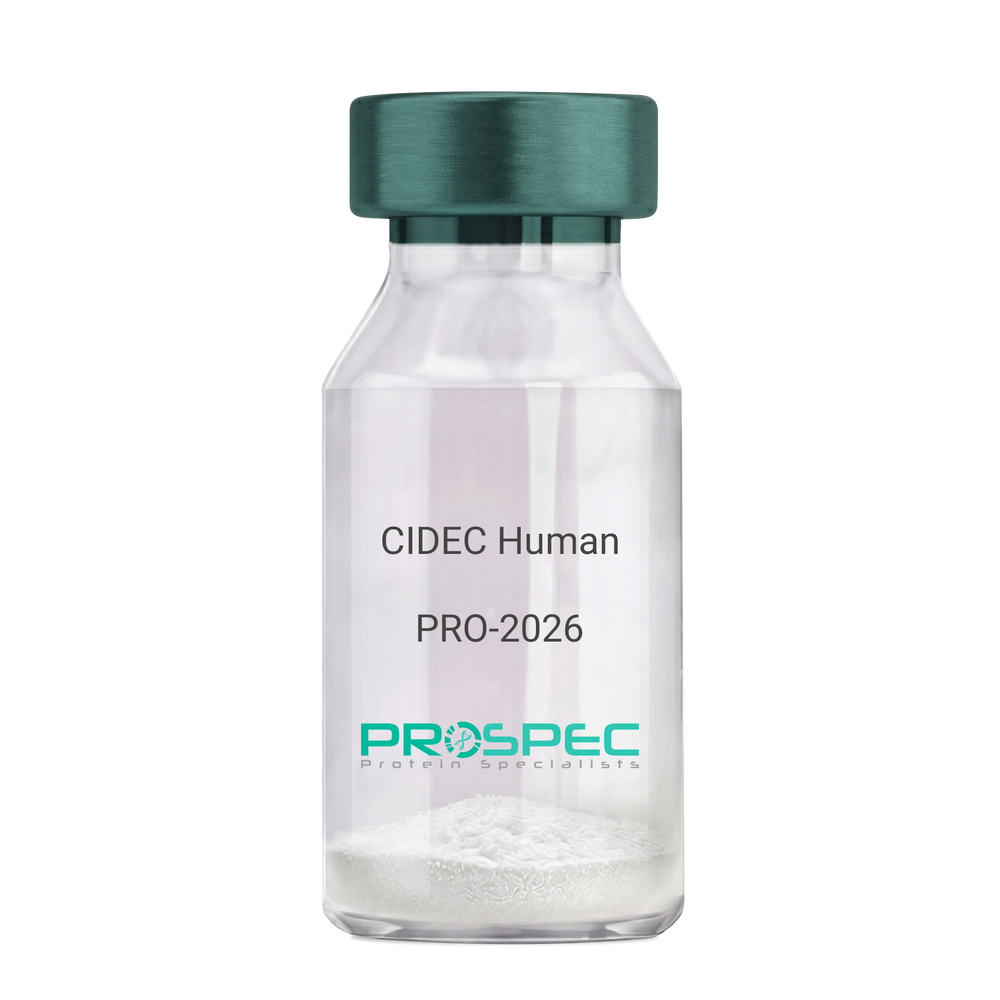
    CIDEC Human

    Description:

    Cell Death-Inducing DFFA-Like Effector C Human Recombinant

    Cell Death-Inducing DFFA-Like Effector C, FSP27, CIDE3, FPLD5, Cell Death-Inducing DFFA-Like Effector Protein C, Fat-Specific Protein FSP27 Homolog, Cell Death Activator CIDE-3, Fat Specific Protein 27, CIDE-3, CIDEC.

    Product # :

    PRO-2026

    Price :

    Quantity :

    Shipping Method :

    Ice Icon

    Shipped with Ice Packs

    Add To Cart

    More Info

    • description
    • source
    • formulation
    • purity
    • More Info

    Description

    CIDEC Human Recombinant produced in E.Coli is a single, non-glycosylated, polypeptide chain (Glu2-Gln238) containing 247 amino acids including a 10 aa His tag at N-terminus. The total calculated molecular mass is 28kDa.

    Source

    Escherichia Coli.

    Formulation

    CIDEC filtered (0.4µm) solution at a concentration of 0.4mg/ml in 30mM acetate buffer and 10mM dithiothreitol, pH 4.

    Purity

    Greater than 95.0% as determined by SDS-PAGE.

    More Info

    • Introduction

      Cell Death-Inducing DFFA-Like Effector C (CIDEC) belongs to the cell death-inducing DNA fragmentation factor-like effector family, whose members have significant roles in apoptosis. CIDEC is expressed mainly in adipocytes, intestine, heart, stomach, and weakly in the brain, kidney and liver. CIDEC overexpression in preadipocytes induces apoptosis. CIDEC regulates enlargement of lipid droplets.

    • Synonyms

      Cell Death-Inducing DFFA-Like Effector C, FSP27, CIDE3, FPLD5, Cell Death-Inducing DFFA-Like Effector Protein C, Fat-Specific Protein FSP27 Homolog, Cell Death Activator CIDE-3, Fat Specific Protein 27, CIDE-3, CIDEC.

    • Physical Appearance

      Filtered colorless solution.

    • Stability

      Store at 4°C if entire vial will be used within 2-4 weeks. Store, frozen at -20°C for longer periods of time. For long term storage it is recommended to add a carrier protein (0.1% HSA or BSA).Avoid multiple freeze-thaw cycles.

    • Amino Acid Sequence

      MKHHHHHHASEYAMKSLSLL YPKSLSRHVS VRTSVVTQQL LSEPSPKAPR ARPCRVSTAD RSVRKGIMAY SLEDLLLKVR DTLMLADKPF FLVLEEDGTT VETEEYFQAL AGDTVFMVLQ KGQKWQPPSE QGTRHPLSLS HKPAKKIDVA RVTFDLYKLN PQDFIGCLNV KATFYDTYSL SYDLHCCGAK RIMKEAFRWA LFSMQATGHV LLGTSCYLQQ LLDATEEGQP PKGKASSLIP TCLKILQ.

    ProSpec's products are furnished for LABORATORY RESEARCH USE ONLY. The product may not be used as drugs, agricultural or pesticidal products, food additives or household chemicals.

    Cidec Human
  • View Data Sheet

    Name :

    MAGEA3 Human

    Description:

    Melanoma Antigen Family A, 3 Human Recombinant

    CT1.3, MAGE3, HYPD, Melanoma Antigen family A, 3, MAGE-3 antigen, MAGEA6, Antigen MZ2-D, Melanoma-Associated antigen 3.

    Product # :

    PRO-502

    Price :

    Quantity :

    Shipping Method :

    Ice Icon

    Shipped with Ice Packs

    Add To Cart

    More Info

    • description
    • source
    • formulation
    • purity
    • More Info

    Description

    MAGEA3 produced in E.Coli is a single, non-glycosylated polypeptide chain containing 337 amino acids (1-314 a.a.) and having a molecular mass of 37.1kDa.MAGEA3 is fused to a 23 amino acid His-tag at N-terminus & purified by proprietary chromatographic techniques.

    Source

    Escherichia Coli.

    Formulation

    The MAGEA3 protein solution (1mg/1ml) is formulated in 20mM Tris-HCl buffer (pH 8.0) 1mM DTT, 100mM NaCl and 10% glycerol.

    Purity

    Greater than 90% as determined by SDS-PAGE.

    More Info

    • Introduction

      MAGE belongs to the MAGE gene family, that comprises 12 known genes, of which 6 are expressed in tumors. The Melanoma-associated antigen 3 genes were originally isolated from different kinds of tumors, and based on their virtually limited tumor-specific expression in adult tissues, they were used as targets for cancer immunotherapy. MAGEA3 is a tumor-specific antigen extensively expressed in solid and hematologic malignancies, but not in normal tissues, with the exclusion of testis and placenta. Consequently, MAGEA3 is an outstanding candidate tumor antigen.

    • Synonyms

      CT1.3, MAGE3, HYPD, Melanoma Antigen family A, 3, MAGE-3 antigen, MAGEA6, Antigen MZ2-D, Melanoma-Associated antigen 3.

    • Physical Appearance

      Sterile Filtered clear solution.

    • Stability

      Store at 4°C if entire vial will be used within 2-4 weeks.Store, frozen at -20°C for longer periods of time. For long term storage it is recommended to add a carrier protein (0.1% HSA or BSA).Avoid multiple freeze-thaw cycles.

    • Amino Acid Sequence

      MGSSHHHHHH SSGLVPRGSH MGSMPLEQRS QHCKPEEGLE ARGEALGLVG AQAPATEEQE AASSSSTLVE VTLGEVPAAE SPDPPQSPQG ASSLPTTMNY PLWSQSYEDS SNQEEEGPST FPDLESEFQA ALSRKVAELV HFLLLKYRAR EPVTKAEMLG SVVGNWQYFF PVIFSKASSS LQLVFGIELM EVDPIGHLYI FATCLGLSYD GLLGDNQIMP KAGLLIIVLA IIAREGDCAP EEKIWEELSV LEVFEGREDS ILGDPKKLLT QHFVQENYLE YRQVPGSDPA CYEFLWGPRA LVETSYVKVL HHMVKISGGP HISYPPLHEW VLREGEE

    ProSpec's products are furnished for LABORATORY RESEARCH USE ONLY. The product may not be used as drugs, agricultural or pesticidal products, food additives or household chemicals.

    Magea3 Human
  • View Data Sheet

    Name :

    VCAM1 Mouse

    Description:

    Vascular cell adhesion molecule 1 Mouse Recombinant

    V-CAM 1, VCAM-1, CD106, Vcam1, Vcam-1, Vascular cell adhesion protein 1.

    Product # :

    PRO-2257

    Price :

    Quantity :

    Shipping Method :

    Ice Icon

    Shipped with Ice Packs

    Add To Cart

    More Info

    • description
    • source
    • formulation
    • purity
    • More Info

    Description

    VCAM1 Mouse Recombinant produced in Sf9 Baculovirus cells is a single, glycosylated polypeptide chain containing 682 amino acids (25-698 a.a) and having a molecular mass of 75.4kDa (Migrates at 70-100kDa on SDS-PAGE under reducing conditions). VCAM1 is fused to an 8 amino acid His-tag at C-terminus & purified by proprietary chromatographic techniques.

    Source

    Sf9, Baculovirus cells.

    Formulation

    VCAM1 protein solution (0.5mg/ml) containing Phosphate Buffered Saline (pH 7.4) and 10% glycerol.

    Purity

    Greater than 95.0% as determined by SDS-PAGE.

    More Info

    • Introduction

      VCAM1 is a member of the Ig superfamily. It is a cell surface sialoglycoprotein expressed by cytokine activated endothelium. VCAM-1 contains 6 or 7 immunoglobulin domains, and is expressed on both large and small vessels only after the endothelial cells are stimulated by cytokines. The protein has a number of functions including the regulation of leukocyte migration, leukocyte endothelial cell adhesion and signal transduction and may play a role in a number of inflammatory diseases (artherosclerosis and rheumatoid arthritis).

    • Synonyms

      V-CAM 1, VCAM-1, CD106, Vcam1, Vcam-1, Vascular cell adhesion protein 1.

    • Physical Appearance

      Sterile Filtered colorless solution.

    • Stability

      Store at 4°C if entire vial will be used within 2-4 weeks. Store, frozen at -20°C for longer periods of time. For long term storage it is recommended to add a carrier protein (0.1% HSA or BSA).Avoid multiple freeze-thaw cycles.

    • Amino Acid Sequence

      FKIEISPEYK TIAQIGDSMA LTCSTTGCES PLFSWRTQID SPLNAKVRTE GSKSVLTMEP VSFENEHSYL CTATCGSGKL ERSIHVDIYS FPKDPEIQFS GPLEVGKPVT VKCLAPDIYP VYRLEIDLFK GDQLMNRQEF SSEEMTKSLE TKSLEVTFTP VIEDIGKALV CRAKLHIDQI DSTLKERETV KELQVYISPR NTTISVHPST RLQEGGAVTM TCSSEGLPAP EIFWGRKLDN EVLQLLSGNA TLTLIAMRME DSGVYVCEGV NLIGRDKAEV ELVVQEKPFI VDISPGSQVA AQVGDSVVLT CAAIGCDSPS FSWRTQTDSP LNGVVRNEGA KSTLVLSSVG FEDEHSYLCA VTCLQRTLEK RTQVEVYSFP EDPVIKMSGP LVHGRPVTVN CTVPNVYPFD HLEIELLKGE TTLMKKYFLE EMGIKSLETK ILETTFIPTI EDTGKSLVCL ARLHSGEMES EPKQRQSVQP LYVNVAPKET TIWVSPSPIL EEGSPVNLTC SSDGIPAPKI LWSRQLNNGE LQPLSENTTL TFMSTKRDDS GIYVCEGINE AGISRKSVEL IIQVSPKDIQ LTVFPSKSVK EGDTVIISCT CGNVPETWII LKKKAKTGDM VLKSVDGSYT IRQAQLQDAG IYECESKTEV GSQLRSLTLD VKGKEHNKNY FSPELEHHHH HH.

    ProSpec's products are furnished for LABORATORY RESEARCH USE ONLY. The product may not be used as drugs, agricultural or pesticidal products, food additives or household chemicals.

    Vcam1 Mouse
  • View Data Sheet

    Name :

    RAB18 Human

    Description:

    RAB18, Member RAS Oncogene Family Human Recombinant

    RAB18 member RAS oncogene family, RAB18LI1, WARBM3, RAB18 small GTPase, ras-related protein Rab-18.

    Product # :

    PRO-976

    Price :

    Quantity :

    Shipping Method :

    Ice Icon

    Shipped with Ice Packs

    Add To Cart

    More Info

    • description
    • source
    • formulation
    • purity
    • More Info

    Description

    RAB18 Human Recombinant produced in E.coli is a single, non-glycosylated polypeptide chain containing 221 amino acids (1-206) and having a molecular mass of 24.5 kDa.RAB18 is fused to a 15 amino acid His-Tag at N-terminus & purified by proprietary chromatographic techniques.

    Source

    E.coli.

    Formulation

    The RAB18 solution (1mg/ml) contains 20mM Tris-HCl buffer (pH 7.5) and 1mM DTT.

    Purity

    Greater than 90% as determined by SDS-PAGE.

    More Info

    • Introduction

      RAB18 belongs to a family of Ras-related small GTPase which is lipid-anchored to the cytoplasmic side of the cell membrane. RAB18 takes part in apical recycling, endocytosis and protein transport between early endosomes and the plasma membrane.

    • Synonyms

      RAB18 member RAS oncogene family, RAB18LI1, WARBM3, RAB18 small GTPase, ras-related protein Rab-18.

    • Physical Appearance

      Sterile Filtered colorless solution.

    • Stability

      Store at 4°C if entire vial will be used within 2-4 weeks. Store, frozen at -20°C for longer periods of time. For long term storage it is recommended to add a carrier protein (0.1% HSA or BSA).Avoid multiple freeze-thaw cycles.

    • Amino Acid Sequence

      MASMTGGQQM GRGSHMDEDV LTTLKILIIG ESGVGKSSLL LRFTDDTFDP ELAATIGVDF KVKTISVDGN KAKLAIWDTA GQERFRTLTP SYYRGAQGVI LVYDVTRRDT FVKLDNWLNE LETYCTRNDI VNMLVGNKID KENREVDRNE GLKFARKHSM LFIEASAKTC DGVQCAFEEL VEKIIQTPGL WESENQNKGV KLSHREEGQG GGACGGYCSV L

    ProSpec's products are furnished for LABORATORY RESEARCH USE ONLY. The product may not be used as drugs, agricultural or pesticidal products, food additives or household chemicals.

    Rab18 Human
  • View Data Sheet

    Name :

    COMMD9 Human

    Description:

    COMM Domain Containing 9 Human Recombinant

    COMM Domain Containing Protein 9, FLJ31106, HSPC166, COMM9.

    Product # :

    PRO-1244

    Price :

    Quantity :

    Shipping Method :

    Ice Icon

    Shipped with Ice Packs

    Add To Cart

    More Info

    • description
    • source
    • formulation
    • purity
    • More Info

    Description

    COMMD9 Human Recombinant produced in E. coli is a single polypeptide chain containing 221 amino acids (1-198) and having a molecular mass of 24.2 kDa. COMMD9 is fused to a 23 amino acid His-tag at N-terminus & purified by proprietary chromatographic techniques.

    Source

    E.coli.

    Formulation

    The COMMD9 solution (1mg/1ml) contains 20mM Tris-HCl buffer (pH 8.0), 0.15M NaCl, 1mM DTT and 10% glycerol.

    Purity

    Greater than 95% as determined by SDS-PAGE.

    More Info

    • Introduction

      COMM domain-containing protein 9 (COMMD9), is a part of the COMMD family. The COMMD family is a group of evolutionary conserved proteins that share a common COMM domain at their extreme C-terminus, which provides an interface for protein-protein interactions. COMMD9 is a 198 amino acid ubiquitously expressed protein which contains one COMM domain and involved in signaling events all over the cell.

    • Synonyms

      COMM Domain Containing Protein 9, FLJ31106, HSPC166, COMM9.

    • Physical Appearance

      Sterile Filtered colorless solution.

    • Stability

      Store at 4°C if entire vial will be used within 2-4 weeks. Store, frozen at -20°C for longer periods of time. For long term storage it is recommended to add a carrier protein (0.1% HSA or BSA).Avoid multiple freeze-thaw cycles.

    • Amino Acid Sequence

      MGSSHHHHHH SSGLVPRGSH MGSMAALTAE HFAALQSLLK ASSKDVVRQL CQESFSSSAL GLKKLLDVTC SSLSVTQEEA EELLQALHRL TRLVAFRDLS SAEAILALFP ENFHQNLKNL LTKIILEHVS TWRTEAQANQ ISLPRLVDLD WRVDIKTSSD SISRMAVPTC LLQMKIQEDP SLCGDKPSIS AVTVELSKET LDTMLDGLGR IRDQLSAVAS K.

    ProSpec's products are furnished for LABORATORY RESEARCH USE ONLY. The product may not be used as drugs, agricultural or pesticidal products, food additives or household chemicals.

    Commd9 Human
  • View Data Sheet

    Name :

    KRT8 Human

    Description:

    Cytokeratin 8 Human Recombinant

    Keratin type II cytoskeletal 8, Cytokeratin-8, CK-8, Keratin-8, K8, KRT8, CYK8, KO, CK8, K2C8, CARD2.

    Product # :

    PRO-347

    Price :

    Quantity :

    Shipping Method :

    Room Temp Icon

    Shipped at Room temp

    Add To Cart

    More Info

    • description
    • source
    • formulation
    • purity
    • More Info

    Description

    Cytokeratin 8 Human Recombinant produced in E.Coli is a single, non-glycosylated polypeptide chain having a molecular mass of 53,532 Dalton. The KRT8 is purified by proprietary chromatographic techniques.

    Source

    Escherichia Coli.

    Formulation

    The protein (1mg/ml) was lyophilized after from a sterile solution containing 30mM Tris-HCl pH-8, 9.5M urea, 2mM DTT, 2mM EDTA and 10mM methylammonium chloride.

    Purity

    Greater than 95.0% as determined by:
    (a) Analysis by RP-HPLC.
    (b) Analysis by SDS-PAGE.

    More Info

    • Introduction

      Keratin 8 and 18 (K8/18) are the major components of intermediate filament (IF) proteins of simple or single-layered epithelia.

    • Synonyms

      Keratin type II cytoskeletal 8, Cytokeratin-8, CK-8, Keratin-8, K8, KRT8, CYK8, KO, CK8, K2C8, CARD2.

    • Physical Appearance

      Sterile Filtered White lyophilized (freeze-dried) powder.

    • Stability

      Lyophilized KRT8 although stable at room temperature for 3 weeks, should be stored at 2-8°C. Upon reconstitution KRT8 should be stored at 4°C between 2-7 days and for future use below -18°C. For long term storage it is recommended to add a carrier protein (0.1% HSA or BSA). Please prevent freeze-thaw cycles.

    • Solubility

      It is recommended to reconstitute the lyophilized KRT8 in sterile 18MΩ-cm H2O not less than 100µg/ml, which can then be further diluted to other aqueous solutions.

    • Reconstitution to filaments

      Performed by mixing equimolar amounts of cytokeratins of type I and type II at concentrations of approx. 0.5 mg/ml, both dissolved in 9.5 M urea buffer (see above). Protofilaments and filament complexes are obtained by dialyzing the resulting polypeptide solution stepwise to a concentration of 4 M urea and then to low salt condition (50 mM NaCl, 2 mM dithiothreitol, 10 mM Tris-HCl, pH 7.4). For immunization purposes, the solution can be further dialyzed against PBS (phosphate buffered saline, e.g. Dulbecco's PBS).

    ProSpec's products are furnished for LABORATORY RESEARCH USE ONLY. The product may not be used as drugs, agricultural or pesticidal products, food additives or household chemicals.

    Krt8 Human
  • View Data Sheet

    Name :

    CoV-2 Spike S1 (200-800)

    Description:

    Coronavirus 2019 Spike S1 (200-800 a.a.) Recombinant

    Product # :

    SARS-034

    Price :

    Quantity :

    Shipping Method :

    Ice Icon

    Shipped with Ice Packs

    Add To Cart

    More Info

    • description
    • source
    • formulation
    • purity
    • More Info

    Description

    The E.Coli derived recombinant protein contains the Coronavirus 2019 Spike S1 (200-800 a.a.) region, fused to 6xHis tag at C-terminal

    Source

    Escherichia Coli.

    Formulation

    CoV 2019 Spike S1 (200-800 a a) Protein 1mg/ml solution is supplied in 1x PBS.

    Purity

    CoV 2019 Spike S1 Protein is >90% pure as determined SDS-PAGE.

    More Info

    • Introduction

      A human infecting coronavirus (viral pneumonia) called 2019 novel coronavirus, 2019-nCoV was found in the fish market at the city of Wuhan, Hubei province of China on December 2019.

      The 2019-nCoV shares an 87% identity to the 2 bat-derived severe acute respiratory syndrome 2018 SARS-CoV-2 located in Zhoushan of eastern China. 2019-nCoV has an analogous receptor-BD-structure to that of 2018 SARS-CoV, even though there is a.a. diversity so thus the 2019-nCoV might bind to ACE2 receptor protein (angiotensin-converting enzyme 2) in humans.

      While bats are possibly the host of 2019-nCoV, researchers suspect that animal from the ocean sold at the seafood market was an intermediate host. RSCU analysis proposes that the 2019-nCoV is a recombinant within the viral spike glycoprotein between the bat coronavirus and an unknown coronavirus.

    • Physical Appearance

      Sterile Filtered clear solution.

    • Stability

      CoV 2019 Spike S1 ( 200-800 a.a. ) Protein is shipped on ice packs. Upon arrival, Store at -20°C.

    ProSpec's products are furnished for LABORATORY RESEARCH USE ONLY. The product may not be used as drugs, agricultural or pesticidal products, food additives or household chemicals.

    product_image.jpg
  • View Data Sheet

    Name :

    CFB-a Human

    Description:

    Complement Factor B Fragment a Human

    Complement factor B (EC:3.4.21.47), C3/C5 convertase, Glycine-rich beta glycoprotein, GBG, PBF2, Properdin factor B, Complement factor B Ba fragment, Complement factor B Bb fragment, CFB, Complement Factor B, BFD, AHUS4, BF, BFD, CFAB, FB, FBI12, H2-Bf.

    Product # :

    PRO-2735

    Price :

    Quantity :

    Shipping Method :

    Ice Icon

    Shipped with Ice Packs

    Add To Cart

    More Info

    • description
    • source
    • formulation
    • purity
    • More Info

    Description

    CFB-a Human produced in Human Plasma having a molecular mass of 33 kDa.

    Source

    Human Plasma.

    Formulation

    CFB-a solution (1mg/ml) contains Phosphate-buffered saline, pH 7.2.

    Purity

    Greater than 95.0% as determined by SDS-PAGE.

    More Info

    • Introduction

      Complement Factor B, also known as CFB, encodes complement factor B which is a component of the alternative pathway of complement activation. Factor B circulates in the blood as a single chain polypeptide. Once the alternative pathway is activated it is cleaved by complement factor D yielding the noncatalytic chain Ba and the catalytic subunit Bb. The active subunit Bb is a serine protease which connects with C3b to form the alternative pathway C3 convertase. Also, Bb is involved in the proliferation of preactivated B lymphocytes, while Ba inhibits their proliferation.

    • Synonyms

      Complement factor B (EC:3.4.21.47), C3/C5 convertase, Glycine-rich beta glycoprotein, GBG, PBF2, Properdin factor B, Complement factor B Ba fragment, Complement factor B Bb fragment, CFB, Complement Factor B, BFD, AHUS4, BF, BFD, CFAB, FB, FBI12, H2-Bf.

    • Physical Appearance

      Sterile filtered solution.

    • Stability

      CFB-a Human is stable at 4°C if entire vial will be used within 2-4 weeks. Store, frozen below -20°C for longer periods of time.For long term storage it is recommended to add a carrier protein (0.1% HSA or BSA).Avoid multiple freeze-thaw cycles.

    • Human Virus Test

      Plasma from each donor has been tested and found negative for antibody to HIV-1, HIV-2, HCV and HBSAG.

    ProSpec's products are furnished for LABORATORY RESEARCH USE ONLY. The product may not be used as drugs, agricultural or pesticidal products, food additives or household chemicals.

    Cfb Protein
  • View Data Sheet

    Name :

    S100A16 Human

    Description:

    S100 Calcium Binding Protein A16 Human Recombinant

    Protein S100-A16, Aging-associated gene 13 protein, Protein S100-F, S100 calcium-binding protein A16, S100A16, S100F, AAG13, DT1P1A7, MGC17528.

    Product # :

    PRO-155

    Price :

    Quantity :

    Shipping Method :

    Ice Icon

    Shipped with Ice Packs

    Add To Cart

    More Info

    • description
    • source
    • formulation
    • purity
    • More Info

    Description

    S100A16 produced in E.Coli is a single, non-glycosylated polypeptide chain containing 123 amino acids (1-103 a.a.) and having a molecular mass of 13.9kDa.S100A16 is fused to a 20 amino acid His-tag at N-terminus & purified by proprietary chromatographic techniques.

    Source

    Escherichia Coli.

    Formulation

    S100A16 (1mg/ml) contains 20mM Tris-HCl buffer (pH 8.0), 1mM DTT, 40% glycerol and 0.2M NaCl.

    Purity

    Greater than 95.0% as determined by SDS-PAGE.

    More Info

    • Introduction

      S100A16 belongs to the S100 protein super family containing calcium-binding EF-hand motifs. S100 proteins are cell and tissue specific and are engaged in various intra and extracellular processes through interacting with specific target proteins. The S100A16 expression is astrocyte-specific. S100A16 accumulates within nucleoli and translocates to the cytoplasm in reaction to Ca(2+) stimulation. S100A16 physically interacts with tumor suppressor protein p53 (which is a known inhibitor of adipogenesis) as determined Immunoprecipitation analysis.

    • Synonyms

      Protein S100-A16, Aging-associated gene 13 protein, Protein S100-F, S100 calcium-binding protein A16, S100A16, S100F, AAG13, DT1P1A7, MGC17528.

    • Physical Appearance

      Sterile filtered colorless solution.

    • Stability

      Store at 4°C if entire vial will be used within 2-4 weeks. Store, frozen at -20°C for longer periods of time. For long term storage it is recommended to add a carrier protein (0.1% HSA or BSA).Avoid multiple freeze-thaw cycles.

    • Amino Acid Sequence

      MGSSHHHHHH SSGLVPRGSH MSDCYTELEK AVIVLVENFY KYVSKYSLVK NKISKSSFRE MLQKELNHML SDTGNRKAAD KLIQNLDANH DGRISFDEYW TLIGGITGPI AKLIHEQEQQ SSS.

    ProSpec's products are furnished for LABORATORY RESEARCH USE ONLY. The product may not be used as drugs, agricultural or pesticidal products, food additives or household chemicals.

    S100A16 Human
  • View Data Sheet

    Name :

    S100A3 Mouse

    Description:

    S100 Calcium Binding Protein A3 Mouse Recombinant

    Protein S100-A3, Protein S-100E, S100 calcium-binding protein A3, S100a3, S100E.

    Product # :

    PRO-1166

    Price :

    Quantity :

    Shipping Method :

    Ice Icon

    Shipped with Ice Packs

    Add To Cart

    More Info

    • description
    • source
    • formulation
    • purity
    • More Info

    Description

    S100A3 Mouse Recombinant produced in E.Coli is a single, non-glycosylated polypeptide chain containing 125 amino acids (1-101 a.a) and having a molecular mass of 14.3kDa.S100A3 is fused to a 24 amino acid His-tag at N-terminus & purified by proprietary chromatographic techniques.

    Source

    Escherichia Coli.

    Formulation

    S100A3 protein solution (1mg/ml) containing 20mM Tris-HCl buffer, pH8.0, 10% glycerol, 2mM DTT and 150mM NaCl.

    Purity

    Greater than 95.0% as determined by SDS-PAGE.

    More Info

    • Introduction

      S100A3 is part of S100 family of proteins containing 2 EF-hand calcium-binding motifs. S100 proteins are localized in the cytoplasm/nucleus of a broad range of cells, and takes part in the regulation of several cellular processes such as cell cycle progression and differentiation. S100A3 has the largest number of cysteines of all S100 proteins. S100A3 has high affinity for Zinc, and is widely expressed in human hair cuticle.

    • Synonyms

      Protein S100-A3, Protein S-100E, S100 calcium-binding protein A3, S100a3, S100E.

    • Physical Appearance

      S100A3 is supplied as a sterile filtered clear solution.

    • Stability

      Store at 4°C if entire vial will be used within 2-4 weeks. Store, frozen at -20°C for longer periods of time. For long term storage it is recommended to add a carrier protein (0.1% HSA or BSA).Avoid multiple freeze-thaw cycles.

    • Amino Acid Sequence

      MGSSHHHHHH SSGLVPRGSH MGSHMTRPLE QAVAAIVCTF QEYAGRCGDK YKICQSELKE LLQKELPTWT PSEFRECDYN KFMSVLDTNK DCEVDFGEYV RSLASLCLYC HEYFKECPPE PPCPQ.

    ProSpec's products are furnished for LABORATORY RESEARCH USE ONLY. The product may not be used as drugs, agricultural or pesticidal products, food additives or household chemicals.

    S100A3 Mouse
  • View Data Sheet

    Name :

    CXCL16 Human

    Description:

    CXCL16 Human Recombinant

    Chemokine (C-X-C Motif) Ligand 16, Scavenger Receptor For Phosphatidylserine And Oxidized Low Density Lipoprotein, Transmembrane Chemokine CXCL16, Small-Inducible Cytokine B16, CXC Chemokine Ligand 16, SR-PSOX, SRPSOX, C-X-C Motif Chemokine 16, CXCLG16, SCYB16, CXCL16.

    Product # :

    CHM-029

    Price :

    Quantity :

    Shipping Method :

    Room Temp Icon

    Shipped at Room temp

    Add To Cart

    More Info

    • description
    • source
    • formulation
    • purity
    • biological activity
    • More Info

    Description

    CXCL16 Human Recombinant (30-118 a.a.) produced in E.Coli is a single, non-glycosylated, polypeptide chain containing 89 amino acids and having a molecular mass of 10kDa.The CXCL16 is purified by proprietary chromatographic techniques.

    Source

    Escherichia Coli.

    Formulation

    CXCL16 protein was lyophilized from a 0.2µm filtered solution in PBS.

    Purity

    Greater than 97.0% as determined by SDS-PAGE.

    Biological Activity

    The ED50, as measured by its ability to chemoattract mouse CXCR6-transfected mouse BaF3 cells, is less than 12ng/ml.

    More Info

    • Introduction

      CXC chemokine ligand 16 (CXCL16) is a type I membrane protein, which contains a non-ELR motif-containing CXC chemokine domain in its extracellular region. Human and Mouse CXCL16 share a 70% a.a. sequence similarity within their chemokine domains and 49% overall a.a. sequence identity. Functional CXCL16 can be dropped from the cell surface as an approximately 35kDa soluble protein. CXCR6 is the functional receptor for CXCL16. CXCL16 functions as a scavenger receptor on macrophages, which specifically binds to OxLDL (oxidized low density lipoprotein), proposing that CXCL16 may be involved in pathophysiology such as atherogenesis. In addition, CXCL16 induces a strong chemotactic response and calcium mobilization. CXCL16 binds to CXCR6/Bonzo.

    • Synonyms

      Chemokine (C-X-C Motif) Ligand 16, Scavenger Receptor For Phosphatidylserine And Oxidized Low Density Lipoprotein, Transmembrane Chemokine CXCL16, Small-Inducible Cytokine B16, CXC Chemokine Ligand 16, SR-PSOX, SRPSOX, C-X-C Motif Chemokine 16, CXCLG16, SCYB16, CXCL16.

    • Physical Appearance

      Sterile Filtered White lyophilized (freeze-dried) powder.

    • Stability

      Lyophilized CXCL16 although stable at room temperature for 3 weeks, should be stored desiccated below -18°C. Upon reconstitution CXCL16 should be stored at 4°C between 2-7 days and for future use below -18°C.For long term storage it is recommended to add a carrier protein (0.1% HSA or BSA).Please prevent freeze-thaw cycles.

    • Solubility

      It is recommended to reconstitute the lyophilized CXCL16 in sterile 18M-cm H2O not less than 100µg/ml, which can then be further diluted to other aqueous solutions.

    • Amino Acid Sequence

      NEGSVTGSCY CGKRISSDSP PSVQFMNRLR KHLRAYHRCL YYTRFQLLSW SVCGGNKDPW VQELMSCLDL KECGHAYSGI VAHQKHLLP.

    • Background

      What is the molecular weight/Mw of CXCL16 HUMAN Protein?
      CXCL16 HUMAN Protein has a total Mw of 10kDa.

      What is the source or expression system of CXCL16 HUMAN Protein?
      Escherichia Coli.

      What is the Purity of CXCL16 HUMAN Protein?
      CXCL16 HUMAN Protein is >97% pure as determined by SDS-PAGE.

      What is the Biological Activity of CXCL16 HUMAN Protein?
      The ED50, as measured by its ability to chemoattract mouse CXCR6-transfected mouse BaF3 cells, is less than 12ng/ml.

      What is the amino acid sequence of CXCL16 HUMAN Protein?
      NEGSVTGSCY CGKRISSDSP PSVQFMNRLR KHLRAYHRCL YYTRFQLLSW SVCGGNKDPW VQELMSCLDL KECGHAYSGI VAHQKHLLP.

      What applications can CXCL16 HUMAN Protein be used in?
      CXCL16 HUMAN Protein can probably be used in western blot, ELISA and Lateral Flow.

      What is the endotoxin level for CXCL16 HUMAN Protein?
      The endotoxin level is minimal, CXCL16 HUMAN Protein was purified using conventional chromatography techniques.


    ProSpec's products are furnished for LABORATORY RESEARCH USE ONLY. The product may not be used as drugs, agricultural or pesticidal products, food additives or household chemicals.

    Cxcl16 Human
  • View Data Sheet

    Name :

    Hepatocyte Growth Factor (32-285) Human

    Description:

    Hepatoma-Derived Growth Factor (32-285 a.a) Human Recombinant

    Scatter Factor (SF), Hepatopoietin (HPTA), HGF, HGFB, F-TCF, DFNB39.

    Product # :

    CYT-294

    Price :

    Quantity :

    Shipping Method :

    Ice Icon

    Shipped with Ice Packs

    Add To Cart

    More Info

    • description
    • source
    • formulation
    • purity
    • More Info
    • SDS-PAGE

    Description

    HGF Human Recombinant produced in E.Coli is a single, non-glycosylated polypeptide chain containing 255 amino acids (32-285 a.a.) and having a molecular mass of 29.8kDa. HGF is purified by proprietary chromatographic techniques.

    Source

    Escherichia Coli.

    Formulation

    HGF protein solution (1mg/ml) contains 20mM Tris-HCl buffer (pH 8.0), 10% glycerol and 0.4M Urea.

    Purity

    Greater than 80% as determined by SDS-PAGE.

    SDS-PAGE

    Hepatocyte Growth Factor  (32-285) Human - Product image 1

    More Info

    • Introduction

      Hepatocyte Growth Factor (HGF) is a multifunctional growth factor which regulates both cell growth and cell motility. It exerts a strong mitogenic effect on hepatocytes and primary epithelial cells. HGF synergizes with Interleukin-3 and GM-CSF to stimulate colony formation of hematopoietic progenitor cells in vitro and may, therefore, also modulate hematopoiesis.

    • Synonyms

      Scatter Factor (SF), Hepatopoietin (HPTA), HGF, HGFB, F-TCF, DFNB39.

    • Physical Appearance

      Sterile filtered colorless solution.

    • Stability

      Store at 4°C if entire vial will be used within 2-4 weeks. Store, frozen at -20°C for longer periods of time. For long term storage it is recommended to add a carrier protein (0.1% HSA or BSA).Avoid multiple freeze-thaw cycles.

    • Amino Acid Sequence

      MQRKRRNTIH EFKKSAKTTL IKIDPALKIK TKKVNTADQC ANRCTRNKGL PFTCKAFVFD KARKQCLWFP FNSMSSGVKK EFGHEFDLYE NKDYIRNCII GKGRSYKGTV SITKSGIKCQ PWSSMIPHEH SYRGKDLQEN YCRNPRGEEG GPWCFTSNPE VRYEVCDIPQ CSEVECMTCN GESYRGLMDH TESGKICQRW DHQTPHRHKF LPERYPDKGF DDNYCRNPDG QPRPWCYTLD PHTRWEYCAI KTCET.

    • Background

      What is the molecular weight/Mw of HEPATOCYTE GROWTH FACTOR (32-285) HUMAN Protein?
      HEPATOCYTE GROWTH FACTOR (32-285) HUMAN Protein has a total Mw of 29.8kDa.

      What is the source or expression system of HEPATOCYTE GROWTH FACTOR (32-285) HUMAN Protein?
      Escherichia Coli.

      What is the Purity of HEPATOCYTE GROWTH FACTOR (32-285) HUMAN Protein?
      HEPATOCYTE GROWTH FACTOR (32-285) HUMAN Protein is >80% pure as determined by SDS-PAGE.

      What is the Biological Activity of HEPATOCYTE GROWTH FACTOR (32-285) HUMAN Protein?
      What is the molecular weight/Mw of HGF (32-285) HUMAN Protein? HGF (32-285) HUMAN Protein has a total Mw of 29.8kDa. What is the source or expression system of HGF (32-285) HUMAN Protein? Escherichia Coli. What is the Purity of HGF (32-285) HUMAN Protein? HGF (32-285) HUMAN Protein is >80% pure as determined by SDS-PAGE. What is the Biological Activity of HGF (32-285) HUMAN Protein? The biological functionality of HGF (32-285) HUMAN Protein will be determined in the future. What is the amino acid sequence of HGF (32-285) HUMAN Protein? MQRKRRNTIH EFKKSAKTTL IKIDPALKIK TKKVNTADQC ANRCTRNKGL PFTCKAFVFD KARKQCLWFP FNSMSSGVKK EFGHEFDLYE NKDYIRNCII GKGRSYKGTV SITKSGIKCQ PWSSMIPHEH SYRGKDLQEN YCRNPRGEEG GPWCFTSNPE VRYEVCDIPQ CSEVECMTCN GESYRGLMDH TESGKICQRW DHQTPHRHKF LPERYPDKGF DDNYCRNPDG QPRPWCYTLD PHTRWEYCAI KTCET. What applications can HGF (32-285) HUMAN Protein be used in? HGF (32-285) HUMAN Protein can probably be used in western blot, ELISA and Lateral Flow. What is the endotoxin level for HGF (32-285) HUMAN Protein? The endotoxin level is minimal, HGF (32-285) HUMAN Protein was purified using conventional chromatography techniques.


      What is the amino acid sequence of HEPATOCYTE GROWTH FACTOR (32-285) HUMAN Protein?
      MQRKRRNTIH EFKKSAKTTL IKIDPALKIK TKKVNTADQC ANRCTRNKGL PFTCKAFVFD KARKQCLWFP FNSMSSGVKK EFGHEFDLYE NKDYIRNCII GKGRSYKGTV SITKSGIKCQ PWSSMIPHEH SYRGKDLQEN YCRNPRGEEG GPWCFTSNPE VRYEVCDIPQ CSEVECMTCN GESYRGLMDH TESGKICQRW DHQTPHRHKF LPERYPDKGF DDNYCRNPDG QPRPWCYTLD PHTRWEYCAI KTCET.

      What applications can HEPATOCYTE GROWTH FACTOR (32-285) HUMAN Protein be used in?
      HEPATOCYTE GROWTH FACTOR (32-285) HUMAN Protein can probably be used in western blot, ELISA and Lateral Flow.

      What is the endotoxin level for HEPATOCYTE GROWTH FACTOR (32-285) HUMAN Protein?
      The endotoxin level is minimal, HEPATOCYTE GROWTH FACTOR (32-285) HUMAN Protein was purified using conventional chromatography techniques.


    ProSpec's products are furnished for LABORATORY RESEARCH USE ONLY. The product may not be used as drugs, agricultural or pesticidal products, food additives or household chemicals.

    Hgf 32 285 Human
  • View Data Sheet

    Name :

    SecB

    Description:

    Protein Export Protein SecB Recombinant

    Protein-export protein secB, secB, b3609, JW3584.

    Product # :

    PRO-697

    Price :

    Quantity :

    Shipping Method :

    Ice Icon

    Shipped with Ice Packs

    Add To Cart

    More Info

    • description
    • source
    • formulation
    • purity
    • More Info

    Description

    Recombinant E.Coli SecB produced in E.Coli is a single, non-glycosylated polypeptide chain containing 155 amino acids and having a molecular mass of 17.2 kDa. SecB was over-expressed in E. coli and purified by conventional chromatography.

    Source

    Escherichia Coli.

    Formulation

    The SecB protein solution (1mg/ml) contains 20mM Tris-HCl pH-8 and 10% glycerol.

    Purity

    Greater than 95.0% as determined by SDS-PAGE.

    More Info

    • Introduction

      SecB, a significant chaperone that takes part in protein export, binds various ligands rapidly with high affinity and low specificity. SecB plays an important role during protein export through the general secretory pathway by modulating the partitioning of precursors between folding or aggregation and delivery to the membrane-bound translocation apparatus. SecB has the potential to take part in functions outside of export acting as a universal nonspecific chaperone to provide buffering capacity of the nonnative state of proteins in the cytosolic pool.

    • Synonyms

      Protein-export protein secB, secB, b3609, JW3584.

    • Physical Appearance

      Sterile Filtered colorless solution.

    • Stability

      Store at 4°C if entire vial will be used within 2-4 weeks. Store, frozen at -20°C for longer periods of time.For long term storage it is recommended to add a carrier protein (0.1% HSA or BSA).Avoid multiple freeze-thaw cycles.

    • Amino Acid Sequence

      MSEQNNTEMT FQIQRIYTKD ISFEAPNAPH VFQKDWQPEV KLDLDTASSQ LADDVYEVVL RVTVTASLGE ETAFLCEVQQ GGIFSIAGIE GTQMAHCLGA YCPNILFPYA RECITSMVSR GTFPQLNLAP VNFDALFMNY LQQQAGEGTE EHQDA.

    ProSpec's products are furnished for LABORATORY RESEARCH USE ONLY. The product may not be used as drugs, agricultural or pesticidal products, food additives or household chemicals.

    Secb
  • 1
  • …
  • 29
  • 30
  • 31
  • 32
  • 33
  • …
  • 42
Your browser does not support the video tag.

Products

  • Cytokines
  • Growth Factors
  • Chemokines
  • CD Antigens
  • Neurotrophins
  • Hormones
  • Enzymes
  • Viral Antigens
  • Recombinant Proteins
  • Natural Proteins
  • Monoclonal Antibodies
  • Polyclonal Antibodies
  • Thermal Packaging

About

  • Company
  • Founder
  • Contribution
  • Contact Us
  • My Account

Ordering

  • Ordering Method
  • Ordering - Credit Card
  • Ordering PO
  • Shipping Fees
  • FAQ's

Legal

  • Terms & Conditions
  • Privacy
  • Site Map
  • info@prospecbio.com
  • Facebook
  • Instagram
  • Linkedin Profile

© 2026 ProSpec-Tany TechnoGene Ltd. All Rights Reserved.

  • Choosing a selection results in a full page refresh.
  • Opens in a new window.