Skip to content

High-quality research proteins.

  • 1-800-805-6531

  • Mon - Sat 8.00-18.00, Sun - Closed

  • info@prospecbio.com

  • PO Box 6591 East Brunswick NJ 08816

  • Products
    • Cytokines
    • Growth factors
    • Chemokines
    • Cd antigens
    • Neurotrophins
    • Hormones
    • Enzymes
    • Viral antigens
    • Recombinant proteins
    • Natural proteins
    • Monoclonal antibodies
    • Polyclonal antibodies
    • Thermal Packaging
  • About
    • Company
    • Founder
    • Contribution
  • Customers
    • Eastern Asia
    • Eastern Europe
    • North America
    • South America
    • South East Asia
    • Southern Asia
    • Western Europe
  • Ordering
    • Ordering Method
    • Ordering - Credit Card
    • Ordering - PO
    • Shipping Fees
    • FAQs
  • Services
    • DNA Cloning
    • Protein Expression
    • Monoclonal Antibody
    • Fermentation
    • Technology License
  • Contact us
Log in

Country/region

  • USD $ | Albania
  • USD $ | Andorra
  • USD $ | Argentina
  • USD $ | Armenia
  • USD $ | Australia
  • USD $ | Austria
  • USD $ | Azerbaijan
  • USD $ | Belarus
  • USD $ | Belgium
  • USD $ | Bolivia
  • USD $ | Brazil
  • USD $ | Bulgaria
  • USD $ | Cambodia
  • USD $ | Canada
  • USD $ | Chile
  • USD $ | China
  • USD $ | Colombia
  • USD $ | Costa Rica
  • USD $ | Croatia
  • USD $ | Cyprus
  • USD $ | Czechia
  • USD $ | Denmark
  • USD $ | Estonia
  • USD $ | Finland
  • USD $ | France
  • USD $ | Georgia
  • USD $ | Germany
  • USD $ | Greece
  • USD $ | Hong Kong SAR
  • USD $ | Hungary
  • USD $ | Iceland
  • USD $ | India
  • USD $ | Ireland
  • USD $ | Israel
  • USD $ | Italy
  • USD $ | Japan
  • USD $ | Kazakhstan
  • USD $ | Latvia
  • USD $ | Liechtenstein
  • USD $ | Lithuania
  • USD $ | Madagascar
  • USD $ | Malta
  • USD $ | Mexico
  • USD $ | Moldova
  • USD $ | Monaco
  • USD $ | Netherlands
  • USD $ | New Zealand
  • USD $ | North Macedonia
  • USD $ | Norway
  • USD $ | Panama
  • USD $ | Paraguay
  • USD $ | Peru
  • USD $ | Philippines
  • USD $ | Poland
  • USD $ | Portugal
  • USD $ | Romania
  • USD $ | Singapore
  • USD $ | Slovakia
  • USD $ | Slovenia
  • USD $ | South Africa
  • USD $ | South Korea
  • USD $ | Spain
  • USD $ | Sri Lanka
  • USD $ | Sweden
  • USD $ | Switzerland
  • USD $ | Taiwan
  • USD $ | Thailand
  • USD $ | Türkiye
  • USD $ | Ukraine
  • USD $ | United Kingdom
  • USD $ | United States
  • USD $ | Uruguay
  • USD $ | Vatican City
  • USD $ | Venezuela
  • USD $ | Vietnam
  • Facebook
  • Instagram
logoProSpec - Recombinant Protein Manufacturer for academic and R&D industry
Become a distributor
Account Log in
Wishlist
Cart Cart(0)
  • Products
    +
    • Cytokines
    • Growth factors
    • Chemokines
    • Cd antigens
    • Neurotrophins
    • Hormones
    • Enzymes
    • Viral antigens
    • Recombinant proteins
    • Natural proteins
    • Monoclonal antibodies
    • Polyclonal antibodies
    • Thermal Packaging
  • About
    +
    • Company
    • Founder
    • Contribution
  • Customers
    +
    • Eastern Asia
    • Eastern Europe
    • North America
    • South America
    • South East Asia
    • Southern Asia
    • Western Europe
  • Ordering
    +
    • Ordering Method
    • Ordering - Credit Card
    • Ordering - PO
    • Shipping Fees
    • FAQs
  • Services
    +
    • DNA Cloning
    • Protein Expression
    • Monoclonal Antibody
    • Fermentation
    • Technology License
  • Contact us

Item added to your cart

View cart
View All
  • Cytokines
  • Growth factors
  • Chemokines
  • Cd antigens
  • Neurotrophins
  • Hormones
  • Enzymes
  • Viral antigens
  • Recombinant proteins
  • Natural proteins
  • Monoclonal antibodies
  • Polyclonal antibodies
  • Thermal Packaging
  • Tumor Necrosis Factor

    Tumor Necrosis Factor

    View All
  • 4-1BB

    4-1BB

    View All
  • Adiponectin

    Adiponectin

    View All
  • AIF1

    AIF1

    View All
  • Other Cytokines

    Other Cytokines

    View All
  • AITRL

    AITRL

    View All
  • Angiopoietin

    Angiopoietin

    View All
  • Apolipoprotein

    Apolipoprotein

    View All
  • B-Cell Activating Factor

    B-Cell Activating Factor

    View All
  • Beta Defensin

    Beta Defensin

    View All
  • Bone Morphogenetic Protein

    Bone Morphogenetic Protein

    View All
  • B type Natriuretic Peptide

    B type Natriuretic Peptide

    View All
  • BST

    BST

    View All
  • Betacellulin

    Betacellulin

    View All
  • Cardiotrophin

    Cardiotrophin

    View All
  • Activin

    Activin

    View All
  • Fibroblast Growth Factor

    Fibroblast Growth Factor

    View All
  • Other Growth Factors

    Other Growth Factors

    View All
  • CSF

    CSF

    View All
  • CTGF

    CTGF

    View All
  • IGFBP

    IGFBP

    View All
  • VEGF Protein

    VEGF Protein

    View All
  • EGF

    EGF

    View All
  • Epigen

    Epigen

    View All
  • Erythropoietin

    Erythropoietin

    View All
  • Insulin-Like Growth Factor

    Insulin-Like Growth Factor

    View All
  • Growth Hormone

    Growth Hormone

    View All
  • HDGF

    HDGF

    View All
  • Hepatocyte Growth Factor

    Hepatocyte Growth Factor

    View All
  • Insulin

    Insulin

    View All
  • BCA-1/ BLC (CXCL13)

    BCA-1/ BLC (CXCL13)

    View All
  • BRAK (CXCL14)

    BRAK (CXCL14)

    View All
  • C-10 (CCL6)

    C-10 (CCL6)

    View All
  • Other Chemokines

    Other Chemokines

    View All
  • MEC (CCL28)

    MEC (CCL28)

    View All
  • LD78-beta (CCL3L1)

    LD78-beta (CCL3L1)

    View All
  • CTACK (CCL27)

    CTACK (CCL27)

    View All
  • CXCL16

    CXCL16

    View All
  • CXCL17

    CXCL17

    View All
  • Platelet Factor-4 (CXCL4)

    Platelet Factor-4 (CXCL4)

    View All
  • ENA-78 (CXCL5)

    ENA-78 (CXCL5)

    View All
  • Eotaxin (CCL11,24,26)

    Eotaxin (CCL11,24,26)

    View All
  • Exodus-2 (CCL21)

    Exodus-2 (CCL21)

    View All
  • Fractalkine (CX3CL1)

    Fractalkine (CX3CL1)

    View All
  • CXCL6

    CXCL6

    View All
  • Other CD Antigens

    Other CD Antigens

    View All
  • CD14

    CD14

    View All
  • CD164

    CD164

    View All
  • CD1

    CD1

    View All
  • CD2

    CD2

    View All
  • CD200

    CD200

    View All
  • CD207

    CD207

    View All
  • CD226

    CD226

    View All
  • CD23

    CD23

    View All
  • CD244

    CD244

    View All
  • CD247

    CD247

    View All
  • CD27

    CD27

    View All
  • CD274

    CD274

    View All
  • CD300

    CD300

    View All
  • CD33

    CD33

    View All
  • Other Neurotrophins

    Other Neurotrophins

    View All
  • Beta-NGF

    Beta-NGF

    View All
  • BDNF

    BDNF

    View All
  • CDNF

    CDNF

    View All
  • CNTF

    CNTF

    View All
  • GDNF

    GDNF

    View All
  • Glia Maturation Factor

    Glia Maturation Factor

    View All
  • MANF

    MANF

    View All
  • Midkine

    Midkine

    View All
  • Neuroglobin

    Neuroglobin

    View All
  • Neurotrophic factors

    Neurotrophic factors

    View All
  • Neuregulin

    Neuregulin

    View All
  • Neuropilin

    Neuropilin

    View All
  • Pigment Epithelium-Derived Factor

    Pigment Epithelium-Derived Factor

    View All
  • Pleiotrophin

    Pleiotrophin

    View All
  • Peptide Hormones

    Peptide Hormones

    View All
  • Other Hormones

    Other Hormones

    View All
  • HCG

    HCG

    View All
  • Endothelin

    Endothelin

    View All
  • Exendin

    Exendin

    View All
  • FSH

    FSH

    View All
  • Glucagon

    Glucagon

    View All
  • GHRP

    GHRP

    View All
  • GLP

    GLP

    View All
  • Thyrostimulin

    Thyrostimulin

    View All
  • Inhibin A

    Inhibin A

    View All
  • LHRH

    LHRH

    View All
  • Melanotan

    Melanotan

    View All
  • Procalcitonin

    Procalcitonin

    View All
  • PTH

    PTH

    View All
  • Peroxiredoxin

    Peroxiredoxin

    View All
  • Peptidase

    Peptidase

    View All
  • Synthetase

    Synthetase

    View All
  • Transferase

    Transferase

    View All
  • Hydrolase

    Hydrolase

    View All
  • Dehydrogenase

    Dehydrogenase

    View All
  • ACE2

    ACE2

    View All
  • Esterase

    Esterase

    View All
  • Protein Kinases

    Protein Kinases

    View All
  • Other Enzymes

    Other Enzymes

    View All
  • Phosphatase

    Phosphatase

    View All
  • Deaminase

    Deaminase

    View All
  • Oxygenase

    Oxygenase

    View All
  • Adenylate Kinase

    Adenylate Kinase

    View All
  • Lyase

    Lyase

    View All
  • Chagas

    Chagas

    View All
  • SARS

    SARS

    View All
  • Influenza

    Influenza

    View All
  • ASFV

    ASFV

    View All
  • Astrovirus

    Astrovirus

    View All
  • Borrelia

    Borrelia

    View All
  • Helicobacter Pylori

    Helicobacter Pylori

    View All
  • Chikungunya

    Chikungunya

    View All
  • Chlamydia

    Chlamydia

    View All
  • Cytomegalo

    Cytomegalo

    View All
  • Dengue

    Dengue

    View All
  • EBV

    EBV

    View All
  • Ebola

    Ebola

    View All
  • Feline Leukemia Virus

    Feline Leukemia Virus

    View All
  • Hepatitis A

    Hepatitis A

    View All
  • Other

    Other

    View All
  • Actin

    Actin

    View All
  • ADAM

    ADAM

    View All
  • Complement Component

    Complement Component

    View All
  • Ag85

    Ag85

    View All
  • Eukaryotic Translation Initiation Factor

    Eukaryotic Translation Initiation Factor

    View All
  • Anterior Gradient Protein

    Anterior Gradient Protein

    View All
  • Heat Shock Protein

    Heat Shock Protein

    View All
  • Alpha-2-HS-Glycoprotein

    Alpha-2-HS-Glycoprotein

    View All
  • Hemoglobin

    Hemoglobin

    View All
  • Allergy

    Allergy

    View All
  • Anaplasma

    Anaplasma

    View All
  • Angiogenin

    Angiogenin

    View All
  • Ankyrin Repeat Domain

    Ankyrin Repeat Domain

    View All
  • Annexin

    Annexin

    View All
  • Other Natural Proteins

    Other Natural Proteins

    View All
  • Aprotinin

    Aprotinin

    View All
  • Transferrin

    Transferrin

    View All
  • Avidin

    Avidin

    View All
  • Anti Coagulation Factors

    Anti Coagulation Factors

    View All
  • Natural Albumin

    Natural Albumin

    View All
  • Natural Coagulation Factors

    Natural Coagulation Factors

    View All
  • Fibronectin

    Fibronectin

    View All
  • Thrombin

    Thrombin

    View All
  • Anti Human Enzyme

    Anti Human Enzyme

    View All
  • Other Monoclonal Antibodies

    Other Monoclonal Antibodies

    View All
  • Anti Human Cytokine

    Anti Human Cytokine

    View All
  • Anti Human Heat Shock Protein

    Anti Human Heat Shock Protein

    View All
  • Anti Mouse Lymphocyte

    Anti Mouse Lymphocyte

    View All
  • Anti Human Chemokine

    Anti Human Chemokine

    View All
  • Anti Human Lymphocyte

    Anti Human Lymphocyte

    View All
  • Anti Viral Monoclonal

    Anti Viral Monoclonal

    View All
  • Anti Mouse Cytokine

    Anti Mouse Cytokine

    View All
  • Anti-GST Monoclonal

    Anti-GST Monoclonal

    View All
  • Other Polyclonal Antibodies

    Other Polyclonal Antibodies

    View All
  • Anti Viral

    Anti Viral

    View All
  • Anti-GST Monoclonal

    Anti-GST Monoclonal

    View All
Back

Search results

850 results found for “Hypoxia-Inducible Factor”

Name

Description

Product #

Price

Quantity

Shipping Method

  • View Data Sheet

    Name :

    SF20 Human

    Description:

    MYDGF Human Recombinant

    C19orf10, Interleukin-25, IL-25, IL25, IL27, IL-27, IL27w, IL-27w, Stromal cell-derived growth factor SF20, UPF0556 protein C19orf10, chromosome 19 open reading frame 10.

    Product # :

    CYT-622

    Price :

    Quantity :

    Shipping Method :

    Ice Icon

    Shipped with Ice Packs

    Add To Cart

    More Info

    • description
    • source
    • formulation
    • purity
    • More Info
    • sds-page

    Description

    SF20 Human Recombinant produced in E.Coli is single, a non-glycosylated, Polypeptide chain containing 162 amino acids fragment (33-173) and having a total molecular mass of 18 kDa. C9orf10 is fused to 20 amino acids His tag at N-terminus and is purified by proprietary chromatographic techniques.

    Source

    Escherichia Coli.

    Formulation

    C9orf10 is supplied in 20mM Tris HCL pH-8 and 20% glycerol.

    Purity

    Greater than 95.0% by SDS-PAGE.

    sds-page

    SF20 Human SDS-PAGE - Product image 1

    More Info

    • Introduction

      SF20 plays a role in proliferation of lymphoid cells and is considered an interleukin. SF20 was initially identified as a product of bone marrow-derived stromal cells.

    • Synonyms

      C19orf10, Interleukin-25, IL-25, IL25, IL27, IL-27, IL27w, IL-27w, Stromal cell-derived growth factor SF20, UPF0556 protein C19orf10, chromosome 19 open reading frame 10.

    • Physical Appearance

      Sterile Filtered clear solution.

    • Stability

      Store at 4°C if entire vial will be used within 2-4 weeks. Store, frozen at -20°C for longer periods of time. Please avoid freeze thaw cycles.

    ProSpec's products are furnished for LABORATORY RESEARCH USE ONLY. The product may not be used as drugs, agricultural or pesticidal products, food additives or household chemicals.

    Sf20 Human
  • View Data Sheet

    Name :

    GDNF Rat

    Description:

    Glial-Derived Neurotrophic Factor Rat Recombinant

    ATF1, ATF2, HFB1-GDNF, GDNF.

    Product # :

    CYT-403

    Price :

    Quantity :

    Shipping Method :

    Room Temp Icon

    Shipped at Room temp

    Add To Cart

    More Info

    • description
    • source
    • formulation
    • purity
    • biological activity
    • More Info

    Description

    Glial derived Neurotrophic Factor Rat Recombinant produced in E.Coli is a homodimer, non-glycosylated, polypeptide chain containing 2 x 134 amino acids and having a total molecular mass of 29.8 kDa.

    Source

    Escherichia Coli.

    Formulation

    GDNF was lyophilized from a sterile solution containing 1xPBS, pH 7.4.

    Purity

    Greater than 98.0% as determined by HPLC analysis and by SDS-PAGE.

    Biological Activity

    Recombinant rat GDNF has full biological activity when compared to standards. The ED50, determined by a cell proliferation assay using rat C6 cells, is less than 0.2ng/ml corresponding to a specific activity of more than 5,000,000IU/mg.

    More Info

    • Introduction

      GDNF promotes the survival and differentiation of neurons in culture, and is able to prevent apoptosis of motor neurons induced by axotomy. The encoded protein is processed to a mature secreted form that exists as a homodimer. The mature form of the protein is a ligand for the product of the RET (rearranged during transfection) protooncogene. In addition to the transcript encoding GDNF, two additional alternative transcripts encoding distinct proteins, referred to as astrocyte-derived trophic factors, have also been described. Mutations in this gene may be associated with Hirschsprung disease.
      GDNF enhances survival and morphological differentiation of neurons and increases their high-affinity uptake.

    • Synonyms

      ATF1, ATF2, HFB1-GDNF, GDNF.

    • Physical Appearance

      Sterile Filtered White lyophilized (freeze-dried) powder.

    • Stability

      Lyophilized Glial-derived Neurotrophic Factor although stable at room temperature for 3 weeks, should be stored desiccated below -18°C. Upon reconstitution GDNF should be stored at 4°C between 2-7 days and for future use below -18°C.For long term storage it is recommended to add a carrier protein (0.1% HSA or BSA).Please prevent freeze-thaw cycles.

    • Solubility

      It is recommended to reconstitute the lyophilized Glial Derived Neurotrophic Factor in sterile 18MΩ-cm H2O not less than 100µg/ml, which can then be further diluted to other aqueous solutions.

    • Amino Acid Sequence

      SPDKQAALP RRENRNRQAAA ASPENSRGKG RRGQRGKNRG CVLTAIHLNV TDLGLGYETK EELIFRYCSG SCESAETMYD KILKNLSRSR RLTSDKVGQA CCRPVAFDDD LSFLDDNLVY HILRKHSAKR CGCI

    • Background

      What is the molecular weight/Mw of GDNF RAT Protein?
      GDNF RAT Protein has a total Mw of 29.8kDa.

      What is the source or expression system of GDNF RAT Protein?
      Escherichia Coli.

      What is the Purity of GDNF RAT Protein?
      GDNF RAT Protein is >98% pure as determined by SDS-PAGE.

      What is the Biological Activity of GDNF RAT Protein?
      Recombinant rat GDNF has full biological activity when compared to standards. The ED50, determined by a cell proliferation assay using rat C6 cells, is less than 0.2ng/ml corresponding to a specific activity of more than 5,000,000IU/mg.

      What is the amino acid sequence of GDNF RAT Protein?
      SPDKQAALP RRENRNRQAAA ASPENSRGKG RRGQRGKNRG CVLTAIHLNV TDLGLGYETK EELIFRYCSG SCESAETMYD KILKNLSRSR RLTSDKVGQA CCRPVAFDDD LSFLDDNLVY HILRKHSAKR CGCI

      What applications can GDNF RAT Protein be used in?
      GDNF RAT Protein can probably be used in western blot, ELISA and Lateral Flow.

      What is the endotoxin level for GDNF RAT Protein?
      The endotoxin level is minimal, GDNF RAT Protein was purified using conventional chromatography techniques.


    ProSpec's products are furnished for LABORATORY RESEARCH USE ONLY. The product may not be used as drugs, agricultural or pesticidal products, food additives or household chemicals.

    Gdnf Rat
  • View Data Sheet

    Name :

    IL-9 Human, Sf9 Active

    Description:

    Interleukin 9 Human Recombinant, Sf9, Active

    Interleukin 9, Protein Il9, Il9, HP40, Cytokine P40, T-cell growth factor P40

    Product # :

    CYT-1143

    Price :

    Quantity :

    Shipping Method :

    Ice Icon

    Shipped with Ice Packs

    Add To Cart

    More Info

    • description
    • source
    • formulation
    • purity
    • biological activity
    • More Info

    Description

    IL-9 Human produced in Sf9 Baculovirus cells is a single, glycosylated polypeptide chain containing 132 amino acids (19-144 aa) and having a molecular mass of 14.9kDa.IL-9 is fused to a 6 amino acid His tag at C-terminus and purified by proprietary chromatographic techniques.

    Source

    Sf9, Baculovirus cells.

    Formulation

    The IL-9 solution (0.5mg/ml) contains 10% Glycerol and Phosphate-Buffered Saline (pH 7.4).

    Purity

    Greater than 85.0% as determined by SDS-PAGE.

    Biological Activity

    Determined by cell proliferation assay using MO7e human megakaryocytic leukemic cells. ED50 range for this effect is ≤ 0.3 ng/ml.

    More Info

    • Introduction

      Interleukin-9 is a protein that acts as one of the regulators of hematopoiesis. IL-9 is an enhancer of cells and megakaryoblastic leukemic cells’ growth. Among this protein’s producers we can find cells like mast cells, Treg, NKT cells, Th17, Th2, ILC2, and Th9 cells in various amounts. Th9 are the primary CD4 cells (T cells) that IL-9 is produced in.

    • Synonyms

      Interleukin 9, Protein Il9, Il9, HP40, Cytokine P40, T-cell growth factor P40

    • Physical Appearance

      Sterile Filtered colorless solution.

    • Stability

      Store at 4°C if entire vial will be used within 2-4 weeks. Store, frozen at -20°C for longer periods of time. For long term storage it is recommended to add a carrier protein (0.1% HSA or BSA).Avoid multiple freeze-thaw cycles.

    • Amino Acid Sequence

      QGCPTLAGIL DINFLINKMQ EDPASKCHCS ANVTSCLCLG IPSDNCTRPC FSERLSQMTN
      TTMQTRYPLI FSRVKKSVEV LKNNKCPYFS CEQPCNQTTA GNALTFLKSL LEIFQKEKMR GMRGKIHHHH HH

    ProSpec's products are furnished for LABORATORY RESEARCH USE ONLY. The product may not be used as drugs, agricultural or pesticidal products, food additives or household chemicals.

    Interleukin 9 Human
  • View Data Sheet

    Name :

    IL1A Human

    Description:

    Interleukin-1 alpha Human Recombinant

    Hematopoietin-1, Lymphocyte-activating factor (LAF), Endogenous Pyrogen (EP), Leukocyte Endogenous Mediator (LEM), Mononuclear Cell Factor (MCF), IL-1 alpha,IL1, IL-1A, IL1F1.

    Product # :

    CYT-253

    Price :

    Quantity :

    Shipping Method :

    Room Temp Icon

    Shipped at Room temp

    Add To Cart

    More Info

    • description
    • source
    • formulation
    • purity
    • biological activity
    • More Info

    Description

    Interleukin-1 alpha Human Recombinant produced in E.Coli is single, a non-glycosylated, Polypeptide chain containing 159 amino acids and having a molecular mass of 18022 Dalton. The IL-1A is purified by proprietary chromatographic techniques.

    Source

    Escherichia Coli.

    Formulation

    The protein was lyophilized from a concentrated (1mg/ml) sterile solution containing 25mM Tris-HCl, pH 8.

    Purity

    Greater than 97.0% as determined by:
    (a) Analysis by RP-HPLC.
    (b) Analysis by SDS-PAGE.

    Biological Activity

    The ED50 as determined by the dose-dependant stimulation of murine D10S cells is < 0.001 ng/ml, corresponding to a Specific Activity of 1 x 10⁹ IU/mg.

    More Info

    • Introduction

      IL-1 alpha is produced by activated macrophages, stimulates thymocyte proliferation by inducing il-2 release, b-cell maturation and proliferation, and fibroblast growth factor activity. IL1A proteins are involved in the inflammatory response, being identified as endogenous pyrogens, and are reported to stimulate the release of prostaglandin from synovial cells.

    • Synonyms

      Hematopoietin-1, Lymphocyte-activating factor (LAF), Endogenous Pyrogen (EP), Leukocyte Endogenous Mediator (LEM), Mononuclear Cell Factor (MCF), IL-1 alpha,IL1, IL-1A, IL1F1.

    • Physical Appearance

      Sterile Filtered White lyophilized (freeze-dried) powder.

    • Stability

      Lyophilized Interleukin-1 alpha although stable at room temperature for 3 weeks, should be stored desiccated below -18°C. Upon reconstitution IL-1a should be stored at 4°C between 2-7 days and for future use below -18°C.Please prevent freeze-thaw cycles.

    • Solubility

      It is recommended to reconstitute the lyophilized Interleukin 1 alpha in sterile 18MΩ-cm H2O not less than 100µg/ml, which can then be further diluted to other aqueous solutions.

    • Amino Acid Sequence

      SAPFSFLSNVKYNFMRIIKYEFILNDALNQSIIRANDQYLTAAALHNLDEAV KFDMGAYKSSKDDAKITVILRISKTQLYVTAQDEDQPVLLKEMPEIPKTITG SETNLLFFWETHGTKNYFTSVAHPNLFIATKQDYWVCLAGGPPSITDFQILE NQA.

    • Background

      What is the molecular weight/Mw of IL1A HUMAN Protein?
      IL1A HUMAN Protein has a total Mw of 18kDa.

      What is the source or expression system of IL1A HUMAN Protein?
      Escherichia Coli.

      What is the Purity of IL1A HUMAN Protein?
      IL1A HUMAN Protein is >97% pure as determined by SDS-PAGE.

      What is the Biological Activity of IL1A HUMAN Protein?
      The ED50 as determined by the dose-dependant stimulation of murine D10S cells is < 0.001 ng/ml, corresponding to a Specific Activity of 1 x 10⁹ IU/mg.

      What is the amino acid sequence of IL1A HUMAN Protein?
      SAPFSFLSNVKYNFMRIIKYEFILNDALNQSIIRANDQYLTAAALHNLDEAV KFDMGAYKSSKDDAKITVILRISKTQLYVTAQDEDQPVLLKEMPEIPKTITG SETNLLFFWETHGTKNYFTSVAHPNLFIATKQDYWVCLAGGPPSITDFQILE NQA.

      What applications can IL1A HUMAN Protein be used in?
      IL1A HUMAN Protein can probably be used in western blot, ELISA and Lateral Flow.

      What is the endotoxin level for IL1A HUMAN Protein?
      The endotoxin level is minimal, IL1A HUMAN Protein was purified using conventional chromatography techniques.


    • Protein content

      Protein quantitation was carried out by two independent methods:1. UV spectroscopy at 280 nm using the absorbency value of 1.13 as the extinction coefficient for a 0.1% (1mg/ml) solution. This value is calculated by the PC GENE computer analysis program of protein sequences (IntelliGenetics). 2. Analysis by RP-HPLC, using a standard solution of IL-1 as a Reference Standard.

    ProSpec's products are furnished for LABORATORY RESEARCH USE ONLY. The product may not be used as drugs, agricultural or pesticidal products, food additives or household chemicals.

    Il 1 Alpha Human
  • View Data Sheet

    Name :

    SPP1 Human, Active

    Description:

    Osteopontin Human Recombinant, BioActive

    OPN, SPP-1, BNSP, BSPI, ETA-1, Bone sialoprotein 1, BSP I.Early T lymphocyte activation 1, ETA 1, ETA1, MGC110940, Nephropontin, Secreted phosphoprotein 1, SPP 1, SPP1, urinary stone protein, uropontin.

    Product # :

    CYT-1166

    Price :

    Quantity :

    Shipping Method :

    Ice Icon

    Shipped with Ice Packs

    Add To Cart

    More Info

    • description
    • source
    • formulation
    • purity
    • biological activity
    • More Info

    Description

    SPP1 Human Recombinant produced in E.Coli is a single, non-glycosylated polypeptide chain containing 321 amino acids (17-314 a.a.) and having a molecular mass of 36.2kDa. SPP1 is fused to a 23 amino acid His tag at N-Terminus and purified by proprietary chromatographic techniques.

    Source

    Escherichia Coli.

    Formulation

    The SPP1 solution (1mg/ml) contains 20mM Tris-HCl buffer (pH 7.5), 1mM DTT, 10% glycerol and 2mM EDTA.

    Purity

    Greater than 90.0% as determined by SDS-PAGE.

    Biological Activity

    Measured by the ability of the immobilized protein to support the adhesion of HEK293 human embryonic kidney cells. When cells are added to OPN coated plates 10ug/ml. This effect is more to 40%.

    More Info

    • Introduction

      Osteopontin is a glycoprotein that was primarilyfound in osteoblasts and takes part in bone remodeling, immune functions in fibroblasts, macrophages, & lymphocytes during inflammation and wound healing. SPP1 highlybinds to hydroxyapatite. SPP1 forms an integral part of the mineralized matrix. SPP1 is vital to cell-matrix interaction.
      Secreted Phosphoprotein-1 protects against cardiac ischemia-reperfusion injury through late preconditioning. Expression of Ostepontin and CD44 in hepatocellular carcinoma is linked to advanced tumor stage &leads to prognosis information. SPP1 is the most over-expressed gene in intrahepatic cholangiocarcinoma. Secreted Phosphoprotein-1 overexpression is related with interstitial lung diseases.

    • Synonyms

      OPN, SPP-1, BNSP, BSPI, ETA-1, Bone sialoprotein 1, BSP I.Early T lymphocyte activation 1, ETA 1, ETA1, MGC110940, Nephropontin, Secreted phosphoprotein 1, SPP 1, SPP1, urinary stone protein, uropontin.

    • Physical Appearance

      Sterile Filtered clear colorless solution.

    • Stability

      Store at 4°C if entire vial will be used within 2-4 weeks. Store, frozen at -20°C for longer periods of time. For long term storage it is recommended to add a carrier protein (0.1% HSA or BSA).Avoid multiple freeze-thaw cycles.

    • Amino Acid Sequence

      MGSSHHHHHH SSGLVPRGSH RSMIPVKQAD SGSSEEKQLY NKYPDAVATW LNPDPSQKQN LLAPQNAVSS EETNDFKQET LPSKSNESHD HMDDMDDEDD DDHVDSQDSI DSNDSDDVDD TDDSHQSDES HHSDESDELV TDFPTDLPAT EVFTPVVPTV DTYDGRGDSV VYGLRSKSKK FRRPDIQYPD ATDEDITSHM ESEELNGAYK AIPVAQDLNA PSDWDSRGKD SYETSQLDDQ SAETHSHKQS RLYKRKANDE SNEHSDVIDS QELSKVSREF HSHEFHSHED MLVVDPKSKE EDKHLKFRIS HELDSASSEV N.

    ProSpec's products are furnished for LABORATORY RESEARCH USE ONLY. The product may not be used as drugs, agricultural or pesticidal products, food additives or household chemicals.

    Osteopontin Human
  • View Data Sheet

    Name :

    EGF Mouse

    Description:

    Epidermal Growth Factor Mouse

    Urogastrone, URG, EGF.

    Product # :

    CYT-554

    Price :

    Quantity :

    Shipping Method :

    Room Temp Icon

    Shipped at Room temp

    Add To Cart

    More Info

    • description
    • source
    • formulation
    • purity
    • biological activity
    • More Info

    Description

    Epidermal Growth Factor Mouse purified from submaxillary gland is a single, glycosylated, polypeptide chain having a molecular mass of 6.1 kDa.The EGF is purified by proprietary chromatographic techniques.

    Source

    Mouse Submaxillary Gland.

    Formulation

    The protein was lyophilized from a concentrated (1mg/ml) solution containing 0.01M sodium acetate buffer.

    Purity

    Greater than 95.0% as determined by:
    (a) Analysis by RP-HPLC.
    (b) Analysis by SDS-PAGE.

    Biological Activity

    The biological activity is measured in a proliferation assay using BALB/MK cells.

    More Info

    • Introduction

      Epidermal growth factor has a profound effect on the differentiation of specific cells in vivo and is a potent mitogenic factor for a variety of cultured cells of both ectodermal and mesodermal origin. The EGF precursor is believed to exist as a membrane-bound molecule which is proteolytically cleaved to generate the 53-amino acid peptide hormone that stimulates cells to divide.
      EGF stimulates the growth of various epidermal and epithelial tissues in vivo and in vitro and of some fibroblasts in cell culture.

    • Synonyms

      Urogastrone, URG, EGF.

    • Physical Appearance

      Sterile Filtered White lyophilized (freeze-dried) powder.

    • Stability

      Lyophilized Epidermal Growth Factor Mouse although stable at room temperature for 3 weeks, should be stored desiccated below -18°C. Upon reconstitution EGF should be stored at 4°C between 2-7 days and for future use below -18°C.For long term storage it is recommended to add a carrier protein (0.1% HSA or BSA).Please prevent freeze-thaw cycles.

    • Solubility

      It is recommended to reconstitute the lyophilized Epidermal Growth Factor in sterile 18MΩ-cm H2O not less than 100µg/ml, which can then be further diluted to other aqueous solutions.

    • Background

      Illuminating Novel Avenues: Epidermal Growth Factor Mouse Variant in Cellular Dynamics and Therapeutic Prospects

      Abstract:

      This research paper delves into unexplored dimensions of the Epidermal Growth Factor Mouse Variant (EGF-M), unraveling its intricate molecular attributes, signaling cascades, and therapeutic implications. Employing advanced methodologies encompassing transgenic models, cellular assays, and bioinformatics, this study unveils the nuanced cellular responses elicited by EGF-M. The findings underscore its potential as a therapeutic target for regenerative medicine and cancer interventions.

      Introduction:

      Epidermal Growth Factor (EGF) orchestrates pivotal cellular processes. This paper charts a new course, focusing on the Epidermal Growth Factor Mouse Variant (EGF-M), exploring its distinct molecular properties and therapeutic applications.

      Molecular Insights and Receptor Binding:

      EGF-M's interaction with the epidermal growth factor receptor (EGFR) initiates a cascade of intracellular events. Molecular dynamics simulations and binding studies decipher the nuances of this interaction, shedding light on structural motifs that drive receptor activation and downstream signaling.

      Cellular Signaling and Functional Responses:

      EGF-M engages canonical and non-canonical signaling pathways, including the mitogen-activated protein kinase (MAPK) pathway and phosphoinositide 3-kinase (PI3K)/Akt pathway. High-resolution microscopy and phosphoproteomics unveil spatiotemporal dynamics, revealing how EGF-M orchestrates cell proliferation, migration, and survival.

      Transgenic Mouse Models and In Vivo Implications:

      In transgenic mouse models, EGF-M's impact on tissue regeneration becomes evident. Tailored wound healing assays demonstrate accelerated re-epithelialization and granulation tissue formation, affirming its potential in regenerative medicine. Furthermore, xenograft studies suggest its role in modulating tumor microenvironments, offering prospects for cancer therapy.

      Bioinformatics in EGF-M Interactions:

      Advanced bioinformatics analyses deepen our understanding of EGF-M's cellular interactions. Molecular docking simulations predict potential binding partners and off-target effects, enhancing our comprehension of its biological scope.

      Therapeutic Implications and Future Directions:

      EGF-M's distinctive attributes open doors for therapeutic innovation. Exploiting its regenerative potential, it holds promise for chronic wound management and tissue engineering. Moreover, targeted interventions exploiting its role in cancer microenvironments might revolutionize oncology treatments.

      Challenges and Prospects:

      Despite promising strides, challenges linger, including deciphering cross-talk between signaling pathways. Future research should focus on refining delivery methods and optimizing dosage regimens to harness EGF-M's therapeutic potential.

      Conclusion:

      In a synthesis of intricate molecular insights and transformative therapeutic avenues, Epidermal Growth Factor Mouse Variant emerges as a captivating subject. Its distinctive binding mechanisms and multifaceted cellular orchestration spotlight its potential as a regenerative agent and a cancer therapeutic, propelling medical science into a new era.

      What is the molecular weight/Mw of EGF Protein?
      EGF Protein has a total Mw of 6.1Da.

      What is the source or expression system of EGF Protein?
      Mouse Submaxillary Gland.

      What is the Purity of EGF Protein?
      EGF Protein is >95% pure as determined by SDS-PAGE.

      What is the Biological Activity of EGF Protein?
      The biological activity is measured in a proliferation assay using BALB/MK cells.

      What is the amino acid sequence of EGF Protein?
      EGF Protein is composed from 53 amino acids.

      What applications can EGF Protein be used in?
      EGF Protein can probably be used in western blot, ELISA and Lateral Flow.

      What is the endotoxin level for EGF Protein?
      The endotoxin level is minimal, EGF Protein was purified using conventional chromatography techniques.

    ProSpec's products are furnished for LABORATORY RESEARCH USE ONLY. The product may not be used as drugs, agricultural or pesticidal products, food additives or household chemicals.

    Egf Mouse
  • View Data Sheet

    Name :

    CCL3L1 Human

    Description:

    LD78-beta (CCL3L1) Human Recombinant

    C-C motif chemokine 3-like 1, G0/G1 switch regulatory protein 19-2, LD78-beta(1-70), PAT 464.2, Small-inducible cytokine A3-like 1, Tonsillar lymphocyte LD78 beta protein, CCL3L1, D17S1718, G0S19-2, SCYA3L1, LD78, 464.2, SCYA3L, LD78BETA, MGC12815.

    Product # :

    CHM-263

    Price :

    Quantity :

    Shipping Method :

    Room Temp Icon

    Shipped at Room temp

    Add To Cart

    More Info

    • description
    • source
    • formulation
    • purity
    • biological activity
    • More Info

    Description

    CCL3L1 Human Recombinant produced in E.Coli is a single, non-glycosylated, polypeptide chain containing 70 amino acids and having a molecular mass of 7.7kDa. The CCL3L1 is purified by proprietary chromatographic techniques.

    Source

    Escherichia Coli.

    Formulation

    Lyophilized from a 0.2µm filtered concentrated solution in 1xPBS, pH 7.4.

    Purity

    Greater than 97.0% as determined by:
    (a) Analysis by RP-HPLC.
    (b) Analysis by SDS-PAGE.

    Biological Activity

    The biological activity was determined by its ability to chemoattract human monocytes using a concentration range of 1.0-10.0 ng/ml.

    More Info

    • Introduction

      CCL3L1 is a small cytokine that belongs to the CC chemokines. The CCL3L1 gene is one of several cytokine genes clustered on the q-arm of chromosome 17. CCL3L1 is involved in immunoregulatory and inflammatory processes. CCL3L1 binds to several chemokine receptors including CCBP2 and CCR5. CCR5 is a co-receptor for HIV, and binding of the CCL3L1 protein to CCR5 inhibits HIV entry.

    • Synonyms

      C-C motif chemokine 3-like 1, G0/G1 switch regulatory protein 19-2, LD78-beta(1-70), PAT 464.2, Small-inducible cytokine A3-like 1, Tonsillar lymphocyte LD78 beta protein, CCL3L1, D17S1718, G0S19-2, SCYA3L1, LD78, 464.2, SCYA3L, LD78BETA, MGC12815.

    • Physical Appearance

      Sterile Filtered White lyophilized (freeze-dried) powder.

    • Stability

      Lyophilized CCL3L1 although stable at room temperature for 3 weeks, should be stored desiccated below -18°C. Upon reconstitution CCL3L1 should be stored at 4°C between 2-7 days and for future use below -18°C.For long term storage it is recommended to add a carrier protein (0.1% HSA or BSA). Please prevent freeze-thaw cycles.

    • Solubility

      It is recommended to reconstitute the lyophilized CCL3L1 in sterile 18M-cm H2O not less than 100µg/ml, which can then be further diluted to other aqueous solutions.

    • Amino Acid Sequence

      APLAADTPTA CCFSYTSRQI PQNFIADYFE TSSQCSKPSV IFLTKRGRQV CADPSEEWVQ KYVSDLELSA.

    • Background

      What is the molecular weight/Mw of CCL3L1 HUMAN Protein?
      CCL3L1 HUMAN Protein has a total Mw of 7.7kDa.

      What is the source or expression system of CCL3L1 HUMAN Protein?
      Escherichia Coli.

      What is the Purity of CCL3L1 HUMAN Protein?
      CCL3L1 HUMAN Protein is >97% pure as determined by SDS-PAGE.

      What is the Biological Activity of CCL3L1 HUMAN Protein?
      The biological activity was determined by its ability to chemoattract human monocytes using a concentration range of 1.0-10.0 ng/ml.

      What is the amino acid sequence of CCL3L1 HUMAN Protein?
      APLAADTPTA CCFSYTSRQI PQNFIADYFE TSSQCSKPSV IFLTKRGRQV CADPSEEWVQ KYVSDLELSA.

      What applications can CCL3L1 HUMAN Protein be used in?
      CCL3L1 HUMAN Protein can probably be used in western blot, ELISA and Lateral Flow.

      What is the endotoxin level for CCL3L1 HUMAN Protein?
      The endotoxin level is minimal, CCL3L1 HUMAN Protein was purified using conventional chromatography techniques.

    ProSpec's products are furnished for LABORATORY RESEARCH USE ONLY. The product may not be used as drugs, agricultural or pesticidal products, food additives or household chemicals.

    Ccl3L1 Human
  • View Data Sheet

    Name :

    CNTF Human, His

    Description:

    Ciliary Neurotrophic Factor Human Recombinant, His Tag

    HCNTF, CNTF, Ciliary Neurotrophic Factor.

    Product # :

    CYT-573

    Price :

    Quantity :

    Shipping Method :

    Ice Icon

    Shipped with Ice Packs

    Add To Cart

    More Info

    • description
    • source
    • formulation
    • purity
    • More Info

    Description

    Ciliary Neurotrophic Factor Recombinant Human produced in E.Coli is a single, non-glycosylated polypeptide chain (aa 1-200) containing a total of 220 amino acids and having a molecular mass of 25kDa. The CNTF protein is fused to a 20 aa His Tag at N-terminus and purified by proprietary chromatographic techniques.

    Source

    Escherichia Coli.

    Formulation

    CNTF protein solution (1mg/ml) contains 20mM Tris-HCl buffer pH-8 and 1mM DTT.

    Purity

    Greater than 95.0% as determined by SDS-PAGE.

    More Info

    • Introduction

      CNTF is a polypeptide hormone whose actions appear to be restricted to the nervous system where it promotes neurotransmitter synthesis and neurite outgrowth in certain neuronal populations. The protein is a potent survival factor for neurons and oligodendrocytes and may be relevant in reducing tissue destruction during inflammatory attacks. A mutation in this gene, which results in aberrant splicing, leads to ciliary neurotrophic factor deficiency, but this phenotype is not causally related to neurologic disease. In addition to the predominant monocistronic transcript originating from this locus, the gene is also co-transcribed with the upstream ZFP91 gene. Co-transcription from the two loci results in a transcript that contains a complete coding region for the zinc finger protein but lacks a complete coding region for ciliary neurotrophic factor.
      CNTF is a survival factor for various neuronal cell types. Seems to prevent the degeneration of motor axons after axotomy.

    • Synonyms

      HCNTF, CNTF, Ciliary Neurotrophic Factor.

    • Physical Appearance

      Sterile Filtered colorless clear solution.

    • Stability

      Store at 4°C if entire vial will be used within 2-4 weeks. Store, frozen at -20°C for longer periods of time. For long term storage it is recommended to add a carrier protein (0.1% HSA or BSA).Avoid multiple freeze-thaw cycles.

    • Amino Acid Sequence

      MGSSHHHHHH SSGLVPRGSH MAFTEHSPLT PHRRDLCSRS IWLARKIRSDLTALTESYVK HQGLNKNINL DSADGMPVAS TDQWSELTEA ERLQENLQAY RTFHVLLARL LEDQQVHFTP TEGDFHQAIH TLLLQVAAFA YQIEELMILL EYKIPRNEAD GMPINVGDGG LFEKKLWGLK VLQELSQWTV RSIHDLRFIS SHQTGIPARG SHYIANNKKM.

    • Background

      What is the molecular weight/Mw of CNTF Protein?
      CNTF Protein has a total Mw of 25kDa.

      What is the source or expression system of CNTF Protein?
      Escherichia Coli.

      What is the Purity of CNTF Protein?
      CNTF Protein is >95% pure as determined by SDS-PAGE.

      What is the Biological Activity of CNTF Protein?
      The biological functionality of CNTF Protein will be determined in the future.

      What is the amino acid sequence of CNTF Protein?
      MGSSHHHHHH SSGLVPRGSH MAFTEHSPLT PHRRDLCSRS IWLARKIRSDLTALTESYVK HQGLNKNINL DSADGMPVAS TDQWSELTEA ERLQENLQAY RTFHVLLARL LEDQQVHFTP TEGDFHQAIH TLLLQVAAFA YQIEELMILL EYKIPRNEAD GMPINVGDGG LFEKKLWGLK VLQELSQWTV RSIHDLRFIS SHQTGIPARG SHYIANNKKM.

      What applications can CNTF Protein be used in?
      CNTF Protein can probably be used in western blot, ELISA and Lateral Flow.

      What is the endotoxin level for CNTF Protein?
      The endotoxin level is minimal, CNTF Protein was purified using conventional chromatography techniques.

    ProSpec's products are furnished for LABORATORY RESEARCH USE ONLY. The product may not be used as drugs, agricultural or pesticidal products, food additives or household chemicals.

    Cntf Human His
  • View Data Sheet

    Name :

    ANGPTL7 Human

    Description:

    Angiopoietin-like Protein 7 Human Recombinant

    angiopoietin like 7, AngX, CDT6, dJ647M16.1, Angiopoietin-like factor; Angiopoietin-like Protein 7, ANGPTL7, angiopoietinrelated protein 7, Cornea-derived transcript 6 protein

    Product # :

    CYT-1208

    Price :

    Quantity :

    Shipping Method :

    Ice Icon

    Shipped with Ice Packs

    Add To Cart

    More Info

    • description
    • source
    • formulation
    • purity
    • More Info

    Description

    ANGPTL7 Human Recombinant produced in HEK293 cells is a single, glycosylated polypeptide chain (27-346a.a) containing 553amino acids and having a molecular mass of 63.2kDa.ANGPTL7 is fused to a 233 amino acid hIgG-His-Tag at C-terminus & purified by proprietary chromatographic techniques.

    Source

    HEK293 cells.

    Formulation

    ANGPTL7 protein (0.25mg/ml) contains 10% glycerol and Phosphate-Buffered Saline (pH 7.4).

    Purity

    Greater than 90.0% as determined by SDS-PAGE.

    More Info

    • Introduction

      Angiopoietin-related protein 7 (ANGPTL7), belongs to the angiopoietin-like family of molecules. ANGPTL7 is expressed in the corneal stroma, trabecular meshwork, and sclera. ANGPTL7 production is up-regulated in trabecular meshwork cells by glucocorticoids and TGF-Beta and in cartilage by TNF-alpha.

    • Synonyms

      angiopoietin like 7, AngX, CDT6, dJ647M16.1, Angiopoietin-like factor; Angiopoietin-like Protein 7, ANGPTL7, angiopoietinrelated protein 7, Cornea-derived transcript 6 protein

    • Physical Appearance

      Sterile filtered colorless solution.

    • Stability

      Store at 4°C if entire vial will be used within 2-4 weeks.Store, frozen at -20°C for longer periods of time.For long term storage it is recommended to add a carrier protein (0.1% HSA or BSA).Avoid multiple freeze-thaw cycles.

    • Amino Acid Sequence

      QKLSKHKTPA QPQLKAANCC EEVKELKAQV ANLSSLLSEL NKKQERDWVS VVMQVMELES NSKRMESRLT DAESKYSEMN NQIDIMQLQA AQTVTQTSAD AIYDCSSLYQ KNYRISGVYK LPPDDFLGSP ELEVFCDMET SGGGWTIIQR RKSGLVSFYR DWKQYKQGFG SIRGDFWLGN EHIHRLSRQP TRLRVEMEDW EGNLRYAEYS HFVLGNELNS YRLFLGNYTG NVGNDALQYH NNTAFSTKDK DNDNCLDKCA QLRKGGYWYN CCTDSNLNGV YYRLGEHNKH LDGITWYGWH GSTYSLKRVE MKIRPEDFKP LEPKSCDKTH TCPPCPAPEL LGGPSVFLFP PKPKDTLMIS RTPEVTCVVV DVSHEDPEVK FNWYVDGVEV HNAKTKPREE QYNSTYRVVS VLTVLHQDWL NGKEYKCKVS NKALPAPIEK TISKAKGQPR EPQVYTLPPS RDELTKNQVS LTCLVKGFYP SDIAVEWESN GQPENNYKTT PPVLDSDGSF FLYSKLTVDK SRWQQGNVFS CSVMHEALHN HYTQKSLSLS PGK

    • Background

      Angiopoietin-like Protein 7 Human Recombinant: An Emerging Player in Metabolic Regulation and Therapeutic Potential

      Abstract:

      Angiopoietin-like protein 7 (ANGPTL7) is a multifunctional protein that has recently gained attention for its potential role in metabolic regulation and as a therapeutic target for metabolic disorders. ANGPTL7 is involved in the modulation of lipid metabolism, adipogenesis, and insulin signaling. The availability of human recombinant ANGPTL7 protein has provided researchers with a valuable tool to unravel its biological functions and explore its therapeutic applications. This review provides an overview of the current knowledge on ANGPTL7 and discusses its potential as a therapeutic intervention in metabolic disorders.

      Introduction:

      Metabolic disorders, including obesity and type 2 diabetes, pose significant health challenges worldwide. ANGPTL7, a member of the angiopoietin-like protein family, has recently emerged as a potential regulator of metabolic processes. ANGPTL7 affects lipid metabolism, adipose tissue biology, and insulin signaling pathways, making it an intriguing target for therapeutic interventions in metabolic disorders.

      Role of ANGPTL7 in Metabolic Regulation:

      ANGPTL7 plays a multifaceted role in metabolic regulation. It influences lipid metabolism by regulating lipoprotein lipase (LPL) activity and lipid uptake in adipose tissue and skeletal muscle. ANGPTL7 also affects adipocyte biology and adipogenesis, potentially contributing to the development of obesity and related metabolic complications. Furthermore, ANGPTL7 modulates insulin signaling and glucose metabolism, suggesting its involvement in insulin resistance and diabetes pathogenesis.

      Mechanisms of ANGPTL7 Action:

      ANGPTL7 exerts its effects through various mechanisms. It interacts with extracellular matrix components, influencing cell adhesion and migration. ANGPTL7 also regulates angiogenesis and vascular remodeling, potentially linking it to metabolic regulation and tissue homeostasis.

      Therapeutic Potential of ANGPTL7 Human Recombinant Protein:

      The availability of ANGPTL7 human recombinant protein offers new avenues for therapeutic interventions in metabolic disorders. Modulating ANGPTL7 activity through recombinant protein administration or targeted interventions may have significant implications for lipid metabolism, adipose tissue function, and insulin sensitivity. Exploring ANGPTL7 as a therapeutic target holds promise for the development of novel strategies to tackle metabolic disorders.

      Conclusion:

      ANGPTL7 is an emerging player in metabolic regulation with potential therapeutic implications for metabolic disorders. Its involvement in lipid metabolism, adipose tissue biology, and insulin signaling pathways highlights its importance in maintaining metabolic homeostasis. The availability of ANGPTL7 human recombinant protein opens up new possibilities for further investigations and the development of targeted interventions for metabolic disorders.

      What is the molecular weight/Mw of ANGPTL7 Protein?
      ANGPTL7 Protein has a total Mw of 63.2kDa.

      What is the source or expression system of ANGPTL7 Protein?
      HEK293 cells.


      What is the Purity of ANGPTL7 Protein?
      ANGPTL7 Protein is >90% pure as determined by SDS-PAGE.

      What is the Biological Activity of ANGPTL7 Protein?
      The biological functionality of ANGPTL7 Protein will be determined in the future.

      What is the amino acid sequence of ANGPTL7 Protein?
      QKLSKHKTPA QPQLKAANCC EEVKELKAQV ANLSSLLSEL NKKQERDWVS VVMQVMELES NSKRMESRLT DAESKYSEMN NQIDIMQLQA AQTVTQTSAD AIYDCSSLYQ KNYRISGVYK LPPDDFLGSP ELEVFCDMET SGGGWTIIQR RKSGLVSFYR DWKQYKQGFG SIRGDFWLGN EHIHRLSRQP TRLRVEMEDW EGNLRYAEYS HFVLGNELNS YRLFLGNYTG NVGNDALQYH NNTAFSTKDK DNDNCLDKCA QLRKGGYWYN CCTDSNLNGV YYRLGEHNKH LDGITWYGWH GSTYSLKRVE MKIRPEDFKP LEPKSCDKTH TCPPCPAPEL LGGPSVFLFP PKPKDTLMIS RTPEVTCVVV DVSHEDPEVK FNWYVDGVEV HNAKTKPREE QYNSTYRVVS VLTVLHQDWL NGKEYKCKVS NKALPAPIEK TISKAKGQPR EPQVYTLPPS RDELTKNQVS LTCLVKGFYP SDIAVEWESN GQPENNYKTT PPVLDSDGSF FLYSKLTVDK SRWQQGNVFS CSVMHEALHN HYTQKSLSLS PGK

      What applications can ANGPTL7 Protein be used in?
      ANGPTL7 Protein can probably be used in western blot, ELISA and Lateral Flow.

      What is the endotoxin level for ANGPTL7 Protein?
      The endotoxin level is minimal, ANGPTL7 Protein was purified using conventional chromatography techniques.

    ProSpec's products are furnished for LABORATORY RESEARCH USE ONLY. The product may not be used as drugs, agricultural or pesticidal products, food additives or household chemicals.

    Angptl7 Human
  • View Data Sheet

    Name :

    FGFR1 Human, (22-285)

    Description:

    Fibroblast Growth Factor Receptor-1 Human Recombinant, (22-285 a.a.)

    FGFR-1, bFGF-R, C-FGR, CD331, fms-related tyrosine kinase 2, Pfeiffer syndrome, CEK, FLG, FLT2, KAL2, BFGFR, FGFBR, HBGFR, FGFR1/FGFR1OP2 FUSION GENE, FGFR1/ZNF198 FUSION GENE, FLG FGFR1/BCR FUSION GENE, FLG protein, FMS-LIKE GENE, N-sam tyrosine kinase, basic fibroblast growth factor receptor 1.

    Product # :

    PKA-114

    Price :

    Quantity :

    Shipping Method :

    Ice Icon

    Shipped with Ice Packs

    Add To Cart

    More Info

    • description
    • source
    • formulation
    • purity
    • More Info

    Description

    FGFR1 Human Recombinant produced in Sf9 Baculovirus cells is a single, glycosylated polypeptide chain containing 272 amino acids (22-285) and having a molecular mass of 30.4kDa. (Molecular size on SDS-PAGE will appear at approximately 40-57kDa). FGFR1 is fused to a 8 amino acid His-tag at C-terminus & purified by proprietary chromatographic techniques.

    Source

    Sf9, Baculovirus cells.

    Formulation

    The FGFR1 solution (0.25mg/1ml) contains phosphate buffered Saline (pH7.4), and 10% glycerol.

    Purity

    Greater than 90.0% as determined by SDS-PAGE.

    More Info

    • Introduction

      Fibroblast Growth Factors (FGFs) comprise a family of at least 18 structurally related proteins that are involved in a multitude of physiological and pathological cellular processes, including cell growth, differentiation, angiogenesis, wound healing and tumorigenesis. The biological activities of the FGFs are mediated by a family of type I transmembrane tyrosine kinases which undergo dimerization and autophosphorylation after ligand binding. Multiple forms of FGFR-1 to -3 are generated by alternative splicing of the mRNAs. A frequent splicing event involving FGFR-1 and -2 results in receptors containing all three Ig domains, referred to as the alpha isoform, or only IgII and IgIII, referred to as the ? isoform. Only the alpha isoform has been identified for FGFR-3 and FGFR-4. Additional splicing events for FGFR-1 to -3, involving the C-terminal half of the IgIII domain encoded by two mutually exclusive alternative exons, generate FGF receptors with alternative IgIII domains (IIIb and IIIc). An IIIa isoform which is a secreted FGF binding protein containing only the N-terminal half of the IgIII domain plus some intron sequences has also been reported for FGFR-1. Mutations in FGFR-1 to -3 have been found in patients with birth defects involving craniosynostosis.

    • Synonyms

      FGFR-1, bFGF-R, C-FGR, CD331, fms-related tyrosine kinase 2, Pfeiffer syndrome, CEK, FLG, FLT2, KAL2, BFGFR, FGFBR, HBGFR, FGFR1/FGFR1OP2 FUSION GENE, FGFR1/ZNF198 FUSION GENE, FLG FGFR1/BCR FUSION GENE, FLG protein, FMS-LIKE GENE, N-sam tyrosine kinase, basic fibroblast growth factor receptor 1.

    • Physical Appearance

      Sterile Filtered colorless solution.

    • Stability

      Store at 4°C if entire vial will be used within 2-4 weeks.Store, frozen at -20°C for longer periods of time. For long term storage it is recommended to add a carrier protein (0.1% HSA or BSA).Avoid multiple freeze-thaw cycles.

    • Amino Acid Sequence

      RPSPTLPEQD ALPSSEDDDD DDDSSSEEKE TDNTKPNPVA PYWTSPEKME KKLHAVPAAK TVKFKCPSSG TPNPTLRWLK NGKEFKPDHRIGGYKVRYAT WSIIMDSVVP SDKGNYTCIV ENEYGSINHT YQLDVVERSP HRPILQAGLP ANKTVALGSN VEFMCKVYSD PQPHIQWLKH IEVNGSKIGP DNLPYVQILK TAGVNTTDKE MEVLHLRNVS FEDAGEYTCL AGNSIGLSHH SAWLTVLEAL EERPAVMTSP LYLELEHHHH HH.

    ProSpec's products are furnished for LABORATORY RESEARCH USE ONLY. The product may not be used as drugs, agricultural or pesticidal products, food additives or household chemicals.

    Fgfr1 Protein
  • View Data Sheet

    Name :

    IL 22 Mouse

    Description:

    Interleukin-22 Mouse Recombinant

    IL-TIF, TIFa, IL-10-related T-cell-derived-inducible factor, IL-22, ILTIF, IL-D110, zcyto18, MGC79382, MGC79384, TIFIL-23.

    Product # :

    CYT-539

    Price :

    Quantity :

    Shipping Method :

    Room Temp Icon

    Shipped at Room temp

    Add To Cart

    More Info

    • description
    • source
    • formulation
    • purity
    • biological activity
    • More Info

    Description

    Interleukin-22 Mouse Recombinant produced in E.Coli is a single, non-glycosylated polypeptide chain containing 147 amino acids and having a molecular mass of 16.7 kDa. The Murine IL-22 is purified by proprietary chromatographic techniques.

    Source

    Escherichia Coli.

    Formulation

    Lyophilized from 1X PBS.

    Purity

    Greater than 97.0% as determined by:
    (a) Analysis by RP-HPLC.
    (b) Analysis by SDS-PAGE.

    Biological Activity

    The ED50 as determined by its ability to induce IL-10 secretion in Colo205 cells is less than 0.5ng/ml, corresponding to a Specific Activity of 2,000,000IU/mg.

    More Info

    • Introduction

      Interleukin-22 (IL-22), also known as IL-10-related T cell-derived inducible factor (IL-TIF) was initially identified as a gene induced by IL-9 in mouse T cells and mast cells. Mouse IL-22 cDNA encodes a 179 amino acid residue protein with a putative 33 amino acids signal peptide that is cleaved to generate a 147 aa mature protein that shares approximately 79% and 22% aa sequence identity with human IL-22 and IL-10, respectively. IL-22 has been shown to activate STAT-1 and STAT-3 in several hepatoma cell lines and upregulate the production of acute phase proteins. IL-22 is produced by normal mouse T cells upon Con A activation. Mouse IL-22 expression is also induced in various organs upon lipopolysaccharide injection, suggesting that IL-22 may be involved in inflammatory responses. The functional IL-22 receptor complex consists of two receptor subunits, IL-22R (previously an orphan receptor named CRF2-9) and IL-10R? (previously known as CRF2-4), belonging to the class II cytokine receptor family.

    • Synonyms

      IL-TIF, TIFa, IL-10-related T-cell-derived-inducible factor, IL-22, ILTIF, IL-D110, zcyto18, MGC79382, MGC79384, TIFIL-23.

    • Physical Appearance

      Sterile Filtered White lyophilized (freeze-dried) powder.

    • Stability

      Lyophilized Interleukin-22 although stable at room temperature for 3 weeks, should be stored desiccated below -18°C. Upon reconstitution IL22 should be stored at 4°C between 2-7 days and for future use below -18°C.Please prevent freeze-thaw cycles.

    • Solubility

      It is recommended to reconstitute the lyophilized Interleukin -22 in sterile 18MΩ-cm H2O not less than 100µg/ml, which can then be further diluted to other aqueous solutions.

    • Amino Acid Sequence

      The sequence of the first five N-terminal amino acids was determined and was found to be Met-Leu-Pro-Val-Asn.

    ProSpec's products are furnished for LABORATORY RESEARCH USE ONLY. The product may not be used as drugs, agricultural or pesticidal products, food additives or household chemicals.

    Il 22 Mouse
  • View Data Sheet

    Name :

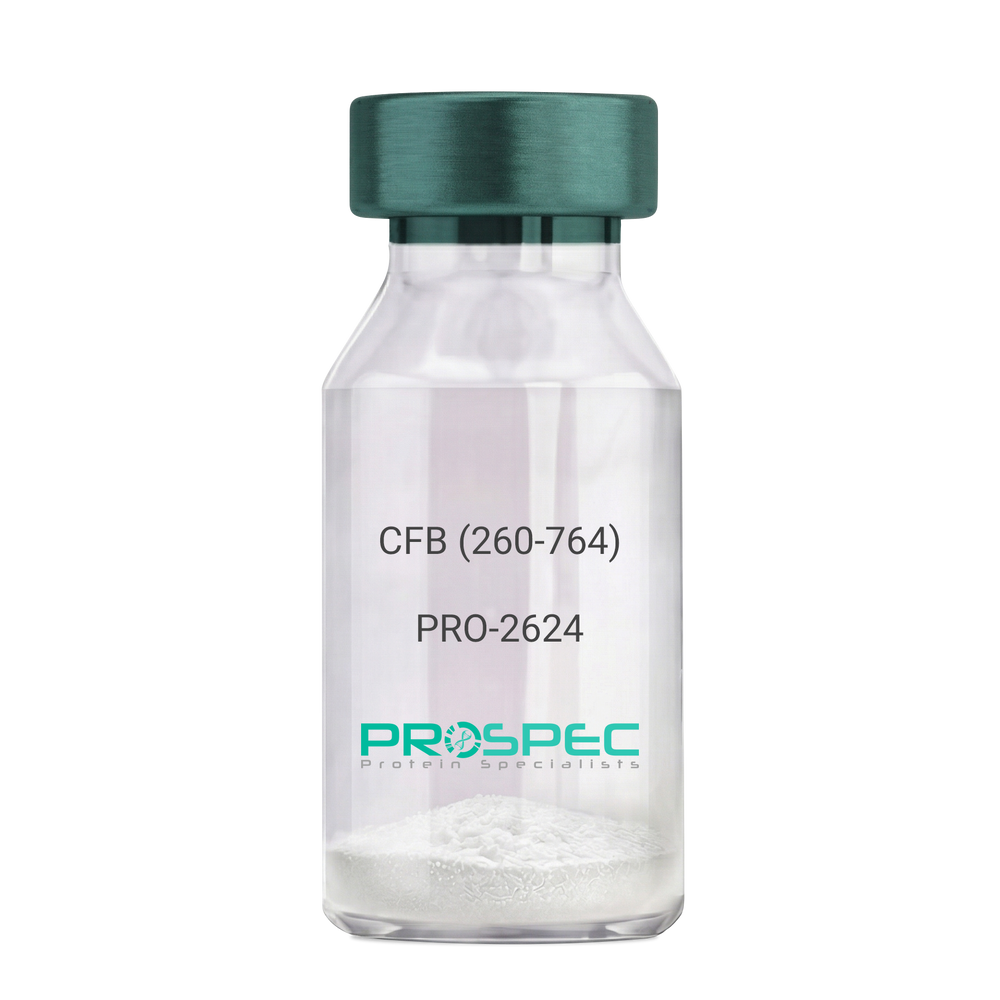
    CFB (260-764) Human, Sf9

    Description:

    Complement Factor B (260-764 a.a.) Human Recombinant, Sf9

    CFB, C3/C5 convertase, Glycine-rich beta glycoprotein, GBG, PBF2, Properdin factor B, BF, BFD, AHUS4, ARMD14, CFAB, CFBD, FB, FBI12, GBG, H2-Bf.

    Product # :

    PRO-2624

    Price :

    Quantity :

    Shipping Method :

    Ice Icon

    Shipped with Ice Packs

    Add To Cart

    More Info

    • description
    • source
    • formulation
    • purity
    • More Info

    Description

    CFB Human Recombinant produced in Sf9 Baculovirus cells is a single, glycosylated polypeptide chain containing 514 amino acids (260-764 a.a) and having a molecular mass of 58.1kDa.CFB is fused to an 9 amino acid His-tag at C-terminus & purified by proprietary chromatographic techniques.

    Source

    Sf9, Baculovirus cells.

    Formulation

    CFB protein solution (0.5mg/ml) containing Phosphate Buffered Saline (pH 7.4) and 20% glycerol.

    Purity

    Greater than 90.0% as determined by SDS-PAGE.

    More Info

    • Introduction

      Factor B is a protein, build from a single chain that circulates in the blood. Complement factor D cleaves and activates factor B, thus creating a catalytic subunit Bb and noncatalytic chain Ba. Subunit Bb is a serine protease that can bind to C3b and forms alternative pathway C3 convertase. Subunit Ba acts as an inhibitor for proliferation of lymphocytes, when Bb is part of the lymphocytes’ proliferation. The gene that codes for this protein is located on chromosome six.

    • Synonyms

      CFB, C3/C5 convertase, Glycine-rich beta glycoprotein, GBG, PBF2, Properdin factor B, BF, BFD, AHUS4, ARMD14, CFAB, CFBD, FB, FBI12, GBG, H2-Bf.

    • Physical Appearance

      Sterile Filtered colorless solution.

    • Stability

      Store at 4°C if entire vial will be used within 2-4 weeks. Store, frozen at -20°C for longer periods of time. For long term storage it is recommended to add a carrier protein (0.1% HSA or BSA).Avoid multiple freeze-thaw cycles.

    • Amino Acid Sequence

      ADPKIVLDPS GSMNIYLVLD GSDSIGASNF TGAKKCLVNL IEKVASYGVK PRYGLVTYAT
      YPKIWVKVSE ADSSNADWVT KQLNEINYED HKLKSGTNTK KALQAVYSMM SWPDDVPPEG
      WNRTRHVIIL MTDGLHNMGG DPITVIDEIR DLLYIGKDRK NPREDYLDVY VFGVGPLVNQ
      VNINALASKK DNEQHVFKVK DMENLEDVFY QMIDESQSLS LCGMVWEHRK GTDYHKQPWQ
      AKISVIRPSK GHESCMGAVV SEYFVLTAAH CFTVDDKEHS IKVSVGGEKR DLEIEVVLFH
      PNYNINGKKE AGIPEFYDYD VALIKLKNKL KYGQTIRPIC LPCTEGTTRA LRLPPTTTCQ
      QQKEELLPAQ DIKALFVSEE EKKLTRKEVY IKNGDKKGSC ERDAQYAPGY DKVKDISEVV
      TPRFLCTGGV SPYADPNTCR GDSGGPLIVH KRSRFIQVGV ISWGVVDVCK NQKRQKQVPA HARDFHINLF QVLPWLKEKL QDEDLGFLHH HHHH

    ProSpec's products are furnished for LABORATORY RESEARCH USE ONLY. The product may not be used as drugs, agricultural or pesticidal products, food additives or household chemicals.

    Complement Factor B
  • View Data Sheet

    Name :

    CDNF Human

    Description:

    Cerebral Neurotrophic Factor Human Recombinant

    Cerebral neurotrophic factor, arginine-rich, mutated in early stage tumors-like 1, Conserved neurotrophic factor, ARMET-like protein 1, ARMETL1.

    Product # :

    CYT-167

    Price :

    Quantity :

    Shipping Method :

    Room Temp Icon

    Shipped at Room temp

    Add To Cart

    More Info

    • description
    • source
    • formulation
    • purity
    • biological activity
    • More Info

    Description

    CDNF Human Recombinant produced in E.coli is a single, non-glycosylated polypeptide chain containing 161 amino acids and having a molecular mass of 18.5kDa.The CDNF is purified by proprietary chromatographic techniques.

    Source

    Escherichia Coli.

    Formulation

    CDNF protein was lyophilized from a 0.2µm filtered concentrated solution in 1xPBS, pH 7.4.

    Purity

    Greater than 96.0% as determined by:
    (a) Analysis by RP-HPLC.
    (b) Analysis by SDS-PAGE.

    Biological Activity

    The ED50 as determined by its ability to stimulate the proliferation of rat C6 cells is 15-25µg/ml, corresponding to a specific activity of 40-67units/mg.

    More Info

    • Introduction

      CDNF is a member of the ARMET family and acts as a trophic factor for neurons. CDNF inhibits the (6-OHDA)-induced degeneration of neurons. When CDNF controlled after 6-OHDA-lesioning, it reestablishes the function and inhibits the degeneration of neurons in substantia nigra. CDNF is universally expressed in neuronal and non-neuronal tissues. The highest levels in the brain are found in the optic nerve and corpus callosum.

    • Synonyms

      Cerebral neurotrophic factor, arginine-rich, mutated in early stage tumors-like 1, Conserved neurotrophic factor, ARMET-like protein 1, ARMETL1.

    • Physical Appearance

      Sterile Filtered White lyophilized (freeze-dried) powder.

    • Stability

      Lyophilized CDNF although stable at room temperature for 3 weeks, should be stored desiccated below -18°C. Upon reconstitution CDNF should be stored at 4°C between 2-7 days and for future use below -18°C. For long term storage it is recommended to add a carrier protein (0.1% HSA or BSA). Please prevent freeze-thaw cycles.

    • Solubility

      It is recommended to reconstitute the lyophilized CDNF in sterile 18M-cm H2O not less than 100µg/ml, which can then be further diluted to other aqueous solutions.

    • Amino Acid Sequence

      QEAGGRPGAD CEVCKEFLNR FYKSLIDRGV NFSLDTIEKE LISFCLDTKG KENRLCYYLG ATKDAATKIL SEVTRPMSVH MPAMKICEKL KKLDSQICEL KYEKTLDLAS VDLRKMRVAE LKQILHSWGE ECRACAEKTD YVNLIQELAP KYAATHPKTE L

    • Background

      Cerebral Neurotrophic Factor Human Recombinant: A Leap Forward in Neurobiology

      The field of neurobiology is replete with wonder, particularly due to the influential role of neurotrophic factors. These essential proteins, responsible for the survival and growth of neurons, have become a focal point in modern research. Among these, the Cerebral Neurotrophic Factor (CNF) stands out, offering novel insights and potential breakthroughs in our understanding of neurological health.

      Enter the world of bioengineering, a scientific arena where we have successfully replicated CNF, leading to the birth of Cerebral Neurotrophic Factor Human Recombinant (CNF-HR). This is a massive step towards conquering neurodegenerative disorders such as Alzheimer's and Parkinson's diseases, conditions that have perplexed scientists and clinicians for decades.

      The extraordinary capacity of CNF-HR lies in its dual functionality - it acts as a defender and a promoter. It defends neurons from harmful degenerative processes while promoting their growth and development. Picture a devoted gardener who tirelessly protects his garden from pests and nurtures the growth of each plant. In this context, the brain is the vibrant garden, and the neurons, the delicate plants we must care for.

      Although this scientific breakthrough sparks enthusiasm, it's crucial to remember the challenges that lie ahead. The path to determining the most effective method of delivering CNF-HR to the brain, identifying the optimal dosage, and monitoring potential side effects is a winding one. Nevertheless, with continuous research and relentless scientific curiosity, we are optimistic about overcoming these challenges.

      In conclusion, the development of CNF-HR is a significant milestone in the fascinating journey of neurobiology. Its potential to change the trajectory of treating neurodegenerative diseases and enhancing our understanding of neuronal function is tremendous. While the journey is strewn with complexities, the potential rewards we stand to reap promise a future where neurodegenerative diseases could be effectively managed or even cured.

      What is the molecular weight/Mw of CDNF Protein?
      CDNF Protein has a total Mw of 18.5kDa.

      What is the source or expression system of CDNF Protein?
      Escherichia Coli.

      What is the Purity of CDNF Protein?
      CDNF Protein is >96% pure as determined by SDS-PAGE.

      What is the Biological Activity of CDNF Protein?
      The ED50 as determined by its ability to stimulate the proliferation of rat C6 cells is 15-25µg/ml, corresponding to a specific activity of 40-67units/mg.

      What is the amino acid sequence of CDNF Protein?
      QEAGGRPGAD CEVCKEFLNR FYKSLIDRGV NFSLDTIEKE LISFCLDTKG KENRLCYYLG ATKDAATKIL SEVTRPMSVH MPAMKICEKL KKLDSQICEL KYEKTLDLAS VDLRKMRVAE LKQILHSWGE ECRACAEKTD YVNLIQELAP KYAATHPKTE L

      What applications can CDNF Protein be used in?
      CDNF Protein can probably be used in western blot, ELISA and Lateral Flow.

      What is the endotoxin level for CDNF Protein?
      The endotoxin level is minimal, CDNF Protein was purified using conventional chromatography techniques

    ProSpec's products are furnished for LABORATORY RESEARCH USE ONLY. The product may not be used as drugs, agricultural or pesticidal products, food additives or household chemicals.

    Cdnf Human
  • View Data Sheet

    Name :

    YY1 Human

    Description:

    YY1 Transcription Factor Human Recombinant

    YY1 transcription factor, YY1, DELTA, INO80S, NF-E1, UCRBP, YIN-YANG-1, Transcriptional repressor protein YY1, Delta transcription factor, Yin and yang 1, INO80 complex subunit S, YY-1.

    Product # :

    PRO-2108

    Price :

    Quantity :

    Shipping Method :

    Ice Icon

    Shipped with Ice Packs

    Add To Cart

    More Info

    • description
    • source
    • formulation
    • purity
    • More Info

    Description

    YY1 Human Recombinant produced in E. coli is a single polypeptide chain containing 437 amino acids (1-414) and having a molecular mass of 47.1kDa.YY1 is fused to a 23 amino acid His-tag at N-terminus & purified by proprietary chromatographic techniques.

    Source

    Escherichia Coli.

    Formulation

    The YY1 solution (0.25mg/1ml) contains PBS, 20% glycerol and 1mM DTT.

    Purity

    Greater than 80.0% as determined by SDS-PAGE.

    More Info

    • Introduction

      YY1 Transcription Factor, also known as YY1, is a part of the GLI-Kruppel class of zinc finger proteins. YY1 has a positive and negative effect on a various cellular and viral genes by binding to sites overlapping the transcription start site. YY1 leads histone deacetylases and histone acetyltransferases to a promoter in order to activate or repress the promoter.

    • Synonyms

      YY1 transcription factor, YY1, DELTA, INO80S, NF-E1, UCRBP, YIN-YANG-1, Transcriptional repressor protein YY1, Delta transcription factor, Yin and yang 1, INO80 complex subunit S, YY-1.

    • Physical Appearance

      Sterile Filtered clear solution.

    • Stability

      Store at 4°C if entire vial will be used within 2-4 weeks. Store, frozen at -20°C for longer periods of time. For long term storage it is recommended to add a carrier protein (0.1% HSA or BSA).Avoid multiple freeze-thaw cycles.

    • Amino Acid Sequence

      MGSSHHHHHH SSGLVPRGSH MGSMASGDTL YIATDGSEMP AEIVELHEIE VETIPVETIE TTVVGEEEEE DDDDEDGGGG DHGGGGGHGH AGHHHHHHHH HHHPPMIALQ PLVTDDPTQV HHHQEVILVQ TREEVVGGDD SDGLRAEDGF EDQILIPVPA PAGGDDDYIE QTLVTVAAAG KSGGGGSSSS GGGRVKKGGG KKSGKKSYLS GGAGAAGGGG ADPGNKKWEQ KQVQIKTLEG EFSVTMWSSD EKKDIDHETV VEEQIIGENS PPDYSEYMTG KKLPPGGIPG IDLSDPKQLA EFARMKPRKI KEDDAPRTIA CPHKGCTKMF RDNSAMRKHL HTHGPRVHVC AECGKAFVES SKLKRHQLVH TGEKPFQCTF EGCGKRFSLD FNLRTHVRIH TGDRPYVCPF DGCNKKFAQS TNLKSHILTH AKAKNNQ.

    ProSpec's products are furnished for LABORATORY RESEARCH USE ONLY. The product may not be used as drugs, agricultural or pesticidal products, food additives or household chemicals.

    Yy1 Human
  • View Data Sheet

    Name :

    GFRA1 Rat

    Description:

    GDNF Family Receptor Alpha 1 Rat Recombinant

    GDNF family receptor alpha-1, GDNF receptor alpha-1, GDNFR-alpha-1, GFR-alpha-1, RET ligand 1, TGF-beta-related neurotrophic factor receptor 1, Gfra1, Gdnfra, Retl1, Trnr1.

    Product # :

    CYT-1012

    Price :

    Quantity :

    Shipping Method :

    Ice Icon

    Shipped with Ice Packs

    Add To Cart

    More Info

    • description
    • source
    • formulation
    • purity
    • More Info

    Description

    GFRA1 Rat Recombinant produced in Sf9 Baculovirus cells is a single, glycosylated polypeptide chain containing 645 amino acids (25-430a.a.) and having a molecular mass of 72.3kDa (Molecular size on SDS-PAGE will appear at approximately 70-100kDa). GFRA1 is expressed with a 239 amino acid hIgG-His tag at C-Terminus and purified by proprietary chromatographic techniques.

    Source

    Sf9, Baculovirus cells.

    Formulation

    GFRA1 protein solution (0.25mg/ml) contains Phosphate Buffered Saline (pH 7.4) and 10% glycerol.

    Purity

    Greater than 85% as determined by SDS-PAGE.

    More Info

    • Introduction

      GDNF family receptor alpha-1 (GFRA1) belongs to the GDNF receptor family. GFRA1 is a glycosyl-phosphatidylinositol(GPI)-linked cell surface receptor for both Glial cell line-derived growth factor (GDNF), neurturin (NTN), and mediates activation of the RET tyrosine kinase receptor. The GFRA1 protein is a potent survival factor for central and peripheral neurons, and is vital for the development of kidneys and the enteric nervous system.

    • Synonyms

      GDNF family receptor alpha-1, GDNF receptor alpha-1, GDNFR-alpha-1, GFR-alpha-1, RET ligand 1, TGF-beta-related neurotrophic factor receptor 1, Gfra1, Gdnfra, Retl1, Trnr1.

    • Physical Appearance

      Sterile Filtered colorless solution.

    • Stability

      Store at 4°C if entire vial will be used within 2-4 weeks. Store, frozen at -20°C for longer periods of time. For long term storage it is recommended to add a carrier protein (0.1% HSA or BSA).Avoid multiple freeze-thaw cycles.

    • Amino Acid Sequence

      DRLDCVKASD QCLKEQSCST KYRTLRQCVA GKETNFSLTS GLEAKDECRS AMEALKQKSL YNCRCKRGMK KEKNCLRIYW SMYQSLQGND LLEDSPYEPV NSRLSDIFRA VPFISDVFQQ VEHISKGNNC LDAAKACNLD DTCKKYRSAY ITPCTTSMSN EVCNRRKCHK ALRQFFDKVP AKHSYGMLFC SCRDIACTER RRQTIVPVCS YEERERPNCL SLQDSCKTNY ICRSRLADFF TNCQPESRSV SNCLKENYAD CLLAYSGLIG TVMTPNYVDS SSLSVAPWCD CSNSGNDLED CLKFLNFFKD NTCLKNAIQA FGNGSDVTMW QPAPPVQTTT ATTTTAFRVK NKPLGPAGSE NEIPTHVLPP CANLQAQKLK SNVSGSTHLC LSDSDFGKDG LAGASSLEPK SCDKTHTCPP CPAPELLGGP SVFLFPPKPK DTLMISRTPE VTCVVVDVSH EDPEVKFNWY VDGVEVHNAK TKPREEQYNS TYRVVSVLTV LHQDWLNGKE YKCKVSNKAL PAPIEKTISK AKGQPREPQV YTLPPSRDEL TKNQVSLTCL VKGFYPSDIA VEWESNGQPE NNYKTTPPVL DSDGSFFLYS KLTVDKSRWQ QGNVFSCSVM HEALHNHYTQ KSLSLSPGKH HHHHH.

    • Background

      What is the molecular weight/Mw of GFRA1 RAT Protein?
      GFRA1 RAT Protein has a total Mw of 72.3kDa.

      What is the source or expression system of GFRA1 RAT Protein?
      Sf9, Baculovirus cells.

      What is the Purity of GFRA1 RAT Protein?
      GFRA1 RAT Protein is >85% pure as determined by SDS-PAGE.

      What is the Biological Activity of GFRA1 RAT Protein?
      The biological functionality of GFRA1 RAT Protein will be determined in the future.

      What is the amino acid sequence of GFRA1 RAT Protein?
      DRLDCVKASD QCLKEQSCST KYRTLRQCVA GKETNFSLTS GLEAKDECRS AMEALKQKSL YNCRCKRGMK KEKNCLRIYW SMYQSLQGND LLEDSPYEPV NSRLSDIFRA VPFISDVFQQ VEHISKGNNC LDAAKACNLD DTCKKYRSAY ITPCTTSMSN EVCNRRKCHK ALRQFFDKVP AKHSYGMLFC SCRDIACTER RRQTIVPVCS YEERERPNCL SLQDSCKTNY ICRSRLADFF TNCQPESRSV SNCLKENYAD CLLAYSGLIG TVMTPNYVDS SSLSVAPWCD CSNSGNDLED CLKFLNFFKD NTCLKNAIQA FGNGSDVTMW QPAPPVQTTT ATTTTAFRVK NKPLGPAGSE NEIPTHVLPP CANLQAQKLK SNVSGSTHLC LSDSDFGKDG LAGASSLEPK SCDKTHTCPP CPAPELLGGP SVFLFPPKPK DTLMISRTPE VTCVVVDVSH EDPEVKFNWY VDGVEVHNAK TKPREEQYNS TYRVVSVLTV LHQDWLNGKE YKCKVSNKAL PAPIEKTISK AKGQPREPQV YTLPPSRDEL TKNQVSLTCL VKGFYPSDIA VEWESNGQPE NNYKTTPPVL DSDGSFFLYS KLTVDKSRWQ QGNVFSCSVM HEALHNHYTQ KSLSLSPGKH HHHHH.

      What applications can GFRA1 RAT Protein be used in?
      GFRA1 RAT Protein can probably be used in western blot, ELISA and Lateral Flow.

      What is the endotoxin level for GFRA1 RAT Protein?
      The endotoxin level is minimal, GFRA1 RAT Protein was purified using conventional chromatography techniques.


    ProSpec's products are furnished for LABORATORY RESEARCH USE ONLY. The product may not be used as drugs, agricultural or pesticidal products, food additives or household chemicals.

    Gfra1 Rat
  • View Data Sheet

    Name :

    MAX Human

    Description:

    MYC Associated Factor X Human Recombinant

    bHLHd4, bHLHd5, bHLHd6, bHLHd7, bHLHd8, MYC Associated Factor X, Class D basic helix-loop-helix protein 4, orf1, MGC10775, MGC11225, MGC18164, MGC34679, MGC36767, MAX Protein.

    Product # :

    PRO-811

    Price :

    Quantity :

    Shipping Method :

    Ice Icon

    Shipped with Ice Packs

    Add To Cart

    More Info

    • description
    • source
    • formulation
    • purity
    • More Info

    Description

    MAX Human Recombinant produced in E.Coli is a single, non-glycosylated, polypeptide chain containing 168 amino acids (1-160 a.a.) and having a molecular mass of 19.3kDa. MAX protein is fused to an 8 amino acid His-Tag at C-terminus and purified by standard chromatography.

    Source

    Escherichia Coli.

    Formulation

    MAX Human solution containing 20mM Tris-HCl pH-8, 1mM DTT and 10% glycerol.

    Purity

    Greater than 90% as determined by SDS-PAGE.

    More Info

    • Introduction

      MAX protein is part of the basic helix-loop-helix leucine zipper (bHLHZ) family of transcription factors. MAX forms homodimers and heterodimers with Mad, Mxi1 and Myc. Myc is an oncoprotein implicated in cell proliferation, differentiation and apoptosis. The homodimers and heterodimers compete for a common DNA target site (the E box) and rearrangement among these dimer forms offers a complex system of transcriptional regulation. In contrast to Myc, which is exceedingly regulated throughout progression during the cell cycle, Max is very stable and is much more abundant than Myc.

    • Synonyms

      bHLHd4, bHLHd5, bHLHd6, bHLHd7, bHLHd8, MYC Associated Factor X, Class D basic helix-loop-helix protein 4, orf1, MGC10775, MGC11225, MGC18164, MGC34679, MGC36767, MAX Protein.

    • Physical Appearance

      Sterile filtered colorless solution.

    • Stability

      Store at 4°C if entire vial will be used within 2-4 weeks. Store, frozen at -20°C for longer periods of time. For long term storage it is recommended to add a carrier protein (0.1% HSA or BSA).Avoid multiple freeze-thaw cycles.

    • Amino Acid Sequence

      MSDNDDIEVE SDEEQPRFQS AADKRAHHNA LERKRRDHIK DSFHSLRDSV PSLQGEKASR AQILDKATEY IQYMRRKNHT HQQDIDDLKR QNALLEQQVR ALEKARSSAQ LQTNYPSSDN SLYTNAKGST ISAFDGGSDS SSESEPEEPQ SRKKLRMEAS LEHHHHHH.

    ProSpec's products are furnished for LABORATORY RESEARCH USE ONLY. The product may not be used as drugs, agricultural or pesticidal products, food additives or household chemicals.

    Max Human
  • View Data Sheet

    Name :

    FGF 21 Mouse, Sf9

    Description:

    Fibroblast Growth Factor-21 Mouse Recombinant, Sf9

    Fibroblast growth factor 21, FGF-21.

    Product # :

    CYT-930

    Price :

    Quantity :

    Shipping Method :

    Ice Icon

    Shipped with Ice Packs

    Add To Cart

    More Info

    • description
    • source
    • formulation
    • purity
    • More Info
    • sds-page

    Description

    FGF-21 produced in Sf9 Baculovirus cells is a single, glycosylated polypeptide chain containing 190 amino acids (29-210a.a.) and having a molecular mass of 21.0kDa (Molecular size on SDS-PAGE will appear at approximately 18-28kDa). FGF21 is expressed with an 8 amino acid His tag at C-Terminus and purified by proprietary chromatographic techniques.

    Source

    Sf9, Baculovirus cells.

    Formulation

    FGF-21 protein solution (0.5mg/ml) contains Phosphate Buffered Saline (pH 7.4) and 10% glycerol.

    Purity

    Greater than 90.0% as determined by SDS-PAGE.

    sds-page

    FGF21-sds-page - Product image 1

    More Info

    • Introduction

      The FGFs are a family of more than 20 small (~17–26 kDa) secreted peptides. The initial characterization of these proteins focused on their ability to stimulate fibroblast proliferation. This mitogenic activity was mediated through FGF receptors (FGFRs) 1, 2, or 3. A fourth closely related tyrosine kinase receptor (FGFR4) was able to bind the FGFs but did not lead to a mitogenic response.
      FGFs modulate cellular activity via at least 5 distinct subfamilies of high-affinity FGF receptors (FGFRs): FGFR-1, -2, -3, and -4, all with intrinsic tyrosine kinase activity and, except for FGFR-4, multiple splice isoforms, and FGFR-5, which lacks an intracellular kinase domain. There is growing evidence that FGFRs can be important for regulation of glucose and lipid homeostasis. The overexpression of a dominant negative form of FGFR-1 in ? cells leads to diabetes in mice, which thus implies that proper FGF signaling is required for normal ? cell function and glycemia maintenance. FGFR-2 appears to be a key molecule during pancreatic development. Moreover, FGFR-4 has been implicated in cholesterol metabolism and bile acid synthesis.
      FGF-21 is preferentially expressed in liver, but an exact knowledge of FGF-21 bioactivity and its mode of action have been lacking to date. FGF-21 is a potent activator of glucose uptake on adipocytes, protects animals from diet-induced obesity when overexpressed in transgenic mice, and lowers blood glucose and triglyceride levels when therapeutically administered to diabetic rodents.

    • Synonyms

      Fibroblast growth factor 21, FGF-21.

    • Physical Appearance

      Sterile Filtered colorless clear solution.

    • Stability

      Store at 4°C if entire vial will be used within 2-4 weeks.Store, frozen at -20°C for longer periods of time. For long term storage it is recommended to add a carrier protein (0.1% HSA or BSA).Avoid multiple freeze-thaw cycles.

    • Amino Acid Sequence

      AYPIPDSSPL LQFGGQVRQR YLYTDDDQDT EAHLEIREDG TVVGAAHRSP ESLLELKALK PGVIQILGVK ASRFLCQQPD GALYGSPHFD PEACSFRELL LEDGYNVYQS EAHGLPLRLP QKDSPNQDAT SWGPVRFLPM PGLLHEPQDQ AGFLPPEPPD VGSSDPLSMV EPLQGRSPSY ASLEHHHHHH.

    • Background

      What is the molecular weight/Mw of FGF21 MOUSE,SF9 Protein?
      FGF21 MOUSE,SF9 Protein has a total Mw of 21kDa.

      What is the source or expression system of FGF21 MOUSE,SF9 Protein?
      Sf9, Baculovirus cells.

      What is the Purity of FGF21 MOUSE,SF9 Protein?
      FGF21 MOUSE,SF9 Protein is >90% pure as determined by SDS-PAGE.

      What is the Biological Activity of FGF21 MOUSE,SF9 Protein?
      The biological functionality of FGF21 MOUSE,SF9 Protein will be determined in the future.

      What is the amino acid sequence of FGF21 MOUSE,SF9 Protein?
      AYPIPDSSPL LQFGGQVRQR YLYTDDDQDT EAHLEIREDG TVVGAAHRSP ESLLELKALK PGVIQILGVK ASRFLCQQPD GALYGSPHFD PEACSFRELL LEDGYNVYQS EAHGLPLRLP QKDSPNQDAT SWGPVRFLPM PGLLHEPQDQ AGFLPPEPPD VGSSDPLSMV EPLQGRSPSY ASLEHHHHHH.

      What applications can FGF21 MOUSE,SF9 Protein be used in?
      FGF21 MOUSE,SF9 Protein can probably be used in western blot, ELISA and Lateral Flow.

      What is the endotoxin level for FGF21 MOUSE,SF9 Protein?
      The endotoxin level is minimal, FGF21 MOUSE,SF9 Protein was purified using conventional chromatography techniques.

    ProSpec's products are furnished for LABORATORY RESEARCH USE ONLY. The product may not be used as drugs, agricultural or pesticidal products, food additives or household chemicals.

    Fgf 21 Mouse Sf9
  • View Data Sheet

    Name :

    C1QTNF1 Human

    Description:

    Complement C1q Tumor Necrosis Factor-Related Protein 1 Human Recombinant

    GIP, CTRP1, ZSIG37, FLJ90694, C1QTNF1, Complement C1q Tumor Necrosis Factor-Related Protein 1, G protein-coupled receptor-interacting protein.

    Product # :

    PRO-654

    Price :

    Quantity :

    Shipping Method :

    Room Temp Icon

    Shipped at Room temp

    Add To Cart

    More Info

    • description
    • source
    • formulation
    • purity
    • More Info

    Description

    C1QTNF1 Human Recombinant produced in E.Coli is a single, non-glycosylated, Polypeptide chain containing 266 amino acids and having a molecular mass of 30.45 kDa. The protein contains an extra His tag at N-terminus. The C1QTNF1 amino acid sequence is identical to UniProtKB/Swiss-Prot entry Q9BXJ1 amino acids 26–281.The C1QTNF1 is purified by proprietary chromatographic techniques.

    Source

    Escherichia Coli.

    Formulation

    Human C1QTNF1 was lyophilized from 50mM Acetate Buffer pH-4.

    Purity

    Greater than 95% as determined by SDS PAGE.

    More Info

    • Introduction

      C1QTNF1 is a novel adipokine, providing a significant framework to further address the physiological functions and mechanisms of the action of this family of secreted glycoproteins in normal and disease states. C1QTNF1 increases the production of aldosterone. C1QTNF1 is vastly expressed in obese subjects as well as up-regulated in hypertensive patients, C1QTNF1 is identified molecular link between obesity and hypertension. C1QTNF1 expression may be associated with a low-grade chronic inflammation status in adipose tissues.

    • Synonyms

      GIP, CTRP1, ZSIG37, FLJ90694, C1QTNF1, Complement C1q Tumor Necrosis Factor-Related Protein 1, G protein-coupled receptor-interacting protein.

    • Stability

      Store lyophilized protein at -20°C. Aliquot the product after reconstitution to avoid repeated freezing/thawing cycles. Reconstituted protein can be stored at 4°C for a limited period of time; it does not show any change after two weeks at 4°C.

    • Solubility

      Add 0.1M Acetate buffer pH4 to prepare a working stock solution of approximately 0.5mg/mL and let the lyophilized pellet dissolve completely. For conversion into higher pH value, we recommend intensive dilution by relevant buffer to a concentration of 10μg/ml. In higher concentrations the solubility of this antigen is limited. Product is not sterile! Please filter the product by an appropriate sterile filter before using it in the cell culture.

    • Amino Acid Sequence

      MKHHHHHHAS RVPHVQGEQQ EWEGTEELPS PPDHAERAEE QHEKYRPSQD QGLPASRCLR CCDPGTSMYP ATAVPQINIT ILKGEKGDRG DRGLQGKYGK TGSAGARGHT GPKGQKGSMG APGERCKSHY AAFSVGRKKP MHSNHYYQTV IFDTEFVNLY DHFNMFTGKF YCYVPGLYFF SLNVHTWNQK ETYLHIMKNE EEVVILFAQV GDRSIMQSQS LMLELREQDQ VWVRLYKGER ENAIFSEELD TYITFSGYLVKHATEP.

    ProSpec's products are furnished for LABORATORY RESEARCH USE ONLY. The product may not be used as drugs, agricultural or pesticidal products, food additives or household chemicals.

    C1Qtnf1 Human
  • View Data Sheet

    Name :

    NELL2 Antibody

    Description:

    NEL-Like 2, Monoclonal Mouse Anti Human Antibody

    NEL-like 2, NRP2, Nel-related protein 2, protein kinase C-binding protein NELL2, neural epidermal growth factor-like 2.

    Product # :

    ANT-030

    Price :

    Quantity :

    Shipping Method :

    Ice Icon

    Shipped with Ice Packs

    Add To Cart

    More Info

    • formulation
    • More Info

    Formulation

    1mg/ml containing Phosphate-Buffered Saline (pH 7.4) with 0.1% Sodium Azide.

    More Info

    • Introduction

      NELL2 is expressed in large quantities in neural tissues and has a significant role in the development of neural tissues. In addition, NELL protein has six epidermal growth factor (EGF)-like repeat domains which plays a part in calcium binding.

    • Synonyms

      NEL-like 2, NRP2, Nel-related protein 2, protein kinase C-binding protein NELL2, neural epidermal growth factor-like 2.

    • Immunogen

      Anti-human NELL2 mAb, is derived from hybridization of mouse F0 myeloma cells with spleen cells from BALB/c mice immunized with a recombinant human NELL2 protein.

    • Ig Subclass

      Mouse IgG2b heavy chain and Kappa light chain

    • Clone

      AT13E7.

    • Applications

      The antibody has been tested by ELISA and Western blot analysis to assure specificity and reactivity. Since application varies, however, each investigation should be titrated by the reagent to obtain optimal results. Recommended dilution range for Western blot analysis is 1:500.
      Recommended starting dilution is 1:500

    • Type

      Mouse Anti Human Monoclonal.

    • Storage Procedures

      For periods up to 1 month store at 4°C, for longer periods of time, store at -20°C. Prevent freeze thaw cycles.

    • Purification Method

      Recombinant human NELL2 antibody (30-258aa) is purified from E. coli.

    ProSpec's products are furnished for LABORATORY RESEARCH USE ONLY. The product may not be used as drugs, agricultural or pesticidal products, food additives or household chemicals.

    Nell2 Antibody
  • View Data Sheet

    Name :

    GFRA3 Human, Sf9

    Description:

    GDNF Family Receptor Alpha 3 Human Recombinant, Sf9

    GDNF Family Receptor Alpha3, GDNFR-alpha-3, GFR-alpha-3, GDNF Receptor Alpha-3, GDNFR3, GDNF Family Receptor Alpha-3, Glial Cell Line-Derived Neurotrophic Factor Receptor Alpha-3, GPI-Linked Receptor, GFRA3.

    Product # :

    CYT-1013

    Price :

    Quantity :

    Shipping Method :

    Ice Icon

    Shipped with Ice Packs

    Add To Cart

    More Info

    • description
    • source
    • formulation
    • purity
    • More Info

    Description

    GFRA3 Human Recombinant produced in Sf9 Baculovirus cells is a single, glycosylated polypeptide chain containing 585 amino acids (32-374) and having a molecular mass of 65.5kDa (Molecular size on SDS-PAGE will appear at approximately 70-100kDa). GFRA3 is fused to a 239 amino acid hIgG-His-Tag at C-terminus and purified by proprietary chromatographic techniques.

    Source

    Sf9, Baculovirus cells.

    Formulation

    GFRA3 protein solution (0.25mg/ml) containing Phosphate Buffered Saline (pH 7.4) and 10% glycerol.

    Purity

    Greater than 85.0% as determined by SDS-PAGE.

    More Info

    • Introduction

      GDNF Family Receptor Alpha 3 (GFRA3) belongs to the GDNF receptor family. GFRA3 creates a signaling receptor complex with RET tyrosine kinase receptor and binds the ligand, artemin (ARTN).

    • Synonyms

      GDNF Family Receptor Alpha3, GDNFR-alpha-3, GFR-alpha-3, GDNF Receptor Alpha-3, GDNFR3, GDNF Family Receptor Alpha-3, Glial Cell Line-Derived Neurotrophic Factor Receptor Alpha-3, GPI-Linked Receptor, GFRA3.

    • Physical Appearance

      Sterile Filtered clear solution.

    • Stability

      Store at 4°C if entire vial will be used within 2-4 weeks. Store, frozen at -20°C for longer periods of time. For long term storage it is recommended to add a carrier protein (0.1% HSA or BSA).Avoid multiple freeze-thaw cycles.

    • Amino Acid Sequence

      ADPDPLPTES RLMNSCLQAR RKCQADPTCS AAYHHLDSCT SSISTPLPSE EPSVPADCLE AAQQLRNSSL IGCMCHRRMK NQVACLDIYW TVHRARSLGN YELDVSPYED TVTSKPWKMN LSKLNMLKPD SDLCLKFAML CTLNDKCDRL RKAYGEACSG PHCQRHVCLR QLLTFFEKAA EPHAQGLLLC PCAPNDRGCG ERRRNTIAPN CALPPVAPNC LELRRLCFSD PLCRSRLVDF QTHCHPMDIL GTCATEQSRC LRAYLGLIGT AMTPNFVSNV NTSVALSCTC RGSGNLQEEC EMLEGFFSHN PCLTEAIAAK MRFHSQLFSQ DWPHPTFAVM AHQNENLEPK SCDKTHTCPP CPAPELLGGP SVFLFPPKPK DTLMISRTPE VTCVVVDVSH EDPEVKFNWY VDGVEVHNAK TKPREEQYNS TYRVVSVLTV LHQDWLNGKE YKCKVSNKAL PAPIEKTISK AKGQPREPQV YTLPPSRDEL TKNQVSLTCL VKGFYPSDIA VEWESNGQPE NNYKTTPPVL DSDGSFFLYS KLTVDKSRWQ QGNVFSCSVM HEALHNHYTQ KSLSLSPGKH HHHHH.

    • Background

      What is the molecular weight/Mw of GFRA3 HUMAN, SF9 Protein?
      GFRA3 HUMAN, SF9 Protein has a total Mw of 65.5kDa.

      What is the source or expression system of GFRA3 HUMAN, SF9 Protein?
      Sf9, Baculovirus cells.
      What is the Purity of GFRA3 HUMAN, SF9 Protein?
      GFRA3 HUMAN, SF9 Protein is >85% pure as determined by SDS-PAGE.

      What is the Biological Activity of GFRA3 HUMAN, SF9 Protein?
      The biological functionality of GFRA3 HUMAN, SF9 Protein will be determined in the future.

      What is the amino acid sequence of GFRA3 HUMAN, SF9 Protein?
      ADPDPLPTES RLMNSCLQAR RKCQADPTCS AAYHHLDSCT SSISTPLPSE EPSVPADCLE AAQQLRNSSL IGCMCHRRMK NQVACLDIYW TVHRARSLGN YELDVSPYED TVTSKPWKMN LSKLNMLKPD SDLCLKFAML CTLNDKCDRL RKAYGEACSG PHCQRHVCLR QLLTFFEKAA EPHAQGLLLC PCAPNDRGCG ERRRNTIAPN CALPPVAPNC LELRRLCFSD PLCRSRLVDF QTHCHPMDIL GTCATEQSRC LRAYLGLIGT AMTPNFVSNV NTSVALSCTC RGSGNLQEEC EMLEGFFSHN PCLTEAIAAK MRFHSQLFSQ DWPHPTFAVM AHQNENLEPK SCDKTHTCPP CPAPELLGGP SVFLFPPKPK DTLMISRTPE VTCVVVDVSH EDPEVKFNWY VDGVEVHNAK TKPREEQYNS TYRVVSVLTV LHQDWLNGKE YKCKVSNKAL PAPIEKTISK AKGQPREPQV YTLPPSRDEL TKNQVSLTCL VKGFYPSDIA VEWESNGQPE NNYKTTPPVL DSDGSFFLYS KLTVDKSRWQ QGNVFSCSVM HEALHNHYTQ KSLSLSPGKH HHHHH.

      What applications can GFRA3 HUMAN, SF9 Protein be used in?
      GFRA3 HUMAN, SF9 Protein can probably be used in western blot, ELISA and Lateral Flow.

      What is the endotoxin level for GFRA3 HUMAN, SF9 Protein?
      The endotoxin level is minimal, GFRA3 HUMAN, SF9 Protein was purified using conventional chromatography techniques.


    ProSpec's products are furnished for LABORATORY RESEARCH USE ONLY. The product may not be used as drugs, agricultural or pesticidal products, food additives or household chemicals.

    Gfra3 Human Sf9
  • View Data Sheet

    Name :

    IL 12 p40 Human

    Description:

    Interleukin-12 p40 Human Recombinant

    NKSF2, CTL maturation factor (TCMF), Cytotoxic lymphocyte maturation factor 40 kDa subunit (CLMF p40), TSF, Edodekin-alpha, IL-12 p40, IL-12B, IL-12 subunit p40, NK cell stimulatory factor chain 2.

    Product # :

    CYT-488

    Price :

    Quantity :

    Shipping Method :

    Ice Icon

    Shipped with Ice Packs

    Add To Cart

    More Info

    • description
    • source
    • formulation
    • purity
    • More Info

    Description

    Interleukin-12 p40 His Human Recombinant produced in E.Coli is single, a non-glycosylated, polypeptide chain containing 306 amino acids fragment (23-328) with an amino-terminal hexahistidine tag. The IL-12 p40 His is purified by proprietary chromatographic techniques.

    Source

    Escherichia Coli.

    Formulation

    Interleukin-12 p40 His is supplied in 1xPBS and 50% glycerol.

    Purity

    Greater than 95.0% as determined by SDS-PAGE.

    More Info

    • Introduction

      Active IL-12 is a p70 disulphide-linked dimer composed of p35 and p40 subunits. The protein is a pleiotropic cytokine produced primarily by antigen presenting cells and has multiple effects on T lymphocytes and natural killer cells in terms of stimulating cytotoxicity, proliferation, production of other cytokines and Th1 subset differentiation.

    • Synonyms

      NKSF2, CTL maturation factor (TCMF), Cytotoxic lymphocyte maturation factor 40 kDa subunit (CLMF p40), TSF, Edodekin-alpha, IL-12 p40, IL-12B, IL-12 subunit p40, NK cell stimulatory factor chain 2.

    • Physical Appearance

      Sterile Filtered clear solution.

    • Stability

      Store at 4°C if entire vial will be used within 2-4 weeks. Store, frozen at -20°C for longer periods of time. Please avoid freeze thaw cycles.

    ProSpec's products are furnished for LABORATORY RESEARCH USE ONLY. The product may not be used as drugs, agricultural or pesticidal products, food additives or household chemicals.

    Il 12 P40 Human His
  • View Data Sheet

    Name :

    IL 16 Rhesus Macaque

    Description:

    Interleukin-16 Rhesus Macaque Recombinant

    IL16, Interleukin-16, LCF, Lymphocyte Chemoattractant Factor, prIL-16, IL-16, FLJ16806, FLJ42735, FLJ44234, HsT19289.

    Product # :

    CYT-153

    Price :

    Quantity :

    Shipping Method :

    Room Temp Icon

    Shipped at Room temp

    Add To Cart

    More Info

    • description
    • source
    • formulation
    • purity
    • biological activity
    • More Info

    Description

    IL 16 Rhesus Macaque Recombinant produced in E.Coli is a single, non-glycosylated, polypeptide chain containing 121 amino acids and having a molecular mass of 12.5kDa.The IL 16 Rhesus Macaque is purified by proprietary chromatographic techniques.

    Source

    Escherichia Coli.

    Formulation

    Lyophilized from a 0.2?m filtered concentrated solution in PBS, pH 7.4.

    Purity

    Greater than 98.0% as determined by SDS-PAGE.

    Biological Activity

    Fully biologically active when compared to standard. Determined by its ability to chemoattract human CD4+ T-Lymphocytes using a concentration range of 50.0-100.0ng/ml corresponding to a Specific Activity of 10,000-20,000IU/mg.

    More Info

    • Introduction

      IL-16 is a pleiotropic cytokine that functions as a chemoattractant, a modulator of T cell activation, and an inhibitor of HIV replication. The signaling process of IL-16 is mediated by CD4. The product of this gene undergoes proteolytic processing, which is found to yield two functional proteins. IL-16 functions exclusively attributed to the secreted C-terminal peptide, while the N-terminal product may play a role in cell cycle control. Caspase 3 is reported to be involved in the proteolytic processing of this protein. Two transcript variants encoding different isoforms have been found for this gene.
      IL-16 stimulates a migratory response in cd4+ lymphocytes, monocytes, and eosinophils. Also induces t-lymphocyte expression of interleukin 2 receptor, ligand for cd4.

    • Synonyms

      IL16, Interleukin-16, LCF, Lymphocyte Chemoattractant Factor, prIL-16, IL-16, FLJ16806, FLJ42735, FLJ44234, HsT19289.

    • Physical Appearance

      Sterile Filtered White lyophilized (freeze-dried) powder.

    • Stability

      Lyophilized IL-16 although stable at room temperature for 3 weeks, should be stored desiccated below -18°C. Upon reconstitution IL-16 should be stored at 4°C between 2-7 days and for future use below -18°C.Please prevent freeze-thaw cycles.

    • Solubility

      It is recommended to reconstitute the lyophilized IL-16 in sterile 18M-cm H2O not less than 100µg/ml, which can then be further diluted to other aqueous solutions.

    • Amino Acid Sequence

      SAASASAASD VSVESSAEAT VYTVTLEKMS AGLGFSLEGG KGSLHGDKPL TINRIFKGAA SEQSETIQPG DEILQLAGTA MQGLTRFEAW NIIKALPDGP VTIVIRRKSL QPKETTAAAD S

    ProSpec's products are furnished for LABORATORY RESEARCH USE ONLY. The product may not be used as drugs, agricultural or pesticidal products, food additives or household chemicals.

    Il 16 Rhesus Macaque
  • View Data Sheet

    Name :

    TGFB1 Mouse

    Description:

    Transforming Growth Factor-Beta 1 Mouse Recombinant

    Transforming growth factor beta-1, TGF-beta-1, Tgfb, Tgfb-1, TGFbeta1.

    Product # :

    CYT-858

    Price :

    Quantity :

    Shipping Method :

    Ice Icon

    Shipped with Ice Packs

    Add To Cart

    More Info

    • description
    • source
    • formulation
    • purity
    • More Info

    Description

    TGFB1 Mouse Recombinant produced in E.Coli is a single, non-glycosylated polypeptide chain containing 135 amino acids (279-390 a.a) and having a molecular mass of 15.2kDa. TGFB1 is fused to a 23 amino acid His-tag at N-terminus & purified by proprietary chromatographic techniques.

    Source

    Escherichia Coli.

    Formulation

    TGFB1 protein solution (0.25mg/ml) containing 20mM Tris-HCl (pH 8.0) and 10% glycerol.

    Purity

    Greater than 85.0% as determined by SDS-PAGE.

    More Info

    • Introduction

      Transforming growth factor betas (TGFBetas) mediate many cell-cell interactions which occur during embryonic development. Three TGFBetas have been identified in mammals. TGFBeta1, TGFBeta2 and TGFBeta3 are each synthesized as precursor proteins which are very similar in that each is cleaved to yield a 112 amino acid polypeptide which remains associated with the latent portion of the molecule.

    • Synonyms

      Transforming growth factor beta-1, TGF-beta-1, Tgfb, Tgfb-1, TGFbeta1.

    • Physical Appearance

      Sterile Filtered colorless solution.

    • Stability

      Store at 4°C if entire vial will be used within 2-4 weeks. Store, frozen at -20°C for longer periods of time. For long term storage it is recommended to add a carrier protein (0.1% HSA or BSA).Avoid multiple freeze-thaw cycles.

    • Amino Acid Sequence

      MGSSHHHHHH SSGLVPRGSH MGSALDTNYC FSSTEKNCCV RQLYIDFRKD LGWKWIHEPK GYHANFCLGP CPYIWSLDTQ YSKVLALYNQ HNPGASASPC CVPQALEPLP IVYYVGRKPK VEQLSNMIVR SCKCS.

    ProSpec's products are furnished for LABORATORY RESEARCH USE ONLY. The product may not be used as drugs, agricultural or pesticidal products, food additives or household chemicals.

    Tgfb1 Mouse
  • View Data Sheet

    Name :

    CXCL8 Human, Pichia

    Description:

    Interleukin-8 (1-77 a.a.) Human Recombinant, (CXCL8) Pichia

    IL-8, CXCL8, Monocyte-derived neutrophil chemotactic factor, MDNCF, T-cell chemotactic factor, Neutrophil-activating protein 1, NAP-1, Protein 3-10C, Granulocyte chemotactic protein 1, GCP-1, Monocyte-derived neutrophil-activating peptide, MONAP, Emoctakin, K60, NAF, LECT, LUCT, 3-10C, LYNAP, SCYB8, TSG-1, AMCF-I, b-ENAP.

    Product # :

    CHM-349

    Price :

    Quantity :

    Shipping Method :

    Room Temp Icon

    Shipped at Room temp

    Add To Cart

    More Info

    • description
    • source
    • formulation
    • purity
    • biological activity
    • More Info

    Description

    Interleukin-8 Human Recombinant produced in Yeast is a single, glycosylated polypeptide chain containing 79 amino acids and having a molecular mass of 9 kDa. The IL-8 is purified by proprietary chromatographic techniques.

    Source

    Pichia Pastoris.

    Formulation

    Lyophilized from a concentrated (1mg/ml) solution in water containing 20mM sodium phosphate buffer pH-8.

    Purity

    Greater than 98.0% as determined by SDS-PAGE.

    Biological Activity

    Chemotactic activity was reached at 25ng/ml on human neutrophils.

    More Info

    • Introduction

      Interleukin-8 (IL-8) is a chemokine produced by macrophages and other cell types such as epithelial cells. It is also synthesized by endothelial cells, which store IL-8 in their storage vesicles, the Weibel-Palade bodies.
      When first encountering an antigen, the primary cells to encounter it are the macrophages who phagocytose the particle. Upon processing, they release chemokines to signal other immune cells to come in to the site of inflammation. IL-8 is one such chemokine. It serves as a chemical signal that attracts neutrophils at the site of inflammation, and therefore is also known as Neutrophil Chemotactic Factor.

    • Synonyms

      IL-8, CXCL8, Monocyte-derived neutrophil chemotactic factor, MDNCF, T-cell chemotactic factor, Neutrophil-activating protein 1, NAP-1, Protein 3-10C, Granulocyte chemotactic protein 1, GCP-1, Monocyte-derived neutrophil-activating peptide, MONAP, Emoctakin, K60, NAF, LECT, LUCT, 3-10C, LYNAP, SCYB8, TSG-1, AMCF-I, b-ENAP.

    • Physical Appearance

      Sterile Filtered White lyophilized (freeze-dried) powder.

    • Stability

      Lyophilized Interleukin-8 although stable at room temperature for 3 weeks, should be stored desiccated below -18°C. Upon reconstitution CXCL8 should be stored at 4°C between 2-7 days and for future use below -18°C.For long term storage it is recommended to add a carrier protein (0.1% HSA or BSA).Please prevent freeze-thaw cycles.

    • Solubility

      It is recommended to reconstitute the lyophilized Interleukin 8 in sterile 18MΩ-cm H2O not less than 100µg/ml, which can then be further diluted to other aqueous solutions.

    • Background

      What is the molecular weight/Mw of CXCL8 HUMAN, PICHIA Protein?
      CXCL8 HUMAN, PICHIA Protein has a total Mw of 9kDa.

      What is the source or expression system of CXCL8 HUMAN, PICHIA Protein?
      Pichia Pastoris.

      What is the Purity of CXCL8 HUMAN, PICHIA Protein?
      CXCL8 HUMAN, PICHIA Protein is >98% pure as determined by SDS-PAGE.

      What is the Biological Activity of CXCL8 HUMAN, PICHIA Protein?
      Chemotactic activity was reached at 25ng/ml on human neutrophils.

      What is the amino acid sequence of CXCL8 HUMAN, PICHIA Protein?
      CXCL8 HUMAN, PICHIA Protein is composed from 79 amino acids.

      What applications can CXCL8 HUMAN, PICHIA Protein be used in?
      CXCL8 HUMAN, PICHIA Protein can probably be used in western blot, ELISA and Lateral Flow.

      What is the endotoxin level for CXCL8 HUMAN, PICHIA Protein?
      The endotoxin level is minimal, CXCL8 HUMAN, PICHIA Protein was purified using conventional chromatography techniques.


    ProSpec's products are furnished for LABORATORY RESEARCH USE ONLY. The product may not be used as drugs, agricultural or pesticidal products, food additives or household chemicals.

    Il 8 77 Human Pichia
  • 1
  • …
  • 29
  • 30
  • 31
  • 32
  • 33
  • …
  • 36
Your browser does not support the video tag.

Products

  • Cytokines
  • Growth Factors
  • Chemokines
  • CD Antigens
  • Neurotrophins
  • Hormones
  • Enzymes
  • Viral Antigens
  • Recombinant Proteins
  • Natural Proteins
  • Monoclonal Antibodies
  • Polyclonal Antibodies
  • Thermal Packaging

About

  • Company
  • Founder
  • Contribution
  • Contact Us
  • My Account

Ordering

  • Ordering Method
  • Ordering - Credit Card
  • Ordering PO
  • Shipping Fees
  • FAQ's

Legal

  • Terms & Conditions
  • Privacy
  • Site Map
  • info@prospecbio.com
  • Facebook
  • Instagram
  • Linkedin Profile

© 2026 ProSpec-Tany TechnoGene Ltd. All Rights Reserved.

  • Choosing a selection results in a full page refresh.
  • Opens in a new window.