Skip to content

High-quality research proteins.

  • 1-800-805-6531

  • Mon - Sat 8.00-18.00, Sun - Closed

  • info@prospecbio.com

  • PO Box 6591 East Brunswick NJ 08816

  • Products
    • Cytokines
    • Growth factors
    • Chemokines
    • Cd antigens
    • Neurotrophins
    • Hormones
    • Enzymes
    • Viral antigens
    • Recombinant proteins
    • Natural proteins
    • Monoclonal antibodies
    • Polyclonal antibodies
    • Thermal Packaging
  • About
    • Company
    • Founder
    • Contribution
  • Customers
    • Eastern Asia
    • Eastern Europe
    • North America
    • South America
    • South East Asia
    • Southern Asia
    • Western Europe
  • Ordering
    • Ordering Method
    • Ordering - Credit Card
    • Ordering - PO
    • Shipping Fees
    • FAQs
  • Services
    • DNA Cloning
    • Protein Expression
    • Monoclonal Antibody
    • Fermentation
    • Technology License
  • Contact us
Log in

Country/region

  • USD $ | Albania
  • USD $ | Andorra
  • USD $ | Argentina
  • USD $ | Armenia
  • USD $ | Australia
  • USD $ | Austria
  • USD $ | Azerbaijan
  • USD $ | Belarus
  • USD $ | Belgium
  • USD $ | Bolivia
  • USD $ | Brazil
  • USD $ | Bulgaria
  • USD $ | Cambodia
  • USD $ | Canada
  • USD $ | Chile
  • USD $ | China
  • USD $ | Colombia
  • USD $ | Costa Rica
  • USD $ | Croatia
  • USD $ | Cyprus
  • USD $ | Czechia
  • USD $ | Denmark
  • USD $ | Estonia
  • USD $ | Finland
  • USD $ | France
  • USD $ | Georgia
  • USD $ | Germany
  • USD $ | Greece
  • USD $ | Hong Kong SAR
  • USD $ | Hungary
  • USD $ | Iceland
  • USD $ | India
  • USD $ | Ireland
  • USD $ | Israel
  • USD $ | Italy
  • USD $ | Japan
  • USD $ | Kazakhstan
  • USD $ | Latvia
  • USD $ | Liechtenstein
  • USD $ | Lithuania
  • USD $ | Madagascar
  • USD $ | Malta
  • USD $ | Mexico
  • USD $ | Moldova
  • USD $ | Monaco
  • USD $ | Netherlands
  • USD $ | New Zealand
  • USD $ | North Macedonia
  • USD $ | Norway
  • USD $ | Panama
  • USD $ | Paraguay
  • USD $ | Peru
  • USD $ | Philippines
  • USD $ | Poland
  • USD $ | Portugal
  • USD $ | Romania
  • USD $ | Singapore
  • USD $ | Slovakia
  • USD $ | Slovenia
  • USD $ | South Africa
  • USD $ | South Korea
  • USD $ | Spain
  • USD $ | Sri Lanka
  • USD $ | Sweden
  • USD $ | Switzerland
  • USD $ | Taiwan
  • USD $ | Thailand
  • USD $ | Türkiye
  • USD $ | Ukraine
  • USD $ | United Kingdom
  • USD $ | United States
  • USD $ | Uruguay
  • USD $ | Vatican City
  • USD $ | Venezuela
  • USD $ | Vietnam
  • Facebook
  • Instagram
logoProSpec - Recombinant Protein Manufacturer for academic and R&D industry
Become a distributor
Account Log in
Wishlist
Cart Cart(0)
  • Products
    +
    • Cytokines
    • Growth factors
    • Chemokines
    • Cd antigens
    • Neurotrophins
    • Hormones
    • Enzymes
    • Viral antigens
    • Recombinant proteins
    • Natural proteins
    • Monoclonal antibodies
    • Polyclonal antibodies
    • Thermal Packaging
  • About
    +
    • Company
    • Founder
    • Contribution
  • Customers
    +
    • Eastern Asia
    • Eastern Europe
    • North America
    • South America
    • South East Asia
    • Southern Asia
    • Western Europe
  • Ordering
    +
    • Ordering Method
    • Ordering - Credit Card
    • Ordering - PO
    • Shipping Fees
    • FAQs
  • Services
    +
    • DNA Cloning
    • Protein Expression
    • Monoclonal Antibody
    • Fermentation
    • Technology License
  • Contact us

Item added to your cart

View cart
View All
  • Cytokines
  • Growth factors
  • Chemokines
  • Cd antigens
  • Neurotrophins
  • Hormones
  • Enzymes
  • Viral antigens
  • Recombinant proteins
  • Natural proteins
  • Monoclonal antibodies
  • Polyclonal antibodies
  • Thermal Packaging
  • Tumor Necrosis Factor

    Tumor Necrosis Factor

    View All
  • 4-1BB

    4-1BB

    View All
  • Adiponectin

    Adiponectin

    View All
  • AIF1

    AIF1

    View All
  • Other Cytokines

    Other Cytokines

    View All
  • AITRL

    AITRL

    View All
  • Angiopoietin

    Angiopoietin

    View All
  • Apolipoprotein

    Apolipoprotein

    View All
  • B-Cell Activating Factor

    B-Cell Activating Factor

    View All
  • Beta Defensin

    Beta Defensin

    View All
  • Bone Morphogenetic Protein

    Bone Morphogenetic Protein

    View All
  • B type Natriuretic Peptide

    B type Natriuretic Peptide

    View All
  • BST

    BST

    View All
  • Betacellulin

    Betacellulin

    View All
  • Cardiotrophin

    Cardiotrophin

    View All
  • Activin

    Activin

    View All
  • Fibroblast Growth Factor

    Fibroblast Growth Factor

    View All
  • Other Growth Factors

    Other Growth Factors

    View All
  • CSF

    CSF

    View All
  • CTGF

    CTGF

    View All
  • IGFBP

    IGFBP

    View All
  • VEGF Protein

    VEGF Protein

    View All
  • EGF

    EGF

    View All
  • Epigen

    Epigen

    View All
  • Erythropoietin

    Erythropoietin

    View All
  • Insulin-Like Growth Factor

    Insulin-Like Growth Factor

    View All
  • Growth Hormone

    Growth Hormone

    View All
  • HDGF

    HDGF

    View All
  • Hepatocyte Growth Factor

    Hepatocyte Growth Factor

    View All
  • Insulin

    Insulin

    View All
  • BCA-1/ BLC (CXCL13)

    BCA-1/ BLC (CXCL13)

    View All
  • BRAK (CXCL14)

    BRAK (CXCL14)

    View All
  • C-10 (CCL6)

    C-10 (CCL6)

    View All
  • Other Chemokines

    Other Chemokines

    View All
  • MEC (CCL28)

    MEC (CCL28)

    View All
  • LD78-beta (CCL3L1)

    LD78-beta (CCL3L1)

    View All
  • CTACK (CCL27)

    CTACK (CCL27)

    View All
  • CXCL16

    CXCL16

    View All
  • CXCL17

    CXCL17

    View All
  • Platelet Factor-4 (CXCL4)

    Platelet Factor-4 (CXCL4)

    View All
  • ENA-78 (CXCL5)

    ENA-78 (CXCL5)

    View All
  • Eotaxin (CCL11,24,26)

    Eotaxin (CCL11,24,26)

    View All
  • Exodus-2 (CCL21)

    Exodus-2 (CCL21)

    View All
  • Fractalkine (CX3CL1)

    Fractalkine (CX3CL1)

    View All
  • CXCL6

    CXCL6

    View All
  • Other CD Antigens

    Other CD Antigens

    View All
  • CD14

    CD14

    View All
  • CD164

    CD164

    View All
  • CD1

    CD1

    View All
  • CD2

    CD2

    View All
  • CD200

    CD200

    View All
  • CD207

    CD207

    View All
  • CD226

    CD226

    View All
  • CD23

    CD23

    View All
  • CD244

    CD244

    View All
  • CD247

    CD247

    View All
  • CD27

    CD27

    View All
  • CD274

    CD274

    View All
  • CD300

    CD300

    View All
  • CD33

    CD33

    View All
  • Other Neurotrophins

    Other Neurotrophins

    View All
  • Beta-NGF

    Beta-NGF

    View All
  • BDNF

    BDNF

    View All
  • CDNF

    CDNF

    View All
  • CNTF

    CNTF

    View All
  • GDNF

    GDNF

    View All
  • Glia Maturation Factor

    Glia Maturation Factor

    View All
  • MANF

    MANF

    View All
  • Midkine

    Midkine

    View All
  • Neuroglobin

    Neuroglobin

    View All
  • Neurotrophic factors

    Neurotrophic factors

    View All
  • Neuregulin

    Neuregulin

    View All
  • Neuropilin

    Neuropilin

    View All
  • Pigment Epithelium-Derived Factor

    Pigment Epithelium-Derived Factor

    View All
  • Pleiotrophin

    Pleiotrophin

    View All
  • Peptide Hormones

    Peptide Hormones

    View All
  • Other Hormones

    Other Hormones

    View All
  • HCG

    HCG

    View All
  • Endothelin

    Endothelin

    View All
  • Exendin

    Exendin

    View All
  • FSH

    FSH

    View All
  • Glucagon

    Glucagon

    View All
  • GHRP

    GHRP

    View All
  • GLP

    GLP

    View All
  • Thyrostimulin

    Thyrostimulin

    View All
  • Inhibin A

    Inhibin A

    View All
  • LHRH

    LHRH

    View All
  • Melanotan

    Melanotan

    View All
  • Procalcitonin

    Procalcitonin

    View All
  • PTH

    PTH

    View All
  • Peroxiredoxin

    Peroxiredoxin

    View All
  • Peptidase

    Peptidase

    View All
  • Synthetase

    Synthetase

    View All
  • Transferase

    Transferase

    View All
  • Hydrolase

    Hydrolase

    View All
  • Dehydrogenase

    Dehydrogenase

    View All
  • ACE2

    ACE2

    View All
  • Esterase

    Esterase

    View All
  • Protein Kinases

    Protein Kinases

    View All
  • Other Enzymes

    Other Enzymes

    View All
  • Phosphatase

    Phosphatase

    View All
  • Deaminase

    Deaminase

    View All
  • Oxygenase

    Oxygenase

    View All
  • Adenylate Kinase

    Adenylate Kinase

    View All
  • Lyase

    Lyase

    View All
  • Chagas

    Chagas

    View All
  • SARS

    SARS

    View All
  • Influenza

    Influenza

    View All
  • ASFV

    ASFV

    View All
  • Astrovirus

    Astrovirus

    View All
  • Borrelia

    Borrelia

    View All
  • Helicobacter Pylori

    Helicobacter Pylori

    View All
  • Chikungunya

    Chikungunya

    View All
  • Chlamydia

    Chlamydia

    View All
  • Cytomegalo

    Cytomegalo

    View All
  • Dengue

    Dengue

    View All
  • EBV

    EBV

    View All
  • Ebola

    Ebola

    View All
  • Feline Leukemia Virus

    Feline Leukemia Virus

    View All
  • Hepatitis A

    Hepatitis A

    View All
  • Other

    Other

    View All
  • Actin

    Actin

    View All
  • ADAM

    ADAM

    View All
  • Complement Component

    Complement Component

    View All
  • Ag85

    Ag85

    View All
  • Eukaryotic Translation Initiation Factor

    Eukaryotic Translation Initiation Factor

    View All
  • Anterior Gradient Protein

    Anterior Gradient Protein

    View All
  • Heat Shock Protein

    Heat Shock Protein

    View All
  • Alpha-2-HS-Glycoprotein

    Alpha-2-HS-Glycoprotein

    View All
  • Hemoglobin

    Hemoglobin

    View All
  • Allergy

    Allergy

    View All
  • Anaplasma

    Anaplasma

    View All
  • Angiogenin

    Angiogenin

    View All
  • Ankyrin Repeat Domain

    Ankyrin Repeat Domain

    View All
  • Annexin

    Annexin

    View All
  • Other Natural Proteins

    Other Natural Proteins

    View All
  • Aprotinin

    Aprotinin

    View All
  • Transferrin

    Transferrin

    View All
  • Avidin

    Avidin

    View All
  • Anti Coagulation Factors

    Anti Coagulation Factors

    View All
  • Natural Albumin

    Natural Albumin

    View All
  • Natural Coagulation Factors

    Natural Coagulation Factors

    View All
  • Fibronectin

    Fibronectin

    View All
  • Thrombin

    Thrombin

    View All
  • Anti Human Enzyme

    Anti Human Enzyme

    View All
  • Other Monoclonal Antibodies

    Other Monoclonal Antibodies

    View All
  • Anti Human Cytokine

    Anti Human Cytokine

    View All
  • Anti Human Heat Shock Protein

    Anti Human Heat Shock Protein

    View All
  • Anti Mouse Lymphocyte

    Anti Mouse Lymphocyte

    View All
  • Anti Human Chemokine

    Anti Human Chemokine

    View All
  • Anti Human Lymphocyte

    Anti Human Lymphocyte

    View All
  • Anti Viral Monoclonal

    Anti Viral Monoclonal

    View All
  • Anti Mouse Cytokine

    Anti Mouse Cytokine

    View All
  • Anti-GST Monoclonal

    Anti-GST Monoclonal

    View All
  • Other Polyclonal Antibodies

    Other Polyclonal Antibodies

    View All
  • Anti Viral

    Anti Viral

    View All
  • Anti-GST Monoclonal

    Anti-GST Monoclonal

    View All
Back

Search results

768 results found for “Homer Homolog”

Name

Description

Product #

Price

Quantity

Shipping Method

  • View Data Sheet

    Name :

    TNFR Human, Sf9

    Description:

    Tumor Necrosis Factor Receptor, sf9 Human Recombinant

    Tumor Necrosis Factor Receptor Superfamily Member 9, Tumor Necrosis Factor Receptor Superfamily, Member 9, T-Cell Antigen 4-1BB Homolog, 4-1BB Ligand Receptor, T-Cell Antigen ILA, CD137 Antigen, CDw137, CD137, ILA, Interleukin-Activated Receptor, Homolog Of Mouse Ly63,Induced By Lymphocyte Activation (ILA), Homolog Of Mouse 4-1BB, Receptor Protein 4-1BB, T Cell Antigen ILA, 4-1BB.

    Product # :

    CYT-951

    Price :

    Quantity :

    Shipping Method :

    Ice Icon

    Shipped with Ice Packs

    Add To Cart

    More Info

    • description
    • source
    • formulation
    • purity
    • More Info

    Description

    TNFR produced in Sf9 Baculovirus cells is a single, glycosylated polypeptide chain containing 411 amino acids (18-186 a.a.) and having a molecular mass of 45.3kDa. (Migrates at 40-57kDa on SDS-PAGE under reducing conditions). TNFR is expressed with a 239 amino acid hIgG-His-tag at C-Terminus and purified by proprietary chromatographic techniques.

    Source

    Sf9, Baculovirus cells.

    Formulation

    TNFR protein solution (0.5mg/ml) contains Phosphate Buffered Saline (pH 7.4) and 10% glycerol.

    Purity

    Greater than 90.0% as determined by SDS-PAGE.

    More Info

    • Introduction

      TNFR1 belongs to the TNF-receptor superfamily. TNFR1 is a receptor for TNFSF2/TNF-alpha and homotrimeric TNFSF1/lymphotoxin-alpha.
      There are 2 types of soluble TNF receptors: sTNFR-I and sTNFR-II, which act to neutralize the biological activities of TNF alpha and TNF beta. The levels of these soluble receptors seem to increase as a result of shedding of the extracellular domains of the membrane bound receptors. TNF-a, TNFR1 and TNFR2 have roles in cellular differentiation. TNFR1 and TNFR2 function in cell type-specific renal injury.
      TNFR1 is capable of signaling both cell survival and apoptosis. TNFR1-induced apoptosis requires 2 sequential signaling complexes. TNFR1 is capable of activating NF-kappaB, mediate apoptosis, and function as a regulator of inflammation. Oxidative stress promotes TNFR1 and TNFR2 self-interaction, ligand-independent and enhanced ligand-dependent TNF signaling. TNFR1 contributes to the induction of non-cytocidal TNF effects including anti-viral state and activation of the acid sphingomyelinase. Human TNFR1 has a major region which controls cell surface expression. High levels of soluble TNF receptors are found in the amniotic fluid of pregnant women.
      Germline mutations of the extracellular domains of TNFR1 are linked to the autosomal dominant periodic fever syndrome. The impaired receptor clearance is believed to be a mechanism of the disease. Familial hibernian fever (FHF) is caused by defects in TNFRSF1A gene.

    • Synonyms

      Tumor Necrosis Factor Receptor Superfamily Member 9, Tumor Necrosis Factor Receptor Superfamily, Member 9, T-Cell Antigen 4-1BB Homolog, 4-1BB Ligand Receptor, T-Cell Antigen ILA, CD137 Antigen, CDw137, CD137, ILA, Interleukin-Activated Receptor, Homolog Of Mouse Ly63,Induced By Lymphocyte Activation (ILA), Homolog Of Mouse 4-1BB, Receptor Protein 4-1BB, T Cell Antigen ILA, 4-1BB.

    • Physical Appearance

      Sterile Filtered colorless solution.

    • Stability

      Store at 4°C if entire vial will be used within 2-4 weeks. Store, frozen at -20°C for longer periods of time. For long term storage it is recommended to add a carrier protein (0.1% HSA or BSA). Avoid multiple freeze-thaw cycles.

    • Amino Acid Sequence

      ADLFERTRSL QDPCSNCPAG TFCDNNRNQI CSPCPPNSFS SAGGQRTCDI CRQCKGVFRT RKECSSTSNA ECDCTPGFHC LGAGCSMCEQ DCKQGQELTK KGCKDCCFGT FNDQKRGICR PWTNCSLDGK SVLVNGTKER DVVCGPSPAD LSPGASSVTP PAPAREPGHS PQLEPKSCDK THTCPPCPAP ELLGGPSVFL FPPKPKDTLM ISRTPEVTCV VVDVSHEDPE VKFNWYVDGV EVHNAKTKPR EEQYNSTYRV VSVLTVLHQD WLNGKEYKCK VSNKALPAPI EKTISKAKGQ PREPQVYTLP PSRDELTKNQ VSLTCLVKGF YPSDIAVEWE SNGQPENNYK TTPPVLDSDG SFFLYSKLTV DKSRWQQGNV FSCSVMHEAL HNHYTQKSLS LSPGKHHHHH H.

    ProSpec's products are furnished for LABORATORY RESEARCH USE ONLY. The product may not be used as drugs, agricultural or pesticidal products, food additives or household chemicals.

    Tnfr Human Sf9
  • View Data Sheet

    Name :

    IL36G Human

    Description:

    Interleukin-36 Gamma Human Recombinant

    Interleukin 36 gamma, IL1F9, interleukin 1 family member 9, Interleukin-1 epsilon, IL-1RP2, IL-1H1, IL1E, interleukin 1-related protein 2, Interleukin-1 homolog 1.

    Product # :

    CYT-160

    Price :

    Quantity :

    Shipping Method :

    Room Temp Icon

    Shipped at Room temp

    Add To Cart

    More Info

    • description
    • source
    • formulation
    • purity
    • biological activity
    • More Info

    Description

    IL36G Human Recombinant produced in E.Coli is a single, non-glycosylated, polypeptide chain containing 169 amino acids and having a molecular mass of 18.7kDa.The IL36G is purified by proprietary chromatographic techniques.

    Source

    Escherichia Coli.

    Formulation

    Lyophilized from a 0.2µm filtered concentrated solution in 1×PBS, pH 7.4 and 5% trehalose.

    Purity

    Greater than 95.0% as determined by:
    (a) Analysis by RP-HPLC.
    (b) Analysis by SDS-PAGE.

    Biological Activity

    Measured by its binding ability in a functional ELISA to bind recombinant human IL-1 Rrp2 Fc Chimera.

    More Info

    • Introduction

      IL-36gamma belongs to the IL-1 family which includes IL-1b, IL-1a, IL-1ra, IL-18, IL-36 Ra (IL-1F5), IL-36a (IL-1F6), IL-36b (IL-1F8), IL-37 (IL-1F7) and IL-1F10. ). The IL-1 family members display a 12 b-strand, b-trefoil configuration, and are thought to have ascended from a mutual ancestral gene. IL-36g is an 18-22 kDa, 169aa intracellular and secreted protein which holds no signal sequence, no prosegment and no potential N-linked glycosylation sites. Human IL-36g shares 58%- 69% aa sequence homology with mouse, rat, bovine and equine IL-36g, and 23 - 57% aa sequence homology with other family members. The IL-36g receptor is a mixture of IL-1 Rrp2, mostly located in epithelia and keratinocytes, and the extensively expressed IL-1 RAcP. All IL-36 (a, b and g) activate N F-?B and MAPK pathways in an IL-1 Rrp2 dependent reaction. Additionally, IL-36g induces production of inflammatory cytokines and chemokines like CXCL8/IL-8.

    • Synonyms

      Interleukin 36 gamma, IL1F9, interleukin 1 family member 9, Interleukin-1 epsilon, IL-1RP2, IL-1H1, IL1E, interleukin 1-related protein 2, Interleukin-1 homolog 1.

    • Physical Appearance

      Sterile Filtered White lyophilized (freeze-dried) powder.

    • Stability

      Lyophilized IL36g Human although stable at room temperature for 3 weeks, should be stored desiccated below -18°C. Upon reconstitution IL36g should be stored at 4°C between 2-7 days and for future use below -18°C.Please prevent freeze-thaw cycles.

    • Solubility

      It is recommended to reconstitute the lyophilized IL36g in sterile 18M-cm H2O not less than 100µg/ml, which can then be further diluted to other aqueous solutions.

    • Amino Acid Sequence

      MRGTPGDADG GGRAVYQSMC KPITGTINDL NQQVWTLQGQ NLVAVPRSDS VTPVTVAVIT CKYPEALEQG RGDPIYLGIQ NPEMCLYCEK VGEQPTLQLK EQKIMDLYGQ PEPVKPFLFY RAKTGRTSTL ESVAFPDWFI ASSKRDQPII LTSELGKSYN TAFELNIND

    ProSpec's products are furnished for LABORATORY RESEARCH USE ONLY. The product may not be used as drugs, agricultural or pesticidal products, food additives or household chemicals.

    Il36G Human
  • View Data Sheet

    Name :

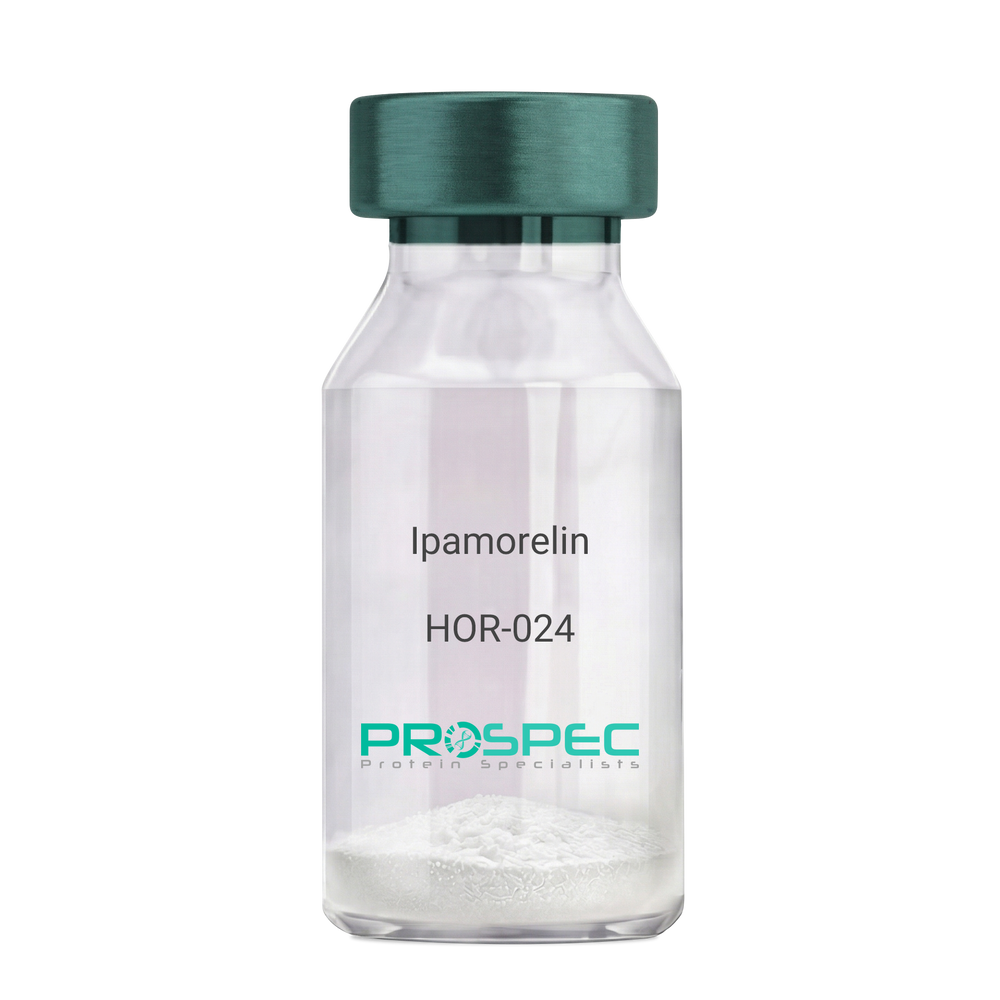
    Ipamorelin

    Description:

    Ipamorelin

    Ipamorelin

    Product # :

    HOR-024

    Price :

    Quantity :

    Shipping Method :

    Room Temp Icon

    Shipped at Room temp

    Add To Cart

    More Info

    • description
    • formulation
    • purity
    • More Info

    Description

    Ipamorelin Synthetic is a single, non-glycosylated polypeptide chain containing 4 amino acids, having a molecular mass of 711.85 Dalton and a Molecular formula of C38H49N9O5.

    Formulation

    The protein was lyophilized with no additives.

    Purity

    Greater than 97.0% as determined by analysis by RP-HPLC.

    More Info

    • Introduction

      Ipamorelin is a peptide selective agonist of the ghrelin/growth hormone secretagogue receptor and a growth hormone secretagogue. Ipamorelin is a pentapeptide that was derived from GHRP1. Ipamorelin significantly increases plasma growth hormone levels in both animals and humans. Like pralmorelin and GHRP-6, ipamorelin does not affect prolactin, FSH, LH or TSH levels. However, unlike GHRP2 and GHRP6, but as growth hormone-releasing hormone (GHRH), ipamorelin does not stimulate the secretion of adrenocorticotropic hormone (ACTH) or cortisol, and is highly selective for inducing the secretion only of GH.

    • Synonyms

      Ipamorelin

    • Physical Appearance

      Sterile Filtered White lyophilized (freeze-dried) powder.

    • Stability

      Lyophilized Ipamorelin although stable at room temperature for 3 weeks, should be stored desiccated below -18°C. Upon reconstitution Ipamorelin should be stored at 4°C between 2-7 days and for future use below -18°C. For long term storage it is recommended to add a carrier protein (0.1% HSA or BSA). Please prevent freeze-thaw cycles.

    • Solubility

      It is recommended to reconstitute the lyophilized Ipamorelin in sterile 18MΩ-cm H2O not less than 100 µg/ml, which can then be further diluted to other aqueous solutions.

    • Amino Acid Sequence

      Aib-His-D-2-Nal-D-Phe-Lys-NH2.

    ProSpec's products are furnished for LABORATORY RESEARCH USE ONLY. The product may not be used as drugs, agricultural or pesticidal products, food additives or household chemicals.

    Ipamorelin
  • View Data Sheet

    Name :

    JAM3 Human

    Description:

    Junctional Adhesion Molecule 3 Human Recombinant

    Junctional Adhesion Molecule 3, Junctional Adhesion Molecule C, JAM-C, JAM-2, JAM-3.

    Product # :

    PRO-1223

    Price :

    Quantity :

    Shipping Method :

    Ice Icon

    Shipped with Ice Packs

    Add To Cart

    More Info

    • description
    • source
    • formulation
    • purity
    • More Info

    Description

    JAM3 Human Recombinant produced in E. coli is a single polypeptide chain containing 234 amino acids (32-241) and having a molecular mass of 26.0 kDa.JAM3 is fused to a 24 amino acid His-tag at N-terminus & purified by proprietary chromatographic techniques.

    Source

    E.coli.

    Formulation

    The JAM3 solution contains 20mM Tris-HCl buffer (pH 8.0), 0.2M NaCl, 2mM EDTA, 5mM DTT and 50% glycerol.

    Purity

    Greater than 90% as determined by SDS-PAGE.

    More Info

    • Introduction

      JAM3 belongs to the junctional adhesion molecule protein family and functions as a receptor for another member of this family. JAM3 plays a part in cell-cell adhesion. The soluble form of JAM3 is a mediator of angiogenesis. JAM3 is a counter-receptor for ITGAM, mediating leukocyte-platelet interactions and is involved in the regulation of transepithelial migration of polymorphonuclear neutrophils (PMN). A mutation in an intron of the JAM3 gene is linked with hemorrhagic destruction of the brain, subependymal calcification, and congenital cataracts.

    • Synonyms

      Junctional Adhesion Molecule 3, Junctional Adhesion Molecule C, JAM-C, JAM-2, JAM-3.

    • Physical Appearance

      Sterile Filtered colorless solution.

    • Stability

      Store at 4°C if entire vial will be used within 2-4 weeks. Store, frozen at -20°C for longer periods of time. For long term storage it is recommended to add a carrier protein (0.1% HSA or BSA).Avoid multiple freeze-thaw cycles.

    • Amino Acid Sequence

      MGSSHHHHHH SSGLVPRGSH MGSMVNLKSS NRTPVVQEFE SVELSCIITD SQTSDPRIEW KKIQDEQTTY VFFDNKIQGD LAGRAEILGK TSLKIWNVTR RDSALYRCEV VARNDRKEID EIVIELTVQV KPVTPVCRVP KAVPVGKMAT LHCQESEGHP RPHYSWYRND VPLPTDSRAN PRFRNSSFHL NSETGTLVFT AVHKDDSGQY YCIASNDAGS ARCEEQEMEV YDLN

    ProSpec's products are furnished for LABORATORY RESEARCH USE ONLY. The product may not be used as drugs, agricultural or pesticidal products, food additives or household chemicals.

    Jam3 Human
  • View Data Sheet

    Name :

    SNAI1 Human

    Description:

    Snail Family Zinc Finger 1 Human Recombinant

    Snail Family Zinc Finger 1, Protein Sna, Protein Snail Homolog 1, SNAH, Snail 1 (Drosophila Homolog), Zinc Finger Protein, Snail Homolog 1 (Drosophila), SLUGH2, SNA, SNAIL, SNAIL1, dJ710H13.1, Snail 1 Homolog, Snail 1 Zinc Finger Protein, Snail 1, Zinc Finger Protein, Snail Homolog 1, Zinc Finger Protein SNAI1.

    Product # :

    PRO-1759

    Price :

    Quantity :

    Shipping Method :

    Ice Icon

    Shipped with Ice Packs

    Add To Cart

    More Info

    • description
    • source
    • formulation
    • purity
    • More Info

    Description

    SNAI1 Human Recombinant produced in E.Coli is a single, non-glycosylated polypeptide chain containing 287 amino acids (1-264 a.a) and having a molecular mass of 31.5kDa.SNAI1 is fused to a 23 amino acid His-tag at N-terminus & purified by proprietary chromatographic techniques.

    Source

    Escherichia Coli.

    Formulation

    SNAI1 protein solution (1mg/ml) containing 20mM Tris-HCl buffer (pH 8.0), 0.4M urea and 10% glycerol.

    Purity

    Greater than 85% as determined by SDS-PAGE.

    More Info

    • Introduction

      Snail homolog 1 (SNAI1) is involved in induction of the epithelial to mesenchymal transition (EMT), formation and maintenance of embryonic mesoderm, growth arrest, survival and cell migration. SNAI1 binds to 3 E-boxes of the E-cadherin gene promoter and represses its transcription. The nuclear protein encoded by SNAI1 is structurally identical to the Drosophila snail protein, and is considered as well to be vital for mesoderm formation in the developing embryo. At least two variants of a similar processed pseudogene have been found on chromosome 2. Among the diseases associated with SNAI1 are waardenburg syndrome type iid, and inappropriate adh syndrome.

    • Synonyms

      SnailFamily ZincFinger 1, Protein Sna, Protein Snail Homolog 1, SNAH, Snail 1 (Drosophila Homolog), Zinc Finger Protein, Snail Homolog 1 (Drosophila), SLUGH2, SNA, SNAIL, SNAIL1, dJ710H13.1, Snail 1 Homolog, Snail 1 Zinc Finger Protein, Snail 1, Zinc Finger Protein, Snail Homolog 1, Zinc Finger Protein SNAI1.

    • Physical Appearance

      Sterile Filtered clear solution.

    • Stability

      Store at 4°C if entire vial will be used within 2-4 weeks. Store, frozen at -20°C for longer periods of time.For long term storage it is recommended to add a carrier protein (0.1% HSA or BSA).Please avoid freeze thaw cycles.

    • Amino Acid Sequence

      MGSSHHHHHH SSGLVPRGSH MGSMPRSFLV RKPSDPNRKP NYSELQDSNP EFTFQQPYDQ AHLLAAIPPP EILNPTASLP MLIWDSVLAP QAQPIAWASL RLQESPRVAE LTSLSDEDSG KGSQPPSPPS PAPSSFSSTS VSSLEAEAYA AFPGLGQVPK QLAQLSEAKD LQARKAFNCK YCNKEYLSLG ALKMHIRSHT LPCVCGTCGK AFSRPWLLQG HVRTHTGEKP FSCPHCSRAF ADRSNLRAHL QTHSDVKKYQ CQACARTFSR MSLLHKHQES GCSGCPR

    ProSpec's products are furnished for LABORATORY RESEARCH USE ONLY. The product may not be used as drugs, agricultural or pesticidal products, food additives or household chemicals.

    Snai1 Human
  • View Data Sheet

    Name :

    AKR1C1 Human

    Description:

    Aldo-Keto Reductase Family 1 Member C1 Human Recombinant

    DDH1, DDH, HAKRC, 20-alpha-HSD, DD1/DD2, HBAB, C9, DD1, H-37, MBAB, MGC8954, 2-ALPHA-HSD, AKR1C1, Aldo-keto reductase family 1 member C1, 20-alpha-hydroxysteroid dehydrogenase, Trans-1,2-dihydrobenzene-1,2-diol dehydrogenase, Indanol dehydrogenase, Dihydrodiol dehydrogenase 1/2, Chlordecone reductase homolog HAKRC, High-affinity hepatic bile acid-binding protein

    Product # :

    ENZ-1130

    Price :

    Quantity :

    Shipping Method :

    Ice Icon

    Shipped with Ice Packs

    Add To Cart

    More Info

    • description
    • source
    • formulation
    • purity
    • biological activity
    • More Info

    Description

    AKR1C1 Human Recombinant produced in E.Coli is a single, non-glycosylated polypeptide chain containing 323 amino acids (1-323) and having a molecular mass of 36.7 kDa.AKR1C1 is purified by proprietary chromatographic techniques.

    Source

    Escherichia Coli.

    Formulation

    The AKR1C1 solution (1mg/ml) contains 20% Glycerol, 0.1M NaCl and 20mM Tris-HCl buffer (pH 8.5).

    Purity

    Greater than 95.0% as determined by SDS-PAGE.

    Biological Activity

    Specific activity is > 500pmol/min/ug. It is defined by the amount of enzyme that catalyzes oxidation of 1.0pmole 1-Acenaphthenol in the presence of NADP per minute at pH 8.8 at 25˚C.

    More Info

    • Introduction

      Aldo-keto reductase family 1 member C1 or AKR1C1 is an enzyme, part of the aldo/keto reductase family that holds over 40 familiar proteins. AKR1C1 promotes the conversion of ketones & aldehydes to their alcohol forms by using cofactors such as NADH & NADPH. AKR1C1 promotes the progesterone reduction to its inactive molecule form 20-alpha-hydroxy-progesterone.

    • Synonyms

      DDH1, DDH, HAKRC, 20-alpha-HSD, DD1/DD2, HBAB, C9, DD1, H-37, MBAB, MGC8954, 2-ALPHA-HSD, AKR1C1, Aldo-keto reductase family 1 member C1, 20-alpha-hydroxysteroid dehydrogenase, Trans-1,2-dihydrobenzene-1,2-diol dehydrogenase, Indanol dehydrogenase, Dihydrodiol dehydrogenase 1/2, Chlordecone reductase homolog HAKRC, High-affinity hepatic bile acid-binding protein

    • Physical Appearance

      Sterile Filtered colorless solution.

    • Stability

      Store at 4°C if entire vial will be used within 2-4 weeks. Store, frozen at -20°C for longer periods of time. For long term storage it is recommended to add a carrier protein (0.1% HSA or BSA).Avoid multiple freeze-thaw cycles.

    • Amino Acid Sequence

      MDSKYQCVKL NDGHFMPVLG FGTYAPAEVP KSKALEATKL AIEAGFRHID SAHLYNNEEQ VGLAIRSKIA DGSVKREDIF YTSKLWCNSH RPELVRPALE RSLKNLQLDY VDLYLIHFPV SVKPGEEVIP KDENGKILFD TVDLCATWEA VEKCKDAGLA KSIGVSNFNR RQLEMILNKP GLKYKPVCNQ VECHPYFNQR KLLDFCKSKD IVLVAYSALG SHREEPWVDP NSPVLLEDPV
      LCALAKKHKR TPALIALRYQ LQRGVVVLAK SYNEQRIRQN VQVFEFQLTS EEMKAIDGLN RNVRYLTLDI FAGPPNYPFS DEY

    ProSpec's products are furnished for LABORATORY RESEARCH USE ONLY. The product may not be used as drugs, agricultural or pesticidal products, food additives or household chemicals.

    Akr1C1 Protein
  • View Data Sheet

    Name :

    EGFR Antibody (PAT2H8AT)

    Description:

    Epidermal Growth Factor Receptor Clone PAT2H8AT, Mouse Anti Human

    ERBB, ERBB1, Epidermal growth factor receptor, HER1, PIG61, epidermal growth factor receptor, Urogastrone, Proto-oncogene c-ErbB-1, Oncogene ERBB, Cell proliferation inducing protein 61, Cell growth inhibiting protein 40, Avian erythroblastic leukemia viral (verbb) oncogene homolog.

    Product # :

    ANT-751

    Price :

    Quantity :

    Shipping Method :

    Ice Icon

    Shipped with Ice Packs

    Add To Cart

    More Info

    • formulation
    • More Info

    Formulation

    1mg/ml containing PBS, pH-7.4, 10% Glycerol and 0.02% Sodium Azide.

    More Info

    • Introduction

      Epidermal growth factor receptor or EGFR or Erb-1 is a membranal protein that acts as a receptor for the extracellular EGF proteins family. This protein is a part of a family of receptors called ErbB family which are all tyrosine kinases receptors. Mutations in the gene of this receptors can cause cancer.

    • Synonyms

      ERBB, ERBB1, Epidermal growth factor receptor, HER1, PIG61, epidermal growth factor receptor, Urogastrone, Proto-oncogene c-ErbB-1, Oncogene ERBB, Cell proliferation inducing protein 61, Cell growth inhibiting protein 40, Avian erythroblastic leukemia viral (verbb) oncogene homolog.

    • Physical Appearance

      Sterile filtered colorless solution.

    • Immunogen

      Anti-human EGFR mAb, is derived from hybridization of mouse F0 myeloma cells with spleen cells from BALB/c mice immunized with recombinant human EGFR amino acids 424-605 purified from E. coli.

    • Ig Subclass

      Mouse IgG2b heavy chain and κ light chain.

    • Clone

      PAT2H8AT.

    • Applications

      EGFR antibody has been tested by ELISA, Western blot analysis and ICC/IF to assure specificity and reactivity. Since application varies, however, each investigation should be titrated by the reagent to obtain optimal results.

    • Type

      Mouse Anti Human Monoclonal.

    • Storage Procedures

      For periods up to 1 month store at 4°C, for longer periods of time, store at -20°C. Prevent freeze thaw cycles.

    • Purification Method

      EGFR antibody was purified from mouse ascitic fluids by protein-G affinity chromatography.

    ProSpec's products are furnished for LABORATORY RESEARCH USE ONLY. The product may not be used as drugs, agricultural or pesticidal products, food additives or household chemicals.

    Anti Egfr
  • View Data Sheet

    Name :

    MCM7 Antibody

    Description:

    Mouse Anti Human Minichromosome Maintenance Complex Component 7

    Minichromosome Maintenance Complex Component 7, MCM7 Minichromosome Maintenance Deficient 7 (S. Cerevisiae), Minichromosome Maintenance Deficient (S. Cerevisiae) 7, DNA Replication Licensing Factor MCM7, Homolog of S. Cerevisiae Cdc47, CDC47 Homolog, P1CDC47, PNAS146, P85MCM, MCM2, CDC47, P1.1-MCM3, EC 3.6.4.12.

    Product # :

    ANT-711

    Price :

    Quantity :

    Shipping Method :

    Ice Icon

    Shipped with Ice Packs

    Add To Cart

    More Info

    • formulation
    • More Info

    Formulation

    1mg/ml containing PBS, pH-7.4, 10% Glycerol and 0.02% Sodium Azide.

    More Info

    • Introduction

      MCM7 is a highly conserved mini-chromosome maintenance protein (MCM) vital for eukaryotic genome replication initiation. The MCM proteins form a hexameric protein complex which is a key component of the pre-replication complex (pre_RC) which takes part in replication forks formation and in DNA replication related proteins recruitment. The MCM complex is comprised of MCM2, 4, 6 and 7 proteins and possesses DNA helicase activity, such as DNA unwinding.

    • Synonyms

      Minichromosome Maintenance Complex Component 7, MCM7 Minichromosome Maintenance Deficient 7 (S. Cerevisiae), Minichromosome Maintenance Deficient (S. Cerevisiae) 7, DNA Replication Licensing Factor MCM7, Homolog of S. Cerevisiae Cdc47, CDC47 Homolog, P1CDC47, PNAS146, P85MCM, MCM2, CDC47, P1.1-MCM3, EC 3.6.4.12.

    • Physical Appearance

      Sterile filtered colorless solution.

    • Immunogen

      Anti-human MCM7 mAb, is derived from hybridization of mouse F0 myeloma cells with spleen cells from BALB/c mice immunized with a recombinant human MCM7 protein 1-414 amino acids purified from E. coli.

    • Ig Subclass

      Mouse IgG1 heavy chain and k light chain.

    • Clone

      PAT118H7AT.

    • Applications

      MCM7 antibody has been tested by ELISA and Western blot analysis to assure specificity and reactivity. Since application varies, however, each investigation should be titrated by the reagent to obtain optimal results.

    • Type

      Mouse Anti Human Monoclonal.

    • Storage Procedures

      For periods up to 1 month store at 4°C, for longer periods of time, store at -20°C. Prevent freeze thaw cycles.

    • Purification Method

      MCM7 antibody was purified from mouse ascitic fluids by protein-A affinity chromatography.

    ProSpec's products are furnished for LABORATORY RESEARCH USE ONLY. The product may not be used as drugs, agricultural or pesticidal products, food additives or household chemicals.

    Mcm7 Antibody
  • View Data Sheet

    Name :

    NKp44 Antibody

    Description:

    Natural killer cell p44-related protein, Mouse Anti Human

    Natural cytotoxicity triggering receptor 2, Natural killer cell p44-related protein, NK cell-activating receptor, Lymphocyte antigen 95 homolog, NK-p44, NKp44, CD336, NCR2, LY95, dJ149M18.1.

    Product # :

    ANT-548

    Price :

    Quantity :

    Shipping Method :

    Ice Icon

    Shipped with Ice Packs

    Add To Cart

    More Info

    • formulation
    • More Info

    Formulation

    1mg/ml containing PBS, pH-7.4, 10% Glycerol and 0.02% Sodium Azide.

    More Info

    • Introduction

      NCR2 (NKp44) belongs to the natural cytotoxicity receptor (NCR) family which is expressed on activated human NK cells. NKp44 exhibits a single extracellular Ig-like V domain and a transmembrane portion containing the charged residue (Lysine), possibly involved in the association with KARAP/DAP12 molecules. The gene coding for NKp44 maps on human chromosome 6p21.1.

    • Synonyms

      Natural cytotoxicity triggering receptor 2, Natural killer cell p44-related protein, NK cell-activating receptor, Lymphocyte antigen 95 homolog, NK-p44, NKp44, CD336, NCR2, LY95, dJ149M18.1.

    • Physical Appearance

      Sterile filtered colorless solution.

    • Immunogen

      Anti-human NKp44 mAb, is derived from hybridization of mouse F0 myeloma cells with spleen cells from BALB/c mice immunized with a recombinant human NKp44 protein 19-130 amino acids purified from E. coli.

    • Ig Subclass

      Mouse IgG2a heavy chain and k light chain.

    • Clone

      PAT1G6AT.

    • Applications

      NKp44 antibody has been tested by ELISA, Western blot analysis to assure specificity and reactivity. Since application varies, however, each investigation should be titrated by the reagent to obtain optimal results. Recommended starting dilution is 1:1000.

    • Type

      Mouse Anti Human Monoclonal.

    • Storage Procedures

      For periods up to 1 month store at 4°C, for longer periods of time, store at -20°C. Prevent freeze thaw cycles.

    • Purification Method

      NKp44 antibody was purified from mouse ascitic fluids by protein-A affinity chromatography.

    ProSpec's products are furnished for LABORATORY RESEARCH USE ONLY. The product may not be used as drugs, agricultural or pesticidal products, food additives or household chemicals.

    Nkp44 Pat1G6At Antibody
  • View Data Sheet

    Name :

    GlpK E. coli

    Description:

    Glycerol kinase E. Coli Recombinant

    Glycerol kinase, glycerol 3-phosphotransferase, Glycerokinase, GK.

    Product # :

    PKA-038

    Price :

    Quantity :

    Shipping Method :

    Ice Icon

    Shipped with Ice Packs

    Add To Cart

    More Info

    • description
    • source
    • formulation
    • purity
    • More Info

    Description

    GlpK E. Coli Recombinant produced in E. coli is a single, non-glycosylated polypeptide chain containing 525 amino acids (1-502 a.a) and having a molecular mass of 58.6 kDa.GlpK is fused to a 23 amino acid His-tag at N-terminus& purified by proprietary chromatographic techniques.

    Source

    Escherichia Coli.

    Formulation

    GlpK protein solution (1mg/ml) containing Phosphate buffered saline (pH7.4),10% glycerol and 1mM DTT.

    Purity

    Greater than 95.0% as determined by SDS-PAGE.

    More Info

    • Introduction

      GlpK also known as glycerol kinase, is a member of the FGGY kinase family. GlpK catalyzes the transfer of a phosphate group from ATP to glycerol, thereby forming glycerol phosphate. Furthermore, this intermediate can then be converted to dihydroxyacetone phosphate (DHAP), which is utilized in either glycolysis or gluconeogenesis. The activity of GlpK is affected by numerous metabolites. The non-competitive allosteric inhibition by fructose 1,6-bisphosphate (FBP) triggers modifications in the quaternary structure of Glpk.

    • Synonyms

      Glycerol kinase, glycerol 3-phosphotransferase, Glycerokinase, GK.

    • Physical Appearance

      Sterile Filtered clear solution.

    • Stability

      Store at 4°C if entire vial will be used within 2-4 weeks.Store, frozen at -20°C for longer periods of time. For long term storage it is recommended to add a carrier protein (0.1% HSA or BSA).Avoid multiple freeze-thaw cycles.

    • Amino Acid Sequence

      MGSSHHHHHH SSGLVPRGSH MGSMTEKKYI VALDQGTTSS RAVVMDHDAN IISVSQREFE QIYPKPGWVE HDPMEIWATQ SSTLVEVLAK ADISSDQIAA IGITNQRETT IVWEKETGKP IYNAIVWQCR RTAEICEHLK RDGLEDYIRS NTGLVIDPYF SGTKVKWILD HVEGSRERAR RGELLFGTVD TWLIWKMTQG RVHVTDYTNA SRTMLFNIHT LDWDDKMLEV LDIPREMLPE VRRSSEVYGQ TNIGGKGGTR IPISGIAGDQ QAALFGQLCV KEGMAKNTYG TGCFMLMNTG EKAVKSENGL LTTIACGPTG EVNYALEGAV FMAGASIQWL RDEMKLINDA YDSEYFATKV QNTNGVYVVP AFTGLGAPYW DPYARGAIFG LTRGVNANHI IRATLESIAY QTRDVLEAMQ ADSGIRLHAL RVDGGAVANN FLMQFQSDIL GTRVERPEVR EVTALGAAYL AGLAVGFWQN LDELQEKAVI EREFRPGIET TERNYRYAGW KKAVKRAMAW EEHDE.

    ProSpec's products are furnished for LABORATORY RESEARCH USE ONLY. The product may not be used as drugs, agricultural or pesticidal products, food additives or household chemicals.

    Glpk E Coli
  • View Data Sheet

    Name :

    AKR1C1 Antibody

    Description:

    Aldo-Keto Reductase Family 1 Member C1, Mouse Anti Human

    DDH1, DDH, HAKRC, 20-alpha-HSD, DD1/DD2, HBAB, C9, DD1, H-37, MBAB, MGC8954, 2-ALPHA-HSD, AKR1C1, Aldo-keto reductase family 1 member C1, 20-alpha-hydroxysteroid dehydrogenase, Trans-1,2-dihydrobenzene-1,2-diol dehydrogenase, Indanol dehydrogenase, Dihydrodiol dehydrogenase 1/2, Chlordecone reductase homolog HAKRC, High-affinity hepatic bile acid-binding protein.

    Product # :

    ANT-044

    Price :

    Quantity :

    Shipping Method :

    Ice Icon

    Shipped with Ice Packs

    Add To Cart

    More Info

    • formulation
    • More Info

    Formulation

    1mg/ml containing PBS, pH-7.4, & 0.1% Sodium Azide.

    More Info

    • Introduction

      AKR1C1 transfers progesterone to its inactive state or in other words catalyzes the reaction of 20-alpha-hydroxy progesterone (20-alpha-OHP). In the liver and intestine. AKR1C1 transfers bile and monitors the intrahepatic bile acid concentration though it has a low bile-binding ability. AKR1C1 participates in myelin formation. AKR1C1 is part of the aldo/keto reductase superfamily, which has over 40 known enzymes which catalyze the conversion of aldehydes and ketones to their corresponding alcohols by utilizing NADH and/or NADPH as cofactors thus display overlapping but distinct substrate specificity.

    • Synonyms

      DDH1, DDH, HAKRC, 20-alpha-HSD, DD1/DD2, HBAB, C9, DD1, H-37, MBAB, MGC8954, 2-ALPHA-HSD, AKR1C1, Aldo-keto reductase family 1 member C1, 20-alpha-hydroxysteroid dehydrogenase, Trans-1,2-dihydrobenzene-1,2-diol dehydrogenase, Indanol dehydrogenase, Dihydrodiol dehydrogenase 1/2, Chlordecone reductase homolog HAKRC, High-affinity hepatic bile acid-binding protein.

    • Immunogen

      Anti-human AKR1C1 mAb, is derived from hybridization of mouse FO myeloma cells with spleen cells from BALB/c mice immunized with recombinant human AKR1C1 amino acids 1-323 purified from E. coli.

    • Ig Subclass

      Mouse IgG1 heavy chain and k light chain.

    • Clone

      PAT6D10AT.

    • Applications

      AKR1C1 antibody has been tested by ELISA and Western blot analysis to assure specificity and reactivity. Since application varies, however, each investigation should be titrated by the reagent to obtain optimal results. Recommended dilution range for Western blot analysis is 1:1000.
      Recommended starting dilution is 1:1000.

    • Type

      Mouse Anti Human Monoclonal.

    • Storage Procedures

      For periods up to 1 month store at 4°C, for longer periods of time, store at -20°C. Prevent freeze thaw cycles.

    • Purification Method

      AKR1C1 antibody was purified from mouse ascitic fluids by protein-G affinity chromatography.

    ProSpec's products are furnished for LABORATORY RESEARCH USE ONLY. The product may not be used as drugs, agricultural or pesticidal products, food additives or household chemicals.

    Akr1C1 Antibody
  • View Data Sheet

    Name :

    CD274 Human, Sf9

    Description:

    CD274 Human Recombinant, Sf9

    CD274 molecule, CD274 antigen, programmed cell death 1 ligand 1, PD-L1, PDCD1L1, PDCD1LG1, PDCD1 ligand 1, B7 homolog 1, B7H1.

    Product # :

    PRO-2453

    Price :

    Quantity :

    Shipping Method :

    Ice Icon

    Shipped with Ice Packs

    Add To Cart

    More Info

    • description
    • source
    • formulation
    • purity
    • More Info

    Description

    CD274 Human Recombinant produced in Sf9 Baculovirus cells is a single, glycosylated polypeptide chain containing 462 amino acids (19-238a.a.) and having a molecular mass of 52.5kDa (Molecular size on SDS-PAGE will appear at approximately 50-70kDa). CD274 is expressed with a 239 amino acids hIgG-His tag at C-Terminus and purified by proprietary chromatographic techniques.

    Source

    Sf9, Baculovirus cells.

    Formulation

    CD274 protein solution (1mg/ml) contains Phosphate Buffered Saline (pH 7.4) and 10% glycerol.

    Purity

    Greater than 95% as determined by SDS-PAGE.

    More Info

    • Introduction

      CD274 takes part in the costimulatory signal, vital for T-cell proliferation and creation of IL10 and IFNG, in a PDCD1-independent and an IL2-dependent manner. CD274 collaboration with PDCD1 inhibits cytokine production and T-cell proliferation.

    • Synonyms

      CD274 molecule, CD274 antigen, programmed cell death 1 ligand 1, PD-L1, PDCD1L1, PDCD1LG1, PDCD1 ligand 1, B7 homolog 1, B7H1.

    • Physical Appearance

      Sterile Filtered colorless solution.

    • Stability

      Store at 4°C if entire vial will be used within 2-4 weeks. Store, frozen at -20°C for longer periods of time. For long term storage it is recommended to add a carrier protein (0.1% HSA or BSA).Avoid multiple freeze-thaw cycles.

    • Amino Acid Sequence

      ADLFTVTVPK DLYVVEYGSN MTIECKFPVE KQLDLAALIV YWEMEDKNII QFVHGEEDLK VQHSSYRQRA RLLKDQLSLG NAALQITDVK LQDAGVYRCM ISYGGADYKR ITVKVNAPYN KINQRILVVD PVTSEHELTC QAEGYPKAEV IWTSSDHQVL SGKTTTTNSK REEKLFNVTS TLRINTTTNE IFYCTFRRLD PEENHTAELV IPELPLAHPP NERLEPKSCD KTHTCPPCPA PELLGGPSVF LFPPKPKDTL MISRTPEVTC VVVDVSHEDP EVKFNWYVDG VEVHNAKTKP REEQYNSTYR VVSVLTVLHQ DWLNGKEYKC KVSNKALPAP IEKTISKAKG QPREPQVYTL PPSRDELTKN QVSLTCLVKG FYPSDIAVEW ESNGQPENNY KTTPPVLDSD GSFFLYSKLT VDKSRWQQGN VFSCSVMHEA LHNHYTQKSL SLSPGKHHHH HH.

    ProSpec's products are furnished for LABORATORY RESEARCH USE ONLY. The product may not be used as drugs, agricultural or pesticidal products, food additives or household chemicals.

    Cd274 Protein
  • View Data Sheet

    Name :

    SARS MERS, Sf9

    Description:

    SARS MERS Spike Recombinant

    Middle East respiratory syndrome coronavirus, Human betacoronavirus 2c EMC/2012, MERS-CoV, MERS, MERSCoV SP, Spike glycoprotein, S glycoprotein, S, Spike protein, E2, Peplomer protein

    Product # :

    SARS-051

    Price :

    Quantity :

    Shipping Method :

    Ice Icon

    Shipped with Ice Packs

    Add To Cart

    More Info

    • description
    • source
    • formulation
    • purity
    • More Info

    Description

    SARS MERS Recombinant produced in Sf9 Baculovirus cells is a single, glycosylated polypeptide chain containing 1285 amino acids (18-1296aa) and having a molecular mass of 141.6kDa.SARS MERS is fused to a 6 amino acid His-tag at C-terminus & purified by proprietary chromatographic techniques.

    Source

    Sf9, Baculovirus cells.

    Formulation

    The SARS MERS solution (0.25mg/ml) contains 10% glycerol and Phosphate-Buffered Saline (pH 7.4).

    Purity

    Greater than 85.0% as determined by SDS-PAGE.

    More Info

    • Introduction

      Since April 2012, cases of the Middle East Respiratory Syndrome Coronavirus (MERS-CoV) have been identified in various countries. Coronaviruses are the cause of the common cold, SARS (severe acute respiratory syndrome) and other severe illnesses with high mortality rates, all are classified into coronavirus family. MERS-CoV is a new type of SARS found in the coronavirus family causing severe pneumonia with sudden and serious respiratory illness with high mortality rates as well. Since January 27th 2015, the WHO has reported 956 human cases, including 351 deaths. More cases of the new coronavirus strain are expected. Like in other coronaviruses, large surface spike glycoprotein is a central structural protein of this virus; it is located above the virion surface to bind and enter into the target cell. Spike protein has 2 domains- S1 and S2. The S1 domain is responsible for cellular tropism and interaction with target cell, while the S2 domain is responsible for membrane fusion. The C-terminal of S1 domain contains a receptor binding domain, and is also a potential target for vaccine development and an antigen for diagnosis.

    • Synonyms

      Middle East respiratory syndrome coronavirus, Human betacoronavirus 2c EMC/2012, MERS-CoV, MERS, MERSCoV SP, Spike glycoprotein, S glycoprotein, S, Spike protein, E2, Peplomer protein

    • Physical Appearance

      Sterile filtered colorless solution.

    • Stability

      Store at 4°C if entire vial will be used within 2-4 weeks.Store, frozen at -20°C for longer periods of time.For long term storage it is recommended to add a carrier protein (0.1% HSA or BSA).Avoid multiple freeze-thaw cycles.

    • Amino Acid Sequence

      YVDVGPDSVK SACIEVDIQQ TFFDKTWPRP IDVSKADGII YPQGRTYSNI TITYQGLFPY QGDHGDMYVY SAGHATGTTP QKLFVANYSQ DVKQFANGFV VRIGAAANST GTVIISPSTS ATIRKIYPAF MLGSSVGNFS DGKMGRFFNH TLVLLPDGCG TLLRAFYCIL EPRSGNHCPA GNSYTSFATY HTPATDCSDG NYNRNASLNS FKEYFNLRNC TFMYTYNITE DEILEWFGIT QTAQGVHLFS SRYVDLYGGN MFQFATLPVY DTIKYYSIIP HSIRSIQSDR KAWAAFYVYK LQPLTFLLDF SVDGYIRRAI DCGFNDLSQL HCSYESFDVE SGVYSVSSFE AKPSGSVVEQ AEGVECDFSP LLSGTPPQVY NFKRLVFTNC NYNLTKLLSL FSVNDFTCSQ ISPAAIASNC YSSLILDYFS YPLSMKSDLS VSSAGPISQF NYKQSFSNPT CLILATVPHN LTTITKPLKY SYINKCSRLL SDDRTEVPQL VNANQYSPCV SIVPSTVWED GDYYRKQLSP LEGGGWLVAS GSTVAMTEQL QMGFGITVQY GTDTNSVCPK LEFANDTKIA SQLGNCVEYS LYGVSGRGVF QNCTAVGVRQ QRFVYDAYQN LVGYYSDDGN YYCLRACVSV PVSVIYDKET KTHATLFGSV ACEHISSTMS QYSRSTRSML KRRDSTYGPL QTPVGCVLGL VNSSLFVEDC KLPLGQSLCA LPDTPSTLTP RSVRSVPGEM RLASIAFNHP IQVDQLNSSY FKLSIPTNFS FGVTQEYIQT TIQKVTVDCK QYVCNGFQKC EQLLREYGQF CSKINQALHG ANLRQDDSVR NLFASVKSSQ SSPIIPGFGG DFNLTLLEPV SISTGSRSAR SAIEDLLFDK VTIADPGYMQ GYDDCMQQGP ASARDLICAQ YVAGYKVLPP LMDVNMEAAY TSSLLGSIAG VGWTAGLSSF AAIPFAQSIF YRLNGVGITQ QVLSENQKLI ANKFNQALGA MQTGFTTTNE AFQKVQDAVN NNAQALSKLA SELSNTFGAI SASIGDIIQR LDVLEQDAQI DRLINGRLTT LNAFVAQQLV RSESAALSAQ LAKDKVNECV KAQSKRSGFC GQGTHIVSFV VNAPNGLYFM HVGYYPSNHI EVVSAYGLCD AANPTNCIAP VNGYFIKTNN TRIVDEWSYT GSSFYAPEPI TSLNTKYVAP QVTYQNISTN LPPPLLGNST GIDFQDELDE FFKNVSTSIP NFGSLTQINT TLLDLTYEML SLQQVVKALN ESYIDLKELG NYTYYNKWPH HHHHH

    ProSpec's products are furnished for LABORATORY RESEARCH USE ONLY. The product may not be used as drugs, agricultural or pesticidal products, food additives or household chemicals.

    product_image.jpg
  • View Data Sheet

    Name :

    DCUN1D1 Human

    Description:

    DCN1 Defective in Cullin Neddylation 1 Domain Containing 1 Human Recombinant

    DCN1, defective in cullin neddylation 1-domain containing 1 (S. cerevisiae), RP42, DCUN1L1, SCCRO, SCRO, Tes3, Defective in cullin neddylation protein 1-like protein 1, Squamous cell carcinoma-related oncogene, DCUN1 domain-containing protein 1, DCN1-like protein 1, RP42 homolog.

    Product # :

    PRO-078

    Price :

    Quantity :

    Shipping Method :

    Ice Icon

    Shipped with Ice Packs

    Add To Cart

    More Info

    • description
    • source
    • formulation
    • purity
    • More Info

    Description

    DCUN1D1 produced in E.Coli is a single, non-glycosylated polypeptide chain containing 279 amino acids (1-259a.a.) and having a molecular mass of 32.2kDa. DCUN1D1 is fused to a 20 amino acid His-tag at N-terminus & purified by proprietary chromatographic techniques.

    Source

    Escherichia Coli.

    Formulation

    The DCUN1D1 protein solution (1mg/1ml) is formulated in 20mM Tris-HCl buffer (pH8.0) 0.1M NaCl and 10% glycerol.

    Purity

    Greater than 90% as determined by SDS-PAGE.

    More Info

    • Introduction

      DCUN1D1 takes part in the malignant transformation of squamous cell lineage. DCUN1D1 protein regulates Gli1, a main regulator of the hedgehog (HH) pathway which takes a vital role in development, maintenance, and regeneration of practically all adult tissues.

    • Synonyms

      DCN1, defective in cullin neddylation 1-domain containing 1 (S. cerevisiae), RP42, DCUN1L1, SCCRO, SCRO, Tes3, Defective in cullin neddylation protein 1-like protein 1, Squamous cell carcinoma-related oncogene, DCUN1 domain-containing protein 1, DCN1-like protein 1, RP42 homolog.

    • Physical Appearance

      Sterile Filtered clear solution.

    • Stability

      Store at 4°C if entire vial will be used within 2-4 weeks. Store, frozen at -20°C for longer periods of time.Please avoid freeze thaw cycles.

    • Amino Acid Sequence

      MGSSHHHHHH SSGLVPRGSH MNKLKSSQKD KVRQFMIFTQ SSEKTAVSCL SQNDWKLDVA TDNFFQNPEL YIRESVKGSL DRKKLEQLYN RYKDPQDENK IGIDGIQQFC DDLALDPASI SVLIIAWKFR AATQCEFSKQ EFMDGMTELG CDSIEKLKAQ IPKMEQELKE PGRFKDFYQF TFNFAKNPGQ KGLDLEMAIA YWNLVLNGRF KFLDLWNKFL LEHHKRSIPK DTWNLLLDFS TMIADDMSNY DEEGAWPVLI DDFVEFARPQ IAGTKSTTV

    ProSpec's products are furnished for LABORATORY RESEARCH USE ONLY. The product may not be used as drugs, agricultural or pesticidal products, food additives or household chemicals.

    Dcun1D1 Human
  • View Data Sheet

    Name :

    ELAC1 Human

    Description:

    ElaC Ribonuclease Z 1 Human Recombinant

    ElaC Ribonuclease Z 1, D29, ElaC Homolog Protein 1, TRNA 3 Endonuclease 1, TRNA Z (Short Form), Ribonuclease Z 1, Deleted In Ma29, EC 3.1.26.11, TRNase Z 1, RNaseZ(S), RNase Z 1, Zinc Phosphodiesterase ELAC Protein 1, TRNA 3 Processing Endoribonuclease, ElaC (E. Coli) Homolog 1, ElaC Homolog 1 (E. Coli), ElaC Homolog 1, TRNase ZS, ELAC1.

    Product # :

    ENZ-883

    Price :

    Quantity :

    Shipping Method :

    Ice Icon

    Shipped with Ice Packs

    Add To Cart

    More Info

    • description
    • source
    • formulation
    • purity
    • More Info

    Description

    ELAC1 Human Recombinant produced in E.Coli is a single, non-glycosylated polypeptide chain containing 386 amino acids (1-363 a.a) and having a molecular mass of 42.4 kDa.ELAC1 is fused to a 23 amino acid His-tag at N-terminus & purified by proprietary chromatographic techniques.

    Source

    Escherichia Coli.

    Formulation

    ELAC1 protein solution (0.5mg/ml) containing Phosphate buffered saline (pH7.4), 10% glycerol and 1mM DTT.

    Purity

    Greater than 80.0% as determined by SDS-PAGE.

    More Info

    • Introduction

      ElaC Ribonuclease Z 1, also known as ELAC1 is a member of the RNase Z family. Zinc phosphodiesterase, which shows some tRNA 3'-processing endonuclease activity. In addition, ELAC1 is implicated in tRNA maturation, by removing a 3'-trailer from precursor tRNA.

    • Synonyms

      ElaC Ribonuclease Z 1, D29, ElaC Homolog Protein 1, TRNA 3 Endonuclease 1, TRNA Z (Short Form), Ribonuclease Z 1, Deleted In Ma29, EC 3.1.26.11, TRNase Z 1, RNaseZ(S), RNase Z 1, Zinc Phosphodiesterase ELAC Protein 1, TRNA 3 Processing Endoribonuclease, ElaC (E. Coli) Homolog 1, ElaC Homolog 1 (E. Coli), ElaC Homolog 1, TRNase ZS, ELAC1.

    • Physical Appearance

      Sterile Filtered colorless solution.

    • Stability

      Store at 4°C if entire vial will be used within 2-4 weeks. Store, frozen at -20°C for longer periods of time. For long term storage it is recommended to add a carrier protein (0.1% HSA or BSA).Avoid multiple freeze-thaw cycles.

    • Amino Acid Sequence

      MGSSHHHHHH SSGLVPRGSH MGSMSMDVTF LGTGAAYPSP TRGASAVVLR CEGECWLFDC GEGTQTQLMK SQLKAGRITK IFITHLHGDH FFGLPGLLCT ISLQSGSMVS KQPIEIYGPV GLRDFIWRTM ELSHTELVFH YVVHELVPTA DQCPAEELKE FAHVNRADSP PKEEQGRTIL LDSEENSYLL FDDEQFVVKA FRLFHRIPSF GFSVVEKKRP GKLNAQKLKD LGVPPGPAYG KLKNGISVVL ENGVTISPQD VLKKPIVGRK ICILGDCSGV VGDGGVKLCF EADLLIHEAT LDDAQMDKAK EHGHSTPQMA ATFAKLCRAK RLVLTHFSQR YKPVALAREG ETDGIAELKK QAESVLDLQE VTLAEDFMVI SIPIKK

    ProSpec's products are furnished for LABORATORY RESEARCH USE ONLY. The product may not be used as drugs, agricultural or pesticidal products, food additives or household chemicals.

    Elac1 Human
  • View Data Sheet

    Name :

    SSU72 PAT45E2AT Antibody

    Description:

    SSU72 RNA Polymerase II CTD Phosphatase, Clone PAT45E2AT, Mouse Anti Human

    SSU72 RNA polymerase II CTD phosphatase homolog (S. cerevisiae), HSPC182, CTD phosphatase SSU72, Ssu72 RNA polymerase II CTD phosphatase homolog (yeast), PNAS-120, RNA polymerase II subunit A C-terminal domain phosphatase SSU72, EC 3.1.3.16.

    Product # :

    ANT-701

    Price :

    Quantity :

    Shipping Method :

    Ice Icon

    Shipped with Ice Packs

    Add To Cart

    More Info

    • formulation
    • More Info

    Formulation

    1mg/ml containing PBS, pH-7.4, 10% Glycerol and 0.02% Sodium Azide.

    More Info

    • Introduction

      SSU72 is an extremely conserved homologue of yeast Ssu72, a CTD phosphatase and a component of the polyadenylation/termination machinery. SSU72 interacts with TFIIB, Rb and DNAM-1 and operates to catalyze the dephosphorylation of target proteins, and taking part in RNA processing and termination via dephosphorylation of Pol II. SSU72 is found in multiple alternatively spliced isoforms.

    • Synonyms

      SSU72 RNA polymerase II CTD phosphatase homolog (S. cerevisiae), HSPC182, CTD phosphatase SSU72, Ssu72 RNA polymerase II CTD phosphatase homolog (yeast), PNAS-120, RNA polymerase II subunit A C-terminal domain phosphatase SSU72, EC 3.1.3.16.

    • Physical Appearance

      Sterile filtered colorless solution.

    • Immunogen

      Anti-human SSU72 mAb, is derived from hybridization of mouse F0 myeloma cells with spleen cells from BALB/c mice immunized with recombinant human SSU72 amino acids 1-194 purified from E. coli.

    • Ig Subclass

      Mouse IgG1 heavy chain and κ light chain.

    • Clone

      PAT45E2AT.

    • Applications

      SSU72 antibody has been tested by ELISA and Western blot analysis to assure specificity and reactivity. Since application varies, however, each investigation should be titrated by the reagent to obtain optimal results.

    • Type

      Mouse Anti Human Monoclonal.

    • Storage Procedures

      For periods up to 1 month store at 4°C, for longer periods of time, store at -20°C. Prevent freeze thaw cycles.

    • Purification Method

      SSU72 antibody was purified from mouse ascitic fluids by protein-A affinity chromatography.

    ProSpec's products are furnished for LABORATORY RESEARCH USE ONLY. The product may not be used as drugs, agricultural or pesticidal products, food additives or household chemicals.

    Anti Ssu72
  • View Data Sheet

    Name :

    TSTD3 Human

    Description:

    Thiosulfate Sulfurtransferase Like Domain Containing 3 Human Recombinant

    Thiosulfate Sulfurtransferase (Rhodanese)-Like Domain Containing 3, Rhodanese Domain-Containing Protein 3, Thiosulfate Sulfurtransferase/Rhodanese-Like Domain-Containing Protein 3.

    Product # :

    ENZ-723

    Price :

    Quantity :

    Shipping Method :

    Ice Icon

    Shipped with Ice Packs

    Add To Cart

    More Info

    • description
    • source
    • formulation
    • purity
    • More Info

    Description

    TSTD3 Human Recombinant produced in E.Coli is a single, non-glycosylated polypeptide chain containing 120 amino acids (1-97 a.a) and having a molecular mass of 13.7kDa.TSTD3 is fused to a 23 amino acid His-tag at N-terminus & purified by proprietary chromatographic techniques.

    Source

    Escherichia Coli.

    Formulation

    TSTD3 protein solution (1mg/ml) containing 20mM Tris-HCl buffer (pH 8.0), 0.15M NaCl, 10% glycerol and 1mM DTT.

    Purity

    Greater than 90.0% as determined by SDS-PAGE.

    More Info

    • Introduction

      Thiosulfate Sulfurtransferase Like Domain Containing 3, also known as TSTD3 contains 1 rhodanese domain which is characterized by an active site cysteine residue that has the ability to bind sulfane sulfur and catalyse sulfur transfer.

    • Synonyms

      Thiosulfate Sulfurtransferase (Rhodanese)-Like Domain Containing 3, Rhodanese Domain-Containing Protein 3, Thiosulfate Sulfurtransferase/Rhodanese-Like Domain-Containing Protein 3.

    • Physical Appearance

      Sterile Filtered clear solution.

    • Stability

      Store at 4°C if entire vial will be used within 2-4 weeks. Store, frozen at -20°C for longer periods of time. For long term storage it is recommended to add a carrier protein (0.1% HSA or BSA).Avoid multiple freeze-thaw cycles.

    • Amino Acid Sequence

      MGSSHHHHHH SSGLVPRGSH MGSMKIEKCG WSEGLTSIKG NCHNFYTAIS KDVTYKELKN LLNSKNIMLI DVREIWEILE YQKIPESINV PLDEVGEALQ MNPRDFKEKY NEVKPSKSDS

    ProSpec's products are furnished for LABORATORY RESEARCH USE ONLY. The product may not be used as drugs, agricultural or pesticidal products, food additives or household chemicals.

    Tstd3 Human
  • View Data Sheet

    Name :

    ADAL Human

    Description:

    Adenosine Deaminase-Like Human Recombinant

    Adenosine Deaminase-Like, Adenosine Deaminase-Like Protein, EC 3.5.4.-, EC 3.5.4, ADAL.

    Product # :

    ENZ-788

    Price :

    Quantity :

    Shipping Method :

    Ice Icon

    Shipped with Ice Packs

    Add To Cart

    More Info

    • description
    • source
    • formulation
    • purity
    • More Info

    Description

    ADAL Human Recombinant produced in E.coli is a single, non-glycosylated polypeptide chain containing 292 amino acids (1-267) and having a molecular mass of 32.7kDa.ADAL is fused to a 25 amino acid His-tag at N-terminus & purified by proprietary chromatographic techniques.

    Source

    Escherichia Coli.

    Formulation

    The ADAL solution (1mg/ml) contains 20mM Tris-HCl buffer (pH8.0), 10% glycerol and 0.4M Urea.

    Purity

    Greater than 80% as determined by Analysis by SDS-PAGE.

    More Info

    • Introduction

      Adenosine deaminase-like protein (ADAL) is a putative nucleoside deaminase. ADAL catalyzes the hydrolytic deamination of adenosine or some similar substrate and has a role in purine metabolism.

    • Synonyms

      Adenosine Deaminase-Like, Adenosine Deaminase-Like Protein, EC 3.5.4.-, EC 3.5.4, ADAL.

    • Physical Appearance

      Sterile filtered colorless solution.

    • Stability

      Store at 4°C if entire vial will be used within 2-4 weeks. Store, frozen at -20°C for longer periods of time. For long term storage it is recommended to add a carrier protein (0.1% HSA or BSA). Avoid multiple freeze-thaw cycles.

    • Amino Acid Sequence

      MGSSHHHHHH SSGLVPRGSH MGSEFMIEAE EQQPCKTDFY SELPKVELHA HLNGSISSHT MKKLIAQKPD LKIHDQMTVI DKGKKRTLEE CFQMFQTIHQ LTSSPEDILM VTKDVIKEFA DDGVKYLELR STPRRENATG MTKKTYVESI LEGIKQSKQE NLDIDVRYLI AVDRRGGPLV AKETVKLAEE FFLSTEGTVL GLDLSGDPTV GQAKDFLEPL LEAKKAGLKL ALHLSEIPNQ KKETQILLDL LPDRIGHGTF LNSGEGGSLD LVDFVRQHRI PLGKAWSFRS SR.

    ProSpec's products are furnished for LABORATORY RESEARCH USE ONLY. The product may not be used as drugs, agricultural or pesticidal products, food additives or household chemicals.

    Adal Human
  • View Data Sheet

    Name :

    TSTD1 Human

    Description:

    Thiosulfate Sulfurtransferase Like Domain Containing 1 Human Recombinant

    Thiosulfate sulfurtransferase/rhodanese-like domain-containing protein 1, TSTD1, KAT.

    Product # :

    ENZ-094

    Price :

    Quantity :

    Shipping Method :

    Ice Icon

    Shipped with Ice Packs

    Add To Cart

    More Info

    • description
    • source
    • formulation
    • purity
    • More Info

    Description

    TSTD1 Human Recombinant produced in E.Coli is a single, non-glycosylated, polypeptide chain containing 135 amino acids (1-115 a.a.) and having a molecular mass of 14.6kDa.TSTD1 is fused to a 20 amino acid His tag at N-terminus and purified by proprietary chromatographic techniques.

    Source

    Escherichia Coli.

    Formulation

    The TSTD1 solution (1 mg/ml) contains 20mM Tris-HCl buffer (pH 8.0), 1mM DTT, 10% glycerol and 100mM NaCl.

    Purity

    Greater than 95.0% as determined by SDS-PAGE.

    More Info

    • Introduction

      Thiosulfate sulfurtransferase like domain containing 1 (TSTD1) is a member of a family of transferases, specifically the sulfurtransferases, which transfer sulfur-containing groups. TSTD1 is localized around the nuclear membranes. TSTD1 is expressed in a number of human tissues, including the kidney, liver, skeletal muscle, heart, colon, thymus, spleen, placenta and lung. TSTD1 may participate in cyanide detoxification, the formation of iron-sulfur proteins, and the modification of sulfur-containing enzymes.

    • Synonyms

      Thiosulfate sulfurtransferase/rhodanese-like domain-containing protein 1, TSTD1, KAT.

    • Physical Appearance

      Sterile Filtered colorless solution.

    • Stability

      Store at 4°C if entire vial will be used within 2-4 weeks. Store, frozen at -20°C for longer periods of time. For long term storage it is recommended to add a carrier protein (0.1% HSA or BSA).Avoid multiple freeze-thaw cycles.

    • Amino Acid Sequence

      MGSSHHHHHH SSGLVPRGSH MAGAPTVSLP ELRSLLASGR ARLFDVRSRE EAAAGTIPGA LNIPVSELES ALQMEPAAFQ ALYSAEKPKL EDEHLVFFCQ MGKRGLQATQ LARSLGYTGA RNYAGAYREW LEKES.

    ProSpec's products are furnished for LABORATORY RESEARCH USE ONLY. The product may not be used as drugs, agricultural or pesticidal products, food additives or household chemicals.

    Tstd1 Human
  • View Data Sheet

    Name :

    GATM Human

    Description:

    Glycine Amidinotransferase Human Recombinant

    Glycine amidinotransferase, mitochondrial, L-arginine:glycine amidinotransferase, Transamidinase, GATM, AGAT, AT.

    Product # :

    ENZ-583

    Price :

    Quantity :

    Shipping Method :

    Ice Icon

    Shipped with Ice Packs

    Add To Cart

    More Info

    • description
    • source
    • formulation
    • purity
    • More Info

    Description

    GATM Human Recombinant produced in E.coli is a single, non-glycosylated polypeptide chain containing 410 amino acids (38-423) and having a molecular mass of 46.9kDa (Molecular size on SDS-PAGE will appear higher).GATM is fused to a 24 amino acid His-tag at N-terminus & purified by proprietary chromatographic techniques.

    Source

    E.coli.

    Formulation

    The GATM solution (1mg/ml) contains 20mM Tris-HCl buffer (pH 8.0), 2mM DTT, 10% glycerol and 200mM NaCl.

    Purity

    Greater than 90% as determined by SDS-PAGE.

    More Info

    • Introduction

      Glycine amidinotransferase mitochondrial (GATM) is a mitochondrial enzyme which is a member of the amidinotransferase family. The GATM enzyme is involved in creatine biosynthesis, where it catalyzes the transfer of a guanido group from L-arginine to glycine, resulting in guanidinoacetic acid, the immediate precursor of creatine, which has an imperative role in energy metabolism in muscle tissues. GATM is significant in embryonic and central nervous system development. GATM gene mutations cause arginine:glycine amidinotransferase deficiency, an inborn error of creatine synthesis characterized by mental retardation, language impairment, and behavioral disorders.

    • Synonyms

      Glycine amidinotransferase, mitochondrial, L-arginine:glycine amidinotransferase, Transamidinase, GATM, AGAT, AT.

    • Physical Appearance

      Sterile Filtered colorless solution.

    • Stability

      Store at 4°C if entire vial will be used within 2-4 weeks. Store, frozen at -20°C for longer periods of time. For long term storage it is recommended to add a carrier protein (0.1% HSA or BSA).Avoid multiple freeze-thaw cycles.

    • Amino Acid Sequence

      MGSSHHHHHH SSGLVPRGSH MGSMSTQAAT ASSRNSCAAD DKATEPLPKD CPVSSYNEWD PLEEVIVGRA ENACVPPFTI EVKANTYEKY WPFYQKQGGH YFPKDHLKKA VAEIEEMCNI LKTEGVTVRR PDPIDWSLKY KTPDFESTGL YSAMPRDILI VVGNEIIEAP MAWRSRFFEY
      RAYRSIIKDY FHRGAKWTTA PKPTMADELY NQDYPIHSVE DRHKLAAQGK FVTTEFEPCF DAADFIRAGR DIFAQRSQVT NYLGIEWMRR HLAPDYRVHI ISFKDPNPMH IDATFNIIGP GIVLSNPDRP CHQIDLFKKA GWTIITPPTP IIPDDHPLWM SSKWLSMNVL MLDEKRVMVD
      ANEVPIQKMF EKLGITTIKV NIRNANSLGG GFHCWTCDVR RRGTLQSYLD.

    ProSpec's products are furnished for LABORATORY RESEARCH USE ONLY. The product may not be used as drugs, agricultural or pesticidal products, food additives or household chemicals.

    Gatm Human
  • View Data Sheet

    Name :

    NCS1 Antibody

    Description:

    Neuronal Calcium Sensor 1, Mouse Anti Human

    Frequenin homolog, FLUP, FREQ, Neuronal calcium sensor 1, Frequenin-like protein, Frequenin-like ubiquitous protein, NCS-1, NCS1, DKFZp761L1223.

    Product # :

    ANT-673

    Price :

    Quantity :

    Shipping Method :

    Ice Icon

    Shipped with Ice Packs

    Add To Cart

    More Info

    • formulation
    • More Info

    Formulation

    1mg/ml containing PBS, pH-7.4, 10% Glycerol and 0.02% Sodium Azide.

    More Info

    • Introduction

      NCS1 is part of the neuronal calcium sensor gene family, which encode calcium-binding proteins expressed primarily in neurons. NCS1 regulates G protein-coupled receptor phosphorylation in a calcium-dependent manner and can substitute for calmodulin. NCS1 is related with secretory granules and modulates synaptic transmission and synaptic plasticity. NCS1 regulates GRK1 and substitutes for calmodulin. NCS1 stimulates PI4KB kinase activity and participates in long-term synaptic plasticity through its interaction with PICK1. NCS1 takes part in neuron differentiation through inhibition of the activity of N-type voltage-gated calcium channel.

    • Synonyms

      Frequenin homolog, FLUP, FREQ, Neuronal calcium sensor 1, Frequenin-like protein, Frequenin-like ubiquitous protein, NCS-1, NCS1, DKFZp761L1223.

    • Physical Appearance

      Sterile filtered colorless solution.

    • Immunogen

      Anti-human NCS1 mAb, is derived from hybridization of mouse F0 myeloma cells with spleen cells from BALB/c mice immunized with a recombinant human NCS1 protein 1-190 amino acids purified from E. coli.

    • Ig Subclass

      Mouse IgG1 heavy chain and k light chain.

    • Clone

      PAT11B8AT.

    • Applications

      The antibody has been tested by ELISA, Western blot analysis and Flow cytometry to assure specificity and reactivity. Since application varies, however, each investigation should be titrated by the reagent to obtain optimal results.

    • Type

      Mouse Anti Human Monoclonal.

    • Storage Procedures

      For periods up to 1 month store at 4°C, for longer periods of time, store at -20°C. Prevent freeze thaw cycles.

    • Purification Method

      NCS1 antibody was purified from mouse ascitic fluids by protein-A affinity chromatography.

    ProSpec's products are furnished for LABORATORY RESEARCH USE ONLY. The product may not be used as drugs, agricultural or pesticidal products, food additives or household chemicals.

    Ncs1 Antibody
  • View Data Sheet

    Name :

    HCV NS3 Genotype-1c

    Description:

    Hepatitis C Virus NS3 Genotype-1c, (1192-1459 a.a.) Recombinant

    Product # :

    HCV-208

    Price :

    Quantity :

    Shipping Method :

    Ice Icon

    Shipped with Ice Packs

    Add To Cart

    More Info

    • description
    • formulation
    • purity
    • More Info

    Description

    The E.coli derived recombinant His-Tag fusion protein contains the HCV NS3 immunodominant regions, amino acids 1192-1459.

    Formulation

    1.5M urea, 25mM Tris-HCl pH-8, 0.2% Triton-X & 50% Glycerol.

    Purity

    HCV NS3 Genotype-1c protein is >95% pure as determined by 10% PAGE (coomassie staining).

    More Info

    • Introduction

      HCV is a small 50nm, enveloped, single-stranded, positive sense RNAvirus in the family Flaviviridae.
      HCV has a high rate of replication with approximately one trillion particles produced each day in an infected individual. Due to lack of proofreading by the HCV RNA polymerase, the HCV has an exceptionally high mutation rate, a factor that may help it elude the host's immune response. Hepatitis C virus is classified into six genotypes(1-6) with several subtypes within each genotype. The preponderance and distribution of HCV genotypes varies globally. Genotype is clinically important in determining potential response to interferon-based therapy and the required duration of such therapy. Genotypes 1 and 4 are less responsive to interferon-based treatment than are the other genotypes (2, 3, 5 and 6).

    • Stability

      HCV NS3 Genotype-1c although stable at 4°C for 1 week, should be stored below -18°C. Please prevent freeze thaw cycles.

    • Applications

      HCV NS3 Genotype-1c antigen is suitable for ELISA and Western blots, excellent antigen for detection of HCV with minimal specificity problems.

    • Specificity

      Immunoreactive with sera of HCV-infected individuals.

    • Purification Method

      HCV NS3 Genotype-1c protein was purified by proprietary chromatographic technique.

    ProSpec's products are furnished for LABORATORY RESEARCH USE ONLY. The product may not be used as drugs, agricultural or pesticidal products, food additives or household chemicals.

    Hcv Ns3 Genotype 1C
  • View Data Sheet

    Name :

    ALDH1A1 Human

    Description:

    Aldehyde Dehydrogenase 1A1 Human Recombinant

    ALDC, Aldehyde dehydrogenase cytosolic, Aldehyde dehydrogenase family 1 member A1, ALDH1, ALDH11, ALDH-E1, ALHDII, MGC2318, PUMB1, RalDH1, RALDH1, RALDH 1, Retinal dehydrogenase 1, ALDH1A1.

    Product # :

    ENZ-453

    Price :

    Quantity :

    Shipping Method :

    Ice Icon

    Shipped with Ice Packs

    Add To Cart

    More Info

    • description
    • source
    • formulation
    • purity
    • More Info

    Description

    The ALDH1A1 Human recombinant protein is a single, non-glycosilated polypeptide chain produced in E. coli, having a molecular weight of 54.8kDa and containing 501 amino acids (1-501 a.a.).

    Source

    Escherichia Coli.

    Formulation

    The ALDH1A1 protein solution is formulated in 50mM Tris-HCl pH-7.5 and 10% glycerol.

    Purity

    Greater than 90% as determined by SDS-PAGE.

    More Info

    • Introduction

      ALDH1A1 is part of the aldehyde dehydrogenases family.
      Aldehyde dehydrogenase is the 2nd protein of the main oxidative pathway of alcohol metabolism. Cytosolic and mitochondrial are 2 main liver isoforms of ALDH that are differentiateed by their electrophoretic mobility, kinetic property, & subcellular localization. The majority of Caucasians have two main isozymes, whereas just about 50% of Orientals have only the cytosolic form, excluding the mitochondrial form. ALDH1A1 is also a member of the group of corneal crystallins that assist the transparency of the cornea.
      (Retinal + NAD+ + H2O = retinoate + NADH).

    • Synonyms

      ALDC, Aldehyde dehydrogenase cytosolic, Aldehyde dehydrogenase family 1 member A1, ALDH1, ALDH11, ALDH-E1, ALHDII, MGC2318, PUMB1, RalDH1, RALDH1, RALDH 1, Retinal dehydrogenase 1, ALDH1A1.

    • Physical Appearance

      Sterile Filtered clear solution.

    • Stability

      Store at 4°C if entire vial will be used within 2-4 weeks. Store, frozen at -20°C for longer periods of time.Please avoid freeze thaw cycles.

    • Amino Acid Sequence

      MSSSGTPDLP VLLTDLKIQY TKIFINNEWH DSVSGKKFPV FNPATEEELC QVEEGDKEDV DKAVKAARQA FQIGSPWRTM DASERGRLLYKLADLIERDR LLLATMESMN GGKLYSNAYL NDLAGCIKTL RYCAGWADKI QGRTIPIDGN FFTYTRHEPI GVCGQIIPWN FPLVMLIWKIGPALSCGNTV VVKPAEQTPL TALHVASLIK EAGFPPGVVN IVPGYGPTAG AAISSHMDID KVAFTGSTEV GKLIKEAAGK SNLKRVTLEL GGKSPCIVLA DADLDNAVEF AHHGVFYHQG QCCIAASRIF VEESIYDEFV RRSVERAKKY ILGNPLTPGV TQGPQIDKEQ YDKILDLIES GKKEGAKLEC GGGPWGNKGY FVQPTVFSNV TDEMRIAKEE IFGPVQQIMK FKSLDDVIKR ANNTFYGLSA GVFTKDIDKA ITISSALQAG TVWVNCYGVV SAQCPFGGFK MSGNGRELGE YGFHEYTEVK TVTVKISQKN S.

    ProSpec's products are furnished for LABORATORY RESEARCH USE ONLY. The product may not be used as drugs, agricultural or pesticidal products, food additives or household chemicals.

    Aldh1A1 Human
  • View Data Sheet

    Name :

    FIS1 Human

    Description:

    Fission-1 Human Recombinant

    TTC11, Tetratricopeptide repeat domain 11, Fission 1 (mitochondrial outer membrane) homolog (S. cerevisiae).

    Product # :

    PRO-829

    Price :

    Quantity :

    Shipping Method :

    Ice Icon

    Shipped with Ice Packs

    Add To Cart

    More Info

    • description
    • source
    • formulation
    • purity
    • More Info

    Description

    FIS1 Human Recombinant produced in E.Coli is a single, non-glycosylated, polypeptide chain containing 142 amino acids (1-122 a.a.) and having a molecular mass of 16.3 kDa. FIS1 protein is fused to a 20 amino acid His tag at N-terminus and is purified by standard chromatography.

    Source

    Escherichia Coli.

    Formulation

    FIS1 protein solution (1mg/ml) containing 20mM Tris-HCl pH-8 and 10% glycerol.

    Purity

    Greater than 95% as determined by SDS-PAGE.

    More Info

    • Introduction

      FIS1 is part of the mitochondrial complex that promotes mitochondrial fission. FIS1 induces cytochrome C discharge from the mitochondrion to the cytosol, eventually leading to apoptosis. FIS1 participates in peroxisomal growth and division. The C terminus is required for mitochondrial localisation, while the N teminus is necessary for mitochondrial fission.

    • Synonyms

      TTC11, Tetratricopeptide repeat domain 11, Fission 1 (mitochondrial outer membrane) homolog (S. cerevisiae).

    • Physical Appearance

      Sterile filtered colorless solution.

    • Stability

      Store at 4°C if entire vial will be used within 2-4 weeks. Store, frozen at -20°C for longer periods of time. For long term storage it is recommended to add a carrier protein (0.1% HSA or BSA).Avoid multiple freeze-thaw cycles.

    • Amino Acid Sequence

      MGSSHHHHHH SSGLVPRGSH MEAVLNELVS VEDLLKFEKK FQSEKAAGSV SKSTQFEYAW CLVRSKYNDD IRKGIVLLEE LLPKGSKEEQ RDYVFYLAVG NYRLKEYEKA LKYVRGLLQT EPQNNQAKEL ERLIDKAMKK DG.

    ProSpec's products are furnished for LABORATORY RESEARCH USE ONLY. The product may not be used as drugs, agricultural or pesticidal products, food additives or household chemicals.

    Fis1 Human
  • 1
  • …
  • 29
  • 30
  • 31
  • 32
Your browser does not support the video tag.

Products

  • Cytokines
  • Growth Factors
  • Chemokines
  • CD Antigens
  • Neurotrophins
  • Hormones
  • Enzymes
  • Viral Antigens
  • Recombinant Proteins
  • Natural Proteins
  • Monoclonal Antibodies
  • Polyclonal Antibodies
  • Thermal Packaging

About

  • Company
  • Founder
  • Contribution
  • Contact Us
  • My Account

Ordering

  • Ordering Method
  • Ordering - Credit Card
  • Ordering PO
  • Shipping Fees
  • FAQ's

Legal

  • Terms & Conditions
  • Privacy
  • Site Map
  • info@prospecbio.com
  • Facebook
  • Instagram
  • Linkedin Profile

© 2026 ProSpec-Tany TechnoGene Ltd. All Rights Reserved.

  • Choosing a selection results in a full page refresh.
  • Opens in a new window.