Search results
1000 results found for “glypican”
Name
Description
Product #
Price
Quantity
Shipping Method
- View Data Sheet
Name :
KLK8 MouseDescription:
Kallikrein-8 Mouse Recombinant
Ovasin, PRSS19, TADG14, NRPN, NP, Kallikrein 8 (Neuropsin/Ovasin) 2 EC 3.4.21.118, Kallikrein-8, Neuropsin, EC 3.4.21 61, HNP, HK8
Product # :
ENZ-1014Price :
Quantity :
Shipping Method :
Shipped with Ice Packs
More Info
- description
- source
- formulation
- purity
- More Info
Description
KLK8 Mouse Recombinant produced in Sf9 is a single, glycosylated polypeptide chain containing 240 amino acids (29-260) and having a molecular mass of 26.5kDa (Molecular size on SDS-PAGE will appear at approximately 28-40kDa). The KLK8 is fused to an 8 amino acid His-Tag at C-terminus and purified by proprietary chromatographic techniques.
Source
Sf9, Baculovirus cells.
Formulation
KLK8 protein 0.5mg/ml is supplied in PBS, pH-7.4, and 10% Glycerol.
Purity
Greater than 95% as determined by SDS-PAGE.
More Info
-
Introduction
Kallikrein-8 is a serine protease which degrades various proteins such as casein, fibrinogen, kininogen, fibronectin and collagen type IV. Kallikrein-8 takes part in the formation and maturation of orphan and small synaptic boutons in the Schaffer-collateral pathway, regulates Schaffer-collateral long-term potentiation in the hippocampus and is essential for memory acquisition and synaptic plasticity. Kallikrein-8 participates in the secondary phase of pathogenesis following spinal cord injury and also takes part in skin desquamation and keratinocyte proliferation.
-
Synonyms
Ovasin, PRSS19, TADG14, NRPN, NP, Kallikrein 8 (Neuropsin/Ovasin) 2 EC 3.4.21.118, Kallikrein-8, Neuropsin, EC 3.4.21 61, HNP, HK8
-
Physical Appearance
Sterile Filtered colorless solution.
-
Stability
Store at 4°C if entire vial will be used within 2-4 weeks. Store, frozen at -20°C for longer periods of time. For long term storage it is recommended to add a carrier protein (0.1% HSA or BSA).Avoid multiple freeze-thaw cycles.
-
Amino Acid Sequence
QGSKILEGRE CIPHSQPWQA ALFQGERLIC GGVLVGDRWV LTAAHCKKQK YSVRLGDHSL QSRDQPEQEI QVAQSIQHPC YNNSNPEDHS HDIMLIRLQN SANLGDKVKP VQLANLCPKV GQKCIISGWG TVTSPQENFP NTLNCAEVKI YSQNKCERAY PGKITEGMVC AGSSNGADTC QGDSGGPLVC DGMLQGITSW GSDPCGKPEK PGVYTKICRY TTWIKKTMDN RDLEHHHHHH.
ProSpec's products are furnished for LABORATORY RESEARCH USE ONLY. The product may not be used as drugs, agricultural or pesticidal products, food additives or household chemicals.
- View Data Sheet
Name :
OmpA S.EnteritidisDescription:
Salmonella Enteritidis Outer Membrane Protein-A Recombinant
Outer Membrane Protein-A, OmpA.
Product # :
PRO-1918Price :
Quantity :
Shipping Method :
Shipped with Ice Packs
More Info
- description
- source
- formulation
- purity
- More Info
Description
The Recombinant Salmonella Enteritidis Outer Membrane Protein A, E.Coli derived, 330 amino acids, contains the ompA immunodominant regions. The protein is fused to a His tag at C-terminal and purified by standard chromatography techniques.
Source
Escherichia Coli.
Formulation
PBS and 25MmM Arginine.
Purity
Protein is >95% pure as determined by 10% PAGE (coomassie staining).
More Info
-
Introduction
The OmpA protein is one of the main outer-membrane proteins of a large array of Gram-negative bacteria such as A.salmonicida, Shigella dysenteriae and E.coli.OmpA’s major physiological functions include maintenance of the structural integrity and morphology of the cells and porin activity, as well as a role in conjugation and bacteriophage binding.Achromogenic atypical Aeromonas salmonicida is the causative agent of goldfish ulcer disease.Virulence of this bacterium is associated with the production of a paracrystalline outer membrane A-layer protein.The species specific structural gene for the monomeric form of A-protein was cloned into a pET-3d plasmid in order to express and produce a recombinant form of the protein in E.coli BL21(DE3). The induced protein was isolated from inclusion bodies by a simple solubilization-renaturation procedure and purified by ion exchange chromatography on Q-Sepharose to over 95% pure monomeric protein.Recombinant A-protein was compared by biochemical, immunological and molecular methods with the A-protein isolated from atypical A.salmonicida bacterial cells by the glycine and the membrane extraction methods.
-
Synonyms
Outer Membrane Protein-A, OmpA.
-
Physical Appearance
Sterile Filtered clear solution.
-
Stability
OmpA S.Enteritidis Recombinant although stable at 4°C for 1 week, should be stored below -18°C. Please prevent freeze thaw cycles.
-
Applications
Immunoassay. Outer membrane protein A (ompA) of S. Enteritidis is a protein directly exposing to outsides of this organism, In hens, the production of antibodies against outer membrane protein A (ompA) during the infection has been demonstrated by inoculating both the complete bacterium and expressed protein produced from ompA DNA vaccine. Vaccination by ompA protein to hens is a poteintail tool to control S. enteritidis contaminated eggs into market, and prevent human foodborne disease from eggs.
ProSpec's products are furnished for LABORATORY RESEARCH USE ONLY. The product may not be used as drugs, agricultural or pesticidal products, food additives or household chemicals.
- View Data Sheet
Name :
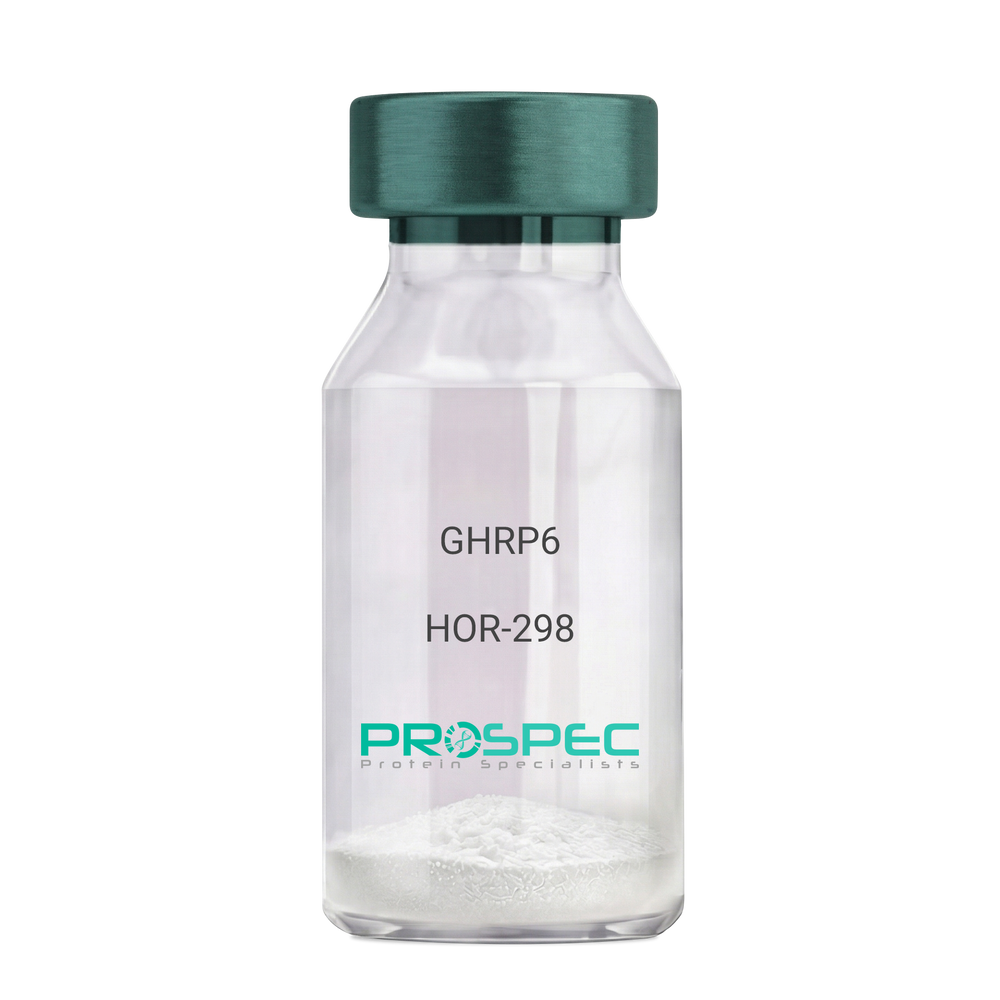
GHRP6Description:
Growth Hormone Releasing Peptide-6
GHRP-6, GHRP6
Product # :
HOR-298Price :
Quantity :
Shipping Method :
Shipped at Room temp
More Info
- description
- formulation
- purity
- More Info
Description
Growth Hormone Releasing Peptide-6 Synthetic is a single, non-glycosylated polypeptide chain containing 6 amino acids, having a molecular mass of 873 Dalton and a Molecular formula of C46H56N12O6.
Formulation
The GHRP-6 peptide was lyophilized with no additives.
Purity
Greater than 98.0% as determined by analysis by RP-HPLC.
More Info
-
Introduction
GH-releasing peptides (GHRPs) are synthetic peptides that like GHRH act directly on pituitary somatotrophs to stimulate GH release. Growth hormone (GH) release is stimulated by a variety of synthetic secretagogues, of which growth hormone-releasing hexapeptide (GHRP-6) has been most thoroughly studied; it is thought to have actions at both pituitary and hypothalamic site.
-
Synonyms
GHRP-6, GHRP6
-
Physical Appearance
Sterile Filtered White lyophilized (freeze-dried) powder.
-
Stability
Lyophilized Growth Hormone Releasing Peptide-6 although stable at room temperature for 3 weeks, should be stored desiccated below -18°C. Upon reconstitution GHRP-6 should be stored at 4°C between 2-7 days and for future use below -18°C. For long term storage it is recommended to add a carrier protein (0.1% HSA or BSA).Please prevent freeze-thaw cycles.
-
Solubility
It is recommended to reconstitute the lyophilized GHRP-6 in sterile 18MΩ-cm H2O not less than 100 µg/ml, which can then be further diluted to other aqueous solutions.
-
Amino Acid Sequence
His-D-Trp-Ala-Trp-D-Phe-Lys-NH2.
ProSpec's products are furnished for LABORATORY RESEARCH USE ONLY. The product may not be used as drugs, agricultural or pesticidal products, food additives or household chemicals.
- View Data Sheet
Name :
DHH (C23II) HumanDescription:
Desert Hedgehog (C23II) Human Recombinant
HHG-3, Desert Hedgehog homolog, MGC35145, Desert hedgehog protein, DHH.
Product # :
CYT-362Price :
Quantity :
Shipping Method :
Shipped at Room temp
More Info
- description
- source
- formulation
- purity
- biological activity
- More Info
Description
DHH (C23II) Human Recombinant produced in E.Coli is a single, non-glycosylated polypeptide chain containing 177 amino acids and having a molecular mass of 19.9kDa. The DHH (C23II) is purified by proprietary chromatographic techniques.
Source
Escherichia Coli.
Formulation
Lyophilized from a 0.2µm filtered concentrated solution in 1×PBS, pH 7.4.
Purity
Greater than 95.0% as determined by:
(a) Analysis by RP-HPLC.
(b) Analysis by SDS-PAGE.Biological Activity
The Biological Activity was determined by its ability to induce alkaline phosphatase production by C3H/10T1/2 (CCL-226) cells. The expected ED50 for this effect is 15-45 μg/ml.More Info
-
Introduction
DHH is part of the Hedgehog family which encodes signaling molecules that are involved in regulating morphogenesis. DHH protein is a precursor that is autocatalytically cleaved, the N-terminal portion is soluble and contains the signalling activity while the C-terminal portion is involved in precursor processing. Additionally, the C-terminal product covalently attaches a cholesterol moiety to the N-terminal product, restricting the N-terminal product to the cell surface and preventing it from freely diffusing throughout the organism. Defects in DHH protein have been associated with partial gonadal dysgenesis (PGD) accompanied by minifascicular polyneuropathy. DHH plays a role both male gonadal differentiation and perineurial development.
DHH plays a role in intercellular signaling which is essential for a variety of patterning events during development. DHH functions as a spermatocyte survival factor in the testes & is essential for testes development. -
Synonyms
HHG-3, Desert Hedgehog homolog, MGC35145, Desert hedgehog protein, DHH.
-
Physical Appearance
Sterile Filtered White lyophilized (freeze-dried) powder.
-
Stability
Lyophilized DHH (C23II) although stable at room temperature for 3 weeks, should be stored desiccated below -18°C. Upon reconstitution DHH (C23II) should be stored at 4°C between 2-7 days and for future use below -18°C. For long term storage it is recommended to add a carrier protein (0.1% HSA or BSA).Please prevent freeze-thaw cycles.
-
Solubility
It is recommended to reconstitute the lyophilized DHH (C23II) in sterile 18M-cm H2O not less than 100µg/ml, which can then be further diluted to other aqueous solutions.
-
Amino Acid Sequence
IIGPGRGPVG RRRYARKQLV PLLYKQFVPG VPERTLGASG PAEGRVARGS ERFRDLVPNY NPDIIFKDEE NSGADRLMTE RCKERVNALA IAVMNMWPGV RLRVTEGWDE DGHHAQDSLH YEGRALDITT SDRDRNKYGL LARLAVEAGF DWVYYESRNH VHVSVKADNS LAVRAGG.
ProSpec's products are furnished for LABORATORY RESEARCH USE ONLY. The product may not be used as drugs, agricultural or pesticidal products, food additives or household chemicals.
- View Data Sheet
Name :
LAYN HumanDescription:
Layilin Human Recombinant
Layilin
Product # :
PRO-1629Price :
Quantity :
Shipping Method :
Shipped with Ice Packs
More Info
- description
- source
- formulation
- purity
- More Info
Description
LAYN Human Recombinant produced in E.coli is a single, non-glycosylated polypeptide chain containing 237 amino acids (22-235) and having a molecular mass of 26.7kDa.LAYN is fused to a 23 amino acid His-tag at N-terminus & purified by proprietary chromatographic techniques.
Source
Escherichia Coli.
Formulation
The LAYN solution contains 20mM Tris-HCl buffer (pH 8.0), 0.15M NaCl, 1mM DTT and 10% glycerol.
Purity
Greater than 85% as determined by SDS-PAGE.
More Info
-
Introduction
LAYN, also known as Layilin, contains 1 c-type lectin domain. This protein is receptor for hyaluronate and Interacts with NF2, RDX and TLN1. The C-terminal domain interacts with the N-terminal domain of RDX.
-
Synonyms
Layilin
-
Physical Appearance
Sterile filtered colorless solution.
-
Stability
Store at 4°C if entire vial will be used within 2-4 weeks. Store, frozen at -20°C for longer periods of time. For long term storage it is recommended to add a carrier protein (0.1% HSA or BSA).Avoid multiple freeze-thaw cycles.
-
Amino Acid Sequence
MGSSHHHHHH SSGLVPRGSH MGSATGRLLS ASDLDLRGGQ PVCRGGTQRP CYKVIYFHDT SRRLNFEEAK EACRRDGGQL VSIESEDEQK LIEKFIENLL PSDGDFWIGL RRREEKQSNS TACQDLYAWT DGSISQFRNW YVDEPSCGSE VCVVMYHQPS APAGIGGPYM FQWNDDRCNM KNNFICKYSD EKPAVPSREA EGEETELTTP VLPEETQEED AKKTFKESRE AALNLAY
ProSpec's products are furnished for LABORATORY RESEARCH USE ONLY. The product may not be used as drugs, agricultural or pesticidal products, food additives or household chemicals.
- View Data Sheet
Name :
NRP1 MouseDescription:
Neuropilin 1 Mouse Recombinant
Neuropilin-1, A5 protein, CD304, Nrp1, Nrp.
Product # :
CYT-971Price :
Quantity :
Shipping Method :
Shipped with Ice Packs
More Info
- description
- source
- formulation
- purity
- More Info
Description
NRP1 Mouse Recombinant produced in Sf9 Baculovirus cells is a single, glycosylated polypeptide chain containing 843 amino acids (22-856 a.a.) and having a molecular mass of 94.7kDa (Migrates at 100-150kDa on SDS-PAGE under reducing conditions).NRP1 is expressed with an 8 amino acid His tag at C-Terminus and purified by proprietary chromatographic techniques.
Source
Sf9, Baculovirus cells.
Formulation
NRP1 protein solution (0.25mg/ml) containing Phosphate Buffered Saline (pH 7.4) and 20% glycerol.
Purity
Greater than 90.0% as determined by SDS-PAGE.
More Info
-
Introduction
Neuropilin 1 (Nrp1) is a transmembrane glycoprotein which functions as a co-receptor for several extracellular ligands including class III/IV semaphorins, some isoforms of vascular endothelial growth factor and transforming growth factor beta. Nrp1 binds vascular endothelial growth factor (VEGF)-A and is believed to serve as a coreceptor for kinase insert domain-containing receptor (KDR) by connecting with KDR and enhancing VEGF signaling. Nrp1 is a marker of regulatory T cells.
-
Synonyms
Neuropilin-1, A5 protein, CD304, Nrp1, Nrp.
-
Physical Appearance
Sterile Filtered colorless solution.
-
Stability
Store at 4°C if entire vial will be used within 2-4 weeks. Store, frozen at -20°C for longer periods of time. For long term storage it is recommended to add a carrier protein (0.1% HSA or BSA). Avoid multiple freeze-thaw cycles.
-
Amino Acid Sequence
FRSDKCGGTI KIENPGYLTS PGYPHSYHPS EKCEWLIQAP EPYQRIMINF NPHFDLEDRD CKYDYVEVID GENEGGRLWG KFCGKIAPSP VVSSGPFLFI KFVSDYETHG AGFSIRYEIF KRGPECSQNY TAPTGVIKSP GFPEKYPNSL ECTYIIFAPK MSEIILEFES FDLEQDSNPP GGMFCRYDRL EIWDGFPEVG PHIGRYCGQK TPGRIRSSSG VLSMVFYTDS AIAKEGFSAN YSVLQSSISE DFKCMEALGM ESGEIHSDQITASSQYGTNW SVERSRLNYP ENGWTPGEDS YKEWIQVDLG LLRFVTAVGT QGAISKETKK KYYVKTYRVD ISSNGEDWIS LKEGNKAIIF QGNTNPTDVV LGVFSKPLIT RFVRIKPVSW ETGISMRFEV YGCKITDYPC SGMLGMVSGL ISDSQITASN QADRNWMPEN IRLVTSRTGW ALPPSPHPYT NEWLQVDLGD EKIVRGVIIQ GGKHRENKVF MRKFKIAYSN NGSDWKTIMD DSKRKAKSFE GNNNYDTPEL RTFSPLSTRF IRIYPERATH SGLGLRMELL GCEVEAPTAG PTTPNGNPVD ECDDDQANCH SGTGDDFQLT GGTTVLATEK PTIIDSTIQS EFPTYGFNCE FGWGSHKTFC HWEHDSHAQL RWSVLTSKTG PIQDHTGDGN FIYSQADENQ KGKVARLVSP VVYSQSSAHC MTFWYHMSGS HVGTLRVKLR YQKPEEYDQL VWMVVGHQGD HWKEGRVLLH KSLKLYQVIF EGEIGKGNLG GIAVDDISIN NHISQEDCAK PTDLDKKNTE IKIDETGSTP GYEGEGEGDK NISRKPGNVL KTLDPLEHHH HHH
ProSpec's products are furnished for LABORATORY RESEARCH USE ONLY. The product may not be used as drugs, agricultural or pesticidal products, food additives or household chemicals.
- View Data Sheet
Name :
SARS MERS, Sf9 ActiveDescription:
SARS MERS Spike Recombinant, Sf9 Active
Middle East respiratory syndrome coronavirus, Human betacoronavirus 2c EMC/2012, MERS-CoV, MERS, MERSCoV SP, Spike glycoprotein, S glycoprotein, S, Spike protein, E2, Peplomer protein
Product # :
SARS-061Price :
Quantity :
Shipping Method :
Shipped with Ice Packs
More Info
- description
- source
- formulation
- purity
- biological activity
- More Info
Description
SARS MERS Recombinant produced in Sf9 Baculovirus cells is a single, glycosylated polypeptide chain containing 1285 amino acids (18-1296 aa) and having a molecular mass of 141.6kDa. SARS MERS is fused to a 6 amino acid His-tag at C-terminus & purified by proprietary chromatographic techniques.
Source
Sf9, Baculovirus cells.
Formulation
The SARS MERS solution (0.25mg/ml) contains 10% glycerol and Phosphate-Buffered Saline (pH 7.4).
Purity
Greater than 85.0% as determined by SDS-PAGE.
Biological Activity
Measured by its binding ability in a functional ELISA with Human DPPIV/CD26 (CAT# enz-1187).
More Info
-
Synonyms
Middle East respiratory syndrome coronavirus, Human betacoronavirus 2c EMC/2012, MERS-CoV, MERS, MERSCoV SP, Spike glycoprotein, S glycoprotein, S, Spike protein, E2, Peplomer protein
-
Physical Appearance
Sterile filtered colorless solution.
-
Stability
Store at 4°C if entire vial will be used within 2-4 weeks.Store, frozen at -20°C for longer periods of time.For long term storage it is recommended to add a carrier protein (0.1% HSA or BSA).Avoid multiple freeze-thaw cycles.
-
Amino Acid Sequence
YVDVGPDSVK SACIEVDIQQ TFFDKTWPRP IDVSKADGII YPQGRTYSNI TITYQGLFPY QGDHGDMYVY SAGHATGTTP QKLFVANYSQ DVKQFANGFV VRIGAAANST GTVIISPSTS ATIRKIYPAF MLGSSVGNFS DGKMGRFFNH TLVLLPDGCG TLLRAFYCIL EPRSGNHCPA GNSYTSFATY HTPATDCSDG NYNRNASLNS FKEYFNLRNC TFMYTYNITE DEILEWFGIT QTAQGVHLFS SRYVDLYGGN MFQFATLPVY DTIKYYSIIP HSIRSIQSDR KAWAAFYVYK LQPLTFLLDF SVDGYIRRAI DCGFNDLSQL HCSYESFDVE SGVYSVSSFE AKPSGSVVEQ AEGVECDFSP LLSGTPPQVY NFKRLVFTNC NYNLTKLLSL FSVNDFTCSQ ISPAAIASNC YSSLILDYFS YPLSMKSDLS VSSAGPISQF NYKQSFSNPT CLILATVPHN LTTITKPLKY SYINKCSRLL SDDRTEVPQL VNANQYSPCV SIVPSTVWED GDYYRKQLSP LEGGGWLVAS GSTVAMTEQL QMGFGITVQY GTDTNSVCPK LEFANDTKIA SQLGNCVEYS LYGVSGRGVF QNCTAVGVRQ QRFVYDAYQN LVGYYSDDGN YYCLRACVSV PVSVIYDKET KTHATLFGSV ACEHISSTMS QYSRSTRSML KRRDSTYGPL QTPVGCVLGL VNSSLFVEDC KLPLGQSLCA LPDTPSTLTP RSVRSVPGEM RLASIAFNHP IQVDQLNSSY FKLSIPTNFS FGVTQEYIQT TIQKVTVDCK QYVCNGFQKC EQLLREYGQF CSKINQALHG ANLRQDDSVR NLFASVKSSQ SSPIIPGFGG DFNLTLLEPV SISTGSRSAR SAIEDLLFDK VTIADPGYMQ GYDDCMQQGP ASARDLICAQ YVAGYKVLPP LMDVNMEAAY TSSLLGSIAG VGWTAGLSSF AAIPFAQSIF YRLNGVGITQ QVLSENQKLI ANKFNQALGA MQTGFTTTNE AFQKVQDAVN NNAQALSKLA SELSNTFGAI SASIGDIIQR LDVLEQDAQI DRLINGRLTT LNAFVAQQLV RSESAALSAQ LAKDKVNECV KAQSKRSGFC GQGTHIVSFV VNAPNGLYFM HVGYYPSNHI EVVSAYGLCD AANPTNCIAP VNGYFIKTNN TRIVDEWSYT GSSFYAPEPI TSLNTKYVAP QVTYQNISTN LPPPLLGNST GIDFQDELDE FFKNVSTSIP NFGSLTQINT TLLDLTYEML SLQQVVKALN ESYIDLKELG NYTYYNKWPH HHHHH.
-
Background
Severe acute respiratory syndrome coronavirus (SARS-CoV) and Middle East respiratory syndrome coronavirus (MERS-CoV) have caused significant outbreaks with severe respiratory illness in recent years. The spike proteins of these viruses play a crucial role in viral entry and host cell recognition. This research aims to explore the structure, function, and implications of SARS and MERS spike proteins in viral pathogenesis and the development of therapeutic interventions. Understanding the mechanisms of viral entry can provide valuable insights into the design of effective antiviral strategies.
Structure and Function of SARS and MERS Spike Proteins:
The spike proteins of SARS-CoV and MERS-CoV are trimeric glycoproteins located on the viral surface. They consist of S1 and S2 subunits, with the S1 subunit responsible for receptor binding and the S2 subunit involved in membrane fusion. The spike proteins contain key domains, including the receptor-binding domain (RBD) and the fusion peptide, which mediate the interactions with host cell receptors and membrane fusion during viral entry.
Interaction with Host Cell Receptors:
The SARS-CoV spike protein primarily interacts with the angiotensin-converting enzyme 2 (ACE2) receptor, which is expressed in various tissues, including the respiratory tract. The binding of the SARS-CoV spike protein to ACE2 is crucial for viral entry into host cells. Similarly, the MERS-CoV spike protein interacts with the dipeptidyl peptidase 4 (DPP4) receptor, which is predominantly expressed in the lungs and other tissues. These receptor interactions determine the host range and tissue tropism of the viruses.
Implications for Viral Pathogenesis:
The interaction between the spike proteins of SARS-CoV and MERS-CoV and their respective receptors initiates a cascade of events leading to viral entry and replication. The binding of the spike protein to the receptor triggers conformational changes that expose the fusion peptide, facilitating membrane fusion and viral entry into host cells. The specificity and affinity of the spike-receptor interaction play a critical role in determining viral tropism, disease severity, and transmission dynamics.
Therapeutic Strategies Targeting Spike Proteins:
The spike proteins of SARS-CoV and MERS-CoV present attractive targets for the development of antiviral interventions. Various approaches have been explored, including the development of neutralizing antibodies that specifically target the spike proteins and inhibit viral entry. Additionally, small molecule inhibitors and peptide-based therapeutics are being investigated to disrupt the spike-receptor interaction and block viral entry. Vaccine development efforts have also focused on generating immune responses against the spike proteins to prevent infection.
Challenges and Future Directions:
Although significant progress has been made in understanding the structure and function of SARS and MERS spike proteins, several challenges remain. The emergence of novel coronavirus variants necessitates continuous surveillance and adaptation of therapeutic strategies. Additionally, potential cross-reactivity and immunogenicity concerns need to be addressed to ensure the safety and efficacy of spike protein-based therapeutics.
Conclusion:
The study of SARS and MERS spike proteins provides valuable insights into the mechanisms of viral entry and pathogenesis. Understanding the interactions between spike proteins and host cell receptors is crucial for the development of effective antiviral strategies. Further research on spike protein structure, receptor binding, and fusion mechanisms is essential to combat current and future coronavirus outbreaks. By unraveling the complexities of viral entry, we can pave the way for the development of novel therapeutics to mitigate the impact of SARS-CoV, MERS-CoV, and related coronaviruses.
ProSpec's products are furnished for LABORATORY RESEARCH USE ONLY. The product may not be used as drugs, agricultural or pesticidal products, food additives or household chemicals.
- View Data Sheet
Name :
LGALS4 HumanDescription:
Galectin-4 Human Recombinant
Galectin-4, Gal-4, Lactose-binding lectin 4, L-36 lactose-binding protein, L36LBP, Antigen NY-CO-27, LGALS4, lectin galactoside-binding soluble 4, GAL4.
Product # :
CYT-686Price :
Quantity :
Shipping Method :
Shipped with Ice Packs
More Info
- description
- source
- formulation
- purity
- More Info
- sds-page
Description
Galectin-4 produced in E.Coli is a single, non-glycosylated polypeptide chain containing 343 amino acids (1-323 a.a.) and having a molecular mass of 38.1kDa.Galectin-4 is fused to 20 amino acid His-Tag at N-terminus and purified by proprietary chromatographic techniques.
Source
Escherichia Coli.
Formulation
The LGALS4 protein solution contains 20mM Tris-HCl, pH-8, 1mM DTT and 10% glycerol.
Purity
Greater than 95.0% as determined by SDS-PAGE.
sds-page
More Info
-
Introduction
Galectin-4 is a member of the subfamily of galectins composed of two carbohydrate recognition domains having similar peptide chains. The galectins are a family of beta-galactoside-binding proteins having a role in modulating cell-cell and cell-matrix interactions, which inhibits chronic inflammations, GVHD, and allergic responses. LGALS4 expression is limited to small intestine, colon, and rectum, and it is underexpressed in colorectal cancer. LGALS4 binds as an endogenous ligand to glycosphingolipids having 3-O-sulfated Gal residues and bind as well to cholesterol-3-sulfate. LGALS4 takes part in cell adhesion. LGALS4 plays a role in crosslinking the lateral cell membranes of the surface-lining epithelial cells, thus supporting epithelial integrity against mechanical stress exerted by the bowel lume. LGALS4 is in charge of intestinal inflammation via selective regulation of peripheral and mucosal T-cell cell cycle, in addition to cell death by apoptosis of T-cells by a pathway independent of the activation of caspases. LGALS4 blockade decreases TNF-alpha inhibitor induced T-cell death. LGALS4 decreases pro-inflammatory cytokine secretion including IL-6 & IL-17.
-
Synonyms
Galectin-4, Gal-4, Lactose-binding lectin 4, L-36 lactose-binding protein, L36LBP, Antigen NY-CO-27, LGALS4, lectin galactoside-binding soluble 4, GAL4.
-
Physical Appearance
Sterile filtered colorless solution.
-
Stability
Store at 4°C if entire vial will be used within 2-4 weeks. Store, frozen at -20°C for longer periods of time. For long term storage it is recommended to add a carrier protein (0.1% HSA or BSA).Avoid multiple freeze-thaw cycles.
-
Amino Acid Sequence
MGSSHHHHHH SSGLVPRGSH MAYVPAPGYQ PTYNPTLPYY QPIPGGLNVG MSVYIQGVAS EHMKRFFVNF VVGQDPGSDV AFHFNPRFDG WDKVVFNTLQ GGKWGSEERK RSMPFKKGAA FELVFIVLAE HYKVVVNGNP FYEYGHRLPL QMVTHLQVDG DLQLQSINFI GGQPLRPQGP PMMPPYPGPG HCHQQLNSLP TMEGPPTFNP PVPYFGRLQG GLTARRTIII KGYVPPTGKS FAINFKVGSS GDIALHINPR MGNGTVVRNS LLNGSWGSEE KKITHNPFGP GQFFDLSIRC GLDRFKVYAN GQHLFDFAHR LSAFQRVDTL EIQGDVTLSY VQI.
-
Background
What is the molecular weight/Mw of LGALS4 HUMAN Protein?
LGALS4 HUMAN Protein has a total Mw of 38.1kDa.
What is the source or expression system of LGALS4 HUMAN Protein?
Escherichia Coli.
What is the Purity of LGALS4 HUMAN Protein?
LGALS4 HUMAN Protein is >95% pure as determined by SDS-PAGE.
What is the Biological Activity of LGALS4 HUMAN Protein?
The biological functionality of LGALS4 HUMAN Protein will be determined in the future.
What is the amino acid sequence of LGALS4 HUMAN Protein?
MGSSHHHHHH SSGLVPRGSH MAYVPAPGYQ PTYNPTLPYY QPIPGGLNVG MSVYIQGVAS EHMKRFFVNF VVGQDPGSDV AFHFNPRFDG WDKVVFNTLQ GGKWGSEERK RSMPFKKGAA FELVFIVLAE HYKVVVNGNP FYEYGHRLPL QMVTHLQVDG DLQLQSINFI GGQPLRPQGP PMMPPYPGPG HCHQQLNSLP TMEGPPTFNP PVPYFGRLQG GLTARRTIII KGYVPPTGKS FAINFKVGSS GDIALHINPR MGNGTVVRNS LLNGSWGSEE KKITHNPFGP GQFFDLSIRC GLDRFKVYAN GQHLFDFAHR LSAFQRVDTL EIQGDVTLSY VQI.
What applications can LGALS4 HUMAN Protein be used in?
LGALS4 HUMAN Protein can probably be used in western blot, ELISA and Lateral Flow.
What is the endotoxin level for LGALS4 HUMAN Protein?
The endotoxin level is minimal, LGALS4 HUMAN Protein was purified using conventional chromatography techniques.
ProSpec's products are furnished for LABORATORY RESEARCH USE ONLY. The product may not be used as drugs, agricultural or pesticidal products, food additives or household chemicals.
- View Data Sheet
Name :
Collagen-I GoatDescription:
Goat Collagen-I
Product # :
PRO-2682Price :
Quantity :
Shipping Method :
Shipped at Room temp
More Info
- description
- source
- formulation
- purity
- More Info
Description
Goat Collagen-I is a natural protein purified from Goat tissues. Collagen-I is purified by proprietary chromatographic techniques.
Source
Goat tissues.
Formulation
Collagen-I was lyophilized without additives.
Purity
Greater than 90.0% as determined by SDS-PAGE 90.0%.
More Info
-
Introduction
Collagen, a major component of the extracellular matrix, is a fibrous protein that provides tensile strength to tissues giving them structural integrity. Collagen and its derivative, gelatin, have been widely used in medical, pharmaceutical and consumer products for more than 100 years. The supply of these materials, created from animal remains, is both abundant and inexpensive. However, most formulations are not highly purified and have the potential to cause an inflammatory reaction in some product users. In addition, concerns have been raised over the last several years about the potential for contamination of bovine products with the agent that causes mad cow disease and its human variant, Creutzfeldt-Jakob Disease. Animal collagens are subject to extensive modifications that continue over the life of the molecule in the extracellular space. These differences influence both the extractability of collagens from tissue and the biophysical characteristics of these collagens. As a result, collagens isolated from tissues exhibit significant lot-to-lot variability and, as bulk materials, are often analytically intractable. Products that contain animal-derived collagen can induce potentially harmful inflammatory or immune responses in humans and pose risk of contamination with viruses or prions, potentially life-threatening pathogens. Recombinant collagens are essentially identical to the native collagen protein thereby reducing the risk of inflammation, immune response, and disease as compared to animal-sourced collagen.
-
Physical Appearance
Filtered White lyophilized (freeze-dried) powder.
-
Stability
Lyophilized Collagen-I although stable at room temperature for 3 weeks, should be stored desiccated below -18C. Upon reconstitution Collagen-I should be stored at 4C between 2-7 days and for future use below -18C.For long term storage it is recommended to add a carrier protein (0.1% HSA or BSA).Please prevent freeze-thaw cycles.
-
Solubility
It is recommended to Add 0.5 M acetic acid, pH 2.5 to prepare a working stock solution not less than 100µg/ml, which can then be further diluted to other aqueous solutions.
ProSpec's products are furnished for LABORATORY RESEARCH USE ONLY. The product may not be used as drugs, agricultural or pesticidal products, food additives or household chemicals.
- View Data Sheet
Name :
CST3 Mouse, sf9Description:
Cystatin-C Mouse Recombinant, sf9
Cystatin-C, Cystatin-3, Cst3.
Product # :
PRO-2249Price :
Quantity :
Shipping Method :
Shipped with Ice Packs
More Info
- description
- source
- formulation
- purity
- More Info
Description
CST3 produced in Sf9 Insect cells is a single, glycosylated polypeptide chain containing 126 amino acids (21-140a.a.) and having a molecular mass of 14.2kDa. (Molecular size on SDS-PAGE will appear at approximately 13.5-18kDa).CST3 is expressed with a 6 amino acid His tag at C-Terminus and purified by proprietary chromatographic techniques.
Source
Sf9, Insect cells.
Formulation
CST3 protein solution (1mg/ml) contains Phosphate Buffered Saline (pH 7.4) and 10% glycerol.
Purity
Greater than 95.0% as determined by SDS-PAGE.
More Info
-
Introduction
Cystatins are a superfamily of cysteine proteinase inhibitors found in both plants and animals. They comprise a group of proteinase inhibitors, widely distributed in tissues and body fluids, and form tight complexes with cysteine proteases such as cathepsin B, H, L and S. Cystatin C, a secreted molecule of this family, is of interest from biochemical, medicine and evolutionary points of view. Cystatin C, with molecular weight of 13260 Da, is composed of 120 amino acids, lacks carbohydrate and has two disulfide bridges located near the carboxyl terminus. Cystatin C is increased in patients with malignant diseases, and is related to the insufficiency of renal function and appears to be a better marker than creatinine. On the other hand, low levels of cystatin C involve cause the breakdown of the elastic laminae and, subsequently, the atherosclerosis and abdominal aortic aneurysm.
-
Synonyms
Cystatin-C, Cystatin-3, Cst3.
-
Physical Appearance
Sterile filtered colorless solution.
-
Stability
Store at 4°C if entire vial will be used within 2-4 weeks.Store, frozen at -20°C for longer periods of time. For long term storage it is recommended to add a carrier protein (0.1% HSA or BSA).Avoid multiple freeze-thaw cycles.
-
Amino Acid Sequence
ATPKQGPRML GAPEEADANE EGVRRALDFA VSEYNKGSND AYHSRAIQVV RARKQLVAGV NYFLDVEMGR TTCTKSQTNL TDCPFHDQPH LMRKALCSFQ IYSVPWKGTH SLTKFSCKNA HHHHHH.
ProSpec's products are furnished for LABORATORY RESEARCH USE ONLY. The product may not be used as drugs, agricultural or pesticidal products, food additives or household chemicals.
- View Data Sheet
Name :
AMBPDescription:
Alpha-1 Microglobulin Human Recombinant
Alpha-1-microglobulin/bikunin precursor, HCP, ITIL, ITI, EDC1, HI30, IATIL, ITILC, UTI, A1M, bikunin, complex-forming glycoprotein heterogeneous in charge, growth-inhibiting protein 19, inter-alpha-trypsin inhibitor light chain, protein AMBP, protein HC, trypstatin, uristatin, uronic-acid-rich protein.
Product # :
PRO-957Price :
Quantity :
Shipping Method :
Shipped with Ice Packs
More Info
- description
- source
- formulation
- purity
- More Info
Description
AMBP Human Recombinant produced in E.coli is a single, non-glycosylated polypeptide chain containing 205 amino acids (20-203) and having a molecular mass of 23.1 kDa.AMBP is fused to a 21 amino acid His-tag at N-terminus & purified by proprietary chromatographic techniques.
Source
E.coli.
Formulation
The AMBP solution (0.5mg/ml) contains 20mM Tris-HCl buffer (pH 8.0), 1mM DTT, 0.1M NaCl and 10% glycerol.
Purity
Greater than 90% as determined by SDS-PAGE.
More Info
-
Introduction
Alpha 1-microglobulin (A1M) is a lipocalin superfamily member (kernal lipocalins). A1M is a low molecular weight protein component of plasma. A1M is distributed in plasma and extravascular compartments of all organs. Alpha-1 Microglobulin is found in mammals, birds, amphibians and fish. The primary sites of A1M synthesis are the liver and the kidney. Around the opening of the lipocalin pocket three lysyl residues are situated; those residues carry yellow-brown modification derived from the binding and degradation of heme and kynurenin (a tryptophan metabolite). A1-Microglobulin’s reductase and dehydrogenase have broad biological substrate specificity properties due to its’ free cysteine side-chain which is located in a flexible loop. Alpha-1-microglobulin is glycosylated by three separate carbohydrate chains: two complex carbohydrates which are N-linked to asparagines at residues 17 and 96, and the other simple carbohydrate which is O-linked to threonine at position 5. The carbohydrates comprise 22% of the total molecular mass of the protein. The glycosylation varies between species.
A1M exists in two forms- a free form and complexed to other macromolecules: in humans- complexed to immunoglobulin A (IgA), in rat- complexed to alpha-1-inhibitor-3. Free A1M is exceptionally heterogeneous in charge (therefore also known as protein HC), and is found tightly linked to a chromophore. The free Alpha-1-microglobulin is a monomeric protein composed of one 188 residue polypeptide and contains three cysteines, two of which (residues 75 and 173) form a conserved intra-molecular disulphide link. The chromophoric group is covalently bound to the free cysteine residue at position 34. A1M binds retinol as a major ligand, but this is probably distinct from its covalent chromophore.
Half of all human plasma A1M (approximately 0.03mg/ml) forms a 1:1 complex with about 5% of plasma immunoglobulin A. The resulting macromolecular complexes’ molecular weight is 200000, and a plasma concentration of 0.3mg/ml. The complex can exhibit both antibody activity and affect many of the biological actions of free Alpha-1-microglobulin.
Alpha-1-microglobulin was first discovered in pathological human urine.
It was suggested that A1M might be involved in tissue defense against reactive oxygen species, oxidation by heme and kynurenin. Evidence also suggests that A1M functions in the regulation of the immune system. Other functions include inhibition of stimulation of cultured lymphocytes by protein antigens; induction of cell division of lymphocytes, a mitogenic effect that can either be enhanced or inhibited by the action of other plasma components; inhibition of neutrophil granulocyte migration in vitro; and inhibition of chemotaxis. -
Synonyms
Alpha-1-microglobulin/bikunin precursor, HCP, ITIL, ITI, EDC1, HI30, IATIL, ITILC, UTI, A1M, bikunin, complex-forming glycoprotein heterogeneous in charge, growth-inhibiting protein 19, inter-alpha-trypsin inhibitor light chain, protein AMBP, protein HC, trypstatin, uristatin,
uronic-acid-rich protein. -
Physical Appearance
Sterile Filtered colorless solution.
-
Stability
Store at 4°C if entire vial will be used within 2-4 weeks. Store, frozen at -20°C for longer periods of time. For long term storage it is recommended to add a carrier protein (0.1% HSA or BSA).Avoid multiple freeze-thaw cycles.
-
Amino Acid Sequence
MGSSHHHHHH SSGLVPRGSH MGPVPTPPDN IQVQENFNIS RIYGKWYNLA IGSTCPWLKK IMDRMTVSTL VLGEGATEAE ISMTSTRWRK GVCEETSGAY EKTDTDGKFL YHKSKWNITM ESYVVHTNYD EYAIFLTKKF SRHHGPTITA KLYGRAPQLR ETLLQDFRVV AQGVGIPEDS IFTMADRGEC VPGEQEPEPI LIPRV.
ProSpec's products are furnished for LABORATORY RESEARCH USE ONLY. The product may not be used as drugs, agricultural or pesticidal products, food additives or household chemicals.
- View Data Sheet
Name :
Myostatin Human, HEKDescription:
Myostatin Human Recombinant, HEK
GDF-8, MSTN, Growth Differentiation Factor 8, MSTN Muscle Hypertrophy.
Product # :
CYT-833Price :
Quantity :
Shipping Method :
Shipped with Ice Packs
More Info
- description
- source
- formulation
- purity
- More Info
Description
Myostatin Human Recombinant produced in HEK cells is a single, glycosylated, polypeptide chain (Asn24-Ser375) containing a total of 360 amino acids, having a calculated molecular mass of 41.1kDa. Myostatin is fused to a 2 aa N-terminal linker and a 6 aa His tag at N-Terminus.
Source
HEK 293.
Formulation
Myostatin solution at a concentration of 0.25mg/ml in phosphate buffered saline (PBS) pH 8.0 and 20% (w/v) glycerol.
Purity
Greater than 95.0% as determined by SDS-PAGE.
More Info
-
Introduction
GDF8 is a member of the bone morphogenetic protein (BMP) family and the TGF-beta superfamily. This group of proteins is characterized by a polybasic proteolytic processing site which is cleaved to produce a mature protein containing seven conserved cysteine residues. The members of this family are regulators of cell growth and differentiation in both embryonic and adult tissues. This gene is thought to encode a secreted protein which negatively regulates skeletal muscle growth.
-
Synonyms
GDF-8, MSTN, Growth Differentiation Factor 8, MSTN Muscle Hypertrophy.
-
Physical Appearance
Filtered colorless solution.
-
Stability
Store at 4°C if entire vial will be used within 2-4 weeks. Store, frozen at -20°C for longer periods of time. For long term storage it is recommended to add a carrier protein (0.1% HSA or BSA).Avoid multiple freeze-thaw cycles.
-
Amino Acid Sequence
HHHHHHASNE NSEQKENVEK EGLCNACTWR QNTKSSRIEA IKIQILSKLR LETAPNISKD VIRQLLPKAP PLRELIDQYD VQRDDSSDGS LEDDDYHATT ETIITMPTES DFLMQVDGKP KCCFFKFSSK IQYNKVVKAQ LWIYLRPVET PTTVFVQILR LIKPMKDGTR YTGIRSLKLD MNPGTGIWQS IDVKTVLQNW LKQPESNLGI EIKALDENGH DLAVTFPGPG EDGLNPFLEV KVTDTPKRSR RDFGLDCDEH STESRCCRYP LTVDFEAFGW DWIIAPKRYK ANYCSGECEF VFLQKYPHTH LVHQANPRGS AGPCCTPTKM SPINMLYFNG KEQIIYGKIP AMVVDRCGCS.
ProSpec's products are furnished for LABORATORY RESEARCH USE ONLY. The product may not be used as drugs, agricultural or pesticidal products, food additives or household chemicals.
- View Data Sheet
Name :
SGK1 HumanDescription:
Serum/Glucocorticoid Regulated Kinase 1 Human Recombinant
Serine/threonine-protein kinase Sgk1, Serum/glucocorticoid-regulated kinase 1, SGK1, SGK.
Product # :
PKA-272Price :
Quantity :
Shipping Method :
Shipped with Ice Packs
More Info
- description
- source
- formulation
- purity
- More Info
Description
SGK1 Human Recombinant produced in E.Coli is a single, non-glycosylated polypeptide chain containing 393 amino acids (60-431 a.a.) and having a molecular mass of 44.5kDa.SGK1 is fused to a 21 amino acid His-tag at N-terminus & purified by proprietary chromatographic techniques.
Source
Escherichia Coli.
Formulation
SGK1 protein solution (0.25mg/ml) containing 20mM Tris-HCl buffer (pH8.0), 30% glycerol, 0.2M NaCl, 2mM DTT and 0.1mM PMSF.
Purity
Greater than 90.0% as determined by SDS-PAGE.
More Info
-
Introduction
Serum-and glucocorticoid-regulated kinase (SGK1) is a serine/threonine protein kinase and a member of the “AGC” subfamily, which includes protein kinases A, G, and C. The SGK1 protein has an imperative role in activating specific potassium, sodium and chloride channels, suggesting a participation in the regulation of processes such as cell survival, neuronal excitability, and renal sodium excretion. SGK1 is activated in vitro by PDK-1 (3-phosphoinositide-dependent protein kinase-1) and in vivo in reaction to signals which activate phosphatidylinositol (PI) 3-kinase.
-
Synonyms
Serine/threonine-protein kinase Sgk1, Serum/glucocorticoid-regulated kinase 1, SGK1, SGK.
-
Physical Appearance
Sterile Filtered colorless solution.
-
Stability
Store at 4°C if entire vial will be used within 2-4 weeks. Store, frozen at -20°C for longer periods of time. For long term storage it is recommended to add a carrier protein (0.1% HSA or BSA).Avoid multiple freeze-thaw cycles.
-
Amino Acid Sequence
MGSSHHHHHH SSGLVPRGSH MISQPQEPEL MNANPSPPPS PSQQINLGPS SNPHAKPSDF HFLKVIGKGS FGKVLLARHK AEEVFYAVKV LQKKAILKKK EEKHIMSERN VLLKNVKHPF LVGLHFSFQT ADKLYFVLDY INGGELFYHL QRERCFLEPR ARFYAAEIAS ALGYLHSLNI VYRDLKPENI LLDSQGHIVL TDFGLCKENI EHNSTTSTFC GTPEYLAPEV LHKQPYDRTV DWWCLGAVLY EMLYGLPPFY SRNTAEMYDN ILNKPLQLKP NITNSARHLL EGLLQKDRTK RLGAKDDFME IKSHVFFSLI NWDDLINKKI TPPFNPNVSG PNDLRHFDPE FTEEPVPNSI GKSPDSVLVT ASVKEAAEAF LGFSYAPPTD SFL.
ProSpec's products are furnished for LABORATORY RESEARCH USE ONLY. The product may not be used as drugs, agricultural or pesticidal products, food additives or household chemicals.
- View Data Sheet
Name :
DRG1 HumanDescription:
Developmentally Regulated GTP Binding Protein 1 Human Recombinant
Developmentally-regulated GTP-binding protein 1, DRG-1, Neural precursor cell expressed developmentally down-regulated protein 3, NEDD-3, DRG1, NEDD3.
Product # :
PRO-885Price :
Quantity :
Shipping Method :
Shipped with Ice Packs
More Info
- description
- source
- formulation
- purity
- More Info
Description
DRG1 Human Recombinant produced in E.Coli is a single, non-glycosylated polypeptide chain containing 387 amino acids (1-367 a.a.) and having a molecular mass of 42.7kDa.DRG1 is fused to a 20 amino acid His-tag at N-terminus & purified by proprietary chromatographic techniques.
Source
Escherichia Coli.
Formulation
DRG1 protein solution (0.5mg/ml) containing 20mM Tris-HCl buffer (pH 8.0), 1mM DTT, 30% glycerol and 1mM EDTA.
Purity
Greater than 85.0% as determined by SDS-PAGE.
More Info
-
Introduction
Developmentally-regulated GTP-binding protein 1 (DRG1) is a member of the GTP1/OBG family. DRG1 has a role in cell proliferation and differentiation, as well as in apoptosis, proposing a role in tumor formation and metastasis. Expression of the DRG1 was considerably reduced in breast tumor cells, particularly in patients with lymph node or bone metastasis as compared to those with localized breast cancer. The DRG1 protein is expressed at high levels in the heart, kidney and skeletal muscle and at lower levels in the brain, liver, placenta, lung, colon and spleen.
-
Synonyms
Developmentally-regulated GTP-binding protein 1, DRG-1, Neural precursor cell expressed developmentally down-regulated protein 3, NEDD-3, DRG1, NEDD3.
-
Physical Appearance
Sterile Filtered clear solution.
-
Stability
Store at 4°C if entire vial will be used within 2-4 weeks. Store, frozen at -20°C for longer periods of time. For long term storage it is recommended to add a carrier protein (0.1% HSA or BSA).Avoid multiple freeze-thaw cycles.
-
Amino Acid Sequence
MGSSHHHHHH SSGLVPRGSH MSSTLAKIAE IEAEMARTQK NKATAHHLGL LKARLAKLRR ELITPKGGGG GGPGEGFDVA KTGDARIGFV GFPSVGKSTL LSNLAGVYSE VAAYEFTTLT TVPGVIRYKG AKIQLLDLPG IIEGAKDGKG RGRQVIAVAR TCNLILIVLD VLKPLGHKKI IENELEGFGI RLNSKPPNIG FKKKDKGGIN LTATCPQSEL DAETVKSILA EYKIHNADVT LRSDATADDL IDVVEGNRVY IPCIYVLNKI DQISIEELDI IYKVPHCVPI SAHHRWNFDD LLEKIWDYLK LVRIYTKPKG QLPDYTSPVV LPYSRTTVED FCMKIHKNLI KEFKYALVWG LSVKHNPQKV GKDHTLEDED VIQIVKK.
ProSpec's products are furnished for LABORATORY RESEARCH USE ONLY. The product may not be used as drugs, agricultural or pesticidal products, food additives or household chemicals.
- View Data Sheet
Name :
DYNLRB1 HumanDescription:
Dynein Light Chain Roadblock-Type 1 Human Recombinant
BITH, BLP, DNCL2A, DNLC2A, ROBLD1, HSPC162.
Product # :
PRO-489Price :
Quantity :
Shipping Method :
Shipped with Ice Packs
More Info
- description
- source
- formulation
- purity
- More Info
Description
DYNLRB1 Recombinant Human produced in E.Coli is a single, non-glycosylated polypeptide chain containing 104 amino acids (1-96 a.a.) and having a molecular mass of 11.9 kDa. The DYNLRB1 is fused to an 8 amino acid His-Tag at C-terminus and purified by proprietary chromatographic techniques.
Source
Escherichia Coli.
Formulation
DYNLRB1 protein solution (1mg/ml) containing 20mM Tris-HCl pH-8 & 10% glycerol.
Purity
Greater than 95.0% as determined by SDS-PAGE.
More Info
-
Introduction
Dynein light chain roadblock-type (DYNLRB1) belongs to the roadblock dynein light chain family and encodes a cytoplasmic protein which is capable of binding intermediate chain proteins. Upregulation of the DYNLRB1 gene is linked with hepatocellular carcinomas, suggesting that DYNLRB1 may be involved in tumor progression.
-
Synonyms
BITH, BLP, DNCL2A, DNLC2A, ROBLD1, HSPC162.
-
Physical Appearance
Sterile filtered colorless solution.
-
Stability
Store at 4°C if entire vial will be used within 2-4 weeks.Store, frozen at -20°C for longer periods of time. For long term storage it is recommended to add a carrier protein (0.1% HSA or BSA).Avoid multiple freeze-thaw cycles.
-
Amino Acid Sequence
MAEVEETLKR LQSQKGVQGI IVVNTEGIPI KSTMDNPTTT QYASLMHSFI LKARSTVRDI DPQNDLTFLR IRSKKNEIMV APDKDYFLIV IQNPTELEHH HHHH.
ProSpec's products are furnished for LABORATORY RESEARCH USE ONLY. The product may not be used as drugs, agricultural or pesticidal products, food additives or household chemicals.
- View Data Sheet
Name :
SPARC Human, Sf9Description:
Secreted Protein Acidic & Rich in Cysteine Human Recombinant, Sf9
SPARC, Basement-membrane protein 40, BM-40, Osteonectin, ON, Secreted protein acidic and rich in cysteine, OI17.
Product # :
PRO-2623Price :
Quantity :
Shipping Method :
Shipped with Ice Packs
More Info
- description
- source
- formulation
- purity
- More Info
Description
SPARC Human Recombinant produced in Sf9 Baculovirus cells is a single, glycosylated polypeptide chain containing 295 amino acids (18-303 a.a) and having a molecular mass of 33.8kDa.SPARC is fused to an 9 amino acid His-tag at C-terminus & purified by proprietary chromatographic techniques.
Source
Sf9, Baculovirus cells.
Formulation
SPARC protein solution (0.5mg/ml) Phosphate-Buffered Saline (pH 7.4) and 10% glycerol.
Purity
Greater than 90.0% as determined by SDS-PAGE.
More Info
-
Introduction
SPARC protein, or secreted protein acidic and rich in cysteine, or osteonectin or basement-membrane protein 40 is a protein that is coded by the SPARC gene in humans. It is a glycoprotein located in bones, that binds to calcium. The osteonectin is secreted from osteoblasts cells when boas are formed, mineralized and promotes the formation and creation of mineral crystals. Asides from calcium, it has been shown that this protein can also bind to collagen.
-
Synonyms
SPARC, Basement-membrane protein 40, BM-40, Osteonectin, ON, Secreted protein acidic and rich in cysteine, OI17.
-
Physical Appearance
Sterile Filtered colorless solution.
-
Stability
Store at 4°C if entire vial will be used within 2-4 weeks. Store, frozen at -20°C for longer periods of time. For long term storage it is recommended to add a carrier protein (0.1% HSA or BSA).Avoid multiple freeze-thaw cycles.
-
Amino Acid Sequence
ADPAPQQEAL PDETEVVEET VAEVTEVSVG ANPVQVEVGE FDDGAEETEE EVVAENPCQN
HHCKHGKVCE LDENNTPMCV CQDPTSCPAP IGEFEKVCSN DNKTFDSSCH FFATKCTLEG
TKKGHKLHLD YIGPCKYIPP CLDSELTEFP LRMRDWLKNV LVTLYERDED NNLLTEKQKL
RVKKIHENEK RLEAGDHPVE LLARDFEKNY NMYIFPVHWQ FGQLDQHPID GYLSHTELAP
LRAPLIPMEH CTTRFFETCD LDNDKYIALD EWAGCFGIKQ KDIDKDLVIH HHHHH
ProSpec's products are furnished for LABORATORY RESEARCH USE ONLY. The product may not be used as drugs, agricultural or pesticidal products, food additives or household chemicals.
- View Data Sheet
Name :
OMG HumanDescription:
Oligodendrocyte Myelin Glycoprotein Recombinant Human
Oligodendrocyte-myelin glycoprotein, OMG, OMGP.
Product # :
PRO-2343Price :
Quantity :
Shipping Method :
Shipped with Ice Packs
More Info
- description
- source
- formulation
- purity
- More Info
Description
OMG Human Recombinant produced in Sf9 Baculovirus cells is a single, glycosylated polypeptide chain containing 401 amino acids (25-418) and having a molecular mass of 45.4kDa (Molecular size on SDS-PAGE will appear at approximately 50-100kDa).OMG is fused to 8 amino acid His-Tag at C-terminus and purified by proprietary chromatographic techniques.
Source
Sf9, Baculovirus cells.
Formulation
OMG protein solution (0.5mg/ml) containing Phosphate Buffered Saline (pH 7.4) and 10% glycerol.
Purity
Greater than 95.0% as determined by analysis by SDS-PAGE.
More Info
-
Introduction
Oligodendrocyte-myelin glycoprotein (OMG) is a cell membrane protein which contains 8 leucine-rich repeats. The OMG protein is expressed on the surface of oligodendrocytes and on large projection neurons, including Purkinje cells of the cerebellum, pyramidal cells of the hippocampus, motoneurons of the brainstem and anterior horn cells of the spinal cord. The neurite outgrowth inhibitory activities of all three myelin-derived proteins are mediated by binding to a joint receptor complex consisting of the Nogo receptor and the p75 neurotrophin receptor.
-
Synonyms
Oligodendrocyte-myelin glycoprotein, OMG, OMGP.
-
Physical Appearance
Sterile Filtered clear solution.
-
Stability
Store at 4°C if entire vial will be used within 2-4 weeks. Store, frozen at -20°C for longer periods of time. For long term storage it is recommended to add a carrier protein (0.1% HSA or BSA).Avoid multiple freeze-thaw cycles.
-
Amino Acid Sequence
ICPLQCICTE RHRHVDCSGR NLSTLPSGLQ ENIIHLNLSY NHFTDLHNQL TQYTNLRTLD ISNNRLESLP AHLPRSLWNM SAANNNIKLL DKSDTAYQWN LKYLDVSKNM LEKVVLIKNT LRSLEVLNLS SNKLWTVPTN MPSKLHIVDL SNNSLTQILP GTLINLTNLT HLYLHNNKFT FIPDQSFDQL FQLQEITLYN NRWSCDHKQN ITYLLKWMME TKAHVIGTPC STQISSLKEH NMYPTPSGFT SSLFTVSGMQ TVDTINSLSV VTQPKVTKIP KQYRTKETTF GATLSKDTTF TSTDKAFVPY PEDTSTETIN SHEAAAATLT IHLQDGMVTN TSLTSSTKSS PTPMTLSITS GMPNNFSEMP QQSTTLNLWR EETTTNVKTP LPSVEHHHHH H.
ProSpec's products are furnished for LABORATORY RESEARCH USE ONLY. The product may not be used as drugs, agricultural or pesticidal products, food additives or household chemicals.
- View Data Sheet
Name :
BID Mouse, GSTDescription:
BH3 Interacting Domain Death Agonist Mouse Recombinant, GST
BH3-interacting domain death agonist, p22 BID, BID, FP497, MGC15319, MGC42355.
Product # :
PRO-643Price :
Quantity :
Shipping Method :
Shipped with Ice Packs
More Info
- description
- source
- formulation
- purity
- More Info
Description
BID Mouse Recombinant produced in E.Coli is a single, non-glycosylated polypeptide chain containing 1-195 amino acids and having a molecular mass of 48 kDa.The Mouse BID is expressed as GST-Tag fusion protein and purified by proprietary chromatographic technique.
Source
Escherichia Coli.
Formulation
The Mouse GST tag BID protein solution contains 10mM Tris-HCl pH-8, 1mM EDTA and 250mM NaCl.
Purity
Greater than 95.0% as determined by: (a) Analysis by RP-HPLC.
(b) Analysis by SDS-PAGE.More Info
-
Introduction
BID is a pro-apoptotic Bcl-2 protein having only the BH3 domain. In reaction to apoptotic signaling, BID interacts with another Bcl-2 family of cell death regulators, called Bax, they form a heterodimer resulting to the insertion of Bax into the outer mitochondrial membrane. Bax induces the opening of the mitochondrial voltage-dependent anion channel which lead to the release of cytochrome c and other pro-apoptotic factors from the mitochondria resulting in activation of caspases. BID is a mediator of mitochondrial damage induced by caspase-8 (CASP8). CASP8 cleaves BID, and the COOH-terminal part translocates to mitochondria where it triggers cytochrome c release. The major proteolytic product p15 BID releasea cytochrome c. Isoform 1, Isoform 2 and Isoform 4 induce ice-like proteases and apoptosis while Isoform 3 does not induce apoptosis.
-
Synonyms
BH3-interacting domain death agonist, p22 BID, BID, FP497, MGC15319, MGC42355.
-
Physical Appearance
Sterile Filtered colorless liquid formulation.
-
Stability
Store at 4°C if entire vial will be used within 2-4 weeks. Store, frozen at -20°C for longer periods of time. For long term storage it is recommended to add a carrier protein (0.1% HSA or BSA).Avoid multiple freeze-thaw cycles.
ProSpec's products are furnished for LABORATORY RESEARCH USE ONLY. The product may not be used as drugs, agricultural or pesticidal products, food additives or household chemicals.
- View Data Sheet
Name :
IL17A Mouse, Sf9Description:
Interleukin-17A, Sf9 Mouse Recombinant
IL17A, Ctla-8, Ctla8, IL-17, IL-17A, Il17, Interleukin-17A, Cytotoxic T-lymphocyte-associated antigen 8, CTLA-8.
Product # :
CYT-1154Price :
Quantity :
Shipping Method :
Shipped with Ice Packs
More Info
- description
- source
- formulation
- purity
- More Info
Description
IL17A Mouse produced in Sf9 Baculovirus cells is a single, glycosylated polypeptide chain containing 141 amino acids (26-158 a.a) and having a molecular mass of 16kDa.IL17A is fused to an 8 amino acid His tag at C-terminus and purified by proprietary chromatographic techniques.
Source
Sf9, Baculovirus cells.
Formulation
The IL17A solution (0.5mg/ml) contains 10% Glycerol and Phosphate-Buffered Saline (pH 7.4).
Purity
Greater than 95% as determined by SDS-PAGE.
More Info
-
Introduction
Interleukin-17A or IL17A is a cytokine, that has a crucial part in chronic & anti-microbial inflammation. Mouse, rat and human share approximately 60% resemblance is the amino acid sequence. IL17A enhances mucosal & epidermal inflammation when an infection from bacteria occurs, it causes production of chemokines, influx of neutrophils & antibacterial proteins production.
-
Synonyms
IL17A, Ctla-8, Ctla8, IL-17, IL-17A, Il17, Interleukin-17A, Cytotoxic T-lymphocyte-associated antigen 8, CTLA-8.
-
Physical Appearance
Sterile Filtered colorless solution.
-
Stability
Store at 4°C if entire vial will be used within 2-4 weeks. Store, frozen at -20°C for longer periods of time. For long term storage it is recommended to add a carrier protein (0.1% HSA or BSA).Avoid multiple freeze-thaw cycles.
-
Amino Acid Sequence
AAIIPQSSAC PNTEAKDFLQ NVKVNLKVFN SLGAKVSSRR PSDYLNRSTS PWTLHRNEDP DRYPSVIWEA QCRHQRCVNA EGKLDHHMNS VLIQQEILVL KREPESCPFT FRVEKMLVGV GCTCVASIVR QAALEHHHHH H
ProSpec's products are furnished for LABORATORY RESEARCH USE ONLY. The product may not be used as drugs, agricultural or pesticidal products, food additives or household chemicals.
- View Data Sheet
Name :
TCEAL8 HumanDescription:
Transcription Elongation Factor A (SII)-Like 8 Human Recombinant
Transcription elongation factor A protein-like 8, TCEA-like protein 8, Transcription elongation factor S-II protein-like 8, TCEAL8.
Product # :
PRO-1188Price :
Quantity :
Shipping Method :
Shipped with Ice Packs
More Info
- description
- source
- formulation
- purity
- More Info
Description
TCEAL8 Human Recombinant produced in E.Coli is a single, non-glycosylated polypeptide chain containing 125 amino acids (1-117 a.a) and having a molecular mass of 14.7kDa (Molecular weight on SDS-PAGE will appear higher).TCEAL8 is fused to an 8 amino acid His-tag at C-terminus & purified by proprietary chromatographic techniques.
Source
E.coli.
Formulation
TCEAL8 protein solution (0.5mg/ml) containing 20mM Tris-HCl buffer, pH8.0, 20% glycerol, 1mM DTT and 200mM NaCl.
Purity
Greater than 90% as determined by SDS-PAGE.
More Info
-
Introduction
Transcription elongation factor A protein-like 8 (TCEAL8) is a member of the TFS-II family and TFA subfamily. TCEAL8 is involved in transcriptional regulation and localized in nucleus. TFS-II family members contain TFA domains and act as nuclear phosphoproteins which control transcription in a promoter context-dependent mode. Numerous family members are found on the X chromosome.
-
Synonyms
Transcription elongation factor A protein-like 8, TCEA-like protein 8, Transcription elongation factor S-II protein-like 8, TCEAL8.
-
Physical Appearance
Sterile Filtered colorless solution.
-
Stability
Store at 4°C if entire vial will be used within 2-4 weeks. Store, frozen at -20°C for longer periods of time. For long term storage it is recommended to add a carrier protein (0.1% HSA or BSA).Avoid multiple freeze-thaw cycles.
-
Amino Acid Sequence
MQKSCEENEG KPQNMPKAEE DRPLEDVPQE AEGNPQPSEE GVSQEAEGNP RGGPNQPGQG FKEDTPVRHL DPEEMIRGVD ELERLREEIR RVRNKFVMMH WKQRHSRSRP YPVCFRPLEH HHHHH.
ProSpec's products are furnished for LABORATORY RESEARCH USE ONLY. The product may not be used as drugs, agricultural or pesticidal products, food additives or household chemicals.
- View Data Sheet
Name :
CARD18 HumanDescription:
Caspase Recruitment Domain Family, Member 18 Human Recombinant
Caspase recruitment domain family member 18, ICEBERG, pseudo-ICE, UNQ5804, Caspase-1 inhibitor Iceberg, ICEBERG caspase-1 inhibitor.
Product # :
PRO-1061Price :
Quantity :
Shipping Method :
Shipped with Ice Packs
More Info
- description
- source
- formulation
- purity
- More Info
Description
CARD18 Human Recombinant produced in E. coli is a single polypeptide chain containing 110 amino acids (1-90) and having a molecular mass of 12.3kDa.CARD18 is fused to a 20 amino acid His-tag at N-terminus & purified by proprietary chromatographic techniques.
Source
E.coli.
Formulation
The LSM3 solution (0.5mg/1ml) contains 20mM Tris-HCl buffer (pH 8.0), 100mM Nacl, 1mM DTT and 10% glycerol.
Purity
Greater than 95% as determined by SDS-PAGE.
More Info
-
Introduction
CARD18 belongs to the death-domain-fold superfamily which is induced by proinflammatory stimuli. CARD18 contains basically only a Caspase recruitment domain, inhibits generation of IL-1b by cooperating with caspase-1 and inhibiting connotation with RIP 2. The connotation of CARD18 to caspase-1 is enabled by the charge-charge interactions between the prodomain of caspase-1 and the surface charge of CARD18.
-
Synonyms
Caspase recruitment domain family member 18, ICEBERG, pseudo-ICE, UNQ5804, Caspase-1 inhibitor Iceberg, ICEBERG caspase-1 inhibitor.
-
Physical Appearance
Sterile Filtered colorless solution.
-
Stability
Store at 4°C if entire vial will be used within 2-4 weeks. Store, frozen at -20°C for longer periods of time. For long term storage it is recommended to add a carrier protein (0.1% HSA or BSA).Avoid multiple freeze-thaw cycles.
-
Amino Acid Sequence
MGSSHHHHHH SSGLVPRGSH MADQLLRKKR RIFIHSVGAG TINALLDCLL EDEVISQEDM NKVRDENDTV MDKARVLIDL VTGKGPKSCC KFIKHLCEED PQLASKMGLH
ProSpec's products are furnished for LABORATORY RESEARCH USE ONLY. The product may not be used as drugs, agricultural or pesticidal products, food additives or household chemicals.
- View Data Sheet
Name :
TIMP1 Human, Sf9Description:
Tissue Inhibitor of Metalloprotease 1 Human Recombinant, Sf9
TIMP Metallopeptidase Inhibitor 1, TIMP, EPA, Tissue Inhibitor Of Metalloproteinases 1, Fibroblast Collagenase Inhibitor, Erythroid-Potentiating Activity, Collagenase Inhibitor, TIMP-1, CLGI, Tissue Inhibitor Of Metalloproteinase 1 (Erythroid Potentiating Activity, Collagenase Inhibitor), Erythroid Potentiating Activity, Metalloproteinase Inhibitor 1, EPO, HCI, Metalloproteinase inhibitor 1.
Product # :
ENZ-876Price :
Quantity :
Shipping Method :
Shipped with Ice Packs
More Info
- description
- source
- formulation
- purity
- More Info
Description
TIMP1 produced in Sf9 Baculovirus cells is a single, glycosylated polypeptide chain containing 190 amino acids (24-207a.a.) and having a molecular mass of 21.5kDa. TIMP1 is expressed with a 6 amino acid His tag at C-Terminus and purified by proprietary chromatographic techniques.
Source
Sf9, Baculovirus cells.
Formulation
TIMP1 protein solution (0.2mg/ml) contains phosphate buffered saline (pH7.4).
Purity
Greater than 90.0% as determined by SDS-PAGE.
More Info
-
Introduction
TIMP1 is a member of the TIMP family. TIMP1 is an inducible glycoprotein produced by various cell types. The TIMP1 glycoprotein is a natural inhibitor of the matrix metalloproteinases, which a group of peptidases involved in degradation of the extracellular matrix. TIMP1 binds in a reversible mode to MMPs, with regions in the N-terminal domain binding to the MMP substrate-binding site. On top of its inhibitory function against most of the known MMPs, TIMP1 is able to promote cell proliferation in a broad range of cell types, and may also have an anti-apoptotic role. Furthermore, TIMP1 has erthyroid-potentiating activity via translocation to the nucleus and also inhibits apoptosis in B-cells. The TIMP1 gene is situated within intron 6 of the synapsin I gene and is transcribed in the opposite direction. TIMP1 activity is dependent on the existence of disulfide bonds. TIMP1 transcription is extremely inducible in reaction to many cytokines and hormones.
Increased TIMP1 levels are connected with squamous cell laryngeal carcinoma. TIMP1 overexpression is linked to gastric cancer. -
Synonyms
TIMP Metallopeptidase Inhibitor 1, TIMP, EPA, Tissue Inhibitor Of Metalloproteinases 1, Fibroblast Collagenase Inhibitor, Erythroid-Potentiating Activity, Collagenase Inhibitor, TIMP-1, CLGI, Tissue Inhibitor Of Metalloproteinase 1 (Erythroid Potentiating Activity, Collagenase Inhibitor), Erythroid Potentiating Activity, Metalloproteinase Inhibitor 1, EPO, HCI, Metalloproteinase inhibitor 1.
-
Physical Appearance
Sterile Filtered clear solution.
-
Stability
Store at 4°C if entire vial will be used within 2-4 weeks. Store, frozen at -20°C for longer periods of time. Please avoid freeze thaw cycles.
ProSpec's products are furnished for LABORATORY RESEARCH USE ONLY. The product may not be used as drugs, agricultural or pesticidal products, food additives or household chemicals.
- View Data Sheet
Name :
FSBP HumanDescription:
Fibrinogen Silencer Binding Protein Human Recombinant
Fibrinogen silencer-binding protein, FSBP.
Product # :
PRO-1493Price :
Quantity :
Shipping Method :
Shipped with Ice Packs
More Info
- description
- source
- formulation
- purity
- More Info
Description
FSBP Human Recombinant produced in E.Coli is a single, non-glycosylated polypeptide chain containing 322 amino acids (1-299 a.a.) and having a molecular mass of 37.2kDa.FSBP is fused to a 23 amino acid His-tag at N-terminus & purified by proprietary chromatographic techniques.
Source
Escherichia Coli.
Formulation
FSBP protein solution (0.25mg/ml) contains 20mM Tris-HCl buffer, (pH 8.0), 1M Urea and 10% glycerol.
Purity
Greater than 85.0% as determined by SDS-PAGE.
More Info
-
Introduction
Fibrinogen silencer-binding protein (FSBP), interacts with X11alpha. The X11alpha/FSBP complex send signals to the nucleus in order to repress glycogen synthase kinase-3beta promoter activity. X11alpha is a neuronal adaptor protein that interacts with the amyloid precursor protein (APP) via a centrally located phosphotyrosine binding domain to inhibit the production of Abeta peptide that is deposited in Alzheimer's diseased brains.
-
Synonyms
Fibrinogen silencer-binding protein, FSBP.
-
Physical Appearance
Sterile Filtered clear solution.
-
Stability
Store at 4°C if entire vial will be used within 2-4 weeks. Store, frozen at -20°C for longer periods of time. For long term storage it is recommended to add a carrier protein (0.1% HSA or BSA).Avoid multiple freeze-thaw cycles.
-
Amino Acid Sequence
MGSSHHHHHH SSGLVPRGSH MGSMVGKARS SNFTLSEKLD LLKLVKPYVK ILEEHTNKHS VIVEKNRCWD IIAVNYNAIG VDRPPRTAQG LRTLYKRLKE YAKQELLQQK ETQSDFKSNI SEPTKKVMEM IPQISSFCLV RDRNHIQSAN LDEEAQAGTS SLQVMLDHHP VAITVEVKQE EDIKPPPPLV LNSQQSDTLE QREEHELVHV MERSLSPSLS SVDMRMTSSP SSIPRRDDFF RHESGEHFRS LLGYDPQILQ MLKEEHQIIL ENQKNFGLYV QEKRDGLKRR QQLEEELLRA KIEVEKLKAI RLRHDLPEYN SL.
ProSpec's products are furnished for LABORATORY RESEARCH USE ONLY. The product may not be used as drugs, agricultural or pesticidal products, food additives or household chemicals.
- View Data Sheet
Name :
Follistatin Human, Sf9Description:
Follistatin Human Recombinant, Sf9
Follistatin, FS, Activin-Binding Protein, Follistatin Isoform FST317, FST.
Product # :
CYT-865Price :
Quantity :
Shipping Method :
Shipped with Ice Packs
More Info
- description
- source
- formulation
- purity
- More Info
- sds-page
Description
FST produced in Sf9 Baculovirus cells is a single, glycosylated polypeptide chain containing 295 amino acids (30-317a.a.) and having a molecular mass of 32.5kDa.FST is expressed with a 7 amino acid His tag at C-Terminus and purified by proprietary chromatographic techniques.
Source
Sf9, Baculovirus cells.
Formulation
FST protein solution (0.25mg/ml) contains Phosphate buffered saline (pH7.4) and 10% glycerol.
Purity
Greater than 90.0% as determined by SDS-PAGE.
sds-page
More Info
-
Introduction
Follistatin is a single-chain gonadal protein that specifically inhibits follicle-stimulating hormone release. The single FST gene encodes two isoforms, FST317 and FST344 containing 317 and 344 amino acids respectively, resulting from alternative splicing of the precursor mRNA. In a study in which 37 candidate genes were tested for linkage and association with polycystic ovary syndrome (PCOS) or hyperandrogenemia in 150 families, evidence was found for linkage between PCOS and follistatin. Follistatin binds directly to activin and functions as an activin antagonist. specific inhibitor of the biosynthesis and secretion of pituitary follicle stimulating hormone (fsh).
-
Synonyms
Follistatin, FS, Activin-Binding Protein, Follistatin Isoform FST317, FST.
-
Physical Appearance
Sterile filtered colorless solution.
-
Stability
Store at 4°C if entire vial will be used within 2-4 weeks. Store, frozen at -20°C for longer periods of time. For long term storage it is recommended to add a carrier protein (0.1% HSA or BSA).Avoid multiple freeze-thaw cycles.
-
Amino Acid Sequence
MGNCWLRQAK NGRCQVLYKT ELSKEECCST GRLSTSWTEE DVNDNTLFKW MIFNGGAPNC IPCKETCENV DCGPGKKCRM NKKNKPRCVC APDCSNITWK GPVCGLDGKT YRNECALLKA RCKEQPELEV QYQGRCKKTC RDVFCPGSST CVVDQTNNAY CVTCNRICPE PASSEQYLCG NDGVTYSSAC HLRKATCLLG RSIGLAYEGK CIKAKSCEDI QCTGGKKCLW DFKVGRGRCS LCDELCPDSK SDEPVCASDN ATYASECAMK EAACSSGVLL EVKHSGSCNH HHHHH
-
Background
What is the molecular weight/Mw of FOLLISTATIN HUMAN, SF9 Protein?
FOLLISTATIN HUMAN, SF9 Protein has a total Mw of 32.5kDa.
What is the source or expression system of FOLLISTATIN HUMAN, SF9 Protein?
Sf9, Baculovirus cells.
What is the Purity of FOLLISTATIN HUMAN, SF9 Protein?
FOLLISTATIN HUMAN, SF9 Protein is >90% pure as determined by SDS-PAGE.
What is the Biological Activity of FOLLISTATIN HUMAN, SF9 Protein?
The biological functionality of FOLLISTATIN HUMAN, SF9 Protein will be determined in the future.
What is the amino acid sequence of FOLLISTATIN HUMAN, SF9 Protein?
MGNCWLRQAK NGRCQVLYKT ELSKEECCST GRLSTSWTEE DVNDNTLFKW MIFNGGAPNC IPCKETCENV DCGPGKKCRM NKKNKPRCVC APDCSNITWK GPVCGLDGKT YRNECALLKA RCKEQPELEV QYQGRCKKTC RDVFCPGSST CVVDQTNNAY CVTCNRICPE PASSEQYLCG NDGVTYSSAC HLRKATCLLG RSIGLAYEGK CIKAKSCEDI QCTGGKKCLW DFKVGRGRCS LCDELCPDSK SDEPVCASDN ATYASECAMK EAACSSGVLL EVKHSGSCNH HHHHH.
What applications can FOLLISTATIN HUMAN, SF9 Protein be used in?
FOLLISTATIN HUMAN, SF9 Protein can probably be used in western blot, ELISA and Lateral Flow.
What is the endotoxin level for FOLLISTATIN HUMAN, SF9 Protein?
The endotoxin level is minimal, FOLLISTATIN HUMAN, SF9 Protein was purified using conventional chromatography techniques.
ProSpec's products are furnished for LABORATORY RESEARCH USE ONLY. The product may not be used as drugs, agricultural or pesticidal products, food additives or household chemicals.