Skip to content

High-quality research proteins.

  • 1-800-805-6531

  • Mon - Sat 8.00-18.00, Sun - Closed

  • info@prospecbio.com

  • PO Box 6591 East Brunswick NJ 08816

  • Products
    • Cytokines
    • Growth factors
    • Chemokines
    • Cd antigens
    • Neurotrophins
    • Hormones
    • Enzymes
    • Viral antigens
    • Recombinant proteins
    • Natural proteins
    • Monoclonal antibodies
    • Polyclonal antibodies
    • Thermal Packaging
  • About
    • Company
    • Founder
    • Contribution
  • Customers
    • Eastern Asia
    • Eastern Europe
    • North America
    • South America
    • South East Asia
    • Southern Asia
    • Western Europe
  • Ordering
    • Ordering Method
    • Ordering - Credit Card
    • Ordering - PO
    • Shipping Fees
    • FAQs
  • Services
    • DNA Cloning
    • Protein Expression
    • Monoclonal Antibody
    • Fermentation
    • Technology License
  • Contact us
Log in

Country/region

  • USD $ | Albania
  • USD $ | Andorra
  • USD $ | Argentina
  • USD $ | Armenia
  • USD $ | Australia
  • USD $ | Austria
  • USD $ | Azerbaijan
  • USD $ | Belarus
  • USD $ | Belgium
  • USD $ | Bolivia
  • USD $ | Brazil
  • USD $ | Bulgaria
  • USD $ | Cambodia
  • USD $ | Canada
  • USD $ | Chile
  • USD $ | China
  • USD $ | Colombia
  • USD $ | Costa Rica
  • USD $ | Croatia
  • USD $ | Cyprus
  • USD $ | Czechia
  • USD $ | Denmark
  • USD $ | Estonia
  • USD $ | Finland
  • USD $ | France
  • USD $ | Georgia
  • USD $ | Germany
  • USD $ | Greece
  • USD $ | Hong Kong SAR
  • USD $ | Hungary
  • USD $ | Iceland
  • USD $ | India
  • USD $ | Ireland
  • USD $ | Israel
  • USD $ | Italy
  • USD $ | Japan
  • USD $ | Kazakhstan
  • USD $ | Latvia
  • USD $ | Liechtenstein
  • USD $ | Lithuania
  • USD $ | Madagascar
  • USD $ | Malta
  • USD $ | Mexico
  • USD $ | Moldova
  • USD $ | Monaco
  • USD $ | Netherlands
  • USD $ | New Zealand
  • USD $ | North Macedonia
  • USD $ | Norway
  • USD $ | Panama
  • USD $ | Paraguay
  • USD $ | Peru
  • USD $ | Philippines
  • USD $ | Poland
  • USD $ | Portugal
  • USD $ | Romania
  • USD $ | Singapore
  • USD $ | Slovakia
  • USD $ | Slovenia
  • USD $ | South Africa
  • USD $ | South Korea
  • USD $ | Spain
  • USD $ | Sri Lanka
  • USD $ | Sweden
  • USD $ | Switzerland
  • USD $ | Taiwan
  • USD $ | Thailand
  • USD $ | Türkiye
  • USD $ | Ukraine
  • USD $ | United Kingdom
  • USD $ | United States
  • USD $ | Uruguay
  • USD $ | Vatican City
  • USD $ | Venezuela
  • USD $ | Vietnam
  • Facebook
  • Instagram
logoProSpec - Recombinant Protein Manufacturer for academic and R&D industry
Become a distributor
Account Log in
Wishlist
Cart Cart(0)
  • Products
    +
    • Cytokines
    • Growth factors
    • Chemokines
    • Cd antigens
    • Neurotrophins
    • Hormones
    • Enzymes
    • Viral antigens
    • Recombinant proteins
    • Natural proteins
    • Monoclonal antibodies
    • Polyclonal antibodies
    • Thermal Packaging
  • About
    +
    • Company
    • Founder
    • Contribution
  • Customers
    +
    • Eastern Asia
    • Eastern Europe
    • North America
    • South America
    • South East Asia
    • Southern Asia
    • Western Europe
  • Ordering
    +
    • Ordering Method
    • Ordering - Credit Card
    • Ordering - PO
    • Shipping Fees
    • FAQs
  • Services
    +
    • DNA Cloning
    • Protein Expression
    • Monoclonal Antibody
    • Fermentation
    • Technology License
  • Contact us

Item added to your cart

View cart
View All
  • Cytokines
  • Growth factors
  • Chemokines
  • Cd antigens
  • Neurotrophins
  • Hormones
  • Enzymes
  • Viral antigens
  • Recombinant proteins
  • Natural proteins
  • Monoclonal antibodies
  • Polyclonal antibodies
  • Thermal Packaging
  • Tumor Necrosis Factor

    Tumor Necrosis Factor

    View All
  • 4-1BB

    4-1BB

    View All
  • Adiponectin

    Adiponectin

    View All
  • AIF1

    AIF1

    View All
  • Other Cytokines

    Other Cytokines

    View All
  • AITRL

    AITRL

    View All
  • Angiopoietin

    Angiopoietin

    View All
  • Apolipoprotein

    Apolipoprotein

    View All
  • B-Cell Activating Factor

    B-Cell Activating Factor

    View All
  • Beta Defensin

    Beta Defensin

    View All
  • Bone Morphogenetic Protein

    Bone Morphogenetic Protein

    View All
  • B type Natriuretic Peptide

    B type Natriuretic Peptide

    View All
  • BST

    BST

    View All
  • Betacellulin

    Betacellulin

    View All
  • Cardiotrophin

    Cardiotrophin

    View All
  • Activin

    Activin

    View All
  • Fibroblast Growth Factor

    Fibroblast Growth Factor

    View All
  • Other Growth Factors

    Other Growth Factors

    View All
  • CSF

    CSF

    View All
  • CTGF

    CTGF

    View All
  • IGFBP

    IGFBP

    View All
  • VEGF Protein

    VEGF Protein

    View All
  • EGF

    EGF

    View All
  • Epigen

    Epigen

    View All
  • Erythropoietin

    Erythropoietin

    View All
  • Insulin-Like Growth Factor

    Insulin-Like Growth Factor

    View All
  • Growth Hormone

    Growth Hormone

    View All
  • HDGF

    HDGF

    View All
  • Hepatocyte Growth Factor

    Hepatocyte Growth Factor

    View All
  • Insulin

    Insulin

    View All
  • BCA-1/ BLC (CXCL13)

    BCA-1/ BLC (CXCL13)

    View All
  • BRAK (CXCL14)

    BRAK (CXCL14)

    View All
  • C-10 (CCL6)

    C-10 (CCL6)

    View All
  • Other Chemokines

    Other Chemokines

    View All
  • MEC (CCL28)

    MEC (CCL28)

    View All
  • LD78-beta (CCL3L1)

    LD78-beta (CCL3L1)

    View All
  • CTACK (CCL27)

    CTACK (CCL27)

    View All
  • CXCL16

    CXCL16

    View All
  • CXCL17

    CXCL17

    View All
  • Platelet Factor-4 (CXCL4)

    Platelet Factor-4 (CXCL4)

    View All
  • ENA-78 (CXCL5)

    ENA-78 (CXCL5)

    View All
  • Eotaxin (CCL11,24,26)

    Eotaxin (CCL11,24,26)

    View All
  • Exodus-2 (CCL21)

    Exodus-2 (CCL21)

    View All
  • Fractalkine (CX3CL1)

    Fractalkine (CX3CL1)

    View All
  • CXCL6

    CXCL6

    View All
  • Other CD Antigens

    Other CD Antigens

    View All
  • CD14

    CD14

    View All
  • CD164

    CD164

    View All
  • CD1

    CD1

    View All
  • CD2

    CD2

    View All
  • CD200

    CD200

    View All
  • CD207

    CD207

    View All
  • CD226

    CD226

    View All
  • CD23

    CD23

    View All
  • CD244

    CD244

    View All
  • CD247

    CD247

    View All
  • CD27

    CD27

    View All
  • CD274

    CD274

    View All
  • CD300

    CD300

    View All
  • CD33

    CD33

    View All
  • Other Neurotrophins

    Other Neurotrophins

    View All
  • Beta-NGF

    Beta-NGF

    View All
  • BDNF

    BDNF

    View All
  • CDNF

    CDNF

    View All
  • CNTF

    CNTF

    View All
  • GDNF

    GDNF

    View All
  • Glia Maturation Factor

    Glia Maturation Factor

    View All
  • MANF

    MANF

    View All
  • Midkine

    Midkine

    View All
  • Neuroglobin

    Neuroglobin

    View All
  • Neurotrophic factors

    Neurotrophic factors

    View All
  • Neuregulin

    Neuregulin

    View All
  • Neuropilin

    Neuropilin

    View All
  • Pigment Epithelium-Derived Factor

    Pigment Epithelium-Derived Factor

    View All
  • Pleiotrophin

    Pleiotrophin

    View All
  • Peptide Hormones

    Peptide Hormones

    View All
  • Other Hormones

    Other Hormones

    View All
  • HCG

    HCG

    View All
  • Endothelin

    Endothelin

    View All
  • Exendin

    Exendin

    View All
  • FSH

    FSH

    View All
  • Glucagon

    Glucagon

    View All
  • GHRP

    GHRP

    View All
  • GLP

    GLP

    View All
  • Thyrostimulin

    Thyrostimulin

    View All
  • Inhibin A

    Inhibin A

    View All
  • LHRH

    LHRH

    View All
  • Melanotan

    Melanotan

    View All
  • Procalcitonin

    Procalcitonin

    View All
  • PTH

    PTH

    View All
  • Peroxiredoxin

    Peroxiredoxin

    View All
  • Peptidase

    Peptidase

    View All
  • Synthetase

    Synthetase

    View All
  • Transferase

    Transferase

    View All
  • Hydrolase

    Hydrolase

    View All
  • Dehydrogenase

    Dehydrogenase

    View All
  • ACE2

    ACE2

    View All
  • Esterase

    Esterase

    View All
  • Protein Kinases

    Protein Kinases

    View All
  • Other Enzymes

    Other Enzymes

    View All
  • Phosphatase

    Phosphatase

    View All
  • Deaminase

    Deaminase

    View All
  • Oxygenase

    Oxygenase

    View All
  • Adenylate Kinase

    Adenylate Kinase

    View All
  • Lyase

    Lyase

    View All
  • Chagas

    Chagas

    View All
  • SARS

    SARS

    View All
  • Influenza

    Influenza

    View All
  • ASFV

    ASFV

    View All
  • Astrovirus

    Astrovirus

    View All
  • Borrelia

    Borrelia

    View All
  • Helicobacter Pylori

    Helicobacter Pylori

    View All
  • Chikungunya

    Chikungunya

    View All
  • Chlamydia

    Chlamydia

    View All
  • Cytomegalo

    Cytomegalo

    View All
  • Dengue

    Dengue

    View All
  • EBV

    EBV

    View All
  • Ebola

    Ebola

    View All
  • Feline Leukemia Virus

    Feline Leukemia Virus

    View All
  • Hepatitis A

    Hepatitis A

    View All
  • Other

    Other

    View All
  • Actin

    Actin

    View All
  • ADAM

    ADAM

    View All
  • Complement Component

    Complement Component

    View All
  • Ag85

    Ag85

    View All
  • Eukaryotic Translation Initiation Factor

    Eukaryotic Translation Initiation Factor

    View All
  • Anterior Gradient Protein

    Anterior Gradient Protein

    View All
  • Heat Shock Protein

    Heat Shock Protein

    View All
  • Alpha-2-HS-Glycoprotein

    Alpha-2-HS-Glycoprotein

    View All
  • Hemoglobin

    Hemoglobin

    View All
  • Allergy

    Allergy

    View All
  • Anaplasma

    Anaplasma

    View All
  • Angiogenin

    Angiogenin

    View All
  • Ankyrin Repeat Domain

    Ankyrin Repeat Domain

    View All
  • Annexin

    Annexin

    View All
  • Other Natural Proteins

    Other Natural Proteins

    View All
  • Aprotinin

    Aprotinin

    View All
  • Transferrin

    Transferrin

    View All
  • Avidin

    Avidin

    View All
  • Anti Coagulation Factors

    Anti Coagulation Factors

    View All
  • Natural Albumin

    Natural Albumin

    View All
  • Natural Coagulation Factors

    Natural Coagulation Factors

    View All
  • Fibronectin

    Fibronectin

    View All
  • Thrombin

    Thrombin

    View All
  • Anti Human Enzyme

    Anti Human Enzyme

    View All
  • Other Monoclonal Antibodies

    Other Monoclonal Antibodies

    View All
  • Anti Human Cytokine

    Anti Human Cytokine

    View All
  • Anti Human Heat Shock Protein

    Anti Human Heat Shock Protein

    View All
  • Anti Mouse Lymphocyte

    Anti Mouse Lymphocyte

    View All
  • Anti Human Chemokine

    Anti Human Chemokine

    View All
  • Anti Human Lymphocyte

    Anti Human Lymphocyte

    View All
  • Anti Viral Monoclonal

    Anti Viral Monoclonal

    View All
  • Anti Mouse Cytokine

    Anti Mouse Cytokine

    View All
  • Anti-GST Monoclonal

    Anti-GST Monoclonal

    View All
  • Other Polyclonal Antibodies

    Other Polyclonal Antibodies

    View All
  • Anti Viral

    Anti Viral

    View All
  • Anti-GST Monoclonal

    Anti-GST Monoclonal

    View All
Back

Search results

1000 results found for “ectodysplasin”

Name

Description

Product #

Price

Quantity

Shipping Method

  • View Data Sheet

    Name :

    IGF1 Mouse

    Description:

    Insulin-Like Growth Factor 1 Mouse Recombinant

    Somatomedin C, IGF-I, IGFIA, IGF1.

    Product # :

    CYT-229

    Price :

    Quantity :

    Shipping Method :

    Room Temp Icon

    Shipped at Room temp

    Add To Cart

    More Info

    • description
    • source
    • formulation
    • purity
    • biological activity
    • More Info

    Description

    Insulin-Like Growth Factor I mouse Recombinant produced in E.Coli is a single, non-glycosylated, polypeptide chain containing 70 amino acids and having a molecular mass of 7600 Dalton. IGF-I is purified by proprietary chromatographic techniques.

    Source

    Escherichia Coli.

    Formulation

    The protein was lyophilized with no additives.

    Purity

    Greater than 98.0% as determined by(a) Analysis by RP-HPLC.
    (b) Analysis by SDS-PAGE.

    Biological Activity

    The ED50, calculated by the dose-dependant proliferation of murine BALB\C 3T3 cells (measured by 3H-thymidine uptake) is < 1.0 ng/ml, corresponding to a specific activity of 1MU/mg.

    More Info

    • Introduction

      The somatomedins, or insulin-like growth factors (IGFs), comprise a family of peptides that play important roles in mammalian growth and development. IGF1 mediates many of the growth-promoting effects of growth hormone (GH; MIM 139250). Early studies showed that growth hormone did not directly stimulate the incorporation of sulfate into cartilage, but rather acted through a serum factor, termed 'sulfation factor,' which later became known as 'somatomedin' (Daughaday et al., 1972). Three main somatomedins have been characterized: somatomedin C (IGF1), somatomedin A (IGF2; MIM 147470), and somatomedin B (MIM 193190) (Rotwein, 1986; Rosenfeld, 2003).

    • Synonyms

      Somatomedin C, IGF-I, IGFIA, IGF1.

    • Physical Appearance

      Sterile Filtered White lyophilized (freeze-dried) powder.

    • Stability

      Lyophilized IGFI although stable at room temperature for 3 weeks, should be stored desiccated below -18°C. Upon reconstitution IGF-1 should be stored at 4°C between 2-7 days and for future use below -18°C.For long term storage it is recommended to add a carrier protein (0.1% HSA or BSA).Please prevent freeze-thaw cycles.

    • Solubility

      It is recommended to reconstitute the lyophilized IGF1 in sterile 18MΩ-cm H2O not less than 100µg/ml, which can then be further diluted to other aqueous solutions.

    • Amino Acid Sequence

      The sequence of the first five N-terminal amino acids was determined and was found to be Gly-Pro-Glu-Thr-Leu.

    • Background

      What is the molecular weight/Mw of IGF1 MOUSE Protein?
      IGF1 MOUSE Protein has a total Mw of 7.6kDa.

      What is the source or expression system of IGF1 MOUSE Protein?
      Escherichia Coli.

      What is the Purity of IGF1 MOUSE Protein?
      IGF1 MOUSE Protein is >98% pure as determined by SDS-PAGE.

      What is the Biological Activity of IGF1 MOUSE Protein?
      The ED50, calculated by the dose-dependant proliferation of murine BALB\C 3T3 cells (measured by 3H-thymidine uptake) is < 1.0 ng/ml, corresponding to a specific activity of 1MU/mg.

      What is the amino acid sequence of IGF1 MOUSE Protein?
      The sequence of the first five N-terminal amino acids was determined and was found to be Gly-Pro-Glu-Thr-Leu.

      What applications can IGF1 MOUSE Protein be used in?
      IGF1 MOUSE Protein can probably be used in western blot, ELISA and Lateral Flow.

      What is the endotoxin level for IGF1 MOUSE Protein?
      The endotoxin level is minimal, IGF1 MOUSE Protein was purified using conventional chromatography techniques.


    • Protein content

      Protein quantitation was carried out by two independent methods1. UV spectroscopy at 280 nm using the absorbency value of 0.47 as the extinction coefficient for a 0.1% (1mg/ml) solution. This value is calculated by the PC GENE computer analysis program of protein sequences (IntelliGenetics). 2. Analysis by RP-HPLC, using a calibrated solution of IGF-I as a Reference Standard.

    ProSpec's products are furnished for LABORATORY RESEARCH USE ONLY. The product may not be used as drugs, agricultural or pesticidal products, food additives or household chemicals.

    Igf 1 Mouse
  • View Data Sheet

    Name :

    LYPLAL1 Human

    Description:

    Lysophospholipase Like I Human Recombinant

    Lysophospholipase-like protein 1, LYPLAL1.

    Product # :

    ENZ-644

    Price :

    Quantity :

    Shipping Method :

    Ice Icon

    Shipped with Ice Packs

    Add To Cart

    More Info

    • description
    • source
    • formulation
    • purity
    • More Info

    Description

    LYPLAL1 Human Recombinant produced in E. coli is a single polypeptide chain containing 261 amino acids (1-237) and having a molecular mass of 28.9kDa.LYPLAL1 is fused to a 24 amino acid His-tag at N-terminus & purified by proprietary chromatographic techniques.

    Source

    Escherichia Coli.

    Formulation

    The LYPLAL1 solution (0.25mg/ml) contains 20mM Tris-HCl buffer (pH 8.0), 0.15M NaCl and 10% glycerol.

    Purity

    Greater than 95% as determined by SDS-PAGE.

    More Info

    • Introduction

      Lysophospholipase-like protein 1 (LYPLAL1) is a member of the AB hydrolase 2 family. LYPLAL1 doesn’t exhibit phospholipase nor triacylglycerol lipase activity, able to hydrolyze only short chain substrates as a result of its shallow active site.

    • Synonyms

      Lysophospholipase-like protein 1, LYPLAL1.

    • Physical Appearance

      Sterile Filtered clear solution.

    • Stability

      Store at 4°C if entire vial will be used within 2-4 weeks.Store, frozen at -20°C for longer periods of time. For long term storage it is recommended to add a carrier protein (0.1% HSA or BSA).Avoid multiple freeze-thaw cycles.

    • Amino Acid Sequence

      MGSSHHHHHH SSGLVPRGSH MGSHMAAASG SVLQRCIVSP AGRHSASLIF LHGSGDSGQG LRMWIKQVLN QDLTFQHIKI IYPTAPPRSY TPMKGGISNV WFDRFKITND CPEHLESIDV MCQVLTDLID EEVKSGIKKN RILIGGFSMG GCMAMHLAYR NHQDVAGVFA LSSFLNKASA VYQALQKSNG VLPELFQCHG TADELVLHSW AEETNSMLKS LGVTTKFHSF PNVYHELSKT ELDILKLWIL TKLPGEMEKQ K.

    ProSpec's products are furnished for LABORATORY RESEARCH USE ONLY. The product may not be used as drugs, agricultural or pesticidal products, food additives or household chemicals.

    Lypla1 Human
  • View Data Sheet

    Name :

    Epoetin Human

    Description:

    Erythropoietin-Alpha Human Recombinant

    Erythropoietin-Alpha, EPO-a, EPO-alpha, EP, MGC138142.

    Product # :

    CYT-201

    Price :

    Quantity :

    Shipping Method :

    Room Temp Icon

    Shipped at Room temp

    Add To Cart

    More Info

    • description
    • source
    • formulation
    • purity
    • biological activity
    • More Info

    Description

    Erythropoietin-alpha Human Recombinant is produced in Chinese hamster ovary (CHO) cells by recombinant DNA technology is a single, polypeptide chain containing 166 amino acids and having a predicted molecular mass of 21,000 Dalton and apparent glycosylated molecular mass of 36-40kDa. EPO-a is purified by proprietary chromatographic techniques.

    Source

    Chinese Hamster Ovary Cells(CHO).

    Formulation

    Each mg of lyophilized powder contains 0.59 mg sodium citrate, 0.58 mg sodium chloride and 0.006 mg citric acid.

    Purity

    Greater than 98.0% as determined by:
    (a) Analysis by RP-HPLC.
    (b) Analysis by SDS-PAGE.

    Biological Activity

    The Specific Activity was measured by Normocyth -aemic mice and was found to be 150,000 IU/mg.

    More Info

    • Introduction

      This gene is a member of the EPO/TPO family and encodes a secreted, glycosylated cytokine composed of four alpha helical bundles. The protein is found in the plasma and regulates red cell production by promoting erythroid differentiation and initiating hemoglobin synthesis. This protein also has neuroprotective activity against a variety of potential brain injuries and antiapoptotic functions in several tissue types.

    • Synonyms

      Erythropoietin-Alpha, EPO-a, EPO-alpha, EP, MGC138142.

    • Physical Appearance

      Sterile Filtered White lyophilized (freeze-dried) powder.

    • Stability

      Lyophilized Erythropoietin-a although stable at room temperature for 3 weeks, should be stored desiccated below -18°C. Upon reconstitution EPO-alpha should be stored at 4°C between 2-7 days and for future use below -18°C.For long term storage it is recommended to add a carrier protein (0.1% HSA or BSA).Please prevent freeze-thaw cycles.

    • Solubility

      It is recommended to reconstitute the lyophilized EPO-alpha in sterile 18MΩ-cm H2O not less than 100µg/ml, which can then be further diluted to other aqueous solutions.

    • Amino Acid Sequence

      APPRLICDSR VLERYLLEAK EAENITTGCA EHCSLNENIT VPDTKVNFYA WKRMEVGQQA VEVWQGLALL SEAVLRGQAL LVNSSQPWEP LQLHVDKAVS GLRSLTTLLR ALGAQKEAIS PPDAASAAPL RTITADTFRK LFRVYSNFLR GKLKLYTGEA CRTGDR.

    • Background

      What is the molecular weight/Mw of EPOETIN Protein?
      EPOETIN Protein has a total Mw of 38kDa.

      What is the source or expression system of EPOETIN Protein?
      Chinese Hamster Ovary Cells(CHO).

      What is the Purity of EPOETIN Protein?
      EPOETIN Protein is >98% pure as determined by SDS-PAGE.

      What is the Biological Activity of EPOETIN Protein?
      The Specific Activity was measured by Normocyth -aemic mice and was found to be 150,000 IU/mg.

      What is the amino acid sequence of EPOETIN Protein?
      APPRLICDSR VLERYLLEAK EAENITTGCA EHCSLNENIT VPDTKVNFYA WKRMEVGQQA VEVWQGLALL SEAVLRGQAL LVNSSQPWEP LQLHVDKAVS GLRSLTTLLR ALGAQKEAIS PPDAASAAPL RTITADTFRK LFRVYSNFLR GKLKLYTGEA CRTGDR.

      What applications can EPOETIN Protein be used in?
      EPOETIN Protein can probably be used in western blot, ELISA and Lateral Flow.

      What is the endotoxin level for EPOETIN Protein?
      The endotoxin level is minimal, EPOETIN Protein was purified using conventional chromatography techniques.

    ProSpec's products are furnished for LABORATORY RESEARCH USE ONLY. The product may not be used as drugs, agricultural or pesticidal products, food additives or household chemicals.

    Epo Alpha Human
  • View Data Sheet

    Name :

    Terlipressin

    Description:

    Terlipressin

    Product # :

    HOR-287

    Price :

    Quantity :

    Shipping Method :

    Room Temp Icon

    Shipped at Room temp

    Add To Cart

    More Info

    • description
    • formulation
    • purity
    • More Info

    Description

    Terlipressin contains 12 amino acids Gly-Gly-Gly-c[Cys-Tyr-Phe-Gln-Asn-Cys]-Pro-Lys-Gly-NH2 and having a molecular weight of 1227.37 Dalton.

    Formulation

    The protein (1 mg/ml) was lyophilized with no additives.

    Purity

    Greater than 98.0% as determined by:
    (a) Analysis by RP-HPLC.
    (b) Analysis by SDS-PAGE.

    More Info

    • Introduction

      Terlipressin is similar to a naturally occurring hormone present in the body, known as antidiuretic hormone (ADH) or vasopressin. ADH has two main effects in the body. Firstly, it causes narrowing of blood vessels (vasoconstriction), thereby limiting blood flow to a particular area of the body. It also acts on receptors in the kidney to retain water in the body, which helps to prevent excessive loss of water in the urine. Terlipressin is commonly used to stop bleeding of varices in the food pipe (oesophagus). Varices are fragile distended veins that can occur in various parts of the body such as the oesophagus. This is caused by an increase in blood pressure in certain diseases such as severe liver disease. These fragile varices can rupture and lead to life threatening bleeding. Terlipressin is therefore given to narrow blood vessels, and so restricting blood flow to the varices and stopping the bleeding.

    • Physical Appearance

      Sterile Filtered White lyophilized (freeze-dried) powder.

    • Stability

      Lyophilized Terlipressin although stable at room temperature for 3 weeks, should be stored desiccated below -18°C. Upon reconstitution Terlipressin should be stored at 4°C between 2-7 days and for future use below -18°C.For long term storage it is recommended to add a carrier protein (0.1% HSA or BSA).Please prevent freeze-thaw cycles.

    • Solubility

      It is recommended to reconstitute the lyophilized Terlipressin18MΩ-cm H2O not less than 100 µg/ml, which can then be further diluted to other aqueous solutions.

    ProSpec's products are furnished for LABORATORY RESEARCH USE ONLY. The product may not be used as drugs, agricultural or pesticidal products, food additives or household chemicals.

    Terlipressin
  • View Data Sheet

    Name :

    Epoetin Human, HEK

    Description:

    Erythropoietin-alpha Human Recombinant, HEK

    Erythropoietin-Alpha, EPO-a, EPO-alpha, Epoetin, EP, MGC138142.

    Product # :

    CYT-083

    Price :

    Quantity :

    Shipping Method :

    Room Temp Icon

    Shipped at Room temp

    Add To Cart

    More Info

    • description
    • source
    • formulation
    • purity
    • biological activity
    • More Info

    Description

    EPO-a Human Recombinant produced in HEK cells is a glycosylated monomer, having a total molecular weight of 36kDa.The EPO-alpha is purified by proprietary chromatographic techniques.

    Source

    HEK.

    Formulation

    The EPO-alpha was lyophilized from 1mg/ml in 1xPBS.

    Purity

    Greater than 95% as obsereved by SDS-PAGE.

    Biological Activity

    The specific activity was determined by the dose-dependent stimulation of the proliferation of human TF-1 cells (human erythroleukemic indicator cell line) and is typically 0.5-2.5ng/ml, corresponding to a specific activity of 400,000-2,000,000 units/mg.

    More Info

    • Introduction

      This gene is a member of the EPO/TPO family and encodes a secreted, glycosylated cytokine composed of four alpha helical bundles. The protein is found in the plasma and regulates red cell production by promoting erythroid differentiation and initiating hemoglobin synthesis. This protein also has neuroprotective activity against a variety of potential brain injuries and antiapoptotic functions in several tissue types.

    • Synonyms

      Erythropoietin-Alpha, EPO-a, EPO-alpha, Epoetin, EP, MGC138142.

    • Physical Appearance

      Sterile Filtered White lyophilized (freeze-dried) powder.

    • Stability

      Lyophilized EPO-alpha although stable at room temperature for 3 weeks, should be stored desiccated below -18°C. Upon reconstitution EPO-alpha should be stored at 4°C between 2-7 days and for future use below -18°C.For long term storage it is recommended to add a carrier protein (0.1% HSA or BSA).Please prevent freeze-thaw cycles.

    • Solubility

      It is recommended to reconstitute the lyophilized EPO-alpha in sterile water not less than 100µg/ml, which can then be further diluted to other aqueous solutions.

    • Background

      What is the molecular weight/Mw of EPOETIN Protein?
      EPOETIN Protein has a total Mw of 36kDa.

      What is the source or expression system of EPOETIN Protein?
      HEK.

      What is the Purity of EPOETIN Protein?
      EPOETIN Protein is >95% pure as determined by SDS-PAGE.

      What is the Biological Activity of EPOETIN Protein?
      The specific activity was determined by the dose-dependent stimulation of the proliferation of human TF-1 cells (human erythroleukemic indicator cell line) and is typically 0.5-2.5ng/ml, corresponding to a specific activity of 400,000-2,000,000 units/mg.

      What applications can EPOETIN Protein be used in?
      EPOETIN Protein can probably be used in western blot, ELISA and Lateral Flow.

      What is the endotoxin level for EPOETIN Protein?
      The endotoxin level is minimal, EPOETIN Protein was purified using conventional chromatography techniques.

    ProSpec's products are furnished for LABORATORY RESEARCH USE ONLY. The product may not be used as drugs, agricultural or pesticidal products, food additives or household chemicals.

    Epo A Human Hek
  • View Data Sheet

    Name :

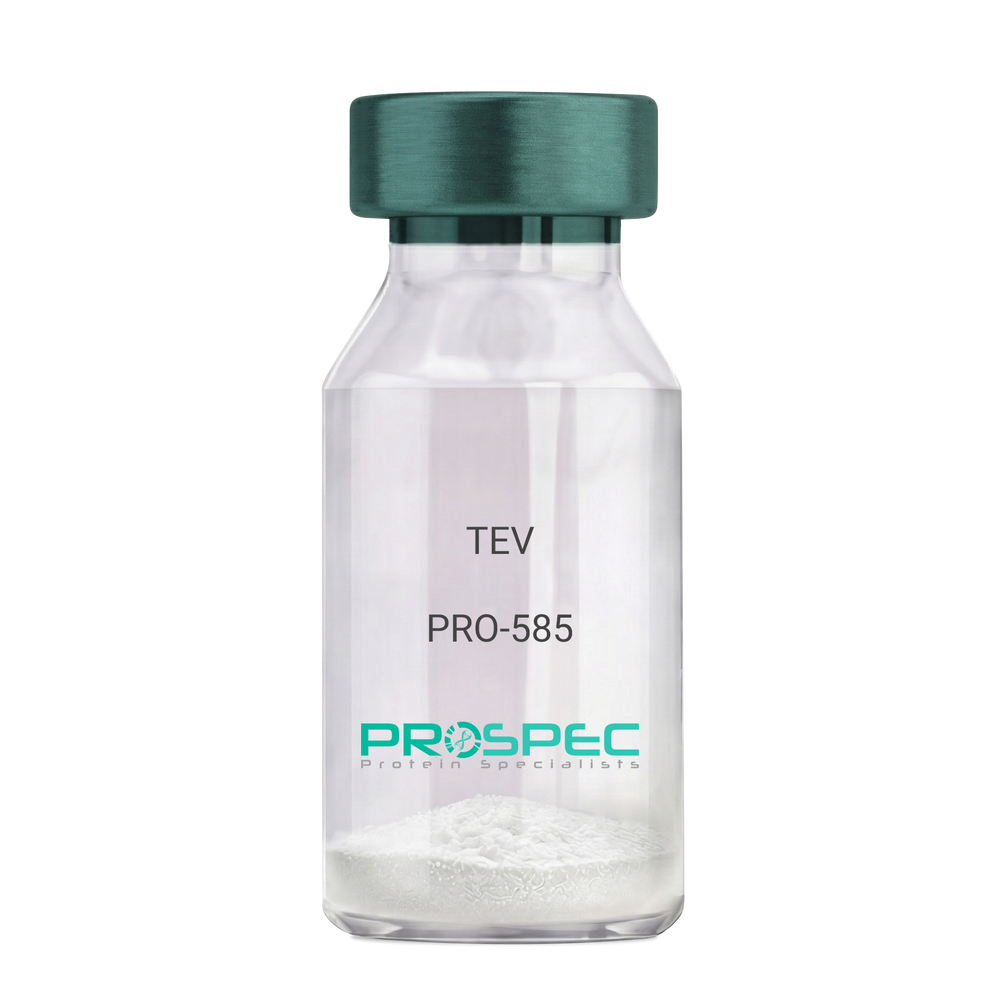
    TEV

    Description:

    Tobacco Etch Virus Protease Recombinant

    rTEV, TEV, P1 protease.

    Product # :

    PRO-585

    Price :

    Quantity :

    Shipping Method :

    Ice Icon

    Shipped with Ice Packs

    Add To Cart

    More Info

    • description
    • source
    • formulation
    • purity
    • More Info

    Description

    Recombinant TEV Protease (rTEV) is a site-specific protease purified from E. coli. The protease can be used for the removal of affinity tags from fusion proteins. The seven-amino-acid recognition site for rTEV is Glu-Asn-Leu-Tyr-Phe-Gln-Gly with cleavage occurring between Gln and Gly. The optimal temperature for cleavage is 30°C; however, the enzyme can be used at temperatures as low as 4°C. The rTEV contains His tag.The rTEV is purified by proprietary chromatographic techniques.

    Source

    Escherichia Coli.

    Formulation

    The rTEV contains 25mM Tris, Ph 8.0, 75mM NaCl, 5mM EDTA, 10mM GSH, 50% Glycerol.

    Purity

    Greater than 90.0% as determined by analysis by SDS-PAGE.

    More Info

    • Introduction

      TEV protease is the common name for the 27 kDa catalytic domain of the Nuclear Inclusion a (NIa) protein encoded by the tobacco etch virus (TEV). Because its sequence specificity is far more stringent than that of factor Xa, thrombin, or enterokinase, TEV protease is a very useful reagent for cleaving fusion proteins. TEV protease recognizes a linear epitope of the general form E-Xaa-Xaa-Y -Xaa-Q-(G/S), with cleavage occurring between Q and G or Q and S. The most commonly used sequence is ENLYFQG.

    • Synonyms

      rTEV, TEV, P1 protease.

    • Physical Appearance

      Sterile liquid formulation.

    • Stability

      rTEV although stable at 4°C for 1 week, should be stored below -18°C. Please prevent freeze thaw cycles.

    • Cleavage Conditions

      A number of variables can be changed to optimize the cleavage of any specific protein. The amount of rTEV, the temperature of the incubation, and the time needed for cleavage may be examined. If the protein of interest is heat-labile, then 4°C incubations are recommended. Reactions at 4°C will require longer incubation times and/or more rTEV.

    • Unit Definition

      One unit is defined as the amount of enzyme needed to cleave 3 ug of fusion protein in 1 hour to 85 % completion at 30°C in a buffer containing 50 mM Tris-HCl, pH 8.0, 0.5 mM EDTA, and 1 mM DTT.

    ProSpec's products are furnished for LABORATORY RESEARCH USE ONLY. The product may not be used as drugs, agricultural or pesticidal products, food additives or household chemicals.

    Tev Protease
  • View Data Sheet

    Name :

    DCPS Human

    Description:

    Decapping Enzyme, Scavenger Human Recombinant

    Scavenger mRNA-decapping enzyme DcpS, DCS-1, Hint-related 7meGMP-directed hydrolase, Histidine triad protein member 5, HINT-5, DCPS, DCS1, HINT5, HSPC015, HSL1.

    Product # :

    ENZ-159

    Price :

    Quantity :

    Shipping Method :

    Ice Icon

    Shipped with Ice Packs

    Add To Cart

    More Info

    • description
    • source
    • formulation
    • purity
    • More Info

    Description

    DCPS Human Recombinant produced in E.Coli is a single, non-glycosylated polypeptide chain containing 357 amino acids (1-337 a.a.) and having a molecular mass of 40.7kDa.DCPS is fused to a 20 amino acid His-tag at N-terminus & purified by proprietary chromatographic techniques.

    Source

    Escherichia Coli.

    Formulation

    DCPS protein solution (0.5mg/ml) containing 20mM Tris-HCl buffer (pH8.0), 20% glycerol and 1mM DTT.

    Purity

    Greater than 90% as determined by SDS-PAGE.

    More Info

    • Introduction

      Scavenger mRNA-decapping enzyme (DCPS) is a member of the HIT family. DCPS is required for the complete degradation of mRNAs, both in normal mRNA turnover and in nonsense-mediated mRNA decay. It was shown that DCPS hydrolyzes the residual m7GpppN cap structure after the complete 3'–5' degradation of the mRNA by the exosome. Furthermore, DCPS releases m7GMP and is incapable of cleaving cap structures attached to a long RNA chain.

    • Synonyms

      Scavenger mRNA-decapping enzyme DcpS, DCS-1, Hint-related 7meGMP-directed hydrolase, Histidine triad protein member 5, HINT-5, DCPS, DCS1, HINT5, HSPC015, HSL1.

    • Physical Appearance

      Sterile Filtered clear solution.

    • Stability

      Store at 4°C if entire vial will be used within 2-4 weeks. Store, frozen at -20°C for longer periods of time. For long term storage it is recommended to add a carrier protein (0.1% HSA or BSA).Avoid multiple freeze-thaw cycles.

    • Amino Acid Sequence

      MGSSHHHHHH SSGLVPRGSH MADAAPQLGK RKRELDVEEA HAASTEEKEA GVGNGTCAPV RLPFSGFRLQ KVLRESARDK IIFLHGKVNE ASGDGDGEDA VVILEKTPFQ VEQVAQLLTG SPELQLQFSN DIYSTYHLFP PRQLNDVKTT VVYPATEKHL QKYLRQDLRL IRETGDDYRN ITLPHLESQS LSIQWVYNIL DKKAEADRIV FENPDPSDGF VLIPDLKWNQ QQLDDLYLIA ICHRRGIRSL RDLTPEHLPL LRNILHQGQE AILQRYRMKG DHLRVYLHYL PSYYHLHVHF TALGFEAPGS GVERAHLLAE VIENLECDPR HYQQRTLTFA LRADDPLLKL LQEAQQS.

    ProSpec's products are furnished for LABORATORY RESEARCH USE ONLY. The product may not be used as drugs, agricultural or pesticidal products, food additives or household chemicals.

    Dcps Human
  • View Data Sheet

    Name :

    SERPINA5 Human

    Description:

    Serpin Peptidase Inhibitor Clade A Member 5 Human Recombinant

    PAI3, PCI, PROCI, PLANH3, Protein-C Inhibitor, Serpin A5, Plasminogen activator inhibitor 3, PAI-3, SERPINA5.

    Product # :

    PRO-749

    Price :

    Quantity :

    Shipping Method :

    Ice Icon

    Shipped with Ice Packs

    Add To Cart

    More Info

    • description
    • source
    • formulation
    • purity
    • More Info

    Description

    SERPINA5 Human Recombinant fused with a 20 amino acid His tag at N-terminus produced in E.Coli is a single, non-glycosylated, polypeptide chain containing 408 amino acids (20-406 a.a.) and having a molecular mass of 45.9 kDa.The SERPINA5 is purified by proprietary chromatographic techniques.

    Source

    Escherichia Coli.

    Formulation

    The SERPINA5 solution (0.5mg/ml) contains 20mM Tris-HCl buffer pH-8, 1mM DTT and 10% glycerol.

    Purity

    Greater than 90.0% as determined by SDS-PAGE.

    More Info

    • Introduction

      SERPINA5 up regulates TAFI activation by inhibiting the protein C activation. SERPINA5 is a significant regulator in the equilibrium between coagulation and fibrinolysis by differentially inhibiting the activation of TAFI and of Protein-C. SERPINA5 belongs to the serpin serine proteinase inhibitor family. SERPINA5 protein inhibits plasminogen activators as well as activated protein C.
      SERPINA5 is secreted in plasma & liver. SERPINA5 is involved in cell inflammation, proliferation, apoptosis, tumour cell migration, invasion, and metastasis. Moreover, SERPINA5 controls the invasive potential of renal cell carcinoma by inhibiting urinary plasminogen activator secreted by the cells. SERPINA5 participtes in regulating key serine proteases which are involved in metastatic prostate disease.

    • Synonyms

      PAI3, PCI, PROCI, PLANH3, Protein-C Inhibitor, Serpin A5, Plasminogen activator inhibitor 3, PAI-3, SERPINA5.

    • Physical Appearance

      Sterile Filtered colorless solution.

    • Stability

      Store at 4°C if entire vial will be used within 2-4 weeks.Store, frozen at -20°C for longer periods of time. For long term storage it is recommended to add a carrier protein (0.1% HSA or BSA).Avoid multiple freeze-thaw cycles.

    • Amino Acid Sequence

      MGSSHHHHHH SSGLVPRGSH MHRHHPREMK KRVEDLHVGA TVAPSSRRDF TFDLYRALAS AAPSQNIFFS PVSISMSLAM LSLGAGSSTK MQILEGLGLN LQKSSEKELH RGFQQLLQEL NQPRDGFQLS LGNALFTDLV VDLQDTFVSA MKTLYLADTF PTNFRDSAGA MKQINDYVAK QTKGKIVDLL KNLDSNAVVI MVNYIFFKAK WETSFNHKGT QEQDFYVTSE TVVRVPMMSR EDQYHYLLDR NLSCRVVGVP YQGNATALFI LPSEGKMQQV ENGLSEKTLR KWLKMFKKRQ LELYLPKFSI EGSYQLEKVL PSLGISNVFT SHADLSGISN HSNIQVSEMV HKAVVEVDES GTRAAAATGT IFTFRSARLN SQRLVFNRPF LMFIVDNNIL FLGKVNRP.

    ProSpec's products are furnished for LABORATORY RESEARCH USE ONLY. The product may not be used as drugs, agricultural or pesticidal products, food additives or household chemicals.

    Serpina5 Human
  • View Data Sheet

    Name :

    SGK1 Human

    Description:

    Serum/Glucocorticoid Regulated Kinase 1 Human Recombinant

    Serine/threonine-protein kinase Sgk1, Serum/glucocorticoid-regulated kinase 1, SGK1, SGK.

    Product # :

    PKA-272

    Price :

    Quantity :

    Shipping Method :

    Ice Icon

    Shipped with Ice Packs

    Add To Cart

    More Info

    • description
    • source
    • formulation
    • purity
    • More Info

    Description

    SGK1 Human Recombinant produced in E.Coli is a single, non-glycosylated polypeptide chain containing 393 amino acids (60-431 a.a.) and having a molecular mass of 44.5kDa.SGK1 is fused to a 21 amino acid His-tag at N-terminus & purified by proprietary chromatographic techniques.

    Source

    Escherichia Coli.

    Formulation

    SGK1 protein solution (0.25mg/ml) containing 20mM Tris-HCl buffer (pH8.0), 30% glycerol, 0.2M NaCl, 2mM DTT and 0.1mM PMSF.

    Purity

    Greater than 90.0% as determined by SDS-PAGE.

    More Info

    • Introduction

      Serum-and glucocorticoid-regulated kinase (SGK1) is a serine/threonine protein kinase and a member of the “AGC” subfamily, which includes protein kinases A, G, and C. The SGK1 protein has an imperative role in activating specific potassium, sodium and chloride channels, suggesting a participation in the regulation of processes such as cell survival, neuronal excitability, and renal sodium excretion. SGK1 is activated in vitro by PDK-1 (3-phosphoinositide-dependent protein kinase-1) and in vivo in reaction to signals which activate phosphatidylinositol (PI) 3-kinase.

    • Synonyms

      Serine/threonine-protein kinase Sgk1, Serum/glucocorticoid-regulated kinase 1, SGK1, SGK.

    • Physical Appearance

      Sterile Filtered colorless solution.

    • Stability

      Store at 4°C if entire vial will be used within 2-4 weeks. Store, frozen at -20°C for longer periods of time. For long term storage it is recommended to add a carrier protein (0.1% HSA or BSA).Avoid multiple freeze-thaw cycles.

    • Amino Acid Sequence

      MGSSHHHHHH SSGLVPRGSH MISQPQEPEL MNANPSPPPS PSQQINLGPS SNPHAKPSDF HFLKVIGKGS FGKVLLARHK AEEVFYAVKV LQKKAILKKK EEKHIMSERN VLLKNVKHPF LVGLHFSFQT ADKLYFVLDY INGGELFYHL QRERCFLEPR ARFYAAEIAS ALGYLHSLNI VYRDLKPENI LLDSQGHIVL TDFGLCKENI EHNSTTSTFC GTPEYLAPEV LHKQPYDRTV DWWCLGAVLY EMLYGLPPFY SRNTAEMYDN ILNKPLQLKP NITNSARHLL EGLLQKDRTK RLGAKDDFME IKSHVFFSLI NWDDLINKKI TPPFNPNVSG PNDLRHFDPE FTEEPVPNSI GKSPDSVLVT ASVKEAAEAF LGFSYAPPTD SFL.

    ProSpec's products are furnished for LABORATORY RESEARCH USE ONLY. The product may not be used as drugs, agricultural or pesticidal products, food additives or household chemicals.

    Sgk1 Human
  • View Data Sheet

    Name :

    SHFM1 Human

    Description:

    Split Hand/Foot Malformation Type 1 Human Recombinant

    SHFM1, Split Hand/Foot Malformation (Ectrodactyly) Type 1, DSS1, SHFD1, Deleted In Split Hand/Split Foot Protein 1, Split Hand/Foot Deleted Protein 1, Split Hand/Foot Malformation Type 1 Protein, Deleted In Split-Hand/Foot 1, 26S Proteasome Complex Subunit DSS1, ECD, SEM1, SHSF1, Shfdg1, Deleted In Split-Hand/Split-Foot 1, SHFDG1.

    Product # :

    PRO-1777

    Price :

    Quantity :

    Shipping Method :

    Ice Icon

    Shipped with Ice Packs

    Add To Cart

    More Info

    • description
    • source
    • formulation
    • purity
    • More Info

    Description

    SHFM1 Human Recombinant produced in E.Coli is a single, non-glycosylated polypeptide chain containing 93 amino acids (1-70 a.a) and having a molecular mass of 10.7kDa (Molecular size on SDS-PAGE will appear higher).SHFM1 is fused to a 23 amino acid His-tag at N-terminus & purified by proprietary chromatographic techniques.

    Source

    Escherichia Coli.

    Formulation

    SHFM1 protein solution (1mg/ml) containing 20mM Tris-HCl buffer (pH8.0), 10% glycerol and 0.1M NaCl.

    Purity

    Greater than 85.0% as determined by SDS-PAGE.

    More Info

    • Introduction

      26S proteasome complex subunit DSS1 (SHFM1) has been suggested as a candidate gene for the autosomal dominant form of the heterogeneous limb developmental disorder split hand/split foot malformation type 1. SHFM1 is a subunit of the 26S proteasome which plays a part in ubiquitin-dependent proteolysis. SHFM1 binds and stabilizes BRCA2 and is therefore involved in the control of R-loop-associated DNA damage and thus transcription-associated genomic instability. Furthermore, SHFM1 may have a role in the completion of the cell cycle. SHFM1 is a component of the TREX-2 complex (transcription and export complex 2), comprised of at least ENY2, GANP, PCID2, DSS1, and either centrin CETN2 or CETN3.

    • Synonyms

      SHFM1, Split Hand/Foot Malformation (Ectrodactyly) Type 1, DSS1, SHFD1, Deleted In Split Hand/Split Foot Protein 1, Split Hand/Foot Deleted Protein 1, Split Hand/Foot Malformation Type 1 Protein, Deleted In Split-Hand/Foot 1, 26S Proteasome Complex Subunit DSS1, ECD, SEM1, SHSF1, Shfdg1, Deleted In Split-Hand/Split-Foot 1, SHFDG1.

    • Physical Appearance

      Sterile Filtered colorless solution.

    • Stability

      Store at 4°C if entire vial will be used within 2-4 weeks. Store, frozen at -20°C for longer periods of time. For long term storage it is recommended to add a carrier protein (0.1% HSA or BSA).Avoid multiple freeze-thaw cycles.

    • Amino Acid Sequence

      MGSSHHHHHH SSGLVPRGSH MGSMSEKKQP VDLGLLEEDD EFEEFPAEDW AGLDEDEDAH VWEDNWDDDN VEDDFSNQLR AELEKHGYKM ETS.

    ProSpec's products are furnished for LABORATORY RESEARCH USE ONLY. The product may not be used as drugs, agricultural or pesticidal products, food additives or household chemicals.

    Shfm1 Human
  • View Data Sheet

    Name :

    APTX Human

    Description:

    Aprataxin Human Recombinant

    AXA1, AOA, FHA-HIT, AOA11, ataxia 1, early onset with hypoalbuminemia1 EOAHA1, EAOH1, Forkhead-associated domain histidine triad-like protein, APTX, Aprataxin, AOA1, EAOH, EOAHA, MGC1072, FLJ20157.

    Product # :

    PRO-790

    Price :

    Quantity :

    Shipping Method :

    Ice Icon

    Shipped with Ice Packs

    Add To Cart

    More Info

    • description
    • source
    • formulation
    • purity
    • More Info

    Description

    APTX Human Recombinant fused to a 37 amino acid His Tag at N-terminal produced in E.Coli is a single, non-glycosylated, polypeptide chain containing 205 amino acids (1-168 a.a) and having a molecular mass of 23.9 kDa. The APTX is purified by proprietary chromatographic techniques.

    Source

    Escherichia Coli.

    Formulation

    The APTX solution contains 20mM Tris-HCl pH-7.5, 0.1M NaCl, 0.1mM PMSF and 20% glycerol.

    Purity

    Greater than 95.0% as determined by SDS-PAGE.

    More Info

    • Introduction

      APTX is a DNA-binding protein which participates in single-strand DNA break repair, double-strand DNA break repair and base excision repair. APTX determines abortive DNA ligation intermediates created each at base excision sites, or while DNA ligases attempt to restore non-ligatable breaks induced by reactive oxygen species. APTX catalyzes the release of adenylate groups covalently linked to 5''-phosphate termini, resulting in the production of 5''-phosphate termini that can be efficiently rejoined. APTX hydrolyzes adenosine 5''-monophosphoramidate (AMP-NH(2)) and diadenosine tetraphosphate (AppppA), but with lower catalytic activity.

    • Synonyms

      AXA1, AOA, FHA-HIT, AOA11, ataxia 1, early onset with hypoalbuminemia1 EOAHA1, EAOH1, Forkhead-associated domain histidine triad-like protein, APTX, Aprataxin, AOA1, EAOH, EOAHA, MGC1072, FLJ20157.

    • Physical Appearance

      Sterile Filtered clear colorless solution.

    • Stability

      Store at 4°C if entire vial will be used within 2-4 weeks. Store, frozen at -20°C for longer periods of time. For long term storage it is recommended to add a carrier protein (0.1% HSA or BSA).Avoid multiple freeze-thaw cycles.

    • Amino Acid Sequence

      MRGSHHHHHH GMASMTGGQQ MGRDLYDDDD KDRWAGSMQD PKMQVYKDEQ VVVIKDKYPK ARYHWLVLPW TSISSLKAVA REHLELLKHM HTVGEKVIVD FAGSSKLRFR LGYHAIPSMS HVHLHVISQD FDSPCLKNKK HWNSFNTEYF LESQAVIEMV QEAGRVTVRD GMPELLKLPL RCHECQQLLP SIPQLKEHLR KHWTQ.

    ProSpec's products are furnished for LABORATORY RESEARCH USE ONLY. The product may not be used as drugs, agricultural or pesticidal products, food additives or household chemicals.

    Aptx Human
  • View Data Sheet

    Name :

    DPP4 Human, HEK

    Description:

    Dipeptidyl-Peptidase 4 Human Recombinant, HEK

    CD26, ADABP, ADCP2, DPPIV, TP103, DPP4, Dipeptidyl peptidase 4, Dipeptidyl peptidase IV, DPP IV, T-cell activation antigen CD26, Adenosine deaminase complexing protein 2, CD26 antigen.

    Product # :

    ENZ-1187

    Price :

    Quantity :

    Shipping Method :

    Ice Icon

    Shipped with Ice Packs

    Add To Cart

    More Info

    • description
    • source
    • formulation
    • purity
    • biological activity
    • More Info

    Description

    DPP4 Human Recombinant is a single, glycosylated polypeptide chain containing 977 amino acids (29-766a.a) and having a molecular mass of 112.1kDa (calculated). DPP4 is fused to a 239 amino acid hIgG-Tag at C-terminus and is purified by proprietary chromatographic techniques.

    Source

    HEK293 Cells.

    Formulation

    DPP4 protein solution (0.25mg/ml) contains 10% Glycerol and Phosphate-Buffered Saline (pH 7.4).

    Purity

    Greater than 95.0% as determined by Analysis by SDS-PAGE.

    Biological Activity

    Specific activity is > 15,000 pmol/min/ug in which one unit defined as the amount of enzyme that hydrolyze 1pmole of H-Gly-Pro-AMC.HBr to H-Gly-Pro and AMC per minute at pH 8.0 at 37℃.

     The ED50 range ≤250 ng/ml is measured by its binding ability in a functional ELISA with MERS-CoV Spike S1 Subunit (CAT# sars-052)..

    The ED50 range ≤200 ng/ml is measured by its binding ability in a functional ELISA with MERS-CoV Spike RBD (CAT# sars-054).

    The ED50 range ≤120 ng/ml is measured by its binding ability in a functional ELISA with MERS-CoV Spike (CAT# sars-051).

    More Info

    • Synonyms

      CD26, ADABP, ADCP2, DPPIV, TP103, DPP4, Dipeptidyl peptidase 4, Dipeptidyl peptidase IV, DPP IV, T-cell activation antigen CD26, Adenosine deaminase complexing protein 2, CD26 antigen.

    • Physical Appearance

      Sterile Filtered colorless solution.

    • Stability

      Store at 4°C if entire vial will be used within 2-4 weeks. Store, frozen at -20°C for longer periods of time. For long term storage it is recommended to add a carrier protein (0.1% HSA or BSA).Avoid multiple freeze-thaw cycles.

    • Amino Acid Sequence

      DGSMNKGTDD ATADSRKTYT LTDYLKNTYR LKLYSLRWIS DHEYLYKQEN NILVFNAEYG NSSVFLENST FDEFGHSIND YSISPDGQFI LLEYNYVKQW RHSYTASYDI YDLNKRQLIT EERIPNNTQW VTWSPVGHKL AYVWNNDIYV KIEPNLPSYR ITWTGKEDII YNGITDWVYE EEVFSAYSAL WWSPNGTFLA YAQFNDTEVP LIEYSFYSDE SLQYPKTVRV PYPKAGAVNP TVKFFVVNTD SLSSVTNATS IQITAPASML IGDHYLCDVT WATQERISLQ WLRRIQNYSV MDICDYDESS GRWNCLVARQ HIEMSTTGWV GRFRPSEPHF TLDGNSFYKI ISNEEGYRHI CYFQIDKKDC TFITKGTWEV IGIEALTSDY LYYISNEYKG MPGGRNLYKI QLSDYTKVTC LSCELNPERC QYYSVSFSKE AKYYQLRCSG PGLPLYTLHS SVNDKGLRVL EDNSALDKML QNVQMPSKKL DFIILNETKF WYQMILPPHF DKSKKYPLLL DVYAGPCSQK ADTVFRLNWA TYLASTENII VASFDGRGSG YQGDKIMHAI NRRLGTFEVE DQIEAARQFS KMGFVDNKRI AIWGWSYGGY VTSMVLGSGS GVFKCGIAVA PVSRWEYYDS VYTERYMGLP TPEDNLDHYR NSTVMSRAEN FKQVEYLLIH GTADDNVHFQ QSAQISKALV DVGVDFQAMW YTDEDHGIAS STAHQHIYTH MSHFIKQCFS LPKLLEPKSC DKTHTCPPCP APELLGGPSV FLFPPKPKDT LMISRTPEVT CVVVDVSHED PEVKFNWYVD GVEVHNAKTK PREEQYNSTY RVVSVLTVLH QDWLNGKEYK CKVSNKALPA PIEKTISKAK GQPREPQVYT LPPSRDELTK NQVSLTCLVK GFYPSDIAVE WESNGQPENN YKTTPPVLDS DGSFFLYSKL TVDKSRWQQG NVFSCSVMHE ALHNHYTQKS LSLSPGK.

    • Background

      DPP4 protein, also known as Dipeptidyl peptidase-4 or CD26, is a cell surface protease with diverse functions in cell signaling and metabolism. This research aims to investigate the role of DPP4 protein in various physiological processes and its implications in disease pathogenesis. Understanding the biological significance of DPP4 can provide insights into its potential as a therapeutic target for several disorders.

      Function of DPP4 Protein:

      DPP4 protein is involved in the cleavage and regulation of several peptide hormones and chemokines, influencing their bioactivity and half-life. It is widely expressed in various tissues, including immune cells, endothelial cells, and epithelial cells. DPP4 can modulate immune responses, glucose metabolism, and neuropeptide signaling through enzymatic and non-enzymatic activities.

      Role of DPP4 Protein in Immune Regulation:

      DPP4 protein plays a role in immune cell activation and regulation. It is expressed on the surface of T cells, where it functions as a co-stimulatory molecule. DPP4 engagement on T cells promotes T cell activation, cytokine production, and adhesion to endothelial cells. Additionally, DPP4 can cleave and inactivate certain chemokines, thereby influencing chemotaxis and immune cell recruitment.

      Implications of DPP4 Protein in Metabolic Disorders:

      DPP4 protein is involved in glucose metabolism and insulin regulation. It cleaves incretin hormones, such as glucagon-like peptide-1 (GLP-1) and gastric inhibitory polypeptide (GIP), which play crucial roles in glucose homeostasis. Inhibition of DPP4 activity can enhance the action of these incretin hormones, leading to improved glycemic control. Therefore, DPP4 inhibitors have been developed as antidiabetic drugs.

      Association of DPP4 Protein with Cardiovascular Diseases:

      DPP4 protein has been implicated in the pathogenesis of cardiovascular diseases. Elevated DPP4 levels have been observed in patients with heart failure, atherosclerosis, and hypertension. DPP4 can contribute to endothelial dysfunction, inflammation, and vascular remodeling, which are key factors in the development and progression of cardiovascular disorders. Inhibition of DPP4 activity has shown potential as a therapeutic strategy in preclinical studies.

      Given its involvement in various biological processes and disease pathogenesis, DPP4 protein has emerged as a potential therapeutic target. DPP4 inhibitors, which prevent the enzymatic activity of DPP4, have been developed for the treatment of type 2 diabetes. These inhibitors enhance the action of incretin hormones, leading to improved glycemic control. Additionally, ongoing research aims to explore the therapeutic potential of DPP4 inhibitors in other conditions, such as immune-mediated disorders and cardiovascular diseases.

      Conclusion:

      The investigation of DPP4 protein provides insights into its diverse functions in cell signaling, immune regulation, and metabolism. Understanding the role of DPP4 in disease pathogenesis opens avenues for the development of targeted therapies for conditions such as diabetes, cardiovascular diseases, and immune-mediated disorders. Further research on DPP4 protein and its associated pathways may uncover new therapeutic opportunities and improve patient outcomes.

    ProSpec's products are furnished for LABORATORY RESEARCH USE ONLY. The product may not be used as drugs, agricultural or pesticidal products, food additives or household chemicals.

    Dpp4 Human Hek
  • View Data Sheet

    Name :

    ICAM1 Mouse

    Description:

    Intercellular Adhesion Molecule-1 Mouse Recombinant

    Intercellular adhesion molecule 1, ICAM-1, Major group rhinovirus receptor, CD54 antigen, ICAM1, BB2, CD54, P3.58

    Product # :

    PRO-2636

    Price :

    Quantity :

    Shipping Method :

    Ice Icon

    Shipped with Ice Packs

    Add To Cart

    More Info

    • description
    • source
    • formulation
    • purity
    • biological activity
    • More Info

    Description

    ICAM1 Mouse Recombinant produced in Sf9 Baculovirus cells is a single, glycosylated polypeptide chain containing 466 amino acids (28-485 a.a) and having a molecular mass of 51.2kDa.ICAM1 is fused to an 8 amino acid His-tag at C-terminus & purified by proprietary chromatographic techniques.

    Source

    Sf9, Baculovirus cells.

    Formulation

    The ICAM1 solution (0.5mg/1ml) contains Phosphate-Buffered Saline (pH 7.4) and 10% glycerol.

    Purity

    Greater than 95.0% as determined by SDS-PAGE.

    Biological Activity

    The Biological Activity is measured by the ability of the immobilized protein to support the adhesion of HSB2 human peripheral blood acute lymphoblastic leukemia cells. ICAM-1/CD54 coated plates 5ug/ml when cells are added to. This effect is more to 60%.

    More Info

    • Introduction

      Intercellular adhesion molecule 1 or ICAM1 is a protein, part of the ICAM family of proteins. ICAM1 acts as ligand for integrin alpha-L/beta-2 which is a leukocyte adhesion peptide. Amid migration of leukocytes ICAM1 promotes endothelial apical assembly cups via activation of ARHGEF26/SGEF & RHOG.

    • Synonyms

      Intercellular adhesion molecule 1, ICAM-1, Major group rhinovirus receptor, CD54 antigen, ICAM1, BB2, CD54, P3.58

    • Physical Appearance

      Sterile Filtered colorless solution.

    • Stability

      Store at 4°C if entire vial will be used within 2-4 weeks. Store, frozen at -20°C for longer periods of time. For long term storage it is recommended to add a carrier protein (0.1% HSA or BSA).Avoid multiple freeze-thaw cycles.

    • Amino Acid Sequence

      QVSIHPREAF LPQGGSVQVN CSSSCKEDLS LGLETQWLKD ELESGPNWKL FELSEIGEDS SPLCFENCGT VQSSASATIT VYSFPESVEL RPLPAWQQVG KDLTLRCHVD GGAPRTQLSA VLLRGEEILS RQPVGGHPKD PKEITFTVLA SRGDHGANFS CRTELDLRPQ GLALFSNVSE ARSLRTFDLP ATIPKLDTPD LLEVGTQQKL FCSLEGLFPA SEARIYLELG GQMPTQESTN SSDSVSATAL VEVTEEFDRT LPLRCVLELA DQILETQRTL TVYNFSAPVL TLSQLEVSEG SQVTVKCEAH SGSKVVLLSG VEPRPPTPQV QFTLNASSED HKRSFFCSAA LEVAGKFLFK NQTLELHVLY GPRLDETDCL GNWTWQEGSQ QTLKCQAWGN PSPKMTCRRK ADGALLPIGV VKSVKQEMNG TYVCHAFSSH GNVTRNVYLT VLYHSQNNVE HHHHHH

    ProSpec's products are furnished for LABORATORY RESEARCH USE ONLY. The product may not be used as drugs, agricultural or pesticidal products, food additives or household chemicals.

    Icam1 Mouse
  • View Data Sheet

    Name :

    TBPL1 Human

    Description:

    TBP-Like 1 Human Recombinant

    TATA box-binding protein-like protein 1, TBP-like protein 1, 21 kDa TBP-like protein, Second TBP of unique DNA protein, STUD, TATA box-binding protein-related factor 2, TBP-related factor 2, TBP-like factor, TBP-related protein, TBPL1, TLF, TLP, TLP21, TRF2, TRP, MGC:8389, MGC:9620.

    Product # :

    PRO-736

    Price :

    Quantity :

    Shipping Method :

    Ice Icon

    Shipped with Ice Packs

    Add To Cart

    More Info

    • description
    • source
    • formulation
    • purity
    • More Info

    Description

    TBPL1 Human Recombinant produced in E.Coli is a single, non-glycosylated polypeptide chain containing 209 amino acids (1-186 a.a) and having a molecular mass of 23.3kDa.TBPL1 is fused to a 23 amino acid His-tag at N-terminus & purified by proprietary chromatographic techniques.

    Source

    Escherichia Coli.

    Formulation

    TBPL1 protein solution (0.25mg/ml) containing 20mM Tris-HCl buffer (pH 8.0), 0.2M NaCl, 50% glycerol, 2mM DTT and 1mM EDTA.

    Purity

    Greater than 90.0% as determined by SDS-PAGE.

    More Info

    • Introduction

      TBP-Like 1 (TBPL1) is a member of the TBP family. The TATA box-binding protein (TBP) is an indispensable component of the basal transcriptional machinery. TBPL1 is crucial for spermiogenesis and supposed to be significant in expression of developmentally regulated genes.

    • Synonyms

      TATA box-binding protein-like protein 1, TBP-like protein 1, 21 kDa TBP-like protein, Second TBP of unique DNA protein, STUD, TATA box-binding protein-related factor 2, TBP-related factor 2, TBP-like factor, TBP-related protein, TBPL1, TLF, TLP, TLP21, TRF2, TRP, MGC:8389, MGC:9620.

    • Physical Appearance

      Sterile Filtered colorless solution.

    • Stability

      Store at 4°C if entire vial will be used within 2-4 weeks. Store, frozen at -20°C for longer periods of time. For long term storage it is recommended to add a carrier protein (0.1% HSA or BSA).Avoid multiple freeze-thaw cycles.

    • Amino Acid Sequence

      MGSSHHHHHH SSGLVPRGSH MGSMDADSDV ALDILITNVV CVFRTRCHLN LRKIALEGAN VIYKRDVGKV LMKLRKPRIT ATIWSSGKII CTGATSEEEA KFGARRLARS LQKLGFQVIF TDFKVVNVLA VCNMPFEIRL PEFTKNNRPH ASYEPELHPA VCYRIKSLRA TLQIFSTGSI TVTGPNVKAV ATAVEQIYPF VFESRKEIL.

    ProSpec's products are furnished for LABORATORY RESEARCH USE ONLY. The product may not be used as drugs, agricultural or pesticidal products, food additives or household chemicals.

    Tbpl1 Human
  • View Data Sheet

    Name :

    GADD45GIP1 Human

    Description:

    Growth Arrest and DNA-Damage-Inducible Gamma Interacting Protein 1 Human Recombinant

    Growth arrest and DNA-damage-inducible gamma interacting protein 1, PRG6, CRIF1, PLINP-1, KBBP2, Plinp1, Papillomavirus L2-interacting nuclear protein 1, CKII beta-associating protein, CR6-interacting factor 1, p53-responsive gene 6 protein, CKII beta binding protein 2, growth arrest and DNA damage-inducible proteins-interacting protein 1, papillomavirus L2 interacting nuclear protein 1, PLINP1.

    Product # :

    PRO-972

    Price :

    Quantity :

    Shipping Method :

    Ice Icon

    Shipped with Ice Packs

    Add To Cart

    More Info

    • description
    • source
    • formulation
    • purity
    • More Info

    Description

    GADD45GIP1 Human Recombinant produced in E.coli is a single, non-glycosylated polypeptide chain containing 196 amino acids (48-222) and having a molecular mass of 22.6 kDa.GADD45GIP1 is fused to a 21 amino acid His-tag at N-terminus & purified by proprietary chromatographic techniques.

    Source

    E.coli.

    Formulation

    The GADD45GIP1 solution (0.25mg/ml) contains 20mM Tris-HCl buffer (pH 8.0), 2mM DTT, 0.2M NaCl and 40% glycerol.

    Purity

    Greater than 90% as determined by SDS-PAGE.

    More Info

    • Introduction

      GADD45GIP1 is a nuclear protein which takes part in apoptosis control. GADD45GIP1 is expressed in several tissues, such as heart, thyroid, trachea, kidney, ovary, pancreas, testis and stomach and acts as a negative regulator of G1 to S phase cell cycle production by collaborating with GADD45 proteins to inhibit the activity of cyclin-dependent kinases.

    • Synonyms

      Growth arrest and DNA-damage-inducible gamma interacting protein 1, PRG6, CRIF1, PLINP-1, KBBP2, Plinp1, Papillomavirus L2-interacting nuclear protein 1, CKII beta-associating protein, CR6-interacting factor 1, p53-responsive gene 6 protein, CKII beta binding protein 2, growth arrest and DNA damage-inducible proteins-interacting protein 1, papillomavirus L2 interacting nuclear protein 1, PLINP1.

    • Physical Appearance

      Sterile Filtered colorless solution.

    • Stability

      Store at 4°C if entire vial will be used within 2-4 weeks. Store, frozen at -20°C for longer periods of time. For long term storage it is recommended to add a carrier protein (0.1% HSA or BSA).Avoid multiple freeze-thaw cycles.

    • Amino Acid Sequence

      MGSSHHHHHH SSGLVPRGSH MPRWQLGPRY AAKQFARYGA ASGVVPGSLW PSPEQLRELE AEEREWYPSL ATMQESLRVK QLAEEQKRRE REQHIAECMA KMPQMIVNWQ QQQRENWEKA QADKERRARL QAEAQELLGY QVDPRSARFQ ELLQDLEKKE RKRLKEEKQK RKKEARAAAL AAAVAQDPAA SGAPSS

    ProSpec's products are furnished for LABORATORY RESEARCH USE ONLY. The product may not be used as drugs, agricultural or pesticidal products, food additives or household chemicals.

    Gadd45Gip1 Human
  • View Data Sheet

    Name :

    TPM1 Human

    Description:

    Tropomyosin-1 Human Recombinant

    Tropomyosin alpha-1 chain, Tropomyosin-1, Alpha-tropomyosin, TPM1, C15orf13, TMSA, CMD1Y, HTM-alpha.

    Product # :

    PRO-469

    Price :

    Quantity :

    Shipping Method :

    Ice Icon

    Shipped with Ice Packs

    Add To Cart

    More Info

    • description
    • source
    • formulation
    • purity
    • More Info

    Description

    TPM1 Human Recombinant produced in E.Coli is a single, non-glycosylated, polypeptide chain containing 304 amino acids (1-284 a.a.) and having a total molecular mass of 35kDa (Molecular weight on SDS-PAGE will appear higher). TPM1 is fused to a 20 amino acid His Tag at N-terminus and is purified by proprietary chromatographic techniques.

    Source

    Escherichia Coli.

    Formulation

    TPM1 0.5mg/ml protein solution contains 20mM Tris-HCl buffer pH-8, 1mM DTT, 0.1M NaCl & 20% glycerol.

    Purity

    Greater than 90.0% as determined by SDS-PAGE.

    More Info

    • Introduction

      TPM1 is a member of the tropomyosin family which consists of a number of extremely conserved, extensively distributed 35-45 kDa actin-binding proteins that are involved in the contractile system of striated and smooth muscles and the cytoskeleton of non-muscle cells. Tropomyosin-1 is composed of 2 alpha-helical chains arranged as a coiled-coil. TPM1 is polymerized end to end alongside the two grooves of actin filaments and provides stability to the filaments. TPM1 binds to actin filaments in muscle and non-muscle cells. TPM1 also functions in association with the troponin complex to regulate the calcium-dependent interaction of actin and myosin during muscle contraction. In non-muscle cells TPM1 is implicated in stabilizing cytoskeleton actin filaments. Smooth muscle contraction is controlled by interaction with caldesmon.
      Alternatively spliced transcript variants encoding a range of isoforms have been described in smooth muscle and non-muscle cells. TPM1 Isoform 1 is expressed in adult and fetal skeletal muscle and cardiac tissues, with higher expression levels in the cardiac tissues, whereas Isoform 10 is expressed in adult and fetal cardiac tissues, but not in skeletal muscle.
      Mutations in the TPM1 gene are linked to type 3 familial hypertrophic cardiomyopathy.

    • Synonyms

      Tropomyosin alpha-1 chain, Tropomyosin-1, Alpha-tropomyosin, TPM1, C15orf13, TMSA, CMD1Y, HTM-alpha.

    • Physical Appearance

      Sterile Filtered clear solution.

    • Stability

      Store at 4°C if entire vial will be used within 2-4 weeks.Store, frozen at -20°C for longer periods of time. For long term storage it is recommended to add a carrier protein (0.1% HSA or BSA).Avoid multiple freeze-thaw cycles.

    • Amino Acid Sequence

      MGSSHHHHHH SSGLVPRGSH MDAIKKKMQM LKLDKENALD RAEQAEADKK AAEDRSKQLE DELVSLQKKL KGTEDELDKY SEALKDAQEK
      LELAEKKATD AEADVASLNR RIQLVEEELD RAQERLATAL QKLEEAEKAA DESERGMKVI ESRAQKDEEK MEIQEIQLKE AKHIAEDADR
      KYEEVARKLV IIESDLERAE ERAELSEGQV RQLEEQLRIM DQTLKALMAA EDKYSQKEDR YEEEIKVLSD KLKEAETRAE FAERSVTKLE
      KSIDDLEDEL YAQKLKYKAI SEELDHALND MTSM.

    ProSpec's products are furnished for LABORATORY RESEARCH USE ONLY. The product may not be used as drugs, agricultural or pesticidal products, food additives or household chemicals.

    Tpm1 Human
  • View Data Sheet

    Name :

    CDH5 Human

    Description:

    Cadherin 5 Human Recombinant

    Cadherin 5, VE-Cadherin, Cadherin 5 Type 2 VE-Cadherin (Vascular Epithelium), CDH5, Cadherin 5 Type 2 (Vascular Endothelium), Vascular Endothelial Cadherin, 7B4 Antigen, Endothelial-Specific Cadherin, Cd144 Antigen, CD144 Antigen, Cadherin-5, CD144, 7B4.

    Product # :

    PRO-2384

    Price :

    Quantity :

    Shipping Method :

    Ice Icon

    Shipped with Ice Packs

    Add To Cart

    More Info

    • description
    • source
    • formulation
    • purity
    • More Info

    Description

    Cadherin 5 Human Recombinant produced in Sf9 Baculovirus cells is a single, glycosylated polypeptide chain containing 810 amino acids (29-599 a.a.) and having a molecular mass of 91.5kDa (Migrates at 70-100kDa on SDS-PAGE under reducing conditions). CDH5 is expressed with a 239 amino acid hIgG-His-tag at C-Terminus and purified by proprietary chromatographic techniques.

    Source

    Sf9, Insect cells.

    Formulation

    CDH5 solution (0.5mg/ml) contains Phosphate Buffered Saline (pH 7.4) & 10% glycerol.

    Purity

    Greater than 90.0% as determined by SDS-PAGE.

    More Info

    • Introduction

      Cadherin-5 (CDH5) belongs to the atypical/type 2 subgroup of Cadherin homophilic adhesion proteins. Cadherin-5 is a calcium-dependent cell-cell adhesion molecule, which is comprised of 5 extracellular cadherin repeats, a transmembrane region and a highly conserved cytoplasmic tail. Cadherin-5 protein plays a role in the formation, maturation and remodeling of the vascular wall. CDH5 is generally considered to be specific for vascular endothelia in which it is either the sole or the predominant cadherin, often co-existing with N-cadherin. Moreover, the CDH5 protein regulates or is regulated by VEGF R2, type 1 and type 2 TGF-beta receptors, and other endothelial junction proteins such as JAM-C, Claudin-5, and N-Cadherin. CDH5 also connects with alpha-catenin forming a link to the cytoskeleton. CDH5 functions jointly with KRIT1 to create and maintain correct endothelial cell polarity and vascular lumen. Furthermore, Cadherin-5 is essential for activation of PRKCZ and for the localization of phosphorylated PRKCZ, PARD3, TIAM1 and RAP1B to the cell junction. The CDH5 gene is located in a gene cluster in a region on the long arm of chromosome 16 which is involved in loss of heterozygosity events in breast and prostate cancer.

    • Synonyms

      Cadherin 5, VE-Cadherin, Cadherin 5 Type 2 VE-Cadherin (Vascular Epithelium), CDH5, Cadherin 5 Type 2 (Vascular Endothelium), Vascular Endothelial Cadherin, 7B4 Antigen, Endothelial-Specific Cadherin, Cd144 Antigen, CD144 Antigen, Cadherin-5, CD144, 7B4.

    • Physical Appearance

      Sterile filtered colorless solution.

    • Stability

      Store at 4°C if entire vial will be used within 2-4 weeks.Store, frozen at -20°C for longer periods of time. For long term storage it is recommended to add a carrier protein (0.1% HSA or BSA).Avoid multiple freeze-thaw cycles.

    • Amino Acid Sequence

      NPAQRDTHSL LPTHRRQKRD WIWNQMHIDE EKNTSLPHHV GKIKSSVSRK NAKYLLKGEY VGKVFRVDAE TGDVFAIERL DRENISEYHL TAVIVDKDTG ENLETPSSFT IKVHDVNDNW PVFTHRLFNA SVPESSAVGT SVISVTAVDA DDPTVGDHAS VMYQILKGKE YFAIDNSGRI ITITKSLDRE KQARYEIVVE ARDAQGLRGD SGTATVLVTL QDINDNFPFF TQTKYTFVVP EDTRVGTSVG SLFVEDPDEP QNRMTKYSIL RGDYQDAFTI ETNPAHNEGI IKPMKPLDYE YIQQYSFIVE ATDPTIDLRY MSPPAGNRAQ VIINITDVDE PPIFQQPFYH FQLKENQKKP LIGTVLAMDP DAARHSIGYS IRRTSDKGQF FRVTKKGDIY NEKELDREVY PWYNLTVEAK ELDSTGTPTG KESIVQVHIE VLDENDNAPE FAKPYQPKVC ENAVHGQLVL QISAIDKDIT PRNVKFKFIL NTENNFTLTD NHDNTANITV KYGQFDREHT KVHFLPVVIS DNGMPSRTGT STLTVAVCKC NEQGEFTFCE DMAAQVGVSI QLEPKSCDKT HTCPPCPAPE LLGGPSVFLF PPKPKDTLMI SRTPEVTCVV VDVSHEDPEV KFNWYVDGVE VHNAKTKPRE EQYNSTYRVV SVLTVLHQDW LNGKEYKCKV SNKALPAPIE KTISKAKGQP REPQVYTLPP SRDELTKNQV SLTCLVKGFY PSDIAVEWES NGQPENNYKT TPPVLDSDGS FFLYSKLTVD KSRWQQGNVF SCSVMHEALH NHYTQKSLSL SPGKHHHHHH.

    ProSpec's products are furnished for LABORATORY RESEARCH USE ONLY. The product may not be used as drugs, agricultural or pesticidal products, food additives or household chemicals.

    Cdh5 Human
  • View Data Sheet

    Name :

    NME2 Human, Active

    Description:

    Non-Metastatic Cells 2 Human Recombinant, active

    Nucleoside diphosphate kinase B, NDPK-B, NDPKB, NM23-H2, NM23B.

    Product # :

    PRO-2640

    Price :

    Quantity :

    Shipping Method :

    Ice Icon

    Shipped with Ice Packs

    Add To Cart

    More Info

    • description
    • source
    • formulation
    • purity
    • biological activity
    • More Info

    Description

    NME2 Human Recombinant produced in E.Coli is a single, non-glycosylated polypeptide chain containing 152 amino acids (1-152 a.a.) and having a molecular mass of 17.2kDa.

    Source

    E.coli.

    Formulation

    The NME2 solution (1mg/ml) contains 10% glycerol, 20mM Tris-HCl buffer (pH 8.0) and 1mM DTT.

    Purity

    Greater than 90.0% as determined by SDS-PAGE.

    Biological Activity

    Specific activity is > 1,800unit/mg, and is defined as the amount of enzyme that convert 1.0 umole each of ATP and TDP to ADP and TTP per minute at pH 7.5 at 25C in a couple system with PK/LDH.

    More Info

    • Introduction

      Non-Metastatic Cells 2 or NME2, is a protein, that acts as a nucleoside diphosphate kinase. This protein is of a heterodimeric structure and has 152 aa A & B polypeptide chains that builds the whole protein. Erythrocyte NDP kinase beta subunit has an identical structure to NME2. NDP kinases linked to nucleoside triphosphates synthesis and it appears as though NME2 takes part in regulating signal transduction.

    • Synonyms

      Nucleoside diphosphate kinase B, NDPK-B, NDPKB, NM23-H2, NM23B.

    • Physical Appearance

      Sterile Filtered colorless solution.

    • Stability

      Store at 4°C if entire vial will be used within 2-4 weeks. Store, frozen at -20°C for longer periods of time. For long term storage it is recommended to add a carrier protein (0.1% HSA or BSA).Avoid multiple freeze-thaw cycles.

    • Amino Acid Sequence

      MANLERTFIA IKPDGVQRGL VGEIIKRFEQ KGFRLVAMKF LRASEEHLKQ HYIDLKDRPF FPGLVKYMNS GPVVAMVWEG LNVVKTGRVM LGETNPADSK PGTIRGDFCI QVGRNIIHGS DSVKSAEKEI SLWFKPEELV DYKSCAHDWV YE

    ProSpec's products are furnished for LABORATORY RESEARCH USE ONLY. The product may not be used as drugs, agricultural or pesticidal products, food additives or household chemicals.

    Nme2 Protein
  • View Data Sheet

    Name :

    PON1 Human, HEK

    Description:

    Paraoxonase-1 Human Recombinant, HEK

    Serum paraoxonase/arylesterase 1, Serum aryldialkylphosphatase 1, Aromatic esterase 1, A-esterase 1 , Serum aryldialkylphosphatase 1, paraoxonase 1, K-45, ESA, PON, MVCD5

    Product # :

    ENZ-1154

    Price :

    Quantity :

    Shipping Method :

    Ice Icon

    Shipped with Ice Packs

    Add To Cart

    More Info

    • description
    • source
    • formulation
    • purity
    • biological activity
    • More Info

    Description

    PON1 Human Recombinant produced in HEK cells is a single, glycosylated, polypeptide chain (16-355 a.a) containing a total of 346 amino acids, having a molecular mass of 39.0kDa. PON1 is fused to a 6 amino acid His-tag at C-terminus,and is purified by proprietary chromatographic techniques.

    Source

    HEK293 Cells.

    Formulation

    The PON1 solution (0.25mg/ml) contains 20% Glycerol and Phosphate-Buffered Saline (pH 7.4).

    Purity

    Greater than 90.0% as determined by SDS-PAGE.

    Biological Activity

    Specific activity is > 2,500 pmol/min/ug. Defined by the amount of enzyme that  hydrolyzes 1pmole of pnitrophenyl acetate to p-nitrophenol per minute at pH 7.5 at 37˚C.

    More Info

    • Introduction

      Paraoxonase-1 or PON1 is part of the paraoxonase group of proteins. PON1 is an enzyme, responsible to the toxic metabolites of a different of organophosphorus insecticides hydrolyzation. Furthermore, PON1 is a dominant anti-atherosclerotic part of HDL. The enzyme needs PPAR-gamma for activation, leading to synthesis and release of paraoxonase 1 from the liver tissue, resulting in atherosclerosis reduction. PON1 has many qualities for atheroprotective through inflammatory lipid peroxides metabolism. This enzyme can hydrolyze a large number of substrates, for example cyclic carbonates, lactones, nerve gases etc.

    • Synonyms

      Serum paraoxonase/arylesterase 1, Serum aryldialkylphosphatase 1, Aromatic esterase 1, A-esterase 1 , Serum aryldialkylphosphatase 1, paraoxonase 1, K-45, ESA, PON, MVCD5

    • Physical Appearance

      Sterile Filtered colorless solution.

    • Stability

      Store at 4°C if entire vial will be used within 2-4 weeks. Store, frozen at -20°C for longer periods of time. For long term storage it is recommended to add a carrier protein (0.1% HSA or BSA).Avoid multiple freeze-thaw cycles.

    • Amino Acid Sequence

      LFRNHQSSYQ TRLNALREVQ PVELPNCNLV KGIETGSEDL EILPNGLAFI SSGLKYPGIK SFNPNSPGKI LLMDLNEEDP TVLELGITGS KFDVSSFNPH GISTFTDEDN AMYLLVVNHP DAKSTVELFK FQEEEKSLLH LKTIRHKLLP NLNDIVAVGP EHFYGTNDHY FLDPYLQSWE MYLGLAWSYV VYYSPSEVRV VAEGFDFANG INISPDGKYV YIAELLAHKI HVYEKHANWT LTPLKSLDFN TLVDNISVDP ETGDLWVGCH PNGMKIFFYD SENPPASEVL RIQNILTEEP KVTQVYAENG TVLQGSTVAS VYKGKLLIGT VFHKALYCEL HHHHHH

    ProSpec's products are furnished for LABORATORY RESEARCH USE ONLY. The product may not be used as drugs, agricultural or pesticidal products, food additives or household chemicals.

    Pon1 Enzyme
  • View Data Sheet

    Name :

    CTGF Human, HEK

    Description:

    Connective Tissue Growth Factor Human Recombinant , HEK

    CCN2, NOV2, HCS24, IGFBP8, MGC102839, CTGF.

    Product # :

    CYT-687

    Price :

    Quantity :

    Shipping Method :

    Ice Icon

    Shipped with Ice Packs

    Add To Cart

    More Info

    • description
    • source
    • formulation
    • purity
    • More Info

    Description

    The CTGF Human Recombinant produced in HEK293 cells, is 36kDa protein containing a total of 329 amino acid residues (aa 27-349) including a C-terminal 6×His tag.

    Source

    HEK293 cells.

    Formulation

    CTGF filtered (0.2µm) solution in 0.1M Citrate buffer pH 4.7 and 20% (w/v) glycerol.

    Purity

    Greater than 90.0% as determined by SDS-PAGE.

    More Info

    • Introduction

      Connective Tissue Growth Factor belongs to the CCN family of proteins. The CCN family presently consists of six members in human also known as: Cyr61 (Cystein rich 61), CTGF (Connective Tissue Growth Factor), Nov (Nephroblastoma Overexpressed gene), WISP-1, 2 and 3 (Wnt-1 Induced Secreted Proteins). The CCN genes encode secreted proteins associated with the Extracellular Matrix (ECM) and cell membrane.
      CCN proteins are matricellular proteins which are involved in the regulation of various cellular functions including: proliferation, differentiation, survival, adhesion and migration. They are expressed in derivatives of the three embryonic sheets and are implicated in the development of kidney, nervous system, muscle, bone marrow, cartilage and bone. During adulthood, they are implicated in wound healing, bone fracture repair, and pathologies such as: fibrosis, vascular ailments and tumorigenesis.
      Full length secreted CCN proteins can show an antiproliferative activity, whereas truncated isoforms are likely to stimulate proliferation and behave as oncogenes.
      The full length protein consists of four modules: Module I shares partial identity with the N-terminal part of the Insulin-like Growth Factor Binding Proteins (IGFBPs).
      Module II includes a stretch of 70amino acid residues – which shares sequence identity with the Von Willebrand Factor Type C repeat (VWC).
      Module III contains sequences sharing identity with the Thrombospondin type 1 repeat (TSP1) (WSXCSXXCG), which is thought to be implicated in the binding of sulfated glycoconjugates and to be important for cell adhesion.
      Module IV, also designated CT, is encoded by exon5. It is the leasts conserved one of the four domains at the level of nucleotide sequence, but it appears to be critical for several of the biological functions attributed to the CCN proteins. Module IV resembles the CT domain of several extracellular protein including, Von Willebrand's factor and mucins. Sequence similarities to heparin-binding motifs are also found within this domain.
      Proteolysis of the secreted full-length CCN proteins that has been reported in the case of CCN2 and CCN3 might result in the production of CCN-derived peptides with high affinity for ligands that full-length CNN proteins bind only poorly. Amino-truncated CCN2 isoforms were biologically active whereas no specific biological activity has been attributed to the truncated CCN3. Although the molecular processes underlying the production of these secreted isoforms is presently unknown, it is important to note that proteolysis occur at the same amino acid residues in both CCN2 and CCN3. An elevated expression of CCN2 has also been detected by Northern blotting in human invasive mammary ductal carcinomas, dermatofibromas, pyogenic granuloma, endothelial cells of angiolipomas and angioleiomyomas, and in pancreatic tumors. A study performed with chondrosarcomas representative of various histological grades established that CCN2 expression was closely correlated with increasing levels of malignancy.
      In agreement with CCN2 playing a role in brain tumor angiogenesis, immunocytochemistry studies indicated that both glioblastoma tumor cells and proliferating endothelial cells stained positive for CCN2. In astrocytomas, CCN2 expression was particularly elevated in high grade tumors, with a marked effect of CCN2 on cell proliferation. Downregulation of CCN2 expression in these cells was associated with a growth arrest at the G1/S transition while over-expression of CCN2 induced a two-fold increase of the number of cells in the G1 phase. Gene profiling analysis allowed to identify a set of about 50 genes whose expression might account for the proliferative activity of CCN2 in these cells.
      CCN2 was seen in a higher proportion of mononuclear cells of patients with acute lymphoblastic leukemia.

    • Synonyms

      CCN2, NOV2, HCS24, IGFBP8, MGC102839, CTGF.

    • Physical Appearance

      Filtered colorless solution.

    • Stability

      Store at 4°C if entire vial will be used within 2-4 weeks. Store, frozen at -20°C for longer periods of time. For long term storage it is recommended to add a carrier protein (0.1% HSA or BSA).Avoid multiple freeze-thaw cycles.

    • Amino Acid Sequence

      QNCSGPCRCP DEPAPRCPAG VSLVLDGCGC CRVCAKQLGE LCTERDPCDP HKGLFCHFGS PANRKIGVCT AKDGAPCIFG GTVYRSGESF QSSCKYQCTC LDGAVGCMPL CSMDVRLPSP DCPFPRRVKL PGKCCEEWVC DEPKDQTVVG PALAAYRLED TFGPDPTMIR ANCLVQTTEW SACSKTCGMG ISTRVTNDNA SCRLEKQSRL CMVRPCEADL EENIKKGKKC IRTPKISKPI KFELSGCTSM KTYRAKFCGV CTDGRCCTPH RTTTLPVEFK CPDGEVMKKN MMFIKTCACH YNCPGDNDIF ESLYYRKMYG DMA HHHHHH.

    • Background

      What is the molecular weight/Mw of CTGF Protein?
      CTGF Protein has a total Mw of 36kDa.

      What is the source or expression system of CTGF Protein?
      HEK293 cells.

      What is the Purity of CTGF Protein?
      CTGF Protein is >90% pure as determined by SDS-PAGE.

      What is the Biological Activity of CTGF Protein?
      The biological functionality of CTGF Protein will be determined in the future.

      What is the amino acid sequence of CTGF Protein?
      QNCSGPCRCP DEPAPRCPAG VSLVLDGCGC CRVCAKQLGE LCTERDPCDP HKGLFCHFGS PANRKIGVCT AKDGAPCIFG GTVYRSGESF QSSCKYQCTC LDGAVGCMPL CSMDVRLPSP DCPFPRRVKL PGKCCEEWVC DEPKDQTVVG PALAAYRLED TFGPDPTMIR ANCLVQTTEW SACSKTCGMG ISTRVTNDNA SCRLEKQSRL CMVRPCEADL EENIKKGKKC IRTPKISKPI KFELSGCTSM KTYRAKFCGV CTDGRCCTPH RTTTLPVEFK CPDGEVMKKN MMFIKTCACH YNCPGDNDIF ESLYYRKMYG DMA HHHHHH.

      What applications can CTGF Protein be used in?
      CTGF Protein can probably be used in western blot, ELISA and Lateral Flow.

      What is the endotoxin level for CTGF Protein?
      The endotoxin level is minimal, CTGF Protein was purified using conventional chromatography techniques.

    ProSpec's products are furnished for LABORATORY RESEARCH USE ONLY. The product may not be used as drugs, agricultural or pesticidal products, food additives or household chemicals.

    Ctgf Humam Hek
  • View Data Sheet

    Name :

    MGP Human

    Description:

    Matrix Gla Protein Human Recombinant

    Matrix Gla protein, Cell growth-inhibiting gene 36 protein, MGLAP, NTI.

    Product # :

    PRO-922

    Price :

    Quantity :

    Shipping Method :

    Ice Icon

    Shipped with Ice Packs

    Add To Cart

    More Info

    • description
    • source
    • formulation
    • purity
    • More Info

    Description

    MGP Human Recombinant produced in E.coli is a single, non-glycosylated polypeptide chain containing 98 amino acids (20-96) and having a molecular mass of 11.8 kDa.The MGP is fused to a 21 amino acid His-Tag at N-terminus and purified by proprietary chromatographic techniques.

    Source

    E.coli.

    Formulation

    The MGP solution (1mg/ml) contains 20mM Tris-HCl buffer (pH 8.0) and 10% glycerol.

    Purity

    Greater than 90% as determined by SDS-PAGE.

    More Info

    • Introduction

      MGP is vital for the regulation of calcification in the extracellular matrix, particularly in cartilage and arteries. The K-dependent vitamin MGP has five to six residues of Gla, a Ca2+ binding amino acid crucial for vitamin K-dependent gamma carboxylase for its formation. MGP is formed by COOH-terminal processing by carboxypeptidase B-like enzymatic activity and localized in the human bone.

    • Synonyms

      Matrix Gla protein, Cell growth-inhibiting gene 36 protein, MGLAP, NTI.

    • Physical Appearance

      Sterile Filtered colorless solution.

    • Stability

      Store at 4°C if entire vial will be used within 2-4 weeks. Store, frozen at -20°C for longer periods of time. For long term storage it is recommended to add a carrier protein (0.1% HSA or BSA).Avoid multiple freeze-thaw cycles.

    • Amino Acid Sequence

      MGSSHHHHHH SSGLVPRGSH MYESHESMES YELNPFINRR NANTFISPQQ RWRAKVQERI RERSKPVHEL NREACDDYRL CERYAMVYGY NAAYNRYF

    ProSpec's products are furnished for LABORATORY RESEARCH USE ONLY. The product may not be used as drugs, agricultural or pesticidal products, food additives or household chemicals.

    Mgp Human
  • View Data Sheet

    Name :

    MTCP1 Human

    Description:

    Mature T-Cell Proliferation 1 Human Recombinant

    Mature T-Cell Proliferation 1, Mature T-Cell Proliferation-1 Type B1, MTCP-1 Type B1, P13MTCP1, Mature T-Cell Proliferation 1 Isoform P13, p8MTCP1, Protein P13 MTCP-1, C6.1B, p13MTCP1.

    Product # :

    PRO-1748

    Price :

    Quantity :

    Shipping Method :

    Ice Icon

    Shipped with Ice Packs

    Add To Cart

    More Info

    • description
    • source
    • formulation
    • purity
    • More Info

    Description

    MTCP1 Human Recombinant produced in E.Coli is a single, non-glycosylated polypeptide chain containing 130 amino acids (1-107a.a) and having a molecular mass of 15.0kDa.MTCP1 is fused to a 23 amino acid His-tag at N-terminus & purified by proprietary chromatographic techniques.

    Source

    Escherichia Coli.

    Formulation

    MTCP1 protein solution (1mg/ml) containing 20mM Tris-HCl buffer (pH 8.0), 0.15M NaCl ,10% glycerol and 1mM DTT.

    Purity

    Greater than 95% as determined by SDS-PAGE.

    More Info

    • Introduction

      Mature T-Cell Proliferation 1, also known as MTCP1 was recognized by involvement in some t(X;14) translocations linked with mature T-cellproliferations. This region has a complex gene structure, with a common promoter and 5' exon spliced to two dissimilar sets of 3' exons which encode two different proteins. It represents the upstream 13 kDa protein which belongs to the TCL1 family. In addition, MTCP1 enhances the phosphorylation and activation of AKT1 and AKT2. MTCP1 is involved in leukemogenesis.Among the diseases associated with MTCP1 are queensland tick typhus, and african tick-bite fever.

    • Synonyms

      Mature T-Cell Proliferation 1, Mature T-Cell Proliferation-1 Type B1, MTCP-1 Type B1, P13MTCP1, Mature T-Cell Proliferation 1 Isoform P13, p8MTCP1, Protein P13 MTCP-1, C6.1B, p13MTCP1.

    • Physical Appearance

      Sterile Filtered clear solution.

    • Stability

      Store at 4°C if entire vial will be used within 2-4 weeks. Store, frozen at -20°C for longer periods of time.For long term storage it is recommended to add a carrier protein (0.1% HSA or BSA).Please avoid freeze thaw cycles.

    • Amino Acid Sequence

      MGSSHHHHHH SSGLVPRGSH MGSMAGEDVG APPDHLWVHQ EGIYRDEYQR TWVAVVEEET SFLRARVQQI QVPLGDAARP SHLLTSQLPL MWQLYPEERY MDNNSRLWQI QHHLMVRGVQ ELLLKLLPDD

    ProSpec's products are furnished for LABORATORY RESEARCH USE ONLY. The product may not be used as drugs, agricultural or pesticidal products, food additives or household chemicals.

    Mtcp1 Human
  • View Data Sheet

    Name :

    SGCB Human

    Description:

    Sarcoglycan Beta Human Recombinant

    Beta-sarcoglycan, Beta-SG, 43 kDa dystrophin-associated glycoprotein, 43DAG, A3b, LGMD2E, Sarcoglycan, Beta (43kDa Dystrophin-Associated Glycoprotein), Limb Girdle Muscular Dystrophy 2E (Non-Linked Families), SGC.

    Product # :

    PRO-2211

    Price :

    Quantity :

    Shipping Method :

    Ice Icon

    Shipped with Ice Packs

    Add To Cart

    More Info

    • description
    • source
    • formulation
    • purity
    • More Info

    Description

    SGCB Human Recombinant produced in E.Coli is a single, non-glycosylated polypeptide chain containing 255 amino acids (87-318 a.a) and having a molecular mass of 27.8kDa.SGCB is fused to a 23 amino acid His-tag at N-terminus & purified by proprietary chromatographic techniques.

    Source

    Escherichia Coli.

    Formulation

    SGCB protein solution (0.5mg/ml) containing 20mM Tris-HCl buffer(pH8.0) and 10% glycerol.

    Purity

    Greater than 90.0% as determined by SDS-PAGE.

    More Info

    • Introduction

      Sarcoglycan Beta, also known as SGCB, is a part of the sarcoglycan family. SGCB belongs to the sarcoglycan complex which is a subcomplex of the dystrophin-glycoprotein complex that connects between the F-actin cytoskeleton and the extracellular matrix.

    • Synonyms

      Beta-sarcoglycan, Beta-SG, 43 kDa dystrophin-associated glycoprotein, 43DAG, A3b, LGMD2E, Sarcoglycan, Beta (43kDa Dystrophin-Associated Glycoprotein), Limb Girdle Muscular Dystrophy 2E (Non-Linked Families), SGC.

    • Physical Appearance

      Sterile Filtered colorless solution.

    • Stability

      Store at 4°C if entire vial will be used within 2-4 weeks. Store, frozen at -20°C for longer periods of time. For long term storage it is recommended to add a carrier protein (0.1% HSA or BSA). Avoid multiple freeze-thaw cycles.

    • Amino Acid Sequence

      MGSSHHHHHH SSGLVPRGSH MGSWAVIRIG PNGCDSMEFH ESGLLRFKQV SDMGVIHPLY KSTVGGRRNE NLVITGNNQP IVFQQGTTKL SVENNKTSIT SDIGMQFFDP RTQNILFSTD YETHEFHLPS GVKSLNVQKA STERITSNAT SDLNIKVDGR AIVRGNEGVF IMGKTIEFHM GGNMELKAEN SIILNGSVMV STTRLPSSSS GDQLGSGDWV RYKLCMCADG TLFKVQVTSQ NMGCQISDNP CGNTH.

    ProSpec's products are furnished for LABORATORY RESEARCH USE ONLY. The product may not be used as drugs, agricultural or pesticidal products, food additives or household chemicals.

    Sgcb Human
  • View Data Sheet

    Name :

    SNCA Delta-NAC Human

    Description:

    Alpha Synuclein Delta-NAC Human Recombinant

    Alpha-synuclein, Non-A beta component of AD amyloid, Non-A4 component of amyloid precursor, NACP, PD1, PARK1, PARK4, MGC110988, a-Synuclein, SNCA.

    Product # :

    PRO-161

    Price :

    Quantity :

    Shipping Method :

    Ice Icon

    Shipped with Ice Packs

    Add To Cart

    More Info

    • description
    • source
    • formulation
    • purity
    • More Info

    Description

    A-Synuclein Delta-NAC Human Recombinant which is a deletion mutant of the a-synuclein that lacks the NAC region (amino acid 61-95), produced in E.Coli is a single, non-glycosylated polypeptide chain of 111 amino acids having a molecular mass of 11.9kDa (molecular size on SDS-PAGE will appear higher), with 6 amino acids added as a linker. The Recombinant Human a-Synuclein Delta-NAC is purified by proprietary chromatographic techniques.

    Source

    Escherichia Coli.

    Formulation

    The SNCA Delta-NAC protein solution (1mg/ml) contains 20mM Tris-HCl buffer pH 7.5 and 100mM NaCl.

    Purity

    Greater than 95.0% as determined by SDS-PAGE.

    More Info

    • Introduction

      a-Synuclein (amino acids 1-140), an acidic neuronal protein of 140 amino acids, is extremely heat-resistant and is natively unfolded with an extended structure primarily composed of random coils. a-synuclein has been suggested to be implicated in the pathogenesis of Parkinson’s disease and related neurodegenerative disorders, and more recently, to be an important regulatory component of vesicular transport in neuronal cells. Moreover, recent studies have shown that a-synuclein has chaperone activity and that this activity is lost upon removing its C-terminal acidic tail (amino acids 96-140).

    • Synonyms

      Alpha-synuclein, Non-A beta component of AD amyloid, Non-A4 component of amyloid precursor, NACP, PD1, PARK1, PARK4, MGC110988, a-Synuclein, SNCA.

    • Physical Appearance

      Sterile filtered colorless solution.

    • Stability

      Store at 4°C if entire vial will be used within 2-4 weeks. Store, frozen at -20°C for longer periods of time. For long term storage it is recommended to add a carrier protein (0.1% HSA or BSA). Avoid multiple freeze-thaw cycles.

    • Amino Acid Sequence

      MDVFMKGLSK AKEGVVAAAE KTKQGVAEAA GKTKEGVLYV GSKTKEGVVH GVATVAEKTK GTEIWMKKDQ LGKNEEGAPQ EGILEDMPVD PDNEAYEMPS EEGYQDYEPE A.

    ProSpec's products are furnished for LABORATORY RESEARCH USE ONLY. The product may not be used as drugs, agricultural or pesticidal products, food additives or household chemicals.

    Snca Delta Nac Human
  • 1
  • …
  • 28
  • 29
  • 30
  • 31
  • 32
  • …
  • 42
Your browser does not support the video tag.

Products

  • Cytokines
  • Growth Factors
  • Chemokines
  • CD Antigens
  • Neurotrophins
  • Hormones
  • Enzymes
  • Viral Antigens
  • Recombinant Proteins
  • Natural Proteins
  • Monoclonal Antibodies
  • Polyclonal Antibodies
  • Thermal Packaging

About

  • Company
  • Founder
  • Contribution
  • Contact Us
  • My Account

Ordering

  • Ordering Method
  • Ordering - Credit Card
  • Ordering PO
  • Shipping Fees
  • FAQ's

Legal

  • Terms & Conditions
  • Privacy
  • Site Map
  • info@prospecbio.com
  • Facebook
  • Instagram
  • Linkedin Profile

© 2026 ProSpec-Tany TechnoGene Ltd. All Rights Reserved.

  • Choosing a selection results in a full page refresh.
  • Opens in a new window.