Skip to content

High-quality research proteins.

  • 1-800-805-6531

  • Mon - Sat 8.00-18.00, Sun - Closed

  • info@prospecbio.com

  • PO Box 6591 East Brunswick NJ 08816

  • Products
    • Cytokines
    • Growth factors
    • Chemokines
    • Cd antigens
    • Neurotrophins
    • Hormones
    • Enzymes
    • Viral antigens
    • Recombinant proteins
    • Natural proteins
    • Monoclonal antibodies
    • Polyclonal antibodies
    • Thermal Packaging
  • About
    • Company
    • Founder
    • Contribution
  • Customers
    • Eastern Asia
    • Eastern Europe
    • North America
    • South America
    • South East Asia
    • Southern Asia
    • Western Europe
  • Ordering
    • Ordering Method
    • Ordering - Credit Card
    • Ordering - PO
    • Shipping Fees
    • FAQs
  • Services
    • DNA Cloning
    • Protein Expression
    • Monoclonal Antibody
    • Fermentation
    • Technology License
  • Contact us
Log in

Country/region

  • USD $ | Albania
  • USD $ | Andorra
  • USD $ | Argentina
  • USD $ | Armenia
  • USD $ | Australia
  • USD $ | Austria
  • USD $ | Azerbaijan
  • USD $ | Belarus
  • USD $ | Belgium
  • USD $ | Bolivia
  • USD $ | Brazil
  • USD $ | Bulgaria
  • USD $ | Cambodia
  • USD $ | Canada
  • USD $ | Chile
  • USD $ | China
  • USD $ | Colombia
  • USD $ | Costa Rica
  • USD $ | Croatia
  • USD $ | Cyprus
  • USD $ | Czechia
  • USD $ | Denmark
  • USD $ | Estonia
  • USD $ | Finland
  • USD $ | France
  • USD $ | Georgia
  • USD $ | Germany
  • USD $ | Greece
  • USD $ | Hong Kong SAR
  • USD $ | Hungary
  • USD $ | Iceland
  • USD $ | India
  • USD $ | Ireland
  • USD $ | Israel
  • USD $ | Italy
  • USD $ | Japan
  • USD $ | Kazakhstan
  • USD $ | Latvia
  • USD $ | Liechtenstein
  • USD $ | Lithuania
  • USD $ | Madagascar
  • USD $ | Malta
  • USD $ | Mexico
  • USD $ | Moldova
  • USD $ | Monaco
  • USD $ | Netherlands
  • USD $ | New Zealand
  • USD $ | North Macedonia
  • USD $ | Norway
  • USD $ | Panama
  • USD $ | Paraguay
  • USD $ | Peru
  • USD $ | Philippines
  • USD $ | Poland
  • USD $ | Portugal
  • USD $ | Romania
  • USD $ | Singapore
  • USD $ | Slovakia
  • USD $ | Slovenia
  • USD $ | South Africa
  • USD $ | South Korea
  • USD $ | Spain
  • USD $ | Sri Lanka
  • USD $ | Sweden
  • USD $ | Switzerland
  • USD $ | Taiwan
  • USD $ | Thailand
  • USD $ | Türkiye
  • USD $ | Ukraine
  • USD $ | United Kingdom
  • USD $ | United States
  • USD $ | Uruguay
  • USD $ | Vatican City
  • USD $ | Venezuela
  • USD $ | Vietnam
  • Facebook
  • Instagram
logoProSpec - Recombinant Protein Manufacturer for academic and R&D industry
Become a distributor
Account Log in
Wishlist
Cart Cart(0)
  • Products
    +
    • Cytokines
    • Growth factors
    • Chemokines
    • Cd antigens
    • Neurotrophins
    • Hormones
    • Enzymes
    • Viral antigens
    • Recombinant proteins
    • Natural proteins
    • Monoclonal antibodies
    • Polyclonal antibodies
    • Thermal Packaging
  • About
    +
    • Company
    • Founder
    • Contribution
  • Customers
    +
    • Eastern Asia
    • Eastern Europe
    • North America
    • South America
    • South East Asia
    • Southern Asia
    • Western Europe
  • Ordering
    +
    • Ordering Method
    • Ordering - Credit Card
    • Ordering - PO
    • Shipping Fees
    • FAQs
  • Services
    +
    • DNA Cloning
    • Protein Expression
    • Monoclonal Antibody
    • Fermentation
    • Technology License
  • Contact us

Item added to your cart

View cart
View All
  • Cytokines
  • Growth factors
  • Chemokines
  • Cd antigens
  • Neurotrophins
  • Hormones
  • Enzymes
  • Viral antigens
  • Recombinant proteins
  • Natural proteins
  • Monoclonal antibodies
  • Polyclonal antibodies
  • Thermal Packaging
  • Tumor Necrosis Factor

    Tumor Necrosis Factor

    View All
  • 4-1BB

    4-1BB

    View All
  • Adiponectin

    Adiponectin

    View All
  • AIF1

    AIF1

    View All
  • Other Cytokines

    Other Cytokines

    View All
  • AITRL

    AITRL

    View All
  • Angiopoietin

    Angiopoietin

    View All
  • Apolipoprotein

    Apolipoprotein

    View All
  • B-Cell Activating Factor

    B-Cell Activating Factor

    View All
  • Beta Defensin

    Beta Defensin

    View All
  • Bone Morphogenetic Protein

    Bone Morphogenetic Protein

    View All
  • B type Natriuretic Peptide

    B type Natriuretic Peptide

    View All
  • BST

    BST

    View All
  • Betacellulin

    Betacellulin

    View All
  • Cardiotrophin

    Cardiotrophin

    View All
  • Activin

    Activin

    View All
  • Fibroblast Growth Factor

    Fibroblast Growth Factor

    View All
  • Other Growth Factors

    Other Growth Factors

    View All
  • CSF

    CSF

    View All
  • CTGF

    CTGF

    View All
  • IGFBP

    IGFBP

    View All
  • VEGF Protein

    VEGF Protein

    View All
  • EGF

    EGF

    View All
  • Epigen

    Epigen

    View All
  • Erythropoietin

    Erythropoietin

    View All
  • Insulin-Like Growth Factor

    Insulin-Like Growth Factor

    View All
  • Growth Hormone

    Growth Hormone

    View All
  • HDGF

    HDGF

    View All
  • Hepatocyte Growth Factor

    Hepatocyte Growth Factor

    View All
  • Insulin

    Insulin

    View All
  • BCA-1/ BLC (CXCL13)

    BCA-1/ BLC (CXCL13)

    View All
  • BRAK (CXCL14)

    BRAK (CXCL14)

    View All
  • C-10 (CCL6)

    C-10 (CCL6)

    View All
  • Other Chemokines

    Other Chemokines

    View All
  • MEC (CCL28)

    MEC (CCL28)

    View All
  • LD78-beta (CCL3L1)

    LD78-beta (CCL3L1)

    View All
  • CTACK (CCL27)

    CTACK (CCL27)

    View All
  • CXCL16

    CXCL16

    View All
  • CXCL17

    CXCL17

    View All
  • Platelet Factor-4 (CXCL4)

    Platelet Factor-4 (CXCL4)

    View All
  • ENA-78 (CXCL5)

    ENA-78 (CXCL5)

    View All
  • Eotaxin (CCL11,24,26)

    Eotaxin (CCL11,24,26)

    View All
  • Exodus-2 (CCL21)

    Exodus-2 (CCL21)

    View All
  • Fractalkine (CX3CL1)

    Fractalkine (CX3CL1)

    View All
  • CXCL6

    CXCL6

    View All
  • Other CD Antigens

    Other CD Antigens

    View All
  • CD14

    CD14

    View All
  • CD164

    CD164

    View All
  • CD1

    CD1

    View All
  • CD2

    CD2

    View All
  • CD200

    CD200

    View All
  • CD207

    CD207

    View All
  • CD226

    CD226

    View All
  • CD23

    CD23

    View All
  • CD244

    CD244

    View All
  • CD247

    CD247

    View All
  • CD27

    CD27

    View All
  • CD274

    CD274

    View All
  • CD300

    CD300

    View All
  • CD33

    CD33

    View All
  • Other Neurotrophins

    Other Neurotrophins

    View All
  • Beta-NGF

    Beta-NGF

    View All
  • BDNF

    BDNF

    View All
  • CDNF

    CDNF

    View All
  • CNTF

    CNTF

    View All
  • GDNF

    GDNF

    View All
  • Glia Maturation Factor

    Glia Maturation Factor

    View All
  • MANF

    MANF

    View All
  • Midkine

    Midkine

    View All
  • Neuroglobin

    Neuroglobin

    View All
  • Neurotrophic factors

    Neurotrophic factors

    View All
  • Neuregulin

    Neuregulin

    View All
  • Neuropilin

    Neuropilin

    View All
  • Pigment Epithelium-Derived Factor

    Pigment Epithelium-Derived Factor

    View All
  • Pleiotrophin

    Pleiotrophin

    View All
  • Peptide Hormones

    Peptide Hormones

    View All
  • Other Hormones

    Other Hormones

    View All
  • HCG

    HCG

    View All
  • Endothelin

    Endothelin

    View All
  • Exendin

    Exendin

    View All
  • FSH

    FSH

    View All
  • Glucagon

    Glucagon

    View All
  • GHRP

    GHRP

    View All
  • GLP

    GLP

    View All
  • Thyrostimulin

    Thyrostimulin

    View All
  • Inhibin A

    Inhibin A

    View All
  • LHRH

    LHRH

    View All
  • Melanotan

    Melanotan

    View All
  • Procalcitonin

    Procalcitonin

    View All
  • PTH

    PTH

    View All
  • Peroxiredoxin

    Peroxiredoxin

    View All
  • Peptidase

    Peptidase

    View All
  • Synthetase

    Synthetase

    View All
  • Transferase

    Transferase

    View All
  • Hydrolase

    Hydrolase

    View All
  • Dehydrogenase

    Dehydrogenase

    View All
  • ACE2

    ACE2

    View All
  • Esterase

    Esterase

    View All
  • Protein Kinases

    Protein Kinases

    View All
  • Other Enzymes

    Other Enzymes

    View All
  • Phosphatase

    Phosphatase

    View All
  • Deaminase

    Deaminase

    View All
  • Oxygenase

    Oxygenase

    View All
  • Adenylate Kinase

    Adenylate Kinase

    View All
  • Lyase

    Lyase

    View All
  • Chagas

    Chagas

    View All
  • SARS

    SARS

    View All
  • Influenza

    Influenza

    View All
  • ASFV

    ASFV

    View All
  • Astrovirus

    Astrovirus

    View All
  • Borrelia

    Borrelia

    View All
  • Helicobacter Pylori

    Helicobacter Pylori

    View All
  • Chikungunya

    Chikungunya

    View All
  • Chlamydia

    Chlamydia

    View All
  • Cytomegalo

    Cytomegalo

    View All
  • Dengue

    Dengue

    View All
  • EBV

    EBV

    View All
  • Ebola

    Ebola

    View All
  • Feline Leukemia Virus

    Feline Leukemia Virus

    View All
  • Hepatitis A

    Hepatitis A

    View All
  • Other

    Other

    View All
  • Actin

    Actin

    View All
  • ADAM

    ADAM

    View All
  • Complement Component

    Complement Component

    View All
  • Ag85

    Ag85

    View All
  • Eukaryotic Translation Initiation Factor

    Eukaryotic Translation Initiation Factor

    View All
  • Anterior Gradient Protein

    Anterior Gradient Protein

    View All
  • Heat Shock Protein

    Heat Shock Protein

    View All
  • Alpha-2-HS-Glycoprotein

    Alpha-2-HS-Glycoprotein

    View All
  • Hemoglobin

    Hemoglobin

    View All
  • Allergy

    Allergy

    View All
  • Anaplasma

    Anaplasma

    View All
  • Angiogenin

    Angiogenin

    View All
  • Ankyrin Repeat Domain

    Ankyrin Repeat Domain

    View All
  • Annexin

    Annexin

    View All
  • Other Natural Proteins

    Other Natural Proteins

    View All
  • Aprotinin

    Aprotinin

    View All
  • Transferrin

    Transferrin

    View All
  • Avidin

    Avidin

    View All
  • Anti Coagulation Factors

    Anti Coagulation Factors

    View All
  • Natural Albumin

    Natural Albumin

    View All
  • Natural Coagulation Factors

    Natural Coagulation Factors

    View All
  • Fibronectin

    Fibronectin

    View All
  • Thrombin

    Thrombin

    View All
  • Anti Human Enzyme

    Anti Human Enzyme

    View All
  • Other Monoclonal Antibodies

    Other Monoclonal Antibodies

    View All
  • Anti Human Cytokine

    Anti Human Cytokine

    View All
  • Anti Human Heat Shock Protein

    Anti Human Heat Shock Protein

    View All
  • Anti Mouse Lymphocyte

    Anti Mouse Lymphocyte

    View All
  • Anti Human Chemokine

    Anti Human Chemokine

    View All
  • Anti Human Lymphocyte

    Anti Human Lymphocyte

    View All
  • Anti Viral Monoclonal

    Anti Viral Monoclonal

    View All
  • Anti Mouse Cytokine

    Anti Mouse Cytokine

    View All
  • Anti-GST Monoclonal

    Anti-GST Monoclonal

    View All
  • Other Polyclonal Antibodies

    Other Polyclonal Antibodies

    View All
  • Anti Viral

    Anti Viral

    View All
  • Anti-GST Monoclonal

    Anti-GST Monoclonal

    View All
Back

Search results

1000 results found for “coagulation factors”

Name

Description

Product #

Price

Quantity

Shipping Method

  • View Data Sheet

    Name :

    EGFR Human Sf9, Active

    Description:

    Epidermal Growth Factor Receptor Human Recombinant Sf9, Active

    Epidermal growth factor receptor, EC 2.7.10.1, Receptor tyrosine-protein kinase ErbB-1, ERBB, mENA, ERBB1, EGFR.

    Product # :

    PKA-335

    Price :

    Quantity :

    Shipping Method :

    Ice Icon

    Shipped with Ice Packs

    Add To Cart

    More Info

    • description
    • source
    • formulation
    • biological activity
    • More Info

    Description

    EGFR Human Recombinant encoding a.a. 672-1210 expressed in Baculovirus infected Sf9 cells, fused with a GST-tag at N-terminus with thrombin cleavage sites, having a molecular weight of 89,171 Dalton.EGFR is purified by proprietary chromatographic techniques.

    Source

    Baculovirus infected Sf9 cells.

    Formulation

    EGFR in 50mM HEPES pH 7.5, 100mM NaCl, 5mM DTT, 15mM reduced glutathione and 20% glycerol.

    Biological Activity

    Determination of Km value by Filter binding assay MAFC membrane.

    More Info

    • Introduction

      The epidermal growth factor receptor (EGF R) subfamily of receptor tyrosine kinases comprises four members: EGF R (also known as HER1, ErbB1 or ErbB), ErbB2 (Neu, HER-2), ErbB3 (HER-3), and ErbB4 (HER-4). All family members are type I transmembrane glycoprotein that has an extracellular domain which contains two cysteine-rich domains separated by a spacer region that is involved in ligand-binding, and a cytoplasmic domain which has a membrane-proximal tyrosine kinase domain and a C-terminal tail with multiple tyrosine autophosphorylation sites. The human EGF R gene encodes a 1210 amino acid (aa) residue precursor with a 24 aa putative signal peptide, a 621 aa extracellular domain, a 23 aa transmembrane domain, and a 542 aa cytoplasmic domain. EGF R has been shown to bind a subset of the EGF family ligands, including EGF, amphiregulin, TGF-a , betacellulin, epiregulin, heparin-binding EGF and neuregulin-2 in the absence of a co-receptor. Ligand binding induces EGF R homodimerization as well as heterdimerization with ErbB2, resulting in kinase activation, tyrosine phosphorylation and cell signaling. EGF R can also be recruited to form heterodimers with the ligand-activated ErbB3 or ErbB4. EGF R signaling has been shown to regulate multiple biological functions including cell proliferation, differentiation, motility and apoptosis. In addition, EGF R signaling has also been shown to play a role in carcinogenesis.

    • Synonyms

      Epidermal growth factor receptor, EC 2.7.10.1, Receptor tyrosine-protein kinase ErbB-1, ERBB, mENA, ERBB1, EGFR.

    • Physical Appearance

      Sterile filtered liquid.

    • Stability

      Store vial at -20°C to -80°C. When stored at the recommended temperature, this protein is stable for 12 months. Please avoid freeze-thaw cycles.

    • Specific Activity

      30 pmol/µgxmin.

    ProSpec's products are furnished for LABORATORY RESEARCH USE ONLY. The product may not be used as drugs, agricultural or pesticidal products, food additives or household chemicals.

    Egfr Sf9 Human
  • View Data Sheet

    Name :

    FGFR4 Human

    Description:

    Fibroblast Growth Factor Receptor 4 Fc Chimera Human Recombinant

    Fibroblast Growth Factor Receptor 4, EC 2.7.10.1, JTK2, TKF, Tyrosine Kinase Related To Fibroblast Growth Factor Receptor, Hydroxyaryl-Protein Kinase, Protein-Tyrosine Kinase, Tyrosylprotein Kinase, CD334 Antigen, EC 2.7.10, FGFR-4, CD334, FGFR4.

    Product # :

    PKA-233

    Price :

    Quantity :

    Shipping Method :

    Room Temp Icon

    Shipped at Room temp

    Add To Cart

    More Info

    • description
    • source
    • formulation
    • purity
    • biological activity
    • More Info

    Description

    Soluble FGFR-4a (IIIc) Fc Chimera Human Recombinant fused with Xa cleavage site with the Fc part of human IgG1 produced in baculovirus is a heterodimeric, glycosylated, Polypeptide chain and having a molecular mass of 170 kDa. The FGFR4 is purified by proprietary chromatographic techniques.

    Source

    Insect Cells.

    Formulation

    CD334 was lyophilized from a concentrated (1mg/ml) sterile solution containing no additives.

    Purity

    Greater than 90.0% as determined by:
    (a) Analysis by RP-HPLC.
    (b) Analysis by SDS-PAGE.

    Biological Activity

    Determined by its ability to inhibit human FGF acidic-dependent proliferation on R1 cells. The ED50 for this effect is typically at 15.0-30.0 ng/ml.

    More Info

    • Introduction

      Fibroblast growth factors (FGFs) comprise a family of at least eighteen structurally related proteins that are involved in a multitude of physiological and pathological cellular processes, including cell growth, differentiation, angiogenesis, wound healing and tumorgenesis. The biological activities of the FGFs are mediated by a family of type I transmembrane tyrosine kinases which undergo dimerization and autophosphorylation after ligand binding. Four distinct genes encoding closely related FGF receptors, FGF R1 - 4, are known. All four genes for FGF Rs encode proteins with an N-terminal signal peptide, three immunoglobulin (Ig)-like domains, an acid-box region containing a run of acidic residues between the IgI and IgII domains, a transmembrane domain and the split tyrosine-kinase domain. Multiple forms of FGF R1 - 3 are generated by alternative splicing of the mRNAs. A frequent splicing event involving FGF R1 and 2 results in receptors containing all three Ig domains, referred to as the a isoform, or only IgII and IgIII, referred to as the b isoform. Only the a isoform has been identified for FGF R3 and FGF R4. Additional splicing events for FGF R1 - 3, involving the C-terminal half of the IgIII domain encoded by two mutually exclusive alternative exons, generate FGF receptors with alternative IgIII domains (IIIb and IIIc). A IIIa isoform which is a secreted FGF binding protein containing only the N-terminal half of the IgIII domain plus some intron sequences has also been reported for FGF R1. Mutations in FGF R1 - 3 have been found in patients with birth defects involving craniosynostosis. The complex patterns of expression of these receptors as well as the specificity of their interactions with the various FGF ligand family members are under investigation.

    • Synonyms

      Fibroblast Growth Factor Receptor 4, EC 2.7.10.1, JTK2, TKF, Tyrosine Kinase Related To Fibroblast Growth Factor Receptor, Hydroxyaryl-Protein Kinase, Protein-Tyrosine Kinase, Tyrosylprotein Kinase, CD334 Antigen, EC 2.7.10, FGFR-4, CD334, FGFR4.

    • Physical Appearance

      Sterile Filtered White lyophilized (freeze-dried) powder.

    • Stability

      Lyophilized FGFR4 although stable at room temperature for 3 weeks, should be stored desiccated below -18°C. Upon reconstitution FGFR4 should be stored at 4°C between 2-7 days and for future use below -18°C.For long term storage it is recommended to add a carrier protein (0.1% HSA or BSA).Please prevent freeze-thaw cycles.

    • Solubility

      It is recommended to reconstitute the lyophilized FGFR-4 in sterile PBS not less than 100 µg/ml, which can then be further diluted to other aqueous solutions.

    ProSpec's products are furnished for LABORATORY RESEARCH USE ONLY. The product may not be used as drugs, agricultural or pesticidal products, food additives or household chemicals.

    Fgfr4 Human
  • View Data Sheet

    Name :

    IGF1 E3R Human

    Description:

    Insulin Like Growth Factor-1, Mutant E3R Human Recombinant

    Insulin-Like Growth Factor-1.

    Product # :

    CYT-1217

    Price :

    Quantity :

    Shipping Method :

    Room Temp Icon

    Shipped at Room temp

    Add To Cart

    More Info

    • description
    • source
    • formulation
    • purity
    • More Info

    Description

    IGF1 E3R Human Recombinant produced in E.Coli is a single, non-glycosylated polypeptide chain containing 77 amino acids (Gly49-Ala118) and having a molecular mass of 8.6kDa. IGF1 E3R Human is fused to a 6 a.a his tag at C-Terminus and is purified by proprietary chromatographic techniques.

    Source

    Escherichia Coli.

    Formulation

    The filtered (0.4µm) concentrated protein solution was lyophilized from 0.5mg/ml solution in 50 mM NaCl, 20 mM Tris and 5% (w/v) trehalose, pH 8.0.

    Purity

    Greater than 95% as determined by SDS-PAGE.

    More Info

    • Synonyms

      Insulin-Like Growth Factor-1.

    • Physical Appearance

      Sterile Filtered White lyophilized (freeze-dried) powder.

    • Stability

      Store lyophilized protein at -20°C. Aliquot the product after reconstitution to avoid repeated freezing/thawing cycles. Reconstituted protein can be stored at 4°C for a limited period of time.

    • Solubility

      It is recommended to add deionized water to prepare a working stock solution of approximately 0.5mg/ml and let the lyophilized pellet dissolve completely. IGF1 E3R is not sterile! Please filter the product by an appropriate sterile filter before using it in the cell culture.

    • Amino Acid Sequence

      MGPRTLCGAE LVDALQFVCG DRGFYFNKPT GYGSSSRRAP QTGIVDECCF RSCDLRRLEM YCAPLKPAKS AHHHHHH.

    • Background

      Insulin-like Growth Factor 1 (IGF-1) is a critical peptide hormone that plays a central role in regulating growth and development. Genetic mutations in the IGF-1 gene can result in altered IGF-1 variants, leading to various physiological consequences. Understanding these IGF-1 mutants is of paramount importance as they offer insights into growth disorders, metabolic regulation, and potential therapeutic avenues. This research delves into the world of IGF-1 mutants, shedding light on their diverse functions and implications for human health.

      The primary objective of this research is to elucidate the impact of IGF-1 mutations on growth regulation. In vitro and in vivo experiments will be conducted to investigate how these mutants interact with IGF-1 receptors, influence downstream signaling pathways, and modulate growth plate dynamics. Understanding these mechanisms is crucial for unraveling the complexities of growth disorders associated with IGF-1 mutations.

      The second objective is to assess the clinical relevance of IGF-1 mutants in growth-related conditions. Clinical studies involving individuals with growth hormone deficiencies or growth disorders linked to IGF-1 mutations will be conducted to evaluate the effects of these mutants on stature and overall health. These investigations may provide valuable insights into potential therapeutic strategies for individuals affected by growth-related disorders.

      The third objective is to explore the broader implications of IGF-1 mutants in metabolic regulation and age-related conditions. Research will investigate their roles in metabolic homeostasis, longevity, and susceptibility to age-related diseases. Understanding the multifaceted properties of IGF-1 mutants may open new avenues for therapeutic interventions in various health and aging-related conditions.

      By delving into the diverse functions of IGF-1 mutants, this research aims to expand our understanding of their physiological roles and clinical applications. The findings may contribute to the development of targeted interventions for growth disorders, metabolic conditions, and age-related diseases.

      What is the molecular weight/Mw of IGF1 E3R HUMAN Protein?
      IGF1 E3R HUMAN Protein has a total Mw of 8.6kDa.

      What is the source or expression system of IGF1 E3R HUMAN Protein?
      Escherichia Coli.

      What is the Purity of IGF1 E3R HUMAN Protein?
      IGF1 E3R HUMAN Protein is >95% pure as determined by SDS-PAGE.

      What is the Biological Activity of IGF1 E3R HUMAN Protein?
      The biological functionality of IGF1 E3R HUMAN Protein will be determined in the future.

      What is the amino acid sequence of IGF1 E3R HUMAN Protein?
      MGPRTLCGAE LVDALQFVCG DRGFYFNKPT GYGSSSRRAP QTGIVDECCF RSCDLRRLEM YCAPLKPAKS AHHHHHH.

      What applications can IGF1 E3R HUMAN Protein be used in?
      IGF1 E3R HUMAN Protein can probably be used in western blot, ELISA and Lateral Flow.

      What is the endotoxin level for IGF1 E3R HUMAN Protein?
      The endotoxin level is minimal, IGF1 E3R HUMAN Protein was purified using conventional chromatography techniques.


    ProSpec's products are furnished for LABORATORY RESEARCH USE ONLY. The product may not be used as drugs, agricultural or pesticidal products, food additives or household chemicals.

    Igf1 Mutant
  • View Data Sheet

    Name :

    ARL6 Human

    Description:

    ADP-Ribosylation Factor-Like 6 Human Recombinant

    ADP-ribosylation factor-like 6, Bardet-Biedl syndrome 3 protein, BBS3, RP55, MGC32934.

    Product # :

    PRO-232

    Price :

    Quantity :

    Shipping Method :

    Ice Icon

    Shipped with Ice Packs

    Add To Cart

    More Info

    • description
    • source
    • formulation
    • purity
    • More Info

    Description

    ARL6 Human Recombinant produced in E.Coli is a single, non-glycosylated polypeptide chain containing 206 amino acids (1-186a.a) and having a molecular mass of 23.2kDa.ARL6 is fused to a 20 amino acid His-tag at N-terminus & purified by proprietary chromatographic techniques.

    Source

    Escherichia Coli.

    Formulation

    ARL6 protein solution (0.5mg/1ml) containing 20mM Tris-HCl buffer (pH8.0), 20% glycerol, 0.2M NaCl and 5mM DTT.

    Purity

    Greater than 90.0% as determined by SDS-PAGE.

    More Info

    • Introduction

      ARL6 is a member of the ARF family of GTP-binding proteins. ARL6 has a vital part in modulating membrane trafficking and cytoskeletal functions. Mutation in ARL6 is the source of Bardet-Biedl syndrome (BBS3) which is a pleiotropic genetic disorder that causes obesity, photoreceptor degeneration, polydactyly, hypogenitalism, renal abnor-malities and developmental delay.

    • Synonyms

      ADP-ribosylation factor-like 6, Bardet-Biedl syndrome 3 protein, BBS3, RP55, MGC32934.

    • Physical Appearance

      Sterile Filtered clear solution.

    • Stability

      Store at 4°C if entire vial will be used within 2-4 weeks. Store, frozen at -20°C for longer periods of time. For long term storage it is recommended to add a carrier protein (0.1% HSA or BSA).Avoid multiple freeze-thaw cycles.

    • Amino Acid Sequence

      MGSSHHHHHH SSGLVPRGSH MGLLDRLSVL LGLKKKEVHV LCLGLDNSGK TTIINKLKPS NAQSQNILPT IGFSIEKFKS SSLSFTVFDM SGQGRYRNLW EHYYKEGQAI IFVIDSSDRL RMVVAKEELD TLLNHPDIKH RRIPILFFAN KMDLRDAVTS VKVSQLLCLE NIKDKPWHIC ASDAIKGEGL QEGVDWLQDQ IQTVKT.

    ProSpec's products are furnished for LABORATORY RESEARCH USE ONLY. The product may not be used as drugs, agricultural or pesticidal products, food additives or household chemicals.

    Arl6 Human
  • View Data Sheet

    Name :

    TCEB1 Human

    Description:

    Transcription Elongation Factor B Polypeptide 1 Human Recombinant

    Transcription elongation factor B polypeptide 1, Elongin 15 kDa subunit, Elongin-C, EloC, RNA polymerase II transcription factor SIII subunit C, SIII p15, TCEB1, SIII.

    Product # :

    PRO-1017

    Price :

    Quantity :

    Shipping Method :

    Ice Icon

    Shipped with Ice Packs

    Add To Cart

    More Info

    • description
    • source
    • formulation
    • purity
    • More Info

    Description

    TCEB1 Human Recombinant produced in E.Coli is a single, non-glycosylated polypeptide chain containing 132 amino acids (1-112 a.a.) and having a molecular mass of 14.6kDa. TCEB1 is fused to a 20 amino acid His-tag at N-terminus & purified by proprietary chromatographic techniques.

    Source

    Escherichia Coli.

    Formulation

    TCEB1 protein solution (1mg/ml) containing 20mM Tris-HCl buffer (pH 8.0), 10% glycerol, 1mM DTT and 0.15M NaCl.

    Purity

    Greater than 90.0% as determined by SDS-PAGE.

    More Info

    • Introduction

      TCEB1 (elongin C) is a subunit of elongin, which is a common transcription elongation factor that increases the RNA polymerase II transcription elongation past template encoded arresting sites. The SIII complex is comprised of elongins A/A2, B and C. The SIII complex activates elongation by RNA polymerase II by curbing transient pausing of the polymerase at numerous sites within transcription units. Elongin A acts as the transcriptionally active component of the SIII complex, while elongins B and C are regulatory subunits. Elongin A2 is specifically expressed in the testis, and able to forming a stable complex with elongins B and C. The VHL (von Hippel-Lindau) tumor suppressor protein binds to elongins B and C, and thus inhibits transcription elongation.

    • Synonyms

      Transcription elongation factor B polypeptide 1, Elongin 15 kDa subunit, Elongin-C, EloC, RNA polymerase II transcription factor SIII subunit C, SIII p15, TCEB1, SIII.

    • Physical Appearance

      Sterile Filtered colorless solution.

    • Stability

      Store at 4°C if entire vial will be used within 2-4 weeks. Store, frozen at -20°C for longer periods of time. For long term storage it is recommended to add a carrier protein (0.1% HSA or BSA).Avoid multiple freeze-thaw cycles.

    • Amino Acid Sequence

      MGSSHHHHHH SSGLVPRGSH MDGEEKTYGG CEGPDAMYVK LISSDGHEFI VKREHALTSG TIKAMLSGPG QFAENETNEV NFREIPSHVL SKVCMYFTYK VRYTNSSTEI PEFPIAPEIA LELLMAANFL DC.

    ProSpec's products are furnished for LABORATORY RESEARCH USE ONLY. The product may not be used as drugs, agricultural or pesticidal products, food additives or household chemicals.

    Tceb1 Human
  • View Data Sheet

    Name :

    YIF1B Human

    Description:

    Yip1 Interacting Factor Homolog B Human Recombinant

    Yip1 Interacting Factor Homolog B (S. Cerevisiae), YIP1-Interacting Factor Homolog B, Protein YIF1B, FinGER8, YIF1B.

    Product # :

    PRO-1970

    Price :

    Quantity :

    Shipping Method :

    Ice Icon

    Shipped with Ice Packs

    Add To Cart

    More Info

    • description
    • source
    • formulation
    • purity
    • More Info

    Description

    YIF1B Human Recombinant produced in E. coli is a single polypeptide chain containing 179 amino acids (1-156) and having a molecular mass of 19.5 kDa.YIF1B is fused to a 23 amino acid His-tag at N-terminus & purified by proprietary chromatographic techniques.

    Source

    Escherichia Coli.

    Formulation

    The YIF1B solution (1mg/1ml) contains 20mM Tris-HCl buffer (pH 8.0), 10% glycerol and 0.4M Urea.

    Purity

    Greater than 90.0% as determined by SDS-PAGE.

    More Info

    • Introduction

      Yip1 Interacting Factor Homolog B (YIF1b) is a member of the YIF1 family.

    • Synonyms

      Yip1 Interacting Factor Homolog B (S. Cerevisiae), YIP1-Interacting Factor Homolog B, Protein YIF1B, FinGER8, YIF1B.

    • Physical Appearance

      Sterile Filtered colorless solution.

    • Stability

      Store at 4°C if entire vial will be used within 2-4 weeks. Store, frozen at -20°C for longer periods of time. For long term storage it is recommended to add a carrier protein (0.1% HSA or BSA).Avoid multiple freeze-thaw cycles.

    • Amino Acid Sequence

      MGSSHHHHHH SSGLVPRGSH MGSMHPAGLA AAAAGTPRLR KWPSKRRIPV SQPGMADPHQ LFDDTSSAQS RGYGAQRAPG GLSYPAASPT PHAAFLADPV SNMAMAYGSS LAAQGKELVD KNIDRFIPIT KLKYYFAVDT MYVGRKLGLL FFPYLHQDWE VQYQQDTPVA PRFDVNAPD.

    ProSpec's products are furnished for LABORATORY RESEARCH USE ONLY. The product may not be used as drugs, agricultural or pesticidal products, food additives or household chemicals.

    Yif1B Human
  • View Data Sheet

    Name :

    CNTF Rat

    Description:

    Ciliary Neurotrophic Factor Rat Recombinant

    HCNTF, CNTF, Ciliary Neurotrophic Factor.

    Product # :

    CYT-654

    Price :

    Quantity :

    Shipping Method :

    Room Temp Icon

    Shipped at Room temp

    Add To Cart

    More Info

    • description
    • source
    • formulation
    • purity
    • biological activity
    • More Info

    Description

    CNTF Recombinant Rat produced in E.Coli is a single, non-glycosylated polypeptide chain containing 200 amino acids and having a molecular mass of 22834 Dalton. The CNTF is purified by proprietary chromatographic techniques.

    Source

    Escherichia Coli.

    Formulation

    Lyophilized from a concentrated (1mg/ml) solution in water containing 0.025% NaHCO3.

    Purity

    Greater than 99.0% as determined by:
    (a) Analysis by Gel Filtration.
    (b) Analysis by SDS-PAGE.

    Biological Activity

    Fully biologically active by its ability to phosphorylate STAT3 in several cells lines.

    More Info

    • Introduction

      CNTF is a polypeptide hormone whose actions appear to be restricted to the nervous system where it promotes neurotransmitter synthesis and neurite outgrowth in certain neuronal populations. The protein is a potent survival factor for neurons and oligodendrocytes and may be relevant in reducing tissue destruction during inflammatory attacks. A mutation in this gene, which results in aberrant splicing, leads to ciliary neurotrophic factor deficiency, but this phenotype is not causally related to neurologic disease. In addition to the predominant monocistronic transcript originating from this locus, the gene is also co-transcribed with the upstream ZFP91 gene. Co-transcription from the two loci results in a transcript that contains a complete coding region for the zinc finger protein but lacks a complete coding region for ciliary neurotrophic factor.
      CNTF is a survival factor for various neuronal cell types. Seems to prevent the degeneration of motor axons after axotomy.

    • Synonyms

      HCNTF, CNTF, Ciliary Neurotrophic Factor.

    • Physical Appearance

      Sterile Filtered White lyophilized (freeze-dried) powder.

    • Stability

      Lyophilized CNTF although stable at room temperature for 3 weeks, should be stored desiccated below -18°C. Upon reconstitution CNTF should be stored at 4°C between 2-7 days and for future use below -18°C.Please prevent freeze-thaw cycles.

    • Solubility

      It is recommended to reconstitute the lyophilized CNTF in sterile water or 0.4% NaHCO3 adjusted to pH 8-9, not less than 100µg/ml, which can then be further diluted to other aqueous solutions, preferably in presence of carrier protein.

    • Amino Acid Sequence

      AFAEQTPLTL HRRDLSSRSIWLARKIRSDLTALMESYVKHQGLNKNI
      NLDSVDGVPVASTDRWSEMTEAERLQENLQAYRTFQGMLTKLLEDQRV
      HFTPTEGDFHQAIHTLMLQVSAFAYQLEELMVLLEQKIPENEADGMPA
      TVGDGGLFEKKLWGLKVLQELSQWTVRSIHDLRVISSHQMGISALESH
      YGAKDKQM.

    • Background

      What is the molecular weight/Mw of CNTF Protein?
      CNTF Protein has a total Mw of 22kDa.

      What is the source or expression system of CNTF Protein?
      Escherichia Coli.

      What is the Purity of CNTF Protein?
      CNTF Protein is >99% pure as determined by SDS-PAGE.

      What is the Biological Activity of CNTF Protein?
      Fully biologically active by its ability to phosphorylate STAT3 in several cells lines.
      What is the amino acid sequence of CNTF Protein?
      AFAEQTPLTL HRRDLSSRSIWLARKIRSDLTALMESYVKHQGLNKNI
      NLDSVDGVPVASTDRWSEMTEAERLQENLQAYRTFQGMLTKLLEDQRV
      HFTPTEGDFHQAIHTLMLQVSAFAYQLEELMVLLEQKIPENEADGMPA
      TVGDGGLFEKKLWGLKVLQELSQWTVRSIHDLRVISSHQMGISALESH YGAKDKQM.


      What applications can CNTF Protein be used in?
      CNTF Protein can probably be used in western blot, ELISA and Lateral Flow.

      What is the endotoxin level for CNTF Protein?
      The endotoxin level is minimal, CNTF Protein was purified using conventional chromatography techniques.

    ProSpec's products are furnished for LABORATORY RESEARCH USE ONLY. The product may not be used as drugs, agricultural or pesticidal products, food additives or household chemicals.

    Cntf Rat
  • View Data Sheet

    Name :

    EEF1D Human

    Description:

    Eukaryotic Translation Elongation Factor 1 Delta Human Recombinant

    Elongation factor 1-delta, EF-1-delta, Antigen NY-CO-4, EEF1D, EF1D, EF-1D, FP1047, FLJ20897.

    Product # :

    PRO-170

    Price :

    Quantity :

    Shipping Method :

    Ice Icon

    Shipped with Ice Packs

    Add To Cart

    More Info

    • description
    • source
    • formulation
    • purity
    • More Info

    Description

    EEF1D Human Recombinant fused with a 20 amino acid His tag at N-terminus produced in E.Coli is a single, non-glycosylated, polypeptide chain containing 301 amino acids (1-281 a.a.) and having a molecular mass of 33.2kDa (Molecular weight on SDS-PAGE will appear higher). The EEF1D is purified by proprietary chromatographic techniques.

    Source

    Escherichia Coli.

    Formulation

    The EEF1D solution (0.5 mg/ml) contains 20mM Tris-HCl buffer (pH 8.0), 1mM DTT and 10% glycerol.

    Purity

    Greater than 90.0% as determined by SDS-PAGE.

    More Info

    • Introduction

      Eukaryotic translation elongation factor 1 delta (EEF1D) is a subunit of the elongation factor-1 complex that is responsible for the enzymatic transport of aminoacyl tRNAs to the ribosome. EEF1D functions as guanine nucleotide exchange factor. EEF1D interacts with HIV-1 Tat, and consequently represses the translation of host-cell, but not HIV-1, mRNAs. EEF1D overexpression is linked to oesophageal carcinoma and may negatively influence the outcome of medulloblastomas.

    • Synonyms

      Elongation factor 1-delta, EF-1-delta, Antigen NY-CO-4, EEF1D, EF1D, EF-1D, FP1047, FLJ20897.

    • Physical Appearance

      Sterile Filtered colorless solution.

    • Stability

      Store at 4°C if entire vial will be used within 2-4 weeks. Store, frozen at -20°C for longer periods of time. For long term storage it is recommended to add a carrier protein (0.1% HSA or BSA).Avoid multiple freeze-thaw cycles.

    • Amino Acid Sequence

      MGSSHHHHHH SSGLVPRGSH MATNFLAHEK IWFDKFKYDD AERRFYEQMN GPVAGASRQE NGASVILRDI ARARENIQKS LAGSSGPGAS SGTSGDHGEL VVRIASLEVE NQSLRGVVQE LQQAISKLEA RLNVLEKSSP GHRATAPQTQ HVSPMRQVEP PAKKPATPAE DDEDDDIDLF GSDNEEEDKE AAQLREERLR QYAEKKAKKP ALVAKSSILL DVKPWDDETD MAQLEACVRS IQLDGLVWGA SKLVPVGYGI RKLQIQCVVE DDKVGTDLLE EEITKFEEHV QSVDIAAFNK I.

    ProSpec's products are furnished for LABORATORY RESEARCH USE ONLY. The product may not be used as drugs, agricultural or pesticidal products, food additives or household chemicals.

    Eef1D Human
  • View Data Sheet

    Name :

    GMFB Antibody

    Description:

    Glia Maturation Factor Beta, Mouse Anti Human

    Glia maturation factor beta, GMFB, GMF-B, GMF-beta, GMF.

    Product # :

    ANT-680

    Price :

    Quantity :

    Shipping Method :

    Ice Icon

    Shipped with Ice Packs

    Add To Cart

    More Info

    • formulation
    • More Info

    Formulation

    1mg/ml containing PBS, pH-7.4, 10% Glycerol and 0.02% Sodium Azide.

    More Info

    • Introduction

      Glia Maturation Factor-Beta (GMF-Beta) is a 17 kDa protein nerve gorwth factor identified as a growth and differentiation factor in the vertebrate brain.

      Glia Maturation Factor-Beta stimulates differentiation of normal neurons as well as glial cells. GMFB inhibits the proliferation of the N-18 neuroblastoma line and the C6 glioma line while promoting their phenotypic expression.
      GMF-beta inhances the phenotypic expression of glia & neurons thus inhibits the proliferation of their respective tumors when added to cell culture. Although astrocytes produce GMF-b and stores it inside the cells, they don’t secrete the GMF-B into the cultured medium. Cell- surface GMFb acts on the target cells at close range when cells are in direct contact. GMF-Beta is produced by thymic epithelial cells and plays an important role in T cell development in favor of CD4+ T cells.
      GMF-Beta is a brain-specific protein which belongs to the actin-binding proteins (ADF) family. GMF-beta appears to play a role in the differentiation, maintenance, and regeneration of the nervous system. It also supports the progression of certain auto-immune diseases, possibly through its ability to induce the production and secretion of various pro-inflammatory cytokines.

    • Synonyms

      Glia maturation factor beta, GMFB, GMF-B, GMF-beta, GMF.

    • Physical Appearance

      Sterile filtered colorless solution.

    • Immunogen

      Anti-human GMFB mAb, is derived from hybridization of mouse F0 myeloma cells with spleen cells from BALB/c mice immunized with recombinant human GMFB amino acids 1-142 purified from E. coli.

    • Ig Subclass

      Mouse IgG2a heavy chain and Kappa light chain.

    • Clone

      PAT44D8AT.

    • Applications

      GMFB antibody has been tested by ELISA, Western blot and ICC/IF to assure specificity and reactivity. Since application varies, however, each investigation should be titrated by the reagent to obtain optimal results.

    • Type

      Mouse Anti Human Monoclonal.

    • Storage Procedures

      For periods up to 1 month store at 4°C, for longer periods of time, store at -20°C. Prevent freeze thaw cycles.

    • Purification Method

      GMFB antibody was purified from mouse ascitic fluids by protein-A affinity chromatography.

    ProSpec's products are furnished for LABORATORY RESEARCH USE ONLY. The product may not be used as drugs, agricultural or pesticidal products, food additives or household chemicals.

    Gmfb Antibody
  • View Data Sheet

    Name :

    FGF 1 Mouse

    Description:

    Fibroblast Growth Factor-Acidic Mouse Recombinant

    HBGF-1, ECGF-beta, FIBP, FGFIBP, FIBP-1, ECGF, ECGFA, GLIO703, FGF1, FGF-a.

    Product # :

    CYT-528

    Price :

    Quantity :

    Shipping Method :

    Room Temp Icon

    Shipped at Room temp

    Add To Cart

    More Info

    • description
    • source
    • formulation
    • purity
    • biological activity
    • More Info

    Description

    Fibroblast Growth Factor-acidic Mouse Recombinant (FGF-1) produced in E.Coli is a single, non-glycosylated, polypeptide chain containing 141 amino acids and having a molecular mass of 15.9kDa. The FGF acidic is purified by proprietary chromatographic techniques.

    Source

    Escherichia Coli.

    Formulation

    Lyophilized from a 0.2μm filtered concentrated solution in PBS, pH 7.0, 5% Trehalose, 0.02% Tween-80, 0.5mM DTT and 0.5mM EDTA.

    Purity

    Greater than 96.0% as determined by SDS-PAGE and HPLC analyses.

    Biological Activity

    The ED50 as determined by the dose-dependent proliferation of mouse BALB/c 3T3 cells, is less than 0.2ng/ml corresponding to a Specific Activity of 5x10⁶IU/mg.

    More Info

    • Introduction

      Acidic fibroblast growth factor is a member of the fibroblast growth factor (FGF) family. FGF family members possess broad mitogenic and cell survival activities, and are involved in a variety of biological processes, including embryonic development, cell growth, morphogenesis, tissue repair, tumor growth and invasion. This protein functions as a modifier of endothelial cell migration and proliferation, as well as an angiogenic factor. It acts as a mitogen for a variety of mesoderm- and neuroectoderm-derived cells in vitro, thus is thought to be involved in organogenesis. Three alternatively spliced variants encoding different isoforms have been described. The binding growth factors are angiogenic agents in vivo and are potent mitogens for a variety of cell types in vitro. There are differences in the tissue distribution and concentration of these 2 growth factors.

    • Synonyms

      HBGF-1, ECGF-beta, FIBP, FGFIBP, FIBP-1, ECGF, ECGFA, GLIO703, FGF1, FGF-a.

    • Physical Appearance

      Sterile Filtered White lyophilized (freeze-dried) powder.

    • Stability

      Lyophilized Fibroblast Growth Factor-1 although stable at room temperature for 3 weeks, should be stored desiccated below -18°C. Upon reconstitution FGF-a should be stored at 4°C between 2-7 days and for future use below -18°C.Please prevent freeze-thaw cycles.

    • Solubility

      It is recommended to reconstitute the lyophilized Fibroblast Growth Factor-acidic in sterile 18MΩ-cm H2O not less than 100µg/ml, which can then be further diluted to other aqueous solutions.

    • Amino Acid Sequence

      MFNLPLGNYK KPKLLYCSNG GHFLRILPDG TVDGTRDRSD QHIQLQLSAE SAGEVYIKGT ETGQYLAMDT EGLLYGSQTP NEECLFLERL EENHYNTYTS KKHAEKNWFV GLKKNGSCKR GPRTHYGQKA ILFLPLPVSS D.

    • Background

      What is the molecular weight/Mw of FGF 1 Protein?
      FGF 1 Protein has a total Mw of 15.9kDa.

      What is the source or expression system of FGF 1 Protein?
      Escherichia Coli.

      What is the Purity of FGF 1 Protein?
      FGF 1 Protein is >96% pure as determined by SDS-PAGE.

      What is the Biological Activity of FGF 1 Protein?
      The ED50 as determined by the dose-dependent proliferation of mouse BALB/c 3T3 cells, is less than 0.2ng/ml corresponding to a Specific Activity of 5x10⁶IU/mg.

      What is the amino acid sequence of FGF 1 Protein?
      MFNLPLGNYK KPKLLYCSNG GHFLRILPDG TVDGTRDRSD QHIQLQLSAE SAGEVYIKGT ETGQYLAMDT EGLLYGSQTP NEECLFLERL EENHYNTYTS KKHAEKNWFV GLKKNGSCKR GPRTHYGQKA ILFLPLPVSS D.

      What applications can FGF 1 Protein be used in?
      FGF 1 Protein can probably be used in western blot, ELISA and Lateral Flow.

      What is the endotoxin level for FGF 1 Protein?
      The endotoxin level is minimal, FGF 1 Protein was purified using conventional chromatography techniques.

    ProSpec's products are furnished for LABORATORY RESEARCH USE ONLY. The product may not be used as drugs, agricultural or pesticidal products, food additives or household chemicals.

    Fgf 1 Mouse
  • View Data Sheet

    Name :

    MMP 7 Human

    Description:

    Matrix Metalloproteinase-7 Human Recombinant

    Matrilysin, EC 3.4.24.23, Pump-1 protease, Uterine metalloproteinase, Matrix metalloproteinase-7, MMP-7, Matrin, MPSL1, PUMP-1, MMP7.

    Product # :

    ENZ-867

    Price :

    Quantity :

    Shipping Method :

    Ice Icon

    Shipped with Ice Packs

    Add To Cart

    More Info

    • description
    • source
    • formulation
    • purity
    • More Info

    Description

    MMP-7 Human Recombinant produced in E.Coli is a single, non-glycosylated polypeptide chain containing 174 amino acids (95-267 a.a) and having a molecular mass of 19.2kDa.MMP7 is purified by proprietary chromatographic techniques.

    Source

    Escherichia Coli.

    Formulation

    MMP7 protein solution (1mg/ml) containing 20mM Tris 8.0 and 10% glycerol.

    Purity

    Greater than 90% as determined by SDS-PAGE.

    More Info

    • Introduction

      Matrix metalloproteinase-7 (MMP-7) also known as matrilysin and PUMP (EC 3.4.24.23) cleaves a number of substrates including collagen types IV and X, elastin, fibronectin, gelatin, laminin and proteoglycans. MMP-7 is closely related to the stromelysin family members but is encoded by a different gene. MMP-7 is the smallest of all the MMPs consisting of a pro-peptide domain and a catalytic domain. It lacks the hemopexin-like domain common to other members of the MMPs. MMP-7 is secreted as a 28 kDa proenzyme and can be activated in vitro by organomercurials and trypsin and in vivo by MMP-3 to a 18 kDa active MMP-7 enzyme. Once activated, MMP-7 can activate pro-MMP-1 and pro-MMP-9 but not pro-MMP-2. MMP-7 is widely expressed having been reported in elevated levels in cycling endometrium as well as in colorectal cancers and adenomas, hepatocellular carcinomas, rectal carcinomas, and approximately 50% of gliomas.

    • Synonyms

      Matrilysin, EC 3.4.24.23, Pump-1 protease, Uterine metalloproteinase, Matrix metalloproteinase-7, MMP-7, Matrin, MPSL1, PUMP-1, MMP7.

    • Physical Appearance

      Sterile Filtered colorless solution.

    • Stability

      Store at 4°C if entire vial will be used within 2-4 weeks. Store, frozen at -20°C for longer periods of time. For long term storage it is recommended to add a carrier protein (0.1% HSA or BSA). Avoid multiple freeze-thaw cycles.

    • Amino Acid Sequence

      MYSLFPNSPK WTSKVVTYRI VSYTRDLPHI TVDRLVSKAL NMWGKEIPLH FRKVVWGTAD IMIGFARGAH GDSYPFDGPG NTLAHAFAPG TGLGGDAHFD EDERWTDGSS LGINFLYAAT HELGHSLGMG HSSDPNAVMY PTYGNGDPQN FKLSQDDIKG IQKLYGKRSN SRKK.

    ProSpec's products are furnished for LABORATORY RESEARCH USE ONLY. The product may not be used as drugs, agricultural or pesticidal products, food additives or household chemicals.

    Mmp 7 Human
  • View Data Sheet

    Name :

    SDHAF2 Human

    Description:

    Succinate Dehydrogenase Complex Assembly Factor 2 Human Recombinant

    Succinate dehydrogenase assembly factor 2 mitochondrial, SDH assembly factor 2, Succinate dehydrogenase subunit 5, mitochondrial, hSDH5, SDHAF2, C11orf79, PGL2, SDH5.

    Product # :

    PRO-593

    Price :

    Quantity :

    Shipping Method :

    Ice Icon

    Shipped with Ice Packs

    Add To Cart

    More Info

    • description
    • source
    • formulation
    • purity
    • More Info

    Description

    SDHAF2 Human Recombinant produced in E.Coli is a single, non-glycosylated polypeptide chain containing 160 amino acids (30-166 a.a) and having a molecular mass of 19kDa.SDHAF2 is fused to a 23 amino acid His-tag at N-terminus & purified by proprietary chromatographic techniques.

    Source

    Escherichia Coli.

    Formulation

    SDHAF2 protein solution (0.5mg/ml) containing 20mM Tris-HCl buffer (pH 8.0), 0.2M NaCl, 30% glycerol and 1mM DTT.

    Purity

    Greater than 90.0% as determined by SDS-PAGE.

    More Info

    • Introduction

      Succinate Dehydrogenase Complex Assembly Factor 2 (SDHAF2) is a mitochondrial protein required for the flavination of a succinate dehydrogenase complex subunit essential for activity of the complex. DHAF2 is necessary for insertion of FAD cofactor into SDHA, the catalytic subunit of succinate dehydrogenase (SDH). SDH is involved in complex II of the mitochondrial electron transport chain and is responsible for transferring electrons from succinate to ubiquinone (coenzyme Q). SDHAF2 gene defects are the cause of hereditary paragangliomas type 2 (PGL2), otherwise known as familial non-chromaffin paragangliomas type 2.

    • Synonyms

      Succinate dehydrogenase assembly factor 2 mitochondrial, SDH assembly factor 2, Succinate dehydrogenase subunit 5, mitochondrial, hSDH5, SDHAF2, C11orf79, PGL2, SDH5.

    • Physical Appearance

      Sterile Filtered colorless solution.

    • Stability

      Store at 4°C if entire vial will be used within 2-4 weeks. Store, frozen at -20°C for longer periods of time. For long term storage it is recommended to add a carrier protein (0.1% HSA or BSA).Avoid multiple freeze-thaw cycles.

    • Amino Acid Sequence

      MGSSHHHHHH SSGLVPRGSH MGSSFRRFYR GDSPTDSQKD MIEIPLPPWQ ERTDESIETK RARLLYESRK RGMLENCILL SLFAKEHLQH MTEKQLNLYD RLINEPSNDW DIYYWATEAK PAPEIFENEV MALLRDFAKN KNKEQRLRAP DLEYLFEKPR.

    ProSpec's products are furnished for LABORATORY RESEARCH USE ONLY. The product may not be used as drugs, agricultural or pesticidal products, food additives or household chemicals.

    Sdhaf2 Human
  • View Data Sheet

    Name :

    LZTFL1 Human

    Description:

    Leucine Zipper Transcription Factor-Like 1 Human Recombinant

    Leucine Zipper Transcription Factor-Like 1, BBS17, Leucine Zipper Transcription Factor-Like Protein 1, Leucine zipper transcription factor-like protein 1.

    Product # :

    PRO-2157

    Price :

    Quantity :

    Shipping Method :

    Ice Icon

    Shipped with Ice Packs

    Add To Cart

    More Info

    • description
    • source
    • formulation
    • purity
    • More Info

    Description

    LZTFL1 Human Recombinant produced in E.Coli is a single, non-glycosylated polypeptide chain containing 322 amino acids (1-299 a.a) and having a molecular mass of 37.0kDa. LZTFL1 is fused to a 23 amino acid His-tag at N-terminus & purified by proprietary chromatographic techniques.

    Source

    Escherichia Coli.

    Formulation

    LZTFL1 protein solution (1mg/ml) containing PBS buffer (pH 7.4), 10% glycerol and 1mM DTT.

    Purity

    Greater than 90% as determined by SDS-PAGE.

    More Info

    • Introduction

      Leucine Zipper Transcription Factor-Like 1, also known as LZTFL1 is a ubiquitously expressed protein which localizes to the cytoplasm. LZTFL1 interacts with Bardet-Biedl Syndrome proteins (BBS) and during its interaction with BBS protein complexes, regulates protein trafficking to the ciliary membrane. Nonsense mutations in LZTFL1 cause a form of Bardet-Biedl Syndrome; a ciliopathy characterized partly by polydactyly, obesity, cognitive impairment, hypogonadism, and kidney failure. LZTFL1 also acts as a tumor suppressor; possibly by interacting with E-cadherin as well as the actin cytoskeleton and in this manner regulating the transition of epithelial cells to mesenchymal cells.

    • Synonyms

      Leucine Zipper Transcription Factor-Like 1, BBS17, Leucine Zipper Transcription Factor-Like Protein 1, Leucine zipper transcription factor-like protein 1.

    • Physical Appearance

      Sterile filtered colorless solution.

    • Stability

      Store at 4°C if entire vial will be used within 2-4 weeks. Store, frozen at -20°C for longer periods of time. For long term storage it is recommended to add a carrier protein (0.1% HSA or BSA).Avoid multiple freeze-thaw cycles.

    • Amino Acid Sequence

      MGSSHHHHHH SSGLVPRGSH MGSMAELGLN EHHQNEVINY MRFARSKRGL RLKTVDSCFQ DLKESRLVED TFTIDEVSEV LNGLQAVVHS EVESELINTA YTNVLLLRQL FAQAEKWYLK LQTDISELEN RELLEQVAEF EKAEITSSNK KPILDVTKPK LAPLNEGGTA ELLNKEILRL QEENEKLKSR LKTIEIQATN ALDEKSKLEK ALQDLQLDQG NQKDFIKAQD LSNLENTVAA LKSEFQKTLN DKTENQKSLE ENLATAKHDL LRVQEQLHMA EKELEKKFQQ TAAYRNMKEI LTKKNDQIKD LRKRLAQYEP ED.

    ProSpec's products are furnished for LABORATORY RESEARCH USE ONLY. The product may not be used as drugs, agricultural or pesticidal products, food additives or household chemicals.

    Lztfl1 Human
  • View Data Sheet

    Name :

    SPINT2 Human

    Description:

    Serine Peptidase Inhibitor, Kunitz Type 2 Human Recombinant

    DIAR3, FLJ45571, HAI-2, HAI2, Kop, PB, Kunitz-type protease inhibitor 2, Hepatocyte growth factor activator inhibitor type 2, Placental bikunin, SPINT2.

    Product # :

    PRO-1296

    Price :

    Quantity :

    Shipping Method :

    Ice Icon

    Shipped with Ice Packs

    Add To Cart

    More Info

    • description
    • source
    • formulation
    • purity
    • More Info

    Description

    SPINT2 Human Recombinant produced in E.Coli is a single, non-glycosylated polypeptide chain containing 195 amino acids (28-197 a.a.) and having a molecular mass of 21.8kDa.SPINT2 is fused to a 25 amino acid His-tag at N-terminus & purified by proprietary chromatographic techniques.

    Source

    Escherichia Coli.

    Formulation

    SPINT2 protein solution (0.5mg/ml) contains 20mM Tris-HCl buffer (pH 8.0), 0.4M Urea and 10% glycerol.

    Purity

    Greater than 85.0% as determined by SDS-PAGE.

    More Info

    • Introduction

      SPINT2 is a transmembrane protein acts as an inhibitor of HGF activator. SPINT2 inhibits plasmin, plasma and tissue kallikrein, and factor XIa. SPINT2 has two extracellular Kunitz domains that inhibit few serine proteases. SPINT2 is assumed tumor suppressor, mutations in SPINT2 leads to a congenital sodium diarrhea.

    • Synonyms

      DIAR3, FLJ45571, HAI-2, HAI2, Kop, PB, Kunitz-type protease inhibitor 2, Hepatocyte growth factor activator inhibitor type 2, Placental bikunin, SPINT2.

    • Physical Appearance

      Sterile Filtered clear solution.

    • Stability

      Store at 4°C if entire vial will be used within 2-4 weeks. Store, frozen at -20°C for longer periods of time. For long term storage it is recommended to add a carrier protein (0.1% HSA or BSA).Avoid multiple freeze-thaw cycles.

    • Amino Acid Sequence

      MGSSHHHHHH SSGLVPRGSH MGSHMADRER SIHDFCLVSK VVGRCRASMP RWWYNVTDGS CQLFVYGGCD GNSNNYLTKE ECLKKCATVT ENATGDLATS RNAADSSVPS APRRQDSEDH SSDMFNYEEY CTANAVTGPC RASFPRWYFD VERNSCNNFI YGGCRGNKNS YRSEEACMLR CFRQQENPPL PLGSK.

    ProSpec's products are furnished for LABORATORY RESEARCH USE ONLY. The product may not be used as drugs, agricultural or pesticidal products, food additives or household chemicals.

    Spint2 Human
  • View Data Sheet

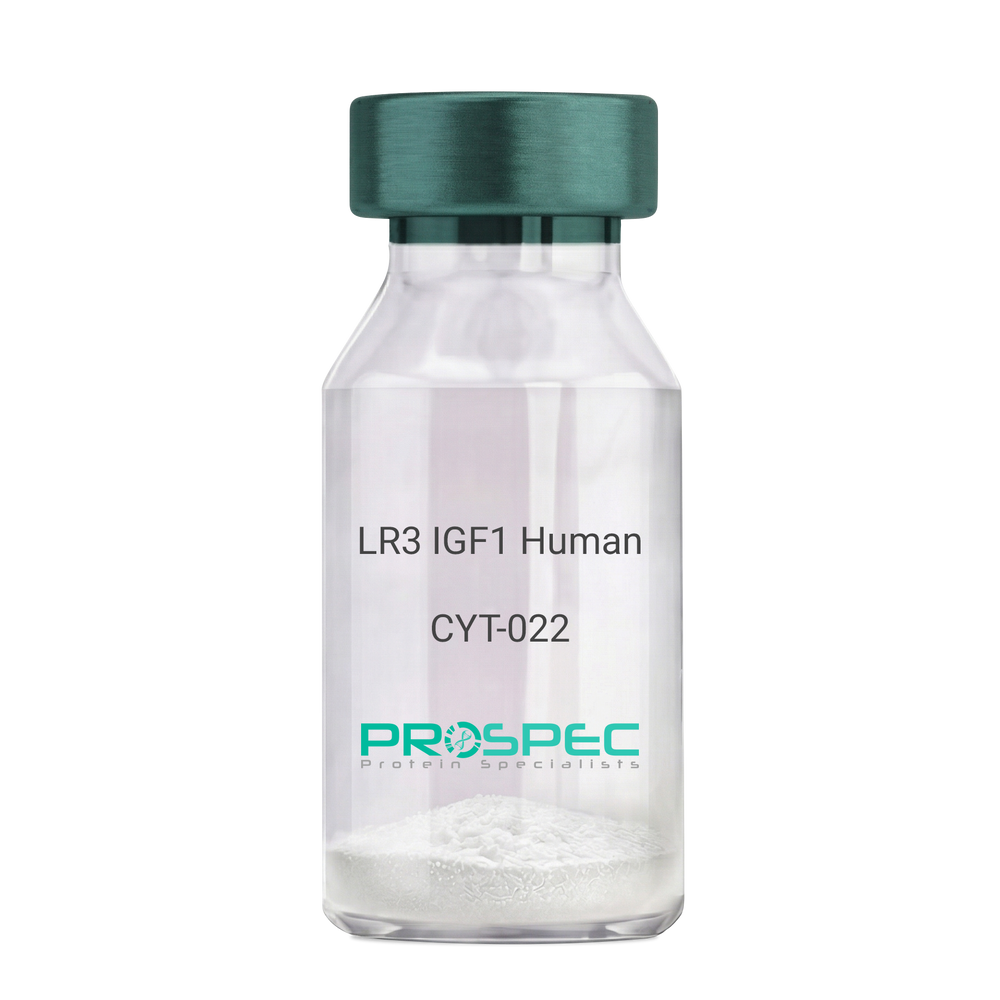
    Name :

    IGF1 LR3 Human

    Description:

    LR3 Insulin Like Growth Factor-1 Human Recombinant

    R3 IGF1, R3 IGF-1, R3IGF1, R3IGF-1, LONG IGF1, LONG IGF-1, LONG R3 IGF1, LONG R3IGF1, LONG R3 IGF-1, LONG R3IGF-1.

    Product # :

    CYT-022

    Price :

    Quantity :

    Shipping Method :

    Room Temp Icon

    Shipped at Room temp

    Add To Cart

    More Info

    • description
    • source
    • formulation
    • purity
    • biological activity
    • More Info
    • sds-page

    Description

    The LR3 is a long-term analog of human IGF-1, specifically designed and manufactured for mammalian cell culture to support large-scale manufacturing of recombinant biopharmaceuticals. Recombinant Human LR3 Insulin Like Growth Factor-1 produced in E.Coli is a single, non-glycosylated, polypeptide chain containing 83 amino acids and having a molecular mass of 9.1kDa.

    Source

    Escherichia Coli.

    Formulation

    Lyophilized from a 0.2µm filtered concentrated solution in 20mM PB, pH 7.2.

    Purity

    Greater than 97.0% as determined by SDS-PAGE.

    Biological Activity

    The ED50 as determined by the stimulation of protein synthesis in L6 myoblasts is less than 10ng/ml, corresponding to a specific activity of 100,000units/mg.

    sds-page

    LR3 IGF1 sds-page - Product image 1

    More Info

    • Introduction

      IGF-1 (Insulin-like growth factor-1) is a major hormonal mediator of statural growth. Under regular circumstances, GH (growth hormone) binds to its receptor in the liver, and other tissues, and stimulates the synthesis/secretion of IGF-1. In target tissues, the Type 1 IGF receptor, that is homologous to the insulin receptor, is activated by IGF-1, leading to intracellular signaling which stimulates multiple processes leading to statural growth. IGF-1 metabolic actions are partly directed at stimulating the uptake of glucose, fatty acids, and amino acids so that metabolism supports growing tissues.

    • Synonyms

      R3 IGF1, R3 IGF-1, R3IGF1, R3IGF-1, LONG IGF1, LONG IGF-1, LONG R3 IGF1, LONG R3IGF1, LONG R3 IGF-1, LONG R3IGF-1.

    • Physical Appearance

      Sterile Filtered White lyophilized (freeze-dried) powder.

    • Stability

      Lyophilized LR3 IGF1 although stable at room temperature for 3 weeks, should be stored desiccated below -18°C. Upon reconstitution the LR3 IGF1 should be stored at 4°C between 2-7 days and for future use below -18°C.For long term storage it is recommended to add a carrier protein (0.1% HSA or BSA).Please prevent freeze-thaw cycles.

    • Solubility

      It is recommended to reconstitute the lyophilized LR3 IGF1 in sterile 18M-cm H2O at a concentration of 100µg/ml, which can then be further diluted to other aqueous solutions.

    • Amino Acid Sequence

      MFPAMPLSSLFVNGPRTLCGAELVDALQFVCGDRGFYFNKPTGYGSSSRRAPQTGIV DECCFRSCDLRRLEMYCAPLKPAKSA.

    • Background

      What is the molecular weight/Mw of IGF1 LR3 HUMAN Protein?
      IGF1 LR3 HUMAN Protein has a total Mw of 9.1kDa.

      What is the source or expression system of IGF1 LR3 HUMAN Protein?
      Escherichia Coli.

      What is the Purity of IGF1 LR3 HUMAN Protein?
      IGF1 LR3 HUMAN Protein is >98% pure as determined by SDS-PAGE.

      What is the Biological Activity of IGF1 LR3 HUMAN Protein?
      The ED50 as determined by the stimulation of protein synthesis in L6 myoblasts is less than 10ng/ml, corresponding to a specific activity of 100,000units/mg.

      What is the amino acid sequence of IGF1 LR3 HUMAN Protein?
      MFPAMPLSSLFVNGPRTLCGAELVDALQFVCGDRGFYFNKPTGYGSSSRRAPQTGIV DECCFRSCDLRRLEMYCAPLKPAKSA.

      What applications can IGF1 LR3 HUMAN Protein be used in?
      IGF1 LR3 HUMAN Protein can probably be used in western blot, ELISA and Lateral Flow.

      What is the endotoxin level for IGF1 LR3 HUMAN Protein?
      The endotoxin level is minimal, IGF1 LR3 HUMAN Protein was purified using conventional chromatography techniques.


    ProSpec's products are furnished for LABORATORY RESEARCH USE ONLY. The product may not be used as drugs, agricultural or pesticidal products, food additives or household chemicals.

    Long R3 Igf1 Human
  • View Data Sheet

    Name :

    ARL2 Human

    Description:

    ADP-Ribosylation Factor-Like 2 Human Recombinant

    ADP-ribosylation factor-like protein 2, ARL2, ARFL2.

    Product # :

    PRO-074

    Price :

    Quantity :

    Shipping Method :

    Ice Icon

    Shipped with Ice Packs

    Add To Cart

    More Info

    • description
    • source
    • formulation
    • purity
    • More Info

    Description

    ARL2 Human Recombinant fused with a 20 amino acid His tag at N-terminus produced in E.Coli is a single, non-glycosylated, polypeptide chain containing 204 amino acids (1-184 a.a.) and having a molecular mass of 23kDa. The ARL2 is purified by proprietary chromatographic techniques.

    Source

    Escherichia Coli.

    Formulation

    The ARL2 solution (0.25 mg/ml) contains 20mM Tris-HCl buffer (pH8.0), 0.1mM PMSF, 1mM DTT and 40% Glycerol.

    Purity

    Greater than 90.0% as determined by SDS-PAGE.

    More Info

    • Introduction

      ARL2 is a member of the ADP-ribosylation factor (ARF) family. ARL2 functions as a component of a secretory pathway which is involved in the Ca2-dependent release of acetylcholine. ARL2 has a role in the folding of tubule proteins, thus playing a significant role in microtubule dynamics and cell cycle progression. Unlike other members of the ARF family, ARL2 doesn’t act as an activator of the catalytic subunit of cholera toxin.

    • Synonyms

      ADP-ribosylation factor-like protein 2, ARL2, ARFL2.

    • Physical Appearance

      Sterile Filtered colorless solution.

    • Stability

      Store at 4°C if entire vial will be used within 2-4 weeks. Store, frozen at -20°C for longer periods of time. For long term storage it is recommended to add a carrier protein (0.1% HSA or BSA).Avoid multiple freeze-thaw cycles.

    • Amino Acid Sequence

      MGSSHHHHHH SSGLVPRGSH MGLLTILKKM KQKERELRLL MLGLDNAGKT TILKKFNGED IDTISPTLGF NIKTLEHRGF KLNIWDVGGQ KSLRSYWRNY FESTDGLIWV VDSADRQRMQ DCQRELQSLL VEERLAGATL LIFANKQDLP GALSSNAIRE ALELDSIRSH HWCIQGCSAV TGENLLPGID WLLDDISSRI FTAD.

    ProSpec's products are furnished for LABORATORY RESEARCH USE ONLY. The product may not be used as drugs, agricultural or pesticidal products, food additives or household chemicals.

    Arl2 Human
  • View Data Sheet

    Name :

    PTX3 Human

    Description:

    Pentraxin-3 Human Recombinant

    TSG-14, TNFAIP5, PTX3, Pentraxin-related protein PTX3, Pentaxin-related protein PTX3, Tumor necrosis factor-inducible gene 14 protein, TSG14, pentraxin-related gene rapidly induced by IL-1 beta.

    Product # :

    PRO-694

    Price :

    Quantity :

    Shipping Method :

    Ice Icon

    Shipped with Ice Packs

    Add To Cart

    More Info

    • description
    • source
    • formulation
    • purity
    • More Info

    Description

    Recombinant Human PTX3 produced in E.Coli is a single, non-glycosylated polypeptide chain containing 401 amino acids (18-381 a.a) and having a molecular mass of 44.4 kDa. PTX3 is fused to a 37 amino acid His Tag at N-terminus and purified by proprietary chromatographic techniques.

    Source

    Escherichia Coli.

    Formulation

    The PTX3 protein contains 20mM Tris-HCl buffer pH-8, 1mM DTT and 10% glycerol.

    Purity

    Greater than 90% as determined by Analysis by SDS-PAGE.

    More Info

    • Introduction

      PTX3 is part of the pentraxin family sharing the C-terminal domain with short pentraxins and containing a unique N-terminal domain. PTX3 is produced and released at inflammatory sites by various cell types including monocytes/macrophages, endothelial cells, vascular smooth muscle cells, fibroblasts, and adipocytes. PTX3 is involved in the regulation of innate resistance to pathogens, inflammatory reactions, possibly clearance of self-components and female fertility. PTX3 is used as a marker for disease activity of psoriasis. High serum PTX3 levels are associated with the disease severity of systemic sclerosis. Elevated serum PTX3 is associated with pulmonary fungal infections.

    • Synonyms

      TSG-14, TNFAIP5, PTX3, Pentraxin-related protein PTX3, Pentaxin-related protein PTX3, Tumor necrosis factor-inducible gene 14 protein, TSG14, pentraxin-related gene rapidly induced by IL-1 beta.

    • Physical Appearance

      Sterile filtered colorless solution.

    • Stability

      Store at 4°C if entire vial will be used within 2-4 weeks. Store, frozen at -20°C for longer periods of time. For long term storage it is recommended to add a carrier protein (0.1% HSA or BSA). Avoid multiple freeze-thaw cycles.

    • Amino Acid Sequence

      MRGSHHHHHH GMASMTGGQQ MGRDLYDDDD KDRWGSMENS DDYDLMYVNL DNEIDNGLHP TEDPTPCDCG QEHSEWDKLF IMLENSQMRE RMLLQATDDV LRGELQRLRE ELGRLAESLA RPCAPGAPAE ARLTSALDEL LQATRDAGRR LARMEGAEAQ RPEEAGRALA AVLEELRQTR ADLHAVQGWA ARSWLPAGCE TAILFPMRSK KIFGSVHPVR PMRLESFSAC IWVKATDVLN KTILFSYGTK RNPYEIQLYL SYQSIVFVVG GEENKLVAEA MVSLGRWTHL CGTWNSEEGL TSLWVNGELA ATTVEMATGH IVPEGGILQI GQEKNGCCVG GGFDETLAFS GRLTGFNIWD SVLSNEEIRE TGGAESCHIR GNIVGWGVTE IQPHGGAQYV S.

    ProSpec's products are furnished for LABORATORY RESEARCH USE ONLY. The product may not be used as drugs, agricultural or pesticidal products, food additives or household chemicals.

    Ptx3 Human
  • View Data Sheet

    Name :

    FASLG Human, HEK

    Description:

    FAS Ligand Human Recombinant, HEK

    Fas ligand (TNF superfamily, member 6), APT1LG1, FASL, TNFSF6, CD178, tumor necrosis factor (ligand) superfamily member 6, Apoptosis antigen ligand, Fas antigen ligand, APTL, CD95-L.

    Product # :

    CYT-051

    Price :

    Quantity :

    Shipping Method :

    Ice Icon

    Shipped with Ice Packs

    Add To Cart

    More Info

    • description
    • source
    • formulation
    • purity
    • biological activity
    • More Info

    Description

    Recombinant Human FAS Ligand produced in HEK293 cells is a polypeptide chain containing 147 amino acids (134-281a.a).FASLG is fused to a 6 amino acid His-tag at N-terminus and purified by proprietary chromatographic techniques.

    Source

    HEK293 cells.

    Formulation

    The FASLG solution (0.6mg/ml) contains 1xPBS.

    Purity

    Greater than 95.0% as determined by:
    (a) Analysis by SEC-HPLC.
    (b) Analysis by SDS-PAGE.

    Biological Activity

    Fas ligand is biologically active as determined by its ability to induce cytotoxicity in Jurkat cells in the absence of any cross-linking. The expected ED50< 10 ng/ml, corresponding to a specific activity of 1x10⁵ units/mg.

    More Info

    • Introduction

      The type II transmembrane protein FASLG is a member of the tumor necrosis factor (TNF) superfamily. A fas ligand/receptor interaction has a significant part in the regulation of the immune system and the advancement of cancer. FASLG is expressed on the activated T cell surface as a nondisulfidelinked homotrimer. FASLG binding to Fas/CD95/TNFRSF6 on a nearby cell prompts apoptosis in the Fas expressing cell. FASLG is released from the cell surface by metalloproteinases as a soluble molecule that stays trimeric and is able to bind with Fas, but its capability to activate apoptosis is radically reduced. In addition, FASLG binds to DcR3 - a soluble trap receptor with no signal transduction capabilities. Flawed Fas-mediated apoptosis causes oncogenesis in addition to drug resistance in existing tumors. Constitutive expression of FASLG in a variety of tumors enables their immune evasion. Both mouse and human FASLG are active on mouse and human cells.

    • Synonyms

      Fas ligand (TNF superfamily, member 6), APT1LG1, FASL, TNFSF6, CD178, tumor necrosis factor (ligand) superfamily member 6, Apoptosis antigen ligand, Fas antigen ligand, APTL, CD95-L.

    • Physical Appearance

      Sterile Filtered colorless solution.

    • Stability

      FASLG Human Recombinant although stable at 4°C for 1 week, should be stored below -18°C. Please prevent freeze thaw cycles.

    • Background

      What is the source or expression system of FASL Protein?
      HEK293 cells.

      What is the Purity of FASL Protein?
      FASL Protein is >95% pure as determined by SDS-PAGE.

      What is the Biological Activity of FASL Protein?
      Fas ligand is biologically active as determined by its ability to induce cytotoxicity in Jurkat cells in the absence of any cross-linking. The expected ED50< 10 ng/ml, corresponding to a specific activity of 1x10⁵ units/mg.

      What is the amino acid sequence of FASL Protein?
      FASL Protein is composed from 147 amino acids.

      What applications can FASL Protein be used in?
      FASL Protein can probably be used in western blot, ELISA and Lateral Flow.

      What is the endotoxin level for FASL Protein?
      The endotoxin level is minimal, FASL Protein was purified using conventional chromatography techniques.

    ProSpec's products are furnished for LABORATORY RESEARCH USE ONLY. The product may not be used as drugs, agricultural or pesticidal products, food additives or household chemicals.

    Faslg Human Hek
  • View Data Sheet

    Name :

    EFNA1 Human, HEK

    Description:

    Ephrin A1 Human Recombinant, HEK

    Ephrin-A1, EPLG1, TNFAIP4, LERK1, EFL1, ECKLG, EPH-related receptor tyrosine kinase ligand 1, Immediate early response protein B61, Tumor necrosis factor alpha-induced protein 4, TNF alpha-induced protein 4, ligand of eph-related kinase 1, tumor necrosis factor, alpha-induced protein 4.

    Product # :

    PRO-2477

    Price :

    Quantity :

    Shipping Method :

    Room Temp Icon

    Shipped at Room temp

    Add To Cart

    More Info

    • description
    • source
    • formulation
    • purity
    • More Info

    Description

    EFNA1 Human Recombinant produced in HEK293 cells is a single, glycosylated polypeptide chain (a.a 19-182) containing 170 amino acids including a 6 a.a C-terminal His tag. The total molecular mass is 20.2kDa (calculated).

    Source

    HEK293 cells.

    Formulation

    EFNA1 filtered (0.4 µm) and lyophilized from 0.5mg/ml in phosphate buffered saline, pH 7.5 containing 5 % (w/v) trehalose.

    Purity

    Greater than 95.0% as determined by SDS-PAGE.

    More Info

    • Introduction

      EFNA1 belongs to the ephrin (EPH) family. The EPH subfamily is the biggest group of receptor protein kinases and they take part in vital nervous system function and development.

    • Synonyms

      Ephrin-A1, EPLG1, TNFAIP4, LERK1, EFL1, ECKLG, EPH-related receptor tyrosine kinase ligand 1, Immediate early response protein B61, Tumor necrosis factor alpha-induced protein 4, TNF alpha-induced protein 4, ligand of eph-related kinase 1, tumor necrosis factor, alpha-induced protein 4.

    • Physical Appearance

      Filtered White lyophilized (freeze-dried) powder.

    • Stability

      Store lyophilized protein at -20°C. Aliquot the product after reconstitution to avoid repeated freezing/thawing cycles. Reconstituted protein can be stored at 4°C for a limited period of time; it does not show any change after one week at 4°C.

    • Solubility

      It is recommended to add deionized water to prepare a working stock solution of approximately 0.5mg/ml and let the lyophilized pellet dissolve completely. EFNA1 is not sterile! Please filter the product by an appropriate sterile filter before using it in the cell culture.

    • Amino Acid Sequence

      DRHTVFWNSS NPKFRNEDYT IHVQLNDYVD IICPHYEDHS VADAAMEQYI LYLVEHEEYQ LCQPQSKDQV RWQCNRPSAK HGPEKLSEKF QRFTPFTLGK EFKEGHSYYY ISKPIHQHED RCLRLKVTVS GKITHSPQAH DNPQEKRLAA DDPEVRVLHS IGHS HHHHHH.

    ProSpec's products are furnished for LABORATORY RESEARCH USE ONLY. The product may not be used as drugs, agricultural or pesticidal products, food additives or household chemicals.

    Efna1 Protein
  • View Data Sheet

    Name :

    ARFIP1 341 a.a. Human

    Description:

    ADP-Ribosylation Factor Interacting Protein 1 341 a.a Human Recombinant

    HSU52521, ADP-ribosylation factor-interacting protein 1, Arfaptin-1.

    Product # :

    PRO-2089

    Price :

    Quantity :

    Shipping Method :

    Ice Icon

    Shipped with Ice Packs

    Add To Cart

    More Info

    • description
    • source
    • formulation
    • purity
    • More Info

    Description

    ARFIP1 Human Recombinant produced in E.Coli is a single, non-glycosylated polypeptide chain containing 364 amino acids (1-341 a.a) and having a molecular mass of 41.0kDa.ARFIP1 is fused to a 23 amino acid His-tag at N-terminus & purified by proprietary chromatographic techniques.

    Source

    Escherichia Coli.

    Formulation

    ARFIP1 protein solution (0.25mg/ml) contains Phosphate buffered saline (pH7.4), 30% glycerol and 1mM DTT.

    Purity

    Greater than 90.0% as determined by SDS-PAGE.

    More Info

    • Introduction

      ADP-Ribosylation Factor Interacting Protein 1 (ARFIP1) contains 1 AH domain and is a putative target protein of ADP-ribosylation factor.

    • Synonyms

      HSU52521, ADP-ribosylation factor-interacting protein 1, Arfaptin-1.

    • Physical Appearance

      Sterile Filtered clear solution.

    • Stability

      Store at 4°C if entire vial will be used within 2-4 weeks. Store, frozen at -20°C for longer periods of time. For long term storage it is recommended to add a carrier protein (0.1% HSA or BSA).Avoid multiple freeze-thaw cycles.

    • Amino Acid Sequence

      MGSSHHHHHH SSGLVPRGSH MGSMAQESPK NSAAEIPVTS NGEVDDSREH SFNRDLKHSL PSGLGLSETQ ITSHGFDNTK EGVIEAGAFQ GGQRTQTKSG PVILADEIKN PAMEKLELVR KWSLNTYKCT RQIISEKLGR GSRTVDLELE AQIDILRDNK KKYENILKLA QTLSTQLFQM VHTQRQLGDA FADLSLKSLE LHEEFGYNAD TQKLLAKNGE TLLGAINFFI ASVNTLVNKT IEDTLMTVKQ YESARIEYDA YRTDLEELNL GPRDANTLPK IEQSQHLFQA HKEKYDKMRN DVSVKLKFLE ENKVKVLHNQ LVLFHNAIAA YFAGNQKQLE QTLKQFHIKL KTPGVDAPSW LEEQ.

    ProSpec's products are furnished for LABORATORY RESEARCH USE ONLY. The product may not be used as drugs, agricultural or pesticidal products, food additives or household chemicals.

    Arfip1 341 Aa Human
  • View Data Sheet

    Name :

    MMP1 Human, sf9

    Description:

    Matrix Metalloproteinase-1 Human Recombinant, sf9

    Matrix Metallopeptidase 1, Interstitial Collagenase, Fibroblast Collagenase, EC 3.4.24.7, CLG, Matrix Metalloproteinase 1 (Interstitial Collagenase), Matrix Metallopeptidase 1 (Interstitial Collagenase), Matrix Metalloproteinase 1, Matrix Metalloproteinase-1, Matrix Metalloprotease 1, EC 3.4.24, MMP-1, CLGN, Fibroblast collagenase, Matrix metalloproteinase-1, MMP-1.

    Product # :

    ENZ-989

    Price :

    Quantity :

    Shipping Method :

    Ice Icon

    Shipped with Ice Packs

    Add To Cart

    More Info

    • description
    • source
    • formulation
    • purity
    • More Info

    Description

    MMP1 Human Recombinant produced in Sf9 Baculovirus cells is a single, non-glycosylated polypeptide chain containing 460 amino acids (18-469a.a) and having a molecular mass of 53.1kDa (Molecular size on SDS-PAGE will appear at approximately 50-70kDa). MMP1 is fused to an 8 amino acid His-tag at C-terminus & purified by proprietary chromatographic techniques.

    Source

    Sf9, Baculovirus cells.

    Formulation

    MMP1 protein solution (0.25mg/ml) containing 20mM MES buffer (pH 5.5), 10mM CaCl2, 100 mM NaCl, 0.05% Brij35 and 30% glycerol.

    Purity

    Greater than 95% as determined by SDS-PAGE.

    More Info

    • Introduction

      MMP-1 (interstitial collagenase) can break down a wide range of substrates including types I, II, III, VII, VIII, and X collagens as well as L-Selectin, pro-TNF, IL-1?, IGFBP-3, IGFBP-5, casein, gelatin, ?1 antitrypsin, myelin basic protein, pro-MMP2 and pro-MMP9. A significant function of MMP-1 is the degradation of fibrillar collagens in extracellular matrix remodeling. MMP-1 is expressed in fibroblasts, keratinocytes, endothelial cells, monocytes and macrophages. MMP1 can be divided into a number of distinct domains: a prodomain which is cleaved on activation, a catalytic domain containing the zinc binding site and a short hinge region with a carboxyl terminal domain. MMP1 is part of a cluster of MMP genes which localize to chromosome 11q22.3.

    • Synonyms

      Matrix Metallopeptidase 1, Interstitial Collagenase, Fibroblast Collagenase, EC 3.4.24.7, CLG, Matrix Metalloproteinase 1 (Interstitial Collagenase), Matrix Metallopeptidase 1 (Interstitial Collagenase), Matrix Metalloproteinase 1, Matrix Metalloproteinase-1, Matrix Metalloprotease 1, EC 3.4.24, MMP-1, CLGN, Fibroblast collagenase, Matrix metalloproteinase-1, MMP-1.

    • Physical Appearance

      Sterile Filtered colorless solution.

    • Stability

      Store at 4°C if entire vial will be used within 2-4 weeks. Store, frozen at -20°C for longer periods of time. For long term storage it is recommended to add a carrier protein (0.1% HSA or BSA). Avoid multiple freeze-thaw cycles.

    • Amino Acid Sequence

      HSFPATLETQ EQDVDLVQKY LEKYYNLKND GRQVEKRRNS GPVVEKLKQM QEFFGLKVTG KPDAETLKVM KQPRCGVPDV AQFVLTEGNP RWEQTHLTYR IENYTPDLPR ADVDHAIEKA FQLWSNVTPL TFTKVSEGQA DIMISFVRGD HRDNSPFDGP GGNLAHAFQP GPGIGGDAHF DEDERWTNNF REYNLHRVAA HELGHSLGLS HSTDIGALMY PSYTFSGDVQ LAQDDIDGIQ AIYGRSQNPV QPIGPQTPKA CDSKLTFDAI TTIRGEVMFF KDRFYMRTNP FYPEVELNFI SVFWPQLPNG LEAAYEFADR DEVRFFKGNK YWAVQGQNVL HGYPKDIYSS FGFPRTVKHI DAALSEENTG KTYFFVANKY WRYDEYKRSM DPGYPKMIAH DFPGIGHKVD AVFMKDGFFY FFHGTRQYKF DPKTKRILTL QKANSWFNCR KNLEHHHHHH.

    ProSpec's products are furnished for LABORATORY RESEARCH USE ONLY. The product may not be used as drugs, agricultural or pesticidal products, food additives or household chemicals.

    Mmp1 Human Sf9
  • View Data Sheet

    Name :

    NDUFAF2 Human

    Description:

    NADH Dehydrogenase 1 Alpha Subcomplex, Assembly Factor 2 Human Recombinant

    Mimitin mitochondrial, B17.2-like, B17.2L, Myc-induced mitochondrial protein, MMTN, NADH dehydrogenase [ubiquinone] 1 alpha subcomplex assembly factor 2, NDUFA12-like protein, NDUFAF2, NDUFA12L, mimitin.

    Product # :

    ENZ-150

    Price :

    Quantity :

    Shipping Method :

    Ice Icon

    Shipped with Ice Packs

    Add To Cart

    More Info

    • description
    • source
    • formulation
    • purity
    • More Info

    Description

    NDUFAF2 Human Recombinant produced in E.Coli is a single, non-glycosylated polypeptide chain containing 189 amino acids (1-169 a.a.) and having a molecular mass of 22kDa.NDUFAF2 is fused to a 20 amino acid His-tag at N-terminus & purified by proprietary chromatographic techniques.

    Source

    Escherichia Coli.

    Formulation

    NDUFAF2 protein solution (0.5mg/ml) containing 20mM Tris-HCl buffer (pH 8.0), 1mM DTT, 20% glycerol and 200mM NaCl.

    Purity

    Greater than 85.0% as determined by SDS-PAGE.

    More Info

    • Introduction

      Mimitin (NDUFAF2) is a member of the complex I NDUFA12 subunit family.NADH dehydrogenase is an enzyme located in the inner mitochondrial membrane, which catalyzes the transfer of electrons from NADH to coenzyme Q (CoQ). NDUFAF2 is the "entry enzyme" of oxidative phosphorylation in the mitochondria. Mimitin protein functions as a molecular chaperone for mitochondrial complex I assembly.

    • Synonyms

      Mimitin mitochondrial, B17.2-like, B17.2L, Myc-induced mitochondrial protein, MMTN, NADH dehydrogenase [ubiquinone] 1 alpha subcomplex assembly factor 2, NDUFA12-like protein, NDUFAF2, NDUFA12L, mimitin.

    • Physical Appearance

      Sterile Filtered colorless solution.

    • Stability

      Store at 4°C if entire vial will be used within 2-4 weeks.Store, frozen at -20°C for longer periods of time. For long term storage it is recommended to add a carrier protein (0.1% HSA or BSA).Avoid multiple freeze-thaw cycles.

    • Amino Acid Sequence

      MGSSHHHHHH SSGLVPRGSH MGWSQDLFRA LWRSLSREVK EHVGTDQFGN KYYYIPQYKN WRGQTIREKR IVEAANKKEV DYEAGDIPTE WEAWIRRTRK TPPTMEEILK NEKHREEIKI KSQDFYEKEK LLSKETSEEL LPPPVQTQIK GHASAPYFGK EEPSVAPSST GKTFQPGSWM PRDGKSHNQ.

    ProSpec's products are furnished for LABORATORY RESEARCH USE ONLY. The product may not be used as drugs, agricultural or pesticidal products, food additives or household chemicals.

    Ndufaf2 Human
  • View Data Sheet

    Name :

    STAT1 Human

    Description:

    Signal Transducer and Activator of Transcription 1 Human Recombinant

    Signal transducer and activator of transcription 1-alpha/beta, Transcription factor ISGF-3 components p91/p84, STAT1, ISGF-3, STAT91, DKFZp686B04100.

    Product # :

    PKA-315

    Price :

    Quantity :

    Shipping Method :

    Ice Icon

    Shipped with Ice Packs

    Add To Cart

    More Info

    • description
    • source
    • formulation
    • purity
    • More Info

    Description

    STAT1 Recombinant Human produced in E.Coli is a single, non-glycosylated polypeptide chain containing 732 amino acids (1-712 a.a.) and having a molecular mass of 85.2 kDa. The STAT1 is fused to a 20 amino acid His-Tag at N-terminus and purified by proprietary chromatographic techniques.

    Source

    Escherichia Coli.

    Formulation

    STAT1 0.5mg/ml protein solution contains 20mM Tris-HCl buffer pH-8, 0.1M NaCl, 1mM DTT and 10% glycerol.

    Purity

    Greater than 90% as determined by SDS-PAGE.

    More Info

    • Introduction

      STAT1 is a member of the Signal Transducers and Activators of Transcriptionfamily of transcription factors. STAT1 is involved in upregulating genes due to a signal by either type Ior type IIinterferons. In response to IFN-?stimulation, STAT1 forms homodimers or heterodimers with STAT3that bind to the GAS (Interferon-Gamma Activated Sequence) promoter element; in response to either IFN-? or IFN-?stimulation, STAT1 forms a heterodimer with STAT2that can bind the ISRE (Interferon Stimulated Response Element) promoter element. In either case, binding of the promoter element leads to an increased expression of ISG (Interferon Stimulated Genes).

    • Synonyms

      Signal transducer and activator of transcription 1-alpha/beta, Transcription factor ISGF-3 components p91/p84, STAT1, ISGF-3, STAT91, DKFZp686B04100.

    • Physical Appearance

      Sterile Filtered clear solution.

    • Stability

      Store at 4°C if entire vial will be used within 2-4 weeks. Store, frozen at -20°C for longer periods of time. Avoid multiple freeze-thaw cycles.

    • Amino Acid Sequence

      MGSSHHHHHH SSGLVPRGSH MSQWYELQQL DSKFLEQVHQ LYDDSFPMEI RQYLAQWLEK QDWEHAANDV SFATIRFHDL LSQLDDQYSR FSLENNFLLQ HNIRKSKRNL QDNFQEDPIQ MSMIIYSCLK EERKILENAQ RFNQAQSGNI QSTVMLDKQK ELDSKVRNVK DKVMCIEHEI KSLEDLQDEY DFKCKTLQNR EHETNGVAKS DQKQEQLLLK KMYLMLDNKR KEVVHKIIEL LNVTELTQNA LINDELVEWK RRQQSACIGG PPNACLDQLQ NWFTIVAESL QQVRQQLKKL EELEQKYTYE HDPITKNKQV LWDRTFSLFQ QLIQSSFVVE RQPCMPTHPQ RPLVLKTGVQ FTVKLRLLVK LQELNYNLKV KVLFDKDVNE RNTVKGFRKF NILGTHTKVM NMEESTNGSL AAEFRHLQLK EQKNAGTRTN EGPLIVTEEL HSLSFETQLC QPGLVIDLET TSLPVVVISN VSQLPSGWAS ILWYNMLVAE PRNLSFFLTP PCARWAQLSE VLSWQFSSVT KRGLNVDQLN MLGEKLLGPN ASPDGLIPWT RFCKENINDK NFPFWLWIES ILELIKKHLL PLWNDGCIMG FISKERERAL LKDQQPGTFL LRFSESSREG AITFTWVERS QNGGEPDFHA VEPYTKKELS AVTFPDIIRN YKVMAAENIP ENPLKYLYPN IDKDHAFGKY YSRPKEAPEP MELDGPKGTG YIKTELISVS EV.

    ProSpec's products are furnished for LABORATORY RESEARCH USE ONLY. The product may not be used as drugs, agricultural or pesticidal products, food additives or household chemicals.

    Stat1 Human
  • View Data Sheet

    Name :

    FGF22 Human

    Description:

    Fibroblast Growth Factor-22 Human Recombinant

    Fibroblast growth factor 22, FGF-22.

    Product # :

    CYT-428

    Price :

    Quantity :

    Shipping Method :

    Room Temp Icon

    Shipped at Room temp

    Add To Cart

    More Info

    • description
    • source
    • formulation
    • purity
    • More Info

    Description

    Fibroblast Growth Factor-22 Human Recombinant produced in E.Coli is a single, non-glycosylated polypeptide chain containing 149 amino acids and having a molecular mass of 17.3 kDa. The FGF-22 is purified by chromatographic techniques.

    Source

    Escherichia Coli.

    Formulation

    The sterile protein powder is lyophilized with no additives.

    Purity

    Greater than 97.0% as determined by(a) Analysis by RP-HPLC.
    (b) Analysis by SDS-PAGE.

    More Info

    • Introduction

      FGF22 is a member of the fibroblast growth factor (FGF) family. FGF family members possess broad mitogenic and cell survival activities and are involved in a variety of biological processes including embryonic development, cell growth, morphogenesis, tissue repair, tumor growth and invasion. The mouse homolog of this gene was found to be preferentially expressed in the inner root sheath of the hair follicle, which suggested a role in hair development.

    • Synonyms

      Fibroblast growth factor 22, FGF-22.

    • Physical Appearance

      Sterile Filtered white lyophilized powder.

    • Stability

      Lyophilized Fibroblast Growth Factor 22 although stable at room temperature for 3 weeks, should be stored desiccated below -18°C. Upon reconstitution FGF-22 should be stored at 4°C between 2-7 days and for future use below -18°C.For long term storage it is recommended to add a carrier protein (0.1% HSA or BSA).Please prevent freeze-thaw cycles.

    • Solubility

      It is recommended to reconstitute the lyophilized Fibroblast Growth Factor-22 sterile 18MΩ-cm H2O not less than 100µg/ml, which can then be further diluted to other aqueous solutions.

    • Amino Acid Sequence

      MTPSASRGPR SYPHLEGDVR WRRLFSSTHF FLRVDPGGRV QGTRWRHGQD SILEIRSVHV GVVVIKAVSS GFYVAMNRRG RLYGSRLYTV DCRFRERIEE NGHNTYASQR WRRRGQPMFL ALDRRGGPRP GGRTRRYHLS AHFLPVLVS.

    • Background

      What is the molecular weight/Mw of FGF22 HUMAN Protein?
      FGF22 HUMAN Protein has a total Mw of 17.3kDa.

      What is the source or expression system of FGF22 HUMAN Protein?
      Escherichia Coli.

      What is the Purity of FGF22 HUMAN Protein?
      FGF22 HUMAN Protein is >97% pure as determined by SDS-PAGE.

      What is the Biological Activity of FGF22 HUMAN Protein?
      The biological functionality of FGF22 HUMAN Protein will be determined in the future.

      What is the amino acid sequence of FGF22 HUMAN Protein?
      MTPSASRGPR SYPHLEGDVR WRRLFSSTHF FLRVDPGGRV QGTRWRHGQD SILEIRSVHV GVVVIKAVSS GFYVAMNRRG RLYGSRLYTV DCRFRERIEE NGHNTYASQR WRRRGQPMFL ALDRRGGPRP GGRTRRYHLS AHFLPVLVS.

      What applications can FGF22 HUMAN Protein be used in?
      FGF22 HUMAN Protein can probably be used in western blot, ELISA and Lateral Flow.

      What is the endotoxin level for FGF22 HUMAN Protein?
      The endotoxin level is minimal, FGF22 HUMAN Protein was purified using conventional chromatography techniques.

    ProSpec's products are furnished for LABORATORY RESEARCH USE ONLY. The product may not be used as drugs, agricultural or pesticidal products, food additives or household chemicals.

    Fgf22 Human
  • 1
  • …
  • 28
  • 29
  • 30
  • 31
  • 32
  • …
  • 42
Your browser does not support the video tag.

Products

  • Cytokines
  • Growth Factors
  • Chemokines
  • CD Antigens
  • Neurotrophins
  • Hormones
  • Enzymes
  • Viral Antigens
  • Recombinant Proteins
  • Natural Proteins
  • Monoclonal Antibodies
  • Polyclonal Antibodies
  • Thermal Packaging

About

  • Company
  • Founder
  • Contribution
  • Contact Us
  • My Account

Ordering

  • Ordering Method
  • Ordering - Credit Card
  • Ordering PO
  • Shipping Fees
  • FAQ's

Legal

  • Terms & Conditions
  • Privacy
  • Site Map
  • info@prospecbio.com
  • Facebook
  • Instagram
  • Linkedin Profile

© 2026 ProSpec-Tany TechnoGene Ltd. All Rights Reserved.

  • Choosing a selection results in a full page refresh.
  • Opens in a new window.