Skip to content

High-quality research proteins.

  • 1-800-805-6531

  • Mon - Sat 8.00-18.00, Sun - Closed

  • info@prospecbio.com

  • PO Box 6591 East Brunswick NJ 08816

  • Products
    • Cytokines
    • Growth factors
    • Chemokines
    • Cd antigens
    • Neurotrophins
    • Hormones
    • Enzymes
    • Viral antigens
    • Recombinant proteins
    • Natural proteins
    • Monoclonal antibodies
    • Polyclonal antibodies
    • Thermal Packaging
  • About
    • Company
    • Founder
    • Contribution
  • Customers
    • Eastern Asia
    • Eastern Europe
    • North America
    • South America
    • South East Asia
    • Southern Asia
    • Western Europe
  • Ordering
    • Ordering Method
    • Ordering - Credit Card
    • Ordering - PO
    • Shipping Fees
    • FAQs
  • Services
    • DNA Cloning
    • Protein Expression
    • Monoclonal Antibody
    • Fermentation
    • Technology License
  • Contact us
Log in

Country/region

  • USD $ | Albania
  • USD $ | Andorra
  • USD $ | Argentina
  • USD $ | Armenia
  • USD $ | Australia
  • USD $ | Austria
  • USD $ | Azerbaijan
  • USD $ | Belarus
  • USD $ | Belgium
  • USD $ | Bolivia
  • USD $ | Brazil
  • USD $ | Bulgaria
  • USD $ | Cambodia
  • USD $ | Canada
  • USD $ | Chile
  • USD $ | China
  • USD $ | Colombia
  • USD $ | Costa Rica
  • USD $ | Croatia
  • USD $ | Cyprus
  • USD $ | Czechia
  • USD $ | Denmark
  • USD $ | Estonia
  • USD $ | Finland
  • USD $ | France
  • USD $ | Georgia
  • USD $ | Germany
  • USD $ | Greece
  • USD $ | Hong Kong SAR
  • USD $ | Hungary
  • USD $ | Iceland
  • USD $ | India
  • USD $ | Ireland
  • USD $ | Israel
  • USD $ | Italy
  • USD $ | Japan
  • USD $ | Kazakhstan
  • USD $ | Latvia
  • USD $ | Liechtenstein
  • USD $ | Lithuania
  • USD $ | Madagascar
  • USD $ | Malta
  • USD $ | Mexico
  • USD $ | Moldova
  • USD $ | Monaco
  • USD $ | Netherlands
  • USD $ | New Zealand
  • USD $ | North Macedonia
  • USD $ | Norway
  • USD $ | Panama
  • USD $ | Paraguay
  • USD $ | Peru
  • USD $ | Philippines
  • USD $ | Poland
  • USD $ | Portugal
  • USD $ | Romania
  • USD $ | Singapore
  • USD $ | Slovakia
  • USD $ | Slovenia
  • USD $ | South Africa
  • USD $ | South Korea
  • USD $ | Spain
  • USD $ | Sri Lanka
  • USD $ | Sweden
  • USD $ | Switzerland
  • USD $ | Taiwan
  • USD $ | Thailand
  • USD $ | Türkiye
  • USD $ | Ukraine
  • USD $ | United Kingdom
  • USD $ | United States
  • USD $ | Uruguay
  • USD $ | Vatican City
  • USD $ | Venezuela
  • USD $ | Vietnam
  • Facebook
  • Instagram
logoProSpec - Recombinant Protein Manufacturer for academic and R&D industry
Become a distributor
Account Log in
Wishlist
Cart Cart(0)
  • Products
    +
    • Cytokines
    • Growth factors
    • Chemokines
    • Cd antigens
    • Neurotrophins
    • Hormones
    • Enzymes
    • Viral antigens
    • Recombinant proteins
    • Natural proteins
    • Monoclonal antibodies
    • Polyclonal antibodies
    • Thermal Packaging
  • About
    +
    • Company
    • Founder
    • Contribution
  • Customers
    +
    • Eastern Asia
    • Eastern Europe
    • North America
    • South America
    • South East Asia
    • Southern Asia
    • Western Europe
  • Ordering
    +
    • Ordering Method
    • Ordering - Credit Card
    • Ordering - PO
    • Shipping Fees
    • FAQs
  • Services
    +
    • DNA Cloning
    • Protein Expression
    • Monoclonal Antibody
    • Fermentation
    • Technology License
  • Contact us

Item added to your cart

View cart
View All
  • Cytokines
  • Growth factors
  • Chemokines
  • Cd antigens
  • Neurotrophins
  • Hormones
  • Enzymes
  • Viral antigens
  • Recombinant proteins
  • Natural proteins
  • Monoclonal antibodies
  • Polyclonal antibodies
  • Thermal Packaging
  • Tumor Necrosis Factor

    Tumor Necrosis Factor

    View All
  • 4-1BB

    4-1BB

    View All
  • Adiponectin

    Adiponectin

    View All
  • AIF1

    AIF1

    View All
  • Other Cytokines

    Other Cytokines

    View All
  • AITRL

    AITRL

    View All
  • Angiopoietin

    Angiopoietin

    View All
  • Apolipoprotein

    Apolipoprotein

    View All
  • B-Cell Activating Factor

    B-Cell Activating Factor

    View All
  • Beta Defensin

    Beta Defensin

    View All
  • Bone Morphogenetic Protein

    Bone Morphogenetic Protein

    View All
  • B type Natriuretic Peptide

    B type Natriuretic Peptide

    View All
  • BST

    BST

    View All
  • Betacellulin

    Betacellulin

    View All
  • Cardiotrophin

    Cardiotrophin

    View All
  • Activin

    Activin

    View All
  • Fibroblast Growth Factor

    Fibroblast Growth Factor

    View All
  • Other Growth Factors

    Other Growth Factors

    View All
  • CSF

    CSF

    View All
  • CTGF

    CTGF

    View All
  • IGFBP

    IGFBP

    View All
  • VEGF Protein

    VEGF Protein

    View All
  • EGF

    EGF

    View All
  • Epigen

    Epigen

    View All
  • Erythropoietin

    Erythropoietin

    View All
  • Insulin-Like Growth Factor

    Insulin-Like Growth Factor

    View All
  • Growth Hormone

    Growth Hormone

    View All
  • HDGF

    HDGF

    View All
  • Hepatocyte Growth Factor

    Hepatocyte Growth Factor

    View All
  • Insulin

    Insulin

    View All
  • BCA-1/ BLC (CXCL13)

    BCA-1/ BLC (CXCL13)

    View All
  • BRAK (CXCL14)

    BRAK (CXCL14)

    View All
  • C-10 (CCL6)

    C-10 (CCL6)

    View All
  • Other Chemokines

    Other Chemokines

    View All
  • MEC (CCL28)

    MEC (CCL28)

    View All
  • LD78-beta (CCL3L1)

    LD78-beta (CCL3L1)

    View All
  • CTACK (CCL27)

    CTACK (CCL27)

    View All
  • CXCL16

    CXCL16

    View All
  • CXCL17

    CXCL17

    View All
  • Platelet Factor-4 (CXCL4)

    Platelet Factor-4 (CXCL4)

    View All
  • ENA-78 (CXCL5)

    ENA-78 (CXCL5)

    View All
  • Eotaxin (CCL11,24,26)

    Eotaxin (CCL11,24,26)

    View All
  • Exodus-2 (CCL21)

    Exodus-2 (CCL21)

    View All
  • Fractalkine (CX3CL1)

    Fractalkine (CX3CL1)

    View All
  • CXCL6

    CXCL6

    View All
  • Other CD Antigens

    Other CD Antigens

    View All
  • CD14

    CD14

    View All
  • CD164

    CD164

    View All
  • CD1

    CD1

    View All
  • CD2

    CD2

    View All
  • CD200

    CD200

    View All
  • CD207

    CD207

    View All
  • CD226

    CD226

    View All
  • CD23

    CD23

    View All
  • CD244

    CD244

    View All
  • CD247

    CD247

    View All
  • CD27

    CD27

    View All
  • CD274

    CD274

    View All
  • CD300

    CD300

    View All
  • CD33

    CD33

    View All
  • Other Neurotrophins

    Other Neurotrophins

    View All
  • Beta-NGF

    Beta-NGF

    View All
  • BDNF

    BDNF

    View All
  • CDNF

    CDNF

    View All
  • CNTF

    CNTF

    View All
  • GDNF

    GDNF

    View All
  • Glia Maturation Factor

    Glia Maturation Factor

    View All
  • MANF

    MANF

    View All
  • Midkine

    Midkine

    View All
  • Neuroglobin

    Neuroglobin

    View All
  • Neurotrophic factors

    Neurotrophic factors

    View All
  • Neuregulin

    Neuregulin

    View All
  • Neuropilin

    Neuropilin

    View All
  • Pigment Epithelium-Derived Factor

    Pigment Epithelium-Derived Factor

    View All
  • Pleiotrophin

    Pleiotrophin

    View All
  • Peptide Hormones

    Peptide Hormones

    View All
  • Other Hormones

    Other Hormones

    View All
  • HCG

    HCG

    View All
  • Endothelin

    Endothelin

    View All
  • Exendin

    Exendin

    View All
  • FSH

    FSH

    View All
  • Glucagon

    Glucagon

    View All
  • GHRP

    GHRP

    View All
  • GLP

    GLP

    View All
  • Thyrostimulin

    Thyrostimulin

    View All
  • Inhibin A

    Inhibin A

    View All
  • LHRH

    LHRH

    View All
  • Melanotan

    Melanotan

    View All
  • Procalcitonin

    Procalcitonin

    View All
  • PTH

    PTH

    View All
  • Peroxiredoxin

    Peroxiredoxin

    View All
  • Peptidase

    Peptidase

    View All
  • Synthetase

    Synthetase

    View All
  • Transferase

    Transferase

    View All
  • Hydrolase

    Hydrolase

    View All
  • Dehydrogenase

    Dehydrogenase

    View All
  • ACE2

    ACE2

    View All
  • Esterase

    Esterase

    View All
  • Protein Kinases

    Protein Kinases

    View All
  • Other Enzymes

    Other Enzymes

    View All
  • Phosphatase

    Phosphatase

    View All
  • Deaminase

    Deaminase

    View All
  • Oxygenase

    Oxygenase

    View All
  • Adenylate Kinase

    Adenylate Kinase

    View All
  • Lyase

    Lyase

    View All
  • Chagas

    Chagas

    View All
  • SARS

    SARS

    View All
  • Influenza

    Influenza

    View All
  • ASFV

    ASFV

    View All
  • Astrovirus

    Astrovirus

    View All
  • Borrelia

    Borrelia

    View All
  • Helicobacter Pylori

    Helicobacter Pylori

    View All
  • Chikungunya

    Chikungunya

    View All
  • Chlamydia

    Chlamydia

    View All
  • Cytomegalo

    Cytomegalo

    View All
  • Dengue

    Dengue

    View All
  • EBV

    EBV

    View All
  • Ebola

    Ebola

    View All
  • Feline Leukemia Virus

    Feline Leukemia Virus

    View All
  • Hepatitis A

    Hepatitis A

    View All
  • Other

    Other

    View All
  • Actin

    Actin

    View All
  • ADAM

    ADAM

    View All
  • Complement Component

    Complement Component

    View All
  • Ag85

    Ag85

    View All
  • Eukaryotic Translation Initiation Factor

    Eukaryotic Translation Initiation Factor

    View All
  • Anterior Gradient Protein

    Anterior Gradient Protein

    View All
  • Heat Shock Protein

    Heat Shock Protein

    View All
  • Alpha-2-HS-Glycoprotein

    Alpha-2-HS-Glycoprotein

    View All
  • Hemoglobin

    Hemoglobin

    View All
  • Allergy

    Allergy

    View All
  • Anaplasma

    Anaplasma

    View All
  • Angiogenin

    Angiogenin

    View All
  • Ankyrin Repeat Domain

    Ankyrin Repeat Domain

    View All
  • Annexin

    Annexin

    View All
  • Other Natural Proteins

    Other Natural Proteins

    View All
  • Aprotinin

    Aprotinin

    View All
  • Transferrin

    Transferrin

    View All
  • Avidin

    Avidin

    View All
  • Anti Coagulation Factors

    Anti Coagulation Factors

    View All
  • Natural Albumin

    Natural Albumin

    View All
  • Natural Coagulation Factors

    Natural Coagulation Factors

    View All
  • Fibronectin

    Fibronectin

    View All
  • Thrombin

    Thrombin

    View All
  • Anti Human Enzyme

    Anti Human Enzyme

    View All
  • Other Monoclonal Antibodies

    Other Monoclonal Antibodies

    View All
  • Anti Human Cytokine

    Anti Human Cytokine

    View All
  • Anti Human Heat Shock Protein

    Anti Human Heat Shock Protein

    View All
  • Anti Mouse Lymphocyte

    Anti Mouse Lymphocyte

    View All
  • Anti Human Chemokine

    Anti Human Chemokine

    View All
  • Anti Human Lymphocyte

    Anti Human Lymphocyte

    View All
  • Anti Viral Monoclonal

    Anti Viral Monoclonal

    View All
  • Anti Mouse Cytokine

    Anti Mouse Cytokine

    View All
  • Anti-GST Monoclonal

    Anti-GST Monoclonal

    View All
  • Other Polyclonal Antibodies

    Other Polyclonal Antibodies

    View All
  • Anti Viral

    Anti Viral

    View All
  • Anti-GST Monoclonal

    Anti-GST Monoclonal

    View All
Back

Search results

1000 results found for “batf”

Name

Description

Product #

Price

Quantity

Shipping Method

  • View Data Sheet

    Name :

    OSTF1 Human

    Description:

    Osteoclast Stimulating Factor-1 Human Recombinant

    SH3P2, OSF, OSTF-1, Osteoclast-stimulating factor 1, OSTF1, FLJ20559, bA235O14.1.

    Product # :

    CYT-630

    Price :

    Quantity :

    Shipping Method :

    Ice Icon

    Shipped with Ice Packs

    Add To Cart

    More Info

    • description
    • source
    • formulation
    • purity
    • More Info

    Description

    OSTF1 Human Recombinant produced in E.Coli is a monomeric, non-glycosylated, polypeptide chain containing 225 amino acids (1-217) and having a molecular mass of 25.1kDa. The OSTF1 is fused to an 8 amino acid His Tag at C-terminus & purified by proprietary chromatographic techniques.

    Source

    Escherichia Coli.

    Formulation

    OSTF1 protein (1mg/ml) solution contains 20mM Tris-HCl buffer pH 8, 0.5mM DTT and 10% glycerol.

    Purity

    Greater than 95.0% as determined by SDS-PAGE.

    More Info

    • Introduction

      OSTF1 is an intracellular protein produced by osteoclasts that induces bone resorption, via signaling cascade which results in the secretion of factors enhancing osteoclast formation and activity.

    • Synonyms

      SH3P2, OSF, OSTF-1, Osteoclast-stimulating factor 1, OSTF1, FLJ20559, bA235O14.1.

    • Physical Appearance

      Sterile Filtered colorless solution.

    • Stability

      Store at 4°C if entire vial will be used within 2-4 weeks. Store, frozen at -20°C for longer periods of time. For long term storage it is recommended to add a carrier protein (0.1% HSA or BSA).Please avoid freeze thaw cycles.

    • Amino Acid Sequence

      MSKPPPKPVK PGEGGQVKVF RALYTFEPRT PDELYFEEGD IIYITDMSDT NWWKGTSKGR TGLIPSNYVA EQAESIDNPL HEAAKRGNLS WLRECLDNRV GVNGLDKAGS TALYWACHGG HKDIVEMLFT QPNIELNQQN KLGDTALHAA AWKGYADIVQ LFLAKGARTD LRNIEKKLAF DMATNAACAS LLKKKQGTDA VRTLSNAEDY LDDEDSDLEH HHHHH.

    ProSpec's products are furnished for LABORATORY RESEARCH USE ONLY. The product may not be used as drugs, agricultural or pesticidal products, food additives or household chemicals.

    Ostf1 Human
  • View Data Sheet

    Name :

    BNIP1 Human

    Description:

    BCL2/Adenovirus E1B 19kDa Interacting Protein 1 Human Recombinant

    BCL2/Adenovirus E1B 19kDa Interacting Protein 1, NIP1, BCL2/Adenovirus E1B 19 KDa Protein-Interacting Protein 1, Transformation-Related Gene 8 Protein, TRG-8, BCL2/Adenovirus E1B 19kD-Interacting Protein 1, Vesicle Transport Protein SEC20, SEC20L, SEC20, Vesicle transport protein SEC20.

    Product # :

    PRO-2150

    Price :

    Quantity :

    Shipping Method :

    Ice Icon

    Shipped with Ice Packs

    Add To Cart

    More Info

    • description
    • source
    • formulation
    • purity
    • More Info

    Description

    BNIP1 Human Recombinant produced in E.Coli is a single, non-glycosylated polypeptide chain containing 222 amino acids (1-199 a.a) and having a molecular mass of 25.2kDa. BNIP1 is fused to a 23 amino acid His-tag at N-terminus & purified by proprietary chromatographic techniques.

    Source

    Escherichia Coli.

    Formulation

    BNIP1 protein solution (1.0 mg/ml) containing 20mM Tris-HCl (pH8.0) and 10% glycerol.

    Purity

    Greater than 95% as determined by SDS-PAGE.

    More Info

    • Introduction

      BNIP1 belongs to the of the BCL2/adenovirus E1B 19 kd-interacting protein (BNIP) family. BNIP1 interacts with the E1B 19 kDa protein, which defends cells from virally-induced cell death. In addition, BNIP1 interacts with E1B 19 kDa-like sequences of BCL2 which is an additional apoptotic protector. Adding up, BNIP1 is implicated in vesicle transport into the endoplasmic reticulum. Alternative splicing results of BNIP1 in four protein products with identical N- and C-termini have been found.

    • Synonyms

      BCL2/Adenovirus E1B 19kDa Interacting Protein 1, NIP1, BCL2/Adenovirus E1B 19 KDa Protein-Interacting Protein 1, Transformation-Related Gene 8 Protein, TRG-8, BCL2/Adenovirus E1B 19kD-Interacting Protein 1, Vesicle Transport Protein SEC20, SEC20L, SEC20, Vesicle transport protein SEC20.

    • Physical Appearance

      Sterile filtered colorless solution.

    • Stability

      Store at 4°C if entire vial will be used within 2-4 weeks. Store, frozen at -20°C for longer periods of time. For long term storage it is recommended to add a carrier protein (0.1% HSA or BSA).Avoid multiple freeze-thaw cycles.

    • Amino Acid Sequence

      MGSSHHHHHH SSGLVPRGSH MGSMAAPQDV HVRICNQEIV KFDLEVKALI QDIRDCSGPL SALTELNTKV KEKFQQLRHR IQDLEQLAKE QDKESEKQLL LQEVENHKKQ MLSNQASWRK ANLTCKIAID NLEKAELLQG GDLLRQRKTT KESLAQTSST ITESLMGISR MMAQQVQQSE EAMQSLVTSS RTILDANEEF KSMSGTIQLG RKLITKYNRR EL.

    ProSpec's products are furnished for LABORATORY RESEARCH USE ONLY. The product may not be used as drugs, agricultural or pesticidal products, food additives or household chemicals.

    Bnip1 Human
  • View Data Sheet

    Name :

    SUFU Human

    Description:

    Suppressor of Fused Homolog Human Recombinant

    Suppressor of fused homolog, SUFUH, SUFU, UNQ650/PRO1280, SUFUXL, PRO1280.

    Product # :

    PRO-938

    Price :

    Quantity :

    Shipping Method :

    Ice Icon

    Shipped with Ice Packs

    Add To Cart

    More Info

    • description
    • source
    • formulation
    • purity
    • More Info

    Description

    SUFU Human Recombinant produced in E.Coli is a single, non-glycosylated polypeptide chain containing 504 amino acids (1-484 a.a.) and having a molecular mass of 56.1kDa.SUFU is fused to a 20 amino acid His-tag at N-terminus & purified by proprietary chromatographic techniques.

    Source

    Escherichia Coli.

    Formulation

    SUFU protein solution (0.5mg/ml) containing 20mM Tris-HCl buffer (pH 8.0), 2mM DTT, 10% glycerol and 50mM NaCl.

    Purity

    Greater than 90.0% as determined by SDS-PAGE.

    More Info

    • Introduction

      Suppressor of fused homolog (SUFU) is a member of the SUFU family. SUFU is a negative regulator of the hedgehog signaling pathway. SUFU interacts with GLI1, GLI3 and PEX26. Defects in the SUFU gene are a cause of medulloblastoma.

    • Synonyms

      Suppressor of fused homolog, SUFUH, SUFU, UNQ650/PRO1280, SUFUXL, PRO1280.

    • Physical Appearance

      Sterile Filtered colorless solution.

    • Stability

      Store at 4°C if entire vial will be used within 2-4 weeks. Store, frozen at -20°C for longer periods of time. For long term storage it is recommended to add a carrier protein (0.1% HSA or BSA).Avoid multiple freeze-thaw cycles.

    • Amino Acid Sequence

      MGSSHHHHHH SSGLVPRGSH MAELRPSGAP GPTAPPAPGP TAPPAFASLF PPGLHAIYGE CRRLYPDQPN PLQVTAIVKY WLGGPDPLDY VSMYRNVGSP SANIPEHWHY ISFGLSDLYG DNRVHEFTGT DGPSGFGFEL TFRLKRETGE SAPPTWPAEL MQGLARYVFQ SENTFCSGDH VSWHSPLDNS ESRIQHMLLT EDPQMQPVQT PFGVVTFLQI VGVCTEELHS AQQWNGQGIL ELLRTVPIAG GPWLITDMRR GETIFEIDPH LQERVDKGIE TDGSNLSGVS AKCAWDDLSR PPEDDEDSRS ICIGTQPRRL SGKDTEQIRE TLRRGLEINS KPVLPPINPQ RQNGLAHDRA PSRKDSLESD SSTAIIPHEL IRTRQLESVH LKFNQESGAL IPLCLRGRLL HGRHFTYKSI TGDMAITFVS TGVEGAFATE EHPYAAHGPW LQILLTEEFV EKMLEDLEDL TSPEEFKLPK EYSWPEKKLK VSILPDVVFD SPLH.

    ProSpec's products are furnished for LABORATORY RESEARCH USE ONLY. The product may not be used as drugs, agricultural or pesticidal products, food additives or household chemicals.

    Sufu Human
  • View Data Sheet

    Name :

    FABP1 Rat

    Description:

    Fatty Acid Binding Protein-1 Rat Recombinant

    Fatty acid-binding protein, liver, Fatty acid-binding protein 1, Liver-type fatty acid-binding protein, L-FABP, Squalene- and sterol-carrier protein, SCP, Z-protein, p14, Fabp1, Fabplg, FABP1.

    Product # :

    PRO-2223

    Price :

    Quantity :

    Shipping Method :

    Ice Icon

    Shipped with Ice Packs

    Add To Cart

    More Info

    • description
    • source
    • formulation
    • purity
    • More Info

    Description

    FABP1 Rat Recombinant produced in E. coli is a single non-glycosylated polypeptide chain containing 150 amino acids (1-127) and having a molecular mass of 16.7kDa.FABP1 is fused to a 23 amino acid His-tag at N-terminus & purified by proprietary chromatographic techniques.

    Source

    Escherichia Coli.

    Formulation

    The FABP1 solution (1mg/1ml) contains phosphate buffered saline (pH7.4), 20% glycerol and 1mM DTT.

    Purity

    Greater than 95.0% as determined by SDS-PAGE.

    More Info

    • Introduction

      FABP1 (Fatty acid binding protein1) encodes the fatty acid binding protein found in liver. FABP1 is composed of ten antiparallel beta strands that form a barrel with a bigger binding pocket than the other FABPs allowing it to accommodate two fatty acid. This protein binds free fatty acids and their coenzyme A derivatives, bilirubin, and some other small molecules in the cytoplasm; it may be involved in intracellular lipid transport and metabolism.

    • Synonyms

      Fatty acid-binding protein, liver, Fatty acid-binding protein 1, Liver-type fatty acid-binding protein, L-FABP, Squalene- and sterol-carrier protein, SCP, Z-protein, p14, Fabp1, Fabplg, FABP1.

    • Physical Appearance

      Sterile Filtered clear solution.

    • Stability

      Store at 4°C if entire vial will be used within 2-4 weeks. Store, frozen at -20°C for longer periods of time. For long term storage it is recommended to add a carrier protein (0.1% HSA or BSA).Avoid multiple freeze-thaw cycles.

    • Amino Acid Sequence

      MGSSHHHHHH SSGLVPRGSH MGSMNFSGKY QVQSQENFEP FMKAMGLPED LIQKGKDIKG VSEIVHEGKK VKLTITYGSK VIHNEFTLGE ECELETMTGE KVKAVVKMEG DNKMVTTFKG IKSVTEFNGD TITNTMTLGD IVYKRVSKRI.

    ProSpec's products are furnished for LABORATORY RESEARCH USE ONLY. The product may not be used as drugs, agricultural or pesticidal products, food additives or household chemicals.

    Fabp1 Rat
  • View Data Sheet

    Name :

    FABP6 Human, His

    Description:

    Fatty Acid Binding Protein 6 Human Recombinant, His Tag

    I-BABP, ILBP, I-15P, I-BAP, ILBP3, ILLBP, I-BABP, I-BALB, FABP-6, Gastrotropin, Ileal lipid-binding protein, Intestinal 15 kDa protein, Intestinal bile acid-binding protein, Fatty acid-binding protein 6, FABP6.

    Product # :

    PRO-667

    Price :

    Quantity :

    Shipping Method :

    Ice Icon

    Shipped with Ice Packs

    Add To Cart

    More Info

    • description
    • source
    • formulation
    • purity
    • More Info

    Description

    FABP6 Human Recombinant produced in E.Coli is a single, non-glycosylated polypeptide chain containing 128 amino acids and having a molecular mass of 18 kDa. FABP6 is fused to His tag at N-terminus and purified by standard chromatography techniques.

    Source

    Escherichia Coli.

    Formulation

    FABP6 His-Tag is supplied in 20mM Tris HCL pH=8, 0.5mM DTT and 50% glycerol.

    Purity

    Greater than 95% as determined by SDS-PAGE.

    More Info

    • Introduction

      FABP6 also called ileal fatty acid binding protein, is part of the small family of highly conserved, cytoplasmic proteins that bind long-chain fatty acids and other hydrophobic ligands. FABP6 cytosolic protein binds bile acid. FABP6 plays a role in fatty acid uptake, transport, and metabolism. FABP6 stimulates gastric acid and pepsinogen secretion. Seems to be able to bind to bile salts and bilirubins. FABP6 expression is restricted in the small intestine to the ileum where it is involved in the enterohepatic circulation of bile acids. Alternate transcription promoters generate 2 transcript variants, encoding a 128 aa and a 177 aa residue protein. Human FABP6 isoform 2 contains 128 amino acid residues and is acetylated on Ala2. FABP6 binds together fatty acids and bile acids and is directly involved in fatty acid transport and metabolism.

    • Synonyms

      I-BABP, ILBP, I-15P, I-BAP, ILBP3, ILLBP, I-BABP, I-BALB, FABP-6, Gastrotropin, Ileal lipid-binding protein, Intestinal 15 kDa protein, Intestinal bile acid-binding protein, Fatty acid-binding protein 6, FABP6.

    • Physical Appearance

      Sterile Filtered colorless liquid formulation.

    • Stability

      Store at 4°C if entire vial will be used within 2-4 weeks. Store, frozen at -20°C for longer periods of time.Please avoid freeze thaw cycles.

    ProSpec's products are furnished for LABORATORY RESEARCH USE ONLY. The product may not be used as drugs, agricultural or pesticidal products, food additives or household chemicals.

    Fabp6 Human His
  • View Data Sheet

    Name :

    FAS Human, His

    Description:

    sFas Receptor Human Recombinant, His Tag

    CD95, CD-95, Tumor necrosis factor receptor superfamily member 6, FASLG receptor, Apoptosis-mediating surface antigen FAS, Apo-1 antigen, CD95 antigen, FAS, APT1, FAS1, TNFRSF6, APO-1, FASTM, ALPS1A.

    Product # :

    PRO-594

    Price :

    Quantity :

    Shipping Method :

    Ice Icon

    Shipped with Ice Packs

    Add To Cart

    More Info

    • description
    • source
    • formulation
    • purity
    • More Info

    Description

    Recombinant FAS antigen/ CD95 purified from E. coli is a single non-glycosilated polypeptide chain containing amino acids 157-335 of Fas antigen. The recombinant CD95 is fused to C-terminal 6-histidine amino acids. The FAS antigen is purified by proprietary chromatographic techniques.

    Source

    Escherichia Coli.

    Formulation

    10mM Sodium Phosphate, pH 8.0.

    Purity

    Greater than 95% as determined by:
    (a) Analysis by RP-HPLC.
    (b) Analysis by SDS-PAGE.

    More Info

    • Introduction

      FAS / CD95 is a 36kDa transmembrane type I receptor, which belongs to the NF/NGF receptor super-family. It is a potent inducer of apoptosis in cells of the immune system upon interaction with its natural ligand, CD95L. Although the CD95/CD95L system could play a role in tumor regression, tumor cells seem to down-regulate CD95 expression as a mechanism of resistance to CD95L-induced killing by T lymphocytes and NK cells. The Fas antigen is expressed on the surface of various cell types, including activated T and B lymphocytes and T lymphoblastoid cell line. CD95 is also expressed in a broad panel of non-transformed cells outside the immune system.

    • Synonyms

      CD95, CD-95, Tumor necrosis factor receptor superfamily member 6, FASLG receptor, Apoptosis-mediating surface antigen FAS, Apo-1 antigen, CD95 antigen, FAS, APT1, FAS1, TNFRSF6, APO-1, FASTM, ALPS1A.

    • Physical Appearance

      Sterile liquid formulation.

    • Stability

      CD95 although stable at 10°C for 5 days, should be stored below -18°C. Please prevent freeze-thaw cycles.

    • Background

      What is the source or expression system of FAS Protein?
      Escherichia Coli.

      What is the Purity of FAS Protein?
      FAS Protein is >95% pure as determined by SDS-PAGE.

      What is the Biological Activity of FAS Protein?
      The biological functionality of FAS Protein will be determined in the future.

      What is the amino acid sequence of FAS Protein?
      FAS Protein is composed from 179 amino acids.

      What applications can FAS Protein be used in?
      FAS Protein can probably be used in western blot, ELISA and Lateral Flow.

      What is the endotoxin level for FAS Protein?
      The endotoxin level is minimal, FAS Protein was purified using conventional chromatography techniques.

    ProSpec's products are furnished for LABORATORY RESEARCH USE ONLY. The product may not be used as drugs, agricultural or pesticidal products, food additives or household chemicals.

    Cd95 Human His
  • View Data Sheet

    Name :

    TBCB Human

    Description:

    Tubulin Folding Cofactor B Human Recombinant

    Tubulin folding cofactor B, Cytoskeleton-associated protein CKAPI, cytoskeleton associated protein 1, CKAP1, CG22, Tubulin-specific chaperone B.

    Product # :

    PRO-1127

    Price :

    Quantity :

    Shipping Method :

    Ice Icon

    Shipped with Ice Packs

    Add To Cart

    More Info

    • description
    • source
    • formulation
    • purity
    • More Info

    Description

    TBCB Human Recombinant produced in E. coli is a single polypeptide chain containing 268 amino acids (1-244) and having a molecular mass of 29.9 kDa.TBCB is fused to a 24 amino acid His-tag at N-terminus & purified by proprietary chromatographic techniques.

    Source

    E.coli.

    Formulation

    The TBCB solution (0.5mg/ml) contains 20mM Tris-HCl buffer (pH 8.0), 100mM Nacl and 20% glycerol.

    Purity

    Greater than 90% as determined by SDS-PAGE.

    More Info

    • Introduction

      TBCB is a member of the Microtubules family. Biosynthesis of functional microtubules include the involvement of a number of chaperones, termed Tubulin folding cofactors A (TBCA), B (TBCB), C (TBCC), D (TBCD) and E (TBCE), which operate on folding intermediates downstream of the cytosolic chaperon, known as TCP. The 244 amino acid cytoplasmic protein TBCB has one CAP-Gly domain and is universally expressed. TBCB takes part in the regulation of tubulin heterodimer dissociation and operates as a negative regulator of axonal growth.

    • Synonyms

      Tubulin folding cofactor B, Cytoskeleton-associated protein CKAPI, cytoskeleton associated protein 1, CKAP1, CG22, Tubulin-specific chaperone B.

    • Physical Appearance

      Sterile Filtered colorless solution.

    • Stability

      Store at 4°C if entire vial will be used within 2-4 weeks. Store, frozen at -20°C for longer periods of time. For long term storage it is recommended to add a carrier protein (0.1% HSA or BSA).Avoid multiple freeze-thaw cycles.

    • Amino Acid Sequence

      MGSSHHHHHH SSGLVPRGSH MGSHMEVTGV SAPTVTVFIS SSLNTFRSEK RYSRSLTIAE FKCKLELLVG SPASCMELEL YGVDDKFYSK LDQEDALLGS YPVDDGCRIH VIDHSGARLG EYEDVSRVEK YTISQEAYDQ RQDTVRSFLK RSKLGRYNEE ERAQQEAEAA QRLAEEKAQA SSIPVGSRCE VRAAGQSPRR GTVMYVGLTD FKPGYWIGVR YDEPLGKNDG SVNGKRYFEC QAKYGAFVKP AVVTVGDFPE EDYGLDEI

    ProSpec's products are furnished for LABORATORY RESEARCH USE ONLY. The product may not be used as drugs, agricultural or pesticidal products, food additives or household chemicals.

    Tbcb Human
  • View Data Sheet

    Name :

    C4BPB Human

    Description:

    Complement Component 4 Binding Protein, Beta Human Recombinant

    C4b-binding protein beta chain, C4BPB, C4BP.

    Product # :

    PRO-1174

    Price :

    Quantity :

    Shipping Method :

    Ice Icon

    Shipped with Ice Packs

    Add To Cart

    More Info

    • description
    • source
    • formulation
    • purity
    • More Info

    Description

    C4BPB Human Recombinant produced in E.Coli is a single, non-glycosylated polypeptide chain containing 260 amino acids (18-252 a.a) and having a molecular mass of 29kDa.C4BPB is fused to a 25 amino acid His-tag at N-terminus & purified by proprietary chromatographic techniques.

    Source

    E.coli.

    Formulation

    C4BPB protein solution (1mg/ml) containing 20mM Tris-HCl buffer (pH8.0) and 10% glycerol and 0.15M NaCl.

    Purity

    Greater than 90% as determined by SDS-PAGE.

    More Info

    • Introduction

      Complement Component 4 Binding Protein, Beta (C4BPB) belongs to a superfamily of proteins composed primarily of tandemly arrayed short consensus repeats of approximately 60 amino acids. C4BPB has a regulatory role in the coagulation system also, mediated via the beta-chain binding of protein S, a vitamin K-dependent protein which functions as a cofactor of activated protein C. A single, unique beta-chain of the C4BPB assembles with 7 identical alpha-chains into the principal isoform of C4BPB, which is a multimeric protein that controls activation of the complement cascade via the classical pathway. C4BPB binds as a cofactor to C3b/C4b inactivator (C3bINA), which subsequently hydrolyzes the complement fragment C4b. In addition, C4BPB accelerates the degradation of the C4bC2a complex (C3 convertase) by detaching the complement fragment C2a. Furthermore, C4BPB interacts with anticoagulant protein S and with serum amyloid P component.

    • Synonyms

      C4b-binding protein beta chain, C4BPB, C4BP.

    • Physical Appearance

      Sterile Filtered colorless solution.

    • Stability

      Store at 4°C if entire vial will be used within 2-4 weeks. Store, frozen at -20°C for longer periods of time. For long term storage it is recommended to add a carrier protein (0.1% HSA or BSA).Avoid multiple freeze-thaw cycles.

    • Amino Acid Sequence

      MGSSHHHHHH SSGLVPRGSH MGSHMSDAEH CPELPPVDNS IFVAKEVEGQ ILGTYVCIKG YHLVGKKTLF CNASKEWDNT TTECRLGHCP DPVLVNGEFS SSGPVNVSDK ITFMCNDHYI LKGSNRSQCL EDHTWAPPFP ICKSRDCDPP GNPVHGYFEG NNFTLGSTIS YYCEDRYYLV GVQEQQCVDG EWSSALPVCK LIQEAPKPEC EKALLAFQES KNLCEAMENF MQQLKESGMT MEELKYSLEL KKAELKAKLL.

    ProSpec's products are furnished for LABORATORY RESEARCH USE ONLY. The product may not be used as drugs, agricultural or pesticidal products, food additives or household chemicals.

    C4Bpb Human
  • View Data Sheet

    Name :

    TFPI Human

    Description:

    Tissue Factor Pathway Inhibitor Human Recombinant

    Tissue Factor Pathway Inhibitor (Lipoprotein-Associated Coagulation Inhibitor), Extrinsic Pathway Inhibitor, Tissue Factor Pathway Inhibitor, anti-convertin, TFPI1, EPI, LACI, TFI.

    Product # :

    PRO-1702

    Price :

    Quantity :

    Shipping Method :

    Ice Icon

    Shipped with Ice Packs

    Add To Cart

    More Info

    • description
    • source
    • formulation
    • purity
    • More Info

    Description

    TFPI Human Recombinant produced in E.coli is a single, non-glycosylated polypeptide chain containing 299 amino acids (29-304) and having a molecular mass of 34.3kDa.TFPI is fused to a 23 amino acid His-tag at N-terminus & purified by proprietary chromatographic techniques.

    Source

    Escherichia Coli.

    Formulation

    The TFPI solution (1mg/ml) contains 20mM Tris-HCl buffer (pH 8.0), 0.4M Urea and 10% glycerol.

    Purity

    Greater than 85.0% as determined by SDS-PAGE.

    More Info

    • Introduction

      TFPI is a protease inhibitor which controls the tissue factor (TF)-dependent pathway of blood coagulation. The coagulation process starts with the creation of a factor VIIa-TF complex, that proteolytically triggers additional proteases (factors IX and X) and eventually results in a fibrin clot. TFPI inhibits the activated factor X and VIIa-TF proteases in an autoregulatory loop. TFPI is glycosylated and predominantly located in the vascular endothelium and plasma in both free forms and complexed with plasma lipoproteins. A number of alternatively spliced transcript variants of this gene have are known, however the full-length nature of several of these variants were not yet established.

    • Synonyms

      Tissue Factor Pathway Inhibitor (Lipoprotein-Associated Coagulation Inhibitor), Extrinsic Pathway Inhibitor, Tissue Factor Pathway Inhibitor, anti-convertin, TFPI1, EPI, LACI, TFI.

    • Physical Appearance

      Sterile Filtered clear solution.

    • Stability

      Store at 4°C if entire vial will be used within 2-4 weeks. Store, frozen at -20°C for longer periods of time. For long term storage it is recommended to add a carrier protein (0.1% HSA or BSA).Avoid multiple freeze-thaw cycles.

    • Amino Acid Sequence

      MGSSHHHHHH SSGLVPRGSH MGSDSEEDEE HTIITDTELP PLKLMHSFCA FKADDGPCKA IMKRFFFNIF TRQCEEFIYG GCEGNQNRFE SLEECKKMCT RDNANRIIKT TLQQEKPDFC FLEEDPGICR GYITRYFYNN QTKQCERFKY GGCLGNMNNF ETLEECKNIC EDGPNGFQVD NYGTQLNAVN NSLTPQSTKV PSLFEFHGPS WCLTPADRGL CRANENRFYY NSVIGKCRPF KYSGCGGNEN NFTSKQECLR ACKKGFIQRI SKGGLIKTKR KRKKQRVKIA YEEIFVKNM.

    ProSpec's products are furnished for LABORATORY RESEARCH USE ONLY. The product may not be used as drugs, agricultural or pesticidal products, food additives or household chemicals.

    Tfpi Human
  • View Data Sheet

    Name :

    PFN4 Human

    Description:

    Profilin-4 Human Recombinant

    PFN-4, Profilin-IV, Profilin4.

    Product # :

    PRO-818

    Price :

    Quantity :

    Shipping Method :

    Ice Icon

    Shipped with Ice Packs

    Add To Cart

    More Info

    • description
    • source
    • formulation
    • purity
    • More Info

    Description

    PFN4 Human Recombinant produced in E.Coli is a single, non-glycosylated, polypeptide chain containing 149 amino acids (1-129 a.a.) and having a molecular mass of 16.4 kDa. PFN4 protein is fused to a 20 amino acid His tag at N-terminus and purified by standard chromatography.

    Source

    Escherichia Coli.

    Formulation

    PFN4 Human solution containing 20mM Trsi HCL pH-8, 1mM DTT and 10% glycerol.

    Purity

    Greater than 95% as determined by SDS-PAGE.

    More Info

    • Introduction

      PFN4 is a small actin-binding protein that participates in the dynamic turnover and restructuring of the actin cytoskeleton. PFN4 is localized in all eukaryotic organisms in the majority of cells. PFN4 is crucial for spatially and temporally controlled growth of actin microfilaments, which is a necessary process in cellular locomotion and cell shape changes.

    • Synonyms

      PFN-4, Profilin-IV, Profilin4.

    • Physical Appearance

      Sterile filtered colorless solution.

    • Stability

      Store at 4°C if entire vial will be used within 2-4 weeks. Store, frozen at -20°C for longer periods of time. For long term storage it is recommended to add a carrier protein (0.1% HSA or BSA). Avoid multiple freeze-thaw cycles.

    • Amino Acid Sequence

      MGSSHHHHHH SSGLVPRGSH MSHLQSLLLD TLLGTKHVDS AALIKIQERS LCVASPGFNV TPSDVRTLVN GFAKNPLQAR REGLYFKGKD YRCVRADEYS LYAKNENTGV VVVKTHLYLL VATYTEGMYP SICVEATESL GDYLRKKGS.

    ProSpec's products are furnished for LABORATORY RESEARCH USE ONLY. The product may not be used as drugs, agricultural or pesticidal products, food additives or household chemicals.

    Pfn4 Human
  • View Data Sheet

    Name :

    CBX5 Human

    Description:

    Chromobox Homolog 5 Human Recombinant

    Chromobox homolog 5 (HP1 alpha homolog, Drosophila), Heterochromatin protein 1 homolog alpha, HP1Hs alpha, HP1 alpha homolog.

    Product # :

    PRO-1062

    Price :

    Quantity :

    Shipping Method :

    Ice Icon

    Shipped with Ice Packs

    Add To Cart

    More Info

    • description
    • source
    • formulation
    • purity
    • More Info

    Description

    CBX5 Human Recombinant produced in E. coli is a single polypeptide chain containing 215 amino acids (1-191) and having a molecular mass of 24.8kDa.CBX5 is fused to a 24 amino acid His-tag at N-terminus & purified by proprietary chromatographic techniques.

    Source

    E.coli.

    Formulation

    The CBX5 solution (1mg/1ml) contains 20mM Tris-HCl buffer (pH 8.0), 100mM Nacl, 1mM DTT and 30% glycerol.

    Purity

    Greater than 90% as determined by SDS-PAGE.

    More Info

    • Introduction

      CBX5 belongs to the heterochromatin protein family. CBX5 is enriched in the heterochromatin and linked with centromeres. CBX5 takes part in the creation of functional kinetochore by interaction with important kinetochore proteins. CBX5 has a pseudogene situated on chromosome 3. Additionaly, The CBX5 proteins reconnect with chromatin at the end of mitosis, as Histone H3 is dephosphorylated.

    • Synonyms

      Chromobox homolog 5 (HP1 alpha homolog, Drosophila), Heterochromatin protein 1 homolog alpha, HP1Hs alpha, HP1 alpha homolog.

    • Physical Appearance

      Sterile Filtered colorless solution.

    • Stability

      Store at 4°C if entire vial will be used within 2-4 weeks. Store, frozen at -20°C for longer periods of time. For long term storage it is recommended to add a carrier protein (0.1% HSA or BSA).Avoid multiple freeze-thaw cycles.

    • Amino Acid Sequence

      MGSSHHHHHH SSGLVPRGSH MGSHMGKKTK RTADSSSSED EEEYVVEKVL DRRVVKGQVE YLLKWKGFSE EHNTWEPEKN LDCPELISEF MKKYKKMKEG ENNKPREKSE SNKRKSNFSN SADDIKSKKK REQSNDIARG FERGLEPEKI IGATDSCGDL MFLMKWKDTD EADLVLAKEA NVKCPQIVIA FYEERLTWHA YPEDAENKEK ETAKS.

    ProSpec's products are furnished for LABORATORY RESEARCH USE ONLY. The product may not be used as drugs, agricultural or pesticidal products, food additives or household chemicals.

    Cbx5 Human
  • View Data Sheet

    Name :

    Leptin tA Mouse

    Description:

    Leptin Antagonist Triple Mutant Mouse Recombinant

    Product # :

    CYT-354

    Price :

    Quantity :

    Shipping Method :

    Room Temp Icon

    Shipped at Room temp

    Add To Cart

    More Info

    • description
    • source
    • formulation
    • purity
    • biological activity
    • More Info

    Description

    Leptin Antagonist Triple Mutant Mouse Recombinant is a single non-glycosilated polypeptide chain containing 146 amino and additional Ala at N-terminus acids and having a molecular mass of ~ 16 kDa, LEP was mutated, resulting in L39A/D40A/F41A mutant. Leptin Antagonist Triple Mutant Mouse Recombinant was purified by proprietary chromatographic techniques.

    Source

    Escherichia coli.

    Formulation

    The protein was lyophilized from a concentrated (0.65mg/ml) solution with 0.003mM NaHCO3.

    Purity

    Greater than 99.0% as determined by:
    (a) Gel filtration analysis.
    (b) Analysis by SDS-PAGE.

    Biological Activity

    ProSpec’s Leptin Antagonist Triple Mutant Mouse Recombinant is capable of inhibiting Leptin-induced proliferation of BAF/3 cells stably transfected with the long form of human Leptin receptor. It also inhibits various Leptin effects in several in vitro bioassays.

    More Info

    • Physical Appearance

      White lyophilized (freeze-dried) powder.

    • Stability

      Lyophilized Leptin Antagonist Triple Mutant Mouse Recombinant although stable at room temperature for several weeks, should be stored desiccated below -18°C. Upon reconstitution at > 0.1 Leptin mutant mg/ml and up to 2 mM and filter sterilization LEP mutant can be stored at 4°C or even room temperature for several weeks making it suitable for long term infusion studies using osmotic pumps. At lower concentration addition of a carrier protein (0.1% HSA or BSA) is suggested.Please prevent freeze-thaw cycles.

    • Solubility

      It is recommended to reconstitute the lyophilized Leptin Antagonist Triple Mutant Mouse Recombinant in sterile water or sterile 0.4% NaHCO3 adjusted to pH 8-9, not less than 100µg/ml, which can then be further diluted with other aqueous solutions.

    • Amino Acid Sequence

      The sequence of the first five N-terminal amino acids was determined and was found to be Ala-Val-Pro-Ile-Gln.

    • Protein content

      Protein quantization was carried out by UV spectroscopy at 280 nm using the absorbency value of 0.201 as the extinction coefficient for a 0.1% (1mg/ml) solution at pH 8.0. This value is calculated by the PC GENE computer analysis program of protein sequences (IntelliGenetics).

    ProSpec's products are furnished for LABORATORY RESEARCH USE ONLY. The product may not be used as drugs, agricultural or pesticidal products, food additives or household chemicals.

    Leptin Ta Mouse
  • View Data Sheet

    Name :

    CNBP Human

    Description:

    Cellular Nucleic Acid Binding Protein Human Recombinant

    CNBP1, DM2, PROMM, RNF163, ZCCHC22, ZNF9, Cellular nucleic acid-binding protein, CNBP, Zinc finger protein 9.

    Product # :

    PRO-1371

    Price :

    Quantity :

    Shipping Method :

    Ice Icon

    Shipped with Ice Packs

    Add To Cart

    More Info

    • description
    • source
    • formulation
    • purity
    • More Info

    Description

    CNBP Human Recombinant produced in E.Coli is a single, non-glycosylated polypeptide chain containing 193 amino acids (1-170 a.a) and having a molecular mass of 21kDa. CNBP is fused to a 23 amino acid His-tag at N-terminus & purified by proprietary chromatographic techniques.

    Source

    E.coli.

    Formulation

    CNBP protein solution (0.5mg/ml) containing 20mM Tris-HCl buffer (pH 7.5), 0.2M NaCl, 20% glycerol and 1mM DTT.

    Purity

    Greater than 90% as determined by SDS-PAGE.

    More Info

    • Introduction

      Cellular nucleic acid-binding protein (CNBP) is a nucleic-acid binding protein with seven zinc-finger domains, which has a preference for binding single stranded DNA and RNA. CNBP serves in cap-independent translation of ornithine decarboxylase mRNA, and also in sterol-mediated transcriptional regulation. The expansion of A CCTG in CNBP protein’s first intron results in myotonic dystrophy type 2.

    • Synonyms

      CNBP1, DM2, PROMM, RNF163, ZCCHC22, ZNF9, Cellular nucleic acid-binding protein, CNBP, Zinc finger protein 9.

    • Physical Appearance

      Sterile Filtered colorless solution.

    • Stability

      Store at 4°C if entire vial will be used within 2-4 weeks. Store, frozen at -20°C for longer periods of time. For long term storage it is recommended to add a carrier protein (0.1% HSA or BSA).Avoid multiple freeze-thaw cycles.

    • Amino Acid Sequence

      MGSSHHHHHH SSGLVPRGSH MGSMSSNECF KCGRSGHWAR ECPTGGGRGR GMRSRGRGFQ FVSSSLPDIC YRCGESGHLA KDCDLQEDAC YNCGRGGHIA KDCKEPKRER EQCCYNCGKP GHLARDCDHA DEQKCYSCGE FGHIQKDCTK VKCYRCGETG HVAINCSKTS EVNCYRCGES GHLARECTIE ATA.

    ProSpec's products are furnished for LABORATORY RESEARCH USE ONLY. The product may not be used as drugs, agricultural or pesticidal products, food additives or household chemicals.

    Cnbp Human
  • View Data Sheet

    Name :

    GULP1 Human

    Description:

    GULP1 Human Recombinant

    GULP, Engulfment Adaptor PTB Domain Containing 1, PTB Domain Adapter Protein CED-6, Cell Death Protein 6 Homolog, CED6, GULP, PTB Domain Adaptor Protein CED-6 Engulfment Adapter Protein, Protein GULP, CED-6.

    Product # :

    PRO-1398

    Price :

    Quantity :

    Shipping Method :

    Ice Icon

    Shipped with Ice Packs

    Add To Cart

    More Info

    • description
    • source
    • formulation
    • purity
    • More Info

    Description

    GULP1 Human Recombinant produced in E. coli is a single, non-glycosylated polypeptide chain containing 327 amino acids (1-304a.a) and having a molecular mass of 36.9kDa.GULP1 is fused to a 23 amino acid His-tag at N-terminus & purified by proprietary chromatographic techniques.

    Source

    Escherichia Coli.

    Formulation

    GULP1 protein solution (0.5mg/ml) containing 20mM Tris-HCl buffer (pH 8.0), 0.15M NaCl, 50% glycerol and 2mM DTT.

    Purity

    Greater than 95.0% as determined by SDS-PAGE.

    More Info

    • Introduction

      PTB domain-containing engulfment adapter protein 1 (GULP1) is an evolutionarily conserved adaptor protein essential for efficient phagocytosis of apoptotic cells by phagocytes. Furthermore, GULP1 helps modulate cellular glycosphingolipid and cholesterol transport. In addition, GULP1 may have a role in the internalization and endosomal trafficking of various LRP1 ligands, such as PSAP. Increased cytoplasmic levels of GULP1 are linked with increases in cellular levels of GTP-bound ARF6.

    • Synonyms

      GULP, Engulfment Adaptor PTB Domain Containing 1, PTB Domain Adapter Protein CED-6, Cell Death Protein 6 Homolog, CED6, GULP, PTB Domain Adaptor Protein CED-6 Engulfment Adapter Protein, Protein GULP, CED-6.

    • Physical Appearance

      Sterile filtered colorless solution.

    • Stability

      Store at 4°C if entire vial will be used within 2-4 weeks.Store, frozen at -20°C for longer periods of time. For long term storage it is recommended to add a carrier protein (0.1% HSA or BSA).Avoid multiple freeze-thaw cycles.

    • Amino Acid Sequence

      MGSSHHHHHH SSGLVPRGSH MGSMNRAFSR KKDKTWMHTP EALSKHFIPY NAKFLGSTEV EQPKGTEVVR DAVRKLKFAR HIKKSEGQKI PKVELQISIY GVKILEPKTK EVQHNCQLHR ISFCADDKTD KRIFTFICKD SESNKHLCYV FDSEKCAEEI TLTIGQAFDL AYRKFLESGG KDVETRKQIA GLQKRIQDLE TENMELKNKV QDLENQLRIT QVSAPPAGSM TPKSPSTDIF DMIPFSPISH QSSMPTRNGT QPPPVPSRST EIKRDLFGAE PFDPFNCGAA DFPPDIQSKL DEMQEGFKMG LTLEGTVFCL DPLDSRC.

    ProSpec's products are furnished for LABORATORY RESEARCH USE ONLY. The product may not be used as drugs, agricultural or pesticidal products, food additives or household chemicals.

    Gulp1 Human
  • View Data Sheet

    Name :

    VEGFC Human HEK

    Description:

    Vascular Endothelial Growth Factor C Human Recombinant HEK

    VEGF-C, Vascular endothelial growth factor C, VRP, Flt4 ligand, Flt4-L, Vascular endothelial growth factor-related protein, VEGFC.

    Product # :

    CYT-784

    Price :

    Quantity :

    Shipping Method :

    Room Temp Icon

    Shipped at Room temp

    Add To Cart

    More Info

    • description
    • source
    • formulation
    • purity
    • More Info

    Description

    VEGFC Human Recombinant produced by transfected human cells is a single polypeptide chain containing 204 amino acids (32-227). VEGFC is fused to an 8 amino acid His-tag at C-terminus & purified by proprietary chromatographic techniques.

    Source

    HEK293 cells.

    Formulation

    VEGFC was lyophilized from a 0.2 µM filtered solution of 20mM Tris-HCl and 150mM NaCl, pH 7.2.

    Purity

    Greater than 95% as determined by SDS-PAGE.

    More Info

    • Introduction

      VEGF-C, also known as Vascular Endothelial Growth Factor Related Protein (VRP), is a recently discovered VEGF growth factor family member that is most closely related to VEGF-D. Human VEGF-C cDNA encodes a pre-pro-protein of 416 amino acids residues. It is almost identical to the mouse VEGF-C protein. Similar to VEGF-D, VEGF-C has a VEGF homology domain spanning the middle third of the precursor molecule and long N- and C-terminal extensions. In adults, VEGF-C is highly expressed in heart, placenta, ovary and small intestine. Recombinant human VEGF-C, lacking the N- and C-terminal extensions and containing only the middle VEGF homology domain, forms primarily non-covalently linked dimers. This protein is a ligand for both VEGFR-2/KDR and VEGFR-3/FLT-4. Since VEGFR-3 is strongly expressed in lymphatic endothelial cells, it has been postulated that VEGF-C is involved in the regulation of the growth and/or differentiation of lymphatic endothelium. Although recombinant human VEGF-C is also a mitogen for vascular endothelial cells, it is much less potent than VEGF-A.

    • Synonyms

      VEGF-C, Vascular endothelial growth factor C, VRP, Flt4 ligand, Flt4-L, Vascular endothelial growth factor-related protein, VEGFC.

    • Physical Appearance

      Sterile Filtered White lyophilized (freeze-dried) powder.

    • Stability

      Lyophilized VEGFC although stable at room temperature for 3 weeks, should be stored desiccated below -18°C. Upon reconstitution VEGFC should be stored at 4°C between 2-7 days and for future use below -18°C. Please prevent freeze-thaw cycles.

    • Solubility

      It is recommended to reconstitute the lyophilized VEGFC in 1xPBS to a concentration no less than 100 µg/ml, which can then be further diluted to other aqueous solutions.

    • Amino Acid Sequence

      FESGLDLSDAEPDAGEATAYASKDLEEQLRSVSSVDELMTVLYPEYWKMYK
      CQLRKGGWQHNREQANLNSRTEETIKFAAAHYNTEILKSIDNEWRKTQCMP
      REVCIDVGKEFGVATNTFFKPPCVSVYRCGGCCNSEGQCMNTSTSYLSKTLF
      EITVPLSQGPKPVTISFANHTSCRCMSKLDVYRQVHSIIRRVDHHHHHH.

    ProSpec's products are furnished for LABORATORY RESEARCH USE ONLY. The product may not be used as drugs, agricultural or pesticidal products, food additives or household chemicals.

    Vegfc Human Hek
  • View Data Sheet

    Name :

    BD 2 Human

    Description:

    Beta Defensin-2 Human Recombinant

    BD-2, hBD-2, Defensin beta 2, Skin-antimicrobial peptide 1, SAP1, DEFB4, DEFB102, DEFB2, DEFB4P, Beta-defensin 2.

    Product # :

    CYT-571

    Price :

    Quantity :

    Shipping Method :

    Room Temp Icon

    Shipped at Room temp

    Add To Cart

    More Info

    • description
    • source
    • formulation
    • purity
    • biological activity
    • More Info

    Description

    Beta Defensin-2 Human Recombinant produced in E.Coli is a single, non-glycosylated polypeptide chain containing 41 amino acids and having a molecular mass of 4.3 kDa. The BD-2 is purified by proprietary chromatographic techniques.

    Source

    Escherichia Coli.

    Formulation

    The Human BD-2 was lyophilized from a 0.2µm filtered concentrated (1mg/ml) solution containing 20mM PB pH-7.4 and 130mM NaCl.

    Purity

    Greater than 98.0% as determined by:
    (a) Analysis by RP-HPLC.
    (b) Analysis by SDS-PAGE.

    Biological Activity

    Determined by the ability to chemoattract human dendritic immature cells at a concentration of 10-100ng/ml.

    More Info

    • Synonyms

      BD-2, hBD-2, Defensin beta 2, Skin-antimicrobial peptide 1, SAP1, DEFB4, DEFB102, DEFB2, DEFB4P, Beta-defensin 2.

    • Physical Appearance

      Sterile Filtered White lyophilized (freeze-dried) powder.

    • Stability

      Lyophilized Beta Defensin-2 Recombinant although stable at room temperature for 3 weeks, should be stored desiccated below -18°C. Upon reconstitution BD-2 should be stored at 4°C between 2-7 days and for future use below -18°C.Please prevent freeze-thaw cycles.

    • Solubility

      It is recommended to reconstitute the lyophilized Beta Defensin-2 in sterile 18MΩ-cm H2O not less than 100µg/ml, which can then be further diluted to other aqueous solutions.

    • Amino Acid Sequence

      GIGDPVTCLK SGAICHPVFC PRRYKQIGTC GLPGTKCCKK P.

    • Background

      Beta Defensin-2 Human Recombinant: Unveiling its Role in Innate Immunity and Therapeutic Potential

      Abstract:


      Beta Defensin-2 (BD-2), a member of the defensin family, plays a crucial role in innate immunity and host defense. This research paper provides an overview of BD-2 human recombinant, exploring its molecular characteristics, antimicrobial properties, and therapeutic applications. Understanding the multifaceted role of BD-2 offers new avenues for developing innovative immunotherapies. This article offers a concise analysis of BD-2, highlighting its impact on innate immunity and its therapeutic potential.

      Introduction:


      Innate immunity serves as the first line of defense against invading pathogens. BD-2, a key antimicrobial peptide within the defensin family, plays a vital role in immune responses at epithelial surfaces. This paper provides an overview of BD-2, shedding light on its structure, function, and therapeutic potential.

      BD-2 Structure and Function:


      BD-2 is a cationic peptide that exhibits a conserved cysteine motif, conferring its antimicrobial activity. It acts by disrupting microbial cell membranes, exerting a broad spectrum of antimicrobial effects against bacteria, fungi, and viruses. Additionally, BD-2 possesses immunomodulatory properties, regulating inflammatory responses and promoting wound healing.

      Antimicrobial Properties and Therapeutic Applications:


      BD-2 demonstrates potent antimicrobial activity against a wide range of pathogens, including drug-resistant strains. Its ability to combat biofilm formation and enhance immune cell recruitment makes it a promising candidate for developing novel antimicrobial therapies. Furthermore, BD-2's immunomodulatory effects hold potential in treating inflammatory disorders.

      Therapeutic Potential of BD-2 Human Recombinant:


      BD-2 human recombinant offers exciting prospects in immunotherapy. Strategies aimed at enhancing BD-2 expression or delivering exogenous BD-2 may boost innate immune responses in individuals with compromised immunity or chronic infections. BD-2-based therapeutics could be developed for wound healing, infectious diseases, and inflammatory conditions.

      Challenges and Future Directions:


      While BD-2 shows great promise, challenges remain. Further research is needed to optimize delivery methods of BD-2 and evaluate its safety and efficacy in clinical settings. Understanding the interplay between BD-2 and other immune factors will enable the development of synergistic therapies for enhanced therapeutic outcomes.

      Conclusion:


      BD-2 human recombinant represents a promising avenue for developing novel immunotherapies and combating antimicrobial resistance. Understanding the molecular mechanisms and functional implications of BD-2 in innate immunity opens new horizons for innovative treatments. Continued research in this field has the potential to revolutionize immunotherapy and improve patient outcomes.

      What is the molecular weight/Mw of BD2 Protein?
      BD2 Protein has a total Mw of 4.3kDa.

      What is the source or expression system of BD2 Protein?
      Escherichia Coli.

      What is the Purity of BD2 Protein?
      BD2 Protein is >98% pure as determined by SDS-PAGE.

      What is the Biological Activity of BD2 Protein?
      Determined by the ability to chemoattract human dendritic immature cells at a concentration of 10-100ng/ml.

      What is the amino acid sequence of BD2 Protein?
      GIGDPVTCLK SGAICHPVFC PRRYKQIGTC GLPGTKCCKK P.

      What applications can BD2 Protein be used in?
      BD2 Protein can probably be used in western blot, ELISA and Lateral Flow.

      What is the endotoxin level for BD2 Protein?
      The endotoxin level is minimal, BD2 Protein was purified using conventional chromatography techniques.

    ProSpec's products are furnished for LABORATORY RESEARCH USE ONLY. The product may not be used as drugs, agricultural or pesticidal products, food additives or household chemicals.

    Hbd 2 Human
  • View Data Sheet

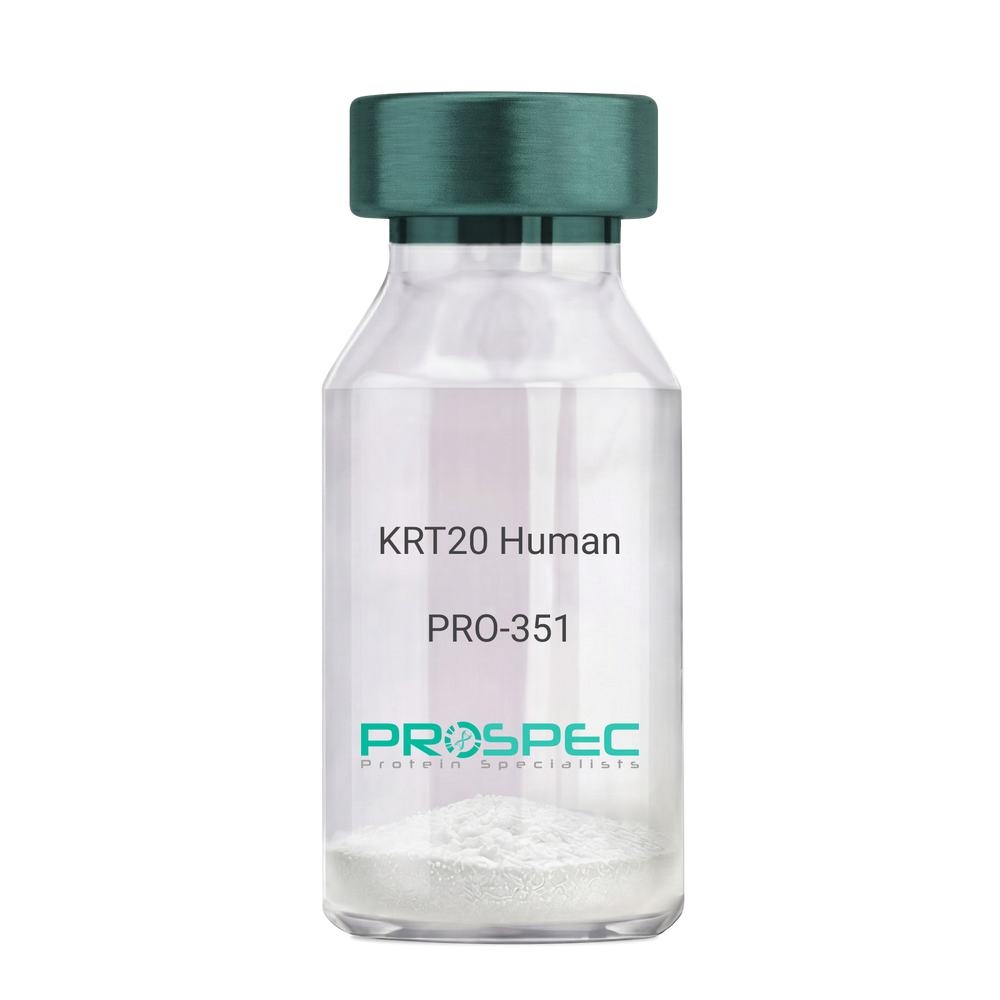
    Name :

    KRT20 Human

    Description:

    Cytokeratin 20 Human Recombinant

    Keratin type I cytoskeletal 20, Cytokeratin-20, CK-20, Keratin-20, K20, Protein IT, KRT20, CD20, CK20, KRT21, MGC35423.

    Product # :

    PRO-351

    Price :

    Quantity :

    Shipping Method :

    Room Temp Icon

    Shipped at Room temp

    Add To Cart

    More Info

    • description
    • source
    • formulation
    • purity
    • More Info

    Description

    Cytokeratin 20 Human Recombinant produced in E.Coli is a single,non-glycosylated polypeptide chain having a molecular mass of 48,553 Dalton. The KRT20 is purified by proprietary chromatographic techniques.

    Source

    Escherichia Coli.

    Formulation

    The protein (1mg/1ml) was lyophilized after from a sterile solution containing 30mM Tris-HCL pH-8, 9.5M urea, 2mM DDT, 2mM EDTA and 10mM methylammonium chloride.

    Purity

    Greater than 95.0% as determined by SDS-PAGE.

    More Info

    • Introduction

      KRT20 is a member of the keratin family. The keratins are intermediate filament proteins responsible for the structural integrity of epithelial cells and are subdivided into cytokeratins and hair keratins. The type I cytokeratins consist of acidic proteins which are arranged in pairs of heterotypic keratin chains. This cytokeratin is a major cellular protein of mature enterocytes and goblet cells and is specifically expressed in the gastric and intestinal mucosa. The type I cytokeratin genes are clustered in a region of chromosome 17q12-q21.

    • Synonyms

      Keratin type I cytoskeletal 20, Cytokeratin-20, CK-20, Keratin-20, K20, Protein IT, KRT20, CD20, CK20, KRT21, MGC35423.

    • Physical Appearance

      Sterile Filtered White lyophilized (freeze-dried) powder.

    • Stability

      Lyophilized KRT20 although stable at room temperature for 3 weeks, should be stored desiccated below -18°C. Upon reconstitution KRT20 should be stored at 4°C between 2-7 days and for future use below -18°C.For long term storage it is recommended to add a carrier protein (0.1% HSA or BSA).Please prevent freeze-thaw cycles.

    • Solubility

      It is recommended to reconstitute the lyophilized KRT20 in sterile 18MΩ-cm H2O not less than 100µg/ml, which can then be further diluted to other aqueous solutions.

    • Reconstitution to filaments

      Performed by mixing equimolar amounts of cytokeratins of type I and type II at concentrations of approx. 0.5 mg/ml, both dissolved in 9.5 M urea buffer (see above). Protofilaments and filament complexes are obtained by dialyzing the resulting polypeptide solution stepwise to a concentration of 4 M urea and then to low salt condition (50 mM NaCI, 2 mM dithiothreitol, 10 mM Tris-HCI, pH 7.4). For immunization purposes, the solution can be further dialyzed against PBS (phosphate buffered saline, e.g. Dulbecco's PBS).

    ProSpec's products are furnished for LABORATORY RESEARCH USE ONLY. The product may not be used as drugs, agricultural or pesticidal products, food additives or household chemicals.

    Krt20 Human
  • View Data Sheet

    Name :

    TRIM21 Human Biotin

    Description:

    Tripartite Motif Containing 21 (RO52) Human Recombinant, Biotinylated

    52 kDa Ro protein, Sjoegren syndrome type A antigen, SS-A, Ro(SS-A), 52 kDa ribonucleoprotein autoantigen Ro/SS-A, Tripartite motif-containing protein 21, RING finger protein 81, TRIM21, RNF81, RO52, SSA1, SSA, RO-52.

    Product # :

    PRO-2559

    Price :

    Quantity :

    Shipping Method :

    Ice Icon

    Shipped with Ice Packs

    Add To Cart

    More Info

    • description
    • source
    • formulation
    • purity
    • More Info

    Description

    TRIM21 Human Recombinant, Biotin produced in SF9 is a glycosylated, polypeptide chain having a calculated molecular mass of 52kDa. TRIM21 is expressed with a -6x His tag at N-terminus and purified by proprietary chromatographic techniques.

    Source

    Sf9 insect cells.

    Formulation

    TRIM21 solution is supplied in 20mM HEPES pH-7.6, 0.01mM EDTA and 0.02% SDS.

    Purity

    Greater than 80% as determined by SDS-PAGE.

    More Info

    • Introduction

      TRIM21 is a member of the tripartite motif (TRIM) family. The TRIM motif includes three zinc-binding domains, a RING, a B-box type 1 and a B-box type 2, and a coiled-coil region. The 52 kDa Ro protein is part of the RoSSA ribonucleoprotein, which includes a single polypeptide and one of four small RNA molecules. The RoSSA particle localizes to both the cytoplasm and the nucleus. Ro/SSA interacts with autoantigens in patients with Sjogren syndrome and systemic lupus erythematosus. Ribonucleoprotein particle is composed of a single polypeptide and one of four small RNA molecules. The RoSSA is present in all mammalian cells studied but has no known function. At least 2 isoforms are present in nucleated and red blood cells, and tissue specific differences in Ro/SSA proteins were identified.

    • Synonyms

      52 kDa Ro protein, Sjoegren syndrome type A antigen, SS-A, Ro(SS-A), 52 kDa ribonucleoprotein autoantigen Ro/SS-A, Tripartite motif-containing protein 21, RING finger protein 81, TRIM21, RNF81, RO52, SSA1, SSA, RO-52.

    • Physical Appearance

      Sterile Filtered clear solution.

    • Stability

      Store at 4°C if entire vial will be used within 2-4 weeks. Store, frozen at -20°C for longer periods of time. Avoid multiple freeze-thaw cycles.

    • Immunological Functions

      1. Binds IgG type human auto antibodies.2. Functional Streptavidin based ELISA test (analysis of positive/negative samples.)

    ProSpec's products are furnished for LABORATORY RESEARCH USE ONLY. The product may not be used as drugs, agricultural or pesticidal products, food additives or household chemicals.

    Ro52 Human
  • View Data Sheet

    Name :

    IL17F Human, sf9

    Description:

    Interleukin 17F Human Recombinant, sf9

    Cytokine ML-1, IL-17F, Interleukin-17F precursor, IL17F, ML1, ML-1. 

    Product # :

    CYT-1017

    Price :

    Quantity :

    Shipping Method :

    Ice Icon

    Shipped with Ice Packs

    Add To Cart

    More Info

    • description
    • source
    • formulation
    • purity
    • More Info

    Description

    IL17F produced in Sf9 Baculovirus cells is a single, glycosylated polypeptide chain containing 142 amino acids (31-163 a.a.) and having a molecular mass of 16kDa (Molecular size on SDS-PAGE will appear at approximately 18-28 kDa). IL17F is expressed with a 9 amino acid His tag at C-Terminus and purified by proprietary chromatographic techniques.

    Source

    Sf9, Baculovirus cells.

    Formulation

    IL17F protein solution (0.5mg/ml) contains Phosphate Buffered Saline (pH 7.4), 20% glycerol and 1mM DTT.

    Purity

    Greater than 95.0% as determined by SDS-PAGE.

    More Info

    • Introduction

      IL-17F having an accession number of Q96PD4 is a cytokine that shares sequence similarity with IL17. IL-17F is expressed by activated T cells, and has been shown to stimulate the production of several other cytokines, including IL6, IL8, and CSF2/GM_CSF. IL-17F inhibits the angiogenesis of endothelial cells and induce endothelial cells to produce IL2, TGFB1/TGFB, and monocyte chemoattractant protein-1. IL-17F induces stromal cells to produce proinflammatory and hematopoietic cytokines. Intestinal IL17F gene expression is increased in active CD.
      IL-17A & IL-17F alleles influence the susceptibility to and pathophysiological features of ulcerative colitis independently. IL-17F and MIF gene polymorphisms are significantly associated with the development of functional dyspepsia.
      The initiation of IL-17F/IL-17R signaling pathway requires the receptor ubiquitination by TRAF6. IL-17F induces expression of IFN-gamma-inducible protein 10 (IP-10) by activating Raf1-mitogen-activated protein kinase 1/2-extracellular-regulated kinase 1/2-p90 ribosomal S6 kinase-cyclic AMP response element-binding protein signaling pathway.

    • Synonyms

      Cytokine ML-1, IL-17F, Interleukin-17F precursor, IL17F, ML1, ML-1.

    • Physical Appearance

      Sterile Filtered colorless solution.

    • Stability

      Store at 4°C if entire vial will be used within 2-4 weeks. Store, frozen at -20°C for longer periods of time. For long term storage it is recommended to add a carrier protein (0.1% HSA or BSA). Avoid multiple freeze-thaw cycles.

    • Amino Acid Sequence

      ADPRKIPKVG HTFFQKPESC PPVPGGSMKL DIGIINENQR VSMSRNIESR STSPWNYTVT WDPNRYPSEV VQAQCRNLGC INAQGKEDIS MNSVPIQQET LVVRRKHQGC SVSFQLEKVL VTVGCTCVTP VIHHVQHHHH HH.

    ProSpec's products are furnished for LABORATORY RESEARCH USE ONLY. The product may not be used as drugs, agricultural or pesticidal products, food additives or household chemicals.

    Il17F Protein
  • View Data Sheet

    Name :

    GZMB Human, sf9

    Description:

    Granzyme-B, Sf9 Human Recombinant

    Granzyme B, T-Cell Serine Protease 1-3E, Cathepsin G-Like 1, Granzyme B (Granzyme 2, Cytotoxic T-Lymphocyte-Associated Serine Esterase 1, Cytotoxic T-Lymphocyte Proteinase 2, Cytotoxic Serine Protease B , Human Lymphocyte Protein, Fragmentin 2, EC 3.4.21.79, CTSGL1, CTLA1 , CSPB , CGL1, SECT , C11, HLP , Cytotoxic T-Lymphocyte-Associated Serine Esterase 1, Lymphocyte Protease, Fragmentin-2 , Granzyme 2 , Granzyme-2 , EC 3.4.21, CTLA-1 , CGL-1, CSP-B, CCPI , GRB.          

    Product # :

    ENZ-1078

    Price :

    Quantity :

    Shipping Method :

    Ice Icon

    Shipped with Ice Packs

    Add To Cart

    More Info

    • description
    • source
    • formulation
    • purity
    • biological activity
    • More Info

    Description

    GZMB produced in Sf9 Baculovirus cells is a single, glycosylated polypeptide chain containing 235 amino acids (19-247a.a.) and having a molecular mass of 26.5kDa. (Molecular size on SDS-PAGE will appear at approximately 28-40kDa). GZMB is expressed with an 6 amino acid His tag at C-Terminus and purified by proprietary chromatographic techniques.

    Source

    Sf9, Baculovirus cells.

    Formulation

    GZMB protein solution (0.5mg/ml) contains Phosphate Buffered Saline (pH 7.4) ,20% glycerol and 1mM DTT.

    Purity

    Greater than 95.0% as determined by SDS-PAGE.

    Biological Activity

    Specific activity is > 7,000 pmol/min/ug, and is defined as the amount of enzyme that cleave 1pmole of Boc-Ala-Ala-Asp-SBzl at 37C.

    More Info

    • Introduction

      Granzyme-B (GZMB) is essential for target cell lysis in cell-mediated immune responses. GZMB is related to an activation cascade of caspases responsible for apoptosis execution. GZMB cuts caspase-3, -7, -9 and 10 to activate enzymes mediating apoptosis.

    • Synonyms

      Granzyme B, T-Cell Serine Protease 1-3E, Cathepsin G-Like 1, Granzyme B (Granzyme 2, Cytotoxic T-Lymphocyte-Associated Serine Esterase 1, Cytotoxic T-Lymphocyte Proteinase 2, Cytotoxic Serine Protease B , Human Lymphocyte Protein, Fragmentin 2, EC 3.4.21.79, CTSGL1, CTLA1 , CSPB , CGL1, SECT , C11, HLP , Cytotoxic T-Lymphocyte-Associated Serine Esterase 1, Lymphocyte Protease, Fragmentin-2 , Granzyme 2 , Granzyme-2 , EC 3.4.21, CTLA-1 , CGL-1, CSP-B, CCPI , GRB.

    • Physical Appearance

      Sterile Filtered colorless solution.

    • Stability

      Store at 4°C if entire vial will be used within 2-4 weeks. Store, frozen at -20°C for longer periods of time. For long term storage it is recommended to add a carrier protein (0.1% HSA or BSA). Avoid multiple freeze-thaw cycles.

    • Amino Acid Sequence

      GEIIGGHEAK PHSRPYMAYL MIWDQKSLKR CGGFLIRDDF VLTAAHCWGS SINVTLGAHN IKEQEPTQQF IPVKRPIPHP AYNPKNFSND IMLLQLERKA KRTRAVQPLR LPSNKAQVKP GQTCSVAGWG QTAPLGKHSH TLQEVKMTVQ EDRKCESDLR HYYDSTIELC VGDPEIKKTS FKGDSGGPLV CNKVAQGIVS YGRNNGMPPR ACTKVSSFVH WIKKTMKRYH HHHHH

    ProSpec's products are furnished for LABORATORY RESEARCH USE ONLY. The product may not be used as drugs, agricultural or pesticidal products, food additives or household chemicals.

    Granzyme B Human
  • View Data Sheet

    Name :

    Activin-A, CHO Human

    Description:

    Activin-A Human Recombinant, CHO

    Inhba, Inhibin beta A, FSH releasing protein.

    Product # :

    CYT-1258

    Price :

    Quantity :

    Shipping Method :

    Room Temp Icon

    Shipped at Room temp

    Add To Cart

    More Info

    • description
    • source
    • formulation
    • purity
    • biological activity
    • More Info

    Description

    Activin-A Human Recombinant is a homodimeric, glycosylated, polypeptide chain containing 2 x 116 amino acids and having a molecular weight of 26.0kDa. The Active form Activin-A is purified by standard chromatographic techniques.

    Source

    CHO cells.

    Formulation

    Human Activin-A was lyophilized from a concentrated filtered solution in 35% (v/v) Acetonitrile and 0.1% (v/v) TFA.

    Purity

    Greater than 97.0% as determined by SDS-PAGE and SEC-HPLC analyses.

    Biological Activity

    Assessed by the ability to inhibit the proliferation of mouse MPC-11 cells. The expected ED50 for this effect is < 2.0 ng/ml, corresponding to a specific activity of ≥5.0 × 10⁵ units/mg.

    More Info

    • Synonyms

      Inhba, Inhibin beta A, FSH releasing protein.

    • Physical Appearance

      Lyophilized freeze dried powder.

    • Stability

      Lyophilized Activin-A although stable at room temperature for 3 weeks, should be stored desiccated below -18°C. Upon reconstitution Activin-A should be stored at 4°C between 2-7 days and for future use below -18°C.For long term storage it is recommended to add a carrier protein (0.1% HSA or BSA).Please prevent freeze-thaw cycles.

    • Solubility

      Human INHBA protein should be reconstituted in sterile 4mM HCl to a concentration of 0.1-1.0 mg/mL. Stock solutions should be apportioned into working aliquots and stored at ≤-20°C. Further dilutions should be made in appropriate buffered solutions.

    • Amino Acid Sequence

      GLECDGKVNI CCKKQFFVSF KDIGWNDWII APSGYHANYC EGECPSHIAG TSGSSLSFHS TVINHYRMRG HSPFANLKSC CVPTKLRPMS MLYYDDGQNI IKKDIQNMIV EECGCS.

    • Background

      What is the molecular weight / Mw of Activin A Protein?
      Activin A Protein has a total Mw of 26 kDa.
      What is the source or expression system of Activin A Protein?
      CHO Cells.

      What is the Purity of Activin A Protein?
      Activin A Protein is >97% pure as determined by SDS-PAGE.

      What is the Biological Activity of Activin A Protein?
      Assessed by the ability to inhibit the proliferation of mouse MPC-11 cells. The expected ED50 for this effect is < 2.0 ng/ml, corresponding to a specific activity of ≥5.0 × 10⁵ units/mg.

      What is the endotoxin level for Activin A Protein?
      The endotoxin level is minimal, ACTIVIN A Protein was purified using conventional chromatography techniques.

      What is the amino acid sequence of ACTIVIN A Protein?
      GLECDGKVNI CCKKQFFVSF KDIGWNDWII APSGYHANYC EGECPSHIAG TSGSSLSFHS TVINHYRMRG HSPFANLKSC CVPTKLRPMS MLYYDDGQNI IKKDIQNMIV EECGCS

      What applications can ACTIVIN A Protein be used in?
      ACTIVIN A Protein can probably be used in western blot, ELISA and Lateral Flow.


    ProSpec's products are furnished for LABORATORY RESEARCH USE ONLY. The product may not be used as drugs, agricultural or pesticidal products, food additives or household chemicals.

    Activin A Protein
  • View Data Sheet

    Name :

    IGF1 Bovine

    Description:

    IGF-1 Bovine Recombinant

    Somatomedin C, IGF-I, IGFI, IGF1, IGF-IA MGF.

    Product # :

    CYT-1261

    Price :

    Quantity :

    Shipping Method :

    Room Temp Icon

    Shipped at Room temp

    Add To Cart

    More Info

    • description
    • source
    • formulation
    • purity
    • biological activity
    • More Info

    Description

    IGF1 Bovine Recombinant produced in E.Coli is a single, non-glycosylated, polypeptide chain containing 70 amino acids and having a molecular mass of 7.6kDa. IGF- I is purified by proprietary chromatographic techniques.

    Source

    Escherichia Coli.

    Formulation

    The IGF1 Bovine was lyophilized from a 0.2µm filtered concentrated solution in PBS, pH 7.0.

    Purity

    Greater than 97.0% as determined by:
    (a) Analysis by RP-HPLC.
    (b) Analysis by SDS-PAGE.

    Biological Activity

    The biological activity was determined by the cell proliferation assay using serum free human MCF-7 cells in <2ng/ml, corresponding to a Specific Activity of >5.0 x 10⁵IU/mg.

    More Info

    • Introduction

      The somatomedins, IGFs, comprise a family of peptides that play important roles in mammalian growth and development. IGF1 mediates many of the growth-promoting effects of GH. Early studies showed that GH did not directly stimulate the incorporation of sulfate into cartilage, but rather acted through a serum factor, termed 'sulfation factor,' which later became known as 'somatomedin. Three main somatomedins have been characterized: somatomedin C (IGF1), somatomedin A (IGF2; MIM 147470), and somatomedin B.

    • Synonyms

      Somatomedin C, IGF-I, IGFI, IGF1, IGF-IA MGF.

    • Physical Appearance

      Sterile Filtered White lyophilized (freeze-dried) powder.

    • Stability

      Lyophilized IGF-1 Bovine although stable at room temperature for 3 weeks, should be stored desiccated below -18°C. Upon reconstitution bovine IGF1 should be stored at 4°C between 2-7 days and for future use below -18°C. For long term storage it is recommended to add a carrier protein (0.1% HSA or BSA). Please prevent freeze-thaw cycles.

    • Solubility

      It is recommended to reconstitute the lyophilized bovine IGF-1 in sterile 18MΩ-cm H2O at a concentration of 100µg/ml, which can then be further diluted to other aqueous solutions.

    • Amino Acid Sequence

      GPETLCGAEL VDALQFVCGD RGFYFNKPTG YGSSSRRAPQ TGIVDECCFR SCDLRRLEMY CAPLKPAKSA.

    • Background

      What is the molecular weight/Mw of IGF1 BOVINE Protein?
      IGF1 BOVINE Protein has a total Mw of 7.6kDa.

      What is the source or expression system of IGF1 BOVINE Protein?
      Escherichia Coli.

      What is the Purity of IGF1 BOVINE Protein?
      IGF1 BOVINE Protein is >97% pure as determined by SDS-PAGE.

      What is the Biological Activity of IGF1 BOVINE Protein?
      The biological activity was determined by the cell proliferation assay using serum free human MCF-7 cells in <2ng/ml, corresponding to a Specific Activity of >5.0 x 10⁵IU/mg.

      What is the amino acid sequence of IGF1 BOVINE Protein?
      GPETLCGAEL VDALQFVCGD RGFYFNKPTG YGSSSRRAPQ TGIVDECCFR SCDLRRLEMY CAPLKPAKSA.
      What applications can IGF1 BOVINE Protein be used in?
      IGF1 BOVINE Protein can probably be used in western blot, ELISA and Lateral Flow.

      What is the endotoxin level for IGF1 BOVINE Protein?
      The endotoxin level is minimal, IGF1 BOVINE Protein was purified using conventional chromatography techniques.


    ProSpec's products are furnished for LABORATORY RESEARCH USE ONLY. The product may not be used as drugs, agricultural or pesticidal products, food additives or household chemicals.

    Igf1 Bovine
  • View Data Sheet

    Name :

    MFGE8 Mouse

    Description:

    Milk Fat Globule-EGF Factor 8 Protein Mouse Recombinant

    Milk fat globule-EGF factor 8 protein, isoform CRA_a, Putative uncharacterized protein, Mfge8, mCG_6301.

    Product # :

    CYT-1000

    Price :

    Quantity :

    Shipping Method :

    Ice Icon

    Shipped with Ice Packs

    Add To Cart

    More Info

    • description
    • source
    • formulation
    • purity
    • More Info

    Description

    MFGE8 Mouse Recombinant produced in Sf9 Baculovirus cells is a single, glycosylated polypeptide chain containing 413 amino acids (23-426a.a.) and having a molecular mass of 46kDa (Molecular size on SDS-PAGE will appear at approximately 40-57kDa).MFGE8 is expressed with a 6 amino acid His-tag at C-Terminus and purified by proprietary chromatographic techniques.

    Source

    Sf9, Baculovirus cells.

    Formulation

    MFGE8 protein solution (0.25mg/ml) contains Phosphate Buffered Saline (pH 7.4) and 10% glycerol.

    Purity

    Greater than 90.0% as determined by SDS-PAGE.

    More Info

    • Introduction

      Milk fat globule-EGF factor 8 protein (Mfge8) is pleiotropic secreted glycoprotein which promotes mammary gland morphogenesis, angiogenesis, and tumor progression. Mfge8 has also an imperative role in tissue homeostasis and the prevention of inflammation. Mfge8 functions as a bridge between phosphatidylserine on apoptotic cells and Integrin alpha V beta 3 on phagocytes, leading to the clearance of apoptotic debris.

    • Synonyms

      Milk fat globule-EGF factor 8 protein, isoform CRA_a, Putative uncharacterized protein, Mfge8, mCG_6301.

    • Physical Appearance

      Sterile filtered colorless solution.

    • Stability

      Store at 4°C if entire vial will be used within 2-4 weeks. Store, frozen at -20°C for longer periods of time. For long term storage it is recommended to add a carrier protein (0.1% HSA or BSA).Avoid multiple freeze-thaw cycles.

    • Amino Acid Sequence

      ADLASGDFCD SSLCLNGGTC LTGQDNDIYC LCPEGFTGLV CNETERGPCS PNPCYNDAKC LVTLDTQRGD IFTEYICQCP VGYSGIHCET GCSTQLGMEG GAIADSQISA SSVYMGFMGL QRWGPELARL YRTGIVNAWT ASNYDSKPWI QVNLLRKMRV SGVMTQGASR AGRAEYLKTF KVAYSLDGRK FEFIQDESGG DKEFLGNLDN NSLKVNMFNP TLEAQYIKLY PVSCHRGCTL RFELLGCELH GCSEPLGLKN NTIPDSQMSA SSSYKTWNLR AFGWYPHLGR LDNQGKINAW TAQSNSAKEW LQVDLGTQRQ VTGIITQGAR DFGHIQYVAS YKVAHSDDGV QWTVYEEQGS SKVFQGNLDN NSHKKNIFEK PFMARYVRVL PVSWHNRITL RLELLGCHHH HHH.

    • Background

      An Insight into Milk Fat Globule-EGF Factor 8 Protein (Mouse Recombinant): Characteristics, Applications, and Future Directions

      Abstract

      The Milk Fat Globule-EGF Factor 8 (MFG-E8) protein, particularly in its mouse recombinant form, has emerged as a pivotal player in multiple physiological processes. This paper aims to elucidate its unique characteristics, delve into current methodologies employed in its study, and chart the trajectory for future research directions.

      Introduction

      Milk Fat Globule-EGF Factor 8 (MFG-E8) is a glycoprotein known for its vital role in several cellular processes, including cell signaling, apoptosis, and phagocytosis. The recombinant form of MFG-E8 derived from mouse models offers a valuable tool for researchers in deciphering its biological relevance.

      Characteristics of MFG-E8 (Mouse Recombinant)

      1. Structural Profile: The MFG-E8 protein harbors EGF-like domains, which enable its participation in numerous cellular signaling events.

      2. Expression Spectrum: While originally identified in mammary epithelial cells, its expression spectrum extends to macrophages, dendritic cells, and other tissues.

      3. Biochemical Activity: It plays a key role in facilitating the phagocytic clearance of apoptotic cells by bridging these cells to phagocytes.

      Methodologies Employed in MFG-E8 Research

      1. Production of Recombinant MFG-E8: Using bacterial expression systems, such as E. coli, mouse MFG-E8 DNA is introduced, followed by protein purification techniques like gel filtration chromatography.

      2. Assays: The phagocytosis assays employing fluorescently tagged apoptotic cells and phagocytes enable researchers to quantify MFG-E8's effectiveness in apoptotic cell clearance.

      3. Immunoblotting: Through SDS-PAGE and Western blotting, the expression and purification of MFG-E8 can be monitored and validated.

      4. Knockout Models: MFG-E8 knockout mice models help decipher its in vivo significance, especially concerning its immune-regulatory roles.

      Original Ideas & Implications

      The potential for MFG-E8, particularly in its mouse recombinant form, to serve as a therapeutic agent in autoimmune disorders remains a tantalizing prospect. Considering its role in apoptotic cell clearance, dysregulation in MFG-E8 might be implicated in the etiology of autoimmune disorders. Thus, targeting this protein therapeutically may pave the way for innovative treatments.

      Conclusions & Future Directions

      While the recombinant MFG-E8 protein has elucidated much about the biological implications of this protein, the horizon is rife with potential. Future research might focus on its therapeutic potential, particularly in autoimmunity and inflammation.

    ProSpec's products are furnished for LABORATORY RESEARCH USE ONLY. The product may not be used as drugs, agricultural or pesticidal products, food additives or household chemicals.

    Mfge8 Mouse
  • View Data Sheet

    Name :

    AK2 Mouse

    Description:

    Adenylate Kinase 2 Mouse Recombinant

    Adenylate kinase 2 mitochondrial isoform a, Ak-2, D4Ertd220e, mitochondrial, ATP-AMP transphosphorylase 2, ATP:AMP phosphotransferas, Adenylate monophosphate kinase.

    Product # :

    PKA-107

    Price :

    Quantity :

    Shipping Method :

    Ice Icon

    Shipped with Ice Packs

    Add To Cart

    More Info

    • description
    • source
    • formulation
    • purity
    • biological activity
    • More Info

    Description

    AK2 Mouse Recombinant produced in E.Coli is a single, non-glycosylated polypeptide chain containing 263 amino acids (1-239 a.a) and having a molecular mass of 29kDa.AK2 is fused to a 24 amino acid His-tag at N-terminus & purified by proprietary chromatographic techniques.

    Source

    Escherichia Coli.

    Formulation

    AK2 protein solution (0.5mg/ml) containing 20mM Tris-Hcl buffer (pH8.5), 10% glycerol and 1mM DTT.

    Purity

    Greater than 95.0% as determined by SDS-PAGE.

    Biological Activity

    Specific activity is > 40 units/mg. One unit will convert 2.0 umoles of ADP to ATP + AMP per minute at pH 7.5 at 37C.

    More Info

    • Introduction

      Adenylate kinases play a role in regulating the adenine nucleotide composition within a cell by catalyzing the reversible transfer of phosphate groups among adenine nucleotides. There are 3 types of adenylate kinase isozymes, AK1, AK2, and AK3 in vertebrates. Expression of these isozymes are tissue-specific and developmentally regulated. AK2 is localized in the mitochondrial intermembrane space and is involved in apoptosis. AK2 is mutated in individuals with reticular dysgenesis.

    • Synonyms

      Adenylate kinase 2 mitochondrial isoform a, Ak-2, D4Ertd220e, mitochondrial, ATP-AMP transphosphorylase 2, ATP:AMP phosphotransferas, Adenylate monophosphate kinase.

    • Physical Appearance

      Sterile filtered colorless solution.

    • Stability

      AK2 Mouse Recombinant although stable at 4°C for 1 week, should be stored below -18°C. Please prevent freeze thaw cycles.

    • Amino Acid Sequence

      MGSSHHHHHH SSGLVPRGSH MGSHMAPNVL ASEPEIPKGI RAVLLGPPGA GKGTQAPKLA ENFCVCHLAT GDMLRAMVAS GSEL TMDAGKLVSD EMVVELIEKN LETPSCKNGF LLDGFPRTVR QAEMLDDLME KRKEKLDSVI EFSIQDSLLI RRITGRLIHP KSGRS
      NPPKEPMKDD ITGEPLIRRS DDNEKALKTR LEAYHTQTTP LVEYYRKRGI HCAIDASQTP DIVFASILAA FSKATCKDLV MFI

    ProSpec's products are furnished for LABORATORY RESEARCH USE ONLY. The product may not be used as drugs, agricultural or pesticidal products, food additives or household chemicals.

    Ak2 Mouse
  • 1
  • …
  • 28
  • 29
  • 30
  • 31
  • 32
  • …
  • 42
Your browser does not support the video tag.

Products

  • Cytokines
  • Growth Factors
  • Chemokines
  • CD Antigens
  • Neurotrophins
  • Hormones
  • Enzymes
  • Viral Antigens
  • Recombinant Proteins
  • Natural Proteins
  • Monoclonal Antibodies
  • Polyclonal Antibodies
  • Thermal Packaging

About

  • Company
  • Founder
  • Contribution
  • Contact Us
  • My Account

Ordering

  • Ordering Method
  • Ordering - Credit Card
  • Ordering PO
  • Shipping Fees
  • FAQ's

Legal

  • Terms & Conditions
  • Privacy
  • Site Map
  • info@prospecbio.com
  • Facebook
  • Instagram
  • Linkedin Profile

© 2026 ProSpec-Tany TechnoGene Ltd. All Rights Reserved.

  • Choosing a selection results in a full page refresh.
  • Opens in a new window.