Search results
1000 results found for “Angiogenin”
Name
Description
Product #
Price
Quantity
Shipping Method
- View Data Sheet
Name :
CRYAB HumanDescription:
Crystallin Alpha B Human Recombinant
CRYA2, CTPP2, HSPB5, Crystallin Alpha B, CRYAB.
Product # :
HSP-003Price :
Quantity :
Shipping Method :
Shipped with Ice Packs
More Info
- description
- source
- formulation
- purity
- More Info
- Citations
Description
Recombinant CRYAB produced in E.Coli is a single,non-glycosylated polypeptide chain containing 175 amino acids and having a molecular mass of 20.1kDa. CRYAB is purified by proprietary chromatographic techniques.
Source
Escherichia Coli.
Formulation
The CRYAB protein (1mg/ml) solution contains 20mM Tris-HCl buffer pH-7.5, 50mM NaCl and 1mM EDTA.
Purity
Greater than 95.0% as determined by SDS-PAGE.
Citations
More Info
-
Introduction
Alpha crystallins are composed of two gene products ; alpha-A and alpha-B, for acidic and basic, respectively. Alpha crystallins can be induced by heat shock and are members of the small heat shock protein (sHSP also known as the HSP20). They act as molecular chaperones and hold them in in large soluble aggregates. These heterogeneous aggregates consist of 30-40 subunits; the alpha-A and alpha-B subunits have a 3:1 ratio, respectively. Two additional function of a-crystallins are an autokinase activity and participation in the intracellular architecture. Alpha-B is expressed widely in many tissues and organs and occurs in many neurological diseases.
-
Synonyms
CRYA2, CTPP2, HSPB5, Crystallin Alpha B, CRYAB.
-
Physical Appearance
Sterile filtered colorless solution.
-
Stability
Store at 4°C if entire vial will be used within 2-4 weeks. Store, frozen at -20°C for longer periods of time. For long term storage it is recommended to add a carrier protein (0.1% HSA or BSA).Avoid multiple freeze-thaw cycles.
-
Amino Acid Sequence
MDIAIHHPWI RRPFFPFHSP SRLFDQFFGE HLLESDLFPT STSLSPFYLR PPSFLRAPSWFDTGLSEMRL EKDRFSVNLD VKHFSPEELK VKVLGDVIEV HGKHEERQDE HGFISREFHRKYRIPADVDP LTITSSLSSD GVLTVNGPRK QVSGPERTIP ITREEKPAVT AAPKK.
ProSpec's products are furnished for LABORATORY RESEARCH USE ONLY. The product may not be used as drugs, agricultural or pesticidal products, food additives or household chemicals.
- View Data Sheet
Name :
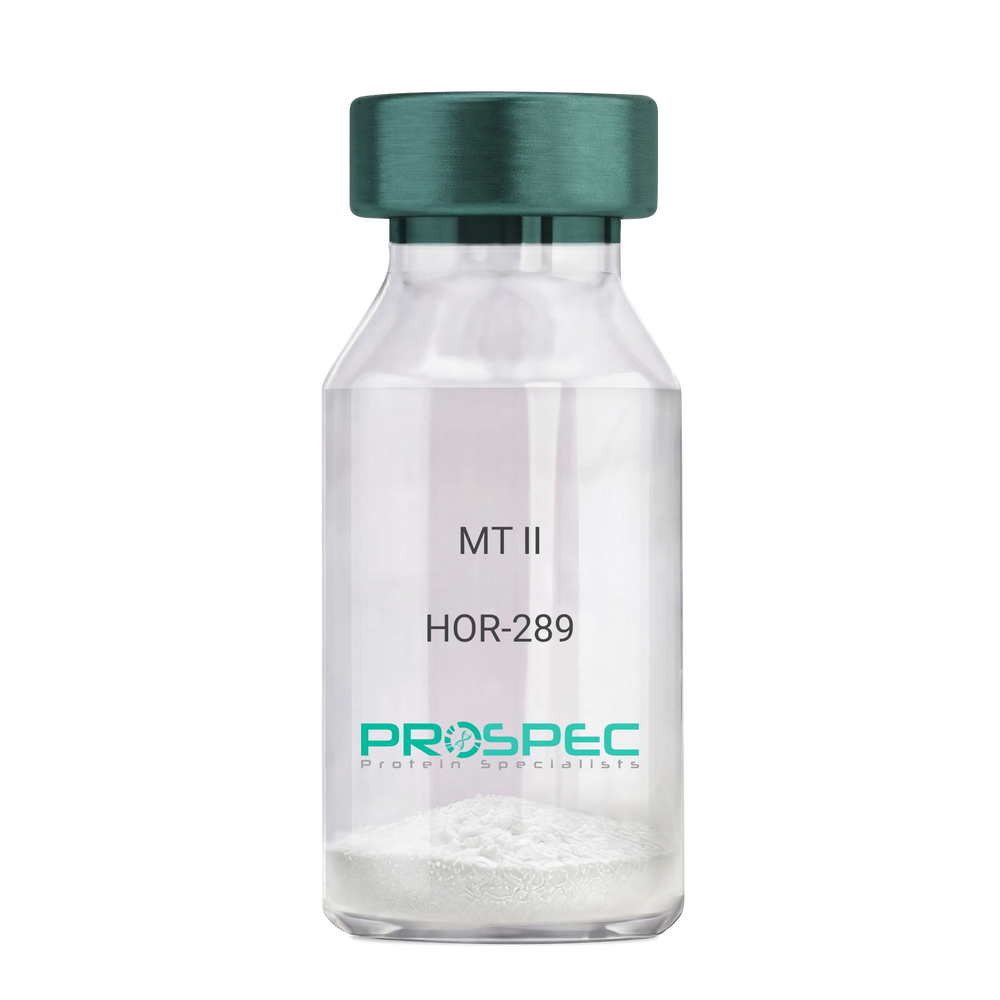
MT IIDescription:
Melanotan-II
Melanotan-II, MT-II, Melanotan.
Product # :
HOR-289Price :
Quantity :
Shipping Method :
Shipped at Room temp
More Info
- description
- formulation
- purity
- More Info
- Citations
Description
The molecular formula of Melanotan-II is C50H69N15O9. It has the amino acid sequence of Ac-Nle-cyclo [Asp-His-D-Phe-Arg-Trp-Lys]-NH2 and a molecular weight of 1024.2 Dalton. The CAS Number is 121062-08-6.
Formulation
The protein (1mg/ml) was lyophilized with no additives.
Purity
Greater than 99% as determined by by RP-HPLC.
Citations
More Info
-
Introduction
Melanotan and Melanotan-II are both analogs of the peptide hormone alpha melanocyte stimulating hormone (a-MSH) that tend to induce skin tanning. Unlike Melanotan, Melanotan-II has the additional effect of increasing libido. Melanotan II has aphrodisiac properties.
-
Synonyms
Melanotan-II, MT-II, Melanotan.
-
Physical Appearance
Sterile Filtered White lyophilized (freeze-dried) powder.
-
Stability
Lyophilized Melanotan-II although stable at room temperature for 3 weeks, should be stored desiccated below -18°C. Upon reconstitution MT-II should be stored at 4°C between 2-7 days and for future use below -18°C.For long term storage it is recommended to add a carrier protein (0.1% HSA or BSA).Please prevent freeze-thaw cycles.
-
Solubility
It is recommended to reconstitute the lyophilized Melanotan-II in sterile 18MΩ-cm H2O not less than 100 µg/ml, which can then be further diluted to other aqueous solutions.
ProSpec's products are furnished for LABORATORY RESEARCH USE ONLY. The product may not be used as drugs, agricultural or pesticidal products, food additives or household chemicals.
- View Data Sheet
Name :
Prolactin HumanDescription:
Prolactin Human Recombinant
Mammotropin, Luteotropic hormone, Luteotropin, PRL.
Product # :
CYT-267Price :
Quantity :
Shipping Method :
Shipped at Room temp
More Info
- description
- source
- formulation
- purity
- biological activity
- More Info
- Citations
Description
Prolactin Human Recombinant produced in E.Coli is a single, non-glycosylated polypeptide chain containing 200 amino acids and having a molecular mass of 23007 Dalton. The Prolactin is purified by proprietary chromatographic techniques.
Source
Escherichia Coli.
Formulation
The protein was lyophilized from a concentrated (1mg/ml) solution with 10mM sodium Phosphate buffer pH=8 and 50mM Nacl.
Purity
Greater than 95.0% as determined by:
(a) Analysis by SEC-HPLC.
(b) Analysis by SDS-PAGE.Biological Activity
The ED50 as determined by the dose-dependant stimulation of the proliferation of rat lymphoma, Nb2-11 was found to be < 0.065ng/ml corresponding to a Specific Activity of 15,385,000IU/mg.Citations
More Info
-
Introduction
Prolactin is a neuroendocrine hormone synthesized primarily by the pituitary gland but also a variety of other cell types including the placenta, brain and uterus. Its primary function is to promote and maintain lactation but has also been shown to have a role in breast cancer development, regulation of reproductive function and immunoregulation.
-
Synonyms
Mammotropin, Luteotropic hormone, Luteotropin, PRL.
-
Physical Appearance
Sterile Filtered White lyophilized (freeze-dried) powder.
-
Stability
Lyophilized Prolactin although stable at room temperature for 3 weeks, should be stored desiccated below -18°C. Upon reconstitution Prolactin should be stored at 4°C between 2-7 days and for future use below -18°C.For long term storage it is recommended to add a carrier protein (0.1% HSA or BSA).Please prevent freeze-thaw cycles.
-
Solubility
It is recommended to reconstitute the lyophilized Prolactin in sterile 18MΩ-cm H2O not less than 100µg/ml, which can then be further diluted to other aqueous solutions.
-
Amino Acid Sequence
The sequence of the first five N-terminal amino acids was determined and was found to be Met-Leu-Pro-Ile-Cys.
ProSpec's products are furnished for LABORATORY RESEARCH USE ONLY. The product may not be used as drugs, agricultural or pesticidal products, food additives or household chemicals.
- View Data Sheet
Name :
SERPINA1 Human, ActiveDescription:
Alpha-1 Antitrypsin, Active Human Recombinant
Alpha-1-antitrypsin, Alpha-1 protease inhibitor, Alpha-1-antiproteinase, SERPINA1, A1AT, PI, A1A, AAT, PI1, MGC9222, PRO2275, MGC23330.
Product # :
PRO-907Price :
Quantity :
Shipping Method :
Shipped at Room temp
More Info
- description
- source
- formulation
- purity
- biological activity
- More Info
- Citations
Description
SERPINA1 Human Recombinant produced in rice is a single, non-glycosylated polypeptide chain containing 384 amino acids and having a molecular mass of 43.1 kDa.The SERPINA1 protein is purified by proprietary chromatographic techniques.
Source
Rice Grain (Oryza Sativa).
Formulation
SERPINA1 was lyophilized from a concentrated solution containing recombinant Albumin.
Purity
Greater than 95% as determined by SDS-PAGE.
Biological Activity
3~5 mg SERPINA1 will inhibit 1 mg PPE with an activity of 10.8 units per mg proteinCitations
More Info
-
Introduction
SERPINA1 is secreted and is a serine protease inhibitor which its targets include elastase, plasmin, collagenase, leucocytic proteases, trypsin, chymotrypsin, and plasminogen activator. Defects in SERPINA1 gene can cause emphysema or liver disease. SERPINA1 is an endogenous inhibitor of serine proteases and inhibits the catalytic domain of human recombinant matriptase in vitro. Rise in SERPINA1 occurs as an acute phase response to tissue necrosis and inflammation. mutations in SERPINA1 and SLC11A1 genes change the balance between elastase produced by leukocytes during phagocytosis.
-
Synonyms
Alpha-1-antitrypsin, Alpha-1 protease inhibitor, Alpha-1-antiproteinase, SERPINA1, A1AT, PI, A1A, AAT, PI1, MGC9222, PRO2275, MGC23330.
-
Physical Appearance
Sterile Filtered White lyophilized (freeze-dried) powder.
-
Stability
Lyophilized SERPINA1 although stable at room temperature for 3 weeks, should be stored desiccated below -18°C. Upon reconstitution SERPINA1 should be stored at 4°C between 2-7 days and for future use below -18°C.For long term storage it is recommended to add a carrier protein (0.1% HSA or BSA).Please prevent freeze-thaw cycles.
-
Solubility
It is recommended to reconstitute the lyophilized SERPINA1 in sterile 18M-cm H2O not less than 100µg/ml, which can then be further diluted to other aqueous solutions.
ProSpec's products are furnished for LABORATORY RESEARCH USE ONLY. The product may not be used as drugs, agricultural or pesticidal products, food additives or household chemicals.
- View Data Sheet
Name :
Resistin RatDescription:
Resistin Rat Recombinant
Cysteine-rich secreted protein FIZZ3, Adipose tissue-specific secretory factor, ADSF, C/EBP-epsilon-regulated myeloid-specific secreted cysteine-rich protein, Cysteine-rich secreted protein A12-alpha-like 2, RSTN, XCP1, RETN1, MGC126603, MGC126609.
Product # :
CYT-1129Price :
Quantity :
Shipping Method :
Shipped at Room temp
More Info
- description
- source
- formulation
- purity
- More Info
- Citations
Description
Resistin Rat Recombinant produced in E.Coli is disulfide-linked homodimer consisting of 2x95 amino acid polypeptide chains and having a molecular mass of approximately 20.2kDa.Resistin is purified by proprietary chromatographic techniques.
Source
Escherichia Coli.
Formulation
Lyophilized from a 0.2μm filtered concentrated solution in PBS, pH7.4 and 0.02 % Tween-20.
Purity
Greater than 97.0% as determined by:
(a) Analysis by RP-HPLC.
(b) Analysis by SDS-PAGE.Citations
More Info
-
Introduction
Resistin, a product of the RSTN gene, is a peptide hormone belongs to the class of cysteine-rich secreted proteins (monomeric peptide contains 11 cysteine residues) referred to as the RELM family, and is also described as ADSF (Adipose Tissue-Specific Secretory Factor) or FIZZ3 (Found in Inflammatory Zone 3). Resistin may be an important link between obesity. Mouse resistin, specifically produced and secreted by adipocyte, acts on skeletal muscle myocytes, hepatocytes and adipocytes themselves so that it reduces their sensitivity. Steppan et al. have suggested that resistin suppressed the ability to stimulate glucose uptake. They have also suggested that resistin was present at elevated levels in blood of obese mice, and was down regulated by fasting and by antidiabetic drugs. Way et al., on the other hand, have found that resistin expression is severely suppressed in obesity.
Other studies have shown that mouse resistin increases during the differentiation of adipocytes, but it also seems to inhibit adipogenesis. In contrast, the human adipogenic differentiation is likely to be associated with a down regulation of resistin gene expression. -
Synonyms
Cysteine-rich secreted protein FIZZ3, Adipose tissue-specific secretory factor, ADSF, C/EBP-epsilon-regulated myeloid-specific secreted cysteine-rich protein, Cysteine-rich secreted protein A12-alpha-like 2, RSTN, XCP1, RETN1, MGC126603, MGC126609.
-
Physical Appearance
Sterile Filtered White lyophilized (freeze-dried) powder.
-
Stability
Lyophilized Resistin although stable at room temperature for 3 weeks, should be stored desiccated below -18°C. Upon reconstitution Resistin should be stored at 4°C between 2-7 days and for future use below -18°C. Please prevent freeze-thaw cycles.
-
Solubility
It is recommended to reconstitute the lyophilized Resistin in sterile PBS not less than 100µg/ml, which can then be further diluted to other aqueous solutions.
-
Amino Acid Sequence
MPSMSLCPMD EAISKKINQD FSSLLPAAMK NTVLHCWSVS SRGRLASCPE GTTVTSCSCG SGCGSWDVRE DTMCHCQCGS IDWTAARCCT LRVGS.
ProSpec's products are furnished for LABORATORY RESEARCH USE ONLY. The product may not be used as drugs, agricultural or pesticidal products, food additives or household chemicals.
- View Data Sheet
Name :
PSMD10 AntibodyDescription:
Gankyrin, Mouse Anti Human
26S proteasome non-ATPase regulatory subunit 10, 26S proteasome regulatory subunit p28, Gankyrin, PSMD10, p28, dJ889N15.2.
Product # :
ANT-609Price :
Quantity :
Shipping Method :
Shipped with Ice Packs
More Info
- formulation
- More Info
- Citations
Formulation
1mg/ml containing PBS, pH-7.4, 10% Glycerol and 0.02% Sodium Azide.
Citations
More Info
-
Introduction
Gankyrin (proteasome 26S subunit) is a multicatalytic proteinase oncoprotein commonly overexpressed in most hepatocellular carcinomas. Proteasomes are found throughout eukaryotic cells at a high concentrations and cleave peptides in an ATP/ubiquitin-dependent process in a non-lysosomal pathway. Gankyrin interacts with S6 ATPase of the 19S regulatory particle of the 26S proteasome. Gankyrin is involved in theregulation of the phosphorylation of the retinoblastoma protein by CDK4, and to enhance the ubiquitinylation of p53 by MDM2. Gankyrin consists of 7 ankyrin repeats and is structurally similar to I kappa Bs. Gankyrin acts as a regulatory subunit of the 26s proteasome which is involved in the atp-dependent degradation of ubiquitinated proteins. Gankyrin is involved in progression of esophageal squamous cell carcinoma. gankyrin plays an oncogenic role especially in early stages of human epatocarcinogenesis. Gankyrin binds to NF-kappaB and suppresses its activity at the transcription level by modulating acetylation through SIRT1. Structural comparison between Gankyrin & p16(INK4A) identified numerous residues of gankyrin that are potentially important for CDK4 binding.
-
Synonyms
26S proteasome non-ATPase regulatory subunit 10, 26S proteasome regulatory subunit p28, Gankyrin, PSMD10, p28, dJ889N15.2.
-
Physical Appearance
Sterile filtered colorless solution.
-
Immunogen
Anti-human PSMD10 mAb, is derived from hybridization of mouse F0 myeloma cells with spleen cells from BALB/c mice immunized with a recombinant human PSMD10 protein 1-226 amino acids purified from E.coli.
-
Ig Subclass
Mouse IgG1 heavy chain and k light chain.
-
Clone
PAT1F4AT.
-
Applications
PSMD10 antibody has been tested by ELISA, Western blot analysis, Flow cytometry and ICC/IF to assure specificity and reactivity. Since application varies, however, each investigation should be titrated by the reagent to obtain optimal results.
-
Type
Mouse Anti Human Monoclonal.
-
Storage Procedures
For periods up to 1 month store at 4°C, for longer periods of time, store at -20°C. Prevent freeze thaw cycles.
-
Purification Method
PSMD10 antibody was purified from mouse ascitic fluids by protein-A affinity chromatography.
ProSpec's products are furnished for LABORATORY RESEARCH USE ONLY. The product may not be used as drugs, agricultural or pesticidal products, food additives or household chemicals.
- View Data Sheet
Description:
Hepatocyte Growth Factor Human Recombinant, HEK
Scatter Factor (SF), Hepatopoietin (HPTA), HGF, HGFB, F-TCF.
Product # :
CYT-090Price :
Quantity :
Shipping Method :
Shipped at Room temp
More Info
- description
- source
- formulation
- purity
- biological activity
- More Info
- Citations
Description
HGF Human Recombinant produced in HEK cells is a glycosylated disulfide-linked heterodimer, containing 697 a.a. (Gln-32 to Ser-728) having a total molecular weight of 80kDa. The HGF is purified by proprietary chromatographic techniques.
Source
HEK.
Formulation
The HGF was lyophilized from a solution (1mg/ml) containing 10mM Sodium phosphate, 150mM NaCl, 0.01% Tween 80 and 100mM L-Arginine, pH 6.5.
Purity
Greater than 90.0% as determined by SDS-PAGE.
Biological Activity
The activity was measured in a cell proliferation assay using 4MBr-5 rhesus monkey epithelial cells (ATCC CCL-208). The EC50 for this effect is typically 20-40ng/ml.
Citations
More Info
-
Introduction
Hepatocyte Growth Factor (HGF) is a multifunctional growth factor which regulates both cell growth and cell motility. It exerts a strong mitogenic effect on hepatocytes and primary epithelial cells. HGF synergizes with Interleukin-3 and GM-CSF to stimulate colony formation of hematopoietic progenitor cells in vitro and may, therefore, also modulate hematopoiesis.
-
Synonyms
Scatter Factor (SF), Hepatopoietin (HPTA), HGF, HGFB, F-TCF.
-
Physical Appearance
Sterile Filtered White lyophilized (freeze-dried) powder.
-
Stability
Lyophilized HGF although stable at room temperature for 3 weeks, should be stored desiccated below -18°C. Upon reconstitution HGF should be stored at 4°C between 2-7 days and for future use below -18°C.For long term storage it is recommended to add a carrier protein (0.1% HSA or BSA).Please prevent freeze-thaw cycles.
-
Solubility
It is recommended to reconstitute the lyophilized Hepatocyte Growth Factor in sterile 18MΩ-cm H2O not less than 100µg/ml, which can then be further diluted to other aqueous solutions.
-
Amino Acid Sequence
32-QRKRRNTIHE FKKSAKTTLI KIDPALKIKT KKVNTADQCA NRCTRNKGLP FTCKAFVFDK ARKQCLWFPF NSMSSGVKKE FGHEFDLYEN KDYIRNCIIG KGRSYKGTVS ITKSGIKCQP WSSMIPHEHS FLPSSYRGKD LQENYCRNPR GEEGGPWCFT SNPEVRYEVC DIPQCSEVEC MTCNGESYRG LMDHTESGKI CQRWDHQTPH RHKFLPERYP DKGFDDNYCR NPDGQPRPWC YTLDPHTRWE YCAIKTCADN TMNDTDVPLE TTECIQGQGE GYRGTVNTIW NGIPCQRWDS QYPHEHDMTP ENFKCKDLRE NYCRNPDGSE SPWCFTTDPN IRVGYCSQIP NCDMSHGQDC YRGNGKNYMG NLSQTRSGLT CSMWDKNMED LHRHIFWEPD ASKLNENYCR NPDDDAHGPW CYTGNPLIPW DYCPISRCEG DTTPTIVNLD HPVISCAKTK QLRVVNGIPT RTNIGWMVSL RYRNKHICGG SLIKESWVLT ARQCFPSRDL KDYEAWLGIH DVHGRGDEKC KQVLNVSQLV YGPEGSDLVL MKLARPAVLD DFVSTIDLPN YGCTIPEKTS CSVYGWGYTG LINYDGLLRV AHLYIMGNEK CSQHHRGKVT LNESEICAGA EKIGSGPCEG DYGGPLVCEQ HKMRMVLGVI VPGRGCAIPN RPGIFVRVAY YAKWIHKIIL TYKVPQS-728
-
Background
What is the molecular weight/Mw of HEPATOCYTE GROWTH FACTOR HUMAN,HEK Protein?
HEPATOCYTE GROWTH FACTOR HUMAN,HEK Protein has a total Mw of 80kDa.
What is the source or expression system of HEPATOCYTE GROWTH FACTOR HUMAN,HEK Protein?
HEK.
What is the Purity of HEPATOCYTE GROWTH FACTOR HUMAN,HEK Protein?
HEPATOCYTE GROWTH FACTOR HUMAN,HEK Protein is >90% pure as determined by SDS-PAGE.
What is the Biological Activity of HEPATOCYTE GROWTH FACTOR HUMAN,HEK Protein?
The activity was measured in a cell proliferation assay using 4MBr-5 rhesus monkey epithelial cells (ATCC CCL-208). The EC50 for this effect is typically 20-40ng/ml.
What is the amino acid sequence of HEPATOCYTE GROWTH FACTOR HUMAN,HEK Protein?
32-QRKRRNTIHE FKKSAKTTLI KIDPALKIKT KKVNTADQCA NRCTRNKGLP FTCKAFVFDK ARKQCLWFPF NSMSSGVKKE FGHEFDLYEN KDYIRNCIIG KGRSYKGTVS ITKSGIKCQP WSSMIPHEHS FLPSSYRGKD LQENYCRNPR GEEGGPWCFT SNPEVRYEVC DIPQCSEVEC MTCNGESYRG LMDHTESGKI CQRWDHQTPH RHKFLPERYP DKGFDDNYCR NPDGQPRPWC YTLDPHTRWE YCAIKTCADN TMNDTDVPLE TTECIQGQGE GYRGTVNTIW NGIPCQRWDS QYPHEHDMTP ENFKCKDLRE NYCRNPDGSE SPWCFTTDPN IRVGYCSQIP NCDMSHGQDC YRGNGKNYMG NLSQTRSGLT CSMWDKNMED LHRHIFWEPD ASKLNENYCR NPDDDAHGPW CYTGNPLIPW DYCPISRCEG DTTPTIVNLD HPVISCAKTK QLRVVNGIPT RTNIGWMVSL RYRNKHICGG SLIKESWVLT ARQCFPSRDL KDYEAWLGIH DVHGRGDEKC KQVLNVSQLV YGPEGSDLVL MKLARPAVLD DFVSTIDLPN YGCTIPEKTS CSVYGWGYTG LINYDGLLRV AHLYIMGNEK CSQHHRGKVT LNESEICAGA EKIGSGPCEG DYGGPLVCEQ HKMRMVLGVI VPGRGCAIPN RPGIFVRVAY YAKWIHKIIL TYKVPQS-728
What applications can HEPATOCYTE GROWTH FACTOR HUMAN,HEK Protein be used in?
HEPATOCYTE GROWTH FACTOR HUMAN,HEK Protein can probably be used in western blot, ELISA and Lateral Flow.
What is the endotoxin level for HEPATOCYTE GROWTH FACTOR HUMAN,HEK Protein?
The endotoxin level is minimal, HEPATOCYTE GROWTH FACTOR HUMAN,HEK Protein was purified using conventional chromatography techniques.
ProSpec's products are furnished for LABORATORY RESEARCH USE ONLY. The product may not be used as drugs, agricultural or pesticidal products, food additives or household chemicals.
- View Data Sheet
Name :
AIFM1 HumanDescription:
Apoptosis-Inducing Factor, Mitochondrion-Associated, 1 Human Recombinant
Apoptosis-inducing factor 1, mitochondrial, Programmed cell death protein 8, AIFM1, AIF, PDCD8, CMTX4, COWCK, COXPD6, isoform 2 precursor, Apoptosis-Inducing Factor, Mitochondrion-Associated, 1.
Product # :
PRO-1898Price :
Quantity :
Shipping Method :
Shipped with Ice Packs
More Info
- description
- source
- formulation
- purity
- More Info
- Citations
Description
AIFM1 Human Recombinant produced in E.coli is a single, non-glycosylated polypeptide chain containing 537 amino acids (98-609) and having a molecular mass of 58.5 kDa.AIFM1 is fused to a 25 amino acid His-Tag at N-terminus and purified by proprietary chromatographic techniques.
Source
Escherichia Coli.
Formulation
The AIFM1 solution (0.5mg/ml) contains 20mM Tris-HCl buffer (pH 8.0), 0.1M NaCl and 10% glycerol.
Purity
Greater than 95.0% as determined by SDS-PAGE.
Citations
More Info
-
Introduction
Apoptosis-Inducing Factor, Mitochondrion-Associated, 1 (AIFM1) is a mitochondrial protein which translocates to the nucleus once apoptosis has been initiated. AIFM1 causes DNA fragmentation and chromatin condensation and also triggers the release of cytochrome c and caspase-9 from mitochondria. Bcl-2 overexpression prevents the release of AIFM1 from mitochondria, but doesn’t block its apoptogenic activity.
-
Synonyms
Apoptosis-inducing factor 1, mitochondrial, Programmed cell death protein 8, AIFM1, AIF, PDCD8, CMTX4, COWCK, COXPD6, isoform 2 precursor, Apoptosis-Inducing Factor, Mitochondrion-Associated, 1.
-
Physical Appearance
Sterile Filtered colorless solution.
-
Stability
Store at 4°C if entire vial will be used within 2-4 weeks. Store, frozen at -20°C for longer periods of time. For long term storage it is recommended to add a carrier protein (0.1% HSA or BSA).Avoid multiple freeze-thaw cycles.
-
Amino Acid Sequence
MGSSHHHHHH SSGLVPRGSH MGSEFLGLTP EQKQKKAALS ASEGEEVPQD KAPSHVPFLL IGGGTAAFAA ARSIRARDPG ARVLIVSEDP ELPYMRPPLS KELWFSDDPN VTKTLRFKQW NGKERSIYFQ PPSFYVSAQD LPHIENGGVA VLTGKKVVQL DVRDNMVKLN DGSQITYEKC LIATGGTPRS LSAIDRAGAE VKSRTTLFRK IGDFRSLEKI SREVKSITII GGGFLGSELA CALGRKARAL GTEVIQLFPE KGNMGKILPE YLSNWTMEKV RREGVKVMPN AIVQSVGVSS GKLLIKLKDG RKVETDHIVA AVGLEPNVEL AKTGGLEIDS DFGGFRVNAE LQARSNIWVA GDAACFYDIK LGRRRVEHHD HAVVSGRLAG ENMTGAAKPY WHQSMFWSDL GPDVGYEAIG LVDSSLPTVG VFAKATAQDN PKSATEQSGT GIRSESETES EASEITIPPS TPAVPQAPVQ GEDYGKGVIF YLRDKVVVGI VLWNIFNRMP IARKIIKDGE QHEDLNEVAK LFNIHED.
ProSpec's products are furnished for LABORATORY RESEARCH USE ONLY. The product may not be used as drugs, agricultural or pesticidal products, food additives or household chemicals.
- View Data Sheet
Name :
IL36RN HumanDescription:
Interleukin-36 Receptor Antagonist Human Recombinant
Interleukin-36 receptor antagonist protein, FIL1 delta, IL-1-related protein 3, IL-1RP3, Interleukin-1 HY1, IL-1HY1, Interleukin-1 delta, IL-1 delta, Interleukin-1 family member 5, IL-1F5, Interleukin-1 receptor antagonist homolog 1, IL-1ra homolog 1, Interleukin-1-like protein 1, IL-1L1, IL36RN, FIL1D, IL1F5, IL1HY1, IL1L1, IL1RP3, FIL1, PSORP, IL36RA, FIL1(DELTA).
Product # :
CYT-009Price :
Quantity :
Shipping Method :
Shipped at Room temp
More Info
- description
- source
- formulation
- purity
- biological activity
- More Info
- Citations
Description
IL1F5 Human Recombinant produced in E.Coli is a single, non-glycosylated, Polypeptide chain containing 155 amino acids and having a molecular mass of 17kDa.The IL1F5 is purified by proprietary chromatographic techniques.
Source
Escherichia Coli.
Formulation
IL1F5 was lyophilized after extensive dialysis against 20mM Phosphate buffer, pH7.4.
Purity
Greater than 95.0% as determined by:
(a) Analysis by RP-HPLC.
(b) Analysis by SDS-PAGE.Biological Activity
As measured by its binding ability in a functional ELISA, immobilized IL1F5 at 1 µg/ml (100 µl/well) can bind rHuIL-1 Rrp2/Fc Chimera with a linear range of 0.15- 5 µg/ml.Citations
More Info
-
Introduction
Human interleukin family 1, member 5 (IL-1F5 / FIL1-delta) belongs to the interleukin 1 cytokine family. IL1F5 is expressed by a variety of cells including monocytes, Bcells, dendritic cells/Langerhans cells, keratinocytes,and gastric fundus Parietal and Chief cells. IL1F5 is an antagonist of IL1F9; however IL1F5 activity related to receptor binding remains unclear. Human and mouse IL1F5 share 90% amino acid sequence identity.
-
Synonyms
Interleukin-36 receptor antagonist protein, FIL1 delta, IL-1-related protein 3, IL-1RP3, Interleukin-1 HY1, IL-1HY1, Interleukin-1 delta, IL-1 delta, Interleukin-1 family member 5, IL-1F5, Interleukin-1 receptor antagonist homolog 1, IL-1ra homolog 1, Interleukin-1-like protein 1, IL-1L1, IL36RN, FIL1D, IL1F5, IL1HY1, IL1L1, IL1RP3, FIL1, PSORP, IL36RA, FIL1(DELTA).
-
Physical Appearance
Sterile Filtered White lyophilized (freeze-dried) powder.
-
Stability
Lyophilized IL1F5 although stable at room temperature for 3 weeks, should be stored desiccated below -18°C. Upon reconstitution IL1F5 should be stored at 4°C between 2-7 days and for future use below -18°C.Please prevent freeze-thaw cycles.
-
Solubility
It is recommended to quick spin followed by reconstitution of IL1F5 in PBS to a concentration no less than 100 µg/ml, which can then be further diluted to other aqueous solutions.
-
Amino Acid Sequence
The sequence of the first five N-terminal amino acids was determined and was found to be Met-Val-Leu-Ser-Gly.
ProSpec's products are furnished for LABORATORY RESEARCH USE ONLY. The product may not be used as drugs, agricultural or pesticidal products, food additives or household chemicals.
- View Data Sheet
Name :
FGF23 HumanDescription:
Fibroblast Growth Factor-23 Human Recombinant
Tumor-derived hypophosphatemia-inducing factor, HYPF, ADHR, HPDR2, PHPTC, FGF23, FGF-23, Fibroblast Growth Factor-23.
Product # :
CYT-020Price :
Quantity :
Shipping Method :
Shipped at Room temp
More Info
- description
- source
- formulation
- purity
- biological activity
- More Info
- Citations
Description
Fibroblast Growth Factor-23 Human Recombinant produced in E.Coli is a single, non-glycosylated polypeptide chain containing a total of 228 amino acids and having a molecular mass of 22.5kDa. The FGF-23 is and purified by chromatographic techniques.
Source
Escherichia Coli.
Formulation
The FGF-23 protein (0.5mg/ml) was lyophilized from a 0.2µm filtered concentrated solution in PBS, pH 7.4.
Purity
Greater than 95.0% as determined by SDS-PAGE.
Biological Activity
The biological activity of FGF-23 was measured in a cell proliferation assay using NIH/3T3 mouse embryonic fibroblasts. The ED50 for this effect is typically 0.05-0.5µg/ml in the presence of 5µg/ml of Recombinant Mouse Klotho and 10 µg/ml of HPR.
Citations
More Info
-
Introduction
FGF-23 is a member of the fibroblast growth factor (FGF) family. FGF family members possess broad mitogenic and cell survival activities and are involved in a variety of biological processes including embryonic development, cell growth, morphogenesis, tissue repair, tumor growth and invasion. FGF-23 inhibits renal tubular phosphate transport. The FGF-23 gene was identified by its mutations associated with autosomal dominant hypophosphatemic rickets (ADHR), an inherited phosphate wasting disorder. Abnormally high level expression of FGF-23 was found in oncogenic hypophosphatemic osteomalacia (OHO), a phenotypically similar disease caused by abnormal phosphate metabolism. FGF-23 mutations have also been shown to cause familial tumoral calcinosis with hyperphosphatemia.
-
Synonyms
Tumor-derived hypophosphatemia-inducing factor, HYPF, ADHR, HPDR2, PHPTC, FGF23, FGF-23, Fibroblast Growth Factor-23.
-
Physical Appearance
Sterile Filtered white lyophilized powder.
-
Stability
Lyophilized FGF-23 although stable at room temperature for 3 weeks, should be stored desiccated below -18°C. Upon reconstitution FGF-23 should be stored at 4°C between 2-7 days and for future use below -18°C.For long term storage it is recommended to add a carrier protein (0.1% HSA or BSA).Please prevent freeze-thaw cycles.
-
Solubility
It is recommended to reconstitute the lyophilized FGF-23 in sterile 18M-cm H2O not less than 100µg/ml, which can then be further diluted to other aqueous solutions.
-
Amino Acid Sequence
MYPNASPLLG SSWGGLIHLY TATARNSYHL QIHKNGHVDG APHQTIYSAL MIRSEDAGFV VITGVMSRRY LCMDFRGNIF GSHYFDPENC RFQHQTLENG YDVYHSPQYH FLVSLGRAKR AFLPGMNPPP YSQFLSRRNE IPLIHFNTPI PRRHTRSAED DSERDPLNVL KPRARMTPAP ASCSQELPSA EDNSPMASDP LGVVRGGRVN THAGGTGPEG CRPFAKFI.
-
Background
Before it was discovered in 2000, there was a hypothesis that a similar type of protein existed that performed many of the functions we see in FGF23. This was originally referred to as phosphatonin. Various effects were described and noted by researchers including inhibition of production and inhibition of secretion of parathyroid hormone. Derived from the bone Fibroblast Growth Factor 23 is a phosphaturic hormone. It increases phosphate excretion when acting on the kidney and also suppresses the biosynthesis of 1,25(OH)2D3.
Mechanism
Despite various research studies into the topic, many of the mechanisms for the regulations of FGF23 production remain a mystery to the scientific community. While we know that mutations in PHEX, ENPP1 and DMP1 result in the increased expression of FGF23, it is unclear why this occurs. This also means that currently, it is not possible to regulate the production of FGF23 either. We also do not know how signals from FGF23 regulate vitamin D metabolism. However, understanding these types of mechanisms could offer information needed to provide better treatment for deranged bone and mineral metabolism.Interactions
Molecular interactions involving FGF-23, vitamin D and klotho do provide the solution needed to regulate phosphate levels within the body. Furthermore, an interaction between Vitamin D and FGF3 can have an impact on renal phosphate balance. As well as this, when in the presence of klotho, FGF3 does actually increase bioactivity and begins to change systemic phosphate homeostasis.Function
Based on research it seems that the main function for FGF23 is the regulation of phosphate concentration in plasma. It seems to be secreted from the osteocytes due to elevated levels . When acting upon the kidneys, the hormone reduces the expression of NPT2. This is a sodium-phosphate cotransporter found in the proximal tube.
As such, it appears as though FGF23 is able to reduce the reabsorption, all the while maxing the excretion of phosphate. It has also been suggested that the hormone is able to suppress 1-alpha-hydroxylase. If this is the case, it can limit its potential to activate vitamin D and thus impair the ability for calcium absorption.Structure
FGF243 is located on the chromosome 12. It is composed of three exons. The crystal structure of FGF23 is completely different from the common conformation typically adopted by paracrine-acting FGFs. Instead, there is a conformation of the HPR region between beta strands 10 and 12. As well as this, there is a cleft between the other HPR-binding region, the beta1-beta12 loop and this one. This comes before a direct interaction between HPR sulfate and FGF23s backbone atoms. Due to this, endocrine function is benefitted and HPR-binding affinity is reduced for the lipangs.
Certain mutations that cause the protein to be completely resistant to proteolytic cleavage does trigger a surge in activity of the protein and the renal phosphate loss typically found in certain human diseases including hypophosphatemic rickets.
Studies have also revealed that FGF23 is overproduced in certain tumors including phosphaturic mesenchymal tumors. Furthermore a reduced level of activity for this protein is believed to lead to higher phosphate levels and familial tumor calcinosis clinical syndrome.What is the molecular weight/Mw of FGF23 HUMAN Protein?
FGF23 HUMAN Protein has a total Mw of 22.5kDa.
What is the source or expression system of FGF23 HUMAN Protein?
Escherichia Coli.
What is the Purity of FGF23 HUMAN Protein?
FGF23 HUMAN Protein is >95X% pure as determined by SDS-PAGE.
What is the Biological Activity of FGF23 HUMAN Protein?
The biological activity of FGF-23 was measured in a cell proliferation assay using NIH/3T3 mouse embryonic fibroblasts. The ED50 for this effect is typically 0.05-0.5µg/ml in the presence of 5µg/ml of Recombinant Mouse Klotho and 10 µg/ml of HPR.
What is the amino acid sequence of FGF23 HUMAN Protein?
MYPNASPLLG SSWGGLIHLY TATARNSYHL QIHKNGHVDG APHQTIYSAL MIRSEDAGFV VITGVMSRRY LCMDFRGNIF GSHYFDPENC RFQHQTLENG YDVYHSPQYH FLVSLGRAKR AFLPGMNPPP YSQFLSRRNE IPLIHFNTPI PRRHTRSAED DSERDPLNVL KPRARMTPAP ASCSQELPSA EDNSPMASDP LGVVRGGRVN THAGGTGPEG CRPFAKFI.
What applications can FGF23 HUMAN Protein be used in?
FGF23 HUMAN Protein can probably be used in western blot, ELISA and Lateral Flow.
What is the endotoxin level for FGF23 HUMAN Protein?
The endotoxin level is minimal, FGF23 HUMAN Protein was purified using conventional chromatography techniques.
ProSpec's products are furnished for LABORATORY RESEARCH USE ONLY. The product may not be used as drugs, agricultural or pesticidal products, food additives or household chemicals.
- View Data Sheet
Name :
KRAS 2A HumanDescription:
Kirsten Rat Sarcoma Viral Oncogene, Isoform 2A Human Recombinant
GTPase KRas, K-Ras 2, Ki-Ras, c-K-ras, c-Ki-ras, KRAS, KRAS2, RASK2, C-K-RAS, CFC2, K-RAS2A, K-RAS2B, K-RAS4A, K-RAS4B, KI-RAS, KRAS1, NS, NS3, Kirsten rat sarcoma viral oncogene homolog.
Product # :
PRO-1446Price :
Quantity :
Shipping Method :
Shipped with Ice Packs
More Info
- description
- source
- formulation
- purity
- More Info
- Citations
Description
KRAS 2A Human Recombinant produced in E.Coli is a single, non-glycosylated polypeptide chain containing 210 amino acids (1-186 a.a) and having a molecular mass of 23.8kDa.KRAS 2A is fused to a 24 amino acid His-tag at N-terminus & purified by proprietary chromatographic techniques.
Source
Escherichia Coli.
Formulation
KRAS 2A protein solution (0.5mg/ml) containing 20mM Tris-HCl buffer (pH8.0), 20% glycerol, 0.1M NaCl and 1mM DTT.
Purity
Greater than 90.0% as determined by SDS-PAGE.
Citations
More Info
-
Introduction
Kirsten Rat Sarcoma Viral Oncogene, Isoform 2A (KRAS-2A) belongs to the small GTPase superfamily. The KRAS-2A protein is involved in a variety of malignancies, including lung adenocarcinoma, mucinous adenoma, ductal carcinoma of the pancreas and colorectal carcinoma. Ras family members impact cell growth and differentiation events in a subcellular membrane compartmentalization-based signaling system under normal conditions. Oncogenic Ras can deregulate processes which control both cell proliferation and apoptosis.
-
Synonyms
GTPase KRas, K-Ras 2, Ki-Ras, c-K-ras, c-Ki-ras, KRAS, KRAS2, RASK2, C-K-RAS, CFC2, K-RAS2A, K-RAS2B, K-RAS4A, K-RAS4B, KI-RAS, KRAS1, NS, NS3, Kirsten rat sarcoma viral oncogene homolog.
-
Physical Appearance
Sterile Filtered colorless solution.
-
Stability
Store at 4°C if entire vial will be used within 2-4 weeks. Store, frozen at -20°C for longer periods of time. For long term storage it is recommended to add a carrier protein (0.1% HSA or BSA).Avoid multiple freeze-thaw cycles.
-
Amino Acid Sequence
MGSSHHHHHH SSGLVPRGSH MGSHMTEYKL VVVGAGGVGK SALTIQLIQN HFVDEYDPTI EDSYRKQVVI DGETCLLDIL DTAGQEEYSA MRDQYMRTGE GFLCVFAINN TKSFEDIHHY REQIKRVKDS EDVPMVLVGN KCDLPSRTVD TKQAQDLARS YGIPFIETSA KTRQRVEDAF YTLVREIRQY RLKKISKEEK TPGCVKIKKC.
ProSpec's products are furnished for LABORATORY RESEARCH USE ONLY. The product may not be used as drugs, agricultural or pesticidal products, food additives or household chemicals.
- View Data Sheet
Name :
CXCL6 BovineDescription:
Granulocyte Chemotactic Protein 2 (CXCL6) Bovine Recombinant
C-X-C motif chemokine 6, Chemokine alpha 3, CKA-3, Granulocyte chemotactic protein 2, GCP-2, Small-inducible cytokine B6.
Product # :
CHM-040Price :
Quantity :
Shipping Method :
Shipped at Room temp
More Info
- description
- source
- formulation
- purity
- biological activity
- More Info
- Citations
Description
Granulocyte Chemotactic Protein 2 (CXCL6) Bovine Recombinant produced in E.Coli is a non-glycosylated polypeptide chain containing 76 amino acids and having a molecular mass of approximately 8.0kDa.GCP2 is purified by proprietary chromatographic techniques.
Source
Escherichia Coli.
Formulation
Lyophilized from a 0.2μm filtered concentrated solution in 20 mM PB and 500mM NaCl, pH 7.0.
Purity
Greater than 97.0% as determined by:
(a) Analysis by RP-HPLC.
(b) Analysis by SDS-PAGE.Biological Activity
The biological activity determined by a chemotaxis bioassay using human neutrophils is 10-50 ng/ml.
Citations
More Info
-
Introduction
Granulocyte Chemotactic Protein 2 (CXCL6), also known as GCP-2, is a Chemotactic for neutrophil granulocytes. GCP-2 signals through binding and activation of its receptors (CXCR1 and CXCR2). GCP-2 has strong antibacterial activity against Gram-positive and Gram-negative bacteria in addition to its chemotactic and angiogenic property.
-
Synonyms
C-X-C motif chemokine 6, Chemokine alpha 3, CKA-3, Granulocyte chemotactic protein 2, GCP-2, Small-inducible cytokine B6.
-
Physical Appearance
Sterile Filtered White lyophilized (freeze-dried) powder.
-
Stability
Lyophilized GCP2 although stable at room temperature for 3 weeks, should be stored desiccated below -18°C. Upon reconstitution Granulocyte Chemotactic Protein 2 (CXCL6) should be stored at 4°C between 2-7 days and for future use below -18°C.Please prevent freeze-thaw cycles.
-
Solubility
It is recommended to reconstitute the lyophilized Granulocyte Chemotactic Protein 2 (CXCL6) in sterile 18MΩ-cm H2O not less than 100µg/ml, which can then be further diluted to other aqueous solutions.
-
Amino Acid Sequence
GPVAAVVREL RCVCLTTTPG IHPKTVSDLQ VIAAGPQCSK VEVIATLKNG REVCLDPEAP LIKKIVQKIL DSGKNN.
-
Background
What is the molecular weight/Mw of CXCL6 BOVINE Protein?
CXCL6 BOVINE Protein has a total Mw of 8.0kDa.
What is the source or expression system of CXCL6 BOVINE Protein?
Escherichia Coli.
What is the Purity of CXCL6 BOVINE Protein?
CXCL6 BOVINE Protein is >97% pure as determined by SDS-PAGE.
What is the Biological Activity of CXCL6 BOVINE Protein?
The biological activity determined by a chemotaxis bioassay using human neutrophils is 10-50 ng/ml.
What is the amino acid sequence of CXCL6 BOVINE Protein?
GPVAAVVREL RCVCLTTTPG IHPKTVSDLQ VIAAGPQCSK VEVIATLKNG REVCLDPEAP LIKKIVQKIL DSGKNN.
What applications can CXCL6 BOVINE Protein be used in?
CXCL6 BOVINE Protein can probably be used in western blot, ELISA and Lateral Flow.
What is the endotoxin level for CXCL6 BOVINE Protein?
The endotoxin level is minimal, CXCL6 BOVINE Protein was purified using conventional chromatography techniques.
Who supplies recombinant CXCL6 BOVINE that is in stock and available to order?
ProSpec has the protein in stock and available for immediate delivery.
Where can I order bulk mg quantities of CXCL6 BOVINE?
ProSpec supplies bulk mg quantities at affordable prices that meets research and academic budgets.
ProSpec's products are furnished for LABORATORY RESEARCH USE ONLY. The product may not be used as drugs, agricultural or pesticidal products, food additives or household chemicals.
- View Data Sheet
Name :
Insulin HumanDescription:
Insulin Human Recombinant
Product # :
CYT-270Price :
Quantity :
Shipping Method :
Shipped at Room temp
More Info
- description
- source
- formulation
- purity
- biological activity
- More Info
- Citations
Description
Insulin Human Recombinant produced in E.Coli is a two chain, non-glycosylated polypeptide chain containing 51 amino acids and having a molecular mass of 5807 Dalton. Insulin is purified by proprietary chromatographic techniques.
Source
Escherichia Coli.
Formulation
The protein was lyophilized from a concentrated (1mg/ml) solution with no additives.
Purity
Greater than 98.0% as determined by RP-HPLC analysis.
Biological Activity
The Biological Activity was determined to be 28 units/mg.Citations
More Info
-
Introduction
Insulin decreases blood glucose concentration. It increases cell permeability to monosaccharides, amino acids and fatty acids. It accelerates glycolysis, the pentose phosphate cycle, and glycogen synthesis in liver.
-
Physical Appearance
Sterile Filtered White lyophilized (freeze-dried) powder.
-
Stability
Lyophilized Insulin although stable at room temperature for 3 weeks, should be stored desiccated below -18°C. Upon reconstitution Insulin should be stored at 4°C between 2-7 days and for future use below -18°C.For long term storage it is recommended to add a carrier protein (0.1% HSA or BSA).Please prevent freeze-thaw cycles.
-
Solubility
It is recommended to reconstitute the lyophilized Insulin in sterile 0.005N HCl not more than 1 mg/ml.
ProSpec's products are furnished for LABORATORY RESEARCH USE ONLY. The product may not be used as drugs, agricultural or pesticidal products, food additives or household chemicals.
- View Data Sheet
Name :
BMP 2 AntibodyDescription:
Bone Morphogenetic protein-2, Mouse Anti-Human
BMP-2, BMP2A.
Product # :
ANT-183Price :
Quantity :
Shipping Method :
Shipped at Room temp
More Info
- source
- formulation
- purity
- More Info
- Citations
Source
The BMP-2 antibody was prepared by affinity chromatography from ascites of BALB/c mouseinoculated by a hybridoma cell that secreted anti- BMP-2 monoclonal antibodies.
Formulation
Samples are lyophilized in sterile PBS buffers.
Purity
Greater than 90%, analysed by reducing SDS-PAGE.
Citations
More Info
-
Introduction
BMP2 belongs to the transforming growth factor-beta (TGFB) superfamily. Bone morphogenic protein induces bone formation. BMP2 is a candidate gene for the autosomal dominant disease of fibrodysplasia (myositis) ossificans progressiva.
-
Synonyms
BMP-2, BMP2A.
-
Physical Appearance
Sterile Filtered White lyophilized (freeze-dried) powder.
-
Stability
For long-term storage, keep aliquot samples at -70°C. Once reconstituted, samples are stable at 4°C for several weeks.
-
Solubility
Reconstitute with sterile H20. Mix gently, wash the sides of the vial and wait 30-60 seconds before use.
-
Applications
Applied in detections of antigen or antibody: ELISA or Western blot. For indirect ELISA, dilute antibody solution by 1: 250.
-
Type
Mouse Anti Human Monoclonal.
ProSpec's products are furnished for LABORATORY RESEARCH USE ONLY. The product may not be used as drugs, agricultural or pesticidal products, food additives or household chemicals.
- View Data Sheet
Name :
ANXA5 MouseDescription:
Annexin A5 Mouse Recombinant
Annexin A5, ENX2, Placental Anticoagulant Protein 4, Placental Anticoagulant Protein I, Vascular Anticoagulant-Alpha, Thromboplastin Inhibitor, Calphobindin I, Anchorin CII, Endonexin II, Lipocortin V, Annexin V, Annexin-5, VAC-Alpha, RPRGL3, CBP-I, PAP-I, ANX5, PP4, Epididymis Secretory Protein Li 7, HEL-S-7.
Product # :
PRO-2209Price :
Quantity :
Shipping Method :
Shipped with Ice Packs
More Info
- description
- source
- formulation
- purity
- More Info
- Citations
Description
ANXA5 Mouse Recombinant produced in E. coli is a single, non-glycosylated polypeptide chain containing 342 amino acids (1-319 a.a) and having a molecular mass of 38.1kDa.ANXA5 is fused to a 23 amino acid His-tag at N-terminus & purified by proprietary chromatographic techniques.
Source
Escherichia Coli.
Formulation
ANXA5 protein solution (1mg/ml) containing Phosphate Buffered Saline, 10% glycerol and 1mM DTT.
Purity
Greater than 95.0% as determined by SDS-PAGE.
Citations
More Info
-
Introduction
ANXA5 is a member of the annexin family of calcium-dependent phospholipid binding proteins which are involved in membrane-related activity along exocytotic and endocytotic pathways. ANXA5 is a phospholipase A2 and protein kinase C inhibitory protein with calcium channel properties and takes part in cellular signal transduction, inflammation, growth and differentiation. ANXA5 is an anticoagulant protein that acts as an indirect inhibitor of the thromboplastin-specific complex, which is involved in the blood coagulation cascade. ANXA5 regulates coagulability in the blood stream by binding to phosphatidylserine and sulfatide. ANXA5 protects sinsuoidal endothelial cells from ischemia reperfusion damage. ANXA5 is necessary for normal CFTR chloride channel activity.
-
Synonyms
Annexin A5, ENX2, Placental Anticoagulant Protein 4, Placental Anticoagulant Protein I, Vascular Anticoagulant-Alpha, Thromboplastin Inhibitor, Calphobindin I, Anchorin CII, Endonexin II, Lipocortin V, Annexin V, Annexin-5, VAC-Alpha, RPRGL3, CBP-I, PAP-I, ANX5, PP4, Epididymis Secretory Protein Li 7, HEL-S-7.
-
Physical Appearance
Sterile Filtered clear solution.
-
Stability
Store at 4°C if entire vial will be used within 2-4 weeks.Store, frozen at -20°C for longer periods of time. For long term storage it is recommended to add a carrier protein (0.1% HSA or BSA).Avoid multiple freeze-thaw cycles.
-
Amino Acid Sequence
MGSSHHHHHH SSGLVPRGSP MGSMATRGTV TDFPGFDGRA DAEVLRKAMK GLGTDEDSIL NLLTSRSNAQ RQEIAQEFKT LFGRDLVDDL KSELTGKFEK LIVAMMKPSR LYDAYELKHA LKGAGTDEKV LTEIIASRTP EELSAIKQVY EEEYGSNLED DVVGDTSGYY QRMLVVLLQA NRDPDTAIDD AQVELDAQAL FQAGELKWGT DEEKFITIFG TRSVSHLRRV FDKYMTISGF QIEETIDRET SGNLEQLLLA VVKSIRSIPA YLAETLYYAM KGAGTDDHTL IRVVVSRSEI DLFNIRKEFR KNFATSLYSM IKGDTSGDYK KALLLLCGGE DD.
ProSpec's products are furnished for LABORATORY RESEARCH USE ONLY. The product may not be used as drugs, agricultural or pesticidal products, food additives or household chemicals.
- View Data Sheet
Name :
Cystatin-C ProteinDescription:
Cystatin-C Human Recombinant
Cystatin-C, Cystatin-3, Neuroendocrine basic polypeptide, Gamma-trace, Post-gamma-globulin, CST3, MGC117328.
Product # :
PRO-2601Price :
Quantity :
Shipping Method :
Shipped with Ice Packs
More Info
- description
- source
- formulation
- purity
- More Info
- Citations
Description
Cystatin-C Human Recombinant produced in E.Coli is a single, non- glycosylated polypeptide chain containing 120 amino acids and having a molecular mass of 13.3kDa. Cystatin-C is purified by proprietary chromatographic techniques.
Source
Escherichia Coli.
Formulation
Cystatin-C is supplied as a 0.2 μm filtered solution containing 20mM Tris-HCl, 50 % glycerol, pH 8.0 and 300mM NaCl.
Purity
Greater than 98.0% as determined by:
(a) Analysis by RP-HPLC.
(b) Analysis by SDS-PAGE.Citations
More Info
-
Introduction
Cystatins are a superfamily of cysteine proteinase inhibitors found in both plants and animals. They comprise a group of proteinase inhibitors, widely distributed in tissues and body fluids, and form tight complexes with cysteine proteases such as cathepsin B, H, L and S. Cystatin C, a secreted molecule of this family, is of interest from biochemical, medicine and evolutionary points of view. Cystatin C is increased in patients with malignant diseases, and is related to the insufficiency of renal function and appears to be a better marker than creatinine. On the other hand, low levels of cystatin C involve cause the breakdown of the elastic laminae and subsequently, the atherosclerosis and abdominal aortic aneurysm.
-
Synonyms
Cystatin-C, Cystatin-3, Neuroendocrine basic polypeptide, Gamma-trace, Post-gamma-globulin, CST3, MGC117328.
-
Physical Appearance
Sterile Filtered colorless solution.
-
Stability
Store at 4°C if entire vial will be used within 2-4 weeks. Store, frozen at -20°C for longer periods of time. For long term storage it is recommended to add a carrier protein (0.1% HSA or BSA).Avoid multiple freeze-thaw cycles.
-
Amino Acid Sequence
SSPGKPPRLV GGPMDASVEE EGVRRALDFA VGEYNKASND MYHSRALQVV RARKQIVAGV NYFLDVELGR TTCTKTQPNL DNCPFHDQPH LKRKAFCSFQ IYAVPWQGTM TLSKSTCQDA.
ProSpec's products are furnished for LABORATORY RESEARCH USE ONLY. The product may not be used as drugs, agricultural or pesticidal products, food additives or household chemicals.
- View Data Sheet
Name :
CXCL13 MacaqueDescription:
BCA-1/ BLC (CXCL13) Rhesus Macaque Recombinant
C-X-C motif chemokine 13, Small-inducible cytokine B13, B lymphocyte chemoattractant, CXC chemokine BLC, CXCL13, BCA1, BCA-1, CXCL-13, B cell Attracting Chemokine-1, BLC, ANGIE, BLR1L, SCYB13, ANGIE2.
Product # :
CHM-035Price :
Quantity :
Shipping Method :
Shipped at Room temp
More Info
- description
- source
- formulation
- purity
- More Info
- Citations
Description
BCA-1/ BLC (CXCL13) Rhesus Macaque Recombinant produced in E.Coli is a non-glycosylated polypeptide chain containing 87 amino acid and having a molecular mass of approximately 10.3kDa.BCA1 is purified by proprietary chromatographic techniques.
Source
Escherichia Coli.
Formulation
Lyophilized from a 0.2μm filtered concentrated solution in 20mM Tris-HCl, pH 8.0 and 300mM NaCl.
Purity
Greater than 95.0% as determined by:
(a) Analysis by RP-HPLC.
(b) Analysis by SDS-PAGE.Citations
More Info
-
Introduction
BCA-1 is a CXC chemokine that is highly expressed in thesecondary lymphoid organs, such as follicles of the spleen, lymph nodes, and Peyer's patches. CXCL13 promotes the migration of B lymphocytes (compared to T cells and macrophages), by stimulating calcium influx into, and chemotaxis of, cells expressing Burkitt's lymphoma receptor 1 (BLR1). BCA1 therefore function in the homing of B lymphocytes to follicles. Human BCA-1 shares a 64% amino acid sequence similarity with the mouse protein and 23 - 34% amino acid sequence identity with other known CXC chemokines. Recombinant or chemically synthesized BCA1 is a potent chemoattractant for B lymphocytes but not T lymphocytes, monocytes or neutrophils. BLR1, a G protein-coupled receptor originally isolated from Burkitt’s lymphoma cells, has now been shown to be the specific receptor for BCA1. Among cells of the hematopoietic lineages, the expression of BLR-1, now designated CXCR-5, is restricted to B lymphocytes and a subpopulation of T helper memory cells.
-
Synonyms
C-X-C motif chemokine 13, Small-inducible cytokine B13, B lymphocyte chemoattractant, CXC chemokine BLC, CXCL13, BCA1, BCA-1, CXCL-13, B cell Attracting Chemokine-1, BLC, ANGIE, BLR1L, SCYB13, ANGIE2.
-
Physical Appearance
Sterile Filtered White lyophilized (freeze-dried) powder.
-
Stability
Lyophilized BCA1 although stable at room temperature for 3 weeks, should be stored desiccated below -18°C. Upon reconstitution BCA-1/ BLC (CXCL13) Rhesus Macaque should be stored at 4°C between 2-7 days and for future use below -18°C. Please prevent freeze-thaw cycles.
-
Solubility
It is recommended to reconstitute the lyophilized BCA-1/ BLC (CXCL13) Rhesus Macaque in sterile 18MΩ-cm H2O not less than 100µg/ml, which can then be further diluted to other aqueous solutions.
-
Amino Acid Sequence
VLEVYYTHLR CRCVQESSVF IPRRFIDRIQ ISPRGNGCPR KEIIVWKKNK SVVCVDPQAE WIQRIMEMLR KKSSSTPPVP VFKRKIP.
-
Background
What is the molecular weight/Mw of CXCL13 MACAQUE Protein?
CXCL13 MACAQUE Protein has a total Mw of 10.3kDa.
What is the source or expression system of CXCL13 MACAQUE Protein?
Escherichia Coli.
What is the Purity of CXCL13 MACAQUE Protein?
CXCL13 MACAQUE Protein is >95% pure as determined by SDS-PAGE.
What is the Biological Activity of CXCL13 MACAQUE Protein?
The biological functionality of CXCL13 MACAQUE Protein will be determined in the future.
What is the amino acid sequence of CXCL13 MACAQUE Protein?
VLEVYYTHLR CRCVQESSVF IPRRFIDRIQ ISPRGNGCPR KEIIVWKKNK SVVCVDPQAE WIQRIMEMLR KKSSSTPPVP VFKRKIP.
What applications can CXCL13 MACAQUE Protein be used in?
CXCL13 MACAQUE Protein can probably be used in western blot, ELISA and Lateral Flow.
What is the endotoxin level for CXCL13 MACAQUE Protein?
The endotoxin level is minimal, CXCL13 MACAQUE Protein was purified using conventional chromatography techniques.
Who supplies recombinant CXCL13 MACAQUE that is in stock and available to order?
ProSpec has the protein in stock and available for immediate delivery.
Where can I order bulk mg quantities of CXCL13 MACAQUE?
ProSpec supplies bulk mg quantities at affordable prices that meets research and academic budgets.
ProSpec's products are furnished for LABORATORY RESEARCH USE ONLY. The product may not be used as drugs, agricultural or pesticidal products, food additives or household chemicals.
- View Data Sheet
Name :
Calumenin Human, HisDescription:
Calumenin Human Recombinant, His Tag
CALU, Crocalbin, IEF SSP 9302, FLJ90608, Calumenin.
Product # :
PRO-696Price :
Quantity :
Shipping Method :
Shipped with Ice Packs
More Info
- description
- source
- formulation
- purity
- More Info
- Citations
Description
Recombinant Human Calumenin produced in E.Coli is a single, non-glycosylated polypeptide chain containing 317 amino acids (20-315 a.a) and having a molecular mass of 37.2 kDa. Calumenin is fused to a 20 amino acid His Tag at N-terminus and purified by proprietary chromatographic techniques.
Source
Escherichia Coli.
Formulation
The Calumenin protein contains 20mM Tris-HCl buffer pH-8 and 10% glycerol.
Purity
Greater than 90% as determined by Analysis by SDS-PAGE.
Citations
More Info
-
Introduction
Calumenin is a calcium-binding protein located in the endoplasmic reticulum (ER) and sarcoplasmic reticulum (SR) of mammalian tissues which plays a role in ER functions as protein folding and sorting. Calumenin belongs to a family of multiple EF-hand proteins (CERC) that include reticulocalbin, ERC-55, and Cab45 and the product of this gene. Calumenin binds 7 calcium ions having low affinity and takes part in such ER functions as protein folding and sorting.
-
Synonyms
CALU, Crocalbin, IEF SSP 9302, FLJ90608, Calumenin.
-
Physical Appearance
Sterile filtered colorless solution.
-
Stability
Store at 4°C if entire vial will be used within 2-4 weeks. Store, frozen at -20°C for longer periods of time. For long term storage it is recommended to add a carrier protein (0.1% HSA or BSA). Avoid multiple freeze-thaw cycles.
-
Amino Acid Sequence
MGSSHHHHHH SSGLVPRGSH MKPTEKKDRV HHEPQLSDKV HNDAQSFDYD HDAFLGAEEA KTFDQLTPEE SKERLGKIVS KIDGDKDGFV TVDELKDWIK FAQKRWIYED VERQWKGHDL NEDGLVSWEE YKNATYGYVL DDPDPDDGFN YKQMMVRDER RFKMADKDGD LIATKEEFTA FLHPEEYDYM KDIVVQETME DIDKNADGFI DLEEYIGDMY SHDGNTDEPE WVKTEREQFV EFRDKNRDGK MDKEETKDWI LPSDYDHAEA EARHLVYESD QNKDGKLTKE EIVDKYDLFV GSQATDFGEA LVRHDEF.
ProSpec's products are furnished for LABORATORY RESEARCH USE ONLY. The product may not be used as drugs, agricultural or pesticidal products, food additives or household chemicals.
- View Data Sheet
Name :
Ferritin HumanDescription:
Human Liver Ferritin
Product # :
PRO-564Price :
Quantity :
Shipping Method :
Shipped with Ice Packs
More Info
- description
- source
- formulation
- purity
- More Info
- Citations
Description
Ferritin is a glycoprotein produced in Human Liver having a molecular mass of 440- 450kDa and pI of 5.5, which stores iron atoms in the ferric state. It is predominantly intracellular, where it forms an exchangeable pool of iron acting as an iron store. Ferritin level in serum is directly proportional to body iron stores and serum levels are an excellent indicator in monitoring iron status in anemia. It can be used as a marker for inflammation and also used for monitoring and prediction of future events in coronary artery disease.
Source
Human Liver.
Formulation
The protein solution is in 0.05M TRIS buffer pH 7.5 containing 1.0M NaCl and 0.09% NaN3.
Purity
Greater than 96.0%.
Citations
More Info
-
Introduction
Ferritin is the main intracellular iron storage protein in prokaryotes and eukaryotes. Ferritin’s major functions are the storage of iron in a soluble and nontoxic state and its release in a controlled fashion. An iron-containing protein complex is found mostly in the intestinal mucosa, spleen, and liver. Ferritin is composed of 24 subunits of the heavy and light chains. Variation in ferritin subunit composition may influence the rates of iron uptake and release in different tissues. Defects in the light chain ferritin gene are linked to a number of neurodegenerative diseases and hyperferritinemia-cataract syndrome. The genes that encode the light and heavy chains are on located different chromosomes. The light chain genes are in chromosome region 19q13.3-q13.4 whilst those for the heavy chain are in chromosome region 11q12-q13. Ferritin is shaped like a hollow sphere, inside which the iron is stored in the Fe(III) oxidation state. The iron is integrated in the mineral ferrihydrite, [FeO(OH)]8[FeO(H2PO4)], which is attached to the inner wall of the sphere. To release iron once the body needs it, the iron must be altered from the Fe(III) to the Fe(II) oxidation state. Subsequently, the iron leaves through channels in the spherical structure. Therefore, the structure of ferritin is tremendously important for the protein's ability to store and release iron in a controlled mode.
The amount of ferritin in the blood (serum ferritin level) is directly related to the amount of iron stored in the body. The body has a "buffer" against iron deficiency (if the blood has too little iron, ferritin can release more) and, to a lesser extent, iron overload (if the blood and tissues of the body have too much iron, ferritin can help store the excess iron). -
Physical Appearance
Sterile Filtered brownish solution.
-
Stability
Human Ferritin should be stored at 2-8°C.
-
Human Virus Test
Tissue sample tested and found negative for HIV-1 & 2 antibodies, Hepatatis B surface antigen, Syphilis RPR and Hepatatis C antibodies.
ProSpec's products are furnished for LABORATORY RESEARCH USE ONLY. The product may not be used as drugs, agricultural or pesticidal products, food additives or household chemicals.
- View Data Sheet
Name :
Leptin-A TilapiaDescription:
Leptin-A Tilapia Recombinant
Product # :
CYT-1109Price :
Quantity :
Shipping Method :
Shipped at Room temp
More Info
- description
- source
- formulation
- purity
- biological activity
- More Info
- Citations
Description
Leptin-A Tilapia Recombinant produced in E.Coli is a single, non-glycosylated polypeptide chain containing 161 amino acids and having a molecular mass of 16,491 Dalton. The Leptin-A Tilapia is purified by proprietary chromatographic techniques.
Source
Escherichia Coli.
Formulation
Lyophilized from a concentrated (1mg/ml) solution containing NaHCO3 at 1:2 salt: protein ratio.
Purity
Greater than 95.0% as determined by:
(a) Gel filtration analysis.
(b) Analysis by SDS-PAGE.Biological Activity
Tilapia leptins were found to be biologically active in promoting proliferation of BAF/3 cells stably transfected with the long form of human leptin receptor, but their activity was lower than that of mammalian leptin. Furthermore, the Tilapia leptins were biologically active in promoting STAT‐LUC activation in COS7 cells transfected with Tilapia leptin receptor but not in cells transfected with human leptin receptor. Tilapia Leptin A was more active than Tilapia Leptin B.
Citations
More Info
-
Introduction
Leptin is a protein hormone. It is mainly produced in adipose cells that regulate energy homeostasis by restraining hunger. Leptin ties to nuclear receptors in the hypothalamus (arcuate nucleus). Similar to insulin resistance in type II diabetes, in obesity there is a decrease in the sensitivity towards leptin, ending in a failure to identify satiety, even in high levels of energy stores or leptin itself. Full-length cDNA encoding 2 leptin sequences (tLepA and tLepB) and 1 leptin receptor sequence (tLepR) exists in tilapia (Oreochromis niloticus). The full-length cDNA of tLepR is 3423 bp, encoding a protein of 1140 amino acid which contained all functionally important domains conserved among vertebrate leptin receptors. The cDNAs of tLepA and tLepB are 486 bp and 459 bp in length, encoding proteins of 161 aa and 152 aa, respectively. The three-dimensional structures of tLepA and tLepB demonstrates strong conservation of tertiary structure with that of human leptin comprised of 4 helixes.
-
Physical Appearance
Sterile Filtered White lyophilized (freeze-dried) powder.
-
Stability
Lyophilized Leptin-A Tilapia although stable at room temperature for 3 weeks, should be stored desiccated below -18°C. Upon reconstitution Leptin-A Tilapia should be stored at 4°C between 2-7 days and for future use below -18°C. For long term storage it is recommended to add a carrier protein (0.1% HSA or BSA). Please prevent freeze-thaw cycles.
-
Solubility
It is recommended to reconstitute the lyophilized Leptin-A Tilapia in sterile water or 0.4% NaHCO3 adjusted to pH 8-9, not less than 100µg/ml, which can then be further diluted to other aqueous solutions.
-
Amino Acid Sequence
The first six N-terminal amino acids of recombinant Tilapia leptin A are Ala-Pro-Leu-Pro-Val-Glu.
-
Protein content
Protein quantitation was carried out by UV spectroscopy at 280 nm using the absorbency value of 1.33 for 1 mg/ml Leptin-A Tilapia as the extinction coefficient for a 0.1% (1mg/ml) solution at pH 8.0. This value is calculated by the DNAman computer analysis program of protein sequences.
ProSpec's products are furnished for LABORATORY RESEARCH USE ONLY. The product may not be used as drugs, agricultural or pesticidal products, food additives or household chemicals.
- View Data Sheet
Name :
Soybean P34 GSTDescription:
Soybean P34 Protein Recombinant, GST Tag
Product # :
ALR-005Price :
Quantity :
Shipping Method :
Shipped with Ice Packs
More Info
- description
- source
- formulation
- purity
- More Info
- Citations
Description
The E.Coli derived GST Tag recombinant protein, 36kDa, contains Soybean P34 Protein epitopes 214-261, 351-379 amino acids.
Source
Escherichia Coli.
Formulation
50mM Tris-HCl, pH 8.0, 60mM NaCl, 10mM glutathione and 50% glycerol.
Purity
Protein is >95% pure as determined by 10% PAGE (coomassie staining).
Citations
More Info
-
Introduction
The P34 protein is the main allergen for soybean sensitive humans. Soybean protein P34, a thiol protease belonging to the papain family, is a monomeric allergen having an N-terminal amino acid sequence and amino acid composition identical to that of the seed 34kDa protein. It is an insoluble glycoprotein having a pI of 4.5 and a calculated mass of 28.643 Dalton, representing 2–3% of total soybean protein. Upon glycosylation, the mass will be somewhat larger, resulting in a ~32kDa band in non-reduced SDS PAGE gels. It exhibits no enzymatic function due to an absence of the catalytic cysteine. P34 is stored in storage vacuoles of soybean cotyledons.
-
Stability
Soybean P34 His although stable at 4°C for 1 week, should be stored below -18°C. Please prevent freeze thaw cycles.
-
Purification Method
Purified by proprietary chromatographic technique
ProSpec's products are furnished for LABORATORY RESEARCH USE ONLY. The product may not be used as drugs, agricultural or pesticidal products, food additives or household chemicals.
- View Data Sheet
Name :
Epoetin HumanDescription:
Erythropoietin-Alpha Human Recombinant
Erythropoietin-Alpha, EPO-a, EPO-alpha, EP, MGC138142.
Product # :
CYT-201Price :
Quantity :
Shipping Method :
Shipped at Room temp
More Info
- description
- source
- formulation
- purity
- biological activity
- More Info
- Citations
Description
Erythropoietin-alpha Human Recombinant is produced in Chinese hamster ovary (CHO) cells by recombinant DNA technology is a single, polypeptide chain containing 166 amino acids and having a predicted molecular mass of 21,000 Dalton and apparent glycosylated molecular mass of 36-40kDa. EPO-a is purified by proprietary chromatographic techniques.
Source
Chinese Hamster Ovary Cells(CHO).
Formulation
Each mg of lyophilized powder contains 0.59 mg sodium citrate, 0.58 mg sodium chloride and 0.006 mg citric acid.
Purity
Greater than 98.0% as determined by:
(a) Analysis by RP-HPLC.
(b) Analysis by SDS-PAGE.Biological Activity
The Specific Activity was measured by Normocyth -aemic mice and was found to be 150,000 IU/mg.Citations
More Info
-
Introduction
This gene is a member of the EPO/TPO family and encodes a secreted, glycosylated cytokine composed of four alpha helical bundles. The protein is found in the plasma and regulates red cell production by promoting erythroid differentiation and initiating hemoglobin synthesis. This protein also has neuroprotective activity against a variety of potential brain injuries and antiapoptotic functions in several tissue types.
-
Synonyms
Erythropoietin-Alpha, EPO-a, EPO-alpha, EP, MGC138142.
-
Physical Appearance
Sterile Filtered White lyophilized (freeze-dried) powder.
-
Stability
Lyophilized Erythropoietin-a although stable at room temperature for 3 weeks, should be stored desiccated below -18°C. Upon reconstitution EPO-alpha should be stored at 4°C between 2-7 days and for future use below -18°C.For long term storage it is recommended to add a carrier protein (0.1% HSA or BSA).Please prevent freeze-thaw cycles.
-
Solubility
It is recommended to reconstitute the lyophilized EPO-alpha in sterile 18MΩ-cm H2O not less than 100µg/ml, which can then be further diluted to other aqueous solutions.
-
Amino Acid Sequence
APPRLICDSR VLERYLLEAK EAENITTGCA EHCSLNENIT VPDTKVNFYA WKRMEVGQQA VEVWQGLALL SEAVLRGQAL LVNSSQPWEP LQLHVDKAVS GLRSLTTLLR ALGAQKEAIS PPDAASAAPL RTITADTFRK LFRVYSNFLR GKLKLYTGEA CRTGDR.
-
Background
What is the molecular weight/Mw of EPOETIN Protein?
EPOETIN Protein has a total Mw of 38kDa.
What is the source or expression system of EPOETIN Protein?
Chinese Hamster Ovary Cells(CHO).
What is the Purity of EPOETIN Protein?
EPOETIN Protein is >98% pure as determined by SDS-PAGE.
What is the Biological Activity of EPOETIN Protein?
The Specific Activity was measured by Normocyth -aemic mice and was found to be 150,000 IU/mg.
What is the amino acid sequence of EPOETIN Protein?
APPRLICDSR VLERYLLEAK EAENITTGCA EHCSLNENIT VPDTKVNFYA WKRMEVGQQA VEVWQGLALL SEAVLRGQAL LVNSSQPWEP LQLHVDKAVS GLRSLTTLLR ALGAQKEAIS PPDAASAAPL RTITADTFRK LFRVYSNFLR GKLKLYTGEA CRTGDR.
What applications can EPOETIN Protein be used in?
EPOETIN Protein can probably be used in western blot, ELISA and Lateral Flow.
What is the endotoxin level for EPOETIN Protein?
The endotoxin level is minimal, EPOETIN Protein was purified using conventional chromatography techniques.
ProSpec's products are furnished for LABORATORY RESEARCH USE ONLY. The product may not be used as drugs, agricultural or pesticidal products, food additives or household chemicals.
- View Data Sheet
Name :
SHH HumanDescription:
Sonic HedgeHog Human Recombinant
SHH, HHG-1, HHG1, Sonic hedgehog protein, TPT, HLP3, HPE3, SMMCI, TPTPS, MCOPCB5.
Product # :
CYT-676Price :
Quantity :
Shipping Method :
Shipped at Room temp
More Info
- description
- source
- formulation
- purity
- biological activity
- More Info
- Citations
Description
Sonic HedgeHog Recombinant Human produced in E.Coli is a single, non-glycosylated polypeptide chain containing 179 amino acids and having a molecular mass of 20.2kDa. The Cys at position 2 has been substituted with 2 Ile’s.
Source
Escherichia Coli.
Formulation
SHH is lyophilized from 10mM Na3PO4, pH 7.5.
Purity
Greater than 95.0% as determined by SDS-PAGE.
Biological Activity
The ED50 is measured by the dose-dependent induction of alkaline phosphatase production by CCL-226 fibroblasts and is 1.47μg/ml corresponding to a specific activity of 680U/mg.
Citations
More Info
-
Introduction
Recombinant Human Sonic Hedgehog is part of a small group of secreted proteins that are vital for development in both vertebrates and invertebrates. 3 mammalian hedgehog genes (sonic, desert, Indian) share about 60% homology. The Human Sonic Hedgehog is 99% homologous to the mouse gene. Sonic HedgeHog is a protein that is vital in guding the early embryo. It has been associated as the major inductive signal in patterning of the ventral neural tube, the anterior-posterior limb axis, and the ventral somites. Sonic HedgeHog binds to the patched receptor, which functions in association with smoothened, to activate the transcription of target genes. In the absence of sonic HedgeHog, patched receptor represses the constitutive signaling activity of smoothened. Sonic HedgeHog also regulates another factor, the gli oncogene. Sonic HedgeHog intercellular signal is essential for a various patterning events during development: signal produced by the notochord that induces ventral cell fate in the neural tube and somites, and the polarizing signal for patterning of the anterior-posterior axis of the developing limb bud. Sonic HedgeHog exhibits both floor plate- and motor neuron-inducing activity. Mutations in a long-range Sonic HedgeHog enhancer located in an intron of the limb region 1 gene result in preaxial polydactyly.
-
Synonyms
SHH, HHG-1, HHG1, Sonic hedgehog protein, TPT, HLP3, HPE3, SMMCI, TPTPS, MCOPCB5.
-
Physical Appearance
Sterile Filtered White lyophilized (freeze-dried) powder.
-
Stability
Lyophilized Human Sonic HedgeHog although stable at room temperature for 3 weeks, should be stored desiccated below -18°C. Upon reconstitution Sonic HedgeHog should be stored at 4°C between 2-7 days and for future use below -18°C.Please prevent freeze-thaw cycles.
-
Solubility
It is recommended to reconstitute the lyophilized SHH in sterile water not less than 100µg/ml, which can then be further diluted to other aqueous solutions.
-
Amino Acid Sequence
MIIGPGRGFG KRRHPKKLTP LAYKQFIPNV AEKTLGASGR YEGKISRNSE RFKELTPNYN PDIIFKDEEN TGADRLMTQR CKDKLNALAI SVMNQWPGVK LRVTEGWDED GHHSEESLHY EGRALDITTS DRDRSKYGML ARLAVEAGFD WVYYESKAHI HCSVKAENSV AAKSGGCFP
ProSpec's products are furnished for LABORATORY RESEARCH USE ONLY. The product may not be used as drugs, agricultural or pesticidal products, food additives or household chemicals.
- View Data Sheet
Name :
LLO PEST freeDescription:
Listeriolysin-O PEST free Recombinant
Listeriolysin-O, LLO, hlyA.
Product # :
PRO-373Price :
Quantity :
Shipping Method :
Shipped with Ice Packs
More Info
- description
- source
- formulation
- purity
- biological activity
- More Info
- Citations
Description
Recombinant Listeriolysin O s a single polypeptide protein encoded by the hlyA gene and composed of 529 residues. PEST sequence is 19 amino acids peptide located at the protein NH 2-terminus, that targets the toxin for degradation. This motif is essential for bacterial virulence.
Source
Escherichia Coli.
Formulation
The protein contains 50mM NaH2PO4, 1mM EDTA, 2.7mM KCl, 1mM DTT, 5% glycerol and 0.5M NaCl.
Purity
Greater than 90.0% as determined by SDS-PAGE.
Biological Activity
7x10⁴ HU/mg. 2mM DTT could be use to reactivate the toxin.
Citations
More Info
-
Introduction
Listeriolysin O (aka LLO) is a hemolysin produced by Listeria monocytogenes bacteria, the pathogen responsible for causing listeriosis. The toxin may be regarded as a virulence factor, since it is crucial for the virulence of L. monocytogenes. LLO is a single polypeptide protein encoded by the hlyA gene and composed of 529 residues. LLO is a thiol-activated cholesterol-dependent pore forming toxin protein; therefore, it is activated by reducing agents and inhibited by oxidizing agents. Still, LLO differs from other thiol-activated toxins, as its cytolytic activity is maximized at a pH of 5.5. Inside the acidic phagosomes (average pH ~ 5.9) of cells that have phagocytosed L. monocytogenes, LLO is selectively activated by maximizing activity at a pH of 5.5. Following the phagosome lysis by LLO, the bacterium breaks out into the cytosol, where it is able to grow intracellularly, and the toxin has reduced activity in the more basic cytosol. Thus, LLO permits L. monocytogenes to break out from the phagosomes into the cytosol without harming the plasma membrane of the infected cell, which allows the bacteria to live intracellularly, where they are sheltered from extracellular immune system factors such as the complement system and antibodies. LLO also brings about dephosphorylation of histone H3 and deacetylation of histone H4 in the early phases of infection, before entry of L. monocytogenes into the host cell. The pore-forming activity is not implicated in causing the histone modifications. The modifications of the histones affect the down regulation of genes encoding proteins involved in the inflammatory response. Therefore, LLO may be significant in subverting the host immune response to L. monocytogenes. At its NH2-terminus it possesses a 25 residues long typical signal sequence excited during the secretion process. Moreover, in its NH2-terminus there is also a 19 amino acids PEST- like sequence that may target this toxin for degradation. The PEST-like sequence found in LLO and is considered crucial for virulence, given that mutants lacking the sequence lysed the host cell. Nevertheless, contrary to PEST's supposed role in protein degradation, evidence implies that the PEST-like sequence may control LLO production in the cytosol rather than increase degradation of LLO.
-
Synonyms
Listeriolysin-O, LLO, hlyA.
-
Physical Appearance
Sterile Filtered clear solution.
-
Stability
Store at 4°C if entire vial will be used within 2-4 weeks. Store, frozen at -20°C for longer periods of time. Avoid multiple freeze-thaw cycles.
ProSpec's products are furnished for LABORATORY RESEARCH USE ONLY. The product may not be used as drugs, agricultural or pesticidal products, food additives or household chemicals.