Search results
74 results found for “six homeobox”
Name
Description
Product #
Price
Quantity
Shipping Method
- View Data Sheet
Name :
NANOG Human, HisDescription:
Nanog Human Recombinant, His Tag
NANOG, Homeobox protein NANOG, Homeobox transcription factor Nanog, hNanog.
Product # :
PRO-881Price :
Quantity :
Shipping Method :
Shipped with Ice Packs
More Info
- description
- source
- formulation
- purity
- More Info
Description
NANOG Human Recombinant produced in E.coli is a single, non-glycosylated polypeptide chain containing 174 amino acids (1-154) and having a molecular mass of 19.6 kDa.The NANOG is fused to a 20 amino acid His-Tag at N-terminus and purified by proprietary chromatographic techniques.
Source
Escherichia Coli.
Formulation
NANOG protein (0.25mg/ml) is supplied in 20mM Tris-HCL, pH-8, 1mM DTT and 20% Glycerol.
Purity
Greater than 90.0% as determined by SDS-PAGE.
More Info
-
Introduction
NANOG is a multidomain homeobox transcription factor which functions to maintain the undifferentiated state of pluripotent stem cells. NANOG expression counteracts the differentiation-promoting signals induced by the extrinsic factors LIF, Stat3 and BMP. Once NANOG expression is downregulated, cell differentiation can proceed. Proteins which regulate NANOG expression include transcription factors Oct4, SOX2, FoxD3, and Tcf3 and tumor suppressor p53.
-
Synonyms
NANOG, Homeobox protein NANOG, Homeobox transcription factor Nanog, hNanog.
-
Physical Appearance
Sterile Filtered colorless solution.
-
Stability
Store at 4°C if entire vial will be used within 2-4 weeks. Store, frozen at -20°C for longer periods of time. For long term storage it is recommended to add a carrier protein (0.1% HSA or BSA).Avoid multiple freeze-thaw cycles.
-
Amino Acid Sequence
MGSSHHHHHH SSGLVPRGSH MSVDPACPQS LPCFEASDCK ESSPMPVICG PEENYPSLQM SSAEMPHTET VSPLPSSMDL LIQDSPDSST SPKGKQPTSA EKSVAKKEDK VPVKKQKTRT VFSSTQLCVL NDRFQRQKYL SLQQMQELSN ILNLSYKQVK TWFQNQRMKS KRWQ
ProSpec's products are furnished for LABORATORY RESEARCH USE ONLY. The product may not be used as drugs, agricultural or pesticidal products, food additives or household chemicals.
- View Data Sheet
Name :
IL-6 PAT1F10AT AntibodyDescription:
Interleukin-6 Clone PAT1F10AT, Mouse Anti Human
IFN-b2, B cell differentiation factor, BCDF, BSF-2, HPGF, HSF, MGI-2, B-cell stimulatory factor 2, Interferon beta-2, Hybridoma growth factor, CTL differentiation factor, CDF, IL-6, HGF.
Product # :
ANT-540Price :
Quantity :
Shipping Method :
Shipped with Ice Packs
More Info
- formulation
- More Info
Formulation
1mg/ml containing PBS, pH-7.4, 10% Glycerol and 0.02% Sodium Azide.
More Info
-
Introduction
Il-6 is a cytokine with a wide variety of biological functions: it plays an essential role in the final differentiation of b-cells into ig-secreting cells, it induces myeloma and plasmacytoma growth, it induces nerve cells differentiation, in hepatocytes it induces acute phase reactants.
-
Synonyms
IFN-b2, B cell differentiation factor, BCDF, BSF-2, HPGF, HSF, MGI-2, B-cell stimulatory factor 2, Interferon beta-2, Hybridoma growth factor, CTL differentiation factor, CDF, IL-6, HGF.
-
Physical Appearance
Sterile filtered colorless solution.
-
Immunogen
Anti-human IL-6, clone PAT1F10AT mAb, is derived from hybridization of mouse F0 myeloma cells with spleen cells from BALB/c mice immunized with a recombinant human IL-6 protein 30-212 amino acids purified from E. coli.
-
Ig Subclass
Mouse IgG1 heavy chain and k light chain.
-
Clone
PAT1F10AT.
-
Applications
The antibody has been tested by ELISA, Western blot analysis to assure specificity and reactivity. Since application varies, however, each investigation should be titrated by the reagent to obtain optimal results. Recommended starting dilution is 1:1000.
-
Background
Research Paper on Interleukin-6 Clone PAT1F10AT, Mouse Anti-Human
Abstract:
Interleukin-6 (IL-6) Clone PAT1F10AT, a Mouse Anti-Human monoclonal antibody, plays a pivotal role in deciphering the complexities of immune modulation. This research paper provides an insightful exploration of its molecular attributes and its profound implications in immunological research. We examine its interactions, functions, and synonyms, including DIF, TNFA, and TNFSF2, shedding light on its significance in understanding immune responses.
Introduction:
IL-6 Clone PAT1F10AT, a Mouse Anti-Human antibody, has emerged as a cornerstone in immunology research. This paper delves into its unique characteristics and its critical role in unraveling immune mechanisms.
Molecular Precision and Specificity:
The exceptional affinity and specificity of IL-6 Clone PAT1F10AT for human IL-6 distinguish it as an invaluable tool for immunodetection and functional studies. Its targeted binding facilitates accurate identification of IL-6 in various experimental contexts.
Unveiling Immune Dynamics:
IL-6 is a central player in immune orchestration, and IL-6 Clone PAT1F10AT offers a window into its world. By investigating its involvement in immune responses, inflammation, and signaling pathways, researchers gain insights into immune regulation.
Synonyms and Interactions:
Understanding IL-6 synonyms, such as DIF, TNFA, and TNFSF2, underscores its intricate web of interactions. IL-6 Clone PAT1F10AT's ability to decipher these connections enhances our understanding of cytokine-mediated immune modulation.
Disease Implications and Therapeutic Avenues:
With its relevance in diseases like autoimmune disorders and inflammatory conditions, IL-6 Clone PAT1F10AT assumes significance in disease-focused investigations. It enables researchers to dissect disease mechanisms and evaluate potential therapeutic interventions.
Clinical Utility and Diagnostic Precision:
IL-6 Clone PAT1F10AT's utility transcends research settings, finding application in clinical diagnostics. Its role in immunoassays facilitates accurate disease diagnosis and monitoring, contributing to improved patient management.
Conclusion:
In the realm of immunology, IL-6 Clone PAT1F10AT stands as a potent ally in unraveling immune intricacies. Its molecular precision, diverse functions, and potential therapeutic implications make it a cornerstone in advancing our understanding of immune responses and diseases.
-
Type
Mouse Anti Human Monoclonal.
-
Storage Procedures
For periods up to 1 month store at 4°C, for longer periods of time, store at -20°C. Prevent freeze thaw cycles.
-
Purification Method
IL-6 antibody was purified from mouse ascitic fluids by protein-A affinity chromatography.
ProSpec's products are furnished for LABORATORY RESEARCH USE ONLY. The product may not be used as drugs, agricultural or pesticidal products, food additives or household chemicals.
- View Data Sheet
Name :
EGFL6 MouseDescription:
EGF Like Domain Multiple 6 Mouse Recombinant
Epidermal growth factor-like protein 6, EGF-L6, Egfl6, Maeg.
Product # :
CYT-1105Price :
Quantity :
Shipping Method :
Shipped with Ice Packs
More Info
- description
- source
- formulation
- purity
- More Info
Description
EGFL6 Mouse Recombinant produced in Sf9 Insect cells is a single, glycosylated polypeptide chain containing 273 amino acids (287-550a.a.) and having a molecular mass of 31.1kDa (Molecular size on SDS-PAGE will appear at approximately 28-40kDa).EGFL6 is expressed with a 9 amino acid His tag at C-Terminus and purified by proprietary chromatographic techniques.
Source
Sf9, Insect cells.
Formulation
EGFL6 protein solution ( 0.5mg/ml ) contains Phosphate Buffered Saline (pH 7.4) containing 10% glycerol.
Purity
Greater than 95.0% as determined by SDS-PAGE.
More Info
-
Introduction
Epidermal Growth Factorlike Domain Multiple 6 (EGFL6) belongs to the EGF repeat superfamily of proteins, whose members are involved in the regulation of cell cycle, proliferation, and developmental processes. EGFL6 gene product contains a signal peptide, suggesting that EGFL6 is secreted; an EGF repeat region consisting of four complete EGF-like repeats and 1 partial EGF-like repeat, 3 of which have a calcium-binding consensus sequence; an arg-gly-asp integrin association motif; and a MAM domain, which is assumed to have an adhesive function. Within shared regions, human EGFL6 shares 75% and 78% amino acid sequence identity with the mouse and rat orthologs, respectively. EGFL6 is expressed in various fetal tissues during early development such as the lung, heart, liver, spleen, cochlea and the placenta, as well as meningioma tumors.
-
Synonyms
Epidermal growth factor-like protein 6, EGF-L6, Egfl6, Maeg.
-
Physical Appearance
Sterile filtered colorless solution.
-
Stability
Store at 4°C if entire vial will be used within 2-4 weeks. Store, frozen at -20°C for longer periods of time. For long term storage it is recommended to add a carrier protein (0.1% HSA or BSA).Avoid multiple freeze-thaw cycles.
-
Amino Acid Sequence
ADLTMKKKVK LKMVTPRPAS TRVPKVNLPY SSEEGVSRGR NYDGEQKKKE EGKRERLEEE
KGEKTLRNEV EQERTLRGDV FSPKVNEAED LDLVYVQRKE LNSKLKHKDL NISVDCSFDL
GVCDWKQDRE DDFDWHPADR DNDVGYYMAV PALAGHKKNI GRLKLLLPNL TPQSNFCLLF
DYRLAGDKVG KLRVFVKNSN NALAWEETKN EDGRWRTGKI QLYQGIDTTK SVIFEAERGK GKTGEIAVDG VLLVSGLCPD DFLSVEGHHH HHH. -
Background
Title: EGF-Like Domain Multiple 6 Mouse Recombinant: Insights into its Biological Significance and Potential Applications
Abstract:
EGF-Like Domain Multiple 6 (EGFL6) is a critical protein involved in various biological processes, including development, tissue homeostasis, and cancer progression. This research paper provides a comprehensive analysis of mouse recombinant EGFL6, focusing on its production, characterization, and potential applications in studying its biological functions. The paper highlights the significance of EGFL6 in cellular processes and its role in disease pathogenesis. Furthermore, it discusses ongoing research and potential therapeutic applications of recombinant EGFL6 in cancer and regenerative medicine. The information presented in this paper aims to enhance our understanding of mouse recombinant EGFL6 and its utility as a research tool and a potential therapeutic agent.Introduction:
EGF-Like Domain Multiple 6 (EGFL6) is a secreted protein that belongs to the epidermal growth factor (EGF) family. Mouse recombinant EGFL6, produced through genetic engineering techniques, provides a valuable tool for investigating its biological functions and potential therapeutic applications.Production and Characterization:
Recombinant EGFL6 is typically generated using expression systems such as bacteria or mammalian cells. The protein is then purified and characterized to ensure its structural integrity and functional activity. Rigorous quality control measures are implemented to confirm the specificity and potency of the recombinant EGFL6.Biological Significance:
EGFL6 plays a crucial role in diverse cellular processes, including angiogenesis, tissue regeneration, and cell proliferation. It is involved in the modulation of signaling pathways, such as the Wnt/β-catenin pathway, and interacts with extracellular matrix components. Recombinant EGFL6 offers a valuable tool for investigating the molecular mechanisms underlying its biological functions and its involvement in disease pathogenesis.Role in Cancer:
EGFL6 is implicated in cancer progression and metastasis. It promotes tumor angiogenesis, invasion, and resistance to chemotherapy. Studies utilizing recombinant EGFL6 can contribute to a better understanding of its role in tumor microenvironment remodeling and the development of targeted therapeutic strategies.Therapeutic Implications:
Given its involvement in various cellular processes and disease pathogenesis, EGFL6 has emerged as a potential therapeutic target. Recombinant EGFL6-based therapies, such as antibody-based approaches or small molecule inhibitors, hold promise for cancer treatment and regenerative medicine. Ongoing research is focused on developing strategies to modulate EGFL6 activity for therapeutic benefit.Conclusion:
Mouse recombinant EGFL6 serves as a valuable research tool for studying its biological functions and exploring its therapeutic potential. Its production, characterization, and applications in understanding cellular processes and disease pathogenesis contribute to our knowledge of EGFL6 biology and the development of targeted interventions. Continued research and clinical investigations exploring the therapeutic applications of recombinant EGFL6 offer promising avenues for improving outcomes in cancer and regenerative medicine.What is the molecular weight/Mw of EGFL6 MOUSE Protein?
EGFL6 MOUSE Protein has a total Mw of 31.1kDa.
What is the source or expression system of EGFL6 MOUSE Protein?
Sf9, Insect cells.
What is the Purity of EGFL6 MOUSE Protein?
EGFL6 MOUSE Protein is >95% pure as determined by SDS-PAGE.
What is the Biological Activity of EGFL6 MOUSE Protein?
The biological functionality of EGFL6 MOUSE Protein will be determined in the future.
What is the amino acid sequence of EGFL6 MOUSE Protein?
EGFL6 MOUSE Protein is composed from 273 amino acids.
What applications can EGFL6 MOUSE Protein be used in?
EGFL6 MOUSE Protein can probably be used in western blot, ELISA and Lateral Flow.
What is the endotoxin level for EGFL6 MOUSE Protein?
The endotoxin level is minimal, EGFL6 MOUSE Protein was purified using conventional chromatography techniques.
ProSpec's products are furnished for LABORATORY RESEARCH USE ONLY. The product may not be used as drugs, agricultural or pesticidal products, food additives or household chemicals.
- View Data Sheet
Name :
CEACAM6 HumanDescription:
Carcinoembryonic Antigen-Related Cell Adhesion Molecule 6 Recombinant Human
Carcinoembryonic antigen-related cell adhesion molecule 6, CEACAM6, CEACAM6, CD66c, CEAL, NCA, Non-specific crossreacting antigen, Normal cross-reacting antigen, CD_antigen: CD66c, NCA.
Product # :
PRO-2331Price :
Quantity :
Shipping Method :
Shipped with Ice Packs
More Info
- description
- source
- formulation
- purity
- More Info
Description
CEACAM6 Human Recombinant produced in Sf9 Baculovirus cells is a single, glycosylated polypeptide chain containing 297 amino acids (35-320) and having a molecular mass of 32.6kDa (Molecular size on SDS-PAGE will appear at approximately 40-57kDa).CEACAM6 is fused to 6 amino acid His-Tag at C-terminus and purified by proprietary chromatographic techniques.
Source
Sf9, Baculovirus cells.
Formulation
CEACAM6 protein solution (1mg/ml) containing Phosphate Buffered Saline (pH 7.4) and 10% glycerol.
Purity
Greater than 95.0% as determined by analysis by SDS-PAGE.
More Info
-
Introduction
Carcinoembryonic Antigen-Related Cell Adhesion Molecule 6 (CEACAM6) is a part of the human carcino-embryonic antigen (CEA) family. CEACAM6 belongs to the glycosylphosphatidylinositol-linked immunoglobulin superfamily which is involved in various human cancers. CEACAM6 is linked to the progression of pancreatic cancer.
-
Synonyms
Carcinoembryonic antigen-related cell adhesion molecule 6, CEACAM6, CEACAM6, CD66c, CEAL, NCA, Non-specific crossreacting antigen, Normal cross-reacting antigen, CD_antigen: CD66c, NCA.
-
Physical Appearance
Sterile Filtered clear solution.
-
Stability
Store at 4°C if entire vial will be used within 2-4 weeks. Store, frozen at -20°C for longer periods of time. For long term storage it is recommended to add a carrier protein (0.1% HSA or BSA).Avoid multiple freeze-thaw cycles.
-
Amino Acid Sequence
ADPEFKLTIE STPFNVAEGK EVLLLAHNLP QNRIGYSWYK GERVDGNSLI VGYVIGTQQA TPGPAYSGRE TIYPNASLLI QNVTQNDTGF YTLQVIKSDL VNEEATGQFH VYPELPKPSI SSNNSNPVED KDAVAFTCEP EVQNTTYLWW VNGQSLPVSP RLQLSNGNMT LTLLSVKRND AGSYECEIQN PASANRSDPV TLNVLYGPDV PTISPSKANY RPGENLNLSC HAASNPPAQY SWFINGTFQQ STQELFIPNI TVNNSGSYMC QAHNSATGLN RTTVTMITVS GHHHHHH.
ProSpec's products are furnished for LABORATORY RESEARCH USE ONLY. The product may not be used as drugs, agricultural or pesticidal products, food additives or household chemicals.
- View Data Sheet
Name :
LY6G AntibodyDescription:
LY6G, Rat Anti Mouse Antibody
Lymphocyte antigen 6G, Ly-6G, Ly-6G.1, Ly6g, Gr1, Gr-1.
Product # :
ANT-158Price :
Quantity :
Shipping Method :
Shipped at Room temp
More Info
- formulation
- More Info
Formulation
1mg/ml in PBS (after reconstitution).
More Info
-
Introduction
Myeloid differentiation antigen Gr1 (Ly6G) is a GPI-anchored protein, which is briefly expressed on monocytes in the bone marrow. The level of the Ly6G expression in the bone marrow completely correlates with granulocyte differentiation and maturation. Ly6G ligation on murine neutrophils inhibits neutrophil recruitment, thus providing the first evidence of a function for the Ly6G molecule. Ly6G is seen primarily on neutrophils, also in a subgroup of eosinophils, differentiating pre-monocytes and plasmacytoid dendritic cells.
-
Synonyms
Lymphocyte antigen 6G, Ly-6G, Ly-6G.1, Ly6g, Gr1, Gr-1.
-
Solubility
Reconstitute with H20. Mix gently, wash the sides of the vial and wait 30-60 seconds before use.
-
Immunogen
Ly-6G-transfected cell line.
-
Ig Subclass
Rat IgG2a.
-
Clone
YRmLy-6G.
-
Applications
Flow cytometry, immunohistochemistry, cell depletion.
This antibody recognizes only Ly-6G which is expressed on most myeloid cells in the bone marrow and all peripheral granulocytes. For flow cytometry, use 10 µl/106 cells. Exact titer for cell depletion in vivo (cytotoxicity) should be determined by the investigator. -
Shipping Conditions
Antibody is shipped lyophilized at ambient temperature.
-
Available Conjugates
This antibody is also available conjugated to biotin and FITC.
-
Type
Rat Anti Mouse Monoclonal.
-
Storage Procedures
In lyophilized form, for long periods, store at 4°C in a dry environment. After reconstitution, if not intended for use within a month, aliquot and store at -20°C.
-
Purification Method
Protein A column.
ProSpec's products are furnished for LABORATORY RESEARCH USE ONLY. The product may not be used as drugs, agricultural or pesticidal products, food additives or household chemicals.
- View Data Sheet
Name :
G6PD AntibodyDescription:
Glucose-6-Phosphate Dehydrogenase, Mouse Anti Human
G6PD, G6PD1, Glucose-6-phosphate 1-dehydrogenase.
Product # :
ANT-391Price :
Quantity :
Shipping Method :
Shipped with Ice Packs
More Info
- formulation
- More Info
Formulation
1mg/ml containing PBS, pH-7.4, & 0.1% Sodium Azide.
More Info
-
Introduction
G6PD is the rate-limiting enzyme of the pentose phosphate pathway, a metabolic pathway that supplies reducing energy to cells by maintaining the level of NADPH. G6PD converts glucose-6-phosphate into 6-phosphoglucono-δ-lactone and at the same time produces NADPH. The NADPH maintains the level of glutathione in these cells that helps protect the red blood cells against oxidative damage. G6PD deficiency causes acute hemolytic anemia, neonatal jaundice or acute hemolysis. G6PD is a cytosolic enzyme encoded by an X-linked gene whose main function is to produce NADPH, a crucial electron donor in the defense against oxidizing agents and in reductive biosynthetic reactions. G6PD produces pentose sugars for nucleic acid synthesis and is a main producer of NADPH reducing power.
-
Synonyms
G6PD, G6PD1, Glucose-6-phosphate 1-dehydrogenase.
-
Immunogen
Anti-human G6PD mAb is derived from hybridization of mouse F0 myeloma cells with spleen cells from BALB/c mice immunized with recombinant human G6PD amino acids 35-506 purified from E. coli.
-
Ig Subclass
Mouse IgG2b heavy chain and κ light chain.
-
Clone
PAT2F6AT.
-
Type
Mouse Anti Human Monoclonal.
-
Storage Procedures
For periods up to 1 month store at 4°C, for longer periods of time, store at -20°C. Prevent freeze thaw cycles.
-
Purification Method
G6PD antibody was purified from mouse ascitic fluids by protein-G affinity chromatography.
ProSpec's products are furnished for LABORATORY RESEARCH USE ONLY. The product may not be used as drugs, agricultural or pesticidal products, food additives or household chemicals.
- View Data Sheet
Name :
SLAMF6 Human, sf9Description:
SLAMF6 Human Recombinant, sf9
CD352, KALI, KALIb, Ly108, NTB-A, NTBA, Activating NK receptor, SLAM family member 6.
Product # :
PRO-2348Price :
Quantity :
Shipping Method :
Shipped with Ice Packs
More Info
- description
- source
- formulation
- purity
- More Info
Description
SLAMF6 Human Recombinant produced in Insect cells is a single, glycosylated polypeptide chain containing 214 amino acids (22-226) and having a molecular mass of 24.1kDa (Molecular size on SDS-PAGE will appear at approximately 28-40kDa).SLAMF6 is fused to 6 amino acid His-Tag at C-terminus and purified by proprietary chromatographic techniques.
Source
Baculovirus sf9 cells.
Formulation
The SLAMF6 protein solution (0.5mg/ml) contains 1xPBS (pH 7.4) and 10% glycerol.
Purity
Greater than 95.0% as determined by SDS-PAGE.
More Info
-
Introduction
SLAM family member 6 (SLAMF6) is a member of the SLAM family of immune cell receptors. SLAMF6 is a unique receptor on T cells which, when triggered potentiates T cell expansion in a CD28-independent manner. SLAMF6 has a high expression on NK-, T-, and B cells. SLAMF6 exhibits homotypic interactions and can connect with adaptor molecules such as SAP to alter immune cell function.
-
Synonyms
CD352, KALI, KALIb, Ly108, NTB-A, NTBA, Activating NK receptor, SLAM family member 6.
-
Physical Appearance
Sterile Filtered clear solution.
-
Stability
Store at 4°C if entire vial will be used within 2-4 weeks. Store, frozen at -20°C for longer periods of time. For long term storage it is recommended to add a carrier protein (0.1% HSA or BSA).Avoid multiple freeze-thaw cycles.
-
Amino Acid Sequence
ADPQSSLTPL MVNGILGESV TLPLEFPAGE KVNFITWLFN ETSLAFIVPH ETKSPEIHVT NPKQGKRLNF TQSYSLQLSN LKMEDTGSYR AQISTKTSAK LSSYTLRILR QLRNIQVTNH SQLFQNMTCE LHLTCSVEDA DDNVSFRWEA LGNTLSSQPN LTVSWDPRIS SEQDYTCIAE NAVSNLSFSV SAQKLCEDVK IQYTDTKMHH HHHH.
ProSpec's products are furnished for LABORATORY RESEARCH USE ONLY. The product may not be used as drugs, agricultural or pesticidal products, food additives or household chemicals.
- View Data Sheet
Name :
HOMER3 HumanDescription:
Homer Homolog-3 Human Recombinant
Homer homolog 3 (Drosophila)1 2 , HOMER-31 2 , homer protein homolog 32 , Homer neuronal immediate early gene 32, Homer-33, VESL32.
Product # :
PRO-1108Price :
Quantity :
Shipping Method :
Shipped with Ice Packs
More Info
- description
- source
- formulation
- purity
- More Info
Description
HOMER3 Human Recombinant produced in E. coli is a single polypeptide chain containing 386 amino acids (1-361) and having a molecular mass of 42.5kDa.HOMER3 is fused to a 24 amino acid His-tag at N-terminus & purified by proprietary chromatographic techniques.
Source
E.coli.
Formulation
The HOMER3 solution (1mg/1ml) contains 20mM Tris-HCl buffer (pH 8.0), 150mM NaCl, 1mM DTT and 30% glycerol.
Purity
Greater than 90% as determined by SDS-PAGE.
More Info
-
Introduction
HOMER3 belongs to the HOMER family of postsynaptic density scaffolding proteins which have an analogous domain structure consisting of an N-terminal Enabled/vasodilator-stimulated phosphoprotein homology 1 domain that facilitates protein-protein relations, and two leucine zipper and a carboxy-terminal coiled-coil domain motifs which take part in self-oligomerization.
-
Synonyms
Homer homolog 3 (Drosophila)1 2 , HOMER-31 2 , homer protein homolog 32 , Homer neuronal immediate early gene 32, Homer-33, VESL32.
-
Physical Appearance
Sterile Filtered colorless solution.
-
Stability
Store at 4°C if entire vial will be used within 2-4 weeks. Store, frozen at -20°C for longer periods of time. For long term storage it is recommended to add a carrier protein (0.1% HSA or BSA).Avoid multiple freeze-thaw cycles.
-
Amino Acid Sequence
MGSSHHHHHH SSGLVPRGSH MGSHMMSTAR EQPIFSTRAH VFQIDPATKR NWIPAGKHAL TVSYFYDATR NVYRIISIGG AKAIINSTVT PNMTFTKTSQ KFGQWADSRA NTVYGLGFAS EQHLTQFAEK FQEVKEAARL AREKSQDGGE LTSPALGLAS HQVPPSPLVS ANGPGEEKLF RSQSADAPGP TERERLKKML SEGSVGEVQW EAEFFALQDS NNKLAGALRE ANAAAAQWRQ QLEAQRAEAE RLRQRVAELE AQAASEVTPT GEKEGLGQGQ SLEQLEALVQ TKDQEIQTLK SQTGGPREAL EAAEREETQQ KVQDLETRNA ELEHQLRAME RSLEEARAER ERARAEVGRA AQLLDVSLFE LSELREGLAR LAEAAP
ProSpec's products are furnished for LABORATORY RESEARCH USE ONLY. The product may not be used as drugs, agricultural or pesticidal products, food additives or household chemicals.
- View Data Sheet
Name :
COMMD6 HumanDescription:
COMM Domain Containing 6 Human Recombinant
COMM domain-containing protein 6, COMM Domain Containing 6, COMMD6, MSTP076, COMM domain-containing protein 6 isoform b, Acrg.
Product # :
PRO-2052Price :
Quantity :
Shipping Method :
Shipped with Ice Packs
More Info
- description
- source
- formulation
- purity
- More Info
Description
COMMD6 Human Recombinant produced in E.coli is a single, non-glycosylated polypeptide chain containing 108 amino acids (1-85) and having a molecular mass of 12kDa.COMMD6 is fused to a 23 amino acid His-tag at N-terminus & purified by proprietary chromatographic techniques.
Source
E.coli.
Formulation
The COMMD6 solution (1mg/ml) contains 20mM Tris-HCl buffer (pH 8.0), 20% glycerol, 0.15M NaCl and 1mM DTT.
Purity
Greater than 90% as determined by SDS-PAGE.
More Info
-
Introduction
COMM Domain Containing (COMMD6) which is a part of the NF-kappa-B -inhibiting proteins, contains one COMM domain. COMMD6 down-regulates the activation of NF-kappa-B and inhibits TNF-induced NFKB1 activation.
-
Synonyms
COMM domain-containing protein 6, COMM Domain Containing 6, COMMD6, MSTP076, COMM domain-containing protein 6 isoform b, Acrg.
-
Physical Appearance
Sterile Filtered colorless solution.
-
Stability
Store at 4°C if entire vial will be used within 2-4 weeks. Store, frozen at -20°C for longer periods of time. For long term storage it is recommended to add a carrier protein (0.1% HSA or BSA).Avoid multiple freeze-thaw cycles.
-
Amino Acid Sequence
MGSSHHHHHH SSGLVPRGSH MGSMEASSEP PLDAKSDVTN QLVDFQWKLG MAVSSDTCRS LKYPYVAVML KVADHSGQVK TKCFEMTIPQ FQNFYRQFKE IAAVIETV.
ProSpec's products are furnished for LABORATORY RESEARCH USE ONLY. The product may not be used as drugs, agricultural or pesticidal products, food additives or household chemicals.
- View Data Sheet
Name :
RAB6B HumanDescription:
RAB6B, Member RAS Oncogene Family Human Recombinant
Ras-related protein Rab-6B, RAB6B.
Product # :
PRO-103Price :
Quantity :
Shipping Method :
Shipped with Ice Packs
More Info
- description
- source
- formulation
- purity
- More Info
Description
RAB6B Human Recombinant fused with a 20 amino acid His tag at N-terminus produced in E.Coli is a single, non-glycosylated, polypeptide chain containing 228 amino acids (1-208 a.a.) and having a molecular mass of 25.6kDa. The RAB6B is purified by proprietary chromatographic techniques.
Source
Escherichia Coli.
Formulation
The RAB6B solution (1 mg/ml) contains 20mM Tris-HCl buffer (pH8.0), 20% glycerol, 0.1M NaCl and 1mM DTT.
Purity
Greater than 95.0% as determined by SDS-PAGE.
More Info
-
Introduction
Ras-related protein Rab-6B (RAB6B) is a member of the Rab6 family of the small GTPase superfamily. The Rab6 subfamily consists of 3 different isoforms: Rab6A, Rab6A' and Rab6B. Both Rab6A and Rab6A' are ubiquitously expressed while Rab6B is mainly expressed in brain. Rab6 is a main regulator in the retrograde transfer from endosomes via the Golgi to the ER and may act in retrograde tansport in neuronal cells.
-
Synonyms
Ras-related protein Rab-6B, RAB6B.
-
Physical Appearance
Sterile Filtered colorless solution.
-
Stability
Store at 4°C if entire vial will be used within 2-4 weeks. Store, frozen at -20°C for longer periods of time. For long term storage it is recommended to add a carrier protein (0.1% HSA or BSA). Avoid multiple freeze-thaw cycles.
-
Amino Acid Sequence
MGSSHHHHHH SSGLVPRGSH MSAGGDFGNP LRKFKLVFLG EQSVGKTSLI TRFMYDSFDN TYQATIGIDF LSKTMYLEDR TVRLQLWDTA GQERFRSLIP SYIRDSTVAV VVYDITNLNS FQQTSKWIDD VRTERGSDVI IMLVGNKTDL ADKRQITIEE GEQRAKELSV MFIETSAKTG YNVKQLFRRV ASALPGMENV QEKSKEGMID IKLDKPQEPP ASEGGCSC.
ProSpec's products are furnished for LABORATORY RESEARCH USE ONLY. The product may not be used as drugs, agricultural or pesticidal products, food additives or household chemicals.
- View Data Sheet
Name :
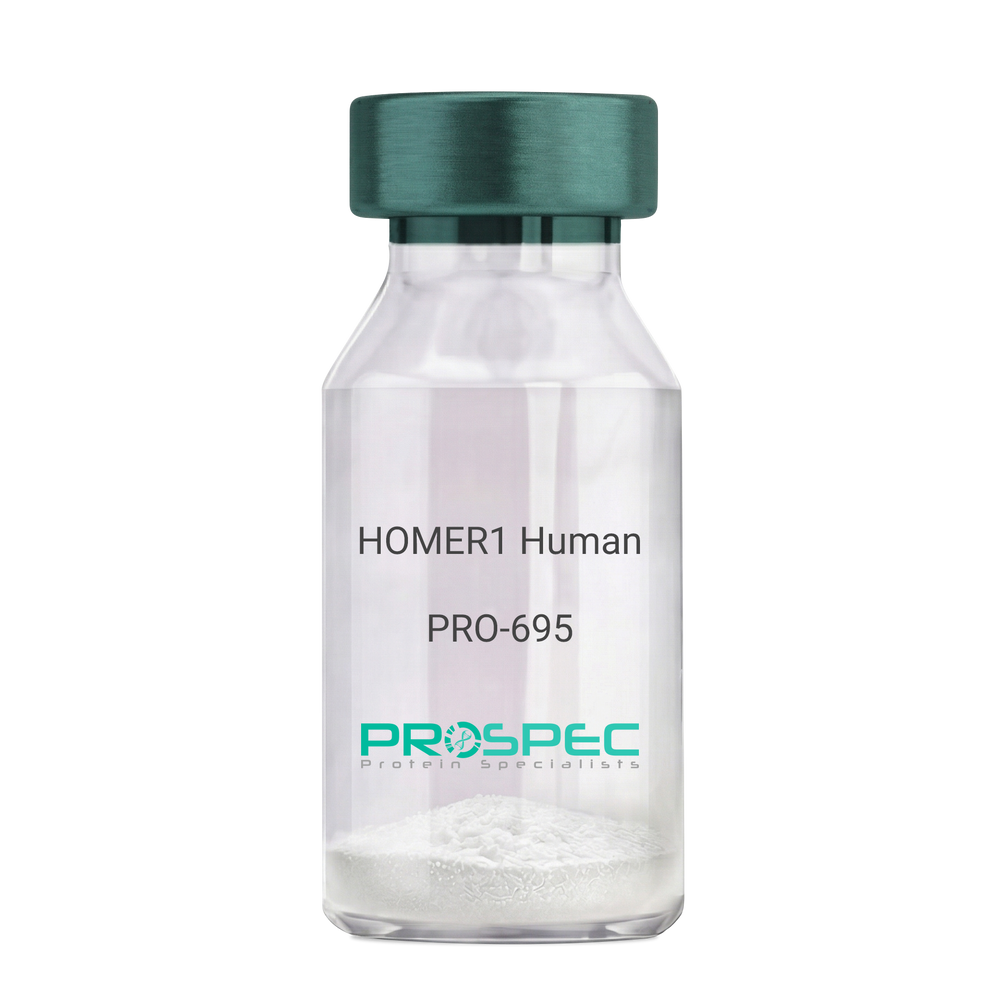
HOMER1 HumanDescription:
Homer Homolog-1 Human Recombinant
HOMER, SYN47, Ves-1, HOMER1A, HOMER1B, HOMER1C, HOMER1, Homer protein homolog 1.
Product # :
PRO-695Price :
Quantity :
Shipping Method :
Shipped with Ice Packs
More Info
- description
- source
- formulation
- purity
- More Info
Description
Recombinant Human HOMER1 produced in E.Coli is a single, non-glycosylated polypeptide chain containing 391 amino acids (1-354 a.a) and having a molecular mass of 44.5 kDa. HOMER1 is fused to a 37 amino acid His Tag at N-terminus and purified by proprietary chromatographic techniques.
Source
Escherichia Coli.
Formulation
The HOMER1 protein (1mg/ml) contains 20mM Tris-HCl buffer pH-8, 1mM DTT, 0.1M NaCl and 20% glycerol.
Purity
Greater than 90% as determined by Analysis by SDS-PAGE.
More Info
-
Introduction
HOMER1 takes part in determining the apoptotic susceptibility to TRAIL.
HOMER1 is a member of the Homer family of proteins that regulate signal transduction through, and the trafficking of, glutamate receptors, plus maintain and regulate extracellular glutamate levels in corticolimbic brain regions. The HOMER1 is enriched at excitatory synapses and binds group 1 metabotropic glutamate receptors (mGluRs). -
Synonyms
HOMER, SYN47, Ves-1, HOMER1A, HOMER1B, HOMER1C, HOMER1, Homer protein homolog 1.
-
Physical Appearance
Sterile filtered colorless solution.
-
Stability
Store at 4°C if entire vial will be used within 2-4 weeks. Store, frozen at -20°C for longer periods of time. For long term storage it is recommended to add a carrier protein (0.1% HSA or BSA). Avoid multiple freeze-thaw cycles.
-
Amino Acid Sequence
MRGSHHHHHH GMASMTGGQQ MGRDLYDDDD KDRWGSHMGE QPIFSTRAHV FQIDPNTKKN WVPTSKHAVT VSYFYDSTRN VYRIISLDGS KAIINSTITPNMTFTKTSQK FGQWADSRAN TVYGLGFSSE HHLSKFAEKF QEFKEAARLA KEKSQEKMEL TSTPSQESAG GDLQSPLTPE SINGTDDERT PDVTQNSEPR AEPTQNALPF SHSSAISKHW EAELATLKGN NAKLTAALLE STANVKQWKQ QLAAYQEEAE RLHKRVTELE CVSSQANAVH THKTELNQTI QELEETLKLK EEEIERLKQE IDNARELQEQ RDSLTQKLQE VEIRNKDLEG QLSDLEQRLE KSQNEQEAFR NNLKTLLEIL DGKIFELTEL RDNLAKLLEC S.
ProSpec's products are furnished for LABORATORY RESEARCH USE ONLY. The product may not be used as drugs, agricultural or pesticidal products, food additives or household chemicals.
- View Data Sheet
Name :
PARD6B HumanDescription:
Par-6 Partitioning Defective 6 Homolog Beta Human Recombinant
Partitioning defective 6 homolog beta, PAR-6 beta, PAR-6B, PARD6B, PAR6B.
Product # :
PRO-1307Price :
Quantity :
Shipping Method :
Shipped with Ice Packs
More Info
- description
- source
- formulation
- purity
- More Info
Description
PARD6B Human Recombinant produced in E.coli is a single, non-glycosylated polypeptide chain containing 395 amino acids (1-372) and having a molecular mass of 43.6kDa.PARD6B is fused to a 23 amino acid His-tag at N-terminus & purified by proprietary chromatographic techniques.
Source
Escherichia Coli.
Formulation
The PARD6B solution (0.5mg/ml) contains 20mM Tris-HCl buffer (pH 8.0), 2M Urea, 20% glycerol and 0.2M NaCl.
Purity
Greater than 85.0% as determined by SDS-PAGE.
More Info
-
Introduction
Partitioning defective 6 homolog beta (PARD6B) belongs to the PAR6 family and encodes a protein with a PSD95/Discs-large/ZO1 (PDZ) domain, an OPR domain and a semi-Cdc42/Rac interactive binding (CRIB) domain. Cellular asymmetry is crucial for the development of multicellular organisms. PARD (partitioning-defective) proteins have central roles in asymmetric cell division and polarized growth, whereas Cdc42 and Rac mediate establishment of cell growth and polarity and contribute to oncogenic transformation by Ras. PARD6B is expressed in pancreas and in both the adult and the fetal kidney, and is weakly expressed in the placenta and the lung.
-
Synonyms
Partitioning defective 6 homolog beta, PAR-6 beta, PAR-6B, PARD6B, PAR6B.
-
Physical Appearance
Sterile Filtered colorless solution.
-
Stability
Store at 4°C if entire vial will be used within 2-4 weeks. Store, frozen at -20°C for longer periods of time. For long term storage it is recommended to add a carrier protein (0.1% HSA or BSA).Avoid multiple freeze-thaw cycles.
-
Amino Acid Sequence
MGSSHHHHHH SSGLVPRGSH MGSMNRSHRH GAGSGCLGTM EVKSKFGAEF RRFSLERSKP GKFEEFYGLL QHVHKIPNVD VLVGYADIHG DLLPINNDDN YHKAVSTANP LLRIFIQKKE EADYSAFGTD TLIKKKNVLT NVLRPDNHRK KPHIVISMPQ DFRPVSSIID VDILPETHRR VRLYKYGTEK PLGFYIRDGS SVRVTPHGLE KVPGIFISRL VPGGLAQSTG LLAVNDEVLE VNGIEVSGKS LDQVTDMMIA NSRNLIITVR PANQRNNVVR NSRTSGSSGQ STDNSLLGYP QQIEPSFEPE DEDSEEDDII IEDNGVPQQI PKAVPNTESL ESLTQIELSF ESGQNGFIPS NEVSLAAIAS SSNTEFETHA PDQKLLEEDG TIITL.
ProSpec's products are furnished for LABORATORY RESEARCH USE ONLY. The product may not be used as drugs, agricultural or pesticidal products, food additives or household chemicals.
- View Data Sheet
Name :
IL6 Human, Sf9Description:
Interleukin-6 Human Recombinant, Sf9
BSF2, HGF, HSF, IFNB2, IL-6.
Product # :
CYT-1150Price :
Quantity :
Shipping Method :
Shipped with Ice Packs
More Info
- description
- source
- formulation
- purity
- biological activity
- More Info
Description
IL6 Human Recombinant produced in Baculovirus is a single glycosylated polypeptide chain containing 189 amino acids (30-212aa) and having a molecular mass of 21.6kDa.(Migrates at 18-28kDa on SDS-PAGE under reducing conditions).IL6 is fused to a 6 amino acid His-Tag at C-terminus and purified by proprietary chromatographic techniques.
Source
Sf9, Baculovirus cells.
Formulation
IL6 protein (0.5mg/ml) contains Phosphate Buffered Saline (pH 7.4) and 10% glycerol.
Purity
Greater than 95.0% as determined by SDS-PAGE.
Biological Activity
The ED50, determined by cell proliferation assay using TF-1 human erythroleukemic cell, is 0.2 - 0.8 ng/ml .
More Info
-
Introduction
Interleukin-6 or Il-6 is a cytokine with a large assortment of biological functions. IL-6 it has a crucial part in the last differentiation of b-cells into ig-secreting cells. This cytokine also induces myeloma and plasmacytoma growth. Interleukin-6 induces nerve cells differentiation, among hepatocytes it induces acute phase reactants.
-
Synonyms
BSF2, HGF, HSF, IFNB2, IL-6.
-
Physical Appearance
Sterile Filtered colorless solution.
-
Stability
Store at 4°C if entire vial will be used within 2-4 weeks. Store, frozen at -20°C for longer periods of time. For long term storage it is recommended to add a carrier protein (0.1% HSA or BSA).Avoid multiple freeze-thaw cycles.
-
Amino Acid Sequence
VPPGEDSKDV AAPHRQPLTS SERIDKQIRY ILDGISALRK ETCNKSNMCE SSKEALAENN
LNLPKMAEKD GCFQSGFNEE TCLVKIITGL LEFEVYLEYL QNRFESSEEQ ARAVQMSTKV
LIQFLQKKAK NLDAITTPDP TTNASLLTKL QAQNQWLQDM TTHLILRSFK EFLQSSLRAL RQMHHHHHH. -
Background
Production and Applications of Human Recombinant Interleukin-6 in Sf9 Cells
Abstract:
Interleukin-6 (IL-6) holds a central role in immune regulation, inflammation, and hematopoiesis. The production of Human Recombinant IL-6 using the Sf9 insect cell system presents a versatile approach for investigating its biological functions and potential therapeutic applications. This paper outlines the methodology of producing Human Recombinant IL-6 in Sf9 cells and explores its significance in immunological research and clinical studies.
Introduction:
IL-6 is a multifunctional cytokine pivotal in various physiological processes, making it a target of intensive research. The expression of Human Recombinant IL-6 facilitates investigations into its intricate mechanisms and offers potential avenues for therapeutic development. The Sf9 cell system, harnessed from Spodoptera frugiperda, enables efficient recombinant protein expression through baculovirus vectors.
Methods:
Production of Human Recombinant IL-6 involves cloning the human IL-6 gene into a baculovirus transfer vector, which is co-transfected with linearized baculovirus DNA into Sf9 cells. The resultant recombinant baculovirus generates and secretes IL-6 into the culture medium. Purification methods, such as chromatography, ensure the protein's quality and functionality.
Applications:
Human Recombinant IL-6 from Sf9 cells has broad applications. It serves as a critical tool for investigating IL-6's roles in immune responses, inflammation, and hematopoiesis. Additionally, it plays a crucial role in the development of therapies targeting IL-6-associated disorders like autoimmune diseases, chronic inflammatory conditions, and cancer.
Sf9 Expression Advantages:
The Sf9 system offers notable advantages, including post-translational modifications and protein folding, necessary for IL-6's biological activity. Sf9 cells provide a platform for generating properly folded and functional recombinant IL-6, reflecting its native structure and function.
Challenges and Future Prospects:
While Sf9-based expression of Human Recombinant IL-6 offers significant advantages, optimization of expression conditions and scale-up strategies remain challenges. Furthermore, the therapeutic potential of Human Recombinant IL-6 requires in-depth preclinical and clinical investigations.
Conclusion:
The production of Human Recombinant IL-6 in Sf9 cells through baculovirus expression offers a powerful tool to comprehend IL-6's multifaceted roles in health and disease. This technology is poised to expand our knowledge of IL-6-related conditions and catalyze the development of precision therapeutic interventions.
ProSpec's products are furnished for LABORATORY RESEARCH USE ONLY. The product may not be used as drugs, agricultural or pesticidal products, food additives or household chemicals.
- View Data Sheet
Name :
PKNOX1 HumanDescription:
PBX/Knotted 1 Homeobox 1 Human Recombinant
pkonx1c, PREP1, Homeobox protein PKNOX1, Homeobox protein PREP-1, PBX/knotted homeobox 1, PKNOX1.
Product # :
PRO-1979Price :
Quantity :
Shipping Method :
Shipped with Ice Packs
More Info
- description
- source
- formulation
- purity
- More Info
Description
PKNOX1 Human Recombinant produced in E.Coli is a single, non-glycosylated polypeptide chain containing 456 amino acids (1-436 a.a) and having a molecular mass of 49.7kDa. PKNOX1 is fused to a 20 amino acid His-tag at N-terminus & purified by proprietary chromatographic techniques.
Source
Escherichia Coli.
Formulation
PKNOX1 protein solution (0.25mg/ml) containing 20mM Tris-HCl buffer (pH 8.0), 0.1M NaCl and 10% glycerol.
Purity
Greater than 80.0% as determined by SDS-PAGE.
More Info
-
Introduction
PBX/Knotted 1 Homeobox 1 (PKNOX1) is a DNA-binding factor which takes part in the regulation of the transcriptional activity of AP-1 containing promoters. PKNOX1, which is also known as UEF3, PRP-1 and p64, is a Hmeobox protein. PKNOX1 forms stable complexes containing PBX proteins which synergize with AP-1 binding factors.
-
Synonyms
pkonx1c, PREP1, Homeobox protein PKNOX1, Homeobox protein PREP-1, PBX/knotted homeobox 1, PKNOX1.
-
Physical Appearance
Sterile Filtered colorless solution.
-
Stability
Store at 4°C if entire vial will be used within 2-4 weeks. Store, frozen at -20°C for longer periods of time. For long term storage it is recommended to add a carrier protein (0.1% HSA or BSA).Avoid multiple freeze-thaw cycles.
-
Amino Acid Sequence
MGSSHHHHHH SSGLVPRGSH MMATQTLSID SYQDGQQMQV VTELKTEQDP NCSEPDAEGV SPPPVESQTP MDVDKQAIYR HPLFPLLALL FEKCEQSTQG SEGTTSASFD VDIENFVRKQ EKEGKPFFCE DPETDNLMVK AIQVLRIHLL ELEKVNELCK DFCSRYIACL KTKMNSETLL SGEPGSPYSP VQSQQIQSAI TGTISPQGIV VPASALQQGN VAMATVAGGT VYQPVTVVTP QGQVVTQTLS PGTIRIQNSQ LQLQLNQDLS ILHQDDGSSK NKRGVLPKHA TNVMRSWLFQ HIGHPYPTED EKKQIAAQTN LTLLQVNNWF INARRRILQP MLDSSCSETP KTKKKTAQNR PVQRFWPDSI ASGVAQPPPS ELTMSEGAVV TITTPVNMNV DSLQSLSSDG ATLAVQQVMM AGQSEDESVD STEEDAGALA PAHISGLVLE NSDSLQ.
ProSpec's products are furnished for LABORATORY RESEARCH USE ONLY. The product may not be used as drugs, agricultural or pesticidal products, food additives or household chemicals.
- View Data Sheet
Name :
NANOG HumanDescription:
NANOG Human Recombinant
NANOG, Homeobox protein NANOG, Homeobox transcription factor Nanog, hNanog.
Product # :
PRO-896Price :
Quantity :
Shipping Method :
Shipped with Ice Packs
More Info
- description
- source
- formulation
- purity
- More Info
Description
NANOG Human Recombinant produced in E.coli is a single, non-glycosylated polypeptide chain containing 305 amino acids (1-305) and having a molecular mass of 34.6 kDa.The NANOG is purified by proprietary chromatographic techniques.
Source
E.coli.
Formulation
The NANOG solution (1mg/ml) contains 20mM Tris-HCl buffer (pH 8.0), 0.4M Urea and 5% glycerol.
Purity
Greater than 90% as determined by SDS-PAGE.
More Info
-
Introduction
NANOG is a multidomain homeobox transcription factor which functions to maintain the undifferentiated state of pluripotent stem cells. NANOG expression counteracts the differentiation-promoting signals induced by the extrinsic factors LIF, Stat3 and BMP. Once NANOG expression is downregulated, cell differentiation can proceed. Proteins which regulate NANOG expression include transcription factors Oct4, SOX2, FoxD3, and Tcf3 and tumor suppressor p53.
-
Synonyms
NANOG, Homeobox protein NANOG, Homeobox transcription factor Nanog, hNanog.
-
Physical Appearance
Sterile Filtered colorless solution.
-
Stability
Store at 4°C if entire vial will be used within 2-4 weeks. Store, frozen at -20°C for longer periods of time. For long term storage it is recommended to add a carrier protein (0.1% HSA or BSA).Avoid multiple freeze-thaw cycles.
-
Amino Acid Sequence
MSVDPACPQS LPCFEASDCK ESSPMPVICG PEENYPSLQM SSAEMPHTET VSPLPSSMDL LIQDSPDSST SPKGKQPTSA EKSVAKKEDK VPVKKQKTRT VFSSTQLCVL NDRFQRQKYL SLQQMQELSN ILNLSYKQVK TWFQNQRMKS KRWQKNNWPK NSNGVTQKAS APTYPSLYSS YHQGCLVNPT GNLPMWSNQT WNNSTWSNQT QNIQSWSNHS WNTQTWCTQS WNNQAWNSPF YNCGEESLQS CMQFQPNSPA SDLEAALEAA GEGLNVIQQT TRYFSTPQTM DLFLNYSMNM QPEDV
ProSpec's products are furnished for LABORATORY RESEARCH USE ONLY. The product may not be used as drugs, agricultural or pesticidal products, food additives or household chemicals.
- View Data Sheet
Name :
IL 6 RatDescription:
Interleukin-6 Rat Recombinant
IFN-b2, B cell differentiation factor (BCDF), BSF-2, HPGF, HSF, MGI-2, IL-6, Interleukin HP-1, B-cell hybridoma growth factor.
Product # :
CYT-388Price :
Quantity :
Shipping Method :
Shipped at Room temp
More Info
- description
- source
- formulation
- purity
- biological activity
- More Info
Description
Interleukin-6 Rat Recombinant produced in E.Coli is a single, non-glycosylated polypeptide chain containing 187 amino acids and having a molecular mass of 21732 Dalton. The IL6 is purified by proprietary chromatographic techniques.
Source
Escherichia Coli.
Formulation
The protein was lyophilized from 0.02% TFA.
Purity
Greater than 90.0% as determined by SDS-PAGE.
Biological Activity
The ED50 is less than 0.01 ng/ml as determined by dose-dependent stimulation of mouse 7TD1 cells.More Info
-
Introduction
Interleukin-6 is a potent pro-inflammatory cytokine primarily produced by activated T cells and an assortment of other cells including endothelial cells and macrophages. IL-6 affects B and T lymphocytes and has been shown to have a role in host defense, acute phase reactions, immune responses and hematopoiesis.
-
Synonyms
IFN-b2, B cell differentiation factor (BCDF), BSF-2, HPGF, HSF, MGI-2, IL-6, Interleukin HP-1, B-cell hybridoma growth factor.
-
Physical Appearance
Sterile Filtered White lyophilized (freeze-dried) powder.
-
Stability
Lyophilized Interleukin-6 although stable at room temperature for 3 weeks, should be stored desiccated below -18°C. Upon reconstitution IL6 should be stored at 4°C between 2-7 days and for future use below -18°C.For long term storage it is recommended to add a carrier protein (0.1% HSA or BSA).Please prevent freeze-thaw cycles.
-
Solubility
It is recommended to reconstitute the lyophilized Interleukin-6 with 10mM HCl at a concentration of 0.1 mg/ml which can then be further diluted to other aqueous solutions.
-
Amino Acid Sequence
The sequence of the first five N-terminal amino acids was determined and was found to be Met-Phe-Pro-Thr-Ser.
-
Background
Research Paper on Interleukin-6 Rat Recombinant
Abstract:
Exploring Interleukin-6 Rat Recombinant: This research paper provides an extensive description of Interleukin-6 (IL-6) Rat Recombinant, a vital cytokine in immunological studies. We delve into its molecular properties, significance in immune responses, and its synonyms, including DIF, TNFA, and TNFSF2. Join us as we uncover the potential applications of IL-6 Rat Recombinant in advancing our understanding of immune regulation.
Introduction:
Unraveling IL-6 Rat Recombinant: This paper introduces IL-6 Rat Recombinant, a valuable tool for investigating immune responses. As researchers, we are intrigued by its diverse functions and potential therapeutic implications.
An Extensive Description of IL-6 Rat Recombinant:
We present a comprehensive overview of IL-6 Rat Recombinant, focusing on its structural characteristics and involvement in immune signaling. This recombinant cytokine allows us to explore the complexities of IL-6 biology and its impact on immune system homeostasis.
Significance in Immune Responses:
Marvel at IL-6's pivotal role in orchestrating immune responses! As a crucial mediator between immune cells, IL-6 plays a critical role in regulating inflammation and immune cell activation. It also contributes to tissue repair and antibody production.
Interactions and Synonyms:
Learn about the synonyms associated with IL-6, such as DIF, TNFA, and TNFSF2. Understanding these synonyms enhances our comprehension of the interconnected cytokine network, contributing to a broader understanding of immune signaling.
Potential Applications in Immunological Research:
Explore the diverse applications of IL-6 Rat Recombinant in immunological research. From deciphering cellular responses to developing potential therapeutics, this recombinant cytokine serves as an indispensable tool for advancing our knowledge of the immune system. Researchers use it for in vitro studies, functional assays, and investigating disease pathogenesis.
Novel Insights and Therapeutic Implications:
Gain novel insights into the therapeutic implications of IL-6 Rat Recombinant. Understanding its role in disease pathogenesis may lead to the development of targeted therapies for various immune-related disorders. Clinical trials targeting IL-6 have shown promise in treating certain inflammatory conditions.
Conclusion:
Concluding our exploration of IL-6 Rat Recombinant, we recognize its significance in immunological research. The extensive description of this recombinant cytokine broadens our understanding of IL-6 biology and its potential applications in various fields. By utilizing this powerful tool, we strive to make significant advancements in immunology research for improved health outcomes.
-
Protein content
Protein quantitation was carried out by two independent methods:1. UV spectroscopy at 280 nm using the absorbency value of 0.55 as the extinction coefficient for a 0.1% (1mg/ml) solution. This value is calculated by the PC GENE computer analysis program of protein sequences (IntelliGenetics). 2. Analysis by RP-HPLC, using a standard solution of IL-6 as a Reference Standard.
ProSpec's products are furnished for LABORATORY RESEARCH USE ONLY. The product may not be used as drugs, agricultural or pesticidal products, food additives or household chemicals.
- View Data Sheet
Name :
IL 6 MouseDescription:
Interleukin-6 Mouse Recombinant
IFN-b2, B cell differentiation factor (BCDF), BSF-2, HPGF, HSF, MGI-2, IL-6, Interleukin HP-1, B-cell hybridoma growth factor.
Product # :
CYT-350Price :
Quantity :
Shipping Method :
Shipped at Room temp
More Info
- description
- source
- formulation
- purity
- biological activity
- More Info
Description
Interleukin-6 Mouse Recombinant produced in E.Coli is a single, non-glycosylated polypeptide chain containing 187 amino acids and having a molecular mass of 21709 Dalton. The IL-6 is purified by proprietary chromatographic techniques.
Source
Escherichia Coli.
Formulation
Lyophilized from a 0.2µm filtered concentrated solution in PBS, pH 7.4.
Purity
Greater than 96.0% as determined by:
(a) Analysis by RP-HPLC.
(b) Analysis by SDS-PAGE.Biological Activity
The ED50 as determined by the dose-dependant stimulation of the proliferation of IL-6-dependent murine 7TD1 cells is < 0.02 ng/ml, corresponding to a specific activity of > 50,000,000 units/mg.More Info
-
Introduction
Interleukin-6 is a potent pro-inflammatory cytokine primarily produced by activated T cells and an assortment of other cells including endothelial cells and macrophages. IL-6 affects B and T lymphocytes and has been shown to have a role in host defense, acute phase reactions, immune responses and hematopoiesis.
-
Synonyms
IFN-b2, B cell differentiation factor (BCDF), BSF-2, HPGF, HSF, MGI-2, IL-6, Interleukin HP-1, B-cell hybridoma growth factor.
-
Physical Appearance
Sterile Filtered White lyophilized (freeze-dried) powder.
-
Stability
Lyophilized Interleukin-6 although stable at room temperature for 3 weeks, should be stored desiccated below -18°C. Upon reconstitution IL6 should be stored at 4°C between 2-7 days and for future use below -18°C.For long term storage it is recommended to add a carrier protein (0.1% HSA or BSA).Please prevent freeze-thaw cycles.
-
Solubility
It is recommended to reconstitute the lyophilized Mouse Il-6 in sterile 18M-cm H2O not less than 100µg/ml, which can then be further diluted to other aqueous solutions.
-
Amino Acid Sequence
FPTSQVRRGD FTEDTTPNRP VYTTSQVGGL ITHVLWEIVE MRKELCNGNS DCMNNDDALA ENNLKLPEIQ RNDGCYQTGY NQEICLLKIS SGLLEYHSYL EYMKNNLKDN KKDKARVLQR DTETLIHIFN QEVKDLHKIV LPTPISNALL TDKLESQKEW LRTKTIQFIL KSLEEFLKVT LRSTRQT.
-
Background
Research Paper on Interleukin-6 Mouse Recombinant
Abstract:
Interleukin-6 (IL-6) Mouse Recombinant stands at the forefront of immunological exploration, unraveling the intricacies of immune modulation. This research paper delves into its molecular attributes and implications within the realm of immunological studies. By examining its functions, synonyms like DIF, TNFA, and TNFSF2, and potential applications, we gain insights into its pivotal role in shaping immune responses.
Introduction:
IL-6 Mouse Recombinant has emerged as a linchpin in immunological research. This paper seeks to comprehensively elucidate its molecular characteristics and the impact it bears on immune mechanisms.
Molecular Architecture and Insights:
Delving into the molecular makeup of IL-6 Mouse Recombinant, we unveil its crucial role in immune signaling. Its interactions and functions contribute significantly to orchestrating immune responses.
Navigating Immune Dynamics:
The well-established influence of IL-6 on immune cell activation and inflammation is a cornerstone. IL-6 Mouse Recombinant allows for a more intricate exploration of these immune processes, augmenting our understanding of cytokine-mediated functions.
Synonyms and Network Connections:
Understanding the synonyms associated with IL-6, such as DIF, TNFA, and TNFSF2, amplifies our grasp of immune signaling networks. IL-6 Mouse Recombinant aids in unraveling the complexity of these interconnected pathways.
Potential Applications in Research and Beyond:
Beyond the confines of research, IL-6 Mouse Recombinant holds promise in deciphering immune-related diseases. Its significance extends to potential therapeutic interventions and diagnostic applications.
Clinical Implications and Future Prospects:
The clinical relevance of IL-6 Mouse Recombinant is underscored by its role in diseases characterized by altered IL-6 signaling. Unearthing its therapeutic potential paves the way for innovative strategies in disease management.
Conclusion:
Within the realm of immunology, IL-6 Mouse Recombinant assumes a pivotal role. Its molecular insights, fundamental functions, and potential applications position it as a cornerstone in advancing our comprehension of immune regulation.
ProSpec's products are furnished for LABORATORY RESEARCH USE ONLY. The product may not be used as drugs, agricultural or pesticidal products, food additives or household chemicals.
- View Data Sheet
Name :
IL 6 Rhesus MacaqueDescription:
Interleukin-6 Rhesus Macaque Recombinant
IFN-b2, B cell differentiation factor, BCDF, BSF-2, HPGF, HSF, MGI-2, B-cell stimulatory factor 2, IFN beta-2, Hybridoma growth factor, CTL differentiation factor, CDF, IL-6, HGF.
Product # :
CYT-174Price :
Quantity :
Shipping Method :
Shipped at Room temp
More Info
- description
- source
- formulation
- purity
- biological activity
- More Info
Description
IL 6 Rhesus Macaque Recombinant produced in E.Coli is a single, non-glycosylated, polypeptide chain containing 186 amino acids and having a molecular mass of 21.1kDa.The IL 6 Rhesus Macaque is purified by proprietary chromatographic techniques.
Source
Escherichia Coli.
Formulation
Lyophilized from a 0.2µm filtered concentrated solution in PBS, pH 7.4.
Purity
Greater than 97.0% as determined by SDS-PAGE and HPLC analyses.
Biological Activity
Fully biologically active when compared to standard. The ED50 determined by a cell proliferation assay using IL-6-dependent murine 7TD1 cells is less than 0.1ng/ml, corresponding to a specific activity of > 1.0 × 10,000,000 IU/mg.More Info
-
Introduction
Il-6 is a cytokine with a wide variety of biological functions: it plays an essential role in the final differentiation of b-cells into ig-secreting cells, it induces myeloma and plasmacytoma growth, it induces nerve cells differentiation, in hepatocytes it induces acute phase reactants.
-
Synonyms
IFN-b2, B cell differentiation factor, BCDF, BSF-2, HPGF, HSF, MGI-2, B-cell stimulatory factor 2, IFN beta-2, Hybridoma growth factor, CTL differentiation factor, CDF, IL-6, HGF.
-
Physical Appearance
Sterile Filtered White lyophilized (freeze-dried) powder.
-
Stability
Lyophilized IL-6 although stable at room temperature for 3 weeks, should be stored desiccated below -18°C. Upon reconstitution IL-6 should be stored at 4°C between 2-7 days and for future use below -18°C.Please prevent freeze-thaw cycles.
-
Solubility
It is recommended to reconstitute the lyophilized IL-6 in sterile 18M-cm H2O not less than 100µg/ml, which can then be further diluted to other aqueous solutions.
-
Amino Acid Sequence
MAPVLPGEDS KNVAAPHSQP LTSSERIDKH IRYILDGISA LRKETCNRSN MCESSKEALA ENNLNLPKMA EKDGCFQSGF NEDTCLVKII TGLLEFEVYL EYLQNRFESS EEQARAVQMS TKVLIQFLQK KAKNLDAITT PEPTTNASLL TKLQAQNQWL QDMTTHLILR SFKEFLQSNL RALRQM
-
Background
Research Paper on Interleukin-6 Rhesus Macaque Recombinant
Abstract:
Interleukin-6 (IL-6) Rhesus Macaque Recombinant holds a significant role in the realm of immunological exploration. This research paper delves into the molecular intricacies and implications of IL-6 Rhesus Macaque Recombinant in immune modulation. Through an investigation of its functions, synonyms including DIF, TNFA, and TNFSF2, and potential applications, we gain valuable insights into its contribution to understanding immune responses.
Introduction:
IL-6 Rhesus Macaque Recombinant is a key player in immunological studies. This paper aims to provide a comprehensive understanding of its molecular attributes and its impact on immune mechanisms.
Molecular Structure and Insights:
Examining the molecular composition of IL-6 Rhesus Macaque Recombinant, we uncover its role in immune signaling. Its interactions and functions contribute to the fine-tuning of immune responses.
Exploring Immune Dynamics:
IL-6's influence on immune cell activation and inflammation is well-acknowledged. IL-6 Rhesus Macaque Recombinant provides a tool to delve deeper into these immune processes, enriching our comprehension of cytokine-mediated functions.
Synonyms and Network Connections:
Understanding IL-6's synonyms, such as DIF, TNFA, and TNFSF2, adds depth to our understanding of immune signaling networks. IL-6 Rhesus Macaque Recombinant helps uncover the complexity of these interconnected pathways.
Potential Applications in Research and Beyond:
Beyond research settings, IL-6 Rhesus Macaque Recombinant holds potential in deciphering immune-related diseases. Its significance extends to possible therapeutic interventions and diagnostic applications.
Clinical Implications and Future Prospects:
The clinical relevance of IL-6 Rhesus Macaque Recombinant is underlined by its role in diseases characterized by altered IL-6 signaling. Exploring its therapeutic potential paves the way for novel strategies in disease management.
Conclusion:
In the realm of immunology, IL-6 Rhesus Macaque Recombinant stands as a pivotal tool. Its molecular insights, pivotal functions, and potential implications position it as a valuable asset for advancing our understanding of immune regulation.
ProSpec's products are furnished for LABORATORY RESEARCH USE ONLY. The product may not be used as drugs, agricultural or pesticidal products, food additives or household chemicals.
- View Data Sheet
Name :
BMP6 HumanDescription:
Bone Morphogenetic protein-6 Human Recombinant
Bone morphogenetic protein 6, BMP-6, VG-1-related protein, VG-1-R, VGR-1, BMP6, VGR, VGR1.
Product # :
CYT-754Price :
Quantity :
Shipping Method :
Shipped with Ice Packs
More Info
- description
- source
- formulation
- purity
- More Info
- sds-page
Description
BMP6 Human Recombinant produced in E.coli is a single, non-glycosylated polypeptide chain containing 164 amino acids (375-513) and having a molecular mass of 18kDa.BMP6 is fused to a 25 amino acid His-tag at N-terminus & purified by proprietary chromatographic techniques.
Source
Escherichia Coli.
Formulation
The BMP6 solution (0.25mg/ml) contains 10mM Sodium citrate buffer (pH 3.5) and 10% glycerol.
Purity
Greater than 90.0% as determined by SDS-PAGE.
sds-page
More Info
-
Introduction
The bone morphogenetic proteins (BMPs) are a family of secreted signaling molecules, which can induce ectopic bone growth. Various BMPs are part of the transforming growth factor-beta (TGFB) superfamily. BMPs were initially identified by an ability of demineralized bone extract to induce endochondral osteogenesis in vivo in an extraskeletal site. Based upon its expression early in embryogenesis, BMP6 has a suggested role in early development. Moreover, the fact that the BMP6 is closely related to BMP5 and BMP7 leads to an assumption of possible bone inductive activity.
-
Synonyms
Bone morphogenetic protein 6, BMP-6, VG-1-related protein, VG-1-R, VGR-1, BMP6, VGR, VGR1.
-
Physical Appearance
Sterile filtered colorless solution.
-
Stability
Store at 4°C if entire vial will be used within 2-4 weeks. Store, frozen at -20°C for longer periods of time. For long term storage it is recommended to add a carrier protein (0.1% HSA or BSA). Avoid multiple freeze-thaw cycles.
-
Amino Acid Sequence
MGSSHHHHHH SSGLVPRGSH MGSHMSASSR RRQQSRNRST QSQDVARVSS ASDYNSSELK TACRKHELYV SFQDLGWQDW IIAPKGYAAN YCDGECSFPL NAHMNATNHA IVQTLVHLMN PEYVPKPCCA PTKLNAISVL YFDDNSNVIL KKYRNMVVRA CGCH.
-
Background
Bone Morphogenetic Protein-6 Human Recombinant: Unraveling its Therapeutic Potential in Tissue Engineering and Regenerative Medicine
Abstract:
Bone Morphogenetic Protein-6 (BMP-6) human recombinant is a critical member of the bone morphogenetic protein family, known for its pivotal role in tissue development, repair, and regeneration. This research paper aims to provide a comprehensive analysis of BMP-6, including its characteristics, signaling pathways, and potential therapeutic applications. Moreover, innovative methodologies for the production and optimization of BMP-6 human recombinant are proposed, shedding light on its future implications in the field of tissue engineering and regenerative medicine.
Introduction:
Tissue engineering and regenerative medicine have emerged as promising approaches to address the challenges associated with tissue repair and regeneration. BMP-6, a prominent member of the BMP family, plays a key role in regulating cellular responses during tissue development and healing. This paper explores the distinctive features of BMP-6 and presents novel approaches for the production and optimization of BMP-6 human recombinant, aiming to unlock its therapeutic potential in diverse regenerative contexts.
Characteristics and Signaling Pathways:
BMP-6 is a secreted growth factor belonging to the transforming growth factor-beta (TGF-β) superfamily. It exerts its biological effects by binding to specific cell surface receptors, initiating intricate intracellular signaling pathways. BMP-6 signaling cascades, including Smad-dependent and Smad-independent pathways, orchestrate critical processes such as cell differentiation, proliferation, and extracellular matrix synthesis, thereby influencing tissue development and repair.
Production of BMP-6 Human Recombinant:
Efficient production methodologies are vital for harnessing the therapeutic potential of BMP-6 human recombinant. Recombinant protein expression systems, including mammalian cells or baculovirus-insect cell systems, have been employed for the production of functional BMP-6. Optimization strategies, such as codon optimization, signal peptide engineering, and protein folding enhancement, have been implemented to enhance the yield and bioactivity of BMP-6 recombinant protein.
Potential Therapeutic Applications:
BMP-6 human recombinant holds immense promise in the field of tissue engineering and regenerative medicine. Its regulatory role in bone formation, cartilage regeneration, and wound healing positions it as a potential therapeutic candidate for the treatment of skeletal disorders, osteoarthritis, and tissue injuries. Furthermore, the ability of BMP-6 to modulate cell behavior and tissue remodeling indicates its wider therapeutic applications in various regenerative processes.
Conclusion:
BMP-6 human recombinant emerges as a crucial regulator in tissue engineering and regenerative medicine, offering significant potential for tissue repair and regeneration. Optimizing production methodologies and further unraveling its signaling mechanisms will undoubtedly enhance its therapeutic applications. Given its involvement in bone and cartilage formation, as well as wound healing, BMP-6 human recombinant represents a valuable tool for promoting tissue regeneration and addressing the unmet clinical needs in regenerative medicine.
What is the molecular weight/Mw of BMP6 Protein?
BMP6 Protein has a total Mw of 18kDa.
What is the source or expression system of BMP6 Protein?
Escherichia Coli.
What is the Purity of BMP6 Protein?
BMP6 Protein is >90% pure as determined by SDS-PAGE.
What is the Biological Activity of BMP6 Protein?
The biological functionality of BMP6 Protein will be determined in the future.
What is the amino acid sequence of BMP6 Protein?
MGSSHHHHHH SSGLVPRGSH MGSHMSASSR RRQQSRNRST QSQDVARVSS ASDYNSSELK TACRKHELYV SFQDLGWQDW IIAPKGYAAN YCDGECSFPL NAHMNATNHA IVQTLVHLMN PEYVPKPCCA PTKLNAISVL YFDDNSNVIL KKYRNMVVRA CGCH.
What applications can BMP6 Protein be used in?
BMP6 Protein can probably be used in western blot, ELISA and Lateral Flow.
What is the endotoxin level for BMP6 Protein?
The endotoxin level is minimal, BMP6 Protein was purified using conventional chromatography techniques.
ProSpec's products are furnished for LABORATORY RESEARCH USE ONLY. The product may not be used as drugs, agricultural or pesticidal products, food additives or household chemicals.
- View Data Sheet
Name :
IGFBP6 MouseDescription:
Insulin Like Growth Factor Binding Protein-6 Mouse Recombinant
Insulin-like growth factor-binding protein 6, Igfbp6, IGFBP-6, IBP-6, IGF-binding protein 6, IGFBP-6, Igfbp-6.
Product # :
CYT-987Price :
Quantity :
Shipping Method :
Shipped with Ice Packs
More Info
- description
- source
- formulation
- purity
- More Info
Description
IGFBP6 Mouse Recombinant produced in Sf9 Baculovirus cells is a single, glycosylated polypeptide chain containing 221 amino acids (26-238 a.a.) and having a molecular mass of 23.7kDa (Migrates at 28-40kDa on SDS-PAGE under reducing conditions).IGFBP6 is expressed with a 8 amino acid His tag at C-Terminus and purified by proprietary chromatographic techniques.
Source
Sf9, Baculovirus cells.
Formulation
IGFBP6 protein solution (0.25mg/ml) contains Phosphate Buffered Saline (pH 7.4) and 40% glycerol.
Purity
Greater than 90.0% as determined by SDS-PAGE.
More Info
-
Introduction
IGFBP6 plays a role in lipoprotein assembly and dietary cholesterol absorption. in addition to its acyltransferase activity, it may act as a ligase. may provide cholesteryl esters for lipoprotein secretion from hepatocytes and intestinal mucosa.
-
Synonyms
Insulin-like growth factor-binding protein 6, Igfbp6, IGFBP-6, IBP-6, IGF-binding protein 6, IGFBP-6, Igfbp-6.
-
Physical Appearance
Sterile Filtered colorless solution.
-
Stability
Store at 4°C if entire vial will be used within 2-4 weeks. Store, frozen at -20°C for longer periods of time. For long term storage it is recommended to add a carrier protein (0.1% HSA or BSA). Avoid multiple freeze-thaw cycles.
-
Amino Acid Sequence
ALAGCPGCGA GMQTGCRGGC VEEEDAGSPA DGCTEAGGCL RREGQPCGVY SPKCAPGLQC QPRENEEAPL RALLIGQGRC QRARGPSEET TKESKPQGGA SRSRDTNHRD RQKNPRTSAA PIRPNPVQDS EMGPCRRHLD SVLQQLQTEV FRGGARGLYV PNCDLRGFYR KQQCRSSQGN RRGPCWCVDP MGQPLPVSPD GQGSTQCSAR SSGLEHHHHH H.
-
Background
What is the molecular weight/Mw of IGFBP6 MOUSE Protein?
IGFBP6 MOUSE Protein has a total Mw of 23.7kDa.
What is the source or expression system of IGFBP6 MOUSE Protein?
Sf9, Baculovirus cells.
What is the Purity of IGFBP6 MOUSE Protein?
IGFBP6 MOUSE Protein is >90% pure as determined by SDS-PAGE.
What is the Biological Activity of IGFBP6 MOUSE Protein?
The biological functionality of IGFBP6 MOUSE Protein will be determined in the future.
What is the amino acid sequence of IGFBP6 MOUSE Protein?
ALAGCPGCGA GMQTGCRGGC VEEEDAGSPA DGCTEAGGCL RREGQPCGVY SPKCAPGLQC QPRENEEAPL RALLIGQGRC QRARGPSEET TKESKPQGGA SRSRDTNHRD RQKNPRTSAA PIRPNPVQDS EMGPCRRHLD SVLQQLQTEV FRGGARGLYV PNCDLRGFYR KQQCRSSQGN RRGPCWCVDP MGQPLPVSPD GQGSTQCSAR SSGLEHHHHH H.
What applications can IGFBP6 MOUSE Protein be used in?
IGFBP6 MOUSE Protein can probably be used in western blot, ELISA and Lateral Flow.
What is the endotoxin level for IGFBP6 MOUSE Protein?
The endotoxin level is minimal, IGFBP6 MOUSE Protein was purified using conventional chromatography techniques.
ProSpec's products are furnished for LABORATORY RESEARCH USE ONLY. The product may not be used as drugs, agricultural or pesticidal products, food additives or household chemicals.
- View Data Sheet
Name :
LMX1B HumanDescription:
LIM Homeobox Transcription Factor 1, Beta Human Recombinant
LIM homeobox transcription factor 1, beta, LMX1.2, NPS1, LIM/homeobox protein 1.2, LIM/homeobox protein LMX1B, LMX1B.
Product # :
PRO-1999Price :
Quantity :
Shipping Method :
Shipped with Ice Packs
More Info
- description
- source
- formulation
- purity
- More Info
Description
LMX1B Human Recombinant produced in E.Coli is a single, non-glycosylated polypeptide chain containing 418 amino acids (1-395a.a) and having a molecular mass of 46.5kDa. LMX1B is fused to a 23 amino acid His-tag at N-terminus & purified by proprietary chromatographic techniques.
Source
Escherichia Coli.
Formulation
LMX1B protein solution (1mg/ml) containing 20mM Tris-HCl buffer (pH 8.0), 10% glycerol and 0.4M Urea.
Purity
Greater than 80.0% as determined by SDS-PAGE.
More Info
-
Introduction
LIM Homeobox Transcription Factor 1, Beta (LMX1B) is a part of LIM-homeodomain family of proteins which consists of 2 N-terminal zinc-binding LIM domains, 1 homeodomain, and a C-terminal glutamine-rich domain. LMX1B plays a role as a transcription factor and is necessary for the specification of dorsal limb fate at the zeugopodal and autopodal levels. Mutations in LMX1B are associated with nailpatella syndrome.
-
Synonyms
LIM homeobox transcription factor 1, beta, LMX1.2, NPS1, LIM/homeobox protein 1.2, LIM/homeobox protein LMX1B, LMX1B.
-
Physical Appearance
Sterile Filtered colorless solution.
-
Stability
Store at 4°C if entire vial will be used within 2-4 weeks. Store, frozen at -20°C for longer periods of time. For long term storage it is recommended to add a carrier protein (0.1% HSA or BSA).Avoid multiple freeze-thaw cycles.
-
Amino Acid Sequence
MGSSHHHHHH SSGLVPRGSH MGSMDIATGP ESLERCFPRG QTDCAKMLDG IKMEEHALRP GPATLGVLLG SDCPHPAVCE GCQRPISDRF LMRVNESSWH EECLQCAACQ QALTTSCYFR DRKLYCKQDY QQLFAAKCSG CMEKIAPTEF VMRALECVYH LGCFCCCVCE RQLRKGDEFV LKEGQLLCKG DYEKEKDLLS SVSPDESDSV KSEDEDGDMK PAKGQGSQSK GSGDDGKDPR RPKRPRTILT TQQRRAFKAS FEVSSKPCRK VRETLAAETG LSVRVVQVWF QNQRAKMKKL ARRHQQQQEQ QNSQRLGQEV LSSRMEGMMA SYTPLAPPQQ QIVAMEQSPY GSSDPFQQGL TPPQMPGNDS IFHDIDSDTS LTSLSDCFLG SSDVGSLQAR VGNPIDRLYS MQSSYFAS.
ProSpec's products are furnished for LABORATORY RESEARCH USE ONLY. The product may not be used as drugs, agricultural or pesticidal products, food additives or household chemicals.
- View Data Sheet
Name :
TGIF2LY HumanDescription:
TGFB-Induced Factor Homeobox 2-Like Y-Linked Human Recombinant
TGIFLY, Homeobox protein TGIF2LY, TGF-beta-induced transcription factor 2-like protein, TGFB-induced factor 2-like protein, Y-linked, TGIF-like on the Y, TGIF2LY.
Product # :
PRO-1867Price :
Quantity :
Shipping Method :
Shipped with Ice Packs
More Info
- description
- source
- formulation
- purity
- More Info
Description
TGIF2LY Human Recombinant produced in E. coli is. a single polypeptide chain containing 208 amino acids (1-185) and having a molecular mass of 23.2kDa. TGIF2LY is fused to a 23 amino acid His-tag at N-terminus & purified by proprietary chromatographic techniques.
Source
Escherichia Coli.
Formulation
The TGIF2LY solution (1mg/ml) contains 20mM Tris-HCl buffer (pH 8.0), 0.15M NaCl, 10% glycerol and 1mM DTT.
Purity
Greater than 95% as determined by SDS-PAGE.
More Info
-
Introduction
TGFB-Induced Factor Homeobox 2-Like Y-Linked (TGIF2LY) is a part of the TALE/TGIF homeobox family of transcription factors. TGIF2LY is located in the male specific region of chromosome Y, in a block of sequence which is the outcome of a large X-to-Y transposition. TGIF2LY act as a regulator of TGIF2LX due to the fact that the C-terminus of TGIF2LY is different from that of its chromosome X homolog (TGIF2LX). TGIF2LY has also a transcription role in testis.
-
Synonyms
TGIFLY, Homeobox protein TGIF2LY, TGF-beta-induced transcription factor 2-like protein, TGFB-induced factor 2-like protein, Y-linked, TGIF-like on the Y, TGIF2LY.
-
Physical Appearance
Sterile Filtered clear solution.
-
Stability
Store at 4°C if entire vial will be used within 2-4 weeks. Store frozen at -20°C for longer periods of time. For long term storage it is recommended to add a carrier protein (0.1% HSA or BSA).Avoid multiple freeze-thaw cycles.
-
Amino Acid Sequence
MGSSHHHHHH SSGLVPRGSH MGSMEAAADG PAETQSPVEK DSPAKTQSPA QDTSIMSRNN ADTGRVLALP EHKKKRKGNL PAESVKILRD WMYKHRFKAY PSEEEKQMLS EKTNLSLLRI SNWFINARRR ILPDMLQQRR NDPIIGHKTG KDAHATHLQS TEASVPAKSG PVVQTMYKAC PCGPCQRARC QERSNQIRSR PLARSSPE.
ProSpec's products are furnished for LABORATORY RESEARCH USE ONLY. The product may not be used as drugs, agricultural or pesticidal products, food additives or household chemicals.
- View Data Sheet
Name :
MEIS3 HumanDescription:
Meis Homeobox 3 Human Recombinant
Meis Homeobox 3, Meis1-Related Protein 2, MRG2, Meis1, Myeloid Ecotropic Viral Integration Site 1 Homolog 3 (Mouse), Meis1, Myeloid Ecotropic Viral Integration Site 1 Homolog 3, Homeobox Protein Meis3, Homeobox protein Meis3.
Product # :
PRO-2121Price :
Quantity :
Shipping Method :
Shipped with Ice Packs
More Info
- description
- source
- formulation
- purity
- More Info
Description
MEIS3 Human Recombinant produced in E.Coli is a single, non-glycosylated polypeptide chain containing 381 amino acids (1-358 a.a) and having a molecular mass of 41.4kDa. MEIS3 is fused to a 23 amino acid His-tag at N-terminus & purified by proprietary chromatographic techniques.
Source
Escherichia Coli.
Formulation
MEIS3 protein solution (1 mg/ml) containing 20mM Tris-HCl buffer (pH 8.0) and 10% glycerol.
Purity
Greater than 85.0% as determined by SDS-PAGE.
More Info
-
Introduction
Meis Homeobox 3, also known as MEIS3 is a member of the TALE/MEIS homeobox family. MEIS3 contains 1 homeobox DNA-binding domain. In addition, MEIS3 is over expressed in the Brain - Amygdala , Uterus , Brain - Anterior cingulate cortex and Brain – Cortex.
-
Synonyms
Meis Homeobox 3, Meis1-Related Protein 2, MRG2, Meis1, Myeloid Ecotropic Viral Integration Site 1 Homolog 3 (Mouse), Meis1, Myeloid Ecotropic Viral Integration Site 1 Homolog 3, Homeobox Protein Meis3, Homeobox protein Meis3.
-
Physical Appearance
Sterile Filtered colorless solution.
-
Stability
Store at 4°C if entire vial will be used within 2-4 weeks. Store, frozen at -20°C for longer periods of time. For long term storage it is recommended to add a carrier protein (0.1% HSA or BSA).Avoid multiple freeze-thaw cycles.
-
Amino Acid Sequence
MGSSHHHHHH SSGLVPRGSH MGSMARRYDE LPHYPGIVDG PAALASFPET VPAVPGPYGP HRPPQPLPPG LDSDGLKREK DEIYGHPLFP LLALVFEKCE LATCSPRDGA GAGLGTPPGG DVCSSDSFNE DIAAFAKQVR SERPLFSSNP ELDNLMIQAI QVLRFHLLEL EKGKMPIDLVIEDRDGGCRE DFEDYPASCP SLPDQNNMWI RDHEDSGSVH LGTPGPSSGG LASQSGDNSS DQGDGLDTSV ASPSSGGEDE DLDQERRRNK KRGIFPKVAT NIMRAWLFQH LSHPYPSEEQ KKQLAQDTGL TILQVNNWFI NARRRIVQPM IDQSNRTGQG AAFSPEGQPI GGYTETQPHVAVRPPGSVGM SLNLEGEWHY L
ProSpec's products are furnished for LABORATORY RESEARCH USE ONLY. The product may not be used as drugs, agricultural or pesticidal products, food additives or household chemicals.
- View Data Sheet
Name :
NANOG-TAT HumanDescription:
NANOG-TAT Human Recombinant
NANOG, Homeobox protein NANOG, Homeobox transcription factor Nanog, hNanog.
Product # :
PRO-090Price :
Quantity :
Shipping Method :
Shipped with Ice Packs
More Info
- description
- source
- formulation
- purity
- More Info
Description
NANOG Human Recombinant produced in E.Coli is a single, non-glycosylated, Polypeptide chain containing 304 amino acids and c-terminal 13 amino acid TAT peptide having a molecular mass of 36.1kDa.The NANOG is purified by proprietary chromatographic techniques.
Source
Escherichia Coli.
Formulation
NANOG protein solution contains PBS and 50mM Arginine.
Purity
Greater than 95.0% as determined by SDS-PAGE analysis.
More Info
-
Introduction
NANOG is a multidomain homeobox transcription factor which functions to maintain the undifferentiated state of pluripotent stem cells. NANOG expression counteracts the differentiation-promoting signals induced by the extrinsic factors LIF, Stat3 and BMP. Once NANOG expression is downregulated, cell differentiation can proceed. Proteins which regulate NANOG expression include transcription factors Oct4, SOX2, FoxD3, and Tcf3 and tumor suppressor p53.
-
Synonyms
NANOG, Homeobox protein NANOG, Homeobox transcription factor Nanog, hNanog.
-
Physical Appearance
Sterile Filtered solution.
-
Stability
Store at 4°C if entire vial will be used within 2-4 weeks. Store, frozen at -20°C for longer periods of time. For long term storage it is recommended to add a carrier protein (0.1% HSA or BSA).Avoid multiple freeze-thaw cycles.
-
Amino Acid Sequence
VDPACPQSL PCFEASDCKE SSPMPVICGP EENYPSLQMS SAEMPHTETV SPLPSSMDLL IQDSPDSSTS PKGKQPTSAE NSVAKKEDKV PVKKQKTRTV FSSTQLCVLN DRFQRQKYLS LQQMQELSNI LNLSYKQVKT WFQNQRMKSK RWQKNNWPKN SNGVTQKASA PTYPSLYSSY HQGCLVNPTG NLPMWSNQTW NNSTWSNQTQ NIQSWSNHSW NTQTWCTQSW NNQAWNSPFY NCGEESLQSC MQFQPNSPAS DLEAALEAAG EGLNVIQQTT RYFSTPQTMD LFLNYSMNMQ PEDVGGYGRK KRRQRRR
ProSpec's products are furnished for LABORATORY RESEARCH USE ONLY. The product may not be used as drugs, agricultural or pesticidal products, food additives or household chemicals.