Skip to content

High-quality research proteins.

  • 1-800-805-6531

  • Mon - Sat 8.00-18.00, Sun - Closed

  • info@prospecbio.com

  • PO Box 6591 East Brunswick NJ 08816

  • Products
    • Cytokines
    • Growth factors
    • Chemokines
    • Cd antigens
    • Neurotrophins
    • Hormones
    • Enzymes
    • Viral antigens
    • Recombinant proteins
    • Natural proteins
    • Monoclonal antibodies
    • Polyclonal antibodies
    • Thermal Packaging
  • About
    • Company
    • Founder
    • Contribution
  • Customers
    • Eastern Asia
    • Eastern Europe
    • North America
    • South America
    • South East Asia
    • Southern Asia
    • Western Europe
  • Ordering
    • Ordering Method
    • Ordering - Credit Card
    • Ordering - PO
    • Shipping Fees
    • FAQs
  • Services
    • DNA Cloning
    • Protein Expression
    • Monoclonal Antibody
    • Fermentation
    • Technology License
  • Contact us
Log in

Country/region

  • USD $ | Albania
  • USD $ | Andorra
  • USD $ | Argentina
  • USD $ | Armenia
  • USD $ | Australia
  • USD $ | Austria
  • USD $ | Azerbaijan
  • USD $ | Belarus
  • USD $ | Belgium
  • USD $ | Bolivia
  • USD $ | Brazil
  • USD $ | Bulgaria
  • USD $ | Cambodia
  • USD $ | Canada
  • USD $ | Chile
  • USD $ | China
  • USD $ | Colombia
  • USD $ | Costa Rica
  • USD $ | Croatia
  • USD $ | Cyprus
  • USD $ | Czechia
  • USD $ | Denmark
  • USD $ | Estonia
  • USD $ | Finland
  • USD $ | France
  • USD $ | Georgia
  • USD $ | Germany
  • USD $ | Greece
  • USD $ | Hong Kong SAR
  • USD $ | Hungary
  • USD $ | Iceland
  • USD $ | India
  • USD $ | Ireland
  • USD $ | Israel
  • USD $ | Italy
  • USD $ | Japan
  • USD $ | Kazakhstan
  • USD $ | Latvia
  • USD $ | Liechtenstein
  • USD $ | Lithuania
  • USD $ | Madagascar
  • USD $ | Malta
  • USD $ | Mexico
  • USD $ | Moldova
  • USD $ | Monaco
  • USD $ | Netherlands
  • USD $ | New Zealand
  • USD $ | North Macedonia
  • USD $ | Norway
  • USD $ | Panama
  • USD $ | Paraguay
  • USD $ | Peru
  • USD $ | Philippines
  • USD $ | Poland
  • USD $ | Portugal
  • USD $ | Romania
  • USD $ | Singapore
  • USD $ | Slovakia
  • USD $ | Slovenia
  • USD $ | South Africa
  • USD $ | South Korea
  • USD $ | Spain
  • USD $ | Sri Lanka
  • USD $ | Sweden
  • USD $ | Switzerland
  • USD $ | Taiwan
  • USD $ | Thailand
  • USD $ | Türkiye
  • USD $ | Ukraine
  • USD $ | United Kingdom
  • USD $ | United States
  • USD $ | Uruguay
  • USD $ | Vatican City
  • USD $ | Venezuela
  • USD $ | Vietnam
  • Facebook
  • Instagram
logoProSpec - Recombinant Protein Manufacturer for academic and R&D industry
Become a distributor
Account Log in
Wishlist
Cart Cart(0)
  • Products
    +
    • Cytokines
    • Growth factors
    • Chemokines
    • Cd antigens
    • Neurotrophins
    • Hormones
    • Enzymes
    • Viral antigens
    • Recombinant proteins
    • Natural proteins
    • Monoclonal antibodies
    • Polyclonal antibodies
    • Thermal Packaging
  • About
    +
    • Company
    • Founder
    • Contribution
  • Customers
    +
    • Eastern Asia
    • Eastern Europe
    • North America
    • South America
    • South East Asia
    • Southern Asia
    • Western Europe
  • Ordering
    +
    • Ordering Method
    • Ordering - Credit Card
    • Ordering - PO
    • Shipping Fees
    • FAQs
  • Services
    +
    • DNA Cloning
    • Protein Expression
    • Monoclonal Antibody
    • Fermentation
    • Technology License
  • Contact us

Item added to your cart

View cart
View All
  • Cytokines
  • Growth factors
  • Chemokines
  • Cd antigens
  • Neurotrophins
  • Hormones
  • Enzymes
  • Viral antigens
  • Recombinant proteins
  • Natural proteins
  • Monoclonal antibodies
  • Polyclonal antibodies
  • Thermal Packaging
  • Tumor Necrosis Factor

    Tumor Necrosis Factor

    View All
  • 4-1BB

    4-1BB

    View All
  • Adiponectin

    Adiponectin

    View All
  • AIF1

    AIF1

    View All
  • Other Cytokines

    Other Cytokines

    View All
  • AITRL

    AITRL

    View All
  • Angiopoietin

    Angiopoietin

    View All
  • Apolipoprotein

    Apolipoprotein

    View All
  • B-Cell Activating Factor

    B-Cell Activating Factor

    View All
  • Beta Defensin

    Beta Defensin

    View All
  • Bone Morphogenetic Protein

    Bone Morphogenetic Protein

    View All
  • B type Natriuretic Peptide

    B type Natriuretic Peptide

    View All
  • BST

    BST

    View All
  • Betacellulin

    Betacellulin

    View All
  • Cardiotrophin

    Cardiotrophin

    View All
  • Activin

    Activin

    View All
  • Fibroblast Growth Factor

    Fibroblast Growth Factor

    View All
  • Other Growth Factors

    Other Growth Factors

    View All
  • CSF

    CSF

    View All
  • CTGF

    CTGF

    View All
  • IGFBP

    IGFBP

    View All
  • VEGF Protein

    VEGF Protein

    View All
  • EGF

    EGF

    View All
  • Epigen

    Epigen

    View All
  • Erythropoietin

    Erythropoietin

    View All
  • Insulin-Like Growth Factor

    Insulin-Like Growth Factor

    View All
  • Growth Hormone

    Growth Hormone

    View All
  • HDGF

    HDGF

    View All
  • Hepatocyte Growth Factor

    Hepatocyte Growth Factor

    View All
  • Insulin

    Insulin

    View All
  • BCA-1/ BLC (CXCL13)

    BCA-1/ BLC (CXCL13)

    View All
  • BRAK (CXCL14)

    BRAK (CXCL14)

    View All
  • C-10 (CCL6)

    C-10 (CCL6)

    View All
  • Other Chemokines

    Other Chemokines

    View All
  • MEC (CCL28)

    MEC (CCL28)

    View All
  • LD78-beta (CCL3L1)

    LD78-beta (CCL3L1)

    View All
  • CTACK (CCL27)

    CTACK (CCL27)

    View All
  • CXCL16

    CXCL16

    View All
  • CXCL17

    CXCL17

    View All
  • Platelet Factor-4 (CXCL4)

    Platelet Factor-4 (CXCL4)

    View All
  • ENA-78 (CXCL5)

    ENA-78 (CXCL5)

    View All
  • Eotaxin (CCL11,24,26)

    Eotaxin (CCL11,24,26)

    View All
  • Exodus-2 (CCL21)

    Exodus-2 (CCL21)

    View All
  • Fractalkine (CX3CL1)

    Fractalkine (CX3CL1)

    View All
  • CXCL6

    CXCL6

    View All
  • Other CD Antigens

    Other CD Antigens

    View All
  • CD14

    CD14

    View All
  • CD164

    CD164

    View All
  • CD1

    CD1

    View All
  • CD2

    CD2

    View All
  • CD200

    CD200

    View All
  • CD207

    CD207

    View All
  • CD226

    CD226

    View All
  • CD23

    CD23

    View All
  • CD244

    CD244

    View All
  • CD247

    CD247

    View All
  • CD27

    CD27

    View All
  • CD274

    CD274

    View All
  • CD300

    CD300

    View All
  • CD33

    CD33

    View All
  • Other Neurotrophins

    Other Neurotrophins

    View All
  • Beta-NGF

    Beta-NGF

    View All
  • BDNF

    BDNF

    View All
  • CDNF

    CDNF

    View All
  • CNTF

    CNTF

    View All
  • GDNF

    GDNF

    View All
  • Glia Maturation Factor

    Glia Maturation Factor

    View All
  • MANF

    MANF

    View All
  • Midkine

    Midkine

    View All
  • Neuroglobin

    Neuroglobin

    View All
  • Neurotrophic factors

    Neurotrophic factors

    View All
  • Neuregulin

    Neuregulin

    View All
  • Neuropilin

    Neuropilin

    View All
  • Pigment Epithelium-Derived Factor

    Pigment Epithelium-Derived Factor

    View All
  • Pleiotrophin

    Pleiotrophin

    View All
  • Peptide Hormones

    Peptide Hormones

    View All
  • Other Hormones

    Other Hormones

    View All
  • HCG

    HCG

    View All
  • Endothelin

    Endothelin

    View All
  • Exendin

    Exendin

    View All
  • FSH

    FSH

    View All
  • Glucagon

    Glucagon

    View All
  • GHRP

    GHRP

    View All
  • GLP

    GLP

    View All
  • Thyrostimulin

    Thyrostimulin

    View All
  • Inhibin A

    Inhibin A

    View All
  • LHRH

    LHRH

    View All
  • Melanotan

    Melanotan

    View All
  • Procalcitonin

    Procalcitonin

    View All
  • PTH

    PTH

    View All
  • Peroxiredoxin

    Peroxiredoxin

    View All
  • Peptidase

    Peptidase

    View All
  • Synthetase

    Synthetase

    View All
  • Transferase

    Transferase

    View All
  • Hydrolase

    Hydrolase

    View All
  • Dehydrogenase

    Dehydrogenase

    View All
  • ACE2

    ACE2

    View All
  • Esterase

    Esterase

    View All
  • Protein Kinases

    Protein Kinases

    View All
  • Other Enzymes

    Other Enzymes

    View All
  • Phosphatase

    Phosphatase

    View All
  • Deaminase

    Deaminase

    View All
  • Oxygenase

    Oxygenase

    View All
  • Adenylate Kinase

    Adenylate Kinase

    View All
  • Lyase

    Lyase

    View All
  • Chagas

    Chagas

    View All
  • SARS

    SARS

    View All
  • Influenza

    Influenza

    View All
  • ASFV

    ASFV

    View All
  • Astrovirus

    Astrovirus

    View All
  • Borrelia

    Borrelia

    View All
  • Helicobacter Pylori

    Helicobacter Pylori

    View All
  • Chikungunya

    Chikungunya

    View All
  • Chlamydia

    Chlamydia

    View All
  • Cytomegalo

    Cytomegalo

    View All
  • Dengue

    Dengue

    View All
  • EBV

    EBV

    View All
  • Ebola

    Ebola

    View All
  • Feline Leukemia Virus

    Feline Leukemia Virus

    View All
  • Hepatitis A

    Hepatitis A

    View All
  • Other

    Other

    View All
  • Actin

    Actin

    View All
  • ADAM

    ADAM

    View All
  • Complement Component

    Complement Component

    View All
  • Ag85

    Ag85

    View All
  • Eukaryotic Translation Initiation Factor

    Eukaryotic Translation Initiation Factor

    View All
  • Anterior Gradient Protein

    Anterior Gradient Protein

    View All
  • Heat Shock Protein

    Heat Shock Protein

    View All
  • Alpha-2-HS-Glycoprotein

    Alpha-2-HS-Glycoprotein

    View All
  • Hemoglobin

    Hemoglobin

    View All
  • Allergy

    Allergy

    View All
  • Anaplasma

    Anaplasma

    View All
  • Angiogenin

    Angiogenin

    View All
  • Ankyrin Repeat Domain

    Ankyrin Repeat Domain

    View All
  • Annexin

    Annexin

    View All
  • Other Natural Proteins

    Other Natural Proteins

    View All
  • Aprotinin

    Aprotinin

    View All
  • Transferrin

    Transferrin

    View All
  • Avidin

    Avidin

    View All
  • Anti Coagulation Factors

    Anti Coagulation Factors

    View All
  • Natural Albumin

    Natural Albumin

    View All
  • Natural Coagulation Factors

    Natural Coagulation Factors

    View All
  • Fibronectin

    Fibronectin

    View All
  • Thrombin

    Thrombin

    View All
  • Anti Human Enzyme

    Anti Human Enzyme

    View All
  • Other Monoclonal Antibodies

    Other Monoclonal Antibodies

    View All
  • Anti Human Cytokine

    Anti Human Cytokine

    View All
  • Anti Human Heat Shock Protein

    Anti Human Heat Shock Protein

    View All
  • Anti Mouse Lymphocyte

    Anti Mouse Lymphocyte

    View All
  • Anti Human Chemokine

    Anti Human Chemokine

    View All
  • Anti Human Lymphocyte

    Anti Human Lymphocyte

    View All
  • Anti Viral Monoclonal

    Anti Viral Monoclonal

    View All
  • Anti Mouse Cytokine

    Anti Mouse Cytokine

    View All
  • Anti-GST Monoclonal

    Anti-GST Monoclonal

    View All
  • Other Polyclonal Antibodies

    Other Polyclonal Antibodies

    View All
  • Anti Viral

    Anti Viral

    View All
  • Anti-GST Monoclonal

    Anti-GST Monoclonal

    View All
Back

Search results

507 results found for “pih1 domain containing”

Name

Description

Product #

Price

Quantity

Shipping Method

  • View Data Sheet

    Name :

    LRIG1 Mouse

    Description:

    Leucine Rich Repeats And Immunoglobulin Like Domains 1 Mouse Recombinant

    Leucine-rich repeats and immunoglobulin-like domains protein 1, LIG-1, Lrig1, LIG1, D6Bwg0781e, Img  

    Product # :

    PRO-2656

    Price :

    Quantity :

    Shipping Method :

    Ice Icon

    Shipped with Ice Packs

    Add To Cart

    More Info

    • description
    • source
    • formulation
    • purity
    • More Info
    • Citations

    Description

    LRIG1 Mouse produced in Sf9 Baculovirus cells is a single, glycosylated polypeptide chain containing 770 amino acids (35-796 a.a.) and having a molecular mass of 84.8kDa.LRIG1 is expressed with an 8 amino acid His tag at C-Terminus and purified by proprietary chromatographic techniques.

    Source

    Sf9, Baculovirus cells.

    Formulation

    LRIG1 protein solution (0.5mg/ml) contains 10% glycerol & Phosphate Buffered Saline (pH 7.4).

    Purity

    Greater than 90.0% as determined by SDS-PAGE.

    Citations

    More Info

    • Introduction

      Leucine Rich Repeats And Immunoglobulin Like Domains 1 or LRIG1 is a protein, acting as is a pan-negative regulator of EGFR signal transduction. When studied along with ErbB proteins and Met kinase, LRIG1 was found to have regulation activities such as ubiquitination and lysosomal degradation increment of the receptors. Therefore, LRIG1 acts as a suppressor for tumors via cell proliferation control via negative regulation of tyrosine kinase receptors that belongs to the EGF protein family. LRIG1 expression is downregulated in cancer, and acts a prognostic tool for cancer development.

    • Synonyms

      Leucine-rich repeats and immunoglobulin-like domains protein 1, LIG-1, Lrig1, LIG1, D6Bwg0781e, Img

    • Physical Appearance

      Sterile Filtered colorless solution.

    • Stability

      Store at 4°C if entire vial will be used within 2-4 weeks. Store, frozen at -20°C for longer periods of time. For long term storage it is recommended to add a carrier protein (0.1% HSA or BSA).Avoid multiple freeze-thaw cycles.

    • Amino Acid Sequence

      AQAGPRAPCA AACTCAGDSL DCSGRGLATL PRDLPSWTRS LNLSYNRLSE IDSAAFEDLT NLQEVYLNSN ELTAIPSLGA ASIGVVSLFL QHNKILSVDG SQLKSYLSLE VLDLSSNNIT EIRSSCFPNG LRIRELNLAS NRISILESGA FDGLSRSLLT LRLSKNRITQ LPVKAFKLPR LTQLDLNRNR IRLIEGLTFQ GLDSLEVLRL QRNNISRLTD GAFWGLSKMH VLHLEYNSLV EVNSGSLYGL TALHQLHLSN NSISRIQRDG WSFCQKLHEL ILSFNNLTRL DEESLAELSS LSILRLSHNA ISHIAEGAFK GLKSLRVLDL DHNEISGTIE DTSGAFTGLD NLSKLTLFGN KIKSVAKRAF SGLESLEHLN LGENAIRSVQ FDAFAKMKNL KELYISSESF LCDCQLKWLP PWLMGRMLQA FVTATCAHPE SLKGQSIFSV LPDSFVCDDF PKPQIITQPE TTMAVVGKDI RFTCSAASSS SSPMTFAWKK DNEVLANADM ENFAHVRAQD GEVMEYTTIL HLRHVTFGHE GRYQCIITNH FGSTYSHKAR LTVNVLPSFT KIPHDIAIRT GTTARLECAA TGHPNPQIAW QKDGGTDFPA ARERRMHVMP DDDVFFITDV KIDDMGVYSC TAQNSAGSVS ANATLTVLET PSLAVPLEDR VVTVGETVAF QCKATGSPTP RITWLKGGRP LSLTERHHFT PGNQLLVVQN VMIDDAGRYT CEMSNPLGTE RAHSQLSILP TPGCRKDGTT VGVEHHHHHH

    ProSpec's products are furnished for LABORATORY RESEARCH USE ONLY. The product may not be used as drugs, agricultural or pesticidal products, food additives or household chemicals.

    Lrig1 Mouse
  • View Data Sheet

    Name :

    PITPNB Human

    Description:

    Phosphatidylinositol Transfer Protein Beta Human Recombinant

    Phosphatidylinositol transfer protein beta isoform, PI-TP-beta, PtdIns transfer protein beta, PtdInsTP beta, PITPNB, VIB1B, PtdInsTP.

    Product # :

    PRO-003

    Price :

    Quantity :

    Shipping Method :

    Ice Icon

    Shipped with Ice Packs

    Add To Cart

    More Info

    • description
    • source
    • formulation
    • purity
    • More Info
    • Citations

    Description

    PITPNB Human Recombinant fused with a 20 amino acid His tag at N-terminus produced in E.Coli is a single, non-glycosylated, polypeptide chain containing 291 amino acids (1-271 a.a.) and having a molecular mass of 33.7kDa. The PITPNB is purified by proprietary chromatographic techniques.

    Source

    Escherichia Coli.

    Formulation

    The PITPNB solution (1 mg/ml) contains 20mM Tris-HCl buffer (pH 8.0), 1mM DTT and 10% glycerol.

    Purity

    Greater than 95.0% as determined by SDS-PAGE.

    Citations

    More Info

    • Introduction

      Phosphatidylinositol transfer protein beta isoform (PITPNB) is found in the cytoplasm, where it catalyzes the transfer of phosphatidylinositol (PI) and phosphatidylcholine (PC) between membranes. PITPNB mobilizes PI from the endoplasmic reticulum and regulates its release from stored vesicles in the Golgi network. PITPNB is extensively expressed in various tissues.

    • Synonyms

      Phosphatidylinositol transfer protein beta isoform, PI-TP-beta, PtdIns transfer protein beta, PtdInsTP beta, PITPNB, VIB1B, PtdInsTP.

    • Physical Appearance

      Sterile Filtered colorless solution.

    • Stability

      Store at 4°C if entire vial will be used within 2-4 weeks. Store, frozen at -20°C for longer periods of time. For long term storage it is recommended to add a carrier protein (0.1% HSA or BSA).Avoid multiple freeze-thaw cycles.

    • Amino Acid Sequence

      MGSSHHHHHH SSGLVPRGSH MVLIKEFRVV LPCSVQEYQV GQLYSVAEAS KNETGGGEGI EVLKNEPYEK DGEKGQYTHK IYHLKSKVPA FVRMIAPEGS LVFHEKAWNA YPYCRTIVTN EYMKDDFFIK IETWHKPDLG TLENVHGLDP NTWKTVEIVH IDIADRSQVE PADYKADEDP ALFQSVKTKR GPLGPNWKKE LANSPDCPQM CAYKLVTIKF KWWGLQSKVE NFIQKQEKRI FTNFHRQLFC WIDKWIDLTM EDIRRMEDET QKELETMRKR GSVRGTSAAD V.

    ProSpec's products are furnished for LABORATORY RESEARCH USE ONLY. The product may not be used as drugs, agricultural or pesticidal products, food additives or household chemicals.

    Pitpnb Human
  • View Data Sheet

    Name :

    LINGO1 Human

    Description:

    Leucine Rich Repeat And Ig Domain Containing 1 Human Recombinant

    Leucine Rich Repeat And Ig Domain Containing 1, LRRN6A, Leucine-Rich Repeat And Immunoglobulin Domain-Containing Protein 1, Leucine-Rich Repeat Neuronal Protein 1, Leucine Rich Repeat Neuronal 6A, LERN1, Leucine-Rich Repeat And Immunoglobulin-Like Domain-Containing Nogo Receptor-Interacting Protein 1, Leucine-Rich Repeat Neuronal Protein 6A, UNQ201, LERN1, Leucine-rich repeat and immunoglobulin-like domain-containing nogo receptor-interacting protein 1.

    Product # :

    PRO-2187

    Price :

    Quantity :

    Shipping Method :

    Ice Icon

    Shipped with Ice Packs

    Add To Cart

    More Info

    • description
    • source
    • formulation
    • purity
    • More Info
    • Citations

    Description

    LINGO1 Human Recombinant produced in E.Coli is a single, non-glycosylated polypeptide chain containing 133 amino acids (241-337 a.a) and having a molecular mass of 15.1kDa. LINGO1 is fused to a 36 amino acid His-tag at N-terminus & purified by proprietary chromatographic techniques.

    Source

    Escherichia Coli.

    Formulation

    LINGO1 protein solution (1mg/ml) containing 20mM Tris-HCl buffer (pH 8.0) and 10% glycerol.

    Purity

    Greater than 90.0% as determined by SDS-PAGE.

    Citations

    More Info

    • Introduction

      Leucine Rich Repeat And Ig Domain Containing 1, also known as Lingo1 is primarily expressed in neuronal tissue, and most abundantly in the cortex. In addition, Lingo 1 is involved in the inhibition of axon regeneration all the way through a ternary complex formed with NgR1 (ligand-binding subunit) and p75 (signal transducing subunit). The inhibitory action is accomplished through RhoA-GTP upregulation in response to the presence of MOG, MAG or Nogo-66 in the central nervous system. Furthermore, LINGO-1 inhibits oligodendrocyte precursor differentiation as well as myelination, by a mechanism which also involves activation of RhoA, however it appears that it does not require 75 or NgR1.

    • Synonyms

      Leucine Rich Repeat And Ig Domain Containing 1, LRRN6A, Leucine-Rich Repeat And Immunoglobulin Domain-Containing Protein 1, Leucine-Rich Repeat Neuronal Protein 1, Leucine Rich Repeat Neuronal 6A, LERN1, Leucine-Rich Repeat And Immunoglobulin-Like Domain-Containing Nogo Receptor-Interacting Protein 1, Leucine-Rich Repeat Neuronal Protein 6A, UNQ201, LERN1, Leucine-rich repeat and immunoglobulin-like domain-containing nogo receptor-interacting protein 1.

    • Physical Appearance

      Sterile Filtered colorless solution.

    • Stability

      Store at 4°C if entire vial will be used within 2-4 weeks. Store, frozen at -20°C for longer periods of time. For long term storage it is recommended to add a carrier protein (0.1% HSA or BSA).Avoid multiple freeze-thaw cycles.

    • Amino Acid Sequence

      MRGSHHHHHH GMASMTGGQQ MGRDLYDDDD KDRWGSLKVL EISHWPYLDT MTPNCLYGLN LTSLSITHCN LTAVPYLAVR HLVYLRFLNL SYNPISTIEG SMLHELLRLQ EIQLVGGQLA VVEPYAFRGL NYL.

    ProSpec's products are furnished for LABORATORY RESEARCH USE ONLY. The product may not be used as drugs, agricultural or pesticidal products, food additives or household chemicals.

    Lingo1 Human
  • View Data Sheet

    Name :

    PINX1 Human

    Description:

    PIN2-Interacting Protein 1 Human Recombinant

    PINX1, LPTL, LPTS, MGC8850, FLJ20565, Pin2-interacting protein X1, TRF1-interacting protein 1, Liver-related putative tumor suppressor, Protein 67-11-3.

    Product # :

    PRO-693

    Price :

    Quantity :

    Shipping Method :

    Ice Icon

    Shipped with Ice Packs

    Add To Cart

    More Info

    • description
    • source
    • formulation
    • purity
    • More Info
    • Citations

    Description

    Recombinant Human PINX1 produced in E.Coli is a single, non-glycosylated polypeptide chain containing 348 amino acids (1-328 a.a) and having a molecular mass of 39.1 kDa. PINX1 is fused to 20 amino acid His Tag at N-terminus and purified by proprietary chromatographic techniques.

    Source

    Escherichia Coli.

    Formulation

    The PINX1 protein contains 20mM Tris-HCl buffer pH-8, 1mM DTT and 10% glycerol.

    Purity

    Greater than 95.0% as determined by analysis by SDS-PAGE.

    Citations

    More Info

    • Introduction

      PINX1 is a common expressed protein that localizes to nucleoli and telomere speckles. PINX1 contains a Telomerase Inhibiting Domain that is caable of binding MCRS1, TERT and TERF1. PINX1 has been shown to be a potent telomerase inhibitor and putative tumor suppressor. PINX1 is recruited to chromosome periphery by Nucleolin, their complex is necessary for faithful chromosome congression. PINX1 regulates the nucleolar accumulation and telomeric association of TRF1. PINX1 is involved in gastric cancer development. PINX1 expression is a sign of gastric cancer development. Constitutive expression of PINX1 attributes to telomere maintenance by telomerase and tumorigenicity in cancer cells.

    • Synonyms

      PINX1, LPTL, LPTS, MGC8850, FLJ20565, Pin2-interacting protein X1, TRF1-interacting protein 1, Liver-related putative tumor suppressor, Protein 67-11-3.

    • Physical Appearance

      Sterile filtered colorless solution.

    • Stability

      Store at 4°C if entire vial will be used within 2-4 weeks. Store, frozen at -20°C for longer periods of time. For long term storage it is recommended to add a carrier protein (0.1% HSA or BSA). Avoid multiple freeze-thaw cycles.

    • Amino Acid Sequence

      MGSSHHHHHH SSGLVPRGSH MSMLAERRRK QKWAVDPQNT AWSNDDSKFG QRMLEKMGWS KGKGLGAQEH GATDHIKVQV KNNHLGLGAT INNEDNWIAH QDDFNQLLAE LNTCHGQETT DSSDKKEKKS FSLEEKSKIS KNRVHYMKFT KGKDLSSRSK TDLDCIFGKR QSKKTPEGDA SPSTPEENET TTTSAFTIQE YFAKRMAALK NKPQVPVPGS DISETQVERK RGKKINKEAT GKDVESYLQP KAKRHTEGKP ERAEAQERVA KKKSAPAEEQ LRGPCWDQSS KASAQDAGDH VQPPEGRDFT LKPKKRRGKK KLQKPVEIAE DATLEETLVK KKKKKDSK.

    ProSpec's products are furnished for LABORATORY RESEARCH USE ONLY. The product may not be used as drugs, agricultural or pesticidal products, food additives or household chemicals.

    Pinx1 Human
  • View Data Sheet

    Name :

    SIL1 Human

    Description:

    SIL1 Human Recombinant

    SIL1 homolog endoplasmic reticulum chaperone (S. cerevisiae), nucleotide exchange factor SIL1, Marinesco-Sjogren syndrome, BiP-associated protein, ULG5, MSS, BAP.

    Product # :

    PRO-1187

    Price :

    Quantity :

    Shipping Method :

    Ice Icon

    Shipped with Ice Packs

    Add To Cart

    More Info

    • description
    • source
    • formulation
    • purity
    • More Info
    • Citations

    Description

    SIL1 Human Recombinant produced in E. coli is a single polypeptide chain containing 439 amino acids (32-461) and having a molecular mass of 50.0 kDa.SIL1 is fused to a 8 amino acid His-tag at C-terminus & purified by proprietary chromatographic techniques.

    Source

    E.coli.

    Formulation

    The SIL1 solution (0.5mg/ml) contains 20mM Tris-HCl buffer (pH 8.0), 100mM Nacl and 10% glycerol.

    Purity

    Greater than 90% as determined by SDS-PAGE.

    Citations

    More Info

    • Introduction

      SIL1 is localized to endoplasmic reticulum (ER). SIL1 is an N-linked glycoprotein with an N-terminal ER targeting sequence, 2 putative N-glycosylation sites, and a C-terminal ER retention signal. SIL1 acts as a nucleotide exchange factor for another unfolded protein response protein. Mutations in SIL1 are linked to Marinesco-Sjogren syndrome.

    • Synonyms

      SIL1 homolog endoplasmic reticulum chaperone (S. cerevisiae), nucleotide exchange factor SIL1, Marinesco-Sjogren syndrome, BiP-associated protein, ULG5, MSS, BAP.

    • Physical Appearance

      Sterile Filtered colorless solution.

    • Stability

      Store at 4°C if entire vial will be used within 2-4 weeks. Store, frozen at -20°C for longer periods of time. For long term storage it is recommended to add a carrier protein (0.1% HSA or BSA).Avoid multiple freeze-thaw cycles.

    • Amino Acid Sequence

      MHQNLKEFAL TNPEKSSTKE TERKETKAEE ELDAEVLEVF HPTHEWQALQ PGQAVPAGSH VRLNLQTGER EAKLQYEDKF RNNLKGKRLD INTNTYTSQD LKSALAKFKE GAEMESSKED KARQAEVKRL FRPIEELKKD FDELNVVIET DMQIMVRLIN KFNSSSSSLE EKIAALFDLE YYVHQMDNAQ DLLSFGGLQV VINGLNSTEP LVKEYAAFVL GAAFSSNPKV QVEAIEGGAL QKLLVILATE QPLTAKKKVL FALCSLLRHF PYAQRQFLKL GGLQVLRTLV QEKGTEVLAV RVVTLLYDLV TEKMFAEEEA ELTQEMSPEK LQQYRQVHLL PGLWEQGWCE ITAHLLALPE HDAREKVLQT LGVLLTTCRD RYRQDPQLGR TLASLQAEYQ VLASLELQDG EDEGYFQELL GSVNSLLKEL RLEHHHHHH.

    ProSpec's products are furnished for LABORATORY RESEARCH USE ONLY. The product may not be used as drugs, agricultural or pesticidal products, food additives or household chemicals.

    Sil1 Human
  • View Data Sheet

    Name :

    PIN1 Human

    Description:

    Peptidyl-Prolyl Cis/Trans Isomerase NIMA-Interacting 1 Human Recombinant

    Peptidyl-prolyl cis-trans isomerase NIMA-interacting 1, EC 5.2.1.8, Rotamase Pin1, PPIase Pin1, DOD, UBL5, PIN1, PPIase.

    Product # :

    ENZ-331

    Price :

    Quantity :

    Shipping Method :

    Ice Icon

    Shipped with Ice Packs

    Add To Cart

    More Info

    • description
    • source
    • formulation
    • purity
    • biological activity
    • More Info
    • Citations

    Description

    PPIase Human Recombinant produced in E.Coli is a single, non-glycosylated polypeptide chain containing 163 amino acids & having a molecular mass of 18.2 kDa. The PIN1 is purified by proprietary chromatographic techniques.

    Source

    Escherichia Coli.

    Formulation

    The PIN1 protein solution (1 mg/ml) containing 20mM Tris-HCl buffer (pH7.5) 0.1M NaCl, 5mM DTT & 20% Glycerol.

    Purity

    Greater than 95.0% as determined by SDS-PAGE.

    Biological Activity

    Specific activity is > 330 nmoles/min/mg, and is defined as the amount of enzyme that cleaves 1umole of suc-AAFP-pNA per minute at 25C in Tris-HCl pH8.0 using chymotrypsin.

    Citations

    More Info

    • Introduction

      Human Pin 1 is a peptidyl-prolyl cis/trans isomerase (PPIase) that interacts with NIMA and essential for cell cycle regulation Pin1 is nuclear PPIase containing a WW protein interaction domain, and is structurally and functionally related to Ess1/Ptf1, an essential protein in budding yeast. PPIase activity is necessary for Ess1/Pin1 function in yeast. Pin1 is thus an essential PPIase that regulates mitosis presumably by interacting with NIMA and attenuating its mitosis-promoting activity. Substrates of Pin1 include the mitotic regulators (Cdc25 phosphatase and NIMA, PLK I, Wee, and Myt1 kinases), several transcription factors like b-Catenin, c-Jun, and the tumor suppressor protein p53, and some specific proteins like the RNA Pol II, the cytoskeleton protein tau, and the G1/S protein Cyclin D1.

    • Synonyms

      Peptidyl-prolyl cis-trans isomerase NIMA-interacting 1, EC 5.2.1.8, Rotamase Pin1, PPIase Pin1, DOD, UBL5, PIN1, PPIase.

    • Physical Appearance

      Sterile filtered colorless solution.

    • Stability

      Store at 4°C if entire vial will be used within 2-4 weeks. Store, frozen at -20°C for longer periods of time. For long term storage it is recommended to add a carrier protein (0.1% HSA or BSA).Avoid multiple freeze-thaw cycles.

    • Amino Acid Sequence

      MADEEKLPPG WEKRMSRSSG RVYYFNHITN ASQWERPSGN SSSGGKNGQG EPARVRCSHL LVKHSQSRRP SSWRQEKITR TKEEALELIN GYIQKIKSGE EDFESLASQF SDCSSAKARG DLGAFSRGQM QKPFEDASFA LRTGEMSGPV FTDSGIHIIL RTE.

    ProSpec's products are furnished for LABORATORY RESEARCH USE ONLY. The product may not be used as drugs, agricultural or pesticidal products, food additives or household chemicals.

    Pin1 Human
  • View Data Sheet

    Name :

    IMPAD1 Mouse

    Description:

    Inositol Monophosphatase Domain Containing 1 Mouse Recombinant

    Inositol monophosphatase 3, IMP 3, IMPase 3, Golgi 3-prime phosphoadenosine 5-prime phosphate 3-prime phosphatase, Golgi-resident PAP phosphatase, gPAPP, Inositol monophosphatase domain-containing protein 1, Inositol-1(or 4)-monophosphatase 3 Myo-inositol monophosphatase A3, Impad1, Impa3.

    Product # :

    PRO-2314

    Price :

    Quantity :

    Shipping Method :

    Ice Icon

    Shipped with Ice Packs

    Add To Cart

    More Info

    • description
    • source
    • formulation
    • purity
    • More Info
    • Citations

    Description

    IMPAD1 produced in Sf9 Insect cells is a single, glycosylated polypeptide chain containing 332 amino acids (34-356aa) and having a molecular mass of 36.2kDa (Molecular size on SDS-PAGE will appear at approximately 28-40kDa).IMPAD1 is expressed with a 6 amino acid His tag at C-Terminus and purified by proprietary chromatographic techniques.

    Source

    Sf9 Insect cells.

    Formulation

    IMPAD1 protein solution (0.5mg/ml) contains Phosphate Buffered Saline (pH 7.4) and 10% glycerol.

    Purity

    Greater than 95.0% as determined by SDS-PAGE.

    Citations

    More Info

    • Introduction

      Inositol monophosphatase 3 (IMPAD1) belongs to the inositol monophosphatase family. IMPAD1 is restricted to the Golgi apparatus and catalyzes the hydrolysis of phosphoadenosine phosphate (PAP) to adenosine monophosphate (AMP). IMPAD1 gene mutations cause the GRAPP type chondrodysplasia with joint dislocations, and a pseudogene of the IMPAD1 gene is located on the long arm of chromosome 1.

    • Synonyms

      Inositol monophosphatase 3, IMP 3, IMPase 3, Golgi 3-prime phosphoadenosine 5-prime phosphate 3-prime phosphatase, Golgi-resident PAP phosphatase, gPAPP, Inositol monophosphatase domain-containing protein 1, Inositol-1(or 4)-monophosphatase 3 Myo-inositol monophosphatase A3, Impad1, Impa3.

    • Physical Appearance

      Sterile Filtered colorless solution.

    • Stability

      Store at 4°C if entire vial will be used within 2-4 weeks. Store, frozen at -20°C for longer periods of time. For long term storage it is recommended to add a carrier protein (0.1% HSA or BSA).Avoid multiple freeze-thaw cycles.

    • Amino Acid Sequence

      ADPGRFSLFG LGSEPAAGEA EVASDGGTVD LREMLAVAVL AAERGGDEVR RVRESNVLHE KSKGKTREGA DDKMTSGDVL SNRKMFYLLK TAFPNVQINT EEHVDASDKE VIVWNRKIPE DILKEIAAPK EVPAESVTVW IDPLDATQEY TEDLRKYVTT MVCVAVNGKP VLGVIHKPFS EYTAWAMVDG GSNVKARSSY NEKTPKIIVS RSHAGMVKQV ALQTFGNQTS IIPAGGAGYK VLALLDVPDM TQEKADLYIH VTYIKKWDIC AGNAILKALG GHMTTLNGEE ISYTGSDGIE GGLLASIRMN HQALVRKLPD LEKSGHHHHH HH.

    ProSpec's products are furnished for LABORATORY RESEARCH USE ONLY. The product may not be used as drugs, agricultural or pesticidal products, food additives or household chemicals.

    Impad1 Mouse
  • View Data Sheet

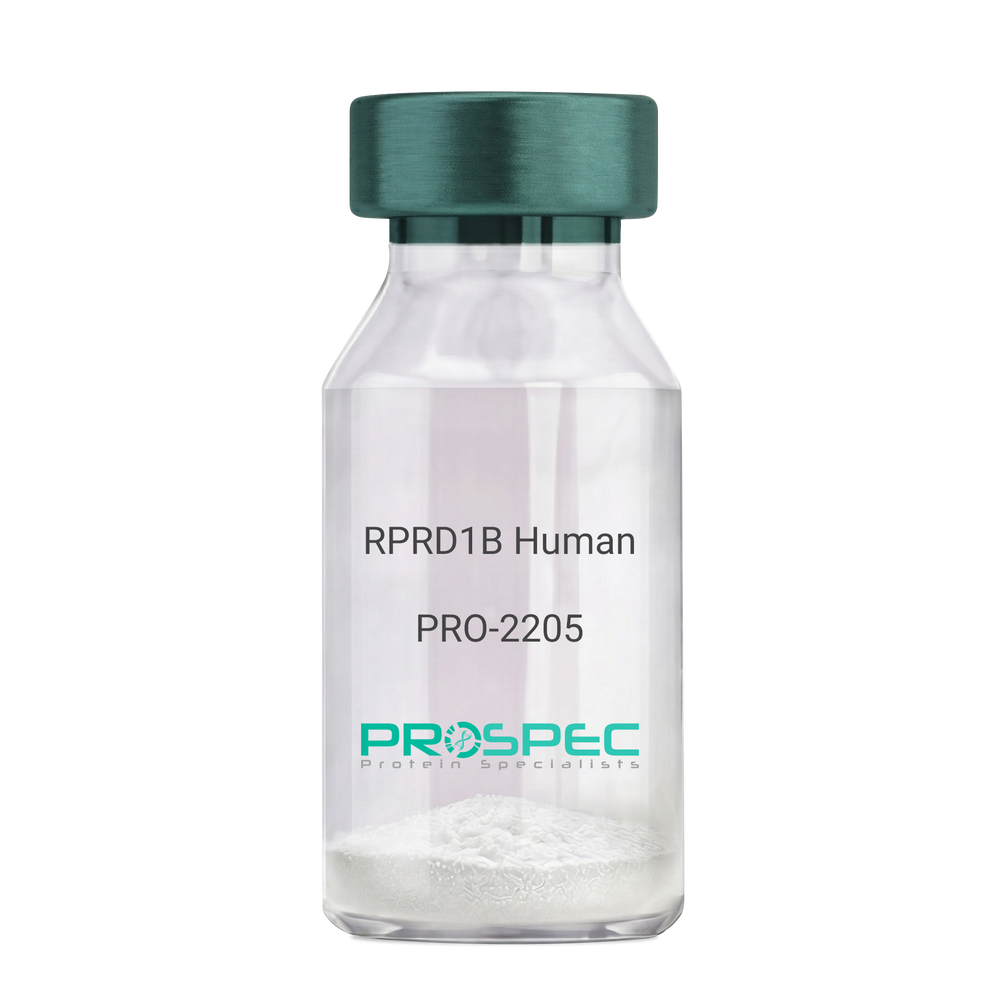
    Name :

    RPRD1B Human

    Description:

    Regulation Of Nuclear Pre-MRNA Domain Containing 1B Human Recombinant

    Regulation of nuclear pre-mRNA domain-containing protein 1B, C20orf77, CREPT, dJ1057B20.2, NET60.

    Product # :

    PRO-2205

    Price :

    Quantity :

    Shipping Method :

    Ice Icon

    Shipped with Ice Packs

    Add To Cart

    More Info

    • description
    • source
    • formulation
    • purity
    • More Info
    • Citations

    Description

    RPRD1B Human Recombinant produced in E.Coli is a single, non-glycosylated polypeptide chain containing 349 amino acids (1-326 a.a) and having a molecular mass of 39.3kDa.RPRD1B is fused to a 23 amino acid His-tag at N-terminus & purified by proprietary chromatographic techniques.

    Source

    Escherichia Coli.

    Formulation

    RPRD1B protein solution (1mg/ml) in Phosphate buffered saline (pH7.4), 20% glycerol and 1mM DTT.

    Purity

    Greater than 90.0% as determined by SDS-PAGE.

    Citations

    More Info

    • Introduction

      Regulation of nuclear pre-mRNA domain-containing protein 1B (RPRD1B) interacts with phosphorylated C-terminal heptapeptide repeat domain (CTD) of the largest RNA polymerase II subunit POLR2A, and participates in dephosphorylation of the CTD. RPRD1B stimulates binding of RNA polymerase II to the CCDN1 promoter and to the termination region before the poly-A site but decreases its binding after the poly-A site. RPRD1B inhibits RNA polymerase II from reading through the 3' end termination site and may allow it to be drafted back to the promoter through promotion of the formation of a chromatin loop. In addition, RPRD1B enhances the transcription of several other cell cycle-related genes including CDK2, CDK4, CDK6 and cyclin-E but not CDKN1A, CDKN1B or cyclin-A. RPRD1B also promotes cell proliferation.

    • Synonyms

      Regulation of nuclear pre-mRNA domain-containing protein 1B, C20orf77, CREPT, dJ1057B20.2, NET60.

    • Physical Appearance

      Sterile Filtered clear solution.

    • Stability

      Store at 4°C if entire vial will be used within 2-4 weeks. Store, frozen at -20°C for longer periods of time. For long term storage it is recommended to add a carrier protein (0.1% HSA or BSA).Avoid multiple freeze-thaw cycles.

    • Amino Acid Sequence

      MGSSHHHHHH SSGLVPRGSH MGSMSSFSES ALEKKLSELS NSQQSVQTLS LWLIHHRKHA GPIVSVWHRE LRKAKSNRKL TFLYLANDVI QNSKRKGPEF TREFESVLVD AFSHVAREAD EGCKKPLERL LNIWQERSVY GGEFIQQLKL SMEDSKSPPP KATEEKKSLK RTFQQIQEEE DDDYPGSYSP QDPSAGPLLT EELIKALQDL ENAASGDATV RQKIASLPQE VQDVSLLEKI TDKEAAERLS KTVDEACLLL AEYNGRLAAE LEDRRQLARM LVEYTQNQKD VLSEKEKKLE EYKQKLARVT QVRKELKSHI QSLPDLSLLP NVTGGLAPLP SAGDLFSTD.

    ProSpec's products are furnished for LABORATORY RESEARCH USE ONLY. The product may not be used as drugs, agricultural or pesticidal products, food additives or household chemicals.

    Rprd1B Human
  • View Data Sheet

    Name :

    WWC1 Human

    Description:

    WW And C2 Domain Containing 1 Human Recombinant

    WW and C2 domain containing 1, HBEBP3, HBEBP36, KIBRA, Protein KIBRA, HBeAg-binding protein 3, Kidney and brain protein, WW domain-containing protein 1, WWC1, KIAA0869.

    Product # :

    PRO-1863

    Price :

    Quantity :

    Shipping Method :

    Ice Icon

    Shipped with Ice Packs

    Add To Cart

    More Info

    • description
    • source
    • formulation
    • purity
    • More Info
    • Citations

    Description

    WWC1 Human Recombinant produced in E. coli is. a single polypeptide chain containing 152 amino acids (655-783) and having a molecular mass of 17kDa. WWC1 is fused to a 23 amino acid His-tag at N-terminus & purified by proprietary chromatographic techniques.

    Source

    Escherichia Coli.

    Formulation

    The WWC1 solution (0.25mg/ml) contains 20mM Tris-HCl buffer (pH 8.0), 0.15M NaCl, 20% glycerol and 1mM DTT.

    Purity

    Greater than 90% as determined by SDS-PAGE.

    Citations

    More Info

    • Introduction

      WW and C2 Domain Containing 1 (WWC1) is a cytoplasmic phosphoprotein which interacts with PRKC-zeta and dynein light chain-1. WWC1 takes part in cognition and memory performance. In some individuals, alleles of WWC1 have enhanced memory.

    • Synonyms

      WW and C2 domain containing 1, HBEBP3, HBEBP36, KIBRA, Protein KIBRA, HBeAg-binding protein 3, Kidney and brain protein, WW domain-containing protein 1, WWC1, KIAA0869.

    • Physical Appearance

      Sterile Filtered clear solution.

    • Stability

      Store at 4°C if entire vial will be used within 2-4 weeks. Store frozen at -20°C for longer periods of time. For long term storage it is recommended to add a carrier protein (0.1% HSA or BSA).Avoid multiple freeze-thaw cycles.

    • Amino Acid Sequence

      MGSSHHHHHH SSGLVPRGSH MGSEAVGATR IQIALKYDEK NKQFAILIIQ LSNLSALLQQ QDQKVNIRVA VLPCSESTTC LFRTRPLDAS DTLVFNEVFW VSMSYPALHQ KTLRVDVCTT DRSHLEECLG GAQISLAEVC RSGERSTRWY NL.

    ProSpec's products are furnished for LABORATORY RESEARCH USE ONLY. The product may not be used as drugs, agricultural or pesticidal products, food additives or household chemicals.

    Wwc1 Human
  • View Data Sheet

    Name :

    CIAPIN1 Human

    Description:

    Cytokine Induced Apoptosis Inhibitor 1 Human Recombinant

    DRE2, PRO0915, Anamorsin, Cytokine-induced apoptosis inhibitor 1, Fe-S cluster assembly protein DRE2 homolog, CIAPIN1.

    Product # :

    PRO-024

    Price :

    Quantity :

    Shipping Method :

    Ice Icon

    Shipped with Ice Packs

    Add To Cart

    More Info

    • description
    • source
    • formulation
    • purity
    • More Info
    • Citations

    Description

    CIAPIN1 Human Recombinant produced in E.Coli is a single, non-glycosylated polypeptide chain containing 335 amino acids (1-312 a.a.) and having a molecular mass of 36kDa.CIAPIN1 is fused to a 23 amino acid His-tag at N-terminus & purified by proprietary chromatographic techniques.

    Source

    Escherichia Coli.

    Formulation

    CIAPIN1 protein solution (1mg/ml) contains 20mM Tris-HCl buffer (pH 8.0), 0.4M Urea and 10% glycerol.

    Purity

    Greater than 90.0% as determined by SDS-PAGE.

    Citations

    More Info

    • Introduction

      Anamorsin, ( CIAPIN) is a member of anamorsin family. CIAPIN mainly expressed in the cytoplasm of liver, pancreas and heart tissue cells and does not show any homology to known apoptosis regulatory molecules of the Bcl-2 or CASP families, or to signal transduction molecules. CIAPIN1 Expression is reliant on growth factor stimulation. It is a ubiquitously expressed protein, and when it is overexpressed, it grants apoptotic resistance.

    • Synonyms

      DRE2, PRO0915, Anamorsin, Cytokine-induced apoptosis inhibitor 1, Fe-S cluster assembly protein DRE2 homolog, CIAPIN1.

    • Physical Appearance

      Sterile Filtered clear solution.

    • Stability

      Store at 4°C if entire vial will be used within 2-4 weeks. Store, frozen at -20°C for longer periods of time. For long term storage it is recommended to add a carrier protein (0.1% HSA or BSA).Avoid multiple freeze-thaw cycles.

    • Amino Acid Sequence

      MGSSHHHHHH SSGLVPRGSH MGSMADFGIS AGQFVAVVWD KSSPVEALKG LVDKLQALTG NEGRVSVENI KQLLQSAHKE SSFDIILSGL VPGSTTLHSA EILAEIARIL RPGGCLFLKE PVETAVDNNS KVKTASKLCS ALTLSGLVEV KELQREPLTP EEVQSVREHL GHESDNLLFV QITGKKPNFE VGSSRQLKLS ITKKSSPSVK PAVDPAAAKL WTLSANDMED DSMDLIDSDE LLDPEDLKKP DPASLRAASC GEGKKRKACK NCTCGLAEEL EKEKSREQMS SQPKSACGNC YLGDAFRCAS CPYLGMPAFK PGEKVLLSDS NLHDA.

    ProSpec's products are furnished for LABORATORY RESEARCH USE ONLY. The product may not be used as drugs, agricultural or pesticidal products, food additives or household chemicals.

    Ciapin1 Human
  • View Data Sheet

    Name :

    CISD1 Human

    Description:

    CDGSH Iron Sulfur Domain 1 Human Recombinant

    CDGSH Iron Sulfur Domain 1, Chromosome 10 Open Reading Frame 70, CDGSH Iron Sulfur Domain-Containing Protein 1, Zinc Finger CDGSH-Type Domain 1, C10orf70, ZCD1, MitoNEET , MDS029.

    Product # :

    PRO-1221

    Price :

    Quantity :

    Shipping Method :

    Ice Icon

    Shipped with Ice Packs

    Add To Cart

    More Info

    • description
    • source
    • formulation
    • purity
    • More Info
    • Citations

    Description

    CISD1 Human Recombinant produced in E. coli is a single polypeptide chain containing 100 amino acids (32-108) and having a molecular mass of 11.4 kDa.CISD1 is fused to a 23 amino acid His-tag at N-terminus & purified by proprietary chromatographic techniques.

    Source

    E.coli.

    Formulation

    The CISD1 solution contains 20mM Tris-HCl buffer (pH 8.0), 0.15M NaCl, 1mM DTT and 10% glycerol.

    Purity

    Greater than 90% as determined by SDS-PAGE.

    Citations

    More Info

    • Introduction

      CISD1 protein holds a CDGSH iron-sulfur domain and is known to bind a redox-active [2Fe-2S] cluster. CISD1 is restricted to the outer membrane of mitochondria and takes part in oxidation regulation.

    • Synonyms

      CDGSH Iron Sulfur Domain 1, Chromosome 10 Open Reading Frame 70, CDGSH Iron Sulfur Domain-Containing Protein 1, Zinc Finger CDGSH-Type Domain 1, C10orf70, ZCD1, MitoNEET , MDS029.

    • Physical Appearance

      Sterile Filtered colorless solution.

    • Stability

      Store at 4°C if entire vial will be used within 2-4 weeks. Store, frozen at -20°C for longer periods of time. For long term storage it is recommended to add a carrier protein (0.1% HSA or BSA).Avoid multiple freeze-thaw cycles.

    • Amino Acid Sequence

      MGSSHHHHHH SSGLVPRGSH MGSKRFYVKD HRNKAMINLH IQKDNPKIVH AFDMEDLGDK AVYCRCWRSK KFPFCDGAHT KHNEETGDNV GPLIIKKKET

    ProSpec's products are furnished for LABORATORY RESEARCH USE ONLY. The product may not be used as drugs, agricultural or pesticidal products, food additives or household chemicals.

    Cisd1 Human
  • View Data Sheet

    Name :

    ASF1B Human

    Description:

    ASF1 Anti-Silencing Function 1 Homolog B Human Recombinant

    Histone chaperone ASF1B, Anti-silencing function protein 1 homolog B, hAsf1, hAsf1b, CCG1-interacting factor A-II, CIA-II, hCIA-II, ASF1B.

    Product # :

    PRO-1163

    Price :

    Quantity :

    Shipping Method :

    Ice Icon

    Shipped with Ice Packs

    Add To Cart

    More Info

    • description
    • source
    • formulation
    • purity
    • More Info
    • Citations

    Description

    ASF1B Human Recombinant produced in E.Coli is a single, non-glycosylated polypeptide chain containing 210 amino acids (1-202 a.a) and having a molecular mass of 23.4kDa.ASF1B is fused to an 8 amino acid His-tag at C-terminus & purified by proprietary chromatographic techniques.

    Source

    Escherichia Coli.

    Formulation

    ASF1B protein solution (1mg/ml) containing 20mM Tris-HCl buffer (pH8.0), 10% glycerol, 0.15M NaCl and 1mM DTT.

    Purity

    Greater than 85% as determined by SDS-PAGE.

    Citations

    More Info

    • Introduction

      ASF1 Anti-Silencing Function 1 Homolog B (ASF1B) belongs to the H3/H4 family of histone chaperone proteins and is similar to the anti-silencing function-1 protein in yeast. ASF1B is the substrate of the tousled-like kinase family of cell cycle-regulated kinases, and may have a crucial role in modulating the nucleosome structure of chromatin by guaranteeing a regular supply of histones at sites of nucleosome assembly. ASF1B cooperates with CAF-1 (chromatin assembly factor 1) to stimulate replication-dependent chromatin assembly. ASF1B is highly expressed in the testis and at lower levels in colon, small intestine and thymus. ASF1B is necessary for spermatogenesis.

    • Synonyms

      Histone chaperone ASF1B, Anti-silencing function protein 1 homolog B, hAsf1, hAsf1b, CCG1-interacting factor A-II, CIA-II, hCIA-II, ASF1B.

    • Physical Appearance

      Sterile filtered colorless solution.

    • Stability

      Store at 4°C if entire vial will be used within 2-4 weeks. Store, frozen at -20°C for longer periods of time. For long term storage it is recommended to add a carrier protein (0.1% HSA or BSA).Avoid multiple freeze-thaw cycles.

    • Amino Acid Sequence

      MAKVSVLNVA VLENPSPFHS PFRFEISFEC SEALADDLEW KIIYVGSAES EEFDQILDSV LVGPVPAGRH MFVFQADAPN PSLIPETDAV GVTVVLITCT YHGQEFIRVG YYVNNEYLNP ELRENPPMKP DFSQLQRNIL ASNPRVTRFH INWDNNMDRL EAIETQDPSL GCGLPLNCTP
      IKGLGLPGCI PGLLPENSMD CILEHHHHHH.

    ProSpec's products are furnished for LABORATORY RESEARCH USE ONLY. The product may not be used as drugs, agricultural or pesticidal products, food additives or household chemicals.

    Asf1B Human
  • View Data Sheet

    Name :

    VTCN1 Human

    Description:

    V-Set Domain Containing T Cell Activation Inhibitor 1 Human Recombinant

    V-set domain-containing T-cell activation inhibitor 1, B7 homolog 4, B7-H4, B7h.5, Immune costimulatory protein B7-H4, Protein B7S1, T-cell costimulatory molecule B7x, B7H4, VTCN1, B7S1, B7X, PRO1291, RP11-229A19.4.

    Product # :

    PRO-1812

    Price :

    Quantity :

    Shipping Method :

    Ice Icon

    Shipped with Ice Packs

    Add To Cart

    More Info

    • description
    • source
    • formulation
    • purity
    • More Info
    • Citations

    Description

    VTCN1 Human Recombinant produced in E.coli is a single, non-glycosylated polypeptide chain containing 258 amino acids (25-259) and having a molecular mass of 28.2 kDa.VTCN1 is fused to a 23 amino acid His-tag at N-terminus & purified by proprietary chromatographic techniques.

    Source

    Escherichia Coli.

    Formulation

    The VTCN1 solution (1mg/ml) contains 20mM Tris-HCl buffer (pH 8.0), 0.4M UREA and 10% glycerol.

    Purity

    Greater than 90.0% as determined by SDS-PAGE.

    Citations

    More Info

    • Introduction

      V-Set Domain Containing T Cell Activation Inhibitor 1, also known as VCTN1, is part of the B7 costimulatory protein family. Proteins in this family are located on the surface of antigen-presenting cells and interact with ligand bound to receptors on the surface of T cells. High level of the encoded protein has been associated with tumor progression. VCTN1 also takes part in promoting epithelial cell transformation.

    • Synonyms

      V-set domain-containing T-cell activation inhibitor 1, B7 homolog 4, B7-H4, B7h.5, Immune costimulatory protein B7-H4, Protein B7S1, T-cell costimulatory molecule B7x, B7H4, VTCN1, B7S1, B7X, PRO1291, RP11-229A19.4.

    • Physical Appearance

      Sterile Filtered colorless solution.

    • Stability

      Store at 4°C if entire vial will be used within 2-4 weeks. Store, frozen at -20°C for longer periods of time. For long term storage it is recommended to add a carrier protein (0.1% HSA or BSA).Avoid multiple freeze-thaw cycles.

    • Amino Acid Sequence

      MGSSHHHHHH SSGLVPRGSH MGSLIIGFGI SGRHSITVTT VASAGNIGED GILSCTFEPD IKLSDIVIQW LKEGVLGLVH EFKEGKDELS EQDEMFRGRT AVFADQVIVG NASLRLKNVQ LTDAGTYKCY IITSKGKGNA NLEYKTGAFS MPEVNVDYNA SSETLRCEAP RWFPQPTVVW
      ASQVDQGANF SEVSNTSFEL NSENVTMKVV SVLYNVTINN TYSCMIENDI AKATGDIKVT ESEIKRRSHL QLLNSKAS.

    ProSpec's products are furnished for LABORATORY RESEARCH USE ONLY. The product may not be used as drugs, agricultural or pesticidal products, food additives or household chemicals.

    Vtcn1 Human
  • View Data Sheet

    Name :

    HIF1AN Human

    Description:

    Hypoxia-Inducible Factor-1 Alpha Inhibitor Human Recombinant

    FIH1, FIH-1, HIF1AN, Factor Inhibiting HIF1A, Hypoxia-inducible factor 1-alpha inhibitor, Hypoxia-inducible factor asparagine hydroxylase, Factor inhibiting HIF-1, FLJ20615, FLJ22027, DKFZp762F1811.

    Product # :

    PRO-662

    Price :

    Quantity :

    Shipping Method :

    Ice Icon

    Shipped with Ice Packs

    Add To Cart

    More Info

    • description
    • source
    • formulation
    • purity
    • More Info
    • Citations

    Description

    HIF1AN Human Recombinant produced in E.Coli is a single, non-glycosylated polypeptide chain containing 349 amino acids (1-349) and having a molecular mass of 40.2kDa. The HIF1AN is purified by proprietary chromatographic techniques.

    Source

    Escherichia Coli.

    Formulation

    The protein solution (1mg/ml) contains 20mM Tris-HCl pH-8.

    Purity

    Greater than 90% as determined by SDS-PAGE.

    Citations

    More Info

    • Introduction

      Overexpression of the HIF1AN is linked with tumor aggressiveness in pancreatic endocrine tumors. HIF1AN hydroxylates Notch ICD at two residues that are crucial for the function of Notch ICD as a transactivator within cells and during neurogenesis and myogenesis. HIF1AN is commonly expressed in invasive breast carcinoma. The hypoxic response and survival recommends that tumour regulation of HIF1AN is an additional important mechanism for HIF pathway activation. HIF1AN is an asparaginyl hydroxylase enzyme that controls the transcriptional activity of hypoxia-inducible factor. FIH1 is a part of the Fe2+ and 2-oxoglutarate-dependent dioxygenase superfamily, FIH1 is protein that hydoxylates a specific asparagine residue (Asn-803) within the HIF1A C-terminal transactivation domain. In normoxia, the HIF1AN-mediated hydroxylation of the HIF1? transactivation domain which results in blockage of the HIF1A-p300/CBP interaction and represses transcriptional activity of HIF1A targeted genes.

    • Synonyms

      FIH1, FIH-1, HIF1AN, Factor Inhibiting HIF1A, Hypoxia-inducible factor 1-alpha inhibitor, Hypoxia-inducible factor asparagine hydroxylase, Factor inhibiting HIF-1, FLJ20615, FLJ22027, DKFZp762F1811.

    • Physical Appearance

      Sterile Filtered colorless solution.

    • Stability

      Store at 4°C if entire vial will be used within 2-4 weeks.Store, frozen at -20°C for longer periods of time. For long term storage it is recommended to add a carrier protein (0.1% HSA or BSA).Avoid multiple freeze-thaw cycles.

    • Amino Acid Sequence

      MAATAAEAVA SGSGEPREEA GALGPAWDES QLRSYSFPTR PIPRLSQSDP RAEELIENEE PVVLTDTNLV YPALKWDLEY LQENIGNGDF SVYSASTHKF LYYDEKKMAN FQNFKPRSNR EEMKFHEFVE KLQDIQQRGG EERLYLQQTL NDTVGRKIVM DFLGFNWNWI NKQQGKRGWG QLTSNLLLIG MEGNVTPAHY DEQQNFFAQI KGYKRCILFP PDQFECLYPY PVHHPCDRQS QVDFDNPDYE RFPNFQNVVG YETVVGPGDV LYIPMYWWHH IESLLNGGIT ITVNFWYKGA PTPKRIEYPL KAHQKVAIMR NIEKMLGEAL GNPQEVGPLL NTMIKGRYN.

    ProSpec's products are furnished for LABORATORY RESEARCH USE ONLY. The product may not be used as drugs, agricultural or pesticidal products, food additives or household chemicals.

    Hif1An Human
  • View Data Sheet

    Name :

    LMO1 Human

    Description:

    LIM Domain Only 1 Human Recombinant

    Rhombotin-1, Cysteine-rich protein TTG-1, LIM domain only protein 1, T-cell translocation protein 1, RBTN1, RHOM1, TTG1, LMO-1, LMO1.

    Product # :

    PRO-1457

    Price :

    Quantity :

    Shipping Method :

    Ice Icon

    Shipped with Ice Packs

    Add To Cart

    More Info

    • description
    • source
    • formulation
    • purity
    • More Info
    • Citations

    Description

    LMO1 Human Recombinant produced in E.Coli is a single, non-glycosylated polypeptide chain containing 179 amino acids (1-156 a.a) and having a molecular mass of 20.2kDa.LMO1 is fused to a 23 amino acid His-tag at N-terminus & purified by proprietary chromatographic techniques.

    Source

    Escherichia Coli.

    Formulation

    LMO1protein solution (0.25mg/ml) containing 20mM Tris-HCl buffer (pH 8.0), 0.4M UREA and 10% glycerol.

    Purity

    Greater than 85.0% as determined by SDS-PAGE.

    Citations

    More Info

    • Introduction

      LIM domain only 1 (LMO1) is a protein-coding gene. LMO1 encodes a transcriptional regulator which contains two cysteine-rich LIM domains but lacks a DNA-binding domain. LIM domains might play a part in protein interactions; hence the protein may regulate transcription by competitively binding to specific DNA-binding transcription factors.

    • Synonyms

      Rhombotin-1, Cysteine-rich protein TTG-1, LIM domain only protein 1, T-cell translocation protein 1, RBTN1, RHOM1, TTG1, LMO-1, LMO1.

    • Physical Appearance

      Sterile Filtered colorless solution.

    • Stability

      Store at 4°C if entire vial will be used within 2-4 weeks. Store, frozen at -20°C for longer periods of time. For long term storage it is recommended to add a carrier protein (0.1% HSA or BSA).Avoid multiple freeze-thaw cycles.

    • Amino Acid Sequence

      MGSSHHHHHH SSGLVPRGSH MGSMMVLDKE DGVPMLSVQP KGKQKGCAGC NRKIKDRYLL KALDKYWHED CLKCACCDCR LGEVGSTLYT KANLILCRRD YLRLFGTTGN CAACSKLIPA FEMVMRARDN VYHLDCFACQ LCNQRFCVGD KFFLKNNMIL CQMDYEEGQL NGTFESQVQ

    ProSpec's products are furnished for LABORATORY RESEARCH USE ONLY. The product may not be used as drugs, agricultural or pesticidal products, food additives or household chemicals.

    Lmo1 Human
  • View Data Sheet

    Name :

    PI16 Human

    Description:

    Peptidase Inhibitor 16 Human Recombinant

    Peptidase inhibitor 16, PI-16, Cysteine-rich secretory protein 9, CRISP-9, PSP94-binding protein, PI16, CRISP9, PSPBP, MSMBBP, MGC45378, DKFZp586B1817.

    Product # :

    ENZ-113

    Price :

    Quantity :

    Shipping Method :

    Room Temp Icon

    Shipped at Room temp

    Add To Cart

    More Info

    • description
    • source
    • formulation
    • purity
    • More Info
    • Citations

    Description

    The Peptidase Inhibitor 16 Human Recombinant is produced in HEK293 cells and fused with a C-terminal Flag Tag (11 amino acids). The PI16 Flag Tagged Fusion Protein is 45.7kDa protein containing a total of 426 amino acid residues and purified by proprietary chromatographic techniques.

    Source

    HEK293 (Human Embryonic Kidney cell line).

    Formulation

    PI16 was filtered (0.4µm) and lyophilized from 0.5mg/ml in 20mM Tris and 50mM NaCl, pH 7.5.

    Purity

    Greater than 95.0% as determined by SDS-PAGE.

    Citations

    More Info

    • Introduction

      Peptidase Inhibitor 16 (PI16) which a member of the CRISP family, is a putative serine protease inhibitor. PI16 interacts with PSP94/MSMB. PI16 is expressed in the prostate, testis, ovary and intestine. It also concentrates in prostate cancer patient's sera. PI16 may serve as a marker following prostatectomy for prostate cancer.

    • Synonyms

      Peptidase inhibitor 16, PI-16, Cysteine-rich secretory protein 9, CRISP-9, PSP94-binding protein, PI16, CRISP9, PSPBP, MSMBBP, MGC45378, DKFZp586B1817.

    • Physical Appearance

      Filtered White lyophilized (freeze-dried) powder.

    • Stability

      Store lyophilized PI16 Human recombinant at -20°C. Aliquot the product after reconstitution to avoid repeated freezing/thawing cycles. Reconstituted protein can be stored at 4°C for a limited period of time; it does not show any change after two weeks at 4°C.

    • Solubility

      It is recommended to add deionized water to prepare a working stock solution of 0.5mg/ml and let the lyophilized pellet dissolve completely. Product is not sterile! Please filter the product by an appropriate sterile filter before using it in the cell culture.

    • Amino Acid Sequence

      LTDEEKRLMV ELHNLYRAQV SPPASDMLHM RWDEELAAFA KAYARQCVWG HNKERGRRGE NLFAITDEGM DVPLAMEEWH HEREHYNLSA ATCSPGQMCG HYTQVVWAKT ERIGCGSHFC EKLQGVEETN IELLVCNYEP PGNVKGKRPY QEGTPCSQCP SGYHCKNSLC EPIGSPEDAQ DLPYLVTEAP SFRATEASDS RKMGTPSSLA TGIPAFLVTE VSGSLATKAL PAVETQAPTS LATKDPPSMA TEAPPCVTTE VPSILAAHSL PSLDEEPVTF PKSTHVPIPK SADKVTDKTK VPSRSPENSL DPKMSLTGAR ELLPHAQEEA EAEAELPPSS EVLASVFPAQ DKPGELQATL DHTGHTSSKS LPNFPNTSAT ANATGGRALA LQSSLPGAEG PDKPSVVSGL NSGPGAAADYKDDDDK.

    ProSpec's products are furnished for LABORATORY RESEARCH USE ONLY. The product may not be used as drugs, agricultural or pesticidal products, food additives or household chemicals.

    Pi16 Human
  • View Data Sheet

    Name :

    DNAJC12 Human

    Description:

    DnaJ (Hsp40) Homolog, Subfamily C, Member 12 Human Recombinant

    DnaJ homolog subfamily C member 12, J domain-containing protein 1, DNAJC12, JDP1, RP11-57G10.2.

    Product # :

    HSP-053

    Price :

    Quantity :

    Shipping Method :

    Ice Icon

    Shipped with Ice Packs

    Add To Cart

    More Info

    • description
    • source
    • formulation
    • purity
    • More Info
    • Citations

    Description

    DNAJC12 Human Recombinant produced in E. coli is a single polypeptide chain containing 222 amino acids (1-198) and having a molecular mass of 26kDa (Molecular weight on SDS-PAGE will appear higher).DNAJC12 is fused to a 24 amino acid His-tag at N-terminus & purified by proprietary chromatographic techniques.

    Source

    E.coli.

    Formulation

    The DNAJC12 solution (0.5mg/ml) contains 20mM Tris-HCl buffer, pH8.0, 10% glycerol, 2mM DTT and 100mM NaCl.

    Purity

    Greater than 90% as determined by SDS-PAGE.

    Citations

    More Info

    • Introduction

      DnaJ (Hsp40) Homolog, Subfamily C, Member 12 (DNAJC12) belongs to the DnaJ/Hsp40 family. DnaJ/Hsp40 family members are linked with complex assembly, protein folding, and export. DnaJ/Hsp40 proteins are extremely conserved throughout evolution and function as co-chaperones regulating protein folding, transport, translational initiation and gene expression. DnaJC12 has a role in protein folding and export and is believed to be involved in estrogen control and the development of breast cancer. DNAJC12 is expressed at high levels in the brain, heart, and testis, and at reduced levels in the kidney and stomach.

    • Synonyms

      DnaJ homolog subfamily C member 12, J domain-containing protein 1, DNAJC12, JDP1, RP11-57G10.2.

    • Physical Appearance

      Sterile Filtered colorless solution.

    • Stability

      Store at 4°C if entire vial will be used within 2-4 weeks. Store, frozen at -20°C for longer periods of time. For long term storage it is recommended to add a carrier protein (0.1% HSA or BSA).Avoid multiple freeze-thaw cycles.

    • Amino Acid Sequence

      MGSSHHHHHH SSGLVPRGSH MGSHMDAILN YRSEDTEDYY TLLGCDELSS VEQILAEFKV RALECHPDKH PENPKAVETF QKLQKAKEIL TNEESRARYD HWRRSQMSMP FQQWEALNDS VKTSMHWVVR GKKDLMLEES DKTHTTKMEN EECNEQRERK KEELASTAEK TEQKEPKPLE KSVSPQNSDS SGFADVNGWH LRFRWSKDAP SELLRKFRNY EI.

    ProSpec's products are furnished for LABORATORY RESEARCH USE ONLY. The product may not be used as drugs, agricultural or pesticidal products, food additives or household chemicals.

    Dnajc12 Human
  • View Data Sheet

    Name :

    TATDN1 Human

    Description:

    TatD DNase Domain Containing 1 Human Recombinant

    TatD DNase Domain Containing 1, Hepatocarcinoma High Expression Protein, Putative Deoxyribonuclease TATDN1, EC 3.1.21, CDA11, TATDN1.

    Product # :

    PRO-2160

    Price :

    Quantity :

    Shipping Method :

    Ice Icon

    Shipped with Ice Packs

    Add To Cart

    More Info

    • description
    • source
    • formulation
    • purity
    • More Info
    • Citations

    Description

    TATDN1 Human Recombinant produced in E.Coli is a single, non-glycosylated polypeptide chain containing 320 amino acids (1-297 a.a) and having a molecular mass of 36kDa. TATDN1 is fused to a 23 amino acid His-tag at N-terminus & purified by proprietary chromatographic techniques.

    Source

    Escherichia Coli.

    Formulation

    TATDN1 protein solution (1mg/ml) containing Phosphate buffered saline (pH7.4), 10% glycerol and 1mM DTT.

    Purity

    Greater than 95.0% as determined by SDS-PAGE.

    Citations

    More Info

    • Introduction

      TatD DNase Domain Containing 1, also known as TATDN1, is a protein coding gene which is a part of the TatD DNase family. TATDN1 which is a deoxyribonuclease binds two divalent metal cations per subunit.

    • Synonyms

      TatD DNase Domain Containing 1, Hepatocarcinoma High Expression Protein, Putative Deoxyribonuclease TATDN1, EC 3.1.21, CDA11, TATDN1.

    • Physical Appearance

      Sterile Filtered clear solution.

    • Stability

      Store at 4°C if entire vial will be used within 2-4 weeks. Store, frozen at -20°C for longer periods of time. For long term storage it is recommended to add a carrier protein (0.1% HSA or BSA).Avoid multiple freeze-thaw cycles.

    • Amino Acid Sequence

      MGSSHHHHHH SSGLVPRGSH MGSMSRFKFI DIGINLTDPM FRGIYRGVQK HQDDLQDVIG RAVEIGVKKF MITGGNLQDS KDALHLAQTN GMFFSTVGCH PTRCGEFEKN NPDLYLKELL NLAENNKGKV VAIGECGLDF DRLQFCPKDT QLKYFEKQFE LSEQTKLPMF LHCRNSHAEF LDIMKRNRDR CVGGVVHSFD GTKEAAAALI DLDLYIGFNG CSLKTEANLE VLKSIPSEKL MIETDAPWCG VKSTHAGSKY IRTAFPTKKK WESGHCLKDR NEPCHIIQIL EIMSAVRDED PLELANTLYN NTIKVFFPGI.

    ProSpec's products are furnished for LABORATORY RESEARCH USE ONLY. The product may not be used as drugs, agricultural or pesticidal products, food additives or household chemicals.

    Tatdn1 Human
  • View Data Sheet

    Name :

    PBLD Human

    Description:

    Phenazine Biosynthesis-Like Protein Domain Containing Human Recombinant

    Phenazine biosynthesis-like domain-containing protein, MAWD-binding protein, Unknown protein 32 from 2D-page of liver tissue, PBLD, MAWBP, MAWDBP, FLJ14767, FLJ35507.

    Product # :

    PRO-010

    Price :

    Quantity :

    Shipping Method :

    Ice Icon

    Shipped with Ice Packs

    Add To Cart

    More Info

    • description
    • source
    • formulation
    • purity
    • More Info
    • Citations

    Description

    PBLD Human Recombinant fused with a 20 amino acid His tag at N-terminus produced in E.Coli is a single, non-glycosylated, polypeptide chain containing 308 amino acids (1-288 a.a.) and having a molecular mass of 33.9kDa. The PBLD is purified by proprietary chromatographic techniques.

    Source

    Escherichia Coli.

    Formulation

    The PBLD solution (1 mg/ml) contains 20mM Tris-HCl buffer(pH 8.0), 10% glycerol, 2mM DTT and 0.1M NaCl.

    Purity

    Greater than 95.0% as determined by SDS-PAGE.

    Citations

    More Info

    • Introduction

      PBLD is member of the phenazine biosynthesis-like protein (PhzF) family. PBLD which is expressed in most tissues is the only representative of the PhzF family in the human genome. PBLD participates in the MAPK signaling pathway. PBLD is involved in multiple basic cellular functions, its expression is elevated in several disease processes, including folate deficiency and hypotension.

    • Synonyms

      Phenazine biosynthesis-like domain-containing protein, MAWD-binding protein, Unknown protein 32 from 2D-page of liver tissue, PBLD, MAWBP, MAWDBP, FLJ14767, FLJ35507.

    • Physical Appearance

      Sterile Filtered colorless solution.

    • Stability

      Store at 4°C if entire vial will be used within 2-4 weeks. Store, frozen at -20°C for longer periods of time. For long term storage it is recommended to add a carrier protein (0.1% HSA or BSA).Avoid multiple freeze-thaw cycles.

    • Amino Acid Sequence

      MGSSHHHHHH SSGLVPRGSH MKLPIFIADA FTARAFRGNP AAVCLLENEL DEDMHQKIAR EMNLSETAFI RKLHPTDNFA QSSCFGLRWF TPASEVPLCG HATLASAAVL FHKIKNMNST LTFVTLSGEL RARRAEDGIV LDLPLYPAHP QDFHEVEDLI KTAIGNTLVQ DICYSPDTQK LLVRLSDVYN RSFLENLKVN TENLLQVENT GKVKGLILTL KGEPGGQTQA FDFYSRYFAP WVGVAEDPVT GSAHAVLSSY WSQHLGKKEM HAFQCSHRGG ELGISLRPDG RVDIRGGAAV VLEGTLTA.

    ProSpec's products are furnished for LABORATORY RESEARCH USE ONLY. The product may not be used as drugs, agricultural or pesticidal products, food additives or household chemicals.

    Pbld Human
  • View Data Sheet

    Name :

    ZNRD1 Human

    Description:

    Zinc Ribbon Domain Containing 1 Human Recombinant

    Zinc Ribbon Domain Containing 1, Zinc Ribbon Domain Containing, 1, HTEX-6, Rpa12, TEX6, ZR14, DNA-Directed RNA Polymerase I Subunit RPA12, hZR14, RNA Polymerase I Small Specific Subunit Rpa12, tctex-6, Transcription-Associated Zinc Ribbon Protein, RPA12, Zinc Ribbon Domain-Containing Protein 1.

    Product # :

    PRO-1747

    Price :

    Quantity :

    Shipping Method :

    Ice Icon

    Shipped with Ice Packs

    Add To Cart

    More Info

    • description
    • source
    • formulation
    • purity
    • More Info
    • Citations

    Description

    ZNRD1 Human Recombinant produced in E.Coli is a single, non-glycosylated polypeptide chain containing 149 amino acids (1-126a.a) and having a molecular mass of 16.3kDa.ZNRD1 is fused to a 23 amino acid His-tag at N-terminus & purified by proprietary chromatographic techniques.

    Source

    Escherichia Coli.

    Formulation

    ZNRD1 protein solution (1mg/ml) containing 20mM Tris-HCl buffer (pH 8.0), 0.15M NaCl, 10% glycerol and 1mM DTT.

    Purity

    Greater than 95% as determined by SDS-PAGE.

    Citations

    More Info

    • Introduction

      Zinc Ribbon Domain Containing 1 (ZNRD1) is a protein which shows similarity to the Saccharomyces cerevisiae Rpa12p subunit of RNA polymerase I. ZNRD1 contains two potential zinc-binding motifs and takes part in regulation of cell proliferation. ZNRD1 is involved in cancer and human immunodeficiency virus progression. Alternate splicing of this gene results in two transcript variants encoding the same protein. Additional splice variants have been found, but their full-length sequences have not been determined.

    • Synonyms

      Zinc Ribbon Domain Containing 1, Zinc Ribbon Domain Containing, 1, HTEX-6, Rpa12, TEX6, ZR14, DNA-Directed RNA Polymerase I Subunit RPA12, hZR14, RNA Polymerase I Small Specific Subunit Rpa12, tctex-6, Transcription-Associated Zinc Ribbon Protein, RPA12, Zinc Ribbon Domain-Containing Protein 1.

    • Physical Appearance

      Sterile Filtered clear solution.

    • Stability

      Store at 4°C if entire vial will be used within 2-4 weeks. Store, frozen at -20°C for longer periods of time.For long term storage it is recommended to add a carrier protein (0.1% HSA or BSA).Please avoid freeze thaw cycles.

    • Amino Acid Sequence

      MGSSHHHHHH SSGLVPRGSH MGSMSVMDLA NTCSSFQSDL DFCSDCGSVL PLPGAQDTVT CIRCGFNINV RDFEGKVVKT SVVFHQLGTA MPMSVEEGPE CQGPVVDRRC PRCGHEGMAY HTRQMRSADE GQTVFYTCTN CKFQEKEDS

    ProSpec's products are furnished for LABORATORY RESEARCH USE ONLY. The product may not be used as drugs, agricultural or pesticidal products, food additives or household chemicals.

    Znrd1 Human
  • View Data Sheet

    Name :

    PLCXD3 Human

    Description:

    Phosphatidylinositol Specific Phospholipase C X Domain Human Recombinant

    PI-PLC X domain-containing protein 3, phosphatidylinositol-specific phospholipase C X domain containing 3, phosphatidylinositol-specific phospholipase C, X domain containing 3

    Product # :

    PRO-2651

    Price :

    Quantity :

    Shipping Method :

    Ice Icon

    Shipped with Ice Packs

    Add To Cart

    More Info

    • description
    • source
    • formulation
    • purity
    • More Info
    • Citations

    Description

    PLCXD3 Human Recombinant produced in E.Coli is a single, non-glycosylated polypeptide chain containing 344 amino acids (1-321 a.a.) and having a molecular mass of 38.7 kDa. PLCXD3 is fused to a 23 amino acid His tag at N-Terminus and purified by proprietary chromatographic techniques.

    Source

    Escherichia Coli.

    Formulation

    The PLCXD3 solution (0.25mg/ml) contains 20mM Tris-HCl buffer (pH 8.0), 20% glycerol, 0.15M NaCl and 1mM DTT.

    Purity

    Greater than 85.0% as determined by SDS-PAGE.

    Citations

    More Info

    • Introduction

      PLCXD3, also referred to asphosphatidylinositol Specific Phospholipase C X Domain Containing 3, contains 1 PI-PLC X-box domain. Creutzfeldt-Jakob Disease, is one of the diseases linked with PLCXD3. It is related to Ectoderm Differentiation, obsolete signal transducer activity and phosphoric diester hydrolase activity.

    • Synonyms

      PI-PLC X domain-containing protein 3, phosphatidylinositol-specific phospholipase C X domain containing 3, phosphatidylinositol-specific phospholipase C, X domain containing 3

    • Physical Appearance

      Sterile Filtered colorless solution.

    • Stability

      Store at 4°C if entire vial will be used within 2-4 weeks. Store, frozen at -20°C for longer periods of time. For long term storage it is recommended to add a carrier protein (0.1% HSA or BSA).Avoid multiple freeze-thaw cycles.

    • Amino Acid Sequence

      MGSSHHHHHH SSGLVPRGSH MGSMASSQGK NELKLADWMA TLPESMHSIP LTNLAIPGSH DSFSFYIDEA SPVGPEQPET VQNFVSVFGT VAKKLMRKWL ATQTMNFTGQ LGAGIRYFDL RISTKPRDPD NELYFAHGLF SAKVNEGLEE INAFLTDHHK EVVFLDFNHF YGMQKYHHEK LVQMLKDIYG NKMCPAIFAQ EVSLKYLWEK DYQVLVFYHS PVALEVPFLW PGQMMPAPWA NTTDPEKLIQ FLQASITERR KKGSFFISQV VLTPKASTVV KGVASGLRET ITERALPAMM QWVRTQKPGE SGINIVTADF VELGDFISTV IKLNYVFDEG EANT

    ProSpec's products are furnished for LABORATORY RESEARCH USE ONLY. The product may not be used as drugs, agricultural or pesticidal products, food additives or household chemicals.

    Plcxd3 Human
  • View Data Sheet

    Name :

    LZIC Human

    Description:

    Leucine Zipper And CTNNBIP1 Domain Containing Human Recombinant

    WAP Four-Disulfide Core Domain 12, Putative Protease Inhibitor WAP12, Whey Acidic Protein 2, Chromosome 20 Open Reading Frame 122, Protease Inhibitor WAP2, Single WAP Motif Protein 2, WAP Four-Disulfide Core Domain Protein 12, dJ211D12.4, C20orf122, SWAM2, WAP2.

    Product # :

    PRO-1831

    Price :

    Quantity :

    Shipping Method :

    Ice Icon

    Shipped with Ice Packs

    Add To Cart

    More Info

    • description
    • source
    • formulation
    • purity
    • More Info
    • Citations

    Description

    LZIC Human Recombinant produced in E.coli is a single, non-glycosylated polypeptide chain containing 111 amino acids (24-111) and having a molecular mass of 12.1 kDa. LZIC is fused to a 23 amino acid His-tag at N-terminus.

    Source

    Escherichia Coli.

    Formulation

    The LZIC solution (1mg/ml) contains 20mM Tris-HCl buffer (pH 8.0), 1mM DTT and 10% glycerol.

    Purity

    Greater than 85% as determined by SDS-PAGE.

    Citations

    More Info

    • Introduction

      LZIC is a member of the CTNNBIP1 family. LZIC protein is universally expressed, with largest levels in kidney and up-regulated in various cases of gastric cancers. LZIC has no interaction with CTNNB1.

    • Synonyms

      WAP Four-Disulfide Core Domain 12, Putative Protease Inhibitor WAP12, Whey Acidic Protein 2, Chromosome 20 Open Reading Frame 122, Protease Inhibitor WAP2, Single WAP Motif Protein 2, WAP Four-Disulfide Core Domain Protein 12, dJ211D12.4, C20orf122, SWAM2, WAP2.

    • Physical Appearance

      Sterile Filtered clear solution.

    • Stability

      Store at 4°C if entire vial will be used within 2-4 weeks. Store, frozen at -20°C for longer periods of time. For long term storage it is recommended to add a carrier protein (0.1% HSA or BSA).Avoid multiple freeze-thaw cycles.

    • Amino Acid Sequence

      MGSSHHHHHH SSGLVPRGSH MGSMASRGKT ETSKLKQNLE EQLDRLMQQL QDLEECREEL DTDEYEETKK ETLEQLSEFN DSLKKIMSGN MTLVDELSGM QLAIQAAISQ AFKTPEVIRL FAKKQPGQLR TRLAEMDRDL MVGKLERDLY TQQKVEILTA LRKLGEKLTA DDEAFLSANA GAILSQFEKV STDLGSGDKI LALASFEVEK TKK.

    ProSpec's products are furnished for LABORATORY RESEARCH USE ONLY. The product may not be used as drugs, agricultural or pesticidal products, food additives or household chemicals.

    Lzic Human
  • View Data Sheet

    Name :

    CoV-2-S1 (319-541), Fc

    Description:

    Coronavirus 2019 Spike Glycoprotein-S1 Receptor Binding Domain (319-541 a.a), Fc Recombinant

    Product # :

    SARS-029

    Price :

    Quantity :

    Shipping Method :

    Room Temp Icon

    Shipped at Room temp

    Add To Cart

    More Info

    • description
    • source
    • formulation
    • purity
    • More Info
    • Citations

    Description

    The HEK293 derived recombinant protein contains the Coronavirus 2019 Spike Glycoprotein S1 Receptor Binding Domain [ RBD ], Wuhan-Hu-1 strain, amino acids 319-541 fused to Fc tag at C-terminal.

    Source

    HEK293 Cells.

    Formulation

    CoV-S1 RBD protein is lyophilized from 1x PBS pH-7.4 + 5% trehalose.

    Purity

    Protein is >95% pure as determined SDS-PAGE.

    Citations

    More Info

    • Introduction

      A human infecting coronavirus (viral pneumonia) called 2019 novel coronavirus, 2019-nCoV was found in the fish market at the city of Wuhan, Hubei province of China on December 2019.

      The 2019-nCoV shares an 87% identity to the 2 bat-derived severe acute respiratory syndrome 2018 SARS-CoV-2 located in Zhoushan of eastern China. 2019-nCoV has an analogous receptor-BD-structure to that of 2018 SARS-CoV, even though there is a.a. diversity so thus the 2019-nCoV might bind to ACE2 receptor protein (angiotensin-converting enzyme 2) in humans.

      While bats are possibly the host of 2019-nCoV, researchers suspect that animal from the ocean sold at the seafood market was an intermediate host. RSCU analysis proposes that the 2019-nCoV is a recombinant within the viral spike glycoprotein between the bat coronavirus and an unknown coronavirus.

    • Physical Appearance

      Lyophilized freezed dried powder.

    • Stability

      Lyophilized Cov-2 S1 Glycoprotein RBD although stable at room temperature for 3 weeks, should be stored desiccated below -18°C. Upon reconstitution CoV2 Spike protein should be stored at 4°C between 2-7 days and for future use below -18°C.For long term storage it is recommended to add a carrier protein (0.1% HSA or BSA).Please prevent freeze-thaw cycles.

    • Purification Method

      Purified by Protein-G chromatographic technique.

    ProSpec's products are furnished for LABORATORY RESEARCH USE ONLY. The product may not be used as drugs, agricultural or pesticidal products, food additives or household chemicals.

    product_image.jpg
  • View Data Sheet

    Name :

    TSTD1 Human

    Description:

    Thiosulfate Sulfurtransferase Like Domain Containing 1 Human Recombinant

    Thiosulfate sulfurtransferase/rhodanese-like domain-containing protein 1, TSTD1, KAT.

    Product # :

    ENZ-094

    Price :

    Quantity :

    Shipping Method :

    Ice Icon

    Shipped with Ice Packs

    Add To Cart

    More Info

    • description
    • source
    • formulation
    • purity
    • More Info
    • Citations

    Description

    TSTD1 Human Recombinant produced in E.Coli is a single, non-glycosylated, polypeptide chain containing 135 amino acids (1-115 a.a.) and having a molecular mass of 14.6kDa.TSTD1 is fused to a 20 amino acid His tag at N-terminus and purified by proprietary chromatographic techniques.

    Source

    Escherichia Coli.

    Formulation

    The TSTD1 solution (1 mg/ml) contains 20mM Tris-HCl buffer (pH 8.0), 1mM DTT, 10% glycerol and 100mM NaCl.

    Purity

    Greater than 95.0% as determined by SDS-PAGE.

    Citations

    More Info

    • Introduction

      Thiosulfate sulfurtransferase like domain containing 1 (TSTD1) is a member of a family of transferases, specifically the sulfurtransferases, which transfer sulfur-containing groups. TSTD1 is localized around the nuclear membranes. TSTD1 is expressed in a number of human tissues, including the kidney, liver, skeletal muscle, heart, colon, thymus, spleen, placenta and lung. TSTD1 may participate in cyanide detoxification, the formation of iron-sulfur proteins, and the modification of sulfur-containing enzymes.

    • Synonyms

      Thiosulfate sulfurtransferase/rhodanese-like domain-containing protein 1, TSTD1, KAT.

    • Physical Appearance

      Sterile Filtered colorless solution.

    • Stability

      Store at 4°C if entire vial will be used within 2-4 weeks. Store, frozen at -20°C for longer periods of time. For long term storage it is recommended to add a carrier protein (0.1% HSA or BSA).Avoid multiple freeze-thaw cycles.

    • Amino Acid Sequence

      MGSSHHHHHH SSGLVPRGSH MAGAPTVSLP ELRSLLASGR ARLFDVRSRE EAAAGTIPGA LNIPVSELES ALQMEPAAFQ ALYSAEKPKL EDEHLVFFCQ MGKRGLQATQ LARSLGYTGA RNYAGAYREW LEKES.

    ProSpec's products are furnished for LABORATORY RESEARCH USE ONLY. The product may not be used as drugs, agricultural or pesticidal products, food additives or household chemicals.

    Tstd1 Human
  • 1
  • 2
  • 3
  • 4
  • 5
  • …
  • 22
Your browser does not support the video tag.

Products

  • Cytokines
  • Growth Factors
  • Chemokines
  • CD Antigens
  • Neurotrophins
  • Hormones
  • Enzymes
  • Viral Antigens
  • Recombinant Proteins
  • Natural Proteins
  • Monoclonal Antibodies
  • Polyclonal Antibodies
  • Thermal Packaging

About

  • Company
  • Founder
  • Contribution
  • Contact Us
  • My Account

Ordering

  • Ordering Method
  • Ordering - Credit Card
  • Ordering PO
  • Shipping Fees
  • FAQ's

Legal

  • Terms & Conditions
  • Privacy
  • Site Map
  • info@prospecbio.com
  • Facebook
  • Instagram
  • Linkedin Profile

© 2026 ProSpec-Tany TechnoGene Ltd. All Rights Reserved.

  • Choosing a selection results in a full page refresh.
  • Opens in a new window.