Skip to content

High-quality research proteins.

  • 1-800-805-6531

  • Mon - Sat 8.00-18.00, Sun - Closed

  • info@prospecbio.com

  • PO Box 6591 East Brunswick NJ 08816

  • Products
    • Cytokines
    • Growth factors
    • Chemokines
    • Cd antigens
    • Neurotrophins
    • Hormones
    • Enzymes
    • Viral antigens
    • Recombinant proteins
    • Natural proteins
    • Monoclonal antibodies
    • Polyclonal antibodies
    • Thermal Packaging
  • About
    • Company
    • Founder
    • Contribution
  • Customers
    • Eastern Asia
    • Eastern Europe
    • North America
    • South America
    • South East Asia
    • Southern Asia
    • Western Europe
  • Ordering
    • Ordering Method
    • Ordering - Credit Card
    • Ordering - PO
    • Shipping Fees
    • FAQs
  • Services
    • DNA Cloning
    • Protein Expression
    • Monoclonal Antibody
    • Fermentation
    • Technology License
  • Contact us
Log in

Country/region

  • USD $ | Albania
  • USD $ | Andorra
  • USD $ | Argentina
  • USD $ | Armenia
  • USD $ | Australia
  • USD $ | Austria
  • USD $ | Azerbaijan
  • USD $ | Belarus
  • USD $ | Belgium
  • USD $ | Bolivia
  • USD $ | Brazil
  • USD $ | Bulgaria
  • USD $ | Cambodia
  • USD $ | Canada
  • USD $ | Chile
  • USD $ | China
  • USD $ | Colombia
  • USD $ | Costa Rica
  • USD $ | Croatia
  • USD $ | Cyprus
  • USD $ | Czechia
  • USD $ | Denmark
  • USD $ | Estonia
  • USD $ | Finland
  • USD $ | France
  • USD $ | Georgia
  • USD $ | Germany
  • USD $ | Greece
  • USD $ | Hong Kong SAR
  • USD $ | Hungary
  • USD $ | Iceland
  • USD $ | India
  • USD $ | Ireland
  • USD $ | Israel
  • USD $ | Italy
  • USD $ | Japan
  • USD $ | Kazakhstan
  • USD $ | Latvia
  • USD $ | Liechtenstein
  • USD $ | Lithuania
  • USD $ | Madagascar
  • USD $ | Malta
  • USD $ | Mexico
  • USD $ | Moldova
  • USD $ | Monaco
  • USD $ | Netherlands
  • USD $ | New Zealand
  • USD $ | North Macedonia
  • USD $ | Norway
  • USD $ | Panama
  • USD $ | Paraguay
  • USD $ | Peru
  • USD $ | Philippines
  • USD $ | Poland
  • USD $ | Portugal
  • USD $ | Romania
  • USD $ | Singapore
  • USD $ | Slovakia
  • USD $ | Slovenia
  • USD $ | South Africa
  • USD $ | South Korea
  • USD $ | Spain
  • USD $ | Sri Lanka
  • USD $ | Sweden
  • USD $ | Switzerland
  • USD $ | Taiwan
  • USD $ | Thailand
  • USD $ | Türkiye
  • USD $ | Ukraine
  • USD $ | United Kingdom
  • USD $ | United States
  • USD $ | Uruguay
  • USD $ | Vatican City
  • USD $ | Venezuela
  • USD $ | Vietnam
  • Facebook
  • Instagram
logoProSpec - Recombinant Protein Manufacturer for academic and R&D industry
Become a distributor
Account Log in
Wishlist
Cart Cart(0)
  • Products
    +
    • Cytokines
    • Growth factors
    • Chemokines
    • Cd antigens
    • Neurotrophins
    • Hormones
    • Enzymes
    • Viral antigens
    • Recombinant proteins
    • Natural proteins
    • Monoclonal antibodies
    • Polyclonal antibodies
    • Thermal Packaging
  • About
    +
    • Company
    • Founder
    • Contribution
  • Customers
    +
    • Eastern Asia
    • Eastern Europe
    • North America
    • South America
    • South East Asia
    • Southern Asia
    • Western Europe
  • Ordering
    +
    • Ordering Method
    • Ordering - Credit Card
    • Ordering - PO
    • Shipping Fees
    • FAQs
  • Services
    +
    • DNA Cloning
    • Protein Expression
    • Monoclonal Antibody
    • Fermentation
    • Technology License
  • Contact us

Item added to your cart

View cart
View All
  • Cytokines
  • Growth factors
  • Chemokines
  • Cd antigens
  • Neurotrophins
  • Hormones
  • Enzymes
  • Viral antigens
  • Recombinant proteins
  • Natural proteins
  • Monoclonal antibodies
  • Polyclonal antibodies
  • Thermal Packaging
  • Tumor Necrosis Factor

    Tumor Necrosis Factor

    View All
  • 4-1BB

    4-1BB

    View All
  • Adiponectin

    Adiponectin

    View All
  • AIF1

    AIF1

    View All
  • Other Cytokines

    Other Cytokines

    View All
  • AITRL

    AITRL

    View All
  • Angiopoietin

    Angiopoietin

    View All
  • Apolipoprotein

    Apolipoprotein

    View All
  • B-Cell Activating Factor

    B-Cell Activating Factor

    View All
  • Beta Defensin

    Beta Defensin

    View All
  • Bone Morphogenetic Protein

    Bone Morphogenetic Protein

    View All
  • B type Natriuretic Peptide

    B type Natriuretic Peptide

    View All
  • BST

    BST

    View All
  • Betacellulin

    Betacellulin

    View All
  • Cardiotrophin

    Cardiotrophin

    View All
  • Activin

    Activin

    View All
  • Fibroblast Growth Factor

    Fibroblast Growth Factor

    View All
  • Other Growth Factors

    Other Growth Factors

    View All
  • CSF

    CSF

    View All
  • CTGF

    CTGF

    View All
  • IGFBP

    IGFBP

    View All
  • VEGF Protein

    VEGF Protein

    View All
  • EGF

    EGF

    View All
  • Epigen

    Epigen

    View All
  • Erythropoietin

    Erythropoietin

    View All
  • Insulin-Like Growth Factor

    Insulin-Like Growth Factor

    View All
  • Growth Hormone

    Growth Hormone

    View All
  • HDGF

    HDGF

    View All
  • Hepatocyte Growth Factor

    Hepatocyte Growth Factor

    View All
  • Insulin

    Insulin

    View All
  • BCA-1/ BLC (CXCL13)

    BCA-1/ BLC (CXCL13)

    View All
  • BRAK (CXCL14)

    BRAK (CXCL14)

    View All
  • C-10 (CCL6)

    C-10 (CCL6)

    View All
  • Other Chemokines

    Other Chemokines

    View All
  • MEC (CCL28)

    MEC (CCL28)

    View All
  • LD78-beta (CCL3L1)

    LD78-beta (CCL3L1)

    View All
  • CTACK (CCL27)

    CTACK (CCL27)

    View All
  • CXCL16

    CXCL16

    View All
  • CXCL17

    CXCL17

    View All
  • Platelet Factor-4 (CXCL4)

    Platelet Factor-4 (CXCL4)

    View All
  • ENA-78 (CXCL5)

    ENA-78 (CXCL5)

    View All
  • Eotaxin (CCL11,24,26)

    Eotaxin (CCL11,24,26)

    View All
  • Exodus-2 (CCL21)

    Exodus-2 (CCL21)

    View All
  • Fractalkine (CX3CL1)

    Fractalkine (CX3CL1)

    View All
  • CXCL6

    CXCL6

    View All
  • Other CD Antigens

    Other CD Antigens

    View All
  • CD14

    CD14

    View All
  • CD164

    CD164

    View All
  • CD1

    CD1

    View All
  • CD2

    CD2

    View All
  • CD200

    CD200

    View All
  • CD207

    CD207

    View All
  • CD226

    CD226

    View All
  • CD23

    CD23

    View All
  • CD244

    CD244

    View All
  • CD247

    CD247

    View All
  • CD27

    CD27

    View All
  • CD274

    CD274

    View All
  • CD300

    CD300

    View All
  • CD33

    CD33

    View All
  • Other Neurotrophins

    Other Neurotrophins

    View All
  • Beta-NGF

    Beta-NGF

    View All
  • BDNF

    BDNF

    View All
  • CDNF

    CDNF

    View All
  • CNTF

    CNTF

    View All
  • GDNF

    GDNF

    View All
  • Glia Maturation Factor

    Glia Maturation Factor

    View All
  • MANF

    MANF

    View All
  • Midkine

    Midkine

    View All
  • Neuroglobin

    Neuroglobin

    View All
  • Neurotrophic factors

    Neurotrophic factors

    View All
  • Neuregulin

    Neuregulin

    View All
  • Neuropilin

    Neuropilin

    View All
  • Pigment Epithelium-Derived Factor

    Pigment Epithelium-Derived Factor

    View All
  • Pleiotrophin

    Pleiotrophin

    View All
  • Peptide Hormones

    Peptide Hormones

    View All
  • Other Hormones

    Other Hormones

    View All
  • HCG

    HCG

    View All
  • Endothelin

    Endothelin

    View All
  • Exendin

    Exendin

    View All
  • FSH

    FSH

    View All
  • Glucagon

    Glucagon

    View All
  • GHRP

    GHRP

    View All
  • GLP

    GLP

    View All
  • Thyrostimulin

    Thyrostimulin

    View All
  • Inhibin A

    Inhibin A

    View All
  • LHRH

    LHRH

    View All
  • Melanotan

    Melanotan

    View All
  • Procalcitonin

    Procalcitonin

    View All
  • PTH

    PTH

    View All
  • Peroxiredoxin

    Peroxiredoxin

    View All
  • Peptidase

    Peptidase

    View All
  • Synthetase

    Synthetase

    View All
  • Transferase

    Transferase

    View All
  • Hydrolase

    Hydrolase

    View All
  • Dehydrogenase

    Dehydrogenase

    View All
  • ACE2

    ACE2

    View All
  • Esterase

    Esterase

    View All
  • Protein Kinases

    Protein Kinases

    View All
  • Other Enzymes

    Other Enzymes

    View All
  • Phosphatase

    Phosphatase

    View All
  • Deaminase

    Deaminase

    View All
  • Oxygenase

    Oxygenase

    View All
  • Adenylate Kinase

    Adenylate Kinase

    View All
  • Lyase

    Lyase

    View All
  • Chagas

    Chagas

    View All
  • SARS

    SARS

    View All
  • Influenza

    Influenza

    View All
  • ASFV

    ASFV

    View All
  • Astrovirus

    Astrovirus

    View All
  • Borrelia

    Borrelia

    View All
  • Helicobacter Pylori

    Helicobacter Pylori

    View All
  • Chikungunya

    Chikungunya

    View All
  • Chlamydia

    Chlamydia

    View All
  • Cytomegalo

    Cytomegalo

    View All
  • Dengue

    Dengue

    View All
  • EBV

    EBV

    View All
  • Ebola

    Ebola

    View All
  • Feline Leukemia Virus

    Feline Leukemia Virus

    View All
  • Hepatitis A

    Hepatitis A

    View All
  • Other

    Other

    View All
  • Actin

    Actin

    View All
  • ADAM

    ADAM

    View All
  • Complement Component

    Complement Component

    View All
  • Ag85

    Ag85

    View All
  • Eukaryotic Translation Initiation Factor

    Eukaryotic Translation Initiation Factor

    View All
  • Anterior Gradient Protein

    Anterior Gradient Protein

    View All
  • Heat Shock Protein

    Heat Shock Protein

    View All
  • Alpha-2-HS-Glycoprotein

    Alpha-2-HS-Glycoprotein

    View All
  • Hemoglobin

    Hemoglobin

    View All
  • Allergy

    Allergy

    View All
  • Anaplasma

    Anaplasma

    View All
  • Angiogenin

    Angiogenin

    View All
  • Ankyrin Repeat Domain

    Ankyrin Repeat Domain

    View All
  • Annexin

    Annexin

    View All
  • Other Natural Proteins

    Other Natural Proteins

    View All
  • Aprotinin

    Aprotinin

    View All
  • Transferrin

    Transferrin

    View All
  • Avidin

    Avidin

    View All
  • Anti Coagulation Factors

    Anti Coagulation Factors

    View All
  • Natural Albumin

    Natural Albumin

    View All
  • Natural Coagulation Factors

    Natural Coagulation Factors

    View All
  • Fibronectin

    Fibronectin

    View All
  • Thrombin

    Thrombin

    View All
  • Anti Human Enzyme

    Anti Human Enzyme

    View All
  • Other Monoclonal Antibodies

    Other Monoclonal Antibodies

    View All
  • Anti Human Cytokine

    Anti Human Cytokine

    View All
  • Anti Human Heat Shock Protein

    Anti Human Heat Shock Protein

    View All
  • Anti Mouse Lymphocyte

    Anti Mouse Lymphocyte

    View All
  • Anti Human Chemokine

    Anti Human Chemokine

    View All
  • Anti Human Lymphocyte

    Anti Human Lymphocyte

    View All
  • Anti Viral Monoclonal

    Anti Viral Monoclonal

    View All
  • Anti Mouse Cytokine

    Anti Mouse Cytokine

    View All
  • Anti-GST Monoclonal

    Anti-GST Monoclonal

    View All
  • Other Polyclonal Antibodies

    Other Polyclonal Antibodies

    View All
  • Anti Viral

    Anti Viral

    View All
  • Anti-GST Monoclonal

    Anti-GST Monoclonal

    View All
Back

Search results

1000 results found for “lipase”

Name

Description

Product #

Price

Quantity

Shipping Method

  • View Data Sheet

    Name :

    Lysostaphin

    Description:

    Lysostaphin Recombinant

    Lysostaphin, EC 3.4.24.75, Glycyl-glycine endopeptidase.

    Product # :

    ENZ-269

    Price :

    Quantity :

    Shipping Method :

    Room Temp Icon

    Shipped at Room temp

    Add To Cart

    More Info

    • description
    • source
    • formulation
    • purity
    • biological activity
    • More Info

    Description

    Lysostaphin Recombinant produced in E.Coli is a non-glycosylated polypeptide chain having a molecular mass of 26.92 kDa.

    Source

    Escherichia Coli.

    Formulation

    The protein was lyophilized without any additives.

    Purity

    98% as determined by RP-HPLC.

    Biological Activity

    Assessed by the decrease in turbidity of a suspension of heat-killed Staphylococcus aureus at pH-8, 30°C.  Lysostaphin is a zinc enzyme therefore EDTA is an inhibitory factor.

    More Info

    • Introduction

      Lysostaphin, an endopeptidase specific for the cell wall peptidoglycan of staphylococci, is an extremely potent anti-staphylococcal agent. Lysostaphin is used as a research and diagnostic tool. Because it lyses staphylococci efficiently, it is widely used when preparing staphylococcal DNA or other cellular components for genetic and biochemical studies and for the preparation of protoplasts for transformation. Preparation and analysis of bacterial DNA has become a powerful tool used by clinical and other microbiologists in epidemiological studies aimed at tracing sources of infection or bacterial contamination.

    • Synonyms

      Lysostaphin, EC 3.4.24.75, Glycyl-glycine endopeptidase.

    • Physical Appearance

      Sterile Filtered lyophilized powder.

    • Stability

      Lyophilized Lysostaphin although stable at room temperature for 2 weeks, should be stored desiccated below -18°C. Upon reconstitution Lysostaphin can be stored at 4°C up to 3 weeks and for future use below -18°C.Please prevent freeze-thaw cycles.

    • Solubility

      It is recommended to reconstitute the lyophilized Lysostaphin in 20mM sodium acetate, pH 4.5 for optimal stability, which can then be further diluted.

    • Protein content

      Protein quantitation was carried out by two independent methods 1. UV spectroscopy at 280 nm using the absorbency value of 2.02 as the extinction coefficient for a 0.1% (1mg/ml) solution. This value is calculated by the PC GENE computer analysis program of protein sequences (IntelliGenetics). 2. Analysis RP-HPLC, using a calibrated solution of Lysostaphin as a Reference standard.

    • Specific Activity

      Determined to be 3,540 units/mg.

    ProSpec's products are furnished for LABORATORY RESEARCH USE ONLY. The product may not be used as drugs, agricultural or pesticidal products, food additives or household chemicals.

    Lysostaphin
  • View Data Sheet

    Name :

    ARSG Human

    Description:

    Arylsulfatase G Human Recombinant

    Arylsulfatase G, ASG, ARSG, KIAA1001, UNQ839/PRO1777.

    Product # :

    ENZ-677

    Price :

    Quantity :

    Shipping Method :

    Ice Icon

    Shipped with Ice Packs

    Add To Cart

    More Info

    • description
    • source
    • formulation
    • purity
    • More Info

    Description

    ARSG Human Recombinant produced in E.coli is a single, non-glycosylated polypeptide chain containing 532 amino acids (17-525) and having a molecular mass of 57kDa.ARSG is fused to a 23 amino acid His-tag at N-terminus & purified by proprietary chromatographic techniques.

    Source

    Escherichia Coli.

    Formulation

    The ARSG solution (1mg/ml) contains 20mM Tris-HCl buffer (pH 8.0), 0.4M Urea and 10% glycerol.

    Purity

    Greater than 85% as determined by SDS-PAGE.

    More Info

    • Introduction

      Arylsulfatase G (ARSG) is a member of the sulfatase enzyme family. Sulfatases are enzymes which hydrolyze sulfate esters from sulfated steroids, carbohydrates, proteoglycans, and glycolipids. Sulfatases are involved in hormone biosynthesis, modulation of cell signaling, and degradation of macromolecules. The ARSG protein exhibits arylsulfatase activity at acidic pH, as is characteristic of lysosomal sulfatases. The Arylsulfatase G enzyme localizes in the lysosomes. ARSG is inhibited by phosphate, which forms a covalent bond with the active site 3-oxoalanine. Arylsulfatase G is widely expressed, having very low expression in the brain, lung, heart and skeletal muscle.

    • Synonyms

      Arylsulfatase G, ASG, ARSG, KIAA1001, UNQ839/PRO1777.

    • Physical Appearance

      Sterile Filtered clear solution.

    • Stability

      Store at 4°C if entire vial will be used within 2-4 weeks. Store, frozen at -20°C for longer periods of time. For long term storage it is recommended to add a carrier protein (0.1% HSA or BSA).Avoid multiple freeze-thaw cycles.

    • Amino Acid Sequence

      MGSSHHHHHH SSGLVPRGSH MGSGFLYPLV DFCISGKTRG QKPNFVIILA DDMGWGDLGA NWAETKDTAN LDKMASEGMR FVDFHAAAST CSPSRASLLT GRLGLRNGVT RNFAVTSVGG LPLNETTLAE VLQQAGYVTG IIGKWHLGHH GSYHPNFRGF DYYFGIPYSH DMGCTDTPGY NHPPCPACPQ GDGPSRNLQR DCYTDVALPL YENLNIVEQP VNLSSLAQKY AEKATQFIQR ASTSGRPFLL YVALAHMHVP LPVTQLPAAP RGRSLYGAGL WEMDSLVGQI KDKVDHTVKE NTFLWFTGDN GPWAQKCELA GSVGPFTGFW QTRQGGSPAK QTTWEGGHRV PALAYWPGRV PVNVTSTALL SVLDIFPTVV ALAQASLPQG RRFDGVDVSE VLFGRSQPGH RVLFHPNSGA AGEFGALQTV RLERYKAFYI TGGARACDGS TGPELQHKFP LIFNLEDDTA EAVPLERGGA EYQAVLPEVR KVLADVLQDI ANDNISSADY TQDPSVTPCC NPYQIACRCQ AA.

    ProSpec's products are furnished for LABORATORY RESEARCH USE ONLY. The product may not be used as drugs, agricultural or pesticidal products, food additives or household chemicals.

    Arsg Human
  • View Data Sheet

    Name :

    LAP3 Human

    Description:

    Leucine Aminopeptidase 3 Human Recombinant

    Leucine Aminopeptidase 3, Peptidase S, PEPS, Proline Aminopeptidase, Leucyl Aminopeptidase, Prolyl Aminopeptidase, EC 3.4.11.1, LAP-3, LAPEP, Epididymis Secretory Protein Li 106, Cytosol Aminopeptidase, EC 3.4.11.5, HEL-S-106, EC 3.4.11, LAP, Cytosol aminopeptidase, Leucine aminopeptidase 3, Leucyl aminopeptidase, Proline aminopeptidase, Prolyl aminopeptidase.

    Product # :

    ENZ-889

    Price :

    Quantity :

    Shipping Method :

    Ice Icon

    Shipped with Ice Packs

    Add To Cart

    More Info

    • description
    • source
    • formulation
    • purity
    • More Info

    Description

    LAP3 Human Recombinant produced in E.Coli is a single, non-glycosylated polypeptide chain containing 539 amino acids (1-519 a.a) and having a molecular mass of 58.3kDa. LAP3 is fused to a 20 amino acid His-tag at N-terminus & purified by proprietary chromatographic techniques.

    Source

    Escherichia Coli.

    Formulation

    LAP3 protein solution (0.5mg/ml) containing 20mM Tris-HCl(pH8.5), 50% glycerol, 5mM DTT and 1mM EDTA.

    Purity

    Greater than 85% as determined by SDS-PAGE.

    More Info

    • Introduction

      Leucine Aminopeptidase 3 also known as LAP3 is a member of the peptidase M17 family. LAP3 is implicated in the processing as well as regular turnover of intracellular proteins. LAP3 catalyzes the removal of unsubstituted N-terminal amino acids from different peptides. LAP3 is responsible of releasing an N-terminal amino acid, Xaa-|-Yaa-, in which Xaa is preferably Leu, but could be other amino acids including Pro although not Arg or Lys, and Yaa may be Pro. Amino acid amides and methyl esters are as well readily hydrolyzed; however rates on arylamides are exceedingly low.

    • Synonyms

      Leucine Aminopeptidase 3, Peptidase S, PEPS, Proline Aminopeptidase, Leucyl Aminopeptidase, Prolyl Aminopeptidase, EC 3.4.11.1, LAP-3, LAPEP, Epididymis Secretory Protein Li 106, Cytosol Aminopeptidase, EC 3.4.11.5, HEL-S-106, EC 3.4.11, LAP, Cytosol aminopeptidase, Leucine aminopeptidase 3, Leucyl aminopeptidase, Proline aminopeptidase, Prolyl aminopeptidase.

    • Physical Appearance

      Sterile Filtered colorless solution.

    • Stability

      Store at 4°C if entire vial will be used within 2-4 weeks. Store, frozen at -20°C for longer periods of time. For long term storage it is recommended to add a carrier protein (0.1% HSA or BSA).Avoid multiple freeze-thaw cycles.

    • Amino Acid Sequence

      MGSSHHHHHH SSGLVPRGSH MFLLPLPAAG RVVVRRLAVR RFGSRSLSTA DMTKGLVLGI YSKEKEDDVP QFTSAGENFD KLLAGKLRET LNISGPPLKA GKTRTFYGLH QDFPSVVLVG LGKKAAGIDE QENWHEGKEN IRAAVAAGCR QIQDLELSSV EVDPCGDAQA AAEGAVLGLY EYDDLKQKKK MAVSAKLYGS GDQEAWQKGV LFASGQNLAR QLMETPANEM TPTRFAEIIE KNLKSASSKT EVHIRPKSWI EEQAMGSFLS VAKGSDEPPV FLEIHYKGSP NANEPPLVFV GKGITFDSGG ISIKASANMD LMRADMGGAA TICSAIVSAA KLNLPINIIG LAPLCENMPS GKANKPGDVV RAKNGKTIQV DNTDAEGRLI LADALCYAHT FNPKVILNAA TLTGAMDVAL GSGATGVFTN SSWLWNKLFE ASIETGDRVW RMPLFEHYTR QVVDCQLADV NNIGKYRSAG ACTAAAFLKE FVTHPKWAHL DIAGVMTNKD EVPYLRKGMT GRPTRTLIEF LLRFSQDNA.

    ProSpec's products are furnished for LABORATORY RESEARCH USE ONLY. The product may not be used as drugs, agricultural or pesticidal products, food additives or household chemicals.

    Lap3 Human
  • View Data Sheet

    Name :

    DNase Human

    Description:

    Deoxyribonuclease I Human Recombinant

    EC 3.1.21.1, Deoxyribonuclease I, DNase I, DNL1, DRNI, FLJ38093, DNASE1.

    Product # :

    ENZ-319

    Price :

    Quantity :

    Shipping Method :

    Ice Icon

    Shipped with Ice Packs

    Add To Cart

    More Info

    • description
    • source
    • formulation
    • More Info

    Description

    Deoxyribonuclease I Human Recombinant produced in CHO is a glycosylated, polypeptide chain containing 260 amino acids and having a total molecular mass of 37,000 Dalton with a molecular formula of C1321H1999N339O396S9. DNase is purified by proprietary chromatographic techniques.

    Source

    Chinese Hamster Ovary Cells.

    Formulation

    Each mg contains 150 µg calcium chloride dehydrate and 8.77 mg NaCl.

    More Info

    • Introduction

      Deoxyribonuclease I Human Recombinant (rhDNase), an enzyme which selectively cleaves DNA. Recombinant Human Dnase is an endonuclease enzyme which splits phosphodiester linkages within polynucleotides, acting primarely on single stranded DNA (ssDNA), double stranded DNA (ddDNA) and chromatin. Dnase is activated by bivalent metals such as Mg+2 and Ca+2 .
      Dnase enzymes are common reagents used in biochemical methods requiring diestion of DNA and recovery of RNA, or where DNA is to be removed without affecting structural proteins or enzymes. Dnase enzymes are also used in tissue culture to digest DNA from damaged cells, resulting in reduced viscosity, and for removal of membrane-bound DNA fragments.

    • Synonyms

      EC 3.1.21.1, Deoxyribonuclease I, DNase I, DNL1, DRNI, FLJ38093, DNASE1.

    • Physical Appearance

      Sterile liquid colorless solution at a concentration of 1mg/ml.

    • Stability

      2 years when stored at 4°C, three weeks at 15°C, pH-6.3.

    • Unit Definition

      Dnase is generally assayed according to the photometric method developed by Kunitz. One Dnase unit results in an increase in absorbance at 260nm of 0.001/minute at 25°C when acting upon highly polymerized solution of DNA at pH-5. Also 0.005 Kunitz unit digests 1µgof lambda phage DNA in 10 minutes at 37°C in50mM Tris, 1mMMg++, pH 7.8 in a 50ul reaction.

    • Specific Activity

      1000IU/1mg.

    ProSpec's products are furnished for LABORATORY RESEARCH USE ONLY. The product may not be used as drugs, agricultural or pesticidal products, food additives or household chemicals.

    Dnase I Human
  • View Data Sheet

    Name :

    MMP 9 Rabbit

    Description:

    Matrix Metalloproteinase-9 Rabbit Recombinant

    Matrix metalloproteinase-9, MMP-9, 92 kDa type IV collagenase, 92 kDa gelatinase, Gelatinase B, GELB, MMP9, CLG4B.

    Product # :

    ENZ-121

    Price :

    Quantity :

    Shipping Method :

    Ice Icon

    Shipped with Ice Packs

    Add To Cart

    More Info

    • description
    • source
    • formulation
    • purity
    • More Info

    Description

    MMP-9 Rabbit Recombinant is a full length secreted protein (688 amino acids - a.a. 20-707). The MMP-9 is expressed in insect cells and fused to a 30 aa C-terminal Myc-His tag, having a total MW of 79.94kDa. Purified MMP9 protein appears at 95kDa on SDS-PAGE gel due to protein modification.

    Source

    Baculovirus system, insect cells.

    Formulation

    The MMP-9 solution (0.3mg/ml) contains 50mM Tris, 150mM NaCl, 10% Glycerol, pH 7.5.

    Purity

    Greater than 85.0% as determined by SDS-PAGE.

    More Info

    • Introduction

      Matrix metalloproteinases are a family of zinc and calcium-dependent endopeptidases that break down extracellular matrix proteins. The MMP9 is secreted as a 92kDa zymogen. Cleavage of ProMMP-9 results in the active enzyme, having a molecular weight of approximately 82kDa. MMP9 is composed of the following domains: a gelatin-binding domain consisting of three fibronectin type II units, a catalytic domain containing the zinc-binding site, a proline-rich type V collagen-homologous domain and a hemopexin-like domain. MMP9 is produced by the several cell types: monocytes, macrophages, neutrophils, keratinocytes, fibroblasts, osteoclasts and endothelial cells. MMP9 is involved in inflammatory responses, tissue remodeling, wound healing, tumor growth and metastasis. MMP9 may also play an important part in local proteolysis of the extracellular matrix and in leukocyte migration, as well as in bone osteoclastic resorption. MMP9 cleaves type IV and type V collagens into large C-terminal three qu

    • Synonyms

      Matrix metalloproteinase-9, MMP-9, 92 kDa type IV collagenase, 92 kDa gelatinase, Gelatinase B, GELB, MMP9, CLG4B.

    • Physical Appearance

      Sterile Filtered clear solution.

    • Stability

      Store at 4°C if entire vial will be used within 2-4 weeks. Store, frozen at -20°C for longer periods of time. For long term storage it is recommended to add a carrier protein (0.1% HSA or BSA).Avoid multiple freeze-thaw cycles.

    • Amino Acid Sequence

      APRRRQPTLVVFPGELRTRLTDRQLAEEYLFRYGYTRVASMHGDSQSLRLPLLLLQK
      HLSLPETGELDNATLEAMRAPRCGVPDVGKFQTFEGDLKWHHHNITYWIQNYSEDLP
      RDVIDDAFARAFALWSAVTPLTFTRVYSRDADIVIQFGVAEHGDGYPFDGKDGLLAHA
      FPPGPGIQGDAHFDDEELWSLGKGVVVPTYFGNADGAPCHFPFTFEGRSYTACTTD
      GRSDGMAWCSTTADYDTDRRFGFCPSERLYTQDGNADGKPCEFPFIFQGRTYSACT
      TDGRSDGHRWCATTASYDKDKLYGFCPTRADSTVVGGNSAGELCVFPFVFLGKEYS
      SCTSEGRRDGRLWCATTSNFDSDKKWGFCPDKGYSLFLVAAHEFGHALGLDHSSVP
      ERLMYPMYRYLEGSPLHEDDVRGIQHLYGPNPNPQPPATTTPEPQPTAPPTACPTWP
      ATVRPSEHPTTSPTGAPSAGPTGPPTASPSAAPTASLDPAEDVCNVNVFDAIAEIGNK
      LHVFKDGRYWRFSEGSGRRPQGPFLIADTWPALPAKLDSAFEEPLTKKLFFFSGRQV
      WVYTGASVLGPRRLDKLGLGPEVPHVTGALPRAGGKVLLFGAQRFWRFDVKTQTVD
      SRSGAPVDQMFPGVPLNTHDVFQYREKAYFCQDRFFWRVSTRNEVNLVDQVGYVS
      FDILHCPEDENLYFQGLEEQKLISEEDLNSAVDHHHHHH.

    ProSpec's products are furnished for LABORATORY RESEARCH USE ONLY. The product may not be used as drugs, agricultural or pesticidal products, food additives or household chemicals.

    Mmp 9 Rabbit
  • View Data Sheet

    Name :

    Protease

    Description:

    Recombinant Protease

    Product # :

    ENZ-354

    Price :

    Quantity :

    Shipping Method :

    Ice Icon

    Shipped with Ice Packs

    Add To Cart

    More Info

    • description
    • source
    • More Info

    Description

    Protease Recombinant is a fusion protein of glutathione S-transferase (GST) and human rhinovirus (HRV) type 14 3C protease. The protease specifically recognizes a subset of sequences which include the core amino acid sequence Leu-Phe-Gln/Gly-Pro cleaving between the Gln and Gly residues. Substrate recognition and cleavage are likely to be dependent not only upon primary structural signals, but also upon the secondary and tertiary structures of the fusion protein as well.The Recombinant Protease is purified by proprietary chromatographic techniques.

    Source

    Escherichia Coli.

    More Info

    • Physical Appearance

      Sterile filtered colorless solution.

    • Stability

      Store at 4°C if entire vial will be used within 2-4 weeks. Store, frozen at -20°C for longer periods of time. Avoid multiple freeze-thaw cycles.

    • Cleavage Conditions

      For Cleavage of a Fusion Protein: During cleavage reactions, it is recommended that samples be removed at various time points and analyzed by SDS-PAGE to estimate the yield, purity, and extent of digestion. The amount of PreScission Protease, temperature and length of incubation required for complete digestion of a given GST fusion partner may vary depending on the fusion partner. Optimal conditions for each fusion should be determined in pilot experiments. Digestion may be improved by adding TritonTM X-100, TweenTM 20, NonidetTM, or NP40 to a concentration of 0.01%. Concentrations of these detergents up to 1% do not inhibit PreScission Protease.

    • Cleavage Buffer

      50mM Tris-HCl, pH-7.0 (at 25°C), 150mM NaCl, 1mM EDTA, 1mM dithiothreitol. Chill to 5°C prior to use.

    • Unit Definition

      One unit will cleave ?90% of 100 µg of a test GST-fusion protein in Cleavage Buffer (50mM Tris-HCl, 150 mM NaCl, 1 mM EDTA, 1 mM DTT, pH 7.0 at 25°C) at 5°C for 16 hours.

    ProSpec's products are furnished for LABORATORY RESEARCH USE ONLY. The product may not be used as drugs, agricultural or pesticidal products, food additives or household chemicals.

    Protease Enzyme
  • View Data Sheet

    Name :

    ECI1 Human

    Description:

    Enoyl-CoA Delta Isomerase 1 Human Recombinant

    Enoyl-CoA delta isomerase 1, mitochondrial, 3,2-trans-enoyl-CoA isomerase, Enoyl-CoA Delta Isomerase 1, Delta(3),Delta(2)-enoyl-CoA isomerase, D3,D2-enoyl-CoA isomerase, Dodecenoyl-CoA isomerase, ECI1, DCI.

    Product # :

    ENZ-758

    Price :

    Quantity :

    Shipping Method :

    Ice Icon

    Shipped with Ice Packs

    Add To Cart

    More Info

    • description
    • source
    • formulation
    • purity
    • More Info

    Description

    ECI1 Human Recombinant produced in E.Coli is a single, non-glycosylated polypeptide chain containing 284 amino acids (42-302 a.a.) and having a molecular mass of 31.1kDa. ECI1 is fused to a 23 amino acid His-tag at N-terminus & purified by proprietary chromatographic techniques.

    Source

    Escherichia Coli.

    Formulation

    ECI1 protein solution (0.25mg/ml) contains 20mM Tris-HCl buffer (pH 8.0), 0.15M NaCl, 10% glycerol and 1mM DTT.

    Purity

    Greater than 90.0% as determined by SDS-PAGE.

    More Info

    • Introduction

      Enoyl-CoA Delta Isomerase 1 (ECI1) is a main mitochondrial enzyme which takes part in beta-oxidation of unsaturated fatty acids. ECI1 is a member of the hydratase/isomerase superfamily. ECI1 catalyzes the transformation of 3-cis and 3-trans-enoyl-CoA esters to the 2-trans-enoylCoA intermediates.

    • Synonyms

      Enoyl-CoA delta isomerase 1, mitochondrial, 3,2-trans-enoyl-CoA isomerase, Enoyl-CoA Delta Isomerase 1, Delta(3),Delta(2)-enoyl-CoA isomerase, D3,D2-enoyl-CoA isomerase, Dodecenoyl-CoA isomerase, ECI1, DCI.

    • Physical Appearance

      Sterile Filtered colorless solution.

    • Stability

      Store at 4°C if entire vial will be used within 2-4 weeks. Store, frozen at -20°C for longer periods of time. For long term storage it is recommended to add a carrier protein (0.1% HSA or BSA).Avoid multiple freeze-thaw cycles.

    • Amino Acid Sequence

      MGSSHHHHHH SSGLVPRGSH MGSFGSQRVL VEPDAGAGVA VMKFKNPPVN SLSLEFLTEL VISLEKLEND KSFRGVILTS DRPGVFSAGL DLTEMCGRSP AHYAGYWKAV QELWLRLYQS NLVLVSAING ACPAGGCLVA LTCDYRILAD NPRYCIGLNE TQLGIIAPFW LKDTLENTIG HRAAERALQL GLLFPPAEAL QVGIVDQVVP EEQVQSTALS AIAQWMAIPD HARQLTKAMM RKATASRLVT QRDADVQNFV SFISKDSIQK SLQMYLERLK EEKG.

    ProSpec's products are furnished for LABORATORY RESEARCH USE ONLY. The product may not be used as drugs, agricultural or pesticidal products, food additives or household chemicals.

    Eci1 Human
  • View Data Sheet

    Name :

    PAPP-A Human

    Description:

    Pregnancy-Associated Plasma Protein-1 Human Recombinant

    Pappalysin-1, Pregnancy-associated plasma protein A, PAPP-A, IGF-dependent IGFBP-4 protease, IGFBP-4ase, PAPPA, PAPA, DIPLA1, PAPPA1, ASBABP2.

    Product # :

    ENZ-441

    Price :

    Quantity :

    Shipping Method :

    Ice Icon

    Shipped with Ice Packs

    Add To Cart

    More Info

    • description
    • source
    • formulation
    • purity
    • More Info

    Description

    PAPP-A Human Recombinant produced in E.Coli is single, a non-glycosylated, Polypeptide chain containing 191 amino acids fragment (81-271) corresponding to the PAPP-A “Jelly-Roll” domain fragment, having a total molecular mass of 25.75kDa and fused with an amino-terminal hexahistidine tag. The PAPP-A is purified by proprietary chromatographic techniques.

    Source

    Escherichia Coli.

    Formulation

    PAPP-A protein is supplied in 20mM Tris Hcl PH 8.0, 4M Urea and 50% Glycerol.

    Purity

    Greater than 95.0% as determined by SDS-PAGE.

    More Info

    • Introduction

      PAPPA is a large zinc binding protein, which acts as a metalloprotease and specifically cleaves IGFBP-4 and IGFBP-5, resulting in release of bound IGF. PAPP-A can also act as a regulator of IGF bioactivity in a number of biological systems, including the human ovary and cardiovascular systems. It was shown that PAPP A levels are elevated in patients with unstable angina or acute myocardial infarction. Furthermore, PAPPA is believed to be involved in local proliferative processes such as wound healing and bone remodeling. Moreover, PAPP-A is produced in high concentrations during pregnancy and is released into the maternal circulation. In placenta, PAPP A is expressed in X cells in septa and anchoring villi, and in syncytiotrophoblasts in the chorionic villi.
      Lower levels of PAPPA are found in an array of other tissues including kidney, myometrium, endometrium, ovaries, breast, prostate, bone marrow, colon, fibroblasts and osteoblasts. PAPP-A is present in serum and placenta during pregnancy; with levels increasing throughout pregnancy. Low levels of PAPP A are associated with a number of foetal chromosomal abnormalities, as well as pre-eclampsia and stillbirth.
      PAPPA levels may be a potentially highly specific marker for heart disease.
      PAPP-A proteolytic activity is inhibited by targeting substrate exosite binding.

    • Synonyms

      Pappalysin-1, Pregnancy-associated plasma protein A, PAPP-A, IGF-dependent IGFBP-4 protease, IGFBP-4ase, PAPPA, PAPA, DIPLA1, PAPPA1, ASBABP2.

    • Physical Appearance

      Sterile Filtered clear solution.

    • Stability

      Store at 4°C if entire vial will be used within 2-4 weeks. Store, frozen at -20°C for longer periods of time. Please avoid freeze thaw cycles.

    ProSpec's products are furnished for LABORATORY RESEARCH USE ONLY. The product may not be used as drugs, agricultural or pesticidal products, food additives or household chemicals.

    Papp A Human
  • View Data Sheet

    Name :

    PCOLCE Human

    Description:

    Procollagen C-Endopeptidase Enhancer Human Recombinant

    Procollagen C-Endopeptidase Enhancer, Procollagen C-Proteinase Enhancer 1, Type I Procollagen COOH-Terminal Proteinase Enhancer, Type 1 Procollagen C-Proteinase Enhancer Protein, Procollagen COOH-Terminal Proteinase Enhancer 1, PCPE-1, PCPE1, Procollagen, Type 1, COOH-Terminal Proteinase Enhancer, Procollagen C-Endopeptidase Enhancer 1, COOH-Terminal Proteinase Enhancer, Procollagen, Type 1, PCPE, Procollagen C-endopeptidase enhancer 1.

    Product # :

    ENZ-863

    Price :

    Quantity :

    Shipping Method :

    Ice Icon

    Shipped with Ice Packs

    Add To Cart

    More Info

    • description
    • source
    • formulation
    • purity
    • More Info

    Description

    PCOLCE Human Recombinant produced in E.Coli is a single, non-glycosylated polypeptide chain containing 447 amino acids (26-449 a.a) and having a molecular mass of 47.9kDa. PCOLCE is fused to a 23 amino acid His-tag at N-terminus & purified by proprietary chromatographic techniques.

    Source

    Escherichia Coli.

    Formulation

    PCOLCE protein solution (1mg/ml) containing 20mM Tris-HCl buffer (pH 8.0) and 10% glycerol.

    Purity

    Greater than 85.0% as determined by SDS-PAGE.

    More Info

    • Introduction

      Procollagen C-endopeptidase enhancer 1, also known as PCOLCE binds to the C-terminal propeptide of type I procollagen and enhances procollagen C-proteinase activity. In addition, C-terminal processed part of PCPE (CT-PCPE) has a metalloproteinase inhibitory activity. Among the diseases which are associated with PCOLCE: bone fracture & oculopharyngeal muscular dystrophy.

    • Synonyms

      Procollagen C-Endopeptidase Enhancer, Procollagen C-Proteinase Enhancer 1, Type I Procollagen COOH-Terminal Proteinase Enhancer, Type 1 Procollagen C-Proteinase Enhancer Protein, Procollagen COOH-Terminal Proteinase Enhancer 1, PCPE-1, PCPE1, Procollagen, Type 1, COOH-Terminal Proteinase Enhancer, Procollagen C-Endopeptidase Enhancer 1, COOH-Terminal Proteinase Enhancer, Procollagen, Type 1, PCPE, Procollagen C-endopeptidase enhancer 1.

    • Physical Appearance

      Sterile filtered colorless solution.

    • Stability

      Store at 4°C if entire vial will be used within 2-4 weeks. Store, frozen at -20°C for longer periods of time. For long term storage it is recommended to add a carrier protein (0.1% HSA or BSA).Avoid multiple freeze-thaw cycles.

    • Amino Acid Sequence

      MGSSHHHHHH SSGLVPRGSH MGSQTPNYTR PVFLCGGDVK GESGYVASEG FPNLYPPNKE CIWTITVPEG QTVSLSFRVF DLELHPACRY DALEVFAGSG TSGQRLGRFC GTFRPAPLVA PGNQVTLRMT TDEGTGGRGF LLWYSGRATS GTEHQFCGGR LEKAQGTLTT PNWPESDYPP GISCSWHIIA PPDQVIALTF EKFDLEPDTY CRYDSVSVFN GAVSDDSRRL GKFCGDAVPG SISSEGNELL VQFVSDLSVT ADGFSASYKT LPRGTAKEGQ GPGPKRGTEP KVKLPPKSQP PEKTEESPSA PDAPTCPKQC RRTGTLQSNF CASSLVVTAT VKSMVREPGE GLAVTVSLIG AYKTGGLDLP SPPTGASLKF YVPCKQCPPM KKGVSYLLMG QVEENRGPVL PPESFVVLHR PNQDQILTNL SKRKCPSQPV RAAASQD.

    ProSpec's products are furnished for LABORATORY RESEARCH USE ONLY. The product may not be used as drugs, agricultural or pesticidal products, food additives or household chemicals.

    Pcolce Human
  • View Data Sheet

    Name :

    GLSA1 E.Coli

    Description:

    Glutaminase 1 E.Coli Recombinant

    Glutaminase 1, ybaS.

    Product # :

    ENZ-133

    Price :

    Quantity :

    Shipping Method :

    Ice Icon

    Shipped with Ice Packs

    Add To Cart

    More Info

    • description
    • source
    • formulation
    • purity
    • More Info

    Description

    GLSA1 E.Coli Recombinant fused with a 20 amino acid His tag at N-terminus produced in E.Coli is a single, non-glycosylated, polypeptide chain containing 330 amino acids (1-310a.a.) and having a molecular mass of 35.0kDa. The GLSA1 is purified by proprietary chromatographic techniques.

    Source

    Escherichia Coli.

    Formulation

    The GLSA1 solution (1mg/1ml) contains 20mM Tris-HCl buffer (pH8.0), 0.1M NaCl, 1mM DTT and 10% glycerol.

    Purity

    Greater than 95.0% as determined by SDS-PAGE.

    More Info

    • Introduction

      GlsA1 is a member of the great superfamily of serine-dependent beta-lactamases and penicillin-binding proteins which exist almost in every bacteria and eukaryotes and catalyze the hydrolytic deamidation of l-glutamine to l-glutamate and free NH4+.

    • Synonyms

      Glutaminase 1, ybaS.

    • Physical Appearance

      Sterile Filtered colorless solution.

    • Stability

      Store at 4°C if entire vial will be used within 2-4 weeks. Store, frozen at -20°C for longer periods of time. For long term storage it is recommended to add a carrier protein (0.1% HSA or BSA).Avoid multiple freeze-thaw cycles.

    • Amino Acid Sequence

      MGSSHHHHHH SSGLVPRGSH MLDANKLQQA VDQAYTQFHS LNGGQNADYI PFLANVPGQL AAVAIVTCDG NVYSAGDSDY RFALESISKV CTLALALEDV GPQAVQDKIG ADPTGLPFNS VIALELHGGK PLSPLVNAGA IATTSLINAE NVEQRWQRIL HIQQQLAGEQ VALSDEVNQS EQTTNFHNRA IAWLLYSAGY LYCDAMEACD VYTRQCSTLL NTIELATLGA TLAAGGVNPL THKRVLQADN VPYILAEMMM EGLYGRSGDW AYRVGLPGKS GVGGGILAVV PGVMGIAAFS PPLDEDGNSV RGQKMVASVA KQLGYNVFKG

    ProSpec's products are furnished for LABORATORY RESEARCH USE ONLY. The product may not be used as drugs, agricultural or pesticidal products, food additives or household chemicals.

    Glsa1 Ecoli
  • View Data Sheet

    Name :

    DLAT Human

    Description:

    Dihydrolipoamide S-Acetyltransferase Human Recombinant

    Dihydrolipoamide S-Acetyltransferase, PDC-E2, dihydrolipoyllysine-residue acetyltransferase component of pyruvate dehydrogenase complex mitochondrial, Pyruvate dehydrogenase complex component E2, 70 kDa mitochondrial autoantigen of primary biliary cirrhosis, DLAT, PBC, M2 antigen complex 70 kDa subunit, EC 2.3.1.12, EC 2.3.1.

    Product # :

    ENZ-082

    Price :

    Quantity :

    Shipping Method :

    Ice Icon

    Shipped with Ice Packs

    Add To Cart

    More Info

    • description
    • source
    • formulation
    • purity
    • More Info

    Description

    DLAT is a full-length cDNA coding for the mature form of the human PDC-E2 protein having a molecular mass of 60,630 Dalton (pH 5.8). DLAT protein is fused to a hexa-histidine purification tag.

    Source

    Sf9 insect cells.

    Formulation

    DLAT is supplied in 20mM HEPES buffer pH-8.0, 200mM NaCl and 20% glycerol.

    Purity

    DLAT purity was found to be greater than 75% as determined by SDS-PAGE.

    More Info

    • Introduction

      DLAT gene encodes component E2 of the multi-enzyme pyruvate dehydrogenase complex (PDC). PDC is located in the inner mitochondrial membrane and catalyzes the conversion of pyruvate to acetyl coenzyme A. The protein product of this gene, dihydrolipoamide acetyltransferase, takes acetyl groups created by the oxidative decarboxylation of pyruvate and transfers them to coenzyme A. Dihydrolipoamide acetyltransferase is the antigen for antimitochondrial antibodies which are found in about 95% of patients with the autoimmune liver disease primary biliary cirrhosis (PBC). In patients who suffer from this illness, activated T lymphocytes attack and destroy epithelial cells in the bile duct where this protein is abnormally distributed and overexpressed. PBC ultimately leads to cirrhosis and liver failure. Mutations in DLAT are also a cause of pyruvate dehydrogenase E2 deficiency which causes primary lactic acidosis in infancy and early childhood.

    • Synonyms

      Dihydrolipoamide S-Acetyltransferase, PDC-E2, dihydrolipoyllysine-residue acetyltransferase component of pyruvate dehydrogenase complex mitochondrial, Pyruvate dehydrogenase complex component E2, 70 kDa mitochondrial autoantigen of primary biliary cirrhosis, DLAT, PBC, M2 antigen complex 70 kDa subunit, EC 2.3.1.12, EC 2.3.1.

    • Physical Appearance

      Sterile Filtered colorless solution.

    • Stability

      Store DLAT at 4°C if entire vial will be used within 2-4 weeks. Store, frozen at -20°C for longer periods of time. Avoid multiple freeze-thaw cycles.

    ProSpec's products are furnished for LABORATORY RESEARCH USE ONLY. The product may not be used as drugs, agricultural or pesticidal products, food additives or household chemicals.

    Dlat Human
  • View Data Sheet

    Name :

    PGPEP1 Human

    Description:

    Pyroglutamyl-Peptidase I Human Recombinant

    Pyroglutamyl-peptidase 1, EC 3.4.19.3, 5-oxoprolyl-peptidase, Pyroglutamyl aminopeptidase I, PAP-I, Pyroglutamyl-peptidase I, PGP-I, Pyrrolidone-carboxylate peptidase, PGPEP1, PGPI, PGP, Pcp.

    Product # :

    ENZ-672

    Price :

    Quantity :

    Shipping Method :

    Ice Icon

    Shipped with Ice Packs

    Add To Cart

    More Info

    • description
    • source
    • formulation
    • purity
    • More Info

    Description

    PGPEP1 Human Recombinant produced in E.coli is a single, non-glycosylated polypeptide chain containing 232 amino acids (1-209) and having a molecular mass of 25.5kDa.PGPEP1 is fused to a 23 amino acid His-tag at N-terminus & purified by proprietary chromatographic techniques.

    Source

    Escherichia Coli.

    Formulation

    The PGPEP1 solution (1mg/ml) contains 20mM Tris-HCl buffer (pH 8.0), 0.15M NaCl, 20% glycerol and 1mM DTT.

    Purity

    Greater than 95.0% as determined by SDS-PAGE.

    More Info

    • Introduction

      Pyroglutamyl-Peptidase I (PGPEP1) is an omega peptidase which detaches pyroglutamyl residues from the amino termini of peptides and proteins. PGPEP1 is a cytosolic cysteine peptidase which is expressed in most cell types. PGPEP1 enzyme has need of s a thiol-reducing agent for activity. PGPEP1 is possibly involved in the inactivation of biologically active peptides which have an amino terminal pyroglutamyl group, for instance peptides as neurotensin, luteinizing hormone releasing hormone, and thyrotropinreleasing hormone.

    • Synonyms

      Pyroglutamyl-peptidase 1, EC 3.4.19.3, 5-oxoprolyl-peptidase, Pyroglutamyl aminopeptidase I, PAP-I, Pyroglutamyl-peptidase I, PGP-I, Pyrrolidone-carboxylate peptidase, PGPEP1, PGPI, PGP, Pcp.

    • Physical Appearance

      Sterile filtered colorless solution.

    • Stability

      Store at 4°C if entire vial will be used within 2-4 weeks. Store, frozen at -20°C for longer periods of time. For long term storage it is recommended to add a carrier protein (0.1% HSA or BSA).Avoid multiple freeze-thaw cycles.

    • Amino Acid Sequence

      MGSSHHHHHH SSGLVPRGSH MGSMEQPRKA VVVTGFGPFG EHTVNASWIA VQELEKLGLG DSVDLHVYEI PVEYQTVQRL IPALWEKHSP QLVVHVGVSG MATTVTLEKC GHNKGYKGLD NCRFCPGSQC CVEDGPESID SIIDMDAVCK RVTTLGLDVS VTISQDAGRY LCDFTYYTSL YQSHGRSAFV HVPPLGKPYN ADQLGRALRA IIEEMLDLLE QSEGKINYCH KH.

    ProSpec's products are furnished for LABORATORY RESEARCH USE ONLY. The product may not be used as drugs, agricultural or pesticidal products, food additives or household chemicals.

    Pgpep1 Human
  • View Data Sheet

    Name :

    GLU-C S.aureus

    Description:

    Glutamyl endopeptidase Staphylococcal Recombinant

    Glutamyl endopeptidase (EC:3.4.21.19), Endoproteinase Glu-C, Staphylococcal serine proteinase, V8 protease, V8 proteinase, sspA.

    Product # :

    ENZ-955

    Price :

    Quantity :

    Shipping Method :

    Room Temp Icon

    Shipped at Room temp

    Add To Cart

    More Info

    • description
    • source
    • formulation
    • purity
    • More Info

    Description

    Recombinant Staphylococcal GLU-C produced in E.coli is a single, non-glycosylated polypeptide chain containing a total of 267 amino acids and having a molecular mass of 28.9kDa.

    Source

    Escherichia Coli.

    Formulation

    Lyophilized from a sterile (0.2µm) filtered aqueous solution containing 10mM sodium phosphate, pH 7.5.

    Purity

    Greater than 95% as determined by SDS-PAGE.

    More Info

    • Introduction

      Glutamyl endopeptidase (GLU-C) is an enzyme which cleaves peptide bonds on the carboxyl-terminal side of glutamic acid and, less frequently, aspartic acid (for example: Glu-|-Xaa, Asp-|-Xaa). GLU-C is a pathogenic factor involved in the adherence and colonization of human tissue. GLU-C preferentially cleaves peptide bonds on the carboxyl-terminal side of aspartate and glutamate. GLU-C is required for proteolytic maturation of thiol protease SspB and inactivation of SspC, an inhibitor of SspB. GLU-C is the most important protease for degradation of fibronectin-binding protein (FnBP) and surface protein A, which are involved in adherence to host cells. Furthermore, GLU-C protects bacteria against host defense mechanism by cleaving the immunoglobulin classes IgG, IgA and IgM. GLU-C may also be involved in the stability of secreted lipases.

    • Synonyms

      Glutamyl endopeptidase (EC:3.4.21.19), Endoproteinase Glu-C, Staphylococcal serine proteinase, V8 protease, V8 proteinase, sspA.

    • Physical Appearance

      Sterile Filtered lyophilized powder.

    • Stability

      Lyophilized GLU-C although stable at room temperature for 3 weeks, should be stored desiccated below -18°C. Upon reconstitution GLU-C should be stored at 4°C between 2-7 days and for future use below -18°C.For long term storage it is recommended to add a carrier protein (0.1% HSA or BSA).Please prevent freeze-thaw cycles.

    • Solubility

      It is recommended to reconstitute the lyophilized GLU-C in sterile 18M-cm H2O not less than 100µg/ml, which can then be further diluted to other aqueous solutions.

    • Amino Acid Sequence

      MLPNNDRHQI TDTTNGHYAP VTYIQVEAPT GTFIASGVVV GKDTLLTNKH VVDATHGDPH ALKAFPSAIN QDNYPNGGFT AEQITKYSGE GDLAIVKFSP NEQNKHIGEV VKPATMSNNA ETQVNQNITV TGYPGDKPVA TMWESKGKIT YLKGEAMQYD LSTTGGNSGS PVFNEKNEVI GIHWGGVPNE FNGAVFINEN VRNFLKQNIE DIHFANDDQP NNPDNPDNPN NPDNPNNPDE PNNPDNPNNP DNPDNGDNNN SDNPDAA.

    ProSpec's products are furnished for LABORATORY RESEARCH USE ONLY. The product may not be used as drugs, agricultural or pesticidal products, food additives or household chemicals.

    Glu C Saureus
  • View Data Sheet

    Name :

    MMP 13 Human

    Description:

    Matrix Metalloproteinase-13 Human Recombinant

    CLG3, MANDP1, Matrix metalloproteinase-13, MMP-13, MMP13.

    Product # :

    ENZ-317

    Price :

    Quantity :

    Shipping Method :

    Ice Icon

    Shipped with Ice Packs

    Add To Cart

    More Info

    • description
    • source
    • formulation
    • purity
    • More Info

    Description

    MMP-13 produced in E.Coli is a single, non-glycosylated polypeptide chain containing 391 amino acids (104-471 a.a.) and having a molecular mass of 44.7 kDa. MMP-13 is fused to a 23 amino acid His Tag at N-Terminus and purified by proprietary chromatographic techniques.

    Source

    Escherichia Coli.

    Formulation

    The MMP-13 solution (0.5mg/ml) contains 20mM Tris-HCl buffer (pH 8.0), 10% glycerol, 0.15M NaCl and 1mM DTT.

    Purity

    Greater than 85% as determined by SDS-PAGE.

    More Info

    • Introduction

      Matrix Metalloproteinase-13 (MMP-13) is an enzyme that is a member of the MMP extracellular protease family. Extracellular protease enzymes, by virtue of their broad substrate specificities1, play a role in both normal and disease states of tissue proliferation. Among the targets of MMP-13 are collagen, gelatin, entactin, pro-TNF-a, and chemokine SDF-11-4.
      MMP-13 is found in its latent form as a 52-56 kDa glycosylated proenzyme. Upon cleavage the 22-46 kDa5 MMP-1 becomes active in extracellular matrix remodeling.
      Because of the prominent role that MMP-1 plays in cell migration and metastasis, it is an important target for inhibition screening.

    • Synonyms

      CLG3, MANDP1, Matrix metalloproteinase-13, MMP-13, MMP13.

    • Physical Appearance

      Sterile Filtered clear solution.

    • Stability

      Store at 4°C if entire vial will be used within 2-4 weeks. Store, frozen at -20°C for longer periods of time. For long term storage it is recommended to add a carrier protein (0.1% HSA or BSA).Avoid multiple freeze-thaw cycles.

    • Amino Acid Sequence

      MGSSHHHHHH SSGLVPRGSH MGSYNVFPRT LKWSKMNLTY RIVNYTPDMT HSEVEKAFKK AFKVWSDVTP LNFTRLHDGI ADIMISFGIK EHGDFYPFDG PSGLLAHAFP PGPNYGGDAH FDDDETWTSS SKGYNLFLVA AHEFGHSLGL DHSKDPGALM FPIYTYTGKS HFMLPDDDVQ GIQSLYGPGD EDPNPKHPKT PDKCDPSLSL DAITSLRGET MIFKDRFFWR LHPQQVDAEL FLTKSFWPEL PNRIDAAYEH PSHDLIFIFR GRKFWALNGY DILEGYPKKI SELGLPKEVK KISAAVHFED TGKTLLFSGN QVWRYDDTNH IMDKDYPRLI EEDFPGIGDK VDAVYEKNGY IYFFNGPIQF EYSIWSNRIV RVMPANSILW C.

    ProSpec's products are furnished for LABORATORY RESEARCH USE ONLY. The product may not be used as drugs, agricultural or pesticidal products, food additives or household chemicals.

    Mmp13 Human
  • View Data Sheet

    Name :

    LGMN Human

    Description:

    Legumain Human Recombinant

    Legumain, PRSC1, Protease, Cysteine, 1 (Legumain), Asparaginyl Endopeptidase, Protease, Cysteine 1, EC 3.4.22.34, Cysteine Protease 1, LGMN1, AEP.

    Product # :

    ENZ-923

    Price :

    Quantity :

    Shipping Method :

    Ice Icon

    Shipped with Ice Packs

    Add To Cart

    More Info

    • description
    • source
    • formulation
    • purity
    • More Info
    • sds-page

    Description

    LGMN produced in Sf9 Baculovirus cells is a single, glycosylated polypeptide chain (18-433 a.a.) and fused to a 6 aa His Tag at C-terminus containing a total of 422 amino acids and having a molecular mass of 48.4kDa (Molecular size on SDS-PAGE will appear at approximately 40-57kDa).LGMN is purified by proprietary chromatographic techniques.

    Source

    Sf9, Baculovirus cells.

    Formulation

    LGMN protein solution (1mg/ml) contains Phosphate buffered saline (pH7.4) and 10% glycerol.

    Purity

    Greater than 95.0% as determined by SDS-PAGE.

    sds-page

    lgmn human sds-page - Product image 1

    More Info

    • Introduction

      Legumain, also known as LGMN, is a cysteine endopeptidase which demonstrates strict specificity for hydrolysis of asparaginyl bonds. Furthermore, LGMN can also cleave aspartyl bonds slowly, in particular under acidic conditions. LGMN plays an essential role in the endosomal/lysosomal degradation system as the Legumain deficiency causes the accumulation of pro cathepsins B, H & L, another group of lysosomal cysteine proteases. Furthermore, over expression of LGMN in tumors is important for invasion/metastasis.

    • Synonyms

      Legumain, PRSC1, Protease, Cysteine, 1 (Legumain), Asparaginyl Endopeptidase, Protease, Cysteine 1, EC 3.4.22.34, Cysteine Protease 1, LGMN1, AEP.

    • Physical Appearance

      Sterile filtered colorless solution.

    • Stability

      Store at 4°C if entire vial will be used within 2-4 weeks. Store, frozen at -20°C for longer periods of time. For long term storage it is recommended to add a carrier protein (0.1% HSA or BSA).Avoid multiple freeze-thaw cycles.

    • Amino Acid Sequence

      VPIDDPEDGG KHWVVIVAGS NGWYNYRHQA DACHAYQIIH RNGIPDEQIV VMMYDDIAYS EDNPTPGIVI NRPNGTDVYQ GVPKDYTGED VTPQNFLAVL RGDAEAVKGI GSGKVLKSGP QDHVFIYFTD HGSTGILVFP NEDLHVKDLN ETIHYMYKHK MYRKMVFYIE ACESGSMMNH LPDNINVYAT TAANPRESSY ACYYDEKRST YLGDWYSVNW MEDSDVEDLT KETLHKQYHL VKSHTNTSHV MQYGNKTIST MKVMQFQGMK RKASSPVPLP PVTHLDLTPS PDVPLTIMKR KLMNTNDLEE SRQLTEEIQR HLDARHLIEK SVRKIVSLLA ASEAEVEQLL SERAPLTGHS CYPEALLHFR THCFNWHSPT YEYALRHLYV LVNLCEKPYP LHRIKLSMDH VCLGHYHHHH HH.

    ProSpec's products are furnished for LABORATORY RESEARCH USE ONLY. The product may not be used as drugs, agricultural or pesticidal products, food additives or household chemicals.

    Lgmn Human
  • View Data Sheet

    Name :

    HADHB Human

    Description:

    2-Enoyl-Coenzyme A (CoA) Hydratase, Beta Human Recombinant

    Hydroxyacyl-CoA Dehydrogenase/3-Ketoacyl-CoA Thiolase/Enoyl-CoA Hydratase (Trifunctional Protein) Beta Subunit, Hydroxyacyl-Coenzyme A Dehydrogenase/3-Ketoacyl-Coenzyme A Thiolase/Enoyl-Coenzyme A Hydratase (Trifunctional Protein) Beta Subunit, TP-BETA, 3-Ketoacyl-Coenzyme A (CoA) Thiolase Of Mitochondrial Trifunctional Protein Beta Subunit, 2-Enoyl-Coenzyme A (CoA) Hydratase Beta Subunit, Trifunctional Enzyme Subunit Beta Mitochondrial, Mitochondrial Trifunctional Protein, Acetyl-CoA Acyltransferase, Beta-Ketothiolase, Beta Subunit, EC 2.3.1.16, EC 2.3.1, MSTP029, ECHB, MTPB.

    Product # :

    ENZ-845

    Price :

    Quantity :

    Shipping Method :

    Ice Icon

    Shipped with Ice Packs

    Add To Cart

    More Info

    • description
    • source
    • formulation
    • purity
    • More Info

    Description

    HADHB Human Recombinant produced in E.Coli is a single, non-glycosylated polypeptide chain containing 464 amino acids (34-474 a.a) and having a molecular mass of 49.9kDa. HADHB is fused to a 23 amino acid His-tag at N-terminus & purified by proprietary chromatographic techniques.

    Source

    Escherichia Coli.

    Formulation

    HADHB protein solution (0. 5mg/ml) containing 20mM Tris-HCl (pH8.0) and 10% glycerol.

    Purity

    Greater than 90.0% as determined by SDS-PAGE.

    More Info

    • Introduction

      2-Enoyl-Coenzyme A (CoA) Hydratase, Beta (HADHB) is the beta subunit of the mitochondrial trifunctional protein, that catalyzes the last 3 phases of mitochondrial beta-oxidation of long chain fatty acids. HADHB binds RNA and reduces the stability of various mRNAs. Mutations in HADHB cause trifunctional protein deficiency.

    • Synonyms

      Hydroxyacyl-CoA Dehydrogenase/3-Ketoacyl-CoA Thiolase/Enoyl-CoA Hydratase (Trifunctional Protein) Beta Subunit, Hydroxyacyl-Coenzyme A Dehydrogenase/3-Ketoacyl-Coenzyme A Thiolase/Enoyl-Coenzyme A Hydratase (Trifunctional Protein) Beta Subunit, TP-BETA, 3-Ketoacyl-Coenzyme A (CoA) Thiolase Of Mitochondrial Trifunctional Protein Beta Subunit, 2-Enoyl-Coenzyme A (CoA) Hydratase Beta Subunit, Trifunctional Enzyme Subunit Beta Mitochondrial, Mitochondrial Trifunctional Protein, Acetyl-CoA Acyltransferase, Beta-Ketothiolase, Beta Subunit, EC 2.3.1.16, EC 2.3.1, MSTP029, ECHB, MTPB.

    • Physical Appearance

      Sterile Filtered clear solution.

    • Stability

      Store at 4°C if entire vial will be used within 2-4 weeks. Store, frozen at -20°C for longer periods of time. For long term storage it is recommended to add a carrier protein (0.1% HSA or BSA).Avoid multiple freeze-thaw cycles.

    • Amino Acid Sequence

      MGSSHHHHHH SSGLVPRGSH MGSAAPAVQT KTKKTLAKPN IRNVVVVDGV RTPFLLSGTS YKDLMPHDLA RAALTGLLHR TSVPKEVVDY IIFGTVIQEV KTSNVAREAA LGAGFSDKTP AHTVTMACIS ANQAMTTGVG LIASGQCDVI VAGGVELMSD VPIRHSRKMR KLMLDLNKAK SMGQRLSLIS KFRFNFLAPE LPAVSEFSTS ETMGHSADRL AAAFAVSRLE QDEYALRSHS LAKKAQDEGL LSDVVPFKVP GKDTVTKDNG IRPSSLEQMA KLKPAFIKPY GTVTAANSSF LTDGASAMLI MAEEKALAMG YKPKAYLRDF MYVSQDPKDQ LLLGPTYATP KVLEKAGLTM NDIDAFEFHE AFSGQILANF KAMDSDWFAE NYMGRKTKVG LPPLEKFNNW GGSLSLGHPF GATGCRLVMA AANRLRKEGG QYGLVAACAA GGQGHAMIVE AYPK.

    ProSpec's products are furnished for LABORATORY RESEARCH USE ONLY. The product may not be used as drugs, agricultural or pesticidal products, food additives or household chemicals.

    Hadhb Human
  • View Data Sheet

    Name :

    KDSR Human

    Description:

    3-Ketodihydrosphingosine Reductase Human Recombinant

    3-ketodihydrosphingosine reductase, KDS reductase, 3-dehydrosphinganine reductase, Follicular variant translocation protein 1, FVT-1, KDSR, FVT1, DHSR, SDR35C1, FLJ36555, FLJ92680.

    Product # :

    ENZ-092

    Price :

    Quantity :

    Shipping Method :

    Ice Icon

    Shipped with Ice Packs

    Add To Cart

    More Info

    • description
    • source
    • formulation
    • purity
    • More Info

    Description

    KDSR Human Recombinant fused with a 21 amino acid His tag at N-terminus produced in E.Coli is a single, non-glycosylated, polypeptide chain containing 266 amino acids (26-270 a.a.) and having a molecular mass of 29kDa. The KDSR is purified by proprietary chromatographic techniques.

    Source

    Escherichia Coli.

    Formulation

    The KDSR solution (0.5 mg/ml) contains 20mM Tris-HCl buffer (pH 8.0), 1mM DTT, 10% glycerol, 0.1M NaCl and 0.1mM PMSF.

    Purity

    KDSR purity was found to be greater than 90.0% as determined by SDS-PAGE.

    More Info

    • Introduction

      3-ketodihydrosphingosine reductase (KDSR) is a 332 amino acid multi-pass membrane protein which localizes to the ER and is a member of the short-chain dehydrogenases/reductases (SDR) family. KDSR is a secreted protein that is weakly expressed in hematopoietic tissue. Furthermore, KDSR catalyzes the reduction of 3-ketodihydrosphingosine (KDS) to dihydrosphingosine (DHS). The putative active site residues of KDSR are found on the cytosolic side of the endoplasmic reticulum membrane. Chromosomal rearrangement in the KDSR gene is a cause of follicular lymphoma, aka type II chronic lymphatic leukemia.

    • Synonyms

      3-ketodihydrosphingosine reductase, KDS reductase, 3-dehydrosphinganine reductase, Follicular variant translocation protein 1, FVT-1, KDSR, FVT1, DHSR, SDR35C1, FLJ36555, FLJ92680.

    • Physical Appearance

      The KDSR is supplied as a sterile filtered colorless solution.

    • Stability

      Store at 4°C if entire vial will be used within 2-4 weeks. Store, frozen at -20°C for longer periods of time. For long term storage it is recommended to add a carrier protein (0.1% HSA or BSA).Avoid multiple freeze-thaw cycles.

    • Amino Acid Sequence

      MGSSHHHHHH SSGLVPRGSH MKPLALPGAH VVVTGGSSGI GKCIAIECYK QGAFITLVAR NEDKLLQAKK EIEMHSINDK QVVLCISVDV SQDYNQVENV IKQAQEKLGP VDMLVNCAGM AVSGKFEDLE VSTFERLMSI NYLGSVYPSR AVITTMKERR VGRIVFVSSQ AGQLGLFGFT AYSASKFAIR GLAEALQMEV KPYNVYITVA YPPDTDTPGF AEENRTKPLE TRLISETTSV CKPEQVAKQI VKDAIQGNFN SSLGSD.

    ProSpec's products are furnished for LABORATORY RESEARCH USE ONLY. The product may not be used as drugs, agricultural or pesticidal products, food additives or household chemicals.

    Kdsr Human
  • View Data Sheet

    Name :

    Fumarase Human

    Description:

    Fumarate Hydratase Human Recombinant

    MCL, LRCC, HLRCC, MCUL1, FH, Fumarate hydratase, Fumarase.

    Product # :

    ENZ-395

    Price :

    Quantity :

    Shipping Method :

    Ice Icon

    Shipped with Ice Packs

    Add To Cart

    More Info

    • description
    • source
    • formulation
    • purity
    • biological activity
    • More Info

    Description

    Fumarase Human Recombinant produced in E.Coli is a single, non-glycosylated polypeptide chain containing 467 amino acids (44-510) and having a molecular mass of 50.2 kDa. Fumarate Hydratase is purified by proprietary chromatographic techniques.

    Source

    Escherichia Coli.

    Formulation

    The Fumarase protein solution (1mg/ml) contains 20mM Tris-HCl, pH-8.

    Purity

    Greater than 95.0% as determined by SDS-PAGE.

    Biological Activity

    Specific activity is > 25 unit/mg, and is defined as the amount of enzyme that cleaves 1umole of L-Malate to Fumarate per minute at pH 7.5 at 37°C.

    More Info

    • Introduction

      Fumarase is an enzymatic factor of Krebs cycle, which catalyzes the formation of L-malate from fumarate. Fumarase exists in both a cytosolic form and an N-terminal extended form, differing only in the translation start site used. The N-terminal extended form is aimed to the mitochondrion, where the removal of the extension results in the same form as in the cytoplasm. Fumarase is similar to a number of thermostable Class-2 fumarases and functions as a homotetramer. Mutations in the Fumarase gene causes fumarase deficiency and leads to progressive encephalopathy, cerebral atrophy and developmental delay. Fumarase enzyme is also thought to act as a tumor suppressor. Leydig cell tumors are caused by Fumarase mutations and represents one of the first reports of germline mutations in any type of adult testicular tumor.

    • Synonyms

      MCL, LRCC, HLRCC, MCUL1, FH, Fumarate hydratase, Fumarase.

    • Physical Appearance

      Sterile filtered colorless solution.

    • Stability

      Store at 4°C if entire vial will be used within 2-4 weeks. Store, frozen at -20°C for longer periods of time. For long term storage it is recommended to add a carrier protein (0.1% HSA or BSA). Avoid multiple freeze-thaw cycles.

    • Amino Acid Sequence

      MASQNSFRIE YDTFGELKVP NDKYYGAQTV RSTMNFKIGG VTERMPTPVI KAFGILKRAA AEVNQDYGLD PKIANAIMKA ADEVAEGKLN DHFPLVVWQT GSGTQTNMNV NEVISNRAIE MLGGELGSKI PVHPNDHVNK SQSSNDTFPT AMHIAAAIEV HEVLLPGLQK LHDALDAKSK EFAQIIKIGR THTQDAVPLT LGQEFSGYVQ QVKYAMTRIK AAMPRIYELA AGGTAVGTGL NTRIGFAEKV AAKVAALTGL PFVTAPNKFE ALAAHDALVE LSGAMNTTAC SLMKIANDIR FLGSGPRSGL GELILPENEP GSSIMPGKVN PTQCEAMTMV AAQVMGNHVA VTVGGSNGHF ELNVFKPMMI KNVLHSARLL GDASVSFTEN CVVGIQANTE RINKLMNESL MLVTALNPHI GYDKAAKIAK TAHKNGSTLK ETAIELGYLT AEQFDEWVKP KDMLGPK.

    ProSpec's products are furnished for LABORATORY RESEARCH USE ONLY. The product may not be used as drugs, agricultural or pesticidal products, food additives or household chemicals.

    Fumarase Human
  • View Data Sheet

    Name :

    OSGEP Human

    Description:

    O-Sialoglycoprotein Endopeptidase Human Recombinant

    O-Sialoglycoprotein Endopeptidase, T(6)A37 Threonylcarbamoyladenosine Biosynthesis Protein OSGEP, TRNA Threonylcarbamoyladenosine Biosynthesis Protein OSGEP, N6-L-Threonylcarbamoyladenine Synthase, T(6)A Synthase, HOSGEP, GCPL1, Probable TRNA Threonylcarbamoyladenosine Biosynthesis Protein OSGEP, Probable TRNA N6-Adenosine Threonylcarbamoyltransferase , Probable O-Sialoglycoprotein Endopeptidase, EC 3.4.24.57, EC 2.3.1.234, FLJ20411, OSGEP1, PRSMG1, KAE1, Probable tRNA N6-adenosine threonylcarbamoyltransferase.

    Product # :

    ENZ-821

    Price :

    Quantity :

    Shipping Method :

    Ice Icon

    Shipped with Ice Packs

    Add To Cart

    More Info

    • description
    • source
    • formulation
    • purity
    • More Info

    Description

    OSGEP Human Recombinant produced in E.Coli is a single, non-glycosylated polypeptide chain containing 358 amino acids (1-335 a.a) and having a molecular mass of 38.8kDa. OSGEP is fused to a 23 amino acid His-tag at N-terminus & purified by proprietary chromatographic techniques.

    Source

    Escherichia Coli.

    Formulation

    OSGEP protein solution (0.5mg/ml) containing 20mM Tris-HCl buffer (pH8.0), 10% glycerol and 0.4M Urea.

    Purity

    Greater than 80.0% as determined by SDS-PAGE.

    More Info

    • Introduction

      O-Sialoglycoprotein Endopeptidase, also known as OSGEP is a member of the KAE1 / TsaD family. OSGEP is essential for the formation of threonylcarbamoyl group on adenosine at position 37 (t6A37) in tRNAs which read codons beginning with adenine. OSGEP take a direct catalytic part in the above reaction, however other proteins of the complex are required to fulfill this activity.

    • Synonyms

      O-Sialoglycoprotein Endopeptidase, T(6)A37 Threonylcarbamoyladenosine Biosynthesis Protein OSGEP, TRNA Threonylcarbamoyladenosine Biosynthesis Protein OSGEP, N6-L-Threonylcarbamoyladenine Synthase, T(6)A Synthase, HOSGEP, GCPL1, Probable TRNA Threonylcarbamoyladenosine Biosynthesis Protein OSGEP, Probable TRNA N6-Adenosine Threonylcarbamoyltransferase , Probable O-Sialoglycoprotein Endopeptidase, EC 3.4.24.57, EC 2.3.1.234, FLJ20411, OSGEP1, PRSMG1, KAE1, Probable tRNA N6-adenosine threonylcarbamoyltransferase.

    • Physical Appearance

      Sterile filtered colorless solution.

    • Stability

      Store at 4°C if entire vial will be used within 2-4 weeks. Store, frozen at -20°C for longer periods of time. For long term storage it is recommended to add a carrier protein (0.1% HSA or BSA).Avoid multiple freeze-thaw cycles.

    • Amino Acid Sequence

      MGSSHHHHHH SSGLVPRGSH MGSMPAVLGF EGSANKIGVG VVRDGKVLAN PRRTYVTPPG TGFLPGDTAR HHRAVILDLL QEALTESGLT SQDIDCIAYT KGPGMGAPLV SVAVVARTVA QLWNKPLVGV NHCIGHIEMG RLITGATSPT VLYVSGGNTQ VIAYSEHRYR IFGETIDIAV GNCLDRFARV LKISNDPSPG YNIEQMAKRG KKLVELPYTV KGMDVSFSGI LSFIEDVAHR MLATGECTPE DLCFSLQETV FAMLVEITER AMAHCGSQEA LIVGGVGCNV RLQEMMATMC QERGARLFAT DERFCIDNGA MIAQAGWEMF RAGHRTPLSD SGVTQRYRTD EVEVTWRD.

    ProSpec's products are furnished for LABORATORY RESEARCH USE ONLY. The product may not be used as drugs, agricultural or pesticidal products, food additives or household chemicals.

    Osgep Human
  • View Data Sheet

    Name :

    CNDP1 Mouse

    Description:

    CNDP Dipeptidase 1 Mouse Recombinant

    Beta-Ala-His dipeptidase, CNDP dipeptidase 1, Carnosine dipeptidase 1.

    Product # :

    ENZ-977

    Price :

    Quantity :

    Shipping Method :

    Ice Icon

    Shipped with Ice Packs

    Add To Cart

    More Info

    • description
    • source
    • formulation
    • purity
    • More Info

    Description

    CNDP1 produced in Sf9 Baculovirus cells is a single, glycosylated polypeptide chain containing 500 amino acids (1-492 a.a.) and having a molecular mass of 56.1kDa (Molecular size on SDS-PAGE will appear at approximately 50-70kDa). CNDP1 is expressed with an 8 amino acid His tag at C-Terminus and purified by proprietary chromatographic techniques.

    Source

    Sf9, Baculovirus cells.

    Formulation

    CNDP1 protein solution (0.25mg/ml) contains Phosphate Buffered Saline (pH 7.4) and 10% glycerol.

    Purity

    Greater than 95.0% as determined by SDS-PAGE.

    More Info

    • Introduction

      CNDP Dipeptidase 1, also known as CNDP1 is a member of the peptidase M20A family. CNDP1 Mannheim which is the shortest allelic form has been more common in the absence of nephropathy in addition to being associated with lower serum carnosinase levels. Furthermore, Carnosine inhibited the increased production of fibronectin as well as collagen type VI in podocytes and the increased production of TGF-beta in mesangial cells. Diabetic patients with the CNDP1 Mannheim variant are less at risk for nephropathy. In addition, on renal cells carnosine protects against the adverse effects of high glucose levels.

    • Synonyms

      Beta-Ala-His dipeptidase, CNDP dipeptidase 1, Carnosine dipeptidase 1.

    • Physical Appearance

      Sterile Filtered colorless solution.

    • Stability

      Store at 4°C if entire vial will be used within 2-4 weeks. Store, frozen at -20°C for longer periods of time. For long term storage it is recommended to add a carrier protein (0.1% HSA or BSA). Avoid multiple freeze-thaw cycles.

    • Amino Acid Sequence

      MFSSAHSGLL EKLFHYIDLH QDEFVQTLKE WVAIESDSVQ PVPRLRQKLF QMMALAADKL RNLGAGVESI DLGSQQMPDG QSLPIPPILL AELGSDPEKP TVCFYGHLDV QPAQKDDGWL TDPYTLTEVD GKLYGRGATD NKGPVLAWIN AVSTFRALQQ DLPVNIKLIL EGMEEAGSIA LEELVMREKD HFFSSVDYIV ISDNLWLSQR KPALTYGTRG NCYFTVEVKC RDQDFHSGTF GGILNEPMAD LVALLGSLVD SSGHILIPGI YDQMAPITEG EKTMYKNIDM DLEEYQNINQ VEKFLFDTKE ELLMHLWRYP SLSIHGIEGA FDEPGTKTVI PGRVLGKFSI RLVPTMSPSV VEKQVTQHLE AVFSKRNSFN KMAVSMVLGL HPWTANVNDT QYLAAQRTIK TVFGVNPDMI RDGSTIPIAK IFQAITQKSV MMLPLGAVDD GEHSQNEKIN RWNYIQGSKL FAAFFLELSK QHSGHQMPSS VYLEHHHHHH.

    ProSpec's products are furnished for LABORATORY RESEARCH USE ONLY. The product may not be used as drugs, agricultural or pesticidal products, food additives or household chemicals.

    Cndp1 Mouse
  • View Data Sheet

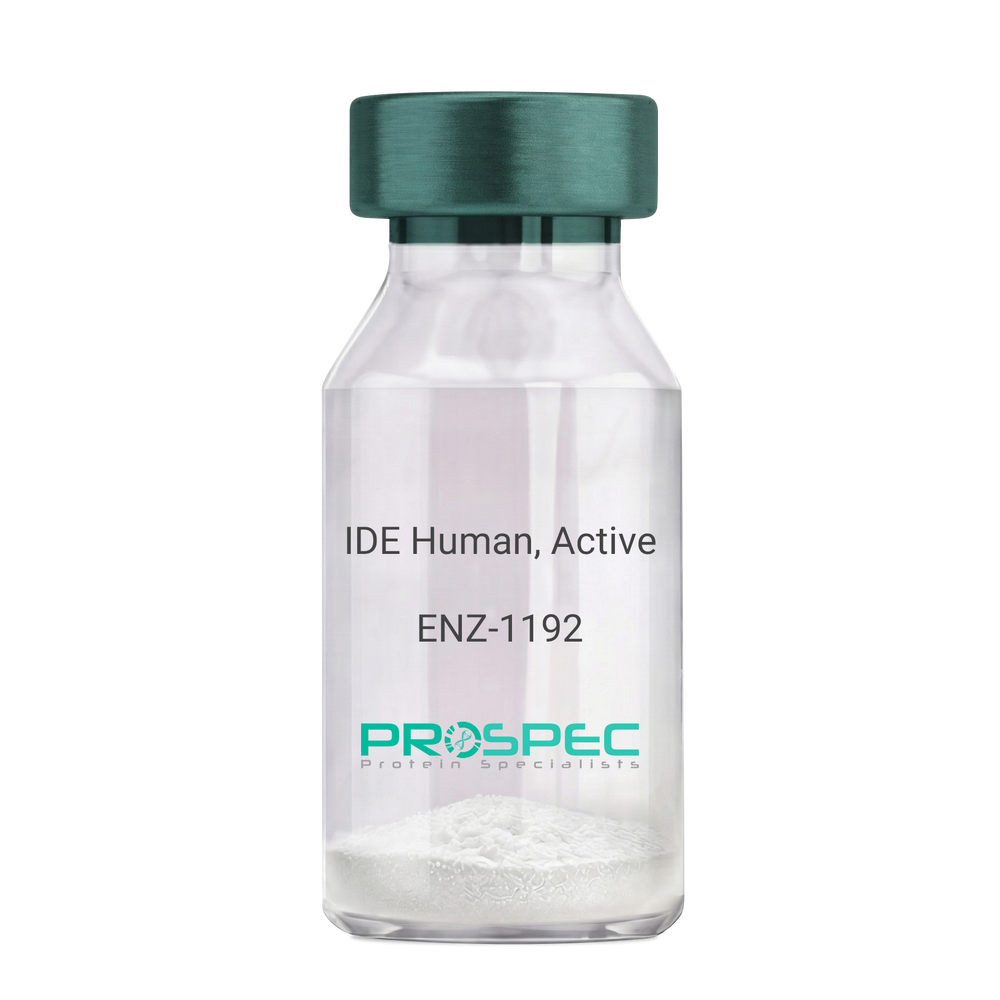
    Name :

    IDE Human, Active

    Description:

    Insulin-Degrading Enzyme Human Recombinant

    Insulin-Degrading Enzyme, Abeta-Degrading Protease, Insulysin, EC 3.4.24.56, Insulinase, Insulin Protease, INSULYSIN, EC 3.4.24, IDE, insulin-degrading enzyme isoform 1. 

    Product # :

    ENZ-1192

    Price :

    Quantity :

    Shipping Method :

    Ice Icon

    Shipped with Ice Packs

    Add To Cart

    More Info

    • description
    • source
    • formulation
    • purity
    • biological activity
    • More Info

    Description

    IDE Human, Active Human Recombinant produced in E.Coli is a single, non-glycosylated, polypeptide chain (42-1019 a.a) containing a total of 984 amino acids, having a molecular mass of 114 kDa. IDE is fused to a 6 amino acid His-tag at C-terminus and is purified by proprietary chromatographic techniques.

    Source

    Escherichia Coli.

    Formulation

    The IDE solution (0.5mg/ml) contains 10% Glycerol, 100mM NaCl, 0.05% Brij35 and 20mM Tris-HCl buffer (pH 7.5).

    Purity

    Greater than 90.0% as determined by SDS-PAGE.

    Biological Activity

    Specific activity is greater than 3,000 pmol/min/ug in which 1 unit will convert 1.0 pmole of Mca-RPPGFSAFK(Dnp)-OH to MCA-Pro-Leu-OH per minute at pH 7.5 at 25°C.

    More Info

    • Synonyms

      Insulin-Degrading Enzyme, Abeta-Degrading Protease, Insulysin, EC 3.4.24.56, Insulinase, Insulin Protease, INSULYSIN, EC 3.4.24, IDE, insulin-degrading enzyme isoform 1.

    • Physical Appearance

      Filtered colorless solution.

    • Stability

      Store at 4°C if entire vial will be used within 2-4 weeks. Store, frozen at -20°C for longer periods of time. For long term storage it is recommended to add a carrier protein (0.1% HSA or BSA). Avoid multiple freeze-thaw cycles.

    • Amino Acid Sequence

      MNNPAIKRIG NHITKSPEDK REYRGLELAN GIKVLLISDP TTDKSSAALD VHIGSLSDPP NIAGLSHFCE HMLFLGTKKY PKENEYSQFL SEHAGSSNAF TSGEHTNYYF DVSHEHLEGA LDRFAQFFLC PLFDESCKDR EVNAVDSEHE KNVMNDAWRL FQLEKATGNP KHPFSKFGTG NKYTLETRPN QEGIDVRQEL LKFHSAYYSS NLMAVCVLGR ESLDDLTNLV VKLFSEVENK NVPLPEFPEH PFQEEHLKQL YKIVPIKDIR NLYVTFPIPD LQKYYKSNPG HYLGHLIGHE GPGSLLSELK SKGWVNTLVG GQKEGARGFM FFIINVDLTE EGLLHVEDII LHMFQYIQKL RAEGPQEWVF QECKDLNAVA FRFKDKERPR GYTSKIAGIL HYYPLEEVLT AEYLLEEFRP DLIEMVLDKL RPENVRVAIV SKSFEGKTDR TEEWYGTQYK QEAIPDEVIK KWQNADLNGK FKLPTKNEFI PTNFEILPLE KEATPYPALI KDTAMSKLWF KQDDKFFLPK ACLNFEFFSP FAYVDPLHCN MAYLYLELLK DSLNEYAYAA ELAGLSYDLQ NTIYGMYLSV KGYNDKQPIL LKKIIEKMAT FEIDEKRFEI IKEAYMRSLN NFRAEQPHQH AMYYLRLLMT EVAWTKDELK EALDDVTLPR LKAFIPQLLS RLHIEALLHG NITKQAALGI MQMVEDTLIE HAHTKPLLPS
      QLVRYREVQL PDRGWFVYQQ RNEVHNNCGI EIYYQTDMQS TSENMFLELF CQIISEPCFN TLRTKEQLGY IVFSGPRRAN GIQGLRFIIQ SEKPPHYLES RVEAFLITME KSIEDMTEEA FQKHIQALAI RRLDKPKKLS AECAKYWGEI ISQQYNFDRD NTEVAYLKTL TKEDIIKFYK EMLAVDAPRR HKVSVHVLAR EMDSCPVVGE FPCQNDINLS QAPALPQPEV IQNMTEFKRG LPLFPLVKPH INFMAAKLHH HHHH.

    • Background

      Insulin-degrading enzyme (IDE) is a crucial protease that plays a significant role in maintaining glucose homeostasis by degrading insulin and other bioactive peptides. Dysregulation of IDE has been implicated in various metabolic disorders, particularly type 2 diabetes mellitus. IDE is also associated with the clearance of amyloid-beta peptides in the brain, making it relevant to Alzheimer's disease pathology. Studying the recombinant form of IDE is fundamental to understanding its functional mechanisms and exploring potential avenues for therapeutic interventions.

      The primary goal of this research is to express and purify recombinant IDE using diverse expression systems. Recombinant DNA techniques will be employed to construct expression vectors containing the IDE gene, followed by expression in bacterial, yeast, or mammalian cell-based systems. The recombinant IDE will be purified using affinity chromatography or other appropriate methods, facilitating subsequent biochemical and biophysical characterization.

      The second objective is to investigate the substrate specificity and catalytic activity of the purified IDE. In vitro enzymatic assays will be conducted to analyse the ability of the recombinant IDE to degrade insulin and other potential substrates. The effects of various factors, such as pH, temperature, and potential modulators, on IDE activity will be evaluated. Additionally, the interactions between IDE and its substrates will be explored using binding assays.

      The third objective is to elucidate the three-dimensional structure of the IDE recombinant using techniques like X-ray crystallography or nuclear magnetic resonance (NMR) spectroscopy. Structural insights into the active site and binding pockets of IDE will provide valuable information for understanding its substrate recognition and catalytic mechanisms. This knowledge could be instrumental in designing targeted therapeutic compounds.

      By characterizing the IDE recombinant, this research aims to contribute to our understanding of its role in insulin metabolism, glucose regulation, and potential therapeutic applications. The findings from this study may have implications for the development of novel treatments for diabetes and other related disorders.

    ProSpec's products are furnished for LABORATORY RESEARCH USE ONLY. The product may not be used as drugs, agricultural or pesticidal products, food additives or household chemicals.

    Ide Human Active
  • View Data Sheet

    Name :

    PAPP-A Native

    Description:

    Pregnancy-Associated Plasma Protein-1 Human

    Pappalysin-1, Pregnancy-associated plasma protein A, PAPP-A, IGF-dependent IGFBP-4 protease, IGFBP-4ase, PAPPA, PAPA, DIPLA1, PAPPA1, ASBABP2.

    Product # :

    ENZ-1204

    Price :

    Quantity :

    Shipping Method :

    Room Temp Icon

    Shipped at Room temp

    Add To Cart

    More Info

    • description
    • source
    • formulation
    • purity
    • More Info

    Description

    PAPP-A Human native purified from human placenta having a total molecular mass of ~200 kDa. The PAPP-A is purified by proprietary chromatographic techniques.

    Source

    Human Placenta

    Formulation

    PAPP-A protein was lyophilized from 10mM Tris-HCl pH-7, 0.15M NaCl, 0.1% NGME & 0.09% NaN3.

    Purity

    Greater than 95.0% as determined by SDS-PAGE.

    More Info

    • Introduction

      PAPPA is a large zinc binding protein, which plays a role as a metalloprotease and specifically cleaves IGFBP-4 and IGFBP-5, resulting in release of bound IGF. PAPP-A regulates IGF bioactivity in various biological systems, including the human ovary and cardiovascular systems. PAPP A levels were higher in patients with unstable angina or acute myocardial infarction. PAPPA is also involved in local proliferative processes such as wound healing and bone remodeling. Moreover, PAPP-A is produced in high concentrations during pregnancy and is released into the maternal circulation. In placenta, PAPP A is expressed in X cells in septa and anchoring villi, and in syncytiotrophoblasts in the chorionic villi.

    • Synonyms

      Pappalysin-1, Pregnancy-associated plasma protein A, PAPP-A, IGF-dependent IGFBP-4 protease, IGFBP-4ase, PAPPA, PAPA, DIPLA1, PAPPA1, ASBABP2.

    • Physical Appearance

      Brownish lyophilized (freeze-dried) powder.

    • Stability

      Lyophilized PAPP-A although stable at room temperature for 3 weeks, should be stored desiccated below -18C. Upon reconstitution PAPP-A should be stored at 4C between 2-7 days and for future use below -18C. For long term storage it is recommended to add a carrier protein (0.1% HSA or BSA). Please prevent freeze-thaw cycles.

    • Solubility

      It is recommended to add deionized water to a working concentration of 0.1mg/ml and let the lyophilized pellet dissolve completely.

    • Human Virus Test

      Starting material tested and found negative for HIV-I, HIV-II, HCV antibodies and HBsAg antigen.

    ProSpec's products are furnished for LABORATORY RESEARCH USE ONLY. The product may not be used as drugs, agricultural or pesticidal products, food additives or household chemicals.

    Papp A Native
  • View Data Sheet

    Name :

    CCBL1 Human

    Description:

    Cysteine Conjugate-Beta Lyase Cytoplasmic Human Recombinant

    Cysteine Conjugate-Beta Lyase, Cytoplasmic, Glutamine Transaminase K, Cysteine Conjugate-Beta Lyase; Cytoplasmic (Glutamine Transaminase K, Kyneurenine Aminotransferase), Kynurenine--Oxoglutarate Transaminase I, Glutamine--Phenylpyruvate Transaminase, Cysteine-S-Conjugate Beta-Lyase, Kynurenine Aminotransferase I, Kyneurenine Aminotransferase, KATI, GTK, Glutamine-Phenylpyruvate Aminotransferase, Kynurenine--Oxoglutarate Transaminase 1, Beta-Lysase, Kidney, EC 4.4.1.13, EC 2.6.1.64, EC 2.6.1.7, KAT1, Kynurenine--oxoglutarate transaminase 1.

    Product # :

    ENZ-878

    Price :

    Quantity :

    Shipping Method :

    Ice Icon

    Shipped with Ice Packs

    Add To Cart

    More Info

    • description
    • source
    • formulation
    • purity
    • More Info

    Description

    CCBL1 Human Recombinant produced in E.Coli is a single, non-glycosylated polypeptide chain containing 445 amino acids (1-422 a.a) and having a molecular mass of 50.3kDa. CCBL1 is fused to a 23 amino acid His-tag at N-terminus & purified by proprietary chromatographic techniques.

    Source

    Escherichia Coli.

    Formulation

    CCBL1 protein solution (1mg/ml) containing Phosphate buffered saline (pH7.4), 10% glycerol and 1mM DTT.

    Purity

    Greater than 90.0% as determined by SDS-PAGE.

    More Info

    • Introduction

      Cysteine Conjugate-Beta Lyase Cytoplasmic also known as CCBL1 is a member of the class-I pyridoxal-phosphate-dependent aminotransferase family. CCBL1 catalyzes the irreversible transamination of the L-tryptophan metabolite L-kynurenine to form kynurenic acid (KA) it also metabolizes the cysteine conjugates of certain halogenated alkenes and alkanes to form reactive metabolites. Furthermore, CCBL1 catalyzes the beta-elimination of S-conjugates and Se-conjugates of L-(seleno) cysteine, resulting in the cleavage of the C-S or C-Se bond.

    • Synonyms

      Cysteine Conjugate-Beta Lyase, Cytoplasmic, Glutamine Transaminase K, Cysteine Conjugate-Beta Lyase; Cytoplasmic (Glutamine Transaminase K, Kyneurenine Aminotransferase), Kynurenine--Oxoglutarate Transaminase I, Glutamine--Phenylpyruvate Transaminase, Cysteine-S-Conjugate Beta-Lyase, Kynurenine Aminotransferase I, Kyneurenine Aminotransferase, KATI, GTK, Glutamine-Phenylpyruvate Aminotransferase, Kynurenine--Oxoglutarate Transaminase 1, Beta-Lysase, Kidney, EC 4.4.1.13, EC 2.6.1.64, EC 2.6.1.7, KAT1, Kynurenine--oxoglutarate transaminase 1.

    • Physical Appearance

      Sterile Filtered colorless solution.

    • Stability

      Store at 4°C if entire vial will be used within 2-4 weeks. Store, frozen at -20°C for longer periods of time. For long term storage it is recommended to add a carrier protein (0.1% HSA or BSA).Avoid multiple freeze-thaw cycles.

    • Amino Acid Sequence

      MGSSHHHHHH SSGLVPRGSH MGSMAKQLQA RRLDGIDYNP WVEFVKLASE HDVVNLGQGF PDFPPPDFAV EAFQHAVSGD FMLNQYTKTF GYPPLTKILA SFFGELLGQE IDPLRNVLVT VGGYGALFTA FQALVDEGDE VIIIEPFFDC YEPMTMMAGG RPVFVSLKPG PIQNGELGSS SNWQLDPMEL AGKFTSRTKA LVLNTPNNPL GKVFSREELE LVASLCQQHD VVCITDEVYQ WMVYDGHQHI SIASLPGMWE RTLTIGSAGK TFSATGWKVG WVLGPDHIMK HLRTVHQNSV FHCPTQSQAA VAESFEREQL LFRQPSSYFV QFPQAMQRCR DHMIRSLQSV GLKPIIPQGS YFLITDISDF KRKMPDLPGA VDEPYDRRFV KWMIKNKGLV AIPVSIFYSV PHQKHFDHYI RFCFVKDEAT LQAMDEKLRK WKVEL.

    ProSpec's products are furnished for LABORATORY RESEARCH USE ONLY. The product may not be used as drugs, agricultural or pesticidal products, food additives or household chemicals.

    Ccbl1 Human
  • View Data Sheet

    Name :

    HPSE WB

    Description:

    Recombinant Human Heparanase-1 WB Control

    Product # :

    ENZ-261

    Price :

    Quantity :

    Shipping Method :

    Ice Icon

    Shipped with Ice Packs

    Add To Cart

    More Info

    • description
    • formulation
    • More Info

    Description

    Recombinant Heparanase protein HPA1 is produced in CHO cells.The protein is purified by several orthogonal chromatography steps.

    Formulation

    Concentration: 1μg /ml
    Content: 100 ng
    Buffer: LDS-PAGE buffer
    [140 mM Tris buffer pH 8.5, 10% Glycerol, 2% LDS, 0.015% EDTA, 1.88% (v/v) of 1% Serva Blue G250 and 0.625% (v/v) of 1% Phenol red].

    More Info

    • Introduction

      Heparanase is an endo β-D-glucuronidase, which degrades heparan sulfate side chains of heparan sulfate proteoglycans (HSPGs) in the extracellular matrix. Heparanase plays an important role in ECM degradation, facilitating the migration and extravasation of tumor cells and inflammatory leukocytes (1,2,3). Upon degradation, heparanase releases growth factors and cytokines that stimulate cell proliferation and chemotaxis (4,5). Heparanase is a heterodimer comprised of a 50 kDa subunit harboring the active site and a 8 kDa subunit. It is produced as a latent 65 kDa precursor and proteolytically processed to its active form (1,6). Heparanase is highly expressed in myeloid leukocytes (i.e. neutrophils) in platelets and in human placenta. Human heparanase was found to be upregulated in various types of primary tumors, correlating in some cases with increased tumor invasiveness and vascularity and with poor prospective survival (7,8).

    • Applications

      Positive control for western blot analysis.

    • Preparation protocol

      Use 20 μl of recombinant human heparanase 1 (HPA1) per lane, as a control for using monoclonal anti HPA 1 clone HP3/17 antibodies (Cat. No.: Ins-AB-04001) or polyclonal rabbit anti HPA1 antibody (Cat. No.: Ins-AB-04002).

    • Data Sheet

      To view the FULL VERSION data sheet click Heparanase-1 WB Protein:

    • Storage Procedures

      Store at –20ºC, avoid repeated freeze-thaw cycles.

    ProSpec's products are furnished for LABORATORY RESEARCH USE ONLY. The product may not be used as drugs, agricultural or pesticidal products, food additives or household chemicals.

    Heparanase Human
  • 1
  • 2
  • 3
  • 4
  • 5
  • …
  • 42
Your browser does not support the video tag.

Products

  • Cytokines
  • Growth Factors
  • Chemokines
  • CD Antigens
  • Neurotrophins
  • Hormones
  • Enzymes
  • Viral Antigens
  • Recombinant Proteins
  • Natural Proteins
  • Monoclonal Antibodies
  • Polyclonal Antibodies
  • Thermal Packaging

About

  • Company
  • Founder
  • Contribution
  • Contact Us
  • My Account

Ordering

  • Ordering Method
  • Ordering - Credit Card
  • Ordering PO
  • Shipping Fees
  • FAQ's

Legal

  • Terms & Conditions
  • Privacy
  • Site Map
  • info@prospecbio.com
  • Facebook
  • Instagram
  • Linkedin Profile

© 2026 ProSpec-Tany TechnoGene Ltd. All Rights Reserved.

  • Choosing a selection results in a full page refresh.
  • Opens in a new window.