Skip to content

High-quality research proteins.

  • 1-800-805-6531

  • Mon - Sat 8.00-18.00, Sun - Closed

  • info@prospecbio.com

  • PO Box 6591 East Brunswick NJ 08816

  • Products
    • Cytokines
    • Growth factors
    • Chemokines
    • Cd antigens
    • Neurotrophins
    • Hormones
    • Enzymes
    • Viral antigens
    • Recombinant proteins
    • Natural proteins
    • Monoclonal antibodies
    • Polyclonal antibodies
    • Thermal Packaging
  • About
    • Company
    • Founder
    • Contribution
  • Customers
    • Eastern Asia
    • Eastern Europe
    • North America
    • South America
    • South East Asia
    • Southern Asia
    • Western Europe
  • Ordering
    • Ordering Method
    • Ordering - Credit Card
    • Ordering - PO
    • Shipping Fees
    • FAQs
  • Services
    • DNA Cloning
    • Protein Expression
    • Monoclonal Antibody
    • Fermentation
    • Technology License
  • Contact us
Log in

Country/region

  • USD $ | Albania
  • USD $ | Andorra
  • USD $ | Argentina
  • USD $ | Armenia
  • USD $ | Australia
  • USD $ | Austria
  • USD $ | Azerbaijan
  • USD $ | Belarus
  • USD $ | Belgium
  • USD $ | Bolivia
  • USD $ | Brazil
  • USD $ | Bulgaria
  • USD $ | Cambodia
  • USD $ | Canada
  • USD $ | Chile
  • USD $ | China
  • USD $ | Colombia
  • USD $ | Costa Rica
  • USD $ | Croatia
  • USD $ | Cyprus
  • USD $ | Czechia
  • USD $ | Denmark
  • USD $ | Estonia
  • USD $ | Finland
  • USD $ | France
  • USD $ | Georgia
  • USD $ | Germany
  • USD $ | Greece
  • USD $ | Hong Kong SAR
  • USD $ | Hungary
  • USD $ | Iceland
  • USD $ | India
  • USD $ | Ireland
  • USD $ | Israel
  • USD $ | Italy
  • USD $ | Japan
  • USD $ | Kazakhstan
  • USD $ | Latvia
  • USD $ | Liechtenstein
  • USD $ | Lithuania
  • USD $ | Madagascar
  • USD $ | Malta
  • USD $ | Mexico
  • USD $ | Moldova
  • USD $ | Monaco
  • USD $ | Netherlands
  • USD $ | New Zealand
  • USD $ | North Macedonia
  • USD $ | Norway
  • USD $ | Panama
  • USD $ | Paraguay
  • USD $ | Peru
  • USD $ | Philippines
  • USD $ | Poland
  • USD $ | Portugal
  • USD $ | Romania
  • USD $ | Singapore
  • USD $ | Slovakia
  • USD $ | Slovenia
  • USD $ | South Africa
  • USD $ | South Korea
  • USD $ | Spain
  • USD $ | Sri Lanka
  • USD $ | Sweden
  • USD $ | Switzerland
  • USD $ | Taiwan
  • USD $ | Thailand
  • USD $ | Türkiye
  • USD $ | Ukraine
  • USD $ | United Kingdom
  • USD $ | United States
  • USD $ | Uruguay
  • USD $ | Vatican City
  • USD $ | Venezuela
  • USD $ | Vietnam
  • Facebook
  • Instagram
logoProSpec - Recombinant Protein Manufacturer for academic and R&D industry
Become a distributor
Account Log in
Wishlist
Cart Cart(0)
  • Products
    +
    • Cytokines
    • Growth factors
    • Chemokines
    • Cd antigens
    • Neurotrophins
    • Hormones
    • Enzymes
    • Viral antigens
    • Recombinant proteins
    • Natural proteins
    • Monoclonal antibodies
    • Polyclonal antibodies
    • Thermal Packaging
  • About
    +
    • Company
    • Founder
    • Contribution
  • Customers
    +
    • Eastern Asia
    • Eastern Europe
    • North America
    • South America
    • South East Asia
    • Southern Asia
    • Western Europe
  • Ordering
    +
    • Ordering Method
    • Ordering - Credit Card
    • Ordering - PO
    • Shipping Fees
    • FAQs
  • Services
    +
    • DNA Cloning
    • Protein Expression
    • Monoclonal Antibody
    • Fermentation
    • Technology License
  • Contact us

Item added to your cart

View cart
View All
  • Cytokines
  • Growth factors
  • Chemokines
  • Cd antigens
  • Neurotrophins
  • Hormones
  • Enzymes
  • Viral antigens
  • Recombinant proteins
  • Natural proteins
  • Monoclonal antibodies
  • Polyclonal antibodies
  • Thermal Packaging
  • Tumor Necrosis Factor

    Tumor Necrosis Factor

    View All
  • 4-1BB

    4-1BB

    View All
  • Adiponectin

    Adiponectin

    View All
  • AIF1

    AIF1

    View All
  • Other Cytokines

    Other Cytokines

    View All
  • AITRL

    AITRL

    View All
  • Angiopoietin

    Angiopoietin

    View All
  • Apolipoprotein

    Apolipoprotein

    View All
  • B-Cell Activating Factor

    B-Cell Activating Factor

    View All
  • Beta Defensin

    Beta Defensin

    View All
  • Bone Morphogenetic Protein

    Bone Morphogenetic Protein

    View All
  • B type Natriuretic Peptide

    B type Natriuretic Peptide

    View All
  • BST

    BST

    View All
  • Betacellulin

    Betacellulin

    View All
  • Cardiotrophin

    Cardiotrophin

    View All
  • Activin

    Activin

    View All
  • Fibroblast Growth Factor

    Fibroblast Growth Factor

    View All
  • Other Growth Factors

    Other Growth Factors

    View All
  • CSF

    CSF

    View All
  • CTGF

    CTGF

    View All
  • IGFBP

    IGFBP

    View All
  • VEGF Protein

    VEGF Protein

    View All
  • EGF

    EGF

    View All
  • Epigen

    Epigen

    View All
  • Erythropoietin

    Erythropoietin

    View All
  • Insulin-Like Growth Factor

    Insulin-Like Growth Factor

    View All
  • Growth Hormone

    Growth Hormone

    View All
  • HDGF

    HDGF

    View All
  • Hepatocyte Growth Factor

    Hepatocyte Growth Factor

    View All
  • Insulin

    Insulin

    View All
  • BCA-1/ BLC (CXCL13)

    BCA-1/ BLC (CXCL13)

    View All
  • BRAK (CXCL14)

    BRAK (CXCL14)

    View All
  • C-10 (CCL6)

    C-10 (CCL6)

    View All
  • Other Chemokines

    Other Chemokines

    View All
  • MEC (CCL28)

    MEC (CCL28)

    View All
  • LD78-beta (CCL3L1)

    LD78-beta (CCL3L1)

    View All
  • CTACK (CCL27)

    CTACK (CCL27)

    View All
  • CXCL16

    CXCL16

    View All
  • CXCL17

    CXCL17

    View All
  • Platelet Factor-4 (CXCL4)

    Platelet Factor-4 (CXCL4)

    View All
  • ENA-78 (CXCL5)

    ENA-78 (CXCL5)

    View All
  • Eotaxin (CCL11,24,26)

    Eotaxin (CCL11,24,26)

    View All
  • Exodus-2 (CCL21)

    Exodus-2 (CCL21)

    View All
  • Fractalkine (CX3CL1)

    Fractalkine (CX3CL1)

    View All
  • CXCL6

    CXCL6

    View All
  • Other CD Antigens

    Other CD Antigens

    View All
  • CD14

    CD14

    View All
  • CD164

    CD164

    View All
  • CD1

    CD1

    View All
  • CD2

    CD2

    View All
  • CD200

    CD200

    View All
  • CD207

    CD207

    View All
  • CD226

    CD226

    View All
  • CD23

    CD23

    View All
  • CD244

    CD244

    View All
  • CD247

    CD247

    View All
  • CD27

    CD27

    View All
  • CD274

    CD274

    View All
  • CD300

    CD300

    View All
  • CD33

    CD33

    View All
  • Other Neurotrophins

    Other Neurotrophins

    View All
  • Beta-NGF

    Beta-NGF

    View All
  • BDNF

    BDNF

    View All
  • CDNF

    CDNF

    View All
  • CNTF

    CNTF

    View All
  • GDNF

    GDNF

    View All
  • Glia Maturation Factor

    Glia Maturation Factor

    View All
  • MANF

    MANF

    View All
  • Midkine

    Midkine

    View All
  • Neuroglobin

    Neuroglobin

    View All
  • Neurotrophic factors

    Neurotrophic factors

    View All
  • Neuregulin

    Neuregulin

    View All
  • Neuropilin

    Neuropilin

    View All
  • Pigment Epithelium-Derived Factor

    Pigment Epithelium-Derived Factor

    View All
  • Pleiotrophin

    Pleiotrophin

    View All
  • Peptide Hormones

    Peptide Hormones

    View All
  • Other Hormones

    Other Hormones

    View All
  • HCG

    HCG

    View All
  • Endothelin

    Endothelin

    View All
  • Exendin

    Exendin

    View All
  • FSH

    FSH

    View All
  • Glucagon

    Glucagon

    View All
  • GHRP

    GHRP

    View All
  • GLP

    GLP

    View All
  • Thyrostimulin

    Thyrostimulin

    View All
  • Inhibin A

    Inhibin A

    View All
  • LHRH

    LHRH

    View All
  • Melanotan

    Melanotan

    View All
  • Procalcitonin

    Procalcitonin

    View All
  • PTH

    PTH

    View All
  • Peroxiredoxin

    Peroxiredoxin

    View All
  • Peptidase

    Peptidase

    View All
  • Synthetase

    Synthetase

    View All
  • Transferase

    Transferase

    View All
  • Hydrolase

    Hydrolase

    View All
  • Dehydrogenase

    Dehydrogenase

    View All
  • ACE2

    ACE2

    View All
  • Esterase

    Esterase

    View All
  • Protein Kinases

    Protein Kinases

    View All
  • Other Enzymes

    Other Enzymes

    View All
  • Phosphatase

    Phosphatase

    View All
  • Deaminase

    Deaminase

    View All
  • Oxygenase

    Oxygenase

    View All
  • Adenylate Kinase

    Adenylate Kinase

    View All
  • Lyase

    Lyase

    View All
  • Chagas

    Chagas

    View All
  • SARS

    SARS

    View All
  • Influenza

    Influenza

    View All
  • ASFV

    ASFV

    View All
  • Astrovirus

    Astrovirus

    View All
  • Borrelia

    Borrelia

    View All
  • Helicobacter Pylori

    Helicobacter Pylori

    View All
  • Chikungunya

    Chikungunya

    View All
  • Chlamydia

    Chlamydia

    View All
  • Cytomegalo

    Cytomegalo

    View All
  • Dengue

    Dengue

    View All
  • EBV

    EBV

    View All
  • Ebola

    Ebola

    View All
  • Feline Leukemia Virus

    Feline Leukemia Virus

    View All
  • Hepatitis A

    Hepatitis A

    View All
  • Other

    Other

    View All
  • Actin

    Actin

    View All
  • ADAM

    ADAM

    View All
  • Complement Component

    Complement Component

    View All
  • Ag85

    Ag85

    View All
  • Eukaryotic Translation Initiation Factor

    Eukaryotic Translation Initiation Factor

    View All
  • Anterior Gradient Protein

    Anterior Gradient Protein

    View All
  • Heat Shock Protein

    Heat Shock Protein

    View All
  • Alpha-2-HS-Glycoprotein

    Alpha-2-HS-Glycoprotein

    View All
  • Hemoglobin

    Hemoglobin

    View All
  • Allergy

    Allergy

    View All
  • Anaplasma

    Anaplasma

    View All
  • Angiogenin

    Angiogenin

    View All
  • Ankyrin Repeat Domain

    Ankyrin Repeat Domain

    View All
  • Annexin

    Annexin

    View All
  • Other Natural Proteins

    Other Natural Proteins

    View All
  • Aprotinin

    Aprotinin

    View All
  • Transferrin

    Transferrin

    View All
  • Avidin

    Avidin

    View All
  • Anti Coagulation Factors

    Anti Coagulation Factors

    View All
  • Natural Albumin

    Natural Albumin

    View All
  • Natural Coagulation Factors

    Natural Coagulation Factors

    View All
  • Fibronectin

    Fibronectin

    View All
  • Thrombin

    Thrombin

    View All
  • Anti Human Enzyme

    Anti Human Enzyme

    View All
  • Other Monoclonal Antibodies

    Other Monoclonal Antibodies

    View All
  • Anti Human Cytokine

    Anti Human Cytokine

    View All
  • Anti Human Heat Shock Protein

    Anti Human Heat Shock Protein

    View All
  • Anti Mouse Lymphocyte

    Anti Mouse Lymphocyte

    View All
  • Anti Human Chemokine

    Anti Human Chemokine

    View All
  • Anti Human Lymphocyte

    Anti Human Lymphocyte

    View All
  • Anti Viral Monoclonal

    Anti Viral Monoclonal

    View All
  • Anti Mouse Cytokine

    Anti Mouse Cytokine

    View All
  • Anti-GST Monoclonal

    Anti-GST Monoclonal

    View All
  • Other Polyclonal Antibodies

    Other Polyclonal Antibodies

    View All
  • Anti Viral

    Anti Viral

    View All
  • Anti-GST Monoclonal

    Anti-GST Monoclonal

    View All
Back

Search results

1000 results found for “exosome component”

Name

Description

Product #

Price

Quantity

Shipping Method

  • View Data Sheet

    Name :

    PSMA1 Human

    Description:

    Proteasome Subunit Alpha Type 1 Human Recombinant

    Proteasome (prosome macropain) subunit alpha type 1, PROS30, HC2, NU, Macropain subunit C2, Multicatalytic endopeptidase complex subunit C2, Proteasome component C2, Proteasome nu chain, 30 kDa prosomal protein, protein P30-33K, PROS-30, PSC2, EC 3.4.25.1.

    Product # :

    ENZ-178

    Price :

    Quantity :

    Shipping Method :

    Ice Icon

    Shipped with Ice Packs

    Add To Cart

    More Info

    • description
    • source
    • formulation
    • purity
    • More Info

    Description

    PSMA1 Human Recombinant produced in E.coli is a single, non-glycosylated polypeptide chain containing 286 amino acids (1-263) and having a molecular mass of 32.0 kDa.PSMA1 is fused to a 23 amino acid His-tag at N-terminus & purified by proprietary chromatographic techniques.

    Source

    E.coli.

    Formulation

    The PSMA1 solution (1mg/ml) contains 20mM Tris-HCl buffer (pH 8.0), 0.15M NaCl, 2mM DTT and 10% glycerol.

    Purity

    Greater than 95% as determined by SDS-PAGE.

    More Info

    • Introduction

      PSMA1 is a prosomal protein who takes part in a nonlysosomal ATP/ubiquitin-dependent proteolytic pathway. PSMA1 is a multicatalytic proteinase complex that is characterized by its capacity to cleave peptides with Arg, Phe, Tyr, Leu, and Glu next to the leaving group at neutral or slightly basic pH. PSMA1 is vastly expressed in prostate epithelium.

    • Synonyms

      Proteasome (prosome macropain) subunit alpha type 1, PROS30, HC2, NU, Macropain subunit C2, Multicatalytic endopeptidase complex subunit C2, Proteasome component C2, Proteasome nu chain, 30 kDa prosomal protein, protein P30-33K, PROS-30, PSC2, EC 3.4.25.1.

    • Physical Appearance

      Sterile Filtered colorless solution.

    • Stability

      Store at 4°C if entire vial will be used within 2-4 weeks. Store, frozen at -20°C for longer periods of time. For long term storage it is recommended to add a carrier protein (0.1% HSA or BSA).Avoid multiple freeze-thaw cycles.

    • Amino Acid Sequence

      MGSSHHHHHH SSGLVPRGSH MGSMFRNQYD NDVTVWSPQG RIHQIEYAME AVKQGSATVG LKSKTHAVLV ALKRAQSELA AHQKKILHVD NHIGISIAGL TADARLLCNF MRQECLDSRF VFDRPLPVSR LVSLIGSKTQ IPTQRYGRRP YGVGLLIAGY DDMGPHIFQT CPSANYFDCR AMSIGARSQS ARTYLERHMS EFMECNLNEL VKHGLRALRE TLPAEQDLTT KNVSIGIVGK DLEFTIYDDD DVSPFLEGLE ERPQRKAQPA QPADEPAEKA DEPMEH

    ProSpec's products are furnished for LABORATORY RESEARCH USE ONLY. The product may not be used as drugs, agricultural or pesticidal products, food additives or household chemicals.

    Psma1 Human
  • View Data Sheet

    Name :

    PEX19 Human

    Description:

    Peroxisomal Biogenesis Factor 19 Human Recombinant

    Peroxisomal biogenesis factor 19, Peroxisomal farnesylated protein, HK33, 33kDa housekeeping protein, PXF, PMP1, PXMP1, Peroxin-19, D1S2223E, FLJ55296.

    Product # :

    PRO-925

    Price :

    Quantity :

    Shipping Method :

    Ice Icon

    Shipped with Ice Packs

    Add To Cart

    More Info

    • description
    • source
    • formulation
    • purity
    • More Info

    Description

    PEX19 Human Recombinant produced in E.coli is a single, non-glycosylated polypeptide chain containing 316 amino acids (1-296) and having a molecular mass of 34.6 kDa.The PEX19 is fused to a 20 amino acid His-Tag at N-terminus and purified by proprietary chromatographic techniques.

    Source

    E.coli.

    Formulation

    The PEX19 solution (1mg/ml) contains 20mM Tris-HCl buffer (pH 8.0) and 10% glycerol.

    Purity

    Greater than 90% as determined by SDS-PAGE.

    More Info

    • Introduction

      PEX19 is vital for peroxisome biogenesis in Saccharomyces cerevisiae. PEX19 is limited to the outer surface of peroxisomes in liver cells and is has a part in the early stage of peroxisome membrane assembly, prior to the import of matrix protein.

    • Synonyms

      Peroxisomal biogenesis factor 19, Peroxisomal farnesylated protein, HK33, 33kDa housekeeping protein, PXF, PMP1, PXMP1, Peroxin-19, D1S2223E, FLJ55296.

    • Physical Appearance

      Sterile Filtered colorless solution.

    • Stability

      Store at 4°C if entire vial will be used within 2-4 weeks. Store, frozen at -20°C for longer periods of time. For long term storage it is recommended to add a carrier protein (0.1% HSA or BSA).Avoid multiple freeze-thaw cycles.

    • Amino Acid Sequence

      MGSSHHHHHH SSGLVPRGSH MAAAEEGCSV GAEADRELEE LLESALDDFD KAKPSPAPPS TTTAPDASGP QKRSPGDTAK DALFASQEKF FQELFDSELA SQATAEFEKA MKELAEEEPH LVEQFQKLSE AAGRVGSDMT SQQEFTSCLK ETLSGLAKNA TDLQNSSMSE EELTKAMEGL GMDEGDGEGN ILPIMQSIMQ NLLSKDVLYP SLKEITEKYP EWLQSHRESL PPEQFEKYQE QHSVMCKICE QFEAETPTDS ETTQKARFEM VLDLMQQLQD LGHPPKELAG EMPPGLNFDL DALNLSGPPG ASGEQC

    ProSpec's products are furnished for LABORATORY RESEARCH USE ONLY. The product may not be used as drugs, agricultural or pesticidal products, food additives or household chemicals.

    Pex19 Human
  • View Data Sheet

    Name :

    PSMA3 Human

    Description:

    Proteasome Subunit Alpha Type 3 Human Recombinant

    proteasome (prosome, macropain) subunit alpha type-3, HC8, Macropain subunit C8, Multicatalytic endopeptidase complex subunit C8, Proteasome component C8, PSC3, PSC8, EC 3.4.25.1.

    Product # :

    ENZ-196

    Price :

    Quantity :

    Shipping Method :

    Ice Icon

    Shipped with Ice Packs

    Add To Cart

    More Info

    • description
    • source
    • formulation
    • purity
    • More Info

    Description

    PSMA3 Human Recombinant produced in E.coli is a single, non-glycosylated polypeptide chain containing 275 amino acids (1-255) and having a molecular mass of 30.6 kDa.PSMA3 is fused to a 20 amino acid His-tag at N-terminus & purified by proprietary chromatographic techniques.

    Source

    E.coli.

    Formulation

    The PSMA3 solution (1mg/ml) contains 20mM Tris-HCl buffer (pH 8.0), 0.15M NaCl, 1mM DTT and 10% glycerol.

    Purity

    Greater than 95% as determined by SDS-PAGE.

    More Info

    • Introduction

      The proteasome is a multicatalytic proteinase complex which holds an extremely organized 20S core structure shaped like a ring. The central structure is assembled from 4 rings of 28 non-identical subunits; 2 rings are composed of 7 alpha subunits and 2 rings are composed of 7 beta subunits. There is a high concentration of proteasomes all over the eukaryotic cells and their job is to cleave peptides in an ATP/ubiquitin-dependent procedure in a non-lysosomal pathway. PSMA3 encodes several of the peptidase T1A family which is a 20S core alpha subunit. Two alternative transcripts encoding diverse isoforms were recognized.

    • Synonyms

      proteasome (prosome, macropain) subunit alpha type-3, HC8, Macropain subunit C8, Multicatalytic endopeptidase complex subunit C8, Proteasome component C8, PSC3, PSC8, EC 3.4.25.1.

    • Physical Appearance

      Sterile Filtered colorless solution.

    • Stability

      Store at 4°C if entire vial will be used within 2-4 weeks. Store, frozen at -20°C for longer periods of time. For long term storage it is recommended to add a carrier protein (0.1% HSA or BSA).Avoid multiple freeze-thaw cycles.

    • Amino Acid Sequence

      MGSSHHHHHH SSGLVPRGSH MSSIGTGYDL SASTFSPDGR VFQVEYAMKA VENSSTAIGI RCKDGVVFGV EKLVLSKLYE EGSNKRLFNV DRHVGMAVAG LLADARSLAD IAREEASNFR SNFGYNIPLK HLADRVAMYV HAYTLYSAVR PFGCSFMLGS YSVNDGAQLY MIDPSGVSYG YWGCAIGKAR QAAKTEIEKL QMKEMTCRDI VKEVAKIIYI VHDEVKDKAF ELELSWVGEL TNGRHEIVPK DIREEAEKYA KESLKEEDES DDDNM

    ProSpec's products are furnished for LABORATORY RESEARCH USE ONLY. The product may not be used as drugs, agricultural or pesticidal products, food additives or household chemicals.

    Psma3 Human
  • View Data Sheet

    Name :

    SEPT5 Human

    Description:

    Septin-5 Human Recombinant

    Septin 5, PNUTL1, H5, HCDCREL-1, CDCREL-1, cell division control related protein 1, Peanut-like protein 1 (Drosophila), platelet glycoprotein Ib beta chain.

    Product # :

    PRO-879

    Price :

    Quantity :

    Shipping Method :

    Ice Icon

    Shipped with Ice Packs

    Add To Cart

    More Info

    • description
    • source
    • formulation
    • purity
    • More Info

    Description

    SEPT5 Human Recombinant produced in E.coli is a single, non-glycosylated polypeptide chain containing 392 amino acids (1-369) and having a molecular mass of 45.2 kDa.The SEPT5 is fused to a 23 amino acid His-Tag at N-terminus and purified by proprietary chromatographic techniques.

    Source

    Escherichia Coli.

    Formulation

    SEPT5 protein (0.25mg/ml) is supplied in 20mM Tris-HCL, pH-8, 0.3M NaCl, 1mM DTT and 40% Glycerol.

    Purity

    Greater than 90.0% as determined by SDS-PAGE.

    More Info

    • Introduction

      SEPT5 is a member of the septin gene family of nucleotide binding proteins which were initially defined in yeast as cell division cycle regulatory proteins. Septins are extremely conserved in yeast, Drosophila, and mouse and seem to regulate cytoskeletal organization. Interference of septin function disrupts cytokinesis and results in high multinucleate or polyploid cells.

    • Synonyms

      Septin 5, PNUTL1, H5, HCDCREL-1, CDCREL-1, cell division control related protein 1, Peanut-like protein 1 (Drosophila), platelet glycoprotein Ib beta chain.

    • Physical Appearance

      Sterile Filtered colorless solution.

    • Stability

      Store at 4°C if entire vial will be used within 2-4 weeks. Store, frozen at -20°C for longer periods of time. For long term storage it is recommended to add a carrier protein (0.1% HSA or BSA).Avoid multiple freeze-thaw cycles.

    • Amino Acid Sequence

      MGSSHHHHHH SSGLVPRGSH MGSMSTGLRY KSKLATPEDK QDIDKQYVGF ATLPNQVHRK SVKKGFDFTL MVAGESGLGK STLVHSLFLT DLYKDRKLLS AEERISQTVE ILKHTVDIEE KGVKLKLTIV DTPGFGDAVN NTECWKPITD YVDQQFEQYF RDESGLNRKN IQDNRVHCCL YFISPFGHGL RPVDVGFMKA LHEKVNIVPL IAKADCLVPS EIRKLKERIR EEIDKFGIHV YQFPECDSDE DEDFKQQDRE LKESAPFAVI GSNTVVEAKG QRVRGRLYPW GIVEVENQAH CDFVKLRNML IRTHMHDLKD VTCDVHYENY RAHCIQQMTS KLTQDSRMES PIPILPLPTP DAETEKLIRM KDEELRRMQE MLQRMKQQMQ DQ

    ProSpec's products are furnished for LABORATORY RESEARCH USE ONLY. The product may not be used as drugs, agricultural or pesticidal products, food additives or household chemicals.

    Sept5 Human
  • View Data Sheet

    Name :

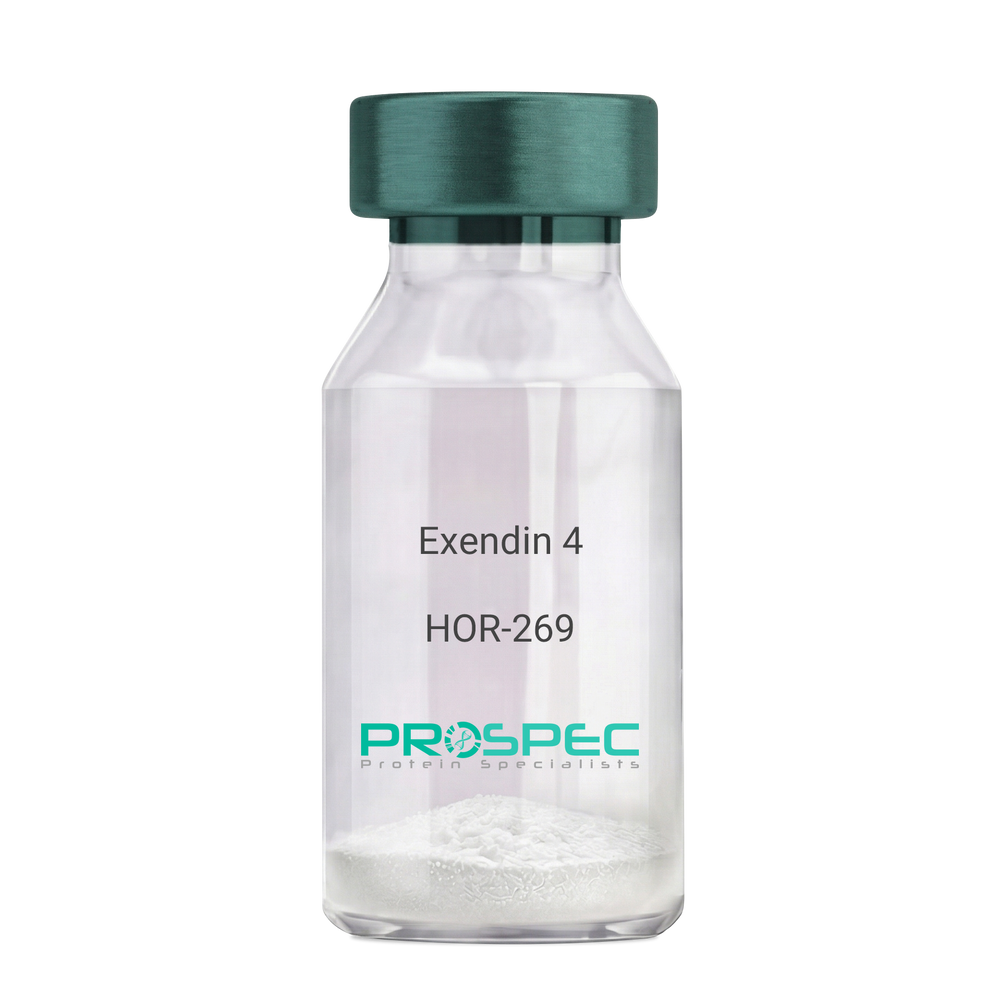
    Exendin 4

    Description:

    Exendin-4 Recombinant

    Product # :

    HOR-269

    Price :

    Quantity :

    Shipping Method :

    Room Temp Icon

    Shipped at Room temp

    Add To Cart

    More Info

    • description
    • source
    • formulation
    • purity
    • biological activity
    • More Info

    Description

    Exendin-4 Recombinant produced in E.Coli is a non-glycosylated polypeptide chain containing 39 amino acids and having a molecular mass of approximately 4.2kDa. Exendin-4 is purified by proprietary chromatographic techniques.

    Source

    Escherichia Coli.

    Formulation

    Lyophilized from a 0.2μm filtered concentrated solution in PBS, pH 7.4.

    Purity

    Greater than 96.0% as determined by:
    (a) Analysis by RP-HPLC.
    (b) Analysis by SDS-PAGE.

    Biological Activity

    1. Regulates Glucose levels rapidly
    2. Reduces Insulin resistance 
    3. Reduces Glucagon

    4. Stimulates beta cell growth production.

    More Info

    • Introduction

      Exedin-4 Recombinant is a like peptide-1 receptor agonist. The native hormone is produced in the gut of Gila monster Heloderma suspectrum (a type of reptile found in the desert) that stimulates production without causing threateningly low blood sugar, which can occur after using some anti-diabetes products. Recently, researchers used extracted saliva from gila monsters to create an unprecedented breakthrough in Diabetes Type 2 treatment. Unlike other products taken for type 2 diabetes, Exedin-4 has not been linked with weight gain and actually resulted in weight loss, according to the researchers. Exedin-4 enhances glucose-dependant secretion, suppresses inappropriately elevated secretion and slows gastric emptying in vivo. It also promotes B-cell proliferation and neogenesis in vitro and in animal models. Exedin-4 stimulates an increase in acinar cAMP, without stimulating the release of amylase.

    • Physical Appearance

      Sterile Filtered White lyophilized (freeze-dried) powder.

    • Stability

      Lyophilized Exendin Recombinant although stable at room temperature for 3 weeks, should be stored desiccated below -18°C. Upon reconstitution Exendin-4 should be stored at 4°C between 2-7 days and for future use below -18°C. For long term storage it is recommended to add a carrier protein (0.1% HSA or BSA).Please prevent freeze-thaw cycles.

    • Solubility

      It is recommended to reconstitute the lyophilized Exendin Recombinant in sterile 18MΩ-cm H2O not less than 100 µg/ml, which can then be further diluted to other aqueous solutions.

    • Amino Acid Sequence

      HGEGTFTSDL SKQMEEEAVR LFIEWLKNGG PSSGAPPPS.

    ProSpec's products are furnished for LABORATORY RESEARCH USE ONLY. The product may not be used as drugs, agricultural or pesticidal products, food additives or household chemicals.

    Exendin 4
  • View Data Sheet

    Name :

    PSMB2 Human

    Description:

    Proteasome Subunit Beta Type 2 Human Recombinant

    Proteasome subunit beta type-2, Macropain subunit C7-I, Multicatalytic endopeptidase complex subunit C7-I, Proteasome component C7-I, PSMB2, HC7-I.

    Product # :

    ENZ-204

    Price :

    Quantity :

    Shipping Method :

    Ice Icon

    Shipped with Ice Packs

    Add To Cart

    More Info

    • description
    • source
    • formulation
    • purity
    • More Info

    Description

    PSMB2 Human Recombinant produced in E.coli is a single, non-glycosylated polypeptide chain containing 221 amino acids (1-201) and having a molecular mass of 24.9kDa.PSMB2 is fused to a 20 amino acid His-tag at N-terminus & purified by proprietary chromatographic techniques.

    Source

    Escherichia Coli.

    Formulation

    The PSMB2 solution (0.5mg/ml) contains 20mM Tris-HCl buffer (pH 8.0), 1mM DTT, 30% glycerol and 0.1M NaCl.

    Purity

    Greater than 90.0% as determined by SDS-PAGE.

    More Info

    • Introduction

      Proteasome subunit beta type-2 (PSMB2) belongs to the proteasome T1B family, which is a 20S core beta subunit. The proteasome is a multicatalytic proteinase complex with a highly ordered ring-shaped 20S core structure. Proteasomes are spread throughout eukaryotic cells at a high concentration and cleave peptides in an ATP/ubiquitin-dependent process in a non-lysosomal pathway. A crucial function of a modified proteasome, the immunoproteasome, is the processing of class I MHC peptides. PSMB2 is up-regulated in ovarian cancer cell lines.

    • Synonyms

      Proteasome subunit beta type-2, Macropain subunit C7-I, Multicatalytic endopeptidase complex subunit C7-I, Proteasome component C7-I, PSMB2, HC7-I.

    • Physical Appearance

      Sterile Filtered colorless solution.

    • Stability

      Store at 4°C if entire vial will be used within 2-4 weeks. Store, frozen at -20°C for longer periods of time. For long term storage it is recommended to add a carrier protein (0.1% HSA or BSA).Avoid multiple freeze-thaw cycles.

    • Amino Acid Sequence

      MGSSHHHHHH SSGLVPRGSH MEYLIGIQGP DYVLVASDRV AASNIVQMKD DHDKMFKMSE KILLLCVGEA GDTVQFAEYI QKNVQLYKMR NGYELSPTAA ANFTRRNLAD CLRSRTPYHV NLLLAGYDEH EGPALYYMDY LAALAKAPFA AHGYGAFLTL SILDRYYTPT ISRERAVELL
      RKCLEELQKR FILNLPTFSV RIIDKNGIHD LDNISFPKQG S.

    ProSpec's products are furnished for LABORATORY RESEARCH USE ONLY. The product may not be used as drugs, agricultural or pesticidal products, food additives or household chemicals.

    Psmb2 Human
  • View Data Sheet

    Name :

    MCAM Human

    Description:

    Melanoma Cell Adhesion Molecule Human Recombinant

    Cell surface glycoprotein MUC18,  Cell surface glycoprotein P1H12,  Melanoma cell adhesion molecule,  Melanoma-associated antigen A32,  Melanoma-associated antigen MUC18,  S-endo 1 endothelial-associated antigen,  CD146, MCAM, MUC18, Cell Surface Glycoprotein MUC18, Melanoma Adhesion Molecule, CD146 Antigen, CD146, Melanoma Cell Adhesion Molecule, S-Endo 1 Endothelial-Associated Antigen, Melanoma-Associated Antigen MUC18, Cell Surface Glycoprotein P1H12, Melanoma-Associated Antigen A32, Gicerin.

    Product # :

    PRO-2503

    Price :

    Quantity :

    Shipping Method :

    Ice Icon

    Shipped with Ice Packs

    Add To Cart

    More Info

    • description
    • source
    • formulation
    • purity
    • More Info

    Description

    MCAM produced in Sf9 Insect cells is a single, glycosylated polypeptide chain containing 547 amino acids (24-559 a.a.) and having a molecular mass of 61.0kDa (Molecular size on SDS-PAGE will appear at approximately 70-100kDa).MCAM is expressed with a 6 amino acid His tag at C-Terminus and purified by proprietary chromatographic techniques.

    Source

    Sf9, Insect cells.

    Formulation

    MCAM protein solution (0.5mg/ml) contains Phosphate Buffered Saline (pH 7.4) and 10% glycerol.

    Purity

    Greater than 95.0% as determined by SDS-PAGE.

    More Info

    • Introduction

      Cell surface glycoprotein MUC18 (MCAM), is an integral membrane glycoprotein which is part of the immunoglobulin superfamily. MCAM is related with a variety of carcinomas such as tumor progression, metastasis and is also implicated in embryonic neural development. In Addition, MCAM takes part in cell adhesion, as well as in cohesion of the endothelial monolayer at the intercellular junctions in vascular tissue.

    • Synonyms

      Cell surface glycoprotein MUC18, Cell surface glycoprotein P1H12, Melanoma cell adhesion molecule, Melanoma-associated antigen A32, Melanoma-associated antigen MUC18, S-endo 1 endothelial-associated antigen, CD146, MCAM, MUC18, Cell Surface Glycoprotein MUC18, Melanoma Adhesion Molecule, CD146 Antigen, CD146, Melanoma Cell Adhesion Molecule, S-Endo 1 Endothelial-Associated Antigen, Melanoma-Associated Antigen MUC18, Cell Surface Glycoprotein P1H12, Melanoma-Associated Antigen A32, Gicerin.

    • Physical Appearance

      Sterile filtered colorless solution.

    • Stability

      Store at 4°C if entire vial will be used within 2-4 weeks. Store, frozen at -20°C for longer periods of time. For long term storage it is recommended to add a carrier protein (0.1% HSA or BSA).Avoid multiple freeze-thaw cycles.

    • Amino Acid Sequence

      VPGEAEQPAP ELVEVEVGST ALLKCGLSQS QGNLSHVDWF SVHKEKRTLI FRVRQGQGQS EPGEYEQRLS LQDRGATLAL TQVTPQDERI FLCQGKRPRS QEYRIQLRVY KAPEEPNIQV NPLGIPVNSK EPEEVATCVG RNGYPIPQVI WYKNGRPLKE EKNRVHIQSS QTVESSGLYT LQSILKAQLV KEDKDAQFYC ELNYRLPSGN HMKESREVTV PVFYPTEKVW LEVEPVGMLK EGDRVEIRCL ADGNPPPHFS ISKQNPSTRE AEEETTNDNG VLVLEPARKE HSGRYECQGL DLDTMISLLS EPQELLVNYV SDVRVSPAAP ERQEGSSLTL TCEAESSQDL EFQWLREETG QVLERGPVLQ LHDLKREAGG GYRCVASVPS IPGLNRTQLV NVAIFGPPWM AFKERKVWVK ENMVLNLSCE ASGHPRPTIS WNVNGTASEQ DQDPQRVLST LNVLVTPELL ETGVECTASN DLGKNTSILF LELVNLTTLT PDSNTTTGLS TSTASPHTRA NSTSTERKLP EPESRGAAAL EHHHHHH.

    ProSpec's products are furnished for LABORATORY RESEARCH USE ONLY. The product may not be used as drugs, agricultural or pesticidal products, food additives or household chemicals.

    Mcam Human
  • View Data Sheet

    Name :

    MED7 Human

    Description:

    Mediator Complex Subunit 7 Human Recombinant

    Mediator complex subunit 7, cofactor required for Sp1 transcriptional activation subunit 9 33kDa, Activator-recruited cofactor 34 kDa component, Transcriptional coactivator CRSP33, RNA polymerase transcriptional regulation mediator subunit 7 homolog, mediator of RNA polymerase II transcription subunit 7, CRSP complex subunit 9, CRSP33, CRSP9, ARC34, hMED7.

    Product # :

    PRO-1319

    Price :

    Quantity :

    Shipping Method :

    Ice Icon

    Shipped with Ice Packs

    Add To Cart

    More Info

    • description
    • source
    • formulation
    • purity
    • More Info

    Description

    MED7 Human Recombinant produced in E. coli is a single polypeptide chain containing 256 amino acids (1-233) and having a molecular mass of 29.7 kDa.MED7 is fused to a 23 amino acid His-tag at N-terminus & purified by proprietary chromatographic techniques.

    Source

    E.coli.

    Formulation

    The MED7 solution (0.5mg/1ml) contains 20mM Tris-HCl buffer (pH 8.0), 0.1M NaCl, and 10% glycerol.

    Purity

    Greater than 85% as determined by SDS-PAGE.

    More Info

    • Introduction

      MED7 is a member of the Mediator complex subunit 7 family. The activation of gene transcription is a multistep course which is initiated by factors which identify transcriptional enhancer sites in DNA and collaborate with co-activators to direct transcriptional initiation by the RNA polymerase II apparatus. The gene encode a subunit of the CRSP (cofactor required for SP1 activation) complex, that, together with TFIID, is needed for effective activation by SP1. Additionally, MED7 is also an element of other multisubunit complexes e.g. thyroid hormone receptor-(TR-) associated proteins that cooperate with TR and enables TR function on DNA templates in conjunction with initiation factors and cofactors.

    • Synonyms

      Mediator complex subunit 7, cofactor required for Sp1 transcriptional activation subunit 9 33kDa, Activator-recruited cofactor 34 kDa component, Transcriptional coactivator CRSP33, RNA polymerase transcriptional regulation mediator subunit 7 homolog, mediator of RNA polymerase II transcription subunit 7, CRSP complex subunit 9, CRSP33, CRSP9, ARC34, hMED7.

    • Physical Appearance

      Sterile Filtered colorless solution.

    • Stability

      Store at 4°C if entire vial will be used within 2-4 weeks. Store, frozen at -20°C for longer periods of time. For long term storage it is recommended to add a carrier protein (0.1% HSA or BSA).Avoid multiple freeze-thaw cycles.

    • Amino Acid Sequence

      MGSSHHHHHH SSGLVPRGSH MGSMGEPQQV SALPPPPMQY IKEYTDENIQ EGLAPKPPPP IKDSYMMFGN QFQCDDLIIR PLESQGIERL HPMQFDHKKE LRKLNMSILI NFLDLLDILI RSPGSIKREE KLEDLKLLFV HVHHLINEYR PHQARETLRV MMEVQKRQRL ETAERFQKHL ERVIEMIQNC LASLPDDLPH SEAGMRVKTE PMDADDSNNC TGQNEHQREN SGHRRDQIIE KDAALCVLID EMNERP

    ProSpec's products are furnished for LABORATORY RESEARCH USE ONLY. The product may not be used as drugs, agricultural or pesticidal products, food additives or household chemicals.

    Med7 Human
  • View Data Sheet

    Name :

    SYT11 Human

    Description:

    Synaptotagmin XI Human Recombinant

    Synaptotagmin XI, SytXI, Synaptotagmin 12, KIAA0080, SYT12, Synaptotagmin-11.

    Product # :

    PRO-2301

    Price :

    Quantity :

    Shipping Method :

    Ice Icon

    Shipped with Ice Packs

    Add To Cart

    More Info

    • description
    • source
    • formulation
    • purity
    • More Info

    Description

    SYT11 Human Recombinant produced in E.Coli is a single, non-glycosylated polypeptide chain containing 418 amino acids (37-431 a.a) and having a molecular mass of 47kDa. SYT11 is fused to a 23 amino acid His-tag at N-terminus & purified by proprietary chromatographic techniques.

    Source

    E.coli.

    Formulation

    SYT11 protein solution (0.25mg/ml) containing Phosphate Buffered Saline (pH7.4) and 50% glycerol.

    Purity

    Greater than 80% as determined by SDS-PAGE.

    More Info

    • Introduction

      Synaptotagmin-11 (SYT11) protein may be involved in Ca2+-dependent exocytosis of secretory vesicles through Ca2+ and phospholipid binding to the C2 domain or may function as Ca2+ sensors in the process of vesicular trafficking and exocytosis.

    • Synonyms

      Synaptotagmin XI, SytXI, Synaptotagmin 12, KIAA0080, SYT12, Synaptotagmin-11.

    • Physical Appearance

      Sterile Filtered colorless solution.

    • Stability

      Store at 4°C if entire vial will be used within 2-4 weeks. Store, frozen at -20°C for longer periods of time. For long term storage it is recommended to add a carrier protein (0.1% HSA or BSA).Avoid multiple freeze-thaw cycles.

    • Amino Acid Sequence

      MGSSHHHHHH SSGLVPRGSH MGSWSCCHQQ AEKKQKNPPY KFIHMLKGIS IYPETLSNKK KIIKVRRDKD GPGREGGRRN LLVDAAEAGL LSRDKDPRGP SSGSCIDQLP IKMDYGEELR SPITSLTPGE SKTTSPSSPE EDVMLGSLTF SVDYNFPKKA LVVTIQEAHG LPVMDDQTQG SDPYIKMTIL PDKRHRVKTR VLRKTLDPVF DETFTFYGIP YSQLQDLVLH FLVLSFDRFS RDDVIGEVMV PLAGVDPSTG KVQLTRDIIK RNIQKCISRG ELQVSLSYQP VAQRMTVVVL KARHLPKMDI TGLSGNPYVK VNVYYGRKRI AKKKTHVKKC TLNPIFNESF IYDIPTDLLP DISIEFLVID FDRTTKNEVV GRLILGAHSV TASGAEHWRE VCESPRKPVA KWHSLSEY.

    ProSpec's products are furnished for LABORATORY RESEARCH USE ONLY. The product may not be used as drugs, agricultural or pesticidal products, food additives or household chemicals.

    Syt11 Human
  • View Data Sheet

    Name :

    EPCAM Human

    Description:

    Epithelial Cell Adhesion Molecule Human Recombinant

    Epithelial cell adhesion molecule, Ep-CAM, Adenocarcinoma-associated antigen, Cell surface glycoprotein Trop-1, Epithelial cell surface antigen, Epithelial glycoprotein, EGP, Epithelial glycoprotein 314, EGP314, hEGP314, KS 1/4 antigen, KSA, Major gastrointestinal tumor-associated protein GA733-2, Tumor-associated calcium signal transducer 1, CD326, EPCAM, GA733-2, M1S2, M4S1, MIC18, TACSTD1, TROP1, ESA, MK-1, DIAR5, EGP-2, EGP40, KS1/4, HNPCC8.

    Product # :

    PRO-1322

    Price :

    Quantity :

    Shipping Method :

    Ice Icon

    Shipped with Ice Packs

    Add To Cart

    More Info

    • description
    • source
    • formulation
    • purity
    • More Info

    Description

    EPCAM Human Recombinant produced in E.Coli is a single, non-glycosylated polypeptide chain containing 267 amino acids (24-265 a.a.) and having a molecular mass of 30.1kDa.EPCAM is fused to a 25 amino acid His-tag at N-terminus & purified by proprietary chromatographic techniques.

    Source

    Escherichia Coli.

    Formulation

    EPCAM protein solution (1mg/ml) containing 20mM Tris-HCl buffer (pH 8.0), 0.4M urea and 10% glycerol.

    Purity

    Greater than 85.0% as determined by SDS-PAGE.

    More Info

    • Introduction

      EPCAM is a carcinoma-associated antigen and belongs to a family which includes at least 2 type I membrane proteins. The EPCAM protein has a role in embryonic stem cells proliferation and differentiation. EPCAM is used as a target for immunotherapy treatment of human carcinomas. EPCAM is expressed on most normal epithelial cells and gastrointestinal carcinomas and acts as a homotypic calcium-independent cell adhesion molecule. Epithelial cell adhesion molecules (EPCAM) can act as a physical homophilic interaction molecule between intestinal epithelial cells (IECs) and intraepithelial lymphocytes (IELs) at the mucosal epithelium for supplying immunological barrier as a first line of defense against mucosal infection. EPCAM gene mutations result in congenital tufting enteropathy.

    • Synonyms

      Epithelial cell adhesion molecule, Ep-CAM, Adenocarcinoma-associated antigen, Cell surface glycoprotein Trop-1, Epithelial cell surface antigen, Epithelial glycoprotein, EGP, Epithelial glycoprotein 314, EGP314, hEGP314, KS 1/4 antigen, KSA, Major gastrointestinal tumor-associated protein GA733-2, Tumor-associated calcium signal transducer 1, CD326, EPCAM, GA733-2, M1S2, M4S1, MIC18, TACSTD1, TROP1, ESA, MK-1, DIAR5, EGP-2, EGP40, KS1/4, HNPCC8.

    • Physical Appearance

      Sterile Filtered colorless solution.

    • Stability

      Store at 4°C if entire vial will be used within 2-4 weeks. Store, frozen at -20°C for longer periods of time. For long term storage it is recommended to add a carrier protein (0.1% HSA or BSA).Avoid multiple freeze-thaw cycles.

    • Amino Acid Sequence

      MGSSHHHHHH SSGLVPRGSH MGSHMQEECV CENYKLAVNC FVNNNRQCQC TSVGAQNTVI CSKLAAKCLV MKAEMNGSKL GRRAKPEGALQNNDGLYDPD CDESGLFKAK QCNGTSMCWC VNTAGVRRTD KDTEITCSER VRTYWIIIEL KHKAREKPYD SKSLRTALQK EITTRYQLDP KFITSILYEN NVITIDLVQN SSQKTQNDVD IADVAYYFEK DVKGESLFHS KKMDLTVNGE QLDLDPGQTL IYYVDEKAPE FSMQGLK.

    ProSpec's products are furnished for LABORATORY RESEARCH USE ONLY. The product may not be used as drugs, agricultural or pesticidal products, food additives or household chemicals.

    Epcam Human
  • View Data Sheet

    Name :

    SCO1 Human

    Description:

    SCO Cytochrome Oxidase Deficient Homolog 1 Human Recombinant

    SCO1 Cytochrome C Oxidase Assembly Protein, SCOD1, SCO (Cytochrome Oxidase Deficient, Yeast) Homolog 1, SCO Cytochrome Oxidase Deficient Homolog 1 (Yeast), SCO Cytochrome Oxidase Deficient Homolog 1, Protein SCO1 Homolog, Mitochondrial, SCOD1, Protein SCO1 homolog, mitochondrial.

    Product # :

    PRO-2156

    Price :

    Quantity :

    Shipping Method :

    Ice Icon

    Shipped with Ice Packs

    Add To Cart

    More Info

    • description
    • source
    • formulation
    • purity
    • More Info

    Description

    SCO1 Human Recombinant produced in E.Coli is a single, non-glycosylated polypeptide chain containing 179 amino acids (132-301 a.a) and having a molecular mass of 20.5kDa. SCO1 is fused to a 9 amino acid His-tag at C-terminus & purified by proprietary chromatographic techniques.

    Source

    Escherichia Coli.

    Formulation

    SCO1 protein solution (1mg/ml) containing Phosphate buffered saline (pH7.4), 10% glycerol and 1mM DTT.

    Purity

    Greater than 95% as determined by SDS-PAGE.

    More Info

    • Introduction

      SCO Cytochrome Oxidase Deficient Homolog 1, also known as SCO1 is a member of the SCO1/2 family. Mammalian cytochrome c oxidase (COX) catalyzes the transfer of reducing equivalents from cytochrome c to molecular oxygen and pumps protons across the inner mitochondrial membrane. Furthermore, in yeast, two related COX assembly genes, SCO1 & SCO2 which are synthesis of cytochrome c oxidase, enable subunits 1 as well as 2 to be incorporated into the holoprotein. This gene is the human homolog to the yeast SCO1 gene. Among the diseases associated with SCO1 are hepatic failure, early-onset, neurologic disorder due to cytochrome c oxidase deficiency and fatal infantile cytochrome c oxidase deficiency.

    • Synonyms

      SCO1 Cytochrome C Oxidase Assembly Protein, SCOD1, SCO (Cytochrome Oxidase Deficient, Yeast) Homolog 1, SCO Cytochrome Oxidase Deficient Homolog 1 (Yeast), SCO Cytochrome Oxidase Deficient Homolog 1, Protein SCO1 Homolog, Mitochondrial, SCOD1, Protein SCO1 homolog, mitochondrial.

    • Physical Appearance

      Sterile filtered colorless solution.

    • Stability

      Store at 4°C if entire vial will be used within 2-4 weeks. Store, frozen at -20°C for longer periods of time. For long term storage it is recommended to add a carrier protein (0.1% HSA or BSA).Avoid multiple freeze-thaw cycles.

    • Amino Acid Sequence

      MGKPLLGGPF SLTTHTGERK TDKDYLGQWL LIYFGFTHCP DVCPEELEKM IQVVDEIDSI TTLPDLTPLF ISIDPERDTK EAIANYVKEF SPKLVGLTGT REEVDQVARA YRVYYSPGPK DEDEDYIVDH TIIMYLIGPD GEFLDYFGQN KRKGEIAASI ATHMRPYRKK SLEHHHHHH.

    ProSpec's products are furnished for LABORATORY RESEARCH USE ONLY. The product may not be used as drugs, agricultural or pesticidal products, food additives or household chemicals.

    Sco1 Human
  • View Data Sheet

    Name :

    VPS28 Human

    Description:

    Vacuolar Protein Sorting 28 Human Recombinant

    Vacuolar protein sorting-associated protein 28 homolog, ESCRT-I complex subunit VPS28, H-Vps28, VPS28, MGC60323.

    Product # :

    PRO-730

    Price :

    Quantity :

    Shipping Method :

    Ice Icon

    Shipped with Ice Packs

    Add To Cart

    More Info

    • description
    • source
    • formulation
    • purity
    • More Info

    Description

    VPS28 Human Recombinant produced in E.Coli is a single, non-glycosylated, polypeptide chain containing 221 amino acids (1-221 a.a.) and having a molecular mass of 25.4kDa.The VPS28 is purified by proprietary chromatographic techniques.

    Source

    Escherichia Coli.

    Formulation

    The VPS28 protein solution contains 20mM Tris-HCl buffer (pH 7.5), 1mM DTT and 10% Glycerol.

    Purity

    Greater than 95.0% as determined by SDS-PAGE.

    More Info

    • Introduction

      VPS28 is a subunit of the ESCRT-I complex (endosomal complexes required for transport) involved in the sorting of ubiquitinated proteins. VPS28 is involved in endosomal sorting of cell surface receptors using a multivesicular body/late endosome pathway. VSP28 binding with the TSG101 may have significant roles in budding of Retroviruses, such as HIV-1 and Ebola virus.
      VSP28 interacts with TSG101, VPS37B, VPS37C, FAM125A and FAM125B, and also with VPS36, this interaction mediates the association with the ESCRT-II complex. Furthermore it interacts with SNF8 and VPS25 and CEP55.

    • Synonyms

      Vacuolar protein sorting-associated protein 28 homolog, ESCRT-I complex subunit VPS28, H-Vps28, VPS28, MGC60323.

    • Physical Appearance

      Sterile Filtered colorless solution.

    • Stability

      Store at 4°C if entire vial will be used within 2-4 weeks. Store, frozen at -20°C for longer periods of time. For long term storage it is recommended to add a carrier protein (0.1% HSA or BSA).Avoid multiple freeze-thaw cycles.

    • Amino Acid Sequence

      MFHGIPATPG IGAPGNKPEL YEEVKLYKNA REREKYDNMA ELFAVVKTMQ ALEKAYIKDC VSPSEYTAAC SRLLVQYKAA FRQVQGSEIS SIDEFCRKFR LDCPLAMERI KEDRPITIKD DKGNLNRCIA DVVSLFITVM DKLRLEIRAM DEIQPDLREL METMHRMSHL PPDFEGRQTV SQWLQTLSGM SASDELDDSQ VRQMLFDLES AYNAFNRFLH A.

    ProSpec's products are furnished for LABORATORY RESEARCH USE ONLY. The product may not be used as drugs, agricultural or pesticidal products, food additives or household chemicals.

    Vps28 Human
  • View Data Sheet

    Name :

    NXPH1 Human, Sf9

    Description:

    Neurexophilin 1 Human Recombinant, Sf9

    NXPH1, Nbla00697, NPH1 , Neurexophilin-1, Neurexophilin 1.

    Product # :

    PRO-2418

    Price :

    Quantity :

    Shipping Method :

    Ice Icon

    Shipped with Ice Packs

    Add To Cart

    More Info

    • description
    • source
    • formulation
    • purity
    • More Info

    Description

    NXPH1 Human Recombinant produced in Sf9 Baculovirus cells is a single, glycosylated polypeptide chain containing 259 amino acids (22-271) and having a molecular mass of 29.7kDa (Molecular size on SDS-PAGE will appear at approximately 28-40kDa).NXPH1 is fused to 9 amino acid His-Tag at C-terminus and purified by proprietary chromatographic techniques.

    Source

    Sf9, Baculovirus cells.

    Formulation

    NXPH1 protein solution (0.5mg/ml) containing Phosphate Buffered Saline (pH 7.4) and 10% glycerol.

    Purity

    Greater than 90.0% as determined by SDS-PAGE.

    More Info

    • Introduction

      Neurexophilin 1 (NXPH1) is a part of the neurexophilin family which encodes a secreted protein with a variable N terminal domain, an extremely conserved, N-glycosylated central domain, a short linker region, and a cysteine-rich Cterminal domain. NXPH1 shapes a very tight complex with alpha neurexins, a group of proteins which promote adhesion among dendrites and axons.

    • Synonyms

      NXPH1, Nbla00697, NPH1 , Neurexophilin-1, Neurexophilin 1.

    • Physical Appearance

      Sterile Filtered colorless solution.

    • Stability

      Store at 4°C if entire vial will be used within 2-4 weeks. Store, frozen at -20°C for longer periods of time. For long term storage it is recommended to add a carrier protein (0.1% HSA or BSA).Avoid multiple freeze-thaw cycles.

    • Amino Acid Sequence

      ADPANLTNGG KSELLKSGSS KSTLKHIWTE SSKDLSISRL LSQTFRGKEN DTDLDLRYDT PEPYSEQDLW DWLRNSTDLQ EPRPRAKRRP IVKTGKFKKM FGWGDFHSNI KTVKLNLLIT GKIVDHGNGT FSVYFRHNST GQGNVSVSLV PPTKIVEFDL AQQTVIDAKD SKSFNCRIEY EKVDKATKNT LCNYDPSKTC YQEQTQSHVS WLCSKPFKVI CIYISFYSTD YKLVQKVCPD YNYHSDTPYF PSGHHHHHH.

    ProSpec's products are furnished for LABORATORY RESEARCH USE ONLY. The product may not be used as drugs, agricultural or pesticidal products, food additives or household chemicals.

    Nxph1 Human Sf9
  • View Data Sheet

    Name :

    PSME3 Human

    Description:

    Proteasome Activator Subunit 3 Human Recombinant

    Proteasome (prosome, macropain) activator subunit 3 (PA28 gamma; Ki), PA28G, Ki, Ki nuclear autoantigen, PA28-gamma, REG-GAMMA, Activator of multicatalytic protease subunit 3, Proteasome activator 28 subunit gamma, 11S regulator complex subunit gamma, PA28gamma,

    Product # :

    PRO-987

    Price :

    Quantity :

    Shipping Method :

    Ice Icon

    Shipped with Ice Packs

    Add To Cart

    More Info

    • description
    • source
    • formulation
    • purity
    • More Info

    Description

    PSME3 Human Recombinant produced in E.Coli is a single, non-glycosylated polypeptide chain containing 274 amino acids (1-254 a.a.) and having a molecular mass of 31.7kDa. PSME3 is fused to a 20 amino acid His-tag at N-terminus & purified by proprietary chromatographic techniques.

    Source

    E.coli.

    Formulation

    PSME3 protein solution (0.5mg/ml) containing 20mM Tris-HCl buffer (pH8.0), 200mM NaCl, 2mM DTT and 40% glycerol.

    Purity

    Greater than 90% as determined by SDS-PAGE.

    More Info

    • Introduction

      PSME3 is a member of the PA28 family. The 26S proteasome is an extremely organized multicatalytic proteinase complex composed of 2 complexes, a 20S core and a 19S regulator. Proteasomes are spread all over the eukaryotic cells in large quantities and cleave peptides in an ATP/ubiquitin-dependent process in a non-lysosomal pathway. PSME3 stimulates the trypsin-like catalytic subunit of the proteasome and inhibits the chymotrypsin-like and postglutamyl-preferring (PGPH) subunits. PSEM3 enables the MDM2-p53/TP53 collaboration that encourages ubiquitination- and MDM2-dependent proteasomal degradation of p53/TP53, restricting its growth and causing inhibited apoptosis after DNA damage.

    • Synonyms

      Proteasome (prosome, macropain) activator subunit 3 (PA28 gamma; Ki), PA28G, Ki, Ki nuclear autoantigen, PA28-gamma, REG-GAMMA, Activator of multicatalytic protease subunit 3, Proteasome activator 28 subunit gamma, 11S regulator complex subunit gamma, PA28gamma,

    • Physical Appearance

      Sterile Filtered colorless solution.

    • Stability

      Store at 4°C if entire vial will be used within 2-4 weeks. Store, frozen at -20°C for longer periods of time. For long term storage it is recommended to add a carrier protein (0.1% HSA or BSA).Avoid multiple freeze-thaw cycles.

    • Amino Acid Sequence

      MGSSHHHHHH SSGLVPRGSH MASLLKVDQE VKLKVDSFRE RITSEAEDLV ANFFPKKLLE LDSFLKEPIL NIHDLTQIHS DMNLPVPDPI LLTNSHDGLD GPTYKKRRLD ECEEAFQGTK VFVMPNGMLK SNQQLVDIIE KVKPEIRLLI EKCNTVKMWV QLLIPRIEDG NNFGVSIQEE TVAELRTVES EAASYLDQIS RYYITRAKLV SKIAKYPHVE DYRRTVTEID EKEYISLRLI ISELRNQYVT LHDMILKNIE KIKRPRSSNA ETLY

    ProSpec's products are furnished for LABORATORY RESEARCH USE ONLY. The product may not be used as drugs, agricultural or pesticidal products, food additives or household chemicals.

    Psme3 Human
  • View Data Sheet

    Name :

    DDX39A Human

    Description:

    DEAD Box Protein 39A Human Recombinant

    DEAD (Asp-Glu-Ala-Asp) box polypeptide 39A, BAT1, BAT1L, DDX39, DDXL, URH49, ATP-dependent RNA helicase DDX39A, DEAD box protein 39, Nuclear RNA helicase URH49, DDX39A.

    Product # :

    PRO-1990

    Price :

    Quantity :

    Shipping Method :

    Ice Icon

    Shipped with Ice Packs

    Add To Cart

    More Info

    • description
    • source
    • formulation
    • purity
    • More Info

    Description

    DDX39A Human Recombinant produced in E.Coli is a single, non-glycosylated polypeptide chain containing 274 amino acids (1-249 a.a) and having a molecular mass of 31kDa. DDX39A is fused to a 25 amino acid His-tag at N-terminus & purified by proprietary chromatographic techniques.

    Source

    Escherichia Coli.

    Formulation

    DDX39A protein solution (1mg/ml) containing 20mM Tris-HCl buffer (pH 8.0), 10% glycerol and 0.4M Urea.

    Purity

    Greater than 80.0% as determined by SDS-PAGE.

    More Info

    • Introduction

      DDX39A which is a part of the DEAD box protein family is characterized by the conserved motif Asp-Glu-Ala-Asp. This pattern is implicated in a various cellular processes involving alteration of RNA secondary structure, nuclear and mitochondrial splicing, and ribosome and spliceosome assembly. Several members of the DEAD box protein family are taking part in embryogenesis, spermatogenesis, and cellular growth and division.

    • Synonyms

      DEAD (Asp-Glu-Ala-Asp) box polypeptide 39A, BAT1, BAT1L, DDX39, DDXL, URH49, ATP-dependent RNA helicase DDX39A, DEAD box protein 39, Nuclear RNA helicase URH49, DDX39A.

    • Physical Appearance

      Sterile Filtered colorless solution.

    • Stability

      Store at 4°C if entire vial will be used within 2-4 weeks. Store, frozen at -20°C for longer periods of time. For long term storage it is recommended to add a carrier protein (0.1% HSA or BSA).Avoid multiple freeze-thaw cycles.

    • Amino Acid Sequence

      MGSSHHHHHH SSGLVPRGSH MGSEFMAEQD VENDLLDYDE EEEPQAPQES TPAPPKKDIK GSYVSIHSSG FRDFLLKPEL LRAIVDCGFE HPSEVQHECI PQAILGMDVL CQAKSGMGKT AVFVLATLQQ IEPVNGQVTV LVMCHTRELA FQISKEYERF SKYMPSVKVS VFFGGLSIKK DEEVLKKNCP HVVVGTPGRI LALVRNRSFS LKNVKHFVLD ECDKMLEQLD MRRDVQEIFR LTPHEKQCMM FSATLSKDIR PVCRKFMQDP MEVF.

    ProSpec's products are furnished for LABORATORY RESEARCH USE ONLY. The product may not be used as drugs, agricultural or pesticidal products, food additives or household chemicals.

    Ddx39A Human
  • View Data Sheet

    Name :

    ECH1 Human

    Description:

    Enoyl CoA Hydratase 1, Peroxisomal Human Recombinant

    peroxisomal, enoyl Coenzyme A hydratase 1.

    Product # :

    ENZ-562

    Price :

    Quantity :

    Shipping Method :

    Ice Icon

    Shipped with Ice Packs

    Add To Cart

    More Info

    • description
    • source
    • formulation
    • purity
    • More Info

    Description

    ECH1 produced in E.Coli is a single, non-glycosylated polypeptide chain containing 316 amino acids (34-328a.a.) and having a molecular mass of 34.4kDa.ECH1 is fused to a 21 amino acid His-tag at N-terminus & purified by proprietary chromatographic techniques.

    Source

    Escherichia Coli.

    Formulation

    The ECH1 protein solution (1mg/1ml) is formulated in 20mM Tris-HCl buffer (pH8.0) 1mM DTT, 50mM NaCl, and 10% glycerol.

    Purity

    Greater than 90% as determined by SDS-PAGE.

    More Info

    • Introduction

      ECH1 is a member of the hydratase/isomerase superfamily. ECH1 demonstrates high sequence similarity to enoyl-coenzyme A (CoA) hydratases of more than a few species, mostly within a conserved domain characteristic of these proteins. ECH1 contains a C-terminal peroxisomal targeting sequence, localizes to both the peroxisome and the mitochondria. peroxisomal takes part in the auxiliary step of the fatty acid beta-oxidation pathway specifically functioning to catalyze the isomerization of 3-trans, 5-cis-dienoyl-CoA to 2-trans, 4-transdienoyl-CoA.

    • Synonyms

      peroxisomal, enoyl Coenzyme A hydratase 1.

    • Physical Appearance

      Sterile Filtered clear solution.

    • Stability

      Store at 4°C if entire vial will be used within 2-4 weeks. Store, frozen at -20°C for longer periods of time. For long term storage it is recommended to add a carrier protein (0.1% HSA or BSA).Avoid multiple freeze-thaw cycles.

    • Amino Acid Sequence

      MGSSHHHHHH SSGLVPRGSH MTGSSAQEAA SGVALGEAPD HSYESLRVTS AQKHVLHVQL NRPNKRNAMN KVFWREMVEC FNKISRDADC RAVVISGAGK MFTAGIDLMD MASDILQPKG DDVARISWYL RDIITRYQET FNVIERCPKP VIAAVHGGCI GGGVDLVTAC DIRYCAQDAF FQVKEVDVGL AADVGTLQRL PKVIGNQSLV NELAFTARKM MADEALGSGL VSRVFPDKEV MLDAALALAA EISSKSPVAV QSTKVNLLYS RDHSVAESLN YVASWNMSML QTQDLVKSVQ ATTENKELKT VTFSKL.

    ProSpec's products are furnished for LABORATORY RESEARCH USE ONLY. The product may not be used as drugs, agricultural or pesticidal products, food additives or household chemicals.

    Ech1 Human
  • View Data Sheet

    Name :

    ATOX1 Human

    Description:

    Copper Transport Protein ATOX1 Human Recombinant

    Antioxidant protein 1, ATX1, HAH1, Copper transport protein ATOX1, Metal transport protein ATX1, ATOX1, MGC138453, MGC138455.

    Product # :

    PRO-754

    Price :

    Quantity :

    Shipping Method :

    Ice Icon

    Shipped with Ice Packs

    Add To Cart

    More Info

    • description
    • source
    • formulation
    • purity
    • More Info

    Description

    ATOX1 Human Recombinant produced in E.Coli is a single, non-glycosylated, polypeptide chain containing 88 amino acids (1-68 a.a.) and having a molecular mass of 9.5kDa. ATOX1 is fused to a 20 amino acid His Tag at N-terminus and purified by proprietary chromatographic techniques.

    Source

    Escherichia Coli.

    Formulation

    ATOX1 solution containing 20mM Tris pH-8, 1mM DTT and 10% glycerol.

    Purity

    Greater than 95% as determined by SDS-PAGE.

    More Info

    • Introduction

      ATOX1 is a metal transport protein that is part of the ATX1 family. ATOX1 is a copper chaperone that takes part in cellular antioxidant defense and can bind and deliver cytosolic copper to the copper ATPase proteins in the trans-Golgi network for later incorporation to the ceruloplasmin. ATOX1 plays a role as an antioxidant against superoxide and hydrogen peroxide, and consequently, takes an important part in cancer carcinogenesis. Because of ATOX1 cytogenetic location, the gene can be a good a candidate gene for 5q-syndrome.

    • Synonyms

      Antioxidant protein 1, ATX1, HAH1, Copper transport protein ATOX1, Metal transport protein ATX1, ATOX1, MGC138453, MGC138455.

    • Physical Appearance

      Sterile filtered colorless solution.

    • Stability

      Store at 4°C if entire vial will be used within 2-4 weeks. Store, frozen at -20°C for longer periods of time. For long term storage it is recommended to add a carrier protein (0.1% HSA or BSA).Please prevent freeze thaw cycles.

    • Amino Acid Sequence

      MGSSHHHHHH SSGLVPRGSH MPKHEFSVDM TCGGCAEAVS RVLNKLGGVK YDIDLPNKKV CIESEHSMDT LLATLKKTGK TVSYLGLE.

    ProSpec's products are furnished for LABORATORY RESEARCH USE ONLY. The product may not be used as drugs, agricultural or pesticidal products, food additives or household chemicals.

    Atox1 Human
  • View Data Sheet

    Name :

    PEX26 Human

    Description:

    Peroxisomal Biogenesis Factor 26 Human Recombinant

    PBD7A, PBD7B, PEX26M1T, Pex26pM1T, Peroxisome assembly protein 26, PEX26.

    Product # :

    PRO-1544

    Price :

    Quantity :

    Shipping Method :

    Ice Icon

    Shipped with Ice Packs

    Add To Cart

    More Info

    • description
    • source
    • formulation
    • purity
    • More Info

    Description

    PEX26 Human Recombinant produced in E. coli is a single polypeptide chain containing 269 amino acids (1-246) and having a molecular mass of 29.3kDa. PEX26 is fused to a 23 amino acid His-tag at N-terminus & purified by proprietary chromatographic techniques.

    Source

    Escherichia Coli.

    Formulation

    The PEX26 solution (0.5mg/ml) contains 20mM Tris-HCl buffer (pH 8.0), 0.15M NaCl, 20% glycerol and 1mM DTT.

    Purity

    Greater than 90% as determined by SDS-PAGE.

    More Info

    • Introduction

      Peroxisomal Biogenesis Factor 26 (PEX26) which is a part of the peroxin-26 gene family is probably required for protein import into peroxisomes. PEX26 attaches PEX1 and PEX6 to peroxisome membranes to form heteromeric AAA ATPase complexes needed for the import of proteins into peroxisomes. Deficiencies in this gene are the cause of peroxisome biogenesis disorder complementation group 8. PBD is a group of peroxisomal disorders evolving from a failure of protein import into the peroxisomal membrane or matrix.

    • Synonyms

      PBD7A, PBD7B, PEX26M1T, Pex26pM1T, Peroxisome assembly protein 26, PEX26.

    • Physical Appearance

      Sterile Filtered clear solution.

    • Stability

      Store at 4°C if entire vial will be used within 2-4 weeks. Store frozen at -20°C for longer periods of time. For long term storage it is recommended to add a carrier protein (0.1% HSA or BSA).Avoid multiple freeze-thaw cycles.

    • Amino Acid Sequence

      MGSSHHHHHH SSGLVPRGSH MGSMKSDSST SAAPLRGLGG PLRSSEPVRA VPARAPAVDL LEEAADLLVV HLDFRAALET CERAWQSLAN HAVAEEPAGT SLEVKCSLCV VGIQALAEMD RWQEVLSWVL QYYQVPEKLP PKVLELCILL YSKMQEPGAV LDVVGAWLQD PANQNLPEYG ALAEFHVQRV LLPLGCLSEA EELVVGSAAF GEERRLDVLQ AIHTARQQQK QEHSGSEEAQ KPNLEGSVSH KFLSLPMLVR QLWDSAVSH.

    ProSpec's products are furnished for LABORATORY RESEARCH USE ONLY. The product may not be used as drugs, agricultural or pesticidal products, food additives or household chemicals.

    Pex26 Human
  • View Data Sheet

    Name :

    ICAM5 Human

    Description:

    Intercellular Adhesion Molecule-5 Human Recombinant

    Intercellular adhesion molecule 5, ICAM5, ICAM-5, Telencephalin, telencephalin, TLN, TLCN, TLNtelencephalin, TLCNTelencephalin.

    Product # :

    PRO-2661

    Price :

    Quantity :

    Shipping Method :

    Ice Icon

    Shipped with Ice Packs

    Add To Cart

    More Info

    • description
    • source
    • formulation
    • purity
    • More Info

    Description

    ICAM5 Human Recombinant produced in HEK293 is a single, glycosylated polypeptide chain containing 1052 amino acids (23-835 a.a) and having a molecular mass of 113.8kDa. ICAM5 is fused to a 239 amino acid hIgG-His-tag at C-terminus & purified by proprietary chromatographic techniques.

    Source

    HEK293.

    Formulation

    ICAM5 protein solution (0.5mg/ml) containing Phosphate Buffered Saline (pH 7.4) and 10% glycerol.

    Purity

    Greater than 90.0% as determined by SDS-PAGE.

    More Info

    • Introduction

      Intercellular Adhesion Molecule-5 or ICAM-5 is a glycoprotein, part of the immunoglobulin family and located in the cell membrane. We can find ICAM-5 in telencephalic neurons, in a couple of adhesion activity, firstly heterophilic binding amid neurons and leukocytes and secondly, homophilic binding amid neurons. ICAM-5 is expressed exclusively in telencephalic areas of the central nervous system. Similar to other ICAMs molecules, ICAM-5 adhere to LFA-1 which is a leukocyte integrin.

    • Synonyms

      Intercellular adhesion molecule 5, ICAM5, ICAM-5, Telencephalin, telencephalin, TLN, TLCN, TLNtelencephalin, TLCNTelencephalin.

    • Physical Appearance

      Sterile filtered colorless solution.

    • Stability

      Store at 4°C if entire vial will be used within 2-4 weeks.Store, frozen at -20°C for longer periods of time. For long term storage it is recommended to add a carrier protein (0.1% HSA or BSA).Avoid multiple freeze-thaw cycles.

    • Amino Acid Sequence

      LFGLSAVSQE PFWADLQPRV AFVERGGSLW LNCSTNCPRP ERGGLETSLR RNGTQRGLRW LARQLVDIRE PETQPVCFFR CARRTLQARG LIRTFQRPDR VELMPLPPWQ PVGENFTLSC RVPGAGPRAS LTLTLLRGAQ ELIRRSFAGE PPRARGAVLT ATVLARREDH GANFSCRAEL DLRPHGLGLF ENSSAPRELR TFSLSPDAPR LAAPRLLEVG SERPVSCTLD GLFPASEARV YLALGDQNLS PDVTLEGDAF VATATATASA EQEGARQLVC NVTLGGENRE TRENVTIYSF PAPLLTLSEP SVSEGQMVTV TCAAGAQALV TLEGVPAAVP GQPAQLQLNA TENDDRRSFF CDATLDVDGE TLIKNRSAEL RVLYAPRLDD SDCPRSWTWP EGPEQTLRCE ARGNPEPSVH CARSDGGAVL ALGLLGPVTR ALSGTYRCKA ANDQGEAVKD VTLTVEYAPA LDSVGCPERI TWLEGTEASL SCVAHGVPPP DVICVRSGEL GAVIEGLLRV AREHAGTYRC EATNPRGSAA KNVAVTVEYG PRFEEPSCPS NWTWVEGSGR LFSCEVDGKP QPSVKCVGSG GATEGVLLPL APPDPSPRAP RIPRVLAPGI YVCNATNRHG SVAKTVVVSA ESPPEMDEST CPSHQTWLEG AEASALACAA RGRPSPGVRC SREGIPWPEQ QRVSREDAGT YHCVATNAHG TDSRTVTVGV EYRPVVAELA ASPPGGVRPG GNFTLTCRAE AWPPAQISWR APPGALNIGL SSNNSTLSVA GAMGSHGGEY ECAATNAHGR HARRITVRVA GPWLEPKSCD KTHTCPPCPA PELLGGPSVF LFPPKPKDTL MISRTPEVTC VVVDVSHEDP EVKFNWYVDG VEVHNAKTKP REEQYNSTYR VVSVLTVLHQ DWLNGKEYKC KVSNKALPAP IEKTISKAKG QPREPQVYTL PPSRDELTKN QVSLTCLVKG FYPSDIAVEW ESNGQPENNY KTTPPVLDSD GSFFLYSKLT VDKSRWQQGN VFSCSVMHEA LHNHYTQKSL SLSPGKHHHH HH.

    ProSpec's products are furnished for LABORATORY RESEARCH USE ONLY. The product may not be used as drugs, agricultural or pesticidal products, food additives or household chemicals.

    Icam5 Human
  • View Data Sheet

    Name :

    ATP6V1F Human

    Description:

    ATPase Transporting, Lysosomal V1 Subunit F Human Recombinant

    ATP6S14, VATF, Vma7, V-type proton ATPase subunit F, V-ATPase 14 kDa subunit.

    Product # :

    PRO-2166

    Price :

    Quantity :

    Shipping Method :

    Ice Icon

    Shipped with Ice Packs

    Add To Cart

    More Info

    • description
    • source
    • formulation
    • purity
    • More Info

    Description

    ATP6V1F Human Recombinant produced in E.Coli is a single, non-glycosylated polypeptide chain containing 142 amino acids (1-119 a.a) and having a molecular mass of 15.8kDa.ATP6V1F is fused to a 23 amino acid His-tag at N-terminus & purified by proprietary chromatographic techniques.

    Source

    Escherichia Coli.

    Formulation

    ATP6V1F protein solution (0.5mg/ml) containing Phosphate buffered saline (pH7.4), 50% glycerol and 1mM DTT.

    Purity

    Greater than 90.0% as determined by SDS-PAGE.

    More Info

    • Introduction

      ATPase Transporting, Lysosomal V1 Subunit F (ATP6V1F) is a component of vacuolar ATPase (V-ATPase); it is a multi-subunit enzyme, which mediates acidification of eukaryotic intracellular organelles. V-ATPase dependent organelle acidification is required for such intracellular processes as protein sorting, zymogen activation, receptor-mediated endocytosis, and synaptic vesicle proton gradient generation. V-ATPase is comprised of a cytosolic V1 domain and a transmembrane V0 domain. The V1 domain contains 3 A and 3 B subunits, 2 G subunits as well as the C, D, E, F, and H subunits. The V1 domain has the ATP catalytic site. The V0 domain consists of 5 different subunits: a, c, c', c', and d.

    • Synonyms

      ATP6S14, VATF, Vma7, V-type proton ATPase subunit F, V-ATPase 14 kDa subunit.

    • Physical Appearance

      Sterile Filtered clear solution.

    • Stability

      Store at 4°C if entire vial will be used within 2-4 weeks. Store, frozen at -20°C for longer periods of time. For long term storage it is recommended to add a carrier protein (0.1% HSA or BSA).Avoid multiple freeze-thaw cycles.

    • Amino Acid Sequence

      MGSSHHHHHH SSGLVPRGSH MGSMAGRGKL IAVIGDEDTV TGFLLGGIGE LNKNRHPNFL VVEKDTTINE IEDTFRQFLN RDDIGIILIN QYIAEMVRHA LDAHQQSIPA VLEIPSKEHP YDAAKDSILR RARGMFTAED LR.

    ProSpec's products are furnished for LABORATORY RESEARCH USE ONLY. The product may not be used as drugs, agricultural or pesticidal products, food additives or household chemicals.

    Atp6V1F Human
  • View Data Sheet

    Name :

    VCAM1 Mouse

    Description:

    Vascular cell adhesion molecule 1 Mouse Recombinant

    V-CAM 1, VCAM-1, CD106, Vcam1, Vcam-1, Vascular cell adhesion protein 1.

    Product # :

    PRO-2257

    Price :

    Quantity :

    Shipping Method :

    Ice Icon

    Shipped with Ice Packs

    Add To Cart

    More Info

    • description
    • source
    • formulation
    • purity
    • More Info

    Description

    VCAM1 Mouse Recombinant produced in Sf9 Baculovirus cells is a single, glycosylated polypeptide chain containing 682 amino acids (25-698 a.a) and having a molecular mass of 75.4kDa (Migrates at 70-100kDa on SDS-PAGE under reducing conditions). VCAM1 is fused to an 8 amino acid His-tag at C-terminus & purified by proprietary chromatographic techniques.

    Source

    Sf9, Baculovirus cells.

    Formulation

    VCAM1 protein solution (0.5mg/ml) containing Phosphate Buffered Saline (pH 7.4) and 10% glycerol.

    Purity

    Greater than 95.0% as determined by SDS-PAGE.

    More Info

    • Introduction

      VCAM1 is a member of the Ig superfamily. It is a cell surface sialoglycoprotein expressed by cytokine activated endothelium. VCAM-1 contains 6 or 7 immunoglobulin domains, and is expressed on both large and small vessels only after the endothelial cells are stimulated by cytokines. The protein has a number of functions including the regulation of leukocyte migration, leukocyte endothelial cell adhesion and signal transduction and may play a role in a number of inflammatory diseases (artherosclerosis and rheumatoid arthritis).

    • Synonyms

      V-CAM 1, VCAM-1, CD106, Vcam1, Vcam-1, Vascular cell adhesion protein 1.

    • Physical Appearance

      Sterile Filtered colorless solution.

    • Stability

      Store at 4°C if entire vial will be used within 2-4 weeks. Store, frozen at -20°C for longer periods of time. For long term storage it is recommended to add a carrier protein (0.1% HSA or BSA).Avoid multiple freeze-thaw cycles.

    • Amino Acid Sequence

      FKIEISPEYK TIAQIGDSMA LTCSTTGCES PLFSWRTQID SPLNAKVRTE GSKSVLTMEP VSFENEHSYL CTATCGSGKL ERSIHVDIYS FPKDPEIQFS GPLEVGKPVT VKCLAPDIYP VYRLEIDLFK GDQLMNRQEF SSEEMTKSLE TKSLEVTFTP VIEDIGKALV CRAKLHIDQI DSTLKERETV KELQVYISPR NTTISVHPST RLQEGGAVTM TCSSEGLPAP EIFWGRKLDN EVLQLLSGNA TLTLIAMRME DSGVYVCEGV NLIGRDKAEV ELVVQEKPFI VDISPGSQVA AQVGDSVVLT CAAIGCDSPS FSWRTQTDSP LNGVVRNEGA KSTLVLSSVG FEDEHSYLCA VTCLQRTLEK RTQVEVYSFP EDPVIKMSGP LVHGRPVTVN CTVPNVYPFD HLEIELLKGE TTLMKKYFLE EMGIKSLETK ILETTFIPTI EDTGKSLVCL ARLHSGEMES EPKQRQSVQP LYVNVAPKET TIWVSPSPIL EEGSPVNLTC SSDGIPAPKI LWSRQLNNGE LQPLSENTTL TFMSTKRDDS GIYVCEGINE AGISRKSVEL IIQVSPKDIQ LTVFPSKSVK EGDTVIISCT CGNVPETWII LKKKAKTGDM VLKSVDGSYT IRQAQLQDAG IYECESKTEV GSQLRSLTLD VKGKEHNKNY FSPELEHHHH HH.

    ProSpec's products are furnished for LABORATORY RESEARCH USE ONLY. The product may not be used as drugs, agricultural or pesticidal products, food additives or household chemicals.

    Vcam1 Mouse
  • View Data Sheet

    Name :

    KXD1 Human

    Description:

    KxDL Motif Containing 1 Human Recombinant

    C19orf50, KXDL, MST096, MSTP096, KXD1.

    Product # :

    PRO-1656

    Price :

    Quantity :

    Shipping Method :

    Ice Icon

    Shipped with Ice Packs

    Add To Cart

    More Info

    • description
    • source
    • formulation
    • purity
    • More Info

    Description

    KXD1 Human Recombinant produced in E.Coli is a single, non-glycosylated polypeptide chain containing 199 amino acids (1-176 a.a.) and having a molecular mass of 22.1kDa.KXD1 is fused to a 23 amino acid His-tag at N-terminus & purified by proprietary chromatographic techniques.

    Source

    Escherichia Coli.

    Formulation

    KXD1 protein solution (0.5mg/ml) contains 20mM Tris-HCl buffer (pH 8.0), 0.15M NaCl, 10% glycerol and 1mM DTT.

    Purity

    Greater than 85.0% as determined by SDS-PAGE.

    More Info

    • Introduction

      KxDL Motif Containing 1 (KXD1) is a member of the KXD1 family. KXD1 is participating in endosomal cargo sorting. KXD1 contacts with the BLOC-1 complex and Interacts with BLOC1S1. KXD1 Interacts with DTNBP1/BLOC1S7 through coiled-coil domain.

    • Synonyms

      C19orf50, KXDL, MST096, MSTP096, KXD1.

    • Physical Appearance

      Sterile Filtered clear solution.

    • Stability

      Store at 4°C if entire vial will be used within 2-4 weeks. Store, frozen at -20°C for longer periods of time. For long term storage it is recommended to add a carrier protein (0.1% HSA or BSA).Avoid multiple freeze-thaw cycles.

    • Amino Acid Sequence

      MGSSHHHHHH SSGLVPRGSH MGSMDLPDSA SRVFCGRILS MVNTDDVNAI ILAQKNMLDR FEKTNEMLLN FNNLSSARLQ QMSERFLHHT RTLVEMKRDL DSIFRRIRTL KGKLARQHPE AFSHIPEASF LEEEDEDPIP PSTTTTIATS EQSTGSCDTS PDTVSPSLSP GFEDLSHVQP GSPAINGRSQ TDDEEMTGE.

    ProSpec's products are furnished for LABORATORY RESEARCH USE ONLY. The product may not be used as drugs, agricultural or pesticidal products, food additives or household chemicals.

    Kxd1 Human
  • View Data Sheet

    Name :

    MCM7 Human

    Description:

    Minichromosome Maintenance Complex Component 7 Human Recombinant

    Minichromosome Maintenance Complex Component 7, MCM7 Minichromosome Maintenance Deficient 7 (S. Cerevisiae), Minichromosome Maintenance Deficient (S. Cerevisiae) 7, DNA Replication Licensing Factor MCM7, Homolog of S. Cerevisiae Cdc47, CDC47 Homolog, P1CDC47, PNAS146, P85MCM, MCM2, CDC47, P1.1-MCM3, EC 3.6.4.12.

    Product # :

    PRO-1847

    Price :

    Quantity :

    Shipping Method :

    Ice Icon

    Shipped with Ice Packs

    Add To Cart

    More Info

    • description
    • source
    • formulation
    • purity
    • More Info

    Description

    MCM7 Human Recombinant produced in E.coli is a single, non-glycosylated polypeptide chain containing 437 amino acids (1-414) and having a molecular mass of 48.6 kDa. MCM7 is fused to a 23 amino acid His-tag at N-terminus.

    Source

    Escherichia Coli.

    Formulation

    The MCM7 solution (0.5mg/ml) contains 20mM Tris-HCl buffer (pH 8.0), 0.4M Urea and 10% glycerol.

    Purity

    Greater than 85% as determined by SDS-PAGE.

    More Info

    • Introduction

      MCM7 is a highly conserved mini-chromosome maintenance protein (MCM) vital for eukaryotic genome replication initiation. The MCM proteins form a hexameric protein complex which is a key component of the pre-replication complex (pre_RC) which takes part in replication forks formation and in DNA replication related proteins recruitment. The MCM complex is comprised of MCM2, 4, 6 and 7 proteins and possesses DNA helicase activity, such as DNA unwinding.

    • Synonyms

      Minichromosome Maintenance Complex Component 7, MCM7 Minichromosome Maintenance Deficient 7 (S. Cerevisiae), Minichromosome Maintenance Deficient (S. Cerevisiae) 7, DNA Replication Licensing Factor MCM7, Homolog of S. Cerevisiae Cdc47, CDC47 Homolog, P1CDC47, PNAS146, P85MCM, MCM2, CDC47, P1.1-MCM3, EC 3.6.4.12.

    • Physical Appearance

      Sterile Filtered clear solution.

    • Stability

      Store at 4°C if entire vial will be used within 2-4 weeks. Store, frozen at -20°C for longer periods of time. For long term storage it is recommended to add a carrier protein (0.1% HSA or BSA).Avoid multiple freeze-thaw cycles.

    • Amino Acid Sequence

      MGSSHHHHHH SSGLVPRGSH MGSMVVATYT CDQCGAETYQ PIQSPTFMPL IMCPSQECQT NRSGGRLYLQ TRGSRFIKFQ EMKMQEHSDQ VPVGNIPRSI TVLVEGENTR IAQPGDHVSV TGIFLPILRT GFRQVVQGLL SETYLEAHRI VKMNKSEDDE SGAGELTREE LRQIAEEDFY EKLAASIAPE IYGHEDVKKA LLLLLVGGVD QSPRGMKIRG NINICLMGDP GVAKSQLLSY IDRLAPRSQY TTGRGSSGVG LTAAVLRDSV SGELTLEGGA LVLADQGVCC IDEFDKMAEA DRTAIHEVME QQTISIAKAG ILTTLNARCS ILAAANPAYG RYNPRRSLEQ NIQLPAALLS RFDLLWLIQD RPDRDNDLRL AQHITYVHQH SRQPPSQFEP LDMKLMRRYI AMCREKQPMV PESLADYITA AYVEMRR

    ProSpec's products are furnished for LABORATORY RESEARCH USE ONLY. The product may not be used as drugs, agricultural or pesticidal products, food additives or household chemicals.

    Mcm7 Human
  • View Data Sheet

    Name :

    SLC51B Human

    Description:

    Solute Carrier Family 51 Beta Human Recombinant

    OSTB, OSTBETA, Organic solute transporter subunit beta, OST-beta, Solute carrier family 51 subunit beta.

    Product # :

    PRO-1727

    Price :

    Quantity :

    Shipping Method :

    Ice Icon

    Shipped with Ice Packs

    Add To Cart

    More Info

    • description
    • source
    • formulation
    • purity
    • More Info

    Description

    SLC51B Human Recombinant produced in E.Coli is a single, non-glycosylated polypeptide chain containing 95 amino acids (57-128 a.a) and having a molecular mass of 10.7kDa.SLC51B is fused to a 23 amino acid His-tag at N-terminus & purified by proprietary chromatographic techniques.

    Source

    Escherichia Coli.

    Formulation

    SLC51B protein solution (1mg/ml) containing 20mM Tris-HCl buffer (pH8.0), 10% glycerol and 0.1M NaCl.

    Purity

    Greater than 95.0% as determined by SDS-PAGE.

    More Info

    • Introduction

      Solute Carrier Family 51 Beta (SLC51B), is a protein coding gene. SLC51B is an organic solute transporter subunit. SLC51 is composed of twodifferent proteins that must heterodimerize to generate transport activity, however the role of the individual subunits inmediating transport activity is unknown. The results show that SLC51B is required for both proper traffickingof SLC51A and formation of the functional transport unit, and identify specific residues of SLC51B essential for theseprocesses. Among the diseases associated with SLC51B are extrahepatic cholestasis, and biliary atresia.

    • Synonyms

      OSTB, OSTBETA, Organic solute transporter subunit beta, OST-beta, Solute carrier family 51 subunit beta.

    • Physical Appearance

      Sterile Filtered clear solution.

    • Stability

      Store at 4°C if entire vial will be used within 2-4 weeks. Store, frozen at -20°C for longer periods of time. For long term storage it is recommended to add a carrier protein (0.1% HSA or BSA).Avoid multiple freeze-thaw cycles.

    • Amino Acid Sequence

      MGSSHHHHHH SSGLVPRGSH MGSRSIQASR KEKMQPPEKE TPEVLHLDEA KDHNSLNNLR ETLLSEKPNL AQVELELKER DVLSVFLPDV PETES

    ProSpec's products are furnished for LABORATORY RESEARCH USE ONLY. The product may not be used as drugs, agricultural or pesticidal products, food additives or household chemicals.

    Slc51B Human
  • 1
  • 2
  • 3
  • 4
  • 5
  • …
  • 42
Your browser does not support the video tag.

Products

  • Cytokines
  • Growth Factors
  • Chemokines
  • CD Antigens
  • Neurotrophins
  • Hormones
  • Enzymes
  • Viral Antigens
  • Recombinant Proteins
  • Natural Proteins
  • Monoclonal Antibodies
  • Polyclonal Antibodies
  • Thermal Packaging

About

  • Company
  • Founder
  • Contribution
  • Contact Us
  • My Account

Ordering

  • Ordering Method
  • Ordering - Credit Card
  • Ordering PO
  • Shipping Fees
  • FAQ's

Legal

  • Terms & Conditions
  • Privacy
  • Site Map
  • info@prospecbio.com
  • Facebook
  • Instagram
  • Linkedin Profile

© 2026 ProSpec-Tany TechnoGene Ltd. All Rights Reserved.

  • Choosing a selection results in a full page refresh.
  • Opens in a new window.