Skip to content

High-quality research proteins.

  • 1-800-805-6531

  • Mon - Sat 8.00-18.00, Sun - Closed

  • info@prospecbio.com

  • PO Box 6591 East Brunswick NJ 08816

  • Products
    • Cytokines
    • Growth factors
    • Chemokines
    • Cd antigens
    • Neurotrophins
    • Hormones
    • Enzymes
    • Viral antigens
    • Recombinant proteins
    • Natural proteins
    • Monoclonal antibodies
    • Polyclonal antibodies
    • Thermal Packaging
  • About
    • Company
    • Founder
    • Contribution
  • Customers
    • Eastern Asia
    • Eastern Europe
    • North America
    • South America
    • South East Asia
    • Southern Asia
    • Western Europe
  • Ordering
    • Ordering Method
    • Ordering - Credit Card
    • Ordering - PO
    • Shipping Fees
    • FAQs
  • Services
    • DNA Cloning
    • Protein Expression
    • Monoclonal Antibody
    • Fermentation
    • Technology License
  • Contact us
Log in

Country/region

  • USD $ | Albania
  • USD $ | Andorra
  • USD $ | Argentina
  • USD $ | Armenia
  • USD $ | Australia
  • USD $ | Austria
  • USD $ | Azerbaijan
  • USD $ | Belarus
  • USD $ | Belgium
  • USD $ | Bolivia
  • USD $ | Brazil
  • USD $ | Bulgaria
  • USD $ | Cambodia
  • USD $ | Canada
  • USD $ | Chile
  • USD $ | China
  • USD $ | Colombia
  • USD $ | Costa Rica
  • USD $ | Croatia
  • USD $ | Cyprus
  • USD $ | Czechia
  • USD $ | Denmark
  • USD $ | Estonia
  • USD $ | Finland
  • USD $ | France
  • USD $ | Georgia
  • USD $ | Germany
  • USD $ | Greece
  • USD $ | Hong Kong SAR
  • USD $ | Hungary
  • USD $ | Iceland
  • USD $ | India
  • USD $ | Ireland
  • USD $ | Israel
  • USD $ | Italy
  • USD $ | Japan
  • USD $ | Kazakhstan
  • USD $ | Latvia
  • USD $ | Liechtenstein
  • USD $ | Lithuania
  • USD $ | Madagascar
  • USD $ | Malta
  • USD $ | Mexico
  • USD $ | Moldova
  • USD $ | Monaco
  • USD $ | Netherlands
  • USD $ | New Zealand
  • USD $ | North Macedonia
  • USD $ | Norway
  • USD $ | Panama
  • USD $ | Paraguay
  • USD $ | Peru
  • USD $ | Philippines
  • USD $ | Poland
  • USD $ | Portugal
  • USD $ | Romania
  • USD $ | Singapore
  • USD $ | Slovakia
  • USD $ | Slovenia
  • USD $ | South Africa
  • USD $ | South Korea
  • USD $ | Spain
  • USD $ | Sri Lanka
  • USD $ | Sweden
  • USD $ | Switzerland
  • USD $ | Taiwan
  • USD $ | Thailand
  • USD $ | Türkiye
  • USD $ | Ukraine
  • USD $ | United Kingdom
  • USD $ | United States
  • USD $ | Uruguay
  • USD $ | Vatican City
  • USD $ | Venezuela
  • USD $ | Vietnam
  • Facebook
  • Instagram
logoProSpec - Recombinant Protein Manufacturer for academic and R&D industry
Become a distributor
Account Log in
Wishlist
Cart Cart(0)
  • Products
    +
    • Cytokines
    • Growth factors
    • Chemokines
    • Cd antigens
    • Neurotrophins
    • Hormones
    • Enzymes
    • Viral antigens
    • Recombinant proteins
    • Natural proteins
    • Monoclonal antibodies
    • Polyclonal antibodies
    • Thermal Packaging
  • About
    +
    • Company
    • Founder
    • Contribution
  • Customers
    +
    • Eastern Asia
    • Eastern Europe
    • North America
    • South America
    • South East Asia
    • Southern Asia
    • Western Europe
  • Ordering
    +
    • Ordering Method
    • Ordering - Credit Card
    • Ordering - PO
    • Shipping Fees
    • FAQs
  • Services
    +
    • DNA Cloning
    • Protein Expression
    • Monoclonal Antibody
    • Fermentation
    • Technology License
  • Contact us

Item added to your cart

View cart
View All
  • Cytokines
  • Growth factors
  • Chemokines
  • Cd antigens
  • Neurotrophins
  • Hormones
  • Enzymes
  • Viral antigens
  • Recombinant proteins
  • Natural proteins
  • Monoclonal antibodies
  • Polyclonal antibodies
  • Thermal Packaging
  • Tumor Necrosis Factor

    Tumor Necrosis Factor

    View All
  • 4-1BB

    4-1BB

    View All
  • Adiponectin

    Adiponectin

    View All
  • AIF1

    AIF1

    View All
  • Other Cytokines

    Other Cytokines

    View All
  • AITRL

    AITRL

    View All
  • Angiopoietin

    Angiopoietin

    View All
  • Apolipoprotein

    Apolipoprotein

    View All
  • B-Cell Activating Factor

    B-Cell Activating Factor

    View All
  • Beta Defensin

    Beta Defensin

    View All
  • Bone Morphogenetic Protein

    Bone Morphogenetic Protein

    View All
  • B type Natriuretic Peptide

    B type Natriuretic Peptide

    View All
  • BST

    BST

    View All
  • Betacellulin

    Betacellulin

    View All
  • Cardiotrophin

    Cardiotrophin

    View All
  • Activin

    Activin

    View All
  • Fibroblast Growth Factor

    Fibroblast Growth Factor

    View All
  • Other Growth Factors

    Other Growth Factors

    View All
  • CSF

    CSF

    View All
  • CTGF

    CTGF

    View All
  • IGFBP

    IGFBP

    View All
  • VEGF Protein

    VEGF Protein

    View All
  • EGF

    EGF

    View All
  • Epigen

    Epigen

    View All
  • Erythropoietin

    Erythropoietin

    View All
  • Insulin-Like Growth Factor

    Insulin-Like Growth Factor

    View All
  • Growth Hormone

    Growth Hormone

    View All
  • HDGF

    HDGF

    View All
  • Hepatocyte Growth Factor

    Hepatocyte Growth Factor

    View All
  • Insulin

    Insulin

    View All
  • BCA-1/ BLC (CXCL13)

    BCA-1/ BLC (CXCL13)

    View All
  • BRAK (CXCL14)

    BRAK (CXCL14)

    View All
  • C-10 (CCL6)

    C-10 (CCL6)

    View All
  • Other Chemokines

    Other Chemokines

    View All
  • MEC (CCL28)

    MEC (CCL28)

    View All
  • LD78-beta (CCL3L1)

    LD78-beta (CCL3L1)

    View All
  • CTACK (CCL27)

    CTACK (CCL27)

    View All
  • CXCL16

    CXCL16

    View All
  • CXCL17

    CXCL17

    View All
  • Platelet Factor-4 (CXCL4)

    Platelet Factor-4 (CXCL4)

    View All
  • ENA-78 (CXCL5)

    ENA-78 (CXCL5)

    View All
  • Eotaxin (CCL11,24,26)

    Eotaxin (CCL11,24,26)

    View All
  • Exodus-2 (CCL21)

    Exodus-2 (CCL21)

    View All
  • Fractalkine (CX3CL1)

    Fractalkine (CX3CL1)

    View All
  • CXCL6

    CXCL6

    View All
  • Other CD Antigens

    Other CD Antigens

    View All
  • CD14

    CD14

    View All
  • CD164

    CD164

    View All
  • CD1

    CD1

    View All
  • CD2

    CD2

    View All
  • CD200

    CD200

    View All
  • CD207

    CD207

    View All
  • CD226

    CD226

    View All
  • CD23

    CD23

    View All
  • CD244

    CD244

    View All
  • CD247

    CD247

    View All
  • CD27

    CD27

    View All
  • CD274

    CD274

    View All
  • CD300

    CD300

    View All
  • CD33

    CD33

    View All
  • Other Neurotrophins

    Other Neurotrophins

    View All
  • Beta-NGF

    Beta-NGF

    View All
  • BDNF

    BDNF

    View All
  • CDNF

    CDNF

    View All
  • CNTF

    CNTF

    View All
  • GDNF

    GDNF

    View All
  • Glia Maturation Factor

    Glia Maturation Factor

    View All
  • MANF

    MANF

    View All
  • Midkine

    Midkine

    View All
  • Neuroglobin

    Neuroglobin

    View All
  • Neurotrophic factors

    Neurotrophic factors

    View All
  • Neuregulin

    Neuregulin

    View All
  • Neuropilin

    Neuropilin

    View All
  • Pigment Epithelium-Derived Factor

    Pigment Epithelium-Derived Factor

    View All
  • Pleiotrophin

    Pleiotrophin

    View All
  • Peptide Hormones

    Peptide Hormones

    View All
  • Other Hormones

    Other Hormones

    View All
  • HCG

    HCG

    View All
  • Endothelin

    Endothelin

    View All
  • Exendin

    Exendin

    View All
  • FSH

    FSH

    View All
  • Glucagon

    Glucagon

    View All
  • GHRP

    GHRP

    View All
  • GLP

    GLP

    View All
  • Thyrostimulin

    Thyrostimulin

    View All
  • Inhibin A

    Inhibin A

    View All
  • LHRH

    LHRH

    View All
  • Melanotan

    Melanotan

    View All
  • Procalcitonin

    Procalcitonin

    View All
  • PTH

    PTH

    View All
  • Peroxiredoxin

    Peroxiredoxin

    View All
  • Peptidase

    Peptidase

    View All
  • Synthetase

    Synthetase

    View All
  • Transferase

    Transferase

    View All
  • Hydrolase

    Hydrolase

    View All
  • Dehydrogenase

    Dehydrogenase

    View All
  • ACE2

    ACE2

    View All
  • Esterase

    Esterase

    View All
  • Protein Kinases

    Protein Kinases

    View All
  • Other Enzymes

    Other Enzymes

    View All
  • Phosphatase

    Phosphatase

    View All
  • Deaminase

    Deaminase

    View All
  • Oxygenase

    Oxygenase

    View All
  • Adenylate Kinase

    Adenylate Kinase

    View All
  • Lyase

    Lyase

    View All
  • Chagas

    Chagas

    View All
  • SARS

    SARS

    View All
  • Influenza

    Influenza

    View All
  • ASFV

    ASFV

    View All
  • Astrovirus

    Astrovirus

    View All
  • Borrelia

    Borrelia

    View All
  • Helicobacter Pylori

    Helicobacter Pylori

    View All
  • Chikungunya

    Chikungunya

    View All
  • Chlamydia

    Chlamydia

    View All
  • Cytomegalo

    Cytomegalo

    View All
  • Dengue

    Dengue

    View All
  • EBV

    EBV

    View All
  • Ebola

    Ebola

    View All
  • Feline Leukemia Virus

    Feline Leukemia Virus

    View All
  • Hepatitis A

    Hepatitis A

    View All
  • Other

    Other

    View All
  • Actin

    Actin

    View All
  • ADAM

    ADAM

    View All
  • Complement Component

    Complement Component

    View All
  • Ag85

    Ag85

    View All
  • Eukaryotic Translation Initiation Factor

    Eukaryotic Translation Initiation Factor

    View All
  • Anterior Gradient Protein

    Anterior Gradient Protein

    View All
  • Heat Shock Protein

    Heat Shock Protein

    View All
  • Alpha-2-HS-Glycoprotein

    Alpha-2-HS-Glycoprotein

    View All
  • Hemoglobin

    Hemoglobin

    View All
  • Allergy

    Allergy

    View All
  • Anaplasma

    Anaplasma

    View All
  • Angiogenin

    Angiogenin

    View All
  • Ankyrin Repeat Domain

    Ankyrin Repeat Domain

    View All
  • Annexin

    Annexin

    View All
  • Other Natural Proteins

    Other Natural Proteins

    View All
  • Aprotinin

    Aprotinin

    View All
  • Transferrin

    Transferrin

    View All
  • Avidin

    Avidin

    View All
  • Anti Coagulation Factors

    Anti Coagulation Factors

    View All
  • Natural Albumin

    Natural Albumin

    View All
  • Natural Coagulation Factors

    Natural Coagulation Factors

    View All
  • Fibronectin

    Fibronectin

    View All
  • Thrombin

    Thrombin

    View All
  • Anti Human Enzyme

    Anti Human Enzyme

    View All
  • Other Monoclonal Antibodies

    Other Monoclonal Antibodies

    View All
  • Anti Human Cytokine

    Anti Human Cytokine

    View All
  • Anti Human Heat Shock Protein

    Anti Human Heat Shock Protein

    View All
  • Anti Mouse Lymphocyte

    Anti Mouse Lymphocyte

    View All
  • Anti Human Chemokine

    Anti Human Chemokine

    View All
  • Anti Human Lymphocyte

    Anti Human Lymphocyte

    View All
  • Anti Viral Monoclonal

    Anti Viral Monoclonal

    View All
  • Anti Mouse Cytokine

    Anti Mouse Cytokine

    View All
  • Anti-GST Monoclonal

    Anti-GST Monoclonal

    View All
  • Other Polyclonal Antibodies

    Other Polyclonal Antibodies

    View All
  • Anti Viral

    Anti Viral

    View All
  • Anti-GST Monoclonal

    Anti-GST Monoclonal

    View All
Back

Search results

1000 results found for “Serglycin”

Name

Description

Product #

Price

Quantity

Shipping Method

  • View Data Sheet

    Name :

    EREG Human

    Description:

    Epiregulin Human Recombinant

    EREG, Epiregulin, ER.

    Product # :

    CYT-609

    Price :

    Quantity :

    Shipping Method :

    Room Temp Icon

    Shipped at Room temp

    Add To Cart

    More Info

    • description
    • source
    • formulation
    • purity
    • biological activity
    • More Info

    Description

    Epiregulin Human Recombinant produced in E.Coli is a single, non-glycosylated, polypeptide chain containing 49 amino acids and having a molecular mass of 5.6 kDa. Epiregulin is purified by proprietary chromatographic techniques.

    Source

    Escherichia Coli.

    Formulation

    Epiregulin was lyophilized from 0.5mg/ml solution ciontaing 20mM PBS buffer pH-7.4 containing 20mM sodium chloride.

    Purity

    Greater than 97.0% as determined by:
    (a) Analysis by RP-HPLC.
    (b) Analysis by SDS-PAGE.

    Biological Activity

    The ED50 was determined by the dose-dependent stimulation of the proliferation of murine Balb/3T3 cells is < 2.0 ng/ml, corresponding to a specific activity of > 500,000 units/mg.

    More Info

    • Introduction

      Epiregulin is part of the EGF family. Epiregulin functions as a ligand of EGFR, as well as a ligand of most members of the ERBB (v-erb-b2 oncogene homolog) family of tyrosine-kinase receptors.Epiregulin is expressed mostly in the placenta and peripheral blood leukocytes and in specific carcinomas of the bladder, lung, kidney and colon. Epiregulin stimulates the proliferation of keratinocytes, hepatocytes, fibroblasts and vascular smooth muscle cells. Epiregulin inhibits the growth of several tumor-derived epithelial cell lines. Human Epiregulin is initially synthesized as a glycosylated 19.0 kDa transmembrane precursor protein, which is processed by proteolytic cleavage to produce a 6.0 kDa mature secreted sequence.

    • Synonyms

      EREG, Epiregulin, ER.

    • Physical Appearance

      Sterile Filtered White lyophilized (freeze-dried) powder.

    • Stability

      Lyophilized Epiregulin although stable at room temperature for 3 weeks, should be stored desiccated below -18°C. Upon reconstitution Epiregulin should be stored at 4°C between 2-7 days and for future use below -18°C.For long term storage it is recommended to add a carrier protein (0.1% HSA or BSA).Please prevent freeze-thaw cycles.

    • Solubility

      It is recommended to reconstitute the lyophilized Epiregulin in sterile 18MΩ-cm H2O not less than 100µg/ml, which can then be further diluted to other aqueous solutions.

    • Amino Acid Sequence

      VAQVSITKC SSDMNGYCLH GQCIYLVDMS QNYCRCEVGY TGVRCEHFFL.

    • Background

      What is the molecular weight/Mw of EREG Protein?
      EREG Protein has a total Mw of 5.6kDa.

      What is the source or expression system of EREG Protein?
      Escherichia Coli.

      What is the Purity of EREG Protein?
      EREG Protein is >97% pure as determined by SDS-PAGE.

      What is the Biological Activity of EREG Protein?
      The ED50 was determined by the dose-dependent stimulation of the proliferation of murine Balb/3T3 cells is < 2.0 ng/ml, corresponding to a specific activity of > 500,000 units/mg.

      What is the amino acid sequence of EREG Protein?
      VAQVSITKC SSDMNGYCLH GQCIYLVDMS QNYCRCEVGY TGVRCEHFFL.

      What applications can EREG Protein be used in?
      EREG Protein can probably be used in western blot, ELISA and Lateral Flow.

      What is the endotoxin level for EREG Protein?
      The endotoxin level is minimal, EREG Protein was purified using conventional chromatography techniques.

    ProSpec's products are furnished for LABORATORY RESEARCH USE ONLY. The product may not be used as drugs, agricultural or pesticidal products, food additives or household chemicals.

    Epiregulin Human
  • View Data Sheet

    Name :

    Cetrorelix

    Description:

    Cetrorelix

    Product # :

    HOR-277

    Price :

    Quantity :

    Shipping Method :

    Room Temp Icon

    Shipped at Room temp

    Add To Cart

    More Info

    • description
    • formulation
    • purity
    • More Info

    Description

    Cetrorelix acetate is a synthetic decapeptide with gonadotropin-releasing hormone (GnRH) antagonistic activity. Cetrorelix acetate is an analog of native GnRH with substitutions of amino acids at positions 1, 2, 3, 6, and 10. The molecular formula is C70H92CIN17O14 (Ac-D-Nal1-D-Cpa2-D-Pal3-Ser4-Tyr5- D-Cit6-Leu7-Arg8-Pro9-D -Ala10-NH2), and the molecular weight is 1431 Dalton, calculated as the anhydrous free base.

    Formulation

    The Cetrorelix peptide was lyophilized with no additives.

    Purity

    Greater than 98.0% as determined by:
    (a) Analysis by RP-HPLC.
    (b) Analysis by SDS-PAGE.

    More Info

    • Physical Appearance

      Sterile Filtered White lyophilized (freeze-dried) powder.

    • Stability

      Lyophilized Cetrorelix although stable at room temperature for 3 weeks, should be stored desiccated below -18°C. Upon reconstitution Cetrorelix should be stored at 4°C between 2-7 days and for future use below -18°C. For long term storage it is recommended to add a carrier protein (0.1% HSA or BSA).Please prevent freeze-thaw cycles.

    • Solubility

      It is recommended to reconstitute the lyophilized Cetrorelix in sterile 18MΩ-cm H2O not less than 100 µg/ml, which can then be further diluted to other aqueous solutions.

    ProSpec's products are furnished for LABORATORY RESEARCH USE ONLY. The product may not be used as drugs, agricultural or pesticidal products, food additives or household chemicals.

    Cetrorelix
  • View Data Sheet

    Name :

    SERPINB5 Antibody

    Description:

    Serpin Peptidase Inhibitor Clade B Member 5, Mouse Anti Human

    PI5, maspin, SERPINB5, serpin peptidase inhibitor clade B (ovalbumin) member 5, Serpin B5, Protease inhibitor 5.

    Product # :

    ANT-364

    Price :

    Quantity :

    Shipping Method :

    Ice Icon

    Shipped with Ice Packs

    Add To Cart

    More Info

    • formulation
    • More Info

    Formulation

    1mg/ml containing PBS, pH-7.4, & 0.1% Sodium Azide.

    More Info

    • Introduction

      SERPINB5 (Maspin) is a tumor suppressor protein of the serine proteinase inhibitor family. Maspin plays a vital role in embryonic development through critical functions in cell adhesion. In addition, Maspin is present in normal breast and prostatic epithelial cells although down regulated in the particular carcinomas. SERPINB5 impedes the growth, invasion, and metastatic properties of mammary tumors as well as the invasive ability of pancreatic ductal adenocarcinoma cells. SERPINB5 being a breast tumor suppressor gene is a significant marker of the disease progression in breast neoplasms. Furthermore, high expression of maspin is linked to squamous cell carcinoma in non-small-cell lung cancer. Moreover, maspin expression has been directly linked with the biological aggressiveness of ovarian carcinoma. Maspin exhibits no serine protease inhibitory activity since it does not undergo the stressed to relaxed conformational transition typical of active serpins.

    • Synonyms

      PI5, maspin, SERPINB5, serpin peptidase inhibitor clade B (ovalbumin) member 5, Serpin B5, Protease inhibitor 5.

    • Immunogen

      Anti-human SERPINB5 mAb is derived from hybridization of mouse F0 myeloma cells with spleen cells from BALB/c mice immunized with recombinant human SERPINB5 amino acids 1-375 purified from E. coli.

    • Ig Subclass

      Mouse IgG2b heavy chain and κ light chain.

    • Clone

      PAT2N6AT.

    • Applications

      SERPINB5 antibody has been tested by ELISA, Western blot analysis and Immunofluorescence analysis to assure specificity and reactivity. Since application varies, however, each investigation should be titrated by the reagent to obtain optimal results. Recommended dilution range for Western blot analysis is 1:1000 ~ 2000. Recommended starting dilution is 1:1000.

    • Type

      Mouse Anti Human Monoclonal.

    • Storage Procedures

      For periods up to 1 month store at 4°C, for longer periods of time, store at -20°C. Prevent freeze thaw cycles.

    • Purification Method

      SERPINB5 antibody was purified from mouse ascitic fluids by protein-G affinity chromatography.

    ProSpec's products are furnished for LABORATORY RESEARCH USE ONLY. The product may not be used as drugs, agricultural or pesticidal products, food additives or household chemicals.

    Serpinb5 Antibody
  • View Data Sheet

    Name :

    TROVE2 Human

    Description:

    TROVE Domain Family Member 2 Human Recombinant

    60 kDa SS-A/Ro ribonucleoprotein, 60 kDa ribonucleoprotein Ro, RoRNP, 60 kDa Ro protein, Ro 60 kDa autoantigen, TROVE domain family member 2, Sjoegren syndrome type A antigen, SS-A, Sjoegren syndrome antigen A2, TROVE2, RO60, SSA2, RO-60.

    Product # :

    PRO-329

    Price :

    Quantity :

    Shipping Method :

    Ice Icon

    Shipped with Ice Packs

    Add To Cart

    More Info

    • description
    • source
    • formulation
    • purity
    • More Info

    Description

    RO-60 Human Recombinant produced in E.Coli is a single, non-glycosylated, polypeptide chain having a molecular mass of 60kDa. RO60 is fused to a 6 amino acid His-Tag at C-terminus and purified by proprietary chromatographic techniques.

    Source

    Escherichia Coli.

    Formulation

    The protein solution contains 6M Urea, 500mM NaCl, 500mM imidazole and 10mM Tris pH-6.

    Purity

    Greater than 90.0% as determined by SDS-PAGE.

    More Info

    • Introduction

      Ro 60 kDa autoantigen is an RNA-binding protein that binds to several small cytoplasmic RNA molecules known as Y RNAs. SSA2 may stabilize these RNAs from degradation. Sera taken from patients with Systemic Lupus Erythematosus (SLE) often contains antibodies that react with the normal cellular SSA2 protein as if this antigen was foreign.

    • Synonyms

      60 kDa SS-A/Ro ribonucleoprotein, 60 kDa ribonucleoprotein Ro, RoRNP, 60 kDa Ro protein, Ro 60 kDa autoantigen, TROVE domain family member 2, Sjoegren syndrome type A antigen, SS-A, Sjoegren syndrome antigen A2, TROVE2, RO60, SSA2, RO-60.

    • Physical Appearance

      Sterile Filtered clear solution.

    • Stability

      RO-60 although stable at 4°C for 3 weeks, should be stored below -18°C. Please prevent freeze-thaw cycles.

    ProSpec's products are furnished for LABORATORY RESEARCH USE ONLY. The product may not be used as drugs, agricultural or pesticidal products, food additives or household chemicals.

    Trove2 Human
  • View Data Sheet

    Name :

    SERPING1 Human, Sf9

    Description:

    Serpin Peptidase Inhibitor, Clade G Member 1 Human Recombinant, Sf9

    Serpin Family G Member 1, Serpin Peptidase Inhibitor, Clade G (C1 Inhibitor), Member 1, Plasma Protease C1 Inhibitor, C1 Esterase Inhibitor, C1-Inhibiting Factor, Serpin G1, C1NH, C1IN, Serine (Or Cysteine) Proteinase Inhibitor, Clade G (C1 Inhibitor), Member 1, (Angioedema, Hereditary), Serine/Cysteine Proteinase Inhibitor Clade G Member 1, Serpin Peptidase Inhibitor Clade G Member 1, Complement Component 1 Inhibitor, Angioedema, Hereditary, C1 Inh, C1INH, C1Inh, HAE1, HAE2. 

    Product # :

    PRO-2589

    Price :

    Quantity :

    Shipping Method :

    Ice Icon

    Shipped with Ice Packs

    Add To Cart

    More Info

    • description
    • source
    • formulation
    • purity
    • More Info

    Description

    SERPING1 produced in Sf9 Baculovirus cells is a single, glycosylated polypeptide chain containing 489 amino acids (23-500a.a.) and having a molecular mass of 54.2kDa. (Molecular size on SDS-PAGE will appear at approximately 70-100kDa).SERPING1 is expressed with an 11 amino acid His tag at C-Terminus and purified by proprietary chromatographic techniques.

    Source

    Sf9, Baculovirus cells.

    Formulation

    SERPING1 protein solution (1mg/ml) contains 10% glycerol & Phosphate Buffered Saline (pH 7.4).

    Purity

    Greater than 90.0% as determined by SDS-PAGE.

    More Info

    • Introduction

      Plasma protease C1 inhibitor (SERPING1) is a part of the serpin superfamily of serine protease inhibitors. SERPING1 takes part in regulating activation of both the complement and contact systems. That isdue to the fact that SERPING1 regulates the activation of complement factor C1 in addition to the activity of activated C1 by coupling with the active catalytic site at the light chains of C1r and C1s. Lack of SERPING1 results in hereditary angioedema, which is characterized by recurrent episodes of localized angioedema of the skin, gastrointestinal mucosa or upper respiratory mucosa.

    • Synonyms

      Serpin Family G Member 1, Serpin Peptidase Inhibitor, Clade G (C1 Inhibitor), Member 1, Plasma Protease C1 Inhibitor, C1 Esterase Inhibitor, C1-Inhibiting Factor, Serpin G1, C1NH, C1IN, Serine (Or Cysteine) Proteinase Inhibitor, Clade G (C1 Inhibitor), Member 1, (Angioedema, Hereditary), Serine/Cysteine Proteinase Inhibitor Clade G Member 1, Serpin Peptidase Inhibitor Clade G Member 1, Complement Component 1 Inhibitor, Angioedema, Hereditary, C1 Inh, C1INH, C1Inh, HAE1, HAE2.

    • Physical Appearance

      Sterile Filtered colorless solution.

    • Stability

      Store at 4°C if entire vial will be used within 2-4 weeks. Store, frozen at -20°C for longer periods of time. For long term storage it is recommended to add a carrier protein (0.1% HSA or BSA).Avoid multiple freeze-thaw cycles.

    • Amino Acid Sequence

      ADPEFNPNAT SSSSQDPESL QDRGEGKVAT TVISKMLFVE PILEVSSLPT TNSTTNSATK ITANTTDEPT TQPTTEPTTQ PTIQPTQPTT QLPTDSPTQP TTGSFCPGPV TLCSDLESHS TEAVLGDALV DFSLKLYHAF SAMKKVETNM AFSPFSIASL LTQVLLGAGE NTKTNLESIL SYPKDFTCVH QALKGFTTKG VTSVSQIFHS PDLAIRDTFV NASRTLYSSS PRVLSNNSDA NLELINTWVA KNTNNKISRL LDSLPSDTRL VLLNAIYLSA KWKTTFDPKK TRMEPFHFKN SVIKVPMMNS KKYPVAHFID QTLKAKVGQL QLSHNLSLVI LVPQNLKHRL EDMEQALSPS VFKAIMEKLE MSKFQPTLLT LPRIKVTTSQ DMLSIMEKLE FFDFSYDLNL CGLTEDPDLQ
      VSAMQHQTVL ELTETGVEAA AASAISVART LLVFEVQQPF LFVLWDQQHK FPVFMGRVYD PRAHHHHHH.

    ProSpec's products are furnished for LABORATORY RESEARCH USE ONLY. The product may not be used as drugs, agricultural or pesticidal products, food additives or household chemicals.

    Serping1 Protein
  • View Data Sheet

    Name :

    TRIM21 Human Biotin

    Description:

    Tripartite Motif Containing 21 (RO52) Human Recombinant, Biotinylated

    52 kDa Ro protein, Sjoegren syndrome type A antigen, SS-A, Ro(SS-A), 52 kDa ribonucleoprotein autoantigen Ro/SS-A, Tripartite motif-containing protein 21, RING finger protein 81, TRIM21, RNF81, RO52, SSA1, SSA, RO-52.

    Product # :

    PRO-2559

    Price :

    Quantity :

    Shipping Method :

    Ice Icon

    Shipped with Ice Packs

    Add To Cart

    More Info

    • description
    • source
    • formulation
    • purity
    • More Info

    Description

    TRIM21 Human Recombinant, Biotin produced in SF9 is a glycosylated, polypeptide chain having a calculated molecular mass of 52kDa. TRIM21 is expressed with a -6x His tag at N-terminus and purified by proprietary chromatographic techniques.

    Source

    Sf9 insect cells.

    Formulation

    TRIM21 solution is supplied in 20mM HEPES pH-7.6, 0.01mM EDTA and 0.02% SDS.

    Purity

    Greater than 80% as determined by SDS-PAGE.

    More Info

    • Introduction

      TRIM21 is a member of the tripartite motif (TRIM) family. The TRIM motif includes three zinc-binding domains, a RING, a B-box type 1 and a B-box type 2, and a coiled-coil region. The 52 kDa Ro protein is part of the RoSSA ribonucleoprotein, which includes a single polypeptide and one of four small RNA molecules. The RoSSA particle localizes to both the cytoplasm and the nucleus. Ro/SSA interacts with autoantigens in patients with Sjogren syndrome and systemic lupus erythematosus. Ribonucleoprotein particle is composed of a single polypeptide and one of four small RNA molecules. The RoSSA is present in all mammalian cells studied but has no known function. At least 2 isoforms are present in nucleated and red blood cells, and tissue specific differences in Ro/SSA proteins were identified.

    • Synonyms

      52 kDa Ro protein, Sjoegren syndrome type A antigen, SS-A, Ro(SS-A), 52 kDa ribonucleoprotein autoantigen Ro/SS-A, Tripartite motif-containing protein 21, RING finger protein 81, TRIM21, RNF81, RO52, SSA1, SSA, RO-52.

    • Physical Appearance

      Sterile Filtered clear solution.

    • Stability

      Store at 4°C if entire vial will be used within 2-4 weeks. Store, frozen at -20°C for longer periods of time. Avoid multiple freeze-thaw cycles.

    • Immunological Functions

      1. Binds IgG type human auto antibodies.2. Functional Streptavidin based ELISA test (analysis of positive/negative samples.)

    ProSpec's products are furnished for LABORATORY RESEARCH USE ONLY. The product may not be used as drugs, agricultural or pesticidal products, food additives or household chemicals.

    Ro52 Human
  • View Data Sheet

    Name :

    OSGEP Human

    Description:

    O-Sialoglycoprotein Endopeptidase Human Recombinant

    O-Sialoglycoprotein Endopeptidase, T(6)A37 Threonylcarbamoyladenosine Biosynthesis Protein OSGEP, TRNA Threonylcarbamoyladenosine Biosynthesis Protein OSGEP, N6-L-Threonylcarbamoyladenine Synthase, T(6)A Synthase, HOSGEP, GCPL1, Probable TRNA Threonylcarbamoyladenosine Biosynthesis Protein OSGEP, Probable TRNA N6-Adenosine Threonylcarbamoyltransferase , Probable O-Sialoglycoprotein Endopeptidase, EC 3.4.24.57, EC 2.3.1.234, FLJ20411, OSGEP1, PRSMG1, KAE1, Probable tRNA N6-adenosine threonylcarbamoyltransferase.

    Product # :

    ENZ-821

    Price :

    Quantity :

    Shipping Method :

    Ice Icon

    Shipped with Ice Packs

    Add To Cart

    More Info

    • description
    • source
    • formulation
    • purity
    • More Info

    Description

    OSGEP Human Recombinant produced in E.Coli is a single, non-glycosylated polypeptide chain containing 358 amino acids (1-335 a.a) and having a molecular mass of 38.8kDa. OSGEP is fused to a 23 amino acid His-tag at N-terminus & purified by proprietary chromatographic techniques.

    Source

    Escherichia Coli.

    Formulation

    OSGEP protein solution (0.5mg/ml) containing 20mM Tris-HCl buffer (pH8.0), 10% glycerol and 0.4M Urea.

    Purity

    Greater than 80.0% as determined by SDS-PAGE.

    More Info

    • Introduction

      O-Sialoglycoprotein Endopeptidase, also known as OSGEP is a member of the KAE1 / TsaD family. OSGEP is essential for the formation of threonylcarbamoyl group on adenosine at position 37 (t6A37) in tRNAs which read codons beginning with adenine. OSGEP take a direct catalytic part in the above reaction, however other proteins of the complex are required to fulfill this activity.

    • Synonyms

      O-Sialoglycoprotein Endopeptidase, T(6)A37 Threonylcarbamoyladenosine Biosynthesis Protein OSGEP, TRNA Threonylcarbamoyladenosine Biosynthesis Protein OSGEP, N6-L-Threonylcarbamoyladenine Synthase, T(6)A Synthase, HOSGEP, GCPL1, Probable TRNA Threonylcarbamoyladenosine Biosynthesis Protein OSGEP, Probable TRNA N6-Adenosine Threonylcarbamoyltransferase , Probable O-Sialoglycoprotein Endopeptidase, EC 3.4.24.57, EC 2.3.1.234, FLJ20411, OSGEP1, PRSMG1, KAE1, Probable tRNA N6-adenosine threonylcarbamoyltransferase.

    • Physical Appearance

      Sterile filtered colorless solution.

    • Stability

      Store at 4°C if entire vial will be used within 2-4 weeks. Store, frozen at -20°C for longer periods of time. For long term storage it is recommended to add a carrier protein (0.1% HSA or BSA).Avoid multiple freeze-thaw cycles.

    • Amino Acid Sequence

      MGSSHHHHHH SSGLVPRGSH MGSMPAVLGF EGSANKIGVG VVRDGKVLAN PRRTYVTPPG TGFLPGDTAR HHRAVILDLL QEALTESGLT SQDIDCIAYT KGPGMGAPLV SVAVVARTVA QLWNKPLVGV NHCIGHIEMG RLITGATSPT VLYVSGGNTQ VIAYSEHRYR IFGETIDIAV GNCLDRFARV LKISNDPSPG YNIEQMAKRG KKLVELPYTV KGMDVSFSGI LSFIEDVAHR MLATGECTPE DLCFSLQETV FAMLVEITER AMAHCGSQEA LIVGGVGCNV RLQEMMATMC QERGARLFAT DERFCIDNGA MIAQAGWEMF RAGHRTPLSD SGVTQRYRTD EVEVTWRD.

    ProSpec's products are furnished for LABORATORY RESEARCH USE ONLY. The product may not be used as drugs, agricultural or pesticidal products, food additives or household chemicals.

    Osgep Human
  • View Data Sheet

    Name :

    GYPC Human

    Description:

    Glycophorin C Human Recombinant

    Glycophorin C (Gerbich Blood Group), Sialoglycoprotein D, Glycoprotein Beta, Glycoconnectin, Glycophorin-D, PAS-2, GPD 3 4, GPC, Glycophorin-C, CD236 Antigen, CD236R, CD236, GYPD, GLPC, GE, Glycophorin-C, Glycoconnectin, Glycophorin-D, GPD, Glycoprotein beta, PAS-2', Sialoglycoprotein D.

    Product # :

    PRO-2408

    Price :

    Quantity :

    Shipping Method :

    Ice Icon

    Shipped with Ice Packs

    Add To Cart

    More Info

    • description
    • source
    • formulation
    • purity
    • More Info

    Description

    GYPC Human Recombinant produced in Sf9 Baculovirus cells is a single, glycosylated polypeptide chain containing 66 amino acids (1-57a.a.) and having a molecular mass of 7.2kDa (Molecular size on SDS-PAGE will appear at approximately 18-28kDa). GYPC is expressed with a 6 amino acids His tag at C-Terminus and purified by proprietary chromatographic techniques.

    Source

    Sf9, Baculovirus cells.

    Formulation

    GYPC protein solution (1mg/ml) contains Phosphate Buffered Saline (pH 7.4) and 10% glycerol.

    Purity

    Greater than 95.0% as determined by SDS-PAGE.

    More Info

    • Introduction

      Glycophorin C, also known as GYPC, is an integral membrane glycoprotein. GYPC is a minor species which is carried by human erythrocytes, however plays an important role in regulating the mechanical stability of red cells. Numeral glycophorin C mutations have been described. The Gerbich and Yus phenotypes are due to deletion of exon 3 & 2, respectively. The Webb & Duch antigens, also identified as glycophorin D, result from single point mutations of the glycophorin C gene. The glycophorin C protein has very slight homology with glycophorins A & B.

    • Synonyms

      Glycophorin C (Gerbich Blood Group), Sialoglycoprotein D, Glycoprotein Beta, Glycoconnectin, Glycophorin-D, PAS-2, GPD 3 4, GPC, Glycophorin-C, CD236 Antigen, CD236R, CD236, GYPD, GLPC, GE, Glycophorin-C, Glycoconnectin, Glycophorin-D, GPD, Glycoprotein beta, PAS-2', Sialoglycoprotein D.

    • Physical Appearance

      Sterile Filtered colorless solution.

    • Stability

      Store at 4°C if entire vial will be used within 2-4 weeks. Store, frozen at -20°C for longer periods of time. For long term storage it is recommended to add a carrier protein (0.1% HSA or BSA).Avoid multiple freeze-thaw cycles.

    • Amino Acid Sequence

      ADPMWSTRSP NSTAWPLSLE PDPGMASAST TMHTTTIAEP DPGMSGWPDG RMETSTPTIM HHHHHH.

    ProSpec's products are furnished for LABORATORY RESEARCH USE ONLY. The product may not be used as drugs, agricultural or pesticidal products, food additives or household chemicals.

    Gypc Human
  • View Data Sheet

    Name :

    PGC Human

    Description:

    Progastricsin-C Human Recombinant

    Progastricsin (Pepsinogen C), Pepsinogen C, EC 3.4.23.3, Pepsinogen Group II, Preprogastricsin, EC 3.4.23, Pepsin C, PGII, PEPC.

    Product # :

    ENZ-966

    Price :

    Quantity :

    Shipping Method :

    Ice Icon

    Shipped with Ice Packs

    Add To Cart

    More Info

    • description
    • source
    • formulation
    • purity
    • More Info

    Description

    PGC produced in Sf9 Baculovirus cells is a single, glycosylated polypeptide chain containing 380 amino acids (17-388 a.a.) and having a molecular mass of 41.6kDa (Molecular size on SDS-PAGE will appear at approximately 40-57kDa). PGC is expressed with an 8 amino acid His tag at C-Terminus and purified by proprietary chromatographic techniques.

    Source

    Sf9, Baculovirus cells.

    Formulation

    PGC protein solution (0.25mg/ml) contains Phosphate Buffered Saline (pH 7.4) and 10% glycerol.

    Purity

    Greater than 95.0% as determined by SDS-PAGE.

    More Info

    • Introduction

      Progastricsin-C (PGC) is an aspartic proteinase which is synthesized in the gastric mucosa as inactive precursors. PGC is a part of the peptidase family A1 and contains a prosegment which is responsible for stabilizing the inactive form and preventing the entrance of the substrate to the active site. PGC is used as a biomarker for various gastric diseases including Helicobacter pylori related gastritis. PGC is also hydrolyzes various proteins.

    • Synonyms

      Progastricsin (Pepsinogen C), Pepsinogen C, EC 3.4.23.3, Pepsinogen Group II, Preprogastricsin, EC 3.4.23, Pepsin C, PGII, PEPC.

    • Physical Appearance

      Sterile Filtered colorless solution.

    • Stability

      Store at 4°C if entire vial will be used within 2-4 weeks. Store, frozen at -20°C for longer periods of time. For long term storage it is recommended to add a carrier protein (0.1% HSA or BSA). Avoid multiple freeze-thaw cycles.

    • Amino Acid Sequence

      AVVKVPLKKF KSIRETMKEK GLLGEFLRTH KYDPAWKYRF GDLSVTYEPM AYMDAAYFGE ISIGTPPQNF LVLFDTGSSN LWVPSVYCQS QACTSHSRFN PSESSTYSTN GQTFSLQYGS GSLTGFFGYD TLTVQSIQVP NQEFGLSENE PGTNFVYAQF DGIMGLAYPA LSVDEATTAM QGMVQEGALT SPVFSVYLSN QQGSSGGAVV FGGVDSSLYT GQIYWAPVTQ ELYWQIGIEE FLIGGQASGW CSEGCQAIVD TGTSLLTVPQ QYMSALLQAT GAQEDEYGQF LVNCNSIQNL PSLTFIINGV EFPLPPSSYI LSNNGYCTVG VEPTYLSSQN GQPLWILGDV FLRSYYSVYD LGNNRVGFAT AALEHHHHHH.

    ProSpec's products are furnished for LABORATORY RESEARCH USE ONLY. The product may not be used as drugs, agricultural or pesticidal products, food additives or household chemicals.

    Pgc Human
  • View Data Sheet

    Name :

    sRAGE Mouse

    Description:

    Advanced Glycosylation End Product-Specific Receptor Mouse Recombinant

    Advanced glycosylation end product-specific receptor, Receptor for advanced glycosylation end products, AGER, SRAGE, RAGE, MGC22357.

    Product # :

    PRO-2781

    Price :

    Quantity :

    Shipping Method :

    Room Temp Icon

    Shipped at Room temp

    Add To Cart

    More Info

    • description
    • source
    • formulation
    • purity
    • More Info

    Description

    sRAGE Mouse Recombinant produced in HEK cells is a single, glycosylated, polypeptide chain containing 317 amino acids (Gly23–Asp333) and having a molecular mass of 34.0kDa. sRAGE Mouse is fused to a 6 a.a his tag at C-Terminus and is purified by proprietary chromatographic techniques.

    Source

    HEK 293.

    Formulation

    The filtered (0.4µm) concentrated protein solution was lyophilized with PBS, PH 7.4.

    Purity

    Greater than 95% as determined by SDS-PAGE.

    More Info

    • Synonyms

      Advanced glycosylation end product-specific receptor, Receptor for advanced glycosylation end products, AGER, SRAGE, RAGE, MGC22357.

    • Physical Appearance

      Sterile Filtered White lyophilized (freeze-dried) powder.

    • Stability

      Store lyophilized protein at -20°C. Aliquot the product after reconstitution to avoid repeated freezing/thawing cycles. Reconstituted protein can be stored at 4°C for a limited period of time.

    • Solubility

      It is recommended to add deionized water to prepare a working stock solution of approximately 0.5mg/ml and let the lyophilized pellet dissolve completely.

    • Amino Acid Sequence

      GQNITARIGE PLVLSCKGAP KKPPQQLEWK LNTGRTEAWK VLSPQGGPWD SVARILPNGS LLLPATGIVD EGTFRCRATN RRGKEVKSNY RVRVYQIPGK PEIVDPASEL TASVPNKVGT CVSEGSYPAG TLSWHLDGKL LIPDGKETLV KEETRRHPET GLFTLRSELT VIPTQGGTHP TFSCSFSLGL PRRRPLNTAP IQLRVREPGP PEGIQLLVEP EGGIVAPGGT VTLTCAISAQ PPPQVHWIKD GAPLPLAPSP VLLLPEVGHE DEGTYSCVAT HPSHGPQESP PVSIRVTETG DEGPAEGEGL DHHHHHH.

    • Background

      The soluble receptor for advanced glycation end products, sRAGE, is a multifunctional protein known for its involvement in diverse physiological processes, including inflammation, aging, and chronic diseases. Research using mouse models has been instrumental in unraveling the complexities of sRAGE biology and its implications for health and disease. This study aims to provide a comprehensive exploration of sRAGE in mouse physiology, shedding light on its various functions and potential applications in understanding aging and disease mechanisms.

      The primary objective of this research is to elucidate the impact of sRAGE in mouse models on aging processes. In vivo experiments utilizing genetically modified mice with altered sRAGE expression will be conducted to investigate how sRAGE influences the aging process, including effects on tissue homeostasis, oxidative stress, and longevity. Understanding these mechanisms is fundamental for deciphering the role of sRAGE in age-related diseases.

      The second objective is to assess the clinical relevance of sRAGE in mouse models of chronic diseases. Mouse models of diseases such as diabetes, Alzheimer's disease, and cancer will be employed to explore how sRAGE modulation affects disease progression, inflammation, and tissue damage. These investigations may provide valuable insights into potential therapeutic strategies targeting sRAGE in various chronic diseases.

      The third objective is to explore the broader implications of sRAGE in mouse physiology, including its effects on immunity, tissue repair, and metabolic regulation. Research will investigate its roles in immune cell function, wound healing, and glucose homeostasis. Understanding the multifaceted properties of sRAGE in mouse models may open new avenues for therapeutic interventions in various health and disease contexts.

      By delving into the diverse functions of sRAGE in mouse physiology, this research aims to expand our knowledge of its physiological roles and clinical applications. The findings may contribute to the development of targeted interventions for age-related diseases and chronic conditions influenced by sRAGE.

    ProSpec's products are furnished for LABORATORY RESEARCH USE ONLY. The product may not be used as drugs, agricultural or pesticidal products, food additives or household chemicals.

    Srage Mouse
  • View Data Sheet

    Name :

    SERPING1 Human, Native

    Description:

    Serpin Peptidase Inhibitor, Clade G Member 1 Human

    C1IN, C1INH, C1NH, HAE1, HAE2 , Plasma protease C1 inhibitor, C1 esterase inhibitor, C1-inhibiting factor, Serpin G1, Name, SERPING1.

    Product # :

    PRO-2711

    Price :

    Quantity :

    Shipping Method :

    Ice Icon

    Shipped with Ice Packs

    Add To Cart

    More Info

    • description
    • source
    • formulation
    • purity
    • More Info

    Description

    Human Serpin Peptidase Inhibitor, Clade G Member 1 produced in Human plasma having a molecular mass of 110 kDa.

    Source

    Human Plasma.

    Formulation

    10mM sodium phosphate and 145mM NaCl, pH 7.3.

    Purity

    Greater than 95.0% as determined by SDS-PAGE.

    More Info

    • Introduction

      Plasma protease C1 inhibitor (SERPING1) is a part of the serpin superfamily of serine protease inhibitors. SERPING1 plays an important role in regulating activation of both the complement and contact systems. SERPING1 is also activating C1 by coupling with the active catalytic site at the light chains of C1r and C1s. SERPING1 insufficiency results in hereditary angioedema, which is characterized by recurrent episodes of localized angioedema of the skin, gastrointestinal mucosa or upper respiratory mucosa.

    • Synonyms

      C1IN, C1INH, C1NH, HAE1, HAE2 , Plasma protease C1 inhibitor, C1 esterase inhibitor, C1-inhibiting factor, Serpin G1, Name, SERPING1.

    • Physical Appearance

      Sterile Filtered solution.

    • Stability

      Native SERPING1 Human is stable at 4°C if entire vial will be used within 2-4 weeks.Store, frozen below -20°C for longer periods of time.For long term storage it is recommended to add a carrier protein (0.1% HSA or BSA).Avoid multiple freeze-thaw cycles.

    • Human Virus Test

      Plasma from each donor has been tested and found negative for antibody to HIV-1,HIV-2, HCV, HTLV-I &II, STS and HBSAG.

    ProSpec's products are furnished for LABORATORY RESEARCH USE ONLY. The product may not be used as drugs, agricultural or pesticidal products, food additives or household chemicals.

    C1 Esterase Inhibitor
  • View Data Sheet

    Name :

    SCG5 Human

    Description:

    Secretogranin-V Human Recombinant

    7B2, SgV, P7B2, SGNE1, Secretogranin-5, Secretory granule endocrine protein I.

    Product # :

    PRO-467

    Price :

    Quantity :

    Shipping Method :

    Ice Icon

    Shipped with Ice Packs

    Add To Cart

    More Info

    • description
    • source
    • formulation
    • purity
    • More Info

    Description

    SCG5 Human Recombinant produced in E.Coli is a single, non-glycosylated polypeptide chain containing 195 amino acids (27-212 a.a.) and having a molecular mass of 22 kDa. SCG5 is fused to a 8 amino acid His tag at C-terminus and purified by standard chromatography techniques.

    Source

    Escherichia Coli.

    Formulation

    SCG5 solution (0.5mg/ml) containing 20mM Tris-HCl pH-8, 0.1mM PMSF, 1mM DTT, 0.1M NaCl and 20% glycerol.

    Purity

    Greater than 85% as determined by SDS-PAGE.

    More Info

    • Introduction

      SCG5 also called 7B2 protein is localized in neuroendocrine tissues. SCG5 functions as a chaperone protein for the proprotein convertase PC2 and is essential for the production of an active PC2 enzyme.

    • Synonyms

      7B2, SgV, P7B2, SGNE1, Secretogranin-5, Secretory granule endocrine protein I.

    • Physical Appearance

      Sterile Filtered colorless liquid formulation.

    • Stability

      Store at 4°C if entire vial will be used within 2-4 weeks. Store, frozen at -20°C for longer periods of time.Please avoid freeze thaw cycles.

    • Amino Acid Sequence

      MYSPRTPDRV SEADIQRLLH GVMEQLGIAR PRVEYPAHQA MNLVGPQSIE GGAHEGLQHL GPFGNIPNIV AELTGDNIPK DFSEDQGYPD
      PPNPCPVGKT ADDGCLENTP DTAEFSREFQ LHQHLSDPEH DYPGLGKWNK KLLYEKMKGG ERRKRRSVNP YLQGQRLDNV VAKKSVPHFS
      DEDKDPELEH HHHHH.

    ProSpec's products are furnished for LABORATORY RESEARCH USE ONLY. The product may not be used as drugs, agricultural or pesticidal products, food additives or household chemicals.

    Scg5 Human
  • View Data Sheet

    Name :

    SCGB2A2 Human, HEK

    Description:

    Mammaglobin-A Human Recombinant, HEK

    Mammaglobin-A, Mammaglobin-1, Secretoglobin family 2A member 2, SCGB2A2, MGB1, UGB2, MGC71974.

    Product # :

    PRO-2038

    Price :

    Quantity :

    Shipping Method :

    Room Temp Icon

    Shipped at Room temp

    Add To Cart

    More Info

    • description
    • source
    • formulation
    • purity
    • More Info

    Description

    Mammaglobin-A Human Recombinant (Fc Chimera) produced in HEK cells is a single, glycosylated, polypeptide chain (Gly19-Phe93) containing a total of 321 amino acids, having a calculated molecular mass of 36.3kDa. The SCGB2A2 protein is fused to a 2 aa C-terminal linker, a 6 aa C-terminal His tag, a 7 aa TEV site and a 231 aa Human IgG1 fragment (Pro100-Lys330).

    Source

    HEK 293.

    Formulation

    SCGB2A2 was filtered (0,4µm) and lyophilized from 0.5mg/ml in PBS buffer and 5% (w/v) Threalose pH 7.4

    Purity

    Greater than 95.0% as determined by SDS-PAGE.

    More Info

    • Introduction

      The mammaglobin gene was first identified using a differential screening approach directed at the isolation of novel, human breast cancer-associated genes. Mammaglobin encodes a 10 kDa glycoprotein and is distantly relaetd to a family of epithelial secretory proteins that includes rat estramustine-binding protein/prostatein and human Clara cell 10 kDa protein (CC10)/uteroglobin. Mammaglobin, a mammary-specific member of the uterglobin family, is known to be overexpressed in human breast cancer. Studies suggest that mammaglobin is one of the first relatively mammary-specific and mammary-sensitive markers (85%). Mammaglobin may be valuable used in a panel with BRST-2 (GCDFP-15) and ER in evaluating tumors of unknown primary sites.
      SCGB2A2 (the mammaglobin gene) is located on chromosome 11, at locus 11q13. SCGB2A2 is member of the secretoglobin superfamily of which is a group of small dimeric secreted and sometimes glycosylated proteins. Expressed mainly in mucosa, secretoglobins appear to be involved in cell signalling, immune response, chemotaxis, and might also serve as transporters for steroid hormones in humans.

    • Synonyms

      Mammaglobin-A, Mammaglobin-1, Secretoglobin family 2A member 2, SCGB2A2, MGB1, UGB2, MGC71974.

    • Physical Appearance

      Sterile filtered lyophilized powder.

    • Stability

      Store lyophilized protein at -20°C. Aliquot the product after reconstitution to avoid repeated freezing/thawing cycles. Reconstituted protein can be stored at 4°C for 5 days.

    • Solubility

      It is recommended to add deionized water to prepare a working stock solution of approximately 0.5mg/ml and let the lyophilized pellet dissolve completely. Product is not sterile! Please filter the product by an appropriate sterile filter before using it on cell culture.

    • Amino Acid Sequence

      GSGCPLLENV ISKTINPQVS KTEYKELLQE FIDDNATTNA IDELKECFLN QTDETLSNVE VFMQLIYDSS LCDLF KLENL YFQGPKSCDK THTCPPCPAP ELLGGPSVFL FPPKPKDTLM ISRTPEVTCV VVDVSHEDPE VKFNWYVDGV EVHNAKTKPR EEQYNSTYRV VSVLTVLHQD WLNGKEYKCK VSNKALPAPI EKTISKAKGQ PREPQVYTLP PSRDELTKNQ VSLTCLVKGF YPSDIAVEWE SNGQPENNYK TTPPVLDSDG SFFLYSKLTV DKSRWQQGNV FSCSVMHEAL HNHYTQKSLS LSPGKHHHHH H.

    ProSpec's products are furnished for LABORATORY RESEARCH USE ONLY. The product may not be used as drugs, agricultural or pesticidal products, food additives or household chemicals.

    Scgb2A2 Human Hek
  • View Data Sheet

    Name :

    SLPI Human

    Description:

    Secretory Leukocyte Peptidase Inhibitor Human Recombinant

    Antileukoproteinase, ALK1, ALP, BLPI, HUSI, HUSI-I, MPI, WAP4, WFDC4, WAP four-disulfide core domain protein 4, Protease inhibitor WAP4, Seminal proteinase inhibitor, Mucus proteinase inhibitor.

    Product # :

    PRO-849

    Price :

    Quantity :

    Shipping Method :

    Ice Icon

    Shipped with Ice Packs

    Add To Cart

    More Info

    • description
    • source
    • formulation
    • purity
    • More Info

    Description

    SLPI Recombinant E.coli produced in E.Coli is a single, non-glycosylated polypeptide chain containing 128 amino acids (26-132 a.a.) and having a molecular mass of 14 kDa. The SLPI is fused to a 21 amino acid His-Tag at N-terminus and purified by proprietary chromatographic techniques.

    Source

    Escherichia Coli.

    Formulation

    SLPI Human solution containing 20mM Tris-HCl pH-8.0, 2mM DTT, 0.1M NaCl & 20% glycerol.

    Purity

    Greater than 80.0% as determined by SDS-PAGE.

    More Info

    • Introduction

      SLPI is a secreted inhibitor which guards epithelial tissues from serine proteases. SLPI is localized in various secretions including seminal plasma, cervical mucus, and bronchial secretions, and has affinity for trypsin, leukocyte elastase, and cathepsin G. SLPI inhibitory effect contributes to the immune response by protecting epithelial surfaces from attack by endogenous proteolytic enzymes. SLPI protein has broad-spectrum anti-biotic activity. SLPI is an acid-stable proteinase inhibitor with strong affinities for trypsin, chymotrypsin, elastase, and cathepsin G. SLPI prevents elastase-mediated damage to oral and mucosal tissues.

    • Synonyms

      Antileukoproteinase, ALK1, ALP, BLPI, HUSI, HUSI-I, MPI, WAP4, WFDC4, WAP four-disulfide core domain protein 4, Protease inhibitor WAP4, Seminal proteinase inhibitor, Mucus proteinase inhibitor.

    • Physical Appearance

      Sterile filtered colorless solution.

    • Stability

      Store at 4°C if entire vial will be used within 2-4 weeks. Store, frozen at -20°C for longer periods of time. For long term storage it is recommended to add a carrier protein (0.1% HSA or BSA).Avoid multiple freeze-thaw cycles.

    • Amino Acid Sequence

      MGSSHHHHHH SSGLVPRGSH MSGKSFKAGV CPPKKSAQCL RYKKPECQSD WQCPGKKRCC PDTCGIKCLD PVDTPNPTRR KPGKCPVTYG QCLMLNPPNF CEMDGQCKRD LKCCMGMCGK SCVSPVKA.

    ProSpec's products are furnished for LABORATORY RESEARCH USE ONLY. The product may not be used as drugs, agricultural or pesticidal products, food additives or household chemicals.

    Slpi Human
  • View Data Sheet

    Name :

    sRAGE Human

    Description:

    Advanced Glycosylation End Product-Specific Receptor Human Recombinant

    Advanced glycosylation end product-specific receptor, Receptor for advanced glycosylation end products, AGER, SRAGE, RAGE, MGC22357.

    Product # :

    PRO-600

    Price :

    Quantity :

    Shipping Method :

    Room Temp Icon

    Shipped at Room temp

    Add To Cart

    More Info

    • description
    • source
    • formulation
    • purity
    • More Info

    Description

    sRAGE Human Recombinant produced in E.Coli is a single, non-glycosylated, polypeptide chain containing 339 amino acids and having a molecular mass of 36.5 kDa. The Human sRAGE is fused to a 14 a.a. His tag at N-Terminus.The Human sRAGE is purified by proprietary chromatographic techniques.

    Source

    Escherichia Coli.

    Formulation

    The sterile filtered (0.4 µm) concentrated (0.5mg/ml) protein solution was lyophilized with 30mM acetate buffer pH-4.

    Purity

    Greater than 95% as determined by SDS-PAGE.

    More Info

    • Introduction

      sRAGE is a member of the immunoglobulin superfamily of cell surface molecules. sRAGE is a receptor for various molecules, including the amyloidogenic form of serum amyloid A, amyloid-beta protein, members of the S100/calgranulin superfamily and advanced glycation end products. sRAGE lies within the major histocompatibility complex (MHC) class III region on chromosome 6. Alternative splicing results in two transcript variants encoding different isoforms. sRAGE mediates interactions of nonenzymatic glycosylated proteins which accumulate in vascular tissue during aging & at an increasing rate in diabetes. sRAGE is a receptor for amyloid beta peptide.

    • Synonyms

      Advanced glycosylation end product-specific receptor, Receptor for advanced glycosylation end products, AGER, SRAGE, RAGE, MGC22357.

    • Physical Appearance

      Sterile Filtered White lyophilized (freeze-dried) powder.

    • Stability

      Store lyophilized protein at -20°C. Aliquot the product after reconstitution to avoid repeated freezing/thawing cycles. Reconstituted protein can be stored at 4°C for a limited period of time.

    • Solubility

      Add 0.1M Acetate buffer pH4 to a working concentration of 0.5mg/ml and let the lyophilized pellet dissolve completely.

    • Amino Acid Sequence

      MRGSHHHHHH GMASAQNITA RIGEPLVLKC KGAPKKPPQR LEWKLNTGRT EAWKVLSPQG GGPWDSVARV LPNGSLFLPAV GIQDEGIFRCQ AMNRNGKETKS NYRVRVYQIP GKPEIVDSASE LTAGVPNKVG TCVSEGSYPA GTLSWHLDGKPL VPNEKGVSVK EQTRRHPETG LFTLQSELMV TPARGGDPRP TFSCSFSPGL PRHRALRTAP IQPRVWEPVPL EEVQLVVEPE GGAVAPGGTV TLTCEVPAQP SPQIHWMKDGVP LPLPPSPVLI LPEIGPQDQG TYSCVATHSS HGPQESRAVS ISIIEPGEEG PTAGEGFDKV REAEDSPQHM

    ProSpec's products are furnished for LABORATORY RESEARCH USE ONLY. The product may not be used as drugs, agricultural or pesticidal products, food additives or household chemicals.

    Srage Human
  • View Data Sheet

    Name :

    SCG3 Human

    Description:

    Secretogranin III Human Recombinant

    Secretogranin III, secretogranin-3, SGIII.

    Product # :

    PRO-1556

    Price :

    Quantity :

    Shipping Method :

    Ice Icon

    Shipped with Ice Packs

    Add To Cart

    More Info

    • description
    • source
    • formulation
    • purity
    • More Info

    Description

    SCG3 Human Recombinant produced in E.coli is a single, non-glycosylated polypeptide chain containing 472 amino acids (20-468) and having a molecular mass of 53.0kDa.SCG3 is fused to a 23 amino acid His-tag at N-terminus & purified by proprietary chromatographic techniques.

    Source

    Escherichia Coli.

    Formulation

    The SCG3 solution (0.5mg/ml) contains 20mM Tris-HCl buffer (pH 8.0), 0.15M NaCl, 1mM DTT and 20% glycerol.

    Purity

    Greater than 85% as determined by SDS-PAGE.

    More Info

    • Introduction

      SCG3 belongs to the chromogranin/secretogranin family of neuroendocrine secretory proteins. Though, the function of SCG3 is unknown, Granins operate as precursors for biologically active peptides. Several granins are known to serve as helper proteins in sorting and proteolytic processing of prohormones.

    • Synonyms

      Secretogranin III, secretogranin-3, SGIII.

    • Physical Appearance

      Sterile Filtered clear solution.

    • Stability

      Store at 4°C if entire vial will be used within 2-4 weeks. Store, frozen at -20°C for longer periods of time. For long term storage it is recommended to add a carrier protein (0.1% HSA or BSA).Avoid multiple freeze-thaw cycles.

    • Amino Acid Sequence

      MGSSHHHHHH SSGLVPRGSH MGSFPKPGGS QDKSLHNREL SAERPLNEQI AEAEEDKIKK TYPPENKPGQ SNYSFVDNLN LLKAITEKEK IEKERQSIRS SPLDNKLNVE DVDSTKNRKL IDDYDSTKSG LDHKFQDDPD GLHQLDGTPL TAEDIVHKIA ARIYEENDRA VFDKIVSKLL NLGLITESQA HTLEDEVAEV LQKLISKEAN NYEEDPNKPT SWTENQAGKI PEKVTPMAAI QDGLAKGEND ETVSNTLTLT NGLERRTKTY SEDNFEELQY FPNFYALLKS IDSEKEAKEK ETLITIMKTL IDFVKMMVKY GTISPEEGVS YLENLDEMIA LQTKNKLEKN ATDNISKLFP APSEKSHEET DSTKEEAAKM EKEYGSLKDS TKDDNSNPGG KTDEPKGKTE AYLEAIRKNI EWLKKHDKKG NKEDYDLSKM RDFINKQADA YVEKGILDKE EAEAIKRIYS SL.

    ProSpec's products are furnished for LABORATORY RESEARCH USE ONLY. The product may not be used as drugs, agricultural or pesticidal products, food additives or household chemicals.

    Scg3 Human
  • View Data Sheet

    Name :

    sRANKL Human

    Description:

    RANK Ligand Soluble Human Recombinant

    Soluble Receptor Activator of NFkB Ligand, TNFSF11, TRANCE, TNF-related activation-induced cytokine, OPGL, ODF, Osteoclast differentiation factor, Tumor necrosis factor ligand superfamily member 11, Receptor activator of nuclear factor kappa B ligand, RANKL, Osteoprotegerin ligand, CD254 antigen, sRANKL, sOdf, hRANKL2.

    Product # :

    CYT-334

    Price :

    Quantity :

    Shipping Method :

    Room Temp Icon

    Shipped at Room temp

    Add To Cart

    More Info

    • description
    • source
    • formulation
    • purity
    • biological activity
    • More Info
    • HPLC, SDS-PAGE

    Description

    sRANKL Human Recombinant produced in E.Coli is a single, non-glycosylated polypeptide chain containing 175 amino acids and having a molecular mass of 19.7kDa.

    Source

    Escherichia Coli.

    Formulation

    The protein was lyophilized from a concentrated (1mg/ml) solution containing 10mM Sodium phosphate, pH-7.5.

    Purity

    Greater than 95.0% as determined by analysis by SDS-PAGE.

    Biological Activity

    The activity of RAW-Blue was measured to be 46.96 ng/ml, corresponding to a specific activity of 2.1x10⁴ units/mg.

    HPLC, SDS-PAGE

    sRANKL Human HPLC - Product image 1
    sRANKL Human SDS PAGE - Product image 2

    More Info

    • Introduction

      RANKL binds to tnfrsf11b/opg and to tnfrsf11a/rank. Osteoclast differentiation and activation factor. Augments the ability of dendritic cells to stimulate naive t-cell proliferation. May be an important regulator of interactions between t-cells and dendritic cells and may play a role in the regulation of the t-cell-dependent immune response. sRANKL may also play an important role in enhanced bone-resorption in humoral hypercalcemia of malignancy.

    • Synonyms

      Soluble Receptor Activator of NFkB Ligand, TNFSF11, TRANCE, TNF-related activation-induced cytokine, OPGL, ODF, Osteoclast differentiation factor, Tumor necrosis factor ligand superfamily member 11, Receptor activator of nuclear factor kappa B ligand, RANKL, Osteoprotegerin ligand, CD254 antigen, sRANKL, sOdf, hRANKL2.

    • Physical Appearance

      Sterile Filtered White lyophilized (freeze-dried) powder.

    • Stability

      Lyophilized TNFSF11 although stable at room temperature for 3 weeks, should be stored desiccated below -18°C. Upon reconstitution sRANKL should be stored at 4°C between 2-7 days and for future use below -18°C.For long term storage it is recommended to add a carrier protein (0.1% HSA or BSA).Please prevent freeze-thaw cycles.

    • Solubility

      It is recommended to reconstitute the lyophilized sRANKL in sterile 18MΩ-cm H2O at a concentration of 100µg/ml, which can then be further diluted to other aqueous solutions.

    • Amino Acid Sequence

      EKAMVDGSW LDLAKRSKLE AQPFAHLTIN ATDIPSGSHK VSLSSWYHDR GWAKISNMTF SNGKLIVNQD GFYYLYANIC FRHHETSGDL ATEYLQLMVY VTKTSIKIPS SHTLMKGGST KYWSGNSEFH FYSINVGGFF KLRSGEEISI EVSNPSLLDP DQDATYFGAF KVRDID.

    ProSpec's products are furnished for LABORATORY RESEARCH USE ONLY. The product may not be used as drugs, agricultural or pesticidal products, food additives or household chemicals.

    Rankl Human
  • View Data Sheet

    Name :

    SERPINB2 Human, His

    Description:

    Serpin Peptidase Inhibitor, Clade B Member 2 Human Recombinant, His Tag

    Plasminogen activator inhibitor 2, PAI-2, Plasminogen activator inhibitor 2, SERPINB2, Serpin Peptidase Inhibitor, Clade B Member 2, His Tag, PLANH2, Monocyte Arg-serpin, Placental plasminogen activator inhibitor, Serpin B2, Urokinase inhibitor, HsT1201, PAI, PAI2.

    Product # :

    PRO-2103

    Price :

    Quantity :

    Shipping Method :

    Ice Icon

    Shipped with Ice Packs

    Add To Cart

    More Info

    • description
    • source
    • formulation
    • purity
    • More Info

    Description

    SERPINB2 Human produced in E.Coli is a single, non-glycosylated polypeptide chain containing 438 amino acids (1-415 a.a.) and having a molecular mass of 49kDa.SERPINB2 is fused to a 23 amino acid His-tag at N-terminus & purified by proprietary chromatographic techniques.

    Source

    Escherichia Coli.

    Formulation

    SERPINB2 protein solution (0.5mg/ml) containing Phosphate Buffered Saline (pH7.4), 30% glycerol and 1mM DTT.

    Purity

    Greater than 80.0% as determined by SDS-PAGE.

    More Info

    • Introduction

      SERPINB2 is an inhibitory serpin produced primarily in keratinocytes, stimulated monocytes, and placental trophoblasts. SERPINB2 is found primarily as a 47 kDa non-glycosylated intracellular protein that is induced to be secreted as 60 kDa glycoprotein. The glycosylated and unglycosylated SERPINB2 are similarly effective as inhibitors of urokinase-type plasminogen activator (uPA), the only proven physiological target of SERPINB2.

    • Synonyms

      Plasminogen activator inhibitor 2, PAI-2, Plasminogen activator inhibitor 2, SERPINB2, Serpin Peptidase Inhibitor, Clade B Member 2, His Tag, PLANH2, Monocyte Arg-serpin, Placental plasminogen activator inhibitor, Serpin B2, Urokinase inhibitor, HsT1201, PAI, PAI2.

    • Physical Appearance

      Sterile filtered colorless solution.

    • Stability

      Store at 4°C if entire vial will be used within 2-4 weeks. Store, frozen at -20°C for longer periods of time. For long term storage it is recommended to add a carrier protein (0.1% HSA or BSA).Avoid multiple freeze-thaw cycles.

    • Amino Acid Sequence

      MGSSHHHHHH SSGLVPRGSH MGSMEDLCVA NTLFALNLFK HLAKASPTQN LFLSPWSISS TMAMVYMGSR GSTEDQMAKV LQFNEVGANA VTPMTPENFT SCGFMQQIQK GSYPDAILQA QAADKIHSSF RSLSSAINAS TGNYLLESVN KLFGEKSASF REEYIRLCQK YYSSEPQAVD FLECAEEARK KINSWVKTQT KGKIPNLLPE GSVDGDTRMV LVNAVYFKGK WKTPFEKKLN GLYPFRVNSA QRTPVQMMYL REKLNIGYIE DLKAQILELP YAGDVSMFLL LPDEIADVST GLELLESEIT YDKLNKWTSK DKMAEDEVEV YIPQFKLEEH YELRSILRSM GMEDAFNKGR ANFSGMSERN DLFLSEVFHQ AMVDVNEEGT EAAAGTGGVM TGRTGHGGPQ FVADHPFLFL IMHKITNCIL FFGRFSSP.

    ProSpec's products are furnished for LABORATORY RESEARCH USE ONLY. The product may not be used as drugs, agricultural or pesticidal products, food additives or household chemicals.

    Serpinb2 Human His
  • View Data Sheet

    Name :

    SEMA7A Human

    Description:

    Semaphorin 7A Human Recombinant

    Semaphorin-7A, CDw108, JMH blood group antigen, John-Milton-Hargen human blood group Ag, Semaphorin-K1, Sema K1, Semaphorin-L, Sema L, CD108.

    Product # :

    PRO-2506

    Price :

    Quantity :

    Shipping Method :

    Ice Icon

    Shipped with Ice Packs

    Add To Cart

    More Info

    • description
    • source
    • formulation
    • purity
    • More Info

    Description

    SEMA7A produced in Sf9 Insect cells is a single, glycosylated polypeptide chain containing 846 amino acids (45-648 a.a.) and having a molecular mass of 95.7kDa (Molecular size on SDS-PAGE will appear at approximately 70-100kDa).SEMA7A is expressed with an 242 amino acid hIgG-His tag at C-Terminus and purified by proprietary chromatographic techniques.

    Source

    Sf9, Insect cells.

    Formulation

    SEMA7A protein solution (0.25mg/ml) contains Phosphate Buffered Saline (pH 7.4) and 10% glycerol.

    Purity

    Greater than 90.0% as determined by SDS-PAGE.

    More Info

    • Introduction

      SEMA7A (semaphorin-7A isoform 1), is a membrane-bound semaphorin which is linked with cell surfaces via a glycosylphosphatidylinositol (GPI) linkage. SEMA7A encourages formation of focal adhesion complexes, activation of the protein kinase PTK2/FAK1 and subsequent phosphorylation of MAPK3 & MAPK1. SEMA7A takes a vital part in integrin-mediated signaling and functions in regulating cell migration as well as immune responses. In addition, SEMA7A promotes the production of proinflammatory cytokines by macrophages & monocytes.

    • Synonyms

      Semaphorin-7A, CDw108, JMH blood group antigen, John-Milton-Hargen human blood group Ag, Semaphorin-K1, Sema K1, Semaphorin-L, Sema L, CD108.

    • Physical Appearance

      Sterile filtered colorless solution.

    • Stability

      Store at 4°C if entire vial will be used within 2-4 weeks. Store, frozen at -20°C for longer periods of time. For long term storage it is recommended to add a carrier protein (0.1% HSA or BSA).Avoid multiple freeze-thaw cycles.

    • Amino Acid Sequence

      ADPQGHLRSG PRIFAVWKGH VGQDRVDFGQ TEPHTVLFHE PGSSSVWVGG RGKVYLFDFP EGKNASVRTV NIGSTKGSCL DKRDCENYIT LLERRSEGLL ACGTNARHPS CWNLVNGTVV PLGEMRGYAP FSPDENSLVL FEGDEVYSTI RKQEYNGKIP RFRRIRGESE LYTSDTVMQN PQFIKATIVH QDQAYDDKIY YFFREDNPDK NPEAPLNVSR VAQLCRGDQG GESSLSVSKW NTFLKAMLVC SDAATNKNFN RLQDVFLLPD PSGQWRDTRV YGVFSNPWNY SAVCVYSLGD IDKVFRTSSL KGYHSSLPNP RPGKCLPDQQ PIPTETFQVA DRHPEVAQRV EPMGPLKTPL FHSKYHYQKV AVHRMQASHG ETFHVLYLTT DRGTIHKVVE PGEQEHSFAF NIMEIQPFRR AAAIQTMSLD AERRKLYVSS QWEVSQVPLD LCEVYGGGCH GCLMSRDPYC GWDQGRCISI YSSERSVLQS INPAEPHKEC PNPKPDKAPL QKVSLAPNSR YYLSCPMESR HATYSWRHKE NVEQSCEPGH QSPNCILFIE NLTAQQYGHY FCEAQEGSYF REAQHWQLLP EDGIMAEHLL GHACALALEP KSCDKTHTCP PCPAPELLGG PSVFLFPPKP KDTLMISRTP EVTCVVVDVS HEDPEVKFNW YVDGVEVHNA KTKPREEQYN STYRVVSVLT VLHQDWLNGK EYKCKVSNKA LPAPIEKTIS KAKGQPREPQ VYTLPPSRDE LTKNQVSLTC LVKGFYPSDI AVEWESNGQP ENNYKTTPPV LDSDGSFFLY SKLTVDKSRW QQGNVFSCSV MHEALHNHYT QKSLSLSPGK HHHHHH.

    ProSpec's products are furnished for LABORATORY RESEARCH USE ONLY. The product may not be used as drugs, agricultural or pesticidal products, food additives or household chemicals.

    Sema7A Human
  • View Data Sheet

    Name :

    SIGLEC5 Human

    Description:

    Sialic Acid Binding Ig Like Lectin 5 Human Recombinant

    Sialic Acid Binding Ig Like Lectin 5, Obesity-Binding Protein 2, OB-Binding Protein 2, CD33 Antigen-Like 2, SIGLEC-5, CD33L2, OB-BP2, OBBP2, Sialic Acid-Binding Immunoglobulin-Like Lectin 5, Sialic Acid Binding Ig-Like Lectin 5, Sialic Acid-Binding Ig-Like Lectin 5, CD170 Antigen, CD170, Sialic acid-binding Ig-like lectin 5, Siglec-5, CD33 antigen-like 2, Obesity-binding protein 2, OB-BP2, OB-binding protein 2, CD170.

    Product # :

    PRO-2432

    Price :

    Quantity :

    Shipping Method :

    Ice Icon

    Shipped with Ice Packs

    Add To Cart

    More Info

    • description
    • source
    • formulation
    • purity
    • More Info

    Description

    SIGLEC5 Human Recombinant produced in Sf9 Baculovirus cells is a single, glycosylated polypeptide chain containing 667 amino acids (17-441a.a.) and having a molecular mass of 74.2kDa (Molecular size on SDS-PAGE will appear at approximately 70-100kDa). SIGLEC5 is expressed with a 239 amino acid hIgG-His Tag at C-Terminus and purified by proprietary chromatographic techniques.

    Source

    Sf9, Baculovirus cells.

    Formulation

    SIGLEC5 protein solution (0.25mg/ml) contains Phosphate Buffered Saline (pH 7.4).

    Purity

    Greater than 90.0% as determined by SDS-PAGE.

    More Info

    • Introduction

      Sialic Acid Binding Ig Like Lectin 5, also known as SIGLEC5 is a member of the immunoglobulin superfamily and SIGLEC family. SIGLEC5 contains of 2 Ig-like C2-type domains and 1 Ig-like V-type domain. In addition, SIGLEC5 is expressed by monocytic/myeloid lineage cells. SIGLEC5 is expressed at high levels in peripheral blood leukocytes, spleen, and at lower levels in lymph node, appendix, pancreas, lung, and thymus.

    • Synonyms

      Sialic Acid Binding Ig Like Lectin 5, Obesity-Binding Protein 2, OB-Binding Protein 2, CD33 Antigen-Like 2, SIGLEC-5, CD33L2, OB-BP2, OBBP2, Sialic Acid-Binding Immunoglobulin-Like Lectin 5, Sialic Acid Binding Ig-Like Lectin 5, Sialic Acid-Binding Ig-Like Lectin 5, CD170 Antigen, CD170, Sialic acid-binding Ig-like lectin 5, Siglec-5, CD33 antigen-like 2, Obesity-binding protein 2, OB-BP2, OB-binding protein 2, CD170.

    • Physical Appearance

      Sterile Filtered colorless solution.

    • Stability

      Store at 4°C if entire vial will be used within 2-4 weeks. Store, frozen at -20°C for longer periods of time. For long term storage it is recommended to add a carrier protein (0.1% HSA or BSA).Avoid multiple freeze-thaw cycles.

    • Amino Acid Sequence

      ADLEKPVYEL QVQKSVTVQE GLCVLVPCSF SYPWRSWYSS PPLYVYWFRD GEIPYYAEVV ATNNPDRRVK PETQGRFRLL GDVQKKNCSL SIGDARMEDT GSYFFRVERG RDVKYSYQQN KLNLEVTALI EKPDIHFLEP LESGRPTRLS CSLPGSCEAG PPLTFSWTGN ALSPLDPETT RSSELTLTPR PEDHGTNLTC QMKRQGAQVT TERTVQLNVS YAPQTITIFR NGIALEILQN TSYLPVLEGQ ALRLLCDAPS NPPAHLSWFQ GSPALNATPI SNTGILELRR VRSAEEGGFT CRAQHPLGFL QIFLNLSVYS LPQLLGPSCS WEAEGLHCRC SFRARPAPSL CWRLEEKPLE GNSSQGSFKV NSSSAGPWAN SSLILHGGLS SDLKVSCKAW NIYGSQSGSV LLLQGRSNLG TGVVPAALLE PKSCDKTHTC PPCPAPELLG GPSVFLFPPK PKDTLMISRT PEVTCVVVDV SHEDPEVKFN WYVDGVEVHN AKTKPREEQY NSTYRVVSVL TVLHQDWLNG KEYKCKVSNK ALPAPIEKTI SKAKGQPREP QVYTLPPSRD ELTKNQVSLT CLVKGFYPSD IAVEWESNGQ PENNYKTTPP VLDSDGSFFL YSKLTVDKSR WQQGNVFSCS VMHEALHNHY TQKSLSLSPG KHHHHHH.

    ProSpec's products are furnished for LABORATORY RESEARCH USE ONLY. The product may not be used as drugs, agricultural or pesticidal products, food additives or household chemicals.

    Siglec5 Human
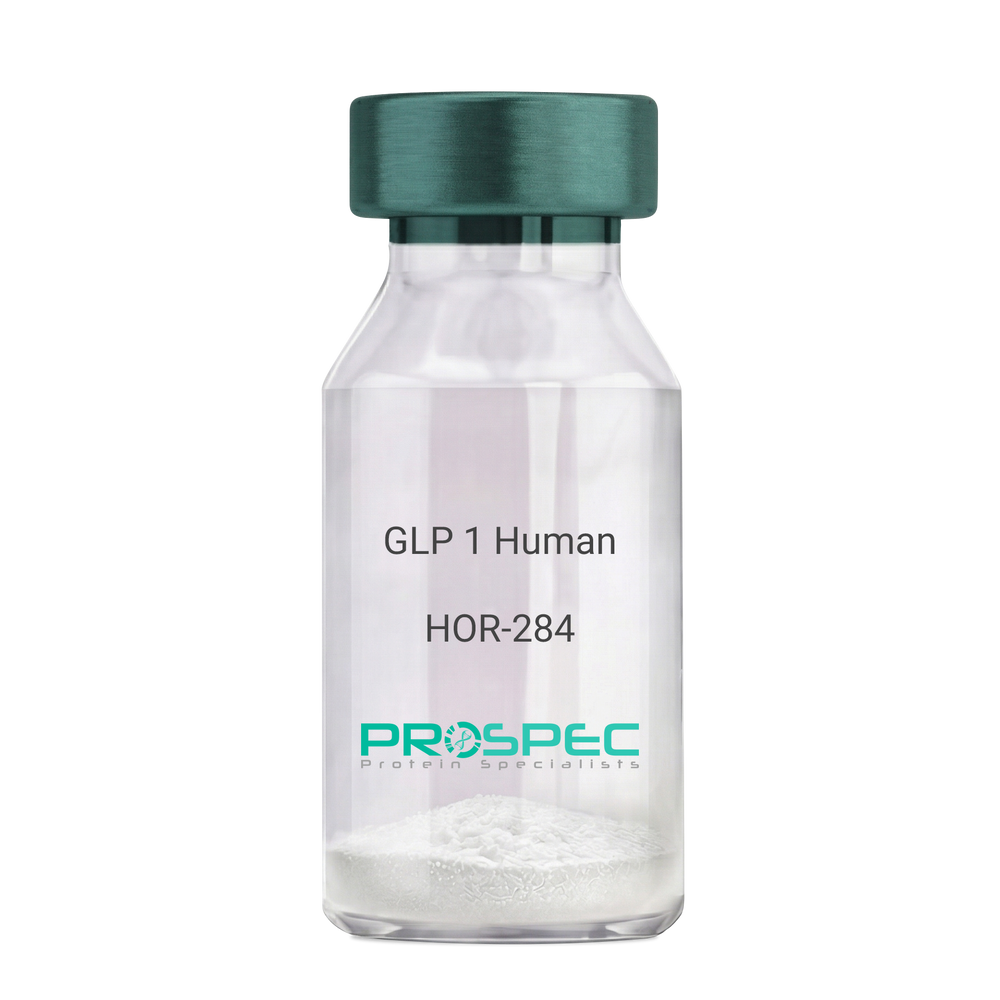
  • View Data Sheet

    Name :

    GLP 1 Human

    Description:

    Human Glucagon Like Peptide-1

    GLP1, Glucagon Like Peptide-1, Incretin hormone.

    Product # :

    HOR-284

    Price :

    Quantity :

    Shipping Method :

    Room Temp Icon

    Shipped at Room temp

    Add To Cart

    More Info

    • description
    • formulation
    • purity
    • More Info

    Description

    Glucagon Like Peptide-1 is a single, non-glycosylated, polypeptide chain containing 30 amino acids and having a molecular mass of 3297.7 Dalton.The GLP-1 is purified by proprietary chromatographic techniques.

    Formulation

    The GLP-1 peptide was lyophilized with no additives.

    Purity

    Greater than 96.0% as determined by RP-HPLC.

    More Info

    • Introduction

      Glucagon-like peptide-1 (GLP-1) is derived from the transcription product of the proglucagon gene. The major source of GLP-1 in the body is the intestinal L cell that secretes GLP-1 as a guthormone. The biologically active forms of GLP-1 are: GLP-1-(7-37) and GLP-1-(7-36)NH2.
      GLP-1 secretion by L cells is dependent on the presence of nutrients in the lumen of the small intestine. The secretagogues (agents that causes or stimulates secretion) of this hormone include major nutrients like carbohydrate, proteinand lipid. Once in the circulation, GLP-1 has a half life of less than 2 minutes, due to rapid degradation by the enzyme dipeptidyl peptidase-4.
      GLP-1 possesses several physiological properties that make it a subject of intensive investigation as a potential treatment of diabetes mellitus. The known physiological functions of GLP-1 include: Increases insulin secretion from the pancreas in a glucose-dependent manner, decreases glucagon secretion from the pancreas, increases beta cells mass and insulin gene expression, inhibits acid secretion and gastric emptying in the stomach, decreases food intake by increasing satiety.

    • Synonyms

      GLP1, Glucagon Like Peptide-1, Incretin hormone.

    • Physical Appearance

      Sterile Filtered White lyophilized (freeze-dried) powder.

    • Stability

      Lyophilized Glucagon Like Peptide-1 although stable at room temperature for 3 weeks, should be stored desiccated below -18°C. Upon reconstitution GLP-1 should be stored at 4°C between 2-7 days and for future use below -18°C. For long term storage it is recommended to add a carrier protein (0.1% HSA or BSA).Please prevent freeze-thaw cycles.

    • Solubility

      It is recommended to reconstitute the lyophilized Glucagon Like Peptide-1 in sterile H2O at 0.5mg/ml, which can then be further diluted to other aqueous solutions.

    • Amino Acid Sequence

      H-His-Ala-Glu-Gly-Thr-Phe-Thr-Ser-Asp-Val-Ser-Ser-Tyr-Leu-Glu-Gly-Gln-Ala-Ala-Lys-Glu-Phe-Ile-Ala-Trp-Leu-Val-Lys-Gly-Arg-NH2.

    ProSpec's products are furnished for LABORATORY RESEARCH USE ONLY. The product may not be used as drugs, agricultural or pesticidal products, food additives or household chemicals.

    Glp 1 Human
  • View Data Sheet

    Name :

    BMP 4 Human

    Description:

    Bone Morphogenetic Protein-4 Human Recombinant

    BMP4, ZYME, BMP2B, BMP2B1.

    Product # :

    CYT-361

    Price :

    Quantity :

    Shipping Method :

    Room Temp Icon

    Shipped at Room temp

    Add To Cart

    More Info

    • description
    • source
    • formulation
    • purity
    • More Info

    Description

    Bone Morphogenetic Protein-4 Human Recombinant produced in E.Coli is a monomeric, non-glycosylated, Polypeptide chain containing 116 amino acids and having a molecular mass of 13kDa. The BMP-4 is purified by proprietary chromatographic techniques.

    Source

    Escherichia Coli.

    Formulation

    BMP-4 was lyophilized from a 0.2µm filtered concentrated (1mg/ml) solution in 20mM Na2CO3 buffer, pH 9.0.

    Purity

    Greater than 95.0% as determined by:
    (a) Analysis by RP-HPLC.
    (b) Analysis by SDS-PAGE.

    More Info

    • Introduction

      The protein encoded by this gene is a member of the bone morphogenetic protein family which is part of the transforming growth factor-beta superfamily. The superfamily includes large families of growth and differentiation factors. Bone morphogenetic proteins were originally identified by an ability of demineralized bone extract to induce endochondral osteogenesis in vivo in an extraskeletal site. This particular family member plays an important role in the onset of endochondral bone formation in humans, and a reduction in expression has been associated with a variety of bone diseases, including the heritable disorder Fibrodysplasia Ossificans Progressiva. Alternative splicing in the 5' untranslated region of this gene has been described and three variants are described, all encoding an identical protein.

    • Synonyms

      BMP4, ZYME, BMP2B, BMP2B1.

    • Physical Appearance

      Sterile Filtered White lyophilized (freeze-dried) powder.

    • Stability

      Lyophilized Bone Morphogenetic Protein-4 although stable at room temperature for 3 weeks, should be stored desiccated below -18°C. Upon reconstitution BMP4 should be stored at 4°C between 2-7 days and for future use below -18°C.For long term storage it is recommended to add a carrier protein (0.1% HSA or BSA).Please prevent freeze-thaw cycles.

    • Solubility

      It is recommended to reconstitute the lyophilized Bone Morphogenetic Protein-4 in sterile 18M-cm H2O not less than 100µg/ml, which can then be further diluted to other aqueous solutions.

    • Amino Acid Sequence

      SPKHHSQRAR KKNKNCRRHS LYVDFSDVGW NDWIVAPPGY QAFYCHGDCP FPLADHLNST NHAIVQTLVN SVNSSIPKAC CVPTELSAIS MLYLDEYDKV VLKNYQEMVV EGCGCR.

    • Background

      What You Should Know About Bone Morphogenetic Protein-4 (BMP-4) Human Recombinant

      As part of the transforming growth factor-beta (TGF-β) superfamily, Bone morphogenetic protein-4 (BMP-4) participates in multiple developmental processes, from embryogenesis to bone and cartilage formation.

      Since this signaling protein is involved in many physiological processes, its laboratory-produced version has been studied for different medical applications. Additionally, a reduction in BMP-4 expression has been associated with multiple diseases, leading to further research into its potential therapeutic benefits.

      Are you interested in learning more about Bone Morphogenetic Protein-4 (BMP-4) human recombinant? Read on to find more information!

      How Does Bone Morphogenetic Protein-4 (BMP-4) Work?

      Bone Morphogenetic Protein-4 (BMP-4) regulates microRNAs miR-494 and miR-126-5p expression, controlling endothelial cells' involvement and function in angiogenesis. As such, it has diverse effects on cell growth, differentiation, and survival.

      The Role of BMP-4

      This protein emits signals that promote the formation of different tissues and organs, including the bones and cartilage, kidneys, teeth, and the neural tube. In other words, it's essential for the development of the heart, skeleton, and central nervous system.

      However, the role of BMP-4 goes beyond these processes. It participates in different physiological activities, such as:

      • Embryonic development
      • Wound healing
      • Bone remodeling
      • Immune response modulation
      • Tissue repair
      • Cardiac development and function

      What Is Bone Morphogenetic Protein-4 (BMP-4) Human Recombinant?

      To replicate the effects of the BMP4 found in humans and explore its possible therapeutic applications, many laboratories have started producing this protein in Chinese hamster ovary (CHO) cells.

      As mentioned, decreased BMP-4 expression has been associated with different diseases, including bone disorders, fibrosis, and cancer, which can cause other conditions, such as organ dysfunction.

      More research is needed, but BMP-4 human recombinant (rhBMP4) produced in CHO has the potential to address these diseases and could be used for other medical applications. These are some examples:

      • Cancer therapy
      • Development of engineered tissues and organs
      • Bone regeneration for the treatment of osteoporosis and nonunion fractures
      • Bone growth and fusion in spinal fusion surgeries (the U.S. Food and Drug Administration approved some bone morphogenetic proteins for these procedures)
      • Promotion of tissue repair and regeneration

      Final Thoughts BMP-4

      Although BMP-4 human recombinant produced in CHO offers potential benefits, several challenges remain, including possible side effects, as high doses can cause inflammation, bone overgrowth, and other issues.

      However, the long-term effects of rhBMP4 are still under investigation. Further research will provide solutions to address these challenges and allow experts to explore this laboratory-produced protein's power in different medical fields.

      What is the molecular weight/Mw of BMP4 Protein?
      BMP4 Protein has a total Mw of 13kDa.

      What is the source or expression system of BMP4 Protein?
      Escherichia Coli.

      What is the Purity of BMP4 Protein?
      BMP4 Protein is >95% pure as determined by SDS-PAGE.

      What is the Biological Activity of BMP4 Protein?
      The biological functionality of BMP4 Protein will be determined in the future.

      What is the amino acid sequence of BMP4 Protein?
      SPKHHSQRAR KKNKNCRRHS LYVDFSDVGW NDWIVAPPGY QAFYCHGDCP FPLADHLNST NHAIVQTLVN SVNSSIPKAC CVPTELSAIS MLYLDEYDKV VLKNYQEMVV EGCGCR.

      What applications can BMP4 Protein be used in?
      BMP4 Protein can probably be used in western blot, ELISA and Lateral Flow.

      What is the endotoxin level for BMP4 Protein?
      The endotoxin level is minimal, BMP4 Protein was purified using conventional chromatography techniques.

    ProSpec's products are furnished for LABORATORY RESEARCH USE ONLY. The product may not be used as drugs, agricultural or pesticidal products, food additives or household chemicals.

    Bmp4 Human
  • View Data Sheet

    Name :

    Tamm Horsfall

    Description:

    Recombinant Human Tamm Horsfall Glycoprotein

    Tamm-Horsfall urinary glycoprotein, THP, FJHN, HNFJ, THGP, MCKD2, ADMCKD2, UMOD, Uromodulin.


    Product # :

    ENZ-1206

    Price :

    Quantity :

    Shipping Method :

    Room Temp Icon

    Shipped at Room temp

    Add To Cart

    More Info

    • description
    • source
    • formulation
    • purity
    • More Info
    • SDS-PAGE

    Description

    Uromodulin Human Recombinant protein produced from HEK Cells, is a polypeptide chain containing 595 amino acids ( 25-613 a.a. ) and having a total Mw of 65 kDa.

    Source

    HEK293

    Formulation

    The UMOD protein was lyophilized from 0.4μm filtered solution containing 50mM NaCl, 0.02M TRIS, pH 7.5.

    Purity

    Greater than 90.0% as determined by SDS-PAGE analysis.

    SDS-PAGE

    Tamm Horsfall-SDS-PAGE - Product image 1

    More Info

    • Introduction

      Uromodulin (Tamm–Horsfall protein) is produced mainly by cells in the kidney’s thick ascending limb and is the most abundant protein in normal urine.
      Uromodulin takes part in salt and water regulation, helps prevent urinary tract infections and kidney stones, and influences inflammation and immune activity in the kidney.
      Reduced Uromodulin levels is associated with chronic kidney disease.
      UMOD mutations causes unproper protein folding and thus transported incorrectly, resulting in its accumulation inside kidney tubular cells that damages the tubules and cause kidney disease (ADTKD-UMOD), associated with high uric acid, gout, and progressive kidney failure.

    • Synonyms

      Tamm-Horsfall urinary glycoprotein, THP, FJHN, HNFJ, THGP, MCKD2, ADMCKD2, UMOD, Uromodulin.

    • Physical Appearance

      Filtered White lyophilized (freeze-dried) powder.

    • Stability

      Lyophilized UMOD although stable at room temperature for 3 weeks, should be stored at -18C. Upon reconstitution UMOD should be stored at 4C between 2-7 days and for future use below -18C.
      For long term storage it is recommended to add a carrier protein (0.1% HSA or BSA).
      Please prevent freeze-thaw cycles.

    • Solubility

      Add deionized water to prepare a working stock solution of approximately 0.5mg/ml and let the lyophilized pellet dissolve completely. Product is not sterile! Please filter the product by an appropriate sterile filter before using it in the cell culture.

    • Amino Acid Sequence

      DTSEARWCSE CHSNATCTED EAVTTCTCQE GFTGDGLTCV DLDECAIPGA HNCSANSSCV NTPGSFSCVC PEGFRLSPGL GCTDVDECAE PGLSHCHALA TCVNVVGSYL CVCPAGYRGD GWHCECSPGS CGPGLDCVPE GDALVCADPC QAHRTLDEYW RSTEYGEGYA CDTDLRGWYR FVGQGGARMA ETCVPVLRCN TAAPMWLNGT HPSSDEGIVS RKACAHWSGH CCLWDASVQV KACAGGYYVY NLTAPPECHL AYCTDPSSVE GTCEECSIDE DCKSNNGRWH CQCKQDFNIT DISLLEHRLE CGANDMKVSL GKCQLKSLGF DKVFMYLSDS RCSGFNDRDN RDWVSVVTPA RDGPCGTVLT RNETHATYSN TLYLADEIII RDLNIKINFA CSYPLDMKVS LKTALQPMVS ALNIRVGGTG MFTVRMALFQ TPSYTQPYQG SSVTLSTEAF LYVGTMLDGG DLSRFALLMT NCYATPSSNA TDPLKYFIIQ DRCPHTRDST IQVVENGESS QGRFSVQMFR FAGNYDLVYL HCEVYLCDTM NEKCKPTCSG TRFRSGSVID QSRVLNLGPI TRKGVQATVH HHHHH

    • Background

      Uromodulin is the most abundant protein in normal urine. Its secretion in urine follows proteolytic cleavage of the ectodomain of its glycosyl phosphatidylinosital-anchored counterpart that is situated on the luminal cell surface of the loop of Henle. Uromodulin plays a role as a constitutive inhibitor of calcium crystallization in renal fluids. Secretion of uromodulin in urine provides protection against urinary tract infections caused by uropathogenic bacteria. Defects in Uromodulin expression are associated with the autosomal dominant renal disorders medullary cystic kidney disease-2 (MCKD2) and familial juvenile hyperuricemic nephropathy (FJHN). These disorders are characterized by juvenile onset of hyperuricemia, gout, and progressive renal failure. While several transcript variants may exist for this gene, the full-length natures of only two have been described to date. UMOD is involved in regulating the circulating activity of cytokines as it binds to il-1, il-2 and tnf with high affinity.

      What is the molecular weight/Mw of UMOD Protein?
      UMOD Protein has a total Mw of 65kDa.

      What is the source or expression system of UMOD Protein?
      HEK293.

      What is the Purity of UMOD Protein?
      UMOD Protein is >90% pure as determined by SDS-PAGE.

      What is the Biological Activity of UMOD Protein?
      The biological functionality of UMOD Protein will be determined in the future.

      What is the amino acid sequence of UMOD Protein?
      UMOD Protein is composed from 595 amino acids.

      What applications can UMOD Protein be used in?
      UMOD Protein can probably be used in western blot, ELISA and Lateral Flow.

      What is the endotoxin level for UMOD Protein?
      The endotoxin level is minimal, UMOD Protein was purified using conventional chromatography techniques.

    ProSpec's products are furnished for LABORATORY RESEARCH USE ONLY. The product may not be used as drugs, agricultural or pesticidal products, food additives or household chemicals.

    Tamm Horsfall
  • View Data Sheet

    Name :

    Follistatin Human

    Description:

    Follistatin Human Recombinant

    FST, FS

    Product # :

    CYT-232

    Price :

    Quantity :

    Shipping Method :

    Room Temp Icon

    Shipped at Room temp

    Add To Cart

    More Info

    • description
    • source
    • formulation
    • purity
    • biological activity
    • More Info

    Description

    Follistatin Human Recombinant produced in E.Coli is a single, non-glycosylated polypeptide chain containing 288 amino acids and having a total molecular mass of 31.5kDa.The FST is purified by proprietary chromatographic techniques.

    Source

    Escherichia Coli.

    Formulation

    Lyophilized from a concentrated (1mg/ml) solution containing no additives.

    Purity

    Greater than 95.0% as determined by:
    (a) Analysis by RP-HPLC.
    (b) Analysis by SDS-PAGE.

    Biological Activity

    The activity is determined by the ability to neutralize ACTV inhibitory effect of mouse MPC-11 cells. The expected ED50 is 100-400ng/ml, corresponding to a Specific Activity of 2,500-10,000units/mg in the presence of 7.5ng/ml ACTV A.

    More Info

    • Introduction

      Follistatin is a single-chain gonadal protein that specifically inhibits follicle-stimulating hormone release. The single FST gene encodes two isoforms, FST317 and FST344 containing 317 and 344 amino acids respectively, resulting from alternative splicing of the precursor mRNA. In a study in which 37 candidate genes were tested for linkage and association with polycystic ovary syndrome (PCOS) or hyperandrogenemia in 150 families, evidence was found for linkage between PCOS and follistatin. Follistatin functions as an ACTV antagonist. specific inhibitor of the biosynthesis and secretion of pituitary follicle stimulating hormone (fsh).

    • Synonyms

      FST, FS

    • Physical Appearance

      Sterile Filtered White lyophilized (freeze-dried) powder.

    • Stability

      Lyophilized Follistatin although stable at room temperature for 3 weeks, should be stored desiccated below -18°C. Upon reconstitution FST should be stored at 4°C between 2-7 days and for future use below -18°C.For long term storage it is recommended to add a carrier protein (0.1% HSA or BSA).Please prevent freeze-thaw cycles.

    • Solubility

      It is recommended to reconstitute the lyophilized Follistatin in sterile 18MΩ-cm H2O not less than 100µg/ml, which can then be further diluted to other aqueous solutions.

    • Amino Acid Sequence

      The sequence of the first five N-terminal amino acids was determined and was found to be Gly-Asn-Cys-Trp-Leu.

    • Background

      What is the molecular weight/Mw of FOLLISTATIN HUMAN Protein?
      FOLLISTATIN HUMAN Protein has a total Mw of 31.5kDa.

      What is the source or expression system of FOLLISTATIN HUMAN Protein?
      Escherichia Coli.

      What is the Purity of FOLLISTATIN HUMAN Protein?
      FOLLISTATIN HUMAN Protein is >95% pure as determined by SDS-PAGE.

      What is the Biological Activity of FOLLISTATIN HUMAN Protein?
      The activity is determined by the ability to neutralize ACTV inhibitory effect of mouse MPC-11 cells. The expected ED50 is 100-400ng/ml, corresponding to a Specific Activity of 2,500-10,000units/mg in the presence of 7.5ng/ml ACTV A.

      What is the amino acid sequence of FOLLISTATIN HUMAN Protein?
      The sequence of the first five N-terminal amino acids was determined and was found to be Gly-Asn-Cys-Trp-Leu.

      What applications can FOLLISTATIN HUMAN Protein be used in?
      FOLLISTATIN HUMAN Protein can probably be used in western blot, ELISA and Lateral Flow.

      What is the endotoxin level for FOLLISTATIN HUMAN Protein?
      The endotoxin level is minimal, FOLLISTATIN HUMAN Protein was purified using conventional chromatography techniques.

    ProSpec's products are furnished for LABORATORY RESEARCH USE ONLY. The product may not be used as drugs, agricultural or pesticidal products, food additives or household chemicals.

    Follistatin Human
  • 1
  • 2
  • 3
  • 4
  • 5
  • …
  • 42
Your browser does not support the video tag.

Products

  • Cytokines
  • Growth Factors
  • Chemokines
  • CD Antigens
  • Neurotrophins
  • Hormones
  • Enzymes
  • Viral Antigens
  • Recombinant Proteins
  • Natural Proteins
  • Monoclonal Antibodies
  • Polyclonal Antibodies
  • Thermal Packaging

About

  • Company
  • Founder
  • Contribution
  • Contact Us
  • My Account

Ordering

  • Ordering Method
  • Ordering - Credit Card
  • Ordering PO
  • Shipping Fees
  • FAQ's

Legal

  • Terms & Conditions
  • Privacy
  • Site Map
  • info@prospecbio.com
  • Facebook
  • Instagram
  • Linkedin Profile

© 2026 ProSpec-Tany TechnoGene Ltd. All Rights Reserved.

  • Choosing a selection results in a full page refresh.
  • Opens in a new window.