Skip to content

High-quality research proteins.

  • 1-800-805-6531

  • Mon - Sat 8.00-18.00, Sun - Closed

  • info@prospecbio.com

  • PO Box 6591 East Brunswick NJ 08816

  • Products
    • Cytokines
    • Growth factors
    • Chemokines
    • Cd antigens
    • Neurotrophins
    • Hormones
    • Enzymes
    • Viral antigens
    • Recombinant proteins
    • Natural proteins
    • Monoclonal antibodies
    • Polyclonal antibodies
    • Thermal Packaging
  • About
    • Company
    • Founder
    • Contribution
  • Customers
    • Eastern Asia
    • Eastern Europe
    • North America
    • South America
    • South East Asia
    • Southern Asia
    • Western Europe
  • Ordering
    • Ordering Method
    • Ordering - Credit Card
    • Ordering - PO
    • Shipping Fees
    • FAQs
  • Services
    • DNA Cloning
    • Protein Expression
    • Monoclonal Antibody
    • Fermentation
    • Technology License
  • Contact us
Log in

Country/region

  • USD $ | Albania
  • USD $ | Andorra
  • USD $ | Argentina
  • USD $ | Armenia
  • USD $ | Australia
  • USD $ | Austria
  • USD $ | Azerbaijan
  • USD $ | Belarus
  • USD $ | Belgium
  • USD $ | Bolivia
  • USD $ | Brazil
  • USD $ | Bulgaria
  • USD $ | Cambodia
  • USD $ | Canada
  • USD $ | Chile
  • USD $ | China
  • USD $ | Colombia
  • USD $ | Costa Rica
  • USD $ | Croatia
  • USD $ | Cyprus
  • USD $ | Czechia
  • USD $ | Denmark
  • USD $ | Estonia
  • USD $ | Finland
  • USD $ | France
  • USD $ | Georgia
  • USD $ | Germany
  • USD $ | Greece
  • USD $ | Hong Kong SAR
  • USD $ | Hungary
  • USD $ | Iceland
  • USD $ | India
  • USD $ | Ireland
  • USD $ | Israel
  • USD $ | Italy
  • USD $ | Japan
  • USD $ | Kazakhstan
  • USD $ | Latvia
  • USD $ | Liechtenstein
  • USD $ | Lithuania
  • USD $ | Madagascar
  • USD $ | Malta
  • USD $ | Mexico
  • USD $ | Moldova
  • USD $ | Monaco
  • USD $ | Netherlands
  • USD $ | New Zealand
  • USD $ | North Macedonia
  • USD $ | Norway
  • USD $ | Panama
  • USD $ | Paraguay
  • USD $ | Peru
  • USD $ | Philippines
  • USD $ | Poland
  • USD $ | Portugal
  • USD $ | Romania
  • USD $ | Singapore
  • USD $ | Slovakia
  • USD $ | Slovenia
  • USD $ | South Africa
  • USD $ | South Korea
  • USD $ | Spain
  • USD $ | Sri Lanka
  • USD $ | Sweden
  • USD $ | Switzerland
  • USD $ | Taiwan
  • USD $ | Thailand
  • USD $ | Türkiye
  • USD $ | Ukraine
  • USD $ | United Kingdom
  • USD $ | United States
  • USD $ | Uruguay
  • USD $ | Vatican City
  • USD $ | Venezuela
  • USD $ | Vietnam
  • Facebook
  • Instagram
logoProSpec - Recombinant Protein Manufacturer for academic and R&D industry
Become a distributor
Account Log in
Wishlist
Cart Cart(0)
  • Products
    +
    • Cytokines
    • Growth factors
    • Chemokines
    • Cd antigens
    • Neurotrophins
    • Hormones
    • Enzymes
    • Viral antigens
    • Recombinant proteins
    • Natural proteins
    • Monoclonal antibodies
    • Polyclonal antibodies
    • Thermal Packaging
  • About
    +
    • Company
    • Founder
    • Contribution
  • Customers
    +
    • Eastern Asia
    • Eastern Europe
    • North America
    • South America
    • South East Asia
    • Southern Asia
    • Western Europe
  • Ordering
    +
    • Ordering Method
    • Ordering - Credit Card
    • Ordering - PO
    • Shipping Fees
    • FAQs
  • Services
    +
    • DNA Cloning
    • Protein Expression
    • Monoclonal Antibody
    • Fermentation
    • Technology License
  • Contact us

Item added to your cart

View cart
View All
  • Cytokines
  • Growth factors
  • Chemokines
  • Cd antigens
  • Neurotrophins
  • Hormones
  • Enzymes
  • Viral antigens
  • Recombinant proteins
  • Natural proteins
  • Monoclonal antibodies
  • Polyclonal antibodies
  • Thermal Packaging
  • Tumor Necrosis Factor

    Tumor Necrosis Factor

    View All
  • 4-1BB

    4-1BB

    View All
  • Adiponectin

    Adiponectin

    View All
  • AIF1

    AIF1

    View All
  • Other Cytokines

    Other Cytokines

    View All
  • AITRL

    AITRL

    View All
  • Angiopoietin

    Angiopoietin

    View All
  • Apolipoprotein

    Apolipoprotein

    View All
  • B-Cell Activating Factor

    B-Cell Activating Factor

    View All
  • Beta Defensin

    Beta Defensin

    View All
  • Bone Morphogenetic Protein

    Bone Morphogenetic Protein

    View All
  • B type Natriuretic Peptide

    B type Natriuretic Peptide

    View All
  • BST

    BST

    View All
  • Betacellulin

    Betacellulin

    View All
  • Cardiotrophin

    Cardiotrophin

    View All
  • Activin

    Activin

    View All
  • Fibroblast Growth Factor

    Fibroblast Growth Factor

    View All
  • Other Growth Factors

    Other Growth Factors

    View All
  • CSF

    CSF

    View All
  • CTGF

    CTGF

    View All
  • IGFBP

    IGFBP

    View All
  • VEGF Protein

    VEGF Protein

    View All
  • EGF

    EGF

    View All
  • Epigen

    Epigen

    View All
  • Erythropoietin

    Erythropoietin

    View All
  • Insulin-Like Growth Factor

    Insulin-Like Growth Factor

    View All
  • Growth Hormone

    Growth Hormone

    View All
  • HDGF

    HDGF

    View All
  • Hepatocyte Growth Factor

    Hepatocyte Growth Factor

    View All
  • Insulin

    Insulin

    View All
  • BCA-1/ BLC (CXCL13)

    BCA-1/ BLC (CXCL13)

    View All
  • BRAK (CXCL14)

    BRAK (CXCL14)

    View All
  • C-10 (CCL6)

    C-10 (CCL6)

    View All
  • Other Chemokines

    Other Chemokines

    View All
  • MEC (CCL28)

    MEC (CCL28)

    View All
  • LD78-beta (CCL3L1)

    LD78-beta (CCL3L1)

    View All
  • CTACK (CCL27)

    CTACK (CCL27)

    View All
  • CXCL16

    CXCL16

    View All
  • CXCL17

    CXCL17

    View All
  • Platelet Factor-4 (CXCL4)

    Platelet Factor-4 (CXCL4)

    View All
  • ENA-78 (CXCL5)

    ENA-78 (CXCL5)

    View All
  • Eotaxin (CCL11,24,26)

    Eotaxin (CCL11,24,26)

    View All
  • Exodus-2 (CCL21)

    Exodus-2 (CCL21)

    View All
  • Fractalkine (CX3CL1)

    Fractalkine (CX3CL1)

    View All
  • CXCL6

    CXCL6

    View All
  • Other CD Antigens

    Other CD Antigens

    View All
  • CD14

    CD14

    View All
  • CD164

    CD164

    View All
  • CD1

    CD1

    View All
  • CD2

    CD2

    View All
  • CD200

    CD200

    View All
  • CD207

    CD207

    View All
  • CD226

    CD226

    View All
  • CD23

    CD23

    View All
  • CD244

    CD244

    View All
  • CD247

    CD247

    View All
  • CD27

    CD27

    View All
  • CD274

    CD274

    View All
  • CD300

    CD300

    View All
  • CD33

    CD33

    View All
  • Other Neurotrophins

    Other Neurotrophins

    View All
  • Beta-NGF

    Beta-NGF

    View All
  • BDNF

    BDNF

    View All
  • CDNF

    CDNF

    View All
  • CNTF

    CNTF

    View All
  • GDNF

    GDNF

    View All
  • Glia Maturation Factor

    Glia Maturation Factor

    View All
  • MANF

    MANF

    View All
  • Midkine

    Midkine

    View All
  • Neuroglobin

    Neuroglobin

    View All
  • Neurotrophic factors

    Neurotrophic factors

    View All
  • Neuregulin

    Neuregulin

    View All
  • Neuropilin

    Neuropilin

    View All
  • Pigment Epithelium-Derived Factor

    Pigment Epithelium-Derived Factor

    View All
  • Pleiotrophin

    Pleiotrophin

    View All
  • Peptide Hormones

    Peptide Hormones

    View All
  • Other Hormones

    Other Hormones

    View All
  • HCG

    HCG

    View All
  • Endothelin

    Endothelin

    View All
  • Exendin

    Exendin

    View All
  • FSH

    FSH

    View All
  • Glucagon

    Glucagon

    View All
  • GHRP

    GHRP

    View All
  • GLP

    GLP

    View All
  • Thyrostimulin

    Thyrostimulin

    View All
  • Inhibin A

    Inhibin A

    View All
  • LHRH

    LHRH

    View All
  • Melanotan

    Melanotan

    View All
  • Procalcitonin

    Procalcitonin

    View All
  • PTH

    PTH

    View All
  • Peroxiredoxin

    Peroxiredoxin

    View All
  • Peptidase

    Peptidase

    View All
  • Synthetase

    Synthetase

    View All
  • Transferase

    Transferase

    View All
  • Hydrolase

    Hydrolase

    View All
  • Dehydrogenase

    Dehydrogenase

    View All
  • ACE2

    ACE2

    View All
  • Esterase

    Esterase

    View All
  • Protein Kinases

    Protein Kinases

    View All
  • Other Enzymes

    Other Enzymes

    View All
  • Phosphatase

    Phosphatase

    View All
  • Deaminase

    Deaminase

    View All
  • Oxygenase

    Oxygenase

    View All
  • Adenylate Kinase

    Adenylate Kinase

    View All
  • Lyase

    Lyase

    View All
  • Chagas

    Chagas

    View All
  • SARS

    SARS

    View All
  • Influenza

    Influenza

    View All
  • ASFV

    ASFV

    View All
  • Astrovirus

    Astrovirus

    View All
  • Borrelia

    Borrelia

    View All
  • Helicobacter Pylori

    Helicobacter Pylori

    View All
  • Chikungunya

    Chikungunya

    View All
  • Chlamydia

    Chlamydia

    View All
  • Cytomegalo

    Cytomegalo

    View All
  • Dengue

    Dengue

    View All
  • EBV

    EBV

    View All
  • Ebola

    Ebola

    View All
  • Feline Leukemia Virus

    Feline Leukemia Virus

    View All
  • Hepatitis A

    Hepatitis A

    View All
  • Other

    Other

    View All
  • Actin

    Actin

    View All
  • ADAM

    ADAM

    View All
  • Complement Component

    Complement Component

    View All
  • Ag85

    Ag85

    View All
  • Eukaryotic Translation Initiation Factor

    Eukaryotic Translation Initiation Factor

    View All
  • Anterior Gradient Protein

    Anterior Gradient Protein

    View All
  • Heat Shock Protein

    Heat Shock Protein

    View All
  • Alpha-2-HS-Glycoprotein

    Alpha-2-HS-Glycoprotein

    View All
  • Hemoglobin

    Hemoglobin

    View All
  • Allergy

    Allergy

    View All
  • Anaplasma

    Anaplasma

    View All
  • Angiogenin

    Angiogenin

    View All
  • Ankyrin Repeat Domain

    Ankyrin Repeat Domain

    View All
  • Annexin

    Annexin

    View All
  • Other Natural Proteins

    Other Natural Proteins

    View All
  • Aprotinin

    Aprotinin

    View All
  • Transferrin

    Transferrin

    View All
  • Avidin

    Avidin

    View All
  • Anti Coagulation Factors

    Anti Coagulation Factors

    View All
  • Natural Albumin

    Natural Albumin

    View All
  • Natural Coagulation Factors

    Natural Coagulation Factors

    View All
  • Fibronectin

    Fibronectin

    View All
  • Thrombin

    Thrombin

    View All
  • Anti Human Enzyme

    Anti Human Enzyme

    View All
  • Other Monoclonal Antibodies

    Other Monoclonal Antibodies

    View All
  • Anti Human Cytokine

    Anti Human Cytokine

    View All
  • Anti Human Heat Shock Protein

    Anti Human Heat Shock Protein

    View All
  • Anti Mouse Lymphocyte

    Anti Mouse Lymphocyte

    View All
  • Anti Human Chemokine

    Anti Human Chemokine

    View All
  • Anti Human Lymphocyte

    Anti Human Lymphocyte

    View All
  • Anti Viral Monoclonal

    Anti Viral Monoclonal

    View All
  • Anti Mouse Cytokine

    Anti Mouse Cytokine

    View All
  • Anti-GST Monoclonal

    Anti-GST Monoclonal

    View All
  • Other Polyclonal Antibodies

    Other Polyclonal Antibodies

    View All
  • Anti Viral

    Anti Viral

    View All
  • Anti-GST Monoclonal

    Anti-GST Monoclonal

    View All
Back

Search results

1000 results found for “RAN Binding Protein”

Name

Description

Product #

Price

Quantity

Shipping Method

  • View Data Sheet

    Name :

    S100A1 Mouse

    Description:

    S100 Calcium Binding Protein A1 Mouse Recombinant

    Protein S100-A1, S-100 protein alpha chain, S-100 protein subunit alpha, S100 calcium-binding protein A1, S100a1, S100, S100a, AI266795.

    Product # :

    PRO-237

    Price :

    Quantity :

    Shipping Method :

    Ice Icon

    Shipped with Ice Packs

    Add To Cart

    More Info

    • description
    • source
    • formulation
    • purity
    • More Info

    Description

    S100A1 produced in E.Coli is a single, non-glycosylated polypeptide chain containing 114 amino acids (1-94 a.a) and having a molecular mass of 12.6kDa (molecular weight on SDS-PAGE will appear higher).S100A1 is fused to a 20 amino acid His-tag at N-terminus & purified by proprietary chromatographic techniques.

    Source

    Escherichia Coli.

    Formulation

    S100A1 protein solution (1mg/ml) containing 20mM Tris-HCl buffer (pH 8.0), 1mM DTT, 30% glycerol and 0.1M NaCl.

    Purity

    Greater than 90.0% as determined by SDS-PAGE.

    More Info

    • Introduction

      S100A1 is a member of the S100 family of calcium binding proteins with EF-hand type Ca+2 binding motive. S100A1 (Calcium Binding Protein A1) is involved in the activation of sarcoplasmatic calcium release and the regulation of intermediate filament polymerization. S100A1 may function in stimulation of Ca2+-induced Ca2+ release, inhibition of microtubule assembly, and inhibition of protein kinase C-mediated phosphorylation. Reduced expression of S100A1 has been implicated in cardiomyopathies.
      S100 proteins are localized either in the cytoplasm or the nucleus of a wide range of cells. There are at least 13 members in the S100 gene family, which are located as a cluster on chromosome 1q21.

    • Synonyms

      Protein S100-A1, S-100 protein alpha chain, S-100 protein subunit alpha, S100 calcium-binding protein A1, S100a1, S100, S100a, AI266795.

    • Physical Appearance

      Sterile Filtered clear solution.

    • Stability

      Store at 4°C if entire vial will be used within 2-4 weeks. Store, frozen at -20°C for longer periods of time. For long term storage it is recommended to add a carrier protein (0.1% HSA or BSA).Avoid multiple freeze-thaw cycles.

    • Amino Acid Sequence

      MGSSHHHHHH SSGLVPRGSH MGSELESAME TLINVFHAHS GKEGDKYKLS KKELKDLLQT ELSGFLDVQK DADAVDKVMK ELDENGDGEV DFKEYVVLVA ALTVACNNFF WETS.

    ProSpec's products are furnished for LABORATORY RESEARCH USE ONLY. The product may not be used as drugs, agricultural or pesticidal products, food additives or household chemicals.

    S100A1 Mouse
  • View Data Sheet

    Name :

    RBM11 Human

    Description:

    RNA Binding Motif Protein 11 Human Recombinant

    Splicing regulator RBM11, RNA-binding motif protein 11, RBM11.

    Product # :

    PRO-1802

    Price :

    Quantity :

    Shipping Method :

    Ice Icon

    Shipped with Ice Packs

    Add To Cart

    More Info

    • description
    • source
    • formulation
    • purity
    • More Info

    Description

    RBM11 Human Recombinant produced in E. coli is a single polypeptide chain containing 304 amino acids (1-281) and having a molecular mass of 34.6kDa. RBM11 is fused to a 23 amino acid His-tag at N-terminus & purified by proprietary chromatographic techniques.

    Source

    Escherichia Coli.

    Formulation

    The RBM11 solution (1mg/ml) contains 20mM Tris-HCl buffer (pH 8.0), 0.4M Urea and 10% glycerol.

    Purity

    Greater than 85% as determined by SDS-PAGE.

    More Info

    • Introduction

      RNA Binding Motif Protein 11 (RBM11) which contains 1 RNA recognition motif is a part of the RBM family. The RBM gene family encodes proteins with an RNA binding motif which participate in the modulation of apoptosis. RBM11 is expressed in testis, kidney, spleen, brain, spinal cord and mammary gland and can be found as 2 isoforms produced by alternative splicing.

    • Synonyms

      Splicing regulator RBM11, RNA-binding motif protein 11, RBM11.

    • Physical Appearance

      Sterile Filtered clear solution.

    • Stability

      Store at 4°C if entire vial will be used within 2-4 weeks. Store frozen at -20°C for longer periods of time. For long term storage it is recommended to add a carrier protein (0.1% HSA or BSA).Avoid multiple freeze-thaw cycles.

    • Amino Acid Sequence

      MGSSHHHHHH SSGLVPRGSH MGSMFPAQEE ADRTVFVGNL EARVREEILY ELFLQAGPLT KVTICKDREG KPKSFGFVCF KHPESVSYAI ALLNGIRLYG RPINVQYRFG SSRSSEPANQ SFESCVKINS HNYRNEEMLV GRSSFPMQYF PINNTSLPQE YFLFQKMQWH VYNPVLQLPY YEMTAPLPNS ASVSSSLNHV PDLEAGPSSY KWTHQQPSDS DLYQMTAPLP NSASVSSSLN HVPDLEAGPS SYKWTHQQPS DSDLYQMNKR KRQKQTSDSD SSTDNNRGNE CSQKFRKSKK KKRY.

    ProSpec's products are furnished for LABORATORY RESEARCH USE ONLY. The product may not be used as drugs, agricultural or pesticidal products, food additives or household chemicals.

    Rbm11 Human
  • View Data Sheet

    Name :

    S100A10 Human

    Description:

    S100 Calcium Binding Protein A10 Human Recombinant

    Protein S100-A10, S100 calcium-binding protein A10, Calpactin-1 light chain, Calpactin I light chain, p10 protein, p11, Cellular ligand of annexin II, S100A10, ANX2LG, CAL1L, CLP11, 42C, p10, GP11, ANX2L, Ca[1], MGC111133.

    Product # :

    PRO-384

    Price :

    Quantity :

    Shipping Method :

    Ice Icon

    Shipped with Ice Packs

    Add To Cart

    More Info

    • description
    • source
    • formulation
    • purity
    • More Info

    Description

    S100A10 Human Recombinant also called Calpactin light chain is expressed in E. coli having a molecular weight of 15.3kDa fused to an amino terminal hexahistidine tag.

    Source

    Escherichia Coli.

    Formulation

    S100-A10 is supplied in 1xPBS and 50% Glycerol.

    Purity

    Greater than 95% as determined by SDS-PAGE.
    2 bands on Western blot at 15.3 and 30.6 kDa, respectively representing monomeric and dimeric form.

    More Info

    • Introduction

      S100A10 is a member of the S100 family of proteins contains two EF-hand calcium-binding motifs and is thought to be involved in the regulation of a number of cellular processes including cell cycle progression and differentiation. S100 proteins are localized either in the cytoplasm or the nucleus of a wide range of cells. There are at least 13 members in the S100 gene family, which are located as a cluster on chromosome 1q21. S100A10 may function in exocytosis and endocytosis.

    • Synonyms

      Protein S100-A10, S100 calcium-binding protein A10, Calpactin-1 light chain, Calpactin I light chain, p10 protein, p11, Cellular ligand of annexin II, S100A10, ANX2LG, CAL1L, CLP11, 42C, p10, GP11, ANX2L, Ca[1], MGC111133.

    • Stability

      Store at 4°C if entire vial will be used within 1-2 weeks. Store, frozen at -20°C for longer periods of time. Avoid multiple freeze-thaw cycles.

    • Applications

      S100A10 can be used directly as a positive control in Western blotting, ELISA, immunoprecipitation and other immunological experiments.
      The biological activity of this product has not yet been tested.

    ProSpec's products are furnished for LABORATORY RESEARCH USE ONLY. The product may not be used as drugs, agricultural or pesticidal products, food additives or household chemicals.

    S100A10 Human
  • View Data Sheet

    Name :

    HNRNPA1 Human

    Description:

    Heterogeneous Nuclear Ribonucleoprotein A1 Human Recombinant

    Heterogeneous nuclear ribonucleoprotein A1, hnRNP A1, Helix-destabilizing protein, Single-strand RNA-binding protein, hnRNP core protein A1, HNRNPA1, HNRPA1, HNRPA1L3, hnRNP-A1.

    Product # :

    PRO-1038

    Price :

    Quantity :

    Shipping Method :

    Ice Icon

    Shipped with Ice Packs

    Add To Cart

    More Info

    • description
    • source
    • formulation
    • purity
    • More Info

    Description

    HNRNPA1 Human Recombinant produced in E.Coli is a single, non-glycosylated polypeptide chain containing 343 amino acids (1-320 a.a.) and having a molecular mass of 36.6kDa.HNRNPA1 is fused to a 23 amino acid His-tag at N-terminus & purified by proprietary chromatographic techniques.

    Source

    Escherichia Coli.

    Formulation

    HNRNPA1 protein solution (0.5mg/ml) containing 20mM Tris-HCl buffer (pH8.0), 40% glycerol, 0.15M NaCl and 1mM DTT.

    Purity

    Greater than 85.0% as determined by SDS-PAGE.

    More Info

    • Introduction

      Heterogeneous nuclear ribonucleoprotein A1 (HNRNPA1) is a member of the A/B subfamily of ubiquitously expressed heterogeneous nuclear ribonucleoproteins (hnRNPs). HNRNPA1 is involved in the packing of pre-mRNA into hnRNP particles, transport of poly(A) mRNA from the nucleus to the cytoplasm and may control splice site selection. The HNRNPA1 protein may also have a role in HCV RNA replication. In addition, HNRNPA1 is believed to have a key role in the formation of specific myometrial protein species in parturition.
      The hnRNP proteins have distinctive nucleic acid binding properties. HNRNPA1 has 2 repeats of quasi-RRM domains that bind to RNAs. HNRNPA1 is one of the most copious core proteins of hnRNP complexes and it is restricted to the nucleoplasm. The HNRNPA1 protein, along with other hnRNP proteins, is exported from the nucleus, most likely bound to mRNA, and is immediately re-imported. The M9 domain of HNRNPA1 functions as both a nuclear localization and nuclear export signal.

    • Synonyms

      Heterogeneous nuclear ribonucleoprotein A1, hnRNP A1, Helix-destabilizing protein, Single-strand RNA-binding protein, hnRNP core protein A1, HNRNPA1, HNRPA1, HNRPA1L3, hnRNP-A1.

    • Physical Appearance

      Sterile Filtered clear solution.

    • Stability

      Store at 4°C if entire vial will be used within 2-4 weeks. Store, frozen at -20°C for longer periods of time. For long term storage it is recommended to add a carrier protein (0.1% HSA or BSA).Avoid multiple freeze-thaw cycles.

    • Amino Acid Sequence

      MGSSHHHHHH SSGLVPRGSH MGSMSKSESP KEPEQLRKLF IGGLSFETTD ESLRSHFEQW GTLTDCVVMR DPNTKRSRGF GFVTYATVEE VDAAMNARPH KVDGRVVEPK RAVSREDSQR PGAHLTVKKI FVGGIKEDTE EHHLRDYFEQ YGKIEVIEIM TDRGSGKKRG FAFVTFDDHD SVDKIVIQKY HTVNGHNCEV RKALSKQEMA SASSSQRGRS GSGNFGGGRG GGFGGNDNFG RGGNFSGRGG FGGSRGGGGY GGSGDGYNGF GNDGSNFGGG GSYNDFGNYN NQSSNFGPMK GGNFGGRSSG PYGGGGQYFA KPRNQGGYGG SSSSSSYGSG RRF.

    ProSpec's products are furnished for LABORATORY RESEARCH USE ONLY. The product may not be used as drugs, agricultural or pesticidal products, food additives or household chemicals.

    Hnrnpa1 Human
  • View Data Sheet

    Name :

    S100A4 Human

    Description:

    S100 Calcium-Binding Protein A4 Human Recombinant

    Protein S100-A4, S100 calcium-binding protein A4, Metastasin, Protein Mts1, Placental calcium-binding protein, Calvasculin, S100A4, CAPL, MTS1, 42A, 18A2, FSP1, P9KA, PEL98.

    Product # :

    PRO-698

    Price :

    Quantity :

    Shipping Method :

    Ice Icon

    Shipped with Ice Packs

    Add To Cart

    More Info

    • description
    • source
    • formulation
    • purity
    • More Info

    Description

    S100A4 Human Recombinant produced in E.coli is a single, non-glycosylated polypeptide chain containing 121 amino acids (1-101) and having a molecular mass of 13.8 kDa.The S100A4 is fused to a 20 amino acid His-Tag at N-terminus and purified by proprietary chromatographic techniques.

    Source

    Escherichia Coli.

    Formulation

    S100A4 protein at in 20mM Tris-HCl, pH-8 & 10% Glycerol.

    Purity

    Greater than 95.0% as determined by SDS-PAGE.

    More Info

    • Introduction

      S100A4 is part of the S100 super-family of proteins containing 2 EF-hand calcium binding domains. S100A4 is ubiquitously overexpressed and is localized in the cytoplasm and/or nucleus. S100A4 is involved in motility, invasion, and tubulin polymerization. Chromosomal rearrangements and altered expression of the S100A4 gene have been implicated in tumor metastasis.

    • Synonyms

      Protein S100-A4, S100 calcium-binding protein A4, Metastasin, Protein Mts1, Placental calcium-binding protein, Calvasculin, S100A4, CAPL, MTS1, 42A, 18A2, FSP1, P9KA, PEL98.

    • Physical Appearance

      Sterile Filtered clear solution.

    • Stability

      Store at 4°C if entire vial will be used within 2-4 weeks. Store, frozen at -20°C for longer periods of time. For long term storage it is recommended to add a carrier protein (0.1% HSA or BSA).Avoid multiple freeze-thaw cycles.

    • Amino Acid Sequence

      MGSSHHHHHH SSGLVPRGSH MACPLEKALD VMVSTFHKYS GKEGDKFKLN KSELKELLTR ELPSFLGKRT DEAAFQKLMS NLDSNRDNEVDFQEYCVFLS CIAMMCNEFF EGFPDKQPRK K.

    ProSpec's products are furnished for LABORATORY RESEARCH USE ONLY. The product may not be used as drugs, agricultural or pesticidal products, food additives or household chemicals.

    S100A4 Human His
  • View Data Sheet

    Name :

    GHBP Rat

    Description:

    GH Binding Protein Rat Recombinant

    GHBP, GH receptor.

    Product # :

    CYT-933

    Price :

    Quantity :

    Shipping Method :

    Ice Icon

    Shipped with Ice Packs

    Add To Cart

    More Info

    • description
    • source
    • formulation
    • purity
    • More Info

    Description

    GHBP produced in Sf9 Baculovirus cells is a single, glycosylated polypeptide chain containing 255 amino acids (19-265.a.) and having a molecular mass of 29.4kDa (Molecular size on SDS-PAGE will appear at approximately 28-40kDa).GHBP is expressed with an 8 amino acid His tag at C-Terminus and purified by proprietary chromatographic techniques.

    Source

    Sf9, Baculovirus cells.

    Formulation

    GHBP protein solution (0.5mg/ml) contains phosphate buffered saline (pH7.4) and 10% glycerol.

    Purity

    Greater than 95.0% as determined by SDS-PAGE.

    More Info

    • Introduction

      GH receptor, also known as GHR is part of the cytokine receptor family. GHR binds 2 receptor molecules and in this manner induces signal transduction through receptor dimerization. Furthermore, at high concentrations, GH performs as an antagonist since there is a large difference in affinities at the respective binding sites. The antagonist action can be enhanced further by reducing binding in the low affinity binding site.

    • Synonyms

      GHBP, GH receptor.

    • Physical Appearance

      Sterile filtered colorless solution.

    • Stability

      Store at 4°C if entire vial will be used within 2-4 weeks.Store, frozen at -20°C for longer periods of time. For long term storage it is recommended to add a carrier protein (0.1% HSA or BSA).Avoid multiple freeze-thaw cycles.

    • Amino Acid Sequence

      FPGSGATPAT LGKASPVLQR INPSLRESSS GKPRFTKCRS PELETFSCYW TEGDDHNLKV PGSIQLYYAR RIAHEWTPEW KECPDYVSAG ANSCYFNSSY TSIWIPYCIK LTTNGDLLKE KCFTVDEIVQ PDPPIGLNWT LLNISLPGIR GDIQVSWQPP PSADVLKGWI ILEYEIQYKE VNETKWKTMS PIWSTSVPLY SLRLDKEHEV RVRSRQRSFE KYSEFSEVLR VTFPQMDTLA ACEEDFRLEH HHHHH.

    ProSpec's products are furnished for LABORATORY RESEARCH USE ONLY. The product may not be used as drugs, agricultural or pesticidal products, food additives or household chemicals.

    Ghr Rat
  • View Data Sheet

    Name :

    RBM18 Human

    Description:

    RNA Binding Motif Protein 18 Human Recombinant

    RNA Binding Motif Protein 18, RNA-Binding Motif Protein 18, RBM18.

    Product # :

    PRO-2109

    Price :

    Quantity :

    Shipping Method :

    Ice Icon

    Shipped with Ice Packs

    Add To Cart

    More Info

    • description
    • source
    • formulation
    • purity
    • More Info

    Description

    RBM18 Human Recombinant produced in E.Coli is a single, non-glycosylated polypeptide chain containing 213 amino acids (1-190 a.a) and having a molecular mass of 24kDa.RBM18 is fused to a 23 amino acid His-tag at N-terminus & purified by proprietary chromatographic techniques.

    Source

    Escherichia Coli.

    Formulation

    RBM18 protein solution (1mg/ml) containing Phosphate Buffered Saline (pH7.4) and 10% glycerol.

    Purity

    Greater than 85.0% as determined by SDS-PAGE.

    More Info

    • Introduction

      RNA Binding Motif Protein 18 (RBM18) is comprised of one RNA recognition motif (RRM) domain.

    • Synonyms

      RNA Binding Motif Protein 18, RNA-Binding Motif Protein 18, RBM18.

    • Physical Appearance

      Sterile Filtered clear solution.

    • Stability

      Store at 4°C if entire vial will be used within 2-4 weeks. Store, frozen at -20°C for longer periods of time. For long term storage it is recommended to add a carrier protein (0.1% HSA or BSA).Avoid multiple freeze-thaw cycles.

    • Amino Acid Sequence

      MGSSHHHHHH SSGLVPRGSH MGSMEAETKT LPLENASILS EGSLQEGHRL WIGNLDPKIT EYHLLKLLQK FGKVKQFDFL FHKSGALEGQ PRGYCFVNFE TKQEAEQAIQ CLNGKLALSK KLVVRWAHAQ VKRYDHNKND KILPISLEPS SSTEPTQSNL SVTAKIKAIE AKLKMMAENP DAEYPAAPVY SYFKPPDKKR TTPYSRTAWK SRR.

    ProSpec's products are furnished for LABORATORY RESEARCH USE ONLY. The product may not be used as drugs, agricultural or pesticidal products, food additives or household chemicals.

    Rbm18 Human
  • View Data Sheet

    Name :

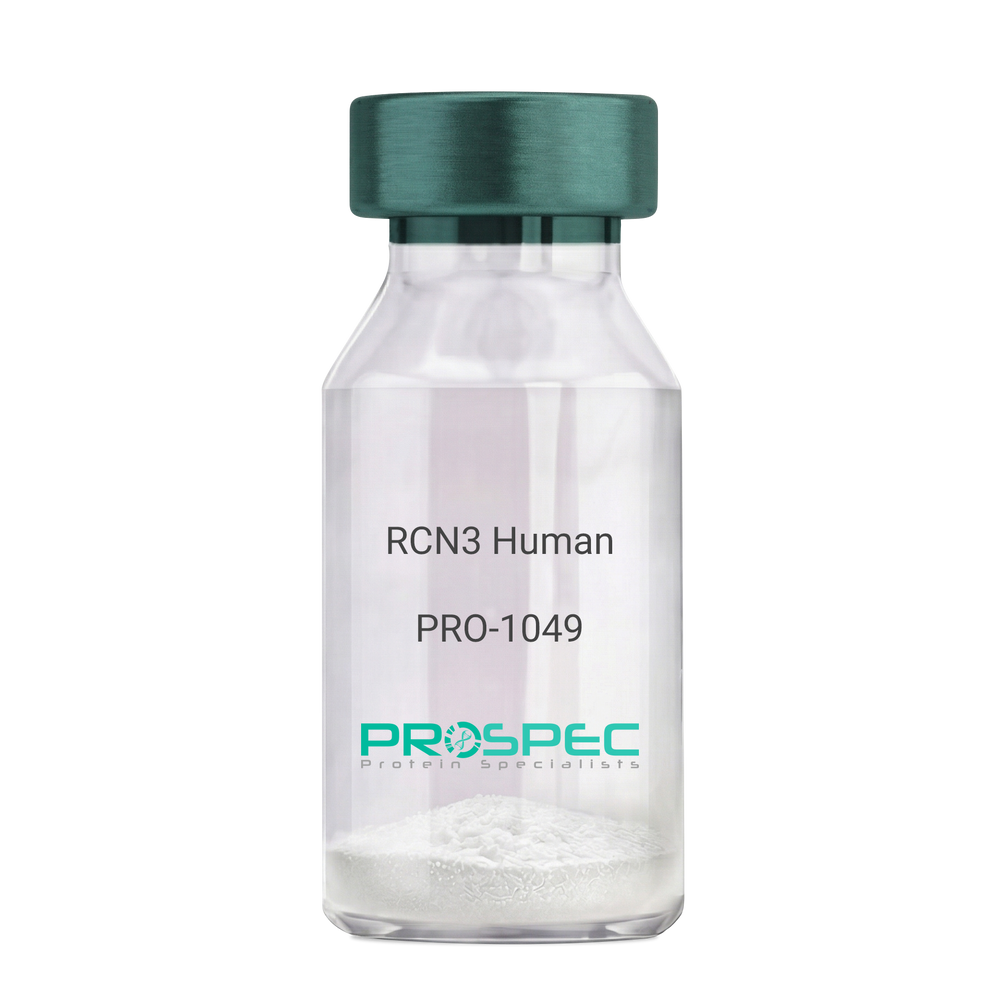
    RCN3 Human

    Description:

    Reticulocalbin 3 Human Recombinant

    Reticulocalbin-3, EF-hand calcium-binding protein RLP49, RCN3, RLP49.

    Product # :

    PRO-1049

    Price :

    Quantity :

    Shipping Method :

    Ice Icon

    Shipped with Ice Packs

    Add To Cart

    More Info

    • description
    • source
    • formulation
    • purity
    • More Info

    Description

    RCN3 Human Recombinant produced in E.Coli is a single, non-glycosylated polypeptide chain containing 333 amino acids (21-328 a.a) and having a molecular mass of 37.9kDa.RCN3 is fused to a 25 amino acid His-tag at N-terminus & purified by proprietary chromatographic techniques.

    Source

    Escherichia Coli.

    Formulation

    RCN3 protein solution (1mg/ml) containing 20mM Tris-HCl buffer (pH 8.0), 1mM DTT, 10% glycerol and 0.1M NaCl.

    Purity

    Greater than 95.0% as determined by SDS-PAGE.

    More Info

    • Introduction

      Reticulocalbin 3 (RCN3) belongs to the CREC (cab45/reticulocalbin/ ERC45/calumenin) family. RCN3 contains 5 Arg-Xaa-Xaa-Arg motifs, which function as target sequences of SPCs (subtilisin-like proprotein convertases), which is a family of serine endoproteases that proteolytically activate proproteins. The synthesis of PACE4 is induced by association and coexpression with RCN3.

    • Synonyms

      Reticulocalbin-3, EF-hand calcium-binding protein RLP49, RCN3, RLP49.

    • Physical Appearance

      Sterile Filtered colorless solution.

    • Stability

      Store at 4°C if entire vial will be used within 2-4 weeks. Store, frozen at -20°C for longer periods of time. For long term storage it is recommended to add a carrier protein (0.1% HSA or BSA).Avoid multiple freeze-thaw cycles.

    • Amino Acid Sequence

      MGSSHHHHHH SSGLVPRGSH MGSHMKPSPD AGPHGQGRVH QAAPLSDAPH DDAHGNFQYD HEAFLGREVA KEFDQLTPEE SQARLGRIVD RMDRAGDGDG WVSLAELRAW IAHTQQRHIR DSVSAAWDTY DTDRDGRVGW EELRNATYGH YAPGEEFHDV EDAETYKKML ARDERRFRVA DQDGDSMATR EELTAFLHPE EFPHMRDIVI AETLEDLDRN KDGYVQVEEY IADLYSAEPG EEEPAWVQTE RQQFRDFRDL NKDGHLDGSE VGHWVLPPAQ DQPLVEANHL LHESDTDKDG RLSKAEILGN WNMFVGSQAT NYGEDLTRHH DEL.

    ProSpec's products are furnished for LABORATORY RESEARCH USE ONLY. The product may not be used as drugs, agricultural or pesticidal products, food additives or household chemicals.

    Rcn3 Human
  • View Data Sheet

    Name :

    MSI2 Human

    Description:

    Musashi RNA-Binding Protein 2 Human Recombinant

    MSI2H, RNA-binding protein Musashi homolog 2, Musashi-2, MSI2.

    Product # :

    PRO-1531

    Price :

    Quantity :

    Shipping Method :

    Ice Icon

    Shipped with Ice Packs

    Add To Cart

    More Info

    • description
    • source
    • formulation
    • purity
    • More Info

    Description

    MSI2 Human Recombinant produced in E. coli is a single polypeptide chain containing 351 amino acids (1-328) and having a molecular mass of 37.6kDa. MSI2 is fused to a 23 amino acid His-tag at N-terminus & purified by proprietary chromatographic techniques.

    Source

    Escherichia Coli.

    Formulation

    The MSI2 solution (0.25mg/ml) contains 20mM Tris-HCl buffer (pH 8.0), 0.15M NaCl, 10% glycerol and 1mM DTT.

    Purity

    Greater than 90% as determined by SDS-PAGE.

    More Info

    • Introduction

      Musashi RNA-Binding Protein 2 (MSI2), is RNA binding protein which owns 2 conserved tandem RNA recognition motifs. MSI2 takes part in proliferation and maintenance of stem cells in the central nervous system. Comparable proteins in other species function as RNA-binding proteins and take part in posttranscriptional gene regulation.

    • Synonyms

      MSI2H, RNA-binding protein Musashi homolog 2, Musashi-2, MSI2.

    • Physical Appearance

      Sterile Filtered clear solution.

    • Stability

      Store at 4°C if entire vial will be used within 2-4 weeks. Store, frozen at -20°C for longer periods of time. For long term storage it is recommended to add a carrier protein (0.1% HSA or BSA).Avoid multiple freeze-thaw cycles.

    • Amino Acid Sequence

      MGSSHHHHHH SSGLVPRGSH MGSMEANGSQ GTSGSANDSQ HDPGKMFIGG LSWQTSPDSL RDYFSKFGEI RECMVMRDPT TKRSRGFGFV TFADPASVDK VLGQPHHELD SKTIDPKVAF PRRAQPKMVT RTKKIFVGGL SANTVVEDVK QYFEQFGKVE DAMLMFDKTT NRHRGFGFVT FENEDVVEKV CEIHFHEINN KMVECKKAQP KEVMFPPGTR GRARGLPYTM DAFMLGMGML GYPNFVATYG RGYPGFAPSY GYQFPGFPAA AYGPVAAAAV AAARGSGSNP ARPGGFPGAN SPGPVADLYG PASQDSGVGN YISAASPQPG SGFGHGIAGP LIATAFTNGY H.

    ProSpec's products are furnished for LABORATORY RESEARCH USE ONLY. The product may not be used as drugs, agricultural or pesticidal products, food additives or household chemicals.

    Msi2 Human
  • View Data Sheet

    Name :

    S100A15 Mouse

    Description:

    S100 Calcium Binding Protein A15 Mouse Recombinant

    Protein S100-A7A, S100 calcium-binding protein A15A, S100 calcium-binding protein A7A.

    Product # :

    PRO-1145

    Price :

    Quantity :

    Shipping Method :

    Ice Icon

    Shipped with Ice Packs

    Add To Cart

    More Info

    • description
    • source
    • formulation
    • purity
    • More Info

    Description

    S100A15 Mouse Recombinant produced in E. coli is a single polypeptide chain containing 132 amino acids (1-108) and having a molecular mass of 15.0 kDa.S100A15 is fused to a 24 amino acid His-tag at N-terminus & purified by proprietary chromatographic techniques.

    Source

    E.coli.

    Formulation

    The S100A15 solution (0.25mg/1ml) contains 20mM Tris-HCl buffer (pH 8.0), 150mM NaCl and 20% glycerol.

    Purity

    Greater than 85% as determined by SDS-PAGE.

    More Info

    • Introduction

      Mouse S100A15 is a protein of 104 amino acids with an expected molecular weight of 12,870 Dalton having 2 EF-hand calcium binding sites. The S100A15 expression is upregulated in cultured keratinocytes stimulated to differentiate by calcium or phorbol esters. S100A15 is expressed in the skin and keratinocytes.

    • Synonyms

      Protein S100-A7A, S100 calcium-binding protein A15A, S100 calcium-binding protein A7A.

    • Physical Appearance

      Sterile Filtered colorless solution.

    • Stability

      Store at 4°C if entire vial will be used within 2-4 weeks. Store, frozen at -20°C for longer periods of time. For long term storage it is recommended to add a carrier protein (0.1% HSA or BSA).Avoid multiple freeze-thaw cycles.

    • Amino Acid Sequence

      MGSSHHHHHH SSGLVPRGSH MGSHMPDTPV EDSLFQIIHC FHHYAAREGD KETLSLEELK ALLLDSVPRF MDTLGRRQPY YITELFRAAD KNKDNQICFD EFLYILGKLV KDYHLQFHRQ LCAHYCTEHS LY.

    ProSpec's products are furnished for LABORATORY RESEARCH USE ONLY. The product may not be used as drugs, agricultural or pesticidal products, food additives or household chemicals.

    S100A15 Mouse
  • View Data Sheet

    Name :

    GNAI2 Human

    Description:

    Guanine Nucleotide Binding Protein-G Alpha Inhibiting Activity Polypeptide 2 Human Recombinant

    Guanine Nucleotide Binding Protein (G Protein), Alpha Inhibiting Activity Polypeptide 2, GTP-Binding Regulatory Protein Gi Alpha-2 Chain, Guanine Nucleotide-Binding Protein G(I), Alpha-2 Subunit, Adenylate Cyclase-Inhibiting G Alpha Protein, GNAI2B, H_LUCA16.1, GIP.

    Product # :

    PRO-1310

    Price :

    Quantity :

    Shipping Method :

    Ice Icon

    Shipped with Ice Packs

    Add To Cart

    More Info

    • description
    • source
    • formulation
    • purity
    • More Info

    Description

    GNAI2 Human Recombinant produced in E. coli is a single polypeptide chain containing 375 amino acids (1-355) and having a molecular mass of 42.0 kDa.GNAI2 is fused to a 20 amino acid His-tag at N-terminus & purified by proprietary chromatographic techniques.

    Source

    E.coli.

    Formulation

    The GNAI2 solution contains 20mM Tris-HCl buffer (pH 8.0), 0.15M NaCl and 10% glycerol.

    Purity

    Greater than 90% as determined by SDS-PAGE.

    More Info

    • Introduction

      GNAI2 is an alpha subunit of guanine nucleotide binding proteins (G proteins) and holds a guanine nucleotide binding site. GNAI2 takes part in the hormonal regulation of adenylate cyclase. GNAI2 has varies transcript variants encoding different isoforms yet only two full-length isoforms were identified up to date.

    • Synonyms

      Guanine Nucleotide Binding Protein (G Protein), Alpha Inhibiting Activity Polypeptide 2, GTP-Binding Regulatory Protein Gi Alpha-2 Chain, Guanine Nucleotide-Binding Protein G(I), Alpha-2 Subunit, Adenylate Cyclase-Inhibiting G Alpha Protein, GNAI2B, H_LUCA16.1, GIP.

    • Physical Appearance

      Sterile Filtered colorless solution.

    • Stability

      Store at 4°C if entire vial will be used within 2-4 weeks. Store, frozen at -20°C for longer periods of time. For long term storage it is recommended to add a carrier protein (0.1% HSA or BSA).Avoid multiple freeze-thaw cycles.

    • Amino Acid Sequence

      MGSSHHHHHH SSGLVPRGSH MGCTVSAEDK AAAERSKMID KNLREDGEKA AREVKLLLLG AGESGKSTIV KQMKIIHEDG YSEEECRQYR AVVYSNTIQS IMAIVKAMGN LQIDFADPSR ADDARQLFAL SCTAEEQGVL PDDLSGVIRR LWADHGVQAC FGRSREYQLN DSAAYYLNDL ERIAQSDYIP TQQDVLRTRV KTTGIVETHF TFKDLHFKMF DVGGQRSERK KWIHCFEGVT AIIFCVALSA YDLVLAEDEE MNRMHESMKL FDSICNNKWF TDTSIILFLN KKDLFEEKIT HSPLTICFPE YTGANKYDEA ASYIQSKFED LNKRKDTKEI YTHFTCATDT KNVQFVFDAV TDVIIKNNLK DCGLF.

    ProSpec's products are furnished for LABORATORY RESEARCH USE ONLY. The product may not be used as drugs, agricultural or pesticidal products, food additives or household chemicals.

    Gnai2 Human
  • View Data Sheet

    Name :

    FABP1 Mouse

    Description:

    Fatty Acid Binding Protein-1 Mouse Recombinant

    Fatty acid-binding protein 1 liver, L-FABP, FABPL, FABP-1, FABP1, Z-protein.

    Product # :

    PRO-1121

    Price :

    Quantity :

    Shipping Method :

    Room Temp Icon

    Shipped at Room temp

    Add To Cart

    More Info

    • description
    • source
    • formulation
    • purity
    • More Info

    Description

    Fatty Acid Binding Protein-1 Recombinant Mouse produced in E.Coli is a single, non-glycosylated polypeptide chain containing 127 amino acids and having a molecular mass of 14.2kDa. The FABP1 is purified by proprietary chromatographic techniques.

    Source

    Escherichia Coli.

    Formulation

    Lyophilized from a 0.2µm filtered concentrated solution in PBS, pH 7.4.

    Purity

    Greater than 95.0% as determined by:
    (a) Analysis by RP-HPLC.
    (b) Analysis by SDS-PAGE.

    More Info

    • Introduction

      FABP1 (Fatty acid binding protein1) encodes the fatty acid binding protein found in liver. FABP1 is composed of ten antiparallel beta strands that form a barrel with a bigger binding pocket than the other FABPs allowing it to accommodate two fatty acid. This protein binds free fatty acids and their coenzyme A derivatives, bilirubin, and some other small molecules in the cytoplasm; it may be involved in intracellular lipid transport and metabolism.

    • Synonyms

      Fatty acid-binding protein 1 liver, L-FABP, FABPL, FABP-1, FABP1, Z-protein.

    • Physical Appearance

      Sterile Filtered White lyophilized (freeze-dried) powder.

    • Stability

      Lyophilized FABP1 although stable at room temperature for 3 weeks, should be stored desiccated below -18°C. Upon reconstitution FABP1 should be stored at 4°C between 2-7 days and for future use below -18°C.Please prevent freeze-thaw cycles.

    • Solubility

      It is recommended to reconstitute the lyophilized FABP1 in sterile 18MΩ-cm H2O not less than 100µg/ml, which can then be further diluted to other aqueous solutions.

    • Amino Acid Sequence

      MNFSGKYQLQ SQENFEPFMK AIGLPEDLIQ KGKDIKGVSE IVHEGKKIKL TITYGPKVVR NEFTLGEECE LETMTGEKVK AVVKLEGDNK MVTTFKGIKS VTELNGDTIT NTMTLGDIVY KRVSKRI.

    ProSpec's products are furnished for LABORATORY RESEARCH USE ONLY. The product may not be used as drugs, agricultural or pesticidal products, food additives or household chemicals.

    Fabp1 Mouse
  • View Data Sheet

    Name :

    CEBPB Antibody

    Description:

    CCAAT/enhancer-binding protein beta, Mouse Anti Human

    CCAAT/enhancer-binding protein beta, C/EBP beta, Liver activator protein, Nuclear factor NF-IL6, Transcription factor 5, TCF-5, CEBPB, LAP, TCF5, CRP2, IL6DBP, MGC32080.

    Product # :

    ANT-406

    Price :

    Quantity :

    Shipping Method :

    Ice Icon

    Shipped with Ice Packs

    Add To Cart

    More Info

    • formulation
    • More Info

    Formulation

    1mg/ml containing PBS, pH-7.4, & 0.1% Sodium Azide.

    More Info

    • Introduction

      CEBPB is an intronless gene and its protein is a bZIP transcription factor which can bind as a homodimer to certain DNA regulatory regions. CEBPB can also form heterodimers with the related proteins CEBP-alpha, CEBP-delta, and CEBP-gamma. CEBPB is important in the regulation of genes involved in immune and inflammatory responses and has been shown to bind to the IL-1 response element in the IL-6 gene, as well as to regulatory regions of several acute-phase and cytokine genes. In addition, CEBPB can bind the promoter and upstream element and stimulate the expression of the collagen type I gene.

    • Synonyms

      CCAAT/enhancer-binding protein beta, C/EBP beta, Liver activator protein, Nuclear factor NF-IL6, Transcription factor 5, TCF-5, CEBPB, LAP, TCF5, CRP2, IL6DBP, MGC32080.

    • Immunogen

      Anti-human CEBPB mAb, is derived from hybridization of mouse SP2/O myeloma cells with spleen cells from BALB/c mice immunized with recombinant human CEBPB amino acids 1-271 purified from E. coli.

    • Ig Subclass

      Mouse IgG1 heavy chain and κ light chain.

    • Clone

      P47A1AT.

    • Applications

      CEBPB antibody has been tested by ELISA and Western blot analysis to assure specificity and reactivity. Since application varies, however, each investigation should be titrated by the reagent to obtain optimal results. Recommended dilution range for Western blot analysis is 1:500 ~ 2,000. Recommended starting dilution is 1:1,000.

    • Type

      Mouse Anti Human Monoclonal.

    • Storage Procedures

      For periods up to 1 month store at 4°C, for longer periods of time, store at -20°C. Prevent freeze thaw cycles.

    • Purification Method

      CEBPB antibody was purified from mouse ascitic fluids by protein-G affinity chromatography.

    ProSpec's products are furnished for LABORATORY RESEARCH USE ONLY. The product may not be used as drugs, agricultural or pesticidal products, food additives or household chemicals.

    Cebpb Antibody
  • View Data Sheet

    Name :

    CAB39 Human

    Description:

    Calcium Binding Protein 39 Human Recombinant

    MO25, CAB-39, CGI-66, FLJ22682, Calcium Binding Protein 39.

    Product # :

    PRO-857

    Price :

    Quantity :

    Shipping Method :

    Ice Icon

    Shipped with Ice Packs

    Add To Cart

    More Info

    • description
    • source
    • formulation
    • purity
    • More Info

    Description

    CAB39 Recombinant Human produced in E.Coli is a single, non-glycosylated polypeptide chain containing 361 amino acids (1-341 a.a.) and having a molecular mass of 42 kDa. The CAB39 is fused to a 20 amino acid His-Tag at N-terminus and purified by proprietary chromatographic techniques.

    Source

    Escherichia Coli.

    Formulation

    The CAB39 solution (0.5mg/ml) contains 20mM Tris-HCl pH-8, 1mM DTT & 10% glycerol.

    Purity

    Greater than 90.0% as determined by SDS-PAGE.

    More Info

    • Introduction

      CAB39 protein and STE20-related adaptor-alpha pseudo kinase, form a regulatory complex that is able of stimulating the activity of the LKB1 tumor suppressor protein kinase. CAB39 takes part as a scaffolding component of the STK11/STRAD complex and regulates STK11 activity and cellular localization.

    • Synonyms

      MO25, CAB-39, CGI-66, FLJ22682, Calcium Binding Protein 39.

    • Physical Appearance

      Sterile filtered colorless solution.

    • Stability

      Store at 4°C if entire vial will be used within 2-4 weeks. Store, frozen at -20°C for longer periods of time. For long term storage it is recommended to add a carrier protein (0.1% HSA or BSA).Avoid multiple freeze-thaw cycles.

    • Amino Acid Sequence

      MGSSHHHHHH SSGLVPRGSH MPFPFGKSHK SPADIVKNLK ESMAVLEKQD ISDKKAEKAT EEVSKNLVAM KEILYGTNEK EPQTEAVAQL AQELYNSGLL STLVADLQLI DFEGKKDVAQ IFNNILRRQI GTRTPTVEYI CTQQNILFML LKGYESPEIA LNCGIMLREC IRHEPLAKII LWSEQFYDFF RYVEMSTFDI ASDAFATFKD LLTRHKLLSA EFLEQHYDRF FSEYEKLLHS ENYVTKRQSL KLLGELLLDR HNFTIMTKYISKPENLKLMM NLLRDKSRNI QFEAFHVFKV FVANPNKTQP ILDILLKNQA KLIEFLSKFQ NDRTEDEQFN DEKTYLVKQI RDLKRPAQQE A.

    ProSpec's products are furnished for LABORATORY RESEARCH USE ONLY. The product may not be used as drugs, agricultural or pesticidal products, food additives or household chemicals.

    Cab39 Human
  • View Data Sheet

    Name :

    TARDBP Antibody

    Description:

    TAR DNA-binding protein 43, Mouse Anti Human

    TAR DNA-binding protein 43, TDP-43, TARDBP, TDP43, ALS10.

    Product # :

    ANT-420

    Price :

    Quantity :

    Shipping Method :

    Ice Icon

    Shipped with Ice Packs

    Add To Cart

    More Info

    • formulation
    • More Info

    Formulation

    1mg/ml containing PBS, pH-7.4, 10% Glycerol & 0.02% Sodium Azide.

    More Info

    • Introduction

      HIV-1, the causative agent of acquired immunodeficiency syndrome (AIDS), contains an RNA genome which produces a chromosomally integrated DNA during the replicative cycle. Activation of HIV-1 gene expression by the transactivator Tat is dependent on an RNA regulatory element (TAR) located downstream of the transcription initiation site. TARDBP is a transcriptional repressor which binds to chromosomally integrated TAR DNA and represses HIV-1 transcription. In addition, TARDBP regulates alternate splicing of the CFTR gene. A similar pseudogene is present on chromosome 20.

    • Synonyms

      TAR DNA-binding protein 43, TDP-43, TARDBP, TDP43, ALS10.

    • Physical Appearance

      Sterile filtered colorless solution.

    • Immunogen

      Anti-human TARDBP mAb, is derived from hybridization of mouse FO myeloma cells with spleen cells from BALB/c mice immunized with recombinant human TARDBP amino acids 1-260 purified from E. coli.

    • Ig Subclass

      Mouse IgG1 heavy chain and κ light chain.

    • Clone

      Pk1B8AT.

    • Applications

      TARDBP antibody has been tested by ELISA, Western blot, FACS and immunohistochemistry analysis to assure specificity and reactivity. Since application varies, however, each investigation should be titrated by the reagent to obtain optimal results.

    • Type

      Mouse Anti Human Monoclonal.

    • Storage Procedures

      For periods up to 1 month store at 4°C, for longer periods of time, store at -20°C. Prevent freeze thaw cycles.

    • Purification Method

      TARDBP antibody was purified from mouse ascitic fluids by protein-G affinity chromatography.

    ProSpec's products are furnished for LABORATORY RESEARCH USE ONLY. The product may not be used as drugs, agricultural or pesticidal products, food additives or household chemicals.

    Tardbp Antibody
  • View Data Sheet

    Name :

    RBM17 Human

    Description:

    RNA Binding Motif Protein 17 Human Recombinant

    RNA Binding Motif Protein 17, SPF45, Splicing Factor 45kDa, RNA-Binding Motif Protein 17, Splicing Factor 45, 45 kDa-splicing factor, RBM17.

    Product # :

    PRO-1793

    Price :

    Quantity :

    Shipping Method :

    Ice Icon

    Shipped with Ice Packs

    Add To Cart

    More Info

    • description
    • source
    • formulation
    • purity
    • More Info

    Description

    RBM17 Human Recombinant produced in E.Coli is a single, non-glycosylated polypeptide chain containing 421 amino acids (1-401 a.a) and having a molecular mass of 47.1kDa.RBM17 is fused to a 20 amino acid His-tag at N-terminus & purified by proprietary chromatographic techniques.

    Source

    Escherichia Coli.

    Formulation

    RBM17 protein solution (0.5mg/ml) containing 20mM Tris-HCl buffer (pH 8.0), 0.15M NaCl, 10% glycerol and 1mM DTT.

    Purity

    Greater than 90.0% as determined by SDS-PAGE.

    More Info

    • Introduction

      RNA binding motif protein 17 (RBM17) is a splice factor which binds to the single stranded 3'AG at the exon/intron border and promotes its utilization in the 2nd catalytic step. The RBM17 protein is involved in the regulation of alternative splicing and the utilization of cryptic splice sites. RBM17 protein also stimulates the utilization of a cryptic splice site created by the beta-110 mutation in the HBB gene. The ensuing frameshift leads to sickle cell anemia.

    • Synonyms

      RNA Binding Motif Protein 17, SPF45, Splicing Factor 45kDa, RNA-Binding Motif Protein 17, Splicing Factor 45, 45 kDa-splicing factor, RBM17.

    • Physical Appearance

      Sterile Filtered clear solution.

    • Stability

      Store at 4°C if entire vial will be used within 2-4 weeks. Store, frozen at -20°C for longer periods of time. For long term storage it is recommended to add a carrier protein (0.1% HSA or BSA).Avoid multiple freeze-thaw cycles.

    • Amino Acid Sequence

      MGSSHHHHHH SSGLVPRGSH MSLYDDLGVE TSDSKTEGWS KNFKLLQSQL QVKKAALTQA KSQRTKQSTV LAPVIDLKRG GSSDDRQIVD TPPHVAAGLK DPVPSGFSAG EVLIPLADEY DPMFPNDYEK VVKRQREERQ RQRELERQKE IEEREKRRKD RHEASGFARR PDPDSDEDED YERERRKRSM GGAAIAPPTS LVEKDKELPR DFPYEEDSRP RSQSSKAAIP PPVYEEQDRP RSPTGPSNSF LANMGGTVAH KIMQKYGFRE GQGLGKHEQG LSTALSVEKT SKRGGKIIVG DATEKDASKK SDSNPLTEIL KCPTKVVLLR NMVGAGEVDE DLEVETKEEC EKYGKVGKCV IFEIPGAPDD EAVRIFLEFE RVESAIKAVV DLNGRYFGGR VVKACFYNLD KFRVLDLAEQ V.

    ProSpec's products are furnished for LABORATORY RESEARCH USE ONLY. The product may not be used as drugs, agricultural or pesticidal products, food additives or household chemicals.

    Rbm17 Human
  • View Data Sheet

    Name :

    NUCB2 Human, His

    Description:

    Nucleobindin-2 Human Recombinant, His Tag

    Nucleobindin-2, DNA-binding protein NEFA, Gastric cancer antigen Zg4, NUCB2, NEFA, Nesfatin.

    Product # :

    PRO-142

    Price :

    Quantity :

    Shipping Method :

    Room Temp Icon

    Shipped at Room temp

    Add To Cart

    More Info

    • description
    • source
    • formulation
    • More Info

    Description

    The Recombinant Human NUCB2 (Nesfatin) produced in E.coli has a molecular mass of 10.79kDa containing 92 amino acid residues of the human NUCB2 and fused to a 10 a.a. His tag at N-terminus.

    Source

    Escherichia Coli.

    Formulation

    NUCB2 (Nesfatin) was filtered (0.4 µm) and lyophilized from 0.5 mg/ml in 20mM Tris and 50mM NaCl, pH 7.5.

    More Info

    • Introduction

      Nucleobindin-2 (also known as NUCB2 or Nesfatin) is a EF-hand calcium-binding protein. Nucleobindin-2 takes part in calcium homeostasis and is a multifunctional protein that interacts with Ca(2+) nucleic acids & various regulatory proteins in different signaling pathways. NUCB2 (Nesfatin) is localized in neuronal perikarya and dendrites of mouse brain.

    • Synonyms

      Nucleobindin-2, DNA-binding protein NEFA, Gastric cancer antigen Zg4, NUCB2, NEFA, Nesfatin.

    • Stability

      Store lyophilized protein at -20°C. Aliquot the product after reconstitution to avoid repeated freezing/thawing cycles. Reconstituted protein can be stored at 4°C for a limited period of time; it does not show any change after two weeks at 4°C.

    • Solubility

      It is recommended to add deionized water to prepare a working stock solution of approximately 0.5 mg/ml and let the lyophilized pellet dissolve completely. Product is not sterile! Please filter the product by an appropriate sterile filter before using it in the cell culture.

    • Amino Acid Sequence

      MKHHHHHHAS VPIDIDKTKV QNIHPVESAK IEPPDTGLYY DEYLKQVIDV LETDKHFREK LQKADIEEIK SGRLSKELDL VPIDIDKTKV QNIHPVESAK IEPPDTGLYY DEYLKQVIDV LETDKHFREK LQKADIEEIK SGRLSKELDL VSHHVRTKLD EL.

    • Applications

      Western blotting.

    ProSpec's products are furnished for LABORATORY RESEARCH USE ONLY. The product may not be used as drugs, agricultural or pesticidal products, food additives or household chemicals.

    Nucb2 Human His
  • View Data Sheet

    Name :

    RBP4 Antibody

    Description:

    Retinol Binding Protein-4, Mouse Anti Human

    Retinol Binding Protein 4, RBP-4, RBP4, Plasma retinol-binding protein, PRBP, RBP.

    Product # :

    ANT-371

    Price :

    Quantity :

    Shipping Method :

    Ice Icon

    Shipped with Ice Packs

    Add To Cart

    More Info

    • formulation
    • More Info

    Formulation

    1mg/ml containing PBS, pH-7.4, & 0.1% Sodium Azide.

    More Info

    • Introduction

      Retinol binding protein 4(RBP4) belongs to the lipocalin family and is the specific carrier for retinol (vitamin A alcohol) in the blood. This protein was found to be expressed and secreted by adipose tissue, and was strongly associated with insulin resistance. It delivers retinol from the liver stores to the peripheral tissues. In plasma, the RBP-retinol complex interacts with transthyretin which prevents its loss by filtration through the kidney glomeruli. RBP4 delivers retinol from the liver to the peripheral tissues. In plasma, the rbp-retinol complex interacts with transthyretin, this prevents its loss by filtration through the kidney glomeruli.

    • Synonyms

      Retinol Binding Protein 4, RBP-4, RBP4, Plasma retinol-binding protein, PRBP, RBP.

    • Immunogen

      Anti-human RBP4 mAb, is derived from hybridization of mouse F0 myeloma cells with spleen cells from BALB/c mice immunized with Recombinant human RBP4 amino acids 19-201 purified from E. coli.

    • Ig Subclass

      Mouse IgG1 heavy chain and κ light chain.

    • Clone

      PAT2B4AT.

    • Applications

      RBP4 antibody has been tested by ELISA and Western blot analysis to assure specificity and reactivity. Since application varies, however, each investigation should be titrated by the reagent to obtain optimal results. Recommended dilution range for Western blot analysis is 1:500 ~ 1000. Recommended starting dilution is 1:500.

    • Type

      Mouse Anti Human Monoclonal.

    • Storage Procedures

      For periods up to 1 month store at 4°C, for longer periods of time, store at -20°C. Prevent freeze thaw cycles.

    • Purification Method

      RBP4 antibody was purified from mouse ascitic fluids by protein-G affinity chromatography.

    ProSpec's products are furnished for LABORATORY RESEARCH USE ONLY. The product may not be used as drugs, agricultural or pesticidal products, food additives or household chemicals.

    Rbp4 Antibody
  • View Data Sheet

    Name :

    RBP4 Protein

    Description:

    Retinol Binding Protein-4 Human

    Retinol Binding Protein 4, RBP-4, RBP4, Plasma retinol-binding protein, PRBP, RBP.

    Product # :

    CYT-1218

    Price :

    Quantity :

    Shipping Method :

    Room Temp Icon

    Shipped at Room temp

    Add To Cart

    More Info

    • description
    • source
    • formulation
    • purity
    • More Info

    Description

    RBP4 Human produced in Pooled human plasma can be used as a calibrator in immunoassays. Immunoreactivity was checked using monoclonal antibodies specific to RBP4.

    Source

    Human Plasma.

    Formulation

    RBP4 was lyophilized from PBS, 150mM NaCl, and 10mM K-phosphate, pH 7.4.

    Purity

    Greater than 95.0% as determined by SDS-PAGE.

    More Info

    • Synonyms

      Retinol Binding Protein 4, RBP-4, RBP4, Plasma retinol-binding protein, PRBP, RBP.

    • Physical Appearance

      Sterile Filtered White lyophilized (freeze-dried) powder.

    • Stability

      Lyophilized Retinol Binding Protein-4 although stable at room temperature for 3 weeks, should be stored desiccated below -18°C. Upon reconstitution RBP4 should be stored at 4°C between 2-7 days and for future use below -18°C. For long term storage it is recommended to add a carrier protein (0.1% HSA or BSA). Please prevent freeze-thaw cycles.

    • Solubility

      It is recommended to reconstitute the lyophilized RBP4 in sterile 18MΩ-cm H2O not less than 100µg/ml, which can then be further diluted to other aqueous solutions.

    • Background

      Retinol Binding Protein 4 (RBP4) is a multifunctional protein that plays a crucial role in the transport of retinol (vitamin A) in the bloodstream. Beyond its traditional role in vitamin A metabolism, RBP4 has emerged as a key player in various physiological processes and pathological conditions. This research endeavors to explore the diverse facets of RBP4 in human biology, shedding light on its physiological functions, regulatory mechanisms, and implications in health and disease.

      Physiological Functions:

      At its core, RBP4 acts as a carrier protein, shuttling retinol from the liver, where it is stored, to peripheral tissues where it is utilized. Retinol is vital for vision, immune function, growth, and development, making RBP4 an essential component in these processes. By regulating the availability of retinol, RBP4 contributes significantly to maintaining normal vision, immune responses, and cellular differentiation, particularly in epithelial tissues.

      Metabolic Significance:

      Research has unveiled RBP4’s role in metabolic regulation. It has been associated with insulin resistance, a hallmark of type 2 diabetes mellitus. Elevated RBP4 levels are observed in individuals with obesity and insulin resistance, implicating its involvement in metabolic disorders. Understanding the interplay between RBP4, insulin signaling, and glucose metabolism is crucial for deciphering the complexities of diabetes and metabolic syndrome.

      Immunological Implications:

      Beyond its metabolic functions, RBP4 has been implicated in immune responses. Studies have suggested its involvement in modulating inflammatory processes and immune cell functions. By influencing immune cell differentiation and cytokine production, RBP4 may play a role in both immune defense and autoimmune disorders. Investigating these immunological implications provides insights into the crosstalk between metabolic and immune pathways.

      Genetic and Environmental Influences:

      Genetic variations and environmental factors, such as diet and lifestyle, can impact RBP4 levels and functions. Research into these influences is essential for understanding individual susceptibility to metabolic disorders and inflammatory conditions. Genetic studies shed light on the hereditary aspects of RBP4 regulation, providing valuable information for personalized medicine approaches.

      Clinical Relevance:

      RBP4’s involvement in various diseases, including diabetes, cardiovascular diseases, and certain cancers, underscores its clinical relevance. It serves as a potential biomarker for metabolic dysregulation and a target for therapeutic interventions. Moreover, RBP4-targeted therapies are being explored for their potential in managing metabolic disorders and related complications.

      Conclusion:

      RBP4, once primarily recognized for its role in vitamin A transport, has evolved into a multifaceted protein with intricate roles in metabolism, immunity, and disease. Its functions extend far beyond being a mere carrier of retinol, influencing diverse physiological processes and serving as a nexus between metabolic health and immunological responses. Unraveling the complexities of RBP4 opens avenues for understanding diseases like diabetes and offers promising prospects for innovative therapies, emphasizing its significance in human biology and medicine.

    ProSpec's products are furnished for LABORATORY RESEARCH USE ONLY. The product may not be used as drugs, agricultural or pesticidal products, food additives or household chemicals.

    Rbp4 Protein
  • View Data Sheet

    Name :

    ULBP3 Human

    Description:

    UL16 Binding Protein 3 Human Recombinant

    UL16 Binding Protein 3, Retinoic Acid Early Transcript 1N, ALCAN-Gamma, NKG2DL3, N2DL-3, RAET1N, UL16-Binding Protein 3, NKG2D Ligand 3, N2DL3, ULBP3.

    Product # :

    PRO-2039

    Price :

    Quantity :

    Shipping Method :

    Room Temp Icon

    Shipped at Room temp

    Add To Cart

    More Info

    • description
    • source
    • formulation
    • purity
    • More Info

    Description

    ULBP3 Human Recombinant produced in E.Coli is a single, non-glycosylated, polypeptide chain (Asp30-Gly217) containing 198 amino acids including a 10 aa His tag at N-terminus. The total calculated molecular mass is 23.25kDa.

    Source

    Escherichia Coli.

    Formulation

    ULBP3 was filtered (0.4 µm) and lyophilized in 20mM Tris buffer, 50mM NaCl and 0.1% v/v amisoft CS-22, pH 7.5.

    Purity

    Greater than 90.0% as determined by SDS-PAGE.

    More Info

    • Introduction

      UL16 Binding Protein 3 (ULBP3) is a ligand for the NKG2D receptor in NK cells. ULBPs activate different signaling pathways resulting in the production of cytokines and chemokines. ULBP3 is a ligand for the KLRK1/NKG2D receptor, along with at least ULBP1 and ULBP2. Binding of ULBPs ligands to KLRK1/NKG2D stimulates calcium mobilization and activation of the JAK2, STAT5, ERK and PI3K kinase/Akt signal transduction pathway. ULBP3 has lower affinity for KLRK1/NKG2D compared to ULBP1 and ULBP2 and stimulates weaker signaling responses than does ULBP2 or ULBP1.

    • Synonyms

      UL16 Binding Protein 3, Retinoic Acid Early Transcript 1N, ALCAN-Gamma, NKG2DL3, N2DL-3, RAET1N, UL16-Binding Protein 3, NKG2D Ligand 3, N2DL3, ULBP3.

    • Physical Appearance

      Filtered White lyophilized (freeze-dried) powder.

    • Stability

      Store lyophilized protein at -20°C. Aliquot the product after reconstitution to avoid repeated freezing/thawing cycles. Reconstituted protein can be stored at 4°C for a limited period of time; it does not show any change after two weeks at 4°C.

    • Solubility

      It is recommended to add deionized water to prepare a working stock solution of approximately 0.5mg/ml and let the lyophilized pellet dissolve completely. ULBP3 is not sterile! Please filter the product by an appropriate sterile filter before using it in the cell culture.

    • Amino Acid Sequence

      MKHHHHHHASDAHSLWYNFT IIHLPRHGQQ WCEVQSQVDQ KNFLSYDCGS DKVLSMGHLE EQLYATDAWG KQLEMLREVG QRLRLELADT ELEDFTPSGP LTLQVRMSCE CEADGYIRGS WQFSFDGRKF LLFDSNNRKW TVVHAGARRM KEKWEKDSGL TTFFKMVSMR DCKSWLRDFL MHRKKRLEPT APPTMAPG.

    ProSpec's products are furnished for LABORATORY RESEARCH USE ONLY. The product may not be used as drugs, agricultural or pesticidal products, food additives or household chemicals.

    Ulbp3 Human
  • View Data Sheet

    Name :

    CEBP Gamma Human

    Description:

    CCAAT/enhancer binding protein C/EBP Gamma Recombinant Human

    CCAAT/enhancer-binding protein gamma, C/EBP gamma, CEBPG, GPE1BP, IG/EBP-1.

    Product # :

    PRO-434

    Price :

    Quantity :

    Shipping Method :

    Ice Icon

    Shipped with Ice Packs

    Add To Cart

    More Info

    • description
    • source
    • formulation
    • purity
    • More Info

    Description

    CEBP-g Recombinant Human His-Tag fusion protein produced in E.Coli is a single, non-glycosylated polypeptide chain containing amino acids 146 (aa 39-147) and having a molecular mass of 16.5 kDa. The DNA binding domain of CEBP-g was purified by proprietary chromatographic techniques.

    Source

    Escherichia Coli.

    Formulation

    The protein contains 20mM Tris-HCl pH7.5, 0.1M NaCl and 5mM b-Mercaptoethanol.

    Purity

    Greater than 95.0% as determined by SDS-PAGE.

    More Info

    • Introduction

      CCAAT/enhancer binding protein(C/EBP) g is a family of transcription factors all contain a highly conserved, basic-leucine zipper domain at the C-terminus that is involved in dimerization and DNA binding. C/EBP family of transcription factors regulates viral and cellular CCAAT/enhancer element-mediated transcription. C/EBP family consist of several related proteins, C/EBP a,b,g,d, that form homodimers and/or form heterodimers with each other. C/EBP proteins contain the bZIP region, which is characterized by two motifs in the C-terminal half of the protein; a basic region involved in DNA binding and a leucine zipper motif involved in dimerization. C/EBP g may cooperate with Fos to bind PRE- enhancer elements.

    • Synonyms

      CCAAT/enhancer-binding protein gamma, C/EBP gamma, CEBPG, GPE1BP, IG/EBP-1.

    • Physical Appearance

      Sterile filtered colorless solution.

    • Stability

      Store at 4°C if entire vial will be used within 2-4 weeks. Store, frozen at -20°C for longer periods of time. For long term storage it is recommended to add a carrier protein (0.1% HSA or BSA). Avoid multiple freeze-thaw cycles.

    • Amino Acid Sequence

      MRGSHHHHHH GMASMTGGQQ MGRDLYDDDD KDRWGSMPGG GGKAVAPSKQ SKKSSPMDRN SDEYRQRRER NNMAVKKSRL KSKQKAQDTL QRVNQLKEEN ERLEAKIKLL TKELSVLKDL FLEHAHNLAD NVQSISTENT TADGDN.

    ProSpec's products are furnished for LABORATORY RESEARCH USE ONLY. The product may not be used as drugs, agricultural or pesticidal products, food additives or household chemicals.

    Cebpg Human
  • View Data Sheet

    Name :

    GPN1 Human

    Description:

    GPN-loop GTPase 1 Human Recombinant

    GPN-loop GTPase 1, XPA binding protein 1 GTPase, RNA polymerase II associated protein 4, MBD2-interacting protein, MBDin, ATP(GTP)-binding protein, XAB1, ATPBD1A, NTPBP, RPAP4.

    Product # :

    PRO-1140

    Price :

    Quantity :

    Shipping Method :

    Ice Icon

    Shipped with Ice Packs

    Add To Cart

    More Info

    • description
    • source
    • formulation
    • purity
    • More Info

    Description

    GPN1 Human Recombinant produced in E. coli is a single polypeptide chain containing 398 amino acids (1-374) and having a molecular mass of 44.3 kDa.GPN1 is fused to a 24 amino acid His-tag at N-terminus & purified by proprietary chromatographic techniques.

    Source

    E.coli.

    Formulation

    The GPN1 solution (1mg/1ml) contains 20mM Tris-HCl buffer (pH 8.0), 50mM NaCl, 1mM DTT and 10% glycerol.

    Purity

    Greater than 90% as determined by SDS-PAGE.

    More Info

    • Introduction

      GPN-loop GTPase 1 (GPN1) is a member of the GPN-loop GTPase family. GPN1 is a guanosine triphosphatase enzyme which has a role in DNA repair and may function in activation of transcription. Small GTPases, which share a biochemical mechanism, act as binary molecular switches and function in the cell is nucleocytoplasmic transport of both proteins and RNA. In addition, GPN1 establishs an interface between the RNA polymerase II enzyme and chaperone/scaffolding protein, proposing that it is essential to connect RNA polymerase II to regulators of protein complex formation. GPN1 may also be involved in nuclear localization of XPA.

    • Synonyms

      GPN-loop GTPase 1, XPA binding protein 1 GTPase, RNA polymerase II associated protein 4, MBD2-interacting protein, MBDin, ATP(GTP)-binding protein, XAB1, ATPBD1A, NTPBP, RPAP4.

    • Physical Appearance

      Sterile Filtered colorless solution.

    • Stability

      Store at 4°C if entire vial will be used within 2-4 weeks. Store, frozen at -20°C for longer periods of time. For long term storage it is recommended to add a carrier protein (0.1% HSA or BSA).Avoid multiple freeze-thaw cycles.

    • Amino Acid Sequence

      MGSSHHHHHH SSGLVPRGSH MGSHMAASAA AAELQASGGP RHPVCLLVLG MAGSGKTTFV QRLTGHLHAQ GTPPYVINLD PAVHEVPFPA NIDIRDTVKY KEVMKQYGLG PNGGIVTSLN LFATRFDQVM KFIEKAQNMS KYVLIDTPGQ IEVFTWSASG TIITEALASS FPTVVIYVMD TSRSTNPVTF MSNMLYACSI LYKTKLPFIV VMNKTDIIDH SFAVEWMQDF EAFQDALNQE TTYVSNLTRS MSLVLDEFYS SLRVVGVSAV LGTGLDELFV QVTSAAEEYE REYRPEYERL KKSLANAESQ QQREQLERLR KDMGSVALDA GTAKDSLSPV LHPSDLILTR GTLDEEDEEA DSDTDDIDHR VTEESHEEPA FQNFMQESMA QYWKRNNK

    ProSpec's products are furnished for LABORATORY RESEARCH USE ONLY. The product may not be used as drugs, agricultural or pesticidal products, food additives or household chemicals.

    Gpn1 Human
  • View Data Sheet

    Name :

    S100b Mouse

    Description:

    S100 Calcium Binding Protein B Mouse Recombinant

    Protein S100-B, S-100 protein beta chain, S-100 protein subunit beta, S100 calcium-binding protein B.

    Product # :

    PRO-2370

    Price :

    Quantity :

    Shipping Method :

    Ice Icon

    Shipped with Ice Packs

    Add To Cart

    More Info

    • description
    • source
    • formulation
    • purity
    • More Info

    Description

    s100b Mouse Recombinant produced in E.Coli is a single, non-glycosylated, polypeptide chain containing 92 amino acids (1-92 a.a.) and having a molecular mass of 10.7kDa. The s100b is purified by proprietary chromatographic techniques.

    Source

    Escherichia Coli.

    Formulation

    The s100b protein solution (1mg/ml) contains Phosphate Buffered Saline (pH 7.4) and 10% glycerol.

    Purity

    Greater than 95.0% as determined by SDS-PAGE.

    More Info

    • Introduction

      S100b is a member of the S100 family of proteins which are a family of EF-hand calcium binding proteins that exist mostly as dimers of the 20 currently identified individual S100 monomers. The S100B homodimer is expressed in cells of the central nervous system, glial cells and in certain peripheral cells e.g. Schwann cells, melanocytes, adipocytes and chondrocytes. S100 proteins are localized either in the cytoplasm or the nucleus of a wide range of cells. S100 proteins are involved in the regulation of a number of cellular processes such as cell cycle progression and differentiation. There are at least 13 members in the S100 gene family, which are located as a cluster on chromosome 1q21; however, S100b is located at 21q22.3. The determination of S100B in serum levels may be used to monitor the extent of brain injury and malignant melanoma. S100b proteins may have a role in Neurite extension, proliferation of melanoma cells, stimulation of Ca2+ fluxes, inhibition of PKC-mediated phosphorylation, astrocytosis and axonal proliferation, and inhibition of microtubule assembly. Chromosomal rearrangements and altered expression of the S100b gene are implicated in several neurological, neoplastic, and other types of diseases, including Alzheimer's disease, Down's syndrome, epilepsy, amyotrophic lateral sclerosis, melanoma, and type I diabetes.

    • Synonyms

      Protein S100-B, S-100 protein beta chain, S-100 protein subunit beta, S100 calcium-binding protein B.

    • Physical Appearance

      Sterile filtered colorless solution.

    • Stability

      Store at 4°C if entire vial will be used within 2-4 weeks. Store, frozen at -20°C for longer periods of time. For long term storage it is recommended to add a carrier protein (0.1% HSA or BSA).Avoid multiple freeze-thaw cycles.

    • Amino Acid Sequence

      MSELEKAMVA LIDVFHQYSG REGDKHKLKK SELKELINNE LSHFLEEIKE QEVVDKVMET LDEDGDGECD FQEFMAFVAM VTTACHEFFE HE.

    ProSpec's products are furnished for LABORATORY RESEARCH USE ONLY. The product may not be used as drugs, agricultural or pesticidal products, food additives or household chemicals.

    Mouse S100B
  • View Data Sheet

    Name :

    SDCBP2 Human

    Description:

    Syndecan Binding Protein 2 Human Recombinant

    SITAC, SITAC18, ST-2, Syntenin-2, Syndecan-binding protein 2.

    Product # :

    PRO-1297

    Price :

    Quantity :

    Shipping Method :

    Ice Icon

    Shipped with Ice Packs

    Add To Cart

    More Info

    • description
    • source
    • formulation
    • purity
    • More Info

    Description

    SDCBP2 Human Recombinant produced in E.Coli is a single, non-glycosylated polypeptide chain containing 315 amino acids (1-292 a.a.) and having a molecular mass of 34.0kDa. SDCBP2 is fused to a 23 amino acid His-tag at N-terminus & purified by proprietary chromatographic techniques.

    Source

    Escherichia Coli.

    Formulation

    SDCBP2 protein solution (0.5mg/ml) contains 20mM Tris-HCl buffer (pH 8.0), 0.15M NaCl, 10% glycerol and 1mM DTT.

    Purity

    Greater than 95.0% as determined by SDS-PAGE.

    More Info

    • Introduction

      SDCBP2 has two class II PDZ domains. PDZ domains assist protein-protein interactions by attaching to the cytoplasmic C-terminus of transmembrane proteins, and PDZ-containing proteins mediate cell signaling and the organization of protein complexes. SDCBP2 attaches to phosphatidylinositol 4, 5-bisphosphate (PIP2) and take part in nuclear PIP2 arrangement and cell division.

    • Synonyms

      SITAC, SITAC18, ST-2, Syntenin-2, Syndecan-binding protein 2.

    • Physical Appearance

      Sterile Filtered clear solution.

    • Stability

      Store at 4°C if entire vial will be used within 2-4 weeks. Store, frozen at -20°C for longer periods of time. For long term storage it is recommended to add a carrier protein (0.1% HSA or BSA).Avoid multiple freeze-thaw cycles.

    • Amino Acid Sequence

      MGSSHHHHHH SSGLVPRGSH MGSMSSLYPS LEDLKVDQAI QAQVRASPKM PALPVQATAI SPPPVLYPNL AELENYMGLS LSSQEVQESL LQIPEGDSTA VSGPGPGQMV APVTGYSLGV RRAEIKPGVR EIHLCKDERG KTGLRLRKVD QGLFVQLVQA NTPASLVGLR FGDQLLQIDG RDCAGWSSHK AHQVVKKASG DKIVVVVRDR PFQRTVTMHK DSMGHVGFVI KKGKIVSLVK GSSAARNGLL TNHYVCEVDG QNVIGLKDKK IMEILATAGN VVTLTIIPSV IYEHMVKKLP PVLLHHTMDH SIPDA.

    ProSpec's products are furnished for LABORATORY RESEARCH USE ONLY. The product may not be used as drugs, agricultural or pesticidal products, food additives or household chemicals.

    Sdcbp2 Human
  • 1
  • 2
  • 3
  • 4
  • 5
  • …
  • 42
Your browser does not support the video tag.

Products

  • Cytokines
  • Growth Factors
  • Chemokines
  • CD Antigens
  • Neurotrophins
  • Hormones
  • Enzymes
  • Viral Antigens
  • Recombinant Proteins
  • Natural Proteins
  • Monoclonal Antibodies
  • Polyclonal Antibodies
  • Thermal Packaging

About

  • Company
  • Founder
  • Contribution
  • Contact Us
  • My Account

Ordering

  • Ordering Method
  • Ordering - Credit Card
  • Ordering PO
  • Shipping Fees
  • FAQ's

Legal

  • Terms & Conditions
  • Privacy
  • Site Map
  • info@prospecbio.com
  • Facebook
  • Instagram
  • Linkedin Profile

© 2026 ProSpec-Tany TechnoGene Ltd. All Rights Reserved.

  • Choosing a selection results in a full page refresh.
  • Opens in a new window.