Search results
1000 results found for “Decorin”
Name
Description
Product #
Price
Quantity
Shipping Method
- View Data Sheet
Name :
LUM Human, sf9Description:
Lumican Human Recombinant, Sf9
Lumican, LDC, Lumican Proteoglycan, Keratan Sulfate Proteoglycan Lumican, SLRR2D, KSPG Lumican.
Product # :
PRO-2355Price :
Quantity :
Shipping Method :
Shipped with Ice Packs
More Info
- description
- source
- formulation
- purity
- More Info
Description
LUM Human Recombinant produced in Sf9 Baculovirus cells is a single, glycosylated polypeptide chain containing 329 amino acids (19-338 aa) and having a molecular mass of 37.7kDa (Migrates at 40-57kDa on SDS-PAGE under reducing conditions).LUM is expressed with a 6 amino acid His tag at C-Terminus and purified by proprietary chromatographic techniques.
Source
Sf9, Baculovirus cells.
Formulation
LUM protein solution (0.5mg/ml) contains Phosphate buffered saline (pH7.4) and 10% glycerol.
Purity
Greater than 95.0% as determined by SDS-PAGE.
More Info
-
Introduction
Lumican also known as LUM belongs to the small leucine-rich proteoglycan (SLRP) family which comprises decorin, biglycan, fibromodulin, keratocan, epiphycan, and osteoglycin. Furthermore we can see that in these bifunctional molecules, the protein moiety binds collagen fibrils and the highly charged hydrophilic glycosaminoglycans regulate interfibrillar spacings. Lumican is the main keratan sulfate proteoglycan of the cornea however LUM is also distributed in interstitial collagenous matrices throughout the body. Lumican regulates collagen fibril organization and circumferential growth, corneal transparency, epithelial cell migration and tissue repair. Among the diseases associated with LUM is posterior amorphous corneal dystrophy.
-
Synonyms
Lumican, LDC, Lumican Proteoglycan, Keratan Sulfate Proteoglycan Lumican, SLRR2D, KSPG Lumican.
-
Physical Appearance
Sterile filtered colorless solution.
-
Stability
Store at 4°C if entire vial will be used within 2-4 weeks. Store, frozen at -20°C for longer periods of time. For long term storage it is recommended to add a carrier protein (0.1% HSA or BSA).Avoid multiple freeze-thaw cycles.
-
Amino Acid Sequence
ADLQYYDYDF PLSIYGQSSP NCAPECNCPE SYPSAMYCDE LKLKSVPMVP PGIKYLYLRN NQIDHIDEKA FENVTDLQWL ILDHNLLENS KIKGRVFSKL KQLKKLHINH NNLTESVGPL PKSLEDLQLT HNKITKLGSF EGLVNLTFIH LQHNRLKEDA VSAAFKGLKS LEYLDLSFNQ IARLPSGLPV SLLTLYLDNN KISNIPDEYF KRFNALQYLR LSHNELADSG IPGNSFNVSS LVELDLSYNK LKNIPTVNEN LENYYLEVNQ LEKFDIKSFC KILGPLSYSK IKHLRLDGNR ISETSLPPDM YECLRVANEV TLNHHHHHH
ProSpec's products are furnished for LABORATORY RESEARCH USE ONLY. The product may not be used as drugs, agricultural or pesticidal products, food additives or household chemicals.
- View Data Sheet
Name :
DDT MouseDescription:
D-Dopachrome Tautomerase Mouse Recombinant
D-dopachrome decarboxylase (EC:4.1.1.84), D-dopachrome tautomerase, Ddt.
Product # :
ENZ-1073Price :
Quantity :
Shipping Method :
Shipped with Ice Packs
More Info
- description
- source
- formulation
- purity
- More Info
Description
DDT Mouse Recombinant produced in E.Coli is a single, non-glycosylated polypeptide chain containing 141 amino acids (1-118 a.a) and having a molecular mass of 15.5kDa. DDT is fused to a 23 amino acid His-tag at N-terminus & purified by proprietary chromatographic techniques.
Source
Escherichia Coli.
Formulation
DDT protein solution (1mg/ml) contains 20mM Tris-Hcl buffer (pH8.0) & 10% glycerol.
Purity
Greater than 95.0% as determined by SDS-PAGE.
More Info
-
Introduction
DDT is an enzyme that catayzes the tautomerization of D-dopachrome to give 5,6-dihydroxyindole (DHI). DDT is part of the family of lyases, specifically the carboxy-lyases, which cleave carbon-carbon bonds. DDT shares a homologous amino acid sequence (33% identical) with MIF and has similar tautomerase activity. DDT functions a proinflammatory cytokine.
-
Synonyms
D-dopachrome decarboxylase (EC:4.1.1.84), D-dopachrome tautomerase, Ddt.
-
Physical Appearance
Sterile Filtered clear solution.
-
Stability
Store at 4°C if entire vial will be used within 2-4 weeks. Store, frozen at -20°C for longer periods of time. For long term storage it is recommended to add a carrier protein (0.1% HSA or BSA).Avoid multiple freeze-thaw cycles.
-
Amino Acid Sequence
MGSSHHHHHH SSGLVPRGSH MGSMPFVELE TNLPASRIPA GLENRLCAAT ATILDKPEDR VSVTIRPGMT LLMNKSTEPC AHLLVSSIGV VGTAEQNRTH SASFFKFLTE ELSLDQDRIV IRFFPLEAWQ IGKKGTVMTF L
ProSpec's products are furnished for LABORATORY RESEARCH USE ONLY. The product may not be used as drugs, agricultural or pesticidal products, food additives or household chemicals.
- View Data Sheet
Name :
UROD HumanDescription:
Uroporphyrinogen Decarboxylase Human Recombinant
UPD, PCT, EC 4.1.1.37, URO-D, UROD, Uroporphyrinogen Decarboxylase.
Product # :
ENZ-536Price :
Quantity :
Shipping Method :
Shipped with Ice Packs
More Info
- description
- source
- formulation
- purity
- More Info
Description
UROD Recombinant Human produced in E.Coli is a single, non-glycosylated polypeptide chain containing 387 amino acids (1-367 a.a.) and having a molecular mass of 43 kDa. The UROD is fused to 20 amino acid His-Tag at N-terminus and purified by proprietary chromatographic techniques.
Source
Escherichia Coli.
Formulation
UROD Human solution containing 20mM Tris pH-8, 1mM DTT, 0.1M NaCl, 1mM EDTA & 20% glycerol.
Purity
Greater than 95.0% as determined by SDS-PAGE.
More Info
-
Introduction
UROD is the fifth enzyme in the human heme biosynthetic pathway and is in charge for the transfer of uroporphyrinogen to coproporphyrinogen through the deletion of four carboxymethyl side chains. UROD Mutations and deficiency result in 3 autosomal disorders in humans: familial porphyria cutanea tarda (f-PCT), sporadic porphyria cutanea tarda (s-PCT) and hepatoerythropoietic porphyria (HEP).
-
Synonyms
UPD, PCT, EC 4.1.1.37, URO-D, UROD, Uroporphyrinogen Decarboxylase.
-
Physical Appearance
Sterile filtered colorless solution.
-
Stability
Store at 4°C if entire vial will be used within 2-4 weeks. Store, frozen at -20°C for longer periods of time. For long term storage it is recommended to add a carrier protein (0.1% HSA or BSA).Avoid multiple freeze-thaw cycles.
-
Amino Acid Sequence
MGSSHHHHHH SSGLVPRGSH MEANGLGPQG FPELKNDTFL RAAWGEETDY TPVWCMRQAG RYLPEFRETR AAQDFFSTCR SPEACCELTL QPLRRFPLDA AIIFSDILVV PQALGMEVTM VPGKGPSFPE PLREEQDLER LRDPEVVASE LGYVFQAITL TRQRLAGRVP LIGFAGAPWT LMTYMVEGGG SSTMAQAKRW LYQRPQASHQ LLRILTDALV PYLVGQVVAG AQALQLFESH AGHLGPQLFN KFALPYIRDV AKQVKARLRE AGLAPVPMII FAKDGHFALE ELAQAGYEVV GLDWTVAPKK ARECVGKTVT LQVNLDPCAL YASEEEIGQL VKQMLDDFGP HRYIANLGHG LYPDMDPEHV GAFVDAVHKH SRLLRQN.
ProSpec's products are furnished for LABORATORY RESEARCH USE ONLY. The product may not be used as drugs, agricultural or pesticidal products, food additives or household chemicals.
- View Data Sheet
Name :
PDPN P56F7AT AntibodyDescription:
Podoplanin clone P56F7AT, Mouse Anti Human
Podoplanin, Glycoprotein 36, PA2.26 antigen, T1A, GP36, GP40, Gp38, OTS8, T1A2, HT1A-1, PA2.26, T1-alpha, PDPN.
Product # :
ANT-641Price :
Quantity :
Shipping Method :
Shipped with Ice Packs
More Info
- formulation
- More Info
Formulation
1mg/ml containing PBS, pH-7.4, 10% Glycerol and 0.02% Sodium Azide.
More Info
-
Introduction
Podoplanin is a small mucin-like type-1 transmembrane protein, typically expressed in various specialized cell types throughout the body. Podoplanin is a type-I integral membrane glycoprotein with diverse distribution in human tissues. PDPN physiological function is related to its mucin-type character. The homologous protein in other species has been described as a differentiation antigen and influenza-virus receptor.
PDPN is expressed in lymphatic progenitor cells and afterwards during mouse development in lymphatic endothelial cells. Podoplanin is a specific marker for lymph vessel endothelial cells. Over-expression of podoplanin significantly elevates endothelial cell adhesion, migration, and tube formation. Inhibition of Podoplanin expression decreases cell adhesion in human dermal lymphatic endothelial cells. Podoplanin is used as a specific marker for lymphatic endothelium in histopathology.
Podoplanin expression is increased in nearly all human colon, rectum, and small intestine tumors. AGGRUS may serve as a diagnostic marker that distinguishes seminomas, the majority of which over express the protein, from embryonal carcinoma in testicular germ cell tumors. -
Synonyms
Podoplanin, Glycoprotein 36, PA2.26 antigen, T1A, GP36, GP40, Gp38, OTS8, T1A2, HT1A-1, PA2.26, T1-alpha, PDPN.
-
Physical Appearance
Sterile filtered colorless solution.
-
Immunogen
Anti-human PDPN mAb, is derived from hybridization of mouse F0 myeloma cells with spleen cells from BALB/c mice immunized with recombinant human PDPN amino acids 99-207 purified from E. coli.
-
Ig Subclass
Mouse IgG1 heavy chain and k light chain.
-
Clone
P56F7AT.
-
Applications
PDPN antibody has been tested by ELISA, Western blot analysis, Flow cytometry and ICC/IF to assure specificity and reactivity. Since application varies, however, each investigation should be titrated by the reagent to obtain optimal results.
-
Type
Mouse Anti Human Monoclonal.
-
Storage Procedures
For periods up to 1 month store at 4°C, for longer periods of time, store at -20°C. Prevent freeze thaw cycles.
-
Purification Method
PDPN antibody was purified from mouse ascitic fluids by protein-A affinity chromatography.
ProSpec's products are furnished for LABORATORY RESEARCH USE ONLY. The product may not be used as drugs, agricultural or pesticidal products, food additives or household chemicals.
- View Data Sheet
Name :
BMP 4 HumanDescription:
Bone Morphogenetic Protein-4 Human Recombinant
BMP4, ZYME, BMP2B, BMP2B1.
Product # :
CYT-361Price :
Quantity :
Shipping Method :
Shipped at Room temp
More Info
- description
- source
- formulation
- purity
- More Info
Description
Bone Morphogenetic Protein-4 Human Recombinant produced in E.Coli is a monomeric, non-glycosylated, Polypeptide chain containing 116 amino acids and having a molecular mass of 13kDa. The BMP-4 is purified by proprietary chromatographic techniques.
Source
Escherichia Coli.
Formulation
BMP-4 was lyophilized from a 0.2µm filtered concentrated (1mg/ml) solution in 20mM Na2CO3 buffer, pH 9.0.
Purity
Greater than 95.0% as determined by:
(a) Analysis by RP-HPLC.
(b) Analysis by SDS-PAGE.More Info
-
Introduction
The protein encoded by this gene is a member of the bone morphogenetic protein family which is part of the transforming growth factor-beta superfamily. The superfamily includes large families of growth and differentiation factors. Bone morphogenetic proteins were originally identified by an ability of demineralized bone extract to induce endochondral osteogenesis in vivo in an extraskeletal site. This particular family member plays an important role in the onset of endochondral bone formation in humans, and a reduction in expression has been associated with a variety of bone diseases, including the heritable disorder Fibrodysplasia Ossificans Progressiva. Alternative splicing in the 5' untranslated region of this gene has been described and three variants are described, all encoding an identical protein.
-
Synonyms
BMP4, ZYME, BMP2B, BMP2B1.
-
Physical Appearance
Sterile Filtered White lyophilized (freeze-dried) powder.
-
Stability
Lyophilized Bone Morphogenetic Protein-4 although stable at room temperature for 3 weeks, should be stored desiccated below -18°C. Upon reconstitution BMP4 should be stored at 4°C between 2-7 days and for future use below -18°C.For long term storage it is recommended to add a carrier protein (0.1% HSA or BSA).Please prevent freeze-thaw cycles.
-
Solubility
It is recommended to reconstitute the lyophilized Bone Morphogenetic Protein-4 in sterile 18M-cm H2O not less than 100µg/ml, which can then be further diluted to other aqueous solutions.
-
Amino Acid Sequence
SPKHHSQRAR KKNKNCRRHS LYVDFSDVGW NDWIVAPPGY QAFYCHGDCP FPLADHLNST NHAIVQTLVN SVNSSIPKAC CVPTELSAIS MLYLDEYDKV VLKNYQEMVV EGCGCR.
-
Background
What You Should Know About Bone Morphogenetic Protein-4 (BMP-4) Human Recombinant
As part of the transforming growth factor-beta (TGF-β) superfamily, Bone morphogenetic protein-4 (BMP-4) participates in multiple developmental processes, from embryogenesis to bone and cartilage formation.
Since this signaling protein is involved in many physiological processes, its laboratory-produced version has been studied for different medical applications. Additionally, a reduction in BMP-4 expression has been associated with multiple diseases, leading to further research into its potential therapeutic benefits.
Are you interested in learning more about Bone Morphogenetic Protein-4 (BMP-4) human recombinant? Read on to find more information!
How Does Bone Morphogenetic Protein-4 (BMP-4) Work?
Bone Morphogenetic Protein-4 (BMP-4) regulates microRNAs miR-494 and miR-126-5p expression, controlling endothelial cells' involvement and function in angiogenesis. As such, it has diverse effects on cell growth, differentiation, and survival.
The Role of BMP-4
This protein emits signals that promote the formation of different tissues and organs, including the bones and cartilage, kidneys, teeth, and the neural tube. In other words, it's essential for the development of the heart, skeleton, and central nervous system.
However, the role of BMP-4 goes beyond these processes. It participates in different physiological activities, such as:
- Embryonic development
- Wound healing
- Bone remodeling
- Immune response modulation
- Tissue repair
- Cardiac development and function
What Is Bone Morphogenetic Protein-4 (BMP-4) Human Recombinant?
To replicate the effects of the BMP4 found in humans and explore its possible therapeutic applications, many laboratories have started producing this protein in Chinese hamster ovary (CHO) cells.
As mentioned, decreased BMP-4 expression has been associated with different diseases, including bone disorders, fibrosis, and cancer, which can cause other conditions, such as organ dysfunction.
More research is needed, but BMP-4 human recombinant (rhBMP4) produced in CHO has the potential to address these diseases and could be used for other medical applications. These are some examples:
- Cancer therapy
- Development of engineered tissues and organs
- Bone regeneration for the treatment of osteoporosis and nonunion fractures
- Bone growth and fusion in spinal fusion surgeries (the U.S. Food and Drug Administration approved some bone morphogenetic proteins for these procedures)
- Promotion of tissue repair and regeneration
Final Thoughts BMP-4
Although BMP-4 human recombinant produced in CHO offers potential benefits, several challenges remain, including possible side effects, as high doses can cause inflammation, bone overgrowth, and other issues.
However, the long-term effects of rhBMP4 are still under investigation. Further research will provide solutions to address these challenges and allow experts to explore this laboratory-produced protein's power in different medical fields.
What is the molecular weight/Mw of BMP4 Protein?
BMP4 Protein has a total Mw of 13kDa.
What is the source or expression system of BMP4 Protein?
Escherichia Coli.
What is the Purity of BMP4 Protein?
BMP4 Protein is >95% pure as determined by SDS-PAGE.
What is the Biological Activity of BMP4 Protein?
The biological functionality of BMP4 Protein will be determined in the future.
What is the amino acid sequence of BMP4 Protein?
SPKHHSQRAR KKNKNCRRHS LYVDFSDVGW NDWIVAPPGY QAFYCHGDCP FPLADHLNST NHAIVQTLVN SVNSSIPKAC CVPTELSAIS MLYLDEYDKV VLKNYQEMVV EGCGCR.
What applications can BMP4 Protein be used in?
BMP4 Protein can probably be used in western blot, ELISA and Lateral Flow.
What is the endotoxin level for BMP4 Protein?
The endotoxin level is minimal, BMP4 Protein was purified using conventional chromatography techniques.
ProSpec's products are furnished for LABORATORY RESEARCH USE ONLY. The product may not be used as drugs, agricultural or pesticidal products, food additives or household chemicals.
- View Data Sheet
Name :
BD 4 RatDescription:
BD 4 Rat
Beta-defensin 4, BD-4, BD-2, Defensin, beta 4, RBD-2, RBD-4, Defb4, Defb2, Defb3.
Product # :
CYT-066Price :
Quantity :
Shipping Method :
Shipped at Room temp
More Info
- description
- source
- formulation
- purity
- biological activity
- More Info
Description
BD-4 Rat Recombinant produced in E.coli is a single, non-glycosylated polypeptide chain containing 41 amino acids and having a molecular mass of 4.4kDa.The BD-4 is purified by proprietary chromatographic techniques.
Source
Escherichia Coli.
Formulation
BD-4 protein was lyophilized from a 0.2µm filtered concentrated solution in PBS, pH 7.4.
Purity
Greater than 97.0% as determined by SDS-PAGE.
Biological Activity
Measured by its antimicrobial activity against E. coli. The ED50 for this effect is typically 5-50µg/ml.More Info
-
Introduction
Defensins are cationic peptides with a large spectrum of antimicrobial activity that comprise an important arm of the innate immune system. The Alpha defensins are differentiated from the Beta-defensins by the pairing of their 3 disulfide bonds.
4 human Beta-defensins have been identified to date; BD-1, BD-2, BD-3 and BD-4.
Beta-defensins are expressed on some leukocytes and at epithelial surfaces.
In addition to their direct antimicrobial activities, they are chemoattractant towards immature dendritic cells and memory T cells. The beta-defensin proteins are expressed as the C-terminal portion of precursors and are released by proteolytic cleavage of a signal sequence and, in the case of BD-1 (36 a.a.), a propeptide region. Beta-defensins contain a six-cysteine motif that forms three intra-molecular disulfide bonds. Beta-Defensins are 3-5 kDa peptides ranging in size from 33-47 amino acid residues. -
Synonyms
Beta-defensin 4, BD-4, BD-2, Defensin, beta 4, RBD-2, RBD-4, Defb4, Defb2, Defb3.
-
Physical Appearance
Sterile Filtered White lyophilized (freeze-dried) powder.
-
Stability
Lyophilized BD-4 although stable at room temperature for 3 weeks, should be stored desiccated below -18°C. Upon reconstitution BD-4 should be stored at 4°C between 2-7 days and for future use below -18°C. For long term storage it is recommended to add a carrier protein (0.1% HSA or BSA). Please prevent freeze-thaw cycles.
-
Solubility
It is recommended to reconstitute the lyophilized BD-4 in sterile 18M-cm H2O not less than 100µg/ml, which can then be further diluted to other aqueous solutions.
-
Amino Acid Sequence
QSINNPITCL TKGGVCWGPC TGGFRQIGTC GLPRVRCCKK K.
-
Background
What is the molecular weight/Mw of BD4 Protein?
BD4 Protein has a total Mw of 4.4kDa.
What is the source or expression system of BD4 Protein?
Escherichia Coli.
What is the Purity of BD4 Protein?
BD4 Protein is >97% pure as determined by SDS-PAGE.
What is the Biological Activity of BD4 Protein?
Measured by its antimicrobial activity against E. coli. The ED50 for this effect is typically 5-50µg/ml.
What is the amino acid sequence of BD4 Protein?
QSINNPITCL TKGGVCWGPC TGGFRQIGTC GLPRVRCCKK K.
What applications can BD4 Protein be used in?
BD4 Protein can probably be used in western blot, ELISA and Lateral Flow.
What is the endotoxin level for BD4 Protein?
The endotoxin level is minimal, BD4 Protein was purified using conventional chromatography techniques.
ProSpec's products are furnished for LABORATORY RESEARCH USE ONLY. The product may not be used as drugs, agricultural or pesticidal products, food additives or household chemicals.
- View Data Sheet
Name :
Dengue Polyvalent ELISADescription:
Polyvalent Dengue Antigen-I for ELISA Recombinant
Product # :
DEN-027Price :
Quantity :
Shipping Method :
Shipped with Ice Packs
More Info
- description
- source
- formulation
- purity
- More Info
Description
Polyvalent dengue antigens are 18kDa proteins containing subtype 1,2,3 and 4 and each of them has equal amount protein. They are a new group of antigens specifically designed for ELISA assay. All the recombinant peptides are fused with a 6xHis Tag. Polyvalent dengue is purified by proprietary chromatographic technique.
Source
Escherichia Coli.
Formulation
Phosphate buffered saline, pH-9.4 and 25mM K₂CO₃.
Purity
Protein is >95% pure as determined by 10% PAGE (coomassie staining).
More Info
-
Introduction
Caused by one of four closely related virus serotypes of the genus Flavivirus, family Flaviviridae, each serotype is sufficiently different that there is no cross-protection and epidemics caused by multiple serotypes (hyperendemicity) can occur. In cell culture experiments and mice Morpholino antisense oligos have shown specific activity against Dengue virus.
-
Physical Appearance
Sterile filtered colorless solution.
-
Stability
Polyvalent dengue Recombinant although stable at 4°C for 1 week, should be stored below -18°C. Please prevent freeze thaw cycles.
ProSpec's products are furnished for LABORATORY RESEARCH USE ONLY. The product may not be used as drugs, agricultural or pesticidal products, food additives or household chemicals.
- View Data Sheet
Name :
Dengue 1 NS1 AntibodyDescription:
Polyclonal Rabbit Anti Dengue 1 NS1
Product # :
ANT-083Price :
Quantity :
Shipping Method :
Shipped with Ice Packs
More Info
- description
- source
- formulation
- purity
- More Info
Description
Polyclonal antibody to dengue-1 NS1 IgG was derived from the rabbit immunized with full length recombinant dengue NS1, reactive to all dengue serotype NS1.
Source
Rabbit.
Formulation
0.2M glycine pH 7.5 and 0.02% NaN3.
Purity
Protein is >95% pure as determined by 12% PAGE (coomassie staining). Purified by protein A chromatography.
More Info
-
Stability
Should be stored below -18°C. Please prevent freeze thaw cycles.
-
Applications
Immunoassay.
-
Isotype
Purified IgG.
ProSpec's products are furnished for LABORATORY RESEARCH USE ONLY. The product may not be used as drugs, agricultural or pesticidal products, food additives or household chemicals.
- View Data Sheet
Name :
Adiponectin Human, HEKDescription:
Adiponectin Human Recombinant, HEK
Acrp30, AdipoQ, GBP-28, APM-1, ACDC.
Product # :
CYT-434Price :
Quantity :
Shipping Method :
Shipped at Room temp
More Info
- description
- source
- formulation
- purity
- biological activity
- More Info
- sds-page
Description
Acrp30 Human Recombinant produced in HEK cells is a glycosylated polypeptide chain containing 234 amino acids (19-244a.a.) and having a molecular mass of 25.5kDa. Acrp30 is expressed with a FLAG tag at C-Terminus and purified by proprietary chromatographic techniques.
Source
HEK293 (Human Embryonic Kidney cell line).
Formulation
Filtered (0.4µm) and lyophilized from 0.5mg/ml in 50mM phosphate Buffer, 75mM NaCl, pH 7.4.
Purity
Greater than 98% as determined by HPLC and SDS PAGE.
Biological Activity
In vitro gluconeogenesis assay in primary hepatocytes was performed, showing the Adiponectin human derived from mammalian cells can inhibit glucose production. The ED50 was ~6 µg/ml.
sds-page
More Info
-
Introduction
Adiponectin is a recently discovered 244 amino acid protein, the product of the apM1 gene, which is physiologically active and specifically and highly expressed in adipose cells (Adipokine). The protein belongs to the soluble defense collagen super family; it has a collagen-like domain structurally homologous with collagen VIII and X and complement factor C1q-like globular domain. APM-1 forms homotrimers, which are the building blocks for higher order complexes found circulating in serum.
-
Synonyms
Acrp30, AdipoQ, GBP-28, APM-1, ACDC.
-
Physical Appearance
White lyophilized (freeze-dried) powder.
-
Stability
For long term, store lyophilized AdipoQ at -20°C. Aliquot the product after reconstitution to avoid repeated freezing/thawing cycles. Reconstituted protein can be stored at 4°C for a limited period of time; it does not show any change after two weeks at 4°C. The lyophilized protein remains stable for 24 months when stored at -20°C.
-
Solubility
Add deionized water to prepare a working stock solution of approximately 0.5mg/ml and let the lyophilized pellet dissolve completely. Product not sterile! Please filter the product by an appropriate sterile filter before using it in cell culture.
-
Amino Acid Sequence
ETTTQGPGVL LPLPKGACTG WMAGIPGHPG HNGAPGRDGR DGTPGEKGEK GDPGLIGPKG DIGETGVPGA EGPRGFPGIQ GRKGEPGEGA YVYRSAFSVG LETYVTIPNM PIRFTKIFYN QQNHYDGSTG KFHCNIPGLY YFAYHIVYMK DVKVSLFKKD KAMLFTYDQY QENNVDQASG SVLLHLEVGD QVWLQVYGEG ERNGLYADND NDSTFTGFLL YHDTNDYKDDDDK.
-
Background
What is the molecular weight/Mw of adiponectin Protein?
Adiponectin Protein has a total Mw of 25.5kDa.
What is the source or expression system of adiponectin Protein?
HEK293.
What is the Purity of adiponectin Protein?
adiponectin Protein is >98% pure as determined by SDS-PAGE.
What is the Biological Activity of adiponectin Protein?
In vitro gluconeogenesis assay in primary hepatocytes was performed, showing the Adiponectin human derived from mammalian cells can inhibit glucose production. The ED50 was ~6 µg/ml.
What is the amino acid sequence of adiponectin Protein?
ETTTQGPGVL LPLPKGACTG WMAGIPGHPG HNGAPGRDGR DGTPGEKGEK GDPGLIGPKG DIGETGVPGA EGPRGFPGIQ GRKGEPGEGA YVYRSAFSVG LETYVTIPNM PIRFTKIFYN QQNHYDGSTG KFHCNIPGLY YFAYHIVYMK DVKVSLFKKD KAMLFTYDQY QENNVDQASG SVLLHLEVGD QVWLQVYGEG ERNGLYADND NDSTFTGFLL YHDTNDYKDDDDK.
What applications can adiponectin Protein be used in?
adiponectin Protein can probably be used in western blot, ELISA and Lateral Flow.
What is the endotoxin level for adiponectin Protein?
The endotoxin level is minimal, adiponectin Protein was purified using conventional chromatography techniques.
ProSpec's products are furnished for LABORATORY RESEARCH USE ONLY. The product may not be used as drugs, agricultural or pesticidal products, food additives or household chemicals.
- View Data Sheet
Name :
DCXR Human, BioactiveDescription:
Dicarbonyl/L-Xylulose Reductase Human Recombinant, Bioactive
DCR, HCR2, HCRII, KIDCR, P34H, SDR20C1, Dicarbonyl/L-Xylulose Reductase, EC=1.1.1.10, Carbonyl reductase II, Kidney dicarbonyl reductase, Sperm surface protein P34H.
Product # :
ENZ-1029Price :
Quantity :
Shipping Method :
Shipped with Ice Packs
More Info
- description
- source
- formulation
- purity
- biological activity
- More Info
Description
DCXR Recombinant Human produced in E.Coli is a single, non-glycosylated polypeptide chain containing 264 amino acids (1-244 a.a.) and having a molecular mass of 28 kDa. The DCXR is fused to a 20 amino acids His-Tag at N-terminus and purified by proprietary chromatographic techniques.
Source
Escherichia Coli.
Formulation
The DCXR (0.5mg/ml) solution containing 20mM Tris-HCl buffer (pH 8.0), 1mM DTT, 20% glycerol and 50mM NaCl.
Purity
Greater than 95.0% as determined by SDS-PAGE.
Biological Activity
Specific activity is > 1,800 pmol/min/ug and is defined as the amount of enzyme that oxidize 1pmole of xylitol to L-xylulose per minute at pH 10.0 at 37C.More Info
-
Introduction
DCXR catalyzes the NADPH-dependent reduction of numerous pentoses, tetroses, trioses, alpha-dicarbonyl molecules and L-xylulose. DCXR takes part in the uronate cycle of glucose metabolism. DCXR participates in the water absorption and cellular osmoregulation in the proximal renal tubules by producing xylitol, an osmolyte, thus preventing osmolytic stress from occurring in the renal tubules.
-
Synonyms
DCR, HCR2, HCRII, KIDCR, P34H, SDR20C1, Dicarbonyl/L-Xylulose Reductase, EC=1.1.1.10, Carbonyl reductase II, Kidney dicarbonyl reductase, Sperm surface protein P34H.
-
Physical Appearance
Sterile filtered colorless solution.
-
Stability
Store at 4°C if entire vial will be used within 2-4 weeks. Store, frozen at -20°C for longer periods of time. For long term storage it is recommended to add a carrier protein (0.1% HSA or BSA).Avoid multiple freeze-thaw cycles.
-
Amino Acid Sequence
MGSSHHHHHH SSGLVPRGSH MELFLAGRRV LVTGAGKGIG RGTVQALHAT GARVVAVSRT QADLDSLVRE CPGIEPVCVD LGDWEATERA LGSVGPVDLL VNNAAVALLQ PFLEVTKEAF DRSFEVNLRA VIQVSQIVAR GLIARGVPGA IVNVSSQCSQ RAVTNHSVYC STKGALDMLT KVMALELGPH KIRVNAVNPT VVMTSMGQAT WSDPHKAKTM LNRIPLGKFA EVEHVVNAIL FLLSDRSGMT TGSTLPVEGG FWAC.
ProSpec's products are furnished for LABORATORY RESEARCH USE ONLY. The product may not be used as drugs, agricultural or pesticidal products, food additives or household chemicals.
- View Data Sheet
Name :
NECTIN1 HumanDescription:
Nectin Cell Adhesion Molecule 1 Human Recombinant
PVRL1, CD111, CLPED1, ED4, HIgR, HVIS, HVEC, Nectin-1, OFC7, PRR, PRR1, PVRR, PVRR1, SK-12.
Product # :
PRO-2648Price :
Quantity :
Shipping Method :
Shipped with Ice Packs
More Info
- description
- source
- formulation
- purity
- More Info
Description
NECTIN1 Human Recombinant produced in Sf9 Baculovirus cells is a single, glycosylated polypeptide chain containing 334amino acids (31-355a.a) and having a molecular mass of 37.3kDa.NECTIN1 is fused to an 9 amino acid His-tag at C-terminus & purified by proprietary chromatographic techniques.
Source
Sf9, Baculovirus cells.
Formulation
The NECTIN1 solution (1mg/ml) contains Phosphate-Buffered Saline (pH 7.4) and 10% glycerol.
Purity
Greater than 95.0% as determined by SDS-PAGE.
More Info
-
Introduction
Nectin-1, also referred to as ED4, is a poliovirus receptor- related 1 protein is a part of the Nectin family. Nectin-1 endorses cell-cell contacts by forming homophilic or heterophilic trans-dimers. Heterophilic interactions among PVRL1/nectin-1 & PVRL4/nectin-4 and among PVRL1/nectin-1 & PVRL3/nectin-3 have been found. Nectin-1 acts as an entry receptor for herpes simplex virus & pseudorabies virus as well. Likewise, Neurite outgrowth-promoting activity has been shown by Nectin-1.
-
Synonyms
PVRL1, CD111, CLPED1, ED4, HIgR, HVIS, HVEC, Nectin-1, OFC7, PRR, PRR1, PVRR, PVRR1, SK-12.
-
Physical Appearance
Sterile Filtered colorless solution.
-
Stability
Store at 4°C if entire vial will be used within 2-4 weeks. Store, frozen at -20°C for longer periods of time. For long term storage it is recommended to add a carrier protein (0.1% HSA or BSA).Avoid multiple freeze-thaw cycles.
-
Amino Acid Sequence
ADPQVVQVND SMYGFIGTDV VLHCSFANPL PSVKITQVTW QKSTNGSKQN VAIYNPSMGV SVLAPYRERV EFLRPSFTDG TIRLSRLELE DEGVYICEFA TFPTGNRESQ LNLTVMAKPT NWIEGTQAVL RAKKGQDDKV LVATCTSANG KPPSVVSWET RLKGEAEYQE IRNPNGTVTV ISRYRLVPSR EAHQQSLACI VNYHMDRFKE SLTLNVQYEP EVTIEGFDGN WYLQRMDVKL
TCKADANPPA TEYHWTTLNG SLPKGVEAQN RTLFFKGPIN YSLAGTYICE ATNPIGTRSG QVEVNITEFP YTPSPPEHGR RAGPVPTAHH HHHH
ProSpec's products are furnished for LABORATORY RESEARCH USE ONLY. The product may not be used as drugs, agricultural or pesticidal products, food additives or household chemicals.
- View Data Sheet
Name :
TNFRSF10C HumanDescription:
TRAIL Receptor-3 Human Recombinant
Tumor Necrosis Factor Receptor Superfamily, Member 10c, Decoy Without An , Intracellular Domain, TRAILR3, DCR1, TRID, TNF-Related Apoptosis-Inducing Ligand Receptor, Antagonist Decoy Receptor For TRAIL/Apo-2L, Decoy TRAIL Receptor Without Death Domain, Lymphocyte Inhibitor Of TRAIL, Decoy Receptor,TRAIL-R, LIT,Tumor Necrosis Factor Receptor Superfamily Member 10C, TRAIL Receptor Without an Intracellular Domain, Cytotoxic TRAIL Receptor, TRAIL Receptor, CD263 Antigen, DCR1-TNFR, CD263.
Product # :
CYT-889Price :
Quantity :
Shipping Method :
Shipped with Ice Packs
More Info
- description
- source
- formulation
- purity
- More Info
Description
TNFRSF10C Human Recombinant produced in E. coli is a single, non-glycosylated polypeptide chain containing 234 amino acids (26-236 a.a) and having a molecular mass of 24.6 kDa.TNFRSF10C is fused to a 23 amino acid His-tag at N-terminus & purified by proprietary chromatographic techniques.
Source
Escherichia Coli.
Formulation
TNFRSF10C protein solution (1mg/ml) containing Phosphate buffered saline (pH7.4) and 10% glycerol.
Purity
Greater than 90.0% as determined by SDS-PAGE.
More Info
-
Introduction
TRAIL Receptor-3, also known as TNFRSF10C belongs to theTNF-receptor super family. TNFRSF10C contains an extracellular TRAIL-binding domain as well as a transmembranedomain, however no cytoplasmic death domain. Furthermore, TNFRSF10C is not capable of inducing apoptosis, and is considered toact as an antagonistic receptor which protects cells from TRAIL-induced apoptosis.
-
Synonyms
Tumor Necrosis Factor Receptor Superfamily, Member 10c, Decoy Without An , Intracellular Domain, TRAILR3, DCR1, TRID, TNF-Related Apoptosis-Inducing Ligand Receptor, Antagonist Decoy Receptor For TRAIL/Apo-2L, Decoy TRAIL Receptor Without Death Domain, Lymphocyte Inhibitor Of TRAIL, Decoy Receptor,TRAIL-R, LIT,Tumor Necrosis Factor Receptor Superfamily Member 10C, TRAIL Receptor Without an Intracellular Domain, Cytotoxic TRAIL Receptor, TRAIL Receptor, CD263 Antigen, DCR1-TNFR, CD263.
-
Physical Appearance
Sterile Filtered clear solution.
-
Stability
Store at 4°C if entire vial will be used within 2-4 weeks. Store, frozen at -20°C for longer periods of time.For long term storage it is recommended to add a carrier protein (0.1% HSA or BSA).Please avoid freeze thaw cycles.
-
Amino Acid Sequence
MGSSHHHHHH SSGLVPRGSH MGSATTARQE EVPQQTVAPQ QQRHSFKGEE CPAGSHRSEH TGACNPCTEG VDYTNASNNE PSCFPCTVCK SDQKHKSSCT MTRDTVCQCK EGTFRNENSP EMCRKCSRCP SGEVQVSNCT SWDDIQCVEE FGANATVETP AAEETMNTSP GTPAPAAEET MNTSPGTPAP AAEETMTTSP GTPAPAAEET MTTSPGTPAP AAEETMTTSP GTPA.
ProSpec's products are furnished for LABORATORY RESEARCH USE ONLY. The product may not be used as drugs, agricultural or pesticidal products, food additives or household chemicals.
- View Data Sheet
Name :
DKK1 MouseDescription:
Dickkopf-Related Protein 1 Mouse Recombinant
Dkk-1, mDkk-1, Dkk1, Dickkopf-related protein 1, Dickkopf-1.
Product # :
PRO-2756Price :
Quantity :
Shipping Method :
Shipped with Ice Packs
More Info
- description
- source
- formulation
- purity
- More Info
Description
DKK1 Mouse Recombinant produced in HEK293 cells is a single, glycosylated polypeptide chain (32-272a.a) containing 247 amino acids and having a molecular mass of 26.9kDa.DKK1 is fused to a 6 amino acid His-tag at C-terminus,and is purified by proprietary chromatographic techniques.
Source
HEK293 Cells.
Formulation
The DKK1 solution (0.25mg/ml) contains 50mM MES buffer (pH 6.5) and 30% glycerol.
Purity
Greater than 95% as determined by SDS-PAGE.
More Info
-
Introduction
Dickkopf-related protein 1 (DKK1) antagonizes canonical Wnt signaling by inhibiting LRP5/6 interaction with Wnt and by creating a ternary complex with the transmembrane protein KREMEN which promotes internalization of LRP5/6. DKKs have a significant role in vertebrate development, where they locally inhibit Wnt controlled processes for instance antero-posterior axial patterning, limb development, somitogenesis and eye formation. Furthermore, Dkks are involved in bone formation and bone disease, cancer and Alzheimer disease in Adults.
-
Synonyms
Dkk-1, mDkk-1, Dkk1, Dickkopf-related protein 1, Dickkopf-1.
-
Physical Appearance
Sterile Filtered clear solution.
-
Stability
Store at 4°C if entire vial will be used within 2-4 weeks. Store, frozen at -20°C for longer periods of time. For long term storage it is recommended to add a carrier protein (0.1% HSA or BSA).Avoid multiple freeze-thaw cycles.
-
Amino Acid Sequence
TLNSVLINSN AIKNLPPPLG GAGGQPGSAV SVAPGVLYEG GNKYQTLDNY QPYPCAEDEE CGSDEYCSSP SRGAAGVGGV QICLACRKRR KRCMRHAMCC PGNYCKNGIC MPSDHSHFPR GEIEESIIEN LGNDHNAAAG DGYPRRTTLT SKIYHTKGQE GSVCLRSSDC AAGLCCARHF WSKICKPVLK EGQVCTKHKR KGSHGLEIFQ RCYCGEGLAC RIQKDHHQAS NSSRLHTCQR
HHHHHHH
ProSpec's products are furnished for LABORATORY RESEARCH USE ONLY. The product may not be used as drugs, agricultural or pesticidal products, food additives or household chemicals.
- View Data Sheet
Name :
CECR1 HumanDescription:
Cat Eye Syndrome Chromosome Region Candidate 1 Human Recombinant
Cat Eye Syndrome Chromosome Region, Candidate 1, Cat Eye Syndrome Critical Region Protein 1, IDGFL, ADA2, ADGF, Adenosine Deaminase 2, EC 3.5.4.4, SNEDS, PAN, CECR1.
Product # :
PRO-2323Price :
Quantity :
Shipping Method :
Shipped with Ice Packs
More Info
- description
- source
- formulation
- purity
- More Info
Description
CECR1 Human Recombinant produced in Sf9 Baculovirus cells is a single, glycosylated polypeptide chain containing 490 amino acids (30-511a.a.) and having a molecular mass of 56.9kDa (Molecular size on SDS-PAGE will appear at approximately 50-70kDa).CECR1 is expressed with an 8 amino acid His tag at C-Terminus and purified by proprietary chromatographic techniques.
Source
Insect Cell.
Formulation
CECR1 protein solution (0.5mg/ml) containing Phosphate Buffered Saline (pH 7.4) and 10% glycerol.
Purity
Greater than 90.0% as determined by SDS-PAGE.
More Info
-
Introduction
Adenosine deaminase CECR1 isoform (CECR1) belongs to a family of adenosine deaminase-related growth factors. Adenosine deaminase is a key enzyme of purine nucleotide metabolism. CECR1 is a secreted protein, which is expressed in various tissues, with the highest expression in the lymphoblasts, heart, lung, and the placenta.
-
Synonyms
Cat Eye Syndrome Chromosome Region, Candidate 1, Cat Eye Syndrome Critical Region Protein 1, IDGFL, ADA2, ADGF, Adenosine Deaminase 2, EC 3.5.4.4, SNEDS, PAN, CECR1.
-
Physical Appearance
Sterile filtered colorless solution.
-
Stability
Store at 4°C if entire vial will be used within 2-4 weeks.Store, frozen at -20°C for longer periods of time. For long term storage it is recommended to add a carrier protein (0.1% HSA or BSA).Avoid multiple freeze-thaw cycles.
-
Amino Acid Sequence
IDETRAHLLL KEKMMRLGGR LVLNTKEELA NERLMTLKIA EMKEAMRTLI FPPSMHFFQA KHLIERSQVF NILRMMPKGA ALHLHDIGIV TMDWLVRNVT YRPHCHICFT PRGIMQFRFA HPTPRPSEKC SKWILLEDYR KRVQNVTEFD DSLLRNFTLV TQHPEVIYTN QNVVWSKFET IFFTISGLIH YAPVFRDYVF RSMQEFYEDN VLYMEIRARL LPVYELSGEH HDEEWSVKTY QEVAQKFVET HPEFIGIKII YSDHRSKDVA VIAESIRMAM GLRIKFPTVV AGFDLVGHED TGHSLHDYKE ALMIPAKDGV KLPYFFHAGE TDWQGTSIDR NILDALMLNT TRIGHGFALS KHPAVRTYSW KKDIPIEVCP ISNQVLKLVS DLRNHPVATL MATGHPMVIS SDDPAMFGAK GLSYDFYEVF MGIGGMKADL RTLKQLAMNS IKYSTLLESE KNTFMEIWKK RWDKFIADVA TKLEHHHHHH
ProSpec's products are furnished for LABORATORY RESEARCH USE ONLY. The product may not be used as drugs, agricultural or pesticidal products, food additives or household chemicals.
- View Data Sheet
Name :
BD 4 HumanDescription:
Beta Defensin-4 Human Recombinant
HBD-4, DEFB-4, HBD4, DEFB104B, Beta-defensin 4, BD-4.
Product # :
CYT-599Price :
Quantity :
Shipping Method :
Shipped at Room temp
More Info
- description
- source
- formulation
- purity
- biological activity
- More Info
Description
Beta Defensin-4 Human Recombinant produced in E.Coli is a single, non-glycosylated polypeptide chain containing 50 amino acids and having a molecular mass of 6 kDa. The BD-4 is purified by proprietary chromatographic techniques.
Source
Escherichia Coli.
Formulation
The DEFB4 (1mg/ml) was lyophilized with 20mM sodium Phosphate buffer pH-7.4 and 130mM NaCl.
Purity
Greater than 98.0% as determined by:
(a) Analysis by RP-HPLC.
(b) Analysis by SDS-PAGE.Biological Activity
Determined by its ability to chemoattract human monocytes using a concentration range of 0.1-50 ng/ml, corresponding to a specific activity of 20,000-10,000,000 units/mg.More Info
-
Introduction
Defensins are cationic peptides with a large spectrum of antimicrobial activity that comprise an important arm of the innate immune system. The Alpha defensins are differentiated from the Beta-defensins by the pairing of their 3 disulfide bonds.
4 human Beta-defensins have been identified to date; BD-1, BD-2, BD-3 and BD-4.
Beta-defensins are expressed on some leukocytes and at epithelial surfaces.
In addition to their direct antimicrobial activities, they are chemoattractant towards immature dendritic cells and memory T cells. The beta-defensin proteins are expressed as the C-terminal portion of precursors and are released by proteolytic cleavage of a signal sequence and, in the case of BD-1 (36 a.a.), a propeptide region. Beta-defensins contain a six-cysteine motif that forms three intra-molecular disulfide bonds. Beta-Defensins are 3-5 kDa peptides ranging in size from 33-47 amino acid residues. -
Synonyms
HBD-4, DEFB-4, HBD4, DEFB104B, Beta-defensin 4, BD-4.
-
Physical Appearance
Sterile Filtered White lyophilized (freeze-dried) powder.
-
Stability
Lyophilized Beta Defensin-4 Recombinant although stable at room temperature for 3 weeks, should be stored desiccated below -18°C. Upon reconstitution BD-3 should be stored at 4°C between 2-7 days and for future use below -18°C.Please prevent freeze-thaw cycles.
-
Solubility
It is recommended to reconstitute the lyophilized Beta Defensin-4 in sterile 18MΩ-cm H2O not less than 100µg/ml, which can then be further diluted to other aqueous solutions.
-
Amino Acid Sequence
EFELDRICGY GTARCRKKCR SQEYRIGRCP NTYACCLRKW DESLLNRTKP.
-
Background
Beta Defensin-4 Human Recombinant: Exploring the Potential of a Novel Antimicrobial Peptide
Abstract:
Beta Defensin-4 (hBD-4) human recombinant is a promising antimicrobial peptide with unique properties and potential therapeutic applications. This research paper provides an in-depth analysis of hBD-4, including its characteristics, mode of action, and potential uses. Furthermore, novel methodologies for the production and optimization of hBD-4 human recombinant are proposed, shedding light on its future implications in the field of infectious disease management.
Introduction:
In the face of increasing drug-resistant infections, alternative therapeutic strategies are crucial. Antimicrobial peptides, such as hBD-4, have gained attention due to their broad-spectrum activity against pathogens. This paper aims to explore the distinctive features of hBD-4 and propose innovative approaches for its production and optimization.
Characteristics and Mode of Action:
hBD-4 is a cationic peptide comprising 50 amino acids and is characterized by a unique structure that contributes to its antimicrobial properties. The mechanism of action involves the disruption of microbial membranes and subsequent cell death. Additionally, hBD-4 exhibits immunomodulatory effects, including the stimulation of chemotaxis and modulation of the inflammatory response.
Production of hBD-4 Human Recombinant:
Efficient production methodologies for hBD-4 human recombinant are essential for its therapeutic applications. Various expression systems, such as bacterial, yeast, and mammalian cell-based platforms, have been explored. Each system presents advantages and challenges, necessitating careful selection for high yields and protein quality. Optimization strategies, including codon optimization, fusion protein tags, and growth conditions, have been employed to enhance production efficiency. Purification techniques, such as chromatography and ultrafiltration, have been optimized to isolate high-quality hBD-4 recombinant.
Potential Applications:
hBD-4 human recombinant demonstrates potential therapeutic applications in combating drug-resistant pathogens. Its broad-spectrum antimicrobial activity against bacteria, viruses, and fungi positions it as a promising candidate for infectious disease management. Moreover, hBD-4 shows promise in wound healing and tissue regeneration due to its ability to promote angiogenesis and stimulate cell migration. Exploring its potential in combination with drug delivery systems for targeted therapy is an exciting avenue for future research.
Conclusion:
hBD-4 human recombinant represents a novel antimicrobial peptide with diverse potential applications. Optimizing production methodologies and elucidating its mechanisms of action will further enhance its clinical utility. With its broad-spectrum antimicrobial activity and potential implications in wound healing and targeted therapy, hBD-4 human recombinant holds promise as an innovative therapeutic agent.
What is the molecular weight/Mw of BD4 Protein?
BD4 Protein has a total Mw of 6kDa.
What is the source or expression system of BD4 Protein?
Escherichia Coli.
What is the Purity of BD4 Protein?
BD4 Protein is >98% pure as determined by SDS-PAGE.
What is the Biological Activity of BD4 Protein?
Determined by its ability to chemoattract human monocytes using a concentration range of 0.1-50 ng/ml, corresponding to a specific activity of 20,000-10,000,000 units/mg.
What is the amino acid sequence of BD4 Protein?
EFELDRICGY GTARCRKKCR SQEYRIGRCP NTYACCLRKW DESLLNRTKP.
What applications can BD4 Protein be used in?
BD4 Protein can probably be used in western blot, ELISA and Lateral Flow.
What is the endotoxin level for BD4 Protein?
The endotoxin level is minimal, BD4 Protein was purified using conventional chromatography techniques.
ProSpec's products are furnished for LABORATORY RESEARCH USE ONLY. The product may not be used as drugs, agricultural or pesticidal products, food additives or household chemicals.
- View Data Sheet
Name :
Lymphotactin HumanDescription:
Lymphotactin Human Recombinant (XCL1)
XCL1, Cytokine SCM-1, ATAC, Lymphotaxin, SCM-1-alpha, Small inducible cytokine C1, XC chemokine ligand 1, LTN, LPTN, SCM1, SCM-1, SCYC1, SCM-1a.
Product # :
CHM-314Price :
Quantity :
Shipping Method :
Shipped at Room temp
More Info
- description
- source
- formulation
- purity
- biological activity
- More Info
Description
Lymphotactin Human Recombinant produced in E.Coli is a single, non-glycosylated, polypeptide chain containing 92 amino acids and having a molecular mass of 10007 Dalton. The Lymphotactin is purified by proprietary chromatographic techniques.
Source
Escherichia Coli.
Formulation
The XCL1 was lyophilized from a concentrated (1mg/ml) solution in water containing no additives.
Purity
Greater than 99.0% as determined by:
(a) Analysis by RP-HPLC.
(b) Analysis by SDS-PAGE.Biological Activity
The Biological activity is calculated by its ability to chemoattract human T cells at 10-100ng/ml corresponding to a Specific Activity of 10,000-100,000IU/mg.More Info
-
Introduction
Chemokine (C motif) ligand (XCL1) is a small cytokine belonging to the XC chemokine family that is also known as lymphotactin. It is found in high levels in spleen, thymus, intestine and peripheral blood leukocytes, and at lower levels in lung, prostate gland and ovary. Cellular sources for XCL1 include activated thymic and peripheral blood CD8+ T cells. This chemokine attracts T cells. In humans, XCL1 is closely related to another chemokine called XCL2, whose geneis found at the same locus on chromosome 1. XCL1 induces it chemotactic function by binding to a chemokine receptor called XCR1.
-
Synonyms
XCL1, Cytokine SCM-1, ATAC, Lymphotaxin, SCM-1-alpha, Small inducible cytokine C1, XC chemokine ligand 1, LTN, LPTN, SCM1, SCM-1, SCYC1, SCM-1a.
-
Physical Appearance
Sterile Filtered White lyophilized (freeze-dried) powder.
-
Stability
Lyophilized Lymphotactin although stable at room temperature for 3 weeks, should be stored desiccated below -18°C. Upon reconstitution XCL1 should be stored at 4°C between 2-7 days and for future use below -18°C. For long term storage it is recommended to add a carrier protein (0.1% HSA or BSA). Please avoid freeze-thaw cycles.
-
Solubility
It is recommended to reconstitute the lyophilized Lymphotactin in sterile 18MΩ-cm H2O not less than 100µg/ml, which can then be further diluted to other aqueous solutions.
-
Amino Acid Sequence
The sequence of the first five N-terminal amino acids was determined and was found to be Gln-Ser-Glu-Val-Ser.
ProSpec's products are furnished for LABORATORY RESEARCH USE ONLY. The product may not be used as drugs, agricultural or pesticidal products, food additives or household chemicals.
- View Data Sheet
Name :
FDCSP HumanDescription:
Follicular Dendritic Cell Secreted Protein Human Recombinant
Follicular dendritic cell secreted peptide, FDC secreted protein, FDC-SP, FDCSP, C4orf7.
Product # :
PRO-1339Price :
Quantity :
Shipping Method :
Shipped with Ice Packs
More Info
- description
- source
- formulation
- purity
- More Info
Description
FDCSP Human Recombinant produced in E.Coli is a single, non-glycosylated polypeptide chain containing 91 amino acids (18-85 a.a) and having a molecular mass of 10.4kDa.FDCSP is fused to a 23 amino acid His-tag at N-terminus & purified by proprietary chromatographic techniques.
Source
Escherichia Coli.
Formulation
FDCSP protein solution (0.25mg/ml) containing 20mM Tris-HCl buffer (pH 7.5), 0.15M NaCl, 50% glycerol and 1mM DTT.
Purity
Greater than 90.0% as determined by SDS-PAGE.
More Info
-
Introduction
Follicular Dendritic Cell Secreted Protein (FDCSP) is a small secreted protein which is found in follicular dendritic cells. The FDCSP protein specifically binds to activated B cells, and serves as a regulator of antibody responses. In addition, FDCSP is assumed to contribute to tumor metastases by promoting cancer cell migration and invasion. FDCSP binds to the surface of B-lymphoma cells, but not T-lymphoma cells, which is consistent with a function as a secreted mediator acting upon B-cells. FDCSP is abundantly expressed in the tonsil, lymph node, and tracheam, having a strong expression in the prostate and a lower expression in the thyroid, stomach and colon.
-
Synonyms
Follicular dendritic cell secreted peptide, FDC secreted protein, FDC-SP, FDCSP, C4orf7.
-
Physical Appearance
Sterile Filtered colorless solution.
-
Stability
Store at 4°C if entire vial will be used within 2-4 weeks. Store, frozen at -20°C for longer periods of time. For long term storage it is recommended to add a carrier protein (0.1% HSA or BSA).Avoid multiple freeze-thaw cycles.
-
Amino Acid Sequence
MGSSHHHHHH SSGLVPRGSH MGSFPVSQDQ EREKRSISDS DELASGFFVF PYPYPFRPLP PIPFPRFPWF RRNFPIPIPE SAPTTPLPSE K.
ProSpec's products are furnished for LABORATORY RESEARCH USE ONLY. The product may not be used as drugs, agricultural or pesticidal products, food additives or household chemicals.
- View Data Sheet
Name :
Dengue 4 NS1 AntibodyDescription:
Polyclonal Rabbit Anti Dengue 4 NS1
Product # :
ANT-086Price :
Quantity :
Shipping Method :
Shipped with Ice Packs
More Info
- description
- formulation
- purity
- More Info
Description
The polyclonal antibody to dengue serotype 4 NS1 was collected from the rabbit immunized with full length recombinant dengue serotype 4 NS1 antigen.
Formulation
PBS + 0.02% sodium azide.
Purity
Protein is >95% pure as determined by 12% PAGE (coomassie staining).
More Info
-
Stability
Store at 4°C if entire vial will be used within 2-4 weeks. Store, frozen at -20°C for longer periods of time. For long term storage it is recommended to add a carrier protein (0.1% HSA or BSA).Avoid multiple freeze-thaw cycles.
-
Purification Method
Purified by affinity chromatographic technique.
ProSpec's products are furnished for LABORATORY RESEARCH USE ONLY. The product may not be used as drugs, agricultural or pesticidal products, food additives or household chemicals.
- View Data Sheet
Name :
Dengue Envelope-4 22kDaDescription:
Dengue Virus Subtype-4 Envelope 22kDa Recombinant
Product # :
DEN-009Price :
Quantity :
Shipping Method :
Shipped with Ice Packs
More Info
- description
- source
- formulation
- purity
- More Info
Description
The E.coli derived recombinant 22 kDa protein is genetically engineered peptide which is derived from Dengue Type-4 Envelope and fused with a 6 aa His Tag.
Source
Escherichia Coli.
Formulation
Phosphate buffered saline, pH-7.4.
Purity
Protein is >95% pure as determined by 12% PAGE (coomassie staining).
More Info
-
Introduction
Caused by one of four closely related virus serotypes of the genus Flavivirus, family Flaviviridae, each serotype is sufficiently different that there is no cross-protection and epidemics caused by multiple serotypes (hyperendemicity) can occur. In cell culture experiments and mice Morpholino antisense oligos have shown specific activity against Dengue virus.
-
Stability
Dengue Envelope ST4 although stable at 4°C for 1 week, should be stored below -18°C. Please prevent freeze thaw cycles.
-
Applications
Each laboratory should determine an optimum working titer for use in its particular application.
-
Purification Method
Purified by proprietary chromatographic technique.
ProSpec's products are furnished for LABORATORY RESEARCH USE ONLY. The product may not be used as drugs, agricultural or pesticidal products, food additives or household chemicals.
- View Data Sheet
Name :
Der F1Description:
Der F1 Mosaic Protein Recombinant
Product # :
ALR-004Price :
Quantity :
Shipping Method :
Shipped with Ice Packs
More Info
- description
- source
- formulation
- purity
- More Info
Description
The E.Coli derived recombinant protein contains the Dermatophagoides farina Der F1 full length protein (a.a. 1-320) and fused to a 6 His Tag at C-terminus, having a total Mw of 36kDa, pI 5.88.
Source
E.Coli.
Formulation
60mM NaCl, 50mM Tris-HCl pH 8.0 and 1.2M Urea.
Purity
Protein is >95% pure as determined by 10% PAGE (coomassie staining) and RP-HPLC.
More Info
-
Introduction
DERF1 is a thiol protease that hydrolyzes proteins, with a preference for Phe or basic residues. DERF1 is a C1 peptidase family member. DERF1 has extensive endopeptidase specificity. DERF1 causes an allergic reaction in humans. Common symptoms of mite allergy are bronchial asthma, allergic rhinitis and conjunctivitis.
-
Physical Appearance
Sterile filtered colorless solution.
-
Stability
Der F1 although stable at 4°C for 1 week, should be stored below -18°C. Please prevent freeze thaw cycles.
-
Purification Method
Purified by proprietary chromatographic technique.
ProSpec's products are furnished for LABORATORY RESEARCH USE ONLY. The product may not be used as drugs, agricultural or pesticidal products, food additives or household chemicals.
- View Data Sheet
Name :
SDC2 HumanDescription:
Syndecan-2 Human Recombinant
Syndecan 2, Heparan Sulfate Proteoglycan 1 Cell Surface-Associated, Heparan Sulfate Proteoglycan Core Protein, Syndecan Proteoglycan 2, Fibroglycan, HSPG1, SYND2, HSPG, Cell Surface-Associated Heparan Sulfate Proteoglycan 1, CD362 Antigen, Syndecan-2, CD362, SDC2.
Product # :
PRO-2449Price :
Quantity :
Shipping Method :
Shipped with Ice Packs
More Info
- description
- source
- formulation
- purity
- More Info
Description
SDC2 Human Recombinant produced in Sf9 Baculovirus cells is a single, glycosylated polypeptide chain containing 135 amino acids (19-144a.a.) and having a molecular mass of 15kDa (Molecular size on SDS-PAGE will appear at approximately 18-28kDa). SDC2 is expressed with a 6 amino acids His tag at C-Terminus and purified by proprietary chromatographic techniques.
Source
Sf9, Baculovirus cells.
Formulation
SDC2 protein solution (0.25mg/ml) contains Phosphate Buffered Saline (pH 7.4) and 10% glycerol.
Purity
Greater than 90.0% as determined by SDS-PAGE.
More Info
-
Introduction
Syndecan 2 (SDC2) is a conserved family of heparan- and chondroitin-sulfate carrying transmembrane protein. Syndecan 2 is a cell membrane proteoglycan which modulates the activity and dynamics of some growth factor receptors and integrins. SDC2 is expressed in HSCs (hepatic stellate cells), a key cell type involved in matrix deposition in liver fibrotic disorders. SDC2 is implicated in the formation of specialized membrane domains and serves as a direct link between the extracellular environment and the organization of the cortical cytoplasm.
-
Synonyms
Syndecan 2, Heparan Sulfate Proteoglycan 1 Cell Surface-Associated, Heparan Sulfate Proteoglycan Core Protein, Syndecan Proteoglycan 2, Fibroglycan, HSPG1, SYND2, HSPG, Cell Surface-Associated Heparan Sulfate Proteoglycan 1, CD362 Antigen, Syndecan-2, CD362, SDC2.
-
Physical Appearance
Sterile filtered colorless solution.
-
Stability
Store at 4°C if entire vial will be used within 2-4 weeks. Store, frozen at -20°C for longer periods of time. For long term storage it is recommended to add a carrier protein (0.1% HSA or BSA).Avoid multiple freeze-thaw cycles.
-
Amino Acid Sequence
ADPESRAELT SDKDMYLDNS SIEEASGVYP IDDDDYASAS GSGADEDVES PELTTSRPLP KILLTSAAPK VETTTLNIQN KIPAQTKSPE ETDKEKVHLS DSERKMDPAE EDTNVYTEKH SDSLFKRTEH HHHHH.
ProSpec's products are furnished for LABORATORY RESEARCH USE ONLY. The product may not be used as drugs, agricultural or pesticidal products, food additives or household chemicals.
- View Data Sheet
Name :
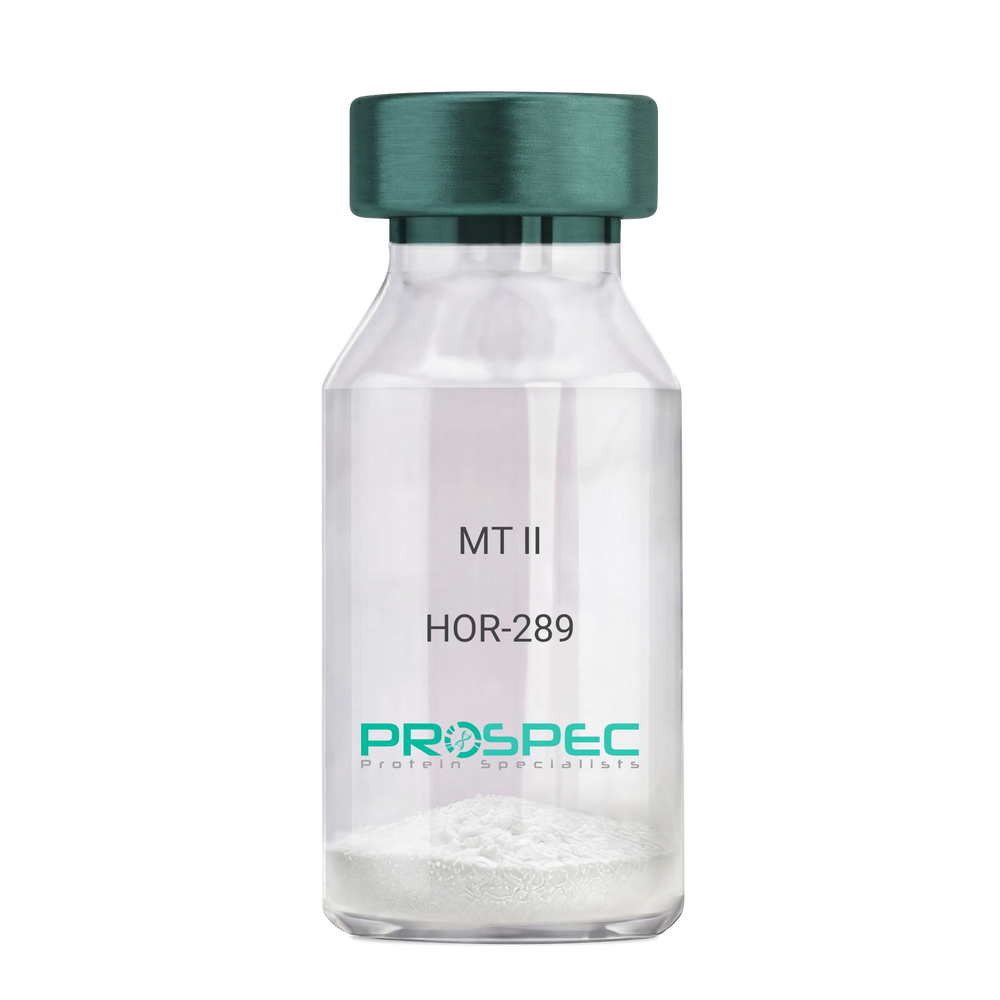
MT IIDescription:
Melanotan-II
Melanotan-II, MT-II, Melanotan.
Product # :
HOR-289Price :
Quantity :
Shipping Method :
Shipped at Room temp
More Info
- description
- formulation
- purity
- More Info
Description
The molecular formula of Melanotan-II is C50H69N15O9. It has the amino acid sequence of Ac-Nle-cyclo [Asp-His-D-Phe-Arg-Trp-Lys]-NH2 and a molecular weight of 1024.2 Dalton. The CAS Number is 121062-08-6.
Formulation
The protein (1mg/ml) was lyophilized with no additives.
Purity
Greater than 99% as determined by by RP-HPLC.
More Info
-
Introduction
Melanotan and Melanotan-II are both analogs of the peptide hormone alpha melanocyte stimulating hormone (a-MSH) that tend to induce skin tanning. Unlike Melanotan, Melanotan-II has the additional effect of increasing libido. Melanotan II has aphrodisiac properties.
-
Synonyms
Melanotan-II, MT-II, Melanotan.
-
Physical Appearance
Sterile Filtered White lyophilized (freeze-dried) powder.
-
Stability
Lyophilized Melanotan-II although stable at room temperature for 3 weeks, should be stored desiccated below -18°C. Upon reconstitution MT-II should be stored at 4°C between 2-7 days and for future use below -18°C.For long term storage it is recommended to add a carrier protein (0.1% HSA or BSA).Please prevent freeze-thaw cycles.
-
Solubility
It is recommended to reconstitute the lyophilized Melanotan-II in sterile 18MΩ-cm H2O not less than 100 µg/ml, which can then be further diluted to other aqueous solutions.
ProSpec's products are furnished for LABORATORY RESEARCH USE ONLY. The product may not be used as drugs, agricultural or pesticidal products, food additives or household chemicals.
- View Data Sheet
Name :
CUEDC1 HumanDescription:
CUE Domain Containing 1 Human Recombinant
CUE Domain Containing 1, CUE Domain-Containing Protein 1.
Product # :
PRO-1822Price :
Quantity :
Shipping Method :
Shipped with Ice Packs
More Info
- description
- source
- formulation
- purity
- More Info
Description
CUEDC1 Human Recombinant produced in E.Coli is a single, non-glycosylated polypeptide chain containing 409 amino acids (1-386 a.a) and having a molecular mass of 44.6kDa.CUEDC1 is fused to a 23 amino acid His-tag at N-terminus & purified by proprietary chromatographic techniques.
Source
Escherichia Coli.
Formulation
CUEDC1 protein solution (0.25mg/ml) containing 20mM Tris-HCl buffer (pH 8.0), 0.15M NaCl, 20% glycerol and 1mM DTT.
Purity
Greater than 85% as determined by SDS-PAGE.
More Info
-
Introduction
CUE Domain Containing 1, also know as CUEDC1 contains 1 CUE domain. The CUE domain is structurally associated to the ubiquitin-binding UBA domain and exists as a domain-swapped dimer which makes additional contacts with ubiquitin, and as a result, binds ubiquitin with higher affinity. The CUE domain is discovered in proteins with diverse functions including protein sorting and degradation of misfolded proteins in the endoplasmic reticulum.
-
Synonyms
CUE Domain Containing 1, CUE Domain-Containing Protein 1.
-
Physical Appearance
Sterile Filtered clear solution.
-
Stability
Store at 4°C if entire vial will be used within 2-4 weeks. Store, frozen at -20°C for longer periods of time.For long term storage it is recommended to add a carrier protein (0.1% HSA or BSA).Please avoid freeze thaw cycles.
-
Amino Acid Sequence
MGSSHHHHHH SSGLVPRGSH MGSMTSLFRR SSSGSGGGGT AGARGGGGGT AAPQELNNSR PARQVRRLEF NQAMDDFKTM FPNMDYDIIE CVLRANSGAV DATIDQLLQM NLEGGGSSGG VYEDSSDSED SIPPEILERT LEPDSSDEEP PPVYSPPAYH MHVFDRPYPL APPTPPPRID ALGSGAPTSQ RRYRNWNPPL LGNLPDDFLR ILPQQLDSIQ GNAGGPKPGS GEGCPPAMAG PGPGDQESRW KQYLEDERIA LFLQNEEFMK ELQRNRDFLL ALERDRLKYE SQKSKSSSVA VGNDFGFSSP VPGTGDANPA VSEDALFRDK LKHMGKSTRR KLFELARAFS EKTKMRKSKR KHLLKHQSLG AAASTANLLD DVEGHACDED FRGRRQEAPK VEEGLREGQ
ProSpec's products are furnished for LABORATORY RESEARCH USE ONLY. The product may not be used as drugs, agricultural or pesticidal products, food additives or household chemicals.
- View Data Sheet
Name :
DLK1 HumanDescription:
Delta-Like 1 Human Recombinant
DLK1, Delta-Like 1 Homolog (Drosophila), PREF1, DLK-1, FA1, DLK, PG2, Delta-Like Homolog (Drosophila), Protein Delta Homolog 1, Preadipocyte Factor 1, Fetal Antigen 1, Secredeltin, DELTA1, Pref-1, ZOG.
Product # :
PRO-2256Price :
Quantity :
Shipping Method :
Shipped with Ice Packs
More Info
- description
- source
- formulation
- purity
- More Info
Description
DLK1 Human Recombinant produced in Sf9 Baculovirus cells is a single, glycosylated polypeptide chain containing 288 amino acids (24-303 a.a) and having a molecular mass of 30.7kDa.DLK1 is fused to an 8 amino acid His-tag at C-terminus & purified by proprietary chromatographic techniques.
Source
Sf9, Baculovirus cells.
Formulation
DLK1 protein solution (0.25mg/ml) containing Phosphate Buffered Saline (pH7.4) and 10% glycerol.
Purity
Greater than 95.0% as determined by SDS-PAGE.
More Info
-
Introduction
Delta-Like 1, also known as DLK1 is a member of the Notch/Delta/Serrate family of epidermal growth factor (EGF)-like repeat-containing proteins which act as ligands in the Notch signaling pathway. Furthermore, DLK1 has six highly conserved epidermal-growth-factor motifs and it also contains up to ten O-glycosylation and N-glycosylation locations, six of them are differentially glycosylated.
-
Synonyms
DLK1, Delta-Like 1 Homolog (Drosophila), PREF1, DLK-1, FA1, DLK, PG2, Delta-Like Homolog (Drosophila), Protein Delta Homolog 1, Preadipocyte Factor 1, Fetal Antigen 1, Secredeltin, DELTA1, Pref-1, ZOG.
-
Physical Appearance
Sterile Filtered clear solution.
-
Stability
Store at 4°C if entire vial will be used within 2-4 weeks. Store, frozen at -20°C for longer periods of time. For long term storage it is recommended to add a carrier protein (0.1% HSA or BSA).Avoid multiple freeze-thaw cycles.
-
Amino Acid Sequence
AECFPACNPQ NGFCEDDNVC RCQPGWQGPL CDQCVTSPGC LHGLCGEPGQ CICTDGWDGE LCDRDVRACS SAPCANNGTC VSLDDGLYEC SCAPGYSGKD CQKKDGPCVI NGSPCQHGGT CVDDEGRASH ASCLCPPGFS GNFCEIVANS CTPNPCENDG VCTDIGGDFR CRCPAGFIDK TCSRPVTNCA SSPCQNGGTC LQHTQVSYEC LCKPEFTGLT CVKKRALSPQ QVTRLPSGYG LAYRLTPGVH ELPVQQPEHR ILKVSMKELN KKTPLLTEGQ LEHHHHHH.
ProSpec's products are furnished for LABORATORY RESEARCH USE ONLY. The product may not be used as drugs, agricultural or pesticidal products, food additives or household chemicals.